EP4023856B1 - Turbomachine with magnetic sealing arrangement - Google Patents
Turbomachine with magnetic sealing arrangement Download PDFInfo
- Publication number
- EP4023856B1 EP4023856B1 EP21215451.2A EP21215451A EP4023856B1 EP 4023856 B1 EP4023856 B1 EP 4023856B1 EP 21215451 A EP21215451 A EP 21215451A EP 4023856 B1 EP4023856 B1 EP 4023856B1
- Authority
- EP
- European Patent Office
- Prior art keywords
- seal link
- magnet
- seal
- aft frame
- nozzle
- Prior art date
- Legal status (The legal status is an assumption and is not a legal conclusion. Google has not performed a legal analysis and makes no representation as to the accuracy of the status listed.)
- Active
Links
Images



Classifications
-
- F—MECHANICAL ENGINEERING; LIGHTING; HEATING; WEAPONS; BLASTING
- F01—MACHINES OR ENGINES IN GENERAL; ENGINE PLANTS IN GENERAL; STEAM ENGINES
- F01D—NON-POSITIVE DISPLACEMENT MACHINES OR ENGINES, e.g. STEAM TURBINES
- F01D9/00—Stators
- F01D9/02—Nozzles; Nozzle boxes; Stator blades; Guide conduits, e.g. individual nozzles
- F01D9/023—Transition ducts between combustor cans and first stage of the turbine in gas-turbine engines; their cooling or sealings
-
- F—MECHANICAL ENGINEERING; LIGHTING; HEATING; WEAPONS; BLASTING
- F02—COMBUSTION ENGINES; HOT-GAS OR COMBUSTION-PRODUCT ENGINE PLANTS
- F02C—GAS-TURBINE PLANTS; AIR INTAKES FOR JET-PROPULSION PLANTS; CONTROLLING FUEL SUPPLY IN AIR-BREATHING JET-PROPULSION PLANTS
- F02C7/00—Features, components parts, details or accessories, not provided for in, or of interest apart form groups F02C1/00 - F02C6/00; Air intakes for jet-propulsion plants
- F02C7/28—Arrangement of seals
-
- F—MECHANICAL ENGINEERING; LIGHTING; HEATING; WEAPONS; BLASTING
- F01—MACHINES OR ENGINES IN GENERAL; ENGINE PLANTS IN GENERAL; STEAM ENGINES
- F01D—NON-POSITIVE DISPLACEMENT MACHINES OR ENGINES, e.g. STEAM TURBINES
- F01D11/00—Preventing or minimising internal leakage of working-fluid, e.g. between stages
- F01D11/005—Sealing means between non relatively rotating elements
-
- F—MECHANICAL ENGINEERING; LIGHTING; HEATING; WEAPONS; BLASTING
- F02—COMBUSTION ENGINES; HOT-GAS OR COMBUSTION-PRODUCT ENGINE PLANTS
- F02C—GAS-TURBINE PLANTS; AIR INTAKES FOR JET-PROPULSION PLANTS; CONTROLLING FUEL SUPPLY IN AIR-BREATHING JET-PROPULSION PLANTS
- F02C3/00—Gas-turbine plants characterised by the use of combustion products as the working fluid
- F02C3/04—Gas-turbine plants characterised by the use of combustion products as the working fluid having a turbine driving a compressor
-
- F—MECHANICAL ENGINEERING; LIGHTING; HEATING; WEAPONS; BLASTING
- F02—COMBUSTION ENGINES; HOT-GAS OR COMBUSTION-PRODUCT ENGINE PLANTS
- F02C—GAS-TURBINE PLANTS; AIR INTAKES FOR JET-PROPULSION PLANTS; CONTROLLING FUEL SUPPLY IN AIR-BREATHING JET-PROPULSION PLANTS
- F02C7/00—Features, components parts, details or accessories, not provided for in, or of interest apart form groups F02C1/00 - F02C6/00; Air intakes for jet-propulsion plants
- F02C7/12—Cooling of plants
- F02C7/16—Cooling of plants characterised by cooling medium
- F02C7/18—Cooling of plants characterised by cooling medium the medium being gaseous, e.g. air
-
- F—MECHANICAL ENGINEERING; LIGHTING; HEATING; WEAPONS; BLASTING
- F16—ENGINEERING ELEMENTS AND UNITS; GENERAL MEASURES FOR PRODUCING AND MAINTAINING EFFECTIVE FUNCTIONING OF MACHINES OR INSTALLATIONS; THERMAL INSULATION IN GENERAL
- F16J—PISTONS; CYLINDERS; SEALINGS
- F16J15/00—Sealings
- F16J15/02—Sealings between relatively-stationary surfaces
- F16J15/06—Sealings between relatively-stationary surfaces with solid packing compressed between sealing surfaces
- F16J15/061—Sealings between relatively-stationary surfaces with solid packing compressed between sealing surfaces with positioning means
-
- F—MECHANICAL ENGINEERING; LIGHTING; HEATING; WEAPONS; BLASTING
- F16—ENGINEERING ELEMENTS AND UNITS; GENERAL MEASURES FOR PRODUCING AND MAINTAINING EFFECTIVE FUNCTIONING OF MACHINES OR INSTALLATIONS; THERMAL INSULATION IN GENERAL
- F16J—PISTONS; CYLINDERS; SEALINGS
- F16J15/00—Sealings
- F16J15/02—Sealings between relatively-stationary surfaces
- F16J15/06—Sealings between relatively-stationary surfaces with solid packing compressed between sealing surfaces
- F16J15/08—Sealings between relatively-stationary surfaces with solid packing compressed between sealing surfaces with exclusively metal packing
- F16J15/0887—Sealings between relatively-stationary surfaces with solid packing compressed between sealing surfaces with exclusively metal packing the sealing effect being obtained by elastic deformation of the packing
-
- F—MECHANICAL ENGINEERING; LIGHTING; HEATING; WEAPONS; BLASTING
- F05—INDEXING SCHEMES RELATING TO ENGINES OR PUMPS IN VARIOUS SUBCLASSES OF CLASSES F01-F04
- F05D—INDEXING SCHEME FOR ASPECTS RELATING TO NON-POSITIVE-DISPLACEMENT MACHINES OR ENGINES, GAS-TURBINES OR JET-PROPULSION PLANTS
- F05D2220/00—Application
- F05D2220/30—Application in turbines
- F05D2220/32—Application in turbines in gas turbines
-
- F—MECHANICAL ENGINEERING; LIGHTING; HEATING; WEAPONS; BLASTING
- F05—INDEXING SCHEMES RELATING TO ENGINES OR PUMPS IN VARIOUS SUBCLASSES OF CLASSES F01-F04
- F05D—INDEXING SCHEME FOR ASPECTS RELATING TO NON-POSITIVE-DISPLACEMENT MACHINES OR ENGINES, GAS-TURBINES OR JET-PROPULSION PLANTS
- F05D2240/00—Components
- F05D2240/35—Combustors or associated equipment
-
- F—MECHANICAL ENGINEERING; LIGHTING; HEATING; WEAPONS; BLASTING
- F05—INDEXING SCHEMES RELATING TO ENGINES OR PUMPS IN VARIOUS SUBCLASSES OF CLASSES F01-F04
- F05D—INDEXING SCHEME FOR ASPECTS RELATING TO NON-POSITIVE-DISPLACEMENT MACHINES OR ENGINES, GAS-TURBINES OR JET-PROPULSION PLANTS
- F05D2240/00—Components
- F05D2240/55—Seals
-
- F—MECHANICAL ENGINEERING; LIGHTING; HEATING; WEAPONS; BLASTING
- F05—INDEXING SCHEMES RELATING TO ENGINES OR PUMPS IN VARIOUS SUBCLASSES OF CLASSES F01-F04
- F05D—INDEXING SCHEME FOR ASPECTS RELATING TO NON-POSITIVE-DISPLACEMENT MACHINES OR ENGINES, GAS-TURBINES OR JET-PROPULSION PLANTS
- F05D2260/00—Function
- F05D2260/30—Retaining components in desired mutual position
- F05D2260/32—Retaining components in desired mutual position by means of magnetic or electromagnetic forces
Definitions
- the present disclosure relates generally to a sealing arrangement for a gas turbine.
- the present invention relates to an improved sealing arrangement between an aft frame and a stage one turbine nozzle.
- a gas turbine engine generally includes a compressor section, a combustion section, a turbine section, and an exhaust section.
- the compressor section progressively increases the pressure of a working fluid entering the gas turbine engine and supplies this compressed working fluid to the combustion section.
- the compressed working fluid and a fuel e.g., natural gas
- the combustion gases flow from the combustion section into the turbine section where they expand to produce work.
- expansion of the combustion gases in the turbine section may rotate a rotor shaft connected, e.g., to a generator to produce electricity.
- the combustion gases then exit the gas turbine via the exhaust section.
- the combustion section of a gas turbine typically includes combustors that are coupled to a stage-one nozzle of the turbine section via transition ducts.
- each transition duct has an aft frame positioned adjacent to an inlet side of the turbine section.
- the aft frame will usually have two arcuate portions which are referred to as inner and outer portions, being inner and outer in the radial direction with respect to the centerline axis of the turbine.
- the inner and outer portions of the aft frame are interconnected by radially extending linear portions, often referred to as side portions.
- a sealing assembly is typically used to seal between the aft frame and the inlet of the turbine section.
- inner and outer circumferential seals are used to seal between the inner and outer portions of the aft frame and the corresponding inlet of the turbine section.
- radially oriented side seals can be disposed between adjacent aft frames to substantially close and seal off the circumferential gaps between the side portion of one aft frame and the next aft frame.
- the sealing assembly positioned about the aft frame generally functions to prevent high temperature combustion gases from being diluted with pressurized air surrounding the combustor prior to entrance into the turbine section. In this way, the sealing assembly ensures that the high temperature combustion gases are utilized fully in order to produce work within the turbine section.
- EP 3 299 680 A1 describes a sealing arrangement for sealing between an aft frame of a combustor and a stage-one nozzle of a gas turbine within a high pressure plenum that at least partially surrounds various components of the combustor.
- the sealing arrangement includes a seal with a flexible sealing element comprising an intermediate portion, a first outer portion on one side of the intermediate portion, and a second outer portion on the other side of the intermediate portion. The first outer portion and the second outer portion are pressure-loaded against the aft frame and the stage-one nozzle by a compressed working fluid within the high pressure plenum.
- US 6 450 762 B1 discloses an integral aft seal for sealing an interface between a transition piece component and a first stage nozzle component of a gas turbine.
- the aft seal comprises a monolithic and consubstantial seal material having a planar shape with an inner radial portion and an outer portion connected by side portions, and a variable thickness sufficient to span and seal the interface between the outlet of the transition piece and the inlet of the first stage nozzle.
- US 2015/266561 A1 describes a seal assembly that can be positioned between a first surface and a second surface of a structure or vehicle, the seal assembly including a geometric-shaped seal such as a bulb-shaped seal that can be secured to an outer perimeter of the first surface and a receiving land capture that can be secured to an outer perimeter of the second surface.
- an improved sealing assembly is desired in the art.
- an improved sealing assembly for a gas turbine engine that has increased durability and alignment, thereby prolonging the overall life and durability of the assembly, is desired.
- upstream refers to the relative direction with respect to fluid flow in a fluid pathway.
- upstream refers to the direction from which the fluid flows
- downstream refers to the direction to which the fluid flows.
- radially refers to the relative direction that is substantially perpendicular to an axial centerline of a particular component
- axially refers to the relative direction that is substantially parallel and/or coaxially aligned to an axial centerline of a particular component
- the term “circumferentially” refers to the relative direction that extends around the axial centerline of a particular component.
- FIG. 1 illustrates a schematic diagram of one embodiment of the gas turbine 10.
- an industrial or land-based gas turbine is shown and described herein, the present disclosure is not limited to a land based and/or industrial gas turbine unless otherwise specified in the claims.
- the invention as described herein may be used in any type of gas turbines including but not limited to an aircraft gas turbine, or a marine gas turbine.
- gas turbine 10 generally includes an inlet section 12, a compressor section 14 disposed downstream of the inlet section 12, a plurality of combustors (not shown) within a combustor section 16 disposed downstream of the compressor section 14, a turbine section 18 disposed downstream of the combustor section 16, and an exhaust section 20 disposed downstream of the turbine section 18. Additionally, the gas turbine 10 may include one or more shafts 22 coupled between the compressor section 14 and the turbine section 18.
- the compressor section 14 may generally include a plurality of rotor disks 24 (one of which is shown) and a plurality of rotor blades 26 extending radially outwardly from and connected to each rotor disk 24. Each rotor disk 24 in turn may be coupled to or form a portion of the shaft 22 that extends through the compressor section 14.
- the turbine section 18 may generally include a plurality of rotor disks 28 (one of which is shown) and a plurality of rotor blades 30 extending radially outwardly from and being interconnected to each rotor disk 28. Each rotor disk 28 in turn may be coupled to or form a portion of the shaft 22 that extends through the turbine section 18.
- the turbine section 18 further includes an outer casing 31 that circumferentially surrounds the portion of the shaft 22 and the rotor blades 30, thereby at least partially defining a hot gas path 32 through the turbine section 18.
- a working fluid such as air 36 flows through the inlet section 12 and into the compressor section 14 where the air 36 is progressively compressed, thus providing pressurized air or compressed air 38 to the combustors 17 ( FIG. 2 ) of the combustor section 16.
- the compressed air 38 is mixed with fuel 40 and burned within each combustor 17 ( FIG. 2 ) to produce combustion gases 34.
- the combustion gases 34 flow through the hot gas path 32 from the combustor section 16 into the turbine section 18, wherein energy (kinetic and/or thermal) is transferred from the combustion gases 34 to the rotor blades 30, causing the shaft 22 to rotate.
- the mechanical rotational energy may then be used to power the compressor section 14 and/or to generate electricity.
- the combustion gases 34 exiting the turbine section 18 may then be exhausted from the gas turbine 10 via the exhaust section 20.
- a combustor 17 may be at least partially surrounded by an outer casing 31 such as a compressor discharge casing.
- the outer casing 31 may at least partially define a high-pressure plenum 42 that at least partially surrounds various components of the combustor 17, such as transition duct 44.
- the high-pressure plenum 42 may be in fluid communication with the compressor 14 ( FIG. 1 ) so as to receive the compressed air 38 therefrom.
- the combustor 17 may be connected to a stage-one nozzle 700 of turbine 18 via a transition duct 44 including an aft frame 100.
- the transition duct 44 defines a flow path P. Also shown in FIG.
- FIG. 2 is the central axis A of turbine 18, which defines an axial direction substantially parallel to and/or along axis A, a radial direction R ( FIG. 3 ) perpendicular to axis A, and a circumferential direction C ( FIG. 3 ) extending around axis A.
- a pair of circumferentially arranged transition ducts 44 are illustrated, each having an upstream end 46 and a downstream end 48.
- an aft frame 100 surrounds the respective downstream end 48 of the transition ducts 44.
- the aft frame 100 may have an inner portion 102 and an outer portion 104, with a pair of opposing side portions 106 and 108 that extend radially between the inner and the outer portions 102 and 104.
- an inner seal 200 and an outer seal 300 respectively disposed on the inner portion 102 and outer portion 104 of each aft frame 100.
- the aft frame 100 may include a notch or slot 101 (as shown in FIG. 4 ) for partially receiving inner seal 200 and/or outer seal 300.
- a notch 101 may extend fully around the perimeter of the aft frame 100 (e.g., notch 110 may be continuous through the side portions 106 and 108 and the inner and the outer portions 102 and 104) for receiving both inner seal 200 and outer seal 300 as well as a radially-oriented side seal (not shown) which may be provided between adjacent aft frames 100. It is also possible in some embodiments to provide separate slots or notches for each of the seals 200 and 300.
- inner seal 200 and outer seal 300 may be circumferentially oriented with respect to a circumferential direction C of the gas turbine 10.
- each inner seal 200 is circumferentially aligned with the other inner seal 200 on the adjacent aft frame 100
- each outer seal 300 is circumferentially aligned with the other outer seal 300 on the adjacent aft frame 100.
- inner seals 200 and outer seals 300 may be collectively referred to as circumferentially oriented seals.
- FIGS. 5-6 illustrate cross-sectional views of sealing arrangements 201 in accordance with embodiments of the present invention.
- FIG. 4 is an example presented for illustration purposes only showing a cross sectional view of a sealing arrangement 201 having a sealing assembly 400
- FIG. 5 illustrates a cross sectional view of a sealing arrangement 201 having a sealing assembly 500
- FIG. 6 illustrates a cross sectional view of a sealing arrangement 201 having a sealing assembly 600.
- the sealing assemblies 400, 500, and 600 described herein may be representative of either an inner seal 200, an outer seal 300, or both.
- the sealing arrangement 201 includes a transition duct 44 having an upstream end 46 and a downstream end 48 (As shown in FIG. 3 ).
- an aft frame 100 circumferentially surrounds the downstream end 48 of the transition duct 44.
- a stage one nozzle 700 of turbine 18 may be spaced apart from the aft frame 100 and may define a gap 202 between the stage one nozzle 700 and the aft frame 100.
- the stage one nozzle 700 and the aft frame 100 may be axially spaced apart to allow for movement and/or thermal expansion of the stage one nozzle 700 and/or the aft frame 100 during operation of the gas turbine 10.
- the gap 202 may be defined axially between an aft face 204 of the aft frame 100 and a forward face 206 of the stage one nozzle 700.
- the aft frame 100 may define a first slot 101 that extends axially and circumferentially within the aft frame 100 with respect to the axial centerline of the gas turbine 10.
- the stage one nozzle 700 may define a second slot 701 that extends axially and circumferentially within the stage one nozzle 700 with respect to the axial centerline of the gas turbine 10.
- the sealing assemblies 400, 500, and 600 may be partially disposed within the first slot 101 and the second slot 701, which advantageously shields the sealing assemblies 400, 500, and 600 from the high temperature combustion gases 34.
- the sealing arrangement 201 may include a sealing assembly 400 that extends across the gap 202, in order to prevent combustion gases 34 exiting the transition duct 44 from being diluted with the pressurized air 38 from the high-pressure plenum 42.
- the sealing assembly 400 may include a seal link 402 that extends across the gap 202.
- the seal link 402 may be magnetically coupled to the aft frame 100 at an upstream end 406 and magnetically coupled to the stage one nozzle 700 at a downstream end 408.
- the seal link 402 may include a first magnet end 403 at the upstream end 406 that magnetically couples to the aft frame 100 and a second magnet end 404 that magnetically couples to the stage one nozzle 700.
- the magnet ends 403, 404 may be in the form of a piece of metal material that has its component atoms so ordered that the material exhibits properties of magnetism, such as attracting other iron-containing objects or aligning itself in an external magnetic field.
- the magnet ends 403, 404 may be Alnico magnets, such that they are permanent magnets that are primarily made up of a combination of aluminum, nickel, and cobalt but may also include copper, iron and titanium. Alnico magnets may be capable of operation in extremely high temperatures, such as upwards of 1000°F.
- the aft frame 100 and/or the stage one nozzle 700 may be formed of a ferrous (or iron containing) metal, such that the aft frame 100 and/or the stage one nozzle 700 are attracted to the magnetic ends 403, 404 and coupled thereto.
- the aft frame 100 and/or the stage one nozzle 700 may be formed of a non-ferrous metal.
- one or more magnets 410 may be embedded within the aft frame 100 and the stage one nozzle 700, in order to create an attractive magnetic force between the magnets 410 and the magnet ends 403, 404 of the seal link 402. In the example shown in FIG.
- the seal link 402 may be sealed against the aft frame 100 and the stage one nozzle 700 via a pressure load imparted by the pressurized air 38. Further, the seal link 402 may be sealed against the aft frame 100 and the stage one nozzle 700 via an attractive magnetic force.
- the seal link 402 may include a flexible sealing element 424 that extends between the upstream end 406 and the downstream end 408.
- the flexible sealing element 424 may be composed primarily of a cloth material, which can be a woven mesh cloth of a suitable metal material, e.g., alloy L605.
- the materials of the flexible sealing element 424 may be layered, e.g., a single sheet of cloth material may be folded over on itself as illustrated in FIG. 4 , and/or multiple layers of cloth material may be welded together.
- the sealing arrangement 201 includes according to the present invention a sealing assembly 500 that extends across the gap 202, in order to prevent combustion gases 34 exiting the transition duct 44 from being diluted with the pressurized air 38 from the high-pressure plenum 42.
- the sealing assembly 500 includes a seal link 502 that extends across the gap 202.
- the seal link 502 is magnetically coupled to the aft frame 100 at an upstream end 506 and magnetically coupled to the stage one nozzle 700 at a downstream end 508.
- the upstream end 506 of the seal link 502 may include one of a convex magnet end 512 or a concave magnet end 510.
- the downstream end 508 of the seal link 502 may include one of the convex magnet end 512 or the concave magnet end 510.
- the convex magnet end 512 may be in the form of a protrusion, ball, or generally rounded axially outward surface that is configured to rotatably and magnetically couple to one of the aft frame 100 or the stage one nozzle 700.
- the concave magnet end 510 may be in the form of an indentation, socket, or generally rounded axially inward surface that is configured to rotatably and magnetically couple to one of the aft frame 100 or the stage one nozzle 700.
- the convex magnet end 512 of the seal link 502 is rotatably and magnetically coupled to the stage one nozzle 700 and the concave magnet end 510 is rotatably and magnetically coupled to the aft frame 100.
- the sealing arrangement may include a first magnetic ball socket joint 514 and a second magnetic ball socket joint 516.
- the upstream end 506 of the seal link 502 may be coupled to the aft frame 100 via the first magnetic ball socket joint 514.
- the downstream end 608 of the seal link 502 may couple to the stage one nozzle 700 via the second magnetic ball socket joint 516.
- the aft frame may include one of a ball magnet 520 or a socket magnet 522 configured to rotatably and magnetically couple to the upstream end 506 of the seal link 502.
- the aft frame 100 includes a ball magnet 520 fixedly coupled to the aft frame 100, and the seal link 502 includes the corresponding concave magnet end 510 in order to couple to the ball magnet 520 of the aft frame 100 and form the first magnetic ball socket joint 514.
- the aft frame 100 may include a socket magnet.
- the seal link 502 may include a corresponding convex seal end in order to couple to the socket magnet of the aft frame 100.
- the stage one nozzle 700 may include one of a ball magnet 520 or a socket magnet 522 configured to rotatably and magnetically couple to the downstream end 508 of the seal link 502.
- the stage one nozzle 700 includes a socket magnet 522 fixedly coupled to the stage one nozzle 700, and the seal link 502 includes the corresponding convex magnet end 512 in order to couple to the socket magnet 522 of the stage one nozzle 700 and form the second magnetic ball socket joint 516.
- the stage one nozzle 700 may include a ball magnet.
- the seal link 502 may include a corresponding concave seal end in order to couple to the ball magnet of the stage one nozzle 700.
- ball socket joints 514, 516 depicted in FIG. 5 show sockets or concave magnet ends 510 disposed on the upstream end 506 of the seal link 502, and balls or convex magnet ends 512 disposed on the downstream end 508 of the seal link 502, it is envisioned to be within the scope of the present disclosure that one or more of the balls or convex magnet ends be installed on the upstream end 506, and the corresponding socket(s) or concave magnet ends be disposed on the downstream end 508.
- the seal link 502 may include a flexible sealing element 524 that extends between the upstream end 506 and the downstream end 508.
- the flexible sealing element 524 may be composed primarily of a cloth material, which can be a woven mesh cloth of a suitable metal material, e.g., alloy L605.
- the materials of the flexible sealing element 524 may be layered, e.g., a single sheet of cloth material may be folded over on itself as illustrated in FIG. 5 , and/or multiple layers of cloth material may be welded together.
- the sealing assembly 600 may include a first seal link 602 and a second seal link 604.
- the first seal link 602 may be magnetically coupled to the aft frame 100 and may extend generally axially towards the stage one nozzle 700.
- the second seal link 604 may be magnetically coupled to the stage one nozzle 700 and may extend generally axially towards the aft frame 100.
- the first link 602 and the second link 604 may be magnetically coupled to one another between the aft frame 100 and the stage one nozzle 700, e.g., within the gap 202. In this way, the first seal link 602 and the second seal link may extend towards one another and magnetically couple together at a location within the gap 202.
- first seal link 602 may be rotatable relative the aft frame 100.
- second seal link 604 may be rotatable relative the stage one nozzle 700.
- first seal link 602 and the second seal link 604 are each rotatable relative to each other.
- first seal link 602 and the second seal link 604 may be rotatable at their respective points of attachment, which advantageously allows for thermal expansion and relative movement between the aft frame 100 and the stage one nozzle 700 without causing the sealing assembly 00 to misalign and/or entirely decouple.
- first seal link 602 and the second seal link 604 may each extend between a respective upstream end 606 and a respective downstream end 608.
- the respective upstream end 606 of the seal links 602, 604 may include one of a convex magnet end 612 or a concave magnet end 610.
- the downstream end 608 of the seal links 602, 604 may include one of the convex magnet end 612 or the concave magnet end 610.
- the convex magnet end 612 may be in the form of a protrusion, ball, or generally rounded axially outward surface that is configured to rotatably and magnetically couple to a corresponding concave magnet end 610 of a neighboring seal link.
- the concave magnet end 610 may be in the form of an indentation, socket, or generally rounded axially inward surface that is configured to rotatably and magnetically couple to a corresponding convex magnet end 612 of a neighboring seal link.
- the convex magnet end 612 of the first seal link 602 may rotatably and magnetically couple to the concave magnet end 610 of the second magnet 604.
- the sealing arrangement may include a first magnetic ball socket joint 614, a second magnetic ball socket joint 616, and a third magnetic ball socket joint 618.
- upstream end 606 of the first seal link 602 may be coupled to the aft frame 100 via the first magnetic ball socket joint 614.
- the downstream end 608 of the first seal link 602 may be coupled to the upstream end 606 of the second seal link 604 via the second magnetic ball socket joint 616.
- the downstream end 608 of the second seal link 604 may couple to the stage one nozzle 700 via the third magnetic ball socket joint 618.
- the aft frame may include one of a ball magnet 620 or a socket magnet 622 configured to rotatably and magnetically couple to the upstream end 606 of the first seal link 602.
- the aft frame 100 includes a ball magnet 620 fixedly coupled to the aft frame 100, and the first seal link 602 includes the corresponding concave magnet end 612 in order to couple to the ball magnet 620 of the aft frame 100 and form the first magnetic ball socket joint 614.
- the aft frame 100 may include a socket magnet.
- the first seal link 602 may include a corresponding convex seal end in order to couple to the socket magnet of the aft frame 100.
- the stage one nozzle 700 may include one of a ball magnet 620 or a socket magnet 622 configured to rotatably and magnetically couple to the downstream end 608 of the second seal link 604.
- the stage one nozzle 700 includes a socket magnet 622 fixedly coupled to the stage one nozzle 700
- the second seal link 604 includes the corresponding concave magnet end 612 in order to couple to the socket magnet 622 of the stage one nozzle and form the third magnetic ball socket joint 618.
- the stage one nozzle 700 may include a ball magnet.
- the second seal link 604 may include a corresponding concave seal end in order to couple to the ball magnet of the stage one nozzle 700.
- the ball socket joints 614, 616, 618 depicted in FIG. 6 shows sockets or concave magnet ends 610 disposed on the upstream end 606 of the first seal link 602 and the second seal link 604, and balls or convex magnet ends 612 disposed on the downstream end 608 of the first seal link 602 and the second seal link 604, it is envisioned to be within the scope of the present disclosure that one or more of the balls or convex magnet ends be installed on the upstream end 606, and the corresponding socket(s) or concave magnet ends be disposed on the downstream end 608.
- each of the first seal link 602 and the second seal link 604 may include a flexible sealing element 624 that extends between the respective upstream end 606 and the respective downstream end 608.
- the flexible sealing element 624 may be composed primarily of a cloth material, which can be a woven mesh cloth of a suitable metal material, e.g., alloy L605.
- the materials of the flexible sealing element 624 may be layered, e.g., a single sheet of cloth material may be folded over on itself as illustrated in FIG. 6 , and/or multiple layers of cloth material may be welded together.
- the aft frame 100 may define a first slot 101 that extends axially and circumferentially within the aft frame 100 with respect to the axial centerline of the gas turbine 10.
- the stage one nozzle 700 may define a second slot 701 that extends axially and circumferentially within the stage one nozzle 700 with respect to the axial centerline of the gas turbine 10.
- at least a portion of the first seal link 602 extends into the first slot 101 defined by the aft frame 100, which advantageously shields the first seal link 602 from the high temperature combustion gases 34.
- at least a portion of the second seal link 604 may extend into the second slot 701 defined by the stage one nozzle 700, which advantageously shields the second seal link 604 from the high temperature combustion gases 34.
- the aft frame 100 may define a cooling channel 234 that functions to cool various components of the sealing arrangement 201.
- the cooling channel 234 may extend along the aft frame 100.
- the cooling channel 234 may diverge radially inward with respect to the axial centerline A of the gas turbine 10 in the direction of combustion gas 34 flow within the aft frame 100 (from upstream end to downstream end).
- the cooling channel 234 may further include an outlet 236.
- the outlet 236 may be oriented generally radially, in order to direct a flow of cooling air 238 towards the sealing assembly 400, 500, 600.
- the flow of cooling air 238 may provide for impingement cooling to the various components of the sealing assembly 400, 500, 600.
- the flow of cooling air 238 may ensure that the various magnets within the sealing assemblies 400, 500, 600 maintain an operable temperature, i.e., ensure that the magnets do not overheat.
- the sealing assemblies 400, 500, and 600 described herein may extend continuously in the circumferential direction C (into and out of the page in FIGS. 4-6 ).
- the ball socket joints described herein may each extend continuously in the circumferential direction C.
- the ball socket joints may be a plurality of ball socket joints circumferentially spaced apart from one another.
- combustion gases 34 may exit the combustor 17 via the aft frame 100 and have to traverse across the gap 202 prior to entrance into the turbine section 18 via the stage one nozzle 700.
- the sealing assemblies 400, 500, and 600 described herein may ensure that the combustion gases 34 are not diluted with pressurized air 38 prior to entering the turbine section. In this way, the sealing assembly 400 ensures that all of the thermal energy from the combustion gases 34 gets utilized by the turbine section 18, thereby maintaining the high operating efficiency of the turbomachine.
- the magnetic ball socket joints 614, 616, 618 described herein may advantageously provide for relative movement between the seal links 602, 602 while maintaining proper alignment of the entire sealing assembly 600.
- the aft frame 100 and the stage one nozzle 700 may move relative to one another due to thermal expansion and/or general operational vibrations.
- the sealing assembly 600 described herein is capable of moving and rotating along with the aft frame 100 and stage one nozzle 700, while the magnets ensure that the sealing assembly 600 maintains alignment.
Landscapes
- Engineering & Computer Science (AREA)
- General Engineering & Computer Science (AREA)
- Mechanical Engineering (AREA)
- Chemical & Material Sciences (AREA)
- Combustion & Propulsion (AREA)
- Sealing Using Fluids, Sealing Without Contact, And Removal Of Oil (AREA)
- Turbine Rotor Nozzle Sealing (AREA)
- Gasket Seals (AREA)
Description
- The present disclosure relates generally to a sealing arrangement for a gas turbine. In particular, the present invention relates to an improved sealing arrangement between an aft frame and a stage one turbine nozzle.
- Turbomachines are utilized in a variety of industries and applications for energy transfer purposes. For example, a gas turbine engine generally includes a compressor section, a combustion section, a turbine section, and an exhaust section. The compressor section progressively increases the pressure of a working fluid entering the gas turbine engine and supplies this compressed working fluid to the combustion section. The compressed working fluid and a fuel (e.g., natural gas) mix within the combustion section and burn in a combustion chamber to generate high pressure and high temperature combustion gases. The combustion gases flow from the combustion section into the turbine section where they expand to produce work. For example, expansion of the combustion gases in the turbine section may rotate a rotor shaft connected, e.g., to a generator to produce electricity. The combustion gases then exit the gas turbine via the exhaust section.
- The combustion section of a gas turbine typically includes combustors that are coupled to a stage-one nozzle of the turbine section via transition ducts. Generally, each transition duct has an aft frame positioned adjacent to an inlet side of the turbine section. The aft frame will usually have two arcuate portions which are referred to as inner and outer portions, being inner and outer in the radial direction with respect to the centerline axis of the turbine. The inner and outer portions of the aft frame are interconnected by radially extending linear portions, often referred to as side portions. A sealing assembly is typically used to seal between the aft frame and the inlet of the turbine section. In particular, inner and outer circumferential seals are used to seal between the inner and outer portions of the aft frame and the corresponding inlet of the turbine section. Likewise, radially oriented side seals can be disposed between adjacent aft frames to substantially close and seal off the circumferential gaps between the side portion of one aft frame and the next aft frame.
- The sealing assembly positioned about the aft frame generally functions to prevent high temperature combustion gases from being diluted with pressurized air surrounding the combustor prior to entrance into the turbine section. In this way, the sealing assembly ensures that the high temperature combustion gases are utilized fully in order to produce work within the turbine section.
- However, issues exist with the use of many known sealing assemblies. For example, the high temperature of the combustion gases can cause damage to the sealing assembly over time, which may result in a limited life and decreased durability of the assembly. In addition, thermal expansion and vibrational movement of the aft frame and the stage one nozzle during operation of the gas turbine can cause the sealing assemblies to misalign and/or entirely decouple from, which results in an incomplete seal between the components.
-
EP 3 299 680 A1US 6 450 762 B1 discloses an integral aft seal for sealing an interface between a transition piece component and a first stage nozzle component of a gas turbine. The aft seal comprises a monolithic and consubstantial seal material having a planar shape with an inner radial portion and an outer portion connected by side portions, and a variable thickness sufficient to span and seal the interface between the outlet of the transition piece and the inlet of the first stage nozzle.US 2015/266561 A1 describes a seal assembly that can be positioned between a first surface and a second surface of a structure or vehicle, the seal assembly including a geometric-shaped seal such as a bulb-shaped seal that can be secured to an outer perimeter of the first surface and a receiving land capture that can be secured to an outer perimeter of the second surface. - Accordingly, an improved sealing assembly is desired in the art. In particular, an improved sealing assembly for a gas turbine engine that has increased durability and alignment, thereby prolonging the overall life and durability of the assembly, is desired.
- The objective of the invention is solved by a sealing arrangement according to claim 1 and a gas turbine according to
claim 10. Further embodiments of the invention arise from the sub-claims, the description and the drawings. - A full and enabling disclosure of the present sealing arrangements and gas turbines, including the best mode of making and using the present systems and methods, directed to one of ordinary skill in the art, is set forth in the specification, which makes reference to the appended figures, in which:
-
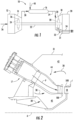
FIG. 1 is a schematic illustration of a turbomachine in accordance with embodiments of the present invention; -
FIG. 2 illustrates a section view of a combustor in accordance with embodiments of the present d invention; -
FIG. 3 illustrates a perspective view of circumferentially adjacent transition ducts in accordance with embodiments of the present invention; -
FIG. 4 illustrates a cross sectional perspective view of a sealing arrangement in accordance with an example which is not part of the invention but for illustrating purposes only; -
FIG. 5 illustrates a cross sectional perspective view of a sealing arrangement in accordance with embodiments of the present invention; and -
FIG. 6 illustrates a cross sectional perspective view of a sealing arrangement in accordance with embodiments of the present invention. - Reference now will be made in detail to embodiments of the present sealing arrangements and gas turbines, one or more examples of which are illustrated in the drawings. Each example is provided by way of explanation, rather than limitation of, the technology. For instance, features illustrated or described as part of one embodiment can be used with another embodiment to yield a still further embodiment. Thus, it is intended that the present invention covers such modifications and variations as come within the scope of the appended claims and their equivalents.
- The detailed description uses numerical and letter designations to refer to features in the drawings. Like or similar designations in the drawings and description have been used to refer to like or similar parts of the invention. As used herein, the terms "first", "second", and "third" may be used interchangeably to distinguish one component from another and are not intended to signify location or importance of the individual components.
- As used herein, the terms "upstream" (or "forward") and "downstream" (or "aft") refer to the relative direction with respect to fluid flow in a fluid pathway. For example, "upstream" refers to the direction from which the fluid flows, and "downstream" refers to the direction to which the fluid flows. The term "radially" refers to the relative direction that is substantially perpendicular to an axial centerline of a particular component, the term "axially" refers to the relative direction that is substantially parallel and/or coaxially aligned to an axial centerline of a particular component and the term "circumferentially" refers to the relative direction that extends around the axial centerline of a particular component. terms of approximation, such as "generally," or "about" include values within ten percent greater or less than the stated value. When used in the context of an angle or direction, such terms include within ten degrees greater or less than the stated angle or direction. For example, "generally vertical" includes directions within ten degrees of vertical in any direction, e.g., clockwise or counter-clockwise.
- Referring now to the drawings,
FIG. 1 illustrates a schematic diagram of one embodiment of thegas turbine 10. Although an industrial or land-based gas turbine is shown and described herein, the present disclosure is not limited to a land based and/or industrial gas turbine unless otherwise specified in the claims. For example, the invention as described herein may be used in any type of gas turbines including but not limited to an aircraft gas turbine, or a marine gas turbine. - As shown,
gas turbine 10 generally includes aninlet section 12, acompressor section 14 disposed downstream of theinlet section 12, a plurality of combustors (not shown) within acombustor section 16 disposed downstream of thecompressor section 14, aturbine section 18 disposed downstream of thecombustor section 16, and anexhaust section 20 disposed downstream of theturbine section 18. Additionally, thegas turbine 10 may include one ormore shafts 22 coupled between thecompressor section 14 and theturbine section 18. - The
compressor section 14 may generally include a plurality of rotor disks 24 (one of which is shown) and a plurality ofrotor blades 26 extending radially outwardly from and connected to eachrotor disk 24. Eachrotor disk 24 in turn may be coupled to or form a portion of theshaft 22 that extends through thecompressor section 14. - The
turbine section 18 may generally include a plurality of rotor disks 28 (one of which is shown) and a plurality ofrotor blades 30 extending radially outwardly from and being interconnected to eachrotor disk 28. Eachrotor disk 28 in turn may be coupled to or form a portion of theshaft 22 that extends through theturbine section 18. Theturbine section 18 further includes anouter casing 31 that circumferentially surrounds the portion of theshaft 22 and therotor blades 30, thereby at least partially defining ahot gas path 32 through theturbine section 18. - During operation, a working fluid such as
air 36 flows through theinlet section 12 and into thecompressor section 14 where theair 36 is progressively compressed, thus providing pressurized air orcompressed air 38 to the combustors 17 (FIG. 2 ) of thecombustor section 16. Thecompressed air 38 is mixed withfuel 40 and burned within each combustor 17 (FIG. 2 ) to producecombustion gases 34. Thecombustion gases 34 flow through thehot gas path 32 from thecombustor section 16 into theturbine section 18, wherein energy (kinetic and/or thermal) is transferred from thecombustion gases 34 to therotor blades 30, causing theshaft 22 to rotate. The mechanical rotational energy may then be used to power thecompressor section 14 and/or to generate electricity. Thecombustion gases 34 exiting theturbine section 18 may then be exhausted from thegas turbine 10 via theexhaust section 20. - As shown in
FIG. 2 , acombustor 17 may be at least partially surrounded by anouter casing 31 such as a compressor discharge casing. Theouter casing 31 may at least partially define a high-pressure plenum 42 that at least partially surrounds various components of thecombustor 17, such astransition duct 44. The high-pressure plenum 42 may be in fluid communication with the compressor 14 (FIG. 1 ) so as to receive thecompressed air 38 therefrom. As illustrated inFIG. 2 , thecombustor 17 may be connected to a stage-onenozzle 700 ofturbine 18 via atransition duct 44 including anaft frame 100. Thetransition duct 44 defines a flow path P. Also shown inFIG. 2 is the central axis A ofturbine 18, which defines an axial direction substantially parallel to and/or along axis A, a radial direction R (FIG. 3 ) perpendicular to axis A, and a circumferential direction C (FIG. 3 ) extending around axis A. - Referring now to
FIG. 3 , a pair of circumferentially arrangedtransition ducts 44 are illustrated, each having anupstream end 46 and adownstream end 48. As shown, anaft frame 100 surrounds the respectivedownstream end 48 of thetransition ducts 44. As illustrated inFIG. 3 , in some embodiments, theaft frame 100 may have aninner portion 102 and anouter portion 104, with a pair of opposingside portions outer portions FIG. 3 is aninner seal 200 and anouter seal 300 respectively disposed on theinner portion 102 andouter portion 104 of eachaft frame 100. According to an example not part of the present invention theaft frame 100 may include a notch or slot 101 (as shown inFIG. 4 ) for partially receivinginner seal 200 and/orouter seal 300. In some embodiments, anotch 101 may extend fully around the perimeter of the aft frame 100 (e.g., notch 110 may be continuous through theside portions outer portions 102 and 104) for receiving bothinner seal 200 andouter seal 300 as well as a radially-oriented side seal (not shown) which may be provided between adjacent aft frames 100. It is also possible in some embodiments to provide separate slots or notches for each of theseals - As shown in
FIG. 3 ,inner seal 200 andouter seal 300 may be circumferentially oriented with respect to a circumferential direction C of thegas turbine 10. For example, eachinner seal 200 is circumferentially aligned with the otherinner seal 200 on the adjacentaft frame 100, and eachouter seal 300 is circumferentially aligned with the otherouter seal 300 on the adjacentaft frame 100. Thus,inner seals 200 andouter seals 300 may be collectively referred to as circumferentially oriented seals. - In the description herein, certain features of the
aft frame 100, stage-onenozzle 700, and seals, 200 and 300 , will be described with reference to one or the other ofinner portion 102/inner seal 200 andouter portion 104/outer seal 300, nonetheless, it will be recognized by one of ordinary skill in the art that such features can be associated with either or both ofinner portions 102 and/orouter portions 104. -
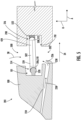
FIGS. 5-6 illustrate cross-sectional views of sealingarrangements 201 in accordance with embodiments of the present invention.FIG. 4 is an example presented for illustration purposes only showing a cross sectional view of asealing arrangement 201 having a sealingassembly 400,FIG. 5 illustrates a cross sectional view of asealing arrangement 201 having a sealingassembly 500, andFIG. 6 illustrates a cross sectional view of asealing arrangement 201 having a sealingassembly 600. The sealingassemblies inner seal 200, anouter seal 300, or both. As shown inFIGS. 4-6 , the sealingarrangement 201 includes atransition duct 44 having anupstream end 46 and a downstream end 48 (As shown inFIG. 3 ). In many embodiments, anaft frame 100 circumferentially surrounds thedownstream end 48 of thetransition duct 44. A stage onenozzle 700 ofturbine 18 may be spaced apart from theaft frame 100 and may define agap 202 between the stage onenozzle 700 and theaft frame 100. Specifically, the stage onenozzle 700 and theaft frame 100 may be axially spaced apart to allow for movement and/or thermal expansion of the stage onenozzle 700 and/or theaft frame 100 during operation of thegas turbine 10. Thegap 202 may be defined axially between an aft face 204 of theaft frame 100 and a forward face 206 of the stage onenozzle 700. - As shown in
FIG. 4-6 , theaft frame 100 may define afirst slot 101 that extends axially and circumferentially within theaft frame 100 with respect to the axial centerline of thegas turbine 10. Similarly, the stage onenozzle 700 may define asecond slot 701 that extends axially and circumferentially within the stage onenozzle 700 with respect to the axial centerline of thegas turbine 10. The sealingassemblies first slot 101 and thesecond slot 701, which advantageously shields the sealingassemblies temperature combustion gases 34. - As shown in the example of
FIG. 4 , the sealingarrangement 201 may include a sealingassembly 400 that extends across thegap 202, in order to preventcombustion gases 34 exiting thetransition duct 44 from being diluted with thepressurized air 38 from the high-pressure plenum 42. As shown, the sealingassembly 400 may include aseal link 402 that extends across thegap 202. Theseal link 402 may be magnetically coupled to theaft frame 100 at anupstream end 406 and magnetically coupled to the stage onenozzle 700 at adownstream end 408. For example, theseal link 402 may include afirst magnet end 403 at theupstream end 406 that magnetically couples to theaft frame 100 and asecond magnet end 404 that magnetically couples to the stage onenozzle 700. In various embodiments, the magnet ends 403, 404 may be in the form of a piece of metal material that has its component atoms so ordered that the material exhibits properties of magnetism, such as attracting other iron-containing objects or aligning itself in an external magnetic field. In exemplary embodiments, the magnet ends 403, 404 may be Alnico magnets, such that they are permanent magnets that are primarily made up of a combination of aluminum, nickel, and cobalt but may also include copper, iron and titanium. Alnico magnets may be capable of operation in extremely high temperatures, such as upwards of 1000°F. - In some embodiments, the
aft frame 100 and/or the stage onenozzle 700 may be formed of a ferrous (or iron containing) metal, such that theaft frame 100 and/or the stage onenozzle 700 are attracted to the magnetic ends 403, 404 and coupled thereto. In other embodiments, theaft frame 100 and/or the stage onenozzle 700 may be formed of a non-ferrous metal. In such embodiments, one ormore magnets 410 may be embedded within theaft frame 100 and the stage onenozzle 700, in order to create an attractive magnetic force between themagnets 410 and the magnet ends 403, 404 of theseal link 402. In the example shown inFIG. 4 , theseal link 402 may be sealed against theaft frame 100 and the stage onenozzle 700 via a pressure load imparted by thepressurized air 38. Further, theseal link 402 may be sealed against theaft frame 100 and the stage onenozzle 700 via an attractive magnetic force. - As shown in
FIG. 4 , theseal link 402 may include aflexible sealing element 424 that extends between theupstream end 406 and thedownstream end 408. Theflexible sealing element 424 may be composed primarily of a cloth material, which can be a woven mesh cloth of a suitable metal material, e.g., alloy L605. The materials of theflexible sealing element 424 may be layered, e.g., a single sheet of cloth material may be folded over on itself as illustrated inFIG. 4 , and/or multiple layers of cloth material may be welded together. - As shown in
FIG. 5 , the sealingarrangement 201 includes according to the present invention a sealingassembly 500 that extends across thegap 202, in order to preventcombustion gases 34 exiting thetransition duct 44 from being diluted with thepressurized air 38 from the high-pressure plenum 42. As shown, the sealingassembly 500 includes aseal link 502 that extends across thegap 202. Theseal link 502 is magnetically coupled to theaft frame 100 at an upstream end 506 and magnetically coupled to the stage onenozzle 700 at a downstream end 508. As shown, the upstream end 506 of theseal link 502 may include one of a convex magnet end 512 or a concave magnet end 510. Similarly, the downstream end 508 of theseal link 502 may include one of the convex magnet end 512 or the concave magnet end 510. The convex magnet end 512 may be in the form of a protrusion, ball, or generally rounded axially outward surface that is configured to rotatably and magnetically couple to one of theaft frame 100 or the stage onenozzle 700. Likewise, the concave magnet end 510 may be in the form of an indentation, socket, or generally rounded axially inward surface that is configured to rotatably and magnetically couple to one of theaft frame 100 or the stage onenozzle 700. For example, as shown inFIG. 5 , the convex magnet end 512 of theseal link 502 is rotatably and magnetically coupled to the stage onenozzle 700 and the concave magnet end 510 is rotatably and magnetically coupled to theaft frame 100. - As shown in
FIG. 5 , the sealing arrangement may include a first magnetic ball socket joint 514 and a second magneticball socket joint 516. As shown, the upstream end 506 of theseal link 502 may be coupled to theaft frame 100 via the first magneticball socket joint 514. In particular embodiments, as shown, the downstream end 608 of theseal link 502 may couple to the stage onenozzle 700 via the second magneticball socket joint 516. - In various embodiments, the aft frame may include one of a
ball magnet 520 or asocket magnet 522 configured to rotatably and magnetically couple to the upstream end 506 of theseal link 502. For example, in the embodiment shown inFIG. 5 , theaft frame 100 includes aball magnet 520 fixedly coupled to theaft frame 100, and theseal link 502 includes the corresponding concave magnet end 510 in order to couple to theball magnet 520 of theaft frame 100 and form the first magneticball socket joint 514. However, in other embodiments (not shown), theaft frame 100 may include a socket magnet. In such embodiments, theseal link 502 may include a corresponding convex seal end in order to couple to the socket magnet of theaft frame 100. - Similarly, the stage one
nozzle 700 may include one of aball magnet 520 or asocket magnet 522 configured to rotatably and magnetically couple to the downstream end 508 of theseal link 502. For example, in the embodiment shown inFIG. 5 , the stage onenozzle 700 includes asocket magnet 522 fixedly coupled to the stage onenozzle 700, and theseal link 502 includes the corresponding convex magnet end 512 in order to couple to thesocket magnet 522 of the stage onenozzle 700 and form the second magneticball socket joint 516. However, in other embodiments (not shown), the stage onenozzle 700 may include a ball magnet. In such embodiments, theseal link 502 may include a corresponding concave seal end in order to couple to the ball magnet of the stage onenozzle 700. - Although the ball socket joints 514, 516 depicted in
FIG. 5 show sockets or concave magnet ends 510 disposed on the upstream end 506 of theseal link 502, and balls or convex magnet ends 512 disposed on the downstream end 508 of theseal link 502, it is envisioned to be within the scope of the present disclosure that one or more of the balls or convex magnet ends be installed on the upstream end 506, and the corresponding socket(s) or concave magnet ends be disposed on the downstream end 508. - In many embodiments, the
seal link 502 may include aflexible sealing element 524 that extends between the upstream end 506 and the downstream end 508. Theflexible sealing element 524 may be composed primarily of a cloth material, which can be a woven mesh cloth of a suitable metal material, e.g., alloy L605. The materials of theflexible sealing element 524 may be layered, e.g., a single sheet of cloth material may be folded over on itself as illustrated inFIG. 5 , and/or multiple layers of cloth material may be welded together. - As shown in
FIG. 6 , the sealingassembly 600 may include afirst seal link 602 and asecond seal link 604. Thefirst seal link 602 may be magnetically coupled to theaft frame 100 and may extend generally axially towards the stage onenozzle 700. Similarly, thesecond seal link 604 may be magnetically coupled to the stage onenozzle 700 and may extend generally axially towards theaft frame 100. In exemplary embodiments, thefirst link 602 and thesecond link 604 may be magnetically coupled to one another between theaft frame 100 and the stage onenozzle 700, e.g., within thegap 202. In this way, thefirst seal link 602 and the second seal link may extend towards one another and magnetically couple together at a location within thegap 202. - In many embodiments, the
first seal link 602 may be rotatable relative theaft frame 100. Similarly, thesecond seal link 604 may be rotatable relative the stage onenozzle 700. In various embodiments, thefirst seal link 602 and thesecond seal link 604 are each rotatable relative to each other. For example, thefirst seal link 602 and thesecond seal link 604 may be rotatable at their respective points of attachment, which advantageously allows for thermal expansion and relative movement between theaft frame 100 and the stage onenozzle 700 without causing the sealing assembly 00 to misalign and/or entirely decouple. - In particular embodiments, the
first seal link 602 and thesecond seal link 604 may each extend between a respective upstream end 606 and a respective downstream end 608. In various embodiments, the respective upstream end 606 of the seal links 602, 604 may include one of a convex magnet end 612 or a concave magnet end 610. Similarly, the downstream end 608 of the seal links 602, 604 may include one of the convex magnet end 612 or the concave magnet end 610. The convex magnet end 612 may be in the form of a protrusion, ball, or generally rounded axially outward surface that is configured to rotatably and magnetically couple to a corresponding concave magnet end 610 of a neighboring seal link. Likewise, the concave magnet end 610 may be in the form of an indentation, socket, or generally rounded axially inward surface that is configured to rotatably and magnetically couple to a corresponding convex magnet end 612 of a neighboring seal link. For example, as shown inFIG. 6 , the convex magnet end 612 of thefirst seal link 602 may rotatably and magnetically couple to the concave magnet end 610 of thesecond magnet 604. - As shown in
FIG. 6 , the sealing arrangement may include a first magnetic ball socket joint 614, a second magnetic ball socket joint 616, and a third magneticball socket joint 618. As shown, upstream end 606 of thefirst seal link 602 may be coupled to theaft frame 100 via the first magneticball socket joint 614. In many embodiments, the downstream end 608 of thefirst seal link 602 may be coupled to the upstream end 606 of thesecond seal link 604 via the second magneticball socket joint 616. In particular embodiments, as shown, the downstream end 608 of thesecond seal link 604 may couple to the stage onenozzle 700 via the third magneticball socket joint 618. - In various embodiments, the aft frame may include one of a
ball magnet 620 or asocket magnet 622 configured to rotatably and magnetically couple to the upstream end 606 of thefirst seal link 602. For example, in the embodiment shown inFIG. 6 , theaft frame 100 includes aball magnet 620 fixedly coupled to theaft frame 100, and thefirst seal link 602 includes the corresponding concave magnet end 612 in order to couple to theball magnet 620 of theaft frame 100 and form the first magneticball socket joint 614. However, in other embodiments (not shown), theaft frame 100 may include a socket magnet. In such embodiments, thefirst seal link 602 may include a corresponding convex seal end in order to couple to the socket magnet of theaft frame 100. - Similarly, the stage one
nozzle 700 may include one of aball magnet 620 or asocket magnet 622 configured to rotatably and magnetically couple to the downstream end 608 of thesecond seal link 604. For example, in the embodiment shown inFIG. 6 , the stage onenozzle 700 includes asocket magnet 622 fixedly coupled to the stage onenozzle 700, and thesecond seal link 604 includes the corresponding concave magnet end 612 in order to couple to thesocket magnet 622 of the stage one nozzle and form the third magneticball socket joint 618. However, in other embodiments (not shown), the stage onenozzle 700 may include a ball magnet. In such embodiments, thesecond seal link 604 may include a corresponding concave seal end in order to couple to the ball magnet of the stage onenozzle 700. - Although the ball socket joints 614, 616, 618 depicted in
FIG. 6 shows sockets or concave magnet ends 610 disposed on the upstream end 606 of thefirst seal link 602 and thesecond seal link 604, and balls or convex magnet ends 612 disposed on the downstream end 608 of thefirst seal link 602 and thesecond seal link 604, it is envisioned to be within the scope of the present disclosure that one or more of the balls or convex magnet ends be installed on the upstream end 606, and the corresponding socket(s) or concave magnet ends be disposed on the downstream end 608. - In many embodiments, each of the
first seal link 602 and thesecond seal link 604 may include aflexible sealing element 624 that extends between the respective upstream end 606 and the respective downstream end 608. Theflexible sealing element 624 may be composed primarily of a cloth material, which can be a woven mesh cloth of a suitable metal material, e.g., alloy L605. The materials of theflexible sealing element 624 may be layered, e.g., a single sheet of cloth material may be folded over on itself as illustrated inFIG. 6 , and/or multiple layers of cloth material may be welded together. - As shown in
FIG. 5-6 , theaft frame 100 may define afirst slot 101 that extends axially and circumferentially within theaft frame 100 with respect to the axial centerline of thegas turbine 10. Similarly, the stage onenozzle 700 may define asecond slot 701 that extends axially and circumferentially within the stage onenozzle 700 with respect to the axial centerline of thegas turbine 10. In many embodiments, at least a portion of thefirst seal link 602 extends into thefirst slot 101 defined by theaft frame 100, which advantageously shields thefirst seal link 602 from the hightemperature combustion gases 34. Likewise, at least a portion of thesecond seal link 604 may extend into thesecond slot 701 defined by the stage onenozzle 700, which advantageously shields the second seal link 604 from the hightemperature combustion gases 34. - As shown in
FIG. 5-6 , theaft frame 100 may define acooling channel 234 that functions to cool various components of the sealingarrangement 201. As shown, the coolingchannel 234 may extend along theaft frame 100. In many embodiments, the coolingchannel 234 may diverge radially inward with respect to the axial centerline A of thegas turbine 10 in the direction ofcombustion gas 34 flow within the aft frame 100 (from upstream end to downstream end). The coolingchannel 234 may further include anoutlet 236. Theoutlet 236 may be oriented generally radially, in order to direct a flow of coolingair 238 towards the sealingassembly air 238 may provide for impingement cooling to the various components of the sealingassembly air 238 may ensure that the various magnets within the sealingassemblies - In many embodiments, the sealing
assemblies FIGS. 4-6 ). In this way, the ball socket joints described herein may each extend continuously in the circumferential direction C. In other embodiments, the ball socket joints may be a plurality of ball socket joints circumferentially spaced apart from one another. - In operation,
combustion gases 34 may exit thecombustor 17 via theaft frame 100 and have to traverse across thegap 202 prior to entrance into theturbine section 18 via the stage onenozzle 700. The sealingassemblies combustion gases 34 are not diluted withpressurized air 38 prior to entering the turbine section. In this way, the sealingassembly 400 ensures that all of the thermal energy from thecombustion gases 34 gets utilized by theturbine section 18, thereby maintaining the high operating efficiency of the turbomachine. The magnetic ball socket joints 614, 616, 618 described herein may advantageously provide for relative movement between the seal links 602, 602 while maintaining proper alignment of theentire sealing assembly 600. For example, during operation of the turbomachine, theaft frame 100 and the stage onenozzle 700 may move relative to one another due to thermal expansion and/or general operational vibrations. The sealingassembly 600 described herein is capable of moving and rotating along with theaft frame 100 and stage onenozzle 700, while the magnets ensure that the sealingassembly 600 maintains alignment. - This written description uses examples to disclose the invention, including the best mode, and also to enable any person skilled in the art to practice the invention.
- The scope of the invention is defined by the claims, and may include other examples that occur to those skilled in the art. Such other examples are intended to be within the scope of the claims if they include structural elements that do not differ from the literal language of the claims.
Claims (13)
- A sealing arrangement (201) for a gas turbine, comprising:a transition duct (44) having an upstream end (46) and a downstream end (48), the transition duct (44) comprising an aft frame (100) that circumferentially surrounds the downstream end (48) of the transition duct (44);a stage one nozzle (700) spaced apart from the aft frame (100) and defining a gap (202) therebetween; anda sealing assembly (500,600)extending across the gap (202), the sealing assembly (500,600) characterized by comprising:a seal link (502,602,604) extending across the gap (202) and magnetically coupled to the aft frame (100) at an upstream end (506,606) (406) and magnetically coupled to the stage one nozzle (700) at a downstream end (508,608),wherein the upstream end (506,606) of the seal link (502,602,604) is coupled to the aft frame (100) via a first magnetic ball socket joint (614), and wherein the downstream end (508,608) of the seal link (502,602,604) is coupled to the stage one nozzle (700) via a second magnetic ball socket joint (616).
- The sealing arrangement (201) as in claim 1, wherein the aft frame (100) includes one of a ball magnet (620) or a socket magnet (622) configured to rotatably and magnetically couple to the upstream end (506,606) of the seal link (502,602,604).
- The sealing arrangement (201) as in claim 1, wherein the stage one nozzle (700) includes one of a ball magnet (620) or a socket magnet (622) configured to rotatably and magnetically couple to the downstream end (508,608) of the seal link (502,602,604).
- The sealing arrangement (201) as in claim 1, wherein the upstream end (506,606) of the seal link (502,602,604) includes one of a convex magnet end (612) or a concave magnet end (610) and the downstream end (508,608) of the seal link (502,602,604) includes one of a convex magnet end (612) or a concave magnet end (610).
- The sealing arrangement (201) as in claim 1, wherein the seal link (502,602,604) is a first seal link (602), wherein the sealing assembly (500,600) further comprises a second seal link (604) magnetically coupled to the first seal link (602), and wherein the first seal link (602) and the second seal link (604) each extend between a respective upstream end (606) having one of a convex magnet end (612) or a concave magnet end (610) and a respective downstream end (608) having one of a convex magnet end (612) or a concave magnet end (610) .
- The sealing arrangement (201) as in claim 5, wherein the respective upstream end (606) of the first seal link (602) is magnetically coupled to the aft frame (100) via a first magnetic ball socket joint (614), the respective downstream end (608) of the second seal link (604) is coupled to the stage one nozzle (700) via a second magnetic ball socket joint (616), and the respective downstream end (608) of the first seal link (602) is coupled to the respective upstream end (606) of the second seal link (604) via a third magnetic ball socket joint (618).
- The sealing arrangement (201) as in claim 5, wherein the first seal link (602) is rotatable relative to the aft frame (100), wherein the second seal link (604) is rotatable relative to the stage one nozzle (700), and wherein the first seal link (602) and the second seal link (604) are each rotatable relative to each other.
- The sealing arrangement (201) as in claim 1, wherein the seal link (502,602,604) comprises a flexible sealing element extending between the upstream end (506,606) and the downstream end (508,608).
- The sealing arrangement (201) as in claim 1, wherein a cooling flow channel is defined within the aft frame (100), and wherein the cooling flow channel directs cooling air exiting an outlet towards the sealing assembly (500,600) to provide impingement cooling thereto.
- A gas turbine, comprising:a compressor section (14);a combustor section (16) having a plurality of combustors, each combustor comprising a transition duct (44) having an upstream end (46) and a downstream end (48), the transition duct (44) comprising an aft frame (100) that circumferentially surrounds the downstream end (48) of the transition duct (44);a turbine section having a stage one nozzle (700) spaced apart from the aft frame (100), wherein a gap (202) is defined between the stage one nozzle (700) and the aft frame (100); anda sealing assembly (500,600) extending across the gap (202), the sealing assembly (500,600) characterized by comprising:a seal link (502,602,604) extending across the gap (202) and magnetically coupled to the aft frame (100) at an upstream end (506,606) and magnetically coupled to the stage one nozzle (700) at a downstream end (508,608),the upstream end (506,606) of the seal link (502,602,604) is coupled to the aft frame (100) via a first magnetic ball socket joint (614), and wherein the downstream end (508,608) of the seal link (502,602,604) is coupled to the stage one nozzle (700) via a second magnetic ball socket joint (616).
- The gas turbine as in claim 10, wherein the aft frame (100) includes one of a ball magnet (620) or a socket magnet (622) configured to rotatably and magnetically couple to the upstream end (506,606) of the seal link (502,602,604).
- The gas turbine as in claim 10, wherein the stage one nozzle (700) includes one of a ball magnet (620) or a socket magnet (622) configured to rotatably and magnetically couple to the downstream end (508,608) of the seal link (502,602,604).
- The gas turbine as in claim 10, wherein the upstream end (506,606) of the seal link (502,602,604) includes one of a convex magnet end (612) or a concave magnet end (610) and the downstream end (508,608) of the seal link (502,602,604) includes one of a convex magnet end (612) or a concave magnet end (610).
Applications Claiming Priority (1)
| Application Number | Priority Date | Filing Date | Title |
|---|---|---|---|
| US17/136,131 US11326522B1 (en) | 2020-12-29 | 2020-12-29 | Magnetic turbomachine sealing arrangement |
Publications (2)
| Publication Number | Publication Date |
|---|---|
| EP4023856A1 EP4023856A1 (en) | 2022-07-06 |
| EP4023856B1 true EP4023856B1 (en) | 2024-06-19 |
Family
ID=78957178
Family Applications (1)
| Application Number | Title | Priority Date | Filing Date |
|---|---|---|---|
| EP21215451.2A Active EP4023856B1 (en) | 2020-12-29 | 2021-12-17 | Turbomachine with magnetic sealing arrangement |
Country Status (3)
| Country | Link |
|---|---|
| US (1) | US11326522B1 (en) |
| EP (1) | EP4023856B1 (en) |
| JP (1) | JP2022104807A (en) |
Family Cites Families (17)
| Publication number | Priority date | Publication date | Assignee | Title |
|---|---|---|---|---|
| US4513567A (en) | 1981-11-02 | 1985-04-30 | United Technologies Corporation | Gas turbine engine active clearance control |
| GB2108586B (en) | 1981-11-02 | 1985-08-07 | United Technologies Corp | Gas turbine engine active clearance control |
| JP3564286B2 (en) | 1997-12-08 | 2004-09-08 | 三菱重工業株式会社 | Active clearance control system for interstage seal of gas turbine vane |
| GB2372298B (en) | 1998-04-17 | 2002-09-25 | Rolls Royce Plc | A seal arrangement |
| US6142477A (en) * | 1998-11-16 | 2000-11-07 | United Technologies Corporation | Active seal |
| US6450762B1 (en) | 2001-01-31 | 2002-09-17 | General Electric Company | Integral aft seal for turbine applications |
| US6877952B2 (en) | 2002-09-09 | 2005-04-12 | Florida Turbine Technologies, Inc | Passive clearance control |
| US20100327534A1 (en) | 2009-06-26 | 2010-12-30 | General Electric Company | Magnetic brush seal system |
| WO2012105301A1 (en) | 2011-02-03 | 2012-08-09 | イーグル工業株式会社 | Magnetic fluid seal |
| US20120306169A1 (en) * | 2011-06-03 | 2012-12-06 | General Electric Company | Hinge seal |
| JP6133416B2 (en) * | 2012-06-18 | 2017-05-24 | ゼネラル エレクトリック テクノロジー ゲゼルシャフト ミット ベシュレンクテル ハフツングGeneral Electric Technology GmbH | Seal between stationary parts of turbine |
| US9517830B2 (en) * | 2014-03-18 | 2016-12-13 | The Boeing Company | Seal design for vehicle and structure application |
| EP3073056B1 (en) * | 2015-03-25 | 2018-01-03 | Ansaldo Energia IP UK Limited | Wire seal |
| US9771821B1 (en) * | 2015-06-15 | 2017-09-26 | Florida Turbine Technologies, Inc. | Turbine interstage seal with self-balancing capability |
| US10865653B2 (en) * | 2016-03-18 | 2020-12-15 | Pratt & Whitney Canada Corp. | Magnetic seal system |
| US10830069B2 (en) * | 2016-09-26 | 2020-11-10 | General Electric Company | Pressure-loaded seals |
| US11187091B1 (en) * | 2020-12-29 | 2021-11-30 | General Electric Company | Magnetic sealing arrangement for a turbomachine |
-
2020
- 2020-12-29 US US17/136,131 patent/US11326522B1/en active Active
-
2021
- 2021-12-16 JP JP2021204277A patent/JP2022104807A/en active Pending
- 2021-12-17 EP EP21215451.2A patent/EP4023856B1/en active Active
Also Published As
| Publication number | Publication date |
|---|---|
| JP2022104807A (en) | 2022-07-11 |
| US11326522B1 (en) | 2022-05-10 |
| EP4023856A1 (en) | 2022-07-06 |
Similar Documents
| Publication | Publication Date | Title |
|---|---|---|
| US7900461B2 (en) | Combustor liner support and seal assembly | |
| US10774665B2 (en) | Vertically oriented seal system for gas turbine vanes | |
| US7824152B2 (en) | Multivane segment mounting arrangement for a gas turbine | |
| CN103688090A (en) | Turbine seals | |
| EP2642078A2 (en) | System and method for recirculating a hot gas flowing through a gas turbine | |
| EP2679774A1 (en) | A transition duct for a gas turbine | |
| EP3511622A1 (en) | A combustion chamber arrangement | |
| EP2530250A2 (en) | Flap seal spring and sealing apparatus | |
| EP3299680B1 (en) | Sealing arrangement and corresponding gas turbine | |
| EP3299582B1 (en) | Sealing arrangement and gas turbine comprising a sealing arrangement | |
| US11702991B2 (en) | Turbomachine sealing arrangement having a heat shield | |
| EP4023912B1 (en) | Magnetic sealing arrangement for a turbomachine | |
| US11187152B1 (en) | Turbomachine sealing arrangement having a cooling flow director | |
| EP4023856B1 (en) | Turbomachine with magnetic sealing arrangement | |
| CA2940937A1 (en) | Advanced stationary sealing cooled cross-section for axial retention of ceramic matrix composite shrouds | |
| EP4015780B1 (en) | Flow restricting arrangement for use in a turbomachine and rotor assembly for a turbomachine | |
| EP4023913B1 (en) | Magnetic aft frame side seals | |
| EP4015880B1 (en) | Sealing arrangement for use in a gas turbine and rotor assembly for a gas turbine | |
| EP4015779B1 (en) | Sealing arrangement for use in a turbomachine and rotor assembly for a turbomachine | |
| CN115680897B (en) | Turbine engine with floating seal assembly |
Legal Events
| Date | Code | Title | Description |
|---|---|---|---|
| PUAI | Public reference made under article 153(3) epc to a published international application that has entered the european phase |
Free format text: ORIGINAL CODE: 0009012 |
|
| STAA | Information on the status of an ep patent application or granted ep patent |
Free format text: STATUS: THE APPLICATION HAS BEEN PUBLISHED |
|
| AK | Designated contracting states |
Kind code of ref document: A1 Designated state(s): AL AT BE BG CH CY CZ DE DK EE ES FI FR GB GR HR HU IE IS IT LI LT LU LV MC MK MT NL NO PL PT RO RS SE SI SK SM TR |
|
| STAA | Information on the status of an ep patent application or granted ep patent |
Free format text: STATUS: REQUEST FOR EXAMINATION WAS MADE |
|
| 17P | Request for examination filed |
Effective date: 20221207 |
|
| RBV | Designated contracting states (corrected) |
Designated state(s): AL AT BE BG CH CY CZ DE DK EE ES FI FR GB GR HR HU IE IS IT LI LT LU LV MC MK MT NL NO PL PT RO RS SE SI SK SM TR |
|
| RAP1 | Party data changed (applicant data changed or rights of an application transferred) |
Owner name: GENERAL ELECTRIC TECHNOLOGY GMBH |
|
| REG | Reference to a national code |
Ref country code: DE Ref legal event code: R079 Free format text: PREVIOUS MAIN CLASS: F01D0009020000 Ipc: F16J0015080000 Ref country code: DE Ref legal event code: R079 Ref document number: 602021014559 Country of ref document: DE Free format text: PREVIOUS MAIN CLASS: F01D0009020000 Ipc: F16J0015080000 |
|
| GRAP | Despatch of communication of intention to grant a patent |
Free format text: ORIGINAL CODE: EPIDOSNIGR1 |
|
| RIC1 | Information provided on ipc code assigned before grant |
Ipc: F01D 11/00 20060101ALI20240227BHEP Ipc: F01D 9/02 20060101ALI20240227BHEP Ipc: F16J 15/06 20060101ALI20240227BHEP Ipc: F16J 15/08 20060101AFI20240227BHEP |
|
| STAA | Information on the status of an ep patent application or granted ep patent |
Free format text: STATUS: GRANT OF PATENT IS INTENDED |
|
| INTG | Intention to grant announced |
Effective date: 20240404 |
|
| GRAS | Grant fee paid |
Free format text: ORIGINAL CODE: EPIDOSNIGR3 |
|
| GRAA | (expected) grant |
Free format text: ORIGINAL CODE: 0009210 |
|
| STAA | Information on the status of an ep patent application or granted ep patent |
Free format text: STATUS: THE PATENT HAS BEEN GRANTED |
|
| AK | Designated contracting states |
Kind code of ref document: B1 Designated state(s): AL AT BE BG CH CY CZ DE DK EE ES FI FR GB GR HR HU IE IS IT LI LT LU LV MC MK MT NL NO PL PT RO RS SE SI SK SM TR |
|
| REG | Reference to a national code |
Ref country code: GB Ref legal event code: FG4D |
|
| REG | Reference to a national code |
Ref country code: CH Ref legal event code: EP |
|
| REG | Reference to a national code |
Ref country code: DE Ref legal event code: R096 Ref document number: 602021014559 Country of ref document: DE |
|
| PG25 | Lapsed in a contracting state [announced via postgrant information from national office to epo] |
Ref country code: BG Free format text: LAPSE BECAUSE OF FAILURE TO SUBMIT A TRANSLATION OF THE DESCRIPTION OR TO PAY THE FEE WITHIN THE PRESCRIBED TIME-LIMIT Effective date: 20240619 |
|
| PG25 | Lapsed in a contracting state [announced via postgrant information from national office to epo] |
Ref country code: FI Free format text: LAPSE BECAUSE OF FAILURE TO SUBMIT A TRANSLATION OF THE DESCRIPTION OR TO PAY THE FEE WITHIN THE PRESCRIBED TIME-LIMIT Effective date: 20240619 Ref country code: HR Free format text: LAPSE BECAUSE OF FAILURE TO SUBMIT A TRANSLATION OF THE DESCRIPTION OR TO PAY THE FEE WITHIN THE PRESCRIBED TIME-LIMIT Effective date: 20240619 |
|
| REG | Reference to a national code |
Ref country code: LT Ref legal event code: MG9D |
|
| PG25 | Lapsed in a contracting state [announced via postgrant information from national office to epo] |
Ref country code: GR Free format text: LAPSE BECAUSE OF FAILURE TO SUBMIT A TRANSLATION OF THE DESCRIPTION OR TO PAY THE FEE WITHIN THE PRESCRIBED TIME-LIMIT Effective date: 20240920 |
|
| REG | Reference to a national code |
Ref country code: NL Ref legal event code: MP Effective date: 20240619 |
|
| PG25 | Lapsed in a contracting state [announced via postgrant information from national office to epo] |
Ref country code: LV Free format text: LAPSE BECAUSE OF FAILURE TO SUBMIT A TRANSLATION OF THE DESCRIPTION OR TO PAY THE FEE WITHIN THE PRESCRIBED TIME-LIMIT Effective date: 20240619 |
|
| PG25 | Lapsed in a contracting state [announced via postgrant information from national office to epo] |
Ref country code: NO Free format text: LAPSE BECAUSE OF FAILURE TO SUBMIT A TRANSLATION OF THE DESCRIPTION OR TO PAY THE FEE WITHIN THE PRESCRIBED TIME-LIMIT Effective date: 20240919 Ref country code: LV Free format text: LAPSE BECAUSE OF FAILURE TO SUBMIT A TRANSLATION OF THE DESCRIPTION OR TO PAY THE FEE WITHIN THE PRESCRIBED TIME-LIMIT Effective date: 20240619 Ref country code: HR Free format text: LAPSE BECAUSE OF FAILURE TO SUBMIT A TRANSLATION OF THE DESCRIPTION OR TO PAY THE FEE WITHIN THE PRESCRIBED TIME-LIMIT Effective date: 20240619 Ref country code: GR Free format text: LAPSE BECAUSE OF FAILURE TO SUBMIT A TRANSLATION OF THE DESCRIPTION OR TO PAY THE FEE WITHIN THE PRESCRIBED TIME-LIMIT Effective date: 20240920 Ref country code: FI Free format text: LAPSE BECAUSE OF FAILURE TO SUBMIT A TRANSLATION OF THE DESCRIPTION OR TO PAY THE FEE WITHIN THE PRESCRIBED TIME-LIMIT Effective date: 20240619 Ref country code: BG Free format text: LAPSE BECAUSE OF FAILURE TO SUBMIT A TRANSLATION OF THE DESCRIPTION OR TO PAY THE FEE WITHIN THE PRESCRIBED TIME-LIMIT Effective date: 20240619 Ref country code: RS Free format text: LAPSE BECAUSE OF FAILURE TO SUBMIT A TRANSLATION OF THE DESCRIPTION OR TO PAY THE FEE WITHIN THE PRESCRIBED TIME-LIMIT Effective date: 20240919 |
|
| PG25 | Lapsed in a contracting state [announced via postgrant information from national office to epo] |
Ref country code: NL Free format text: LAPSE BECAUSE OF FAILURE TO SUBMIT A TRANSLATION OF THE DESCRIPTION OR TO PAY THE FEE WITHIN THE PRESCRIBED TIME-LIMIT Effective date: 20240619 |
|
| REG | Reference to a national code |
Ref country code: AT Ref legal event code: MK05 Ref document number: 1696096 Country of ref document: AT Kind code of ref document: T Effective date: 20240619 |
|
| PG25 | Lapsed in a contracting state [announced via postgrant information from national office to epo] |
Ref country code: NL Free format text: LAPSE BECAUSE OF FAILURE TO SUBMIT A TRANSLATION OF THE DESCRIPTION OR TO PAY THE FEE WITHIN THE PRESCRIBED TIME-LIMIT Effective date: 20240619 |
|
| PG25 | Lapsed in a contracting state [announced via postgrant information from national office to epo] |
Ref country code: PT Free format text: LAPSE BECAUSE OF FAILURE TO SUBMIT A TRANSLATION OF THE DESCRIPTION OR TO PAY THE FEE WITHIN THE PRESCRIBED TIME-LIMIT Effective date: 20241021 |
|
| PG25 | Lapsed in a contracting state [announced via postgrant information from national office to epo] |
Ref country code: PT Free format text: LAPSE BECAUSE OF FAILURE TO SUBMIT A TRANSLATION OF THE DESCRIPTION OR TO PAY THE FEE WITHIN THE PRESCRIBED TIME-LIMIT Effective date: 20241021 |
|
| PG25 | Lapsed in a contracting state [announced via postgrant information from national office to epo] |
Ref country code: PL Free format text: LAPSE BECAUSE OF FAILURE TO SUBMIT A TRANSLATION OF THE DESCRIPTION OR TO PAY THE FEE WITHIN THE PRESCRIBED TIME-LIMIT Effective date: 20240619 |
|
| PG25 | Lapsed in a contracting state [announced via postgrant information from national office to epo] |
Ref country code: EE Free format text: LAPSE BECAUSE OF FAILURE TO SUBMIT A TRANSLATION OF THE DESCRIPTION OR TO PAY THE FEE WITHIN THE PRESCRIBED TIME-LIMIT Effective date: 20240619 |
|
| PG25 | Lapsed in a contracting state [announced via postgrant information from national office to epo] |
Ref country code: AT Free format text: LAPSE BECAUSE OF FAILURE TO SUBMIT A TRANSLATION OF THE DESCRIPTION OR TO PAY THE FEE WITHIN THE PRESCRIBED TIME-LIMIT Effective date: 20240619 Ref country code: IS Free format text: LAPSE BECAUSE OF FAILURE TO SUBMIT A TRANSLATION OF THE DESCRIPTION OR TO PAY THE FEE WITHIN THE PRESCRIBED TIME-LIMIT Effective date: 20241019 |
|
| PG25 | Lapsed in a contracting state [announced via postgrant information from national office to epo] |
Ref country code: CZ Free format text: LAPSE BECAUSE OF FAILURE TO SUBMIT A TRANSLATION OF THE DESCRIPTION OR TO PAY THE FEE WITHIN THE PRESCRIBED TIME-LIMIT Effective date: 20240619 |
|
| PG25 | Lapsed in a contracting state [announced via postgrant information from national office to epo] |
Ref country code: SK Free format text: LAPSE BECAUSE OF FAILURE TO SUBMIT A TRANSLATION OF THE DESCRIPTION OR TO PAY THE FEE WITHIN THE PRESCRIBED TIME-LIMIT Effective date: 20240619 Ref country code: RO Free format text: LAPSE BECAUSE OF FAILURE TO SUBMIT A TRANSLATION OF THE DESCRIPTION OR TO PAY THE FEE WITHIN THE PRESCRIBED TIME-LIMIT Effective date: 20240619 |
|
| PG25 | Lapsed in a contracting state [announced via postgrant information from national office to epo] |
Ref country code: SM Free format text: LAPSE BECAUSE OF FAILURE TO SUBMIT A TRANSLATION OF THE DESCRIPTION OR TO PAY THE FEE WITHIN THE PRESCRIBED TIME-LIMIT Effective date: 20240619 Ref country code: ES Free format text: LAPSE BECAUSE OF FAILURE TO SUBMIT A TRANSLATION OF THE DESCRIPTION OR TO PAY THE FEE WITHIN THE PRESCRIBED TIME-LIMIT Effective date: 20240619 |
|
| PG25 | Lapsed in a contracting state [announced via postgrant information from national office to epo] |
Ref country code: SM Free format text: LAPSE BECAUSE OF FAILURE TO SUBMIT A TRANSLATION OF THE DESCRIPTION OR TO PAY THE FEE WITHIN THE PRESCRIBED TIME-LIMIT Effective date: 20240619 Ref country code: SK Free format text: LAPSE BECAUSE OF FAILURE TO SUBMIT A TRANSLATION OF THE DESCRIPTION OR TO PAY THE FEE WITHIN THE PRESCRIBED TIME-LIMIT Effective date: 20240619 Ref country code: RO Free format text: LAPSE BECAUSE OF FAILURE TO SUBMIT A TRANSLATION OF THE DESCRIPTION OR TO PAY THE FEE WITHIN THE PRESCRIBED TIME-LIMIT Effective date: 20240619 Ref country code: PL Free format text: LAPSE BECAUSE OF FAILURE TO SUBMIT A TRANSLATION OF THE DESCRIPTION OR TO PAY THE FEE WITHIN THE PRESCRIBED TIME-LIMIT Effective date: 20240619 Ref country code: IS Free format text: LAPSE BECAUSE OF FAILURE TO SUBMIT A TRANSLATION OF THE DESCRIPTION OR TO PAY THE FEE WITHIN THE PRESCRIBED TIME-LIMIT Effective date: 20241019 Ref country code: ES Free format text: LAPSE BECAUSE OF FAILURE TO SUBMIT A TRANSLATION OF THE DESCRIPTION OR TO PAY THE FEE WITHIN THE PRESCRIBED TIME-LIMIT Effective date: 20240619 Ref country code: EE Free format text: LAPSE BECAUSE OF FAILURE TO SUBMIT A TRANSLATION OF THE DESCRIPTION OR TO PAY THE FEE WITHIN THE PRESCRIBED TIME-LIMIT Effective date: 20240619 Ref country code: CZ Free format text: LAPSE BECAUSE OF FAILURE TO SUBMIT A TRANSLATION OF THE DESCRIPTION OR TO PAY THE FEE WITHIN THE PRESCRIBED TIME-LIMIT Effective date: 20240619 Ref country code: AT Free format text: LAPSE BECAUSE OF FAILURE TO SUBMIT A TRANSLATION OF THE DESCRIPTION OR TO PAY THE FEE WITHIN THE PRESCRIBED TIME-LIMIT Effective date: 20240619 |
|
| PG25 | Lapsed in a contracting state [announced via postgrant information from national office to epo] |
Ref country code: IT Free format text: LAPSE BECAUSE OF FAILURE TO SUBMIT A TRANSLATION OF THE DESCRIPTION OR TO PAY THE FEE WITHIN THE PRESCRIBED TIME-LIMIT Effective date: 20240619 |
|
| REG | Reference to a national code |
Ref country code: DE Ref legal event code: R097 Ref document number: 602021014559 Country of ref document: DE |
|
| PG25 | Lapsed in a contracting state [announced via postgrant information from national office to epo] |
Ref country code: DK Free format text: LAPSE BECAUSE OF FAILURE TO SUBMIT A TRANSLATION OF THE DESCRIPTION OR TO PAY THE FEE WITHIN THE PRESCRIBED TIME-LIMIT Effective date: 20240619 |
|
| PLBE | No opposition filed within time limit |
Free format text: ORIGINAL CODE: 0009261 |
|
| STAA | Information on the status of an ep patent application or granted ep patent |
Free format text: STATUS: NO OPPOSITION FILED WITHIN TIME LIMIT |
|
| 26N | No opposition filed |
Effective date: 20250320 |
|
| PG25 | Lapsed in a contracting state [announced via postgrant information from national office to epo] |
Ref country code: MC Free format text: LAPSE BECAUSE OF FAILURE TO SUBMIT A TRANSLATION OF THE DESCRIPTION OR TO PAY THE FEE WITHIN THE PRESCRIBED TIME-LIMIT Effective date: 20240619 |
|
| REG | Reference to a national code |
Ref country code: CH Ref legal event code: PL |
|
| PG25 | Lapsed in a contracting state [announced via postgrant information from national office to epo] |
Ref country code: LU Free format text: LAPSE BECAUSE OF NON-PAYMENT OF DUE FEES Effective date: 20241217 |
|
| PG25 | Lapsed in a contracting state [announced via postgrant information from national office to epo] |
Ref country code: SE Free format text: LAPSE BECAUSE OF FAILURE TO SUBMIT A TRANSLATION OF THE DESCRIPTION OR TO PAY THE FEE WITHIN THE PRESCRIBED TIME-LIMIT Effective date: 20240619 |
|
| REG | Reference to a national code |
Ref country code: BE Ref legal event code: MM Effective date: 20241231 |
|
| PG25 | Lapsed in a contracting state [announced via postgrant information from national office to epo] |
Ref country code: BE Free format text: LAPSE BECAUSE OF NON-PAYMENT OF DUE FEES Effective date: 20241231 |
|
| PG25 | Lapsed in a contracting state [announced via postgrant information from national office to epo] |
Ref country code: FR Free format text: LAPSE BECAUSE OF NON-PAYMENT OF DUE FEES Effective date: 20241231 |
|
| PG25 | Lapsed in a contracting state [announced via postgrant information from national office to epo] |
Ref country code: CH Free format text: LAPSE BECAUSE OF NON-PAYMENT OF DUE FEES Effective date: 20241231 |
|
| PG25 | Lapsed in a contracting state [announced via postgrant information from national office to epo] |
Ref country code: IE Free format text: LAPSE BECAUSE OF NON-PAYMENT OF DUE FEES Effective date: 20241217 |
|
| PGFP | Annual fee paid to national office [announced via postgrant information from national office to epo] |
Ref country code: DE Payment date: 20251126 Year of fee payment: 5 |