EP4023763A1 - Production of monoacyl mel - Google Patents
Production of monoacyl mel Download PDFInfo
- Publication number
- EP4023763A1 EP4023763A1 EP20856771.9A EP20856771A EP4023763A1 EP 4023763 A1 EP4023763 A1 EP 4023763A1 EP 20856771 A EP20856771 A EP 20856771A EP 4023763 A1 EP4023763 A1 EP 4023763A1
- Authority
- EP
- European Patent Office
- Prior art keywords
- mel
- monoacyl
- surfactant
- microorganism
- producing
- Prior art date
- Legal status (The legal status is an assumption and is not a legal conclusion. Google has not performed a legal analysis and makes no representation as to the accuracy of the status listed.)
- Pending
Links
- 238000004519 manufacturing process Methods 0.000 title claims description 33
- 244000005700 microbiome Species 0.000 claims abstract description 56
- 239000004094 surface-active agent Substances 0.000 claims abstract description 44
- 238000012258 culturing Methods 0.000 claims abstract description 21
- OKKJLVBELUTLKV-UHFFFAOYSA-N Methanol Chemical compound OC OKKJLVBELUTLKV-UHFFFAOYSA-N 0.000 claims description 48
- CSCPPACGZOOCGX-UHFFFAOYSA-N Acetone Chemical compound CC(C)=O CSCPPACGZOOCGX-UHFFFAOYSA-N 0.000 claims description 41
- 108090000623 proteins and genes Proteins 0.000 claims description 33
- LFQSCWFLJHTTHZ-UHFFFAOYSA-N Ethanol Chemical compound CCO LFQSCWFLJHTTHZ-UHFFFAOYSA-N 0.000 claims description 26
- 238000000034 method Methods 0.000 claims description 21
- 108700016155 Acyl transferases Proteins 0.000 claims description 17
- 102000057234 Acyl transferases Human genes 0.000 claims description 16
- 239000000203 mixture Substances 0.000 claims description 7
- 239000002736 nonionic surfactant Substances 0.000 claims description 7
- 241000893045 Pseudozyma Species 0.000 claims description 6
- WQZGKKKJIJFFOK-QTVWNMPRSA-N D-mannopyranose Chemical compound OC[C@H]1OC(O)[C@@H](O)[C@@H](O)[C@@H]1O WQZGKKKJIJFFOK-QTVWNMPRSA-N 0.000 claims description 5
- 239000003623 enhancer Substances 0.000 claims description 4
- 230000002708 enhancing effect Effects 0.000 claims description 4
- 230000002950 deficient Effects 0.000 claims description 2
- XEKOWRVHYACXOJ-UHFFFAOYSA-N Ethyl acetate Chemical compound CCOC(C)=O XEKOWRVHYACXOJ-UHFFFAOYSA-N 0.000 description 21
- 238000000605 extraction Methods 0.000 description 18
- 239000002609 medium Substances 0.000 description 18
- PEDCQBHIVMGVHV-UHFFFAOYSA-N Glycerine Chemical compound OCC(O)CO PEDCQBHIVMGVHV-UHFFFAOYSA-N 0.000 description 17
- 238000004809 thin layer chromatography Methods 0.000 description 17
- 150000004665 fatty acids Chemical class 0.000 description 14
- 235000014113 dietary fatty acids Nutrition 0.000 description 11
- 229930195729 fatty acid Natural products 0.000 description 11
- 239000000194 fatty acid Substances 0.000 description 11
- 229920001213 Polysorbate 20 Polymers 0.000 description 10
- 239000003876 biosurfactant Substances 0.000 description 10
- 238000011156 evaluation Methods 0.000 description 10
- 239000003921 oil Substances 0.000 description 10
- 239000000256 polyoxyethylene sorbitan monolaurate Substances 0.000 description 10
- 235000010486 polyoxyethylene sorbitan monolaurate Nutrition 0.000 description 10
- 239000002904 solvent Substances 0.000 description 10
- 241000222180 Pseudozyma tsukubaensis Species 0.000 description 9
- 239000013504 Triton X-100 Substances 0.000 description 9
- 229920004890 Triton X-100 Polymers 0.000 description 9
- 230000010261 cell growth Effects 0.000 description 9
- 239000013587 production medium Substances 0.000 description 9
- IEQAICDLOKRSRL-UHFFFAOYSA-N 2-[2-[2-[2-[2-[2-[2-[2-[2-[2-[2-[2-[2-[2-[2-[2-[2-[2-[2-[2-[2-[2-(2-dodecoxyethoxy)ethoxy]ethoxy]ethoxy]ethoxy]ethoxy]ethoxy]ethoxy]ethoxy]ethoxy]ethoxy]ethoxy]ethoxy]ethoxy]ethoxy]ethoxy]ethoxy]ethoxy]ethoxy]ethoxy]ethoxy]ethoxy]ethanol Chemical compound CCCCCCCCCCCCOCCOCCOCCOCCOCCOCCOCCOCCOCCOCCOCCOCCOCCOCCOCCOCCOCCOCCOCCOCCOCCOCCOCCO IEQAICDLOKRSRL-UHFFFAOYSA-N 0.000 description 8
- 101150051246 MAC2 gene Proteins 0.000 description 8
- 101100244969 Arabidopsis thaliana PRL1 gene Proteins 0.000 description 7
- RTZKZFJDLAIYFH-UHFFFAOYSA-N Diethyl ether Chemical compound CCOCC RTZKZFJDLAIYFH-UHFFFAOYSA-N 0.000 description 7
- 101100454448 Homo sapiens LGALS3 gene Proteins 0.000 description 7
- 240000004808 Saccharomyces cerevisiae Species 0.000 description 7
- 239000000284 extract Substances 0.000 description 7
- 235000019198 oils Nutrition 0.000 description 7
- 239000006228 supernatant Substances 0.000 description 7
- 239000013598 vector Substances 0.000 description 7
- IJGRMHOSHXDMSA-UHFFFAOYSA-N Atomic nitrogen Chemical compound N#N IJGRMHOSHXDMSA-UHFFFAOYSA-N 0.000 description 6
- OKTJSMMVPCPJKN-UHFFFAOYSA-N Carbon Chemical compound [C] OKTJSMMVPCPJKN-UHFFFAOYSA-N 0.000 description 6
- 102100039558 Galectin-3 Human genes 0.000 description 6
- 125000002777 acetyl group Chemical group [H]C([H])([H])C(*)=O 0.000 description 6
- 229910052799 carbon Inorganic materials 0.000 description 6
- 235000011187 glycerol Nutrition 0.000 description 6
- 230000006801 homologous recombination Effects 0.000 description 6
- 238000002744 homologous recombination Methods 0.000 description 6
- 239000002773 nucleotide Substances 0.000 description 6
- 125000003729 nucleotide group Chemical group 0.000 description 6
- -1 polyoxyethylene Polymers 0.000 description 6
- 241001661345 Moesziomyces antarcticus Species 0.000 description 5
- 241001661343 Moesziomyces aphidis Species 0.000 description 5
- 239000003925 fat Substances 0.000 description 5
- 235000019197 fats Nutrition 0.000 description 5
- 125000004435 hydrogen atom Chemical group [H]* 0.000 description 5
- 239000003550 marker Substances 0.000 description 5
- 239000004006 olive oil Substances 0.000 description 5
- 235000008390 olive oil Nutrition 0.000 description 5
- 101100059544 Arabidopsis thaliana CDC5 gene Proteins 0.000 description 4
- HEDRZPFGACZZDS-UHFFFAOYSA-N Chloroform Chemical compound ClC(Cl)Cl HEDRZPFGACZZDS-UHFFFAOYSA-N 0.000 description 4
- WQZGKKKJIJFFOK-GASJEMHNSA-N Glucose Natural products OC[C@H]1OC(O)[C@H](O)[C@@H](O)[C@@H]1O WQZGKKKJIJFFOK-GASJEMHNSA-N 0.000 description 4
- 101150115300 MAC1 gene Proteins 0.000 description 4
- 239000003945 anionic surfactant Substances 0.000 description 4
- 239000008103 glucose Substances 0.000 description 4
- BTURAGWYSMTVOW-UHFFFAOYSA-M sodium dodecanoate Chemical compound [Na+].CCCCCCCCCCCC([O-])=O BTURAGWYSMTVOW-UHFFFAOYSA-M 0.000 description 4
- 229940082004 sodium laurate Drugs 0.000 description 4
- VWDWKYIASSYTQR-UHFFFAOYSA-N sodium nitrate Chemical compound [Na+].[O-][N+]([O-])=O VWDWKYIASSYTQR-UHFFFAOYSA-N 0.000 description 4
- 235000015112 vegetable and seed oil Nutrition 0.000 description 4
- HVCOBJNICQPDBP-UHFFFAOYSA-N 3-[3-[3,5-dihydroxy-6-methyl-4-(3,4,5-trihydroxy-6-methyloxan-2-yl)oxyoxan-2-yl]oxydecanoyloxy]decanoic acid;hydrate Chemical compound O.OC1C(OC(CC(=O)OC(CCCCCCC)CC(O)=O)CCCCCCC)OC(C)C(O)C1OC1C(O)C(O)C(O)C(C)O1 HVCOBJNICQPDBP-UHFFFAOYSA-N 0.000 description 3
- 239000004386 Erythritol Substances 0.000 description 3
- UNXHWFMMPAWVPI-UHFFFAOYSA-N Erythritol Natural products OCC(O)C(O)CO UNXHWFMMPAWVPI-UHFFFAOYSA-N 0.000 description 3
- 229930186217 Glycolipid Natural products 0.000 description 3
- 229940009714 erythritol Drugs 0.000 description 3
- 235000019414 erythritol Nutrition 0.000 description 3
- UNXHWFMMPAWVPI-ZXZARUISSA-N erythritol Chemical compound OC[C@H](O)[C@H](O)CO UNXHWFMMPAWVPI-ZXZARUISSA-N 0.000 description 3
- 150000002148 esters Chemical class 0.000 description 3
- 238000003808 methanol extraction Methods 0.000 description 3
- 230000035772 mutation Effects 0.000 description 3
- 229910052757 nitrogen Inorganic materials 0.000 description 3
- 235000019871 vegetable fat Nutrition 0.000 description 3
- 239000012138 yeast extract Substances 0.000 description 3
- 239000007218 ym medium Substances 0.000 description 3
- UJEADPSEBDCWPS-SGJODSJKSA-N (2R,3R)-1-[(3S,4S,5S,6R)-3,4,5-trihydroxy-6-(hydroxymethyl)oxan-2-yl]butane-1,2,3,4-tetrol Chemical class C1([C@@H](O)[C@@H](O)[C@H](O)[C@H](O1)CO)C([C@H](O)[C@H](O)CO)O UJEADPSEBDCWPS-SGJODSJKSA-N 0.000 description 2
- UGJALIVEHMFBSP-FXUPAOCFSA-N (2r,3s,4s,5s,6r)-2-(hydroxymethyl)-6-[(2r,3s)-2,3,4-trihydroxybutoxy]oxane-3,4,5-triol Chemical compound OC[C@H](O)[C@H](O)CO[C@@H]1O[C@H](CO)[C@@H](O)[C@H](O)[C@@H]1O UGJALIVEHMFBSP-FXUPAOCFSA-N 0.000 description 2
- UGJALIVEHMFBSP-ZVMZQBCWSA-N (2r,3s,4s,5s,6r)-2-(hydroxymethyl)-6-[(2s,3r)-2,3,4-trihydroxybutoxy]oxane-3,4,5-triol Chemical compound OC[C@@H](O)[C@@H](O)CO[C@@H]1O[C@H](CO)[C@@H](O)[C@H](O)[C@@H]1O UGJALIVEHMFBSP-ZVMZQBCWSA-N 0.000 description 2
- WRIDQFICGBMAFQ-UHFFFAOYSA-N (E)-8-Octadecenoic acid Natural products CCCCCCCCCC=CCCCCCCC(O)=O WRIDQFICGBMAFQ-UHFFFAOYSA-N 0.000 description 2
- LQJBNNIYVWPHFW-UHFFFAOYSA-N 20:1omega9c fatty acid Natural products CCCCCCCCCCC=CCCCCCCCC(O)=O LQJBNNIYVWPHFW-UHFFFAOYSA-N 0.000 description 2
- QSBYPNXLFMSGKH-UHFFFAOYSA-N 9-Heptadecensaeure Natural products CCCCCCCC=CCCCCCCCC(O)=O QSBYPNXLFMSGKH-UHFFFAOYSA-N 0.000 description 2
- QGZKDVFQNNGYKY-UHFFFAOYSA-N Ammonia Chemical compound N QGZKDVFQNNGYKY-UHFFFAOYSA-N 0.000 description 2
- VHUUQVKOLVNVRT-UHFFFAOYSA-N Ammonium hydroxide Chemical compound [NH4+].[OH-] VHUUQVKOLVNVRT-UHFFFAOYSA-N 0.000 description 2
- LYCAIKOWRPUZTN-UHFFFAOYSA-N Ethylene glycol Chemical compound OCCO LYCAIKOWRPUZTN-UHFFFAOYSA-N 0.000 description 2
- 241000222661 Kurtzmanomyces Species 0.000 description 2
- CSNNHWWHGAXBCP-UHFFFAOYSA-L Magnesium sulfate Chemical compound [Mg+2].[O-][S+2]([O-])([O-])[O-] CSNNHWWHGAXBCP-UHFFFAOYSA-L 0.000 description 2
- 241000893136 Melanopsichium Species 0.000 description 2
- 241000893094 Moesziomyces Species 0.000 description 2
- 241001352619 Moesziomyces antarcticus T-34 Species 0.000 description 2
- 239000005642 Oleic acid Substances 0.000 description 2
- ZQPPMHVWECSIRJ-UHFFFAOYSA-N Oleic acid Natural products CCCCCCCCC=CCCCCCCCC(O)=O ZQPPMHVWECSIRJ-UHFFFAOYSA-N 0.000 description 2
- 239000001888 Peptone Substances 0.000 description 2
- 108010080698 Peptones Proteins 0.000 description 2
- 108020004459 Small interfering RNA Proteins 0.000 description 2
- 241000893100 Sporisorium Species 0.000 description 2
- QAOWNCQODCNURD-UHFFFAOYSA-L Sulfate Chemical compound [O-]S([O-])(=O)=O QAOWNCQODCNURD-UHFFFAOYSA-L 0.000 description 2
- ISAKRJDGNUQOIC-UHFFFAOYSA-N Uracil Chemical compound O=C1C=CNC(=O)N1 ISAKRJDGNUQOIC-UHFFFAOYSA-N 0.000 description 2
- XSQUKJJJFZCRTK-UHFFFAOYSA-N Urea Chemical compound NC(N)=O XSQUKJJJFZCRTK-UHFFFAOYSA-N 0.000 description 2
- 241000221566 Ustilago Species 0.000 description 2
- 238000003811 acetone extraction Methods 0.000 description 2
- 239000002253 acid Substances 0.000 description 2
- 125000002252 acyl group Chemical group 0.000 description 2
- 108700014220 acyltransferase activity proteins Proteins 0.000 description 2
- 235000011114 ammonium hydroxide Nutrition 0.000 description 2
- 238000004458 analytical method Methods 0.000 description 2
- RJGDLRCDCYRQOQ-UHFFFAOYSA-N anthrone Chemical compound C1=CC=C2C(=O)C3=CC=CC=C3CC2=C1 RJGDLRCDCYRQOQ-UHFFFAOYSA-N 0.000 description 2
- YZXBAPSDXZZRGB-DOFZRALJSA-N arachidonic acid Chemical compound CCCCC\C=C/C\C=C/C\C=C/C\C=C/CCCC(O)=O YZXBAPSDXZZRGB-DOFZRALJSA-N 0.000 description 2
- 229940041514 candida albicans extract Drugs 0.000 description 2
- 150000001720 carbohydrates Chemical class 0.000 description 2
- 235000014633 carbohydrates Nutrition 0.000 description 2
- 210000004027 cell Anatomy 0.000 description 2
- 238000006243 chemical reaction Methods 0.000 description 2
- 239000003153 chemical reaction reagent Substances 0.000 description 2
- 239000012228 culture supernatant Substances 0.000 description 2
- GHVNFZFCNZKVNT-UHFFFAOYSA-N decanoic acid Chemical compound CCCCCCCCCC(O)=O GHVNFZFCNZKVNT-UHFFFAOYSA-N 0.000 description 2
- 239000008367 deionised water Substances 0.000 description 2
- 229910021641 deionized water Inorganic materials 0.000 description 2
- 238000011161 development Methods 0.000 description 2
- UKMSUNONTOPOIO-UHFFFAOYSA-N docosanoic acid Chemical compound CCCCCCCCCCCCCCCCCCCCCC(O)=O UKMSUNONTOPOIO-UHFFFAOYSA-N 0.000 description 2
- POULHZVOKOAJMA-UHFFFAOYSA-N dodecanoic acid Chemical compound CCCCCCCCCCCC(O)=O POULHZVOKOAJMA-UHFFFAOYSA-N 0.000 description 2
- 230000007613 environmental effect Effects 0.000 description 2
- 238000002481 ethanol extraction Methods 0.000 description 2
- 239000000706 filtrate Substances 0.000 description 2
- 239000001963 growth medium Substances 0.000 description 2
- IPCSVZSSVZVIGE-UHFFFAOYSA-N hexadecanoic acid Chemical compound CCCCCCCCCCCCCCCC(O)=O IPCSVZSSVZVIGE-UHFFFAOYSA-N 0.000 description 2
- 239000012535 impurity Substances 0.000 description 2
- QXJSBBXBKPUZAA-UHFFFAOYSA-N isooleic acid Natural products CCCCCCCC=CCCCCCCCCC(O)=O QXJSBBXBKPUZAA-UHFFFAOYSA-N 0.000 description 2
- 125000000311 mannosyl group Chemical group C1([C@@H](O)[C@@H](O)[C@H](O)[C@H](O1)CO)* 0.000 description 2
- 239000000401 methanolic extract Substances 0.000 description 2
- 235000021048 nutrient requirements Nutrition 0.000 description 2
- WWZKQHOCKIZLMA-UHFFFAOYSA-N octanoic acid Chemical compound CCCCCCCC(O)=O WWZKQHOCKIZLMA-UHFFFAOYSA-N 0.000 description 2
- ZQPPMHVWECSIRJ-KTKRTIGZSA-N oleic acid Chemical compound CCCCCCCC\C=C/CCCCCCCC(O)=O ZQPPMHVWECSIRJ-KTKRTIGZSA-N 0.000 description 2
- 125000001477 organic nitrogen group Chemical group 0.000 description 2
- 235000019319 peptone Nutrition 0.000 description 2
- 229920002503 polyoxyethylene-polyoxypropylene Polymers 0.000 description 2
- FGIUAXJPYTZDNR-UHFFFAOYSA-N potassium nitrate Chemical compound [K+].[O-][N+]([O-])=O FGIUAXJPYTZDNR-UHFFFAOYSA-N 0.000 description 2
- 239000002994 raw material Substances 0.000 description 2
- 238000011160 research Methods 0.000 description 2
- 239000004055 small Interfering RNA Substances 0.000 description 2
- 235000010344 sodium nitrate Nutrition 0.000 description 2
- 239000004317 sodium nitrate Substances 0.000 description 2
- 239000000126 substance Substances 0.000 description 2
- 238000001890 transfection Methods 0.000 description 2
- 238000003260 vortexing Methods 0.000 description 2
- XLYOFNOQVPJJNP-UHFFFAOYSA-N water Chemical compound O XLYOFNOQVPJJNP-UHFFFAOYSA-N 0.000 description 2
- HDTRYLNUVZCQOY-UHFFFAOYSA-N α-D-glucopyranosyl-α-D-glucopyranoside Natural products OC1C(O)C(O)C(CO)OC1OC1C(O)C(O)C(O)C(CO)O1 HDTRYLNUVZCQOY-UHFFFAOYSA-N 0.000 description 1
- GWHCXVQVJPWHRF-KTKRTIGZSA-N (15Z)-tetracosenoic acid Chemical compound CCCCCCCC\C=C/CCCCCCCCCCCCCC(O)=O GWHCXVQVJPWHRF-KTKRTIGZSA-N 0.000 description 1
- OYHQOLUKZRVURQ-NTGFUMLPSA-N (9Z,12Z)-9,10,12,13-tetratritiooctadeca-9,12-dienoic acid Chemical compound C(CCCCCCC\C(=C(/C\C(=C(/CCCCC)\[3H])\[3H])\[3H])\[3H])(=O)O OYHQOLUKZRVURQ-NTGFUMLPSA-N 0.000 description 1
- ZTOKUMPYMPKCFX-CZNUEWPDSA-N (E)-17-[(2R,3R,4S,5S,6R)-6-(acetyloxymethyl)-3-[(2S,3R,4S,5S,6R)-6-(acetyloxymethyl)-3,4,5-trihydroxyoxan-2-yl]oxy-4,5-dihydroxyoxan-2-yl]oxyoctadec-9-enoic acid Chemical compound OC(=O)CCCCCCC/C=C/CCCCCCC(C)O[C@@H]1O[C@H](COC(C)=O)[C@@H](O)[C@H](O)[C@H]1O[C@H]1[C@H](O)[C@@H](O)[C@H](O)[C@@H](COC(C)=O)O1 ZTOKUMPYMPKCFX-CZNUEWPDSA-N 0.000 description 1
- PAWQVTBBRAZDMG-UHFFFAOYSA-N 2-(3-bromo-2-fluorophenyl)acetic acid Chemical compound OC(=O)CC1=CC=CC(Br)=C1F PAWQVTBBRAZDMG-UHFFFAOYSA-N 0.000 description 1
- FWMNVWWHGCHHJJ-SKKKGAJSSA-N 4-amino-1-[(2r)-6-amino-2-[[(2r)-2-[[(2r)-2-[[(2r)-2-amino-3-phenylpropanoyl]amino]-3-phenylpropanoyl]amino]-4-methylpentanoyl]amino]hexanoyl]piperidine-4-carboxylic acid Chemical compound C([C@H](C(=O)N[C@H](CC(C)C)C(=O)N[C@H](CCCCN)C(=O)N1CCC(N)(CC1)C(O)=O)NC(=O)[C@H](N)CC=1C=CC=CC=1)C1=CC=CC=C1 FWMNVWWHGCHHJJ-SKKKGAJSSA-N 0.000 description 1
- 229930024421 Adenine Natural products 0.000 description 1
- GFFGJBXGBJISGV-UHFFFAOYSA-N Adenine Chemical compound NC1=NC=NC2=C1N=CN2 GFFGJBXGBJISGV-UHFFFAOYSA-N 0.000 description 1
- 235000021357 Behenic acid Nutrition 0.000 description 1
- LSNNMFCWUKXFEE-UHFFFAOYSA-M Bisulfite Chemical compound OS([O-])=O LSNNMFCWUKXFEE-UHFFFAOYSA-M 0.000 description 1
- 239000005632 Capric acid (CAS 334-48-5) Substances 0.000 description 1
- 239000005635 Caprylic acid (CAS 124-07-2) Substances 0.000 description 1
- 102000053642 Catalytic RNA Human genes 0.000 description 1
- 108090000994 Catalytic RNA Proteins 0.000 description 1
- 241001210929 Dirkmeia churashimaensis Species 0.000 description 1
- 206010059866 Drug resistance Diseases 0.000 description 1
- YQYJSBFKSSDGFO-UHFFFAOYSA-N Epihygromycin Natural products OC1C(O)C(C(=O)C)OC1OC(C(=C1)O)=CC=C1C=C(C)C(=O)NC1C(O)C(O)C2OCOC2C1O YQYJSBFKSSDGFO-UHFFFAOYSA-N 0.000 description 1
- 102000051366 Glycosyltransferases Human genes 0.000 description 1
- 108700023372 Glycosyltransferases Proteins 0.000 description 1
- 241001203953 Kurtzmanomyces sp. Species 0.000 description 1
- ROHFNLRQFUQHCH-YFKPBYRVSA-N L-leucine Chemical compound CC(C)C[C@H](N)C(O)=O ROHFNLRQFUQHCH-YFKPBYRVSA-N 0.000 description 1
- 239000005639 Lauric acid Substances 0.000 description 1
- ROHFNLRQFUQHCH-UHFFFAOYSA-N Leucine Natural products CC(C)CC(N)C(O)=O ROHFNLRQFUQHCH-UHFFFAOYSA-N 0.000 description 1
- KDXKERNSBIXSRK-UHFFFAOYSA-N Lysine Natural products NCCCCC(N)C(O)=O KDXKERNSBIXSRK-UHFFFAOYSA-N 0.000 description 1
- 239000004472 Lysine Substances 0.000 description 1
- 241000893474 Melanopsichium pennsylvanicum Species 0.000 description 1
- 241000570520 Moesziomyces aphidis DSM 70725 Species 0.000 description 1
- 241001183303 Moesziomyces parantarcticus Species 0.000 description 1
- 241001661347 Moesziomyces rugulosus Species 0.000 description 1
- GXCLVBGFBYZDAG-UHFFFAOYSA-N N-[2-(1H-indol-3-yl)ethyl]-N-methylprop-2-en-1-amine Chemical compound CN(CCC1=CNC2=C1C=CC=C2)CC=C GXCLVBGFBYZDAG-UHFFFAOYSA-N 0.000 description 1
- XJXROGWVRIJYMO-SJDLZYGOSA-N Nervonic acid Natural products O=C(O)[C@@H](/C=C/CCCCCCCC)CCCCCCCCCCCC XJXROGWVRIJYMO-SJDLZYGOSA-N 0.000 description 1
- 235000019482 Palm oil Nutrition 0.000 description 1
- 235000021314 Palmitic acid Nutrition 0.000 description 1
- 229920003171 Poly (ethylene oxide) Polymers 0.000 description 1
- 241000016347 Pseudozyma hubeiensis Species 0.000 description 1
- 241000655972 Pseudozyma hubeiensis SY62 Species 0.000 description 1
- 108091030071 RNAI Proteins 0.000 description 1
- 235000019484 Rapeseed oil Nutrition 0.000 description 1
- 235000019485 Safflower oil Nutrition 0.000 description 1
- 241001250070 Sporisorium reilianum Species 0.000 description 1
- 241000226724 Sporisorium scitamineum Species 0.000 description 1
- 235000021355 Stearic acid Nutrition 0.000 description 1
- CZMRCDWAGMRECN-UGDNZRGBSA-N Sucrose Chemical compound O[C@H]1[C@H](O)[C@@H](CO)O[C@@]1(CO)O[C@@H]1[C@H](O)[C@@H](O)[C@H](O)[C@@H](CO)O1 CZMRCDWAGMRECN-UGDNZRGBSA-N 0.000 description 1
- 229930006000 Sucrose Natural products 0.000 description 1
- 235000019486 Sunflower oil Nutrition 0.000 description 1
- 108700019146 Transgenes Proteins 0.000 description 1
- HDTRYLNUVZCQOY-WSWWMNSNSA-N Trehalose Natural products O[C@@H]1[C@@H](O)[C@@H](O)[C@@H](CO)O[C@@H]1O[C@@H]1[C@H](O)[C@@H](O)[C@@H](O)[C@@H](CO)O1 HDTRYLNUVZCQOY-WSWWMNSNSA-N 0.000 description 1
- 241000026599 Triodiomyces crassus Species 0.000 description 1
- 241000509513 Ustilago hordei Species 0.000 description 1
- 244000301083 Ustilago maydis Species 0.000 description 1
- 235000015919 Ustilago maydis Nutrition 0.000 description 1
- 241000016362 Ustilago shanxiensis Species 0.000 description 1
- 241001303981 Ustilago siamensis Species 0.000 description 1
- 240000008042 Zea mays Species 0.000 description 1
- 235000005824 Zea mays ssp. parviglumis Nutrition 0.000 description 1
- 235000002017 Zea mays subsp mays Nutrition 0.000 description 1
- 108010084455 Zeocin Proteins 0.000 description 1
- 102000005421 acetyltransferase Human genes 0.000 description 1
- 108020002494 acetyltransferase Proteins 0.000 description 1
- 150000007513 acids Chemical class 0.000 description 1
- 229960000643 adenine Drugs 0.000 description 1
- 125000001931 aliphatic group Chemical group 0.000 description 1
- 150000005215 alkyl ethers Chemical class 0.000 description 1
- DTOSIQBPPRVQHS-PDBXOOCHSA-N alpha-linolenic acid Chemical compound CC\C=C/C\C=C/C\C=C/CCCCCCCC(O)=O DTOSIQBPPRVQHS-PDBXOOCHSA-N 0.000 description 1
- 235000020661 alpha-linolenic acid Nutrition 0.000 description 1
- 229910021529 ammonia Inorganic materials 0.000 description 1
- BFNBIHQBYMNNAN-UHFFFAOYSA-N ammonium sulfate Chemical compound N.N.OS(O)(=O)=O BFNBIHQBYMNNAN-UHFFFAOYSA-N 0.000 description 1
- 229910052921 ammonium sulfate Inorganic materials 0.000 description 1
- 235000011130 ammonium sulphate Nutrition 0.000 description 1
- 239000002280 amphoteric surfactant Substances 0.000 description 1
- 230000000692 anti-sense effect Effects 0.000 description 1
- 235000021342 arachidonic acid Nutrition 0.000 description 1
- 229940114079 arachidonic acid Drugs 0.000 description 1
- 229940116226 behenic acid Drugs 0.000 description 1
- 230000009286 beneficial effect Effects 0.000 description 1
- WQZGKKKJIJFFOK-VFUOTHLCSA-N beta-D-glucose Chemical compound OC[C@H]1O[C@@H](O)[C@H](O)[C@@H](O)[C@@H]1O WQZGKKKJIJFFOK-VFUOTHLCSA-N 0.000 description 1
- 239000012620 biological material Substances 0.000 description 1
- 230000006696 biosynthetic metabolic pathway Effects 0.000 description 1
- 239000001506 calcium phosphate Substances 0.000 description 1
- 229910000389 calcium phosphate Inorganic materials 0.000 description 1
- 235000011010 calcium phosphates Nutrition 0.000 description 1
- 239000004202 carbamide Substances 0.000 description 1
- 150000001732 carboxylic acid derivatives Chemical class 0.000 description 1
- 239000004359 castor oil Substances 0.000 description 1
- 235000019438 castor oil Nutrition 0.000 description 1
- 239000003093 cationic surfactant Substances 0.000 description 1
- 239000006285 cell suspension Substances 0.000 description 1
- WIIZWVCIJKGZOK-RKDXNWHRSA-N chloramphenicol Chemical compound ClC(Cl)C(=O)N[C@H](CO)[C@H](O)C1=CC=C([N+]([O-])=O)C=C1 WIIZWVCIJKGZOK-RKDXNWHRSA-N 0.000 description 1
- 229960005091 chloramphenicol Drugs 0.000 description 1
- GWHCXVQVJPWHRF-UHFFFAOYSA-N cis-tetracosenoic acid Natural products CCCCCCCCC=CCCCCCCCCCCCCCC(O)=O GWHCXVQVJPWHRF-UHFFFAOYSA-N 0.000 description 1
- 238000000975 co-precipitation Methods 0.000 description 1
- 235000019868 cocoa butter Nutrition 0.000 description 1
- 229940110456 cocoa butter Drugs 0.000 description 1
- 239000003240 coconut oil Substances 0.000 description 1
- 235000019864 coconut oil Nutrition 0.000 description 1
- 230000000295 complement effect Effects 0.000 description 1
- 235000005822 corn Nutrition 0.000 description 1
- 239000002537 cosmetic Substances 0.000 description 1
- 238000012217 deletion Methods 0.000 description 1
- 230000037430 deletion Effects 0.000 description 1
- GWTCIAGIKURVBJ-UHFFFAOYSA-L dipotassium;dodecyl phosphate Chemical compound [K+].[K+].CCCCCCCCCCCCOP([O-])([O-])=O GWTCIAGIKURVBJ-UHFFFAOYSA-L 0.000 description 1
- YVIGPQSYEAOLAD-UHFFFAOYSA-L disodium;dodecyl phosphate Chemical compound [Na+].[Na+].CCCCCCCCCCCCOP([O-])([O-])=O YVIGPQSYEAOLAD-UHFFFAOYSA-L 0.000 description 1
- 239000006185 dispersion Substances 0.000 description 1
- TVACALAUIQMRDF-UHFFFAOYSA-N dodecyl dihydrogen phosphate Chemical compound CCCCCCCCCCCCOP(O)(O)=O TVACALAUIQMRDF-UHFFFAOYSA-N 0.000 description 1
- 229940079593 drug Drugs 0.000 description 1
- 239000003814 drug Substances 0.000 description 1
- 230000000694 effects Effects 0.000 description 1
- 238000004520 electroporation Methods 0.000 description 1
- 238000004945 emulsification Methods 0.000 description 1
- 239000002024 ethyl acetate extract Substances 0.000 description 1
- 235000013305 food Nutrition 0.000 description 1
- 238000004108 freeze drying Methods 0.000 description 1
- 230000009368 gene silencing by RNA Effects 0.000 description 1
- 238000010353 genetic engineering Methods 0.000 description 1
- ZEMPKEQAKRGZGQ-XOQCFJPHSA-N glycerol triricinoleate Natural products CCCCCC[C@@H](O)CC=CCCCCCCCC(=O)OC[C@@H](COC(=O)CCCCCCCC=CC[C@@H](O)CCCCCC)OC(=O)CCCCCCCC=CC[C@H](O)CCCCCC ZEMPKEQAKRGZGQ-XOQCFJPHSA-N 0.000 description 1
- 230000000887 hydrating effect Effects 0.000 description 1
- 125000002887 hydroxy group Chemical group [H]O* 0.000 description 1
- WGCNASOHLSPBMP-UHFFFAOYSA-N hydroxyacetaldehyde Natural products OCC=O WGCNASOHLSPBMP-UHFFFAOYSA-N 0.000 description 1
- 125000004029 hydroxymethyl group Chemical group [H]OC([H])([H])* 0.000 description 1
- 230000002401 inhibitory effect Effects 0.000 description 1
- 238000011835 investigation Methods 0.000 description 1
- 229930027917 kanamycin Natural products 0.000 description 1
- SBUJHOSQTJFQJX-NOAMYHISSA-N kanamycin Chemical compound O[C@@H]1[C@@H](O)[C@H](O)[C@@H](CN)O[C@@H]1O[C@H]1[C@H](O)[C@@H](O[C@@H]2[C@@H]([C@@H](N)[C@H](O)[C@@H](CO)O2)O)[C@H](N)C[C@@H]1N SBUJHOSQTJFQJX-NOAMYHISSA-N 0.000 description 1
- 229960000318 kanamycin Drugs 0.000 description 1
- 229930182823 kanamycin A Natural products 0.000 description 1
- 229960004488 linolenic acid Drugs 0.000 description 1
- KQQKGWQCNNTQJW-UHFFFAOYSA-N linolenic acid Natural products CC=CCCC=CCC=CCCCCCCCC(O)=O KQQKGWQCNNTQJW-UHFFFAOYSA-N 0.000 description 1
- 238000001638 lipofection Methods 0.000 description 1
- 239000007788 liquid Substances 0.000 description 1
- XIXADJRWDQXREU-UHFFFAOYSA-M lithium acetate Chemical compound [Li+].CC([O-])=O XIXADJRWDQXREU-UHFFFAOYSA-M 0.000 description 1
- 229910052943 magnesium sulfate Inorganic materials 0.000 description 1
- 235000019341 magnesium sulphate Nutrition 0.000 description 1
- 239000000463 material Substances 0.000 description 1
- 230000001404 mediated effect Effects 0.000 description 1
- 108091070501 miRNA Proteins 0.000 description 1
- 239000002679 microRNA Substances 0.000 description 1
- 238000000520 microinjection Methods 0.000 description 1
- 235000013379 molasses Nutrition 0.000 description 1
- 229910000402 monopotassium phosphate Inorganic materials 0.000 description 1
- 235000019796 monopotassium phosphate Nutrition 0.000 description 1
- WQEPLUUGTLDZJY-UHFFFAOYSA-N n-Pentadecanoic acid Natural products CCCCCCCCCCCCCCC(O)=O WQEPLUUGTLDZJY-UHFFFAOYSA-N 0.000 description 1
- QIQXTHQIDYTFRH-UHFFFAOYSA-N octadecanoic acid Chemical compound CCCCCCCCCCCCCCCCCC(O)=O QIQXTHQIDYTFRH-UHFFFAOYSA-N 0.000 description 1
- OQCDKBAXFALNLD-UHFFFAOYSA-N octadecanoic acid Natural products CCCCCCCC(C)CCCCCCCCC(O)=O OQCDKBAXFALNLD-UHFFFAOYSA-N 0.000 description 1
- 229960002446 octanoic acid Drugs 0.000 description 1
- 229920002114 octoxynol-9 Polymers 0.000 description 1
- 235000021313 oleic acid Nutrition 0.000 description 1
- 239000002540 palm oil Substances 0.000 description 1
- NRNCYVBFPDDJNE-UHFFFAOYSA-N pemoline Chemical compound O1C(N)=NC(=O)C1C1=CC=CC=C1 NRNCYVBFPDDJNE-UHFFFAOYSA-N 0.000 description 1
- JGTNAGYHADQMCM-UHFFFAOYSA-N perfluorobutanesulfonic acid Chemical compound OS(=O)(=O)C(F)(F)C(F)(F)C(F)(F)C(F)(F)F JGTNAGYHADQMCM-UHFFFAOYSA-N 0.000 description 1
- CWCMIVBLVUHDHK-ZSNHEYEWSA-N phleomycin D1 Chemical compound N([C@H](C(=O)N[C@H](C)[C@@H](O)[C@H](C)C(=O)N[C@@H]([C@H](O)C)C(=O)NCCC=1SC[C@@H](N=1)C=1SC=C(N=1)C(=O)NCCCCNC(N)=N)[C@@H](O[C@H]1[C@H]([C@@H](O)[C@H](O)[C@H](CO)O1)O[C@@H]1[C@H]([C@@H](OC(N)=O)[C@H](O)[C@@H](CO)O1)O)C=1N=CNC=1)C(=O)C1=NC([C@H](CC(N)=O)NC[C@H](N)C(N)=O)=NC(N)=C1C CWCMIVBLVUHDHK-ZSNHEYEWSA-N 0.000 description 1
- 150000003904 phospholipids Chemical class 0.000 description 1
- 150000003014 phosphoric acid esters Chemical class 0.000 description 1
- PJNZPQUBCPKICU-UHFFFAOYSA-N phosphoric acid;potassium Chemical compound [K].OP(O)(O)=O PJNZPQUBCPKICU-UHFFFAOYSA-N 0.000 description 1
- 230000035790 physiological processes and functions Effects 0.000 description 1
- 239000013612 plasmid Substances 0.000 description 1
- 229920000642 polymer Polymers 0.000 description 1
- 229920000259 polyoxyethylene lauryl ether Polymers 0.000 description 1
- 230000032361 posttranscriptional gene silencing Effects 0.000 description 1
- 229940033623 potassium lauryl phosphate Drugs 0.000 description 1
- 235000010333 potassium nitrate Nutrition 0.000 description 1
- 239000004323 potassium nitrate Substances 0.000 description 1
- 108090000765 processed proteins & peptides Proteins 0.000 description 1
- 239000000047 product Substances 0.000 description 1
- 230000001737 promoting effect Effects 0.000 description 1
- 102000004169 proteins and genes Human genes 0.000 description 1
- 238000000746 purification Methods 0.000 description 1
- FCBUKWWQSZQDDI-UHFFFAOYSA-N rhamnolipid Chemical compound CCCCCCCC(CC(O)=O)OC(=O)CC(CCCCCCC)OC1OC(C)C(O)C(O)C1OC1C(O)C(O)C(O)C(C)O1 FCBUKWWQSZQDDI-UHFFFAOYSA-N 0.000 description 1
- 108091092562 ribozyme Proteins 0.000 description 1
- 235000005713 safflower oil Nutrition 0.000 description 1
- 239000003813 safflower oil Substances 0.000 description 1
- 239000008159 sesame oil Substances 0.000 description 1
- 235000011803 sesame oil Nutrition 0.000 description 1
- 229940045845 sodium myristate Drugs 0.000 description 1
- RYYKJJJTJZKILX-UHFFFAOYSA-M sodium octadecanoate Chemical compound [Na+].CCCCCCCCCCCCCCCCCC([O-])=O RYYKJJJTJZKILX-UHFFFAOYSA-M 0.000 description 1
- BYKRNSHANADUFY-UHFFFAOYSA-M sodium octanoate Chemical compound [Na+].CCCCCCCC([O-])=O BYKRNSHANADUFY-UHFFFAOYSA-M 0.000 description 1
- 229940045870 sodium palmitate Drugs 0.000 description 1
- 229940080350 sodium stearate Drugs 0.000 description 1
- KVCGISUBCHHTDD-UHFFFAOYSA-M sodium;4-methylbenzenesulfonate Chemical compound [Na+].CC1=CC=C(S([O-])(=O)=O)C=C1 KVCGISUBCHHTDD-UHFFFAOYSA-M 0.000 description 1
- AIMUHNZKNFEZSN-UHFFFAOYSA-M sodium;decane-1-sulfonate Chemical compound [Na+].CCCCCCCCCCS([O-])(=O)=O AIMUHNZKNFEZSN-UHFFFAOYSA-M 0.000 description 1
- FIWQZURFGYXCEO-UHFFFAOYSA-M sodium;decanoate Chemical compound [Na+].CCCCCCCCCC([O-])=O FIWQZURFGYXCEO-UHFFFAOYSA-M 0.000 description 1
- DAJSVUQLFFJUSX-UHFFFAOYSA-M sodium;dodecane-1-sulfonate Chemical compound [Na+].CCCCCCCCCCCCS([O-])(=O)=O DAJSVUQLFFJUSX-UHFFFAOYSA-M 0.000 description 1
- GGXKEBACDBNFAF-UHFFFAOYSA-M sodium;hexadecanoate Chemical compound [Na+].CCCCCCCCCCCCCCCC([O-])=O GGXKEBACDBNFAF-UHFFFAOYSA-M 0.000 description 1
- QWSZRRAAFHGKCH-UHFFFAOYSA-M sodium;hexane-1-sulfonate Chemical compound [Na+].CCCCCCS([O-])(=O)=O QWSZRRAAFHGKCH-UHFFFAOYSA-M 0.000 description 1
- HRQDCDQDOPSGBR-UHFFFAOYSA-M sodium;octane-1-sulfonate Chemical compound [Na+].CCCCCCCCS([O-])(=O)=O HRQDCDQDOPSGBR-UHFFFAOYSA-M 0.000 description 1
- JUQGWKYSEXPRGL-UHFFFAOYSA-M sodium;tetradecanoate Chemical compound [Na+].CCCCCCCCCCCCCC([O-])=O JUQGWKYSEXPRGL-UHFFFAOYSA-M 0.000 description 1
- 150000003396 sophoroses Chemical class 0.000 description 1
- 239000003549 soybean oil Substances 0.000 description 1
- 235000012424 soybean oil Nutrition 0.000 description 1
- 239000008117 stearic acid Substances 0.000 description 1
- 239000005720 sucrose Substances 0.000 description 1
- 239000002600 sunflower oil Substances 0.000 description 1
- 238000012360 testing method Methods 0.000 description 1
- TUNFSRHWOTWDNC-HKGQFRNVSA-N tetradecanoic acid Chemical compound CCCCCCCCCCCCC[14C](O)=O TUNFSRHWOTWDNC-HKGQFRNVSA-N 0.000 description 1
- 238000013519 translation Methods 0.000 description 1
- 150000003625 trehaloses Chemical class 0.000 description 1
- QORWJWZARLRLPR-UHFFFAOYSA-H tricalcium bis(phosphate) Chemical compound [Ca+2].[Ca+2].[Ca+2].[O-]P([O-])([O-])=O.[O-]P([O-])([O-])=O QORWJWZARLRLPR-UHFFFAOYSA-H 0.000 description 1
- 229940035893 uracil Drugs 0.000 description 1
- 239000008158 vegetable oil Substances 0.000 description 1
- 210000005253 yeast cell Anatomy 0.000 description 1
Images


Classifications
-
- C—CHEMISTRY; METALLURGY
- C12—BIOCHEMISTRY; BEER; SPIRITS; WINE; VINEGAR; MICROBIOLOGY; ENZYMOLOGY; MUTATION OR GENETIC ENGINEERING
- C12P—FERMENTATION OR ENZYME-USING PROCESSES TO SYNTHESISE A DESIRED CHEMICAL COMPOUND OR COMPOSITION OR TO SEPARATE OPTICAL ISOMERS FROM A RACEMIC MIXTURE
- C12P19/00—Preparation of compounds containing saccharide radicals
- C12P19/44—Preparation of O-glycosides, e.g. glucosides
-
- A—HUMAN NECESSITIES
- A61—MEDICAL OR VETERINARY SCIENCE; HYGIENE
- A61K—PREPARATIONS FOR MEDICAL, DENTAL OR TOILETRY PURPOSES
- A61K8/00—Cosmetics or similar toiletry preparations
- A61K8/18—Cosmetics or similar toiletry preparations characterised by the composition
- A61K8/30—Cosmetics or similar toiletry preparations characterised by the composition containing organic compounds
- A61K8/60—Sugars; Derivatives thereof
-
- A—HUMAN NECESSITIES
- A61—MEDICAL OR VETERINARY SCIENCE; HYGIENE
- A61K—PREPARATIONS FOR MEDICAL, DENTAL OR TOILETRY PURPOSES
- A61K8/00—Cosmetics or similar toiletry preparations
- A61K8/18—Cosmetics or similar toiletry preparations characterised by the composition
- A61K8/96—Cosmetics or similar toiletry preparations characterised by the composition containing materials, or derivatives thereof of undetermined constitution
- A61K8/99—Cosmetics or similar toiletry preparations characterised by the composition containing materials, or derivatives thereof of undetermined constitution from microorganisms other than algae or fungi, e.g. protozoa or bacteria
-
- A—HUMAN NECESSITIES
- A61—MEDICAL OR VETERINARY SCIENCE; HYGIENE
- A61Q—SPECIFIC USE OF COSMETICS OR SIMILAR TOILETRY PREPARATIONS
- A61Q19/00—Preparations for care of the skin
-
- A—HUMAN NECESSITIES
- A61—MEDICAL OR VETERINARY SCIENCE; HYGIENE
- A61K—PREPARATIONS FOR MEDICAL, DENTAL OR TOILETRY PURPOSES
- A61K2800/00—Properties of cosmetic compositions or active ingredients thereof or formulation aids used therein and process related aspects
- A61K2800/10—General cosmetic use
Definitions
- a technique for producing a monoacyl MEL using a microorganism is disclosed.
- Biosurfactants are natural surfactants produced by microorganisms. Biosurfactants are highly biodegradable, have a low environmental impact, and possess a variety of beneficial physiological functions. Therefore, their use in the food industry, cosmetics industry, pharmaceutical industry, chemical industry, environmental industry, and like industrial fields is significant in realizing an environmentally harmonious society.
- Biosurfactants can be classified into five groups: glycolipid biosurfactants, acyl peptide biosurfactants, phospholipid biosurfactants, fatty acid biosurfactants, and polymeric biosurfactants. Among these, glycolipid surfactants have been the most well studied.
- glycolipid biosurfactants are mannosylerythritol lipids (hereinafter also referred to as MELs) wherein a fatty acid is ester-linked to mannosylerythritol wherein erythritol is glycosidically linked to mannose (hereinafter also referred to as ME); rhamnolipids, ustilagic acids, trehalose lipids, sophorose lipids, and the like.
- MELs mannosylerythritol lipids
- ME mannosylerythritol lipids
- MELs have various structures that are different in positions and number of fatty acid residues and acetyl groups that are bound.
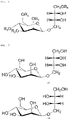
- Fig. 1 shows a structural formula of a MEL wherein R 1 to R 5 each represent a hydrogen atom, an acetyl group, or a C 3-18 fatty acid residue.
- R 1 and R 2 are fatty acid residues and R 3 and R 4 are acetyl groups is defined as MEL-A.
- R 3 is a hydrogen atom and R 4 is an acetyl group
- MEL-C The structure in which R 3 is an acetyl group and R 4 is a hydrogen atom.
- the structure in which R 3 and R 4 are hydrogen atoms is defined as MELD.
- the structure of the obtained ME is different depending on whether the hydroxymethyl group of erythritol bound to mannose is derived from the carbon at 1-position or the carbon at 4-position.
- the MEL that has, as a sugar backbone, 4-O- ⁇ -D-mannopyranosyl-erythritol shown in Fig. 2(a) is referred to as 4-O- ⁇ -D-MEL.
- 1-O- ⁇ -D-MEL-B Pseudozyma tsukubaensis is known to produce 1-O- ⁇ -D-MEL-B, which has, as a sugar backbone, 1-O- ⁇ -D-mannopyranosyl-erythritol shown in Fig. 2(b).
- the 1-O- ⁇ -MEL-B is characterized by having enhanced hydrating properties and high vesicle-forming ability as compared to 4-O- ⁇ -MEL-B, and is a promising biomaterial for skin care products etc.
- MEL The MEL biosynthetic pathway has already been reported. MEL is synthesized intracellularly by the reaction of glycosyltransferase, which binds mannose and erythritol; acyltransferase, which binds fatty acids; and acetyltransferase, which binds acetyl groups (Non-patent Literature (NPL) 2).
- NPL Non-patent Literature
- the present inventors found that deletion of the gene for acyltransferase from a microorganism capable of producing a biosurfactant yields monoacyl MELs with an aliphatic acyl group bound to only R 1 in the structural formula shown in Fig. 1 (Patent Literature (PTL) 1).
- One object to be achieved is efficient production of a monoacyl MEL.
- a method for producing a monoacyl MEL comprising culturing a microorganism capable of producing the monoacyl MEL in the presence of a surfactant.
- microorganism is a microorganism that belongs to the genus Pseudozyma.
- An enhancer for enhancing monoacyl MEL production capacity of a microorganism capable of producing a monoacyl MEL comprising a surfactant.
- the monoacyl MEL efficiency can be enhanced.
- the microorganism When a microorganism that produces a monoacyl MEL is to be cultured, the microorganism is preferably cultured in the presence of a surfactant.
- the type of surfactant is not particularly limited, and any surfactant can be used.
- the surfactant can be a nonionic surfactant, an anionic surfactant, a cationic surfactant, or an amphoteric surfactant.
- the surfactant is preferably a nonionic surfactant.
- nonionic surfactants include ether-based surfactants, ester-based surfactants, ester-ether-based surfactants, and the like.
- the nonionic surfactant is preferably an ether-based surfactant.
- ether-based nonionic surfactants examples include polyoxyethylene-based surfactants (e.g., polyoxyethylene octylphenyl ether (Triton X-100), polyoxyethylene sorbitan monolaurate (Tween 20) and polyoxyethylene lauryl ether (BRIJ35)), block polymer-based surfactants (e.g., polyoxyethylene polyoxypropylene glycol and polyoxyethylene polyoxypropylene alkyl ether), MEL, sophorolipid, rhamnolipid, trehalose lipid, and the like.
- the surfactant is preferably an anionic surfactant.
- anionic surfactants include carboxylic acid-based surfactant/ts (e.g., sodium octanoate, sodium decanoate, sodium laurate, sodium myristate, sodium palmitate, sodium stearate, etc.), sulfonic acid-based surfactants (e.g., sodium 1-hexanesulfonate, sodium 1-octanesulfonate, sodium 1-decanesulfonate, sodium 1-dodecanesulfonate, perfluorobutanesulfonic acid, sodium toluenesulfonate, etc.), and phosphoric acid ester surfactants (e.g., lauryl phosphate, sodium lauryl phosphate, potassium lauryl phosphate, etc.), and the like. Such surfactants can be used singly, or in a combination of two or more.
- carboxylic acid-based surfactant/ts e.g., sodium octanoate, sodium decanoate
- the mode of culturing a monoacyl MEL-producing microorganism in the presence of a surfactant is not particularly limited.
- a surfactant can be added to a liquid medium, and a monoacyl MEL-producing microorganism can be cultured in the medium.
- the amount of surfactant added to the medium is not particularly limited, and can be appropriately selected in consideration of, for example, the type of surfactant, the kind of microorganism, and the type of medium.
- the surfactant can be added to the medium at a concentration of 0.0001 mass% or more and 1 mass% or less, 0.001 mass% or more and 1 mass% or less, 0.0001 mass% or more and 0.1 mass% or less, 0.001 mass% or more and 0.1 mass% or less, 0.01 mass% or more and 0.1 mass% or less, 0.0001 mass% or more and 0.05 mass% or less, 0.001 mass% or more and 0.05 mass% or less, 0.0001 mass% or more and 0.01 mass% or less, or 0.001 mass% or more and 0.01 mass% or less.
- a monoacyl MEL can be extracted by using methanol, ethanol, or acetone after freeze-drying the culture broth.
- the type of microorganism that produces a monoacyl MEL is not limited.
- microorganisms that produce monoacyl MELs described in PTL 1 can be used.
- the patent literature is incorporated herein by reference in its entirety.
- the monoacyl MEL-producing microorganism is preferably a microorganism that belongs to the genus Pseudozyma, Moesziomyces, Ustilago, Sporisorium, Melanopsichium, or Kurtzmanomyces.
- Pseudozyma antarctica Moesziomyces antarcticus
- Pseudozyma parantarctica Pseudozyma rugulosa
- Pseudozyma siamensis Pseudozyma shanxiensis
- Pseudozyma crassa Pseudozyma churashimaensis
- Pseudozyma aphidis Moesziomyces aphidis
- Pseudozyma hubeiensis Pseudozyma tsukubaensis.
- Examples of preferred microorganisms that belong to the genus Moesziomyces include Moesziomyces antarcticus and Moesziomyces aphidis.
- Examples of preferred microorganisms that belong to the genus Ustilago include Ustilago hordei and Ustilago maydis.
- Examples of preferred microorganisms that belong to the genus Sporisorium include Sporisorium reilianum and Sporisorium scitamineum.
- Examples of preferred microorganisms that belong to the genus Melanopsichium include Melanopsichium pennsylvanicum.
- the MEL-producing microorganism is a microorganism of the genus Pseudozyma, more preferably a microorganism that belongs to Pseudozyma tsukubaensis, and more specifically Pseudozyma tsukubaensis 1E5 (JCM16987 strain), NBRC1940 (ATCC24555, CBS422.96, CBS6389, DBVPG6988, PYCC4855, JCM10324, MUCL29894, NCYC1510, NRLY-7792).
- Microorganisms that belong to Pseudozyma tsukubaensis are known to selectively produce 1-O- ⁇ -MEL-B.
- the monoacyl MEL-producing microorganism can be obtained by mutating a microorganism that produces a conventional MEL.
- the conventional MEL is diacyl MEL.
- the type of mutation is not limited, and is preferably a mutation that disrupts a gene encoding an acyltransferase possessed by a MEL-producing microorganism.
- Gene disruption means that a protein encoded by a gene (e.g., an acyltransferase) ceases to function.
- the mode of disruption is not particularly limited.
- the monoacyl MEL-producing microorganism can be obtained by disrupting a gene encoding an acyltransferase possessed by a MEL-producing microorganism.
- a MEL-producing microorganism generally has two kinds of mannose acyltransferases (MAC1 and MAC2).
- MAC1 and MAC2 are acyltransferases that catalyze the reaction of binding fatty acids to hydroxyl groups at the 2- and 3-positions of mannose.
- a gene encoding either MAC1 or MAC2 may be disrupted, or genes encoding MAC1 and MAC2 may both be disrupted.
- the gene encoding MAC2 is preferably disrupted.
- the gene disruption can be performed by any method.
- the gene disruption can be performed by introducing a mutation into the base sequence of the gene, disrupting or deleting the expression control region (promoter etc.) of the gene, or inhibiting the translation of a transcript of the gene.
- These can be performed, for example, by homologous recombination, transposon, transgene, post-transcriptional gene silencing, RNAi, nonsense mediated decay (NMD), ribozyme, antisense, miRNA (micro-RNA), siRNA (small interfering RNA), and like methods.
- the gene disruption is preferably performed by homologous recombination.
- Methods for disrupting genes by homologous recombination are well known.
- disruption of the target gene by homologous recombination can be performed by a method comprising: creating a gene cassette in which a selection marker gene, such as a gene that complements drug resistance or nutrient requirements, is inserted into the ORF of the target gene; incorporating the gene cassette into an appropriate vector (e.g., a plasmid); and introducing the resulting vector into a host microorganism (e.g., a conventional MEL-producing microorganism) to insert a marker gene into the target gene by homologous recombination.
- a microorganism whose target gene has been disrupted can be selected based on the expression of the above marker gene.
- the marker gene to be used in the homologous recombination method can be selection marker genes for transformants that are usually used in genetic engineering. Examples include genes that confer resistance to drugs, such as hygromycin, zeocin, kanamycin, chloramphenicol, and G418; and genes that complement nutrient requirements, such as uracil synthase, leucine synthase, adenine synthase, and lysine synthase.
- the target gene is preferably an MAC2 gene.
- Examples of representative MAC2 genes are as follows.
- SEQ ID NO: 1 is a nucleotide sequence encoding acyltransferase (PaMAC2) derived from Pseudozyma antarctica strain T34.
- SEQ ID NO: 2 is a nucleotide sequence encoding acyltransferase (PaMAC2) derived from Pseudozyma antarctica JCM10317.
- SEQ ID NO: 3 is a nucleotide sequence encoding acyltransferase (PhMAC2) derived from Pseudozyma hubeiensis SY62.
- SEQ ID NO: 4 is a nucleotide sequence encoding acyltransferase (PtMAC2) derived from Pseudozyma tsukubaensis NBRC1940.
- SEQ ID NO: 5 is a nucleotide sequence encoding an acyltransferase (PtMAC2) derived from Pseudozyma tsukubaensis strain 1E5.
- SEQ ID NO: 6 is a nucleotide sequence encoding acyltransferase (MAC2) derived from Pseudozyma aphidis DSM70725.
- a vector for disrupting an acyltransferase gene can be constructed.
- P. antarctica T-34 is also referred to as “Moesziomyces antarcticus T-34.”
- P. aphidis is also referred to as “Moesziomyces aphidis.”
- vectors for use when a microorganism of the genus Pseudozyma is used as a host include pUXV1 ATCC 77463, pUXV2 ATCC 77464, pUXV5 ATCC 77468, pUXV6 ATCC 77469, pUXV7 ATCC 77470, pUXV8 ATCC 77471, pUXV3 ATCC 77465, pU2X1 ATCC 77466, pU2X2 ATCC 77467, pTA2, pUXV1-neo, pPAX1-neo, pPAA1-neo ( Appl. Microbiol. Biotechnol. (2016) 100: 3207-3217 ), pUC_neo, pUC T_ neo, and the like.
- the transfection of the vector into a host cell can be performed by any method that can be suitably selected according to the host cell, the type of vector, etc.
- the transfection of the vector can be performed by electroporation, the calcium phosphate co-precipitation method, lipofection, microinjection, the lithium acetate method, and the like.
- a monoacyl MEL by using a monoacyl-MEL-producing microorganism can be performed by any method.
- a monoacyl MEL can be produced by culturing a monoacyl-MEL-producing microorganism in a medium suitable for culturing a MEL-producing microorganism.
- the medium to be used is not particularly limited.
- a carbohydrate such as glucose, sucrose, or blackstrap molasses is preferably used as a carbon raw material.
- a fat and/or an oil can also be used as a carbon source.
- the kind of fat and/or oil is not particularly limited.
- vegetable fats and oils, fatty acids, or esters thereof are preferably added.
- adding vegetable fat and/or oil to the culture medium is preferred.
- the kind of vegetable oil is not particularly limited, and can be appropriately selected according to, for example, the type of MEL desired.
- vegetable fats and oils include soybean oil, olive oil, rapeseed oil, safflower oil, sesame oil, palm oil, sunflower oil, coconut oil, cocoa butter, castor oil, and the like.
- fatty acids include caprylic acid, capric acid, lauric acid, myristic acid, palmitic acid, stearic acid, oleic acid, linoleic acid, linolenic acid, arachidonic acid, behenic acid, nervonic acid, and the like.
- a preferred fatty acid is oleic acid.
- the monoacyl-MEL-producing microorganism can be cultured in a medium containing only glucose as a carbon source.
- a nitrogen source a combination of an organic nitrogen source and an inorganic nitrogen source can be used.
- the organic nitrogen source for example, one member or a combination of two or more members selected from the group consisting of yeast extracts, malt extracts, peptone, polypeptone, corn steep liquor, casamino acid, and urea can be used.
- the inorganic nitrogen source one member or a combination of two or more members selected from the group consisting of sodium nitrate, potassium nitrate, ammonium nitrate, ammonium sulfate, and ammonia can be used.
- a method of producing a monoacyl MEL comprises culturing a microorganism capable of producing the monoacyl MEL in a medium containing fatty acid and glycerin.
- the amount of fatty acid and the amount of fat and/or oil are not particularly limited.
- fatty acid and fat and/or oil can be added in such an amount as for each to achieve a concentration of 0.1 to 40 volume% in the medium.
- the conditions for culturing the microorganism are not particularly limited.
- culture can be performed at pH 5 to 8, preferably pH 6, and at a temperature of 20 to 35°C, preferably 22 to 28°C, for 3 to 7 days.
- the extraction of a monoacyl MEL produced by a microorganism capable of producing the monoacyl MEL can be performed by any method.
- the monoacyl MEL can be obtained by a method comprising centrifuging a culture broth or a disrupted cell suspension, collecting the obtained supernatant, adding an appropriate extraction solvent to the supernatant, collecting the extraction solvent layer, and optionally further performing purification as necessary.
- the extraction solvent used for extracting the monoacyl MEL is preferably at least one member selected from the group consisting of methanol, ethanol, acetone, and mixtures thereof, from the viewpoint of extraction efficiency. Acetone is preferred from the viewpoint that it can efficiently separate a monoacyl MEL from hydrophilic impurities to obtain the monoacyl MEL.
- a surfactant can enhance the efficiency (capacity) of producing the monoacyl MEL by a microorganism, and also provide the monoacyl MEL more stably. Therefore, in one embodiment, a surfactant can be used as a promoter for promoting monoacyl MEL production by a monoacyl-MEL-producing microorganism. In another embodiment, a surfactant can be used to promote monoacyl MEL production by a monoacyl MEL-producing microorganism or stabilize monoacyl MEL production.
- a monoacyl-MEL-producing strain was cultured with shaking in 2 mL of a YM medium containing glycerol at 25°C for 2 days to obtain a pre-culture broth. Subsequently, 1 mL of the pre-culture broth was inoculated into 20 mL of a MEL production medium (containing 0.005% Triton X-100) supplemented with 3% olive oil, and cultured with shaking at 25°C for 7 days. On the third day of the culture, 2% olive oil was added (total amount of oil added: 5%).
- the monoacyl MEL extraction from the culture broth was tested using various solvents (ethyl acetate, methanol, ethanol, and acetone).
- the culture broth obtained in 2-1 above was centrifuged at 3,000 rpm, and the culture supernatant was collected. Ethyl acetate was directly added to the collected supernatant. The resulting ethyl acetate layer containing monoacyl MELs was collected, and the obtained layer was used as an ethyl acetate extract.
- the supernatant that was collected first was frozen at -20°C and then freeze-dried. Methanol was added to the dried supernatant, stirred by vortexing, and then allowed to stand at room temperature overnight.
- the amount of monoacyl MEL in each solvent extract was analyzed by thin-layer chromatography (TLC).
- a 2% anthrone sulfate reagent was sprayed over TLC plates after development, and the developed plates were heated at 95°C for 5 minutes to detect spots of monoacyl MEL.
- the amount of monoacyl MELs extracted with ethyl acetate was confirmed to be smaller than the amount extracted with methanol.
- the two separate spots of monoacyl MELs in the methanol extract are presumably attributable to the influence of moisture in the solvent.
- Fig. 4 shows the results of extraction with ethanol and extraction with acetone that were performed in the same manner.
- extraction with methanol extraction with ethanol and extraction with acetone were confirmed to be able to more efficiently extract monoacyl MEL than the extraction with ethyl acetate.
- highly hydrophilic impurities which were detected at the origin in methanol or ethanol extraction, were hardly detected, and only monoacyl MEL was confirmed to be detectable.
- a single spot of monoacyl MEL was detected in acetone extraction.
- a monoacyl-MEL-producing strain was cultured with shaking in 2 mL of a YM medium with glycerol at 25°C for 2 days to obtain a pre-culture broth. Subsequently, 1 mL of the pre-culture broth was inoculated into 20 mL of a medium containing 3% olive oil, and cultured with shaking at 25°C for 7 days. On the third day of culturing, 2% olive oil was added (total amount of oil added: 5%).
- a medium without a surfactant and media containing a surfactant (MEL-B, Tween 20, Triton X-100, or BRIJ35) at a concentration of 0.01% or 0.1% were used.
- the culture broth obtained in section 3-1 above was centrifuged at 3,000 rpm, and the culture supernatant was collected. The collected supernatant was frozen at -20°C and then freeze-dried. Acetone was added to the dried supernatant, and the resulting mixture was stirred by vortexing and then allowed to stand at room temperature overnight. Thereafter, the acetone layer was collected and filtered through a 0.45 ⁇ m filter. The obtained filtrate was used as an acetone extract.
- the amount of monoacyl MELs in each acetone extract was analyzed by thin-layer chromatography (TLC).
- a 2% anthrone sulfate reagent was sprayed over TLC plates after development, and the developed TLC plates were heated at 95°C for 5 minutes to detect spots of monoacyl MELs.
- the TLC plates on the left, middle, and right in Fig. 5 show the first, second, and third culturing results, respectively.
- the results confirmed that when culture was performed without surfactant addition, either no monoacyl MEL was produced (third culturing), or only a very small amount of monoacyl MELs was produced (first culturing), if any.
- Fig. 6 shows the results of culturing a monoacyl-MEL-producing strain in a MEL production medium containing MEL-B.
- Fig. 6(a) shows the amount of cell growth; and
- Fig. 6(b) shows the results of TLC analysis.
- the results confirmed that the addition of 0.01% MEL-B or 0.1% MEL-B significantly increases the amount of monoacyl MEL production as compared to the amount obtained without adding MEL-B, and that monoacyl MELs were stably produced in all cultures.
- the amount of cell growth was also larger than the amount obtained without adding MEL-B.
- Fig. 7 shows the results of culturing a monoacyl-MEL-producing strain in a MEL production medium containing Tween 20.
- Fig. 7(a) shows the amount of cell growth; and
- Fig. 7(b) shows the results of TLC analysis.
- the results confirmed that the addition of Tween 20 increases the amount of monoacyl MEL production as compared to the amount obtained without adding Tween 20, and that monoacyl MELs were stably produced in all cultures.
- the amount of cell growth was also larger than the amount obtained without adding Tween 20.
- Fig. 8 shows the results of culturing a monoacyl-MEL-producing strain in a MEL production medium containing TritonX-100. As shown in Fig. 8 , the results confirmed that the addition of 0.01% Triton X-100 significantly increased the amount of monoacyl MEL production as compared to the amount obtained without adding Triton X-100, and that monoacyl MELs were stably produced in all cultures. The amount of cell growth was 25.0 ⁇ 0.4 g/L, which was larger than the amount obtained without adding Triton X-100.
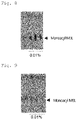
- Fig. 9 shows the results of culturing a monoacyl-MEL-producing strain in a MEL production medium containing BRIJ35. As shown in Fig. 9 , the results confirmed that the addition of 0.01% BRIJ35 increases the amount of monoacyl MEL production as compared to the amount obtained without adding BRIJ35, and that monoacyl MELs were stably produced in all cultures. The amount of cell growth was 20.6 ⁇ 0.4 g/L.
- a monoacyl MEL-producing strain was cultured in the same manner as in the above test. The results confirmed that the amount of monoacyl MEL production increases and that the production of monoacyl MEL is stabilized as compared to the case without using the surfactant.
Landscapes
- Life Sciences & Earth Sciences (AREA)
- Health & Medical Sciences (AREA)
- Organic Chemistry (AREA)
- Chemical & Material Sciences (AREA)
- Engineering & Computer Science (AREA)
- General Health & Medical Sciences (AREA)
- Zoology (AREA)
- Wood Science & Technology (AREA)
- Biotechnology (AREA)
- Public Health (AREA)
- Veterinary Medicine (AREA)
- Animal Behavior & Ethology (AREA)
- Biochemistry (AREA)
- Chemical Kinetics & Catalysis (AREA)
- General Chemical & Material Sciences (AREA)
- Microbiology (AREA)
- Bioinformatics & Cheminformatics (AREA)
- General Engineering & Computer Science (AREA)
- Genetics & Genomics (AREA)
- Epidemiology (AREA)
- Birds (AREA)
- Dermatology (AREA)
- Tropical Medicine & Parasitology (AREA)
- Preparation Of Compounds By Using Micro-Organisms (AREA)
- Micro-Organisms Or Cultivation Processes Thereof (AREA)
Abstract
Description
- A technique for producing a monoacyl MEL using a microorganism is disclosed.
- Biosurfactants are natural surfactants produced by microorganisms. Biosurfactants are highly biodegradable, have a low environmental impact, and possess a variety of beneficial physiological functions. Therefore, their use in the food industry, cosmetics industry, pharmaceutical industry, chemical industry, environmental industry, and like industrial fields is significant in realizing an environmentally harmonious society.
- Biosurfactants can be classified into five groups: glycolipid biosurfactants, acyl peptide biosurfactants, phospholipid biosurfactants, fatty acid biosurfactants, and polymeric biosurfactants. Among these, glycolipid surfactants have been the most well studied. Known as such glycolipid biosurfactants are mannosylerythritol lipids (hereinafter also referred to as MELs) wherein a fatty acid is ester-linked to mannosylerythritol wherein erythritol is glycosidically linked to mannose (hereinafter also referred to as ME); rhamnolipids, ustilagic acids, trehalose lipids, sophorose lipids, and the like.
- MELs have various structures that are different in positions and number of fatty acid residues and acetyl groups that are bound.
Fig. 1 shows a structural formula of a MEL wherein R1 to R5 each represent a hydrogen atom, an acetyl group, or a C3-18 fatty acid residue. The structure in which R1 and R2 are fatty acid residues and R3 and R4 are acetyl groups is defined as MEL-A. The structure in which R3 is a hydrogen atom and R4 is an acetyl group is defined as MEL-B. The structure in which R3 is an acetyl group and R4 is a hydrogen atom is defined as MEL-C. The structure in which R3 and R4 are hydrogen atoms is defined as MELD. As shown in Figs. 2(a) and 2(b), the structure of the obtained ME is different depending on whether the hydroxymethyl group of erythritol bound to mannose is derived from the carbon at 1-position or the carbon at 4-position. The MEL that has, as a sugar backbone, 4-O-β-D-mannopyranosyl-erythritol shown in Fig. 2(a) is referred to as 4-O-β-D-MEL. Pseudozyma tsukubaensis is known to produce 1-O-β-D-MEL-B, which has, as a sugar backbone, 1-O-β-D-mannopyranosyl-erythritol shown in Fig. 2(b). The 1-O-β-MEL-B is characterized by having enhanced hydrating properties and high vesicle-forming ability as compared to 4-O-β-MEL-B, and is a promising biomaterial for skin care products etc. - It has been reported that when MEL-producing yeast is cultured using only glucose as a carbon source, monoacyl MELs (single-chain MEL), which are MELs shown in
Fig. 1 wherein a fatty acid is bound to only R2 and R1, R3, and R4 are hydrogen atoms, can be produced (Non-patent Literature (NPL) 1). This monoacyl MEL has enhanced hydrophilicity as compared to conventional diacyl MELs (Non-patent Literature (NPL) 1). - The MEL biosynthetic pathway has already been reported. MEL is synthesized intracellularly by the reaction of glycosyltransferase, which binds mannose and erythritol; acyltransferase, which binds fatty acids; and acetyltransferase, which binds acetyl groups (Non-patent Literature (NPL) 2).
- The present inventors found that deletion of the gene for acyltransferase from a microorganism capable of producing a biosurfactant yields monoacyl MELs with an aliphatic acyl group bound to only R1 in the structural formula shown in
Fig. 1 (Patent Literature (PTL) 1). - PTL 1:
Japanese Patent Application No. 2016-191438 JP2018-52874A -
- NPL 1: Fukuoka et al., Appl. Microbiol. Biotechnol. (2007) 76: 801-810.
- NPL 2: Hewald et al., Appl. Environ. Microbiol. (2006) 72: 5469-5477
- One object to be achieved is efficient production of a monoacyl MEL.
- As a result of intensive research to achieve the above object, it was found that monoacyl MEL production efficiency could be improved by adding a surfactant to a culture medium when monoacyl MEL-producing yeast is cultured. As a result of further research and consideration based on these findings, the inventions represented below are provided.
- A method for producing a monoacyl MEL, comprising culturing a microorganism capable of producing the monoacyl MEL in the presence of a surfactant.
- The method according to Item 1, wherein the surfactant is a nonionic surfactant.
- The method according to Item 1 or 2, wherein the microorganism is a microorganism that belongs to the genus Pseudozyma.
- The method according to any one of Items 1 to 3, wherein the microorganism is deficient in a gene encoding mannose acyltransferase.
- The method according to any one of Items 1 to 4, further comprising extracting the monoacyl MEL using at least one member selected from the group consisting of methanol, ethanol, acetone, and mixtures thereof.
- An enhancer for enhancing monoacyl MEL production capacity of a microorganism capable of producing a monoacyl MEL, the enhancer comprising a surfactant.
- Use of a surfactant in enhancing monoacyl MEL production capacity of a microorganism capable of producing a monoacyl MEL.
- The monoacyl MEL efficiency can be enhanced.
-
-
Fig. 1 shows the structure of MEL. -
Fig. 2 shows the structures of 4-O-β-D-mannopyranosyl-erythritol (a) and 1-O-β-D-mannopyranosyl-erythritol (b). -
Fig. 3 shows the thin-layer chromatography evaluation results of monoacyl MELs extracted with ethyl acetate and methanol. -
Fig. 4 shows the results of thin-layer chromatography evaluation of monoacyl MELs extracted with methanol, ethanol, and acetone. -
Fig. 5 shows the thin-layer chromatography evaluation results of the amount of monoacyl MEL production when monoacyl MEL-producing yeast was cultured in a surfactant-free medium. -
Fig. 6 shows the amount of cell growth (a) and the result of thin-layer chromatography evaluation of the amount of monoacyl MEL production (b) when monoacyl MEL-producing yeast was cultured in a medium containing MEL-B. -
Fig. 7 shows the amount of cell growth (a) and the result of thin-layer chromatography evaluation of the amount of monoacyl MEL production (b) when monoacyl MEL-producing yeast was cultured in amedium containing Tween 20. -
Fig. 8 shows the result of thin-layer chromatography evaluation of the amount of monoacyl MEL production when monoacyl MEL-producing yeast was cultured in a medium containing Triton X-100. -
Fig. 9 shows the result of thin-layer chromatography evaluation of the amount of monoacyl MEL production when monoacyl MEL-producing yeast was cultured in a medium containing BRIJ35. - When a microorganism that produces a monoacyl MEL is to be cultured, the microorganism is preferably cultured in the presence of a surfactant. The type of surfactant is not particularly limited, and any surfactant can be used. For example, the surfactant can be a nonionic surfactant, an anionic surfactant, a cationic surfactant, or an amphoteric surfactant. In one embodiment, the surfactant is preferably a nonionic surfactant. Examples of nonionic surfactants include ether-based surfactants, ester-based surfactants, ester-ether-based surfactants, and the like. In one embodiment, the nonionic surfactant is preferably an ether-based surfactant. Examples of ether-based nonionic surfactants include polyoxyethylene-based surfactants (e.g., polyoxyethylene octylphenyl ether (Triton X-100), polyoxyethylene sorbitan monolaurate (Tween 20) and polyoxyethylene lauryl ether (BRIJ35)), block polymer-based surfactants (e.g., polyoxyethylene polyoxypropylene glycol and polyoxyethylene polyoxypropylene alkyl ether), MEL, sophorolipid, rhamnolipid, trehalose lipid, and the like. Such surfactants can be used singly, or in a combination of two or more. In one embodiment, the surfactant is preferably an anionic surfactant. Examples of anionic surfactants include carboxylic acid-based surfactant/ts (e.g., sodium octanoate, sodium decanoate, sodium laurate, sodium myristate, sodium palmitate, sodium stearate, etc.), sulfonic acid-based surfactants (e.g., sodium 1-hexanesulfonate, sodium 1-octanesulfonate, sodium 1-decanesulfonate, sodium 1-dodecanesulfonate, perfluorobutanesulfonic acid, sodium toluenesulfonate, etc.), and phosphoric acid ester surfactants (e.g., lauryl phosphate, sodium lauryl phosphate, potassium lauryl phosphate, etc.), and the like. Such surfactants can be used singly, or in a combination of two or more.
- The mode of culturing a monoacyl MEL-producing microorganism in the presence of a surfactant is not particularly limited. For example, a surfactant can be added to a liquid medium, and a monoacyl MEL-producing microorganism can be cultured in the medium. The amount of surfactant added to the medium is not particularly limited, and can be appropriately selected in consideration of, for example, the type of surfactant, the kind of microorganism, and the type of medium. For example, the surfactant can be added to the medium at a concentration of 0.0001 mass% or more and 1 mass% or less, 0.001 mass% or more and 1 mass% or less, 0.0001 mass% or more and 0.1 mass% or less, 0.001 mass% or more and 0.1 mass% or less, 0.01 mass% or more and 0.1 mass% or less, 0.0001 mass% or more and 0.05 mass% or less, 0.001 mass% or more and 0.05 mass% or less, 0.0001 mass% or more and 0.01 mass% or less, or 0.001 mass% or more and 0.01 mass% or less.
- Conventional ethyl acetate is not suitable as a solvent for extracting a monoacyl MEL from a culture broth. In one embodiment, a monoacyl MEL can be extracted by using methanol, ethanol, or acetone after freeze-drying the culture broth.
- The type of microorganism that produces a monoacyl MEL is not limited. For example, microorganisms that produce monoacyl MELs described in PTL 1 can be used. The patent literature is incorporated herein by reference in its entirety. In one embodiment, the monoacyl MEL-producing microorganism is preferably a microorganism that belongs to the genus Pseudozyma, Moesziomyces, Ustilago, Sporisorium, Melanopsichium, or Kurtzmanomyces. Examples of preferred microorganisms that belong to the genus Pseudozyma include Pseudozyma antarctica (Moesziomyces antarcticus), Pseudozyma parantarctica, Pseudozyma rugulosa, Pseudozyma siamensis, Pseudozyma shanxiensis, Pseudozyma crassa, Pseudozyma churashimaensis, Pseudozyma aphidis (Moesziomyces aphidis), Pseudozyma hubeiensis, and Pseudozyma tsukubaensis. Examples of preferred microorganisms that belong to the genus Moesziomyces include Moesziomyces antarcticus and Moesziomyces aphidis. Examples of preferred microorganisms that belong to the genus Ustilago include Ustilago hordei and Ustilago maydis. Examples of preferred microorganisms that belong to the genus Sporisorium include Sporisorium reilianum and Sporisorium scitamineum. Examples of preferred microorganisms that belong to the genus Melanopsichium include Melanopsichium pennsylvanicum. Examples of preferred microorganisms that belong to the genus Kurtzmanomyces include Kurtzmanomyces sp. I-11. In one preferred embodiment, the MEL-producing microorganism is a microorganism of the genus Pseudozyma, more preferably a microorganism that belongs to Pseudozyma tsukubaensis, and more specifically Pseudozyma tsukubaensis 1E5 (JCM16987 strain), NBRC1940 (ATCC24555, CBS422.96, CBS6389, DBVPG6988, PYCC4855, JCM10324, MUCL29894, NCYC1510, NRLY-7792). Microorganisms that belong to Pseudozyma tsukubaensis are known to selectively produce 1-O-β-MEL-B.
- In one embodiment, the monoacyl MEL-producing microorganism can be obtained by mutating a microorganism that produces a conventional MEL. Here, the conventional MEL is diacyl MEL. The type of mutation is not limited, and is preferably a mutation that disrupts a gene encoding an acyltransferase possessed by a MEL-producing microorganism. Gene disruption means that a protein encoded by a gene (e.g., an acyltransferase) ceases to function. The mode of disruption is not particularly limited. In one embodiment, the monoacyl MEL-producing microorganism can be obtained by disrupting a gene encoding an acyltransferase possessed by a MEL-producing microorganism. A MEL-producing microorganism generally has two kinds of mannose acyltransferases (MAC1 and MAC2). MAC1 and MAC2 are acyltransferases that catalyze the reaction of binding fatty acids to hydroxyl groups at the 2- and 3-positions of mannose. In order to produce a monoacyl MEL-producing microorganism, a gene encoding either MAC1 or MAC2 may be disrupted, or genes encoding MAC1 and MAC2 may both be disrupted. In one preferred embodiment, the gene encoding MAC2 is preferably disrupted.
- The gene disruption can be performed by any method. For example, the gene disruption can be performed by introducing a mutation into the base sequence of the gene, disrupting or deleting the expression control region (promoter etc.) of the gene, or inhibiting the translation of a transcript of the gene. These can be performed, for example, by homologous recombination, transposon, transgene, post-transcriptional gene silencing, RNAi, nonsense mediated decay (NMD), ribozyme, antisense, miRNA (micro-RNA), siRNA (small interfering RNA), and like methods.
- In one embodiment, the gene disruption is preferably performed by homologous recombination. Methods for disrupting genes by homologous recombination are well known. For example, disruption of the target gene by homologous recombination can be performed by a method comprising: creating a gene cassette in which a selection marker gene, such as a gene that complements drug resistance or nutrient requirements, is inserted into the ORF of the target gene; incorporating the gene cassette into an appropriate vector (e.g., a plasmid); and introducing the resulting vector into a host microorganism (e.g., a conventional MEL-producing microorganism) to insert a marker gene into the target gene by homologous recombination. A microorganism whose target gene has been disrupted can be selected based on the expression of the above marker gene.
- The marker gene to be used in the homologous recombination method can be selection marker genes for transformants that are usually used in genetic engineering. Examples include genes that confer resistance to drugs, such as hygromycin, zeocin, kanamycin, chloramphenicol, and G418; and genes that complement nutrient requirements, such as uracil synthase, leucine synthase, adenine synthase, and lysine synthase.
- In one embodiment, the target gene is preferably an MAC2 gene. Examples of representative MAC2 genes are as follows. SEQ ID NO: 1 is a nucleotide sequence encoding acyltransferase (PaMAC2) derived from Pseudozyma antarctica strain T34. SEQ ID NO: 2 is a nucleotide sequence encoding acyltransferase (PaMAC2) derived from Pseudozyma antarctica JCM10317. SEQ ID NO: 3 is a nucleotide sequence encoding acyltransferase (PhMAC2) derived from Pseudozyma hubeiensis SY62. SEQ ID NO: 4 is a nucleotide sequence encoding acyltransferase (PtMAC2) derived from Pseudozyma tsukubaensis NBRC1940. SEQ ID NO: 5 is a nucleotide sequence encoding an acyltransferase (PtMAC2) derived from Pseudozyma tsukubaensis strain 1E5. SEQ ID NO: 6 is a nucleotide sequence encoding acyltransferase (MAC2) derived from Pseudozyma aphidis DSM70725. Based on the information of these sequences, a vector for disrupting an acyltransferase gene can be constructed. P. antarctica T-34 is also referred to as "Moesziomyces antarcticus T-34." P. aphidis is also referred to as "Moesziomyces aphidis."
- Examples of vectors for use when a microorganism of the genus Pseudozyma is used as a host include pUXV1 ATCC 77463, pUXV2 ATCC 77464, pUXV5 ATCC 77468, pUXV6 ATCC 77469, pUXV7 ATCC 77470, pUXV8 ATCC 77471, pUXV3 ATCC 77465, pU2X1 ATCC 77466, pU2X2 ATCC 77467, pTA2, pUXV1-neo, pPAX1-neo, pPAA1-neo (Appl. Microbiol. Biotechnol. (2016) 100: 3207-3217), pUC_neo, pUCT_neo, and the like.
- The transfection of the vector into a host cell can be performed by any method that can be suitably selected according to the host cell, the type of vector, etc. For example, the transfection of the vector can be performed by electroporation, the calcium phosphate co-precipitation method, lipofection, microinjection, the lithium acetate method, and the like.
- The production of a monoacyl MEL by using a monoacyl-MEL-producing microorganism can be performed by any method. For example, a monoacyl MEL can be produced by culturing a monoacyl-MEL-producing microorganism in a medium suitable for culturing a MEL-producing microorganism. The medium to be used is not particularly limited. For example, a carbohydrate, such as glucose, sucrose, or blackstrap molasses is preferably used as a carbon raw material. In addition to, or in place of, a carbohydrate, a fat and/or an oil can also be used as a carbon source. The kind of fat and/or oil is not particularly limited. For example, vegetable fats and oils, fatty acids, or esters thereof are preferably added.
- In one embodiment, adding vegetable fat and/or oil to the culture medium is preferred. The kind of vegetable oil is not particularly limited, and can be appropriately selected according to, for example, the type of MEL desired. Examples of vegetable fats and oils include soybean oil, olive oil, rapeseed oil, safflower oil, sesame oil, palm oil, sunflower oil, coconut oil, cocoa butter, castor oil, and the like. Examples of fatty acids include caprylic acid, capric acid, lauric acid, myristic acid, palmitic acid, stearic acid, oleic acid, linoleic acid, linolenic acid, arachidonic acid, behenic acid, nervonic acid, and the like. In one embodiment, a preferred fatty acid is oleic acid.
- In one embodiment, the monoacyl-MEL-producing microorganism can be cultured in a medium containing only glucose as a carbon source. As a nitrogen source, a combination of an organic nitrogen source and an inorganic nitrogen source can be used. As the organic nitrogen source, for example, one member or a combination of two or more members selected from the group consisting of yeast extracts, malt extracts, peptone, polypeptone, corn steep liquor, casamino acid, and urea can be used.
- As the inorganic nitrogen source, one member or a combination of two or more members selected from the group consisting of sodium nitrate, potassium nitrate, ammonium nitrate, ammonium sulfate, and ammonia can be used. In another embodiment, a method of producing a monoacyl MEL is provided, which comprises culturing a microorganism capable of producing the monoacyl MEL in a medium containing fatty acid and glycerin.
- The amount of fatty acid and the amount of fat and/or oil are not particularly limited. For example, fatty acid and fat and/or oil can be added in such an amount as for each to achieve a concentration of 0.1 to 40 volume% in the medium.
- The conditions for culturing the microorganism are not particularly limited. For example, culture can be performed at pH 5 to 8, preferably pH 6, and at a temperature of 20 to 35°C, preferably 22 to 28°C, for 3 to 7 days.
- The extraction of a monoacyl MEL produced by a microorganism capable of producing the monoacyl MEL can be performed by any method. For example, the monoacyl MEL can be obtained by a method comprising centrifuging a culture broth or a disrupted cell suspension, collecting the obtained supernatant, adding an appropriate extraction solvent to the supernatant, collecting the extraction solvent layer, and optionally further performing purification as necessary. In one embodiment, the extraction solvent used for extracting the monoacyl MEL is preferably at least one member selected from the group consisting of methanol, ethanol, acetone, and mixtures thereof, from the viewpoint of extraction efficiency. Acetone is preferred from the viewpoint that it can efficiently separate a monoacyl MEL from hydrophilic impurities to obtain the monoacyl MEL.
- As described above, the use of a surfactant can enhance the efficiency (capacity) of producing the monoacyl MEL by a microorganism, and also provide the monoacyl MEL more stably. Therefore, in one embodiment, a surfactant can be used as a promoter for promoting monoacyl MEL production by a monoacyl-MEL-producing microorganism. In another embodiment, a surfactant can be used to promote monoacyl MEL production by a monoacyl MEL-producing microorganism or stabilize monoacyl MEL production.
- The present invention is described below in more detail with reference to Examples. However, the present invention is not limited to these Examples.
-
- Yeast cells used
Monoacyl-MEL-producing strain: Pseudozyma tsukubaensis strain 1E5 (JCM16987) acyltransferase (PtMAC2) disrupted strain - Surfactants
- MEL-B (purified Pseudozyma tsukubaensis culture)
- Tween 20 (produced by Sigma)
- Triton X-100 (produced by MP Biomedicals)
- BRIJ35 (produced by MP Biomedicals)
- Sodium laurate (produced by Fujifilm Wako Pure Chemicals Corporation)
- Media
- YM medium with glycerol: prepared by dissolving 3 g of a yeast extract, 3 g of a malt extract, 5 g of peptone, 10 g of glucose, and 50 g of glycerol in 1 L of deionized water.
- MEL production medium: prepared by dissolving 5 g of a yeast extract, 3 g of sodium nitrate, 0.3 g of potassium dihydrogen phosphate, 0.3 g of magnesium sulfate hemihydrate, and 20 g of glycerol in 1L of deionized water.
- A monoacyl-MEL-producing strain was cultured with shaking in 2 mL of a YM medium containing glycerol at 25°C for 2 days to obtain a pre-culture broth. Subsequently, 1 mL of the pre-culture broth was inoculated into 20 mL of a MEL production medium (containing 0.005% Triton X-100) supplemented with 3% olive oil, and cultured with shaking at 25°C for 7 days. On the third day of the culture, 2% olive oil was added (total amount of oil added: 5%).
- The monoacyl MEL extraction from the culture broth was tested using various solvents (ethyl acetate, methanol, ethanol, and acetone). The culture broth obtained in 2-1 above was centrifuged at 3,000 rpm, and the culture supernatant was collected. Ethyl acetate was directly added to the collected supernatant. The resulting ethyl acetate layer containing monoacyl MELs was collected, and the obtained layer was used as an ethyl acetate extract. In the methanol extraction, the supernatant that was collected first was frozen at -20°C and then freeze-dried. Methanol was added to the dried supernatant, stirred by vortexing, and then allowed to stand at room temperature overnight. After being allowed to stand, the resulting mixture was allowed to stand, and the methanol layer was collected and filtered through a 0.45 µm filter. The obtained filtrate was used as a methanol extract. Extraction with ethanol and extraction with acetone were also performed in the same manner as the extraction using methanol.
- The amount of monoacyl MEL in each solvent extract was analyzed by thin-layer chromatography (TLC). The composition of the developing solvent was chloroform : methanol : 12% ammonia water = 55 : 25 : 2. A 2% anthrone sulfate reagent was sprayed over TLC plates after development, and the developed plates were heated at 95°C for 5 minutes to detect spots of monoacyl MEL.
- As shown in
Fig. 3 , the amount of monoacyl MELs extracted with ethyl acetate was confirmed to be smaller than the amount extracted with methanol. The two separate spots of monoacyl MELs in the methanol extract are presumably attributable to the influence of moisture in the solvent. -
Fig. 4 shows the results of extraction with ethanol and extraction with acetone that were performed in the same manner. As with the extraction with methanol, extraction with ethanol and extraction with acetone were confirmed to be able to more efficiently extract monoacyl MEL than the extraction with ethyl acetate. In particular, in acetone extraction, highly hydrophilic impurities, which were detected at the origin in methanol or ethanol extraction, were hardly detected, and only monoacyl MEL was confirmed to be detectable. Further, unlike methanol or ethanol extraction, a single spot of monoacyl MEL was detected in acetone extraction. - A monoacyl-MEL-producing strain was cultured with shaking in 2 mL of a YM medium with glycerol at 25°C for 2 days to obtain a pre-culture broth. Subsequently, 1 mL of the pre-culture broth was inoculated into 20 mL of a medium containing 3% olive oil, and cultured with shaking at 25°C for 7 days. On the third day of culturing, 2% olive oil was added (total amount of oil added: 5%). As the MEL production media, a medium without a surfactant and media containing a surfactant (MEL-B,
Tween 20, Triton X-100, or BRIJ35) at a concentration of 0.01% or 0.1% were used. - The culture broth obtained in section 3-1 above was centrifuged at 3,000 rpm, and the culture supernatant was collected. The collected supernatant was frozen at -20°C and then freeze-dried. Acetone was added to the dried supernatant, and the resulting mixture was stirred by vortexing and then allowed to stand at room temperature overnight. Thereafter, the acetone layer was collected and filtered through a 0.45 µm filter. The obtained filtrate was used as an acetone extract.
- The amount of monoacyl MELs in each acetone extract was analyzed by thin-layer chromatography (TLC). The composition of the developing solvent was chloroform : methanol : 12% ammonia water = 55 : 25 : 2. A 2% anthrone sulfate reagent was sprayed over TLC plates after development, and the developed TLC plates were heated at 95°C for 5 minutes to detect spots of monoacyl MELs.
-
Fig. 5 shows the results of subjecting a monoacyl-MEL-producing strain to culturing a total of 3 times in a MEL production medium without a surfactant (n=3 for each culturing). The TLC plates on the left, middle, and right inFig. 5 show the first, second, and third culturing results, respectively. As shown inFig. 5 , the results confirmed that when culture was performed without surfactant addition, either no monoacyl MEL was produced (third culturing), or only a very small amount of monoacyl MELs was produced (first culturing), if any. Even when three samples (n=3) were subjected to each culturing, monoacyl MELs were detected from only one sample in a case (in the second culturing); the results thus confirmed that the production is unstable. The amount of cell growth was 21.9 ± 2.8 g/L on average for a total of culturing 3 times. -
Fig. 6 shows the results of culturing a monoacyl-MEL-producing strain in a MEL production medium containing MEL-B.Fig. 6(a) shows the amount of cell growth; andFig. 6(b) shows the results of TLC analysis. As shown inFig. 6 , the results confirmed that the addition of 0.01% MEL-B or 0.1% MEL-B significantly increases the amount of monoacyl MEL production as compared to the amount obtained without adding MEL-B, and that monoacyl MELs were stably produced in all cultures. The amount of cell growth was also larger than the amount obtained without adding MEL-B. -
Fig. 7 shows the results of culturing a monoacyl-MEL-producing strain in a MEL productionmedium containing Tween 20.Fig. 7(a) shows the amount of cell growth; andFig. 7(b) shows the results of TLC analysis. As shown inFig. 7 , the results confirmed that the addition ofTween 20 increases the amount of monoacyl MEL production as compared to the amount obtained without addingTween 20, and that monoacyl MELs were stably produced in all cultures. The amount of cell growth was also larger than the amount obtained without addingTween 20. -
Fig. 8 shows the results of culturing a monoacyl-MEL-producing strain in a MEL production medium containing TritonX-100. As shown inFig. 8 , the results confirmed that the addition of 0.01% Triton X-100 significantly increased the amount of monoacyl MEL production as compared to the amount obtained without adding Triton X-100, and that monoacyl MELs were stably produced in all cultures. The amount of cell growth was 25.0 ± 0.4 g/L, which was larger than the amount obtained without adding Triton X-100. -
Fig. 9 shows the results of culturing a monoacyl-MEL-producing strain in a MEL production medium containing BRIJ35. As shown inFig. 9 , the results confirmed that the addition of 0.01% BRIJ35 increases the amount of monoacyl MEL production as compared to the amount obtained without adding BRIJ35, and that monoacyl MELs were stably produced in all cultures. The amount of cell growth was 20.6 ± 0.4 g/L. - Using a MEL production medium containing 0.01% sodium laurate, which is an anionic surfactant, a monoacyl MEL-producing strain was cultured in the same manner as in the above test. The results confirmed that the amount of monoacyl MEL production increases and that the production of monoacyl MEL is stabilized as compared to the case without using the surfactant.
- It is presumed that the addition of MEL-B to the medium promoted emulsification and dispersion of the raw material fat and/or oil, thus resulting in the promotion of monoacyl MEL production.


Claims (7)
- A method for producing a monoacyl MEL, comprising culturing a microorganism capable of producing the monoacyl MEL in the presence of a surfactant.
- The method according to claim 1, wherein the surfactant is a nonionic surfactant.
- The method according to claim 1 or 2, wherein the microorganism is a microorganism that belongs to the genus Pseudozyma.
- The method according to any one of claims 1 to 3, wherein the microorganism is deficient in a gene encoding a mannose acyltransferase.
- The method according to any one of claims 1 to 4, further comprising extracting the monoacyl MEL using at least one member selected from the group consisting of methanol, ethanol, acetone, and mixtures thereof.
- An enhancer for enhancing monoacyl MEL production capacity of a microorganism capable of producing a monoacyl MEL, the enhancer comprising a surfactant.
- Use of a surfactant in enhancing monoacyl MEL production capacity of a microorganism capable of producing a monoacyl MEL.
Applications Claiming Priority (2)
| Application Number | Priority Date | Filing Date | Title |
|---|---|---|---|
| JP2019153509 | 2019-08-26 | ||
| PCT/JP2020/031766 WO2021039686A1 (en) | 2019-08-26 | 2020-08-24 | Production of monoacyl mel |
Publications (2)
| Publication Number | Publication Date |
|---|---|
| EP4023763A1 true EP4023763A1 (en) | 2022-07-06 |
| EP4023763A4 EP4023763A4 (en) | 2023-08-16 |
Family
ID=74685564
Family Applications (1)
| Application Number | Title | Priority Date | Filing Date |
|---|---|---|---|
| EP20856771.9A Pending EP4023763A4 (en) | 2019-08-26 | 2020-08-24 | MONOACYL MEL PRODUCTION |
Country Status (5)
| Country | Link |
|---|---|
| US (1) | US12297473B2 (en) |
| EP (1) | EP4023763A4 (en) |
| JP (1) | JP7651128B2 (en) |
| CN (1) | CN114269942A (en) |
| WO (1) | WO2021039686A1 (en) |
Families Citing this family (1)
| Publication number | Priority date | Publication date | Assignee | Title |
|---|---|---|---|---|
| WO2021010264A1 (en) | 2019-07-18 | 2021-01-21 | 国立研究開発法人産業技術総合研究所 | Biosurfactant-producing recombinant microorganism |
Family Cites Families (12)
| Publication number | Priority date | Publication date | Assignee | Title |
|---|---|---|---|---|
| WO2000029604A1 (en) | 1998-11-18 | 2000-05-25 | The University Of Akron | Production of biological materials by simultaneous aerobic and anaerobic respiration |
| JP4735971B2 (en) | 2006-01-13 | 2011-07-27 | 独立行政法人産業技術総合研究所 | Mannosyl erythritol lipid production method |
| JP5622190B2 (en) * | 2010-03-05 | 2014-11-12 | 独立行政法人産業技術総合研究所 | Novel microorganism and method for producing sugar-type biosurfactant using the same |
| JP5565796B2 (en) | 2010-03-10 | 2014-08-06 | 独立行政法人産業技術総合研究所 | Novel microorganism and method for producing sugar-type biosurfactant using the same |
| US20120276247A1 (en) | 2011-04-29 | 2012-11-01 | Uwe Bornscheuer | Lipase Variants |
| WO2014109360A1 (en) | 2013-01-09 | 2014-07-17 | 独立行政法人農業環境技術研究所 | Method for highly efficiently producing heterologous protein |
| CN103589764B (en) | 2013-11-05 | 2015-06-17 | 浙江大学 | Production method for mannosylerythritol lipids |
| JP6517067B2 (en) | 2015-03-31 | 2019-05-22 | 株式会社クボタ | Oil ring type slide bearing |
| JP6967229B2 (en) * | 2016-06-03 | 2021-11-17 | 国立研究開発法人産業技術総合研究所 | Biosurfactant-producing recombinant microorganisms |
| JP6849183B2 (en) | 2016-09-29 | 2021-03-24 | 国立研究開発法人産業技術総合研究所 | Monoacyl type MEL |
| JP6920684B2 (en) | 2017-01-20 | 2021-08-18 | 国立研究開発法人産業技術総合研究所 | Manufacturing method of MEL-D |
| WO2021010264A1 (en) | 2019-07-18 | 2021-01-21 | 国立研究開発法人産業技術総合研究所 | Biosurfactant-producing recombinant microorganism |
-
2020
- 2020-08-24 WO PCT/JP2020/031766 patent/WO2021039686A1/en not_active Ceased
- 2020-08-24 JP JP2021542869A patent/JP7651128B2/en active Active
- 2020-08-24 US US17/635,991 patent/US12297473B2/en active Active
- 2020-08-24 CN CN202080058647.3A patent/CN114269942A/en active Pending
- 2020-08-24 EP EP20856771.9A patent/EP4023763A4/en active Pending
Also Published As
| Publication number | Publication date |
|---|---|
| JPWO2021039686A1 (en) | 2021-03-04 |
| CN114269942A (en) | 2022-04-01 |
| WO2021039686A1 (en) | 2021-03-04 |
| US20220275414A1 (en) | 2022-09-01 |
| EP4023763A4 (en) | 2023-08-16 |
| US12297473B2 (en) | 2025-05-13 |
| JP7651128B2 (en) | 2025-03-26 |
Similar Documents
| Publication | Publication Date | Title |
|---|---|---|
| Jia et al. | Molecular mechanisms for photosynthetic carbon partitioning into storage neutral lipids in Nannochloropsis oceanica under nitrogen-depletion conditions | |
| Roelants et al. | Candida bombicola as a platform organism for the production of tailor‐made biomolecules | |
| Alvarez et al. | Accumulation and mobilization of storage lipids by Rhodococcus opacus PD630 and Rhodococcus ruber NCIMB 40126 | |
| US20200392470A1 (en) | Novel acyltransferases, variant thioesterases, and uses thereof | |
| US9650658B2 (en) | Methods to produce bolaamphiphilic glycolipids | |
| CN102216463A (en) | Microbial ethanol production | |
| CN104968788A (en) | Genetically Engineered Microbial Strains Including Chlorella Prototheca Lipid Pathway Genes | |
| EP2970926B1 (en) | Engineering microorganisms | |
| JP2015500009A (en) | Genetically engineered microbial strains containing Prototheca lipid pathway genes | |
| Konishi et al. | Isolation of yeast candidates for efficient sophorolipids production: their production potentials associate to their lineage | |
| Ewering et al. | Metabolic engineering of strains of Ralstonia eutropha and Pseudomonas putida for biotechnological production of 2-methylcitric acid | |
| US12297473B2 (en) | Production of monoacyl MEL | |
| Kusaka | Growth and division of protoplasts of Bacillus megaterium and inhibition of division by penicillin | |
| WO2019060527A1 (en) | Heterologous production of 10-methylstearic acid by cells expressing recombinant methyltransferase | |
| JP6920684B2 (en) | Manufacturing method of MEL-D | |
| EP4001423A1 (en) | Biosurfactant-producing recombinant microorganism | |
| JP6849183B2 (en) | Monoacyl type MEL | |
| Wang et al. | Employing metabolic engineered lipolytic microbial platform for 1-alkene one-step conversion | |
| US12534749B2 (en) | Monoacylated MEL-producing microorganism | |
| EP2896701A1 (en) | Method for producing polyhydroxyalkanoate using modified fat or oil composition | |
| Murata et al. | Establishment of genome editing techniques in the marine oleaginous diatom Fistulifera solaris for improved oil accumulation | |
| JP2023111516A (en) | Lipid manufacturing method | |
| Hwangbo et al. | Dual-function oleaginous biocatalysts for non-sterile cultivation and solvent-free biolipid bioextraction to reduce biolipid-based biofuel production costs | |
| Geys | Engineering the metabolism of Starmerella bombicola for the production of tailor-made glycolipids | |
| JP6723002B2 (en) | Oil and fat manufacturing method |
Legal Events
| Date | Code | Title | Description |
|---|---|---|---|
| STAA | Information on the status of an ep patent application or granted ep patent |
Free format text: STATUS: THE INTERNATIONAL PUBLICATION HAS BEEN MADE |
|
| PUAI | Public reference made under article 153(3) epc to a published international application that has entered the european phase |
Free format text: ORIGINAL CODE: 0009012 |
|
| STAA | Information on the status of an ep patent application or granted ep patent |
Free format text: STATUS: REQUEST FOR EXAMINATION WAS MADE |
|
| 17P | Request for examination filed |
Effective date: 20220218 |
|
| AK | Designated contracting states |
Kind code of ref document: A1 Designated state(s): AL AT BE BG CH CY CZ DE DK EE ES FI FR GB GR HR HU IE IS IT LI LT LU LV MC MK MT NL NO PL PT RO RS SE SI SK SM TR |
|
| DAV | Request for validation of the european patent (deleted) | ||
| DAX | Request for extension of the european patent (deleted) | ||
| P01 | Opt-out of the competence of the unified patent court (upc) registered |
Effective date: 20230518 |
|
| REG | Reference to a national code |
Ref country code: DE Ref legal event code: R079 Free format text: PREVIOUS MAIN CLASS: C12P0019020000 Ipc: C12P0019440000 |
|
| A4 | Supplementary search report drawn up and despatched |
Effective date: 20230714 |
|
| RIC1 | Information provided on ipc code assigned before grant |
Ipc: A61Q 19/00 20060101ALI20230710BHEP Ipc: A61K 8/99 20170101ALI20230710BHEP Ipc: A61K 8/60 20060101ALI20230710BHEP Ipc: C12P 19/44 20060101AFI20230710BHEP |
|
| STAA | Information on the status of an ep patent application or granted ep patent |
Free format text: STATUS: EXAMINATION IS IN PROGRESS |
|
| 17Q | First examination report despatched |
Effective date: 20240419 |