EP4023010B1 - Feedback channel mapping and multiplexing harq reports in nr sidelink communication - Google Patents
Feedback channel mapping and multiplexing harq reports in nr sidelink communication Download PDFInfo
- Publication number
- EP4023010B1 EP4023010B1 EP20885109.7A EP20885109A EP4023010B1 EP 4023010 B1 EP4023010 B1 EP 4023010B1 EP 20885109 A EP20885109 A EP 20885109A EP 4023010 B1 EP4023010 B1 EP 4023010B1
- Authority
- EP
- European Patent Office
- Prior art keywords
- psfch
- communication
- pssch
- rbs
- harq
- Prior art date
- Legal status (The legal status is an assumption and is not a legal conclusion. Google has not performed a legal analysis and makes no representation as to the accuracy of the status listed.)
- Active
Links
Images







Classifications
-
- H—ELECTRICITY
- H04—ELECTRIC COMMUNICATION TECHNIQUE
- H04L—TRANSMISSION OF DIGITAL INFORMATION, e.g. TELEGRAPHIC COMMUNICATION
- H04L1/00—Arrangements for detecting or preventing errors in the information received
- H04L1/12—Arrangements for detecting or preventing errors in the information received by using return channel
- H04L1/16—Arrangements for detecting or preventing errors in the information received by using return channel in which the return channel carries supervisory signals, e.g. repetition request signals
- H04L1/18—Automatic repetition systems, e.g. Van Duuren systems
- H04L1/1812—Hybrid protocols; Hybrid automatic repeat request [HARQ]
-
- H—ELECTRICITY
- H04—ELECTRIC COMMUNICATION TECHNIQUE
- H04L—TRANSMISSION OF DIGITAL INFORMATION, e.g. TELEGRAPHIC COMMUNICATION
- H04L1/00—Arrangements for detecting or preventing errors in the information received
- H04L1/12—Arrangements for detecting or preventing errors in the information received by using return channel
- H04L1/16—Arrangements for detecting or preventing errors in the information received by using return channel in which the return channel carries supervisory signals, e.g. repetition request signals
- H04L1/18—Automatic repetition systems, e.g. Van Duuren systems
- H04L1/1829—Arrangements specially adapted for the receiver end
- H04L1/1861—Physical mapping arrangements
-
- H—ELECTRICITY
- H04—ELECTRIC COMMUNICATION TECHNIQUE
- H04L—TRANSMISSION OF DIGITAL INFORMATION, e.g. TELEGRAPHIC COMMUNICATION
- H04L1/00—Arrangements for detecting or preventing errors in the information received
- H04L1/12—Arrangements for detecting or preventing errors in the information received by using return channel
- H04L1/16—Arrangements for detecting or preventing errors in the information received by using return channel in which the return channel carries supervisory signals, e.g. repetition request signals
- H04L1/18—Automatic repetition systems, e.g. Van Duuren systems
- H04L1/1829—Arrangements specially adapted for the receiver end
- H04L1/1864—ARQ related signaling
-
- H—ELECTRICITY
- H04—ELECTRIC COMMUNICATION TECHNIQUE
- H04L—TRANSMISSION OF DIGITAL INFORMATION, e.g. TELEGRAPHIC COMMUNICATION
- H04L1/00—Arrangements for detecting or preventing errors in the information received
- H04L1/12—Arrangements for detecting or preventing errors in the information received by using return channel
- H04L1/16—Arrangements for detecting or preventing errors in the information received by using return channel in which the return channel carries supervisory signals, e.g. repetition request signals
- H04L1/18—Automatic repetition systems, e.g. Van Duuren systems
- H04L1/1867—Arrangements specially adapted for the transmitter end
- H04L1/1896—ARQ related signaling
-
- H—ELECTRICITY
- H04—ELECTRIC COMMUNICATION TECHNIQUE
- H04L—TRANSMISSION OF DIGITAL INFORMATION, e.g. TELEGRAPHIC COMMUNICATION
- H04L27/00—Modulated-carrier systems
- H04L27/26—Systems using multi-frequency codes
- H04L27/2601—Multicarrier modulation systems
- H04L27/2602—Signal structure
- H04L27/2605—Symbol extensions, e.g. Zero Tail, Unique Word [UW]
- H04L27/2607—Cyclic extensions
-
- H—ELECTRICITY
- H04—ELECTRIC COMMUNICATION TECHNIQUE
- H04L—TRANSMISSION OF DIGITAL INFORMATION, e.g. TELEGRAPHIC COMMUNICATION
- H04L5/00—Arrangements affording multiple use of the transmission path
- H04L5/0001—Arrangements for dividing the transmission path
- H04L5/0003—Two-dimensional division
- H04L5/0005—Time-frequency
-
- H—ELECTRICITY
- H04—ELECTRIC COMMUNICATION TECHNIQUE
- H04L—TRANSMISSION OF DIGITAL INFORMATION, e.g. TELEGRAPHIC COMMUNICATION
- H04L5/00—Arrangements affording multiple use of the transmission path
- H04L5/0001—Arrangements for dividing the transmission path
- H04L5/0003—Two-dimensional division
- H04L5/0005—Time-frequency
- H04L5/0007—Time-frequency the frequencies being orthogonal, e.g. OFDM(A) or DMT
-
- H—ELECTRICITY
- H04—ELECTRIC COMMUNICATION TECHNIQUE
- H04L—TRANSMISSION OF DIGITAL INFORMATION, e.g. TELEGRAPHIC COMMUNICATION
- H04L5/00—Arrangements affording multiple use of the transmission path
- H04L5/003—Arrangements for allocating sub-channels of the transmission path
- H04L5/0053—Allocation of signalling, i.e. of overhead other than pilot signals
-
- H—ELECTRICITY
- H04—ELECTRIC COMMUNICATION TECHNIQUE
- H04L—TRANSMISSION OF DIGITAL INFORMATION, e.g. TELEGRAPHIC COMMUNICATION
- H04L5/00—Arrangements affording multiple use of the transmission path
- H04L5/003—Arrangements for allocating sub-channels of the transmission path
- H04L5/0053—Allocation of signalling, i.e. of overhead other than pilot signals
- H04L5/0055—Physical resource allocation for ACK/NACK
-
- H—ELECTRICITY
- H04—ELECTRIC COMMUNICATION TECHNIQUE
- H04L—TRANSMISSION OF DIGITAL INFORMATION, e.g. TELEGRAPHIC COMMUNICATION
- H04L5/00—Arrangements affording multiple use of the transmission path
- H04L5/0091—Signalling for the administration of the divided path, e.g. signalling of configuration information
- H04L5/0094—Indication of how sub-channels of the path are allocated
-
- H—ELECTRICITY
- H04—ELECTRIC COMMUNICATION TECHNIQUE
- H04W—WIRELESS COMMUNICATION NETWORKS
- H04W4/00—Services specially adapted for wireless communication networks; Facilities therefor
- H04W4/06—Selective distribution of broadcast services, e.g. multimedia broadcast multicast service [MBMS]; Services to user groups; One-way selective calling services
- H04W4/08—User group management
-
- H—ELECTRICITY
- H04—ELECTRIC COMMUNICATION TECHNIQUE
- H04W—WIRELESS COMMUNICATION NETWORKS
- H04W4/00—Services specially adapted for wireless communication networks; Facilities therefor
- H04W4/30—Services specially adapted for particular environments, situations or purposes
- H04W4/40—Services specially adapted for particular environments, situations or purposes for vehicles, e.g. vehicle-to-pedestrians [V2P]
-
- H—ELECTRICITY
- H04—ELECTRIC COMMUNICATION TECHNIQUE
- H04W—WIRELESS COMMUNICATION NETWORKS
- H04W4/00—Services specially adapted for wireless communication networks; Facilities therefor
- H04W4/70—Services for machine-to-machine communication [M2M] or machine type communication [MTC]
-
- H—ELECTRICITY
- H04—ELECTRIC COMMUNICATION TECHNIQUE
- H04W—WIRELESS COMMUNICATION NETWORKS
- H04W72/00—Local resource management
- H04W72/02—Selection of wireless resources by user or terminal
-
- H—ELECTRICITY
- H04—ELECTRIC COMMUNICATION TECHNIQUE
- H04W—WIRELESS COMMUNICATION NETWORKS
- H04W72/00—Local resource management
- H04W72/04—Wireless resource allocation
- H04W72/044—Wireless resource allocation based on the type of the allocated resource
- H04W72/0446—Resources in time domain, e.g. slots or frames
-
- H—ELECTRICITY
- H04—ELECTRIC COMMUNICATION TECHNIQUE
- H04W—WIRELESS COMMUNICATION NETWORKS
- H04W72/00—Local resource management
- H04W72/04—Wireless resource allocation
- H04W72/044—Wireless resource allocation based on the type of the allocated resource
- H04W72/0453—Resources in frequency domain, e.g. a carrier in FDMA
-
- H—ELECTRICITY
- H04—ELECTRIC COMMUNICATION TECHNIQUE
- H04W—WIRELESS COMMUNICATION NETWORKS
- H04W72/00—Local resource management
- H04W72/20—Control channels or signalling for resource management
-
- H—ELECTRICITY
- H04—ELECTRIC COMMUNICATION TECHNIQUE
- H04W—WIRELESS COMMUNICATION NETWORKS
- H04W72/00—Local resource management
- H04W72/20—Control channels or signalling for resource management
- H04W72/25—Control channels or signalling for resource management between terminals via a wireless link, e.g. sidelink
-
- H—ELECTRICITY
- H04—ELECTRIC COMMUNICATION TECHNIQUE
- H04W—WIRELESS COMMUNICATION NETWORKS
- H04W76/00—Connection management
- H04W76/10—Connection setup
- H04W76/14—Direct-mode setup
-
- H—ELECTRICITY
- H04—ELECTRIC COMMUNICATION TECHNIQUE
- H04W—WIRELESS COMMUNICATION NETWORKS
- H04W92/00—Interfaces specially adapted for wireless communication networks
- H04W92/16—Interfaces between hierarchically similar devices
- H04W92/18—Interfaces between hierarchically similar devices between terminal devices
Definitions
- the present invention relates to the field of Sidelink (SL) communication.
- the present invention relates to methods and apparatus for feedback channel mapping and multiplexing HARQ reports in New Radio (NR) SL communication.
- SL Sidelink
- NR New Radio
- Acknowledgement signaling processes like HARQ signaling are widely used in wireless communication technology (telecommunications) to facilitate low error rates when transferring data between, for example, a network node, like a base station, and a user equipment (UE).
- acknowledgement signaling should also be used for SL communication when transferring data directly between UEs without the interference of a network node.
- the acknowledgment signaling processes may determine correct or incorrect reception of packet TBs over SL based on coding bits associated to the packet TBs.
- HARQ signaling may be referred to HARQ feedback or HARQ feedback reporting, wherein HARQ feedback reports may be transmitted from one UE to another UE using SL communication.
- a HARQ codebook may be used which associates a bit pattern to acknowledgement signaling, e.g. by defining and/or indicating the bit pattern to be used for acknowledgment signaling.
- HARQ feedback reporting may be performed by a UE receiving a packet TB (Rx-UE), the packet TB being transmitted from another UE (Tx-UE) to the Rx-UE.
- HARQ feedback reports may be sent directly from the Rx-UE to the Tx-UE via SL, the HARQ feedback reports including feedback information, like Acknowledgment (ACK) and/or Negative Acknowledgment (NACK) information, regarding the received packet TB.
- ACK Acknowledgment
- NACK Negative Acknowledgment
- the ACK information in a HARQ feedback report may indicate, to the Tx-UE, that the corresponding packet TB was successfully received and decoded by the Rx-UE, wherein the NACK information in a HARQ feedback report may indicate, to the Tx-UE, that the Rx-UE did not successfully receive and/or decode the corresponding packet TB.
- Reasons for not successfully receiving and/or decoding packet TBs may be, for example, errors occuring during the packet TB transmission or during encoding and/or decoding processes.
- the Tx-UE may retransmit the respective packet TB for which NACK information has been received. By retransmitting the respective packet TB, the Rx-UE may be able to successfully receive and decode the packet TB, resulting in increased reliability.
- the latency part of packet TBs delivery can be shortend and the overall usage of SL resources can be minimized.
- HARQ reporting may only be used for three specific SL communication cast types, like unicast (UC) for one-to-one direct communication, connection-less groupcast (CL-GC) with unknown number of Rx-UE(s) within a short communication range that can communicate with each other using SL communication, and connection-oriented groupcast (CO-GC) with a fixed or deterministic number of Rx-UEs within a SL group that can communicate with each other using SL communication .
- UC unicast
- CL-GC connection-less groupcast
- CO-GC connection-oriented groupcast
- a new Physical Sidelink Feedback Channel is introduced in NR SL design for Rx-UE(s) to feedback ACK and/or NACK results to the Tx-UE.
- the periodicity of PSFCH occurrence (N) in terms of number of time slots within a resource pool may be 0 (no PSFCH at all), 1, 2, or 4. Due to UE processing capability constraint, it is also expected that there may be a minimum time gap (K) between a Physical Sidelink Shared Channel (PSSCH) transmission comprising the transmission of packet TBs and its associated PSFCH for HARQ feedback.
- K minimum time gap
- a minimum time gap between the PSSCH transmission and the PSFCH transmission is two slots. This means the quickest time a Rx-UE can send its HARQ report after receiving a packet TB during PSSCH transmission from a Tx-UE in the above described three specific SL communication cast types is two slots.
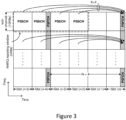
- the frequency (Freq.) axis is in the vertical direction and the time axis is in the horizontal direction, the frequency axis comprising sub-channels of, for example, 10 Resource Blocks (RBs) each and the time axis comprising a plurality of time slots.
- RBs Resource Blocks
- In one time slot one PSSCH slot and one PSFCH slot are present, wherein some time resources are allocated for PSSCH transmission in the PSSCH slot and some time resources are allocated for PSFCH transmission in the PSFCH slot.
- some RBs are allocated for PSSCH transmission and some RBs are allocated for PSFCH transmission.
- a HARQ reporting window is indicated with dashed lines.
- the HRW comprises one PSSCH slot and that a PSFCH slot carries a HARQ feedback report for one PSSCH slot.
- a Rx-UE must wait two PSSCH slots after having received a packet TB in a PSSCH slot in order to transmit a HARQ feedback report for this packet TB in a PSFCH slot.
- the PSFCH time resources in the time slots and RBs for PSFCH transmission in Figure 1 are illustrated with a diamond pattern.
- the HRW comprises two PSSCH slots and thus a PSFCH slot carries HARQ feedback reports for two PSSCH slots.
- N 1.
- the HRW comprises four PSSCH slots and thus a PSFCH slot carries HARQ feedback reports for four PSSCH slots.
- multiplexing of HARQ feedback reports for multiple PSSCH transmission slots is necessary when N > 1.
- the document R1-1904680 teaches that, in order to satisfy different latency requirements and different UE capabilities, it is possible to configure a time gap per sidelink pool.
- the latency requirements and the UE capabilities are used to configure the time gap per sidelink pool.
- HARQ feedback reporting is newly introduced for NR SL communication between UEs, e.g. between a Tx-UE and a Rx-UE, wherein a new physical channel, the PSFCH, is introduced for HARQ feedback reporting with regard to PSSCH transmission.
- PSFCH physical channel
- PSFCH resource/sequence PSFCH resource or PSFCH sequence
- PSFCH mapping and ACK/NACK multiplexing rules have been defined so far. Therefore, one of the main issues associated with PSFCH design is the ability to multiplex and the resource capacity to accommodate HARQ reports for different cast types of SL transmission, multiple slots and multiple UEs per PSSCH transmission/slot.
- any exemplary type of wireless communication network, cellular wireless communication network, or the like is regarded, wherein the communication network may comprise at least one network node and at least one user equipment (UE).
- UE user equipment
- Figure 4 shows an example of a wireless communication network 400 comprising one network node 410, a UE 420, and a UE 430.
- a network node and a UE may generally be considered a device or node adapted for wireless and/or radio (and/or microwave) frequency communication, and/or for communication utilizing an air interface, e.g. according to a communication standard.
- the network node 410 may be any kind of network device or radio node of a wireless communication network, such as a base station and/or eNodeB (eNB) and/or gNodeB (gNB) and/or relay node and/or micro or nano or pico or femto node and/or other node.
- the exemplary wireless communication network 400 of Figure 4 comprises one network node and two UEs. This is, however, not limiting and the wireless communication network 400 may comprise more or less network nodes and UEs.
- the UEs 420 and 430 may represent an end device for communication utilizing the wireless communication network, and/or be implemented as a UE according to a communication standard such as LTE, NR or the like.
- UEs may comprise a phone such as a smartphone, a personal communication device, a mobile phone or terminal, a computer, in particular laptop, a sensor or machine with radio capability (and/or adapted for the air interface), in particular for MTC (Machine-Type-Communication, sometimes also referred to M2M, Machine-To-Machine), D2D (Device-to-Device), a RSU (Road Side Unit), or a vehicle adapted for wireless communication.
- a UE or terminal may be mobile or stationary.
- the network node 410 is able to send any kind of Downlink (DL) data to the UEs 420 and 430 via communication links 440 and the UEs 420 and 430 are able to send any kind of Uplink (UL) data to the network node 410 via communication links 440 (such as LTE, NR or the like). Furthermore, the UEs 420 and 430 may directly exchange data between each other using Sideling (SL) signaling via communication link 450 (such as Bluetooth, Wi-Fi or the like). SL communication is used to support direct communication between the UEs 420 and 430 without the interference of the network node 410. SL communication may be used to operate the UEs 420 and 430 in several modes, like D2D, MTC, etc.
- D2D communication in combination with cellular network leads to the advantages of support of both direct communications between the UEs and traditional cellular-network based communication and provides migration path to, for example, 5G based systems and services.
- Resources assigned to the SL may be taken from the Uplink (UL), i.e. from the subframes on the UL frequency in Frequency Division Duplex (FDD) or in Time Division Duplex (TDD).
- UL or SL signaling may be OFDMA (Orthogonal Frequency Division Multiple Access) or SC-FDMA (Single Carrier Frequency Division Multiple Access) signaling.
- Downlink signaling may in particular be OFDMA signaling. However, signaling is not limited thereto.
- Signaling may generally comprise one or more signals and/or one or more symbols.
- Control information or a control information message or corresponding signaling may be transmitted on a control channel, e.g. a physical control channel, which may be a downlink channel or a sidelink channel in some cases, e.g. one UE scheduling another UE.
- Acknowledgement signaling e.g. as a form of HARQ feedback reporting, may be transmitted by a UE 420 or 430 on a PUCCH (Physical Uplink Control Channel) and/or PUSCH (Physical Uplink Shared Channel) and/or a HARQ-specific channel to the network node 410.
- Acknowledgement signaling e.g.
- HARQ feedback reporting may also be transmitted by one of the UEs 420 and 430 on a Physical Sidelink Feedback Channel (PSFCH) to the other of the UEs 420 and 430.
- PSFCH Physical Sidelink Feedback Channel
- the UE 420 sends packet TBs to the UE 430 using Physical Sidelink Shared Channel (PSSCH) transmission via SL 450 (UE 420 being also referred to as transmitting UE (Tx-UE)
- Tx-UE transmitting UE
- the UE 430 as receiving UE (Rx-UE) may send back HARQ feedback reporting to the UE 420, the HARQ feedback reporting comprising Acknowledgement (ACK) or Negative Acknowledgement (NACK) information regarding the transmitted packet TBs.
- ACK Acknowledgement
- NACK Negative Acknowledgement
- the ACK information may indicate that the UE 430 was able to successfully receive and decode the corresponding packet TBs, while the NACK information may indicate that the UE 430 was not able to successfully receive and/or decode the corresponding packet TBs.
- the UE 420 may resend the specific packet TB to allow the UE 430 to successfully receive and decode the packet TB. By doing so, the transmission reliability is increased.
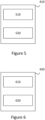
- FIG. 5 shows an exemplary configuration for the network node 410.
- the network node 410 may comprise a processor 510 and a memory 520.
- the processor 510 may be a processing circuitry (which may also be referred to as control circuitry) which may comprise a controller connected to the memory 520. Any module of the network node 410, e.g. a communication module or determining module, may be implemented in and/or executable by, the processing circuitry 510, in particular as module in the controller.
- the network node 410 may also comprise radio circuitry (not shown) providing receiving and transmitting or transceiving functionality, e.g. one or more transmitters and/or receivers and/or transceivers, wherein the radio circuitry is connected or connectable to the processing circuitry 510.
- An antenna circuitry (not shown) of the network node 410 may be connected or connectable to the radio circuitry to collect or send and/or amplify signals.
- the network node 410 may be adapted to carry out any of the methods for operating the network node disclosed herein; in particular, it may comprise corresponding circuitry, e.g. processing circuitry, and/or modules.
- FIG. 6 shows an exemplary configuration for the UE 430, the UE being, for example, the Rx-UE.
- the configuration for the UE 420 is the same as for UE 430 and a detailed description about the configuration for the UE 420 is here omitted for conciseness reasons.
- the UE 430 may comprise a processor 610 and a memory 620.
- the processor 610 may be a processing circuitry (which may also be referred to as control circuitry) which may comprise a controller connected to the memory 620. Any module of the UE 430, e.g. a communication module or determining module, may be implemented in and/or executable by, the processing circuitry 610, in particular as module in the controller.
- the UE 430 may also comprise radio circuitry (not shown) providing receiving and transmitting or transceiving functionality, e.g. one or more transmitters and/or receivers and/or transceivers, wherein the radio circuitry is connected or connectable to the processing circuitry 610.
- An antenna circuitry (not shown) of the UE 430 may be connected or connectable to the radio circuitry to collect or send and/or amplify signals.
- the UE 430 may be adapted to carry out any of the methods for operating the user equipment disclosed herein; in particular, it may comprise corresponding circuitry, e.g. processing circuitry, and/or modules.
- a carrier medium arrangement may comprise one or more carrier media.
- a carrier medium may be accessible and/or readable and/or receivable by processing or control circuitry. Storing data and/or a computer program product and/or code may be seen as part of carrying data and/or a program product and/or code.
- a carrier medium generally may comprise a guiding or transporting medium and/or a storage medium.
- a guiding or transporting medium may be adapted to carry and/or store signals, in particular electromagnetic signals and/or electric signals and/or magnetic signals and/or optical signals.
- a carrier medium, in particular a guiding or transporting medium may be adapted to guide such signals to carry them.
- a carrier medium, in particular a guiding or transporting medium may comprise the electromagnetic field, e.g.
- a storage medium may comprise at least one of a memory, which may be volatile or non-volatile, a buffer, a cache, an optical disc, magnetic memory, flash memory, etc.
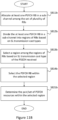
- Figure 7 shows a method of operating a UE, for example UE 420 or UE 430, the UE performing SL communication.
- the method comprises providing (S710) a procedure to the UE, the procedure allowing the UE to determine a PSFCH resource/sequence for HARQ reporting with regard to the SL communication.
- the procedure provides instructions for a step-wise determination of the PSFCH resource/sequence for the HARQ reporting based on a first and second characteristic with regard to the SL communication.
- the UE may be the Rx-UE receiving a packet TB from the Tx-UE via SL communication and requested to perform HARQ reporting to the Tx-UE with regard to the received packet TB.
- the procedure may comprise a set of rules allowing the UE to autonomously determine the PSFCH resource/sequence.
- the Rx-UE can be indicated by an SCI (Sidelink Control Information) format scheduling a SL communication, in particular a PSSCH reception, to transmit the HARQ reporting or a PSFCH with HARQ-ACK information in response to the SL communication.
- the Rx-UE may provide HARQ-ACK information or HARQ reporting including ACK or NACK, or only NACK.
- the SCI format may comprise a HARQ feedback enabled/disabled indicator field, wherein the HARQ reporting or PSFCH with HARQ-ACK information is transmitted by the Rx-UE in response to the SL communication, in particular the PSSCH reception, when the HARQ feedback enabled/disabled indicator has a specific value.
- the Rx-UE receives a PSSCH in a resource pool and the HARQ feedback enabled/disabled indicator field in an associated SCI format, for example SCI format 2-A or 2-B, has the value 1, the Rx-UE provides the HARQ-ACK information or HARQ reporting in a PSFCH transmission in the resource pool.
- Determining or autonomously determining a PSFCH resource/sequence may mean that the UE is able to determine the PSFCH resource/sequence without receiving control signaling or configuration information from, for example, a network node, like a base station, or another UE.
- the UE is able to determine the PSFCH resource/sequence solely by regarding the characteristics of the SL communication.
- it eliminates the need for the Tx-UE or Rx-UE to indicate or inform, in the control signaling, the other UE the exact location and PSFCH resources/sequences to use for feeding back HARQ reports. Therefore, the amount of control signaling overhead can be reduced.
- Figure 8 shows a flowchart for step-wise determination instructions according to an embodiment.
- the instructions for the step-wise determination may comprise allocating (810), as a first step, a PSFCH RB among a set of plurality of RBs based on the first characteristic with regard to the SL communication.
- the instructions for the step-wise determination further comprises determining (S820), as a second step, a pair/set of PSFCH resources within the allocated PSFCH RB based on the second characteristic with regard to the SL communication, and selecting (S830), as a third step, the PSFCH resource/sequence (PSFCH resource or PSFCH sequence) from the pair/set of PSFCH resources for HARQ reporting based on an ACK or NACK decoding result of a PSSCH packet TB received during the SL communication.
- the PSSCH packet TB may be a packet TB transmitted from the Tx-UE to the Rx-UE during a PSSCH slot using SL communication.
- the ACK and NACK decoding results may indiate whether the Rx-UE has successfully received and decoded the PSSCH packet TB. If the Rx-UE is able to successfully receive and decode the PSSCH packet TB, the PSFCH resource/sequence is selected based on the ACK decoding result. If the Rx-UE is not able to successfully receive and/or decode the PSSCH packet TB, the PSFCH resource/sequence is selected based on the NACK decoding result.
- a pair/set of PSFCH resources/sequences within the allocated PSFCH RB may refer to one PSFCH resource/sequence allocated for an ACK decoding result and another PSFCH resource/sequence allocated for a NACK decoding result.
- the method of operating the UE further comprises transmitting the ACK or NACK decoding result for the HARQ reporting using the PSFCH resource/sequence that has been selected.
- the UE receives, as a Rx-UE, at least one PSSCH packet TB from a further UE, i.e. a Tx-UE, via the SL communication, wherein the Rx-UE is requested a HARQ report of ACK and/or NACK feedback by the Tx-UE regarding the at least one PSSCH packet TB.
- the Rx-UE selects a PSFCH resource/sequence for transmitting the HARQ report based on the characteristics of the SL communication, the HARQ report comprising ACK and/or NACK decoding results regarding the at least one PSSCH packet TB.
- the HARQ report transmitted in one PSFCH slot may comprise ACK and/or NACK decoding results of packet TBs transmitted in N PSSCH slots.
- the HRW in particular the parameter N of the HRW, indicates the number of PSSCH slots that should be reported in the HARQ report transmitted in a PSFCH slot.
- the Rx-UE transmits the ACK and/or NACK decoding results using the HARQ report to the Tx-UE for acknowledgement feedback with regard to the received PSSCH packet TB(s).
- Figure 9 shows a configuration of PSSCH and PSFCH resources.
- the frequency axis is in the vertical direction, wherein a number of sub-channels with 10 RBs is arranged in the frequency direction
- the time axis is in the horizontal direction, wherein a number of time slots is arranged in the time direction.
- one PSSCH slot and one PSFCH slot are present, wherein some time resources and frequency resources are allocated for PSSCH transmission in the PSSCH slot and some time resources and frequency resources are allocated for PSFCH transmission in the PSFCH slot.
- the HRW comprises one PSSCH slot and that a PSFCH slot carries a HARQ feedback report for one PSSCH slot.
- the PSFCH time resources in the time slots and RBs as frequency resources for PSFCH transmission are illustrated with a diamond pattern in Figure 9 .
- the time and frequency resources being illustrated with downward diagonal lines in Figure 9 are used for other purposes than PSFCH transmission not specified further.
- a PSFCH RB is allocated among a set of plurality of RBs in order to select a PSFCH resource/sequence within the PSFCH RB.
- the set of plurality of RBs may be configured for PSFCH transmission and reception, and represented as a bitmap.
- a PSFCH RB is determined not among all RBs in the sub-channel but solely among the RBs configured for PSFCH transmission and reception, i.e. the RBs being indicated with diamond pattern.
- a network node may, for example, pre-configure the set of plurality of RBs in the sub-channel and may transmit configuration information to the UEs for configuring the set of plurality of RBs in the sub-channels.
- the said both UEs receive SL resource pool configuration details from either network configuration or pre-configuration comprising PSFCH resources/sequences and HARQ reporting related information.
- the said (pre-)configuration information may additionally include one or more of the following parameters: number of PSFCH symbols parameter, PSFCH starting symbol parameter, RB assignment parameter , cyclic shift pairs or offset index parameter, and connection-oriented groupcast slots parameter.
- said (pre-)configuration information i.e. the SL resource pool (pre-)configuration information
- a slot structure for PSFCH resources (pre-)configured towards the end of a slot is in the frequency direction, wherein the last symbol of the time slot is kept empty as a gap symbol (202) for the purpose of Tx/Rx switching and/or Sidelink/Uplink switching.
- Figure 10 also illustrates the one or two symbols (201) defining the number of PSFCH symbols parameter.
- the PSFCH starting symbol parameter may indicate a symbol index within a time slot from which the PSFCH symbol(s) are allocated. If there are, for example, 14 symbols in a slot, the symbol index may be from 0 to 13. If this parameter is (pre-)configured, the said both Rx-UE and Tx-UE follow this parameter for transmitting and receiving PSFCH, respectively. In the case when this parameter is not (pre-)configured, the starting symbol for PSFCH is to be determined based on the number of PSFCH symbols. For example, assuming there are 14 symbols in a time slot and the very last symbol is always designated as a gap symbol (see gap symbol (202) in Figure 10 ) for Tx/Rx switching and/or Sidelink/Uplink switching.
- the starting symbol in this case will then be the 12th symbol (symbol index 11) in the time slot with the 14th symbol (symbol index 13) being the gap symbol.
- the starting symbol will be the 13th symbol (symbol index 12) in a slot with again the 14th symbol (symbol index 13) being the gap symbol.
- the SL resource pool configuration comprises the number of PSFCH symbols parameter as explained above, the number of PSFCH symbols parameter indicating the number of PSFCH symbols in a slot, and when the number of PSFCH symbols parameter indicates two PSFCH symbols in the slot being allocated for PSFCH, feedback information is encoded and mapped in one symbol and then duplicated to the immediately preceding symbol.
- OFDM Orthogonal Frequency Division Multiplexing
- the granularity of PSFCH resource assignment may be one RB and the allocation of PSFCH RBs in a sub-channel does not need to be the same as the number of RBs within a sub-channel. This is also shown in Figures 9 and 10 where some RBs are used for PSFCH transmission and some other RBs are used for other purposes than PSFCH transmission, the RBs used for other purposes indicated with downward diagonal lines.
- the RB assignment parameter may define the exact RB location(s) for PSFCH transmission in a resource pool, wherein the RB assignment parameter can be represented as a bitmap.
- the RBs in PSFCH symbols not assigned for PSFCH transmissions (205) may be allocated for transmitting a channel state information reference signal (CSI-RS) in a localized and/or wideband manner depending on the sub-channel size, positioning reference signal (PRS) for positioning and distance ranging purposes, and/or other PSFCH formats that may be introduced later for future compatibility.
- CSI-RS channel state information reference signal
- PRS positioning reference signal
- the instructions for the step-wise determination of the PSFCH resource/sequence for HARQ reporting by a UE comprises, as a first step, allocating (S810) the PSFCH RB among a set of plurality of RBs based on the first characteristic with regard to the SL communication and, as a second step, determining (S820) a pair/set of PSFCH resources within the allocated PSFCH RB based on the second characterstic with regard to the SL communication.
- Figures 11A and 11B now show different embodiments how the PSFCH RB are allocated in the first step and how the pair/set of PSFCH resources may be determined in the second step.
- Figures 11A and 11B show additional steps that the first step and the second step comprise.
- the third step that has been described in reference to Figure 8 can still be performed afterwards.
- At least one PSFCH RB is allocated (S811a) in a sub-channel among the set of plurality of RBs and the at least one PSFCH RB in a sub-channel are divided or split (S812a) into regions of RBs based on a number of PSSCH slots associated with a PSFCH slot or based on a number of PSSCH slots within a HRW, wherein each region comprises at least one RB.
- the at least one PSFCH RB in the sub-channel may be divided into the plurality of regions based on parameter N of the HRW. If the PSFCH RB is only allocated among the plurality of RBs configured for PSFCH transmission, the plurality of RBs configured for the PSFCH transmission may be divided into the plurality of regions based on parameter N of the HRW.
- the bandwidth used for sidelink communication is divided into multiple sub-channels in the frequency domain, the sub-channels being a group of multiple RBs.
- one sub-channel may comprise 10 RBs, the RBs being used for PSSCH and PSFCH transmission.
- One RB may comprise a plurality of resource elements, for example 12 resource elements per RB.
- one sub-channel may also comprise more or less RBs based on the configuration of a sub-channel.
- the PSFCH RB may be a RB used for PSFCH transmission, in particular used for HARQ reporting in a PSFCH slot.
- Each region may comprise at least one RB.
- each region may only comprise a small number of RBs.
- each RB can multiplex HARQ reports for three Rx-UEs. This means that the RBs for each region may accommodate up to 15 Rx-UEs simultaneously.
- the size between each region, in terms of number of RBs, does not necessarily to be the same or the total number of RBs per sub-channel does not need to be evenly distributed among the regions of RBs.
- a region is selected (S813a) among the regions of RBs obtained in S812a based on a slot position in which the corresponding PSSCH is received.
- the Rx-UE uses the slot position in which the corresponding, PSSCH is received. For example, the Rx-UE uses the slot position in which the PSSCH packet TB(s), i.e.
- the Rx-UE selects the 1st region (301) among the regions of RBs if PSSCH TB(s) is received in time slot (n-5), the 2nd region (302) among the regions of RBs if PSSCH TB(s) is received in time slot (n-4), the 3rd region (303) among the regions of RBs if PSSCH TB(s) is received in time slot (n-3), and the 4th region (304) among the regions of RBs if PSSCH TB(s) is received in time slot (n-2).
- the PSFCH RB is selected (S814a) within the region selected in S813a based on the first characteristic with regard to the SL communication.
- the pair/set of PSFCH resources is then selected (S821a) within the selected region based on the second characteristic with regard to the SL communication.
- the pair/set of PSFCH resources may be a pair of cyclic shifted sequences in the PSFCH RB.
- the first characteristic with regard to the SL communication may comprise at least one of a SL transmission cast type, a member identification (member ID or member_ID) of a groupcast communication, and a number of PSSCH TBs received during the SL communication.
- the first characteristic with regard to the SL communication comprises the member ID of the groupcast communication, wherein the member_ID, when available, is used to determine the PSFCH RB within the selected region.
- the second characteristic with regard to the SL communication comprises at least the (pre-)configured cyclic shift allocation and/or a source identification (source_ID).
- source_ID a source identification
- the Rx-UE uses a (pre-)configured cyclic shift pairs or offset index, and/or source_ID of the Tx-UE to derive the pair/set of PSFCH resources within the PSFCH RB, wherein a PSFCH resource/sequence among the pair/set of PSFCH resources may be used to transmit a HARQ report.
- source_ID of the Tx-UE in the selection of the pair/set of PSFCH resources is to resolve the problem of hidden nodes in a SL communication, where one Tx-UE is far away from another Tx-UE and both transmit their PSSCH packet TB(s) to the Rx-UE using the same PSSCH slot and sub-channel.
- the Rx-UE may select a final PSFCH resource/sequence to represent the HARQ report comprising ACK and/or NACK information.
- the first RB of a region may be always used by the Rx-UE to feed back its HARQ report to the Tx-UE.
- the (pre-)configured cyclic shift pairs or offset index, and/or source_ID of the Tx-UE may then determine the pair/set of PSFCH resources within the RB, wherein a PSFCH resource/sequence among the pair/set of PSFCH resources/sequences may be used for ACK and NACK reporting.
- At least one PSFCH RB is allocated (811b) in a sub-channel among the set of plurality of RBs and the at least one PSFCH RB in a sub-channel may be divided (S812b) into regions of RBs based on SL transmission cast types (instead of based on a number of PSSCH slots associated with a PSFCH slot or based on a number of PSSCH slots within a HRW, as described with regard to Figure 11A ), wherein each region comprises at least one RB.
- the SL transmission cast types comprise unicast (UC) for one-to-one direct communication, connection-less groupcast (CL-GC), and connection-oriented groupcast (CO-GC).
- UC unicast
- CL-GC connection-less groupcast
- CO-GC connection-oriented groupcast
- the at least one PSFCH RB in the sub-channel e.g.
- a plurality of RBs in the sub-channel configured for PSFCH transmission may be divided into a first region, a second region, and a third region, the first region being allocated for HARQ reporting of UC, the second region being allocated for HARQ reporting of CL-GC (a SL groupcast communication where all UEs within a same SLgroup do not know the size of the SL group), and the third region being allocated for HARQ reporting of CO-GC (a groupcast session where all UEs within the same SL group have knowledge about the SL group size).
- UEs in a SL group may be able to communicate with each other using SL communication.
- N 1, similar to the previous scenario, it is not needed to split or divide the total number of PSFCH RBs in a sub-channel into different regions since there is only one PSSCH slot within one HRW. As such, all of the allocated RBs for PSFCH transmissions within a sub-channel may be used for HARQ reporting from one or multiple Rx-UEs.
- three separate regions may be defined for HARQ reporting of different SL transmission cast types, namely unicast, connection-less groupcast and connection-oriented groupcast.
- Figure 13 shows an exemplary PSSCH and PSFCH setup where the plurality of RBs in the PSFCH slot is divided into a plurality of regions according to another embodiment.
- the plurality of RBs in the PSFCH slot is divided into three regions based on the SL transmission cast types.
- the size between each region in terms of number of RBs, does not necessarily to be the same or the total number of RBs per sub-channel does not need to be evenly distributed among the regions.
- the 1st region (401) and the 2nd region (402) each comprises one PSFCH RB and the 3rd region (403) comprises a plurality of PSFCH RBs.
- the plurality of PSFCH RBs in a sub-channel are divided into three separate regions for the three different SL transmission cast types unicast, connection-less groupcast, and connection-oriented groupcast.
- the PSFCH RBs may be allocated for the purpose of feeding back unicast and connection-less groupcast ACK/NACK results and the order in which the PSFCH RBs are allocation is not important.
- each region is assigned to only one SL transmission cast type (either unicast or connection-less groupcast), and each region may be allocated with at least one PSFCH RB.
- the first two regions (401) and (402) are each allocated with only one PSFCH RB, wherein one of the regions is used for unicast HARQ reporting and the other region is used for connection-less groupcast HARQ reporting.
- the PSFCH RBs are allocated for feeding back connection-oriented groupcast ACK/NACK results.
- the 3rd region (403) may comprise all the remaining RBs for PSFCH transmission within the sub-channel that are not allocated to the 1st and 2nd regions.
- HARQ reports of the same cast type from all PSSCH slots for example PSSCH slots (404), (405), (406), and (407), within the HRW (408) are multiplexed in that PSFCH RB.
- PSSCH slots for example, PSSCH slots (404), (405), (406), and (407)
- HARQ reports may be multiplexed within the same PSFCH RB in, for example, region (401) or (402).
- a region may be selected (S813b) among the regions of RBs obtained in S812b based on a SL transmission cast type of the PSSCH received. If, for example, the SL transmission cast type of the received PSSCH is unicast, the 1st region will be selected among the regions of RBs. If, for example, the SL transmission cast type of the received PSSCH is connection-less groupcast, the 2nd region will be selected among the regions of RBs. And if, for example, the SL transmission cast type of the received PSSCH is connection-oriented groupcast, the 3rd region will be selected among the regions of RBs.
- the PSFCH RB within the selected region may be selected (S814b) based on the first characteristic with regard to the SL communication, and the pair/set of PSFCH resources may be determined (S821b) within the selected region based on the second characteristic with regard to the SL communication.
- the step S830 of Figure 8 may be performed.
- the region may be further divided into a plurality of sub-regions based on a number of PSSCH slots associated with a PSFCH slot or based on a number of PSSCH slots within a HRW, wherein each sub-region comprises at least one RB.
- a sub-region may be selected among the plurality of sub-regions based on a slot position in which the PSSCH is received during the SL communication.
- the PSFCH RB may be selected within the selected sub-region based on the first characteristic with regard to the SL communication.
- the pair/set of PSFCH resources/sequences may be selected within the selected PSFCH RB based on the second characteristic with regard to the SL communication. If, however, a region only comprises one RB, for example, as is the case for the 1st region (401) and the 2nd region (402) illustrated in Figure 13 , the region will not be divided into a plurality of sub-regiobns.
- the first characteristic with regard to the SL communication may comprise at least one of a member identification (member ID or member_ID) of a groupcast communication and a number of transmitted PSSCH packet TBs.
- member_ID member identification
- the member_ID of the groupcast communication is available,_the member_ID is used to select the PSFCH RB.
- the second characteristic with regard to the SL communication may comprise at least the configured cyclic shift pairs or offset index, and/or source identification (source ID or source_ID).
- the combination of (pre-)configured cyclic shift allocation, for example the cyclic shift pairs or offset index, and the PSSCH slot position within the HRW may determine the exact pair/set of PSFCH resources/sequences to be used by each Rx-UE within the RB. If the hidden node problem needs to be resolved, source_ID of the Tx-UE may be also taken into account.
- HARQ reporting may be separated into different RBs based on the PSSCH slot position in which the TB(s) is received.
- the 1st region and the 2nd region each only comprises one RB, the HARQ reporting does not have to be separated into different RBS based on the PSSCH slot position in which the TB(s) is received.
- the 3rd region (403) in Figure 13 , a plurality of RBs are allocated for feeding back connection-oriented groupcast ACK/NACK results.
- the 3rd region may be further separated into sub-regions of RBs depending on the number of PSSCH slots within the HRW.
- N 2
- the 3rd region may separated into two sub-regions (409) and (410), one sub-region for each PSSCH slot.
- the 3rd region may separated into two or four sub-regions.
- the determination of the PSFCH RB and the pair/set of PSFCH resources based on either the process described with regard to Figure 11A or the process described with regard to Figure 11B may be based on a starting sub-channel index of the corresponding PSSCH received during the SL communication.
- the determination of the PSFCH RB and the pair/set of PSFCH resources may start from a same starting sub-channel index used for the PSSCH received during the SL communication.
- PSFCH mapping and ACK/NACK multiplexing rules have been defined above which eliminate the need for the Tx-UE or Rx-UE to indicate or inform, in the control signaling, the other UE the exact location and PSFCH resources/sequences to use for feeding back HARQ reports. Therefore, the amount of control signaling overhead can be reduced.
- the network node 410 may perform certain operations or processes described herein using the circuitry discussed with regard to Figures 5 and 6 above. These operations may be performed in response to the processing circuitry or processor executing software instructions contained in a computer-readable medium, such as the main memory, ROM and/or storage device.
- a computer-readable medium may be defined as a physical or a logical memory device.
- a logical memory device may include memories within a single physical memory device or distributed across multiple physical memory devices.
- Each of the main memory, ROM and storage device may include computer-readable media with instructions as program code.
- the software instructions may be read into the main memory for another computer-readable medium, such as a storage device or from another device via the communication interface
- the software instructions contained in the main memory may cause processing circuitry including a data processor, when executed on processing circuity, to cause the data processor to perform operations or processes described herein.
- processing circuitry including a data processor, when executed on processing circuity, to cause the data processor to perform operations or processes described herein.
- hard-wired circuitry may be used in place or on in combination with the software instructions to implement processes and/or operations described herein.
- the physical entities according to the different embodiments of the invention may comprise or store computer programs including software instructions such that, when the computer programs are executed on the physical entities, steps and operations according to the embodiments of the invention are carried out, i.e. cause data processing means to carry out the operations.
- embodiments of the invention also relate to computer programs for carrying out the operations and steps according to the embodiments of the invention, and to any computer-readable medium storing the computer programs for carrying out the above-mentioned methods.
- the constituent elements, modules, units of the network node 410 as well as the UEs 420 and 430 may be distributed in different software and hardware components or other devices for bringing about the intended function.
- a plurality of distinct elements and modules may also be gathered for providing the intended functionality.
- the elements, modules, and functions of the nodes may be realized by a microprocessor and a memory similar to the above node including a bus, a processing unit, a main memory, ROM, etc.
- the microprocessor may be programmed such that the above-mentioned operations, which may be stored as instructions in the memory, are carried out.
- the elements, modules, and units of the apparatus may be implemented in hardware, software, Field Programmable Gate Arrays (FPGAs), application-specific integrated circuits (ASICs), firmware or the like.
- FPGAs Field Programmable Gate Arrays
- ASICs application-specific integrated circuits
Landscapes
- Engineering & Computer Science (AREA)
- Signal Processing (AREA)
- Computer Networks & Wireless Communication (AREA)
- Multimedia (AREA)
- Mobile Radio Communication Systems (AREA)
- Detection And Prevention Of Errors In Transmission (AREA)
Applications Claiming Priority (2)
| Application Number | Priority Date | Filing Date | Title |
|---|---|---|---|
| US201962930065P | 2019-11-04 | 2019-11-04 | |
| PCT/CN2020/126194 WO2021088810A1 (en) | 2019-11-04 | 2020-11-03 | Feedback channel mapping and multiplexing harq reports in nr sidelink communication |
Publications (3)
| Publication Number | Publication Date |
|---|---|
| EP4023010A1 EP4023010A1 (en) | 2022-07-06 |
| EP4023010A4 EP4023010A4 (en) | 2022-09-07 |
| EP4023010B1 true EP4023010B1 (en) | 2025-01-01 |
Family
ID=75848222
Family Applications (1)
| Application Number | Title | Priority Date | Filing Date |
|---|---|---|---|
| EP20885109.7A Active EP4023010B1 (en) | 2019-11-04 | 2020-11-03 | Feedback channel mapping and multiplexing harq reports in nr sidelink communication |
Country Status (9)
| Country | Link |
|---|---|
| US (1) | US12185283B2 (https=) |
| EP (1) | EP4023010B1 (https=) |
| JP (1) | JP7636406B2 (https=) |
| KR (1) | KR20220092888A (https=) |
| CN (2) | CN114666025B (https=) |
| AU (1) | AU2020380895B2 (https=) |
| BR (1) | BR112022007881A2 (https=) |
| IL (1) | IL292110B2 (https=) |
| WO (1) | WO2021088810A1 (https=) |
Families Citing this family (18)
| Publication number | Priority date | Publication date | Assignee | Title |
|---|---|---|---|---|
| EP3857757B1 (en) | 2018-09-28 | 2025-04-16 | Telefonaktiebolaget LM Ericsson (publ) | Harq codebook structure |
| US12500713B2 (en) * | 2019-08-16 | 2025-12-16 | Lg Electronics Inc. | Method and apparatus for transmitting SL PRS in NR V2X |
| WO2021088810A1 (en) | 2019-11-04 | 2021-05-14 | Guangdong Oppo Mobile Telecommunications Corp., Ltd. | Feedback channel mapping and multiplexing harq reports in nr sidelink communication |
| US11677512B2 (en) * | 2020-02-12 | 2023-06-13 | Apple Inc. | Sidelink HARQ |
| CN113498176B (zh) * | 2020-04-01 | 2024-08-13 | 维沃移动通信有限公司 | Psfch资源的确定方法、配置方法及通信设备 |
| US12452838B2 (en) * | 2020-04-10 | 2025-10-21 | Qualcomm Incorporated | Techniques for using physical resource blocks (PRBS) in a sidelink resource pool |
| US20230276462A1 (en) * | 2020-05-29 | 2023-08-31 | Lg Electronics Inc. | Method and device for sensing resource for sidelink communication in wireless communication system |
| US11818715B2 (en) * | 2020-12-17 | 2023-11-14 | Qualcomm Incorporated | Hybrid automatic repeat request codebook design for a sidelink |
| WO2022211895A1 (en) * | 2021-03-31 | 2022-10-06 | Qualcomm Incorporated | Sidelink feedback for full duplex user equipment |
| US11882546B2 (en) * | 2021-04-02 | 2024-01-23 | Qualcomm Incorporated | Sidelink feedback for multiple transmit receive points |
| US20230025259A1 (en) * | 2021-07-22 | 2023-01-26 | Samsung Electronics Co., Ltd. | Method and apparatus for sidelink resource allocation in unlicensed spectrum |
| CN117242851A (zh) * | 2021-07-30 | 2023-12-15 | Oppo广东移动通信有限公司 | 无线通信方法、第一设备和第二设备 |
| CN115942377B (zh) * | 2021-08-05 | 2026-02-10 | 大唐移动通信设备有限公司 | 一种信息处理方法、终端及可读存储介质 |
| WO2023044938A1 (zh) * | 2021-09-27 | 2023-03-30 | 北京小米移动软件有限公司 | 一种反馈信息传输方法、装置及存储介质 |
| GB2628732A (en) * | 2021-09-29 | 2024-10-02 | Lenovo Singapore Pte Ltd | Contention window size adjustment procedure for sidelink groupcast |
| WO2023123310A1 (en) * | 2021-12-31 | 2023-07-06 | Qualcomm Incorporated | Techniques for enhanced sidelink feedback transmission |
| US20250168867A1 (en) * | 2022-03-11 | 2025-05-22 | Nec Corporation | Radio terminal and method therefor |
| CN115942515A (zh) * | 2022-03-18 | 2023-04-07 | 中兴通讯股份有限公司 | 物理边链路信道的发送方法、装置、存储介质及电子装置 |
Family Cites Families (23)
| Publication number | Priority date | Publication date | Assignee | Title |
|---|---|---|---|---|
| US20120281647A1 (en) * | 2011-05-03 | 2012-11-08 | Innovative Sonic Corporation | Method and apparatus to improve machine type communication in a wireless communication system |
| JP6783377B2 (ja) * | 2016-08-12 | 2020-11-11 | エルジー エレクトロニクス インコーポレイティド | 無線通信システムにおいてリソースプール構成を基盤として端末が自律的にリソースを再選択する方法及び装置 |
| WO2018137129A1 (en) * | 2017-01-24 | 2018-08-02 | Nokia Technologies Oy | Feedback for downlink multicast based on inter-user cooperation |
| CN108347313B (zh) * | 2017-01-24 | 2021-08-13 | 华为技术有限公司 | 反馈方法及用户设备 |
| EP3580871B1 (en) * | 2017-02-13 | 2025-04-09 | Telefonaktiebolaget LM Ericsson (PUBL) | Resource signaling for pucch |
| US10244522B2 (en) * | 2017-03-03 | 2019-03-26 | Qualcomm Incorporated | Signaling for multiplexing of low latency communication and sidelink communications |
| US11122549B2 (en) | 2017-11-17 | 2021-09-14 | Qualcomm Incorporated | Channel state information and hybrid automatic repeat request feedback resource allocation in 5G |
| US11140697B2 (en) * | 2018-04-11 | 2021-10-05 | Telefonaktiebolaget Lm Ericsson (Publ) | Technique for sidelink feedback transmissions |
| US11006397B2 (en) * | 2018-06-08 | 2021-05-11 | Apple Inc. | Multiplexing physical uplink control channels in a slot for a new radio (NR) system |
| WO2020033704A1 (en) | 2018-08-08 | 2020-02-13 | Idac Holdings, Inc. | Enhanced sidelink control transmission |
| US20220094481A1 (en) * | 2018-11-10 | 2022-03-24 | Lg Electronics Inc. | Method and apparatus for transmitting feedback signal by means of sidelink terminal in wireless communication system |
| US11496246B2 (en) | 2019-01-10 | 2022-11-08 | Samsung Electronics Co., Ltd. | HARQ operation and power control in sidelink |
| TWI786389B (zh) | 2019-04-09 | 2022-12-11 | 美商Idac控股公司 | 用於nr sl psfch傳輸及監視的裝置及方法 |
| CN111865504B (zh) | 2019-04-30 | 2024-08-02 | 北京三星通信技术研究有限公司 | 用于旁路通信的方法、接收设备和发送设备 |
| CN120835411A (zh) * | 2019-04-30 | 2025-10-24 | 中兴通讯股份有限公司 | 无线通信资源配置方法、无线通信装置及存储介质 |
| WO2020237437A1 (zh) | 2019-05-24 | 2020-12-03 | 北京小米移动软件有限公司 | 反馈信息的传输方法、装置、设备及存储介质 |
| KR102618283B1 (ko) * | 2019-07-10 | 2023-12-27 | 엘지전자 주식회사 | Nr v2x에서 harq 피드백 동작을 수행하는 방법 및 장치 |
| EP3982579B1 (en) | 2019-07-10 | 2023-08-02 | LG Electronics Inc. | Method and device for determining feedback resource in nr v2x |
| CN110311762B (zh) * | 2019-07-16 | 2021-04-16 | 北京紫光展锐通信技术有限公司 | 反馈信息传输方法、装置、终端及存储介质 |
| KR102591453B1 (ko) | 2019-08-15 | 2023-10-20 | 엘지전자 주식회사 | Nr v2x에서 sl harq 피드백 보고 자원을 할당하는 방법 및 장치 |
| US11838961B2 (en) | 2019-10-02 | 2023-12-05 | Qualcomm Incorporated | Sidelink groupcast configuration to support feedback control |
| WO2021066296A1 (ko) * | 2019-10-03 | 2021-04-08 | 엘지전자 주식회사 | Nr v2x에서 harq 프로세스를 관리하는 방법 및 장치 |
| WO2021088810A1 (en) | 2019-11-04 | 2021-05-14 | Guangdong Oppo Mobile Telecommunications Corp., Ltd. | Feedback channel mapping and multiplexing harq reports in nr sidelink communication |
-
2020
- 2020-11-03 WO PCT/CN2020/126194 patent/WO2021088810A1/en not_active Ceased
- 2020-11-03 BR BR112022007881A patent/BR112022007881A2/pt unknown
- 2020-11-03 CN CN202210306879.7A patent/CN114666025B/zh active Active
- 2020-11-03 AU AU2020380895A patent/AU2020380895B2/en active Active
- 2020-11-03 KR KR1020227015100A patent/KR20220092888A/ko active Pending
- 2020-11-03 JP JP2022524271A patent/JP7636406B2/ja active Active
- 2020-11-03 IL IL292110A patent/IL292110B2/en unknown
- 2020-11-03 EP EP20885109.7A patent/EP4023010B1/en active Active
- 2020-11-03 CN CN202080041387.9A patent/CN113924812A/zh active Pending
-
2022
- 2022-04-05 US US17/713,537 patent/US12185283B2/en active Active
Also Published As
| Publication number | Publication date |
|---|---|
| AU2020380895B2 (en) | 2025-09-18 |
| US12185283B2 (en) | 2024-12-31 |
| CN114666025A (zh) | 2022-06-24 |
| IL292110A (en) | 2022-06-01 |
| JP7636406B2 (ja) | 2025-02-26 |
| IL292110B2 (en) | 2025-04-01 |
| WO2021088810A1 (en) | 2021-05-14 |
| BR112022007881A2 (pt) | 2022-07-05 |
| IL292110B1 (en) | 2024-12-01 |
| KR20220092888A (ko) | 2022-07-04 |
| JP2023500230A (ja) | 2023-01-05 |
| EP4023010A1 (en) | 2022-07-06 |
| CN113924812A (zh) | 2022-01-11 |
| CA3154570A1 (en) | 2021-05-14 |
| CN114666025B (zh) | 2023-10-17 |
| AU2020380895A1 (en) | 2022-05-05 |
| EP4023010A4 (en) | 2022-09-07 |
| US20220232529A1 (en) | 2022-07-21 |
Similar Documents
| Publication | Publication Date | Title |
|---|---|---|
| EP4023010B1 (en) | Feedback channel mapping and multiplexing harq reports in nr sidelink communication | |
| US11576173B2 (en) | Method and apparatus for operating subframe and transmitting channel information for controlling interference in communication system | |
| RU2725159C1 (ru) | Способы и узлы для определения размера блока данных передачи | |
| KR102851203B1 (ko) | Nr v2x 시스템을 위한 harq 동작을 수행하는 방법 및 장치 | |
| EP3583716B1 (en) | Sidelink resource signaling | |
| EP4042595B1 (en) | Methods and apparatuses for harq codebook construction | |
| CN110266372B (zh) | 发送和接收探测参考信号的方法及其装置 | |
| US12120059B2 (en) | Resource allocation signaling | |
| KR101820742B1 (ko) | 이동 통신 시스템 및 그 시스템에서 데이터 전송 방법 | |
| CN114144983A (zh) | 侧链路传输中的harq反馈的报告 | |
| KR20200053638A (ko) | 짧은 물리적 업링크 공유 채널 배치 | |
| EP4189884B1 (en) | Communications devices, network infrastructure equipment, wireless communications networks and methods | |
| US20220264568A1 (en) | Information sending method and receiving method, apparatus, device, and storage medium | |
| US12598612B2 (en) | Dynamic resource scheduling in wireless communications | |
| KR102019892B1 (ko) | 무선통신 시스템에서 주기적 채널 정보 송수신 방법 및 장치 | |
| CA3154570C (en) | Feedback channel mapping and multiplexing harq reports in nr sidelink communication | |
| WO2022021407A1 (zh) | 反馈码本确定方法、装置、设备及存储介质 | |
| US20250240800A1 (en) | Method and apparatus for control information transmission, device, and storage medium | |
| US20260020019A1 (en) | Systems and methods for feedback information transmission | |
| KR20240074801A (ko) | 방법들, 통신 디바이스들, 및 기반구조 장비 | |
| KR102150413B1 (ko) | 주파수분할 및 시분할 이중화 통신 시스템에서 물리채널 송수신의 제어 방법 및 장치 |
Legal Events
| Date | Code | Title | Description |
|---|---|---|---|
| STAA | Information on the status of an ep patent application or granted ep patent |
Free format text: STATUS: THE INTERNATIONAL PUBLICATION HAS BEEN MADE |
|
| PUAI | Public reference made under article 153(3) epc to a published international application that has entered the european phase |
Free format text: ORIGINAL CODE: 0009012 |
|
| STAA | Information on the status of an ep patent application or granted ep patent |
Free format text: STATUS: REQUEST FOR EXAMINATION WAS MADE |
|
| 17P | Request for examination filed |
Effective date: 20220330 |
|
| AK | Designated contracting states |
Kind code of ref document: A1 Designated state(s): AL AT BE BG CH CY CZ DE DK EE ES FI FR GB GR HR HU IE IS IT LI LT LU LV MC MK MT NL NO PL PT RO RS SE SI SK SM TR |
|
| REG | Reference to a national code |
Ref country code: DE Ref legal event code: R079 Ipc: H04L0005000000 Ref country code: DE Ref legal event code: R079 Ref document number: 602020044292 Country of ref document: DE Free format text: PREVIOUS MAIN CLASS: H04W0072040000 Ipc: H04L0005000000 |
|
| A4 | Supplementary search report drawn up and despatched |
Effective date: 20220805 |
|
| RIC1 | Information provided on ipc code assigned before grant |
Ipc: H04W 92/18 20090101ALI20220801BHEP Ipc: H04L 1/18 20060101ALI20220801BHEP Ipc: H04W 28/04 20090101ALI20220801BHEP Ipc: H04W 72/04 20090101ALI20220801BHEP Ipc: H04L 5/00 20060101AFI20220801BHEP |
|
| DAV | Request for validation of the european patent (deleted) | ||
| DAX | Request for extension of the european patent (deleted) | ||
| STAA | Information on the status of an ep patent application or granted ep patent |
Free format text: STATUS: EXAMINATION IS IN PROGRESS |
|
| 17Q | First examination report despatched |
Effective date: 20230310 |
|
| GRAP | Despatch of communication of intention to grant a patent |
Free format text: ORIGINAL CODE: EPIDOSNIGR1 |
|
| STAA | Information on the status of an ep patent application or granted ep patent |
Free format text: STATUS: GRANT OF PATENT IS INTENDED |
|
| RIC1 | Information provided on ipc code assigned before grant |
Ipc: H04W 92/18 20090101ALI20240730BHEP Ipc: H04W 72/20 20230101ALI20240730BHEP Ipc: H04L 1/1829 20230101ALI20240730BHEP Ipc: H04L 5/00 20060101AFI20240730BHEP |
|
| INTG | Intention to grant announced |
Effective date: 20240823 |
|
| GRAS | Grant fee paid |
Free format text: ORIGINAL CODE: EPIDOSNIGR3 |
|
| GRAA | (expected) grant |
Free format text: ORIGINAL CODE: 0009210 |
|
| STAA | Information on the status of an ep patent application or granted ep patent |
Free format text: STATUS: THE PATENT HAS BEEN GRANTED |
|
| AK | Designated contracting states |
Kind code of ref document: B1 Designated state(s): AL AT BE BG CH CY CZ DE DK EE ES FI FR GB GR HR HU IE IS IT LI LT LU LV MC MK MT NL NO PL PT RO RS SE SI SK SM TR |
|
| REG | Reference to a national code |
Ref country code: GB Ref legal event code: FG4D |
|
| REG | Reference to a national code |
Ref country code: CH Ref legal event code: EP |
|
| REG | Reference to a national code |
Ref country code: DE Ref legal event code: R096 Ref document number: 602020044292 Country of ref document: DE |
|
| REG | Reference to a national code |
Ref country code: IE Ref legal event code: FG4D |
|
| P01 | Opt-out of the competence of the unified patent court (upc) registered |
Free format text: CASE NUMBER: APP_9771/2025 Effective date: 20250226 |
|
| REG | Reference to a national code |
Ref country code: LT Ref legal event code: MG9D |
|
| REG | Reference to a national code |
Ref country code: NL Ref legal event code: MP Effective date: 20250101 |
|
| REG | Reference to a national code |
Ref country code: AT Ref legal event code: MK05 Ref document number: 1757405 Country of ref document: AT Kind code of ref document: T Effective date: 20250101 |
|
| PG25 | Lapsed in a contracting state [announced via postgrant information from national office to epo] |
Ref country code: NL Free format text: LAPSE BECAUSE OF FAILURE TO SUBMIT A TRANSLATION OF THE DESCRIPTION OR TO PAY THE FEE WITHIN THE PRESCRIBED TIME-LIMIT Effective date: 20250101 |
|
| PG25 | Lapsed in a contracting state [announced via postgrant information from national office to epo] |
Ref country code: FI Free format text: LAPSE BECAUSE OF FAILURE TO SUBMIT A TRANSLATION OF THE DESCRIPTION OR TO PAY THE FEE WITHIN THE PRESCRIBED TIME-LIMIT Effective date: 20250101 |
|
| PG25 | Lapsed in a contracting state [announced via postgrant information from national office to epo] |
Ref country code: PL Free format text: LAPSE BECAUSE OF FAILURE TO SUBMIT A TRANSLATION OF THE DESCRIPTION OR TO PAY THE FEE WITHIN THE PRESCRIBED TIME-LIMIT Effective date: 20250101 |
|
| PG25 | Lapsed in a contracting state [announced via postgrant information from national office to epo] |
Ref country code: ES Free format text: LAPSE BECAUSE OF FAILURE TO SUBMIT A TRANSLATION OF THE DESCRIPTION OR TO PAY THE FEE WITHIN THE PRESCRIBED TIME-LIMIT Effective date: 20250101 |
|
| PG25 | Lapsed in a contracting state [announced via postgrant information from national office to epo] |
Ref country code: NO Free format text: LAPSE BECAUSE OF FAILURE TO SUBMIT A TRANSLATION OF THE DESCRIPTION OR TO PAY THE FEE WITHIN THE PRESCRIBED TIME-LIMIT Effective date: 20250401 Ref country code: IS Free format text: LAPSE BECAUSE OF FAILURE TO SUBMIT A TRANSLATION OF THE DESCRIPTION OR TO PAY THE FEE WITHIN THE PRESCRIBED TIME-LIMIT Effective date: 20250501 |
|
| PG25 | Lapsed in a contracting state [announced via postgrant information from national office to epo] |
Ref country code: HR Free format text: LAPSE BECAUSE OF FAILURE TO SUBMIT A TRANSLATION OF THE DESCRIPTION OR TO PAY THE FEE WITHIN THE PRESCRIBED TIME-LIMIT Effective date: 20250101 |
|
| PG25 | Lapsed in a contracting state [announced via postgrant information from national office to epo] |
Ref country code: LV Free format text: LAPSE BECAUSE OF FAILURE TO SUBMIT A TRANSLATION OF THE DESCRIPTION OR TO PAY THE FEE WITHIN THE PRESCRIBED TIME-LIMIT Effective date: 20250101 Ref country code: PT Free format text: LAPSE BECAUSE OF FAILURE TO SUBMIT A TRANSLATION OF THE DESCRIPTION OR TO PAY THE FEE WITHIN THE PRESCRIBED TIME-LIMIT Effective date: 20250502 |
|
| PG25 | Lapsed in a contracting state [announced via postgrant information from national office to epo] |
Ref country code: GR Free format text: LAPSE BECAUSE OF FAILURE TO SUBMIT A TRANSLATION OF THE DESCRIPTION OR TO PAY THE FEE WITHIN THE PRESCRIBED TIME-LIMIT Effective date: 20250402 Ref country code: BG Free format text: LAPSE BECAUSE OF FAILURE TO SUBMIT A TRANSLATION OF THE DESCRIPTION OR TO PAY THE FEE WITHIN THE PRESCRIBED TIME-LIMIT Effective date: 20250101 |
|
| PG25 | Lapsed in a contracting state [announced via postgrant information from national office to epo] |
Ref country code: AT Free format text: LAPSE BECAUSE OF FAILURE TO SUBMIT A TRANSLATION OF THE DESCRIPTION OR TO PAY THE FEE WITHIN THE PRESCRIBED TIME-LIMIT Effective date: 20250101 |
|
| PG25 | Lapsed in a contracting state [announced via postgrant information from national office to epo] |
Ref country code: CZ Free format text: LAPSE BECAUSE OF FAILURE TO SUBMIT A TRANSLATION OF THE DESCRIPTION OR TO PAY THE FEE WITHIN THE PRESCRIBED TIME-LIMIT Effective date: 20250101 |
|
| PG25 | Lapsed in a contracting state [announced via postgrant information from national office to epo] |
Ref country code: SE Free format text: LAPSE BECAUSE OF FAILURE TO SUBMIT A TRANSLATION OF THE DESCRIPTION OR TO PAY THE FEE WITHIN THE PRESCRIBED TIME-LIMIT Effective date: 20250101 |
|
| REG | Reference to a national code |
Ref country code: DE Ref legal event code: R097 Ref document number: 602020044292 Country of ref document: DE |
|
| PG25 | Lapsed in a contracting state [announced via postgrant information from national office to epo] |
Ref country code: SM Free format text: LAPSE BECAUSE OF FAILURE TO SUBMIT A TRANSLATION OF THE DESCRIPTION OR TO PAY THE FEE WITHIN THE PRESCRIBED TIME-LIMIT Effective date: 20250101 |
|
| PG25 | Lapsed in a contracting state [announced via postgrant information from national office to epo] |
Ref country code: DK Free format text: LAPSE BECAUSE OF FAILURE TO SUBMIT A TRANSLATION OF THE DESCRIPTION OR TO PAY THE FEE WITHIN THE PRESCRIBED TIME-LIMIT Effective date: 20250101 |
|
| PG25 | Lapsed in a contracting state [announced via postgrant information from national office to epo] |
Ref country code: IT Free format text: LAPSE BECAUSE OF FAILURE TO SUBMIT A TRANSLATION OF THE DESCRIPTION OR TO PAY THE FEE WITHIN THE PRESCRIBED TIME-LIMIT Effective date: 20250101 |
|
| PG25 | Lapsed in a contracting state [announced via postgrant information from national office to epo] |
Ref country code: EE Free format text: LAPSE BECAUSE OF FAILURE TO SUBMIT A TRANSLATION OF THE DESCRIPTION OR TO PAY THE FEE WITHIN THE PRESCRIBED TIME-LIMIT Effective date: 20250101 |
|
| PG25 | Lapsed in a contracting state [announced via postgrant information from national office to epo] |
Ref country code: RO Free format text: LAPSE BECAUSE OF FAILURE TO SUBMIT A TRANSLATION OF THE DESCRIPTION OR TO PAY THE FEE WITHIN THE PRESCRIBED TIME-LIMIT Effective date: 20250101 |
|
| PG25 | Lapsed in a contracting state [announced via postgrant information from national office to epo] |
Ref country code: SK Free format text: LAPSE BECAUSE OF FAILURE TO SUBMIT A TRANSLATION OF THE DESCRIPTION OR TO PAY THE FEE WITHIN THE PRESCRIBED TIME-LIMIT Effective date: 20250101 |
|
| PLBE | No opposition filed within time limit |
Free format text: ORIGINAL CODE: 0009261 |
|
| STAA | Information on the status of an ep patent application or granted ep patent |
Free format text: STATUS: NO OPPOSITION FILED WITHIN TIME LIMIT |
|
| 26N | No opposition filed |
Effective date: 20251002 |
|
| PGFP | Annual fee paid to national office [announced via postgrant information from national office to epo] |
Ref country code: DE Payment date: 20251124 Year of fee payment: 6 |
|
| PGFP | Annual fee paid to national office [announced via postgrant information from national office to epo] |
Ref country code: GB Payment date: 20251126 Year of fee payment: 6 |
|
| PGFP | Annual fee paid to national office [announced via postgrant information from national office to epo] |
Ref country code: FR Payment date: 20251126 Year of fee payment: 6 |