EP4021061B1 - Method of performing network listening for ru in cloud-radio access network structure base station - Google Patents
Method of performing network listening for ru in cloud-radio access network structure base station Download PDFInfo
- Publication number
- EP4021061B1 EP4021061B1 EP21171907.5A EP21171907A EP4021061B1 EP 4021061 B1 EP4021061 B1 EP 4021061B1 EP 21171907 A EP21171907 A EP 21171907A EP 4021061 B1 EP4021061 B1 EP 4021061B1
- Authority
- EP
- European Patent Office
- Prior art keywords
- base station
- ran
- perform
- transmit
- instructed
- Prior art date
- Legal status (The legal status is an assumption and is not a legal conclusion. Google has not performed a legal analysis and makes no representation as to the accuracy of the status listed.)
- Active
Links
Images



Classifications
-
- H—ELECTRICITY
- H04—ELECTRIC COMMUNICATION TECHNIQUE
- H04W—WIRELESS COMMUNICATION NETWORKS
- H04W16/00—Network planning, e.g. coverage or traffic planning tools; Network deployment, e.g. resource partitioning or cells structures
- H04W16/02—Resource partitioning among network components, e.g. reuse partitioning
- H04W16/10—Dynamic resource partitioning
-
- H—ELECTRICITY
- H04—ELECTRIC COMMUNICATION TECHNIQUE
- H04W—WIRELESS COMMUNICATION NETWORKS
- H04W16/00—Network planning, e.g. coverage or traffic planning tools; Network deployment, e.g. resource partitioning or cells structures
- H04W16/18—Network planning tools
-
- H—ELECTRICITY
- H04—ELECTRIC COMMUNICATION TECHNIQUE
- H04W—WIRELESS COMMUNICATION NETWORKS
- H04W24/00—Supervisory, monitoring or testing arrangements
- H04W24/02—Arrangements for optimising operational condition
-
- H—ELECTRICITY
- H04—ELECTRIC COMMUNICATION TECHNIQUE
- H04W—WIRELESS COMMUNICATION NETWORKS
- H04W24/00—Supervisory, monitoring or testing arrangements
- H04W24/10—Scheduling measurement reports ; Arrangements for measurement reports
-
- H—ELECTRICITY
- H04—ELECTRIC COMMUNICATION TECHNIQUE
- H04W—WIRELESS COMMUNICATION NETWORKS
- H04W48/00—Access restriction; Network selection; Access point selection
- H04W48/16—Discovering, processing access restriction or access information
-
- H—ELECTRICITY
- H04—ELECTRIC COMMUNICATION TECHNIQUE
- H04W—WIRELESS COMMUNICATION NETWORKS
- H04W84/00—Network topologies
- H04W84/18—Self-organising networks, e.g. ad-hoc networks or sensor networks
-
- H—ELECTRICITY
- H04—ELECTRIC COMMUNICATION TECHNIQUE
- H04W—WIRELESS COMMUNICATION NETWORKS
- H04W88/00—Devices specially adapted for wireless communication networks, e.g. terminals, base stations or access point devices
- H04W88/08—Access point devices
- H04W88/085—Access point devices with remote components
Definitions
- the present invention relates to a method of performing network listening (NL) for multiple radio units (RUs) in a Cloud-Radio Access Network (C-RAN) structure base station, and more specifically, to a method of performing network listening (NL) for a RU in a C-RAN structure base station in which a certain RU distinguishes and automatically detects signals of neighboring other RUs through NL in a C-RAN structure base station to thereby enable optimization and automation of configuration setting of multiple cells and multiple RUs.
- C-RAN Cloud-Radio Access Network
- Cloud-Radio Access Network is a radio access network that separates a digital unit (DU) and a radio unit (RU) (i.e., a radio frequency (RF) unit) of a base station from each other such that a plurality of DUs are gathered and processed at the center and RUs are distributed over service areas.
- DU digital unit
- RU radio unit
- RF radio frequency
- the RUs may be deployed and operated, for example, in different places or floors in a building, and in this case, each cell of the C-RAN may be formed to be assigned a plurality of RUs and provide services.
- FIG. 1 is a view for describing a limitation that may occur in the conventional C-RAN structure base station having a configuration of multiple cells and multiple RUs.
- interference may occur between RU groups, each of which is connected to a corresponding one of the multiple cells, or handover may occur when a terminal moves.
- a RU in order to detect the radio wave environment around RUs of the C-RAN structure base station, a RU needs to measure the signal strength and quality of neighboring cells using a specific physical cell identifier (PCI) using a network listening (NL) function, but when a neighboring RU is allocated to the same cell as the RU performing NL, the RU itself may not distinguish the output signal thereof from the output signal of the neighboring RU, thereby failing to identity the neighboring RU through NL.
- PCI physical cell identifier
- NL network listening
- the C-RAN structure base station supporting multiple cells and multiple RUs has a difficulty in automatic setting for maximizing service quality in a region controlled by the RU and base station efficiency according to mapping of each cell and RU and in automatic optimization in the operation process.
- A1 discloses a method and apparatus for efficiently measuring downlink interference in a Distributed Antenna System (DAS)-based Long Term Evolution Advanced (LTE-A) system with a plurality antennas distributed within the service area of each evolved Node B (eNB), through the use of a Channel Status Information Reference Signal (CSI-RS) method and a muting method.
- DAS Distributed Antenna System
- LTE-A Long Term Evolution Advanced
- CSI-RS Channel Status Information Reference Signal
- Multiple interference measurement sets are configured to taken into possibility where no data traffic is transmitted through a specific Remote Radio Head (RRH) group. Such turning off of transmissions occurs either to reduce the interference or because there is no data traffic to be transmitted on the RRHs.
- RRH Remote Radio Head
- the interference measurement is configured to be performed by considering the turn-on and turn-off of the RRH group RRH2.
- multiple interference measurement sets can be configured to take into account the different level of interference while CSI-RS is configured identically.
- the present invention is directed to providing a method of performing network listening (NL) for a radio unit (RU) in a Cloud-Radio Access Network (C-RAN) structure base station that is capable of enabling optimization and automation of configuration setting of multiple cells and multiple RUs by allowing a certain RU in a C-RAN structure base station using multiple RUs to distinguish and automatically detect signals of neighboring RUs through NL.
- NL network listening
- RU radio unit
- C-RAN Cloud-Radio Access Network
- the C-RAN base station body may determine an NL period and an NL performance order and instruct a corresponding RU to perform NL while controlling all RUs to take turns performing NL in the order.
- the RU instructed to perform the NL in the step (b) may start the NL after a period of slack time has elapsed without performing the NL immediately after being instructed to perform the NL.
- the RU instructed to turn on the RF transmit (Tx) output thereof by the C-RAN base station body in the step (d) may turn on the RF transmit (Tx) output thereof immediately after being instructed to turn on the RF transmit (Tx) output thereof.
- RF radio frequency
- the RU instructed to perform the NL in the step (i) may start the NL after a period of slack time has elapsed without performing the NL immediately after being instructed to perform the NL.
- FIG. 2 is a view for describing a general C-RAN structure.
- a general C-RAN includes RUs 100, a digital unit (DU) cloud 200, and a fronthaul network 300.
- DU digital unit
- the RU 100 is a device installed at a cell site, for example, a different place or floor in a building, and performing wireless communication with a mobile communication terminal 20 located within the cell site, and basically, performs wireless signal transmission and reception with the mobile communication terminal 20, radio frequency (RF) signal processing, such as filtering, amplification, analog/digital conversion, and digital/analog conversion of transmitted and received wireless signals, and some physical layer functions.
- RF radio frequency
- the multiple RUs 100 installed within the cell site are connected to the DU cloud 200 located at a remote site through the fronthaul network 300 to serve as a base station.
- the DU cloud 200 is connected to the multiple RUs 100 through the fronthaul network 300 and connected to a core network 500 of a mobile communication system through a backhaul network 400 to process data traffic between a mobile communication terminal 20 connected to the RU 100 and the core network 500.
- the core network 500 is a configuration for performing signaling control and data traffic routing in the mobile communication system, for example, an evolved packet core (EPC) defined in long-term evolution (LTE) or a fifth-generation technology standard (5G) core.
- EPC evolved packet core
- LTE long-term evolution
- 5G fifth-generation technology standard
- the fronthaul network 300 is a delivery network for delivering data between the multiple RUs 100 and the DU cloud 200 and may be built in various structures, such as a star, a tree, a chain or a ring based on optical fiber or microwaves.
- a communication interface a common public radio interface (CPRI), an open baseband remote radio-head interface (OBSAI), etc. are used.
- CPRI common public radio interface
- OBSAI open baseband remote radio-head interface
- the C-RAN structure base station collects DUs in one place and operates the DUs, and thus has reduced rental costs and power costs in network operation, and easy maintenance.
- FIG. 3 is a sequence chart for describing the method of performing NL for an RU in a C-RAN structure base station according to the present invention.
- the C-RAN base station body that is, the cloud DU, determines whether a predetermined NL period is reached (S100).
- a RU may not allocate downlink data to a user due to having a RF transmit (Tx) part thereof being turned off.
- all RUs may be provided to perform NL for a predetermined period of time, for example, one hour or one day, by turns such that the impact of turn-off of the RF transmit (Tx) output may be minimized as a whole.
- the period or order in which NL is performed may be determined by the C-RAN base station body and transmitted to a corresponding RU.
- the C-RAN base station body instructs a RU in the corresponding order to perform NL (S110), and searches for a RU using the same physical cell identifier (PCI) as the RU that is to perform the NL in RU configuration (a cell-RU combination) information constructed in the C-RAN base station body (S120). Then, the C-RAN base station body determines whether there is a RU using the same PCI as the RU that is to perform the NL (S130), and when it is determined there is a RU using the same PCI, instructs the RU using the same PCI to turn off the RF transmit (Tx) output thereof during performance of the NL (S140).
- PCI physical cell identifier
- the RU instructed to perform the NL turns off the RF transmit (Tx) output thereof (S150) and performs the NL.
- FIG. 4 is a view for describing a process in which a certain RU performs NL on neighboring RUs shown in FIG. 3 .
- the C-RAN base station body confirms that the third RU RU#3 and the fourth RU RU#4 have the same PCI by searching a neighbor relation table (NRT), and instructs the third RU RU#3 to turn off the RF transmit (Tx) output thereof during the performance of the NL.
- the forth RU RU#4 instructed to perform the NL also turns off the RF transmit (Tx) output thereof during the performance of the NL.
- a first RU RU#1 and a second RU RU#2 belong to the first cell Cell#1 but have a PCI of 'PCI A'
- a fifth RU RU#5 belongs to another cell, that is, a m th cell Cell#M and has a PCI of 'PCI C', so that the first RU RU#1, the second RU RU#2, and the fifth RU RU#5 keep the RF transmit (Tx) outputs thereof turned on
- the fourth RU RU#4 performs NL on such RUs keeping the RF transmit (Tx) outputs thereof turned on.
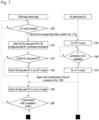
- FIG. 5 is a timing chart showing an operation timing of RUs during NL performance in the method of performing NL for the RU in the C-RAN structure base station according to the present invention.
- RUs instructed to turn off the RF transmit (Tx) outputs thereof immediately turn off the RF transmit (Tx) outputs thereof, it takes a certain period of slack time for the RF transmit (Tx) outputs to be turned off in practice. Accordingly, the RU instructed to perform NL starts the NL only after the slack time has passed rather than immediately performing the NL.
- the on-time of the RF transmit (Tx) outputs of the RUs is performed immediately after receipt of an instruction from the C-RAN base station body.
- the RU instructed to perform the NL checks whether the performance of the NL is completed (S 160), and when the performance of the NL is completed, immediately turns on the RF transmit (Tx) output thereof (S170) while reporting a result of the performance of the NL and completion of the NL to the C-RAN base station body (S180).
- the C-RAN base station body receiving the report immediately performs an operation of instructing the RU using the same PCI to turn on the RF transmit (Tx) output thereof (S 190) and proceeds to operation S200 of determining whether the performance of the NL has been completed in all RUs.
- operation S200 the C-RAN base station body returns to operation S100, and as soon as the next period for NL performance is reached, instructs the next RU to perform NL.
- FIG. 6 is a view for describing a process of performing NL while turning off outputs of other RUs except for a specific RU in the method of performing NL for a RU in the C-RAN structure base station according to the present invention.
- the C-RAN base station body determines to perform NL for one specific RU, for example, only the fifth RU RU#5
- the C-RAN base station body instructs the remaining RUs to perform NL for the fifth RU RU#5 whose RF transmit (Tx) output is turned on while the RF transmit (Tx) outputs of the remaining RUs are turned off during performance of the NL.
- the RF transmit (Tx) outputs of all of the RUs except for the fifth RU RU#5, which is the NL target are turned off, the resulting impact is very large. Accordingly, NL may be performed one time or unexpectedly only when absolutely required.
- each RU having completed NL reports the result of the performance of the NL to the C-RAN base station body and immediately turns on the RF transmit (Tx) output thereof.
- the method of performing NL for an RU in a C-RAN structure base station can enable optimization and automation of configuration setting of multiple cells and multiple RUs by allowing a certain RU in a C-RAN structure base station using multiple RUs to distinguish and automatically detect signals of neighboring RUs through NL.
- a method of performing network listening (NL) for a radio unit (RU) in a Cloud-Radio Access Network (C-RAN) structure base station in which a certain RU distinguishes and automatically detects signals of neighboring RUs through NL in a C-RAN structure base station to thereby enable optimization and automation of configuration setting of multiple cells and multiple RUs.
- the method of performing NL for a RU in a base station having a structure of a C-RAN, performed between a C-RAN base station body and a RU in the C-RAN supporting multiple cells and multiple RUs includes the steps of:
Landscapes
- Engineering & Computer Science (AREA)
- Computer Networks & Wireless Communication (AREA)
- Signal Processing (AREA)
- Computer Security & Cryptography (AREA)
- Mobile Radio Communication Systems (AREA)
Description
- The present invention relates to a method of performing network listening (NL) for multiple radio units (RUs) in a Cloud-Radio Access Network (C-RAN) structure base station, and more specifically, to a method of performing network listening (NL) for a RU in a C-RAN structure base station in which a certain RU distinguishes and automatically detects signals of neighboring other RUs through NL in a C-RAN structure base station to thereby enable optimization and automation of configuration setting of multiple cells and multiple RUs.
- As is well known, Cloud-Radio Access Network (C-RAN) is a radio access network that separates a digital unit (DU) and a radio unit (RU) (i.e., a radio frequency (RF) unit) of a base station from each other such that a plurality of DUs are gathered and processed at the center and RUs are distributed over service areas.
- In such a C-RAN structure base station, the RUs may be deployed and operated, for example, in different places or floors in a building, and in this case, each cell of the C-RAN may be formed to be assigned a plurality of RUs and provide services.
-
FIG. 1 is a view for describing a limitation that may occur in the conventional C-RAN structure base station having a configuration of multiple cells and multiple RUs. Referring toFIG. 1 , when multiplecells cell # 1 to cell #M are included in the C-RAN structure base station, interference may occur between RU groups, each of which is connected to a corresponding one of the multiple cells, or handover may occur when a terminal moves. Accordingly, in order to optimize the coverage and performance of the C-RAN structure base station, there is a need for a task of minimizing the interference between the RU groups and the handover by changing the number of cells inside the C-RAN structure base station and RUs allocated to each cell, and adjusting the output of a specific RU, and as preliminary work for this, there is a need for a process of detecting the radio wave environment around RUs. - Meanwhile, in order to detect the radio wave environment around RUs of the C-RAN structure base station, a RU needs to measure the signal strength and quality of neighboring cells using a specific physical cell identifier (PCI) using a network listening (NL) function, but when a neighboring RU is allocated to the same cell as the RU performing NL, the RU itself may not distinguish the output signal thereof from the output signal of the neighboring RU, thereby failing to identity the neighboring RU through NL.
- As described above, the C-RAN structure base station supporting multiple cells and multiple RUs has a difficulty in automatic setting for maximizing service quality in a region controlled by the RU and base station efficiency according to mapping of each cell and RU and in automatic optimization in the operation process.
-
- PATENT DOCUMENT 1:
Korean Registered Patent No. 10-2083273 - PATENT DOCUMENT 2:
Korean Registered Patent No. 10-1976746 - PATENT DOCUMENT 3:
Korean Registered Patent No. 10-1893053 - PATENT DOCUMENT 4:
Korean Registered Patent No. 10-2063570 -
- A1 discloses a method and apparatus for efficiently measuring downlink interference in a Distributed Antenna System (DAS)-based Long Term Evolution Advanced (LTE-A) system with a plurality antennas distributed within the service area of each evolved Node B (eNB), through the use of a Channel Status Information Reference Signal (CSI-RS) method and a muting method. Multiple interference measurement sets are configured to taken into possibility where no data traffic is transmitted through a specific Remote Radio Head (RRH) group. Such turning off of transmissions occurs either to reduce the interference or because there is no data traffic to be transmitted on the RRHs. When no interference component exists in this manner, the performance may be improved by performing Channel Status Information (CSI) feedback in consideration of such situation. In the RRH group RRH1, the interference measurement is configured to be performed by considering the turn-on and turn-off of the RRH group RRH2. For such a case, multiple interference measurement sets can be configured to take into account the different level of interference while CSI-RS is configured identically.
- The invention is defined in
claims - The present invention is directed to providing a method of performing network listening (NL) for a radio unit (RU) in a Cloud-Radio Access Network (C-RAN) structure base station that is capable of enabling optimization and automation of configuration setting of multiple cells and multiple RUs by allowing a certain RU in a C-RAN structure base station using multiple RUs to distinguish and automatically detect signals of neighboring RUs through NL.
- The technical objectives of the present invention are not limited to the above, and other objectives may become apparent to those of ordinary skill in the art based on the following description.
- According to the first aspect of the present invention, there is provided a method of performing network listening (NL) for a radio unit (RU) in a base station having a structure of a Cloud-Radio Access Network (C-RAN), the method performed between a C-RAN base station body and a RU in the C-RAN supporting multiple cells and multiple RUs, and including the steps of:
- (a) searching for, by the C-RAN base station body, RU configuration (a cell-RU combination) information constructed therein to instruct a RU that is to perform NL to perform the NL while instructing a RU using the same physical cell identifier (PCI) as the RU that is to perform the NL to turn off a radio frequency (RF) transmit (Tx) output thereof during performance of the NL of the RU that is to perform NL;
- (b) performing, by the RU instructed to perform the NL, the NL with a RF transmit (Tx) output thereof turned off;
- (c) turning on, by the RU instructed to perform the NL, the RF transmit (Tx) output thereof after completion of the performance of the NL while reporting a result of the performance of the NL and completion of the NL to the C-RAN base station body; and
- (d) instructing, by the C-RAN base station body, the RU using the same PCI to turn on the RF transmit (Tx) output thereof.
- The C-RAN base station body may determine an NL period and an NL performance order and instruct a corresponding RU to perform NL while controlling all RUs to take turns performing NL in the order.
- The RU instructed to perform the NL in the step (b) may start the NL after a period of slack time has elapsed without performing the NL immediately after being instructed to perform the NL.
- The RU instructed to turn on the RF transmit (Tx) output thereof by the C-RAN base station body in the step (d) may turn on the RF transmit (Tx) output thereof immediately after being instructed to turn on the RF transmit (Tx) output thereof.
- According to the second aspect of the present invention, there is provided a method of performing network listening (NL) for a radio unit (RU) in a base station having a structure of a Cloud-Radio Access Network (C-RAN), the method performed between a C-RAN base station body and a RU in the C-RAN supporting multiple cells and multiple RUs, and including the steps of: (i) when the C-RAN base station body determines to perform NL for a specific RU, searching for, by the C-RAN base station body, RU configuration (a cell-RU combination) information constructed therein and instructing all RUs except for the specific RU to turn off radio frequency (RF) transmit (Tx) outputs thereof during performance of NL; (j) performing, by a RU instructed to perform NL, the NL with a RF transmit (Tx) output thereof turned off; and (k) turning on, by the RU instructed to perform the NL, the RF transmit (Tx) output thereof after completion of the performance of the NL while reporting a result of the performance of the NL and completion of the NL to the C-RAN base station body.
- The RU instructed to perform the NL in the step (i) may start the NL after a period of slack time has elapsed without performing the NL immediately after being instructed to perform the NL.
- The above and other objects, features and advantages of the present invention will become more apparent to those of ordinary skill in the art by describing exemplary embodiments thereof in detail with reference to the accompanying drawings, in which:
- FIG. 1
- is a view for describing a limitation that may occur in the conventional Cloud-Radio Access Network (C-RAN) structure base station having a configuration of multiple cells and multiple RUs;
- FIG. 2
- is a view for describing a general C-RAN structure;
- FIG. 3
- is a sequence chart for describing a method of performing network listening (NL) for a radio unit (RU) in a C-RAN structure base station according to the present invention;
- FIG. 4
- is a view for describing a process in which a certain RU performs NL on neighboring RUs shown in
FIG. 3 ; - FIG. 5
- is a timing chart showing an operation timing of RUs during NL performance in the method of performing NL for the RU in the C-RAN structure base station according to the present invention; and
- FIG. 6
- is a view for describing a process of performing NL while turning off outputs of other RUs except for a specific RU in the method of performing NL for the RU in the C-RAN structure base station according to the present invention.
- Hereinafter, exemplary embodiments of a method of performing network listening (NL) for a radio unit (RU) in a Cloud-Radio Access Network (C-RAN) structure base station will be described in detail with reference to the accompanying drawings.
-
FIG. 2 is a view for describing a general C-RAN structure. Referring toFIG. 2 , a general C-RAN includesRUs 100, a digital unit (DU)cloud 200, and afronthaul network 300. - In the above configuration, the
RU 100 is a device installed at a cell site, for example, a different place or floor in a building, and performing wireless communication with amobile communication terminal 20 located within the cell site, and basically, performs wireless signal transmission and reception with themobile communication terminal 20, radio frequency (RF) signal processing, such as filtering, amplification, analog/digital conversion, and digital/analog conversion of transmitted and received wireless signals, and some physical layer functions. As such, themultiple RUs 100 installed within the cell site are connected to the DUcloud 200 located at a remote site through thefronthaul network 300 to serve as a base station. - The DU
cloud 200 is connected to themultiple RUs 100 through thefronthaul network 300 and connected to acore network 500 of a mobile communication system through abackhaul network 400 to process data traffic between amobile communication terminal 20 connected to theRU 100 and thecore network 500. - The
core network 500 is a configuration for performing signaling control and data traffic routing in the mobile communication system, for example, an evolved packet core (EPC) defined in long-term evolution (LTE) or a fifth-generation technology standard (5G) core. Thefronthaul network 300 is a delivery network for delivering data between themultiple RUs 100 and theDU cloud 200 and may be built in various structures, such as a star, a tree, a chain or a ring based on optical fiber or microwaves. As a communication interface, a common public radio interface (CPRI), an open baseband remote radio-head interface (OBSAI), etc. are used. - As such, the C-RAN structure base station collects DUs in one place and operates the DUs, and thus has reduced rental costs and power costs in network operation, and easy maintenance.
-
FIG. 3 is a sequence chart for describing the method of performing NL for an RU in a C-RAN structure base station according to the present invention. First, the C-RAN base station body, that is, the cloud DU, determines whether a predetermined NL period is reached (S100). Here, during performance of NL, a RU may not allocate downlink data to a user due to having a RF transmit (Tx) part thereof being turned off. Accordingly, all RUs may be provided to perform NL for a predetermined period of time, for example, one hour or one day, by turns such that the impact of turn-off of the RF transmit (Tx) output may be minimized as a whole. The period or order in which NL is performed may be determined by the C-RAN base station body and transmitted to a corresponding RU. - When it is determined in operation S100 that the period for NL performance is reached, the C-RAN base station body instructs a RU in the corresponding order to perform NL (S110), and searches for a RU using the same physical cell identifier (PCI) as the RU that is to perform the NL in RU configuration (a cell-RU combination) information constructed in the C-RAN base station body (S120). Then, the C-RAN base station body determines whether there is a RU using the same PCI as the RU that is to perform the NL (S130), and when it is determined there is a RU using the same PCI, instructs the RU using the same PCI to turn off the RF transmit (Tx) output thereof during performance of the NL (S140).
- Meanwhile, the RU instructed to perform the NL turns off the RF transmit (Tx) output thereof (S150) and performs the NL.
-
FIG. 4 is a view for describing a process in which a certain RU performs NL on neighboring RUs shown inFIG. 3 . Referring toFIG. 4 , since a fourthRU RU# 4 that is to perform current NL belongs to a firstcell Cell# 1 and has a PCI of 'PCI B' while a thirdRU RU# 3 also has a PCI of 'PCI B', the C-RAN base station body confirms that the thirdRU RU# 3 and the fourthRU RU# 4 have the same PCI by searching a neighbor relation table (NRT), and instructs the thirdRU RU# 3 to turn off the RF transmit (Tx) output thereof during the performance of the NL. The forthRU RU# 4 instructed to perform the NL also turns off the RF transmit (Tx) output thereof during the performance of the NL. - Meanwhile, a first
RU RU# 1 and a secondRU RU# 2 belong to the firstcell Cell# 1 but have a PCI of 'PCI A', and a fifthRU RU# 5 belongs to another cell, that is, a mth cell Cell#M and has a PCI of 'PCI C', so that the firstRU RU# 1, the secondRU RU# 2, and the fifthRU RU# 5 keep the RF transmit (Tx) outputs thereof turned on, and the fourthRU RU# 4 performs NL on such RUs keeping the RF transmit (Tx) outputs thereof turned on. -
FIG. 5 is a timing chart showing an operation timing of RUs during NL performance in the method of performing NL for the RU in the C-RAN structure base station according to the present invention. Referring toFIG. 5 , even though RUs instructed to turn off the RF transmit (Tx) outputs thereof immediately turn off the RF transmit (Tx) outputs thereof, it takes a certain period of slack time for the RF transmit (Tx) outputs to be turned off in practice. Accordingly, the RU instructed to perform NL starts the NL only after the slack time has passed rather than immediately performing the NL. On the other hand, the on-time of the RF transmit (Tx) outputs of the RUs is performed immediately after receipt of an instruction from the C-RAN base station body. - Referring again to
FIG. 4 , the RU instructed to perform the NL checks whether the performance of the NL is completed (S 160), and when the performance of the NL is completed, immediately turns on the RF transmit (Tx) output thereof (S170) while reporting a result of the performance of the NL and completion of the NL to the C-RAN base station body (S180). - Next, the C-RAN base station body receiving the report immediately performs an operation of instructing the RU using the same PCI to turn on the RF transmit (Tx) output thereof (S 190) and proceeds to operation S200 of determining whether the performance of the NL has been completed in all RUs. When it is determined in operation S200 that the performance of the NL of all RUs is not completed, the C-RAN base station body returns to operation S100, and as soon as the next period for NL performance is reached, instructs the next RU to perform NL.
- Meanwhile, while all of the RUs are taking turns in performing NL as described above, the influence of a specific RU on neighboring RUs needs to be checked.
FIG. 6 is a view for describing a process of performing NL while turning off outputs of other RUs except for a specific RU in the method of performing NL for a RU in the C-RAN structure base station according to the present invention. - Referring to
FIG. 6 , in a case in which the C-RAN base station body determines to perform NL for one specific RU, for example, only the fifthRU RU# 5, the C-RAN base station body instructs the remaining RUs to perform NL for the fifthRU RU# 5 whose RF transmit (Tx) output is turned on while the RF transmit (Tx) outputs of the remaining RUs are turned off during performance of the NL. In this case, because the RF transmit (Tx) outputs of all of the RUs except for the fifthRU RU# 5, which is the NL target, are turned off, the resulting impact is very large. Accordingly, NL may be performed one time or unexpectedly only when absolutely required. - Meanwhile, each RU having completed NL reports the result of the performance of the NL to the C-RAN base station body and immediately turns on the RF transmit (Tx) output thereof.
- As is apparent from the above, the method of performing NL for an RU in a C-RAN structure base station can enable optimization and automation of configuration setting of multiple cells and multiple RUs by allowing a certain RU in a C-RAN structure base station using multiple RUs to distinguish and automatically detect signals of neighboring RUs through NL.
- Basically, provided herein is a method of performing network listening (NL) for a radio unit (RU) in a Cloud-Radio Access Network (C-RAN) structure base station in which a certain RU distinguishes and automatically detects signals of neighboring RUs through NL in a C-RAN structure base station to thereby enable optimization and automation of configuration setting of multiple cells and multiple RUs. The method of performing NL for a RU in a base station having a structure of a C-RAN, performed between a C-RAN base station body and a RU in the C-RAN supporting multiple cells and multiple RUs, includes the steps of:
- (a) searching for, by the C-RAN base station body, RU configuration (a cell-RU combination) information constructed therein to instruct an RU that is to perform NL to perform the NL while instructing a RU using the same physical cell identifier (PCI) as the RU that is to perform the NL to turn off a radio frequency (RF) transmit (Tx) output thereof during performance of the NL of the RU that is to perform NL;
- (b) performing, by the RU instructed to perform the NL, the NL with a RF transmit (Tx) output thereof turned off;
- (c) turning on, by the RU instructed to perform the NL, the RF transmit (Tx) output thereof after completion of the performance of the NL while reporting a result of the performance of the NL and completion of the NL to the C-RAN base station body; and
- (d) instructing, by the C-RAN base station body, the RU using the same PCI to turn on the RF transmit (Tx) output thereof.
- Although the present invention has been described in detail above with reference to the exemplary embodiments, it should be understood that the disclosed embodiments are not limiting but illustrative in all aspects and various modifications and alterations may be made without departing from the essential features of the present invention. Therefore, the scope of the present invention is defined not by the above description but by the following claims.
Claims (6)
- A method of performing network listening, NL, for a radio unit, RU, in a base station having a structure of a Cloud-Radio Access Network, C-RAN, which is performed between a C-RAN base station body (200) and a RU (100) in the C-RAN supporting multiple cells and multiple RUs, the method comprising the steps of:(a) searching (S120) for, by the C-RAN base station body (200), RU configuration information constructed therein to instruct (S110) a RU (100) that is to perform NL to perform the NL while instructing (S140) a RU using the same physical cell identifier, PCI, as the RU (100) that is to perform the NL to turn off (S150) a radio frequency, RF, transmit (Tx) output thereof during performance of the NL of the RU (100) that is to perform NL;(b) performing (S160), by the RU (100) instructed to perform the NL, the NL with a RF transmit (Tx) output thereof turned off;(c) turning on (S170), by the RU (100) instructed to perform the NL, the RF transmit (Tx) output thereof after completion of the performance of the NL while reporting (S180) a result of the performance of the NL and completion of the NL to the C-RAN base station body (200); and(d) instructing (S190), by the C-RAN base station body (200), the RU using the same PCI to turn on the RF transmit (Tx) output thereof.
- The method of claim 1, wherein the C-RAN base station body (200) determines an NL period and an NL performance order and instructs a corresponding RU to perform NL while controlling all RUs to take turns performing NL in the order.
- The method of claim 2, wherein the RU (100) instructed to perform the NL in the step (b) starts the NL after a period of slack time has elapsed without performing the NL immediately after being instructed to perform the NL.
- The method of any one claim of any of claims 1 to 3, wherein the RU instructed to turn on the RF transmit (Tx) output thereof by the C-RAN base station body (200) in the step (d) turns on the RF transmit (Tx) output thereof immediately after being instructed to turn on the RF transmit (Tx) output thereof.
- A method of performing network listening, NL, for a radio unit, RU, in a base station having a structure of a Cloud-Radio Access Network, C-RAN, which is performed between a C-RAN base station body (200) and a RU (100) in the C-RAN supporting multiple cells and multiple RUs, the method comprising the steps of:(i) when the C-RAN base station body (200) determines to perform NL for a specific RU (100), searching for, by the C-RAN base station body (200), RU configuration information constructed therein and instructing all RUs except for the specific RU to turn off radio frequency, RF, transmit (Tx) outputs thereof during performance of NL;(j) performing, by the specific RU (100) instructed to perform NL, the NL with a RF transmit (Tx) output thereof turned off; and(k) turning on, by the specific RU (100) instructed to perform the NL, the RF transmit (Tx) output thereof after completion of the performance of the NL while reporting a result of the performance of the NL and completion of the NL to the C-RAN base station body (200).
- The method of claim 5, wherein the RU (100) instructed to perform the NL in the step (i) starts the NL after a period of slack time has elapsed without performing the NL immediately after being instructed to perform the NL.
Applications Claiming Priority (1)
| Application Number | Priority Date | Filing Date | Title |
|---|---|---|---|
| KR1020200182608A KR102409563B1 (en) | 2020-12-23 | 2020-12-23 | method for processing network listening for RU in C-RAN type base station |
Publications (2)
| Publication Number | Publication Date |
|---|---|
| EP4021061A1 EP4021061A1 (en) | 2022-06-29 |
| EP4021061B1 true EP4021061B1 (en) | 2025-02-19 |
Family
ID=75825420
Family Applications (1)
| Application Number | Title | Priority Date | Filing Date |
|---|---|---|---|
| EP21171907.5A Active EP4021061B1 (en) | 2020-12-23 | 2021-05-03 | Method of performing network listening for ru in cloud-radio access network structure base station |
Country Status (4)
| Country | Link |
|---|---|
| US (1) | US11477658B2 (en) |
| EP (1) | EP4021061B1 (en) |
| JP (1) | JP7078779B1 (en) |
| KR (1) | KR102409563B1 (en) |
Family Cites Families (17)
| Publication number | Priority date | Publication date | Assignee | Title |
|---|---|---|---|---|
| ES2541291T3 (en) * | 2009-03-13 | 2015-07-17 | Nec Corporation | Wireless communication system, method, wireless base station and control station |
| US9544108B2 (en) * | 2011-02-11 | 2017-01-10 | Qualcomm Incorporated | Method and apparatus for enabling channel and interference estimations in macro/RRH system |
| KR101767997B1 (en) * | 2011-06-24 | 2017-08-14 | 삼성전자 주식회사 | Method and apparatus for measuring downlink interference in distriburted antenna system based on ofdm mobile communication system |
| JP5935583B2 (en) * | 2012-08-07 | 2016-06-15 | 富士通株式会社 | Small base station, communication system and communication method |
| US9622064B2 (en) * | 2013-03-14 | 2017-04-11 | Fujitsu Limited | Power control of neighbor discovery signals |
| JP2014220767A (en) * | 2013-05-10 | 2014-11-20 | 株式会社日立製作所 | Radio communication system and device, and area adjustment method |
| US9414394B2 (en) * | 2013-08-12 | 2016-08-09 | Qualcomm Incorporated | Avoiding suspended transmission during network listen for small cell base stations |
| WO2015025613A1 (en) * | 2013-08-20 | 2015-02-26 | 株式会社日立製作所 | Radio communication system, control method thereof, and base station apparatus |
| JP2015061248A (en) * | 2013-09-20 | 2015-03-30 | 株式会社日立製作所 | Base station, radio communication system and radio communication method |
| US20160212632A1 (en) * | 2015-01-16 | 2016-07-21 | Qualcomm Incorporated | Efficient physical cell identifier collision and confusion avoidance using lte-direct |
| US10608734B2 (en) * | 2015-10-22 | 2020-03-31 | Phluido, Inc. | Virtualization and orchestration of a radio access network |
| KR102083273B1 (en) | 2015-10-30 | 2020-03-02 | 에스케이텔레콤 주식회사 | Apparatus and method for dynamically configuring Cloud-RAN |
| JP6308252B2 (en) * | 2016-07-22 | 2018-04-11 | ソニー株式会社 | Communication device and base station |
| DE112018001033T5 (en) * | 2017-02-27 | 2019-11-28 | Mavenir Networks, Inc. | SYSTEM AND METHOD FOR A NETWORK REMOTE RADIO SYSTEM |
| KR101893053B1 (en) | 2017-05-17 | 2018-08-29 | 주식회사 이노와이어리스 | method for automatically detecting change of small cell installation place |
| KR102063570B1 (en) | 2018-04-19 | 2020-01-09 | 주식회사 큐셀네트웍스 | Method and Apparatus for Small Cell Synchronization Based on Network Listening |
| KR101976746B1 (en) | 2018-06-12 | 2019-05-09 | 주식회사 큐셀네트웍스 | Method and Apparatus for Synchronization Acquisition Between Small Cells |
-
2020
- 2020-12-23 KR KR1020200182608A patent/KR102409563B1/en active Active
-
2021
- 2021-05-03 EP EP21171907.5A patent/EP4021061B1/en active Active
- 2021-05-07 US US17/314,686 patent/US11477658B2/en active Active
- 2021-05-17 JP JP2021082916A patent/JP7078779B1/en active Active
Also Published As
| Publication number | Publication date |
|---|---|
| US11477658B2 (en) | 2022-10-18 |
| JP7078779B1 (en) | 2022-05-31 |
| JP2022100196A (en) | 2022-07-05 |
| KR102409563B1 (en) | 2022-06-22 |
| EP4021061A1 (en) | 2022-06-29 |
| US20220201494A1 (en) | 2022-06-23 |
Similar Documents
| Publication | Publication Date | Title |
|---|---|---|
| US10791533B2 (en) | Methods and systems for generalized RACH-less mobility | |
| US10804991B2 (en) | Methods and apparatus to support mobility through beam tracking in new radio access system | |
| US11800377B2 (en) | Communication system | |
| EP2601806B1 (en) | Apparatus and method for supporting range expansion in a wireless network | |
| EP3648498A1 (en) | Method and device for selecting beam | |
| EP1592269B1 (en) | Power controlling method based on dwpts | |
| US10383075B2 (en) | Method and apparatus for providing connection with radio access network through wireless backhaul | |
| EP3434052B1 (en) | System and method for initial attachment in a communications system utilizing beam-formed signals | |
| EP2326122B1 (en) | Method and a device for determining a wireless telecommunication device to which a hand-over of a mobile terminal has to be conducted | |
| EP3560244B1 (en) | System information management in a hypercell | |
| JP5579319B2 (en) | Network node control | |
| WO2019169359A1 (en) | System and method for hierarchical paging, cell selection and cell reselection | |
| KR20160143509A (en) | Method and apparatus for searching neighbor cell in beamforming system | |
| EP3314943B1 (en) | Node reselection via a relaying node and based on received ue beacon signaling | |
| JP2021533682A (en) | Minimize inter-base station interference in TDD networks | |
| US20160302254A1 (en) | Method, device, and computer storage medium for radio connection | |
| EP2777335B1 (en) | Antenna system and method for reporting receiving power of the same | |
| CN106851712A (en) | A kind of method of Message Processing, base station and terminal | |
| KR20190048787A (en) | Method And Apparatus for Managing Beam Index | |
| US20190098570A1 (en) | Methods and Apparatus for Measurement and Connectivity Control in Macro-Assisted Heterogeneous Network | |
| KR101105646B1 (en) | WLAN AP discovery method for vertical handoff from mobile communication network to wireless LAN and small mobile communication base station beacon device for same | |
| US11477658B2 (en) | Method of performing network listening for RU in cloud-radio access network structure base station | |
| EP2846575B1 (en) | Method for Installing a base station in a mobile communication system | |
| JP2003143069A (en) | Transmission power control device and transmission power control method |
Legal Events
| Date | Code | Title | Description |
|---|---|---|---|
| PUAI | Public reference made under article 153(3) epc to a published international application that has entered the european phase |
Free format text: ORIGINAL CODE: 0009012 |
|
| STAA | Information on the status of an ep patent application or granted ep patent |
Free format text: STATUS: REQUEST FOR EXAMINATION WAS MADE |
|
| 17P | Request for examination filed |
Effective date: 20210531 |
|
| AK | Designated contracting states |
Kind code of ref document: A1 Designated state(s): AL AT BE BG CH CY CZ DE DK EE ES FI FR GB GR HR HU IE IS IT LI LT LU LV MC MK MT NL NO PL PT RO RS SE SI SK SM TR |
|
| RBV | Designated contracting states (corrected) |
Designated state(s): AL AT BE BG CH CY CZ DE DK EE ES FI FR GB GR HR HU IE IS IT LI LT LU LV MC MK MT NL NO PL PT RO RS SE SI SK SM TR |
|
| GRAP | Despatch of communication of intention to grant a patent |
Free format text: ORIGINAL CODE: EPIDOSNIGR1 |
|
| STAA | Information on the status of an ep patent application or granted ep patent |
Free format text: STATUS: GRANT OF PATENT IS INTENDED |
|
| INTG | Intention to grant announced |
Effective date: 20240909 |
|
| RIN1 | Information on inventor provided before grant (corrected) |
Inventor name: JI, SEUNG HWAN Inventor name: YU, MIN HO Inventor name: KWAK, YOUNG SU |
|
| GRAS | Grant fee paid |
Free format text: ORIGINAL CODE: EPIDOSNIGR3 |
|
| GRAA | (expected) grant |
Free format text: ORIGINAL CODE: 0009210 |
|
| STAA | Information on the status of an ep patent application or granted ep patent |
Free format text: STATUS: THE PATENT HAS BEEN GRANTED |
|
| AK | Designated contracting states |
Kind code of ref document: B1 Designated state(s): AL AT BE BG CH CY CZ DE DK EE ES FI FR GB GR HR HU IE IS IT LI LT LU LV MC MK MT NL NO PL PT RO RS SE SI SK SM TR |
|
| REG | Reference to a national code |
Ref country code: GB Ref legal event code: FG4D |
|
| REG | Reference to a national code |
Ref country code: CH Ref legal event code: EP |
|
| REG | Reference to a national code |
Ref country code: IE Ref legal event code: FG4D |
|
| REG | Reference to a national code |
Ref country code: DE Ref legal event code: R096 Ref document number: 602021026246 Country of ref document: DE |
|
| REG | Reference to a national code |
Ref country code: NL Ref legal event code: MP Effective date: 20250219 |
|
| PG25 | Lapsed in a contracting state [announced via postgrant information from national office to epo] |
Ref country code: RS Free format text: LAPSE BECAUSE OF FAILURE TO SUBMIT A TRANSLATION OF THE DESCRIPTION OR TO PAY THE FEE WITHIN THE PRESCRIBED TIME-LIMIT Effective date: 20250519 |
|
| PG25 | Lapsed in a contracting state [announced via postgrant information from national office to epo] |
Ref country code: FI Free format text: LAPSE BECAUSE OF FAILURE TO SUBMIT A TRANSLATION OF THE DESCRIPTION OR TO PAY THE FEE WITHIN THE PRESCRIBED TIME-LIMIT Effective date: 20250219 |
|
| PG25 | Lapsed in a contracting state [announced via postgrant information from national office to epo] |
Ref country code: PL Free format text: LAPSE BECAUSE OF FAILURE TO SUBMIT A TRANSLATION OF THE DESCRIPTION OR TO PAY THE FEE WITHIN THE PRESCRIBED TIME-LIMIT Effective date: 20250219 |
|
| PG25 | Lapsed in a contracting state [announced via postgrant information from national office to epo] |
Ref country code: ES Free format text: LAPSE BECAUSE OF FAILURE TO SUBMIT A TRANSLATION OF THE DESCRIPTION OR TO PAY THE FEE WITHIN THE PRESCRIBED TIME-LIMIT Effective date: 20250219 |
|
| REG | Reference to a national code |
Ref country code: LT Ref legal event code: MG9D |
|
| PG25 | Lapsed in a contracting state [announced via postgrant information from national office to epo] |
Ref country code: NO Free format text: LAPSE BECAUSE OF FAILURE TO SUBMIT A TRANSLATION OF THE DESCRIPTION OR TO PAY THE FEE WITHIN THE PRESCRIBED TIME-LIMIT Effective date: 20250519 Ref country code: IS Free format text: LAPSE BECAUSE OF FAILURE TO SUBMIT A TRANSLATION OF THE DESCRIPTION OR TO PAY THE FEE WITHIN THE PRESCRIBED TIME-LIMIT Effective date: 20250619 |
|
| PG25 | Lapsed in a contracting state [announced via postgrant information from national office to epo] |
Ref country code: NL Free format text: LAPSE BECAUSE OF FAILURE TO SUBMIT A TRANSLATION OF THE DESCRIPTION OR TO PAY THE FEE WITHIN THE PRESCRIBED TIME-LIMIT Effective date: 20250219 |
|
| PG25 | Lapsed in a contracting state [announced via postgrant information from national office to epo] |
Ref country code: HR Free format text: LAPSE BECAUSE OF FAILURE TO SUBMIT A TRANSLATION OF THE DESCRIPTION OR TO PAY THE FEE WITHIN THE PRESCRIBED TIME-LIMIT Effective date: 20250219 |
|
| PG25 | Lapsed in a contracting state [announced via postgrant information from national office to epo] |
Ref country code: LV Free format text: LAPSE BECAUSE OF FAILURE TO SUBMIT A TRANSLATION OF THE DESCRIPTION OR TO PAY THE FEE WITHIN THE PRESCRIBED TIME-LIMIT Effective date: 20250219 Ref country code: PT Free format text: LAPSE BECAUSE OF FAILURE TO SUBMIT A TRANSLATION OF THE DESCRIPTION OR TO PAY THE FEE WITHIN THE PRESCRIBED TIME-LIMIT Effective date: 20250620 |
|
| PG25 | Lapsed in a contracting state [announced via postgrant information from national office to epo] |
Ref country code: GR Free format text: LAPSE BECAUSE OF FAILURE TO SUBMIT A TRANSLATION OF THE DESCRIPTION OR TO PAY THE FEE WITHIN THE PRESCRIBED TIME-LIMIT Effective date: 20250520 Ref country code: BG Free format text: LAPSE BECAUSE OF FAILURE TO SUBMIT A TRANSLATION OF THE DESCRIPTION OR TO PAY THE FEE WITHIN THE PRESCRIBED TIME-LIMIT Effective date: 20250219 |
|
| REG | Reference to a national code |
Ref country code: AT Ref legal event code: MK05 Ref document number: 1769556 Country of ref document: AT Kind code of ref document: T Effective date: 20250219 |
|
| PG25 | Lapsed in a contracting state [announced via postgrant information from national office to epo] |
Ref country code: SE Free format text: LAPSE BECAUSE OF FAILURE TO SUBMIT A TRANSLATION OF THE DESCRIPTION OR TO PAY THE FEE WITHIN THE PRESCRIBED TIME-LIMIT Effective date: 20250219 |
|
| PG25 | Lapsed in a contracting state [announced via postgrant information from national office to epo] |
Ref country code: SM Free format text: LAPSE BECAUSE OF FAILURE TO SUBMIT A TRANSLATION OF THE DESCRIPTION OR TO PAY THE FEE WITHIN THE PRESCRIBED TIME-LIMIT Effective date: 20250219 |
|
| PG25 | Lapsed in a contracting state [announced via postgrant information from national office to epo] |
Ref country code: DK Free format text: LAPSE BECAUSE OF FAILURE TO SUBMIT A TRANSLATION OF THE DESCRIPTION OR TO PAY THE FEE WITHIN THE PRESCRIBED TIME-LIMIT Effective date: 20250219 |
|
| PGFP | Annual fee paid to national office [announced via postgrant information from national office to epo] |
Ref country code: DE Payment date: 20250702 Year of fee payment: 5 |
|
| PG25 | Lapsed in a contracting state [announced via postgrant information from national office to epo] |
Ref country code: IT Free format text: LAPSE BECAUSE OF FAILURE TO SUBMIT A TRANSLATION OF THE DESCRIPTION OR TO PAY THE FEE WITHIN THE PRESCRIBED TIME-LIMIT Effective date: 20250219 |
|
| PG25 | Lapsed in a contracting state [announced via postgrant information from national office to epo] |
Ref country code: AT Free format text: LAPSE BECAUSE OF FAILURE TO SUBMIT A TRANSLATION OF THE DESCRIPTION OR TO PAY THE FEE WITHIN THE PRESCRIBED TIME-LIMIT Effective date: 20250219 |
|
| PG25 | Lapsed in a contracting state [announced via postgrant information from national office to epo] |
Ref country code: EE Free format text: LAPSE BECAUSE OF FAILURE TO SUBMIT A TRANSLATION OF THE DESCRIPTION OR TO PAY THE FEE WITHIN THE PRESCRIBED TIME-LIMIT Effective date: 20250219 Ref country code: CZ Free format text: LAPSE BECAUSE OF FAILURE TO SUBMIT A TRANSLATION OF THE DESCRIPTION OR TO PAY THE FEE WITHIN THE PRESCRIBED TIME-LIMIT Effective date: 20250219 |
|
| PG25 | Lapsed in a contracting state [announced via postgrant information from national office to epo] |
Ref country code: RO Free format text: LAPSE BECAUSE OF FAILURE TO SUBMIT A TRANSLATION OF THE DESCRIPTION OR TO PAY THE FEE WITHIN THE PRESCRIBED TIME-LIMIT Effective date: 20250219 |
|
| PG25 | Lapsed in a contracting state [announced via postgrant information from national office to epo] |
Ref country code: SK Free format text: LAPSE BECAUSE OF FAILURE TO SUBMIT A TRANSLATION OF THE DESCRIPTION OR TO PAY THE FEE WITHIN THE PRESCRIBED TIME-LIMIT Effective date: 20250219 |
|
| REG | Reference to a national code |
Ref country code: DE Ref legal event code: R097 Ref document number: 602021026246 Country of ref document: DE |
|
| REG | Reference to a national code |
Ref country code: CH Ref legal event code: H13 Free format text: ST27 STATUS EVENT CODE: U-0-0-H10-H13 (AS PROVIDED BY THE NATIONAL OFFICE) Effective date: 20251223 |
|
| PLBE | No opposition filed within time limit |
Free format text: ORIGINAL CODE: 0009261 |
|
| STAA | Information on the status of an ep patent application or granted ep patent |
Free format text: STATUS: NO OPPOSITION FILED WITHIN TIME LIMIT |
|
| PG25 | Lapsed in a contracting state [announced via postgrant information from national office to epo] |
Ref country code: LU Free format text: LAPSE BECAUSE OF NON-PAYMENT OF DUE FEES Effective date: 20250503 |
|
| PG25 | Lapsed in a contracting state [announced via postgrant information from national office to epo] |
Ref country code: CH Free format text: LAPSE BECAUSE OF NON-PAYMENT OF DUE FEES Effective date: 20250531 |
|
| 26N | No opposition filed |
Effective date: 20251120 |
|
| REG | Reference to a national code |
Ref country code: BE Ref legal event code: MM Effective date: 20250531 |
|
| PG25 | Lapsed in a contracting state [announced via postgrant information from national office to epo] |
Ref country code: MC Free format text: LAPSE BECAUSE OF FAILURE TO SUBMIT A TRANSLATION OF THE DESCRIPTION OR TO PAY THE FEE WITHIN THE PRESCRIBED TIME-LIMIT Effective date: 20250219 |
|
| PGFP | Annual fee paid to national office [announced via postgrant information from national office to epo] |
Ref country code: GB Payment date: 20260313 Year of fee payment: 6 |
|
| PG25 | Lapsed in a contracting state [announced via postgrant information from national office to epo] |
Ref country code: IE Free format text: LAPSE BECAUSE OF NON-PAYMENT OF DUE FEES Effective date: 20250503 |
|
| PG25 | Lapsed in a contracting state [announced via postgrant information from national office to epo] |
Ref country code: BE Free format text: LAPSE BECAUSE OF NON-PAYMENT OF DUE FEES Effective date: 20250531 |
|
| PG25 | Lapsed in a contracting state [announced via postgrant information from national office to epo] |
Ref country code: FR Free format text: LAPSE BECAUSE OF NON-PAYMENT OF DUE FEES Effective date: 20250531 |