EP4020881A1 - Post-quantum secure remote attestation for autonomous systems - Google Patents
Post-quantum secure remote attestation for autonomous systems Download PDFInfo
- Publication number
- EP4020881A1 EP4020881A1 EP21197657.6A EP21197657A EP4020881A1 EP 4020881 A1 EP4020881 A1 EP 4020881A1 EP 21197657 A EP21197657 A EP 21197657A EP 4020881 A1 EP4020881 A1 EP 4020881A1
- Authority
- EP
- European Patent Office
- Prior art keywords
- remote device
- hash
- attestation
- signature
- xmss
- Prior art date
- Legal status (The legal status is an assumption and is not a legal conclusion. Google has not performed a legal analysis and makes no representation as to the accuracy of the status listed.)
- Granted
Links
Images


Classifications
-
- H—ELECTRICITY
- H04—ELECTRIC COMMUNICATION TECHNIQUE
- H04L—TRANSMISSION OF DIGITAL INFORMATION, e.g. TELEGRAPHIC COMMUNICATION
- H04L9/00—Cryptographic mechanisms or cryptographic arrangements for secret or secure communications; Network security protocols
- H04L9/32—Cryptographic mechanisms or cryptographic arrangements for secret or secure communications; Network security protocols including means for verifying the identity or authority of a user of the system or for message authentication, e.g. authorization, entity authentication, data integrity or data verification, non-repudiation, key authentication or verification of credentials
- H04L9/321—Cryptographic mechanisms or cryptographic arrangements for secret or secure communications; Network security protocols including means for verifying the identity or authority of a user of the system or for message authentication, e.g. authorization, entity authentication, data integrity or data verification, non-repudiation, key authentication or verification of credentials involving a third party or a trusted authority
- H04L9/3213—Cryptographic mechanisms or cryptographic arrangements for secret or secure communications; Network security protocols including means for verifying the identity or authority of a user of the system or for message authentication, e.g. authorization, entity authentication, data integrity or data verification, non-repudiation, key authentication or verification of credentials involving a third party or a trusted authority using tickets or tokens, e.g. Kerberos
-
- G—PHYSICS
- G06—COMPUTING OR CALCULATING; COUNTING
- G06F—ELECTRIC DIGITAL DATA PROCESSING
- G06F21/00—Security arrangements for protecting computers, components thereof, programs or data against unauthorised activity
- G06F21/30—Authentication, i.e. establishing the identity or authorisation of security principals
- G06F21/45—Structures or tools for the administration of authentication
- G06F21/46—Structures or tools for the administration of authentication by designing passwords or checking the strength of passwords
-
- H—ELECTRICITY
- H04—ELECTRIC COMMUNICATION TECHNIQUE
- H04L—TRANSMISSION OF DIGITAL INFORMATION, e.g. TELEGRAPHIC COMMUNICATION
- H04L9/00—Cryptographic mechanisms or cryptographic arrangements for secret or secure communications; Network security protocols
- H04L9/06—Cryptographic mechanisms or cryptographic arrangements for secret or secure communications; Network security protocols the encryption apparatus using shift registers or memories for block-wise or stream coding, e.g. DES systems or RC4; Hash functions; Pseudorandom sequence generators
- H04L9/0643—Hash functions, e.g. MD5, SHA, HMAC or f9 MAC
-
- G—PHYSICS
- G06—COMPUTING OR CALCULATING; COUNTING
- G06F—ELECTRIC DIGITAL DATA PROCESSING
- G06F21/00—Security arrangements for protecting computers, components thereof, programs or data against unauthorised activity
- G06F21/60—Protecting data
- G06F21/602—Providing cryptographic facilities or services
-
- G—PHYSICS
- G06—COMPUTING OR CALCULATING; COUNTING
- G06F—ELECTRIC DIGITAL DATA PROCESSING
- G06F21/00—Security arrangements for protecting computers, components thereof, programs or data against unauthorised activity
- G06F21/60—Protecting data
- G06F21/64—Protecting data integrity, e.g. using checksums, certificates or signatures
-
- G—PHYSICS
- G06—COMPUTING OR CALCULATING; COUNTING
- G06F—ELECTRIC DIGITAL DATA PROCESSING
- G06F8/00—Arrangements for software engineering
- G06F8/70—Software maintenance or management
- G06F8/71—Version control; Configuration management
-
- G—PHYSICS
- G06—COMPUTING OR CALCULATING; COUNTING
- G06N—COMPUTING ARRANGEMENTS BASED ON SPECIFIC COMPUTATIONAL MODELS
- G06N10/00—Quantum computing, i.e. information processing based on quantum-mechanical phenomena
-
- H—ELECTRICITY
- H04—ELECTRIC COMMUNICATION TECHNIQUE
- H04L—TRANSMISSION OF DIGITAL INFORMATION, e.g. TELEGRAPHIC COMMUNICATION
- H04L9/00—Cryptographic mechanisms or cryptographic arrangements for secret or secure communications; Network security protocols
- H04L9/08—Key distribution or management, e.g. generation, sharing or updating, of cryptographic keys or passwords
- H04L9/0816—Key establishment, i.e. cryptographic processes or cryptographic protocols whereby a shared secret becomes available to two or more parties, for subsequent use
- H04L9/085—Secret sharing or secret splitting, e.g. threshold schemes
-
- H—ELECTRICITY
- H04—ELECTRIC COMMUNICATION TECHNIQUE
- H04L—TRANSMISSION OF DIGITAL INFORMATION, e.g. TELEGRAPHIC COMMUNICATION
- H04L9/00—Cryptographic mechanisms or cryptographic arrangements for secret or secure communications; Network security protocols
- H04L9/08—Key distribution or management, e.g. generation, sharing or updating, of cryptographic keys or passwords
- H04L9/0816—Key establishment, i.e. cryptographic processes or cryptographic protocols whereby a shared secret becomes available to two or more parties, for subsequent use
- H04L9/0852—Quantum cryptography
-
- H—ELECTRICITY
- H04—ELECTRIC COMMUNICATION TECHNIQUE
- H04L—TRANSMISSION OF DIGITAL INFORMATION, e.g. TELEGRAPHIC COMMUNICATION
- H04L9/00—Cryptographic mechanisms or cryptographic arrangements for secret or secure communications; Network security protocols
- H04L9/32—Cryptographic mechanisms or cryptographic arrangements for secret or secure communications; Network security protocols including means for verifying the identity or authority of a user of the system or for message authentication, e.g. authorization, entity authentication, data integrity or data verification, non-repudiation, key authentication or verification of credentials
- H04L9/3234—Cryptographic mechanisms or cryptographic arrangements for secret or secure communications; Network security protocols including means for verifying the identity or authority of a user of the system or for message authentication, e.g. authorization, entity authentication, data integrity or data verification, non-repudiation, key authentication or verification of credentials involving additional secure or trusted devices, e.g. TPM, smartcard, USB or software token
-
- H—ELECTRICITY
- H04—ELECTRIC COMMUNICATION TECHNIQUE
- H04L—TRANSMISSION OF DIGITAL INFORMATION, e.g. TELEGRAPHIC COMMUNICATION
- H04L9/00—Cryptographic mechanisms or cryptographic arrangements for secret or secure communications; Network security protocols
- H04L9/32—Cryptographic mechanisms or cryptographic arrangements for secret or secure communications; Network security protocols including means for verifying the identity or authority of a user of the system or for message authentication, e.g. authorization, entity authentication, data integrity or data verification, non-repudiation, key authentication or verification of credentials
- H04L9/3236—Cryptographic mechanisms or cryptographic arrangements for secret or secure communications; Network security protocols including means for verifying the identity or authority of a user of the system or for message authentication, e.g. authorization, entity authentication, data integrity or data verification, non-repudiation, key authentication or verification of credentials using cryptographic hash functions
-
- H—ELECTRICITY
- H04—ELECTRIC COMMUNICATION TECHNIQUE
- H04L—TRANSMISSION OF DIGITAL INFORMATION, e.g. TELEGRAPHIC COMMUNICATION
- H04L9/00—Cryptographic mechanisms or cryptographic arrangements for secret or secure communications; Network security protocols
- H04L9/32—Cryptographic mechanisms or cryptographic arrangements for secret or secure communications; Network security protocols including means for verifying the identity or authority of a user of the system or for message authentication, e.g. authorization, entity authentication, data integrity or data verification, non-repudiation, key authentication or verification of credentials
- H04L9/3247—Cryptographic mechanisms or cryptographic arrangements for secret or secure communications; Network security protocols including means for verifying the identity or authority of a user of the system or for message authentication, e.g. authorization, entity authentication, data integrity or data verification, non-repudiation, key authentication or verification of credentials involving digital signatures
-
- H—ELECTRICITY
- H04—ELECTRIC COMMUNICATION TECHNIQUE
- H04L—TRANSMISSION OF DIGITAL INFORMATION, e.g. TELEGRAPHIC COMMUNICATION
- H04L9/00—Cryptographic mechanisms or cryptographic arrangements for secret or secure communications; Network security protocols
- H04L9/50—Cryptographic mechanisms or cryptographic arrangements for secret or secure communications; Network security protocols using hash chains, e.g. blockchains or hash trees
-
- G—PHYSICS
- G06—COMPUTING OR CALCULATING; COUNTING
- G06F—ELECTRIC DIGITAL DATA PROCESSING
- G06F9/00—Arrangements for program control, e.g. control units
- G06F9/06—Arrangements for program control, e.g. control units using stored programs, i.e. using an internal store of processing equipment to receive or retain programs
- G06F9/44—Arrangements for executing specific programs
- G06F9/445—Program loading or initiating
- G06F9/44536—Selecting among different versions
-
- H—ELECTRICITY
- H04—ELECTRIC COMMUNICATION TECHNIQUE
- H04L—TRANSMISSION OF DIGITAL INFORMATION, e.g. TELEGRAPHIC COMMUNICATION
- H04L2209/00—Additional information or applications relating to cryptographic mechanisms or cryptographic arrangements for secret or secure communication H04L9/00
- H04L2209/12—Details relating to cryptographic hardware or logic circuitry
Definitions
- Subject matter described herein relates generally to the field of computer security and more particularly to code signing facilities for post-quantum cryptography secure hash-based signatures, including but not limited to the Extended Merkle Signature Scheme (XMSS) and Leighton/Micali Signature (LMS) hash-based signing and verification algorithms.
- XMSS Extended Merkle Signature Scheme
- LMS Leighton/Micali Signature
- techniques to manage the proper application of post-quantum signature schemes may find utility, e.g., in computer-based communication systems and methods.
- Described herein are exemplary systems and methods to implement robust state synchronization for stateful hash-based signatures.
- numerous specific details are set forth to provide a thorough understanding of various examples. However, it will be understood by those skilled in the art that the various examples may be practiced without the specific details. In other instances, well-known methods, procedures, components, and circuits have not been illustrated or described in detail so as not to obscure the examples.
- Hash-based signatures are expected to withstand attacks by quantum computers.
- XMSS eXtended Merkle Signature Scheme
- XMSS eXtended Merkle Signature Scheme
- An XMSS signature process implements a hash-based signature scheme using a one-time signature scheme such as a Winternitz one-time signature (WOTS) or a derivative there of (e.g., WOTS+) in combination with a secure hash algorithm (SHA) such as SHA2-256 as the primary underlying hash function.
- a secure hash algorithm such as SHA2-256 as the primary underlying hash function.
- the XMSS signature/verification scheme may also use one or more of SHA2-512, SHA3-SHAKE-256 or SHA3-SHAKE-512 as secure hash functions.
- XMSS-specific hash functions include a Pseudo-Random Function (PRF), a chain hash (F), a tree hash (H) and message hash function (H msg ).
- PRF Pseudo-Random Function
- F chain hash
- H tree hash
- H msg message hash function
- the Leighton/Micali signature (LMS) scheme is another hash-based signature scheme that uses Leighton/Micali one-time signatures (LM-OTS) as the one-time signature building block.
- LMS signatures are based on a SHA2-256 hash function.
- An XMSS signature process comprises three major operations.
- the first major operation receives an input message (M) and a private key (sk) and utilizes a one-time signature algorithm (e.g., WOTS+) to generate a message representative (M') that encodes a public key (pk).
- M input message
- sk private key
- M' message representative
- pk public key
- the input message M is subjected to a hash function and then divided into 67 message components (n bytes each), each of which are subjected to a hash chain function to generate a corresponding 67 components of the digital signature.
- Each chain function invokes a series of underlying secure hash algorithms (SHA).
- SHA secure hash algorithms
- the second major operation is an L-Tree computation, which combines WOTS+ (or WOTS) public key components (n-bytes each) and produces a single n-byte value.
- L-Tree computation which combines WOTS+ (or WOTS) public key components (n-bytes each) and produces a single n-byte value.
- WOTS+ or WOTS public key components
- SHA secure hash algorithm
- the third major operation is a tree-hash operation, which constructs a Merkle tree.
- an authentication path that is provided as part of the signature and the output of L-tree operation is processed by a tree-hash operation to generate the root node of the Merkle tree, which should correspond to the XMSS public key.
- traversing the Merkle tree comprises executing secure hash operations.
- the output of the Tree-hash operation is compared with the known public key. If they match then the signature is accepted. By contrast, if they do not match then the signature is rejected.
- Post-Quantum Cryptography (also referred to as “quantum-proof', “quantum-safe”, “quantum-resistant”, or simply “PQC”) takes a futuristic and realistic approach to cryptography. It prepares those responsible for cryptography as well as end-users to know the cryptography is outdated; rather, it needs to evolve to be able to successfully address the evolving computing devices into quantum computing and post-quantum computing.
- cryptography allows for protection of data that is communicated online between individuals and entities and stored using various networks. This communication of data can range from sending and receiving of emails, purchasing of goods or services online, accessing banking or other personal information using websites, etc.
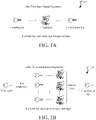
- Figures 1A and 1B illustrate a one-time hash-based signatures scheme and a multi-time hash-based signatures scheme, respectively.
- hash-based cryptography is based on cryptographic systems like Lamport signatures, Merkle Signatures, extended Merkle signature scheme (XMSS), and SPHINCs scheme, etc.
- XMSS extended Merkle signature scheme
- SPHINCs SPHINCs scheme
- HBS hash-based signatures
- a scheme of HBS uses Merkle trees along with a one-time signature (OTS) scheme 100, such as using a private key to sign a message and a corresponding public key to verify the OTS message, where a private key only signs a single message.
- OTS one-time signature
- HBS multi-time signatures
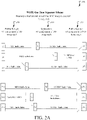
- Figures 2A and 2B illustrate a one-time signature scheme and a multi-time signature scheme, respectively.
- Figure 2A illustrates Winternitz OTS scheme 200, which was offered by Robert Winternitz of Stanford Mathematics Department publishing as hw(x) as opposed to h(x)
- WOTS scheme 200 of Fig. 2A provides for hashing and parsing of messages into M, with 67 integers between [0, 1, 2, ..., 15], such as private key, sk, 205, signature, s, 210, and public key, pk, 215, with each having 67 components of 32 bytes each.
- Fig. 2B illustrates XMSS MTS scheme 250 that allows for a combination of WOTS scheme 200 of Figure 2A and XMSS scheme 255 having XMSS Merkle tree.
- WOTs scheme 200 is based on a one-time public key, pk, 215, having 67 components of 32 bytes each, that is then put through L-Tree compression algorithm 260 to offer WOTS compressed pk 265 to take a place in the XMSS Merkle tree of XMSS scheme 255.
- Fig. 3 is a schematic illustration of a high-level architecture of a secure environment 300 that includes a first device 310 and a second device 350, in accordance with some examples.
- each of the first device 310 and the second device 350 may be embodied as any type of computing device capable of performing the functions described herein.
- each of the first device 310 and the second device 350 may be embodied as a laptop computer, tablet computer, notebook, netbook, Ultrabook TM , a smartphone, cellular phone, wearable computing device, personal digital assistant, mobile Internet device, desktop computer, router, server, workstation, and/or any other computing/communication device.
- First device 310 includes one or more processor(s) 320 and a memory 322 to store a private key 324.
- the processor(s) 320 may be embodied as any type of processor capable of performing the functions described herein.
- the processor(s) 320 may be embodied as a single or multi-core processor(s), digital signal processor, microcontroller, or other processor or processing/controlling circuit.
- the memory 322 may be embodied as any type of volatile or non-volatile memory or data storage capable of performing the functions described herein.
- the memory 322 may store various data and software used during operation of the first device 310 such as operating systems, applications, programs, libraries, and drivers.
- the memory 322 is communicatively coupled to the processor(s) 320.
- the private key 324 may reside in a secure memory that may be part memory 322 or may be separate from memory 322.
- First device 310 further comprises a signing facility 330 which comprises one or more hardware security module(s) 331 which includes memory 322, signature logic, and verification logic 336.
- Hash logic 332 is configured to hash (i.e., to apply a hash function to) a message (M) to generate a hash value (m') of the message M.
- Hash functions may include, but are not limited to, a secure hash function, e.g., secure hash algorithms SHA2-256 and/or SHA3-256, etc.
- SHA2-256 may comply and/or be compatible with Federal Information Processing Standards (FIPS) Publication 180-4, titled: “ Secure Hash Standard (SHS)", published by National Institute of Standards and Technology (NIST) in March 2012 , and/or later and/or related versions of this standard.
- SHA3-256 may comply and/or be compatible with FIPS Publication 202, titled: “ SHA-3 Standard: Permutation-Based Hash and Extendable-Output Functions", published by NIST in August 2015 , and/or later and/or related versions of this standard.
- Signature logic 334 may be configured to generate a signature to be transmitted, i.e., a transmitted signature and/or to verify a signature.
- the transmitted signature may include a number, L, of transmitted signature elements with each transmitted signature element corresponding to a respective message element.
- signature logic 332 may be configured to perform a selected signature operation on each private key element, s ki of the private key, s k , a respective number of times related to a value of each message element, mi included in the message representative m'.
- signature logic 332 may be configured to apply a selected hash function to a corresponding private key element, s ki , mi times.
- signature logic 332 may be configured to apply a selected chain function (that contains a hash function) to a corresponding private key element, s ki , m i times.
- the selected signature operations may, thus, correspond to a selected hash-based signature scheme.
- Hash-based signature schemes may include, but are not limited to, a Winternitz (W) one time signature (OTS) scheme, an enhanced Winternitz OTS scheme (e.g., WOTS+), a Merkle many time signature scheme, an extended Merkle signature scheme (XMSS) and/or an extended Merkle multiple tree signature scheme (XMSS-MT), etc.
- Hash functions may include, but are not limited to SHA2-256 and/or SHA3-256, etc.
- XMSS and/or XMSS-MT may comply or be compatible with one or more Internet Engineering Task Force (IETF.RTM.) informational draft Internet notes, e.g., draft draft-irtf-cfrg-xmss-hash-based-signatures-00, titled " XMSS: Extended Hash-Based Signatures, released April 2015, by the Internet Research Task Force, Crypto Forum Research Group of the IETF.RTM . and/or later and/or related versions of this informational draft, such as draft draft-irtf-cfrg-xmss-hash-based-signatures-06, released June 2016.
- IETF.RTM. Internet Engineering Task Force
- Winternitz OTS is configured to generate a signature and to verify a received signature utilizing a hash function. Winternitz OTS is further configured to use the private key and, thus, each private key element, s ki , one time. For example, Winternitz OTS may be configured to apply a hash function to each private key element, mi or N-m i times to generate a signature and to apply the hash function to each received message element N-m i' or m i' times to generate a corresponding verification signature element.
- the Merkle many time signature scheme is a hash-based signature scheme that utilizes an OTS and may use a public key more than one time. For example, the Merkle signature scheme may utilize Winternitz OTS as the one-time signature scheme.
- WOTS+ is configured to utilize a family of hash functions and a chain function.
- XMSS, WOTS+ and XMSS-MT are examples of hash-based signature schemes that utilize chain functions.
- Each chain function is configured to encapsulate a number of calls to a hash function and may further perform additional operations.
- the number of calls to the hash function included in the chain function may be fixed.
- Chain functions may improve security of an associated hash-based signature scheme.
- Hash-based signature balancing, as described herein, may similarly balance chain function operations.
- Cryptography logic 340 is configured to perform various cryptographic and/or security functions on behalf of the signing device 310.
- the cryptography logic 340 may be embodied as a cryptographic engine, an independent security co-processor of the signing device 310, a cryptographic accelerator incorporated into the processor(s) 320, or a standalone software/firmware.
- the cryptography logic 340 may generate and/or utilize various cryptographic keys (e.g., symmetric/asymmetric cryptographic keys) to facilitate encryption, decryption, signing, and/or signature verification. Additionally, in some embodiments, the cryptography logic 340 may facilitate to establish a secure connection with remote devices over communication link.
- the cryptography module 340 and/or another module of the first device 310 may establish a trusted execution environment or secure enclave within which a portion of the data described herein may be stored and/or a number of the functions described herein may be performed.
- the message, M, and signature may then be sent by first device 310, e.g., via communication logic 342, to second device 350 via network communication link 390.
- the message, M may not be encrypted prior to transmission.
- the message, M may be encrypted prior to transmission.
- the message, M may be encrypted by cryptography logic 340 to produce an encrypted message.
- Second device 350 may also include one or more processors 360 and a memory 362 to store a public key 364.
- the processor(s) 360 may be embodied as any type of processor capable of performing the functions described herein.
- the processor(s) 360 may be embodied as a single or multi-core processor(s), digital signal processor, microcontroller, or other processor or processing/controlling circuit.
- the memory 362 may be embodied as any type of volatile or non-volatile memory or data storage capable of performing the functions described herein.
- the memory 362 may store various data and software used during operation of the second device 350 such as operating systems, applications, programs, libraries, and drivers.
- the memory 362 is communicatively coupled to the processor(s) 360.
- the public key 364 may be provided to verifier device 350 in a previous exchange.
- the public key 364 may be stored, for example, to memory 362.
- Second device 350 further comprises a signing facility 370 comprising one or more hardware security module 371 which includes hash logic 372, signature logic, and verification logic 376.
- hash logic 372 is configured to hash (i.e., to apply a hash function to) a message (M) to generate a hash message (m').
- Hash functions may include, but are not limited to, a secure hash function, e.g., secure hash algorithms SHA2-256 and/or SHA3-256, etc.
- SHA2-256 may comply and/or be compatible with Federal Information Processing Standards (FIPS) Publication 180-4, titled: “ Secure Hash Standard (SHS)", published by National Institute of Standards and Technology (NIST) in March 2012 , and/or later and/or related versions of this standard.
- SHA3-256 may comply and/or be compatible with FIPS Publication 202, titled: “ SHA-3 Standard: Permutation-Based Hash and Extendable-Output Functions", published by NIST in August 2015 , and/or later and/or related versions of this standard.
- hardware security module 371 is configured to generate a verification signature based, at least in part, on the signature received from the first device and based, at least in part, on the received message representative (m'). For example, hardware security module 371 may configured to perform the same signature operations, i.e., apply the same hash function or chain function as applied by hash logic 332 of hardware security module 331, to each received message element a number, N-m i' (or m i' ), times to yield a verification message element. Whether a verification signature, i.e., each of the L verification message elements, corresponds to a corresponding public key element, p ki , may then be determined.
- verification logic 376 may be configured to compare each verification message element to the corresponding public key element, p ki . If each of the verification message element matches the corresponding public key element, p ki , then the verification corresponds to success. In other words, if all of the verification message elements match the public key elements, p k1 , . . , p kL , then the verification corresponds to success. If any verification message element does not match the corresponding public key element, p ki , then the verification corresponds to failure.
- the hardware security module 331 of the first device 310 includes one or more accelerators 338 that cooperate with the hash logic 332, signature logic 334 and/or verification logic 336 to accelerate authentication operations.
- the hardware security module 371 of the second device 310 includes one or more accelerators 378 that cooperate with the hash logic 372, signature logic 374 and/or verification logic 376 to accelerate authentication operations. Examples of accelerators are described in the following paragraphs and with reference to the accompanying drawings.
- the various modules of the environment 300 may be embodied as hardware, software, firmware, or a combination thereof.
- the various modules, logic, and other components of the environment 300 may form a portion of, or otherwise be established by, the processor(s) 320 of first device 310 or processor(s) 360 of second device 350, or other hardware components of the devices
- one or more of the modules of the environment 300 may be embodied as circuitry or collection of electrical devices (e.g., an authentication circuitry, a cryptography circuitry, a communication circuitry, a signature circuitry, and/or a verification circuitry).
- one or more of the illustrative modules may form a portion of another module and/or one or more of the illustrative modules may be independent of one another.
- Fig. 4A is a schematic illustration of a Merkle tree structure illustrating signing operations, in accordance with some examples.
- an XMSS signing operation requires the construction of a Merkle tree 400A using the local public key from each leaf WOTS node 410 to generate a global public key (PK) 420.
- PK public key
- the authentication path and the root node value can be computed off-line such that these operations do not limit performance.
- Each WOTS node 410 has a unique secret key, "sk" which is used to sign a message only once.
- the XMSS signature consists of a signature generated for the input message and an authentication path of intermediate tree nodes to construct the root of the Merkle tree.
- Fig. 4B is a schematic illustration of a Merkle tree structure 400B during verification, in accordance with some examples.
- the input message and signature are used to compute the local public key 420B of the WOTS node, which is further used to compute the tree root value using the authentication path.
- a successful verification will match the computed tree root value to the public key PK shared by the signing entity.
- the WOTS and L-Tree operations constitute on average 82% and 16% of XMSS sign/verify latency respectively, thus defining the overall performance of the authentication system. Described herein are various pre-computation techniques which may be implemented to speed-up WOTS and L-Tree operations, thereby improving XMSS performance. The techniques are applicable to the other hash options and scale well for both software and hardware implementations.
- Fig. 5 is a schematic illustration of a compute blocks in an architecture 500 to implement a signature algorithm, in accordance with some examples.
- the WOTS+ operation involves 67 parallel chains of 16 SHA2-256 HASH functions, each with the secret key sk[66:0] as input.
- Each HASH operation in the chain consists of 2 pseudo-random functions (PRF) using SHA2-256 to generate a bitmask and a key.
- PRF pseudo-random functions
- the bitmask is XOR-ed with the previous hash and concatenated with the key as input message to a 3rd SHA2-256 hash operation.
- the 67 ⁇ 32-byte WOTS public key pk[66:0] is generated by hashing secret key sk across the 67 hash chains. Analogous functions are performed for SHAKE128.
- Fig. 6A is a schematic illustration of a compute blocks in an architecture 600A to implement signature generation in a signature algorithm, in accordance with some examples.
- the input message is hashed and pre-processed to compute a 67 ⁇ 4-bit value, which is used as an index to choose an intermediate hash value in each chain.
- Fig. 6B is a schematic illustration of a compute blocks in an architecture 600B to implement signature verification in a verification algorithm, in accordance with some examples.
- the message is again hashed to compute the signature indices and compute the remaining HASH operations in each chain to compute the WOTS public key pk.
- This value and the authentication path are used to compute the root of the Merkle tree and compare with the shared public key PK to verify the message.
- XMSS Post-Quantum Secure Remote Attestation for Autonomous Systems
- XMSS is a quantum attack resilient digital signature algorithm based on millions of hash computations during key-generation and signing. Additionally, it needs to maintain the current state of the Merkle tree, because reuse of a leaf node breaks it security properties. This amount of computation as well as state management are challenging for resource-constrained Micro-Controller Units (MCUs), which are very often integrated into an autonomous system.
- MCUs Micro-Controller Units
- state management of XMSS requires significant amount of storage, which is infeasible for individual resource constrained MCUs used in autonomous systems (e.g., automotive platforms, industrial robots, etc.).
- key-generation and signing operations for XMSS involves millions of hash execution, which is infeasible for resource-constrained MCUs.
- Described herein are techniques to enable a higher-performant compute device in an autonomous system to orchestrate with other integrated compute nodes and measure their latest security footprint, then accumulate all individual security footprints along with its own and perform XMSS signature on it. This XMSS signature with all security footprint details is then transferred to the remote party (e.g., manufacturer, system user, etc.) as attestation of the current system.
- the security footprint in some examples could be based on the firmware and/or software stack currently running in a device.
- subject matter described herein may enable post-quantum secure attestation to autonomous systems consists of multiple ultra-lightweight microcontrollers used for automotive and industrial applications.
- Fig. 7 is a schematic illustration of a XMSS signature structure 700, in accordance with some examples.
- Fig. 8 is a flowchart illustrating operations in a method 800 to implement efficient post-quantum secure platform attestation for autonomous platforms, in accordance with some examples. Referring to Figs. 7-8 , in some examples a process 800
- Fig. 8 is a flowchart illustrating operations in a method to implement efficient post-quantum secure platform attestations, in accordance with some examples.
- a gateway device maintains, for one or more remote devices such as electronic control units (ECUs) communicatively coupled to the gateway device, XMSS private keys, Merkle Trees, shared secrets with individual ECU(s), and the latest verified version of the software/firmware stacks for the ECU(s).
- ECUs may report these parameters to the gateway device during attestation. Collectively, these parameters may be referred to as a security footprint for the ECUs.
- the gateway device receives an attestation request token A Q .
- the attestation token request may be received from an attestation requesting device.
- the gateway device generates an attestation initiation token, which is sent to the remote device(s) communicatively coupled to the gateway device.
- the remote device(s) communicatively coupled to the gateway device receives the attestation initiation token and at operation 830 the remote device(s) calculate a modified message representative M" using equation 2 and returns the modified message representative to the gateway device.
- M ⁇ hash r ⁇ shared_secret ⁇ ID_ECU ⁇ SW Stack
- the remote device(s) return M" and the version numbers (V) of the software and/or firmware stacks on the device.
- the gateway device accesses the verified software and/or firmware stacks for the remote device that it maintains and validates the modified message representative M".
- the gateway device forms a software and/or firmware stack image message M that is derived from the images of the software and/or firmware stacks collected from all remote devices and the software and/or firmware image of the gateway device.
- the message M is calculated using equation 3.
- M ID_ECU 1 ⁇ SW ECU 1 ⁇ ID_ECU 2 ⁇ SW ECU 2 ⁇ ... ⁇ ID_ECU gateway ⁇ SW gateway
- the gateway device computes an XMSS signature on M
- Fig. 8 enable PQ secure remote attestation for complex autonomous systems that consists of resource-constrained compute elements.
- the manufacturer or user can ask for remote attestation to the system periodically.
- a Merkle tree height of 20 it can perform up to 1 million attestations in the lifetime of one gate-way device, which translates to more than 4000 attestations per month considering 20-year lifetime of the gateway device.
- Fig. 9 illustrates an embodiment of an exemplary computing architecture that may be suitable for implementing various embodiments as previously described.
- the computing architecture 900 may comprise or be implemented as part of an electronic device.
- the computing architecture 900 may be representative, for example of a computer system that implements one or more components of the operating environments described above.
- computing architecture 900 may be representative of one or more portions or components of a digital signature signing system that implement one or more techniques described herein. The embodiments are not limited in this context.
- a component can be, but is not limited to being, a process running on a processor, a processor, a hard disk drive, multiple storage drives (of optical and/or magnetic storage medium), an object, an executable, a thread of execution, a program, and/or a computer.
- a component can be, but is not limited to being, a process running on a processor, a processor, a hard disk drive, multiple storage drives (of optical and/or magnetic storage medium), an object, an executable, a thread of execution, a program, and/or a computer.
- an application running on a server and the server can be a component.
- One or more components can reside within a process and/or thread of execution, and a component can be localized on one computer and/or distributed between two or more computers. Further, components may be communicatively coupled to each other by various types of communications media to coordinate operations. The coordination may involve the uni-directional or bi-directional exchange of information. For instance, the components may communicate information in the form of signals communicated over the communications media. The information can be implemented as signals allocated to various signal lines. In such allocations, each message is a signal. Further embodiments, however, may alternatively employ data messages. Such data messages may be sent across various connections. Exemplary connections include parallel interfaces, serial interfaces, and bus interfaces.
- the computing architecture 900 includes various common computing elements, such as one or more processors, multi-core processors, co-processors, memory units, chipsets, controllers, peripherals, interfaces, oscillators, timing devices, video cards, audio cards, multimedia input/output (I/O) components, power supplies, and so forth.
- processors multi-core processors
- co-processors memory units
- chipsets controllers
- peripherals interfaces
- oscillators oscillators
- timing devices video cards, audio cards, multimedia input/output (I/O) components, power supplies, and so forth.
- the embodiments are not limited to implementation by the computing architecture 900.
- the computing architecture 900 includes one or more processors 902 and one or more graphics processors 908, and may be a single processor desktop system, a multiprocessor workstation system, or a server system having a large number of processors 902 or processor cores 907.
- the system 900 is a processing platform incorporated within a system-on-a-chip (SoC or SOC) integrated circuit for use in mobile, handheld, or embedded devices.
- SoC system-on-a-chip
- An embodiment of system 900 can include, or be incorporated within a server-based gaming platform, a game console, including a game and media console, a mobile gaming console, a handheld game console, or an online game console.
- system 900 is a mobile phone, smart phone, tablet computing device or mobile Internet device.
- Data processing system 900 can also include, couple with, or be integrated within a wearable device, such as a smart watch wearable device, smart eyewear device, augmented reality device, or virtual reality device.
- data processing system 900 is a television or set top box device having one or more processors 902 and a graphical interface generated by one or more graphics processors 908.
- the one or more processors 902 each include one or more processor cores 907 to process instructions which, when executed, perform operations for system and user software.
- each of the one or more processor cores 907 is configured to process a specific instruction set 909.
- instruction set 909 may facilitate Complex Instruction Set Computing (CISC), Reduced Instruction Set Computing (RISC), or computing via a Very Long Instruction Word (VLIW).
- Multiple processor cores 907 may each process a different instruction set 909, which may include instructions to facilitate the emulation of other instruction sets.
- Processor core 907 may also include other processing devices, such a Digital Signal Processor (DSP).
- DSP Digital Signal Processor
- the processor 902 includes cache memory 904. Depending on the architecture, the processor 902 can have a single internal cache or multiple levels of internal cache. In some embodiments, the cache memory is shared among various components of the processor 902. In some embodiments, the processor 902 also uses an external cache (e.g., a Level-3 (L3) cache or Last Level Cache (LLC)) (not shown), which may be shared among processor cores 907 using known cache coherency techniques.
- L3 cache Level-3
- LLC Last Level Cache
- a register file 906 is additionally included in processor 902 which may include different types of registers for storing different types of data (e.g., integer registers, floating point registers, status registers, and an instruction pointer register). Some registers may be general-purpose registers, while other registers may be specific to the design of the processor 902.
- one or more processor(s) 902 are coupled with one or more interface bus(es) 910 to transmit communication signals such as address, data, or control signals between processor 902 and other components in the system.
- the interface bus 910 can be a processor bus, such as a version of the Direct Media Interface (DMI) bus.
- processor busses are not limited to the DMI bus, and may include one or more Peripheral Component Interconnect buses (e.g., PCI, PCI Express), memory busses, or other types of interface busses.
- the processor(s) 902 include an integrated memory controller 916 and a platform controller hub 930.
- the memory controller 916 facilitates communication between a memory device and other components of the system 900, while the platform controller hub (PCH) 930 provides connections to I/O devices via a local I/O bus.
- PCH platform controller hub
- Memory device 920 can be a dynamic random-access memory (DRAM) device, a static random-access memory (SRAM) device, flash memory device, phase-change memory device, or some other memory device having suitable performance to serve as process memory.
- the memory device 920 can operate as system memory for the system 900, to store data 922 and instructions 921 for use when the one or more processors 902 executes an application or process.
- Memory controller hub 916 also couples with an optional external graphics processor 912, which may communicate with the one or more graphics processors 908 in processors 902 to perform graphics and media operations.
- a display device 911 can connect to the processor(s) 902.
- the display device 911 can be one or more of an internal display device, as in a mobile electronic device or a laptop device or an external display device attached via a display interface (e.g., DisplayPort, etc.).
- the display device 911 can be a head mounted display (HMD) such as a stereoscopic display device for use in virtual reality (VR) applications or augmented reality (AR) applications.
- HMD head mounted display
- the platform controller hub 930 enables peripherals to connect to memory device 920 and processor 902 via a high-speed I/O bus.
- the I/O peripherals include, but are not limited to, an audio controller 946, a network controller 934, a firmware interface 928, a wireless transceiver 926, touch sensors 925, a data storage device 924 (e.g., hard disk drive, flash memory, etc.).
- the data storage device 924 can connect via a storage interface (e.g., SATA) or via a peripheral bus, such as a Peripheral Component Interconnect bus (e.g., PCI, PCI Express).
- the touch sensors 925 can include touch screen sensors, pressure sensors, or fingerprint sensors.
- the wireless transceiver 926 can be a Wi-Fi transceiver, a Bluetooth transceiver, or a mobile network transceiver such as a 3G, 4G, or Long Term Evolution (LTE) transceiver.
- the firmware interface 928 enables communication with system firmware, and can be, for example, a unified extensible firmware interface (UEFI).
- the network controller 934 can enable a network connection to a wired network.
- a high-performance network controller (not shown) couples with the interface bus 910.
- the audio controller 946 in one embodiment, is a multi-channel high definition audio controller.
- the system 900 includes an optional legacy I/O controller 940 for coupling legacy (e.g., Personal System 2 (PS/2)) devices to the system.
- the platform controller hub 930 can also connect to one or more Universal Serial Bus (USB) controllers 942 connect input devices, such as keyboard and mouse 943 combinations, a camera 944, or other USB input devices.
- USB Universal Serial Bus
- logic instructions as referred to herein relates to expressions which may be understood by one or more machines for performing one or more logical operations.
- logic instructions may comprise instructions which are interpretable by a processor compiler for executing one or more operations on one or more data objects.
- this is merely an example of machine-readable instructions and examples are not limited in this respect.
- a computer readable medium may comprise one or more storage devices for storing computer readable instructions or data.
- Such storage devices may comprise storage media such as, for example, optical, magnetic or semiconductor storage media.
- this is merely an example of a computer readable medium and examples are not limited in this respect.
- logic as referred to herein relates to structure for performing one or more logical operations.
- logic may comprise circuitry which provides one or more output signals based upon one or more input signals.
- Such circuitry may comprise a finite state machine which receives a digital input and provides a digital output, or circuitry which provides one or more analog output signals in response to one or more analog input signals.
- Such circuitry may be provided in an application specific integrated circuit (ASIC) or field programmable gate array (FPGA).
- ASIC application specific integrated circuit
- FPGA field programmable gate array
- logic may comprise machine-readable instructions stored in a memory in combination with processing circuitry to execute such machine-readable instructions.
- Some of the methods described herein may be embodied as logic instructions on a computer-readable medium. When executed on a processor, the logic instructions cause a processor to be programmed as a special-purpose machine that implements the described methods.
- the processor when configured by the logic instructions to execute the methods described herein, constitutes structure for performing the described methods.
- the methods described herein may be reduced to logic on, e.g., a field programmable gate array (FPGA), an application specific integrated circuit (ASIC) or the like.
- FPGA field programmable gate array
- ASIC application specific integrated circuit
- Coupled may mean that two or more elements are in direct physical or electrical contact.
- coupled may also mean that two or more elements may not be in direct contact with each other, but yet may still cooperate or interact with each other.
Landscapes
- Engineering & Computer Science (AREA)
- Computer Security & Cryptography (AREA)
- Theoretical Computer Science (AREA)
- Signal Processing (AREA)
- Computer Networks & Wireless Communication (AREA)
- Physics & Mathematics (AREA)
- Software Systems (AREA)
- General Engineering & Computer Science (AREA)
- General Physics & Mathematics (AREA)
- Computer Hardware Design (AREA)
- Health & Medical Sciences (AREA)
- General Health & Medical Sciences (AREA)
- Bioethics (AREA)
- Electromagnetism (AREA)
- Condensed Matter Physics & Semiconductors (AREA)
- Mathematical Analysis (AREA)
- Mathematical Optimization (AREA)
- Pure & Applied Mathematics (AREA)
- Computing Systems (AREA)
- Mathematical Physics (AREA)
- Evolutionary Computation (AREA)
- Data Mining & Analysis (AREA)
- Computational Mathematics (AREA)
- Power Engineering (AREA)
- Artificial Intelligence (AREA)
- Mobile Radio Communication Systems (AREA)
Abstract
Description
- Subject matter described herein relates generally to the field of computer security and more particularly to code signing facilities for post-quantum cryptography secure hash-based signatures, including but not limited to the Extended Merkle Signature Scheme (XMSS) and Leighton/Micali Signature (LMS) hash-based signing and verification algorithms.
- Existing public-key digital signature algorithms such as Rivest-Shamir-Adleman (RSA) and Elliptic Curve Digital Signature Algorithm (ECDSA) are anticipated not to be secure against brute-force attacks based on algorithms such as Shor's algorithm using quantum computers. As a result, there are efforts underway in the cryptography research community and in various standards bodies to define new standards for algorithms that are secure against quantum computers.
- Accordingly, techniques to manage the proper application of post-quantum signature schemes may find utility, e.g., in computer-based communication systems and methods.
- The detailed description is described with reference to the accompanying figures.
-
Figs. 1A and 1B are schematic illustrations of a one-time hash-based signatures scheme and a multi-time hash-based signatures scheme, respectively. -
Figs. 2A-2B are schematic illustrations of a one-time signature scheme and a multi-time signature scheme, respectively. -
Fig. 3 is a schematic illustration of a signing device and a verifying device, in accordance with some examples. -
Fig. 4A is a schematic illustration of a Merkle tree structure, in accordance with some examples. -
Fig. 4B is a schematic illustration of a Merkle tree structure, in accordance with some examples. -
Fig. 5 is a schematic illustration of a compute blocks in an architecture to implement a signature algorithm, in accordance with some examples. -
Fig. 6A is a schematic illustration of a compute blocks in an architecture to implement signature generation in a signature algorithm, in accordance with some examples. -
Fig. 6B is a schematic illustration of a compute blocks in an architecture to implement signature verification in a verification algorithm, in accordance with some examples. -
Fig. 7 is a schematic illustration of a Merkle tree structure, in accordance with some examples. -
Fig. 8 is a flowchart illustrating operations in a method to implement efficient post-quantum secure software updates, in accordance with some examples. -
Fig. 9 is a schematic illustration of a computing architecture which may be adapted to implement hardware acceleration in accordance with some examples. - Described herein are exemplary systems and methods to implement robust state synchronization for stateful hash-based signatures. In the following description, numerous specific details are set forth to provide a thorough understanding of various examples. However, it will be understood by those skilled in the art that the various examples may be practiced without the specific details. In other instances, well-known methods, procedures, components, and circuits have not been illustrated or described in detail so as not to obscure the examples.
- As described briefly above, existing public-key digital signature algorithms such as Rivest-Shamir-Adleman (RSA) and Elliptic Curve Digital Signature Algorithm (ECDSA) are anticipated not to be secure against brute-force attacks based on algorithms such as Shor's algorithm using quantum computers. Hash-based signatures, on the other hand, are expected to withstand attacks by quantum computers. One example of hash-based signature scheme is the eXtended Merkle Signature Scheme (XMSS). As used herein, the term XMSS shall refer to both the XMSS scheme and the XMSS-MT scheme.
- An XMSS signature process implements a hash-based signature scheme using a one-time signature scheme such as a Winternitz one-time signature (WOTS) or a derivative there of (e.g., WOTS+) in combination with a secure hash algorithm (SHA) such as SHA2-256 as the primary underlying hash function. In some examples the XMSS signature/verification scheme may also use one or more of SHA2-512, SHA3-SHAKE-256 or SHA3-SHAKE-512 as secure hash functions. XMSS-specific hash functions include a Pseudo-Random Function (PRF), a chain hash (F), a tree hash (H) and message hash function (Hmsg). As used herein, the term WOTS shall refer to the WOTS signature scheme and or a derivative scheme such as WOTS+.
- The Leighton/Micali signature (LMS) scheme is another hash-based signature scheme that uses Leighton/Micali one-time signatures (LM-OTS) as the one-time signature building block. LMS signatures are based on a SHA2-256 hash function.
- An XMSS signature process comprises three major operations. The first major operation receives an input message (M) and a private key (sk) and utilizes a one-time signature algorithm (e.g., WOTS+) to generate a message representative (M') that encodes a public key (pk). In a 128-bit post quantum security implementation the input message M is subjected to a hash function and then divided into 67 message components (n bytes each), each of which are subjected to a hash chain function to generate a corresponding 67 components of the digital signature. Each chain function invokes a series of underlying secure hash algorithms (SHA).
- The second major operation is an L-Tree computation, which combines WOTS+ (or WOTS) public key components (n-bytes each) and produces a single n-byte value. For example, in the 128-bit post-quantum security there are 67 public key components, each of which invokes an underlying secure hash algorithm (SHA) that is performed on an input block.
- The third major operation is a tree-hash operation, which constructs a Merkle tree. In an XMSS verification, an authentication path that is provided as part of the signature and the output of L-tree operation is processed by a tree-hash operation to generate the root node of the Merkle tree, which should correspond to the XMSS public key. For XMSS verification with 128-bit post-quantum security, traversing the Merkle tree comprises executing secure hash operations. In an XMSS verification, the output of the Tree-hash operation is compared with the known public key. If they match then the signature is accepted. By contrast, if they do not match then the signature is rejected.
- An important limitation of all OTS algorithms, and many hash-based signatures schemes built upon OTS techniques, is that use of any single private key more than once enables an attacker to forge signatures in the scheme. It is therefore imperative that systems which enable automated signing of code, as is common in Continuous Integration/Continuous Delivery (CI/CD) software development methodologies, single usage of an HBS signing key is guaranteed. Further, recovery from equipment failures or environmental conditions which may create a business continuity disruption, are handled in a way that maintains the guarantee of single-use for every private key. Design and construction of automated signing facilities must take into account both normal operations to ensure HBS signing keys are used only once, as well as exception or disaster conditions that could disrupt the normal flow or sequence of use of HBS private keys.
- Post-Quantum Cryptography (also referred to as "quantum-proof', "quantum-safe", "quantum-resistant", or simply "PQC") takes a futuristic and realistic approach to cryptography. It prepares those responsible for cryptography as well as end-users to know the cryptography is outdated; rather, it needs to evolve to be able to successfully address the evolving computing devices into quantum computing and post-quantum computing.
- It is well-understood that cryptography allows for protection of data that is communicated online between individuals and entities and stored using various networks. This communication of data can range from sending and receiving of emails, purchasing of goods or services online, accessing banking or other personal information using websites, etc.
- Conventional cryptography and its typical factoring and calculating of difficult mathematical scenarios may not matter when dealing with quantum computing. These mathematical problems, such as discrete logarithm, integer factorization, and elliptic-curve discrete logarithm, etc., are not capable of withstanding an attack from a powerful quantum computer. Although any post-quantum cryptography could be built on the current cryptography, the novel approach would need to be intelligent, fast, and precise enough to resist and defeat any attacks by quantum computers
-
Figures 1A and 1B illustrate a one-time hash-based signatures scheme and a multi-time hash-based signatures scheme, respectively. As aforesaid, hash-based cryptography is based on cryptographic systems like Lamport signatures, Merkle Signatures, extended Merkle signature scheme (XMSS), and SPHINCs scheme, etc. With the advent of quantum computing and in anticipation of its growth, there have been concerns about various challenges that quantum computing could pose and what could be done to counter such challenges using the area of cryptography. - One area that is being explored to counter quantum computing challenges is hash-based signatures (HBS) since these schemes have been around for a long while and possess the necessarily basic ingredients to counter the quantum counting and post-quantum computing challenges. HBS schemes are regarded as fast signature algorithms working with fast platform secured-boot, which is regarded as the most resistant to quantum and post-quantum computing attacks.
- For example, as illustrated with respect to
Figure 1A , a scheme of HBS is shown that uses Merkle trees along with a one-time signature (OTS)scheme 100, such as using a private key to sign a message and a corresponding public key to verify the OTS message, where a private key only signs a single message. - Similarly, as illustrated with respect to
Figure 1B , another HBS scheme is shown, where this one relates to multi-time signatures (MTS)scheme 150, where a private key can sign multiple messages. -
Figures 2A and2B illustrate a one-time signature scheme and a multi-time signature scheme, respectively. Continuing with HBS-basedOTS scheme 100 ofFigure 1A andMTS scheme 150 ofFigure 1B ,Figure 2A illustratesWinternitz OTS scheme 200, which was offered by Robert Winternitz of Stanford Mathematics Department publishing as hw(x) as opposed to h(x)|h(y), whileFigure 2B illustratesXMSS MTS scheme 250, respectively. - For example,
WOTS scheme 200 ofFig. 2A provides for hashing and parsing of messages into M, with 67 integers between [0, 1, 2, ..., 15], such as private key, sk, 205, signature, s, 210, and public key, pk, 215, with each having 67 components of 32 bytes each. -
Fig. 2B illustratesXMSS MTS scheme 250 that allows for a combination ofWOTS scheme 200 ofFigure 2A and XMSS scheme 255 having XMSS Merkle tree. As discussed previously with respect toFigure 2A ,WOTs scheme 200 is based on a one-time public key, pk, 215, having 67 components of 32 bytes each, that is then put through L-Tree compression algorithm 260 to offer WOTS compressed pk 265 to take a place in the XMSS Merkle tree of XMSS scheme 255. It is contemplated that XMSS signature verification may include computing WOTS verification and checking to determine whether a reconstructed root node matches the XMSS public key, such as root node = XMSS public key. -
Fig. 3 is a schematic illustration of a high-level architecture of asecure environment 300 that includes afirst device 310 and asecond device 350, in accordance with some examples. Referring toFig. 3 , each of thefirst device 310 and thesecond device 350 may be embodied as any type of computing device capable of performing the functions described herein. For example, in some embodiments, each of thefirst device 310 and thesecond device 350 may be embodied as a laptop computer, tablet computer, notebook, netbook, Ultrabook™, a smartphone, cellular phone, wearable computing device, personal digital assistant, mobile Internet device, desktop computer, router, server, workstation, and/or any other computing/communication device. -
First device 310 includes one or more processor(s) 320 and amemory 322 to store aprivate key 324. The processor(s) 320 may be embodied as any type of processor capable of performing the functions described herein. For example, the processor(s) 320 may be embodied as a single or multi-core processor(s), digital signal processor, microcontroller, or other processor or processing/controlling circuit. Similarly, thememory 322 may be embodied as any type of volatile or non-volatile memory or data storage capable of performing the functions described herein. In operation, thememory 322 may store various data and software used during operation of thefirst device 310 such as operating systems, applications, programs, libraries, and drivers. Thememory 322 is communicatively coupled to the processor(s) 320. In some examples theprivate key 324 may reside in a secure memory that may bepart memory 322 or may be separate frommemory 322. -
First device 310 further comprises asigning facility 330 which comprises one or more hardware security module(s) 331 which includesmemory 322, signature logic, andverification logic 336.Hash logic 332 is configured to hash (i.e., to apply a hash function to) a message (M) to generate a hash value (m') of the message M. Hash functions may include, but are not limited to, a secure hash function, e.g., secure hash algorithms SHA2-256 and/or SHA3-256, etc. SHA2-256 may comply and/or be compatible with Federal Information Processing Standards (FIPS) Publication 180-4, titled: "Secure Hash Standard (SHS)", published by National Institute of Standards and Technology (NIST) in March 2012, and/or later and/or related versions of this standard. SHA3-256 may comply and/or be compatible with FIPS Publication 202, titled: "SHA-3 Standard: Permutation-Based Hash and Extendable-Output Functions", published by NIST in August 2015, and/or later and/or related versions of this standard. -
Signature logic 334 may be configured to generate a signature to be transmitted, i.e., a transmitted signature and/or to verify a signature. In instances in which thefirst device 310 is the signing device, the transmitted signature may include a number, L, of transmitted signature elements with each transmitted signature element corresponding to a respective message element. For example, for each message element, mi,signature logic 332 may be configured to perform a selected signature operation on each private key element, ski of the private key, sk, a respective number of times related to a value of each message element, mi included in the message representative m'. For example,signature logic 332 may be configured to apply a selected hash function to a corresponding private key element, ski, mi times. In another example,signature logic 332 may be configured to apply a selected chain function (that contains a hash function) to a corresponding private key element, ski, mi times. The selected signature operations may, thus, correspond to a selected hash-based signature scheme. - Hash-based signature schemes may include, but are not limited to, a Winternitz (W) one time signature (OTS) scheme, an enhanced Winternitz OTS scheme (e.g., WOTS+), a Merkle many time signature scheme, an extended Merkle signature scheme (XMSS) and/or an extended Merkle multiple tree signature scheme (XMSS-MT), etc. Hash functions may include, but are not limited to SHA2-256 and/or SHA3-256, etc. For example, XMSS and/or XMSS-MT may comply or be compatible with one or more Internet Engineering Task Force (IETF.RTM.) informational draft Internet notes, e.g., draft draft-irtf-cfrg-xmss-hash-based-signatures-00, titled "XMSS: Extended Hash-Based Signatures, released April 2015, by the Internet Research Task Force, Crypto Forum Research Group of the IETF.RTM. and/or later and/or related versions of this informational draft, such as draft draft-irtf-cfrg-xmss-hash-based-signatures-06, released June 2016.
- Winternitz OTS is configured to generate a signature and to verify a received signature utilizing a hash function. Winternitz OTS is further configured to use the private key and, thus, each private key element, ski, one time. For example, Winternitz OTS may be configured to apply a hash function to each private key element, mi or N-mi times to generate a signature and to apply the hash function to each received message element N-mi' or mi' times to generate a corresponding verification signature element. The Merkle many time signature scheme is a hash-based signature scheme that utilizes an OTS and may use a public key more than one time. For example, the Merkle signature scheme may utilize Winternitz OTS as the one-time signature scheme. WOTS+ is configured to utilize a family of hash functions and a chain function.
- XMSS, WOTS+ and XMSS-MT are examples of hash-based signature schemes that utilize chain functions. Each chain function is configured to encapsulate a number of calls to a hash function and may further perform additional operations. The number of calls to the hash function included in the chain function may be fixed. Chain functions may improve security of an associated hash-based signature scheme. Hash-based signature balancing, as described herein, may similarly balance chain function operations.
-
Cryptography logic 340 is configured to perform various cryptographic and/or security functions on behalf of thesigning device 310. In some embodiments, thecryptography logic 340 may be embodied as a cryptographic engine, an independent security co-processor of thesigning device 310, a cryptographic accelerator incorporated into the processor(s) 320, or a standalone software/firmware. In some embodiments, thecryptography logic 340 may generate and/or utilize various cryptographic keys (e.g., symmetric/asymmetric cryptographic keys) to facilitate encryption, decryption, signing, and/or signature verification. Additionally, in some embodiments, thecryptography logic 340 may facilitate to establish a secure connection with remote devices over communication link. It should further be appreciated that, in some embodiments, thecryptography module 340 and/or another module of thefirst device 310 may establish a trusted execution environment or secure enclave within which a portion of the data described herein may be stored and/or a number of the functions described herein may be performed. - After the signature is generated as described above, the message, M, and signature may then be sent by
first device 310, e.g., viacommunication logic 342, tosecond device 350 vianetwork communication link 390. In an embodiment, the message, M, may not be encrypted prior to transmission. In another embodiment, the message, M, may be encrypted prior to transmission. For example, the message, M, may be encrypted bycryptography logic 340 to produce an encrypted message. -
Second device 350 may also include one ormore processors 360 and amemory 362 to store apublic key 364. As described above, the processor(s) 360 may be embodied as any type of processor capable of performing the functions described herein. For example, the processor(s) 360 may be embodied as a single or multi-core processor(s), digital signal processor, microcontroller, or other processor or processing/controlling circuit. Similarly, thememory 362 may be embodied as any type of volatile or non-volatile memory or data storage capable of performing the functions described herein. In operation, thememory 362 may store various data and software used during operation of thesecond device 350 such as operating systems, applications, programs, libraries, and drivers. Thememory 362 is communicatively coupled to the processor(s) 360. - In some examples the
public key 364 may be provided toverifier device 350 in a previous exchange. The public key, pk, is configured to contain a number L of public key elements, i.e., pk=[pk1, . . . , pkL]. Thepublic key 364 may be stored, for example, tomemory 362. -
Second device 350 further comprises asigning facility 370 comprising one or morehardware security module 371 which includeshash logic 372, signature logic, andverification logic 376. As described above,hash logic 372 is configured to hash (i.e., to apply a hash function to) a message (M) to generate a hash message (m'). Hash functions may include, but are not limited to, a secure hash function, e.g., secure hash algorithms SHA2-256 and/or SHA3-256, etc. SHA2-256 may comply and/or be compatible with Federal Information Processing Standards (FIPS) Publication 180-4, titled: "Secure Hash Standard (SHS)", published by National Institute of Standards and Technology (NIST) in March 2012, and/or later and/or related versions of this standard. SHA3-256 may comply and/or be compatible with FIPS Publication 202, titled: "SHA-3 Standard: Permutation-Based Hash and Extendable-Output Functions", published by NIST in August 2015, and/or later and/or related versions of this standard. - In instances in which the second device is the verifying device,
hardware security module 371 is configured to generate a verification signature based, at least in part, on the signature received from the first device and based, at least in part, on the received message representative (m'). For example,hardware security module 371 may configured to perform the same signature operations, i.e., apply the same hash function or chain function as applied byhash logic 332 ofhardware security module 331, to each received message element a number, N-mi' (or mi'), times to yield a verification message element. Whether a verification signature, i.e., each of the L verification message elements, corresponds to a corresponding public key element, pki, may then be determined. For example,verification logic 376 may be configured to compare each verification message element to the corresponding public key element, pki. If each of the verification message element matches the corresponding public key element, pki, then the verification corresponds to success. In other words, if all of the verification message elements match the public key elements, pk1, . . , pkL, then the verification corresponds to success. If any verification message element does not match the corresponding public key element, pki, then the verification corresponds to failure. - As described in greater detail below, in some examples the
hardware security module 331 of thefirst device 310 includes one ormore accelerators 338 that cooperate with thehash logic 332,signature logic 334 and/orverification logic 336 to accelerate authentication operations. Similarly, in some examples thehardware security module 371 of thesecond device 310 includes one ormore accelerators 378 that cooperate with thehash logic 372,signature logic 374 and/orverification logic 376 to accelerate authentication operations. Examples of accelerators are described in the following paragraphs and with reference to the accompanying drawings. - The various modules of the
environment 300 may be embodied as hardware, software, firmware, or a combination thereof. For example, the various modules, logic, and other components of theenvironment 300 may form a portion of, or otherwise be established by, the processor(s) 320 offirst device 310 or processor(s) 360 ofsecond device 350, or other hardware components of the devices As such, in some embodiments, one or more of the modules of theenvironment 300 may be embodied as circuitry or collection of electrical devices (e.g., an authentication circuitry, a cryptography circuitry, a communication circuitry, a signature circuitry, and/or a verification circuitry). Additionally, in some embodiments, one or more of the illustrative modules may form a portion of another module and/or one or more of the illustrative modules may be independent of one another. -
Fig. 4A is a schematic illustration of a Merkle tree structure illustrating signing operations, in accordance with some examples. Referring toFig. 4A , an XMSS signing operation requires the construction of a Merkle tree 400A using the local public key from each leaf WOTS node 410 to generate a global public key (PK) 420. In some examples the authentication path and the root node value can be computed off-line such that these operations do not limit performance. Each WOTS node 410 has a unique secret key, "sk" which is used to sign a message only once. The XMSS signature consists of a signature generated for the input message and an authentication path of intermediate tree nodes to construct the root of the Merkle tree. -
Fig. 4B is a schematic illustration of aMerkle tree structure 400B during verification, in accordance with some examples. During verification, the input message and signature are used to compute the local public key 420B of the WOTS node, which is further used to compute the tree root value using the authentication path. A successful verification will match the computed tree root value to the public key PK shared by the signing entity. The WOTS and L-Tree operations constitute on average 82% and 16% of XMSS sign/verify latency respectively, thus defining the overall performance of the authentication system. Described herein are various pre-computation techniques which may be implemented to speed-up WOTS and L-Tree operations, thereby improving XMSS performance. The techniques are applicable to the other hash options and scale well for both software and hardware implementations. -
Fig. 5 is a schematic illustration of a compute blocks in anarchitecture 500 to implement a signature algorithm, in accordance with some examples. Referring toFig. 5 , the WOTS+ operation involves 67 parallel chains of 16 SHA2-256 HASH functions, each with the secret key sk[66:0] as input. Each HASH operation in the chain consists of 2 pseudo-random functions (PRF) using SHA2-256 to generate a bitmask and a key. The bitmask is XOR-ed with the previous hash and concatenated with the key as input message to a 3rd SHA2-256 hash operation. The 67×32-byte WOTS public key pk[66:0] is generated by hashing secret key sk across the 67 hash chains. Analogous functions are performed for SHAKE128. -
Fig. 6A is a schematic illustration of a compute blocks in anarchitecture 600A to implement signature generation in a signature algorithm, in accordance with some examples. As illustrated inFig. 6A , for message signing, the input message is hashed and pre-processed to compute a 67×4-bit value, which is used as an index to choose an intermediate hash value in each chain. -
Fig. 6B is a schematic illustration of a compute blocks in anarchitecture 600B to implement signature verification in a verification algorithm, in accordance with some examples. Referring toFig. 6B , during verification, the message is again hashed to compute the signature indices and compute the remaining HASH operations in each chain to compute the WOTS public key pk. This value and the authentication path are used to compute the root of the Merkle tree and compare with the shared public key PK to verify the message. - Post-Quantum Secure Remote Attestation for Autonomous Systems As described above, XMSS is a quantum attack resilient digital signature algorithm based on millions of hash computations during key-generation and signing. Additionally, it needs to maintain the current state of the Merkle tree, because reuse of a leaf node breaks it security properties. This amount of computation as well as state management are challenging for resource-constrained Micro-Controller Units (MCUs), which are very often integrated into an autonomous system.
- For example, modern automotive platform consists of heterogeneous compute devices. Several of them are built with resource-constrained microcontrollers (8, 16 bits with limited memory) on which execution of XMSS key generation and signature may not be feasible. On the other hand, to get assurance about the up to date security footprint of an entire autonomous system, it might be a useful to accommodate the latest security footprint of each of the compute elements into one attestation.
- Further, state management of XMSS requires significant amount of storage, which is infeasible for individual resource constrained MCUs used in autonomous systems (e.g., automotive platforms, industrial robots, etc.). Similarly, key-generation and signing operations for XMSS involves millions of hash execution, which is infeasible for resource-constrained MCUs.
- Subject matter described herein addresses these and other issues by maintaining the XMSS state in the gateway device which has more memory and non-volatile storage. Further, the compute capable gateway device is used to execute them. The resource constrained MCUs only perform very few number of hash operations to provide symmetric attestation to the gateway only
- Described herein are techniques to enable a higher-performant compute device in an autonomous system to orchestrate with other integrated compute nodes and measure their latest security footprint, then accumulate all individual security footprints along with its own and perform XMSS signature on it. This XMSS signature with all security footprint details is then transferred to the remote party (e.g., manufacturer, system user, etc.) as attestation of the current system. The security footprint in some examples could be based on the firmware and/or software stack currently running in a device. Thus, subject matter described herein may enable post-quantum secure attestation to autonomous systems consists of multiple ultra-lightweight microcontrollers used for automotive and industrial applications.
- Structural and functional aspects will be explained with reference to
Fig. 7 andFig. 8 .Fig. 7 is a schematic illustration of aXMSS signature structure 700, in accordance with some examples.Fig. 8 is a flowchart illustrating operations in amethod 800 to implement efficient post-quantum secure platform attestation for autonomous platforms, in accordance with some examples. Referring toFigs. 7-8 , in some examples aprocess 800 -
Fig. 8 is a flowchart illustrating operations in a method to implement efficient post-quantum secure platform attestations, in accordance with some examples. Referring toFig. 8 , in some examples at operation 810 a gateway device maintains, for one or more remote devices such as electronic control units (ECUs) communicatively coupled to the gateway device, XMSS private keys, Merkle Trees, shared secrets with individual ECU(s), and the latest verified version of the software/firmware stacks for the ECU(s). In some examples the ECUs may report these parameters to the gateway device during attestation. Collectively, these parameters may be referred to as a security footprint for the ECUs. - At
operation 815 the gateway device receives an attestation request token AQ. In some examples, the attestation token request may be received from an attestation requesting device. At operation 820 the gateway device generates an attestation initiation token, which is sent to the remote device(s) communicatively coupled to the gateway device. In some examples the attestation token (r) is generated usingequation 1.
- At
operation 825 the remote device(s) communicatively coupled to the gateway device receives the attestation initiation token and atoperation 830 the remote device(s) calculate a modified message representative M" usingequation 2 and returns the modified message representative to the gateway device.
- At
operation 835 the remote device(s) return M" and the version numbers (V) of the software and/or firmware stacks on the device. - At operation 840, for each remote device from which the gateway receives an M" and V, the gateway device accesses the verified software and/or firmware stacks for the remote device that it maintains and validates the modified message representative M".
- At
operation 845 the gateway device forms a software and/or firmware stack image message M that is derived from the images of the software and/or firmware stacks collected from all remote devices and the software and/or firmware image of the gateway device. In some examples the message M is calculated usingequation 3.
- At
operation 850 the gateway device computes an XMSS signature on M||AQ, and atoperation 855 the gateway device sends the XMSS signature to the remote attestation requester. - Thus, the operations depicted in
Fig. 8 enable PQ secure remote attestation for complex autonomous systems that consists of resource-constrained compute elements. For security assurance about the deployed autonomous system in the field the manufacturer or user can ask for remote attestation to the system periodically. With a Merkle tree height of 20, it can perform up to 1 million attestations in the lifetime of one gate-way device, which translates to more than 4000 attestations per month considering 20-year lifetime of the gateway device. -
Fig. 9 illustrates an embodiment of an exemplary computing architecture that may be suitable for implementing various embodiments as previously described. In various embodiments, thecomputing architecture 900 may comprise or be implemented as part of an electronic device. In some embodiments, thecomputing architecture 900 may be representative, for example of a computer system that implements one or more components of the operating environments described above. In some embodiments,computing architecture 900 may be representative of one or more portions or components of a digital signature signing system that implement one or more techniques described herein. The embodiments are not limited in this context. - As used in this application, the terms "system" and "component" and "module" are intended to refer to a computer-related entity, either hardware, a combination of hardware and software, software, or software in execution, examples of which are provided by the
exemplary computing architecture 900. For example, a component can be, but is not limited to being, a process running on a processor, a processor, a hard disk drive, multiple storage drives (of optical and/or magnetic storage medium), an object, an executable, a thread of execution, a program, and/or a computer. By way of illustration, both an application running on a server and the server can be a component. One or more components can reside within a process and/or thread of execution, and a component can be localized on one computer and/or distributed between two or more computers. Further, components may be communicatively coupled to each other by various types of communications media to coordinate operations. The coordination may involve the uni-directional or bi-directional exchange of information. For instance, the components may communicate information in the form of signals communicated over the communications media. The information can be implemented as signals allocated to various signal lines. In such allocations, each message is a signal. Further embodiments, however, may alternatively employ data messages. Such data messages may be sent across various connections. Exemplary connections include parallel interfaces, serial interfaces, and bus interfaces. - The
computing architecture 900 includes various common computing elements, such as one or more processors, multi-core processors, co-processors, memory units, chipsets, controllers, peripherals, interfaces, oscillators, timing devices, video cards, audio cards, multimedia input/output (I/O) components, power supplies, and so forth. The embodiments, however, are not limited to implementation by thecomputing architecture 900. - As shown in
Figure 9 , thecomputing architecture 900 includes one ormore processors 902 and one ormore graphics processors 908, and may be a single processor desktop system, a multiprocessor workstation system, or a server system having a large number ofprocessors 902 orprocessor cores 907. In on embodiment, thesystem 900 is a processing platform incorporated within a system-on-a-chip (SoC or SOC) integrated circuit for use in mobile, handheld, or embedded devices. - An embodiment of
system 900 can include, or be incorporated within a server-based gaming platform, a game console, including a game and media console, a mobile gaming console, a handheld game console, or an online game console. In someembodiments system 900 is a mobile phone, smart phone, tablet computing device or mobile Internet device.Data processing system 900 can also include, couple with, or be integrated within a wearable device, such as a smart watch wearable device, smart eyewear device, augmented reality device, or virtual reality device. In some embodiments,data processing system 900 is a television or set top box device having one ormore processors 902 and a graphical interface generated by one ormore graphics processors 908. - In some embodiments, the one or
more processors 902 each include one ormore processor cores 907 to process instructions which, when executed, perform operations for system and user software. In some embodiments, each of the one ormore processor cores 907 is configured to process aspecific instruction set 909. In some embodiments,instruction set 909 may facilitate Complex Instruction Set Computing (CISC), Reduced Instruction Set Computing (RISC), or computing via a Very Long Instruction Word (VLIW).Multiple processor cores 907 may each process adifferent instruction set 909, which may include instructions to facilitate the emulation of other instruction sets.Processor core 907 may also include other processing devices, such a Digital Signal Processor (DSP). - In some embodiments, the
processor 902 includescache memory 904. Depending on the architecture, theprocessor 902 can have a single internal cache or multiple levels of internal cache. In some embodiments, the cache memory is shared among various components of theprocessor 902. In some embodiments, theprocessor 902 also uses an external cache (e.g., a Level-3 (L3) cache or Last Level Cache (LLC)) (not shown), which may be shared amongprocessor cores 907 using known cache coherency techniques. Aregister file 906 is additionally included inprocessor 902 which may include different types of registers for storing different types of data (e.g., integer registers, floating point registers, status registers, and an instruction pointer register). Some registers may be general-purpose registers, while other registers may be specific to the design of theprocessor 902. - In some embodiments, one or more processor(s) 902 are coupled with one or more interface bus(es) 910 to transmit communication signals such as address, data, or control signals between
processor 902 and other components in the system. The interface bus 910, in one embodiment, can be a processor bus, such as a version of the Direct Media Interface (DMI) bus. However, processor busses are not limited to the DMI bus, and may include one or more Peripheral Component Interconnect buses (e.g., PCI, PCI Express), memory busses, or other types of interface busses. In one embodiment the processor(s) 902 include anintegrated memory controller 916 and aplatform controller hub 930. Thememory controller 916 facilitates communication between a memory device and other components of thesystem 900, while the platform controller hub (PCH) 930 provides connections to I/O devices via a local I/O bus. -
Memory device 920 can be a dynamic random-access memory (DRAM) device, a static random-access memory (SRAM) device, flash memory device, phase-change memory device, or some other memory device having suitable performance to serve as process memory. In one embodiment thememory device 920 can operate as system memory for thesystem 900, to storedata 922 andinstructions 921 for use when the one ormore processors 902 executes an application or process.Memory controller hub 916 also couples with an optionalexternal graphics processor 912, which may communicate with the one ormore graphics processors 908 inprocessors 902 to perform graphics and media operations. In some embodiments adisplay device 911 can connect to the processor(s) 902. Thedisplay device 911 can be one or more of an internal display device, as in a mobile electronic device or a laptop device or an external display device attached via a display interface (e.g., DisplayPort, etc.). In one embodiment thedisplay device 911 can be a head mounted display (HMD) such as a stereoscopic display device for use in virtual reality (VR) applications or augmented reality (AR) applications. - In some embodiments the
platform controller hub 930 enables peripherals to connect tomemory device 920 andprocessor 902 via a high-speed I/O bus. The I/O peripherals include, but are not limited to, anaudio controller 946, anetwork controller 934, afirmware interface 928, awireless transceiver 926,touch sensors 925, a data storage device 924 (e.g., hard disk drive, flash memory, etc.). Thedata storage device 924 can connect via a storage interface (e.g., SATA) or via a peripheral bus, such as a Peripheral Component Interconnect bus (e.g., PCI, PCI Express). Thetouch sensors 925 can include touch screen sensors, pressure sensors, or fingerprint sensors. Thewireless transceiver 926 can be a Wi-Fi transceiver, a Bluetooth transceiver, or a mobile network transceiver such as a 3G, 4G, or Long Term Evolution (LTE) transceiver. Thefirmware interface 928 enables communication with system firmware, and can be, for example, a unified extensible firmware interface (UEFI). Thenetwork controller 934 can enable a network connection to a wired network. In some embodiments, a high-performance network controller (not shown) couples with the interface bus 910. Theaudio controller 946, in one embodiment, is a multi-channel high definition audio controller. In one embodiment thesystem 900 includes an optional legacy I/O controller 940 for coupling legacy (e.g., Personal System 2 (PS/2)) devices to the system. Theplatform controller hub 930 can also connect to one or more Universal Serial Bus (USB) controllers 942 connect input devices, such as keyboard and mouse 943 combinations, acamera 944, or other USB input devices. - The following pertains to further examples.
- Example 1 is an apparatus, comprising a computer readable memory; processing circuitry to maintain, for at least one remote device, a security footprint and a verified version of a software stack for the remote device; generate an attestation initiation token that includes a nonce to be used to generate an XMSS signature for attestation of the remote device; send the attestation initiation token to the remote device; receive, from the remote device, a modified message representative including a hash of a current version of a software stack for the remote device and an indicator of a version number of the current version of the software stack for the remote device; validate the hash; and in response to a determination that the hash is valid, generate an XMSS signature using the security footprint and the current version of a software stack for the remote device and a security footprint for the apparatus.
- In Example 2, the subject matter of Example 1 can optionally include processing circuitry to send the XMSS signature to a remote attestation requester.
- In Example 3, the subject matter of any one of Examples 1-2 can optionally include processing circuitry to maintain, for the at least one remote device, a Merkle tree and a shared secret.
- In Example 4, the subject matter of any one of Examples 1-3 can optionally include processing circuitry to receive, from a remote attestation requester, an attestation request token; and use the attestation request token to generate the attestation initiation token.
- In Example 5, the subject matter of any one of Examples 1-4 can optionally include processing circuitry to in response to a determination that the hash is valid, generate a message representative using the security footprint and the current version of a software stack for the remote device and a security footprint for the apparatus.
- In Example 6, the subject matter of any one of Examples 1-5 can optionally processing circuitry to generate the message representative from a plurality of images of validated software stacks.
- In Example 7, the subject matter of any one of Examples 1-6 can optionally include processing circuitry to generate the XMSS signature from a plurality of images of validated software stacks.
- Example 8 is a computer-based method, comprising maintaining, for at least one remote device, a security footprint and a verified version of a software stack for the remote device; generating an attestation initiation token that includes a nonce to be used to generate an XMSS signature for attestation of the remote device; sending the attestation initiation token to the remote device; receiving, from the remote device, a modified message representative including a hash of a current version of a software stack for the remote device and an indicator of a version number of the current version of the software stack for the remote device; validating the hash; and in response to a determination that the hash is valid, generating an XMSS signature using the security footprint and the current version of a software stack for the remote device and a security footprint for the apparatus.
- In Example 9, the subject matter of Example 8 can optionally include sending the XMSS signature to a remote attestation requester.
- In Example 10, the subject matter of any one of Examples 8-9 can optionally include maintaining, for the at least one remote device, a Merkle tree and a shared secret.
- In Example 11, the subject matter of any one of Examples 8-10 can optionally include receiving, from a remote attestation requester, an attestation request token; and using the attestation request token to generate the attestation initiation token.
- In Example 12, the subject matter of any one of Examples 8-11 can optionally include in response to a determination that the hash is valid, generating a message representative using the security footprint and the current version of a software stack for the remote device and a security footprint for the apparatus.
- In Example 13, the subject matter of any one of Examples 8-12 can optionally include generating the message representative from a plurality of images of validated software stacks.
- In Example 14, the subject matter of any one of Examples 8-13 can optionally include generating the XMSS signature from a plurality of images of validated software stacks.
- Example 15 is a non-transitory computer readable medium comprising instructions which, when executed by a processor, configure the processor to maintain, for at least one remote device, a security footprint and a verified version of a software stack for the remote device; generate an attestation initiation token that includes a nonce to be used to generate an XMSS signature for attestation of the remote device; send the attestation initiation token to the remote device; receive, from the remote device, a modified message representative including a hash of a current version of a software stack for the remote device and an indicator of a version number of the current version of the software stack for the remote device; validate the hash; and in response to a determination that the hash is valid, generate an XMSS signature using the security footprint and the current version of a software stack for the remote device and a security footprint for the apparatus.
- In Example 16, the subject matter of Example 15 can optionally include the subject matter of
claim 15, comprising instructions to send the XMSS signature to a remote attestation requester. - In Example 17, the subject matter of any one of Examples 15-16 can optionally include instructions to maintain, for the at least one remote device, a Merkle tree and a shared secret.
- In Example 18, the subject matter of any one of Examples 15-17 can optionally include instructions to receive, from a remote attestation requester, an attestation request token; and use the attestation request token to generate the attestation initiation token.
- In Example 19, the subject matter of any one of Examples 15-18 can optionally include instructions to in response to a determination that the hash is valid, generate a message representative using the security footprint and the current version of a software stack for the remote device and a security footprint for the apparatus.
- In Example 20, the subject matter of any one of Examples 15-19 can optionally include instructions to generate the message representative from a plurality of images of validated software stacks.
- In Example 21, the subject matter of any one of Examples 15-20 can optionally include instructions to generate the XMSS signature from a plurality of images of validated software stacks.
- The above Detailed Description includes references to the accompanying drawings, which form a part of the Detailed Description. The drawings show, by way of illustration, specific embodiments that may be practiced. These embodiments are also referred to herein as "examples." Such examples may include elements in addition to those shown or described. However, also contemplated are examples that include the elements shown or described. Moreover, also contemplated are examples using any combination or permutation of those elements shown or described (or one or more aspects thereof), either with respect to a particular example (or one or more aspects thereof), or with respect to other examples (or one or more aspects thereof) shown or described herein.
- Publications, patents, and patent documents referred to in this document are incorporated by reference herein in their entirety, as though individually incorporated by reference. In the event of inconsistent usages between this document and those documents so incorporated by reference, the usage in the incorporated reference(s) are supplementary to that of this document; for irreconcilable inconsistencies, the usage in this document controls.
- In this document, the terms "a" or "an" are used, as is common in patent documents, to include one or more than one, independent of any other instances or usages of "at least one" or "one or more." In addition "a set of" includes one or more elements. In this document, the term "or" is used to refer to a nonexclusive or, such that "A or B" includes "A but not B," "B but not A," and "A and B," unless otherwise indicated. In the appended claims, the terms "including" and "in which" are used as the plain-English equivalents of the respective terms "comprising" and "wherein." Also, in the following claims, the terms "including" and "comprising" are open-ended; that is, a system, device, article, or process that includes elements in addition to those listed after such a term in a claim are still deemed to fall within the scope of that claim. Moreover, in the following claims, the terms "first," "second," "third," etc. are used merely as labels, and are not intended to suggest a numerical order for their objects.
- The terms "logic instructions" as referred to herein relates to expressions which may be understood by one or more machines for performing one or more logical operations. For example, logic instructions may comprise instructions which are interpretable by a processor compiler for executing one or more operations on one or more data objects. However, this is merely an example of machine-readable instructions and examples are not limited in this respect.
- The terms "computer readable medium" as referred to herein relates to media capable of maintaining expressions which are perceivable by one or more machines. For example, a computer readable medium may comprise one or more storage devices for storing computer readable instructions or data. Such storage devices may comprise storage media such as, for example, optical, magnetic or semiconductor storage media. However, this is merely an example of a computer readable medium and examples are not limited in this respect.
- The term "logic" as referred to herein relates to structure for performing one or more logical operations. For example, logic may comprise circuitry which provides one or more output signals based upon one or more input signals. Such circuitry may comprise a finite state machine which receives a digital input and provides a digital output, or circuitry which provides one or more analog output signals in response to one or more analog input signals. Such circuitry may be provided in an application specific integrated circuit (ASIC) or field programmable gate array (FPGA). Also, logic may comprise machine-readable instructions stored in a memory in combination with processing circuitry to execute such machine-readable instructions. However, these are merely examples of structures which may provide logic and examples are not limited in this respect.
- Some of the methods described herein may be embodied as logic instructions on a computer-readable medium. When executed on a processor, the logic instructions cause a processor to be programmed as a special-purpose machine that implements the described methods. The processor, when configured by the logic instructions to execute the methods described herein, constitutes structure for performing the described methods. Alternatively, the methods described herein may be reduced to logic on, e.g., a field programmable gate array (FPGA), an application specific integrated circuit (ASIC) or the like.
- In the description and claims, the terms coupled and connected, along with their derivatives, may be used. In particular examples, connected may be used to indicate that two or more elements are in direct physical or electrical contact with each other. Coupled may mean that two or more elements are in direct physical or electrical contact. However, coupled may also mean that two or more elements may not be in direct contact with each other, but yet may still cooperate or interact with each other.
- Reference in the specification to "one example" or "some examples" means that a particular feature, structure, or characteristic described in connection with the example is included in at least an implementation. The appearances of the phrase "in one example" in various places in the specification may or may not be all referring to the same example.
- The above description is intended to be illustrative, and not restrictive. For example, the above-described examples (or one or more aspects thereof) may be used in combination with others. Other embodiments may be used, such as by one of ordinary skill in the art upon reviewing the above description. The Abstract is to allow the reader to quickly ascertain the nature of the technical disclosure. It is submitted with the understanding that it will not be used to interpret or limit the scope or meaning of the claims. Also, in the above Detailed Description, various features may be grouped together to streamline the disclosure. However, the claims may not set forth every feature disclosed herein as embodiments may feature a subset of said features. Further, embodiments may include fewer features than those disclosed in a particular example. Thus, the following claims are hereby incorporated into the Detailed Description, with each claim standing on its own as a separate embodiment. The scope of the embodiments disclosed herein is to be determined with reference to the appended claims, along with the full scope of equivalents to which such claims are entitled.
- Although examples have been described in language specific to structural features and/or methodological acts, it is to be understood that claimed subject matter may not be limited to the specific features or acts described. Rather, the specific features and acts are disclosed as sample forms of implementing the claimed subject matter.
Claims (14)
- An apparatus, comprising:a computer readable memory; andprocessing circuitry to:maintain, for at least one remote device, a security footprint and a verified version of a software stack for the remote device;generate an attestation initiation token that includes a nonce to be used to generate an XMSS signature for attestation of the remote device;send the attestation initiation token to the remote device;receive, from the remote device, a modified message representative including a hash of a current version of a software stack for the remote device and an indicator of a version number of the current version of the software stack for the remote device;validate the hash; andin response to a determination that the hash is valid, generate an XMSS signature using the security footprint and the current version of a software stack for the remote device and a security footprint for the apparatus.
- The apparatus of claim 1, the processing circuitry to:
send the XMSS signature to a remote attestation requester. - The apparatus of any one of claims 1-2, the processing circuitry to:
maintain, for the at least one remote device, a Merkle tree and a shared secret. - The apparatus of any one of claims 1-2, the processing circuitry to:receive, from a remote attestation requester, an attestation request token; anduse the attestation request token to generate the attestation initiation token.
- The apparatus of any one of claims 1-4, the processing circuitry to:
in response to a determination that the hash is valid, generate a message representative using the security footprint and the current version of a software stack for the remote device and a security footprint for the apparatus. - The apparatus of any one of claims 1-5, the processing circuitry to:
generate the message representative from a plurality of images of validated software stacks. - The apparatus of any one of claims 1-5, the processing circuitry to:
generate the XMSS signature from a plurality of images of validated software stacks. - A computer-based method, comprising:maintaining, for at least one remote device, a security footprint and a verified version of a software stack for the remote device;generating an attestation initiation token that includes a nonce to be used to generate an XMSS signature for attestation of the remote device;sending the attestation initiation token to the remote device;receiving, from the remote device, a modified message representative including a hash of a current version of a software stack for the remote device and an indicator of a version number of the current version of the software stack for the remote device;validating the hash; andin response to a determination that the hash is valid, generating an XMSS signature using the security footprint and the current version of a software stack for the remote device and a security footprint for the apparatus.
- The method of claim 8, further comprising:
sending the XMSS signature to a remote attestation requester. - The method of any one of claims 8-9, further comprising:
maintaining, for the at least one remote device, a Merkle tree and a shared secret. - The method of any one of claims 8-10, further comprising:receiving, from a remote attestation requester, an attestation request token; andusing the attestation request token to generate the attestation initiation token.
- The method of any one of claims 8-11, further comprising:
in response to a determination that the hash is valid, generating a message representative using the security footprint and the current version of a software stack for the remote device and a security footprint for the apparatus. - The method of any one of claims 8-12, further comprising:
generating the message representative from a plurality of images of validated software stacks. - The method of any one of claims 8-13, further comprising:
generating the XMSS signature from a plurality of images of validated software stacks.
Applications Claiming Priority (1)
| Application Number | Priority Date | Filing Date | Title |
|---|---|---|---|
| US17/133,558 US11575515B2 (en) | 2020-12-23 | 2020-12-23 | Post-quantum secure remote attestation for autonomous systems |
Publications (2)
| Publication Number | Publication Date |
|---|---|
| EP4020881A1 true EP4020881A1 (en) | 2022-06-29 |
| EP4020881B1 EP4020881B1 (en) | 2026-02-11 |
Family
ID=75491490
Family Applications (1)
| Application Number | Title | Priority Date | Filing Date |
|---|---|---|---|
| EP21197657.6A Active EP4020881B1 (en) | 2020-12-23 | 2021-09-20 | Post-quantum secure remote attestation for autonomous systems |
Country Status (3)
| Country | Link |
|---|---|
| US (1) | US11575515B2 (en) |
| EP (1) | EP4020881B1 (en) |
| CN (1) | CN114662085A (en) |
Cited By (1)
| Publication number | Priority date | Publication date | Assignee | Title |
|---|---|---|---|---|
| US11575515B2 (en) | 2020-12-23 | 2023-02-07 | Intel Corporation | Post-quantum secure remote attestation for autonomous systems |
Families Citing this family (5)
| Publication number | Priority date | Publication date | Assignee | Title |
|---|---|---|---|---|
| US11665148B2 (en) * | 2021-03-22 | 2023-05-30 | Cisco Technology, Inc. | Systems and methods for addressing cryptoprocessor hardware scaling limitations |
| US11258590B1 (en) * | 2021-03-31 | 2022-02-22 | CyberArk Software Lid. | Coordinated management of cryptographic keys for communication with peripheral devices |
| US12574236B2 (en) * | 2021-10-15 | 2026-03-10 | Google Llc | Stateful hash-based signing with a single public key and multiple independent signers |
| US12160511B2 (en) * | 2022-03-30 | 2024-12-03 | International Business Machines Corporation | Key import with hybrid cryptography |
| WO2025005923A1 (en) * | 2023-06-30 | 2025-01-02 | Pqsecure Technologies, Llc | Computer-implemented method for computing unbalanced l-trees efficiently for hash-based signatures used in post-quantum cryptographic authentication |
Citations (2)
| Publication number | Priority date | Publication date | Assignee | Title |
|---|---|---|---|---|
| US20170155514A1 (en) * | 2015-12-01 | 2017-06-01 | Intel Corporation | Methods and apparatus to provide for efficient and secure software updates |
| US20200193025A1 (en) * | 2018-12-17 | 2020-06-18 | Hewlett Packard Enterprise Development Lp | Verification of a state of a platform |
Family Cites Families (9)
| Publication number | Priority date | Publication date | Assignee | Title |
|---|---|---|---|---|
| GB201508035D0 (en) * | 2015-05-12 | 2015-06-24 | Critical Blue Ltd | Crowd sourced fingerprinting |
| US11256799B2 (en) * | 2017-08-29 | 2022-02-22 | Seagate Technology Llc | Device lifecycle distributed ledger |
| US11327735B2 (en) * | 2018-10-16 | 2022-05-10 | Intel Corporation | Attestation manifest derivation and distribution using software update image |
| US11205017B2 (en) * | 2019-06-28 | 2021-12-21 | Intel Corporation | Post quantum public key signature operation for reconfigurable circuit devices |
| US11362835B2 (en) * | 2019-06-28 | 2022-06-14 | Intel Corporation | Efficient post-quantum anonymous attestation with signature-based join protocol and unlimited signatures |
| US11489823B2 (en) * | 2020-03-04 | 2022-11-01 | Cisco Technology, Inc. | Network enclave attestation for network and compute devices |
| US11985226B2 (en) * | 2020-12-23 | 2024-05-14 | Intel Corporation | Efficient quantum-attack resistant functional-safe building block for key encapsulation and digital signature |
| US11575515B2 (en) * | 2020-12-23 | 2023-02-07 | Intel Corporation | Post-quantum secure remote attestation for autonomous systems |
| US11516008B2 (en) * | 2020-12-23 | 2022-11-29 | Intel Corporation | Efficient post-quantum secure software updates tailored to resource-constrained devices |
-
2020
- 2020-12-23 US US17/133,558 patent/US11575515B2/en active Active
-
2021
- 2021-09-20 EP EP21197657.6A patent/EP4020881B1/en active Active
- 2021-11-22 CN CN202111384716.2A patent/CN114662085A/en active Pending
Patent Citations (2)
| Publication number | Priority date | Publication date | Assignee | Title |
|---|---|---|---|---|
| US20170155514A1 (en) * | 2015-12-01 | 2017-06-01 | Intel Corporation | Methods and apparatus to provide for efficient and secure software updates |
| US20200193025A1 (en) * | 2018-12-17 | 2020-06-18 | Hewlett Packard Enterprise Development Lp | Verification of a state of a platform |
Non-Patent Citations (2)
| Title |
|---|
| "Secure Hash Standard (SHS", March 2012, NATIONAL INSTITUTE OF STANDARDS AND TECHNOLOGY (NIST |
| SANTOSH GHOSH ET AL: "Lightweight Post-Quantum-Secure Digital Signature Approach for IoT Motes", vol. 20190213:033538, 7 February 2019 (2019-02-07), pages 1 - 23, XP061031800, Retrieved from the Internet <URL:http://eprint.iacr.org/2019/122.pdf> [retrieved on 20190207] * |
Cited By (1)
| Publication number | Priority date | Publication date | Assignee | Title |
|---|---|---|---|---|
| US11575515B2 (en) | 2020-12-23 | 2023-02-07 | Intel Corporation | Post-quantum secure remote attestation for autonomous systems |
Also Published As
| Publication number | Publication date |
|---|---|
| US20210119799A1 (en) | 2021-04-22 |
| US11575515B2 (en) | 2023-02-07 |
| EP4020881B1 (en) | 2026-02-11 |
| CN114662085A (en) | 2022-06-24 |
Similar Documents
| Publication | Publication Date | Title |
|---|---|---|
| US11770262B2 (en) | Odd index precomputation for authentication path computation | |
| US12120227B2 (en) | Efficient post-quantum secure software updates tailored to resource-constrained devices | |
| US11722313B2 (en) | State synchronization for post-quantum signing facilities | |
| US11750403B2 (en) | Robust state synchronization for stateful hash-based signatures | |
| US11575521B2 (en) | Fast XMSS signature verification and nonce sampling process without signature expansion | |
| US11405213B2 (en) | Low latency post-quantum signature verification for fast secure-boot | |
| EP3758282A1 (en) | Combined sha2 and sha3 based xmss hardware accelerator | |
| EP4020881B1 (en) | Post-quantum secure remote attestation for autonomous systems | |
| EP3758290A1 (en) | Parallel processing techniques for hash-based signature algorithms | |
| US11985226B2 (en) | Efficient quantum-attack resistant functional-safe building block for key encapsulation and digital signature | |
| US20220100873A1 (en) | Computation of xmss signature with limited runtime storage | |
| US20220131708A1 (en) | Efficient hybridization of classical and post-quantum signatures | |
| US12309284B2 (en) | Hybridization of dilithium and falcon for digital signatures | |
| US20220416998A1 (en) | Side channel protection for sha3 cryptographic functions | |
| WO2023114568A1 (en) | Xmss management to address randomized hashing and federal information processing standards | |
| US20220123949A1 (en) | Side channel protection for xmss signature function |
Legal Events
| Date | Code | Title | Description |
|---|---|---|---|
| PUAI | Public reference made under article 153(3) epc to a published international application that has entered the european phase |
Free format text: ORIGINAL CODE: 0009012 |
|
| STAA | Information on the status of an ep patent application or granted ep patent |
Free format text: STATUS: THE APPLICATION HAS BEEN PUBLISHED |
|
| AK | Designated contracting states |
Kind code of ref document: A1 Designated state(s): AL AT BE BG CH CY CZ DE DK EE ES FI FR GB GR HR HU IE IS IT LI LT LU LV MC MK MT NL NO PL PT RO RS SE SI SK SM TR |
|
| STAA | Information on the status of an ep patent application or granted ep patent |
Free format text: STATUS: REQUEST FOR EXAMINATION WAS MADE |
|
| 17P | Request for examination filed |
Effective date: 20221123 |
|
| RBV | Designated contracting states (corrected) |
Designated state(s): AL AT BE BG CH CY CZ DE DK EE ES FI FR GB GR HR HU IE IS IT LI LT LU LV MC MK MT NL NO PL PT RO RS SE SI SK SM TR |
|
| GRAP | Despatch of communication of intention to grant a patent |
Free format text: ORIGINAL CODE: EPIDOSNIGR1 |
|
| STAA | Information on the status of an ep patent application or granted ep patent |
Free format text: STATUS: GRANT OF PATENT IS INTENDED |
|
| RIC1 | Information provided on ipc code assigned before grant |
Ipc: H04L 9/32 20060101AFI20250818BHEP Ipc: H04L 9/06 20060101ALI20250818BHEP Ipc: H04L 9/00 20220101ALI20250818BHEP Ipc: G06F 21/00 20130101ALI20250818BHEP |
|
| INTG | Intention to grant announced |
Effective date: 20250908 |
|
| GRAS | Grant fee paid |
Free format text: ORIGINAL CODE: EPIDOSNIGR3 |
|
| GRAA | (expected) grant |
Free format text: ORIGINAL CODE: 0009210 |
|
| STAA | Information on the status of an ep patent application or granted ep patent |
Free format text: STATUS: THE PATENT HAS BEEN GRANTED |
|
| AK | Designated contracting states |
Kind code of ref document: B1 Designated state(s): AL AT BE BG CH CY CZ DE DK EE ES FI FR GB GR HR HU IE IS IT LI LT LU LV MC MK MT NL NO PL PT RO RS SE SI SK SM TR |
|
| REG | Reference to a national code |
Ref country code: CH Ref legal event code: F10 Free format text: ST27 STATUS EVENT CODE: U-0-0-F10-F00 (AS PROVIDED BY THE NATIONAL OFFICE) Effective date: 20260211 Ref country code: GB Ref legal event code: FG4D |
|
| REG | Reference to a national code |
Ref country code: DE Ref legal event code: R096 Ref document number: 602021047622 Country of ref document: DE |
|
| P01 | Opt-out of the competence of the unified patent court (upc) registered |
Free format text: CASE NUMBER: UPC_APP_0003449_4020881/2026 Effective date: 20260130 |
|
| REG | Reference to a national code |
Ref country code: IE Ref legal event code: FG4D |