EP4019222B1 - Composite panel structure for motor vehicles and the like made of natural fibres and thermoplastic synthetic fibres - Google Patents
Composite panel structure for motor vehicles and the like made of natural fibres and thermoplastic synthetic fibres Download PDFInfo
- Publication number
- EP4019222B1 EP4019222B1 EP21215440.5A EP21215440A EP4019222B1 EP 4019222 B1 EP4019222 B1 EP 4019222B1 EP 21215440 A EP21215440 A EP 21215440A EP 4019222 B1 EP4019222 B1 EP 4019222B1
- Authority
- EP
- European Patent Office
- Prior art keywords
- panel
- face
- panel structure
- motor vehicle
- fibres
- Prior art date
- Legal status (The legal status is an assumption and is not a legal conclusion. Google has not performed a legal analysis and makes no representation as to the accuracy of the status listed.)
- Active
Links
Images





Classifications
-
- B—PERFORMING OPERATIONS; TRANSPORTING
- B29—WORKING OF PLASTICS; WORKING OF SUBSTANCES IN A PLASTIC STATE IN GENERAL
- B29C—SHAPING OR JOINING OF PLASTICS; SHAPING OF MATERIAL IN A PLASTIC STATE, NOT OTHERWISE PROVIDED FOR; AFTER-TREATMENT OF THE SHAPED PRODUCTS, e.g. REPAIRING
- B29C43/00—Compression moulding, i.e. applying external pressure to flow the moulding material; Apparatus therefor
- B29C43/006—Pressing and sintering powders, granules or fibres
-
- B—PERFORMING OPERATIONS; TRANSPORTING
- B27—WORKING OR PRESERVING WOOD OR SIMILAR MATERIAL; NAILING OR STAPLING MACHINES IN GENERAL
- B27N—MANUFACTURE BY DRY PROCESSES OF ARTICLES, WITH OR WITHOUT ORGANIC BINDING AGENTS, MADE FROM PARTICLES OR FIBRES CONSISTING OF WOOD OR OTHER LIGNOCELLULOSIC OR LIKE ORGANIC MATERIAL
- B27N5/00—Manufacture of non-flat articles
-
- B—PERFORMING OPERATIONS; TRANSPORTING
- B29—WORKING OF PLASTICS; WORKING OF SUBSTANCES IN A PLASTIC STATE IN GENERAL
- B29C—SHAPING OR JOINING OF PLASTICS; SHAPING OF MATERIAL IN A PLASTIC STATE, NOT OTHERWISE PROVIDED FOR; AFTER-TREATMENT OF THE SHAPED PRODUCTS, e.g. REPAIRING
- B29C43/00—Compression moulding, i.e. applying external pressure to flow the moulding material; Apparatus therefor
- B29C43/02—Compression moulding, i.e. applying external pressure to flow the moulding material; Apparatus therefor of articles of definite length, i.e. discrete articles
- B29C43/18—Compression moulding, i.e. applying external pressure to flow the moulding material; Apparatus therefor of articles of definite length, i.e. discrete articles incorporating preformed parts or layers, e.g. compression moulding around inserts or for coating articles
-
- B—PERFORMING OPERATIONS; TRANSPORTING
- B29—WORKING OF PLASTICS; WORKING OF SUBSTANCES IN A PLASTIC STATE IN GENERAL
- B29C—SHAPING OR JOINING OF PLASTICS; SHAPING OF MATERIAL IN A PLASTIC STATE, NOT OTHERWISE PROVIDED FOR; AFTER-TREATMENT OF THE SHAPED PRODUCTS, e.g. REPAIRING
- B29C43/00—Compression moulding, i.e. applying external pressure to flow the moulding material; Apparatus therefor
- B29C43/02—Compression moulding, i.e. applying external pressure to flow the moulding material; Apparatus therefor of articles of definite length, i.e. discrete articles
- B29C43/20—Making multilayered or multicoloured articles
- B29C43/203—Making multilayered articles
-
- B—PERFORMING OPERATIONS; TRANSPORTING
- B29—WORKING OF PLASTICS; WORKING OF SUBSTANCES IN A PLASTIC STATE IN GENERAL
- B29C—SHAPING OR JOINING OF PLASTICS; SHAPING OF MATERIAL IN A PLASTIC STATE, NOT OTHERWISE PROVIDED FOR; AFTER-TREATMENT OF THE SHAPED PRODUCTS, e.g. REPAIRING
- B29C70/00—Shaping composites, i.e. plastics material comprising reinforcements, fillers or preformed parts, e.g. inserts
- B29C70/04—Shaping composites, i.e. plastics material comprising reinforcements, fillers or preformed parts, e.g. inserts comprising reinforcements only, e.g. self-reinforcing plastics
- B29C70/06—Fibrous reinforcements only
- B29C70/08—Fibrous reinforcements only comprising combinations of different forms of fibrous reinforcements incorporated in matrix material, forming one or more layers, and with or without non-reinforced layers
-
- B—PERFORMING OPERATIONS; TRANSPORTING
- B29—WORKING OF PLASTICS; WORKING OF SUBSTANCES IN A PLASTIC STATE IN GENERAL
- B29C—SHAPING OR JOINING OF PLASTICS; SHAPING OF MATERIAL IN A PLASTIC STATE, NOT OTHERWISE PROVIDED FOR; AFTER-TREATMENT OF THE SHAPED PRODUCTS, e.g. REPAIRING
- B29C70/00—Shaping composites, i.e. plastics material comprising reinforcements, fillers or preformed parts, e.g. inserts
- B29C70/04—Shaping composites, i.e. plastics material comprising reinforcements, fillers or preformed parts, e.g. inserts comprising reinforcements only, e.g. self-reinforcing plastics
- B29C70/28—Shaping operations therefor
- B29C70/40—Shaping or impregnating by compression not applied
- B29C70/42—Shaping or impregnating by compression not applied for producing articles of definite length, i.e. discrete articles
- B29C70/46—Shaping or impregnating by compression not applied for producing articles of definite length, i.e. discrete articles using matched moulds, e.g. for deforming sheet moulding compounds [SMC] or prepregs
-
- B—PERFORMING OPERATIONS; TRANSPORTING
- B32—LAYERED PRODUCTS
- B32B—LAYERED PRODUCTS, i.e. PRODUCTS BUILT-UP OF STRATA OF FLAT OR NON-FLAT, e.g. CELLULAR OR HONEYCOMB, FORM
- B32B3/00—Layered products comprising a layer with external or internal discontinuities or unevennesses, or a layer of non-planar shape; Layered products comprising a layer having particular features of form
- B32B3/26—Layered products comprising a layer with external or internal discontinuities or unevennesses, or a layer of non-planar shape; Layered products comprising a layer having particular features of form characterised by a particular shape of the outline of the cross-section of a continuous layer; characterised by a layer with cavities or internal voids ; characterised by an apertured layer
- B32B3/266—Layered products comprising a layer with external or internal discontinuities or unevennesses, or a layer of non-planar shape; Layered products comprising a layer having particular features of form characterised by a particular shape of the outline of the cross-section of a continuous layer; characterised by a layer with cavities or internal voids ; characterised by an apertured layer characterised by an apertured layer, the apertures going through the whole thickness of the layer, e.g. expanded metal, perforated layer, slit layer regular cells B32B3/12
-
- B—PERFORMING OPERATIONS; TRANSPORTING
- B32—LAYERED PRODUCTS
- B32B—LAYERED PRODUCTS, i.e. PRODUCTS BUILT-UP OF STRATA OF FLAT OR NON-FLAT, e.g. CELLULAR OR HONEYCOMB, FORM
- B32B3/00—Layered products comprising a layer with external or internal discontinuities or unevennesses, or a layer of non-planar shape; Layered products comprising a layer having particular features of form
- B32B3/26—Layered products comprising a layer with external or internal discontinuities or unevennesses, or a layer of non-planar shape; Layered products comprising a layer having particular features of form characterised by a particular shape of the outline of the cross-section of a continuous layer; characterised by a layer with cavities or internal voids ; characterised by an apertured layer
- B32B3/28—Layered products comprising a layer with external or internal discontinuities or unevennesses, or a layer of non-planar shape; Layered products comprising a layer having particular features of form characterised by a particular shape of the outline of the cross-section of a continuous layer; characterised by a layer with cavities or internal voids ; characterised by an apertured layer characterised by a layer comprising a deformed thin sheet, i.e. the layer having its entire thickness deformed out of the plane, e.g. corrugated, crumpled
-
- B—PERFORMING OPERATIONS; TRANSPORTING
- B32—LAYERED PRODUCTS
- B32B—LAYERED PRODUCTS, i.e. PRODUCTS BUILT-UP OF STRATA OF FLAT OR NON-FLAT, e.g. CELLULAR OR HONEYCOMB, FORM
- B32B5/00—Layered products characterised by the non- homogeneity or physical structure, i.e. comprising a fibrous, filamentary, particulate or foam layer; Layered products characterised by having a layer differing constitutionally or physically in different parts
- B32B5/22—Layered products characterised by the non- homogeneity or physical structure, i.e. comprising a fibrous, filamentary, particulate or foam layer; Layered products characterised by having a layer differing constitutionally or physically in different parts characterised by the presence of two or more layers which are next to each other and are fibrous, filamentary, formed of particles or foamed
- B32B5/24—Layered products characterised by the non- homogeneity or physical structure, i.e. comprising a fibrous, filamentary, particulate or foam layer; Layered products characterised by having a layer differing constitutionally or physically in different parts characterised by the presence of two or more layers which are next to each other and are fibrous, filamentary, formed of particles or foamed one layer being a fibrous or filamentary layer
- B32B5/26—Layered products characterised by the non- homogeneity or physical structure, i.e. comprising a fibrous, filamentary, particulate or foam layer; Layered products characterised by having a layer differing constitutionally or physically in different parts characterised by the presence of two or more layers which are next to each other and are fibrous, filamentary, formed of particles or foamed one layer being a fibrous or filamentary layer another layer next to it also being fibrous or filamentary
-
- B—PERFORMING OPERATIONS; TRANSPORTING
- B32—LAYERED PRODUCTS
- B32B—LAYERED PRODUCTS, i.e. PRODUCTS BUILT-UP OF STRATA OF FLAT OR NON-FLAT, e.g. CELLULAR OR HONEYCOMB, FORM
- B32B7/00—Layered products characterised by the relation between layers; Layered products characterised by the relative orientation of features between layers, or by the relative values of a measurable parameter between layers, i.e. products comprising layers having different physical, chemical or physicochemical properties; Layered products characterised by the interconnection of layers
- B32B7/04—Interconnection of layers
-
- B—PERFORMING OPERATIONS; TRANSPORTING
- B32—LAYERED PRODUCTS
- B32B—LAYERED PRODUCTS, i.e. PRODUCTS BUILT-UP OF STRATA OF FLAT OR NON-FLAT, e.g. CELLULAR OR HONEYCOMB, FORM
- B32B7/00—Layered products characterised by the relation between layers; Layered products characterised by the relative orientation of features between layers, or by the relative values of a measurable parameter between layers, i.e. products comprising layers having different physical, chemical or physicochemical properties; Layered products characterised by the interconnection of layers
- B32B7/04—Interconnection of layers
- B32B7/08—Interconnection of layers by mechanical means
-
- B—PERFORMING OPERATIONS; TRANSPORTING
- B60—VEHICLES IN GENERAL
- B60R—VEHICLES, VEHICLE FITTINGS, OR VEHICLE PARTS, NOT OTHERWISE PROVIDED FOR
- B60R13/00—Elements for body-finishing, identifying, or decorating; Arrangements or adaptations for advertising purposes
- B60R13/02—Internal Trim mouldings ; Internal Ledges; Wall liners for passenger compartments; Roof liners
- B60R13/0237—Side or rear panels
- B60R13/0243—Doors
-
- B—PERFORMING OPERATIONS; TRANSPORTING
- B27—WORKING OR PRESERVING WOOD OR SIMILAR MATERIAL; NAILING OR STAPLING MACHINES IN GENERAL
- B27N—MANUFACTURE BY DRY PROCESSES OF ARTICLES, WITH OR WITHOUT ORGANIC BINDING AGENTS, MADE FROM PARTICLES OR FIBRES CONSISTING OF WOOD OR OTHER LIGNOCELLULOSIC OR LIKE ORGANIC MATERIAL
- B27N3/00—Manufacture of substantially flat articles, e.g. boards, from particles or fibres
- B27N3/04—Manufacture of substantially flat articles, e.g. boards, from particles or fibres from fibres
-
- B—PERFORMING OPERATIONS; TRANSPORTING
- B29—WORKING OF PLASTICS; WORKING OF SUBSTANCES IN A PLASTIC STATE IN GENERAL
- B29C—SHAPING OR JOINING OF PLASTICS; SHAPING OF MATERIAL IN A PLASTIC STATE, NOT OTHERWISE PROVIDED FOR; AFTER-TREATMENT OF THE SHAPED PRODUCTS, e.g. REPAIRING
- B29C43/00—Compression moulding, i.e. applying external pressure to flow the moulding material; Apparatus therefor
- B29C43/02—Compression moulding, i.e. applying external pressure to flow the moulding material; Apparatus therefor of articles of definite length, i.e. discrete articles
- B29C43/18—Compression moulding, i.e. applying external pressure to flow the moulding material; Apparatus therefor of articles of definite length, i.e. discrete articles incorporating preformed parts or layers, e.g. compression moulding around inserts or for coating articles
- B29C2043/189—Compression moulding, i.e. applying external pressure to flow the moulding material; Apparatus therefor of articles of definite length, i.e. discrete articles incorporating preformed parts or layers, e.g. compression moulding around inserts or for coating articles the parts being joined
-
- B—PERFORMING OPERATIONS; TRANSPORTING
- B29—WORKING OF PLASTICS; WORKING OF SUBSTANCES IN A PLASTIC STATE IN GENERAL
- B29C—SHAPING OR JOINING OF PLASTICS; SHAPING OF MATERIAL IN A PLASTIC STATE, NOT OTHERWISE PROVIDED FOR; AFTER-TREATMENT OF THE SHAPED PRODUCTS, e.g. REPAIRING
- B29C2793/00—Shaping techniques involving a cutting or machining operation
- B29C2793/0027—Cutting off
-
- B—PERFORMING OPERATIONS; TRANSPORTING
- B29—WORKING OF PLASTICS; WORKING OF SUBSTANCES IN A PLASTIC STATE IN GENERAL
- B29C—SHAPING OR JOINING OF PLASTICS; SHAPING OF MATERIAL IN A PLASTIC STATE, NOT OTHERWISE PROVIDED FOR; AFTER-TREATMENT OF THE SHAPED PRODUCTS, e.g. REPAIRING
- B29C2793/00—Shaping techniques involving a cutting or machining operation
- B29C2793/0045—Perforating
-
- B—PERFORMING OPERATIONS; TRANSPORTING
- B29—WORKING OF PLASTICS; WORKING OF SUBSTANCES IN A PLASTIC STATE IN GENERAL
- B29C—SHAPING OR JOINING OF PLASTICS; SHAPING OF MATERIAL IN A PLASTIC STATE, NOT OTHERWISE PROVIDED FOR; AFTER-TREATMENT OF THE SHAPED PRODUCTS, e.g. REPAIRING
- B29C2793/00—Shaping techniques involving a cutting or machining operation
- B29C2793/009—Shaping techniques involving a cutting or machining operation after shaping
-
- B—PERFORMING OPERATIONS; TRANSPORTING
- B29—WORKING OF PLASTICS; WORKING OF SUBSTANCES IN A PLASTIC STATE IN GENERAL
- B29C—SHAPING OR JOINING OF PLASTICS; SHAPING OF MATERIAL IN A PLASTIC STATE, NOT OTHERWISE PROVIDED FOR; AFTER-TREATMENT OF THE SHAPED PRODUCTS, e.g. REPAIRING
- B29C43/00—Compression moulding, i.e. applying external pressure to flow the moulding material; Apparatus therefor
- B29C43/32—Component parts, details or accessories; Auxiliary operations
- B29C43/36—Moulds for making articles of definite length, i.e. discrete articles
- B29C43/40—Moulds for making articles of definite length, i.e. discrete articles with means for cutting the article
-
- B—PERFORMING OPERATIONS; TRANSPORTING
- B29—WORKING OF PLASTICS; WORKING OF SUBSTANCES IN A PLASTIC STATE IN GENERAL
- B29C—SHAPING OR JOINING OF PLASTICS; SHAPING OF MATERIAL IN A PLASTIC STATE, NOT OTHERWISE PROVIDED FOR; AFTER-TREATMENT OF THE SHAPED PRODUCTS, e.g. REPAIRING
- B29C70/00—Shaping composites, i.e. plastics material comprising reinforcements, fillers or preformed parts, e.g. inserts
- B29C70/04—Shaping composites, i.e. plastics material comprising reinforcements, fillers or preformed parts, e.g. inserts comprising reinforcements only, e.g. self-reinforcing plastics
- B29C70/06—Fibrous reinforcements only
- B29C70/10—Fibrous reinforcements only characterised by the structure of fibrous reinforcements, e.g. hollow fibres
-
- B—PERFORMING OPERATIONS; TRANSPORTING
- B29—WORKING OF PLASTICS; WORKING OF SUBSTANCES IN A PLASTIC STATE IN GENERAL
- B29K—INDEXING SCHEME ASSOCIATED WITH SUBCLASSES B29B, B29C OR B29D, RELATING TO MOULDING MATERIALS OR TO MATERIALS FOR MOULDS, REINFORCEMENTS, FILLERS OR PREFORMED PARTS, e.g. INSERTS
- B29K2105/00—Condition, form or state of moulded material or of the material to be shaped
- B29K2105/06—Condition, form or state of moulded material or of the material to be shaped containing reinforcements, fillers or inserts
- B29K2105/08—Condition, form or state of moulded material or of the material to be shaped containing reinforcements, fillers or inserts of continuous length, e.g. cords, rovings, mats, fabrics, strands or yarns
- B29K2105/0854—Condition, form or state of moulded material or of the material to be shaped containing reinforcements, fillers or inserts of continuous length, e.g. cords, rovings, mats, fabrics, strands or yarns in the form of a non-woven mat
-
- B—PERFORMING OPERATIONS; TRANSPORTING
- B29—WORKING OF PLASTICS; WORKING OF SUBSTANCES IN A PLASTIC STATE IN GENERAL
- B29K—INDEXING SCHEME ASSOCIATED WITH SUBCLASSES B29B, B29C OR B29D, RELATING TO MOULDING MATERIALS OR TO MATERIALS FOR MOULDS, REINFORCEMENTS, FILLERS OR PREFORMED PARTS, e.g. INSERTS
- B29K2223/00—Use of polyalkenes or derivatives thereof as reinforcement
- B29K2223/10—Polymers of propylene
- B29K2223/12—PP, i.e. polypropylene
-
- B—PERFORMING OPERATIONS; TRANSPORTING
- B29—WORKING OF PLASTICS; WORKING OF SUBSTANCES IN A PLASTIC STATE IN GENERAL
- B29K—INDEXING SCHEME ASSOCIATED WITH SUBCLASSES B29B, B29C OR B29D, RELATING TO MOULDING MATERIALS OR TO MATERIALS FOR MOULDS, REINFORCEMENTS, FILLERS OR PREFORMED PARTS, e.g. INSERTS
- B29K2301/00—Use of unspecified macromolecular compounds as reinforcement
- B29K2301/12—Thermoplastic materials
-
- B—PERFORMING OPERATIONS; TRANSPORTING
- B29—WORKING OF PLASTICS; WORKING OF SUBSTANCES IN A PLASTIC STATE IN GENERAL
- B29K—INDEXING SCHEME ASSOCIATED WITH SUBCLASSES B29B, B29C OR B29D, RELATING TO MOULDING MATERIALS OR TO MATERIALS FOR MOULDS, REINFORCEMENTS, FILLERS OR PREFORMED PARTS, e.g. INSERTS
- B29K2311/00—Use of natural products or their composites, not provided for in groups B29K2201/00 - B29K2309/00, as reinforcement
-
- B—PERFORMING OPERATIONS; TRANSPORTING
- B29—WORKING OF PLASTICS; WORKING OF SUBSTANCES IN A PLASTIC STATE IN GENERAL
- B29L—INDEXING SCHEME ASSOCIATED WITH SUBCLASS B29C, RELATING TO PARTICULAR ARTICLES
- B29L2031/00—Other particular articles
- B29L2031/30—Vehicles, e.g. ships or aircraft, or body parts thereof
- B29L2031/3005—Body finishings
- B29L2031/3014—Door linings
-
- B—PERFORMING OPERATIONS; TRANSPORTING
- B29—WORKING OF PLASTICS; WORKING OF SUBSTANCES IN A PLASTIC STATE IN GENERAL
- B29L—INDEXING SCHEME ASSOCIATED WITH SUBCLASS B29C, RELATING TO PARTICULAR ARTICLES
- B29L2031/00—Other particular articles
- B29L2031/30—Vehicles, e.g. ships or aircraft, or body parts thereof
- B29L2031/3005—Body finishings
- B29L2031/3041—Trim panels
-
- B—PERFORMING OPERATIONS; TRANSPORTING
- B32—LAYERED PRODUCTS
- B32B—LAYERED PRODUCTS, i.e. PRODUCTS BUILT-UP OF STRATA OF FLAT OR NON-FLAT, e.g. CELLULAR OR HONEYCOMB, FORM
- B32B2260/00—Layered product comprising an impregnated, embedded, or bonded layer wherein the layer comprises an impregnation, embedding, or binder material
- B32B2260/02—Composition of the impregnated, bonded or embedded layer
- B32B2260/021—Fibrous or filamentary layer
- B32B2260/023—Two or more layers
-
- B—PERFORMING OPERATIONS; TRANSPORTING
- B32—LAYERED PRODUCTS
- B32B—LAYERED PRODUCTS, i.e. PRODUCTS BUILT-UP OF STRATA OF FLAT OR NON-FLAT, e.g. CELLULAR OR HONEYCOMB, FORM
- B32B2260/00—Layered product comprising an impregnated, embedded, or bonded layer wherein the layer comprises an impregnation, embedding, or binder material
- B32B2260/04—Impregnation, embedding, or binder material
- B32B2260/046—Synthetic resin
-
- B—PERFORMING OPERATIONS; TRANSPORTING
- B32—LAYERED PRODUCTS
- B32B—LAYERED PRODUCTS, i.e. PRODUCTS BUILT-UP OF STRATA OF FLAT OR NON-FLAT, e.g. CELLULAR OR HONEYCOMB, FORM
- B32B2262/00—Composition or structural features of fibres which form a fibrous or filamentary layer or are present as additives
- B32B2262/02—Synthetic macromolecular fibres
- B32B2262/0253—Polyolefin fibres
-
- B—PERFORMING OPERATIONS; TRANSPORTING
- B32—LAYERED PRODUCTS
- B32B—LAYERED PRODUCTS, i.e. PRODUCTS BUILT-UP OF STRATA OF FLAT OR NON-FLAT, e.g. CELLULAR OR HONEYCOMB, FORM
- B32B2262/00—Composition or structural features of fibres which form a fibrous or filamentary layer or are present as additives
- B32B2262/06—Vegetal fibres
-
- B—PERFORMING OPERATIONS; TRANSPORTING
- B60—VEHICLES IN GENERAL
- B60R—VEHICLES, VEHICLE FITTINGS, OR VEHICLE PARTS, NOT OTHERWISE PROVIDED FOR
- B60R13/00—Elements for body-finishing, identifying, or decorating; Arrangements or adaptations for advertising purposes
- B60R13/01—Liners for load platforms or load compartments
- B60R2013/018—Connection or positioning of adjacent panels
Definitions
- NFPP natural fibre and polypropylene
- sheet material or thin mat, non-woven fabric, composite made of natural fibres such as silk, flax, hemp and the like, and thermosetting synthetic thermoplastic fibres, usually polypropylene, have been used successfully.
- thermoplastic matrix amalgams the natural fibres, and from this condition - with an appropriate thermal rise - it is allowed to cool and then pressed between cold moulds which impart the desired shape thereto, obtaining - therefrom - rigid shaped sheets which, once the perimeter scraps have been removed therefrom and drilled - if required - to create areas of interruption functional to the final intended use, which can be carried out simultaneously with the moulding with the appropriate simultaneous scrap cutting and hole drilling action, directly constitute panels, biodegradable in direct proportion to the relative constituent percentage of natural fibres.
- the panels thus obtained can be applied and used to obtain modelling shaped sheets and frame for lining the interior of the passenger compartments, frames for upholstery, frames for uprights, frames for dashboards, luggage compartments, accessories for seats and the like.
- the main object of the present invention is to provide composite panels for shaped frames for interior upholstery for motor vehicles, made of natural fibre and polypropylene (so-called NFPP), or similar thermoplastic synthetic fibres, such not to require to be integrated with structural and furnishing accessories as well as fixing elements made of conventional non-biodegradable plastic materials, but self-sufficient and suitable to perform any and all functions without featuring any kind of plastic materials.
- NFPP polypropylene
- Another object of the present invention is to achieve the preceding object and at the same time to provide a panel which - in the specific application of an interior lining for doors - is suitable to carry out any and all fixing and support function, without the need for further applications of plastic materials both on the external front, with reference to the passenger compartment, and on the internal front.
- Yet another object of the present invention is to achieve the preceding objects by means of a panel which does not subvert the methods for manufacturing composite panels made of natural fibres and polypropylene (so-called NFPP), or similar thermoplastic resins, according to the prior art, such not to require changes in the production lines but only supplementations.
- NFPP polypropylene
- Another object of the present invention is to achieve the preceding objects through a solution concept that is simple and efficient, safe in use and a relatively economic cost considering the results practically attainable therewith.
- such panel structure comprising at least one first shaped panel made of natural fibre and polypropylene or other synthetic thermoplastic fibres; in said at least one first panel there being defined a first face and a second face juxtaposed to the first face; and at least one second shaped panel, made of natural fibre and polypropylene or other synthetic thermoplastic fibres; in said at least one second panel there being defined a third face and a fourth face juxtaposed to the third face; said at least one second panel comprising at least one portion shaped so as to form, at the fourth face, at least one protuberance carrying connection means so as to allow to connect, in use, said at least one second panel to a support component of a motor vehicle; wherein the at least one first shaped panel made of natural fibre and polypropylene or other synthetic thermoplastic fibres; in said at least one first panel there being defined a first face and a second face juxtaposed to the first face; and at least one second shaped panel, made of natural fibre and polypropylene or other synthetic thermoplastic fibres; in said at least one
- the at least one protuberance can be made as a single piece in the at least one second panel.
- the at least one protuberance of the at least one second panel and a corresponding portion of the at least one first panel can form, jointly, an internal cavity between the at least one first panel and the at least one second panel.
- the at least one protuberance has a substantially frustoconical shape or a shape comprising one or more cylindrical portions.
- connection means may comprise at least one through hole.
- connection means can be provided for in an apical position of the at least one protuberance.
- At least one first flat surface portion in the first face of said at least one first panel there is defined at least one first flat surface portion while in the third face of said at least one second panel there is defined at least one second flat surface portion joined to said at least one first flat surface portion.
- said at least one first flat surface portion and said at least one second flat surface portion can be mutually joined by means of electrowelding.
- connection means may comprise at least one pin, at least one bushing, at least one clip or at least one similar element.
- said at least one pin, at least one bushing, at least one clip or at least one similar element is engaged with said at least one through hole.
- a first and a second panel made of natural fibre and polypropylene (NFPP), obtained from non-woven fabric composite sheets, for example flax in this case, and a thermosetting synthetic thermoplastic fibre, for example polypropylene in this specific case, are respectively indicated with 10 and 20.
- NFPP natural fibre and polypropylene
- first 10 and second 20 panels shell be understood to be made according to the prior art, by means of homogeneous thermo-softening, without reaching thermo-melting, of the sheets they are made of and more specifically of the synthetic fibre which contributes to form them, for the purpose of combining them with the natural fibre which likewise contributes to forming them; subsequent cooling and then cold moulding under a press die and counter-die, with simultaneous or subsequent cutting of the scraps and possible interruptions on the relative extensions, in order to obtain a bas-relief shape, perimeter shape, dimensions and perforations desired to adapt to the shape of the door of the specific vehicle to be contingently fitted therewith as well as to the design - wholly or partly - that the shape shall outline.
- an orientation criterion will be used, referring to the passenger compartment of the vehicle, such that the first panel 10 will be identified as the interior and the second panel 20 will be identified as the exterior panel.
- the first panel 10 or interior panel is structurally similar to the panels forming the frame for accessories and upholstery of the doors of the passenger compartment of motor vehicles according to the prior art; the second panel or exterior panel 20, made using the same implementation technique as the first, but innovatively structured to be twinned with the first panel and to carry out all the functions in terms of assembly and fitting of the elements made of plastic materials according to the prior art, is entirely made of the innovative matter of the present invention.
- the second panel 20 tends to have the highest number possible of upper 22, median 23 and lower 24 extension portions facing each other in complementary adherence, i.e. twinned in contact, with upper 12, median 13 and lower 14 extension portions of the first panel 10, in order to double in as many points as possible the thickness of the single panel structure 30 that the relative joining contributes to form, in order to achieve the greatest possible strength and value of the frame of the panel structure 30 obtained by the parallel twinning.
- Such parallel twinning is fixed by mutual heat sealing of the panels 10 and 20 it is made of, preferably carried out through points 11 and 21, with mutual joining and fixing by means of heat-sealing having a simple or compound technical morphology, achieved using any type and kind of heat-sealing device suitable for the purpose wherein the two panels 10 and 20 are in mutual contact, facing each other in a parallel fashion and preferably, for the sake of simplicity of implementation, between the flat parallel portions 23-13 rather than the arched portions 22-12 and 24-14, as shown in the figures of the twin-panelled structure 30, where the sealing points are indicated with 31.
- first panel 10 or interior panel there are defined a first face 10a and a second face 10b opposite such first face 10a and designed to face, in the configuration of use, toward the passenger compartment of the motor vehicle.
- the second panel or exterior panel 20 instead has a third face 20a, which is directed toward the aforementioned first face 10a as a result of the aforementioned twinning, and a fourth face 20b opposite to said third face 20a and designed to face toward the component of the motor vehicle as an anchoring element for the twin-panelled structure 30.
- the second panel 20 or exterior panel preferably has, where possible, a preferably reticular ribbing 25, which - in any case - are mutually intersected so as to strengthen the panel 20 and the panel structure 30 in its entirety.
- the extension of the second panel 20 or exterior panel is shaped as a bas-relief, in order to obtain outer portions as bas-relief to act as an armrest, slots for the translation of the glass window pane, seats for arranging loudspeakers, seats for lock actuation handles, seats for electric control panels, seats for nozzles for ventilation, heating and air conditioning system, interspaces for housing components and projections 26 - 27 for the direct support of fixing means 29 on the sheet of the bodywork.
- said projections 26 - 27 are formed by shaping the second panel 20 or the exterior panel or they are formed as a single piece with the latter, projecting from the relative fourth face 20b.
- projections may have any shape and structure suitable for the purpose, but they are preferably frusto-conical 26 or cylindrical 27 (in particular made of one or more cylindrical portions) with apical holes 28 for the top insertion of the usual fixing pieces used in the industry consisting of pins 28; all this without the need for adding plastic material according to the prior art and for the functions which are described below.
- the first panel or interior panel 10 and the second panel or exterior panel 20 are manufactured according to the prior art, shaped and dimensioned according to the contingent application; in the embodiment described, the first panel or interior panel 10 is substantially similar to the panels according to the prior art, while the second panel or exterior panel 20 differs from that of the prior art in that it does not exist in the embodiments according to the prior art.
- the second panel 20 faces toward the outside of the passenger compartment and it has - in the bas-relief configuration thereof and in particular in the projections and protrusions - all the shapes forming the body and frame and/or means for fixing to the sheet of the bodywork and for the accessories embedded therein and/or projecting and fixed thereto.
- the second panel carry out the functions which, according to the prior art, are currently carried out by plastics fixed to the first and only panel, substantially doubling the recyclability characteristics of the reference parts it is made of.
- the composite panel structure according to the present invention may be implemented through equivalent technical and mechanical solutions, i.e. provided with further supplementary solutions, just like - in the claimed scope - all elements they are made of may vary in a manner suitable for the purpose and adapted to the specific conformation and structure.
- the solution of the twin panels made of NFPP can be used for manufacturing any portion of the interior furniture frame of the interior of passenger compartments of the vehicles entirely eliminating or at least radically reducing pure plastics.
- the composite panel structure according to the present invention offers advantages corresponding to the attainment of these and other preset objects: as a matter fact, it achieves a proactive innovation which:
Landscapes
- Engineering & Computer Science (AREA)
- Mechanical Engineering (AREA)
- Life Sciences & Earth Sciences (AREA)
- Chemical & Material Sciences (AREA)
- Composite Materials (AREA)
- Manufacturing & Machinery (AREA)
- Wood Science & Technology (AREA)
- Forests & Forestry (AREA)
- Vehicle Interior And Exterior Ornaments, Soundproofing, And Insulation (AREA)
- Superstructure Of Vehicle (AREA)
- Dry Formation Of Fiberboard And The Like (AREA)
- Reinforced Plastic Materials (AREA)
Description
- In the car and vehicle manufacturing industry in general, the so-called automotive industry, there are increasingly stringent regulations of ecological nature in terms of reducing emissions of carbon dioxide - CO2 - during manufacturing and reducing the ecological impact relating to the disposal of the components upon obsolescence which, with reference to the accessories of the interior environments of the passenger compartment, have imposed a reduction in the ecological impact by at least 50%.
- As a result, the manufacturers had to replace the plastics - mostly polyurethane which represented, with good functionality but considerable ecological impact at the end of their life cycle, the elements of the interior furnishing of the passenger compartments - with other materials and different manufacturing solutions.
- In this context, a material - so-called NFPP (natural fibre and polypropylene) - available on the market as sheet material, or thin mat, non-woven fabric, composite made of natural fibres such as silk, flax, hemp and the like, and thermosetting synthetic thermoplastic fibres, usually polypropylene, have been used successfully.
- This material is contingently heated to softening without reaching the liquefaction threshold and with limited CO2 emission, so that the thermoplastic matrix amalgams the natural fibres, and from this condition - with an appropriate thermal rise - it is allowed to cool and then pressed between cold moulds which impart the desired shape thereto, obtaining - therefrom - rigid shaped sheets which, once the perimeter scraps have been removed therefrom and drilled - if required - to create areas of interruption functional to the final intended use, which can be carried out simultaneously with the moulding with the appropriate simultaneous scrap cutting and hole drilling action, directly constitute panels, biodegradable in direct proportion to the relative constituent percentage of natural fibres.
- The panels thus obtained can be applied and used to obtain modelling shaped sheets and frame for lining the interior of the passenger compartments, frames for upholstery, frames for uprights, frames for dashboards, luggage compartments, accessories for seats and the like.
- For example and particularly, in the specific application of such panels such as shaped moulding portions and frame of the inner lining of doors, but in general in any relative application, the prior art provides for the means for fixing such panels to the bodywork and the accessories associated thereto made of conventional plastic materials, since striving toward reducing CO2 in the manufacturing stage and toward reducing the ecological impact at the end of life cycle is significantly limited and frustrated.
- Some known technical solutions are disclosed in the
U.S. patent applications US 2019/389097 A1 andUS 2001/000584 A1 . - In this context, the main object of the present invention is to provide composite panels for shaped frames for interior upholstery for motor vehicles, made of natural fibre and polypropylene (so-called NFPP), or similar thermoplastic synthetic fibres, such not to require to be integrated with structural and furnishing accessories as well as fixing elements made of conventional non-biodegradable plastic materials, but self-sufficient and suitable to perform any and all functions without featuring any kind of plastic materials.
- Another object of the present invention is to achieve the preceding object and at the same time to provide a panel which - in the specific application of an interior lining for doors - is suitable to carry out any and all fixing and support function, without the need for further applications of plastic materials both on the external front, with reference to the passenger compartment, and on the internal front.
- Yet another object of the present invention is to achieve the preceding objects by means of a panel which does not subvert the methods for manufacturing composite panels made of natural fibres and polypropylene (so-called NFPP), or similar thermoplastic resins, according to the prior art, such not to require changes in the production lines but only supplementations.
- Another object of the present invention is to achieve the preceding objects through a solution concept that is simple and efficient, safe in use and a relatively economic cost considering the results practically attainable therewith.
- These and other objects are all achieved with the polyfunctional self-supporting panel structure for use in the passenger compartment of a motor vehicle, particularly the interior parts of the passenger compartment of a motor vehicle or provide a frame for the upholstery of a motor vehicle or an accessory for the seats of a motor vehicle and the like, according to the present invention as defined by the claims, such panel structure comprising at least one first shaped panel made of natural fibre and polypropylene or other synthetic thermoplastic fibres; in said at least one first panel there being defined a first face and a second face juxtaposed to the first face; and at least one second shaped panel, made of natural fibre and polypropylene or other synthetic thermoplastic fibres; in said at least one second panel there being defined a third face and a fourth face juxtaposed to the third face; said at least one second panel comprising at least one portion shaped so as to form, at the fourth face, at least one protuberance carrying connection means so as to allow to connect, in use, said at least one second panel to a support component of a motor vehicle; wherein the at least one first panel and the at least one second panel are mutually joined at at least one respective peripheral area and/or at least one respective internal area so that the first face and the third face each other, and that the second face is directed, in use, in the passenger compartment of a motor vehicle, and that the fourth face faces, in use, said support component of the motor vehicle.
- According to a particularly advantageous aspect of the present invention, the at least one protuberance can be made as a single piece in the at least one second panel.
- Furthermore, according to the present invention, the at least one protuberance of the at least one second panel and a corresponding portion of the at least one first panel can form, jointly, an internal cavity between the at least one first panel and the at least one second panel.
- Preferably, the at least one protuberance has a substantially frustoconical shape or a shape comprising one or more cylindrical portions.
- According to the invention proposed herein, the connection means may comprise at least one through hole.
- Conveniently, according to the invention, the connection means can be provided for in an apical position of the at least one protuberance.
- Preferably, in the first face of said at least one first panel there is defined at least one first flat surface portion while in the third face of said at least one second panel there is defined at least one second flat surface portion joined to said at least one first flat surface portion.
- Advantageously, said at least one first flat surface portion and said at least one second flat surface portion can be mutually joined by means of electrowelding.
- Furthermore, the connection means may comprise at least one pin, at least one bushing, at least one clip or at least one similar element.
- Preferably, according to the present invention, said at least one pin, at least one bushing, at least one clip or at least one similar element is engaged with said at least one through hole.
- Further characteristics and advantages of the composite panel structure according to the present invention shall be more apparent from the following detailed description of a preferred but non-exclusive relative embodiment, represented - solely by way of non-limiting example - in the eight attached drawings, wherein:
-
Figure 1 shows a lateral view of a first panel component designed to form the panel according to the present invention, to be understood as being positioned vertically with reference to the orientation references formulated in the present description text and in the claims that follow; -
Figure 2 shows - in lateral view - a second panel component designed to form the panel according to the present invention, to be understood as being positioned vertically with reference to the orientation references formulated in the present description text and in the claims that follow; -
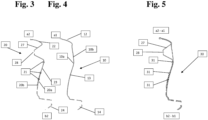
Figure 3 shows a cross-sectional view, along the line a2-b2 offigure 2 , of the second panel component of the present invention. -
Figure 4 shows a cross-sectional view along the line a1-b1 offigure 1 of the first panel component according to the present invention. -
Figure 5 shows a cross-sectional view, along the lines a2 -b2 and a1-b1 offigures 2 and 1 , of a second and a first panel component according to the present invention, as joined to form the panel according to the present invention. -
Figure 6 shows a cross-sectional view along the line c2-d2 offigure 2 , of the second panel component according to the present invention. -
Figure 7 shows a cross-sectional view along the line c1-d1 offigure 1 of the first panel component according to the present invention. -
Figure 8 shows a cross-sectional view along the lines c2-d2 and c1-d1 offigures 2 and 1 of a second and a first panel component according to the present invention, as arranged side by side to be combined and joined; -
Figure 9 shows a cross-sectional view along the line e2-f2 offigure 2 , of the second panel component according to the present invention. -
Figure 10 shows a cross-sectional view along the line and e1-f1 offigure 1 of the first panel component according to the present invention. -
Figure 11 shows a cross-sectional view along the lines e2-f2 and e1-f1 offigures 2 and 1 of a second and a first panel component according to the present invention, as joined to form the panel according to the present invention; -
Figure 12 shows a cross-sectional view along the line g2-h2 offigure 2 , of the second panel component according to the present invention. -
Figure 13 shows a cross-sectional view along the line and g1-h1 offigure 1 of the first panel component according to the present invention. -
Figure 14 shows a cross-sectional view along the lines g2-h2 and g1-h1 offigures 2 and 1 of a second and a first panel component according to the present invention, as joined to form the panel according to the present invention; -
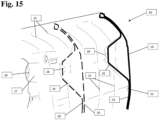
Figure 15 shows a partially cross-sectional perspective view of a first and a second panel component according to the present invention as joined to form the panel component according to the present invention; -
Figure 16 shows a cross-sectional view of detail of a first and a second panel component according to the present invention, as joined to form the panel according to the present invention; -
Figure 17 shows a cross-sectional view of another detail of a first and a second panel component according to the present invention as joined to form the panel according to the present invention and as adapted to a joining means according to the prior art. -
Figure 18 shows a cross-sectional view of further detail of a first and a second panel component according to the present invention, as joined to form the panel according to the present invention; - With reference to these figures and in particular to
figures 1 and 2 , a first and a second panel made of natural fibre and polypropylene (NFPP), obtained from non-woven fabric composite sheets, for example flax in this case, and a thermosetting synthetic thermoplastic fibre, for example polypropylene in this specific case, are respectively indicated with 10 and 20. - Such first 10 and second 20 panels shell be understood to be made according to the prior art, by means of homogeneous thermo-softening, without reaching thermo-melting, of the sheets they are made of and more specifically of the synthetic fibre which contributes to form them, for the purpose of combining them with the natural fibre which likewise contributes to forming them; subsequent cooling and then cold moulding under a press die and counter-die, with simultaneous or subsequent cutting of the scraps and possible interruptions on the relative extensions, in order to obtain a bas-relief shape, perimeter shape, dimensions and perforations desired to adapt to the shape of the door of the specific vehicle to be contingently fitted therewith as well as to the design - wholly or partly - that the shape shall outline.
- In terms of identifying location, in the present description text and in the claims that follow, an orientation criterion will be used, referring to the passenger compartment of the vehicle, such that the
first panel 10 will be identified as the interior and thesecond panel 20 will be identified as the exterior panel. - The
first panel 10 or interior panel is structurally similar to the panels forming the frame for accessories and upholstery of the doors of the passenger compartment of motor vehicles according to the prior art; the second panel orexterior panel 20, made using the same implementation technique as the first, but innovatively structured to be twinned with the first panel and to carry out all the functions in terms of assembly and fitting of the elements made of plastic materials according to the prior art, is entirely made of the innovative matter of the present invention. - To this end, the
second panel 20 tends to have the highest number possible of upper 22,median 23 and lower 24 extension portions facing each other in complementary adherence, i.e. twinned in contact, with upper 12,median 13 and lower 14 extension portions of thefirst panel 10, in order to double in as many points as possible the thickness of thesingle panel structure 30 that the relative joining contributes to form, in order to achieve the greatest possible strength and value of the frame of thepanel structure 30 obtained by the parallel twinning. - Such parallel twinning is fixed by mutual heat sealing of the
panels points 11 and 21, with mutual joining and fixing by means of heat-sealing having a simple or compound technical morphology, achieved using any type and kind of heat-sealing device suitable for the purpose wherein the twopanels panelled structure 30, where the sealing points are indicated with 31. - Specifically, in the
first panel 10 or interior panel there are defined afirst face 10a and asecond face 10b opposite suchfirst face 10a and designed to face, in the configuration of use, toward the passenger compartment of the motor vehicle. - The second panel or
exterior panel 20 instead has athird face 20a, which is directed toward the aforementionedfirst face 10a as a result of the aforementioned twinning, and afourth face 20b opposite to saidthird face 20a and designed to face toward the component of the motor vehicle as an anchoring element for the twin-panelled structure 30. - Furthermore, the
second panel 20 or exterior panel preferably has, where possible, a preferablyreticular ribbing 25, which - in any case - are mutually intersected so as to strengthen thepanel 20 and thepanel structure 30 in its entirety. - Where it does not adhere to the
first panel 10, the extension of thesecond panel 20 or exterior panel is shaped as a bas-relief, in order to obtain outer portions as bas-relief to act as an armrest, slots for the translation of the glass window pane, seats for arranging loudspeakers, seats for lock actuation handles, seats for electric control panels, seats for nozzles for ventilation, heating and air conditioning system, interspaces for housing components and projections 26 - 27 for the direct support of fixing means 29 on the sheet of the bodywork. - In particular, said projections 26 - 27 are formed by shaping the
second panel 20 or the exterior panel or they are formed as a single piece with the latter, projecting from the relativefourth face 20b. - These projections may have any shape and structure suitable for the purpose, but they are preferably frusto-conical 26 or cylindrical 27 (in particular made of one or more cylindrical portions) with
apical holes 28 for the top insertion of the usual fixing pieces used in the industry consisting ofpins 28; all this without the need for adding plastic material according to the prior art and for the functions which are described below. - Thus, having completed the static description of a preferred embodiment of the composite panel structure according to the present invention, following is the dynamic description of the same, i.e. the relative operation.
- The first panel or
interior panel 10 and the second panel orexterior panel 20 are manufactured according to the prior art, shaped and dimensioned according to the contingent application;
in the embodiment described, the first panel orinterior panel 10 is substantially similar to the panels according to the prior art, while the second panel orexterior panel 20 differs from that of the prior art in that it does not exist in the embodiments according to the prior art. - As a matter fact, the
second panel 20 faces toward the outside of the passenger compartment and it has - in the bas-relief configuration thereof and in particular in the projections and protrusions - all the shapes forming the body and frame and/or means for fixing to the sheet of the bodywork and for the accessories embedded therein and/or projecting and fixed thereto. - In this manner, the second panel carry out the functions which, according to the prior art, are currently carried out by plastics fixed to the first and only panel, substantially doubling the recyclability characteristics of the reference parts it is made of.
- It is obvious that in further alternative embodiments still falling within the innovation concept subject of the embodiment illustrated above and claimed below, the composite panel structure according to the present invention, may be implemented through equivalent technical and mechanical solutions, i.e. provided with further supplementary solutions, just like - in the claimed scope - all elements they are made of may vary in a manner suitable for the purpose and adapted to the specific conformation and structure.
- In particular, though the described embodiment refers to interior accessories for doors, the solution of the twin panels made of NFPP can be used for manufacturing any portion of the interior furniture frame of the interior of passenger compartments of the vehicles entirely eliminating or at least radically reducing pure plastics.
- As observable from the preceding detailed description of a preferred embodiment, the composite panel structure according to the present invention, offers advantages corresponding to the attainment of these and other preset objects:
as a matter fact, it achieves a proactive innovation which: - on the one hand, results in total or radical reduction of the use of plastics in the manufacture of the interior furnishing components of the passenger compartments of vehicles;
- on the other hand, uses a process with a negative carbon dioxide emission balance, while reducing the use of plastic materials and glues.
- With the further significant advantage of the considerable weight reduction that comes from the replacement of heavy plastics with the light panel for the same functions.
-
- 10)
- first panel (panel inside the passenger compartment)
- 10a)
- first face of the first panel (panel inside the passenger compartment)
- 10b)
- second face of the first panel (panel inside the passenger compartment)
- 11)
- welding spots in the first panel
- 12)
- upper extension portions first panel in contact with second panel
- 13)
- median extension portions first panel in contact with second panel
- 14)
- lower extension portions first panel in contact with second panel
- 20)
- second panel (panel outside the passenger compartment)
- 20a)
- third face of the second panel (panel outside the passenger compartment)
- 20b)
- fourth face of the second panel (panel outside the passenger compartment)
- 21)
- welding spots in the second panel
- 22)
- upper extension portions second panel in contact with first panel
- 23)
- median extension portions second panel in contact with first panel
- 24)
- lower extension portions second panel in contact with first panel
- 25)
- reticular ribbing second panel
- 26)
- frustoconical projections second panel
- 27)
- cylindrical projections second panel
- 28)
- frustoconical and cylindrical projections second panel second panel for pins
- 29)
- pins
- 30)
- double or twinned panel structure (heat-sealed two-panel combination)
- 31)
- welding spots in the double or twinned panel
Claims (10)
- Polyfunctional self-supporting panel structure (30) for use in the passenger compartment of a motor vehicle, particularly for lining internal parts of the passenger compartment of a motor vehicle or for providing a frame for the upholstery of a motor vehicle or an accessory for the seats of a motor vehicle and the like, said panel structure (30) being characterised in that it comprises:at least one first panel (10), which is shaped and made of natural fibres and, polypropylene or other synthetic thermoplastic fibres; in said at least one first panel (10) there being defined a first face (10a) and a second face (10b) juxtaposed to the first face (10a); andat least one second panel (20), which is shaped and made of natural fibres and, polypropylene or other thermoplastic synthetic fibres; in said at least one second panel (20) there being defined a third face (20a) and a fourth face (20b) juxtaposed to the third face (20a); said at least one second panel (20) comprising at least one portion shaped so as to form, at the fourth face (20b), at least one protuberance (26, 27) carrying connection means (28, 29) to allow to connect, in use, said at least one second panel (20) to a support component of a motor vehicle;wherein the at least one first panel (10) and the at least one second panel (20) are mutually joined at at least one respective peripheral area and/or at least one respective inner area so that the first face (10a) and the third face (20a) face each other, and that the second face (10b) is directed, in use, towards the internal of the passenger compartment of a motor vehicle, and that the fourth face (20b) faces, in use, said support component of the motor vehicle.
- Panel structure (30) according to claim 1, characterised in that the at least one protuberance (26, 27) is made as a single piece in the at least one second panel (20).
- Panel structure (30) according to the preceding claims, characterised in that the at least one protuberance (26, 27) of the at least one second panel (20) and a corresponding portion of the at least one first panel (10) form, jointly, an internal cavity between the at least one first panel (10) and the at least one second panel (20).
- Panel structure (30) according to the preceding claims, characterised in that the at least one protuberance (26, 27) has a substantially frustoconical shape or a shape comprising one or more cylindrical portions.
- Panel structure (30) according to the preceding claims, characterised in that the connection means comprise at least one through hole (28).
- Panel structure (30) according to the preceding claims, characterised in that the connection means (28, 29) are provided for in an apical position of the at least one protuberance (26, 27).
- Panel structure (30) according to the preceding claims, characterised in that in the first face (10a) of said at least one first panel (10) there is defined at least one first flat surface portion and in that in the third face (20a) of said at least one second panel (20) there is defined at least one second flat surface portion joined to said at least one first flat surface portion.
- Panel structure (30) according to the preceding claim, characterised in that said at least one first flat surface portion and said at least one second flat surface portion are mutually joined by means of electrowelding.
- Panel structure (30) according to the preceding claims, characterised in that the connection means comprise at least one pin (29), at least one bushing or at least one clip.
- Panel structure (30) according to claims 5 and 9, characterised in that said at least one through hole (28) is engaged with said at least one pin (29), at least one bushing or at least one clip.
Applications Claiming Priority (1)
| Application Number | Priority Date | Filing Date | Title |
|---|---|---|---|
| IT102020000032078A IT202000032078A1 (en) | 2020-12-23 | 2020-12-23 | STRUCTURE OF PANELS FOR VEHICLES AND SIMILAR COMPOSED IN NATURAL FIBERS AND SYNTHETIC FIBERS |
Publications (2)
| Publication Number | Publication Date |
|---|---|
| EP4019222A1 EP4019222A1 (en) | 2022-06-29 |
| EP4019222B1 true EP4019222B1 (en) | 2024-12-18 |
Family
ID=75111691
Family Applications (1)
| Application Number | Title | Priority Date | Filing Date |
|---|---|---|---|
| EP21215440.5A Active EP4019222B1 (en) | 2020-12-23 | 2021-12-17 | Composite panel structure for motor vehicles and the like made of natural fibres and thermoplastic synthetic fibres |
Country Status (2)
| Country | Link |
|---|---|
| EP (1) | EP4019222B1 (en) |
| IT (1) | IT202000032078A1 (en) |
Family Cites Families (6)
| Publication number | Priority date | Publication date | Assignee | Title |
|---|---|---|---|---|
| BR7707438A (en) * | 1976-11-05 | 1978-08-29 | H Lindenberg | WORKABLE PANEL OF THERMOPLASTIC MATERIAL, AND A FILLING, AND PRODUCTION PROCESS OF THE SAME |
| US5076870A (en) * | 1989-07-19 | 1991-12-31 | Sanborn Kenneth R | Carpet and method of attachment |
| US6524510B2 (en) * | 1998-10-21 | 2003-02-25 | R+S Technik Gmbh | Method and apparatus for producing a precise joint between two cover materials for a trim component |
| US8276978B2 (en) * | 2009-04-21 | 2012-10-02 | Toyota Motor Engineering & Manufacturing North America, Inc. | Substrates for vehicle instrument panels and vehicle instrument panels incorporating the same |
| WO2019048593A1 (en) * | 2017-09-08 | 2019-03-14 | Sika Technology Ag | Reactive polyolefin hot-melt adhesive having good adhesion on both non-polar and polar substrates |
| US20190389097A1 (en) * | 2018-06-21 | 2019-12-26 | Global Ip Holdings, Llc | Method of Making a Trim Component Having a Fibrous Decorative Covering |
-
2020
- 2020-12-23 IT IT102020000032078A patent/IT202000032078A1/en unknown
-
2021
- 2021-12-17 EP EP21215440.5A patent/EP4019222B1/en active Active
Also Published As
| Publication number | Publication date |
|---|---|
| IT202000032078A1 (en) | 2022-06-23 |
| EP4019222A1 (en) | 2022-06-29 |
Similar Documents
| Publication | Publication Date | Title |
|---|---|---|
| US5413661A (en) | Method for producing a laminated structural component with a hard foam reinforcement | |
| US7108311B2 (en) | Method of forming a vehicle panel assembly | |
| US6890023B2 (en) | Reinforced composite inner roof panel of the cellular core sandwich-type and method of making same | |
| CZ284982B6 (en) | Lining element from fibrous mats and process for producing thereof | |
| US20190389097A1 (en) | Method of Making a Trim Component Having a Fibrous Decorative Covering | |
| US20190389103A1 (en) | Method of Making a Vehicle Interior Component Having an Integral Airbag Component and a Fibrous Decorative Covering | |
| CA2308609A1 (en) | Molded polyolefin and polyphenyloxide products and method for production | |
| US20190389102A1 (en) | Method of Making a Trim Component Having an Edge-Wrapped, Fibrous Decorative Covering | |
| US20190389104A1 (en) | Method of Making a Vehicle Interior Component Having an Integral Airbag Component | |
| CN101336157A (en) | Shaped articles with in-mold decorative parts | |
| EP4019222B1 (en) | Composite panel structure for motor vehicles and the like made of natural fibres and thermoplastic synthetic fibres | |
| JP3904204B2 (en) | Interior parts for automobile and terminal processing method thereof | |
| JPH1148877A (en) | Interior part for automobile | |
| JP2004262119A (en) | Automotive interior parts, manufacturing method thereof, and molding die | |
| JP2009154428A (en) | Interior parts for automobiles and methods for producing the same | |
| JPH06312464A (en) | Manufacturing method of automobile interior parts | |
| JP4135917B2 (en) | Manufacturing method of automotive interior parts and molding die | |
| US20020121714A1 (en) | Automobile interior components that satisfy impact standards and a method for manufacturing the same | |
| JP4208236B2 (en) | Automotive interior parts | |
| JP4218794B2 (en) | Automotive interior parts | |
| JP2005138797A (en) | Interior trim component for automobile | |
| EP1186454B1 (en) | Method for producing lined panels for motor-vehicles | |
| JP2006347273A (en) | Interior parts for automobiles and manufacturing method thereof | |
| US20020121723A1 (en) | Method of manufacturing a honeycomb structure that is to be affixed to an automobile interior component at a desired location to allow impact standards to be met | |
| JP2693152B2 (en) | Automotive interior materials |
Legal Events
| Date | Code | Title | Description |
|---|---|---|---|
| PUAI | Public reference made under article 153(3) epc to a published international application that has entered the european phase |
Free format text: ORIGINAL CODE: 0009012 |
|
| STAA | Information on the status of an ep patent application or granted ep patent |
Free format text: STATUS: THE APPLICATION HAS BEEN PUBLISHED |
|
| AK | Designated contracting states |
Kind code of ref document: A1 Designated state(s): AL AT BE BG CH CY CZ DE DK EE ES FI FR GB GR HR HU IE IS IT LI LT LU LV MC MK MT NL NO PL PT RO RS SE SI SK SM TR |
|
| STAA | Information on the status of an ep patent application or granted ep patent |
Free format text: STATUS: REQUEST FOR EXAMINATION WAS MADE |
|
| 17P | Request for examination filed |
Effective date: 20221125 |
|
| RBV | Designated contracting states (corrected) |
Designated state(s): AL AT BE BG CH CY CZ DE DK EE ES FI FR GB GR HR HU IE IS IT LI LT LU LV MC MK MT NL NO PL PT RO RS SE SI SK SM TR |
|
| GRAP | Despatch of communication of intention to grant a patent |
Free format text: ORIGINAL CODE: EPIDOSNIGR1 |
|
| STAA | Information on the status of an ep patent application or granted ep patent |
Free format text: STATUS: GRANT OF PATENT IS INTENDED |
|
| RIC1 | Information provided on ipc code assigned before grant |
Ipc: B60R 13/01 20060101ALN20240726BHEP Ipc: B29C 70/10 20060101ALN20240726BHEP Ipc: B27N 3/04 20060101ALN20240726BHEP Ipc: B29L 31/30 20060101ALN20240726BHEP Ipc: B29K 223/00 20060101ALN20240726BHEP Ipc: B60R 13/08 20060101ALN20240726BHEP Ipc: B29K 105/08 20060101ALN20240726BHEP Ipc: B29C 43/40 20060101ALN20240726BHEP Ipc: B29K 311/00 20060101ALN20240726BHEP Ipc: B29K 301/12 20060101ALN20240726BHEP Ipc: B32B 7/08 20190101ALI20240726BHEP Ipc: B32B 7/04 20190101ALI20240726BHEP Ipc: B32B 5/26 20060101ALI20240726BHEP Ipc: B32B 3/28 20060101ALI20240726BHEP Ipc: B32B 3/26 20060101ALI20240726BHEP Ipc: B29C 70/46 20060101ALI20240726BHEP Ipc: B29C 70/08 20060101ALI20240726BHEP Ipc: B27N 5/00 20060101ALI20240726BHEP Ipc: B29C 65/00 20060101ALI20240726BHEP Ipc: B60R 13/02 20060101ALI20240726BHEP Ipc: B29C 43/00 20060101ALI20240726BHEP Ipc: B29C 43/18 20060101ALI20240726BHEP Ipc: B29C 43/20 20060101AFI20240726BHEP |
|
| INTG | Intention to grant announced |
Effective date: 20240813 |
|
| GRAS | Grant fee paid |
Free format text: ORIGINAL CODE: EPIDOSNIGR3 |
|
| GRAA | (expected) grant |
Free format text: ORIGINAL CODE: 0009210 |
|
| STAA | Information on the status of an ep patent application or granted ep patent |
Free format text: STATUS: THE PATENT HAS BEEN GRANTED |
|
| AK | Designated contracting states |
Kind code of ref document: B1 Designated state(s): AL AT BE BG CH CY CZ DE DK EE ES FI FR GB GR HR HU IE IS IT LI LT LU LV MC MK MT NL NO PL PT RO RS SE SI SK SM TR |
|
| REG | Reference to a national code |
Ref country code: CH Ref legal event code: EP |
|
| REG | Reference to a national code |
Ref country code: DE Ref legal event code: R096 Ref document number: 602021023507 Country of ref document: DE |
|
| REG | Reference to a national code |
Ref country code: IE Ref legal event code: FG4D |
|
| REG | Reference to a national code |
Ref country code: LT Ref legal event code: MG9D |
|
| PG25 | Lapsed in a contracting state [announced via postgrant information from national office to epo] |
Ref country code: HR Free format text: LAPSE BECAUSE OF FAILURE TO SUBMIT A TRANSLATION OF THE DESCRIPTION OR TO PAY THE FEE WITHIN THE PRESCRIBED TIME-LIMIT Effective date: 20241218 |
|
| PG25 | Lapsed in a contracting state [announced via postgrant information from national office to epo] |
Ref country code: FI Free format text: LAPSE BECAUSE OF FAILURE TO SUBMIT A TRANSLATION OF THE DESCRIPTION OR TO PAY THE FEE WITHIN THE PRESCRIBED TIME-LIMIT Effective date: 20241218 |
|
| PG25 | Lapsed in a contracting state [announced via postgrant information from national office to epo] |
Ref country code: BG Free format text: LAPSE BECAUSE OF FAILURE TO SUBMIT A TRANSLATION OF THE DESCRIPTION OR TO PAY THE FEE WITHIN THE PRESCRIBED TIME-LIMIT Effective date: 20241218 |
|
| PG25 | Lapsed in a contracting state [announced via postgrant information from national office to epo] |
Ref country code: NO Free format text: LAPSE BECAUSE OF FAILURE TO SUBMIT A TRANSLATION OF THE DESCRIPTION OR TO PAY THE FEE WITHIN THE PRESCRIBED TIME-LIMIT Effective date: 20250318 |
|
| REG | Reference to a national code |
Ref country code: NL Ref legal event code: MP Effective date: 20241218 |
|
| PG25 | Lapsed in a contracting state [announced via postgrant information from national office to epo] |
Ref country code: LV Free format text: LAPSE BECAUSE OF FAILURE TO SUBMIT A TRANSLATION OF THE DESCRIPTION OR TO PAY THE FEE WITHIN THE PRESCRIBED TIME-LIMIT Effective date: 20241218 Ref country code: GR Free format text: LAPSE BECAUSE OF FAILURE TO SUBMIT A TRANSLATION OF THE DESCRIPTION OR TO PAY THE FEE WITHIN THE PRESCRIBED TIME-LIMIT Effective date: 20250319 |
|
| PG25 | Lapsed in a contracting state [announced via postgrant information from national office to epo] |
Ref country code: RS Free format text: LAPSE BECAUSE OF FAILURE TO SUBMIT A TRANSLATION OF THE DESCRIPTION OR TO PAY THE FEE WITHIN THE PRESCRIBED TIME-LIMIT Effective date: 20250318 |
|
| PG25 | Lapsed in a contracting state [announced via postgrant information from national office to epo] |
Ref country code: NL Free format text: LAPSE BECAUSE OF FAILURE TO SUBMIT A TRANSLATION OF THE DESCRIPTION OR TO PAY THE FEE WITHIN THE PRESCRIBED TIME-LIMIT Effective date: 20241218 |
|
| REG | Reference to a national code |
Ref country code: AT Ref legal event code: MK05 Ref document number: 1751916 Country of ref document: AT Kind code of ref document: T Effective date: 20241218 |
|
| PG25 | Lapsed in a contracting state [announced via postgrant information from national office to epo] |
Ref country code: SM Free format text: LAPSE BECAUSE OF FAILURE TO SUBMIT A TRANSLATION OF THE DESCRIPTION OR TO PAY THE FEE WITHIN THE PRESCRIBED TIME-LIMIT Effective date: 20241218 |
|
| PG25 | Lapsed in a contracting state [announced via postgrant information from national office to epo] |
Ref country code: PL Free format text: LAPSE BECAUSE OF FAILURE TO SUBMIT A TRANSLATION OF THE DESCRIPTION OR TO PAY THE FEE WITHIN THE PRESCRIBED TIME-LIMIT Effective date: 20241218 |
|
| PG25 | Lapsed in a contracting state [announced via postgrant information from national office to epo] |
Ref country code: ES Free format text: LAPSE BECAUSE OF FAILURE TO SUBMIT A TRANSLATION OF THE DESCRIPTION OR TO PAY THE FEE WITHIN THE PRESCRIBED TIME-LIMIT Effective date: 20241218 |
|
| PG25 | Lapsed in a contracting state [announced via postgrant information from national office to epo] |
Ref country code: IS Free format text: LAPSE BECAUSE OF FAILURE TO SUBMIT A TRANSLATION OF THE DESCRIPTION OR TO PAY THE FEE WITHIN THE PRESCRIBED TIME-LIMIT Effective date: 20250418 |
|
| PG25 | Lapsed in a contracting state [announced via postgrant information from national office to epo] |
Ref country code: PT Free format text: LAPSE BECAUSE OF FAILURE TO SUBMIT A TRANSLATION OF THE DESCRIPTION OR TO PAY THE FEE WITHIN THE PRESCRIBED TIME-LIMIT Effective date: 20250421 |
|
| PG25 | Lapsed in a contracting state [announced via postgrant information from national office to epo] |
Ref country code: EE Free format text: LAPSE BECAUSE OF FAILURE TO SUBMIT A TRANSLATION OF THE DESCRIPTION OR TO PAY THE FEE WITHIN THE PRESCRIBED TIME-LIMIT Effective date: 20241218 |
|
| PG25 | Lapsed in a contracting state [announced via postgrant information from national office to epo] |
Ref country code: AT Free format text: LAPSE BECAUSE OF FAILURE TO SUBMIT A TRANSLATION OF THE DESCRIPTION OR TO PAY THE FEE WITHIN THE PRESCRIBED TIME-LIMIT Effective date: 20241218 Ref country code: RO Free format text: LAPSE BECAUSE OF FAILURE TO SUBMIT A TRANSLATION OF THE DESCRIPTION OR TO PAY THE FEE WITHIN THE PRESCRIBED TIME-LIMIT Effective date: 20241218 |
|
| PG25 | Lapsed in a contracting state [announced via postgrant information from national office to epo] |
Ref country code: SK Free format text: LAPSE BECAUSE OF FAILURE TO SUBMIT A TRANSLATION OF THE DESCRIPTION OR TO PAY THE FEE WITHIN THE PRESCRIBED TIME-LIMIT Effective date: 20241218 |
|
| PG25 | Lapsed in a contracting state [announced via postgrant information from national office to epo] |
Ref country code: CZ Free format text: LAPSE BECAUSE OF FAILURE TO SUBMIT A TRANSLATION OF THE DESCRIPTION OR TO PAY THE FEE WITHIN THE PRESCRIBED TIME-LIMIT Effective date: 20241218 |
|
| PG25 | Lapsed in a contracting state [announced via postgrant information from national office to epo] |
Ref country code: SE Free format text: LAPSE BECAUSE OF FAILURE TO SUBMIT A TRANSLATION OF THE DESCRIPTION OR TO PAY THE FEE WITHIN THE PRESCRIBED TIME-LIMIT Effective date: 20241218 |
|
| REG | Reference to a national code |
Ref country code: DE Ref legal event code: R097 Ref document number: 602021023507 Country of ref document: DE |
|
| PG25 | Lapsed in a contracting state [announced via postgrant information from national office to epo] |
Ref country code: DK Free format text: LAPSE BECAUSE OF FAILURE TO SUBMIT A TRANSLATION OF THE DESCRIPTION OR TO PAY THE FEE WITHIN THE PRESCRIBED TIME-LIMIT Effective date: 20241218 |
|
| PGFP | Annual fee paid to national office [announced via postgrant information from national office to epo] |
Ref country code: IT Payment date: 20250912 Year of fee payment: 5 |
|
| PGFP | Annual fee paid to national office [announced via postgrant information from national office to epo] |
Ref country code: FR Payment date: 20250912 Year of fee payment: 5 |
|
| PLBE | No opposition filed within time limit |
Free format text: ORIGINAL CODE: 0009261 |
|
| STAA | Information on the status of an ep patent application or granted ep patent |
Free format text: STATUS: NO OPPOSITION FILED WITHIN TIME LIMIT |
|
| 26N | No opposition filed |
Effective date: 20250919 |
|
| PGFP | Annual fee paid to national office [announced via postgrant information from national office to epo] |
Ref country code: DE Payment date: 20251009 Year of fee payment: 5 |
|
| PGFP | Annual fee paid to national office [announced via postgrant information from national office to epo] |
Ref country code: GB Payment date: 20251205 Year of fee payment: 5 |