EP4017515B1 - Yeast having improvement of lactic acid tolerance and use thereof - Google Patents
Yeast having improvement of lactic acid tolerance and use thereof Download PDFInfo
- Publication number
- EP4017515B1 EP4017515B1 EP19942296.5A EP19942296A EP4017515B1 EP 4017515 B1 EP4017515 B1 EP 4017515B1 EP 19942296 A EP19942296 A EP 19942296A EP 4017515 B1 EP4017515 B1 EP 4017515B1
- Authority
- EP
- European Patent Office
- Prior art keywords
- haa1
- gene
- myr2787
- lactic acid
- yeast
- Prior art date
- Legal status (The legal status is an assumption and is not a legal conclusion. Google has not performed a legal analysis and makes no representation as to the accuracy of the status listed.)
- Active
Links
Images


Classifications
-
- C—CHEMISTRY; METALLURGY
- C12—BIOCHEMISTRY; BEER; SPIRITS; WINE; VINEGAR; MICROBIOLOGY; ENZYMOLOGY; MUTATION OR GENETIC ENGINEERING
- C12N—MICROORGANISMS OR ENZYMES; COMPOSITIONS THEREOF; PROPAGATING, PRESERVING, OR MAINTAINING MICROORGANISMS; MUTATION OR GENETIC ENGINEERING; CULTURE MEDIA
- C12N15/00—Mutation or genetic engineering; DNA or RNA concerning genetic engineering, vectors, e.g. plasmids, or their isolation, preparation or purification; Use of hosts therefor
- C12N15/09—Recombinant DNA-technology
- C12N15/63—Introduction of foreign genetic material using vectors; Vectors; Use of hosts therefor; Regulation of expression
- C12N15/79—Vectors or expression systems specially adapted for eukaryotic hosts
- C12N15/80—Vectors or expression systems specially adapted for eukaryotic hosts for fungi
- C12N15/81—Vectors or expression systems specially adapted for eukaryotic hosts for fungi for yeasts
-
- C—CHEMISTRY; METALLURGY
- C12—BIOCHEMISTRY; BEER; SPIRITS; WINE; VINEGAR; MICROBIOLOGY; ENZYMOLOGY; MUTATION OR GENETIC ENGINEERING
- C12N—MICROORGANISMS OR ENZYMES; COMPOSITIONS THEREOF; PROPAGATING, PRESERVING, OR MAINTAINING MICROORGANISMS; MUTATION OR GENETIC ENGINEERING; CULTURE MEDIA
- C12N1/00—Microorganisms; Compositions thereof; Processes of propagating, maintaining or preserving microorganisms or compositions thereof; Processes of preparing or isolating a composition containing a microorganism; Culture media therefor
- C12N1/14—Fungi; Culture media therefor
- C12N1/16—Yeasts; Culture media therefor
- C12N1/165—Yeast isolates
-
- A—HUMAN NECESSITIES
- A61—MEDICAL OR VETERINARY SCIENCE; HYGIENE
- A61K—PREPARATIONS FOR MEDICAL, DENTAL OR TOILETRY PURPOSES
- A61K36/00—Medicinal preparations of undetermined constitution containing material from algae, lichens, fungi or plants, or derivatives thereof, e.g. traditional herbal medicines
- A61K36/06—Fungi, e.g. yeasts
- A61K36/062—Ascomycota
- A61K36/064—Saccharomycetales, e.g. baker's yeast
-
- C—CHEMISTRY; METALLURGY
- C07—ORGANIC CHEMISTRY
- C07K—PEPTIDES
- C07K14/00—Peptides having more than 20 amino acids; Gastrins; Somatostatins; Melanotropins; Derivatives thereof
- C07K14/37—Peptides having more than 20 amino acids; Gastrins; Somatostatins; Melanotropins; Derivatives thereof from fungi
- C07K14/39—Peptides having more than 20 amino acids; Gastrins; Somatostatins; Melanotropins; Derivatives thereof from fungi from yeasts
-
- C—CHEMISTRY; METALLURGY
- C12—BIOCHEMISTRY; BEER; SPIRITS; WINE; VINEGAR; MICROBIOLOGY; ENZYMOLOGY; MUTATION OR GENETIC ENGINEERING
- C12N—MICROORGANISMS OR ENZYMES; COMPOSITIONS THEREOF; PROPAGATING, PRESERVING, OR MAINTAINING MICROORGANISMS; MUTATION OR GENETIC ENGINEERING; CULTURE MEDIA
- C12N1/00—Microorganisms; Compositions thereof; Processes of propagating, maintaining or preserving microorganisms or compositions thereof; Processes of preparing or isolating a composition containing a microorganism; Culture media therefor
- C12N1/14—Fungi; Culture media therefor
- C12N1/16—Yeasts; Culture media therefor
-
- C—CHEMISTRY; METALLURGY
- C12—BIOCHEMISTRY; BEER; SPIRITS; WINE; VINEGAR; MICROBIOLOGY; ENZYMOLOGY; MUTATION OR GENETIC ENGINEERING
- C12P—FERMENTATION OR ENZYME-USING PROCESSES TO SYNTHESISE A DESIRED CHEMICAL COMPOUND OR COMPOSITION OR TO SEPARATE OPTICAL ISOMERS FROM A RACEMIC MIXTURE
- C12P7/00—Preparation of oxygen-containing organic compounds
- C12P7/40—Preparation of oxygen-containing organic compounds containing a carboxyl group including Peroxycarboxylic acids
- C12P7/56—Lactic acid
-
- Y—GENERAL TAGGING OF NEW TECHNOLOGICAL DEVELOPMENTS; GENERAL TAGGING OF CROSS-SECTIONAL TECHNOLOGIES SPANNING OVER SEVERAL SECTIONS OF THE IPC; TECHNICAL SUBJECTS COVERED BY FORMER USPC CROSS-REFERENCE ART COLLECTIONS [XRACs] AND DIGESTS
- Y02—TECHNOLOGIES OR APPLICATIONS FOR MITIGATION OR ADAPTATION AGAINST CLIMATE CHANGE
- Y02E—REDUCTION OF GREENHOUSE GAS [GHG] EMISSIONS, RELATED TO ENERGY GENERATION, TRANSMISSION OR DISTRIBUTION
- Y02E50/00—Technologies for the production of fuel of non-fossil origin
- Y02E50/10—Biofuels, e.g. bio-diesel
Definitions
- the present invention relates to a genetically engineered Kluyveromyces sp. yeast cell comprising at least a genetic modification that deletes a nucleotide sequence encoding for an amino acid SEQ ID No. 2, particularly Haa1.
- the genetically engineered yeast cell according to this invention has an improvement of lactic acid tolerance, lactic acid production or a combination thereof as compared to the parental.
- Biotechnology especially genetic engineering which relates to yeast having improvement of lactic acid tolerance and use thereof
- the problems to prevent the cell damages during fermentation are also costly. For instance, it occurs in the case of weak acid, e.g., lactic acid and succinic acid productions. During the fermentation of these acids, it is important to neutralize the lactic acid produced and desalination of the resulting lactate to prevent the cell activities damage from lowing pH.
- weak acid e.g., lactic acid and succinic acid productions.
- yeast have been mostly used because of its robustness and low pH tolerance. Still, below pH values of 2.8, lactic acid production with the engineered yeast strain dropped. Therefore, conferring higher lactic acid resistance on yeast would improve lactic acid productivity under non-neutralized conditions.
- yeast cell responds to acid by regulation of a transcription factor encoded by HAA1 gene.
- Tanaka et al. (Applied and Environmental Microbiology, 2012, 78, 8161-8163 ) disclosed similar results about the overexpression of HAA1 in Saccharomyces cerevisiae that could enhance the acetic acid tolerance.
- WO2016083397A1 disclosed the combination of HAA1 and its paralog CUP2 to achieve the improvement of acid tolerance in yeast, especially Saccharomyces cerevisiae. These complexities cause mainly the obstacles to use this approach in commercialized scale of production.
- yeast strains especially Saccharomyces cerevisiae, so as to improve lactic acid tolerance but did not involve with HAA1 gene.
- US9994877B2 disclosed a genetically engineered yeast cell increased the activity of SUL1, STR3, AAD10, MXR1, GRX8, MRK1, GRE1, HTX7, ERR1, or a combination thereof.
- the obtained yeast strain has increased acid tolerance as compared to its parent cell and is useful for producing lactate.
- US9758564B2 disclosed an acid- resistant yeast cell with reduced the expression of a polynucleotide that encodes the Fps1 in order to increase the lactic acid resistance.
- US10053714B2 disclosed an acid-tolerant genetically engineered yeast cell comprising a genetic modification of increasing an activity of an enzyme that catalyzes conversion of phosphatidylinositol (PI) and ceramide to inositol phosphorylceramide (IPC) and diacylglycerol (DG) or increasing an activity of an enzyme which catalyzes introduction of a double bond to a fatty acyl site of a fatty acyl-CoA and/or decreasing an activity of an enzyme which catalyzes formation of triacylglycerol (TG) from DG or a combination thereof and optionally reducing activity of external mitochondrial NADH dehydrogenase NDE1 and/or NDE2 which could increase a tolerance of an organic acid having 1-20 carbon atoms especially lactic acid.
- PI phosphatidylinositol
- IPC inositol phosphorylceramide
- DG diacylglycerol
- TG triacy
- Suzuki et al. (Journal of Bioscience and Bioengineering, 2013, 115, 467-474 ) reported a construction of acid resistant yeast in Saccharomyces cerevisiae by combining gene disruptions that led to lactic-acid resistance. This study found that 94 gene disruptants showed resistance to lactic acid and that lactic-acid resistance was further enhanced by combining the disruption of several genes which leading to high lactic-acid productivity without neutralization.
- this invention discloses the simple approach to enhance lactic acid tolerance in the other non-conventional yeast, particularly Kluyveromyces sp., in which the deletion of HAA1 is sufficiently cause the improvement of its lactic acid tolerance, lactic acid production or a combination thereof.
- the improved yeast from the present invention can be used in broad aspects, for example but not limit to, fermentation process by using low-cost feedstock that containing any acid impurities and perform the fermentation to produce a fermentation broth with high levels of free lactic acid. Those advantages are the cost-effectiveness production.
- Equipment, apparatus, methods, or chemicals mentioned here means equipment, apparatus, methods or chemicals commonly operated or used by those skilled in the art, unless explicitly stated otherwise that they are equipment, apparatus, methods, or chemicals specifically used in this invention.
- a bacterial gene or coding region is usually named with lower case letters in italics, for example " IdhA " from E.coli, while the enzyme or protein encoded by the gene can be named with the same letters, but the first letter in upper case and without italics, for example "LdhA”.
- a yeast gene or coding region is usually named with upper case letters in italics, for example "HAA1”, while the enzyme or protein encoded by the gene can be named with the same letters, but with the first letter in upper case and without italics, for example "Haa1".
- the gene or strain is designated by lower case italicized letters, for example haa1 or ⁇ haa1 for a strain that lacks a functional HAA1 gene.
- the gene name can be preceded by two letters indicating the genus and species.
- the KmURA3 gene is derived from Kluyveromyces marxianus
- the ScURA3 gene is derived from Saccharomyces cerevisiae.
- yeast means any fungal organism that is capable of growing in a single cell state under some conditions. Some yeast strains can also grow in a hyphal state or pseudohyphal (i.e., short hyphae) state under some conditions, such as under starvation.
- lactic acid or "D-LAC” or “D-lactic acid” means lactic acid includes its salts such as lactate
- Genetic engineering or “Genetically engineered” means an activity of introducing one or more genetic modifications into a cell or a cell produced thereby.
- Genetic modification means an artificial alteration in a characteristic or structure of a genetic material of a cell. Genetic modifications include introducing a polynucleotide encoding a polypeptide into a cell for a substitution, addition, insertion, or deletion of one or more nucleotides with respect to a genetic material of a parent cell or a chemical modification of the genetic material of a parent cell.
- Parent cell or "Parent” or “Parental” means an original cell or a cell having no particular genetic modification and may be used as a starting material to produce a genetically engineered cell having increased or decreased activity or production.
- Transformant means a cell or strain that results from installation of a desired DNA sequence, either linear or circular, and either autonomously replicating or not, into a host or parent strain.
- “Mutation” means any changes from a native or parent DNA sequence, for example, an inversion, a duplication, an insertion of one or more base pairs, a deletion of one or more base pairs, a point mutation leading to a base change that creates a premature stop codon, or a missense mutation that changes the amino acid encoded at that position.
- “Cassette” means a deoxyribose nucleic acid (DNA) sequence that is capable of encoding, producing, or overproducing or alternatively, eliminating or reducing the activity of, one or more desired proteins or enzymes when installed in a host organism.
- a cassette for producing a protein or enzyme typically comprises at least one promoter, at least one protein coding sequence, and optionally at least one transcription terminator.
- a cassette can be built into a plasmid, which can be circular, or it can be a linear DNA created by polymerase chain reaction (PCR), primer extension PCR, or by in vivo or in vitro homologous recombination between ends of DNA fragments, each of which is a subset of the desired final cassette, where each subset fragment has an overlapping homology at either or both ends, designed to result in joining od adjacent fragments by homologous recombination either in vivo or in vitro.
- PCR polymerase chain reaction
- a cassette can be designed to include a selectable marker gene or DNA sequence that upon integration is surrounded by a direct repeat sequence of about 30 base pairs or more (the same sequence in the orientation present at both ends of the integrated selectable gene), such that the selectable marker can be deleted by homologous recombination between the direct repeats (also known as "looping out"), after the initial cassette containing the selectable marker has been integrated into a chromosome or plasmid.
- Useful selectable marker gene include, but are not limited to, antibiotic G418 resistance ( kan or kanR ) , hygromycin resistance ( hyg or hygR ) , zeocin resistance ( zeo or zeoR ) , naturicin resistance ( nat or natR ), and biosynthesis genes such as URA3, TRP1, TRP5, LEU2, and HIS3.
- biosynthesis genes to be used as a selectable marker the host strain must contain a mutation in the corresponding gene, preferably a non-reverting null mutation. For example, if URA3 is used as the selectable marker gene, then the strain to be transformed must be phenotypically ura3.
- Plasmid means a linear or circular DNA molecule that is substantially smaller that a chromosome, is separate from the chromosome of chromosomes of a microorganism, and replicates separately from the chromosome or chromosomes.
- a plasmid can be present in about one copy per cell or in more than one copy per cell. Maintenance of a plasmid within a microbial cell usually requires growth in a medium that selects for presence of the plasmid, for example using complementation of a chromosomal auxotrophy or an antibiotic resistance gene.
- Chrosome or “Chromosomal” means a linear or circular DNA molecule that is substantially larger than a plasmid and usually does not require any antibiotic or nutritional selection.
- Disruption means causing the enzyme or protein encoded by a gene or coding region to be not produced or produced in a host microorganism at a level that is less than the level found in the wild type version of the host microorganism under the same or similar growth conditions.
- “Overexpression” means causing the enzyme or protein encoded by a gene or coding region to be produced in a host microorganism at a level that is higher than the level found in the wild type version of the host microorganism under the same or similar growth conditions.
- “Gibson method” means a method for joining in vitro together two or more linear DNA fragments that have short (about 15-40 base pairs) overlapping homology at their ends. This method can be used to construct plasmid from synthetic linear DNA fragments, PCR fragments, or fragments generated by restriction enzymes. Kits can be purchased to perform the Gibson method, for example the NEBuilder HiFi DNA Assembly Cloning Kit (New England BioLabs, Ipswitch, Massachusetts, USA), and used as instructed by the manufacturer.
- Test means the concentration of a compound in a fermentation broth, usually expressed as grams per liter (g/L) or as % weight per volume (%).
- Table 1 Gene names and descriptions Gene name Protein or function encoded Source microorganism EcldhA D-lactate dehydrogenase E. coli URA3 Orotidine-5'-phosphate decarboxylase K. marxianus ScURA3 S. cerevisiae KmURA3 PDC1 Pyruvate decarboxylase K. marxianus KmPDC1 GPP1 Glycerol-3-phosphate phosphatase K. marxianus NDE1 NADH dehydrogenase -1 K. marxianus HAA1 Acid-responsive transcription factor K. marxianus KmHAA1 Kmhaa1
- Plasmids and linear DNA cassettes were assembled using the "Gibson Method" according to the manufacturer's protocol, or by in vivo homologous recombination as described above.
- the method that we generally used to assemble the cassette on a plasmid that can replicate in E.coli, or to assemble the cassette in vivo in the target yeast strain by co-transforming two or more subsections of the cassette, with adjacent subsections designed to overlap a base pairs at the ends to be joined, as well as a base pairs at the ends of the assembled cassette that are homologous with the chromosomal target sequence. All of the cassette described herein for integration in a Kluyveromyces sp.
- chromosome were designed to express a yeast URA3 gene (typically the ScURA3 gene or the native KmURA3 gene) and the recipient host organism has a non-reverting ura3- phenotype, typically by virtue of a deletion at the native KmURA3 locus.
- the URA3 gene is surrounded by a direct repeat DNA sequences that allow deletion of the URA3 gene from the cassette after it has been integrated, by homologous recombination between said directly repeated DNA sequences, in a second step by selecting against the URA3 gene on minimal medium containing 5'-fluoroorotic acid (5'-FOA).
- the general design of disruption cassettes for integration have the following features, in the following order: 1) a sequence "Up” of a base pairs that is homologous to the target chromosomal sequence that is just upstream from the desired integration target site 2) a sequence “Down” of a base pairs that is homologous to the target chromosomal sequence that is just downstream of the desired deletion endpoint 3) a selectable marker gene such as the URA3 gene (and optionally counterselectable) 4) a sequence "Middle" of a base pairs that is homologous to at least a portion of the chromosomal target sequence that is desired to be deleted.
- the assembled cassette Upon transformation and selection, the assembled cassette integrates into the chromosomal target site by homologous double recombination between the "Up” sequence and the "Middle" sequence. Transformants containing the correct integration are identified by diagnostic PCR that shows both an upstream and a downstream junction fragment of the correct expected size.
- the selectable marker gene is "looped out” by counterselection and homologous recombination between the "Down" sequence internal to the cassette, and the sequence that is homologous to "Down” in the chromosome that is logically present downstream from the integrated cassette.
- an expression cassettes for integration have the following features, in the following order: 1) a sequence "Up” of a more base pairs that is homologous to the target chromosomal sequence that is just upstream from the desired integration target site 2) a sequence that is designed to be integrated, for example, a promoter-ORF-terminator combination 3) a sequence "Down” of a base pairs that is homologous to the target chromosomal sequence that is just downstream of the desired deletion endpoint 4) a selectable marker gene such as the URA3 gene (and optionally counterselectable) 5) a sequence "Middle" of a base pairs that is homologous to at least a portion of the chromosomal target sequence that is desired to be deleted.
- the second fragment 2 of the general design described above is omitted.
- Transformants containing the correct integration are identified by diagnostic PCR that shows both an upstream and a downstream junction fragment of the correct expected size.
- the selectable marker gene is "looped out” by counterselection and homologous recombination between the "Down" sequence internal to the cassette, and the sequence that is homologous to "Down” in the chromosome that is logically present downstream from the integrated cassette.
- the present invention relates to a genetically engineered Kluyveromyces sp. yeast cell wherein said yeast cell comprising at least a genetic modification that deletes a nucleotide sequence encoding for an amino acid SEQ ID NO. 2.
- the genetically engineered Kluyveromyces sp. yeast cell according to the invention comprises the nucleotide sequence encoding an amino acid SEQ ID NO. 2 which is an acid responsive transcription factor Haa1.
- the genetically engineered Kluyveromyces sp. yeast cell according to the invention comprises the genetic modification that increases lactic acid tolerance as compared to the parental.
- the genetically engineered Kluyveromyces sp. yeast cell according to the invention comprises the genetic modification that increases lactic acid production as compared to the parental.
- the genetically engineered Kluyveromyces sp. yeast cell according to the invention can be selected from Kluyveromyces lactis, Kluyveromyces marxianus or Kluyveromyces thermotolerans.
- the genetically engineered Kluyveromyces sp. yeast cell according to the invention can be used in all of fermentation processes for lactic acid production.
- a fresh single colony of the strain to be transformed was inoculated into 5 mL YPD medium consisting of, per liter, 10 g yeast extract, 20 g peptone and 3 g glucose. This starting culture was grown to saturation overnight in a shaking incubator at 30 °C.
- ssDNA single stranded salmon sperm
- the Eppendorf tubes were prepared for each individual transformation by adding 10 ⁇ l of ssDNA solution to each of the tubes followed by 5 to 10 ⁇ l of the experimental DNA destined for transformation into the strain.
- concentration of the experimental DNA should be about 500 to 1,000 ng of DNA per plasmid.
- TM sterile Transformation Mixture
- PEG 3350 polyethylene glycol
- LiAc 2M lithium acetate
- DTT 1M dithiothreitol
- this TM is prepared by combining three stock solutions on the day of transformation.
- the composition of TM per 1 mL was 800 ⁇ l of 50% PEG3350, 100 ⁇ l of 2M LiAc and 100 ⁇ l of 1M DTT.
- CM minus uracil medium After heat shock then pelleted and rinsed the cells in a microfuge at full speed with 1 mL of a CM minus uracil medium. Span down the cells of each transformation and pipetted away the supernatant. Resuspended each pellet with 1 mL of a fresh CM minus uracil medium and spread 100 ⁇ l of cell suspension over plate containing CM minus uracil medium. The plate was incubated at 30°C until colonies appear, typically in 2 to 4 days.
- Table 2 Composition of growth media. All amounts listed are per liter. For Petri plates, 20 g/L agar was added. Ingredient CM minus uracil SDM2 YPD Glucose Variable (20-200 g) 20g Sucrose Variable (20-200 g) Teknova CM-ura mix One 1 L pack Potassium phosphate monobasic Ammonium phosphate monobasic 13.8 g Ammonium phosphate dibasic 3.96 g Magnesium sulfate.
- the starting strain was K. Marxianus having an uracil auxotrophic yeast strain and a wild type HAA1 gene, namely MYR2297 HAA1.
- the HAA1 gene was deleted by integrating a disruption cassette constructed on plasmid pHAA1del2.
- the disruption cassette comprised of 1) a "HAA Up” sequence 2) a “HAA Down” sequence 3) a ScURA3 sequence as a selectable marker and 4) a "HAA MID" sequence.
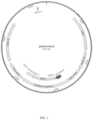
- a diagram showing the structure of pHAA1del2 is given in Figure 1 and its sequence is given as SEQ ID No.1.
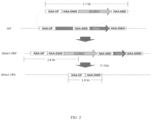
- the procedure of KmHAA1 deletion is given in Figure 2 .
- the disruption cassette was designed to integrate at the target HAA1 loci, which encodes for amino acid SEQ ID No.2, by homologous recombination. Disruptants were selected on CM minus uracil medium by selecting from the ScURA3 gene.Then, the URA3 gene was looped out by homologous recombination between direct repeats of a downstream flank on media containing 5'-FOA. The resulting single colonies were then restreaked one or more times as necessary to free the correct strain from background cells and eliminate heterozygous diploids.
- the starting strain was K. marxianus having an uracil auxotrophic yeast strain and a wild type HAA1 gene that is capable of D-LAC production, namely MYR2787 HAA1.
- MYR2787 HAA1 The construction of MYR2787 HAA1 are described as below.
- Three different cassettes designed to express the EcldhA gene were constructed on plasmids. In all three cases, the IdhA gene was expressed from the KmPDC1 promoter.
- the three EcldhA cassettes were designed and inserted at the target loci which were KmPDC1, KmGPP1 and KmNDE1 loci by homologous recombination. Disruptants were selected on CM minus uracil medium by selecting from the ScURA3 gene.
- the URA3 gene was looped out by homologous recombination between direct repeats of a downstream flank on media containing 5'-FOA to reuse the URA3 gene for subsequent transformations.
- single colonies were restreaked one or more times as necessary to free the correct strain from background cells and to eliminate heterozygous diploids.
- Correct insertions and correct loop outs were identified by PCR using appropriate primers that bracketed the borders between the ends of the cassettes and the chromosomal sequences at the target locus that are just upstream or just downstream of the integrated cassette. PCR diagnostics could not distinguish correctly integrated cassettes in haploids from correctly integrated homozygous diploids, so this distinction was not made at any step of the constructions.
- strain MYR2297 the three IdhA cassettes were installed, one at a time in the order listed above. After each initial integration of a cassette, the URA3 gene was looped out by the 5'-FOA counterselection. After the third cassette was thus installed, the native KmURA3 gene was re-installed by transformation of a linear DNA fragment obtained by PCR from K. marxianus wild type strain chromosomal DNA as a template to give an uracil prototroph by selection on CM minus uracil plates. The resulting strain, which now contains three copies of the integrated IdhA gene, was named MYR2787 HAA1.
- the disruption cassette of HAA1 was designed to integrate at the target loci by homologous recombination in the same procedure as described in the construction of MYR2297 ⁇ haa1 above.
- the HAA1 overexpression cassettes was designed to integrate into the strain MYR2787 by swapping to IdhA expression cassette.
- the plasmid has the following features, in the following order: 1) a strong constitutive promoter 2) a HAA1 coding region 3) a terminator 4) a ScURA3 as a selectable marker and 5) a homology to a middle sequence of IdhA locus.
- the cassette was designed to be able to integrate into any one of three IdhA expression loci, the swop integration of HAA1 overexpression cassette in GPP1 locus was selected for further examination.
- the resulting D-LAC producing strain which now contains a HAA1 expression cassette at GPP1 locus instead of IdhA expression cassette, was named MYR2787 2X HAA1.
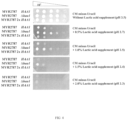
- the strains in MYR2297 HAA1, MYR2297 ⁇ haa1, MYR2787 HAA1, MYR2787 ⁇ haa1 and MYR2787 2X HAA1 were cultivated in CM minus uracil medium without and with 0.5%, 1.0%, 1.5% and 2.0% w/v of L-lactic acid.
- the starting pH in each media was 3.5, 2.7, 2.5, 2.4 and 2.3, respectively. All solid media contained 2% agar. Quantitative comparison of growth differences between yeast strains were done by spotting serial 10-fold dilutions, starting from 10 7 cells, alongside each other on the same agar plates, which were incubated at 30°C for 2 days.
- the D-LAC producing strains of MYR2787 HAA1, MYR2787 ⁇ haa1 and MYR2787 2X HAA1 were cultivated in flower plates in a BioLector minifermentor.
- Single colony of the yeast strains of MYR2787 HAA1, MYR2787 ⁇ haa1 and MYR2787 2X HAA1 were inoculated separately into 5 mL of CM minus uracil in tube and incubated at 37 °C by using rotary incubation at speed rate 200 rpm for 12 - 18 hours.
- yeast cells having ⁇ haa1 disruption improved its growth on low pH condition compared to the parental strains.
- yeast cell having overexpression of HAA1 gene showed a sensitive responsivity on low pH condition compared to the parental strain.
- the growths of the parental strain (MYR2787 HAA1) and the yeast cell having overexpression of HAA1 gene (MYR2787 2X HAA1) stopped after 12 hours of the cultivation while the growth of the yeast cell having ⁇ haa1 disruption (MYR2787 ⁇ haa1 ) was continued.
- MYR2787 ⁇ haa1 the yeast cell having ⁇ haa1 disruption
- the results strongly confirm that yeast cell having ⁇ haa1 disruption increased lactic acid tolerance compared to the parental strain.
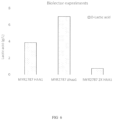
- the D-LAC titers produced by MYR2787 parental cell (MYR2787 HAA1), MYR2787 harboring ⁇ haa1 disruption (MYR2787 ⁇ haa1 ) and MYR2787 harboring HAA1 overexpression (MYR2787 2X HAA1) at 48 hours were 3.8 g/L, 7.5 g/L and 0.8 g/L respectively.
- the results clearly demonstrate that the yeast cell having ⁇ haa1 disruption (MYR2787 ⁇ haa1 ) have improvement of lactic acid production without the pH control compared to the parental strain.
- the yeast cell having overexpression of HAA1 gene (MYR2787 2X HAA1) produced lactic acid less than the parental strain and the yeast cell having ⁇ haa1 disruption (MYR2787 ⁇ haa1 ).
Landscapes
- Life Sciences & Earth Sciences (AREA)
- Health & Medical Sciences (AREA)
- Chemical & Material Sciences (AREA)
- Organic Chemistry (AREA)
- Engineering & Computer Science (AREA)
- Mycology (AREA)
- Genetics & Genomics (AREA)
- Zoology (AREA)
- Wood Science & Technology (AREA)
- Biotechnology (AREA)
- General Health & Medical Sciences (AREA)
- Microbiology (AREA)
- Bioinformatics & Cheminformatics (AREA)
- Biochemistry (AREA)
- General Engineering & Computer Science (AREA)
- Medicinal Chemistry (AREA)
- Biomedical Technology (AREA)
- Botany (AREA)
- Natural Medicines & Medicinal Plants (AREA)
- Molecular Biology (AREA)
- Biophysics (AREA)
- Tropical Medicine & Parasitology (AREA)
- Virology (AREA)
- Chemical Kinetics & Catalysis (AREA)
- General Chemical & Material Sciences (AREA)
- Veterinary Medicine (AREA)
- Public Health (AREA)
- Gastroenterology & Hepatology (AREA)
- Animal Behavior & Ethology (AREA)
- Epidemiology (AREA)
- Proteomics, Peptides & Aminoacids (AREA)
- Pharmacology & Pharmacy (AREA)
- Medical Informatics (AREA)
- Alternative & Traditional Medicine (AREA)
- Physics & Mathematics (AREA)
- Plant Pathology (AREA)
- Micro-Organisms Or Cultivation Processes Thereof (AREA)
- Preparation Of Compounds By Using Micro-Organisms (AREA)
Description
- The present invention relates to a genetically engineered Kluyveromyces sp. yeast cell comprising at least a genetic modification that deletes a nucleotide sequence encoding for an amino acid SEQ ID No. 2, particularly Haa1.
- The genetically engineered yeast cell according to this invention has an improvement of lactic acid tolerance, lactic acid production or a combination thereof as compared to the parental.
- Biotechnology especially genetic engineering which relates to yeast having improvement of lactic acid tolerance and use thereof
- The organic acids that are produced from renewable resources are becoming attractive molecules for several industries. In the energy industry, the bioethanol and biobutanol have been long time developed and commercially used. Lactic acid and succinic acid which are also biologically produced and used as raw materials in various applications e.g., food & feed additives in food industry, mild solvent applications in personal care production and bio-polymer synthesis for bio-based resin productions. All aforementioned molecules are produced by the well-known processes called fermentation. The most challenge of the fermentation process is the production cost.
- Several attempts to reduce the production cost have been approached. To reduce the cost of fermentation feedstock, agricultural waste e.g., bagasse from sugar industry, have been proposed. Cellulose from bagasse can be physically and chemically broken down into fermentable sugar for bacteria utilization. However, various impurities from the pretreatment process cause the inhibition effect to bacteria. For instance, acetate released from the hemicellulose breakdown is the well-known inhibitor of most microorganism. Moreover, the undesired lactic acid from the contaminations of some bacteria during bagasse storage can also affect to the fermentation process.
- On the other hand, the problems to prevent the cell damages during fermentation are also costly. For instance, it occurs in the case of weak acid, e.g., lactic acid and succinic acid productions. During the fermentation of these acids, it is important to neutralize the lactic acid produced and desalination of the resulting lactate to prevent the cell activities damage from lowing pH. Among the powerful bacteria using in the biotechnological process, yeast have been mostly used because of its robustness and low pH tolerance. Still, below pH values of 2.8, lactic acid production with the engineered yeast strain dropped. Therefore, conferring higher lactic acid resistance on yeast would improve lactic acid productivity under non-neutralized conditions.
- Several studies have been conducted in Saccharomyces cerevisiae yeast whereby it is clearly indicated that the yeast cell responds to acid by regulation of a transcription factor encoded by HAA1 gene.
- Sugiyama et al. (Applied and Environmental Microbiology, 2014, 80, 3488-3495) approached to overexpress HAA1 gene encoding for the transcription factor, to mimic the relocalization of its protein, Haa1p into nuclease whereby they consequently induce the weak acid adaptation mechanisms in order to improve lactic acid resistance in Saccharomyces cerevisiae. This study also found that the haa1 disruptant caused severe lactic acid sensitivity compared to parental strain.
- Tanaka et al. (Applied and Environmental Microbiology, 2012, 78, 8161-8163) disclosed similar results about the overexpression of HAA1 in Saccharomyces cerevisiae that could enhance the acetic acid tolerance.
-
US9085781B2 -
WO2016083397A1 disclosed the combination of HAA1 and its paralog CUP2 to achieve the improvement of acid tolerance in yeast, especially Saccharomyces cerevisiae. These complexities cause mainly the obstacles to use this approach in commercialized scale of production. - Furthermore, there have been some studies in this research area in yeast strains, especially Saccharomyces cerevisiae, so as to improve lactic acid tolerance but did not involve with HAA1 gene.
-
US9994877B2 -
US9758564B2 -
US10053714B2 - Suzuki et al. (Journal of Bioscience and Bioengineering, 2013, 115, 467-474) reported a construction of acid resistant yeast in Saccharomyces cerevisiae by combining gene disruptions that led to lactic-acid resistance. This study found that 94 gene disruptants showed resistance to lactic acid and that lactic-acid resistance was further enhanced by combining the disruption of several genes which leading to high lactic-acid productivity without neutralization.
- From the reason mentioned above, this invention discloses the simple approach to enhance lactic acid tolerance in the other non-conventional yeast, particularly Kluyveromyces sp., in which the deletion of HAA1 is sufficiently cause the improvement of its lactic acid tolerance, lactic acid production or a combination thereof.
- The improved yeast from the present invention can be used in broad aspects, for example but not limit to, fermentation process by using low-cost feedstock that containing any acid impurities and perform the fermentation to produce a fermentation broth with high levels of free lactic acid. Those advantages are the cost-effectiveness production.
-
-
Figure1 Structure of pHAA1del2, a plasmid which contains the cassette used to delete HAA1 gene from strains MYR2297 and MYR2787. -
Figure 2 Schematic diagram of the procedure used to delete HAA1 gene from strains MYR2297 and MYR2787. -
Figure 3 Growth performance of MYR2297 parent cell (MYR2297 HAA1) and MYR2297 harboring Δhaa1 disruption (MYR2297 Δhaa1) on CM minus uracil solid medium with 0.5% (pH 2.7), 1.0% (pH 2.5), 1.5% (pH 2.4), 2.0% (pH 2.3) lactic acid supplementation or without supplementation (pH 3.5) incubated at 30°C for 2 days. -
Figure 4 Growth performance of MYR2787 parental cell (MYR2787 HAA1), MYR2787 harboring Δhaa1 disruption (MYR2787 Δhaa1) and MYR2787 harboring HAA1 overexpression (MYR2787 2X HAA1) on CM minus uracil solid medium with 0.5% (pH 2.7), 1.0% (pH 2.5), 1.5% (pH 2.4), 2.0% (pH 2.3) lactic acid supplementation or without supplementation (pH 3.5) incubated at 30°C for 2 days. -
Figure 5 Growth performances of MYR2787 parental cell (MYR2787 HAA1), MYR2787 harboring Δhaa1 disruption (MYR2787 Δhaa1) and MYR2787 harboring HAA1 overexpression (MYR2787 2X HAA1) in BioLector fermentation for 2 days. -
Figure 6 D-lactic acid titers produced by MYR2787 parental cell (MYR2787 HAA1), MYR2787 harboring Δhaa1 disruption (MYR2787 Δhaa1) and MYR2787 harboring HAA1 overexpression (MYR2787 2X HAA1) in BioLector fermentation for 2 days. - Technical terms or scientific terms used herein, have definitions as understood by those having an ordinary skill in the art, unless stated otherwise. To facilitate understanding of the invention, a description of nomenclature is provided below.
- Equipment, apparatus, methods, or chemicals mentioned here means equipment, apparatus, methods or chemicals commonly operated or used by those skilled in the art, unless explicitly stated otherwise that they are equipment, apparatus, methods, or chemicals specifically used in this invention.
- The use of the singular or plural nouns with the term "comprising" in the claims or in the specification refers to "one" and including "one or more", "at least one and "one or more than one" too.
- Throughout this application, the term "about" is used to indicate that any value presented herein may potentially vary or deviate. Such variation or deviation may result from errors of apparatus, methods used in calculation or from individual operator implementing apparatus or methods. These include variations or deviations caused by the changes of physical properties.
- In regards to nomenclature, a bacterial gene or coding region is usually named with lower case letters in italics, for example "IdhA" from E.coli, while the enzyme or protein encoded by the gene can be named with the same letters, but the first letter in upper case and without italics, for example "LdhA". A yeast gene or coding region is usually named with upper case letters in italics, for example "HAA1", while the enzyme or protein encoded by the gene can be named with the same letters, but with the first letter in upper case and without italics, for example "Haa1". For yeast strains that contain a mutation in particular gene, or have a mutant phenotype, the gene or strain is designated by lower case italicized letters, for example haa1 or Δhaa1 for a strain that lacks a functional HAA1 gene. To specify the organism from which a particular gene was derived, the gene name can be preceded by two letters indicating the genus and species. For example, the KmURA3 gene is derived from Kluyveromyces marxianus, the ScURA3 gene is derived from Saccharomyces cerevisiae.
- "Yeast" means any fungal organism that is capable of growing in a single cell state under some conditions. Some yeast strains can also grow in a hyphal state or pseudohyphal (i.e., short hyphae) state under some conditions, such as under starvation.
- "Lactic acid" or "D-LAC" or "D-lactic acid" means lactic acid includes its salts such as lactate
- "Genetic engineering" or "Genetically engineered" means an activity of introducing one or more genetic modifications into a cell or a cell produced thereby.
- "Genetic modification" means an artificial alteration in a characteristic or structure of a genetic material of a cell. Genetic modifications include introducing a polynucleotide encoding a polypeptide into a cell for a substitution, addition, insertion, or deletion of one or more nucleotides with respect to a genetic material of a parent cell or a chemical modification of the genetic material of a parent cell.
- "Parent cell" or "Parent" or "Parental" means an original cell or a cell having no particular genetic modification and may be used as a starting material to produce a genetically engineered cell having increased or decreased activity or production.
- "Wild type" means a polypeptide or polynucleotide having no particular genetic modification
- "Transformant" means a cell or strain that results from installation of a desired DNA sequence, either linear or circular, and either autonomously replicating or not, into a host or parent strain.
- "Mutation" means any changes from a native or parent DNA sequence, for example, an inversion, a duplication, an insertion of one or more base pairs, a deletion of one or more base pairs, a point mutation leading to a base change that creates a premature stop codon, or a missense mutation that changes the amino acid encoded at that position.
- "Mutant" means a strain that comprises one or more mutations when compared to a native, wild type, parent or precursor strain.
- "Cassette" means a deoxyribose nucleic acid (DNA) sequence that is capable of encoding, producing, or overproducing or alternatively, eliminating or reducing the activity of, one or more desired proteins or enzymes when installed in a host organism. A cassette for producing a protein or enzyme typically comprises at least one promoter, at least one protein coding sequence, and optionally at least one transcription terminator. A cassette can be built into a plasmid, which can be circular, or it can be a linear DNA created by polymerase chain reaction (PCR), primer extension PCR, or by in vivo or in vitro homologous recombination between ends of DNA fragments, each of which is a subset of the desired final cassette, where each subset fragment has an overlapping homology at either or both ends, designed to result in joining od adjacent fragments by homologous recombination either in vivo or in vitro. A cassette can be designed to include a selectable marker gene or DNA sequence that upon integration is surrounded by a direct repeat sequence of about 30 base pairs or more (the same sequence in the orientation present at both ends of the integrated selectable gene), such that the selectable marker can be deleted by homologous recombination between the direct repeats (also known as "looping out"), after the initial cassette containing the selectable marker has been integrated into a chromosome or plasmid. Useful selectable marker gene include, but are not limited to, antibiotic G418 resistance (kan or kanR), hygromycin resistance (hyg or hygR), zeocin resistance (zeo or zeoR), naturicin resistance (nat or natR), and biosynthesis genes such as URA3, TRP1, TRP5, LEU2, and HIS3. For the biosynthesis genes to be used as a selectable marker, the host strain must contain a mutation in the corresponding gene, preferably a non-reverting null mutation. For example, if URA3 is used as the selectable marker gene, then the strain to be transformed must be phenotypically ura3.
- "Plasmid" means a linear or circular DNA molecule that is substantially smaller that a chromosome, is separate from the chromosome of chromosomes of a microorganism, and replicates separately from the chromosome or chromosomes. A plasmid can be present in about one copy per cell or in more than one copy per cell. Maintenance of a plasmid within a microbial cell usually requires growth in a medium that selects for presence of the plasmid, for example using complementation of a chromosomal auxotrophy or an antibiotic resistance gene.
- "Chromosome" or "Chromosomal" means a linear or circular DNA molecule that is substantially larger than a plasmid and usually does not require any antibiotic or nutritional selection.
- "Disruption" means causing the enzyme or protein encoded by a gene or coding region to be not produced or produced in a host microorganism at a level that is less than the level found in the wild type version of the host microorganism under the same or similar growth conditions.
- "Overexpression" means causing the enzyme or protein encoded by a gene or coding region to be produced in a host microorganism at a level that is higher than the level found in the wild type version of the host microorganism under the same or similar growth conditions.
- "Gibson method" means a method for joining in vitro together two or more linear DNA fragments that have short (about 15-40 base pairs) overlapping homology at their ends. This method can be used to construct plasmid from synthetic linear DNA fragments, PCR fragments, or fragments generated by restriction enzymes. Kits can be purchased to perform the Gibson method, for example the NEBuilder HiFi DNA Assembly Cloning Kit (New England BioLabs, Ipswitch, Massachusetts, USA), and used as instructed by the manufacturer.
- "Titer" means the concentration of a compound in a fermentation broth, usually expressed as grams per liter (g/L) or as % weight per volume (%).
- To facilitate understanding of the invention, various genes are listed in Table 1.
Table 1 Gene names and descriptions Gene name Protein or function encoded Source microorganism EcldhA D-lactate dehydrogenase E. coli URA3 Orotidine-5'-phosphate decarboxylase K. marxianus ScURA3 S. cerevisiae KmURA3 PDC1 Pyruvate decarboxylase K. marxianus KmPDC1 GPP1 Glycerol-3-phosphate phosphatase K. marxianus NDE1 NADH dehydrogenase -1 K. marxianus HAA1 Acid-responsive transcription factor K. marxianus KmHAA1 Kmhaa1 - Unless otherwise specified, recombinant DNA and genetic engineering in this invention was carried out with methods and materials well known in the art. Plasmids and linear DNA cassettes were assembled using the "Gibson Method" according to the manufacturer's protocol, or by in vivo homologous recombination as described above.
- To delete a DNA sequence or to integrate an expression cassette, the method that we generally used to assemble the cassette on a plasmid that can replicate in E.coli, or to assemble the cassette in vivo in the target yeast strain by co-transforming two or more subsections of the cassette, with adjacent subsections designed to overlap a base pairs at the ends to be joined, as well as a base pairs at the ends of the assembled cassette that are homologous with the chromosomal target sequence. All of the cassette described herein for integration in a Kluyveromyces sp. chromosome were designed to express a yeast URA3 gene (typically the ScURA3 gene or the native KmURA3 gene) and the recipient host organism has a non-reverting ura3- phenotype, typically by virtue of a deletion at the native KmURA3 locus. In order to be able to reuse URA3+ selection in subsequent engineering steps, in each cassette, the URA3 gene is surrounded by a direct repeat DNA sequences that allow deletion of the URA3 gene from the cassette after it has been integrated, by homologous recombination between said directly repeated DNA sequences, in a second step by selecting against the URA3 gene on minimal medium containing 5'-fluoroorotic acid (5'-FOA).
- Therefore, the general design of disruption cassettes for integration have the following features, in the following order: 1) a sequence "Up" of a base pairs that is homologous to the target chromosomal sequence that is just upstream from the desired integration target site 2) a sequence "Down" of a base pairs that is homologous to the target chromosomal sequence that is just downstream of the desired deletion endpoint 3) a selectable marker gene such as the URA3 gene (and optionally counterselectable) 4) a sequence "Middle" of a base pairs that is homologous to at least a portion of the chromosomal target sequence that is desired to be deleted. Upon transformation and selection, the assembled cassette integrates into the chromosomal target site by homologous double recombination between the "Up" sequence and the "Middle" sequence. Transformants containing the correct integration are identified by diagnostic PCR that shows both an upstream and a downstream junction fragment of the correct expected size. In a second step the selectable marker gene is "looped out" by counterselection and homologous recombination between the "Down" sequence internal to the cassette, and the sequence that is homologous to "Down" in the chromosome that is logically present downstream from the integrated cassette.
- On the other hand, the general design of an expression cassettes for integration have the following features, in the following order: 1) a sequence "Up" of a more base pairs that is homologous to the target chromosomal sequence that is just upstream from the desired integration target site 2) a sequence that is designed to be integrated, for example, a promoter-ORF-terminator combination 3) a sequence "Down" of a base pairs that is homologous to the target chromosomal sequence that is just downstream of the desired deletion endpoint 4) a selectable marker gene such as the URA3 gene (and optionally counterselectable) 5) a sequence "Middle" of a base pairs that is homologous to at least a portion of the chromosomal target sequence that is desired to be deleted. If the target chromosomal sequence is intended to be deleted without a concomitant insertion, then the second fragment 2) of the general design described above is omitted. Transformants containing the correct integration are identified by diagnostic PCR that shows both an upstream and a downstream junction fragment of the correct expected size. In a second step the selectable marker gene is "looped out" by counterselection and homologous recombination between the "Down" sequence internal to the cassette, and the sequence that is homologous to "Down" in the chromosome that is logically present downstream from the integrated cassette.
- Hereafter, invention embodiments are shown.
- The present invention relates to a genetically engineered Kluyveromyces sp. yeast cell wherein said yeast cell comprising at least a genetic modification that deletes a nucleotide sequence encoding for an amino acid SEQ ID NO. 2.
- In one embodiment, the genetically engineered Kluyveromyces sp. yeast cell according to the invention comprises the nucleotide sequence encoding an amino acid SEQ ID NO. 2 which is an acid responsive transcription factor Haa1.
- In one embodiment, the genetically engineered Kluyveromyces sp. yeast cell according to the invention comprises the genetic modification that increases lactic acid tolerance as compared to the parental.
- In one embodiment, the genetically engineered Kluyveromyces sp. yeast cell according to the invention comprises the genetic modification that increases lactic acid production as compared to the parental.
- In one embodiment, the genetically engineered Kluyveromyces sp. yeast cell according to the invention can be selected from Kluyveromyces lactis, Kluyveromyces marxianus or Kluyveromyces thermotolerans.
- In another embodiment, the genetically engineered Kluyveromyces sp. yeast cell according to the invention can be used in all of fermentation processes for lactic acid production.
- To evaluate the effect of KmHAA1 gene on lactic acid tolerance and lactic acid production, genetic modifications for disruption and overexpression of HAA1 gene were studied and also compared the results to the parental strain. The results were shown in
Figure 3-6 . - The following examples are provided to further explain the invention but are not intended to limit the scope of the invention.
- In order to confirm the disruption effect of KmHAA1 gene on lactic acid tolerance then 2 strains of K. marxianus were used in this invention, MYR2787 which is capable of D-LAC production and MYR2297 which is not capable of D-LAC production.
- The following chemical- based DNA transformation method was adapted from the protocol published by Abdel-Banat et al. (Abdel-Banat, 2010) to be improved for strain MYR2297 and MYR2787, many of which are named and used in the examples described herein.
- A fresh single colony of the strain to be transformed was inoculated into 5 mL YPD medium consisting of, per liter, 10 g yeast extract, 20 g peptone and 3 g glucose. This starting culture was grown to saturation overnight in a shaking incubator at 30 °C.
- After that 5 mL of the cultivated yeast was inoculated into 45 mL YPD medium with 2% glucose at 225 rpm during a period about 4 to 8 hours in a shaking incubator at 30 °C until an OD 600 nm of about 4 to 5.
- During growth of the culture, a solution of 10 mg/ml single stranded salmon sperm (ssDNA) was prepared by heating in a thermocycler for 10 minutes, and then quickly chilling the tubes in an ice-water bath. The Eppendorf tubes were prepared for each individual transformation by adding 10 µl of ssDNA solution to each of the tubes followed by 5 to 10 µl of the experimental DNA destined for transformation into the strain. Ideally, the concentration of the experimental DNA should be about 500 to 1,000 ng of DNA per plasmid.
- Prepare a sterile Transformation Mixture (TM) to chemically prepare the cells for transformation that contains final concentration of PEG 3350 (40% polyethylene glycol), 2M lithium acetate (LiAc) and 1M dithiothreitol (DTT). In practice, this TM is prepared by combining three stock solutions on the day of transformation. The composition of TM per 1 mL was 800 µl of 50% PEG3350, 100 µl of 2M LiAc and 100 µl of 1M DTT.
- Once the culture to be transformed reached an OD 600 nm of about 4 to 5, cells were centrifuged at 7500 rpm for 5 minutes at the room temperature. The supernatant was poured away, the cells pellet was resuspended in 1 mL of TM and centrifuged once more under the same conditions. The supernatant was removed with a micropipette and resuspended in 1 mL of TM. For subsequent steps, added 15 µl of mixed DNA and aliquot 85 µl portions of cell suspension to each of the transformation tubes and mix thoroughly about 1 to 2 minutes. Heat shock each transformation by placing the tubes in a 42°C water baht or heating block for 1 hour.
- After heat shock then pelleted and rinsed the cells in a microfuge at full speed with 1 mL of a CM minus uracil medium. Span down the cells of each transformation and pipetted away the supernatant. Resuspended each pellet with 1 mL of a fresh CM minus uracil medium and spread 100 µl of cell suspension over plate containing CM minus uracil medium. The plate was incubated at 30°C until colonies appear, typically in 2 to 4 days.
-
Table 2 Composition of growth media. All amounts listed are per liter. For Petri plates, 20 g/L agar was added. Ingredient CM minus uracil SDM2 YPD Glucose Variable (20-200 g) 20g Sucrose Variable (20-200 g) Teknova CM-ura mix One 1 L pack Potassium phosphate monobasic Ammonium phosphate monobasic 13.8 g Ammonium phosphate dibasic 3.96 g Magnesium sulfate. 7H2O 0.493 g Yeast extract 10g Peptone 20g Thiamine HCl 200 mcg Niacin 3 mg Biotin 10 mcg Calcium pantothenate 400 mcg 1000 X trace elements* 1 ml pH (with ammonium hydroxide or phosphoric acid) 6.2 MES (2-(N-morpholino) ethanesulfonic acid) Betaine Sodium Chloride 0.234 g Potassium Chloride 0.521 g *1000 X Trace elements, per liter: 1.6 g FeCl3•6H2O, 0.1 g CuCl2•2H2O, 0.2 g ZnCl2, 0.05 g H3BO3, 0.55 g MnCl2•4H2O, 10 mL 85% phosphoric acid - The starting strain was K. Marxianus having an uracil auxotrophic yeast strain and a wild type HAA1 gene, namely MYR2297 HAA1. The HAA1 gene was deleted by integrating a disruption cassette constructed on plasmid pHAA1del2. The disruption cassette comprised of 1) a "HAA Up" sequence 2) a "HAA Down" sequence 3) a ScURA3 sequence as a selectable marker and 4) a "HAA MID" sequence. A diagram showing the structure of pHAA1del2 is given in
Figure 1 and its sequence is given as SEQ ID No.1. The procedure of KmHAA1 deletion is given inFigure 2 . The disruption cassette was designed to integrate at the target HAA1 loci, which encodes for amino acid SEQ ID No.2, by homologous recombination. Disruptants were selected on CM minus uracil medium by selecting from the ScURA3 gene.Then, the URA3 gene was looped out by homologous recombination between direct repeats of a downstream flank on media containing 5'-FOA. The resulting single colonies were then restreaked one or more times as necessary to free the correct strain from background cells and eliminate heterozygous diploids. Correct insertions and correct loop outs were identified by PCR using appropriate primers that bracketed the borders between the ends of the cassettes and the chromosomal sequences at the target locus that are just upstream or just downstream of the integrated cassette. PCR diagnostics could not distinguish correctly integrated cassettes in haploids from correctly integrated homozygous diploids, so this distinction was not made at any step of the constructions. After the loop outs were confirmed, the native KmURA3 gene was re-installed by transformation of a linear DNA fragment obtained by PCR from K. marxianus wild type strain chromosomal DNA as a template to give an uracil prototroph by selection on CM minus uracil plates. The resulting strain, which now contains disruption of HAA1 gene, was named MYR2297 Δhaa1. - The starting strain was K. marxianus having an uracil auxotrophic yeast strain and a wild type HAA1 gene that is capable of D-LAC production, namely MYR2787 HAA1. The construction of MYR2787 HAA1 are described as below. Three different cassettes designed to express the EcldhA gene were constructed on plasmids. In all three cases, the IdhA gene was expressed from the KmPDC1 promoter. The three EcldhA cassettes were designed and inserted at the target loci which were KmPDC1, KmGPP1 and KmNDE1 loci by homologous recombination. Disruptants were selected on CM minus uracil medium by selecting from the ScURA3 gene. Then the URA3 gene was looped out by homologous recombination between direct repeats of a downstream flank on media containing 5'-FOA to reuse the URA3 gene for subsequent transformations. At each transformation step and each loop out step, single colonies were restreaked one or more times as necessary to free the correct strain from background cells and to eliminate heterozygous diploids. Correct insertions and correct loop outs were identified by PCR using appropriate primers that bracketed the borders between the ends of the cassettes and the chromosomal sequences at the target locus that are just upstream or just downstream of the integrated cassette. PCR diagnostics could not distinguish correctly integrated cassettes in haploids from correctly integrated homozygous diploids, so this distinction was not made at any step of the constructions. Starting with strain MYR2297, the three IdhA cassettes were installed, one at a time in the order listed above. After each initial integration of a cassette, the URA3 gene was looped out by the 5'-FOA counterselection. After the third cassette was thus installed, the native KmURA3 gene was re-installed by transformation of a linear DNA fragment obtained by PCR from K. marxianus wild type strain chromosomal DNA as a template to give an uracil prototroph by selection on CM minus uracil plates. The resulting strain, which now contains three copies of the integrated IdhA gene, was named MYR2787 HAA1.
- The disruption cassette of HAA1 was designed to integrate at the target loci by homologous recombination in the same procedure as described in the construction of MYR2297 Δhaa1 above. The resulting D-LAC producing strain, which now contains disruption of HAA1 gene, was named MYR2787 Δhaa1.
- The HAA1 overexpression cassettes was designed to integrate into the strain MYR2787 by swapping to IdhA expression cassette. The plasmid has the following features, in the following order: 1) a strong constitutive promoter 2) a HAA1 coding region 3) a terminator 4) a ScURA3 as a selectable marker and 5) a homology to a middle sequence of IdhA locus. Although the cassette was designed to be able to integrate into any one of three IdhA expression loci, the swop integration of HAA1 overexpression cassette in GPP1 locus was selected for further examination. The resulting D-LAC producing strain, which now contains a HAA1 expression cassette at GPP1 locus instead of IdhA expression cassette, was named
MYR2787 2X HAA1. - To determine and compare the growth performances of all yeast strains obtained as described above in low pH condition, the strains in MYR2297 HAA1, MYR2297 Δhaa1, MYR2787 HAA1, MYR2787 Δhaa1 and
MYR2787 2X HAA1 were cultivated in CM minus uracil medium without and with 0.5%, 1.0%, 1.5% and 2.0% w/v of L-lactic acid. The starting pH in each media was 3.5, 2.7, 2.5, 2.4 and 2.3, respectively. All solid media contained 2% agar. Quantitative comparison of growth differences between yeast strains were done by spotting serial 10-fold dilutions, starting from 107 cells, alongside each other on the same agar plates, which were incubated at 30°C for 2 days. - To determine and compare the yeast growth performances and its D-LAC productions, the D-LAC producing strains of MYR2787 HAA1, MYR2787 Δhaa1 and
MYR2787 2X HAA1 were cultivated in flower plates in a BioLector minifermentor. Single colony of the yeast strains of MYR2787 HAA1, MYR2787 Δhaa1 andMYR2787 2X HAA1 were inoculated separately into 5 mL of CM minus uracil in tube and incubated at 37 °C by using rotary incubation atspeed rate 200 rpm for 12 - 18 hours. After that 0.1 mL of inocula were inoculated into 0.9 mL of SDM2 medium (As shown in Table 2) in BioLector cultivation plate with a starting OD 600 nm of 0.1- 0.2 and pH 6.0- 6.2. The flower plates were shaken and incubated respectively at speed rate 1200 rpm and 37 °C for 48 hours. The humidity was controlled at 50 - 80% to eliminate the water evaporation during the experiment. During the fermentation, pH was not controlled. Therefore, the pH of each cultures was falling along the fermentation due to D-LAC productions. Once the cultivation started, the biomass was automatically measured an OD 600 nm every 30 minutes. After 48 hours, the experiment was stopped. Cell mass of each strains were spin down by centrifugation. The supernatants were collected and were analyzed the amount of lactic acid content. - As shown in
Figure 3 and4 , all yeast cells having Δhaa1 disruption (MYR2297 Δhaa1 and MYR2787 Δhaa1) improved its growth on low pH condition compared to the parental strains. Moreover, as shown inFigure 4 , the yeast cell having overexpression of HAA1 gene (MYR2787 2X HAA1) showed a sensitive responsivity on low pH condition compared to the parental strain. These results illustrate that yeast cells having Δhaa1 disruption increased lactic acid tolerance compared to the parental strains. - As shown in
Figure 5 , the growths of the parental strain (MYR2787 HAA1) and the yeast cell having overexpression of HAA1 gene (MYR2787 2X HAA1) stopped after 12 hours of the cultivation while the growth of the yeast cell having Δhaa1 disruption (MYR2787 Δhaa1) was continued. This indicates that the yeast cell having Δhaa1 disruption (MYR2787 Δhaa1) have improvement of growth performance in low pH condition. The results strongly confirm that yeast cell having Δhaa1 disruption increased lactic acid tolerance compared to the parental strain. - As shown in
Figure 6 , the D-LAC titers produced by MYR2787 parental cell (MYR2787 HAA1), MYR2787 harboring Δhaa1 disruption (MYR2787 Δhaa1) and MYR2787 harboring HAA1 overexpression (MYR2787 2X HAA1) at 48 hours were 3.8 g/L, 7.5 g/L and 0.8 g/L respectively. The results clearly demonstrate that the yeast cell having Δhaa1 disruption (MYR2787 Δhaa1) have improvement of lactic acid production without the pH control compared to the parental strain. On the other hand, the yeast cell having overexpression of HAA1 gene (MYR2787 2X HAA1) produced lactic acid less than the parental strain and the yeast cell having Δhaa1 disruption (MYR2787 Δhaa1). - From the results of all examples described above reflect that the genetically engineered yeast cell with Δhaa1 disruption which was discovered in this invention having the improvement of lactic acid tolerance, lactic acid production or a combination thereof as mentioned in the summary of the invention. This invention is the first discovery.
- Best mode of the invention is as disclosed in the detailed description.
Claims (6)
- A genetically engineered Kluyveromyces sp. yeast cell wherein said yeast cell comprising at least a genetic modification that deletes a nucleotide sequence encoding for an amino acid SEQ ID No. 2.
- The genetically engineered Kluyveromyces sp. yeast cell of Claim 1, wherein said amino acid SEQ ID No. 2 is an acid-responsive transcription factor Haa1.
- The genetically engineered Kluyveromyces sp. yeast cell of Claim 1 or 2, wherein said genetic modification increases lactic acid tolerance as compared to the parental.
- The genetically engineered Kluyveromyces sp. yeast cell according to the preceding claims, wherein said genetic modification increases lactic acid production as compared to the parental.
- The genetically engineered Kluyveromyces sp. yeast cell according to the preceding claims, wherein Kluyveromyces sp. yeast cell is selected from Kluyveromyces lactis, Kluyveromyces marxianus or Kluyveromyces thermotolerans.
- A fermentation process for lactic acid production using said genetically engineered Kluyveromyces sp. yeast cell according to the preceding claims.
Applications Claiming Priority (1)
| Application Number | Priority Date | Filing Date | Title |
|---|---|---|---|
| PCT/TH2019/000030 WO2021034276A2 (en) | 2019-08-19 | 2019-08-19 | Yeast having improvement of lactic acid tolerance and use thereof |
Publications (3)
| Publication Number | Publication Date |
|---|---|
| EP4017515A2 EP4017515A2 (en) | 2022-06-29 |
| EP4017515A4 EP4017515A4 (en) | 2023-07-19 |
| EP4017515B1 true EP4017515B1 (en) | 2025-06-25 |
Family
ID=74660781
Family Applications (1)
| Application Number | Title | Priority Date | Filing Date |
|---|---|---|---|
| EP19942296.5A Active EP4017515B1 (en) | 2019-08-19 | 2019-08-19 | Yeast having improvement of lactic acid tolerance and use thereof |
Country Status (7)
| Country | Link |
|---|---|
| US (1) | US12018245B2 (en) |
| EP (1) | EP4017515B1 (en) |
| JP (1) | JP7452900B2 (en) |
| KR (1) | KR102782206B1 (en) |
| CN (1) | CN115279386A (en) |
| FI (1) | FI4017515T3 (en) |
| WO (1) | WO2021034276A2 (en) |
Family Cites Families (14)
| Publication number | Priority date | Publication date | Assignee | Title |
|---|---|---|---|---|
| UA88437C2 (en) | 2002-05-30 | 2009-10-26 | Каргилл Доу Ллс | Process for fermentaion with participation of genetically modified yeast and the method for realization of fermentation |
| CA2631036A1 (en) | 2005-11-23 | 2007-10-18 | Natureworks Llc | Lactic acid-producing yeast cells having nonfunctional l-or d-lactate: ferricytochrome c oxidoreductase gene |
| BR112015001458A2 (en) * | 2012-07-23 | 2017-09-26 | Edeniq Inc | isolated polynucleotide, expression cassette, yeast cell, method for producing sugar from ethanol, and aqueous mixture. |
| US11072807B2 (en) | 2012-09-14 | 2021-07-27 | Ptt Global Chemical Public Company Limited | Production of organic acids by fermentation of genetically engineered yeast cells at low pH |
| BR112016027437A2 (en) * | 2014-05-26 | 2017-10-17 | Univ Leuven Kath | causative genes that confer tolerance to acetic acid in yeast |
| KR101686899B1 (en) * | 2014-06-20 | 2016-12-16 | 한국생명공학연구원 | Novel Kluyveromyces marxianus MJ1 and use thereof |
| WO2015194900A1 (en) * | 2014-06-20 | 2015-12-23 | 한국생명공학연구원 | Kluyveromyces marxianus having pathway of lactic acid degradation blocked, and use of same |
| KR102219700B1 (en) | 2014-06-23 | 2021-02-24 | 삼성전자주식회사 | Acid resistant yeast cell with reduced Fps1 activity and method for producing lactate using the same |
| WO2016083397A1 (en) | 2014-11-24 | 2016-06-02 | Vib Vzw | Causative genes conferring acetic acid tolerance in yeast |
| KR102303832B1 (en) | 2015-05-12 | 2021-09-17 | 삼성전자주식회사 | Yeast cell having acid tolerant property, method for preparing the yeast cell and use thereof |
| KR102311681B1 (en) | 2015-07-28 | 2021-10-12 | 삼성전자주식회사 | Yeast cell resistant to acid, method for producing an organic acid using the same, and method for producing the same |
| EP3445845A1 (en) | 2016-04-18 | 2019-02-27 | Syconium Lactic Acid GmbH | Method for producing lactic acid |
| WO2018115251A1 (en) * | 2016-12-21 | 2018-06-28 | Vib Vzw | Xylose isomerases that confer efficient xylose fermentation capability to yeast |
| KR102691949B1 (en) | 2018-02-16 | 2024-08-06 | 피티티 글로벌 케미칼 피씨엘 | Microorganisms and methods for producing lactic acid |
-
2019
- 2019-08-19 CN CN201980099339.2A patent/CN115279386A/en active Pending
- 2019-08-19 FI FIEP19942296.5T patent/FI4017515T3/en active
- 2019-08-19 KR KR1020227004741A patent/KR102782206B1/en active Active
- 2019-08-19 US US17/634,876 patent/US12018245B2/en active Active
- 2019-08-19 WO PCT/TH2019/000030 patent/WO2021034276A2/en not_active Ceased
- 2019-08-19 JP JP2022508758A patent/JP7452900B2/en active Active
- 2019-08-19 EP EP19942296.5A patent/EP4017515B1/en active Active
Also Published As
| Publication number | Publication date |
|---|---|
| KR20220034859A (en) | 2022-03-18 |
| KR102782206B1 (en) | 2025-03-17 |
| WO2021034276A2 (en) | 2021-02-25 |
| EP4017515A2 (en) | 2022-06-29 |
| JP2022545630A (en) | 2022-10-28 |
| WO2021034276A9 (en) | 2021-06-24 |
| EP4017515A4 (en) | 2023-07-19 |
| FI4017515T3 (en) | 2025-09-18 |
| CN115279386A (en) | 2022-11-01 |
| JP7452900B2 (en) | 2024-03-19 |
| US20220411745A1 (en) | 2022-12-29 |
| US12018245B2 (en) | 2024-06-25 |
Similar Documents
| Publication | Publication Date | Title |
|---|---|---|
| US20230312253A1 (en) | Yeast cells having disrupted pathway from dihydroxyacetone phosphate to glycerol | |
| US7049108B2 (en) | Processes for producing lactic acid using yeast transformed with a gene encoding lactate dehydrogenase | |
| US20100137551A1 (en) | Methods and materials for the production of D-lactic acid in yeast | |
| JP7566748B2 (en) | Microbial strains engineered for improved fructose utilization | |
| CN107406821B (en) | Mutant host cells for the production of 3-hydroxypropionic acid | |
| US20070031950A1 (en) | Production of D-lactic acid with yeast | |
| AU2006300688B2 (en) | Yeast and method of producing L-lactic acid | |
| US11447802B2 (en) | Microorganisms and processes for lactic acid production | |
| US12018245B2 (en) | Yeast having improvement of lactic acid tolerance and use thereof | |
| US20200131538A1 (en) | Microorganism with stabilized copy number of functional dna sequence and associated methods | |
| JP6343754B2 (en) | Method for imparting acid and salt tolerance and production of useful substances using acid and salt tolerant yeast |
Legal Events
| Date | Code | Title | Description |
|---|---|---|---|
| STAA | Information on the status of an ep patent application or granted ep patent |
Free format text: STATUS: THE INTERNATIONAL PUBLICATION HAS BEEN MADE |
|
| PUAI | Public reference made under article 153(3) epc to a published international application that has entered the european phase |
Free format text: ORIGINAL CODE: 0009012 |
|
| STAA | Information on the status of an ep patent application or granted ep patent |
Free format text: STATUS: REQUEST FOR EXAMINATION WAS MADE |
|
| 17P | Request for examination filed |
Effective date: 20220211 |
|
| AK | Designated contracting states |
Kind code of ref document: A2 Designated state(s): AL AT BE BG CH CY CZ DE DK EE ES FI FR GB GR HR HU IE IS IT LI LT LU LV MC MK MT NL NO PL PT RO RS SE SI SK SM TR |
|
| DAV | Request for validation of the european patent (deleted) | ||
| DAX | Request for extension of the european patent (deleted) | ||
| A4 | Supplementary search report drawn up and despatched |
Effective date: 20230619 |
|
| RIC1 | Information provided on ipc code assigned before grant |
Ipc: C12N 1/16 20060101ALI20230613BHEP Ipc: C12N 1/15 20060101ALI20230613BHEP Ipc: A61K 36/064 20060101AFI20230613BHEP |
|
| GRAP | Despatch of communication of intention to grant a patent |
Free format text: ORIGINAL CODE: EPIDOSNIGR1 |
|
| STAA | Information on the status of an ep patent application or granted ep patent |
Free format text: STATUS: GRANT OF PATENT IS INTENDED |
|
| INTG | Intention to grant announced |
Effective date: 20250117 |
|
| GRAS | Grant fee paid |
Free format text: ORIGINAL CODE: EPIDOSNIGR3 |
|
| GRAA | (expected) grant |
Free format text: ORIGINAL CODE: 0009210 |
|
| STAA | Information on the status of an ep patent application or granted ep patent |
Free format text: STATUS: THE PATENT HAS BEEN GRANTED |
|
| AK | Designated contracting states |
Kind code of ref document: B1 Designated state(s): AL AT BE BG CH CY CZ DE DK EE ES FI FR GB GR HR HU IE IS IT LI LT LU LV MC MK MT NL NO PL PT RO RS SE SI SK SM TR |
|
| REG | Reference to a national code |
Ref country code: GB Ref legal event code: FG4D |
|
| REG | Reference to a national code |
Ref country code: CH Ref legal event code: EP |
|
| REG | Reference to a national code |
Ref country code: CH Ref legal event code: EP |
|
| REG | Reference to a national code |
Ref country code: IE Ref legal event code: FG4D |
|
| REG | Reference to a national code |
Ref country code: DE Ref legal event code: R096 Ref document number: 602019071797 Country of ref document: DE |
|
| REG | Reference to a national code |
Ref country code: NL Ref legal event code: FP |
|
| PGFP | Annual fee paid to national office [announced via postgrant information from national office to epo] |
Ref country code: NL Payment date: 20250829 Year of fee payment: 7 |
|
| REG | Reference to a national code |
Ref country code: FI Ref legal event code: FGE |
|
| PGFP | Annual fee paid to national office [announced via postgrant information from national office to epo] |
Ref country code: FI Payment date: 20250911 Year of fee payment: 7 |
|
| PGFP | Annual fee paid to national office [announced via postgrant information from national office to epo] |
Ref country code: DE Payment date: 20250918 Year of fee payment: 7 |
|
| REG | Reference to a national code |
Ref country code: LT Ref legal event code: MG9D |
|
| PG25 | Lapsed in a contracting state [announced via postgrant information from national office to epo] |
Ref country code: NO Free format text: LAPSE BECAUSE OF FAILURE TO SUBMIT A TRANSLATION OF THE DESCRIPTION OR TO PAY THE FEE WITHIN THE PRESCRIBED TIME-LIMIT Effective date: 20250925 Ref country code: GR Free format text: LAPSE BECAUSE OF FAILURE TO SUBMIT A TRANSLATION OF THE DESCRIPTION OR TO PAY THE FEE WITHIN THE PRESCRIBED TIME-LIMIT Effective date: 20250926 |
|
| PG25 | Lapsed in a contracting state [announced via postgrant information from national office to epo] |
Ref country code: BG Free format text: LAPSE BECAUSE OF FAILURE TO SUBMIT A TRANSLATION OF THE DESCRIPTION OR TO PAY THE FEE WITHIN THE PRESCRIBED TIME-LIMIT Effective date: 20250625 |
|
| PGFP | Annual fee paid to national office [announced via postgrant information from national office to epo] |
Ref country code: BE Payment date: 20250923 Year of fee payment: 7 |
|
| PG25 | Lapsed in a contracting state [announced via postgrant information from national office to epo] |
Ref country code: HR Free format text: LAPSE BECAUSE OF FAILURE TO SUBMIT A TRANSLATION OF THE DESCRIPTION OR TO PAY THE FEE WITHIN THE PRESCRIBED TIME-LIMIT Effective date: 20250625 |
|
| PGFP | Annual fee paid to national office [announced via postgrant information from national office to epo] |
Ref country code: AT Payment date: 20250829 Year of fee payment: 7 |
|
| PGFP | Annual fee paid to national office [announced via postgrant information from national office to epo] |
Ref country code: CH Payment date: 20250901 Year of fee payment: 7 |
|
| PG25 | Lapsed in a contracting state [announced via postgrant information from national office to epo] |
Ref country code: RS Free format text: LAPSE BECAUSE OF FAILURE TO SUBMIT A TRANSLATION OF THE DESCRIPTION OR TO PAY THE FEE WITHIN THE PRESCRIBED TIME-LIMIT Effective date: 20250925 |
|
| PG25 | Lapsed in a contracting state [announced via postgrant information from national office to epo] |
Ref country code: LV Free format text: LAPSE BECAUSE OF FAILURE TO SUBMIT A TRANSLATION OF THE DESCRIPTION OR TO PAY THE FEE WITHIN THE PRESCRIBED TIME-LIMIT Effective date: 20250625 |
|
| PG25 | Lapsed in a contracting state [announced via postgrant information from national office to epo] |
Ref country code: PT Free format text: LAPSE BECAUSE OF FAILURE TO SUBMIT A TRANSLATION OF THE DESCRIPTION OR TO PAY THE FEE WITHIN THE PRESCRIBED TIME-LIMIT Effective date: 20251027 |
|
| PG25 | Lapsed in a contracting state [announced via postgrant information from national office to epo] |
Ref country code: IS Free format text: LAPSE BECAUSE OF FAILURE TO SUBMIT A TRANSLATION OF THE DESCRIPTION OR TO PAY THE FEE WITHIN THE PRESCRIBED TIME-LIMIT Effective date: 20251025 |
|
| PG25 | Lapsed in a contracting state [announced via postgrant information from national office to epo] |
Ref country code: SM Free format text: LAPSE BECAUSE OF FAILURE TO SUBMIT A TRANSLATION OF THE DESCRIPTION OR TO PAY THE FEE WITHIN THE PRESCRIBED TIME-LIMIT Effective date: 20250625 |
|
| PG25 | Lapsed in a contracting state [announced via postgrant information from national office to epo] |
Ref country code: CZ Free format text: LAPSE BECAUSE OF FAILURE TO SUBMIT A TRANSLATION OF THE DESCRIPTION OR TO PAY THE FEE WITHIN THE PRESCRIBED TIME-LIMIT Effective date: 20250625 |
|
| PG25 | Lapsed in a contracting state [announced via postgrant information from national office to epo] |
Ref country code: PL Free format text: LAPSE BECAUSE OF FAILURE TO SUBMIT A TRANSLATION OF THE DESCRIPTION OR TO PAY THE FEE WITHIN THE PRESCRIBED TIME-LIMIT Effective date: 20250625 |
|
| PG25 | Lapsed in a contracting state [announced via postgrant information from national office to epo] |
Ref country code: EE Free format text: LAPSE BECAUSE OF FAILURE TO SUBMIT A TRANSLATION OF THE DESCRIPTION OR TO PAY THE FEE WITHIN THE PRESCRIBED TIME-LIMIT Effective date: 20250625 |
|
| PG25 | Lapsed in a contracting state [announced via postgrant information from national office to epo] |
Ref country code: SK Free format text: LAPSE BECAUSE OF FAILURE TO SUBMIT A TRANSLATION OF THE DESCRIPTION OR TO PAY THE FEE WITHIN THE PRESCRIBED TIME-LIMIT Effective date: 20250625 |
|
| REG | Reference to a national code |
Ref country code: CH Ref legal event code: W10 Free format text: ST27 STATUS EVENT CODE: U-0-0-W10-W00 (AS PROVIDED BY THE NATIONAL OFFICE) Effective date: 20260128 |
|
| REG | Reference to a national code |
Ref country code: CH Ref legal event code: R17 Free format text: ST27 STATUS EVENT CODE: U-0-0-R10-R17 (AS PROVIDED BY THE NATIONAL OFFICE) Effective date: 20260129 |
|
| PG25 | Lapsed in a contracting state [announced via postgrant information from national office to epo] |
Ref country code: ES Free format text: LAPSE BECAUSE OF FAILURE TO SUBMIT A TRANSLATION OF THE DESCRIPTION OR TO PAY THE FEE WITHIN THE PRESCRIBED TIME-LIMIT Effective date: 20250625 |
|
| RAP4 | Party data changed (patent owner data changed or rights of a patent transferred) |
Owner name: PTT GLOBAL CHEMICAL PUBLIC COMPANY LIMITED |
|
| PG25 | Lapsed in a contracting state [announced via postgrant information from national office to epo] |
Ref country code: RO Free format text: LAPSE BECAUSE OF FAILURE TO SUBMIT A TRANSLATION OF THE DESCRIPTION OR TO PAY THE FEE WITHIN THE PRESCRIBED TIME-LIMIT Effective date: 20250625 |
|
| PG25 | Lapsed in a contracting state [announced via postgrant information from national office to epo] |
Ref country code: MC Free format text: LAPSE BECAUSE OF FAILURE TO SUBMIT A TRANSLATION OF THE DESCRIPTION OR TO PAY THE FEE WITHIN THE PRESCRIBED TIME-LIMIT Effective date: 20250625 |
|
| PG25 | Lapsed in a contracting state [announced via postgrant information from national office to epo] |
Ref country code: DK Free format text: LAPSE BECAUSE OF FAILURE TO SUBMIT A TRANSLATION OF THE DESCRIPTION OR TO PAY THE FEE WITHIN THE PRESCRIBED TIME-LIMIT Effective date: 20250625 |
|
| PG25 | Lapsed in a contracting state [announced via postgrant information from national office to epo] |
Ref country code: LU Free format text: LAPSE BECAUSE OF NON-PAYMENT OF DUE FEES Effective date: 20250819 Ref country code: IT Free format text: LAPSE BECAUSE OF FAILURE TO SUBMIT A TRANSLATION OF THE DESCRIPTION OR TO PAY THE FEE WITHIN THE PRESCRIBED TIME-LIMIT Effective date: 20250625 |
|
| PLBE | No opposition filed within time limit |
Free format text: ORIGINAL CODE: 0009261 |
|
| STAA | Information on the status of an ep patent application or granted ep patent |
Free format text: STATUS: NO OPPOSITION FILED WITHIN TIME LIMIT |
|
| REG | Reference to a national code |
Ref country code: CH Ref legal event code: L10 Free format text: ST27 STATUS EVENT CODE: U-0-0-L10-L00 (AS PROVIDED BY THE NATIONAL OFFICE) Effective date: 20260507 |