EP4017156A1 - Method for efficient paging of mobile ues using extended drx and a randomized ptws procedure - Google Patents
Method for efficient paging of mobile ues using extended drx and a randomized ptws procedure Download PDFInfo
- Publication number
- EP4017156A1 EP4017156A1 EP21160688.4A EP21160688A EP4017156A1 EP 4017156 A1 EP4017156 A1 EP 4017156A1 EP 21160688 A EP21160688 A EP 21160688A EP 4017156 A1 EP4017156 A1 EP 4017156A1
- Authority
- EP
- European Patent Office
- Prior art keywords
- paging
- mme
- enodeb
- ptw
- procedure
- Prior art date
- Legal status (The legal status is an assumption and is not a legal conclusion. Google has not performed a legal analysis and makes no representation as to the accuracy of the status listed.)
- Granted
Links
Images


Classifications
-
- H—ELECTRICITY
- H04—ELECTRIC COMMUNICATION TECHNIQUE
- H04W—WIRELESS COMMUNICATION NETWORKS
- H04W68/00—User notification, e.g. alerting and paging, for incoming communication, change of service or the like
- H04W68/02—Arrangements for increasing efficiency of notification or paging channel
-
- H—ELECTRICITY
- H04—ELECTRIC COMMUNICATION TECHNIQUE
- H04W—WIRELESS COMMUNICATION NETWORKS
- H04W76/00—Connection management
- H04W76/20—Manipulation of established connections
- H04W76/28—Discontinuous transmission [DTX]; Discontinuous reception [DRX]
Definitions
- FIG 1 shows the network architecture reference model of the 4th generation (4G) 3GPP cellular network.
- the Access Stratum (AS) consists of Evolved Universal Terrestrial Radio Access Network (E-UTRAN) and the User Equipment (UE).
- E-UTRAN Evolved Universal Terrestrial Radio Access Network
- UE User Equipment
- the Evolved Node B (eNodeB) is the network element of the E-UTRAN.
- eNodeB base station and radio access node are used synonymously.
- Narrowband-IoT is a subset of E-UTRAN.
- the SGW routes and forwards user data packets, while also acting as the mobility anchor for the user plane during inter-eNodeB handovers and as the anchor for mobility between LTE and other 3GPP technologies (terminating S4 interface and relaying the traffic between 2G/3G systems and Packet Data Network Gateway).
- the SGW terminates the downlink data path and triggers paging when downlink data arrives for the UE. It manages and stores UE contexts, e. g. parameters of the IP bearer service, network internal routing information.
- the Packet Data Network Gateway provides connectivity from the UE to external packet data networks (PDNs) by being its point of exit and entry of traffic.
- PDNs packet data networks
- a piece of UE may have simultaneous connectivity with more than one Packet Data Network Gateway for accessing multiple packet data networks.
- the PGW performs policy enforcement, packet filtering for each user, charging support, lawful interception and packet screening.
- Another key role of the PGW is to act as the anchor for mobility between 3GPP and non-3GPP technologies such as WiMAX and 3GPP2.
- FIG. 8 illustrates the resulting time line of the paging procedure.
- the MME is using sequential paging with two paging zones and two paging occasions per paging zone.
- the MME pages the UE at eNodeB 1 first, where the UE was registered last.
- the MME allows for two paging occasions or attempts per paging zone.
- the MME escalates the paging to the second paging zone involving eNodeB 2 and 3.
- the whole PTW for the UE needs to include four paging cycles.
- UEs mobile user equipment
- the MME might make use of information at which eNodeB the UE was registered last: Firstly, the MME determines the PTW of the UE at eNodeB where the UE was registered last, then it pages the UE at the eNodeB determined in step 1 at the time of the PTW start, and then stop paging on success. On paging failure, default to blanket paging is performed as described above.
- the hashed ID becomes pseudo-random with respect to both M-TMSI and ECI. It remains uniformly distributed within the value range of 32 bit.
- Using the described randomization method is only one possibility and is used as an illustration. Other possibilities or modifications that presents a randomization of the PTW start are also conceivable.
- the hashed ID is determined by the UE and / or by the MME. It is mandatory that the hashed ID is calculated by UE and MME, otherwise the eDRX paging procedure will fail.
- the invention has been presented using NB-IoT and EPS technology as one example application. It can be applied to all cellular technologies with extended idle mode DRX support like E-UTRAN LTE and eMTC CAT-M as well as 5G technologies NR and 5G core.
Landscapes
- Engineering & Computer Science (AREA)
- Computer Networks & Wireless Communication (AREA)
- Signal Processing (AREA)
- Mobile Radio Communication Systems (AREA)
Abstract
Description
- The invention relates to a method for efficient paging of mobile user equipment (UEs), using extended discontinuous reception (eDRX) and a randomized paging time windows (PTWs) procedure.
- According to recent market forecasts, the Internet-of-Things (IoT) segment is expected to grow considerably within the next few years. Many use cases like supply chain tracking require network coverage with seamless mobility support as provided by today's cellular networks. To cope with the massive number of IoT devices expected, the 3GPP standardization body has introduced Machine type communication (MTC) capabilities into the cellular network technology.
- In the following, the invention is illustrated using the NarrowBand Internet-of-Things (NB-IoT) access technology as well as the Evolved Packet Core (EPC). The invention is not limited to the selected technology; it can be applied to 4G E-UTRAN, eMTC and other technologies using extended discontinuous reception (eDRX) as well.
-
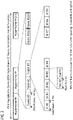
Figure 1 shows the network architecture reference model of the 4th generation (4G) 3GPP cellular network. The Access Stratum (AS) consists of Evolved Universal Terrestrial Radio Access Network (E-UTRAN) and the User Equipment (UE). The Evolved Node B (eNodeB) is the network element of the E-UTRAN. Within the description of the invention the terms eNodeB, base station and radio access node are used synonymously. Narrowband-IoT is a subset of E-UTRAN. - The Evolved Packet Core (EPC) comprises following subcomponents: a Mobility Management Entity (MME), a Serving Gateway (SGW), a Packet Data Network Gateway (PGW), and a Home Subscriber Server (HSS).
- The MME is the key control-node for the LTE access-network. The MME entity verifies subscriber authorization, manages the location of the User Equipment (UE) with the Tracking Area (TA), and stores the connection states and security parameters of the subscriber UE devices. When the tracking area is changed, the MME instance receives a tracking area update. So, it is involved in the bearer activation/deactivation process and is also responsible for choosing the Serving Gateway (SGW) for a UE at the initial attach and at time of intra-LTE handover involving Core Network (CN) node relocation. It is responsible for authenticating the user (by interacting with the Home Subscriber Server). The Non Access Stratum (NAS) signaling terminates at the MME and it is also responsible for generation and allocation of temporary identities to UEs. It checks the authorization of the UE to camp on the service provider's Public Land Mobile Network (PLMN) and enforces UE roaming restrictions. The MME is the termination point in the network for ciphering/integrity protection for NAS signaling and handles the security key management. The MME provides the control plane function for mobility between LTE and 2G/3G access networks with the S3 interface terminating at the MME from the SGSN. The MME also terminates the S6a interface towards the HSS for roaming UEs.
- The SGW routes and forwards user data packets, while also acting as the mobility anchor for the user plane during inter-eNodeB handovers and as the anchor for mobility between LTE and other 3GPP technologies (terminating S4 interface and relaying the traffic between 2G/3G systems and Packet Data Network Gateway). For idle state User Equipment, the SGW terminates the downlink data path and triggers paging when downlink data arrives for the UE. It manages and stores UE contexts, e. g. parameters of the IP bearer service, network internal routing information.
- The Packet Data Network Gateway (PDN Gateway, also PGW) provides connectivity from the UE to external packet data networks (PDNs) by being its point of exit and entry of traffic. A piece of UE may have simultaneous connectivity with more than one Packet Data Network Gateway for accessing multiple packet data networks. The PGW performs policy enforcement, packet filtering for each user, charging support, lawful interception and packet screening. Another key role of the PGW is to act as the anchor for mobility between 3GPP and non-3GPP technologies such as WiMAX and 3GPP2.
- The HSS is a central database that contains user-related and subscription-related information. The functions of the HSS include functionalities such as mobility management, call and session establishment support, user authentication and access authorization. The HSS is based on pre-Rel-4 Home Location Register (HLR) and Authentication Center (AuC).
- In
figure 1 , the transitions between the single architecture components indicate interfaces that acting upon specific protocols. - For synchronization purposes between an eNodeB and a UE, the time on the AS is partitioned into frames. The frame structure of NB-IoT is shown in
figure 2 . A sub-frame consists of two slots of 500µs each. A system frame of 10ms contains 10 sub-frames. A hyper system frame has 1024 system frames (10.24s). A hyper system frame cycle consists of 1024 hyper system frames covering about 3 hours. - The cellular network supports mobile UEs in both active and idle state. When the UE is in idle state, the network tracks the location of the UE on a level of tracking area (TA). A
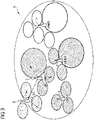
tracking area 6 consists of a set of eNodeBs 1-5 connected to the same MME as shown infigure 3 . TheTA 6 infigure 3 includes a firstradio access node 1, and four neighboringradio access nodes - During initial attach or on entering a
new TA 6, the UE registers within the TA 6 (or within multiple TAs). The EPC knows the location of the UE at TA level. The UE can freely roam between eNodeBs 1-5 within the registered TA(s) 6 without the need to inform the EPC. - The procedure of locating the position of the UE at eNodeB-level is called paging. When data arrives at the EPC for the UE, paging is used to locate the UE and establish a signaling connection for downlink data delivery. The procedure for mobile terminated (MT) data transport in NB-IoT is shown in
figure 4 . The PGW delivers the data to SGW, where it remains until the UE has established a signaling connection. The SGW informs the MME about the downlink data, and the MME initiates the paging procedure, which is described in the following. The MME sends a paging request to eNodeB(s) according to a proprietary paging strategy. On the radio access network (RAN) level, the UE periodically listens for broadcast paging messages using a network-defined paging cycle. The eNodeB sends out a broadcast paging message within a predefined time slot determined by the paging occasion (PO) sub-frame, paging frame (PF), and paging hyper-frame (PH). A UE wakes up in a specific subframe eithersubframe - The paging strategy determines in which order the MME involves the eNodeBs of the TA(s) into the paging procedure. Well-known paging strategies are:
- 1. Blanket paging: The MME pages the UE at all eNodeBs of the registered TA(s). Blanket paging is a simple strategy with low paging latency but high paging resource consumption and high signaling load.
- 2. Sequential paging: The TA is partitioned into paging zones. The MME pages all eNodeBs within a paging zone in parallel. If the paging attempt fails, the MME escalates the paging to other paging zones. The paging zones are generally constructed according to the expected probability of presence of the paged UE.
- 3. Shortest-distance-first: Paging zones can be constructed according to the distance to the eNodeB where the last location update of the UE has happened.
- The paging strategy determines the tradeoff between paging load and paging delay. Furthermore, the size of the TA is a critical network planning parameter determining the tradeoff between location update costs versus paging costs.
- The setup of a voice call should not take more than some seconds to meet customer experiences. Thus, the voice-enabled UE must be reachable on a second basis. For IoT devices, on the other hand, energy consumption might be more important than reachability. 3GPP has introduced a high latency communication in combination with Power Saving Mode (PSM) and Extended Idle mode Discontinuous Reception (eDRX). An extended DRX cycle is shown in
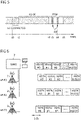
figure 5 . As illustrated infigure 5 , the UE is in a connected state during a period from time t0 to time t1. The MME may configure the eDRX to the UE within this period. During the period from time t1 to time t2, the UE is in the sleep state of the eDRX. The period from time t1 to time t5 corresponds to the eDRX cycle, which consists of the eDRX inactivity (sleep state), and the PTW. At time t2, the UE exits (wakes up) the sleep state of the eDRX cycle. The period from time t2 to time t5 corresponds to the paging transmission window (PTW). Based on the paging message from the MME, the eNodeB repeatedly transmits the paging at the paging reception opportunity (PF and PO) within the paging transmission window. At time t3 and time t4, the paging reception opportunity (PF and PO) of the UE occurs. The paging reception opportunity is also called paging occasion. The eNodeB repeatedly transmits the paging to the UE at time t3 and time t4. At time t5, the UE transitions from the wake-up state of the eDRX to the sleep state. - Extended Idle mode DRX (eDRX) allows interrupting the idle mode DRX operation to save power. The interruption time is called eDRX inactivity. The remaining time within the eDRX cycle is called Paging Time Window (PTW). So, the eDRX inactivity period and the paging time window forms the eDRX cycle. Both network and UE negotiate the eDRX cycle and the PTW within the attach and tracking area update (TAU) procedure. The location of the PTW within the eDRX cycle in terms of paging hyper-frame (PH) and paging frame (PF) is pseudo-random and depends on the identity of the UE. For load balancing purposes, the PTWs of different UEs are uniformly distributed across the eDRX cycle.
- The Paging Time Window is determined as follows (see also 3GPP TS 36.304 Release 13 (and newer)):
- The paging Hyper-(H) System frame number (SFN) is determined as: H-SFN mod TeDRX,H = (UE_ID_H mod TeDRX,n) , whereas TeDRX,H is the eDRX cycle in number of hyper-frames and UE_ID_H are the 12 most significant bits of a hashed ID (defined below);
- The paging frame system-frame-number (SFN) is determined as: SFN = 256*ieDRX, with ieDRX = floor (UE_ID_H /TeDRX,H)
mod 4; - The hashed ID is determined by
hashed ID = ∼ (crc32(0xFFFF FFFF) ^ crc32(M-TMSI)), with '∼' is the ones complement, '^' is exclusive OR, 'crc32' is the 32-bit cyclic redundancy check using the ITU generator polynomial and 'M-TMSI' is the MME Temporary Mobile Subscriber Identity (32-bit). - The floor expression means to round down. The 32-bit cyclic redundancy check uses the generator polynomial 0x104C11DB7 as defined by the ITU-T V.42.
- The UE is reachable for mobile terminated (MT) data and signaling during the PTW only. The implications on the MT Data transport use case (see
figure 4 ) are as follows. The MME needs to be aware whether and when the target UE is reachable next. This is achieved by loose hyper-SFN synchronization between MME and eNodeB, described in the following. For MT data, the MME informs the SGW about the expected time it needs to buffer the data before the UE becomes reachable again. Furthermore, the MME needs to time-align the paging requests towards the eNodeB(s) according to the PTW of the UE. - 3GPP supports the monitoring of the UE reachability. When the UE is not reachable due to eDRX inactivity, EPC internal as well as connected user applications can request to be informed when the UE becomes reachable again. The UE reachability can be used to migrate the buffering of MT data from the SGW to the application.
- When using eDRX within a TA, the MME needs to know the PTW start and end of the UE to be paged. The PTW is determined by the frame timing of the AS, the eDRX configuration as well as NAS-level identities of the UE. For that purpose, 3GPP mandates a so-called loose Hyper-SFN Synchronization (3GPP TS 23.682 Release 13 (and newer)) between MME and eNodeB within a TA.
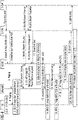
- Loose Hyper-SFN Synchronization requires that the time difference between MME and each eNodeB within the TA is not more than 1-2s as shown in
figure 6 (with reference toUS 20180263012 A1 ). In other words, the eNodeBs in the tracking area have a coarse time-synchronization. The synchronization mechanism shown infigure 6 requires a performance improvement of the MME and the eNodeB which also increases system complexity. The reason why synchronization having accuracy within 1-2 seconds within an MME and an eNodeB is performed is to minimize or obviate the time taken for the eNodeB to store a paging message. - The impact of loose hyper-SFN synchronization on the paging strategy of the MME is as follows. As shown in
figure 7 , the PTWs for the target UE are overlapping for all eNodeBs within the TA. The allowed variation is 1-2s whereas the minimum paging cycle in NB-IoT is 1.28s. During the negotiation of the eDRX parameters with the UE, the MME needs to dimension the PTW length according to paging strategy. If the PTW is short, the first paging attempts fail because of UE mobility, and the MME has paged the wrong eNodeBs, the UE might enter eDRX inactivity again and might not be reachable for a long time. The MME has then the following options: - 1. The MME might prolong the PTW to accommodate additional paging attempts at the expense of the UE power consumption.
- 2. The MME might escalate paging earlier: By involving eNodeBs earlier, the paging load on the AS increases.
- 3. The MME continues the paging in the next eDRX cycle leading to higher paging latency as well as longer data buffering at the SGW.
- The 3GPP specification favors option 1 [see also R2-161311, TS 23.682 Release 13 (and newer)] to address the issue.
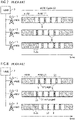
Figure 8 illustrates the resulting time line of the paging procedure. In the shown example, the MME is using sequential paging with two paging zones and two paging occasions per paging zone. The MME pages the UE ateNodeB 1 first, where the UE was registered last. The MME allows for two paging occasions or attempts per paging zone. After two unsuccessful paging attempts ateNodeB 1, the MME escalates the paging to the second pagingzone involving eNodeB - So, the problem which should be addressed by the present invention is that with the state-of-the-art overlapping paging time windows for a target UE at all eNodeBs in a tracking area of the target UE limits the flexibility of the Mobile Management Entity paging strategy and goes at the expense of UE power consumption as the UE has to be in active mode for example for additional paging attempts.
- It is an objective of the present invention to specify a method that allows an efficient paging for mobile user equipment (UEs) which does not go of the power consumption of the UE.
- The objective of the present invention is solved by a method for efficient paging of mobile UEs, using extended discontinuous reception (eDRX) and a randomized paging time windows (PTWs) procedure, the method comprising the following steps:
- step 1: a mobile management entity (MME) determines at least one eNodeB of several eNodeBs located within a tracking area (TA) of a target UE, where a paging time window (PTW) for said UE is starting next, whereas the PTW is indicated by PTW start;
- step 2: the MME pages the UE at the at least one eNodeB determined in
step 1; - step 3: the MME stops the paging of the target UE if it was successful,
- otherwise the MME continues with
step 1 until all eNodeBs in the associated TA of the target UE have been proceeded, whereas the paging time windows within an eDRX cycle are pseudo-randomly allocated and non-synchronized between eNodeBs. - The PTW are pseudo-randomly allocated with respect to UE as well as eNodeB and fully non-overlapping across all eNodeBs.
- The rationale of the randomized PTW feature is that the time location of the PTW within the eDRX cycle changes when the UE changes from one eNodeB to another, i. e. PTWs are not synchronized anymore. With PTWs not synchronized anymore, also the dependency of the PTW length on the paging strategy is reduced. The MME does not need to provision for UE mobility when determining the PTW length. The shorter PTW length reduces the power consumption on the UE side. The paging load on the AS is not increased, i.e. the expected number of paging messages on the radio access network level does not increase. The paging latency becomes random and uniformly distributed across the eDRX cycle. On both UE and network side, no additional state needs to be maintained since the pseudo-random allocation of PTWs is stateless.
- In a variant of the inventive method, for low mobile and nomadic UEs, the MME at first determines the PTW of the UE at an eNodeB of the TA of the UE where the UE was registered last, the MME pages the UE at said eNodeB at a time the PTW starts and the MME stops the paging of the UE if it was successful, otherwise the MME continues with
step 1 inclaim 1. - So, for low mobile and nomadic UEs, the MME might make use of information at which eNodeB the UE was registered last: Firstly, the MME determines the PTW of the UE at eNodeB where the UE was registered last, then it pages the UE at the eNodeB determined in
step 1 at the time of the PTW start, and then stop paging on success. On paging failure, default to blanket paging is performed as described above. - In another variant of the inventive method, the randomized paging time window start is achieved by including an identification of the eNodeB in a calculation on the PTW for the target UE using an E-UTRAN Cell Identifier (ECI), whereas a hashed ID of a Hyper-System-Frame-Number (H-SFN), where the PTW starts, is calculated by hashed ID = ∼ (crc32(0xFFFF FFFF) ^ crc32(M-TMSI ^ ECI))).
- Hence, the randomization of the PTW start is achieved by including the identification of the eNodeB into the calculation on the PTW for the considered/target UE. Using the E-UTRAN Cell Identifier (ECI), the hashed ID can be calculated as follows; hashed ID = ∼ (crc32(0xFFFF FFFF) ^ crc32(M-TMSI ^ ECI)), with '∼' is the ones complement, '^' is exclusive OR, 'crc32' is the 32 bit cyclic redundancy check using the ITU generator polynomial and 'M-TMSI' is the MME Temporary Mobile Subscriber Identity (32 bit). With the shown formula, the hashed ID becomes pseudo-random with respect to both M-TMSI and ECI. It remains uniformly distributed within the value range of 32 bit. Using the described randomization method is only one possibility and is used as an illustration. Other possibilities or modifications that presents a randomization of the PTW start are also conceivable.
- The hashed ID is determined by the UE and / or by the MME. It is mandatory that the hashed ID is calculated by UE and MME, otherwise the eDRX paging procedure will fail.
- Both UE and MME can determine the hashed ID, and thus, the PTW without storing any additional state.
- According to another variant of the inventive method, during a reselection of the UE from one eNodeB to another, the UE is reading a System-Information-Blockl that contains the ECI, for determining the PTW start within a new eNodeB. The hashed ID changes when the UE reselects to another eNodeB. The information that is required to calculate the new hashed ID is already available on the UE side.
- Using this information, the UE can determine the start of the PTW within the new eNodeB without any additional overhead. The information about connected eNodeBs is generally available on the MME side, so that also for the MME the proposed procedure has low overhead.
- According to a further variant of the inventive method, the randomized paging time windows (PTWs) procedure is requested by the UE in an attach request message or in a tracking area update request message exchanged between the UE and a network, whereas the network signals an activation of the randomized PTWs procedure within a respective attach accept message or a tracking area update accept message.
- This variant enables to remain backward compatible or manages applications where the randomized paging latency imposes issues. The PTW randomization shall be an optional feature that the UE needs to request in the respective ATTACH REQUEST or TRACKING AREA UPDATE REQUEST messages. If the UE requests the feature PTW randomization and the network supports it, the network shall signal the activation within the respective ATTACH ACCEPT or TRACKING AREA UPDATE ACCEPT messages.
- Pursuant to another further variant of the inventive method, the method is applicable to all cellular technologies with extended idle mode DRX support, like E-UTRAN LTE, EMTC CAT-M, 5G technologies NR and 5G core.
- The invention has been presented using NB-IoT and EPS technology as one example application. It can be applied to all cellular technologies with extended idle mode DRX support like E-UTRAN LTE and eMTC CAT-M as well as 5G technologies NR and 5G core.
- The invention will be explained in more detail using exemplary embodiments.
- The appended drawings show
- Fig. 1
- Non-roaming architecture for 3 GPP accesses (see 3GPP TS 23.401, v16.8.0, Fig. 4.2.1-1);
- Fig. 2
- NB-IoT frame structure (15kHz);
- Fig. 3
- Example for a tracking area architecture (out of
US 9560628 B2 - Fig. 4
- Mobile terminated data transport in non-access stratum Protocol Data Units (see 3GPP TS 23.401, v16.8.0, Fig. 5.3.4B.3-1);
- Fig. 5
- Extended DRX cycle (out of
US 20180176883 A1 ); - Fig. 6
- Loose Hyper-System-frame number Synchronization (out of
US 20180263012 A1 ); - Fig. 7
- Example of overlapping paging time windows in a tracking area (prior art);
- Fig. 8
- Example of paging a UE with overlapping paging time windows (prior art);
- Fig. 9
- Inventive Paging of a UE with fully non-overlapping and non-synchronized paging time windows;
- Fig. 10
- Non-overlapping paging time windows in a tracking area according to the invention.
- When applying the inventive efficient paging method for UEs using extended discontinuous reception (eDRX) and a randomized paging time windows procedure, the above-mentioned use case presented in
figure 8 changes as follows. TheMME 7 infigure 9 again selects two attempts, also calledpaging occasions 8, perpaging time window 11. In contrast tofigure 8 , thePTW 11 is shorter. TheMME 7 does not need to provision for the escalation of the paging toadditional paging occasions 8 within thePTW 11. The PTW length is reduced from 4 to 2 POs. - Based on the identity of the eNodeB, the start of the
PTW 11 assigned to the UE is pseudo-random within theeDRX cycle 12 as shown infigure 10 . For example, the UE associated witheNodeB 1 infigure 10 is assigned aPTW 11 at the start of theeDRX cycle 12. When reselecting UE toeNodeB 2, thePTW 11 changes from the start to the middle of theeDRX cycle 12. Similarly, thePTW 11 changes again when reselecting UE to the showneNodeB 3. - For high mobile UEs, the
MME 7 might use the blanket paging strategy the following way:
Firstly, theMME 7 determines eNodeB(s) where thePTW 11 is starting next for the target UE. Then theMME 7 pages the UE at this eNodeB determined first. TheMME 7 stops the paging on success. On paging failure, theMME 7 continues with the first step until all eNodeB(s) in the associated TA(s) have been processed. - For low mobile and nomadic UEs, the
MME 7 might make use of information at which a UE was registered last:
Firstly, theMME 7 determines thePTW 11 of the UE at eNodeB where the UE was registered last. TheMME 7 pages the UE at the eNodeB determined first at the time of the PTW start. TheMME 7 stops paging on success. On paging failure, theMME 7 returns per default to blanket paging described for high mobile UEs mentioned above. -
- 1
- First eNodeB, first radio access node
- 2
- A second eNodeB
- 3
- A third eNodeB
- 4
- A fourth eNodeB
- 5
- A fifth eNodeB
- 6
- Tracking area
- 7
- Mobility Management Entity
- 8
- Paging occasion
- 9
- UE is paged
- 10
- UE is not paged
- 11
- Paging time window
- 12
- Extended discontinuous reception cycle
Claims (7)
- A method for efficient paging of mobile user equipment, UEs, using extended discontinuous reception, eDRX, and a randomized paging time windows, PTWs, procedure, the method comprising the following steps:- step 1: a mobile management entity (7), MME, determines at least one eNodeB (1) of several eNodeBs (1-5) located within a tracking area (6), TA, of a target UE, where a paging time window (11), PTW, for said UE is starting next;- step 2: the MME (7) pages the UE at the at least one eNodeB determined in step 1;- step 3: the MME (7) stops the paging if it was successful,- otherwise the MME (7) continues with step 1 until all eNodeBs (1-5) in the associated TA (6) of the target UE have been proceeded,
whereas the paging time windows (11) within a eDRX cycle are pseudo-randomly allocated and non-synchronized between eNodeBs (1-5). - The method according to claim 1, wherein for low mobile and nomadic UEs, the MME (7) at first determines the PTW (11) of the UE at an eNodeB of the TA (6) of the UE where the UE was registered last, pages the UE at said eNodeB the PTW starts, and stops the paging if it was successful, otherwise the MME (7) continues with step 1 in claim 1.
- The method according to one of the claims 1 or 2, wherein a randomized paging time window start is achieved by including an identification of the eNodeB in a calculation on the PTW procedure for the target UE using an E-UTRAN Cell Identifier, ECI, whereas a hashed ID of a Hyper-Frame, H-SFN, where the PTW starts, is calculated by hashed ID = ∼ (crc32(0xFFFF FFFF) ^ crc32 (M-TMSI ^ ECI)).
- The method according to claim 3, wherein the hashed ID is determined by the UE and / or by the MME (7).
- The method according to claim 3, wherein during a reselection of the UE from one eNodeB to another, the UE is reading a System-Information-Blockl that contains the ECI, for determining the PTW start within a new eNodeB.
- The method according to one of the claims 1 to 5, wherein the randomized paging time windows, PTWs, procedure is requested by the UE in an attach request message or in a tracking area update request message exchanged between the UE and a network, whereas the network signals an activation of the randomized PTWs procedure within a respective attach accept message or a tracking area update accept message.
- The method according to one of the claims 1 to 6, wherein the method is applicable to all cellular technologies with extended idle mode DRX support, like E-UTRAN LTE, EMTC CAT-M, 5G technologies NR and 5G core.
Priority Applications (2)
| Application Number | Priority Date | Filing Date | Title |
|---|---|---|---|
| CN202180044157.2A CN115836555B (en) | 2020-12-16 | 2021-11-23 | Method for effectively paging mobile UE using extended DRX and random PTW process |
| PCT/EP2021/082616 WO2022128358A1 (en) | 2020-12-16 | 2021-11-23 | Method for efficient paging of mobile ues using extended drx and a randomized ptws procedure |
Applications Claiming Priority (1)
| Application Number | Priority Date | Filing Date | Title |
|---|---|---|---|
| EP20214446 | 2020-12-16 |
Publications (2)
| Publication Number | Publication Date |
|---|---|
| EP4017156A1 true EP4017156A1 (en) | 2022-06-22 |
| EP4017156B1 EP4017156B1 (en) | 2024-04-24 |
Family
ID=74858308
Family Applications (1)
| Application Number | Title | Priority Date | Filing Date |
|---|---|---|---|
| EP21160688.4A Active EP4017156B1 (en) | 2020-12-16 | 2021-03-04 | Method for efficient paging of mobile ues using extended drx and a randomized ptws procedure |
Country Status (1)
| Country | Link |
|---|---|
| EP (1) | EP4017156B1 (en) |
Citations (4)
| Publication number | Priority date | Publication date | Assignee | Title |
|---|---|---|---|---|
| US9560628B2 (en) | 2012-06-13 | 2017-01-31 | Telefonaktiebolaget Lm Ericsson (Publ) | Method and node for paging in a radio access network |
| WO2018063467A1 (en) * | 2016-09-30 | 2018-04-05 | Intel IP Corporation | Configuration of discontinuous reception (drx) parameters in light connection |
| US20180176883A1 (en) | 2015-08-11 | 2018-06-21 | Kyocera Corporation | Base station, mobility management apparatus, radio terminal, and network apparatus |
| US20180263012A1 (en) | 2015-09-16 | 2018-09-13 | Lg Electronics Inc. | Method for executing paging sequence in wireless communication system, and device for same |
-
2021
- 2021-03-04 EP EP21160688.4A patent/EP4017156B1/en active Active
Patent Citations (4)
| Publication number | Priority date | Publication date | Assignee | Title |
|---|---|---|---|---|
| US9560628B2 (en) | 2012-06-13 | 2017-01-31 | Telefonaktiebolaget Lm Ericsson (Publ) | Method and node for paging in a radio access network |
| US20180176883A1 (en) | 2015-08-11 | 2018-06-21 | Kyocera Corporation | Base station, mobility management apparatus, radio terminal, and network apparatus |
| US20180263012A1 (en) | 2015-09-16 | 2018-09-13 | Lg Electronics Inc. | Method for executing paging sequence in wireless communication system, and device for same |
| WO2018063467A1 (en) * | 2016-09-30 | 2018-04-05 | Intel IP Corporation | Configuration of discontinuous reception (drx) parameters in light connection |
Non-Patent Citations (2)
| Title |
|---|
| ERICSSON: "Wake Up Signal", vol. RAN WG2, no. Sanya, China; 20180416 - 20180420, 14 April 2018 (2018-04-14), XP051428656, Retrieved from the Internet <URL:http://www.3gpp.org/ftp/Meetings%5F3GPP%5FSYNC/RAN2/Docs/> [retrieved on 20180414] * |
| INTEL CORPORATION: "Remaining issues in eDRX", vol. RAN WG2, no. Nanjing, China; 20160523 - 20160527, 22 May 2016 (2016-05-22), XP051105067, Retrieved from the Internet <URL:http://www.3gpp.org/ftp/Meetings_3GPP_SYNC/RAN2/Docs/> [retrieved on 20160522] * |
Also Published As
| Publication number | Publication date |
|---|---|
| EP4017156B1 (en) | 2024-04-24 |
Similar Documents
| Publication | Publication Date | Title |
|---|---|---|
| US11889471B2 (en) | Paging time adjustment in a wireless network | |
| US12127127B2 (en) | Base station handling of transitioning wireless device to inactive state | |
| US11405974B2 (en) | Communication system | |
| US8971270B2 (en) | Group-based paging for machine-type-communication (MTC) devices | |
| EP4030836B1 (en) | Methods and apparatuses for paging in a communications network | |
| EP4277364A2 (en) | To reduce power consumption for all types of terminal device | |
| US20150327032A1 (en) | Method and apparatus in a telecommunication system | |
| EP3845030B1 (en) | Early-data-transmission and radio access network notification area update | |
| CA2869797C (en) | Improved intersystem change between different radio access networks | |
| US20130260766A1 (en) | Method for Recovering Connection Failure in Wireless Communication System and Device Therefor | |
| EP2932775A1 (en) | Paging cancel procedure in a telecommunications system | |
| KR20220087549A (en) | Paging of Multi-SIM Wireless Communication Devices | |
| EP3569011A1 (en) | Transmission of uplink reference signalling according to different uplink reference signalling configurations | |
| CN115836555B (en) | Method for effectively paging mobile UE using extended DRX and random PTW process | |
| EP4017156B1 (en) | Method for efficient paging of mobile ues using extended drx and a randomized ptws procedure | |
| US20220286995A1 (en) | Method and apparatus for core network registration and radio access network notification update | |
| EP4017157B1 (en) | Method for efficient paging expansion for mobile ues using extended drx and ptw zones | |
| WO2008041816A1 (en) | System and method for reducing size of initial uplink message in mobile communication system | |
| CN115812331B (en) | Method for effectively paging mobile UE by using extended DRX and PTW zone | |
| US20250247890A1 (en) | Managing Small Data Transmission With a Network | |
| US20250106929A1 (en) | Method and apparatus for power saving in mobile wireless communication system | |
| US20250106758A1 (en) | Method and apparatus for power saving in mobile wireless communication system | |
| Du et al. | Control plan design |
Legal Events
| Date | Code | Title | Description |
|---|---|---|---|
| PUAI | Public reference made under article 153(3) epc to a published international application that has entered the european phase |
Free format text: ORIGINAL CODE: 0009012 |
|
| STAA | Information on the status of an ep patent application or granted ep patent |
Free format text: STATUS: THE APPLICATION HAS BEEN PUBLISHED |
|
| AK | Designated contracting states |
Kind code of ref document: A1 Designated state(s): AL AT BE BG CH CY CZ DE DK EE ES FI FR GB GR HR HU IE IS IT LI LT LU LV MC MK MT NL NO PL PT RO RS SE SI SK SM TR |
|
| STAA | Information on the status of an ep patent application or granted ep patent |
Free format text: STATUS: REQUEST FOR EXAMINATION WAS MADE |
|
| 17P | Request for examination filed |
Effective date: 20221212 |
|
| RBV | Designated contracting states (corrected) |
Designated state(s): AL AT BE BG CH CY CZ DE DK EE ES FI FR GB GR HR HU IE IS IT LI LT LU LV MC MK MT NL NO PL PT RO RS SE SI SK SM TR |
|
| GRAP | Despatch of communication of intention to grant a patent |
Free format text: ORIGINAL CODE: EPIDOSNIGR1 |
|
| STAA | Information on the status of an ep patent application or granted ep patent |
Free format text: STATUS: GRANT OF PATENT IS INTENDED |
|
| INTG | Intention to grant announced |
Effective date: 20231113 |
|
| GRAS | Grant fee paid |
Free format text: ORIGINAL CODE: EPIDOSNIGR3 |
|
| GRAA | (expected) grant |
Free format text: ORIGINAL CODE: 0009210 |
|
| STAA | Information on the status of an ep patent application or granted ep patent |
Free format text: STATUS: THE PATENT HAS BEEN GRANTED |
|
| AK | Designated contracting states |
Kind code of ref document: B1 Designated state(s): AL AT BE BG CH CY CZ DE DK EE ES FI FR GB GR HR HU IE IS IT LI LT LU LV MC MK MT NL NO PL PT RO RS SE SI SK SM TR |
|
| REG | Reference to a national code |
Ref country code: GB Ref legal event code: FG4D |
|
| REG | Reference to a national code |
Ref country code: CH Ref legal event code: EP |
|
| REG | Reference to a national code |
Ref country code: DE Ref legal event code: R096 Ref document number: 602021012102 Country of ref document: DE |
|
| REG | Reference to a national code |
Ref country code: IE Ref legal event code: FG4D |
|
| REG | Reference to a national code |
Ref country code: LT Ref legal event code: MG9D |
|
| REG | Reference to a national code |
Ref country code: AT Ref legal event code: MK05 Ref document number: 1680945 Country of ref document: AT Kind code of ref document: T Effective date: 20240424 |
|
| PG25 | Lapsed in a contracting state [announced via postgrant information from national office to epo] |
Ref country code: NL Free format text: LAPSE BECAUSE OF FAILURE TO SUBMIT A TRANSLATION OF THE DESCRIPTION OR TO PAY THE FEE WITHIN THE PRESCRIBED TIME-LIMIT Effective date: 20240424 |
|
| PG25 | Lapsed in a contracting state [announced via postgrant information from national office to epo] |
Ref country code: NL Free format text: LAPSE BECAUSE OF FAILURE TO SUBMIT A TRANSLATION OF THE DESCRIPTION OR TO PAY THE FEE WITHIN THE PRESCRIBED TIME-LIMIT Effective date: 20240424 |
|
| PG25 | Lapsed in a contracting state [announced via postgrant information from national office to epo] |
Ref country code: IS Free format text: LAPSE BECAUSE OF FAILURE TO SUBMIT A TRANSLATION OF THE DESCRIPTION OR TO PAY THE FEE WITHIN THE PRESCRIBED TIME-LIMIT Effective date: 20240824 |
|
| PG25 | Lapsed in a contracting state [announced via postgrant information from national office to epo] |
Ref country code: BG Free format text: LAPSE BECAUSE OF FAILURE TO SUBMIT A TRANSLATION OF THE DESCRIPTION OR TO PAY THE FEE WITHIN THE PRESCRIBED TIME-LIMIT Effective date: 20240424 |
|
| PG25 | Lapsed in a contracting state [announced via postgrant information from national office to epo] |
Ref country code: HR Free format text: LAPSE BECAUSE OF FAILURE TO SUBMIT A TRANSLATION OF THE DESCRIPTION OR TO PAY THE FEE WITHIN THE PRESCRIBED TIME-LIMIT Effective date: 20240424 Ref country code: FI Free format text: LAPSE BECAUSE OF FAILURE TO SUBMIT A TRANSLATION OF THE DESCRIPTION OR TO PAY THE FEE WITHIN THE PRESCRIBED TIME-LIMIT Effective date: 20240424 |
|
| PG25 | Lapsed in a contracting state [announced via postgrant information from national office to epo] |
Ref country code: GR Free format text: LAPSE BECAUSE OF FAILURE TO SUBMIT A TRANSLATION OF THE DESCRIPTION OR TO PAY THE FEE WITHIN THE PRESCRIBED TIME-LIMIT Effective date: 20240725 |
|
| PG25 | Lapsed in a contracting state [announced via postgrant information from national office to epo] |
Ref country code: PT Free format text: LAPSE BECAUSE OF FAILURE TO SUBMIT A TRANSLATION OF THE DESCRIPTION OR TO PAY THE FEE WITHIN THE PRESCRIBED TIME-LIMIT Effective date: 20240826 |
|
| PG25 | Lapsed in a contracting state [announced via postgrant information from national office to epo] |
Ref country code: ES Free format text: LAPSE BECAUSE OF FAILURE TO SUBMIT A TRANSLATION OF THE DESCRIPTION OR TO PAY THE FEE WITHIN THE PRESCRIBED TIME-LIMIT Effective date: 20240424 |
|
| PG25 | Lapsed in a contracting state [announced via postgrant information from national office to epo] |
Ref country code: AT Free format text: LAPSE BECAUSE OF FAILURE TO SUBMIT A TRANSLATION OF THE DESCRIPTION OR TO PAY THE FEE WITHIN THE PRESCRIBED TIME-LIMIT Effective date: 20240424 |
|
| PG25 | Lapsed in a contracting state [announced via postgrant information from national office to epo] |
Ref country code: PL Free format text: LAPSE BECAUSE OF FAILURE TO SUBMIT A TRANSLATION OF THE DESCRIPTION OR TO PAY THE FEE WITHIN THE PRESCRIBED TIME-LIMIT Effective date: 20240424 |
|
| PG25 | Lapsed in a contracting state [announced via postgrant information from national office to epo] |
Ref country code: LV Free format text: LAPSE BECAUSE OF FAILURE TO SUBMIT A TRANSLATION OF THE DESCRIPTION OR TO PAY THE FEE WITHIN THE PRESCRIBED TIME-LIMIT Effective date: 20240424 |
|
| PG25 | Lapsed in a contracting state [announced via postgrant information from national office to epo] |
Ref country code: PT Free format text: LAPSE BECAUSE OF FAILURE TO SUBMIT A TRANSLATION OF THE DESCRIPTION OR TO PAY THE FEE WITHIN THE PRESCRIBED TIME-LIMIT Effective date: 20240826 Ref country code: PL Free format text: LAPSE BECAUSE OF FAILURE TO SUBMIT A TRANSLATION OF THE DESCRIPTION OR TO PAY THE FEE WITHIN THE PRESCRIBED TIME-LIMIT Effective date: 20240424 Ref country code: NO Free format text: LAPSE BECAUSE OF FAILURE TO SUBMIT A TRANSLATION OF THE DESCRIPTION OR TO PAY THE FEE WITHIN THE PRESCRIBED TIME-LIMIT Effective date: 20240724 Ref country code: LV Free format text: LAPSE BECAUSE OF FAILURE TO SUBMIT A TRANSLATION OF THE DESCRIPTION OR TO PAY THE FEE WITHIN THE PRESCRIBED TIME-LIMIT Effective date: 20240424 Ref country code: IS Free format text: LAPSE BECAUSE OF FAILURE TO SUBMIT A TRANSLATION OF THE DESCRIPTION OR TO PAY THE FEE WITHIN THE PRESCRIBED TIME-LIMIT Effective date: 20240824 Ref country code: HR Free format text: LAPSE BECAUSE OF FAILURE TO SUBMIT A TRANSLATION OF THE DESCRIPTION OR TO PAY THE FEE WITHIN THE PRESCRIBED TIME-LIMIT Effective date: 20240424 Ref country code: GR Free format text: LAPSE BECAUSE OF FAILURE TO SUBMIT A TRANSLATION OF THE DESCRIPTION OR TO PAY THE FEE WITHIN THE PRESCRIBED TIME-LIMIT Effective date: 20240725 Ref country code: FI Free format text: LAPSE BECAUSE OF FAILURE TO SUBMIT A TRANSLATION OF THE DESCRIPTION OR TO PAY THE FEE WITHIN THE PRESCRIBED TIME-LIMIT Effective date: 20240424 Ref country code: ES Free format text: LAPSE BECAUSE OF FAILURE TO SUBMIT A TRANSLATION OF THE DESCRIPTION OR TO PAY THE FEE WITHIN THE PRESCRIBED TIME-LIMIT Effective date: 20240424 Ref country code: BG Free format text: LAPSE BECAUSE OF FAILURE TO SUBMIT A TRANSLATION OF THE DESCRIPTION OR TO PAY THE FEE WITHIN THE PRESCRIBED TIME-LIMIT Effective date: 20240424 Ref country code: AT Free format text: LAPSE BECAUSE OF FAILURE TO SUBMIT A TRANSLATION OF THE DESCRIPTION OR TO PAY THE FEE WITHIN THE PRESCRIBED TIME-LIMIT Effective date: 20240424 Ref country code: RS Free format text: LAPSE BECAUSE OF FAILURE TO SUBMIT A TRANSLATION OF THE DESCRIPTION OR TO PAY THE FEE WITHIN THE PRESCRIBED TIME-LIMIT Effective date: 20240724 |
|
| PG25 | Lapsed in a contracting state [announced via postgrant information from national office to epo] |
Ref country code: DK Free format text: LAPSE BECAUSE OF FAILURE TO SUBMIT A TRANSLATION OF THE DESCRIPTION OR TO PAY THE FEE WITHIN THE PRESCRIBED TIME-LIMIT Effective date: 20240424 |
|
| PG25 | Lapsed in a contracting state [announced via postgrant information from national office to epo] |
Ref country code: EE Free format text: LAPSE BECAUSE OF FAILURE TO SUBMIT A TRANSLATION OF THE DESCRIPTION OR TO PAY THE FEE WITHIN THE PRESCRIBED TIME-LIMIT Effective date: 20240424 |
|
| PG25 | Lapsed in a contracting state [announced via postgrant information from national office to epo] |
Ref country code: CZ Free format text: LAPSE BECAUSE OF FAILURE TO SUBMIT A TRANSLATION OF THE DESCRIPTION OR TO PAY THE FEE WITHIN THE PRESCRIBED TIME-LIMIT Effective date: 20240424 |
|
| PG25 | Lapsed in a contracting state [announced via postgrant information from national office to epo] |
Ref country code: RO Free format text: LAPSE BECAUSE OF FAILURE TO SUBMIT A TRANSLATION OF THE DESCRIPTION OR TO PAY THE FEE WITHIN THE PRESCRIBED TIME-LIMIT Effective date: 20240424 Ref country code: SK Free format text: LAPSE BECAUSE OF FAILURE TO SUBMIT A TRANSLATION OF THE DESCRIPTION OR TO PAY THE FEE WITHIN THE PRESCRIBED TIME-LIMIT Effective date: 20240424 |
|
| REG | Reference to a national code |
Ref country code: DE Ref legal event code: R097 Ref document number: 602021012102 Country of ref document: DE |
|
| PG25 | Lapsed in a contracting state [announced via postgrant information from national office to epo] |
Ref country code: SM Free format text: LAPSE BECAUSE OF FAILURE TO SUBMIT A TRANSLATION OF THE DESCRIPTION OR TO PAY THE FEE WITHIN THE PRESCRIBED TIME-LIMIT Effective date: 20240424 |
|
| PG25 | Lapsed in a contracting state [announced via postgrant information from national office to epo] |
Ref country code: SM Free format text: LAPSE BECAUSE OF FAILURE TO SUBMIT A TRANSLATION OF THE DESCRIPTION OR TO PAY THE FEE WITHIN THE PRESCRIBED TIME-LIMIT Effective date: 20240424 Ref country code: SK Free format text: LAPSE BECAUSE OF FAILURE TO SUBMIT A TRANSLATION OF THE DESCRIPTION OR TO PAY THE FEE WITHIN THE PRESCRIBED TIME-LIMIT Effective date: 20240424 Ref country code: RO Free format text: LAPSE BECAUSE OF FAILURE TO SUBMIT A TRANSLATION OF THE DESCRIPTION OR TO PAY THE FEE WITHIN THE PRESCRIBED TIME-LIMIT Effective date: 20240424 Ref country code: EE Free format text: LAPSE BECAUSE OF FAILURE TO SUBMIT A TRANSLATION OF THE DESCRIPTION OR TO PAY THE FEE WITHIN THE PRESCRIBED TIME-LIMIT Effective date: 20240424 Ref country code: DK Free format text: LAPSE BECAUSE OF FAILURE TO SUBMIT A TRANSLATION OF THE DESCRIPTION OR TO PAY THE FEE WITHIN THE PRESCRIBED TIME-LIMIT Effective date: 20240424 Ref country code: CZ Free format text: LAPSE BECAUSE OF FAILURE TO SUBMIT A TRANSLATION OF THE DESCRIPTION OR TO PAY THE FEE WITHIN THE PRESCRIBED TIME-LIMIT Effective date: 20240424 |
|
| PLBE | No opposition filed within time limit |
Free format text: ORIGINAL CODE: 0009261 |
|
| STAA | Information on the status of an ep patent application or granted ep patent |
Free format text: STATUS: NO OPPOSITION FILED WITHIN TIME LIMIT |
|
| 26N | No opposition filed |
Effective date: 20250127 |
|
| PGFP | Annual fee paid to national office [announced via postgrant information from national office to epo] |
Ref country code: DE Payment date: 20250319 Year of fee payment: 5 |
|
| PG25 | Lapsed in a contracting state [announced via postgrant information from national office to epo] |
Ref country code: SI Free format text: LAPSE BECAUSE OF FAILURE TO SUBMIT A TRANSLATION OF THE DESCRIPTION OR TO PAY THE FEE WITHIN THE PRESCRIBED TIME-LIMIT Effective date: 20240424 |
|
| PGFP | Annual fee paid to national office [announced via postgrant information from national office to epo] |
Ref country code: GB Payment date: 20250326 Year of fee payment: 5 |
|
| PG25 | Lapsed in a contracting state [announced via postgrant information from national office to epo] |
Ref country code: SE Free format text: LAPSE BECAUSE OF FAILURE TO SUBMIT A TRANSLATION OF THE DESCRIPTION OR TO PAY THE FEE WITHIN THE PRESCRIBED TIME-LIMIT Effective date: 20240424 |
|
| PG25 | Lapsed in a contracting state [announced via postgrant information from national office to epo] |
Ref country code: MC Free format text: LAPSE BECAUSE OF FAILURE TO SUBMIT A TRANSLATION OF THE DESCRIPTION OR TO PAY THE FEE WITHIN THE PRESCRIBED TIME-LIMIT Effective date: 20240424 |
|
| REG | Reference to a national code |
Ref country code: CH Ref legal event code: H13 Free format text: ST27 STATUS EVENT CODE: U-0-0-H10-H13 (AS PROVIDED BY THE NATIONAL OFFICE) Effective date: 20251023 |
|
| PG25 | Lapsed in a contracting state [announced via postgrant information from national office to epo] |
Ref country code: LU Free format text: LAPSE BECAUSE OF NON-PAYMENT OF DUE FEES Effective date: 20250304 |
|
| REG | Reference to a national code |
Ref country code: BE Ref legal event code: MM Effective date: 20250331 |
|
| PG25 | Lapsed in a contracting state [announced via postgrant information from national office to epo] |
Ref country code: FR Free format text: LAPSE BECAUSE OF NON-PAYMENT OF DUE FEES Effective date: 20250331 |
|
| PG25 | Lapsed in a contracting state [announced via postgrant information from national office to epo] |
Ref country code: BE Free format text: LAPSE BECAUSE OF NON-PAYMENT OF DUE FEES Effective date: 20250331 |
|
| PG25 | Lapsed in a contracting state [announced via postgrant information from national office to epo] |
Ref country code: CH Free format text: LAPSE BECAUSE OF NON-PAYMENT OF DUE FEES Effective date: 20250331 |
|
| PG25 | Lapsed in a contracting state [announced via postgrant information from national office to epo] |
Ref country code: IE Free format text: LAPSE BECAUSE OF NON-PAYMENT OF DUE FEES Effective date: 20250304 |
|
| PG25 | Lapsed in a contracting state [announced via postgrant information from national office to epo] |
Ref country code: IT Free format text: LAPSE BECAUSE OF FAILURE TO SUBMIT A TRANSLATION OF THE DESCRIPTION OR TO PAY THE FEE WITHIN THE PRESCRIBED TIME-LIMIT Effective date: 20240424 |
|
| PG25 | Lapsed in a contracting state [announced via postgrant information from national office to epo] |
Ref country code: CY Free format text: LAPSE BECAUSE OF FAILURE TO SUBMIT A TRANSLATION OF THE DESCRIPTION OR TO PAY THE FEE WITHIN THE PRESCRIBED TIME-LIMIT Effective date: 20240424 |
|
| PG25 | Lapsed in a contracting state [announced via postgrant information from national office to epo] |
Ref country code: LT Free format text: LAPSE BECAUSE OF FAILURE TO SUBMIT A TRANSLATION OF THE DESCRIPTION OR TO PAY THE FEE WITHIN THE PRESCRIBED TIME-LIMIT Effective date: 20240424 |
|
| PG25 | Lapsed in a contracting state [announced via postgrant information from national office to epo] |
Ref country code: TR Free format text: LAPSE BECAUSE OF FAILURE TO SUBMIT A TRANSLATION OF THE DESCRIPTION OR TO PAY THE FEE WITHIN THE PRESCRIBED TIME-LIMIT Effective date: 20240424 |