EP4017098A1 - Apparatus comprising at least one processor - Google Patents
Apparatus comprising at least one processor Download PDFInfo
- Publication number
- EP4017098A1 EP4017098A1 EP20214968.8A EP20214968A EP4017098A1 EP 4017098 A1 EP4017098 A1 EP 4017098A1 EP 20214968 A EP20214968 A EP 20214968A EP 4017098 A1 EP4017098 A1 EP 4017098A1
- Authority
- EP
- European Patent Office
- Prior art keywords
- terminal device
- context
- target node
- information
- indication
- Prior art date
- Legal status (The legal status is an assumption and is not a legal conclusion. Google has not performed a legal analysis and makes no representation as to the accuracy of the status listed.)
- Pending
Links
Images


Classifications
-
- H—ELECTRICITY
- H04—ELECTRIC COMMUNICATION TECHNIQUE
- H04W—WIRELESS COMMUNICATION NETWORKS
- H04W36/00—Hand-off or reselection arrangements
- H04W36/0005—Control or signalling for completing the hand-off
- H04W36/0011—Control or signalling for completing the hand-off for data sessions of end-to-end connection
- H04W36/0033—Control or signalling for completing the hand-off for data sessions of end-to-end connection with transfer of context information
-
- H—ELECTRICITY
- H04—ELECTRIC COMMUNICATION TECHNIQUE
- H04W—WIRELESS COMMUNICATION NETWORKS
- H04W36/00—Hand-off or reselection arrangements
- H04W36/34—Reselection control
- H04W36/38—Reselection control by fixed network equipment
Definitions
- Various example embodiments relate to an apparatus comprising at least one processor.
- Wireless communications systems may e.g. be used for wireless exchange of information between two or more entities, e.g. comprising one or more terminal devices, e.g. user equipment (UE), and one or more network devices such as e.g. base stations, the base stations e.g. providing radio cells for serving terminal devices such as the UE.
- terminal devices e.g. user equipment (UE)
- network devices such as e.g. base stations, the base stations e.g. providing radio cells for serving terminal devices such as the UE.
- Some UE may perform a handover from a last serving node, which may also be referred to as “anchor node", to a target node. Some UE may perform a small data transmission procedure, e.g. for machine-to-machine (M2M)-type communications.
- M2M machine-to-machine
- Some embodiments relate to an apparatus, comprising at least one processor, and at least one memory storing instructions, the at least one memory and the instructions configured to, with the at least one processor, cause a target node to signal to an anchor node a first information related to a context relocation of a context of a terminal device. In some embodiments, this enables the target node for example to have a flexible behavior in respect of the context relocation for the terminal device.
- the first information may characterize a preference of the target node related to the context relocation of the context of the terminal device.
- the first information may characterize a request of the target node related to the context relocation of the context of the terminal device.
- the apparatus may be an apparatus for a wireless communications system.
- the apparatus or its functionality, respectively, may be provided for and/or in a network device of the communications system, for example in a base station.
- the network device may be a base station, e.g. a gNodeB (gNB), e.g. for the wireless communications system.
- gNB gNodeB
- the gNB may at least temporarily assume the role of the target node, e.g. for a handover procedure.
- the role of the anchor node may also at least temporarily be assumed by a (e.g., another) base station, e.g. gNB, e.g. for the wireless communications system.
- a (e.g., another) base station e.g. gNB
- the anchor node may be a last serving node, e.g. last serving gNB.
- the apparatus may be used for or within wireless communications systems, e.g. networks, based on or at least partially adhering to third generation partnership project, 3GPP, radio standards such as 5G (fifth generation), e.g. 5G NR (new radio), or other radio access technology.
- 3GPP third generation partnership project
- radio standards such as 5G (fifth generation), e.g. 5G NR (new radio), or other radio access technology.
- the first information comprises at least one of: a) an indication, e.g. of the target node, that the context relocation is required (e.g., mandated to happen), b) an indication, e.g. of the target node, that the context relocation is not required, c) an indication, e.g. of the target node, that the context relocation is preferred, d) an indication, e.g. of the target node, that the context relocation is not preferred, e) an indication, e.g. of the target node, that the target node has no preference regarding the context relocation.
- the target node may indicate that the context relocation is not preferred based on a load in a cell provided by the target node.
- the instructions when executed by the at least one processor, cause the target node to receive an uplink transmission, e.g. an uplink small data transmission (SDT) from the terminal device.
- an uplink transmission e.g. an uplink small data transmission (SDT) from the terminal device.
- receiving such uplink transmission e.g. an uplink SDT from the terminal device, may trigger the target node to signal the first information.
- the instructions when executed by the at least one processor, cause the target node to perform at least one of: a) controlling a context relocation decision, b) influencing a decision related to the context relocation, c) indicating that the target node leaves a or the decision related to the context relocation to another node.
- controlling the context relocation e.g. enables the target node to be in control of a context relocation decision, e.g. when this may be essential, e.g. for moving the terminal device to a connected mode, e.g. a radio resource control (RRC) Connected mode, e.g. when non-SDT data is present.
- RRC radio resource control
- influencing the context relocation e.g. enables the target node to influence a context relocation decision taken by the anchor node, wherein in some embodiments the influencing may be based on e.g. internal constraints, e.g. characterizing if the target node experiences overload situations.
- the instructions when executed by the at least one processor, cause the target node to determine whether the context relocation is preferred, and, optionally, to signal the preference, for example, if the context relocation is preferred, to signal that the context relocation is preferred.
- the preference may be based on e.g. a current load level in the target node, the radio conditions of the given terminal device, whether a mobility event is imminent, or an amount of data for transmission.
- the decision regarding context relocation may thus be left to the anchor node, which, in some embodiments, may e.g. take advantage of other information stored in context of the terminal device to make the decision (e.g. mobility pattern, activity or traffic pattern, etc., downlink (DL) data currently buffered).
- DL downlink
- the instructions when executed by the at least one processor, cause the target node to determine whether the context relocation is required, e.g. mandated, and, optionally, if the context relocation is required, to signal that the context relocation is required.
- the target node may determine whether the context relocation is required based on a decision that a terminal device should be moved to a connected mode, e.g. RRC_CONNECTED mode.
- the instructions when executed by the at least one processor, cause the target node to receive the context of the terminal device, e.g. from the anchor node, and, optionally, to operate as an anchor node for the terminal device.
- the target node receives the context of the terminal device and operates as an anchor node upon sending a request for an anchor relocation.
- the target node may or may not receive the context of the terminal device upon sending a preference or no preference, e.g. using the first information.
- the context of the terminal device may be received by the target node in response to the signaling of the first information.
- the target node may move the terminal device to a connected mode, e.g. RRC_CONNECTED mode, or to an inactive mode, e.g. RRC_INACTIVE mode.
- a connected mode e.g. RRC_CONNECTED mode
- an inactive mode e.g. RRC_INACTIVE mode
- the first information may be signaled, e.g. using an existing message, e.g. a Xn-Application Protocol (Xn-AP) message such as a Xn-AP RETRIEVE UE CONTEXT REQUEST message which, in some embodiments, may or may not piggyback uplink data of the terminal device.
- Xn-AP Xn-Application Protocol
- Xn-AP RETRIEVE UE CONTEXT REQUEST message which, in some embodiments, may or may not piggyback uplink data of the terminal device.
- the signaling of the first information may be triggered by a reception at the target node of a first uplink SDT transmission from the terminal device.
- the target node may use a new Xn-AP message for SDT, denoted e.g. "Initial Inactive UL data transfer" message, in which the first information, e.g. indication of context relocation required/not required, preferred/not preferred, no preference, may be provided.
- the first information e.g. indication of context relocation required/not required, preferred/not preferred, no preference
- the instructions when executed by the at least one processor, cause a distributed unit of the target node to perform at least one of: a) sending a message included in a small data transmission, e.g. in an initial uplink RRC message, to a central unit of the target node, e.g. upon receiving a first uplink SDT transmission from the terminal device, b) sending an indication to a or the central unit of the target node indicating a request of the terminal device for small data transmission.
- the distributed unit of the target node may determine whether there is a request of the terminal device for small data transmission based on specific random access channel, RACH, resources.
- the instructions when executed by the at least one processor, cause the target node to trigger the signalling of the first information to the anchor node based on receiving, at a central unit of the target node, a copy of at least one of aa) a buffer status report and bb) a data volume report by a distributed unit of the target node.
- the instructions when executed by the at least one processor, cause the target node to trigger the signalling of the first information to the anchor node based on at least one of: a) a buffer status report associated with the terminal device exceeds a predetermined threshold, b) an uplink small data transmission from the terminal device contains an indication that non-small data transmission (“non-SDT") data is present in a buffer of the terminal device.
- non-SDT non-small data transmission
- an, e.g. novel, indication from the distributed unit of the target node to the central unit of the target node may be provided, which, in some embodiments, may also include e.g. a BSR.
- an indication e.g. novel indication, from the distributed unit of the target node to the central unit of the target node may be introduced.
- the instructions when executed by the at least one processor, cause the target node to perform at least one of: a) signalling the first information after receipt of a first uplink small data transmission, e.g. from the terminal device, b) signalling the first information after receipt of a further, e.g. other than first, uplink small data transmission, e.g. from the terminal device.
- the signaling of the first information may be triggered by a reception at the target node of a subsequent, i.e. further (e.g., other than first), UL SDT transmission from a terminal device, e.g. in a situation where an SDT transmission has been started, e.g. without anchor relocation.
- the target node may e.g. provide an indication, e.g. a novel indication, about context relocation either: 1. as a part of a subsequent message, e.g. subsequent Xn-AP RETRIEVE UE CONTEXT REQUEST message, e.g. if the context relocation is determined to be "required” or "preferred", or 2.
- a new message e.g. a new Xn-AP message, e.g. denoted "Inactive UL data transfer" message in the following without loss of generality, with or without uplink data, which may e.g. prompt the anchor node to trigger the context provisioning and/or an Xn-AP handover procedure to the target node.
- a new Xn-AP message e.g. denoted "Inactive UL data transfer" message in the following without loss of generality
- uplink data which may e.g. prompt the anchor node to trigger the context provisioning and/or an Xn-AP handover procedure to the target node.
- the signaling of the first information may be triggered by a reception at the target node of an indication of the terminal device of new data (e.g. a scheduling request, SR, BSR, etc.), which may e.g. be received after a first UL SDT transmission.
- an indication of the terminal device of new data e.g. a scheduling request, SR, BSR, etc.
- this may trigger the target node to initiate a context retrieve (and anchor relocation), e.g., before the data is received from the terminal device.
- the indication that context relocation is required is triggered based on at least one of: a) receiving information that data not eligible for small data transmission is present in a buffer of the terminal device, b) receiving information that a buffer amount of the terminal device exceeds a threshold, and/or wherein the indication that a context relocation is not required or the indication that a context relocation is not preferred is triggered by at least one of: a) a load condition of the target cell, b) a capability of the target cell in respect to service and/or security support or in respect to a lack of service and/or security support in the target cell.
- the indication that context relocation is required or the indication that a context relocation is preferred includes at least one of an indication of presence of non-small data in a buffer of the terminal device, and information related to the decision to perform a legacy connection resume.
- the indication that a context relocation is not required or the indication that a context relocation is not preferred includes at least one of: a) information related to a load condition of the target cell, b) information related to a capability of the target cell in respect to service and/or security support or in respect to a lack of service and/or security support in the target cell.
- Some embodiments relate to a method, comprising: signaling, by a target node, to an anchor node a first information related to a context relocation of a context of a terminal device.
- Some embodiments relate to an apparatus, comprising at least one processor, and at least one memory storing instructions, the at least one memory and the instructions configured to, with the at least one processor, cause an anchor node to receive a first information related to a context relocation of a context of a terminal device.
- the instructions when executed by the at least one processor, cause the anchor node to perform at least one of: a) checking an authorization of the terminal device, b) sending a context of the terminal device to the target node, for example based on the first information (I-1) .
- Some embodiments relate to a method, comprising: receiving, by an anchor node, a first information related to a context relocation of a context of a terminal device.
- Some embodiments relate to an apparatus comprising means for causing a target node to signal to an anchor node a first information related to a context relocation of a context of a terminal device.
- the means may e.g. comprise at least one processor, and at least one memory storing instructions, the at least one memory and the instructions configured to, with the at least one processor, perform the step of causing the target node to signal to the anchor node the first information.
- Some embodiments relate to an apparatus comprising means for causing an anchor node to receive a first information related to a context relocation of a context of a terminal device.
- the means may e.g. comprise at least one processor, and at least one memory storing instructions, the at least one memory and the instructions configured to, with the at least one processor, perform the step of causing the anchor node to receive the first information.
- Some embodiments relate to a wireless communications system comprising at least one apparatus according to the embodiments.
- Some embodiments relate to an apparatus, e.g. for a network device, e.g. of a wireless communications system.
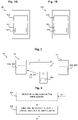
- Fig. 1A schematically depicts a simplified block diagram of the apparatus 100 according to some embodiments
- Fig. 2 schematically depicts a simplified block diagram of a wireless communications system 10 according to some embodiments
- Fig. 3 schematically depicts a simplified flow chart of a method associated with the apparatus 100 according to some embodiments.
- the apparatus 100 comprises at least one processor 102, and at least one memory 104 storing instructions 106, the at least one memory 104 and the instructions 106 configured to, with the at least one processor 102, cause a target node 12 ( Fig. 2 ) to signal 302 ( Fig. 3 ) to an anchor node 14 ( Fig. 2 ) a first information I-1 related to a context relocation of a context of a terminal device 16. In some embodiments, this enables the target node 12 for example to have a flexible behavior in respect of the context relocation for the terminal device 16.
- the first information I-1 may characterize a preference of the target node 12 related to the context relocation of the context of the terminal device 16.
- the first information I-1 may characterize a request of the target node 12 related to the context relocation of the context of the terminal device 16.
- the apparatus 100 or its functionality, respectively, may be provided for and/or in a network device 12 of the communications system 10, for example in a base station.
- the network device 12 may be a base station, e.g. a gNodeB (gNB), e.g. for the wireless communications system 10.
- gNB gNodeB
- the gNB may at least temporarily assume the role of the target node 12, e.g. for a handover procedure.
- the role of the anchor node 14 may also at least temporarily be assumed by a (e.g., another) base station, e.g. gNB, e.g. for the wireless communications system 10.
- a (e.g., another) base station e.g. gNB, e.g. for the wireless communications system 10.
- the anchor node 14 may be a last serving node, e.g. last serving gNB, of the terminal device 16.
- the apparatus 100 may be used for or within wireless communications systems, e.g. networks, based on or at least partially adhering to third generation partnership project, 3GPP, radio standards such as 5G (fifth generation), e.g. 5G NR (new radio), or other radio access technology.
- 3GPP third generation partnership project
- radio standards such as 5G (fifth generation), e.g. 5G NR (new radio), or other radio access technology.
- the first information I-1 comprises at least one of: a) an indication ind-1, e.g. of the target node 12, that the context relocation is required (e.g., mandated to happen), b) an indication ind-1', e.g. of the target node 12, that the context relocation is not required, c) an indication ind-2, e.g. of the target node 12, that the context relocation is preferred, d) an indication ind-2', e.g. of the target node 12, that the context relocation is not preferred, e) an indication ind-3, e.g. of the target node 12, that the target node 12 has no preference regarding the context relocation.
- the instructions 106 when executed by the at least one processor 102, cause the target node 12 to receive 300 ( Fig. 3 ) an uplink transmission UT, e.g. an uplink small data transmission (SDT) from the terminal device 16.
- receiving 300 such uplink transmission UT e.g. an uplink SDT from the terminal device 16, may trigger the target node 12 to signal 302 the first information I-1.
- the instructions 106 when executed by the at least one processor 102, cause the target node 12 to perform at least one of: a) controlling 310 a context relocation decision, b) influencing 312 a decision related to the context relocation, c) indicating 314 that the target node 12 leaves a or the decision related to the context relocation to another node, e.g. the anchor node 14.
- the signaling 302 of the first information I-1 may be used.
- controlling 310 the context relocation e.g. enables the target node 12 to be in control of a context relocation decision, e.g. when this may be essential, e.g. for moving the terminal device 16 ( Fig. 2 ) to a connected mode, e.g. a radio resource control RRC_ CONNECTED mode, e.g. when non-SDT data is present.
- a context relocation decision e.g. when this may be essential, e.g. for moving the terminal device 16 ( Fig. 2 ) to a connected mode, e.g. a radio resource control RRC_ CONNECTED mode, e.g. when non-SDT data is present.
- influencing 312 the context relocation e.g. enables the target node 12 to influence a context relocation decision taken by the anchor node 14, wherein in some embodiments the influencing 312 may be based on e.g. internal constraints, e.g. characterizing if the target node 12 experiences overload situations.
- the instructions 106 when executed by the at least one processor 102, cause the target node 12 to determine 320 whether the context relocation is preferred, and, optionally, to signal 322 the preference, for example if a determination DET-PREF is made that the context relocation is preferred, to signal 322 that the context relocation is preferred, e.g. to the anchor node 14, e.g. using the first information I-1.
- the preference may be based on e.g. a current load level in the target node 12, the radio conditions of the given terminal device 16, whether a mobility event is imminent, or an amount of data for transmission.
- the decision regarding context relocation may thus be left to the anchor node 14, which, in some embodiments, may e.g. take advantage of other information stored in context of the terminal device 16 to make the decision (e.g. mobility pattern, activity or traffic pattern, etc., downlink (DL) data currently buffered).
- DL downlink
- the instructions 106 when executed by the at least one processor 102, cause the target node 12 ( Fig. 2 ) to determine whether the context relocation is required, e.g. mandated, and, optionally, if the context relocation is required, to signal that the context relocation is required, e.g. to the anchor node 14, e.g. using the first information I-1.
- the instructions 106 when executed by the at least one processor 102, cause the target node 12 ( Fig. 2 ) to determine whether there is a preference related to context relocation, e.g. whether the target node 12 has a preference related to the context relocation, and, optionally, if the determination yields that there is no preference related to the context relocation, e.g. the target node 12 does not have a preference related to the context relocation, to signal that there is no preference related to the context relocation, e.g. to the anchor node 14, e.g. using the first information I-1.
- the target node 12 may determine whether the context relocation is required based on a decision that a terminal device 16 should be moved to a connected mode, e.g. RRC_CONNECTED mode.
- the instructions 106 when executed by the at least one processor 102, cause the target node 12 to receive 330 the context CTXT of the terminal device 16, e.g. from the anchor node 14, and, optionally, to operate 332 as an anchor node for the terminal device 16.
- the context CTXT of the terminal device 16 may be received by the target node 12 in response to the signaling 302 ( Fig. 3 ) of the first information I-1.
- the target node 12 may move the terminal device 16 to a connected mode, e.g. RRC_CONNECTED mode, or to an inactive mode, e.g. RRC_INACTIVE mode.
- a connected mode e.g. RRC_CONNECTED mode
- an inactive mode e.g. RRC_INACTIVE mode
- the first information I-1 may be signaled, e.g. using an existing message, e.g. a Xn-Application Protocol (Xn-AP) message such as a Xn-AP RETRIEVE UE CONTEXT REQUEST message which, in some embodiments, may or may not piggyback uplink data of the terminal device 16.
- Xn-AP Xn-Application Protocol
- Xn-AP RETRIEVE UE CONTEXT REQUEST message which, in some embodiments, may or may not piggyback uplink data of the terminal device 16.
- the signaling 302 of the first information I-1 may be triggered by a reception at the target node 12 of a first uplink SDT transmission UT-SDT ( Fig. 2 ) from the terminal device 16.
- the target node 12 may use a new Xn-AP message for SDT, denoted e.g. "Initial Inactive UL data transfer" message, in which the first information I-1, e.g. indication of context relocation required/not required, preferred/not preferred, no preference, may be provided.
- the first information I-1 e.g. indication of context relocation required/not required, preferred/not preferred, no preference
- the instructions 106 when executed by the at least one processor 102, cause a distributed unit 12-DU ( Fig. 13 ) of the target node 12 to perform at least one of: a) sending 340 a message SDT-MSG included in a small data transmission, e.g. in an initial uplink RRC message, to a central unit 12-CU of the target node 12, e.g. upon receiving 300 ( Fig. 2 ) a first uplink SDT transmission UT, UT-SDT, from the terminal device 16, b) sending 342 an indication IND-SDT to a or the central unit 12-CU of the target node 12 indicating a request of the terminal device 16 for small data transmission.
- a distributed unit 12-DU Fig. 13
- the instructions 106 when executed by the at least one processor 102, cause a distributed unit 12-DU ( Fig. 13 ) of the target node 12 to perform at least one of: a) sending 340 a message SDT-MSG included in a small data transmission, e.g.
- the distributed unit 12-DU of the target node 12 may determine whether there is a request of the terminal device 12 for small data transmission based on specific random access channel, RACH, resources.
- the instructions 106 when executed by the at least one processor 102, cause the target node 12 to trigger 350 the signalling 352 of the first information I-1 to the anchor node 14 based on receiving TC-1, at a central unit 12-CU of the target node 12, a copy of at least one of aa) a buffer status report and bb) a data volume report by a distributed unit 12-DU of the target node 12.
- the instructions 106 when executed by the at least one processor 102, cause the target node 12 to trigger 350 the signalling 352 of the first information I-1 to the anchor node 14 based on at least one of: a) a buffer status report associated with the terminal device 16 exceeds TC-2 a predetermined threshold, b) an uplink small data transmission UT-SDT from the terminal device 16 contains TC-3 an indication that non-small data transmission ("non-SDT") data is present in a buffer of the terminal device 16.
- the optional block 352 symbolizes the signalling of the first information I-1 to the anchor node 14 upon the respective trigger condition TC-1, TC-2, TC-3.
- an, e.g. novel, indication from the distributed unit 12-DU of the target node 12 to the central unit 12-CU of the target node 12 may be provided, which, in some embodiments, may also include e.g. a buffer status report (BSR).
- BSR buffer status report
- an indication e.g. novel indication, from the distributed unit 12-DU of the target node 12 to the central unit 12-CU of the target node 12 may be introduced or provided, respectively.
- the instructions 106 when executed by the at least one processor 102, cause the target node 12 to perform at least one of: a) signalling 360 the first information I-1 after receipt of a first uplink small data transmission UT-SDT ( Fig. 2 ), e.g. from the terminal device 16, b) signalling 362 the first information I-1 after receipt of a further, e.g. other than first, uplink small data transmission, e.g. from the terminal device 16.
- the signaling 302, 352 of the first information I-1 may be triggered by a reception at the target node 12 of a subsequent, i.e. further (e.g., other than first), UL SDT transmission from a terminal device 16, e.g. in a situation where an SDT transmission has been started, e.g. without anchor relocation.
- the target node 12 may e.g. provide an indication, e.g. a novel indication, about context relocation either: 1. as a part of a subsequent message, e.g. subsequent Xn-AP RETRIEVE UE CONTEXT REQUEST message, e.g.
- a new message e.g. a new Xn-AP message, e.g. denoted "Inactive UL data transfer” message in the following without loss of generality, with or without uplink data, which may e.g. prompt the anchor node 14 to trigger the context provisioning and/or an Xn-AP handover procedure to the target node 12.
- the signaling 302, 352 of the first information I-1 may be triggered by a reception at the target node 12 of an indication of the terminal device 16 of new data (e.g. a scheduling request, SR, BSR, etc.), which may e.g. be received after a first UL SDT transmission UT-SDT.
- new data e.g. a scheduling request, SR, BSR, etc.
- the indication of the terminal device 16 indicates the presence of non-SDT data in the buffer of the terminal device 16
- this may trigger the target node 12 to initiate a context retrieve (and anchor relocation), e.g., before the data is received from the terminal device 16.
- the indication ind-1 ( Fig. 4 ) that context relocation is required is triggered based on at least one of: a) receiving information that data not eligible for small data transmission is present in a buffer 16a of the terminal device 16, b) receiving information that a buffer amount of the terminal device 16 exceeds a threshold.
- the indication ind-1 that context relocation is required or the indication ind-2 that a context relocation is preferred includes at least one of an indication of presence of non-small data in a buffer 16a of the terminal device 16, and information related to the decision to perform a legacy connection resume.
- the indication ind-1' that a context relocation is not required or the indication ind-2' that a context relocation is not preferred is triggered 350 by at least one of: a) information related to a load condition of the target cell, b) information related to a capability of the target cell in respect to service and/or security support in the target cell.
- the indication ind-1' that a context relocation is not required or the indication ind-2' that a context relocation is not preferred includes at least one of: a) a load condition of the target cell, b) a capability of the target cell in respect to service and/or security support or in respect to a lack of service and/or security support in the target cell.
- Fig. 3 relate to a method, comprising: signaling 302, by a target node 12, to an anchor node 14 a first information I-1 related to a context relocation of a context CTXT of a terminal device 16, the first information I-1 e.g. characterizing a preference and/or a request of the target node 12 related to the context relocation of the context CTXT of the terminal device 16.
- Fig. 1B relate to an apparatus 200, comprising at least one processor 202, and at least one memory 204 storing instructions 206, the at least one memory 204 and the instructions 206 configured to, with the at least one processor 202, cause an anchor node 14 ( Fig. 2 ) to receive a first information I-1 related to a context relocation of a context of a terminal device 12.
- the instructions 206 when executed by the at least one processor 202, cause the anchor node 14 to perform e10 ( Fig. 13 ) at least one of: a) checking an authorization of the terminal device, b) sending a context CTXT of the terminal device 16 to the target node 12, for example based on the first information (I-1).
- the anchor node 14 does not send a context of the terminal device 16 to the target node 12.
- the anchor node 14 sends a context of the terminal device 16 to the target node 12.
- the anchor node 14 may respond to the target node either sending the context CTXT in the response to the target node or not sending the context CTXT in the response to the target node, based on the first information I-1.
- Fig. 11 relate to a method, comprising: receiving 400, by an anchor node 14, a first information I-1 related to a context relocation of a context of a terminal device 12.
- the optional block 402 of Fig. 11 symbolizes a processing of the context of the terminal device 16 based on the first information I-1.
- the processing 402 comprises at least one of: a) checking 402a an authorization of the terminal device 16, b) transmitting 402b the context CTXT of the terminal device 16, see for example also block 330 of Fig. 7 .
- Fig. 13 schematically depicts a simplified flow chart according to some embodiments.
- Element e1 symbolizes the terminal device 16 being in a RRC_CONNECTED mode.
- Element e2 symbolizes an RRC Release message with SuspendConfig as e.g. defined in 3GPP TS 38.331, including an SDT configuration.
- Element e3 symbolizes the terminal device 16 being in an RRC_INACTIVE mode.
- Element e4 symbolizes the terminal device 16 moving to a radio cell being served by a target gNB, e.g. the target node 12 according to some embodiments.
- Element e5 symbolizes that new uplink SDT payload appears in an uplink buffer of the terminal device 16, and that an SDT procedure is triggered.
- Element e6 symbolizes an RRC Resume Request including first uplink data and optionally also including an indication of non-SDT data.
- Element e7 symbolizes an initial UL RRC MESSAGE, which in some embodiments may include the indication of non-SDT data.
- Element e8 symbolizes the control plane of the central unit 12-CU of the target node 12 determining a need to move the terminal device 16 to an RRC_CONNECTED mode based on the indication e7 of non-SDT data and triggering a forced UE context retrieval.
- Element e9 symbolizes a request to the anchor node 14, e.g.
- element e9 may comprise the first information I-1 indicating that a context relocation of the terminal device 16 is required.
- Element e10 symbolizes the control plane 14-CU-CP of the central unit of the anchor node 14 checking an authentication of the terminal device 16 and a transmission of the context of the terminal device 16 based on the received first information I-1.
- Element e11 symbolizes a response to element e9, e.g. "RETRIEVE UE CONTEXT RESPONSE”.
- Element e12 symbolizes an RRC Resume message, and element e13 symbolizes the terminal device 16 being in an RRC_CONNECTED mode.
- Fig. 14 schematically depicts a simplified flow chart according to some embodiments.
- Elements e20, e21, e22, e23, e24 of Fig. 14 correspond to elements e1, e2, e3, e4, e5 of Fig. 13 .
- Element e25 symbolizes an RRC Resume Request including first uplink data and optionally also including a buffer status report, e.g. first buffer status report.
- Element e26 symbolizes an initial UL RRC MESSAGE, which in some embodiments may include the buffer status report and/or information derived on the basis of the buffer status report.
- Element e27 symbolizes the control plane of the central unit 12-CU of the target node 12 determining a benefit of data forwarding without context relocation e.g.
- Element e28 symbolizes a request to the anchor node 14, e.g. to the control plane 14-CU-CP of the central unit of the anchor node 14, to retrieve a UE context (e.g., "RECEIVE UE CONTEXT REQUEST"), which may optionally include the uplink data.
- element e28 may comprise the first information I-1 indicating that a context relocation of the terminal device 16 is not preferred.
- Element e29 symbolizes the control plane 14-CU-CP of the central unit of the anchor node 14 checking an authentication of the terminal device 16 and not transmitting the context of the terminal device 16 based on the received first information I-1.
- Element e30 symbolizes a "RETRIEVE UE CONTEXT FAILURE" message.
- Element e31 symbolizes a UE authorization ACK (acknowledge).
- Element e32 symbolizes a scheduling grant.
- Element e33 symbolizes further, e.g. second, UL data including a further, e.g. second, buffer status report.
- Element e34 symbolizes an indication of subsequent SDT transmission, which may also include the second buffer status report, e.g. including an Inactive Radio network temporary identifier (I-RNTI) and/or a Cell Radio Network Temporary Identifier (C-RNTI).
- Element e35 symbolizes the control plane of the central unit 12-CU of the target node 12 determining a need to move the terminal device 16 to an RRC_CONNECTED mode, e.g. based on the second buffer status report, and triggering a forced UE context retrieval.
- Element e36 symbolizes an inactive UL data transfer message including the UL data and the first information I-1, the first information I-1 exemplarily this time indicating that a context relocation is required.
- element e37 of Fig. 14 symbolizes the control plane 14-CU-CP of the central unit of the anchor node 14 checking an authentication of the terminal device 16 and a transmission of the context of the terminal device 16 based on the received first information I-1 e36.
- Element e38 symbolizes RETRIEVE UE CONTEXT RESPONSE message.
- Element e39 symbolizes an RRC Resume message, and element e40 symbolizes the terminal device 16 being in the RRC_CONNECTED mode.
- Fig. 15 relate to an apparatus 100' comprising means 102' for causing a target node 12 ( Fig. 2 ) to signal 302 ( Fig. 3 ) to an anchor node 14 a first information I-1related to a context relocation of a context of a terminal device 16.
- the means 102' may e.g. comprise at least one processor, and at least one memory storing instructions, the at least one memory and the instructions configured to, with the at least one processor, perform the step 302 of causing the target node to signal to the anchor node the first information.
- Fig. 16 relate to an apparatus 200' comprising means 202' for causing an anchor node 14 to receive a first information I-1related to a context relocation of a context of a terminal device 16.
- the means 202' may e.g. comprise at least one processor, and at least one memory storing instructions, the at least one memory and the instructions configured to, with the at least one processor, perform the step of causing the anchor node to receive the first information.
- Fig. 2 relate to a wireless communications system 10 comprising at least one apparatus 100, 100', 200, 200' according to the embodiments.
- Some embodiments may consider scenarios where it may be preferable that a relocation decision regarding the context of the terminal device 16 is taken by the target node 12, e.g. in contrast to the anchor node 14 deciding on the context relocation.
- the target node 12 or target gNB may want to control the decision on whether the UE's data should be served while keeping the UE 16 in an RRC_INACTIVE mode, e.g. via an SDT procedure, or in an RRC_CONNECTED mode, i.e. after moving the UE 16 to an RRC_CONNECTED mode.
- the target node 12 may prefer to serve the UE's data in RRC_CONNECTED mode if the amount of data to be transferred in RRC_INACTIVE mode is expected to be too large (and thus inefficient in radio usage) or in case non-SDT data is also present in the UE buffer (which may e.g. not be served by an SDT procedure).
- the terminal device 16 may indicate a presence e.g. of non-SDT data and new data, respectively, during an SDT procedure.
Landscapes
- Engineering & Computer Science (AREA)
- Computer Networks & Wireless Communication (AREA)
- Signal Processing (AREA)
- Mobile Radio Communication Systems (AREA)
Abstract
Description
- Various example embodiments relate to an apparatus comprising at least one processor.
- Further embodiments relate to a method of operating related to such apparatus.
- Wireless communications systems may e.g. be used for wireless exchange of information between two or more entities, e.g. comprising one or more terminal devices, e.g. user equipment (UE), and one or more network devices such as e.g. base stations, the base stations e.g. providing radio cells for serving terminal devices such as the UE.
- Some UE may perform a handover from a last serving node, which may also be referred to as "anchor node", to a target node. Some UE may perform a small data transmission procedure, e.g. for machine-to-machine (M2M)-type communications.
- Various embodiments of the disclosure are set out by the independent claims. The exemplary embodiments and features, if any, described in this specification, that do not fall under the scope of the independent claims, are to be interpreted as examples useful for understanding various exemplary embodiments of the disclosure.
- Some embodiments relate to an apparatus, comprising at least one processor, and at least one memory storing instructions, the at least one memory and the instructions configured to, with the at least one processor, cause a target node to signal to an anchor node a first information related to a context relocation of a context of a terminal device. In some embodiments, this enables the target node for example to have a flexible behavior in respect of the context relocation for the terminal device.
- In some embodiments, the first information may characterize a preference of the target node related to the context relocation of the context of the terminal device.
- In some embodiments, the first information may characterize a request of the target node related to the context relocation of the context of the terminal device.
- In some embodiments, the apparatus may be an apparatus for a wireless communications system.
- In some embodiments, the apparatus or its functionality, respectively, may be provided for and/or in a network device of the communications system, for example in a base station.
- In some embodiments, the network device may be a base station, e.g. a gNodeB (gNB), e.g. for the wireless communications system.
- In some embodiments, the gNB may at least temporarily assume the role of the target node, e.g. for a handover procedure.
- In some embodiments, the role of the anchor node may also at least temporarily be assumed by a (e.g., another) base station, e.g. gNB, e.g. for the wireless communications system. As already mentioned above, the anchor node may be a last serving node, e.g. last serving gNB.
- In some embodiments, the apparatus according to the embodiments or its functionality, respectively, may be used for or within wireless communications systems, e.g. networks, based on or at least partially adhering to third generation partnership project, 3GPP, radio standards such as 5G (fifth generation), e.g. 5G NR (new radio), or other radio access technology.
- In some embodiments, the first information comprises at least one of: a) an indication, e.g. of the target node, that the context relocation is required (e.g., mandated to happen), b) an indication, e.g. of the target node, that the context relocation is not required, c) an indication, e.g. of the target node, that the context relocation is preferred, d) an indication, e.g. of the target node, that the context relocation is not preferred, e) an indication, e.g. of the target node, that the target node has no preference regarding the context relocation.
- In some embodiments, the target node may indicate that the context relocation is not preferred based on a load in a cell provided by the target node.
- In some embodiments, the instructions, when executed by the at least one processor, cause the target node to receive an uplink transmission, e.g. an uplink small data transmission (SDT) from the terminal device. In some embodiments, receiving such uplink transmission, e.g. an uplink SDT from the terminal device, may trigger the target node to signal the first information.
- In some embodiments, the instructions, when executed by the at least one processor, cause the target node to perform at least one of: a) controlling a context relocation decision, b) influencing a decision related to the context relocation, c) indicating that the target node leaves a or the decision related to the context relocation to another node.
- In some embodiments, controlling the context relocation e.g. enables the target node to be in control of a context relocation decision, e.g. when this may be essential, e.g. for moving the terminal device to a connected mode, e.g. a radio resource control (RRC) Connected mode, e.g. when non-SDT data is present.
- In some embodiments, influencing the context relocation e.g. enables the target node to influence a context relocation decision taken by the anchor node, wherein in some embodiments the influencing may be based on e.g. internal constraints, e.g. characterizing if the target node experiences overload situations.
- In some embodiments, the instructions, when executed by the at least one processor, cause the target node to determine whether the context relocation is preferred, and, optionally, to signal the preference, for example, if the context relocation is preferred, to signal that the context relocation is preferred.
- In some embodiments, the preference may be based on e.g. a current load level in the target node, the radio conditions of the given terminal device, whether a mobility event is imminent, or an amount of data for transmission.
- In some embodiments, there may be cases where there is no strong view from the target node, e.g. because it does not plan to move a terminal device, e.g. UE, to a connected mode, e.g. RRC_CONNECTED mode, and it does not suffer from overload. In these cases, in some embodiments, the decision regarding context relocation may thus be left to the anchor node, which, in some embodiments, may e.g. take advantage of other information stored in context of the terminal device to make the decision (e.g. mobility pattern, activity or traffic pattern, etc., downlink (DL) data currently buffered).
- In some embodiments, the instructions, when executed by the at least one processor, cause the target node to determine whether the context relocation is required, e.g. mandated, and, optionally, if the context relocation is required, to signal that the context relocation is required. In some embodiments, the target node may determine whether the context relocation is required based on a decision that a terminal device should be moved to a connected mode, e.g. RRC_CONNECTED mode.
- In some embodiments, the instructions, when executed by the at least one processor, cause the target node to receive the context of the terminal device, e.g. from the anchor node, and, optionally, to operate as an anchor node for the terminal device.
- In some embodiments, the target node receives the context of the terminal device and operates as an anchor node upon sending a request for an anchor relocation.
- In some embodiments, the target node may or may not receive the context of the terminal device upon sending a preference or no preference, e.g. using the first information.
- In some embodiments, the context of the terminal device may be received by the target node in response to the signaling of the first information.
- In some embodiments, the target node may move the terminal device to a connected mode, e.g. RRC_CONNECTED mode, or to an inactive mode, e.g. RRC_INACTIVE mode.
- In some embodiments, the first information may be signaled, e.g. using an existing message, e.g. a Xn-Application Protocol (Xn-AP) message such as a Xn-AP RETRIEVE UE CONTEXT REQUEST message which, in some embodiments, may or may not piggyback uplink data of the terminal device.
- In some embodiments, the signaling of the first information may be triggered by a reception at the target node of a first uplink SDT transmission from the terminal device.
- In some embodiments, the target node may use a new Xn-AP message for SDT, denoted e.g. "Initial Inactive UL data transfer" message, in which the first information, e.g. indication of context relocation required/not required, preferred/not preferred, no preference, may be provided.
- In some embodiments, the instructions, when executed by the at least one processor, cause a distributed unit of the target node to perform at least one of: a) sending a message included in a small data transmission, e.g. in an initial uplink RRC message, to a central unit of the target node, e.g. upon receiving a first uplink SDT transmission from the terminal device, b) sending an indication to a or the central unit of the target node indicating a request of the terminal device for small data transmission.
- In some embodiments, the distributed unit of the target node may determine whether there is a request of the terminal device for small data transmission based on specific random access channel, RACH, resources.
- In some embodiments, the instructions, when executed by the at least one processor, cause the target node to trigger the signalling of the first information to the anchor node based on receiving, at a central unit of the target node, a copy of at least one of aa) a buffer status report and bb) a data volume report by a distributed unit of the target node.
- In some embodiments, the instructions, when executed by the at least one processor, cause the target node to trigger the signalling of the first information to the anchor node based on at least one of: a) a buffer status report associated with the terminal device exceeds a predetermined threshold, b) an uplink small data transmission from the terminal device contains an indication that non-small data transmission ("non-SDT") data is present in a buffer of the terminal device.
- In some embodiments, e.g. for the purpose of the distributed unit of the target node to inform the central unit of the target node, e.g. the control plane (CP) of the central unit of the target node (gNB-CU-CP), of the fact that "more data is expected", an, e.g. novel, indication from the distributed unit of the target node to the central unit of the target node may be provided, which, in some embodiments, may also include e.g. a BSR.
- In some embodiments, e.g. for the purpose of the distributed unit of the target node to inform the gNB-CU-CP of non-SDT data, an indication, e.g. novel indication, from the distributed unit of the target node to the central unit of the target node may be introduced.
- In some embodiments, the instructions, when executed by the at least one processor, cause the target node to perform at least one of: a) signalling the first information after receipt of a first uplink small data transmission, e.g. from the terminal device, b) signalling the first information after receipt of a further, e.g. other than first, uplink small data transmission, e.g. from the terminal device.
- In some embodiments, the signaling of the first information may be triggered by a reception at the target node of a subsequent, i.e. further (e.g., other than first), UL SDT transmission from a terminal device, e.g. in a situation where an SDT transmission has been started, e.g. without anchor relocation. In some embodiments, in this case, the target node may e.g. provide an indication, e.g. a novel indication, about context relocation either: 1. as a part of a subsequent message, e.g. subsequent Xn-AP RETRIEVE UE CONTEXT REQUEST message, e.g. if the context relocation is determined to be "required" or "preferred", or 2. in a new message, e.g. a new Xn-AP message, e.g. denoted "Inactive UL data transfer" message in the following without loss of generality, with or without uplink data, which may e.g. prompt the anchor node to trigger the context provisioning and/or an Xn-AP handover procedure to the target node.
- In some embodiments, the signaling of the first information may be triggered by a reception at the target node of an indication of the terminal device of new data (e.g. a scheduling request, SR, BSR, etc.), which may e.g. be received after a first UL SDT transmission. For example, if the indication of the terminal device indicates the presence of non-SDT data in the buffer of the terminal device, in some embodiments this may trigger the target node to initiate a context retrieve (and anchor relocation), e.g., before the data is received from the terminal device.
- In some embodiments, the indication that context relocation is required is triggered based on at least one of: a) receiving information that data not eligible for small data transmission is present in a buffer of the terminal device, b) receiving information that a buffer amount of the terminal device exceeds a threshold, and/or wherein the indication that a context relocation is not required or the indication that a context relocation is not preferred is triggered by at least one of: a) a load condition of the target cell, b) a capability of the target cell in respect to service and/or security support or in respect to a lack of service and/or security support in the target cell.
- In some embodiments, the indication that context relocation is required or the indication that a context relocation is preferred includes at least one of an indication of presence of non-small data in a buffer of the terminal device, and information related to the decision to perform a legacy connection resume.
- In some embodiments, the indication that a context relocation is not required or the indication that a context relocation is not preferred includes at least one of: a) information related to a load condition of the target cell, b) information related to a capability of the target cell in respect to service and/or security support or in respect to a lack of service and/or security support in the target cell.
- Some embodiments relate to a method, comprising: signaling, by a target node, to an anchor node a first information related to a context relocation of a context of a terminal device.
- Some embodiments relate to an apparatus, comprising at least one processor, and at least one memory storing instructions, the at least one memory and the instructions configured to, with the at least one processor, cause an anchor node to receive a first information related to a context relocation of a context of a terminal device.
- In some embodiments, the instructions, when executed by the at least one processor, cause the anchor node to perform at least one of: a) checking an authorization of the terminal device, b) sending a context of the terminal device to the target node, for example based on the first information (I-1) .
- Some embodiments relate to a method, comprising: receiving, by an anchor node, a first information related to a context relocation of a context of a terminal device.
- Some embodiments relate to an apparatus comprising means for causing a target node to signal to an anchor node a first information related to a context relocation of a context of a terminal device. In some embodiments, the means may e.g. comprise at least one processor, and at least one memory storing instructions, the at least one memory and the instructions configured to, with the at least one processor, perform the step of causing the target node to signal to the anchor node the first information.
- Some embodiments relate to an apparatus comprising means for causing an anchor node to receive a first information related to a context relocation of a context of a terminal device. In some embodiments, the means may e.g. comprise at least one processor, and at least one memory storing instructions, the at least one memory and the instructions configured to, with the at least one processor, perform the step of causing the anchor node to receive the first information.
- Some embodiments relate to a wireless communications system comprising at least one apparatus according to the embodiments.
-
- Fig. 1A
- schematically depicts a simplified block diagram of an apparatus according to some embodiments,
- Fig. 1B
- schematically depicts a simplified block diagram of an apparatus according to some embodiments,
- Fig. 2
- schematically depicts a simplified block diagram according to some embodiments,
- Fig. 3
- schematically depicts a simplified flow chart according to some embodiments,
- Fig. 4
- schematically depicts a simplified block diagram according to some embodiments,
- Fig. 5
- schematically depicts a simplified flow chart according to some embodiments,
- Fig. 6
- schematically depicts a simplified flow chart according to some embodiments,
- Fig. 7
- schematically depicts a simplified flow chart according to some embodiments,
- Fig. 8
- schematically depicts a simplified flow chart according to some embodiments,
- Fig. 9
- schematically depicts a simplified flow chart according to some embodiments,
- Fig. 10
- schematically depicts a simplified flow chart according to some embodiments,
- Fig. 11
- schematically depicts a simplified flow chart according to some embodiments,
- Fig. 12
- schematically depicts a simplified flow chart according to some embodiments,
- Fig. 13
- schematically depicts a simplified flow chart according to some embodiments,
- Fig. 14
- schematically depicts a simplified flow chart according to some embodiments,
- Fig. 15
- schematically depicts a simplified block diagram of an apparatus according to some embodiments, and,
- Fig. 16
- schematically depicts a simplified block diagram of an apparatus according to some embodiments.
- Some embodiments relate to an apparatus, e.g. for a network device, e.g. of a wireless communications system.
-
Fig. 1A schematically depicts a simplified block diagram of theapparatus 100 according to some embodiments,Fig. 2 schematically depicts a simplified block diagram of awireless communications system 10 according to some embodiments, andFig. 3 schematically depicts a simplified flow chart of a method associated with theapparatus 100 according to some embodiments. - The
apparatus 100 comprises at least oneprocessor 102, and at least onememory 104 storinginstructions 106, the at least onememory 104 and theinstructions 106 configured to, with the at least oneprocessor 102, cause a target node 12 (Fig. 2 ) to signal 302 (Fig. 3 ) to an anchor node 14 (Fig. 2 ) a first information I-1 related to a context relocation of a context of aterminal device 16. In some embodiments, this enables thetarget node 12 for example to have a flexible behavior in respect of the context relocation for theterminal device 16. - In some embodiments, the first information I-1 may characterize a preference of the
target node 12 related to the context relocation of the context of theterminal device 16. - In some embodiments, the first information I-1 may characterize a request of the
target node 12 related to the context relocation of the context of theterminal device 16. - In some embodiments, the
apparatus 100 or its functionality, respectively, may be provided for and/or in anetwork device 12 of thecommunications system 10, for example in a base station. - In some embodiments, the
network device 12 may be a base station, e.g. a gNodeB (gNB), e.g. for thewireless communications system 10. - In some embodiments, the gNB may at least temporarily assume the role of the
target node 12, e.g. for a handover procedure. - In some embodiments, the role of the
anchor node 14 may also at least temporarily be assumed by a (e.g., another) base station, e.g. gNB, e.g. for thewireless communications system 10. As already mentioned above, theanchor node 14 may be a last serving node, e.g. last serving gNB, of theterminal device 16. - In some embodiments, the apparatus 100 (
Fig. 1A ) according to the embodiments or its functionality, respectively, may be used for or within wireless communications systems, e.g. networks, based on or at least partially adhering to third generation partnership project, 3GPP, radio standards such as 5G (fifth generation), e.g. 5G NR (new radio), or other radio access technology. - In some embodiments,
Fig. 4 , the first information I-1 comprises at least one of: a) an indication ind-1, e.g. of thetarget node 12, that the context relocation is required (e.g., mandated to happen), b) an indication ind-1', e.g. of thetarget node 12, that the context relocation is not required, c) an indication ind-2, e.g. of thetarget node 12, that the context relocation is preferred, d) an indication ind-2', e.g. of thetarget node 12, that the context relocation is not preferred, e) an indication ind-3, e.g. of thetarget node 12, that thetarget node 12 has no preference regarding the context relocation. - In some embodiments, the instructions 106 (
Fig. 1A ), when executed by the at least oneprocessor 102, cause thetarget node 12 to receive 300 (Fig. 3 ) an uplink transmission UT, e.g. an uplink small data transmission (SDT) from theterminal device 16. In some embodiments, receiving 300 such uplink transmission UT, e.g. an uplink SDT from theterminal device 16, may trigger thetarget node 12 to signal 302 the first information I-1. - In some embodiments,
Fig. 5 , theinstructions 106, when executed by the at least oneprocessor 102, cause thetarget node 12 to perform at least one of: a) controlling 310 a context relocation decision, b) influencing 312 a decision related to the context relocation, c) indicating 314 that thetarget node 12 leaves a or the decision related to the context relocation to another node, e.g. theanchor node 14. - In some embodiments, for either one of the
blocks - In some embodiments, controlling 310 the context relocation e.g. enables the
target node 12 to be in control of a context relocation decision, e.g. when this may be essential, e.g. for moving the terminal device 16 (Fig. 2 ) to a connected mode, e.g. a radio resource control RRC_ CONNECTED mode, e.g. when non-SDT data is present. - In some embodiments, influencing 312 the context relocation e.g. enables the
target node 12 to influence a context relocation decision taken by theanchor node 14, wherein in some embodiments the influencing 312 may be based on e.g. internal constraints, e.g. characterizing if thetarget node 12 experiences overload situations. - In some embodiments,
Fig. 6 , theinstructions 106, when executed by the at least oneprocessor 102, cause thetarget node 12 to determine 320 whether the context relocation is preferred, and, optionally, to signal 322 the preference, for example if a determination DET-PREF is made that the context relocation is preferred, to signal 322 that the context relocation is preferred, e.g. to theanchor node 14, e.g. using the first information I-1. - In some embodiments, the preference may be based on e.g. a current load level in the
target node 12, the radio conditions of the giventerminal device 16, whether a mobility event is imminent, or an amount of data for transmission. - In some embodiments, there may be cases where there is no strong view from the
target node 12, e.g. because it does not plan to move aterminal device 16, e.g. UE, to a connected mode, e.g. RRC_CONNECTED mode, and it does not suffer from overload. In these cases, in some embodiments, the decision regarding context relocation may thus be left to theanchor node 14, which, in some embodiments, may e.g. take advantage of other information stored in context of theterminal device 16 to make the decision (e.g. mobility pattern, activity or traffic pattern, etc., downlink (DL) data currently buffered). - In some embodiments, the
instructions 106, when executed by the at least oneprocessor 102, cause the target node 12 (Fig. 2 ) to determine whether the context relocation is required, e.g. mandated, and, optionally, if the context relocation is required, to signal that the context relocation is required, e.g. to theanchor node 14, e.g. using the first information I-1. - In some embodiments, the
instructions 106, when executed by the at least oneprocessor 102, cause the target node 12 (Fig. 2 ) to determine whether there is a preference related to context relocation, e.g. whether thetarget node 12 has a preference related to the context relocation, and, optionally, if the determination yields that there is no preference related to the context relocation, e.g. thetarget node 12 does not have a preference related to the context relocation, to signal that there is no preference related to the context relocation, e.g. to theanchor node 14, e.g. using the first information I-1. - In some embodiments, the
target node 12 may determine whether the context relocation is required based on a decision that aterminal device 16 should be moved to a connected mode, e.g. RRC_CONNECTED mode. - In some embodiments,
Fig. 7 , theinstructions 106, when executed by the at least oneprocessor 102, cause thetarget node 12 to receive 330 the context CTXT of theterminal device 16, e.g. from theanchor node 14, and, optionally, to operate 332 as an anchor node for theterminal device 16. - In some embodiments, the context CTXT of the
terminal device 16 may be received by thetarget node 12 in response to the signaling 302 (Fig. 3 ) of the first information I-1. - In some embodiments, the
target node 12 may move theterminal device 16 to a connected mode, e.g. RRC_CONNECTED mode, or to an inactive mode, e.g. RRC_INACTIVE mode. - In some embodiments, the first information I-1 may be signaled, e.g. using an existing message, e.g. a Xn-Application Protocol (Xn-AP) message such as a Xn-AP RETRIEVE UE CONTEXT REQUEST message which, in some embodiments, may or may not piggyback uplink data of the
terminal device 16. - In some embodiments, the signaling 302 of the first information I-1 may be triggered by a reception at the
target node 12 of a first uplink SDT transmission UT-SDT (Fig. 2 ) from theterminal device 16. - In some embodiments, the
target node 12 may use a new Xn-AP message for SDT, denoted e.g. "Initial Inactive UL data transfer" message, in which the first information I-1, e.g. indication of context relocation required/not required, preferred/not preferred, no preference, may be provided. - In some embodiments,
Fig. 8 , theinstructions 106, when executed by the at least oneprocessor 102, cause a distributed unit 12-DU (Fig. 13 ) of thetarget node 12 to perform at least one of: a) sending 340 a message SDT-MSG included in a small data transmission, e.g. in an initial uplink RRC message, to a central unit 12-CU of thetarget node 12, e.g. upon receiving 300 (Fig. 2 ) a first uplink SDT transmission UT, UT-SDT, from theterminal device 16, b) sending 342 an indication IND-SDT to a or the central unit 12-CU of thetarget node 12 indicating a request of theterminal device 16 for small data transmission. - In some embodiments, the distributed unit 12-DU of the
target node 12 may determine whether there is a request of theterminal device 12 for small data transmission based on specific random access channel, RACH, resources. - In some embodiments,
Fig. 9 , theinstructions 106, when executed by the at least oneprocessor 102, cause thetarget node 12 to trigger 350 the signalling 352 of the first information I-1 to theanchor node 14 based on receiving TC-1, at a central unit 12-CU of thetarget node 12, a copy of at least one of aa) a buffer status report and bb) a data volume report by a distributed unit 12-DU of thetarget node 12. - In some embodiments,
Fig. 9 , theinstructions 106, when executed by the at least oneprocessor 102, cause thetarget node 12 to trigger 350 the signalling 352 of the first information I-1 to theanchor node 14 based on at least one of: a) a buffer status report associated with theterminal device 16 exceeds TC-2 a predetermined threshold, b) an uplink small data transmission UT-SDT from theterminal device 16 contains TC-3 an indication that non-small data transmission ("non-SDT") data is present in a buffer of theterminal device 16. Theoptional block 352 symbolizes the signalling of the first information I-1 to theanchor node 14 upon the respective trigger condition TC-1, TC-2, TC-3. - In some embodiments, e.g. for the purpose of the distributed unit 12-DU of the
target node 12 to inform the central unit of thetarget node 12, e.g. the control plane (CP) gNB-CU-CP of the central unit of the target node, of the fact that "more data is expected", an, e.g. novel, indication from the distributed unit 12-DU of thetarget node 12 to the central unit 12-CU of thetarget node 12 may be provided, which, in some embodiments, may also include e.g. a buffer status report (BSR). - In some embodiments, e.g. for the purpose of the distributed unit 12-DU of the
target node 12 to inform the gNB-CU-CP of non-SDT data, an indication, e.g. novel indication, from the distributed unit 12-DU of thetarget node 12 to the central unit 12-CU of thetarget node 12 may be introduced or provided, respectively. - In some embodiments,
Fig. 10 , theinstructions 106, when executed by the at least oneprocessor 102, cause thetarget node 12 to perform at least one of: a) signalling 360 the first information I-1 after receipt of a first uplink small data transmission UT-SDT (Fig. 2 ), e.g. from theterminal device 16, b) signalling 362 the first information I-1 after receipt of a further, e.g. other than first, uplink small data transmission, e.g. from theterminal device 16. - In some embodiments, the signaling 302, 352 of the first information I-1 may be triggered by a reception at the
target node 12 of a subsequent, i.e. further (e.g., other than first), UL SDT transmission from aterminal device 16, e.g. in a situation where an SDT transmission has been started, e.g. without anchor relocation. In some embodiments, in this case, thetarget node 12 may e.g. provide an indication, e.g. a novel indication, about context relocation either: 1. as a part of a subsequent message, e.g. subsequent Xn-AP RETRIEVE UE CONTEXT REQUEST message, e.g. if the context relocation is determined to be "required" or "preferred", or 2. in a new message, e.g. a new Xn-AP message, e.g. denoted "Inactive UL data transfer" message in the following without loss of generality, with or without uplink data, which may e.g. prompt theanchor node 14 to trigger the context provisioning and/or an Xn-AP handover procedure to thetarget node 12. - In some embodiments, the signaling 302, 352 of the first information I-1 may be triggered by a reception at the
target node 12 of an indication of theterminal device 16 of new data (e.g. a scheduling request, SR, BSR, etc.), which may e.g. be received after a first UL SDT transmission UT-SDT. For example, if the indication of theterminal device 16 indicates the presence of non-SDT data in the buffer of theterminal device 16, in some embodiments this may trigger thetarget node 12 to initiate a context retrieve (and anchor relocation), e.g., before the data is received from theterminal device 16. - In some embodiments, the indication ind-1 (
Fig. 4 ) that context relocation is required is triggered based on at least one of: a) receiving information that data not eligible for small data transmission is present in abuffer 16a of theterminal device 16, b) receiving information that a buffer amount of theterminal device 16 exceeds a threshold. - In some embodiments, the indication ind-1 that context relocation is required or the indication ind-2 that a context relocation is preferred includes at least one of an indication of presence of non-small data in a
buffer 16a of theterminal device 16, and information related to the decision to perform a legacy connection resume. - In some embodiments, the indication ind-1' that a context relocation is not required or the indication ind-2' that a context relocation is not preferred is triggered 350 by at least one of: a) information related to a load condition of the target cell, b) information related to a capability of the target cell in respect to service and/or security support in the target cell.
- In some embodiments, the indication ind-1' that a context relocation is not required or the indication ind-2' that a context relocation is not preferred includes at least one of: a) a load condition of the target cell, b) a capability of the target cell in respect to service and/or security support or in respect to a lack of service and/or security support in the target cell.
- Some embodiments,
Fig. 3 , relate to a method, comprising: signaling 302, by atarget node 12, to an anchor node 14 a first information I-1 related to a context relocation of a context CTXT of aterminal device 16, the first information I-1 e.g. characterizing a preference and/or a request of thetarget node 12 related to the context relocation of the context CTXT of theterminal device 16. - Some embodiments,
Fig. 1B , relate to anapparatus 200, comprising at least oneprocessor 202, and at least onememory 204 storinginstructions 206, the at least onememory 204 and theinstructions 206 configured to, with the at least oneprocessor 202, cause an anchor node 14 (Fig. 2 ) to receive a first information I-1 related to a context relocation of a context of aterminal device 12. - In some embodiments, the
instructions 206, when executed by the at least oneprocessor 202, cause theanchor node 14 to perform e10 (Fig. 13 ) at least one of: a) checking an authorization of the terminal device, b) sending a context CTXT of theterminal device 16 to thetarget node 12, for example based on the first information (I-1). - In some embodiments, e.g. if the first information I-1 indicates that a context relocation is not required, the
anchor node 14 does not send a context of theterminal device 16 to thetarget node 12. - In some embodiments, e.g. if the first information I-1 indicates that a context relocation is required, the
anchor node 14 sends a context of theterminal device 16 to thetarget node 12. - In other words, in some embodiments, the
anchor node 14 may respond to the target node either sending the context CTXT in the response to the target node or not sending the context CTXT in the response to the target node, based on the first information I-1. - Some embodiments,
Fig. 11 , relate to a method, comprising: receiving 400, by ananchor node 14, a first information I-1 related to a context relocation of a context of aterminal device 12. Theoptional block 402 ofFig. 11 symbolizes a processing of the context of theterminal device 16 based on the first information I-1. - In some embodiments,
Fig. 12 , theprocessing 402 comprises at least one of: a) checking 402a an authorization of theterminal device 16, b) transmitting 402b the context CTXT of theterminal device 16, see for example also block 330 ofFig. 7 . -
Fig. 13 schematically depicts a simplified flow chart according to some embodiments. Element e1 symbolizes theterminal device 16 being in a RRC_CONNECTED mode. Element e2 symbolizes an RRC Release message with SuspendConfig as e.g. defined in 3GPP TS 38.331, including an SDT configuration. Element e3 symbolizes theterminal device 16 being in an RRC_INACTIVE mode. Element e4 symbolizes theterminal device 16 moving to a radio cell being served by a target gNB, e.g. thetarget node 12 according to some embodiments. Element e5 symbolizes that new uplink SDT payload appears in an uplink buffer of theterminal device 16, and that an SDT procedure is triggered. Element e6 symbolizes an RRC Resume Request including first uplink data and optionally also including an indication of non-SDT data. Element e7 symbolizes an initial UL RRC MESSAGE, which in some embodiments may include the indication of non-SDT data. Element e8 symbolizes the control plane of the central unit 12-CU of thetarget node 12 determining a need to move theterminal device 16 to an RRC_CONNECTED mode based on the indication e7 of non-SDT data and triggering a forced UE context retrieval. Element e9 symbolizes a request to theanchor node 14, e.g. to the control plane 14-CU-CP of the central unit of theanchor node 14, to retrieve a UE context (e.g., "RETRIEVE UE CONTEXT REQUEST"), which may optionally include the uplink data. In some embodiments, element e9 may comprise the first information I-1 indicating that a context relocation of theterminal device 16 is required. Element e10 symbolizes the control plane 14-CU-CP of the central unit of theanchor node 14 checking an authentication of theterminal device 16 and a transmission of the context of theterminal device 16 based on the received first information I-1. Element e11 symbolizes a response to element e9, e.g. "RETRIEVE UE CONTEXT RESPONSE". Element e12 symbolizes an RRC Resume message, and element e13 symbolizes theterminal device 16 being in an RRC_CONNECTED mode. -
Fig. 14 schematically depicts a simplified flow chart according to some embodiments. Elements e20, e21, e22, e23, e24 ofFig. 14 correspond to elements e1, e2, e3, e4, e5 ofFig. 13 . Element e25 symbolizes an RRC Resume Request including first uplink data and optionally also including a buffer status report, e.g. first buffer status report. Element e26 symbolizes an initial UL RRC MESSAGE, which in some embodiments may include the buffer status report and/or information derived on the basis of the buffer status report. Element e27 symbolizes the control plane of the central unit 12-CU of thetarget node 12 determining a benefit of data forwarding without context relocation e.g. based on a load. Element e28 symbolizes a request to theanchor node 14, e.g. to the control plane 14-CU-CP of the central unit of theanchor node 14, to retrieve a UE context (e.g., "RECEIVE UE CONTEXT REQUEST"), which may optionally include the uplink data. In some embodiments, element e28 may comprise the first information I-1 indicating that a context relocation of theterminal device 16 is not preferred. Element e29 symbolizes the control plane 14-CU-CP of the central unit of theanchor node 14 checking an authentication of theterminal device 16 and not transmitting the context of theterminal device 16 based on the received first information I-1. Element e30 symbolizes a "RETRIEVE UE CONTEXT FAILURE" message. Element e31 symbolizes a UE authorization ACK (acknowledge). Element e32 symbolizes a scheduling grant. Element e33 symbolizes further, e.g. second, UL data including a further, e.g. second, buffer status report. - Element e34 symbolizes an indication of subsequent SDT transmission, which may also include the second buffer status report, e.g. including an Inactive Radio network temporary identifier (I-RNTI) and/or a Cell Radio Network Temporary Identifier (C-RNTI). Element e35 symbolizes the the control plane of the central unit 12-CU of the
target node 12 determining a need to move theterminal device 16 to an RRC_CONNECTED mode, e.g. based on the second buffer status report, and triggering a forced UE context retrieval. Element e36 symbolizes an inactive UL data transfer message including the UL data and the first information I-1, the first information I-1 exemplarily this time indicating that a context relocation is required. Similar to element e10 ofFig. 13 , element e37 ofFig. 14 symbolizes the control plane 14-CU-CP of the central unit of theanchor node 14 checking an authentication of theterminal device 16 and a transmission of the context of theterminal device 16 based on the received first information I-1 e36. Element e38 symbolizes RETRIEVE UE CONTEXT RESPONSE message. Element e39 symbolizes an RRC Resume message, and element e40 symbolizes theterminal device 16 being in the RRC_CONNECTED mode. - Some embodiments,
Fig. 15 , relate to an apparatus 100' comprising means 102' for causing a target node 12 (Fig. 2 ) to signal 302 (Fig. 3 ) to an anchor node 14 a first information I-1related to a context relocation of a context of aterminal device 16. In some embodiments, the means 102' may e.g. comprise at least one processor, and at least one memory storing instructions, the at least one memory and the instructions configured to, with the at least one processor, perform thestep 302 of causing the target node to signal to the anchor node the first information. - Some embodiments,
Fig. 16 , relate to an apparatus 200' comprising means 202' for causing ananchor node 14 to receive a first information I-1related to a context relocation of a context of aterminal device 16. In some embodiments, the means 202' may e.g. comprise at least one processor, and at least one memory storing instructions, the at least one memory and the instructions configured to, with the at least one processor, perform the step of causing the anchor node to receive the first information. - Some embodiments,
Fig. 2 , relate to awireless communications system 10 comprising at least oneapparatus - Some embodiments may consider scenarios where it may be preferable that a relocation decision regarding the context of the
terminal device 16 is taken by thetarget node 12, e.g. in contrast to theanchor node 14 deciding on the context relocation. For instance, in some embodiments thetarget node 12 or target gNB may want to control the decision on whether the UE's data should be served while keeping theUE 16 in an RRC_INACTIVE mode, e.g. via an SDT procedure, or in an RRC_CONNECTED mode, i.e. after moving theUE 16 to an RRC_CONNECTED mode. For example, in some embodiments, thetarget node 12 may prefer to serve the UE's data in RRC_CONNECTED mode if the amount of data to be transferred in RRC_INACTIVE mode is expected to be too large (and thus inefficient in radio usage) or in case non-SDT data is also present in the UE buffer (which may e.g. not be served by an SDT procedure). - As mentioned above, in some embodiments, the
terminal device 16 may indicate a presence e.g. of non-SDT data and new data, respectively, during an SDT procedure.
Claims (15)
- An apparatus (100), comprising at least one processor (102), and at least one memory (104) storing instructions (106), the at least one memory (104) and the instructions (106) configured to, with the at least one processor (102), cause a target node (12) to signal (302) to an anchor node (14) a first information (I-1) related to a context relocation of a context of a terminal device (16).
- The apparatus (100) according to claim 1, wherein the first information (I-1) comprises at least one of: a) an indication (ind-1) that the context relocation is required, b) an indication (ind-1') that the context relocation is not required, c) an indication (ind-2) that the context relocation is preferred, d) an indication (ind-2') that the context relocation is not preferred, e) an indication (ind-3) that the target node has no preference regarding the context relocation.
- The apparatus (100) according to at least one of the preceding claims, wherein the instructions (106), when executed by the at least one processor (102), cause the target node (12) to perform at least one of: a) controlling (310) a context relocation decision, b) influencing (312) a decision related to the context relocation, c) indicating (314) that the target node (12) leaves a or the decision related to the context relocation to another node (14).
- The apparatus (100) according to at least one of the preceding claims, wherein the instructions (106), when executed by the at least one processor (102), cause the target node (12) to determine (320) whether the context relocation is preferred, and, optionally, to signal (322) the preference.
- The apparatus (100) according to at least one of the preceding claims, wherein the instructions (106), when executed by the at least one processor (102), cause the target node (12) to receive (330) the context of the terminal device (16), and, optionally, to operate (332) as an anchor node for the terminal device (16).
- The apparatus (100) according to at least one of the preceding claims, wherein the instructions (106), when executed by the at least one processor (102), cause a distributed unit (12-DU) of the target node (12) to perform at least one of: a) sending (340) a message (SDT-MSG) included in a small data transmission to a central unit (12-CU) of the target node (12), b) sending (342) an indication (IND-SDT) to a or the central unit (12-CU) of the target node (12) indicating a request of the terminal device for small data transmission.
- The apparatus (100) according to at least one of the preceding claims, wherein the instructions (106), when executed by the at least one processor (102), cause the target node (12) to trigger (350) the signalling (302) of the first information (I-1) to the anchor node (14) based on receiving (TC-1), at a central unit (12-CU) of the target node (12), a copy of at least one of aa) a buffer status report and bb) a data volume report by a distributed unit (12-DU) of the target node (12).
- The apparatus (100) according to at least one of the preceding claims, wherein the instructions (106), when executed by the at least one processor (102), cause the target node (12) to trigger (350) the signalling (302) of the first information (I-1) to the anchor node (14) based on at least one of: a) a buffer status report associated with the terminal device (16) exceeds (TC-2) a predetermined threshold, b) an uplink small data transmission (UT-SDT) from the terminal device (16) contains (TC-3) an indication that non-small data transmission data is present in a buffer (16a) of the terminal device (16).
- The apparatus (100) according to at least one of the preceding claims, wherein the instructions (106), when executed by the at least one processor (102), cause the target node (12) to perform at least one of: a) signalling (360) the first information (I-1) after receipt of a first uplink small data transmission from the terminal device (16), b) signalling (362) the first information (I-1) after receipt of a further uplink small data transmission from the terminal device (16).
- The apparatus (100) according to at least one of the preceding claims 2 to 9, wherein the indication (ind-1) that context relocation is required is triggered (350) based on at least one of: a) receiving information that data not eligible for small data transmission is present in a buffer (16a) of the terminal device (16), b) receiving information that a buffer amount of the terminal device (16) exceeds a threshold, and/or wherein the indication (ind-1') that a context relocation is not required or the indication (ind-2') that a context relocation is not preferred is triggered (350) by at least one of: a) a load condition of the target cell, b) a capability of the target cell in respect to service and/or security support or in respect to a lack of service and/or security support in the target cell.
- The apparatus (100) according to at least one of the preceding claims 2 to 10, wherein the indication (ind-1) that context relocation is required or the indication (ind-2) that a context relocation is preferred includes at least one of an indication of presence of non-small data in a buffer (16a) of the terminal device (16), and information related to the decision to perform a legacy connection resume, and/or wherein the indication (ind-1') that a context relocation is not required or the indication (ind-2') that a context relocation is not preferred includes at least one of: a) information related to a load condition of the target cell, b) information related to a capability of the target cell in respect to service and/or security support or in respect to a lack of service and/or security support in the target cell.
- An apparatus (200), comprising at least one processor (202), and at least one memory (204) storing instructions (206), the at least one memory (204) and the instructions (206) configured to, with the at least one processor (202), cause an anchor node (14) to receive (400) a first information (I-1) related to a context relocation of a context of a terminal device (16) .
- The apparatus (200) according to claim 12, wherein the instructions (206), when executed by the at least one processor (202), cause the anchor node (14) to send a context of the terminal device (16) to the target node (12) based on the first information (I-1).
- An apparatus (100') comprising means (102') for causing a target node (12) to signal (302) to an anchor node (14) a first information (I-1) related to a context relocation of a context of a terminal device (16) .
- An apparatus (200') comprising means (202') for causing an anchor node (14) to receive (400) a first information (I-1) related to a context relocation of a context of a terminal device (16).
Priority Applications (3)
| Application Number | Priority Date | Filing Date | Title |
|---|---|---|---|
| EP20214968.8A EP4017098A1 (en) | 2020-12-17 | 2020-12-17 | Apparatus comprising at least one processor |
| PCT/EP2021/083373 WO2022128429A1 (en) | 2020-12-17 | 2021-11-29 | Apparatus comprising at least one processor |
| US18/252,686 US12587911B2 (en) | 2020-12-17 | 2021-11-29 | Apparatus comprising at least one processor |
Applications Claiming Priority (1)
| Application Number | Priority Date | Filing Date | Title |
|---|---|---|---|
| EP20214968.8A EP4017098A1 (en) | 2020-12-17 | 2020-12-17 | Apparatus comprising at least one processor |
Publications (1)
| Publication Number | Publication Date |
|---|---|
| EP4017098A1 true EP4017098A1 (en) | 2022-06-22 |
Family
ID=73855313
Family Applications (1)
| Application Number | Title | Priority Date | Filing Date |
|---|---|---|---|
| EP20214968.8A Pending EP4017098A1 (en) | 2020-12-17 | 2020-12-17 | Apparatus comprising at least one processor |
Country Status (3)
| Country | Link |
|---|---|
| US (1) | US12587911B2 (en) |
| EP (1) | EP4017098A1 (en) |
| WO (1) | WO2022128429A1 (en) |
Families Citing this family (1)
| Publication number | Priority date | Publication date | Assignee | Title |
|---|---|---|---|---|
| KR20230135048A (en) * | 2021-01-26 | 2023-09-22 | 지티이 코포레이션 | Method for sending small data |
Citations (1)
| Publication number | Priority date | Publication date | Assignee | Title |
|---|---|---|---|---|
| US20200037210A1 (en) * | 2017-02-03 | 2020-01-30 | Telefonaktiebolaget Lm Ericsson (Publ) | Radio resource control resume wthout contex fetch |
Family Cites Families (12)
| Publication number | Priority date | Publication date | Assignee | Title |
|---|---|---|---|---|
| JP7000463B2 (en) | 2017-06-16 | 2022-01-19 | テレフオンアクチーボラゲット エルエム エリクソン(パブル) | Handling of UE context on isolated wireless access nodes |
| US10893568B2 (en) | 2017-08-18 | 2021-01-12 | Huawei Technologies Co., Ltd. | Location and context management in a RAN INACTIVE mode |
| US12156276B2 (en) | 2018-11-01 | 2024-11-26 | Apple Inc. | Signaling for MAC-I verification in RNAU without anchor relocation |
| US12022425B2 (en) | 2019-02-15 | 2024-06-25 | Lg Electronics Inc. | Method and apparatus for controlling early data transmission procedure in a wireless communication system |
| WO2020189958A1 (en) | 2019-03-15 | 2020-09-24 | Lg Electronics Inc. | Small data transmission without path switch procedure |
| KR102867617B1 (en) * | 2019-08-23 | 2025-10-10 | 삼성전자 주식회사 | Apparatus and mehtod for providing a data in edge computing system |
| US12245310B2 (en) * | 2020-01-22 | 2025-03-04 | Lg Electronics Inc. | Method and apparatus for fast small data transmission in a wireless communication system |
| WO2022070042A1 (en) * | 2020-09-29 | 2022-04-07 | Telefonaktiebolaget Lm Ericsson (Publ) | Application function influence in application context relocation |
| WO2022074502A1 (en) | 2020-10-08 | 2022-04-14 | Nokia Technologies Oy | Handling of data transmission |
| EP3986069A1 (en) | 2020-10-15 | 2022-04-20 | Nokia Technologies Oy | Small data transmission routing |
| WO2022078867A1 (en) | 2020-10-15 | 2022-04-21 | Nokia Technologies Oy | Methods, apparatuses and computer program for data transmission in inactive state |
| ES3061259T3 (en) | 2020-10-21 | 2026-04-01 | Nokia Technologies Oy | Indication for small data transmission |
-
2020
- 2020-12-17 EP EP20214968.8A patent/EP4017098A1/en active Pending
-
2021
- 2021-11-29 US US18/252,686 patent/US12587911B2/en active Active
- 2021-11-29 WO PCT/EP2021/083373 patent/WO2022128429A1/en not_active Ceased
Patent Citations (1)
| Publication number | Priority date | Publication date | Assignee | Title |
|---|---|---|---|---|
| US20200037210A1 (en) * | 2017-02-03 | 2020-01-30 | Telefonaktiebolaget Lm Ericsson (Publ) | Radio resource control resume wthout contex fetch |
Non-Patent Citations (5)
| Title |
|---|
| 3GPP TS 38.331 |
| CATT: "Analysis on SDT without context relocation", vol. RAN WG2, no. electronic; 20201102 - 20201113, 23 October 2020 (2020-10-23), XP051942329, Retrieved from the Internet <URL:https://ftp.3gpp.org/tsg_ran/WG2_RL2/TSGR2_112-e/Docs/R2-2009368.zip R2-2009368 Analysis ofn SDT without context relocation-final.docx> [retrieved on 20201023] * |
| CATT: "Considerations on general aspects and subsequent SDT", vol. RAN WG2, no. Online; 20201102 - 20201113, 23 October 2020 (2020-10-23), XP051942328, Retrieved from the Internet <URL:https://ftp.3gpp.org/tsg_ran/WG2_RL2/TSGR2_112-e/Docs/R2-2009367.zip R2-2009367 Considerations on general aspects and subsequent SDT.doc> [retrieved on 20201023] * |
| INTEL CORPORATION: "Radio bearer configuration for SDT considering UE context relocation and CU/DU split", vol. RAN WG2, no. Electronic meeting; 20200817 - 20200828, 7 August 2020 (2020-08-07), XP051911622, Retrieved from the Internet <URL:https://ftp.3gpp.org/tsg_ran/WG2_RL2/TSGR2_111-e/Docs/R2-2006714.zip R2-2006714_SDT-RB-Config.docx> [retrieved on 20200807] * |
| NOKIA ET AL: "Security aspects of SDT", vol. RAN WG2, no. Electronic; 20201102 - 20201113, 22 October 2020 (2020-10-22), XP051941470, Retrieved from the Internet <URL:https://ftp.3gpp.org/tsg_ran/WG2_RL2/TSGR2_112-e/Docs/R2-2009920.zip R2-2009920 Security Aspects of SDT.docx> [retrieved on 20201022] * |
Also Published As
| Publication number | Publication date |
|---|---|
| US20240015605A1 (en) | 2024-01-11 |
| WO2022128429A1 (en) | 2022-06-23 |
| US12587911B2 (en) | 2026-03-24 |
Similar Documents
| Publication | Publication Date | Title |
|---|---|---|
| US20230120407A1 (en) | Data transmission in power efficient state | |
| EP3120607B1 (en) | Method and apparatus for configuring buffer status report for public safety transmission in wireless communication system | |
| KR101606678B1 (en) | Wireless communication method and apparatus for reporting traffic volume measurement information to support enhanced uplink data transmissions | |
| JP5864617B2 (en) | Method for short message transmission with reduced overhead | |
| KR20210109604A (en) | Method, apparatus, and system for data transmission in a power efficient state | |
| CN108353379B (en) | User equipment, network node, system and control paging and radio communication method | |
| CN107027095A (en) | Machine To Machine(M2M)Terminal, base station and method | |
| JP2013513993A (en) | Method and apparatus in communication system | |
| EP2265076A1 (en) | Method of random access channel optimization | |
| CN105684533A (en) | Responding to paging requests while waiting to request a connection to a wireless network | |
| KR20090041323A (en) | Method for effectively transmitting identification information of terminal in data block configuration | |
| KR100833762B1 (en) | Method for reporting status information between mobile station and radio access network | |
| CN103379581A (en) | Data transmission method, user devices, base station and system | |
| WO2003047149A2 (en) | Multicast location management in a universal terrestrial radio access network | |
| CN118369980A (en) | Communication method, device and computer storage medium | |
| US12587911B2 (en) | Apparatus comprising at least one processor | |
| EP3753267B1 (en) | Data routing in radio access network | |
| EP3925380A1 (en) | Infrastructure equipment, communications device and methods | |
| CN110249707B (en) | A method and device for connection release | |
| TWI449452B (en) | a signal transmitted to the communication network system, a user device generating the signal, a communication network system including the user device, and a method of processing the signal | |
| CN101411242B (en) | Mobile station, radio access network device, and resource request method | |
| US20190028917A1 (en) | Selective rejection of connection request | |
| US20250311054A1 (en) | Emergency message handling | |
| CN102111803A (en) | Method, system and equipment for determining uplink transmission notice and transmission requirement | |
| CN119697806A (en) | Communication method and communication device |
Legal Events
| Date | Code | Title | Description |
|---|---|---|---|
| PUAI | Public reference made under article 153(3) epc to a published international application that has entered the european phase |
Free format text: ORIGINAL CODE: 0009012 |
|
| STAA | Information on the status of an ep patent application or granted ep patent |
Free format text: STATUS: THE APPLICATION HAS BEEN PUBLISHED |
|
| AK | Designated contracting states |
Kind code of ref document: A1 Designated state(s): AL AT BE BG CH CY CZ DE DK EE ES FI FR GB GR HR HU IE IS IT LI LT LU LV MC MK MT NL NO PL PT RO RS SE SI SK SM TR |
|
| STAA | Information on the status of an ep patent application or granted ep patent |
Free format text: STATUS: REQUEST FOR EXAMINATION WAS MADE |
|
| 17P | Request for examination filed |
Effective date: 20221222 |
|
| RBV | Designated contracting states (corrected) |
Designated state(s): AL AT BE BG CH CY CZ DE DK EE ES FI FR GB GR HR HU IE IS IT LI LT LU LV MC MK MT NL NO PL PT RO RS SE SI SK SM TR |
|
| STAA | Information on the status of an ep patent application or granted ep patent |
Free format text: STATUS: EXAMINATION IS IN PROGRESS |
|
| 17Q | First examination report despatched |
Effective date: 20250422 |