EP4016924B1 - Risk-aware access control method and related computer program and device - Google Patents
Risk-aware access control method and related computer program and device Download PDFInfo
- Publication number
- EP4016924B1 EP4016924B1 EP21214497.6A EP21214497A EP4016924B1 EP 4016924 B1 EP4016924 B1 EP 4016924B1 EP 21214497 A EP21214497 A EP 21214497A EP 4016924 B1 EP4016924 B1 EP 4016924B1
- Authority
- EP
- European Patent Office
- Prior art keywords
- coupling
- risk
- requested action
- risk level
- cluster
- Prior art date
- Legal status (The legal status is an assumption and is not a legal conclusion. Google has not performed a legal analysis and makes no representation as to the accuracy of the status listed.)
- Active
Links
Images






Classifications
-
- H—ELECTRICITY
- H04—ELECTRIC COMMUNICATION TECHNIQUE
- H04L—TRANSMISSION OF DIGITAL INFORMATION, e.g. TELEGRAPHIC COMMUNICATION
- H04L63/00—Network architectures or network communication protocols for network security
- H04L63/10—Network architectures or network communication protocols for network security for controlling access to devices or network resources
-
- H—ELECTRICITY
- H04—ELECTRIC COMMUNICATION TECHNIQUE
- H04L—TRANSMISSION OF DIGITAL INFORMATION, e.g. TELEGRAPHIC COMMUNICATION
- H04L63/00—Network architectures or network communication protocols for network security
- H04L63/10—Network architectures or network communication protocols for network security for controlling access to devices or network resources
- H04L63/105—Multiple levels of security
-
- G—PHYSICS
- G06—COMPUTING OR CALCULATING; COUNTING
- G06F—ELECTRIC DIGITAL DATA PROCESSING
- G06F21/00—Security arrangements for protecting computers, components thereof, programs or data against unauthorised activity
- G06F21/30—Authentication, i.e. establishing the identity or authorisation of security principals
- G06F21/31—User authentication
-
- H—ELECTRICITY
- H04—ELECTRIC COMMUNICATION TECHNIQUE
- H04L—TRANSMISSION OF DIGITAL INFORMATION, e.g. TELEGRAPHIC COMMUNICATION
- H04L63/00—Network architectures or network communication protocols for network security
- H04L63/20—Network architectures or network communication protocols for network security for managing network security; network security policies in general
-
- H—ELECTRICITY
- H04—ELECTRIC COMMUNICATION TECHNIQUE
- H04L—TRANSMISSION OF DIGITAL INFORMATION, e.g. TELEGRAPHIC COMMUNICATION
- H04L63/00—Network architectures or network communication protocols for network security
- H04L63/20—Network architectures or network communication protocols for network security for managing network security; network security policies in general
- H04L63/205—Network architectures or network communication protocols for network security for managing network security; network security policies in general involving negotiation or determination of the one or more network security mechanisms to be used, e.g. by negotiation between the client and the server or between peers or by selection according to the capabilities of the entities involved
-
- H—ELECTRICITY
- H04—ELECTRIC COMMUNICATION TECHNIQUE
- H04W—WIRELESS COMMUNICATION NETWORKS
- H04W12/00—Security arrangements; Authentication; Protecting privacy or anonymity
- H04W12/08—Access security
-
- G—PHYSICS
- G06—COMPUTING OR CALCULATING; COUNTING
- G06F—ELECTRIC DIGITAL DATA PROCESSING
- G06F2221/00—Indexing scheme relating to security arrangements for protecting computers, components thereof, programs or data against unauthorised activity
- G06F2221/21—Indexing scheme relating to G06F21/00 and subgroups addressing additional information or applications relating to security arrangements for protecting computers, components thereof, programs or data against unauthorised activity
- G06F2221/2103—Challenge-response
Definitions
- the security action comprises one of sending an electronic message to a designated messaging address, adjusting a session security level by a predetermined amount or to a predetermined amount, locking a computing device associated with the requested action, ending a session of a user associated with the requested action, or performing a partial or complete data wipe of a memory of a computing device associated with the requested action.
- the sensors 302 may be part of an IoT device, mobile communication device (e.g., smartphone) or other type of suitable electronic device.
- the sensors 302 may be the same or different.
- the sensors 302 may form a sensor network.
- the sensors 302 are configured to detect different types of interaction between various factor types.
- the sensor type and configuration may vary based on the host device, the entities being monitored, and/or the actions being monitored.
- the unsupervised method and policy-based method were compared with each other to examine performance. As shown in the Table IV, V, and VI, the frequency-based, duration-based, and combined coupling features show 99.32%, 99.27%, and 99.32% overall consistency, respectively. Since the policy uses the triple factor coupling, it is more likely to detect the rare cases meanwhile it is the only triple factor coupling since only one device exists in the action log. When the number of coupling factors increases, the types of couplings will reduce, and such a situation would occur where the frequency or duration is not enough to make statistical decision because the frequency or duration disperse on more coupling combinations.
- the sensors may be located remotely from the computing device 200.
- the sensors may comprise one or more of motion sensors, cameras, microphones, infrared (IR) sensors, proximity sensors, door contacts, data usage and analyzers configured to capture and analyze data requests, and combinations thereof.
- the data usage and analyzers may be software modules.
- the sensors may communicate with the computing device 200 via a wireless or wired communication path.
- a coupling associated with the requested action is determined based on the factors in the requested action.
- the factors are Vietnamese (of type "people") and BD2016-01-12 (of type "document”).
- the determination of the coupling may be implicit rather than explicit, for example, from the extraction of the factors from the action request.
- a cluster of couplings associated with the coupling is determined from a plurality of cluster of couplings using the factors extracted from the coupling (or requested action).
- a risk level associated with the cluster of couplings is determined using a predetermined risk level assigned to each cluster in the plurality of clusters.
- the security policy may depend on the requested action.
- the risk level is one of low, medium, or high
- the requested action is allowed when the requested action is associated with a cluster having a low risk level
- the requested action is denied when the requested action is associated with a cluster having a high-risk level
- a determination as to whether to allow the requested action is based on a risk level of the coupling or a coupling feature derived from the coupling.
- the method may further comprise allowing the requested action in response to a successful user authentication challenge.
- the method may further comprise causing a security action in response to an unsuccessful user authentication challenge.
- the security action may comprises one of sending an electronic message to a designated messaging address, adjusting a session security level by a predetermined amount or to a predetermined amount, locking a computing device associated with the requested action, ending a session of a user associated with the requested action, or performing a partial or complete data wipe of a memory of a computing device associated with the requested action, or other security action.
- the requested action is allowed in response to a determination that the risk level matches the security policy.
- the requested action is typically denied in response to a determination that the coupling is not located within a cluster as such couplings are considered to be high risk.
- Machine-readable code executable by one or more processors of one or more respective devices to perform the above-described method may be stored in a machine-readable medium such as the memory of the data manager.
- the terms "software” and “firmware” are interchangeable within the present disclosure and comprise any computer program stored in memory for execution by a processor, comprising Random Access Memory (RAM) memory, Read Only Memory (ROM) memory, EPROM memory, electrically EPROM (EEPROM) memory, and non-volatile RAM (NVRAM) memory.
- RAM Random Access Memory
- ROM Read Only Memory
- EPROM Electrically EPROM
- NVRAM non-volatile RAM
- the present disclosure is described at least in part in terms of methods, a person of ordinary skill in the art will understand that the present disclosure is also directed to the various elements for performing at least some of the aspects and features of the described methods, be it by way of hardware, software or a combination thereof. Accordingly, the technical solution of the present disclosure may be embodied in a non-volatile or non-transitory machine-readable medium (e.g., optical disk, flash memory, etc.) having stored thereon executable instructions tangibly stored thereon that enable a processing device to execute examples of the methods disclosed herein.
- a non-volatile or non-transitory machine-readable medium e.g., optical disk, flash memory, etc.
- processor may comprise any programmable system comprising systems using microprocessors/controllers or nanoprocessors/controllers, digital signal processors (DSPs), application specific integrated circuits (ASICs), field-programmable gate arrays (FPGAs) reduced instruction set circuits (RISCs), logic circuits, and any other circuit or processor capable of executing the functions described herein.
- database may refer to either a body of data, a relational database management system (RDBMS), or to both.
- a database may comprise any collection of data comprising hierarchical databases, relational databases, flat file databases, object-relational databases, object oriented databases, and any other structured collection of records or data that is stored in a computer system.
- RDBMS relational database management system
- a database may comprise any collection of data comprising hierarchical databases, relational databases, flat file databases, object-relational databases, object oriented databases, and any other structured collection of records or data that is stored in a computer system.
Landscapes
- Engineering & Computer Science (AREA)
- Computer Security & Cryptography (AREA)
- Computer Hardware Design (AREA)
- General Engineering & Computer Science (AREA)
- Signal Processing (AREA)
- Computer Networks & Wireless Communication (AREA)
- Computing Systems (AREA)
- Theoretical Computer Science (AREA)
- Software Systems (AREA)
- Physics & Mathematics (AREA)
- General Physics & Mathematics (AREA)
- Management, Administration, Business Operations System, And Electronic Commerce (AREA)
- Information Retrieval, Db Structures And Fs Structures Therefor (AREA)
- Storage Device Security (AREA)
Description
- The present disclosure relates generally to access control systems, and more particularly to a risk-aware access control system and related methods.
- State-of-the-art access control mechanisms for cyber-physical systems lack the flexibility that would otherwise allow access control decisions to be associated with the dynamic context of the system. A cyber-physical system comprises a network of interacting cyber elements (e.g., data elements) and physical elements each with inputs and outputs in contrast to a standalone device.
- Traditional authentication schemes based on a shared secret such as a password or personal identification number (PIN) code can be inadequate for some users whereas implicit authentication can be more usable and secure. Specifically, passwords set by some mobile users can be determined by simple guessing, inferred from smudge left on user screens, or stolen by malware. The sensors can be utilized to safeguard the security of cyber and physical assets in a multidimensional manner using, for example, contextual, behavioral, and biometric signatures. However, despite the convenience and success in recognizing behavioral patterns, state-of-the-art behavioral authentication does not completely eliminate false positives, and hence is not a risk-free solution. Furthermore, even if false positives can be completely eliminated, the state-of-the-art in implicit authentication for access control does not consider the contextual risk factors that may result in undesired consequences. For example, being able to view the contents of a sensitive/protected document administered at a healthcare organization may lead to privacy breaches, which in turn, may incur liabilities for the organization. Hence, implicit authentication calls for effective access control schemes that account for contextual risk factors. Recognition of a certain context can be effectively assisted by sensors, communication and data (i.e., storage and analytics), such as those of Internet of Things (IoT) devices and networks.
- For at least the foregoing reasons, there is a need for improved access control system and related methods.
DocumentWO 0111845 A2
DocumentUS 2017332238 A1 discloses systems and methods implemented in a cloud node in a cloud based security system for network access control of a mobile device based on multidimensional risk profiling thereof. The systems and methods include receiving posture data from the mobile device; determining a device fingerprint and a risk index of the mobile device based on the posture data; and, responsive to a request by the mobile device for network resources through the cloud based security system, performing a multidimensional risk analysis based on the device fingerprint and the risk index and allowing or denying the request based on the multidimensional risk analysis.
DocumentUS 2011173084 A1 discloses systems and methods to manage risk associated with access to information within a given organization. The overall risk tolerance for the organization is determined and allocated among a plurality of subjects within the organization. Allocation uses either a centralized, request/response or free market mechanism. As requests from subjects within the organization for access to objects, i.e. information and data, are received, the amount of risk or risk level associated with each requested is quantified. The quantified risk associated with the access request in combination with the identity of the object and the identity of the subject are used to determine whether or not the request should be granted, denied or granted.
The cited document "Contextual Risk-based Access Control, Nguyen Ngoc Diep, et. al, Security and Management, 1 January 2007", relates to a model for risk assessment in ubiquitous computing environment and uses risk as a key component in decision-making process in the access control model. - Accordingly, there is provided a method, a computer program, and a computing device as detailed in the claims that follow.
-
-
FIG. 1 is a simplified block diagram of a computing environment in which example embodiments of the present disclosure may be carried out. -
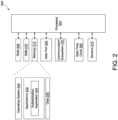
FIG. 2 is a simplified block diagram of a computing device suitable for practicing example embodiments of the present disclosure. -
FIG. 3 is a schematic diagram of the risk-aware access control method in accordance with the present disclosure. -
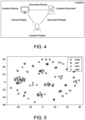
FIG. 4 is a schematic diagram illustrating coupling types accordance with the present disclosure. -
FIG. 5 is a plot of the distribution of events in an example event log using a T-distributed Stochastic Neighbor Embedding (t-SNE). -
FIG. 6 is an example distribution of coupling values in a coupling matrix. -
FIG. 7 is an example coupling feature. -
FIG. 8 is a flowchart of a risk-aware access control method in accordance with one example embodiment of the present disclosure. -
FIGs. 9(a)-(c) illustrate the risk for coupling features visualized via using t-SNE for frequency-based features, duration-based features and combined features in accordance with a numerical evaluation of embodiments of the present disclosure. -
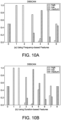
FIGs. 10(a)-(c) illustrate a DBSCAN Result of Feature-by-Feature Risk Level using Different Features for frequency-based features, duration-based features and combined features in accordance with a numerical evaluation of embodiments of the present disclosure. -
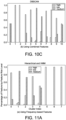
FIGs. 11(a)-(c) illustrate a Hierarchical and GMM clustering results of feature-by-feature risk level using different features for frequency-based features, duration-based features and combined features in accordance with a numerical evaluation of embodiments of the present disclosure. -
FIGs. 12(a)-(c) illustrate a DBSCAN Cluster Risk Values using Different Features for frequency-based features, duration-based features and combined features in accordance with a numerical evaluation of embodiments of the present disclosure. -
Fig. 13 illustrates a comparison of different Results frequency-based features, duration-based features and combined features in accordance with a numerical evaluation of embodiments of the present disclosure. - The present disclosure is made with reference to the accompanying drawings, in which embodiments are shown. However, many different embodiments may be used, and thus the description should not be construed as limited to the embodiments set forth herein. Rather, these embodiments are provided so that this disclosure will be thorough and complete. Wherever possible, the same reference numbers are used in the drawings and the following description to refer to the same elements, and prime notation is used to indicate similar elements, operations or steps in alternative embodiments. Separate boxes or illustrated separation of functional elements of illustrated systems and devices does not necessarily require physical separation of such functions, as communication between such elements may occur by way of messaging, function calls, shared memory space, and so on, without any such physical separation. As such, functions need not be implemented in physically or logically separated platforms, although they are illustrated separately for ease of explanation herein. Different devices may have different designs, such that although some devices implement some functions in fixed function hardware, other devices may implement such functions in a programmable processor with code obtained from a machine-readable medium. Lastly, elements referred to in the singular may be plural and vice versa, except wherein indicated otherwise either explicitly or inherently by context.
- In accordance with one aspect of the present disclosure, there is a provided a method of risk-aware access control according to
claim 1. - In some examples, the security policy is dependent on the requested action.
- In some examples, the risk level associated with the coupling is a risk level of the coupling or a coupling feature derived from the coupling.
- In some examples, the method comprises: determining a cluster of couplings in which the coupling is grouped (located) from a plurality of cluster of couplings using the factors of the requested action; and determining a risk level of the cluster using a predetermined risk level assigned to each cluster in the plurality of clusters.
- In some examples, the risk level associated with the coupling is the risk level of the cluster in which the coupling is grouped (located).
- In some examples, the risk level is one of low, medium, or high; and wherein the requested action is allowed when the requested action is associated with a cluster having a low risk level, the requested action is denied when the requested action is associated with a cluster having a high risk level, and a determination as to whether to allow the requested action is based on a risk level of the coupling or a coupling feature derived from the coupling.
- In some examples, the requested action is denied in response to a determination that the coupling is not grouped (located) within a cluster.
- In some examples, the method further comprises: causing a user authentication challenge in response to denying the requested action; and allowing the requested action in response to a successful user authentication challenge.
- In some examples, the method further comprises: causing a security action in response to an unsuccessful user authentication challenge.
- In some examples, the security action comprises one of sending an electronic message to a designated messaging address, adjusting a session security level by a predetermined amount or to a predetermined amount, locking a computing device associated with the requested action, ending a session of a user associated with the requested action, or performing a partial or complete data wipe of a memory of a computing device associated with the requested action.
- In some examples, the method further comprises: causing a security action in response to an unsuccessful user authentication challenge.
- In some examples, the security action comprises one of sending an electronic message to a designated messaging address, adjusting a session security level by a predetermined amount or to a predetermined amount, locking a computing device associated with the requested action, ending a session of a user associated with the requested action, or performing a partial or complete data wipe of a memory of a computing device associated with the requested action.
- In some examples, the coupling is frequency-based.
- In some examples, the coupling is duration-based and frequency-based.
- In accordance with another aspect of the present disclosure, there is a provided a computing device according to
claim 13. - In accordance with a further aspect of the present disclosure, there is provided a computer program according to claim 12.
- Reference is first made to
FIG. 1 which shows in simplified block diagram form of anauthentication system 100 in which example embodiments of the method of the present disclosure may be carried out. Theauthentication system 100 comprises acommunications network 112 that enables a plurality ofcommunication devices 101 to exchange data. Thecommunication devices 101 may connect to one or more servers 110 (only one of which is shown inFIG. 1 ) and/or one ormore computing resources 114 coupled to thecommunications network 112. Thecomputing resources 114 may be databases. Theservers 110 and computingresources 114 may be locate behind a firewall (not shown). - The
communications network 112 may be any type of network capable of enabling a plurality ofcommunication devices 101 to exchange data such as, for example, a local area network (LAN), such as a wireless local area network (WLAN) such as Wi-Fi™, used in a work office environment, a wireless personal area network (WPAN), such as Bluetooth™ based WPAN, a wide area network (WAN), a public-switched telephone network (PSTN), or a public-land mobile network (PLMN), which is also referred to as a wireless wide area network (WWAN) or a cellular network. Thecommunications network 112 may comprise a plurality of the aforementioned network types coupled via appropriate methods known in the art. - The
communication devices 101 andservers 110 may communicate securely using, for example, Transport Layer Security (TLS) or its predecessor Secure Sockets Layer (SSL). TLS and SSL are cryptographic protocols which provide communications security over the Internet. TLS and SSL encrypt network connections above the transport layer using symmetric cryptography for privacy and a keyed message authentication code for message reliability. Thecommunication devices 101 andservers 110 are provided with encryption key(s) for secure communications using TSL or SSL, which are typically stored in persistent memory of thecommunication devices 101 andservers 110. - The
communication devices 101 may comprise one or more mobile wireless communications devices ("mobile devices") 102, one or morepersonal computers 104, one or more security devices 106 or a combination thereof. The mobile devices 102 may comprise, but are not limited to, handheld wireless communications devices represented byreference 102a, such as smartphones or tablets, laptop or notebook computers (also known as a netbook or ultrabook computer depending on the device capabilities) represented byreference 102b, or a combination thereof. The security devices 106 may be asecurity access device 102c such as a security access terminal, security card (e.g., smart card) reader, biometric scanner/reader (e.g., voice scan/print, face scan/print, finger or palm scan/print, gait scan/print etc.), camera (still or video), or other suitable device. - The mobile devices 102 may include a vehicle computing device (not shown). The mobile devices 102 may include devices equipped for cellular communication through PLMN or PSTN, mobile devices equipped for Wi-Fi™ communications over WLAN or WAN, or dual-mode devices capable of both cellular and Wi-Fi™ communications. The mobile devices 102 may also be equipped for Bluetooth™ and/or NFC (near-field communication) communications.
- The
computers 104 andservers 110 may include any computing device equipped for communicating over LAN, WLAN, Bluetooth, WAN, PSTN, PLMN, or any combination thereof. For example, thecomputers 104 may be a personal computer such as a desktop computer. AlthoughFIG. 1 illustrates theauthentication system 100 as having a certain number ofcommunication devices 101 andservers 110, this is for illustrative purposes only. Theauthentication system 100 may comprise any number ofcommunication devices 101 andservers 110 of the various types. - The
servers 110 may be connected to thecomputing resources 114, either directly or through thecommunications network 112. Thecomputing resources 114 comprise a plurality of data files that may be physically located either locally or remotely from theservers 110. Thecomputing resources 114 may be a module of theservers 110. Theservers 110 and computingresources 114 may be implemented in a virtualized environment such that, although depicted as a single block inFIG. 1 , theservers 110 and computingresources 114 may be implemented across a number of devices in a cloud computing environment. - Referring now to
FIG. 2 an example of acomputing device 200 suitable for practicing example embodiments of the present disclosure. Thecomputing device 200 may be acommunication device 101 or aserver 110. Thecomputing device 200 comprises at least oneprocessor 204 which controls the overall operation of thecomputing device 200. Theprocessor 204 is coupled to a plurality of components via a communication bus (not shown) which provides a communication path between the components and theprocessor 204. Thecomputing device 200 also comprises a Random Access Memory (RAM) 208, Read Only Memory (ROM) 210, a persistent (non-volatile)memory 212 which may be flash erasable programmable read only memory (EPROM) ("flash memory") or other suitable form of memory, adata port 220 such as a serial data port (e.g., Universal Serial Bus (USB) data port),communication subsystem 230, a real-time clock (RTC) 260, andsensors 270. - The
communication module 230 may comprise any combination of a long-range wireless communication module, a short-range wireless communication module, or a wired communication module (e.g., Ethernet or the like). The long-range wireless communication module comprises one or more radio frequency (RF) transceivers for communicating with a radio access network (e.g., cellular network). The RF transceivers may communicate with any one of a plurality of fixed transceiver base stations of a cellular network within its geographic coverage area. The long-range wireless communication module may also comprise a wireless local area network (WLAN) transceiver for communicating with a WLAN via a WLAN access point (AP). The WLAN may comprise a Wi-Fi wireless network which conforms to IEEE 802.11x standards (sometimes referred to as Wi-Fi®) or other communication protocol. The short-range communication module may comprise devices, associated circuits and components for providing various types of short-range wireless communication such as Bluetooth™, RFID (radio frequency identification), near field communication (NFC), IEEE 802.15.3a (also referred to as UltraWideband (UWB)), Z-Wave, ZigBee, ANT/ANT+ or infrared (e.g., Infrared Data Association (IrDA) communication). - The
communication module 230 of thecomputing device 200 may comprise one or more antennas, a processor such as a digital signal processor (DSP), and local oscillators (LOs). The specific design and implementation of thecommunication module 230 is dependent upon the communication technologies implemented by thecomputing device 200. Data received by thecomputing device 200 may be decompressed and decrypted by a decoder (not shown). -
Operating system software 240 executed by theprocessor 204 is stored in thepersistent memory 212 but may be stored in other types of memory devices, such asROM 208 or similar storage element. A number ofapplications 242 executed by theprocessor 204 are also stored in thepersistent memory 212. Theapplications 242 may include anauthentication application 244. Other applications are also stored in the memory 126. Theauthentication application 244, in response to execution by theprocessor 204, allows thecomputing device 200 to perform the methods described herein. In other embodiments, theauthentication application 244 may be stored remotely, for example on aserver 110, for cloud-based deployment. - The
authentication application 244 may be capable of being operated by thecomputing device 200 while other applications are in operation, for example, by running in the background. Theauthentication application 244 may be configured to be able to collect data from other running applications regarding user actions and use the collected data to carry out the methods described herein. Theauthentication application 244 may be part of theoperating system software 240, for example, a part of security software that performs authentication, an inactivity countdown timer and lockout, or a separate application. - The
authentication application 244 detects user actions, store metadata pertaining to user actions, and cause (e.g., prompt) user authentication challenges (e.g., re-authentication actions). Theauthentication application 244 may continually monitor user actions and requested user actions throughout a session, determine whether a user authentication challenge is appropriate based on the user actions and/or requested user actions, and adjust a session security level based on user actions during a session in addition to known features of an authentication method. The operation of such features and functions is described more fully below. - Referring to
FIG. 3 , an overview of the risk-aware fine-grained access control method of the present disclosure will be described. A plurality ofsensors 302 are configured to detect and record events with respect to physical and cyber elements, referred to collectively as "factors". An "event" is a collection of actions which are substantially simultaneous/contemporaneous and which share a common factor, such as a document or a location, or a person. A statistical (i.e., automated) method of forming events is described below. Thus, an event is a collection of actions. A factor may be one of four types: people (users), devices, documents, (physical) locations. There are multiple instances of each type of factor, e.g. multiple users, multiple devices, multiple documents and multiple locations. An event is an interaction between two factors of a different type. An event may be a document-device interaction, a location-device interaction, a device-people interaction, a location-people interaction, a document-people interaction, or a location-document interaction. Each event comprises an action. Non-exhaustive examples of actions include person entering a location, a person exiting a location, a person gets a device (e.g., picks it up in a location), a person holds a device (e.g., continues to retain device while moving between locations), a person accesses a document (e.g., using a held device), a device enters a location (e.g., carried by a person who also enters that location), and a device exist a location (e.g., carried by a person who also enters that location). Conventionally, persons are part of actions of interest because the actions of people are typically the risky actions. However, the teachings of the present disclosure considered other types of actions, such as those relating to documents and device, that may not involve people. - The
sensors 302 may be part of an IoT device, mobile communication device (e.g., smartphone) or other type of suitable electronic device. Thesensors 302 may be the same or different. Thesensors 302 may form a sensor network. Thesensors 302 are configured to detect different types of interaction between various factor types. The sensor type and configuration may vary based on the host device, the entities being monitored, and/or the actions being monitored. - An event record is added to an event log (also known as an action log) 304 in response to detection of an event. The event log may be stored as a database. The event log comprises data describing physical activity such as entering or exiting a room as well as cyber activity (e.g., data activity) such as logging in a device or accessing a document. When users or devices enter or exit a specific location, an identifier (ID) of the room and the ID of the user is logged with a timestamp. If a user attempts to access a document, the device on which the access was attempted first requests grant for access, and this attempt is logged.
-
Couplings 306 between factors in events are determined from the event logs. A coupling is a relationship between disparate factors in an event. A coupling forms between different factor types because each factor contributes to a single event. An example is shownFIG. 6 , where two coupling features are exhibited, both participating in the same event. Thecouplings 306 represent contextual information in the form of relationships between factors. The various types of events are illustrated inFIG. 4 : document-device, location-device, device-people, location-people, document-people, or location-document. The present disclosure usescouplings 306 to improve risk assessment because the risk level of an event is determined by context as well the event itself.Couplings 306 are determined based on duration-based features, frequency-based features or a combination thereof. The duration-based features and frequency-based features may be combined, for example, using concatenation or other suitable techniques. Thecouplings 306 may be defined by a numerical coupling value which, in some examples, may range between 0 and 1. The lower a coupling value, the more infrequent or "rare" the coupling and, therefore, the more risky the event, because it is more "unusual". - The coupling values are normalized via a normal distribution threshold, stored in memory in coupling matrices, and a
risk level 308 is determined based on the mean value and standard deviation of each coupling value. The granularity of the risk level may vary. In some examples, the risk level may be determined to be one of "low risk", "medium risk" or "high risk". In other examples, the risk level may be determined to be "low risk", "low medium risk", "medium low risk", "medium risk", "medium high risk", "high medium risk" or "high risk". Therisk level 308 of eachcoupling 306 is stored in memory. - Clustering of the
couplings 306 is also performed to determined interaction patterns between factors by formingclusters 310 using a clustering algorithm that uses thecouplings 306 as input.FIG. 5 is a plot of the distribution of events in an example event log using a T-distributed Stochastic Neighbor Embedding (t-SNE) and shows how events in an event log may exhibit clustering.FIG. 5 maps the multidimensional features of events onto a two-dimensional space, and how events can be formulated as moving these objects (i.e. people, documents and devices) across different locations over time. Thus, an event or a state machine may be defined as a combination of time, location and a set of objects in this space. - The clustering algorithms may be based on artificial intelligence techniques. Examples of suitable clustering algorithms that may be applied include Gaussian mixture models (GMM) described, for example, in D. A. Reynolds, "A Gaussian mixture modeling approach to text-independent speaker identification." p. 1, 1993, https://elibrary.ru/item.asp?id=5779793 , Agglomerative Hierarchical described, for example, in T. Zhang, R. Ramakrishnan, and M. Livny, "BIRCH: an efficient data clustering method for very large databases," ACM SIGMOD Record, vol. 25, no. 2, pp. 103-114, Jun. 1996, https://doi.org/10.1145/235968.233324 , and DBSCAN described, for example, in M. Ester, H.-P. Kriegel, J. Sander, and X. Xu, "A Density-Based Algorithm for Discovering Clusters in Large Spatial Databases with Noise," KDD'96: Proceedings of the Second International Conference on Knowledge Discovery and Data Mining, August 1996, pages 226-231. The purpose of the clustering is to cluster features in the form of couplings, which can subsequently be labelled with appropriate risk levels. The objective of the clustering algorithm is to form the least possible number of clusters where within each cluster coexistence of high and low risk patterns is avoided.
- After the computation of
couplings 306, therisk levels 308 of thecouplings 306, and formingclusters 310 ofcouplings 306, the risk level of eachcluster 308 is calculated based on the risk level of thecouplings 306 in thatcluster 308, for example, the number of high, medium andlow risk couplings 306 in thatcluster 308. Each cluster is labeled according to cluster risk level to generate risk-ratedclusters 312. - The risk of an entire event log can be determined by the same methodology described above, and a
security report 314 which provides overall risk information generated for an information technology (IT) administrator, security expert or other interested party. - An example embodiment for calculating couplings, risk levels of couplings, clusters of couplings, and the risk level of each cluster from event logs will now be described. As mentioned above, couplings can be determined based on duration-based features, frequency-based features or a combination thereof. Duration denotes how long two factors spend time with each other. Frequency denotes how many times two factors encounter each other. In the present example, couplings are determined based on duration-based features and frequency-based features.
- The first step in determining the coupling values is to determine a coupling distribution using Equation (1) which has binary and discrete values, and these are represented in matrices as shown in Equation (2):


- Next, the number of times interactions (events) occurred between couplings in A and B, wherein A and B are any two of the four sets of factors Ppl, Dev, Doc, or Loc, and the total duration of the interactions (events) between couplings in A and B are determined from the distributions using Equations (3) and (4), respectively:


i ,bj is the number of times that elements ai and bj occur together, Durai ,bj is a duration of the occurrence of time that elements ai and bj occur together, the time period of the distribution is determined by the tuple (kstart, kend ), and TEk indicates the duration of each interaction (event). - Next, coupling values are determined using Equations (5) and (6) for frequency and duration, respectively:


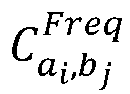

- Each coupling value varies between 0 and 1. The distribution of coupling values in a coupling matrix may vary widely depending on the relationship between the various factors.
FIG. 6 is an example distribution of coupling values in a coupling matrix illustrating that coupling distribution in a matrix can be skewed. When a factor interacts ("couples") with other factors equally, its couplings will approach or equal 1. If two factors interact less frequently, the coupling values will approach or equal 0. When the coupling value is close to 1, the risk level associated with the coexistence of two factors is low. In contrast, when the coupling value is close to 0, the risk level associated with the coexistence of two factors is high. - Equations (5) and (6) asymmetrically normalize the coupling values to enable comparability between different coupling values. For instance, applying Equations (5) and (6), CA,B is applied instead of CB,A in case the variance of the elements over B is greater than those in A. A coupling matrix for the frequency-based normalized coupling values and the duration-based normalized coupling values is generated, each coupling matrix having the following format with the couplings can be abstracted as Ca
i ,bj :
- The frequency and duration coupling matrices represent coupling values for each factor pair (e.g., person-document, person-device, person-location, device-location, etc.) in the considered event logs. As the event logs contain four factor types, namely people, document, device and location, up to six couplings can be obtained from an event: Cdevice,location, Cdevice,document, Cdocument,location, Cpeople,location, Cpeople,device, and Cpeople,document. As mentioned earlier, coupling values are asymmetric.
- To make coupling values comparable, the differences between the elements which have larger variance is reduced by determining (e.g., generating) a coupling feature for each coupling in each coupling matrix (i.e., in each event). Generally, a "feature" is an identified, numerical datum associated with an event or object, and the totality of "features" constitute the "knowledge" or "observation set" of the event or object as would be readily understood by data and information scientists. Specifically, a "coupling feature" extracted from an event in the present disclosure means such a feature (observation, fact, etc.) about the event -- not a direct observation of the event but computed statistically from the ensemble of contextual actions involving those factors. If an event be considered as a collection of actions (interactions) between factors of various types (e.g., people, locations), then a coupling feature of the event is a number representing the unusualness of the co-occurrence of two factor types (e.g., people, locations) within that event.
- Equation (7), below, quantifies the data relationship that when multiple individuals of the same kind of factor are involved in an event (e.g., three people and two documents all in the same event) then the feature for that coupling is the minimum coupling value for each coupling pair. If there are not multiple individuals (e.g., there is only one person and one location in an event), then the coupling value of those two becomes immediately the coupling feature of that event. Coupling features may be determined for each coupling pair in each coupling matrix in accordance with Equation (7):


- A feature matrix of coupling features is generated for each coupling matrix, the feature matrices having the same size as the coupling matrices.
- The coupling features ensures that the impact of higher risk elements will not be alleviated by lower risk elements when multiple coupling values are of the same type by using the minimum coupling value, i.e., the higher risk value. This provides a more conservation and secure solution. For instance, given Ca
i ,bk < Caj ,bk , when ai and aj appear with bk at the same time,
FIG. 7 illustrates an example coupling feature in which Person 1 (p1 ) and Person 3 (p3 ) coexist with Document 1 (doc1 ) in Event 13 (E13 ). The couplings Cp1,doc1 and Cp3,doc1 are determined according to historical records and Cp1,doc1 > Cp3,doc1. Therefore, for the illustrate event the couplingfeature event 
- Next, a risk level is assigned to each coupling feature in each feature matrix. The risk level of each coupling feature in each feature matrix is determined,


- Next, couplings are clustered into groups known as clusters using the risk level of the associated coupling features using a clustering algorithm as mentioned above. It is noted that non-clustered couplings are less observed and are therefore considered to pose higher risk. The clustering algorithm uses risk level of coupling features as a distance metric in cluster formation so that couplings having similar risk are located in the same cluster.
- A cluster risk level (CRV) may be determined using Equation (10) as follows:

- Next, the CRV values are mapped to risk labels which, in the present example, are one of Low (L), Low-Medium (LM), Medium-Low (ML), Medium (M), Medium-High (MH), High-Medium (HM), and High (H) risk levels according to Table I below.
Table I: Map Cluster Risk Values to Risk Levels CRV 1 1.01-1.49 1.50-2.00 2 2.01-2.49 2.50-2.99 3 Risk Levels L LM ML M MH HM M - In use, requested actions are allowed or denied based on the risk level of the cluster to which the requested action is determined to belong in accordance with a security policy for allowing requested actions, the formulation of which is outside the scope of the present disclosure. In the present example, if a cluster is labeled high risk, all requested actions which are determined to belong to in this cluster are denied. Otherwise, requested actions which are determined to belong to the clusters with medium or low risk labels contain the actions that may be allowed. The decision whether to allow a requested action which is determined to belong to a medium risk cluster (e.g., LM, ML, M, MH, and HM) depends on the coupling feature-based risk level for the requested action. If a cluster is labeled low risk, all requested actions which are determined to belong to in this cluster are allowed.
- Numerical results of clustering and labeling in accordance with a numerical evaluation of embodiments of the present disclosure in a medical setting will now be briefly described. The action logs used in the numerical evaluation contain one device. Therefore, the available features are Location-People, Location-Device, Location-Document, and Document-People. It is noted that only one device exists in the action log. Therefore, only C document,location, C people,location, C people,device, and C people,document are used in the evaluations. The results are presented using duration-based features, frequency-based features and the combined (i.e., frequency and duration-based) features. Three different clustering algorithms are applied, which are Gaussian mixture models (GMM), Agglomerative Hierarchical, and DBSCAN. The target of the numerical evaluation was to cluster these features (couplings) and label the clusters with risk levels. The aim of the clustering algorithm was to form the least possible number of clusters where within each cluster co-existence of high and low risk patterns is avoided. In the numerical evaluation n, the circumstances under which people may stay in a room for a long time while they enter and exit other rooms with high frequency are considered. Therefore, frequency-based features are also expected to affect the risk assessment. Since the duration-based coupling features and frequency-based features show distinctive perspective of the action logs, the evaluation employs the combined features defined as concatenation of two features. Clustering results, and risk value results are generated by using three different features. A visualization of features is provided followed by feature-by-feature risk of each cluster in the event logs. Results under different clustering algorithms are discussed and cluster risk levels are presented.
-
FIGs. 9(a)-(c) illustrate the risk for coupling features visualized via using t-SNE for frequency-based features, duration-based features and combined features. InFIG. 9 (a), (b) and(c) most of the data points are of low risk level whereas the medium and high average-risk samples are less observed. t-SNE maps every multi-dimensional input in a data set onto two or three dimensions. When t-sNE- based modeling is complete, similar data are mapped close to each other whereas dissimilar data are mapped onto distant points. -
FIGs. 10(a)-(c) illustrate a DBSCAN Result of Feature-by-Feature Risk Level using Different Features for frequency-based features, duration-based features and combined features.FIGs. 11(a)-(c) illustrate a Hierarchical and GMM clustering results of feature-by-feature risk level using different features for frequency-based features, duration-based features and combined features. WhenFIGs. 10(a)-(c) . andFIGs. 11(a)-(c) are compared, given the same number of clusters, DB SCAN, Hierarchical and HMM provide almost the same results. However, DBSCAN provides extra noise points. BothFIGs. 10(a)-(c) . andFIGs. 11(a)-(c) illustrate the diversity of three features. However, the results of these three features have similar pattern. Low-risk part is dominant and other types of risk are minor. This pattern also causes the similarity of three figures inFIGs. 12(a)-(c) , which illustrate a DBSCAN Cluster Risk Values using Different Features for frequency-based features, duration-based features and combined features. It should be noted that occurrence of this pattern may be only due to the action logs used in the study evaluation. When different action logs are employed, the result of three features may lead to a more significant variation. - Advantageously, DBSCAN does not require the specification of the number of clusters upfront whereas in hierarchical and GMM number of desired clusters are given. If there were more factors in the action logs, the number of features would increase, hence labeling of action clusters by using DBSCAN is generalizable. Although outliers are expected, outliers are not be treated as high-risk samples directly because the events maybe the sub-events of another cluster. For instance, in Table I, II and III, the sample in the cluster -1 does not have documents in this event. Hence, there is no possibility of leaking patients document in such an event. Nevertheless, the outliers should be escalated to the security and policy experts.
- As clusters and their feature-by-feature risk levels are obtained, risk values of clusters are calculated according to
Equation 10 and binned into 7 groups: Low, Low-medium, medium-low, medium, medium-high, high-medium, and high. Since the actions in medium and low-risk level clusters will be permitted, high average-risk samples are prevented from occurring in medium and low-risk level clusters. Although the average-risk level is not a ground truth, if it shows high-risk, then most of the features of the sample raise alert or medium-risk. As explained above in connection with feature extraction, the coupling value of medium-risk is similar to that of high-risk. There is no brightline boundary between these two risk levels and clustering algorithms provide some potential risk patterns in the action logs. - The risk values and levels of each cluster are shown on in the Table I, II and III, below. The cluster risk values are sorted and plotted as illustrated in
FIG. 13 . It will be seen that most clusters are safe clusters whereas only one cluster raises a high-risk alert. Based on this, the risk value of the entire dataset (i.e., action log) can be also be calculated, which is 1.28 in this case.TABLE I: DB SCAN Result using Duration-based Features Index Risk Value Risk Level Number of samples -1 1.5 LM 1 0 1 L 12612 1 3 H 2804 2 1.31 LM 2234 3 1.97 ML 1492 4 1.59 ML 608 5 1.16 LM 20489 6 1.74 ML 480 7 1.5 LM 246 Table II: DBSCAN Result using Frequency-based Features Index Risk Value Risk Level Number of samples -1 1.5 LM 1 0 1 L 11754 1 3 H 2804 2 1.25 LM 3082 3 1.94 ML 2100 4 1.15 LM 20979 5 1.55 ML 246 TABLE III: DBSCAN Result using Combined-based Features Index Risk Value Risk Level Number of samples -1 1.5 LM I 0 I L 11222 1 3 H 2804 2 1.25 LM 1702 3 1.13 LM 1390 4 1.97 ML 1492 5 1.72 ML 608 6 1.15 LM 20489 7 1.25 LM 532 8 1.48 LM 490 9 1.52 ML 246 - Supervised learning methods, such as decision tree and Support Vector Machine (SVM), validate the results of unsupervised learning and to verify whether the teachings of the present disclosure can be generalized. The model was trained with one dataset (i.e., set of action logs), tested on another dataset with 100% training accuracy and 99.86% test accuracy. SVM achieved a 99.95% test accuracy.
- A policy-based access control scheme that utilizes the four frequency-based coupling features introduced above in addition to the traffic may be used to indicate the number of people in the current event, and co-existence, which is triple-coupling, people-document-location coupling. Even though the traffic does not entail any coupling, it is possible to use
Equations 


- The unsupervised method and policy-based method were compared with each other to examine performance. As shown in the Table IV, V, and VI, the frequency-based, duration-based, and combined coupling features show 99.32%, 99.27%, and 99.32% overall consistency, respectively. Since the policy uses the triple factor coupling, it is more likely to detect the rare cases meanwhile it is the only triple factor coupling since only one device exists in the action log. When the number of coupling factors increases, the types of couplings will reduce, and such a situation would occur where the frequency or duration is not enough to make statistical decision because the frequency or duration disperse on more coupling combinations.
TABLE IV: Comparison between Policy and DBSCAN result using Frequency-based Features Policy Permit Deny DBSCAN Medium-Low Medium-Low High Number 586 23 2800 Consistency 100% 99.19% Overall Consistency 99.32% TABLE V: Comparison between Policy and DBSCAN result using Duration-based Features Policy Permit Deny DBSCAN Medium-Low Medium-Low High Number 586 25 2798 Consistency 100% 99.19% Overall Consistency 99.27% TABLE VI: Comparison between Policy and DBSCAN result using Combined Features Policy Permit Deny DBSCAN Medium-Low Medium-Low High Number 586 23 2800 Consistency 100% 99.19% Overall Consistency 99.32% - Referring now to
FIG. 8 , a risk-awareaccess control method 800 in accordance with one example embodiment of the present disclosure will be described. Themethod 800 may be carried out by software executed, for example, by aprocessor 204 of acomputing device 200 illustrated inFIG. 2 . - At
operation 802, a request to perform an action relating to two factors, the two factors being of a different type, is detected via one or more sensors, such as thesensors - The sensors may be located remotely from the
computing device 200. The sensors may comprise one or more of motion sensors, cameras, microphones, infrared (IR) sensors, proximity sensors, door contacts, data usage and analyzers configured to capture and analyze data requests, and combinations thereof. The data usage and analyzers may be software modules. The sensors may communicate with thecomputing device 200 via a wireless or wired communication path. - At
operation 804, a coupling associated with the requested action is determined based on the factors in the requested action. In the example above, the factors are Naomi (of type "people") and BD2016-01-12 (of type "document"). The determination of the coupling may be implicit rather than explicit, for example, from the extraction of the factors from the action request. - Next, a risk level associated with the coupling is determined. The risk level associated with the coupling may be a risk level of the coupling or a coupling feature derived from the coupling, or a risk level of the cluster in which the coupling is located, as described more fully below.
- At
operation 806, a cluster of couplings associated with the coupling is determined from a plurality of cluster of couplings using the factors extracted from the coupling (or requested action). - At
operation 808, a risk level associated with the cluster of couplings is determined using a predetermined risk level assigned to each cluster in the plurality of clusters. - At
operation 810, it is determined whether the determined risk level matches a security policy. The security policy may depend on the requested action. In the present examples, the risk level is one of low, medium, or high, and the requested action is allowed when the requested action is associated with a cluster having a low risk level, the requested action is denied when the requested action is associated with a cluster having a high-risk level, and a determination as to whether to allow the requested action is based on a risk level of the coupling or a coupling feature derived from the coupling. - At
operation 812, the requested action is denied in response to a determination that the risk level does not match a security policy. Themethod 800 may further comprise causing a user authentication challenge in response to denying the requested action. In performing the user authentication challenge, the user authentication challenge typically comprises prompting a user of thecomputing device 200 for (user) authentication information. The authentication information may comprise a shared secret (e.g., password or personal identification number (PIN)) challenge, biometric challenge, or a combination thereof. The user may be given a number of attempts, a duration of time, or both ("required authentication parameters"), to successfully enter matching authentication information. The authentication information and required authentication parameters are referred to as authentication criteria. A successful user authentication challenge occurs if matching authentication information is entered within required authentication parameters (if any). An unsuccessful user authentication challenge occurs if matching authentication information is not entered within required authentication parameters (if any). - The method may further comprise allowing the requested action in response to a successful user authentication challenge. The method may further comprise causing a security action in response to an unsuccessful user authentication challenge. The security action may comprises one of sending an electronic message to a designated messaging address, adjusting a session security level by a predetermined amount or to a predetermined amount, locking a computing device associated with the requested action, ending a session of a user associated with the requested action, or performing a partial or complete data wipe of a memory of a computing device associated with the requested action, or other security action.
- At
operation 814, the requested action is allowed in response to a determination that the risk level matches the security policy. - Although not shown in
FIG. 8 , the requested action is typically denied in response to a determination that the coupling is not located within a cluster as such couplings are considered to be high risk. - The steps and/or operations in the flowcharts and drawings described herein are for purposes of example only. There may be many variations to these steps and/or operations without departing from the teachings of the present disclosure. For instance, the steps may be performed in a differing order, or steps may be added, deleted, or modified.
- The coding of software for carrying out the above-described methods described is within the scope of a person of ordinary skill in the art having regard to the present disclosure. Machine-readable code executable by one or more processors of one or more respective devices to perform the above-described method may be stored in a machine-readable medium such as the memory of the data manager. The terms "software" and "firmware" are interchangeable within the present disclosure and comprise any computer program stored in memory for execution by a processor, comprising Random Access Memory (RAM) memory, Read Only Memory (ROM) memory, EPROM memory, electrically EPROM (EEPROM) memory, and non-volatile RAM (NVRAM) memory. The above memory types are examples only, and are thus not limiting as to the types of memory usable for storage of a computer program.
- All values and sub-ranges within disclosed ranges are also disclosed. Also, although the systems, devices and processes disclosed and shown herein may comprise a specific plurality of elements, the systems, devices and assemblies may be modified to comprise additional or fewer of such elements. Although several example embodiments are described herein, modifications, adaptations, and other implementations are possible. For example, substitutions, additions, or modifications may be made to the elements illustrated in the drawings, and the example methods described herein may be modified by substituting, reordering, or adding steps to the disclosed methods.
- Features from one or more of the above-described embodiments may be selected to create alternate embodiments comprised of a subcombination of features which may not be explicitly described above. In addition, features from one or more of the above-described embodiments may be selected and combined to create alternate embodiments comprised of a combination of features which may not be explicitly described above. Features suitable for such combinations and subcombinations would be readily apparent to persons skilled in the art upon review of the present application as a whole.
- In addition, numerous specific details are set forth to provide a thorough understanding of the example embodiments described herein. It will, however, be understood by those of ordinary skill in the art that the example embodiments described herein may be practiced without these specific details. Furthermore, well-known methods, procedures, and elements have not been described in detail so as not to obscure the example embodiments described herein. The subject matter described herein and in the recited claims intends to cover and embrace all suitable changes in technology.
- Although the present disclosure is described at least in part in terms of methods, a person of ordinary skill in the art will understand that the present disclosure is also directed to the various elements for performing at least some of the aspects and features of the described methods, be it by way of hardware, software or a combination thereof. Accordingly, the technical solution of the present disclosure may be embodied in a non-volatile or non-transitory machine-readable medium (e.g., optical disk, flash memory, etc.) having stored thereon executable instructions tangibly stored thereon that enable a processing device to execute examples of the methods disclosed herein.
- The term "processor" may comprise any programmable system comprising systems using microprocessors/controllers or nanoprocessors/controllers, digital signal processors (DSPs), application specific integrated circuits (ASICs), field-programmable gate arrays (FPGAs) reduced instruction set circuits (RISCs), logic circuits, and any other circuit or processor capable of executing the functions described herein. The term "database" may refer to either a body of data, a relational database management system (RDBMS), or to both. As used herein, a database may comprise any collection of data comprising hierarchical databases, relational databases, flat file databases, object-relational databases, object oriented databases, and any other structured collection of records or data that is stored in a computer system. The above examples are example only, and thus are not intended to limit in any way the definition and/or meaning of the terms "processor" or "database".
- The present disclosure may be embodied in other specific forms without departing from the subject matter of the claims. The described example embodiments are to be considered in all respects as being only illustrative and not restrictive. The present disclosure intends to cover and embrace all suitable changes in technology. The scope of the present disclosure is, therefore, described by the appended claims rather than by the foregoing description.
Claims (13)
- A method (800) of risk-aware access control, comprising:detecting (802) a request to perform an action with respect to two factors, the factors each being of a factor type of one of people, devices, documents, or location, wherein the factors are of a different factor type;determining (804) a coupling (306) associated with the requested action based on the factors of the requested action, wherein the coupling represents contextual information in the form of relationships between the factors;determining (810) a risk level associated with the coupling;denying (812) the requested action in response to a determination that the risk level does not match a security policy associated with the requested action;allowing (814) the requested action in response to a determination that the risk level matches the security policy associated with the requested action;characterized in that the coupling is at least one of duration-based and frequency-based.
- The method (800) of claim 1, wherein the risk level associated with the coupling is a risk level of the coupling or a coupling feature derived from the coupling, wherein the coupling feature is a number representing an unusualness of the co-occurrence of two factor types within the requested action.
- The method of claim 1 or 2, comprising:determining a cluster of couplings into which the coupling is grouped from a plurality of cluster of couplings using the factors of the requested action; anddetermining a risk level of the cluster using a predetermined risk level assigned to each cluster in the plurality of clusters.
- The method (800) of claim 3, wherein the risk level associated with the coupling is the risk level of the cluster in which the coupling is grouped.
- The method of claim 3 or 4, wherein the risk level is one of low, medium, or high; and wherein the requested action is allowed (814) when the requested action is associated with a cluster having a low risk level, the requested action is denied (812) when the requested action is associated with a cluster having a high risk level, and a determination as to whether to allow the requested action is based on a risk level of the coupling or a coupling feature derived from the coupling, , wherein the coupling feature is a number representing an unusualness of the co-occurrence of two factor types within the requested action.
- The method (800) of any one of claims 3 to 5, wherein the requested action is denied (812) in response to a determination that the coupling is not grouped within a cluster.
- The method (800) of any preceding claim, further comprising:causing a user authentication challenge in response to denying the requested action; andallowing (814) the requested action in response to a successful user authentication challenge.
- The method (800) of claim 7, further comprising:
causing a security action in response to an unsuccessful user authentication challenge. - The method (800) of claim 7 or 8, wherein the security action comprises one of sending an electronic message to a designated messaging address, adjusting a session security level by a predetermined amount or to a predetermined amount, locking a computing device associated with the requested action, ending a session of a user associated with the requested action, or performing a partial or complete data wipe of a memory of a computing device associated with the requested action.
- The method (800) of any preceding claim, wherein the requested action is detected by one or more sensors (270, 302).
- The method (800) of claim 10, wherein the one or more sensors (270, 302) comprise one or more of motion sensors, cameras, microphones, infrared, IR, sensors, proximity sensors, door contacts, data usage and analyzers configured to capture and analyze data requests, and combinations thereof.
- A computer program which, when executed on a processor (204) of a computing device (200), is configured to cause the computing device to carry out the method of any preceding claim.
- A computing device (200) comprising a processor (204), the device being configured to carry out the method of any one of claims 1 to 11.
Priority Applications (1)
| Application Number | Priority Date | Filing Date | Title |
|---|---|---|---|
| EP25179054.9A EP4586664A3 (en) | 2020-12-21 | 2021-12-14 | Risk-aware access control method and related computer program and device |
Applications Claiming Priority (1)
| Application Number | Priority Date | Filing Date | Title |
|---|---|---|---|
| US17/129,334 US11888857B2 (en) | 2020-12-21 | 2020-12-21 | Risk-aware access control system and related methods |
Related Child Applications (2)
| Application Number | Title | Priority Date | Filing Date |
|---|---|---|---|
| EP25179054.9A Division-Into EP4586664A3 (en) | 2020-12-21 | 2021-12-14 | Risk-aware access control method and related computer program and device |
| EP25179054.9A Division EP4586664A3 (en) | 2020-12-21 | 2021-12-14 | Risk-aware access control method and related computer program and device |
Publications (2)
| Publication Number | Publication Date |
|---|---|
| EP4016924A1 EP4016924A1 (en) | 2022-06-22 |
| EP4016924B1 true EP4016924B1 (en) | 2025-07-09 |
Family
ID=79230707
Family Applications (2)
| Application Number | Title | Priority Date | Filing Date |
|---|---|---|---|
| EP21214497.6A Active EP4016924B1 (en) | 2020-12-21 | 2021-12-14 | Risk-aware access control method and related computer program and device |
| EP25179054.9A Pending EP4586664A3 (en) | 2020-12-21 | 2021-12-14 | Risk-aware access control method and related computer program and device |
Family Applications After (1)
| Application Number | Title | Priority Date | Filing Date |
|---|---|---|---|
| EP25179054.9A Pending EP4586664A3 (en) | 2020-12-21 | 2021-12-14 | Risk-aware access control method and related computer program and device |
Country Status (2)
| Country | Link |
|---|---|
| US (3) | US11888857B2 (en) |
| EP (2) | EP4016924B1 (en) |
Families Citing this family (2)
| Publication number | Priority date | Publication date | Assignee | Title |
|---|---|---|---|---|
| US12432244B2 (en) * | 2022-03-24 | 2025-09-30 | At&T Intellectual Property I, L.P. | Home gateway monitoring for vulnerable home internet of things devices |
| CN119830308B (en) * | 2025-03-14 | 2025-08-01 | 深圳市实信达科技开发有限公司 | File management system and method based on data analysis |
Family Cites Families (15)
| Publication number | Priority date | Publication date | Assignee | Title |
|---|---|---|---|---|
| US6691232B1 (en) | 1999-08-05 | 2004-02-10 | Sun Microsystems, Inc. | Security architecture with environment sensitive credential sufficiency evaluation |
| US8650623B2 (en) | 2007-01-17 | 2014-02-11 | International Business Machines Corporation | Risk adaptive information flow based access control |
| US8756650B2 (en) * | 2010-03-15 | 2014-06-17 | Broadcom Corporation | Dynamic authentication of a user |
| US9374369B2 (en) * | 2012-12-28 | 2016-06-21 | Lookout, Inc. | Multi-factor authentication and comprehensive login system for client-server networks |
| US11017069B2 (en) * | 2013-03-13 | 2021-05-25 | Lookout, Inc. | Method for changing mobile communications device functionality based upon receipt of a second code and the location of a key device |
| US10360364B2 (en) * | 2013-03-13 | 2019-07-23 | Lookout, Inc. | Method for changing mobile communication device functionality based upon receipt of a second code |
| US9807094B1 (en) | 2015-06-25 | 2017-10-31 | Symantec Corporation | Systems and methods for dynamic access control over shared resources |
| US10225740B2 (en) | 2016-05-12 | 2019-03-05 | Zscaler, Inc. | Multidimensional risk profiling for network access control of mobile devices through a cloud based security system |
| US10404735B2 (en) | 2017-02-02 | 2019-09-03 | Aetna Inc. | Individualized cybersecurity risk detection using multiple attributes |
| US11449623B2 (en) | 2019-03-22 | 2022-09-20 | Fortinet, Inc. | File access control based on analysis of user behavior patterns |
| US11882158B2 (en) * | 2020-06-17 | 2024-01-23 | At&T Intellectual Property I, L.P. | Methods, systems, and devices to dynamically determine an authentication method for a user device to access services based on security risk |
| WO2021260398A1 (en) * | 2020-06-23 | 2021-12-30 | Citrix Systems, Inc | Determining risk metrics for access requests in network environments using multivariate modeling |
| CN111935165B (en) | 2020-08-14 | 2022-09-20 | 中国工商银行股份有限公司 | Access control method, device, electronic device and medium |
| US11627129B2 (en) * | 2020-10-14 | 2023-04-11 | Citrix Systems, Inc. | Method and system for contextual access control |
| US11457012B2 (en) * | 2020-11-03 | 2022-09-27 | Okta, Inc. | Device risk level based on device metadata comparison |
-
2020
- 2020-12-21 US US17/129,334 patent/US11888857B2/en active Active
-
2021
- 2021-12-14 EP EP21214497.6A patent/EP4016924B1/en active Active
- 2021-12-14 EP EP25179054.9A patent/EP4586664A3/en active Pending
-
2023
- 2023-12-06 US US18/530,793 patent/US12218949B2/en active Active
-
2024
- 2024-12-23 US US18/991,984 patent/US20250126131A1/en active Pending
Non-Patent Citations (1)
| Title |
|---|
| NGOC NGUYEN: "Contextual Risk-based Access Control", SECURITY AND MANAGEMENT 2007 (2007), 1 January 2007 (2007-01-01), pages 406 - 412, XP093158156, Retrieved from the Internet <URL:https://citeseerx.ist.psu.edu/document?repid=rep1&type=pdf&doi=3ab5e11dc158d5e9c13cb57ec14e972e80d97a95> * |
Also Published As
| Publication number | Publication date |
|---|---|
| EP4586664A3 (en) | 2025-08-06 |
| US12218949B2 (en) | 2025-02-04 |
| EP4016924A1 (en) | 2022-06-22 |
| US20240121244A1 (en) | 2024-04-11 |
| US20250126131A1 (en) | 2025-04-17 |
| US20220201004A1 (en) | 2022-06-23 |
| EP4586664A2 (en) | 2025-07-16 |
| US11888857B2 (en) | 2024-01-30 |
Similar Documents
| Publication | Publication Date | Title |
|---|---|---|
| US11947651B2 (en) | Biometric identification platform | |
| US12010513B2 (en) | Method for automatic possession-factor authentication | |
| US12107883B2 (en) | Multimodal modelling for systems using distance metric learning | |
| EP4381690B1 (en) | Network access anomaly detection via graph embedding | |
| US20250126131A1 (en) | Risk-aware access control system and related methods | |
| Song et al. | Enhancing Packet‐Level Wi‐Fi Device Authentication Protocol Leveraging Channel State Information | |
| EP3764257B1 (en) | Document management system having context-based access control and related methods | |
| US20160308884A1 (en) | Detecting anomalous behavior via user authentication graphs | |
| US10652237B2 (en) | Continuous authentication system and method based on BioAura | |
| Uras et al. | MAC address de-randomization for WiFi device counting: Combining temporal-and content-based fingerprints | |
| US12101316B2 (en) | Enhanced authentication techniques using virtual persona | |
| Kumar et al. | Blockchain empowered secure federated learning for consumer IoT applications in cloud-edge collaborative environment | |
| US11552980B2 (en) | Detection of multi-factor authentication and non-multi-factor authentication for risk assessment | |
| Fereidouni et al. | F-RBA: A federated learning-based framework for risk-based authentication | |
| Moradi et al. | Security‐Level Improvement of IoT‐Based Systems Using Biometric Features | |
| Houichi et al. | Analysis of smart cities security: Challenges and advancements | |
| Liu et al. | Risk-aware fine-grained access control in cyber-physical contexts | |
| US11917405B2 (en) | Method and system for authenticating users of mobile communication devices through mobility traces | |
| US11895133B2 (en) | Systems and methods for automated device activity analysis | |
| Gupta et al. | Radtec: Re-authentication of iot devices with machine learning | |
| HK40129950A (en) | Risk-aware access control method and related computer program and device | |
| CN114389838A (en) | Terminal security access control method for identifying abnormal service from multiple dimensions | |
| Kanchana | Histogram of neighborhood Tripartite Authentication with Fingerprint-Based Biometrics for IOT Services | |
| US12632730B2 (en) | Neighborhood-specific loss for correcting score distribution distortion | |
| US20240086701A1 (en) | Neighborhood-specific loss for correcting score distribution distortion |
Legal Events
| Date | Code | Title | Description |
|---|---|---|---|
| PUAI | Public reference made under article 153(3) epc to a published international application that has entered the european phase |
Free format text: ORIGINAL CODE: 0009012 |
|
| STAA | Information on the status of an ep patent application or granted ep patent |
Free format text: STATUS: THE APPLICATION HAS BEEN PUBLISHED |
|
| AK | Designated contracting states |
Kind code of ref document: A1 Designated state(s): AL AT BE BG CH CY CZ DE DK EE ES FI FR GB GR HR HU IE IS IT LI LT LU LV MC MK MT NL NO PL PT RO RS SE SI SK SM TR |
|
| STAA | Information on the status of an ep patent application or granted ep patent |
Free format text: STATUS: REQUEST FOR EXAMINATION WAS MADE |
|
| 17P | Request for examination filed |
Effective date: 20221206 |
|
| RBV | Designated contracting states (corrected) |
Designated state(s): AL AT BE BG CH CY CZ DE DK EE ES FI FR GB GR HR HU IE IS IT LI LT LU LV MC MK MT NL NO PL PT RO RS SE SI SK SM TR |
|
| P01 | Opt-out of the competence of the unified patent court (upc) registered |
Effective date: 20230518 |
|
| STAA | Information on the status of an ep patent application or granted ep patent |
Free format text: STATUS: EXAMINATION IS IN PROGRESS |
|
| 17Q | First examination report despatched |
Effective date: 20240507 |
|
| GRAP | Despatch of communication of intention to grant a patent |
Free format text: ORIGINAL CODE: EPIDOSNIGR1 |
|
| STAA | Information on the status of an ep patent application or granted ep patent |
Free format text: STATUS: GRANT OF PATENT IS INTENDED |
|
| INTG | Intention to grant announced |
Effective date: 20250211 |
|
| GRAS | Grant fee paid |
Free format text: ORIGINAL CODE: EPIDOSNIGR3 |
|
| GRAA | (expected) grant |
Free format text: ORIGINAL CODE: 0009210 |
|
| STAA | Information on the status of an ep patent application or granted ep patent |
Free format text: STATUS: THE PATENT HAS BEEN GRANTED |
|
| AK | Designated contracting states |
Kind code of ref document: B1 Designated state(s): AL AT BE BG CH CY CZ DE DK EE ES FI FR GB GR HR HU IE IS IT LI LT LU LV MC MK MT NL NO PL PT RO RS SE SI SK SM TR |
|
| REG | Reference to a national code |
Ref country code: GB Ref legal event code: FG4D |
|
| REG | Reference to a national code |
Ref country code: CH Ref legal event code: EP |
|
| REG | Reference to a national code |
Ref country code: IE Ref legal event code: FG4D |
|
| REG | Reference to a national code |
Ref country code: DE Ref legal event code: R096 Ref document number: 602021033720 Country of ref document: DE |
|
| REG | Reference to a national code |
Ref country code: NL Ref legal event code: MP Effective date: 20250709 |
|
| PG25 | Lapsed in a contracting state [announced via postgrant information from national office to epo] |
Ref country code: PT Free format text: LAPSE BECAUSE OF FAILURE TO SUBMIT A TRANSLATION OF THE DESCRIPTION OR TO PAY THE FEE WITHIN THE PRESCRIBED TIME-LIMIT Effective date: 20251110 |
|
| PG25 | Lapsed in a contracting state [announced via postgrant information from national office to epo] |
Ref country code: NL Free format text: LAPSE BECAUSE OF FAILURE TO SUBMIT A TRANSLATION OF THE DESCRIPTION OR TO PAY THE FEE WITHIN THE PRESCRIBED TIME-LIMIT Effective date: 20250709 |
|
| REG | Reference to a national code |
Ref country code: AT Ref legal event code: MK05 Ref document number: 1812906 Country of ref document: AT Kind code of ref document: T Effective date: 20250709 |
|
| PG25 | Lapsed in a contracting state [announced via postgrant information from national office to epo] |
Ref country code: IS Free format text: LAPSE BECAUSE OF FAILURE TO SUBMIT A TRANSLATION OF THE DESCRIPTION OR TO PAY THE FEE WITHIN THE PRESCRIBED TIME-LIMIT Effective date: 20251109 |
|
| PGFP | Annual fee paid to national office [announced via postgrant information from national office to epo] |
Ref country code: GB Payment date: 20251218 Year of fee payment: 5 |
|
| PG25 | Lapsed in a contracting state [announced via postgrant information from national office to epo] |
Ref country code: NO Free format text: LAPSE BECAUSE OF FAILURE TO SUBMIT A TRANSLATION OF THE DESCRIPTION OR TO PAY THE FEE WITHIN THE PRESCRIBED TIME-LIMIT Effective date: 20251009 |
|
| REG | Reference to a national code |
Ref country code: LT Ref legal event code: MG9D |
|
| PG25 | Lapsed in a contracting state [announced via postgrant information from national office to epo] |
Ref country code: AT Free format text: LAPSE BECAUSE OF FAILURE TO SUBMIT A TRANSLATION OF THE DESCRIPTION OR TO PAY THE FEE WITHIN THE PRESCRIBED TIME-LIMIT Effective date: 20250709 |
|
| PG25 | Lapsed in a contracting state [announced via postgrant information from national office to epo] |
Ref country code: FI Free format text: LAPSE BECAUSE OF FAILURE TO SUBMIT A TRANSLATION OF THE DESCRIPTION OR TO PAY THE FEE WITHIN THE PRESCRIBED TIME-LIMIT Effective date: 20250709 |
|
| PG25 | Lapsed in a contracting state [announced via postgrant information from national office to epo] |
Ref country code: HR Free format text: LAPSE BECAUSE OF FAILURE TO SUBMIT A TRANSLATION OF THE DESCRIPTION OR TO PAY THE FEE WITHIN THE PRESCRIBED TIME-LIMIT Effective date: 20250709 |
|
| PGFP | Annual fee paid to national office [announced via postgrant information from national office to epo] |
Ref country code: FR Payment date: 20251218 Year of fee payment: 5 |
|
| PG25 | Lapsed in a contracting state [announced via postgrant information from national office to epo] |
Ref country code: GR Free format text: LAPSE BECAUSE OF FAILURE TO SUBMIT A TRANSLATION OF THE DESCRIPTION OR TO PAY THE FEE WITHIN THE PRESCRIBED TIME-LIMIT Effective date: 20251010 |
|
| PG25 | Lapsed in a contracting state [announced via postgrant information from national office to epo] |
Ref country code: SE Free format text: LAPSE BECAUSE OF FAILURE TO SUBMIT A TRANSLATION OF THE DESCRIPTION OR TO PAY THE FEE WITHIN THE PRESCRIBED TIME-LIMIT Effective date: 20250709 |
|
| PG25 | Lapsed in a contracting state [announced via postgrant information from national office to epo] |
Ref country code: LV Free format text: LAPSE BECAUSE OF FAILURE TO SUBMIT A TRANSLATION OF THE DESCRIPTION OR TO PAY THE FEE WITHIN THE PRESCRIBED TIME-LIMIT Effective date: 20250709 |
|
| PG25 | Lapsed in a contracting state [announced via postgrant information from national office to epo] |
Ref country code: BG Free format text: LAPSE BECAUSE OF FAILURE TO SUBMIT A TRANSLATION OF THE DESCRIPTION OR TO PAY THE FEE WITHIN THE PRESCRIBED TIME-LIMIT Effective date: 20250709 Ref country code: PL Free format text: LAPSE BECAUSE OF FAILURE TO SUBMIT A TRANSLATION OF THE DESCRIPTION OR TO PAY THE FEE WITHIN THE PRESCRIBED TIME-LIMIT Effective date: 20250709 |
|
| PG25 | Lapsed in a contracting state [announced via postgrant information from national office to epo] |
Ref country code: RS Free format text: LAPSE BECAUSE OF FAILURE TO SUBMIT A TRANSLATION OF THE DESCRIPTION OR TO PAY THE FEE WITHIN THE PRESCRIBED TIME-LIMIT Effective date: 20251009 |
|
| PG25 | Lapsed in a contracting state [announced via postgrant information from national office to epo] |
Ref country code: ES Free format text: LAPSE BECAUSE OF FAILURE TO SUBMIT A TRANSLATION OF THE DESCRIPTION OR TO PAY THE FEE WITHIN THE PRESCRIBED TIME-LIMIT Effective date: 20250709 |
|
| PG25 | Lapsed in a contracting state [announced via postgrant information from national office to epo] |
Ref country code: RO Free format text: LAPSE BECAUSE OF FAILURE TO SUBMIT A TRANSLATION OF THE DESCRIPTION OR TO PAY THE FEE WITHIN THE PRESCRIBED TIME-LIMIT Effective date: 20250709 |
|
| PG25 | Lapsed in a contracting state [announced via postgrant information from national office to epo] |
Ref country code: SM Free format text: LAPSE BECAUSE OF FAILURE TO SUBMIT A TRANSLATION OF THE DESCRIPTION OR TO PAY THE FEE WITHIN THE PRESCRIBED TIME-LIMIT Effective date: 20250709 |
|
| PG25 | Lapsed in a contracting state [announced via postgrant information from national office to epo] |
Ref country code: DK Free format text: LAPSE BECAUSE OF FAILURE TO SUBMIT A TRANSLATION OF THE DESCRIPTION OR TO PAY THE FEE WITHIN THE PRESCRIBED TIME-LIMIT Effective date: 20250709 |
|
| PGFP | Annual fee paid to national office [announced via postgrant information from national office to epo] |
Ref country code: DE Payment date: 20251222 Year of fee payment: 5 |
|
| PG25 | Lapsed in a contracting state [announced via postgrant information from national office to epo] |
Ref country code: IT Free format text: LAPSE BECAUSE OF FAILURE TO SUBMIT A TRANSLATION OF THE DESCRIPTION OR TO PAY THE FEE WITHIN THE PRESCRIBED TIME-LIMIT Effective date: 20250709 |
|
| PG25 | Lapsed in a contracting state [announced via postgrant information from national office to epo] |
Ref country code: CZ Free format text: LAPSE BECAUSE OF FAILURE TO SUBMIT A TRANSLATION OF THE DESCRIPTION OR TO PAY THE FEE WITHIN THE PRESCRIBED TIME-LIMIT Effective date: 20250709 |
|
| PG25 | Lapsed in a contracting state [announced via postgrant information from national office to epo] |
Ref country code: EE Free format text: LAPSE BECAUSE OF FAILURE TO SUBMIT A TRANSLATION OF THE DESCRIPTION OR TO PAY THE FEE WITHIN THE PRESCRIBED TIME-LIMIT Effective date: 20250709 Ref country code: SK Free format text: LAPSE BECAUSE OF FAILURE TO SUBMIT A TRANSLATION OF THE DESCRIPTION OR TO PAY THE FEE WITHIN THE PRESCRIBED TIME-LIMIT Effective date: 20250709 |
|
| PLBE | No opposition filed within time limit |
Free format text: ORIGINAL CODE: 0009261 |
|
| STAA | Information on the status of an ep patent application or granted ep patent |
Free format text: STATUS: NO OPPOSITION FILED WITHIN TIME LIMIT |