EP4015615A1 - Information processing device, information processing method, and information processing program - Google Patents
Information processing device, information processing method, and information processing program Download PDFInfo
- Publication number
- EP4015615A1 EP4015615A1 EP20867351.7A EP20867351A EP4015615A1 EP 4015615 A1 EP4015615 A1 EP 4015615A1 EP 20867351 A EP20867351 A EP 20867351A EP 4015615 A1 EP4015615 A1 EP 4015615A1
- Authority
- EP
- European Patent Office
- Prior art keywords
- cells
- culture
- quality
- information processing
- antibody
- Prior art date
- Legal status (The legal status is an assumption and is not a legal conclusion. Google has not performed a legal analysis and makes no representation as to the accuracy of the status listed.)
- Pending
Links
- 230000010365 information processing Effects 0.000 title claims abstract description 52
- 238000003672 processing method Methods 0.000 title claims description 5
- 238000000034 method Methods 0.000 claims abstract description 74
- 238000004113 cell culture Methods 0.000 claims abstract description 44
- 239000001963 growth medium Substances 0.000 claims description 20
- 238000009795 derivation Methods 0.000 claims description 13
- 238000003756 stirring Methods 0.000 claims description 10
- 238000010845 search algorithm Methods 0.000 claims description 9
- 230000002068 genetic effect Effects 0.000 claims description 8
- 238000012546 transfer Methods 0.000 claims description 5
- 238000005273 aeration Methods 0.000 claims description 3
- 210000004027 cell Anatomy 0.000 description 105
- 239000012528 membrane Substances 0.000 description 24
- 238000012545 processing Methods 0.000 description 21
- 238000003860 storage Methods 0.000 description 17
- 239000006285 cell suspension Substances 0.000 description 15
- 238000010586 diagram Methods 0.000 description 15
- 230000010412 perfusion Effects 0.000 description 13
- 238000000926 separation method Methods 0.000 description 9
- 238000012549 training Methods 0.000 description 9
- 230000004663 cell proliferation Effects 0.000 description 8
- 238000011156 evaluation Methods 0.000 description 8
- 238000005259 measurement Methods 0.000 description 8
- 238000012360 testing method Methods 0.000 description 8
- 239000007789 gas Substances 0.000 description 6
- 238000004519 manufacturing process Methods 0.000 description 6
- 230000006870 function Effects 0.000 description 5
- 210000004102 animal cell Anatomy 0.000 description 4
- 208000032843 Hemorrhage Diseases 0.000 description 3
- 238000013528 artificial neural network Methods 0.000 description 3
- 208000034158 bleeding Diseases 0.000 description 3
- 230000000740 bleeding effect Effects 0.000 description 3
- 238000011161 development Methods 0.000 description 3
- 239000011229 interlayer Substances 0.000 description 3
- 230000035772 mutation Effects 0.000 description 3
- 238000003062 neural network model Methods 0.000 description 3
- 239000012466 permeate Substances 0.000 description 3
- 239000000047 product Substances 0.000 description 3
- 238000002965 ELISA Methods 0.000 description 2
- 229940125644 antibody drug Drugs 0.000 description 2
- QVGXLLKOCUKJST-UHFFFAOYSA-N atomic oxygen Chemical compound [O] QVGXLLKOCUKJST-UHFFFAOYSA-N 0.000 description 2
- 210000004978 chinese hamster ovary cell Anatomy 0.000 description 2
- 238000012136 culture method Methods 0.000 description 2
- 238000002474 experimental method Methods 0.000 description 2
- 239000012634 fragment Substances 0.000 description 2
- 239000007788 liquid Substances 0.000 description 2
- 239000002609 medium Substances 0.000 description 2
- 239000001301 oxygen Substances 0.000 description 2
- 229910052760 oxygen Inorganic materials 0.000 description 2
- 238000000746 purification Methods 0.000 description 2
- 241000193830 Bacillus <bacterium> Species 0.000 description 1
- 244000025254 Cannabis sativa Species 0.000 description 1
- 241000282693 Cercopithecidae Species 0.000 description 1
- 241000699800 Cricetinae Species 0.000 description 1
- 241000196324 Embryophyta Species 0.000 description 1
- 241000588724 Escherichia coli Species 0.000 description 1
- 241000282412 Homo Species 0.000 description 1
- 241001465754 Metazoa Species 0.000 description 1
- 241000699666 Mus <mouse, genus> Species 0.000 description 1
- 241000699670 Mus sp. Species 0.000 description 1
- 241000283973 Oryctolagus cuniculus Species 0.000 description 1
- 241000700159 Rattus Species 0.000 description 1
- 240000004808 Saccharomyces cerevisiae Species 0.000 description 1
- 238000002835 absorbance Methods 0.000 description 1
- 238000001042 affinity chromatography Methods 0.000 description 1
- 238000004458 analytical method Methods 0.000 description 1
- -1 antibodies Substances 0.000 description 1
- 238000011091 antibody purification Methods 0.000 description 1
- 229960000074 biopharmaceutical Drugs 0.000 description 1
- 230000000903 blocking effect Effects 0.000 description 1
- 230000003833 cell viability Effects 0.000 description 1
- 238000004587 chromatography analysis Methods 0.000 description 1
- 238000012790 confirmation Methods 0.000 description 1
- 238000012258 culturing Methods 0.000 description 1
- 238000000354 decomposition reaction Methods 0.000 description 1
- 238000000502 dialysis Methods 0.000 description 1
- 238000007599 discharging Methods 0.000 description 1
- 229940079593 drug Drugs 0.000 description 1
- 239000003814 drug Substances 0.000 description 1
- 238000001962 electrophoresis Methods 0.000 description 1
- 238000005516 engineering process Methods 0.000 description 1
- 210000003527 eukaryotic cell Anatomy 0.000 description 1
- 239000000284 extract Substances 0.000 description 1
- 235000012041 food component Nutrition 0.000 description 1
- 238000012007 large scale cell culture Methods 0.000 description 1
- 239000010410 layer Substances 0.000 description 1
- 239000004973 liquid crystal related substance Substances 0.000 description 1
- 238000005457 optimization Methods 0.000 description 1
- 229920001184 polypeptide Polymers 0.000 description 1
- 102000004196 processed proteins & peptides Human genes 0.000 description 1
- 108090000765 processed proteins & peptides Proteins 0.000 description 1
- 210000001236 prokaryotic cell Anatomy 0.000 description 1
- 102000005962 receptors Human genes 0.000 description 1
- 108020003175 receptors Proteins 0.000 description 1
- 238000005185 salting out Methods 0.000 description 1
- 239000004065 semiconductor Substances 0.000 description 1
- 238000002415 sodium dodecyl sulfate polyacrylamide gel electrophoresis Methods 0.000 description 1
- 239000007787 solid Substances 0.000 description 1
- 241000894007 species Species 0.000 description 1
- 238000001228 spectrum Methods 0.000 description 1
- 230000004083 survival effect Effects 0.000 description 1
- 238000000108 ultra-filtration Methods 0.000 description 1
- 239000002699 waste material Substances 0.000 description 1
Images





Classifications
-
- C—CHEMISTRY; METALLURGY
- C12—BIOCHEMISTRY; BEER; SPIRITS; WINE; VINEGAR; MICROBIOLOGY; ENZYMOLOGY; MUTATION OR GENETIC ENGINEERING
- C12M—APPARATUS FOR ENZYMOLOGY OR MICROBIOLOGY; APPARATUS FOR CULTURING MICROORGANISMS FOR PRODUCING BIOMASS, FOR GROWING CELLS OR FOR OBTAINING FERMENTATION OR METABOLIC PRODUCTS, i.e. BIOREACTORS OR FERMENTERS
- C12M29/00—Means for introduction, extraction or recirculation of materials, e.g. pumps
- C12M29/10—Perfusion
-
- C—CHEMISTRY; METALLURGY
- C12—BIOCHEMISTRY; BEER; SPIRITS; WINE; VINEGAR; MICROBIOLOGY; ENZYMOLOGY; MUTATION OR GENETIC ENGINEERING
- C12M—APPARATUS FOR ENZYMOLOGY OR MICROBIOLOGY; APPARATUS FOR CULTURING MICROORGANISMS FOR PRODUCING BIOMASS, FOR GROWING CELLS OR FOR OBTAINING FERMENTATION OR METABOLIC PRODUCTS, i.e. BIOREACTORS OR FERMENTERS
- C12M41/00—Means for regulation, monitoring, measurement or control, e.g. flow regulation
- C12M41/48—Automatic or computerized control
-
- C—CHEMISTRY; METALLURGY
- C12—BIOCHEMISTRY; BEER; SPIRITS; WINE; VINEGAR; MICROBIOLOGY; ENZYMOLOGY; MUTATION OR GENETIC ENGINEERING
- C12M—APPARATUS FOR ENZYMOLOGY OR MICROBIOLOGY; APPARATUS FOR CULTURING MICROORGANISMS FOR PRODUCING BIOMASS, FOR GROWING CELLS OR FOR OBTAINING FERMENTATION OR METABOLIC PRODUCTS, i.e. BIOREACTORS OR FERMENTERS
- C12M25/00—Means for supporting, enclosing or fixing the microorganisms, e.g. immunocoatings
- C12M25/10—Hollow fibers or tubes
-
- C—CHEMISTRY; METALLURGY
- C12—BIOCHEMISTRY; BEER; SPIRITS; WINE; VINEGAR; MICROBIOLOGY; ENZYMOLOGY; MUTATION OR GENETIC ENGINEERING
- C12M—APPARATUS FOR ENZYMOLOGY OR MICROBIOLOGY; APPARATUS FOR CULTURING MICROORGANISMS FOR PRODUCING BIOMASS, FOR GROWING CELLS OR FOR OBTAINING FERMENTATION OR METABOLIC PRODUCTS, i.e. BIOREACTORS OR FERMENTERS
- C12M41/00—Means for regulation, monitoring, measurement or control, e.g. flow regulation
- C12M41/26—Means for regulation, monitoring, measurement or control, e.g. flow regulation of pH
-
- C—CHEMISTRY; METALLURGY
- C12—BIOCHEMISTRY; BEER; SPIRITS; WINE; VINEGAR; MICROBIOLOGY; ENZYMOLOGY; MUTATION OR GENETIC ENGINEERING
- C12M—APPARATUS FOR ENZYMOLOGY OR MICROBIOLOGY; APPARATUS FOR CULTURING MICROORGANISMS FOR PRODUCING BIOMASS, FOR GROWING CELLS OR FOR OBTAINING FERMENTATION OR METABOLIC PRODUCTS, i.e. BIOREACTORS OR FERMENTERS
- C12M41/00—Means for regulation, monitoring, measurement or control, e.g. flow regulation
- C12M41/30—Means for regulation, monitoring, measurement or control, e.g. flow regulation of concentration
- C12M41/32—Means for regulation, monitoring, measurement or control, e.g. flow regulation of concentration of substances in solution
-
- C—CHEMISTRY; METALLURGY
- C12—BIOCHEMISTRY; BEER; SPIRITS; WINE; VINEGAR; MICROBIOLOGY; ENZYMOLOGY; MUTATION OR GENETIC ENGINEERING
- C12M—APPARATUS FOR ENZYMOLOGY OR MICROBIOLOGY; APPARATUS FOR CULTURING MICROORGANISMS FOR PRODUCING BIOMASS, FOR GROWING CELLS OR FOR OBTAINING FERMENTATION OR METABOLIC PRODUCTS, i.e. BIOREACTORS OR FERMENTERS
- C12M41/00—Means for regulation, monitoring, measurement or control, e.g. flow regulation
- C12M41/42—Means for regulation, monitoring, measurement or control, e.g. flow regulation of agitation speed
-
- G—PHYSICS
- G16—INFORMATION AND COMMUNICATION TECHNOLOGY [ICT] SPECIALLY ADAPTED FOR SPECIFIC APPLICATION FIELDS
- G16B—BIOINFORMATICS, i.e. INFORMATION AND COMMUNICATION TECHNOLOGY [ICT] SPECIALLY ADAPTED FOR GENETIC OR PROTEIN-RELATED DATA PROCESSING IN COMPUTATIONAL MOLECULAR BIOLOGY
- G16B40/00—ICT specially adapted for biostatistics; ICT specially adapted for bioinformatics-related machine learning or data mining, e.g. knowledge discovery or pattern finding
- G16B40/20—Supervised data analysis
Definitions
- the present disclosure relates to an information processing apparatus, an information processing method, and an information processing program.
- JP2009-44974A discloses a method for constructing an estimation model for estimating a quality of cells.
- images are acquired by capturing images of cells of each sample are captured at two or more time points with different culture times, and each acquired image is analyzed, thereby generating numerical data for two or more indicators of morphology of the cells.
- actual measurement data of the estimation target is provided for each sample, the generated numerical data is used as an input value, and the provided actual measurement data is used as a teacher value for fuzzy neural network analysis, thereby building an estimation model that indicates a combination of indicators effective for estimation that calculate an output value on the basis of the fuzzy rule.
- Perfusion culture is a culture method of cells used in the production of biopharmaceutical drugs using antibodies produced from cells.
- Perfusion culture is a culture method in which a culture liquid containing cells is continuously filtered and discharged, while a fresh culture medium containing nutritional components is continuously supplied to a culture tank.
- Perfusion culture is also referred to as continuous culture.
- JP2009-44974A estimates the quality of cells from images obtained by capturing cells at two different time points using an estimation model, and does not derive process conditions.
- the present disclosure has been made in view of the above-mentioned circumstances, and provides an information processing apparatus, an information processing method, and an information processing program capable of effectively supporting perfusion culture.
- the information processing apparatus of the present disclosure comprises: an estimation unit that estimates a quality of an antibody produced from cells and a quality of the cells on the basis of a culture state of the cells, a search unit that searches for the culture state of the cells, which improves the quality of the antibody and the quality of the cells estimated by the estimation unit, and a derivation unit that derives process conditions for cell culture in which a culture state of the cells is the culture state searched by the search unit.
- the culture state may include the number of the cells, a pH of a culture medium, a concentration of a dissolved gas in the culture medium, and a gas transfer capacity coefficient of the culture medium.
- the process conditions may include a rotation speed of a stirring device, which is for stirring the culture medium, per unit time and a gas aeration amount of the culture medium per unit volume.
- the estimation unit may estimate the quality of the antibody and the quality of the cells, on the basis of the culture state of the cells and a trained model which is trained in advance using the culture state, the quality of the antibody, and the quality of the cells.
- the derivation unit may derive the process conditions, on the basis of the culture state of the cells and a trained model which is trained in advance using the process conditions and the culture state.
- the search unit may search for the culture state of the cells in accordance with a predetermined search algorithm.
- the search algorithm may be a genetic algorithm.
- the information processing method of the present disclosure executed by a computer, the method comprises: estimating a quality of an antibody produced from cells and a quality of the cells on the basis of a culture state of the cells; searching for the culture state of the cells that improves the estimated quality of the antibody and the estimated quality of the cells; and deriving process conditions for cell culture in which a culture state of the cells is the searched culture state.
- the information processing program of the present disclosure causes a computer to execute processing of: estimating a quality of an antibody produced from cells and a quality of the cells on the basis of a culture state of the cells; searching for the culture state of the cells that improves the estimated quality of the antibody and the estimated quality of the cells; and deriving process conditions for cell culture in which a culture state of the cells is the searched culture state.
- a configuration of a cell culture device 100 according to the present embodiment will be described with reference to Fig. 1 .
- the cell culture device 100 can be suitably used in cell culture for expressing an antibody in animal cells, for example.
- the cells used in expressing the antibody are not particularly limited, and examples thereof include animal cells, plant cells, eukaryotic cells such as yeast, prokaryotic cells such as grass bacillus, Escherichia coli, and the like. Animal cells such as CHO cells, BHK-21 cells, and SP2/0-Ag14 cells are preferable, and CHO cells are more preferable.
- the antibody expressed in animal cells is not particularly limited, and includes, for example, anti-IL-6 receptor antibody, anti-IL-6 antibody, anti-glypican-3 antibody, anti-CD3 antibody, anti-CD20 antibody, anti-GPIIb/IIIa antibody, anti-TNF antibody, anti-CD25 antibody, anti-EGFR antibody, anti-Her2/neu antibody, anti-RSV antibody, anti-CD33 antibody, anti-CD52 antibody, anti-IgE antibody, anti-CD11a antibody, anti-VEGF antibody, anti-VLA4 antibody, and the like.
- the antibody includes not only monoclonal antibodies derived from animals such as humans, mice, rats, hamsters, rabbits, and monkeys, but also artificially modified antibodies such as chimeric antibodies, humanized antibodies, and bispecific antibodies.
- the obtained antibody or fragment thereof can be purified to be uniform.
- the separation and purification method used in a conventional polypeptide may be used.
- an antibody can be separated and purified by appropriately selecting and combining a chromatography column such as affinity chromatography, a filter, ultrafiltration, salting out, dialysis, SDS polyacrylamide gel electrophoresis, and isoelectric point electrophoresis.
- a chromatography column such as affinity chromatography, a filter, ultrafiltration, salting out, dialysis, SDS polyacrylamide gel electrophoresis, and isoelectric point electrophoresis.
- the obtained concentration of the antibody can be measured by measurement of the absorbance or by an enzyme-linked immunosorbent assay (ELISA) or the like.
- the cell culture device 100 includes a culture container 10 that contains a cell suspension including cells, and a filter unit 20 that has a filter membrane 24 for subjecting the cell suspension extracted from the culture container 10 to a membrane separation treatment.
- the cell culture device 100 further includes a flow passage 32 as a circulation flow passage for returning components blocked by the filter membrane 24 to the culture container 10, and a flow passage 33 for discharging components having permeated through the filter membrane 24 of the cell suspension to the outside of the filter unit 20.
- the cell culture device 100 includes a flow passage 38 for supplying a fresh culture medium to the culture container 10, and a pump P3 provided in the middle of the flow passage 38.
- the culture container 10 is a container for containing a cell suspension including cells and a culture medium used in expressing an antibody. Inside the culture container 10, a stirring device 11 having a stirring blade is provided inside the culture container 10. By rotating the stirring blade of the stirring device 11, the culture medium contained together with the cells in the culture container 10 is stirred, and the homogeneity of the culture medium is maintained.
- a cell bleeding treatment is performed, which is for bleeding off a part of the cells in the culture container 10 (for example, about 10%) at an appropriate timing during the culture period.
- the cells in the culture container 10 are discharged to the outside of the culture container 10 through the flow passage 39.
- One end of the flow passage 31 is connected to the bottom of the culture container 10, and the other end is connected to an inlet 20a of the filter unit 20.
- a pump P1 which extracts the cell suspension contained in the culture container 10 and sends the cell suspension to the filter unit 20, is provided.
- the filter unit 20 comprises a container 21 and a filter membrane 24 that separates the space inside the container 21 into a supply side 22 and a permeation side 23 and performs a membrane separation treatment on the cell suspension extracted from the culture container 10. Further, the filter unit 20 has the inlet 20a through which the cell suspension flows in and an outlet 20b through which the cell suspension flows out on the supply side 22. The cell suspension extracted from the culture container 10 passes through the filter membrane 24 while flowing into the inside of the container 21 from the inlet 20a and flowing out to the outside of the container 21 from the outlet 20b.
- the filter unit 20 performs the membrane separation treatment by a tangential flow (cross flow) method of sending permeation components to the permeation side 23 while flowing a liquid subjected to the membrane separation treatment along the membrane surface of the filter membrane 24 subjected to the membrane separation treatment (that is, in a direction parallel to the membrane surface).
- the tangential flow method which is a method for membrane separation treatment using the filter membrane 24, may be a method of forming a flow in which the cell suspension extracted from the culture container 10 circulates in one direction in parallel along the membrane surface of the filter membrane 24, or may be a method of forming a flow in which the cell suspension extracted from the culture container 10 reciprocates alternately in parallel along the membrane surface of the filter membrane 24.
- a KrosFlo perfusion culture flow path device (KML-100, KPS-200, and KPS-600) manufactured by Spectrum Laboratories Corp. can be suitably used. Further, in a case of forming a flow that reciprocates alternately, the ATF system manufactured by REPLIGEN Corp. can be suitably used.
- the relatively large-sized components included in the cell suspension do not permeate through the filter membrane 24, flow out to the outside of the container 21 from the outlet 20b, and are returned to the inside of the culture container 10 through the flow passage 32. That is, in the cell suspension extracted from the culture container 10, the components blocked by the filter membrane 24 are returned to the inside of the culture container 10 through the flow passage 32.
- the relatively small-sized components included in the cell suspension permeate through the filter membrane 24 and are discharged to the outside of the container 21 from a discharge port 20c provided on the permeation side 23.
- a flow passage 33 provided with a pump P2 is connected to the discharge port 20c of the filter unit 20, and the components discharged to the permeation side 23 are discharged from the discharge port 20c to the outside of the container 21 through the flow passage 33.
- the filter membrane 24 is used for the purpose of separating cells and components unnecessary for cell culture.
- components unnecessary for cell culture include cell carcasses, cell crushed products, DNA, HCP, antibodies, waste products, and the like. That is, the filter membrane 24 has a separation performance suitable for blocking the permeation of cells while allowing components unnecessary for cell culture to permeate.
- the components unnecessary for cell culture discharged from the culture container 10 as described above are sent to the next process, which is an antibody purification process.
- Fig. 2 In the contract development of antibody drugs, cells are contracted from customers and antibodies are produced by culturing the contracted cells.
- an appropriate process condition is determined by a small-quantity test in which perfusion culture is performed under various process conditions using a relatively small-scale cell culture device 100.
- the qualities of the antibody and cells are confirmed by a medium-quantity trial production in which perfusion culture is performed under the process conditions determined by the small-quantity test.
- the antibody is produced by performing perfusion culture using a relatively large-scale cell culture device 100.
- the information processing apparatus 40 includes a central processing unit (CPU) 41, a memory 42, a storage unit 43, a display unit 44 such as a liquid crystal display, an input unit 45 such as a keyboard and a mouse, and an external interface (I/F) 46.
- the CPU 41, the memory 42, the storage unit 43, the display unit 44, the input unit 45, and the external I/F 46 are connected to the bus 47.
- the measurement unit 48 is connected to the external I/F 46.
- Examples of the information processing apparatus 40 include a personal computer, a server computer, and the like.
- the storage unit 43 is realized by a hard disk drive (HDD), a solid state drive (SSD), a flash memory, or the like.
- a learning program 50 and an information processing program 52 are stored in the storage unit 43 as a storage medium.
- the CPU 41 reads the learning program 50 from the storage unit 43, expands the program into the memory 42, and executes the expanded learning program 50. Further, the CPU 41 reads the information processing program 52 from the storage unit 43, expands the program into the memory 42, and executes the expanded information processing program 52. Further, the storage unit 43 stores first learning data 54 and second learning data 55. Further, the storage unit 43 stores the first trained model 56 and the second trained model 57.
- the measurement unit 48 includes various measurement devices that measure a culture state of cells in the cell culture using the cell culture device 100.
- the culture state include: for example, the number of cells contained in the culture container 10 (hereinafter, simply referred to as "number of cells"); a pH of the culture medium; a concentration of the dissolved gas in the culture medium (for example, a concentration of dissolved oxygen); a gas transfer capacity coefficient (for example, oxygen transfer capacity coefficient: kLA) of the culture medium; and the like.
- the number of cells means a sum of the number of living cells and the number of dead cells.
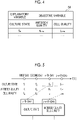
- the learning data 54 is a data set for learning that includes a plurality of sets of a culture state in the cell culture which is an explanatory variable, a quality of the antibody produced from the cells which is an objective variable corresponding to the explanatory variable, and a quality of the cells.
- the quality of the antibody include a concentration of the antibody, an aggregate amount of the antibody, a decomposition product amount of the antibody, an immature sugar chain amount, and the like.
- quality of the cells include a cell survival rate and a cell viability.
- the quality of the antibody and the quality of the cells may be one of the index values or a combination of a plurality of index values. Further, the quality of the antibody and the quality of the cells may be evaluation values obtained by determining one or a plurality of combinations thereof in a plurality of stages (for example, four stages A to D) in accordance with a predetermined determination standard.
- the learning data 54 in the past cell culture, includes a culture state acquired at a time point at which a predetermined period n (hereinafter referred to as "cell proliferation period”) has elapsed as a period for cell proliferation after the start of cell culture. Further, in the present embodiment, the learning data 54 also includes a quality of the antibody and a quality of the cells, which are associated with the acquired culture state, after a predetermined period m has elapsed since the culture state was acquired. For example, in a case where the small-quantity test is performed for 30 days and the cell proliferation period is 10 days, n in Figs. 4 and 5 is 10 and m is 20.
- n and m are not limited to the example.
- n is 5 and m is 9. That is, the quality of the antibody and the quality of the cells after 14 days from the start of cell culture may be associated with the culture state after 5 days from the start of cell culture.
- the culture state acquired at the time point at which the cell proliferation period has elapsed is used since the culture state is often unstable during the cell proliferation period.
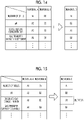
- the learning data 55 is a data set for learning that includes a plurality of sets of a culture state which is an explanatory variable and a process condition in cell culture which is an objective variable corresponding to the explanatory variable.
- process conditions include a rotation speed of the stirring device 11 per unit time (hereinafter referred to as "stirring rotation speed"), a gas aeration amount of the culture medium contained in the culture container 10 per unit volume, and a temperature of the culture medium to be contained in the culture container 10.
- each data included in the learning data 55 includes process conditions acquired periodically (for example, once a day) and culture states of the cells which is cultured under the process conditions, in the past cell culture.
- the trained model 56 is a model that is trained in advance using the learning data 54
- the trained model 57 is a model that is trained in advance using the learning data 55.
- Examples of the trained model 56 and the trained model 57 include a neural network model.
- the trained model 56 and the trained model 57 are generated by the information processing apparatus 40 in the learning phase to be described later.
- the information processing apparatus 40 includes an acquisition unit 60 and a learning unit 62.
- the CPU 41 executes the learning program 50, the CPU 41 functions as the acquisition unit 60 and the learning unit 62.
- the acquisition unit 60 acquires the learning data 54 and the learning data 55 from the storage unit 43.
- the learning unit 62 generates the trained model 56 by training the model using the learning data 54 acquired by the acquisition unit 60 as training data. Then, the learning unit 62 stores the generated trained model 56 in the storage unit 43.
- the learning performed by the learning unit 62 generates a trained model 56 in which the culture state is input and the quality of the antibody and the quality of the cells are output.
- a trained model 56 may be a deep neural network model having a plurality of interlayers. Further, as the trained model 56, a model other than the neural network may be applied.
- the learning unit 62 generates the trained model 57 by training the model using the learning data 55 acquired by the acquisition unit 60 as training data. Then, the learning unit 62 stores the generated trained model 57 in the storage unit 43.
- learning performed by the learning unit 62 generates a trained model 57 in which the culture state is an input and the process conditions are an output.
- the trained model 57 may be a deep neural network model having a plurality of interlayers. Further, as the trained model 57, a model other than the neural network may be applied.
- FIG. 11 the operation of the information processing apparatus 40 according to the present embodiment in the learning phase will be described.
- the CPU 41 executes the learning program 50
- the learning processing shown in Fig. 11 is executed.
- step S10 of Fig. 11 the acquisition unit 60 acquires the learning data 54 and the learning data 55 from the storage unit 43.
- the learning unit 62 generates the trained model 56 by training the model using the learning data 54 acquired in step S10 as the training data. Then, the learning unit 62 stores the generated trained model 56 in the storage unit 43.
- the learning unit 62 generates the trained model 57 by training the model using the learning data 55 acquired in step S10 as the training data. Then, the learning unit 62 stores the generated trained model 57 in the storage unit 43. In a case where step S12 ends, the learning processing ends.
- the information processing apparatus 40 includes an acquisition unit 70, an estimation unit 72, a search unit 74, a derivation unit 76, and an output unit 78.
- the CPU 41 executes the information processing program 52, the CPU 41 functions as an acquisition unit 70, an estimation unit 72, a search unit 74, a derivation unit 76, and an output unit 78.
- the acquisition unit 70 acquires the culture state of the cells in the cell culture using the cell culture device 100, which was measured by the measurement unit 48 at the time point at which the cell proliferation period has elapsed. In the present embodiment, the acquisition unit 70 acquires the culture state from each of the plurality of cell culture devices 100 in the small-quantity test.
- the estimation unit 72 estimates a quality of the antibody produced from the cells and a quality of the cells, on the basis of the trained model 56 and the culture state acquired by the acquisition unit 70. Specifically, the estimation unit 72 inputs the culture state acquired by the acquisition unit 70 to the trained model 56.
- the trained model 56 is a model that is trained using the culture state as an input and the quality of the antibody and the quality of the cells after the elapse of a predetermined period m as the output. Therefore, the output from the trained model 56 is estimated values of the quality of the antibody and the quality of the cells after the predetermined period m has elapsed from the time point at which the acquisition unit 70 acquires the culture state.
- the estimation unit 72 estimates the final quality of the antibody and the final quality of the cells from the culture state in each cell culture device 100 in which the small-quantity test is performed (refer to also Fig. 13 ).
- the search unit 74 searches for the culture state of the cells that improves the quality of the antibody and the quality of the cells estimated by the estimation unit 72 in accordance with a predetermined search algorithm.
- the search unit 74 uses a genetic algorithm as the search algorithm.
- the search unit 74 sets the most desirable quality of the antibody and quality of the cells among the quality of the antibody and the quality of the cells estimated by the estimation unit 72 for each cell culture device 100 as evaluation standard in the genetic algorithm.
- the search unit 74 randomly generates a group of individuals at the initial stage.
- the individual described herein is a culture state of the cells in cell culture.
- the search unit 74 derives an evaluation value of each individual.
- the search unit 74 inputs each individual to the trained model 56, and derives the quality of the antibody and the quality of the cells output from the trained model 56 as evaluation values of each individual.
- the search unit 74 selects two individuals and crosses the selected individuals. Further, as shown in Fig. 15 , the search unit 74 generates a mutation with a certain probability for the crossed individuals.
- the method of selecting two individuals such as roulette selection and tournament selection, the crossing method such as two-point crossing and multi-point crossing, and the probability of occurrence of mutation are not particularly limited and may be determined experimentally in advance.
- the search unit 74 selects, crosses, and mutates individuals of the next generation until the number of the next generations reaches a predetermined number.
- the search unit 74 derives the evaluation value of each individual of the next generation by inputting each individual of the next generation to the trained model 56.
- the search unit 74 repeats generation of the individual of the next generation as described above until the evaluation value of the individual is greater than a set evaluation standard.
- the search unit 74 searches for the individual that is greater than the set evaluation standard.
- the individual thus searched is a culture state of the cells that improves the quality of the antibody and the quality of the cells estimated by the estimation unit 72.
- the derivation unit 76 derives the process conditions in which a culture state of the cells is changed to the culture state searched by the search unit 74, on the basis of the trained model 57 and the culture state searched by the search unit 74. Specifically, the derivation unit 76 inputs the culture state, which is searched by the search unit 74, to the trained model 57. From the trained model 57, the process conditions in which a culture state of the cells is the input culture state are output. The output process conditions are process conditions which are derived by the derivation unit 76.
- the output unit 78 displays the process conditions which are derived by the derivation unit 76 by outputting the process conditions to the display unit 44.
- the process condition display screen shown in Fig. 16 is displayed on the display unit 44 as an example.
- the process conditions which are derived by the derivation unit 76 are displayed on the process condition display screen.
- a user confirms the displayed process conditions and uses them as process conditions in the medium-quantity trial production.
- the quality estimation processing shown in Fig. 17 is executed.
- the quality estimation processing shown in Fig. 17 is executed after the perfusion culture in the small-quantity test is started and at the timing in a case where the cell proliferation period has elapsed.
- step S20 of Fig. 17 the acquisition unit 70 acquires the culture state of the cells in the cell culture using the cell culture device 100, which is measured by the measurement unit 48 at the time point at which the cell proliferation period has elapsed.
- the acquisition unit 70 acquires the culture state from each of the plurality of cell culture devices 100 in the small-quantity test.
- step S22 the estimation unit 72 estimates the quality of the antibody, which is produced from the cells, and the quality of the cells, on the basis of the trained model 56 and the culture state for each of the culture states acquired in step S20.
- step S24 as described above, the search unit 74 searches for the culture state of the cells that improves the quality of the antibody and the quality of the cells estimated in step S22, in accordance with a predetermined search algorithm.
- step S26 the derivation unit 76 derives the process conditions in which a culture state of the cells is the culture state searched in step S24, on the basis of the trained model 57 and the culture state which is searched in step S24.
- step S28 the output unit 78 displays the process conditions which are derived in step S26 by outputting the process conditions to the display unit 44. In a case where the processing of step S28 is completed, the quality estimation processing is completed.
- the process conditions are not derived directly from the quality of the antibody and the quality of the cells, but the process conditions are derived from the quality of the antibody and the quality of the cells through the culture state.
- the process conditions and the culture state and the culture state and the quality of the antibody and the quality of the cells are highly related. Therefore, it is possible to derive more appropriate process conditions with high accuracy. As a result, it is possible to effectively support perfusion culture.
- the genetic algorithm is applied as the search algorithm
- the present invention is not limited thereto.
- an algorithm other than a genetic algorithm such as Bayesian optimization may be applied.
- the type of the cells used in learning in the learning phase and the cells used in the operation phase may be different.
- the trained models 56 and 57 are generated from the learning data 54 and 55 for certain cells.
- relatively small amounts of learning data 54 and 55 are collected for the cells used in the operation phase as compared with the learning phase.
- the trained models 56 and 57 are subjected to retraining using the small amounts of learning data 54 and 55.
- Such retraining is also referred to as transfer training.
- transfer training By such retraining, the learning period can be shortened.
- parameters such as the number of layers and the number of nodes in the interlayers of the trained models 56 and 57 may be changed.
- various processors include not only a CPU as a general-purpose processor which functions as various processing units by executing software (programs) but also a programmable logic device (PLD) as a processor capable of changing a circuit configuration after manufacturing a field programmable gate array (FPGA); and a dedicated electrical circuit as a processor, which has a circuit configuration specifically designed to execute specific processing, such as an application specific integrated circuit (ASIC).
- a CPU as a general-purpose processor which functions as various processing units by executing software (programs) but also a programmable logic device (PLD) as a processor capable of changing a circuit configuration after manufacturing a field programmable gate array (FPGA); and a dedicated electrical circuit as a processor, which has a circuit configuration specifically designed to execute specific processing, such as an application specific integrated circuit (ASIC).
- ASIC application specific integrated circuit
- One processing unit may be configured as one of the various processors, or may be configured as a combination of two or more of the same or different kinds of processors (for example, a combination of a plurality of FPGAs or a combination of a CPU and an FPGA). Further, the plurality of processing units may be composed of one processor.
- the plurality of processing units composed of one processor first, as represented by computers such as a client and a server, there is a form in which one processor is composed of a combination of one or more CPUs and software and this processor functions as a plurality of processing units.
- SoC system on chip
- the various processing units are configured by using one or more of the various processors as a hardware structure.
- the learning program 50 and the information processing program 52 may be provided in a form in which the programs are stored in a storage medium such as a compact disc read only memory (CD-ROM), a digital versatile disc read only memory (DVD-ROM), and a universal serial bus (USB) memory. Further, the learning program 50 and the information processing program 52 may be downloaded from an external device through a network.
- a storage medium such as a compact disc read only memory (CD-ROM), a digital versatile disc read only memory (DVD-ROM), and a universal serial bus (USB) memory.
- An information processing apparatus comprising:
- JP2019-173365 filed on September 24, 2019 is incorporated herein by reference in its entirety. Further, all documents, patent applications, and technical standards described in the present specification are incorporated into the present specification by reference to the same extent as in a case where the individual documents, patent applications, and technical standards were specifically and individually stated to be incorporated by reference.
Landscapes
- Chemical & Material Sciences (AREA)
- Health & Medical Sciences (AREA)
- Engineering & Computer Science (AREA)
- Wood Science & Technology (AREA)
- Life Sciences & Earth Sciences (AREA)
- Bioinformatics & Cheminformatics (AREA)
- Organic Chemistry (AREA)
- Zoology (AREA)
- Microbiology (AREA)
- Sustainable Development (AREA)
- Biotechnology (AREA)
- Biochemistry (AREA)
- General Engineering & Computer Science (AREA)
- General Health & Medical Sciences (AREA)
- Genetics & Genomics (AREA)
- Biomedical Technology (AREA)
- Analytical Chemistry (AREA)
- Immunology (AREA)
- Computer Hardware Design (AREA)
- Apparatus Associated With Microorganisms And Enzymes (AREA)
- Micro-Organisms Or Cultivation Processes Thereof (AREA)
Abstract
Description
- The present disclosure relates to an information processing apparatus, an information processing method, and an information processing program.
-
JP2009-44974A - Perfusion culture is a culture method of cells used in the production of biopharmaceutical drugs using antibodies produced from cells. Perfusion culture is a culture method in which a culture liquid containing cells is continuously filtered and discharged, while a fresh culture medium containing nutritional components is continuously supplied to a culture tank. Perfusion culture is also referred to as continuous culture.
- Since the number of process conditions for cell cultures that can be changed in perfusion culture and the set values of each process condition are very large, it is difficult to experiment with all combinations to find the optimum process conditions. Therefore, cell culture is performed under a certain number of different process conditions, and the process conditions with the most desirable experimental results are selected. The selected process condition is optimal among the process conditions within the range of experiments, but more suitable process conditions may exist. In a case where such appropriate process conditions can be derived, it is possible to effectively support perfusion culture.
- The technique described in
JP2009-44974A - The present disclosure has been made in view of the above-mentioned circumstances, and provides an information processing apparatus, an information processing method, and an information processing program capable of effectively supporting perfusion culture.
- The information processing apparatus of the present disclosure comprises: an estimation unit that estimates a quality of an antibody produced from cells and a quality of the cells on the basis of a culture state of the cells, a search unit that searches for the culture state of the cells, which improves the quality of the antibody and the quality of the cells estimated by the estimation unit, and a derivation unit that derives process conditions for cell culture in which a culture state of the cells is the culture state searched by the search unit.
- In the information processing apparatus of the present disclosure, the culture state may include the number of the cells, a pH of a culture medium, a concentration of a dissolved gas in the culture medium, and a gas transfer capacity coefficient of the culture medium.
- Further, in the information processing apparatus of the present disclosure, the process conditions may include a rotation speed of a stirring device, which is for stirring the culture medium, per unit time and a gas aeration amount of the culture medium per unit volume.
- Further, in the information processing apparatus of the present disclosure, the estimation unit may estimate the quality of the antibody and the quality of the cells, on the basis of the culture state of the cells and a trained model which is trained in advance using the culture state, the quality of the antibody, and the quality of the cells.
- Further, in the information processing apparatus of the present disclosure, the derivation unit may derive the process conditions, on the basis of the culture state of the cells and a trained model which is trained in advance using the process conditions and the culture state.
- Further, in the information processing apparatus of the present disclosure, the search unit may search for the culture state of the cells in accordance with a predetermined search algorithm.
- Further, in the information processing apparatus of the present disclosure, the search algorithm may be a genetic algorithm.
- Further, the information processing method of the present disclosure executed by a computer, the method comprises: estimating a quality of an antibody produced from cells and a quality of the cells on the basis of a culture state of the cells; searching for the culture state of the cells that improves the estimated quality of the antibody and the estimated quality of the cells; and deriving process conditions for cell culture in which a culture state of the cells is the searched culture state.
- In addition, the information processing program of the present disclosure causes a computer to execute processing of: estimating a quality of an antibody produced from cells and a quality of the cells on the basis of a culture state of the cells; searching for the culture state of the cells that improves the estimated quality of the antibody and the estimated quality of the cells; and deriving process conditions for cell culture in which a culture state of the cells is the searched culture state.
- According to the present disclosure, it is possible to effectively support perfusion culture.
-
-
Fig. 1 is a diagram showing an example of a configuration of a cell culture device. -
Fig. 2 is a diagram for explaining a flow of development of an antibody drug. -
Fig. 3 is a block diagram showing an example of a hardware configuration of an information processing apparatus. -
Fig. 4 is a diagram showing an example of first learning data. -
Fig. 5 is a diagram for explaining the first learning data. -
Fig. 6 is a diagram showing an example of second learning data. -
Fig. 7 is a diagram for explaining the second learning data. -
Fig. 8 is a block diagram showing an example of a functional configuration in a learning phase of the information processing apparatus. -
Fig. 9 is a diagram showing an example of a first trained model. -
Fig. 10 is a diagram showing an example of a second trained model. -
Fig. 11 is a flowchart showing an example of learning processing. -
Fig. 12 is a block diagram showing an example of a functional configuration in an operation phase of the information processing apparatus. -
Fig. 13 is a diagram showing an example of a processing flow in an operation phase of the information processing apparatus. -
Fig. 14 is a diagram for explaining crossover of individuals in a genetic algorithm. -
Fig. 15 is a diagram for explaining mutations in the genetic algorithm. -
Fig. 16 is a diagram showing an example of a process condition display screen. -
Fig. 17 is a flowchart showing an example of process condition derivation processing. - Examples of embodiments for carrying out the technique of the present disclosure will be hereinafter described in detail with reference to the drawings.
- A configuration of a
cell culture device 100 according to the present embodiment will be described with reference toFig. 1 . Thecell culture device 100 can be suitably used in cell culture for expressing an antibody in animal cells, for example. - The cells used in expressing the antibody are not particularly limited, and examples thereof include animal cells, plant cells, eukaryotic cells such as yeast, prokaryotic cells such as grass bacillus, Escherichia coli, and the like. Animal cells such as CHO cells, BHK-21 cells, and SP2/0-Ag14 cells are preferable, and CHO cells are more preferable.
- The antibody expressed in animal cells is not particularly limited, and includes, for example, anti-IL-6 receptor antibody, anti-IL-6 antibody, anti-glypican-3 antibody, anti-CD3 antibody, anti-CD20 antibody, anti-GPIIb/IIIa antibody, anti-TNF antibody, anti-CD25 antibody, anti-EGFR antibody, anti-Her2/neu antibody, anti-RSV antibody, anti-CD33 antibody, anti-CD52 antibody, anti-IgE antibody, anti-CD11a antibody, anti-VEGF antibody, anti-VLA4 antibody, and the like. The antibody includes not only monoclonal antibodies derived from animals such as humans, mice, rats, hamsters, rabbits, and monkeys, but also artificially modified antibodies such as chimeric antibodies, humanized antibodies, and bispecific antibodies.
- The obtained antibody or fragment thereof can be purified to be uniform. For the separation and purification of the antibody or a fragment thereof, the separation and purification method used in a conventional polypeptide may be used. For example, an antibody can be separated and purified by appropriately selecting and combining a chromatography column such as affinity chromatography, a filter, ultrafiltration, salting out, dialysis, SDS polyacrylamide gel electrophoresis, and isoelectric point electrophoresis. However, the present invention is not limited thereto. The obtained concentration of the antibody can be measured by measurement of the absorbance or by an enzyme-linked immunosorbent assay (ELISA) or the like.
- As shown in
Fig. 1 , thecell culture device 100 includes aculture container 10 that contains a cell suspension including cells, and afilter unit 20 that has afilter membrane 24 for subjecting the cell suspension extracted from theculture container 10 to a membrane separation treatment. Thecell culture device 100 further includes aflow passage 32 as a circulation flow passage for returning components blocked by thefilter membrane 24 to theculture container 10, and aflow passage 33 for discharging components having permeated through thefilter membrane 24 of the cell suspension to the outside of thefilter unit 20. Further, thecell culture device 100 includes aflow passage 38 for supplying a fresh culture medium to theculture container 10, and a pump P3 provided in the middle of theflow passage 38. - The
culture container 10 is a container for containing a cell suspension including cells and a culture medium used in expressing an antibody. Inside theculture container 10, a stirringdevice 11 having a stirring blade is provided. By rotating the stirring blade of the stirringdevice 11, the culture medium contained together with the cells in theculture container 10 is stirred, and the homogeneity of the culture medium is maintained. - In the
cell culture device 100, in order to prevent the concentration of cells in theculture container 10 from becoming excessively high, a cell bleeding treatment is performed, which is for bleeding off a part of the cells in the culture container 10 (for example, about 10%) at an appropriate timing during the culture period. In the cell bleeding treatment, the cells in theculture container 10 are discharged to the outside of theculture container 10 through theflow passage 39. - One end of the
flow passage 31 is connected to the bottom of theculture container 10, and the other end is connected to aninlet 20a of thefilter unit 20. In the middle of theflow passage 31, a pump P1, which extracts the cell suspension contained in theculture container 10 and sends the cell suspension to thefilter unit 20, is provided. - The
filter unit 20 comprises acontainer 21 and afilter membrane 24 that separates the space inside thecontainer 21 into asupply side 22 and apermeation side 23 and performs a membrane separation treatment on the cell suspension extracted from theculture container 10. Further, thefilter unit 20 has theinlet 20a through which the cell suspension flows in and anoutlet 20b through which the cell suspension flows out on thesupply side 22. The cell suspension extracted from theculture container 10 passes through thefilter membrane 24 while flowing into the inside of thecontainer 21 from theinlet 20a and flowing out to the outside of thecontainer 21 from theoutlet 20b. Thefilter unit 20 performs the membrane separation treatment by a tangential flow (cross flow) method of sending permeation components to thepermeation side 23 while flowing a liquid subjected to the membrane separation treatment along the membrane surface of thefilter membrane 24 subjected to the membrane separation treatment (that is, in a direction parallel to the membrane surface). The tangential flow method, which is a method for membrane separation treatment using thefilter membrane 24, may be a method of forming a flow in which the cell suspension extracted from theculture container 10 circulates in one direction in parallel along the membrane surface of thefilter membrane 24, or may be a method of forming a flow in which the cell suspension extracted from theculture container 10 reciprocates alternately in parallel along the membrane surface of thefilter membrane 24. In a case of forming a circulating flow, for example, a KrosFlo perfusion culture flow path device (KML-100, KPS-200, and KPS-600) manufactured by Spectrum Laboratories Corp. can be suitably used. Further, in a case of forming a flow that reciprocates alternately, the ATF system manufactured by REPLIGEN Corp. can be suitably used. - The relatively large-sized components included in the cell suspension do not permeate through the
filter membrane 24, flow out to the outside of thecontainer 21 from theoutlet 20b, and are returned to the inside of theculture container 10 through theflow passage 32. That is, in the cell suspension extracted from theculture container 10, the components blocked by thefilter membrane 24 are returned to the inside of theculture container 10 through theflow passage 32. On the other hand, the relatively small-sized components included in the cell suspension permeate through thefilter membrane 24 and are discharged to the outside of thecontainer 21 from adischarge port 20c provided on thepermeation side 23. Aflow passage 33 provided with a pump P2 is connected to thedischarge port 20c of thefilter unit 20, and the components discharged to thepermeation side 23 are discharged from thedischarge port 20c to the outside of thecontainer 21 through theflow passage 33. - In the
cell culture device 100 according to the present embodiment, thefilter membrane 24 is used for the purpose of separating cells and components unnecessary for cell culture. Examples of components unnecessary for cell culture include cell carcasses, cell crushed products, DNA, HCP, antibodies, waste products, and the like. That is, thefilter membrane 24 has a separation performance suitable for blocking the permeation of cells while allowing components unnecessary for cell culture to permeate. - The components unnecessary for cell culture discharged from the
culture container 10 as described above are sent to the next process, which is an antibody purification process. - In the contract development of antibody drugs, cells are contracted from customers and antibodies are produced by culturing the contracted cells. In the contract development, as shown in
Fig. 2 , an appropriate process condition is determined by a small-quantity test in which perfusion culture is performed under various process conditions using a relatively small-scalecell culture device 100. Next, using a relatively medium-scalecell culture device 100, the qualities of the antibody and cells are confirmed by a medium-quantity trial production in which perfusion culture is performed under the process conditions determined by the small-quantity test. After confirmation of the qualities of the antibody and cells in the medium-quantity trial production is completed, the antibody is produced by performing perfusion culture using a relatively large-scalecell culture device 100. - In the present embodiment, an example of deriving more appropriate process conditions to be used in the next medium-quantity trial production in the above-mentioned small-quantity test will be described.
- Next, referring to
Fig. 3 , the hardware configuration of theinformation processing apparatus 40 connected to thecell culture device 100 will be described. As shown inFig. 3 , theinformation processing apparatus 40 includes a central processing unit (CPU) 41, amemory 42, astorage unit 43, adisplay unit 44 such as a liquid crystal display, aninput unit 45 such as a keyboard and a mouse, and an external interface (I/F) 46. TheCPU 41, thememory 42, thestorage unit 43, thedisplay unit 44, theinput unit 45, and the external I/F 46 are connected to thebus 47. Themeasurement unit 48 is connected to the external I/F 46. Examples of theinformation processing apparatus 40 include a personal computer, a server computer, and the like. - The
storage unit 43 is realized by a hard disk drive (HDD), a solid state drive (SSD), a flash memory, or the like. A learning program 50 and aninformation processing program 52 are stored in thestorage unit 43 as a storage medium. TheCPU 41 reads the learning program 50 from thestorage unit 43, expands the program into thememory 42, and executes the expanded learning program 50. Further, theCPU 41 reads theinformation processing program 52 from thestorage unit 43, expands the program into thememory 42, and executes the expandedinformation processing program 52. Further, thestorage unit 43 stores first learningdata 54 andsecond learning data 55. Further, thestorage unit 43 stores the first trainedmodel 56 and the second trainedmodel 57. - The
measurement unit 48 includes various measurement devices that measure a culture state of cells in the cell culture using thecell culture device 100. Examples of the culture state include: for example, the number of cells contained in the culture container 10 (hereinafter, simply referred to as "number of cells"); a pH of the culture medium; a concentration of the dissolved gas in the culture medium (for example, a concentration of dissolved oxygen); a gas transfer capacity coefficient (for example, oxygen transfer capacity coefficient: kLA) of the culture medium; and the like. The number of cells means a sum of the number of living cells and the number of dead cells. - Referring to
Figs. 4 and 5 , the details of the learningdata 54 according to the present embodiment will be described. As shown inFig. 4 , the learningdata 54 is a data set for learning that includes a plurality of sets of a culture state in the cell culture which is an explanatory variable, a quality of the antibody produced from the cells which is an objective variable corresponding to the explanatory variable, and a quality of the cells. Examples of the quality of the antibody include a concentration of the antibody, an aggregate amount of the antibody, a decomposition product amount of the antibody, an immature sugar chain amount, and the like. Examples of quality of the cells include a cell survival rate and a cell viability. The quality of the antibody and the quality of the cells may be one of the index values or a combination of a plurality of index values. Further, the quality of the antibody and the quality of the cells may be evaluation values obtained by determining one or a plurality of combinations thereof in a plurality of stages (for example, four stages A to D) in accordance with a predetermined determination standard. - As shown in
Fig. 5 , in the present embodiment, in the past cell culture, the learningdata 54 includes a culture state acquired at a time point at which a predetermined period n (hereinafter referred to as "cell proliferation period") has elapsed as a period for cell proliferation after the start of cell culture. Further, in the present embodiment, the learningdata 54 also includes a quality of the antibody and a quality of the cells, which are associated with the acquired culture state, after a predetermined period m has elapsed since the culture state was acquired. For example, in a case where the small-quantity test is performed for 30 days and the cell proliferation period is 10 days, n inFigs. 4 and 5 is 10 and m is 20. It should be noted that n and m are not limited to the example. For example, n is 5 and m is 9. That is, the quality of the antibody and the quality of the cells after 14 days from the start of cell culture may be associated with the culture state after 5 days from the start of cell culture. The culture state acquired at the time point at which the cell proliferation period has elapsed is used since the culture state is often unstable during the cell proliferation period. - Referring to
Figs. 6 and 7 , the details of the learningdata 55 according to the present embodiment will be described. As shown inFig. 6 , the learningdata 55 is a data set for learning that includes a plurality of sets of a culture state which is an explanatory variable and a process condition in cell culture which is an objective variable corresponding to the explanatory variable. Examples of process conditions include a rotation speed of the stirringdevice 11 per unit time (hereinafter referred to as "stirring rotation speed"), a gas aeration amount of the culture medium contained in theculture container 10 per unit volume, and a temperature of the culture medium to be contained in theculture container 10. - As shown in
Fig. 7 , each data included in the learningdata 55 includes process conditions acquired periodically (for example, once a day) and culture states of the cells which is cultured under the process conditions, in the past cell culture. - The trained
model 56 is a model that is trained in advance using the learningdata 54, and the trainedmodel 57 is a model that is trained in advance using the learningdata 55. Examples of the trainedmodel 56 and the trainedmodel 57 include a neural network model. The trainedmodel 56 and the trainedmodel 57 are generated by theinformation processing apparatus 40 in the learning phase to be described later. - Next, referring to
Fig. 8 , a functional configuration in the learning phase of theinformation processing apparatus 40 will be described. As shown inFig. 8 , theinformation processing apparatus 40 includes anacquisition unit 60 and alearning unit 62. In a case where theCPU 41 executes the learning program 50, theCPU 41 functions as theacquisition unit 60 and thelearning unit 62. - The
acquisition unit 60 acquires the learningdata 54 and the learningdata 55 from thestorage unit 43. Thelearning unit 62 generates the trainedmodel 56 by training the model using the learningdata 54 acquired by theacquisition unit 60 as training data. Then, thelearning unit 62 stores the generated trainedmodel 56 in thestorage unit 43. - As an example, as shown in
Fig. 9 , the learning performed by thelearning unit 62 generates a trainedmodel 56 in which the culture state is input and the quality of the antibody and the quality of the cells are output. For example, an error back propagation method is used in learning performed by thelearning unit 62. The trainedmodel 56 may be a deep neural network model having a plurality of interlayers. Further, as the trainedmodel 56, a model other than the neural network may be applied. - Further, the
learning unit 62 generates the trainedmodel 57 by training the model using the learningdata 55 acquired by theacquisition unit 60 as training data. Then, thelearning unit 62 stores the generated trainedmodel 57 in thestorage unit 43. - As an example, as shown in
Fig. 10 , learning performed by thelearning unit 62 generates a trainedmodel 57 in which the culture state is an input and the process conditions are an output. For example, an error back propagation method is used in learning performed by thelearning unit 62. The trainedmodel 57 may be a deep neural network model having a plurality of interlayers. Further, as the trainedmodel 57, a model other than the neural network may be applied. - Next, referring to
Fig. 11 , the operation of theinformation processing apparatus 40 according to the present embodiment in the learning phase will be described. In a case where theCPU 41 executes the learning program 50, the learning processing shown inFig. 11 is executed. - In step S10 of
Fig. 11 , theacquisition unit 60 acquires the learningdata 54 and the learningdata 55 from thestorage unit 43. In step S12, as described above, thelearning unit 62 generates the trainedmodel 56 by training the model using the learningdata 54 acquired in step S10 as the training data. Then, thelearning unit 62 stores the generated trainedmodel 56 in thestorage unit 43. - Further, as described above, the
learning unit 62 generates the trainedmodel 57 by training the model using the learningdata 55 acquired in step S10 as the training data. Then, thelearning unit 62 stores the generated trainedmodel 57 in thestorage unit 43. In a case where step S12 ends, the learning processing ends. - Next, referring to
Fig. 12 , a functional configuration in the operation phase of theinformation processing apparatus 40 according to the present embodiment will be described. As shown inFig. 12 , theinformation processing apparatus 40 includes anacquisition unit 70, anestimation unit 72, asearch unit 74, aderivation unit 76, and anoutput unit 78. In a case where theCPU 41 executes theinformation processing program 52, theCPU 41 functions as anacquisition unit 70, anestimation unit 72, asearch unit 74, aderivation unit 76, and anoutput unit 78. - The
acquisition unit 70 acquires the culture state of the cells in the cell culture using thecell culture device 100, which was measured by themeasurement unit 48 at the time point at which the cell proliferation period has elapsed. In the present embodiment, theacquisition unit 70 acquires the culture state from each of the plurality ofcell culture devices 100 in the small-quantity test. - The
estimation unit 72 estimates a quality of the antibody produced from the cells and a quality of the cells, on the basis of the trainedmodel 56 and the culture state acquired by theacquisition unit 70. Specifically, theestimation unit 72 inputs the culture state acquired by theacquisition unit 70 to the trainedmodel 56. As described above, the trainedmodel 56 is a model that is trained using the culture state as an input and the quality of the antibody and the quality of the cells after the elapse of a predetermined period m as the output. Therefore, the output from the trainedmodel 56 is estimated values of the quality of the antibody and the quality of the cells after the predetermined period m has elapsed from the time point at which theacquisition unit 70 acquires the culture state. As described above, theestimation unit 72 estimates the final quality of the antibody and the final quality of the cells from the culture state in eachcell culture device 100 in which the small-quantity test is performed (refer to alsoFig. 13 ). - As shown in
Fig. 13 , thesearch unit 74 searches for the culture state of the cells that improves the quality of the antibody and the quality of the cells estimated by theestimation unit 72 in accordance with a predetermined search algorithm. In the present embodiment, thesearch unit 74 uses a genetic algorithm as the search algorithm. - Specifically, first, the
search unit 74 sets the most desirable quality of the antibody and quality of the cells among the quality of the antibody and the quality of the cells estimated by theestimation unit 72 for eachcell culture device 100 as evaluation standard in the genetic algorithm. Next, thesearch unit 74 randomly generates a group of individuals at the initial stage. The individual described herein is a culture state of the cells in cell culture. - Next, the
search unit 74 derives an evaluation value of each individual. In the present embodiment, thesearch unit 74 inputs each individual to the trainedmodel 56, and derives the quality of the antibody and the quality of the cells output from the trainedmodel 56 as evaluation values of each individual. - Next, as shown in
Fig. 14 , thesearch unit 74 selects two individuals and crosses the selected individuals. Further, as shown inFig. 15 , thesearch unit 74 generates a mutation with a certain probability for the crossed individuals. The method of selecting two individuals such as roulette selection and tournament selection, the crossing method such as two-point crossing and multi-point crossing, and the probability of occurrence of mutation are not particularly limited and may be determined experimentally in advance. Thesearch unit 74 selects, crosses, and mutates individuals of the next generation until the number of the next generations reaches a predetermined number. - Then, the
search unit 74 derives the evaluation value of each individual of the next generation by inputting each individual of the next generation to the trainedmodel 56. Thesearch unit 74 repeats generation of the individual of the next generation as described above until the evaluation value of the individual is greater than a set evaluation standard. Through the above-mentioned processing, thesearch unit 74 searches for the individual that is greater than the set evaluation standard. The individual thus searched is a culture state of the cells that improves the quality of the antibody and the quality of the cells estimated by theestimation unit 72. - As shown in
Fig. 13 , thederivation unit 76 derives the process conditions in which a culture state of the cells is changed to the culture state searched by thesearch unit 74, on the basis of the trainedmodel 57 and the culture state searched by thesearch unit 74. Specifically, thederivation unit 76 inputs the culture state, which is searched by thesearch unit 74, to the trainedmodel 57. From the trainedmodel 57, the process conditions in which a culture state of the cells is the input culture state are output. The output process conditions are process conditions which are derived by thederivation unit 76. - The
output unit 78 displays the process conditions which are derived by thederivation unit 76 by outputting the process conditions to thedisplay unit 44. On the basis of the output, the process condition display screen shown inFig. 16 is displayed on thedisplay unit 44 as an example. As shown inFig. 16 , the process conditions which are derived by thederivation unit 76 are displayed on the process condition display screen. A user confirms the displayed process conditions and uses them as process conditions in the medium-quantity trial production. - Next, referring to
Fig. 17 , the operation of theinformation processing apparatus 40 according to the present embodiment in the operation phase will be described. In a case where theCPU 41 executes theinformation processing program 52, the quality estimation processing shown inFig. 17 is executed. The quality estimation processing shown inFig. 17 is executed after the perfusion culture in the small-quantity test is started and at the timing in a case where the cell proliferation period has elapsed. - In step S20 of
Fig. 17 , theacquisition unit 70 acquires the culture state of the cells in the cell culture using thecell culture device 100, which is measured by themeasurement unit 48 at the time point at which the cell proliferation period has elapsed. Theacquisition unit 70 acquires the culture state from each of the plurality ofcell culture devices 100 in the small-quantity test. - In step S22, as described above, the
estimation unit 72 estimates the quality of the antibody, which is produced from the cells, and the quality of the cells, on the basis of the trainedmodel 56 and the culture state for each of the culture states acquired in step S20. In step S24, as described above, thesearch unit 74 searches for the culture state of the cells that improves the quality of the antibody and the quality of the cells estimated in step S22, in accordance with a predetermined search algorithm. - In step S26, as described above, the
derivation unit 76 derives the process conditions in which a culture state of the cells is the culture state searched in step S24, on the basis of the trainedmodel 57 and the culture state which is searched in step S24. In step S28, theoutput unit 78 displays the process conditions which are derived in step S26 by outputting the process conditions to thedisplay unit 44. In a case where the processing of step S28 is completed, the quality estimation processing is completed. - As described above, according to the present embodiment, the process conditions are not derived directly from the quality of the antibody and the quality of the cells, but the process conditions are derived from the quality of the antibody and the quality of the cells through the culture state. As compared with the quality of the antibody and the quality of the cells, and the process conditions, the process conditions and the culture state and the culture state and the quality of the antibody and the quality of the cells are highly related. Therefore, it is possible to derive more appropriate process conditions with high accuracy. As a result, it is possible to effectively support perfusion culture.
- In the above-mentioned embodiment, the case where the genetic algorithm is applied as the search algorithm has been described, but the present invention is not limited thereto. For example, as a search algorithm, an algorithm other than a genetic algorithm such as Bayesian optimization may be applied.
- Further, in the above-mentioned embodiment, the type of the cells used in learning in the learning phase and the cells used in the operation phase may be different. In such a case, for example, the trained
models data data models data models - Further, as the hardware structure of the processing unit that executes various processes such as each functional unit of the
information processing apparatus 40 in the above-mentioned embodiment, it is possible to use various processors to be described below. As described above, various processors include not only a CPU as a general-purpose processor which functions as various processing units by executing software (programs) but also a programmable logic device (PLD) as a processor capable of changing a circuit configuration after manufacturing a field programmable gate array (FPGA); and a dedicated electrical circuit as a processor, which has a circuit configuration specifically designed to execute specific processing, such as an application specific integrated circuit (ASIC). - One processing unit may be configured as one of the various processors, or may be configured as a combination of two or more of the same or different kinds of processors (for example, a combination of a plurality of FPGAs or a combination of a CPU and an FPGA). Further, the plurality of processing units may be composed of one processor.
- As an example of the plurality of processing units composed of one processor, first, as represented by computers such as a client and a server, there is a form in which one processor is composed of a combination of one or more CPUs and software and this processor functions as a plurality of processing units. Second, as represented by a system on chip (SoC), there is a form in which a processor that realizes the functions of the whole system including a plurality of processing units with a single integrated circuit (IC) chip is used. As described above, the various processing units are configured by using one or more of the various processors as a hardware structure.
- Furthermore, as the hardware structure of these various processors, more specifically, it is possible to use an electric circuit (circuitry) in which circuit elements such as semiconductor elements are combined.
- Further, in the above-mentioned embodiment, the configuration in which the learning program 50 and the
information processing program 52 are stored (installed) in thestorage unit 43 in advance has been described, but the present invention is not limited thereto. The learning program 50 and theinformation processing program 52 may be provided in a form in which the programs are stored in a storage medium such as a compact disc read only memory (CD-ROM), a digital versatile disc read only memory (DVD-ROM), and a universal serial bus (USB) memory. Further, the learning program 50 and theinformation processing program 52 may be downloaded from an external device through a network. - From the above-mentioned description, the technology relating to the following supplementary items can be found.
- An information processing apparatus comprising:
- a processor; and
- a memory that is built into or connected to the processor,
- in which the processor is configured to
- estimate a quality of an antibody produced from cells and a quality of the cells on the basis of a culture state of the cells,
- search for the culture state of the cells that improves the estimated quality of the antibody and the estimated quality of the cells, and
- derive process conditions for cell culture in which a culture state of the cells is the searched culture state.
- The present disclosure of
JP2019-173365 filed on September 24, 2019
Claims (9)
- An information processing apparatus comprising:an estimation unit that estimates a quality of an antibody produced from cells and a quality of the cells on the basis of a culture state of the cells;a search unit that searches for the culture state of the cells, which improves the quality of the antibody and the quality of the cells estimated by the estimation unit; anda derivation unit that derives process conditions for cell culture in which a culture state of the cells is the culture state searched by the search unit.
- The information processing apparatus according to claim 1, wherein the culture state includes the number of the cells, a pH of a culture medium, a concentration of a dissolved gas in the culture medium, and a gas transfer capacity coefficient of the culture medium.
- The information processing apparatus according to claim 1 or 2, wherein the process conditions include a rotation speed of a stirring device, which is for stirring the culture medium, per unit time and a gas aeration amount of the culture medium per unit volume.
- The information processing apparatus according to any one of claims 1 to 3, wherein the estimation unit estimates the quality of the antibody and the quality of the cells on the basis of the culture state of the cells and a trained model which is trained in advance using the culture state, the quality of the antibody, and the quality of the cells.
- The information processing apparatus according to any one of claims 1 to 4, wherein the derivation unit derives the process conditions on the basis of the culture state of the cells and a trained model which is trained in advance using the process conditions and the culture state.
- The information processing apparatus according to any one of claims 1 to 5, wherein the search unit searches for the culture state of the cells in accordance with a predetermined search algorithm.
- The information processing apparatus according to claim 6, wherein the search algorithm is a genetic algorithm.
- An information processing method executed by a computer, the method comprising:estimating a quality of an antibody produced from cells and a quality of the cells on the basis of a culture state of the cells;searching for the culture state of the cells that improves the estimated quality of the antibody and the estimated quality of the cells; andderiving process conditions for cell culture in which a culture state of the cells is the searched culture state.
- An information processing program for causing a computer to execute:estimating a quality of an antibody produced from cells and a quality of the cells on the basis of a culture state of the cells;searching for the culture state of the cells that improves the estimated quality of the antibody and the estimated quality of the cells; andderiving process conditions for cell culture in which a culture state of the cells is the searched culture state.
Applications Claiming Priority (2)
| Application Number | Priority Date | Filing Date | Title |
|---|---|---|---|
| JP2019173365 | 2019-09-24 | ||
| PCT/JP2020/018809 WO2021059578A1 (en) | 2019-09-24 | 2020-05-11 | Information processing device, information processing method, and information processing program |
Publications (2)
| Publication Number | Publication Date |
|---|---|
| EP4015615A1 true EP4015615A1 (en) | 2022-06-22 |
| EP4015615A4 EP4015615A4 (en) | 2022-10-12 |
Family
ID=75166934
Family Applications (1)
| Application Number | Title | Priority Date | Filing Date |
|---|---|---|---|
| EP20867351.7A Pending EP4015615A4 (en) | 2019-09-24 | 2020-05-11 | Information processing device, information processing method, and information processing program |
Country Status (4)
| Country | Link |
|---|---|
| US (1) | US20220195369A1 (en) |
| EP (1) | EP4015615A4 (en) |
| JP (1) | JP7451546B2 (en) |
| WO (1) | WO2021059578A1 (en) |
Families Citing this family (1)
| Publication number | Priority date | Publication date | Assignee | Title |
|---|---|---|---|---|
| KR102792081B1 (en) * | 2021-10-27 | 2025-04-08 | 프레스티지바이오로직스 주식회사 | Apparatus for determining cell culturing condition using artificial intelligence and operation method thereof |
Family Cites Families (9)
| Publication number | Priority date | Publication date | Assignee | Title |
|---|---|---|---|---|
| JP2005055411A (en) * | 2003-08-07 | 2005-03-03 | Bios Ikagaku Kenkyusho:Kk | Method and apparatus for automatically screening monoclonal antibody |
| JP5181385B2 (en) | 2007-08-16 | 2013-04-10 | 国立大学法人名古屋大学 | Prediction model construction method for predicting cell quality, prediction model construction program, recording medium recording the program, and prediction model construction apparatus |
| WO2010098865A1 (en) * | 2009-02-26 | 2010-09-02 | Gt Life Sciences, Inc. | Mammalian cell line models and related methods |
| EP3423588A1 (en) * | 2016-03-02 | 2019-01-09 | Lonza Ltd | Improved fermentation process |
| JP6801000B2 (en) * | 2016-12-01 | 2020-12-16 | 富士フイルム株式会社 | Cell image evaluation device and cell image evaluation control program |
| JP6824050B2 (en) * | 2017-01-25 | 2021-02-03 | 株式会社日立プラントサービス | Cell culture device |
| CA3083124A1 (en) * | 2017-11-20 | 2019-05-23 | Lonza Ltd. | Process and system for propagating cell cultures while preventing lactate accumulation |
| JP7092879B2 (en) * | 2017-12-29 | 2022-06-28 | エフ.ホフマン-ラ ロシュ アーゲー | Prediction of metabolic status of cell culture |
| JP6944900B2 (en) | 2018-03-28 | 2021-10-06 | 鹿島建設株式会社 | Construction method of linear structure |
-
2020
- 2020-05-11 WO PCT/JP2020/018809 patent/WO2021059578A1/en not_active Ceased
- 2020-05-11 EP EP20867351.7A patent/EP4015615A4/en active Pending
- 2020-05-11 JP JP2021548322A patent/JP7451546B2/en active Active
-
2022
- 2022-03-09 US US17/690,147 patent/US20220195369A1/en active Pending
Also Published As
| Publication number | Publication date |
|---|---|
| WO2021059578A1 (en) | 2021-04-01 |
| JP7451546B2 (en) | 2024-03-18 |
| JPWO2021059578A1 (en) | 2021-04-01 |
| EP4015615A4 (en) | 2022-10-12 |
| US20220195369A1 (en) | 2022-06-23 |
Similar Documents
| Publication | Publication Date | Title |
|---|---|---|
| Yang et al. | Economic analysis of batch and continuous biopharmaceutical antibody production: a review | |
| Nfor et al. | Design strategies for integrated protein purification processes: challenges, progress and outlook | |
| JP7562563B2 (en) | Data-driven predictive modeling for cell line selection in biopharmaceutical production | |
| CN109154588A (en) | Automatic biological process development | |
| CN112662551B (en) | Cell culture control method and system | |
| Goldrick et al. | Predicting performance of constant flow depth filtration using constant pressure filtration data | |
| Genoni et al. | Identification of domains in protein structures from the analysis of intramolecular interactions | |
| US20220199195A1 (en) | Information processing apparatus, information processing method, and information processing program | |
| US20220195369A1 (en) | Information processing apparatus, information processing method, and information processing program | |
| Dürauer et al. | Sensors and chemometrics in downstream processing | |
| Zhao et al. | Identification of small open reading frames in plant lncRNA using class-imbalance learning | |
| KR20230162932A (en) | Methods and systems for mixed protocol development | |
| Li et al. | Disentangled wasserstein autoencoder for t-cell receptor engineering | |
| Banerjee et al. | Multi-objective optimization of continuous CHO cell clarification using acoustic wave separation | |
| Hans et al. | Automated cell treatment for competence and transformation of Escherichia coli in a high-throughput quasi-turbidostat using microtiter plates | |
| Parkinson et al. | For antibody sequence generative modeling, mixture models may be all you need | |
| Borrero et al. | Folding kinetics of a lattice protein via a forward flux sampling approach | |
| Lin et al. | Connecting structural characteristics and material properties in phase-separating polymer solutions: phase-field modeling and physics-informed neural networks | |
| US20230148020A1 (en) | Selecting chromatography parameters for manufacturing therapeutic proteins | |
| CN110428870A (en) | A kind of method and its application of prediction heavy chain of antibody light chain pairing probability | |
| Nasrollahi et al. | Cell type differentiation using network clustering algorithms | |
| Dürauer et al. | Monitoring product quantity, purity and potency of biopharmaceuticals in real-time by predictive chemometrics and soft sensors | |
| Bolmanis et al. | Leveraging Historical Process Data for Recombinant P. pastoris Fermentation Hybrid Deep Modeling and Model Predictive Control Development | |
| Wu et al. | Calculating linear and nonlinear multi-ensemble slow collective variables for protein folding | |
| Cygert et al. | Platelet RNA sequencing data through the lens of machine learning |
Legal Events
| Date | Code | Title | Description |
|---|---|---|---|
| STAA | Information on the status of an ep patent application or granted ep patent |
Free format text: STATUS: THE INTERNATIONAL PUBLICATION HAS BEEN MADE |
|
| PUAI | Public reference made under article 153(3) epc to a published international application that has entered the european phase |
Free format text: ORIGINAL CODE: 0009012 |
|
| STAA | Information on the status of an ep patent application or granted ep patent |
Free format text: STATUS: REQUEST FOR EXAMINATION WAS MADE |
|
| 17P | Request for examination filed |
Effective date: 20220318 |
|
| AK | Designated contracting states |
Kind code of ref document: A1 Designated state(s): AL AT BE BG CH CY CZ DE DK EE ES FI FR GB GR HR HU IE IS IT LI LT LU LV MC MK MT NL NO PL PT RO RS SE SI SK SM TR |
|
| A4 | Supplementary search report drawn up and despatched |
Effective date: 20220913 |
|
| RIC1 | Information provided on ipc code assigned before grant |
Ipc: G16B 40/20 20190101ALI20220907BHEP Ipc: C12M 1/34 20060101ALI20220907BHEP Ipc: G16B 40/00 20190101ALI20220907BHEP Ipc: C12M 1/00 20060101AFI20220907BHEP |
|
| DAV | Request for validation of the european patent (deleted) | ||
| DAX | Request for extension of the european patent (deleted) |