EP4014840A1 - An analysis system with a portable connected device - Google Patents
An analysis system with a portable connected device Download PDFInfo
- Publication number
- EP4014840A1 EP4014840A1 EP20215114.8A EP20215114A EP4014840A1 EP 4014840 A1 EP4014840 A1 EP 4014840A1 EP 20215114 A EP20215114 A EP 20215114A EP 4014840 A1 EP4014840 A1 EP 4014840A1
- Authority
- EP
- European Patent Office
- Prior art keywords
- supination
- pronation
- portable device
- movement
- movements
- Prior art date
- Legal status (The legal status is an assumption and is not a legal conclusion. Google has not performed a legal analysis and makes no representation as to the accuracy of the status listed.)
- Granted
Links
Images





Classifications
-
- A—HUMAN NECESSITIES
- A61—MEDICAL OR VETERINARY SCIENCE; HYGIENE
- A61B—DIAGNOSIS; SURGERY; IDENTIFICATION
- A61B5/00—Measuring for diagnostic purposes; Identification of persons
- A61B5/40—Detecting, measuring or recording for evaluating the nervous system
- A61B5/4076—Diagnosing or monitoring particular conditions of the nervous system
- A61B5/4082—Diagnosing or monitoring movement diseases, e.g. Parkinson, Huntington or Tourette
-
- A—HUMAN NECESSITIES
- A61—MEDICAL OR VETERINARY SCIENCE; HYGIENE
- A61B—DIAGNOSIS; SURGERY; IDENTIFICATION
- A61B5/00—Measuring for diagnostic purposes; Identification of persons
- A61B5/0002—Remote monitoring of patients using telemetry, e.g. transmission of vital signals via a communication network
-
- A—HUMAN NECESSITIES
- A61—MEDICAL OR VETERINARY SCIENCE; HYGIENE
- A61B—DIAGNOSIS; SURGERY; IDENTIFICATION
- A61B5/00—Measuring for diagnostic purposes; Identification of persons
- A61B5/103—Measuring devices for testing the shape, pattern, colour, size or movement of the body or parts thereof, for diagnostic purposes
- A61B5/107—Measuring physical dimensions, e.g. size of the entire body or parts thereof
- A61B5/1071—Measuring physical dimensions, e.g. size of the entire body or parts thereof measuring angles, e.g. using goniometers
-
- A—HUMAN NECESSITIES
- A61—MEDICAL OR VETERINARY SCIENCE; HYGIENE
- A61B—DIAGNOSIS; SURGERY; IDENTIFICATION
- A61B5/00—Measuring for diagnostic purposes; Identification of persons
- A61B5/103—Measuring devices for testing the shape, pattern, colour, size or movement of the body or parts thereof, for diagnostic purposes
- A61B5/11—Measuring movement of the entire body or parts thereof, e.g. head or hand tremor or mobility of a limb
- A61B5/1101—Detecting tremor
-
- A—HUMAN NECESSITIES
- A61—MEDICAL OR VETERINARY SCIENCE; HYGIENE
- A61B—DIAGNOSIS; SURGERY; IDENTIFICATION
- A61B5/00—Measuring for diagnostic purposes; Identification of persons
- A61B5/103—Measuring devices for testing the shape, pattern, colour, size or movement of the body or parts thereof, for diagnostic purposes
- A61B5/11—Measuring movement of the entire body or parts thereof, e.g. head or hand tremor or mobility of a limb
- A61B5/1113—Local tracking of patients, e.g. in a hospital or private home
- A61B5/1114—Tracking parts of the body
-
- A—HUMAN NECESSITIES
- A61—MEDICAL OR VETERINARY SCIENCE; HYGIENE
- A61B—DIAGNOSIS; SURGERY; IDENTIFICATION
- A61B5/00—Measuring for diagnostic purposes; Identification of persons
- A61B5/103—Measuring devices for testing the shape, pattern, colour, size or movement of the body or parts thereof, for diagnostic purposes
- A61B5/11—Measuring movement of the entire body or parts thereof, e.g. head or hand tremor or mobility of a limb
- A61B5/1124—Determining motor skills
-
- A—HUMAN NECESSITIES
- A61—MEDICAL OR VETERINARY SCIENCE; HYGIENE
- A61B—DIAGNOSIS; SURGERY; IDENTIFICATION
- A61B5/00—Measuring for diagnostic purposes; Identification of persons
- A61B5/68—Arrangements of detecting, measuring or recording means, e.g. sensors, in relation to patient
- A61B5/6801—Arrangements of detecting, measuring or recording means, e.g. sensors, in relation to patient specially adapted to be attached to or worn on the body surface
- A61B5/6813—Specially adapted to be attached to a specific body part
- A61B5/6825—Hand
-
- A—HUMAN NECESSITIES
- A61—MEDICAL OR VETERINARY SCIENCE; HYGIENE
- A61B—DIAGNOSIS; SURGERY; IDENTIFICATION
- A61B5/00—Measuring for diagnostic purposes; Identification of persons
- A61B5/68—Arrangements of detecting, measuring or recording means, e.g. sensors, in relation to patient
- A61B5/6801—Arrangements of detecting, measuring or recording means, e.g. sensors, in relation to patient specially adapted to be attached to or worn on the body surface
- A61B5/683—Means for maintaining contact with the body
- A61B5/6831—Straps, bands or harnesses
-
- A—HUMAN NECESSITIES
- A61—MEDICAL OR VETERINARY SCIENCE; HYGIENE
- A61B—DIAGNOSIS; SURGERY; IDENTIFICATION
- A61B5/00—Measuring for diagnostic purposes; Identification of persons
- A61B5/70—Means for positioning the patient in relation to the detecting, measuring or recording means
- A61B5/702—Posture restraints
-
- A—HUMAN NECESSITIES
- A61—MEDICAL OR VETERINARY SCIENCE; HYGIENE
- A61B—DIAGNOSIS; SURGERY; IDENTIFICATION
- A61B2562/00—Details of sensors; Constructional details of sensor housings or probes; Accessories for sensors
- A61B2562/02—Details of sensors specially adapted for in-vivo measurements
- A61B2562/0219—Inertial sensors, e.g. accelerometers, gyroscopes, tilt switches
Definitions
- the present invention relates to an analysis system for measuring movements of the elbow of a subject during pronation and/or supination.
- Parkinson's disease significantly impair Rapid Alternating Movements (RAM). Most everyday movements are rapid alternating movements (RAM).
- Parkinson's disease (PD) is an example of neurological disorders causing RAM impairment (dysdiadochokinesia).
- RAM e.g. upper motor neuron dysfunction (stroke, multiple sclerosis, spinal cord or brain injury); cerebellar dysfunction (cerebellar lesion, essential tremor); sensory dysfunction (ataxia); other cortical dysfunction (atypical Parkinsonism, frontal disorders, apraxia); psychiatric conditions, such as depression, anxiety disorders, somatization disorders; orthopaedic limitations etc.
- upper motor neuron dysfunction stroke, multiple sclerosis, spinal cord or brain injury
- cerebellar dysfunction Cerebellar lesion, essential tremor
- sensory dysfunction ataxia
- cortical dysfunction atypical Parkinsonism, frontal disorders, apraxia
- psychiatric conditions such as depression, anxiety disorders, somatization disorders; orthopaedic limitations etc.
- hypometric disorders e.g. Parkinson's disease, spastic paresis
- hypermetric disorders e.g. cerebellar dysfunction, chorea
- Wennberg, Beuter and their colleagues Wennberg A, Hagman M, and Johansson L. Preclinical neurophysiological signs of Parkinsonism in occupational manganese exposure. Neurotoxicology 1992; 13(12), 271-274 ; Beuter A, Mergler D, Degeoffroy A, Carriere L, Belanger S, Varghese L, Sreekumar J, Gauthier S. Diadochokinesimetry a study of patients with Parkinson's disease and manganese exposed workers.
- a method for quantifying diadochokinesia may provide a sensitive tool to detect conditions such as PD and chronic exposure to manganese early in the evolution, to help treat disorders before stages of disabling symptoms.
- US2006052726 Donald Weisz, Jean Michel Gracies 2006 ) describes a device for the measurement of pronation and supination movements.
- This prior art device is suitable for measurement in the clinic and cannot perform the measurements remotely via a connection or perform the measurements outside the clinic.
- this prior art device does not give precise values of the patient's movements because the patient has to hold the device by exerting pressure with his/her fingers, which interferes with the results by the tonic contraction of the flexors of the fingers, necessary to hold the device, which in turn can tire after a few movements and disturb the performance of pronation and supination, leaving the results to the discretion of the clinician.
- dysdiadochokinesia dysdiadochokinesimetry
- the present invention allows systematic quantification of movement frequency and acceleration profiles over at least two amplitudes and their comparison, as well as the acceleration peaks; the latter may be a powerful parameter to discriminate healthy from parkinsonian movements, based on our preliminary data. It may also help early diagnosis between mild forms of Parkinsonism and mild forms of cerebellar or executive disorders.
- the invention relates to a portable device for quantifying movements of pronation and/or supination of a person and intended to be used when the person has the elbow on a horizontal support.
- the device comprises:
- the physical parameter can be acceleration peak.
- the means for calculating can be configured to calculate:
- the present invention also concerns a method for quantification of rapid alternating movements over two different amplitudes, for pronation and/or supination of a subject, said method comprising:
- the physical parameter can be acceleration peak.
- Detection abnormal pronation and/or supination is made if value subject's physical parameter performance is different from physical parameter of said reference, for at least one amplitude of at least 20%, preferably at least 30%, more preferably at least 40%.
- the present invention provides a portable, connected system called “portable connected alternometer” for easy and fast quantification of movements of pronation and/or supination of two pre-specified amplitudes, large (e.g. 180°) and small (e.g. 40°), thus particularly designed to diagnose and classify movement disorders such as parkinsonian or cerebellar disorders.
- a standardized task can be performed by the user, comprising successive cycles of alternating forearm movements of pronation and/or supination of two different amplitudes. Multiple characteristics of the movement can be measured using one inertial measurement unit (IMU) to provide quantitative measurements of the user's motor skills, including peak acceleration and deceleration, movement frequency, mean excess or lack with respect to the requested movement amplitude, angular velocity, and normalized average rectified jerk measuring smoothness.
- IMU inertial measurement unit
- the device may guide the clinician in such circumstances, as parkinsonian disorders are characterized by hypo-acceleration ("lack of gas”) while cerebellar disorders are characterized by hypo-deceleration (lack of brake).
- the device may help distinguish between PD patients on and off medication.
- the invention relates to a system comprising a portable device 1 and some means for calculating 10 connected to the portable device 1.
- the portable device 1 is used for quantifying movements of pronation and/or supination of a person.
- the system and the portable device 1 can be used to assist in decision making and diagnosis on patients.
- the present invention makes it possible to evaluate whether the patient suffers from a motor problem such as Parkinson's disease.
- the present invention may also help early diagnosis between mild forms of Parkinsonism and mild forms of cerebellar or executive disorders.
- RAM rapid alternating movements
- PD Parkinson's disease
- Parkinson's disease is a disorder in which the initial bursts of movement acceleration are insufficient in size. Cerebellar disorders involve bursts of movement whose deceleration is insufficient.
- the portable device 1 can measure the peak accelerations, decelerations, angle, speed, amplitude and smoothness in both directions of movements (pronation, supination) of at least two amplitudes.
- a small amplitude movement to sensitize the examination toward disorders is characterized by insufficient deceleration, or inappropriate set shifting abilities, and a large amplitude movement to sensitize the examination towards disorders is characterized by insufficient acceleration.
- the portable device 1 is intended to be used when the person has the elbow on a horizontal support.
- the measurement over at least two amplitudes allows distinguishing between difficulties in scaling movements, from difficulties in alternating movement directions or deceleration impairments.
- the system may guide the clinician in such circumstances, as parkinsonian (PD) disorders are characterized by hypo-acceleration ("lack of gas”), while cerebellar disorders are characterized by hypo-deceleration (lack of brake).
- PD parkinsonian
- cerebellar disorders are characterized by hypo-deceleration (lack of brake).
- the system may help distinguish between PD patients on and off medication.
- the portable device 1 The portable device 1
- the portable device 1 allowing the dysdiadochokinesimetry (measurement of reciprocating movements) of elbow pronation and/or supination of at least two different amplitudes.
- the device 1 is advantageously portable in the lab coat and quantifies the evaluation of maximal speed rapid alternating movements of at least two pre-specified amplitudes: small and large.
- the movements involved with the portable device 1 are elbow pronation and/or supination of at least two distinct amplitudes.
- the capacity to increase movement size can be teased out from the capacity to alternate movement direction (set shifting), advantageously, by measuring the ratio of the large to the small movement frequency from the two tests (small and large amplitude movements).
- the portable device 1 can allow the measure of the ratio of the maximal movement frequency over the large amplitude, to the maximal movement frequency over the small amplitude, which we call L/S ratio. Such measure may assist diagnosis, as large movements are more affected than small movements in motor disorders such as Parkinson's disease (PD), while it is the opposite in other diseases (e.g. frontal or cerebellar).
- PD Parkinson's disease
- the device 1 is advantageously portable, connected, low-cost and measures movement over two amplitudes, a small and a large one.
- the portable device 1 may also be used for rehabilitative purposes at home.
- the portable device 1 may then provide feedback to the patient to train acceleration control, in disorders such as Parkinsonism, executive or cerebellar disorders.
- the portable device 1 is configured to be used when the person has the elbow on a horizontal support.
- the portable device 1 can comprise a solid armature 2 and an IMU 3 (inertial measurement unit).
- the solid armature 2 can consist of a frame, with two parallel principal parts 6 with rigid bars 6a and nuts or screw associated for each one, mounted perpendicularly to two parallel transversal parts 7 with rigid rod 7a for each one.
- the solid armature 2 has means for attaching 4, configured to secure one hand of the person in the device 1, during the supination and/or pronation movement and to apply pressure (a grip) around the person's hand so that the person's hand remains open and the device remains hooked to the hand.
- the two rigid bars 6a can be firmly connected to the two parallel transversal rods 7a.
- the means for attaching 4 are mounted on the parallel transversal rods 7a, between the two parallel bars 6a.
- the solid armature 2 has a central pivot element 5, intended to be in contact with the horizontal support, by its tip, during the angular oscillation of the hand that extends between two opposed "first block angles" relative to a neutral position. These angles are defined between the two parts of the solid armature 2 and the horizontal support.
- the central pivot element 5 configured for resting in contact with the horizontal support, is the tip of the means for attaching 4.
- the "first block angles” define a "small amplitude"
- the neutral position is a vertical axis, and the hand of the person rests by its edge on the horizontal support.
- the solid armature 2 has first means for blocking 8, configured to block the movements of pronation and/or the movements of supination of the elbow, at the two "first block angles”.
- the first means for blocking 8 are the tips of each rigid bar 6a, configured to be in contact with the table at the two opposed "first block angles".
- the rigid bars 6a are shorter than the tip 5 of the means for attaching 4, so that when the hand is inserted into the means for attaching 4, held in a vertical plane and resting on the table, the device 2 rests on the central pivot element 5 and can oscillate between supination and/or pronation under the action of the person's hand and forearm.
- the first means for blocking 8 can also be the screws or nuts that hold together each rigid parts 6a at its extremities with each transversal rod 7a.
- the first means for blocking 8 can also be the tips of the parallel rod 7a located in the bottom part of the solid armature 2.
- the solid armature 2 has second means for blocking 9.
- the second means 9 block the movements of pronation and/or the movement of supination, at two "second block angles" relative to the neutral position, between the solid armature 2 relative to the horizontal support.
- the "second block angles" define a "large amplitude" greater than the "small amplitude”.
- the second means for blocking 9 are advantageously the principal parts 6 of the armature.
- each rigid bar 6a can be the external plane surface of each rigid bar 6a.
- the second means for blocking 9 can be the screws or nuts that hold the solid armature 2 together.
- Maximal pronation and supination in the "small amplitude" can be obtained by the contact between the tip of each rigid bar 6a and the table.
- the maximal pronation and supination are comprised between 5° and 45° for the small movements
- the small amplitude can be defined by pronation of an angle of at least 13° from the neutral position, and by supination of an angle of at least 13° from the neutral position.
- Full pronation and full supination of the forearm in the "large amplitude" can be obtained by turning the hand so that the palmar and dorsal rigid bars 6a are alternately placed flat on the table.
- the large amplitude is defined by a pronation of 90° from the neutral position, and by a supination of 90° from the neutral position.
- the means for attaching 4 can be two flexible strips fixated to the rods 7a, in their middle.
- the means for attaching 4 can be a mounting system.
- the flexible strips are used to firmly hold the hand of the subject during movements.
- the flexible strips can be a low-density polyethylene (LDPE).
- LDPE low-density polyethylene
- the flexible strips are configured to host the hand, and to be secured around the hand with their flexibility, so that the device remains stable and fixed on the hand, despite fast rotating and tapping movements of the hand.
- the means for attaching 4 can be two flexible strips separated by a few centimeters and configured to allow the patient's hand to pass between the two flexible strips, the flexible strips spread apart and exert an important pressure on the patient's fingers or hand or elbow, allowing the device 1 to be held firmly without dropping, the device 1 remains hooked even when the patient makes movements.
- the means for attaching 4 or the flexible strips have a changeable length (with housing for instance) to modify the "first block angles" to be reached for the "small amplitude”.
- the parallel rods 7a can be horizontal threaded rods.
- the parallel rods 7a can be situated at top and bottom of the solid armature 2 for securing the rigid bars 6a and the means for attaching 4.
- the solid armature 2 consists of two rigid bars 6a mounted on the hand, parallel to the ulnar-radial styloid line.
- the distance between the two rigid bars 6a can be adjustable (for instance may be modified along the parallel rods 7a which are threaded).
- the means for blocking (first 8 and second 9) are changeable (adjustable) in their length.
- the distance between the two rigid bars 6a is modified by the parallel rods 7a which are threaded.
- the IMU 3 can detect the acceleration and/or speed, and/or angular orientation, and/or frequency of the device 1, during the angular oscillations of the hand.
- the IMU 3 is configured to measure the acceleration and/or speed, and/or angular orientation, and/or frequency of the device 1, at least at the two "first block angles" and at the two "second block angles”.
- the IMU 3 can be mounted on the solid armature 2.
- the IMU 3 is mounted on one of the rigid bars 6a.
- the IMU 3 can communicate wirelessly with a host computer or a smartphone.
- connection using WI-FI or Bluetooth between the IMU 3 that is mounted on the portable device 1 and the means for calculating 10 allows objective quantification of parameters that were not measurable with prior devices, particular peak accelerations and smoothness in both directions of the alternating movement.
- the IMU 3 is connected to means for storage.
- the IMU presents means for storage data collected by the IMU 3.
- the portable device 1 can be used as a biofeedback rehabilitation system.
- the device 1 can be used at home since the patient can practice his/her movements and be provided online with acceleration data.
- the IMU 3 can also be connected with the cloud so that measurements in real life can be performed and remotely communicated with therapists or physicians of the patient.
- the data may also be securely stored off-line for later analysis by the physician.
- the system can quantify smoothness of the movement by calculating the patient's impulses, as well as amplitudes of motion and excess amplitudes of motion.
- the system offers means for calculating 10, which can return graphs of patient results, and which are connected to the portable device.
- the results may assist in the diagnosis and/or be compared with the abilities of a healthy person to establish the patient's illness.
- a pre-study was conducted with the device 1 on 24 healthy subjects and 11 subjects with Parkinson's disease.
- the pre-study focused on the comparison between the two groups on two amplitudes (small and large) and by studying the movement frequency, acceleration peaks, and the NARJ (normalized average rectified jerk).
- the figure 8 provides data with 95% confidence intervals.
- the frequency is determined by the number of complete movements (supination + pronation) per second.
- the average frequency of healthy subjects over the small amplitude is 2.57 Hz while the average frequency of subjects with Parkinson's is 2.19 Hz, so there is a loss of around 0.4 Hz (16%) between the two groups.
- the average frequency of healthy subjects over the large amplitude is 1.10 Hz while the average frequency of persons with Parkinson is 0.73 Hz, so there is a loss of around 0.4 Hz (36%) between the two groups.
- the absolute difference between the two groups is the same for both amplitudes but the relative difference for large movements is more than twice that for small movements, which identifies a specific pattern of movement difficulties that predominates on large movements and is consistent with the second sample of subjects presenting with Parkinson's disease.
- the pre-study does an average of the maximal acceleration peak 13 for each patient in a group
- the pattern typical of a subject with Parkinson's disease is marked by a reduction of the acceleration over both amplitudes but much more importantly during large amplitude movements.
- the average acceleration peaks of a healthy person are higher than the average for a person with Parkinson's disease.
- the graphs of a person with Parkinson's will show acceleration peaks that are not constant during large amplitude exercise, hypothetically due to additional uncontrolled movements.
- the means for calculating 10 can quantify the maximal acceleration 13 during the pronation and/or supination of the elbow.
- the means for calculating 10 can be configured to calculate the ratio of the maximal movement frequency over the large amplitude to the maximal movement frequency over the small amplitude.
- the ratio can determine the amplitude with the lowest frequency and be used for diagnostic purposes.
- the means for calculating 10 can be configurated to calculate the maximal acceleration peak 13; and/or the acceleration peak for each movement supination and/or pronation; at least over the two amplitudes.
- the means for calculating 10 can be configured to calculate the smoothness of movement (for instance, using a normalized averaged rectified jerk - NARJ - which is an acceleration derivative).
- the means for calculating 10 can be a computer, a laptop, a smartphone, or other device that can perform calculations.
- the means for calculating 10 is connected wirelessly to the portable device.
- system can comprise means for visualizing 11.
- the means for visualizing 11 can be a screen linked or connected to the means for computing.
- the means for visualizing 11 can be configured for showing the results.
- the means for visualizing 11 can show the acceleration of the portable device.
- the means for visualizing 11 can also show the movement amplitudes and speeds of pronation and/or supination.
- the means for visualizing 11 can show a 3D representation of the person's movement.
- the means for visualizing 11 indicate the angles to be reached with the portable device for the person.
- the means for visualizing 11 can be a tablet, a smartphone or a computer.
Landscapes
- Health & Medical Sciences (AREA)
- Life Sciences & Earth Sciences (AREA)
- Engineering & Computer Science (AREA)
- Animal Behavior & Ethology (AREA)
- Public Health (AREA)
- Pathology (AREA)
- Physics & Mathematics (AREA)
- Biomedical Technology (AREA)
- Heart & Thoracic Surgery (AREA)
- Medical Informatics (AREA)
- Molecular Biology (AREA)
- Surgery (AREA)
- Veterinary Medicine (AREA)
- General Health & Medical Sciences (AREA)
- Biophysics (AREA)
- Neurology (AREA)
- Physiology (AREA)
- Neurosurgery (AREA)
- Dentistry (AREA)
- Oral & Maxillofacial Surgery (AREA)
- Developmental Disabilities (AREA)
- Physical Education & Sports Medicine (AREA)
- Computer Networks & Wireless Communication (AREA)
- Measurement Of The Respiration, Hearing Ability, Form, And Blood Characteristics Of Living Organisms (AREA)
Abstract
Description
- The present invention relates to an analysis system for measuring movements of the elbow of a subject during pronation and/or supination.
- The neurological disorders of movement, such as Parkinson's disease (PD), significantly impair Rapid Alternating Movements (RAM). Most everyday movements are rapid alternating movements (RAM). Parkinson's disease (PD) is an example of neurological disorders causing RAM impairment (dysdiadochokinesia).
- However, other neurological or psychiatrical syndromes impair RAM, e.g. upper motor neuron dysfunction (stroke, multiple sclerosis, spinal cord or brain injury); cerebellar dysfunction (cerebellar lesion, essential tremor); sensory dysfunction (ataxia); other cortical dysfunction (atypical Parkinsonism, frontal disorders, apraxia); psychiatric conditions, such as depression, anxiety disorders, somatization disorders; orthopaedic limitations etc.
- There is a variety of disease which impair hand movements, so that it is difficult for clinicians to make a diagnosis.
- Consequently, tests of RAM are a standard and critical assessment in the clinical setting. Clinically, hypometric disorders (e.g. Parkinson's disease, spastic paresis) affect large movements more than small movements, whereas hypermetric disorders (e.g. cerebellar dysfunction, chorea) affect small movements more than large ones. In many situations, when diagnosing movement impairments, it is sometimes challenging for a clinician to distinguish a mild case of parkinsonian rest tremor from a mild case of cerebellar tremor.
- In older studies, Wennberg, Beuter and their colleagues (Wennberg A, Hagman M, and Johansson L. Preclinical neurophysiological signs of Parkinsonism in occupational manganese exposure. Neurotoxicology 1992; 13(12), 271-274 ; Beuter A, Mergler D, Degeoffroy A, Carriere L, Belanger S, Varghese L, Sreekumar J, Gauthier S. Diadochokinesimetry a study of patients with Parkinson's disease and manganese exposed workers. Neurotox 1994; 15: 655-64) could demonstrate substantial quantitative differences in diadochokinesia (maximal movement amplitude, maximal movement frequency) between normal subjects and patients with PD, but also between normal subjects and subjects chronically exposed to manganese who had not been clinically diagnosed with parkinsonism. Thus, a method for quantifying diadochokinesia, usable in clinical practice, may provide a sensitive tool to detect conditions such as PD and chronic exposure to manganese early in the evolution, to help treat disorders before stages of disabling symptoms. The document
US2006052726 (Donald Weisz, Jean Michel Gracies 2006 ) describes a device for the measurement of pronation and supination movements. This prior art device is suitable for measurement in the clinic and cannot perform the measurements remotely via a connection or perform the measurements outside the clinic. In addition, this prior art device does not give precise values of the patient's movements because the patient has to hold the device by exerting pressure with his/her fingers, which interferes with the results by the tonic contraction of the flexors of the fingers, necessary to hold the device, which in turn can tire after a few movements and disturb the performance of pronation and supination, leaving the results to the discretion of the clinician. - It is thus important for diagnostic and follow-up purposes to accurately establish the mechanism and monitor the severity of dysdiadochokinesia. Techniques measuring dysdiadochokinesia (dysdiadochokinesimetry) have been used in motor control laboratories with cumbersome machinery. However, using such equipment outside specific research studies is unrealistic in routine clinic practice. On the other hand, the tools currently used in clinical practice do not quantify RAM and measurement over two amplitudes of movement is currently not done at the clinic.
- Studies and results on dysdiadochokinesia are often left to the subjective appreciation of the clinician (neurologist, rehabilitation physician or therapist).
- To conclude, there is a need for objective quantification of rapid alternating movements over two different amplitudes, for example at the elbow for pronation and/or supination.
- The present invention allows systematic quantification of movement frequency and acceleration profiles over at least two amplitudes and their comparison, as well as the acceleration peaks; the latter may be a powerful parameter to discriminate healthy from parkinsonian movements, based on our preliminary data. It may also help early diagnosis between mild forms of Parkinsonism and mild forms of cerebellar or executive disorders.
- Here, the invention relates to a portable device for quantifying movements of pronation and/or supination of a person and intended to be used when the person has the elbow on a horizontal support.
- The device comprises:
- a solid armature with:
- means for attaching, configured to secure one hand of the person in the device, during the movements of pronation and/or supination;
- a central pivot element intended to be in contact with the horizontal support, during the angular oscillations of the hand, between two opposed identical "first block angles" relative to a vertical position called "neutral position", which are defined between the solid armature and the horizontal support,
the "first block angles" defining a "small amplitude", - first means for blocking the movement of pronation and the movement of supination of the elbow, at the two "first block angles";
- second means for blocking the movement of pronation and the movement of supination,
at two identical opposed "second block angles" relative to the neutral position, between the solid armature relative to the horizontal support,
the "second block angles" defining a "large amplitude" greater than the "small amplitude";
- an IMU (Inertial Measurement Unit) able to measure movement data. The present invention concerns also a system comprising:
- portable device as defined previously,
- means for filtering IMU data and calculating physical parameter related to movement data.
- The physical parameter can be acceleration peak.
- The means for calculating can be configured to calculate:
- the maximal acceleration peak; and/or
- the acceleration peak for each movement supination and/or pronation;
- The present invention also concerns a method for quantification of rapid alternating movements over two different amplitudes, for pronation and/or supination of a subject, said method comprising:
- measuring pronation and/or supination of a subject at two different amplitudes with at least one physical parameter;
- comparing the physical parameter of said subject with the physical parameter of a reference over two different amplitudes; and
- detecting abnormal pronation and/or supination if value subject's physical parameter performance is different from physical parameter of said reference, for at least one amplitude.
- The physical parameter can be acceleration peak. Advantageously taken at the "block angles".
- Detection abnormal pronation and/or supination is made if value subject's physical parameter performance is different from physical parameter of said reference, for at least one amplitude of at least 20%, preferably at least 30%, more preferably at least 40%.
- Thus, the present invention provides a portable, connected system called "portable connected alternometer" for easy and fast quantification of movements of pronation and/or supination of two pre-specified amplitudes, large (e.g. 180°) and small (e.g. 40°), thus particularly designed to diagnose and classify movement disorders such as parkinsonian or cerebellar disorders.
- A standardized task can be performed by the user, comprising successive cycles of alternating forearm movements of pronation and/or supination of two different amplitudes. Multiple characteristics of the movement can be measured using one inertial measurement unit (IMU) to provide quantitative measurements of the user's motor skills, including peak acceleration and deceleration, movement frequency, mean excess or lack with respect to the requested movement amplitude, angular velocity, and normalized average rectified jerk measuring smoothness.
- The device may guide the clinician in such circumstances, as parkinsonian disorders are characterized by hypo-acceleration ("lack of gas") while cerebellar disorders are characterized by hypo-deceleration (lack of brake). In addition, the device may help distinguish between PD patients on and off medication.
- Other advantages and characteristics of the disclosed devices and methods will become apparent from reading the description, illustrated by the following figures, where:
-
Figure 1 represents a three-dimensional front view of the portable device; -
Figure 2 represents a three-dimensional side view of the portable device on a support and with a hand inserted in the device; -
Figure 3 represents a three-dimensional top view of the portable device with a hand inserted in the device; -
Figure 4 represents a three-dimensional front view of the system comprising the portable device wirelessly connected to means for calculating and means for visualizing; -
Figure 5 represents a three-dimensional front view of the system comprising the portable device wirelessly connected to a phone which presents the means for calculating and the means for visualizing; -
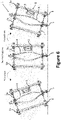
Figure 6 represents a three-dimensional front view of the portable device during a pronation and supination movement over a small amplitude; -
Figure 7 represents a three-dimensional front view of the portable device during a pronation and supination movement over a large amplitude; -
Figure 8 represents a graph with mean data from healthy subjects compared to mean data from subjects with Parkinson's disease; -
Figure 9 represents graphs of the angle, speed and acceleration of a healthy patient during pronation and supination movements over a small amplitude; -
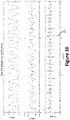
Figure 10 represents graphs of the angle, speed and acceleration of a healthy patient during pronation and supination movements over a large amplitude; -
Figure 11 represents graphs of the angle, speed and acceleration of a Parkinson patient during pronation and supination movements over a small amplitude; -
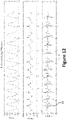
Figure 12 represents graphs of the angle, speed and acceleration of a Parkinson patient during pronation and supination movements over a large amplitude; -
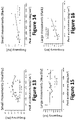
Figure 13 represents a graph of the average frequency relative to the peak of maximum acceleration during several repetitions of a supination and pronation for small movements of a healthy subject; -
Figure 14 represents a graph of the average frequency relative to the peak of maximum acceleration during several repetitions of a supination and pronation for large movements of a Parkinson subject; -
Figure 15 represents a graph of the average frequency relative to the peak of maximum acceleration during several repetitions of a supination and pronation for small movements of a healthy subject; -
Figure 16 represents a graph of the average frequency relative to the peak of maximum acceleration during several repetitions of a supination and pronation for large movements of a Parkinson subject. - The invention relates to a system comprising a
portable device 1 and some means for calculating 10 connected to theportable device 1. Theportable device 1 is used for quantifying movements of pronation and/or supination of a person. - The system and the
portable device 1 can be used to assist in decision making and diagnosis on patients. - Advantageously, the present invention makes it possible to evaluate whether the patient suffers from a motor problem such as Parkinson's disease.
- The present invention may also help early diagnosis between mild forms of Parkinsonism and mild forms of cerebellar or executive disorders.
- Most everyday movements are rapid alternating movements (RAM) and Parkinson's disease (PD) is the prototype of neurological disorders causing RAM impairment (dysdiadochokinesia). It is thus important for early diagnosis and follow-up purposes to accurately establish the mechanism and monitor the severity of dysdiadochokinesia.
- Parkinson's disease is a disorder in which the initial bursts of movement acceleration are insufficient in size. Cerebellar disorders involve bursts of movement whose deceleration is insufficient.
- The
portable device 1 can measure the peak accelerations, decelerations, angle, speed, amplitude and smoothness in both directions of movements (pronation, supination) of at least two amplitudes. - A small amplitude movement to sensitize the examination toward disorders is characterized by insufficient deceleration, or inappropriate set shifting abilities, and a large amplitude movement to sensitize the examination towards disorders is characterized by insufficient acceleration. Advantageously, the
portable device 1 is intended to be used when the person has the elbow on a horizontal support. - Advantageously, the measurement over at least two amplitudes allows distinguishing between difficulties in scaling movements, from difficulties in alternating movement directions or deceleration impairments.
- The system may guide the clinician in such circumstances, as parkinsonian (PD) disorders are characterized by hypo-acceleration ("lack of gas"), while cerebellar disorders are characterized by hypo-deceleration (lack of brake). In addition, the system may help distinguish between PD patients on and off medication.
- The
portable device 1 allowing the dysdiadochokinesimetry (measurement of reciprocating movements) of elbow pronation and/or supination of at least two different amplitudes. - The
device 1 is advantageously portable in the lab coat and quantifies the evaluation of maximal speed rapid alternating movements of at least two pre-specified amplitudes: small and large. - The movements involved with the
portable device 1 are elbow pronation and/or supination of at least two distinct amplitudes. - The capacity to increase movement size (movement scaling) can be teased out from the capacity to alternate movement direction (set shifting), advantageously, by measuring the ratio of the large to the small movement frequency from the two tests (small and large amplitude movements). The
portable device 1 can allow the measure of the ratio of the maximal movement frequency over the large amplitude, to the maximal movement frequency over the small amplitude, which we call L/S ratio. Such measure may assist diagnosis, as large movements are more affected than small movements in motor disorders such as Parkinson's disease (PD), while it is the opposite in other diseases (e.g. frontal or cerebellar). - The
device 1 is advantageously portable, connected, low-cost and measures movement over two amplitudes, a small and a large one. - The
portable device 1 may also be used for rehabilitative purposes at home. Advantageously, theportable device 1 may then provide feedback to the patient to train acceleration control, in disorders such as Parkinsonism, executive or cerebellar disorders. - Advantageously, the
portable device 1 is configured to be used when the person has the elbow on a horizontal support. - The
portable device 1 can comprise asolid armature 2 and an IMU 3 (inertial measurement unit). - The
solid armature 2 can consist of a frame, with two parallelprincipal parts 6 withrigid bars 6a and nuts or screw associated for each one, mounted perpendicularly to two paralleltransversal parts 7 withrigid rod 7a for each one. - The
solid armature 2 has means for attaching 4, configured to secure one hand of the person in thedevice 1, during the supination and/or pronation movement and to apply pressure (a grip) around the person's hand so that the person's hand remains open and the device remains hooked to the hand. - The two
rigid bars 6a can be firmly connected to the two paralleltransversal rods 7a. Advantageously, the means for attaching 4 are mounted on the paralleltransversal rods 7a, between the twoparallel bars 6a. - The
solid armature 2 has acentral pivot element 5, intended to be in contact with the horizontal support, by its tip, during the angular oscillation of the hand that extends between two opposed "first block angles" relative to a neutral position. These angles are defined between the two parts of thesolid armature 2 and the horizontal support. - Advantageously, the
central pivot element 5 configured for resting in contact with the horizontal support, is the tip of the means for attaching 4. The "first block angles" define a "small amplitude", the neutral position is a vertical axis, and the hand of the person rests by its edge on the horizontal support. - The
solid armature 2 has first means for blocking 8, configured to block the movements of pronation and/or the movements of supination of the elbow, at the two "first block angles". - Advantageously, the first means for blocking 8 are the tips of each
rigid bar 6a, configured to be in contact with the table at the two opposed "first block angles". Therigid bars 6a are shorter than thetip 5 of the means for attaching 4, so that when the hand is inserted into the means for attaching 4, held in a vertical plane and resting on the table, thedevice 2 rests on thecentral pivot element 5 and can oscillate between supination and/or pronation under the action of the person's hand and forearm. - In other variants, the first means for blocking 8 can also be the screws or nuts that hold together each
rigid parts 6a at its extremities with eachtransversal rod 7a. The first means for blocking 8 can also be the tips of theparallel rod 7a located in the bottom part of thesolid armature 2. - The
solid armature 2 has second means for blocking 9. - The second means 9 block the movements of pronation and/or the movement of supination, at two "second block angles" relative to the neutral position, between the
solid armature 2 relative to the horizontal support. - Advantageously, the "second block angles" define a "large amplitude" greater than the "small amplitude".
- The second means for blocking 9 are advantageously the
principal parts 6 of the armature. - They can be the external plane surface of each
rigid bar 6a. - In other variants, the second means for blocking 9 can be the screws or nuts that hold the
solid armature 2 together. - Maximal pronation and supination in the "small amplitude" can be obtained by the contact between the tip of each
rigid bar 6a and the table. Advantageously, the maximal pronation and supination are comprised between 5° and 45° for the small movements - Advantageously, the small amplitude can be defined by pronation of an angle of at least 13° from the neutral position, and by supination of an angle of at least 13° from the neutral position.
- Full pronation and full supination of the forearm in the "large amplitude" can be obtained by turning the hand so that the palmar and dorsal
rigid bars 6a are alternately placed flat on the table. - Advantageously, the large amplitude is defined by a pronation of 90° from the neutral position, and by a supination of 90° from the neutral position.
- The means for attaching 4 can be two flexible strips fixated to the
rods 7a, in their middle. - The means for attaching 4 can be a mounting system.
- These flexible strips present extremities fixated by screws, nuts or other means, one end of which will be in contact with the horizontal support to be the
central pivot element 5. - Advantageously, the flexible strips are used to firmly hold the hand of the subject during movements.
- The flexible strips can be a low-density polyethylene (LDPE).
- Advantageously, the flexible strips are configured to host the hand, and to be secured around the hand with their flexibility, so that the device remains stable and fixed on the hand, despite fast rotating and tapping movements of the hand.
- The means for attaching 4 can be two flexible strips separated by a few centimeters and configured to allow the patient's hand to pass between the two flexible strips, the flexible strips spread apart and exert an important pressure on the patient's fingers or hand or elbow, allowing the
device 1 to be held firmly without dropping, thedevice 1 remains hooked even when the patient makes movements. - In another embodiment, the means for attaching 4 or the flexible strips have a changeable length (with housing for instance) to modify the "first block angles" to be reached for the "small amplitude".
- The
parallel rods 7a can be horizontal threaded rods. - The
parallel rods 7a can be situated at top and bottom of thesolid armature 2 for securing therigid bars 6a and the means for attaching 4. Advantageously, thesolid armature 2 consists of tworigid bars 6a mounted on the hand, parallel to the ulnar-radial styloid line. - The distance between the two
rigid bars 6a can be adjustable (for instance may be modified along theparallel rods 7a which are threaded). Advantageously, the means for blocking (first 8 and second 9) are changeable (adjustable) in their length. - Advantageously, the distance between the two
rigid bars 6a is modified by theparallel rods 7a which are threaded. - The
IMU 3 can detect the acceleration and/or speed, and/or angular orientation, and/or frequency of thedevice 1, during the angular oscillations of the hand. - Advantageously, the
IMU 3 is configured to measure the acceleration and/or speed, and/or angular orientation, and/or frequency of thedevice 1, at least at the two "first block angles" and at the two "second block angles". - The
IMU 3 can be mounted on thesolid armature 2. - Advantageously, the
IMU 3 is mounted on one of therigid bars 6a. - The
IMU 3 can communicate wirelessly with a host computer or a smartphone. - Advantageously, the connection using WI-FI or Bluetooth between the
IMU 3 that is mounted on theportable device 1 and the means for calculating 10 allows objective quantification of parameters that were not measurable with prior devices, particular peak accelerations and smoothness in both directions of the alternating movement. - In another embodiment, the
IMU 3 is connected to means for storage. The IMU presents means for storage data collected by theIMU 3. Potentially, theportable device 1 can be used as a biofeedback rehabilitation system. - The
device 1 can be used at home since the patient can practice his/her movements and be provided online with acceleration data. - In another embodiment, the
IMU 3 can also be connected with the cloud so that measurements in real life can be performed and remotely communicated with therapists or physicians of the patient. - The data may also be securely stored off-line for later analysis by the physician.
- The system can quantify smoothness of the movement by calculating the patient's impulses, as well as amplitudes of motion and excess amplitudes of motion.
- The system offers means for calculating 10, which can return graphs of patient results, and which are connected to the portable device. The results may assist in the diagnosis and/or be compared with the abilities of a healthy person to establish the patient's illness.
- For instance, a pre-study was conducted with the
device 1 on 24 healthy subjects and 11 subjects with Parkinson's disease. The pre-study focused on the comparison between the two groups on two amplitudes (small and large) and by studying the movement frequency, acceleration peaks, and the NARJ (normalized average rectified jerk). Thefigure 8 provides data with 95% confidence intervals. - The frequency is determined by the number of complete movements (supination + pronation) per second.
- The average frequency of healthy subjects over the small amplitude is 2.57 Hz while the average frequency of subjects with Parkinson's is 2.19 Hz, so there is a loss of around 0.4 Hz (16%) between the two groups.
- The average frequency of healthy subjects over the large amplitude is 1.10 Hz while the average frequency of persons with Parkinson is 0.73 Hz, so there is a loss of around 0.4 Hz (36%) between the two groups.
- In this particular sample of subjects, the absolute difference between the two groups is the same for both amplitudes but the relative difference for large movements is more than twice that for small movements, which identifies a specific pattern of movement difficulties that predominates on large movements and is consistent with the second sample of subjects presenting with Parkinson's disease.
- The pre-study does an average of the
maximal acceleration peak 13 for each patient in a group, - for a small amplitude: healthy subjects have an average of 31000 deg/s2 while subjects with Parkinson's disease have an average of 21500 deg/s2 (69% from normal);
- for a large amplitude: healthy subjects have an average of 70500 deg/s2 while subjects with Parkinson's disease have an average of 32500 deg/s2 (46% from normal).
- In both cases, the difference is marked, but this is particularly the case for large movements. This points to a diagnosis of hypometria, typical of Parkinson's disease, to be confirmed with the medical profile and clinical presentation of the patient.
- The pattern typical of a subject with Parkinson's disease is marked by a reduction of the acceleration over both amplitudes but much more importantly during large amplitude movements.
- The average acceleration peaks of a healthy person are higher than the average for a person with Parkinson's disease.
- For instance, the graphs of a person with Parkinson's, will show acceleration peaks that are not constant during large amplitude exercise, hypothetically due to additional uncontrolled movements.
- The means for calculating 10 can quantify the
maximal acceleration 13 during the pronation and/or supination of the elbow. - Advantageously, the means for calculating 10 can be configured to calculate the ratio of the maximal movement frequency over the large amplitude to the maximal movement frequency over the small amplitude.
- The ratio can determine the amplitude with the lowest frequency and be used for diagnostic purposes.
- The means for calculating 10 can be configurated to calculate the
maximal acceleration peak 13; and/or the acceleration peak for each movement supination and/or pronation; at least over the two amplitudes. - The means for calculating 10 can be configured to calculate the smoothness of movement (for instance, using a normalized averaged rectified jerk - NARJ - which is an acceleration derivative).
- The means for calculating 10 can be a computer, a laptop, a smartphone, or other device that can perform calculations.
- Advantageously, the means for calculating 10 is connected wirelessly to the portable device.
- In another embodiment, the system can comprise means for visualizing 11.
- The means for visualizing 11 can be a screen linked or connected to the means for computing.
- The means for visualizing 11 can be configured for showing the results. Advantageously, the means for visualizing 11 can show the acceleration of the portable device.
- The means for visualizing 11 can also show the movement amplitudes and speeds of pronation and/or supination.
- The means for visualizing 11 can show a 3D representation of the person's movement.
- Advantageously, the means for visualizing 11 indicate the angles to be reached with the portable device for the person.
- The means for visualizing 11 can be a tablet, a smartphone or a computer.
Claims (16)
- A portable device (1) for quantifying movements of pronation and/or supination of a person, and intended to be used when the person has the elbow on a horizontal support,
comprising:• a solid armature (2) with:between two opposed identical "first block angles" relative to a vertical position called "neutral position", which are defined between the solid armature (2) and the horizontal support,- means for attaching (4), configured to secure one hand of the person in the device (1), during the movements of pronation and/or supination;- a central pivot element (5) intended to be in contact with the horizontal support, during angular oscillations of the hand,
the "first block angles" defining a "small amplitude",- first means for blocking (8) the movement of pronation and the movement of supination of the elbow, at the two "first block angles";- second means for blocking (9) the movement of pronation and the movement of supination,at two identical opposed "second block angles" relative to the neutral position, between the solid armature (2) relative to the horizontal support,
the "second block angles" defining a "large amplitude" greater than the "small amplitude";• an IMU (3) able to measure movement data. - Portable device (1) of claim 1, wherein the IMU (3) is configured to measure: the acceleration and/or speed, and/or angular orientation, and/or frequency of the device (1), at least at the two "first block angles" and at the two "second block angles".
- Portable device (1) of claims 1 to 2, wherein the solid armature (2) consists of a frame with: two parallel principal parts (6) with rigid bars (6a) mounted perpendicularly to two parallel transversal parts (7) with transversal rods (7a), the attaching means (4) being mounted on the parallel transversal rods (7a).
- Portable device (1) of claim 3, wherein the first means for blocking (8) are the tip of each rigid bar (6a) or the tips of one of the transversal rod (7a), intended to be in contact with the horizontal support at the two opposed "first block angles".
- Portable device (1) of any claims 3 to 4, wherein the second means for blocking (9) are the parallel principal parts (6).
- Portable device (1) of any claims 3 to 5, wherein the means for attaching (4) are longer than the rigid bars (6a) and their extremities is the central pivot element (5).
- Portable device (1) of any claims 3 to 6, wherein the distance between the two rigid bars (6a) is adjustable.
- Portable device (1) of any claims 1 to 7, wherein the means for attaching (4) are flexible strips.
- Portable device (1) of claim 8, wherein the flexible strips have a changeable length to modify the "first block angles".
- Portable device (1) of any claims 1 to 9, wherein:- the "small amplitude" is characterized by pronation of an angle of at least 13° from the neutral position, and by supination of an angle of at least 13° from the neutral position ; and /or- the "large amplitude" is characterized by a pronation of 90° from the neutral position, and by a supination of 90° from the neutral position.
- A system comprising:- portable device (1) according to any claims 1 to 10,- means (10) for filtering IMU data and calculating physical parameter related to movement data.
- The system of claim 11, wherein the physical parameter is acceleration peak.
- The system of claims 11 to 12, wherein the means for calculating (10), are configured to calculate:- the maximal acceleration peak (13); and/or- the acceleration peak for each movement of supination and/or pronation;at least at the two "first block angles" and at the two "second block angles".
- The system of claims 11 to 13, wherein the means for calculating (10) are portable, and/or the portable device (1) is connected wirelessly to the means for calculating (10) and/or means for visualizing (11).
- A method for quantification of rapid alternating movements over two different amplitudes, for pronation and/or supination of a subject, said method comprising:- measuring pronation and/or supination of a subject at two different amplitudes with at least one physical parameter;- comparing the physical parameter of said subject with the physical parameter of a reference over two different amplitudes; and- detecting abnormal pronation and/or supination if value subject's physical parameter is different from physical parameter of said reference for at least one amplitude.
- Method according to claim 15, wherein the physical parameter is acceleration peak.
Priority Applications (3)
| Application Number | Priority Date | Filing Date | Title |
|---|---|---|---|
| EP20215114.8A EP4014840B1 (en) | 2020-12-17 | 2020-12-17 | An analysis system with a portable connected device |
| ES20215114T ES2985502T3 (en) | 2020-12-17 | 2020-12-17 | An analysis system with a connected portable device |
| US17/552,894 US12350062B2 (en) | 2020-12-17 | 2021-12-16 | Analysis system with a portable connected device |
Applications Claiming Priority (1)
| Application Number | Priority Date | Filing Date | Title |
|---|---|---|---|
| EP20215114.8A EP4014840B1 (en) | 2020-12-17 | 2020-12-17 | An analysis system with a portable connected device |
Publications (3)
| Publication Number | Publication Date |
|---|---|
| EP4014840A1 true EP4014840A1 (en) | 2022-06-22 |
| EP4014840C0 EP4014840C0 (en) | 2024-07-03 |
| EP4014840B1 EP4014840B1 (en) | 2024-07-03 |
Family
ID=74124996
Family Applications (1)
| Application Number | Title | Priority Date | Filing Date |
|---|---|---|---|
| EP20215114.8A Active EP4014840B1 (en) | 2020-12-17 | 2020-12-17 | An analysis system with a portable connected device |
Country Status (3)
| Country | Link |
|---|---|
| US (1) | US12350062B2 (en) |
| EP (1) | EP4014840B1 (en) |
| ES (1) | ES2985502T3 (en) |
Citations (2)
| Publication number | Priority date | Publication date | Assignee | Title |
|---|---|---|---|---|
| US5275174A (en) * | 1985-10-30 | 1994-01-04 | Cook Jonathan A | Repetitive strain injury assessment |
| US20060052726A1 (en) | 2004-09-08 | 2006-03-09 | Weisz Donald J | Key device to measure pronation and supination of the forearm |
Family Cites Families (2)
| Publication number | Priority date | Publication date | Assignee | Title |
|---|---|---|---|---|
| US8187209B1 (en) * | 2005-03-17 | 2012-05-29 | Great Lakes Neurotechnologies Inc | Movement disorder monitoring system and method |
| US11992325B2 (en) * | 2019-11-22 | 2024-05-28 | Mindmaze Group Sa | Systems, devices and methods for dextrous hand function assessment and therapy |
-
2020
- 2020-12-17 EP EP20215114.8A patent/EP4014840B1/en active Active
- 2020-12-17 ES ES20215114T patent/ES2985502T3/en active Active
-
2021
- 2021-12-16 US US17/552,894 patent/US12350062B2/en active Active
Patent Citations (3)
| Publication number | Priority date | Publication date | Assignee | Title |
|---|---|---|---|---|
| US5275174A (en) * | 1985-10-30 | 1994-01-04 | Cook Jonathan A | Repetitive strain injury assessment |
| US5275174B1 (en) * | 1985-10-30 | 1998-08-04 | Jonathan A Cook | Repetitive strain injury assessment |
| US20060052726A1 (en) | 2004-09-08 | 2006-03-09 | Weisz Donald J | Key device to measure pronation and supination of the forearm |
Non-Patent Citations (3)
| Title |
|---|
| BEUTER AMERGLER DDEGEOFFROY ACARRIERE LBELANGER SVARGHESE LSREEKUMAR JGAUTHIER S: "Diadochokinesimetry a study of patients with Parkinson's disease and manganese exposed workers", NEUROTOX, vol. 15, 1994, pages 655 - 64 |
| KRISHNA RAGIL ET AL: "Quantitative assessment of cerebella ataxia through automated upper limb functional tests", ENHANCED AND SYNTHETIC VISION 2003 : [CONFERENCE ENHANCED AND SYNTHETIC VISION 2002] ; 21 APRIL 2003, ORLANDO, FLORIDA, USA; [PROCEEDINGS OF SPIE ISSN 0277-786X], SPIE, US, vol. 11071, 17 April 2019 (2019-04-17), pages 110710S - 110710S, XP060117353, ISBN: 978-1-5106-3673-6, DOI: 10.1117/12.2520693 * |
| WENNBERG AHAGMAN MJOHANSSON L: "Preclinical neurophysiological signs of Parkinsonism in occupational manganese exposure", NEUROTOXICOLOGY, vol. 13, no. 12, 1992, pages 271 - 274 |
Also Published As
| Publication number | Publication date |
|---|---|
| EP4014840C0 (en) | 2024-07-03 |
| EP4014840B1 (en) | 2024-07-03 |
| US20220192582A1 (en) | 2022-06-23 |
| ES2985502T3 (en) | 2024-11-06 |
| US12350062B2 (en) | 2025-07-08 |
Similar Documents
| Publication | Publication Date | Title |
|---|---|---|
| JP4958128B2 (en) | Muscle tonus measuring device | |
| JP5385555B2 (en) | Biopsy system, biopsy device, and biopsy method | |
| CN107427261B (en) | Wrist Ankylosis Assessment Device for Deep Brain Stimulation Surgery | |
| US10966652B1 (en) | Method and system for quantifying movement disorder systems | |
| JP6916858B2 (en) | Muscle stiffness measurement systems, devices, and methods | |
| Lin et al. | Quantification assessment of bradykinesia in Parkinson's disease based on a wearable device | |
| JP2008245917A (en) | Tremor disease evaluation apparatus and tremor disease evaluation method | |
| LeMoyne et al. | The merits of artificial proprioception, with applications in biofeedback gait rehabilitation concepts and movement disorder characterization | |
| JP5339260B2 (en) | Muscle tonus measuring device | |
| Costa et al. | Wrist rigidity assessment during Deep Brain Stimulation surgery | |
| Toigo et al. | Robot-assisted assessment of muscle strength | |
| JP7295941B2 (en) | Systems and devices for joint stiffness characterization | |
| Turk et al. | Reliability and sensitivity of a wrist rig to measure motor control and spasticity in poststroke hemiplegia | |
| US12350062B2 (en) | Analysis system with a portable connected device | |
| US20210085244A1 (en) | Wrist rigidity assessment device and method for identifying a clinically effective dose | |
| Gazzoni | Multichannel surface electromyography in ergonomics: Potentialities and limits | |
| Lee et al. | A pervasive assessment of motor function: A lightweight grip strength tracking system | |
| Liang et al. | Assessment of gait balance control using inertial measurement units—A narrative review | |
| JP7531945B2 (en) | System and method for real-time monitoring of progress of lower back pain rehabilitation | |
| Tonelo | What is a Posturography? | |
| JP7212352B2 (en) | Walking ability test device | |
| Cavacece | Fatigue Estimation of Human Hand Arm in Working Condition by Data-Driven Approach Based on Wearable Sensors | |
| Hsieh et al. | The applications of smart mobile device for detecting balance dysfunction in individuals with down syndrome | |
| Ilia et al. | Evaluation Metrics of Upper Extremities for People With Neurological Disorders: An Energy Based Approach | |
| Ide et al. | Biomechanics and Postural Balance |
Legal Events
| Date | Code | Title | Description |
|---|---|---|---|
| PUAI | Public reference made under article 153(3) epc to a published international application that has entered the european phase |
Free format text: ORIGINAL CODE: 0009012 |
|
| STAA | Information on the status of an ep patent application or granted ep patent |
Free format text: STATUS: THE APPLICATION HAS BEEN PUBLISHED |
|
| AK | Designated contracting states |
Kind code of ref document: A1 Designated state(s): AL AT BE BG CH CY CZ DE DK EE ES FI FR GB GR HR HU IE IS IT LI LT LU LV MC MK MT NL NO PL PT RO RS SE SI SK SM TR |
|
| STAA | Information on the status of an ep patent application or granted ep patent |
Free format text: STATUS: REQUEST FOR EXAMINATION WAS MADE |
|
| 17P | Request for examination filed |
Effective date: 20221219 |
|
| RBV | Designated contracting states (corrected) |
Designated state(s): AL AT BE BG CH CY CZ DE DK EE ES FI FR GB GR HR HU IE IS IT LI LT LU LV MC MK MT NL NO PL PT RO RS SE SI SK SM TR |
|
| GRAP | Despatch of communication of intention to grant a patent |
Free format text: ORIGINAL CODE: EPIDOSNIGR1 |
|
| STAA | Information on the status of an ep patent application or granted ep patent |
Free format text: STATUS: GRANT OF PATENT IS INTENDED |
|
| RIC1 | Information provided on ipc code assigned before grant |
Ipc: A61B 5/107 20060101ALI20240215BHEP Ipc: A61B 5/11 20060101ALI20240215BHEP Ipc: A61B 5/00 20060101AFI20240215BHEP |
|
| INTG | Intention to grant announced |
Effective date: 20240319 |
|
| GRAS | Grant fee paid |
Free format text: ORIGINAL CODE: EPIDOSNIGR3 |
|
| GRAA | (expected) grant |
Free format text: ORIGINAL CODE: 0009210 |
|
| STAA | Information on the status of an ep patent application or granted ep patent |
Free format text: STATUS: THE PATENT HAS BEEN GRANTED |
|
| AK | Designated contracting states |
Kind code of ref document: B1 Designated state(s): AL AT BE BG CH CY CZ DE DK EE ES FI FR GB GR HR HU IE IS IT LI LT LU LV MC MK MT NL NO PL PT RO RS SE SI SK SM TR |
|
| REG | Reference to a national code |
Ref country code: CH Ref legal event code: EP |
|
| REG | Reference to a national code |
Ref country code: DE Ref legal event code: R096 Ref document number: 602020033253 Country of ref document: DE |
|
| U01 | Request for unitary effect filed |
Effective date: 20240724 |
|
| U07 | Unitary effect registered |
Designated state(s): AT BE BG DE DK EE FI FR IT LT LU LV MT NL PT RO SE SI Effective date: 20240902 |
|
| REG | Reference to a national code |
Ref country code: ES Ref legal event code: FG2A Ref document number: 2985502 Country of ref document: ES Kind code of ref document: T3 Effective date: 20241106 |
|
| U20 | Renewal fee for the european patent with unitary effect paid |
Year of fee payment: 5 Effective date: 20241127 |
|
| PG25 | Lapsed in a contracting state [announced via postgrant information from national office to epo] |
Ref country code: NO Free format text: LAPSE BECAUSE OF FAILURE TO SUBMIT A TRANSLATION OF THE DESCRIPTION OR TO PAY THE FEE WITHIN THE PRESCRIBED TIME-LIMIT Effective date: 20241003 |
|
| PG25 | Lapsed in a contracting state [announced via postgrant information from national office to epo] |
Ref country code: GR Free format text: LAPSE BECAUSE OF FAILURE TO SUBMIT A TRANSLATION OF THE DESCRIPTION OR TO PAY THE FEE WITHIN THE PRESCRIBED TIME-LIMIT Effective date: 20241004 Ref country code: PL Free format text: LAPSE BECAUSE OF FAILURE TO SUBMIT A TRANSLATION OF THE DESCRIPTION OR TO PAY THE FEE WITHIN THE PRESCRIBED TIME-LIMIT Effective date: 20240703 |
|
| PG25 | Lapsed in a contracting state [announced via postgrant information from national office to epo] |
Ref country code: IS Free format text: LAPSE BECAUSE OF FAILURE TO SUBMIT A TRANSLATION OF THE DESCRIPTION OR TO PAY THE FEE WITHIN THE PRESCRIBED TIME-LIMIT Effective date: 20241103 |
|
| PG25 | Lapsed in a contracting state [announced via postgrant information from national office to epo] |
Ref country code: CZ Free format text: LAPSE BECAUSE OF FAILURE TO SUBMIT A TRANSLATION OF THE DESCRIPTION OR TO PAY THE FEE WITHIN THE PRESCRIBED TIME-LIMIT Effective date: 20240703 Ref country code: HR Free format text: LAPSE BECAUSE OF FAILURE TO SUBMIT A TRANSLATION OF THE DESCRIPTION OR TO PAY THE FEE WITHIN THE PRESCRIBED TIME-LIMIT Effective date: 20240703 |
|
| PG25 | Lapsed in a contracting state [announced via postgrant information from national office to epo] |
Ref country code: RS Free format text: LAPSE BECAUSE OF FAILURE TO SUBMIT A TRANSLATION OF THE DESCRIPTION OR TO PAY THE FEE WITHIN THE PRESCRIBED TIME-LIMIT Effective date: 20241003 |
|
| PG25 | Lapsed in a contracting state [announced via postgrant information from national office to epo] |
Ref country code: RS Free format text: LAPSE BECAUSE OF FAILURE TO SUBMIT A TRANSLATION OF THE DESCRIPTION OR TO PAY THE FEE WITHIN THE PRESCRIBED TIME-LIMIT Effective date: 20241003 Ref country code: PL Free format text: LAPSE BECAUSE OF FAILURE TO SUBMIT A TRANSLATION OF THE DESCRIPTION OR TO PAY THE FEE WITHIN THE PRESCRIBED TIME-LIMIT Effective date: 20240703 Ref country code: NO Free format text: LAPSE BECAUSE OF FAILURE TO SUBMIT A TRANSLATION OF THE DESCRIPTION OR TO PAY THE FEE WITHIN THE PRESCRIBED TIME-LIMIT Effective date: 20241003 Ref country code: IS Free format text: LAPSE BECAUSE OF FAILURE TO SUBMIT A TRANSLATION OF THE DESCRIPTION OR TO PAY THE FEE WITHIN THE PRESCRIBED TIME-LIMIT Effective date: 20241103 Ref country code: HR Free format text: LAPSE BECAUSE OF FAILURE TO SUBMIT A TRANSLATION OF THE DESCRIPTION OR TO PAY THE FEE WITHIN THE PRESCRIBED TIME-LIMIT Effective date: 20240703 Ref country code: GR Free format text: LAPSE BECAUSE OF FAILURE TO SUBMIT A TRANSLATION OF THE DESCRIPTION OR TO PAY THE FEE WITHIN THE PRESCRIBED TIME-LIMIT Effective date: 20241004 Ref country code: CZ Free format text: LAPSE BECAUSE OF FAILURE TO SUBMIT A TRANSLATION OF THE DESCRIPTION OR TO PAY THE FEE WITHIN THE PRESCRIBED TIME-LIMIT Effective date: 20240703 |
|
| PG25 | Lapsed in a contracting state [announced via postgrant information from national office to epo] |
Ref country code: SM Free format text: LAPSE BECAUSE OF FAILURE TO SUBMIT A TRANSLATION OF THE DESCRIPTION OR TO PAY THE FEE WITHIN THE PRESCRIBED TIME-LIMIT Effective date: 20240703 |
|
| PG25 | Lapsed in a contracting state [announced via postgrant information from national office to epo] |
Ref country code: SK Free format text: LAPSE BECAUSE OF FAILURE TO SUBMIT A TRANSLATION OF THE DESCRIPTION OR TO PAY THE FEE WITHIN THE PRESCRIBED TIME-LIMIT Effective date: 20240703 |
|
| PLBE | No opposition filed within time limit |
Free format text: ORIGINAL CODE: 0009261 |
|
| STAA | Information on the status of an ep patent application or granted ep patent |
Free format text: STATUS: NO OPPOSITION FILED WITHIN TIME LIMIT |
|
| 26N | No opposition filed |
Effective date: 20250404 |
|
| PG25 | Lapsed in a contracting state [announced via postgrant information from national office to epo] |
Ref country code: MC Free format text: LAPSE BECAUSE OF FAILURE TO SUBMIT A TRANSLATION OF THE DESCRIPTION OR TO PAY THE FEE WITHIN THE PRESCRIBED TIME-LIMIT Effective date: 20240703 |
|
| REG | Reference to a national code |
Ref country code: CH Ref legal event code: PL |
|
| PG25 | Lapsed in a contracting state [announced via postgrant information from national office to epo] |
Ref country code: CH Free format text: LAPSE BECAUSE OF NON-PAYMENT OF DUE FEES Effective date: 20241231 |
|
| PG25 | Lapsed in a contracting state [announced via postgrant information from national office to epo] |
Ref country code: IE Free format text: LAPSE BECAUSE OF NON-PAYMENT OF DUE FEES Effective date: 20241217 |
|
| U20 | Renewal fee for the european patent with unitary effect paid |
Year of fee payment: 6 Effective date: 20251127 |
|
| PGFP | Annual fee paid to national office [announced via postgrant information from national office to epo] |
Ref country code: GB Payment date: 20251229 Year of fee payment: 6 |
|
| PGFP | Annual fee paid to national office [announced via postgrant information from national office to epo] |
Ref country code: ES Payment date: 20260112 Year of fee payment: 6 |
|
| PG25 | Lapsed in a contracting state [announced via postgrant information from national office to epo] |
Ref country code: CY Free format text: LAPSE BECAUSE OF FAILURE TO SUBMIT A TRANSLATION OF THE DESCRIPTION OR TO PAY THE FEE WITHIN THE PRESCRIBED TIME-LIMIT Effective date: 20240703 |