EP4013895B1 - Molecular predictors of patient response to radiotherapy treatment - Google Patents
Molecular predictors of patient response to radiotherapy treatment Download PDFInfo
- Publication number
- EP4013895B1 EP4013895B1 EP20754676.3A EP20754676A EP4013895B1 EP 4013895 B1 EP4013895 B1 EP 4013895B1 EP 20754676 A EP20754676 A EP 20754676A EP 4013895 B1 EP4013895 B1 EP 4013895B1
- Authority
- EP
- European Patent Office
- Prior art keywords
- seq
- patient
- nucleotide sequence
- radiotherapy
- lung cancer
- Prior art date
- Legal status (The legal status is an assumption and is not a legal conclusion. Google has not performed a legal analysis and makes no representation as to the accuracy of the status listed.)
- Active
Links
Images
Classifications
-
- C—CHEMISTRY; METALLURGY
- C12—BIOCHEMISTRY; BEER; SPIRITS; WINE; VINEGAR; MICROBIOLOGY; ENZYMOLOGY; MUTATION OR GENETIC ENGINEERING
- C12Q—MEASURING OR TESTING PROCESSES INVOLVING ENZYMES, NUCLEIC ACIDS OR MICROORGANISMS; COMPOSITIONS OR TEST PAPERS THEREFOR; PROCESSES OF PREPARING SUCH COMPOSITIONS; CONDITION-RESPONSIVE CONTROL IN MICROBIOLOGICAL OR ENZYMOLOGICAL PROCESSES
- C12Q1/00—Measuring or testing processes involving enzymes, nucleic acids or microorganisms; Compositions therefor; Processes of preparing such compositions
- C12Q1/68—Measuring or testing processes involving enzymes, nucleic acids or microorganisms; Compositions therefor; Processes of preparing such compositions involving nucleic acids
- C12Q1/6876—Nucleic acid products used in the analysis of nucleic acids, e.g. primers or probes
- C12Q1/6883—Nucleic acid products used in the analysis of nucleic acids, e.g. primers or probes for diseases caused by alterations of genetic material
- C12Q1/6886—Nucleic acid products used in the analysis of nucleic acids, e.g. primers or probes for diseases caused by alterations of genetic material for cancer
-
- G—PHYSICS
- G16—INFORMATION AND COMMUNICATION TECHNOLOGY [ICT] SPECIALLY ADAPTED FOR SPECIFIC APPLICATION FIELDS
- G16B—BIOINFORMATICS, i.e. INFORMATION AND COMMUNICATION TECHNOLOGY [ICT] SPECIALLY ADAPTED FOR GENETIC OR PROTEIN-RELATED DATA PROCESSING IN COMPUTATIONAL MOLECULAR BIOLOGY
- G16B20/00—ICT specially adapted for functional genomics or proteomics, e.g. genotype-phenotype associations
- G16B20/50—Mutagenesis
-
- G—PHYSICS
- G16—INFORMATION AND COMMUNICATION TECHNOLOGY [ICT] SPECIALLY ADAPTED FOR SPECIFIC APPLICATION FIELDS
- G16B—BIOINFORMATICS, i.e. INFORMATION AND COMMUNICATION TECHNOLOGY [ICT] SPECIALLY ADAPTED FOR GENETIC OR PROTEIN-RELATED DATA PROCESSING IN COMPUTATIONAL MOLECULAR BIOLOGY
- G16B25/00—ICT specially adapted for hybridisation; ICT specially adapted for gene or protein expression
- G16B25/10—Gene or protein expression profiling; Expression-ratio estimation or normalisation
-
- G—PHYSICS
- G16—INFORMATION AND COMMUNICATION TECHNOLOGY [ICT] SPECIALLY ADAPTED FOR SPECIFIC APPLICATION FIELDS
- G16B—BIOINFORMATICS, i.e. INFORMATION AND COMMUNICATION TECHNOLOGY [ICT] SPECIALLY ADAPTED FOR GENETIC OR PROTEIN-RELATED DATA PROCESSING IN COMPUTATIONAL MOLECULAR BIOLOGY
- G16B30/00—ICT specially adapted for sequence analysis involving nucleotides or amino acids
-
- G—PHYSICS
- G16—INFORMATION AND COMMUNICATION TECHNOLOGY [ICT] SPECIALLY ADAPTED FOR SPECIFIC APPLICATION FIELDS
- G16B—BIOINFORMATICS, i.e. INFORMATION AND COMMUNICATION TECHNOLOGY [ICT] SPECIALLY ADAPTED FOR GENETIC OR PROTEIN-RELATED DATA PROCESSING IN COMPUTATIONAL MOLECULAR BIOLOGY
- G16B50/00—ICT programming tools or database systems specially adapted for bioinformatics
-
- C—CHEMISTRY; METALLURGY
- C12—BIOCHEMISTRY; BEER; SPIRITS; WINE; VINEGAR; MICROBIOLOGY; ENZYMOLOGY; MUTATION OR GENETIC ENGINEERING
- C12Q—MEASURING OR TESTING PROCESSES INVOLVING ENZYMES, NUCLEIC ACIDS OR MICROORGANISMS; COMPOSITIONS OR TEST PAPERS THEREFOR; PROCESSES OF PREPARING SUCH COMPOSITIONS; CONDITION-RESPONSIVE CONTROL IN MICROBIOLOGICAL OR ENZYMOLOGICAL PROCESSES
- C12Q1/00—Measuring or testing processes involving enzymes, nucleic acids or microorganisms; Compositions therefor; Processes of preparing such compositions
- C12Q1/68—Measuring or testing processes involving enzymes, nucleic acids or microorganisms; Compositions therefor; Processes of preparing such compositions involving nucleic acids
- C12Q1/6813—Hybridisation assays
- C12Q1/6827—Hybridisation assays for detection of mutation or polymorphism
-
- C—CHEMISTRY; METALLURGY
- C12—BIOCHEMISTRY; BEER; SPIRITS; WINE; VINEGAR; MICROBIOLOGY; ENZYMOLOGY; MUTATION OR GENETIC ENGINEERING
- C12Q—MEASURING OR TESTING PROCESSES INVOLVING ENZYMES, NUCLEIC ACIDS OR MICROORGANISMS; COMPOSITIONS OR TEST PAPERS THEREFOR; PROCESSES OF PREPARING SUCH COMPOSITIONS; CONDITION-RESPONSIVE CONTROL IN MICROBIOLOGICAL OR ENZYMOLOGICAL PROCESSES
- C12Q2600/00—Oligonucleotides characterized by their use
- C12Q2600/106—Pharmacogenomics, i.e. genetic variability in individual responses to drugs and drug metabolism
-
- C—CHEMISTRY; METALLURGY
- C12—BIOCHEMISTRY; BEER; SPIRITS; WINE; VINEGAR; MICROBIOLOGY; ENZYMOLOGY; MUTATION OR GENETIC ENGINEERING
- C12Q—MEASURING OR TESTING PROCESSES INVOLVING ENZYMES, NUCLEIC ACIDS OR MICROORGANISMS; COMPOSITIONS OR TEST PAPERS THEREFOR; PROCESSES OF PREPARING SUCH COMPOSITIONS; CONDITION-RESPONSIVE CONTROL IN MICROBIOLOGICAL OR ENZYMOLOGICAL PROCESSES
- C12Q2600/00—Oligonucleotides characterized by their use
- C12Q2600/118—Prognosis of disease development
-
- C—CHEMISTRY; METALLURGY
- C12—BIOCHEMISTRY; BEER; SPIRITS; WINE; VINEGAR; MICROBIOLOGY; ENZYMOLOGY; MUTATION OR GENETIC ENGINEERING
- C12Q—MEASURING OR TESTING PROCESSES INVOLVING ENZYMES, NUCLEIC ACIDS OR MICROORGANISMS; COMPOSITIONS OR TEST PAPERS THEREFOR; PROCESSES OF PREPARING SUCH COMPOSITIONS; CONDITION-RESPONSIVE CONTROL IN MICROBIOLOGICAL OR ENZYMOLOGICAL PROCESSES
- C12Q2600/00—Oligonucleotides characterized by their use
- C12Q2600/154—Methylation markers
-
- C—CHEMISTRY; METALLURGY
- C12—BIOCHEMISTRY; BEER; SPIRITS; WINE; VINEGAR; MICROBIOLOGY; ENZYMOLOGY; MUTATION OR GENETIC ENGINEERING
- C12Q—MEASURING OR TESTING PROCESSES INVOLVING ENZYMES, NUCLEIC ACIDS OR MICROORGANISMS; COMPOSITIONS OR TEST PAPERS THEREFOR; PROCESSES OF PREPARING SUCH COMPOSITIONS; CONDITION-RESPONSIVE CONTROL IN MICROBIOLOGICAL OR ENZYMOLOGICAL PROCESSES
- C12Q2600/00—Oligonucleotides characterized by their use
- C12Q2600/156—Polymorphic or mutational markers
-
- C—CHEMISTRY; METALLURGY
- C12—BIOCHEMISTRY; BEER; SPIRITS; WINE; VINEGAR; MICROBIOLOGY; ENZYMOLOGY; MUTATION OR GENETIC ENGINEERING
- C12Q—MEASURING OR TESTING PROCESSES INVOLVING ENZYMES, NUCLEIC ACIDS OR MICROORGANISMS; COMPOSITIONS OR TEST PAPERS THEREFOR; PROCESSES OF PREPARING SUCH COMPOSITIONS; CONDITION-RESPONSIVE CONTROL IN MICROBIOLOGICAL OR ENZYMOLOGICAL PROCESSES
- C12Q2600/00—Oligonucleotides characterized by their use
- C12Q2600/158—Expression markers
Definitions
- the present invention relates to methods of predicting a radiotherapy success in a method of treating a lung cancer of a patient, the use of specific markers for predicting a radiotherapy success in a method of treating a lung cancer of a patient, and a computer program product for use in a method of predicting a radiotherapy success in a method of treating a lung cancer of a patient.
- adjuvant therapies such as chemotherapy, immunotherapy, and surgical therapy.
- Patients respond differently to radiation therapy, depending on cancer type, cancer stage, and form of therapy; with a response rate of ⁇ 50 % for conventional radiotherapy. This is due in particular to the tumor tissue's inherent sensitivity or resistance to radiation. Furthermore, (irreversible) side effects can occur, depending on the radiosensitivity inherent to the healthy tissue that is located adjacent to the tumor.
- Cvergenx' pGRT (precision genomic radiation therapy) platform (under development) is based on measuring the activity of ten genes (via RNA) to calculate a tumor radiosensitivity index (RSI, Eschrich et al., 2009, Int J Radiat Oncol Biol Phys, DOI: 10.1016/j.ijrobp.2009.06.014 ) and its integration into a model to adapt radiation dose (genomic-adjusted radiation dose, GARD, Scott et al., 2017, Lancet Oncol, DOI: 10.1016/S1470-2045(16)30648-9 ) in chemoradiation therapy.
- RSI tumor radiosensitivity index
- RadiotypeDX test (under development) is based on measuring the activity of 51 genes (via RNA) in breast cancer tissue and predicts a locoregional recurrence after adjuvant radiotherapy ( Speers et al., 2015, Clin Cancer Res, DOI: 10.1158/1078-0432.CCR-14-2898 ).
- Genomic Health's OncotypeDx test is based on measuring the activity of 21 genes (via RNA) in breast cancer tissue (in particular ductal carcinoma in situ, DCIS) and predicts radiotherapy success as well as locoregional recurrence after radiotherapy.
- GenomeDx' Decipher test is based on measuring the activity of 22 and 24 genes (via RNA) in prostate cancer tissue and predicts the development of distal metastases after radical prostatectomy and post-operative radiotherapy (post-operative radiation therapy outcomes score, PORTOS, Zhao et al., 2016, Lancet Oncol, under development, DOI: 10.1016/S1470-2045(16)30491-0 ), respectively.
- RadiomiX platform is based on calculating general, quantitative tumor features from medical CT images and predicts radiotherapy success, among other things ( Aerts et al, 2014, Nat Commun, DOI: 10.1038/ncomms5006 ).
- NovaGray's Breast test is based on measuring apoptotic T-lymphocytes, induced by in vitro radiation of a blood sample (radiation-induced T-lymphocyte apoptosis, RILA), and identifies patients who likely respond hypersensitive to ionizing radiation and, therefore, are at risk of developing irreversible side effects, in particular fibrosis, in healthy breast tissue.
- RILA radiation-induced T-lymphocyte apoptosis
- DiaCarta's RadTox test (under development) is based on measuring circulating, cell-free DNA (cfDNA) in blood, particularly the repetitive Alu sequence, as a measure of radiotherapy-induced tissue damage, and monitors potentially toxic side effects in healthy tissue, located adjacent to the tumor, after radiotherapy.
- cfDNA cell-free DNA
- the present inventors found efficient markers for predicting radiotherapy success in patients suffering from a lung cancer.
- a gene is a sequence of nucleotides (nucleotide sequence) in DNA - which can be copied to RNA, e.g. mRNA - or RNA, i.e. nucleic acid molecules, coding for a molecule that has a function in an organism.
- RNA e.g. mRNA - or RNA
- nucleic acid molecule refers to a polynucleotide molecule having a defined sequence. It comprises DNA molecules, RNA molecules, nucleotide analog molecules and combinations and derivatives thereof, such as DNA molecules or RNA molecules with incorporated nucleotide analogs or cDNA.
- a change in the nucleotide sequence relates to a variation in the sequence as compared to a reference sequence.
- a change in the nucleotide sequence is for example a deletion of one or multiple nucleotides, an insertion of one or multiple nucleotides, a substitution of one or multiple nucleotides, a duplication of one or a sequence of multiple nucleotides, a translocation of one or a sequence of multiple nucleotides, etc.
- SNVs single-nucleotide variants
- MNVs multi-nucleotide variants
- sample is a sample which comprises at least nucleotide sequence and/or epi-genetic profile and/or expression profile and/or copy number information of a patient.
- samples are cells, tissue, biopsy specimens, body fluids, blood, urine, saliva, sputum, plasma, serum, cell culture supernatant, swab sample and others, e.g. tumor tissue.
- the sample is a blood sample.
- the mutations particularly are not somatic, so that also blood samples, e.g. peripheral blood, are possible as samples.
- Peripheral blood in this regard refers to the circulating pool of blood within the patient.
- the sample is a tissue or a biopsy specimen which can be fixated or not, wherein a fixation can be e.g. carried out by freezing or usual fixation methods like for formalin-fixed paraffin-embedded (FFPE) tissue.
- FFPE formalin-fixed paraffin-embedded
- the patient in the present methods is a vertebrate, more preferably a mammal and most preferred a human.
- a vertebrate within the present invention refers to animals having a vertebrae, which includes mammals - including humans, birds, reptiles, amphibians and fishes.
- the present invention thus is not only suitable for human medicine, but also for veterinary medicine.
- Radiotherapy success can be based on a combination of somatic features/mutations (e.g. radiosensitivity/radioresistance of cancerous tissue) and germline features/mutations (innate radiosensitivity/radioresistance).
- somatic features/mutations e.g. radiosensitivity/radioresistance of cancerous tissue
- germline features/mutations innate radiosensitivity/radioresistance
- a success in radiotherapy with adjuvant therapies is predicted in the present methods of treating a lung cancer of a patient.
- the radiotherapy method is not particularly restricted.
- the radiotherapy is external beam radiation therapy (EBRT), in particular x-ray and particle therapy, brachytherapy (internal radiation therapy), in particular low-dose rate (LDR) and high-dose rate (HDR) brachytherapy, or targeted radiation therapy.
- EBRT external beam radiation therapy
- brachytherapy internal radiation therapy
- LDR low-dose rate
- HDR high-dose rate
- the radiotherapy method thus also can be radiochemotherapy.
- the prediction of radiotherapy success includes a prediction of locoregional response and/or recurrence.
- Gene coordinates can be obtained from the following resource: ftp://ftp.ncbi.nlm.nih.gov/genomes/all/GCF/000/001/405/GCF_00 0001405.33_GRCh38.p7/GCF_000001405.33_GRCh38.p7_feature_table .txt.gz.
- the present invention relates to a method of predicting a radiotherapy success in a method of treating a lung cancer of a patient, wherein the lung cancer is lung squamous cell carcinoma, comprising determining a change in the nucleotide sequence of MLH1 in a sample obtained from the patient.
- the sample can be taken from a stock or a storage, be obtained in vitro, etc.
- nucleotide sequence information of MLH1 in the sample by a suitable method, which is not particularly restricted.
- nucleotide sequence information can be obtained by DNA sequencing methods that are not particularly restricted, e.g. Sanger sequencing methods, shotgun sequencing methods, bridge PCR methods, and next-generation sequencing methods.
- next-generation sequencing refers to high-throughput sequencing technologies that parallelize the sequencing process, producing thousands or millions of sequences at once. Examples include Massively Parallel Signature Sequencing (MPSS), Polony sequencing, 454 pyrosequencing, Illumina (So-lexa) sequencing, SOLiD sequencing, Ion Torrent semiconductor sequencing, DNA nanoball sequencing, Helioscope(TM) single molecule sequencing, Single Molecule Real Time (SMRT) sequencing, Nanopore DNA sequencing, and RNA Polymerase (RNAP) sequencing, each with or without prior employment of target enrichment techniques like hybridization capture.
- MPSS Massively Parallel Signature Sequencing
- Polony sequencing Polony sequencing
- 454 pyrosequencing Illumina (So-lexa) sequencing
- SOLiD sequencing sequencing
- Ion Torrent semiconductor sequencing Ion Torrent semiconductor sequencing
- DNA nanoball sequencing Helioscope(TM) single molecule sequencing
- SMRT Single Molecule Real Time
- RNAP RNA Polymerase
- the nucleotide sequence can then be compared to the respective reference, i.e. the reference sequence. By comparison, a change in the nucleotide sequence can then be determined.
- a change in the nucleotide sequence of MLH1 can be indicative of an enhanced or a reduced radiotherapy success in a method of treating a lung cancer of a patient.
- a certain change in the nucleotide sequence of MLH1 can be indicative of an enhanced radiotherapy success in a method of treating a lung cancer of a patient, while another change in the nucleotide sequence of MLH1 can be indicative of a reduced radiotherapy success in a method of treating a lung cancer of a patient.
- At least one change in the nucleotide sequence is determined from rs1799977 as disclosed in the Single Nucleotide Polymorphism Database dbSNP of the National Center for Biotechnology Information (NCBI).
- a change in the nucleotide sequence of MLH1 is indicative of an enhanced radiotherapy success in a method of treating a lung squamous cell carcinoma of a patient.
- a change in the nucleotide sequence of rs1799977 is indicative of an enhanced radiotherapy success in a method of treating a lung squamous cell carcinoma of a patient.
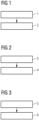
- FIG. 1 shows schematically steps in a method of the first aspect of the invention, wherein step 1 corresponds to obtaining or providing a sample of the patient, and step 2 corresponds to determining a change in the nucleotide sequence of MLH1.
- a second aspect of the present invention is directed to a use of a change in the nucleotide sequence of MLH1, particularly a change in the nucleotide sequence of rs1799977 as disclosed in the Single Nucleotide Polymorphism Database dbSNP of the National Center for Biotechnology Information (NCBI), as a marker for predicting a radiotherapy success in a method of treating a lung cancer of a patient, wherein the lung cancer is lung squamous cell carcinoma.
- the at least one change in the nucleotide sequence from rs1799977 is indicative of an enhanced radiotherapy success in a method of treating a lung cancer of a patient.
- Also disclosed but not part of the invention is a method of predicting a radiotherapy success in a method of predicting a radiotherapy success in a method of treating a lung cancer of a patient, wherein the lung cancer is lung squamous cell carcinoma, comprising: obtaining nucleotide sequence data of a sample of a patient, and determining a change in the nucleotide sequence of MLH1 in the nucleotide sequence data.
- the step of obtaining nucleotide sequence data of a sample of a patient is not particularly restricted, and the respective data can be obtained by any suitable method, particularly in electronic form, e.g. based on an evaluation of a sample of a patient.
- the step of determining the presence of at least one marker as disclosed in the second aspect is not particularly restricted, and it can be carried out in any suitable manner, e.g. using sufficient means like tools for automatically evaluating the nucleotide sequence data of the sample of the patient for the presence of the respective marker(s).
- the evaluation can be carried out with the help of or exclusively using a computer program product, which is not particularly restricted.
- step 3 corresponds to obtaining nucleotide sequence data of a sample of a patient
- step 4 to determining the presence of at least one marker as disclosed in the second aspect.
- a computer program product comprising computer executable instructions which, when executed, perform a method of predicting a radiotherapy success in a method of treating a lung cancer of a patient, wherein the lung cancer is lung squamous cell carcinoma, comprising:
- the computer program product is one on which program commands or program codes of a computer program for executing said method are stored.
- the computer program product is or comprises a storage medium.
- a fourth aspect of the present invention relates to a method of predicting a radiotherapy success in a method of treating a lung cancer of a patient, comprising:
- the step of obtaining nucleotide sequence data of a sample of a patient is not particularly restricted.
- the step of analyzing the nucleotide sequence data using the computer program product of the fourth aspect is not particularly restricted and can be carried out e.g. automatically, but also with the settings of suitable parameters by a user.
- FIG. 3 depicts schematically a method of the fifth aspect of the present invention, wherein step 5 corresponds to obtaining nucleotide sequence data of a sample of a patient, and step 6 corresponds to analyzing the nucleotide sequence data using the computer program product of the fourth aspect.
- the present inventors further also particularly found that a change in the nucleotide sequence in a DNA damage repair gene, namely MLH1, can be predictive of a radiotherapy success in a method of treating a lung cancer of a patient.
- MLH1 can be seen as a mismatch excision repair (MMR) gene.
- NSCLC non-small cell lung cancer
- RCT neoadjuvant radiochemotherapy
- NSCLC samples were classified as either lung adenocarcinoma (LUAD), lung squamous cell carcinoma (LUSC), NSCLC neuroendo-crine differentiation (NE), or NSCLC not otherwise specified (NOS).
- LAD lung adenocarcinoma
- LUSC lung squamous cell carcinoma
- NE NSCLC neuroendo-crine differentiation
- NOS NSCLC not otherwise specified
- Patient samples were classified as either complete response (CR), partial response (PR), stable disease (SD), or progressive disease (PD), dependent on locoregional response to chemoradiation.
- LUSC samples were classified as either complete response (CR), partial response (PR), stable disease (SD), or progressive disease (PD), dependent on locoregional response to chemoradiation.
- exome of extracted sample DNA was enriched using Ag-ilent's SureSelect Human All Exon V6+COSMIC hybridization capture kit and sequenced on an Illumina NextSeq 500 instrument.
- Tables 1 cancer stage of patients Stage #Patients IIA 3 IIB 7 IIIA 69 IIIB 5
- Table 2 Cancer subtype Subtype #Patients LUAD 44 LUSC 32 NSCLC NE 2 NSCLC NOS 6
- Table 3 Pathologic response Respo nse #NSCLC #LUAD #LUSC Yes CR 21 6 13 PR 20 11 7 No SD 19 15 3 PD 24 12 9
- the parameter setting was as follows: QIAGEN's Biomedical Genomics Workbench 5.0.1
- P-value threshold 0.0001 Maximum number of mismatches 2 Create report No Create breakpoints No Create InDel variants Yes Ignore broken pairs Yes Minimum relative consensus coverage 0.2 Minimum quality score 30 Create structural variations No Filter variants Yes Minimum number of reads 3
- Minimum frequency (%) 5.0 Minimum forward/reverse balance 0.1 Minimum average base quality 30.0 Variant frequency Yes Forward/reverse balance Yes Average base quality Yes
- the variants are uniquely characterized by their Human Genome Variation Society (HGVS) nomenclature, Single Nucleotide Polymorphism Database (dbSNP) identifier, ClinVar identifier and/or Universal Protein Knowledgebase (UniProtKB) identifier (as of April 25, 2019)
- HGVS Human Genome Variation Society
- dbSNP Single Nucleotide Polymorphism Database
- ClinVar ClinVar identifier
- UniProtKB Universal Protein Knowledgebase
- the following variants are specifically predictive for radiotherapy response in lung squamous cell carcinoma (LUSC) patients.
- the number and fraction of patients carrying the respective variant are split into those that do respond (CR and PR) and those that do not respond (SD and PD) to locoregional chemoradiation.
- the following variants are predictive of radiotherapy response in the 84 non-small cell lung cancer (NSCLC) patients.
- NSCLC non-small cell lung cancer
- the number and fraction of patients carrying the respective variant are split into those that do respond (CR and PR) and those that do not respond (SD and PD) to locoregional chemoradiation.
- the mutational burden in a gene has been calculated as the sum over all variants in that gene using the gene coordinates from Ensembl release 91. The following GMBs were found as predictive.
- the GMB of the following genes is specifically predictive for radiotherapy response in LUSC patients: APOLD1, DDX11, GEN1, GPER1, MLH1, POLB, PRPF19
- the GMB of the following genes is specifically predictive for radiotherapy response in NSCLC - including LUSC - patients: ANKRD30A, AR, BTK, GTF2H4, HEATR1, IKBKE, KAT6A, MAP3K1, NUDT19, PARP1, PTPRT, SLC9A4, TAF3, TDG
- TMB tumor mutational burden
- Somatic variants were defined as those that could not be found in the human reference sequence (build 38 patch release 7), the Common dbSNP database (build 150), the 1000 Genomes Project (all phase 3 individuals) or the HapMap Project (phase 3 populations ASW, CEU, CHB, CHD, GIH, HCB, JPT, LWK, MEX, MKK, TSI, YRI) using the Filter Somatic Variants (WES)-Workflow of QIAGEN's Biomedical Genomics Workbench 5.0.1.
- the TMB is a natural number (including zero).
- the TMB value can also be specified as the average number of somatic variants per mega base (1 MB) by dividing the TMB value by the size of the genomic territory and multiplying the resulting ratio by 1,000,000.
- the TMB is a positive rational number.
- the TMB can also be calculated differently, e.g. considering only non-synonymous variants or using genomic territories different to those stated above.
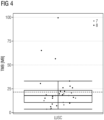
- Fig. 4 shows the positive relationship between TMB and locoregional response to radiotherapy for all LUSC samples.
- a negative response is therein shown with reference number 7, and a positive response with reference number 8.
- the TMB value of each LUSC sample is overlaid (and randomly scattered along the x-axis for better separation) and colored according to treatment response.
- the TMB value has been calculated within the genomic territory described in above 3.
- a cutoff value can be used. In the box plot a possible TMB cutoff value of 21.45648 per MB is drawn as dashed line. This cutoff results in a prediction accuracy TP + TN TP + TN + FP + FN of 0.6875 10 + 12 10 + 12 + 0 + 10 .
- SNV single nucleotide variation
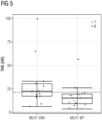
- the TMB cutoff value of 21.45648 per MB is drawn as dashed line to make the two figures easier to compare.
- the accuracy is 0.78125 ( 13 + 12 13 + 12 + 0 + 7 ) when using the presence or absence of the MLH1 variant as predictor.
- the accuracy increases to 0.875 ( 16 + 12 16 + 12 + 0 + 4 ) when combining (OR logical operator) the presence or absence of the MLH1 variant with the TMB cutoff value. While this calculation exemplifies the combination of two features, the combination can also be done using a linear - e.g. logistic regression - or non-linear - e.g. Random Forest - statistical/machine learning method.
- TMB tumor mutational burden
- biomolecule features that reside in biomolecules that are known to be involved (as active component or its regulator) in the biological process of either DNA damage repair (e.g. MLH1, a tumor suppressor gene, taking a physiological role in DNA mismatch repair) and/or angiogenesis (e.g. EP300, a transcriptional coactivator, taking a physiological role in the stimulation of hypoxia-induced genes, e.g. VEGF).
- DNA damage repair e.g. MLH1, a tumor suppressor gene, taking a physiological role in DNA mismatch repair
- angiogenesis e.g. EP300, a transcriptional coactivator, taking a physiological role in the stimulation of hypoxia-induced genes, e.g. VEGF.
- biomolecule features can be selected in a way that
- the (pre)selection of the biomolecule features that are known to be involved in either DNA damage response or angiogenesis, which are biological processes that are fundamental to the tissue's response to ionizing radiation, may enable the extraction of the most relevant biomolecule features required for predicting radiotherapy success and/or locoregional recurrence.
- the biomolecule features
- biomolecules While focusing on a defined set of biomolecules can reduce computation analysis time, ignoring features in biomolecules that are involved in biological processes not relevant to the tissue's response to ionizing radiation could facilitate to uncover relevant but otherwise not statistically significant features.
Landscapes
- Life Sciences & Earth Sciences (AREA)
- Health & Medical Sciences (AREA)
- Chemical & Material Sciences (AREA)
- Engineering & Computer Science (AREA)
- Proteomics, Peptides & Aminoacids (AREA)
- Physics & Mathematics (AREA)
- Organic Chemistry (AREA)
- Genetics & Genomics (AREA)
- Analytical Chemistry (AREA)
- Bioinformatics & Cheminformatics (AREA)
- General Health & Medical Sciences (AREA)
- Biophysics (AREA)
- Biotechnology (AREA)
- Immunology (AREA)
- Zoology (AREA)
- Wood Science & Technology (AREA)
- Pathology (AREA)
- Molecular Biology (AREA)
- Theoretical Computer Science (AREA)
- Bioinformatics & Computational Biology (AREA)
- Evolutionary Biology (AREA)
- Medical Informatics (AREA)
- Spectroscopy & Molecular Physics (AREA)
- Oncology (AREA)
- Microbiology (AREA)
- Hospice & Palliative Care (AREA)
- Biochemistry (AREA)
- General Engineering & Computer Science (AREA)
- Databases & Information Systems (AREA)
- Bioethics (AREA)
- Measuring Or Testing Involving Enzymes Or Micro-Organisms (AREA)
- Medicines That Contain Protein Lipid Enzymes And Other Medicines (AREA)
Description
- The present invention relates to methods of predicting a radiotherapy success in a method of treating a lung cancer of a patient, the use of specific markers for predicting a radiotherapy success in a method of treating a lung cancer of a patient, and a computer program product for use in a method of predicting a radiotherapy success in a method of treating a lung cancer of a patient.
- The overwhelming majority (~70 %) of cancer patients needs a radiation therapy at some point in the course of its treatment. There are basically three forms of radiation therapy in cancer:
- External beam radiation therapy (EBRT), in particular x-ray and particle therapy
- Brachytherapy (internal radiation therapy), in particular low-dose rate (LDR) and high-dose rate (HDR) brachytherapy
- Targeted radiation therapy
- These can be combined among each other or with adjuvant therapies, such as chemotherapy, immunotherapy, and surgical therapy. Patients respond differently to radiation therapy, depending on cancer type, cancer stage, and form of therapy; with a response rate of ~50 % for conventional radiotherapy. This is due in particular to the tumor tissue's inherent sensitivity or resistance to radiation. Furthermore, (irreversible) side effects can occur, depending on the radiosensitivity inherent to the healthy tissue that is located adjacent to the tumor.
- To avoid ineffective therapies and (irreversible) side effects, there is a clinical need for a solution that can predict radiotherapy success. This is particularly interesting from a health economics point of view, since such a solution would reduce the patient's average length of stay in the hospital and, consequently, the associated cost. Moreover, the avoidance of inefficacious treatments with potentially adverse side effects would positively influence overall outcome and prognosis. In addition, any solution that speeds up the time of clinical decision support and that provides transparency into the decision-marking process to make it comprehensible to the clinical is desirable.
- Existing products and products under development differ particularly in the following features:
- Prediction of radiosensitivity/radioresistance in tumor tissue versus radiosensitivity/radiotoxicity in healthy tissue
- Universal (pan-cancer) versus tissue-specific (e.g. squamous cell lung carcinoma) prediction/application
- Technologies used and measured biological substance
- Medical knowledge and clinical guidelines integrated
- Several platforms exist or are in development to determine radiosensitivity/radioresistance in tumor tissue.
- Cvergenx' pGRT (precision genomic radiation therapy) platform (under development) is based on measuring the activity of ten genes (via RNA) to calculate a tumor radiosensitivity index (RSI, Eschrich et al., 2009, Int J Radiat Oncol Biol Phys, DOI: 10.1016/j.ijrobp.2009.06.014) and its integration into a model to adapt radiation dose (genomic-adjusted radiation dose, GARD, Scott et al., 2017, Lancet Oncol, DOI: 10.1016/S1470-2045(16)30648-9) in chemoradiation therapy.
- PFS Genomics' RadiotypeDX test (under development) is based on measuring the activity of 51 genes (via RNA) in breast cancer tissue and predicts a locoregional recurrence after adjuvant radiotherapy (Speers et al., 2015, Clin Cancer Res, DOI: 10.1158/1078-0432.CCR-14-2898).
- Genomic Health's OncotypeDx test is based on measuring the activity of 21 genes (via RNA) in breast cancer tissue (in particular ductal carcinoma in situ, DCIS) and predicts radiotherapy success as well as locoregional recurrence after radiotherapy.
- GenomeDx' Decipher test is based on measuring the activity of 22 and 24 genes (via RNA) in prostate cancer tissue and predicts the development of distal metastases after radical prostatectomy and post-operative radiotherapy (post-operative radiation therapy outcomes score, PORTOS, Zhao et al., 2016, Lancet Oncol, under development, DOI: 10.1016/S1470-2045(16)30491-0), respectively.
- OncoRadiomics' RadiomiX platform is based on calculating general, quantitative tumor features from medical CT images and predicts radiotherapy success, among other things (Aerts et al, 2014, Nat Commun, DOI: 10.1038/ncomms5006).
- Also, several approaches exist regarding the determination of radiotoxicity in healthy tissue.
- NovaGray's Breast test is based on measuring apoptotic T-lymphocytes, induced by in vitro radiation of a blood sample (radiation-induced T-lymphocyte apoptosis, RILA), and identifies patients who likely respond hypersensitive to ionizing radiation and, therefore, are at risk of developing irreversible side effects, in particular fibrosis, in healthy breast tissue.
- DiaCarta's RadTox test (under development) is based on measuring circulating, cell-free DNA (cfDNA) in blood, particularly the repetitive Alu sequence, as a measure of radiotherapy-induced tissue damage, and monitors potentially toxic side effects in healthy tissue, located adjacent to the tumor, after radiotherapy.
- Furthermore, the following documents can be referred to as prior art:
- Enguix-Riego, et al: "S77 ESTRO 37 OC-0153 Multicenter prospective validation of HSPB1 rs2868371 SNP and survival in non-small cell lung cancer", , 15 June 2018 (2018-06-15), XP055671506, Retrieved from the Internet: URL:https://www.thegreenjournal.com/article/S0167-8140(18)30463-8/pdf [retrieved on 2020-02-25]
- Marfa Dei Valle Enguix-Riego et al: "The single nucleotide variant rs2868371 associates with the risk of mortality in non-small cell lung cancer patients: A multicenter prospective validation", Radiotherapy and Oncology, vol. 136, 6 April 2019 (2019-04-06), pages 29-36, XP05567151 0,lreland ISSN: 0167-8140, DOI: 10.1016/j.radonc.2019.03.025
- Su et al: "Genetic polymorphisms and treatment response in advanced non-small cell lung cancer", LUNG CANCER, ELSEVIER, AMSTERDAM, NL, vol. 56, no. 2, 19 April 2007 (2007-04-19), pages 281-288, XP022034233, ISSN: 0169-5002, DOI: 10.1016/J.LUNGCAN.2006.12.002
- Olga Pernia et al: "Methylation status of IGFBP-3 as a useful clinical tool for deciding on a concomitant radiotherapy", EPIGENETICS, vol. 9, no. 11, 2 November 2014 (2014-11-02), pages 1446-1453, XP055324576, US ISSN: 1559-2294, DOI: 10.4161/15592294.2014.971626
- Florczuk Mateusz et al: "miRNAs as Biomarkers and Therapeutic Targets in Non-Small Cell Lung Cancer: Current Perspectives", TARGETED ONCOLOGY, SPRINGER PARIS, PARIS, vol. 12, no. 2, 27 February 2017 (2017-02-27), pages 179-200 XP036201139, ISSN: 1776-2596, DOI: 10.1007/S11523-017-0478-5 [retrieved on 2017-02-27]
-
CN 107 099 586 A - Natalie L Ausborn et al: "Molecular Profiling to Optimize Treatment in Non-Small Cell Lung Cancer: A Review of Potential Molecular Targets for Radiation Therapy by the Translational Research Program of the Radiation Therapy Oncology Group", INTERNATIONAL JOURNAL OF RADIATION: ONCOLOGY BIOLOGY PHYSICS, PERGAMON PRESS, USA, vol. 83, no. 4, 17 January 2012 (2012-01-17), pages e453-e464, XP028492512, ISSN: 0360-3016, DOI: 10.1016/J.IJROBP.2012.01 .056 [retrieved on 2012-01-20]
- Anonymous: "rs1799977 RefSNP Report - dbSNP - NCBI", , 9 July 2019 (2019-07-09), XP055671614, Retrieved from the Internet: URL:https://www.ncbi.nlm.nih.gov/snp/rs1799977 [retrieved on 2020-02-25]
- Jin-Yan Liang et al: "Clinical value of MLH1-negative circulating tumor cells in lung cancer patients :", MEDICINE., vol. 98, no. 25, 1 June 2019 (2019-06-01), page e15721, XP055671623, US ISSN: 0025-7974, DOI: 10.1097/MD.0000000000015721
- However, there remains a need for efficient markers for predicting a radiotherapy success in a method of treating a lung cancer of a patient.
- The present inventors found efficient markers for predicting radiotherapy success in patients suffering from a lung cancer.
- The invention is set out in the appended set of claims. Further aspects and embodiments of the invention are disclosed in the dependent claims and can be taken from the following description, figures and examples, without being limited thereto.
- The enclosed drawings should illustrate embodiments of the present invention and convey a further understanding thereof. In connection with the description they serve as explanation of concepts and principles of the invention. Other embodiments and many of the stated advantages can be derived in relation to the drawings. The elements of the drawings are not necessarily to scale towards each other. Identical, functionally equivalent and acting equal features and components are denoted in the figures of the drawings with the same reference numbers, unless noted otherwise.
-
FIG. 1 shows schematically steps in a method of the first aspect of the invention. - In
FIG. 2 a method of the third aspect of the invention is illustrated schematically. -
FIG. 3 depicts schematically a method of the fifth aspect of the present invention. -
FIGs 4 and5 show results obtained in Example 1. - Unless defined otherwise, technical and scientific terms used herein have the same meaning as commonly understood by one of ordinary skill in the art to which this invention belongs.
- In general, a gene is a sequence of nucleotides (nucleotide sequence) in DNA - which can be copied to RNA, e.g. mRNA - or RNA, i.e. nucleic acid molecules, coding for a molecule that has a function in an organism. The term "nucleic acid molecule" refers to a polynucleotide molecule having a defined sequence. It comprises DNA molecules, RNA molecules, nucleotide analog molecules and combinations and derivatives thereof, such as DNA molecules or RNA molecules with incorporated nucleotide analogs or cDNA.
- With regard to the present invention, the following genes have the following sequence ID No. as reference gene, as per the attached sequence protocol:
- SEQ ID No. 1: MLH1; SEQ ID No. 2: EP300;
- SEQ ID No. 3: BRCA2; SEQ ID No. 4: FLT1;
- SEQ ID No. 5: GRINA; SEQ ID No. 6: HEATR1;
- SEQ ID No. 7: MUTYH; SEQ ID No. 8: NUDT1;
- SEQ ID No. 9: PARP10; SEQ ID No. 10: PRPF19;
- SEQ ID No. 11: KCNJ12; SEQ ID No. 12: MGMT;
- SEQ ID No. 13: PMS2P9; SEQ ID No. 14: DDX11;
- SEQ ID No. 15: EPHA2; SEQ ID No. 16: GEN1;
- SEQ ID No. 17: SETD2; SEQ ID No. 18: ZNF208;
- SEQ ID No. 19: APOLD1; SEQ ID No. 20: GPER1;
- SEQ ID No. 21: POLB; SEQ ID No. 22: ANKRD30A;
- SEQ ID No. 23: AR; SEQ ID No. 24: BTK;
- SEQ ID No. 25: GTF2H4; SEQ ID No. 26: IKBKE;
- SEQ ID No. 27: KAT6A; SEQ ID No. 28: NUDT19;
- SEQ ID No. 29: PARP1; SEQ ID No. 30: PTPRT;
- SEQ ID No. 31: TAF3; SEQ ID No. 32: TDG;
- SEQ ID No. 33: MAP3K1; SEQ ID No. 34: SLC9A4;
- SEQ ID No. 35: UNG; SEQ ID No. 36: SMUG1;
- SEQ ID No. 37: MBD4; SEQ ID No. 38: OGG1;
- SEQ ID No. 39: NTHL1; SEQ ID No. 40: MPG;
- SEQ ID No. 41: NEIL1; SEQ ID No. 42: NEIL2;
- SEQ ID No. 43: NEIL3; SEQ ID No. 44: APEX1;
- SEQ ID No. 45: APEX2; SEQ ID No. 46: LIG3;
- SEQ ID No. 47: XRCC1; SEQ ID No. 48: PNKP;
- SEQ ID No. 49: APLF; SEQ ID No. 50: PARP2;
- SEQ ID No. 51: PARP3; SEQ ID No. 52: ALKBH2;
- SEQ ID No. 53: ALKBH3; SEQ ID No. 54: TDP1;
- SEQ ID No. 55: TDP2; SEQ ID No. 56: MSH2;
- SEQ ID No. 57: MSH3; SEQ ID No. 58: MSH6;
- SEQ ID No. 59: PMS2; SEQ ID No. 60: MSH4;
- SEQ ID No. 61: MSH5; SEQ ID No. 62: MLH3;
- SEQ ID No. 63: PMS1; SEQ ID No. 64: PMS2P3;
- SEQ ID No. 65: XPC; SEQ ID No. 66: RAD23B;
- SEQ ID No. 67: CETN2; SEQ ID No. 68: RAD23A;
- SEQ ID No. 69: XPA; SEQ ID No. 70: DDB1;
- SEQ ID No. 71: DDB2; SEQ ID No. 72: RPA1;
- SEQ ID No. 73: RPA2; SEQ ID No. 74: RPA3;
- SEQ ID No. 75: ERCC3; SEQ ID No. 76: ERCC2;
- SEQ ID No. 77: GTF2H1; SEQ ID No. 78: GTF2H2;
- SEQ ID No. 79: GTF2H3; SEQ ID No. 80: GTF2H5;
- SEQ ID No. 81: CDK7; SEQ ID No. 82: CCNH;
- SEQ ID No. 83: MNAT1; SEQ ID No. 84: ERCC5;
- SEQ ID No. 85: ERCC1; SEQ ID No. 86: ERCC4;
- SEQ ID No. 87: LIG1; SEQ ID No. 88: ERCC8;
- SEQ ID No. 89: ERCC6; SEQ ID No. 90: UVSSA;
- SEQ ID No. 91: XAB2; SEQ ID No. 92: MMS19;
- SEQ ID No. 93: RAD51; SEQ ID No. 94: RAD51B;
- SEQ ID No. 95: RAD51D; SEQ ID No. 96: DMC1;
- SEQ ID No. 97: XRCC2; SEQ ID No. 98: XRCC3;
- SEQ ID No. 99: RAD52; SEQ ID No. 100: RAD54L;
- SEQ ID No. 101: RAD54B; SEQ ID No. 102: BRCA1;
- SEQ ID No. 103: SHFM1; SEQ ID No. 104: RAD50;
- SEQ ID No. 105: MRE11A; SEQ ID No. 106: NBN;
- SEQ ID No. 107: RBBP8; SEQ ID No. 108: MUS81;
- SEQ ID No. 109: EME1; SEQ ID No. 110: EME2;
- SEQ ID No. 111: SLX1A; SEQ ID No. 112: SLX1B;
- SEQ ID No. 113: FANCA; SEQ ID No. 114: FANCB;
- SEQ ID No. 115: FANCC; SEQ ID No. 116: FANCD2;
- SEQ ID No. 117: FANCE; SEQ ID No. 118: FANCF;
- SEQ ID No. 119: FANCG; SEQ ID No. 120: FANCI;
- SEQ ID No. 121: BRIP1; SEQ ID No. 122: FANCL;
- SEQ ID No. 123: FANCM; SEQ ID No. 124: PALB2;
- SEQ ID No. 125: RAD51C; SEQ ID No. 126: SLX4;
- SEQ ID No. 127: FAAP20; SEQ ID No. 128: FAAP24;
- SEQ ID No. 129: XRCC6; SEQ ID No. 130: XRCC5;
- SEQ ID No. 131: PRKDC; SEQ ID No. 132: LIG4;
- SEQ ID No. 133: XRCC4; SEQ ID No. 134: DCLRE1C;
- SEQ ID No. 135: NHEJ1; SEQ ID No. 136: DUT;
- SEQ ID No. 137: RRM2B; SEQ ID No. 138: POLG;
- SEQ ID No. 139: POLD1; SEQ ID No. 140: POLE;
- SEQ ID No. 141: PCNA; SEQ ID No. 142: REV3L;
- SEQ ID No. 143: MAD2L2; SEQ ID No. 144: REV1;
- SEQ ID No. 145: POLH; SEQ ID No. 146: POLI;
- SEQ ID No. 147: POLQ; SEQ ID No. 148: POLK;
- SEQ ID No. 149: POLL; SEQ ID No. 150: POLM;
- SEQ ID No. 151: POLN; SEQ ID No. 152: FEN1;
- SEQ ID No. 153: FAN1; SEQ ID No. 154: TREX1;
- SEQ ID No. 155: TREX2; SEQ ID No. 156: EXO1;
- SEQ ID No. 157: APTX; SEQ ID No. 158: SPO11;
- SEQ ID No. 159: ENDOV; SEQ ID No. 160: UBE2A;
- SEQ ID No. 161: UBE2B; SEQ ID No. 162: RAD18;
- SEQ ID No. 163: SHPRH; SEQ ID No. 164: HLTF;
- SEQ ID No. 165: RNF168; SEQ ID No. 166: SPRTN;
- SEQ ID No. 167: RNF8; SEQ ID No. 168: UBE2V2;
- SEQ ID No. 169: UBE2N; SEQ ID No. 170: H2AFX;
- SEQ ID No. 171: CHAF1A; SEQ ID No. 172: SETMAR;
- SEQ ID No. 173: BLM; SEQ ID No. 174: WRN;
- SEQ ID No. 175: RECQL4; SEQ ID No. 176: ATM;
- SEQ ID No. 177: MPLKIP; SEQ ID No. 178: DCLRELA;
- SEQ ID No. 179: DCLRE1B; SEQ ID No. 180: RPA4;
- SEQ ID No. 181: RECQL; SEQ ID No. 182: RECQL5;
- SEQ ID No. 183: HELQ; SEQ ID No. 184: RDM1;
- SEQ ID No. 185: NABP2; SEQ ID No. 186: ATR;
- SEQ ID No. 187: ATRIP; SEQ ID No. 188: MDC1;
- SEQ ID No. 189: RAD1; SEQ ID No. 190: RAD9A;
- SEQ ID No. 191: HUS1; SEQ ID No. 192: RAD17;
- SEQ ID No. 193: CHEK1; SEQ ID No. 194: CHEK2;
- SEQ ID No. 195: TP53; SEQ ID No. 196: TP53BP1;
- SEQ ID No. 197: RIF1; SEQ ID No. 198: TOPBP1;
- SEQ ID No. 199: CLK2; SEQ ID No. 200: PER1;
- SEQ ID No. 201: RNF4
- A change in the nucleotide sequence relates to a variation in the sequence as compared to a reference sequence. A change in the nucleotide sequence is for example a deletion of one or multiple nucleotides, an insertion of one or multiple nucleotides, a substitution of one or multiple nucleotides, a duplication of one or a sequence of multiple nucleotides, a translocation of one or a sequence of multiple nucleotides, etc. Thus, it also encompasses single-nucleotide variants (SNVs) and multi-nucleotide variants (MNVs).
- In the context of the present invention a "sample" is a sample which comprises at least nucleotide sequence and/or epi-genetic profile and/or expression profile and/or copy number information of a patient. Examples for samples are cells, tissue, biopsy specimens, body fluids, blood, urine, saliva, sputum, plasma, serum, cell culture supernatant, swab sample and others, e.g. tumor tissue. According to certain embodiments the sample is a blood sample. In this regard it was found that the mutations particularly are not somatic, so that also blood samples, e.g. peripheral blood, are possible as samples. Peripheral blood in this regard refers to the circulating pool of blood within the patient. According to certain embodiments the sample is a tissue or a biopsy specimen which can be fixated or not, wherein a fixation can be e.g. carried out by freezing or usual fixation methods like for formalin-fixed paraffin-embedded (FFPE) tissue.
- According to certain embodiments, the patient in the present methods is a vertebrate, more preferably a mammal and most preferred a human.
- A vertebrate within the present invention refers to animals having a vertebrae, which includes mammals - including humans, birds, reptiles, amphibians and fishes. The present invention thus is not only suitable for human medicine, but also for veterinary medicine.
- Radiotherapy success can be based on a combination of somatic features/mutations (e.g. radiosensitivity/radioresistance of cancerous tissue) and germline features/mutations (innate radiosensitivity/radioresistance).
- According to certain embodiments, a success in radiotherapy with adjuvant therapies, particularly chemotherapy, immunotherapy, and/or surgical therapy, is predicted in the present methods of treating a lung cancer of a patient.
- In the present invention the radiotherapy method is not particularly restricted. According to certain embodiments, the radiotherapy is external beam radiation therapy (EBRT), in particular x-ray and particle therapy, brachytherapy (internal radiation therapy), in particular low-dose rate (LDR) and high-dose rate (HDR) brachytherapy, or targeted radiation therapy. It is also not excluded that adjuvant therapies are included. According to certain embodiments the radiotherapy method thus also can be radiochemotherapy.
- According to certain embodiments, the prediction of radiotherapy success includes a prediction of locoregional response and/or recurrence.
- Gene coordinates can be obtained from the following resource: ftp://ftp.ncbi.nlm.nih.gov/genomes/all/GCF/000/001/405/GCF_00 0001405.33_GRCh38.p7/GCF_000001405.33_GRCh38.p7_feature_table .txt.gz.
- Before the invention is described in exemplary detail, it is to be understood that this invention is not limited to the particular component parts of the process steps of the methods described herein as such methods may vary. It is also to be understood that the terminology used herein is for purposes of describing particular embodiments only, and is not intended to be limiting. It must be noted that, as used in the specification and the appended claims, the singular forms "a," "an" and "the" include singular and/or plural referents unless the context clearly dictates otherwise. For example, the term "a" as used herein can be understood as one single entity or in the meaning of "one or more" entities. It is also to be understood that plural forms include singular and/or plural referents unless the context clearly dictates otherwise. It is moreover to be understood that, in case parameter ranges are given which are delimited by numeric values, the ranges are deemed to include these limitation values.
- In a first aspect the present invention relates to a method of predicting a radiotherapy success in a method of treating a lung cancer of a patient, wherein the lung cancer is lung squamous cell carcinoma, comprising determining a change in the nucleotide sequence of MLH1 in a sample obtained from the patient.
- E.g. the sample can be taken from a stock or a storage, be obtained in vitro, etc.
- For the determining of a change in the nucleotide sequence it is possible to obtain nucleotide sequence information of MLH1 in the sample by a suitable method, which is not particularly restricted.
- For example, nucleotide sequence information can be obtained by DNA sequencing methods that are not particularly restricted, e.g. Sanger sequencing methods, shotgun sequencing methods, bridge PCR methods, and next-generation sequencing methods.
- The methods of sequencing nucleic acids referred to as next-generation sequencing have opened the possibility of large-scale genomic analysis. The term "next-generation sequencing" or "high-throughput sequencing" refers to high-throughput sequencing technologies that parallelize the sequencing process, producing thousands or millions of sequences at once. Examples include Massively Parallel Signature Sequencing (MPSS), Polony sequencing, 454 pyrosequencing, Illumina (So-lexa) sequencing, SOLiD sequencing, Ion Torrent semiconductor sequencing, DNA nanoball sequencing, Helioscope(TM) single molecule sequencing, Single Molecule Real Time (SMRT) sequencing, Nanopore DNA sequencing, and RNA Polymerase (RNAP) sequencing, each with or without prior employment of target enrichment techniques like hybridization capture.
- After the determination, the nucleotide sequence can then be compared to the respective reference, i.e. the reference sequence. By comparison, a change in the nucleotide sequence can then be determined.
- However, it is not excluded that the respective information about the nucleotide sequence is already provided together with the sample of the patient, so that only the comparing to a reference has to be carried out.
- In the present invention a change in the nucleotide sequence of MLH1 can be indicative of an enhanced or a reduced radiotherapy success in a method of treating a lung cancer of a patient. This means that a certain change in the nucleotide sequence of MLH1 can be indicative of an enhanced radiotherapy success in a method of treating a lung cancer of a patient, while another change in the nucleotide sequence of MLH1 can be indicative of a reduced radiotherapy success in a method of treating a lung cancer of a patient.
- According to certain embodiments at least one change in the nucleotide sequence is determined from rs1799977 as disclosed in the Single Nucleotide Polymorphism Database dbSNP of the National Center for Biotechnology Information (NCBI).
- The changes as disclosed in the Single Nucleotide Polymorphism Database dbSNP of the National Center for Biotechnology Information (NCBI) are thereby as follows (for Homo sapiens):
rs1799977: chr3:37012077 (GRCh38.p12) (position 18728 in SEQ ID No. 1, MLH1); alleles: A>C, A>G, A>T; variation Type: SNV; gene: MLH1, missense variant - According to certain embodiments, a change in the nucleotide sequence of MLH1 is indicative of an enhanced radiotherapy success in a method of treating a lung squamous cell carcinoma of a patient.
- According to certain embodiments a change in the nucleotide sequence of rs1799977 is indicative of an enhanced radiotherapy success in a method of treating a lung squamous cell carcinoma of a patient.
-
FIG. 1 shows schematically steps in a method of the first aspect of the invention, wherein step 1 corresponds to obtaining or providing a sample of the patient, andstep 2 corresponds to determining a change in the nucleotide sequence of MLH1. - A second aspect of the present invention is directed to a use of a change in the nucleotide sequence of MLH1, particularly a change in the nucleotide sequence of rs1799977 as disclosed in the Single Nucleotide Polymorphism Database dbSNP of the National Center for Biotechnology Information (NCBI), as a marker for predicting a radiotherapy success in a method of treating a lung cancer of a patient, wherein the lung cancer is lung squamous cell carcinoma. In particular, the at least one change in the nucleotide sequence from rs1799977 is indicative of an enhanced radiotherapy success in a method of treating a lung cancer of a patient.
- The following third aspect and the corresponding
Fig. 2 is present for illustrative purposes only as the corresponding claim has been deleted from the claim set during prosecution:
Also disclosed but not part of the invention is a method of predicting a radiotherapy success in a method of predicting a radiotherapy success in a method of treating a lung cancer of a patient, wherein the lung cancer is lung squamous cell carcinoma, comprising: obtaining nucleotide sequence data of a sample of a patient, and determining a change in the nucleotide sequence of MLH1 in the nucleotide sequence data. - The step of obtaining nucleotide sequence data of a sample of a patient is not particularly restricted, and the respective data can be obtained by any suitable method, particularly in electronic form, e.g. based on an evaluation of a sample of a patient.
- Also, the step of determining the presence of at least one marker as disclosed in the second aspect is not particularly restricted, and it can be carried out in any suitable manner, e.g. using sufficient means like tools for automatically evaluating the nucleotide sequence data of the sample of the patient for the presence of the respective marker(s). For example, the evaluation can be carried out with the help of or exclusively using a computer program product, which is not particularly restricted.
- In
FIG. 2 a method of the third aspect of the invention is illustrated schematically, whereinstep 3 corresponds to obtaining nucleotide sequence data of a sample of a patient, and step 4 to determining the presence of at least one marker as disclosed in the second aspect. - In a third aspect a computer program product is disclosed, comprising computer executable instructions which, when executed, perform a method of predicting a radiotherapy success in a method of treating a lung cancer of a patient, wherein the lung cancer is lung squamous cell carcinoma, comprising:
- obtaining nucleotide sequence data of a sample of a patient, and
- determining a change in the nucleotide sequence of MLH1 in the nucleotide sequence data.
- According to certain embodiments the computer program product is one on which program commands or program codes of a computer program for executing said method are stored. According to certain embodiments the computer program product is or comprises a storage medium.
- A fourth aspect of the present invention relates to a method of predicting a radiotherapy success in a method of treating a lung cancer of a patient, comprising:
- obtaining nucleotide sequence data of a sample of a patient, and
- analyzing the nucleotide sequence data using the computer program product of the third aspect.
- Again, the step of obtaining nucleotide sequence data of a sample of a patient is not particularly restricted.
- Also, the step of analyzing the nucleotide sequence data using the computer program product of the fourth aspect is not particularly restricted and can be carried out e.g. automatically, but also with the settings of suitable parameters by a user.
-
FIG. 3 depicts schematically a method of the fifth aspect of the present invention, whereinstep 5 corresponds to obtaining nucleotide sequence data of a sample of a patient, andstep 6 corresponds to analyzing the nucleotide sequence data using the computer program product of the fourth aspect. - The present inventors further also particularly found that a change in the nucleotide sequence in a DNA damage repair gene, namely MLH1, can be predictive of a radiotherapy success in a method of treating a lung cancer of a patient.
- In particular, MLH1 can be seen as a mismatch excision repair (MMR) gene.
- The above embodiments can be combined arbitrarily, if appropriate. Further possible embodiments and implementations of the invention comprise also combinations of features not explicitly mentioned in the foregoing or in the following with regard to the Examples of the invention. Particularly, a person skilled in the art will also add individual aspects as improvements or additions to the respective basic form of the invention.
- The present invention will now be described in detail with reference to several examples thereof. However, these examples are illustrative and do not limit the scope of the invention.
- A cohort of 84 patients with non-small cell lung cancer (NSCLC) and different response rates to chemoradiotherapy was evaluated in a cross-validated evaluation. The therapy comprised neoadjuvant radiochemotherapy (RCT).
- The samples of the cohort were fresh frozen tumor tissue. NSCLC samples were classified as either lung adenocarcinoma (LUAD), lung squamous cell carcinoma (LUSC), NSCLC neuroendo-crine differentiation (NE), or NSCLC not otherwise specified (NOS). Patient samples were classified as either complete response (CR), partial response (PR), stable disease (SD), or progressive disease (PD), dependent on locoregional response to chemoradiation. LUSC samples were classified as either complete response (CR), partial response (PR), stable disease (SD), or progressive disease (PD), dependent on locoregional response to chemoradiation.
- The exome of extracted sample DNA was enriched using Ag-ilent's SureSelect Human All Exon V6+COSMIC hybridization capture kit and sequenced on an Illumina NextSeq 500 instrument.
- Further information regarding the patients is given in Tables 1 (cancer stage), 2 (cancer subtype) and 3 (pathological response).
Table 1: cancer stage of patients Stage #Patients IIA 3 IIB 7 IIIA 69 IIIB 5 Table 2: Cancer subtype Subtype #Patients LUAD 44 LUSC 32 NSCLC NE 2 NSCLC NOS 6 Table 3: Pathologic response Respo nse #NSCLC #LUAD #LUSC Yes CR 21 6 13 PR 20 11 7 No SD 19 15 3 PD 24 12 9 - Small insertions, deletions, single nucleotide variants (SNVs), multiple nucleotide variants (MNVs), and replacements (in the following termed variants) were called using the Low Frequency Variant Detection tool from the Identify and Annotate Variants (WES)-Workflow of QIAGEN's Biomedical Genomics Workbench 5.0.1.
- The parameter setting was as follows:
QIAGEN's Biomedical Genomics Workbench 5.0.1 -
Parameter Value References GRCh38.p7 Masking mode No masking Match score 1 Mismatch cost 2 Cost of insertions and deletions Affine gap cost Insertion open cost 6 Insertion extend cost 1 Deletion open cost 6 Deletion extend cost 1 Length fraction 0.5 Similarity fraction 0.8 Global alignment No Auto-detect paired distances Yes Non-specific match handling Map randomly Output mode Create reads track Create report No Collect un-mapped reads No -
Parameter Value P-value threshold 0.0001 Maximum number of mismatches 2 Create report No Create breakpoints No Create InDel variants Yes Ignore broken pairs Yes Minimum relative consensus coverage 0.2 Minimum quality score 30 Create structural variations No Filter variants Yes Minimum number of reads 3 -
- *Target regions of Agilent's SureSelect Human All Exon V6+COSMIC r2 (Design ID: S07604715)
-
Parameter Value Realign unaligned ends Yes Multi-pass realignment 3 Guidance-variant track InDels from InDels and Structural Variants Maximum guidance-variant length 200 Force realignment to guidance-variants No Output mode Create reads track Output track of realigned regions No -
Parameter Value Required significance (%) 1.0 Ignore positions with coverage abo ve 100, 000 Restrict calling to target regions S07604715_Padded.bed* Ignore broken pairs Yes Ignore non-specific matches Reads Minimum coverage 5 Minimum count 3 Minimum frequency (%) 5.0 Base quality filter Yes Neighborhood radius 5 Minimum central quality 30 Minimum neighborhood quality 20 Read direction filter No Relative read direction filter No Read position filter Yes Significance (%) 1.0 Remove pyro-error variants No Create track Yes Create annotated table No Create report No * Target regions of Agilent's SureSelect Human All Exon V6+COSMIC r2 (Design ID: S07604715) -
Parameter Value Minimum frequency (%) 5.0 Minimum forward/reverse balance 0.1 Minimum average base quality 30.0 Variant frequency Yes Forward/reverse balance Yes Average base quality Yes - In the following, the methods used to build models predicting radiotherapy response are described.
- Three feature levels were included:
- 1. Small insertions, small deletions, single nucleotide variants (SNVs), multiple nucleotide variants (MNVs), and replacements (in the following termed variants)
- 2. Mutational burden in single genes (GMB)
- 3. Mutational burden in multiple genes (TMB)
- Only informative GMB features (standard deviation across samples > 0.5) and frequently occurring variants (variants occurring in at least 50 % of samples in either response group) were considered.
- Features with a p-value < 0.05 calculated using either Fisher's exact tests (variants) or Wilcoxon rank-sum tests (GMB features) were selected. In the process, a bootstrapping procedure was applied to primarily select stable/recurrent features, i.e. features that repeatedly emerge in bootstrapping samples (features with p-value < 0.05 in at least 80 % of 50 bootstrap samples containing a random sample of 80 % of all samples).
- For the predictive models, both linear - in particular elastic-net regularized logistic regression (R package glmnet 2.0-16; alpha = 0.99) - and non-linear - in particular random forest (R package randomForest 4.6-14; ntree = 1000) - models were calculated predicting radiotherapy response. To evaluate the performance of predictive models, a 100-fold iterated 4-fold cross-validation procedure was applied.
- The variants described in the following were found.
- The variants are uniquely characterized by their Human Genome Variation Society (HGVS) nomenclature, Single Nucleotide Polymorphism Database (dbSNP) identifier, ClinVar identifier and/or Universal Protein Knowledgebase (UniProtKB) identifier (as of April 25, 2019)
- The following variants are specifically predictive for radiotherapy response in lung squamous cell carcinoma (LUSC) patients. The number and fraction of patients carrying the respective variant are split into those that do respond (CR and PR) and those that do not respond (SD and PD) to locoregional chemoradiation.
-
Database ID/URI HGVS NC_000013.11:g.32337751A>G dbSNP https://www.ncbi.nlm.nih.gov/snp/rs1801406 ClinVar https://preview.ncbi.nlm.nih.gov/clinvar/variation /126010 UniProtKB - Response #Patients Yes 11 (of 20) No 1 (of 12) - Potential effect of variant on tumor sensitivity to ionizing radiation: Enhanced
-
Database ID/URI HGVS NC_000012.12:g.31101061C>T dbSNP https://www.ncbi.nlm.nih.gov/snp/rs1046456 ClinVar - UniProtKB - Response #Patients Yes 8 (of 20) No 11 (of 12) - Potential effect of variant on tumor sensitivity to ionizing radiation: Reduced
-
Database ID/URI HGVS NC_000001.11:g.16125272G>A dbSNP https://www.ncbi.nlm.nih.gov/snp/rs3754334 ClinVar https://preview.ncbi.nlm.nih.gov/clinvar/variation /259392 UniProtKB - Response #Patients Yes 11 (of 20) No 1 (of 12) - Potential effect of variant on tumor sensitivity to ionizing radiation: Enhanced
-
Database ID/URI HGVS NC_000013.11:g.28308924G>A dbSNP https://www.ncbi.nlm.nih.gov/snp/rs7993418 ClinVar - UniProtKB - Response #Patients Yes 20 (of 20) No 8 (of 12) - Potential effect of variant on tumor sensitivity to ionizing radiation: Enhanced
-
Database ID/URI HGVS NC_000002.12:g.17764976A>G dbSNP https://www.ncbi.nlm.nih.gov/snp/rs16981869 ClinVar - UniProtKB https://www.uniprot.org/uniprot/Q17RS7#VAR 037845 Response #Patients Yes 2 (of 20) No 6 (of 12) - Potential effect of variant on tumor sensitivity to ionizing radiation: Reduced
-
Database ID/URI HGVS NC_000002.12:g.17768673_17768675delTAA) dbSNP https://www.ncbi.nlm.nih.gov/projects/SNP/snp_ref .cgi?do_not_redirect&rs=rs72407975 ClinVar - UniProtKB - Response #Patients Yes 1 (of 20) No 6 (of 12) - Potential effect of variant on tumor sensitivity to ionizing radiation: Reduced
-
Database ID/URI HGVS NC_000008.11:g.143991836C>G dbSNP https://www.ncbi.nlm.nih.gov/snp/rs67714660 ClinVar - UniProtKB - Response #Patients Yes 19 (of 20) No 6 (of 12) - Potential effect of variant on tumor sensitivity to ionizing radiation: Enhanced
-
Database ID/URI HGVS NC_000008.11:g.143992685C>T dbSNP https://www.ncbi.nlm.nih.gov/snp/rs56261297 ClinVar - UniProtKB - Response #Patients Yes 19 (of 20) No 6 (of 12) - Potential effect of variant on tumor sensitivity to ionizing radiation: Enhanced
-
Database ID/URI HGVS NC_000001.11:g.236553659C>T dbSNP https://www.ncbi.nlm.nih.gov/snp/rs2275685 ClinVar - UniProtKB 3 - Response #Patients Yes 20 (of 20) No 8 (of 12) - Potential effect of variant on tumor sensitivity to ionizing radiation: Enhanced
-
Database ID/URI HGVS NC_000001.11:g.236554626T>C dbSNP https://www.ncbi.nlm.nih.gov/snp/rs2275687 ClinVar - UniProtKB https://www.uniprot.org/uniprot/Q9H583#VAR 010942 Response #Patients Yes 20 (of 20) No 8 (of 12) - Potential effect of variant on tumor sensitivity to ionizing radiation: Enhanced
-
Database ID/URI HGVS NC_000001.11:g.236555893A>G dbSNP https://www.ncbi.nlm.nih.gov/snp/rs1885533 ClinVar - UniProtKB 3https://www.uniprot.org/uniprot/Q9H583#VAR 010940 Response #Patients Yes 20 (of 20) No 8 (of 12) - Potential effect of variant on tumor sensitivity to ionizing radiation: Enhanced
-
Database ID/URI HGVS NC_000001.11:g.236555959G>A dbSNP https://www.ncbi.nlm.nih.gov/snp/rs1885534 ClinVar - UniProtKB - Response #Patients Yes 20 (of 20) No 7 (of 12) - Potential effect of variant on tumor sensitivity to ionizing radiation: Enhanced
-
Database ID/URI HGVS NC_000001.11:g.236585205T>C dbSNP https://www.ncbi.nlm.nih.gov/snp/rs1006456 ClinVar - UniProtKB - Response #Patients Yes 20 (of 20) No 8 (of 12) - Potential effect of variant on tumor sensitivity to ionizing radiation: Enhanced
-
Database ID/URI HGVS NC_000001.11:g.236586349T>C dbSNP https://www.ncbi.nlm.nih.gov/snp/rs2794763 ClinVar - UniProtKB https://www.uniprot.org/uniprot/Q9H583#VAR 049330 Response #Patients Yes 20 (of 20) No 7 (of 12) - Potential effect of variant on tumor sensitivity to ionizing radiation: Enhanced
-
Database ID/URI HGVS NC_000003.12:g.37012077A>G dbSNP https://www.ncbi.nlm.nih.gov/snp/rs1799977 ClinVar https://preview.ncbi.nlm.nih.gov/clinvar/variation /36557 UniProtKB https://www.uniprot.org/uniprot/P40692#VAR 004450 Response #Patients Yes 13 (of 20) No 0 (of 12) - Potential effect of variant on tumor sensitivity to ionizing radiation: Enhanced
-
Database ID/URI HGVS NC_000001.11:g.45338378C>T dbSNP https://www.ncbi.nlm.nih.gov/snp/rs3219472 ClinVar - UniProtKB - Response #Patients Yes 4 (of 20) No 8 (of 12) - Potential effect of variant on tumor sensitivity to ionizing radiation: Reduced
-
Database ID/URI HGVS NC_000007.14:g.2251050C>T dbSNP https://www.ncbi.nlm.nih.gov/snp/rs1062492 ClinVar - UniProtKB - Response #Patients Yes 10 (of 20) No 0 (of 12) - Potential effect of variant on tumor sensitivity to ionizing radiation: Enhanced
-
Database ID/URI HGVS NC_000008.11:g.143985257T>C dbSNP https://www.ncbi.nlm.nih.gov/snp/rs11136344 ClinVar - UniProtKB https://www.uniprot.org/uniprot/Q9H583#VAR 027859 Response #Patients Yes 19 (of 20) No 6 (of 12) - Potential effect of variant on tumor sensitivity to ionizing radiation: Enhanced
-
Database ID/URI HGVS NC_000008.11:g.143985944G>A dbSNP https://www.ncbi.nlm.nih.gov/snp/rs11136345 ClinVar - UniProtKB - Response #Patients Yes 19 (of 20) No 6 (of 12) - Potential effect of variant on tumor sensitivity to ionizing radiation: Enhanced
-
Database ID/URI HGVS NC_000011.10:g.60903374C>T dbSNP https://www.ncbi.nlm.nih.gov/snp/rs2240045 ClinVar - UniProtKB - Response #Patients Yes 17 (of 20) No 4 (of 12) - Potential effect of variant on tumor sensitivity to ionizing radiation: Enhanced
-
Database ID/URI HGVS NC_000003.12:g.47083895G>A dbSNP https://www.ncbi.nlm.nih.gov/snp/rs4082155 ClinVar https://preview.ncbi.nlm.nih.gov/clinvar/variation /135202 UniProtKB https://www.uniprot.org/uniprot/Q9BYW2#VAR 027841 Response #Patients Yes 18 (of 20) No 5 (of 12) - Potential effect of variant on tumor sensitivity to ionizing radiation: Enhanced
-
Database ID/URI HGVS NC_000019.10:g.21973116T>C dbSNP https://www.ncbi.nlm.nih.gov/snp/rs10425763 ClinVar - UniProtKB https://www.uniprot.org/uniprot/O43345#VAR_059903 Response #Patients Yes 12 (of 20) No 1 (of 12) - Potential effect of variant on tumor sensitivity to ionizing radiation: Enhanced
- The following variants are predictive of radiotherapy response in the 84 non-small cell lung cancer (NSCLC) patients. The number and fraction of patients carrying the respective variant are split into those that do respond (CR and PR) and those that do not respond (SD and PD) to locoregional chemoradiation.
-
Database ID/URI HGVS NC_000022.11:g.41152004A>G dbSNP https://www.ncbi.nlm.nih.gov/snp/rs20551 ClinVar https://preview.ncbi.nlm.nih.gov/clinvar/variation /93736 UniProtKB https://www.uniprot.org/uniprot/Q09472#VAR_020425) Response #Patients Yes 23 (of 41) No 10 (of 43) - Potential effect of variant on tumor sensitivity to ionizing radiation: Enhanced
-
Database ID/URI HGVS NC_000017.11:g.21416533C>T dbSNP https://www.ncbi.nlm.nih.gov/snp/rs72846670 ClinVar - UniProtKB - Response #Patients Yes 40 (of 41) No 33 (of 43) - Potential effect of variant on tumor sensitivity to ionizing radiation: Enhanced
-
Database ID/URI HGVS NC_000017.11:g.21416556G>A dbSNP https://www.ncbi.nlm.nih.gov/snp/rs73979902 ClinVar - UniProtKB - Response #Patients Yes 41 (of 41) No 35 (of 43) - Potential effect of variant on tumor sensitivity to ionizing radiation: Enhanced
-
Database ID/URI HGVS NC_000010.11:g.129467401T>G dbSNP https://www.ncbi.nlm.nih.gov/snp/rs16906255 ClinVar - UniProtKB - Response #Patients Yes 12 (of 41) No 29 (of 43) - Potential effect of variant on tumor sensitivity to ionizing radiation: Reduced
-
Database ID/URI HGVS NC_000007.14:g.77040016_77040017delinsCA dbSNP https://www.ncbi.nlm.nih.gov/snp/rs73144285 ClinVar - UniProtKB - Response #Patients Yes 12 (of 41) No 25 (of 43) - Potential effect of variant on tumor sensitivity to ionizing radiation: Reduced
- The mutational burden in a gene (GMB) has been calculated as the sum over all variants in that gene using the gene coordinates from Ensembl release 91. The following GMBs were found as predictive.
- The GMB of the following genes is specifically predictive for radiotherapy response in LUSC patients:
APOLD1, DDX11, GEN1, GPER1, MLH1, POLB, PRPF19 - The statistical significance of association with radiotherapy response is higher for the GMB of these genes.
- The GMB of the following genes is specifically predictive for radiotherapy response in NSCLC - including LUSC - patients: ANKRD30A, AR, BTK, GTF2H4, HEATR1, IKBKE, KAT6A, MAP3K1, NUDT19, PARP1, PTPRT, SLC9A4, TAF3, TDG
- The statistical significance of association with radiotherapy response is higher for the GMB of these genes.
- The tumor mutational burden (TMB) has been calculated as the sum over all somatic variants in one of the following genomic territories
- 1. All genomic positions that are covered by the SureSelect Human All Exon V6+COSMIC r2 kit (Design ID: S07604715) of Ag-ilent (65,724,874 bases)
- 2. All genomic positions that are covered by the NEOplus v2 RUO panel of NEO New Oncology (1,150,757 bases)
- 3. All genomic positions that are covered by both above kits (1,118,543 bases)
- Somatic variants were defined as those that could not be found in the human reference sequence (build 38 patch release 7), the Common dbSNP database (build 150), the 1000 Genomes Project (all
phase 3 individuals) or the HapMap Project (phase 3 populations ASW, CEU, CHB, CHD, GIH, HCB, JPT, LWK, MEX, MKK, TSI, YRI) using the Filter Somatic Variants (WES)-Workflow of QIAGEN's Biomedical Genomics Workbench 5.0.1. Hence, the TMB is a natural number (including zero). To make a TMB value better comparable to a TMB value that has been calculated on a genomic territory of a different size, the TMB value can also be specified as the average number of somatic variants per mega base (1 MB) by dividing the TMB value by the size of the genomic territory and multiplying the resulting ratio by 1,000,000. In this case, the TMB is a positive rational number. - While this procedure exemplifies the calculation of the TMB, the TMB can also be calculated differently, e.g. considering only non-synonymous variants or using genomic territories different to those stated above.
-
Fig. 4 shows the positive relationship between TMB and locoregional response to radiotherapy for all LUSC samples. A negative response is therein shown withreference number 7, and a positive response with reference number 8. - The TMB value of each LUSC sample is overlaid (and randomly scattered along the x-axis for better separation) and colored according to treatment response. The TMB value has been calculated within the genomic territory described in above 3.. To separate responding from non-responding samples, a cutoff value can be used. In the box plot a possible TMB cutoff value of 21.45648 per MB is drawn as dashed line. This cutoff results in a prediction accuracy


- As an exemplary value, also a radiotherapy success prediction has been made for a combination of the above SNV in MLH1 combined with TMB.
-
Fig.5 shows the benefit when combining two features - TMB and single nucleotide variation (SNV) rs1799977 in MLH1 - in the prediction of treatment response (WT = wild type or reference base). A negative response is therein again shown withreference number 7, and a positive response with reference number 8. - The TMB cutoff value of 21.45648 per MB is drawn as dashed line to make the two figures easier to compare. The accuracy is 0.78125 (


- The following paragraphs contain the description of an exemplary further idea, which should not be interpreted in any way limiting the inventive concept:
Generally, so-called "omics technologies" can allow measuring the following parameters on a genomic scale: - variations in DNA (e.g. SNVs, MNVs, InDels, copy number, etc.),
- changes in epigenomic profiles (e.g. DNA methylations, DNA hydroxymethylations, histone modifications, etc.),
- changes in expression levels of RNAs and/or proteins, and the multitude of their modifications (e.g. RNA methylations, protein phosphorylations, etc.)
- These variations, and features calculated from combinations of few and/or many variations, such as the tumor mutational burden (TMB), can be - positively or negatively - associated with radiotherapy success, and thus, may be leveraged in algorithms for predicting radiotherapy success. One challenge can be to prioritize those variations with respect to their impact on radiotherapy success and select those variations that are most relevant for a predictor of radiotherapy success.
- Those variations could be preselected from the pool of variations in DNA and/or changes in epigenomic profiles and/or changes in RNA and/or protein expression levels (in the following termed biomolecule features) that reside in biomolecules that are known to be involved (as active component or its regulator) in the biological process of either DNA damage repair (e.g. MLH1, a tumor suppressor gene, taking a physiological role in DNA mismatch repair) and/or angiogenesis (e.g. EP300, a transcriptional coactivator, taking a physiological role in the stimulation of hypoxia-induced genes, e.g. VEGF).
- Therefore, the biomolecule features can be selected in a way that
- they are, separately or (linearly or nonlinearly) combined, predictive of therapy success and/or
- they are also predictive of therapy success when using other treatment regimens of radiation and/or adjuvant therapy and/or
- they are also predictive of other subtypes of lung cancer, other cancer types (e.g. breast cancer) and different tumor stages).
- The (pre)selection of the biomolecule features that are known to be involved in either DNA damage response or angiogenesis, which are biological processes that are fundamental to the tissue's response to ionizing radiation, may enable the extraction of the most relevant biomolecule features required for predicting radiotherapy success and/or locoregional recurrence.
- The biomolecule features
- can be obtained from/measured in different biospecimens, such as tumor tissue, blood, urine, sputum, etc. and/or
- can be measured by any technology (e.g. PCR, sequencing, hybridization-based) and/or
- can be combined irrespective of being somatic (radiosensitivity/radioresistance of cancerous tissue) or germline (innate radiosensitivity).
- While focusing on a defined set of biomolecules can reduce computation analysis time, ignoring features in biomolecules that are involved in biological processes not relevant to the tissue's response to ionizing radiation could facilitate to uncover relevant but otherwise not statistically significant features.
- Since in this exemplary idea, the number of biomolecules to inspect may be reduced, clinicians may be able to interpret results faster. Furthermore, clinicians may be able to appraise the impact of relevant variations on radiotherapy success in the context of other biomolecules from the same biological process (e.g. by visualizing variations in the corresponding biological pathway).
Claims (8)
- A method of predicting a radiotherapy success in a method of treating a lung cancer of a patient, wherein the lung cancer is lung squamous cell carcinoma, comprising determining a change in the nucleotide sequence of MLH1 in a sample obtained from the patient.
- The method of claim 1, wherein at least one change in the nucleotide sequence is determined from rs1799977, as disclosed in the Single Nucleotide Polymorphism Database dbSNP of the National Center for Biotechnology Information (NCBI).
- The method of claim 2, wherein the at least one change in the nucleotide sequence from rs1799977 is indicative of an enhanced radiotherapy success in a method of treating a lung cancer of a patient.
- The method of any one of the preceding claims, wherein the patient is a human.
- The method of any one of the preceding claims, wherein the sample is a blood sample.
- Use of a change in the nucleotide sequence of MLH1 as a marker for predicting a radiotherapy success in a method of treating a lung cancer of a patient, wherein the change in the nucleotide sequence of MLH1 is determined in the sample from a patient and wherein the lung cancer is lung squamous cell carcinoma.
- Computer program product comprising computer executable instructions which, when executed, perform a method of predicting a radiotherapy success in a method of treating a lung cancer of a patient, wherein the lung cancer is lung squamous cell carcinoma, comprising:- obtaining nucleotide sequence data of a sample of a patient, and- determining a change in the nucleotide sequence of MLH1 in the nucleotide sequence data.
- A method of predicting a radiotherapy success in a method of treating a lung cancer of a patient, wherein the lung cancer is lung squamous cell carcinoma, comprising:- obtaining nucleotide sequence data of a sample of a patient, and- analyzing the nucleotide sequence data using the computer program product of claim 7.
Applications Claiming Priority (2)
| Application Number | Priority Date | Filing Date | Title |
|---|---|---|---|
| EP19192006.5A EP3778924A1 (en) | 2019-08-16 | 2019-08-16 | Molecular predictors of patient response to radiotherapy treatment |
| PCT/EP2020/071658 WO2021032441A1 (en) | 2019-08-16 | 2020-07-31 | Molecular predictors of patient response to radiotherapy treatment |
Publications (2)
| Publication Number | Publication Date |
|---|---|
| EP4013895A1 EP4013895A1 (en) | 2022-06-22 |
| EP4013895B1 true EP4013895B1 (en) | 2025-02-19 |
Family
ID=67659044
Family Applications (2)
| Application Number | Title | Priority Date | Filing Date |
|---|---|---|---|
| EP19192006.5A Withdrawn EP3778924A1 (en) | 2019-08-16 | 2019-08-16 | Molecular predictors of patient response to radiotherapy treatment |
| EP20754676.3A Active EP4013895B1 (en) | 2019-08-16 | 2020-07-31 | Molecular predictors of patient response to radiotherapy treatment |
Family Applications Before (1)
| Application Number | Title | Priority Date | Filing Date |
|---|---|---|---|
| EP19192006.5A Withdrawn EP3778924A1 (en) | 2019-08-16 | 2019-08-16 | Molecular predictors of patient response to radiotherapy treatment |
Country Status (4)
| Country | Link |
|---|---|
| US (1) | US12553090B2 (en) |
| EP (2) | EP3778924A1 (en) |
| CN (1) | CN115176035A (en) |
| WO (1) | WO2021032441A1 (en) |
Families Citing this family (7)
| Publication number | Priority date | Publication date | Assignee | Title |
|---|---|---|---|---|
| EP3778924A1 (en) * | 2019-08-16 | 2021-02-17 | Siemens Healthcare GmbH | Molecular predictors of patient response to radiotherapy treatment |
| CN111378752A (en) * | 2020-03-24 | 2020-07-07 | 中国辐射防护研究院 | POLN gene mutation site detection kit and application thereof |
| CN111286540B (en) * | 2020-03-24 | 2023-05-12 | 中国辐射防护研究院 | Use of POLN gene as molecular marker for predicting radiation sensitivity |
| CN116920097B (en) * | 2023-08-16 | 2026-02-24 | 上海市徐汇区中心医院 | Use of PRPF < 19 > in the treatment of lung cancer |
| CN120082647B (en) * | 2023-12-01 | 2026-05-01 | 上海交通大学 | Application of PTPRT as biomarker and target for predicting curative effect of lung cancer immune check point treatment |
| CN118879858B (en) * | 2024-06-27 | 2025-09-30 | 中国科学院合肥物质科学研究院 | A set of gene signatures for predicting the prognosis of non-small cell lung cancer after radiotherapy and its application |
| CN120809194B (en) * | 2025-06-24 | 2026-03-27 | 首都医科大学附属北京友谊医院 | Construction Method of Prognostic Indicators for Cancer Cachexia Based on Creatinine and CAR |
Family Cites Families (4)
| Publication number | Priority date | Publication date | Assignee | Title |
|---|---|---|---|---|
| KR101443214B1 (en) | 2007-01-09 | 2014-09-24 | 삼성전자주식회사 | Compositions, kits and microarrays for diagnosing the risk of recurrence of lung cancer in patients with lung cancer or lung cancer treated with lung cancer |
| CN107099586B (en) * | 2017-04-25 | 2020-03-10 | 北京市化工职业病防治院 | Method, chip and application for detecting the sensitivity of lung cancer cells to X-ray radiation |
| CA3087060A1 (en) | 2017-12-27 | 2019-07-04 | Tesaro, Inc. | Methods of treating cancer |
| EP3778924A1 (en) * | 2019-08-16 | 2021-02-17 | Siemens Healthcare GmbH | Molecular predictors of patient response to radiotherapy treatment |
-
2019
- 2019-08-16 EP EP19192006.5A patent/EP3778924A1/en not_active Withdrawn
-
2020
- 2020-07-31 EP EP20754676.3A patent/EP4013895B1/en active Active
- 2020-07-31 WO PCT/EP2020/071658 patent/WO2021032441A1/en not_active Ceased
- 2020-07-31 US US17/634,673 patent/US12553090B2/en active Active
- 2020-07-31 CN CN202080072088.1A patent/CN115176035A/en active Pending
Also Published As
| Publication number | Publication date |
|---|---|
| CN115176035A (en) | 2022-10-11 |
| EP3778924A1 (en) | 2021-02-17 |
| EP4013895A1 (en) | 2022-06-22 |
| WO2021032441A1 (en) | 2021-02-25 |
| US12553090B2 (en) | 2026-02-17 |
| US20220275460A1 (en) | 2022-09-01 |
Similar Documents
| Publication | Publication Date | Title |
|---|---|---|
| US12553090B2 (en) | Molecular predictors of patient response to radiotherapy treatment | |
| Khuong-Quang et al. | K27M mutation in histone H3. 3 defines clinically and biologically distinct subgroups of pediatric diffuse intrinsic pontine gliomas | |
| Wu et al. | Clonal selection drives genetic divergence of metastatic medulloblastoma | |
| Oh et al. | p53 expression status is associated with cancer-specific survival in stage III and high-risk stage II colorectal cancer patients treated with oxaliplatin-based adjuvant chemotherapy | |
| Chang-Claude et al. | Genetic polymorphisms in DNA repair and damage response genes and late normal tissue complications of radiotherapy for breast cancer | |
| US11810672B2 (en) | Cancer score for assessment and response prediction from biological fluids | |
| Kennedy et al. | Galactic cosmic radiation induces persistent epigenome alterations relevant to human lung cancer | |
| Kage et al. | Clinical utility of Todai OncoPanel in the setting of approved comprehensive cancer genomic profiling tests in Japan | |
| Yang et al. | Circulating mutational portrait of cancer: manifestation of aggressive clonal events in both early and late stages | |
| Xicola et al. | Implication of DNA repair genes in Lynch-like syndrome: RM Xicola et al. | |
| Mossanen et al. | Genomic features of muscle-invasive bladder cancer arising after prostate radiotherapy | |
| Gao et al. | Changes in miRNA in the lung and whole blood after whole thorax irradiation in rats | |
| Yoon et al. | Comprehensive cancer panel sequencing defines genetic diversity and changes in the mutational characteristics of pancreatic cancer patients receiving neoadjuvant treatment | |
| Watanabe et al. | BRAF V600E mutation is a potential therapeutic target for a small subset of synovial sarcoma | |
| Gao et al. | Polymorphism of TS 3′-UTR predicts survival of Chinese advanced gastric cancer patients receiving first-line capecitabine plus paclitaxel | |
| Lang et al. | Integrated molecular and pharmacological characterization of patient-derived xenografts from bladder and ureteral cancers identifies new potential therapies | |
| Lopez et al. | Novel germline PTEN mutation associated with Cowden syndrome and osteosarcoma | |
| JP2024529192A (en) | Use of circulating cell-free methylated DNA to detect tissue damage | |
| Seth et al. | Delayed MRI enhancement of colorectal cancer liver metastases is associated with metastatic mutational profile | |
| Sheffield et al. | Personalized oncogenomics in the management of gastrointestinal carcinomas—early experiences from a pilot study | |
| Family et al. | Single-nucleotide polymorphisms in DNA bypass polymerase genes and association with breast cancer and breast cancer subtypes among African Americans and Whites | |
| US20200234790A1 (en) | Dna repair profiling and methods therefor | |
| Horndalsveen et al. | Blood-based tumor mutational burden as a biomarker in unresectable non-small cell lung cancer treated with chemoradiotherapy and durvalumab | |
| Rodic | LINE-1 retrotransposons as neoplastic biomarkers | |
| Fontaine et al. | Heterozygote Germline Mutations in Homologous Recombination Core Genes Can Predict for Pathologic Complete Response in Early Triple Negative Breast Cancer |
Legal Events
| Date | Code | Title | Description |
|---|---|---|---|
| STAA | Information on the status of an ep patent application or granted ep patent |
Free format text: STATUS: UNKNOWN |
|
| STAA | Information on the status of an ep patent application or granted ep patent |
Free format text: STATUS: THE INTERNATIONAL PUBLICATION HAS BEEN MADE |
|
| PUAI | Public reference made under article 153(3) epc to a published international application that has entered the european phase |
Free format text: ORIGINAL CODE: 0009012 |
|
| STAA | Information on the status of an ep patent application or granted ep patent |
Free format text: STATUS: REQUEST FOR EXAMINATION WAS MADE |
|
| 17P | Request for examination filed |
Effective date: 20220316 |
|
| AK | Designated contracting states |
Kind code of ref document: A1 Designated state(s): AL AT BE BG CH CY CZ DE DK EE ES FI FR GB GR HR HU IE IS IT LI LT LU LV MC MK MT NL NO PL PT RO RS SE SI SK SM TR |
|
| DAV | Request for validation of the european patent (deleted) | ||
| DAX | Request for extension of the european patent (deleted) | ||
| STAA | Information on the status of an ep patent application or granted ep patent |
Free format text: STATUS: EXAMINATION IS IN PROGRESS |
|
| 17Q | First examination report despatched |
Effective date: 20230814 |
|
| RAP1 | Party data changed (applicant data changed or rights of an application transferred) |
Owner name: THE CLEVELAND CLINIC FOUNDATION Owner name: SIEMENS HEALTHINEERS AG |
|
| GRAP | Despatch of communication of intention to grant a patent |
Free format text: ORIGINAL CODE: EPIDOSNIGR1 |
|
| STAA | Information on the status of an ep patent application or granted ep patent |
Free format text: STATUS: GRANT OF PATENT IS INTENDED |
|
| INTG | Intention to grant announced |
Effective date: 20240918 |
|
| GRAS | Grant fee paid |
Free format text: ORIGINAL CODE: EPIDOSNIGR3 |
|
| GRAA | (expected) grant |
Free format text: ORIGINAL CODE: 0009210 |
|
| STAA | Information on the status of an ep patent application or granted ep patent |
Free format text: STATUS: THE PATENT HAS BEEN GRANTED |
|
| AK | Designated contracting states |
Kind code of ref document: B1 Designated state(s): AL AT BE BG CH CY CZ DE DK EE ES FI FR GB GR HR HU IE IS IT LI LT LU LV MC MK MT NL NO PL PT RO RS SE SI SK SM TR |
|
| REG | Reference to a national code |
Ref country code: GB Ref legal event code: FG4D |
|
| REG | Reference to a national code |
Ref country code: CH Ref legal event code: EP |
|
| REG | Reference to a national code |
Ref country code: IE Ref legal event code: FG4D |
|
| REG | Reference to a national code |
Ref country code: DE Ref legal event code: R096 Ref document number: 602020046329 Country of ref document: DE |
|
| REG | Reference to a national code |
Ref country code: NL Ref legal event code: MP Effective date: 20250219 |
|
| PG25 | Lapsed in a contracting state [announced via postgrant information from national office to epo] |
Ref country code: RS Free format text: LAPSE BECAUSE OF FAILURE TO SUBMIT A TRANSLATION OF THE DESCRIPTION OR TO PAY THE FEE WITHIN THE PRESCRIBED TIME-LIMIT Effective date: 20250519 |
|
| PG25 | Lapsed in a contracting state [announced via postgrant information from national office to epo] |
Ref country code: FI Free format text: LAPSE BECAUSE OF FAILURE TO SUBMIT A TRANSLATION OF THE DESCRIPTION OR TO PAY THE FEE WITHIN THE PRESCRIBED TIME-LIMIT Effective date: 20250219 |
|
| PG25 | Lapsed in a contracting state [announced via postgrant information from national office to epo] |
Ref country code: PL Free format text: LAPSE BECAUSE OF FAILURE TO SUBMIT A TRANSLATION OF THE DESCRIPTION OR TO PAY THE FEE WITHIN THE PRESCRIBED TIME-LIMIT Effective date: 20250219 |
|
| PG25 | Lapsed in a contracting state [announced via postgrant information from national office to epo] |
Ref country code: ES Free format text: LAPSE BECAUSE OF FAILURE TO SUBMIT A TRANSLATION OF THE DESCRIPTION OR TO PAY THE FEE WITHIN THE PRESCRIBED TIME-LIMIT Effective date: 20250219 |
|
| REG | Reference to a national code |
Ref country code: LT Ref legal event code: MG9D |
|
| PG25 | Lapsed in a contracting state [announced via postgrant information from national office to epo] |
Ref country code: NO Free format text: LAPSE BECAUSE OF FAILURE TO SUBMIT A TRANSLATION OF THE DESCRIPTION OR TO PAY THE FEE WITHIN THE PRESCRIBED TIME-LIMIT Effective date: 20250519 Ref country code: IS Free format text: LAPSE BECAUSE OF FAILURE TO SUBMIT A TRANSLATION OF THE DESCRIPTION OR TO PAY THE FEE WITHIN THE PRESCRIBED TIME-LIMIT Effective date: 20250619 |
|
| PG25 | Lapsed in a contracting state [announced via postgrant information from national office to epo] |
Ref country code: NL Free format text: LAPSE BECAUSE OF FAILURE TO SUBMIT A TRANSLATION OF THE DESCRIPTION OR TO PAY THE FEE WITHIN THE PRESCRIBED TIME-LIMIT Effective date: 20250219 |
|
| PG25 | Lapsed in a contracting state [announced via postgrant information from national office to epo] |
Ref country code: HR Free format text: LAPSE BECAUSE OF FAILURE TO SUBMIT A TRANSLATION OF THE DESCRIPTION OR TO PAY THE FEE WITHIN THE PRESCRIBED TIME-LIMIT Effective date: 20250219 |
|
| PG25 | Lapsed in a contracting state [announced via postgrant information from national office to epo] |
Ref country code: LV Free format text: LAPSE BECAUSE OF FAILURE TO SUBMIT A TRANSLATION OF THE DESCRIPTION OR TO PAY THE FEE WITHIN THE PRESCRIBED TIME-LIMIT Effective date: 20250219 Ref country code: PT Free format text: LAPSE BECAUSE OF FAILURE TO SUBMIT A TRANSLATION OF THE DESCRIPTION OR TO PAY THE FEE WITHIN THE PRESCRIBED TIME-LIMIT Effective date: 20250620 |
|
| PG25 | Lapsed in a contracting state [announced via postgrant information from national office to epo] |
Ref country code: GR Free format text: LAPSE BECAUSE OF FAILURE TO SUBMIT A TRANSLATION OF THE DESCRIPTION OR TO PAY THE FEE WITHIN THE PRESCRIBED TIME-LIMIT Effective date: 20250520 Ref country code: BG Free format text: LAPSE BECAUSE OF FAILURE TO SUBMIT A TRANSLATION OF THE DESCRIPTION OR TO PAY THE FEE WITHIN THE PRESCRIBED TIME-LIMIT Effective date: 20250219 |
|
| REG | Reference to a national code |
Ref country code: AT Ref legal event code: MK05 Ref document number: 1768339 Country of ref document: AT Kind code of ref document: T Effective date: 20250219 |
|
| PG25 | Lapsed in a contracting state [announced via postgrant information from national office to epo] |
Ref country code: SE Free format text: LAPSE BECAUSE OF FAILURE TO SUBMIT A TRANSLATION OF THE DESCRIPTION OR TO PAY THE FEE WITHIN THE PRESCRIBED TIME-LIMIT Effective date: 20250219 |
|
| PG25 | Lapsed in a contracting state [announced via postgrant information from national office to epo] |
Ref country code: SM Free format text: LAPSE BECAUSE OF FAILURE TO SUBMIT A TRANSLATION OF THE DESCRIPTION OR TO PAY THE FEE WITHIN THE PRESCRIBED TIME-LIMIT Effective date: 20250219 |
|
| PG25 | Lapsed in a contracting state [announced via postgrant information from national office to epo] |
Ref country code: DK Free format text: LAPSE BECAUSE OF FAILURE TO SUBMIT A TRANSLATION OF THE DESCRIPTION OR TO PAY THE FEE WITHIN THE PRESCRIBED TIME-LIMIT Effective date: 20250219 |
|
| PGFP | Annual fee paid to national office [announced via postgrant information from national office to epo] |
Ref country code: DE Payment date: 20250919 Year of fee payment: 6 |
|
| PG25 | Lapsed in a contracting state [announced via postgrant information from national office to epo] |
Ref country code: IT Free format text: LAPSE BECAUSE OF FAILURE TO SUBMIT A TRANSLATION OF THE DESCRIPTION OR TO PAY THE FEE WITHIN THE PRESCRIBED TIME-LIMIT Effective date: 20250219 |
|
| PGFP | Annual fee paid to national office [announced via postgrant information from national office to epo] |
Ref country code: GB Payment date: 20250811 Year of fee payment: 6 |
|
| PG25 | Lapsed in a contracting state [announced via postgrant information from national office to epo] |
Ref country code: AT Free format text: LAPSE BECAUSE OF FAILURE TO SUBMIT A TRANSLATION OF THE DESCRIPTION OR TO PAY THE FEE WITHIN THE PRESCRIBED TIME-LIMIT Effective date: 20250219 |
|
| PGFP | Annual fee paid to national office [announced via postgrant information from national office to epo] |
Ref country code: FR Payment date: 20250716 Year of fee payment: 6 |
|
| PG25 | Lapsed in a contracting state [announced via postgrant information from national office to epo] |
Ref country code: CZ Free format text: LAPSE BECAUSE OF FAILURE TO SUBMIT A TRANSLATION OF THE DESCRIPTION OR TO PAY THE FEE WITHIN THE PRESCRIBED TIME-LIMIT Effective date: 20250219 Ref country code: EE Free format text: LAPSE BECAUSE OF FAILURE TO SUBMIT A TRANSLATION OF THE DESCRIPTION OR TO PAY THE FEE WITHIN THE PRESCRIBED TIME-LIMIT Effective date: 20250219 |
|
| PG25 | Lapsed in a contracting state [announced via postgrant information from national office to epo] |
Ref country code: RO Free format text: LAPSE BECAUSE OF FAILURE TO SUBMIT A TRANSLATION OF THE DESCRIPTION OR TO PAY THE FEE WITHIN THE PRESCRIBED TIME-LIMIT Effective date: 20250219 |
|
| PG25 | Lapsed in a contracting state [announced via postgrant information from national office to epo] |
Ref country code: SK Free format text: LAPSE BECAUSE OF FAILURE TO SUBMIT A TRANSLATION OF THE DESCRIPTION OR TO PAY THE FEE WITHIN THE PRESCRIBED TIME-LIMIT Effective date: 20250219 |
|
| REG | Reference to a national code |
Ref country code: DE Ref legal event code: R082 Ref document number: 602020046329 Country of ref document: DE |
|
| REG | Reference to a national code |
Ref country code: DE Ref legal event code: R097 Ref document number: 602020046329 Country of ref document: DE |
|
| PLBE | No opposition filed within time limit |
Free format text: ORIGINAL CODE: 0009261 |
|
| STAA | Information on the status of an ep patent application or granted ep patent |
Free format text: STATUS: NO OPPOSITION FILED WITHIN TIME LIMIT |
|
| REG | Reference to a national code |
Ref country code: CH Ref legal event code: L10 Free format text: ST27 STATUS EVENT CODE: U-0-0-L10-L00 (AS PROVIDED BY THE NATIONAL OFFICE) Effective date: 20251231 |
|
| 26N | No opposition filed |
Effective date: 20251120 |
|
| REG | Reference to a national code |
Ref country code: CH Ref legal event code: H13 Free format text: ST27 STATUS EVENT CODE: U-0-0-H10-H13 (AS PROVIDED BY THE NATIONAL OFFICE) Effective date: 20260224 |
|
| PG25 | Lapsed in a contracting state [announced via postgrant information from national office to epo] |
Ref country code: LU Free format text: LAPSE BECAUSE OF NON-PAYMENT OF DUE FEES Effective date: 20250731 |
|
| REG | Reference to a national code |
Ref country code: BE Ref legal event code: MM Effective date: 20250731 |
|
| PG25 | Lapsed in a contracting state [announced via postgrant information from national office to epo] |
Ref country code: BE Free format text: LAPSE BECAUSE OF NON-PAYMENT OF DUE FEES Effective date: 20250731 |
|
| PG25 | Lapsed in a contracting state [announced via postgrant information from national office to epo] |
Ref country code: CH Free format text: LAPSE BECAUSE OF NON-PAYMENT OF DUE FEES Effective date: 20250731 |