EP4012592A1 - Intelligent privacy data governance system - Google Patents
Intelligent privacy data governance system Download PDFInfo
- Publication number
- EP4012592A1 EP4012592A1 EP21194608.2A EP21194608A EP4012592A1 EP 4012592 A1 EP4012592 A1 EP 4012592A1 EP 21194608 A EP21194608 A EP 21194608A EP 4012592 A1 EP4012592 A1 EP 4012592A1
- Authority
- EP
- European Patent Office
- Prior art keywords
- data
- user privacy
- privacy data
- compliance
- dark
- Prior art date
- Legal status (The legal status is an assumption and is not a legal conclusion. Google has not performed a legal analysis and makes no representation as to the accuracy of the status listed.)
- Granted
Links
Images




Classifications
-
- H—ELECTRICITY
- H04—ELECTRIC COMMUNICATION TECHNIQUE
- H04L—TRANSMISSION OF DIGITAL INFORMATION, e.g. TELEGRAPHIC COMMUNICATION
- H04L63/00—Network architectures or network communication protocols for network security
- H04L63/04—Network architectures or network communication protocols for network security for providing a confidential data exchange among entities communicating through data packet networks
- H04L63/0407—Network architectures or network communication protocols for network security for providing a confidential data exchange among entities communicating through data packet networks wherein the identity of one or more communicating identities is hidden
- H04L63/0421—Anonymous communication, i.e. the party's identifiers are hidden from the other party or parties, e.g. using an anonymizer
-
- G—PHYSICS
- G06—COMPUTING OR CALCULATING; COUNTING
- G06F—ELECTRIC DIGITAL DATA PROCESSING
- G06F21/00—Security arrangements for protecting computers, components thereof, programs or data against unauthorised activity
- G06F21/60—Protecting data
- G06F21/604—Tools and structures for managing or administering access control systems
-
- G—PHYSICS
- G06—COMPUTING OR CALCULATING; COUNTING
- G06F—ELECTRIC DIGITAL DATA PROCESSING
- G06F11/00—Error detection; Error correction; Monitoring
- G06F11/07—Responding to the occurrence of a fault, e.g. fault tolerance
- G06F11/14—Error detection or correction of the data by redundancy in operations
- G06F11/1446—Point-in-time backing up or restoration of persistent data
- G06F11/1448—Management of the data involved in backup or backup restore
- G06F11/1451—Management of the data involved in backup or backup restore by selection of backup contents
-
- G—PHYSICS
- G06—COMPUTING OR CALCULATING; COUNTING
- G06F—ELECTRIC DIGITAL DATA PROCESSING
- G06F16/00—Information retrieval; Database structures therefor; File system structures therefor
- G06F16/20—Information retrieval; Database structures therefor; File system structures therefor of structured data, e.g. relational data
- G06F16/24—Querying
- G06F16/245—Query processing
-
- G—PHYSICS
- G06—COMPUTING OR CALCULATING; COUNTING
- G06F—ELECTRIC DIGITAL DATA PROCESSING
- G06F21/00—Security arrangements for protecting computers, components thereof, programs or data against unauthorised activity
- G06F21/60—Protecting data
- G06F21/62—Protecting access to data via a platform, e.g. using keys or access control rules
- G06F21/6218—Protecting access to data via a platform, e.g. using keys or access control rules to a system of files or objects, e.g. local or distributed file system or database
- G06F21/6245—Protecting personal data, e.g. for financial or medical purposes
-
- G—PHYSICS
- G06—COMPUTING OR CALCULATING; COUNTING
- G06F—ELECTRIC DIGITAL DATA PROCESSING
- G06F21/00—Security arrangements for protecting computers, components thereof, programs or data against unauthorised activity
- G06F21/60—Protecting data
- G06F21/62—Protecting access to data via a platform, e.g. using keys or access control rules
- G06F21/6218—Protecting access to data via a platform, e.g. using keys or access control rules to a system of files or objects, e.g. local or distributed file system or database
- G06F21/6245—Protecting personal data, e.g. for financial or medical purposes
- G06F21/6254—Protecting personal data, e.g. for financial or medical purposes by anonymising data, e.g. decorrelating personal data from the owner's identification
-
- G—PHYSICS
- G06—COMPUTING OR CALCULATING; COUNTING
- G06F—ELECTRIC DIGITAL DATA PROCESSING
- G06F40/00—Handling natural language data
- G06F40/40—Processing or translation of natural language
-
- H—ELECTRICITY
- H04—ELECTRIC COMMUNICATION TECHNIQUE
- H04L—TRANSMISSION OF DIGITAL INFORMATION, e.g. TELEGRAPHIC COMMUNICATION
- H04L63/00—Network architectures or network communication protocols for network security
- H04L63/04—Network architectures or network communication protocols for network security for providing a confidential data exchange among entities communicating through data packet networks
- H04L63/0407—Network architectures or network communication protocols for network security for providing a confidential data exchange among entities communicating through data packet networks wherein the identity of one or more communicating identities is hidden
-
- H—ELECTRICITY
- H04—ELECTRIC COMMUNICATION TECHNIQUE
- H04W—WIRELESS COMMUNICATION NETWORKS
- H04W12/00—Security arrangements; Authentication; Protecting privacy or anonymity
- H04W12/02—Protecting privacy or anonymity, e.g. protecting personally identifiable information [PII]
-
- G—PHYSICS
- G06—COMPUTING OR CALCULATING; COUNTING
- G06F—ELECTRIC DIGITAL DATA PROCESSING
- G06F2201/00—Indexing scheme relating to error detection, to error correction, and to monitoring
- G06F2201/82—Solving problems relating to consistency
-
- G—PHYSICS
- G06—COMPUTING OR CALCULATING; COUNTING
- G06F—ELECTRIC DIGITAL DATA PROCESSING
- G06F2221/00—Indexing scheme relating to security arrangements for protecting computers, components thereof, programs or data against unauthorised activity
- G06F2221/21—Indexing scheme relating to G06F21/00 and subgroups addressing additional information or applications relating to security arrangements for protecting computers, components thereof, programs or data against unauthorised activity
- G06F2221/2107—File encryption
-
- G—PHYSICS
- G06—COMPUTING OR CALCULATING; COUNTING
- G06F—ELECTRIC DIGITAL DATA PROCESSING
- G06F2221/00—Indexing scheme relating to security arrangements for protecting computers, components thereof, programs or data against unauthorised activity
- G06F2221/21—Indexing scheme relating to G06F21/00 and subgroups addressing additional information or applications relating to security arrangements for protecting computers, components thereof, programs or data against unauthorised activity
- G06F2221/2111—Location-sensitive, e.g. geographical location, GPS
Definitions
- This application generally relates to the protection of user privacy data.
- this application describes a method and system for governing user privacy data to comply with various data privacy regulations.
- This disclosure relates to methods and systems for governing user privacy data to comply with various data privacy regulations.
- a method for governing user privacy data comprising: detecting, with a processor circuitry, a dark data source in a data ecosystem, the data ecosystem comprising a plurality of data sources storing user privacy data, the dark data source representing at least one data source of the plurality of data sources in which it is unknown whether user privacy data is stored, the at least one data source comprising a plurality of datasets; identifying, with the processor circuitry, user information and relationship from the data ecosystem according to a lineage of datasets; scanning, with the processor circuitry, the dark data source by executing a natural language processing engine to identify existence of and content of user privacy data in the dark data source based on the user information and relationship; selecting, with the processor circuitry, a target user privacy data compliance policy from a plurality of user privacy data compliance policies based on a geographical region associated with the dark data source; detecting, with the processor circuitry, non-compliance in protecting the user privacy data in the dark data source based on the target user privacy
- the method further comprises: receiving an operation request for a user privacy data from a request source; and in response to the request source being withdrawn access grant to the user privacy data, removing the user privacy data from a dataset to which the operation request is directed.
- the method further comprises generating a report on compliance and non-compliance in protecting the user privacy data in the dark data source.
- the processor circuitry when executing the instructions is further configured to: receive an operation request for a user privacy data; search the dark data source to identify a plurality of datasets to which the operation request is applicable; execute operation on the plurality of datasets according to the operation request; and validate a completion of the operation request.
- the processor circuitry when executing the instructions is further configured to: determine a consent opt-out date for a user privacy data based on a consent opt-in request for the user privacy data, a consent opt-in granting an access to the user privacy data and a consent opt-out withdrawing an access grant to the user privacy data; and generate a consent opt-out request for the user privacy data based on the opt-out consent date.
- the processor circuitry when executing the instructions is further configured to: receive an operation request for a user privacy data from a request source; and in response to the request source being withdrawn access grant to the user privacy data, remove the user privacy data from a dataset to which the operation request is directed.
- the processor circuitry when executing the instructions is further configured to: generate reports on compliance and non-compliance in protecting the user privacy data in the dark data source.
- a product including: machine-readable media other than a transitory signal; and instructions stored on the machine-readable media, the instructions configured to, when executed, cause a processor circuitry to: detect a dark data source in a data ecosystem, the data ecosystem comprising a plurality of data sources storing user privacy data, the dark data source representing a data source in which whether user privacy data is stored is unknown, a data source comprising a plurality of datasets; identify user information and relationship from the data ecosystem according to lineage of datasets; scan the dark data source by executing a natural language processing engine to identify user privacy data in the dark data source based on the user information and relationship; select a target user privacy data compliance policy from a plurality of user privacy data compliance policies based on a geographical region associated with the dark data source; detect non-compliance in protecting the user privacy data in the dark data source based on the target user privacy data compliance policy; and in response to the non-compliance, process the user privacy data to eliminate the non-com
- the instructions are further configured to cause the processor circuitry to: determine the geographical region associated with the dark data source based on a geographical location where the dark data source is physically located or a geographical location where the dark data source is accessed.
- a system for governing user privacy data may include a memory having stored thereon executable instructions and a processor circuitry in communication with the memory.
- the processor When executing the instructions, the processor may be configured to detect a dark data source in a data ecosystem.
- the data ecosystem may include a plurality of data sources storing user privacy data.
- the dark data source may represent at least one data source of the plurality of data sources in which it is unknown whether user privacy data is stored.
- the at least one data source may include a plurality of datasets.
- the processor may be further configured to identify user information and relationship from the data ecosystem according to a lineage of datasets.
- a product for governing user privacy data may include machine-readable media other than a transitory signal and instructions stored on the machine-readable media.
- the instructions may be configured to cause a processor to detect a dark data source in a data ecosystem.
- the data ecosystem may include a plurality of data sources storing user privacy data.
- the dark data source may represent at least one data source of the plurality of data sources in which it is unknown whether user privacy data is stored.
- the at least one data source may include a plurality of datasets.
- the instructions may be further configured to cause the processor to identify user information and relationship from the data ecosystem according to a lineage of datasets.
- the instructions may be further configured to cause the processor to scan the dark data source by executing a natural language processing engine to identify existence of and content of user privacy data in the dark data source based on the user information and relationship.
- the instructions may be further configured to cause the processor to select a target user privacy data compliance policy from a plurality of user privacy data compliance policies based on a geographical region associated with the dark data source and detect non-compliance in protecting the user privacy data in the dark data source based on the target user privacy data compliance policy.
- the instructions may be further configured to cause the processor to, in response to the non-compliance, process the user privacy data to eliminate the non-compliance.
- One interesting feature of the systems and methods described below may be that it may warrant a continuous compliance in protecting user privacy data.
- it may dynamically detect new data sources that may store user privacy data, for example, by monitoring newly added data source to the data ecosystem. Then, the new data sources may be scanned for non-compliance based on a specific user privacy data compliance policy. Upon detecting the non-compliance, the systems and methods may process the user privacy data in the data sources to eliminate the non-compliance.
- the user privacy data governance system in the present disclosure may facilitate an organization to effectively protect the user privacy data stored in the data ecosystem of the organization to comply with individual governmental data privacy protection regulations.
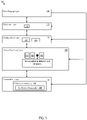
- FIG. 1 illustrates an exemplary multiple-layer user privacy data governance (PDG) stack 100 included in the user privacy data governance system.
- the user privacy data governance system described herein may use the PDG stack 100 to dynamically scan the data ecosystem to identify user privacy data distributed in the numerous data sources, detect the non-compliance in protecting the user privacy data under a specific data privacy protection regulation, and process the user privacy data to eliminate the non-compliance.
- a stack may refer to a multi-layered computer architecture that defines the interaction of software and hardware resources at the multiple layers.
- the Open Systems Interconnection (OSI) model is an example of a stack-type architecture.
- the layers of a stack may pass data and hardware resources among themselves to facilitate data processing.
- the data staging layer 105 may provide the system with storage resources to store ingested and generated data within a database or other data structure.
- the data staging layer 105 may be deployed as a cloud-based database platform with the capability to process mass data.
- an underlying Big Data Lake of the database platform is capable of ingesting data from heterogeneous data sources such as Secured Storage, Hadoop file systems (HDFS) connections, relational databases, flat files, and other data operations.
- the data staging layer 105 may provide a hardware resource, e.g., memory resources, to the system. Accordingly, the multiple-layer stack architecture of the PDG stack 100 may improve the functioning of the underlying hardware.
- the PDG logic 200 may detect a dark data source 112 in the data ecosystem (202).
- the dark data source may, for example, represent one or more data sources of the numerous data sources in which it is unknown whether user privacy data is stored.
- the data source may a plurality of datasets.
- the datasets may, for example, represent containers that are used to organize and control access to database tables and views.
- the PDG logic 200 may monitor data changes in the data ecosystem to determine if a new data source joins the data ecosystem. In response to the joining, the PDG logic 200 may take the new data source as the dark data source 112. In another implementation, the PDG logic 200 may monitor if a new dataset is created in an existing data source by periodically or non-periodically (e.g., hourly, six hours, daily, weekly, month-date, and yearly) scanning the data sources. In response to the creation, the PDG logic 200 may take the existing data source as the dark data source 112. In another implementation, the PDG logic 200 may scan the data ecosystem according to a predetermined scan time interval to identify a data source newly added to the data ecosystem and determine the newly added data source as the dark data source 112. The PDG logic 200 then may, at the detection layer 110, store the detection result of dark data sources 112 via a memory operation at the data staging layer 105.
- a new dataset is created in an existing data source by periodically or non-periodically (e.g., hourly
- the PDG logic 200 may identify user information and relationship 121 from the data ecosystem according to a lineage of datasets.
- the lineage of datasets may represent life cycle of data in the datasets that include the data origin, what happens to it and where it moves over time.
- the PDG logic 200 may find the user information and relationship 121 distributed in the numerous datasets.
- the user information may include various characteristic information used to identify a user in the data ecosystem such as a user identifier, an identifier of group that the user belongs to, and a geographical location of the user.
- the user relationship may include, for example, business relationship and personal relationship, which may help to identify additional users whose privacy data need to be scanned.
- the PDG logic 200 may also configure user privacy data tags 122 which may be used as keywords to scan the dark data source for user privacy data.
- the PDG logic 200 may retrieve the predefined privacy data tags 122 from the system storage via the data staging layer 105.
- the PDG logic 20 may receive the customized privacy data tags 122 input by the system operator via a graphical user interface, for example, implemented at the present layer 160.
- the PDG logic 200 may identify the user privacy data based on privacy data tags 112 predefined in the system as shown in Table 1 and privacy data tags 112 configured at the configuration layer 120, as described above.
- Table 1 Example privacy data tags for PII/PHI • Email • religion • ICD9 Code • BIC_SWIFT Code • SSN General • ICD10 Code • Bank Routing Number ABA • URL • Geocode_LatitudeLongitude • Zip code • Geocode_Longitude • Company Name • First name • Passport Number US • Computer Address • Full name • Maid • Credit Card Number • Gender • IBAN • Last name • IP Address • City • Phone Number • Job • Race
- the PDG logic 200 may select a target user privacy data compliance policy from a plurality of user privacy data compliance policies based on a geographical region associated with the dark data source (208).
- the global countries or regions may enforce different policies to protect user privacy data.
- the PDG logic 200 may determine the geographical region associated with the dark data source based on a geographical location where the dark data source is physically stored. For example, if the dark data source is physically stored in Germany, the PDG logic 200 may determine the geographical region associated with the dark data source to be European Union, and accordingly select the GDPR as the target user privacy data compliance policy. Alternatively or additionally, the PDG logic 200 may determine the geographical region associated with the dark data source based on a geographical location where the dark data source is accessed. For example, if the dark data source is being accessed from California, the PDG logic 200 may determine the geographical region associated with the dark data source to be the United States. As such, the PDG logic 200 may select the CCPA as the target user privacy data compliance policy.
- the PDG logic 200 may detect non-compliance in protecting the user privacy data in the dark data source based on the target user privacy data compliance policy (210).
- the PDG logic 200 may retrieve the privacy data protection rules defined in the target user privacy data compliance policy from the data storage at the data staging layer 105. Then, the PDG logic 200 may apply the rules to the user privacy data to identify the non-compliance in storing and using the user privacy data.
- the non-compliance may include, for example, a failure to back up user privacy data, a failure to encrypt or mask user privacy data, a failure to set expiration date for using user privacy data, and the like.
- the PDG logic 200 may process the user privacy data to eliminate the non-compliance (212).
- the non-compliance is the failure to backup user privacy data.
- the PDG logic 200 may identify datasets including the user privacy data from the dark data source and generate backup datasets for the datasets including the user privacy data. For purpose of data safety, the PDG logic 200 may transfer the backup datasets to a different geographical location than the original datasets.
- the non-compliance is the failure to encrypt or mask user privacy data.
- the PDG logic 200 may identify datasets including the user privacy data from the dark data source and encrypt or mask the dataset including the user privacy data.
- the dataset encryption may, for example, represent a process of translating data stored in the dataset from plaintext (unencrypted) to ciphertext (encrypted).
- the encrypted data may be accessed with an encryption key.
- the dataset masking may, for example, represent a process of hiding original data with modified content (characters or other data).
- the PDG logic 200 may effectively ensure the individual right requests to be processed by executing the individual right requests and validating completion of the individual right requests.
- the PDG logic 200 may search the dark data source to identify a plurality of datasets to which the individual right request is applicable, execute operation on the plurality of datasets according to the individual right request; and validate a completion of the individual right request.
- the individual right request is related to the right to rectification which involves correction of privacy data of the user.
- the PDG logic 200 may execute a corresponding update operation on the datasets including the privacy data and then query the datasets to validate that the privacy data has been corrected.
- the PDG logic 200 may maintain a periodic check on the storage and operation of user privacy data in the applicable datasets to ensure the compliance with the executed individual right request.
- consent is foundational to modern privacy compliance.
- explicit consent from a user is needed to process their personal data.
- the consent may include consent opt-in and consent opt-out.
- the consent opt-in may grant a data collector to access the user privacy data while the consent opt-out may withdraw the grant to the data collector to access the user privacy data.
- the PDG stack 100 may maintain consent repository with the right amount of details to allow the demonstration of regulation compliance, for example, at the data staging layer 120.
- the PDG logic 200 may process the user's consent opt-in request and consent opt-out request with respect to their privacy data.
- the PDG logic 200 may determine a consent opt-out date for the user privacy data based on a consent opt-in request for the user privacy data.
- the consent opt-out date may represent the date when the grant to access to the user privacy data is withdrawn, i.e., an access expiration date.
- the PDG logic 200 may directly extract the consent opt-out date from the consent opt-in request.
- the PDG logic 200 may calculate the consent opt-out date based on the consent opt-in date in the consent opt-in request according to a predefined access expiration rule.
- the PDG logic 200 may generate a consent opt-out request for the user privacy data based on the opt-out consent date.
- the generated consent opt-out request may ensure that the access grant to the user privacy data has to expire at some point, and thereby protecting the user privacy data.
- the PDG logic 200 may determine if the request source has access grant to the user privacy data. Where the access grant to the request source has been withdrawn, the PDG logic 200 may remove the user privacy data from the dataset to which the operation request is directed so as to protect the user privacy data.
- the PDG logic 200 may access the privacy data governance results from the privacy governing layer 150, e.g., via data staging layer 105 memory operations to generate a PDG-control interface 166 including a PDG-window presentation 168.
- the PDG-window presentation 168 may include data and/or selectable options related to the privacy data governance such as privacy data scanning and privacy data backup and encryption.
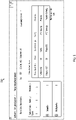
- FIG. 3 shows an exemplary privacy data compliance dashboard 300.
- the compliance dashboard 300 may, for example, include an organization's compliance to data privacy regulations including dark data source scanning for user privacy data, individual right request processing, and consent processing.
- the compliance dashboard 300 may include the number of registered data sources and the number of detected data sources.
- the registered data sources may include the data sources that have been scanned.
- the detected data sources may include both the data sources that have been scanned and the data sources that have not been scanned, i.e. dark data sources.
- the compliance dashboard 300 may include backup status (backed up or not backed up) for all registered data sources, encryption status (encrypted or not encrypted) for all registered data sources, a total number of data breaches reported within the last twelve months, a total number of data transfers, and a total number of data lineage connections added to the data ecosystem.
- FIG. 4 shows an exemplary compliance scanner 400, which may for example include scan status of dark data source for a subsidiary of the organization, including scan start time, scan end time, and scan duration.
- the compliance scanner 400 may further include selectable options to start a new scan, stop a scan, and schedule a scan.
- the scan may include pre-scan, partial scan, and full scan.
- the pre-scan may include, for example, scanning a newly detected dark data source to simply identify whether there is user privacy data in the dark data source.
- the partial scan may include, for example, scanning a data source to determine if the data source complies with a specific portion of applicable compliance rules such as user privacy data backup and encryption.
- the full scan may include, for example, scanning a data source to determine if the data source complies with all applicable compliance rules.
- FIG. 5 shows an exemplary compliance backup status 500 for user privacy data in the data ecosystem of the organization, including the number of data sources that are backed up and the number of data sources that are not backed up.
- FIG. 6 shows an exemplary activity log 600 of the user privacy data governance system which can be viewed by date.
- FIG. 7 shows an example system execution environment 700 for the PDG stack 100 described above.
- the execution environment 700 may include system logic 714 to support execution of the multiple layers of PDG stack 100 described above.
- the system logic may include processors 716, memory 720, and/or other circuitry.
- the memory 720 may include privacy data governance parameters 752, dark data source scan routines 754, and operational rules 756.
- the memory 720 may further include applications and structures 766, for example, coded objects, machine instructions, templates, or other structures to support detecting dark data source, scanning dark data source to identify user privacy data, detecting non-compliance in protecting the user privacy data, processing the user privacy data to eliminate the non-compliance, or other tasks described herein.
- the applications and structures 766 may implement at least part of the PDG logic 200.
- the execution environment 700 may also include network interface circuitry 712, which may support wireless, e.g. Bluetooth, Wi-Fi, WLAN, cellular (4G, LTE/A, 5G), and/or wired, Ethernet, Gigabit Ethernet, optical networking protocols.
- the network interface circuitry 712 may also include serial interfaces, such as universal serial bus (USB), serial ATA, IEEE 1394, lighting port, I 2 C, slimBus, or other serial interfaces.
- the network interface circuitry 712 may be used to support and/or implement remote operation of the PDG-control interface 166.
- the execution environment 700 may include power functions 734 and various input interfaces 728.
- the execution environment may also include a user interface 718 that may include human-to-machine interface devices and/or graphical user interfaces (GUI).
- GUI graphical user interfaces
- the user interface 718 may be used to support and/or implement local operation of the PDG-control interface 166.
- the system logic 714 may be distributed over one or more physical servers, be implemented as one or more virtual machines, be implemented in container environments such as Cloud Foundry or Docker, and/or be implemented in serverless (functions as-a-Service) environments.
- the execution environment 700 may be a specially defined computational system deployed in a cloud platform.
- the parameters defining the execution environment may be specified in a manifest for cloud deployment.
- the manifest may be used by an operator to requisition cloud based hardware resources, and then deploy the software components, for example, the PDG stack 100, of the execution environment onto the hardware resources.
- a manifest may be stored as a preference file such as a YAML (yet another mark-up language), JSON, or other preference file type.
- the manifest may include custom scripts to implement the PDG stack 100 in a serverless environment. Therein, a multiple-tier framework is described. The framework describes a series of the serverless tasks controlled via scripts.
- the serverless tasks overlap in execution to maintain continuity across the tasks.
- the computational task is divided into chunks that may be handled by individual serverless tasks. Accordingly, a complex analytic process, such as those describe in this disclosure, may be divided into chunks and executed over one or more overlapping serverless tasks.
- all or parts of the system may be circuitry that includes an instruction processor, such as a Central Processing Unit (CPU), microcontroller, or a microprocessor; or as an Application Specific Integrated Circuit (ASIC), Programmable Logic Device (PLD), or Field Programmable Gate Array (FPGA); or as circuitry that includes discrete logic or other circuit components, including analog circuit components, digital circuit components or both; or any combination thereof.
- the circuitry may include discrete interconnected hardware components or may be combined on a single integrated circuit die, distributed among multiple integrated circuit dies, or implemented in a Multiple Chip Module (MCM) of multiple integrated circuit dies in a common package, as examples.
- MCM Multiple Chip Module
- the circuitry may store or access instructions for execution, or may implement its functionality in hardware alone.
- the instructions may be stored in a tangible service resource unit medium that is other than a transitory signal, such as a flash memory, a Random Access Memory (RAM), a Read Only Memory (ROM), an Erasable Programmable Read Only Memory (EPROM); or on a magnetic or optical disc, such as a Compact Disc Read Only Memory (CDROM), Hard Disk Drive (HDD), or other magnetic or optical disk; or in or on another machine-readable medium.
- a product such as a computer program product, may include a storage medium and instructions stored in or on the medium, and the instructions when executed by the circuitry in a device may cause the device to implement any of the processing described above or illustrated in the drawings.
- Implementations of the system may be distributed.
- the circuitry may include multiple distinct system components, such as multiple processors and memories, and may span multiple distributed processing systems.
- Parameters, databases, and other data structures may be separately stored and managed, may be incorporated into a single memory or database, may be logically and physically organized in many different ways, and may be implemented in many different ways.
- Example implementations include linked lists, program variables, hash tables, arrays, records (e.g., database records), objects, and implicit storage mechanisms.
- Instructions may form parts (e.g., subroutines or other code sections) of a single program, may form multiple separate programs, may be distributed across multiple memories and processors, and may be implemented in many different ways.
- Example implementations include stand-alone programs, and as part of a library, such as a shared library like a Dynamic Link Library (DLL).
- the library may contain shared data and one or more shared programs that include instructions that perform any of the processing described above or illustrated in the drawings, when executed by the circuitry.
Landscapes
- Engineering & Computer Science (AREA)
- Theoretical Computer Science (AREA)
- General Engineering & Computer Science (AREA)
- Computer Security & Cryptography (AREA)
- Physics & Mathematics (AREA)
- General Physics & Mathematics (AREA)
- General Health & Medical Sciences (AREA)
- Health & Medical Sciences (AREA)
- Computer Hardware Design (AREA)
- Bioethics (AREA)
- Databases & Information Systems (AREA)
- Software Systems (AREA)
- Signal Processing (AREA)
- Computational Linguistics (AREA)
- Computer Networks & Wireless Communication (AREA)
- Medical Informatics (AREA)
- Computing Systems (AREA)
- Data Mining & Analysis (AREA)
- Quality & Reliability (AREA)
- Audiology, Speech & Language Pathology (AREA)
- Artificial Intelligence (AREA)
- Automation & Control Theory (AREA)
- Storage Device Security (AREA)
Abstract
Description
- This application claims priority to
U.S. Provisional Patent Application No. 63/122,713, entitled "INTELLIGENT DATA GOVERNANCE SERVICES" filed on December 8, 2020 U.S. Non-Provisional Patent Application No. 17/459,332, filed on August 27, 2021 - This application generally relates to the protection of user privacy data. In particular, this application describes a method and system for governing user privacy data to comply with various data privacy regulations.
- In the past few years, general customer dissatisfaction, erosion of trust and privacy invasion are increasing. There is wide societal pressure toward privacy protection and a more responsible use of data. More than 60 countries have enforced privacy laws in response to citizens' cry for transparency and control. Privacy data protection regulations globally follow a trend of increasing maturity and detail, representing risks in both business and personal impact. Organizations worldwide struggle to adapt their privacy data protection programs at a suitable pace especially when compliance is the sole focus.
- This disclosure relates to methods and systems for governing user privacy data to comply with various data privacy regulations.
- According to a first aspect of the invention, there is provided a method for governing user privacy data, comprising: detecting, with a processor circuitry, a dark data source in a data ecosystem, the data ecosystem comprising a plurality of data sources storing user privacy data, the dark data source representing at least one data source of the plurality of data sources in which it is unknown whether user privacy data is stored, the at least one data source comprising a plurality of datasets; identifying, with the processor circuitry, user information and relationship from the data ecosystem according to a lineage of datasets; scanning, with the processor circuitry, the dark data source by executing a natural language processing engine to identify existence of and content of user privacy data in the dark data source based on the user information and relationship; selecting, with the processor circuitry, a target user privacy data compliance policy from a plurality of user privacy data compliance policies based on a geographical region associated with the dark data source; detecting, with the processor circuitry, non-compliance in protecting the user privacy data in the dark data source based on the target user privacy data compliance policy; and in response to the non-compliance, processing, with the processor circuitry, the user privacy data to eliminate the non-compliance.
- In some embodiments of the first aspect, the method further comprises: determining the geographical region associated with the dark data source based on a geographical location where the dark data source is physically stored or a geographical location where the dark data source is accessed.
- In some embodiments of the first aspect, the non-compliance comprises a failure to backup user privacy data, the processing the user privacy data to eliminate the non-compliance comprises: identifying a dataset including the user privacy data from the dark data source; and generating a backup dataset for the dataset including the user privacy data.
- In some embodiments of the first aspect, the non-compliance comprises a failure to encrypt or mask user privacy data, the processing the user privacy data to eliminate the non-compliance comprises: identifying a dataset including the user privacy data for the dark data source; and encrypting or masking the dataset including the user privacy data.
- In some embodiments of the first aspect, the method further comprises: receiving an individual right request for a user privacy data; searching the dark data source to identify a plurality of datasets to which the individual right request is applicable; executing operation on the plurality of datasets according to the individual right request; and validating a completion of the individual right request.
- In some embodiments of the first aspect, the method further comprises: determining a consent opt-out date for a user privacy data based on a consent opt-in request for the user privacy data, a consent opt-in granting an access to the user privacy data and a consent opt-out withdrawing an access grant to the user privacy data; and generating a consent opt-out request for the user privacy data based on the opt-out consent date.
- In some embodiments of the first aspect, the method further comprises: receiving an operation request for a user privacy data from a request source; and in response to the request source being withdrawn access grant to the user privacy data, removing the user privacy data from a dataset to which the operation request is directed.
- In some embodiments of the first aspect, detecting the dark data source in the data ecosystem comprises: scanning the data ecosystem according to a predetermined scan time interval to identify a newly added data source; and determining the newly added data source as the dark data source.
- In some embodiments of the first aspect, the method further comprises generating a report on compliance and non-compliance in protecting the user privacy data in the dark data source.
- According to a second aspect of the invention, there is provided a system for governing user privacy data, comprising: a memory having stored thereon executable instructions; a processor circuitry in communication with the memory, the processor circuitry when executing the instructions configured to: detect a dark data source in a data ecosystem, the data ecosystem comprising a plurality of data sources storing user privacy data, the dark data source representing at least one data source of the plurality of data sources in which it is unknown whether user privacy data is stored, the at least one data source comprising a plurality of datasets; identify user information and relationship from the data ecosystem according to a lineage of datasets; scan the dark data source by executing a natural language processing engine to identify existence of and content of user privacy data in the dark data source based on the user information and relationship; select a target user privacy data compliance policy from a plurality of user privacy data compliance policies based on a geographical region associated with the dark data source; detect non-compliance in protecting the user privacy data in the dark data source based on the target user privacy data compliance policy; and in response to the non-compliance, process the user privacy data to eliminate the non-compliance.
- In some embodiments of the second aspect, the non-compliance comprises a failure to backup user privacy data, the processor circuitry when executing the instructions is configured to: identify a dataset including the user privacy data from the dark data source; and generate a backup dataset for the dataset including the user privacy data.
- In some embodiments of the second aspect, the non-compliance comprises a failure to encrypt or mask user privacy data, the processor circuitry when executing the instructions is configured to: identify a dataset including the user privacy data for the dark data source; and encrypt or mask the dataset including the user privacy data.
- In some embodiments of the second aspect, the processor circuitry when executing the instructions is further configured to: determine the geographical region associated with the dark data source based on a geographical location where the dark data source is physically located or a geographical location where the dark data source is accessed.
- In some embodiments of the second aspect, the processor circuitry when executing the instructions is further configured to: receive an operation request for a user privacy data; search the dark data source to identify a plurality of datasets to which the operation request is applicable; execute operation on the plurality of datasets according to the operation request; and validate a completion of the operation request.
- In some embodiments of the second aspect, the processor circuitry when executing the instructions is further configured to: determine a consent opt-out date for a user privacy data based on a consent opt-in request for the user privacy data, a consent opt-in granting an access to the user privacy data and a consent opt-out withdrawing an access grant to the user privacy data; and generate a consent opt-out request for the user privacy data based on the opt-out consent date.
- In some embodiments of the second aspect, the processor circuitry when executing the instructions is further configured to: receive an operation request for a user privacy data from a request source; and in response to the request source being withdrawn access grant to the user privacy data, remove the user privacy data from a dataset to which the operation request is directed.
- In some embodiments of the second aspect, the processor circuitry when executing the instructions is configured to: scan the data ecosystem according to a predetermined scan time interval to identify a newly added data source; and determine the newly added data source as the dark data source.
- In some embodiments of the second aspect, the processor circuitry when executing the instructions is further configured to: generate reports on compliance and non-compliance in protecting the user privacy data in the dark data source.
- According to a third aspect of the invention, there is provided a product including: machine-readable media other than a transitory signal; and instructions stored on the machine-readable media, the instructions configured to, when executed, cause a processor circuitry to: detect a dark data source in a data ecosystem, the data ecosystem comprising a plurality of data sources storing user privacy data, the dark data source representing a data source in which whether user privacy data is stored is unknown, a data source comprising a plurality of datasets; identify user information and relationship from the data ecosystem according to lineage of datasets; scan the dark data source by executing a natural language processing engine to identify user privacy data in the dark data source based on the user information and relationship; select a target user privacy data compliance policy from a plurality of user privacy data compliance policies based on a geographical region associated with the dark data source; detect non-compliance in protecting the user privacy data in the dark data source based on the target user privacy data compliance policy; and in response to the non-compliance, process the user privacy data to eliminate the non-compliance.
- In some embodiments of the third aspect, the instructions are further configured to cause the processor circuitry to: determine the geographical region associated with the dark data source based on a geographical location where the dark data source is physically located or a geographical location where the dark data source is accessed.
- In one embodiment, a method for governing user privacy data may include detecting, with a processor circuitry, a dark data source in a data ecosystem. The data ecosystem may include a plurality of data sources storing user privacy data. The dark data source may represent at least one data source of the plurality of data sources in which it is unknown whether user privacy data is stored. The at least one data source may include a plurality of datasets. The method may further include identifying, with the processor circuitry, user information and relationship from the data ecosystem according to a lineage of datasets. The method may further include scanning, with the processor circuitry, the dark data source by executing a natural language processing engine to identify existence of and content of user privacy data in the dark data source based on the user information and relationship. The method may further include selecting, with the processor circuitry, a target user privacy data compliance policy from a plurality of user privacy data compliance policies based on a geographical region associated with the dark data source and detecting, with the processor circuitry, non-compliance in protecting the user privacy data in the dark data source based on the target user privacy data compliance policy. The method may further include, in response to the non-compliance, processing, with the processor circuitry, the user privacy data to eliminate the non-compliance.
- In another embodiment, a system for governing user privacy data may include a memory having stored thereon executable instructions and a processor circuitry in communication with the memory. When executing the instructions, the processor may be configured to detect a dark data source in a data ecosystem. The data ecosystem may include a plurality of data sources storing user privacy data. The dark data source may represent at least one data source of the plurality of data sources in which it is unknown whether user privacy data is stored. The at least one data source may include a plurality of datasets. The processor may be further configured to identify user information and relationship from the data ecosystem according to a lineage of datasets. The processor may be further configured to scan the dark data source by executing a natural language processing engine to identify existence of and content of user privacy data in the dark data source based on the user information and relationship. The processor may be further configured to select a target user privacy data compliance policy from a plurality of user privacy data compliance policies based on a geographical region associated with the dark data source and detect non-compliance in protecting the user privacy data in the dark data source based on the target user privacy data compliance policy. The processor may be further configured to, in response to the non-compliance, process the user privacy data to eliminate the non-compliance.
- In another embodiment, a product for governing user privacy data is disclosed. The product may include machine-readable media other than a transitory signal and instructions stored on the machine-readable media. When being executed, the instructions may be configured to cause a processor to detect a dark data source in a data ecosystem. The data ecosystem may include a plurality of data sources storing user privacy data. The dark data source may represent at least one data source of the plurality of data sources in which it is unknown whether user privacy data is stored. The at least one data source may include a plurality of datasets. The instructions may be further configured to cause the processor to identify user information and relationship from the data ecosystem according to a lineage of datasets. The instructions may be further configured to cause the processor to scan the dark data source by executing a natural language processing engine to identify existence of and content of user privacy data in the dark data source based on the user information and relationship. The instructions may be further configured to cause the processor to select a target user privacy data compliance policy from a plurality of user privacy data compliance policies based on a geographical region associated with the dark data source and detect non-compliance in protecting the user privacy data in the dark data source based on the target user privacy data compliance policy. The instructions may be further configured to cause the processor to, in response to the non-compliance, process the user privacy data to eliminate the non-compliance.
- One interesting feature of the systems and methods described below may be that it may warrant a continuous compliance in protecting user privacy data. In particular, it may dynamically detect new data sources that may store user privacy data, for example, by monitoring newly added data source to the data ecosystem. Then, the new data sources may be scanned for non-compliance based on a specific user privacy data compliance policy. Upon detecting the non-compliance, the systems and methods may process the user privacy data in the data sources to eliminate the non-compliance.
- The above embodiments and other aspects and alternatives of their implementations are explained in greater detail in the drawings, the descriptions, and the claims.
- The present disclosure may be better understood with reference to the following drawings and description. The components in the figures are not necessarily to scale. Moreover, in the figures, like-referenced numerals designate corresponding parts throughout the different views.
-
FIG. 1 shows an exemplary multiple-layer privacy data governance stack included in a privacy data governance system. -
FIG. 2 shows an exemplary privacy data governance logic in accordance with an embodiment. -
FIG. 3 shows an exemplary privacy data compliance dashboard in accordance with an embodiment. -
FIG. 4 shows an exemplary scan status of dark data source in accordance with an embodiment. -
FIG. 5 shows an exemplary backup status for user privacy data in accordance with an embodiment. -
FIG. 6 shows an exemplary activity log of the privacy data governance system in accordance with an embodiment. -
FIG. 7 illustrates an example execution environment for the privacy data governance system. - A data ecosystem in an organization may include numerous data sources used by different units in the organization. The data sources may include, for example, structured data storage, unstructured/semi-structured data storage, and big data storage. The structured data storage may include, for example, MySQL, MS SQL, PostgreSQL, Oracle, AWS RDS, AWS Redshift, Azure SQL database, Azure data warehouse, GCP cloud SQL, Google Bigquery, AWS Aurora DB, and Snowflake. The unstructured/semi-structured data storage may include file share, Shared Folders, CSV, JSON, XML, PARQUET, Windows File System, Unix File System, AWS S3, Azure file storage, Azure blob storage, Azure data lake storage (ADLS), and Google Storage. The big data storage may include, for example, Hadoop file systems (HDFS), AWS Amazon Elastic MapReduce (EMR).
- User privacy data may be distributed in the data sources for different use purposes. The user privacy data may include, for example, personally identifiable information (PII), protected health information (PHI), sensitive personal data, and commercially sensitive data. The PII may include information which is related to one or more of: identified natural persons; personally identifiable information of natural persons; personally identifying information of natural persons; user specific information of natural persons that is or should be under the control of the user and otherwise not publically available; or some combination thereof. For example, PII may include data identifying a user such as a social security number, a driver license number, an employee identifier, data identifying characteristics about the user, data identifying the health status of the user, and the like. PII may include all individually identifiable health information, including demographic data, medical histories, test results, insurance information, and other information used to identify a patient or provide healthcare services or healthcare coverage.
- The user privacy data governance system in the present disclosure may facilitate an organization to effectively protect the user privacy data stored in the data ecosystem of the organization to comply with individual governmental data privacy protection regulations.
FIG. 1 illustrates an exemplary multiple-layer user privacy data governance (PDG)stack 100 included in the user privacy data governance system. The user privacy data governance system described herein may use thePDG stack 100 to dynamically scan the data ecosystem to identify user privacy data distributed in the numerous data sources, detect the non-compliance in protecting the user privacy data under a specific data privacy protection regulation, and process the user privacy data to eliminate the non-compliance. - In this example, the
PDG stack 100 may include adata staging layer 105, adetection layer 110, aconfiguration layer 120, aprivacy governing layer 150, and apresentation layer 160. ThePDG stack 100 may include a multiple-layer computing structure of hardware and software that may warrant compliance in storing and using user privacy data by dynamically scanning the data sources and analyzing and eliminating non-compliance. - A stack may refer to a multi-layered computer architecture that defines the interaction of software and hardware resources at the multiple layers. The Open Systems Interconnection (OSI) model is an example of a stack-type architecture. The layers of a stack may pass data and hardware resources among themselves to facilitate data processing. As one example, for the
PDG stack 100, thedata staging layer 105 may provide the system with storage resources to store ingested and generated data within a database or other data structure. In some implementations, thedata staging layer 105 may be deployed as a cloud-based database platform with the capability to process mass data. In an example, an underlying Big Data Lake of the database platform is capable of ingesting data from heterogeneous data sources such as Secured Storage, Hadoop file systems (HDFS) connections, relational databases, flat files, and other data operations. Hence, thedata staging layer 105 may provide a hardware resource, e.g., memory resources, to the system. Accordingly, the multiple-layer stack architecture of thePDG stack 100 may improve the functioning of the underlying hardware. - In the following, reference is made to
FIG. 1 and anexample PDG logic 200 inFIG. 2 . It will be appreciated that the logical features of theexample PDG logic 200 may be implemented in various orders and combinations. For example, in a first implementation, one or more features may be omitted or reordered with respect to a second implementation. At thedetection layer 110 of thePDG stack 100, thePDG logic 200 may detect adark data source 112 in the data ecosystem (202). The dark data source may, for example, represent one or more data sources of the numerous data sources in which it is unknown whether user privacy data is stored. The data source may a plurality of datasets. The datasets may, for example, represent containers that are used to organize and control access to database tables and views. - In an implementation, the
PDG logic 200 may monitor data changes in the data ecosystem to determine if a new data source joins the data ecosystem. In response to the joining, thePDG logic 200 may take the new data source as thedark data source 112. In another implementation, thePDG logic 200 may monitor if a new dataset is created in an existing data source by periodically or non-periodically (e.g., hourly, six hours, daily, weekly, month-date, and yearly) scanning the data sources. In response to the creation, thePDG logic 200 may take the existing data source as thedark data source 112. In another implementation, thePDG logic 200 may scan the data ecosystem according to a predetermined scan time interval to identify a data source newly added to the data ecosystem and determine the newly added data source as thedark data source 112. ThePDG logic 200 then may, at thedetection layer 110, store the detection result ofdark data sources 112 via a memory operation at thedata staging layer 105. - At the
configuration layer 120, thePDG logic 200 may identify user information andrelationship 121 from the data ecosystem according to a lineage of datasets. The lineage of datasets may represent life cycle of data in the datasets that include the data origin, what happens to it and where it moves over time. By tracking the lineage, thePDG logic 200 may find the user information andrelationship 121 distributed in the numerous datasets. In an example, the user information may include various characteristic information used to identify a user in the data ecosystem such as a user identifier, an identifier of group that the user belongs to, and a geographical location of the user. The user relationship may include, for example, business relationship and personal relationship, which may help to identify additional users whose privacy data need to be scanned. - At the
configuration layer 120, thePDG logic 200 may also configure user privacy data tags 122 which may be used as keywords to scan the dark data source for user privacy data. For example, thePDG logic 200 may retrieve the predefined privacy data tags 122 from the system storage via thedata staging layer 105. For another example, the PDG logic 20 may receive the customized privacy data tags 122 input by the system operator via a graphical user interface, for example, implemented at thepresent layer 160. - At the
privacy governing layer 150, thePDG logic 200 may scan the dark data source by executing a natural language processing engine to identify existence of and content of user privacy data in the dark data source based on the identified user information and relationship 112 (206). The natural language processing engine may utilize statistical model, machine learning model, or deep learning model to analyze natural language data. In an implementation, thePDG logic 200 may determine the users whose user privacy data is to be scanned base on the identified user information andrelationship 112. Then, thePDG logic 200 may input data from the dark data source to the natural language processing engine, which may analyze the input data to determine whether there is privacy data for the users. For example, thePDG logic 200 may identify the user privacy data based on privacy data tags 112 predefined in the system as shown in Table 1 and privacy data tags 112 configured at theconfiguration layer 120, as described above.Table 1: Example privacy data tags for PII/PHI • Email • Religion • ICD9 Code • BIC_SWIFT Code • SSN General • ICD10 Code • Bank Routing Number ABA • URL • Geocode_LatitudeLongitude • Zip code • Geocode_Longitude • Company Name • First name • Passport Number US • Computer Address • Full name • Maid • Credit Card Number • Gender • IBAN • Last name • IP Address • City • Phone Number • Job • Race - At the
privacy governing layer 150, thePDG logic 200 may select a target user privacy data compliance policy from a plurality of user privacy data compliance policies based on a geographical region associated with the dark data source (208). The global countries or regions may enforce different policies to protect user privacy data. Below is a list of example data compliance policies: - General Data Protection Regulation (GDPR) - European Union
- California Consumer Privacy Act (CCPA) - United States
- Personal Information Protection & Electronic Documents Act (PIPEDA) - Canada
- General Data Protection Law - Brazil
- Personal Data Protection Act (PDPA) - Thailand
- Personal Data Protection Act (PDPA) - Singapore
- Federal Data Protection Law 2000 - Mexico
- The Privacy Protection Act 2017 (PPA) - Israel
- Protection Of Personal Information Act 2013 (POPI) - South Africa
- Personal Data Protection Bill 2018 - India
- In an implementation, the
PDG logic 200 may determine the geographical region associated with the dark data source based on a geographical location where the dark data source is physically stored. For example, if the dark data source is physically stored in Germany, thePDG logic 200 may determine the geographical region associated with the dark data source to be European Union, and accordingly select the GDPR as the target user privacy data compliance policy. Alternatively or additionally, thePDG logic 200 may determine the geographical region associated with the dark data source based on a geographical location where the dark data source is accessed. For example, if the dark data source is being accessed from California, thePDG logic 200 may determine the geographical region associated with the dark data source to be the United States. As such, thePDG logic 200 may select the CCPA as the target user privacy data compliance policy. - At the
privacy governing layer 150, thePDG logic 200 may detect non-compliance in protecting the user privacy data in the dark data source based on the target user privacy data compliance policy (210). In an implementation, thePDG logic 200 may retrieve the privacy data protection rules defined in the target user privacy data compliance policy from the data storage at thedata staging layer 105. Then, thePDG logic 200 may apply the rules to the user privacy data to identify the non-compliance in storing and using the user privacy data. The non-compliance may include, for example, a failure to back up user privacy data, a failure to encrypt or mask user privacy data, a failure to set expiration date for using user privacy data, and the like. - When detecting the non-compliance, the
PDG logic 200 may process the user privacy data to eliminate the non-compliance (212). In an example, the non-compliance is the failure to backup user privacy data. ThePDG logic 200 may identify datasets including the user privacy data from the dark data source and generate backup datasets for the datasets including the user privacy data. For purpose of data safety, thePDG logic 200 may transfer the backup datasets to a different geographical location than the original datasets. In another example, the non-compliance is the failure to encrypt or mask user privacy data. ThePDG logic 200 may identify datasets including the user privacy data from the dark data source and encrypt or mask the dataset including the user privacy data. The dataset encryption may, for example, represent a process of translating data stored in the dataset from plaintext (unencrypted) to ciphertext (encrypted). The encrypted data may be accessed with an encryption key. The dataset masking may, for example, represent a process of hiding original data with modified content (characters or other data). - Under a user privacy data compliance policy such as GDPR, individuals whose personal information is collected and/or used in Europe or collected from individuals located in Europe have the following rights over their personal information which is collected, stored and used:
- right to be forgotten
- right to rectification of their personal information
- right to data portability
- right to restriction of processing their personal information
- right to object to processing their personal information
- right to appropriate decision making
- The
PDG logic 200 may effectively ensure the individual right requests to be processed by executing the individual right requests and validating completion of the individual right requests. In an example, when receiving an individual right request for a user privacy data, thePDG logic 200 may search the dark data source to identify a plurality of datasets to which the individual right request is applicable, execute operation on the plurality of datasets according to the individual right request; and validate a completion of the individual right request. For example, the individual right request is related to the right to rectification which involves correction of privacy data of the user. ThePDG logic 200 may execute a corresponding update operation on the datasets including the privacy data and then query the datasets to validate that the privacy data has been corrected. In some implementations, thePDG logic 200 may maintain a periodic check on the storage and operation of user privacy data in the applicable datasets to ensure the compliance with the executed individual right request. - Moreover, consent is foundational to modern privacy compliance. For a growing number of privacy regulations worldwide, explicit consent from a user is needed to process their personal data. The consent may include consent opt-in and consent opt-out. The consent opt-in may grant a data collector to access the user privacy data while the consent opt-out may withdraw the grant to the data collector to access the user privacy data. The
PDG stack 100 may maintain consent repository with the right amount of details to allow the demonstration of regulation compliance, for example, at thedata staging layer 120. ThePDG logic 200 may process the user's consent opt-in request and consent opt-out request with respect to their privacy data. - In an implementation, when processing a consent opt-in request for a user privacy data, the
PDG logic 200 may determine a consent opt-out date for the user privacy data based on a consent opt-in request for the user privacy data. The consent opt-out date may represent the date when the grant to access to the user privacy data is withdrawn, i.e., an access expiration date. In an example, thePDG logic 200 may directly extract the consent opt-out date from the consent opt-in request. In another example, thePDG logic 200 may calculate the consent opt-out date based on the consent opt-in date in the consent opt-in request according to a predefined access expiration rule. Then, thePDG logic 200 may generate a consent opt-out request for the user privacy data based on the opt-out consent date. The generated consent opt-out request may ensure that the access grant to the user privacy data has to expire at some point, and thereby protecting the user privacy data. - Additionally, when receiving an operation request for a user privacy data from a request source such as a data collector, the
PDG logic 200 may determine if the request source has access grant to the user privacy data. Where the access grant to the request source has been withdrawn, thePDG logic 200 may remove the user privacy data from the dataset to which the operation request is directed so as to protect the user privacy data. - Now referring to the
presentation layer 160 inFIG. 1 , where thePDG logic 200 may access the privacy data governance results from theprivacy governing layer 150, e.g., viadata staging layer 105 memory operations to generate a PDG-control interface 166 including a PDG-window presentation 168. The PDG-window presentation 168 may include data and/or selectable options related to the privacy data governance such as privacy data scanning and privacy data backup and encryption. -
FIG. 3 shows an exemplary privacydata compliance dashboard 300. Thecompliance dashboard 300 may, for example, include an organization's compliance to data privacy regulations including dark data source scanning for user privacy data, individual right request processing, and consent processing. As an example, thecompliance dashboard 300 may include the number of registered data sources and the number of detected data sources. The registered data sources may include the data sources that have been scanned. The detected data sources may include both the data sources that have been scanned and the data sources that have not been scanned, i.e. dark data sources. Also, thecompliance dashboard 300 may include backup status (backed up or not backed up) for all registered data sources, encryption status (encrypted or not encrypted) for all registered data sources, a total number of data breaches reported within the last twelve months, a total number of data transfers, and a total number of data lineage connections added to the data ecosystem. -
FIG. 4 shows anexemplary compliance scanner 400, which may for example include scan status of dark data source for a subsidiary of the organization, including scan start time, scan end time, and scan duration. Thecompliance scanner 400 may further include selectable options to start a new scan, stop a scan, and schedule a scan. In an example, the scan may include pre-scan, partial scan, and full scan. The pre-scan may include, for example, scanning a newly detected dark data source to simply identify whether there is user privacy data in the dark data source. The partial scan may include, for example, scanning a data source to determine if the data source complies with a specific portion of applicable compliance rules such as user privacy data backup and encryption. The full scan may include, for example, scanning a data source to determine if the data source complies with all applicable compliance rules. -
FIG. 5 shows an exemplarycompliance backup status 500 for user privacy data in the data ecosystem of the organization, including the number of data sources that are backed up and the number of data sources that are not backed up. -
FIG. 6 shows an exemplary activity log 600 of the user privacy data governance system which can be viewed by date. -
FIG. 7 shows an examplesystem execution environment 700 for thePDG stack 100 described above. Theexecution environment 700 may includesystem logic 714 to support execution of the multiple layers ofPDG stack 100 described above. The system logic may includeprocessors 716,memory 720, and/or other circuitry. - The
memory 720 may include privacydata governance parameters 752, dark data sourcescan routines 754, andoperational rules 756. Thememory 720 may further include applications andstructures 766, for example, coded objects, machine instructions, templates, or other structures to support detecting dark data source, scanning dark data source to identify user privacy data, detecting non-compliance in protecting the user privacy data, processing the user privacy data to eliminate the non-compliance, or other tasks described herein. The applications andstructures 766 may implement at least part of thePDG logic 200. - The
execution environment 700 may also includenetwork interface circuitry 712, which may support wireless, e.g. Bluetooth, Wi-Fi, WLAN, cellular (4G, LTE/A, 5G), and/or wired, Ethernet, Gigabit Ethernet, optical networking protocols. Thenetwork interface circuitry 712 may also include serial interfaces, such as universal serial bus (USB), serial ATA, IEEE 1394, lighting port, I2C, slimBus, or other serial interfaces. Thenetwork interface circuitry 712 may be used to support and/or implement remote operation of the PDG-control interface 166. Theexecution environment 700 may includepower functions 734 and various input interfaces 728. The execution environment may also include a user interface 718 that may include human-to-machine interface devices and/or graphical user interfaces (GUI). The user interface 718 may be used to support and/or implement local operation of the PDG-control interface 166. In various implementations, thesystem logic 714 may be distributed over one or more physical servers, be implemented as one or more virtual machines, be implemented in container environments such as Cloud Foundry or Docker, and/or be implemented in serverless (functions as-a-Service) environments. - In some cases, the
execution environment 700 may be a specially defined computational system deployed in a cloud platform. In some cases, the parameters defining the execution environment may be specified in a manifest for cloud deployment. The manifest may be used by an operator to requisition cloud based hardware resources, and then deploy the software components, for example, thePDG stack 100, of the execution environment onto the hardware resources. In some cases, a manifest may be stored as a preference file such as a YAML (yet another mark-up language), JSON, or other preference file type. Additionally or alternatively, the manifest may include custom scripts to implement thePDG stack 100 in a serverless environment. Therein, a multiple-tier framework is described. The framework describes a series of the serverless tasks controlled via scripts. The serverless tasks overlap in execution to maintain continuity across the tasks. The computational task is divided into chunks that may be handled by individual serverless tasks. Accordingly, a complex analytic process, such as those describe in this disclosure, may be divided into chunks and executed over one or more overlapping serverless tasks. - The methods, devices, processing, circuitry, and logic described above may be implemented in many different ways and in many different combinations of hardware and software. For example, all or parts of the system, including the network interface circuitry and the optimization circuitry, may be circuitry that includes an instruction processor, such as a Central Processing Unit (CPU), microcontroller, or a microprocessor; or as an Application Specific Integrated Circuit (ASIC), Programmable Logic Device (PLD), or Field Programmable Gate Array (FPGA); or as circuitry that includes discrete logic or other circuit components, including analog circuit components, digital circuit components or both; or any combination thereof. The circuitry may include discrete interconnected hardware components or may be combined on a single integrated circuit die, distributed among multiple integrated circuit dies, or implemented in a Multiple Chip Module (MCM) of multiple integrated circuit dies in a common package, as examples.
- Accordingly, the circuitry may store or access instructions for execution, or may implement its functionality in hardware alone. The instructions may be stored in a tangible service resource unit medium that is other than a transitory signal, such as a flash memory, a Random Access Memory (RAM), a Read Only Memory (ROM), an Erasable Programmable Read Only Memory (EPROM); or on a magnetic or optical disc, such as a Compact Disc Read Only Memory (CDROM), Hard Disk Drive (HDD), or other magnetic or optical disk; or in or on another machine-readable medium. A product, such as a computer program product, may include a storage medium and instructions stored in or on the medium, and the instructions when executed by the circuitry in a device may cause the device to implement any of the processing described above or illustrated in the drawings.
- Implementations of the system may be distributed. For instance, the circuitry may include multiple distinct system components, such as multiple processors and memories, and may span multiple distributed processing systems. Parameters, databases, and other data structures may be separately stored and managed, may be incorporated into a single memory or database, may be logically and physically organized in many different ways, and may be implemented in many different ways. Example implementations include linked lists, program variables, hash tables, arrays, records (e.g., database records), objects, and implicit storage mechanisms. Instructions may form parts (e.g., subroutines or other code sections) of a single program, may form multiple separate programs, may be distributed across multiple memories and processors, and may be implemented in many different ways. Example implementations include stand-alone programs, and as part of a library, such as a shared library like a Dynamic Link Library (DLL). The library, for example, may contain shared data and one or more shared programs that include instructions that perform any of the processing described above or illustrated in the drawings, when executed by the circuitry.
Claims (12)
- A method for governing user privacy data, comprising:detecting, with a processor circuitry, a dark data source in a data ecosystem, the data ecosystem comprising a plurality of data sources storing user privacy data, the dark data source representing at least one data source of the plurality of data sources in which it is unknown whether user privacy data is stored, the at least one data source comprising a plurality of datasets;identifying, with the processor circuitry, user information and relationship from the data ecosystem according to a lineage of datasets;scanning, with the processor circuitry, the dark data source by executing a natural language processing engine to identify existence of and content of user privacy data in the dark data source based on the user information and relationship;selecting, with the processor circuitry, a target user privacy data compliance policy from a plurality of user privacy data compliance policies based on a geographical region associated with the dark data source;detecting, with the processor circuitry, non-compliance in protecting the user privacy data in the dark data source based on the target user privacy data compliance policy; andin response to the non-compliance, processing, with the processor circuitry, the user privacy data to eliminate the non-compliance.
- The method of claim 1, further comprising:
determining the geographical region associated with the dark data source based on a geographical location where the dark data source is physically stored or a geographical location where the dark data source is accessed. - The method of claim 1 or 2, where the non-compliance comprises a failure to backup user privacy data, the processing the user privacy data to eliminate the non-compliance comprises:identifying a dataset including the user privacy data from the dark data source; andgenerating a backup dataset for the dataset including the user privacy data.
- The method of any one of the preceding claims, where the non-compliance comprises a failure to encrypt or mask user privacy data, the processing the user privacy data to eliminate the non-compliance comprises:identifying a dataset including the user privacy data for the dark data source; andencrypting or masking the dataset including the user privacy data.
- The method of any one of the preceding claims, further comprising:receiving an individual right request for a user privacy data;searching the dark data source to identify a plurality of datasets to which the individual right request is applicable;executing operation on the plurality of datasets according to the individual right request; andvalidating a completion of the individual right request.
- The method of any one of the preceding claims, further comprising:determining a consent opt-out date for a user privacy data based on a consent opt-in request for the user privacy data, a consent opt-in granting an access to the user privacy data and a consent opt-out withdrawing an access grant to the user privacy data; andgenerating a consent opt-out request for the user privacy data based on the opt-out consent date.
- The method of any one of the preceding claims, further comprising:receiving an operation request for a user privacy data from a request source; andin response to the request source being withdrawn access grant to the user privacy data, removing the user privacy data from a dataset to which the operation request is directed.
- The method of any one of the preceding claims, where detecting the dark data source in the data ecosystem comprises:scanning the data ecosystem according to a predetermined scan time interval to identify a newly added data source; anddetermining the newly added data source as the dark data source.
- The method of any one of the preceding claims, further comprising generating a report on compliance and non-compliance in protecting the user privacy data in the dark data source.
- A system arranged to carry out the method of any one of the preceding claims.
- A computer program which, when executed by one or more processors, causes the one or more processors to carry out the method of any one of claims 1 to 10.
- A computer-readable medium storing the computer program of claim 11.
Applications Claiming Priority (2)
| Application Number | Priority Date | Filing Date | Title |
|---|---|---|---|
| US202063122713P | 2020-12-08 | 2020-12-08 | |
| US17/459,332 US12086275B2 (en) | 2020-12-08 | 2021-08-27 | Intelligent privacy data governance system |
Publications (2)
| Publication Number | Publication Date |
|---|---|
| EP4012592A1 true EP4012592A1 (en) | 2022-06-15 |
| EP4012592B1 EP4012592B1 (en) | 2025-06-25 |
Family
ID=77627045
Family Applications (1)
| Application Number | Title | Priority Date | Filing Date |
|---|---|---|---|
| EP21194608.2A Active EP4012592B1 (en) | 2020-12-08 | 2021-09-02 | Intelligent privacy data governance system |
Country Status (2)
| Country | Link |
|---|---|
| US (1) | US12086275B2 (en) |
| EP (1) | EP4012592B1 (en) |
Families Citing this family (4)
| Publication number | Priority date | Publication date | Assignee | Title |
|---|---|---|---|---|
| US20240037132A1 (en) * | 2022-07-29 | 2024-02-01 | Cisco Technology, Inc. | Mapping of application data |
| CN115510428B (en) * | 2022-09-16 | 2026-04-14 | 卓面信息科技(苏州)有限公司 | Processing method for privacy calculation in data lake |
| US12417822B2 (en) * | 2023-05-04 | 2025-09-16 | Click Therapeutics, Inc. | Management and coordination of data for digital therapeutics trials |
| US12287814B2 (en) | 2023-07-28 | 2025-04-29 | Optum, Inc. | Natural language based data lineage tracking in complex data ecosystems |
Citations (2)
| Publication number | Priority date | Publication date | Assignee | Title |
|---|---|---|---|---|
| US9058813B1 (en) * | 2012-09-21 | 2015-06-16 | Rawles Llc | Automated removal of personally identifiable information |
| US20200082813A1 (en) * | 2018-09-06 | 2020-03-12 | International Business Machines Corporation | Identifying digital private information and preventing privacy violations |
Family Cites Families (26)
| Publication number | Priority date | Publication date | Assignee | Title |
|---|---|---|---|---|
| US20130014279A1 (en) * | 2010-07-29 | 2013-01-10 | Ethan Leland | System for providing privacy of user information in an online social network with inline editing of privacy levels and customized privacy groups |
| US8375331B1 (en) * | 2011-08-23 | 2013-02-12 | Google Inc. | Social computing personas for protecting identity in online social interactions |
| US9253631B1 (en) * | 2012-03-28 | 2016-02-02 | Amazon Technologies, Inc. | Location based functionality |
| US12591709B2 (en) * | 2013-11-01 | 2026-03-31 | Anonos Innovations Llc | Systems and methods for functionally separating geospatial information for lawful and trustworthy analytics, artificial intelligence and machine learning |
| US11030341B2 (en) * | 2013-11-01 | 2021-06-08 | Anonos Inc. | Systems and methods for enforcing privacy-respectful, trusted communications |
| US10572684B2 (en) * | 2013-11-01 | 2020-02-25 | Anonos Inc. | Systems and methods for enforcing centralized privacy controls in de-centralized systems |
| US9959425B2 (en) * | 2014-12-31 | 2018-05-01 | Reliance Jio Infocomm Limited | Method and system of privacy protection in antagonistic social milieu/dark privacy spots |
| US20170105118A1 (en) * | 2015-10-13 | 2017-04-13 | Confivox Inc. | Apparatus and method for enhancing privacy |
| US10025938B2 (en) * | 2016-03-02 | 2018-07-17 | Qualcomm Incorporated | User-controllable screen privacy software |
| US20200311233A1 (en) * | 2016-06-10 | 2020-10-01 | OneTrust, LLC | Data processing and scanning systems for assessing vendor risk |
| US10496831B2 (en) * | 2016-09-20 | 2019-12-03 | Intel Corporation | Dynamic electronic display privacy filter |
| CN117171788A (en) * | 2017-02-07 | 2023-12-05 | 交互数字Vc控股公司 | Systems and methods for preventing surveillance and protecting privacy in virtual reality |
| US10303030B2 (en) * | 2017-05-08 | 2019-05-28 | Reald Spark, Llc | Reflective optical stack for privacy display |
| TWI878209B (en) * | 2017-09-15 | 2025-04-01 | 美商瑞爾D斯帕克有限責任公司 | Display device and a view angle control optical element for application to a display device |
| US10652264B2 (en) * | 2017-11-30 | 2020-05-12 | Bank Of America Corporation | Information security vulnerability assessment system |
| US20200136831A1 (en) * | 2018-10-31 | 2020-04-30 | Ca, Inc. | Api and domain specific language for 1 to many, state-based, granular, terms and conditions acceptance |
| US11075892B2 (en) * | 2019-03-21 | 2021-07-27 | ColorTokens, Inc. | Fully cloaked network communication model for remediation of traffic analysis based network attacks |
| US11303643B1 (en) * | 2019-06-06 | 2022-04-12 | NortonLifeLock Inc. | Systems and methods for protecting users |
| US11423175B1 (en) * | 2019-07-30 | 2022-08-23 | NortonLifeLock Inc. | Systems and methods for protecting users |
| US20220353087A1 (en) * | 2019-09-10 | 2022-11-03 | Jpmorgan Chase Bank, N.A. | Methods and systems for implementing privacy-preserving dark pools |
| US20230012574A1 (en) * | 2020-01-14 | 2023-01-19 | Hewlett-Packard Development Company, L.P. | Multi-zone display privacy based on location and content |
| US11899807B2 (en) * | 2020-09-02 | 2024-02-13 | Jpmorgan Chase Bank, N.A. | Systems and methods for auto discovery of sensitive data in applications or databases using metadata via machine learning techniques |
| US11574129B2 (en) * | 2020-09-02 | 2023-02-07 | Jpmorgan Chase Bank, N.A. | Systems and methods for generalized structured data discovery utilizing contextual metadata disambiguation via machine learning techniques |
| US11847245B2 (en) * | 2021-02-17 | 2023-12-19 | Capital One Services, Llc | Privacy preserving data labeling |
| WO2022226615A1 (en) * | 2021-04-26 | 2022-11-03 | Melo Andre Augusto Ceballos | Smart media protocol, media id for responsibility and authentication, and device for security and privacy in the use of devices with screens, to make message data more private |
| US11567975B1 (en) * | 2021-11-05 | 2023-01-31 | NVISNX, Inc. | System and method for user interactive contextual model classification based on metadata |
-
2021
- 2021-08-27 US US17/459,332 patent/US12086275B2/en active Active
- 2021-09-02 EP EP21194608.2A patent/EP4012592B1/en active Active
Patent Citations (2)
| Publication number | Priority date | Publication date | Assignee | Title |
|---|---|---|---|---|
| US9058813B1 (en) * | 2012-09-21 | 2015-06-16 | Rawles Llc | Automated removal of personally identifiable information |
| US20200082813A1 (en) * | 2018-09-06 | 2020-03-12 | International Business Machines Corporation | Identifying digital private information and preventing privacy violations |
Non-Patent Citations (1)
| Title |
|---|
| ELISA COSTANTE ET AL: "A Machine Learning Solution to Assess Privacy Policy Completeness (Short Paper)", WPES '12: PROCEEDINGS OF THE 2012 ACM WORKSHOP ON PRIVACY IN THE ELECTRONIC SOCIETY, 15 October 2012 (2012-10-15), XP055094534 * |
Also Published As
| Publication number | Publication date |
|---|---|
| EP4012592B1 (en) | 2025-06-25 |
| US20220179979A1 (en) | 2022-06-09 |
| US12086275B2 (en) | 2024-09-10 |
Similar Documents
| Publication | Publication Date | Title |
|---|---|---|
| EP4012592B1 (en) | Intelligent privacy data governance system | |
| US11227068B2 (en) | System and method for sensitive data retirement | |
| US12500893B2 (en) | Data security systems and methods | |
| US9063960B2 (en) | Systems and methods for performing customized large-scale data analytics | |
| US20180173894A1 (en) | Differential privacy and outlier detection within a non-interactive model | |
| US20220319719A1 (en) | Managed medical information exchange | |
| US11245726B1 (en) | Systems and methods for customizing security alert reports | |
| US20130262418A1 (en) | Information management policy based on relative importance of a file | |
| WO2011032833A1 (en) | Search engine with privacy protection | |
| US12531736B2 (en) | Enforcing data access policies in a reverse proxy | |
| EP2529296B1 (en) | Data management utilizing access and content information | |
| US11640476B2 (en) | Methods for big data usage monitoring, entitlements and exception analysis | |
| US12282580B2 (en) | Deleting, auditing, and disaster recovery for personal identifiable information | |
| Sangeetha et al. | Privacy of big data: a review | |
| US10810177B2 (en) | Indexing for database privacy and anonymization | |
| Fotache et al. | Framework for the assessment of data masking performance penalties in SQL database servers. Case Study: Oracle | |
| Khan et al. | Development of national health data warehouse Bangladesh: Privacy issues and a practical solution | |
| EP3707635B1 (en) | Online determination of result set sensitivity | |
| Antonatos et al. | Prima: an end-to-end framework for privacy at scale | |
| US11055431B2 (en) | Securing data storage of personally identifiable information in a database | |
| US20230195928A1 (en) | Detection and protection of personal data in audio/video calls | |
| US20260105172A1 (en) | Rag enhancement for privacy and security | |
| US20200097677A1 (en) | Database Access, Monitoring, and Control System and Method for Reacting to Susppicious Database Activities | |
| US20250181765A1 (en) | Cloud data security framework | |
| Sheri | On the Big Data Techniques for Business Intelligence |
Legal Events
| Date | Code | Title | Description |
|---|---|---|---|
| PUAI | Public reference made under article 153(3) epc to a published international application that has entered the european phase |
Free format text: ORIGINAL CODE: 0009012 |
|
| STAA | Information on the status of an ep patent application or granted ep patent |
Free format text: STATUS: THE APPLICATION HAS BEEN PUBLISHED |
|
| AK | Designated contracting states |
Kind code of ref document: A1 Designated state(s): AL AT BE BG CH CY CZ DE DK EE ES FI FR GB GR HR HU IE IS IT LI LT LU LV MC MK MT NL NO PL PT RO RS SE SI SK SM TR |
|
| STAA | Information on the status of an ep patent application or granted ep patent |
Free format text: STATUS: REQUEST FOR EXAMINATION WAS MADE |
|
| 17P | Request for examination filed |
Effective date: 20221117 |
|
| RBV | Designated contracting states (corrected) |
Designated state(s): AL AT BE BG CH CY CZ DE DK EE ES FI FR GB GR HR HU IE IS IT LI LT LU LV MC MK MT NL NO PL PT RO RS SE SI SK SM TR |
|
| REG | Reference to a national code |
Ref country code: DE Ref legal event code: R079 Free format text: PREVIOUS MAIN CLASS: G06F0021620000 Ipc: H04L0009400000 Ref country code: DE Ref legal event code: R079 Ref document number: 602021032726 Country of ref document: DE Free format text: PREVIOUS MAIN CLASS: G06F0021620000 Ipc: H04L0009400000 |
|
| GRAP | Despatch of communication of intention to grant a patent |
Free format text: ORIGINAL CODE: EPIDOSNIGR1 |
|
| STAA | Information on the status of an ep patent application or granted ep patent |
Free format text: STATUS: GRANT OF PATENT IS INTENDED |
|
| RIC1 | Information provided on ipc code assigned before grant |
Ipc: H04W 12/02 20090101ALI20250210BHEP Ipc: G06F 21/62 20130101ALI20250210BHEP Ipc: H04L 9/40 20220101AFI20250210BHEP |
|
| INTG | Intention to grant announced |
Effective date: 20250221 |
|
| GRAS | Grant fee paid |
Free format text: ORIGINAL CODE: EPIDOSNIGR3 |
|
| P01 | Opt-out of the competence of the unified patent court (upc) registered |
Free format text: CASE NUMBER: APP_18122/2025 Effective date: 20250414 |
|
| GRAA | (expected) grant |
Free format text: ORIGINAL CODE: 0009210 |
|
| STAA | Information on the status of an ep patent application or granted ep patent |
Free format text: STATUS: THE PATENT HAS BEEN GRANTED |
|
| AK | Designated contracting states |
Kind code of ref document: B1 Designated state(s): AL AT BE BG CH CY CZ DE DK EE ES FI FR GB GR HR HU IE IS IT LI LT LU LV MC MK MT NL NO PL PT RO RS SE SI SK SM TR |
|
| REG | Reference to a national code |
Ref country code: GB Ref legal event code: FG4D |
|
| REG | Reference to a national code |
Ref country code: CH Ref legal event code: EP |
|
| REG | Reference to a national code |
Ref country code: DE Ref legal event code: R096 Ref document number: 602021032726 Country of ref document: DE |
|
| REG | Reference to a national code |
Ref country code: CH Ref legal event code: EP |
|
| REG | Reference to a national code |
Ref country code: IE Ref legal event code: FG4D |
|
| PG25 | Lapsed in a contracting state [announced via postgrant information from national office to epo] |
Ref country code: FI Free format text: LAPSE BECAUSE OF FAILURE TO SUBMIT A TRANSLATION OF THE DESCRIPTION OR TO PAY THE FEE WITHIN THE PRESCRIBED TIME-LIMIT Effective date: 20250625 |
|
| PGFP | Annual fee paid to national office [announced via postgrant information from national office to epo] |
Ref country code: DE Payment date: 20250716 Year of fee payment: 5 |
|
| REG | Reference to a national code |
Ref country code: LT Ref legal event code: MG9D |
|
| PG25 | Lapsed in a contracting state [announced via postgrant information from national office to epo] |
Ref country code: NO Free format text: LAPSE BECAUSE OF FAILURE TO SUBMIT A TRANSLATION OF THE DESCRIPTION OR TO PAY THE FEE WITHIN THE PRESCRIBED TIME-LIMIT Effective date: 20250925 Ref country code: GR Free format text: LAPSE BECAUSE OF FAILURE TO SUBMIT A TRANSLATION OF THE DESCRIPTION OR TO PAY THE FEE WITHIN THE PRESCRIBED TIME-LIMIT Effective date: 20250926 |
|
| PG25 | Lapsed in a contracting state [announced via postgrant information from national office to epo] |
Ref country code: BG Free format text: LAPSE BECAUSE OF FAILURE TO SUBMIT A TRANSLATION OF THE DESCRIPTION OR TO PAY THE FEE WITHIN THE PRESCRIBED TIME-LIMIT Effective date: 20250625 |
|
| PGFP | Annual fee paid to national office [announced via postgrant information from national office to epo] |
Ref country code: GB Payment date: 20250717 Year of fee payment: 5 |
|
| PG25 | Lapsed in a contracting state [announced via postgrant information from national office to epo] |
Ref country code: HR Free format text: LAPSE BECAUSE OF FAILURE TO SUBMIT A TRANSLATION OF THE DESCRIPTION OR TO PAY THE FEE WITHIN THE PRESCRIBED TIME-LIMIT Effective date: 20250625 |
|
| PGFP | Annual fee paid to national office [announced via postgrant information from national office to epo] |
Ref country code: FR Payment date: 20250721 Year of fee payment: 5 Ref country code: AT Payment date: 20251020 Year of fee payment: 5 |
|
| PG25 | Lapsed in a contracting state [announced via postgrant information from national office to epo] |
Ref country code: RS Free format text: LAPSE BECAUSE OF FAILURE TO SUBMIT A TRANSLATION OF THE DESCRIPTION OR TO PAY THE FEE WITHIN THE PRESCRIBED TIME-LIMIT Effective date: 20250925 |
|
| PGFP | Annual fee paid to national office [announced via postgrant information from national office to epo] |
Ref country code: IE Payment date: 20250723 Year of fee payment: 5 |
|
| PG25 | Lapsed in a contracting state [announced via postgrant information from national office to epo] |
Ref country code: LV Free format text: LAPSE BECAUSE OF FAILURE TO SUBMIT A TRANSLATION OF THE DESCRIPTION OR TO PAY THE FEE WITHIN THE PRESCRIBED TIME-LIMIT Effective date: 20250625 |
|
| REG | Reference to a national code |
Ref country code: NL Ref legal event code: MP Effective date: 20250625 |
|
| PG25 | Lapsed in a contracting state [announced via postgrant information from national office to epo] |
Ref country code: NL Free format text: LAPSE BECAUSE OF FAILURE TO SUBMIT A TRANSLATION OF THE DESCRIPTION OR TO PAY THE FEE WITHIN THE PRESCRIBED TIME-LIMIT Effective date: 20250625 |
|
| PG25 | Lapsed in a contracting state [announced via postgrant information from national office to epo] |
Ref country code: PT Free format text: LAPSE BECAUSE OF FAILURE TO SUBMIT A TRANSLATION OF THE DESCRIPTION OR TO PAY THE FEE WITHIN THE PRESCRIBED TIME-LIMIT Effective date: 20251027 |
|
| REG | Reference to a national code |
Ref country code: AT Ref legal event code: MK05 Ref document number: 1807765 Country of ref document: AT Kind code of ref document: T Effective date: 20250625 |
|
| PG25 | Lapsed in a contracting state [announced via postgrant information from national office to epo] |
Ref country code: IS Free format text: LAPSE BECAUSE OF FAILURE TO SUBMIT A TRANSLATION OF THE DESCRIPTION OR TO PAY THE FEE WITHIN THE PRESCRIBED TIME-LIMIT Effective date: 20251025 |
|
| PG25 | Lapsed in a contracting state [announced via postgrant information from national office to epo] |
Ref country code: AT Free format text: LAPSE BECAUSE OF FAILURE TO SUBMIT A TRANSLATION OF THE DESCRIPTION OR TO PAY THE FEE WITHIN THE PRESCRIBED TIME-LIMIT Effective date: 20250625 Ref country code: SM Free format text: LAPSE BECAUSE OF FAILURE TO SUBMIT A TRANSLATION OF THE DESCRIPTION OR TO PAY THE FEE WITHIN THE PRESCRIBED TIME-LIMIT Effective date: 20250625 |
|
| PG25 | Lapsed in a contracting state [announced via postgrant information from national office to epo] |
Ref country code: CZ Free format text: LAPSE BECAUSE OF FAILURE TO SUBMIT A TRANSLATION OF THE DESCRIPTION OR TO PAY THE FEE WITHIN THE PRESCRIBED TIME-LIMIT Effective date: 20250625 |
|
| PG25 | Lapsed in a contracting state [announced via postgrant information from national office to epo] |
Ref country code: PL Free format text: LAPSE BECAUSE OF FAILURE TO SUBMIT A TRANSLATION OF THE DESCRIPTION OR TO PAY THE FEE WITHIN THE PRESCRIBED TIME-LIMIT Effective date: 20250625 |
|
| PG25 | Lapsed in a contracting state [announced via postgrant information from national office to epo] |
Ref country code: EE Free format text: LAPSE BECAUSE OF FAILURE TO SUBMIT A TRANSLATION OF THE DESCRIPTION OR TO PAY THE FEE WITHIN THE PRESCRIBED TIME-LIMIT Effective date: 20250625 |
|
| PG25 | Lapsed in a contracting state [announced via postgrant information from national office to epo] |
Ref country code: SK Free format text: LAPSE BECAUSE OF FAILURE TO SUBMIT A TRANSLATION OF THE DESCRIPTION OR TO PAY THE FEE WITHIN THE PRESCRIBED TIME-LIMIT Effective date: 20250625 |
|
| PG25 | Lapsed in a contracting state [announced via postgrant information from national office to epo] |
Ref country code: ES Free format text: LAPSE BECAUSE OF FAILURE TO SUBMIT A TRANSLATION OF THE DESCRIPTION OR TO PAY THE FEE WITHIN THE PRESCRIBED TIME-LIMIT Effective date: 20250625 |
|
| PG25 | Lapsed in a contracting state [announced via postgrant information from national office to epo] |
Ref country code: RO Free format text: LAPSE BECAUSE OF FAILURE TO SUBMIT A TRANSLATION OF THE DESCRIPTION OR TO PAY THE FEE WITHIN THE PRESCRIBED TIME-LIMIT Effective date: 20250625 |
|
| PG25 | Lapsed in a contracting state [announced via postgrant information from national office to epo] |
Ref country code: DK Free format text: LAPSE BECAUSE OF FAILURE TO SUBMIT A TRANSLATION OF THE DESCRIPTION OR TO PAY THE FEE WITHIN THE PRESCRIBED TIME-LIMIT Effective date: 20250625 |
|
| PG25 | Lapsed in a contracting state [announced via postgrant information from national office to epo] |
Ref country code: IT Free format text: LAPSE BECAUSE OF FAILURE TO SUBMIT A TRANSLATION OF THE DESCRIPTION OR TO PAY THE FEE WITHIN THE PRESCRIBED TIME-LIMIT Effective date: 20250625 |
|
| REG | Reference to a national code |
Ref country code: CH Ref legal event code: H13 Free format text: ST27 STATUS EVENT CODE: U-0-0-H10-H13 (AS PROVIDED BY THE NATIONAL OFFICE) Effective date: 20260425 |
|
| PLBE | No opposition filed within time limit |
Free format text: ORIGINAL CODE: 0009261 |
|
| STAA | Information on the status of an ep patent application or granted ep patent |
Free format text: STATUS: NO OPPOSITION FILED WITHIN TIME LIMIT |
|
| REG | Reference to a national code |
Ref country code: CH Ref legal event code: L10 Free format text: ST27 STATUS EVENT CODE: U-0-0-L10-L00 (AS PROVIDED BY THE NATIONAL OFFICE) Effective date: 20260507 |