EP4012048A1 - Biomarkers for prognosing response to treatment against pancreatic ductal adenocarnicoma - Google Patents
Biomarkers for prognosing response to treatment against pancreatic ductal adenocarnicoma Download PDFInfo
- Publication number
- EP4012048A1 EP4012048A1 EP20306533.9A EP20306533A EP4012048A1 EP 4012048 A1 EP4012048 A1 EP 4012048A1 EP 20306533 A EP20306533 A EP 20306533A EP 4012048 A1 EP4012048 A1 EP 4012048A1
- Authority
- EP
- European Patent Office
- Prior art keywords
- cpg
- sequence seq
- treatment
- seq
- subject
- Prior art date
- Legal status (The legal status is an assumption and is not a legal conclusion. Google has not performed a legal analysis and makes no representation as to the accuracy of the status listed.)
- Withdrawn
Links
- 238000011282 treatment Methods 0.000 title claims abstract description 90
- 230000004044 response Effects 0.000 title claims abstract description 48
- 239000000090 biomarker Substances 0.000 title description 4
- 108091029430 CpG site Proteins 0.000 claims abstract description 139
- 230000011987 methylation Effects 0.000 claims abstract description 85
- 238000007069 methylation reaction Methods 0.000 claims abstract description 85
- SDUQYLNIPVEERB-QPPQHZFASA-N gemcitabine Chemical compound O=C1N=C(N)C=CN1[C@H]1C(F)(F)[C@H](O)[C@@H](CO)O1 SDUQYLNIPVEERB-QPPQHZFASA-N 0.000 claims abstract description 49
- 229960005277 gemcitabine Drugs 0.000 claims abstract description 45
- DWAFYCQODLXJNR-BNTLRKBRSA-L oxaliplatin Chemical compound O1C(=O)C(=O)O[Pt]11N[C@@H]2CCCC[C@H]2N1 DWAFYCQODLXJNR-BNTLRKBRSA-L 0.000 claims abstract description 38
- 229960004768 irinotecan Drugs 0.000 claims abstract description 37
- 229960001756 oxaliplatin Drugs 0.000 claims abstract description 36
- 238000000034 method Methods 0.000 claims abstract description 31
- 229920000371 poly(diallyldimethylammonium chloride) polymer Polymers 0.000 claims abstract 7
- UWKQSNNFCGGAFS-XIFFEERXSA-N irinotecan Chemical compound C1=C2C(CC)=C3CN(C(C4=C([C@@](C(=O)OC4)(O)CC)C=4)=O)C=4C3=NC2=CC=C1OC(=O)N(CC1)CCC1N1CCCCC1 UWKQSNNFCGGAFS-XIFFEERXSA-N 0.000 claims abstract 4
- 201000008129 pancreatic ductal adenocarcinoma Diseases 0.000 claims description 57
- 239000000523 sample Substances 0.000 claims description 50
- 108020004414 DNA Proteins 0.000 claims description 33
- OPTASPLRGRRNAP-UHFFFAOYSA-N cytosine Chemical class NC=1C=CNC(=O)N=1 OPTASPLRGRRNAP-UHFFFAOYSA-N 0.000 claims description 29
- GHASVSINZRGABV-UHFFFAOYSA-N Fluorouracil Chemical compound FC1=CNC(=O)NC1=O GHASVSINZRGABV-UHFFFAOYSA-N 0.000 claims description 23
- RCINICONZNJXQF-MZXODVADSA-N taxol Chemical compound O([C@@H]1[C@@]2(C[C@@H](C(C)=C(C2(C)C)[C@H](C([C@]2(C)[C@@H](O)C[C@H]3OC[C@]3([C@H]21)OC(C)=O)=O)OC(=O)C)OC(=O)[C@H](O)[C@@H](NC(=O)C=1C=CC=CC=1)C=1C=CC=CC=1)O)C(=O)C1=CC=CC=C1 RCINICONZNJXQF-MZXODVADSA-N 0.000 claims description 20
- 229960001592 paclitaxel Drugs 0.000 claims description 14
- 229960002949 fluorouracil Drugs 0.000 claims description 11
- FWMNVWWHGCHHJJ-SKKKGAJSSA-N 4-amino-1-[(2r)-6-amino-2-[[(2r)-2-[[(2r)-2-[[(2r)-2-amino-3-phenylpropanoyl]amino]-3-phenylpropanoyl]amino]-4-methylpentanoyl]amino]hexanoyl]piperidine-4-carboxylic acid Chemical compound C([C@H](C(=O)N[C@H](CC(C)C)C(=O)N[C@H](CCCCN)C(=O)N1CCC(N)(CC1)C(O)=O)NC(=O)[C@H](N)CC=1C=CC=CC=1)C1=CC=CC=C1 FWMNVWWHGCHHJJ-SKKKGAJSSA-N 0.000 claims description 10
- DQLATGHUWYMOKM-UHFFFAOYSA-L cisplatin Chemical compound N[Pt](N)(Cl)Cl DQLATGHUWYMOKM-UHFFFAOYSA-L 0.000 claims description 10
- 229930012538 Paclitaxel Natural products 0.000 claims description 9
- 229960004316 cisplatin Drugs 0.000 claims description 7
- 108010012934 Albumin-Bound Paclitaxel Proteins 0.000 claims description 6
- 239000008194 pharmaceutical composition Substances 0.000 claims description 6
- 230000004544 DNA amplification Effects 0.000 claims description 5
- 229940028652 abraxane Drugs 0.000 claims description 5
- GURKHSYORGJETM-WAQYZQTGSA-N irinotecan hydrochloride (anhydrous) Chemical compound Cl.C1=C2C(CC)=C3CN(C(C4=C([C@@](C(=O)OC4)(O)CC)C=4)=O)C=4C3=NC2=CC=C1OC(=O)N(CC1)CCC1N1CCCCC1 GURKHSYORGJETM-WAQYZQTGSA-N 0.000 description 37
- 230000006607 hypermethylation Effects 0.000 description 19
- 206010028980 Neoplasm Diseases 0.000 description 18
- ISAKRJDGNUQOIC-UHFFFAOYSA-N Uracil Chemical compound O=C1C=CNC(=O)N1 ISAKRJDGNUQOIC-UHFFFAOYSA-N 0.000 description 16
- 210000004027 cell Anatomy 0.000 description 15
- 239000012634 fragment Substances 0.000 description 14
- 150000001875 compounds Chemical class 0.000 description 11
- PJZDLZXMGBOJRF-CXOZILEQSA-L folfirinox Chemical compound [Pt+4].[O-]C(=O)C([O-])=O.[NH-][C@H]1CCCC[C@@H]1[NH-].FC1=CNC(=O)NC1=O.C1NC=2NC(N)=NC(=O)C=2N(C=O)C1CNC1=CC=C(C(=O)N[C@@H](CCC(O)=O)C(O)=O)C=C1.C1=C2C(CC)=C3CN(C(C4=C([C@@](C(=O)OC4)(O)CC)C=4)=O)C=4C3=NC2=CC=C1OC(=O)N(CC1)CCC1N1CCCCC1 PJZDLZXMGBOJRF-CXOZILEQSA-L 0.000 description 11
- 230000000694 effects Effects 0.000 description 9
- 230000002349 favourable effect Effects 0.000 description 9
- 229940104302 cytosine Drugs 0.000 description 8
- 229940035893 uracil Drugs 0.000 description 8
- LSNNMFCWUKXFEE-UHFFFAOYSA-M Bisulfite Chemical compound OS([O-])=O LSNNMFCWUKXFEE-UHFFFAOYSA-M 0.000 description 7
- 239000003814 drug Substances 0.000 description 7
- 230000014509 gene expression Effects 0.000 description 7
- 230000035945 sensitivity Effects 0.000 description 7
- 241001465754 Metazoa Species 0.000 description 6
- 238000007385 chemical modification Methods 0.000 description 6
- 230000035572 chemosensitivity Effects 0.000 description 6
- 229940079593 drug Drugs 0.000 description 6
- 108020004707 nucleic acids Proteins 0.000 description 6
- 102000039446 nucleic acids Human genes 0.000 description 6
- 150000007523 nucleic acids Chemical class 0.000 description 6
- 238000012549 training Methods 0.000 description 6
- 230000007067 DNA methylation Effects 0.000 description 5
- 238000002512 chemotherapy Methods 0.000 description 5
- 238000005516 engineering process Methods 0.000 description 5
- 238000012880 independent component analysis Methods 0.000 description 5
- 108090000623 proteins and genes Proteins 0.000 description 5
- 230000004083 survival effect Effects 0.000 description 5
- 238000010200 validation analysis Methods 0.000 description 5
- 238000004458 analytical method Methods 0.000 description 4
- 229940044683 chemotherapy drug Drugs 0.000 description 4
- 210000003462 vein Anatomy 0.000 description 4
- 108010058566 130-nm albumin-bound paclitaxel Proteins 0.000 description 3
- 206010061902 Pancreatic neoplasm Diseases 0.000 description 3
- 201000011510 cancer Diseases 0.000 description 3
- 238000001727 in vivo Methods 0.000 description 3
- 239000003550 marker Substances 0.000 description 3
- 201000002528 pancreatic cancer Diseases 0.000 description 3
- 239000000092 prognostic biomarker Substances 0.000 description 3
- 102000004169 proteins and genes Human genes 0.000 description 3
- 238000002560 therapeutic procedure Methods 0.000 description 3
- 210000001519 tissue Anatomy 0.000 description 3
- VVIAGPKUTFNRDU-UHFFFAOYSA-N 6S-folinic acid Natural products C1NC=2NC(N)=NC(=O)C=2N(C=O)C1CNC1=CC=C(C(=O)NC(CCC(O)=O)C(O)=O)C=C1 VVIAGPKUTFNRDU-UHFFFAOYSA-N 0.000 description 2
- FJHBVJOVLFPMQE-QFIPXVFZSA-N 7-Ethyl-10-Hydroxy-Camptothecin Chemical compound C1=C(O)C=C2C(CC)=C(CN3C(C4=C([C@@](C(=O)OC4)(O)CC)C=C33)=O)C3=NC2=C1 FJHBVJOVLFPMQE-QFIPXVFZSA-N 0.000 description 2
- 201000004384 Alopecia Diseases 0.000 description 2
- IJGRMHOSHXDMSA-UHFFFAOYSA-N Atomic nitrogen Chemical compound N#N IJGRMHOSHXDMSA-UHFFFAOYSA-N 0.000 description 2
- 238000011786 NMRI nude mouse Methods 0.000 description 2
- DWAQJAXMDSEUJJ-UHFFFAOYSA-M Sodium bisulfite Chemical compound [Na+].OS([O-])=O DWAQJAXMDSEUJJ-UHFFFAOYSA-M 0.000 description 2
- 239000002246 antineoplastic agent Substances 0.000 description 2
- 239000012472 biological sample Substances 0.000 description 2
- 238000001574 biopsy Methods 0.000 description 2
- 230000003833 cell viability Effects 0.000 description 2
- 238000002591 computed tomography Methods 0.000 description 2
- 238000002474 experimental method Methods 0.000 description 2
- VVIAGPKUTFNRDU-ABLWVSNPSA-N folinic acid Chemical compound C1NC=2NC(N)=NC(=O)C=2N(C=O)C1CNC1=CC=C(C(=O)N[C@@H](CCC(O)=O)C(O)=O)C=C1 VVIAGPKUTFNRDU-ABLWVSNPSA-N 0.000 description 2
- 235000008191 folinic acid Nutrition 0.000 description 2
- 239000011672 folinic acid Substances 0.000 description 2
- 238000000265 homogenisation Methods 0.000 description 2
- 238000009169 immunotherapy Methods 0.000 description 2
- 229960001691 leucovorin Drugs 0.000 description 2
- 208000015486 malignant pancreatic neoplasm Diseases 0.000 description 2
- 229910052757 nitrogen Inorganic materials 0.000 description 2
- 208000008443 pancreatic carcinoma Diseases 0.000 description 2
- BASFCYQUMIYNBI-UHFFFAOYSA-N platinum Chemical compound [Pt] BASFCYQUMIYNBI-UHFFFAOYSA-N 0.000 description 2
- 235000010267 sodium hydrogen sulphite Nutrition 0.000 description 2
- 238000013517 stratification Methods 0.000 description 2
- UCSJYZPVAKXKNQ-HZYVHMACSA-N streptomycin Chemical compound CN[C@H]1[C@H](O)[C@@H](O)[C@H](CO)O[C@H]1O[C@@H]1[C@](C=O)(O)[C@H](C)O[C@H]1O[C@@H]1[C@@H](NC(N)=N)[C@H](O)[C@@H](NC(N)=N)[C@H](O)[C@H]1O UCSJYZPVAKXKNQ-HZYVHMACSA-N 0.000 description 2
- 238000009121 systemic therapy Methods 0.000 description 2
- 230000001225 therapeutic effect Effects 0.000 description 2
- 230000003867 tiredness Effects 0.000 description 2
- 208000016255 tiredness Diseases 0.000 description 2
- 239000011782 vitamin Substances 0.000 description 2
- 229940088594 vitamin Drugs 0.000 description 2
- 235000013343 vitamin Nutrition 0.000 description 2
- 229930003231 vitamin Natural products 0.000 description 2
- 150000003722 vitamin derivatives Chemical class 0.000 description 2
- FJWVEDMJFKIJFB-UHFFFAOYSA-N 1,4'-bipiperidine-1'-carboxylic acid Chemical compound C1CN(C(=O)O)CCC1N1CCCCC1 FJWVEDMJFKIJFB-UHFFFAOYSA-N 0.000 description 1
- LRSASMSXMSNRBT-UHFFFAOYSA-N 5-methylcytosine Chemical group CC1=CNC(=O)N=C1N LRSASMSXMSNRBT-UHFFFAOYSA-N 0.000 description 1
- 206010001928 Amenorrhoea Diseases 0.000 description 1
- 108091003079 Bovine Serum Albumin Proteins 0.000 description 1
- 206010006187 Breast cancer Diseases 0.000 description 1
- 208000026310 Breast neoplasm Diseases 0.000 description 1
- 102000029816 Collagenase Human genes 0.000 description 1
- 108060005980 Collagenase Proteins 0.000 description 1
- 208000034656 Contusions Diseases 0.000 description 1
- 238000007399 DNA isolation Methods 0.000 description 1
- 102000016928 DNA-directed DNA polymerase Human genes 0.000 description 1
- 108010014303 DNA-directed DNA polymerase Proteins 0.000 description 1
- 206010012735 Diarrhoea Diseases 0.000 description 1
- 239000006144 Dulbecco’s modified Eagle's medium Substances 0.000 description 1
- 208000000059 Dyspnea Diseases 0.000 description 1
- 206010013975 Dyspnoeas Diseases 0.000 description 1
- KCXVZYZYPLLWCC-UHFFFAOYSA-N EDTA Chemical compound OC(=O)CN(CC(O)=O)CCN(CC(O)=O)CC(O)=O KCXVZYZYPLLWCC-UHFFFAOYSA-N 0.000 description 1
- 108010067770 Endopeptidase K Proteins 0.000 description 1
- 208000010201 Exanthema Diseases 0.000 description 1
- MPJKWIXIYCLVCU-UHFFFAOYSA-N Folinic acid Natural products NC1=NC2=C(N(C=O)C(CNc3ccc(cc3)C(=O)NC(CCC(=O)O)CC(=O)O)CN2)C(=O)N1 MPJKWIXIYCLVCU-UHFFFAOYSA-N 0.000 description 1
- 206010071602 Genetic polymorphism Diseases 0.000 description 1
- 208000032843 Hemorrhage Diseases 0.000 description 1
- 241000699670 Mus sp. Species 0.000 description 1
- 238000011785 NMRI mouse Methods 0.000 description 1
- 102000019055 Nucleoside Transport Proteins Human genes 0.000 description 1
- 206010031009 Oral pain Diseases 0.000 description 1
- 229930182555 Penicillin Natural products 0.000 description 1
- JGSARLDLIJGVTE-MBNYWOFBSA-N Penicillin G Chemical compound N([C@H]1[C@H]2SC([C@@H](N2C1=O)C(O)=O)(C)C)C(=O)CC1=CC=CC=C1 JGSARLDLIJGVTE-MBNYWOFBSA-N 0.000 description 1
- 206010060862 Prostate cancer Diseases 0.000 description 1
- 208000000236 Prostatic Neoplasms Diseases 0.000 description 1
- 208000003251 Pruritus Diseases 0.000 description 1
- 206010070308 Refractory cancer Diseases 0.000 description 1
- 108090000631 Trypsin Proteins 0.000 description 1
- 102000004142 Trypsin Human genes 0.000 description 1
- 208000025865 Ulcer Diseases 0.000 description 1
- 206010047513 Vision blurred Diseases 0.000 description 1
- 241000212749 Zesius chrysomallus Species 0.000 description 1
- 210000000683 abdominal cavity Anatomy 0.000 description 1
- 239000002671 adjuvant Substances 0.000 description 1
- 230000002411 adverse Effects 0.000 description 1
- 238000011366 aggressive therapy Methods 0.000 description 1
- 239000003242 anti bacterial agent Substances 0.000 description 1
- 229940088710 antibiotic agent Drugs 0.000 description 1
- 229940041181 antineoplastic drug Drugs 0.000 description 1
- 230000008901 benefit Effects 0.000 description 1
- 230000000740 bleeding effect Effects 0.000 description 1
- 210000000481 breast Anatomy 0.000 description 1
- 239000000872 buffer Substances 0.000 description 1
- 239000007853 buffer solution Substances 0.000 description 1
- 231100000504 carcinogenesis Toxicity 0.000 description 1
- 238000004113 cell culture Methods 0.000 description 1
- 239000012094 cell viability reagent Substances 0.000 description 1
- 238000005119 centrifugation Methods 0.000 description 1
- 230000000973 chemotherapeutic effect Effects 0.000 description 1
- 229960002424 collagenase Drugs 0.000 description 1
- 238000009096 combination chemotherapy Methods 0.000 description 1
- 229940125782 compound 2 Drugs 0.000 description 1
- 230000002596 correlated effect Effects 0.000 description 1
- 230000000875 corresponding effect Effects 0.000 description 1
- 230000007812 deficiency Effects 0.000 description 1
- 230000002950 deficient Effects 0.000 description 1
- 230000002074 deregulated effect Effects 0.000 description 1
- 238000001514 detection method Methods 0.000 description 1
- 238000003745 diagnosis Methods 0.000 description 1
- 230000029087 digestion Effects 0.000 description 1
- 238000009826 distribution Methods 0.000 description 1
- 238000009558 endoscopic ultrasound Methods 0.000 description 1
- 230000004076 epigenetic alteration Effects 0.000 description 1
- 208000001780 epistaxis Diseases 0.000 description 1
- 210000003743 erythrocyte Anatomy 0.000 description 1
- 201000005884 exanthem Diseases 0.000 description 1
- 239000012091 fetal bovine serum Substances 0.000 description 1
- 210000004602 germ cell Anatomy 0.000 description 1
- 208000024963 hair loss Diseases 0.000 description 1
- 230000003676 hair loss Effects 0.000 description 1
- 231100000086 high toxicity Toxicity 0.000 description 1
- 230000006801 homologous recombination Effects 0.000 description 1
- 238000002744 homologous recombination Methods 0.000 description 1
- 238000003384 imaging method Methods 0.000 description 1
- 238000000338 in vitro Methods 0.000 description 1
- 208000015181 infectious disease Diseases 0.000 description 1
- 229950010538 irinotecan hydrochloride trihydrate Drugs 0.000 description 1
- 230000007803 itching Effects 0.000 description 1
- 230000003902 lesion Effects 0.000 description 1
- 210000000265 leukocyte Anatomy 0.000 description 1
- 239000007788 liquid Substances 0.000 description 1
- 238000004811 liquid chromatography Methods 0.000 description 1
- 210000004185 liver Anatomy 0.000 description 1
- 230000002934 lysing effect Effects 0.000 description 1
- 238000002595 magnetic resonance imaging Methods 0.000 description 1
- 206010025482 malaise Diseases 0.000 description 1
- 230000036210 malignancy Effects 0.000 description 1
- 238000004519 manufacturing process Methods 0.000 description 1
- 239000000463 material Substances 0.000 description 1
- 108010082117 matrigel Proteins 0.000 description 1
- 239000011159 matrix material Substances 0.000 description 1
- 238000005259 measurement Methods 0.000 description 1
- 230000004060 metabolic process Effects 0.000 description 1
- 239000002207 metabolite Substances 0.000 description 1
- 230000001394 metastastic effect Effects 0.000 description 1
- 206010061289 metastatic neoplasm Diseases 0.000 description 1
- 230000033607 mismatch repair Effects 0.000 description 1
- 238000012544 monitoring process Methods 0.000 description 1
- 230000035772 mutation Effects 0.000 description 1
- 230000009826 neoplastic cell growth Effects 0.000 description 1
- 108091006527 nucleoside transporters Proteins 0.000 description 1
- 239000002773 nucleotide Substances 0.000 description 1
- FAQDUNYVKQKNLD-UHFFFAOYSA-N olaparib Chemical compound FC1=CC=C(CC2=C3[CH]C=CC=C3C(=O)N=N2)C=C1C(=O)N(CC1)CCN1C(=O)C1CC1 FAQDUNYVKQKNLD-UHFFFAOYSA-N 0.000 description 1
- 229960000572 olaparib Drugs 0.000 description 1
- 239000013610 patient sample Substances 0.000 description 1
- 210000004197 pelvis Anatomy 0.000 description 1
- 229940049954 penicillin Drugs 0.000 description 1
- 150000003057 platinum Chemical class 0.000 description 1
- 229910052697 platinum Inorganic materials 0.000 description 1
- 230000002265 prevention Effects 0.000 description 1
- 238000012545 processing Methods 0.000 description 1
- 238000012175 pyrosequencing Methods 0.000 description 1
- 206010037844 rash Diseases 0.000 description 1
- 208000016691 refractory malignant neoplasm Diseases 0.000 description 1
- 230000008521 reorganization Effects 0.000 description 1
- 230000003252 repetitive effect Effects 0.000 description 1
- 230000010076 replication Effects 0.000 description 1
- 238000011160 research Methods 0.000 description 1
- 238000012552 review Methods 0.000 description 1
- 238000012163 sequencing technique Methods 0.000 description 1
- 210000002966 serum Anatomy 0.000 description 1
- 238000009097 single-agent therapy Methods 0.000 description 1
- 231100000046 skin rash Toxicity 0.000 description 1
- 239000000243 solution Substances 0.000 description 1
- 238000007619 statistical method Methods 0.000 description 1
- 229960005322 streptomycin Drugs 0.000 description 1
- 238000007920 subcutaneous administration Methods 0.000 description 1
- 238000001356 surgical procedure Methods 0.000 description 1
- 238000011806 swiss nude mouse Methods 0.000 description 1
- 208000024891 symptom Diseases 0.000 description 1
- 208000011580 syndromic disease Diseases 0.000 description 1
- 230000009885 systemic effect Effects 0.000 description 1
- 238000004885 tandem mass spectrometry Methods 0.000 description 1
- 238000002626 targeted therapy Methods 0.000 description 1
- 150000004579 taxol derivatives Chemical class 0.000 description 1
- 238000012360 testing method Methods 0.000 description 1
- 229940124597 therapeutic agent Drugs 0.000 description 1
- 230000004797 therapeutic response Effects 0.000 description 1
- 231100000331 toxic Toxicity 0.000 description 1
- 230000002588 toxic effect Effects 0.000 description 1
- 239000012588 trypsin Substances 0.000 description 1
- 230000004614 tumor growth Effects 0.000 description 1
- 231100000397 ulcer Toxicity 0.000 description 1
- 230000003442 weekly effect Effects 0.000 description 1
Images



Classifications
-
- C—CHEMISTRY; METALLURGY
- C12—BIOCHEMISTRY; BEER; SPIRITS; WINE; VINEGAR; MICROBIOLOGY; ENZYMOLOGY; MUTATION OR GENETIC ENGINEERING
- C12Q—MEASURING OR TESTING PROCESSES INVOLVING ENZYMES, NUCLEIC ACIDS OR MICROORGANISMS; COMPOSITIONS OR TEST PAPERS THEREFOR; PROCESSES OF PREPARING SUCH COMPOSITIONS; CONDITION-RESPONSIVE CONTROL IN MICROBIOLOGICAL OR ENZYMOLOGICAL PROCESSES
- C12Q1/00—Measuring or testing processes involving enzymes, nucleic acids or microorganisms; Compositions therefor; Processes of preparing such compositions
- C12Q1/68—Measuring or testing processes involving enzymes, nucleic acids or microorganisms; Compositions therefor; Processes of preparing such compositions involving nucleic acids
- C12Q1/6876—Nucleic acid products used in the analysis of nucleic acids, e.g. primers or probes
- C12Q1/6883—Nucleic acid products used in the analysis of nucleic acids, e.g. primers or probes for diseases caused by alterations of genetic material
- C12Q1/6886—Nucleic acid products used in the analysis of nucleic acids, e.g. primers or probes for diseases caused by alterations of genetic material for cancer
-
- C—CHEMISTRY; METALLURGY
- C12—BIOCHEMISTRY; BEER; SPIRITS; WINE; VINEGAR; MICROBIOLOGY; ENZYMOLOGY; MUTATION OR GENETIC ENGINEERING
- C12Q—MEASURING OR TESTING PROCESSES INVOLVING ENZYMES, NUCLEIC ACIDS OR MICROORGANISMS; COMPOSITIONS OR TEST PAPERS THEREFOR; PROCESSES OF PREPARING SUCH COMPOSITIONS; CONDITION-RESPONSIVE CONTROL IN MICROBIOLOGICAL OR ENZYMOLOGICAL PROCESSES
- C12Q2600/00—Oligonucleotides characterized by their use
- C12Q2600/106—Pharmacogenomics, i.e. genetic variability in individual responses to drugs and drug metabolism
-
- C—CHEMISTRY; METALLURGY
- C12—BIOCHEMISTRY; BEER; SPIRITS; WINE; VINEGAR; MICROBIOLOGY; ENZYMOLOGY; MUTATION OR GENETIC ENGINEERING
- C12Q—MEASURING OR TESTING PROCESSES INVOLVING ENZYMES, NUCLEIC ACIDS OR MICROORGANISMS; COMPOSITIONS OR TEST PAPERS THEREFOR; PROCESSES OF PREPARING SUCH COMPOSITIONS; CONDITION-RESPONSIVE CONTROL IN MICROBIOLOGICAL OR ENZYMOLOGICAL PROCESSES
- C12Q2600/00—Oligonucleotides characterized by their use
- C12Q2600/154—Methylation markers
Definitions
- the present invention concerns biomarkers for prognosing response to a treatment against pancreatic ductal adenocarcinoma.
- Pancreatic ductal adenocarcinoma is the fourth leading cause of cancer-related mortality in western countries and bears one of the poorest prognoses with a five-year survival rate of 6% In addition to frequent late-stage diagnosis, this dismal outcome can also be explained by the lack of effective therapies. Targeted therapies and immunotherapies have failed to improve unselected patients' outcomes, making chemotherapy the only effective systemic treatment.
- the polychemotherapy regimen FOLFIRINOX was shown to be more effective than gemcitabine alone in both the adjuvant and metastatic settings at the expense of high toxicities.
- the selection of systemic therapy is therefore based on patient's fitness rather than on the potential efficacy of a particular chemotherapeutic regimen.
- Companion diagnostics are used to guide the choice of therapy by selecting patients that have a higher chance of responding to a given therapeutic agent. With an ever-growing number of regimens composed of multiple chemotherapies, this has not only the potential to improve survival by matching drugs to likely responders, but also to reduce adverse effects by avoiding unnecessary highly toxic regimens.
- Gemcitabine is the preferred companion of nab-paclitaxel, another systemic therapy used as the first or second line in the advanced setting.
- the AFUGEM study suggested that 5-FU could be equivalent to gemcitabine in association with nab-paclitaxel highlighting the need of gemcitabine/5-FU predictive biomarkers.
- no upfront comparison of modified FOLFIRINOX and gemcitabine-nabpaclitaxel It could be proposed that patients with homologous recombination deficiency are to be treated with platinum salt while for the others a gemcitabine efficacy predictive biomarker could help select the patients for the gemcitabine-nabpaclitaxel regimen.
- gemcitabine remains to date the most effective monotherapy in PDAC with an estimated response rate of 10% to 23% in advanced patients and is often used in patients unfit for more aggressive therapies.
- the association of single gene biomarkers with the response to gemcitabine has been demonstrated both at the level of protein expression and genetic polymorphisms.
- the nucleoside transporter hENT1 has been extensively studied and its protein expression was shown in multiple studies to be associated with gemcitabine sensitivity in PDAC as well as in other malignancies. The stratification of patients by hENT1 expression, however, is hindered by the difficulty to robustly assess the protein's expression given the high discrepancies between available antibodies.
- RNA signatures based on RNA expression measurements have been shown to provide robust predictive tools in breast and prostate cancer.
- PDAC RNA signatures provide an in-depth description of tumor phenotypes with robust prognostic and suggested predictive value.
- FOLFIRINOX is one of the main chemotherapy treatments for pancreatic ductal adenocarcinoma.
- FOLFIRINOX is the combination of three different chemotherapy drugs and a vitamin: fluorouracil (5-FU), irinotecan, and oxaliplatin. It also includes folinic acid (leucovorin). This is a vitamin that helps fluorouracil work well.
- FOLFIRINOX regime produce strong side effects such as: increased risk of an infection due to a drop in white blood cells, tiredness and breathlessness due to a drop in red blood cells, bruising more easily due to a drop in platelets also you may have bleeding gums, nosebleeds or tiny red spots known as petechial, tiredness during treatment and sometimes for months afterwards, feeling or being sick (you will be given anti-sickness tablets to help with this), diarrhea, hair loss or hair thinning, sore mouth and ulcers, some liver changes (mild and unlikely to cause symptoms), gritty or watery eyes, blurred vision, sore, red peeling on palms of hands and soles of the feet (known as palmar-plantar syndrome), a brown skin marking following the line of the vein where chemotherapy was injected, skin rashes which may cause itching and some women may find their periods stop (amenorrhoea) this is often temporary, as the most frequents.
- Epigenetic alteration of gene expression can be achieved by DNA methylation, which is known to be deregulated in PDAC resulting in altered gene expression, genome structure reorganization, tumor grade, tumor stage and survival time of patients.
- the Cancer Genome Atlas (TCGA) and International Cancer Genome Consortium (ICGC) have generated methylome data for thousands of tumor samples spanning across -25 cancer types including several PDAC. More recently a DNA Methylation dataset on more than 750,000 CpG was generated in our laboratory with genomic DNA obtained from pure human PDAC cells as well as patients derived tumor xenograft (PDX). This is an invaluable material since it will let to analyze DNA Methylation specifically on tumor DNA.
- DNA methylation landscape of PDAC tumors is associated to the sensitivity to irinotecan and oxaliplatin, two chemotherapy drugs present in the FOLFIRINOX regime, as well as to gemcitabine.
- irinotecan and oxaliplatin two chemotherapy drugs present in the FOLFIRINOX regime
- gemcitabine Several models of PDAC primary cells and PDX were indeed treated with the anticancer drugs (gemcitabine, irinotecan and oxaliplatin) and their sensitivity was correlated with their methyloma.
- the Inventors found several differentially methylated CpGs able to predict the sensitivity to gemcitabine, irinotecan and oxaliplatin, which were then validated on PDX treated with these drugs.
- the Inventors have thus determined sets of CpG sites able to predict the gemcitabine and FOLFIRINOX sensitivity in PDAC. These set of CpG sites can thus be used for selecting the most suitable treatment to a given patient suffering from PDAC.
- a first object of the present invention thus relates to a method for determining whether a subject suffering from PDAC will respond favorably to at least one treatment, comprising:
- Said treatment may comprise Gemcitabine, Irinotecan, Oxaliplatin, Fluorouracil (5-FU), Cisplatin, Abraxane and/or Taxol.
- the sample preferably originates from the pancreatic ductal adenocarcinoma of said subject.
- step (i) preferably comprises providing a set of CpG sites whose methylation level is associated to the response to Gemcitabine, a set of CpG sites whose methylation level is associated to the response to Irinotecan and/or a set of CpG sites whose methylation level is associated to the response to Oxaliplatin.
- the set of CpG sites whose methylation level is associated to the response to Gemcitabine may for example comprises at least four CpG sites selected from the group consisting of the CpG located at position 61-62 of sequence SEQ ID NO: 1, the CpG located at position 61-62 of SEQ ID NO: 2, the CpG located at position 61-62 of sequence SEQ ID NO: 3, the CpG located at position 61-62 of sequence SEQ ID NO: 4, the CpG located at position 61-62 of sequence SEQ ID NO: 5, the CpG located at position 61-62 of sequence SEQ ID NO: 6 and the CpG located at position 61-62 of sequence SEQ ID NO: 7.
- the set of CpG sites whose methylation level is associated to the response to Irinotecan may for example comprise at least four CpG sites selected from the group consisting of the CpG located at position 61-62 of sequence SEQ ID NO: 8, the CpG located at position 61-62 of SEQ ID NO: 9, the CpG located at position 61-62 of sequence SEQ ID NO: 10, the CpG located at position 61-62 of sequence SEQ ID NO: 11, the CpG located at position 61-62 of sequence SEQ ID NO: 12, the CpG located at position 61-62 of sequence SEQ ID NO: 13, the CpG located at position 61-62 of sequence SEQ ID NO: 14, the CpG located at position 61-62 of sequence SEQ ID NO: 15 and the CpG located at position 61-62 of SEQ ID NO: 16.
- the set of CpG sites whose methylation level is associated to the response to Oxaliplatin may for example comprise at least three CpG sites selected from the group consisting of the CpG located at position 61-62 of sequence SEQ ID NO: 17, the CpG located at position 61-62 of sequence SEQ ID NO: 18, the CpG located at position 61-62 of sequence SEQ ID NO: 19 and the CpG located at position 61-62 of sequence SEQ ID NO: 20.
- kits suitable for determining whether a subject suffering from PDAC will respond favorably to a treatment comprising:
- the means for assessing the methylation level of the CpG sites may for example comprise:
- Another object of the present invention is the use of the kit as defined above for determining the methylation level of CpG sites in a sample, in particular for determining whether a subject suffering from PDAC will respond favorably to a treatment.
- Another object of the present invention is a pharmaceutical composition for use in the treatment of PDAC in a subject, wherein said pharmaceutical composition comprises a treatment suitable for said subject, wherein said suitable treatment is selected by performing the method for determining whether a subject suffering from PDAC will respond favorably to at least one treatment, said method being as defined above, and selecting a treatment to which the subject will respond favorably.
- the subject is a subject suffering from PDAC ( Pancreatic ductal adenocarcinoma ).
- the subject is preferably a human subject, also referred to as "patient”.
- the subject may be of any age and gender.
- the subject may have being diagnosed as suffering from PDAC by any method well known by the skilled person, such as imaging technique(s) (for example contrast-enhanced computed tomography (CT) scan of the abdominal cavity and pelvis, magnetic resonance imaging (MRI) and/or Endoscopic ultrasound (EUS)) and/or an histological analysis of a biopsy of the pancreatic lesions.
- imaging technique(s) for example contrast-enhanced computed tomography (CT) scan of the abdominal cavity and pelvis, magnetic resonance imaging (MRI) and/or Endoscopic ultrasound (EUS)
- CT computed computed tomography
- MRI magnetic resonance imaging
- EUS Endoscopic ultrasound
- PDAC is for example characterized by a particular short time of survival and therefore given not multiple therapeutic options.
- the subject is thus a subject in need of a treatment for treating PDAC.
- the method for determining whether a subject suffering from PDAC will respond favorably to at least one treatment is carried out on a sample from the subject, the subject being as defined above.
- the sample is thus a biological sample.
- the sample preferably originates from the pancreatic ductal adenocarcinoma of said subject.
- the sample may be a biopsy sample or a sample from the pancreatic ductal adenocarcinoma, which was for example removed by surgery.
- the present invention is based on determining the methylation level of a set of CpG sites.
- determining the methylation level of a CpG site may be carried out by (i) bisulfite treatment followed by sequencing, detection by a probe, for example on an array, or pyrosequencing, or by (ii) liquid chromatography coupled with tandem mass spectrometry.
- determining the methylation level of a set of CpG sites may comprise:
- Amplifying DNA is preferably performed using primers able to amplify each CpG site of said set of CpG sites.
- the primers used to amplify a given CpG site may hybridize to DNA regions flanking said CpG site.
- one of the primers used to amplify a given CpG site may hybridize to a DNA region comprising the CpG site in its methylated stated (in particular comprising a cytosine) and/or one of the primers used to amplify a given CpG site may hybridize to a DNA region comprising the CpG site in its unmethylated (in particular comprising an uracil instead of a cytosine, further to the bisulfite treatment).
- the presence of a cytosine at a CpG site indicates a methylated cytosine and the presence of an uracil at a CpG site indicates an unmethylated state.
- the level of methylation of a given CpG site may be an hypermethylation or an hypomethylation.
- the level of methylation of a given CpG site is an hypermethylation when the number of methylated cytosine at said given CpG site is greater than the number of unmethylated cytosine at said given CpG site, in the DNA sample.
- the level of methylation of a given CpG site is an hypomethylation when the number of unmethylated cytosine at said given CpG site is greater than the number of methylated cytosine at said given CpG site, in the DNA sample.
- the present invention thus relates to a method for determining whether a subject suffering from PDAC will respond favorably to at least one treatment.
- a method for determining whether a subject suffering from PDAC will respond favorably to at least one treatment it is herein particularly meant a method for determining a suitable treatment to a subject, i.e. a treatment active against PDAC in said subject.
- the present invention particularly relates to a method for determining whether a subject suffering from PDAC will respond favorably to at least one treatment, comprising:
- the method may for example determine whether a subject suffering from PDAC will respond favorably to one treatment or to at least two different treatments, in particular to allow selecting the most suitable treatment among the possible treatments.
- the treatment may be any treatment available for the prevention and/or treatment of PDAC.
- the treatment may for example comprise Gemcitabine or a derivative thereof, Irinotecan or a derivative thereof, Oxaliplatin or a derivative thereof, Fluorouracil (5-FU) or a derivative thereof, Cisplatin or a derivative thereof and/or Taxol, for example in the form Abraxane, or a derivative thereof.
- the present invention preferably relates to a method for determining whether a subject suffering from PDAC will respond favorably to (i) Gemcitabine or a derivative thereof, (ii) Irinotecan or a derivative thereof and/or (iii) Oxaliplatin or a derivative thereof.
- Gemcitabine is the compound 2'-deoxy-2',2'-difluoro-cytidine, also referred to as CAS number 95058-81-4.
- a derivative of gemcitabine is a compound obtained for example by at least one chemical modification from gemcitabine.
- the derivative of gemcitabine is preferably at least as efficient as gemcitabine and/or has less side effects.
- Irinotecan is the compound [1,4'-Bipiperidine]-1'-carboxylic acid, also referred to as CPT-11 or under CAS Number 100286-90-6. Irinotecan is preferably used in the form of irinotecan hydrochloride trihydrate.
- a derivative of Irinotecan is a compound obtained for example by at least one chemical modification from Irinotecan.
- the derivative of Irinotecan is preferably at least as efficient as Irinotecan and/or has less side effects.
- Oxaliplatin is the compound [SP-4-2-(1R-trans)]-(1,2-Cyclohexanediamine-N,N')[ethanedioata(2--)-O,O']platinum, also referred to as CAS number 61825-94-3.
- a derivative of Oxaliplatin is a compound obtained for example by at least one chemical modification from Oxaliplatin.
- the derivative of Oxaliplatin is preferably at least as efficient as Oxaliplatin and/or has less side effects.
- Fluorouracil is the compound 5-Fluoropyrimidine-2,4-diol, also referred to as (5-FU) or under CAS number 51-21-8.
- a derivative of Fluorouracil is a compound obtained for example by at least one chemical modification from Fluorouracil.
- the derivative of Fluorouracil is preferably at least as efficient as Fluorouracil and/or has less side effects
- Cisplatin is the compound cis-diamminedichloroplatinum (II), also referred to under CAS number 15663-27-1.
- a derivative of Cisplatin is a compound obtained for example by at least one chemical modification from Cisplatin.
- the derivative of Cisplatin is preferably at least as efficient as Cisplatin and/or has less side effects.
- Taxol also called Paclitaxel, is a compound referred to as CAS number 33069-62-4.
- Taxol is preferably used in the form of Albumin-bound paclitaxel, also called Abraxane or nab-paclitaxel.
- a derivative of Taxol is a compound obtained for example by at least one chemical modification from Taxol.
- the derivative of Taxol is preferably at least as efficient as Taxol and/or has less side effects.
- An example of Taxol derivative is for example placlitaxel.
- Step (i) comprises providing at least one set of CpG sites whose methylation level is associated to the response to said treatment.
- CpG sites are thus biomarkers useful for prognosing response to a treatment against pancreatic ductal adenocarcinoma.
- the methylation level of the CpG sites of a set associated to a favorable response to treatment is also referred to as the CpG signature associated to a favorable response to treatment.
- the set of CpG site may for example be a set of CpG sites whose methylation level is associated to the response to Gemcitabine, a set of CpG sites whose methylation level is associated to the response to Irinotecan or a set of CpG sites whose methylation level is associated to the response to Oxaliplatin.
- Step (i) may for example comprises providing one set of CpG sites whose methylation level is associated to the response to Gemcitabine, one set of CpG sites whose methylation level is associated to the response to Irinotecan, one set of CpG sites whose methylation level is associated to the response to Oxaliplatin and/or at least one set of CpG sites whose methylation level is associated to the response to another treatment.
- the set of CpG sites whose methylation level is associated to the response to Gemcitabine preferably comprises at least four CpG sites, more preferably at least five CpG sites, still more preferably at least six CpG sites, selected from the group consisting of: the CpG located at position 61-62 of sequence SEQ ID NO: 1, the CpG located at position 61-62 of SEQ ID NO: 2, the CpG located at position 61-62 of sequence SEQ ID NO: 3, the CpG located at position 61-62 of sequence SEQ ID NO: 4, the CpG located at position 61-62 of sequence SEQ ID NO: 5, the CpG located at position 61-62 of sequence SEQ ID NO: 6 and the CpG located at position 61-62 of sequence SEQ ID NO: 7.
- the set of CpG sites whose methylation level is associated to the response to Gemcitabine comprises or consists of the CpG located at position 61-62 of sequence SEQ ID NO: 1, the CpG located at position 61-62 of SEQ ID NO: 2, the CpG located at position 61-62 of sequence SEQ ID NO: 3, the CpG located at position 61-62 of sequence SEQ ID NO: 4, the CpG located at position 61-62 of sequence SEQ ID NO: 5, the CpG located at position 61-62 of sequence SEQ ID NO: 6 and the CpG located at position 61-62 of sequence SEQ ID NO: 7.
- the set of CpG sites whose methylation level is associated to the response to Irinotecan preferably comprises at least four CpG sites, more preferably at least five, at least six or at least seven CpG sites, still more preferably at least eight CpG sites, selected from the group consisting of: the CpG located at position 61-62 of sequence SEQ ID NO: 8, the CpG located at position 61-62 of SEQ ID NO: 9, the CpG located at position 61-62 of sequence SEQ ID NO: 10, the CpG located at position 61-62 of sequence SEQ ID NO: 11, the CpG located at position 61-62 of sequence SEQ ID NO: 12, the CpG located at position 61-62 of sequence SEQ ID NO: 13, the CpG located at position 61-62 of sequence SEQ ID NO: 14, the CpG located at position 61-62 of sequence SEQ ID NO: 15 and the CpG located at position 61-62 of SEQ ID NO: 16.
- the set of CpG sites whose methylation level is associated to the response to Irinotecan comprises or consists of the CpG located at position 61-62 of sequence SEQ ID NO: 8, the CpG located at position 61-62 of SEQ ID NO: 9, the CpG located at position 61-62 of sequence SEQ ID NO: 10, the CpG located at position 61-62 of sequence SEQ ID NO: 11, the CpG located at position 61-62 of sequence SEQ ID NO: 12, the CpG located at position 61-62 of sequence SEQ ID NO: 13, the CpG located at position 61-62 of sequence SEQ ID NO: 14, the CpG located at position 61-62 of sequence SEQ ID NO: 15 and the CpG located at position 61-62 of SEQ ID NO: 16
- the set of CpG sites whose methylation level is associated to the response to Oxaliplatin preferably comprises at least three CpG sites selected from the group consisting of the CpG located at position 61-62 of sequence SEQ ID NO: 17, the CpG located at position 61-62 of sequence SEQ ID NO: 18, the CpG located at position 61-62 of sequence SEQ ID NO: 19 and the CpG located at position 61-62 of sequence SEQ ID NO: 20.
- the set of CpG sites whose methylation level is associated to the response to Oxaliplatin comprises or consists of the CpG located at position 61-62 of sequence SEQ ID NO: 17, the CpG located at position 61-62 of sequence SEQ ID NO: 18, the CpG located at position 61-62 of sequence SEQ ID NO: 19 and the CpG located at position 61-62 of sequence SEQ ID NO: 20.
- Step (ii) comprises determining the methylation level of the CpG sites of said set in a sample from said subject.
- the sample is particularly as defined above.
- the sample is preferably a DNA sample.
- the sample preferably originates from the pancreatic ductal adenocarcinoma of said patient.
- Determining the methylation level of the CpG sites of said set in a sample from said subject may be performed as disclosed above in the section " Determining the methylation level of CpG sites”.
- Step (iii) comprises deducing from the results of step (ii) whether the subject will respond favorably to said treatment.
- Step (iii) preferably comprises, for each set of CpG sites provided in step (i):
- Tables 1, 2 and 3 below indicate the CpG signature associated to a favorable response to Gemcitabine, Irinotecan and Oxaliplatin, respectively.
- Table 1 CpG signature associated to a favorable response to Gemcitabine N° sequence Marker Sensitive Position of the CpG SEQ ID NO: 1 cg09719477 Hypermethylation 61-62 SEQ ID NO: 2 cg04111064 Hypermethylation 61-62 SEQ ID NO: 3 cg15720669 Hypermethylation 61-62 SEQ ID NO: 4 cg17802942 Hypermethylation 61-62 SEQ ID NO: 5 cg10190444 Hypermethylation 61-62 SEQ ID NO: 6 cg05471523 Hypermethylation 61-62 SEQ ID NO: 7 cg19635869 Hypermethylation 61-62
- step (i) comprises providing a set of CpG sites whose methylation level is associated to the response to Gemcitabine
- step (iii) comprises deducing from the results of step (ii) that:
- step (i) comprises providing a set of CpG sites whose methylation level is associated to the response to Irinotecan
- step (iii) comprises deducing from the results of step (ii) that:
- step (i) comprises providing a set of CpG sites whose methylation level is associated to the response to Oxaliplatin
- step (iii) comprises deducing from the results of step (ii) that:
- the present invention also relates to a method for the treatment of PDAC in a subject comprising:
- the subject is particularly as defined above.
- the present invention also relates a pharmaceutical composition for use in the treatment of PDAC in a subject, wherein said pharmaceutical composition comprises a treatment suitable for said subject, wherein said suitable treatment is selected by performing the method for determining whether a subject suffering from PDAC will respond favorably to at least one treatment as defined above and selecting a treatment to which the subject will respond favorably.
- the treatment may for example comprises Gemcitabine or a derivative thereof, Irinotecan or a derivative thereof, Oxaliplatin or a derivative thereof, Fluorouracil (5-FU) or a derivative thereof, Cisplatin or a derivative thereof and/or Taxol, for example in the form of Abraxane, or a derivative thereof.
- step (iii) comprises deducing that the subject suffering from PDAC will respond favorably to at least one treatment, preferably at least two treatments, selected form the group consisting of fluorouracil (5-FU), irinotecan and oxaliplatin, the selected treatment may be FOLFIRINOX.
- at least two treatments selected form the group consisting of fluorouracil (5-FU), irinotecan and oxaliplatin
- the selected treatment may be FOLFIRINOX.
- the present invention also relates to a kit suitable for determining whether a subject suffering from PDAC will respond favorably to at least one treatment.
- This kit as defined above preferably comprises:
- the kit as defined above preferably comprises means for assessing the methylation level of at most 60 CpG sites, more preferably at most 50 CpGs, still more preferably at most 40 CpG sites or at most 30 CpG sites.
- the present invention particularly relates to a kit suitable for determining whether a subject suffering from PDAC will respond favorably to a treatment, wherein said kit comprises:
- Means for extracting DNA for example are well known by the skilled person.
- the means for assessing the methylation level of the CpG sites may for example comprise:
- the probes for example comprises:
- Means for DNA amplification for example comprise primers, a DNA polymerase, dNTPs and/or a buffer solution.
- the primers used for DNA amplification are preferably able to amplify each CpG site of said set of CpG sites.
- the primers used to amplify a given CpG site may hybridize to DNA regions flanking said CpG site.
- one of the primers used to amplify a given CpG site may hybridize to a DNA region comprising the CpG site in its methylated stated (in particular comprising a cytosine) and/or one of the primers used to amplify a given CpG site may hybridize to a DNA region comprising the CpG site in its unmethylated (in particular comprising an uracil instead of a cytosine, further to the bisulfite treatment).
- the present invention also relates to the use of a kit as defined above for determining the methylation level of CpG sites in a sample, in particular for determining whether a subject suffering from PDAC will respond favorably to a treatment.
- the present invention thus also relates to the in vitro use of a kit as defined above for determining whether a subject suffering from PDAC will respond favorably to a treatment.
- DNA has been extracted from 27 PDX considered as the training cohort and 11 PDX considered as the validation cohort.
- Approximately 50 mg fragments of frozen tissues were transferred into homogenization tubes (Precellys lysing kit CK28R, Bertin Technologies) containing 160 ⁇ l PBS (Sigma-Aldrich TM ). Tissues were homogenized with the Precellys 24-Dual homo-genizer (Bertin Technologies) three times 15 s at 6500 rpm speed with 10 s pause between homogenization steps.
- a digestion step was then performed at 56°C during 2 h in ATL buffer and proteinase K solution.
- DNA was purified using the QIAamp DNA Mini kit (QiagenTM) according to the manufacturer's instructions.
- IlluminaInfinium HumanMethylation450 chips were used to measure genome-wide CpG methylation profiles following manufacturer's instructions. Beta-values were extracted using Illumina's GenomeStudio software. Probes containing single-nucleotide and indel polymorphism or overlapping with a repetitive element that was not uniquely aligned to the human genome were removed.
- collagenase type V ref C9263
- trypsin/EDTA ref 25200-056
- Dulbecco's modified Eagle's medium supplemented with 1% w/w penicillin/streptomycin (Gibco, Life Technologies) and 10% fetal bovine serum (Lonza Inc., Walkersville, MD).
- PDX-derived cell lines were screened for chemosensitivity to three drugs: gemcitabine (Eli Lilly & Co., Indianapolis, IN), oxaliplatin (Hospira, Lake Forest, IL) and irinotecan active metabolite named 7-ethyl 10-hydroxycamptothecin or SN-38 (11406; Sigma-Aldrich). These cells were treated for 72 hours with increasing concentrations of chemotherapeutic drugs ranging from 0 to 1000 ⁇ mol/L. Five thousand cells were plated per well in 96-well plates in serum free defined media. Twenty-four hours later, the media were supplemented with increasing concentrations of drugs and were incubated for an additional 72 hours. Each experiment was performed in triplicate and repeated at least three times.
- Cell viability was estimated after addition of the PrestoBlue cell viability reagent (Life Technologies) for 3 hours following the protocol provided by the supplier. Cell viability was measured on days 0 and 3 to calculate the replication rate of the cells. Area under the curve (AUC) was calculated using GR metrics R package.
- the "Percentage of Resistance” for each PDX and drug was calculated as the ratio among the AUC of treated animals over the AUC of untreated animals.
- Methylation Beta values of 773,234 CpGs from 27 (training cohort) and 11 (validation cohort) patients were included in the component analysis.
- Independent component analysis (ICA) was performed using the JADE (joint approximate diagonalization of eigenmatrices) algorithm.
- JADE joint approximate diagonalization of eigenmatrices
- the component selection for each reported drug was performed, applying Spearman's correlation between the individual contribution of each PDX on the specific component and the AUC of the PDX-derived cell line.
- the component projection was made using the cross-product among the Moore-Penrose generalized inverse of the gene contribution and the metabolome matrix.
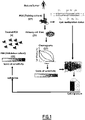
- PDAC methylomic signatures were generated for Gemcitabine, Irinotecan, and Oxaliplatin on 38 PDX. These PDX were split into 27 and 11, representing the training cohort and validation cohort, respectively ( see Figure 1 for the employed strategy ) .
Landscapes
- Chemical & Material Sciences (AREA)
- Life Sciences & Earth Sciences (AREA)
- Health & Medical Sciences (AREA)
- Organic Chemistry (AREA)
- Proteomics, Peptides & Aminoacids (AREA)
- Engineering & Computer Science (AREA)
- Immunology (AREA)
- Pathology (AREA)
- Analytical Chemistry (AREA)
- Zoology (AREA)
- Genetics & Genomics (AREA)
- Wood Science & Technology (AREA)
- Physics & Mathematics (AREA)
- Biotechnology (AREA)
- Microbiology (AREA)
- Molecular Biology (AREA)
- Hospice & Palliative Care (AREA)
- Biophysics (AREA)
- Oncology (AREA)
- Biochemistry (AREA)
- Bioinformatics & Cheminformatics (AREA)
- General Engineering & Computer Science (AREA)
- General Health & Medical Sciences (AREA)
- Measuring Or Testing Involving Enzymes Or Micro-Organisms (AREA)
Abstract
The present invention relates to a method for determining whether a subject suffering from PDAC will respond favorably to a treatment, in particular to a treatment comprising administering to said subject Gemcitabine, Irinotecan, Oxaliplatin or their combinations, wherein said method comprises assessing the methylation level of a set of CpG sites. Specific CpG signatures have indeed found to be associated to the response to specific treatments. The present invention also relates to a kit suitable for selecting a suitable treatment for a subject suffering from PDAC, as well as the use thereof for determining the methylation status of CpG sites in a sample.
Description
- The present invention concerns biomarkers for prognosing response to a treatment against pancreatic ductal adenocarcinoma.
- Pancreatic ductal adenocarcinoma (PDAC) is the fourth leading cause of cancer-related mortality in western countries and bears one of the poorest prognoses with a five-year survival rate of 6% In addition to frequent late-stage diagnosis, this dismal outcome can also be explained by the lack of effective therapies. Targeted therapies and immunotherapies have failed to improve unselected patients' outcomes, making chemotherapy the only effective systemic treatment. Despite being a generally refractory cancer, it has been shown that the molecularly guided selection of small patient subgroups increased the efficacy for some therapies such as olaparib for patients with germline BRCA mutations (approximately 5% of patients) or immunotherapy for mismatch-repair deficient tumors (approximately 1% of patients). These studies demonstrate the advantage of molecular stratification for therapeutic decisions and introduce an incremental model for PDAC, solving one subgroup at a time.
- For patients with excellent performance status, the polychemotherapy regimen FOLFIRINOX was shown to be more effective than gemcitabine alone in both the adjuvant and metastatic settings at the expense of high toxicities. The selection of systemic therapy is therefore based on patient's fitness rather than on the potential efficacy of a particular chemotherapeutic regimen. Companion diagnostics are used to guide the choice of therapy by selecting patients that have a higher chance of responding to a given therapeutic agent. With an ever-growing number of regimens composed of multiple chemotherapies, this has not only the potential to improve survival by matching drugs to likely responders, but also to reduce adverse effects by avoiding unnecessary highly toxic regimens.
- Different chemotherapy drugs are currently used for treating pancreatic cancer.
- Gemcitabine is the preferred companion of nab-paclitaxel, another systemic therapy used as the first or second line in the advanced setting. The AFUGEM study suggested that 5-FU could be equivalent to gemcitabine in association with nab-paclitaxel highlighting the need of gemcitabine/5-FU predictive biomarkers. Furthermore, there is to date no upfront comparison of modified FOLFIRINOX and gemcitabine-nabpaclitaxel. It could be proposed that patients with homologous recombination deficiency are to be treated with platinum salt while for the others a gemcitabine efficacy predictive biomarker could help select the patients for the gemcitabine-nabpaclitaxel regimen.
- In addition, gemcitabine remains to date the most effective monotherapy in PDAC with an estimated response rate of 10% to 23% in advanced patients and is often used in patients unfit for more aggressive therapies. Mostly based on gemcitabine metabolism, the association of single gene biomarkers with the response to gemcitabine has been demonstrated both at the level of protein expression and genetic polymorphisms. In particular, the nucleoside transporter hENT1 has been extensively studied and its protein expression was shown in multiple studies to be associated with gemcitabine sensitivity in PDAC as well as in other malignancies. The stratification of patients by hENT1 expression, however, is hindered by the difficulty to robustly assess the protein's expression given the high discrepancies between available antibodies.
- Multi-gene signatures based on RNA expression measurements have been shown to provide robust predictive tools in breast and prostate cancer. In PDAC, RNA signatures provide an in-depth description of tumor phenotypes with robust prognostic and suggested predictive value.
- FOLFIRINOX is one of the main chemotherapy treatments for pancreatic ductal adenocarcinoma. FOLFIRINOX is the combination of three different chemotherapy drugs and a vitamin: fluorouracil (5-FU), irinotecan, and oxaliplatin. It also includes folinic acid (leucovorin). This is a vitamin that helps fluorouracil work well.
- FOLFIRINOX regime produce strong side effects such as: increased risk of an infection due to a drop in white blood cells, tiredness and breathlessness due to a drop in red blood cells, bruising more easily due to a drop in platelets also you may have bleeding gums, nosebleeds or tiny red spots known as petechial, tiredness during treatment and sometimes for months afterwards, feeling or being sick (you will be given anti-sickness tablets to help with this), diarrhea, hair loss or hair thinning, sore mouth and ulcers, some liver changes (mild and unlikely to cause symptoms), gritty or watery eyes, blurred vision, sore, red peeling on palms of hands and soles of the feet (known as palmar-plantar syndrome), a brown skin marking following the line of the vein where chemotherapy was injected, skin rashes which may cause itching and some women may find their periods stop (amenorrhoea) this is often temporary, as the most frequents.
- Only one third of patients treated with FOLFIRINOX respond to the treatment. The remaining two third suffer of the side effects of FOLFIRINOX without any benefice. This is why to select FOLFIRINOX-responders patients is a main challenge.
- Epigenetic alteration of gene expression can be achieved by DNA methylation, which is known to be deregulated in PDAC resulting in altered gene expression, genome structure reorganization, tumor grade, tumor stage and survival time of patients. The Cancer Genome Atlas (TCGA) and International Cancer Genome Consortium (ICGC) have generated methylome data for thousands of tumor samples spanning across -25 cancer types including several PDAC. More recently a DNA Methylation dataset on more than 750,000 CpG was generated in our laboratory with genomic DNA obtained from pure human PDAC cells as well as patients derived tumor xenograft (PDX). This is an invaluable material since it will let to analyze DNA Methylation specifically on tumor DNA.
- Earlier studies on PDAC methylation analysis have used limited patient samples or CpG sites, for example for assessing a CpG methylation profile in pancreatic intraductal neoplasia or pancreatic cancer genome or a correlation between DNA methylation and survival of PDAC patients.
- There is therefore a need to provide effective tools to predict gemcitabine and FOLFIRINOX sensitivity in a patient suffering from PDAC, in order to select the most suitable treatment.
- The Inventors have surprisingly found that DNA methylation landscape of PDAC tumors is associated to the sensitivity to irinotecan and oxaliplatin, two chemotherapy drugs present in the FOLFIRINOX regime, as well as to gemcitabine. Several models of PDAC primary cells and PDX were indeed treated with the anticancer drugs (gemcitabine, irinotecan and oxaliplatin) and their sensitivity was correlated with their methyloma. The Inventors found several differentially methylated CpGs able to predict the sensitivity to gemcitabine, irinotecan and oxaliplatin, which were then validated on PDX treated with these drugs.
- The Inventors have thus determined sets of CpG sites able to predict the gemcitabine and FOLFIRINOX sensitivity in PDAC. These set of CpG sites can thus be used for selecting the most suitable treatment to a given patient suffering from PDAC.
- A first object of the present invention thus relates to a method for determining whether a subject suffering from PDAC will respond favorably to at least one treatment, comprising:
- (i) providing at least one set of CpG sites whose methylation level is associated to the response to said treatment,
- (ii) determining the methylation level of the CpG sites of said set in a sample from said subject, preferably in a DNA sample from said subject, and
- (iii) deducing from the results of step (ii) whether the subject will respond favorably to said treatment.
- Said treatment may comprise Gemcitabine, Irinotecan, Oxaliplatin, Fluorouracil (5-FU), Cisplatin, Abraxane and/or Taxol.
- The sample preferably originates from the pancreatic ductal adenocarcinoma of said subject.
- In the method as defined above, step (i) preferably comprises providing a set of CpG sites whose methylation level is associated to the response to Gemcitabine, a set of CpG sites whose methylation level is associated to the response to Irinotecan and/or a set of CpG sites whose methylation level is associated to the response to Oxaliplatin.
- The set of CpG sites whose methylation level is associated to the response to Gemcitabine may for example comprises at least four CpG sites selected from the group consisting of the CpG located at position 61-62 of sequence SEQ ID NO: 1, the CpG located at position 61-62 of SEQ ID NO: 2, the CpG located at position 61-62 of sequence SEQ ID NO: 3, the CpG located at position 61-62 of sequence SEQ ID NO: 4, the CpG located at position 61-62 of sequence SEQ ID NO: 5, the CpG located at position 61-62 of sequence SEQ ID NO: 6 and the CpG located at position 61-62 of sequence SEQ ID NO: 7.
- The set of CpG sites whose methylation level is associated to the response to Irinotecan may for example comprise at least four CpG sites selected from the group consisting of the CpG located at position 61-62 of sequence SEQ ID NO: 8, the CpG located at position 61-62 of SEQ ID NO: 9, the CpG located at position 61-62 of sequence SEQ ID NO: 10, the CpG located at position 61-62 of sequence SEQ ID NO: 11, the CpG located at position 61-62 of sequence SEQ ID NO: 12, the CpG located at position 61-62 of sequence SEQ ID NO: 13, the CpG located at position 61-62 of sequence SEQ ID NO: 14, the CpG located at position 61-62 of sequence SEQ ID NO: 15 and the CpG located at position 61-62 of SEQ ID NO: 16.
- The set of CpG sites whose methylation level is associated to the response to Oxaliplatin may for example comprise at least three CpG sites selected from the group consisting of the CpG located at position 61-62 of sequence SEQ ID NO: 17, the CpG located at position 61-62 of sequence SEQ ID NO: 18, the CpG located at position 61-62 of sequence SEQ ID NO: 19 and the CpG located at position 61-62 of sequence SEQ ID NO: 20.
- Another object of the present invention is a kit suitable for determining whether a subject suffering from PDAC will respond favorably to a treatment, wherein said kit comprises:
- (i) means for assessing the methylation level of a set of at most 60 CpG sites, wherein the CpG sites comprise:
- at least four CpG sites selected from the group consisting of the CpG located at position 61-62 of sequence SEQ ID NO: 1, the CpG located at position 61-62 of SEQ ID NO: 2, the CpG located at position 61-62 of sequence SEQ ID NO: 3, the CpG located at position 61-62 of sequence SEQ ID NO: 4, the CpG located at position 61-62 of sequence SEQ ID NO: 5, the CpG located at position 61-62 of sequence SEQ ID NO: 6 and the CpG located at position 61-62 of sequence SEQ ID NO: 7, and/or
- at least four CpG sites selected from the group consisting the CpG located at position 61-62 of sequence SEQ ID NO: 8, the CpG located at position 61-62 of SEQ ID NO: 9, the CpG located at position 61-62 of sequence SEQ ID NO: 10, the CpG located at position 61-62 of sequence SEQ ID NO: 11, the CpG located at position 61-62 of sequence SEQ ID NO: 12, the CpG located at position 61-62 of sequence SEQ ID NO: 13, the CpG located at position 61-62 of sequence SEQ ID NO: 14, the CpG located at position 61-62 of sequence SEQ ID NO: 15 and the CpG located at position 61-62 of SEQ ID NO: 16, and/or
- at least three CpG sites selected from the group consisting the CpG located at position 61-62 of sequence SEQ ID NO: 17, the CpG located at position 61-62 of sequence SEQ ID NO: 18, the CpG located at position 61-62 of sequence SEQ ID NO: 19 and the CpG located at position 61-62 of sequence SEQ ID NO: 20, and
- (ii) optionally, means for extracting DNA from a sample.
- The means for assessing the methylation level of the CpG sites may for example comprise:
- bisulfite,
- means for DNA amplification, and/or
- probes able to detect a methylated cytosine and/or an unmethylated cytosine at each CpG site of the set of CpG sites.
- Another object of the present invention is the use of the kit as defined above for determining the methylation level of CpG sites in a sample, in particular for determining whether a subject suffering from PDAC will respond favorably to a treatment.
- Another object of the present invention is a pharmaceutical composition for use in the treatment of PDAC in a subject, wherein said pharmaceutical composition comprises a treatment suitable for said subject, wherein said suitable treatment is selected by performing the method for determining whether a subject suffering from PDAC will respond favorably to at least one treatment, said method being as defined above, and selecting a treatment to which the subject will respond favorably.
- The subject is a subject suffering from PDAC (Pancreatic ductal adenocarcinoma).
- The subject is preferably a human subject, also referred to as "patient".
- The subject may be of any age and gender.
- The subject may have being diagnosed as suffering from PDAC by any method well known by the skilled person, such as imaging technique(s) (for example contrast-enhanced computed tomography (CT) scan of the abdominal cavity and pelvis, magnetic resonance imaging (MRI) and/or Endoscopic ultrasound (EUS)) and/or an histological analysis of a biopsy of the pancreatic lesions.
- PDAC is for example characterized by a particular short time of survival and therefore given not multiple therapeutic options.
- The subject is thus a subject in need of a treatment for treating PDAC.
- The method for determining whether a subject suffering from PDAC will respond favorably to at least one treatment is carried out on a sample from the subject, the subject being as defined above.
- The sample is thus a biological sample.
- The sample preferably originates from the pancreatic ductal adenocarcinoma of said subject.
- The sample may be a biopsy sample or a sample from the pancreatic ductal adenocarcinoma, which was for example removed by surgery.
- The present invention is based on determining the methylation level of a set of CpG sites.
- Any suitable method well-known by the skilled person may be used for determining the methylation level of a CpG site.
- For example, determining the methylation level of a CpG site may be carried out by (i) bisulfite treatment followed by sequencing, detection by a probe, for example on an array, or pyrosequencing, or by (ii) liquid chromatography coupled with tandem mass spectrometry.
- Treatment of DNA with bisulfite converts unmethylated cytosine residues to uracil, but leaves 5-methylcytosine residues unaffected.
- In one preferred embodiment, determining the methylation level of a set of CpG sites may comprise:
- optionally, extracting DNA from a sample, in particular from a sample as defined above, to obtain a DNA sample,
- adding bisulfite, in particular sodium bisulfite, to the DNA sample, in particular to convert unmethylated cytosine residues to uracil, to obtain a treated DNA sample,
- amplifying DNA of the treated DNA sample, for example by PCR, in particular amplifying the DNA comprising the CpG sites of said set, to obtain an amplified DNA sample, and
- determining the level of methylation of each CpG site of said set in the amplified DNA sample.
- Amplifying DNA is preferably performed using primers able to amplify each CpG site of said set of CpG sites. The primers used to amplify a given CpG site may hybridize to DNA regions flanking said CpG site. Alternatively, one of the primers used to amplify a given CpG site may hybridize to a DNA region comprising the CpG site in its methylated stated (in particular comprising a cytosine) and/or one of the primers used to amplify a given CpG site may hybridize to a DNA region comprising the CpG site in its unmethylated (in particular comprising an uracil instead of a cytosine, further to the bisulfite treatment).
- In said amplified DNA sample, the presence of a cytosine at a CpG site indicates a methylated cytosine and the presence of an uracil at a CpG site indicates an unmethylated state.
- The level of methylation of a given CpG site may be an hypermethylation or an hypomethylation.
- The level of methylation of a given CpG site is an hypermethylation when the number of methylated cytosine at said given CpG site is greater than the number of unmethylated cytosine at said given CpG site, in the DNA sample.
- The level of methylation of a given CpG site is an hypomethylation when the number of unmethylated cytosine at said given CpG site is greater than the number of methylated cytosine at said given CpG site, in the DNA sample.
- The present invention thus relates to a method for determining whether a subject suffering from PDAC will respond favorably to at least one treatment.
- By "a method for determining whether a subject suffering from PDAC will respond favorably to at least one treatment", it is herein particularly meant a method for determining a suitable treatment to a subject, i.e. a treatment active against PDAC in said subject.
- The present invention particularly relates to a method for determining whether a subject suffering from PDAC will respond favorably to at least one treatment, comprising:
- (i) providing at least one set of CpG sites whose methylation level is associated to the response to said treatment,
- (ii) determining the methylation level of the CpG sites of said set in a sample from said subject, and
- (iii) deducing from the results of step (ii) whether the subject will respond favorably to said treatment.
- The method may for example determine whether a subject suffering from PDAC will respond favorably to one treatment or to at least two different treatments, in particular to allow selecting the most suitable treatment among the possible treatments.
- The treatment may be any treatment available for the prevention and/or treatment of PDAC.
- The treatment may for example comprise Gemcitabine or a derivative thereof, Irinotecan or a derivative thereof, Oxaliplatin or a derivative thereof, Fluorouracil (5-FU) or a derivative thereof, Cisplatin or a derivative thereof and/or Taxol, for example in the form Abraxane, or a derivative thereof.
- The present invention preferably relates to a method for determining whether a subject suffering from PDAC will respond favorably to (i) Gemcitabine or a derivative thereof, (ii) Irinotecan or a derivative thereof and/or (iii) Oxaliplatin or a derivative thereof.
- Gemcitabine is the compound 2'-deoxy-2',2'-difluoro-cytidine, also referred to as CAS number 95058-81-4.
- A derivative of gemcitabine is a compound obtained for example by at least one chemical modification from gemcitabine. The derivative of gemcitabine is preferably at least as efficient as gemcitabine and/or has less side effects.
- Irinotecan is the compound [1,4'-Bipiperidine]-1'-carboxylic acid, also referred to as CPT-11 or under CAS Number 100286-90-6. Irinotecan is preferably used in the form of irinotecan hydrochloride trihydrate.
- A derivative of Irinotecan is a compound obtained for example by at least one chemical modification from Irinotecan. The derivative of Irinotecan is preferably at least as efficient as Irinotecan and/or has less side effects.
- Oxaliplatin is the compound [SP-4-2-(1R-trans)]-(1,2-Cyclohexanediamine-N,N')[ethanedioata(2--)-O,O']platinum, also referred to as CAS number 61825-94-3.
- A derivative of Oxaliplatin is a compound obtained for example by at least one chemical modification from Oxaliplatin. The derivative of Oxaliplatin is preferably at least as efficient as Oxaliplatin and/or has less side effects.
- Fluorouracil is the compound 5-Fluoropyrimidine-2,4-diol, also referred to as (5-FU) or under CAS number 51-21-8.
- A derivative of Fluorouracil is a compound obtained for example by at least one chemical modification from Fluorouracil. The derivative of Fluorouracil is preferably at least as efficient as Fluorouracil and/or has less side effects
- Cisplatin is the compound cis-diamminedichloroplatinum (II), also referred to under CAS number 15663-27-1.
- A derivative of Cisplatin is a compound obtained for example by at least one chemical modification from Cisplatin. The derivative of Cisplatin is preferably at least as efficient as Cisplatin and/or has less side effects.
- Taxol, also called Paclitaxel, is a compound referred to as CAS number 33069-62-4.
- Taxol is preferably used in the form of Albumin-bound paclitaxel, also called Abraxane or nab-paclitaxel.
- A derivative of Taxol is a compound obtained for example by at least one chemical modification from Taxol. The derivative of Taxol is preferably at least as efficient as Taxol and/or has less side effects. An example of Taxol derivative is for example placlitaxel.
- Step (i) comprises providing at least one set of CpG sites whose methylation level is associated to the response to said treatment.
- These CpG sites are thus biomarkers useful for prognosing response to a treatment against pancreatic ductal adenocarcinoma.
- The methylation level of the CpG sites of a set associated to a favorable response to treatment is also referred to as the CpG signature associated to a favorable response to treatment.
- The set of CpG site may for example be a set of CpG sites whose methylation level is associated to the response to Gemcitabine, a set of CpG sites whose methylation level is associated to the response to Irinotecan or a set of CpG sites whose methylation level is associated to the response to Oxaliplatin.
- Step (i) may for example comprises providing one set of CpG sites whose methylation level is associated to the response to Gemcitabine, one set of CpG sites whose methylation level is associated to the response to Irinotecan, one set of CpG sites whose methylation level is associated to the response to Oxaliplatin and/or at least one set of CpG sites whose methylation level is associated to the response to another treatment.
- The set of CpG sites whose methylation level is associated to the response to Gemcitabine preferably comprises at least four CpG sites, more preferably at least five CpG sites, still more preferably at least six CpG sites, selected from the group consisting of: the CpG located at position 61-62 of sequence SEQ ID NO: 1, the CpG located at position 61-62 of SEQ ID NO: 2, the CpG located at position 61-62 of sequence SEQ ID NO: 3, the CpG located at position 61-62 of sequence SEQ ID NO: 4, the CpG located at position 61-62 of sequence SEQ ID NO: 5, the CpG located at position 61-62 of sequence SEQ ID NO: 6 and the CpG located at position 61-62 of sequence SEQ ID NO: 7.
- In a preferred embodiment, the set of CpG sites whose methylation level is associated to the response to Gemcitabine comprises or consists of the CpG located at position 61-62 of sequence SEQ ID NO: 1, the CpG located at position 61-62 of SEQ ID NO: 2, the CpG located at position 61-62 of sequence SEQ ID NO: 3, the CpG located at position 61-62 of sequence SEQ ID NO: 4, the CpG located at position 61-62 of sequence SEQ ID NO: 5, the CpG located at position 61-62 of sequence SEQ ID NO: 6 and the CpG located at position 61-62 of sequence SEQ ID NO: 7.
- The set of CpG sites whose methylation level is associated to the response to Irinotecan preferably comprises at least four CpG sites, more preferably at least five, at least six or at least seven CpG sites, still more preferably at least eight CpG sites, selected from the group consisting of: the CpG located at position 61-62 of sequence SEQ ID NO: 8, the CpG located at position 61-62 of SEQ ID NO: 9, the CpG located at position 61-62 of sequence SEQ ID NO: 10, the CpG located at position 61-62 of sequence SEQ ID NO: 11, the CpG located at position 61-62 of sequence SEQ ID NO: 12, the CpG located at position 61-62 of sequence SEQ ID NO: 13, the CpG located at position 61-62 of sequence SEQ ID NO: 14, the CpG located at position 61-62 of sequence SEQ ID NO: 15 and the CpG located at position 61-62 of SEQ ID NO: 16.
- In a preferred embodiment, the set of CpG sites whose methylation level is associated to the response to Irinotecan comprises or consists of the CpG located at position 61-62 of sequence SEQ ID NO: 8, the CpG located at position 61-62 of SEQ ID NO: 9, the CpG located at position 61-62 of sequence SEQ ID NO: 10, the CpG located at position 61-62 of sequence SEQ ID NO: 11, the CpG located at position 61-62 of sequence SEQ ID NO: 12, the CpG located at position 61-62 of sequence SEQ ID NO: 13, the CpG located at position 61-62 of sequence SEQ ID NO: 14, the CpG located at position 61-62 of sequence SEQ ID NO: 15 and the CpG located at position 61-62 of SEQ ID NO: 16
- The set of CpG sites whose methylation level is associated to the response to Oxaliplatin preferably comprises at least three CpG sites selected from the group consisting of the CpG located at position 61-62 of sequence SEQ ID NO: 17, the CpG located at position 61-62 of sequence SEQ ID NO: 18, the CpG located at position 61-62 of sequence SEQ ID NO: 19 and the CpG located at position 61-62 of sequence SEQ ID NO: 20.
- In a preferred embodiment, the set of CpG sites whose methylation level is associated to the response to Oxaliplatin comprises or consists of the CpG located at position 61-62 of sequence SEQ ID NO: 17, the CpG located at position 61-62 of sequence SEQ ID NO: 18, the CpG located at position 61-62 of sequence SEQ ID NO: 19 and the CpG located at position 61-62 of sequence SEQ ID NO: 20.
- Step (ii) comprises determining the methylation level of the CpG sites of said set in a sample from said subject.
- The sample is particularly as defined above.
- The sample is preferably a DNA sample.
- The sample preferably originates from the pancreatic ductal adenocarcinoma of said patient.
- Determining the methylation level of the CpG sites of said set in a sample from said subject may be performed as disclosed above in the section "Determining the methylation level of CpG sites".
- Step (iii) comprises deducing from the results of step (ii) whether the subject will respond favorably to said treatment.
- Step (iii) preferably comprises, for each set of CpG sites provided in step (i):
- comparing the level of methylation of the CpG sites determined in step (ii) to the level of methylation of said CpG sites associated to a favorable response to treatment,
- if the level of methylation of the CpG sites determined in step (ii) is the same as the level of methylation of said CpG sites associated to a favorable response to treatment, deducing from the results of step (ii) that the subject will respond favorably to the treatment (i.e. the treatment associated to the level of methylation of said set of CpG sites) and if the level of methylation of the CpG sites determined in step (ii) is different from the level of methylation of said CpG sites associated to a favorable response to treatment, deducing from the results of step (ii) that the subject will not respond favorably to the treatment (i.e. the treatment associated to the level of methylation of said set of CpG sites).
- Tables 1, 2 and 3 below indicate the CpG signature associated to a favorable response to Gemcitabine, Irinotecan and Oxaliplatin, respectively.
Table 1: CpG signature associated to a favorable response to Gemcitabine N° sequence Marker Sensitive Position of the CpG SEQ ID NO: 1 cg09719477 Hypermethylation 61-62 SEQ ID NO: 2 cg04111064 Hypermethylation 61-62 SEQ ID NO: 3 cg15720669 Hypermethylation 61-62 SEQ ID NO: 4 cg17802942 Hypermethylation 61-62 SEQ ID NO: 5 cg10190444 Hypermethylation 61-62 SEQ ID NO: 6 cg05471523 Hypermethylation 61-62 SEQ ID NO: 7 cg19635869 Hypermethylation 61-62 - When step (i) comprises providing a set of CpG sites whose methylation level is associated to the response to Gemcitabine, step (iii) comprises deducing from the results of step (ii) that:
- the subject will respond favorably to Gemcitabine if the level of methylation is hypermethylation for each of the CpG sites selected from the group consisting of the CpG located at position 61-62 of sequence SEQ ID NO: 1, the CpG located at position 61-62 of SEQ ID NO: 2, the CpG located at position 61-62 of sequence SEQ ID NO: 3, the CpG located at position 61-62 of sequence SEQ ID NO: 4, the CpG located at position 61-62 of sequence SEQ ID NO: 5, the CpG located at position 61-62 of sequence SEQ ID NO: 6 and the CpG located at position 61-62 of sequence SEQ ID NO: 7 and
- the subject will not respond favorably to the Gemcitabine if the level of methylation is hypomethylation for at least one of the CpG sites selected from the group consisting of the CpG located at position 61-62 of sequence SEQ ID NO: 1, the CpG located at position 61-62 of SEQ ID NO: 2, the CpG located at position 61-62 of sequence SEQ ID NO: 3, the CpG located at position 61-62 of sequence SEQ ID NO: 4, the CpG located at position 61-62 of sequence SEQ ID NO: 5, the CpG located at position 61-62 of sequence SEQ ID NO: 6 and the CpG located at position 61-62 of sequence SEQ ID NO: 7.
- When step (i) comprises providing a set of CpG sites whose methylation level is associated to the response to Irinotecan, step (iii) comprises deducing from the results of step (ii) that:
- the subject will respond favorably to Irinotecan if the level of methylation is hypomethylation for each of the CpG sites selected from the group consisting of the CpG located at position 61-62 of sequence SEQ ID NO: 8, the CpG located at position 61-62 of SEQ ID NO: 9, the CpG located at position 61-62 of sequence SEQ ID NO: 10, the CpG located at position 61-62 of sequence SEQ ID NO: 11 and the CpG located at position 61-62 of sequence SEQ ID NO: 12 and if the level of methylation is hypermethylation for each of the CpG sites selected from the group consisting of the CpG located at position 61-62 of sequence SEQ ID NO: 13, the CpG located at position 61-62 of sequence SEQ ID NO: 14, the CpG located at position 61-62 of sequence SEQ ID NO: 15 and the CpG located at position 61-62 of SEQ ID NO: 16, and
- the subject will not respond favorably to the Irinotecan if the level of methylation is hypermethylation for at least one of the CpG sites selected from the group consisting of the CpG located at position 61-62 of SEQ ID NO: 8, the CpG located at position 61-62 of SEQ ID NO: 9, the CpG located at position 61-62 of sequence SEQ ID NO: 10, the CpG located at position 61-62 of sequence SEQ ID NO: 11 and the CpG located at position 61-62 of sequence SEQ ID NO: 12 or if the level of methylation is hypomethylation for at least one of the CpG sites selected from the group consisting of the CpG located at position 61-62 of sequence SEQ ID NO: 13, the CpG located at position 61-62 of sequence SEQ ID NO: 14, the CpG located at position 61-62 of sequence SEQ ID NO: 15 and the CpG located at position 61-62 of SEQ ID NO: 16.
- When step (i) comprises providing a set of CpG sites whose methylation level is associated to the response to Oxaliplatin, step (iii) comprises deducing from the results of step (ii) that:
- the subject will respond favorably to Oxaliplatin if the level of methylation is hypermethylation for the CpG located at position 61-62 of sequence SEQ ID NO: 17 and if the level of methylation is hypomethylation for each of the CpG sites selected from the group consisting of the CpG located at position 61-62 of sequence SEQ ID NO: 18, the CpG located at position 61-62 of sequence SEQ ID NO: 19 and the CpG located at position 61-62 of SEQ ID NO: 20, and
- the subject will not respond favorably to the Oxaliplatin if the level of methylation is hypomethylation for the CpG located at position 61-62 of SEQ ID NO: 17 or if the level of methylation is hypermethylation for at least one of the CpG sites selected from the group consisting of the CpG located at position 61-62 of sequence SEQ ID NO: 18, the CpG located at position 61-62 of sequence SEQ ID NO: 19 and the CpG located at position 61-62 of SEQ ID NO: 20.
- The present invention also relates to a method for the treatment of PDAC in a subject comprising:
- determining whether the subject will respond favorably to at least one treatment, by performing the steps of the method for determining whether a subject will respond favorably to at least one treatment as defined above,
- selecting a treatment to which the subject will respond favorably, and
- administering to said subject said selected treatment.
- The subject is particularly as defined above.
- The present invention also relates a pharmaceutical composition for use in the treatment of PDAC in a subject, wherein said pharmaceutical composition comprises a treatment suitable for said subject, wherein said suitable treatment is selected by performing the method for determining whether a subject suffering from PDAC will respond favorably to at least one treatment as defined above and selecting a treatment to which the subject will respond favorably.
- The treatment may for example comprises Gemcitabine or a derivative thereof, Irinotecan or a derivative thereof, Oxaliplatin or a derivative thereof, Fluorouracil (5-FU) or a derivative thereof, Cisplatin or a derivative thereof and/or Taxol, for example in the form of Abraxane, or a derivative thereof.
- If step (iii) comprises deducing that the subject suffering from PDAC will respond favorably to at least one treatment, preferably at least two treatments, selected form the group consisting of fluorouracil (5-FU), irinotecan and oxaliplatin, the selected treatment may be FOLFIRINOX.
- The present invention also relates to a kit suitable for determining whether a subject suffering from PDAC will respond favorably to at least one treatment.
- This kit as defined above preferably comprises:
- means for assessing the methylation level of at least three or at least four CpGs sites of at least one set of CpG sites whose methylation level is associated to the response to a treatment, and
- optionally, means for extracting DNA from a sample.
- The kit as defined above preferably comprises means for assessing the methylation level of at most 60 CpG sites, more preferably at most 50 CpGs, still more preferably at most 40 CpG sites or at most 30 CpG sites.
- The present invention particularly relates to a kit suitable for determining whether a subject suffering from PDAC will respond favorably to a treatment, wherein said kit comprises:
- (i) means for assessing the methylation level of a set of at most 60 CpG sites, wherein the CpG sites comprise:
- at least four CpG sites selected from the group consisting of the CpG located at position 61-62 of sequence SEQ ID NO: 1, the CpG located at position 61-62 of SEQ ID NO: 2, the CpG located at position 61-62 of sequence SEQ ID NO: 3, the CpG located at position 61-62 of sequence SEQ ID NO: 4, the CpG located at position 61-62 of sequence SEQ ID NO: 5, the CpG located at position 61-62 of sequence SEQ ID NO: 6 and the CpG located at position 61-62 of sequence SEQ ID NO: 7, and/or
- at least four CpG sites selected from the group consisting of the CpG located at position 61-62 of sequence SEQ ID NO: 8, the CpG located at position 61-62 of SEQ ID NO: 9, the CpG located at position 61-62 of sequence SEQ ID NO: 10, the CpG located at position 61-62 of sequence SEQ ID NO: 11, the CpG located at position 61-62 of sequence SEQ ID NO: 12, the CpG located at position 61-62 of sequence SEQ ID NO: 13, the CpG located at position 61-62 of sequence SEQ ID NO: 14, the CpG located at position 61-62 of sequence SEQ ID NO: 15 and the CpG located at position 61-62 of SEQ ID NO: 16, and/or
- at least three CpG sites selected from the group consisting of the CpG located at position 61-62 of sequence SEQ ID NO: 17, the CpG located at position 61-62 of sequence SEQ ID NO: 18, the CpG located at position 61-62 of sequence SEQ ID NO: 19 and the CpG located at position 61-62 of sequence SEQ ID NO: 20, and
- (ii) optionally, means for extracting DNA from a sample.
- Means for extracting DNA for example are well known by the skilled person.
- The means for assessing the methylation level of the CpG sites may for example comprise:
- bisulfite, in particular sodium bisulfite,
- means for DNA amplification, and/or
- probes able to detect a methylated cytosine and/or an unmethylated cytosine at each CpG site of the set of CpG sites.
- The probes for example comprises:
- 7 probes specifically hybridizing to 7 nucleic acids comprising at least a fragment of sequences SEQ ID NO: 1 to 7, respectively, wherein said fragment comprises a cytosine at position 61 and/or 7 probes specifically hybridizing to 7 nucleic acids comprising at least a fragment of sequences SEQ ID NO: 1 to 7, respectively, wherein said fragment comprises an uracil at position 61,
- 9 probes specifically hybridizing to 9 nucleic acids comprising at least a fragment of sequences SEQ ID NO: 8 to 16, respectively, wherein said fragment comprises a cytosine at position 61 and/or 9 probes specifically hybridizing to 9 nucleic acids comprising at least a fragment of sequences SEQ ID NO: 8 to 16, respectively, wherein said fragment comprises a uracil at position 61, and/or
- 4 probes specifically hybridizing to 4 nucleic acids comprising at least a fragment of sequences SEQ ID NO: 17 to 20, respectively, wherein said fragment comprises a cytosine at position 61 and/or 4 probes specifically hybridizing to 4 nucleic acids comprising at least a fragment of sequences SEQ ID NO: 17 to 20, respectively, wherein said fragment comprises an uracil at position 61.
- Means for DNA amplification for example comprise primers, a DNA polymerase, dNTPs and/or a buffer solution.
- The primers used for DNA amplification are preferably able to amplify each CpG site of said set of CpG sites. The primers used to amplify a given CpG site may hybridize to DNA regions flanking said CpG site. Alternatively, one of the primers used to amplify a given CpG site may hybridize to a DNA region comprising the CpG site in its methylated stated (in particular comprising a cytosine) and/or one of the primers used to amplify a given CpG site may hybridize to a DNA region comprising the CpG site in its unmethylated (in particular comprising an uracil instead of a cytosine, further to the bisulfite treatment).
- The present invention also relates to the use of a kit as defined above for determining the methylation level of CpG sites in a sample, in particular for determining whether a subject suffering from PDAC will respond favorably to a treatment.
- The present invention thus also relates to the in vitro use of a kit as defined above for determining whether a subject suffering from PDAC will respond favorably to a treatment.
-
-
Figure 1 : Strategy -
Figure 2 : Training Cohort Signature Identification. A. Gemcitabine. B. Irinotecan. C. Oxaliplatin -
Figure 3 : Signature Validation in vivo. A. Gemcitabine. B. Irinotecan. C. Oxaliplatin - All patients presenting with a suspicion of PDAC between February 2011 and September 2015 and that were included in the clinical trial "Predictive Biomarkers of Therapeutic Response in Pancreatic Tumors" (NCT01692873) were included in this study after receiving ethics review board approval. In total, 38 patients diagnosed with PDAC were included in this study.
- All animal experiments were conducted in accordance with institutional guidelines and were approved by the "Plateforme de Stabulation et d'Experimentation Animale" (PSEA, Scientific Park of Luminy, Marseille). PDAC tissue was fragmented, mixed with 100 µL of Matrigel and implanted with a 10 gauge trocar (Innovative Research of America, Sarasota, FL) in the subcutaneous right upper flank of an anesthetized male NMRI-nude mouse (Swiss Nude Mouse Crl: NU(Ico)-Foxn1nu; Charles River Laboratories, Wilmington, MA). Once xenografts reached 1 cm3, they were removed and passed to NMRI-nude mice.
- DNA has been extracted from 27 PDX considered as the training cohort and 11 PDX considered as the validation cohort. Approximately 50 mg fragments of frozen tissues were transferred into homogenization tubes (Precellys lysing kit CK28R, Bertin Technologies) containing 160 µl PBS (Sigma-Aldrich™). Tissues were homogenized with the Precellys 24-Dual homo-genizer (Bertin Technologies) three times 15 s at 6500 rpm speed with 10 s pause between homogenization steps. A digestion step was then performed at 56°C during 2 h in ATL buffer and proteinase K solution. Finally, DNA was purified using the QIAamp DNA Mini kit (QiagenTM) according to the manufacturer's instructions.
- IlluminaInfinium HumanMethylation450 chips were used to measure genome-wide CpG methylation profiles following manufacturer's instructions. Beta-values were extracted using Illumina's GenomeStudio software. Probes containing single-nucleotide and indel polymorphism or overlapping with a repetitive element that was not uniquely aligned to the human genome were removed.
- Twenty eight xenografts obtained from mice were split into several small pieces and used for cell culture. These fragments were processed in a biosafety chamber: after fine mincing, they were treated with collagenase type V (ref C9263; Sigma-Aldrich, St. Louis, MO) and trypsin/EDTA (ref 25200-056; Gibco, Life Technologies, Grand Island, NY) and were suspended in Dulbecco's modified Eagle's medium supplemented with 1% w/w penicillin/streptomycin (Gibco, Life Technologies) and 10% fetal bovine serum (Lonza Inc., Walkersville, MD). After centrifugation, cells were resuspended in serum-free ductal media at 37°C in a 5% CO2 incubator. Amplified cells were stored in liquid nitrogen. Cells were weaned from antibiotics for ≥48 hours before testing.
- PDX-derived cell lines were screened for chemosensitivity to three drugs: gemcitabine (Eli Lilly & Co., Indianapolis, IN), oxaliplatin (Hospira, Lake Forest, IL) and irinotecan active metabolite named 7-ethyl 10-hydroxycamptothecin or SN-38 (11406; Sigma-Aldrich). These cells were treated for 72 hours with increasing concentrations of chemotherapeutic drugs ranging from 0 to 1000 µmol/L. Five thousand cells were plated per well in 96-well plates in serum free defined media. Twenty-four hours later, the media were supplemented with increasing concentrations of drugs and were incubated for an additional 72 hours. Each experiment was performed in triplicate and repeated at least three times.
- Cell viability was estimated after addition of the PrestoBlue cell viability reagent (Life Technologies) for 3 hours following the protocol provided by the supplier. Cell viability was measured on
days 0 and 3 to calculate the replication rate of the cells. Area under the curve (AUC) was calculated using GR metrics R package. - Each PDX corresponding to one patient was inoculated into nude NMRI mice for each treatment. A total of 32 animals for each of the 8 models (total = 256 animals) were utilized. When the PDX for each patient reached 200 mm3 animals were randomized and treated with gemcitabine (120 mg/kg every third day for four administrations in the tail vein, n = 8), irinotecan (22 mg/kg every second day for three administrations in the tail vein, n = 8), and oxaliplatin (5 mg/kg every fourth day for two administrations in the tail vein, n = 8) or vehicle (NaCI 0.9% n = 8). Chemotherapy sensitivity was revealed by tumor growth monitoring. Tumor size was measured with a Vernier caliper twice weekly, and the tumor volume was calculated with the equation v = (length/width2)/2. The "Percentage of Resistance" for each PDX and drug was calculated as the ratio among the AUC of treated animals over the AUC of untreated animals.
- Methylation Beta values of 773,234 CpGs from 27 (training cohort) and 11 (validation cohort) patients were included in the component analysis. Independent component analysis (ICA) was performed using the JADE (joint approximate diagonalization of eigenmatrices) algorithm. We used different ICA systems with an increasing number of components from k=2 to k=20. The component selection for each reported drug was performed, applying Spearman's correlation between the individual contribution of each PDX on the specific component and the AUC of the PDX-derived cell line. The component projection was made using the cross-product among the Moore-Penrose generalized inverse of the gene contribution and the metabolome matrix.
- PDAC methylomic signatures were generated for Gemcitabine, Irinotecan, and Oxaliplatin on 38 PDX. These PDX were split into 27 and 11, representing the training cohort and validation cohort, respectively (see
Figure 1 for the employed strategy). - Primary cell lines were derived from the training cohort to perform the chemograms and characterize the PDX chemosensitivity profiles. The reported signatures were extracted applying ICA analysis on the training cohort methylome, followed by Spearman's correlation between the PDX methylome contribution and the AUC calculated from the PDX-derived cell lines. Gemcitabine (r = -0.51; P = 0.01;
Figure 2A ), Irinotecan (r = -0.46; P = 0.03;Figure 2B ), and Oxaliplatin (r = 0.54; P = 0.01;Figure 2C ) signatures showed a strong predictive power, regarding to the chemosensitivity measured trough the cell lines. The most contributive CpGs corresponded to 263 for Gemcitabine, 149 for Irinotecan and 95 for Oxaliplatin (data not shown). - After that, the signatures were refined, isolating the CpGs with the higher predictive power assessed for the global component's contribution and their distribution between resistant and sensitive tumors (see Table 1).
- The refined signatures were evaluated in vivo on an independent cohort of 8 PDX randomly extracted from the validation cohort. All the signatures displayed a high chemosensitivity prediction capability (see
Figure 3 ). Gemcitabine (r = -0.79; P = 0.01;Figure 3A ), Irinotecan (r = -0.81; P = 0.01;Figure 3B ), and Oxaliplatin (r = 0.74; P = 0.04;Figure 3C ) signatures showed a strong predictive power, regarding to the chemosensitivity measured trough the cell lines.
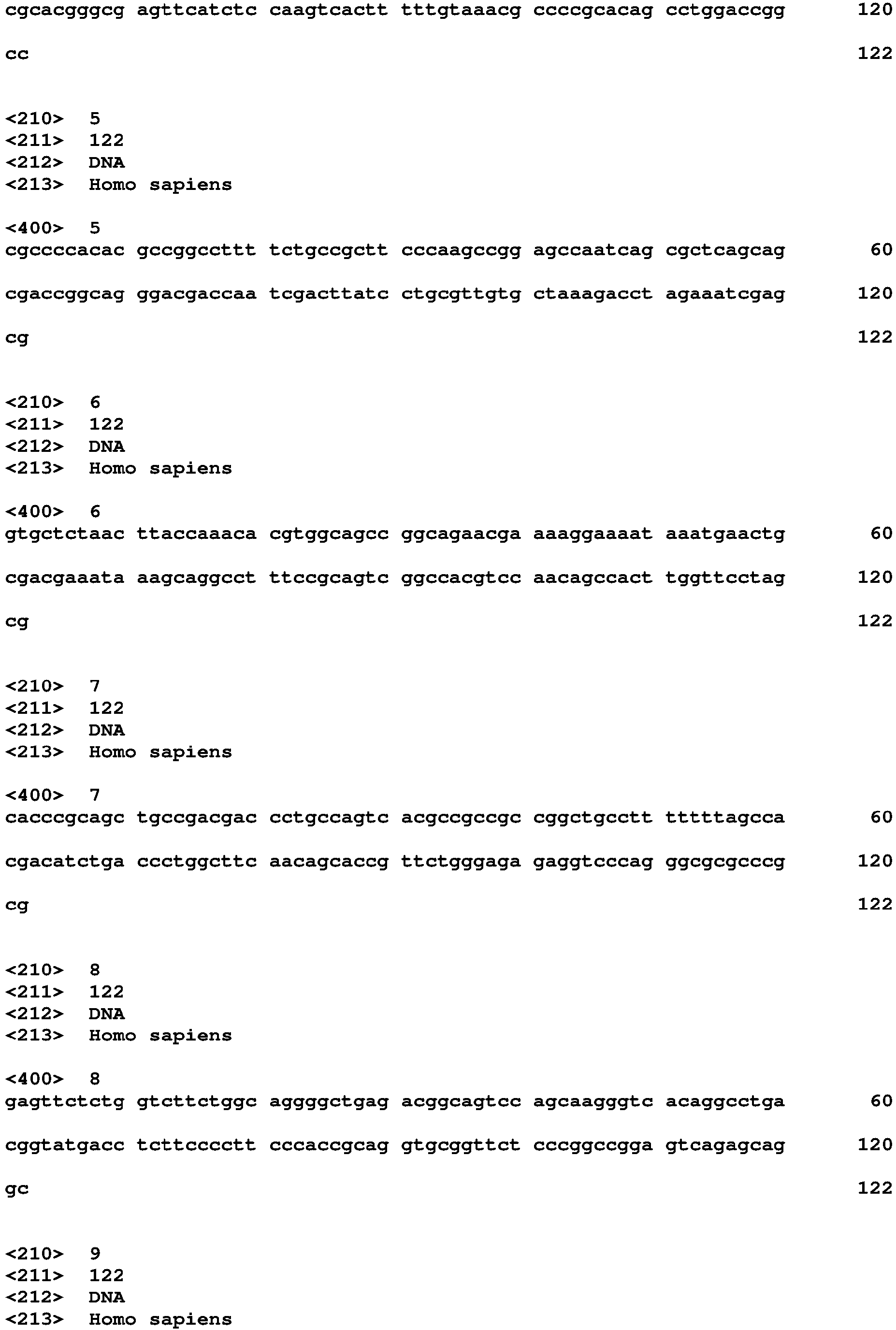


| N° sequence | Marker | Sensitive | Position of the CpG |
| SEQ ID NO: 8 | cg26807301 | Hypomethylation | 61-62 |
| SEQ ID NO: 9 | cg02940693 | Hypomethylation | 61-62 |
| SEQ ID NO: 10 | cg08803589 | Hypomethylation | 61-62 |
| SEQ ID NO: 11 | cg04442017 | Hypomethylation | 61-62 |
| SEQ ID NO: 12 | cg11277783 | Hypomethylation | 61-62 |
| SEQ ID NO: 13 | cg18270446 | Hypermethylation | 61-62 |
| SEQ ID NO: 14 | cg12974599 | Hypermethylation | 61-62 |
| SEQ ID NO: 15 | cg17474302 | Hypermethylation | 61-62 |
| SEQ ID NO: 16 | cg02306236 | Hypermethylation | 61-62 |
| N° sequence | Marker | Sensitive | Position of the CpG |
| SEQ ID NO: 17 | cg27205904 | Hypermethylation | 61-62 |
| SEQ ID NO: 18 | cg16023943 | Hypomethylation | 61-62 |
| SEQ ID NO: 19 | cg23849078 | Hypomethylation | 61-62 |
| SEQ ID NO: 20 | cg26981809 | Hypomethylation | 61-62 |
Claims (13)
- A method for determining whether a subject suffering from PDAC will respond favorably to at least one treatment, comprising:(i) providing at least one set of CpG sites whose methylation level is associated to the response to said treatment,(ii) determining the methylation level of the CpG sites of said set in a sample from said subject, and(iii) deducing from the results of step (ii) whether the subject will respond favorably to said treatment.
- The method according to claim 1, wherein said treatment comprises Gemcitabine, Irinotecan, Oxaliplatin, Fluorouracil (5-FU), Cisplatin, Abraxane and/or Taxol.
- The method according to claim 1 or 2, wherein the sample originates from the pancreatic ductal adenocarcinoma of said subject.
- The method according to any one of claims 1 to 3, wherein said sample is a DNA sample.
- The method according to any one of claims 1 to 4, wherein step (i) comprises providing a set of CpG sites whose methylation level is associated to the response to Gemcitabine, a set of CpG sites whose methylation level is associated to the response to Irinotecan and/or a set of CpG sites whose methylation level is associated to the response to Oxaliplatin.
- The method of claim 5, wherein the set of CpG sites whose methylation level is associated to the response to Gemcitabine comprises at least four CpG sites selected from the group consisting of the CpG located at position 61-62 of sequence SEQ ID NO: 1, the CpG located at position 61-62 of SEQ ID NO: 2, the CpG located at position 61-62 of sequence SEQ ID NO: 3, the CpG located at position 61-62 of sequence SEQ ID NO: 4, the CpG located at position 61-62 of sequence SEQ ID NO: 5, the CpG located at position 61-62 of sequence SEQ ID NO: 6 and the CpG located at position 61-62 of sequence SEQ ID NO: 7.
- The method of claim 5, wherein the set of CpG sites whose methylation level is associated to the response to Irinotecan comprises at least four CpG sites selected from the group consisting of the CpG located at position 61-62 of sequence SEQ ID NO: 8, the CpG located at position 61-62 of SEQ ID NO: 9, the CpG located at position 61-62 of sequence SEQ ID NO: 10, the CpG located at position 61-62 of sequence SEQ ID NO: 11, the CpG located at position 61-62 of sequence SEQ ID NO: 12, the CpG located at position 61-62 of sequence SEQ ID NO: 13, the CpG located at position 61-62 of sequence SEQ ID NO: 14, the CpG located at position 61-62 of sequence SEQ ID NO: 15 and the CpG located at position 61-62 of SEQ ID NO: 16.
- The method of claim 5, wherein the set of CpG sites whose methylation level is associated to the response to Oxaliplatin comprises at least three CpG sites selected from the group consisting of the CpG located at position 61-62 of sequence SEQ ID NO: 17, the CpG located at position 61-62 of sequence SEQ ID NO: 18, the CpG located at position 61-62 of sequence SEQ ID NO: 19 and the CpG located at position 61-62 of sequence SEQ ID NO: 20.
- A kit suitable for determining whether a subject suffering from PDAC will respond favorably to a treatment, wherein said kit comprises:(i) means for assessing the methylation level of a set of at most 60 CpG sites, wherein the CpG sites comprise:- at least four CpG sites selected from the group consisting of the CpG located at position 61-62 of sequence SEQ ID NO: 1, the CpG located at position 61-62 of SEQ ID NO: 2, the CpG located at position 61-62 of sequence SEQ ID NO: 3, the CpG located at position 61-62 of sequence SEQ ID NO: 4, the CpG located at position 61-62 of sequence SEQ ID NO: 5, the CpG located at position 61-62 of sequence SEQ ID NO: 6 and the CpG located at position 61-62 of sequence SEQ ID NO: 7, and/or- at least four CpG sites selected from the group consisting the CpG located at position 61-62 of sequence SEQ ID NO: 8, the CpG located at position 61-62 of SEQ ID NO: 9, the CpG located at position 61-62 of sequence SEQ ID NO: 10, the CpG located at position 61-62 of sequence SEQ ID NO: 11, the CpG located at position 61-62 of sequence SEQ ID NO: 12, the CpG located at position 61-62 of sequence SEQ ID NO: 13, the CpG located at position 61-62 of sequence SEQ ID NO: 14, the CpG located at position 61-62 of sequence SEQ ID NO: 15 and the CpG located at position 61-62 of SEQ ID NO: 16, and/or- at least three CpG sites selected from the group consisting the CpG located at position 61-62 of sequence SEQ ID NO: 17, the CpG located at position 61-62 of sequence SEQ ID NO: 18, the CpG located at position 61-62 of sequence SEQ ID NO: 19 and the CpG located at position 61-62 of sequence SEQ ID NO: 20, and(ii) optionally, means for extracting DNA from a sample.
- The kit according to claim 9, wherein the means for assessing the methylation level of the CpG sites comprise:- bisulfite,- means for DNA amplification, and/or- probes able to detect a methylated cytosine and/or an unmethylated cytosine at each CpG site of the set of CpG sites.
- Use of the kit according to claim 9 or 10 for determining the methylation level of CpG sites in a sample.
- The use according to claim 11, for determining whether a subject suffering from PDAC will respond favorably to a treatment.
- A pharmaceutical composition for use in the treatment of PDAC in a subject, wherein said pharmaceutical composition comprises a treatment suitable for said subject, wherein said suitable treatment is selected by performing the method for determining whether a subject suffering from PDAC will respond favorably to at least one treatment according to any one of claims 1 to 8 and selecting a treatment to which the subject will respond favorably.
Priority Applications (2)
| Application Number | Priority Date | Filing Date | Title |
|---|---|---|---|
| EP20306533.9A EP4012048A1 (en) | 2020-12-10 | 2020-12-10 | Biomarkers for prognosing response to treatment against pancreatic ductal adenocarnicoma |
| PCT/EP2021/084760 WO2022122808A1 (en) | 2020-12-10 | 2021-12-08 | Biomarkers for prognosing response to treatment against pancreatic ductal adenocarnicoma |
Applications Claiming Priority (1)
| Application Number | Priority Date | Filing Date | Title |
|---|---|---|---|
| EP20306533.9A EP4012048A1 (en) | 2020-12-10 | 2020-12-10 | Biomarkers for prognosing response to treatment against pancreatic ductal adenocarnicoma |
Publications (1)
| Publication Number | Publication Date |
|---|---|
| EP4012048A1 true EP4012048A1 (en) | 2022-06-15 |
Family
ID=74129996
Family Applications (1)
| Application Number | Title | Priority Date | Filing Date |
|---|---|---|---|
| EP20306533.9A Withdrawn EP4012048A1 (en) | 2020-12-10 | 2020-12-10 | Biomarkers for prognosing response to treatment against pancreatic ductal adenocarnicoma |
Country Status (2)
| Country | Link |
|---|---|
| EP (1) | EP4012048A1 (en) |
| WO (1) | WO2022122808A1 (en) |
Citations (5)
| Publication number | Priority date | Publication date | Assignee | Title |
|---|---|---|---|---|
| WO2005012569A1 (en) * | 2003-08-01 | 2005-02-10 | The University Of Western Australia | Methods and kits for predicting the likelihood of successful treatment of cancer |
| WO2013033627A2 (en) * | 2011-09-01 | 2013-03-07 | The Regents Of The University Of California | Diagnosis and treatment of arthritis using epigenetics |
| US20170175205A1 (en) * | 2015-12-17 | 2017-06-22 | Illumina, Inc. | Distinguishing methylation levels in complex biological samples |
| WO2019144149A2 (en) * | 2018-01-22 | 2019-07-25 | Fred Hutchinson Cancer Research Center | Treatment methods for pancreatic tumors associated with the worst prognosis |
| WO2020069350A1 (en) * | 2018-09-27 | 2020-04-02 | Grail, Inc. | Methylation markers and targeted methylation probe panel |
-
2020
- 2020-12-10 EP EP20306533.9A patent/EP4012048A1/en not_active Withdrawn
-
2021
- 2021-12-08 WO PCT/EP2021/084760 patent/WO2022122808A1/en not_active Ceased
Patent Citations (5)
| Publication number | Priority date | Publication date | Assignee | Title |
|---|---|---|---|---|
| WO2005012569A1 (en) * | 2003-08-01 | 2005-02-10 | The University Of Western Australia | Methods and kits for predicting the likelihood of successful treatment of cancer |
| WO2013033627A2 (en) * | 2011-09-01 | 2013-03-07 | The Regents Of The University Of California | Diagnosis and treatment of arthritis using epigenetics |
| US20170175205A1 (en) * | 2015-12-17 | 2017-06-22 | Illumina, Inc. | Distinguishing methylation levels in complex biological samples |
| WO2019144149A2 (en) * | 2018-01-22 | 2019-07-25 | Fred Hutchinson Cancer Research Center | Treatment methods for pancreatic tumors associated with the worst prognosis |
| WO2020069350A1 (en) * | 2018-09-27 | 2020-04-02 | Grail, Inc. | Methylation markers and targeted methylation probe panel |
Non-Patent Citations (2)
| Title |
|---|
| CAS , no. 100286-90-6 |
| PREDICTIVE BIOMARKERS OF THERAPEUTIC RESPONSE IN PANCREATIC TUMORS |
Also Published As
| Publication number | Publication date |
|---|---|
| WO2022122808A1 (en) | 2022-06-16 |
Similar Documents
| Publication | Publication Date | Title |
|---|---|---|
| EP3198035B1 (en) | Methods for predicting drug responsiveness | |
| KR101912731B1 (en) | Plasma MicroRNAs for The Detection of Early Colorectal Cancer | |
| US10982286B2 (en) | Algorithmic approach for determining the plasma genome abnormality PGA and the urine genome abnormality UGA scores based on cell free cfDNA copy number variations in plasma and urine | |
| CN102575295B (en) | Can be used for the method for detection BRAF sudden change, primer, probe and test kit | |
| US20180298447A1 (en) | Methods for assessing the treatment response of cancer patients and for treating cancer patients by analysing cpg methylation | |
| CA2541138A1 (en) | Use of genetic polymorphisms that associate with efficacy of treatment of inflammatory disease | |
| JP2023508853A (en) | Methods for detecting colorectal cancer | |
| Liu et al. | Correlation between dihydropyrimidine dehydrogenase and efficacy and toxicity of fluoropyrimidine drugs | |
| KR20180067677A (en) | Pharmaceutical compositions for use in the treatment of AML and methods of treating AML in subjects in need thereof | |
| US20110171323A1 (en) | Methods and kits to predict prognostic and therapeutic outcome in small cell lung cancer | |
| CN108603231B (en) | Ways to detect cancer recurrence | |
| US11913959B2 (en) | Methods of treating and prognosing nonhematopoietic malignant tumors | |
| EP3321377B1 (en) | Method for determining sensitivity to simultaneous inhibitor against parp and tankyrase | |
| Hong et al. | Comprehensive molecular characterization of soft tissue sarcoma for prediction of Pazopanib-based treatment response | |
| WO2022122808A1 (en) | Biomarkers for prognosing response to treatment against pancreatic ductal adenocarnicoma | |
| WO2021105232A1 (en) | Methods of treating cancer | |
| EP2258864A1 (en) | Genetic marker for use in the treatment of leukemia | |
| JP2006520197A (en) | A method for determining chemotherapy regimens based on loss of heterozygosity at the thymidylate synthase locus | |
| JP2023535004A (en) | How to detect liver cancer | |
| Osian et al. | C677T and A1298C mutations in the MTHFR gene and survival in colorectal cancer. | |
| EP4136262B1 (en) | Prognosis method of acute myeloid leukaemia | |
| KR102856145B1 (en) | Novel biomarker for predicting prognosis of peripheral T-cell lymphoma and uses thereof | |
| Hsu et al. | Expression of Bacillus in colorectal tissues is associated with improved cetuximab therapy for patients with metastatic colorectal cancer | |
| Palugulla et al. | ALLELE AND GENOTYPE DISTRIBUTION OF VOLTAGE-GATED SODIUM CHANNEL GENE POLYMORPHISMS IN SOUTH INDIAN DESCENT | |
| D'Cruz | Somatic mutation in colorectal cancer: A window to disease pathogenesis |
Legal Events
| Date | Code | Title | Description |
|---|---|---|---|
| PUAI | Public reference made under article 153(3) epc to a published international application that has entered the european phase |
Free format text: ORIGINAL CODE: 0009012 |
|
| STAA | Information on the status of an ep patent application or granted ep patent |
Free format text: STATUS: THE APPLICATION HAS BEEN PUBLISHED |
|
| AK | Designated contracting states |
Kind code of ref document: A1 Designated state(s): AL AT BE BG CH CY CZ DE DK EE ES FI FR GB GR HR HU IE IS IT LI LT LU LV MC MK MT NL NO PL PT RO RS SE SI SK SM TR |
|
| STAA | Information on the status of an ep patent application or granted ep patent |
Free format text: STATUS: THE APPLICATION IS DEEMED TO BE WITHDRAWN |
|
| 18D | Application deemed to be withdrawn |
Effective date: 20221216 |