EP4011704B1 - A light emitting assembly and a method for operating it - Google Patents
A light emitting assembly and a method for operating it Download PDFInfo
- Publication number
- EP4011704B1 EP4011704B1 EP21201398.1A EP21201398A EP4011704B1 EP 4011704 B1 EP4011704 B1 EP 4011704B1 EP 21201398 A EP21201398 A EP 21201398A EP 4011704 B1 EP4011704 B1 EP 4011704B1
- Authority
- EP
- European Patent Office
- Prior art keywords
- light
- light emitting
- emitter
- emitting assembly
- emitters
- Prior art date
- Legal status (The legal status is an assumption and is not a legal conclusion. Google has not performed a legal analysis and makes no representation as to the accuracy of the status listed.)
- Active
Links
Images



Classifications
-
- B—PERFORMING OPERATIONS; TRANSPORTING
- B60—VEHICLES IN GENERAL
- B60Q—ARRANGEMENT OF SIGNALLING OR LIGHTING DEVICES, THE MOUNTING OR SUPPORTING THEREOF OR CIRCUITS THEREFOR, FOR VEHICLES IN GENERAL
- B60Q3/00—Arrangement of lighting devices for vehicle interiors; Lighting devices specially adapted for vehicle interiors
- B60Q3/20—Arrangement of lighting devices for vehicle interiors; Lighting devices specially adapted for vehicle interiors for lighting specific fittings of passenger or driving compartments; mounted on specific fittings of passenger or driving compartments
- B60Q3/233—Seats; Arm rests; Head rests
-
- B—PERFORMING OPERATIONS; TRANSPORTING
- B60—VEHICLES IN GENERAL
- B60Q—ARRANGEMENT OF SIGNALLING OR LIGHTING DEVICES, THE MOUNTING OR SUPPORTING THEREOF OR CIRCUITS THEREFOR, FOR VEHICLES IN GENERAL
- B60Q3/00—Arrangement of lighting devices for vehicle interiors; Lighting devices specially adapted for vehicle interiors
- B60Q3/60—Arrangement of lighting devices for vehicle interiors; Lighting devices specially adapted for vehicle interiors characterised by optical aspects
-
- B—PERFORMING OPERATIONS; TRANSPORTING
- B60—VEHICLES IN GENERAL
- B60Q—ARRANGEMENT OF SIGNALLING OR LIGHTING DEVICES, THE MOUNTING OR SUPPORTING THEREOF OR CIRCUITS THEREFOR, FOR VEHICLES IN GENERAL
- B60Q3/00—Arrangement of lighting devices for vehicle interiors; Lighting devices specially adapted for vehicle interiors
- B60Q3/70—Arrangement of lighting devices for vehicle interiors; Lighting devices specially adapted for vehicle interiors characterised by the purpose
- B60Q3/74—Arrangement of lighting devices for vehicle interiors; Lighting devices specially adapted for vehicle interiors characterised by the purpose for overall compartment lighting; for overall compartment lighting in combination with specific lighting, e.g. room lamps with reading lamps
-
- B—PERFORMING OPERATIONS; TRANSPORTING
- B60—VEHICLES IN GENERAL
- B60Q—ARRANGEMENT OF SIGNALLING OR LIGHTING DEVICES, THE MOUNTING OR SUPPORTING THEREOF OR CIRCUITS THEREFOR, FOR VEHICLES IN GENERAL
- B60Q3/00—Arrangement of lighting devices for vehicle interiors; Lighting devices specially adapted for vehicle interiors
- B60Q3/80—Circuits; Control arrangements
-
- F—MECHANICAL ENGINEERING; LIGHTING; HEATING; WEAPONS; BLASTING
- F21—LIGHTING
- F21S—NON-PORTABLE LIGHTING DEVICES; SYSTEMS THEREOF; VEHICLE LIGHTING DEVICES SPECIALLY ADAPTED FOR VEHICLE EXTERIORS
- F21S10/00—Lighting devices or systems producing a varying lighting effect
- F21S10/02—Lighting devices or systems producing a varying lighting effect changing colors
- F21S10/023—Lighting devices or systems producing a varying lighting effect changing colors by selectively switching fixed light sources
-
- H—ELECTRICITY
- H10—SEMICONDUCTOR DEVICES; ELECTRIC SOLID-STATE DEVICES NOT OTHERWISE PROVIDED FOR
- H10H—INORGANIC LIGHT-EMITTING SEMICONDUCTOR DEVICES HAVING POTENTIAL BARRIERS
- H10H20/00—Individual inorganic light-emitting semiconductor devices having potential barriers, e.g. light-emitting diodes [LED]
- H10H20/80—Constructional details
- H10H20/85—Packages
- H10H20/855—Optical field-shaping means, e.g. lenses
-
- H—ELECTRICITY
- H10—SEMICONDUCTOR DEVICES; ELECTRIC SOLID-STATE DEVICES NOT OTHERWISE PROVIDED FOR
- H10W—GENERIC PACKAGES, INTERCONNECTIONS, CONNECTORS OR OTHER CONSTRUCTIONAL DETAILS OF DEVICES COVERED BY CLASS H10
- H10W90/00—Package configurations
-
- B—PERFORMING OPERATIONS; TRANSPORTING
- B60—VEHICLES IN GENERAL
- B60Q—ARRANGEMENT OF SIGNALLING OR LIGHTING DEVICES, THE MOUNTING OR SUPPORTING THEREOF OR CIRCUITS THEREFOR, FOR VEHICLES IN GENERAL
- B60Q3/00—Arrangement of lighting devices for vehicle interiors; Lighting devices specially adapted for vehicle interiors
- B60Q3/60—Arrangement of lighting devices for vehicle interiors; Lighting devices specially adapted for vehicle interiors characterised by optical aspects
- B60Q3/68—Arrangement of lighting devices for vehicle interiors; Lighting devices specially adapted for vehicle interiors characterised by optical aspects using ultraviolet light
-
- F—MECHANICAL ENGINEERING; LIGHTING; HEATING; WEAPONS; BLASTING
- F21—LIGHTING
- F21V—FUNCTIONAL FEATURES OR DETAILS OF LIGHTING DEVICES OR SYSTEMS THEREOF; STRUCTURAL COMBINATIONS OF LIGHTING DEVICES WITH OTHER ARTICLES, NOT OTHERWISE PROVIDED FOR
- F21V5/00—Refractors for light sources
- F21V5/04—Refractors for light sources of lens shape
-
- F—MECHANICAL ENGINEERING; LIGHTING; HEATING; WEAPONS; BLASTING
- F21—LIGHTING
- F21V—FUNCTIONAL FEATURES OR DETAILS OF LIGHTING DEVICES OR SYSTEMS THEREOF; STRUCTURAL COMBINATIONS OF LIGHTING DEVICES WITH OTHER ARTICLES, NOT OTHERWISE PROVIDED FOR
- F21V5/00—Refractors for light sources
- F21V5/08—Refractors for light sources producing an asymmetric light distribution
-
- F—MECHANICAL ENGINEERING; LIGHTING; HEATING; WEAPONS; BLASTING
- F21—LIGHTING
- F21W—INDEXING SCHEME ASSOCIATED WITH SUBCLASSES F21K, F21L, F21S and F21V, RELATING TO USES OR APPLICATIONS OF LIGHTING DEVICES OR SYSTEMS
- F21W2106/00—Interior vehicle lighting devices
-
- F—MECHANICAL ENGINEERING; LIGHTING; HEATING; WEAPONS; BLASTING
- F21—LIGHTING
- F21Y—INDEXING SCHEME ASSOCIATED WITH SUBCLASSES F21K, F21L, F21S and F21V, RELATING TO THE FORM OR THE KIND OF THE LIGHT SOURCES OR OF THE COLOUR OF THE LIGHT EMITTED
- F21Y2105/00—Planar light sources
- F21Y2105/10—Planar light sources comprising a two-dimensional [2D] array of point-like light-generating elements
- F21Y2105/12—Planar light sources comprising a two-dimensional [2D] array of point-like light-generating elements characterised by the geometrical disposition of the light-generating elements, e.g. arranging light-generating elements in differing patterns or densities
-
- F—MECHANICAL ENGINEERING; LIGHTING; HEATING; WEAPONS; BLASTING
- F21—LIGHTING
- F21Y—INDEXING SCHEME ASSOCIATED WITH SUBCLASSES F21K, F21L, F21S and F21V, RELATING TO THE FORM OR THE KIND OF THE LIGHT SOURCES OR OF THE COLOUR OF THE LIGHT EMITTED
- F21Y2107/00—Light sources with three-dimensionally disposed light-generating elements
- F21Y2107/50—Light sources with three-dimensionally disposed light-generating elements on planar substrates or supports, but arranged in different planes or with differing orientation, e.g. on plate-shaped supports with steps on which light-generating elements are mounted
-
- F—MECHANICAL ENGINEERING; LIGHTING; HEATING; WEAPONS; BLASTING
- F21—LIGHTING
- F21Y—INDEXING SCHEME ASSOCIATED WITH SUBCLASSES F21K, F21L, F21S and F21V, RELATING TO THE FORM OR THE KIND OF THE LIGHT SOURCES OR OF THE COLOUR OF THE LIGHT EMITTED
- F21Y2113/00—Combination of light sources
- F21Y2113/10—Combination of light sources of different colours
- F21Y2113/13—Combination of light sources of different colours comprising an assembly of point-like light sources
-
- H—ELECTRICITY
- H10—SEMICONDUCTOR DEVICES; ELECTRIC SOLID-STATE DEVICES NOT OTHERWISE PROVIDED FOR
- H10H—INORGANIC LIGHT-EMITTING SEMICONDUCTOR DEVICES HAVING POTENTIAL BARRIERS
- H10H20/00—Individual inorganic light-emitting semiconductor devices having potential barriers, e.g. light-emitting diodes [LED]
- H10H20/01—Manufacture or treatment
- H10H20/036—Manufacture or treatment of packages
- H10H20/0363—Manufacture or treatment of packages of optical field-shaping means
Definitions
- the documents FR 3 047 945 A1 , EP 3 546 291 A1 and FR 3 050 701 A1 are disclosing known light emitting assembly for vehicle interior lighting.
- the present invention relates to a light emitting assembly as defined in claim 1, a vehicle as defined in claim 11 and a method for vehicle of operating the light assembly for vehicle interior lighting as defined in claim 13.
- a first aspect of the invention relates to a light emitting assembly comprising:
- the assembly may comprise only the light emitting element and the lens element.
- the two elements may be attached to each other, such as glued to each other.
- the assembly may comprise additional elements, such as a controller, a power supply or the like.
- the lens element may be concave and receive in the concavity the light emitting element or at least the light emitters so as to protect the light emitters.
- Light in this context will comprise visible light.
- invisible radiation such as UV or IR radiation may be output.
- Some light sources invariably output also such radiation.
- UV radiation could be interesting, as it could induce fluorescence when impacting a fluorescent substance.
- a light emitter is an element configured to output light.
- a light emitter may be based on any technology, such as LED, OLED or the like.
- a light emitter may be configured to output a single colour or light within a fixed wavelength interval. Alternatively, a light emitter may be configured to output light with a controllable wavelength or colour.
- the light emitters are controllable to output a controllable light intensity.
- the light emitters are individually controllable, so that one light emitter may be controlled to increase an intensity of light output, or a colour/wavelength thereof, and the other may be controlled to increase, decrease, vary, maintain or the like of its intensity and/or wavelength/colour.
- the light emitters are configured to launch light into and through the lens element.
- the lens element is configured to transmit and output light from the light emitters. Naturally, a loss of light may be seen, even though it may be desired to have as little light/energy loss in the lens as possible.
- the lens element may be a monolithic element or may be formed by a number of elements.
- the lens element may be concave to form a cavity in which the light emitters are provided.
- the light emitters may be provided close to a surface of the lens element in order to reduce light loss at that interface.
- Optical coupling may be obtained using e.g. index matching elements or liquids.
- the lens element may be made of any material, such as light transmissive materials. Preferred materials may be Poly Carbonate, PMMA or glass, but any other material may be used.
- the lens element is configured to:
- light from a centre of the first light emitter is emitted by the lens element.
- light emitters are plane elements, so that a centre thereof may be identified.
- This centre may be a symmetric centre of the light emitter.
- the centre may be along a symmetry axis of a cone of light output by the light emitter into free air. Light along this axis will be launched into the lens and thus exit the lens as a light beam.
- This light beam will be emitted in a first direction defined by, among other things, an overall surface of the lens element at the interface and the direction of the light beam.
- the second light emitter emits a light beam from its centre. This second light beam also exits the lens element but now along a second direction.
- the first and second light emitters may be adjacent or neighbouring, or additional light emitters may be provided between the first and second light emitters. Often, the lower the distance between two light emitters, the lower the angular difference between the light output by the lens, so the light output based on the first light emitter and an intermediate light emitter may have an angular difference below the 1 degree.
- An angle of at least 1 degree exists between the first and second directions. Naturally, this angle may be larger, such as at least 2 degrees, at least 3 degrees, at least 4 degrees, at least 5 degrees, at least 6 degrees or more.
- the angle may be determined as the smallest angle between the two directions in a plane comprising both directions.
- the light emitters are configured to emit light with different colours.
- a colour may be a single wavelength or a central or predominant wavelength in a wavelength interval in which the light emitter emits light.
- the centres of the first and second light emitters are positioned at least 200 ⁇ m, such as at least 400 ⁇ m apart.
- the paths of the light from these centres into and through the lens element may differ, which may give rise to the above angle.
- the first and second light emitters are plane and provided in a common plane.
- light emitters are provided as wafers, which have plane, light emitting surfaces.
- the light emitter will launch light from the plane within a cone which is symmetrical around a symmetry axis of the cone and which is perpendicular to the plane.
- the light emitters emit light in the same direction.
- the light travelling inside the lens element may travel along displaced but parallel paths.
- the angle between the emitted beams may be provided by the lens element at the outer surface thereof, such as, as will be described further below, different angles to the beam direction for the two beams.
- the first and second light emitters are plane and provided with an angle to each other of at least 1 ⁇ 2 degree.
- the desired minimum angle may be provided merely by this difference in introduction angle to the lens element.
- the lens element at a first surface portion, at which a straight line from a centre of the first light emitter, preferably perpendicular to a plane of the emitter, intersects an outer surface of the lens element, has a first angle to a predetermined axis
- the lens element, at a second surface portion, at which a straight line from a centre of the second light emitter, preferably perpendicular to a plane of the emitter, intersects an outer surface of the lens element has a second angle to a predetermined axis, and wherein an angle of at least 1 ⁇ 2 degree, such as at least 1 degree, such as at least 2 degrees, such as at least 3 degrees, such as at least 4 degrees, such as at least 5 degrees, such as at least 10 degrees exists between the first and second angles.
- two surface portions are defined by the positions where the two beams exit the lens.
- These surface portions may have an angle between them. Then, even if the beams travel along parallel paths inside the lens element, an angular difference is seen in the directions of the beams launched from the lens element.
- a first surface portion of the lens element, at which a straight line from a centre of the first light emitter, such as perpendicular to the plane of the emitter, intersects an outer surface of the lens element defines a first normal direction
- a second surface portion of the lens element, at which a straight line from a centre of the second light emitter, such as perpendicular to the plane of the emitter, intersects an outer surface of the lens element defines a second normal direction, wherein an angle of at least 1 ⁇ 2 degree, such as at least 1 degree, such as at least 2 degrees, such as at least 3 degrees, such as at least 4 degrees, such as at least 5 degrees, such as at least 10 degrees, exists between the first and second normal directions.
- the minimum angle of 1 degree of the light output may be obtained in a number of manners.
- the angle for example, will depend on the refractive index of a material of the lens.
- the angle difference between the surface portions may be a smallest angle in a plane comprising the directions, such as directions parallel to the surface or directions perpendicular thereto.
- At least a part of the angular difference desired may be obtained by having the two light emitters emit light at different wavelengths.
- the lens element may be provided with light diverging elements capable of directing some of the light at different angles than defined by an overall shape of the outer surface of the lens element.
- the outer surface of the lens element may have small grooves or scratches which tend to deviate a portion of the light from the overall direction and shape of the beam output by the light emitter.
- These diverging elements may convert the otherwise usually rather homogeneous light cone output from the lens element to a more contoured and varying illumination pattern.
- a second aspect of the invention relates to a vehicle comprising one or more light emitting assemblies according to the first aspect, the assemblies attached to one or more structural portion of the vehicle.
- a vehicle may be a car, bus, lorry, truck, airplane, train, vessel or the like.
- a structural portion in this context is an element fixed to or attached to a structure, such as a chassis, of the means of transport. Often, fixing is desired in order to ensure that the assembly does not detach from the structure. Desirably, the assemblies are attached to the structural element to provide the light in an inner compartment vehicle, such as a passenger compartment thereof.
- the light emitting assembly is attached to one of the group consisting of: a headrest, an armrest, a B pillar, a C pillar, a parcel shelf, or a door.
- the assembly emits light toward a ceiling or side portions of the vehicle in a passenger compartment thereof.
- a third aspect of the invention relates to a method of operating the light emitting assembly according to the first aspect of the invention, the method comprising, during a first period of time, increasing an intensity of light output a by first light emitter and decreasing an intensity of light output by a second light emitter.
- a mode may be defined with a high light intensity, operation of many light emitters, high variation frequency, for example.
- This mode may also comprise illuminating not only the passenger area of the vehicle but also the drivers position and/or other portions of the interior of the vehicle. This mode may e.g. be used when the vehicle is not in operation, such as when the vehicle is unlocked to welcome the driver and/or passenger(s).
- a mode may be defined for easy listening or a theatre experience where slower variations and warmer colours may be preferred.
- a nature mode may be defined where the colours are selected to be more green/blue/white to indicate vegetation/water/clouds.
- a mode may indicate water, such as waves, water falls or clouds where variation is seen in blue and white colours.
- FIG 1 two assemblies 10 according to the invention are illustrated where one or more light emitters 12 emit light into the lens 14 which transmits and emits the light.
- a light emitting element comprising a wafer comprising four light emitters, 122, 124, 126 and 128, emitting light of different wavelengths; Red, Blue, Green and White.
- Figure 3 illustrates a similar light emitting element.
- two rays are traced, one to the left and from a centre of a first light emitter, such as the green light emitter 126, and one to the right from a centre of a second light emitter, such as the blue light emitter 128. Due to the displaced positions at the lower portion of the lens, the rays will travel along different paths through the lens and thus be emitted at different positions of the lens.
- the lens illustrated has an upper surface 142 which has different angles between the direction of the emitted beams and the surface. Thus, the beams are emitted from the lens at different angles.
- An angle, A, between the two beams is at least 1 degree.
- a centre of a light emitter may be a centre of an emission cone of the light emitter or a light ray emitted from a centre of the light emitting die or surface and directed perpendicularly to the die or surface.
- the angle may be the smallest angle determined in plane comprising both directions.
- the light emitters will emit a fan or beam of light, so that the light emitted by the lens from a light emitter will also form a fan (often of a different shape) and thus illuminate a volume or area in the surroundings.
- the resulting illumination provided by two light emitters will differ sufficiently for it to be noticeable. Then, an illumination may be arrived at which varies without any movable parts.
- the different angles of the beams output from the lens may be obtained in alternative manners, such as by preparing the lens to have a different, total, refractive index along the two paths taken by the beams in the lens. In this manner, the beams may also take non-parallel paths in the lens even when the light emitters are positioned so as to output parallel beams. In addition, or alternatively, the refractive index may be varying only at an upper surface of the lens.
- An alternative manner of arriving at the angle A would be to launch light from the two light emitters into the lens along different directions. Then, the light emitters could be provided with different centre angles. In this situation, any type of lens may be used.
- a light emitter may be able to output not only a varying light intensity but alternatively or additionally also a differing colour.
- Light emitters exist which are controllable to output controllable wavelengths.
- the presently preferred light emitters are not wavelength controllable in that this makes the assembly very compact, rugged and extremely cheap.
- the pattern provided by the two light emitters may be similar, but displaced due to the angle A.
- the operation of the assembly may be a variation of the intensity of the light emitted by each light emitter over time. This variation may be performed in different manners.
- the light emitters are controlled to light with a combined intensity within predetermined limits, so that the spectator is not exposed to large variations in light intensity.
- one or more other light emitters may decrease the intensity with which it or they emit light.
- this variation in intensity may be swifter or slower.
- a swifter variation may tend to attract more attention and thus keep the spectator awake, where a slower variation may be more relaxing and may help the spectator to fall asleep.
- the operation may be controllable to control the overall intensity or the frequency.
- a chauffeur may increase the intensity and/or the variation frequency when approaching the destination, or the person may him/herself control the operation to his/her liking.
- the light emitters may output light of the same colour or wavelength. It is preferred that at least some of the light emitters emit light with different colours or with different wavelength contents in order to arrive at a more differently coloured experience.
- FIG 4 an even larger light emitting element is seen.
- the structure of the light emitting element 12 of figure 2 has been duplicated into a 2x2 structure of that type.
- the pattern or area illuminated by a green light emitter 126 may seem slightly displaced when subsequently illuminated by the blue light emitter 124.
- This pattern or area may seem even further displaced when subsequently illuminated by the green light emitter to the right of the blue light emitter 124 or the blue light emitter far to the right.
- the angular difference of the light output from the lens may be below the 1 degree, but for others, the difference exceeds the 1 degree, so that the desired displacement may be obtained.
- any desired displacement and thus visual effects may be obtained when more light emitters are provided which are provided over a larger area.
- a larger distance between the light emitters may, clearly, be used.
- the light emitting assembly may be used in a large number of contexts, such as in a vehicle. Clearly, the light emitting assembly may be used for providing a gentle and pleasant illumination of portions of the interior of the vehicle, such as portions not visible to the driver.
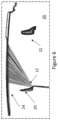
- FIGS 5 and 6 an embodiment is seen where sets of light emitting assemblies are provided in the headrests 20 of the front seats of a vehicle 26.
- the assemblies are oriented so as to illuminate portions of the ceiling or headliner 24 of the vehicle between the headrests 20 of the front seats and the headrests 22 of the back seats.
- the light When the light is emitted behind the head of the driver, the light and illuminated surface will not attract the driver's attention.
- a mood may be defined or determined, such as from music played in the vehicle or a video displayed to the passenger. From this mood, such as colours of a video, the colours of the light emitters, the light intensity and/or variation frequency may be set to correspond to the mood.
- a mood may be related to an experience, such as being in the nature, where blue or green colours may be used, where green colours may indicate plants or vegetation, blue colours water (waves, waterfall) and white clouds.
- a theatre mood may call for warmer colours.
- a welcoming mode may be selected with a higher light intensity and illumination of more portions of the inner surfaces of the vehicle. This mode may be for use when the vehicle is unlocked and thus not yet in operation.
- the illuminated ceiling may now entertain or please a passenger sitting in a back seat.
- the illumination may be used for navigating or finding things in the otherwise often dark back seat of a car driving at night.
- the light emitting assembly may be positioned in or on the B-pillar, C-pillar or in/on the parcel shelf.
- the assemblies may illuminate the ceiling/headliner, the interior of the back doors or sides of the vehicle, for example.
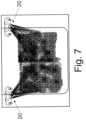
- Figure 7 illustrates light emitting assemblies provided in each of two headrests illuminating a roof/ceiling/headliner. Each light emitting assembly illuminates a separate portion of the ceiling so that each passenger may control the illumination, such as intensity, colour, on/off, frequency of shifting between the light emitters and the like.
Landscapes
- Engineering & Computer Science (AREA)
- Mechanical Engineering (AREA)
- General Engineering & Computer Science (AREA)
- Arrangements Of Lighting Devices For Vehicle Interiors, Mounting And Supporting Thereof, Circuits Therefore (AREA)
Description
- The documents
FR 3 047 945 A1 EP 3 546 291 A1 andFR 3 050 701 A1 - The present invention relates to a light emitting assembly as defined in
claim 1, a vehicle as defined in claim 11 and a method for vehicle of operating the light assembly for vehicle interior lighting as defined in claim 13. - A first aspect of the invention relates to a light emitting assembly comprising:
- a light emitting element comprising two or more individually controllable light emitters,
- a lens element positioned so as to collect and output light emitted by the light emitters, the lens element being configured to:
- ∘ emit light from a centre of a first light emitter in a first direction and
- ∘ emit light from a centre of a second light emitter in a second direction, the first and second directions having at least an angle of 1 degree between them.
- In this context, the assembly may comprise only the light emitting element and the lens element. The two elements may be attached to each other, such as glued to each other. Clearly, the assembly may comprise additional elements, such as a controller, a power supply or the like. The lens element may be concave and receive in the concavity the light emitting element or at least the light emitters so as to protect the light emitters.
- Light in this context will comprise visible light. Clearly, also invisible radiation, such as UV or IR radiation may be output. Some light sources invariably output also such radiation. UV radiation could be interesting, as it could induce fluorescence when impacting a fluorescent substance.
- Two or more light emitters are provided. Any number of light emitters may be provided, such as 2, 3, 4, 5, 6, 7, 8, 9, 10, 12, 14, 16, 20 or more. A light emitter is an element configured to output light. A light emitter may be based on any technology, such as LED, OLED or the like. A light emitter may be configured to output a single colour or light within a fixed wavelength interval. Alternatively, a light emitter may be configured to output light with a controllable wavelength or colour.
- The light emitters are controllable to output a controllable light intensity.
- The light emitters are individually controllable, so that one light emitter may be controlled to increase an intensity of light output, or a colour/wavelength thereof, and the other may be controlled to increase, decrease, vary, maintain or the like of its intensity and/or wavelength/colour.
- The light emitters are configured to launch light into and through the lens element.
- The lens element is configured to transmit and output light from the light emitters. Naturally, a loss of light may be seen, even though it may be desired to have as little light/energy loss in the lens as possible.
- The lens element may be a monolithic element or may be formed by a number of elements. The lens element may be concave to form a cavity in which the light emitters are provided. The light emitters may be provided close to a surface of the lens element in order to reduce light loss at that interface. Optical coupling may be obtained using e.g. index matching elements or liquids.
- The lens element may be made of any material, such as light transmissive materials. Preferred materials may be Poly Carbonate, PMMA or glass, but any other material may be used.
- The lens element is configured to:
- emit light from a centre of a first light emitter in a first direction and
- emit light from a centre of a second light emitter in a second direction, the first and second directions having at least an angle of 1 degree between them.
- Thus, light from a centre of the first light emitter is emitted by the lens element. Often, light emitters are plane elements, so that a centre thereof may be identified. This centre may be a symmetric centre of the light emitter. Alternatively, the centre may be along a symmetry axis of a cone of light output by the light emitter into free air. Light along this axis will be launched into the lens and thus exit the lens as a light beam. This light beam will be emitted in a first direction defined by, among other things, an overall surface of the lens element at the interface and the direction of the light beam.
- Similarly, the second light emitter emits a light beam from its centre. This second light beam also exits the lens element but now along a second direction.
- The first and second light emitters may be adjacent or neighbouring, or additional light emitters may be provided between the first and second light emitters. Often, the lower the distance between two light emitters, the lower the angular difference between the light output by the lens, so the light output based on the first light emitter and an intermediate light emitter may have an angular difference below the 1 degree.
- An angle of at least 1 degree exists between the first and second directions. Naturally, this angle may be larger, such as at least 2 degrees, at least 3 degrees, at least 4 degrees, at least 5 degrees, at least 6 degrees or more.
- Thus, light emitted from the two light emitters will not completely overlap if launched into, through and out of the lens element.
- The angle may be determined as the smallest angle between the two directions in a plane comprising both directions.
- According to the invention, the light emitters are configured to emit light with different colours. In this context, a colour may be a single wavelength or a central or predominant wavelength in a wavelength interval in which the light emitter emits light.
- In one embodiment, the centres of the first and second light emitters are positioned at least 200µm, such as at least 400µm apart. When a distance exists between the centres of the light emitters, the paths of the light from these centres into and through the lens element may differ, which may give rise to the above angle.
- In one embodiment, the first and second light emitters are plane and provided in a common plane. Often, light emitters are provided as wafers, which have plane, light emitting surfaces. Usually, the light emitter will launch light from the plane within a cone which is symmetrical around a symmetry axis of the cone and which is perpendicular to the plane. When these planes are provided in a common plane, the light emitters emit light in the same direction. Thus, the light travelling inside the lens element may travel along displaced but parallel paths. Then, the angle between the emitted beams may be provided by the lens element at the outer surface thereof, such as, as will be described further below, different angles to the beam direction for the two beams.
- In one embodiment, the first and second light emitters are plane and provided with an angle to each other of at least ½ degree. When the beams travel inside the lens element along differently angled paths, the desired minimum angle may be provided merely by this difference in introduction angle to the lens element.
- In one embodiment, the lens element, at a first surface portion, at which a straight line from a centre of the first light emitter, preferably perpendicular to a plane of the emitter, intersects an outer surface of the lens element, has a first angle to a predetermined axis, and wherein the lens element, at a second surface portion, at which a straight line from a centre of the second light emitter, preferably perpendicular to a plane of the emitter, intersects an outer surface of the lens element, has a second angle to a predetermined axis, and wherein an angle of at least ½ degree, such as at least 1 degree, such as at least 2 degrees, such as at least 3 degrees, such as at least 4 degrees, such as at least 5 degrees, such as at least 10 degrees exists between the first and second angles.
- Thus, two surface portions are defined by the positions where the two beams exit the lens.
- These surface portions may have an angle between them. Then, even if the beams travel along parallel paths inside the lens element, an angular difference is seen in the directions of the beams launched from the lens element.
- In one embodiment, a first surface portion of the lens element, at which a straight line from a centre of the first light emitter, such as perpendicular to the plane of the emitter, intersects an outer surface of the lens element, defines a first normal direction, and wherein a second surface portion of the lens element, at which a straight line from a centre of the second light emitter, such as perpendicular to the plane of the emitter, intersects an outer surface of the lens element, defines a second normal direction, wherein an angle of at least ½ degree, such as at least 1 degree, such as at least 2 degrees, such as at least 3 degrees, such as at least 4 degrees, such as at least 5 degrees, such as at least 10 degrees, exists between the first and second normal directions.
- The minimum angle of 1 degree of the light output may be obtained in a number of manners. The angle, for example, will depend on the refractive index of a material of the lens. The angle difference between the surface portions may be a smallest angle in a plane comprising the directions, such as directions parallel to the surface or directions perpendicular thereto.
- In fact, as radiation of different wavelengths will tend to exit a transmissive material with different angles, at least a part of the angular difference desired may be obtained by having the two light emitters emit light at different wavelengths.
- In order to provide the light output by the lens element with a pleasant and varying behaviour, the lens element may be provided with light diverging elements capable of directing some of the light at different angles than defined by an overall shape of the outer surface of the lens element. The outer surface of the lens element may have small grooves or scratches which tend to deviate a portion of the light from the overall direction and shape of the beam output by the light emitter. These diverging elements may convert the otherwise usually rather homogeneous light cone output from the lens element to a more contoured and varying illumination pattern.
- A second aspect of the invention relates to a vehicle comprising one or more light emitting assemblies according to the first aspect, the assemblies attached to one or more structural portion of the vehicle.
- In this context, a vehicle may be a car, bus, lorry, truck, airplane, train, vessel or the like.
- A structural portion in this context is an element fixed to or attached to a structure, such as a chassis, of the means of transport. Often, fixing is desired in order to ensure that the assembly does not detach from the structure. Desirably, the assemblies are attached to the structural element to provide the light in an inner compartment vehicle, such as a passenger compartment thereof.
- In one embodiment, the light emitting assembly is attached to one of the group consisting of: a headrest, an armrest, a B pillar, a C pillar, a parcel shelf, or a door. The assembly emits light toward a ceiling or side portions of the vehicle in a passenger compartment thereof.
- A third aspect of the invention relates to a method of operating the light emitting assembly according to the first aspect of the invention, the method comprising, during a first period of time, increasing an intensity of light output a by first light emitter and decreasing an intensity of light output by a second light emitter.
- When the directions vary slightly and the intensities also vary, the light cones or patterns output by the two light emitters will seem to move slightly, even without any moving parts in the assembly.
- In one embodiment, during a subsequent period of time, it may be desired to decrease the intensity of the light output by the first light emitter and increase an intensity of light output by the second or a third light emitter.
- In fact, it may be desired to control the intensity of light output by the light emitters so that the combined intensity is controlled to be within a predetermined intensity interval.
- Different modes or moods may be defined. A mode may be defined with a high light intensity, operation of many light emitters, high variation frequency, for example. This mode may also comprise illuminating not only the passenger area of the vehicle but also the drivers position and/or other portions of the interior of the vehicle. This mode may e.g. be used when the vehicle is not in operation, such as when the vehicle is unlocked to welcome the driver and/or passenger(s).
- Other modes may be adapted to particular moods or settings. A mode may be defined for easy listening or a theatre experience where slower variations and warmer colours may be preferred. A nature mode may be defined where the colours are selected to be more green/blue/white to indicate vegetation/water/clouds. A mode may indicate water, such as waves, water falls or clouds where variation is seen in blue and white colours.
- In the following, preferred embodiments of the invention will be described with reference to the drawing, wherein:
-
Figure 1 illustrates two assemblies according to the invention, -
Figure 2 illustrates a light emitting element comprising four light emitters, -
Figure 3 illustrates a light emitting element comprising four light emitters, -
Figure 4 illustrates a light emitting element with more light emitters, -
Figure 5 illustrates light emitting assemblies provided in head rests of a vehicle, -
Figure 6 illustrates light output from a light emitting assembly provided in a head rest, -
Figure 7 illustrates light patterns provided in a ceiling of a vehicle and -
Figure 8 illustrates structured surfaces on a lens element. - In
figure 1 , twoassemblies 10 according to the invention are illustrated where one or morelight emitters 12 emit light into thelens 14 which transmits and emits the light. - In
figure 2 , a light emitting element comprising a wafer comprising four light emitters, 122, 124, 126 and 128, emitting light of different wavelengths; Red, Blue, Green and White.Figure 3 illustrates a similar light emitting element. - In
figure 1 , two rays are traced, one to the left and from a centre of a first light emitter, such as thegreen light emitter 126, and one to the right from a centre of a second light emitter, such as theblue light emitter 128. Due to the displaced positions at the lower portion of the lens, the rays will travel along different paths through the lens and thus be emitted at different positions of the lens. The lens illustrated has anupper surface 142 which has different angles between the direction of the emitted beams and the surface. Thus, the beams are emitted from the lens at different angles. An angle, A, between the two beams is at least 1 degree. - In this context, a centre of a light emitter may be a centre of an emission cone of the light emitter or a light ray emitted from a centre of the light emitting die or surface and directed perpendicularly to the die or surface.
- Also, in this context, the angle may be the smallest angle determined in plane comprising both directions.
- Clearly, the light emitters will emit a fan or beam of light, so that the light emitted by the lens from a light emitter will also form a fan (often of a different shape) and thus illuminate a volume or area in the surroundings.
- When the positions of the light emitters and the lens are configured in this manner, the resulting illumination provided by two light emitters will differ sufficiently for it to be noticeable. Then, an illumination may be arrived at which varies without any movable parts.
- The different angles of the beams output from the lens may be obtained in alternative manners, such as by preparing the lens to have a different, total, refractive index along the two paths taken by the beams in the lens. In this manner, the beams may also take non-parallel paths in the lens even when the light emitters are positioned so as to output parallel beams. In addition, or alternatively, the refractive index may be varying only at an upper surface of the lens.
- An alternative manner of arriving at the angle A would be to launch light from the two light emitters into the lens along different directions. Then, the light emitters could be provided with different centre angles. In this situation, any type of lens may be used.
- Clearly, a light emitter may be able to output not only a varying light intensity but alternatively or additionally also a differing colour. Light emitters exist which are controllable to output controllable wavelengths. The presently preferred light emitters are not wavelength controllable in that this makes the assembly very compact, rugged and extremely cheap.
- In addition, the lens may, see
figure 8 , have a slightly structuredsurface 144 or elements therein which alter the light pattern output of the light emitter from a relatively homogeneous fan of light into a more patterned light pattern (seefigure 7 ). This may be obtained by providing grooves or scratches at or on the lens surface. - As two neighbouring light emitters may emit light fans so wide that overlapping portions of the lens and the surface may be illuminated by both, the pattern provided by the two light emitters may be similar, but displaced due to the angle A.
- Then, increasing and decreasing the intensity of light emitted by a first of the light emitters and the second of the light emitters, but out of sync, will illuminate the two displaced but otherwise similar patterns with different intensities. This will give a, if the frequency of increasing and decreasing is sufficiently slow, meditative experience of the pattern changing colour and moving slightly.
- Thus, the operation of the assembly may be a variation of the intensity of the light emitted by each light emitter over time. This variation may be performed in different manners. In one embodiment, the light emitters are controlled to light with a combined intensity within predetermined limits, so that the spectator is not exposed to large variations in light intensity. Thus, when one light emitter increases the intensity of light output, one or more other light emitters may decrease the intensity with which it or they emit light.
- Also, this variation in intensity may be swifter or slower. A swifter variation may tend to attract more attention and thus keep the spectator awake, where a slower variation may be more relaxing and may help the spectator to fall asleep.
- Then, the operation may be controllable to control the overall intensity or the frequency. A chauffeur may increase the intensity and/or the variation frequency when approaching the destination, or the person may him/herself control the operation to his/her liking.
- Clearly, even though the above description has been made based on two light emitters, many more may be used. In
figures 2 and 3 , light emitting elements comprising four light emitters are illustrated. Preferably, the above minimum angle exists between light beams emitted by the lens and stemming from the centres of any pair of the light emitters. - Naturally, the light emitters may output light of the same colour or wavelength. It is preferred that at least some of the light emitters emit light with different colours or with different wavelength contents in order to arrive at a more differently coloured experience.
- In
figure 4 , an even larger light emitting element is seen. In this embodiment, the structure of thelight emitting element 12 offigure 2 has been duplicated into a 2x2 structure of that type. Thus, as described above, the pattern or area illuminated by agreen light emitter 126 may seem slightly displaced when subsequently illuminated by theblue light emitter 124. This pattern or area may seem even further displaced when subsequently illuminated by the green light emitter to the right of theblue light emitter 124 or the blue light emitter far to the right. Thus, for some light emitters, the angular difference of the light output from the lens may be below the 1 degree, but for others, the difference exceeds the 1 degree, so that the desired displacement may be obtained. Thus, any desired displacement and thus visual effects may be obtained when more light emitters are provided which are provided over a larger area. Alternatively, a larger distance between the light emitters may, clearly, be used. - The light emitting assembly may be used in a large number of contexts, such as in a vehicle. Clearly, the light emitting assembly may be used for providing a gentle and pleasant illumination of portions of the interior of the vehicle, such as portions not visible to the driver.
- In
figures 5 and6 , an embodiment is seen where sets of light emitting assemblies are provided in theheadrests 20 of the front seats of avehicle 26. The assemblies are oriented so as to illuminate portions of the ceiling orheadliner 24 of the vehicle between theheadrests 20 of the front seats and theheadrests 22 of the back seats. When the light is emitted behind the head of the driver, the light and illuminated surface will not attract the driver's attention. - Naturally, a number of different modes may be defined. A mood may be defined or determined, such as from music played in the vehicle or a video displayed to the passenger. From this mood, such as colours of a video, the colours of the light emitters, the light intensity and/or variation frequency may be set to correspond to the mood. A mood may be related to an experience, such as being in the nature, where blue or green colours may be used, where green colours may indicate plants or vegetation, blue colours water (waves, waterfall) and white clouds. A theatre mood may call for warmer colours.
- In another situation, a welcoming mode may be selected with a higher light intensity and illumination of more portions of the inner surfaces of the vehicle. This mode may be for use when the vehicle is unlocked and thus not yet in operation.
- The illuminated ceiling may now entertain or please a passenger sitting in a back seat. In addition, the illumination may be used for navigating or finding things in the otherwise often dark back seat of a car driving at night.
- Alternatively, the light emitting assembly, or more light emitting assemblies, may be positioned in or on the B-pillar, C-pillar or in/on the parcel shelf. The assemblies may illuminate the ceiling/headliner, the interior of the back doors or sides of the vehicle, for example.
-
Figure 7 illustrates light emitting assemblies provided in each of two headrests illuminating a roof/ceiling/headliner. Each light emitting assembly illuminates a separate portion of the ceiling so that each passenger may control the illumination, such as intensity, colour, on/off, frequency of shifting between the light emitters and the like.
Claims (15)
- A light emitting assembly (10) for vehicle interior lighting comprising:- a light emitting element (12) comprising two or more individually controllable light emitters (122,124,126,128),- a controller for controlling the light emitting assembly,- a lens element (14) positioned so as to collect and output light emitted by the light emitters (122,124,126,128), the lens element (14) being configured to:- emit light from a centre of a first light emitter in a first direction and- emit light from a centre of a second light emitter in a second direction, the first and second directions having at least an angle of 1 degree between them,wherein the light emitting assembly is configured to be attached to a structural portion of a vehicle, wherein the structural portion is one of the group consisting of a headrest, an armrest, a B pillar, a C pillar, a parcel shelf, or a door,wherein the assembly is configured to emit light toward a ceiling or side portions of the vehicle in a passenger compartment thereof,characterized in thatthe light emitters (122,124,126,128) are configured to emit light with different colours, wherein the emitted light of the first and second light emitters (122,124,126,128) produces a pattern in the passenger compartment of the vehicle, and by varying the intensity of the light emitters (122,124,126,128), so that, during a period of time, an intensity of light output of a first light emitter is increased and an intensity of light output of a second light emitter is decreased, the pattern is moved slightly.
- A light emitting assembly (10) according to claim 1, wherein the centres of the first and second light emitters (122,124,126,128) are positioned at least 200 µm apart.
- A light emitting assembly (10) according to any of the preceding claims, wherein the first and second light emitters (122,124,126,128) are plane and provided in a common plane.
- A light emitting assembly (10) according to claim 1 or 2, wherein the first and second light emitters (122,124,126,128) are plane and provided with an angle to each other of at least ½ degree.
- A light emitting assembly (10) according to any of the preceding claims, wherein illumination provided by the first and second emitters varies without any movable parts.
- A light emitting assembly (10) according to any of the preceding claims, wherein the lens element (14), at a first surface portion, at which a straight line from a centre of the first light emitter, which is perpendicular to a plane of the first emitter, intersects an outer surface of the lens element (14), has a first angle to a predetermined axis, and wherein the lens element (14), at a second surface portion, at which a straight line from a centre of the second light emitter, which is perpendicular to a plane of the second emitter, intersects an outer surface of the lens element (14), has a second angle to a predetermined axis, and wherein an angle of at least ½ degree exists between the first and second angles.
- A light emitting assembly (10) according to any of the preceding claims, wherein a first surface portion of the lens element (14), at which a straight line from a centre of the first light emitter, which is perpendicular to a plane of the first emitter, intersects an outer surface of the lens element (14), defines a first normal direction, and wherein a second surface portion of the lens element (14), at which a straight line from a centre of the second light emitter, which is perpendicular to a plane of the second emitter, intersects an outer surface of the lens element (14), defines a second normal direction, wherein an angle of at least 1 degree exists between the first and second normal directions.
- A light emitting assembly (10) according to any of the claims 1-3 and 5-7, wherein a total refractive index within the lens is different along the two paths taken by beams of the first and second light emitter.
- A light emitting assembly (10) according to claim 8, wherein the refractive index varies only at an upper surface of the lens.
- A light emitting assembly (10) according to claim 8, wherein beams of the first and second light emitters (122,124,126,128) take non-parallel paths in the lens, wherein the light emitters (122,124,126,128) are positioned so as to output parallel beams.
- A vehicle comprising one or more light emitting assemblies, where a light emitting assembly (10) according to one of claims 1-10 is attached to a structural portion of the vehicle.
- A vehicle according to claim 11, wherein the light emitting assembly (10) is attached to one of the group consisting of: a headrest, an armrest, a B pillar, a C pillar, a parcel shelf, or a door.
- A method of operating a light emitting assembly (10) for vehicle interior lighting, wherein the light emitting assembly (10) is according to one of the claims 1-10, the method comprising, during a first period of time, increasing an intensity of light output a by first light emitter and decreasing an intensity of light output by a second light emitter, wherein the emitted light of the first and second light emitters (122,124,126,128) produces a pattern in a passenger compartment of the vehicle, and by varying the intensity of the light emitters (122,124,126,128), the pattern is moved slightly,wherein the light emitting assembly (10) is attached to a structural portion of a vehicle,wherein the structural portion is one of the group consisting of a headrest, an armrest, a B pillar, a C pillar, a parcel shelf, or a door,wherein the assembly emits light toward a ceiling or side portions of the vehicle in the passenger compartment thereof.
- A method according to claim 13, further comprising the step of, during a subsequent period of time, decreasing the intensity of the light output by the first light emitter and increasing an intensity of light output by the second or a third light emitter.
- A method according to claim 13 or 14, wherein the combined intensity of light output by the light emitters (122,124,126,128) is controlled to be within a predetermined intensity interval.
Applications Claiming Priority (1)
| Application Number | Priority Date | Filing Date | Title |
|---|---|---|---|
| DKPA202070828 | 2020-12-11 |
Publications (2)
| Publication Number | Publication Date |
|---|---|
| EP4011704A1 EP4011704A1 (en) | 2022-06-15 |
| EP4011704B1 true EP4011704B1 (en) | 2025-05-28 |
Family
ID=78085829
Family Applications (1)
| Application Number | Title | Priority Date | Filing Date |
|---|---|---|---|
| EP21201398.1A Active EP4011704B1 (en) | 2020-12-11 | 2021-10-07 | A light emitting assembly and a method for operating it |
Country Status (1)
| Country | Link |
|---|---|
| EP (1) | EP4011704B1 (en) |
Families Citing this family (1)
| Publication number | Priority date | Publication date | Assignee | Title |
|---|---|---|---|---|
| JP7249462B1 (en) * | 2022-09-30 | 2023-03-30 | 豊田合成株式会社 | lighting equipment |
Family Cites Families (10)
| Publication number | Priority date | Publication date | Assignee | Title |
|---|---|---|---|---|
| TW408497B (en) * | 1997-11-25 | 2000-10-11 | Matsushita Electric Works Ltd | LED illuminating apparatus |
| DE60331582D1 (en) * | 2002-11-27 | 2010-04-15 | Koninkl Philips Electronics Nv | LUMINAIRE FOR PROVIDING AN OUTPUT BEAM WITH A CONTROLLABLE PHOTOMETRIC DISTRIBUTION |
| DE102006058637A1 (en) * | 2006-12-13 | 2008-06-19 | Daimler Ag | Lighting system for car interiors uses series of light sources mounted behind spherical lens whose radius of curvature at entry or exit points of light is different from that of remainder of lens |
| DE102009047788A1 (en) * | 2009-09-30 | 2011-03-31 | Osram Opto Semiconductors Gmbh | Lighting device for a camera and method for operating the same |
| JP5543787B2 (en) * | 2010-01-20 | 2014-07-09 | スタンレー電気株式会社 | Lighting device |
| GB2473311B (en) * | 2010-05-21 | 2011-07-27 | Oliver Shakespeare | A lighting device |
| FR3047945B1 (en) * | 2016-02-24 | 2019-11-29 | Valeo Vision | METHOD AND DEVICE FOR INTERIOR LIGHTING OF A MOTOR VEHICLE |
| FR3050701B1 (en) * | 2016-04-29 | 2019-08-09 | Valeo Vision | LUMINOUS DEVICE FOR MOTOR VEHICLE |
| DE102017128896A1 (en) * | 2017-12-05 | 2019-06-06 | Automotive Lighting Reutlingen Gmbh | Arrangement for illuminating the interior of a motor vehicle and motor vehicle with such an arrangement |
| FR3079473B1 (en) * | 2018-03-30 | 2020-10-02 | Valeo Vision | INTERIOR LIGHTING SYSTEM FOR MOTOR VEHICLES |
-
2021
- 2021-10-07 EP EP21201398.1A patent/EP4011704B1/en active Active
Also Published As
| Publication number | Publication date |
|---|---|
| EP4011704A1 (en) | 2022-06-15 |
Similar Documents
| Publication | Publication Date | Title |
|---|---|---|
| US8876343B2 (en) | Lighting system arranged in vehicle door | |
| JP7577084B2 (en) | Lighting device for motor vehicles | |
| CN102333676B (en) | Illumination device for several people in airplanes | |
| CN103460092B (en) | Lighting device having 3d effect | |
| EP2199661B1 (en) | Rotating light | |
| US7880636B2 (en) | Information display system for aircraft | |
| US7717594B2 (en) | Compact illumination device | |
| CN102878498A (en) | Reading light unit and system of a light control unit and a reading light unit | |
| US7717593B2 (en) | Device for improved illumination efficiency | |
| US10663632B2 (en) | Reflective illumination systems for optically widened perception | |
| JP2008243816A (en) | Especially lighting equipment for vehicles | |
| US9004590B2 (en) | Display assembly with lighting apparatus | |
| US10286840B2 (en) | Vehicle lighting assembly using panel with light reflecting film | |
| RU2676180C2 (en) | Vehicle lighting system (options) | |
| EP4011704B1 (en) | A light emitting assembly and a method for operating it | |
| US7703956B2 (en) | Aircraft cabin lighting | |
| WO2009059097A1 (en) | Flush mount reading light | |
| KR102439953B1 (en) | Vehicle high roof mood lamp system | |
| EP3175172B1 (en) | Dual focus flashlight | |
| EP3763569B1 (en) | Aircraft passenger light | |
| EP4242060B1 (en) | Aircraft passenger reading light | |
| CN114963080A (en) | Vehicle-mounted starry sky top system and vehicle | |
| KR102249101B1 (en) | vehicle emblem illumination device radiating light in three dimensional by gradation of light reflection | |
| US12123591B2 (en) | Aircraft reading light, aircraft comprising an aircraft reading light, and method of operating an aircraft reading light | |
| JP5605179B2 (en) | Vehicle lighting device |
Legal Events
| Date | Code | Title | Description |
|---|---|---|---|
| PUAI | Public reference made under article 153(3) epc to a published international application that has entered the european phase |
Free format text: ORIGINAL CODE: 0009012 |
|
| STAA | Information on the status of an ep patent application or granted ep patent |
Free format text: STATUS: THE APPLICATION HAS BEEN PUBLISHED |
|
| AK | Designated contracting states |
Kind code of ref document: A1 Designated state(s): AL AT BE BG CH CY CZ DE DK EE ES FI FR GB GR HR HU IE IS IT LI LT LU LV MC MK MT NL NO PL PT RO RS SE SI SK SM TR |
|
| STAA | Information on the status of an ep patent application or granted ep patent |
Free format text: STATUS: REQUEST FOR EXAMINATION WAS MADE |
|
| 17P | Request for examination filed |
Effective date: 20221130 |
|
| RBV | Designated contracting states (corrected) |
Designated state(s): AL AT BE BG CH CY CZ DE DK EE ES FI FR GB GR HR HU IE IS IT LI LT LU LV MC MK MT NL NO PL PT RO RS SE SI SK SM TR |
|
| STAA | Information on the status of an ep patent application or granted ep patent |
Free format text: STATUS: EXAMINATION IS IN PROGRESS |
|
| 17Q | First examination report despatched |
Effective date: 20231215 |
|
| GRAP | Despatch of communication of intention to grant a patent |
Free format text: ORIGINAL CODE: EPIDOSNIGR1 |
|
| STAA | Information on the status of an ep patent application or granted ep patent |
Free format text: STATUS: GRANT OF PATENT IS INTENDED |
|
| RIC1 | Information provided on ipc code assigned before grant |
Ipc: H10H 20/855 20250101ALI20250228BHEP Ipc: F21V 5/04 20060101ALI20250228BHEP Ipc: F21Y 107/50 20160101ALI20250228BHEP Ipc: F21W 106/00 20180101ALI20250228BHEP Ipc: F21Y 105/12 20160101ALI20250228BHEP Ipc: F21Y 113/13 20160101ALI20250228BHEP Ipc: H01L 25/16 20060101ALI20250228BHEP Ipc: H01L 25/075 20060101ALI20250228BHEP Ipc: F21V 5/08 20060101ALI20250228BHEP Ipc: F21V 5/00 20180101ALI20250228BHEP Ipc: F21S 10/02 20060101ALI20250228BHEP Ipc: B60Q 3/80 20170101ALI20250228BHEP Ipc: B60Q 3/74 20170101ALI20250228BHEP Ipc: B60Q 3/60 20170101ALI20250228BHEP Ipc: B60Q 3/233 20170101AFI20250228BHEP |
|
| GRAS | Grant fee paid |
Free format text: ORIGINAL CODE: EPIDOSNIGR3 |
|
| INTG | Intention to grant announced |
Effective date: 20250319 |
|
| GRAA | (expected) grant |
Free format text: ORIGINAL CODE: 0009210 |
|
| STAA | Information on the status of an ep patent application or granted ep patent |
Free format text: STATUS: THE PATENT HAS BEEN GRANTED |
|
| AK | Designated contracting states |
Kind code of ref document: B1 Designated state(s): AL AT BE BG CH CY CZ DE DK EE ES FI FR GB GR HR HU IE IS IT LI LT LU LV MC MK MT NL NO PL PT RO RS SE SI SK SM TR |
|
| REG | Reference to a national code |
Ref country code: GB Ref legal event code: FG4D |
|
| REG | Reference to a national code |
Ref country code: CH Ref legal event code: EP |
|
| REG | Reference to a national code |
Ref country code: DE Ref legal event code: R096 Ref document number: 602021031376 Country of ref document: DE |
|
| REG | Reference to a national code |
Ref country code: IE Ref legal event code: FG4D |
|
| REG | Reference to a national code |
Ref country code: NL Ref legal event code: MP Effective date: 20250528 |
|
| PG25 | Lapsed in a contracting state [announced via postgrant information from national office to epo] |
Ref country code: FI Free format text: LAPSE BECAUSE OF FAILURE TO SUBMIT A TRANSLATION OF THE DESCRIPTION OR TO PAY THE FEE WITHIN THE PRESCRIBED TIME-LIMIT Effective date: 20250528 Ref country code: ES Free format text: LAPSE BECAUSE OF FAILURE TO SUBMIT A TRANSLATION OF THE DESCRIPTION OR TO PAY THE FEE WITHIN THE PRESCRIBED TIME-LIMIT Effective date: 20250528 |
|
| REG | Reference to a national code |
Ref country code: LT Ref legal event code: MG9D |
|
| PG25 | Lapsed in a contracting state [announced via postgrant information from national office to epo] |
Ref country code: GR Free format text: LAPSE BECAUSE OF FAILURE TO SUBMIT A TRANSLATION OF THE DESCRIPTION OR TO PAY THE FEE WITHIN THE PRESCRIBED TIME-LIMIT Effective date: 20250829 Ref country code: NO Free format text: LAPSE BECAUSE OF FAILURE TO SUBMIT A TRANSLATION OF THE DESCRIPTION OR TO PAY THE FEE WITHIN THE PRESCRIBED TIME-LIMIT Effective date: 20250828 |
|
| PG25 | Lapsed in a contracting state [announced via postgrant information from national office to epo] |
Ref country code: PL Free format text: LAPSE BECAUSE OF FAILURE TO SUBMIT A TRANSLATION OF THE DESCRIPTION OR TO PAY THE FEE WITHIN THE PRESCRIBED TIME-LIMIT Effective date: 20250528 Ref country code: NL Free format text: LAPSE BECAUSE OF FAILURE TO SUBMIT A TRANSLATION OF THE DESCRIPTION OR TO PAY THE FEE WITHIN THE PRESCRIBED TIME-LIMIT Effective date: 20250528 |
|
| PG25 | Lapsed in a contracting state [announced via postgrant information from national office to epo] |
Ref country code: BG Free format text: LAPSE BECAUSE OF FAILURE TO SUBMIT A TRANSLATION OF THE DESCRIPTION OR TO PAY THE FEE WITHIN THE PRESCRIBED TIME-LIMIT Effective date: 20250528 |
|
| PGFP | Annual fee paid to national office [announced via postgrant information from national office to epo] |
Ref country code: GB Payment date: 20250923 Year of fee payment: 5 |
|
| PG25 | Lapsed in a contracting state [announced via postgrant information from national office to epo] |
Ref country code: HR Free format text: LAPSE BECAUSE OF FAILURE TO SUBMIT A TRANSLATION OF THE DESCRIPTION OR TO PAY THE FEE WITHIN THE PRESCRIBED TIME-LIMIT Effective date: 20250528 |
|
| PG25 | Lapsed in a contracting state [announced via postgrant information from national office to epo] |
Ref country code: RS Free format text: LAPSE BECAUSE OF FAILURE TO SUBMIT A TRANSLATION OF THE DESCRIPTION OR TO PAY THE FEE WITHIN THE PRESCRIBED TIME-LIMIT Effective date: 20250828 |
|
| PG25 | Lapsed in a contracting state [announced via postgrant information from national office to epo] |
Ref country code: IS Free format text: LAPSE BECAUSE OF FAILURE TO SUBMIT A TRANSLATION OF THE DESCRIPTION OR TO PAY THE FEE WITHIN THE PRESCRIBED TIME-LIMIT Effective date: 20250928 |
|
| PG25 | Lapsed in a contracting state [announced via postgrant information from national office to epo] |
Ref country code: LV Free format text: LAPSE BECAUSE OF FAILURE TO SUBMIT A TRANSLATION OF THE DESCRIPTION OR TO PAY THE FEE WITHIN THE PRESCRIBED TIME-LIMIT Effective date: 20250528 |
|
| REG | Reference to a national code |
Ref country code: AT Ref legal event code: MK05 Ref document number: 1798464 Country of ref document: AT Kind code of ref document: T Effective date: 20250528 |
|
| PGFP | Annual fee paid to national office [announced via postgrant information from national office to epo] |
Ref country code: DE Payment date: 20250923 Year of fee payment: 5 |
|
| PG25 | Lapsed in a contracting state [announced via postgrant information from national office to epo] |
Ref country code: DK Free format text: LAPSE BECAUSE OF FAILURE TO SUBMIT A TRANSLATION OF THE DESCRIPTION OR TO PAY THE FEE WITHIN THE PRESCRIBED TIME-LIMIT Effective date: 20250528 Ref country code: SM Free format text: LAPSE BECAUSE OF FAILURE TO SUBMIT A TRANSLATION OF THE DESCRIPTION OR TO PAY THE FEE WITHIN THE PRESCRIBED TIME-LIMIT Effective date: 20250528 Ref country code: AT Free format text: LAPSE BECAUSE OF FAILURE TO SUBMIT A TRANSLATION OF THE DESCRIPTION OR TO PAY THE FEE WITHIN THE PRESCRIBED TIME-LIMIT Effective date: 20250528 |
|
| PG25 | Lapsed in a contracting state [announced via postgrant information from national office to epo] |
Ref country code: CZ Free format text: LAPSE BECAUSE OF FAILURE TO SUBMIT A TRANSLATION OF THE DESCRIPTION OR TO PAY THE FEE WITHIN THE PRESCRIBED TIME-LIMIT Effective date: 20250528 |
|
| PG25 | Lapsed in a contracting state [announced via postgrant information from national office to epo] |
Ref country code: EE Free format text: LAPSE BECAUSE OF FAILURE TO SUBMIT A TRANSLATION OF THE DESCRIPTION OR TO PAY THE FEE WITHIN THE PRESCRIBED TIME-LIMIT Effective date: 20250528 |
|
| PG25 | Lapsed in a contracting state [announced via postgrant information from national office to epo] |
Ref country code: SK Free format text: LAPSE BECAUSE OF FAILURE TO SUBMIT A TRANSLATION OF THE DESCRIPTION OR TO PAY THE FEE WITHIN THE PRESCRIBED TIME-LIMIT Effective date: 20250528 |
|
| PG25 | Lapsed in a contracting state [announced via postgrant information from national office to epo] |
Ref country code: IT Free format text: LAPSE BECAUSE OF FAILURE TO SUBMIT A TRANSLATION OF THE DESCRIPTION OR TO PAY THE FEE WITHIN THE PRESCRIBED TIME-LIMIT Effective date: 20250528 |
|
| REG | Reference to a national code |
Ref country code: DE Ref legal event code: R097 Ref document number: 602021031376 Country of ref document: DE |
|
| PG25 | Lapsed in a contracting state [announced via postgrant information from national office to epo] |
Ref country code: RO Free format text: LAPSE BECAUSE OF FAILURE TO SUBMIT A TRANSLATION OF THE DESCRIPTION OR TO PAY THE FEE WITHIN THE PRESCRIBED TIME-LIMIT Effective date: 20250528 |
|
| PLBE | No opposition filed within time limit |
Free format text: ORIGINAL CODE: 0009261 |
|
| STAA | Information on the status of an ep patent application or granted ep patent |
Free format text: STATUS: NO OPPOSITION FILED WITHIN TIME LIMIT |
|
| REG | Reference to a national code |
Ref country code: CH Ref legal event code: L10 Free format text: ST27 STATUS EVENT CODE: U-0-0-L10-L00 (AS PROVIDED BY THE NATIONAL OFFICE) Effective date: 20260409 |