EP4011436A1 - Pulsed electric field treatment of biological cells - Google Patents
Pulsed electric field treatment of biological cells Download PDFInfo
- Publication number
- EP4011436A1 EP4011436A1 EP20212860.9A EP20212860A EP4011436A1 EP 4011436 A1 EP4011436 A1 EP 4011436A1 EP 20212860 A EP20212860 A EP 20212860A EP 4011436 A1 EP4011436 A1 EP 4011436A1
- Authority
- EP
- European Patent Office
- Prior art keywords
- cells
- pulses
- electricity
- electrodes
- group
- Prior art date
- Legal status (The legal status is an assumption and is not a legal conclusion. Google has not performed a legal analysis and makes no representation as to the accuracy of the status listed.)
- Granted
Links
Images
Classifications
-
- A—HUMAN NECESSITIES
- A61—MEDICAL OR VETERINARY SCIENCE; HYGIENE
- A61N—ELECTROTHERAPY; MAGNETOTHERAPY; RADIATION THERAPY; ULTRASOUND THERAPY
- A61N1/00—Electrotherapy; Circuits therefor
- A61N1/02—Details
- A61N1/04—Electrodes
- A61N1/0404—Electrodes for external use
- A61N1/0408—Use-related aspects
-
- A—HUMAN NECESSITIES
- A61—MEDICAL OR VETERINARY SCIENCE; HYGIENE
- A61N—ELECTROTHERAPY; MAGNETOTHERAPY; RADIATION THERAPY; ULTRASOUND THERAPY
- A61N1/00—Electrotherapy; Circuits therefor
- A61N1/18—Applying electric currents by contact electrodes
- A61N1/32—Applying electric currents by contact electrodes alternating or intermittent currents
- A61N1/326—Applying electric currents by contact electrodes alternating or intermittent currents for promoting growth of cells, e.g. bone cells
-
- C—CHEMISTRY; METALLURGY
- C12—BIOCHEMISTRY; BEER; SPIRITS; WINE; VINEGAR; MICROBIOLOGY; ENZYMOLOGY; MUTATION OR GENETIC ENGINEERING
- C12M—APPARATUS FOR ENZYMOLOGY OR MICROBIOLOGY; APPARATUS FOR CULTURING MICROORGANISMS FOR PRODUCING BIOMASS, FOR GROWING CELLS OR FOR OBTAINING FERMENTATION OR METABOLIC PRODUCTS, i.e. BIOREACTORS OR FERMENTERS
- C12M35/00—Means for application of stress for stimulating the growth of microorganisms or the generation of fermentation or metabolic products; Means for electroporation or cell fusion
- C12M35/02—Electrical or electromagnetic means, e.g. for electroporation or for cell fusion
-
- C—CHEMISTRY; METALLURGY
- C12—BIOCHEMISTRY; BEER; SPIRITS; WINE; VINEGAR; MICROBIOLOGY; ENZYMOLOGY; MUTATION OR GENETIC ENGINEERING
- C12M—APPARATUS FOR ENZYMOLOGY OR MICROBIOLOGY; APPARATUS FOR CULTURING MICROORGANISMS FOR PRODUCING BIOMASS, FOR GROWING CELLS OR FOR OBTAINING FERMENTATION OR METABOLIC PRODUCTS, i.e. BIOREACTORS OR FERMENTERS
- C12M41/00—Means for regulation, monitoring, measurement or control, e.g. flow regulation
- C12M41/46—Means for regulation, monitoring, measurement or control, e.g. flow regulation of cellular or enzymatic activity or functionality, e.g. cell viability
-
- C—CHEMISTRY; METALLURGY
- C12—BIOCHEMISTRY; BEER; SPIRITS; WINE; VINEGAR; MICROBIOLOGY; ENZYMOLOGY; MUTATION OR GENETIC ENGINEERING
- C12N—MICROORGANISMS OR ENZYMES; COMPOSITIONS THEREOF; PROPAGATING, PRESERVING, OR MAINTAINING MICROORGANISMS; MUTATION OR GENETIC ENGINEERING; CULTURE MEDIA
- C12N1/00—Microorganisms; Compositions thereof; Processes of propagating, maintaining or preserving microorganisms or compositions thereof; Processes of preparing or isolating a composition containing a microorganism; Culture media therefor
- C12N1/14—Fungi; Culture media therefor
- C12N1/16—Yeasts; Culture media therefor
-
- C—CHEMISTRY; METALLURGY
- C12—BIOCHEMISTRY; BEER; SPIRITS; WINE; VINEGAR; MICROBIOLOGY; ENZYMOLOGY; MUTATION OR GENETIC ENGINEERING
- C12N—MICROORGANISMS OR ENZYMES; COMPOSITIONS THEREOF; PROPAGATING, PRESERVING, OR MAINTAINING MICROORGANISMS; MUTATION OR GENETIC ENGINEERING; CULTURE MEDIA
- C12N1/00—Microorganisms; Compositions thereof; Processes of propagating, maintaining or preserving microorganisms or compositions thereof; Processes of preparing or isolating a composition containing a microorganism; Culture media therefor
- C12N1/20—Bacteria; Culture media therefor
-
- C—CHEMISTRY; METALLURGY
- C12—BIOCHEMISTRY; BEER; SPIRITS; WINE; VINEGAR; MICROBIOLOGY; ENZYMOLOGY; MUTATION OR GENETIC ENGINEERING
- C12N—MICROORGANISMS OR ENZYMES; COMPOSITIONS THEREOF; PROPAGATING, PRESERVING, OR MAINTAINING MICROORGANISMS; MUTATION OR GENETIC ENGINEERING; CULTURE MEDIA
- C12N13/00—Treatment of microorganisms or enzymes with electrical or wave energy, e.g. magnetism, sonic waves
-
- A—HUMAN NECESSITIES
- A61—MEDICAL OR VETERINARY SCIENCE; HYGIENE
- A61N—ELECTROTHERAPY; MAGNETOTHERAPY; RADIATION THERAPY; ULTRASOUND THERAPY
- A61N1/00—Electrotherapy; Circuits therefor
- A61N1/18—Applying electric currents by contact electrodes
- A61N1/32—Applying electric currents by contact electrodes alternating or intermittent currents
- A61N1/325—Applying electric currents by contact electrodes alternating or intermittent currents for iontophoresis, i.e. transfer of media in ionic state by an electromotoric force into the body
-
- A—HUMAN NECESSITIES
- A61—MEDICAL OR VETERINARY SCIENCE; HYGIENE
- A61N—ELECTROTHERAPY; MAGNETOTHERAPY; RADIATION THERAPY; ULTRASOUND THERAPY
- A61N1/00—Electrotherapy; Circuits therefor
- A61N1/18—Applying electric currents by contact electrodes
- A61N1/32—Applying electric currents by contact electrodes alternating or intermittent currents
- A61N1/327—Applying electric currents by contact electrodes alternating or intermittent currents for enhancing the absorption properties of tissue, e.g. by electroporation
-
- A—HUMAN NECESSITIES
- A61—MEDICAL OR VETERINARY SCIENCE; HYGIENE
- A61N—ELECTROTHERAPY; MAGNETOTHERAPY; RADIATION THERAPY; ULTRASOUND THERAPY
- A61N1/00—Electrotherapy; Circuits therefor
- A61N1/18—Applying electric currents by contact electrodes
- A61N1/32—Applying electric currents by contact electrodes alternating or intermittent currents
- A61N1/36—Applying electric currents by contact electrodes alternating or intermittent currents for stimulation
- A61N1/36014—External stimulators, e.g. with patch electrodes
Definitions
- the present invention relates to methods of increasing metabolic activity and stimulating cell proliferation of biological cells through the use of pulsed electric field (PEF) treatment, especially through the use of nanosecond pulsed electric field (nsPEF) treatment.
- PEF pulsed electric field
- nsPEF nanosecond pulsed electric field
- Pulsed electric field (PEF) processing is a growing field in the area of electromagnetic technologies for medical, environmental, and food applications (see Perspective article by Buchmann & Mathys, Frontiers in Bioengineering and Biotechnology, vol. 7, article 265, 16 October 2019 ).
- PEF treatment is based on the formation of a potential difference across a conductive biological material between two electrodes, creating an electric field that depends on the applied electric voltage, the shape of the electrodes, and the gap between electrodes.
- PEF processing can be divided into conventional PEF processing in the range of micro- to milliseconds and nanosecond (nsPEF) processing, in which high electric fields (10-100 kV cm -1 ) are applied for 1-300 ns.
- nsPEF induces intracellular effects, distinct from the pronounced effects of conventional PEF on the cell membrane.
- innovative applications and novel process windows are possible, while similar components for both treatments in batch and continuous mode are required.
- the resulting electropermeabilization increases the mass transfer of molecules and ions.
- a reversible or irreversible effect can be induced.
- Reversible electropermeabilization is typically used in molecular biology for the introduction of specific molecules, such as plasmids and antibodies, in vivo.
- PEF/ nsPEF induced effects are still the subject of intensive research.
- the present inventors have devised improved processes of pulsed electric field (PEF) treatment and nanosecond pulsed electric field (nsPEF) treatment of prokaryotic and eukaryotic cells.
- PEF pulsed electric field
- nsPEF nanosecond pulsed electric field
- the processes of the present invention provide an increased productivity of the treated cells due to a more homogenous cellular response; allow for both an intracellular and an extracellular manipulation of cells; result in an increased biomass yield and an increased production of specific compounds due to a more targeted and more ubiquitous application of the electric field; allows specific manipulation of cells in a wide range of sizes; and can be easily adapted to an industrial scale.
- the present invention relates to a method of increasing metabolic activity of biological cells, said method comprising the following steps:
- the present invention relates to a method of stimulating cell proliferation and/or increasing metabolic activity of biological cells, said method comprising the following steps:
- the present invention relates to a method of stimulating cell proliferation and/or increasing metabolic activity of biological cells, said method comprising the following steps:
- the present invention relates to a method of stimulating cell proliferation and/or increasing metabolic activity of biological cells, said method comprising the following steps:
- the present invention relates to a method of stimulating cell proliferation and/or increasing metabolic activity of biological cells, said method comprising the following steps:
- a pulse duration of "about 100 ns” encompasses a pulse duration ranging from 95 ns to about 105 ns.
- the present invention is directed to a method of increasing metabolic activity of biological cells, said method comprising the following steps:
- the present invention demonstrates that the described processes of PEF treatment are not only suitable to stimulate proliferation of biological cells but are also suitable to increase metabolic activity of biological cells and achieve higher yields of specific endogenous or exogenous compounds.
- the present invention is directed to a method of stimulating cell proliferation and/or increasing metabolic activity of biological cells, said method comprising the following steps:
- the physical parameters used in the second aspect will lead to an increased productivity due to a more homogenous cellular response; and/or will allow both an intracellular and an extracellular manipulation of cells; and/or will result in an increased biomass yield and/or an increased production of specific compounds due to a more targeted and more ubiquitous application of the electric field; and/or will allow specific manipulation of cells in the range from 1 ⁇ m to 70 mm in size (preferably from 1 ⁇ m to 10 mm); and/or will allow the adaptation of the process to an industrial scale.
- the present invention is directed to a method of stimulating cell proliferation and/or increasing metabolic activity of biological cells, said method comprising the following steps:
- the present invention is directed to a method of stimulating cell proliferation and/or increasing metabolic activity of biological cells, said method comprising the following steps:
- the present invention is directed to a method of stimulating cell proliferation and/or increasing metabolic activity of biological cells, said method comprising the following steps:
- step (c) from 2 to 30 pulses of electricity are applied in step (c).
- from 2 to 25 pulses preferably from 2 to 20 pulses, more preferably from 2 to 15 pulses, and even more preferably from 2 to 12 pulses, for example 2, 3, 4, 5, 6, 7, 8, 9, 10, 11, or 12 pulses, are applied in step (c).
- the voltage increase between the two electrodes from 10 % to 90 % of a target voltage of the pulses of electricity takes place within a time period of 1 ns to 25 ns,
- the voltage increase between the two electrodes from 10 % to 90 % of a target voltage of the pulses of electricity takes place within a time period of 2 ns to 10 ns, more preferably within a time period of 3 ns to 15 ns.
- the pulses of electricity have a pulse duration of between 50 ns and 300 ns.
- the pulses of electricity have a pulse duration of between 60 ns and 250 ns, preferably of between 70 ns and 200 ns, more preferably of between 80 ns and 150 ns, more preferably of between 90 ns and 125 ns, and most preferably of about 100 ns.
- the pulses of electricity when reaching the target voltage, have an electric field strength of 1.0 kV/cm to 30 kV/cm.
- the pulses of electricity when reaching the target voltage, have an electric field strength of 2 kV/cm to 28 kV/cm, preferably 3 kV/cm to 25 kV/cm, more preferably 4 kV to 23 kV/cm, and most preferably of 5 kV/cm to 20 kV/cm.
- the potential difference between the electrodes is between 2 to 300 kV, preferably between 2 and 250 kV, more preferably between 2 and 200 kV, more preferably between 2 and 150 kV, more preferably, between 2 and 100 kV, more preferably between 2 and 50 kV, even more preferably between 2 and 40 kV, even more preferably between 3 and 30 kV, even more preferably between 4 and 20 kV, and most preferably between 5 and 10 kV.
- the biological cells are selected from the group consisting of bacterial cells, yeast cells, fungal cells, microalgae cells, plant cells, animal cells, and human cells.
- step (c) is carried out in a recirculation process.
- step (c) is carried out in a batch process.
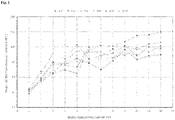
- Fig. 1 Metabolic activity of different E. coli samples determined by FDA (fluorescein diacetate) cleavage.
- the E. coli cell samples received different numbers of electric pulses of a nanosecond pulsed electric field (nsPEF) treatment in a recirculation process. All E. coli cell samples exhibited an increase in metabolic activity due to the nsPEF treatment.
- FDA fluorescein diacetate
- a twin bioreactor system was used for parallel cultivations.
- the parallel cultivations were inoculated with the same amount of pre-culture from the same feed train of the selected bacterial cell Escherichia coli.
- the reactor cultivations as well as the pre-culture/ inoculum were performed in the modified, defined MD-FB medium:
- Table 1 Parameter Value Unit Reactor working volume 10 [L] pH 7 [-] Aeration (sterile air) 3 [vvm] Temperature 30.0 [°C] Pressure 0.5 [bar] Stirrer 1200 [rpm]
- Table 2 summarizes the nsPEF conditions for the control and five different samples. Table 2: Sample No. 010 012 016 018 019 0112 Potential difference [kV] Control 10 10 10 10 10 10 10 Pulse length [ns] 100 100 100 100 100 Pulses of electricity per treatment passage [-] 4 6 8 10 12 Electrode distance [cm] 0.5 0.5 0.5 0.5 0.5 0.5 0.5 0.5 0.5 0.5 0.5
- a twin bioreactor system was used for parallel cultivations.
- the parallel cultivations were inoculated with the same amount of pre-culture from the same feed train of selected yeast cell Pichiapastoris.
- the reactor cultivations were performed in the modified, defined medium (Hellwig et al., 2001):
- Table 3 Parameter Value Unit Reactor working volume 10 [L] pH 7 [-] Aeration (sterile air) 3 [vvm] Temperature 30.0 [°C] Pressure 0.5 [bar] Stirrer 800 [rpm]
- Table 4 summarizes the nsPEF conditions for the control and four different samples. Table 4: Sample No. 0 1 2 3 4 Potential difference [kV] Control 5 5 5 5 5 Pulse length [ns] 100 100 100 100 Pulses of electricity per treatment passage [-] 2 3 4 6 Electrode distance [cm] 0.5 0.5 0.5 0.5 0.5 0.5 0.5 0.5
Landscapes
- Life Sciences & Earth Sciences (AREA)
- Health & Medical Sciences (AREA)
- Engineering & Computer Science (AREA)
- Chemical & Material Sciences (AREA)
- Bioinformatics & Cheminformatics (AREA)
- Organic Chemistry (AREA)
- Zoology (AREA)
- Wood Science & Technology (AREA)
- Genetics & Genomics (AREA)
- Biotechnology (AREA)
- General Health & Medical Sciences (AREA)
- Biomedical Technology (AREA)
- Microbiology (AREA)
- General Engineering & Computer Science (AREA)
- Biochemistry (AREA)
- Virology (AREA)
- Tropical Medicine & Parasitology (AREA)
- Medicinal Chemistry (AREA)
- Mycology (AREA)
- Nuclear Medicine, Radiotherapy & Molecular Imaging (AREA)
- Radiology & Medical Imaging (AREA)
- Veterinary Medicine (AREA)
- Animal Behavior & Ethology (AREA)
- Public Health (AREA)
- Cell Biology (AREA)
- Sustainable Development (AREA)
- Botany (AREA)
- Electromagnetism (AREA)
- Physics & Mathematics (AREA)
- Orthopedic Medicine & Surgery (AREA)
- Analytical Chemistry (AREA)
- Biophysics (AREA)
- Heart & Thoracic Surgery (AREA)
- Micro-Organisms Or Cultivation Processes Thereof (AREA)
- Immobilizing And Processing Of Enzymes And Microorganisms (AREA)
- Apparatus Associated With Microorganisms And Enzymes (AREA)
Abstract
Description
- The present invention relates to methods of increasing metabolic activity and stimulating cell proliferation of biological cells through the use of pulsed electric field (PEF) treatment, especially through the use of nanosecond pulsed electric field (nsPEF) treatment.
- Pulsed electric field (PEF) processing is a growing field in the area of electromagnetic technologies for medical, environmental, and food applications (see Perspective article by Buchmann & Mathys, Frontiers in Bioengineering and Biotechnology, vol. 7, article 265, 16 October 2019). PEF treatment is based on the formation of a potential difference across a conductive biological material between two electrodes, creating an electric field that depends on the applied electric voltage, the shape of the electrodes, and the gap between electrodes.
- PEF processing can be divided into conventional PEF processing in the range of micro- to milliseconds and nanosecond (nsPEF) processing, in which high electric fields (10-100 kV cm-1) are applied for 1-300 ns. nsPEF induces intracellular effects, distinct from the pronounced effects of conventional PEF on the cell membrane. Thereby, innovative applications and novel process windows are possible, while similar components for both treatments in batch and continuous mode are required. In both cases, the resulting electropermeabilization increases the mass transfer of molecules and ions. Depending on process parameters, a reversible or irreversible effect can be induced. Most current applications are focused on irreversible electropermeabilization, including non (minimal)-thermal pasteurization, enhanced drying rates, increased extraction yields, tissue softening as well as electrochemotherapy, and tumor ablation. Reversible electropermeabilization is typically used in molecular biology for the introduction of specific molecules, such as plasmids and antibodies, in vivo. However, the mechanisms underlying the PEF/ nsPEF induced effects are still the subject of intensive research.
- The present inventors have devised improved processes of pulsed electric field (PEF) treatment and nanosecond pulsed electric field (nsPEF) treatment of prokaryotic and eukaryotic cells.
- The processes of the present invention provide an increased productivity of the treated cells due to a more homogenous cellular response; allow for both an intracellular and an extracellular manipulation of cells; result in an increased biomass yield and an increased production of specific compounds due to a more targeted and more ubiquitous application of the electric field; allows specific manipulation of cells in a wide range of sizes; and can be easily adapted to an industrial scale.
- This summary does not necessarily describe all advantages achieved and all problems solved by the present invention.
- In a first aspect the present invention relates to a method of increasing metabolic activity of biological cells, said method comprising the following steps:
- (a) providing biological cells and suspending the cells in an electrically conductive liquid, thereby forming a suspension,
- (b) positioning the suspension between two electrodes, and
- (c) applying from 1 to 100 pulses, preferably from 2 to 30 pulses, of electricity between the electrodes, thereby increasing metabolic activity of the biological cells;
wherein a voltage increase between the two electrodes from 10 % to 90 % of a target voltage of the pulses of electricity takes place within a time period of 0.1 to 100 ns, preferably within a time period of 1 ns to 25 ns; wherein the pulses of electricity have a pulse duration of between 5 to 5000 ns, preferably of between 50 ns to 300 ns; and wherein the pulses of electricity, when reaching the target voltage, have an electric field strength of 0.5 kV/cm to 50 kV/cm, preferably of 1.0 kV/cm to 30 kV/cm. - In a second aspect the present invention relates to a method of stimulating cell proliferation and/or increasing metabolic activity of biological cells, said method comprising the following steps:
- (a) providing biological cells and suspending the cells in an electrically conductive liquid, thereby forming a suspension,
- (b) positioning the suspension between two electrodes, and
- (c) applying from 2 to 30 pulses, preferably from 2 to 12 pulses, of electricity between the electrodes, thereby stimulating cell proliferation;
wherein a voltage increase between the two electrodes from 10 % to 90 % of a target voltage of the pulses of electricity takes place within a time period of 1 ns to 25 ns, preferably within a time period of 3 ns to 15 ns; wherein the pulses of electricity have a pulse duration of between 50 ns to 300 ns, preferably of about 100 ns; and wherein the pulses of electricity, when reaching the target voltage, have an electric field strength of 1.0 kV/cm to 30 kV/cm, preferably of 5.0 kV/cm to 20 kV/cm. - In a third aspect the present invention relates to a method of stimulating cell proliferation and/or increasing metabolic activity of biological cells, said method comprising the following steps:
- (a) providing biological cells and suspending the cells in an electrically conductive liquid, thereby forming a suspension,
- (b) positioning the suspension between two electrodes, and
- (c) applying from 1 to 100 pulses, preferably from 2 to 30 pulses, of electricity between the electrodes, thereby stimulating cell proliferation;
wherein a voltage increase between the two electrodes from 10 % to 90 % of a target voltage of the pulses of electricity takes place within a time period of 0.1 to 100 ns, preferably within a time period of 1 ns to 25 ns; wherein the pulses of electricity have a pulse duration of between 5 to 5000 ns, preferably of between 50 ns to 300 ns; and wherein the pulses of electricity, when reaching the target voltage, have an electric field strength of 0.5 kV/cm to 50 kV/cm, preferably of 1.0 kV/cm to 30 kV/cm; - In a fourth aspect the present invention relates to a method of stimulating cell proliferation and/or increasing metabolic activity of biological cells, said method comprising the following steps:
- (a) providing biological cells and suspending the cells in an electrically conductive liquid, thereby forming a suspension,
- (b) positioning the suspension between two electrodes, and
- (c) applying from 1 to 100 pulses, preferably from 2 to 30 pulses, of electricity between the electrodes, thereby stimulating cell proliferation;
wherein a voltage increase between the two electrodes from 10 % to 90 % of a target voltage of the pulses of electricity takes place within a time period of 0.1 to 100 ns, preferably within a time period of 1 ns to 25 ns; wherein the pulses of electricity have a pulse duration of between 5 to 5000 ns, preferably of between 50 ns to 300 ns; and wherein the pulses of electricity, when reaching the target voltage, have an electric field strength of 0.5 kV/cm to 50 kV/cm, preferably of 1.0 kV/cm to 30 kV/cm; - In a fifth aspect the present invention relates to a method of stimulating cell proliferation and/or increasing metabolic activity of biological cells, said method comprising the following steps:
- (a) providing biological cells and suspending the cells in an electrically conductive liquid, thereby forming a suspension,
- (b) positioning the suspension between two electrodes, and
- (c) applying from 1 to 100 pulses, preferably from 2 to 30 pulses, of electricity between the electrodes, thereby stimulating cell proliferation;
wherein a voltage increase between the two electrodes from 10 % to 90 % of a target voltage of the pulses of electricity takes place within a time period of 0.1 to 100 ns, preferably within a time period of 1 ns to 25 ns; wherein the pulses of electricity have a pulse duration of between 5 to 5000 ns, preferably of between 50 ns to 300 ns; and
wherein the pulses of electricity, when reaching the target voltage, have an electric field strength of 0.5 kV/cm to 50 kV/cm, preferably of 1.0 kV/cm to 30 kV/cm; - Before the present invention is described in detail below, it is to be understood that this invention is not limited to the particular methodology, protocols and reagents described herein as these may vary. It is also to be understood that the terminology used herein is for the purpose of describing particular embodiments only, and is not intended to limit the scope of the present invention which will be limited only by the appended claims. Unless defined otherwise, all technical and scientific terms used herein have the same meanings as commonly understood by one of ordinary skill in the art.
- As used herein, the term "about" refers to numerical values ranging from 5% below the indicated numerical value to 5% above the indicated numerical value. For example, a pulse duration of "about 100 ns" encompasses a pulse duration ranging from 95 ns to about 105 ns.
- The present invention will now be further described. In the following passages different aspects of the invention are defined in more detail. Each aspect so defined may be combined with any other aspect or aspects unless clearly indicated to the contrary. In particular, any feature indicated as being preferred or advantageous may be combined with any other feature or features indicated as being preferred or advantageous.
- In a first aspect the present invention is directed to a method of increasing metabolic activity of biological cells, said method comprising the following steps:
- (a) providing biological cells and suspending the cells in an electrically conductive liquid, thereby forming a suspension,
- (b) positioning the suspension between two electrodes, and
- (c) applying from 1 to 100 pulses of electricity between the electrodes, thereby increasing metabolic activity of the biological cells;
wherein a voltage increase between the two electrodes from 10 % to 90 % of a target voltage of the pulses of electricity takes place within a time period of 0.1 to 100 ns, wherein the pulses of electricity have a pulse duration of between 5 to 5000 ns, and wherein the pulses of electricity, when reaching the target voltage, have an electric field strength of 0.5 kV/cm to 50 kV/cm. - The present invention demonstrates that the described processes of PEF treatment are not only suitable to stimulate proliferation of biological cells but are also suitable to increase metabolic activity of biological cells and achieve higher yields of specific endogenous or exogenous compounds.
- In a second aspect the present invention is directed to a method of stimulating cell proliferation and/or increasing metabolic activity of biological cells, said method comprising the following steps:
- (a) providing biological cells and suspending the cells in an electrically conductive liquid, thereby forming a suspension,
- (b) positioning the suspension between two electrodes, and
- (c) applying from 2 to 30 pulses of electricity between the electrodes, thereby stimulating cell proliferation;
wherein a voltage increase between the two electrodes from 10 % to 90 % of a target voltage of the pulses of electricity takes place within a time period of 1 ns to 25 ns, wherein the pulses of electricity have a pulse duration of between 50 ns to 300 ns, and wherein the pulses of electricity, when reaching the target voltage, have an electric field strength of 1.0 kV/cm to 30 kV/cm. - Without wishing to be bound by a particularly theory, it is the inventors' opinion that the physical parameters used in the second aspect will lead to an increased productivity due to a more homogenous cellular response; and/or will allow both an intracellular and an extracellular manipulation of cells; and/or will result in an increased biomass yield and/or an increased production of specific compounds due to a more targeted and more ubiquitous application of the electric field; and/or will allow specific manipulation of cells in the range from 1 µm to 70 mm in size (preferably from 1 µm to 10 mm); and/or will allow the adaptation of the process to an industrial scale.
- In a third aspect the present invention is directed to a method of stimulating cell proliferation and/or increasing metabolic activity of biological cells, said method comprising the following steps:
- (a) providing biological cells and suspending the cells in an electrically conductive liquid, thereby forming a suspension,
- (b) positioning the suspension between two electrodes, and
- (c) applying from 1 to 100 pulses of electricity between the electrodes, thereby stimulating cell proliferation;
wherein a voltage increase between the two electrodes from 10 % to 90 % of a target voltage of the pulses of electricity takes place within a time period of 0.1 to 100 ns, wherein the pulses of electricity have a pulse duration of between 5 to 5000 ns, and wherein the pulses of electricity, when reaching the target voltage, have an electric field strength of 0.5 kV/cm to 50 kV/cm; - In a fourth aspect the present invention is directed to a method of stimulating cell proliferation and/or increasing metabolic activity of biological cells, said method comprising the following steps:
- (a) providing biological cells and suspending the cells in an electrically conductive liquid, thereby forming a suspension,
- (b) positioning the suspension between two electrodes, and
- (c) applying from 1 to 100 pulses of electricity between the electrodes, thereby stimulating cell proliferation;
wherein a voltage increase between the two electrodes from 10 % to 90 % of a target voltage of the pulses of electricity takes place within a time period of 0.1 to 100 ns, wherein the pulses of electricity have a pulse duration of between 5 to 5000 ns, and wherein the pulses of electricity, when reaching the target voltage, have an electric field strength of 0.5 kV/cm to 50 kV/cm; - Without wishing to be bound by a particularly theory, it is the inventors' opinion that a recirculation process facilitates the industrial implementation of the process of pulsed electric filed treatment.
- In a fifth aspect the present invention is directed to a method of stimulating cell proliferation and/or increasing metabolic activity of biological cells, said method comprising the following steps:
- (a) providing biological cells and suspending the cells in an electrically conductive liquid, thereby forming a suspension,
- (b) positioning the suspension between two electrodes, and
- (c) applying from 1 to 100 pulses of electricity between the electrodes, thereby stimulating cell proliferation;
wherein a voltage increase between the two electrodes from 10 % to 90 % of a target voltage of the pulses of electricity takes place within a time period of 0.1 to 100 ns, wherein the pulses of electricity have a pulse duration of between 5 to 5000 ns, and wherein the pulses of electricity, when reaching the target voltage, have an electric field strength of 0.5 kV/cm to 50 kV/cm; - Without wishing to be bound by a particularly theory, it is the inventors' opinion that a batch process will reduce the overall mechanical and/or physical stress occurring during the electric field treatment of the cells.
- In a preferred embodiment of the first, third, fourth, or fifth aspect of the invention, from 2 to 30 pulses of electricity are applied in step (c).
- In a preferred embodiment of any aspect of the invention, from 2 to 25 pulses, preferably from 2 to 20 pulses, more preferably from 2 to 15 pulses, and even more preferably from 2 to 12 pulses, for example 2, 3, 4, 5, 6, 7, 8, 9, 10, 11, or 12 pulses, are applied in step (c).
- In a preferred embodiment of the first, third, fourth, or fifth aspect of the invention, the voltage increase between the two electrodes from 10 % to 90 % of a target voltage of the pulses of electricity takes place within a time period of 1 ns to 25 ns,
- In a preferred embodiment of any aspect of the invention, the voltage increase between the two electrodes from 10 % to 90 % of a target voltage of the pulses of electricity takes place within a time period of 2 ns to 10 ns, more preferably within a time period of 3 ns to 15 ns.
- In a preferred embodiment of the first, third, fourth, or fifth aspect of the invention, the pulses of electricity have a pulse duration of between 50 ns and 300 ns.
- In a preferred embodiment of any aspect of the invention, the pulses of electricity have a pulse duration of between 60 ns and 250 ns, preferably of between 70 ns and 200 ns, more preferably of between 80 ns and 150 ns, more preferably of between 90 ns and 125 ns, and most preferably of about 100 ns.
- In a preferred embodiment of the first, third, fourth, or fifth aspect of the invention, the pulses of electricity, when reaching the target voltage, have an electric field strength of 1.0 kV/cm to 30 kV/cm.
- In a preferred embodiment of any aspect of the invention, the pulses of electricity, when reaching the target voltage, have an electric field strength of 2 kV/cm to 28 kV/cm, preferably 3 kV/cm to 25 kV/cm, more preferably 4 kV to 23 kV/cm, and most preferably of 5 kV/cm to 20 kV/cm.
- In a preferred embodiment of the first, third, fourth, or fifth aspect of the invention, the potential difference between the electrodes is between 2 to 300 kV, preferably between 2 and 250 kV, more preferably between 2 and 200 kV, more preferably between 2 and 150 kV, more preferably, between 2 and 100 kV, more preferably between 2 and 50 kV, even more preferably between 2 and 40 kV, even more preferably between 3 and 30 kV, even more preferably between 4 and 20 kV, and most preferably between 5 and 10 kV.
- In a preferred embodiment of the first, second, fourth, or fifth aspect of the invention, the biological cells are selected from the group consisting of bacterial cells, yeast cells, fungal cells, microalgae cells, plant cells, animal cells, and human cells.
- In a preferred embodiment of any aspect of the invention,
- the bacterial cells are selected from the group consisting of Escherichia coli and Corynebacterium glutamicum;
- the yeast cells are selected from the group consisting of Pichia pastoris and Saccharomyces cerevisiae;
- the microalgae cells are selected from the group consisting of Galdieria sulphuraria and Aurantiochytrium limacinum;
- the plant cells are selected from the group consisting of Hordeum vulgare and Oryza sativa; and
- the animal cells are selected from the group consisting of Spodoptera frugiperda and Trichiplusia ni.
- In a preferred embodiment of the first, second, or third aspect of the invention, step (c) is carried out in a recirculation process.
- In a preferred embodiment of the first, second, or third aspect of the invention, step (c) is carried out in a batch process.
- The following figures and examples are merely illustrative of the present invention and should not be construed to limit the scope of the invention as indicated by the appended claims in any way.
-
Fig. 1 .: Metabolic activity of different E. coli samples determined by FDA (fluorescein diacetate) cleavage. The E. coli cell samples received different numbers of electric pulses of a nanosecond pulsed electric field (nsPEF) treatment in a recirculation process. All E. coli cell samples exhibited an increase in metabolic activity due to the nsPEF treatment. - A twin bioreactor system was used for parallel cultivations. The parallel cultivations were inoculated with the same amount of pre-culture from the same feed train of the selected bacterial cell Escherichia coli. The reactor cultivations as well as the pre-culture/ inoculum were performed in the modified, defined MD-FB medium:
- 14.3 g L-1 (pre-culture) and 28.7 g L-1 glycerol 85%,
- K2HPO4 2.70 g L-1,
- KH2PO4 13.2 g L-1,
- NaCl 2.04 g L-1,
- (NH4)SO4 4.1 g L-1,
- Antifoam 205 0.05 g L-1,
- ddH2O 920.8 g L-1,
- 0.8 mL MgSO4 ∗ 7 H2O stock (300 g L-1),
- 10.0 mL Fe(III) citrate stock (10.0 g L-1),
- 10 mL Na-EDTA ∗ 2 H2O stock (0.84 g L-1),
- 2.8 mL Thiamine HCl stock (45.0 g L-1),
- 2.9 mL TE stock (CoCl2 ∗ 6 H2O 0.16 g L-1,
- MnCl2 ∗ 4 H2O 1.42 g L-1,
- H3BO3 0.01 g L-1,
- Na2MoO4 ∗ 2 H2O 0.02 g L-1,
- CaCl2 ∗ 2 H2O 1.44 g L-1,
- AlCl3 ∗ 6 H2O 0.04 g L-1,
- ZnSO4 ∗ 7 H2O 0.87 g L-1,
- CuSO4 ∗ 5 H2O 1.55 g L-1,
- NiCl2 ∗ 6 H2O 0.01 g L-1
- Cultivation conditions are summarized in Table 1:
Table 1: Parameter Value Unit Reactor working volume 10 [L] pH 7 [-] Aeration (sterile air) 3 [vvm] Temperature 30.0 [°C] Pressure 0.5 [bar] Stirrer 1200 [rpm] - Upon treatment the metabolic activity was expressed as the rate and total amount of individual cellular FDA (fluorescein diacetate) cleavage. Standard staining protocols were used in the experiments and analysed in a flow cytometer (Ehgartner D, Herwig C, Neutsch L. At-line determination of spore inoculum quality in Penicillium chrysogenum bioprocesses. Appl Microbiol Biotechnol. 2016;100(12):5363-73; Söderström BE. Vital staining of fungi in pure cultures and in soil with fluorescein diacetate. Soil Biol Biochem. 1977; 9:59-63; and Pekarsky, A., Veiter, L., Rajamanickam, V. et al. Production of a recombinant peroxidase in different glyco-engineered Pichia pastoris strains: a morphological and physiological comparison. Microb Cell Fact 17, 183 (2018)).
- Table 2 summarizes the nsPEF conditions for the control and five different samples.
Table 2: Sample No. 010 012 016 018 019 0112 Potential difference [kV] Control 10 10 10 10 10 Pulse length [ns] 100 100 100 100 100 Pulses of electricity per treatment passage [-] 4 6 8 10 12 Electrode distance [cm] 0.5 0.5 0.5 0.5 0.5 0.5 - An increase in metabolic activity was detected for all treated samples (see
Fig. 1 ). Surprisingly, the greatest increase of metabolic activity was observed for sample no. 12, which received the lowest number of pulses (i.e. 4 pulses). Sample No. 012 exhibited an increase of metabolic activity as compared to control sample 010 from 90 FIU to 120 FIU, which corresponds to an increase of about 30% - A twin bioreactor system was used for parallel cultivations. The parallel cultivations were inoculated with the same amount of pre-culture from the same feed train of selected yeast cell Pichiapastoris. The reactor cultivations were performed in the modified, defined medium (Hellwig et al., 2001):
- 35.29 g L-1 Glycerol 85%,
- K2SO4 2.86 g L-1,
- KOH 0.64 g L-1,
- MgSO4 ∗ 7 H2O 2.32 g L-1,
- CaSO4 ∗ 2 H2O 0.17 g L-1,
- Na-EDTA ∗ 2 H2O 0.6 g L-1,
- NaCl 0.22 g L-1,
- Antifoam 205 0.1 g L-1,
- H3PO4 (85% 7.19 g L-1,
- Water 860 g L-1,
- PTM1 stock 4.35 mL L-1 (CuSO4 6.0 g L-1, NaI 0.08 g L-1, MnSO4 ∗ H2O 3.0 g L-1, Na2MoO4 ∗ 2 H2O 0.2 g L-1, CoCl2 ∗ 6 H2O 0.5 g L-1, ZnCl2 20.0 g L-1, FeSO4 ∗ 7 H2O 65.0 g L-1, H2SO4 (98%) 50
mL 1-1, H3BO3 0.02 g L-1), - Biotin stock 500 x 4.35 mL L-1 (0.2 g L-1)
- Cultivation conditions are summarized in Table 3:
Table 3: Parameter Value Unit Reactor working volume 10 [L] pH 7 [-] Aeration (sterile air) 3 [vvm] Temperature 30.0 [°C] Pressure 0.5 [bar] Stirrer 800 [rpm] - Upon treatment the metabolic activity was increased on an individual cell basis, based on the analysed parameters.
- Table 4 summarizes the nsPEF conditions for the control and four different samples.
Table 4: Sample No. 0 1 2 3 4 Potential difference [kV] Control 5 5 5 5 Pulse length [ns] 100 100 100 100 Pulses of electricity per treatment passage [-] 2 3 4 6 Electrode distance [cm] 0.5 0.5 0.5 0.5 0.5
Claims (11)
- A method of increasing metabolic activity of biological cells, said method comprising the following steps:(a) providing biological cells and suspending the cells in an electrically conductive liquid, thereby forming a suspension,(b) positioning the suspension between two electrodes, and(c) applying from 1 to 100 pulses, preferably from 2 to 30 pulses, of electricity between the electrodes, thereby increasing metabolic activity of the biological cells;
wherein a voltage increase between the two electrodes from 10 % to 90 % of a target voltage of the pulses of electricity takes place within a time period of 0.1 to 100 ns, preferably within a time period of 1 ns to 25 ns; wherein the pulses of electricity have a pulse duration of between 5 to 5000 ns, preferably of between 50 ns to 300 ns; and wherein the pulses of electricity, when reaching the target voltage, have an electric field strength of 0.5 kV/cm to 50 kV/cm, preferably of 1.0 kV/cm to 30 kV/cm. - A method of stimulating cell proliferation and/or increasing metabolic activity of biological cells, said method comprising the following steps:(a) providing biological cells and suspending the cells in an electrically conductive liquid, thereby forming a suspension,(b) positioning the suspension between two electrodes, and(c) applying from 2 to 30 pulses, preferably from 2 to 12 pulses, of electricity between the electrodes, thereby stimulating cell proliferation;
wherein a voltage increase between the two electrodes from 10 % to 90 % of a target voltage of the pulses of electricity takes place within a time period of 1 ns to 25 ns, preferably within a time period of 3 ns to 15 ns; wherein the pulses of electricity have a pulse duration of between 50 ns to 300 ns, preferably of about 100 ns; and wherein the pulses of electricity, when reaching the target voltage, have an electric field strength of 1.0 kV/cm to 30 kV/cm, preferably of 5.0 kV/cm to 20 kV/cm. - The method of any one of claims 1 to 2, wherein the biological cells are selected from the group consisting of bacterial cells, yeast cells, fungal cells, microalgae cells, plant cells, animal cells, and human cells.
- A method of stimulating cell proliferation and/or increasing metabolic activity of biological cells, said method comprising the following steps:(a) providing biological cells and suspending the cells in an electrically conductive liquid, thereby forming a suspension,(b) positioning the suspension between two electrodes, and(c) applying from 1 to 100 pulses, preferably from 2 to 30 pulses, of electricity between the electrodes, thereby stimulating cell proliferation;wherein the biological cells are selected from the group consisting of bacterial cells, yeast cells, fungal cells, microalgae cells, plant cells, animal cells, and human cells.
wherein a voltage increase between the two electrodes from 10 % to 90 % of a target voltage of the pulses of electricity takes place within a time period of 0.1 to 100 ns, preferably within a time period of 1 ns to 25 ns; wherein the pulses of electricity have a pulse duration of between 5 to 5000 ns, preferably of between 50 ns to 300 ns; and wherein the pulses of electricity, when reaching the target voltage, have an electric field strength of 0.5 kV/cm to 50 kV/cm, preferably of 1.0 kV/cm to 30 kV/cm; - The method of claim 3 or 4, wherein- the bacterial cells are selected from the group consisting of Escherichia coli and Corynebacterium glutamicum;- the yeast cells are selected from the group consisting of Pichia pastoris and Saccharomyces cerevisiae;- the microalgae cells are selected from the group consisting of Galdieria sulphuraria and Aurantiochytrium limacinum;- the plant cells are selected from the group consisting of Hordeum vulgare and Oryza sativa; and- the animal cells are selected from the group consisting of Spodopterafrugiperda and Trichiplusia ni.
- The method of any one of claims 1 to 5, wherein step (c) is carried out in a recirculation process.
- The method of any one of claims 1 to 5, wherein step (c) is carried out in a batch process.
- A method of stimulating cell proliferation and/or increasing metabolic activity of biological cells, said method comprising the following steps:(a) providing biological cells and suspending the cells in an electrically conductive liquid, thereby forming a suspension,(b) positioning the suspension between two electrodes, and(c) applying from 1 to 100 pulses, preferably from 2 to 30 pulses, of electricity between the electrodes, thereby stimulating cell proliferation;wherein step (c) is carried out in a recirculation process.
wherein a voltage increase between the two electrodes from 10 % to 90 % of a target voltage of the pulses of electricity takes place within a time period of 0.1 to 100 ns, preferably within a time period of 1 ns to 25 ns; wherein the pulses of electricity have a pulse duration of between 5 to 5000 ns, preferably of between 50 ns to 300 ns; and wherein the pulses of electricity, when reaching the target voltage, have an electric field strength of 0.5 kV/cm to 50 kV/cm, preferably of 1.0 kV/cm to 30 kV/cm; - A method of stimulating cell proliferation and/or increasing metabolic activity of biological cells, said method comprising the following steps:(a) providing biological cells and suspending the cells in an electrically conductive liquid, thereby forming a suspension,(b) positioning the suspension between two electrodes, and(c) applying from 1 to 100 pulses, preferably from 2 to 30 pulses, of electricity between the electrodes, thereby stimulating cell proliferation;wherein step (c) is carried out in a batch process.
wherein a voltage increase between the two electrodes from 10 % to 90 % of a target voltage of the pulses of electricity takes place within a time period of 0.1 to 100 ns, preferably within a time period of 1 ns to 25 ns; wherein the pulses of electricity have a pulse duration of between 5 to 5000 ns, preferably of between 50 ns to 300 ns; and wherein the pulses of electricity, when reaching the target voltage, have an electric field strength of 0.5 kV/cm to 50 kV/cm, of 1.0 kV/cm to 30 kV/cm; - The method of claim 8 or 9, wherein the biological cells are selected from the group consisting of bacterial cells, yeast cells, fungal cells, microalgae cells, plant cells, animal cells, and human cells.
- The method of claim 10, wherein- the bacterial cells are selected from the group consisting of Escherichia coli and Corynebacterium glutamicum;- the yeast cells are selected from the group consisting of Pichia pastoris and Saccharomyces cerevisiae;- the microalgae cells are selected from the group consisting of Galdieria sulphuraria and Aurantiochytrium limacinum;- the plant cells are selected from the group consisting of Hordeum vulgare and Oryza sativa; and- the animal cells are selected from the group consisting of Spodopterafrugiperda and Trichiplusia ni.
Priority Applications (14)
| Application Number | Priority Date | Filing Date | Title |
|---|---|---|---|
| DK20212860.9T DK4011436T3 (en) | 2020-12-09 | 2020-12-09 | TREATMENT OF BIOLOGICAL CELLS WITH PULSABLE ELECTRIC FIELD |
| PT202128609T PT4011436T (en) | 2020-12-09 | 2020-12-09 | Pulsed electric field treatment of biological cells |
| PL20212860.9T PL4011436T3 (en) | 2020-12-09 | 2020-12-09 | Pulsed electric field treatment of biological cells |
| FIEP20212860.9T FI4011436T3 (en) | 2020-12-09 | 2020-12-09 | Pulsed electric field treatment of biological cells |
| EP20212860.9A EP4011436B1 (en) | 2020-12-09 | 2020-12-09 | Pulsed electric field treatment of biological cells |
| ES20212860T ES2955459T3 (en) | 2020-12-09 | 2020-12-09 | Treatment of biological cells with pulsed electric fields |
| US18/266,274 US20240093175A1 (en) | 2020-12-09 | 2021-12-02 | Pulsed electric field treatment of biological cells |
| CN202180082320.4A CN116600851A (en) | 2020-12-09 | 2021-12-02 | Pulsed electric field treatment of biological cells |
| PCT/EP2021/083976 WO2022122548A1 (en) | 2020-12-09 | 2021-12-02 | Pulsed electric field treatment of biological cells |
| KR1020237021483A KR20230117374A (en) | 2020-12-09 | 2021-12-02 | Pulsed electric field treatment of biological cells |
| IL303482A IL303482A (en) | 2020-12-09 | 2021-12-02 | Treatment of biological cells using a pulsed electric field |
| AU2021394587A AU2021394587A1 (en) | 2020-12-09 | 2021-12-02 | Pulsed electric field treatment of biological cells |
| CA3198513A CA3198513A1 (en) | 2020-12-09 | 2021-12-02 | Pulsed electric field treatment of biological cells |
| ZA2023/06045A ZA202306045B (en) | 2020-12-09 | 2023-06-07 | Pulsed electric field treatment of biological cells |
Applications Claiming Priority (1)
| Application Number | Priority Date | Filing Date | Title |
|---|---|---|---|
| EP20212860.9A EP4011436B1 (en) | 2020-12-09 | 2020-12-09 | Pulsed electric field treatment of biological cells |
Publications (2)
| Publication Number | Publication Date |
|---|---|
| EP4011436A1 true EP4011436A1 (en) | 2022-06-15 |
| EP4011436B1 EP4011436B1 (en) | 2023-07-12 |
Family
ID=73789998
Family Applications (1)
| Application Number | Title | Priority Date | Filing Date |
|---|---|---|---|
| EP20212860.9A Active EP4011436B1 (en) | 2020-12-09 | 2020-12-09 | Pulsed electric field treatment of biological cells |
Country Status (14)
| Country | Link |
|---|---|
| US (1) | US20240093175A1 (en) |
| EP (1) | EP4011436B1 (en) |
| KR (1) | KR20230117374A (en) |
| CN (1) | CN116600851A (en) |
| AU (1) | AU2021394587A1 (en) |
| CA (1) | CA3198513A1 (en) |
| DK (1) | DK4011436T3 (en) |
| ES (1) | ES2955459T3 (en) |
| FI (1) | FI4011436T3 (en) |
| IL (1) | IL303482A (en) |
| PL (1) | PL4011436T3 (en) |
| PT (1) | PT4011436T (en) |
| WO (1) | WO2022122548A1 (en) |
| ZA (1) | ZA202306045B (en) |
Citations (3)
| Publication number | Priority date | Publication date | Assignee | Title |
|---|---|---|---|---|
| EP2147697A1 (en) * | 2008-07-21 | 2010-01-27 | Centre National De La Recherche Scientifique-CNRS | Process and device for applying electric fields into conductive material |
| EP3290082A2 (en) * | 2013-06-03 | 2018-03-07 | Pulse Biosciences, Inc. | Methods and devices for stimulating an immune response using nanosecond pulsed electric fields |
| WO2020146702A2 (en) * | 2019-01-10 | 2020-07-16 | Nanovis, Inc. | Methods for stimulating the proliferation and differentiation of eukaryotic cells |
Family Cites Families (2)
| Publication number | Priority date | Publication date | Assignee | Title |
|---|---|---|---|---|
| AU2002322720B2 (en) * | 2001-07-25 | 2008-11-13 | Raptor Pharmaceutical Inc. | Compositions and methods for modulating blood-brain barrier transport |
| DE102009043666A1 (en) * | 2009-09-29 | 2011-04-14 | Karlsruher Institut für Technologie | Method for accelerating cell proliferation |
-
2020
- 2020-12-09 PT PT202128609T patent/PT4011436T/en unknown
- 2020-12-09 ES ES20212860T patent/ES2955459T3/en active Active
- 2020-12-09 EP EP20212860.9A patent/EP4011436B1/en active Active
- 2020-12-09 PL PL20212860.9T patent/PL4011436T3/en unknown
- 2020-12-09 FI FIEP20212860.9T patent/FI4011436T3/en active
- 2020-12-09 DK DK20212860.9T patent/DK4011436T3/en active
-
2021
- 2021-12-02 CN CN202180082320.4A patent/CN116600851A/en active Pending
- 2021-12-02 WO PCT/EP2021/083976 patent/WO2022122548A1/en not_active Ceased
- 2021-12-02 US US18/266,274 patent/US20240093175A1/en active Pending
- 2021-12-02 AU AU2021394587A patent/AU2021394587A1/en not_active Abandoned
- 2021-12-02 IL IL303482A patent/IL303482A/en unknown
- 2021-12-02 KR KR1020237021483A patent/KR20230117374A/en active Pending
- 2021-12-02 CA CA3198513A patent/CA3198513A1/en active Pending
-
2023
- 2023-06-07 ZA ZA2023/06045A patent/ZA202306045B/en unknown
Patent Citations (3)
| Publication number | Priority date | Publication date | Assignee | Title |
|---|---|---|---|---|
| EP2147697A1 (en) * | 2008-07-21 | 2010-01-27 | Centre National De La Recherche Scientifique-CNRS | Process and device for applying electric fields into conductive material |
| EP3290082A2 (en) * | 2013-06-03 | 2018-03-07 | Pulse Biosciences, Inc. | Methods and devices for stimulating an immune response using nanosecond pulsed electric fields |
| WO2020146702A2 (en) * | 2019-01-10 | 2020-07-16 | Nanovis, Inc. | Methods for stimulating the proliferation and differentiation of eukaryotic cells |
Non-Patent Citations (5)
| Title |
|---|
| "Perspective article by Buchmann & Mathys", FRONTIERS IN BIOENGINEERING AND BIOTECHNOLOGY, vol. 7, 16 October 2019 (2019-10-16) |
| EHGARTNER DHERWIG CNEUTSCH L: "At-line determination of spore inoculum quality in Penicillium chrysogenum bioprocesses", APPL MICROBIOL BIOTECHNOL, vol. 100, no. 12, 2016, pages 5363 - 73 |
| PEKARSKY, A.VEITER, L.RAJAMANICKAM, V. ET AL.: "Production of a recombinant peroxidase in different glyco-engineered Pichia pastoris strains: a morphological and physiological comparison", MICROB CELL FACT, vol. 17, 2018, pages 183 |
| RAM ANAND VADLAMANI ET AL: "Nanosecond pulsed electric field induced proliferation and differentiation of osteoblasts and myoblasts", JOURNAL OF THE ROYAL SOCIETY. INTERFACE, vol. 16, no. 155, 1 June 2019 (2019-06-01), GB, pages 20190079, XP055723796, ISSN: 1742-5689, DOI: 10.1098/rsif.2019.0079 * |
| SODERSTROM BE: "Vital staining of fungi in pure cultures and in soil with fluorescein diacetate", SOIL BIOL BIOCHEM, vol. 9, 1977, pages 59 - 63, XP023672111, DOI: 10.1016/0038-0717(77)90061-X |
Also Published As
| Publication number | Publication date |
|---|---|
| US20240093175A1 (en) | 2024-03-21 |
| CA3198513A1 (en) | 2022-06-16 |
| KR20230117374A (en) | 2023-08-08 |
| DK4011436T3 (en) | 2023-08-28 |
| PL4011436T3 (en) | 2023-09-11 |
| PT4011436T (en) | 2023-09-14 |
| ZA202306045B (en) | 2024-10-30 |
| EP4011436B1 (en) | 2023-07-12 |
| ES2955459T3 (en) | 2023-12-01 |
| WO2022122548A1 (en) | 2022-06-16 |
| CN116600851A (en) | 2023-08-15 |
| FI4011436T3 (en) | 2023-08-22 |
| IL303482A (en) | 2023-08-01 |
| AU2021394587A1 (en) | 2023-06-22 |
Similar Documents
| Publication | Publication Date | Title |
|---|---|---|
| CN117886923A (en) | Recombinant humanized collagen and encoding gene and application thereof | |
| EP4011436B1 (en) | Pulsed electric field treatment of biological cells | |
| DE69735935T2 (en) | PROCESS FOR THE PREPARATION AND PURIFICATION OF PLASMID DNA | |
| Zhu et al. | pH-control modes in a 5-L stirred-tank bioreactor for cell biomass and exopolysaccharide production by Tremella fuciformis spore | |
| CN118497253B (en) | Method for enhancing tolerance of pichia pastoris to p-hydroxycinnamic acid | |
| DE69530176T3 (en) | Process for the production of protein | |
| EP1828375B1 (en) | Low cell density fermentation process for the production of heterologous recombinant proteins in microorganisms | |
| US20020092773A1 (en) | Apparatus and method for enhanced biomass production with electrical waveform shaping | |
| CH690127A5 (en) | Heat-inducible promoter from Hansenula polymorpha, useful for controlling expression of foreign genes in yeast, contains no general stress response elements | |
| EP1702065B1 (en) | Non-uniform electric field chamber for cell fusion | |
| CN115992117B (en) | Recombinant human lysozyme and preparation method and application thereof | |
| DE3687523T2 (en) | GAERING PROCESS FOR THE PRODUCTION OF HEPATITIS VACCINE. | |
| Goldschmidt et al. | Nutritional requirements for the growth and arthrospore formation of Coccidioides immitis | |
| Ju et al. | Optimization of Monascus red pigment fermentation by regulating chitinase activity level in fermentor | |
| Murphy et al. | Expression of Saccharomyces cerevisiae endochitinase in Aspergillus awamori | |
| EP3467098A1 (en) | Aneurinibacillus migulanus | |
| EP0972065A1 (en) | Microbial method for producing polyhydroxy alkanoates | |
| Al-Qahtani et al. | Radiation mutagenesis and purification of xylanase produced by soil fungi. | |
| EP2021456A2 (en) | Method for the submerged cultivation of filamentous organisms | |
| RU2103349C1 (en) | Method of vegetable raw concentrating with microbial protein | |
| RU2170763C2 (en) | Method of microbiological nutrient medium base preparing | |
| CN119040413A (en) | Engineering bacterium for preparing difucosyl lactose and application thereof | |
| CN117487722A (en) | Feed medium for high-density fermentation of soluble protein and application thereof | |
| Na | e Kinetic Poly | |
| Narkprasom et al. | The Kinetic Models for Biomass and Extracellular Polysaccharide of Ganoderma tsugaae |
Legal Events
| Date | Code | Title | Description |
|---|---|---|---|
| STAA | Information on the status of an ep patent application or granted ep patent |
Free format text: STATUS: EXAMINATION IS IN PROGRESS |
|
| PUAI | Public reference made under article 153(3) epc to a published international application that has entered the european phase |
Free format text: ORIGINAL CODE: 0009012 |
|
| 17P | Request for examination filed |
Effective date: 20201209 |
|
| AK | Designated contracting states |
Kind code of ref document: A1 Designated state(s): AL AT BE BG CH CY CZ DE DK EE ES FI FR GB GR HR HU IE IS IT LI LT LU LV MC MK MT NL NO PL PT RO RS SE SI SK SM TR |
|
| RBV | Designated contracting states (corrected) |
Designated state(s): AL AT BE BG CH CY CZ DE DK EE ES FI FR GB GR HR HU IE IS IT LI LT LU LV MC MK MT NL NO PL PT RO RS SE SI SK SM TR |
|
| GRAP | Despatch of communication of intention to grant a patent |
Free format text: ORIGINAL CODE: EPIDOSNIGR1 |
|
| STAA | Information on the status of an ep patent application or granted ep patent |
Free format text: STATUS: GRANT OF PATENT IS INTENDED |
|
| INTG | Intention to grant announced |
Effective date: 20230228 |
|
| GRAS | Grant fee paid |
Free format text: ORIGINAL CODE: EPIDOSNIGR3 |
|
| GRAA | (expected) grant |
Free format text: ORIGINAL CODE: 0009210 |
|
| STAA | Information on the status of an ep patent application or granted ep patent |
Free format text: STATUS: THE PATENT HAS BEEN GRANTED |
|
| P01 | Opt-out of the competence of the unified patent court (upc) registered |
Effective date: 20230523 |
|
| AK | Designated contracting states |
Kind code of ref document: B1 Designated state(s): AL AT BE BG CH CY CZ DE DK EE ES FI FR GB GR HR HU IE IS IT LI LT LU LV MC MK MT NL NO PL PT RO RS SE SI SK SM TR |
|
| REG | Reference to a national code |
Ref country code: CH Ref legal event code: EP |
|
| REG | Reference to a national code |
Ref country code: IE Ref legal event code: FG4D |
|
| REG | Reference to a national code |
Ref country code: DE Ref legal event code: R096 Ref document number: 602020013625 Country of ref document: DE |
|
| REG | Reference to a national code |
Ref country code: FI Ref legal event code: FGE |
|
| REG | Reference to a national code |
Ref country code: DK Ref legal event code: T3 Effective date: 20230825 |
|
| REG | Reference to a national code |
Ref country code: NL Ref legal event code: FP |
|
| REG | Reference to a national code |
Ref country code: SE Ref legal event code: TRGR |
|
| REG | Reference to a national code |
Ref country code: PT Ref legal event code: SC4A Ref document number: 4011436 Country of ref document: PT Date of ref document: 20230914 Kind code of ref document: T Free format text: AVAILABILITY OF NATIONAL TRANSLATION Effective date: 20230911 |
|
| REG | Reference to a national code |
Ref country code: NO Ref legal event code: T2 Effective date: 20230712 |
|
| REG | Reference to a national code |
Ref country code: LT Ref legal event code: MG9D |
|
| REG | Reference to a national code |
Ref country code: ES Ref legal event code: FG2A Ref document number: 2955459 Country of ref document: ES Kind code of ref document: T3 Effective date: 20231201 |
|
| PG25 | Lapsed in a contracting state [announced via postgrant information from national office to epo] |
Ref country code: GR Free format text: LAPSE BECAUSE OF FAILURE TO SUBMIT A TRANSLATION OF THE DESCRIPTION OR TO PAY THE FEE WITHIN THE PRESCRIBED TIME-LIMIT Effective date: 20231013 |
|
| PG25 | Lapsed in a contracting state [announced via postgrant information from national office to epo] |
Ref country code: RS Free format text: LAPSE BECAUSE OF FAILURE TO SUBMIT A TRANSLATION OF THE DESCRIPTION OR TO PAY THE FEE WITHIN THE PRESCRIBED TIME-LIMIT Effective date: 20230712 Ref country code: LV Free format text: LAPSE BECAUSE OF FAILURE TO SUBMIT A TRANSLATION OF THE DESCRIPTION OR TO PAY THE FEE WITHIN THE PRESCRIBED TIME-LIMIT Effective date: 20230712 Ref country code: LT Free format text: LAPSE BECAUSE OF FAILURE TO SUBMIT A TRANSLATION OF THE DESCRIPTION OR TO PAY THE FEE WITHIN THE PRESCRIBED TIME-LIMIT Effective date: 20230712 Ref country code: HR Free format text: LAPSE BECAUSE OF FAILURE TO SUBMIT A TRANSLATION OF THE DESCRIPTION OR TO PAY THE FEE WITHIN THE PRESCRIBED TIME-LIMIT Effective date: 20230712 Ref country code: GR Free format text: LAPSE BECAUSE OF FAILURE TO SUBMIT A TRANSLATION OF THE DESCRIPTION OR TO PAY THE FEE WITHIN THE PRESCRIBED TIME-LIMIT Effective date: 20231013 |
|
| REG | Reference to a national code |
Ref country code: DE Ref legal event code: R097 Ref document number: 602020013625 Country of ref document: DE |
|
| PG25 | Lapsed in a contracting state [announced via postgrant information from national office to epo] |
Ref country code: SM Free format text: LAPSE BECAUSE OF FAILURE TO SUBMIT A TRANSLATION OF THE DESCRIPTION OR TO PAY THE FEE WITHIN THE PRESCRIBED TIME-LIMIT Effective date: 20230712 Ref country code: RO Free format text: LAPSE BECAUSE OF FAILURE TO SUBMIT A TRANSLATION OF THE DESCRIPTION OR TO PAY THE FEE WITHIN THE PRESCRIBED TIME-LIMIT Effective date: 20230712 Ref country code: EE Free format text: LAPSE BECAUSE OF FAILURE TO SUBMIT A TRANSLATION OF THE DESCRIPTION OR TO PAY THE FEE WITHIN THE PRESCRIBED TIME-LIMIT Effective date: 20230712 Ref country code: SK Free format text: LAPSE BECAUSE OF FAILURE TO SUBMIT A TRANSLATION OF THE DESCRIPTION OR TO PAY THE FEE WITHIN THE PRESCRIBED TIME-LIMIT Effective date: 20230712 |
|
| PLBE | No opposition filed within time limit |
Free format text: ORIGINAL CODE: 0009261 |
|
| STAA | Information on the status of an ep patent application or granted ep patent |
Free format text: STATUS: NO OPPOSITION FILED WITHIN TIME LIMIT |
|
| 26N | No opposition filed |
Effective date: 20240415 |
|
| PG25 | Lapsed in a contracting state [announced via postgrant information from national office to epo] |
Ref country code: SI Free format text: LAPSE BECAUSE OF FAILURE TO SUBMIT A TRANSLATION OF THE DESCRIPTION OR TO PAY THE FEE WITHIN THE PRESCRIBED TIME-LIMIT Effective date: 20230712 |
|
| PG25 | Lapsed in a contracting state [announced via postgrant information from national office to epo] |
Ref country code: LU Free format text: LAPSE BECAUSE OF NON-PAYMENT OF DUE FEES Effective date: 20231209 |
|
| PG25 | Lapsed in a contracting state [announced via postgrant information from national office to epo] |
Ref country code: MC Free format text: LAPSE BECAUSE OF FAILURE TO SUBMIT A TRANSLATION OF THE DESCRIPTION OR TO PAY THE FEE WITHIN THE PRESCRIBED TIME-LIMIT Effective date: 20230712 |
|
| PG25 | Lapsed in a contracting state [announced via postgrant information from national office to epo] |
Ref country code: MC Free format text: LAPSE BECAUSE OF FAILURE TO SUBMIT A TRANSLATION OF THE DESCRIPTION OR TO PAY THE FEE WITHIN THE PRESCRIBED TIME-LIMIT Effective date: 20230712 Ref country code: LU Free format text: LAPSE BECAUSE OF NON-PAYMENT OF DUE FEES Effective date: 20231209 |
|
| REG | Reference to a national code |
Ref country code: IE Ref legal event code: MM4A |
|
| PG25 | Lapsed in a contracting state [announced via postgrant information from national office to epo] |
Ref country code: IE Free format text: LAPSE BECAUSE OF NON-PAYMENT OF DUE FEES Effective date: 20231209 |
|
| PG25 | Lapsed in a contracting state [announced via postgrant information from national office to epo] |
Ref country code: IE Free format text: LAPSE BECAUSE OF NON-PAYMENT OF DUE FEES Effective date: 20231209 |
|
| PG25 | Lapsed in a contracting state [announced via postgrant information from national office to epo] |
Ref country code: BG Free format text: LAPSE BECAUSE OF FAILURE TO SUBMIT A TRANSLATION OF THE DESCRIPTION OR TO PAY THE FEE WITHIN THE PRESCRIBED TIME-LIMIT Effective date: 20230712 |
|
| PG25 | Lapsed in a contracting state [announced via postgrant information from national office to epo] |
Ref country code: BG Free format text: LAPSE BECAUSE OF FAILURE TO SUBMIT A TRANSLATION OF THE DESCRIPTION OR TO PAY THE FEE WITHIN THE PRESCRIBED TIME-LIMIT Effective date: 20230712 |
|
| PG25 | Lapsed in a contracting state [announced via postgrant information from national office to epo] |
Ref country code: CY Free format text: LAPSE BECAUSE OF FAILURE TO SUBMIT A TRANSLATION OF THE DESCRIPTION OR TO PAY THE FEE WITHIN THE PRESCRIBED TIME-LIMIT; INVALID AB INITIO Effective date: 20201209 |
|
| PG25 | Lapsed in a contracting state [announced via postgrant information from national office to epo] |
Ref country code: HU Free format text: LAPSE BECAUSE OF FAILURE TO SUBMIT A TRANSLATION OF THE DESCRIPTION OR TO PAY THE FEE WITHIN THE PRESCRIBED TIME-LIMIT; INVALID AB INITIO Effective date: 20201209 |
|
| REG | Reference to a national code |
Ref country code: AT Ref legal event code: UEP Ref document number: 1586445 Country of ref document: AT Kind code of ref document: T Effective date: 20230712 |
|
| PGFP | Annual fee paid to national office [announced via postgrant information from national office to epo] |
Ref country code: PT Payment date: 20251126 Year of fee payment: 6 |
|
| REG | Reference to a national code |
Ref country code: CH Ref legal event code: U11 Free format text: ST27 STATUS EVENT CODE: U-0-0-U10-U11 (AS PROVIDED BY THE NATIONAL OFFICE) Effective date: 20260101 |
|
| PGFP | Annual fee paid to national office [announced via postgrant information from national office to epo] |
Ref country code: IS Payment date: 20251229 Year of fee payment: 6 |
|
| PGFP | Annual fee paid to national office [announced via postgrant information from national office to epo] |
Ref country code: GB Payment date: 20251218 Year of fee payment: 6 |
|
| PGFP | Annual fee paid to national office [announced via postgrant information from national office to epo] |
Ref country code: NO Payment date: 20251216 Year of fee payment: 6 |
|
| PGFP | Annual fee paid to national office [announced via postgrant information from national office to epo] |
Ref country code: AT Payment date: 20251215 Year of fee payment: 6 |
|
| PGFP | Annual fee paid to national office [announced via postgrant information from national office to epo] |
Ref country code: FI Payment date: 20251216 Year of fee payment: 6 Ref country code: DK Payment date: 20251217 Year of fee payment: 6 |
|
| PGFP | Annual fee paid to national office [announced via postgrant information from national office to epo] |
Ref country code: NL Payment date: 20251217 Year of fee payment: 6 Ref country code: FR Payment date: 20251218 Year of fee payment: 6 |
|
| PGFP | Annual fee paid to national office [announced via postgrant information from national office to epo] |
Ref country code: BE Payment date: 20251223 Year of fee payment: 6 Ref country code: TR Payment date: 20251203 Year of fee payment: 6 |
|
| PGFP | Annual fee paid to national office [announced via postgrant information from national office to epo] |
Ref country code: SE Payment date: 20251217 Year of fee payment: 6 |
|
| PGFP | Annual fee paid to national office [announced via postgrant information from national office to epo] |
Ref country code: CZ Payment date: 20251126 Year of fee payment: 6 |
|
| PGFP | Annual fee paid to national office [announced via postgrant information from national office to epo] |
Ref country code: PL Payment date: 20251126 Year of fee payment: 6 |
|
| PGFP | Annual fee paid to national office [announced via postgrant information from national office to epo] |
Ref country code: ES Payment date: 20260119 Year of fee payment: 6 |
|
| PGFP | Annual fee paid to national office [announced via postgrant information from national office to epo] |
Ref country code: DE Payment date: 20251222 Year of fee payment: 6 |
|
| PGFP | Annual fee paid to national office [announced via postgrant information from national office to epo] |
Ref country code: IT Payment date: 20251231 Year of fee payment: 6 |
|
| PGFP | Annual fee paid to national office [announced via postgrant information from national office to epo] |
Ref country code: CH Payment date: 20260101 Year of fee payment: 6 |