EP4010834B1 - Electronic device and method for managing blockchain address using the same - Google Patents
Electronic device and method for managing blockchain address using the same Download PDFInfo
- Publication number
- EP4010834B1 EP4010834B1 EP20875551.2A EP20875551A EP4010834B1 EP 4010834 B1 EP4010834 B1 EP 4010834B1 EP 20875551 A EP20875551 A EP 20875551A EP 4010834 B1 EP4010834 B1 EP 4010834B1
- Authority
- EP
- European Patent Office
- Prior art keywords
- information
- electronic device
- blockchain
- blockchain address
- application
- Prior art date
- Legal status (The legal status is an assumption and is not a legal conclusion. Google has not performed a legal analysis and makes no representation as to the accuracy of the status listed.)
- Active
Links
Images












Classifications
-
- G—PHYSICS
- G06—COMPUTING OR CALCULATING; COUNTING
- G06F—ELECTRIC DIGITAL DATA PROCESSING
- G06F21/00—Security arrangements for protecting computers, components thereof, programs or data against unauthorised activity
- G06F21/30—Authentication, i.e. establishing the identity or authorisation of security principals
- G06F21/31—User authentication
-
- G—PHYSICS
- G06—COMPUTING OR CALCULATING; COUNTING
- G06F—ELECTRIC DIGITAL DATA PROCESSING
- G06F21/00—Security arrangements for protecting computers, components thereof, programs or data against unauthorised activity
- G06F21/50—Monitoring users, programs or devices to maintain the integrity of platforms, e.g. of processors, firmware or operating systems
- G06F21/52—Monitoring users, programs or devices to maintain the integrity of platforms, e.g. of processors, firmware or operating systems during program execution, e.g. stack integrity ; Preventing unwanted data erasure; Buffer overflow
- G06F21/53—Monitoring users, programs or devices to maintain the integrity of platforms, e.g. of processors, firmware or operating systems during program execution, e.g. stack integrity ; Preventing unwanted data erasure; Buffer overflow by executing in a restricted environment, e.g. sandbox or secure virtual machine
-
- G—PHYSICS
- G06—COMPUTING OR CALCULATING; COUNTING
- G06F—ELECTRIC DIGITAL DATA PROCESSING
- G06F21/00—Security arrangements for protecting computers, components thereof, programs or data against unauthorised activity
- G06F21/60—Protecting data
- G06F21/62—Protecting access to data via a platform, e.g. using keys or access control rules
- G06F21/6209—Protecting access to data via a platform, e.g. using keys or access control rules to a single file or object, e.g. in a secure envelope, encrypted and accessed using a key, or with access control rules appended to the object itself
-
- G—PHYSICS
- G06—COMPUTING OR CALCULATING; COUNTING
- G06F—ELECTRIC DIGITAL DATA PROCESSING
- G06F21/00—Security arrangements for protecting computers, components thereof, programs or data against unauthorised activity
- G06F21/60—Protecting data
- G06F21/62—Protecting access to data via a platform, e.g. using keys or access control rules
- G06F21/6218—Protecting access to data via a platform, e.g. using keys or access control rules to a system of files or objects, e.g. local or distributed file system or database
- G06F21/6245—Protecting personal data, e.g. for financial or medical purposes
-
- G—PHYSICS
- G06—COMPUTING OR CALCULATING; COUNTING
- G06F—ELECTRIC DIGITAL DATA PROCESSING
- G06F21/00—Security arrangements for protecting computers, components thereof, programs or data against unauthorised activity
- G06F21/60—Protecting data
- G06F21/64—Protecting data integrity, e.g. using checksums, certificates or signatures
-
- H—ELECTRICITY
- H04—ELECTRIC COMMUNICATION TECHNIQUE
- H04L—TRANSMISSION OF DIGITAL INFORMATION, e.g. TELEGRAPHIC COMMUNICATION
- H04L63/00—Network architectures or network communication protocols for network security
- H04L63/14—Network architectures or network communication protocols for network security for detecting or protecting against malicious traffic
- H04L63/1441—Countermeasures against malicious traffic
- H04L63/1466—Active attacks involving interception, injection, modification, spoofing of data unit addresses, e.g. hijacking, packet injection or TCP sequence number attacks
-
- H—ELECTRICITY
- H04—ELECTRIC COMMUNICATION TECHNIQUE
- H04L—TRANSMISSION OF DIGITAL INFORMATION, e.g. TELEGRAPHIC COMMUNICATION
- H04L9/00—Cryptographic mechanisms or cryptographic arrangements for secret or secure communications; Network security protocols
- H04L9/06—Cryptographic mechanisms or cryptographic arrangements for secret or secure communications; Network security protocols the encryption apparatus using shift registers or memories for block-wise or stream coding, e.g. DES systems or RC4; Hash functions; Pseudorandom sequence generators
- H04L9/0643—Hash functions, e.g. MD5, SHA, HMAC or f9 MAC
-
- H—ELECTRICITY
- H04—ELECTRIC COMMUNICATION TECHNIQUE
- H04L—TRANSMISSION OF DIGITAL INFORMATION, e.g. TELEGRAPHIC COMMUNICATION
- H04L9/00—Cryptographic mechanisms or cryptographic arrangements for secret or secure communications; Network security protocols
- H04L9/08—Key distribution or management, e.g. generation, sharing or updating, of cryptographic keys or passwords
- H04L9/0816—Key establishment, i.e. cryptographic processes or cryptographic protocols whereby a shared secret becomes available to two or more parties, for subsequent use
- H04L9/0819—Key transport or distribution, i.e. key establishment techniques where one party creates or otherwise obtains a secret value, and securely transfers it to the other(s)
- H04L9/0825—Key transport or distribution, i.e. key establishment techniques where one party creates or otherwise obtains a secret value, and securely transfers it to the other(s) using asymmetric-key encryption or public key infrastructure [PKI], e.g. key signature or public key certificates
-
- H—ELECTRICITY
- H04—ELECTRIC COMMUNICATION TECHNIQUE
- H04L—TRANSMISSION OF DIGITAL INFORMATION, e.g. TELEGRAPHIC COMMUNICATION
- H04L9/00—Cryptographic mechanisms or cryptographic arrangements for secret or secure communications; Network security protocols
- H04L9/08—Key distribution or management, e.g. generation, sharing or updating, of cryptographic keys or passwords
- H04L9/0861—Generation of secret information including derivation or calculation of cryptographic keys or passwords
- H04L9/0869—Generation of secret information including derivation or calculation of cryptographic keys or passwords involving random numbers or seeds
-
- H—ELECTRICITY
- H04—ELECTRIC COMMUNICATION TECHNIQUE
- H04L—TRANSMISSION OF DIGITAL INFORMATION, e.g. TELEGRAPHIC COMMUNICATION
- H04L9/00—Cryptographic mechanisms or cryptographic arrangements for secret or secure communications; Network security protocols
- H04L9/08—Key distribution or management, e.g. generation, sharing or updating, of cryptographic keys or passwords
- H04L9/0894—Escrow, recovery or storing of secret information, e.g. secret key escrow or cryptographic key storage
-
- H—ELECTRICITY
- H04—ELECTRIC COMMUNICATION TECHNIQUE
- H04L—TRANSMISSION OF DIGITAL INFORMATION, e.g. TELEGRAPHIC COMMUNICATION
- H04L9/00—Cryptographic mechanisms or cryptographic arrangements for secret or secure communications; Network security protocols
- H04L9/32—Cryptographic mechanisms or cryptographic arrangements for secret or secure communications; Network security protocols including means for verifying the identity or authority of a user of the system or for message authentication, e.g. authorization, entity authentication, data integrity or data verification, non-repudiation, key authentication or verification of credentials
- H04L9/321—Cryptographic mechanisms or cryptographic arrangements for secret or secure communications; Network security protocols including means for verifying the identity or authority of a user of the system or for message authentication, e.g. authorization, entity authentication, data integrity or data verification, non-repudiation, key authentication or verification of credentials involving a third party or a trusted authority
- H04L9/3213—Cryptographic mechanisms or cryptographic arrangements for secret or secure communications; Network security protocols including means for verifying the identity or authority of a user of the system or for message authentication, e.g. authorization, entity authentication, data integrity or data verification, non-repudiation, key authentication or verification of credentials involving a third party or a trusted authority using tickets or tokens, e.g. Kerberos
-
- H—ELECTRICITY
- H04—ELECTRIC COMMUNICATION TECHNIQUE
- H04L—TRANSMISSION OF DIGITAL INFORMATION, e.g. TELEGRAPHIC COMMUNICATION
- H04L9/00—Cryptographic mechanisms or cryptographic arrangements for secret or secure communications; Network security protocols
- H04L9/32—Cryptographic mechanisms or cryptographic arrangements for secret or secure communications; Network security protocols including means for verifying the identity or authority of a user of the system or for message authentication, e.g. authorization, entity authentication, data integrity or data verification, non-repudiation, key authentication or verification of credentials
- H04L9/3226—Cryptographic mechanisms or cryptographic arrangements for secret or secure communications; Network security protocols including means for verifying the identity or authority of a user of the system or for message authentication, e.g. authorization, entity authentication, data integrity or data verification, non-repudiation, key authentication or verification of credentials using a predetermined code, e.g. password, passphrase or PIN
- H04L9/3231—Biological data, e.g. fingerprint, voice or retina
-
- H—ELECTRICITY
- H04—ELECTRIC COMMUNICATION TECHNIQUE
- H04L—TRANSMISSION OF DIGITAL INFORMATION, e.g. TELEGRAPHIC COMMUNICATION
- H04L9/00—Cryptographic mechanisms or cryptographic arrangements for secret or secure communications; Network security protocols
- H04L9/32—Cryptographic mechanisms or cryptographic arrangements for secret or secure communications; Network security protocols including means for verifying the identity or authority of a user of the system or for message authentication, e.g. authorization, entity authentication, data integrity or data verification, non-repudiation, key authentication or verification of credentials
- H04L9/3236—Cryptographic mechanisms or cryptographic arrangements for secret or secure communications; Network security protocols including means for verifying the identity or authority of a user of the system or for message authentication, e.g. authorization, entity authentication, data integrity or data verification, non-repudiation, key authentication or verification of credentials using cryptographic hash functions
- H04L9/3239—Cryptographic mechanisms or cryptographic arrangements for secret or secure communications; Network security protocols including means for verifying the identity or authority of a user of the system or for message authentication, e.g. authorization, entity authentication, data integrity or data verification, non-repudiation, key authentication or verification of credentials using cryptographic hash functions involving non-keyed hash functions, e.g. modification detection codes [MDCs], MD5, SHA or RIPEMD
-
- H—ELECTRICITY
- H04—ELECTRIC COMMUNICATION TECHNIQUE
- H04L—TRANSMISSION OF DIGITAL INFORMATION, e.g. TELEGRAPHIC COMMUNICATION
- H04L9/00—Cryptographic mechanisms or cryptographic arrangements for secret or secure communications; Network security protocols
- H04L9/32—Cryptographic mechanisms or cryptographic arrangements for secret or secure communications; Network security protocols including means for verifying the identity or authority of a user of the system or for message authentication, e.g. authorization, entity authentication, data integrity or data verification, non-repudiation, key authentication or verification of credentials
- H04L9/3247—Cryptographic mechanisms or cryptographic arrangements for secret or secure communications; Network security protocols including means for verifying the identity or authority of a user of the system or for message authentication, e.g. authorization, entity authentication, data integrity or data verification, non-repudiation, key authentication or verification of credentials involving digital signatures
-
- H—ELECTRICITY
- H04—ELECTRIC COMMUNICATION TECHNIQUE
- H04L—TRANSMISSION OF DIGITAL INFORMATION, e.g. TELEGRAPHIC COMMUNICATION
- H04L2209/00—Additional information or applications relating to cryptographic mechanisms or cryptographic arrangements for secret or secure communication H04L9/00
- H04L2209/56—Financial cryptography, e.g. electronic payment or e-cash
-
- H—ELECTRICITY
- H04—ELECTRIC COMMUNICATION TECHNIQUE
- H04L—TRANSMISSION OF DIGITAL INFORMATION, e.g. TELEGRAPHIC COMMUNICATION
- H04L9/00—Cryptographic mechanisms or cryptographic arrangements for secret or secure communications; Network security protocols
- H04L9/50—Cryptographic mechanisms or cryptographic arrangements for secret or secure communications; Network security protocols using hash chains, e.g. blockchains or hash trees
Definitions
- the disclosure relates to an electronic device and technologies for allowing the electronic device to manage a blockchain address.
- a digital signature is a technology for preventing electronic documents or digital data from being falsified and identifying an entity who generates the signature, which is used when exchanging an electronic document or performing an electronic commerce based on an information and communications network.
- a blockchain technology of generating a block for an transaction authenticated through the collaboration of participants who participates in the blockchain network, allowing the participants who participates in the blockchain network to have in• formation in the form of a blockchain, which is stored after connecting the generated block with a previous block, and preventing forgery of data, which is capable of being generated by some users, is applied in various fields.
- the blockchain may be roughly divided into a public blockchain and a private blockchain.
- the public blockchain may be used as a technology of maintaining security and integrity in a decentralized network environment which does not have a centralized server.
- the blockchain technology maintains the security and the integrity and is used for an e• currency or cryptocurrency service.
- a blockchain address may be used to process a transaction based on the blockchain technology.
- the blockchain address configured in a predetermined format may be used.
- WO 2013/177424 A1 discloses a clipboard in an electronic system for protecting sensitive data by selectively blocking access to the sensitive data.
- an Ethereum network is a blockchain platform capable of performing smart contracts included in a block after participants (e.g., nodes) who participate in the blockchain generate the block.
- a participation node e.g., an Ethereum client
- may verify validity for a transaction using a consensus algorithm e.g., Proof of Work, Proof of Stake, Practical Byzantine Fault Tolerance
- the approved transaction may be included in the block and may be stored together with the previous block.
- the scheme of storing the approved transactions in the blocks may be referred to as a blockchain technology.
- cryptocurrency may be transmitted and received using the blockchain technology.
- a digital wallet may be used to transmit and receive cryptocurrency.
- the digital wallet may provide a function capable of managing information of a user and an encrypted key.
- the blockchain technology may process a transaction for transmitting and receiving the cryp• tocurrency.
- the transaction may include, for example, one transaction, 'A transmits lO0BTC to B'.
- the transaction in the blockchain may include information as• sociated with a sender who sends cryptocurrency, a receiver who receives cryp• tocurrency, or the amount of cryptocurrencies to be transmitted.
- a blockchain system and the digital wallet may use a digital signature algorithm to process a transaction.
- the blockchain may guarantee the legitimacy that the transaction is not forged or falsified by the digital signature.
- the blockchain performs a digital signature when generating a transaction. For example, the blockchain may assign a digital signature to each transaction one by one.
- a public key for verifying the digital signature may be included as a set.
- the electronic device may generate a secret key and a public key corre• sponding to the secret key by an asymmetric algorithm.
- the asymmetric algorithm may generate and use a key over 256 bits, using, for example, an elliptic curve digital signature algorithm (ECDSA).
- EDSA elliptic curve digital signature algorithm
- the electronic device may perform a digital signature using a private key when using a transaction, and nodes which participate in the blockchain network may verify the digital signature using a public key.
- the operation of verifying the digital signature may include an operation of determining whether the third party (e.g., a hacker) forges or falsifies transaction contents, an operation of de• termining whether the third party performs a transaction through appropriation, or an operation of determining whether a transaction is generated by an authorized owner of cryptocurrency.
- All transactions verified by nodes may be stored in the blockchain, and a digital signature and a public key may be stored as a set in each transaction.
- the blockchain may use a blockchain address formed in a prede• termined format (e.g., a HEX string of 40 characters obtained by combining numbers, lowercase English alphabets, and uppercase English alphabets) in the blockchain system.
- a prede• termined format e.g., a HEX string of 40 characters obtained by combining numbers, lowercase English alphabets, and uppercase English alphabets
- the blockchain system may identify a digital wallet which is an entity or a target of a blockchain transaction based on a blockchain address.
- the blockchain address consists of a meaningless long string recognizable by the user, it is difficult for the user to identify whether the target of the blockchain transaction is a target intended by the user.
- one of characters included in the blockchain address is incorrect, there is a risk that an abnormal transaction will occur or that the transaction will not be performed.
- the blockchain address When the blockchain address is hacked by an external attacker, there is a risk that information about a target different from a target of the real blockchain address will be displayed on the electronic device. For example, the blockchain address is displayed as a family member of the user of the electronic device on the electronic device. However, when the blockchain address included in real transaction data is changed to an attacker address by an external attacker, a transaction may be established with respect to the address of the external attacker rather than the family member of the user. For example, the user may remit cryptocurrency to the attacker. As an example of such a hacking method of an attack technique, there is clipboard hijacking.
- the clipboard hijacking is to change an address entered in a target item of a transaction to an address of a hacker, when the user copies a blockchain address into the target item of the transaction.
- any address is changed in the middle of the transaction, users need to identify whether the entered address is a normal address in detail to prevent a wrong transaction from being generated.
- the blockchain system may have a main network.
- a participant who participates in the blockchain system may perform a transaction using cryptocurrency (coins) over the main network.
- a token may be used as a coin in a value unit capable of indicating a unique value in the blockchain.
- the token may be used as an exchange means for a transaction in the blockchain.
- the token may be used as compensation for authentication for a transaction based on the blockchain.
- a protocol may be used such that the user generates a token using core cryptocurrency (coins).
- the Ethereum platform may issue a customized token to the user using the ERC20 protocol.
- a smart contract may be operated in the blockchain network.
- a developer of the blockchain network may additionally generate a token through the smart contract.
- the token generated in Ethereum may be generated by a smart contract and may be managed by a unique smart contract.
- information about a receiver of the transaction further includes address information of a token program and information of a token receiver, there are more items the user should identify.
- a participant who participates in the blockchain network may construct a decentralized application (Dapp) using a protocol of the blockchain and may generate each unique token.
- a blockchain system of Ethereum may generate and manage a token using ERC-20 which is a standard of the token protocol.
- blockchain transaction in• formation associated with the token may be provided to the third party (e.g., an en• terprise, a person, a group, or the like), and the electronic device may obtain contents for the blockchain transaction information.
- the electronic device may receive information of the token used in the blockchain system of Ethereum online through a site (e.g., Etherscan) of analyzing and posting a block.
- a site e.g., Etherscan
- aspects of the disclosure are to address at least the above-mentioned problems and/or disadvantages and to provide at least the advantages described below. Accordingly, as aspect of the disclosure is to provide an electronic device and technologies for allowing the electronic device to manage a blockchain address.
- an electronic device includes a display and at least one processor connected with the display.
- the at least one processor may be configured to perform a digital signature for a blockchain address and first information associated with the blockchain address using a private key, associate and store signature data obtained as a result of performing the digital signature with at least one of the blockchain address and the first information, perform authentication for the blockchain address and the first in• formation using a public key corresponding to the private key, based on the stored signature data, and control the display to display the blockchain address and the first information, based on the result of performing the authentication.
- an electronic device in accordance with another aspect of the disclosure, includes a display, a memory associating and storing first in• formation associated with a blockchain transaction target with a blockchain address, and at least one processor connected with the display and the memory.
- the at least one processor may be configured to generate blockchain transaction data to be transmitted to a blockchain network, obtain the first information based on the blockchain address included in the blockchain transaction data, perform authentication for the blockchain address and the first information based on a private key, output the blockchain address and the first information, when the authentication is valid, receive a user input approving the blockchain transaction data, perform a digital signature for the blockchain transaction data using the private key, in response to the user input, and transmit the digitally signed blockchain transaction data to the blockchain network.
- a method in accordance with another aspect of the disclosure, includes performing a digital signature for a blockchain address and first in• formation associated with the blockchain address using a private key, associating and storing signature data obtained as a result of performing the digital signature with at least one of the blockchain address and the first information, performing authentication for the blockchain address and the first information using a public key corresponding to the private key, based on the stored signature data, and displaying the blockchain address and the first information on a display of the electronic device, based on the result of performing the authentication.
- a method in accordance with another aspect of the disclosure, includes associating and storing first information associated with a blockchain transaction target with a blockchain address, generating blockchain transaction data to be transmitted to a blockchain network, obtaining the first information based on the blockchain address included in the blockchain transaction data, performing authen• tication for the blockchain address and the first information based on a private key, outputting the blockchain address and the first information, when the authentication is valid, receiving a user input approving the blockchain transaction data, and performing a digital signature for the blockchain transaction data using the private key, in response to the user input.
- the electronic device and the method for managing the blockchain address in the electronic device are provided to verify the blockchain address without the necessity that the user identifies whether the blockchain address is correctly input and allow the user to easily recognize information associated with the address.
- the electronic device and the method for managing the blockchain address in the electronic device are provided to provide the user with familiar information and allow the user to easily identify the blockchain address.
- information associated with a blockchain address may be stored using a storage space with strengthened security.
- the storage space with the strengthened security may include, for example, a trusted space physically divided and a trusted space logically divided.
- the trusted space physically divided may have a separate memory space which is present inside or outside the electronic device.
- the electronic device may access a physical trusted space by means of a separate trusted application or function.
- the trusted space logically divided may be a trusted zone logically separated from an untrusted zone in one storage space (memory). To access the logical trusted zone, the electronic device may access the trusted zone by only a separate trusted application or function (e.g., API).
- a separate operating system e.g., a trusted operating system
- a rich operating system may request the trusted operating system to access the logical trusted zone.
- the trusted operating system may verify the request and may access the logical trusted zone only when the request is a normal request.
- the trusted operating system may operate as a separate operating system or an operating system where software included in a kernel in the rich operating system is virtually divided.
- the storage space may include a memory space in the electronic device.
- the electronic device may store general data in one memory without separately dividing the trusted zone.
- the storage space with the strengthened security may control access to at least a partial memory area of the electronic device.
- the at least a partial memory area may be a trusted memory area accessible by means of only a separate trusted operating system and or a separate trusted kernel.
- the electronic device may access a blockchain address or related information stored in the trusted memory area through only separate authentication by means of the trusted operating system or the trusted kernel.
- the blockchain address and the related information may be encrypted to be decrypted by only a key in the trusted operating system or the trusted zone, thus being stored in a storage space in the untrusted zone.
- the electronic device and the method for managing the blockchain address in the electronic device are provided to perform additional authentication and perform a blockchain transaction only when the ad• ditional authentication is completed to strengthen security for a blockchain transaction.
- the electronic device and the method for managing the blockchain address in the electronic device are provided to enhance usability for a blockchain address because of using a variety of information through authentication (e.g., biometric authentication).
- authentication e.g., biometric authentication
- the electronic device and the method for managing the blockchain address in the electronic device are provided to continue using the authenticated information in a transaction although the user changes his or her terminal device.
- the authenticated information is distributed and stored in the blockchain network
- the user may obtain and use the authenticated in• formation from the blockchain network although changing the terminal device.
- FIG. 1 is a block diagram illustrating an electronic device 101 in a network environment 100 according to an embodiment of the disclosure.
- the electronic device 101 in the network environment 100 may communicate with an electronic device 102 via a first network 198 (e.g., a short-range wireless communication network), or an electronic device 104 or a server 108 via a second network 199 (e.g., a long-range wireless communication network).
- a first network 198 e.g., a short-range wireless communication network
- an electronic device 104 or a server 108 via a second network 199 (e.g., a long-range wireless communication network).
- the electronic device 101 may communicate with the electronic device 104 via the server 108.
- the electronic device 101 may include a processor 120, memory 130, an input device 150, a sound output device 155, a display device 160, an audio module 170, a sensor module 176, an interface 177, a haptic module 179, a camera module 180, a power management module 188, a battery 189, a communication module 190, a subscriber identification module (SIM) 196, or an antenna module 197.
- a processor 120 memory 130
- an input device 150 e.g., a sound output device 155
- a display device 160 e.g., an audio module 170, a sensor module 176, an interface 177, a haptic module 179, a camera module 180, a power management module 188, a battery 189, a communication module 190, a subscriber identification module (SIM) 196, or an antenna module 197.
- SIM subscriber identification module
- the electronic device 101 may include a processor 120, memory 130, an input device 150, a sound output
- the components may be implemented as single in• tegrated circuitry.
- the sensor module 176 e.g., a fingerprint sensor, an iris sensor, or an illuminance sensor
- the display device 160 e.g., a display
- the processor 120 may execute, for example, software (e.g., a program 140) to control at least one other component (e.g., a hardware or software component) of the electronic device 101 coupled with the processor 120, and may perform various data processing or computation.
- the processor 120 may load a command or data received from another component (e.g., the sensor module 176 or the commu• nication module 190) in volatile memory 132, process the command or the data stored in the volatile memory 132, and store resulting data in non-volatile memory 134.
- the processor 120 may include a main processor 121 (e.g., a central processing unit (CPU) or an application processor (AP)), and an auxiliary processor 123 (e.g., a graphics processing unit (GPU), an image signal processor (ISP), a sensor hub processor, or a communication processor (CP)) that is operable independently from, or in conjunction with, the main processor 121.
- auxiliary processor 123 e.g., a graphics processing unit (GPU), an image signal processor (ISP), a sensor hub processor, or a communication processor (CP)
- the auxiliary processor 123 may be adapted to consume less power than the main processor 121, or to be specific to a specified function.
- the auxiliary processor 123 may be implemented as separate from, or as part of the main processor 121.
- the auxiliary processor 123 may control at least some of functions or states related to at least one component (e.g., the display device 160, the sensor module 176, or the communication module 190) among the components of the electronic device 101, instead of the main processor 121 while the main processor 121 is in an inactive (e.g., sleep) state, or together with the main processor 121 while the main processor 121 is in an active state (e.g., executing an application).
- the auxiliary processor 123 e.g., an image signal processor or a commu• nication processor
- the memory 130 may store various data used by at least one component (e.g., the processor 120 or the sensor module 176) of the electronic device 101.
- the various data may include, for example, software (e.g., the program 140) and input data or output data for a command related thereto.
- the memory 130 may include the volatile memory 132 or the non-volatile memory 134.
- the program 140 may be stored in the memory 130 as software, and may include, for example, an operating system (OS) 142, middleware 144, or an application 146.
- OS operating system
- middleware middleware
- application application
- the input device 150 may receive a command or data to be used by other component (e.g., the processor 120) of the electronic device 101, from the outside (e.g., a user) of the electronic device 101.
- the input device 150 may include, for example, a microphone, a mouse, a keyboard, or a digital pen (e.g., a stylus pen).
- the sound output device 155 may output sound signals to the outside of the electronic device 101.
- the sound output device 155 may include, for example, a speaker or a receiver.
- the speaker may be used for general purposes, such as playing multimedia or playing record, and the receiver may be used for an incoming calls. According to an embodiment of the disclosure, the receiver may be implemented as separate from, or as part of the speaker.
- the display device 160 may visually provide information to the outside (e.g., a user) of the electronic device 101.
- the display device 160 may include, for example, a display, a hologram device, or a projector and control circuitry to control a corre• sponding one of the display, hologram device, and projector.
- the display device 160 may include touch circuitry adapted to detect a touch, or sensor circuitry (e.g., a pressure sensor) adapted to measure the intensity of force incurred by the touch.
- the audio module 170 may convert a sound into an electrical signal and vice versa. According to an embodiment of the disclosure, the audio module 170 may obtain the sound via the input device 150, or output the sound via the sound output device 155 or a headphone of an external electronic device (e.g., an electronic device 102) directly (e.g., wiredly) or wirelessly coupled with the electronic device 101.
- an external electronic device e.g., an electronic device 102
- directly e.g., wiredly
- wirelessly e.g., wirelessly
- the sensor module 176 may detect an operational state (e.g., power or temperature) of the electronic device 101 or an environmental state (e.g., a state of a user) external to the electronic device 101, and then generate an electrical signal or data value corre• sponding to the detected state.
- the sensor module 176 may include, for example, a gesture sensor, a gyro sensor, an at• mospheric pressure sensor, a magnetic sensor, an acceleration sensor, a grip sensor, a proximity sensor, a color sensor, an infrared (IR) sensor, a biometric sensor, a tem• perature sensor, a humidity sensor, or an illuminance sensor.
- the interface 177 may support one or more specified protocols to be used for the electronic device 101 to be coupled with the external electronic device (e.g., the electronic device 102) directly (e.g., wiredly) or wirelessly.
- the interface 177 may include, for example, a high definition multimedia interface (HDMI), a universal serial bus (USB) interface, a secure digital (SD) card interface, or an audio interface.
- HDMI high definition multimedia interface
- USB universal serial bus
- SD secure digital
- a connecting terminal 178 may include a connector via which the electronic device 101 may be physically connected with the external electronic device (e.g., the electronic device 102).
- the connecting terminal 178 may include, for example, a HDMI connector, a USB connector, a SD card connector, or an audio connector (e.g., a headphone connector).
- the haptic module 179 may convert an electrical signal into a mechanical stimulus (e.g., a vibration or a movement) or electrical stimulus which may be recognized by a user via his tactile sensation or kinesthetic sensation.
- the haptic module 179 may include, for example, a motor, a piezo• electric element, or an electric stimulator.
- the camera module 180 may capture a still image or moving images. According to an embodiment of the disclosure, the camera module 180 may include one or more lenses, image sensors, image signal processors, or flashes.
- the power management module 188 may manage power supplied to the electronic device 101. According to one embodiment of the disclosure, the power management module 188 may be implemented as at least part of, for example, a power management integrated circuit (PMIC).
- PMIC power management integrated circuit
- the battery 189 may supply power to at least one component of the electronic device 101.
- the battery 189 may include, for example, a primary cell which is not rechargeable, a secondary cell which is rechargeable, or a fuel cell.
- the communication module 190 may support establishing a direct (e.g., wired) communication channel or a wireless communication channel between the electronic device 101 and the external electronic device (e.g., the electronic device 102, the electronic device 104, or the server 108) and performing communication via the es•tablished communication channel.
- the communication module 190 may include one or more communication processors that are operable independently from the processor 120 (e.g., the application processor (AP)) and supports a direct (e.g., wired) commu• nication or a wireless communication.
- AP application processor
- the communication module 190 may include a wireless communication module 192 (e.g., a cellular communication module, a short-range wireless communication module, or a global navigation satellite system (GNSS) communication module) or a wired communication module 194 (e.g., a local area network (LAN) communication module or a power line communication (PLC) module).
- a wireless communication module 192 e.g., a cellular communication module, a short-range wireless communication module, or a global navigation satellite system (GNSS) communication module
- GNSS global navigation satellite system
- wired communication module 194 e.g., a local area network (LAN) communication module or a power line communication (PLC) module.
- LAN local area network
- PLC power line communication
- a corresponding one of these commu• nication modules may communicate with the external electronic device via the first network 198 (e.g., a short-range communication network, such as Bluetooth3], wireless-fidelity (Wi-Fi) direct, or infrared data association (lrDA)) or the second network 199 (e.g., a long-range communication network, such as a cellular network, the Internet, or a computer network (e.g., LAN or wide area network (WAN)).
- the first network 198 e.g., a short-range communication network, such as Bluetooth3], wireless-fidelity (Wi-Fi) direct, or infrared data association (lrDA)
- the second network 199 e.g., a long-range communication network, such as a cellular network, the Internet, or a computer network (e.g., LAN or wide area network (WAN)
- These various types of communication modules may be implemented as a single component (e.g., a single chip), or may be
- the wireless communication module 192 may identify and authenticate the electronic device 101 in a communication network, such as the first network 198 or the second network 199, using subscriber information (e.g., inter• national mobile subscriber identity (IMSI)) stored in the subscriber identification module 196.
- subscriber information e.g., inter• national mobile subscriber identity (IMSI)
- the antenna module 197 may transmit or receive a signal or power to or from the outside (e.g., the external electronic device) of the electronic device 101.
- the antenna module 197 may include an antenna including a radiating element including a conductive material or a conductive pattern formed in or on a substrate (e.g., printed circuit board (PCB)).
- the antenna module 197 may include a plurality of antennas. In such a case, at least one antenna appropriate for a communication scheme used in the communication network, such as the first network 198 or the second network 199, may be selected, for example, by the communication module 190 (e.g., the wireless communication module 192) from the plurality of antennas.
- the signal or the power may then be transmitted or received between the communication module 190 and the external electronic device via the selected at least one antenna.
- another component e.g., a radio frequency in• tegrated circuit (RFIC)
- RFIC radio frequency in• tegrated circuit
- At least some of the above-described components may be coupled mutually and communicate signals (e.g., commands or data) therebetween via an inter-peripheral com• munication scheme (e.g., a bus, general purpose input and output (GPIO), serial pe• ripheral interface (SPI), or mobile industry processor interface (MIPI)).
- an inter-peripheral com• munication scheme e.g., a bus, general purpose input and output (GPIO), serial pe• ripheral interface (SPI), or mobile industry processor interface (MIPI)
- commands or data may be transmitted or received between the electronic device 101 and the external electronic device 104 via the server 108 coupled with the second network 199.
- Each of the electronic devices 102 and 104 may be a device of a same type as, or a different type, from the electronic device 101.
- all or some of operations to be executed at the electronic device 101 may be executed at one or more of the external electronic devices 102, 104, or 108.
- the electronic device 101 may request the one or more external electronic devices to perform at least part of the function or the service.
- the one or more external electronic devices receiving the request may perform the at least part of the function or the service requested, or an additional function or an additional service related to the request, and transfer an outcome of the performing to the electronic device 101.
- the electronic device 101 may provide the outcome, with or without further processing of the outcome, as at least part of a reply to the request.
- a cloud computing, distributed computing, or client-server computing technology may be used, for example.
- a private key and a public key used in a blockchain may be generated based on an asymmetric algorithm.
- An asymmetric encryption algorithm may use an encryption algorithm, such as Rivest-Shamir-Adleman (RSA), Elliptic curve cryptography (ECC), or digital signature algorithm (DSA).
- a symmetric encryption algorithm has an en• cryption key and a decryption key, which are the same as each other, and the asymmetric algorithm uses an encryption key and a decryption key, which differ from each other.
- the public key may be open and may be accessed by another user. For example, when a sender performs encryption using a public key of a receiver, a receive end may perform decryption using a private key to identify the encrypted contents.
- the public key may be used for a digital signature.
- An electronic device may identify that a public key signature is made using a specific secret key and may know that the public key signature is digitally signed by a person who has a private key. For example, a cipher text encrypted with a private key may be decrypted with a corresponding public key.
- a device which verifies the signature may perform decryption with a public key.
- the device which verifies the signature may compare a value of hashing decrypted data with a value of hashing transmitted data to perform signature authen• tication.
- the blockchain may use a signature using such a private key and a public key.
- the private key may be used as a password a user uses to generate a transaction and may be used to generate a blockchain address using a public key.
- the electronic device may generate a public key by an elliptic curve algorithm using a private key and may generate the generated public key as an address capable of being used in the blockchain through a hash function.
- the private key may be configured with a number randomly extracted.
- the private key may be generated as a 256-bit number.
- the private key may be generated from a root seed.
- the root seed is a default value capable of generating many keys and addresses from one.
- the electronic device may recover key values generated through the root seed.
- the root seed may use a mnemonic word sequence.
- the mnemonic word sequence may include words rec• ognizable by a person.
- the root seed may use various types of seeds.
- the root seed may use a seed configured with a hexadecimal number or may use a seed configured with a mnemonic of 12 words.
- the mnemonic may include a word form recognizable by the user.
- the root seed may use a mnemonic based on the bitcoin improvement proposal (BIP)-39 standard.
- BIP bitcoin improvement proposal
- a mnemonic code and a seed may be generated based on the BIP-39 standard.
- a 512-bit seed may be generated using a key stretching function by using words included in the seed and a salt value (e.g., a code input from the user) as factors.
- the key stretching function (e.g., PBKDF2) may output a certain (512-bit) value using two factor values.
- the key stretching function may repeatedly hash two factor values using a hash algorithm (e.g., HMAC-SHA512) and may generate a final output value as the root seed.
- a hash algorithm e.g., HMAC-SHA512
- the electronic device may generate a private key and a public key using the root seed.
- the root seed may generate a master private key and a master chain code from a hash value generated through an HMAC-SHA512 function. 256 bits at the left of a 512-bit hashed value may be used as a private key, and 256 bits at the right of the 512-bit hashed value may be used as a chain code.
- the public key may be used using a private key and an elliptic curve function.
- the sender writes a transaction message for a transaction, may encrypt the message with a private key of the sender, and may generate a signature.
- the generated signature may be decrypted with only a public key.
- the generated signature and the transaction message may be transmitted together on the blockchain.
- the public key may be released together.
- a device which verifies a digital signature may decrypt a signature with a public key and may compare the decrypted signature with a message included in the transaction. When the signature is identical to the message, the device may determine that the signature is encrypted with a normal private key.
- the electronic device may digitally sign an address and additional information associated with the address, using a private key used for a transaction and may store the signed value, address, and additional in• formation therein.
- the electronic device may display additional information together to more easily notify the user of in• formation about an address of a destination.
- authen• tication for a digital signature may be performed.
- the electronic device may request a trusted application run on an operating system with strengthened security or a trusted application with strengthened security, which is run on the untrusted zone, to identify a signature.
- the electronic device may deliver at least one of a blockchain address stored in the untrusted zone, additional information, a blockchain address for a transaction, or a digital signature value.
- the trusted application may decrypt a digital signature value using a public key, may generate a hash value by hashing a blockchain address among the decrypted values, and compare the generated hash value with a hash value generated by hashing the received blockchain address to authenticate a signature.
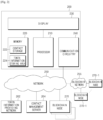
- FIG. 2 is a block diagram illustrating a configuration of an electronic device according to an embodiment of the disclosure.
- an electronic device 200 may include a processor 210 (e.g., a processor 120 of FIG. 1 ), a memory 220 (e.g., a memory 130 of FIG. 1 ), a display 230 (e.g., a display device 160 of FIG. 1 ), a commu• nication circuitry 240 (e.g., a communication circuitry included in a communication module 190 of FIG. 1 ).
- the processor 210 may execute instructions stored in the memory 220. As a result of executing the instructions, the processor 210 may process data or may control a component of the electronic device 200 such that the electronic device 200 performs an operation.
- the memory 220 may store first information.
- the first information may include information where the user of the electronic device 200 may specify in• formation about a target of a blockchain transaction or information about a destination address upon a blockchain transaction.
- the first information may include contact information (more specifically, contact information of a target of a blockchain transaction indicated by a first blockchain address).
- the contact in• formation may include a name, a phone number, or an e-mail address.
- the first information may be information packaged by combining several pieces of information.
- the first information may include information about a relationship between the user of the electronic device 200 and the target of the blockchain transaction.
- the first information may be configured in the form of "James/Friend” or "James/Colleague” using group in• formation included in the contact information.
- the electronic device 200 may obtain information stored in a plurality of databases to combine several pieces of information to configure the information.
- the first information including the contact information may be stored in a contact storage 222.
- the contact information may be information included in a database which stores a phone number of a target, which is used to make a call by a phone-related ap• plication run on the electronic device 200.
- various applications of the electronic device 200 may run using information stored in the contact storage 222.
- an e-mail application capable of running on the electronic device 200 may transmit an e-mail using a user name and e• mail information included in the contact storage 222.
- the contact information may include information which is received at the electronic device 200 from the user using an input device (e.g., an input device 150 of FIG. 1 ).
- the contact information may include information which is obtained from a contact management server 264 interworking with the electronic device 200 over a network 250 by the electronic device 200 using the com• munication circuitry 240.
- the contact information may include information received from another electronic device (e.g., an electronic device 102 or an electronic device 104 of FIG. 1 ) using a contact sharing function.
- the first information may include token information.
- the first information including the token in• formation may be stored in a token information storing area 224 of the memory 220.
- the token information storing area 224 may refer to a space formed in the memory 220 to store token information.
- the token information may include in• formation indicating a type of a token to identify the token used for a token transaction, address information of a token program, which is received from the user using the input device (e.g., the input device 150 of FIG. 1 ) by the electronic device 200, and in• formation of a token receiver.
- the token information may include information which is received from a token information providing network 262 over the network 250 by the electronic device 200 using the communication circuitry 240.
- the processor 210 may associate and store a first blockchain address with the first information in the memory 220.
- the processor 210 may display the first blockchain address and the first in• formation associated with the first blockchain address to the user on the display 230.
- the processor 210 may display a transaction record screen including the first blockchain address on the display 230.
- the electronic device 200 may output information for identifying how many transactions which use the first blockchain address are performed in the past, on the transaction record screen including the first blockchain address.
- the electronic device 200 may perform a digital signature for performing a transaction for the first blockchain address (e.g., sending cryptocurrency to the first blockchain address) in response to a user input to the transaction record screen.
- the electronic device 200 may further perform an additional operation for identifying the first blockchain address to verify the validity of the address.
- the electronic device 200 may obtain information about the first blockchain address via an external server (e.g., a blockchain address authentication server).
- the information about the first blockchain address may include reliability information about the first blockchain address. For example, when the first blockchain address is a blockchain address of an authorized institution, it may include information about the authorized institution.
- the external server may provide the electronic device 200 with the first blockchain address with information about it.
- the electronic device 200 may transmit the first blockchain address to the external server and may obtain additional information about the first blockchain address in response to the transmitted first blockchain address.
- the electronic device 200 may display the obtained additional information together with the first blockchain address.
- the electronic device 200 may obtain the first blockchain address in various methods. For example, the electronic device 200 may capture an image of a QR code and may obtain the first blockchain address based on information obtained by de• crypting the QR code. For another example, the electronic device 200 may read the first blockchain address or information (e.g., a uniform resource locator (URL)) for obtaining the first blockchain address from a near field communication (NFC) tag through NFC. The electronic device 200 may obtain the first blockchain address and may perform an authentication process for additional authentication (e.g., a personal identification number (PIN) or biometric authentication) to perform a digital signature for the first blockchain address.
- additional authentication e.g., a personal identification number (PIN) or biometric authentication
- the authentication process using the biometric authentication may include an operation where the electronic device 200 obtains biometric information (e.g., a fingerprint or an iris) of the user and performs authentication based on the obtained biometric information.
- biometric information e.g., a fingerprint or an iris
- the electronic device 200 may output additional information (e.g., a trusted mark or a sound) indicating that the user is authenticated when displaying the first blockchain address.
- the electronic device 200 may display an image indicating that the user is authenticated on the display 230.
- the electronic device 200 may differently display another image depending on whether the first blockchain address is authenticated.
- the electronic device 200 may display a red icon.
- the electronic device 200 may display a green icon.
- the electronic device 200 may display a different image to the user depending on whether the first blockchain address is authenticated or a level of re• liability.
- the processor 210 may display a transaction record screen including the first blockchain address on the display 230 such that the electronic device 200 performs a digital signature for a blockchain transaction.
- the processor 210 may determine reliability associated with the first blockchain address and the first in• formation.
- the processor 210 may output second information indicating the determined reliability on the display 230.
- the second information may be output in various forms (e.g., graphic information, audio information, video information, vibration information, or the like).
- the processor 210 may display the icon on the display 230.
- the processor 210 may display a first icon when the reliability of the first blockchain address is high and may display a second icon when the reliability of the first blockchain address is low.
- the processor 210 may digitally sign blockchain transaction data based on an input by the authenticated user.
- the communication circuitry 240 may transmit the blockchain transaction data digitally signed by the processor 210 to a blockchain network 255 over the network 250.
- the blockchain transaction data transmitted to the blockchain network may be authenticated by at least one blockchain node 270.
- the au• thenticated transaction data may be recorded in the at least one blockchain node 270 included in a block.
- a blockchain system may include the blockchain network 255 separately established according to a blockchain platform.
- the blockchain system configured based on a private blockchain platform, such as Ripple or Hyper Ledger may include a blockchain network established inde• pendently.
- the blockchain network 255 may verify a transaction for only an au• thenticated device and may configure blockchain nodes 270-1 capable of generating/ storing a block.
- FIG. 3 is a flowchart 300 illustrating a process where an electronic device displays a blockchain address according to an embodiment of the disclosure.
- an electronic device 200 may store first information.
- the electronic device 200 may run an application capable of managing contacts and may store information input using an input device (e.g., an input device 150 of FIG. 1 ) by a user who uses the application.
- the application capable of managing the contacts may be an address book application.
- the electronic device 200 may receive information, such as phone numbers, e-mail addresses, or names of users who want to make a call, as the first in• formation in a call application.
- the electronic device 200 may store a database con• structed with the received first information in a memory 220 of FIG. 2 .
- the electronic device 200 may store contact information obtained from a contact management server 264 interworking with the electronic device 200 over a network 250 using the communication circuitry 240.
- the electronic device 200 may store information received from another electronic device (e.g., an external electronic device 102 or an external electronic device 104 of FIG. 1 ) using a contact sharing function.
- the electronic device 200 may store information obtained from a token information providing network 262 of FIG. 2 .
- the electronic device may associate and store a first blockchain address with the first information.
- the electronic device may perform a user authen• tication process for verifying whether the user is an authorized user.
- the electronic device may perform an operation of providing the au• thenticated user with the first blockchain address and the first information and receiving an approval command to associate and store the first blockchain address with the first information from the user.
- the electronic device may generate a database in which the first blockchain address is mapped to the first information.
- the electronic device may manage the database which stores the first blockchain address and the first information together.
- the electronic device may store the first blockchain address and the first information based on an input of the user.
- the electronic device may perform an association operation of associating the first blockchain address with the first information.
- the electronic device may verify validity of the first blockchain address.
- the electronic device may map the first blockchain address verified as being valid to the first information.
- the electronic device may obtain information additionally needed to map the first blockchain address to the first information from the inside or outside of the electronic device.
- the electronic device may perform an operation of mapping the first blockchain address to the first information based on the result of analyzing the obtained information.
- the electronic device may identify whether an event for displaying the first blockchain address occurs. For example, the electronic device may receive a user input selecting the first blockchain address to generate a transaction for transmitting cryptocurrency. In this case, the electronic device may determine that an event for displaying the first blockchain address which is a des• tination address to receive cryptocurrency occurs.
- the electronic device may display the first blockchain address, the first information, and second information on a display (e.g., a display 230 of FIG. 2 ).
- the event for displaying the first blockchain address may be, for example, that the first blockchain address of a receiver who may receive cryptocurrency is input to a blockchain transaction record input screen, when generating a transaction for sending cryptocurrency of the blockchain system.
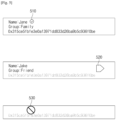
- FIG. 4 is a drawing illustrating a blockchain transaction confirmation screen 400 displaying a blockchain address, first information, and second information, according to an embodiment of the disclosure.
- an electronic device may display the blockchain transaction confirmation screen 400 including a blockchain address 410, first information 411, and second information 412.
- the second information may be information indicating reliability for a first blockchain address or the first information.
- the electronic device may determine the first blockchain address as a reliable address and may display the first information corre• sponding to the determined reliability.
- the electronic device may display the second information corresponding to the reliability of the first blockchain address according to the authenticated result.
- the second information may indicate reliability information according to an entity which authenticates the first blockchain address.
- the second information may be determined based on whether the electronic device authenticates the first blockchain address by the user or whether the first blockchain address is authenticated by means of an external device.
- the electronic device may output the second information including a graphic indication indicating that the first blockchain address is not reliable. For example, when determining that the first blockchain address is a blockchain address manipulated by a hacker or when obtaining information indicating that the first blockchain address is an address of a hacker from the outside, the electronic device may determine that the first blockchain address is not a valid address. The electronic device may output a graphic indication indicating that the first blockchain address is not reliable.
- the second information may include information indicating that reliability has a level where it is authenticated from the user that the first blockchain address is associated with the first information, information indicating that reliability has a level predicted as that of a target associated with the user (e.g., that the first blockchain address is included in a transaction history of the user), or information in• dicating that the first blockchain address is not associated with reliable information.
- the second information may be output in the form of a graphic image.
- the second information may be output in the form of a sound via a speaker.
- the electronic device may provide the second information to a second electronic device connected with the electronic device.
- the second information may be transmitted to another smart watch (the second electronic device) of the user connected with a portable mobile (a first electronic device).
- the electronic device may transmit reliability information about a first blockchain to an external server or at least one external blockchain network.
- FIG. 5 is a drawing illustrating second information displayed together with a blockchain address according to an embodiment of the disclosure.
- an electronic device may display various types of second information about a first blockchain address.
- the electronic device may display a first image (e.g., an icon 510) indicating high reliability.
- the electronic device may display an icon indicating that the authentication of the user is not completed.
- the electronic device may display the icon 510 indicating high reliability.
- the electronic device may display a second image (e.g., an icon 520) indicating that the first blockchain address has reliability of a middle level in a connection with the first in• formation.
- a category of a contact including the first blockchain address, which is stored in a contact storage (e.g., a contact storage 222 of FIG. 2 )
- a specified condition e.g., for a contact which belongs to a family category
- the electronic device may display the icon 520 in• dicating that the first blockchain address has the reliability of the middle level in the connection with the first information.
- the electronic device may display a third image (e.g., an icon 530 indicating that the first blockchain address is an address which is not identified).
- FIG. 6 is a flowchart 600 illustrating a process where an electronic device associates and stores a blockchain address with first information according to an embodiment of the disclosure.
- an electronic device e.g., a processor 210) may identify whether a blockchain address authentication request for a first blockchain address is generated.
- the electronic device may display the first blockchain address and first information to be associated and stored with the first blockchain address on a display (e.g., a display 230 of FIG. 2 ).
- the blockchain address authen• tication request may mean that it is authenticated from a user whether there is a connection between the first blockchain address and the first information.
- the blockchain address authentication request may be implemented in various manners according to an embodiment. Contents about various embodiments will be described with reference to FIGS. 7 to 9 .
- the electronic device may display the first blockchain address and the first information.
- the electronic device may display a screen including the token name, the token symbol, a blockchain address, and a user interface object.
- the electronic device may receive an approval command through the user interface object from the user who identifies contact information and the blockchain address.
- the approval command may indicate that the user authenticates that the blockchain address and the first information are mapped to each other and may refer to a user input requesting to associate and store the blockchain address with the first information.
- the electronic device may receive an approval command through the user interface object from the user who identifies the token name, the token symbol, the blockchain address.
- the token may refer to an object to be a transaction target between users of a blockchain system, which is issued based on the blockchain system.
- the electronic device may execute a user authentication process of verifying the user which inputs the approval command.
- the electronic device may execute the user authentication process after the approval command is input in operation 630 of FIG. 6 .
- the user authentication process may be performed prior to any one of the operations shown in FIG. 6 .
- the electronic device may fail to proceed with the process shown in FIG. 6 or may stop the process shown in FIG. 6 .
- the electronic device may receive a personal identification number (PIN) from the user.
- PIN personal identification number
- the electronic device may include an operation of receiving biometric information (e.g., a fingerprint or an iris) from the user and authenticating the biometric information as the user authentication process.
- biometric information e.g., a fingerprint or an iris
- operations of displaying information to the user in response to the approval command and obtaining a user input for the approval command may be performed by a screen or instructions by means of a separate trusted operating system or a separate trusted kernel in the electronic device.
- the electronic device may perform a digital signature for the first blockchain address and the first information based on a private key.
- a key pair including a private key and a public key may refer to a key pair generated based on a blockchain root seed.
- the electronic device may generate signature data through a digital signature based on a private key with respect to a value obtained by combining the first blockchain address with the first in• formation.
- a blockchain address (e.g., a blockchain account address) used for a blockchain transaction may be generated based on a private key of each of parties for the blockchain transaction and a public key corresponding to the private key. For example, many cryptocurrencies based on a blockchain derive a private key and a public key for identifying a cryptocurrency account from a root seed.
- the electronic device may generate a private key and a public key using an algorithm based on bitcoin im• provement proposal (BIP)-32 standards. For example, in the BIP-32 standards, a private key and a public key derived from the same root seed may be always generated in the same manner.
- BIP bitcoin im• provement proposal
- BIP-44 standards define a scheme implementing the BIP-32 standards and propose a 5-level hierarchical deterministic (HD) path as a method of deriving and obtaining a private key and a public key from a root seed.
- HD hierarchical deterministic
- all public keys may theoretically derived or obtained.
- Implementing the above-mentioned technology and identifying a cryp• tocurrency account is call an HD wallet.
- the wallet may be classified as a nondeterministic wallet or a deterministic wallet.
- HD wallets have been developed to generate various keys in a single seed.
- the HD wallet has keys generated as a tree structure.
- the HD wallet may generate a child key from a parent key in the tree structure and may generate a grandchild key from the child key.
- a key may be theo• retically generated without limit in such a manner.
- a plurality of keys may be generated using the HD wallet, and various blockchain addresses may be managed and used.
- the root seed is a default value capable of generating many keys and addresses from one.
- the electronic device may recover keys which belong to the entire HD wallet.
- the electronic device may generate the root seed using a mnemonic word sequence. For example, to generate the root seed, the electronic device may generate a master private key and a master chain code from a hash value generated through an HMAC-SHA512 function.
- the electronic device may use 256 bits at the left of a 512-bit hashed value as a private key and may use 256 bits at the right of the 512-bit hashed value as a chain code.
- the electronic device may obtain a public key from a private key using an elliptic curve function.
- the electronic device may generate a private key and a public key using the root seed and may generate a blockchain address using the public key. Because it is difficult to theoretically duplicate and generate the blockchain address, an individual may uniquely use the blockchain address.
- the electronic device may associate and store at least one of the first blockchain address and the first information with signature data.
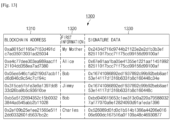
- the operation of as• sociating and storing the first blockchain address and the first information with the signature data may include an operation of storing the first blockchain address, the first information, or the signature data in a memory area or a trusted memory area included in the electronic device in the form of a table included in a database.
- the electronic device when accessing the first blockchain address, the first in• formation, or the signature data, the electronic device may obtain information through the database.
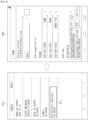
- FIG. 7 is a drawing illustrating a screen for requesting a user to authenticate a blockchain address according to an embodiment of the disclosure.
- an electronic device may receive a user input for a blockchain address authentication request from a user using a screen 700 where a contact ap• plication is running.
- the contact ap• plication is not limited to contacts, which may generally include an application capable of displaying a blockchain address or first information.
- the screen 700 where the contact application is running may include first information 710 and a blockchain address 720.
- the screen 700 where the contact application is running may further include information 730 (e.g., cryptocurrency information) indicating a blockchain platform associated with the blockchain address 720, a verify button 740, and a share button for sharing with the outside of the electronic device.
- information 730 e.g., cryptocurrency information
- the information 730 indicating the blockchain platform may be information associated with a name (e.g., Ethereum, Bitcoin, or the like) of the blockchain platform depending on a type of a blockchain network on which a blockchain address will be used. For example, for Ethereum, a cryptocurrency unit ETH of Ethereum or an image associated with Ethereum (e.g., a mark symbolizing Ethereum) may be displayed.
- the electronic device may perform a blockchain address authentication process for the first information 710 and the blockchain address 720.
- the blockchain address authentication process may include, for example, operations 620 to 650 of FIG. 6 or operations 1064 to 1614 of FIG. 16 .
- the electronic device may transmit at least some of the information included in the screen 700 where the contact application is running to another device (e.g., an external electronic device 102 or an external electronic device 104 of FIG. 1 ).
- the blockchain address authentication process may include an operation of transmitting blockchain address information to an external device (e.g., a blockchain address authentication server) and performing authentication by the external device.
- the blockchain address authentication process may include an operation of transmitting blockchain address information to an external electronic device outside the electronic device and performing authentication by the external electronic device.
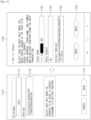
- FIG. 8 is a drawing illustrating a screen for sharing a blockchain address according to an embodiment of the disclosure.
- an electronic device may display a contact sharing function setting list 810 including a blockchain address sharing setting item 811.
- the electronic device may determine whether to share a blockchain address.
- an electronic device which receives a contact shared from an electronic device in which a blockchain address sharing function is enabled, may store a blockchain address together with contact information and may display a contact information screen 820 which displays the blockchain address together with the contact information.
- the electronic device may share in• formation about the blockchain address with at least one contact displayed on the contact information screen 820 displayed to share the blockchain address.
- the electronic device may transmit the information about the blockchain address using a phone number, an e-mail, a MAC address, a message, NFC, or Bluetooth, which corresponds to a corresponding contact.
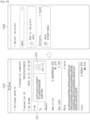
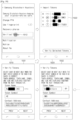
- FIG. 9 is a drawing illustrating a screen for requesting to authenticate a blockchain address according to an embodiment of the disclosure.
- an electronic device may receive a blockchain address authentication request in a blockchain transaction process.
- the electronic device may perform a transaction for transmitting certain cryptocurrency (e.g., 0.0103 Ethereum) to Nickname Jane using Ethereum.
- the electronic device may authenticate a blockchain address of Nickname Jane who receives cryptocurrency.
- the electronic device may display a transaction information input screen 910 for inputting information for generating a blockchain transaction.
- the electronic device may receive a blockchain address and first information 911 through the transaction information input screen 910.
- the transaction information input screen 910 may include a verify button 912. When the verify button 912 is selected by a user input, the electronic device may execute a process according to the blockchain address authentication request to display an in• formation confirmation screen 920.
- the information confirmation screen 920 may be executed by a trusted user interface ap• plication executed in a trusted execution environment.
- the trusted execution en• vironment may include, for example, a trusted operating system.
- the trusted execution environment may include an environment which needs a separate operating system or function to access a separate trusted memory (e.g., a logical and physical trusted memory area (a trustzone)).
- the trusted execution en• vironment may include an environment where the electronic device stores data which needs security in a memory physically divided or a memory area logically divided and limits to access the data through only a separate trusted operating system or function to access the data.
- a confirm button 921 included in the information confirmation screen 920 is selected, the electronic device may associate and store the blockchain address with the first information.
- the electronic device may identify validity associated with the blockchain address over a blockchain network. For example, when a user attempts to generate a transaction for a blockchain transaction or fetches a blockchain address list from a previous blockchain address book, the electronic device may obtain validity information about the blockchain address over the blockchain network. For example, when a separate application programming interface (API) for determining validity of the blockchain address is included in the blockchain network, the electronic device may request the blockchain network to determine the validity of the blockchain address through an API of a remote procedure call (RPC). The electronic device may analyze information obtained by the blockchain network (e.g., MAIN NET) and may provide the user with second or third information depending on the analyzed information.
- API application programming interface
- RPC remote procedure call
- the electronic device or an external server may collect information about a blockchain address over the blockchain network and may store the second or third information about the blockchain address based on the collected information.
- the blockchain network may store transaction information corresponding to the blockchain address and may provide the transaction information to a Java script object notation (JSON) RPC format APL
- JSON Java script object notation
- a Java script code in a web application may deliver in• formation on the web using JSON.
- the JSON object may include a number, a string, and sequence values.
- a JSON RPC object may be used as an object where various applications based on Ethereum transmit and receive information.
- JSON may be an open standard format using text to deliver a data object
- RPC may include a protocol for data transmission and reception between peer to peer (P2P) networks.
- P2P peer to peer
- Ethereum may perform a request and reception between Ethereum networks in a wallet based on JSON RPC.
- the electronic device may identify transaction contents cor• responding to the blockchain address through an ethGetTransactionCount (block chain address, param) function.
- an operation where the electronic device authenticates the blockchain address may include an operation of providing additional information provided from a blockchain main net or an external server and providing the user with various user interfaces determined based on the additional information.
- FIG. 10 is a drawing illustrating a screen for mapping a blockchain address to contact information according to an embodiment of the disclosure.
- an electronic device may receive a blockchain address authentication request based on a transaction history screen 1010 which displays a blockchain transaction history.
- the electronic device may display a transaction history screen 1010 including a blockchain address 1011 and a verify button 1012.
- the electronic device may display a contact information list screen 1020 for selecting contact information to be associated and stored with the blockchain address 1011.
- the contact information list screen 1020 may include, for example, a list of contacts stored in a contact storage.
- the contact in• formation list screen 1020 may include a contact list retrieved based on a keyword input to the electronic device.
- the electronic device may display contact information stored in the contact storage used by an application of the electronic device.
- the electronic device may filter information capable of being associated with a blockchain address among contact information stored in the contact storage and may output a contact list on which the filtered contact information is first displayed.
- the electronic device may obtain data associated with contact information from the outside to generate a contact information list.
- the electronic device may receive a user input entering the keyword "Jane" to map the blockchain address to the contact information.
- the electronic device may output the result of retrieving the entered keyword "Jane” from information stored in the contact storage.
- the electronic device may perform a process according to the blockchain address authentication request.
- FIG. 11 is a drawing illustrating a screen for mapping a blockchain address to token information according to an embodiment of the disclosure.
- an electronic device may display a screen 1110 including contact information 1111, a blockchain address 1112, and a user interface object 1113.
- the electronic device may receive an approval command through the user interface object 1113 from a user who identifies contact information 1111 and the blockchain address 1112.
- the approval command may indicate that the user authenticates that the blockchain address and the first in• formation are mapped to each other and may refer to a user input requesting to associate and store the blockchain address 1112 with the first information.
- the electronic device may display a screen 1120 including the token name 1121, the token symbol 1122, a smart contact address 1123, and a user interface object 1124.
- the electronic device may receive an approval command through the user interface object 1124 from the user who identifies the token name 1121, the token symbol 1122, and the blockchain address 1112.
- FIG. 12 is a drawing illustrating a screen displayed such that a user authenticates a blockchain address according to an embodiment of the disclosure.
- the electronic device may display a first blockchain address and first information to a user and may receive an input approving to map two pieces of in• formation.
- the electronic device may output a message requesting approval and may authenticate a user using a personal identification number (PIN) or biometric authen• tication.
- PIN personal identification number
- the electronic device may display a screen 1210 including a PIN input item 1211 for receiving a PIN.
- the electronic device may verify the user based on the entered PIN.
- the electronic device may receive biometric information (e.g., fingerprint information, iris information, or the like) from the user.
- the electronic device may display a screen 1220 including an object 1221 requesting to enter a fingerprint from the user.
- the electronic device may perform au• thentication through a fingerprint input of the user.
- the electronic device may associate and store blockchain information with first information.
- FIG. 13 is a drawing illustrating a mapping table 1300 which associates and stores a blockchain address with first information according to an embodiment of the disclosure.
- the electronic device may associate and store at least one blockchain address 1310 with first information 1320 including at least one of contact information (e.g., nicknames of contacts) and signature data 1330 obtained by performing a signature using a private key of a user.
- first information 1320 including at least one of contact information (e.g., nicknames of contacts)
- signature data 1330 obtained by performing a signature using a private key of a user.
- FIG. 14 is a drawing 1400 illustrating an electronic device associating and storing a blockchain address with another information according to an embodiment of the disclosure.
- the electronic device may associate and store a blockchain address 1410 with token information including a token name 1422 and a token symbol 1424 and signature data 1430.
- FIG. 15 is a drawing illustrating a rich execution environment (REE) and a trusted execution environment (TEE) operated by an electronic device according to an em• bodiment of the disclosure.
- REE rich execution environment
- TEE trusted execution environment
- a memory of an electronic device 1500 may be virtually separated from the REE accessible by a rich user application run by an operating system generally included in the electronic device and may be separated from the TEE accessible by only a software module which is specially authorized.
- the software module which is specially authorized may be run in the TEE.
- the electronic device may control access to the TEE by a hardware-based security system.
- the memory of the electronic device may include an area (the REE) typically accessible by the user and a trusted zone (the TEE) virtually implemented.
- a trusted kernel may be a kernel which is included in a rich operating system, but separately has strengthened security.
- the rich operating system may be implemented in such a manner as to deliver a message to the trusted kernel and deliver the result performed by the trusted kernel based on the delivered message to the rich operating system.
- the trusted kernel is accessible by only a verified message or a permitted message.
- the trusted operating system or the trusted kernel may be an operating system, security of which is separately strengthened, which is different from the rich operating system.
- the electronic device 1500 may operate an execution environment having a plurality of security levels for security.
- the plurality of execution environments may include, for example, an REE 1510 and a TEE 1520.
- the REE 1510 may be a first execution environment having a first security level.
- the TEE 1520 may be a second execution environment having a second security level which is different (e.g., higher) from the first security level.
- the electronic device 1500 may include, but is not limited to, an additional another execution environment (e.g., a third execution en• vironment) having a third security level.
- the electronic device 1500 may divide and operate the operating system (OS) into the REE 1510 and the TEE 1520.
- the REE 1510 may be run by a rich OS (e.g., a non• secure OS).
- the TEE 1520 may be run by a trusted OS.
- the rich OS may be Android3R] OS.
- the trusted OS may be, for example, Teegris3], QSEE], or Trustzone.
- the trusted OS may be independently separated from the rich OS and may run based on a separate resource to be configured as an environment an unauthorized program or application may not access.
- the electronic device 1500 in the TEE 1520 may encrypt data based on a trusted application (TA) run based on the trusted OS.
- the electronic device 1500 in the TEE 1520 may perform encryption using a separate trusted memory area (e.g., a secure element (SE), an eSE, or an eSIM) space separated from an untrusted memory area to store the encrypted information and may allow the rich OS and a rich application (e.g., a digital wallet application 1512 or a user application (e.g., a contact management ap• plication, a financial application, a social networking application, a message ap• plication, an e-mail application, or the like)) 1514, or a blockchain application 1516) run on the rich OS not to directly access the TEE 1520 to securely protect data.
- a separate trusted memory area e.g., a secure element (SE), an eSE, or an eSIM
- a rich application e.g., a digital wallet application 1512
- the electronic device 1500 in the TEE 1520 may not directly encrypt and decrypt data stored in the TEE 1520 by an application run on the REE 1510. According to an em• bodiment of the disclosure, the right to access data stored in the TEE 1520 may be allowed by only a separate authorized application run on the TEE 1520.
- the electronic device 1500 may store data requiring a relatively high security level in the safe TEE 1520 and may perform an operation associated with the data.
- the TEE 1520 may operate based on the rich OS run on an application processor (e.g., a processor 120 of FIG. 1 or a processor 210 of FIG. 2 ) provided in the electronic device 1500, which operate based on a reliable hardware structure determined in the process of manufacturing the electronic device 1500.
- the electronic device may generate a device unique hardware key (DUHK) in the stage of manufacturing the electronic device using a hardware random number generator.
- DUHK device unique hardware key
- the electronic device may allow only a hardware encryption module to access the electronic device.
- the security of the electronic device may be strengthened.
- the electronic device may use a hardware key in only the TEE, security of which is strengthened.
- trusted software specially authorized which is run on the TEE of the electronic device, may store data in the TEE using the hardware key.
- the TEE 1520 may be a memory area accessible by the trusted OS run by the application processor of the electronic device 1500. Software or hardware needing security may operate through the TEE 1520. According to an embodiment of the disclosure, the electronic device 1500 may operate the TEE 1520 through a physical separation of hardware or logical separation of software. For example, the electronic device 1500 may configure the TEE 1520 using a separate hardware memory separated from an untrusted memory area.
- the TEE 1520 may be separated from the REE 1510 through hardware constraints. According to an embodiment of the disclosure, when the REE 1510 and the TEE 1520 are separated from each other through the hardware constraints, the TEE 1520 may be constructed in a separate memory. According to an embodiment of the disclosure, the TEE 1520 may be a memory area implemented in at least a part of the processor. According to an em• bodiment of the disclosure, the TEE may be constructed in an external memory of the electronic device and may be configured to be accessible in the electronic device when electrically or operatively connected with the electronic device. According to an em• bodiment of the disclosure, the external memory may include at least a partial memory included in a SIM card electrically connectable to the electronic device.
- TEE 1520 may be logically separated from the REE 1510 to operate on the same hardware (e.g., memory).
- the electronic device may logically classify at least a portion of a physical memory included in the electronic device as an untrusted zone (an REE) and may classify at least the other of the physical memory as a trusted zone (a TEE) to use the untrusted zone and the trusted zone.
- an REE untrusted zone
- a TEE trusted zone
- At least one application (e.g., the digital wallet application 1512) run on the REE 1510 may deliver data or a message to software specially authorized, which is run on the TEE 1520, using an API permitted to access the TEE 1520 or may receive a response corresponding to the message.
- the digital wallet application 1512 run on the REE 1510 may deliver data or a message to software specially authorized, which is run on the TEE 1520, using an API permitted to access the TEE 1520 or may receive a response corresponding to the message.
- the electronic device 1500 may run the digital wallet application 1512, the user application 1514, and the blockchain ap• plication 1516 in the REE 1510. Furthermore, the electronic device 1500 may run various software in the TEE 1520. For example, the electronic device 1500 may run a trusted user interface application 1522 and a blockchain trusted application 1524. Fur• thermore, the electronic device 1500 may have a storage (e.g., a contact storage 1518) accessible by an application run in the REE 1510.
- a storage e.g., a contact storage 1518
- the electronic device 1500 may store contact information in the contact storage 1518 configured using a portion (e.g., an REE) of a memory in the electronic device 1500.
- the contact storage 1518 may be a database configured in the electronic device 1500 based on information associated with contacts.
- the contact storage 1518 of FIG. 15 may be replaced with another database which stores data used by the user application 1514 of the electronic device 1500.
- the electronic device 1500 may run the user application 1514 to store contact information input from a user in the contact storage 1518.
- the contact information stored in the contact storage 1518 may be in• formation synchronized with information stored in a contact server 1540.
- the contact server 1540 may be omitted.
- the user application 1514 may be an address book application which manages contact information stored in the contact storage 1518.
- a contact management application may be implemented as various types of applications, such as a simple address book management application, an instant messenger, or a social media application.
- the digital wallet application 1512 may manage a private key corresponding to a blockchain address of the user.
- the digital wallet application 1512 may manage a trusted application (e.g., a trusted user interface (TUI) application 1522 or a blockchain trusted application (TA) 1524) run on the TEE 1520.
- a trusted application e.g., a trusted user interface (TUI) application 1522 or a blockchain trusted application (TA) 1524
- the digital wallet application 1512 may receive a blockchain address authentication request.
- the digital wallet application 1512 may receive a blockchain address authentication request for a blockchain address and first information displayed by the user application 1514.
- the digital wallet application 1512 may allow the user to identify the blockchain address and the first information and may allow the electronic device 1500 to display a screen for receiving an approval command to map the blockchain address to the first information (e.g., contact information).
- the digital wallet application 1512 may display the blockchain address and the first information using the TUI application 1522.
- the electronic device 1500 may receive the user input through the TUI application 1522.
- the electronic device 1500 may receive authentication information (e.g., a PIN, fingerprint information, or iris in• formation) for authenticating the user through the TUI application 1522 to approve to map the blockchain address to the first information.
- authentication information e.g., a PIN, fingerprint information, or iris in• formation
- the TUI application 1522 may deliver the approval command to the digital wallet application 1512.
- the digital wallet application 1512 may deliver a signature request for the blockchain address and the first information to the blockchain TA 1524.
- the blockchain TA 1524 may perform digital signature for the blockchain address and the first information based on a private key of the user.
- the blockchain TA 1524 may deliver signature data generated as a result of performing the digital signature to the digital wallet application 1512.
- the digital wallet application 1512 may associate and store the first information, the blockchain address, and the signature data in the contact storage 1518 through the user application 1514.
- the blockchain application 1516 may allow the electronic device 1500 to connect to a blockchain node 1530 establishing the blockchain network. Furthermore, the blockchain application 1516 may write blockchain transaction data to be transmitted to the blockchain network by the electronic device 1500. The blockchain application 1516 may deliver a signature request including the written blockchain transaction data to the digital wallet application 1512. The digital wallet application 1512 may obtain and/or parse raw data of a blockchain transaction from the signature request. The digital wallet application 1512 may display transaction records included in the blockchain transaction data through the TUI application 1522. Herein, the digital wallet application 1512 may retrieve information stored in the contact storage 1518 based on a second blockchain address (e.g., a blockchain address of a receiver) included in the blockchain transaction data.
- a second blockchain address e.g., a blockchain address of a receiver
- the electronic device may transmit information (the first information, the second in• formation, and the signature data) associated with the blockchain address to a TEE area to be displayed through the TUI application.
- the electronic device may identify whether the digital signature is valid using information received based on the TEE. For example, the electronic device may decrypt a value digitally signed by the user among the received information using a private key and may compare the decrypted value with the received first information and first blockchain address value to identify whether the digital signature is valid.
- the electronic device may provide the user with information (e.g., the first blockchain address, the first in• formation, or the second information) received through the TUI application 1522 and transaction records included in blockchain transaction data.
- information e.g., the first blockchain address, the first in• formation, or the second information
- the digital wallet application 1512 may display the first information (e.g., "Jane") associated and stored with the first blockchain address through the TUI application 1522.
- the TUI application 1522 may receive an additional input for approving a transaction from the user who identifies the displayed information. According to an embodiment of the disclosure, the TUI application 1522 may additionally perform biometric authentication by means of a biometric authentication (e.g., fingerprint au• thentication) trusted application 1526.
- a biometric authentication e.g., fingerprint au• thentication
- the TUI application 1522 may deliver an input approving a transaction to the digital wallet application 1512.
- the digital wallet application 1512 may deliver the second blockchain address, the blockchain transaction data, the first in• formation retrieved based on the second blockchain address, and a signature request including signature data to the blockchain TA 1524.
- the blockchain TA 1524 may determine whether the first blockchain address and the second blockchain address are identical to each other. When the first blockchain address and the second blockchain address are not identical to each other, the blockchain TA 1524 may fail to perform digital signature.
- the blockchain TA 1524 may perform digital signature for the second blockchain address and the first information and may compare the result of performing the digital signature with signature data received from the digital signature application 1512.
- the blockchain TA 1524 may deliver an error message to the digital signature application 1512 without performing digital signature for blockchain transaction data.
- the blockchain TA 1524 may perform digital signature for blockchain transaction data and may deliver the digitally signed blockchain transaction data to the digital signature application 1512.
- the digital wallet application 1512 may transmit the digitally signed data to the blockchain network through the blockchain application 1516 such that a transaction is performed.
- the user application 1514 of FIG. 15 may be replaced with a token information management ap• plication.
- the first information, the blockchain address, and the signature data may be stored in a token information storage area which stores token information of a memory (e.g., a memory 130 of FIG. 1 ).
- FIG. 16 is a flowchart 1600 illustrating a process where an electronic device associates and stores a blockchain address with signature data, according to an embodiment of the disclosure.
- an electronic device e.g., a processor 120
- a user application 1514 may deliver the first information to a digital wallet application 1512 depending on a request of the digital wallet ap• plication 1512.
- the digital wallet application 1512 may receive the first information together with a blockchain address in operation 1602.
- the digital wallet application 1512 may receive a blockchain address to be associated and stored with the first information through a screen where the digital wallet application 1512 is running.
- the digital wallet application 1512 when the digital wallet application 1512 has the right to access a contact storage 1518, it may directly obtain the first information.
- the digital wallet application 1512 may generate a blockchain address authentication request depending on a user input to the digital wallet ap• plication 1512 or may receive a blockchain address authentication request generated by another application (e.g., the user application 1514).
- the digital wallet application 1512 may deliver the first information and the blockchain address to a TUI application 1522.
- the TUI application 1522 may display the first information and the blockchain address on a display.
- the trusted user interface application 1522 may receive an approval command to map the first information to the blockchain address from a user.
- the TUI application 1522 may deliver a signature request for the first information and the blockchain address to a blockchain TA 1524.
- the TUI application 1522 may deliver a signature request to the blockchain TA 1524 through the digital wallet application 1512.
- the TUI application 1522 may deliver information or a message for the received approval command to the digital wallet application 1512 and may deliver a signature request for the blockchain address and the first information to the blockchain TA 1524.
- the blockchain TA 1524 may perform digital signature for the blockchain address and the first information based on a private key of the user to generate signature data.
- the blockchain TA 1524 may execute a user authentication process (e.g., biometric authentication) for authenticating the user before performing the digital signature.
- the blockchain TA 1524 may deliver the generated signature data to the digital wallet application 1512 (or the user application 1514).
- the digital wallet application 1512 may associate and store the signature data with the blockchain address and the first information.
- the digital wallet application 1512 may further store second information indicating reliability for a link between the blockchain address and the first information.
- the blockchain TA 1524 may store at least one of the generated signature data, the blockchain address, or the first in• formation in a memory area managed by an operating system (e.g., a second operating system or a trusted operating system) run by the blockchain TA 1524.
- the blockchain TA 1524 may store the second in• formation indicating the reliability for the link between the blockchain address and the first information in a memory area (e.g., a TEE) managed by an operating system run by the blockchain TA 1524.
- FIG. 17 is a flowchart 1700 illustrating a process where an electronic device performs a digital signature for blockchain transaction data, according to an em• bodiment of the disclosure.
- an electronic device may generate or receive blockchain transaction data including a second blockchain address.
- the electronic device may obtain the second blockchain address from the transaction data.
- the electronic device may obtain first information and signature data based on the second blockchain address. For example, the electronic device may identify whether a first blockchain address identical to the second blockchain address is stored in a storage based on the second blockchain address.
- the electronic device may retrieve information (e.g., first information, a digital signature value, and second information) associated and stored with the first blockchain address.
- the electronic device may retrieve data associated and stored with the second blockchain address.
- the electronic device may perform a digital signature for the second blockchain address and the first information based on a private key.
- the electronic device may compare the digitally signed value with the signature data obtained in operation 1720.
- the electronic device may display an error screen indicating that the digital signature is not normally performed.
- the electronic device may decrypt the signature data obtained in operation 1720 using a public key. The electronic device may compare the decrypted signature data with the second blockchain address and the first information to verify validity for the digitally signed value.
- the electronic device may display a transaction contents screen including the first information and information about transaction records included in transaction data.
- the electronic device may identify a transaction target using the first information on the transaction contents screen and may receive a user input approving transaction contents from a user who identifies transaction records for the transaction target.
- the electronic device may perform a digital signature for blockchain transaction data.
- the electronic device may deliver a transaction corresponding to the blockchain transaction data to a blockchain network to be generated as a block.
- FIG. 18 is a flowchart 1800 illustrating a process for performing a digital signature for blockchain transaction data based on first information stored in an electronic device according to an embodiment of the disclosure.
- a user application 1514 may associate and store the first information with a first blockchain address and signature data for the first blockchain address and first information. For example, after the process shown in FIG. 16 is performed, the user application 1514 may associate and store the first information with the first blockchain address and the signature data for the first blockchain address and the first information depending on a request of a digital wallet application 1512.
- the blockchain application 1516 may generate blockchain transaction data including a second blockchain address.
- the blockchain application 1516 may transmit blockchain transaction data generated by interworking with a blockchain network.
- the blockchain application 1516 may interwork with a node configuring the blockchain network to generate a transaction.
- the blockchain application 1516 may be an application requesting a digital wallet to perform a signature for a transaction.
- the blockchain application 1516 may be separately operated according to a type (e.g., Ethereum, Bitcoin, or the like) of a blockchain.
- the blockchain application 1516 may generate blockchain transaction data for processing remittance to the second blockchain address.
- the blockchain application 1516 may request a signature for the blockchain transaction data from a digital wallet application 1512.
- the blockchain application 1516 may deliver data necessary for a signature to the digital wallet application 1512 to generate a blockchain transaction.
- the digital wallet application 1512 may deliver a request for retrieving the first information and the signature data to the user application 1514 based on the second blockchain address included in the blockchain transaction data.
- the digital wallet application 1512 may directly access data of the electronic device to retrieve the first information and the signature data. For example, when the digital wallet application 1512 has the right to access a memory of the electronic device, it may identify the first information and the signature data associated with a blockchain address from the stored data.
- the user application 1514 may deliver the first information and the signature data, which are associated and stored with the first blockchain address, to the digital wallet application 1512.
- the digital wallet application 1512 may determine whether the second blockchain address is identical to the first blockchain address.
- the digital wallet ap• plication 1512 may perform operation 1810.
- the digital wallet application 1512 may deliver the signature request for the blockchain transaction data, the first information, and the signature data to a blockchain TA 1524.
- the blockchain TA 1524 may perform a digital signature for a blockchain address (the first blockchain address or the second blockchain address) and the first information.
- the blockchain TA 1524 may compare the value generate as a result of performing the digital signature with the received signature data.
- the blockchain TA 1524 may deliver transaction records corre• sponding to the signature request and the first information to a TUI application 1522.
- the transaction records corresponding to the signature request may be transaction records included in blockchain transaction data, a signature of which is requested.
- the transaction records included in the blockchain transaction data may include at least one of a blockchain address of a receiver, which is capable of being used when generating a blockchain transaction, a blockchain address of a sender, a type of cryptocurrency to be transacted, or the amount of transmitted cryptocurrencies.
- the blockchain TA 1524 may deliver the transaction records and the first in• formation to the TUI application 1522 through the digital wallet application 1512.
- the TUI application 1522 may output a transaction contents screen including the transaction records and the first information on the display.
- the TUI application 1522 may receive a user input approving a signature for transaction data cor• responding to the transaction contents screen.
- the TUI application 1522 may execute a user authentication process (e.g., biometric authentication, a personal identification number (PIN), or the like) of receiving authentication information for authenticating the user in a process of receiving a user input approving the user input approving the signature.
- the user au• thentication process may include, for example, an operation of outputting the screen shown in FIG. 12 , an operation of receiving authentication information for authen• ticating the user, and an operation of comparing the entered authentication information with information registered for the user.
- the TUI application 1522 may deliver a request to proceed with a digital signature for the transaction data to the blockchain TA 1524.
- the blockchain TA 1524 may perform a digital signature for blockchain transaction data based on a private key of the user used for a blockchain transaction.
- the digital wallet ap• plication 1512 may deliver the digitally signed blockchain transaction data to the blockchain network through the blockchain application 1516.
- FIG. 19 is a drawing illustrating a process where an electronic device obtains and stores token information according to an embodiment of the disclosure.
- the electronic device may receive a plurality of token information verified by a token information providing system from a token information providing network.
- the electronic device may receive the plurality of token information and may authenticate the plurality of token information through a series of processes.
- the electronic device may display a function screen 1910 including a menu item 1912 for receiving verified token information.
- the electronic device may display a token list screen 1920 including a receivable token in• formation list 1922.
- the electronic device may transmit a token address to the token information providing network via a communication circuitry of the electronic device to obtain token information from the token in• formation providing network.
- the electronic device may obtain token information (e.g., a token name or a token icon) in response to the transmitted token address.
- the electronic device may allow the user to sequentially authenticate each toke information through screens 1931 and 1932 sequentially displaying token information about tokens selected from the token in• formation list 1922.
- the electronic device may obtain token information corresponding to a blockchain address from the outside and may output the token information list 1922 displaying the obtained token information.
- the electronic device may receive a user input selecting a token mapped to the blockchain address on the token information list 1922.
- the electronic device may receive a user input sequentially authenticating each token information from the user through the screens 1931 and 1932.
- the token information may be first information to be mapped and stored to the blockchain address.
- FIG. 19 is, but is not limited to, an example for describing an embodiment.
- the electronic device may display all of token information on one screen.
- the electronic device may move a screen depending on a scroll input of the user such that the user identifies each token information.
- FIG. 20 is a flowchart 2000 illustrating a process where an electronic device outputs a blockchain address and first information based on heterogeneous operating systems, according to an embodiment of the disclosure.
- the electronic device may receive a blockchain address authentication request based on a first operating system (e.g., a rich operating system). For example, the electronic device may receive a user input selecting a verify button for a blockchain address and first information through a digital wallet application or another user application (e.g., a contact application).
- a first operating system e.g., a rich operating system
- the electronic device may receive a user input selecting a verify button for a blockchain address and first information through a digital wallet application or another user application (e.g., a contact application).
- the electronic device may deliver a blockchain address, first information, and signature data corresponding to the blockchain address authentication request to a second operating system (e.g., a trusted operating system).
- a second operating system e.g., a trusted operating system
- the electronic device may determine whether a blockchain address stored in the second operating system is identical to the blockchain address transmitted from the first operating system in operation 2020. Because the blockchain address is unique information, the electronic device may use a blockchain address as an index of signature data. According to an embodiment of the disclosure, the electronic device may store an authenticated address in a memory area (e.g., a TEE) managed by the second operating system and may limit access to the stored address. For example, when the user authenticates a blockchain address in FIG. 16 , the electronic device may store at least one of the authenticated blockchain data, signature data, or first information in the memory area managed by the second operating system.
- a memory area e.g., a TEE
- the memory area managed by the second operating system may be an area in the electronic device and may be stored in a separate memory with strengthened security, which is outside the electronic device.
- the memory area managed by the second operating system may include an external server.
- the electronic device may transmit at least one of first information, a blockchain address, or signature data, which is authenticated according to user authen• tication in FIG. 16 , to a third server to be stored through the third server.
- the electronic device may verify a digital signature. For example, the electronic device may digitally sign the blockchain address and the first information based on a private key and may compare the digitally signed value with the signature data transmitted in operation 2020. When the digitally signed value is matched with the signature data as a result of the comparison, the electronic device may determine that the digital signature is valid.
- the electronic device may display the blockchain address and the first information on its display based on the second operating system. For example, the electronic device may display the blockchain address and the first information on a screen displaying transaction (e.g., cryptocurrency remittance) records for the blockchain address. According to an embodiment of the disclosure, the electronic device may further display second in• formation indicating reliability for the blockchain address and the first information.
- a screen displaying transaction e.g., cryptocurrency remittance
- FIG. 21 is a block diagram illustrating a structure of an application, an operating system, and a kernel included in an electronic device according to an embodiment of the disclosure.
- the electronic device may be configured to include a rich operating system 2110, an application 2115, a trusted operating system 2120, a trusted application 2125, and a kernel 2130.
- the application 2115 may operate based on the rich operating system 2110 and may operate based on the trusted application 2125.
- the rich operating system 2110 and the trusted operating system 2120 may operate based on the kernel 2130.
- the rich operating system 2110 and the trusted operating system 2120 may be assigned resources necessary for an operation of the application 2115 or the trusted application 2125 through the kernel 2130.
- FIG. 22 is a drawing illustrating a structure of a digital wallet configured using an electronic device, according to an embodiment of the disclosure.
- the electronic device may include a digital wallet 2210, which operates based on a rich operating system, and a trusted operating system 2240.
- the digital wallet 2210 may include a user interface 2211, a state controller 2216, a provisioning manager 2217, a transaction encoder 2219, a blockchain trusted application connector 2221, a trusted user interface (UI) connector 2223, and a biometric authentication manager 2225.
- the user interface 2211 may include modules (a balance 2212, a transaction 2213, an exchange 2214, and a setting 2215) for display or processing information necessary for a blockchain transaction of a user.
- the state controller 2216 may include an uppermost application which manages a process where a blockchain transaction is performed in the electronic device.
- the state controller 2216 may load or unload one or more trusted applications depending on a request (e.g., generation of a seed, recovery of the seed, or a digital signature) received via the user interface 2211.
- the state controller 2216 may deliver a detailed command to perform the request received via the user interface 2211 to a trusted application.
- the provisioning manager 2217 may perform integrity testing when running an application associated with the digital wallet 2210. For example, in a process of performing a user registration process (e.g., agreement on terms and conditions or exchange of terms and conditions), the provisioning manager 2217 may perform an operation of allowing the user to perform fingerprint registration or PIN registration. Alternatively, when a seed associated with a blockchain transaction is not stored, the provisioning manager 2217 may allow the electronic device to output a seed generation screen. Furthermore, the provisioning manager 2217 may determine a software version and may update software.
- the transaction encoder 2219 may manage a blockchain transaction. The transaction encoder 2219 may convert transaction data which is not signed into transaction data digitally signed. The transaction encoder 2219 may generate transaction data packaged with one bytes column to be received in a blockchain node. When the digital signature is performed by a trusted application, the transaction encoder 2219 may package data depending on a blockchain protocol using transaction data, which is not digitally signed, a signature value, and an additional parameter.
- the blockchain trusted application connector 2221 may perform communication for the blockchain trusted application 2241 of the digital wallet 2210.
- the trusted UI connector 2223 may communicate with a trusted UI trusted application 2242.
- a trusted application connector (e.g., the blockchain trusted application connector 2221 or the trusted UI connector 2223) may be a module corresponding to a trusted application performed in the trusted operating system 2240.
- the trusted application connector may serialize or deserialize a command to be delivered to the trusted application.
- the trusted application connector may receive the result of performing a command delivered to the trusted application and may deliver the received result to a higher model of the trusted application connector.
- the biometric authentication manager 2225 may communicate with the biometric trusted application 2243 to perform biometric authentication.
- the biometric authen• tication manager 2225 may deliver an authentication request to a biometric authen• tication service of the electronic device.
- the biometric authentication manager 2225 may deliver the result of performing the biometric authentication to a higher module.
- the trusted operating system 2240 may include the blockchain trusted application 2214, the trusted UI trusted application 2242, and the biometric trusted application 2243. According to an embodiment of the disclosure, the trusted operating system 2240 may refer to a separated trusted code for controlling access to a certain trusted zone in a kernel, rather than a separate operating system. For example, data stored in the trusted zone may be encrypted by the trusted code and access to the data stored in the trusted zone may be controlled to enhance security. According to an embodiment of the disclosure, the trusted operating system 2240 may operate separately from a rich operating system or may operate with the rich operating system. The trusted operating system 2240 may be a function of operating separately from a kernel stage.
- the trusted operating system 2240 may operate with the rich operating system without separately operating, and the trusted UI trusted application 2242 and the biometric trusted application 2243 may be included in one digital wallet 2210 to operate.
- the blockchain trusted application 2241 may verify a digital signature depending on a request of the digital wallet 2210.
- the blockchain trusted application 2241 may store a private key or a public key for a digital signature.
- the trusted UI trusted application 2242 may display a blockchain address and first information in a state where security is maintained and may receive a user input to the displayed security information. For example, when an operation needing security is performed, a UI may be displayed by means of the trusted UI trusted application 2242. When the user separately perform biometric authentication, biometric authentication may be performed by means of the biometric trusted application 2243.
- the electronic device may continue identifying a blockchain account based on a certain time period. For example, before the user performs a transaction, the electronic device may periodically identify validity for blockchain addresses over a network accessible by the electronic device and may update the changed blockchain address. According to an embodiment of the disclosure, the electronic device may periodically update a blockchain address or personal in• formation stored in the electronic device. The update on the information may be performed based on a period preset by the user or a period automatically set by a system. According to an embodiment of the disclosure, when the blockchain address or the personal information stored in the electronic device is changed, the electronic device may be configured to update the information by a specific event.
- the electronic device may receive information about a blockchain address which is de• termined as an account of a hacker or is used for hacking.
- the electronic device may receive an update message associated with the information from an external electronic device.
- the electronic device may replace a blockchain address matched with information included in the update message among blockchain addresses stored in the electronic device with a blockchain address obtained from a blockchain network.
- the information about the validity of the blockchain address may be used to identify transaction information, balance information, or the result of authentication by a reliable institution through a function provided from a blockchain network (e.g., a blockchain main network).
- a blockchain network e.g., a blockchain main network
- the electronic device may perform an authentication request through the function provided from the blockchain main network.
- the blockchain main network may provide the electronic device with authentication information indicating the result of determining validity, which is performed based on the address.
- the electronic device may share authentication information about a blockchain account address with a surrounding electronic device.
- the electronic device may authenticate validity of a blockchain address over the blockchain main network and may deliver the authenticated blockchain address and in• formation corresponding to the blockchain address to another electronic device.
- the electronic device may deliver the authenticated blockchain address to a smart watch connected with the electronic device, and the smart watch may display in• formation associated with the blockchain address.
- FIG. 23 is a signal sequence diagram 2300 illustrating a process performed by an electronic device according to an embodiment of the disclosure.
- at least one integrated application may process an operation of the blockchain application, the digital wallet application, the trusted user interface application, or the blockchain trusted application.
- the electronic device may store first information in a storage using a rich application 2314.
- the rich ap• plication 2314 is a contact application
- the electronic device may store the first in• formation (e.g., an owner name of a phone number) associated with contact in• formation (e.g., the phone number) in the storage.
- the electronic device may obtain a blockchain address by means of the blockchain application 2316.
- the electronic device may obtain the first information stored in a memory 2318.
- the blockchain application 2316 may include instructions causing the electronic device to display contact in• formation stored in the memory 2318 and receive a user input selecting the first in• formation among the displayed contact information.
- the blockchain application 2316 may allow the electronic device to display the blockchain address and the first information on a display of the electronic device.
- the blockchain application 2316 may obtain authentication or approval for that a user associates and stores two pieces of information (e.g., operation 1609 of FIG. 16 ).
- the electronic device when the user performs authentication, the electronic device ma perform a digital signature using a private key used for the digital signature when generating a blockchain transaction with respect to the first information and the blockchain address.
- the electronic device may store data (e.g., the first information or the blockchain address) associated with the digitally signed result (e.g., the digitally signed value) together in the memory 2318.
- the electronic device may store the first information, the blockchain address, or the digital signature value in an untrusted memory area or a trusted memory area.
- the untrusted memory area may be a memory 130 of FIG. 1 .
- the trusted memory area may include a memory with strengthened security, which is logically or physically divided.
- a logical trusted memory area may logically divide and set a portion of the untrusted memory area (e.g., the memory 130 of FIG. 1 ).
- logically dividing and setting may include an operation where the electronic device sets a partial address of the memory to a trusted zone and where access to a corresponding memory area is performed by only a separate application, a separate application programming interface (API), or a separate function or trusted operating system when storing or reading information.
- API application programming interface
- the electronic device may obtain the blockchain address and the first information.
- the electronic device may provide the user with the blockchain address and the first information.
- the electronic device may display the blockchain address and the first information together or may display the blockchain address, the first in• formation or second information (e.g., graphic information) associated with reliability of the blockchain address together.
- the electronic device when generating a blockchain transaction, may identify whether a blockchain address (e.g., a second blockchain address) of a destination included in the blockchain transaction is stored in the memory 2318. For example, when the second blockchain address cor• responds to the first blockchain address stored in the memory 2318, the electronic device may perform a digital signature (e.g., a digital signature using a private key used when generating a blockchain transaction) for the first information and the second blockchain address, which are associated and stored with the first blockchain address, and may compare a digital signature value obtained as a result of performing the digital signature with a digital signature value stored in the storage. For example, when the digital signature value obtained as a result of performing the digital signature is identical to the digital signature value stored in the storage, the electronic device may display the first information associated with the second blockchain address on the display.
- a digital signature e.g., a digital signature using a private key used when generating a blockchain transaction
- the electronic device may be one of various types of electronic devices.
- the electronic devices may include, for example, a portable communication device (e.g., a smartphone), a computer device, a portable multimedia device, a portable medical device, a camera, a wearable device, or a home appliance. According to an embodiment of the disclosure, the electronic devices are not limited to those described above.
- each of such phrases as “A or B,” “at least one of A and B,” “at least one of A or B,” “A, B, or C,” “at least one of A, B, and C,” and “at least one of A, B, or C,” may include any one of, or all possible combinations of the items enumerated together in a corresponding one of the phrases.
- such terms as “1st” and “2nd,” or “first” and “second” may be used to simply distinguish a corresponding component from another, and does not limit the components in other aspect (e.g., importance or order).
- an element e.g., a first element
- the element may be coupled with the other element directly (e.g., wiredly), wirelessly, or via a third element.
- module may include a unit implemented in hardware, software, or firmware, and may interchangeably be used with other terms, for example, “logic,” “logic block,” “part,” or “circuitry”.
- a module may be a single integral component, or a minimum unit or part thereof, adapted to perform one or more functions.
- the module may be implemented in a form of an application-specific integrated circuit (ASIC).
- ASIC application-specific integrated circuit
- Various embodiments as set forth herein may be implemented as software (e.g., the program 140) including one or more instructions that are stored in a storage medium (e.g., internal memory 136 or external memory 138) that is readable by a machine (e.g., the electronic device 101).
- a processor e.g., the processor 120
- the machine e.g., the electronic device 101
- the one or more instructions may include a code generated by a compiler or a code executable by an interpreter.
- the machine-readable storage medium may be provided in the form of a non-transitory storage medium.
- non-transitory storage medium means a tangible device, and does not include a signal (e.g., an electromagnetic wave), but this term does not differentiate between where data is semi-permanently stored in the storage medium and where the data is temporarily stored in the storage medium.
- the non-transitory storage medium may include a buffer where data is temporally stored.
- a method may be included and provided in a computer program product.
- the computer program product may be traded as a product between a seller and a buyer.
- the computer program product (e.g., downloadable app)) may be dis• tributed in the form of a machine-readable storage medium (e.g., compact disc read only memory (CD-ROM)), or be distributed (e.g., downloaded or uploaded) online via an application store (e.g., PlayStore ⁇ ]), or between two user devices (e.g., smart phones) directly. If distributed online, at least part of the computer program product may be temporarily generated or at least temporarily stored in the machine-readable storage medium, such as memory of the manufacturer's server, a server of the ap• plication store, or a relay server.
- a machine-readable storage medium e.g., compact disc read only memory (CD-ROM)
- an application store e.g., PlayStore ⁇ ]
- two user devices e.g., smart phones
- each component e.g., a module or a program of the above-described components may include a single entity or multiple entities. According to various embodiments of the disclosure, one or more of the above-described components may be omitted, or one or more other components may be added. Alternatively or additionally, a plurality of components (e.g., modules or programs) may be integrated into a single component. In such a case, according to various embodiments of the disclosure, the integrated component may still perform one or more functions of each of the plurality of components in the same or similar manner as they are performed by a corresponding one of the plurality of components before the integration.
- operations performed by the module, the program, or another component may be carried out sequentially, in parallel, repeatedly, or heuristically, or one or more of the operations may be executed in a different order or omitted, or one or more other operations may be added.
- the electronic device and the method for managing the blockchain address in the electronic device are provided to verify the blockchain address without the necessity that the user identifies whether the blockchain address is correctly input and allow the user to easily recognize information associated with the address.
- the electronic device and the method for managing the blockchain address in the electronic device are provided to provide the user with familiar information and allow the user to easily identify the blockchain address.
- information associated with a blockchain address may be stored using a storage space with strengthened security.
- the storage space with the strengthened security may include, for example, a trusted space physically divided and a trusted space logically divided.
- the trusted space physically divided may have a separate memory space which is present inside or outside the electronic device.
- the electronic device may access a physical trusted space by means of a separate trusted application or function.
- the trusted space logically divided may be a trusted zone logically separated from an untrusted zone in one storage space (memory). To access the logical trusted zone, the electronic device may access the trusted zone by only a separate trusted application or function (e.g., API).
- a separate operating system e.g., a trusted operating system
- a rich operating system may request the trusted operating system to access the logical trusted zone.
- the trusted operating system may verify the request and may access the logical trusted zone only when the request is a normal request.
- the trusted operating system may operate as a separate operating system or an operating system where software included in a kernel in the rich operating system is virtually divided.
- the storage space may include a memory space in the electronic device.
- the electronic device may store general data in one memory without separately dividing the trusted zone.
- the storage space with the strengthened security may control access to at least a partial memory area of the electronic device.
- the at least a partial memory area may be a trusted memory area accessible by means of only a separate trusted operating system and or a separate trusted kernel.
- the electronic device may access a blockchain address or related information stored in the trusted memory area through only separate authentication by means of the trusted operating system or the trusted kernel.
- the blockchain address and the related information may be encrypted to be decrypted by only a key in the trusted operating system or the trusted zone, thus being stored in a storage space in the untrusted zone.
- the electronic device and the method for managing the blockchain address in the electronic device are provided to perform additional authentication and perform a blockchain transaction only when the ad• ditional authentication is completed to strengthen security for a blockchain transaction.
- the electronic device and the method for managing the blockchain address in the electronic device are provided to enhance usability for a blockchain address because of using a variety of information through authentication (e.g., biometric authentication).
- authentication e.g., biometric authentication
- the electronic device and the method for managing the blockchain address in the electronic device are provided to continue using the authenticated information in a transaction although the user changes his or her terminal device.
- the authenticated information is distributed and stored in the blockchain network
- the user may obtain and use the authenticated in• formation from the blockchain network although changing the terminal device.
Landscapes
- Engineering & Computer Science (AREA)
- Computer Security & Cryptography (AREA)
- Computer Networks & Wireless Communication (AREA)
- Signal Processing (AREA)
- Theoretical Computer Science (AREA)
- General Engineering & Computer Science (AREA)
- Computer Hardware Design (AREA)
- Health & Medical Sciences (AREA)
- General Health & Medical Sciences (AREA)
- Software Systems (AREA)
- Bioethics (AREA)
- Physics & Mathematics (AREA)
- General Physics & Mathematics (AREA)
- Computing Systems (AREA)
- Medical Informatics (AREA)
- Databases & Information Systems (AREA)
- Life Sciences & Earth Sciences (AREA)
- Biodiversity & Conservation Biology (AREA)
- Biomedical Technology (AREA)
- Power Engineering (AREA)
- Financial Or Insurance-Related Operations Such As Payment And Settlement (AREA)
- Storage Device Security (AREA)
Description
- The disclosure relates to an electronic device and technologies for allowing the electronic device to manage a blockchain address.
- A digital signature is a technology for preventing electronic documents or digital data from being falsified and identifying an entity who generates the signature, which is used when exchanging an electronic document or performing an electronic commerce based on an information and communications network.
- A blockchain technology of generating a block for an transaction authenticated through the collaboration of participants who participates in the blockchain network, allowing the participants who participates in the blockchain network to have in• formation in the form of a blockchain, which is stored after connecting the generated block with a previous block, and preventing forgery of data, which is capable of being generated by some users, is applied in various fields. The blockchain may be roughly divided into a public blockchain and a private blockchain. The public blockchain may be used as a technology of maintaining security and integrity in a decentralized network environment which does not have a centralized server. For example, the blockchain technology maintains the security and the integrity and is used for an e• currency or cryptocurrency service.
- A blockchain address may be used to process a transaction based on the blockchain technology. In other words, to specify an entity and a target of the blockchain transaction, the blockchain address configured in a predetermined format may be used.
- The above information is presented as background information only to assist with an understanding of the disclosure. No determination has been made, and no assertion is made, as to whether any of the above might be applicable as prior art with regard to the disclosure.
WO 2013/177424 A1 discloses a clipboard in an electronic system for protecting sensitive data by selectively blocking access to the sensitive data. - As an example of using a blockchain technology, an Ethereum network is a blockchain platform capable of performing smart contracts included in a block after participants (e.g., nodes) who participate in the blockchain generate the block. For example, in the Ethereum platform, a participation node (e.g., an Ethereum client) which participates in the blockchain network may verify validity for a transaction using a consensus algorithm (e.g., Proof of Work, Proof of Stake, Practical Byzantine Fault Tolerance) and may approve the transaction based on the verified result. The approved transaction may be included in the block and may be stored together with the previous block. For example, the scheme of storing the approved transactions in the blocks may be referred to as a blockchain technology. Furthermore, cryptocurrency may be transmitted and received using the blockchain technology. In this case, to transmit and receive cryptocurrency, a digital wallet may be used. In this case, the digital wallet may provide a function capable of managing information of a user and an encrypted key.
- When the user tries to transmit cryptocurrency in the blockchain, the blockchain technology may process a transaction for transmitting and receiving the cryp• tocurrency. For example, the transaction may include, for example, one transaction, 'A transmits lO0BTC to B'. The transaction in the blockchain may include information as• sociated with a sender who sends cryptocurrency, a receiver who receives cryp• tocurrency, or the amount of cryptocurrencies to be transmitted. A blockchain system and the digital wallet may use a digital signature algorithm to process a transaction. The blockchain may guarantee the legitimacy that the transaction is not forged or falsified by the digital signature. The blockchain performs a digital signature when generating a transaction. For example, the blockchain may assign a digital signature to each transaction one by one. Furthermore, a public key for verifying the digital signature may be included as a set. To generate a transaction in the blockchain, there is a need for a pair of a secret key and a public key corresponding to the secret key. For example, the electronic device may generate a secret key and a public key corre• sponding to the secret key by an asymmetric algorithm. The asymmetric algorithm may generate and use a key over 256 bits, using, for example, an elliptic curve digital signature algorithm (ECDSA). The electronic device may perform a digital signature using a private key when using a transaction, and nodes which participate in the blockchain network may verify the digital signature using a public key. The operation of verifying the digital signature may include an operation of determining whether the third party (e.g., a hacker) forges or falsifies transaction contents, an operation of de• termining whether the third party performs a transaction through appropriation, or an operation of determining whether a transaction is generated by an authorized owner of cryptocurrency. All transactions verified by nodes may be stored in the blockchain, and a digital signature and a public key may be stored as a set in each transaction. To process a transaction, the blockchain may use a blockchain address formed in a prede• termined format (e.g., a HEX string of 40 characters obtained by combining numbers, lowercase English alphabets, and uppercase English alphabets) in the blockchain system. In other words, the blockchain system may identify a digital wallet which is an entity or a target of a blockchain transaction based on a blockchain address. However, because the blockchain address consists of a meaningless long string recognizable by the user, it is difficult for the user to identify whether the target of the blockchain transaction is a target intended by the user. Thus, when one of characters included in the blockchain address is incorrect, there is a risk that an abnormal transaction will occur or that the transaction will not be performed.
- When the blockchain address is hacked by an external attacker, there is a risk that information about a target different from a target of the real blockchain address will be displayed on the electronic device. For example, the blockchain address is displayed as a family member of the user of the electronic device on the electronic device. However, when the blockchain address included in real transaction data is changed to an attacker address by an external attacker, a transaction may be established with respect to the address of the external attacker rather than the family member of the user. For example, the user may remit cryptocurrency to the attacker. As an example of such a hacking method of an attack technique, there is clipboard hijacking. The clipboard hijacking is to change an address entered in a target item of a transaction to an address of a hacker, when the user copies a blockchain address into the target item of the transaction. When any address is changed in the middle of the transaction, users need to identify whether the entered address is a normal address in detail to prevent a wrong transaction from being generated.
- The blockchain system may have a main network. A participant who participates in the blockchain system may perform a transaction using cryptocurrency (coins) over the main network. A token may be used as a coin in a value unit capable of indicating a unique value in the blockchain. The token may be used as an exchange means for a transaction in the blockchain. Alternatively, the token may be used as compensation for authentication for a transaction based on the blockchain. In the main network, a protocol may be used such that the user generates a token using core cryptocurrency (coins). For example, the Ethereum platform may issue a customized token to the user using the ERC20 protocol. According to an embodiment of the disclosure, a smart contract may be operated in the blockchain network. A developer of the blockchain network may additionally generate a token through the smart contract. For example, the token generated in Ethereum may be generated by a smart contract and may be managed by a unique smart contract.
- For a transaction based on the token, because information about a receiver of the transaction further includes address information of a token program and information of a token receiver, there are more items the user should identify.
- A participant (e.g., an enterprise, a group, a person, or the like) who participates in the blockchain network may construct a decentralized application (Dapp) using a protocol of the blockchain and may generate each unique token. For example, a blockchain system of Ethereum may generate and manage a token using ERC-20 which is a standard of the token protocol. In this case, blockchain transaction in• formation associated with the token may be provided to the third party (e.g., an en• terprise, a person, a group, or the like), and the electronic device may obtain contents for the blockchain transaction information. For example, for Ethereum, the electronic device may receive information of the token used in the blockchain system of Ethereum online through a site (e.g., Etherscan) of analyzing and posting a block.
- Because information about the token is manipulated in the process of delivering the information, reliability for a transaction may not be enhanced by only displaying in• formation about a target to be transacted through a trusted user interface.
- Aspects of the disclosure are to address at least the above-mentioned problems and/or disadvantages and to provide at least the advantages described below. Accordingly, as aspect of the disclosure is to provide an electronic device and technologies for allowing the electronic device to manage a blockchain address.
- Additional aspects will be set forth in part in the description which follows and, in part, will be apparent from the description, or may be learned by practice of the presented embodiments.
- In accordance with an aspect of the disclosure, an electronic device is provided. The electronic device includes a display and at least one processor connected with the display. The at least one processor may be configured to perform a digital signature for a blockchain address and first information associated with the blockchain address using a private key, associate and store signature data obtained as a result of performing the digital signature with at least one of the blockchain address and the first information, perform authentication for the blockchain address and the first in• formation using a public key corresponding to the private key, based on the stored signature data, and control the display to display the blockchain address and the first information, based on the result of performing the authentication.
- In accordance with another aspect of the disclosure, an electronic device is provided. The electronic device includes a display, a memory associating and storing first in• formation associated with a blockchain transaction target with a blockchain address, and at least one processor connected with the display and the memory. The at least one processor may be configured to generate blockchain transaction data to be transmitted to a blockchain network, obtain the first information based on the blockchain address included in the blockchain transaction data, perform authentication for the blockchain address and the first information based on a private key, output the blockchain address and the first information, when the authentication is valid, receive a user input approving the blockchain transaction data, perform a digital signature for the blockchain transaction data using the private key, in response to the user input, and transmit the digitally signed blockchain transaction data to the blockchain network.
- In accordance with another aspect of the disclosure, a method is provided. The method includes performing a digital signature for a blockchain address and first in• formation associated with the blockchain address using a private key, associating and storing signature data obtained as a result of performing the digital signature with at least one of the blockchain address and the first information, performing authentication for the blockchain address and the first information using a public key corresponding to the private key, based on the stored signature data, and displaying the blockchain address and the first information on a display of the electronic device, based on the result of performing the authentication.
- In accordance with another aspect of the disclosure, a method is provided. The method includes associating and storing first information associated with a blockchain transaction target with a blockchain address, generating blockchain transaction data to be transmitted to a blockchain network, obtaining the first information based on the blockchain address included in the blockchain transaction data, performing authen• tication for the blockchain address and the first information based on a private key, outputting the blockchain address and the first information, when the authentication is valid, receiving a user input approving the blockchain transaction data, and performing a digital signature for the blockchain transaction data using the private key, in response to the user input.
- Other aspects, advantages, and salient features of the disclosure will become apparent to those skilled in the art from the following detailed description, which, taken in con• junction with the annexed drawings, discloses various embodiments of the disclosure.
- According to embodiments disclosed in the disclosure, the electronic device and the method for managing the blockchain address in the electronic device are provided to verify the blockchain address without the necessity that the user identifies whether the blockchain address is correctly input and allow the user to easily recognize information associated with the address.
- Furthermore, according to embodiments disclosed in the disclosure, the electronic device and the method for managing the blockchain address in the electronic device are provided to provide the user with familiar information and allow the user to easily identify the blockchain address.
- Furthermore, according to embodiments disclosed in the disclosure, information associated with a blockchain address may be stored using a storage space with strengthened security. The storage space with the strengthened security may include, for example, a trusted space physically divided and a trusted space logically divided. For example, the trusted space physically divided may have a separate memory space which is present inside or outside the electronic device. The electronic device may access a physical trusted space by means of a separate trusted application or function. The trusted space logically divided may be a trusted zone logically separated from an untrusted zone in one storage space (memory). To access the logical trusted zone, the electronic device may access the trusted zone by only a separate trusted application or function (e.g., API). For example, to access the logical trusted zone, a separate operating system (e.g., a trusted operating system) may be operated. A rich operating system may request the trusted operating system to access the logical trusted zone. The trusted operating system may verify the request and may access the logical trusted zone only when the request is a normal request. According to an embodiment of the disclosure, the trusted operating system may operate as a separate operating system or an operating system where software included in a kernel in the rich operating system is virtually divided. According to an embodiment of the disclosure, the storage space may include a memory space in the electronic device. For example, the electronic device may store general data in one memory without separately dividing the trusted zone. The storage space with the strengthened security may control access to at least a partial memory area of the electronic device. For example, the at least a partial memory area may be a trusted memory area accessible by means of only a separate trusted operating system and or a separate trusted kernel. The electronic device may access a blockchain address or related information stored in the trusted memory area through only separate authentication by means of the trusted operating system or the trusted kernel. Alter• natively, the blockchain address and the related information may be encrypted to be decrypted by only a key in the trusted operating system or the trusted zone, thus being stored in a storage space in the untrusted zone. The electronic device and the method for managing the blockchain address in the electronic device are provided to perform additional authentication and perform a blockchain transaction only when the ad• ditional authentication is completed to strengthen security for a blockchain transaction.
- According to an embodiment of the disclosure, the electronic device and the method for managing the blockchain address in the electronic device are provided to enhance usability for a blockchain address because of using a variety of information through authentication (e.g., biometric authentication).
- According to an embodiment of the disclosure, the electronic device and the method for managing the blockchain address in the electronic device are provided to continue using the authenticated information in a transaction although the user changes his or her terminal device. For example, because the authenticated information is distributed and stored in the blockchain network, the user may obtain and use the authenticated in• formation from the blockchain network although changing the terminal device.
- In addition, various effects ascertained directly or indirectly through the disclosure may be provided.
- The above and other aspects, features, and advantages of certain embodiments of the disclosure will be more apparent from the following description taken in conjunction with the accompanying drawings, in which:
-
FIG. 1 is a block diagram illustrating an electronic device in a network environment according to an embodiment of the disclosure; -
FIG. 2 is a block diagram illustrating a configuration of an electronic device according to an embodiment of the disclosure; -
FIG. 3 is a flowchart illustrating a process where an electronic device displays a blockchain address according to an embodiment of the disclosure; -
FIG. 4 is a drawing illustrating a verification screen displaying a blockchain address on an electronic device according to an embodiment of the disclosure; -
FIG. 5 is a drawing illustrating an electronic device displaying information about reliability according to an embodiment of the disclosure; -
FIG. 6 is a flowchart illustrating a process where an electronic device associates and stores a blockchain address with first information according to an embodiment of the disclosure; -
FIG. 7 is a drawing illustrating a screen where a contact application displayed on an electronic device is running according to an embodiment of the disclosure; -
FIG. 8 is a drawing illustrating a blockchain address authentication request being generated based on a contact sharing function according to an embodiment of the disclosure; -
FIG. 9 is a drawing illustrating an electronic device receiving a blockchain address authentication request in a blockchain transaction process according to an embodiment of the disclosure; -
FIG. 10 is a drawing illustrating an electronic device receiving a blockchain address authentication request based on a screen displaying a blockchain transaction history according to an embodiment of the disclosure; -
FIG. 11 is a drawing illustrating a screen where an electronic device displays a blockchain address and first information according to an embodiment of the disclosure; -
FIG. 12 is a drawing illustrating a screen displayed in a process where an electronic device executes a user authentication process according to an embodiment of the disclosure; -
FIG. 13 is a drawing illustrating an electronic device associating and storing a blockchain address with another information according to an embodiment of the disclosure; -
FIG. 14 is a drawing illustrating an electronic device storing a blockchain address in conjunction with another information according to an embodiment of the disclosure; -
FIG. 15 is a block diagram illustrating a rich execution environment (REE) and a trusted execution environment (TEE) implemented by a rich operating system and a trusted operating system operated by an electronic device according to an embodiment of the disclosure; -
FIG. 16 is a signal sequence diagram illustrating a process where an electronic device associates and stores a blockchain address with signature data according to an em• bodiment of the disclosure; -
FIG. 17 is a flowchart illustrating a process where an electronic device performs a digital signature for blockchain transaction data according to an embodiment of the disclosure; -
FIG. 18 is a signal sequence diagram for performing a digital signature for blockchain transaction data based on first information stored in an electronic device according to an embodiment of the disclosure; -
FIG. 19 is a drawing illustrating a process where an electronic device obtains and stores token information according to an embodiment of the disclosure; -
FIG. 20 is a flowchart illustrating a process where an electronic device outputs a blockchain address and first information based on heterogeneous operating systems according to an embodiment of the disclosure; -
FIG. 21 is a block diagram illustrating a structure of an application, an operating system, and a kernel included in an electronic device according to an embodiment of the disclosure; -
FIG. 22 is a drawing illustrating a structure of a digital wallet configured using an electronic device according to an embodiment of the disclosure; and -
FIG. 23 is a signal sequence diagram illustrating a process performed by an electronic device according to an embodiment of the disclosure. - Throughout the drawings, like reference numerals will be understood to refer to like parts, components, and structures.
- The following description with reference to the accompanying drawings is provided to assist in a comprehensive understanding of various embodiments of the disclosure as defined by the claims and their equivalents. It includes various specific details to assist in that understanding but these are to be regarded as merely exemplary. Accordingly, those of ordinary skill in the art will recognize that various changes and modifications of the various embodiments described herein can be made without departing from the scope of the disclosure. In addition, descriptions of well-known functions and constructions may be omitted for clarity and conciseness.
- The terms and words used in the following description and claims are not limited to the bibliographical meanings, but, are merely used by the inventor to enable a clear and consistent understanding of the disclosure. Accordingly, it should be apparent to those skilled in the art that the following description of various embodiments of the disclosure is provided for illustration purpose only and not for the purpose of limiting the disclosure as defined by the appended claims and their equivalents.
- It is to be understood that the singular forms "a," "an," and "the" include plural referents unless the context clearly dictates otherwise. Thus, for example, reference to "a component surface" includes reference to one or more of such surfaces.
-
FIG. 1 is a block diagram illustrating anelectronic device 101 in anetwork environment 100 according to an embodiment of the disclosure. - Referring to
FIG. 1 , theelectronic device 101 in thenetwork environment 100 may communicate with anelectronic device 102 via a first network 198 (e.g., a short-range wireless communication network), or anelectronic device 104 or aserver 108 via a second network 199 (e.g., a long-range wireless communication network). According to an embodiment of the disclosure, theelectronic device 101 may communicate with theelectronic device 104 via theserver 108. According to an embodiment of the disclosure, theelectronic device 101 may include aprocessor 120,memory 130, aninput device 150, asound output device 155, adisplay device 160, anaudio module 170, asensor module 176, aninterface 177, ahaptic module 179, acamera module 180, apower management module 188, abattery 189, acommunication module 190, a subscriber identification module (SIM) 196, or anantenna module 197. In some em• bodiments of the disclosure, at least one (e.g., thedisplay device 160 or the camera module 180) of the components may be omitted from theelectronic device 101, or one or more other components may be added in theelectronic device 101. In some em• bodiments of the disclosure, some of the components may be implemented as single in• tegrated circuitry. For example, the sensor module 176 (e.g., a fingerprint sensor, an iris sensor, or an illuminance sensor) may be implemented as embedded in the display device 160 (e.g., a display). - The
processor 120 may execute, for example, software (e.g., a program 140) to control at least one other component (e.g., a hardware or software component) of theelectronic device 101 coupled with theprocessor 120, and may perform various data processing or computation. According to one embodiment of the disclosure, as at least part of the data processing or computation, theprocessor 120 may load a command or data received from another component (e.g., thesensor module 176 or the commu• nication module 190) involatile memory 132, process the command or the data stored in thevolatile memory 132, and store resulting data innon-volatile memory 134. According to an embodiment of the disclosure, theprocessor 120 may include a main processor 121 (e.g., a central processing unit (CPU) or an application processor (AP)), and an auxiliary processor 123 (e.g., a graphics processing unit (GPU), an image signal processor (ISP), a sensor hub processor, or a communication processor (CP)) that is operable independently from, or in conjunction with, themain processor 121. Addi• tionally or alternatively, theauxiliary processor 123 may be adapted to consume less power than themain processor 121, or to be specific to a specified function. Theauxiliary processor 123 may be implemented as separate from, or as part of themain processor 121. - The
auxiliary processor 123 may control at least some of functions or states related to at least one component (e.g., thedisplay device 160, thesensor module 176, or the communication module 190) among the components of theelectronic device 101, instead of themain processor 121 while themain processor 121 is in an inactive (e.g., sleep) state, or together with themain processor 121 while themain processor 121 is in an active state (e.g., executing an application). According to an embodiment of the disclosure, the auxiliary processor 123 (e.g., an image signal processor or a commu• nication processor) may be implemented as part of another component (e.g., thecamera module 180 or the communication module 190) functionally related to theauxiliary processor 123. - The
memory 130 may store various data used by at least one component (e.g., theprocessor 120 or the sensor module 176) of theelectronic device 101. The various data may include, for example, software (e.g., the program 140) and input data or output data for a command related thereto. Thememory 130 may include thevolatile memory 132 or thenon-volatile memory 134. - The
program 140 may be stored in thememory 130 as software, and may include, for example, an operating system (OS) 142,middleware 144, or anapplication 146. - The
input device 150 may receive a command or data to be used by other component (e.g., the processor 120) of theelectronic device 101, from the outside (e.g., a user) of theelectronic device 101. Theinput device 150 may include, for example, a microphone, a mouse, a keyboard, or a digital pen (e.g., a stylus pen). - The
sound output device 155 may output sound signals to the outside of theelectronic device 101. Thesound output device 155 may include, for example, a speaker or a receiver. The speaker may be used for general purposes, such as playing multimedia or playing record, and the receiver may be used for an incoming calls. According to an embodiment of the disclosure, the receiver may be implemented as separate from, or as part of the speaker. - The
display device 160 may visually provide information to the outside (e.g., a user) of theelectronic device 101. Thedisplay device 160 may include, for example, a display, a hologram device, or a projector and control circuitry to control a corre• sponding one of the display, hologram device, and projector. According to an em• bodiment of the disclosure, thedisplay device 160 may include touch circuitry adapted to detect a touch, or sensor circuitry (e.g., a pressure sensor) adapted to measure the intensity of force incurred by the touch. - The
audio module 170 may convert a sound into an electrical signal and vice versa. According to an embodiment of the disclosure, theaudio module 170 may obtain the sound via theinput device 150, or output the sound via thesound output device 155 or a headphone of an external electronic device (e.g., an electronic device 102) directly (e.g., wiredly) or wirelessly coupled with theelectronic device 101. - The
sensor module 176 may detect an operational state (e.g., power or temperature) of theelectronic device 101 or an environmental state (e.g., a state of a user) external to theelectronic device 101, and then generate an electrical signal or data value corre• sponding to the detected state. According to an embodiment of the disclosure, thesensor module 176 may include, for example, a gesture sensor, a gyro sensor, an at• mospheric pressure sensor, a magnetic sensor, an acceleration sensor, a grip sensor, a proximity sensor, a color sensor, an infrared (IR) sensor, a biometric sensor, a tem• perature sensor, a humidity sensor, or an illuminance sensor. - The
interface 177 may support one or more specified protocols to be used for theelectronic device 101 to be coupled with the external electronic device (e.g., the electronic device 102) directly (e.g., wiredly) or wirelessly. According to an em• bodiment of the disclosure, theinterface 177 may include, for example, a high definition multimedia interface (HDMI), a universal serial bus (USB) interface, a secure digital (SD) card interface, or an audio interface. - A connecting
terminal 178 may include a connector via which theelectronic device 101 may be physically connected with the external electronic device (e.g., the electronic device 102). According to an embodiment of the disclosure, the connectingterminal 178 may include, for example, a HDMI connector, a USB connector, a SD card connector, or an audio connector (e.g., a headphone connector). - The
haptic module 179 may convert an electrical signal into a mechanical stimulus (e.g., a vibration or a movement) or electrical stimulus which may be recognized by a user via his tactile sensation or kinesthetic sensation. According to an embodiment of the disclosure, thehaptic module 179 may include, for example, a motor, a piezo• electric element, or an electric stimulator. - The
camera module 180 may capture a still image or moving images. According to an embodiment of the disclosure, thecamera module 180 may include one or more lenses, image sensors, image signal processors, or flashes. - The
power management module 188 may manage power supplied to theelectronic device 101. According to one embodiment of the disclosure, thepower management module 188 may be implemented as at least part of, for example, a power management integrated circuit (PMIC). - The
battery 189 may supply power to at least one component of theelectronic device 101. According to an embodiment of the disclosure, thebattery 189 may include, for example, a primary cell which is not rechargeable, a secondary cell which is rechargeable, or a fuel cell. - The
communication module 190 may support establishing a direct (e.g., wired) communication channel or a wireless communication channel between theelectronic device 101 and the external electronic device (e.g., theelectronic device 102, theelectronic device 104, or the server 108) and performing communication via the es•tablished communication channel. Thecommunication module 190 may include one or more communication processors that are operable independently from the processor 120 (e.g., the application processor (AP)) and supports a direct (e.g., wired) commu• nication or a wireless communication. According to an embodiment of the disclosure, thecommunication module 190 may include a wireless communication module 192 (e.g., a cellular communication module, a short-range wireless communication module, or a global navigation satellite system (GNSS) communication module) or a wired communication module 194 (e.g., a local area network (LAN) communication module or a power line communication (PLC) module). A corresponding one of these commu• nication modules may communicate with the external electronic device via the first network 198 (e.g., a short-range communication network, such as Bluetooth3], wireless-fidelity (Wi-Fi) direct, or infrared data association (lrDA)) or the second network 199 (e.g., a long-range communication network, such as a cellular network, the Internet, or a computer network (e.g., LAN or wide area network (WAN)). These various types of communication modules may be implemented as a single component (e.g., a single chip), or may be implemented as multi components (e.g., multi chips) separate from each other. Thewireless communication module 192 may identify and authenticate theelectronic device 101 in a communication network, such as thefirst network 198 or thesecond network 199, using subscriber information (e.g., inter• national mobile subscriber identity (IMSI)) stored in thesubscriber identification module 196. - The
antenna module 197 may transmit or receive a signal or power to or from the outside (e.g., the external electronic device) of theelectronic device 101. According to an embodiment of the disclosure, theantenna module 197 may include an antenna including a radiating element including a conductive material or a conductive pattern formed in or on a substrate (e.g., printed circuit board (PCB)). According to an em• bodiment of the disclosure, theantenna module 197 may include a plurality of antennas. In such a case, at least one antenna appropriate for a communication scheme used in the communication network, such as thefirst network 198 or thesecond network 199, may be selected, for example, by the communication module 190 (e.g., the wireless communication module 192) from the plurality of antennas. The signal or the power may then be transmitted or received between thecommunication module 190 and the external electronic device via the selected at least one antenna. According to an embodiment of the disclosure, another component (e.g., a radio frequency in• tegrated circuit (RFIC)) other than the radiating element may be additionally formed as part of theantenna module 197. - At least some of the above-described components may be coupled mutually and communicate signals (e.g., commands or data) therebetween via an inter-peripheral com• munication scheme (e.g., a bus, general purpose input and output (GPIO), serial pe• ripheral interface (SPI), or mobile industry processor interface (MIPI)).
- According to an embodiment of the disclosure, commands or data may be transmitted or received between the
electronic device 101 and the externalelectronic device 104 via theserver 108 coupled with thesecond network 199. Each of theelectronic devices electronic device 101. According to an embodiment of the disclosure, all or some of operations to be executed at theelectronic device 101 may be executed at one or more of the externalelectronic devices electronic device 101 should perform a function or a service automatically, or in response to a request from a user or another device, theelectronic device 101, instead of, or in addition to, executing the function or the service, may request the one or more external electronic devices to perform at least part of the function or the service. The one or more external electronic devices receiving the request may perform the at least part of the function or the service requested, or an additional function or an additional service related to the request, and transfer an outcome of the performing to theelectronic device 101. Theelectronic device 101 may provide the outcome, with or without further processing of the outcome, as at least part of a reply to the request. To that end, a cloud computing, distributed computing, or client-server computing technology may be used, for example. - A private key and a public key used in a blockchain may be generated based on an asymmetric algorithm. An asymmetric encryption algorithm may use an encryption algorithm, such as Rivest-Shamir-Adleman (RSA), Elliptic curve cryptography (ECC), or digital signature algorithm (DSA). A symmetric encryption algorithm has an en• cryption key and a decryption key, which are the same as each other, and the asymmetric algorithm uses an encryption key and a decryption key, which differ from each other. The public key may be open and may be accessed by another user. For example, when a sender performs encryption using a public key of a receiver, a receive end may perform decryption using a private key to identify the encrypted contents. The public key may be used for a digital signature. An electronic device may identify that a public key signature is made using a specific secret key and may know that the public key signature is digitally signed by a person who has a private key. For example, a cipher text encrypted with a private key may be decrypted with a corresponding public key. When the digital signature is performed by encryption and a signature using a private key, a device which verifies the signature may perform decryption with a public key. The device which verifies the signature may compare a value of hashing decrypted data with a value of hashing transmitted data to perform signature authen• tication. The blockchain may use a signature using such a private key and a public key. For example, the private key may be used as a password a user uses to generate a transaction and may be used to generate a blockchain address using a public key. For example, the electronic device may generate a public key by an elliptic curve algorithm using a private key and may generate the generated public key as an address capable of being used in the blockchain through a hash function. The private key may be configured with a number randomly extracted. The private key may be generated as a 256-bit number. The private key may be generated from a root seed. The root seed is a default value capable of generating many keys and addresses from one. The electronic device may recover key values generated through the root seed. The root seed may use a mnemonic word sequence. The mnemonic word sequence may include words rec• ognizable by a person. According to various embodiments of the disclosure, the root seed may use various types of seeds. For example, the root seed may use a seed configured with a hexadecimal number or may use a seed configured with a mnemonic of 12 words. In this case, the mnemonic may include a word form recognizable by the user. In this case, the root seed may use a mnemonic based on the bitcoin improvement proposal (BIP)-39 standard. A mnemonic code and a seed may be generated based on the BIP-39 standard. A 512-bit seed may be generated using a key stretching function by using words included in the seed and a salt value (e.g., a code input from the user) as factors. The key stretching function (e.g., PBKDF2) may output a certain (512-bit) value using two factor values. For example, the key stretching function may repeatedly hash two factor values using a hash algorithm (e.g., HMAC-SHA512) and may generate a final output value as the root seed.
- The electronic device may generate a private key and a public key using the root seed. For example, the root seed may generate a master private key and a master chain code from a hash value generated through an HMAC-SHA512 function. 256 bits at the left of a 512-bit hashed value may be used as a private key, and 256 bits at the right of the 512-bit hashed value may be used as a chain code. The public key may be used using a private key and an elliptic curve function. When a transaction is generated in a blockchain, a signature using a private key and a public key may be performed. For example, the sender writes a transaction message for a transaction, may encrypt the message with a private key of the sender, and may generate a signature. The generated signature may be decrypted with only a public key. The generated signature and the transaction message may be transmitted together on the blockchain. In this case, the public key may be released together. A device which verifies a digital signature may decrypt a signature with a public key and may compare the decrypted signature with a message included in the transaction. When the signature is identical to the message, the device may determine that the signature is encrypted with a normal private key. According to an embodiment of the disclosure, the electronic device may digitally sign an address and additional information associated with the address, using a private key used for a transaction and may store the signed value, address, and additional in• formation therein. When the user wants to generate a transaction, the electronic device may display additional information together to more easily notify the user of in• formation about an address of a destination. To identify that the address, the additional information, or the like stored in an untrusted zone is not forged or falsified, authen• tication for a digital signature may be performed. According to an embodiment of the disclosure, the electronic device may request a trusted application run on an operating system with strengthened security or a trusted application with strengthened security, which is run on the untrusted zone, to identify a signature. In this case, the electronic device may deliver at least one of a blockchain address stored in the untrusted zone, additional information, a blockchain address for a transaction, or a digital signature value. The trusted application may decrypt a digital signature value using a public key, may generate a hash value by hashing a blockchain address among the decrypted values, and compare the generated hash value with a hash value generated by hashing the received blockchain address to authenticate a signature.
-
FIG. 2 is a block diagram illustrating a configuration of an electronic device according to an embodiment of the disclosure. - Referring to
FIG. 2 , an electronic device 200 (e.g., anelectronic device 101 ofFIG. 1 ) may include a processor 210 (e.g., aprocessor 120 ofFIG. 1 ), a memory 220 (e.g., amemory 130 ofFIG. 1 ), a display 230 (e.g., adisplay device 160 ofFIG. 1 ), a commu• nication circuitry 240 (e.g., a communication circuitry included in acommunication module 190 ofFIG. 1 ). According to an embodiment of the disclosure, theprocessor 210 may execute instructions stored in thememory 220. As a result of executing the instructions, theprocessor 210 may process data or may control a component of theelectronic device 200 such that theelectronic device 200 performs an operation. - According to an embodiment of the disclosure, the
memory 220 may store first information. According to an embodiment of the disclosure, the first information may include information where the user of theelectronic device 200 may specify in• formation about a target of a blockchain transaction or information about a destination address upon a blockchain transaction. For example, the first information may include contact information (more specifically, contact information of a target of a blockchain transaction indicated by a first blockchain address). For example, the contact in• formation may include a name, a phone number, or an e-mail address. According to an embodiment of the disclosure, the first information may be information packaged by combining several pieces of information. For example, the first information may include information about a relationship between the user of theelectronic device 200 and the target of the blockchain transaction. More specifically, the first information may be configured in the form of "James/Friend" or "James/Colleague" using group in• formation included in the contact information. Theelectronic device 200 may obtain information stored in a plurality of databases to combine several pieces of information to configure the information. According to an embodiment of the disclosure, the first information including the contact information may be stored in acontact storage 222. For example, the contact information may be information included in a database which stores a phone number of a target, which is used to make a call by a phone-related ap• plication run on theelectronic device 200. According to an embodiment of the disclosure, various applications of theelectronic device 200 may run using information stored in thecontact storage 222. For example, an e-mail application capable of running on theelectronic device 200 may transmit an e-mail using a user name and e• mail information included in thecontact storage 222. - For example, the contact information may include information which is received at the
electronic device 200 from the user using an input device (e.g., aninput device 150 ofFIG. 1 ). For another example, the contact information may include information which is obtained from acontact management server 264 interworking with theelectronic device 200 over anetwork 250 by theelectronic device 200 using the com•munication circuitry 240. For another example, the contact information may include information received from another electronic device (e.g., anelectronic device 102 or anelectronic device 104 ofFIG. 1 ) using a contact sharing function. - For another example, the first information may include token information. According to an embodiment of the disclosure, the first information including the token in• formation may be stored in a token
information storing area 224 of thememory 220. The tokeninformation storing area 224 may refer to a space formed in thememory 220 to store token information. For example, the token information may include in• formation indicating a type of a token to identify the token used for a token transaction, address information of a token program, which is received from the user using the input device (e.g., theinput device 150 ofFIG. 1 ) by theelectronic device 200, and in• formation of a token receiver. For another example, the token information may include information which is received from a tokeninformation providing network 262 over thenetwork 250 by theelectronic device 200 using thecommunication circuitry 240. - According to an embodiment of the disclosure, the
processor 210 may associate and store a first blockchain address with the first information in thememory 220. Fur• thermore, theprocessor 210 may display the first blockchain address and the first in• formation associated with the first blockchain address to the user on thedisplay 230. For example, when theelectronic device 200 tries to generate a blockchain transaction using the first blockchain address, theprocessor 210 may display a transaction record screen including the first blockchain address on thedisplay 230. Theelectronic device 200 may output information for identifying how many transactions which use the first blockchain address are performed in the past, on the transaction record screen including the first blockchain address. Theelectronic device 200 may perform a digital signature for performing a transaction for the first blockchain address (e.g., sending cryptocurrency to the first blockchain address) in response to a user input to the transaction record screen. According to an embodiment of the disclosure, when there are no transaction records, theelectronic device 200 may further perform an additional operation for identifying the first blockchain address to verify the validity of the address. According to an embodiment of the disclosure, theelectronic device 200 may obtain information about the first blockchain address via an external server (e.g., a blockchain address authentication server). According to an embodiment of the disclosure, the information about the first blockchain address may include reliability information about the first blockchain address. For example, when the first blockchain address is a blockchain address of an authorized institution, it may include information about the authorized institution. According to an embodiment of the disclosure, when the first blockchain address is an address used by hackers, the external server may provide theelectronic device 200 with the first blockchain address with information about it. In this case, theelectronic device 200 may transmit the first blockchain address to the external server and may obtain additional information about the first blockchain address in response to the transmitted first blockchain address. Theelectronic device 200 may display the obtained additional information together with the first blockchain address. - The
electronic device 200 may obtain the first blockchain address in various methods. For example, theelectronic device 200 may capture an image of a QR code and may obtain the first blockchain address based on information obtained by de• crypting the QR code. For another example, theelectronic device 200 may read the first blockchain address or information (e.g., a uniform resource locator (URL)) for obtaining the first blockchain address from a near field communication (NFC) tag through NFC. Theelectronic device 200 may obtain the first blockchain address and may perform an authentication process for additional authentication (e.g., a personal identification number (PIN) or biometric authentication) to perform a digital signature for the first blockchain address. For example, the authentication process using the biometric authentication may include an operation where theelectronic device 200 obtains biometric information (e.g., a fingerprint or an iris) of the user and performs authentication based on the obtained biometric information. According to an em• bodiment of the disclosure, when the digital signature for the first blockchain address is completed, theelectronic device 200 may output additional information (e.g., a trusted mark or a sound) indicating that the user is authenticated when displaying the first blockchain address. For example, theelectronic device 200 may display an image indicating that the user is authenticated on thedisplay 230. According to an em• bodiment of the disclosure, theelectronic device 200 may differently display another image depending on whether the first blockchain address is authenticated. For example, when the first blockchain address is not authenticated, theelectronic device 200 may display a red icon. When the first blockchain address is authenticated, theelectronic device 200 may display a green icon. According to an embodiment of the disclosure, theelectronic device 200 may display a different image to the user depending on whether the first blockchain address is authenticated or a level of re• liability. - For example, when the first information includes a user name, the
processor 210 may display a transaction record screen including the first blockchain address on thedisplay 230 such that theelectronic device 200 performs a digital signature for a blockchain transaction. According to an embodiment of the disclosure, theprocessor 210 may determine reliability associated with the first blockchain address and the first in• formation. According to an embodiment of the disclosure, theprocessor 210 may output second information indicating the determined reliability on thedisplay 230. According to an embodiment of the disclosure, the second information may be output in various forms (e.g., graphic information, audio information, video information, vibration information, or the like). For example, when the second information includes an icon corresponding to reliability, which is graphic information, theprocessor 210 may display the icon on thedisplay 230. For example, theprocessor 210 may display a first icon when the reliability of the first blockchain address is high and may display a second icon when the reliability of the first blockchain address is low. - The
processor 210 may digitally sign blockchain transaction data based on an input by the authenticated user. Thecommunication circuitry 240 may transmit the blockchain transaction data digitally signed by theprocessor 210 to ablockchain network 255 over thenetwork 250. The blockchain transaction data transmitted to the blockchain network may be authenticated by at least oneblockchain node 270. The au• thenticated transaction data may be recorded in the at least oneblockchain node 270 included in a block. - According to an embodiment of the disclosure, a blockchain system may include the
blockchain network 255 separately established according to a blockchain platform. For example, the blockchain system configured based on a private blockchain platform, such as Ripple or Hyper Ledger may include a blockchain network established inde• pendently. Theblockchain network 255 may verify a transaction for only an au• thenticated device and may configure blockchain nodes 270-1 capable of generating/ storing a block. -
FIG. 3 is a flowchart 300 illustrating a process where an electronic device displays a blockchain address according to an embodiment of the disclosure. - Referring to
FIG. 3 , inoperation 310, an electronic device 200 (e.g., aprocessor 210 ofFIG. 2 ) may store first information. For example, theelectronic device 200 may run an application capable of managing contacts and may store information input using an input device (e.g., aninput device 150 ofFIG. 1 ) by a user who uses the application. For example, the application capable of managing the contacts may be an address book application. Theelectronic device 200 may receive information, such as phone numbers, e-mail addresses, or names of users who want to make a call, as the first in• formation in a call application. Theelectronic device 200 may store a database con• structed with the received first information in amemory 220 ofFIG. 2 . For another example, theelectronic device 200 may store contact information obtained from acontact management server 264 interworking with theelectronic device 200 over anetwork 250 using thecommunication circuitry 240. For another example, theelectronic device 200 may store information received from another electronic device (e.g., an externalelectronic device 102 or an externalelectronic device 104 ofFIG. 1 ) using a contact sharing function. For another example, theelectronic device 200 may store information obtained from a tokeninformation providing network 262 ofFIG. 2 . - In
operation 320, the electronic device (e.g., the processor 210) may associate and store a first blockchain address with the first information. According to an embodiment of the disclosure, inoperation 320, the electronic device may perform a user authen• tication process for verifying whether the user is an authorized user. Furthermore, inoperation 320, the electronic device may perform an operation of providing the au• thenticated user with the first blockchain address and the first information and receiving an approval command to associate and store the first blockchain address with the first information from the user. The electronic device may generate a database in which the first blockchain address is mapped to the first information. The electronic device may manage the database which stores the first blockchain address and the first information together. The electronic device may store the first blockchain address and the first information based on an input of the user. For example, when identifying the first blockchain address and receiving an input approving to map the first blockchain address to the first information, the electronic device may perform an association operation of associating the first blockchain address with the first information. According to an embodiment of the disclosure, the electronic device may verify validity of the first blockchain address. The electronic device may map the first blockchain address verified as being valid to the first information. According to an em• bodiment of the disclosure, the electronic device may obtain information additionally needed to map the first blockchain address to the first information from the inside or outside of the electronic device. The electronic device may perform an operation of mapping the first blockchain address to the first information based on the result of analyzing the obtained information. - In
operation 330, the electronic device (e.g., the processor 210) may identify whether an event for displaying the first blockchain address occurs. For example, the electronic device may receive a user input selecting the first blockchain address to generate a transaction for transmitting cryptocurrency. In this case, the electronic device may determine that an event for displaying the first blockchain address which is a des• tination address to receive cryptocurrency occurs. - In
operation 340, the electronic device may display the first blockchain address, the first information, and second information on a display (e.g., adisplay 230 ofFIG. 2 ). The event for displaying the first blockchain address may be, for example, that the first blockchain address of a receiver who may receive cryptocurrency is input to a blockchain transaction record input screen, when generating a transaction for sending cryptocurrency of the blockchain system. -
FIG. 4 is a drawing illustrating a blockchaintransaction confirmation screen 400 displaying a blockchain address, first information, and second information, according to an embodiment of the disclosure. - Referring to
FIG. 4 , an electronic device may display the blockchaintransaction confirmation screen 400 including ablockchain address 410,first information 411, andsecond information 412. - According to an embodiment of the disclosure, the second information may be information indicating reliability for a first blockchain address or the first information. For example, when the first blockchain address is a blockchain address where a user previously generates a transaction, the electronic device may determine the first blockchain address as a reliable address and may display the first information corre• sponding to the determined reliability. For example, when the first blockchain address is authenticated by a reliable external device, the electronic device may display the second information corresponding to the reliability of the first blockchain address according to the authenticated result. According to an embodiment of the disclosure, the second information may indicate reliability information according to an entity which authenticates the first blockchain address. For example, the second information may be determined based on whether the electronic device authenticates the first blockchain address by the user or whether the first blockchain address is authenticated by means of an external device. According to an embodiment of the disclosure, when the first blockchain address is not valid, the electronic device may output the second information including a graphic indication indicating that the first blockchain address is not reliable. For example, when determining that the first blockchain address is a blockchain address manipulated by a hacker or when obtaining information indicating that the first blockchain address is an address of a hacker from the outside, the electronic device may determine that the first blockchain address is not a valid address. The electronic device may output a graphic indication indicating that the first blockchain address is not reliable.
- For example, the second information may include information indicating that reliability has a level where it is authenticated from the user that the first blockchain address is associated with the first information, information indicating that reliability has a level predicted as that of a target associated with the user (e.g., that the first blockchain address is included in a transaction history of the user), or information in• dicating that the first blockchain address is not associated with reliable information. According to an embodiment of the disclosure, the second information may be output in the form of a graphic image. According to another embodiment of the disclosure, the second information may be output in the form of a sound via a speaker. According to another embodiment of the disclosure, the electronic device may provide the second information to a second electronic device connected with the electronic device. For example, the second information may be transmitted to another smart watch (the second electronic device) of the user connected with a portable mobile (a first electronic device). According to an embodiment of the disclosure, the electronic device may transmit reliability information about a first blockchain to an external server or at least one external blockchain network.
-
FIG. 5 is a drawing illustrating second information displayed together with a blockchain address according to an embodiment of the disclosure. - Referring to
FIG. 5 , an electronic device may display various types of second information about a first blockchain address. According to an embodiment of the disclosure, for a first case where the authentication of a user is completed with respect to a mapping relationship between the first blockchain address and first information (e.g., when signature data associated and stored with at least one of the first blockchain address and the first information is valid), the electronic device may display a first image (e.g., an icon 510) indicating high reliability. According to an embodiment of the disclosure, when the authentication of the user is not completed with respect to the first blockchain address, the electronic device may display an icon indicating that the authentication of the user is not completed. According to an embodiment of the disclosure, when the user maps the first blockchain address to the first information, the electronic device may display theicon 510 indicating high reliability. - For another example, referring to
FIG. 5 , when there is a normal blockchain transaction history for the first blockchain address (e.g., a second case), the electronic device may display a second image (e.g., an icon 520) indicating that the first blockchain address has reliability of a middle level in a connection with the first in• formation. For another example, referring toFIG. 5 , when a category of a contact, including the first blockchain address, which is stored in a contact storage (e.g., acontact storage 222 ofFIG. 2 ), meets a specified condition (e.g., for a contact which belongs to a family category), the electronic device may display theicon 520 in• dicating that the first blockchain address has the reliability of the middle level in the connection with the first information. Alternatively, when the first information mapped to the first blockchain address is not verified or when it is unable to ensure reliability for the first blockchain, the electronic device may display a third image (e.g., anicon 530 indicating that the first blockchain address is an address which is not identified). -
FIG. 6 is aflowchart 600 illustrating a process where an electronic device associates and stores a blockchain address with first information according to an embodiment of the disclosure. - Referring to
FIG. 6 , inoperation 610, an electronic device (e.g., a processor 210) may identify whether a blockchain address authentication request for a first blockchain address is generated. - When the address authentication request is generated in
operation 610, inoperation 620, the electronic device (e.g., the processor 210) may display the first blockchain address and first information to be associated and stored with the first blockchain address on a display (e.g., adisplay 230 ofFIG. 2 ). The blockchain address authen• tication request may mean that it is authenticated from a user whether there is a connection between the first blockchain address and the first information. The blockchain address authentication request may be implemented in various manners according to an embodiment. Contents about various embodiments will be described with reference toFIGS. 7 to 9 . - When the address authentication request is generated, in
operation 620, the electronic device (e.g., the processor 210) may display the first blockchain address and the first information. According to an embodiment of the disclosure, when the first information includes a token name and a token symbol (token information), the electronic device may display a screen including the token name, the token symbol, a blockchain address, and a user interface object. - In
operation 630, the electronic device may receive an approval command through the user interface object from the user who identifies contact information and the blockchain address. According to an embodiment of the disclosure, the approval command may indicate that the user authenticates that the blockchain address and the first information are mapped to each other and may refer to a user input requesting to associate and store the blockchain address with the first information. - In
operation 630 ofFIG. 6 , the electronic device may receive an approval command through the user interface object from the user who identifies the token name, the token symbol, the blockchain address. The token may refer to an object to be a transaction target between users of a blockchain system, which is issued based on the blockchain system. - According to an embodiment of the disclosure, the electronic device may execute a user authentication process of verifying the user which inputs the approval command. For example, the electronic device may execute the user authentication process after the approval command is input in
operation 630 ofFIG. 6 . Herein, embodiments are not limited thereto. Herein, the user authentication process may be performed prior to any one of the operations shown inFIG. 6 . When it is not authenticated that the user is an authorized user of the electronic device as a result of executing the user authen• tication process, the electronic device may fail to proceed with the process shown inFIG. 6 or may stop the process shown inFIG. 6 . - As an example of the user authentication process, the electronic device may receive a personal identification number (PIN) from the user.
- As an example of the user authentication process, the electronic device may include an operation of receiving biometric information (e.g., a fingerprint or an iris) from the user and authenticating the biometric information as the user authentication process.
- According to an embodiment of the disclosure, operations of displaying information to the user in response to the approval command and obtaining a user input for the approval command may be performed by a screen or instructions by means of a separate trusted operating system or a separate trusted kernel in the electronic device.
- According to an embodiment of the disclosure, when the approval command is input, in
operation 640 ofFIG. 6 , the electronic device may perform a digital signature for the first blockchain address and the first information based on a private key. In the specification, a key pair including a private key and a public key may refer to a key pair generated based on a blockchain root seed. For example, the electronic device may generate signature data through a digital signature based on a private key with respect to a value obtained by combining the first blockchain address with the first in• formation. - A blockchain address (e.g., a blockchain account address) used for a blockchain transaction may be generated based on a private key of each of parties for the blockchain transaction and a public key corresponding to the private key. For example, many cryptocurrencies based on a blockchain derive a private key and a public key for identifying a cryptocurrency account from a root seed. The electronic device may generate a private key and a public key using an algorithm based on bitcoin im• provement proposal (BIP)-32 standards. For example, in the BIP-32 standards, a private key and a public key derived from the same root seed may be always generated in the same manner. BIP-44 standards define a scheme implementing the BIP-32 standards and propose a 5-level hierarchical deterministic (HD) path as a method of deriving and obtaining a private key and a public key from a root seed. When the same HD path is used with the same root seed, all public keys may theoretically derived or obtained. Implementing the above-mentioned technology and identifying a cryp• tocurrency account is call an HD wallet. For example, the wallet may be classified as a nondeterministic wallet or a deterministic wallet. HD wallets have been developed to generate various keys in a single seed. The HD wallet has keys generated as a tree structure. The HD wallet may generate a child key from a parent key in the tree structure and may generate a grandchild key from the child key. A key may be theo• retically generated without limit in such a manner. A plurality of keys may be generated using the HD wallet, and various blockchain addresses may be managed and used. The root seed is a default value capable of generating many keys and addresses from one. The electronic device may recover keys which belong to the entire HD wallet. The electronic device may generate the root seed using a mnemonic word sequence. For example, to generate the root seed, the electronic device may generate a master private key and a master chain code from a hash value generated through an HMAC-SHA512 function. The electronic device according to an embodiment may use 256 bits at the left of a 512-bit hashed value as a private key and may use 256 bits at the right of the 512-bit hashed value as a chain code. The electronic device may obtain a public key from a private key using an elliptic curve function. The electronic device may generate a private key and a public key using the root seed and may generate a blockchain address using the public key. Because it is difficult to theoretically duplicate and generate the blockchain address, an individual may uniquely use the blockchain address.
- In
operation 650 ofFIG. 6 , the electronic device (e.g., the processor 210) may associate and store at least one of the first blockchain address and the first information with signature data. According to an embodiment of the disclosure, the operation of as• sociating and storing the first blockchain address and the first information with the signature data may include an operation of storing the first blockchain address, the first information, or the signature data in a memory area or a trusted memory area included in the electronic device in the form of a table included in a database. According to an embodiment of the disclosure, when accessing the first blockchain address, the first in• formation, or the signature data, the electronic device may obtain information through the database. -
FIG. 7 is a drawing illustrating a screen for requesting a user to authenticate a blockchain address according to an embodiment of the disclosure. - Referring to
FIG. 7 , an electronic device may receive a user input for a blockchain address authentication request from a user using ascreen 700 where a contact ap• plication is running. According to an embodiment of the disclosure, the contact ap• plication is not limited to contacts, which may generally include an application capable of displaying a blockchain address or first information. For example, thescreen 700 where the contact application is running may includefirst information 710 and ablockchain address 720. According to an embodiment of the disclosure, thescreen 700 where the contact application is running may further include information 730 (e.g., cryptocurrency information) indicating a blockchain platform associated with theblockchain address 720, a verifybutton 740, and a share button for sharing with the outside of the electronic device. Theinformation 730 indicating the blockchain platform may be information associated with a name (e.g., Ethereum, Bitcoin, or the like) of the blockchain platform depending on a type of a blockchain network on which a blockchain address will be used. For example, for Ethereum, a cryptocurrency unit ETH of Ethereum or an image associated with Ethereum (e.g., a mark symbolizing Ethereum) may be displayed. When the user selects the verifybutton 740, the electronic device may perform a blockchain address authentication process for thefirst information 710 and theblockchain address 720. According to an embodiment of the disclosure, the blockchain address authentication process may include, for example,operations 620 to 650 ofFIG. 6 or operations 1064 to 1614 ofFIG. 16 . Furthermore, when theshare button 750 is selected by a user input, the electronic device may transmit at least some of the information included in thescreen 700 where the contact application is running to another device (e.g., an externalelectronic device 102 or an externalelectronic device 104 ofFIG. 1 ). According to an embodiment of the disclosure, the blockchain address authentication process may include an operation of transmitting blockchain address information to an external device (e.g., a blockchain address authentication server) and performing authentication by the external device. According to an embodiment of the disclosure, the blockchain address authentication process may include an operation of transmitting blockchain address information to an external electronic device outside the electronic device and performing authentication by the external electronic device. -
FIG. 8 is a drawing illustrating a screen for sharing a blockchain address according to an embodiment of the disclosure. - Referring to
FIG. 8 , an electronic device may display a contact sharingfunction setting list 810 including a blockchain address sharingsetting item 811. When a contact sharing function is selected according to a user input to the blockchain address sharingsetting item 811, the electronic device may determine whether to share a blockchain address. According to an embodiment of the disclosure, an electronic device, which receives a contact shared from an electronic device in which a blockchain address sharing function is enabled, may store a blockchain address together with contact information and may display acontact information screen 820 which displays the blockchain address together with the contact information. According to an embodiment of the disclosure, the electronic device may share in• formation about the blockchain address with at least one contact displayed on thecontact information screen 820 displayed to share the blockchain address. According to an embodiment of the disclosure, when sharing the information about the blockchain address, the electronic device may transmit the information about the blockchain address using a phone number, an e-mail, a MAC address, a message, NFC, or Bluetooth, which corresponds to a corresponding contact. -
FIG. 9 is a drawing illustrating a screen for requesting to authenticate a blockchain address according to an embodiment of the disclosure. - Referring to
FIG. 9 , an electronic device may receive a blockchain address authentication request in a blockchain transaction process. For example, the electronic device may perform a transaction for transmitting certain cryptocurrency (e.g., 0.0103 Ethereum) to Nickname Jane using Ethereum. In this case, the electronic device may authenticate a blockchain address of Nickname Jane who receives cryptocurrency. According to an embodiment of the disclosure, the electronic device may display a transactioninformation input screen 910 for inputting information for generating a blockchain transaction. The electronic device may receive a blockchain address andfirst information 911 through the transactioninformation input screen 910. The transactioninformation input screen 910 may include a verifybutton 912. When the verifybutton 912 is selected by a user input, the electronic device may execute a process according to the blockchain address authentication request to display an in•formation confirmation screen 920. According to an embodiment of the disclosure, theinformation confirmation screen 920 may be executed by a trusted user interface ap• plication executed in a trusted execution environment. The trusted execution en• vironment may include, for example, a trusted operating system. To strengthen security, the trusted execution environment may include an environment which needs a separate operating system or function to access a separate trusted memory (e.g., a logical and physical trusted memory area (a trustzone)). The trusted execution en• vironment may include an environment where the electronic device stores data which needs security in a memory physically divided or a memory area logically divided and limits to access the data through only a separate trusted operating system or function to access the data. When aconfirm button 921 included in theinformation confirmation screen 920 is selected, the electronic device may associate and store the blockchain address with the first information. - According to an embodiment of the disclosure, the electronic device may identify validity associated with the blockchain address over a blockchain network. For example, when a user attempts to generate a transaction for a blockchain transaction or fetches a blockchain address list from a previous blockchain address book, the electronic device may obtain validity information about the blockchain address over the blockchain network. For example, when a separate application programming interface (API) for determining validity of the blockchain address is included in the blockchain network, the electronic device may request the blockchain network to determine the validity of the blockchain address through an API of a remote procedure call (RPC). The electronic device may analyze information obtained by the blockchain network (e.g., MAIN NET) and may provide the user with second or third information depending on the analyzed information. For example, the electronic device or an external server may collect information about a blockchain address over the blockchain network and may store the second or third information about the blockchain address based on the collected information. According to an embodiment of the disclosure, the blockchain network may store transaction information corresponding to the blockchain address and may provide the transaction information to a Java script object notation (JSON) RPC format APL A Java script code in a web application may deliver in• formation on the web using JSON. When using a JSON object, the JSON object may include a number, a string, and sequence values. For example, a JSON RPC object may be used as an object where various applications based on Ethereum transmit and receive information. JSON may be an open standard format using text to deliver a data object, and RPC may include a protocol for data transmission and reception between peer to peer (P2P) networks. For example, Ethereum may perform a request and reception between Ethereum networks in a wallet based on JSON RPC. For example, for the Ethereum network, the electronic device may identify transaction contents cor• responding to the blockchain address through an ethGetTransactionCount (block chain address, param) function. According to an embodiment of the disclosure, an operation where the electronic device authenticates the blockchain address may include an operation of providing additional information provided from a blockchain main net or an external server and providing the user with various user interfaces determined based on the additional information.
-
FIG. 10 is a drawing illustrating a screen for mapping a blockchain address to contact information according to an embodiment of the disclosure. - Referring to
FIG. 10 , an electronic device may receive a blockchain address authentication request based on atransaction history screen 1010 which displays a blockchain transaction history. According to an embodiment of the disclosure, the electronic device may display atransaction history screen 1010 including ablockchain address 1011 and a verifybutton 1012. When an input selecting the verifybutton 1012 from a user who identifies theblockchain address 1011 on thetransaction history screen 1010 is received, the electronic device may display a contactinformation list screen 1020 for selecting contact information to be associated and stored with theblockchain address 1011. The contactinformation list screen 1020 may include, for example, a list of contacts stored in a contact storage. Alternatively, for another example, the contact in•formation list screen 1020 may include a contact list retrieved based on a keyword input to the electronic device. According to an embodiment of the disclosure, to configure the contactinformation list screen 1020, the electronic device may display contact information stored in the contact storage used by an application of the electronic device. According to an embodiment of the disclosure, the electronic device may filter information capable of being associated with a blockchain address among contact information stored in the contact storage and may output a contact list on which the filtered contact information is first displayed. According to an embodiment of the disclosure, when providing the contactinformation list screen 1020, the electronic device may obtain data associated with contact information from the outside to generate a contact information list. According to the embodiment shown inFIG. 10 , the electronic device may receive a user input entering the keyword "Jane" to map the blockchain address to the contact information. The electronic device may output the result of retrieving the entered keyword "Jane" from information stored in the contact storage. When the contact information is selected on the contactinformation list screen 1020, the electronic device may perform a process according to the blockchain address authentication request. -
FIG. 11 is a drawing illustrating a screen for mapping a blockchain address to token information according to an embodiment of the disclosure. - Referring to
FIG. 11 , an electronic device may display ascreen 1110 includingcontact information 1111, ablockchain address 1112, and auser interface object 1113. - The electronic device may receive an approval command through the
user interface object 1113 from a user who identifiescontact information 1111 and theblockchain address 1112. According to an embodiment of the disclosure, the approval command may indicate that the user authenticates that the blockchain address and the first in• formation are mapped to each other and may refer to a user input requesting to associate and store theblockchain address 1112 with the first information. - For another example, when the first information includes a
token name 1121 and a token symbol 1122 (token information), the electronic device may display ascreen 1120 including thetoken name 1121, thetoken symbol 1122, asmart contact address 1123, and auser interface object 1124. The electronic device may receive an approval command through theuser interface object 1124 from the user who identifies thetoken name 1121, thetoken symbol 1122, and theblockchain address 1112. -
FIG. 12 is a drawing illustrating a screen displayed such that a user authenticates a blockchain address according to an embodiment of the disclosure. - Referring to
FIG. 12 , the electronic device may display a first blockchain address and first information to a user and may receive an input approving to map two pieces of in• formation. In this case, to receive the input approving to map the two pieces of in• formation, the electronic device may output a message requesting approval and may authenticate a user using a personal identification number (PIN) or biometric authen• tication. For example, the electronic device may display ascreen 1210 including aPIN input item 1211 for receiving a PIN. The electronic device may verify the user based on the entered PIN. For another example, the electronic device may receive biometric information (e.g., fingerprint information, iris information, or the like) from the user. According to an embodiment of the disclosure, the electronic device may display ascreen 1220 including anobject 1221 requesting to enter a fingerprint from the user. According to an embodiment of the disclosure, the electronic device may perform au• thentication through a fingerprint input of the user. When the authentication of the user is completed, the electronic device may associate and store blockchain information with first information. -
FIG. 13 is a drawing illustrating a mapping table 1300 which associates and stores a blockchain address with first information according to an embodiment of the disclosure. - Referring
FIG. 13 , the electronic device may associate and store at least oneblockchain address 1310 withfirst information 1320 including at least one of contact information (e.g., nicknames of contacts) andsignature data 1330 obtained by performing a signature using a private key of a user. -
FIG. 14 is a drawing 1400 illustrating an electronic device associating and storing a blockchain address with another information according to an embodiment of the disclosure. - Referring to
FIG. 14 , the electronic device may associate and store ablockchain address 1410 with token information including atoken name 1422 and atoken symbol 1424 andsignature data 1430. -
FIG. 15 is a drawing illustrating a rich execution environment (REE) and a trusted execution environment (TEE) operated by an electronic device according to an em• bodiment of the disclosure. - Referring to
FIG. 15 , a memory of anelectronic device 1500 may be virtually separated from the REE accessible by a rich user application run by an operating system generally included in the electronic device and may be separated from the TEE accessible by only a software module which is specially authorized. According to an embodiment of the disclosure, the software module which is specially authorized may be run in the TEE. According to an embodiment of the disclosure, the electronic device may control access to the TEE by a hardware-based security system. For example, the memory of the electronic device may include an area (the REE) typically accessible by the user and a trusted zone (the TEE) virtually implemented. According to an em• bodiment of the disclosure, a trusted kernel may be a kernel which is included in a rich operating system, but separately has strengthened security. The rich operating system may be implemented in such a manner as to deliver a message to the trusted kernel and deliver the result performed by the trusted kernel based on the delivered message to the rich operating system. According to an embodiment of the disclosure, to strengthen security, the trusted kernel is accessible by only a verified message or a permitted message. According to an embodiment of the disclosure, the trusted operating system or the trusted kernel may be an operating system, security of which is separately strengthened, which is different from the rich operating system. - The
electronic device 1500 may operate an execution environment having a plurality of security levels for security. - The plurality of execution environments may include, for example, an
REE 1510 and aTEE 1520. TheREE 1510 may be a first execution environment having a first security level. TheTEE 1520 may be a second execution environment having a second security level which is different (e.g., higher) from the first security level. According to another embodiment of the disclosure, theelectronic device 1500 may include, but is not limited to, an additional another execution environment (e.g., a third execution en• vironment) having a third security level. - The
electronic device 1500 may divide and operate the operating system (OS) into theREE 1510 and theTEE 1520. TheREE 1510 may be run by a rich OS (e.g., a non• secure OS). TheTEE 1520 may be run by a trusted OS. For example, the rich OS may be Android3R] OS. The trusted OS may be, for example, Teegris3], QSEE], or Trustzone. The trusted OS may be independently separated from the rich OS and may run based on a separate resource to be configured as an environment an unauthorized program or application may not access. - According to an embodiment of the disclosure, the
electronic device 1500 in theTEE 1520 may encrypt data based on a trusted application (TA) run based on the trusted OS. According to an embodiment of the disclosure, theelectronic device 1500 in theTEE 1520 may perform encryption using a separate trusted memory area (e.g., a secure element (SE), an eSE, or an eSIM) space separated from an untrusted memory area to store the encrypted information and may allow the rich OS and a rich application (e.g., adigital wallet application 1512 or a user application (e.g., a contact management ap• plication, a financial application, a social networking application, a message ap• plication, an e-mail application, or the like)) 1514, or a blockchain application 1516) run on the rich OS not to directly access theTEE 1520 to securely protect data. Theelectronic device 1500 in theTEE 1520 may not directly encrypt and decrypt data stored in theTEE 1520 by an application run on theREE 1510. According to an em• bodiment of the disclosure, the right to access data stored in theTEE 1520 may be allowed by only a separate authorized application run on theTEE 1520. - The
electronic device 1500 may store data requiring a relatively high security level in thesafe TEE 1520 and may perform an operation associated with the data. According to an embodiment of the disclosure, theTEE 1520 may operate based on the rich OS run on an application processor (e.g., aprocessor 120 ofFIG. 1 or aprocessor 210 ofFIG. 2 ) provided in theelectronic device 1500, which operate based on a reliable hardware structure determined in the process of manufacturing theelectronic device 1500. For example, the electronic device may generate a device unique hardware key (DUHK) in the stage of manufacturing the electronic device using a hardware random number generator. When binding data to a specific device based on a unique hardware key, the electronic device may allow only a hardware encryption module to access the electronic device. Thus, the security of the electronic device may be strengthened. According to an embodiment of the disclosure, the electronic device may use a hardware key in only the TEE, security of which is strengthened. According to an embodiment of the disclosure, trusted software specially authorized, which is run on the TEE of the electronic device, may store data in the TEE using the hardware key. - According to another embodiment of the disclosure, the
TEE 1520 may be a memory area accessible by the trusted OS run by the application processor of theelectronic device 1500. Software or hardware needing security may operate through theTEE 1520. According to an embodiment of the disclosure, theelectronic device 1500 may operate theTEE 1520 through a physical separation of hardware or logical separation of software. For example, theelectronic device 1500 may configure theTEE 1520 using a separate hardware memory separated from an untrusted memory area. - According to an embodiment of the disclosure, the
TEE 1520 may be separated from theREE 1510 through hardware constraints. According to an embodiment of the disclosure, when theREE 1510 and theTEE 1520 are separated from each other through the hardware constraints, theTEE 1520 may be constructed in a separate memory. According to an embodiment of the disclosure, theTEE 1520 may be a memory area implemented in at least a part of the processor. According to an em• bodiment of the disclosure, the TEE may be constructed in an external memory of the electronic device and may be configured to be accessible in the electronic device when electrically or operatively connected with the electronic device. According to an em• bodiment of the disclosure, the external memory may include at least a partial memory included in a SIM card electrically connectable to the electronic device. According to anotherembodiment TEE 1520 may be logically separated from theREE 1510 to operate on the same hardware (e.g., memory). According to an embodiment of the disclosure, the electronic device may logically classify at least a portion of a physical memory included in the electronic device as an untrusted zone (an REE) and may classify at least the other of the physical memory as a trusted zone (a TEE) to use the untrusted zone and the trusted zone. - At least one application (e.g., the digital wallet application 1512) run on the
REE 1510 may deliver data or a message to software specially authorized, which is run on theTEE 1520, using an API permitted to access theTEE 1520 or may receive a response corresponding to the message. - According to an embodiment of the disclosure, the
electronic device 1500 may run thedigital wallet application 1512, theuser application 1514, and the blockchain ap•plication 1516 in theREE 1510. Furthermore, theelectronic device 1500 may run various software in theTEE 1520. For example, theelectronic device 1500 may run a trusteduser interface application 1522 and a blockchain trustedapplication 1524. Fur• thermore, theelectronic device 1500 may have a storage (e.g., a contact storage 1518) accessible by an application run in theREE 1510. - According to an embodiment of the disclosure, the
electronic device 1500 may store contact information in thecontact storage 1518 configured using a portion (e.g., an REE) of a memory in theelectronic device 1500. Thecontact storage 1518 may be a database configured in theelectronic device 1500 based on information associated with contacts. Herein, thecontact storage 1518 ofFIG. 15 may be replaced with another database which stores data used by theuser application 1514 of theelectronic device 1500. - For example, the
electronic device 1500 may run theuser application 1514 to store contact information input from a user in thecontact storage 1518. For another example, the contact information stored in thecontact storage 1518 may be in• formation synchronized with information stored in acontact server 1540. Thecontact server 1540 may be omitted. - According to an embodiment of the disclosure, the
user application 1514 may be an address book application which manages contact information stored in thecontact storage 1518. A contact management application may be implemented as various types of applications, such as a simple address book management application, an instant messenger, or a social media application. - According to an embodiment of the disclosure, the
digital wallet application 1512 may manage a private key corresponding to a blockchain address of the user. Fur• thermore, thedigital wallet application 1512 may manage a trusted application (e.g., a trusted user interface (TUI)application 1522 or a blockchain trusted application (TA) 1524) run on theTEE 1520. - The
digital wallet application 1512 may receive a blockchain address authentication request. For example, thedigital wallet application 1512 may receive a blockchain address authentication request for a blockchain address and first information displayed by theuser application 1514. According to an embodiment of the disclosure, thedigital wallet application 1512 may allow the user to identify the blockchain address and the first information and may allow theelectronic device 1500 to display a screen for receiving an approval command to map the blockchain address to the first information (e.g., contact information). To display the blockchain address and the first information in an environment where security is maintained, thedigital wallet application 1512 may display the blockchain address and the first information using theTUI application 1522. Furthermore, to securely receive a user input associated with the blockchain address and the first information, theelectronic device 1500 may receive the user input through theTUI application 1522. For example, theelectronic device 1500 may receive authentication information (e.g., a PIN, fingerprint information, or iris in• formation) for authenticating the user through theTUI application 1522 to approve to map the blockchain address to the first information. Receiving an approval command for the blockchain address and the first information, theTUI application 1522 may deliver the approval command to thedigital wallet application 1512. - Receiving the approval command, the
digital wallet application 1512 may deliver a signature request for the blockchain address and the first information to theblockchain TA 1524. Theblockchain TA 1524 may perform digital signature for the blockchain address and the first information based on a private key of the user. Theblockchain TA 1524 may deliver signature data generated as a result of performing the digital signature to thedigital wallet application 1512. Receiving the signature data, thedigital wallet application 1512 may associate and store the first information, the blockchain address, and the signature data in thecontact storage 1518 through theuser application 1514. - The
blockchain application 1516 may allow theelectronic device 1500 to connect to ablockchain node 1530 establishing the blockchain network. Furthermore, theblockchain application 1516 may write blockchain transaction data to be transmitted to the blockchain network by theelectronic device 1500. Theblockchain application 1516 may deliver a signature request including the written blockchain transaction data to thedigital wallet application 1512. Thedigital wallet application 1512 may obtain and/or parse raw data of a blockchain transaction from the signature request. Thedigital wallet application 1512 may display transaction records included in the blockchain transaction data through theTUI application 1522. Herein, thedigital wallet application 1512 may retrieve information stored in thecontact storage 1518 based on a second blockchain address (e.g., a blockchain address of a receiver) included in the blockchain transaction data. When there is a blockchain address (a first blockchain address) matched with a second blockchain address in a contact storage, the electronic device may transmit information (the first information, the second in• formation, and the signature data) associated with the blockchain address to a TEE area to be displayed through the TUI application. Herein, the electronic device may identify whether the digital signature is valid using information received based on the TEE. For example, the electronic device may decrypt a value digitally signed by the user among the received information using a private key and may compare the decrypted value with the received first information and first blockchain address value to identify whether the digital signature is valid. According to an embodiment of the disclosure, when validity of the digital signature for information delivered from the REE to the TEE is verified using a private key stored in the TEE, the electronic device may provide the user with information (e.g., the first blockchain address, the first in• formation, or the second information) received through theTUI application 1522 and transaction records included in blockchain transaction data. For example, when the second blockchain address included in the blockchain transaction data is identical to the first blockchain address, thedigital wallet application 1512 may display the first information (e.g., "Jane") associated and stored with the first blockchain address through theTUI application 1522. - The
TUI application 1522 may receive an additional input for approving a transaction from the user who identifies the displayed information. According to an embodiment of the disclosure, theTUI application 1522 may additionally perform biometric authentication by means of a biometric authentication (e.g., fingerprint au• thentication) trustedapplication 1526. - The
TUI application 1522 may deliver an input approving a transaction to thedigital wallet application 1512. - Receiving the input approving the transaction, the
digital wallet application 1512 may deliver the second blockchain address, the blockchain transaction data, the first in• formation retrieved based on the second blockchain address, and a signature request including signature data to theblockchain TA 1524. Theblockchain TA 1524 may determine whether the first blockchain address and the second blockchain address are identical to each other. When the first blockchain address and the second blockchain address are not identical to each other, theblockchain TA 1524 may fail to perform digital signature. Theblockchain TA 1524 may perform digital signature for the second blockchain address and the first information and may compare the result of performing the digital signature with signature data received from thedigital signature application 1512. When the two data are not identical to each other as a result of the comparison, because there is a probability that data stored in thecontact storage 1518 will be changed by an external attack, theblockchain TA 1524 may deliver an error message to thedigital signature application 1512 without performing digital signature for blockchain transaction data. When the result of performing the digital signature for the second blockchain address and the first information is identical to signature data, theblockchain TA 1524 may perform digital signature for blockchain transaction data and may deliver the digitally signed blockchain transaction data to thedigital signature application 1512. Thedigital wallet application 1512 may transmit the digitally signed data to the blockchain network through theblockchain application 1516 such that a transaction is performed. - According to another embodiment of the disclosure, when the first information associated and stored with the blockchain address includes token information, the
user application 1514 ofFIG. 15 may be replaced with a token information management ap• plication. In this case, the first information, the blockchain address, and the signature data may be stored in a token information storage area which stores token information of a memory (e.g., amemory 130 ofFIG. 1 ). -
FIG. 16 is aflowchart 1600 illustrating a process where an electronic device associates and stores a blockchain address with signature data, according to an embodiment of the disclosure. - Referring to
FIG. 16 , inoperation 1601, an electronic device (e.g., a processor 120) may store first information by means of a contact management application. Fur• thermore, in operation 1602, auser application 1514 may deliver the first information to adigital wallet application 1512 depending on a request of the digital wallet ap•plication 1512. Furthermore, according to an embodiment of the disclosure, thedigital wallet application 1512 may receive the first information together with a blockchain address in operation 1602. Alternatively, according to another embodiment of the disclosure, thedigital wallet application 1512 may receive a blockchain address to be associated and stored with the first information through a screen where thedigital wallet application 1512 is running. According to another embodiment of the disclosure, when thedigital wallet application 1512 has the right to access acontact storage 1518, it may directly obtain the first information. - In operation 1604, the
digital wallet application 1512 may generate a blockchain address authentication request depending on a user input to the digital wallet ap•plication 1512 or may receive a blockchain address authentication request generated by another application (e.g., the user application 1514). - In response to the blockchain address authentication request, in operation 1606, the
digital wallet application 1512 may deliver the first information and the blockchain address to aTUI application 1522. In operation 1608, theTUI application 1522 may display the first information and the blockchain address on a display. Inoperation 1609, the trusteduser interface application 1522 may receive an approval command to map the first information to the blockchain address from a user. In response to the approval command, inoperation 1610, theTUI application 1522 may deliver a signature request for the first information and the blockchain address to ablockchain TA 1524. According to an embodiment of the disclosure, theTUI application 1522 may deliver a signature request to theblockchain TA 1524 through thedigital wallet application 1512. For example, theTUI application 1522 may deliver information or a message for the received approval command to thedigital wallet application 1512 and may deliver a signature request for the blockchain address and the first information to theblockchain TA 1524. - In
operation 1612, in response to the signature request, theblockchain TA 1524 may perform digital signature for the blockchain address and the first information based on a private key of the user to generate signature data. According to an embodiment of the disclosure, theblockchain TA 1524 may execute a user authentication process (e.g., biometric authentication) for authenticating the user before performing the digital signature. Inoperation 1614, theblockchain TA 1524 may deliver the generated signature data to the digital wallet application 1512 (or the user application 1514). Receiving the signature data, thedigital wallet application 1512 may associate and store the signature data with the blockchain address and the first information. According to an embodiment of the disclosure, thedigital wallet application 1512 may further store second information indicating reliability for a link between the blockchain address and the first information. - According to an embodiment of the disclosure, the
blockchain TA 1524 may store at least one of the generated signature data, the blockchain address, or the first in• formation in a memory area managed by an operating system (e.g., a second operating system or a trusted operating system) run by theblockchain TA 1524. According to an embodiment of the disclosure, theblockchain TA 1524 may store the second in• formation indicating the reliability for the link between the blockchain address and the first information in a memory area (e.g., a TEE) managed by an operating system run by theblockchain TA 1524. -
FIG. 17 is aflowchart 1700 illustrating a process where an electronic device performs a digital signature for blockchain transaction data, according to an em• bodiment of the disclosure. - Referring to
FIG. 17 , inoperation 1710, an electronic device (e.g., a processor 120) may generate or receive blockchain transaction data including a second blockchain address. The electronic device may obtain the second blockchain address from the transaction data. Inoperation 1720, the electronic device may obtain first information and signature data based on the second blockchain address. For example, the electronic device may identify whether a first blockchain address identical to the second blockchain address is stored in a storage based on the second blockchain address. When the first blockchain address matched with the second blockchain address is identified, the electronic device may retrieve information (e.g., first information, a digital signature value, and second information) associated and stored with the first blockchain address. For example, the electronic device may retrieve data associated and stored with the second blockchain address. - In
operation 1730, the electronic device may perform a digital signature for the second blockchain address and the first information based on a private key. Inoperation 1740, the electronic device may compare the digitally signed value with the signature data obtained inoperation 1720. When the value obtained by performing the digital signature for the second blockchain address and the first information is not identical to the signature data obtained inoperation 1720, inoperation 1755, the electronic device may display an error screen indicating that the digital signature is not normally performed. According to another embodiment of the disclosure, the electronic device may decrypt the signature data obtained inoperation 1720 using a public key. The electronic device may compare the decrypted signature data with the second blockchain address and the first information to verify validity for the digitally signed value. - When the value obtained by performing the digital signature for the second blockchain address and the first information is identical to the signature data obtained in
operation 1720, inoperation 1750, the electronic device may display a transaction contents screen including the first information and information about transaction records included in transaction data. - In
operation 1760, the electronic device may identify a transaction target using the first information on the transaction contents screen and may receive a user input approving transaction contents from a user who identifies transaction records for the transaction target. When the user input approving the transaction contents is received, inoperation 1770, the electronic device may perform a digital signature for blockchain transaction data. The electronic device may deliver a transaction corresponding to the blockchain transaction data to a blockchain network to be generated as a block. -
FIG. 18 is aflowchart 1800 illustrating a process for performing a digital signature for blockchain transaction data based on first information stored in an electronic device according to an embodiment of the disclosure. - Referring to
FIG. 18 , inoperation 1801, auser application 1514 may associate and store the first information with a first blockchain address and signature data for the first blockchain address and first information. For example, after the process shown inFIG. 16 is performed, theuser application 1514 may associate and store the first information with the first blockchain address and the signature data for the first blockchain address and the first information depending on a request of adigital wallet application 1512. Inoperation 1802, theblockchain application 1516 may generate blockchain transaction data including a second blockchain address. Theblockchain application 1516 may transmit blockchain transaction data generated by interworking with a blockchain network. Theblockchain application 1516 may interwork with a node configuring the blockchain network to generate a transaction. Theblockchain application 1516 may be an application requesting a digital wallet to perform a signature for a transaction. According to an embodiment of the disclosure, theblockchain application 1516 may be separately operated according to a type (e.g., Ethereum, Bitcoin, or the like) of a blockchain. For example, theblockchain application 1516 may generate blockchain transaction data for processing remittance to the second blockchain address. Inoperation 1804, theblockchain application 1516 may request a signature for the blockchain transaction data from adigital wallet application 1512. For example, theblockchain application 1516 may deliver data necessary for a signature to thedigital wallet application 1512 to generate a blockchain transaction. Inoperation 1806, thedigital wallet application 1512 may deliver a request for retrieving the first information and the signature data to theuser application 1514 based on the second blockchain address included in the blockchain transaction data. According to an embodiment of the disclosure, thedigital wallet application 1512 may directly access data of the electronic device to retrieve the first information and the signature data. For example, when thedigital wallet application 1512 has the right to access a memory of the electronic device, it may identify the first information and the signature data associated with a blockchain address from the stored data. - When the second blockchain address is identical to the first blockchain address, in
operation 1808, theuser application 1514 may deliver the first information and the signature data, which are associated and stored with the first blockchain address, to thedigital wallet application 1512. According to another embodiment of the disclosure, when theuser application 1514 delivers the first information and the signature data as• sociated and stored with the first blockchain address to thedigital wallet application 1512 inoperation 1808, thedigital wallet application 1512 may determine whether the second blockchain address is identical to the first blockchain address. When the second blockchain address is identical to the first blockchain address, the digital wallet ap•plication 1512 may perform operation 1810. - In operation 1810, the
digital wallet application 1512 may deliver the signature request for the blockchain transaction data, the first information, and the signature data to ablockchain TA 1524. Inoperation 1812, theblockchain TA 1524 may perform a digital signature for a blockchain address (the first blockchain address or the second blockchain address) and the first information. Inoperation 1813, theblockchain TA 1524 may compare the value generate as a result of performing the digital signature with the received signature data. - When the two data are identical to each other as a result of the comparison, in
operation 1814, theblockchain TA 1524 may deliver transaction records corre• sponding to the signature request and the first information to aTUI application 1522. The transaction records corresponding to the signature request may be transaction records included in blockchain transaction data, a signature of which is requested. According to an embodiment of the disclosure, the transaction records included in the blockchain transaction data may include at least one of a blockchain address of a receiver, which is capable of being used when generating a blockchain transaction, a blockchain address of a sender, a type of cryptocurrency to be transacted, or the amount of transmitted cryptocurrencies. According to an embodiment of the disclosure, theblockchain TA 1524 may deliver the transaction records and the first in• formation to theTUI application 1522 through thedigital wallet application 1512. - In
operation 1816, theTUI application 1522 may output a transaction contents screen including the transaction records and the first information on the display. TheTUI application 1522 may receive a user input approving a signature for transaction data cor• responding to the transaction contents screen. According to an embodiment of the disclosure, theTUI application 1522 may execute a user authentication process (e.g., biometric authentication, a personal identification number (PIN), or the like) of receiving authentication information for authenticating the user in a process of receiving a user input approving the user input approving the signature. The user au• thentication process may include, for example, an operation of outputting the screen shown inFIG. 12 , an operation of receiving authentication information for authen• ticating the user, and an operation of comparing the entered authentication information with information registered for the user. - In
operation 1818, in response to the user input approving the signature for the transaction data, theTUI application 1522 may deliver a request to proceed with a digital signature for the transaction data to theblockchain TA 1524. Inoperation 1820, theblockchain TA 1524 may perform a digital signature for blockchain transaction data based on a private key of the user used for a blockchain transaction. - When the digitally signed blockchain transaction data is delivered to the
digital wallet application 1512 inoperation 1822, inoperation 1824, the digital wallet ap•plication 1512 may deliver the digitally signed blockchain transaction data to the blockchain network through theblockchain application 1516. -
FIG. 19 is a drawing illustrating a process where an electronic device obtains and stores token information according to an embodiment of the disclosure. - According to an embodiment of the disclosure, the electronic device may receive a plurality of token information verified by a token information providing system from a token information providing network. The electronic device may receive the plurality of token information and may authenticate the plurality of token information through a series of processes.
- Referring to
FIG. 19 , the electronic device may display afunction screen 1910 including amenu item 1912 for receiving verified token information. When themenu item 1912 for receiving the verified token information is selected by a user, the electronic device may display atoken list screen 1920 including a receivable token in•formation list 1922. - According to an embodiment of the disclosure, the electronic device may transmit a token address to the token information providing network via a communication circuitry of the electronic device to obtain token information from the token in• formation providing network. The electronic device may obtain token information (e.g., a token name or a token icon) in response to the transmitted token address.
- According to an embodiment of the disclosure, the electronic device may allow the user to sequentially authenticate each toke information through
screens formation list 1922. - For example, the electronic device may obtain token information corresponding to a blockchain address from the outside and may output the
token information list 1922 displaying the obtained token information. The electronic device may receive a user input selecting a token mapped to the blockchain address on thetoken information list 1922. When the token is selected based on the user input, the electronic device may receive a user input sequentially authenticating each token information from the user through thescreens FIG. 19 is, but is not limited to, an example for describing an embodiment. For example, the electronic device may display all of token information on one screen. For another example, the electronic device may move a screen depending on a scroll input of the user such that the user identifies each token information. -
FIG. 20 is aflowchart 2000 illustrating a process where an electronic device outputs a blockchain address and first information based on heterogeneous operating systems, according to an embodiment of the disclosure. - Referring to
FIG. 20 , inoperation 2010, the electronic device may receive a blockchain address authentication request based on a first operating system (e.g., a rich operating system). For example, the electronic device may receive a user input selecting a verify button for a blockchain address and first information through a digital wallet application or another user application (e.g., a contact application). - In
operation 2020, in response to the blockchain address authentication request, the electronic device may deliver a blockchain address, first information, and signature data corresponding to the blockchain address authentication request to a second operating system (e.g., a trusted operating system). - In
operation 2030, based on the second operating system, the electronic device may determine whether a blockchain address stored in the second operating system is identical to the blockchain address transmitted from the first operating system inoperation 2020. Because the blockchain address is unique information, the electronic device may use a blockchain address as an index of signature data. According to an embodiment of the disclosure, the electronic device may store an authenticated address in a memory area (e.g., a TEE) managed by the second operating system and may limit access to the stored address. For example, when the user authenticates a blockchain address inFIG. 16 , the electronic device may store at least one of the authenticated blockchain data, signature data, or first information in the memory area managed by the second operating system. According to an embodiment of the disclosure, the memory area managed by the second operating system may be an area in the electronic device and may be stored in a separate memory with strengthened security, which is outside the electronic device. According to an embodiment of the disclosure, the memory area managed by the second operating system may include an external server. For example, the electronic device may transmit at least one of first information, a blockchain address, or signature data, which is authenticated according to user authen• tication inFIG. 16 , to a third server to be stored through the third server. - When the blockchain address stored in the second operating system is identical to the blockchain address transmitted from the first operating system in
operation 2020 inoperation 2030, inoperation 2040, the electronic device may verify a digital signature. For example, the electronic device may digitally sign the blockchain address and the first information based on a private key and may compare the digitally signed value with the signature data transmitted inoperation 2020. When the digitally signed value is matched with the signature data as a result of the comparison, the electronic device may determine that the digital signature is valid. - When it is verified that the digital signature is valid, in
operation 2050, the electronic device may display the blockchain address and the first information on its display based on the second operating system. For example, the electronic device may display the blockchain address and the first information on a screen displaying transaction (e.g., cryptocurrency remittance) records for the blockchain address. According to an embodiment of the disclosure, the electronic device may further display second in• formation indicating reliability for the blockchain address and the first information. -
FIG. 21 is a block diagram illustrating a structure of an application, an operating system, and a kernel included in an electronic device according to an embodiment of the disclosure. - Referring to
FIG. 21 , the electronic device according to an embodiment may be configured to include arich operating system 2110, anapplication 2115, a trustedoperating system 2120, a trustedapplication 2125, and akernel 2130. - The
application 2115 may operate based on therich operating system 2110 and may operate based on the trustedapplication 2125. Therich operating system 2110 and the trustedoperating system 2120 may operate based on thekernel 2130. For example, therich operating system 2110 and the trustedoperating system 2120 may be assigned resources necessary for an operation of theapplication 2115 or the trustedapplication 2125 through thekernel 2130. -
FIG. 22 is a drawing illustrating a structure of a digital wallet configured using an electronic device, according to an embodiment of the disclosure. - According to an embodiment of the disclosure, the electronic device may include a
digital wallet 2210, which operates based on a rich operating system, and a trusted operating system 2240. - Referring to
FIG. 22 , thedigital wallet 2210 according to an embodiment may include auser interface 2211, astate controller 2216, aprovisioning manager 2217, atransaction encoder 2219, a blockchain trustedapplication connector 2221, a trusted user interface (UI)connector 2223, and abiometric authentication manager 2225. According to an embodiment of the disclosure, theuser interface 2211 may include modules (abalance 2212, atransaction 2213, anexchange 2214, and a setting 2215) for display or processing information necessary for a blockchain transaction of a user. - According to an embodiment of the disclosure, the
state controller 2216 may include an uppermost application which manages a process where a blockchain transaction is performed in the electronic device. Thestate controller 2216 may load or unload one or more trusted applications depending on a request (e.g., generation of a seed, recovery of the seed, or a digital signature) received via theuser interface 2211. Thestate controller 2216 may deliver a detailed command to perform the request received via theuser interface 2211 to a trusted application. - The
provisioning manager 2217 may perform integrity testing when running an application associated with thedigital wallet 2210. For example, in a process of performing a user registration process (e.g., agreement on terms and conditions or exchange of terms and conditions), theprovisioning manager 2217 may perform an operation of allowing the user to perform fingerprint registration or PIN registration. Alternatively, when a seed associated with a blockchain transaction is not stored, theprovisioning manager 2217 may allow the electronic device to output a seed generation screen. Furthermore, theprovisioning manager 2217 may determine a software version and may update software. Thetransaction encoder 2219 may manage a blockchain transaction. Thetransaction encoder 2219 may convert transaction data which is not signed into transaction data digitally signed. Thetransaction encoder 2219 may generate transaction data packaged with one bytes column to be received in a blockchain node. When the digital signature is performed by a trusted application, thetransaction encoder 2219 may package data depending on a blockchain protocol using transaction data, which is not digitally signed, a signature value, and an additional parameter. - The blockchain trusted
application connector 2221 may perform communication for the blockchain trusted application 2241 of thedigital wallet 2210. The trustedUI connector 2223 may communicate with a trusted UI trusted application 2242. A trusted application connector (e.g., the blockchain trustedapplication connector 2221 or the trusted UI connector 2223) may be a module corresponding to a trusted application performed in the trusted operating system 2240. The trusted application connector may serialize or deserialize a command to be delivered to the trusted application. The trusted application connector may receive the result of performing a command delivered to the trusted application and may deliver the received result to a higher model of the trusted application connector. - The
biometric authentication manager 2225 may communicate with the biometric trusted application 2243 to perform biometric authentication. The biometric authen•tication manager 2225 may deliver an authentication request to a biometric authen• tication service of the electronic device. Thebiometric authentication manager 2225 may deliver the result of performing the biometric authentication to a higher module. - The trusted operating system 2240 may include the blockchain trusted
application 2214, the trusted UI trusted application 2242, and the biometric trusted application 2243. According to an embodiment of the disclosure, the trusted operating system 2240 may refer to a separated trusted code for controlling access to a certain trusted zone in a kernel, rather than a separate operating system. For example, data stored in the trusted zone may be encrypted by the trusted code and access to the data stored in the trusted zone may be controlled to enhance security. According to an embodiment of the disclosure, the trusted operating system 2240 may operate separately from a rich operating system or may operate with the rich operating system. The trusted operating system 2240 may be a function of operating separately from a kernel stage. According to an embodiment of the disclosure, the trusted operating system 2240 may operate with the rich operating system without separately operating, and the trusted UI trusted application 2242 and the biometric trusted application 2243 may be included in onedigital wallet 2210 to operate. The blockchain trusted application 2241 may verify a digital signature depending on a request of thedigital wallet 2210. According to an embodiment of the disclosure, the blockchain trusted application 2241 may store a private key or a public key for a digital signature. - The trusted UI trusted application 2242 may display a blockchain address and first information in a state where security is maintained and may receive a user input to the displayed security information. For example, when an operation needing security is performed, a UI may be displayed by means of the trusted UI trusted application 2242. When the user separately perform biometric authentication, biometric authentication may be performed by means of the biometric trusted application 2243.
- According to an embodiment of the disclosure, the electronic device may continue identifying a blockchain account based on a certain time period. For example, before the user performs a transaction, the electronic device may periodically identify validity for blockchain addresses over a network accessible by the electronic device and may update the changed blockchain address. According to an embodiment of the disclosure, the electronic device may periodically update a blockchain address or personal in• formation stored in the electronic device. The update on the information may be performed based on a period preset by the user or a period automatically set by a system. According to an embodiment of the disclosure, when the blockchain address or the personal information stored in the electronic device is changed, the electronic device may be configured to update the information by a specific event. For example, the electronic device may receive information about a blockchain address which is de• termined as an account of a hacker or is used for hacking. The electronic device may receive an update message associated with the information from an external electronic device. In response to the received update message, the electronic device may replace a blockchain address matched with information included in the update message among blockchain addresses stored in the electronic device with a blockchain address obtained from a blockchain network. According to an embodiment of the disclosure, the information about the validity of the blockchain address may be used to identify transaction information, balance information, or the result of authentication by a reliable institution through a function provided from a blockchain network (e.g., a blockchain main network). For example, to identify validity for a blockchain address, the electronic device may perform an authentication request through the function provided from the blockchain main network. The blockchain main network may provide the electronic device with authentication information indicating the result of determining validity, which is performed based on the address. According to an em• bodiment of the disclosure, the electronic device may share authentication information about a blockchain account address with a surrounding electronic device. For example, the electronic device may authenticate validity of a blockchain address over the blockchain main network and may deliver the authenticated blockchain address and in• formation corresponding to the blockchain address to another electronic device. For example, the electronic device may deliver the authenticated blockchain address to a smart watch connected with the electronic device, and the smart watch may display in• formation associated with the blockchain address.
-
FIG. 23 is a signal sequence diagram 2300 illustrating a process performed by an electronic device according to an embodiment of the disclosure. According to an em• bodiment of the disclosure, at least one integrated application may process an operation of the blockchain application, the digital wallet application, the trusted user interface application, or the blockchain trusted application. - Referring to
FIG. 23 , inoperation 2301, the electronic device may store first information in a storage using arich application 2314. For example, when the rich ap•plication 2314 is a contact application, the electronic device may store the first in• formation (e.g., an owner name of a phone number) associated with contact in• formation (e.g., the phone number) in the storage. - In
operation 2303, the electronic device may obtain a blockchain address by means of theblockchain application 2316. Inoperation 2305, the electronic device may obtain the first information stored in amemory 2318. For example, theblockchain application 2316 may include instructions causing the electronic device to display contact in• formation stored in thememory 2318 and receive a user input selecting the first in• formation among the displayed contact information. - According to an embodiment of the disclosure, in
operation 2307, theblockchain application 2316 may allow the electronic device to display the blockchain address and the first information on a display of the electronic device. Inoperation 2309, theblockchain application 2316 may obtain authentication or approval for that a user associates and stores two pieces of information (e.g.,operation 1609 ofFIG. 16 ). According to an embodiment of the disclosure, inoperation 2311, when the user performs authentication, the electronic device ma perform a digital signature using a private key used for the digital signature when generating a blockchain transaction with respect to the first information and the blockchain address. Inoperation 2313, the electronic device may store data (e.g., the first information or the blockchain address) associated with the digitally signed result (e.g., the digitally signed value) together in thememory 2318. According to an embodiment of the disclosure, the electronic device may store the first information, the blockchain address, or the digital signature value in an untrusted memory area or a trusted memory area. For example, the untrusted memory area may be amemory 130 ofFIG. 1 . For example, the trusted memory area may include a memory with strengthened security, which is logically or physically divided. According to an embodiment a logical trusted memory area may logically divide and set a portion of the untrusted memory area (e.g., thememory 130 ofFIG. 1 ). For example, logically dividing and setting may include an operation where the electronic device sets a partial address of the memory to a trusted zone and where access to a corresponding memory area is performed by only a separate application, a separate application programming interface (API), or a separate function or trusted operating system when storing or reading information. - In
operations operation 2319, the electronic device may provide the user with the blockchain address and the first information. According to an em• bodiment of the disclosure, the electronic device may display the blockchain address and the first information together or may display the blockchain address, the first in• formation or second information (e.g., graphic information) associated with reliability of the blockchain address together. - According to an embodiment of the disclosure, when generating a blockchain transaction, the electronic device may identify whether a blockchain address (e.g., a second blockchain address) of a destination included in the blockchain transaction is stored in the
memory 2318. For example, when the second blockchain address cor• responds to the first blockchain address stored in thememory 2318, the electronic device may perform a digital signature (e.g., a digital signature using a private key used when generating a blockchain transaction) for the first information and the second blockchain address, which are associated and stored with the first blockchain address, and may compare a digital signature value obtained as a result of performing the digital signature with a digital signature value stored in the storage. For example, when the digital signature value obtained as a result of performing the digital signature is identical to the digital signature value stored in the storage, the electronic device may display the first information associated with the second blockchain address on the display. - The electronic device according to various embodiments may be one of various types of electronic devices. The electronic devices may include, for example, a portable communication device (e.g., a smartphone), a computer device, a portable multimedia device, a portable medical device, a camera, a wearable device, or a home appliance. According to an embodiment of the disclosure, the electronic devices are not limited to those described above.
- It should be appreciated that various embodiments of the disclosure and the terms used therein are not intended to limit the technological features set forth herein to particular embodiments and include various changes, equivalents, or replacements for a corresponding embodiment. With regard to the description of the drawings, similar reference numerals may be used to refer to similar or related elements. It is to be un• derstood that a singular form of a noun corresponding to an item may include one or more of the things, unless the relevant context clearly indicates otherwise. As used herein, each of such phrases as "A or B," "at least one of A and B," "at least one of A or B," "A, B, or C," "at least one of A, B, and C," and "at least one of A, B, or C," may include any one of, or all possible combinations of the items enumerated together in a corresponding one of the phrases. As used herein, such terms as "1st" and "2nd," or "first" and "second" may be used to simply distinguish a corresponding component from another, and does not limit the components in other aspect (e.g., importance or order). It is to be understood that if an element (e.g., a first element) is referred to, with or without the term "operatively" or "communicatively", as "coupled with," "coupled to," "connected with," or "connected to" another element (e.g., a second element), it means that the element may be coupled with the other element directly (e.g., wiredly), wirelessly, or via a third element.
- As used herein, the term "module" may include a unit implemented in hardware, software, or firmware, and may interchangeably be used with other terms, for example, "logic," "logic block," "part," or "circuitry". A module may be a single integral component, or a minimum unit or part thereof, adapted to perform one or more functions. For example, according to an embodiment of the disclosure, the module may be implemented in a form of an application-specific integrated circuit (ASIC).
- Various embodiments as set forth herein may be implemented as software (e.g., the program 140) including one or more instructions that are stored in a storage medium (e.g.,
internal memory 136 or external memory 138) that is readable by a machine (e.g., the electronic device 101). For example, a processor (e.g., the processor 120) of the machine (e.g., the electronic device 101) may invoke at least one of the one or more instructions stored in the storage medium, and execute it, with or without using one or more other components under the control of the processor. This allows the machine to be operated to perform at least one function according to the at least one in• struction invoked. The one or more instructions may include a code generated by a compiler or a code executable by an interpreter. The machine-readable storage medium may be provided in the form of a non-transitory storage medium. Wherein, the term "non-transitory storage medium" means a tangible device, and does not include a signal (e.g., an electromagnetic wave), but this term does not differentiate between where data is semi-permanently stored in the storage medium and where the data is temporarily stored in the storage medium. For example, "the non-transitory storage medium" may include a buffer where data is temporally stored. - According to an embodiment of the disclosure, a method according to various embodiments of the disclosure may be included and provided in a computer program product. The computer program product may be traded as a product between a seller and a buyer. The computer program product (e.g., downloadable app)) may be dis• tributed in the form of a machine-readable storage medium (e.g., compact disc read only memory (CD-ROM)), or be distributed (e.g., downloaded or uploaded) online via an application store (e.g., PlayStore\]), or between two user devices (e.g., smart phones) directly. If distributed online, at least part of the computer program product may be temporarily generated or at least temporarily stored in the machine-readable storage medium, such as memory of the manufacturer's server, a server of the ap• plication store, or a relay server.
- According to various embodiments of the disclosure, each component (e.g., a module or a program) of the above-described components may include a single entity or multiple entities. According to various embodiments of the disclosure, one or more of the above-described components may be omitted, or one or more other components may be added. Alternatively or additionally, a plurality of components (e.g., modules or programs) may be integrated into a single component. In such a case, according to various embodiments of the disclosure, the integrated component may still perform one or more functions of each of the plurality of components in the same or similar manner as they are performed by a corresponding one of the plurality of components before the integration. According to various embodiments of the disclosure, operations performed by the module, the program, or another component may be carried out sequentially, in parallel, repeatedly, or heuristically, or one or more of the operations may be executed in a different order or omitted, or one or more other operations may be added.
- According to embodiments disclosed in the disclosure, the electronic device and the method for managing the blockchain address in the electronic device are provided to verify the blockchain address without the necessity that the user identifies whether the blockchain address is correctly input and allow the user to easily recognize information associated with the address.
- Furthermore, according to embodiments disclosed in the disclosure, the electronic device and the method for managing the blockchain address in the electronic device are provided to provide the user with familiar information and allow the user to easily identify the blockchain address.
- Furthermore, according to embodiments disclosed in the disclosure, information associated with a blockchain address may be stored using a storage space with strengthened security. The storage space with the strengthened security may include, for example, a trusted space physically divided and a trusted space logically divided. For example, the trusted space physically divided may have a separate memory space which is present inside or outside the electronic device. The electronic device may access a physical trusted space by means of a separate trusted application or function. The trusted space logically divided may be a trusted zone logically separated from an untrusted zone in one storage space (memory). To access the logical trusted zone, the electronic device may access the trusted zone by only a separate trusted application or function (e.g., API). For example, to access the logical trusted zone, a separate operating system (e.g., a trusted operating system) may be operated. A rich operating system may request the trusted operating system to access the logical trusted zone. The trusted operating system may verify the request and may access the logical trusted zone only when the request is a normal request. According to an embodiment of the disclosure, the trusted operating system may operate as a separate operating system or an operating system where software included in a kernel in the rich operating system is virtually divided. According to an embodiment of the disclosure, the storage space may include a memory space in the electronic device. For example, the electronic device may store general data in one memory without separately dividing the trusted zone. The storage space with the strengthened security may control access to at least a partial memory area of the electronic device. For example, the at least a partial memory area may be a trusted memory area accessible by means of only a separate trusted operating system and or a separate trusted kernel. The electronic device may access a blockchain address or related information stored in the trusted memory area through only separate authentication by means of the trusted operating system or the trusted kernel. Alter• natively, the blockchain address and the related information may be encrypted to be decrypted by only a key in the trusted operating system or the trusted zone, thus being stored in a storage space in the untrusted zone. The electronic device and the method for managing the blockchain address in the electronic device are provided to perform additional authentication and perform a blockchain transaction only when the ad• ditional authentication is completed to strengthen security for a blockchain transaction.
- According to an embodiment of the disclosure, the electronic device and the method for managing the blockchain address in the electronic device are provided to enhance usability for a blockchain address because of using a variety of information through authentication (e.g., biometric authentication).
- According to an embodiment of the disclosure, the electronic device and the method for managing the blockchain address in the electronic device are provided to continue using the authenticated information in a transaction although the user changes his or her terminal device. For example, because the authenticated information is distributed and stored in the blockchain network, the user may obtain and use the authenticated in• formation from the blockchain network although changing the terminal device.
- In addition, various effects ascertained directly or indirectly through the disclosure may be provided.
- While the disclosure has been shown and described with reference to various embodiments thereof, it will be understood by those skilled in the art that various changes in form and details may be made therein without departing from the scope of the disclosure as defined by the appended claims and their equivalents.
Claims (14)
- An electronic device (101) comprising:a display (160); andat least one processor (120) connected with the display,wherein the at least one processor is configured to:perform a digital signature for a blockchain address and first information associated with the blockchain address using a private key,associate and store signature data obtained as a result of performing the digital signature with at least one of the blockchain address or the first information,perform authentication for the blockchain address and the first information using a public key corresponding to the private key, based on the stored signature data, andcontrol the display to display the blockchain address and the first information, based on the result of performing the authentication,wherein the at least one processor is further configured to:operate a rich operating system and a trusted operating system,transmit the first information and the blockchain address from a first application of the rich operating system to a second application of the trusted operating system, in response to a request to authenticate the blockchain address,obtain an approval command for the first information and the blockchain address by the second application,generate the signature data for the first information and a first blockchain address using the private key by a third application of the trusted operating system, in response to the approval command, andstore the signature data in a memory of the electronic device by the first application.
- The electronic device (101) of claim 1, wherein the at least one processor (120) is further configured to:
when there is a failure in the authentication, output information corresponding to the failure on the display (160). - The electronic device (101) of claim 1, wherein the at least one processor (120) is further configured to:
when there is a success in the authentication, control the display (160) to display second information indicating reliability associated with a correlation between the blockchain address and the first information. - The electronic device (101) of claim 3, wherein the at least one processor (120) is further configured to:
determine the reliability based on at least one of whether a mapping relationship between the blockchain address and the first information is authenticated, a category to which the first information belongs, or information about a transaction history for the blockchain address. - The electronic device (101) of claim 3, wherein the at least one processor (120) is further configured to:when the request to authenticate the blockchain address is generated, output the blockchain address and the first information,receive the approval command to map the first information to the blockchain address, andassociate and store the signature data with at least one of the blockchain address or the first information, in response to the approval command.
- The electronic device (101) of claim 1,wherein the first application includes a digital wallet application,wherein the second application is a trusted user interface application, andwherein the third application is a blockchain trusted application.
- The electronic device (101) of claim 5, wherein the private key is used for a user of the electronic device to perform a blockchain transaction.
- The electronic device (101) of claim 5, wherein the at least one processor (120) is further configured to:
execute a user authentication process of verifying a user who inputs the approval command. - The electronic device (101) of claim 5,wherein the first information includes token information identifying a token used for a token transaction, andwherein the at least one processor (120) is configured to:
store the signature data in a token information storing area of a memory (130) of the electronic device. - The electronic device (101)of claim 9, further comprising:a communication circuitry (240) configured to communicate with a network outside the electronic device,wherein the at least one processor (120) is further configured to:
obtain the token information from a token information providing network via the communication circuitry. - The electronic device (101) of claim 5, wherein the second information output on the display (160) includes a first image, in a first case where the signature data associated with the blockchain address is stored in a memory of the electronic device, includes a second image, in a second case where there is a transaction history including the blockchain address or where the first information meets a predetermined condition, and includes a third image, in a third case rather than the first case and the second case.
- The electronic device (101) of claim 1, wherein the first application obtains the first information including contact information of a blockchain transaction target indicated by the first blockchain address obtained from a user application of the rich operating system.
- A method for managing a blockchain address in an electronic device (101), the method comprising:performing a digital signature for a blockchain address and first information associated with the blockchain address using a private key;associating and storing signature data obtained as a result of performing the digital signature with at least one of the blockchain address or the first information;performing authentication for the blockchain address and the first information using a public key corresponding to the private key, based on the stored signature data; anddisplaying the blockchain address and the first information on a display (160) of the electronic device, based on the result of performing the authentication,wherein the performing of the digital signature comprises:operating a rich operating system and a trusted operating system;transmitting the first information and the blockchain address from a first application of the rich operating system to a second application of the trusted operating system, in response to a request to authenticate the blockchain address;obtaining an approval command for the first information and the blockchain address by the second application;generating the signature data for the first information and a first blockchain address using the private key by a third application of the trusted operating system, in response to the approval command; andstoring the signature data in a memory (130) of the electronic device by the first application.
- The method of claim 13,wherein the displaying of the blockchain address and the first information includes:generating or receiving a request to authenticate the blockchain address; andoutputting the blockchain address and the first information on the display in response to the request, andwherein the performing of the authentication includes:receiving the approval command to map the first information to the blockchain address; andassociating and storing the signature data obtained by digitally signing the blockchain address and the first information with the blockchain address and the first information based on the private key, in response to the approval command.
Applications Claiming Priority (2)
| Application Number | Priority Date | Filing Date | Title |
|---|---|---|---|
| KR1020190124090A KR102810469B1 (en) | 2019-10-07 | 2019-10-07 | Electronic device and method for blockchain address management thereof |
| PCT/KR2020/013213 WO2021071157A1 (en) | 2019-10-07 | 2020-09-28 | Electronic device and method for managing blockchain address using the same |
Publications (4)
| Publication Number | Publication Date |
|---|---|
| EP4010834A1 EP4010834A1 (en) | 2022-06-15 |
| EP4010834A4 EP4010834A4 (en) | 2022-09-14 |
| EP4010834C0 EP4010834C0 (en) | 2025-05-14 |
| EP4010834B1 true EP4010834B1 (en) | 2025-05-14 |
Family
ID=75274328
Family Applications (1)
| Application Number | Title | Priority Date | Filing Date |
|---|---|---|---|
| EP20875551.2A Active EP4010834B1 (en) | 2019-10-07 | 2020-09-28 | Electronic device and method for managing blockchain address using the same |
Country Status (5)
| Country | Link |
|---|---|
| US (1) | US11621855B2 (en) |
| EP (1) | EP4010834B1 (en) |
| KR (1) | KR102810469B1 (en) |
| CN (1) | CN114556865A (en) |
| WO (1) | WO2021071157A1 (en) |
Families Citing this family (32)
| Publication number | Priority date | Publication date | Assignee | Title |
|---|---|---|---|---|
| WO2019235864A1 (en) * | 2018-06-05 | 2019-12-12 | 주식회사 네트워크디파인즈 | Method and apparatus for proving data delivery in untrusted network |
| CN110457918B (en) * | 2019-01-09 | 2022-09-09 | 腾讯科技(深圳)有限公司 | Method, device, node and medium for filtering out illegal content in blockchain data |
| CN110928534B (en) * | 2019-10-14 | 2021-11-09 | 上海唯链信息科技有限公司 | Workflow node authentication method and device based on block chain |
| US11954678B2 (en) | 2019-12-06 | 2024-04-09 | Mastercard International Incorporated | Method and system for communication between blockchains on heterogeneous blockchain networks |
| US11816662B2 (en) | 2019-12-06 | 2023-11-14 | Mastercard International Incorporated | Method and system for enabling communication between blockchains on heterogeneous blockchain networks |
| DE102020115035A1 (en) * | 2020-06-05 | 2021-12-09 | Bundesdruckerei Gmbh | Blockchain supported banknote |
| CN111737675A (en) * | 2020-08-14 | 2020-10-02 | 支付宝(杭州)信息技术有限公司 | A blockchain-based electronic signature method and device |
| CN114911925B (en) * | 2021-02-10 | 2025-10-03 | 中国人民银行数字货币研究所 | A blockchain address classification method and device |
| US11831731B2 (en) | 2021-02-23 | 2023-11-28 | Prove Identity, Inc. | Proving possession of a communications device via a directed connection |
| EP4080376B1 (en) * | 2021-04-23 | 2026-06-17 | Cortex Innovations GmbH | List-based data search with append-only data structure |
| US11615160B2 (en) * | 2021-04-28 | 2023-03-28 | Iqvia Inc. | Digital label management |
| KR20230009567A (en) * | 2021-07-09 | 2023-01-17 | 라인 가부시키가이샤 | Method, computer device, and computer program to avoid misdeposit of virtual currency |
| US11816475B2 (en) * | 2021-07-09 | 2023-11-14 | Micro Focus Llc | Installation and authentication of applications using blockchain |
| US11968523B2 (en) | 2021-08-19 | 2024-04-23 | Prove Identity, Inc. | Secure channel formation using embedded subscriber information module (ESIM) |
| US12316626B2 (en) | 2021-09-14 | 2025-05-27 | Prove Identity, Inc. | Device authentication via high-entropy token |
| KR20230056379A (en) | 2021-10-20 | 2023-04-27 | 삼성전자주식회사 | Electronic device transmitting a transaction using external device and method |
| CN113688187B (en) * | 2021-10-26 | 2022-02-08 | 杭州宇链科技有限公司 | Digital block chain supervision platform for hazardous chemical safety production |
| CN114465731B (en) * | 2022-03-01 | 2023-12-29 | 上海万向区块链股份公司 | Battery trusted encryption management system and method based on blockchain |
| CN114362969B (en) * | 2022-03-17 | 2022-06-10 | 北京百度网讯科技有限公司 | Data verification method, device and equipment based on block chain and storage medium |
| US11729003B1 (en) * | 2022-06-04 | 2023-08-15 | Uab 360 It | Optimized access control for network services |
| CN115150360B (en) * | 2022-06-28 | 2023-12-19 | 北京送好运信息技术有限公司 | A method of binding email addresses and blockchain addresses based on blockchain technology |
| KR102474855B1 (en) * | 2022-06-29 | 2022-12-06 | 주식회사 호패 | Method, system and non-transitory computer-readable recording medium for providing messenger service |
| KR102739827B1 (en) * | 2022-07-27 | 2024-12-06 | 주식회사 엘지유플러스 | Method for creating encryption key for digital property transaction in user terminal and system for implementing the same |
| US12531883B2 (en) * | 2022-08-25 | 2026-01-20 | Mcafee, Llc | Identification of malicious content in operating system clipboard |
| CN115130149B (en) * | 2022-09-01 | 2023-01-06 | 北京百度网讯科技有限公司 | Block chain processing method, device, equipment and storage medium |
| US12519628B2 (en) * | 2022-11-04 | 2026-01-06 | Coinbase, Inc. | Token recovery |
| US12348637B2 (en) * | 2022-12-12 | 2025-07-01 | Capital One Services, Llc | Using virtual objects on different platforms |
| US20240220985A1 (en) * | 2022-12-30 | 2024-07-04 | Ebay Inc. | Authenticating blockchain addresses |
| JP7850899B2 (en) * | 2023-05-23 | 2026-04-24 | 株式会社レアゾン・ホールディングス | Terminal device, management device, information processing method, and program |
| JP2025001331A (en) * | 2023-06-20 | 2025-01-08 | 富士通株式会社 | Information processing device, system and information processing program |
| CN116776389B (en) * | 2023-08-15 | 2023-11-24 | 中电科大数据研究院有限公司 | Medical industry data security supervision system based on block chain |
| CN121967505A (en) * | 2023-12-31 | 2026-05-01 | 陈军 | Communication session method, system and storage medium |
Family Cites Families (31)
| Publication number | Priority date | Publication date | Assignee | Title |
|---|---|---|---|---|
| US8448260B1 (en) | 2012-05-25 | 2013-05-21 | Robert Hansen | Electronic clipboard protection |
| KR20160101635A (en) | 2015-02-17 | 2016-08-25 | 삼성전자주식회사 | Storing and Using Data with Secure Circuitry |
| US10079682B2 (en) * | 2015-12-22 | 2018-09-18 | Gemalto Sa | Method for managing a trusted identity |
| US9985964B2 (en) * | 2016-03-28 | 2018-05-29 | Black Gold Coin, Inc. | Systems and methods for providing block chain-based multifactor personal identity verification |
| US20190303931A1 (en) * | 2016-12-21 | 2019-10-03 | Renato Valencia | Method of, system for, data processing device, and integrated circuit device for implementing a distributed, ledger-based processing and recording of an electronic financial transaction |
| US10382485B2 (en) * | 2016-12-23 | 2019-08-13 | Vmware, Inc. | Blockchain-assisted public key infrastructure for internet of things applications |
| KR101877333B1 (en) * | 2017-01-02 | 2018-08-09 | 주식회사 코인플러그 | Method for authenticating a user without a face-to-face contact by using mobile id based on blockchain, and terminal and server using the same |
| US11797982B2 (en) * | 2017-01-06 | 2023-10-24 | FirstBlood Technologies, Inc. | Digital ledger authentication using address encoding |
| JP7187532B2 (en) * | 2017-03-31 | 2022-12-12 | シングラフィー インコーポレイテッド | System and method for concluding and delivering electronic documents |
| WO2018201147A2 (en) * | 2017-04-28 | 2018-11-01 | Neuromesh Inc. | Methods, apparatus, and systems for controlling internet-connected devices having embedded systems with dedicated functions |
| US20180341775A1 (en) * | 2017-05-23 | 2018-11-29 | International Business Machines Corporation | Digital license authentication with secure privacy logging |
| KR102016730B1 (en) * | 2017-05-24 | 2019-09-03 | 라온시큐어(주) | Authentification methods and system based on programmable blockchain and one-id |
| US20180349896A1 (en) * | 2017-06-05 | 2018-12-06 | Mastercard International Incorporated | Method and system for anonymization of electronic transactions via blockchain |
| CN111492390A (en) * | 2017-09-13 | 2020-08-04 | J·斯多加诺夫斯基 | Cash equivalent device for digital currency |
| CA3077702C (en) | 2017-10-04 | 2021-12-14 | The Dun & Bradstreet Corporation | System and method for identity resolution across disparate distributed immutable ledger networks |
| US11797995B2 (en) | 2017-12-04 | 2023-10-24 | Mastercard International Incorporated | Method and system for risk scoring anonymized transactions |
| US10771449B2 (en) * | 2017-12-04 | 2020-09-08 | Mastercard International Incorporated | Method and system for trustworthiness using digital certificates |
| FR3075534B1 (en) * | 2017-12-14 | 2020-01-10 | CopSonic | DIGITAL KEY STORAGE DEVICE FOR SIGNING TRANSACTIONS ON A BLOCK CHAIN |
| US10951414B2 (en) * | 2018-01-29 | 2021-03-16 | Hub data security Ltd. | Method for securing digital currency |
| KR102077334B1 (en) | 2018-02-01 | 2020-02-13 | 유비벨록스(주) | P2P Transfer System of Cryptocurrency Using Certificate And P2P Transfer Method of Cryptocurrency Using Certificate |
| US11836720B2 (en) * | 2018-03-12 | 2023-12-05 | The Pen | Infinitely scalable cryptocurrency system with fast, secure verification |
| SG11202010123UA (en) * | 2018-05-15 | 2020-11-27 | Kelvin Zero Inc | Systems, methods, and devices for secure blockchain transaction and subnetworks |
| US10997251B2 (en) * | 2018-10-15 | 2021-05-04 | Bao Tran | Smart device |
| KR20190111748A (en) * | 2019-02-15 | 2019-10-02 | 주식회사 스트리미 | Method for generating address information used in transaction of cryptocurrency based on blockchain, electronic apparatus and computer readable recording medium |
| CN109919618A (en) * | 2019-03-22 | 2019-06-21 | 众安信息技术服务有限公司 | Permission update method and permission updating device based on block chain |
| US11038685B1 (en) * | 2019-03-22 | 2021-06-15 | Turing Technology, Inc. | Correcting blockchain transactions with cryptocurrency type mistakes |
| TWI711293B (en) * | 2019-03-26 | 2020-11-21 | 宏碁股份有限公司 | Method of identity authentication for voice over internet protocol call and related device |
| GB201904415D0 (en) * | 2019-03-29 | 2019-05-15 | Tollen Software Ltd | Blockchain identities |
| US20200327511A1 (en) * | 2019-04-09 | 2020-10-15 | Coolbitx Ltd. | Multiple authentication method for digital asset transaction |
| CN110211263B (en) * | 2019-05-23 | 2021-05-14 | 烽火通信科技股份有限公司 | A smart door unlocking method and system based on blockchain technology |
| US11558379B2 (en) * | 2019-07-15 | 2023-01-17 | Hewlett Packard Enterprise Development Lp | Network access authentication and authorization using a blockchain network |
-
2019
- 2019-10-07 KR KR1020190124090A patent/KR102810469B1/en active Active
-
2020
- 2020-09-28 EP EP20875551.2A patent/EP4010834B1/en active Active
- 2020-09-28 CN CN202080070661.5A patent/CN114556865A/en active Pending
- 2020-09-28 WO PCT/KR2020/013213 patent/WO2021071157A1/en not_active Ceased
- 2020-10-05 US US17/062,949 patent/US11621855B2/en active Active
Also Published As
| Publication number | Publication date |
|---|---|
| KR20210041404A (en) | 2021-04-15 |
| CN114556865A (en) | 2022-05-27 |
| US20210105142A1 (en) | 2021-04-08 |
| KR102810469B1 (en) | 2025-05-21 |
| US11621855B2 (en) | 2023-04-04 |
| EP4010834A4 (en) | 2022-09-14 |
| EP4010834C0 (en) | 2025-05-14 |
| WO2021071157A1 (en) | 2021-04-15 |
| EP4010834A1 (en) | 2022-06-15 |
Similar Documents
| Publication | Publication Date | Title |
|---|---|---|
| US11621855B2 (en) | Electronic device and method for managing blockchain address using the same | |
| US12041189B2 (en) | Method for storing and recovering key for blockchain-based system, and device therefor | |
| US12113912B2 (en) | Electronic authentication device and method using blockchain | |
| CN111429254B (en) | Business data processing method and device and readable storage medium | |
| US20200265418A1 (en) | Electronic device and method for providing digital signature service of block chain using the same | |
| US10652018B2 (en) | Methods and apparatus for providing attestation of information using a centralized or distributed ledger | |
| CN114270777B (en) | Electronic device for providing blockchain account information and operation method thereof | |
| US9386045B2 (en) | Device communication based on device trustworthiness | |
| US11936649B2 (en) | Multi-factor authentication | |
| EP2732400B1 (en) | Method and system for verifying an access request | |
| US20170171183A1 (en) | Authentication of access request of a device and protecting confidential information | |
| WO2018115567A1 (en) | Method and apparatus for private data transfer between parties | |
| WO2018069566A1 (en) | Method, device and system for validating sensitive user data transactions within trusted circle | |
| US20210367938A1 (en) | Biometrically-enhanced verifiable credentials | |
| WO2020175880A1 (en) | Electronic device and method for storing user identification information | |
| CN112136103B (en) | Methods, systems, and computer program products for authenticating devices | |
| WO2023144687A1 (en) | System and method for identity management | |
| US12260401B2 (en) | Electronic device for transmitting transaction by using external device and operation method thereof | |
| KR102785463B1 (en) | Blockchain based authentication and transaction system | |
| US12236002B2 (en) | System for secure multi-protocol processing of cryptographic data | |
| CN120188185A (en) | Techniques for secure cryptographic authentication of contactless cards provided by distributed entities | |
| US12537668B2 (en) | Authentication mechanism for computational storage download program | |
| HK40025911B (en) | Method for processing business data, device and readable storage medium | |
| HK40025911A (en) | Method for processing business data, device and readable storage medium | |
| CN114066626A (en) | Cryptocurrency transaction system |
Legal Events
| Date | Code | Title | Description |
|---|---|---|---|
| STAA | Information on the status of an ep patent application or granted ep patent |
Free format text: STATUS: THE INTERNATIONAL PUBLICATION HAS BEEN MADE |
|
| PUAI | Public reference made under article 153(3) epc to a published international application that has entered the european phase |
Free format text: ORIGINAL CODE: 0009012 |
|
| STAA | Information on the status of an ep patent application or granted ep patent |
Free format text: STATUS: REQUEST FOR EXAMINATION WAS MADE |
|
| 17P | Request for examination filed |
Effective date: 20220310 |
|
| AK | Designated contracting states |
Kind code of ref document: A1 Designated state(s): AL AT BE BG CH CY CZ DE DK EE ES FI FR GB GR HR HU IE IS IT LI LT LU LV MC MK MT NL NO PL PT RO RS SE SI SK SM TR |
|
| A4 | Supplementary search report drawn up and despatched |
Effective date: 20220812 |
|
| RIC1 | Information provided on ipc code assigned before grant |
Ipc: H04L 9/08 20060101ALI20220808BHEP Ipc: H04L 9/00 20220101ALI20220808BHEP Ipc: H04L 9/40 20220101ALI20220808BHEP Ipc: G06F 21/53 20130101ALI20220808BHEP Ipc: G06F 21/31 20130101ALI20220808BHEP Ipc: H04L 9/32 20060101ALI20220808BHEP Ipc: G06F 21/64 20130101ALI20220808BHEP Ipc: G06F 21/33 20130101ALI20220808BHEP Ipc: G06F 21/62 20130101AFI20220808BHEP |
|
| DAV | Request for validation of the european patent (deleted) | ||
| DAX | Request for extension of the european patent (deleted) | ||
| GRAP | Despatch of communication of intention to grant a patent |
Free format text: ORIGINAL CODE: EPIDOSNIGR1 |
|
| STAA | Information on the status of an ep patent application or granted ep patent |
Free format text: STATUS: GRANT OF PATENT IS INTENDED |
|
| INTG | Intention to grant announced |
Effective date: 20241223 |
|
| GRAS | Grant fee paid |
Free format text: ORIGINAL CODE: EPIDOSNIGR3 |
|
| GRAA | (expected) grant |
Free format text: ORIGINAL CODE: 0009210 |
|
| STAA | Information on the status of an ep patent application or granted ep patent |
Free format text: STATUS: THE PATENT HAS BEEN GRANTED |
|
| AK | Designated contracting states |
Kind code of ref document: B1 Designated state(s): AL AT BE BG CH CY CZ DE DK EE ES FI FR GB GR HR HU IE IS IT LI LT LU LV MC MK MT NL NO PL PT RO RS SE SI SK SM TR |
|
| REG | Reference to a national code |
Ref country code: GB Ref legal event code: FG4D |
|
| REG | Reference to a national code |
Ref country code: CH Ref legal event code: EP |
|
| REG | Reference to a national code |
Ref country code: IE Ref legal event code: FG4D |
|
| REG | Reference to a national code |
Ref country code: DE Ref legal event code: R096 Ref document number: 602020051407 Country of ref document: DE |
|
| U01 | Request for unitary effect filed |
Effective date: 20250523 |
|
| U07 | Unitary effect registered |
Designated state(s): AT BE BG DE DK EE FI FR IT LT LU LV MT NL PT RO SE SI Effective date: 20250603 |
|
| PG25 | Lapsed in a contracting state [announced via postgrant information from national office to epo] |
Ref country code: ES Free format text: LAPSE BECAUSE OF FAILURE TO SUBMIT A TRANSLATION OF THE DESCRIPTION OR TO PAY THE FEE WITHIN THE PRESCRIBED TIME-LIMIT Effective date: 20250514 |
|
| PG25 | Lapsed in a contracting state [announced via postgrant information from national office to epo] |
Ref country code: GR Free format text: LAPSE BECAUSE OF FAILURE TO SUBMIT A TRANSLATION OF THE DESCRIPTION OR TO PAY THE FEE WITHIN THE PRESCRIBED TIME-LIMIT Effective date: 20250815 Ref country code: NO Free format text: LAPSE BECAUSE OF FAILURE TO SUBMIT A TRANSLATION OF THE DESCRIPTION OR TO PAY THE FEE WITHIN THE PRESCRIBED TIME-LIMIT Effective date: 20250814 |
|
| PG25 | Lapsed in a contracting state [announced via postgrant information from national office to epo] |
Ref country code: PL Free format text: LAPSE BECAUSE OF FAILURE TO SUBMIT A TRANSLATION OF THE DESCRIPTION OR TO PAY THE FEE WITHIN THE PRESCRIBED TIME-LIMIT Effective date: 20250514 |
|
| PGFP | Annual fee paid to national office [announced via postgrant information from national office to epo] |
Ref country code: GB Payment date: 20250820 Year of fee payment: 6 |
|
| PG25 | Lapsed in a contracting state [announced via postgrant information from national office to epo] |
Ref country code: HR Free format text: LAPSE BECAUSE OF FAILURE TO SUBMIT A TRANSLATION OF THE DESCRIPTION OR TO PAY THE FEE WITHIN THE PRESCRIBED TIME-LIMIT Effective date: 20250514 |
|
| PG25 | Lapsed in a contracting state [announced via postgrant information from national office to epo] |
Ref country code: RS Free format text: LAPSE BECAUSE OF FAILURE TO SUBMIT A TRANSLATION OF THE DESCRIPTION OR TO PAY THE FEE WITHIN THE PRESCRIBED TIME-LIMIT Effective date: 20250814 |
|
| PG25 | Lapsed in a contracting state [announced via postgrant information from national office to epo] |
Ref country code: IS Free format text: LAPSE BECAUSE OF FAILURE TO SUBMIT A TRANSLATION OF THE DESCRIPTION OR TO PAY THE FEE WITHIN THE PRESCRIBED TIME-LIMIT Effective date: 20250914 |
|
| U20 | Renewal fee for the european patent with unitary effect paid |
Year of fee payment: 6 Effective date: 20250924 |
|
| PG25 | Lapsed in a contracting state [announced via postgrant information from national office to epo] |
Ref country code: SM Free format text: LAPSE BECAUSE OF FAILURE TO SUBMIT A TRANSLATION OF THE DESCRIPTION OR TO PAY THE FEE WITHIN THE PRESCRIBED TIME-LIMIT Effective date: 20250514 |
|
| PG25 | Lapsed in a contracting state [announced via postgrant information from national office to epo] |
Ref country code: CZ Free format text: LAPSE BECAUSE OF FAILURE TO SUBMIT A TRANSLATION OF THE DESCRIPTION OR TO PAY THE FEE WITHIN THE PRESCRIBED TIME-LIMIT Effective date: 20250514 |
|
| PG25 | Lapsed in a contracting state [announced via postgrant information from national office to epo] |
Ref country code: SK Free format text: LAPSE BECAUSE OF FAILURE TO SUBMIT A TRANSLATION OF THE DESCRIPTION OR TO PAY THE FEE WITHIN THE PRESCRIBED TIME-LIMIT Effective date: 20250514 |
|
| PLBE | No opposition filed within time limit |
Free format text: ORIGINAL CODE: 0009261 |
|
| STAA | Information on the status of an ep patent application or granted ep patent |
Free format text: STATUS: NO OPPOSITION FILED WITHIN TIME LIMIT |
|
| REG | Reference to a national code |
Ref country code: CH Ref legal event code: L10 Free format text: ST27 STATUS EVENT CODE: U-0-0-L10-L00 (AS PROVIDED BY THE NATIONAL OFFICE) Effective date: 20260325 |
|
| 26N | No opposition filed |
Effective date: 20260217 |
|
| REG | Reference to a national code |
Ref country code: CH Ref legal event code: H13 Free format text: ST27 STATUS EVENT CODE: U-0-0-H10-H13 (AS PROVIDED BY THE NATIONAL OFFICE) Effective date: 20260504 |
|
| PG25 | Lapsed in a contracting state [announced via postgrant information from national office to epo] |
Ref country code: MC Free format text: LAPSE BECAUSE OF FAILURE TO SUBMIT A TRANSLATION OF THE DESCRIPTION OR TO PAY THE FEE WITHIN THE PRESCRIBED TIME-LIMIT Effective date: 20250514 |
|
| PG25 | Lapsed in a contracting state [announced via postgrant information from national office to epo] |
Ref country code: IE Free format text: LAPSE BECAUSE OF NON-PAYMENT OF DUE FEES Effective date: 20250928 Ref country code: CH Free format text: LAPSE BECAUSE OF NON-PAYMENT OF DUE FEES Effective date: 20250930 |