EP4009605A1 - Service request processing method and related device - Google Patents
Service request processing method and related device Download PDFInfo
- Publication number
- EP4009605A1 EP4009605A1 EP20847113.6A EP20847113A EP4009605A1 EP 4009605 A1 EP4009605 A1 EP 4009605A1 EP 20847113 A EP20847113 A EP 20847113A EP 4009605 A1 EP4009605 A1 EP 4009605A1
- Authority
- EP
- European Patent Office
- Prior art keywords
- service
- producer
- request
- service request
- instance
- Prior art date
- Legal status (The legal status is an assumption and is not a legal conclusion. Google has not performed a legal analysis and makes no representation as to the accuracy of the status listed.)
- Granted
Links
Images



Classifications
-
- H—ELECTRICITY
- H04—ELECTRIC COMMUNICATION TECHNIQUE
- H04L—TRANSMISSION OF DIGITAL INFORMATION, e.g. TELEGRAPHIC COMMUNICATION
- H04L67/00—Network arrangements or protocols for supporting network services or applications
- H04L67/50—Network services
- H04L67/56—Provisioning of proxy services
- H04L67/562—Brokering proxy services
-
- H—ELECTRICITY
- H04—ELECTRIC COMMUNICATION TECHNIQUE
- H04L—TRANSMISSION OF DIGITAL INFORMATION, e.g. TELEGRAPHIC COMMUNICATION
- H04L67/00—Network arrangements or protocols for supporting network services or applications
- H04L67/50—Network services
- H04L67/51—Discovery or management thereof, e.g. service location protocol [SLP] or web services
-
- H—ELECTRICITY
- H04—ELECTRIC COMMUNICATION TECHNIQUE
- H04L—TRANSMISSION OF DIGITAL INFORMATION, e.g. TELEGRAPHIC COMMUNICATION
- H04L67/00—Network arrangements or protocols for supporting network services or applications
- H04L67/50—Network services
- H04L67/56—Provisioning of proxy services
-
- H—ELECTRICITY
- H04—ELECTRIC COMMUNICATION TECHNIQUE
- H04L—TRANSMISSION OF DIGITAL INFORMATION, e.g. TELEGRAPHIC COMMUNICATION
- H04L67/00—Network arrangements or protocols for supporting network services or applications
- H04L67/50—Network services
- H04L67/60—Scheduling or organising the servicing of application requests, e.g. requests for application data transmissions using the analysis and optimisation of the required network resources
Definitions
- the disclosure relates to the field of communication technologies, and specifically, to service request processing.
- SCP service communication proxy
- Communication messages between services are forwarded through an SCP.
- SCP may perform proxy discovery.
- the SCP transmits a service discovery request to a network repository function (NRF) to discover a service producer list and select a service producer from the list.
- NRF network repository function
- One or more example embodiments of the disclosure provide a service request processing method and a related apparatus, so that a simultaneous discovery mechanism for service producer instances corresponding to a plurality of service producer types may be implemented, thereby improving the efficiency of service processing.
- a service request processing method performed by a service proxy device, the method including:
- a service request processing method performed by service producer instances, the method including:
- a service request processing apparatus including:
- a service request processing apparatus including:
- a server including:
- a storage medium configured to store a computer program, the computer program being configured to perform the method in the foregoing aspects.
- a computer program product including instructions is provided, the computer program product, when run on a computer, causing the computer to perform the method in the foregoing aspects.
- the technical solutions provided in the embodiments of the disclosure may include the following beneficial effects: Service producer instances corresponding to a plurality of service producer types included in a service request transmitted by a service consumer are obtained at the same time; an access order of the service producer instances corresponding to the plurality of service producer types is determined; and the service producer instances corresponding to the plurality of service producer types are controlled to process the service request according to the access order, to enhance a service discovery mechanism, thereby reducing a quantity of times of requesting service discovery, and improving the service request processing efficiency.
- a system architecture to which a service request processing method of the embodiments of the disclosure is applied is described below with reference to FIG. 1 .
- the system architecture to which the disclosure is applied may include a service consumer 101, a service proxy device 102, a service producer instance 103, and a specified device 104.
- the service consumer 101 is a device that transmits a service request, and may be a server, or may be a user terminal such as a smartphone, a tablet computer, a portable computer, or a desktop computer.
- the service proxy device 102 is a device that receives a service request, such as a service communication proxy (SCP).
- SCP service communication proxy
- the service proxy device 102 may forward the service request to the service producer instance 103, and the service producer instance 103 is configured to respond to the service request and return a response result to the service consumer 101.
- the service consumer 101 does not directly perform service discovery and selection.
- the service consumer 101 transmits a related parameter to the service proxy device 102.
- the service proxy device 102 has both functions of message forwarding and proxy service discovery in indirect communication, and is an execution body of the service request processing method in this embodiment of the disclosure.
- the service proxy device 102 is inserted between the service consumer 101 and the service producer instance 103, and plays a role of transmitting a service discovery request to the specified device 104 for service discovery and forwarding a service request to the service producer instance for service response.
- the service proxy device 102 also needs to receive the response result transmitted by the service producer instance 103 and return the response result to the service consumer 101.
- the specified device 104 is communicatively connected to the service proxy device 102, and the service proxy device 102 transmits a service discovery request message to the specified device 104 to obtain a result of the service discovery.
- quantities of the service consumer 101, the service proxy device 102, the service producer instance 103, and the specified device 104 in FIG. 1 are merely illustrative. There may be any quantities of service consumers 101, service proxy devices 102, service producer instances 103, and specified devices 104 depending on embodiments.
- a service request processing method is provided.
- the method includes the following operations: S210: Receive a service request transmitted by a service consumer, the service request including a plurality of service producer types.
- S220 Obtain service producer instances respectively corresponding to the plurality of service producer types according to the service request.
- S230 Determine an access order of the service producer instances corresponding to the plurality of service producer types.
- S240 Control the service producer instances corresponding to the plurality of service producer types to process the service request according to the access order.
- S210 Receive a service request transmitted by a service consumer, the service request including a plurality of service producer types.
- the service request transmitted by the service consumer may include attribute information, and the attribute information may correspond to a preset attribute.
- a type of the service request may be determined according to the attribute information in the service request. That is, service types of the service producers included in the service request are determined. In the disclosure, the service types may be expressed as the service producer types.
- the obtaining the service producer instances corresponding to the service producer types may be directly obtaining the plurality of service producer instances corresponding to the service producer types, or obtaining service producer instance lists corresponding to the service producer types included in the service request. For each service producer type, a service producer instance list is found and returned.
- the service producer instance list includes a service producer instance of a service type that meets a parameter condition in the service request.
- a manner of obtaining the service producer instances may include transmitting a service discovery request to a specified device, or obtaining the service producer instances directly from a historical service discovery result, which is not limited herein.
- the service producer instances corresponding to the service producer types and obtained according to the service request are not only consistent with names of the service producer types, but also are service producer instances that meet parameter information in the service request.
- S220 specifically includes the following operations: S2201: Transmit a service discovery request to a specified device according to the plurality of service producer types.
- S2202 Receive service producer instance lists returned by the specified device according to the service discovery request.
- S2203 Select the service producer instances corresponding to the plurality of service producer types from the service producer instance lists.
- the specified device may discover service producer instance lists that meet all service producer types according to the service producer types and a selection parameter in the received service discovery request.
- the specified device After generating the service producer instance lists, the specified device returns a service discovery result to a service proxy device, that is, the service producer instance lists corresponding to the service producer types, each service producer type corresponding to one service producer instance list.
- service producer instances corresponding to a service producer type may be selected randomly or in another selection manner from the service producer instance list corresponding to each service producer type.
- the service proxy device may detect whether the corresponding service producer instances are stored in a historical service discovery result.
- the obtaining the service producer instances from the historical service discovery result may avoid re-executing the service discovery request and wasting computing resources.
- the service producer instances are directly obtained from the historical service discovery result, so that the time of service request processing may be further reduced.
- S220 includes the following operations: S2201': Detect whether a service producer instance that corresponds to the plurality of service producer types and meets parameter information in the service request is stored in a historical service discovery result.
- S2202' When the service producer instance is stored, S2202' is performed; and when the service producer instance is not stored, S2203' is performed.
- S2202' Obtain the service producer instance that corresponds to the plurality of service producer types and meets the parameter information in the service request from the historical service discovery result.
- S2203' Perform S2201 in FIG.3 .
- the historical service discovery result is information obtained by transmitting the service discovery request to the specified device during service access before the current service request.
- the information is stored in the service proxy device.
- a valid time is set for the historical service discovery result, and when the service producer instance that corresponds to the plurality of service producer types and meets the parameter information in the service request is stored in the historical service discovery result, the method further includes:
- a valid time is set for the historical service discovery result, indicating that the historical service discovery result is only valid within the set time. If the historical service discovery result exceeds the time, the historical service discovery result is invalid. If the historical service discovery result stores a service producer instance that corresponds to the plurality of service producer types and meets the parameter information in the service request, it needs to be further determined whether the historical service discovery result exceeds the valid time. If the historical service discovery result exceeds the valid time, the historical service discovery result is not valid, the service proxy device still needs to transmit the service discovery request to the specified device according to the service producer types included in the service request and the parameter information included in the service request, and the service proxy device deletes invalid service discovery results.
- the valid time is set and invalid service discovery results are deleted, so that in one aspect, the accuracy of historical service discovery data may be ensured, and in another aspect, old data may be prevented from occupying memory space and storage space may be saved, thereby improving a speed of access to the historical service discovery data.
- a service producer instance that corresponds to the service producer types and meets parameter information in the service request is included in a historical service discovery result.
- the service producer instance that corresponds to the service producer types is directly obtained from the historical service discovery result that meets the selection parameter according to the service producer types in the service request, so that the query time is short and the access speed is fast.
- an access order of the service producer instances corresponding to the plurality of service producer types is determined.
- a service producer instance of a service producer type is selected from a service producer instance list corresponding to each service producer type.
- the instances corresponding to the service producer types are accessed for a service request according to a specified access order.
- S230 specifically includes the following operations:
- the service request transmitted by the service consumer includes order indication information.
- the order indication information is used to indicate the arrangement order of the service producer types in the service request, that is, the access order of the service producer instances corresponding to the service producer types.
- the access order includes at least a serial order, and the serial order is used to indicate that the service producer instances are accessed in a serial order.
- the access order may further include a parallel order.
- the parallel order is used to indicate that the service producer instances are accessed simultaneously, and there is no requirement for a sequential order.
- the service proxy device simultaneously forwards the service request to a plurality of service producer instances in the parallel order for processing. After completing the processing, the plurality of service producer instances return service response messages to the service consumer.
- the embodiments in the disclosure are mainly aimed at controlling the processing of the service request by the service producer instances in the serial order.
- a service request transmitted by the service consumer includes three service producer types A, B, and C
- an arrangement order of the three service producer types is determined according to order indication information included in the service request as A, B, and C. That is, A is the first service producer type, B is the second service producer type, and C is the third service producer type.
- the arrangement order of the service producer types may be directly used as an access order of corresponding service producer instances. If the service producer instances corresponding to the three service producer types A, B, and C included in the service request transmitted by the service consumer are respectively a, b, and c, the access order of the three service producer instances a, b, and c is a, b, and c. That is, a is the first service producer instance to be accessed, b is the second service producer instance to be accessed, and c is the third service producer instance to be accessed.
- the access order after the second last service producer instance processes the service request, the service request is transmitted to the last service producer instance for processing. Because there is only one service producer instance in the service request, the access order does not need to be included in the service request.
- the service producer instances corresponding to the plurality of service producer types are controlled to process the service request according to the access order.
- the service producer instances may be accessed sequentially according to the access order to process the service request.
- S240 specifically includes the following operation: transmitting the service request to a first-in-order service producer instance in the access order according to the access order, and when a new service request is received from a target service producer instance, as a service consumer, after the service request is processed, transmitting the new service request to a first-in-order service producer instance in a subsequent access order.
- the target service producer instance is one of the service producer instances corresponding to the plurality of service producer types.
- any service producer instance after processing the service request, transmits a new service request as a service consumer to the service proxy device.
- the service proxy device After receiving the new service request, the service proxy device forwards the new service request to the first-in-order service producer instance in the subsequent access order.
- the subsequent access order is an access order of service producer instances that do not receive the service request. It is clear that the service producer instances in the subsequent access order do not include service producer instances that have processed the service request.
- the first-in-order service producer instance in the subsequent access order is a service producer instance being the first instance in the subsequent access order.
- a service request transmitted by the service consumer includes three service producer types A, B, and C, service producer instances corresponding to the three service producer types A, B, and C are respectively a, b, and c, and an access order is a, b, and c.
- the service proxy device transmits the service request to a first service producer instance a, which is a first-in-order service producer instance in the access order of a, b, and c. After the first service producer instance a processes the service request, the first service producer instance a transmits a new service request as a service consumer to the service proxy device.
- the service proxy device After receiving the new service request transmitted by the first service producer instance a as a service consumer, the service proxy device forwards the new service request to a first-in-order service producer instance in the subsequent access order of b and c, that is, the second service producer instance b.
- the second service producer instance b is used to process the new service request transmitted by the first service producer instance a as a service consumer.
- the second service producer instance b After the second service producer instance b processes the service request, the second service producer instance b transmits a new service request as a service consumer to the service proxy device.
- the service proxy device After receiving the new service request transmitted by the second service producer instance b as a service consumer, the service proxy device forwards the new service request to the third service producer instance c.
- the third service producer instance c is used to process the new service request transmitted by the second service producer instance b as a service consumer.
- the last service producer instance c in the access order returns a service response message to the second service producer instance b
- the second service producer instance b transmits a service response message to the first service producer instance a
- the first service producer instance a transmits a service response message to the service consumer.
- the new service request transmitted by the target service producer instance as the service consumer after the service request is processed includes: information about a service producer instance following the target service producer instance in the access order and the subsequent access order.
- the new service request forwarded to the first-in-order service producer instance in the subsequent access order includes: information about a service producer instance following the first-in-order service producer instance in the subsequent access order and the subsequent access order.
- the new service request transmitted by the target service producer instance as the service consumer after the service request is processed includes: information about a service producer instance following the target service producer instance in the access order and the subsequent access order, the subsequent access order being an access order of service producer instances following the target service producer instance.
- the new service request forwarded to the first-in-order service producer instance in the subsequent access order includes: information about a service producer instance following the first-in-order service producer instance in the subsequent access order and a further subsequent access order.
- the service request transmitted by the service proxy device to the first service producer instance a includes information about the second service producer instance b and the third service producer instance c, and the access order of the second service producer instance b and the service producer instance c.
- the first service producer instance a transmits another new service request as a service consumer to the service proxy device.
- the another new service request includes the information about the second service producer instance b and the third service producer instance c, and the access order of the second service producer instance b and the service producer instance c.
- the second service producer instance b After processing the service request, the second service producer instance b transmits a new service request as a service consumer to the service proxy device.
- the new service request includes information about the third service producer instance c. Because there is only one service producer instance c in the service request, there is no order for one service producer instance, so that the service request does not need to include the subsequent access order.
- the new service request transmitted by the first service producer instance a as a service consumer and received by the service proxy device includes the information about the second service producer instance b and the third service producer instance c, and the access order of the second service producer instance b and the third service producer instance c.
- the new service request transmitted by the second service producer instance b as a service consumer and received by the service proxy device includes the information about the third service producer instance c. Because there is only one service producer instance c in the service request, there is no order for one service producer instance, so that the service request does not need to include the subsequent access order.
- S240 specifically includes the following operation: transmitting the service request and the access order to the first-in-order service producer instance in the access order, any service producer instance in the access order transmitting, after processing the service request, a new service request as a service consumer to a next service producer instance for processing, and sequentially returning service response messages until all service producer instances in the access order have been processed.
- any service producer instance when the service producer instances may communicate directly with each other, any service producer instance, after responding to the service request, may directly transmit the service request as a service consumer to the next service producer instance for processing according to the access order, and sequentially return service response messages until all service producer instances in the access order have been processed.
- a service request transmitted by the service consumer includes three service producer types A, B, and C, service producer instances corresponding to the three service producer types A, B, and C are respectively a, b, and c, and an access order is a, b, and c.
- the service proxy device transmits the service request to the first service producer instance a. After the first service producer instance a processes the service request, the first service producer instance a transmits a new service request as a service consumer to the second service producer instance b.
- the second service producer instance b is used to process the new service request transmitted by the first service producer instance a as a service consumer.
- the second service producer instance b After the second service producer instance b processes the service request, the second service producer instance b transmits a new service request as a service consumer to the third service producer instance c.
- the last service producer instance c in the access order returns a service response message to the second service producer instance b
- the second service producer instance b transmits a service response message to the first service producer instance a
- the first service producer instance a transmits a service response message to the service consumer.
- the advantage of this embodiment is that the service request may be forwarded directly between the service producer instances, without the need of connection and communication between service proxy devices, so that the service request forwarding time is reduced and service request processing efficiency is improved.
- a service request processing method is provided. The method is performed by any service producer instance 103.
- the method includes the following operations: S510: Receive a service request, the service request including information about service producer instances to be accessed (or referred to as to-be-accessed service producer instances) and an access order of the to-be-accessed service producer instances.
- S530 Transmit, after the service request is processed, a new service request as a service consumer to a service proxy device, so that the service proxy device transmits the new service request to a next service producer instance according to the access order; or transmit, after the service request is processed, a new service request as a service consumer to a next service producer instance in the access order, so that the next service producer processes the new service request.
- the service request further includes the information and the access order of the to-be-accessed service producer instances.
- the to-be-accessed service producer instances are service producer instances that do not receive the service request.
- a service producer instance that has received the service request but has not started to process the service request cannot be considered as a to-be-accessed service producer instance.
- the current service producer instance after a current service producer instance processes the service request, the current service producer instance transmits a new service request as a service consumer to the service proxy device.
- the service request includes the information about the to-be-accessed service producer instances and the subsequent access order.
- the service proxy device may forward the new service request to the first-in-order service producer instance in the subsequent access order according to the information included in the received new service request.
- the service producer instances may communicate directly with each other, after the current service producer instance processes the service request, the current service producer instance transmits a new service request as a service consumer to the next service producer instance.
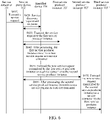
- FIG. 6 is an interaction flowchart of a service request processing method according to an embodiment of the disclosure.
- the "first”, “second”, and “third” in the first service producer instance, the second service producer instance, and the third service producer instance in FIG. 6 only represent the access order of the service producer instances, and the quantity of the service producer instances is only illustrative. Depending on embodiments, there may be any quantity of service producer instances.
- a service consumer 101 transmits a service request to a service proxy device 102.
- the service request includes more than one service type, an order of service types is the same as a service access order.
- the service request includes a service type of the first service producer instance 103', a service type of the second service producer instance 103", and a service type of the third service producer instance 103"'.
- the service request is first transmitted to the first service producer instance 103'.
- the service request is then transmitted to the second service producer instance 103" for processing.
- the service request is then transmitted to the third service producer instance 103'" for processing.
- the service proxy device 102 transmits a service discovery request to a specified device 104, the service discovery request including a plurality of service types.
- the specified device 104 returns service producer instance lists that meet all the service types.
- the service proxy device 102 selects the first service producer instance 103', the second service producer instance 103", and the third service producer instance 103'".
- the service proxy device 102 first transmits the service request to the first service producer instance 103' according to an access order of the service producer instances.
- the service request includes information about the first service producer instance 103' selected by the service proxy device 102, and information about the second service producer instance 103" following the first service instance 103' in the access order, and the subsequent access order.
- the first service producer instance 103' transmits a new service request as a service consumer to the service proxy device 102.
- the new service request includes the information about the second service producer instance 103", the information about the third service producer instance 103′′′, and the access order of the second service producer instance 103" and the third service producer instance 103′′′.
- the service proxy device 102 forwards, according to a subsequent access order, the new service request transmitted by the first service producer instance 103' as a service consumer to the second service producer instance 103".
- the second service producer instance 103" is used to process the new service request transmitted by the first service producer instance 103' as a service consumer.
- the new service request includes the information about the third service producer instance 103′′′
- the second service producer instance 103" transmits a new service request as a service consumer to the service proxy device 102.
- the new service request includes the information about the third service producer instance 103′′′.
- the service proxy device 102 forwards, according to the subsequent access order, the new service request transmitted by the second service producer instance 103" as a service consumer to the third service producer instance 103′′′.
- the third service producer instance 103'" is used to process the new service request transmitted by the second service producer instance 103" as a service consumer.
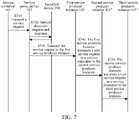
- FIG.7 is an interaction flowchart of a service request processing method according to another embodiment of the disclosure.
- S710 to S730 are the same as S610 to S630 in FIG. 6 , and the details are not repeated.
- the first service producer instance 103' may directly communicate with the second service producer instance 103". Therefore, after processing the service request, the first service producer instance 103' directly transmits a new service request as a service consumer to the second service producer instance 103".
- the second service producer instance 103" may directly communicate with the third service producer instance 103′′′. Therefore, after processing the service request, the second service producer instance 103" directly transmits a new service request as a service consumer to the third service producer instance 103′′′.
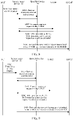
- FIG. 8 is an interaction flowchart of applying a service request processing method to an application scenario of a session management function (SMF) according to an embodiment of the disclosure.
- SMF session management function
- NF network functions
- Each NF may include several NF services.
- the call between NFs is embodied by the call of NF services.
- the service consumer 101 is an access and mobility management function (AMF).
- AMF access and mobility management function
- an AMF transmits a service request to a service proxy device 102, the service request including service types of a V-SMF and an H-SMF and order indication information.
- the service proxy device 102 transmits a service discovery request to a specified device 104 according to the service request.
- the specified device 104 returns, in response to the service discovery request, service producer instance lists that meet all the service types to the service proxy device 102.
- the service proxy device 102 selects a V-SMF instance and an H-SMF instance, and transmits the service request according to an access order of the selected V-SMF instance and H-SMF instance.
- the service proxy device 102 first transmits the service request to the V-SMF instance according to the access order, the transmitted service request including information about the H-SMF instance.
- the V-SMF instance transmits a new service request as a service consumer to the service proxy device 102, the new service request including the information about the H-SMF instance.
- the service proxy device 102 receives the new service request transmitted by the V-SMF instance as a service consumer, the service proxy device 102 transmits the new service request to the H-SMF instance.
- FIG. 9 is an interaction flowchart of applying a service request processing method to an application scenario of a policy control function (PCF) according to an embodiment of the disclosure.
- PCF policy control function
- the service consumer 101 is the NF. If the NF needs to select both a roaming location V-PCF and a home location H-PCF, the V-PCF and the H-PCF are the service producer instances 103.
- the NF transmits a service request to the service proxy device 102, the service request including service types of the V-PCF and the H-PCF and order indication information.
- the service proxy device 102 transmits a service discovery request to a specified device 104 according to the service request. The specified device 104 returns, in response to the service discovery request, service producer instance lists that meet all the service types to the service proxy device 102.
- the service proxy device 102 selects a V-PCF instance and an H-PCF instance, and transmits the service request according to an access order of the selected V-PCF instance and H-PCF instance.
- the service proxy device 102 first transmits the service request to the V-PCF instance according to the access order, the transmitted service request including information about the H-PCF instance.
- the V-PCF instance transmits a new service request as a service consumer to the service proxy device 102, the new service request including the information about the H-PCF instance.
- the service proxy device 102 receives the new service request transmitted by the V-PCF instance as a service consumer, the service proxy device 102 transmits the new service request to the H-PCF instance.
- FIG. 10 is a block diagram of a service request processing apparatus according to an example embodiment of the disclosure. As shown in FIG. 10 , according to an embodiment of the disclosure, a service request processing apparatus is provided. For details not disclosed in the apparatus embodiments of the disclosure, refer to the foregoing embodiments of the service request processing method of the disclosure.
- the apparatus includes:
- control module 1040 is configured to: transmit the service request to a first-in-order service producer instance in the access order, and when a new service request transmitted by a target service producer instance as a service consumer after the service request is processed is received, transmit the new service request to a first-in-order service producer instance in a subsequent access order, the target service producer instance being one of the service producer instances corresponding to the plurality of service producer types.
- the new service request transmitted by the target service producer instance as the service consumer after the service request is processed includes: information about a service producer instance following the target service producer instance in the access order and the subsequent access order; and the new service request forwarded to the first-in-order service producer instance in the subsequent access order includes: information about a service producer instance following the first-in-order service producer instance in the subsequent access order and the subsequent access order.
- control module 1040 is configured to: transmit the service request and the access order to the first-in-order service producer instance in the access order, any service producer instance in the access order transmitting, after processing the service request, a new service request as a service consumer to a next service producer instance for processing, and sequentially return service response messages until all service producer instances in the access order have been processed.
- the obtaining module 1020 includes:
- the obtaining module 1020 is configured to:
- a valid time is set for the historical service discovery result, and when the service producer instance that corresponds to the plurality of service producer types and meets the parameter information in the service request is stored in the historical service discovery result, the obtaining module 1020 is configured to:
- a service request processing apparatus includes:
- a server 101 according to this embodiment of the disclosure is described below with reference to FIG. 11 .
- the server 101 shown in FIG. 11 is only an example, and does not impose any limitation on functions and scopes of use of the embodiments of the disclosure.
- the server 101 is represented in a form of a computing device.
- Components of the server 101 may include, but are not limited to, at least one processing unit 1110, at least one storage unit 1120, and a bus 1130 connected to different system components (including the storage unit 1120 and the processing unit 1110).
- the storage unit stores program code.
- the program code when executed by the processing unit 1110, may cause the processing unit 1110 to perform the operations according to the exemplary implementations of the disclosure described in the exemplary methods in this specification. For example, the processing unit 1110 may perform each operation shown in FIG. 2 .
- the storage unit 1120 may include a readable medium in the form of a volatile storage unit, for example, a random access memory (RAM) unit 11201 and/or a cache storage unit 11202, and may further include a read-only memory (ROM) unit 11203.
- RAM random access memory
- ROM read-only memory
- the storage unit 1120 may further include a program/utility tool 11204 having a group of (at least one) program modules 11205.
- a program module 11205 includes, but is not limited to, an operating system, one or more application programs, other program modules, and program data. Each or a combination of these examples may include implementation of a network environment.
- the bus 1130 may represent one or more of several types of bus structures, including a storage unit bus or storage unit controller, a peripheral bus, an accelerated graphics port, a processing unit, or a local bus using any one of a plurality of bus structures.
- the service proxy device 102 may also communicate with one or more peripherals 700 (for example, a keyboard, a pointing device, a Bluetooth device, and the like), and may also communicate with one or more devices that enable a user to interact with the service proxy device 102, and/or communicate with any device (for example, a router, a modem, and the like) that enables the service proxy device 102 to communicate with one or more other computing devices. This communication may proceed through an input/output (I/O) interface 1150.
- the service proxy device 102 may further communicate with one or more networks (for example, a local area network (LAN), a wide area network (WAN), and/or a public network such as the Internet) through a network adapter 1160.
- networks for example, a local area network (LAN), a wide area network (WAN), and/or a public network such as the Internet
- the network adapter 1160 communicates with other modules in the service proxy device 102 by using the bus 1130.
- other hardware and/or software modules may be used in conjunction with the service proxy device 102, including, but not limited to, microcode, a device driver, a redundancy processing unit, an external magnetic disk driving array, a redundant array of independent disks (RAID) system, a magnetic tape drive, a data backup storage system, and the like.
- the software product may be stored in a non-volatile storage medium (which may be a compact disc read-only memory (CD-ROM), a USB flash drive, a removable hard disk, or the like) or in a network and includes several instructions for instructing a computing device (which may be a personal computer, a server, a terminal device, a network device, or the like) to perform the methods described in the implementations of the disclosure.
- a non-volatile storage medium which may be a compact disc read-only memory (CD-ROM), a USB flash drive, a removable hard disk, or the like
- a computing device which may be a personal computer, a server, a terminal device, a network device, or the like
- an embodiment of the disclosure further provides a storage medium, the storage medium being configured to store a computer program, the computer program being configured to perform the method provided in the foregoing embodiments.
- An embodiment of the disclosure further provides a computer program product including instructions, the computer program product, when run on a computer, causing the computer to perform the method according to the foregoing embodiments.
- the program product may be any combination of one or more readable mediums.
- the readable medium may be a computer-readable signal medium or a computer-readable storage medium.
- the readable storage medium may be, for example, but is not limited to, an electric, magnetic, optical, electromagnetic, infrared, or semi-conductive system, apparatus, or device, or any combination thereof. More specific examples (a non-exhaustive list) of the readable storage medium may include: an electrical connection having one or more wires, a portable disk, a hard disk, a RAM, a ROM, an erasable programmable ROM (EPROM or flash memory), an optical fiber, a portable CD-ROM, an optical storage device, a magnetic storage device, or any appropriate combination thereof.
- the computer-readable signal medium may include a data signal propagated in a baseband or as part of a carrier, and stores readable program code.
- the propagated data signal may be in a plurality of forms, including but not limited to, an electromagnetic signal, an optical signal, or any appropriate combination thereof.
- the readable signal medium may alternatively be any readable medium other than the readable storage medium.
- the readable medium may be configured to transmit, propagate, or transmit a program used by or used in combination with an instruction execution system, an apparatus, or a device.
- the program code included in the readable medium may be transmitted by using any appropriate medium, including but not limited to, a wireless medium, a wired medium, an optical cable, radio frequency (RF) or the like, or any appropriate combination thereof.
- a wireless medium including but not limited to, a wireless medium, a wired medium, an optical cable, radio frequency (RF) or the like, or any appropriate combination thereof.
- RF radio frequency
- the program code used for executing the operations of the disclosure may be written by using one or more programming languages or a combination thereof.
- the programming languages include an object-oriented programming language such as Java, C++ and the like, and also include a conventional procedural programming language such as "C" or similar programming languages.
- the program code may be completely executed on a user computing device, partially executed on a user device, executed as an independent software package, partially executed on a user computing device and partially executed on a remote computing device, or completely executed on a remote computing device or server.
- the remote computing device may be connected to a user computing device through any type of network including a LAN or a WAN, or may be connected to an external computing device (for example, through the Internet by using an Internet service provider).
- modules or units of a device for action execution are mentioned in the foregoing detailed descriptions, the division is not mandatory. Actually, according to the implementations of the disclosure, the features and functions of two or more modules or units described above may be specified in one module or unit. Conversely, features and functions of one module or unit described above may be further divided into a plurality of modules or units to be specified.
- the exemplary implementations described herein may be implemented by software or by combining software with related hardware. Therefore, the technical solutions of the implementations of the disclosure may be implemented in a form of a software product.
- the software product may be stored in a non-volatile storage medium (which may be a CD-ROM, a USB flash drive, a removable hard disk, or the like) or on the network, including several instructions for instructing a computing device (which may be a personal computer, a server, a mobile terminal, a network device, or the like) to perform the methods according to the implementations of the disclosure.
Landscapes
- Engineering & Computer Science (AREA)
- Computer Networks & Wireless Communication (AREA)
- Signal Processing (AREA)
- Management, Administration, Business Operations System, And Electronic Commerce (AREA)
- Mobile Radio Communication Systems (AREA)
- Data Exchanges In Wide-Area Networks (AREA)
- Information Transfer Between Computers (AREA)
Abstract
Description
- This application claims priority to
Chinese Patent Application No. 201910709171.4, entitled "SERVICE REQUEST PROCESSING METHOD AND APPARATUS" filed with the China National Intellectual Property Administration on August 1, 2019 - The disclosure relates to the field of communication technologies, and specifically, to service request processing.
- At present, in the enhancements for Service Based Architecture (eSBA) subject of a Third Generation Partnership Project (3GPP) R16, the concept of a service communication proxy (SCP) is proposed. Communication messages between services are forwarded through an SCP. In addition, the SCP may perform proxy discovery. The SCP transmits a service discovery request to a network repository function (NRF) to discover a service producer list and select a service producer from the list.
- One or more example embodiments of the disclosure provide a service request processing method and a related apparatus, so that a simultaneous discovery mechanism for service producer instances corresponding to a plurality of service producer types may be implemented, thereby improving the efficiency of service processing.
- According to an aspect of embodiments of the disclosure, a service request processing method is provided, performed by a service proxy device, the method including:
- receiving a service request transmitted by a service consumer, the service request including a plurality of service producer types;
- obtaining service producer instances respectively corresponding to the plurality of service producer types according to the service request;
- determining an access order of the service producer instances corresponding to the plurality of service producer types; and
- controlling the service producer instances corresponding to the plurality of service producer types to process the service request according to the access order.
- According to another aspect of the embodiments of the disclosure, a service request processing method is provided, performed by service producer instances, the method including:
- receiving a service request, the service request including information about to-be-accessed service producer instances and an access order of the to-be-accessed service producer instances;
- processing the service request; and
- transmitting, after the service request is processed, a new service request as a service consumer to a service proxy device, so that the service proxy device transmits the new service request to a next service producer instance according to the access order; or transmitting, after the service request is processed, a new service request as a service consumer to a next service producer instance in the access order, so that the next service producer processes the new service request.
- According to another aspect of the embodiments of the disclosure, a service request processing apparatus is provided, including:
- a receiving module, configured to receive a service request transmitted by a service consumer, the service request including a plurality of service producer types;
- an obtaining module, configured to obtain service producer instances respectively corresponding to the plurality of service producer types according to the service request;
- a determining module, configured to determine an access order of the service producer instances corresponding to the plurality of service producer types; and
- a control module, configured to control the service producer instances corresponding to the plurality of service producer types to process the service request according to the access order.
- According to another aspect of the embodiments of the disclosure, a service request processing apparatus is provided, including:
- a receiving module, configured to receive a service request, the service request including information about to-be-accessed service producer instances and an access order of the to-be-accessed service producer instances;
- a response module, configured to respond to the service request; and
- a transmission module, configured to: transmit, after the service request is responded to, a new service request as a service consumer to a service proxy device, so that the service proxy device transmits the new service request to a next service producer instance according to the access order; or transmit, after the service request is responded to, a new service request as a service consumer to a next service producer instance in the access order, so that the next service producer processes the new service request.
- According to another aspect of the embodiments of the disclosure, a server is provided, including:
- a processor, a communication interface, a memory, and a communication bus,
- the processor, the communication interface, and the memory communicating with each other by using the communication bus; the communication interface being an interface of a communication module;
- the memory being configured to store program code and transmit the program code to the processor; and
- the processor being configured to call instructions of the program code in the memory to perform the method in the foregoing aspects.
- According to another aspect of the embodiments of the disclosure, a storage medium is provided, configured to store a computer program, the computer program being configured to perform the method in the foregoing aspects.
- According to another aspect of the embodiments of the disclosure, a computer program product including instructions is provided, the computer program product, when run on a computer, causing the computer to perform the method in the foregoing aspects.
- The technical solutions provided in the embodiments of the disclosure may include the following beneficial effects:
Service producer instances corresponding to a plurality of service producer types included in a service request transmitted by a service consumer are obtained at the same time; an access order of the service producer instances corresponding to the plurality of service producer types is determined; and the service producer instances corresponding to the plurality of service producer types are controlled to process the service request according to the access order, to enhance a service discovery mechanism, thereby reducing a quantity of times of requesting service discovery, and improving the service request processing efficiency. - Other features and advantages of the disclosure become obvious through the following detailed descriptions, or may be partially learned partially through the practice of the disclosure.
- It is to be understood that the foregoing general descriptions and the following detailed descriptions are only exemplary, and cannot limit the disclosure.
- Accompanying drawings herein are incorporated into a specification and constitute a part of this specification, show example embodiments that conform to the disclosure, and are used for describing a principle of the disclosure together with this specification. The accompanying drawings in the following descriptions are merely some example embodiments of the disclosure, and a person of ordinary skill in the art may further obtain other accompanying drawings according to the accompanying drawings without creative efforts. In the accompanying drawings:
-
FIG. 1 is a diagram of a system architecture to which a service request processing method is applied according to an example embodiment of the disclosure. -
FIG. 2 is a flowchart of a service request processing method according to an example embodiment of the disclosure. -
FIG. 3 is a flowchart of obtaining service producer instances according to an example embodiment of the disclosure. -
FIG. 4 is a flowchart of obtaining service producer instances according to another example embodiment of the disclosure. -
FIG. 5 is a flowchart of a service request processing method according to an example embodiment of the disclosure. -
FIG. 6 is an interaction flowchart of a service request processing method according to an example embodiment of the disclosure. -
FIG. 7 is an interaction flowchart of a service request processing method according to another embodiment of the disclosure. -
FIG. 8 is an interaction flowchart of applying a service request processing method to an application scenario of a session management function (SMF) according to an example embodiment of the disclosure. -
FIG. 9 is an interaction flowchart of applying a service request processing method to an application scenario of a policy control function (PCF) according to an example embodiment of the disclosure. -
FIG. 10 is a block diagram of a service request processing apparatus according to an example embodiment of the disclosure. -
FIG. 11 is a schematic structural diagram of a computer system of an electronic device according to an example embodiment of the disclosure. - Example embodiments are now described more comprehensively with reference to the accompanying drawings. However, the example embodiments may be implemented in various forms, and it is not to be understood as being limited to the examples described herein. On the contrary, the example implementations are provided to make the descriptions of the disclosure more comprehensive and complete, and comprehensively convey the idea of the example implementations to a person skilled in the art. The accompanying drawings are merely example illustrations of the disclosure and are not necessarily drawn to scale. The same reference numbers in the accompanying drawings represent the same or similar parts, and therefore, repeated descriptions thereof are omitted.
- In addition, the described features, structures, or characteristics may be combined in one or more exemplary implementations in any appropriate manner. In the following description, many specific details are provided to give a full understanding of the exemplary implementations of the disclosure. However, a person skilled in the art is to be aware that, the technical solutions in the disclosure may be implemented without one or more of the particular details, or another method, unit, or step may be used. In other cases, well-known structures, methods, implementations, or operations are not shown or described in detail, to avoid obscuring the aspects of the disclosure.
- Some of the block diagrams shown in the accompanying drawings are functional entities and do not necessarily correspond to physically or logically independent entities. The functional entities may be implemented in the form of software, or implemented in one or more hardware modules or integrated circuits, or implemented in different networks and/or processor apparatuses and/or micro-controller apparatuses.
- A system architecture to which a service request processing method of the embodiments of the disclosure is applied is described below with reference to
FIG. 1 . - As shown in
FIG. 1 , the system architecture to which the disclosure is applied may include aservice consumer 101, aservice proxy device 102, aservice producer instance 103, and a specifieddevice 104. Theservice consumer 101 is a device that transmits a service request, and may be a server, or may be a user terminal such as a smartphone, a tablet computer, a portable computer, or a desktop computer. Theservice proxy device 102 is a device that receives a service request, such as a service communication proxy (SCP). Theservice proxy device 102 may forward the service request to theservice producer instance 103, and theservice producer instance 103 is configured to respond to the service request and return a response result to theservice consumer 101. - The
service consumer 101 does not directly perform service discovery and selection. When transmitting a service request, theservice consumer 101 transmits a related parameter to theservice proxy device 102. Theservice proxy device 102 has both functions of message forwarding and proxy service discovery in indirect communication, and is an execution body of the service request processing method in this embodiment of the disclosure. Theservice proxy device 102 is inserted between theservice consumer 101 and theservice producer instance 103, and plays a role of transmitting a service discovery request to the specifieddevice 104 for service discovery and forwarding a service request to the service producer instance for service response. Certainly, after theservice producer instance 103 processes the service request, theservice proxy device 102 also needs to receive the response result transmitted by theservice producer instance 103 and return the response result to theservice consumer 101. - The specified
device 104 is communicatively connected to theservice proxy device 102, and theservice proxy device 102 transmits a service discovery request message to the specifieddevice 104 to obtain a result of the service discovery. - It is to be understood that quantities of the
service consumer 101, theservice proxy device 102, theservice producer instance 103, and the specifieddevice 104 inFIG. 1 are merely illustrative. There may be any quantities ofservice consumers 101,service proxy devices 102,service producer instances 103, and specifieddevices 104 depending on embodiments. - According to an embodiment of the disclosure, a service request processing method is provided.
- As shown in
FIG. 2 , the method according to an example embodiment includes the following operations:
S210: Receive a service request transmitted by a service consumer, the service request including a plurality of service producer types. - S220: Obtain service producer instances respectively corresponding to the plurality of service producer types according to the service request.
- S230: Determine an access order of the service producer instances corresponding to the plurality of service producer types.
- S240: Control the service producer instances corresponding to the plurality of service producer types to process the service request according to the access order.
- The operations are described below in detail.
- S210: Receive a service request transmitted by a service consumer, the service request including a plurality of service producer types.
- The service request transmitted by the service consumer may include attribute information, and the attribute information may correspond to a preset attribute. When the service request includes the attribute information, a type of the service request may be determined according to the attribute information in the service request. That is, service types of the service producers included in the service request are determined. In the disclosure, the service types may be expressed as the service producer types.
- In S220, the obtaining the service producer instances corresponding to the service producer types may be directly obtaining the plurality of service producer instances corresponding to the service producer types, or obtaining service producer instance lists corresponding to the service producer types included in the service request. For each service producer type, a service producer instance list is found and returned. The service producer instance list includes a service producer instance of a service type that meets a parameter condition in the service request.
- A manner of obtaining the service producer instances may include transmitting a service discovery request to a specified device, or obtaining the service producer instances directly from a historical service discovery result, which is not limited herein.
- The service producer instances corresponding to the service producer types and obtained according to the service request are not only consistent with names of the service producer types, but also are service producer instances that meet parameter information in the service request.
- In an example embodiment, as shown in
FIG. 3 , S220 specifically includes the following operations:
S2201: Transmit a service discovery request to a specified device according to the plurality of service producer types. - S2202: Receive service producer instance lists returned by the specified device according to the service discovery request.
- S2203: Select the service producer instances corresponding to the plurality of service producer types from the service producer instance lists.
- In S2201, the specified device may discover service producer instance lists that meet all service producer types according to the service producer types and a selection parameter in the received service discovery request.
- In S2202, after generating the service producer instance lists, the specified device returns a service discovery result to a service proxy device, that is, the service producer instance lists corresponding to the service producer types, each service producer type corresponding to one service producer instance list.
- In S2203, after the service producer instance lists are obtained from the specified device, service producer instances corresponding to a service producer type may be selected randomly or in another selection manner from the service producer instance list corresponding to each service producer type.
- In an example embodiment, after the service request is received and before the service discovery request is transmitted to the specified device, that is, before S2201, the service proxy device may detect whether the corresponding service producer instances are stored in a historical service discovery result. In one aspect, the obtaining the service producer instances from the historical service discovery result may avoid re-executing the service discovery request and wasting computing resources. In another aspect, the service producer instances are directly obtained from the historical service discovery result, so that the time of service request processing may be further reduced.
- In an example embodiment, as shown in
FIG. 4 , S220 includes the following operations:
S2201': Detect whether a service producer instance that corresponds to the plurality of service producer types and meets parameter information in the service request is stored in a historical service discovery result. - When the service producer instance is stored, S2202' is performed; and when the service producer instance is not stored, S2203' is performed.
- S2202': Obtain the service producer instance that corresponds to the plurality of service producer types and meets the parameter information in the service request from the historical service discovery result.
- S2203': Perform S2201 in
FIG.3 . - In S2201', the historical service discovery result is information obtained by transmitting the service discovery request to the specified device during service access before the current service request. The information is stored in the service proxy device. When a selection parameter of a service producer included in a subsequent service request is consistent with a previous discovery result, the previously saved service discovery result is used directly without the need to perform service discovery on the specified device, thereby saving computing resources.
- In an example embodiment, a valid time is set for the historical service discovery result, and when the service producer instance that corresponds to the plurality of service producer types and meets the parameter information in the service request is stored in the historical service discovery result, the method further includes:
- determining whether the historical service discovery result exceeds the valid time;
- performing S2201 when the historical service discovery result exceeds the valid time; and
- performing S2202' when the historical service discovery result does not exceed the valid time.
- In an example embodiment, a valid time is set for the historical service discovery result, indicating that the historical service discovery result is only valid within the set time. If the historical service discovery result exceeds the time, the historical service discovery result is invalid. If the historical service discovery result stores a service producer instance that corresponds to the plurality of service producer types and meets the parameter information in the service request, it needs to be further determined whether the historical service discovery result exceeds the valid time. If the historical service discovery result exceeds the valid time, the historical service discovery result is not valid, the service proxy device still needs to transmit the service discovery request to the specified device according to the service producer types included in the service request and the parameter information included in the service request, and the service proxy device deletes invalid service discovery results.
- In this embodiment, the valid time is set and invalid service discovery results are deleted, so that in one aspect, the accuracy of historical service discovery data may be ensured, and in another aspect, old data may be prevented from occupying memory space and storage space may be saved, thereby improving a speed of access to the historical service discovery data.
- Before requesting service discovery from the specified device, it is detected whether a service producer instance that corresponds to the service producer types and meets parameter information in the service request is included in a historical service discovery result. The service producer instance that corresponds to the service producer types is directly obtained from the historical service discovery result that meets the selection parameter according to the service producer types in the service request, so that the query time is short and the access speed is fast.
- In S230, an access order of the service producer instances corresponding to the plurality of service producer types is determined.
- When a plurality of service producer instances are to be accessed, a service producer instance of a service producer type is selected from a service producer instance list corresponding to each service producer type. The instances corresponding to the service producer types are accessed for a service request according to a specified access order.
- In an example embodiment, S230 specifically includes the following operations:
- determining an arrangement order of the plurality of service producer types according to order indication information in the service request; and
- using the arrangement order of the plurality of service producer types as the access order of the service producer instances corresponding to the plurality of service producer types.
- In this embodiment, the service request transmitted by the service consumer includes order indication information. The order indication information is used to indicate the arrangement order of the service producer types in the service request, that is, the access order of the service producer instances corresponding to the service producer types. The access order includes at least a serial order, and the serial order is used to indicate that the service producer instances are accessed in a serial order.
- In an example embodiment, the access order may further include a parallel order. The parallel order is used to indicate that the service producer instances are accessed simultaneously, and there is no requirement for a sequential order. When the access order is a parallel order, the service proxy device simultaneously forwards the service request to a plurality of service producer instances in the parallel order for processing. After completing the processing, the plurality of service producer instances return service response messages to the service consumer.
- The embodiments in the disclosure are mainly aimed at controlling the processing of the service request by the service producer instances in the serial order.
- For example, if a service request transmitted by the service consumer includes three service producer types A, B, and C, an arrangement order of the three service producer types is determined according to order indication information included in the service request as A, B, and C. That is, A is the first service producer type, B is the second service producer type, and C is the third service producer type.
- After the arrangement order of the service producer types are determined, the arrangement order may be directly used as an access order of corresponding service producer instances. If the service producer instances corresponding to the three service producer types A, B, and C included in the service request transmitted by the service consumer are respectively a, b, and c, the access order of the three service producer instances a, b, and c is a, b, and c. That is, a is the first service producer instance to be accessed, b is the second service producer instance to be accessed, and c is the third service producer instance to be accessed.
- According to the access order, after the second last service producer instance processes the service request, the service request is transmitted to the last service producer instance for processing. Because there is only one service producer instance in the service request, the access order does not need to be included in the service request.
- In S240, the service producer instances corresponding to the plurality of service producer types are controlled to process the service request according to the access order.
- In S240, after the access order of the service producer instances is determined, the service producer instances may be accessed sequentially according to the access order to process the service request.
- In an example embodiment, S240 specifically includes the following operation:
transmitting the service request to a first-in-order service producer instance in the access order according to the access order, and when a new service request is received from a target service producer instance, as a service consumer, after the service request is processed, transmitting the new service request to a first-in-order service producer instance in a subsequent access order. The target service producer instance is one of the service producer instances corresponding to the plurality of service producer types. - In this embodiment, after processing the service request, any service producer instance transmits a new service request as a service consumer to the service proxy device. After receiving the new service request, the service proxy device forwards the new service request to the first-in-order service producer instance in the subsequent access order.
- The subsequent access order is an access order of service producer instances that do not receive the service request. It is clear that the service producer instances in the subsequent access order do not include service producer instances that have processed the service request. The first-in-order service producer instance in the subsequent access order is a service producer instance being the first instance in the subsequent access order.
- For example, a service request transmitted by the service consumer includes three service producer types A, B, and C, service producer instances corresponding to the three service producer types A, B, and C are respectively a, b, and c, and an access order is a, b, and c. The service proxy device transmits the service request to a first service producer instance a, which is a first-in-order service producer instance in the access order of a, b, and c. After the first service producer instance a processes the service request, the first service producer instance a transmits a new service request as a service consumer to the service proxy device. After receiving the new service request transmitted by the first service producer instance a as a service consumer, the service proxy device forwards the new service request to a first-in-order service producer instance in the subsequent access order of b and c, that is, the second service producer instance b. The second service producer instance b is used to process the new service request transmitted by the first service producer instance a as a service consumer. After the second service producer instance b processes the service request, the second service producer instance b transmits a new service request as a service consumer to the service proxy device. After receiving the new service request transmitted by the second service producer instance b as a service consumer, the service proxy device forwards the new service request to the third service producer instance c. The third service producer instance c is used to process the new service request transmitted by the second service producer instance b as a service consumer. When processing the service request, the last service producer instance c in the access order returns a service response message to the second service producer instance b, the second service producer instance b transmits a service response message to the first service producer instance a, and the first service producer instance a transmits a service response message to the service consumer.
- In an example embodiment, the new service request transmitted by the target service producer instance as the service consumer after the service request is processed includes: information about a service producer instance following the target service producer instance in the access order and the subsequent access order.
- The new service request forwarded to the first-in-order service producer instance in the subsequent access order includes: information about a service producer instance following the first-in-order service producer instance in the subsequent access order and the subsequent access order.
- In this embodiment, the new service request transmitted by the target service producer instance as the service consumer after the service request is processed includes: information about a service producer instance following the target service producer instance in the access order and the subsequent access order, the subsequent access order being an access order of service producer instances following the target service producer instance.
- The new service request forwarded to the first-in-order service producer instance in the subsequent access order includes: information about a service producer instance following the first-in-order service producer instance in the subsequent access order and a further subsequent access order. For example, the service request transmitted by the service proxy device to the first service producer instance a includes information about the second service producer instance b and the third service producer instance c, and the access order of the second service producer instance b and the service producer instance c. After processing the new service request, the first service producer instance a transmits another new service request as a service consumer to the service proxy device. The another new service request includes the information about the second service producer instance b and the third service producer instance c, and the access order of the second service producer instance b and the service producer instance c. After processing the service request, the second service producer instance b transmits a new service request as a service consumer to the service proxy device. The new service request includes information about the third service producer instance c. Because there is only one service producer instance c in the service request, there is no order for one service producer instance, so that the service request does not need to include the subsequent access order.
- The new service request transmitted by the first service producer instance a as a service consumer and received by the service proxy device includes the information about the second service producer instance b and the third service producer instance c, and the access order of the second service producer instance b and the third service producer instance c. The new service request transmitted by the second service producer instance b as a service consumer and received by the service proxy device includes the information about the third service producer instance c. Because there is only one service producer instance c in the service request, there is no order for one service producer instance, so that the service request does not need to include the subsequent access order.
- In an example embodiment, S240 specifically includes the following operation:
transmitting the service request and the access order to the first-in-order service producer instance in the access order, any service producer instance in the access order transmitting, after processing the service request, a new service request as a service consumer to a next service producer instance for processing, and sequentially returning service response messages until all service producer instances in the access order have been processed. - In this embodiment, when the service producer instances may communicate directly with each other, any service producer instance, after responding to the service request, may directly transmit the service request as a service consumer to the next service producer instance for processing according to the access order, and sequentially return service response messages until all service producer instances in the access order have been processed.
- For example, a service request transmitted by the service consumer includes three service producer types A, B, and C, service producer instances corresponding to the three service producer types A, B, and C are respectively a, b, and c, and an access order is a, b, and c. The service proxy device transmits the service request to the first service producer instance a. After the first service producer instance a processes the service request, the first service producer instance a transmits a new service request as a service consumer to the second service producer instance b. The second service producer instance b is used to process the new service request transmitted by the first service producer instance a as a service consumer. After the second service producer instance b processes the service request, the second service producer instance b transmits a new service request as a service consumer to the third service producer instance c. When processing the service request, the last service producer instance c in the access order returns a service response message to the second service producer instance b, the second service producer instance b transmits a service response message to the first service producer instance a, and the first service producer instance a transmits a service response message to the service consumer.
- The advantage of this embodiment is that the service request may be forwarded directly between the service producer instances, without the need of connection and communication between service proxy devices, so that the service request forwarding time is reduced and service request processing efficiency is improved.
- According to an embodiment of this disclosure, a service request processing method is provided. The method is performed by any
service producer instance 103. - As shown in
FIG. 5 , the method includes the following operations:
S510: Receive a service request, the service request including information about service producer instances to be accessed (or referred to as to-be-accessed service producer instances) and an access order of the to-be-accessed service producer instances. - S520: Process the service request.
- S530: Transmit, after the service request is processed, a new service request as a service consumer to a service proxy device, so that the service proxy device transmits the new service request to a next service producer instance according to the access order; or transmit, after the service request is processed, a new service request as a service consumer to a next service producer instance in the access order, so that the next service producer processes the new service request.
- In S510, in addition to the plurality of service producer types, the service request further includes the information and the access order of the to-be-accessed service producer instances.
- The to-be-accessed service producer instances are service producer instances that do not receive the service request. A service producer instance that has received the service request but has not started to process the service request cannot be considered as a to-be-accessed service producer instance.
- In S530, two possible implementations may be included:
In the first implementation, after a current service producer instance processes the service request, the current service producer instance transmits a new service request as a service consumer to the service proxy device. The service request includes the information about the to-be-accessed service producer instances and the subsequent access order. The service proxy device may forward the new service request to the first-in-order service producer instance in the subsequent access order according to the information included in the received new service request. - In the second implementation, when the service producer instances may communicate directly with each other, after the current service producer instance processes the service request, the current service producer instance transmits a new service request as a service consumer to the next service producer instance.
-
FIG. 6 is an interaction flowchart of a service request processing method according to an embodiment of the disclosure. - The "first", "second", and "third" in the first service producer instance, the second service producer instance, and the third service producer instance in
FIG. 6 only represent the access order of the service producer instances, and the quantity of the service producer instances is only illustrative. Depending on embodiments, there may be any quantity of service producer instances. - In S610, a
service consumer 101 transmits a service request to aservice proxy device 102. When the service request includes more than one service type, an order of service types is the same as a service access order. For example, the service request includes a service type of the first service producer instance 103', a service type of the secondservice producer instance 103", and a service type of the thirdservice producer instance 103"'. In this way, the service request is first transmitted to the first service producer instance 103'. After the first service producer instance processes the service request, the service request is then transmitted to the secondservice producer instance 103" for processing. After the second service producer instance processes the service request, the service request is then transmitted to the third service producer instance 103'" for processing. - In S620, after receiving the service request, the
service proxy device 102 transmits a service discovery request to a specifieddevice 104, the service discovery request including a plurality of service types. The specifieddevice 104 returns service producer instance lists that meet all the service types. Theservice proxy device 102 selects the first service producer instance 103', the secondservice producer instance 103", and the third service producer instance 103'". - In S630, the
service proxy device 102 first transmits the service request to the first service producer instance 103' according to an access order of the service producer instances. The service request includes information about the first service producer instance 103' selected by theservice proxy device 102, and information about the secondservice producer instance 103" following the first service instance 103' in the access order, and the subsequent access order. - In S640, after the first service producer instance 103' processes the service request, the first service producer instance 103' transmits a new service request as a service consumer to the
service proxy device 102. The new service request includes the information about the secondservice producer instance 103", the information about the thirdservice producer instance 103‴, and the access order of the secondservice producer instance 103" and the thirdservice producer instance 103‴. - In S650, the
service proxy device 102 forwards, according to a subsequent access order, the new service request transmitted by the first service producer instance 103' as a service consumer to the secondservice producer instance 103". The secondservice producer instance 103" is used to process the new service request transmitted by the first service producer instance 103' as a service consumer. The new service request includes the information about the thirdservice producer instance 103‴ - In S660, after the second
service producer instance 103" processes the service request, the secondservice producer instance 103" transmits a new service request as a service consumer to theservice proxy device 102. The new service request includes the information about the thirdservice producer instance 103‴. - In S670, the
service proxy device 102 forwards, according to the subsequent access order, the new service request transmitted by the secondservice producer instance 103" as a service consumer to the thirdservice producer instance 103‴. The third service producer instance 103'" is used to process the new service request transmitted by the secondservice producer instance 103" as a service consumer. -
FIG.7 is an interaction flowchart of a service request processing method according to another embodiment of the disclosure. InFIG. 7 , S710 to S730 are the same as S610 to S630 inFIG. 6 , and the details are not repeated. - In S740, the first service producer instance 103' may directly communicate with the second
service producer instance 103". Therefore, after processing the service request, the first service producer instance 103' directly transmits a new service request as a service consumer to the secondservice producer instance 103". - In S750, the second
service producer instance 103" may directly communicate with the thirdservice producer instance 103‴. Therefore, after processing the service request, the secondservice producer instance 103" directly transmits a new service request as a service consumer to the thirdservice producer instance 103‴. -
FIG. 8 is an interaction flowchart of applying a service request processing method to an application scenario of a session management function (SMF) according to an embodiment of the disclosure. - In the 5G core network, network elements of different types in a control plane may be considered as different types of network functions (NF). Each NF may include several NF services. In the existing core network procedure, the call between NFs is embodied by the call of NF services. In an application scenario selected by an SMF in a home location roaming scenario of the 5G core network, the
service consumer 101 is an access and mobility management function (AMF). In S810, an AMF transmits a service request to aservice proxy device 102, the service request including service types of a V-SMF and an H-SMF and order indication information. In S820, theservice proxy device 102 transmits a service discovery request to a specifieddevice 104 according to the service request. The specifieddevice 104 returns, in response to the service discovery request, service producer instance lists that meet all the service types to theservice proxy device 102. Theservice proxy device 102 selects a V-SMF instance and an H-SMF instance, and transmits the service request according to an access order of the selected V-SMF instance and H-SMF instance. In S830, theservice proxy device 102 first transmits the service request to the V-SMF instance according to the access order, the transmitted service request including information about the H-SMF instance. In S840, after processing, the V-SMF instance transmits a new service request as a service consumer to theservice proxy device 102, the new service request including the information about the H-SMF instance. In S850, after theservice proxy device 102 receives the new service request transmitted by the V-SMF instance as a service consumer, theservice proxy device 102 transmits the new service request to the H-SMF instance. -
FIG. 9 is an interaction flowchart of applying a service request processing method to an application scenario of a policy control function (PCF) according to an embodiment of the disclosure. - In an application scenario selected by a PCF in the home location roaming scenario of the 5G core network, the
service consumer 101 is the NF. If the NF needs to select both a roaming location V-PCF and a home location H-PCF, the V-PCF and the H-PCF are theservice producer instances 103. In S910, the NF transmits a service request to theservice proxy device 102, the service request including service types of the V-PCF and the H-PCF and order indication information. In S920, theservice proxy device 102 transmits a service discovery request to a specifieddevice 104 according to the service request. The specifieddevice 104 returns, in response to the service discovery request, service producer instance lists that meet all the service types to theservice proxy device 102. Theservice proxy device 102 selects a V-PCF instance and an H-PCF instance, and transmits the service request according to an access order of the selected V-PCF instance and H-PCF instance. In S930, theservice proxy device 102 first transmits the service request to the V-PCF instance according to the access order, the transmitted service request including information about the H-PCF instance. In S940, after processing, the V-PCF instance transmits a new service request as a service consumer to theservice proxy device 102, the new service request including the information about the H-PCF instance. In S950, after theservice proxy device 102 receives the new service request transmitted by the V-PCF instance as a service consumer, theservice proxy device 102 transmits the new service request to the H-PCF instance. -
FIG. 10 is a block diagram of a service request processing apparatus according to an example embodiment of the disclosure. As shown inFIG. 10 , according to an embodiment of the disclosure, a service request processing apparatus is provided. For details not disclosed in the apparatus embodiments of the disclosure, refer to the foregoing embodiments of the service request processing method of the disclosure. The apparatus includes: - a
receiving module 1010, configured to receive a service request transmitted by a service consumer, the service request including a plurality of service producer types; - an obtaining
module 1020, configured to obtain service producer instances respectively corresponding to the plurality of service producer types according to the service request; - a determining
module 1030, configured to determine an access order of the service producer instances corresponding to the plurality of service producer types; and - a
control module 1040, configured to control the service producer instances corresponding to the plurality of service producer types to process the service request according to the access order. - In an embodiment, the
control module 1040 is configured to:
transmit the service request to a first-in-order service producer instance in the access order, and when a new service request transmitted by a target service producer instance as a service consumer after the service request is processed is received, transmit the new service request to a first-in-order service producer instance in a subsequent access order, the target service producer instance being one of the service producer instances corresponding to the plurality of service producer types. - In an embodiment, the new service request transmitted by the target service producer instance as the service consumer after the service request is processed includes: information about a service producer instance following the target service producer instance in the access order and the subsequent access order; and
the new service request forwarded to the first-in-order service producer instance in the subsequent access order includes: information about a service producer instance following the first-in-order service producer instance in the subsequent access order and the subsequent access order. - In an embodiment, the
control module 1040 is configured to:
transmit the service request and the access order to the first-in-order service producer instance in the access order, any service producer instance in the access order transmitting, after processing the service request, a new service request as a service consumer to a next service producer instance for processing, and sequentially return service response messages until all service producer instances in the access order have been processed. - In an embodiment, the obtaining
module 1020 includes: - a transmission unit, configured to transmit a service discovery request to a specified device according to the plurality of service producer types;
- a receiving unit, configured to receive service producer instance lists returned by the specified device according to the service discovery request; and
- a selection unit, configured to select the service producer instances corresponding to the plurality of service producer types from the service producer instance lists.
- In an embodiment, the obtaining
module 1020 is configured to: - detect whether a service producer instance that corresponds to the plurality of service producer types and meets parameter information in the service request is stored in a historical service discovery result;
- obtain, the service producer instance that corresponds to the plurality of service producer types and meets the parameter information in the service request from the historical service discovery result when the service producer instance is stored; and
- transmit, when the service producer instance is not stored, a service discovery request to the specified device according to the plurality of service producer types and the parameter information included in the service request.
- In an embodiment, a valid time is set for the historical service discovery result, and when the service producer instance that corresponds to the plurality of service producer types and meets the parameter information in the service request is stored in the historical service discovery result, the obtaining
module 1020 is configured to: - determine whether the historical service discovery result exceeds the valid time;
- transmit, when the historical service discovery result exceeds the valid time, a service discovery request to the specified device according to the plurality of service producer types and the parameter information included in the service request; and
- obtain, when the historical service discovery result does not exceed the valid time, the service producer instance that corresponds to the plurality of service producer types and meets the parameter information in the service request from the historical service discovery result. In an embodiment, the determining
module 1030 is configured to: - determine an arrangement order of the plurality of service producer types according to order indication information in the service request; and
- use the arrangement order of the plurality of service producer types as the access order of the service producer instances corresponding to the plurality of service producer types.
- According to an embodiment of the disclosure, a service request processing apparatus is further provided. The apparatus includes:
- a receiving module, configured to receive a service request, the service request including information about to-be-accessed service producer instances and an access order of the to-be-accessed service producer instances;
- a response module, configured to respond to the service request; and
- a transmission module, configured to: transmit, after the service request is responded to, a new service request as a service consumer to a service proxy device, so that the service proxy device transmits the new service request to a next service producer instance according to the access order; or transmit, after the service request is responded to, a new service request as a service consumer to a next service producer instance in the access order, so that the next service producer processes the new service request.
- A
server 101 according to this embodiment of the disclosure is described below with reference toFIG. 11 . Theserver 101 shown inFIG. 11 is only an example, and does not impose any limitation on functions and scopes of use of the embodiments of the disclosure. - As shown in
FIG. 11 , theserver 101 is represented in a form of a computing device. Components of theserver 101 may include, but are not limited to, at least oneprocessing unit 1110, at least onestorage unit 1120, and abus 1130 connected to different system components (including thestorage unit 1120 and the processing unit 1110). The storage unit stores program code. The program code, when executed by theprocessing unit 1110, may cause theprocessing unit 1110 to perform the operations according to the exemplary implementations of the disclosure described in the exemplary methods in this specification. For example, theprocessing unit 1110 may perform each operation shown inFIG. 2 . - The
storage unit 1120 may include a readable medium in the form of a volatile storage unit, for example, a random access memory (RAM)unit 11201 and/or acache storage unit 11202, and may further include a read-only memory (ROM)unit 11203. - The
storage unit 1120 may further include a program/utility tool 11204 having a group of (at least one)program modules 11205. Such aprogram module 11205 includes, but is not limited to, an operating system, one or more application programs, other program modules, and program data. Each or a combination of these examples may include implementation of a network environment. - The
bus 1130 may represent one or more of several types of bus structures, including a storage unit bus or storage unit controller, a peripheral bus, an accelerated graphics port, a processing unit, or a local bus using any one of a plurality of bus structures. - The
service proxy device 102 may also communicate with one or more peripherals 700 (for example, a keyboard, a pointing device, a Bluetooth device, and the like), and may also communicate with one or more devices that enable a user to interact with theservice proxy device 102, and/or communicate with any device (for example, a router, a modem, and the like) that enables theservice proxy device 102 to communicate with one or more other computing devices. This communication may proceed through an input/output (I/O)interface 1150. In addition, theservice proxy device 102 may further communicate with one or more networks (for example, a local area network (LAN), a wide area network (WAN), and/or a public network such as the Internet) through anetwork adapter 1160. As shown in FIG, thenetwork adapter 1160 communicates with other modules in theservice proxy device 102 by using thebus 1130. It is to be understood that although not shown in the figure, other hardware and/or software modules may be used in conjunction with theservice proxy device 102, including, but not limited to, microcode, a device driver, a redundancy processing unit, an external magnetic disk driving array, a redundant array of independent disks (RAID) system, a magnetic tape drive, a data backup storage system, and the like. - Through descriptions of the foregoing implementations, it is easy for a person skilled in the art to understand that the exemplary implementations described herein may be implemented by software or by combining software with related hardware. Therefore, the technical solutions of the implementations of the disclosure may be implemented in a form of a software product. The software product may be stored in a non-volatile storage medium (which may be a compact disc read-only memory (CD-ROM), a USB flash drive, a removable hard disk, or the like) or in a network and includes several instructions for instructing a computing device (which may be a personal computer, a server, a terminal device, a network device, or the like) to perform the methods described in the implementations of the disclosure.
- In addition, an embodiment of the disclosure further provides a storage medium, the storage medium being configured to store a computer program, the computer program being configured to perform the method provided in the foregoing embodiments.
- An embodiment of the disclosure further provides a computer program product including instructions, the computer program product, when run on a computer, causing the computer to perform the method according to the foregoing embodiments.
- The program product may be any combination of one or more readable mediums. The readable medium may be a computer-readable signal medium or a computer-readable storage medium. The readable storage medium may be, for example, but is not limited to, an electric, magnetic, optical, electromagnetic, infrared, or semi-conductive system, apparatus, or device, or any combination thereof. More specific examples (a non-exhaustive list) of the readable storage medium may include: an electrical connection having one or more wires, a portable disk, a hard disk, a RAM, a ROM, an erasable programmable ROM (EPROM or flash memory), an optical fiber, a portable CD-ROM, an optical storage device, a magnetic storage device, or any appropriate combination thereof.
- The computer-readable signal medium may include a data signal propagated in a baseband or as part of a carrier, and stores readable program code. The propagated data signal may be in a plurality of forms, including but not limited to, an electromagnetic signal, an optical signal, or any appropriate combination thereof. The readable signal medium may alternatively be any readable medium other than the readable storage medium. The readable medium may be configured to transmit, propagate, or transmit a program used by or used in combination with an instruction execution system, an apparatus, or a device.
- The program code included in the readable medium may be transmitted by using any appropriate medium, including but not limited to, a wireless medium, a wired medium, an optical cable, radio frequency (RF) or the like, or any appropriate combination thereof.
- The program code used for executing the operations of the disclosure may be written by using one or more programming languages or a combination thereof. The programming languages include an object-oriented programming language such as Java, C++ and the like, and also include a conventional procedural programming language such as "C" or similar programming languages. The program code may be completely executed on a user computing device, partially executed on a user device, executed as an independent software package, partially executed on a user computing device and partially executed on a remote computing device, or completely executed on a remote computing device or server. In a case involving a remote computing device, the remote computing device may be connected to a user computing device through any type of network including a LAN or a WAN, or may be connected to an external computing device (for example, through the Internet by using an Internet service provider).
- Although several modules or units of a device for action execution are mentioned in the foregoing detailed descriptions, the division is not mandatory. Actually, according to the implementations of the disclosure, the features and functions of two or more modules or units described above may be specified in one module or unit. Conversely, features and functions of one module or unit described above may be further divided into a plurality of modules or units to be specified.
- In addition, although the various operations of the method in the disclosure are described in a specific order in the accompanying drawings, this does not require or imply that the steps are bound to be performed in the specific order, or all the steps shown are bound to be performed to achieve the desired result. Additionally or alternatively, some steps may be omitted, a plurality of steps may be combined into one step for execution, and/or one step may be decomposed into a plurality of steps for execution, and the like.
- Through descriptions of the foregoing implementations, it is easy for a person skilled in the art to understand that the exemplary implementations described herein may be implemented by software or by combining software with related hardware. Therefore, the technical solutions of the implementations of the disclosure may be implemented in a form of a software product. The software product may be stored in a non-volatile storage medium (which may be a CD-ROM, a USB flash drive, a removable hard disk, or the like) or on the network, including several instructions for instructing a computing device (which may be a personal computer, a server, a mobile terminal, a network device, or the like) to perform the methods according to the implementations of the disclosure.
- Other embodiments of the disclosure are apparent to a person skilled in the art from consideration of the specification and practice of the disclosure here. The disclosure is intended to cover any variations, uses or adaptive changes of the disclosure. Such variations, uses or adaptive changes follow the general principles of the disclosure, and include well-known knowledge and conventional technical means in the art that are not disclosed in the disclosure. The specification and the embodiments are merely considered as examples, and the actual scope and the spirit of the disclosure are pointed out by the following claims.
Claims (14)
- A service request processing method, performed by a service proxy device, the method comprising:receiving a service request from a service consumer, the service request comprising a plurality of service producer types;obtaining service producer instances respectively corresponding to the plurality of service producer types according to the service request;determining an access order of the service producer instances corresponding to the plurality of service producer types; andcontrolling the service producer instances corresponding to the plurality of service producer types to process the service request based on the access order.
- The method according to claim 1, wherein the controlling the service producer instances corresponding to the plurality of service producer types to process the service request according to the access order comprises:transmitting the service request to a first-in-order service producer instance in the access order according to the access order, andbased on receiving a new service request from a target service producer instance, as the service consumer, after the service request is processed, transmitting the new service request to a first-in-order service producer instance in a subsequent access order, the target service producer instance being one of the service producer instances corresponding to the plurality of service producer types.
- The method according to claim 2, wherein the new service request received from the target service producer instance as the service consumer after the service request is processed comprises: information about a service producer instance following the target service producer instance in the access order and the subsequent access order; and
the new service request transmitted to the first-in-order service producer instance in the subsequent access order comprises: information about a service producer instance following the first-in-order service producer instance in the subsequent access order, and a further subsequent access order. - The method according to claim 1, wherein the controlling the service producer instances corresponding to the plurality of service producer types to process the service request according to the access order comprises:
transmitting the service request and the access order to a first-in-order service producer instance in the access order according to the access order, any service producer instance in the access order transmitting, after processing the service request, a new service request as a service consumer to a next service producer instance for processing, and sequentially returning service response messages until all service producer instances in the access order have been processed. - The method according to claim 1, wherein the obtaining the service producer instances respectively corresponding to the plurality of service producer types according to the service request comprises:transmitting a service discovery request to a specified device according to the plurality of service producer types;receiving service producer instance lists from the specified device according to the service discovery request; andselecting the service producer instances corresponding to the plurality of service producer types from the service producer instance lists.
- The method according to claim 5, wherein before the transmitting a service discovery request to a specified device according to the plurality of service producer types, the method further comprises:detecting whether a service producer instance that corresponds to the plurality of service producer types and meets parameter information in the service request is stored in a historical service discovery result;obtaining, the service producer instance that corresponds to the plurality of service producer types and meets the parameter information in the service request from the historical service discovery result, based on the service producer instance being stored; andbased on the service producer instance being not stored, transmitting the service discovery request to the specified device according to the plurality of service producer types.
- The method according to claim 6, wherein a valid time is set for the historical service discovery result, and the method further comprises, based on the service producer instance that corresponds to the plurality of service producer types and meets the parameter information in the service request being stored in the historical service discovery result, the method further comprises:determining whether the historical service discovery result exceeds the valid time;based on the historical service discovery result exceeding the valid time, transmitting the service discovery request to the specified device according to the plurality of service producer types; andperforming, in a case that the historical service discovery result does not exceed the valid time, the operation of obtaining the service producer instance that corresponds to the plurality of service producer types and meets the parameter information in the service request from the historical service discovery result.
- The method according to claim 1, wherein the determining the access order of the service producer instances corresponding to the plurality of service producer types comprises:determining an arrangement order of the plurality of service producer types according to order indication information in the service request; anddetermining, based on the arrangement order of the plurality of service producer types, the access order of the service producer instances corresponding to the plurality of service producer types.
- A service request processing method, performed by service producer instances, the method comprising:receiving a service request, the service request comprising information about to-be-accessed service producer instances and an access order of the to-be-accessed service producer instances;processing the service request; andtransmitting, after the service request is processed, a new service request as a service consumer to a service proxy device, so that the service proxy device transmits the new service request to a next service producer instance according to the access order; or transmitting, after the service request is processed, a new service request as a service consumer to a next service producer instance in the access order, so that the next service producer processes the new service request.
- A service request processing apparatus, comprising:a receiving module, configured to receive a service request transmitted by a service consumer, the service request comprising a plurality of service producer types;an obtaining module, configured to obtain service producer instances respectively corresponding to the plurality of service producer types according to the service request;a determining module, configured to determine an access order of the service producer instances corresponding to the plurality of service producer types; anda control module, configured to control the service producer instances corresponding to the plurality of service producer types to process the service request according to the access order.
- A service request processing apparatus, comprising:a receiving module, configured to receive a service request, the service request comprising information about to-be-accessed service producer instances and an access order of the to-be-accessed service producer instances;a response module, configured to respond to the service request; anda transmission module, configured to: transmit, after the service request is responded to, a new service request as a service consumer to a service proxy device, so that the service proxy device transmits the new service request to a next service producer instance according to the access order; or transmit, after the service request is responded to, a new service request as a service consumer to a next service producer instance in the access order, so that the next service producer processes the new service request.
- A server, comprising:a processor, a communication interface, a memory, and a communication bus,the processor, the communication interface, and the memory communicating with each other by using the communication bus; the communication interface being an interface of a communication module;the memory being configured to store program code and transmit the program code to the processor; andthe processor being configured to call instructions of the program code in the memory to perform the method according to any one of claims 1 to 8, or perform the method according to claim 9.
- A storage medium, configured to store a computer program, the computer program being configured to perform the method according to any one of claims 1 to 8, or perform the method according to claim 9.
- A computer program product comprising instructions, the computer program product, when run on a computer, causing the computer to perform the method according to any one of claims 1 to 8, or perform the method according to claim 9.
Applications Claiming Priority (2)
| Application Number | Priority Date | Filing Date | Title |
|---|---|---|---|
| CN201910709171.4A CN110365796B (en) | 2019-08-01 | 2019-08-01 | Service request processing method and device |
| PCT/CN2020/100596 WO2021017771A1 (en) | 2019-08-01 | 2020-07-07 | Service request processing method and related device |
Publications (3)
| Publication Number | Publication Date |
|---|---|
| EP4009605A1 true EP4009605A1 (en) | 2022-06-08 |
| EP4009605A4 EP4009605A4 (en) | 2023-08-09 |
| EP4009605B1 EP4009605B1 (en) | 2024-09-18 |
Family
ID=68222884
Family Applications (1)
| Application Number | Title | Priority Date | Filing Date |
|---|---|---|---|
| EP20847113.6A Active EP4009605B1 (en) | 2019-08-01 | 2020-07-07 | Service request processing method and related device |
Country Status (6)
| Country | Link |
|---|---|
| US (1) | US11582321B2 (en) |
| EP (1) | EP4009605B1 (en) |
| JP (1) | JP7410166B2 (en) |
| KR (1) | KR102565857B1 (en) |
| CN (1) | CN110365796B (en) |
| WO (1) | WO2021017771A1 (en) |
Families Citing this family (10)
| Publication number | Priority date | Publication date | Assignee | Title |
|---|---|---|---|---|
| CN110365796B (en) * | 2019-08-01 | 2022-04-29 | 腾讯科技(深圳)有限公司 | Service request processing method and device |
| CN115022176B (en) * | 2019-11-06 | 2023-08-22 | 腾讯科技(深圳)有限公司 | NWDAF network element selection method, device, electronic equipment and readable storage medium |
| US20230075951A1 (en) * | 2020-02-07 | 2023-03-09 | Telefonaktiebolaget Lm Ericsson (Publ) | Method and apparatus for registration data retrieval |
| JP7507305B2 (en) * | 2020-07-31 | 2024-06-27 | テレフオンアクチーボラゲット エルエム エリクソン(パブル) | Service Request Processing |
| JP7511078B2 (en) * | 2020-07-31 | 2024-07-04 | テレフオンアクチーボラゲット エルエム エリクソン(パブル) | PROXY-MEDIATED SERVICE REQUEST PROCESSING AMONG MULTIPLE NETWORK FUNCTIONS - Patent application |
| CN112054923B (en) * | 2020-08-24 | 2023-08-18 | 腾讯科技(深圳)有限公司 | Service request detection method, equipment and medium |
| CA3208385A1 (en) * | 2021-03-15 | 2022-09-22 | Ishan Vaishnavi | Checking a feasibility of a goal for automation |
| WO2022225295A1 (en) * | 2021-04-20 | 2022-10-27 | Samsung Electronics Co., Ltd. | Method and apparatus for authentication between core network devices in mobile communication system |
| CN114338769B (en) * | 2021-12-22 | 2024-04-12 | 浙江中控技术股份有限公司 | Access request processing method and device |
| CN116546519A (en) * | 2022-01-26 | 2023-08-04 | 中国移动通信有限公司研究院 | Method, device and equipment for selecting network data analysis function |
Family Cites Families (19)
| Publication number | Priority date | Publication date | Assignee | Title |
|---|---|---|---|---|
| CN101557572A (en) * | 2008-04-11 | 2009-10-14 | 北京闻言科技有限公司 | Method for sending multiple requests by using one alternation |
| JP4659867B2 (en) | 2008-08-21 | 2011-03-30 | 日本電信電話株式会社 | Communication system, control system, and communication method |
| US8516098B2 (en) * | 2009-01-13 | 2013-08-20 | International Business Machines Corporation | Improving scale between consumer systems and producer systems of resource monitoring data |
| CN102761469B (en) * | 2011-04-27 | 2015-05-27 | 阿里巴巴集团控股有限公司 | Allocation method and device for resource pool |
| US9769034B2 (en) * | 2012-12-14 | 2017-09-19 | Futurewei Technologies, Inc. | Method and apparatus for policy based routing in information centric networking based home networks |
| WO2016206742A1 (en) | 2015-06-25 | 2016-12-29 | Nec Europe Ltd. | Method and system for managing data traffic in a computing network |
| CN105068864B (en) * | 2015-07-24 | 2020-02-07 | 北京京东尚科信息技术有限公司 | Method and system for processing asynchronous message queue |
| CN108401269A (en) * | 2017-02-07 | 2018-08-14 | 中兴通讯股份有限公司 | The switching method and apparatus of cross-system |
| WO2018223974A1 (en) * | 2017-06-06 | 2018-12-13 | 电信科学技术研究院有限公司 | Session management method and apparatus. |
| CA3065624C (en) * | 2017-06-19 | 2022-07-26 | Huawei Technologies Co., Ltd. | Registration method, session establishment method, terminal, and amf entity |
| CN114845381A (en) * | 2017-08-11 | 2022-08-02 | 华为技术有限公司 | Session information management method and device |
| CN113613233B (en) * | 2017-10-17 | 2022-11-18 | 华为技术有限公司 | Method, device and system for determining PCF |
| CN108306856B (en) * | 2017-12-26 | 2021-01-01 | 努比亚技术有限公司 | Interface merging method, client, server and computer readable storage medium |
| CN108536779A (en) * | 2018-03-29 | 2018-09-14 | 努比亚技术有限公司 | Interface merging method, server, terminal, system and computer-readable medium |
| US12317077B2 (en) * | 2018-06-26 | 2025-05-27 | Nokia Solutions And Networks Oy | Communication system |
| CN109656805B (en) * | 2018-09-28 | 2022-01-25 | 创新先进技术有限公司 | Method and device for generating code link for business analysis and business server |
| US11271846B2 (en) * | 2018-10-22 | 2022-03-08 | Oracle International Corporation | Methods, systems, and computer readable media for locality-based selection and routing of traffic to producer network functions (NFs) |
| US10911549B2 (en) * | 2019-04-17 | 2021-02-02 | T-Mobile Usa, Inc. | Proxy routing based on path headers |
| CN110365796B (en) * | 2019-08-01 | 2022-04-29 | 腾讯科技(深圳)有限公司 | Service request processing method and device |
-
2019
- 2019-08-01 CN CN201910709171.4A patent/CN110365796B/en active Active
-
2020
- 2020-07-07 JP JP2021554633A patent/JP7410166B2/en active Active
- 2020-07-07 WO PCT/CN2020/100596 patent/WO2021017771A1/en not_active Ceased
- 2020-07-07 KR KR1020217031363A patent/KR102565857B1/en active Active
- 2020-07-07 EP EP20847113.6A patent/EP4009605B1/en active Active
-
2021
- 2021-09-24 US US17/484,417 patent/US11582321B2/en active Active
Non-Patent Citations (3)
| Title |
|---|
| "3rd Generation Partnership Project; Technical Specification Group Services and System Aspects; System Architecture for the 5G System; Stage 2 (Release 15)", 25 March 2019 (2019-03-25), XP051686575, Retrieved from the Internet <URL:http://www.3gpp.org/ftp/3guInternal/3GPP%5Fultimate%5Fversions%5Fto%5Fbe%5Ftransposed/sentToDpc/23501%2Df50%2Ezip> [retrieved on 20190325] * |
| "3rd Generation Partnership Project; Technical Specification Group Services and System Aspects; System Architecture for the 5G System; Stage 2 (Release 16)", vol. SA WG2, 11 July 2019 (2019-07-11), XP051756434, Retrieved from the Internet <URL:http://www.3gpp.org/ftp/tsg_sa/WG2_Arch/Latest_SA2_Specs/DRAFT_INTERIM/DRAFT_23501-g20_CRs_Implemented.zip> [retrieved on 20190711] * |
| See also references of WO2021017771A1 * |
Also Published As
| Publication number | Publication date |
|---|---|
| WO2021017771A1 (en) | 2021-02-04 |
| CN110365796A (en) | 2019-10-22 |
| EP4009605A4 (en) | 2023-08-09 |
| EP4009605B1 (en) | 2024-09-18 |
| US20220014599A1 (en) | 2022-01-13 |
| US11582321B2 (en) | 2023-02-14 |
| JP7410166B2 (en) | 2024-01-09 |
| JP2022524801A (en) | 2022-05-10 |
| KR102565857B1 (en) | 2023-08-10 |
| CN110365796B (en) | 2022-04-29 |
| KR20210130225A (en) | 2021-10-29 |
Similar Documents
| Publication | Publication Date | Title |
|---|---|---|
| EP4009605B1 (en) | Service request processing method and related device | |
| US11595797B2 (en) | Communication method and network device | |
| CN110489440B (en) | Data query method and device | |
| CN110839084B (en) | Session management method, device, equipment and medium | |
| CN109936587B (en) | Control method, control device, electronic apparatus, and storage medium | |
| CN111028839B (en) | Smart home control method and device and electronic equipment | |
| JP7081014B2 (en) | Methods and devices for adjusting the number of instances, electronic devices, storage media and computer programs | |
| KR20180100371A (en) | Data transfer method and device | |
| CN109800557B (en) | Block chain-based integrated processing method, device, server, equipment and medium | |
| CN111596864A (en) | Method, device, server and storage medium for data delayed deletion | |
| US20230267050A1 (en) | Backup management method and system, device, and mediumbackup management method and system, device, and medium | |
| CN111897887B (en) | Parameter configuration method and device, system, electronic device and storage medium | |
| CN116701449A (en) | Data processing method, device, electronic device and storage medium | |
| JP2020194988A (en) | Communication control method and communication system | |
| CN114980262A (en) | Access gateway selection method and device, storage medium and electronic equipment | |
| CN110764932A (en) | Data processing method, system, medium and computing device | |
| KR101618353B1 (en) | Method for synchronizing server-side language and client-side language, and server-client system using the same | |
| CN116647613B (en) | Application sharing method and device, electronic equipment and storage medium | |
| CN111142820B (en) | Remote control method, device and system based on multiple screens | |
| WO2024032599A1 (en) | Session binding method and function, and storage medium and electronic device | |
| CN117082648A (en) | Near field device communication method, device, equipment and storage medium | |
| CN119233234A (en) | Communication establishment method, device, equipment and storage medium | |
| CN117528742A (en) | User equipment relay function management method, system, device, equipment and medium | |
| CN118921734A (en) | Network element data processing method and device, computer program product and electronic equipment | |
| CN118093053A (en) | Application program running method, device, medium and computing device |
Legal Events
| Date | Code | Title | Description |
|---|---|---|---|
| STAA | Information on the status of an ep patent application or granted ep patent |
Free format text: STATUS: THE INTERNATIONAL PUBLICATION HAS BEEN MADE |
|
| PUAI | Public reference made under article 153(3) epc to a published international application that has entered the european phase |
Free format text: ORIGINAL CODE: 0009012 |
|
| STAA | Information on the status of an ep patent application or granted ep patent |
Free format text: STATUS: REQUEST FOR EXAMINATION WAS MADE |
|
| 17P | Request for examination filed |
Effective date: 20210914 |
|
| AK | Designated contracting states |
Kind code of ref document: A1 Designated state(s): AL AT BE BG CH CY CZ DE DK EE ES FI FR GB GR HR HU IE IS IT LI LT LU LV MC MK MT NL NO PL PT RO RS SE SI SK SM TR |
|
| RAP3 | Party data changed (applicant data changed or rights of an application transferred) |
Owner name: TENCENT TECHNOLOGY (SHENZHEN) COMPANY LIMITED |
|
| DAV | Request for validation of the european patent (deleted) | ||
| DAX | Request for extension of the european patent (deleted) | ||
| REG | Reference to a national code |
Ref country code: DE Ref legal event code: R079 Free format text: PREVIOUS MAIN CLASS: H04L0029080000 Ipc: H04L0067562000 Ref document number: 602020038094 Country of ref document: DE |
|
| A4 | Supplementary search report drawn up and despatched |
Effective date: 20230712 |
|
| RIC1 | Information provided on ipc code assigned before grant |
Ipc: H04L 67/51 20220101ALI20230706BHEP Ipc: H04L 67/60 20220101ALI20230706BHEP Ipc: H04L 67/562 20220101AFI20230706BHEP |
|
| GRAP | Despatch of communication of intention to grant a patent |
Free format text: ORIGINAL CODE: EPIDOSNIGR1 |
|
| STAA | Information on the status of an ep patent application or granted ep patent |
Free format text: STATUS: GRANT OF PATENT IS INTENDED |
|
| RIC1 | Information provided on ipc code assigned before grant |
Ipc: H04L 67/51 20220101ALI20240315BHEP Ipc: H04L 67/60 20220101ALI20240315BHEP Ipc: H04L 67/562 20220101AFI20240315BHEP |
|
| INTG | Intention to grant announced |
Effective date: 20240424 |
|
| GRAS | Grant fee paid |
Free format text: ORIGINAL CODE: EPIDOSNIGR3 |
|
| GRAA | (expected) grant |
Free format text: ORIGINAL CODE: 0009210 |
|
| STAA | Information on the status of an ep patent application or granted ep patent |
Free format text: STATUS: THE PATENT HAS BEEN GRANTED |
|
| AK | Designated contracting states |
Kind code of ref document: B1 Designated state(s): AL AT BE BG CH CY CZ DE DK EE ES FI FR GB GR HR HU IE IS IT LI LT LU LV MC MK MT NL NO PL PT RO RS SE SI SK SM TR |
|
| REG | Reference to a national code |
Ref country code: GB Ref legal event code: FG4D |
|
| REG | Reference to a national code |
Ref country code: CH Ref legal event code: EP |
|
| REG | Reference to a national code |
Ref country code: IE Ref legal event code: FG4D |
|
| REG | Reference to a national code |
Ref country code: DE Ref legal event code: R096 Ref document number: 602020038094 Country of ref document: DE |
|
| REG | Reference to a national code |
Ref country code: LT Ref legal event code: MG9D |
|
| PG25 | Lapsed in a contracting state [announced via postgrant information from national office to epo] |
Ref country code: NO Free format text: LAPSE BECAUSE OF FAILURE TO SUBMIT A TRANSLATION OF THE DESCRIPTION OR TO PAY THE FEE WITHIN THE PRESCRIBED TIME-LIMIT Effective date: 20241218 |
|
| PG25 | Lapsed in a contracting state [announced via postgrant information from national office to epo] |
Ref country code: GR Free format text: LAPSE BECAUSE OF FAILURE TO SUBMIT A TRANSLATION OF THE DESCRIPTION OR TO PAY THE FEE WITHIN THE PRESCRIBED TIME-LIMIT Effective date: 20241219 Ref country code: FI Free format text: LAPSE BECAUSE OF FAILURE TO SUBMIT A TRANSLATION OF THE DESCRIPTION OR TO PAY THE FEE WITHIN THE PRESCRIBED TIME-LIMIT Effective date: 20240918 |
|
| PG25 | Lapsed in a contracting state [announced via postgrant information from national office to epo] |
Ref country code: BG Free format text: LAPSE BECAUSE OF FAILURE TO SUBMIT A TRANSLATION OF THE DESCRIPTION OR TO PAY THE FEE WITHIN THE PRESCRIBED TIME-LIMIT Effective date: 20240918 |
|
| PG25 | Lapsed in a contracting state [announced via postgrant information from national office to epo] |
Ref country code: LV Free format text: LAPSE BECAUSE OF FAILURE TO SUBMIT A TRANSLATION OF THE DESCRIPTION OR TO PAY THE FEE WITHIN THE PRESCRIBED TIME-LIMIT Effective date: 20240918 |
|
| PG25 | Lapsed in a contracting state [announced via postgrant information from national office to epo] |
Ref country code: HR Free format text: LAPSE BECAUSE OF FAILURE TO SUBMIT A TRANSLATION OF THE DESCRIPTION OR TO PAY THE FEE WITHIN THE PRESCRIBED TIME-LIMIT Effective date: 20240918 |
|
| REG | Reference to a national code |
Ref country code: NL Ref legal event code: MP Effective date: 20240918 |
|
| PG25 | Lapsed in a contracting state [announced via postgrant information from national office to epo] |
Ref country code: RS Free format text: LAPSE BECAUSE OF FAILURE TO SUBMIT A TRANSLATION OF THE DESCRIPTION OR TO PAY THE FEE WITHIN THE PRESCRIBED TIME-LIMIT Effective date: 20241218 |
|
| PG25 | Lapsed in a contracting state [announced via postgrant information from national office to epo] |
Ref country code: RS Free format text: LAPSE BECAUSE OF FAILURE TO SUBMIT A TRANSLATION OF THE DESCRIPTION OR TO PAY THE FEE WITHIN THE PRESCRIBED TIME-LIMIT Effective date: 20241218 Ref country code: NO Free format text: LAPSE BECAUSE OF FAILURE TO SUBMIT A TRANSLATION OF THE DESCRIPTION OR TO PAY THE FEE WITHIN THE PRESCRIBED TIME-LIMIT Effective date: 20241218 Ref country code: LV Free format text: LAPSE BECAUSE OF FAILURE TO SUBMIT A TRANSLATION OF THE DESCRIPTION OR TO PAY THE FEE WITHIN THE PRESCRIBED TIME-LIMIT Effective date: 20240918 Ref country code: HR Free format text: LAPSE BECAUSE OF FAILURE TO SUBMIT A TRANSLATION OF THE DESCRIPTION OR TO PAY THE FEE WITHIN THE PRESCRIBED TIME-LIMIT Effective date: 20240918 Ref country code: GR Free format text: LAPSE BECAUSE OF FAILURE TO SUBMIT A TRANSLATION OF THE DESCRIPTION OR TO PAY THE FEE WITHIN THE PRESCRIBED TIME-LIMIT Effective date: 20241219 Ref country code: FI Free format text: LAPSE BECAUSE OF FAILURE TO SUBMIT A TRANSLATION OF THE DESCRIPTION OR TO PAY THE FEE WITHIN THE PRESCRIBED TIME-LIMIT Effective date: 20240918 Ref country code: BG Free format text: LAPSE BECAUSE OF FAILURE TO SUBMIT A TRANSLATION OF THE DESCRIPTION OR TO PAY THE FEE WITHIN THE PRESCRIBED TIME-LIMIT Effective date: 20240918 |
|
| REG | Reference to a national code |
Ref country code: AT Ref legal event code: MK05 Ref document number: 1725659 Country of ref document: AT Kind code of ref document: T Effective date: 20240918 |
|
| PG25 | Lapsed in a contracting state [announced via postgrant information from national office to epo] |
Ref country code: NL Free format text: LAPSE BECAUSE OF FAILURE TO SUBMIT A TRANSLATION OF THE DESCRIPTION OR TO PAY THE FEE WITHIN THE PRESCRIBED TIME-LIMIT Effective date: 20240918 |
|
| PG25 | Lapsed in a contracting state [announced via postgrant information from national office to epo] |
Ref country code: PT Free format text: LAPSE BECAUSE OF FAILURE TO SUBMIT A TRANSLATION OF THE DESCRIPTION OR TO PAY THE FEE WITHIN THE PRESCRIBED TIME-LIMIT Effective date: 20250120 Ref country code: IS Free format text: LAPSE BECAUSE OF FAILURE TO SUBMIT A TRANSLATION OF THE DESCRIPTION OR TO PAY THE FEE WITHIN THE PRESCRIBED TIME-LIMIT Effective date: 20250118 |
|
| PG25 | Lapsed in a contracting state [announced via postgrant information from national office to epo] |
Ref country code: SM Free format text: LAPSE BECAUSE OF FAILURE TO SUBMIT A TRANSLATION OF THE DESCRIPTION OR TO PAY THE FEE WITHIN THE PRESCRIBED TIME-LIMIT Effective date: 20240918 Ref country code: RO Free format text: LAPSE BECAUSE OF FAILURE TO SUBMIT A TRANSLATION OF THE DESCRIPTION OR TO PAY THE FEE WITHIN THE PRESCRIBED TIME-LIMIT Effective date: 20240918 |
|
| PG25 | Lapsed in a contracting state [announced via postgrant information from national office to epo] |
Ref country code: ES Free format text: LAPSE BECAUSE OF FAILURE TO SUBMIT A TRANSLATION OF THE DESCRIPTION OR TO PAY THE FEE WITHIN THE PRESCRIBED TIME-LIMIT Effective date: 20240918 |
|
| PG25 | Lapsed in a contracting state [announced via postgrant information from national office to epo] |
Ref country code: EE Free format text: LAPSE BECAUSE OF FAILURE TO SUBMIT A TRANSLATION OF THE DESCRIPTION OR TO PAY THE FEE WITHIN THE PRESCRIBED TIME-LIMIT Effective date: 20240918 Ref country code: AT Free format text: LAPSE BECAUSE OF FAILURE TO SUBMIT A TRANSLATION OF THE DESCRIPTION OR TO PAY THE FEE WITHIN THE PRESCRIBED TIME-LIMIT Effective date: 20240918 |
|
| PG25 | Lapsed in a contracting state [announced via postgrant information from national office to epo] |
Ref country code: CZ Free format text: LAPSE BECAUSE OF FAILURE TO SUBMIT A TRANSLATION OF THE DESCRIPTION OR TO PAY THE FEE WITHIN THE PRESCRIBED TIME-LIMIT Effective date: 20240918 Ref country code: PL Free format text: LAPSE BECAUSE OF FAILURE TO SUBMIT A TRANSLATION OF THE DESCRIPTION OR TO PAY THE FEE WITHIN THE PRESCRIBED TIME-LIMIT Effective date: 20240918 |
|
| PG25 | Lapsed in a contracting state [announced via postgrant information from national office to epo] |
Ref country code: IT Free format text: LAPSE BECAUSE OF FAILURE TO SUBMIT A TRANSLATION OF THE DESCRIPTION OR TO PAY THE FEE WITHIN THE PRESCRIBED TIME-LIMIT Effective date: 20240918 Ref country code: SK Free format text: LAPSE BECAUSE OF FAILURE TO SUBMIT A TRANSLATION OF THE DESCRIPTION OR TO PAY THE FEE WITHIN THE PRESCRIBED TIME-LIMIT Effective date: 20240918 |
|
| REG | Reference to a national code |
Ref country code: DE Ref legal event code: R097 Ref document number: 602020038094 Country of ref document: DE |
|
| PG25 | Lapsed in a contracting state [announced via postgrant information from national office to epo] |
Ref country code: DK Free format text: LAPSE BECAUSE OF FAILURE TO SUBMIT A TRANSLATION OF THE DESCRIPTION OR TO PAY THE FEE WITHIN THE PRESCRIBED TIME-LIMIT Effective date: 20240918 |
|
| PLBE | No opposition filed within time limit |
Free format text: ORIGINAL CODE: 0009261 |
|
| STAA | Information on the status of an ep patent application or granted ep patent |
Free format text: STATUS: NO OPPOSITION FILED WITHIN TIME LIMIT |
|
| 26N | No opposition filed |
Effective date: 20250619 |
|
| PG25 | Lapsed in a contracting state [announced via postgrant information from national office to epo] |
Ref country code: SE Free format text: LAPSE BECAUSE OF FAILURE TO SUBMIT A TRANSLATION OF THE DESCRIPTION OR TO PAY THE FEE WITHIN THE PRESCRIBED TIME-LIMIT Effective date: 20240918 |
|
| PGFP | Annual fee paid to national office [announced via postgrant information from national office to epo] |
Ref country code: DE Payment date: 20250722 Year of fee payment: 6 |
|
| PGFP | Annual fee paid to national office [announced via postgrant information from national office to epo] |
Ref country code: GB Payment date: 20250724 Year of fee payment: 6 |
|
| PGFP | Annual fee paid to national office [announced via postgrant information from national office to epo] |
Ref country code: FR Payment date: 20250722 Year of fee payment: 6 |
|
| REG | Reference to a national code |
Ref country code: CH Ref legal event code: H13 Free format text: ST27 STATUS EVENT CODE: U-0-0-H10-H13 (AS PROVIDED BY THE NATIONAL OFFICE) Effective date: 20260224 |
|
| PG25 | Lapsed in a contracting state [announced via postgrant information from national office to epo] |
Ref country code: LU Free format text: LAPSE BECAUSE OF NON-PAYMENT OF DUE FEES Effective date: 20250707 |
|
| REG | Reference to a national code |
Ref country code: BE Ref legal event code: MM Effective date: 20250731 |
|
| PG25 | Lapsed in a contracting state [announced via postgrant information from national office to epo] |
Ref country code: BE Free format text: LAPSE BECAUSE OF NON-PAYMENT OF DUE FEES Effective date: 20250731 |
|
| PG25 | Lapsed in a contracting state [announced via postgrant information from national office to epo] |
Ref country code: CH Free format text: LAPSE BECAUSE OF NON-PAYMENT OF DUE FEES Effective date: 20250731 |