EP4008885B1 - Gas turbine engine combustor - Google Patents
Gas turbine engine combustor Download PDFInfo
- Publication number
- EP4008885B1 EP4008885B1 EP21212040.6A EP21212040A EP4008885B1 EP 4008885 B1 EP4008885 B1 EP 4008885B1 EP 21212040 A EP21212040 A EP 21212040A EP 4008885 B1 EP4008885 B1 EP 4008885B1
- Authority
- EP
- European Patent Office
- Prior art keywords
- gas generator
- generator case
- thermal expansion
- coefficient
- combustor
- Prior art date
- Legal status (The legal status is an assumption and is not a legal conclusion. Google has not performed a legal analysis and makes no representation as to the accuracy of the status listed.)
- Active
Links
Images

Classifications
-
- F—MECHANICAL ENGINEERING; LIGHTING; HEATING; WEAPONS; BLASTING
- F01—MACHINES OR ENGINES IN GENERAL; ENGINE PLANTS IN GENERAL; STEAM ENGINES
- F01D—NON-POSITIVE DISPLACEMENT MACHINES OR ENGINES, e.g. STEAM TURBINES
- F01D9/00—Stators
- F01D9/06—Fluid supply conduits to nozzles or the like
- F01D9/065—Fluid supply or removal conduits traversing the working fluid flow, e.g. for lubrication-, cooling-, or sealing fluids
-
- F—MECHANICAL ENGINEERING; LIGHTING; HEATING; WEAPONS; BLASTING
- F01—MACHINES OR ENGINES IN GENERAL; ENGINE PLANTS IN GENERAL; STEAM ENGINES
- F01D—NON-POSITIVE DISPLACEMENT MACHINES OR ENGINES, e.g. STEAM TURBINES
- F01D25/00—Component parts, details, or accessories, not provided for in, or of interest apart from, other groups
- F01D25/18—Lubricating arrangements
-
- F—MECHANICAL ENGINEERING; LIGHTING; HEATING; WEAPONS; BLASTING
- F01—MACHINES OR ENGINES IN GENERAL; ENGINE PLANTS IN GENERAL; STEAM ENGINES
- F01D—NON-POSITIVE DISPLACEMENT MACHINES OR ENGINES, e.g. STEAM TURBINES
- F01D25/00—Component parts, details, or accessories, not provided for in, or of interest apart from, other groups
- F01D25/24—Casings; Casing parts, e.g. diaphragms, casing fastenings
- F01D25/26—Double casings; Measures against temperature strain in casings
-
- F—MECHANICAL ENGINEERING; LIGHTING; HEATING; WEAPONS; BLASTING
- F01—MACHINES OR ENGINES IN GENERAL; ENGINE PLANTS IN GENERAL; STEAM ENGINES
- F01D—NON-POSITIVE DISPLACEMENT MACHINES OR ENGINES, e.g. STEAM TURBINES
- F01D25/00—Component parts, details, or accessories, not provided for in, or of interest apart from, other groups
- F01D25/16—Arrangement of bearings; Supporting or mounting bearings in casings
-
- F—MECHANICAL ENGINEERING; LIGHTING; HEATING; WEAPONS; BLASTING
- F01—MACHINES OR ENGINES IN GENERAL; ENGINE PLANTS IN GENERAL; STEAM ENGINES
- F01D—NON-POSITIVE DISPLACEMENT MACHINES OR ENGINES, e.g. STEAM TURBINES
- F01D25/00—Component parts, details, or accessories, not provided for in, or of interest apart from, other groups
- F01D25/24—Casings; Casing parts, e.g. diaphragms, casing fastenings
-
- F—MECHANICAL ENGINEERING; LIGHTING; HEATING; WEAPONS; BLASTING
- F01—MACHINES OR ENGINES IN GENERAL; ENGINE PLANTS IN GENERAL; STEAM ENGINES
- F01D—NON-POSITIVE DISPLACEMENT MACHINES OR ENGINES, e.g. STEAM TURBINES
- F01D9/00—Stators
- F01D9/06—Fluid supply conduits to nozzles or the like
-
- F—MECHANICAL ENGINEERING; LIGHTING; HEATING; WEAPONS; BLASTING
- F02—COMBUSTION ENGINES; HOT-GAS OR COMBUSTION-PRODUCT ENGINE PLANTS
- F02C—GAS-TURBINE PLANTS; AIR INTAKES FOR JET-PROPULSION PLANTS; CONTROLLING FUEL SUPPLY IN AIR-BREATHING JET-PROPULSION PLANTS
- F02C7/00—Features, components parts, details or accessories, not provided for in, or of interest apart form groups F02C1/00 - F02C6/00; Air intakes for jet-propulsion plants
- F02C7/06—Arrangements of bearings; Lubricating
-
- F—MECHANICAL ENGINEERING; LIGHTING; HEATING; WEAPONS; BLASTING
- F02—COMBUSTION ENGINES; HOT-GAS OR COMBUSTION-PRODUCT ENGINE PLANTS
- F02C—GAS-TURBINE PLANTS; AIR INTAKES FOR JET-PROPULSION PLANTS; CONTROLLING FUEL SUPPLY IN AIR-BREATHING JET-PROPULSION PLANTS
- F02C7/00—Features, components parts, details or accessories, not provided for in, or of interest apart form groups F02C1/00 - F02C6/00; Air intakes for jet-propulsion plants
- F02C7/12—Cooling of plants
- F02C7/14—Cooling of plants of fluids in the plant, e.g. lubricant or fuel
-
- F—MECHANICAL ENGINEERING; LIGHTING; HEATING; WEAPONS; BLASTING
- F05—INDEXING SCHEMES RELATING TO ENGINES OR PUMPS IN VARIOUS SUBCLASSES OF CLASSES F01-F04
- F05D—INDEXING SCHEME FOR ASPECTS RELATING TO NON-POSITIVE-DISPLACEMENT MACHINES OR ENGINES, GAS-TURBINES OR JET-PROPULSION PLANTS
- F05D2240/00—Components
- F05D2240/35—Combustors or associated equipment
-
- F—MECHANICAL ENGINEERING; LIGHTING; HEATING; WEAPONS; BLASTING
- F05—INDEXING SCHEMES RELATING TO ENGINES OR PUMPS IN VARIOUS SUBCLASSES OF CLASSES F01-F04
- F05D—INDEXING SCHEME FOR ASPECTS RELATING TO NON-POSITIVE-DISPLACEMENT MACHINES OR ENGINES, GAS-TURBINES OR JET-PROPULSION PLANTS
- F05D2260/00—Function
- F05D2260/98—Lubrication
-
- F—MECHANICAL ENGINEERING; LIGHTING; HEATING; WEAPONS; BLASTING
- F05—INDEXING SCHEMES RELATING TO ENGINES OR PUMPS IN VARIOUS SUBCLASSES OF CLASSES F01-F04
- F05D—INDEXING SCHEME FOR ASPECTS RELATING TO NON-POSITIVE-DISPLACEMENT MACHINES OR ENGINES, GAS-TURBINES OR JET-PROPULSION PLANTS
- F05D2300/00—Materials; Properties thereof
- F05D2300/50—Intrinsic material properties or characteristics
- F05D2300/502—Thermal properties
- F05D2300/5021—Expansivity
- F05D2300/50212—Expansivity dissimilar
-
- F—MECHANICAL ENGINEERING; LIGHTING; HEATING; WEAPONS; BLASTING
- F23—COMBUSTION APPARATUS; COMBUSTION PROCESSES
- F23R—GENERATING COMBUSTION PRODUCTS OF HIGH PRESSURE OR HIGH VELOCITY, e.g. GAS-TURBINE COMBUSTION CHAMBERS
- F23R2900/00—Special features of, or arrangements for continuous combustion chambers; Combustion processes therefor
- F23R2900/00005—Preventing fatigue failures or reducing mechanical stress in gas turbine components
-
- F—MECHANICAL ENGINEERING; LIGHTING; HEATING; WEAPONS; BLASTING
- F23—COMBUSTION APPARATUS; COMBUSTION PROCESSES
- F23R—GENERATING COMBUSTION PRODUCTS OF HIGH PRESSURE OR HIGH VELOCITY, e.g. GAS-TURBINE COMBUSTION CHAMBERS
- F23R3/00—Continuous combustion chambers using liquid or gaseous fuel
- F23R3/002—Wall structures
Definitions
- the application relates generally to gas turbine engines and, more particularly, to combustors thereof.
- a plurality of factors are considered in the design of a gas turbine engine, and these include weight, reliability, durability and cost.
- the design of the individual components must often take into account the effect of growth due to temperature and/or pressure which can occur between different operating conditions, or between a given operating condition and a cooled down, inoperative condition. Differences in growth can lead to potential stress at the mechanical interface between components, and such stress can be undesirable, such as when it can cause low cycle fatigue to components or the like.
- fabricated assemblies one can sometimes replace a component which has failed due to such stresses by disassembling and replacing the component, which is typically undesirable.
- non-fabricated assemblies such as where components are soldered or brazed to other components, it can occur that an entire assembly will need to be replaced due to the failure of a single one of its components, which can be even less desirable.
- One of the areas of the gas turbine engine which is the most subjected to growth is within and around the combustor, where much of the combustion occurs, and which is typically also subjected to high pressures during operation (another source of growth).
- the high temperatures which are sustained in the combustor during operation often imposes significant constraints to the choice of materials which can be used in the components of the combustor, and can thus greatly reduce design freedom.
- US 2015/052872 discloses a prior art gas turbine engine combustor as set forth in the preamble of claim 1.
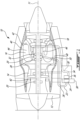
- Fig. 1 illustrates a gas turbine engine 10 of a type preferably provided for use in subsonic flight, generally comprising in serial flow communication a fan 12 through which ambient air is propelled, a compressor section 14 for pressurizing the air, a combustor 16 in which the compressed air is mixed with fuel and ignited for generating an annular stream of hot combustion gases around the engine axis 11, and a turbine section 18 for extracting energy from the combustion gases.
- a gas turbine engine 10 of a type preferably provided for use in subsonic flight, generally comprising in serial flow communication a fan 12 through which ambient air is propelled, a compressor section 14 for pressurizing the air, a combustor 16 in which the compressed air is mixed with fuel and ignited for generating an annular stream of hot combustion gases around the engine axis 11, and a turbine section 18 for extracting energy from the combustion gases.
- the combustor 16 is comprised of a gas generator case 40 which acts as a vessel to the pressurized air exiting the compressor section 14, and the generator case 40 houses one or more liners 42.
- the gas generator case 40 can thus be said to have an inlet fluidly connected to the compressor flow path.
- the liners 42 are typically apertured components delimiting a combustion chamber 44. The compressed air can thus enter the combustion chamber 44 through the apertures in the liner 42, a fuel nozzle can be secured to the liner 42 for introducing a jet of fuel in the combustion chamber 44, and the combustion is typically self-sustained after initial ignition.
- the liner 42 can be said to have an outlet 46 fluidly connected to the turbine section 18.
- the compressor 14, fan 12 and turbine 18 have rotating components which can be mounted on one or more shafts 48.
- Bearings 20 are used to provide smooth relative rotation between a shaft 48 and casing (non-rotating component), and/or between two shafts which rotate at different speeds.
- An oil lubrication system 22 including an oil pump 24, sometimes referred to as a main pump, and a network of conduits and nozzles 26, is provided to feed the bearings 20 with oil. Seals 28 are used to contain the oil.
- a scavenge system 30 having cavities 32, conduits 34, and one or more scavenge pumps 36, is used to recover the oil, which can be in the form of an oil foam at that stage, from the bearings 20.
- the oil pump 24 typically draws the oil from an oil reservoir 38, and it is relatively common to use some form of air/oil separating device in the return line.
- One of the areas which is perhaps the most sensitive to differences in growth may be the case of a service tube 50 which must extend across the combustor 16 to convey relatively cool oil to bearings 20. Indeed, in such a case, the service tube 50 may remain materially cooler than the surrounding portions of the combustor 16, such as its gas generator case 40, during normal operation due to the circulation of relatively cool oil in the service 50 tube. If the service tube 50 is cast in the gas generator case 40, it can generate stress in its vicinity during operation. If the service tube 50 is a distinct tube extending inside the cavity of the gas generator case 40, and mechanically interfaced with the gas generator case 40, and has the same coefficient of thermal expansion than the gas generator case 40, the service tube 50 can experience materially less thermal growth than the gas generator case 40.
- this difference in thermal growth can be exacerbated by an additional difference in growth due to pressure.
- the gas generator case 40 is pressurized during operation and the pressure can thus additionally stress its structure in an orientation of growth, at least on its radially outer wall, while the oil pressure inside the service tube 50 may not be a source of dimensional increase. It was found that in some cases, the difference in growth could reach 0.2-0.3% of the components dimensions for instance, and that this can generate a significant source of stress. Similar issues may arise in other gas turbine engine components subjected to similar circumstances.
- the component's mechanical interfaces can be designed with sliding joints, for instance, but this can be less than desirable in some arrangements because it can impart additional weight or costs, or affect durability, for instance, particularly when compared with a soldered or brazed mechanical interface, for instance.
- a useful approach can be to design the colder component with a material having a coefficient of thermal expansion materially higher than the coefficient of thermal expansion of the hotter. Indeed, in such cases, the greater coefficient of thermal expansion of the colder component can be harnessed to generate a greater thermal growth, and thereby partially or fully compensate for the colder temperature.
- FIG. 2 An example embodiment is presented in Figs 2 and 3 .
- a service tube 50 distinct from the structure of the gas generator case 40 and of the structure of the compressor, extending from a radially outer mechanical interface 52 with the gas generator case 40 to a radially inner mechanical interface 54 leading ultimately to one or more bearings 20.
- the service tube 50 and the gas generator case 40 are a non-fabricated assembly 56, as best seen in Fig.
- the service tube 50 inlet section 58 being provided in the form of a male component received in a female aperture 60 defined in the radially outer mechanical interface 52 of the gas generator case 40, and where the outer face 62 of the service tube 50 inlet section 58 is brazed to the inner face 64 of the gas generator case's 40 receiving aperture 60.
- the service tube's 50 material can be a non-hardenable material
- the gas generator case 40 can be made of a hardenable material, in which case, the brazing can occur during the hardening of the gas generator case 40.
- hardening is a metallurgical metalworking process used to increase the hardness of a metal.
- a hardenable material is one which can be hardened by this metallurgical process, whereas a non-hardenable material is one for which the hardness is unaffected by this metallurgical process. If the gas generator case is intended to be hardened, which can simultaneously involve brazing the service tube, for instance, it can be preferred that the service tube be made of a material which will be unaffected by this hardening process.
- the service tube 50 can be made of a first material having a first coefficient of thermal expansion
- the gas generator case's 40 radially outer mechanical interface 52 can be made of a second material having a second coefficient of thermal expansion.
- the first coefficient of thermal expansion can be greater than the second coefficient of thermal expansion in a manner to impart comparable/compatible growth notwithstanding the differences in temperature.
- the difference in coefficients of thermal expansion can be significant, such as perhaps being different by more than 5%, more than 10%, more than 15%, and perhaps around 20%.
- the gas generator case 40 can be made of stainless steel, particularly 400 series stainless steel and notably Greek Ascoloy, which can have coefficients of thermal expansion in the order of 11-12 X 10 -6 °C -1 , but perhaps also 300 series stainless steel, which can have coefficients of thermal expansion in the order of 10 X 10 -6 °C -1 .
- the service tube can be made of Inconel, such as perhaps Inconel 718 or Inconel 625, which can have coefficients of thermal expansion in the order of 13 X 10 -6 °C -1 to 16 X 10 -6 °C -1 , for instance.
- a typical difference in the coefficient of thermal expansion of stainless steel and Inconel can be around 20%, for instance.
- the following processes can occur simultaneously : A) the air is pressurized by the compressor; B) the compressed air is mixed with fuel and ignited in the combustor 16 to generate a an annular stream of hot combustion gasses; C) energy from the hot combustion gasses is extracted using a turbine 18, and used to drive the compressor 14 via a rotary shaft 48 supported by bearings 20; D) the bearings 20 are supplied with oil via a service tube 50 which extends inside the gas generator case 40 of the combustor 16, the oil maintaining the service tube 50 at a temperature lower than the surrounding temperature in the gas generator case 40; E) the colder service tube 50 is maintained in a state of thermal growth compatible with the state of growth of the hotter gas generator case 40, due to a greater coefficient of thermal expansion of the service tube 50.
- the gas generator case can include both a radially outer wall and a radially inner wall, but in alternate embodiments, the gas generator case can include solely a radially outer wall, or a portion of a radially outer wall, while the radially inner wall can be formed by a different component, possibly made of a different material.
- the service tube can be made integrally of a single material.
- the service tube can have a body made of a first material, and another component, such as a coupler, made of another material.
- another component such as a coupler
- a key aspect will be that a portion of the service tube which has a significant effect in the process of thermal growth be made of a material having a higher coefficient of thermal expansion, whereas other portions of the service tube can be made of a material having the same coefficient of thermal expansion than the gas generator case component the service tube mechanically interfaces with, for instance.
Landscapes
- Engineering & Computer Science (AREA)
- Mechanical Engineering (AREA)
- General Engineering & Computer Science (AREA)
- Physics & Mathematics (AREA)
- Fluid Mechanics (AREA)
- Chemical & Material Sciences (AREA)
- Combustion & Propulsion (AREA)
- Structures Of Non-Positive Displacement Pumps (AREA)
- Turbine Rotor Nozzle Sealing (AREA)
Description
- The application relates generally to gas turbine engines and, more particularly, to combustors thereof.
- A plurality of factors are considered in the design of a gas turbine engine, and these include weight, reliability, durability and cost. Moreover, the design of the individual components must often take into account the effect of growth due to temperature and/or pressure which can occur between different operating conditions, or between a given operating condition and a cooled down, inoperative condition. Differences in growth can lead to potential stress at the mechanical interface between components, and such stress can be undesirable, such as when it can cause low cycle fatigue to components or the like. In fabricated assemblies, one can sometimes replace a component which has failed due to such stresses by disassembling and replacing the component, which is typically undesirable. In the context of non-fabricated assemblies, such as where components are soldered or brazed to other components, it can occur that an entire assembly will need to be replaced due to the failure of a single one of its components, which can be even less desirable.
- One of the areas of the gas turbine engine which is the most subjected to growth is within and around the combustor, where much of the combustion occurs, and which is typically also subjected to high pressures during operation (another source of growth). The high temperatures which are sustained in the combustor during operation often imposes significant constraints to the choice of materials which can be used in the components of the combustor, and can thus greatly reduce design freedom.
- Such issues have been taken into consideration by engineers over the years, and have been addressed to a certain degree. But there always remains room for improvement.
-
US 2015/052872 discloses a prior art gas turbine engine combustor as set forth in the preamble of claim 1. - In one aspect, there is provided a gas turbine engine combustor as recited in claim 1.
- In a further aspect, there is provided a method of operating a gas turbine engine as recited in
claim 10. - Features of embodiments of the invention are set forth in the dependent claims.
- Reference is now made to the accompanying figures in which:
-
Fig. 1 is a schematic cross-sectional view of a gas turbine engine; -
Fig. 2 is an oblique view showing the inside of a gas generator case in accordance with one embodiment; and -
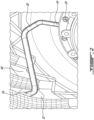
Fig. 3 is a cross-sectional view showing the mechanical interface between a service tube and the gas generator case. -
Fig. 1 illustrates agas turbine engine 10 of a type preferably provided for use in subsonic flight, generally comprising in serial flow communication afan 12 through which ambient air is propelled, acompressor section 14 for pressurizing the air, acombustor 16 in which the compressed air is mixed with fuel and ignited for generating an annular stream of hot combustion gases around the engine axis 11, and aturbine section 18 for extracting energy from the combustion gases. - The
combustor 16 is comprised of agas generator case 40 which acts as a vessel to the pressurized air exiting thecompressor section 14, and thegenerator case 40 houses one ormore liners 42. Thegas generator case 40 can thus be said to have an inlet fluidly connected to the compressor flow path. Theliners 42 are typically apertured components delimiting acombustion chamber 44. The compressed air can thus enter thecombustion chamber 44 through the apertures in theliner 42, a fuel nozzle can be secured to theliner 42 for introducing a jet of fuel in thecombustion chamber 44, and the combustion is typically self-sustained after initial ignition. Theliner 42 can be said to have anoutlet 46 fluidly connected to theturbine section 18. - The
compressor 14,fan 12 andturbine 18 have rotating components which can be mounted on one or more shafts 48.Bearings 20 are used to provide smooth relative rotation between a shaft 48 and casing (non-rotating component), and/or between two shafts which rotate at different speeds. Anoil lubrication system 22 including anoil pump 24, sometimes referred to as a main pump, and a network of conduits andnozzles 26, is provided to feed thebearings 20 with oil.Seals 28 are used to contain the oil. Ascavenge system 30 havingcavities 32,conduits 34, and one ormore scavenge pumps 36, is used to recover the oil, which can be in the form of an oil foam at that stage, from thebearings 20. Theoil pump 24 typically draws the oil from anoil reservoir 38, and it is relatively common to use some form of air/oil separating device in the return line. - One of the contexts where differences in growth can perhaps be the most significant, is situations where components which are mechanically interfaced with one another have materially different coefficients of thermal expansion while being subjected to similar temperatures, and/or are subjected to materially different temperatures and/or pressures during operation. In this context, materially involves more than within a measurement error, and typically a level of significance in the context of the intended use in the gas turbine engine.
- One of the areas which is perhaps the most sensitive to differences in growth may be the case of a
service tube 50 which must extend across thecombustor 16 to convey relatively cool oil tobearings 20. Indeed, in such a case, theservice tube 50 may remain materially cooler than the surrounding portions of thecombustor 16, such as itsgas generator case 40, during normal operation due to the circulation of relatively cool oil in theservice 50 tube. If theservice tube 50 is cast in thegas generator case 40, it can generate stress in its vicinity during operation. If theservice tube 50 is a distinct tube extending inside the cavity of thegas generator case 40, and mechanically interfaced with thegas generator case 40, and has the same coefficient of thermal expansion than thegas generator case 40, theservice tube 50 can experience materially less thermal growth than thegas generator case 40. Moreover, this difference in thermal growth can be exacerbated by an additional difference in growth due to pressure. Indeed, thegas generator case 40 is pressurized during operation and the pressure can thus additionally stress its structure in an orientation of growth, at least on its radially outer wall, while the oil pressure inside theservice tube 50 may not be a source of dimensional increase. It was found that in some cases, the difference in growth could reach 0.2-0.3% of the components dimensions for instance, and that this can generate a significant source of stress. Similar issues may arise in other gas turbine engine components subjected to similar circumstances. - Different approaches can be considered to address such issues. The component's mechanical interfaces can be designed with sliding joints, for instance, but this can be less than desirable in some arrangements because it can impart additional weight or costs, or affect durability, for instance, particularly when compared with a soldered or brazed mechanical interface, for instance.
- It was found that in at least some embodiments, a useful approach can be to design the colder component with a material having a coefficient of thermal expansion materially higher than the coefficient of thermal expansion of the hotter. Indeed, in such cases, the greater coefficient of thermal expansion of the colder component can be harnessed to generate a greater thermal growth, and thereby partially or fully compensate for the colder temperature.
- An example embodiment is presented in
Figs 2 and3 . As shown inFig. 2 , aservice tube 50 distinct from the structure of thegas generator case 40 and of the structure of the compressor, extending from a radially outermechanical interface 52 with thegas generator case 40 to a radially innermechanical interface 54 leading ultimately to one ormore bearings 20. In this case, theservice tube 50 and thegas generator case 40 are anon-fabricated assembly 56, as best seen inFig. 3 , with theservice tube 50inlet section 58 being provided in the form of a male component received in afemale aperture 60 defined in the radially outermechanical interface 52 of thegas generator case 40, and where theouter face 62 of theservice tube 50inlet section 58 is brazed to theinner face 64 of the gas generator case's 40receiving aperture 60. In such a non-fabricated assembly, one can strategically select the service tube's 50 material to be a non-hardenable material, whereas thegas generator case 40 can be made of a hardenable material, in which case, the brazing can occur during the hardening of thegas generator case 40. As known in the art, hardening is a metallurgical metalworking process used to increase the hardness of a metal. A hardenable material is one which can be hardened by this metallurgical process, whereas a non-hardenable material is one for which the hardness is unaffected by this metallurgical process. If the gas generator case is intended to be hardened, which can simultaneously involve brazing the service tube, for instance, it can be preferred that the service tube be made of a material which will be unaffected by this hardening process. - The
service tube 50 can be made of a first material having a first coefficient of thermal expansion, whereas the gas generator case's 40 radially outermechanical interface 52 can be made of a second material having a second coefficient of thermal expansion. The first coefficient of thermal expansion can be greater than the second coefficient of thermal expansion in a manner to impart comparable/compatible growth notwithstanding the differences in temperature. - Indeed, the difference in coefficients of thermal expansion can be significant, such as perhaps being different by more than 5%, more than 10%, more than 15%, and perhaps around 20%.
- In the context of a
gas generator case 40, there can be a limited set of commercially available materials which are adapted to withstand the harsh operating conditions of the context, but there can nonetheless remain sufficient degree of freedom to achieve the goal. Indeed, thegas generator case 40 can be made of stainless steel, particularly 400 series stainless steel and notably Greek Ascoloy, which can have coefficients of thermal expansion in the order of 11-12 X 10-6 °C-1, but perhaps also 300 series stainless steel, which can have coefficients of thermal expansion in the order of 10X 10-6 °C-1. The service tube can be made of Inconel, such as perhaps Inconel 718 or Inconel 625, which can have coefficients of thermal expansion in the order of 13 X 10-6 °C-1 to 16 X 10-6 °C-1, for instance. A typical difference in the coefficient of thermal expansion of stainless steel and Inconel can be around 20%, for instance. - In situations where the difference of thermal expansion coefficients is deemed too great given the expected temperature differences, i.e. where the difference of thermal expansion coefficients between Inconel and stainless steel would tend for the Inconel component to overcompensate for its lower temperature, it can be suitable to pre-stress the lower temperature component in the orientation opposite to the expected growth during assembly, for instance.
- Accordingly, during operation of the
gas turbine engine 10, the following processes can occur simultaneously : A) the air is pressurized by the compressor; B) the compressed air is mixed with fuel and ignited in thecombustor 16 to generate a an annular stream of hot combustion gasses; C) energy from the hot combustion gasses is extracted using aturbine 18, and used to drive thecompressor 14 via a rotary shaft 48 supported bybearings 20; D) thebearings 20 are supplied with oil via aservice tube 50 which extends inside thegas generator case 40 of thecombustor 16, the oil maintaining theservice tube 50 at a temperature lower than the surrounding temperature in thegas generator case 40; E) thecolder service tube 50 is maintained in a state of thermal growth compatible with the state of growth of the hottergas generator case 40, due to a greater coefficient of thermal expansion of theservice tube 50. - The embodiments described in this document provide non-limiting examples of possible implementations of the present technology. Upon review of the present disclosure, a person of ordinary skill in the art will recognize that changes may be made to the embodiments described herein without departing from the scope of the present technology.
- For example, while an example embodiment presented above was applied to a service tube extending in a gas generator case, outside a liner, it will be understood that other embodiments can be applied to other components facing similar or otherwise comparable issues. In one embodiment, the gas generator case can include both a radially outer wall and a radially inner wall, but in alternate embodiments, the gas generator case can include solely a radially outer wall, or a portion of a radially outer wall, while the radially inner wall can be formed by a different component, possibly made of a different material.
- In one embodiment, the service tube can be made integrally of a single material. In other embodiments, the service tube can have a body made of a first material, and another component, such as a coupler, made of another material. Typically, a key aspect will be that a portion of the service tube which has a significant effect in the process of thermal growth be made of a material having a higher coefficient of thermal expansion, whereas other portions of the service tube can be made of a material having the same coefficient of thermal expansion than the gas generator case component the service tube mechanically interfaces with, for instance.
- Moreover, it will be noted that while the example presented above and illustrated used the example context of a turbofan engine, other embodiments can be applied to other contexts such as a turboprop or turboshaft gas turbine engine for instance, or any other engine subjected to comparable issues and which could benefit from the proposed solution.
Claims (11)
- A gas turbine engine combustor (16) comprising:a gas generator case (40) having a first coefficient of thermal expansion, the gas generator case (40) acting as a vessel to pressurized air exiting a compressor section;a liner (42) inside the gas generator case (40), the gas generator case (40) housing the liner (42), the liner (42) delimiting a combustion chamber (44);a service tube (50) having a second coefficient of thermal expansion, the second coefficient of thermal expansion being higher than the first coefficient of thermal expansion, characterised in thatthe service tube (50) extends inside the gas generator case (40), outside the liner (42); andthe service tube (50) is brazed or soldered to an aperture (60) formed in the gas generator case (40).
- The combustor (16) of claim 1, wherein the service tube (50) is configured to convey oil to bearings (20) radially across the gas generator case (40).
- The combustor (16) of claim 1 or 2, wherein the second coefficient of thermal expansion is at least 10% higher than the first coefficient of thermal expansion.
- The combustor (16) of claim 3, wherein the second coefficient of thermal expansion is at least 15% higher than the first coefficient of thermal expansion.
- The combustor (16) of claim 4, wherein the second coefficient of thermal expansion is about 20% higher than the first coefficient of thermal expansion.
- The combustor (16) of any preceding claim, wherein the service tube (50) is made of a material which is non-hardenable.
- The combustor (16) of any preceding claim, wherein the gas generator case (40) has a radially outer wall made of stainless steel having the first coefficient of thermal expansion, and the service tube (50) has a main body between two couplers, the main body being made of Inconel and having the second coefficient of thermal expansion.
- The combustor (16) of claim 7, wherein the stainless steel is Greek Ascoloy and the Inconel is Inconel 718.
- The combustor (16) of any preceding claim, wherein the gas generator case (40) has an inlet configured for fluidly connecting to a compressor outlet, and an outlet (46) configured for fluidly connecting to a turbine inlet.
- A method of operating a gas turbine engine (10), the method comprising, simultaneously :pressurizing air using a compressor (14),mixing the compressed air with fuel and igniting for generating an annular stream of hot combustion gases in a combustor (16),extracting energy from the combustion gasses using a turbine (18), the turbine (18) connected to the compressor (14) via a rotary shaft (48) supported by bearings (20);supplying said bearings (20) with oil via a service tube (50) extending across a gas generator case (40) of the combustor (14), said service tube (50) being maintained at a lower temperature than the gas generator case (40) by the oil, the gas generator case (40) acting as a vessel to pressurized air exiting a compressor section, wherein said service tube (50) is brazed or soldered to an aperture (60) formed in the gas generator case (40);maintaining the colder service tube (50) in a state of thermal growth compatible with the state of growth of the hotter gas generator case (40), due to a greater coefficient of thermal expansion of the service tube (50) than of the gas generator case (40).
- A gas turbine engine (10) comprising, in serial flow communication, a compressor (14) for pressurizing air, the combustor (16) of any preceding claim for mixing the compressed air with fuel and igniting for generating an annular stream of hot combustion gases, and a turbine (18) driving the compressor via a shaft (48) using energy extracted from the hot combustion gases, the shaft being supported by bearings (20).
Applications Claiming Priority (1)
| Application Number | Priority Date | Filing Date | Title |
|---|---|---|---|
| US17/109,830 US20220170419A1 (en) | 2020-12-02 | 2020-12-02 | Gas turbine engine combustor |
Publications (2)
| Publication Number | Publication Date |
|---|---|
| EP4008885A1 EP4008885A1 (en) | 2022-06-08 |
| EP4008885B1 true EP4008885B1 (en) | 2025-05-07 |
Family
ID=78821057
Family Applications (1)
| Application Number | Title | Priority Date | Filing Date |
|---|---|---|---|
| EP21212040.6A Active EP4008885B1 (en) | 2020-12-02 | 2021-12-02 | Gas turbine engine combustor |
Country Status (3)
| Country | Link |
|---|---|
| US (1) | US20220170419A1 (en) |
| EP (1) | EP4008885B1 (en) |
| CA (1) | CA3140543A1 (en) |
Family Cites Families (16)
| Publication number | Priority date | Publication date | Assignee | Title |
|---|---|---|---|---|
| US7370467B2 (en) * | 2003-07-29 | 2008-05-13 | Pratt & Whitney Canada Corp. | Turbofan case and method of making |
| SE527732C2 (en) * | 2004-10-07 | 2006-05-23 | Volvo Aero Corp | A housing for enclosing a gas turbine component |
| US20060249332A1 (en) * | 2005-05-06 | 2006-11-09 | General Electric Company | Oil supply and scavenge system |
| US7717672B2 (en) * | 2006-08-29 | 2010-05-18 | Honeywell International Inc. | Radial vaned diffusion system with integral service routings |
| US8015814B2 (en) * | 2006-10-24 | 2011-09-13 | Caterpillar Inc. | Turbine engine having folded annular jet combustor |
| US8245399B2 (en) * | 2009-01-20 | 2012-08-21 | United Technologies Corporation | Replacement of part of engine case with dissimilar material |
| EP2796790A4 (en) * | 2011-12-21 | 2015-02-25 | Kawasaki Heavy Ind Ltd | GAS TURBINE EQUIPPED WITH A VOLUTE |
| US20140338343A1 (en) * | 2013-05-14 | 2014-11-20 | General Electric Company | System for vibration damping of a fuel nozzle within a combustor |
| US9644495B2 (en) * | 2013-08-20 | 2017-05-09 | Honeywell International Inc. | Thermal isolating service tubes and assemblies thereof for gas turbine engines |
| US9625155B2 (en) * | 2014-01-03 | 2017-04-18 | Delavan Inc. | Compensating for thermal expansion via controlled tube buckling |
| US10488047B2 (en) * | 2014-01-24 | 2019-11-26 | United Technologies Corporation | Thermally compliant additively manufactured fuel injector |
| US9546603B2 (en) * | 2014-04-03 | 2017-01-17 | Honeywell International Inc. | Engine systems and methods for removing particles from turbine air |
| US20160116168A1 (en) * | 2014-10-27 | 2016-04-28 | Solar Turbines Incorporated | Robust insulated fuel injector for a gas turbine engine |
| US10288289B2 (en) * | 2014-12-12 | 2019-05-14 | United Technologies Corporation | Gas turbine engine diffuser-combustor assembly inner casing |
| US10385731B2 (en) * | 2017-06-12 | 2019-08-20 | General Electric Company | CTE matching hanger support for CMC structures |
| US10781721B2 (en) * | 2018-02-09 | 2020-09-22 | General Electric Company | Integral turbine center frame |
-
2020
- 2020-12-02 US US17/109,830 patent/US20220170419A1/en not_active Abandoned
-
2021
- 2021-11-25 CA CA3140543A patent/CA3140543A1/en active Pending
- 2021-12-02 EP EP21212040.6A patent/EP4008885B1/en active Active
Also Published As
| Publication number | Publication date |
|---|---|
| EP4008885A1 (en) | 2022-06-08 |
| US20220170419A1 (en) | 2022-06-02 |
| CA3140543A1 (en) | 2022-06-02 |
Similar Documents
| Publication | Publication Date | Title |
|---|---|---|
| CN111335973B (en) | Shroud seal for gas turbine engine | |
| EP3892824A1 (en) | Pin attachment for cmc components | |
| US6916154B2 (en) | Diametrically energized piston ring | |
| EP3396119B1 (en) | Intershaft compartment buffering arrangement | |
| US11662096B2 (en) | Combustor swirler to pseudo-dome attachment and interface with a CMC dome | |
| EP1493970B1 (en) | Methods and apparatus for operating gas turbine engine combustors | |
| CN106121828A (en) | Attachment assembly and the gas-turbine unit with attachment assembly | |
| EP3617456B1 (en) | Oil supply assembly for gas turbine engine | |
| US12326255B2 (en) | Dome-deflector for a combustor of a gas turbine | |
| EP3715655B1 (en) | Bearing assembly | |
| CN115962486B (en) | Combustor swirler to CMC dome attachment | |
| EP4008885B1 (en) | Gas turbine engine combustor | |
| EP3854995B1 (en) | Air seal assembly | |
| US20160160667A1 (en) | Discourager seal for a turbine engine | |
| US20180258790A1 (en) | Turbine housing assembly | |
| US11008880B2 (en) | Turbine section assembly with ceramic matrix composite vane | |
| CN116772238B (en) | Dome-guide connector cooling arrangement | |
| US10344983B2 (en) | Assembly of tube and structure crossing multi chambers | |
| EP4174297A1 (en) | Connecting arrangement between components of an aircraft engine | |
| US11506080B2 (en) | Gas turbine engine probe cooling | |
| EP3284917B1 (en) | Active clearance control collector to manifold insert | |
| EP4571192A1 (en) | Fuel spray nozzle for a gas turbine engine | |
| US12617541B1 (en) | Exhaust case for aircraft engine | |
| EP4102032B1 (en) | Turbine shroud segments with angular locating feature | |
| US20250043726A1 (en) | Containment ring cavity pressurization system |
Legal Events
| Date | Code | Title | Description |
|---|---|---|---|
| PUAI | Public reference made under article 153(3) epc to a published international application that has entered the european phase |
Free format text: ORIGINAL CODE: 0009012 |
|
| STAA | Information on the status of an ep patent application or granted ep patent |
Free format text: STATUS: THE APPLICATION HAS BEEN PUBLISHED |
|
| AK | Designated contracting states |
Kind code of ref document: A1 Designated state(s): AL AT BE BG CH CY CZ DE DK EE ES FI FR GB GR HR HU IE IS IT LI LT LU LV MC MK MT NL NO PL PT RO RS SE SI SK SM TR |
|
| STAA | Information on the status of an ep patent application or granted ep patent |
Free format text: STATUS: REQUEST FOR EXAMINATION WAS MADE |
|
| 17P | Request for examination filed |
Effective date: 20221206 |
|
| RBV | Designated contracting states (corrected) |
Designated state(s): AL AT BE BG CH CY CZ DE DK EE ES FI FR GB GR HR HU IE IS IT LI LT LU LV MC MK MT NL NO PL PT RO RS SE SI SK SM TR |
|
| STAA | Information on the status of an ep patent application or granted ep patent |
Free format text: STATUS: EXAMINATION IS IN PROGRESS |
|
| 17Q | First examination report despatched |
Effective date: 20230419 |
|
| GRAP | Despatch of communication of intention to grant a patent |
Free format text: ORIGINAL CODE: EPIDOSNIGR1 |
|
| STAA | Information on the status of an ep patent application or granted ep patent |
Free format text: STATUS: GRANT OF PATENT IS INTENDED |
|
| INTG | Intention to grant announced |
Effective date: 20241204 |
|
| GRAS | Grant fee paid |
Free format text: ORIGINAL CODE: EPIDOSNIGR3 |
|
| GRAA | (expected) grant |
Free format text: ORIGINAL CODE: 0009210 |
|
| STAA | Information on the status of an ep patent application or granted ep patent |
Free format text: STATUS: THE PATENT HAS BEEN GRANTED |
|
| AK | Designated contracting states |
Kind code of ref document: B1 Designated state(s): AL AT BE BG CH CY CZ DE DK EE ES FI FR GB GR HR HU IE IS IT LI LT LU LV MC MK MT NL NO PL PT RO RS SE SI SK SM TR |
|
| REG | Reference to a national code |
Ref country code: GB Ref legal event code: FG4D |
|
| REG | Reference to a national code |
Ref country code: CH Ref legal event code: EP |
|
| REG | Reference to a national code |
Ref country code: DE Ref legal event code: R096 Ref document number: 602021030347 Country of ref document: DE |
|
| REG | Reference to a national code |
Ref country code: IE Ref legal event code: FG4D |
|
| REG | Reference to a national code |
Ref country code: NL Ref legal event code: MP Effective date: 20250507 |
|
| PG25 | Lapsed in a contracting state [announced via postgrant information from national office to epo] |
Ref country code: FI Free format text: LAPSE BECAUSE OF FAILURE TO SUBMIT A TRANSLATION OF THE DESCRIPTION OR TO PAY THE FEE WITHIN THE PRESCRIBED TIME-LIMIT Effective date: 20250507 Ref country code: ES Free format text: LAPSE BECAUSE OF FAILURE TO SUBMIT A TRANSLATION OF THE DESCRIPTION OR TO PAY THE FEE WITHIN THE PRESCRIBED TIME-LIMIT Effective date: 20250507 Ref country code: PT Free format text: LAPSE BECAUSE OF FAILURE TO SUBMIT A TRANSLATION OF THE DESCRIPTION OR TO PAY THE FEE WITHIN THE PRESCRIBED TIME-LIMIT Effective date: 20250908 |
|
| REG | Reference to a national code |
Ref country code: LT Ref legal event code: MG9D |
|
| PG25 | Lapsed in a contracting state [announced via postgrant information from national office to epo] |
Ref country code: GR Free format text: LAPSE BECAUSE OF FAILURE TO SUBMIT A TRANSLATION OF THE DESCRIPTION OR TO PAY THE FEE WITHIN THE PRESCRIBED TIME-LIMIT Effective date: 20250808 Ref country code: NO Free format text: LAPSE BECAUSE OF FAILURE TO SUBMIT A TRANSLATION OF THE DESCRIPTION OR TO PAY THE FEE WITHIN THE PRESCRIBED TIME-LIMIT Effective date: 20250807 |
|
| PG25 | Lapsed in a contracting state [announced via postgrant information from national office to epo] |
Ref country code: NL Free format text: LAPSE BECAUSE OF FAILURE TO SUBMIT A TRANSLATION OF THE DESCRIPTION OR TO PAY THE FEE WITHIN THE PRESCRIBED TIME-LIMIT Effective date: 20250507 Ref country code: PL Free format text: LAPSE BECAUSE OF FAILURE TO SUBMIT A TRANSLATION OF THE DESCRIPTION OR TO PAY THE FEE WITHIN THE PRESCRIBED TIME-LIMIT Effective date: 20250507 |
|
| REG | Reference to a national code |
Ref country code: AT Ref legal event code: MK05 Ref document number: 1792664 Country of ref document: AT Kind code of ref document: T Effective date: 20250507 |
|
| PG25 | Lapsed in a contracting state [announced via postgrant information from national office to epo] |
Ref country code: BG Free format text: LAPSE BECAUSE OF FAILURE TO SUBMIT A TRANSLATION OF THE DESCRIPTION OR TO PAY THE FEE WITHIN THE PRESCRIBED TIME-LIMIT Effective date: 20250507 |
|
| PG25 | Lapsed in a contracting state [announced via postgrant information from national office to epo] |
Ref country code: HR Free format text: LAPSE BECAUSE OF FAILURE TO SUBMIT A TRANSLATION OF THE DESCRIPTION OR TO PAY THE FEE WITHIN THE PRESCRIBED TIME-LIMIT Effective date: 20250507 |
|
| PG25 | Lapsed in a contracting state [announced via postgrant information from national office to epo] |
Ref country code: AT Free format text: LAPSE BECAUSE OF FAILURE TO SUBMIT A TRANSLATION OF THE DESCRIPTION OR TO PAY THE FEE WITHIN THE PRESCRIBED TIME-LIMIT Effective date: 20250507 |
|
| PG25 | Lapsed in a contracting state [announced via postgrant information from national office to epo] |
Ref country code: RS Free format text: LAPSE BECAUSE OF FAILURE TO SUBMIT A TRANSLATION OF THE DESCRIPTION OR TO PAY THE FEE WITHIN THE PRESCRIBED TIME-LIMIT Effective date: 20250807 |
|
| PG25 | Lapsed in a contracting state [announced via postgrant information from national office to epo] |
Ref country code: IS Free format text: LAPSE BECAUSE OF FAILURE TO SUBMIT A TRANSLATION OF THE DESCRIPTION OR TO PAY THE FEE WITHIN THE PRESCRIBED TIME-LIMIT Effective date: 20250907 |
|
| PG25 | Lapsed in a contracting state [announced via postgrant information from national office to epo] |
Ref country code: LV Free format text: LAPSE BECAUSE OF FAILURE TO SUBMIT A TRANSLATION OF THE DESCRIPTION OR TO PAY THE FEE WITHIN THE PRESCRIBED TIME-LIMIT Effective date: 20250507 |
|
| PGFP | Annual fee paid to national office [announced via postgrant information from national office to epo] |
Ref country code: DE Payment date: 20251126 Year of fee payment: 5 |
|
| PGFP | Annual fee paid to national office [announced via postgrant information from national office to epo] |
Ref country code: GB Payment date: 20251120 Year of fee payment: 5 |
|
| PG25 | Lapsed in a contracting state [announced via postgrant information from national office to epo] |
Ref country code: DK Free format text: LAPSE BECAUSE OF FAILURE TO SUBMIT A TRANSLATION OF THE DESCRIPTION OR TO PAY THE FEE WITHIN THE PRESCRIBED TIME-LIMIT Effective date: 20250507 Ref country code: SM Free format text: LAPSE BECAUSE OF FAILURE TO SUBMIT A TRANSLATION OF THE DESCRIPTION OR TO PAY THE FEE WITHIN THE PRESCRIBED TIME-LIMIT Effective date: 20250507 |
|
| PGFP | Annual fee paid to national office [announced via postgrant information from national office to epo] |
Ref country code: FR Payment date: 20251120 Year of fee payment: 5 |
|
| PG25 | Lapsed in a contracting state [announced via postgrant information from national office to epo] |
Ref country code: CZ Free format text: LAPSE BECAUSE OF FAILURE TO SUBMIT A TRANSLATION OF THE DESCRIPTION OR TO PAY THE FEE WITHIN THE PRESCRIBED TIME-LIMIT Effective date: 20250507 |
|
| PG25 | Lapsed in a contracting state [announced via postgrant information from national office to epo] |
Ref country code: EE Free format text: LAPSE BECAUSE OF FAILURE TO SUBMIT A TRANSLATION OF THE DESCRIPTION OR TO PAY THE FEE WITHIN THE PRESCRIBED TIME-LIMIT Effective date: 20250507 |
|
| PG25 | Lapsed in a contracting state [announced via postgrant information from national office to epo] |
Ref country code: SK Free format text: LAPSE BECAUSE OF FAILURE TO SUBMIT A TRANSLATION OF THE DESCRIPTION OR TO PAY THE FEE WITHIN THE PRESCRIBED TIME-LIMIT Effective date: 20250507 Ref country code: RO Free format text: LAPSE BECAUSE OF FAILURE TO SUBMIT A TRANSLATION OF THE DESCRIPTION OR TO PAY THE FEE WITHIN THE PRESCRIBED TIME-LIMIT Effective date: 20250507 |
|
| PG25 | Lapsed in a contracting state [announced via postgrant information from national office to epo] |
Ref country code: IT Free format text: LAPSE BECAUSE OF FAILURE TO SUBMIT A TRANSLATION OF THE DESCRIPTION OR TO PAY THE FEE WITHIN THE PRESCRIBED TIME-LIMIT Effective date: 20250507 |
|
| REG | Reference to a national code |
Ref country code: DE Ref legal event code: R097 Ref document number: 602021030347 Country of ref document: DE |
|
| PLBE | No opposition filed within time limit |
Free format text: ORIGINAL CODE: 0009261 |
|
| STAA | Information on the status of an ep patent application or granted ep patent |
Free format text: STATUS: NO OPPOSITION FILED WITHIN TIME LIMIT |
|
| REG | Reference to a national code |
Ref country code: CH Ref legal event code: L10 Free format text: ST27 STATUS EVENT CODE: U-0-0-L10-L00 (AS PROVIDED BY THE NATIONAL OFFICE) Effective date: 20260318 |
|
| 26N | No opposition filed |
Effective date: 20260210 |