EP4008662A1 - Voice activated elevator passenger interface configuration device - Google Patents
Voice activated elevator passenger interface configuration device Download PDFInfo
- Publication number
- EP4008662A1 EP4008662A1 EP21212388.9A EP21212388A EP4008662A1 EP 4008662 A1 EP4008662 A1 EP 4008662A1 EP 21212388 A EP21212388 A EP 21212388A EP 4008662 A1 EP4008662 A1 EP 4008662A1
- Authority
- EP
- European Patent Office
- Prior art keywords
- desired functionality
- passenger interface
- passenger
- elevator
- configuration
- Prior art date
- Legal status (The legal status is an assumption and is not a legal conclusion. Google has not performed a legal analysis and makes no representation as to the accuracy of the status listed.)
- Granted
Links
Images
Classifications
-
- B—PERFORMING OPERATIONS; TRANSPORTING
- B66—HOISTING; LIFTING; HAULING
- B66B—ELEVATORS; ESCALATORS OR MOVING WALKWAYS
- B66B1/00—Control systems of elevators in general
- B66B1/34—Details, e.g. call counting devices, data transmission from car to control system, devices giving information to the control system
- B66B1/3407—Setting or modification of parameters of the control system
-
- B—PERFORMING OPERATIONS; TRANSPORTING
- B66—HOISTING; LIFTING; HAULING
- B66B—ELEVATORS; ESCALATORS OR MOVING WALKWAYS
- B66B1/00—Control systems of elevators in general
- B66B1/02—Control systems without regulation, i.e. without retroactive action
- B66B1/06—Control systems without regulation, i.e. without retroactive action electric
- B66B1/14—Control systems without regulation, i.e. without retroactive action electric with devices, e.g. push-buttons, for indirect control of movements
-
- B—PERFORMING OPERATIONS; TRANSPORTING
- B66—HOISTING; LIFTING; HAULING
- B66B—ELEVATORS; ESCALATORS OR MOVING WALKWAYS
- B66B1/00—Control systems of elevators in general
- B66B1/34—Details, e.g. call counting devices, data transmission from car to control system, devices giving information to the control system
- B66B1/3415—Control system configuration and the data transmission or communication within the control system
- B66B1/3446—Data transmission or communication within the control system
- B66B1/3461—Data transmission or communication within the control system between the elevator control system and remote or mobile stations
-
- B—PERFORMING OPERATIONS; TRANSPORTING
- B66—HOISTING; LIFTING; HAULING
- B66B—ELEVATORS; ESCALATORS OR MOVING WALKWAYS
- B66B1/00—Control systems of elevators in general
- B66B1/34—Details, e.g. call counting devices, data transmission from car to control system, devices giving information to the control system
- B66B1/46—Adaptations of switches or switchgear
- B66B1/468—Call registering systems
-
- B—PERFORMING OPERATIONS; TRANSPORTING
- B66—HOISTING; LIFTING; HAULING
- B66B—ELEVATORS; ESCALATORS OR MOVING WALKWAYS
- B66B19/00—Mining-hoist operation
- B66B19/007—Mining-hoist operation method for modernisation of elevators
-
- B—PERFORMING OPERATIONS; TRANSPORTING
- B66—HOISTING; LIFTING; HAULING
- B66B—ELEVATORS; ESCALATORS OR MOVING WALKWAYS
- B66B3/00—Applications of devices for indicating or signalling operating conditions of elevators
- B66B3/002—Indicators
-
- B—PERFORMING OPERATIONS; TRANSPORTING
- B66—HOISTING; LIFTING; HAULING
- B66B—ELEVATORS; ESCALATORS OR MOVING WALKWAYS
- B66B2201/00—Aspects of control systems of elevators
- B66B2201/40—Details of the change of control mode
- B66B2201/46—Switches or switchgear
- B66B2201/4607—Call registering systems
- B66B2201/4638—Wherein the call is registered without making physical contact with the elevator system
- B66B2201/4646—Wherein the call is registered without making physical contact with the elevator system using voice recognition
-
- B—PERFORMING OPERATIONS; TRANSPORTING
- B66—HOISTING; LIFTING; HAULING
- B66B—ELEVATORS; ESCALATORS OR MOVING WALKWAYS
- B66B2201/00—Aspects of control systems of elevators
- B66B2201/40—Details of the change of control mode
- B66B2201/46—Switches or switchgear
- B66B2201/4607—Call registering systems
- B66B2201/4676—Call registering systems for checking authorization of the passengers
Definitions
- Many elevator systems include hall call buttons that allow a passenger to indicate a desire to travel up or down.
- the system responds by sending an elevator car to the location of the passenger. Once onboard the elevator car, the passenger can select a destination floor using a car operating panel that typically includes a set of buttons corresponding to the available floors.
- destination entry systems have been developed that include an interface, such as a kiosk, where a passenger can enter a desired destination before boarding an elevator car.
- the elevator system responds to such a request by assigning a car to carry the passenger to the intended destination and notifies the passenger which car to board.
- the passenger need not, and typically cannot, enter a destination from inside the elevator car in such systems.
- Different types of passenger interfaces may have unique requirements during installation and may offer unique opportunities for customization.
- a specialized tool may be needed to set up the interface.
- An illustrative example embodiment of an elevator passenger interface configuration device includes a configuration input that allows an authorized user or individual to input an indication of a desired functionality of at least one selected elevator passenger interface that is configured to receive audible passenger input.
- a processor determines at least one operation executable by the elevator passenger interface to provide the desired functionality based on the indication of the desired functionality.
- Memory associated with the processor at least temporarily stores information regarding the operation.
- a configuration output is configured to communicate the information regarding the operation from the memory to the elevator passenger interface.
- the desired functionality comprises an ability to receive a passenger request spoken in at least one selected language
- the desired functionality comprises an ability to provide a response in the selected language
- the response is at least one of audible or visible.
- the desired functionality comprises an ability to receive a passenger request for elevator service to any of a predetermined plurality of destinations, the desired functionality comprises an ability to provide a response to a received passenger request for elevator service to a selected destination, and the response includes information regarding the selected destination.
- the indication of the desired functionality comprises at least one custom operation corresponding to a characteristic of an environment that includes the at least one selected elevator passenger interface.
- the configuration input allows a first type of authorized individual to input a first set of possible indications of desired functionality
- the configuration input allows a second type of authorized individual to input a second set of possible indications of desired functionality
- the first set of possible indications are for at least commissioning, installing or updating the at least one elevator passenger interface
- the second set of possible indications are for customizing the at least one elevator passenger interface.
- the first type of authorized individual is an elevator system specialist or an elevator technician and the second type of individual is a building owner or building manager.
- the second set of possible indications includes indications of at least one of a scheduled announcement, an advertisement, a building directory, and a custom voice command that a passenger can provide to the at least one selected elevator passenger interface.
- the configuration output is configured to communicate with the at least one passenger interface from a location that is remote from the at least one passenger interface.
- the device includes a housing and wherein the configuration input, the processor, the memory and the configuration output are all supported by the housing.
- the housing is configured to be carried by an individual and the configuration output is configured to communicate with the at least one passenger interface using a short range wireless communication protocol.
- the configuration output includes a hardware connection that is configured to establish a physical connection with an input port of the at least one passenger interface.
- the desired functionality includes integrating at least one aspect of the at least one passenger interface with at least one other building system at a location of the at least one passenger interface.
- the configuration input is voice-activated.
- the processor determines the at least one operation by interpreting the indication of the desired functionality or compiling the indication of the desired functionality.
- An illustrative example embodiment of a method of using a configuration device for configuring an elevator passenger interface includes receiving, at a configuration input of the device, an indication of a desired functionality of at least one selected elevator passenger interface that is configured to receive audible passenger input; determining, by a processor of the device, at least one operation executable by the at least one selected elevator passenger interface to provide the desired functionality based on the indication of the desired functionality; at least temporarily storing information regarding the at least one operation in a memory of the configuration device; and communicating the information regarding the at least one operation from the memory to the selected elevator passenger interface.
- the desired functionality comprises an ability to receive a passenger request spoken in at least one selected language
- the desired functionality comprises an ability to provide a response in the selected language
- the response is at least one of audible or visible.
- the desired functionality comprises an ability to receive a passenger request for elevator service to any of a predetermined plurality of destinations, the desired functionality comprises an ability to provide a response to a received passenger request for elevator service to a selected destination, and the response includes information regarding the selected destination.
- the indication of the desired functionality comprises at least one custom operation corresponding to a characteristic of an environment that includes the at least one selected elevator passenger interface.
- the desired functionality includes integrating at least one aspect of the at least one passenger interface with at least one other building system at a location of the at least one passenger interface.
- the method includes communicating with the at least one passenger interface from a location that is remote from the at least one passenger interface or using a short range wireless communication protocol.
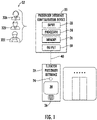
- FIG. 1 schematically illustrates a device 20 for configuring an elevator passenger interface 22 that is configured to receive audible passenger input, such as requests for elevator service.
- the passenger interface 22 in this example is voice-activated in that the passenger interface 22 is capable of receiving spoken passenger requests. For example, a nearby passenger can state a request for elevator service indicating a desired direction of travel or an intended destination.
- the example passenger interface 22 includes an input 24, such as a microphone or a sound detector, to receive audible passenger input.
- the passenger interface 22 includes an output 26, such as a speaker, that provides audible information to a passenger in response to the audible input.
- the example passenger interface 22 also includes a display 28, such as a touchscreen, that may be used to facilitate passenger input or to provide a visible output in response to passenger input, such as an indication of an elevator car assigned to a passenger request for service.
- the device 20 includes a configuration input 30 that is useable by an authorized user 32 to input an indication of a desired functionality of the passenger interface 22.
- the configuration input 30 in some embodiments includes a microphone or sound detector that allows the individual 32 to audibly state the indication of the desired functionality.
- Other embodiments of the configuration input 30 include at least one of a touch screen display, a pointer device, or a keyboard that facilitates entering indications of desired functionality.
- a processor 34 interprets the indication of the desired functionality and determines at least one operation executable by the elevator passenger interface 22 to provide the desired functionality.
- the processor 34 has computing capabilities configured, through software or firmware for example, to interpret the input from the user 32 and to generate information regarding the desired functionality.
- the generated information includes at least one of software code, firmware or database entries. In some situations, the user 32 enters such information directly and the processor 34 compiles it.
- Memory 36 associated with the processor at least temporarily stores the information regarding the operation that corresponds to the desired functionality of the passenger interface 22.
- a configuration output 38 is configured to communicate the information regarding the operation from the memory 36 to the elevator passenger interface 22 over a communication connection schematically shown at 40.
- the configuration output 38 may communicate information regarding individual operations, an entire set of operations that define all functionality of a passenger interface 22, or a subset of such operations.
- the communication connection 40 may be realized through a hardware, line-based, or other physical connection. In other embodiments, the communication connection 40 includes at least one wireless communication link.
- the communication connection 40 may be a direct connection between the configuration output 38 and the passenger interface 22 or may be through a network of other devices and connections, such as the Internet.
- the configuration input 30, processor 34, memory 36 and configuration output 38 are all schematically shown together for discussion purposes.
- the actual components, hardware, software, or firmware used to realize them are functionally associated but not necessarily physically in the same location.
- the configuration device 20 may be realized using physically separate components in locations remote from each other.
- the processor 34 and memory 36 are part of a cloud computing arrangement or another arrangement of computing machines.
- the processor 34 and memory 36 may both be part of a single virtual machine or each may be part of a different virtual machine.
- all of the functional components or features of the configuration device 20 are situated within a single housing that may be portable, such as a hand-held tablet.
- Example authorized users include an elevator system deployment specialist 32A, a building manager 32B that has responsibility over various features associated with an elevator system in a building, and a mechanic or technician 32C that travels to the site of an elevator system that includes the passenger interface 22.
- the desired functionality of the passenger interface 22 that the device 20 facilitates configuring may include any number of selected features and capabilities or may be the entire functionality of the passenger interface 22.
- the device 20 is useful to configure the passenger interface 22 for the particular site where it is (or will be) installed and the associated elevator system.
- the voice activation capability of the passenger interface 22 may be set to recognize or respond to a selected number of spoken languages that most passengers are likely to speak, depending on the location. The same language as a received request will be used for the response provided to a passenger, whether that response is audible or visual.
- the user 32 can set the language or languages recognized by the passenger interface 22 by entering an indication of the language through the configuration input 30, the processor 34 generates or determines information needed to configure the passenger interface to be compatible with the indicated language. The information is then stored in the memory 36 and, at an appropriate time, communicated by the output 38 to the passenger interface 22. The user 32 can also set or design customized voice commands in the language or languages supported by the passenger interface 22.
- the passenger interface 22 can be configured to provide information to passengers regarding the floors to which the elevator system can carry a passenger from the location of the passenger interface 22 or a nearby elevator lobby if the passenger interface 22 is not in the immediate vicinity of the elevators.
- the passenger interface 22 can be configured through the device 20 to recognize requests for particular floors either by a floor number, level designation or another indicator of a particular floor. Possible designations that the interface 22 can recognize from a passenger include spoken requests, such as "take me to the cafeteria" or "ABC Company Reception.” The ability of the passenger interface 22 to receive or handle such requests will be customized by the user 32 to suit the particular elevator system or building.
- Another example functionality of the passenger interface 22 that can be configured by a user 32 of the device 20 is an ability to inform people about the layout of the building in which the passenger interface 22 is situated.
- Some passenger interfaces 22 will be configured through the device 20 to be compatible or to communicate with other systems in the building.
- the passenger interface may be set to deny access to certain floors according to a status indicator from a building security system that controls access to certain floors in the building.
- Other building access features may be integrated with the passenger interface.
- Functionalities that are likely to be implemented by a building manager 32B include setting building directory information, custom voice commands, local advertising, and scheduled announcements. For example, a passenger requesting elevator service to the floor that includes a restaurant or cafeteria may receive a response that includes information about specials or menu items available at that time. Information provided to passengers by the passenger interface 22 may be audible, visual or a combination of audible and visual.
- the elevator system specialist 32A, building manager 32B and mechanic or technician 32C each have different responsibilities.
- the example configuration device 20 provides different options to the different individuals.
- the elevator system specialist 32A has access to a first set of possible passenger interface functionalities and the building manager 32B has access to a second, smaller set of functionalities.
- the system specialist 32A will need to configure the overall operation of passenger interfaces 22 while the building manager 32B will likely only need to adjust customization features or functionalities.
- the mechanic or technician 32C may have access to the same set of functionalities as the system specialist 32A or a third set of functionalities that includes less than those in the first set and more than those in the second set.
- user authentication provides access to the appropriate set of functionalities.
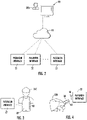
- Figure 2 schematically illustrates an example scenario in which an elevator specialist 32A configures a plurality of passenger interfaces 22 from a location that is remote from the interfaces 22. Communications between the configuration device 20 and the passenger interfaces occurs over an Internet or other network connection represented at 44.
- Figure 3 schematically illustrates a scenario in which the device 20 is a hand-held, portable device that allows an elevator mechanic or technician 32C to configure the interface 22 while at the location of the associated elevator system. Such configuration may be part of an installation, maintenance, updating or repair procedure. Communications between the device 20 and the interface 22 occur over a line-based, physical connection or using a short-range wireless communication protocol.
- FIG 4 illustrates a scenario in which a user, such as a building manager 32B, can configure the passenger interface 22 using a portable memory 36, such as a flash drive.
- the passenger interface 22 in this example embodiment includes a communication port 46 that is arranged to receive a connector 48 of the portable memory 36.
- the information on the memory 36 may have been installed by the building manager 32B using a separate computer or by another authorized user 32 that provided the portable memory 36 to the building manager 32B.
Landscapes
- Engineering & Computer Science (AREA)
- Automation & Control Theory (AREA)
- Computer Networks & Wireless Communication (AREA)
- Indicating And Signalling Devices For Elevators (AREA)
Abstract
Description
- Many elevator systems include hall call buttons that allow a passenger to indicate a desire to travel up or down. The system responds by sending an elevator car to the location of the passenger. Once onboard the elevator car, the passenger can select a destination floor using a car operating panel that typically includes a set of buttons corresponding to the available floors.
- Over time, different technologies have allowed for different types of interfaces for elevator passengers to interact with the elevator system to request service. For example, destination entry systems have been developed that include an interface, such as a kiosk, where a passenger can enter a desired destination before boarding an elevator car. The elevator system responds to such a request by assigning a car to carry the passenger to the intended destination and notifies the passenger which car to board. The passenger need not, and typically cannot, enter a destination from inside the elevator car in such systems.
- Different types of passenger interfaces, whether inside or outside an elevator car, may have unique requirements during installation and may offer unique opportunities for customization. In some instances, a specialized tool may be needed to set up the interface.
- An illustrative example embodiment of an elevator passenger interface configuration device includes a configuration input that allows an authorized user or individual to input an indication of a desired functionality of at least one selected elevator passenger interface that is configured to receive audible passenger input. A processor determines at least one operation executable by the elevator passenger interface to provide the desired functionality based on the indication of the desired functionality. Memory associated with the processor at least temporarily stores information regarding the operation. A configuration output is configured to communicate the information regarding the operation from the memory to the elevator passenger interface.
- In some examples, the desired functionality comprises an ability to receive a passenger request spoken in at least one selected language, the desired functionality comprises an ability to provide a response in the selected language, and the response is at least one of audible or visible.
- In some examples, the desired functionality comprises an ability to receive a passenger request for elevator service to any of a predetermined plurality of destinations, the desired functionality comprises an ability to provide a response to a received passenger request for elevator service to a selected destination, and the response includes information regarding the selected destination.
- In some examples, the indication of the desired functionality comprises at least one custom operation corresponding to a characteristic of an environment that includes the at least one selected elevator passenger interface.
- In some examples, the configuration input allows a first type of authorized individual to input a first set of possible indications of desired functionality, the configuration input allows a second type of authorized individual to input a second set of possible indications of desired functionality, the first set of possible indications are for at least commissioning, installing or updating the at least one elevator passenger interface, and the second set of possible indications are for customizing the at least one elevator passenger interface.
- In some examples, the first type of authorized individual is an elevator system specialist or an elevator technician and the second type of individual is a building owner or building manager.
- In some examples, the second set of possible indications includes indications of at least one of a scheduled announcement, an advertisement, a building directory, and a custom voice command that a passenger can provide to the at least one selected elevator passenger interface.
- In some examples, the configuration output is configured to communicate with the at least one passenger interface from a location that is remote from the at least one passenger interface.
- In addition to one or more of the features described above, or as an alternative, the device includes a housing and wherein the configuration input, the processor, the memory and the configuration output are all supported by the housing.
- In some examples, the housing is configured to be carried by an individual and the configuration output is configured to communicate with the at least one passenger interface using a short range wireless communication protocol.
- In some examples, the configuration output includes a hardware connection that is configured to establish a physical connection with an input port of the at least one passenger interface.
- In addition to one or more of the features described above, or as an alternative, the desired functionality includes integrating at least one aspect of the at least one passenger interface with at least one other building system at a location of the at least one passenger interface.
- In some examples, the configuration input is voice-activated.
- In some examples, the processor determines the at least one operation by interpreting the indication of the desired functionality or compiling the indication of the desired functionality.
- An illustrative example embodiment of a method of using a configuration device for configuring an elevator passenger interface includes receiving, at a configuration input of the device, an indication of a desired functionality of at least one selected elevator passenger interface that is configured to receive audible passenger input; determining, by a processor of the device, at least one operation executable by the at least one selected elevator passenger interface to provide the desired functionality based on the indication of the desired functionality; at least temporarily storing information regarding the at least one operation in a memory of the configuration device; and communicating the information regarding the at least one operation from the memory to the selected elevator passenger interface.
- In some examples, the desired functionality comprises an ability to receive a passenger request spoken in at least one selected language, the desired functionality comprises an ability to provide a response in the selected language, and the response is at least one of audible or visible.
- In some examples, the desired functionality comprises an ability to receive a passenger request for elevator service to any of a predetermined plurality of destinations, the desired functionality comprises an ability to provide a response to a received passenger request for elevator service to a selected destination, and the response includes information regarding the selected destination.
- In some examples, the indication of the desired functionality comprises at least one custom operation corresponding to a characteristic of an environment that includes the at least one selected elevator passenger interface.
- In some examples, the desired functionality includes integrating at least one aspect of the at least one passenger interface with at least one other building system at a location of the at least one passenger interface.
- In some examples, the method includes communicating with the at least one passenger interface from a location that is remote from the at least one passenger interface or using a short range wireless communication protocol.
- The various features and advantages of at least one disclosed example embodiment will become apparent to those skilled in the art from the following detailed description. The drawings that accompany the detailed description can be briefly described as follows.
-
-
Figure 1 schematically illustrates an example embodiment of a device for configuring an elevator passenger interface that is configured to receive audible passenger requests for elevator service. -
Figure 2 schematically illustrates an example configuration of communications between multiple elevator passenger interfaces and an example device for configuring the interfaces. -
Figure 3 schematically illustrates an example embodiment of a handheld, portable configuration device. -
Figure 4 schematically illustrates a technique of configuring an elevator passenger interface. -
Figure 1 schematically illustrates adevice 20 for configuring anelevator passenger interface 22 that is configured to receive audible passenger input, such as requests for elevator service. Thepassenger interface 22 in this example is voice-activated in that thepassenger interface 22 is capable of receiving spoken passenger requests. For example, a nearby passenger can state a request for elevator service indicating a desired direction of travel or an intended destination. Theexample passenger interface 22 includes aninput 24, such as a microphone or a sound detector, to receive audible passenger input. Thepassenger interface 22 includes anoutput 26, such as a speaker, that provides audible information to a passenger in response to the audible input. Theexample passenger interface 22 also includes adisplay 28, such as a touchscreen, that may be used to facilitate passenger input or to provide a visible output in response to passenger input, such as an indication of an elevator car assigned to a passenger request for service. - The
device 20 includes aconfiguration input 30 that is useable by an authorizeduser 32 to input an indication of a desired functionality of thepassenger interface 22. Theconfiguration input 30 in some embodiments includes a microphone or sound detector that allows the individual 32 to audibly state the indication of the desired functionality. Other embodiments of theconfiguration input 30 include at least one of a touch screen display, a pointer device, or a keyboard that facilitates entering indications of desired functionality. - A
processor 34 interprets the indication of the desired functionality and determines at least one operation executable by theelevator passenger interface 22 to provide the desired functionality. Theprocessor 34 has computing capabilities configured, through software or firmware for example, to interpret the input from theuser 32 and to generate information regarding the desired functionality. For example, the generated information includes at least one of software code, firmware or database entries. In some situations, theuser 32 enters such information directly and theprocessor 34 compiles it. -
Memory 36 associated with the processor at least temporarily stores the information regarding the operation that corresponds to the desired functionality of thepassenger interface 22. Aconfiguration output 38 is configured to communicate the information regarding the operation from thememory 36 to theelevator passenger interface 22 over a communication connection schematically shown at 40. Theconfiguration output 38 may communicate information regarding individual operations, an entire set of operations that define all functionality of apassenger interface 22, or a subset of such operations. Thecommunication connection 40 may be realized through a hardware, line-based, or other physical connection. In other embodiments, thecommunication connection 40 includes at least one wireless communication link. Thecommunication connection 40 may be a direct connection between theconfiguration output 38 and thepassenger interface 22 or may be through a network of other devices and connections, such as the Internet. - The
configuration input 30,processor 34,memory 36 andconfiguration output 38 are all schematically shown together for discussion purposes. The actual components, hardware, software, or firmware used to realize them are functionally associated but not necessarily physically in the same location. For example, theconfiguration device 20 may be realized using physically separate components in locations remote from each other. In an example embodiment, theprocessor 34 andmemory 36 are part of a cloud computing arrangement or another arrangement of computing machines. Theprocessor 34 andmemory 36 may both be part of a single virtual machine or each may be part of a different virtual machine. In some embodiments, all of the functional components or features of theconfiguration device 20 are situated within a single housing that may be portable, such as a hand-held tablet. - Example authorized users include an elevator
system deployment specialist 32A, abuilding manager 32B that has responsibility over various features associated with an elevator system in a building, and a mechanic ortechnician 32C that travels to the site of an elevator system that includes thepassenger interface 22. - The desired functionality of the
passenger interface 22 that thedevice 20 facilitates configuring may include any number of selected features and capabilities or may be the entire functionality of thepassenger interface 22. Thedevice 20 is useful to configure thepassenger interface 22 for the particular site where it is (or will be) installed and the associated elevator system. For example, the voice activation capability of thepassenger interface 22 may be set to recognize or respond to a selected number of spoken languages that most passengers are likely to speak, depending on the location. The same language as a received request will be used for the response provided to a passenger, whether that response is audible or visual. - The
user 32 can set the language or languages recognized by thepassenger interface 22 by entering an indication of the language through theconfiguration input 30, theprocessor 34 generates or determines information needed to configure the passenger interface to be compatible with the indicated language. The information is then stored in thememory 36 and, at an appropriate time, communicated by theoutput 38 to thepassenger interface 22. Theuser 32 can also set or design customized voice commands in the language or languages supported by thepassenger interface 22. - Other functionalities or features that are configurable in the illustrated example embodiment include building floor designations or labels. For example, the
passenger interface 22 can be configured to provide information to passengers regarding the floors to which the elevator system can carry a passenger from the location of thepassenger interface 22 or a nearby elevator lobby if thepassenger interface 22 is not in the immediate vicinity of the elevators. Thepassenger interface 22 can be configured through thedevice 20 to recognize requests for particular floors either by a floor number, level designation or another indicator of a particular floor. Possible designations that theinterface 22 can recognize from a passenger include spoken requests, such as "take me to the cafeteria" or "ABC Company Reception." The ability of thepassenger interface 22 to receive or handle such requests will be customized by theuser 32 to suit the particular elevator system or building. - Another example functionality of the
passenger interface 22 that can be configured by auser 32 of thedevice 20 is an ability to inform people about the layout of the building in which thepassenger interface 22 is situated. - Some passenger interfaces 22 will be configured through the
device 20 to be compatible or to communicate with other systems in the building. For example, the passenger interface may be set to deny access to certain floors according to a status indicator from a building security system that controls access to certain floors in the building. Other building access features may be integrated with the passenger interface. - Functionalities that are likely to be implemented by a
building manager 32B include setting building directory information, custom voice commands, local advertising, and scheduled announcements. For example, a passenger requesting elevator service to the floor that includes a restaurant or cafeteria may receive a response that includes information about specials or menu items available at that time. Information provided to passengers by thepassenger interface 22 may be audible, visual or a combination of audible and visual. - The
elevator system specialist 32A,building manager 32B and mechanic ortechnician 32C each have different responsibilities. Theexample configuration device 20 provides different options to the different individuals. For example, theelevator system specialist 32A has access to a first set of possible passenger interface functionalities and thebuilding manager 32B has access to a second, smaller set of functionalities. Thesystem specialist 32A will need to configure the overall operation ofpassenger interfaces 22 while thebuilding manager 32B will likely only need to adjust customization features or functionalities. The mechanic ortechnician 32C may have access to the same set of functionalities as thesystem specialist 32A or a third set of functionalities that includes less than those in the first set and more than those in the second set. In some such embodiments, user authentication provides access to the appropriate set of functionalities. -
Figure 2 schematically illustrates an example scenario in which anelevator specialist 32A configures a plurality ofpassenger interfaces 22 from a location that is remote from theinterfaces 22. Communications between theconfiguration device 20 and the passenger interfaces occurs over an Internet or other network connection represented at 44. -
Figure 3 schematically illustrates a scenario in which thedevice 20 is a hand-held, portable device that allows an elevator mechanic ortechnician 32C to configure theinterface 22 while at the location of the associated elevator system. Such configuration may be part of an installation, maintenance, updating or repair procedure. Communications between thedevice 20 and theinterface 22 occur over a line-based, physical connection or using a short-range wireless communication protocol. -
Figure 4 illustrates a scenario in which a user, such as abuilding manager 32B, can configure thepassenger interface 22 using aportable memory 36, such as a flash drive. Thepassenger interface 22 in this example embodiment includes acommunication port 46 that is arranged to receive aconnector 48 of theportable memory 36. The information on thememory 36 may have been installed by thebuilding manager 32B using a separate computer or by another authorizeduser 32 that provided theportable memory 36 to thebuilding manager 32B. - A variety of ways of using a
configuration device 20 consistent with this description have been presented and those skilled in the art will realize that other techniques may be employed to meet the needs of their particular situation. Also, the features of one illustration or embodiment are not necessarily limited to the particular drawing or embodiment. Other combinations of the example features are possible to realize additional or different embodiments. - The preceding description is exemplary rather than limiting in nature. Variations and modifications to the disclosed examples may become apparent to those skilled in the art that do not necessarily depart from the essence of this invention. The scope of legal protection given to this invention can only be determined by studying the following claims.
Claims (15)
- An elevator passenger interface configuration device, comprising:a configuration input that allows an authorized individual to input an indication of a desired functionality of at least one selected elevator passenger interface that is configured to receive audible passenger input;a processor that determines at least one operation executable by the at least one selected elevator passenger interface to provide the desired functionality based the indication of the desired functionality;a memory associated with the processor, the memory at least temporarily storing information regarding the at least one operation; anda configuration output that is configured to communicate the information regarding the at least one operation from the memory to the selected elevator passenger interface.
- The device of claim 1, whereinthe desired functionality comprises an ability to receive a passenger request spoken in at least one selected language,the desired functionality comprises an ability to provide a response in the selected language, andthe response is at least one of audible or visible.
- The device of claim 1 or 2, whereinthe desired functionality comprises an ability to receive a passenger request for elevator service to any of a predetermined plurality of destinations,the desired functionality comprises an ability to provide a response to a received passenger request for elevator service to a selected destination, andthe response includes information regarding the selected destination.
- The device of any of claims 1 to 3, wherein the indication of the desired functionality comprises at least one custom operation corresponding to a characteristic of an environment that includes the at least one selected elevator passenger interface.
- The device of any preceding claim, whereinthe configuration input allows a first type of authorized individual to input a first set of possible indications of desired functionality;the configuration input allows a second type of authorized individual to input a second set of possible indications of desired functionality;the first set of possible indications are for at least commissioning, installing or updating the at least one elevator passenger interface;the second set of possible indications are for customizing the at least one elevator passenger interface.
- The device of claim 5, wherein the first type of authorized individual is an elevator system specialist or an elevator technician and the second type of individual is a building owner or building manager.
- The device of claim 5 or claim 6, wherein the second set of possible indications includes indications of at least one of a scheduled announcement, an advertisement, a building directory, and a custom voice command that a passenger can provide to the at least one selected elevator passenger interface.
- The device of any preceding claim, wherein the configuration output is configured to communicate with the at least one passenger interface from a location that is remote from the at least one passenger interface.
- The device of any preceding claim, comprising a housing and wherein the configuration input, the processor, the memory and the configuration output are all supported by the housing.
- The device of claim 9, wherein the housing is configured to be carried by an individual and the configuration output is configured to communicate with the at least one passenger interface using a short range wireless communication protocol.
- The device of any preceding claim, wherein the configuration output includes a hardware connection that is configured to establish a physical connection with an input port of the at least one passenger interface.
- The device of any preceding claim, wherein the desired functionality includes integrating at least one aspect of the at least one passenger interface with at least one other building system at a location of the at least one passenger interface.
- The device of any preceding claim, wherein the configuration input is voice-activated.
- The device of any preceding claim, wherein the processor determines the at least one operation by interpreting the indication of the desired functionality or compiling the indication of the desired functionality.
- A method of using a configuration device for configuring an elevator passenger interface, the method comprising:receiving, at a configuration input of the device, an indication of a desired functionality of at least one selected elevator passenger interface that is configured to receive audible passenger input;determining, by a processor of the device, at least one operation executable by the at least one selected elevator passenger interface to provide the desired functionality based on the indication of the desired functionality;at least temporarily storing information regarding the at least one operation in a memory of the configuration device; andcommunicate the information regarding the at least one operation from the memory to the selected elevator passenger interface.
Applications Claiming Priority (1)
| Application Number | Priority Date | Filing Date | Title |
|---|---|---|---|
| US17/112,910 US20220177266A1 (en) | 2020-12-04 | 2020-12-04 | Voice activated elevator passenger interface configuration device |
Publications (2)
| Publication Number | Publication Date |
|---|---|
| EP4008662A1 true EP4008662A1 (en) | 2022-06-08 |
| EP4008662B1 EP4008662B1 (en) | 2025-10-15 |
Family
ID=78822158
Family Applications (1)
| Application Number | Title | Priority Date | Filing Date |
|---|---|---|---|
| EP21212388.9A Active EP4008662B1 (en) | 2020-12-04 | 2021-12-03 | Voice activated elevator passenger interface configuration device |
Country Status (3)
| Country | Link |
|---|---|
| US (1) | US20220177266A1 (en) |
| EP (1) | EP4008662B1 (en) |
| CN (1) | CN114590653A (en) |
Families Citing this family (1)
| Publication number | Priority date | Publication date | Assignee | Title |
|---|---|---|---|---|
| US11745980B2 (en) * | 2017-12-22 | 2023-09-05 | Jaka Llc | Vertical transportation like elevator, escalator, dumbwaiter and lift systems monitoring, maintenance, repair, inspection, testing and modernization system and method |
Citations (4)
| Publication number | Priority date | Publication date | Assignee | Title |
|---|---|---|---|---|
| US4534056A (en) * | 1982-08-26 | 1985-08-06 | Westinghouse Electric Corp. | Voice-recognition elevator security system |
| JPH08268658A (en) * | 1995-03-29 | 1996-10-15 | Fujitec Co Ltd | Control device for elevator |
| US20040060777A1 (en) * | 2001-12-20 | 2004-04-01 | Nobukazu Takeuchi | Elevator operating apparatus |
| DE202020001507U1 (en) * | 2020-04-14 | 2020-06-09 | Sylvia Veit | Voice control for an elevator car according to the elevator directive by connecting a voice and signal processing device to a car tableau unit in the elevator |
Family Cites Families (20)
| Publication number | Priority date | Publication date | Assignee | Title |
|---|---|---|---|---|
| US5255341A (en) * | 1989-08-14 | 1993-10-19 | Kabushiki Kaisha Toshiba | Command input device for voice controllable elevator system |
| FI111934B (en) * | 1992-12-22 | 2003-10-15 | Kone Corp | Remote control system in elevator devices |
| ATE232503T1 (en) * | 1997-05-22 | 2003-02-15 | Inventio Ag | INPUT DEVICE AND METHOD FOR ACOUSTIC COMMAND ENTRY FOR AN ELEVATOR SYSTEM |
| US8065155B1 (en) * | 1999-06-10 | 2011-11-22 | Gazdzinski Robert F | Adaptive advertising apparatus and methods |
| US20020036122A1 (en) * | 2000-04-03 | 2002-03-28 | Televator Corporation | Elevator communication system |
| US7970437B2 (en) * | 2000-11-29 | 2011-06-28 | Nokia Corporation | Wireless terminal device with user interaction system |
| WO2006001804A2 (en) * | 2004-06-11 | 2006-01-05 | Otis Elevator Company | Voice request elevator allocation and passenger display |
| FI20060131A0 (en) * | 2006-02-13 | 2006-02-13 | Kone Corp | connection system |
| KR101045842B1 (en) * | 2010-06-30 | 2011-07-01 | 유재혁 | Speech recognition device of elevator and control method thereof |
| CN102070050A (en) * | 2010-11-17 | 2011-05-25 | 侯英翔 | Intelligent voice elevator |
| JP5601419B2 (en) * | 2011-03-25 | 2014-10-08 | 三菱電機株式会社 | Elevator call registration device |
| CN103648946B (en) * | 2011-07-15 | 2015-06-03 | 奥的斯电梯公司 | Customized elevator passenger interface |
| US10096033B2 (en) * | 2011-09-15 | 2018-10-09 | Stephan HEATH | System and method for providing educational related social/geo/promo link promotional data sets for end user display of interactive ad links, promotions and sale of products, goods, and/or services integrated with 3D spatial geomapping, company and local information for selected worldwide locations and social networking |
| WO2014108594A2 (en) * | 2013-01-09 | 2014-07-17 | Kone Corporation/Patent Department | Method and system for modernizing an elevator installation |
| DE112013007347B4 (en) * | 2013-08-21 | 2022-02-24 | Mitsubishi Electric Corporation | elevator control device |
| US9858039B2 (en) * | 2014-01-28 | 2018-01-02 | Oracle International Corporation | Voice recognition of commands extracted from user interface screen devices |
| US9957132B2 (en) * | 2015-02-04 | 2018-05-01 | Thyssenkrupp Elevator Ag | Elevator control systems |
| JP5996702B1 (en) * | 2015-03-31 | 2016-09-21 | 東芝エレベータ株式会社 | Elevator remote monitoring system |
| CN111039110B (en) * | 2019-12-19 | 2021-11-23 | 北京易云达科技有限公司 | Intelligent voice elevator taking system |
| CN111170094A (en) * | 2020-03-10 | 2020-05-19 | 上海新时达电气股份有限公司 | Non-contact elevator taking method and elevator taking system thereof |
-
2020
- 2020-12-04 US US17/112,910 patent/US20220177266A1/en active Pending
-
2021
- 2021-08-18 CN CN202110947773.0A patent/CN114590653A/en active Pending
- 2021-12-03 EP EP21212388.9A patent/EP4008662B1/en active Active
Patent Citations (4)
| Publication number | Priority date | Publication date | Assignee | Title |
|---|---|---|---|---|
| US4534056A (en) * | 1982-08-26 | 1985-08-06 | Westinghouse Electric Corp. | Voice-recognition elevator security system |
| JPH08268658A (en) * | 1995-03-29 | 1996-10-15 | Fujitec Co Ltd | Control device for elevator |
| US20040060777A1 (en) * | 2001-12-20 | 2004-04-01 | Nobukazu Takeuchi | Elevator operating apparatus |
| DE202020001507U1 (en) * | 2020-04-14 | 2020-06-09 | Sylvia Veit | Voice control for an elevator car according to the elevator directive by connecting a voice and signal processing device to a car tableau unit in the elevator |
Also Published As
| Publication number | Publication date |
|---|---|
| CN114590653A (en) | 2022-06-07 |
| US20220177266A1 (en) | 2022-06-09 |
| EP4008662B1 (en) | 2025-10-15 |
Similar Documents
| Publication | Publication Date | Title |
|---|---|---|
| US6986408B2 (en) | Remotely controlled elevator operating apparatus | |
| US10640329B2 (en) | Reassignment of elevators for mobile device users | |
| US7040458B2 (en) | Elevator destination protocol control with flexible user interface | |
| JP6321124B1 (en) | Elevator system | |
| US8997938B2 (en) | Modernizing an elevator installation | |
| CN113213281B (en) | Elevator system | |
| CN101443829B (en) | Running-in usage of elevator and alley way fixed equipment in destination logging group elevator system | |
| US20160090270A1 (en) | Device triggered elevator car call | |
| US20180282115A1 (en) | Elevator service request using user device with app-retained floor pairs | |
| EP1761451B1 (en) | Elevator arrangement | |
| EP4008662B1 (en) | Voice activated elevator passenger interface configuration device | |
| US12365565B2 (en) | Elevator installation comprising elevator operating devices for passengers with physical disabilities | |
| AU2021330247B2 (en) | Elevator system having elevator operating devices for passengers with limited mobility | |
| CN114590654B (en) | Voice-activated elevator system interface providing customized responses | |
| US20250346451A1 (en) | Elevator system and elevator operating devices for different operating modes | |
| HK1133110B (en) | Commissioning of elevator hallway fixtures in a destination entry group elevator system | |
| JP2023028683A (en) | Group control system for elevator | |
| HK1196810A (en) | Method, call-giving device, elevator system and computer program product |
Legal Events
| Date | Code | Title | Description |
|---|---|---|---|
| PUAI | Public reference made under article 153(3) epc to a published international application that has entered the european phase |
Free format text: ORIGINAL CODE: 0009012 |
|
| STAA | Information on the status of an ep patent application or granted ep patent |
Free format text: STATUS: THE APPLICATION HAS BEEN PUBLISHED |
|
| AK | Designated contracting states |
Kind code of ref document: A1 Designated state(s): AL AT BE BG CH CY CZ DE DK EE ES FI FR GB GR HR HU IE IS IT LI LT LU LV MC MK MT NL NO PL PT RO RS SE SI SK SM TR |
|
| STAA | Information on the status of an ep patent application or granted ep patent |
Free format text: STATUS: REQUEST FOR EXAMINATION WAS MADE |
|
| 17P | Request for examination filed |
Effective date: 20221208 |
|
| RBV | Designated contracting states (corrected) |
Designated state(s): AL AT BE BG CH CY CZ DE DK EE ES FI FR GB GR HR HU IE IS IT LI LT LU LV MC MK MT NL NO PL PT RO RS SE SI SK SM TR |
|
| STAA | Information on the status of an ep patent application or granted ep patent |
Free format text: STATUS: EXAMINATION IS IN PROGRESS |
|
| 17Q | First examination report despatched |
Effective date: 20240318 |
|
| GRAP | Despatch of communication of intention to grant a patent |
Free format text: ORIGINAL CODE: EPIDOSNIGR1 |
|
| STAA | Information on the status of an ep patent application or granted ep patent |
Free format text: STATUS: GRANT OF PATENT IS INTENDED |
|
| INTG | Intention to grant announced |
Effective date: 20250515 |
|
| GRAS | Grant fee paid |
Free format text: ORIGINAL CODE: EPIDOSNIGR3 |
|
| GRAA | (expected) grant |
Free format text: ORIGINAL CODE: 0009210 |
|
| STAA | Information on the status of an ep patent application or granted ep patent |
Free format text: STATUS: THE PATENT HAS BEEN GRANTED |
|
| AK | Designated contracting states |
Kind code of ref document: B1 Designated state(s): AL AT BE BG CH CY CZ DE DK EE ES FI FR GB GR HR HU IE IS IT LI LT LU LV MC MK MT NL NO PL PT RO RS SE SI SK SM TR |
|
| REG | Reference to a national code |
Ref country code: GB Ref legal event code: FG4D Ref country code: CH Ref legal event code: F10 Free format text: ST27 STATUS EVENT CODE: U-0-0-F10-F00 (AS PROVIDED BY THE NATIONAL OFFICE) Effective date: 20251015 |
|
| REG | Reference to a national code |
Ref country code: DE Ref legal event code: R096 Ref document number: 602021040352 Country of ref document: DE |
|
| REG | Reference to a national code |
Ref country code: IE Ref legal event code: FG4D |
|
| PGFP | Annual fee paid to national office [announced via postgrant information from national office to epo] |
Ref country code: DE Payment date: 20251126 Year of fee payment: 5 |
|
| PGFP | Annual fee paid to national office [announced via postgrant information from national office to epo] |
Ref country code: AT Payment date: 20260113 Year of fee payment: 5 |
|
| PGFP | Annual fee paid to national office [announced via postgrant information from national office to epo] |
Ref country code: FR Payment date: 20251120 Year of fee payment: 5 |
|
| REG | Reference to a national code |
Ref country code: NL Ref legal event code: MP Effective date: 20251015 |
|
| REG | Reference to a national code |
Ref country code: AT Ref legal event code: MK05 Ref document number: 1846819 Country of ref document: AT Kind code of ref document: T Effective date: 20251015 |
|
| PG25 | Lapsed in a contracting state [announced via postgrant information from national office to epo] |
Ref country code: NL Free format text: LAPSE BECAUSE OF FAILURE TO SUBMIT A TRANSLATION OF THE DESCRIPTION OR TO PAY THE FEE WITHIN THE PRESCRIBED TIME-LIMIT Effective date: 20251015 |
|
| PG25 | Lapsed in a contracting state [announced via postgrant information from national office to epo] |
Ref country code: ES Free format text: LAPSE BECAUSE OF FAILURE TO SUBMIT A TRANSLATION OF THE DESCRIPTION OR TO PAY THE FEE WITHIN THE PRESCRIBED TIME-LIMIT Effective date: 20251015 |
|
| REG | Reference to a national code |
Ref country code: LT Ref legal event code: MG9D |
|
| PG25 | Lapsed in a contracting state [announced via postgrant information from national office to epo] |
Ref country code: NO Free format text: LAPSE BECAUSE OF FAILURE TO SUBMIT A TRANSLATION OF THE DESCRIPTION OR TO PAY THE FEE WITHIN THE PRESCRIBED TIME-LIMIT Effective date: 20260115 |
|
| PG25 | Lapsed in a contracting state [announced via postgrant information from national office to epo] |
Ref country code: FI Free format text: LAPSE BECAUSE OF FAILURE TO SUBMIT A TRANSLATION OF THE DESCRIPTION OR TO PAY THE FEE WITHIN THE PRESCRIBED TIME-LIMIT Effective date: 20251015 Ref country code: HR Free format text: LAPSE BECAUSE OF FAILURE TO SUBMIT A TRANSLATION OF THE DESCRIPTION OR TO PAY THE FEE WITHIN THE PRESCRIBED TIME-LIMIT Effective date: 20251015 Ref country code: AT Free format text: LAPSE BECAUSE OF FAILURE TO SUBMIT A TRANSLATION OF THE DESCRIPTION OR TO PAY THE FEE WITHIN THE PRESCRIBED TIME-LIMIT Effective date: 20251015 |
|
| PG25 | Lapsed in a contracting state [announced via postgrant information from national office to epo] |
Ref country code: RS Free format text: LAPSE BECAUSE OF FAILURE TO SUBMIT A TRANSLATION OF THE DESCRIPTION OR TO PAY THE FEE WITHIN THE PRESCRIBED TIME-LIMIT Effective date: 20260115 |
|
| PG25 | Lapsed in a contracting state [announced via postgrant information from national office to epo] |
Ref country code: IS Free format text: LAPSE BECAUSE OF FAILURE TO SUBMIT A TRANSLATION OF THE DESCRIPTION OR TO PAY THE FEE WITHIN THE PRESCRIBED TIME-LIMIT Effective date: 20260215 |
|
| PG25 | Lapsed in a contracting state [announced via postgrant information from national office to epo] |
Ref country code: PT Free format text: LAPSE BECAUSE OF FAILURE TO SUBMIT A TRANSLATION OF THE DESCRIPTION OR TO PAY THE FEE WITHIN THE PRESCRIBED TIME-LIMIT Effective date: 20260216 |
|
| PG25 | Lapsed in a contracting state [announced via postgrant information from national office to epo] |
Ref country code: PL Free format text: LAPSE BECAUSE OF FAILURE TO SUBMIT A TRANSLATION OF THE DESCRIPTION OR TO PAY THE FEE WITHIN THE PRESCRIBED TIME-LIMIT Effective date: 20251015 |
|
| PG25 | Lapsed in a contracting state [announced via postgrant information from national office to epo] |
Ref country code: LV Free format text: LAPSE BECAUSE OF FAILURE TO SUBMIT A TRANSLATION OF THE DESCRIPTION OR TO PAY THE FEE WITHIN THE PRESCRIBED TIME-LIMIT Effective date: 20251015 |
|
| PG25 | Lapsed in a contracting state [announced via postgrant information from national office to epo] |
Ref country code: BG Free format text: LAPSE BECAUSE OF FAILURE TO SUBMIT A TRANSLATION OF THE DESCRIPTION OR TO PAY THE FEE WITHIN THE PRESCRIBED TIME-LIMIT Effective date: 20251015 |