EP4008574B1 - Air treatment system - Google Patents
Air treatment system Download PDFInfo
- Publication number
- EP4008574B1 EP4008574B1 EP21200697.7A EP21200697A EP4008574B1 EP 4008574 B1 EP4008574 B1 EP 4008574B1 EP 21200697 A EP21200697 A EP 21200697A EP 4008574 B1 EP4008574 B1 EP 4008574B1
- Authority
- EP
- European Patent Office
- Prior art keywords
- air
- filter cartridge
- air filter
- outlet
- duct
- Prior art date
- Legal status (The legal status is an assumption and is not a legal conclusion. Google has not performed a legal analysis and makes no representation as to the accuracy of the status listed.)
- Active
Links
Images




Classifications
-
- B—PERFORMING OPERATIONS; TRANSPORTING
- B01—PHYSICAL OR CHEMICAL PROCESSES OR APPARATUS IN GENERAL
- B01D—SEPARATION
- B01D46/00—Filters or filtering processes specially modified for separating dispersed particles from gases or vapours
- B01D46/0002—Casings; Housings; Frame constructions
- B01D46/0005—Mounting of filtering elements within casings, housings or frames
-
- B—PERFORMING OPERATIONS; TRANSPORTING
- B60—VEHICLES IN GENERAL
- B60H—ARRANGEMENTS OF HEATING, COOLING, VENTILATING OR OTHER AIR-TREATING DEVICES SPECIALLY ADAPTED FOR PASSENGER OR GOODS SPACES OF VEHICLES
- B60H1/00—Heating, cooling or ventilating devices
- B60H1/00507—Details, e.g. mounting arrangements, desaeration devices
- B60H1/00557—Details of ducts or cables
- B60H1/00564—Details of ducts or cables of air ducts
-
- B—PERFORMING OPERATIONS; TRANSPORTING
- B01—PHYSICAL OR CHEMICAL PROCESSES OR APPARATUS IN GENERAL
- B01D—SEPARATION
- B01D46/00—Filters or filtering processes specially modified for separating dispersed particles from gases or vapours
- B01D46/0002—Casings; Housings; Frame constructions
- B01D46/0004—Details of removable closures, lids, caps or filter heads
-
- B—PERFORMING OPERATIONS; TRANSPORTING
- B01—PHYSICAL OR CHEMICAL PROCESSES OR APPARATUS IN GENERAL
- B01D—SEPARATION
- B01D46/00—Filters or filtering processes specially modified for separating dispersed particles from gases or vapours
- B01D46/0027—Filters or filtering processes specially modified for separating dispersed particles from gases or vapours with additional separating or treating functions
- B01D46/0036—Filters or filtering processes specially modified for separating dispersed particles from gases or vapours with additional separating or treating functions by adsorption or absorption
-
- B—PERFORMING OPERATIONS; TRANSPORTING
- B01—PHYSICAL OR CHEMICAL PROCESSES OR APPARATUS IN GENERAL
- B01D—SEPARATION
- B01D46/00—Filters or filtering processes specially modified for separating dispersed particles from gases or vapours
- B01D46/24—Particle separators, e.g. dust precipitators, using rigid hollow filter bodies
- B01D46/2403—Particle separators, e.g. dust precipitators, using rigid hollow filter bodies characterised by the physical shape or structure of the filtering element
- B01D46/2411—Filter cartridges
-
- B—PERFORMING OPERATIONS; TRANSPORTING
- B01—PHYSICAL OR CHEMICAL PROCESSES OR APPARATUS IN GENERAL
- B01D—SEPARATION
- B01D46/00—Filters or filtering processes specially modified for separating dispersed particles from gases or vapours
- B01D46/24—Particle separators, e.g. dust precipitators, using rigid hollow filter bodies
- B01D46/2403—Particle separators, e.g. dust precipitators, using rigid hollow filter bodies characterised by the physical shape or structure of the filtering element
- B01D46/2411—Filter cartridges
- B01D46/2414—End caps including additional functions or special forms
-
- B—PERFORMING OPERATIONS; TRANSPORTING
- B01—PHYSICAL OR CHEMICAL PROCESSES OR APPARATUS IN GENERAL
- B01D—SEPARATION
- B01D46/00—Filters or filtering processes specially modified for separating dispersed particles from gases or vapours
- B01D46/42—Auxiliary equipment or operation thereof
- B01D46/44—Auxiliary equipment or operation thereof controlling filtration
- B01D46/444—Auxiliary equipment or operation thereof controlling filtration by flow measuring
-
- B—PERFORMING OPERATIONS; TRANSPORTING
- B01—PHYSICAL OR CHEMICAL PROCESSES OR APPARATUS IN GENERAL
- B01D—SEPARATION
- B01D46/00—Filters or filtering processes specially modified for separating dispersed particles from gases or vapours
- B01D46/56—Filters or filtering processes specially modified for separating dispersed particles from gases or vapours with multiple filtering elements, characterised by their mutual disposition
- B01D46/62—Filters or filtering processes specially modified for separating dispersed particles from gases or vapours with multiple filtering elements, characterised by their mutual disposition connected in series
- B01D46/64—Filters or filtering processes specially modified for separating dispersed particles from gases or vapours with multiple filtering elements, characterised by their mutual disposition connected in series arranged concentrically or coaxially
-
- B—PERFORMING OPERATIONS; TRANSPORTING
- B60—VEHICLES IN GENERAL
- B60H—ARRANGEMENTS OF HEATING, COOLING, VENTILATING OR OTHER AIR-TREATING DEVICES SPECIALLY ADAPTED FOR PASSENGER OR GOODS SPACES OF VEHICLES
- B60H1/00—Heating, cooling or ventilating devices
- B60H1/00357—Air-conditioning arrangements specially adapted for particular vehicles
- B60H1/00378—Air-conditioning arrangements specially adapted for particular vehicles for tractor or load vehicle cabins
-
- B—PERFORMING OPERATIONS; TRANSPORTING
- B60—VEHICLES IN GENERAL
- B60H—ARRANGEMENTS OF HEATING, COOLING, VENTILATING OR OTHER AIR-TREATING DEVICES SPECIALLY ADAPTED FOR PASSENGER OR GOODS SPACES OF VEHICLES
- B60H3/00—Other air-treating devices
- B60H3/06—Filtering
- B60H3/0608—Filter arrangements in the air stream
- B60H3/0616—Filter arrangements in the air stream with provisions for replacing the filter element
-
- B—PERFORMING OPERATIONS; TRANSPORTING
- B60—VEHICLES IN GENERAL
- B60H—ARRANGEMENTS OF HEATING, COOLING, VENTILATING OR OTHER AIR-TREATING DEVICES SPECIALLY ADAPTED FOR PASSENGER OR GOODS SPACES OF VEHICLES
- B60H3/00—Other air-treating devices
- B60H3/06—Filtering
- B60H3/0608—Filter arrangements in the air stream
- B60H3/0641—Filter arrangements in the air stream near ventilating openings in the vehicle exterior
-
- B—PERFORMING OPERATIONS; TRANSPORTING
- B01—PHYSICAL OR CHEMICAL PROCESSES OR APPARATUS IN GENERAL
- B01D—SEPARATION
- B01D2271/00—Sealings for filters specially adapted for separating dispersed particles from gases or vapours
- B01D2271/02—Gaskets, sealings
- B01D2271/022—Axial sealings
-
- B—PERFORMING OPERATIONS; TRANSPORTING
- B01—PHYSICAL OR CHEMICAL PROCESSES OR APPARATUS IN GENERAL
- B01D—SEPARATION
- B01D2271/00—Sealings for filters specially adapted for separating dispersed particles from gases or vapours
- B01D2271/02—Gaskets, sealings
- B01D2271/027—Radial sealings
-
- B—PERFORMING OPERATIONS; TRANSPORTING
- B01—PHYSICAL OR CHEMICAL PROCESSES OR APPARATUS IN GENERAL
- B01D—SEPARATION
- B01D2279/00—Filters adapted for separating dispersed particles from gases or vapours specially modified for specific uses
- B01D2279/50—Filters adapted for separating dispersed particles from gases or vapours specially modified for specific uses for air conditioning
-
- B—PERFORMING OPERATIONS; TRANSPORTING
- B60—VEHICLES IN GENERAL
- B60H—ARRANGEMENTS OF HEATING, COOLING, VENTILATING OR OTHER AIR-TREATING DEVICES SPECIALLY ADAPTED FOR PASSENGER OR GOODS SPACES OF VEHICLES
- B60H1/00—Heating, cooling or ventilating devices
- B60H1/00007—Combined heating, ventilating, or cooling devices
- B60H1/00207—Combined heating, ventilating, or cooling devices characterised by the position of the HVAC devices with respect to the passenger compartment
- B60H2001/00235—Devices in the roof area of the passenger compartment
-
- B—PERFORMING OPERATIONS; TRANSPORTING
- B60—VEHICLES IN GENERAL
- B60H—ARRANGEMENTS OF HEATING, COOLING, VENTILATING OR OTHER AIR-TREATING DEVICES SPECIALLY ADAPTED FOR PASSENGER OR GOODS SPACES OF VEHICLES
- B60H3/00—Other air-treating devices
- B60H3/06—Filtering
- B60H3/0608—Filter arrangements in the air stream
- B60H2003/065—Details for holding filter elements in position
Definitions
- the present invention relates to an air treatment system including an air filtration apparatus upstream of an air processing apparatus and more particularly to an air treatment system for an operator environment or cab of an agricultural vehicle or a similar vehicle.
- Agricultural vehicles are known to operate in environments in which many different kinds of particulate or contaminant are present. This creates a requirement for filtration of the air for operators of such vehicles when in use.
- the particulates may be of different sizes and of different natures, for example larger particulates such as dust, pollen and the like and smaller contaminants such as fumes, aerosols and vapours.
- EP2927031A2 discloses an air treatment system for a tractor having a cab in which an air filter cartridge is received in a vertically aligned filter housing mounted to a pillar of the cab.
- Legislation in various countries now requires the use of filters of a particular rating to filter out particular contaminants from the air which would otherwise be introduced into the operator environment (e.g. an operator cab) of the agricultural vehicle.
- EU Standard EN 15695 provides for four categories of filter for cabin protection, where Category 2 (hereinafter "CAT2”) protects only against dust but does not protect against aerosols and vapours, Category 3 (CAT3) protects against dust and aerosol, but not vapours and Category 4 (CAT4) protects against dust, aerosols and vapours.
- CAT3 filters tend to be more expensive than CAT2 filters, with CAT4 being most expensive.
- an air treatment system as defined in claim 1.
- the first type air filter cartridge may be suitable for filtering dust but not aerosols and vapours and may be a CAT2 or equivalent filter.
- the second type air filter cartridge may be suitable for filtering dust, aerosols and vapours and may be a CAT4 or equivalent type filter.
- a vehicle especially an agricultural vehicle, having an air treatment system according to the first aspect of the invention.
- Fig.1 illustrates an agricultural/utility vehicle or mobile machine in the form of a tractor 10 having an enclosed operator environment in the form of a cab 12 and an engine compartment 14.
- the cab 12 has a roof assembly 22 within which is mounted an air treatment system 23, which includes an air filtration system 24 and a HVAC (heating, ventilation and air conditioning) system 26.
- An air inlet 28 for the air treatment system is located under an eaves overhang on a side of the roof assembly 22.
- the roof assembly 22 comprises upper roof part 220 and lower roof part 221 which together form a cavity for installation of major parts of the HVAC system 26 and parts of the air filtration system 24.
- An openable cover 25 in a side wall of the roof assembly 22 enables user access for inspection and/or replacement of filtration cartridges 34/40 which form part of the air filter system, as described further below.
- the overall functional arrangement of the air treatment system 23 is illustrated schematically in Fig. 2 , with the air filtration system indicated generally at 24 (to the left of the figure) connected to the HVAC system indicated generally at 26 (to the right of the figure) for the operator environment or cab 12 of the agricultural vehicle 10.
- External air is drawn into the air treatment system 23 through an external air inlet 28, which may be in the form of a vent and/or duct 32, into an air filter housing 33 and through an air filter cartridge 34/40 located in the housing.
- an air filter cartridge located in the housing.
- the air passes through a filter duct 43 which directs the air to an inlet plenum of a first fan or air impeller device, referred to as pressurization blower 46.
- the output of this first blower 46 is connected by way of a further duct 62 to the input of a second fan or air impeller device, main blower 48, of the HVAC system 26.
- the filter duct 43 has two flow paths, one of which includes an air flow sensor 45.
- the HVAC system 26 typically includes additional components downstream of the main blower 48, such as, by way of example, an evaporator 50 and a heater 52.
- the treated air flow output from the HVAC system is directed to the interior of cab 12 by way of a cabin air supply duct 63.
- An air recirculation path 58 is provided by a conduit extending between the interior of the cab 12 and the inlet to the main blower 48.
- the further air recirculation path 58 suitably includes a dust filter 60 (preferably in the form of a simple cartridge filter easily replaceable by a user) to prevent dust from the ambient air within the cab 12 from being passed to the main blower 48 and downstream components 50, 52 of the HVAC system and thereby reintroduced to the cab.
- first type filter cartridge 34 for protecting against dust will be assembled in the air filter housing 33.
- first type filter cartridge 34 is removed and replaced by a second type filter cartridge 40.
- second type filter cartridge 40 is removed and replaced by a first type filter cartridge 34.
- Fig. 3 is a schematic plan, looking down from above, of a preferred layout of the system components within the roof 22.
- the front of the tractor 10, and the usual direction of travel, is indicated by the arrow A.
- Arrow A is also coincident with a longitudinal axis of the tractor.
- Openable cover 25 in the roof assembly enables user access to the interior of the filter housing 33 for inspection, maintenance and/or replacement of the filter cartridge 34/40 as will be described in more detail later on.
- the filter duct 43 provides a fluid path for directing air from an outlet of the air filter cartridge 34/40 to the inlet plenum of the pressurization blower 46 and a further air duct 62 fluidly connects an outlet of the pressurization blower 46 to an inlet of the main blower 48 of the HVAC system.
- the flittered air is passed through additional components in the HVAC system 26. Details of the HVAC system 26 do not form part of the present invention and so will not be described in detail.
- the additional components may include an evaporator 52 and heater 50 which extend internally across the rear of the cab roof adjacent a rear wall.
- the treated air flow output from the HVAC system is directed to the interior of cab 12 by way of a cabin air supply duct 63.
- An opening from the cab space 12 into the duct 62 provides the recirculation path 58 as mentioned above.
- the layout of the air treatment system as illustrated in Fig. 3 provides a first benefit in that the inlet 28 for the air filtration system is located under an eaves overhang at the side of the roof which tends to be a less dusty environment than the front or rear. This helps to reduce the volume of airborne material drawn into the filter.
- the position of the air filter cartridge 34/40 along one side of the cab provides for easy access for the operator.
- a third benefit of having the filtration system and HVAC components mounted around the periphery of the cab roof 22 is that it enables a clearance area (indicated generally by dashed line 59) giving improved user headroom in the center of the cab.
- Figs. 4 to 6 illustrate the mounting of a first type of filter cartridge 34 in the filter housing 33 in an operative condition.
- the filter cartridge 34 is cylindrical with a filter medium 34a arranged in circumferential orientation around the axis C.
- the filter medium may be simple folded filter paper (suitable for CAT2).
- a disc-like end cap 34b, 34c is located at either end of the filter medium 34a.
- the end caps 34b, 34c may be made from flexible material such as rubber, foam etc.
- One of the end caps 34b fully encloses one end of the filter medium 34a.
- the other end cap 34c is annular, having a central orifice 70 which defines an outlet of the filter cartridge.
- the end caps 34b, 34c are used mount the filter cartridge 34 in the housing 33 between an upper roof part 220 and a lower roof part 221 of roof assembly 22.
- an openable cover 25 (with the open position indicated with 25' in Fig. 4 ) is provided in the roof assembly, mainly in the upper roof part 220 to enable access to the filter housing 33.
- the outer circumference of the first end cap 34b engages with formations in the lower roof part 221 and the openable cover 25, when the cover is closed, to locate the filter cartridge in the housing.
- the cover 25 is provided with a first abutment 411 which engages an axial end face 72 of the first end cap 34b to prevent movement of the filtration device 34 along its longitudinal axis C and a plurality of second formations 412 having arcuate contours which engage an outer circumferential face 74 of the first end cap.
- the second formations 412 are spaced apart so as to engage the circumferential face 74 of the first end cap 34 at different locations and are configured to press the outer circumferential surface 74 of the first end cap into engagement with a correspondingly arcuate support contour 221a in the lower roof part 221 when the cover 25 is closed.
- the arcuate surfaces of the second formations 412 are diametrically spaced from the arcuate support surface 221a by a distance which is less than the outer diameter of the first end cap 34b to increase pressure and balance tolerances.
- an inlet end of the filter duct 43 includes a filter connector portion 43a having an outer duct portion 431 and an inner duct portion 432 within the outer duct portion 431.
- the inner air duct portion 432 and the outer duct portion 431 are cylindrical tubes and arranged concentrically, wherein the outer duct portion 431 at least partly surrounds inner duct portion art 432.
- a first, inner air flow path 436 is defined through the inner duct portion 432 and a second, outer air flow path 437 is defined by the annular space between the inner and outer duct portions.
- the inner and outer duct portions are joined together by two radial webs 433. More than two spaced webs 433 may be provided to connect the inner and outer duct portions, provided that air flow through the second flow path 437 is not overly restricted.
- An air flow sensor 45 is mounted within the inner duct portion 432 to measure the flow of air through the first air flow path 437.
- a mounting flange 434 projects radially outwardly about the outer circumference of the outer duct portion 431 close to an inlet end of the filter duct 43.
- the mounting flange 434 is configured to abut corresponding mounting flanges 434a which project radially inwardly from the inner surfaces of the upper roof part 220 and lower roof part 221c.
- the mounting flange 434 and the corresponding mounting flanges 434a have a number of corresponding and aligned axial through holes, indicated by the axes 435, through which fastenings are passed to mount the filter duct inlet connector portion 43a in position. It will be appreciated that other arrangements for mounting the connector portion 43a of filter duct 43 can be adopted.
- the connector portion 43a may be manufactured from polymeric materials, say by injection moulding. Alternative manufacturing methods may also be used. Furthermore, the inner duct portion 432 and outer duct portion 431 may be produced separately and joined afterwards in any known manner, say by means of adhesive or ultra-sonic welding, for example.
- the second end cap 34c of the filter cartridge sealingly engages with the inlet end of the filter duct 43 so that filtered air which has passed through the filter medium 34a enters the filter duct 43.
- the inlet ends of the outer and inner duct portions 431, 432 extend beyond the plane of the mounting flange 434 into the filter housing 33 to define air filter cartridge sealing formations 76, 78 which are engaged by corresponding filter cartridge outlet formations 80, 82 to form a seal between a filter cartridge and the filter duct 43.
- the second end cap 34c has a single filter outlet formation 80 which engages with a first sealing formation 76 defined by the inlet end of the outer duct portion 431 where it projects into the filter housing beyond the mounting flange 434.
- the outer circumferential surface of the first sealing formation 76 defines first duct sealing surface DS1.
- the filter outlet formation 80 is in the form of an annular projection or sealing ring which extends axially outwardly from the outer axial end face of the second end cap 34c about the outlet orifice 70.
- a radially inwardly directed face of the filter outlet formation 80 defines a first filter sealing surface FS1 which engages with a tight fit over the first duct sealing surface DS1.
- the first type filter cartridge 34 is inserted in the filtration system 24 by opening the cover 25, aligning the filter outlet formation 80 with the inlet end 76 of the outer duct portion 431 and pushing the filter cartridge so that the filter outlet formation 80 slides over the inlet end 76 of the outer duct portion 431 until the axial end surface FS2 of the filter outlet formation 80 contacts the surface DS2 of the mounting flange 434.
- the flexibility of the material from which the end caps are made helps the filter outlet formation 80 to locate on and seal with the inlet end 76 of the outer duct portion.
- the cover 25 is then closed to secure the filter cartridge 34 in place.
- the cover 25 is provided with a latch to secure it in the closed position. Removal of the first type filter cartridge 34 is achieved by reversing the above process.
- Fig. 7 illustrates mounting of a second type filter cartridge 40 in the filter housing 33.
- the second type filter cartridge 40 is constructed in a similar manner to the first type, having an annular, cylindrical arrangement of filter medium 40a mounted between a first end cap 40b and a second end cap 40c.
- the first end cap 40b is substantially the same as the first end cap 34b of the first type filter and co-operates with the mounting formations 411, 412, 221a, 221b of the openable cover 25 and the lower roof surface 221 in a similar manner. Accordingly, this will not be descried in detail and the reader should refer to the description above regarding the first type filter cartridge 34 for detail.
- the main differences between the second type filter cartridge 40 and the first type of filter cartridge 34 lie in the filter medium 40a, the second end cap 40c, and the way the second end cap engages with the filter duct 43.
- the filter medium 40a comprises a first, outer layer of filter medium 40a', which may be simple folded filter paper (similar to CAT2), and a second, inner layer of filter medium 40a" being activated carbon which absorbs aerosols, vapour or the like.
- the second layer of filter medium 40a" is arranged concentrically inside the first layer so that the second filter medium is downstream of the first filter medium 40a' in the direction of air flow.
- the second type filter cartridge 40 has the same outer dimensions, in terms of diameter and length, as the first type filter cartridge 34. Accordingly, The presence of the second, inner layer of filter medium 40a" means that the diameter of the central, inner bore 71' is smaller than that of the first type filter cartridge 34.
- the second end cap 40c is provided with a first filter outlet engagement formation 80 which engages with the first filter outlet engagement formation 76 defined by the inlet end of the outer duct portion 342.
- the first filter engagement formation 80 and the way it engages with the outer duct portion 431 is essentially the same as that described above in relation to the first type filter cartridge 34 described above. Accordingly, this will not be described in detail.
- the second type filter cartridge 40 has a second filter outlet formation 82 or sealing ring arranged concentrically inside the first filter outlet engagement formation 80 surrounding the outlet orifice 70'.
- the second filter outlet formation 82 is similar to the first 80. It has a radially inwardly directed face which defines a third filter sealing surface FS3 that engages with a tight fit over the outer circumferential sealing surface DS3 of the second, inner sealing formation 78 defined by the inlet end of the inner duct portion 432.
- a seal is formed between the second outlet formation 82 of the filter cartridge 40 and the inner sealing formation 78 of the filter duct 43.
- the second, inner filter outlet formation 82 sealingly engages with the outer surface of the inlet end 78 of the inner duct portion 432 so that air drawn through the outlet orifice 70' is constrained to enter the inner flow path 436 only. Accordingly, all the air passing through the filter flows though the inner flow path 436 and the air flow sensor 45.
- the first filter outlet formation 80 also sealingly engages with the inlet end 76 of the outer duct portion so that air is not drawn into the outer flow path 437 past the filter cartridge. As illustrated in Figs.
- the inner duct portion 432 may only extend over part of the length of the duct 43 so that the two air flow passages 436 and 437 merge into one at the downstream end of the inner duct portion.
- a seal between the second end cap 40c and the outer duct portion 431 is necessary to prevent air being drawn in through the outer flow path 437.
- the outer filter outlet formation 80 and the region of the second end cap 40c between the outer and inner outlet formations 80, 82 serve to block the inlet to the outer flow path 437.
- the profiles of the filter outlet formations 80, 82 and the sealing formations 76, 78 of the duct portions 131, 132 with which they engage may vary from those shown. Indeed, in an alternative embodiment, the filter cartridge engagement formations 80, 82 may not engage directly with the outer and/or inner duct portion but may engage other sealing formations associated with the duct portions. Any suitable sealing arrangement between the duct and the filter cartridges can be adopted provided that when a filter cartridge 34/40 is flitted an effective seal is formed between the filter cartridge and the filter duct and that when a filter cartridge of the second type is fitted, air exiting the filter cartridge is directed through the inner flow path only.
- the inlet region of filter duct 43 may be provided with demolding inclines, especially the first (circumferential) duct sealing surface DS1 or third (circumferential) duct sealing surface DS3 of air duct 43 may be slightly inclined. Furthermore, first (circumferential) filter sealing surface FS1 and third (circumferential) filter sealing surface FS3 of the filter cartridges 34, 40 may be slightly inclined to provide a biasing for the sealed engagement.
- connection portion 43a of the filter duct 43 is adapted to direct air generally in an axial direction C of the filter cartridge. This is appropriate where the filter duct extends generally in-line with the axis C of the filter cartridge, at least over an initial length of the duct. However, in some installations there may not be room for the filter duct 43 to extend in the axial direction C and it may be necessary, or at least desirable, to turn the air flow leaving the filter cartridge through 90 degrees or even 180 degrees shortly after leaving the filter cartridge 34/40.
- the connection portion 53 has an inlet end 53A and an outlet end 53B.
- the body 530 has a planer front wall 533 which in use extends parallel to the outer axial face of the second end cap of a filter cartridge 34/40 when mounted in the filter housing.
- the duct body 530 has a first, outer cylindrical tubular sealing formation 76' projecting from the outer surface of the front wall 533 into the filter housing, that is to say towards the second end cap of a filter cartridge in use.
- a second, inner cylindrical tubular sealing formation 78' projects from the outer surface of the wall 533 into the filter housing concentrically inside the first.
- the first and second sealing formations 76', 78' correspond to the inlet end regions or sealing formations 76, 78 of the outer and inner duct portions 431, 432 in the previous embodiment and are arranged to engage with sealing rings 80, 82 on the first and second type filter cartridges 34/40 in a similar manner.
- the outer circumferential surfaces of the first and second sealing formations 76', 78' define the first and third duct sealing surfaces DS1 and DS3 and the outer face 533a of the front wall 533 defines the second duct sealing surface DS2 in the region surrounding the first, outer sealing formation 76'.
- the first and second filter formations 76', 78' can be considered to comprise concentric parts of an outer duct portion 431' and an inner duct portion 432' respectively.
- a first outer cylindrical tubular outlet formation 531 extends from outer surface 533a of the wall 533 generally parallel to the first and second sealing formations. 76', 78'.
- a second, inner cylindrical tubular outlet formation 532 extends from outer surface 533a of the wall concentrically within the first 531.
- the inlet and outlet portions 536a, 536b, 537a, 537b of the flow paths are interconnected by separate intermediate inner and outer flow path portions 536c, 537c, which are defined between the inner surface 533b of the front wall 533 and the cover 560.
- Circular inner flow path orifices 533c extend through the front wall 533 centrally of the second sealing formation 78' and the second outlet formation 532 respectively.
- the intermediate portion 536c of the inner flow path is defined by means of a first partition wall 555 which extends between the front wall 533 and the cover 566 and is shaped generally as an elongate oval extending about the outer circumferential edges of and between the circular orifices 533c of the inner flow path.
- Arcuate outer flow path orifices 533d extend through the front wall 533 in the regions between the first and second sealing formations 76', 78' and the first and second outlet formations 531, 532 respectively.
- the outer flow path orifices 533d are generally toroidal in shape but are only present outside the area enclosed by the first partition wall 555.
- a second partition wall 556 extends between the inner surface 533b of the front wall and the cover 560.
- the second partition wall surrounds the first partition wall 555 and is shaped generally as an elongate oval so as to extend about the outer circumferential edges of and between the outer flow path orifices 533d.
- the partition walls 555, 556 are moulded integrally with the main body 530 and the cover 560 defines a pair of channels 560a, 560b which in which end regions 555a, 556a of the partition walls are received.
- the cover may be secured to the main body by means of adhesive or welding to ensure an air tight seal between them. However, other methods of fixing the cover and the main body can be adopted.
- An air flow sensor 45 is mounted in the inner air flow path 536. As shown, this can be located within the second outlet formation 531b, though it could be positioned elsewhere.
- the outlet of the outer flow path 537 is arranged concentrically about the outlet for the inner flow path 536.
- Fig. 8c illustrates how the outlet for the second flow path 537 could be offset to one side of that for the inner flow path.
- the connection portion 53' is essentially L shaped and the intermediate portion 537c' of the outer flow path as defined by the second partition wall 556' is also L shaped to encompass a circular outlet orifice 533d' for the outer flow path located to one side of the outlet orifice for the inner flow path.
- the shape of the duct 53 can be modified in various walls to accommodate different installation requirements.
Landscapes
- Chemical & Material Sciences (AREA)
- Chemical Kinetics & Catalysis (AREA)
- Engineering & Computer Science (AREA)
- Mechanical Engineering (AREA)
- Physics & Mathematics (AREA)
- Geometry (AREA)
- Thermal Sciences (AREA)
- Filtering Of Dispersed Particles In Gases (AREA)
Description
- The present invention relates to an air treatment system including an air filtration apparatus upstream of an air processing apparatus and more particularly to an air treatment system for an operator environment or cab of an agricultural vehicle or a similar vehicle.
- Agricultural vehicles are known to operate in environments in which many different kinds of particulate or contaminant are present. This creates a requirement for filtration of the air for operators of such vehicles when in use. The particulates may be of different sizes and of different natures, for example larger particulates such as dust, pollen and the like and smaller contaminants such as fumes, aerosols and vapours.
-
EP2927031A2 discloses an air treatment system for a tractor having a cab in which an air filter cartridge is received in a vertically aligned filter housing mounted to a pillar of the cab. Legislation in various countries now requires the use of filters of a particular rating to filter out particular contaminants from the air which would otherwise be introduced into the operator environment (e.g. an operator cab) of the agricultural vehicle. For example in the EU, EU Standard EN 15695 provides for four categories of filter for cabin protection, where Category 2 (hereinafter "CAT2") protects only against dust but does not protect against aerosols and vapours, Category 3 (CAT3) protects against dust and aerosol, but not vapours and Category 4 (CAT4) protects against dust, aerosols and vapours. In this context, CAT3 filters tend to be more expensive than CAT2 filters, with CAT4 being most expensive. - It is known to provide an air filtration system which incorporates two or more separate filter cartridges of different grades to provide selective filtering of the air supply to a vehicle operator environment. The air system will typically include a valve arrangement such as that disclosed in
EP 3 620 317 A1 to enable air to be drawn through a first filter cartridge when the predominant contaminant in the working environment of the agricultural vehicle is relatively large (for example when traversing a field) and through a second filter cartridge when the predominant contaminant in the working environment is relatively small (for example when applying an herbicide, pesticide or similar). This arrangement requires installation space for the separate filter cartridges. In addition, means must be provided to switch between operating modes for the different filtration levels. This also adds to the cost of the vehicle. -
WO2015/159248 A1 discloses an air filtration system of the type comprising two filter cartridges, one being a CAT 2 filter and the other a CAT 4 filter. - As installation space is limited in vehicles, it is desirable to provide an air filtration system which requires reduced installation space but meets all requirements regarding cabin protection in terms of dust, vapour and aerosols.
- It is therefore an object of the present invention to provide an air treatment system including an air filtration apparatus which meets the above requirements.
- In accordance with a first aspect of the invention, there is provided an air treatment system as defined in
claim 1. - In an air treatment system according to this aspect of the invention, filter cartridges of either of two different types offering different levels of filtration can be selectively inserted into the air filter housing in sealing engagement with an air duct of the system. The air treatment system is able to provide different levels of filtration whilst having only one filter housing with room for only one filter cartridge at a time. This reduces the space required by the air treatment system whilst still enabling the system to meet requirements for suitable air filtration cost effectively. The requirement for a valve arrangement for selectively directing air though one of two or more filter cartridges is also avoided.
- Further optional features of the air treatment system according to the first aspect of the invention are set out in the claims dependent on
claim 1. - The first type air filter cartridge may be suitable for filtering dust but not aerosols and vapours and may be a CAT2 or equivalent filter.
- The second type air filter cartridge may be suitable for filtering dust, aerosols and vapours and may be a CAT4 or equivalent type filter.
- In accordance with a further aspect of the invention, there is provided a vehicle, especially an agricultural vehicle, having an air treatment system according to the first aspect of the invention.
- The invention will now be described, by way of example only, in which
-
Figure 1 shows a utility vehicle in the form of an agricultural tractor including an embodiment of an air treatment system according to the invention; -
Figure 2 is a schematic, functional representation of an embodiment of an air treatment system according to the invention suitable for use in the vehicle inFig. 1 ; -
Figure 3 illustrates, somewhat schematically, the layout of components of the air treatment system ofFig. 2 installed in the roof of the tractor ofFig. 1 ; -
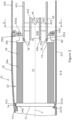
Figure 4 is a sectional view through an air filter housing and air filter cartridge forming part of the air treatment system ofFig. 3 , taken on line D-D; -
Figure 5 is a sectional view through part of the air treatment system ofFig. 3 taken on line B-B with a first type air filter cartridge operatively assembled into the air filter housing; -
Figure 6 is a sectional view through an air duct forming part of the air treatment system ofFigs. 2 to 5 , taken on line E-E inFig. 5 ; -
Figure 7 is a view similar to that ofFig. 5 but showing a second type air filter cartridge operatively assembled into the air filter housing; -
Figures 8a and 8b are cross-sectional views illustrating an alternative duct arrangement for use in an air treatment system in according to the invention; and -
Figure 8c is a view similar to that ofFigure 8b but illustrating a still further alterative duct arrangement. - Embodiments of the invention will now be described in the following detailed description with reference to the drawings, wherein the embodiments are described to enable practice of the invention. Although the invention is exemplified with reference to these specific embodiments, it will be understood that the scope of the invention is defined in the appended claims and is not otherwise limited to or by these embodiments. But to the contrary, the invention includes numerous alternatives and modifications falling within the scope of the invention as defined in the appended claims as will become apparent from consideration of the following detailed description.
-
Fig.1 illustrates an agricultural/utility vehicle or mobile machine in the form of atractor 10 having an enclosed operator environment in the form of acab 12 and anengine compartment 14. Achassis 16, which is partly visible, connects front wheel suspension andsteering assembly 18 andrear axle assembly 20. - With reference also to
Figs. 3 to 5 , thecab 12 has aroof assembly 22 within which is mounted anair treatment system 23, which includes anair filtration system 24 and a HVAC (heating, ventilation and air conditioning)system 26. Anair inlet 28 for the air treatment system is located under an eaves overhang on a side of theroof assembly 22. Theroof assembly 22 comprisesupper roof part 220 andlower roof part 221 which together form a cavity for installation of major parts of theHVAC system 26 and parts of theair filtration system 24. Anopenable cover 25 in a side wall of theroof assembly 22 enables user access for inspection and/or replacement offiltration cartridges 34/40 which form part of the air filter system, as described further below. - The overall functional arrangement of the
air treatment system 23 is illustrated schematically inFig. 2 , with the air filtration system indicated generally at 24 (to the left of the figure) connected to the HVAC system indicated generally at 26 (to the right of the figure) for the operator environment orcab 12 of theagricultural vehicle 10. - External air is drawn into the
air treatment system 23 through anexternal air inlet 28, which may be in the form of a vent and/orduct 32, into anair filter housing 33 and through anair filter cartridge 34/40 located in the housing. From the air filter cartridge, the air passes through afilter duct 43 which directs the air to an inlet plenum of a first fan or air impeller device, referred to aspressurization blower 46. The output of thisfirst blower 46 is connected by way of afurther duct 62 to the input of a second fan or air impeller device,main blower 48, of theHVAC system 26. As will be described in more detail below, thefilter duct 43 has two flow paths, one of which includes anair flow sensor 45. TheHVAC system 26 typically includes additional components downstream of themain blower 48, such as, by way of example, anevaporator 50 and aheater 52. The treated air flow output from the HVAC system is directed to the interior ofcab 12 by way of a cabinair supply duct 63. - An
air recirculation path 58 is provided by a conduit extending between the interior of thecab 12 and the inlet to themain blower 48. The furtherair recirculation path 58 suitably includes a dust filter 60 (preferably in the form of a simple cartridge filter easily replaceable by a user) to prevent dust from the ambient air within thecab 12 from being passed to themain blower 48 anddownstream components - The
air filter housing 33 holds only onefilter cartridge 34/40 at any given time. However, the system includesinterchangeable filter cartridges 34/40 having different filter grades which can be easily and quickly changed to meet different filtering requirements depending on the working conditions. The system includesinterchangeable filter cartridges 34/40 of at least two different types, a firsttype filter cartridge 34 and a secondtype filter cartridge 40, each type of filter cartridge offering a different level of filtration. Typically, the firsttype filter cartridge 34 will have a filter element suitable for filtering dust and may be a CAT2 filtration device and the secondtype filter cartridge 40 will have a finer grade filter element capable of filtering dust, aerosols and vapours and may be a CAT4 filtration device. It is expected that during normal operating conditions a firsttype filter cartridge 34 for protecting against dust will be assembled in theair filter housing 33. When there is a requirement for filtering to a different standard, say for filtering aerosols and/or vapours (for example when applying an herbicide, pesticide or similar), the firsttype filter cartridge 34 is removed and replaced by a secondtype filter cartridge 40. Once the requirement for a higher level of filtration has passed, the secondtype filter cartridge 40 is removed and replaced by a firsttype filter cartridge 34. This arrangement enables theair filtration system 24 to provide differing levels of filtration as required by changing working conditions whilst only requiring space to fit one air filter cartridge. -
Fig. 3 is a schematic plan, looking down from above, of a preferred layout of the system components within theroof 22. The front of thetractor 10, and the usual direction of travel, is indicated by the arrow A. Arrow A is also coincident with a longitudinal axis of the tractor. - The
filter cartridge 34/40 is mounted within theair filter housing 33 to one side of the roof. In this embodiment, thefilter cartridges 34/40 are cylindrical, with the filter medium arranged in a circumferential orientation around an axis indicated by line C. When afilter cartridge 34/40 is installed in thefilter housing 33, its axis C is aligned longitudinally in drivingdirection A. Inlet 28 to thefilter housing 33 is positioned below the filter in an underside of theroof assembly 22 forming an eaves projection outside of thecab 12. Theinlet 28 is represented schematically inFig. 3 alongside thefilter cartridge 34/40 to illustrate its position relative to the cartridge in a longitudinal direction of the tractor. In alternative embodiments, theinlet 28 can be located elsewhere so long as a suitable air flow through the filter is enabled. -
Openable cover 25 in the roof assembly enables user access to the interior of thefilter housing 33 for inspection, maintenance and/or replacement of thefilter cartridge 34/40 as will be described in more detail later on. - The
filter duct 43 provides a fluid path for directing air from an outlet of theair filter cartridge 34/40 to the inlet plenum of thepressurization blower 46 and afurther air duct 62 fluidly connects an outlet of thepressurization blower 46 to an inlet of themain blower 48 of the HVAC system. From themain blower 48, the flittered air is passed through additional components in theHVAC system 26. Details of theHVAC system 26 do not form part of the present invention and so will not be described in detail. However, the additional components may include anevaporator 52 andheater 50 which extend internally across the rear of the cab roof adjacent a rear wall. The treated air flow output from the HVAC system is directed to the interior ofcab 12 by way of a cabinair supply duct 63. An opening from thecab space 12 into theduct 62 provides therecirculation path 58 as mentioned above. - The layout of the air treatment system as illustrated in
Fig. 3 provides a first benefit in that theinlet 28 for the air filtration system is located under an eaves overhang at the side of the roof which tends to be a less dusty environment than the front or rear. This helps to reduce the volume of airborne material drawn into the filter. Secondly, the position of theair filter cartridge 34/40 along one side of the cab provides for easy access for the operator. A third benefit of having the filtration system and HVAC components mounted around the periphery of thecab roof 22 is that it enables a clearance area (indicated generally by dashed line 59) giving improved user headroom in the center of the cab. -
Figs. 4 to 6 illustrate the mounting of a first type offilter cartridge 34 in thefilter housing 33 in an operative condition. Thefilter cartridge 34 is cylindrical with afilter medium 34a arranged in circumferential orientation around the axis C. In this first type offilter cartridge 34, the filter medium may be simple folded filter paper (suitable for CAT2). A disc-like end cap filter medium 34a. The end caps 34b, 34c may be made from flexible material such as rubber, foam etc. One of the end caps 34b fully encloses one end of thefilter medium 34a. Theother end cap 34c is annular, having acentral orifice 70 which defines an outlet of the filter cartridge. Theannular filter medium 34a surrounds acentral bore 71 aligned with theoutlet 70. The end caps 34b, 34c are impervious to air so that thefilter cartridge 34 defines a flow path which requires air to pass through thefilter medium 34a into thecentral bore 71 and out through theoutlet orifice 70. - The end caps 34b, 34c are used mount the
filter cartridge 34 in thehousing 33 between anupper roof part 220 and alower roof part 221 ofroof assembly 22. As mentioned previously, an openable cover 25 (with the open position indicated with 25' inFig. 4 ) is provided in the roof assembly, mainly in theupper roof part 220 to enable access to thefilter housing 33. The outer circumference of thefirst end cap 34b engages with formations in thelower roof part 221 and theopenable cover 25, when the cover is closed, to locate the filter cartridge in the housing. To this end, thecover 25 is provided with afirst abutment 411 which engages an axial end face 72 of thefirst end cap 34b to prevent movement of thefiltration device 34 along its longitudinal axis C and a plurality ofsecond formations 412 having arcuate contours which engage an outercircumferential face 74 of the first end cap. Thesecond formations 412 are spaced apart so as to engage thecircumferential face 74 of thefirst end cap 34 at different locations and are configured to press the outercircumferential surface 74 of the first end cap into engagement with a correspondinglyarcuate support contour 221a in thelower roof part 221 when thecover 25 is closed. The arcuate surfaces of thesecond formations 412 are diametrically spaced from thearcuate support surface 221a by a distance which is less than the outer diameter of thefirst end cap 34b to increase pressure and balance tolerances. - The
second end cap 34c forms a sealed engagement with the inlet end of theair filter duct 43 so that filtered air exiting the filter cartridge through theoutlet orifice 70 is constrained to enter thefilter duct 43. As shown inFig. 5 , and in more detail inFig. 6 , an inlet end of thefilter duct 43 includes afilter connector portion 43a having anouter duct portion 431 and aninner duct portion 432 within theouter duct portion 431. In this embodiment, the innerair duct portion 432 and theouter duct portion 431 are cylindrical tubes and arranged concentrically, wherein theouter duct portion 431 at least partly surrounds innerduct portion art 432. A first, innerair flow path 436 is defined through theinner duct portion 432 and a second, outerair flow path 437 is defined by the annular space between the inner and outer duct portions. The inner and outer duct portions are joined together by tworadial webs 433. More than two spacedwebs 433 may be provided to connect the inner and outer duct portions, provided that air flow through thesecond flow path 437 is not overly restricted. Anair flow sensor 45 is mounted within theinner duct portion 432 to measure the flow of air through the firstair flow path 437. - A mounting
flange 434 projects radially outwardly about the outer circumference of theouter duct portion 431 close to an inlet end of thefilter duct 43. The mountingflange 434 is configured to abut corresponding mountingflanges 434a which project radially inwardly from the inner surfaces of theupper roof part 220 and lower roof part 221c. The mountingflange 434 and the corresponding mountingflanges 434a have a number of corresponding and aligned axial through holes, indicated by theaxes 435, through which fastenings are passed to mount the filter ductinlet connector portion 43a in position. It will be appreciated that other arrangements for mounting theconnector portion 43a offilter duct 43 can be adopted. - The
connector portion 43a may be configured to connect at an outlet end to the inlet plenum of thepressurization blower 46. Alternatively, theduct 43 may include further duct means for directing air from an outlet region of the connector portion to theblower 46. - The
connector portion 43a may be manufactured from polymeric materials, say by injection moulding. Alternative manufacturing methods may also be used. Furthermore, theinner duct portion 432 andouter duct portion 431 may be produced separately and joined afterwards in any known manner, say by means of adhesive or ultra-sonic welding, for example. - As illustrated in
Fig. 5 , thesecond end cap 34c of the filter cartridge sealingly engages with the inlet end of thefilter duct 43 so that filtered air which has passed through thefilter medium 34a enters thefilter duct 43. The inlet ends of the outer andinner duct portions flange 434 into thefilter housing 33 to define air filtercartridge sealing formations cartridge outlet formations filter duct 43. - In respect of the first
type filter cartridge 34 as shown inFig. 5 , thesecond end cap 34c has a singlefilter outlet formation 80 which engages with afirst sealing formation 76 defined by the inlet end of theouter duct portion 431 where it projects into the filter housing beyond the mountingflange 434. The outer circumferential surface of thefirst sealing formation 76 defines first duct sealing surface DS1. Thefilter outlet formation 80 is in the form of an annular projection or sealing ring which extends axially outwardly from the outer axial end face of thesecond end cap 34c about theoutlet orifice 70. A radially inwardly directed face of thefilter outlet formation 80 defines a first filter sealing surface FS1 which engages with a tight fit over the first duct sealing surface DS1. An axial end face of the firstfilter outlet formation 80 defines a second filter sealing surface FS2 which, when thefilter cartridge 34 is fully fitted, engages a second duct sealing surface DS2 defined by an opposing axial face of the mountingflange 434. Engagement of the second filter surface FS2 and the second duct sealing surface DS2 mainly serves to limit axial movement of the filter cartridge but also provides some sealing functionality. - Engagement of the
filter outlet formation 80 with the inlet end (sealing formation) 76 of theouter duct portion 431 provides a sealed engagement between thefilter cartridge 34 and thefilter duct 43. When the 46 pressurization blower and/or 48 main blower is/are operated, external air is drawn into thefilter housing 33, through thefilter medium 34a to thecentral bore 71, through theoutlet orifice 70 and into the filter duct. In this case, air is able to pass through both the inner andouter flow paths - The first
type filter cartridge 34 is inserted in thefiltration system 24 by opening thecover 25, aligning thefilter outlet formation 80 with theinlet end 76 of theouter duct portion 431 and pushing the filter cartridge so that thefilter outlet formation 80 slides over theinlet end 76 of theouter duct portion 431 until the axial end surface FS2 of thefilter outlet formation 80 contacts the surface DS2 of the mountingflange 434. The flexibility of the material from which the end caps are made helps thefilter outlet formation 80 to locate on and seal with theinlet end 76 of the outer duct portion. Thecover 25 is then closed to secure thefilter cartridge 34 in place. Thecover 25 is provided with a latch to secure it in the closed position. Removal of the firsttype filter cartridge 34 is achieved by reversing the above process. -
Fig. 7 illustrates mounting of a secondtype filter cartridge 40 in thefilter housing 33. The secondtype filter cartridge 40 is constructed in a similar manner to the first type, having an annular, cylindrical arrangement offilter medium 40a mounted between afirst end cap 40b and asecond end cap 40c. Thefirst end cap 40b is substantially the same as thefirst end cap 34b of the first type filter and co-operates with the mountingformations openable cover 25 and thelower roof surface 221 in a similar manner. Accordingly, this will not be descried in detail and the reader should refer to the description above regarding the firsttype filter cartridge 34 for detail. The main differences between the secondtype filter cartridge 40 and the first type offilter cartridge 34 lie in thefilter medium 40a, thesecond end cap 40c, and the way the second end cap engages with thefilter duct 43. - The
filter medium 40a comprises a first, outer layer of filter medium 40a', which may be simple folded filter paper (similar to CAT2), and a second, inner layer offilter medium 40a" being activated carbon which absorbs aerosols, vapour or the like. The second layer offilter medium 40a" is arranged concentrically inside the first layer so that the second filter medium is downstream of thefirst filter medium 40a' in the direction of air flow. The secondtype filter cartridge 40 has the same outer dimensions, in terms of diameter and length, as the firsttype filter cartridge 34. Accordingly, The presence of the second, inner layer offilter medium 40a" means that the diameter of the central, inner bore 71' is smaller than that of the firsttype filter cartridge 34. As a consequence, the outlet orifice 70' in thesecond end cap 40c is correspondingly smaller so that air passing through the secondtype filter cartridge 40 is constrained to pass through both layers of filter medium 40a', 40a", the central bore 71' and through the outlet orifice 70'. - The
second end cap 40c is provided with a first filteroutlet engagement formation 80 which engages with the first filteroutlet engagement formation 76 defined by the inlet end of the outer duct portion 342. The firstfilter engagement formation 80 and the way it engages with theouter duct portion 431 is essentially the same as that described above in relation to the firsttype filter cartridge 34 described above. Accordingly, this will not be described in detail. - In addition to the first filter
outlet engagement formation 80, the secondtype filter cartridge 40 has a secondfilter outlet formation 82 or sealing ring arranged concentrically inside the first filteroutlet engagement formation 80 surrounding the outlet orifice 70'. The secondfilter outlet formation 82 is similar to the first 80. It has a radially inwardly directed face which defines a third filter sealing surface FS3 that engages with a tight fit over the outer circumferential sealing surface DS3 of the second,inner sealing formation 78 defined by the inlet end of theinner duct portion 432. A seal is formed between thesecond outlet formation 82 of thefilter cartridge 40 and theinner sealing formation 78 of thefilter duct 43. - When the second type filter cartridge is fitted into the
air filtration system 24, the second, innerfilter outlet formation 82 sealingly engages with the outer surface of theinlet end 78 of theinner duct portion 432 so that air drawn through the outlet orifice 70' is constrained to enter theinner flow path 436 only. Accordingly, all the air passing through the filter flows though theinner flow path 436 and theair flow sensor 45. The firstfilter outlet formation 80 also sealingly engages with theinlet end 76 of the outer duct portion so that air is not drawn into theouter flow path 437 past the filter cartridge. As illustrated inFigs. 5 and7 , theinner duct portion 432 may only extend over part of the length of theduct 43 so that the twoair flow passages second end cap 40c and theouter duct portion 431 is necessary to prevent air being drawn in through theouter flow path 437. The outerfilter outlet formation 80 and the region of thesecond end cap 40c between the outer andinner outlet formations outer flow path 437. - It is envisaged that the profiles of the
filter outlet formations formations cartridge engagement formations filter cartridge 34/40 is flitted an effective seal is formed between the filter cartridge and the filter duct and that when a filter cartridge of the second type is fitted, air exiting the filter cartridge is directed through the inner flow path only. - Furthermore, the inlet region of
filter duct 43 may be provided with demolding inclines, especially the first (circumferential) duct sealing surface DS1 or third (circumferential) duct sealing surface DS3 ofair duct 43 may be slightly inclined. Furthermore, first (circumferential) filter sealing surface FS1 and third (circumferential) filter sealing surface FS3 of thefilter cartridges - In the embodiment described above, the
connection portion 43a of thefilter duct 43 is adapted to direct air generally in an axial direction C of the filter cartridge. This is appropriate where the filter duct extends generally in-line with the axis C of the filter cartridge, at least over an initial length of the duct. However, in some installations there may not be room for thefilter duct 43 to extend in the axial direction C and it may be necessary, or at least desirable, to turn the air flow leaving the filter cartridge through 90 degrees or even 180 degrees shortly after leaving thefilter cartridge 34/40. -
Figs. 8a and 8b illustrate an alternative filterduct connection portion 53 which is suitable for installations wherein the air flow from the filter cartridge is to be guided through a 180° turn. This solution could be used, for example, to locate the filter cartridge in the position indicated at 24' inFig. 3 . In this embodiment, theconnection portion 53 of thefilter duct 43 is constructed of two parts, amain body 530 and acover 560. Theparts outer flow paths connection portion body 530 and cover 560 may be manufactured by injection moulding, whereby the closing direction of the moulding tool for each part parts 530,560 is along of axis C of the filter cartridge. - The
connection portion 53 has aninlet end 53A and anoutlet end 53B. Thebody 530 has a planerfront wall 533 which in use extends parallel to the outer axial face of the second end cap of afilter cartridge 34/40 when mounted in the filter housing. At theinlet end 53A, theduct body 530 has a first, outer cylindrical tubular sealing formation 76' projecting from the outer surface of thefront wall 533 into the filter housing, that is to say towards the second end cap of a filter cartridge in use. A second, inner cylindrical tubular sealing formation 78' projects from the outer surface of thewall 533 into the filter housing concentrically inside the first. The first and second sealing formations 76', 78' correspond to the inlet end regions or sealingformations inner duct portions rings type filter cartridges 34/40 in a similar manner. To this end, the outer circumferential surfaces of the first and second sealing formations 76', 78' define the first and third duct sealing surfaces DS1 and DS3 and theouter face 533a of thefront wall 533 defines the second duct sealing surface DS2 in the region surrounding the first, outer sealing formation 76'. The first and second filter formations 76', 78' can be considered to comprise concentric parts of an outer duct portion 431' and an inner duct portion 432' respectively. - At the outlet end 53b of the
connection portion 53, a first outer cylindricaltubular outlet formation 531 extends fromouter surface 533a of thewall 533 generally parallel to the first and second sealing formations. 76', 78'. A second, inner cylindricaltubular outlet formation 532 extends fromouter surface 533a of the wall concentrically within the first 531. - The interior 536a of the inner sealing formation 78' defines an inlet portion 536a of an
inner flow path 536 through the duct portion whilst the interior of theinner outlet formation 532 defines an outlet portion 536b of theinner flow path 536. Similarly, the region between the outer and inner sealing formations 76', 78' defines aninlet portion 537a of anouter flow path 537 through theconnection portion 53 of the duct whilst the region between the outer andinner outlet formations outlet portion 537b of thesecond flow path 537. - The inlet and
outlet portions flow path portions front wall 533 and thecover 560. Circular innerflow path orifices 533c extend through thefront wall 533 centrally of the second sealing formation 78' and thesecond outlet formation 532 respectively. Theintermediate portion 536c of the inner flow path is defined by means of afirst partition wall 555 which extends between thefront wall 533 and the cover 566 and is shaped generally as an elongate oval extending about the outer circumferential edges of and between thecircular orifices 533c of the inner flow path. Arcuate outerflow path orifices 533d extend through thefront wall 533 in the regions between the first and second sealing formations 76', 78' and the first andsecond outlet formations flow path orifices 533d are generally toroidal in shape but are only present outside the area enclosed by thefirst partition wall 555. Asecond partition wall 556 extends between the inner surface 533b of the front wall and thecover 560. The second partition wall surrounds thefirst partition wall 555 and is shaped generally as an elongate oval so as to extend about the outer circumferential edges of and between the outerflow path orifices 533d. In the embodiment as shown, thepartition walls main body 530 and thecover 560 defines a pair ofchannels end regions - An
air flow sensor 45 is mounted in the innerair flow path 536. As shown, this can be located within the second outlet formation 531b, though it could be positioned elsewhere. - Either of the first and second type
air filter cartridges filter cartridge 40 of the second type only is shown. - In a modification, a second filter cartridge could be mounted to the
connection portion 53 by providing outer and inner sealing formations extending outwardly from the outer face of the cover, as indicated in ghost at 76", 78", with suitable orifices being provided through the cover. This also indicates a possible alternative position for the inlet where only single filter cartridge is connected. - In order to mount the
connection portion 53 in the vehicle roof, thefront wall 533 projects radially outwardly beyond thesecond partition wall 556 to define a mountingflange 534. The mountingflange 534 may abut corresponding mounting flanges on the upper and lower parts of the roof in a similar manner to the first embodiment described above. - In the embodiment described above, the outlet of the
outer flow path 537 is arranged concentrically about the outlet for theinner flow path 536. However, this is not essential andFig. 8c illustrates how the outlet for thesecond flow path 537 could be offset to one side of that for the inner flow path. In this embodiment, the connection portion 53' is essentially L shaped and theintermediate portion 537c' of the outer flow path as defined by the second partition wall 556' is also L shaped to encompass acircular outlet orifice 533d' for the outer flow path located to one side of the outlet orifice for the inner flow path. It will be appreciated that the shape of theduct 53 can be modified in various walls to accommodate different installation requirements. - It is an advantage of the air filter system as described that when a second type CAT4 filter cartridge is fitted that the whole air flow from the filter cartridge passes through the
inner flow path sensor 45 to enable monitoring of the air flow according legal requirements in CAT4 operation because theouter flow path filter cartridge 40 without the use of additional flaps in the ducting, which would require installation space and increase costs. In CAT2 operation, focusing on maximum airflow, bothair flow passages sensor 45, which is s not required in CAT2 operation, is partly bypassed. It is a further advantage that even in the event that aerosols or vapors pass the second type offilter cartridge 40 during CAT4 operation, the outer flow path will not be contaminated and so will not require cleaning.
Claims (13)
- An air treatment system (23) comprising:a) an air filtration apparatus (24) having an air filter housing (33) for receiving an air filter cartridge (34; 40);b) an air processing apparatus (26) downstream of the air filter housing (33), the air processing apparatus (26) being fluidly connected with the air filter housing (33) by means of a duct (43), the duct (43) having at its inlet end a filter sealing arrangement (76, 78; 76', 78') for sealing engagement with a corresponding outlet sealing arrangement (80; 80, 82) of an air filter cartridge (34; 40) mounted in the air filter housing (33),c) the system (23) comprises a first type air filter cartridge (34) having an outlet (70) with an outlet sealing arrangement (80) having a first configuration, characterized in that: the system (23) further comprises a second type air filter cartridge (40) having an outlet (70') with an outlet sealing arrangement (80, 82) having a second configuration different from the first configuration;d) the duct (43) has, over at least part of its length proximal the inlet end, inner and outer conduits (432, 431; 432', 431') which define an inner flow path (436; 536) within the inner conduit and an outer flow path (437; 537) between the inner and outer conduits; ande) the filter sealing arrangement (76, 78; 76', 78') of the duct (43) is adapted for sealing engagement with the outlet sealing arrangement (80) of the first type air filter cartridge (34) and the outlet sealing arrangement (80, 82) of the second type air filter cartridge (40), so that the first type air filter cartridge (34) and the second type air filter cartridge (40) can be selectively inserted into the air filter housing (33) in sealing engagement with the duct (43).
- An air treatment system (23) as claimed in claim 1, wherein the system is configured such that when a first type air filter cartridge (34) is mounted in the air filter housing (33), air is directed from the air filter cartridge outlet into both of the inner and outer flow paths (436, 437; 536, 537) and that when a second type air filter cartridge (40) is mounted in the air filter housing (33), air is directed from the air filter cartridge outlet into one of said inner and outer flow paths (436, 437; 536, 537) only.
- An air treatment system (23) as claimed in claim 2, wherein the system is configured such that when a second type air filter cartridge (40) is mounted in the air filter housing (33), an inlet to the other of said inner and outer flow paths (436, 437; 536, 537) is blocked by the second type air filter cartridge (40).
- An air treatment system (23) as claimed in claim 2 or claim 3, wherein the system is configured such that when a second type air filter cartridge (40) is mounted in the air filter housing (33), air is directed from the air filter cartridge outlet into said inner flow path (436; 536) only
- An air treatment system (23) as claimed in any one of the preceding claims, wherein the duct filter sealing arrangement comprises an outer cylindrical tubular sealing formation (76; 76') and an inner cylindrical tubular sealing formation (78; 78') arranged concentrically within the outer cylindrical tubular sealing formation (76; 76'), the interior of the inner cylindrical tubular sealing formation (78; 78') defining an inlet to the inner flow path (436; 536), an inlet to the outer flow path (437; 537) being defined between the inner (78; 78') and outer (76; 76') cylindrical tubular sealing formations.
- An air treatment system (23) as claimed in claim 5, wherein the first type air filter cartridge (34) has a single sealing ring (80) surrounding an outlet (70) for filtered air, the sealing ring (80) being configured to engage the outer cylindrical tubular sealing formation (76; 76') on the duct (43), the outlet configured to direct air into both the inner (436; 536) and outer (437; 537) flow paths in use.
- An air treatment system (23) as claimed in claim 5 or claim 6, wherein the second type air filter cartridge (40) has a first sealing ring (82) surrounding an outlet (70') for filtered air, the first sealing ring (82) being configured to engage the inner cylindrical tubular sealing formation (78; 78') on the duct (43), the outlet configured to direct air into the inner flow path (436; 536) only.
- An air treatment system (23) as claimed in claim 7, wherein the second type air filter cartridge (40) comprises a further sealing ring (80) arranged concentrically about said first sealing ring (82), the further sealing ring (80) configured to engage the outer cylindrical tubular sealing formation (76; 76') on the duct (43).
- An air treatment system (23) as claimed in claim 8, wherein the sealing rings (80, 82) are provided on an end cap (40c) of the second type air filter cartridge (40) made from a material impervious to air which end cap (40c) extends radially between said sealing rings (80, 82).
- An air treatment system (23) as claimed in any one of the preceding claims, wherein each of the first and second type air filter cartridges (34; 40) comprises a filter medium (34a; 40a', 40a") arranged in a cylindrical tube about a central bore (71; 71') having an axis, and first and second end caps (34b, 34c; 40b, 40c) made of a material impervious to air, the first end cap (34b; 40b) comprising a solid disc mounted at one axial end of the filter medium enclosing said one axial end, the second end cap (34c; 40c) being annular and mounted at the other axial end of the filter medium, the second end cap (34c; 40c) having a central orifice (70; 70') aligned with the central bore (71; 71') and defining the outlet from the filter cartridge (34; 40).
- An air treatment system (23) as claimed in claim 10, wherein the central bore (71') in the filter medium of the second type air filter cartridge (40) is smaller in diameter than the central bore (71) of the first type air filter cartridge (34), the outlet orifice (70') in the second type air filter cartridge (40) having a diameter which is no larger than that of the central bore (71').
- An air treatment system (23) as claimed in any one of the preceding claims, wherein an air mass sensor (45) is provided in the inner flow path (436; 536).
- A vehicle (10), especially an agricultural vehicle, having an air treatment system (23) as claimed in any one of claims 1 to 12.
Applications Claiming Priority (1)
| Application Number | Priority Date | Filing Date | Title |
|---|---|---|---|
| GBGB2019049.2A GB202019049D0 (en) | 2020-12-03 | 2020-12-03 | Air filtration system |
Publications (2)
| Publication Number | Publication Date |
|---|---|
| EP4008574A1 EP4008574A1 (en) | 2022-06-08 |
| EP4008574B1 true EP4008574B1 (en) | 2023-05-10 |
Family
ID=74165885
Family Applications (1)
| Application Number | Title | Priority Date | Filing Date |
|---|---|---|---|
| EP21200697.7A Active EP4008574B1 (en) | 2020-12-03 | 2021-10-04 | Air treatment system |
Country Status (3)
| Country | Link |
|---|---|
| US (1) | US12115482B2 (en) |
| EP (1) | EP4008574B1 (en) |
| GB (1) | GB202019049D0 (en) |
Families Citing this family (2)
| Publication number | Priority date | Publication date | Assignee | Title |
|---|---|---|---|---|
| GB201917946D0 (en) * | 2019-12-09 | 2020-01-22 | Agco Int Gmbh | Air treatment apparatus |
| US20240191466A1 (en) * | 2022-12-12 | 2024-06-13 | Great Plains Manufacturing, Inc. | Slide up cab door for work machine |
Family Cites Families (9)
| Publication number | Priority date | Publication date | Assignee | Title |
|---|---|---|---|---|
| US6416561B1 (en) * | 2000-10-20 | 2002-07-09 | Nelson Industries, Inc. | Open flow filter with safety element |
| GB201109699D0 (en) | 2011-06-10 | 2011-07-27 | Agco Int Gmbh | Air duct |
| US9283506B2 (en) | 2013-03-15 | 2016-03-15 | K&N Engineering, Inc. | Air filter |
| DE102013008392A1 (en) | 2013-05-17 | 2014-11-20 | Mann + Hummel Gmbh | Air filters for the interior air of cabins of vehicles, agricultural, construction and working machines |
| DE102014111671A1 (en) * | 2014-03-31 | 2015-10-01 | Claas Selbstfahrende Erntemaschinen Gmbh | Driver's cab of a agricultural or construction-economical working machine |
| US10538140B2 (en) * | 2014-04-16 | 2020-01-21 | Denso Thermal Systems S.P.A. | Cabin pressurization system for agricultural machines, having a filtration system |
| EP3363521B1 (en) | 2015-04-10 | 2022-06-29 | MANN+HUMMEL GmbH | Filter element and filter assembly |
| EP3599007A1 (en) | 2018-07-24 | 2020-01-29 | Carl Freudenberg KG | Filter assembly with gel seal and use of such a filter as internal air filter |
| GB201814571D0 (en) * | 2018-09-07 | 2018-10-24 | Agco Int Gmbh | Air treatment apparatus and valve mechanism |
-
2020
- 2020-12-03 GB GBGB2019049.2A patent/GB202019049D0/en not_active Ceased
-
2021
- 2021-10-04 EP EP21200697.7A patent/EP4008574B1/en active Active
- 2021-11-03 US US17/453,459 patent/US12115482B2/en active Active
Also Published As
| Publication number | Publication date |
|---|---|
| US12115482B2 (en) | 2024-10-15 |
| EP4008574A1 (en) | 2022-06-08 |
| GB202019049D0 (en) | 2021-01-20 |
| US20220176289A1 (en) | 2022-06-09 |
Similar Documents
| Publication | Publication Date | Title |
|---|---|---|
| EP4008574B1 (en) | Air treatment system | |
| EP3835096B1 (en) | Air treatment apparatus | |
| US5119718A (en) | Ventilating arrangement for the cab of a vehicle | |
| US10538140B2 (en) | Cabin pressurization system for agricultural machines, having a filtration system | |
| JP3004714B2 (en) | Strong air filter with multipurpose end seal | |
| US7267706B2 (en) | Air filter | |
| US11518211B2 (en) | Air treatment apparatus | |
| US20210086582A1 (en) | Air treatment apparatus for an agricultural vehicle | |
| CN105464855B (en) | Air filter element component for motor vehicles | |
| JP7301616B2 (en) | work vehicle | |
| US11179993B2 (en) | Cabin pressurization system for agricultural machines with filtration system | |
| EP3835097B1 (en) | Air treatment apparatus | |
| JP4976029B2 (en) | Automotive air treatment assembly with improved gasket for firewalls | |
| CN110743254A (en) | Filter system with gel seal and interior air filter having such a filter system | |
| CA1088041A (en) | Filter system for agricultural aircraft | |
| US6755732B2 (en) | Air filtration system for vehicle cabs | |
| EP3620317A1 (en) | Air treatment apparatus and valve mechanism | |
| CN210941246U (en) | Heating, ventilating and/or air conditioning system | |
| GB2292883A (en) | Odour absorbing system for a vacuum cleaner | |
| GB2312633A (en) | Device for generating purified air | |
| SU1662635A1 (en) | Filter for air cleaning | |
| CN106457112B (en) | Filter elements and filter assemblies with two filter fields | |
| CN121843750A (en) | Circular filter elements and filtration systems | |
| CN113983601A (en) | Cyclone filter |
Legal Events
| Date | Code | Title | Description |
|---|---|---|---|
| PUAI | Public reference made under article 153(3) epc to a published international application that has entered the european phase |
Free format text: ORIGINAL CODE: 0009012 |
|
| STAA | Information on the status of an ep patent application or granted ep patent |
Free format text: STATUS: THE APPLICATION HAS BEEN PUBLISHED |
|
| AK | Designated contracting states |
Kind code of ref document: A1 Designated state(s): AL AT BE BG CH CY CZ DE DK EE ES FI FR GB GR HR HU IE IS IT LI LT LU LV MC MK MT NL NO PL PT RO RS SE SI SK SM TR |
|
| STAA | Information on the status of an ep patent application or granted ep patent |
Free format text: STATUS: REQUEST FOR EXAMINATION WAS MADE |
|
| 17P | Request for examination filed |
Effective date: 20221208 |
|
| RBV | Designated contracting states (corrected) |
Designated state(s): AL AT BE BG CH CY CZ DE DK EE ES FI FR GB GR HR HU IE IS IT LI LT LU LV MC MK MT NL NO PL PT RO RS SE SI SK SM TR |
|
| GRAP | Despatch of communication of intention to grant a patent |
Free format text: ORIGINAL CODE: EPIDOSNIGR1 |
|
| STAA | Information on the status of an ep patent application or granted ep patent |
Free format text: STATUS: GRANT OF PATENT IS INTENDED |
|
| RIC1 | Information provided on ipc code assigned before grant |
Ipc: B01D 46/64 20220101ALI20230118BHEP Ipc: B01D 46/44 20060101ALI20230118BHEP Ipc: B01D 46/24 20060101ALI20230118BHEP Ipc: B01D 46/00 20060101ALI20230118BHEP Ipc: B60H 3/06 20060101ALI20230118BHEP Ipc: B60H 1/00 20060101AFI20230118BHEP |
|
| INTG | Intention to grant announced |
Effective date: 20230209 |
|
| GRAS | Grant fee paid |
Free format text: ORIGINAL CODE: EPIDOSNIGR3 |
|
| GRAA | (expected) grant |
Free format text: ORIGINAL CODE: 0009210 |
|
| STAA | Information on the status of an ep patent application or granted ep patent |
Free format text: STATUS: THE PATENT HAS BEEN GRANTED |
|
| AK | Designated contracting states |
Kind code of ref document: B1 Designated state(s): AL AT BE BG CH CY CZ DE DK EE ES FI FR GB GR HR HU IE IS IT LI LT LU LV MC MK MT NL NO PL PT RO RS SE SI SK SM TR |
|
| REG | Reference to a national code |
Ref country code: GB Ref legal event code: FG4D |
|
| REG | Reference to a national code |
Ref country code: AT Ref legal event code: REF Ref document number: 1566357 Country of ref document: AT Kind code of ref document: T Effective date: 20230515 Ref country code: CH Ref legal event code: EP |
|
| REG | Reference to a national code |
Ref country code: DE Ref legal event code: R096 Ref document number: 602021002319 Country of ref document: DE |
|
| REG | Reference to a national code |
Ref country code: IE Ref legal event code: FG4D |
|
| P01 | Opt-out of the competence of the unified patent court (upc) registered |
Effective date: 20230518 |
|
| REG | Reference to a national code |
Ref country code: LT Ref legal event code: MG9D |
|
| REG | Reference to a national code |
Ref country code: NL Ref legal event code: MP Effective date: 20230510 |
|
| REG | Reference to a national code |
Ref country code: AT Ref legal event code: MK05 Ref document number: 1566357 Country of ref document: AT Kind code of ref document: T Effective date: 20230510 |
|
| PG25 | Lapsed in a contracting state [announced via postgrant information from national office to epo] |
Ref country code: SE Free format text: LAPSE BECAUSE OF FAILURE TO SUBMIT A TRANSLATION OF THE DESCRIPTION OR TO PAY THE FEE WITHIN THE PRESCRIBED TIME-LIMIT Effective date: 20230510 Ref country code: PT Free format text: LAPSE BECAUSE OF FAILURE TO SUBMIT A TRANSLATION OF THE DESCRIPTION OR TO PAY THE FEE WITHIN THE PRESCRIBED TIME-LIMIT Effective date: 20230911 Ref country code: NO Free format text: LAPSE BECAUSE OF FAILURE TO SUBMIT A TRANSLATION OF THE DESCRIPTION OR TO PAY THE FEE WITHIN THE PRESCRIBED TIME-LIMIT Effective date: 20230810 Ref country code: NL Free format text: LAPSE BECAUSE OF FAILURE TO SUBMIT A TRANSLATION OF THE DESCRIPTION OR TO PAY THE FEE WITHIN THE PRESCRIBED TIME-LIMIT Effective date: 20230510 Ref country code: ES Free format text: LAPSE BECAUSE OF FAILURE TO SUBMIT A TRANSLATION OF THE DESCRIPTION OR TO PAY THE FEE WITHIN THE PRESCRIBED TIME-LIMIT Effective date: 20230510 Ref country code: AT Free format text: LAPSE BECAUSE OF FAILURE TO SUBMIT A TRANSLATION OF THE DESCRIPTION OR TO PAY THE FEE WITHIN THE PRESCRIBED TIME-LIMIT Effective date: 20230510 |
|
| PG25 | Lapsed in a contracting state [announced via postgrant information from national office to epo] |
Ref country code: RS Free format text: LAPSE BECAUSE OF FAILURE TO SUBMIT A TRANSLATION OF THE DESCRIPTION OR TO PAY THE FEE WITHIN THE PRESCRIBED TIME-LIMIT Effective date: 20230510 Ref country code: PL Free format text: LAPSE BECAUSE OF FAILURE TO SUBMIT A TRANSLATION OF THE DESCRIPTION OR TO PAY THE FEE WITHIN THE PRESCRIBED TIME-LIMIT Effective date: 20230510 Ref country code: LV Free format text: LAPSE BECAUSE OF FAILURE TO SUBMIT A TRANSLATION OF THE DESCRIPTION OR TO PAY THE FEE WITHIN THE PRESCRIBED TIME-LIMIT Effective date: 20230510 Ref country code: LT Free format text: LAPSE BECAUSE OF FAILURE TO SUBMIT A TRANSLATION OF THE DESCRIPTION OR TO PAY THE FEE WITHIN THE PRESCRIBED TIME-LIMIT Effective date: 20230510 Ref country code: IS Free format text: LAPSE BECAUSE OF FAILURE TO SUBMIT A TRANSLATION OF THE DESCRIPTION OR TO PAY THE FEE WITHIN THE PRESCRIBED TIME-LIMIT Effective date: 20230910 Ref country code: HR Free format text: LAPSE BECAUSE OF FAILURE TO SUBMIT A TRANSLATION OF THE DESCRIPTION OR TO PAY THE FEE WITHIN THE PRESCRIBED TIME-LIMIT Effective date: 20230510 Ref country code: GR Free format text: LAPSE BECAUSE OF FAILURE TO SUBMIT A TRANSLATION OF THE DESCRIPTION OR TO PAY THE FEE WITHIN THE PRESCRIBED TIME-LIMIT Effective date: 20230811 |
|
| PG25 | Lapsed in a contracting state [announced via postgrant information from national office to epo] |
Ref country code: FI Free format text: LAPSE BECAUSE OF FAILURE TO SUBMIT A TRANSLATION OF THE DESCRIPTION OR TO PAY THE FEE WITHIN THE PRESCRIBED TIME-LIMIT Effective date: 20230510 |
|
| PG25 | Lapsed in a contracting state [announced via postgrant information from national office to epo] |
Ref country code: SK Free format text: LAPSE BECAUSE OF FAILURE TO SUBMIT A TRANSLATION OF THE DESCRIPTION OR TO PAY THE FEE WITHIN THE PRESCRIBED TIME-LIMIT Effective date: 20230510 |
|
| PG25 | Lapsed in a contracting state [announced via postgrant information from national office to epo] |
Ref country code: SM Free format text: LAPSE BECAUSE OF FAILURE TO SUBMIT A TRANSLATION OF THE DESCRIPTION OR TO PAY THE FEE WITHIN THE PRESCRIBED TIME-LIMIT Effective date: 20230510 Ref country code: SK Free format text: LAPSE BECAUSE OF FAILURE TO SUBMIT A TRANSLATION OF THE DESCRIPTION OR TO PAY THE FEE WITHIN THE PRESCRIBED TIME-LIMIT Effective date: 20230510 Ref country code: RO Free format text: LAPSE BECAUSE OF FAILURE TO SUBMIT A TRANSLATION OF THE DESCRIPTION OR TO PAY THE FEE WITHIN THE PRESCRIBED TIME-LIMIT Effective date: 20230510 Ref country code: EE Free format text: LAPSE BECAUSE OF FAILURE TO SUBMIT A TRANSLATION OF THE DESCRIPTION OR TO PAY THE FEE WITHIN THE PRESCRIBED TIME-LIMIT Effective date: 20230510 Ref country code: DK Free format text: LAPSE BECAUSE OF FAILURE TO SUBMIT A TRANSLATION OF THE DESCRIPTION OR TO PAY THE FEE WITHIN THE PRESCRIBED TIME-LIMIT Effective date: 20230510 Ref country code: CZ Free format text: LAPSE BECAUSE OF FAILURE TO SUBMIT A TRANSLATION OF THE DESCRIPTION OR TO PAY THE FEE WITHIN THE PRESCRIBED TIME-LIMIT Effective date: 20230510 |
|
| REG | Reference to a national code |
Ref country code: DE Ref legal event code: R097 Ref document number: 602021002319 Country of ref document: DE |
|
| PLBE | No opposition filed within time limit |
Free format text: ORIGINAL CODE: 0009261 |
|
| STAA | Information on the status of an ep patent application or granted ep patent |
Free format text: STATUS: NO OPPOSITION FILED WITHIN TIME LIMIT |
|
| 26N | No opposition filed |
Effective date: 20240213 |
|
| PG25 | Lapsed in a contracting state [announced via postgrant information from national office to epo] |
Ref country code: SI Free format text: LAPSE BECAUSE OF FAILURE TO SUBMIT A TRANSLATION OF THE DESCRIPTION OR TO PAY THE FEE WITHIN THE PRESCRIBED TIME-LIMIT Effective date: 20230510 |
|
| PG25 | Lapsed in a contracting state [announced via postgrant information from national office to epo] |
Ref country code: SI Free format text: LAPSE BECAUSE OF FAILURE TO SUBMIT A TRANSLATION OF THE DESCRIPTION OR TO PAY THE FEE WITHIN THE PRESCRIBED TIME-LIMIT Effective date: 20230510 Ref country code: IT Free format text: LAPSE BECAUSE OF FAILURE TO SUBMIT A TRANSLATION OF THE DESCRIPTION OR TO PAY THE FEE WITHIN THE PRESCRIBED TIME-LIMIT Effective date: 20230510 Ref country code: MC Free format text: LAPSE BECAUSE OF FAILURE TO SUBMIT A TRANSLATION OF THE DESCRIPTION OR TO PAY THE FEE WITHIN THE PRESCRIBED TIME-LIMIT Effective date: 20230510 |
|
| REG | Reference to a national code |
Ref country code: BE Ref legal event code: MM Effective date: 20231031 |
|
| PG25 | Lapsed in a contracting state [announced via postgrant information from national office to epo] |
Ref country code: LU Free format text: LAPSE BECAUSE OF NON-PAYMENT OF DUE FEES Effective date: 20231004 |
|
| PG25 | Lapsed in a contracting state [announced via postgrant information from national office to epo] |
Ref country code: LU Free format text: LAPSE BECAUSE OF NON-PAYMENT OF DUE FEES Effective date: 20231004 |
|
| PG25 | Lapsed in a contracting state [announced via postgrant information from national office to epo] |
Ref country code: BE Free format text: LAPSE BECAUSE OF NON-PAYMENT OF DUE FEES Effective date: 20231031 |
|
| PG25 | Lapsed in a contracting state [announced via postgrant information from national office to epo] |
Ref country code: IE Free format text: LAPSE BECAUSE OF NON-PAYMENT OF DUE FEES Effective date: 20231004 |
|
| PG25 | Lapsed in a contracting state [announced via postgrant information from national office to epo] |
Ref country code: IE Free format text: LAPSE BECAUSE OF NON-PAYMENT OF DUE FEES Effective date: 20231004 |
|
| PG25 | Lapsed in a contracting state [announced via postgrant information from national office to epo] |
Ref country code: BG Free format text: LAPSE BECAUSE OF FAILURE TO SUBMIT A TRANSLATION OF THE DESCRIPTION OR TO PAY THE FEE WITHIN THE PRESCRIBED TIME-LIMIT Effective date: 20230510 |
|
| PG25 | Lapsed in a contracting state [announced via postgrant information from national office to epo] |
Ref country code: BG Free format text: LAPSE BECAUSE OF FAILURE TO SUBMIT A TRANSLATION OF THE DESCRIPTION OR TO PAY THE FEE WITHIN THE PRESCRIBED TIME-LIMIT Effective date: 20230510 |
|
| REG | Reference to a national code |
Ref country code: CH Ref legal event code: PL |
|
| PG25 | Lapsed in a contracting state [announced via postgrant information from national office to epo] |
Ref country code: CH Free format text: LAPSE BECAUSE OF NON-PAYMENT OF DUE FEES Effective date: 20241031 |
|
| PG25 | Lapsed in a contracting state [announced via postgrant information from national office to epo] |
Ref country code: CY Free format text: LAPSE BECAUSE OF FAILURE TO SUBMIT A TRANSLATION OF THE DESCRIPTION OR TO PAY THE FEE WITHIN THE PRESCRIBED TIME-LIMIT; INVALID AB INITIO Effective date: 20211004 |
|
| PG25 | Lapsed in a contracting state [announced via postgrant information from national office to epo] |
Ref country code: HU Free format text: LAPSE BECAUSE OF FAILURE TO SUBMIT A TRANSLATION OF THE DESCRIPTION OR TO PAY THE FEE WITHIN THE PRESCRIBED TIME-LIMIT; INVALID AB INITIO Effective date: 20211004 |
|
| PG25 | Lapsed in a contracting state [announced via postgrant information from national office to epo] |
Ref country code: TR Free format text: LAPSE BECAUSE OF FAILURE TO SUBMIT A TRANSLATION OF THE DESCRIPTION OR TO PAY THE FEE WITHIN THE PRESCRIBED TIME-LIMIT Effective date: 20230510 |
|
| PGFP | Annual fee paid to national office [announced via postgrant information from national office to epo] |
Ref country code: DE Payment date: 20251021 Year of fee payment: 5 |
|
| PGFP | Annual fee paid to national office [announced via postgrant information from national office to epo] |
Ref country code: FR Payment date: 20251030 Year of fee payment: 5 |