EP4007272A1 - Computer-implemented method of processing an emergency incident and emergency communication network - Google Patents
Computer-implemented method of processing an emergency incident and emergency communication network Download PDFInfo
- Publication number
- EP4007272A1 EP4007272A1 EP20210719.9A EP20210719A EP4007272A1 EP 4007272 A1 EP4007272 A1 EP 4007272A1 EP 20210719 A EP20210719 A EP 20210719A EP 4007272 A1 EP4007272 A1 EP 4007272A1
- Authority
- EP
- European Patent Office
- Prior art keywords
- call
- video
- emergency
- psap
- computer
- Prior art date
- Legal status (The legal status is an assumption and is not a legal conclusion. Google has not performed a legal analysis and makes no representation as to the accuracy of the status listed.)
- Granted
Links
Images


Classifications
-
- H—ELECTRICITY
- H04—ELECTRIC COMMUNICATION TECHNIQUE
- H04W—WIRELESS COMMUNICATION NETWORKS
- H04W28/00—Network traffic management; Network resource management
- H04W28/16—Central resource management; Negotiation of resources or communication parameters, e.g. negotiating bandwidth or QoS [Quality of Service]
- H04W28/18—Negotiating wireless communication parameters
- H04W28/20—Negotiating bandwidth
-
- H—ELECTRICITY
- H04—ELECTRIC COMMUNICATION TECHNIQUE
- H04N—PICTORIAL COMMUNICATION, e.g. TELEVISION
- H04N7/00—Television systems
- H04N7/14—Systems for two-way working
- H04N7/15—Conference systems
-
- H—ELECTRICITY
- H04—ELECTRIC COMMUNICATION TECHNIQUE
- H04L—TRANSMISSION OF DIGITAL INFORMATION, e.g. TELEGRAPHIC COMMUNICATION
- H04L65/00—Network arrangements, protocols or services for supporting real-time applications in data packet communication
- H04L65/1066—Session management
- H04L65/1069—Session establishment or de-establishment
-
- H—ELECTRICITY
- H04—ELECTRIC COMMUNICATION TECHNIQUE
- H04L—TRANSMISSION OF DIGITAL INFORMATION, e.g. TELEGRAPHIC COMMUNICATION
- H04L65/00—Network arrangements, protocols or services for supporting real-time applications in data packet communication
- H04L65/60—Network streaming of media packets
- H04L65/65—Network streaming protocols, e.g. real-time transport protocol [RTP] or real-time control protocol [RTCP]
-
- H—ELECTRICITY
- H04—ELECTRIC COMMUNICATION TECHNIQUE
- H04L—TRANSMISSION OF DIGITAL INFORMATION, e.g. TELEGRAPHIC COMMUNICATION
- H04L65/00—Network arrangements, protocols or services for supporting real-time applications in data packet communication
- H04L65/60—Network streaming of media packets
- H04L65/70—Media network packetisation
-
- H—ELECTRICITY
- H04—ELECTRIC COMMUNICATION TECHNIQUE
- H04L—TRANSMISSION OF DIGITAL INFORMATION, e.g. TELEGRAPHIC COMMUNICATION
- H04L65/00—Network arrangements, protocols or services for supporting real-time applications in data packet communication
- H04L65/80—Responding to QoS
-
- H—ELECTRICITY
- H04—ELECTRIC COMMUNICATION TECHNIQUE
- H04L—TRANSMISSION OF DIGITAL INFORMATION, e.g. TELEGRAPHIC COMMUNICATION
- H04L69/00—Network arrangements, protocols or services independent of the application payload and not provided for in the other groups of this subclass
- H04L69/24—Negotiation of communication capabilities
-
- H—ELECTRICITY
- H04—ELECTRIC COMMUNICATION TECHNIQUE
- H04M—TELEPHONIC COMMUNICATION
- H04M3/00—Automatic or semi-automatic exchanges
- H04M3/42—Systems providing special services or facilities to subscribers
- H04M3/436—Arrangements for screening incoming calls, i.e. evaluating the characteristics of a call before deciding whether to answer it
-
- H—ELECTRICITY
- H04—ELECTRIC COMMUNICATION TECHNIQUE
- H04M—TELEPHONIC COMMUNICATION
- H04M3/00—Automatic or semi-automatic exchanges
- H04M3/42—Systems providing special services or facilities to subscribers
- H04M3/50—Centralised arrangements for answering calls; Centralised arrangements for recording messages for absent or busy subscribers ; Centralised arrangements for recording messages
- H04M3/51—Centralised call answering arrangements requiring operator intervention, e.g. call or contact centers for telemarketing
- H04M3/5116—Centralised call answering arrangements requiring operator intervention, e.g. call or contact centers for telemarketing for emergency applications
-
- H—ELECTRICITY
- H04—ELECTRIC COMMUNICATION TECHNIQUE
- H04M—TELEPHONIC COMMUNICATION
- H04M7/00—Arrangements for interconnection between switching centres
- H04M7/0024—Services and arrangements where telephone services are combined with data services
- H04M7/0039—Services and arrangements where telephone services are combined with data services where the data service is provided by a stream of packets which are rendered in real time by the receiving terminal
-
- H—ELECTRICITY
- H04—ELECTRIC COMMUNICATION TECHNIQUE
- H04N—PICTORIAL COMMUNICATION, e.g. TELEVISION
- H04N7/00—Television systems
- H04N7/14—Systems for two-way working
- H04N7/141—Systems for two-way working between two video terminals, e.g. videophone
- H04N7/147—Communication arrangements, e.g. identifying the communication as a video-communication, intermediate storage of the signals
-
- H—ELECTRICITY
- H04—ELECTRIC COMMUNICATION TECHNIQUE
- H04W—WIRELESS COMMUNICATION NETWORKS
- H04W4/00—Services specially adapted for wireless communication networks; Facilities therefor
- H04W4/02—Services making use of location information
- H04W4/025—Services making use of location information using location based information parameters
-
- H—ELECTRICITY
- H04—ELECTRIC COMMUNICATION TECHNIQUE
- H04W—WIRELESS COMMUNICATION NETWORKS
- H04W4/00—Services specially adapted for wireless communication networks; Facilities therefor
- H04W4/90—Services for handling of emergency or hazardous situations, e.g. earthquake and tsunami warning systems [ETWS]
-
- G—PHYSICS
- G06—COMPUTING OR CALCULATING; COUNTING
- G06N—COMPUTING ARRANGEMENTS BASED ON SPECIFIC COMPUTATIONAL MODELS
- G06N20/00—Machine learning
Definitions
- the present invention relates to a computer-implemented method of processing an emergency incident and a corresponding emergency communication network.
- PSAP public-safety answering point
- PSAP is a call center where emergency calls initiated by any mobile or landline subscriber are handled.
- the PSAP may be subject to an increased load. Amongst others, this may be caused by receiving not only audio calls, but also emergency calls containing resource consuming video streams.
- the present invention is based on the object to provide a resource-saving and efficient computer-implemented method of processing an emergency incident and a corresponding emergency communication network.
- ac computer-implemented method of processing an emergency incident reported to a PSAP by a plurality of callers comprising the steps of:
- the video call and the further video calls use different audio and/or video codec.
- the video stream that has been determined to use less resources is transmitted to at least one call taker that handles the emergency incident at the PSAP, and is displayed at a display unit of the at least one call taker.
- the method further comprises a step of providing, to the at least one call taker that handles the emergency incident at the PSAP, a button for selecting a video stream to be used for further handling the emergency incident.
- the method further comprises a step of presenting the selection of the at least one call taker that handles the emergency incident at the PSAP to other call takers at the PSAP that handle the emergency incident.
- the method may further comprise a step of generating at least one re-INVITE message to the emergency callers of the plurality of the emergency callers who select to switch from video call to audio call.
- the method further comprises a step of converting video calls to audio calls, if the respective emergency caller has selected to switch from video call to audio call.
- the method further comprises a step of replicating the selected video stream to all call takers at the PSAP that handle the emergency incident.
- an emergency communication network comprising at least one PSAP for handling at least one emergency incident according to the computer-implemented method for handling an emergency incident.
- the ML classifier unit uses a stream replication technique for determining similarity between the video streams.
- the video stream that has the least bandwidth requirements is determined and presented to a call taker at the PSAP who handles the emergency incident so that he or she may select which one is more efficient to use. If the video stream that uses the least bandwidth is sufficient for handling the emergency incident, then the other video streams that relate to the same emergency incident may be switched to simple audio calls, thereby saving resources, in particular, in terms of bandwidth usage.
- Fig. 1 schematically shows a scenario at a PSAP 1 receiving and processing an emergency incident according to prior art.
- the video streams 4, 4', 4", 4''' being transmitted to the PSAP 1 and from there being distributed to respective call takers or agents 3, 3', 3", 3''' within a predetermined period of time, namely, for a point of time T0 to a point of time T1.
- every call or video stream 4, 4', 4", 4''' received at the PSAP 1 is transmitted to an individual call taker 3, 3', 3" 3,"'.
- the video-based emergency call initiated by the caller 2 is transmitted as emergency video stream em.inc1 indicated by reference numeral 4 via the PSAP 1 to the call taker 3 who will process the information received and handle the emergency call.
- Another call taker 3' will handle the emergency video stream2 em.inc1 indicated by reference numeral 4'
- a further call taker 3" will handle the emergency video stream 3 em.inc1 indicated by reference numeral 4"
- yet a further call taker 3''' will handle the video stream 4 em.inc1 indicated by reference numeral 4'''.
- a lot of resources are used within the time period T0 to T1. Specifically, a lot of bandwidth is used by the plurality of video streams, although for reporting the emergency incident, it would be sufficient to simply transmit only one video stream for handling it.
- Fig. 2 schematically shows another scenario at a PSAP 1 receiving and processing an emergency incident according to an embodiment of the invention.
- emergency video stream1 em.inc1 indicated by reference numeral 4 which comprises CodecK for audio and CodecL for video
- emergency video stream2 em.inc1 indicated by reference numeral 4' which comprises CodecM for audio and CodecA for video
- emergency video stream3 em.inc2 indicated by reference numeral 4" which comprises CodecO for audio and CodecS for video
- emergency video stream4 em.inc1 indicated by reference numeral 4"' which comprises CodecW for audio and CodecU for video.
- All four video streams 4, 4', 4", 4''' are received at the PSAP 1 where they are first transmitted to a Machine Learning, ML, classifier 5.
- ML Machine Learning
- a stream replication technique is applied the main features of which are basically known from prior art.
- the difference compared to prior art techniques is that the streams are compared in order to track which ones of them relate to the same emergency incident. That is, assuming there have been received four active video-based emergency calls at the PSAP 1 as outlined above for the illustrated example, the ML classifier 5 will identify which streams refer on the same emergency incident.
- the call takers 3, 3', 3", 3''' handling these video streams 4, 4', 4", 4" will be presented with a short clip of the most lightweight stream resources.
- Lightweight stream in this context means the most efficient stream in terms of resources, i. e., bandwidth.
- the call takers or agents 3, 3', 3", 3''' will be in position to select if this option is better compared to the video stream they are already watching on their respective monitor or display unit. If the new lightweight stream provides the same pieces of information as to the handling of the emergency incident, a selection may be made by the respective agent or call taker which video stream he or she would like to use for handling or further processing the emergency incident. This selection may also be presented to the other call takers or agents who handle the same emergency incident. After this, all of the call takers 3, 3', 3", 3''' will be in a position to verify which video stream 4, 4', 4", 4''' they want to use for handling and further processing the emergency incident.
- the ML classifier 5 after tracking similarity between, for example, the video streams 4, 4', and 4"', wherein the most efficient stream in terms of resources (bandwidth) is determined and forwarded to the call takers 3, 3', 3"'.
- the most efficient stream is the one that uses codecA for the video stream.
- the respective audio streams remain intact.
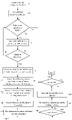
- Fig. 3 shows a flow chart of the procedure of the method of processing an emergency incident according to an embodiment of the invention.
- a new emergency call comprising video data arrives at the PSAP 1.
- the call taker responds to the emergency call.
- step S3 a check is carried out for identifying whether other video calls have been received at the PSAP 1 within the predetermined time period. If other calls have been received at the PSAP 1, then, in step S4, parts of the Real Time Protocol, RTP, stream of the current call comprising the video data and the other calls are fed to the ML classifier, 5 assuming that all calls refer to the same vicinity, i.e. geolocation.
- RTP Real Time Protocol
- step S5 a check is performed for determining, if there is at least one more similar emergency call. If at least one similar emergency call exists in the PSAP 1, in step S6, a check is performed for identifying which one of the calls received has the most efficient video stream in terms of bandwidth usage ("lightweight" codec).
- step S7 the call takers of all similar calls (i.e., handling the same emergency incident) are presented with parts of the RTP streams of the available options. That is, they are presented together with the current stream, the one which corresponds to the active call they are already handling, and the most "lightweight" one.
- step S8 a button is provided that enables the call takers to select which stream it is better for them in order to continue handling the emergency incident.
- step S9 the call takers select the stream that fits better for the handling of the emergency incident.
- step S10 the choices of each call taker as to the stream they have selected, is presented to the rest of the call takers. This is done with the aim to help the call takers to select the correct stream by also taking the selection of the other agents or call takers located at the PSAP 1 into account. After the choices are presented to the call takers, they are asked again, if they want to maintain their selection in step S11. Finally, in step S12, each one of the call takers who selected to switch over to the most lightweight video stream receives a re-negotiation message.
- the option for re-negotiation relates to the process of converting the video-based streams to simple audio streams.
- the PSAP 1 replicates the video stream of the selected stream to the rest of the call takers (Step S13). Accordingly, the call takers are in position to switch back on the original video stream at any point of time during the handling and processing of the emergency call.
- the comparison between the RTP stream and the videos or images may be done using ML-based frameworks.
- Such comparisons can be accomplished by implementing, for example, the following frameworks: Karpathy, A., Toderici, G. Shetty, S. Leung, T., Sukthankar, R. & Fei-Fei L.: Large scale video classification with convolutional neural networks, in: Proceedings of the IEEE conference on Computer Vision and Pattern Recognition, pages 1725 - 1732 .
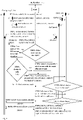
- Fig. 4 shows an end-to-end scenario according to still another embodiment of the invention.
- four emergency callers 2, 2', 2", 2''' establish an emergency call received at the PSAP 1, using different codecs, for two different emergency incidents.
- the proposed method for handling and processing an emergency incident according to the embodiment detects the video stream with the minimum requirements and proposes this stream to the call takers 3, 3', 3", 3"'. The latter confirm and select the most efficient stream.
- the second call is the most efficient one.
- the first three calls are already active, and the method is applied to the fourth call. That is, in STEP1, a new video call arrives on the PSAP 1. In STEP2, the call taker 3''' responds to the call. In STEP3, a check is performed whether other active emergency video calls have been received at the PSAP 1. The same vicinity (geolocation) is considered in order to filter the different calls. Thus, only the calls from the same vicinity (geolocation, cell ID) are considered. In STEP4, parts of the video streams from the active calls and the examined call are fed into an ML classifier 5, in order to identify if there is a similarity between the calls.
- STEP5 a match is found for the fourth call number initiated by the caller 2"', and the calls initiated by the callers 2, 2'. These calls refer on the first emergency incident.
- the ML classifier 5 returns a positive result regarding the similarity of the first, second, and fourth calls.
- STEP6 a check is performed in order to identify which ones of these calls require the minimum resources.
- the most efficient stream corresponds to the second call made by the caller 2'. After this, the stream representing the most efficient call is presented to the call takers who handle the same incident.
- the stream of the second call made by the caller 2' will be presented to callTaker1 indicated by reference numeral 3, callTaker2 indicated by reference numeral 3'; and the callTaker4 indicated by reference numeral 3"'.
- STEP7 an option is displayed on the monitor of the previously mentioned call takers 3, 3', 3''': "Which one is the best stream for you ?"
- STEP8 the different selections are returned to the PSAP 1.
- the selection of every call taker is presented to the rest of the call takers who handle the same emergency incident.
- callTaker1 is presented with the current stream of the active call, and the stream of call2 (only the video part of the most efficient stream).
- CallTaker2 is presented with the current stream of the active call.
- an indication is appeared on her monitor which indicates that currently this is the most efficient stream among the similar calls in the PSAP element.
- CallTaker4 is presented with the current stream of the active video call which also handles the stream of call2. Having the previous parameters in mind, it is assumed that in STEP8, the callTaker1 indicated by reference numeral 3 selects the stream of call2 initiated by the caller 2'.
- the callTaker2 indicated by reference numeral 3 maintains the same video stream, and the callTaker4 indicated by reference numeral 3''' also selects the stream of call2 initiated by the caller 2'. Thereafter, in STEP10, the various selections are presented to every call taker 3, 3', 3", 3"'.
- callTaker1 indicated by reference numeral 3 is presented with the selection of callTaker2 indicated by reference numeral 3' (i.e., preserves the stream of call2 imitated by the caller 2') and callTaker4 indicated by reference numeral 3''' (i.e., selects the stream of call2 imitated by the caller 2').
- STEP11 a button is displayed at the respective display (not shown) at each call taker 3, 3', 3", 3''' in order to verify his or her selection.
- callTaker1 indicated by reference numeral 3 and callTaker4 indicated by reference numeral 3''' verify that they want to switch to the stream that is generated from call2 initiated by the caller 2'.
- the previous selection generates re-INVITE messages for the emergency callers 2 and 2''' that aim at switching the video-calls to simple audio calls. If the re-negotiation completes successfully, then the video stream is replicated on the callTaker1 indicated by reference numeral 3 and callTaker4 indicated by reference numeral 3"'.
- the stream between the emergency caller2 indicated by reference numeral 2' and the callTaker2 indicated by reference numeral 3' is remained intact.
- the streams between the emergency caller1 indicated by reference numeral 2 and callTaker1 indicated by reference numeral 3 and the emergency caller4 indicated by reference numeral 2''' and callTaker4 indicated by reference numeral 3''' are converted to simple audio streams.
- the call takers of the first call initiated by the caller 2 and the fourth call initiated by the caller 2''' are presented with the same video stream that is also presented to callTaker2 indicated by reference numeral 2'.
Landscapes
- Engineering & Computer Science (AREA)
- Signal Processing (AREA)
- Multimedia (AREA)
- Computer Networks & Wireless Communication (AREA)
- Business, Economics & Management (AREA)
- Emergency Management (AREA)
- Health & Medical Sciences (AREA)
- Marketing (AREA)
- General Engineering & Computer Science (AREA)
- Environmental & Geological Engineering (AREA)
- Public Health (AREA)
- Quality & Reliability (AREA)
- Computer Security & Cryptography (AREA)
- General Business, Economics & Management (AREA)
- Telephonic Communication Services (AREA)
- Two-Way Televisions, Distribution Of Moving Picture Or The Like (AREA)
Abstract
Description
- The present invention relates to a computer-implemented method of processing an emergency incident and a corresponding emergency communication network.
- A public-safety answering point, PSAP, is a call center where emergency calls initiated by any mobile or landline subscriber are handled. However, during the handling of a plurality of emergency calls received basically at the same time for an emergency incident, the PSAP may be subject to an increased load. Amongst others, this may be caused by receiving not only audio calls, but also emergency calls containing resource consuming video streams.
- In this respect, a further problem may arise in that the calls may be initiated using different codecs, and therefore, the streaming requirements for these calls could overload the resources of the PSAP.
- Therefore, the present invention is based on the object to provide a resource-saving and efficient computer-implemented method of processing an emergency incident and a corresponding emergency communication network.
- This object is solved according to the present invention by a method of processing an emergency incident having the features according to
claim 1, and a corresponding emergency communication network having the features according to claim 10. Preferred embodiments of the invention are specified in the respective dependent claims. - Thus, according to the present invention, ac computer-implemented method of processing an emergency incident reported to a PSAP by a plurality of callers is provided, the method comprising the steps of:
- receiving, at the PSAP, a video call for reporting an emergency incident at a specified location;
- checking, at the PSAP, if further video calls have been received from the same specified location within a predetermined time period, and if it is determined that there are further video calls that have been received at the PSAP for the same specified location within the predetermined time period, feeding at least a part of the video call and the further video calls to a ML classifier unit,
- identifying, at the ML classifier unit, if there are similarities between the video call and the further video calls, and if it is determined that there exists similarity between the video call and at least one further video call,
- determining which one of the video calls that have been determined to be similar uses less resources, in particular, less bandwidth.
- According to a preferred embodiment of the invention, the video call and the further video calls use different audio and/or video codec.
- According to another preferred embodiment of the invention, the video stream that has been determined to use less resources is transmitted to at least one call taker that handles the emergency incident at the PSAP, and is displayed at a display unit of the at least one call taker.
- According to still another preferred embodiment of the invention, the method further comprises a step of providing, to the at least one call taker that handles the emergency incident at the PSAP, a button for selecting a video stream to be used for further handling the emergency incident.
- Preferably, the method further comprises a step of presenting the selection of the at least one call taker that handles the emergency incident at the PSAP to other call takers at the PSAP that handle the emergency incident.
- Moreover, the method may further comprise a step of generating at least one re-INVITE message to the emergency callers of the plurality of the emergency callers who select to switch from video call to audio call.
- According to still another preferred embodiment of the invention, the method further comprises a step of converting video calls to audio calls, if the respective emergency caller has selected to switch from video call to audio call.
- Preferably, the method further comprises a step of replicating the selected video stream to all call takers at the PSAP that handle the emergency incident.
- Further, according to the present invention, an emergency communication network is provided comprising at least one PSAP for handling at least one emergency incident according to the computer-implemented method for handling an emergency incident.
- According to yet another preferred embodiment of the invention, the ML classifier unit uses a stream replication technique for determining similarity between the video streams.
- According to the present invention, if it is determined that there are several video calls reporting the same emergency incident, then the video stream that has the least bandwidth requirements is determined and presented to a call taker at the PSAP who handles the emergency incident so that he or she may select which one is more efficient to use. If the video stream that uses the least bandwidth is sufficient for handling the emergency incident, then the other video streams that relate to the same emergency incident may be switched to simple audio calls, thereby saving resources, in particular, in terms of bandwidth usage.
- The invention and embodiments thereof will be described below in further detail in connection with the drawing.
- Fig. 1
- schematically shows a scenario at a PSAP receiving and processing an emergency incident according to prior art;
- Fig. 2
- schematically shows another scenario at a PSAP receiving and processing an emergency incident according to an embodiment of the invention;
- Fig. 3
- shows a flow chart of the procedure of the method of processing an emergency incident according to an embodiment of the invention; and
- Fig. 4
- shows an end-to-end scenario according to still another embodiment of the invention.
-
Fig. 1 schematically shows a scenario at aPSAP 1 receiving and processing an emergency incident according to prior art. In the scenario illustrated here, there are exemplarily shown fouremergency callers video streams PSAP 1 and from there being distributed to respective call takers oragents video stream PSAP 1 is transmitted to anindividual call taker caller 2 is transmitted as emergency video stream em.inc1 indicated byreference numeral 4 via thePSAP 1 to thecall taker 3 who will process the information received and handle the emergency call. Another call taker 3' will handle the emergency video stream2 em.inc1 indicated by reference numeral 4', afurther call taker 3" will handle theemergency video stream 3 em.inc1 indicated byreference numeral 4", and yet a further call taker 3''' will handle thevideo stream 4 em.inc1 indicated by reference numeral 4'''. As can be seen, a lot of resources are used within the time period T0 to T1. Specifically, a lot of bandwidth is used by the plurality of video streams, although for reporting the emergency incident, it would be sufficient to simply transmit only one video stream for handling it. -
Fig. 2 schematically shows another scenario at aPSAP 1 receiving and processing an emergency incident according to an embodiment of the invention. Again, exemplarily, there are foursingle callers reference numeral 4, which comprises CodecK for audio and CodecL for video, emergency video stream2 em.inc1 indicated by reference numeral 4', which comprises CodecM for audio and CodecA for video, emergency video stream3 em.inc2 indicated byreference numeral 4", which comprises CodecO for audio and CodecS for video, and emergency video stream4 em.inc1 indicated byreference numeral 4"', which comprises CodecW for audio and CodecU for video. All fourvideo streams classifier 5. Here, a stream replication technique is applied the main features of which are basically known from prior art. However, according to the embodiment illustrated here, the difference compared to prior art techniques is that the streams are compared in order to track which ones of them relate to the same emergency incident. That is, assuming there have been received four active video-based emergency calls at the PSAP 1 as outlined above for the illustrated example, theML classifier 5 will identify which streams refer on the same emergency incident. Thecall takers video streams agents call takers video stream - In the example depicted in
Fig. 2 , theML classifier 5, after tracking similarity between, for example, thevideo streams call takers -
Fig. 3 shows a flow chart of the procedure of the method of processing an emergency incident according to an embodiment of the invention. Here, in the first step S1, a new emergency call comprising video data arrives at thePSAP 1. In the second step S2, the call taker responds to the emergency call. Then, in step S3, a check is carried out for identifying whether other video calls have been received at thePSAP 1 within the predetermined time period. If other calls have been received at thePSAP 1, then, in step S4, parts of the Real Time Protocol, RTP, stream of the current call comprising the video data and the other calls are fed to the ML classifier, 5 assuming that all calls refer to the same vicinity, i.e. geolocation. In the next step S5, a check is performed for determining, if there is at least one more similar emergency call. If at least one similar emergency call exists in thePSAP 1, in step S6, a check is performed for identifying which one of the calls received has the most efficient video stream in terms of bandwidth usage ("lightweight" codec). In step S7, the call takers of all similar calls (i.e., handling the same emergency incident) are presented with parts of the RTP streams of the available options. That is, they are presented together with the current stream, the one which corresponds to the active call they are already handling, and the most "lightweight" one. In step S8, a button is provided that enables the call takers to select which stream it is better for them in order to continue handling the emergency incident. In step S9, the call takers select the stream that fits better for the handling of the emergency incident. In step S10, the choices of each call taker as to the stream they have selected, is presented to the rest of the call takers. This is done with the aim to help the call takers to select the correct stream by also taking the selection of the other agents or call takers located at thePSAP 1 into account. After the choices are presented to the call takers, they are asked again, if they want to maintain their selection in step S11. Finally, in step S12, each one of the call takers who selected to switch over to the most lightweight video stream receives a re-negotiation message. The option for re-negotiation relates to the process of converting the video-based streams to simple audio streams. At the same time, thePSAP 1 replicates the video stream of the selected stream to the rest of the call takers (Step S13). Accordingly, the call takers are in position to switch back on the original video stream at any point of time during the handling and processing of the emergency call. - It is noted that the comparison between the RTP stream and the videos or images may be done using ML-based frameworks. Such comparisons can be accomplished by implementing, for example, the following frameworks: Karpathy, A., Toderici, G. Shetty, S. Leung, T., Sukthankar, R. & Fei-Fei L.: Large scale video classification with convolutional neural networks, in: Proceedings of the IEEE conference on Computer Vision and Pattern Recognition, pages 1725 - 1732.
-
Fig. 4 shows an end-to-end scenario according to still another embodiment of the invention. Here, it is assumed that fouremergency callers PSAP 1, using different codecs, for two different emergency incidents. The proposed method for handling and processing an emergency incident according to the embodiment detects the video stream with the minimum requirements and proposes this stream to thecall takers - Here, in the example described, the first three calls are already active, and the method is applied to the fourth call. That is, in STEP1, a new video call arrives on the
PSAP 1. In STEP2, the call taker 3''' responds to the call. In STEP3, a check is performed whether other active emergency video calls have been received at thePSAP 1. The same vicinity (geolocation) is considered in order to filter the different calls. Thus, only the calls from the same vicinity (geolocation, cell ID) are considered. In STEP4, parts of the video streams from the active calls and the examined call are fed into anML classifier 5, in order to identify if there is a similarity between the calls. In STEP5, a match is found for the fourth call number initiated by thecaller 2"', and the calls initiated by thecallers 2, 2'. These calls refer on the first emergency incident. Thus, theML classifier 5 returns a positive result regarding the similarity of the first, second, and fourth calls. In STEP6, a check is performed in order to identify which ones of these calls require the minimum resources. In the current scenario, the most efficient stream corresponds to the second call made by the caller 2'. After this, the stream representing the most efficient call is presented to the call takers who handle the same incident. In this scenario, the stream of the second call made by the caller 2' will be presented to callTaker1 indicated byreference numeral 3, callTaker2 indicated by reference numeral 3'; and the callTaker4 indicated byreference numeral 3"'. In STEP7, an option is displayed on the monitor of the previously mentionedcall takers 3, 3', 3''': "Which one is the best stream for you?" In STEP8, the different selections are returned to thePSAP 1. In STEP9, the selection of every call taker is presented to the rest of the call takers who handle the same emergency incident. - For example, that callTaker1, is presented with the current stream of the active call, and the stream of call2 (only the video part of the most efficient stream). CallTaker2, is presented with the current stream of the active call. Additionally, an indication is appeared on her monitor which indicates that currently this is the most efficient stream among the similar calls in the PSAP element. CallTaker4 is presented with the current stream of the active video call which also handles the stream of call2. Having the previous parameters in mind, it is assumed that in STEP8, the callTaker1 indicated by
reference numeral 3 selects the stream of call2 initiated by the caller 2'. The callTaker2 indicated byreference numeral 3 maintains the same video stream, and the callTaker4 indicated by reference numeral 3''' also selects the stream of call2 initiated by the caller 2'. Thereafter, in STEP10, the various selections are presented to everycall taker reference numeral 3 is presented with the selection of callTaker2 indicated by reference numeral 3' (i.e., preserves the stream of call2 imitated by the caller 2') and callTaker4 indicated by reference numeral 3''' (i.e., selects the stream of call2 imitated by the caller 2'). This is done in order to help the call takers identify which are the different selections with regards to the specific emergency incident. Thus, in STEP11, a button is displayed at the respective display (not shown) at eachcall taker reference numeral 3 and callTaker4 indicated by reference numeral 3''' verify that they want to switch to the stream that is generated from call2 initiated by the caller 2'. - The previous selection generates re-INVITE messages for the
emergency callers 2 and 2''' that aim at switching the video-calls to simple audio calls. If the re-negotiation completes successfully, then the video stream is replicated on the callTaker1 indicated byreference numeral 3 and callTaker4 indicated byreference numeral 3"'. - The stream between the emergency caller2 indicated by reference numeral 2' and the callTaker2 indicated by reference numeral 3' is remained intact. On the contrary, the streams between the emergency caller1 indicated by
reference numeral 2 and callTaker1 indicated byreference numeral 3 and the emergency caller4 indicated by reference numeral 2''' and callTaker4 indicated by reference numeral 3''' are converted to simple audio streams. The call takers of the first call initiated by thecaller 2 and the fourth call initiated by the caller 2''' are presented with the same video stream that is also presented to callTaker2 indicated by reference numeral 2'. -
- 1
- PSAP
- 2, 2', 2", 2'''
- emergency caller
- 3, 3', 3", 3'''
- call taker or agent
- 4, 4', 4", 4'''
- video stream
- 5
- Machine Learning Classifier
Claims (10)
- Computer-implemented method of processing an emergency incident reported to a PSAP (1) by a plurality of callers (2, 2', 2", 2'''), the method comprising the steps of:- receiving, at the PSAP (1), a video call (4, 4', 4", 4''') for reporting an emergency incident at a specified location;- checking, at the PSAP (1), if further video calls (4, 4', 4", 4''') have been received from the same specified location within a predetermined time period, and if it is determined that there are further video calls (4, 4', 4", 4''') that have been received at the PSAP (1) for the same specified location within the predetermined time period, feeding at least a part of the video call and the further video calls to a ML classifier unit (5),- identifying, at the ML classifier unit (5), if there are similarities between the video call and the further video calls, and if it is determined that there exists similarity between the video call and at least one further video call,- determining which one of the video calls that have been determined to be similar uses less resources, in particular, less bandwidth.
- Computer-implemented method according to claim 1, wherein the video call and the further video calls use different audio and/or video codec.
- Computer-implemented method according to claim 1 or claim 2, wherein the video call that has been determined to use less resources is transmitted to at least one call taker (3, 3', 3", 3''') that handles the emergency incident at the PSAP (1), and is displayed at a display unit of the at least one call taker (3, 3', 3", 3''').
- Computer-implemented method according to claim 3, wherein the method further comprises a step of providing, to the at least one call taker (3, 3', 3", 3''') that handles the emergency incident at the PSAP (1), a button for selecting a video stream to be used for further handling the emergency incident.
- Computer-implemented method according to claim 4, wherein the method further comprises a step of presenting the selection of the at least one call taker (3, 3', 3", 3''') that handles the emergency incident at the PSAP (1) to other call takers (3, 3', 3", 3''') at the PSAP (1) that handle the emergency incident.
- Computer-implemented method according to any one of the preceding claims, wherein the method further comprises a step of generating at least one re-INVITE message to the emergency callers (2, 2', 2", 2''') of the plurality of the emergency callers who select to switch from video call to audio call.
- Computer-implemented method according to claim 6, wherein the method further comprises a step of converting video calls to audio calls, if the respective emergency caller (2, 2', 2", 2''') has selected to switch from video call to audio call.
- Computer-implemented method according to any one of claims 5 to 7, wherein the method further comprises a step of replicating the selected video stream to all call takers (3, 3', 3", 3''') at the PSAP (1) that handle the emergency incident.
- Computer-implemented method according to any one of the preceding claims, wherein the ML classifier unit (5) uses a stream replication technique for determining similarity between the video streams.
- Emergency communication network, comprising at least one PSAP (1) for handling at least one emergency incident according to the computer-implemented method according to any one of the preceding claims.
Priority Applications (2)
| Application Number | Priority Date | Filing Date | Title |
|---|---|---|---|
| EP20210719.9A EP4007272B1 (en) | 2020-11-30 | 2020-11-30 | Computer-implemented method of processing an emergency incident and emergency communication network |
| US17/536,221 US11843974B2 (en) | 2020-11-30 | 2021-11-29 | Computer-implemented method of processing an emergency incident and emergency communication network |
Applications Claiming Priority (1)
| Application Number | Priority Date | Filing Date | Title |
|---|---|---|---|
| EP20210719.9A EP4007272B1 (en) | 2020-11-30 | 2020-11-30 | Computer-implemented method of processing an emergency incident and emergency communication network |
Publications (2)
| Publication Number | Publication Date |
|---|---|
| EP4007272A1 true EP4007272A1 (en) | 2022-06-01 |
| EP4007272B1 EP4007272B1 (en) | 2026-01-28 |
Family
ID=73646239
Family Applications (1)
| Application Number | Title | Priority Date | Filing Date |
|---|---|---|---|
| EP20210719.9A Active EP4007272B1 (en) | 2020-11-30 | 2020-11-30 | Computer-implemented method of processing an emergency incident and emergency communication network |
Country Status (2)
| Country | Link |
|---|---|
| US (1) | US11843974B2 (en) |
| EP (1) | EP4007272B1 (en) |
Families Citing this family (1)
| Publication number | Priority date | Publication date | Assignee | Title |
|---|---|---|---|---|
| US12513531B1 (en) * | 2024-09-12 | 2025-12-30 | Intrinsic Value, Llc | Systems, devices, and methods for determining the presence of a user |
Citations (3)
| Publication number | Priority date | Publication date | Assignee | Title |
|---|---|---|---|---|
| JP2009130673A (en) * | 2007-11-26 | 2009-06-11 | Mitsubishi Electric Corp | Call center management server, call control method, and call control program |
| US20110069625A1 (en) * | 2009-09-23 | 2011-03-24 | Avaya Inc. | Priority-based, dynamic optimization of utilized bandwidth |
| US20200162880A1 (en) * | 2018-04-27 | 2020-05-21 | Banjo, Inc. | Validating and supplementing emergency call information |
Family Cites Families (5)
| Publication number | Priority date | Publication date | Assignee | Title |
|---|---|---|---|---|
| US20070024705A1 (en) * | 2005-08-01 | 2007-02-01 | Richter Roger K | Systems and methods for video stream selection |
| US7792277B2 (en) * | 2006-07-11 | 2010-09-07 | Cisco Technology, Inc. | Call centers with image or video based priority |
| US9020106B2 (en) * | 2013-07-23 | 2015-04-28 | Verizon Patent And Licensing Inc. | Emergency video calls |
| US11917514B2 (en) * | 2018-08-14 | 2024-02-27 | Rapidsos, Inc. | Systems and methods for intelligently managing multimedia for emergency response |
| US11212390B2 (en) * | 2019-04-30 | 2021-12-28 | Avaya Inc. | Interaction based suitable channel selection for queued customers |
-
2020
- 2020-11-30 EP EP20210719.9A patent/EP4007272B1/en active Active
-
2021
- 2021-11-29 US US17/536,221 patent/US11843974B2/en active Active
Patent Citations (3)
| Publication number | Priority date | Publication date | Assignee | Title |
|---|---|---|---|---|
| JP2009130673A (en) * | 2007-11-26 | 2009-06-11 | Mitsubishi Electric Corp | Call center management server, call control method, and call control program |
| US20110069625A1 (en) * | 2009-09-23 | 2011-03-24 | Avaya Inc. | Priority-based, dynamic optimization of utilized bandwidth |
| US20200162880A1 (en) * | 2018-04-27 | 2020-05-21 | Banjo, Inc. | Validating and supplementing emergency call information |
Non-Patent Citations (1)
| Title |
|---|
| KARPATHY, A.TODERICI, G.SHETTY, S.LEUNG, T.SUKTHANKAR, R.FEI-FEI L.: "Large scale video classification with convolutional neural networks", PROCEEDINGS OF THE IEEE CONFERENCE ON COMPUTER VISION AND PATTERN RECOGNITION, pages 1725 - 1732 |
Also Published As
| Publication number | Publication date |
|---|---|
| US20220174549A1 (en) | 2022-06-02 |
| US11843974B2 (en) | 2023-12-12 |
| EP4007272B1 (en) | 2026-01-28 |
Similar Documents
| Publication | Publication Date | Title |
|---|---|---|
| US10362084B2 (en) | System and method for optimizing a communication session between multiple terminals involving transcoding operations | |
| US9357169B2 (en) | Multiparty communications and methods that utilize multiple modes of communication | |
| US9402056B2 (en) | Collaboration extension system | |
| CN114697282B (en) | Message processing method and system, storage medium and electronic device | |
| US20050071178A1 (en) | Data session notification means and method | |
| EP0883306A2 (en) | System and method for teleconferencing on an internetwork comprising connection oriented and connectionless networks | |
| US8820629B1 (en) | Barcode scanning for communication | |
| US20070286101A1 (en) | System and method for providing conferencing capabilities | |
| RU2012147842A (en) | METHOD FOR MANAGING CONFERENCE COMMUNICATION AND RELATED DEVICE AND SYSTEM | |
| KR20070116744A (en) | Group communication server | |
| US11627173B2 (en) | Custom content insertion for user groups | |
| CN112616066B (en) | Group discussion system and method based on live broadcast | |
| CN106331569A (en) | Method and system for transforming figure face in instant video picture | |
| EP4007272B1 (en) | Computer-implemented method of processing an emergency incident and emergency communication network | |
| KR20140006221A (en) | Method for selecting conferrence processing device and image conferrence system usnig the method | |
| CN111131252A (en) | Monitoring method, device, electronic device and storage medium | |
| JP2007096366A (en) | Group session management apparatus and group voice communication system | |
| US8295470B2 (en) | System and procedure for commercial communications | |
| US8842813B2 (en) | Teleconferencing monitoring method | |
| US20240430116A1 (en) | Systems and methods for video conference analysis | |
| US9781384B2 (en) | Information processing system, information processing apparatus, information processing method, and recording medium | |
| US9485357B2 (en) | Splitting a call for an emergent event into multiple devices using data channels | |
| US20230084100A1 (en) | Method and system for establishing optimized data streams in a network | |
| EP4007248A1 (en) | Computer-implemented method of processing an emergency incident and emergency communication network | |
| CN110611663A (en) | A detection method, device and system |
Legal Events
| Date | Code | Title | Description |
|---|---|---|---|
| PUAI | Public reference made under article 153(3) epc to a published international application that has entered the european phase |
Free format text: ORIGINAL CODE: 0009012 |
|
| STAA | Information on the status of an ep patent application or granted ep patent |
Free format text: STATUS: THE APPLICATION HAS BEEN PUBLISHED |
|
| AK | Designated contracting states |
Kind code of ref document: A1 Designated state(s): AL AT BE BG CH CY CZ DE DK EE ES FI FR GB GR HR HU IE IS IT LI LT LU LV MC MK MT NL NO PL PT RO RS SE SI SK SM TR |
|
| STAA | Information on the status of an ep patent application or granted ep patent |
Free format text: STATUS: REQUEST FOR EXAMINATION WAS MADE |
|
| 17P | Request for examination filed |
Effective date: 20221031 |
|
| RBV | Designated contracting states (corrected) |
Designated state(s): AL AT BE BG CH CY CZ DE DK EE ES FI FR GB GR HR HU IE IS IT LI LT LU LV MC MK MT NL NO PL PT RO RS SE SI SK SM TR |
|
| RAP1 | Party data changed (applicant data changed or rights of an application transferred) |
Owner name: ATOS PUBLIC SAFETY LLC |
|
| P01 | Opt-out of the competence of the unified patent court (upc) registered |
Effective date: 20240301 |
|
| STAA | Information on the status of an ep patent application or granted ep patent |
Free format text: STATUS: EXAMINATION IS IN PROGRESS |
|
| 17Q | First examination report despatched |
Effective date: 20250306 |
|
| GRAP | Despatch of communication of intention to grant a patent |
Free format text: ORIGINAL CODE: EPIDOSNIGR1 |
|
| STAA | Information on the status of an ep patent application or granted ep patent |
Free format text: STATUS: GRANT OF PATENT IS INTENDED |
|
| RIC1 | Information provided on ipc code assigned before grant |
Ipc: H04N 7/15 20060101AFI20251017BHEP Ipc: H04L 65/1069 20220101ALI20251017BHEP Ipc: H04L 65/65 20220101ALI20251017BHEP Ipc: H04L 65/70 20220101ALI20251017BHEP Ipc: H04L 65/80 20220101ALI20251017BHEP Ipc: H04L 69/24 20220101ALI20251017BHEP |
|
| INTG | Intention to grant announced |
Effective date: 20251030 |
|
| GRAS | Grant fee paid |
Free format text: ORIGINAL CODE: EPIDOSNIGR3 |
|
| GRAA | (expected) grant |
Free format text: ORIGINAL CODE: 0009210 |
|
| STAA | Information on the status of an ep patent application or granted ep patent |
Free format text: STATUS: THE PATENT HAS BEEN GRANTED |
|
| AK | Designated contracting states |
Kind code of ref document: B1 Designated state(s): AL AT BE BG CH CY CZ DE DK EE ES FI FR GB GR HR HU IE IS IT LI LT LU LV MC MK MT NL NO PL PT RO RS SE SI SK SM TR |
|
| REG | Reference to a national code |
Ref country code: CH Ref legal event code: F10 Free format text: ST27 STATUS EVENT CODE: U-0-0-F10-F00 (AS PROVIDED BY THE NATIONAL OFFICE) Effective date: 20260128 Ref country code: GB Ref legal event code: FG4D |
|
| REG | Reference to a national code |
Ref country code: DE Ref legal event code: R096 Ref document number: 602020065818 Country of ref document: DE |
|
| REG | Reference to a national code |
Ref country code: IE Ref legal event code: FG4D |
|
| REG | Reference to a national code |
Ref country code: NL Ref legal event code: MP Effective date: 20260128 |
|
| PG25 | Lapsed in a contracting state [announced via postgrant information from national office to epo] |
Ref country code: NL Free format text: LAPSE BECAUSE OF FAILURE TO SUBMIT A TRANSLATION OF THE DESCRIPTION OR TO PAY THE FEE WITHIN THE PRESCRIBED TIME-LIMIT Effective date: 20260128 |
|
| REG | Reference to a national code |
Ref country code: AT Ref legal event code: MK05 Ref document number: 1883163 Country of ref document: AT Kind code of ref document: T Effective date: 20260128 |
|
| PG25 | Lapsed in a contracting state [announced via postgrant information from national office to epo] |
Ref country code: RS Free format text: LAPSE BECAUSE OF FAILURE TO SUBMIT A TRANSLATION OF THE DESCRIPTION OR TO PAY THE FEE WITHIN THE PRESCRIBED TIME-LIMIT Effective date: 20260428 |
|
| PG25 | Lapsed in a contracting state [announced via postgrant information from national office to epo] |
Ref country code: ES Free format text: LAPSE BECAUSE OF FAILURE TO SUBMIT A TRANSLATION OF THE DESCRIPTION OR TO PAY THE FEE WITHIN THE PRESCRIBED TIME-LIMIT Effective date: 20260128 |
|
| PG25 | Lapsed in a contracting state [announced via postgrant information from national office to epo] |
Ref country code: PL Free format text: LAPSE BECAUSE OF FAILURE TO SUBMIT A TRANSLATION OF THE DESCRIPTION OR TO PAY THE FEE WITHIN THE PRESCRIBED TIME-LIMIT Effective date: 20260128 |
|
| PG25 | Lapsed in a contracting state [announced via postgrant information from national office to epo] |
Ref country code: GR Free format text: LAPSE BECAUSE OF FAILURE TO SUBMIT A TRANSLATION OF THE DESCRIPTION OR TO PAY THE FEE WITHIN THE PRESCRIBED TIME-LIMIT Effective date: 20260429 |
|
| REG | Reference to a national code |
Ref country code: LT Ref legal event code: MG9D |
|
| PG25 | Lapsed in a contracting state [announced via postgrant information from national office to epo] |
Ref country code: LT Free format text: LAPSE BECAUSE OF FAILURE TO SUBMIT A TRANSLATION OF THE DESCRIPTION OR TO PAY THE FEE WITHIN THE PRESCRIBED TIME-LIMIT Effective date: 20260128 |
|
| PG25 | Lapsed in a contracting state [announced via postgrant information from national office to epo] |
Ref country code: NO Free format text: LAPSE BECAUSE OF FAILURE TO SUBMIT A TRANSLATION OF THE DESCRIPTION OR TO PAY THE FEE WITHIN THE PRESCRIBED TIME-LIMIT Effective date: 20260428 |
|
| PG25 | Lapsed in a contracting state [announced via postgrant information from national office to epo] |
Ref country code: FI Free format text: LAPSE BECAUSE OF FAILURE TO SUBMIT A TRANSLATION OF THE DESCRIPTION OR TO PAY THE FEE WITHIN THE PRESCRIBED TIME-LIMIT Effective date: 20260128 Ref country code: SE Free format text: LAPSE BECAUSE OF FAILURE TO SUBMIT A TRANSLATION OF THE DESCRIPTION OR TO PAY THE FEE WITHIN THE PRESCRIBED TIME-LIMIT Effective date: 20260128 Ref country code: AT Free format text: LAPSE BECAUSE OF FAILURE TO SUBMIT A TRANSLATION OF THE DESCRIPTION OR TO PAY THE FEE WITHIN THE PRESCRIBED TIME-LIMIT Effective date: 20260128 |
|
| PG25 | Lapsed in a contracting state [announced via postgrant information from national office to epo] |
Ref country code: HR Free format text: LAPSE BECAUSE OF FAILURE TO SUBMIT A TRANSLATION OF THE DESCRIPTION OR TO PAY THE FEE WITHIN THE PRESCRIBED TIME-LIMIT Effective date: 20260128 |
|
| PG25 | Lapsed in a contracting state [announced via postgrant information from national office to epo] |
Ref country code: IS Free format text: LAPSE BECAUSE OF FAILURE TO SUBMIT A TRANSLATION OF THE DESCRIPTION OR TO PAY THE FEE WITHIN THE PRESCRIBED TIME-LIMIT Effective date: 20260528 Ref country code: PT Free format text: LAPSE BECAUSE OF FAILURE TO SUBMIT A TRANSLATION OF THE DESCRIPTION OR TO PAY THE FEE WITHIN THE PRESCRIBED TIME-LIMIT Effective date: 20260528 |
|
| PG25 | Lapsed in a contracting state [announced via postgrant information from national office to epo] |
Ref country code: LV Free format text: LAPSE BECAUSE OF FAILURE TO SUBMIT A TRANSLATION OF THE DESCRIPTION OR TO PAY THE FEE WITHIN THE PRESCRIBED TIME-LIMIT Effective date: 20260128 |
|
| PG25 | Lapsed in a contracting state [announced via postgrant information from national office to epo] |
Ref country code: BG Free format text: LAPSE BECAUSE OF FAILURE TO SUBMIT A TRANSLATION OF THE DESCRIPTION OR TO PAY THE FEE WITHIN THE PRESCRIBED TIME-LIMIT Effective date: 20260128 |