EP4007246A1 - Message sending method, and terminal apparatus - Google Patents
Message sending method, and terminal apparatus Download PDFInfo
- Publication number
- EP4007246A1 EP4007246A1 EP20847719.0A EP20847719A EP4007246A1 EP 4007246 A1 EP4007246 A1 EP 4007246A1 EP 20847719 A EP20847719 A EP 20847719A EP 4007246 A1 EP4007246 A1 EP 4007246A1
- Authority
- EP
- European Patent Office
- Prior art keywords
- condition
- contacts
- user
- terminal device
- contact
- Prior art date
- Legal status (The legal status is an assumption and is not a legal conclusion. Google has not performed a legal analysis and makes no representation as to the accuracy of the status listed.)
- Granted
Links
Images


Classifications
-
- G—PHYSICS
- G06—COMPUTING OR CALCULATING; COUNTING
- G06F—ELECTRIC DIGITAL DATA PROCESSING
- G06F40/00—Handling natural language data
- G06F40/30—Semantic analysis
-
- H—ELECTRICITY
- H04—ELECTRIC COMMUNICATION TECHNIQUE
- H04L—TRANSMISSION OF DIGITAL INFORMATION, e.g. TELEGRAPHIC COMMUNICATION
- H04L51/00—User-to-user messaging in packet-switching networks, transmitted according to store-and-forward or real-time protocols, e.g. e-mail
- H04L51/21—Monitoring or handling of messages
- H04L51/214—Monitoring or handling of messages using selective forwarding
-
- G—PHYSICS
- G06—COMPUTING OR CALCULATING; COUNTING
- G06F—ELECTRIC DIGITAL DATA PROCESSING
- G06F40/00—Handling natural language data
- G06F40/20—Natural language analysis
- G06F40/279—Recognition of textual entities
-
- G—PHYSICS
- G06—COMPUTING OR CALCULATING; COUNTING
- G06Q—INFORMATION AND COMMUNICATION TECHNOLOGY [ICT] SPECIALLY ADAPTED FOR ADMINISTRATIVE, COMMERCIAL, FINANCIAL, MANAGERIAL OR SUPERVISORY PURPOSES; SYSTEMS OR METHODS SPECIALLY ADAPTED FOR ADMINISTRATIVE, COMMERCIAL, FINANCIAL, MANAGERIAL OR SUPERVISORY PURPOSES, NOT OTHERWISE PROVIDED FOR
- G06Q10/00—Administration; Management
- G06Q10/10—Office automation; Time management
- G06Q10/107—Computer-aided management of electronic mailing [e-mailing]
-
- H—ELECTRICITY
- H04—ELECTRIC COMMUNICATION TECHNIQUE
- H04L—TRANSMISSION OF DIGITAL INFORMATION, e.g. TELEGRAPHIC COMMUNICATION
- H04L51/00—User-to-user messaging in packet-switching networks, transmitted according to store-and-forward or real-time protocols, e.g. e-mail
- H04L51/07—User-to-user messaging in packet-switching networks, transmitted according to store-and-forward or real-time protocols, e.g. e-mail characterised by the inclusion of specific contents
- H04L51/10—Multimedia information
-
- H—ELECTRICITY
- H04—ELECTRIC COMMUNICATION TECHNIQUE
- H04L—TRANSMISSION OF DIGITAL INFORMATION, e.g. TELEGRAPHIC COMMUNICATION
- H04L51/00—User-to-user messaging in packet-switching networks, transmitted according to store-and-forward or real-time protocols, e.g. e-mail
- H04L51/42—Mailbox-related aspects, e.g. synchronisation of mailboxes
-
- H—ELECTRICITY
- H04—ELECTRIC COMMUNICATION TECHNIQUE
- H04M—TELEPHONIC COMMUNICATION
- H04M1/00—Substation equipment, e.g. for use by subscribers
- H04M1/26—Devices for calling a subscriber
- H04M1/27—Devices whereby a plurality of signals may be stored simultaneously
- H04M1/274—Devices whereby a plurality of signals may be stored simultaneously with provision for storing more than one subscriber number at a time, e.g. using toothed disc
- H04M1/2745—Devices whereby a plurality of signals may be stored simultaneously with provision for storing more than one subscriber number at a time, e.g. using toothed disc using static electronic memories, e.g. chips
-
- H—ELECTRICITY
- H04—ELECTRIC COMMUNICATION TECHNIQUE
- H04M—TELEPHONIC COMMUNICATION
- H04M1/00—Substation equipment, e.g. for use by subscribers
- H04M1/72—Mobile telephones; Cordless telephones, i.e. devices for establishing wireless links to base stations without route selection
- H04M1/724—User interfaces specially adapted for cordless or mobile telephones
- H04M1/72403—User interfaces specially adapted for cordless or mobile telephones with means for local support of applications that increase the functionality
- H04M1/7243—User interfaces specially adapted for cordless or mobile telephones with means for local support of applications that increase the functionality with interactive means for internal management of messages
-
- H—ELECTRICITY
- H04—ELECTRIC COMMUNICATION TECHNIQUE
- H04M—TELEPHONIC COMMUNICATION
- H04M1/00—Substation equipment, e.g. for use by subscribers
- H04M1/72—Mobile telephones; Cordless telephones, i.e. devices for establishing wireless links to base stations without route selection
- H04M1/724—User interfaces specially adapted for cordless or mobile telephones
- H04M1/72403—User interfaces specially adapted for cordless or mobile telephones with means for local support of applications that increase the functionality
- H04M1/7243—User interfaces specially adapted for cordless or mobile telephones with means for local support of applications that increase the functionality with interactive means for internal management of messages
- H04M1/72436—User interfaces specially adapted for cordless or mobile telephones with means for local support of applications that increase the functionality with interactive means for internal management of messages for text messaging, e.g. short messaging services [SMS] or e-mails
-
- H—ELECTRICITY
- H04—ELECTRIC COMMUNICATION TECHNIQUE
- H04M—TELEPHONIC COMMUNICATION
- H04M1/00—Substation equipment, e.g. for use by subscribers
- H04M1/72—Mobile telephones; Cordless telephones, i.e. devices for establishing wireless links to base stations without route selection
- H04M1/724—User interfaces specially adapted for cordless or mobile telephones
- H04M1/72448—User interfaces specially adapted for cordless or mobile telephones with means for adapting the functionality of the device according to specific conditions
Definitions
- Embodiments of this disclosure relate to the field of terminal technologies, and in particular, to a message sending method and a terminal device.
- a user can use a terminal device to send a message to another user.
- the user may first select contacts to which the message is to be sent. After the contracts to which the message is to be sent are selected, if the user clicks to confirm sending, the terminal may send the message to these contacts. If the user originally wants to send message 1 to contact 1, but clicks on contact 2, the terminal device will send message 1 to contact 2. At present, if the user finds within a specified period of time that the message 1 has been sent to a wrong recipient, the user can trigger the terminal device to use the withdrawal function to withdraw the message 1.
- the terminal is unable to operate to withdraw the sent message, which results in a relatively high probability of mis-sending a message by the terminal.
- Embodiments of this disclosure provide a message sending method and a terminal device, to resolve a problem of a relatively high probability of mis-sending a message by the terminal.
- an embodiment of this disclosure provides a message sending method, where the method includes: obtaining message content input by a user and contacts selected by the user; and sending the message content to a contact that does not meet a preset condition among the contacts selected by the user, and/or sending preset content to a contact that meets the preset condition among the contacts selected by the user.
- an embodiment of this disclosure further provides a terminal device, where the terminal device includes an obtaining module and a sending module, where the obtaining module is configured to obtain message content input by a user and contacts selected by the user; and the sending module is configured to send the message content to a contact that does not meet a preset condition among the contacts selected by the user, and/or send preset content to a contact that meets the preset condition among the contacts selected by the user.
- an embodiment of this disclosure provides a terminal device, including a processor, a memory, and a computer program stored in the memory and executable on the processor, where when the computer program is executed by the processor, the steps of the message sending method according to the first aspect are implemented.
- an embodiment of this disclosure provides a computer-readable storage medium for storing a computer program, where the computer-readable storage medium stores a computer program, and when the computer program is executed by a processor, the steps of the foregoing message sending method according to the first aspect are implemented.
- the terminal device may obtain message content input by a user and contacts selected by the user.
- the terminal device may send the message content only to a contact that does not meet a preset condition among the contacts selected by the user, or the terminal device may send the preset content to a contact that meets the preset condition among the contacts selected by the user.
- the terminal device sends the message content to a contact that does not meet a preset condition among the contacts selected by the user, and sends the preset content to a contact that meets the preset condition among the contacts selected by the user.
- the preset condition may filter contacts with a relatively high probability of mis-sending.
- the terminal device may send the message content input by the user to a contact with a relatively low probability of mis-sending among the contacts selected by the user, and send preset content to a contact with a relatively high probability of mis-sending among the contacts selected by the user (that is, not send the message content input by the user). In this way, the probability of mis-sending the message can be reduced, thereby reducing a probability of mis-sending important data.
- first the terms “first”, “second”, and so on are intended to distinguish between different objects but do not indicate a particular order of the objects.
- a first keyword, a second keyword, and the like are used to distinguish different keywords, rather than describe a specific sequence of the keywords.
- a terminal device in the embodiments of this disclosure may be a terminal with an operating system.
- the operating system may be an Android (Android) operating system, may be an iOS operating system, or may be another possible operating system, which is not specifically limited in the embodiments of this disclosure.
- the terminal device may obtain message content input by a user and contacts selected by the user.
- the terminal device may send the message content only to a contact that does not meet a preset condition among the contacts selected by the user, or the terminal device sends the preset content to a contact that meets the preset condition among the contacts selected by the user.
- the terminal device sends the message content to a contact that does not meet a preset condition among the contacts selected by the user, and sends the preset content to a contact that meets the preset condition among the contacts selected by the user.
- the preset condition may filter contacts with a relatively high probability of mis-sending.
- the terminal device may send the message content input by the user to a contact with a relatively low probability of mis-sending among the contacts selected by the user, and send the preset content to a contact with a relatively high probability of mis-sending among the contacts selected by the user (that is, not send the message content input by the user). In this way, the probability of mis-sending the message can be reduced, thereby reducing a probability of mis-sending important data.
- the following uses the Android operating system as an example to introduce a software environment to which a message sending method provided in the embodiments of this disclosure is applied.
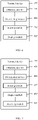
- FIG. 1 is a possible schematic architectural diagram of an Android operating system according to an embodiment of this disclosure.
- an architecture of the Android operating system includes four layers: an application layer, an application framework layer, a system runtime library layer, and a kernel layer (which may be specifically a Linux kernel layer).
- the application program layer includes various application programs (including system application programs and third-party application programs) in the Android operating system.
- the application program framework layer is a framework of application programs, and developers may develop some application programs based on the application program framework layer in compliance with development principles of the framework of application programs.
- the system runtime library layer includes a library (also called a system library) and a runtime environment of the Android operating system.
- the library mainly provides various resources required by the Android operating system.
- the runtime environment of the Android operating system is used to provide a software environment for the Android operating system.
- the kernel layer is an operating system layer of the Android operating system, and is a bottom layer in software layers of the Android operating system.
- the kernel layer provides core system services and hardware-related drivers for the Android operating system based on the Linux kernel.
- a developer may develop, based on the system architecture of the Android operating system shown in FIG. 1 , a software program for implementing the message sending method provided in the embodiments of this disclosure, so that the message sending method can be performed based on the Android operating system shown in FIG. 1 .
- a processor or a terminal device may implement the message sending method provided in the embodiments of this disclosure by running the software program in the Android operating system.
- FIG. 2 is a schematic flowchart of a message sending method according to an embodiment of this disclosure. As shown in FIG. 2 , the message sending method includes S201 and S202.
- a terminal device obtains message content input by a user and contacts selected by the user.
- the message content input by the user is message content to be sent, which may be message content that is forwarded by the user from another contact, or message content to be shared by the user with other contacts, or message content manually input by the user, which is not specifically limited in the embodiments of this disclosure.
- a type of message content may be text type, picture type, audio type, video type, link type, and the like.
- the terminal device sends the message content to a contact that does not meet a preset condition among the contacts selected by the user, and/or sends preset content to a contact that meets the preset condition among the contacts selected by the user.
- the preset condition may be used by the terminal device to determine which contacts among the contacts selected by the user may be wrongly selected contacts. For example, the terminal device may select, based on the preset condition, contacts with a relatively high probability of mis-sending, which means that the user may not want to send the message content to these contacts.
- the terminal device may identify different contacts based on contact identifications.
- contact identification may be an identity ID of a contact.
- identity ID For example: a remark name, a mobile phone number, a QQ number, a WeChat ID, or an email number.
- the terminal device may determine whether a contact meets the preset condition based on an identification of the contact and message content. For example, the terminal device may identify content in the message content and the identification of the contact through semantic recognition or image recognition. For example, the terminal device may use image recognition to obtain information in a picture, the terminal device may use semantic recognition to obtain information in a text, and the terminal device may use semantic to identify the identification of the contact.
- the foregoing S202 may specifically be the following S202a, S202b, or S202c.
- the terminal device sends the message content to a contact that does not meet a preset condition among the contacts selected by the user.
- the contact that does not meet the preset condition is a contact with a relatively low probability of mis-sending when the message content input by the user is sent.
- the terminal device only sends the message content to the contact that does not meet the preset condition among the contacts selected by the user, which means that the terminal device sends the message content only to the contact with a low probability of mis-sending, thereby reducing a probability of mis-sending important messages or important data.
- the terminal device sends preset content to a contact that meets a preset condition among the contacts selected by the user.
- the contact that meets the preset condition is a contact with a relatively high probability of mis-sending when the message content input by the user is sent.
- the preset content may be some simple greetings, regards, or the like, such as “How is your life going?", and “How is your work going?”.
- the terminal device sends the preset content to the contact that meets the preset condition among the contacts selected by the user, that is, replacing the message content input by the user with the preset content, thereby reducing the probability of mis-sending the message.
- the terminal device sends the message content to a contact that does not meet a preset condition among the contacts selected by the user, and sends preset content to a contact that meets the preset condition among the contacts selected by the user.
- the terminal device may send the message content to a contact that does not meet the preset condition among the contacts selected by the user, and send the preset content to a contact that meets the preset condition.
- the terminal device sends the message content input by the user to a contact with a relatively low probability of mis-sending among the contacts selected by the user, and send the preset content to a contact with a relatively high probability of mis-sending among the contacts selected by the user (that is, not send the message content input by the user), thereby reducing the probability of mis-sending the message and further reducing a probability of mis-sending important data.
- the terminal device may obtain message content input by a user and contacts selected by the user.
- the terminal device may send the message content only to a contact that does not meet a preset condition among the contacts selected by the user, or the terminal device sends the preset content to a contact that meets the preset condition among the contacts selected by the user.
- the terminal device sends the message content to a contact that does not meet a preset condition among the contacts selected by the user, and sends the preset content to a contact that meets the preset condition among the contacts selected by the user.
- the preset condition may filter contacts with a relatively high probability of mis-sending.
- the terminal device may send the message content input by the user to a contact with a relatively low probability of mis-sending among the contacts selected by the user, and send the preset content to a contact with a relatively high probability of mis-sending among the contacts selected by the user (that is, not send the message content input by the user). In this way, the probability of mis-sending the message can be reduced, thereby reducing a probability of mis-sending important data.
- the method may include the following S203.
- the terminal device determines whether M contacts meet the preset condition.
- the M contacts are contacts that are selected by the user to send the message content input by the user to.
- the preset condition may include at least one of a first condition, a second condition, and a third condition.
- the first condition is that a message time interval is greater than or equal to a target time interval.
- the second condition is that a contact identification includes a first keyword, and that target content includes a second keyword.
- the third condition is that the target content includes a third keyword, and that an intimacy index is less than or equal to a target intimacy index corresponding to the third keyword.
- the message time interval is a time interval between the last time the user sent a message to a contact and a system time of the terminal device; the first keyword is associated with a target keyword set, and the second keyword is a keyword in the target keyword set; and the third keyword indicates a degree of intimacy or indicates private information, and the intimacy index is a frequency of contact between the user and a contact within a preset period of time.
- the message time interval corresponding to a contact is a time interval between a moment 1 at which the user lately sent a message to the contact and the terminal device system time, denoted by a moment 2.
- a unit of the message time interval can use 1 hour as a time unit, or 24 hours as the time unit, or 72 hours as the time unit, which is not specifically limited in this embodiment of this disclosure.
- the terminal device may determine whether a contact meets the first condition based on whether the message time interval of the user corresponding to the contact is greater than or equal to 30 days. If the message time interval corresponding to a contact is greater than or equal to 30 days, the contact meets the first condition. If the message time interval corresponding to a contact is less than 30 days, the contact does not meet the first condition.
- a first time interval corresponding to a first contact is 30 days
- a second time interval corresponding to a second contact is 10 days
- a third time interval corresponding to a third contact is 15 days.
- a contact that meets the first condition is the first contact.
- the terminal device may display prompt information to prompt the user whether to send the message content input by the user to the first contact.
- a contact identification includes the first keyword, which may represent that the user needs to pay attention to wording when sending messages to these contacts. For example, an X company group, and a party member group of an X company. Assuming that the first keyword is "party member", and the first target keyword set may be ⁇ Darling, kiss you ⁇ . If the second keyword is a keyword in the first target keyword set, the contact is a contact that meets the second condition.
- a group is named as "a party member group of an X company", and the group name includes the keyword “party member”. If the message content input by the user is "Dear, have you eaten yet?", the terminal device may display prompt information to the user, prompting whether to send "Dear, have you eaten yet?" to the group.
- an intimacy index between the user and a contact may be the number of days in which messages have been sent between the user and the contact during latest X days. If message sending or receiving has occurred in a day, the intimacy index corresponding to that day is 1, and if neither message sending nor message receiving has occurred in a day, intimacy index corresponding to that day is 0. The largest intimacy index corresponding to X days is X, and the smallest intimacy index is 0.
- the terminal device determines whether the intimacy index of each of the contacts selected by the user is less than a first target intimacy index.
- the first target intimacy index is 10.
- the contact is a contact that meets the third condition.
- the terminal device determines whether the intimacy index of each of the contacts selected by the user is less than a second target intimacy index.
- the second target intimacy index is 20.
- the contact is a contact that meets the third condition.
- the user alternatively may manually add or remove a keyword that requires determining the intimacy index.
- the user alternatively may set different target intimacy indexes corresponding to keywords indicating different information, which is not specifically limited in this embodiment of this disclosure.
- the terminal device may use only one of the foregoing three conditions as the preset condition, or may use two of them as the preset condition, or may use foregoing three conditions as the preset condition, and the foregoing S203 may be specifically implemented through any one of the following.
- the terminal device may determine a contact that meets the first condition of the two conditions and a contact that meets the second condition of the two conditions as contacts that meet the preset conditions.
- the terminal device may first determine whether each contact is a contact that meets the first condition, if there is a contact that does not meet the first condition, the terminal device may determine whether the contact that does not meet the first condition is a contact that meets the second condition, and if there is a contact that does not meet the first condition and the second condition, the terminal device may determine whether the contact that does not meet the first condition and the second condition is a contact that meets the third condition. That is, among the M contacts, a contact that meets the first condition, a contact that meets the second condition, and a contact that meets the third condition are contacts that meet the preset condition.
- Any one of the first condition, the second condition, and the third condition can be used as the first condition of determination.
- the terminal device may determine whether a contact is a contact that meets the preset condition based on the first condition, the second condition, or the third condition. Because the first condition is determined based on the message time interval, the second condition is determined based on the keyword in contact identification and the keyword in the message content input by the user, and the third condition is determined based on the intimacy between the user and the contact and the keyword in the message content input by the user, that is, the terminal device may determine from different perspectives whether a contact is a contact that meets the preset conditions, an accuracy by which the terminal device determines that a contact is a wrongly selected contact can be increased.
- the foregoing S203 may be specifically performed through S203a to S203c.
- the terminal device determines whether M contacts meet the first condition.
- the terminal device determines whether the K contacts meet a first target condition.
- the first target condition is any one of the second condition and the third condition, and K is a positive integer less than M.
- the terminal device determines whether the P contacts meet a second target condition.
- the first target condition is a condition of the second condition and the third condition except the first target condition, and P is a positive integer less than K.
- the terminal device determines a contact that meets the first condition, a contact that meets the second condition, and a contact that meets the third condition as contacts that meet the preset condition.
- the terminal device may follow a specific order of determination. For example, in this embodiment of this disclosure, it is first determined that whether the first condition is met, and then a determination is made based on the second condition or the third condition for a contact that does not meet the first condition, so as to determine which contacts are those that meet the preset conditions.
- the terminal device may first determine whether the M contacts meet the first condition, and then in the case that among the M contacts, there are N contacts that do not meet the first condition, the terminal device may determine whether the contacts that do not meet the first condition meet the second condition or the third condition. Determining based on a plurality of conditions may improve accuracy of a message from the terminal device indicating mis-sending. In this way, after selecting the contacts and before sending the message content input by the user, the user may determine again whether to send the message content input by the user to a contact who meets the preset condition.
- the foregoing S201 may specifically be performed through the following S201a.
- a terminal device obtains message content input by a user and contacts selected by the user.
- the first input is an input of the message content input by the user in an input area, or an input that the user triggers the terminal device to select a contact and send the message content.
- Example 1 After a terminal device detects that a user inputs message content in an input area corresponding to a contact, the terminal device may determine whether the contact meets a preset condition.
- Example 2 After a terminal device detects that a user pastes message content to an input area corresponding to a contact, the terminal device may also determine whether the contact meets a preset condition.
- Example 3 After a terminal device detects that a user has selected M contacts to which message content is to be sent, and detects an input that triggers the terminal device to send the message content to the M contacts, the terminal device may also determine whether the M contacts meet a preset condition.
- the terminal device may also determine whether the selected M contacts include a contact that meets the preset condition.
- the terminal device may obtain the message content input by the user and the contacts selected by the user at different times, and then determine whether the contacts selected by the user are contacts that meet the preset condition.
- the method may further include the following S204.
- the terminal device displays a first prompt information.
- the first prompt information is used to prompt whether to send the message content input by the user to a contact that meets the preset condition.
- target content includes at least one of the message content input by the user and the preset content.
- the terminal device may display the first prompt information, prompting the user whether to send the message content input by the user to the contact that meets the preset condition. This can allow the user to reconfirm whether the message needs to be sent to these contacts, so as to avoid a problem that the user actually needs to send the message content to some or all of these contacts, but the terminal device does not send the message content to these contacts.
- the method may further include the following S205.
- the terminal device displays a second prompt information.
- the second prompt information is used to prompt user whether to send the message content to N contacts that meet the preset condition, where N is a positive integer.
- the preset condition can also be used to filter a contact that needs to be prompted.
- the terminal device may display a sub-screen on the current display screen, and display the second prompt information on the sub-screen.
- the second prompt information displayed by the terminal device may not include an identification of a contact that meets the preset condition, or may include an identification of a contact that meets the preset condition, which is not specifically limited in this embodiment of this disclosure.
- content of the second prompt message may specifically include: prompting the user whether to cancel sending the message content input by the user, prompting the user whether to cancel sending the message content input by the user to a contact that meets the preset conditions, prompting the user whether to reselect a contact, prompting the user of a contact identification of a contact that meets the preset condition, and prompting whether to cancel sending the message content input by the user to a contact that meets the preset condition.
- FIG. 3 is a schematic diagram of a display screen according to an embodiment of this disclosure.
- the terminal device displays "You may have selected a wrong contact. Do you want to send it?" on the display screen.
- the terminal device may alternatively display "Send to Tom, Dick, and Harry?” on the display screen, as shown in FIG. 3(b) .
- the terminal device may further display a whether-to-send control for each contact. For example, as shown in FIG. 3(c) , the terminal device may display on the screen "You may have selected a wrong contact.
- identifications of the contacts "Tom”, “Dick”, and “Harry”, and a selection control corresponding to each identification If the user needs to send the message content input by the user to at least one of them, the user may manipulate the selection control corresponding to the identification of each contact to select a contact corresponding to the contact identification. Then by clicking a control "Yes" for continuing to send the message, the message content input by the user may continue to be sent to the selected contact.
- the terminal device may display the second prompt information in a specific format to prompt the user.
- the terminal device uses bold text to display the second prompt information; the terminal device may use text in a specific color to display the second prompt information, such as red and yellow, and certainly, the terminal device may alternatively display the second prompt information in both bold and red text, which is not specifically limited in this embodiment of this disclosure.
- the sub-screen of the second prompt information may pop up in a specific manner, for example, displayed on the current screen in pop-up manner from top to bottom, from bottom to top, from left to right, or from right to left.
- the terminal device determines the contact that meets the preset condition among the M contacts, and then, the terminal device displays the second prompt information, where the second prompt information is used to prompt the user whether to send the message content input by the user to the contact that meets the preset condition.
- the message sending method may detect whether the M contacts meet the preset condition before sending the message content, and in the case that there is a contact that meets the preset condition, the terminal device may display the second prompt message to prompt the user whether to send the message content input by the user to the contact that meets the preset condition, so that the user may confirm whether there is a wrongly selected contact among the selected contacts before sending the message, thereby reducing the probability of mis-sending the message.
- the method may further perform the following S206.
- the terminal device receives a second input by the user for the second prompt information.
- the second input is an input by the user that determines to cancel sending the message content input by the user to some contacts.
- the user may input the second input.
- S202 may be performed through the following S202cl or S202c2.
- the terminal device may cancel sending the message content input by the user to the N contacts prompted by the second prompt information according to the user input.
- the prompt information is used to prompt the user to cancel sending the message 1 to the contact 3 and contact 4. If the user determines that the contact 1 and contact 2 are contacts to which the message 1 needs not to be sent, the user controls the terminal device to cancel sending the message 1 to contact 1 and contact 2.
- the terminal device may cancel sending the message content input by the user only to a contact that meets the preset conditions or to all contacts.
- the user may be prompted that these contacts may be the contacts that the user has wrongly selected. If the user determines that there is no need to send the message to some of the contacts, the user may input the second input for the second prompt information, so that the terminal device may cancel sending the message content to these prompted contacts, and the user may reconfirm whether the contacts have been selected correctly, thereby reducing the probability of mis-sending the message.
- the terminal device cancels sending the message content to N contacts, and sends the message content to contacts among the M contacts except the N contacts.
- the prompt information is used to prompt the user to cancel sending the message 1 to the contact 3 and contact 4. If the user determines that the contact 1 and contact 2 are contacts to which the message 1 needs not to be sent, the user may select to send the message 1 only to the contact 3 and contact 4.
- the terminal device displays the second prompt message to prompt the user that contacts that meet the preset condition may be two new contacts wrongly selected by the user
- the user may trigger the terminal device according to the second input to cancel sending the message content input by the user to the contact that meet the preset condition, and send the message content input by the user to other contacts among the M contacts except those that meet the preset condition, without the necessity to return to reselect contacts by the user, which improves sending experience of the user.
- the method may further include the following S207.
- the terminal device receives a third input by the user for the second prompt information.
- the second input information includes identifications of the N contacts.
- the third input may be an input for at least one contact among the N contacts selected by the user.
- S202 may be specifically performed through the following S202d.
- the terminal device In response to the third input, the terminal device sends the message content input by the user to J contacts.
- the J contacts include other contacts among the M contacts except the N contacts and at least one contact among the N contacts that corresponds to the third input, where J is a positive integer greater than N and less than or equal to M.
- the terminal device displays the second prompt information as shown in FIG. 3(c)
- the user can select Tom and Dick in FIG. 3(c) , and then click OK, so that the terminal device may send the message to the contacts except Harry.
- the user may further determine whether among the M contacts, the contact that is not prompted by the terminal device is a contact that has been wrongly selected.
- the terminal device displays the second prompt information
- the user may select to continue to send the message content input by the user to those right contacts.
- FIG. 4 is a possible schematic structural diagram of a terminal device according to an embodiment of this disclosure.
- the terminal device 400 includes an obtaining module 401 and a sending module 402.
- the obtaining module 401 is configured to obtain message content input by a user and contacts selected by the user.
- the sending module 402 is configured to send the message content to a contact that does not meet a preset condition among the contacts, and/or send preset content to a contact that meets the preset condition among the contacts.
- the terminal device 400 further includes a display module 403.
- the display module 403 is configured to, after the sending module 402 sends target content, display second prompt information, where the second prompt information is used to prompt whether to send the message content to a contact that meets the preset condition, and the target content includes at least one of the message content and the preset content.
- the preset condition includes at least one of a first condition, a second condition, and a third condition, where the first condition is that a message time interval is greater than or equal to a target time interval; the second condition is that a contact identification includes a first keyword, and that the message content includes a second keyword; and the third condition is that the message content includes a third keyword, and that an intimacy index is less than or equal to a target intimacy index corresponding to the third keyword.
- the message time interval is a time interval between the last time the user sent a message to a contact and a system time of the terminal device; the first keyword is associated with a target keyword set; and the second keyword is a keyword in the target keyword set; and the third keyword indicates a degree of intimacy or indicates private information, and the intimacy index is a frequency of contact between the user and a contact within a preset period of time.
- the obtaining module 401 is specifically configured to: obtain message content input by a user and contacts selected by the user in the case of a first input is received, where the first input is an input of the message content input by the user in an input area, or an input that the user triggers the terminal device to select M contacts and send the message content.
- the terminal device 400 further includes: a determining module 404.
- the determining module 404 is configured to, after the obtaining module 401 obtains the message content input by the user and the contacts selected by the user, determine whether M contacts meet the preset condition, where the M contacts are the contacts selected by the user, and M is a positive integer.
- the terminal device 400 further includes: a display module 403 and a receiving module 405.
- the display module 403 is configured to, after the determining module 404 determines whether the M contacts meet the preset condition, display second prompt information, where the second prompt information is used to prompt whether to send the message content to N contacts that meet the preset condition, and N is a positive integer.
- the receiving module 405 is configured to receive a second input by the user for the second prompt information.
- the sending module 402 is specifically configured to, in response to the second input received by the receiving module 405, cancel sending the message content to the N contacts, and send the message content to contacts among the M contacts except the N contacts.
- the preset condition includes a first condition, a second condition, and a third condition.
- the determining module 404 is specifically configured to: determine whether the M contacts meet the first condition; in the case that among the M contacts, there are K contacts that do not meet the first condition, determine whether the K contacts meet a first target condition, where the first target condition is any one of the second condition and the third condition, and K is a positive integer less than M; and in the case that among the K contacts, there are P contacts that do not meet the first target condition, determine whether the P contacts meet a second target condition, where the first target condition is a condition of the second condition and the third condition except the first target condition, and P is a positive integer less than K.
- the terminal device 400 provided by this embodiment of this disclosure can implement each process implemented by the terminal device in the foregoing method embodiment. To avoid repetition, details are not described herein again.
- the terminal device may obtain message content input by a user and contacts selected by the user.
- the terminal device may send the message content only to a contact that does not meet a preset condition among the contacts selected by the user, or the terminal device may send the preset content to a contact that meets the preset condition among the contacts selected by the user.
- the terminal device may send the message content to a contact that does not meet a preset condition among the contacts selected by the user, and send the preset content to a contact that meets the preset condition among the contacts selected by the user.
- the preset condition may filter contacts with a relatively high probability of mis-sending.
- the terminal device may send the message content input by the user to a contact with a relatively low probability of mis-sending among the contacts selected by the user, and send the preset content to a contact with a relatively high probability of mis-sending among the contacts selected by the user (that is, not send the message content input by the user). In this way, the probability of mis-sending the message can be reduced, thereby reducing a probability of mis-sending important data.
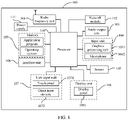
- FIG. 8 is a schematic diagram of a hardware structure of a terminal device for implementing the embodiments of this disclosure.
- the terminal device 100 includes but is not limited to components such as a radio frequency unit 101, a network module 102, an audio output unit 103, an input unit 104, a sensor 105, a display unit 106, a user input unit 107, an interface unit 108, a memory 109, a processor 110, and a power supply 111.
- a person skilled in the art may understand that the structure of the terminal device shown in FIG. 8 does not constitute a limitation on the terminal device.
- a quantity of components included in the terminal device may be greater or less than that shown in the figure, or some components are combined, or component arrangements are different.
- the terminal device includes but is not limited to a mobile phone, a tablet personal computer, a notebook computer, a palmtop computer, an in-vehicle terminal device, a wearable device, a pedometer, and the like.
- the processor 110 is configured to obtain message content input by a user and contacts selected by the user.
- the radio frequency unit 101 is configured to send the message content to a contact that does not meet a preset condition among the contacts, and/or send preset content to a contact that meets the preset condition among the contacts.
- the terminal device may obtain message content input by a user and contacts selected by the user.
- the terminal device may send the message content only to a contact that does not meet a preset condition among the contacts selected by the user, or the terminal device may send the preset content to a contact that meets the preset condition among the contacts selected by the user.
- the terminal device may send the message content to a contact that does not meet a preset condition among the contacts selected by the user, and send the preset content to a contact that meets the preset condition among the contacts selected by the user.
- the preset condition may filter contacts with a relatively high probability of mis-sending.
- the terminal device may send the message content input by the user to a contact with a relatively low probability of mis-sending among the contacts selected by the user, and send the preset content to a contact with a relatively high probability of mis-sending among the contacts selected by the user (that is, not send the message content input by the user). In this way, the probability of mis-sending the message can be reduced, thereby reducing a probability of mis-sending important data.
- the radio frequency unit 101 may be configured to send or receive a signal in an information sending/receiving or call process. Specifically, the radio frequency unit 101 receives downlink data from a base station and sends the downlink data to the processor 110 for processing; and sends uplink data to the base station.
- the radio frequency unit 101 includes but is not limited to an antenna, at least one amplifier, a transceiver, a coupler, a low noise amplifier, a duplexer, and the like.
- the radio frequency unit 101 may further communicate with a network and another device through a wireless communications system.
- the terminal device provides the user with wireless broadband Internet access by using the network module 102, for example, helping the user send or receive an email, browse a web page, and access streaming media.
- the audio output unit 103 may convert audio data received by the radio frequency unit 101 or the network module 102 or stored in the memory 109 into an audio signal and output the audio signal as a sound.
- the audio output unit 103 may further provide audio output (for example, a call signal received sound or a message received sound) related to a specific function performed by the terminal device 100.
- the audio output unit 103 includes a speaker, a buzzer, a telephone receiver, and the like.
- the input unit 104 is configured to receive an audio or video signal.
- the input unit 104 may include a graphics processing unit (Graphics Processing Unit, GPU) 1041 and a microphone 1042.
- the graphics processing unit 1041 processes image data of a static picture or a video that is obtained by an image capture apparatus (for example, a camera) in a video capture mode or an image capture mode.
- a processed image frame may be displayed on the display unit 106.
- the image frame processed by the graphics processing unit 1041 may be stored in the memory 109 (or another storage medium) or sent by using the radio frequency unit 101 or the network module 102.
- the microphone 1042 can receive a sound and can process the sound into audio data.
- the processed audio data can be converted in a telephone call mode into a format that can be sent to a mobile communication base station through the radio frequency unit 101, for outputting.
- the terminal device 100 further includes at least one sensor 105, for example, an optical sensor, a motion sensor, and other sensors.
- the optical sensor may include an ambient light sensor and a proximity sensor.
- the ambient light sensor may adjust luminance of the display panel 1061 based on brightness of ambient light
- the proximity sensor may turn off the display panel 1061 and/or backlight when the terminal device 100 moves close to an ear.
- an accelerometer sensor can detect magnitudes of accelerations in all directions (usually three axes), can detect a magnitude and a direction of gravity when the terminal device is in a static state, and can be applied to posture recognition (such as screen switching between portrait and landscape, related games, and magnetometer posture calibration) of the terminal device, functions related to vibration recognition (such as pedometer and tapping), and the like.
- the sensor 105 may also include a fingerprint sensor, a pressure sensor, an iris sensor, a molecular sensor, a gyroscope, a barometer, a hygrometer, a thermometer, an infrared sensor, and the like. Details are not described herein.
- the display unit 106 is configured to display information input by the user or information provided to the user.
- the display unit 106 may include the display panel 1061.
- the display panel 1061 may be configured in a form of a liquid crystal display (Liquid Crystal Display, LCD), an organic light-emitting diode (Organic Light-Emitting Diode, OLED), or the like.
- the user input unit 107 may be configured to receive input digit or character information, and generate key signal input that is related to user setting and function control of the terminal device.
- the user input unit 107 may include a touch panel 1071 and other input devices 1072.
- the touch panel 1071 also referred to as a touchscreen, may capture a touch operation performed by a user on or near the touch panel (for example, an operation performed by the user on the touch panel 1071 or near the touch panel 1071 by using any appropriate object or accessory such as a finger or a stylus).
- the touch panel 1071 may include two parts: a touch detection apparatus and a touch controller.
- the touch detection apparatus detects a touch of the user, detects a signal brought by the touch operation, and transmits the signal to the touch controller.
- the touch controller receives touch information from the touch detection apparatus, converts the touch information into touch point coordinates, transmits the touch point coordinates to the processor 110, and receives and executes a command transmitted by the processor 110.
- the touch panel 1071 may be implemented in a plurality of forms, for example, as a resistive, capacitive, infrared, or surface acoustic wave touch panel.
- the user input unit 107 may further include other input devices 1072 in addition to the touch panel 1071.
- the other input devices 1072 may include but are not limited to a physical keyboard, a function key (for example, a volume control key or a switch key), a trackball, a mouse, and a joystick. Details are not described herein.
- the touch panel 1071 may cover the display panel 1061.
- the touch panel 1071 transmits the touch operation to the processor 110 for determining a type of the touch event.
- the processor 110 provides a corresponding visual output on the display panel 1061 based on the type of the touch event.
- the touch panel 1071 and the display panel 1061 serve as two separate components to implement input and output functions of the terminal device.
- the touch panel 1071 and the display panel 1061 may be integrated to implement the input and output functions of the terminal device. This is not specifically limited herein.
- the interface unit 108 is an interface for connecting an external apparatus to the terminal device 100.
- the external apparatus may include a wired or wireless headphone port, an external power supply (or battery charger) port, a wired or wireless data port, a memory card port, a port for connecting an apparatus with an identification module, an audio input/output (I/O) port, a video I/O port, an earphone port, or the like.
- the interface unit 108 may be configured to receive an input (for example, data information or electric power) from an external apparatus and transmit the received input to one or more elements within the terminal device 100, or may be configured to transmit data between the terminal device 100 and the external apparatus.
- the memory 109 may be configured to store software programs and various data.
- the memory 109 may mainly include a program storage region and a data storage region.
- the program storage region may store an operating system, an application program required by at least one function (for example, an audio play function or an image play function), and the like.
- the data storage region may store data (for example, audio data and a phone book) created based on usage of the mobile phone.
- the memory 109 may include a high-speed random access memory, or may further include a nonvolatile memory, for example, at least one magnetic disk storage device, a flash memory device, or another volatile solid-state storage device.
- the processor 110 is a control center of the terminal device, which uses various interfaces and lines to connect all parts of the entire terminal device, and performs various functions and data processing of the terminal device by running or executing the software programs and/or modules stored in the memory 109 and invoking data stored in the memory 109, so as to perform overall monitoring on the terminal device.
- the processor 110 may include one or more processing units.
- the processor 110 may integrate an application processor and a modem processor.
- the application processor mainly processes an operating system, a user interface, an application program, and the like.
- the modem processor mainly processes wireless communication. It can be understood that the modem processor may alternatively be not integrated in the processor 110.
- the terminal device 100 may further include a power supply 111 (for example, a battery) that supplies power to the components.
- a power supply 111 for example, a battery
- the power supply 111 may be logically connected to the processor 110 through a power management system, so as to implement functions such as charging management, discharging management, and power consumption management through the power management system.
- the terminal device 100 includes some functional modules that are not illustrated. Details are not described herein.
- an embodiment of this disclosure further provides a terminal device, including: a processor 110, a memory 109, and a computer program that is stored in the memory 109 and executable on the processor 110.
- a terminal device including: a processor 110, a memory 109, and a computer program that is stored in the memory 109 and executable on the processor 110.
- the computer program is executed by the processor 110, the processes of the foregoing embodiments of the message sending method are implemented, with the same technical effects achieved. To avoid repetition, details are not described herein again.
- An embodiment of this disclosure further provides a computer-readable storage medium, where the computer-readable storage medium stores a computer program.
- the computer program is executed by a processor, the processes of the foregoing embodiments of the message sending method are implemented, with the same technical effects achieved. To avoid repetition, details are not described herein again.
- the computer-readable storage medium is a read-only memory (Read-Only Memory, ROM), a random access memory (Random Access Memory, RAM), a magnetic disk, or an optical disk.
- the method in the foregoing embodiments may be implemented by software on a necessary universal hardware platform or by hardware only. In most cases, the former is a preferred implementation.
- the technical solutions of this disclosure essentially, or the part contributing to the related art may be implemented in a form of a software product.
- the computer software product is stored in a storage medium (for example, a ROM/RAM, a magnetic disk, or an optical disc), and includes several instructions for instructing a terminal device (which may be a mobile phone, a computer, a server, an air conditioner, a network device, or the like) to perform the methods described in the embodiments of this disclosure.
Landscapes
- Engineering & Computer Science (AREA)
- Signal Processing (AREA)
- Theoretical Computer Science (AREA)
- Computer Networks & Wireless Communication (AREA)
- Business, Economics & Management (AREA)
- General Physics & Mathematics (AREA)
- Physics & Mathematics (AREA)
- Computational Linguistics (AREA)
- Audiology, Speech & Language Pathology (AREA)
- Artificial Intelligence (AREA)
- Health & Medical Sciences (AREA)
- General Health & Medical Sciences (AREA)
- General Engineering & Computer Science (AREA)
- Human Resources & Organizations (AREA)
- Human Computer Interaction (AREA)
- General Business, Economics & Management (AREA)
- Entrepreneurship & Innovation (AREA)
- Strategic Management (AREA)
- Multimedia (AREA)
- Marketing (AREA)
- Economics (AREA)
- Quality & Reliability (AREA)
- Data Mining & Analysis (AREA)
- Computer Hardware Design (AREA)
- Operations Research (AREA)
- Tourism & Hospitality (AREA)
- Telephone Function (AREA)
- Information Transfer Between Computers (AREA)
Abstract
Description
- This application claims priority to
Chinese Patent Application No. 201910701027.6, filed in China on July 31, 2019 - Embodiments of this disclosure relate to the field of terminal technologies, and in particular, to a message sending method and a terminal device.
- With development of terminal technologies, a user can use a terminal device to send a message to another user.
- Generally, if the user needs to share or forward a message to other users, the user may first select contacts to which the message is to be sent. After the contracts to which the message is to be sent are selected, if the user clicks to confirm sending, the terminal may send the message to these contacts. If the user originally wants to send
message 1 to contact 1, but clicks on contact 2, the terminal device will sendmessage 1 to contact 2. At present, if the user finds within a specified period of time that themessage 1 has been sent to a wrong recipient, the user can trigger the terminal device to use the withdrawal function to withdraw themessage 1. - However, if after the specified period of time, the user discovers that the message has been sent to a wrong recipient, the terminal is unable to operate to withdraw the sent message, which results in a relatively high probability of mis-sending a message by the terminal.
- Embodiments of this disclosure provide a message sending method and a terminal device, to resolve a problem of a relatively high probability of mis-sending a message by the terminal.
- To resolve the foregoing technical problem, the embodiments of this disclosure are implemented as follows.
- According to a first aspect, an embodiment of this disclosure provides a message sending method, where the method includes: obtaining message content input by a user and contacts selected by the user; and sending the message content to a contact that does not meet a preset condition among the contacts selected by the user, and/or sending preset content to a contact that meets the preset condition among the contacts selected by the user.
- According to a second aspect, an embodiment of this disclosure further provides a terminal device, where the terminal device includes an obtaining module and a sending module, where the obtaining module is configured to obtain message content input by a user and contacts selected by the user; and the sending module is configured to send the message content to a contact that does not meet a preset condition among the contacts selected by the user, and/or send preset content to a contact that meets the preset condition among the contacts selected by the user.
- According to a third aspect, an embodiment of this disclosure provides a terminal device, including a processor, a memory, and a computer program stored in the memory and executable on the processor, where when the computer program is executed by the processor, the steps of the message sending method according to the first aspect are implemented.
- According to a fourth aspect, an embodiment of this disclosure provides a computer-readable storage medium for storing a computer program, where the computer-readable storage medium stores a computer program, and when the computer program is executed by a processor, the steps of the foregoing message sending method according to the first aspect are implemented.
- In the embodiments of this disclosure, firstly, the terminal device may obtain message content input by a user and contacts selected by the user. The terminal device may send the message content only to a contact that does not meet a preset condition among the contacts selected by the user, or the terminal device may send the preset content to a contact that meets the preset condition among the contacts selected by the user. Alternatively, the terminal device sends the message content to a contact that does not meet a preset condition among the contacts selected by the user, and sends the preset content to a contact that meets the preset condition among the contacts selected by the user. The preset condition may filter contacts with a relatively high probability of mis-sending. Therefore, the terminal device may send the message content input by the user to a contact with a relatively low probability of mis-sending among the contacts selected by the user, and send preset content to a contact with a relatively high probability of mis-sending among the contacts selected by the user (that is, not send the message content input by the user). In this way, the probability of mis-sending the message can be reduced, thereby reducing a probability of mis-sending important data.
-
-
FIG. 1 is a possible schematic architectural diagram of an Android operating system according to an embodiment of this disclosure; -
FIG. 2 is a schematic flowchart of a message sending method according to an embodiment of this disclosure; -
FIG. 3 is a schematic diagram of a display screen according to an embodiment of this disclosure; -
FIG. 4 is a possible schematic structural diagram of a terminal device according to an embodiment of this disclosure; -
FIG. 5 is a possible schematic structural diagram of another terminal device according to an embodiment of this disclosure; -
FIG. 6 is a possible schematic structural diagram of another terminal device according to an embodiment of this disclosure; -
FIG. 7 is a possible schematic structural diagram of another terminal device according to an embodiment of this disclosure; -
FIG. 8 is a schematic diagram of a hardware structure of a terminal device according to the embodiments of this disclosure. - The following clearly and completely describes the technical solutions in the embodiments of this disclosure with reference to the accompanying drawings in the embodiments of this disclosure. Apparently, the described embodiments are some rather than all of the embodiments of this disclosure. All other embodiments obtained by a person of ordinary skill in the art based on the embodiments of this disclosure without creative efforts shall fall within the protection scope of this disclosure.
- It should be noted that "/" in this specification represents or, for example, A/B may represent A or B; and that the term "and/or" in this specification describes only an association relationship for describing associated objects and represents that three relationships may exist, for example, A and/or B may represent the following three cases: A alone, both A and B, and B alone. "Plurality" means two or more.
- In the specification of the embodiments and the claims of this disclosure, the terms "first", "second", and so on are intended to distinguish between different objects but do not indicate a particular order of the objects. For example, a first keyword, a second keyword, and the like are used to distinguish different keywords, rather than describe a specific sequence of the keywords.
- It should be noted that, in the embodiments of this disclosure, terms such as "an example" or "for example" are used to represent an example, an instance, or an illustration. Any embodiment or design solution described as "an example" or "for example" in the embodiments of this disclosure shall not be interpreted as being preferred or advantageous over other embodiments or design solutions. Specifically, the terms such as "an example" or "for example" are used to present related concepts in a specific manner.
- A terminal device in the embodiments of this disclosure may be a terminal with an operating system. The operating system may be an Android (Android) operating system, may be an iOS operating system, or may be another possible operating system, which is not specifically limited in the embodiments of this disclosure.
- In the message sending method provided in the embodiments of this disclosure, firstly, the terminal device may obtain message content input by a user and contacts selected by the user. The terminal device may send the message content only to a contact that does not meet a preset condition among the contacts selected by the user, or the terminal device sends the preset content to a contact that meets the preset condition among the contacts selected by the user. Alternatively, the terminal device sends the message content to a contact that does not meet a preset condition among the contacts selected by the user, and sends the preset content to a contact that meets the preset condition among the contacts selected by the user. The preset condition may filter contacts with a relatively high probability of mis-sending. Therefore, the terminal device may send the message content input by the user to a contact with a relatively low probability of mis-sending among the contacts selected by the user, and send the preset content to a contact with a relatively high probability of mis-sending among the contacts selected by the user (that is, not send the message content input by the user). In this way, the probability of mis-sending the message can be reduced, thereby reducing a probability of mis-sending important data.
- The following uses the Android operating system as an example to introduce a software environment to which a message sending method provided in the embodiments of this disclosure is applied.
-
FIG. 1 is a possible schematic architectural diagram of an Android operating system according to an embodiment of this disclosure. InFIG. 1 , an architecture of the Android operating system includes four layers: an application layer, an application framework layer, a system runtime library layer, and a kernel layer (which may be specifically a Linux kernel layer). - The application program layer includes various application programs (including system application programs and third-party application programs) in the Android operating system.
- The application program framework layer is a framework of application programs, and developers may develop some application programs based on the application program framework layer in compliance with development principles of the framework of application programs.
- The system runtime library layer includes a library (also called a system library) and a runtime environment of the Android operating system. The library mainly provides various resources required by the Android operating system. The runtime environment of the Android operating system is used to provide a software environment for the Android operating system.
- The kernel layer is an operating system layer of the Android operating system, and is a bottom layer in software layers of the Android operating system. The kernel layer provides core system services and hardware-related drivers for the Android operating system based on the Linux kernel.
- Using the Android operating system as an example, in the embodiments of this disclosure, a developer may develop, based on the system architecture of the Android operating system shown in
FIG. 1 , a software program for implementing the message sending method provided in the embodiments of this disclosure, so that the message sending method can be performed based on the Android operating system shown inFIG. 1 . In other words, a processor or a terminal device may implement the message sending method provided in the embodiments of this disclosure by running the software program in the Android operating system. - The following describes the message sending method in the embodiments of this disclosure with reference to
FIG. 2. FIG. 2 is a schematic flowchart of a message sending method according to an embodiment of this disclosure. As shown inFIG. 2 , the message sending method includes S201 and S202. - S201. A terminal device obtains message content input by a user and contacts selected by the user.
- The message content input by the user is message content to be sent, which may be message content that is forwarded by the user from another contact, or message content to be shared by the user with other contacts, or message content manually input by the user, which is not specifically limited in the embodiments of this disclosure.
- Optionally, a type of message content may be text type, picture type, audio type, video type, link type, and the like.
- S202. The terminal device sends the message content to a contact that does not meet a preset condition among the contacts selected by the user, and/or sends preset content to a contact that meets the preset condition among the contacts selected by the user.
- The preset condition may be used by the terminal device to determine which contacts among the contacts selected by the user may be wrongly selected contacts. For example, the terminal device may select, based on the preset condition, contacts with a relatively high probability of mis-sending, which means that the user may not want to send the message content to these contacts.
- In this embodiment of this disclosure, the terminal device may identify different contacts based on contact identifications. For example, contact identification may be an identity ID of a contact. For example: a remark name, a mobile phone number, a QQ number, a WeChat ID, or an email number.
- Optionally, the terminal device may determine whether a contact meets the preset condition based on an identification of the contact and message content. For example, the terminal device may identify content in the message content and the identification of the contact through semantic recognition or image recognition. For example, the terminal device may use image recognition to obtain information in a picture, the terminal device may use semantic recognition to obtain information in a text, and the terminal device may use semantic to identify the identification of the contact.
- Optionally, in the message sending method provided in this embodiment of this disclosure, the foregoing S202 may specifically be the following S202a, S202b, or S202c.
- S202a. The terminal device sends the message content to a contact that does not meet a preset condition among the contacts selected by the user.
- It can be understood that the contact that does not meet the preset condition is a contact with a relatively low probability of mis-sending when the message content input by the user is sent.
- Based on this solution, the terminal device only sends the message content to the contact that does not meet the preset condition among the contacts selected by the user, which means that the terminal device sends the message content only to the contact with a low probability of mis-sending, thereby reducing a probability of mis-sending important messages or important data.
- S202b. The terminal device sends preset content to a contact that meets a preset condition among the contacts selected by the user.
- It can be understood that the contact that meets the preset condition is a contact with a relatively high probability of mis-sending when the message content input by the user is sent.
- Optionally, the preset content may be some simple greetings, regards, or the like, such as "How is your life going?", and "How is your work going?".
- Based on this solution, the terminal device sends the preset content to the contact that meets the preset condition among the contacts selected by the user, that is, replacing the message content input by the user with the preset content, thereby reducing the probability of mis-sending the message.
- S202c. The terminal device sends the message content to a contact that does not meet a preset condition among the contacts selected by the user, and sends preset content to a contact that meets the preset condition among the contacts selected by the user.
- Based on this solution, when the terminal device sends a message according to the contacts selected by the user and the message content input by the user, the terminal device may send the message content to a contact that does not meet the preset condition among the contacts selected by the user, and send the preset content to a contact that meets the preset condition. To be specific, the terminal device sends the message content input by the user to a contact with a relatively low probability of mis-sending among the contacts selected by the user, and send the preset content to a contact with a relatively high probability of mis-sending among the contacts selected by the user (that is, not send the message content input by the user), thereby reducing the probability of mis-sending the message and further reducing a probability of mis-sending important data.
- In the message sending method provided in this embodiment of this disclosure, firstly, the terminal device may obtain message content input by a user and contacts selected by the user. The terminal device may send the message content only to a contact that does not meet a preset condition among the contacts selected by the user, or the terminal device sends the preset content to a contact that meets the preset condition among the contacts selected by the user. Alternatively, the terminal device sends the message content to a contact that does not meet a preset condition among the contacts selected by the user, and sends the preset content to a contact that meets the preset condition among the contacts selected by the user. The preset condition may filter contacts with a relatively high probability of mis-sending. Therefore, the terminal device may send the message content input by the user to a contact with a relatively low probability of mis-sending among the contacts selected by the user, and send the preset content to a contact with a relatively high probability of mis-sending among the contacts selected by the user (that is, not send the message content input by the user). In this way, the probability of mis-sending the message can be reduced, thereby reducing a probability of mis-sending important data.
- Optionally, in the message sending method provided in this embodiment of this disclosure, after the foregoing S201 is performed, the method may include the following S203.
- S203. The terminal device determines whether M contacts meet the preset condition.
- The M contacts are contacts that are selected by the user to send the message content input by the user to.
- Optionally, in this embodiment of this disclosure, the preset condition may include at least one of a first condition, a second condition, and a third condition. The first condition is that a message time interval is greater than or equal to a target time interval. The second condition is that a contact identification includes a first keyword, and that target content includes a second keyword. The third condition is that the target content includes a third keyword, and that an intimacy index is less than or equal to a target intimacy index corresponding to the third keyword. The message time interval is a time interval between the last time the user sent a message to a contact and a system time of the terminal device; the first keyword is associated with a target keyword set, and the second keyword is a keyword in the target keyword set; and the third keyword indicates a degree of intimacy or indicates private information, and the intimacy index is a frequency of contact between the user and a contact within a preset period of time.
- It can be understood that the message time interval corresponding to a contact is a time interval between a
moment 1 at which the user lately sent a message to the contact and the terminal device system time, denoted by a moment 2. - Optionally, in this embodiment of this disclosure, a unit of the message time interval can use 1 hour as a time unit, or 24 hours as the time unit, or 72 hours as the time unit, which is not specifically limited in this embodiment of this disclosure.
- For example, assuming that the target time interval is 30 days, the terminal device may determine whether a contact meets the first condition based on whether the message time interval of the user corresponding to the contact is greater than or equal to 30 days. If the message time interval corresponding to a contact is greater than or equal to 30 days, the contact meets the first condition. If the message time interval corresponding to a contact is less than 30 days, the contact does not meet the first condition.
- Assuming that the user selected 3 contacts (that is, M=3), a first time interval corresponding to a first contact is 30 days, a second time interval corresponding to a second contact is 10 days, and a third time interval corresponding to a third contact is 15 days. A contact that meets the first condition is the first contact. To be specific, the terminal device may display prompt information to prompt the user whether to send the message content input by the user to the first contact.
- A contact identification includes the first keyword, which may represent that the user needs to pay attention to wording when sending messages to these contacts. For example, an X company group, and a party member group of an X company. Assuming that the first keyword is "party member", and the first target keyword set may be {Darling, kiss you}. If the second keyword is a keyword in the first target keyword set, the contact is a contact that meets the second condition.
- For example, a group is named as "a party member group of an X company", and the group name includes the keyword "party member". If the message content input by the user is "Dear, have you eaten yet?", the terminal device may display prompt information to the user, prompting whether to send "Dear, have you eaten yet?" to the group.
- Intimacy index: If the preset period of time is X days, an intimacy index between the user and a contact may be the number of days in which messages have been sent between the user and the contact during latest X days. If message sending or receiving has occurred in a day, the intimacy index corresponding to that day is 1, and if neither message sending nor message receiving has occurred in a day, intimacy index corresponding to that day is 0. The largest intimacy index corresponding to X days is X, and the smallest intimacy index is 0.
- For example, if the terminal device identifies that the message content input by the user includes a keyword indicating intimacy such as "dear", "husband", and "wife", the terminal device determines whether the intimacy index of each of the contacts selected by the user is less than a first target intimacy index.
- Assuming that the first target intimacy index is 10. When a keyword indicating intimacy appears in the first content, if the intimacy index between a contact selected by the user and the user is less than 10, the contact is a contact that meets the third condition.
- If the terminal device identifies that the message content input by the user includes a keyword indicating private information such as "salary", "bonus", and "hidden disease", the terminal device determines whether the intimacy index of each of the contacts selected by the user is less than a second target intimacy index.
- Assuming that the second target intimacy index is 20. When a keyword indicating private information appears in the first content, if the intimacy index between a contact selected by the user and the user is less than 20, the contact is a contact that meets the third condition.
- Certainly, the user alternatively may manually add or remove a keyword that requires determining the intimacy index. The user alternatively may set different target intimacy indexes corresponding to keywords indicating different information, which is not specifically limited in this embodiment of this disclosure.
- Optionally, the terminal device may use only one of the foregoing three conditions as the preset condition, or may use two of them as the preset condition, or may use foregoing three conditions as the preset condition, and the foregoing S203 may be specifically implemented through any one of the following.
- (1) The terminal device may determine whether M contacts meet the preset condition based on the first condition.
- (2) The terminal device may determine whether M contacts meet the preset condition based on the second condition.
- (3) The terminal device may determine whether M contacts meet the preset condition based on the third condition.
- (4) The terminal device may determine whether M contacts meet the target condition based on the first condition and the second condition.
- (5) The terminal device may determine whether M contacts meet the target condition based on the first condition and the third condition.
- (6) The terminal device may determine whether M contacts meet the target condition based on the second condition and the third condition.
- (7) The terminal device may determine whether M contacts meet the target condition based on the first condition, the second condition, and the third condition.
- It should be noted that if the terminal device uses any two of the first condition, the second condition, and the third condition as the preset condition, the terminal device may determine a contact that meets the first condition of the two conditions and a contact that meets the second condition of the two conditions as contacts that meet the preset conditions. If the terminal device uses the first condition, the second condition, and the third condition as the preset conditions, the terminal device may first determine whether each contact is a contact that meets the first condition, if there is a contact that does not meet the first condition, the terminal device may determine whether the contact that does not meet the first condition is a contact that meets the second condition, and if there is a contact that does not meet the first condition and the second condition, the terminal device may determine whether the contact that does not meet the first condition and the second condition is a contact that meets the third condition. That is, among the M contacts, a contact that meets the first condition, a contact that meets the second condition, and a contact that meets the third condition are contacts that meet the preset condition.
- Any one of the first condition, the second condition, and the third condition can be used as the first condition of determination.
- In this embodiment of this disclosure, the terminal device may determine whether a contact is a contact that meets the preset condition based on the first condition, the second condition, or the third condition. Because the first condition is determined based on the message time interval, the second condition is determined based on the keyword in contact identification and the keyword in the message content input by the user, and the third condition is determined based on the intimacy between the user and the contact and the keyword in the message content input by the user, that is, the terminal device may determine from different perspectives whether a contact is a contact that meets the preset conditions, an accuracy by which the terminal device determines that a contact is a wrongly selected contact can be increased.
- Optionally, in the case that the preset condition includes the first condition, the second condition, and the third condition, in the message sending method provided in this embodiment of this disclosure, the foregoing S203 may be specifically performed through S203a to S203c.
- S203a. The terminal device determines whether M contacts meet the first condition.
- S203b. In the case that among the M contacts, there are K contacts that do not meet the first condition, the terminal device determines whether the K contacts meet a first target condition.
- The first target condition is any one of the second condition and the third condition, and K is a positive integer less than M.
- S203c. In the case that among the K contacts, there are P contacts that do not meet the first target condition, the terminal device determines whether the P contacts meet a second target condition.
- The first target condition is a condition of the second condition and the third condition except the first target condition, and P is a positive integer less than K.
- Further, the terminal device determines a contact that meets the first condition, a contact that meets the second condition, and a contact that meets the third condition as contacts that meet the preset condition.
- It can be understood that the terminal device may follow a specific order of determination. For example, in this embodiment of this disclosure, it is first determined that whether the first condition is met, and then a determination is made based on the second condition or the third condition for a contact that does not meet the first condition, so as to determine which contacts are those that meet the preset conditions.
- Based on this solution, the terminal device may first determine whether the M contacts meet the first condition, and then in the case that among the M contacts, there are N contacts that do not meet the first condition, the terminal device may determine whether the contacts that do not meet the first condition meet the second condition or the third condition. Determining based on a plurality of conditions may improve accuracy of a message from the terminal device indicating mis-sending. In this way, after selecting the contacts and before sending the message content input by the user, the user may determine again whether to send the message content input by the user to a contact who meets the preset condition.
- Optionally, in the message sending method provided in this embodiment of this disclosure, the foregoing S201 may specifically be performed through the following S201a.
- S201a. In the case that a first input is received, a terminal device obtains message content input by a user and contacts selected by the user.
- The first input is an input of the message content input by the user in an input area, or an input that the user triggers the terminal device to select a contact and send the message content.
- Example 1. After a terminal device detects that a user inputs message content in an input area corresponding to a contact, the terminal device may determine whether the contact meets a preset condition.
- Example 2. After a terminal device detects that a user pastes message content to an input area corresponding to a contact, the terminal device may also determine whether the contact meets a preset condition.
- Example 3. After a terminal device detects that a user has selected M contacts to which message content is to be sent, and detects an input that triggers the terminal device to send the message content to the M contacts, the terminal device may also determine whether the M contacts meet a preset condition.
- It should be noted that in this embodiment of this disclosure, after the user selects a message to be sent, the terminal device may also determine whether the selected M contacts include a contact that meets the preset condition.
- In this embodiment of this disclosure, the terminal device may obtain the message content input by the user and the contacts selected by the user at different times, and then determine whether the contacts selected by the user are contacts that meet the preset condition.
- Optionally, in the message sending method provided in this embodiment of this disclosure, after the foregoing S202 is performed, the method may further include the following S204.
- S204. The terminal device displays a first prompt information.
- The first prompt information is used to prompt whether to send the message content input by the user to a contact that meets the preset condition.
- In this embodiment of this disclosure, target content includes at least one of the message content input by the user and the preset content.
- It can be understood that after the terminal device sends the preset content to the contact that meets the preset condition, and/or after the terminal device sends the message content input by the user to the contact that does not meet the preset condition, the terminal device may display the first prompt information, prompting the user whether to send the message content input by the user to the contact that meets the preset condition. This can allow the user to reconfirm whether the message needs to be sent to these contacts, so as to avoid a problem that the user actually needs to send the message content to some or all of these contacts, but the terminal device does not send the message content to these contacts.
- Optionally, in the message sending method provided in this embodiment of this disclosure, after the foregoing S203 is performed, the method may further include the following S205.
- S205. The terminal device displays a second prompt information.
- The second prompt information is used to prompt user whether to send the message content to N contacts that meet the preset condition, where N is a positive integer.
- It can be understood that in this solution, the preset condition can also be used to filter a contact that needs to be prompted.
- For example, the terminal device may display a sub-screen on the current display screen, and display the second prompt information on the sub-screen.
- Optionally, the second prompt information displayed by the terminal device may not include an identification of a contact that meets the preset condition, or may include an identification of a contact that meets the preset condition, which is not specifically limited in this embodiment of this disclosure.
- For example, content of the second prompt message may specifically include: prompting the user whether to cancel sending the message content input by the user, prompting the user whether to cancel sending the message content input by the user to a contact that meets the preset conditions, prompting the user whether to reselect a contact, prompting the user of a contact identification of a contact that meets the preset condition, and prompting whether to cancel sending the message content input by the user to a contact that meets the preset condition.
- For example,
FIG. 3 is a schematic diagram of a display screen according to an embodiment of this disclosure. As shown inFIG. 3(a) , the terminal device displays "You may have selected a wrong contact. Do you want to send it?" on the display screen. Certainly, the terminal device may alternatively display "Send to Tom, Dick, and Harry?" on the display screen, as shown inFIG. 3(b) . Certainly, in the case that the contacts that meet the preset conditions are a plurality of contacts, the terminal device may further display a whether-to-send control for each contact. For example, as shown inFIG. 3(c) , the terminal device may display on the screen "You may have selected a wrong contact. Do you want to send it?", identifications of the contacts "Tom", "Dick", and "Harry", and a selection control corresponding to each identification. If the user needs to send the message content input by the user to at least one of them, the user may manipulate the selection control corresponding to the identification of each contact to select a contact corresponding to the contact identification. Then by clicking a control "Yes" for continuing to send the message, the message content input by the user may continue to be sent to the selected contact. - Optionally, the terminal device may display the second prompt information in a specific format to prompt the user.
- For example, the terminal device uses bold text to display the second prompt information; the terminal device may use text in a specific color to display the second prompt information, such as red and yellow, and certainly, the terminal device may alternatively display the second prompt information in both bold and red text, which is not specifically limited in this embodiment of this disclosure.
- Optionally, the sub-screen of the second prompt information may pop up in a specific manner, for example, displayed on the current screen in pop-up manner from top to bottom, from bottom to top, from left to right, or from right to left.
- In the message sending method provided in this embodiment of this disclosure, firstly, the terminal device determines the contact that meets the preset condition among the M contacts, and then, the terminal device displays the second prompt information, where the second prompt information is used to prompt the user whether to send the message content input by the user to the contact that meets the preset condition. Because the message sending method provided in this embodiment of this disclosure may detect whether the M contacts meet the preset condition before sending the message content, and in the case that there is a contact that meets the preset condition, the terminal device may display the second prompt message to prompt the user whether to send the message content input by the user to the contact that meets the preset condition, so that the user may confirm whether there is a wrongly selected contact among the selected contacts before sending the message, thereby reducing the probability of mis-sending the message.
- Optionally, in the message sending method provided in this embodiment of this disclosure, after the foregoing S205 is performed, the method may further perform the following S206.
- S206. The terminal device receives a second input by the user for the second prompt information.
- The second input is an input by the user that determines to cancel sending the message content input by the user to some contacts.
- It can be understood that after the user determines, based on the displayed second prompt information, that the message content input by the user does not need to be sent to some contacts, the user may input the second input.
- Further, S202 may be performed through the following S202cl or S202c2.
- S202cl. In response to the second input, the terminal device cancels sending the message content to N contacts.
- In other words, the terminal device may cancel sending the message content input by the user to the N contacts prompted by the second prompt information according to the user input.
- For example, assuming that the user selects to send
message 1 to contact 1, contact 2, contact 3, and contact 4, and that the terminal device determines that thecontact 1 and contact 4 are contacts that meet the preset condition, the prompt information is used to prompt the user to cancel sending themessage 1 to the contact 3 and contact 4. If the user determines that thecontact 1 and contact 2 are contacts to which themessage 1 needs not to be sent, the user controls the terminal device to cancel sending themessage 1 to contact 1 and contact 2. - It should be noted that in the case that the terminal device cancels sending the message content to a contact that meets the preset conditions, the terminal device may cancel sending the message content input by the user only to a contact that meets the preset conditions or to all contacts.
- In this embodiment of this disclosure, in the case that the terminal device displays the second prompt information, the user may be prompted that these contacts may be the contacts that the user has wrongly selected. If the user determines that there is no need to send the message to some of the contacts, the user may input the second input for the second prompt information, so that the terminal device may cancel sending the message content to these prompted contacts, and the user may reconfirm whether the contacts have been selected correctly, thereby reducing the probability of mis-sending the message.
- S202c2. In response to the second input, the terminal device cancels sending the message content to N contacts, and sends the message content to contacts among the M contacts except the N contacts.
- For example, assuming that the user selects to send
message 1 to contact 1, contact 2, contact 3, and contact 4, and that the terminal device determines that thecontact 1 and contact 4 are contacts that meet the preset condition, the prompt information is used to prompt the user to cancel sending themessage 1 to the contact 3 and contact 4. If the user determines that thecontact 1 and contact 2 are contacts to which themessage 1 needs not to be sent, the user may select to send themessage 1 only to the contact 3 and contact 4. - In this embodiment of this disclosure, in the case that the terminal device displays the second prompt message to prompt the user that contacts that meet the preset condition may be two new contacts wrongly selected by the user, if the user determines that there is no need to send a first message to the contacts that meet the preset condition and wants to continue to send the first message to other contacts among the selected contacts, the user may trigger the terminal device according to the second input to cancel sending the message content input by the user to the contact that meet the preset condition, and send the message content input by the user to other contacts among the M contacts except those that meet the preset condition, without the necessity to return to reselect contacts by the user, which improves sending experience of the user.
- Optionally, in the message sending method provided in this embodiment of this disclosure, after S205 is performed, the method may further include the following S207.
- S207. The terminal device receives a third input by the user for the second prompt information.
- The second input information includes identifications of the N contacts.
- Specifically, the third input may be an input for at least one contact among the N contacts selected by the user.
- Further, S202 may be specifically performed through the following S202d.
- S202d. In response to the third input, the terminal device sends the message content input by the user to J contacts.
- The J contacts include other contacts among the M contacts except the N contacts and at least one contact among the N contacts that corresponds to the third input, where J is a positive integer greater than N and less than or equal to M.
- For example, assuming that the terminal device displays the second prompt information as shown in
FIG. 3(c) , the user can select Tom and Dick inFIG. 3(c) , and then click OK, so that the terminal device may send the message to the contacts except Harry. - Certainly, after the second prompt information is displayed, the user may further determine whether among the M contacts, the contact that is not prompted by the terminal device is a contact that has been wrongly selected.
- Based on this solution, after the terminal device displays the second prompt information, if the user finds that some contacts have been wrongly selected, and some contacts are the right ones, the user may select to continue to send the message content input by the user to those right contacts.
-
FIG. 4 is a possible schematic structural diagram of a terminal device according to an embodiment of this disclosure. As shown inFIG. 4 , theterminal device 400 includes an obtainingmodule 401 and a sendingmodule 402. The obtainingmodule 401 is configured to obtain message content input by a user and contacts selected by the user. The sendingmodule 402 is configured to send the message content to a contact that does not meet a preset condition among the contacts, and/or send preset content to a contact that meets the preset condition among the contacts. - Optionally, with reference to
FIG. 4 , and as shown inFIG. 5 , theterminal device 400 further includes adisplay module 403. Thedisplay module 403 is configured to, after the sendingmodule 402 sends target content, display second prompt information, where the second prompt information is used to prompt whether to send the message content to a contact that meets the preset condition, and the target content includes at least one of the message content and the preset content. - Optionally, the preset condition includes at least one of a first condition, a second condition, and a third condition, where the first condition is that a message time interval is greater than or equal to a target time interval; the second condition is that a contact identification includes a first keyword, and that the message content includes a second keyword; and the third condition is that the message content includes a third keyword, and that an intimacy index is less than or equal to a target intimacy index corresponding to the third keyword. The message time interval is a time interval between the last time the user sent a message to a contact and a system time of the terminal device; the first keyword is associated with a target keyword set; and the second keyword is a keyword in the target keyword set; and the third keyword indicates a degree of intimacy or indicates private information, and the intimacy index is a frequency of contact between the user and a contact within a preset period of time.
- Optionally, the obtaining
module 401 is specifically configured to: obtain message content input by a user and contacts selected by the user in the case of a first input is received, where the first input is an input of the message content input by the user in an input area, or an input that the user triggers the terminal device to select M contacts and send the message content. - Optionally, with reference to
FIG. 5 , and as shown inFIG. 6 , theterminal device 400 further includes: a determiningmodule 404. The determiningmodule 404 is configured to, after the obtainingmodule 401 obtains the message content input by the user and the contacts selected by the user, determine whether M contacts meet the preset condition, where the M contacts are the contacts selected by the user, and M is a positive integer. - Optionally, with reference to
FIG. 6 , and as shown inFIG. 7 , theterminal device 400 further includes: adisplay module 403 and areceiving module 405. Thedisplay module 403 is configured to, after the determiningmodule 404 determines whether the M contacts meet the preset condition, display second prompt information, where the second prompt information is used to prompt whether to send the message content to N contacts that meet the preset condition, and N is a positive integer. The receivingmodule 405 is configured to receive a second input by the user for the second prompt information. The sendingmodule 402 is specifically configured to, in response to the second input received by the receivingmodule 405, cancel sending the message content to the N contacts, and send the message content to contacts among the M contacts except the N contacts. - Optionally, the preset condition includes a first condition, a second condition, and a third condition. The determining
module 404 is specifically configured to: determine whether the M contacts meet the first condition; in the case that among the M contacts, there are K contacts that do not meet the first condition, determine whether the K contacts meet a first target condition, where the first target condition is any one of the second condition and the third condition, and K is a positive integer less than M; and in the case that among the K contacts, there are P contacts that do not meet the first target condition, determine whether the P contacts meet a second target condition, where the first target condition is a condition of the second condition and the third condition except the first target condition, and P is a positive integer less than K. - The
terminal device 400 provided by this embodiment of this disclosure can implement each process implemented by the terminal device in the foregoing method embodiment. To avoid repetition, details are not described herein again. - In the terminal device provided in this embodiment of this disclosure, firstly, the terminal device may obtain message content input by a user and contacts selected by the user. The terminal device may send the message content only to a contact that does not meet a preset condition among the contacts selected by the user, or the terminal device may send the preset content to a contact that meets the preset condition among the contacts selected by the user. Alternatively, the terminal device may send the message content to a contact that does not meet a preset condition among the contacts selected by the user, and send the preset content to a contact that meets the preset condition among the contacts selected by the user. The preset condition may filter contacts with a relatively high probability of mis-sending. Therefore, the terminal device may send the message content input by the user to a contact with a relatively low probability of mis-sending among the contacts selected by the user, and send the preset content to a contact with a relatively high probability of mis-sending among the contacts selected by the user (that is, not send the message content input by the user). In this way, the probability of mis-sending the message can be reduced, thereby reducing a probability of mis-sending important data.
-
FIG. 8 is a schematic diagram of a hardware structure of a terminal device for implementing the embodiments of this disclosure. Theterminal device 100 includes but is not limited to components such as aradio frequency unit 101, anetwork module 102, anaudio output unit 103, aninput unit 104, asensor 105, adisplay unit 106, auser input unit 107, aninterface unit 108, amemory 109, aprocessor 110, and apower supply 111. A person skilled in the art may understand that the structure of the terminal device shown inFIG. 8 does not constitute a limitation on the terminal device. A quantity of components included in the terminal device may be greater or less than that shown in the figure, or some components are combined, or component arrangements are different. In this embodiment of this disclosure, the terminal device includes but is not limited to a mobile phone, a tablet personal computer, a notebook computer, a palmtop computer, an in-vehicle terminal device, a wearable device, a pedometer, and the like. - The
processor 110 is configured to obtain message content input by a user and contacts selected by the user. Theradio frequency unit 101 is configured to send the message content to a contact that does not meet a preset condition among the contacts, and/or send preset content to a contact that meets the preset condition among the contacts. - In the terminal device provided in this embodiment of this disclosure, firstly, the terminal device may obtain message content input by a user and contacts selected by the user. The terminal device may send the message content only to a contact that does not meet a preset condition among the contacts selected by the user, or the terminal device may send the preset content to a contact that meets the preset condition among the contacts selected by the user. Alternatively, the terminal device may send the message content to a contact that does not meet a preset condition among the contacts selected by the user, and send the preset content to a contact that meets the preset condition among the contacts selected by the user. The preset condition may filter contacts with a relatively high probability of mis-sending. Therefore, the terminal device may send the message content input by the user to a contact with a relatively low probability of mis-sending among the contacts selected by the user, and send the preset content to a contact with a relatively high probability of mis-sending among the contacts selected by the user (that is, not send the message content input by the user). In this way, the probability of mis-sending the message can be reduced, thereby reducing a probability of mis-sending important data.
- It should be understood that in this embodiment of this disclosure, the
radio frequency unit 101 may be configured to send or receive a signal in an information sending/receiving or call process. Specifically, theradio frequency unit 101 receives downlink data from a base station and sends the downlink data to theprocessor 110 for processing; and sends uplink data to the base station. Typically, theradio frequency unit 101 includes but is not limited to an antenna, at least one amplifier, a transceiver, a coupler, a low noise amplifier, a duplexer, and the like. In addition, theradio frequency unit 101 may further communicate with a network and another device through a wireless communications system. - The terminal device provides the user with wireless broadband Internet access by using the
network module 102, for example, helping the user send or receive an email, browse a web page, and access streaming media. - The
audio output unit 103 may convert audio data received by theradio frequency unit 101 or thenetwork module 102 or stored in thememory 109 into an audio signal and output the audio signal as a sound. In addition, theaudio output unit 103 may further provide audio output (for example, a call signal received sound or a message received sound) related to a specific function performed by theterminal device 100. Theaudio output unit 103 includes a speaker, a buzzer, a telephone receiver, and the like. - The
input unit 104 is configured to receive an audio or video signal. Theinput unit 104 may include a graphics processing unit (Graphics Processing Unit, GPU) 1041 and amicrophone 1042. Thegraphics processing unit 1041 processes image data of a static picture or a video that is obtained by an image capture apparatus (for example, a camera) in a video capture mode or an image capture mode. A processed image frame may be displayed on thedisplay unit 106. The image frame processed by thegraphics processing unit 1041 may be stored in the memory 109 (or another storage medium) or sent by using theradio frequency unit 101 or thenetwork module 102. Themicrophone 1042 can receive a sound and can process the sound into audio data. The processed audio data can be converted in a telephone call mode into a format that can be sent to a mobile communication base station through theradio frequency unit 101, for outputting. - The
terminal device 100 further includes at least onesensor 105, for example, an optical sensor, a motion sensor, and other sensors. Specifically, the optical sensor may include an ambient light sensor and a proximity sensor. The ambient light sensor may adjust luminance of thedisplay panel 1061 based on brightness of ambient light, and the proximity sensor may turn off thedisplay panel 1061 and/or backlight when theterminal device 100 moves close to an ear. As a type of motion sensor, an accelerometer sensor can detect magnitudes of accelerations in all directions (usually three axes), can detect a magnitude and a direction of gravity when the terminal device is in a static state, and can be applied to posture recognition (such as screen switching between portrait and landscape, related games, and magnetometer posture calibration) of the terminal device, functions related to vibration recognition (such as pedometer and tapping), and the like. Thesensor 105 may also include a fingerprint sensor, a pressure sensor, an iris sensor, a molecular sensor, a gyroscope, a barometer, a hygrometer, a thermometer, an infrared sensor, and the like. Details are not described herein. - The
display unit 106 is configured to display information input by the user or information provided to the user. Thedisplay unit 106 may include thedisplay panel 1061. Thedisplay panel 1061 may be configured in a form of a liquid crystal display (Liquid Crystal Display, LCD), an organic light-emitting diode (Organic Light-Emitting Diode, OLED), or the like. - The
user input unit 107 may be configured to receive input digit or character information, and generate key signal input that is related to user setting and function control of the terminal device. Specifically, theuser input unit 107 may include atouch panel 1071 andother input devices 1072. Thetouch panel 1071, also referred to as a touchscreen, may capture a touch operation performed by a user on or near the touch panel (for example, an operation performed by the user on thetouch panel 1071 or near thetouch panel 1071 by using any appropriate object or accessory such as a finger or a stylus). Thetouch panel 1071 may include two parts: a touch detection apparatus and a touch controller. The touch detection apparatus detects a touch of the user, detects a signal brought by the touch operation, and transmits the signal to the touch controller. The touch controller receives touch information from the touch detection apparatus, converts the touch information into touch point coordinates, transmits the touch point coordinates to theprocessor 110, and receives and executes a command transmitted by theprocessor 110. In addition, thetouch panel 1071 may be implemented in a plurality of forms, for example, as a resistive, capacitive, infrared, or surface acoustic wave touch panel. Theuser input unit 107 may further includeother input devices 1072 in addition to thetouch panel 1071. Specifically, theother input devices 1072 may include but are not limited to a physical keyboard, a function key (for example, a volume control key or a switch key), a trackball, a mouse, and a joystick. Details are not described herein. - Further, the
touch panel 1071 may cover thedisplay panel 1061. When detecting a touch operation on or near thetouch panel 1071, thetouch panel 1071 transmits the touch operation to theprocessor 110 for determining a type of the touch event. Then, theprocessor 110 provides a corresponding visual output on thedisplay panel 1061 based on the type of the touch event. InFIG. 8 , thetouch panel 1071 and thedisplay panel 1061 serve as two separate components to implement input and output functions of the terminal device. However, in some embodiments, thetouch panel 1071 and thedisplay panel 1061 may be integrated to implement the input and output functions of the terminal device. This is not specifically limited herein. - The
interface unit 108 is an interface for connecting an external apparatus to theterminal device 100. For example, the external apparatus may include a wired or wireless headphone port, an external power supply (or battery charger) port, a wired or wireless data port, a memory card port, a port for connecting an apparatus with an identification module, an audio input/output (I/O) port, a video I/O port, an earphone port, or the like. Theinterface unit 108 may be configured to receive an input (for example, data information or electric power) from an external apparatus and transmit the received input to one or more elements within theterminal device 100, or may be configured to transmit data between theterminal device 100 and the external apparatus. - The
memory 109 may be configured to store software programs and various data. Thememory 109 may mainly include a program storage region and a data storage region. The program storage region may store an operating system, an application program required by at least one function (for example, an audio play function or an image play function), and the like. The data storage region may store data (for example, audio data and a phone book) created based on usage of the mobile phone. In addition, thememory 109 may include a high-speed random access memory, or may further include a nonvolatile memory, for example, at least one magnetic disk storage device, a flash memory device, or another volatile solid-state storage device. - The
processor 110 is a control center of the terminal device, which uses various interfaces and lines to connect all parts of the entire terminal device, and performs various functions and data processing of the terminal device by running or executing the software programs and/or modules stored in thememory 109 and invoking data stored in thememory 109, so as to perform overall monitoring on the terminal device. Theprocessor 110 may include one or more processing units. Optionally, theprocessor 110 may integrate an application processor and a modem processor. The application processor mainly processes an operating system, a user interface, an application program, and the like. The modem processor mainly processes wireless communication. It can be understood that the modem processor may alternatively be not integrated in theprocessor 110. - The
terminal device 100 may further include a power supply 111 (for example, a battery) that supplies power to the components. Optionally, thepower supply 111 may be logically connected to theprocessor 110 through a power management system, so as to implement functions such as charging management, discharging management, and power consumption management through the power management system. - In addition, the
terminal device 100 includes some functional modules that are not illustrated. Details are not described herein. - Optionally, with reference to
FIG. 8 , an embodiment of this disclosure further provides a terminal device, including: aprocessor 110, amemory 109, and a computer program that is stored in thememory 109 and executable on theprocessor 110. When the computer program is executed by theprocessor 110, the processes of the foregoing embodiments of the message sending method are implemented, with the same technical effects achieved. To avoid repetition, details are not described herein again. - An embodiment of this disclosure further provides a computer-readable storage medium, where the computer-readable storage medium stores a computer program. When the computer program is executed by a processor, the processes of the foregoing embodiments of the message sending method are implemented, with the same technical effects achieved. To avoid repetition, details are not described herein again. For example, the computer-readable storage medium is a read-only memory (Read-Only Memory, ROM), a random access memory (Random Access Memory, RAM), a magnetic disk, or an optical disk.
- It should be noted that in this specification, the term "comprise", "include", or any other variant thereof is intended to cover a non-exclusive inclusion, so that a process, a method, an article, or an apparatus that includes a list of elements not only includes those elements but also includes other elements that are not expressly listed, or further includes elements inherent to such process, method, article, or apparatus. In absence of more constraints, an element preceded by "includes a..." does not preclude the existence of other identical elements in the process, method, article, or apparatus that includes the element.
- According to the description of the foregoing implementations, persons skilled in the art can clearly understand that the method in the foregoing embodiments may be implemented by software on a necessary universal hardware platform or by hardware only. In most cases, the former is a preferred implementation. Based on such an understanding, the technical solutions of this disclosure essentially, or the part contributing to the related art may be implemented in a form of a software product. The computer software product is stored in a storage medium (for example, a ROM/RAM, a magnetic disk, or an optical disc), and includes several instructions for instructing a terminal device (which may be a mobile phone, a computer, a server, an air conditioner, a network device, or the like) to perform the methods described in the embodiments of this disclosure.
- The embodiments of this disclosure are described above with reference to the accompanying drawings, but this disclosure is not limited to these embodiments. These embodiments are only illustrative rather than restrictive. Inspired by this disclosure, a person of ordinary skill in the art can still derive a plurality of variations without departing from the essence of this disclosure and the protection scope of the claims. All these variations shall fall within the protection of this disclosure.
Claims (16)
- A message sending method, applied to a terminal device, wherein the method comprises:obtaining message content input by a user and contacts selected by the user; andsending the message content to a contact that does not meet a preset condition among the contacts, and/or sending preset content to a contact that meets the preset condition among the contacts.
- The method according to claim 1, wherein after sending target content, the method further comprises:displaying first prompt information, wherein the first prompt information is used to prompt whether to send the message content to the contact that meets the preset condition, whereinthe target content comprises at least one of the message content and the preset content.
- The method according to claim 1 or 2, wherein the preset condition comprises at least one of a first condition, a second condition, and a third condition, whereinthe first condition is that a message time interval is greater than or equal to a target time interval;the second condition is that a contact identification comprises a first keyword, and that the message content comprises a second keyword; andthe third condition is that the message content comprises a third keyword, and that an intimacy index is less than or equal to a target intimacy index corresponding to the third keyword, whereinthe message time interval is a time interval between the last time the user sent a message to a contact and a system time of the terminal device; the first keyword is associated with a target keyword set, and the second keyword is a keyword in the target keyword set; and the third keyword indicates a degree of intimacy or indicates private information, and the intimacy index is a frequency of contact between the user and a contact within a preset period of time.
- The method according to claim 3, wherein the obtaining message content input by a user and contacts selected by the user comprises:in a case that a first input is received, obtaining message content input by a user and contacts selected by the user, whereinthe first input is an input of the message content input by the user in an input area, or an input that the user triggers the terminal device to select a contact and send the message content.
- The method according to claim 3, wherein after the obtaining message content input by a user and contacts selected by the user, the method further comprises:determining whether M contacts meet the preset condition, whereinthe M contacts are contacts selected by the user, and M is a positive integer.
- The method according to claim 5, wherein after the determining whether M contacts meet the preset condition, the method further comprises:displaying second prompt information, wherein the second prompt information is used to prompt whether to send the message content to N contacts that meet the preset condition, and N is a positive integer; andreceiving a second input by the user for the second prompt information; andthe sending the message content to a contact that does not meet a preset condition among the contacts comprises:
in response to the second input, canceling sending the message content to N contacts, and sending the message content to contacts among the M contacts except the N contacts. - The method according to claim 5, wherein the preset condition comprises the first condition, the second condition, and the third condition, and the determining whether the M contacts meet the preset condition comprises:determining whether the M contacts meet the first condition;in the case that among the M contacts, there are K contacts that do not meet the first condition, determining whether the K contacts meet a first target condition, wherein the first target condition is any one of the second condition and the third condition, and K is a positive integer less than M; andin the case that among the K contacts, there are P contacts that do not meet the first target condition, determining whether the P contacts meet a second target condition, wherein the first target condition is a condition of the second condition and the third condition except the first target condition, and P is a positive integer less than K.
- A terminal device, wherein the terminal device comprises an obtaining module and a sending module, whereinthe obtaining module is configured to obtain message content input by a user and contacts selected by the user; andthe sending module is configured to send the message content to a contact that does not meet a preset condition among the contacts, and/or send preset content to a contact that meets the preset condition among the contacts.
- The terminal device according to claim 8, wherein the terminal device further comprises a display module, whereinthe display module is configured to, after the sending module sends target content, display first prompt information, wherein the first prompt information is used to prompt whether to send the message content to the contact that meets the preset condition; andthe target content comprises at least one of the message content and the preset content.
- The terminal device according to claim 8 or 9, wherein the preset condition comprises at least one of a first condition, a second condition, and a third condition, whereinthe first condition is that a message time interval is greater than or equal to a target time interval;the second condition is that a contact identification comprises a first keyword, and that the message content comprises a second keyword; andthe third condition is that the message content comprises a third keyword, and that an intimacy index is less than or equal to a target intimacy index corresponding to the third keyword, whereinthe message time interval is a time interval between the last time the user sent a message to a contact and a system time of the terminal device; the first keyword is associated with a target keyword set, and the second keyword is a keyword in the target keyword set; and the third keyword indicates a degree of intimacy or indicates private information, and the intimacy index is a frequency of contact between the user and a contact within a preset period of time.
- The terminal device according to claim 10, wherein the obtaining module is specifically configured to:in a case that a first input is received, obtain message content input by a user and contacts selected by the user, whereinthe first input is an input of the message content input by the user in an input area, or an input that the user triggers the terminal device to select a contact and send the message content.
- The terminal device according to claim 10, wherein the terminal device further comprises a determining module, whereinthe determining module is configured to, after the obtaining module obtains the message content input by the user and contacts selected by the user, determine whether M contacts meet the preset condition, whereinthe M contacts are contacts selected by the user, and M is a positive integer.
- The terminal device according to claim 12, wherein the terminal device further comprises a display module and a receiving module, whereinthe display module is configured to, after the determining module determines whether the M contacts meet the preset condition, display second prompt information, wherein the second prompt information is used to prompt whether to send the message content to N contacts that meet the preset condition, and N is a positive integer;the receiving module is configured to receive a second input by the user for the second prompt information; andthe sending module is specifically configured to, in response to the second input received by the receiving module, cancel sending the message content to the N contacts, and send the message content to contacts among the M contacts except the N contacts.
- The terminal device according to claim 12, wherein the preset condition comprises the first condition, the second condition, and the third condition; and the determining module is specifically configured to:determine whether the M contacts meet the first condition;in the case that among the M contacts, there are K contacts that do not meet the first condition, determine whether the K contacts meet a first target condition, wherein the first target condition is any one of the second condition and the third condition, and K is a positive integer less than M; andin the case that among the K contacts, there are P contacts that do not meet the first target condition, determine whether the P contacts meet a second target condition, wherein the first target condition is a condition of the second condition and the third condition except the first target condition, and P is a positive integer less than K.
- A terminal device, wherein the terminal device comprises a processor, a memory, and a computer program stored in the memory and executable on the processor, and when the computer program is executed by the processor, steps of the message sending method according to any one of claims 1 to 7 are implemented.
- A computer-readable storage medium, wherein the computer-readable storage medium stores a computer program, and when the computer program is executed by a processor, steps of the message sending method according to any one of claims 1 to 7 are implemented.
Applications Claiming Priority (2)
| Application Number | Priority Date | Filing Date | Title |
|---|---|---|---|
| CN201910701027.6A CN110505340B (en) | 2019-07-31 | 2019-07-31 | Message sending method, terminal equipment and readable storage medium |
| PCT/CN2020/099517 WO2021017737A1 (en) | 2019-07-31 | 2020-06-30 | Message sending method, and terminal apparatus |
Publications (3)
| Publication Number | Publication Date |
|---|---|
| EP4007246A1 true EP4007246A1 (en) | 2022-06-01 |
| EP4007246A4 EP4007246A4 (en) | 2022-09-28 |
| EP4007246B1 EP4007246B1 (en) | 2025-12-17 |
Family
ID=68586800
Family Applications (1)
| Application Number | Title | Priority Date | Filing Date |
|---|---|---|---|
| EP20847719.0A Active EP4007246B1 (en) | 2019-07-31 | 2020-06-30 | Message sending method and terminal device |
Country Status (5)
| Country | Link |
|---|---|
| US (1) | US20220150201A1 (en) |
| EP (1) | EP4007246B1 (en) |
| CN (1) | CN110505340B (en) |
| ES (1) | ES3059249T3 (en) |
| WO (1) | WO2021017737A1 (en) |
Families Citing this family (4)
| Publication number | Priority date | Publication date | Assignee | Title |
|---|---|---|---|---|
| CN110505340B (en) * | 2019-07-31 | 2021-05-07 | 维沃移动通信有限公司 | Message sending method, terminal equipment and readable storage medium |
| CN112748844B (en) * | 2020-12-31 | 2022-12-20 | 维沃移动通信有限公司 | Message processing method and device and electronic equipment |
| CN113485853B (en) * | 2021-06-16 | 2025-01-10 | 维沃移动通信(杭州)有限公司 | Information interaction method, device and electronic device |
| CN114897622A (en) * | 2022-04-25 | 2022-08-12 | 北京健康之家科技有限公司 | Message sending method and device, electronic equipment and computer readable storage medium |
Family Cites Families (11)
| Publication number | Priority date | Publication date | Assignee | Title |
|---|---|---|---|---|
| US7346658B2 (en) * | 2001-08-08 | 2008-03-18 | At&T Delaware Intellectual Property, Inc. | System and method for notifying an offline global computer network user of an online interaction |
| JP4857419B1 (en) * | 2011-02-17 | 2012-01-18 | 楽天株式会社 | Information registration apparatus, information registration method, information registration program, and recording medium |
| CN104853027A (en) * | 2014-02-19 | 2015-08-19 | 中兴通讯股份有限公司 | Mobile terminal and message business control method thereof |
| CN105099853A (en) * | 2014-04-25 | 2015-11-25 | 国际商业机器公司 | Erroneous message sending preventing method and system |
| US20160062984A1 (en) * | 2014-09-03 | 2016-03-03 | Lenovo (Singapore) Pte. Ltd. | Devices and methods for determining a recipient for a message |
| CN104715045A (en) * | 2015-03-25 | 2015-06-17 | 魅族科技(中国)有限公司 | Information transmitting method and terminal |
| CN106454755A (en) * | 2016-06-29 | 2017-02-22 | 努比亚技术有限公司 | Information group sending method and apparatus, and mobile terminal |
| CN107070783A (en) * | 2017-05-19 | 2017-08-18 | 深圳市金立通信设备有限公司 | The method and terminal of a kind of message cluster transmition |
| CN108737653A (en) * | 2018-05-14 | 2018-11-02 | 努比亚技术有限公司 | A kind of chat based reminding method, terminal and computer readable storage medium |
| CN109951373A (en) * | 2019-01-10 | 2019-06-28 | 维沃移动通信有限公司 | A kind of document sending method and terminal device |
| CN110505340B (en) * | 2019-07-31 | 2021-05-07 | 维沃移动通信有限公司 | Message sending method, terminal equipment and readable storage medium |
-
2019
- 2019-07-31 CN CN201910701027.6A patent/CN110505340B/en active Active
-
2020
- 2020-06-30 WO PCT/CN2020/099517 patent/WO2021017737A1/en not_active Ceased
- 2020-06-30 EP EP20847719.0A patent/EP4007246B1/en active Active
- 2020-06-30 ES ES20847719T patent/ES3059249T3/en active Active
-
2022
- 2022-01-26 US US17/585,322 patent/US20220150201A1/en not_active Abandoned
Also Published As
| Publication number | Publication date |
|---|---|
| US20220150201A1 (en) | 2022-05-12 |
| EP4007246A4 (en) | 2022-09-28 |
| EP4007246B1 (en) | 2025-12-17 |
| ES3059249T3 (en) | 2026-03-19 |
| WO2021017737A1 (en) | 2021-02-04 |
| CN110505340A (en) | 2019-11-26 |
| CN110505340B (en) | 2021-05-07 |
Similar Documents
| Publication | Publication Date | Title |
|---|---|---|
| CN110069306B (en) | Message display method and terminal equipment | |
| CN110752980B (en) | Message sending method and electronic equipment | |
| US11604567B2 (en) | Information processing method and terminal | |
| US20220150201A1 (en) | Message sending method and terminal device | |
| CN111010332A (en) | Group chat method and electronic device | |
| CN110913066A (en) | Display method and electronic equipment | |
| CN109471690B (en) | A message display method and terminal device | |
| EP3916529B1 (en) | Message sending method, and terminal device | |
| US12028476B2 (en) | Conversation creating method and terminal device | |
| WO2019184666A1 (en) | Method for displaying content and terminal | |
| CN110888707A (en) | Message sending method and electronic equipment | |
| CN111124573B (en) | Message notification method and electronic equipment | |
| CN110427239A (en) | An event processing method, terminal equipment, and computer-readable storage medium | |
| WO2020215932A1 (en) | Method for displaying unread message and terminal device | |
| CN110012152B (en) | Interface display method and terminal device | |
| WO2021057290A1 (en) | Information control method and electronic device | |
| WO2021057224A1 (en) | Message prompting method and terminal device | |
| US20220043564A1 (en) | Method for inputting content and terminal device | |
| WO2020211612A1 (en) | Information display method and terminal device | |
| CN108600078A (en) | A kind of method and terminal of communication | |
| WO2020211602A1 (en) | Application control method and terminal device | |
| WO2020181954A1 (en) | Application program control method and terminal device | |
| CN109126127B (en) | Game control method, dual-screen mobile terminal and computer-readable storage medium | |
| CN109067975B (en) | A contact information management method and terminal device | |
| CN109828702B (en) | Interface display method and terminal device |
Legal Events
| Date | Code | Title | Description |
|---|---|---|---|
| STAA | Information on the status of an ep patent application or granted ep patent |
Free format text: STATUS: THE INTERNATIONAL PUBLICATION HAS BEEN MADE |
|
| PUAI | Public reference made under article 153(3) epc to a published international application that has entered the european phase |
Free format text: ORIGINAL CODE: 0009012 |
|
| STAA | Information on the status of an ep patent application or granted ep patent |
Free format text: STATUS: REQUEST FOR EXAMINATION WAS MADE |
|
| 17P | Request for examination filed |
Effective date: 20220228 |
|
| AK | Designated contracting states |
Kind code of ref document: A1 Designated state(s): AL AT BE BG CH CY CZ DE DK EE ES FI FR GB GR HR HU IE IS IT LI LT LU LV MC MK MT NL NO PL PT RO RS SE SI SK SM TR |
|
| A4 | Supplementary search report drawn up and despatched |
Effective date: 20220825 |
|
| RIC1 | Information provided on ipc code assigned before grant |
Ipc: H04L 51/214 20220101ALI20220819BHEP Ipc: G06Q 10/10 20120101ALI20220819BHEP Ipc: G06F 40/30 20200101ALI20220819BHEP Ipc: G06F 40/279 20200101ALI20220819BHEP Ipc: H04M 1/72436 20210101ALI20220819BHEP Ipc: H04M 1/7243 20210101ALI20220819BHEP Ipc: H04M 1/725 20210101AFI20220819BHEP |
|
| DAV | Request for validation of the european patent (deleted) | ||
| DAX | Request for extension of the european patent (deleted) | ||
| STAA | Information on the status of an ep patent application or granted ep patent |
Free format text: STATUS: EXAMINATION IS IN PROGRESS |
|
| 17Q | First examination report despatched |
Effective date: 20240327 |
|
| REG | Reference to a national code |
Ref legal event code: R079 Ipc: H04M0001724360 Ref country code: DE Ref legal event code: R079 Ref document number: 602020064155 Country of ref document: DE Free format text: PREVIOUS MAIN CLASS: H04M0001725000 Ipc: H04M0001724360 |
|
| GRAP | Despatch of communication of intention to grant a patent |
Free format text: ORIGINAL CODE: EPIDOSNIGR1 |
|
| STAA | Information on the status of an ep patent application or granted ep patent |
Free format text: STATUS: GRANT OF PATENT IS INTENDED |
|
| RIC1 | Information provided on ipc code assigned before grant |
Ipc: H04M 1/72436 20210101AFI20250723BHEP Ipc: G06F 40/279 20200101ALI20250723BHEP Ipc: G06F 40/30 20200101ALI20250723BHEP Ipc: G06Q 10/107 20230101ALI20250723BHEP Ipc: H04L 51/214 20220101ALI20250723BHEP |
|
| INTG | Intention to grant announced |
Effective date: 20250806 |
|
| GRAS | Grant fee paid |
Free format text: ORIGINAL CODE: EPIDOSNIGR3 |
|
| GRAA | (expected) grant |
Free format text: ORIGINAL CODE: 0009210 |
|
| STAA | Information on the status of an ep patent application or granted ep patent |
Free format text: STATUS: THE PATENT HAS BEEN GRANTED |
|
| AK | Designated contracting states |
Kind code of ref document: B1 Designated state(s): AL AT BE BG CH CY CZ DE DK EE ES FI FR GB GR HR HU IE IS IT LI LT LU LV MC MK MT NL NO PL PT RO RS SE SI SK SM TR |
|
| REG | Reference to a national code |
Ref country code: CH Ref legal event code: F10 Free format text: ST27 STATUS EVENT CODE: U-0-0-F10-F00 (AS PROVIDED BY THE NATIONAL OFFICE) Effective date: 20251217 Ref country code: GB Ref legal event code: FG4D |
|
| REG | Reference to a national code |
Ref country code: DE Ref legal event code: R096 Ref document number: 602020064155 Country of ref document: DE |
|
| REG | Reference to a national code |
Ref country code: NL Ref legal event code: FP |
|
| REG | Reference to a national code |
Ref country code: ES Ref legal event code: FG2A Ref document number: 3059249 Country of ref document: ES Kind code of ref document: T3 Effective date: 20260319 |
|
| REG | Reference to a national code |
Ref country code: LT Ref legal event code: MG9D |
|
| PG25 | Lapsed in a contracting state [announced via postgrant information from national office to epo] |
Ref country code: NO Free format text: LAPSE BECAUSE OF FAILURE TO SUBMIT A TRANSLATION OF THE DESCRIPTION OR TO PAY THE FEE WITHIN THE PRESCRIBED TIME-LIMIT Effective date: 20260317 |
|
| PG25 | Lapsed in a contracting state [announced via postgrant information from national office to epo] |
Ref country code: FI Free format text: LAPSE BECAUSE OF FAILURE TO SUBMIT A TRANSLATION OF THE DESCRIPTION OR TO PAY THE FEE WITHIN THE PRESCRIBED TIME-LIMIT Effective date: 20251217 Ref country code: HR Free format text: LAPSE BECAUSE OF FAILURE TO SUBMIT A TRANSLATION OF THE DESCRIPTION OR TO PAY THE FEE WITHIN THE PRESCRIBED TIME-LIMIT Effective date: 20251217 |
|
| PG25 | Lapsed in a contracting state [announced via postgrant information from national office to epo] |
Ref country code: RS Free format text: LAPSE BECAUSE OF FAILURE TO SUBMIT A TRANSLATION OF THE DESCRIPTION OR TO PAY THE FEE WITHIN THE PRESCRIBED TIME-LIMIT Effective date: 20260317 |
|
| PG25 | Lapsed in a contracting state [announced via postgrant information from national office to epo] |
Ref country code: LV Free format text: LAPSE BECAUSE OF FAILURE TO SUBMIT A TRANSLATION OF THE DESCRIPTION OR TO PAY THE FEE WITHIN THE PRESCRIBED TIME-LIMIT Effective date: 20251217 |
|
| PG25 | Lapsed in a contracting state [announced via postgrant information from national office to epo] |
Ref country code: BG Free format text: LAPSE BECAUSE OF FAILURE TO SUBMIT A TRANSLATION OF THE DESCRIPTION OR TO PAY THE FEE WITHIN THE PRESCRIBED TIME-LIMIT Effective date: 20251217 |