EP4006898A1 - Voice recognition method, device, and computer-readable storage medium - Google Patents
Voice recognition method, device, and computer-readable storage medium Download PDFInfo
- Publication number
- EP4006898A1 EP4006898A1 EP20913796.7A EP20913796A EP4006898A1 EP 4006898 A1 EP4006898 A1 EP 4006898A1 EP 20913796 A EP20913796 A EP 20913796A EP 4006898 A1 EP4006898 A1 EP 4006898A1
- Authority
- EP
- European Patent Office
- Prior art keywords
- model
- speech
- loss function
- neural network
- feature
- Prior art date
- Legal status (The legal status is an assumption and is not a legal conclusion. Google has not performed a legal analysis and makes no representation as to the accuracy of the status listed.)
- Granted
Links
Images






Classifications
-
- G—PHYSICS
- G10—MUSICAL INSTRUMENTS; ACOUSTICS
- G10L—SPEECH ANALYSIS TECHNIQUES OR SPEECH SYNTHESIS; SPEECH RECOGNITION; SPEECH OR VOICE PROCESSING TECHNIQUES; SPEECH OR AUDIO CODING OR DECODING
- G10L15/00—Speech recognition
- G10L15/06—Creation of reference templates; Training of speech recognition systems, e.g. adaptation to the characteristics of the speaker's voice
- G10L15/063—Training
-
- G—PHYSICS
- G06—COMPUTING OR CALCULATING; COUNTING
- G06N—COMPUTING ARRANGEMENTS BASED ON SPECIFIC COMPUTATIONAL MODELS
- G06N3/00—Computing arrangements based on biological models
- G06N3/02—Neural networks
- G06N3/04—Architecture, e.g. interconnection topology
- G06N3/044—Recurrent networks, e.g. Hopfield networks
- G06N3/0442—Recurrent networks, e.g. Hopfield networks characterised by memory or gating, e.g. long short-term memory [LSTM] or gated recurrent units [GRU]
-
- G—PHYSICS
- G06—COMPUTING OR CALCULATING; COUNTING
- G06N—COMPUTING ARRANGEMENTS BASED ON SPECIFIC COMPUTATIONAL MODELS
- G06N3/00—Computing arrangements based on biological models
- G06N3/02—Neural networks
- G06N3/04—Architecture, e.g. interconnection topology
- G06N3/0464—Convolutional networks [CNN, ConvNet]
-
- G—PHYSICS
- G06—COMPUTING OR CALCULATING; COUNTING
- G06N—COMPUTING ARRANGEMENTS BASED ON SPECIFIC COMPUTATIONAL MODELS
- G06N3/00—Computing arrangements based on biological models
- G06N3/02—Neural networks
- G06N3/08—Learning methods
- G06N3/084—Backpropagation, e.g. using gradient descent
-
- G—PHYSICS
- G06—COMPUTING OR CALCULATING; COUNTING
- G06N—COMPUTING ARRANGEMENTS BASED ON SPECIFIC COMPUTATIONAL MODELS
- G06N3/00—Computing arrangements based on biological models
- G06N3/02—Neural networks
- G06N3/08—Learning methods
- G06N3/09—Supervised learning
-
- G—PHYSICS
- G10—MUSICAL INSTRUMENTS; ACOUSTICS
- G10L—SPEECH ANALYSIS TECHNIQUES OR SPEECH SYNTHESIS; SPEECH RECOGNITION; SPEECH OR VOICE PROCESSING TECHNIQUES; SPEECH OR AUDIO CODING OR DECODING
- G10L15/00—Speech recognition
- G10L15/02—Feature extraction for speech recognition; Selection of recognition unit
-
- G—PHYSICS
- G10—MUSICAL INSTRUMENTS; ACOUSTICS
- G10L—SPEECH ANALYSIS TECHNIQUES OR SPEECH SYNTHESIS; SPEECH RECOGNITION; SPEECH OR VOICE PROCESSING TECHNIQUES; SPEECH OR AUDIO CODING OR DECODING
- G10L15/00—Speech recognition
- G10L15/08—Speech classification or search
- G10L15/16—Speech classification or search using artificial neural networks
-
- G—PHYSICS
- G10—MUSICAL INSTRUMENTS; ACOUSTICS
- G10L—SPEECH ANALYSIS TECHNIQUES OR SPEECH SYNTHESIS; SPEECH RECOGNITION; SPEECH OR VOICE PROCESSING TECHNIQUES; SPEECH OR AUDIO CODING OR DECODING
- G10L15/00—Speech recognition
- G10L15/22—Procedures used during a speech recognition process, e.g. man-machine dialogue
-
- G—PHYSICS
- G10—MUSICAL INSTRUMENTS; ACOUSTICS
- G10L—SPEECH ANALYSIS TECHNIQUES OR SPEECH SYNTHESIS; SPEECH RECOGNITION; SPEECH OR VOICE PROCESSING TECHNIQUES; SPEECH OR AUDIO CODING OR DECODING
- G10L21/00—Speech or voice signal processing techniques to produce another audible or non-audible signal, e.g. visual or tactile, in order to modify its quality or its intelligibility
- G10L21/02—Speech enhancement, e.g. noise reduction or echo cancellation
-
- G—PHYSICS
- G10—MUSICAL INSTRUMENTS; ACOUSTICS
- G10L—SPEECH ANALYSIS TECHNIQUES OR SPEECH SYNTHESIS; SPEECH RECOGNITION; SPEECH OR VOICE PROCESSING TECHNIQUES; SPEECH OR AUDIO CODING OR DECODING
- G10L21/00—Speech or voice signal processing techniques to produce another audible or non-audible signal, e.g. visual or tactile, in order to modify its quality or its intelligibility
- G10L21/02—Speech enhancement, e.g. noise reduction or echo cancellation
- G10L21/0272—Voice signal separating
-
- G—PHYSICS
- G10—MUSICAL INSTRUMENTS; ACOUSTICS
- G10L—SPEECH ANALYSIS TECHNIQUES OR SPEECH SYNTHESIS; SPEECH RECOGNITION; SPEECH OR VOICE PROCESSING TECHNIQUES; SPEECH OR AUDIO CODING OR DECODING
- G10L21/00—Speech or voice signal processing techniques to produce another audible or non-audible signal, e.g. visual or tactile, in order to modify its quality or its intelligibility
- G10L21/02—Speech enhancement, e.g. noise reduction or echo cancellation
- G10L21/0272—Voice signal separating
- G10L21/0308—Voice signal separating characterised by the type of parameter measurement, e.g. correlation techniques, zero crossing techniques or predictive techniques
-
- G—PHYSICS
- G10—MUSICAL INSTRUMENTS; ACOUSTICS
- G10L—SPEECH ANALYSIS TECHNIQUES OR SPEECH SYNTHESIS; SPEECH RECOGNITION; SPEECH OR VOICE PROCESSING TECHNIQUES; SPEECH OR AUDIO CODING OR DECODING
- G10L25/00—Speech or voice analysis techniques not restricted to a single one of groups G10L15/00 - G10L21/00
- G10L25/03—Speech or voice analysis techniques not restricted to a single one of groups G10L15/00 - G10L21/00 characterised by the type of extracted parameters
- G10L25/18—Speech or voice analysis techniques not restricted to a single one of groups G10L15/00 - G10L21/00 characterised by the type of extracted parameters the extracted parameters being spectral information of each sub-band
-
- G—PHYSICS
- G10—MUSICAL INSTRUMENTS; ACOUSTICS
- G10L—SPEECH ANALYSIS TECHNIQUES OR SPEECH SYNTHESIS; SPEECH RECOGNITION; SPEECH OR VOICE PROCESSING TECHNIQUES; SPEECH OR AUDIO CODING OR DECODING
- G10L25/00—Speech or voice analysis techniques not restricted to a single one of groups G10L15/00 - G10L21/00
- G10L25/48—Speech or voice analysis techniques not restricted to a single one of groups G10L15/00 - G10L21/00 specially adapted for particular use
- G10L25/51—Speech or voice analysis techniques not restricted to a single one of groups G10L15/00 - G10L21/00 specially adapted for particular use for comparison or discrimination
- G10L25/60—Speech or voice analysis techniques not restricted to a single one of groups G10L15/00 - G10L21/00 specially adapted for particular use for comparison or discrimination for measuring the quality of voice signals
-
- G—PHYSICS
- G06—COMPUTING OR CALCULATING; COUNTING
- G06N—COMPUTING ARRANGEMENTS BASED ON SPECIFIC COMPUTATIONAL MODELS
- G06N3/00—Computing arrangements based on biological models
- G06N3/02—Neural networks
- G06N3/04—Architecture, e.g. interconnection topology
- G06N3/0409—Adaptive resonance theory [ART] networks
-
- G—PHYSICS
- G06—COMPUTING OR CALCULATING; COUNTING
- G06N—COMPUTING ARRANGEMENTS BASED ON SPECIFIC COMPUTATIONAL MODELS
- G06N3/00—Computing arrangements based on biological models
- G06N3/02—Neural networks
- G06N3/04—Architecture, e.g. interconnection topology
- G06N3/044—Recurrent networks, e.g. Hopfield networks
-
- G—PHYSICS
- G06—COMPUTING OR CALCULATING; COUNTING
- G06N—COMPUTING ARRANGEMENTS BASED ON SPECIFIC COMPUTATIONAL MODELS
- G06N3/00—Computing arrangements based on biological models
- G06N3/02—Neural networks
- G06N3/04—Architecture, e.g. interconnection topology
- G06N3/045—Combinations of networks
-
- G—PHYSICS
- G10—MUSICAL INSTRUMENTS; ACOUSTICS
- G10L—SPEECH ANALYSIS TECHNIQUES OR SPEECH SYNTHESIS; SPEECH RECOGNITION; SPEECH OR VOICE PROCESSING TECHNIQUES; SPEECH OR AUDIO CODING OR DECODING
- G10L15/00—Speech recognition
- G10L15/02—Feature extraction for speech recognition; Selection of recognition unit
- G10L2015/025—Phonemes, fenemes or fenones being the recognition units
Definitions
- This disclosure relates to the field of speech processing technologies, and in particular, to a speech recognition method and apparatus, and a computer-readable storage medium.
- a speech signal may be converted into a text sequence based on the speech recognition technologies.
- front-end processing such as speech separation (SS) and speech enhancement (SE) may be performed on a received speech signal, and then back-end processing such as automatic speech recognition (ASR) may be performed on an acoustic feature obtained through the front-end processing.
- SS speech separation
- SE speech enhancement
- ASR automatic speech recognition
- speech separation and speech enhancement are performed on the speech signal by using a speech separation and enhancement model, and then speech recognition is performed by using a speech recognition model.
- speech recognition is performed by using a speech recognition model.
- a speech recognition model usually offers low accuracy in speech recognition.
- Embodiments of this disclosure provide a speech recognition method and apparatus, and a computer-readable storage medium.
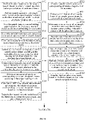
- a speech recognition method performed by a computer device, the method including: obtaining a first loss function of a speech separation and enhancement model and a second loss function of a speech recognition model; performing back propagation based on the second loss function to train an intermediate model bridging between the speech separation and enhancement model and the speech recognition model, to obtain a robust representation model; fusing the first loss function and the second loss function, to obtain a target loss function; jointly training the speech separation and enhancement model, the robust representation model, and the speech recognition model based on the target loss function, and ending the training in a case that a preset convergence condition is met.
- a speech recognition apparatus including: an intermediate representation learning module, configured to obtain a first loss function of a speech separation and enhancement model and a second loss function of a speech recognition model; and perform back propagation based on the second loss function to train an intermediate model bridging between the speech separation and enhancement model and the speech recognition model, to obtain a robust representation model; a loss fusion module, configured to fuse the first loss function and the second loss function, to obtain a target loss function; and a joint training module, configured to jointly train the speech separation and enhancement model, the robust representation model, and the speech recognition model based on the target loss function, and end the training in a case that a preset convergence condition is met.
- a speech recognition method performed by a computer device, the method including: obtaining a target speech stream; extracting an enhanced spectrum for audio frames of the target speech stream based on a speech separation and enhancement model; performing auditory matching on the enhanced spectrum based on a robust representation model to obtain a robust feature; and recognizing the robust feature model based on a speech recognition model, to obtain a phoneme corresponding to each of the audio frames.
- the speech separation and enhancement model, the robust representation model, and the speech recognition model are obtained by joint training.
- a speech recognition apparatus including: a speech separation and enhancement module, configured to obtain a target speech stream; and extract an enhanced spectrum for audio frames of the target speech stream based on a speech separation and enhancement model; an intermediate representation transition module, configured to perform auditory matching on the enhanced spectrum based on a robust representation model to obtain a robust feature; and a speech recognition module, configured to recognize the robust feature based on a speech recognition model, to obtain a phoneme corresponding to each of the audio frames, the speech separation and enhancement model, the robust representation model, and the speech recognition model being obtained by joint training.
- One or more non-volatile storage media storing computer-readable instructions are provided, the computer-readable instructions, when executed by one or more processors, causing the one or more processors to perform the operations of the foregoing speech recognition method.
- a computer device including a memory and a processor is provided, the memory storing computer-readable instructions, the computer-readable instructions, when executed by the processor, causing the processor to perform the operations of the foregoing speech recognition method.
- FIG. 1 is a diagram of an application environment of a method for training a speech recognition model according to an embodiment.
- the speech recognition method is applied to a model training system.
- the system for training the speech recognition model includes a terminal 110 and a server 120.
- the terminal 110 and the server 120 are connected by using a network.
- the terminal 110 may specifically be a desktop terminal or a mobile terminal.
- the mobile terminal may specifically implemented as at least one of a mobile phone, a tablet computer, a notebook computer, and the like.
- the server 120 may be implemented by using an independent server or a server cluster that includes multiple servers. Both the terminal 110 and the server 120 may be independently used to perform the speech recognition method provided in the embodiments of this disclosure. Both the terminal 110 and the server 120 may cooperate to perform the speech recognition method provided in the embodiments of this disclosure.
- the solutions provided in the embodiments of this disclosure relate to technologies such as speech recognition of artificial intelligence.
- Key technologies of the speech technology include a speech separation (SS) technology, a speech enhancement (SE) technology, and an automatic speech recognition (ASR) technology.
- SS speech separation
- SE speech enhancement
- ASR automatic speech recognition
- the embodiments of this disclosure relate to a joint model for speech processing.
- the joint model includes three models for speech processing in different links, and specifically includes a front-end speech separation and enhancement model, a back-end speech recognition model, and a robust representation model bridging between the speech separation and enhancement model and the speech recognition model.
- the three models may respectively be a machine learning model.
- the machine learning model refers to a model having a specific capability after sample learning, and specifically may be implemented as neural network models such as a convolutional neural network (CNN) model and a recurrent neural network (RNN) model.
- CNN convolutional neural network
- RNN recurrent neural network
- the machine learning model may alternatively be a model of another type.
- models used in each link may be flexibly selected before model training according to accuracy requirements and the like, so that an optimal configuration may be used in each link without compromising the performance of any link.
- the three models involved in this disclosure may freely select a dedicated model expert in the corresponding field.
- the speech separation and enhancement model and the speech recognition model may be respectively pre-trained. Therefore, in this disclosure, the joint model including the robust representation model may be trained based on the pre-trained speech separation and enhancement model and the speech recognition model, so that a converged joint model may be obtained by performing iterative training for a smaller quantity of times.
- a speech recognition method is provided. This embodiment is mainly described by using an example in which the method is applied to a computer device.
- the computer device may specifically be the terminal 110 or the server 120 shown in FIG. 1 .
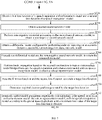
- the speech recognition method specifically includes the following steps S202 to S208.
- S202 Obtain a first loss function of a speech separation and enhancement model and a second loss function of a speech recognition model.
- the speech separation and enhancement model refers to a model configured to have a capability of speech separation and/or speech enhancement after training, and specifically is a model that is obtained by learning and training by using a sample speech stream as training data, and is configured to extract target speech from background interference of the sample speech stream. It is to be understood that the speech separation and enhancement model may alternatively have at least one of capabilities of performing preprocessing such as voice activity detection (VAD), echo cancellation, reverberation cancellation, or sound source positioning on a speech signal, which is not limited herein.
- VAD voice activity detection
- the speech separation and enhancement model may be divided into a mono sound (single microphone) separation and enhancement model and an array (multiple microphones) separation and enhancement model according to the quantity of sensors and microphones.
- Methods for mono sound separation include speech enhancement and computational auditory scene analysis (CASA).
- the speech enhancement may estimate clear speech by analyzing all data of a target speech signal and an interference signal in mono mixed signals and performing noise estimation on noisy speech.
- Current speech enhancement methods include a spectral subtraction method and the like.
- the speech enhancement and computational auditory scene analysis performs speech separation by using grouping cue based on a perception theory of auditory scene analysis.
- Main methods for array separation include beamforming, spatial filtering, or the like. The beamforming is to enhance a speech signal from a specific direction by using a proper array structure, thereby reducing the interference of speech signals from other directions, using for example, delay-and-sum beamforming.
- Speech separation and speech enhancement are human-oriented speech processing tasks.
- representation parameters are more effectively understood for human, such as a short time Fourier transform (STFT) spectrogram or modified discrete cosine transform (MDCT) that are generally used.
- Current performance measurement indicators of speech separation and speech enhancement include at least one of a perceptual evaluation of speech Quality (PESQ), a signal distortion rate (SDR), short time objective intelligibility (STOI), and the like.
- PESQ perceptual evaluation of speech Quality
- SDR signal distortion rate
- STOI short time objective intelligibility
- the STOI is highly related to subjective auditory intelligibility.
- the speech recognition model refers to an acoustic model having a capability of speech recognition after training, and specifically is a model that is obtained by learning and training by using the a sample speech stream as training data, and is configured to perform phoneme recognition on the sample speech stream.
- the speech separation and enhancement model and the speech recognition model may be separately pre-trained.
- the pre-trained speech separation and enhancement model and the speech recognition model each may include a fixed model structure and a model parameter.
- the speech recognition may be a machine-oriented speech processing task.
- representation parameters that can be more efficiently understood by the machine, such as mel fbanks and mel-frequency cepstral coefficients (MFCC), may be generally used.
- Current performance measurement indicators of the speech recognition model include a word error rate (WER), a character error rate (CER), or a sentence error rate (SER).
- the computer device may obtain the pre-trained speech separation and enhancement model and the speech recognition model, a first loss function used during pre-training the speech separation and enhancement model, and a second loss function used during pre-training the speech recognition model.
- the loss functions are generally related to an optimization problem as a learning criterion.
- the model is solved and evaluated by minimizing the loss function.
- the loss function may be applied to parametric estimation of the model in statistics and machine learning.
- the first loss function used in pre-training the speech separation and enhancement model and the second loss function used in pre-training the speech recognition model may specifically be a mean-square error, a mean absolute error, a Log-Cosh loss, a quantile loss, or an ideal quantile loss.
- the first loss function and the second loss function may respectively be a combination of multiple loss functions.
- S204 Perform back propagation based on the second loss function to train an intermediate model bridging between the speech separation and enhancement model and the speech recognition model, to obtain a robust representation model.
- the representation parameters and performance measurement indicators used in the front-end speech separation task are human-oriented, that is, taking human subjective auditory intelligibility as an objective
- the representation parameters and performance measurement indicators used in the back-end speech recognition task are machine-oriented, that is, taking recognition accuracy of machine as an objective. Therefore, a difference between two representation categories needs to be bridged when the front-end and back-end speech processing tasks are fused. Bridging means that an object is located between at least two objects and connects the at least two objects.
- the object bridging between an object A and an object C indicates that the object B is located between the object A and the object C, one end of the object B is connected to the object A, and the other end of the object B is connected to the object C.
- the intermediate model bridging between the speech separation and enhancement model and the speech recognition takes an output of the speech separation and enhancement model as an input data, processes the input data, and then pass its output to the speech recognition model as an input.
- FIG. 3 is a schematic diagram of a model architecture for bridging a speech separation and enhancement model and a speech recognition model based on a robust representation model according to an embodiment.
- a to-be-trained intermediate model is bridged between the speech separation and enhancement model and the speech recognition model.
- the trained intermediate model has robustness, and may be referred to as the robust representation model.
- the to-be-trained intermediate model, the pre-trained speech separation and enhancement model and speech recognition model may all be a model including artificial neural networks.
- the artificial neural networks may alternatively be referred to as neural networks (NNs) for short or referred to as a connection model.
- the artificial neural networks may abstract human-brain neuron network from the perspective of information processing, to construct a specific model and form different networks in different connection manners. In engineering and academic circles, the artificial neural networks may alternatively be directly referred to as neural networks or quasi-neural networks for short.
- the neural network model may be implemented as, for example, a convolutional neural network (CNN) model, a deep neural network (DNN) model, and a recurrent neural network (RNN) model.
- CNN convolutional neural network
- DNN deep neural network
- RNN recurrent neural network
- the speech separation and enhancement model may alternatively be implemented as a combination of multiple neural network models.
- the convolutional neural network may include a convolutional layer and a pooling layer.
- the deep neural network may include an input layer, a hidden layer, and an output layer. Some of the layers may be fully-connected to each other.
- the recurrent neural network is a neural network for modeling sequence data, that is, a current output of a sequence is also related to a previous output. A specific representation form is that the network may memorize previous information and apply the information to the calculation of the current output. In other words, nodes between the hidden layers are no longer unconnected, but are connected.
- an input of the hidden layer not only includes an output of the input layer, but also includes an output of the hidden layer at a previous moment.
- the recurrent neural network may be, for example, a long short-term memory (LSTM) neural network model, a bi-directional long short-term memory (BiLSTM) neural network model, or the like.
- the speech separation and enhancement model for speech separation and speech enhancement may be alternatively referred to as an extractor
- the robust representation model for intermediate transitional representation learning may be alternatively referred to as an adapter
- the speech recognition model for phoneme recognition may be alternatively referred to as a recognizer.
- a speech processing system formed by the extractor, the adapter, and the recognizer may be referred to as an EAR system.
- the computer device determines a local descent gradient generated by the second loss function during each iteration according to a preset deep learning optimization algorithm.
- the deep learning optimization algorithm may include one or more of a batch gradient descent (BGD) algorithm, a stochastic gradient descent (SGD) algorithm, a mini-batch gradient descent (MBGD) algorithm, an adaptive algorithm (AdaGrad) algorithm, a root mean square prop (RMSProp) algorithm, an adaptive moment estimation (Adam) algorithm, or the like.
- BGD batch gradient descent
- SGD stochastic gradient descent
- MBGD mini-batch gradient descent
- AdaGrad adaptive algorithm
- RMSProp root mean square prop
- Adam adaptive moment estimation
- ⁇ ( x, ⁇ adapt ) represents an intermediate model with an input x and a model parameter ⁇ adapt
- y is an output target value corresponding to the speech recognition model when x is inputted to the intermediate model
- a sample speech stream includes n audio frames ⁇ x (1) ,..., x ( n ) ⁇ , a target corresponding to x ( i ) ) being y ( i )
- the model parameter may be changed into ⁇ adapt - ⁇ g , and the changed model parameter is used as a current model parameter of the intermediate model to continuously perform iteration until the preset training stop condition is met.
- the training stop condition may be that a loss value of the second loss function reaches a preset minimum value, model performance of the intermediate model is not obviously improved after iteration is successively performed for a preset quantity of times, or the like.
- the speech recognition model during performing back propagation based on the second loss function to train an intermediate model, although training data is processed by the speech recognition model, there is no need to adjust and update the model parameter of the pre-trained speech recognition model.
- a user may freely and independently select the intermediate model, the speech separation and enhancement model, and the speech recognition model that are specifically used according to model preference, accuracy requirements, or the like. That is, the user is allowed to introduce new and advanced speech separation/enhancement and speech recognition technologies according to user implementation and capabilities. In other words, the three models involved in this disclosure may freely select a dedicated model expert in the corresponding field.
- a model expert in speech separation may include Ai
- a model expert in robust representation learning may include Bj
- a model expert in speech recognition may include Ck, where i, j, and k are all positive integers
- a to-be-trained joint model may be any one of Ai+Bj+Ck.
- the local descent gradient herein is relative to a global descent gradient involved in the joint training below, and may not be considered as some values of descent gradients determined according to the second loss function.
- S206 Fuse the first loss function and the second loss function, to obtain a target loss function.
- the target loss function is a comprehensive loss function obtained by combining the first loss function and the second loss function.
- Function fusion is a process of converting multiple functions into one function by performing one or more preset logical operations.
- the preset logical operation may include, but is not limited to, four mixed operations, weighted summation, or a machine learning algorithm.
- the computer device may obtain the target loss function by performing the preset logical operation on the first loss function and the second loss function.
- a weighting factor is ⁇ SS
- the weighting factor may be a value set according to experience or experiments, for example, may be set to 0.1. It may be easily found that importance of the speech separation and enhancement model in the joint training of multiple models may be adjusted by adjusting the weighting factor.
- one or more fusion calculation formulas are preset, and an input format for each parameter factor in the fusion calculation formula is set.
- the first loss function and the second loss function are inputted into different fusion calculation formulas as a parameter factor, so that different target loss functions may be obtained.
- S208 Jointly train the speech separation and enhancement model, the robust representation model, and the speech recognition model based on the target loss function, and end the training in a case that a preset convergence condition is met.
- the speech separation and enhancement model, the robust representation model, and the speech recognition model are all models constructed by the artificial neural networks.
- the model architecture for speech processing provided in this disclosure is completely based on neural networks, so that end-to-end joint training may be realized.
- tasks will not be artificially divided, and an entire speech processing task is distributed to the neural network model to directly learn mapping from an original speech signal to an expected output.
- the computer device determines the global descent gradient generated by the target loss function according to the preset deep learning optimization algorithm. For example, a loss value may be calculated based on the target loss function, and the global descent gradient may be determined based on the loss value.
- the deep learning optimization algorithm for determining the local descent gradient and the deep learning optimization algorithm for determining the global descent gradient may be the same or different.
- the global descent gradient generated by the target loss function may be sequentially backpropagated from the speech recognition model to each layer of the network of the robust representation model and the speech separation and enhancement model.
- model parameters corresponding to the speech separation and enhancement model, the robust representation model, and the speech recognition model are respectively iteratively updated, and the training is ended until the preset training stop condition is met.
- the jointly training the speech separation and enhancement model, the robust representation model, and the speech recognition model based on the target loss function includes: determining the global descent gradient generated by the target loss function; and iteratively updating model parameters respectively corresponding to the speech separation and enhancement model, the robust representation model, and the speech recognition model according to the global descent gradient, until a minimum loss value of the target loss function is obtained.
- a batch size of the sample speech stream may be 24, an initial learning rate ⁇ may be 10 -4 , a decay coefficient of the learning rate may be 0.8.
- the joint model may be considered to be converged when a loss value of the target loss function is not improved after successive iteration for three times, and the joint training is ended.
- the foregoing speech recognition method provides a new end-to-end network architecture used for introducing the robust representation model for intermediate transition between the front-end speech separation and enhancement model and the back-end speech recognition model.
- Such architecture greatly bridges the difference between a human-oriented speech separation task and a machine-oriented speech recognition task by introducing appropriate intermediate transitional representation.
- the intermediate model completes training by backpropagating based on the second loss function of the back-end speech recognition model, and the speech separation and enhancement model and the speech recognition model may be pre-trained, so that the model may be converged after iterative training is performed for a relatively small quantity of times.
- the end-to-end network model is jointly trained based on a combination of the loss functions corresponding to the front-end and back-end models, so that each single model in the network architecture may comprehensively learn interference features of speech signals from the complex acoustic environment, thereby ensuring performance of a global speech processing task and improving accuracy of speech recognition.
- each single model in the network architecture since each model in the network architecture is allowed to be freely and independently selected, each single model may achieve an optimal configuration without compromising any single model, so that the performance of each local speech processing task may be considered at the same time, and objective intelligibility of speech may be improved.
- the foregoing speech recognition method further may include a step of pre-training the speech separation and enhancement model, which includes S402 to S410.
- S402 Extract an estimated spectrum and an embedding feature matrix of a sample speech stream based on a first neural network model.
- the first neural network model, and a second neural network model and a third neural network model mentioned below may be any one of the foregoing artificial neural network models.
- the first neural network model may be a model obtained by simplifying a deep attractor net (DANet) and a deep extractor net (DENet) based on an ideal ratio mask (IRM).
- the DENet includes one or more convolutional neural networks.
- the convolutional neural network may adopt a BiLSTM network.
- the BiLSTM network is used for mapping the speech signal from a low-dimensional space to a high-dimensional space.
- the DANet is used for embedding an attractor into the high-dimensional space, to combine time-frequency information in the speech signal to participate in training together.
- the sample speech stream may be an audio data stream acquired in different complex acoustic environments based on a speech application in a device such as a vehicle-mounted system, a telephone conference device, a speaker device, or an online broadcasting device.
- the speech application may be a systematic phone application, an instant messaging application, a virtual speech assistant, a machine translation application, or the like.
- Each sample audio stream may include multiple audio frames.
- a sampling frequency of acquiring the audio frames in the sample audio stream, and a frame length and a frame shift of each audio frame may be freely set according to requirements.
- audio frame acquisition may be performed with a sampling frequency of 16 kHZ, a frame length of 25 ms, and a frame shift of 10 ms.
- the computer device may perform the short time Fourier transform on multiple sample speech streams in batches, to obtain a speech feature and a speech spectrum of each sample speech stream.
- a batch size of the sample audio stream may be freely set according to requirements. For example, the batch size may be set to 24 or the like.
- the first neural network model for speech separation and speech enhancement can perform speech separation and speech enhancement well in a high-dimensional embedding space. Therefore, the computer device maps the speech feature of a batch of sample speech streams to a higher-dimensional embedding space, to obtain an embedding feature matrix through conversion.
- the computer device performs speech separation and speech enhancement on the speech spectrum in the embedding space based on the first neural network model, to obtain the estimated spectrum.
- the estimated spectrum is a spectrum of the sample speech stream outputted by the first neural network model.
- S404 Determine an attractor corresponding to the sample speech stream according to the embedding feature matrix and a preset ideal masking matrix.
- the ideal masking matrix refers to an adaptive perceptual masking matrix formed for constraining noise energy and speech distortion energy in the speech signal, in which masking thresholds corresponding to different speech frequencies are recorded.
- the ideal masking matrix may be obtained by prediction based on a low-dimensional speech feature and a high-dimensional embedding feature matrix of the speech signal.
- the attractor includes a feature vector capable of representing a common feature of each sample speech stream in the embedding space.
- the speech separation and enhancement model based on the DANet is to calculate a weighted average value of the vector of a target speech training sample in the embedding space and store the value as an "attractor" of the target speech. Therefore, only one attractor may need to be calculated in the embedding space.
- the computer device predicts the ideal masking matrix corresponding to the batch of sample speech streams according to the speech signal and the speech spectrum extracted from the speech signal by the short time Fourier transform.
- the ideal masking matrix and the embedding feature matrix are in the embedding space in the same dimension.
- the computer device calculates a product of the embedding feature matrix and the ideal masking matrix, and determines the attractor of the embedding space based on the product.
- S406 Obtain a target masking matrix of the sample speech stream by calculating a similarity between each matrix element in the embedding feature matrix and the attractor.
- the computer device rectifies the masking threshold with reference to the similarity between the speech feature and the attractor, to reconstruct the ideal masking matrix and obtain the target masking matrix.
- the method for measuring the similarity between each matrix element in the embedding feature matrix and the attractor may be performed by using a Euclidean distance, a Manhattan distance, a Chebyshev distance, a Mahalanobis distance, a cosine distance, a Hamming distance, or the like.
- S408 Determine an enhanced spectrum corresponding to the sample speech stream according to the target masking matrix.
- a speech signal acquired in a real acoustic scenario is usually a mixed signal having noise mixed in the target speech.
- the enhanced spectrum corresponding to the sample speech stream may be an enhanced spectrum of the target speech in the speech signal.
- the high-dimensional embedding feature matrix may be subjected to dimensionality reduction processing, and may be converted back to a low-dimensional enhanced spectrum.
- the computer device calculates a mean-square error (MSE) loss between the enhanced spectrum of the batch of the sample speech stream and the enhanced spectrum of the target speech, and pre-trains the first neural network model by using the mean-square error (MSE) loss:
- M represents a batch size of a sample speech stream of a mixed signal used for training
- i represents an index of training a sample speech stream
- 2 represents 2-a norm of a vector
- S s represents an estimated spectrum of a sample speech stream directly outputted by a first neural network model
- ⁇ s represents an enhanced spectrum of a sample speech stream.
- the ideal ratio mask is an effective method for speech separation and speech enhancement.
- the ideal masking matrix based on the IRM may constrain the noise energy and the speech distortion energy in the speech signal.
- the ideal masking matrix is reconstructed with reference to the high-dimensional embedding feature matrix corresponding to the speech signal and the attractor representing a common feature of the speech signal, and spectrum extraction is performed based on the reconstructed target masking matrix, so that the extracted estimated spectrum can be closer to the enhanced spectrum of the sample speech stream, and the effectiveness of spectrum extraction can be improved.
- the extracting an estimated spectrum and an embedding feature matrix of a sample speech stream based on a first neural network model includes: performing Fourier transform on the sample speech stream, to obtain a speech spectrum and a speech feature of each of audio frames of the sample speech stream; performing speech separation and speech enhancement on the speech spectrums based on the first neural network model, to obtain the estimated spectrum; and mapping the speech features to an embedding space based on the first neural network model, to obtain the embedding feature matrix.
- the short time Fourier transform (STFT) is performed on the mixed signal and a reference target speech signal to obtain the speech spectrum and the speech feature corresponding to the mixed signal.
- the speech feature may be a feature matrix in a low-dimensional mixed signal space R TF .
- a feature dimension of the speech feature extracted by using the Fourier transform is TxF dimensions. T is the quantity of frames, and F is the quantity of mel filter bands in the mel fbanks.
- a dimension K of an embedding vector for high-dimensional mapping may be freely set, for example, may be set to 40 or the like.
- the first neural network model may be obtained by cascading a preset quantity of BiLSTM models in a peephole connection and a fully-connected layer.
- the peephole connection is a model connection manner different from common cascading, which may be used to obtain more context information.
- the control of gates in a forward LSTM and a backward LSTM has only a current input x(t) and a short-term state h(t-1) at a previous moment. Different BiLSTMs are connected through peepholes.
- a long-term state c(t-1) at a previous moment may be added to an input controlled by a forget gate and an input gate, and a current long-term state may be added to an input controlled by an output gate, so that the long-term state may be peeked by each control gate, and more context information can be obtained.
- a four-layer BiLSTM in a peephole connection may be used in the first neural network model.
- Each layer may include 600 hidden nodes, and a fully-connected layer may be connected to a last BiLSTM layer.
- the fully-connected layer may be configured to map a 600-dimensional speech feature vector to the high-dimensional embedding feature matrix.
- the 600-dimensional speech feature vector may be mapped to a 24000-dimensional embedding feature vector.
- the low-dimensional speech feature of the speech signal is mapped to the high-dimensional embedding feature matrix, and thereby the effect of the speech separation and speech enhancement of the first neural network model may be ensured.
- the determining an attractor corresponding to the sample speech stream according to the embedding feature matrix and a preset ideal masking matrix includes: determining the ideal masking matrix according to the speech spectrums and the speech features; filtering out noise elements in the ideal masking matrix based on a preset binary threshold matrix; and determining the attractor corresponding to the sample speech stream according to the embedding feature matrix and the ideal masking matrix from which the noise elements have been filtered out.
- a s ⁇ R K , ⁇ represents a matrix element multiplication
- M s
- w ⁇ R TF is a binary threshold matrix
- Attractors calculated in a training stage of the first neural network model is stored, an average value of the attractors is calculated, and the average value is used as a global attractor in a test and production stage to extract the enhanced spectrum of the tested target speech stream.
- attractor calculation is performed after noise elements in the ideal masking matrix are filtered out, so that accuracy of the attractor calculation may be improved, and the calculated attractor may better reflect the speech feature of speech data.
- the foregoing speech recognition method may further include a step of constructing the intermediate model, which specifically includes S502 to S506.
- the second neural network model is a model bridging between the front-end speech separation and enhancement model and the back-end speech recognition model.
- the acoustic environment in this disclosure is very complex, and the impact of errors in front-end speech recognition needs to be minimized when an inputted spectrogram is a defective spectrum including spectrum estimation errors and temporal distortions.
- temporal dynamic complexity of fusing front-end and back-end processing tasks is increased due to the context difference between frame-level spectrogram extraction and the phoneme-level speech recognition task.
- a joint model obtained by training is bridged based on the second neural network model, to adapt to more complex acoustic environments.
- a more complex recurrent model architecture is used in the second neural network model.
- a typical recurrent model architecture includes a model structure capable of predicting points in a space of the outputted acoustic feature by using the content of the inputted spectrogram, e.g., the convolutional neural network (CNN) or the BiLSTM.
- the BiLSTM model is generally referred to as a general program approximator, which may learn intermediate representations by effectively estimating a conditional posterior probability of an entire sequence without making any explicit assumptions about the distribution. The description is provided below by using an example in which a BiLSTM model structure ⁇ BiLSTM (•) is used in the second neural network model.
- the second neural network model may be obtained by connecting a preset quantity of BiLSTM models through peepholes.
- a two-layer BiLSTM in a peephole connection may be used in the second neural network model, and each layer has 600 hidden nodes.
- S504 Perform non-negative constraint processing on the second neural network model, to obtain a non-negative neural network model.
- the non-negative constraint processing is a processing step that may ensure that the second neural network model is non-negative.
- fbanks outputted by the mel filter are non-negative.
- the non-negative constraint processing is performed on the second neural network model.
- the performing non-negative constraint processing on the second neural network model includes: performing a squaring operation on the second neural network model.
- the second neural network model includes a bi-directional long short-term memory network model.
- the computer device adds a squaring processing to the output of the second neural network model, to match non-negativity of the fbanks. It is found through evaluation that, the squaring processing has a simple calculation logic, and has a better effect of performing nonlinear transformation on the second neural network model compared with an activation function such as a rectified linear unit (ReLU) function.
- ReLU rectified linear unit
- S506 Obtain a differential model configured for performing auditory matching on an acoustic feature outputted by the non-negative neural network model; and cascade the differential model and the non-negative neural network model, to obtain the intermediate model.
- the auditory matching refers to simulating an operation of human ears to enable the acoustic feature to be fit for human hearing habits.
- the differential model is an operation formula for simulating the operation of human ears. It is found through research that, for high-amplitude speech signals and low-amplitude speech signals with a very large spectral amplitude difference, the difference that the human ears can perceive may not be as obvious as the amplitude difference. For example, for two speech signals with amplitudes of 1000 and 10, the difference that the human ears can perceive may only be the difference between 3 and 1. In addition, the human ears are more sensitive to changes of the speech signal.
- the computer device obtains a pre-constructed differential model, and cascades the differential model after a non-negative neural network model as a step of performing auditory matching optimization processing on the acoustic feature outputted by the non-negative neural network model, to obtain the intermediate model.
- the intermediate model includes the non-negative neural network model and the differential model.
- a logic of simulating the operation of human ears is embodied in a form of the differential model.
- the second neural network model there is no need for the second neural network model to learn the logic of simulating the operation of human ears, so that learning complexity of the second neural network model is reduced, and training efficiency of the intermediate model is improved.
- the second neural network model may be directly used as the intermediate model without performing non-negative constraint processing on the second neural network model and splicing the differential model.
- the second neural network model needs to learn the logic of simulating the operation of human ears by itself. It is found through tests that, compared with the non-negative constraint processing logic and the differential model determined according to expert experience, self-learning based on the second neural network model may instead learn more comprehensively the logic of simulating the operation of human ears, achieving a better effect of auditory matching.
- the second neural network model i.e., the robust representation model that has been trained in the test and production stage may adapt to a larger quantity of more complex acoustic environments.
- non-negative constraint processing is performed on the second neural network model, and the differential model for simulating the operation of human ears is spliced, so that the acoustic feature outputted by the model may be fitter for actual hearing habits of human ears, thereby improving the performance of speech recognition of an entire EAR system.
- obtaining a differential model configured for performing auditory matching on an acoustic feature outputted by the non-negative neural network model includes: obtaining a logarithmic model configured for performing a logarithmic operation on a feature vector corresponding to the acoustic feature; obtaining a difference model configured for performing a difference operation on the feature vector corresponding to the acoustic feature; and constructing the differential model according to the logarithmic model and the difference model.
- the logarithmic model is configured to perform a logarithmic operation on a feature vector element of the acoustic feature outputted by the non-negative neural network model.
- the logarithmic model may be any model capable of implementing the element logarithmic operation, such as lg x and ln x, where x is a vector element of an acoustic feature.
- x is a vector element of an acoustic feature.
- Performing the logarithmic operation on the feature vector element of the acoustic feature based on the logarithmic model may reduce a difference between amplitudes, so that the difference between different vector elements of the acoustic feature may better reflect a signal difference that can be practically perceived by the human ears.
- the vector element 1000 is converted to 3, and the vector element 10 is converted to 1 after the logarithmic operation lg x is performed, which well reflects the signal difference that can be practically perceived by the human eras.
- the difference model is configured to perform a difference operation on the feature vector element of the acoustic feature outputted by the non-negative neural network model.
- the difference model may be any model capable of implementing the element difference operation, such as a first-order difference operation model and a second-order difference operation model.
- the human ears are more sensitive to changes of the speech signal.
- the difference operation is performed on the feature vector element of the acoustic feature based on the difference model, and a difference result reflects changes between different vector elements of the acoustic feature.
- the computer device may use the logarithmic model and the difference model as two coordinate models to construct the differential model, or may cascade the logarithmic model and the difference model to construct the differential model.
- a cascading sequence of the logarithmic model and the difference model may be that the logarithmic model is cascaded after the difference model, or may be that the difference model is cascaded after the logarithmic model.
- the differential model may include other models for auditory matching, which is not limited thereto.
- the computer device fixes the model parameter of the speech recognition model after the speech recognition model has been pre-trained, continues to use spectrum with clean speech as training data, and trains the intermediate model by performing direct backpropagation on the second loss function L 2 .
- ⁇ L 2 ⁇ ⁇ adapt ⁇ L 2 ⁇ F ⁇ adapt ⁇ F ⁇ adapt ⁇ F ⁇ ⁇ F ⁇ ⁇ adapt
- ⁇ adapt is a model parameter of an intermediate model
- F ⁇ adapt is an intermediate model obtained by performing the non-negative constraint processing on the second neural network model and splicing the differential model
- F ⁇ is a second neural network model.
- the computer device may perform global mean variance normalization processing on the vector element of the acoustic feature.
- the method used for normalization processing may specifically be 01 standardization, Z-score standardization, sigmoid function standardization, or the like.
- the computer device may further splice acoustic features, centered on a current audio frame of the sample audio stream, of all audio frames in a context window of 2W+1 frames.
- W represents a size of one side of the context window, and a specific size of W may be freely set according to requirements, for example, W may be set to 5.
- the logarithmic operation is performed on the non-negative neural network model, so that the difference between different vector elements of the acoustic feature of the speech signal may better reflect a signal difference that can be practically perceived by the human ears.
- Performing the difference operation on the non-negative neural network model may reflect changes between different vector elements of the acoustic feature, to further adapt to an auditory feature in which human ears are more sensitive to changes of the speech signal.
- the foregoing speech recognition method further includes a step of pre-training the speech recognition model, which specifically includes S602 to S610.
- S602 Obtain a sample speech stream and annotated phoneme categories corresponding to the sample speech stream.
- Each audio frame in the sample speech stream has corresponding annotation data.
- the annotation data includes a phoneme category corresponding to the audio frame determined according to an output user or speech content of the target speech in the audio frame.
- S604 Extract a depth feature of each of audio frames of the sample speech stream by using the third neural network model.
- the third neural network model in this embodiment may be an acoustic model implemented based on CLDNN (CONVOLUTIONAL, LONG SHORT-TERM MEMORY, FULLY CONNECTED DEEP NEURAL NETWORKS, a network obtained by fusing the CNN, the LSTM, and the DNN). Batch normalization may be performed on the output of a CNN layer and a LSTM layer, to achieve faster convergence and better generalization.
- CLDNN CONVOLUTIONAL, LONG SHORT-TERM MEMORY, FULLY CONNECTED DEEP NEURAL NETWORKS
- Batch normalization may be performed on the output of a CNN layer and a LSTM layer, to achieve faster convergence and better generalization.
- the computer device extracts the depth feature of each audio frame of the sample speech stream by using the third neural network model.
- the third neural network model includes a softmax layer.
- the computer device may determine a probability that a robust feature vector element belongs to each phoneme category based on the softmax layer.
- depth features centered on a current audio frame of the sample audio stream, of all audio frames in a context window of 2W+1 frames may be spliced, and a splicing result is used as a depth feature of the current audio frame.
- the depth feature capable of reflecting the context information may be obtained, and accuracy of the third neural network model is improved.
- S606 Determine a center vector of the sample speech stream according to depth features corresponding to the audio frames of all the phoneme categories.
- S608 Determine a fusion loss between an inter-class confusion measurement index and an intra-class distance penalty index of each of the audio frames based on the depth features and the center vector.
- the center vector is used for describing centers of all depth features in a target category.
- the inter-class confusion measurement index of the audio frame refers to a parameter used for representing a possibility that the sample speech stream belongs to the target category, and may reflect the discrimination between different target categories. A smaller inter-class confusion measurement index indicates stronger inter-class discrimination.
- the inter-class confusion measurement index may be obtained by calculating the Euclidean distance, or obtained by calculation based on other distance type algorithms, such as an angular distance.
- the intra-class distance penalty index refers to a parameter used for representing compactness of intra-class distribution of the sample speech stream.
- the classification performance of the third neural network model may be improved by a penalty of intra-class distance, that is, intra-class discrimination performance is met by compacting the intra-class distribution.
- intra-class distance penalty index indicates stronger compactness, and the intra-class discrimination performance may be improved.
- the intra-class distance penalty index may be implemented by using a center loss function, but is not limited thereto.
- the intra-class distance penalty index may alternatively be calculated by using Contrastive loss function, Triplet loss function, Sphere face loss function, and CosFace loss function in which the angular distance is used.
- the computer device fuses the inter-class confusion measurement index and the intra-class distance penalty index in a manner of performing weighted calculation on the inter-class confusion measurement index and the intra-class distance penalty index according to the preset weight factor:
- L CL L ce + ⁇ CL L ct
- L CL is a fusion loss
- L ce is an inter-class confusion measurement index
- L ct is an intra-class distance penalty index
- ⁇ CL is a weight factor.
- the computer device determines the global descent gradient generated by the target loss function according to the preset deep learning optimization algorithm.
- a high-dimensional embedding feature matrix V may be generated by the extractor based on the DENet through the BiLSTM network to predict a target floating value masking M ⁇ s suitable for the target speech, M ⁇ s may be used for calculating a mean-square error (MSE) between the estimated spectrum outputted by the extractor and the enhanced spectrum of the target speech, a robust feature for the target speech is generated, and the robust feature predicts a speech unit continuously by using the adapter and the recognizer.
- MSE mean-square error
- parameters of the DENet are updated in a manner of multitasking joint training.
- a multitasking joint loss function (that is, the target loss function) is a weighted combination of the first loss function in the speech separation task and the second loss function of the speech recognition task.
- the weight of the cross entropy and a center loss and a mean-square error of the spectrum may be simultaneously calculated in a forward process of the DENet, so that a gradient of the model parameter of each loss function may be obtained by performing back propagation.
- "Importance" of the speech separation task during multitasking training may be adjusted after the weighting factor is added.
- a center point of each category in a space of the depth feature may be learned and updated based on the center loss, an intra-class distance between the depth feature and the center point of the depth feature of the corresponding target category is penalized, so that an error rate of speech recognition in an unseen acoustic environment may be greatly reduced, and a generalization capability of the speech recognition to noise variability may be effectively improved, and a lower error rate may be obtained in a clean speech condition, a seen acoustic environment and an unseen acoustic environment during training; and the standard of the sample speech stream may have better robustness in a new acoustic environment, and speech recognition may be stably and reliably completed even encountering different users with a new accent and background noise in the new acoustic environment.
- the determining a fusion loss between an inter-class confusion measurement index and an intra-class distance penalty index of each of the audio frames based on the depth features and the center vector includes: inputting the depth features into a cross entropy function and calculating the inter-class confusion measurement index of each of the audio frames; inputting the depth features and the center vector into a center loss function and calculating the intra-class distance penalty index of each of the audio frames; and performing a fusion operation on the inter-class confusion measurement index and the intra-class distance penalty index, to obtain the fusion loss.
- the cross entropy function is used for ensuring the inter-class discrimination of the depth feature.
- Y t ( K i ) represents an output of the output layer of third neural network model on the i th node after performing a softmax operation. There are K output nodes in the third neural network model, indicating that there are K output categories.
- a t Wu t + B
- a t represents an output of a previous layer of the softmax layer of the third neural network model at the t th audio frame
- a t j represents an output of a j th node at a previous layer of the softmax layer at the t th audio frame
- W represents a weight matrix of the softmax layer
- B represents a bias vector of the softmax layer.
- the calculation of the center loss is intended to reduce a distance between the depth feature of the audio frame and the center vector of the audio frame as much as possible, that is, a smaller intra-class distance u t - c Kt is better.
- the computer device fuses the cross entropy loss function and the center loss function, to obtain the second loss function corresponding to the speech recognition model.
- the computer device fuses the inter-class confusion measurement index and the intra-class distance penalty index in a manner of performing weighted calculation on the inter-class confusion measurement index and the intra-class distance penalty index according to the preset weight factor ⁇ CL .
- the center point of each category in the space of the depth feature may be learned and updated by using the center loss function, and the distance between the depth feature and the center point of the depth feature of the corresponding category is penalized, so that a distinguishing capability of the depth feature is improved.
- the speech recognition method specifically includes the following S702 to S752.
- S702 Perform Fourier transform on the sample speech stream, to obtain a speech spectrum and a speech feature of each audio frame.
- S704 Perform speech separation and speech enhancement on the speech spectrum based on the first neural network model, to obtain the estimated spectrum.
- S706 Map the speech feature to an embedding space based on the first neural network model, to obtain the embedding feature matrix.
- S708 Determine an ideal masking matrix according to the speech spectrum and the speech feature.
- S710 Filter out noise elements in the ideal masking matrix based on a preset binary threshold matrix.
- S712 Determine the attractor corresponding to the sample speech stream according to the embedding feature matrix and the ideal masking matrix from which the noise elements have been filtered out.
- S714 Obtain a target masking matrix of the sample speech stream by calculating a similarity between each matrix element in the embedding feature matrix and the attractor.
- S716 Determine an enhanced spectrum corresponding to the sample speech stream according to the target masking matrix.
- S718 Calculate a mean-square error loss between the estimated spectrum and the enhanced spectrum corresponding to the sample speech stream based on the first loss function.
- S722 Obtain a sample speech stream and annotated phoneme categories corresponding to sample speech stream.
- S724 Extract a depth feature of each audio frame of the sample speech stream by using the third neural network model.
- S726 Determine a center vector of the sample speech stream according to depth features corresponding to audio frames of all the phoneme categories.
- S728 Input the depth features into a cross entropy function and calculate the inter-class confusion measurement index of each audio frame.
- S730 Input the depth features and the center vector into a center loss function and calculate the intra-class distance penalty index of each audio frame.
- S732 Perform a fusion operation on the inter-class confusion measurement index and the intra-class distance penalty index, to obtain a fusion loss based on the second loss function.
- S736 Obtain a first loss function of a speech separation and enhancement model and a second loss function of a speech recognition model.
- S740 Perform non-negative constraint processing on the second neural network model, to obtain a non-negative neural network model.
- S742 Obtain a differential model configured for performing auditory matching on an acoustic feature outputted by the non-negative neural network model.
- S744 Cascade the differential model and the non-negative neural network model, to obtain the intermediate model.
- S746 Perform back propagation based on the second loss function to train an intermediate model bridging between the speech separation and enhancement model and the speech recognition model, to obtain a robust representation model.
- S748 Fuse the first loss function and the second loss function, to obtain a target loss function.
- S750 Determine a global descent gradient generated by the target loss function.
- S752 Iteratively update model parameters respectively corresponding to the speech separation and enhancement model, the robust representation model, and the speech recognition model according to the global descent gradient, until a minimum loss value of the target loss function is obtained.
- the front-end speech separation and enhancement model and the back-end speech recognition model are connected by using the robust representation module ⁇ BiLSTM (•), so that the entire EAR system becomes a network capable of implementing end-to-end back propagation, and a "curriculum learning" training method may be used for the network of the entire EAR system due to a modular architecture.
- the back propagation is performed based on the loss function of the back-end speech recognition model, to train the robust representation model separately, and then end-to-end joint training is performed on the network of the entire EAR system. Since the training may be performed based on the pre-train speech separation and enhancement model and the speech recognition model, the convergence may be quickly achieved by using the "curriculum learning" training method.
- the joint model obtained by training based on the speech recognition method provided in this disclosure has a strong learning capability due to a strong network structure and the "curriculum learning" training method, effective robust representations of speech enhancement and speech separation are extracted to improve performance of the automatic speech recognition, to adapt to any challenging and complex interference acoustic environment.
- a speech recognition method is provided.
- the computer device may specifically be the terminal 110 or the server 120 shown in FIG. 1 .
- Both the terminal 110 and the server 120 may be used independently to perform the speech recognition method provided in the embodiments of this disclosure.
- Both the terminal 110 and the server 120 may be used in cooperation to perform the speech recognition method provided in the embodiments of this disclosure.
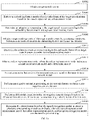
- the speech recognition method specifically includes the following steps S802 to S808.
- the target speech stream may be an audio data stream acquired in any actual acoustic environment.
- the target speech stream may be pre-acquired and stored in the computer device, or may be dynamically acquired by the computer device.
- the target speech stream may be an audio data stream generated by the user based on a game application during a game voice call.
- the target speech stream may be echo interference including game background music and human voices from a remote end.
- the computer device obtains a target speech stream and acquires audio frames from the target speech stream according to a preset sampling frequency. A frame length of each audio frame and frame shifts of adjacent audio frames may be freely set according to requirements.
- the computer device acquires the audio frames with a sampling frequency of 16 kHZ, a frame length of 25 ms, and a frame shift of 10 ms.
- S804 Extract an enhanced spectrum for audio frames of the target speech stream based on a speech separation and enhancement model.
- the speech separation and enhancement model may include a neural network model, and may specifically be a model obtained by simplifying a deep attractor net (DANet) and a deep extractor net (DENet) based on an ideal ratio mask (IRM).
- DANet deep attractor net
- DET deep extractor net
- IRM ideal ratio mask
- a four-layer BiLSTM in a peephole connection may be used in the speech separation and enhancement model. Each layer has 600 hidden nodes, and the fully-connected layer is connected to a last BiLSTM layer.
- the computer device may perform the short time Fourier transform on multiple target speech streams in batches, to obtain a speech feature and a speech spectrum of each target speech stream.
- the computer device maps the speech feature of a batch of target speech streams to a higher-dimensional embedding space based on the speech separation and enhancement model, performs speech separation and speech enhancement on the speech spectrum in the embedding space, to obtain an embedding feature matrix.
- the computer device obtains pre-stored global attractors.
- the computer device stores the attractors calculated according to the batch of sample speech streams, calculates an average value of the attractors, and uses the average value as a global attractor in the test and production stage.
- the computer device calculates the similarity between the global attractor and each matrix element in the embedding feature matrix corresponding to the target speech stream, to obtain a target masking matrix of the target speech stream.
- the enhanced spectrum of the target speech stream may be extracted based on the target masking matrix and the embedding feature matrix.
- S806 Perform auditory matching on the enhanced spectrum based on a robust representation model to obtain a robust feature.
- the robust representation model is a neural network model bridging between the front-end speech separation and enhancement model and the back-end speech recognition model, and may specifically be a CNN or a BiLSTM based on the recurrent model architecture which is capable of adapting to bottom-up and top-down temporal dynamic impacts.
- the robust representation model may be a two-layer BiLSTM in a peephole connection, and each layer has 600 hidden nodes.
- the robust feature is an intermediate transition feature obtained by converting the enhanced spectrum outputted by the front-end speech separation and enhancement model. The intermediate transition feature is used as an input of the back-end speech recognition model.
- the computer device obtains an acoustic feature of the enhanced spectrum based on the robust representation model.
- the robust representation model performs auditory matching on the acoustic feature of the enhanced spectrum.
- the computer device performs non-negative constraint processing on the acoustic feature based on the robust representation model, and performs differential operations such as a logarithmic operation and a difference operation on the acoustic feature after the non-negative constraint processing, to obtain the robust feature. For example, for high-amplitude speech signals and low-amplitude speech signals with a very large spectral amplitude difference, the difference that the human ears can perceive may not be as obvious as the amplitude difference.
- Performing the logarithmic operation on the feature vector element of the acoustic feature based on the logarithmic model may reduce a difference between amplitudes, so that the difference between different vector elements of the acoustic feature may better reflect a signal difference that can be practically perceived by the human ears.
- the human ears are more sensitive to changes of the speech signal.
- the difference operation is performed on the feature vector element of the acoustic feature based on the difference model, and a difference result reflects changes between different vector elements of the acoustic feature.
- S808 Recognize the robust feature based on a speech recognition model, to obtain a phoneme corresponding to each of the audio frames.
- the speech separation and enhancement model, the robust representation model, and the speech recognition model are obtained by joint training.
- the speech recognition model, and the speech separation and enhancement model and the robust representation model mentioned above may be obtained by joint pre-training.
- the front-end speech separation and enhancement model and the back-end speech recognition model may be pre-trained.
- the computer device obtains the first loss function of the speech separation and enhancement model and the second loss function of the speech recognition model, and calculates a loss value based on the second loss function, so that back propagation is performed based on the loss value, and the intermediate model bridging between the speech separation and enhancement model and the speech recognition model is trained, to obtain the robust representation model.
- the computer device further fuses the first loss function and the second loss function, jointly trains the speech separation and enhancement model, the robust representation model, and the speech recognition model based on the fused target loss function, and ends the training until the preset convergence condition is met.
- the computer device inputs the robust feature into the speech recognition model, to obtain a phoneme corresponding to the target speech stream.
- the speech recognition model may recognize about 20,000 phoneme categories.
- the speech recognition model processes the robust feature of the inputted batch of target speech streams, and outputs a phoneme vector of about 20,000 dimensions. There is a correspondence between the robust feature vector element and a phoneme vector element.
- the phoneme vector records the probability that a robust feature vector element belongs to each phoneme category, so that a phoneme string when each robust feature vector element corresponds to a phoneme category with the highest probability can be determined, to implement speech recognition on the target speech stream based on the phoneme category.
- the foregoing speech recognition method provides a new end-to-end network architecture used for introducing the robust representation model between the front-end speech separation and enhancement model and the back-end speech recognition model.
- Such architecture greatly bridges the difference between a human-oriented speech separation task and a machine-oriented speech recognition task by introducing appropriate intermediate transitional representation technologies.
- the end-to-end network model is jointly trained, so that each single model in the network architecture may comprehensively learn interference features of speech signals from the complex acoustic environment, thereby ensuring performance of a global speech processing task and improving accuracy of speech recognition.
- each single model in the network architecture may achieve an optimal configuration without compromising any single model, so that the performance of each local speech processing task may be considered at the same time, and objective intelligibility of speech may be improved.
- the speech separation and enhancement model includes a first neural network model.
- the extracting an enhanced spectrum of each audio frame of the target speech stream based on a speech separation and enhancement model includes: extracting an embedding feature matrix for the audio frames of the target speech stream based on the first neural network model; determining an attractor corresponding to the target speech stream according to the embedding feature matrix and a preset ideal masking matrix; obtaining a target masking matrix of the target speech stream by calculating a similarity between each matrix element in the embedding feature matrix and the attractor; and determining the enhanced spectrum corresponding to the audio frames of the target speech stream according to the target masking matrix.
- the speech separation and enhancement model may be obtained by training based on the first neural network model.
- the robust representation model includes a second neural network model and a differential model.
- the performing auditory matching on the enhanced spectrum based on a robust representation model to obtain a robust feature includes: extracting an acoustic feature from the enhanced spectrum based on the second neural network model; performing non-negative constraint processing on the acoustic feature, to obtain a non-negative acoustic feature; and performing a differential operation on the non-negative acoustic feature based on the differential model, to obtain the robust feature matching auditory habits of human ears.
- the intermediate model may be obtained by splicing the second neural network model and the differential model, and the robust representation model is obtained by training the intermediate model.
- WERs word error rates based on different speech recognition methods are tested and compared under five signal-to-noise ratio (SNR) conditions (0dB, 5dB, 10dB, 15dB, and 20dB). Test results are shown in FIG.
- a speech recognition model ASR that is trained based on clean speech or interference speech
- a cascading system of a speech separation and enhancement model SS and the speech recognition model ASR.
- FIG. 9b is a schematic diagram of comparing performance of different speech recognition systems during recognition tasks in a single-channel with multi-speakers under different signal-to-noise ratio (SNR) conditions according to an embodiment.
- SNR signal-to-noise ratio
- the EAR system provided in this disclosure has excellent performance in both the short time objective intelligibility (STOI) and the word error rate (WER) (%).
- STOI short time objective intelligibility
- WER word error rate
- the EAR system may greatly improve machine-oriented speech clarity (WER) while maintain speech intelligibility (STOI) for reflecting human hearing and achieving comparable or better performance than the DENet as a dedicated SS model.
- the embodiments of this disclosure disclose, for the first time, the importance of a process of introducing appropriate intermediate transitional representation learning to bridge the difference between human-oriented and machine-oriented speech processing tasks, which may simultaneously ensuring optimal performance (human subjective auditory intelligibility) of a front-end speech separation local task and a back-end speech recognition local task and optimal performance (such as an index of machine recognition accuracy) of a global task.
- optimal performance human subjective auditory intelligibility
- optimal performance such as an index of machine recognition accuracy
- Echo cancellation for background music ensures the quality of the voice call between the users.
- the EAR system provided in this disclosure has high flexibility: any advanced speech separation and enhancement model and speech recognition model may be flexibly integrated to replace corresponding modules in an EAR system framework, and end-to-end trainable framework provided in this disclosure will not damage performance of any single module.
- the speech recognition method specifically includes the following steps S1002 to S1020.
- S1002 Obtain a target speech stream.
- S1004 Extract an embedding feature matrix of each audio frame of the target speech stream based on the speech separation and enhancement model.
- S1006 Determine an attractor corresponding to the target speech stream according to the embedding feature matrix and a preset ideal masking matrix.
- S1008 Obtain a target masking matrix of the target speech stream by calculating a similarity between each matrix element in the embedding feature matrix and the attractor.
- S1010 Determine the enhanced spectrum corresponding to each audio frame of the target speech stream according to the target masking matrix.
- the robust representation model includes a second neural network model and a differential model.
- S1014 Extract an acoustic feature from the enhanced spectrum based on the second neural network model.
- S1016 Perform non-negative constraint processing on the acoustic feature, to obtain a non-negative acoustic feature.
- S1018 Perform a differential operation on the non-negative acoustic feature based on the differential model, to obtain the robust feature matching auditory habits of human ears.
- S1020 Recognize the robust feature based on the speech recognition model, to obtain a phoneme corresponding to each audio frame.
- the speech separation and enhancement model, the robust representation model, and the speech recognition model are obtained by joint training.
- the foregoing speech recognition method provides a new end-to-end network architecture used for introducing the robust representation model between the front-end speech separation and enhancement model and the back-end speech recognition model.
- Such architecture greatly bridges the difference between a human-oriented speech separation task and a machine-oriented speech recognition task by introducing appropriate intermediate transitional representation technologies.
- the end-to-end network model is jointly trained, so that each single model in the network architecture may comprehensively learn interference features of speech signals from the complex acoustic environment, thereby ensuring performance of a global speech processing task and improving accuracy of speech recognition.
- each single model in the network architecture may achieve an optimal configuration without compromising any single model, so that the performance of each local speech processing task may be considered at the same time, and objective intelligibility of speech may be improved.
- steps in the foregoing flowchart are sequentially shown according to indication of an arrow, the steps are not necessarily sequentially performed according to a sequence indicated by the arrow. Unless clearly specified in this specification, there is no strict sequence limitation on the execution of the steps, and the steps may be performed in another sequence.
- at least some steps in the foregoing flowcharts may include multiple sub-steps or multiple stages.
- the sub-steps or the stages are not necessarily performed at the same moment, but may be performed at different moments.
- the sub-steps or the stages are not necessarily performed in sequence, but may be performed in turn or alternately with another step or at least some of sub-steps or stages of the another step.
- a speech recognition apparatus 1100 including: an intermediate representation learning module 1102, a loss fusion module 1104, and a joint training module 1106.
- the intermediate representation learning module 1102 is configured to obtain a first loss function of a speech separation and enhancement model and a second loss function of a speech recognition model; and perform back propagation based on the second loss function to train an intermediate model bridging between the speech separation and enhancement model and the speech recognition model, to obtain a robust representation model.
- the loss fusion module 1104 is configured to fuse the first loss function and the second loss function, to obtain a target loss function.
- the joint training module 1106 is configured to jointly train the speech separation and enhancement model, the robust representation model, and the speech recognition model based on the target loss function, and end the training in a case that a preset convergence condition is met.
- the foregoing speech recognition apparatus 1100 further includes a speech separation and enhancement model pre-training module 1108, configured to extract an estimated spectrum and an embedding feature matrix of a sample speech stream based on a first neural network model; determine an attractor corresponding to the sample speech stream according to the embedding feature matrix and a preset ideal masking matrix; obtain a target masking matrix of the sample speech stream by calculating a similarity between each matrix element in the embedding feature matrix and the attractor; and determine an enhanced spectrum corresponding to the sample speech stream according to the target masking matrix; and train the first neural network model based on the mean-square error loss between the estimated spectrum and the enhanced spectrum corresponding to the sample speech stream, to obtain the speech separation and enhancement model.
- a speech separation and enhancement model pre-training module 1108 configured to extract an estimated spectrum and an embedding feature matrix of a sample speech stream based on a first neural network model; determine an attractor corresponding to the sample speech stream according to the embedding feature matrix and a preset ideal masking matrix; obtain a
- the speech separation and enhancement model pre-training module 1108 is further configured to perform Fourier transform on the sample speech stream, to obtain a speech spectrum and a speech feature of each of audio frames of the sample speech stream; perform speech separation and speech enhancement on the speech spectrums based on the first neural network model, to obtain the estimated spectrum; and map the speech features to an embedding space based on the first neural network model, to obtain the embedding feature matrix.
- the speech separation and enhancement model pre-training module 1108 is further configured to determine an ideal masking matrix according to the speech spectrums and the speech features; filter out noise elements in the ideal masking matrix based on a preset binary threshold matrix; and determine the attractor corresponding to the sample speech stream according to the embedding feature matrix and the ideal masking matrix from which the noise elements have been filtered out.
- the foregoing speech recognition apparatus 1100 further includes an intermediate model constructing module 1110, configured to obtain a second neural network model; perform non-negative constraint processing on the second neural network model, to obtain a non-negative neural network model; obtain a differential model configured for performing auditory matching on an acoustic feature outputted by the non-negative neural network model; and cascade the differential model and the non-negative neural network model, to obtain the intermediate model.
- an intermediate model constructing module 1110 configured to obtain a second neural network model; perform non-negative constraint processing on the second neural network model, to obtain a non-negative neural network model; obtain a differential model configured for performing auditory matching on an acoustic feature outputted by the non-negative neural network model; and cascade the differential model and the non-negative neural network model, to obtain the intermediate model.
- the intermediate model constructing module 1110 is further configured to obtain a logarithmic model configured for performing a logarithmic operation on a feature vector corresponding to the acoustic feature; obtain a difference model configured for performing a difference operation on the feature vector corresponding to the acoustic feature; and construct the differential model according to the logarithmic model and the difference model.
- the foregoing speech recognition apparatus 1100 further includes a speech recognition model pre-training module 1112, configured to obtain a sample speech stream and annotated phoneme categories corresponding to the sample speech stream; extract a depth feature of each of audio frames of the sample speech stream by using a third neural network model; determine a center vector of the sample speech stream according to depth features corresponding to the audio frames of all the phoneme categories; determine a fusion loss between an inter-class confusion measurement index and an intra-class distance penalty index of each of the audio frames based on the depth features and the center vector; and train the third neural network model based on the fusion losses, to obtain the speech recognition model.
- a speech recognition model pre-training module 1112 configured to obtain a sample speech stream and annotated phoneme categories corresponding to the sample speech stream; extract a depth feature of each of audio frames of the sample speech stream by using a third neural network model; determine a center vector of the sample speech stream according to depth features corresponding to the audio frames of all the phoneme categories; determine a fusion loss between an inter
- speech recognition model pre-training module 1112 is further configured to input the depth features into a cross entropy function and calculate the inter-class confusion measurement index of each of the audio frames; input the depth features and the center vector into a center loss function and calculate the intra-class distance penalty index of each of the audio frames; and perform a fusion operation on the inter-class confusion measurement index and the intra-class distance penalty index, to obtain the fusion loss.
- the joint training module 1106 is further configured to determine a global descent gradient generated by the target loss function; and iteratively update model parameters respectively corresponding to the speech separation and enhancement model, the robust representation model, and the speech recognition model according to the global descent gradient, until a minimum loss value of the target loss function is obtained.
- a speech recognition apparatus 1300 including a speech separation and enhancement module 1302, an intermediate representation transition module 1304, and a speech recognition module 1306.
- the speech separation and enhancement module 1302 is configured to obtain a target speech stream; and extract an enhanced spectrum for audio frames of the target speech stream based on a speech separation and enhancement model.
- the intermediate representation transition module 1304 is configured to perform auditory matching on the enhanced spectrum based on a robust representation model to obtain a robust feature.
- the speech recognition module 1306 is configured to recognize the robust feature based on the speech recognition model, to obtain a phoneme corresponding to each audio frame; where the speech separation and enhancement model, the robust representation model, and the speech recognition model are obtained by joint training.
- the speech separation and enhancement model includes a first neural network model.
- the speech separation and enhancement module 1302 is further configured to extract an embedding feature matrix for the audio frames of the target speech stream based on the first neural network model; determine an attractor corresponding to the target speech stream according to the embedding feature matrix and a preset ideal masking matrix; obtain a target masking matrix of the target speech stream by calculating a similarity between each matrix element in the embedding feature matrix and the attractor; and determine the enhanced spectrum corresponding to the audio frames of the target speech stream according to the target masking matrix.
- the robust representation model includes a second neural network model and a differential model.
- the speech recognition module 1306 is further configured to extract an acoustic feature from the enhanced spectrum based on the second neural network model; perform non-negative constraint processing on the acoustic feature, to obtain a non-negative acoustic feature; and perform a differential operation on the non-negative acoustic feature based on the differential model, to obtain the robust feature matching auditory habits of human ears.
- FIG. 14 is a diagram of an internal structure of a computer device according to an embodiment.
- the computer device may be specifically the terminal 110 or the server 120 in FIG. 1 .
- the computer device includes a processor, a memory, and a network interface connected by using a system bus.
- the memory includes a non-volatile storage medium and an internal memory.
- the non-volatile storage medium of the computer device stores an operating system, and may further store computer-readable instructions.
- the computer-readable instructions when executed by the processor, may cause the processor to implement the speech recognition method.
- the internal memory may also store a computer-readable instruction, and when the computer-readable instruction is executed by the processor, the processor may be caused to perform the speech recognition method.
- a person skilled in the art may understand that the structure shown in FIG.
- FIG. 14 is a block diagram of a partial structure related to the solution of this disclosure, and does not constitute a limitation to the computer device to which the solution of this disclosure is applied.
- the computer device may include more or fewer components than those shown in the figure, or some components may be combined, or a different component deployment may be used.
- the speech recognition apparatus may be implemented in a form of a computer-readable instruction, and the computer-readable instruction may run on the computer device shown in FIG. 14 .
- the memory of the computer device may store program modules forming the speech recognition apparatus, for example, the speech separation and enhancement module, the intermediate representation transition module, and the speech recognition module shown in FIG. 13 .
- the computer-readable instructions formed by the program modules cause the processor to perform the steps in the speech recognition method in the embodiments of this disclosure described in this specification.
- a computer device including: a memory and a processor.
- the memory stores computer-readable instructions, the computer-readable instructions, when executed by the processor, causing the processor to perform the steps in the foregoing speech recognition method.
- the steps of the speech recognition method may be the steps of the speech recognition method in the foregoing embodiments.
- a computer-readable storage medium stores computer-readable instructions, the computer-readable instructions, when executed by the processor, causing the processor to perform the steps in the foregoing speech recognition method.
- the steps of the speech recognition method may be the steps of the speech recognition method in the foregoing embodiments.
- a computer program product or a computer program includes computer instructions, and the computer instructions are stored in a computer-readable storage medium.
- the processor of the computer device reads the computer instructions from the computer-readable storage medium, and the processor executes the computer instructions, to cause the computer device to perform the steps in the method embodiments.
- the program may be stored in a non-volatile computer-readable storage medium. When the program runs, the procedures of the foregoing method embodiments are performed.
- Any reference to a memory, a storage, a database, or another medium used in the embodiments provided in this disclosure can include a non-volatile and/or volatile memory.
- the non-volatile memory may include a read-only memory (ROM), a programmable ROM (PROM), an electrically programmable ROM (EPROM), an electrically erasable programmable ROM (EEPROM), a flash memory, or the like.
- the volatile memory may include a read-only memory (ROM) or an external cache.
- the RAM is available in multiple forms, such as a static RAM (SRAM), a dynamic RAM (DRAM), a synchronous DRAM (SDRAM), a double data rate SDRAM (DDR SDRAM), an enhanced SDRAM (ESDRAM), a synchlink DRAM (SLDRAM), a rambus direct RAM (RDRAM), a direct rambus dynamic RAM (DRDRAM), and a rambus dynamic RAM (RDRAM).
- SRAM static RAM
- DRAM dynamic RAM
- SDRAM synchronous DRAM
- DDR SDRAM double data rate SDRAM
- ESDRAM enhanced SDRAM
- SLDRAM synchlink DRAM
- RDRAM rambus direct RAM
- DRAM direct rambus dynamic RAM
- RDRAM rambus dynamic RAM
Landscapes
- Engineering & Computer Science (AREA)
- Physics & Mathematics (AREA)
- Computational Linguistics (AREA)
- Health & Medical Sciences (AREA)
- Acoustics & Sound (AREA)
- Human Computer Interaction (AREA)
- Audiology, Speech & Language Pathology (AREA)
- Multimedia (AREA)
- Artificial Intelligence (AREA)
- Theoretical Computer Science (AREA)
- Signal Processing (AREA)
- Evolutionary Computation (AREA)
- Quality & Reliability (AREA)
- Biomedical Technology (AREA)
- Mathematical Physics (AREA)
- Biophysics (AREA)
- Data Mining & Analysis (AREA)
- General Health & Medical Sciences (AREA)
- Molecular Biology (AREA)
- Computing Systems (AREA)
- General Engineering & Computer Science (AREA)
- General Physics & Mathematics (AREA)
- Life Sciences & Earth Sciences (AREA)
- Software Systems (AREA)
- Computer Vision & Pattern Recognition (AREA)
- Spectroscopy & Molecular Physics (AREA)
- Machine Translation (AREA)
- Cable Transmission Systems, Equalization Of Radio And Reduction Of Echo (AREA)
- Complex Calculations (AREA)
- Electrically Operated Instructional Devices (AREA)
Abstract
Description
- This application claims priority to
Chinese Patent Application No. 202010048780.2 - This disclosure relates to the field of speech processing technologies, and in particular, to a speech recognition method and apparatus, and a computer-readable storage medium.
- The development of speech recognition technologies makes it possible for humans to interact with machines by using natural language. A speech signal may be converted into a text sequence based on the speech recognition technologies. To realize such conversion, front-end processing such as speech separation (SS) and speech enhancement (SE) may be performed on a received speech signal, and then back-end processing such as automatic speech recognition (ASR) may be performed on an acoustic feature obtained through the front-end processing.
- In conventional technologies, speech separation and speech enhancement are performed on the speech signal by using a speech separation and enhancement model, and then speech recognition is performed by using a speech recognition model. However, such a method usually offers low accuracy in speech recognition.
- Embodiments of this disclosure provide a speech recognition method and apparatus, and a computer-readable storage medium.
- A speech recognition method, performed by a computer device, the method including: obtaining a first loss function of a speech separation and enhancement model and a second loss function of a speech recognition model; performing back propagation based on the second loss function to train an intermediate model bridging between the speech separation and enhancement model and the speech recognition model, to obtain a robust representation model; fusing the first loss function and the second loss function, to obtain a target loss function; jointly training the speech separation and enhancement model, the robust representation model, and the speech recognition model based on the target loss function, and ending the training in a case that a preset convergence condition is met.
- A speech recognition apparatus, including: an intermediate representation learning module, configured to obtain a first loss function of a speech separation and enhancement model and a second loss function of a speech recognition model; and perform back propagation based on the second loss function to train an intermediate model bridging between the speech separation and enhancement model and the speech recognition model, to obtain a robust representation model; a loss fusion module, configured to fuse the first loss function and the second loss function, to obtain a target loss function; and a joint training module, configured to jointly train the speech separation and enhancement model, the robust representation model, and the speech recognition model based on the target loss function, and end the training in a case that a preset convergence condition is met.
- A speech recognition method, performed by a computer device, the method including: obtaining a target speech stream; extracting an enhanced spectrum for audio frames of the target speech stream based on a speech separation and enhancement model; performing auditory matching on the enhanced spectrum based on a robust representation model to obtain a robust feature; and recognizing the robust feature model based on a speech recognition model, to obtain a phoneme corresponding to each of the audio frames. The speech separation and enhancement model, the robust representation model, and the speech recognition model are obtained by joint training.
- A speech recognition apparatus, including: a speech separation and enhancement module, configured to obtain a target speech stream; and extract an enhanced spectrum for audio frames of the target speech stream based on a speech separation and enhancement model; an intermediate representation transition module, configured to perform auditory matching on the enhanced spectrum based on a robust representation model to obtain a robust feature; and a speech recognition module, configured to recognize the robust feature based on a speech recognition model, to obtain a phoneme corresponding to each of the audio frames, the speech separation and enhancement model, the robust representation model, and the speech recognition model being obtained by joint training.
- One or more non-volatile storage media storing computer-readable instructions are provided, the computer-readable instructions, when executed by one or more processors, causing the one or more processors to perform the operations of the foregoing speech recognition method.
- A computer device including a memory and a processor is provided, the memory storing computer-readable instructions, the computer-readable instructions, when executed by the processor, causing the processor to perform the operations of the foregoing speech recognition method.
- Details of one or more embodiments of this disclosure are provided in the accompanying drawings and descriptions below. Other features, objectives, and advantages of this disclosure become apparent with reference to the specification, accompanying drawings, and claims.
- To describe technical solutions in embodiments of this disclosure more clearly, the following briefly introduces accompanying drawings for describing the embodiments. Apparently, the accompanying drawings in the following description show merely some embodiments of this disclosure, and a person of ordinary skill in the art may derive other accompanying drawings according to the accompanying drawings without creative efforts.
-
FIG. 1 is a diagram of an application environment of a speech recognition method according to an embodiment. -
FIG. 2 is a schematic flowchart of a speech recognition method according to an embodiment. -
FIG. 3 is a schematic diagram of a model architecture for bridging a speech separation and enhancement model and a speech recognition model based on a robust representation model according to an embodiment. -
FIG. 4 is a schematic flowchart for pre-training a speech processing model according to an embodiment. -
FIG. 5 is a schematic flowchart for constructing an intermediate model according to an embodiment. -
FIG. 6 is a schematic flowchart for pre-training a speech recognition model according to an embodiment. -
FIG. 7 is a schematic flowchart of a speech recognition method according to a specific embodiment. -
FIG. 8 is a schematic flowchart of a speech recognition method according to an embodiment. -
FIG. 9a is a schematic diagram for comparing word error rates of recognizing speech from two acoustic environments under five signal-to-noise ratio (SNR) conditions based on different speech recognition methods according to an embodiment. -
FIG. 9b is a schematic diagram of comparing performance of different speech recognition systems under different signal-to-noise ratio (SNR) conditions according to an embodiment. -
FIG. 10 is a schematic flowchart of a speech recognition method according to a specific embodiment. -
FIG. 11 is a structural block diagram of a speech recognition apparatus according to an embodiment. -
FIG. 12 is a structural block diagram of a speech recognition apparatus according to another embodiment. -
FIG. 13 is a structural block diagram of a speech recognition apparatus according to an embodiment. -
FIG. 14 is a structural block diagram of a computer device according to an embodiment. - To make objectives, technical solutions, and advantages of this disclosure clearer and more comprehensible, this disclosure is further described in detail below with reference to the accompanying drawings and embodiments. It is to be understood that the specific embodiments described herein are merely used for explaining this disclosure, but are not intended to limit the scope of this disclosure.
-
FIG. 1 is a diagram of an application environment of a method for training a speech recognition model according to an embodiment. Referring toFIG. 1 , the speech recognition method is applied to a model training system. The system for training the speech recognition model includes aterminal 110 and aserver 120. Theterminal 110 and theserver 120 are connected by using a network. Theterminal 110 may specifically be a desktop terminal or a mobile terminal. The mobile terminal may specifically implemented as at least one of a mobile phone, a tablet computer, a notebook computer, and the like. Theserver 120 may be implemented by using an independent server or a server cluster that includes multiple servers. Both theterminal 110 and theserver 120 may be independently used to perform the speech recognition method provided in the embodiments of this disclosure. Both theterminal 110 and theserver 120 may cooperate to perform the speech recognition method provided in the embodiments of this disclosure. - The solutions provided in the embodiments of this disclosure relate to technologies such as speech recognition of artificial intelligence. Key technologies of the speech technology include a speech separation (SS) technology, a speech enhancement (SE) technology, and an automatic speech recognition (ASR) technology. To make a computer capable of listening, seeing, speaking, and feeling constitutes a future development direction of human-machine interaction, and speech has become one of the most important human-machine interaction modes in the future.
- The embodiments of this disclosure relate to a joint model for speech processing. The joint model includes three models for speech processing in different links, and specifically includes a front-end speech separation and enhancement model, a back-end speech recognition model, and a robust representation model bridging between the speech separation and enhancement model and the speech recognition model. The three models may respectively be a machine learning model. The machine learning model refers to a model having a specific capability after sample learning, and specifically may be implemented as neural network models such as a convolutional neural network (CNN) model and a recurrent neural network (RNN) model. The machine learning model may alternatively be a model of another type. It is to be understood that, models used in each link may be flexibly selected before model training according to accuracy requirements and the like, so that an optimal configuration may be used in each link without compromising the performance of any link. In other words, the three models involved in this disclosure may freely select a dedicated model expert in the corresponding field. The speech separation and enhancement model and the speech recognition model may be respectively pre-trained. Therefore, in this disclosure, the joint model including the robust representation model may be trained based on the pre-trained speech separation and enhancement model and the speech recognition model, so that a converged joint model may be obtained by performing iterative training for a smaller quantity of times. For a pre-training process of the speech separation and enhancement model and the speech recognition model and a process in which the joint training is performed in combination with the robust representation model, reference may be made to detailed description in subsequent embodiments.
- As shown in
FIG. 2 , in an embodiment, a speech recognition method is provided. This embodiment is mainly described by using an example in which the method is applied to a computer device. The computer device may specifically be the terminal 110 or theserver 120 shown inFIG. 1 . Referring toFIG. 2 , the speech recognition method specifically includes the following steps S202 to S208. - S202: Obtain a first loss function of a speech separation and enhancement model and a second loss function of a speech recognition model.
- The speech separation and enhancement model refers to a model configured to have a capability of speech separation and/or speech enhancement after training, and specifically is a model that is obtained by learning and training by using a sample speech stream as training data, and is configured to extract target speech from background interference of the sample speech stream. It is to be understood that the speech separation and enhancement model may alternatively have at least one of capabilities of performing preprocessing such as voice activity detection (VAD), echo cancellation, reverberation cancellation, or sound source positioning on a speech signal, which is not limited herein. The speech separation and enhancement model may be divided into a mono sound (single microphone) separation and enhancement model and an array (multiple microphones) separation and enhancement model according to the quantity of sensors and microphones. Methods for mono sound separation include speech enhancement and computational auditory scene analysis (CASA). The speech enhancement may estimate clear speech by analyzing all data of a target speech signal and an interference signal in mono mixed signals and performing noise estimation on noisy speech. Current speech enhancement methods include a spectral subtraction method and the like. The speech enhancement and computational auditory scene analysis performs speech separation by using grouping cue based on a perception theory of auditory scene analysis. Main methods for array separation include beamforming, spatial filtering, or the like. The beamforming is to enhance a speech signal from a specific direction by using a proper array structure, thereby reducing the interference of speech signals from other directions, using for example, delay-and-sum beamforming. Speech separation and speech enhancement are human-oriented speech processing tasks. In the field of speech separation and speech enhancement, representation parameters are more effectively understood for human, such as a short time Fourier transform (STFT) spectrogram or modified discrete cosine transform (MDCT) that are generally used. Current performance measurement indicators of speech separation and speech enhancement include at least one of a perceptual evaluation of speech Quality (PESQ), a signal distortion rate (SDR), short time objective intelligibility (STOI), and the like. The STOI is highly related to subjective auditory intelligibility. The speech recognition model refers to an acoustic model having a capability of speech recognition after training, and specifically is a model that is obtained by learning and training by using the a sample speech stream as training data, and is configured to perform phoneme recognition on the sample speech stream. The speech separation and enhancement model and the speech recognition model may be separately pre-trained. The pre-trained speech separation and enhancement model and the speech recognition model each may include a fixed model structure and a model parameter. The speech recognition may be a machine-oriented speech processing task. In the fields involving automatic speech recognition, such as a smart speaker, a virtual personal digital assistant, and machine translation, representation parameters that can be more efficiently understood by the machine, such as mel fbanks and mel-frequency cepstral coefficients (MFCC), may be generally used. Current performance measurement indicators of the speech recognition model include a word error rate (WER), a character error rate (CER), or a sentence error rate (SER).
- Specifically, when the joint model training needs to be performed, the computer device may obtain the pre-trained speech separation and enhancement model and the speech recognition model, a first loss function used during pre-training the speech separation and enhancement model, and a second loss function used during pre-training the speech recognition model. The loss functions are generally related to an optimization problem as a learning criterion. In other words, the model is solved and evaluated by minimizing the loss function. For example, the loss function may be applied to parametric estimation of the model in statistics and machine learning. The first loss function used in pre-training the speech separation and enhancement model and the second loss function used in pre-training the speech recognition model may specifically be a mean-square error, a mean absolute error, a Log-Cosh loss, a quantile loss, or an ideal quantile loss. The first loss function and the second loss function may respectively be a combination of multiple loss functions.
- S204: Perform back propagation based on the second loss function to train an intermediate model bridging between the speech separation and enhancement model and the speech recognition model, to obtain a robust representation model.
- As described above, during speech processing, the representation parameters and performance measurement indicators used in the front-end speech separation task are human-oriented, that is, taking human subjective auditory intelligibility as an objective, whereas the representation parameters and performance measurement indicators used in the back-end speech recognition task are machine-oriented, that is, taking recognition accuracy of machine as an objective. Therefore, a difference between two representation categories needs to be bridged when the front-end and back-end speech processing tasks are fused. Bridging means that an object is located between at least two objects and connects the at least two objects. In other words, for an object B, the object bridging between an object A and an object C indicates that the object B is located between the object A and the object C, one end of the object B is connected to the object A, and the other end of the object B is connected to the object C. For the model, the intermediate model bridging between the speech separation and enhancement model and the speech recognition takes an output of the speech separation and enhancement model as an input data, processes the input data, and then pass its output to the speech recognition model as an input.
- Referring to
FIG. 3, FIG. 3 is a schematic diagram of a model architecture for bridging a speech separation and enhancement model and a speech recognition model based on a robust representation model according to an embodiment. As shown inFIG. 3 , to overcome the difference between the two representation categories, in the embodiments of this disclosure, a to-be-trained intermediate model is bridged between the speech separation and enhancement model and the speech recognition model. The trained intermediate model has robustness, and may be referred to as the robust representation model. The to-be-trained intermediate model, the pre-trained speech separation and enhancement model and speech recognition model may all be a model including artificial neural networks. The artificial neural networks (referred to as ANNs for short) may alternatively be referred to as neural networks (NNs) for short or referred to as a connection model. The artificial neural networks may abstract human-brain neuron network from the perspective of information processing, to construct a specific model and form different networks in different connection manners. In engineering and academic circles, the artificial neural networks may alternatively be directly referred to as neural networks or quasi-neural networks for short. The neural network model may be implemented as, for example, a convolutional neural network (CNN) model, a deep neural network (DNN) model, and a recurrent neural network (RNN) model. The speech separation and enhancement model may alternatively be implemented as a combination of multiple neural network models. The convolutional neural network may include a convolutional layer and a pooling layer. The deep neural network may include an input layer, a hidden layer, and an output layer. Some of the layers may be fully-connected to each other. The recurrent neural network is a neural network for modeling sequence data, that is, a current output of a sequence is also related to a previous output. A specific representation form is that the network may memorize previous information and apply the information to the calculation of the current output. In other words, nodes between the hidden layers are no longer unconnected, but are connected. In addition, an input of the hidden layer not only includes an output of the input layer, but also includes an output of the hidden layer at a previous moment. The recurrent neural network may be, for example, a long short-term memory (LSTM) neural network model, a bi-directional long short-term memory (BiLSTM) neural network model, or the like. - In an example embodiment, the speech separation and enhancement model for speech separation and speech enhancement may be alternatively referred to as an extractor, the robust representation model for intermediate transitional representation learning may be alternatively referred to as an adapter, and the speech recognition model for phoneme recognition may be alternatively referred to as a recognizer. In the following description, a speech processing system formed by the extractor, the adapter, and the recognizer may be referred to as an EAR system.
- Specifically, the computer device determines a local descent gradient generated by the second loss function during each iteration according to a preset deep learning optimization algorithm. Specifically, the deep learning optimization algorithm may include one or more of a batch gradient descent (BGD) algorithm, a stochastic gradient descent (SGD) algorithm, a mini-batch gradient descent (MBGD) algorithm, an adaptive algorithm (AdaGrad) algorithm, a root mean square prop (RMSProp) algorithm, an adaptive moment estimation (Adam) algorithm, or the like. The local descent gradient is backpropagated to the intermediate model by the computer device, to update a model parameter corresponding to the intermediate model, and the training is ended until a preset training stop condition is met. Using the stochastic gradient descent algorithm as an example, assuming that L 1 and L 2 are respectively a first loss function and a second loss function, that ƒ(x, Θ adapt) represents an intermediate model with an input x and a model parameter Θ adapt, y is an output target value corresponding to the speech recognition model when x is inputted to the intermediate model, and a sample speech stream includes n audio frames {x (1),...,x (n)}, a target corresponding to x (i)) being y (i), a local descent gradient corresponding to each iteration is g = ∇ Θ∑ i L 2 (ƒ(x (i)); Θ adapt). y (i))/n. Assuming that a learning rate of the stochastic gradient descent algorithm is η, the model parameter may be changed into Θ adapt - ηg, and the changed model parameter is used as a current model parameter of the intermediate model to continuously perform iteration until the preset training stop condition is met. The training stop condition may be that a loss value of the second loss function reaches a preset minimum value, model performance of the intermediate model is not obviously improved after iteration is successively performed for a preset quantity of times, or the like.
- In an embodiment, during performing back propagation based on the second loss function to train an intermediate model, although training data is processed by the speech recognition model, there is no need to adjust and update the model parameter of the pre-trained speech recognition model. A user may freely and independently select the intermediate model, the speech separation and enhancement model, and the speech recognition model that are specifically used according to model preference, accuracy requirements, or the like. That is, the user is allowed to introduce new and advanced speech separation/enhancement and speech recognition technologies according to user implementation and capabilities. In other words, the three models involved in this disclosure may freely select a dedicated model expert in the corresponding field. For example, a model expert in speech separation may include Ai, a model expert in robust representation learning may include Bj, and a model expert in speech recognition may include Ck, where i, j, and k are all positive integers, and a to-be-trained joint model may be any one of Ai+Bj+Ck. In this way, an optimal configuration may be used in each model without compromising performance of other models. In addition, the local descent gradient herein is relative to a global descent gradient involved in the joint training below, and may not be considered as some values of descent gradients determined according to the second loss function.
- S206: Fuse the first loss function and the second loss function, to obtain a target loss function.
- The target loss function is a comprehensive loss function obtained by combining the first loss function and the second loss function. Function fusion is a process of converting multiple functions into one function by performing one or more preset logical operations. The preset logical operation may include, but is not limited to, four mixed operations, weighted summation, or a machine learning algorithm.
- Specifically, the computer device may obtain the target loss function by performing the preset logical operation on the first loss function and the second loss function. Using weighted summation as an example, assuming that a weighting factor is λ SS, the target loss function is L = L 2 + λSSL 1. The weighting factor may be a value set according to experience or experiments, for example, may be set to 0.1. It may be easily found that importance of the speech separation and enhancement model in the joint training of multiple models may be adjusted by adjusting the weighting factor.
- In an embodiment, in the computer device, one or more fusion calculation formulas are preset, and an input format for each parameter factor in the fusion calculation formula is set. The first loss function and the second loss function are inputted into different fusion calculation formulas as a parameter factor, so that different target loss functions may be obtained.
- S208: Jointly train the speech separation and enhancement model, the robust representation model, and the speech recognition model based on the target loss function, and end the training in a case that a preset convergence condition is met.
- As described above, the speech separation and enhancement model, the robust representation model, and the speech recognition model are all models constructed by the artificial neural networks. In this way, the model architecture for speech processing provided in this disclosure is completely based on neural networks, so that end-to-end joint training may be realized. During entire end-to-end joint training, tasks will not be artificially divided, and an entire speech processing task is distributed to the neural network model to directly learn mapping from an original speech signal to an expected output. Specifically, the computer device determines the global descent gradient generated by the target loss function according to the preset deep learning optimization algorithm. For example, a loss value may be calculated based on the target loss function, and the global descent gradient may be determined based on the loss value. The deep learning optimization algorithm for determining the local descent gradient and the deep learning optimization algorithm for determining the global descent gradient may be the same or different. The global descent gradient generated by the target loss function may be sequentially backpropagated from the speech recognition model to each layer of the network of the robust representation model and the speech separation and enhancement model. In this process, model parameters corresponding to the speech separation and enhancement model, the robust representation model, and the speech recognition model are respectively iteratively updated, and the training is ended until the preset training stop condition is met.
- In an embodiment, the jointly training the speech separation and enhancement model, the robust representation model, and the speech recognition model based on the target loss function includes: determining the global descent gradient generated by the target loss function; and iteratively updating model parameters respectively corresponding to the speech separation and enhancement model, the robust representation model, and the speech recognition model according to the global descent gradient, until a minimum loss value of the target loss function is obtained.
- Using a mini-batch stochastic gradient descent algorithm as an example, assuming that L 1 and L 2 are respectively a first loss function and a second loss function, L is a target loss function, Θ adapt is a model parameter of a robust representation model, Θ extract is a model parameter of a speech separation and enhancement model, Θ recog is a model parameter of a speech recognition model, Θ EAR is a model parameter of an entire joint model, and α is a learning rate of a mini-batch stochastic gradient descent algorithm, the global descent gradient generated by the target loss function may be continuously backpropagated to the speech separation and enhancement model


- In a specific embodiment, a batch size of the sample speech stream may be 24, an initial learning rate α may be 10-4, a decay coefficient of the learning rate may be 0.8. The joint model may be considered to be converged when a loss value of the target loss function is not improved after successive iteration for three times, and the joint training is ended.
- The foregoing speech recognition method provides a new end-to-end network architecture used for introducing the robust representation model for intermediate transition between the front-end speech separation and enhancement model and the back-end speech recognition model. Such architecture greatly bridges the difference between a human-oriented speech separation task and a machine-oriented speech recognition task by introducing appropriate intermediate transitional representation. In such network architecture, the intermediate model completes training by backpropagating based on the second loss function of the back-end speech recognition model, and the speech separation and enhancement model and the speech recognition model may be pre-trained, so that the model may be converged after iterative training is performed for a relatively small quantity of times. The end-to-end network model is jointly trained based on a combination of the loss functions corresponding to the front-end and back-end models, so that each single model in the network architecture may comprehensively learn interference features of speech signals from the complex acoustic environment, thereby ensuring performance of a global speech processing task and improving accuracy of speech recognition. In addition, since each model in the network architecture is allowed to be freely and independently selected, each single model may achieve an optimal configuration without compromising any single model, so that the performance of each local speech processing task may be considered at the same time, and objective intelligibility of speech may be improved.
- In an embodiment, as shown in
FIG. 4 , the foregoing speech recognition method further may include a step of pre-training the speech separation and enhancement model, which includes S402 to S410. - S402: Extract an estimated spectrum and an embedding feature matrix of a sample speech stream based on a first neural network model.
- The first neural network model, and a second neural network model and a third neural network model mentioned below may be any one of the foregoing artificial neural network models. In this embodiment, the first neural network model may be a model obtained by simplifying a deep attractor net (DANet) and a deep extractor net (DENet) based on an ideal ratio mask (IRM). The DENet includes one or more convolutional neural networks. In this embodiment, the convolutional neural network may adopt a BiLSTM network. The BiLSTM network is used for mapping the speech signal from a low-dimensional space to a high-dimensional space. The DANet is used for embedding an attractor into the high-dimensional space, to combine time-frequency information in the speech signal to participate in training together. In the process of joint training of the DENet and the DANet based on the backpropagation of the SGD, the DENet and the DANet do not introduce any time loss. The sample speech stream may be an audio data stream acquired in different complex acoustic environments based on a speech application in a device such as a vehicle-mounted system, a telephone conference device, a speaker device, or an online broadcasting device. The speech application may be a systematic phone application, an instant messaging application, a virtual speech assistant, a machine translation application, or the like. Each sample audio stream may include multiple audio frames. A sampling frequency of acquiring the audio frames in the sample audio stream, and a frame length and a frame shift of each audio frame may be freely set according to requirements. In a specific embodiment, audio frame acquisition may be performed with a sampling frequency of 16 kHZ, a frame length of 25 ms, and a frame shift of 10 ms.
- Specifically, the computer device may perform the short time Fourier transform on multiple sample speech streams in batches, to obtain a speech feature and a speech spectrum of each sample speech stream. A batch size of the sample audio stream may be freely set according to requirements. For example, the batch size may be set to 24 or the like. The first neural network model for speech separation and speech enhancement can perform speech separation and speech enhancement well in a high-dimensional embedding space. Therefore, the computer device maps the speech feature of a batch of sample speech streams to a higher-dimensional embedding space, to obtain an embedding feature matrix through conversion. The computer device performs speech separation and speech enhancement on the speech spectrum in the embedding space based on the first neural network model, to obtain the estimated spectrum. The estimated spectrum is a spectrum of the sample speech stream outputted by the first neural network model.
- S404: Determine an attractor corresponding to the sample speech stream according to the embedding feature matrix and a preset ideal masking matrix.
- The ideal masking matrix refers to an adaptive perceptual masking matrix formed for constraining noise energy and speech distortion energy in the speech signal, in which masking thresholds corresponding to different speech frequencies are recorded. The ideal masking matrix may be obtained by prediction based on a low-dimensional speech feature and a high-dimensional embedding feature matrix of the speech signal. The attractor includes a feature vector capable of representing a common feature of each sample speech stream in the embedding space. The speech separation and enhancement model based on the DANet is to calculate a weighted average value of the vector of a target speech training sample in the embedding space and store the value as an "attractor" of the target speech. Therefore, only one attractor may need to be calculated in the embedding space. Specifically, the computer device predicts the ideal masking matrix corresponding to the batch of sample speech streams according to the speech signal and the speech spectrum extracted from the speech signal by the short time Fourier transform. The ideal masking matrix and the embedding feature matrix are in the embedding space in the same dimension. The computer device calculates a product of the embedding feature matrix and the ideal masking matrix, and determines the attractor of the embedding space based on the product.
- S406: Obtain a target masking matrix of the sample speech stream by calculating a similarity between each matrix element in the embedding feature matrix and the attractor.
- Specifically, the computer device rectifies the masking threshold with reference to the similarity between the speech feature and the attractor, to reconstruct the ideal masking matrix and obtain the target masking matrix. Specifically, the method for measuring the similarity between each matrix element in the embedding feature matrix and the attractor may be performed by using a Euclidean distance, a Manhattan distance, a Chebyshev distance, a Mahalanobis distance, a cosine distance, a Hamming distance, or the like.
- S408: Determine an enhanced spectrum corresponding to the sample speech stream according to the target masking matrix.
- A speech signal acquired in a real acoustic scenario is usually a mixed signal having noise mixed in the target speech. The enhanced spectrum corresponding to the sample speech stream may be an enhanced spectrum of the target speech in the speech signal.
- Specifically, to reduce the calculation amount of the robust representation model after bridging the speech separation and enhancement model, the high-dimensional embedding feature matrix may be subjected to dimensionality reduction processing, and may be converted back to a low-dimensional enhanced spectrum.
- S410: Train the first neural network model based on a mean-square error loss between the estimated spectrum and the enhanced spectrum corresponding to the sample speech stream, to obtain the speech separation and enhancement model.
- Specifically, the computer device calculates a mean-square error (MSE) loss between the enhanced spectrum of the batch of the sample speech stream and the enhanced spectrum of the target speech, and pre-trains the first neural network model by using the mean-square error (MSE) loss:

- In this embodiment, the ideal ratio mask (IRM) is an effective method for speech separation and speech enhancement. The ideal masking matrix based on the IRM may constrain the noise energy and the speech distortion energy in the speech signal. The ideal masking matrix is reconstructed with reference to the high-dimensional embedding feature matrix corresponding to the speech signal and the attractor representing a common feature of the speech signal, and spectrum extraction is performed based on the reconstructed target masking matrix, so that the extracted estimated spectrum can be closer to the enhanced spectrum of the sample speech stream, and the effectiveness of spectrum extraction can be improved.
- In an embodiment, the extracting an estimated spectrum and an embedding feature matrix of a sample speech stream based on a first neural network model includes: performing Fourier transform on the sample speech stream, to obtain a speech spectrum and a speech feature of each of audio frames of the sample speech stream; performing speech separation and speech enhancement on the speech spectrums based on the first neural network model, to obtain the estimated spectrum; and mapping the speech features to an embedding space based on the first neural network model, to obtain the embedding feature matrix.
- A speech signal acquired in a real acoustic scenario is usually a mixed signal having noise mixed with speech. It can be considered that a mixed signal x(n) is a linear superposition of a target speech signal ss (n) and an interference signal sI (n) : x(n) = ss (n) + sI (n), where n is the quantity of the sample speech streams. The short time Fourier transform (STFT) is performed on the mixed signal and a reference target speech signal to obtain the speech spectrum and the speech feature corresponding to the mixed signal. The speech feature may be a feature matrix in a low-dimensional mixed signal space RTF. A feature dimension of the speech feature extracted by using the Fourier transform is TxF dimensions. T is the quantity of frames, and F is the quantity of mel filter bands in the mel fbanks.
- The DENet maps the speech feature from the mixed signal space RTF to a higher-dimensional embedding space R TF∗K by using the BiLSTM network, so that an embedding feature matrix is outputted:

- A dimension K of an embedding vector for high-dimensional mapping may be freely set, for example, may be set to 40 or the like.
- In an embodiment, the first neural network model may be obtained by cascading a preset quantity of BiLSTM models in a peephole connection and a fully-connected layer. The peephole connection is a model connection manner different from common cascading, which may be used to obtain more context information. In a BiLSTM unit with a basic form, the control of gates in a forward LSTM and a backward LSTM has only a current input x(t) and a short-term state h(t-1) at a previous moment. Different BiLSTMs are connected through peepholes. A long-term state c(t-1) at a previous moment may be added to an input controlled by a forget gate and an input gate, and a current long-term state may be added to an input controlled by an output gate, so that the long-term state may be peeked by each control gate, and more context information can be obtained. For example, in a specific embodiment, a four-layer BiLSTM in a peephole connection may be used in the first neural network model. Each layer may include 600 hidden nodes, and a fully-connected layer may be connected to a last BiLSTM layer. The fully-connected layer may be configured to map a 600-dimensional speech feature vector to the high-dimensional embedding feature matrix. Assuming that a dimension K of the embedding feature matrix is 40, the 600-dimensional speech feature vector may be mapped to a 24000-dimensional embedding feature vector. In this embodiment, the low-dimensional speech feature of the speech signal is mapped to the high-dimensional embedding feature matrix, and thereby the effect of the speech separation and speech enhancement of the first neural network model may be ensured.
- In an embodiment, the determining an attractor corresponding to the sample speech stream according to the embedding feature matrix and a preset ideal masking matrix includes: determining the ideal masking matrix according to the speech spectrums and the speech features; filtering out noise elements in the ideal masking matrix based on a preset binary threshold matrix; and determining the attractor corresponding to the sample speech stream according to the embedding feature matrix and the ideal masking matrix from which the noise elements have been filtered out.
- A calculation formula of the attractor in the embedding space may be:


- The binary threshold matrix w is used for excluding matrix elements with excessively small energy in the ideal masking matrix, to reduce noise interference. Then, a masking matrix of the target speech, which is referred to as a target masking matrix for short, may be estimated by calculating the similarity between each matrix element in the embedding feature matrix and the attractor:

- Finally, the enhanced spectrum of the target speech may be extracted by using the following calculation manner:

- In an embodiment, attractors calculated in a training stage of the first neural network model is stored, an average value of the attractors is calculated, and the average value is used as a global attractor in a test and production stage to extract the enhanced spectrum of the tested target speech stream.
- In this embodiment, attractor calculation is performed after noise elements in the ideal masking matrix are filtered out, so that accuracy of the attractor calculation may be improved, and the calculated attractor may better reflect the speech feature of speech data.
- In an embodiment, as shown in
FIG. 5 , the foregoing speech recognition method may further include a step of constructing the intermediate model, which specifically includes S502 to S506. - S502: Obtain a second neural network model.
- The second neural network model is a model bridging between the front-end speech separation and enhancement model and the back-end speech recognition model. The acoustic environment in this disclosure is very complex, and the impact of errors in front-end speech recognition needs to be minimized when an inputted spectrogram is a defective spectrum including spectrum estimation errors and temporal distortions. In addition, temporal dynamic complexity of fusing front-end and back-end processing tasks is increased due to the context difference between frame-level spectrogram extraction and the phoneme-level speech recognition task. In other words, in this disclosure, a joint model obtained by training is bridged based on the second neural network model, to adapt to more complex acoustic environments. To adapt to bottom-up and top-down temporal dynamic impacts, in the embodiments of this disclosure, a more complex recurrent model architecture is used in the second neural network model. A typical recurrent model architecture includes a model structure capable of predicting points in a space of the outputted acoustic feature by using the content of the inputted spectrogram, e.g., the convolutional neural network (CNN) or the BiLSTM. The BiLSTM model is generally referred to as a general program approximator, which may learn intermediate representations by effectively estimating a conditional posterior probability of an entire sequence without making any explicit assumptions about the distribution. The description is provided below by using an example in which a BiLSTM model structure ψBiLSTM (•) is used in the second neural network model.
- In an embodiment, the second neural network model may be obtained by connecting a preset quantity of BiLSTM models through peepholes. For example, in a specific embodiment, a two-layer BiLSTM in a peephole connection may be used in the second neural network model, and each layer has 600 hidden nodes.
- S504: Perform non-negative constraint processing on the second neural network model, to obtain a non-negative neural network model.
- The non-negative constraint processing is a processing step that may ensure that the second neural network model is non-negative. During bridging the front-end and back-end models based on a mel filter, fbanks outputted by the mel filter are non-negative. However, there is no non-negative limitation to an output of a standard BiLSTM. To fit the acoustic feature defined by an expert, in the embodiments of this disclosure, the non-negative constraint processing is performed on the second neural network model.
- In an example embodiment, the performing non-negative constraint processing on the second neural network model includes: performing a squaring operation on the second neural network model. The second neural network model includes a bi-directional long short-term memory network model.
- Specifically, the computer device adds a squaring processing to the output of the second neural network model, to match non-negativity of the fbanks. It is found through evaluation that, the squaring processing has a simple calculation logic, and has a better effect of performing nonlinear transformation on the second neural network model compared with an activation function such as a rectified linear unit (ReLU) function.
- S506: Obtain a differential model configured for performing auditory matching on an acoustic feature outputted by the non-negative neural network model; and cascade the differential model and the non-negative neural network model, to obtain the intermediate model.
- The auditory matching refers to simulating an operation of human ears to enable the acoustic feature to be fit for human hearing habits. The differential model is an operation formula for simulating the operation of human ears. It is found through research that, for high-amplitude speech signals and low-amplitude speech signals with a very large spectral amplitude difference, the difference that the human ears can perceive may not be as obvious as the amplitude difference. For example, for two speech signals with amplitudes of 1000 and 10, the difference that the human ears can perceive may only be the difference between 3 and 1. In addition, the human ears are more sensitive to changes of the speech signal.
- Specifically, the computer device obtains a pre-constructed differential model, and cascades the differential model after a non-negative neural network model as a step of performing auditory matching optimization processing on the acoustic feature outputted by the non-negative neural network model, to obtain the intermediate model. In other words, the intermediate model includes the non-negative neural network model and the differential model. In this case, a logic of simulating the operation of human ears is embodied in a form of the differential model. In a training stage, there is no need for the second neural network model to learn the logic of simulating the operation of human ears, so that learning complexity of the second neural network model is reduced, and training efficiency of the intermediate model is improved. In another embodiment, the second neural network model may be directly used as the intermediate model without performing non-negative constraint processing on the second neural network model and splicing the differential model. In this case, in the training stage, the second neural network model needs to learn the logic of simulating the operation of human ears by itself. It is found through tests that, compared with the non-negative constraint processing logic and the differential model determined according to expert experience, self-learning based on the second neural network model may instead learn more comprehensively the logic of simulating the operation of human ears, achieving a better effect of auditory matching. The second neural network model (i.e., the robust representation model) that has been trained in the test and production stage may adapt to a larger quantity of more complex acoustic environments. In this embodiment, non-negative constraint processing is performed on the second neural network model, and the differential model for simulating the operation of human ears is spliced, so that the acoustic feature outputted by the model may be fitter for actual hearing habits of human ears, thereby improving the performance of speech recognition of an entire EAR system.
- In an embodiment, in the speech recognition method, obtaining a differential model configured for performing auditory matching on an acoustic feature outputted by the non-negative neural network model includes: obtaining a logarithmic model configured for performing a logarithmic operation on a feature vector corresponding to the acoustic feature; obtaining a difference model configured for performing a difference operation on the feature vector corresponding to the acoustic feature; and constructing the differential model according to the logarithmic model and the difference model. The logarithmic model is configured to perform a logarithmic operation on a feature vector element of the acoustic feature outputted by the non-negative neural network model. The logarithmic model may be any model capable of implementing the element logarithmic operation, such as lg x and ln x, where x is a vector element of an acoustic feature. As described above, for high-amplitude speech signals and low-amplitude speech signals with a very large spectral amplitude difference, the difference that the human ears can perceive may not be as obvious as the amplitude difference. Performing the logarithmic operation on the feature vector element of the acoustic feature based on the logarithmic model may reduce a difference between amplitudes, so that the difference between different vector elements of the acoustic feature may better reflect a signal difference that can be practically perceived by the human ears. For example, in the foregoing example, for the two speech signals with amplitudes of 1000 and 10, the vector element 1000 is converted to 3, and the
vector element 10 is converted to 1 after the logarithmic operation lg x is performed, which well reflects the signal difference that can be practically perceived by the human eras. The difference model is configured to perform a difference operation on the feature vector element of the acoustic feature outputted by the non-negative neural network model. The difference model may be any model capable of implementing the element difference operation, such as a first-order difference operation model and a second-order difference operation model. As described above, the human ears are more sensitive to changes of the speech signal. The difference operation is performed on the feature vector element of the acoustic feature based on the difference model, and a difference result reflects changes between different vector elements of the acoustic feature. - Specifically, the computer device may use the logarithmic model and the difference model as two coordinate models to construct the differential model, or may cascade the logarithmic model and the difference model to construct the differential model. A cascading sequence of the logarithmic model and the difference model may be that the logarithmic model is cascaded after the difference model, or may be that the difference model is cascaded after the logarithmic model. It is to be understood that the differential model may include other models for auditory matching, which is not limited thereto. The computer device fixes the model parameter of the speech recognition model after the speech recognition model has been pre-trained, continues to use spectrum with clean speech as training data, and trains the intermediate model by performing direct backpropagation on the second loss function L 2.

- In an embodiment, to achieve faster convergence and better generalization, the computer device may perform global mean variance normalization processing on the vector element of the acoustic feature. The method used for normalization processing may specifically be 01 standardization, Z-score standardization, sigmoid function standardization, or the like.
- In an embodiment, to achieve a better speech smoothing effect, the computer device may further splice acoustic features, centered on a current audio frame of the sample audio stream, of all audio frames in a context window of 2W+1 frames. Here, W represents a size of one side of the context window, and a specific size of W may be freely set according to requirements, for example, W may be set to 5.
- In this embodiment, the logarithmic operation is performed on the non-negative neural network model, so that the difference between different vector elements of the acoustic feature of the speech signal may better reflect a signal difference that can be practically perceived by the human ears. Performing the difference operation on the non-negative neural network model may reflect changes between different vector elements of the acoustic feature, to further adapt to an auditory feature in which human ears are more sensitive to changes of the speech signal.
- In an embodiment, as shown in
FIG. 6 , the foregoing speech recognition method further includes a step of pre-training the speech recognition model, which specifically includes S602 to S610. - S602: Obtain a sample speech stream and annotated phoneme categories corresponding to the sample speech stream.
- Each audio frame in the sample speech stream has corresponding annotation data. The annotation data includes a phoneme category corresponding to the audio frame determined according to an output user or speech content of the target speech in the audio frame.
- S604: Extract a depth feature of each of audio frames of the sample speech stream by using the third neural network model.
- The third neural network model in this embodiment may be an acoustic model implemented based on CLDNN (CONVOLUTIONAL, LONG SHORT-TERM MEMORY, FULLY CONNECTED DEEP NEURAL NETWORKS, a network obtained by fusing the CNN, the LSTM, and the DNN). Batch normalization may be performed on the output of a CNN layer and a LSTM layer, to achieve faster convergence and better generalization.
- Specifically, the computer device extracts the depth feature of each audio frame of the sample speech stream by using the third neural network model. The third neural network model includes a softmax layer. The computer device may determine a probability that a robust feature vector element belongs to each phoneme category based on the softmax layer.
- In an embodiment, depth features, centered on a current audio frame of the sample audio stream, of all audio frames in a context window of 2W+1 frames may be spliced, and a splicing result is used as a depth feature of the current audio frame. In this way, the depth feature capable of reflecting the context information may be obtained, and accuracy of the third neural network model is improved.
- S606: Determine a center vector of the sample speech stream according to depth features corresponding to the audio frames of all the phoneme categories.
- S608: Determine a fusion loss between an inter-class confusion measurement index and an intra-class distance penalty index of each of the audio frames based on the depth features and the center vector.
- The center vector is used for describing centers of all depth features in a target category. The inter-class confusion measurement index of the audio frame refers to a parameter used for representing a possibility that the sample speech stream belongs to the target category, and may reflect the discrimination between different target categories. A smaller inter-class confusion measurement index indicates stronger inter-class discrimination. The inter-class confusion measurement index may be obtained by calculating the Euclidean distance, or obtained by calculation based on other distance type algorithms, such as an angular distance. The intra-class distance penalty index refers to a parameter used for representing compactness of intra-class distribution of the sample speech stream. The classification performance of the third neural network model may be improved by a penalty of intra-class distance, that is, intra-class discrimination performance is met by compacting the intra-class distribution. A smaller intra-class distance penalty index indicates stronger compactness, and the intra-class discrimination performance may be improved. The intra-class distance penalty index may be implemented by using a center loss function, but is not limited thereto. For example, the intra-class distance penalty index may alternatively be calculated by using Contrastive loss function, Triplet loss function, Sphere face loss function, and CosFace loss function in which the angular distance is used.
- Specifically, the computer device fuses the inter-class confusion measurement index and the intra-class distance penalty index in a manner of performing weighted calculation on the inter-class confusion measurement index and the intra-class distance penalty index according to the preset weight factor:

- S610: Train the third neural network model based on the fusion losses, to obtain the speech recognition model.
- Specifically, the computer device determines the global descent gradient generated by the target loss function according to the preset deep learning optimization algorithm. The global descent gradient generated by the target loss function is sequentially backpropagated from the speech recognition model to each layer of the network of the robust representation model and the speech separation and enhancement model:

- In the EAR system, a high-dimensional embedding feature matrix V may be generated by the extractor based on the DENet through the BiLSTM network to predict a target floating value masking M̂s suitable for the target speech, M̂s may be used for calculating a mean-square error (MSE) between the estimated spectrum outputted by the extractor and the enhanced spectrum of the target speech, a robust feature for the target speech is generated, and the robust feature predicts a speech unit continuously by using the adapter and the recognizer. To make the model parameter of the extractor accurately estimate a target speech spectrum while reducing the error rate of speech recognition as much as possible, in this disclosure, parameters of the DENet are updated in a manner of multitasking joint training. A multitasking joint loss function (that is, the target loss function) is a weighted combination of the first loss function in the speech separation task and the second loss function of the speech recognition task. The weight of the cross entropy and a center loss and a mean-square error of the spectrum may be simultaneously calculated in a forward process of the DENet, so that a gradient of the model parameter of each loss function may be obtained by performing back propagation. "Importance" of the speech separation task during multitasking training may be adjusted after the weighting factor is added. In this embodiment, a center point of each category in a space of the depth feature may be learned and updated based on the center loss, an intra-class distance between the depth feature and the center point of the depth feature of the corresponding target category is penalized, so that an error rate of speech recognition in an unseen acoustic environment may be greatly reduced, and a generalization capability of the speech recognition to noise variability may be effectively improved, and a lower error rate may be obtained in a clean speech condition, a seen acoustic environment and an unseen acoustic environment during training; and the standard of the sample speech stream may have better robustness in a new acoustic environment, and speech recognition may be stably and reliably completed even encountering different users with a new accent and background noise in the new acoustic environment.
- In an embodiment, the determining a fusion loss between an inter-class confusion measurement index and an intra-class distance penalty index of each of the audio frames based on the depth features and the center vector includes: inputting the depth features into a cross entropy function and calculating the inter-class confusion measurement index of each of the audio frames; inputting the depth features and the center vector into a center loss function and calculating the intra-class distance penalty index of each of the audio frames; and performing a fusion operation on the inter-class confusion measurement index and the intra-class distance penalty index, to obtain the fusion loss.
- The cross entropy function is used for ensuring the inter-class discrimination of the depth feature. A formula for calculating the cross entropy function may be as follows:


- A formula for calculating the center loss function may be as follows:


- Specifically, the computer device fuses the cross entropy loss function and the center loss function, to obtain the second loss function corresponding to the speech recognition model. In an embodiment, the cross entropy loss function and the center loss function are fused in a manner of performing weighted calculation on the cross entropy loss function and the center loss function according to the preset weight factor:

- In this embodiment, the center point of each category in the space of the depth feature may be learned and updated by using the center loss function, and the distance between the depth feature and the center point of the depth feature of the corresponding category is penalized, so that a distinguishing capability of the depth feature is improved.
- In a specific embodiment, as shown in
FIG. 7 , the speech recognition method specifically includes the following S702 to S752. - S702: Perform Fourier transform on the sample speech stream, to obtain a speech spectrum and a speech feature of each audio frame.
- S704: Perform speech separation and speech enhancement on the speech spectrum based on the first neural network model, to obtain the estimated spectrum.
- S706: Map the speech feature to an embedding space based on the first neural network model, to obtain the embedding feature matrix.
- S708: Determine an ideal masking matrix according to the speech spectrum and the speech feature.
- S710: Filter out noise elements in the ideal masking matrix based on a preset binary threshold matrix.
- S712: Determine the attractor corresponding to the sample speech stream according to the embedding feature matrix and the ideal masking matrix from which the noise elements have been filtered out.
- S714: Obtain a target masking matrix of the sample speech stream by calculating a similarity between each matrix element in the embedding feature matrix and the attractor.
- S716: Determine an enhanced spectrum corresponding to the sample speech stream according to the target masking matrix.
- S718: Calculate a mean-square error loss between the estimated spectrum and the enhanced spectrum corresponding to the sample speech stream based on the first loss function.
- S720: Train the first neural network model based on the mean-square error loss, to obtain the speech separation and enhancement model.
- S722: Obtain a sample speech stream and annotated phoneme categories corresponding to sample speech stream.
- S724: Extract a depth feature of each audio frame of the sample speech stream by using the third neural network model.
- S726: Determine a center vector of the sample speech stream according to depth features corresponding to audio frames of all the phoneme categories.
- S728: Input the depth features into a cross entropy function and calculate the inter-class confusion measurement index of each audio frame.
- S730: Input the depth features and the center vector into a center loss function and calculate the intra-class distance penalty index of each audio frame.
- S732: Perform a fusion operation on the inter-class confusion measurement index and the intra-class distance penalty index, to obtain a fusion loss based on the second loss function.
- S734: Train the third neural network model based on the fusion losses, to obtain the speech recognition model.
- S736: Obtain a first loss function of a speech separation and enhancement model and a second loss function of a speech recognition model.
- S738: Obtain a second neural network model.
- S740: Perform non-negative constraint processing on the second neural network model, to obtain a non-negative neural network model.
- S742: Obtain a differential model configured for performing auditory matching on an acoustic feature outputted by the non-negative neural network model.
- S744: Cascade the differential model and the non-negative neural network model, to obtain the intermediate model.
- S746: Perform back propagation based on the second loss function to train an intermediate model bridging between the speech separation and enhancement model and the speech recognition model, to obtain a robust representation model.
- S748: Fuse the first loss function and the second loss function, to obtain a target loss function.
- S750: Determine a global descent gradient generated by the target loss function.
- S752: Iteratively update model parameters respectively corresponding to the speech separation and enhancement model, the robust representation model, and the speech recognition model according to the global descent gradient, until a minimum loss value of the target loss function is obtained.
- The front-end speech separation and enhancement model and the back-end speech recognition model are connected by using the robust representation module ψBiLSTM (•), so that the entire EAR system becomes a network capable of implementing end-to-end back propagation, and a "curriculum learning" training method may be used for the network of the entire EAR system due to a modular architecture. In other words, the back propagation is performed based on the loss function of the back-end speech recognition model, to train the robust representation model separately, and then end-to-end joint training is performed on the network of the entire EAR system. Since the training may be performed based on the pre-train speech separation and enhancement model and the speech recognition model, the convergence may be quickly achieved by using the "curriculum learning" training method.
- In the foregoing speech recognition method, the joint model obtained by training based on the speech recognition method provided in this disclosure has a strong learning capability due to a strong network structure and the "curriculum learning" training method, effective robust representations of speech enhancement and speech separation are extracted to improve performance of the automatic speech recognition, to adapt to any challenging and complex interference acoustic environment.
- As shown in
FIG. 8 , in an embodiment, a speech recognition method is provided. This embodiment is mainly described by using an example in which the method is applied to a computer device. The computer device may specifically be the terminal 110 or theserver 120 shown inFIG. 1 . Both the terminal 110 and theserver 120 may be used independently to perform the speech recognition method provided in the embodiments of this disclosure. Both the terminal 110 and theserver 120 may be used in cooperation to perform the speech recognition method provided in the embodiments of this disclosure. Referring toFIG. 8 , the speech recognition method specifically includes the following steps S802 to S808. - S802: Obtain a target speech stream.
- The target speech stream may be an audio data stream acquired in any actual acoustic environment. The target speech stream may be pre-acquired and stored in the computer device, or may be dynamically acquired by the computer device. For example, the target speech stream may be an audio data stream generated by the user based on a game application during a game voice call. In this case, the target speech stream may be echo interference including game background music and human voices from a remote end. Specifically, the computer device obtains a target speech stream and acquires audio frames from the target speech stream according to a preset sampling frequency. A frame length of each audio frame and frame shifts of adjacent audio frames may be freely set according to requirements. In a specific embodiment, the computer device acquires the audio frames with a sampling frequency of 16 kHZ, a frame length of 25 ms, and a frame shift of 10 ms.
- S804: Extract an enhanced spectrum for audio frames of the target speech stream based on a speech separation and enhancement model.
- The speech separation and enhancement model may include a neural network model, and may specifically be a model obtained by simplifying a deep attractor net (DANet) and a deep extractor net (DENet) based on an ideal ratio mask (IRM). In a specific embodiment, a four-layer BiLSTM in a peephole connection may be used in the speech separation and enhancement model. Each layer has 600 hidden nodes, and the fully-connected layer is connected to a last BiLSTM layer. Specifically, the computer device may perform the short time Fourier transform on multiple target speech streams in batches, to obtain a speech feature and a speech spectrum of each target speech stream. The computer device maps the speech feature of a batch of target speech streams to a higher-dimensional embedding space based on the speech separation and enhancement model, performs speech separation and speech enhancement on the speech spectrum in the embedding space, to obtain an embedding feature matrix. The computer device obtains pre-stored global attractors. In the stage of training the speech separation and enhancement model, the computer device stores the attractors calculated according to the batch of sample speech streams, calculates an average value of the attractors, and uses the average value as a global attractor in the test and production stage. The computer device calculates the similarity between the global attractor and each matrix element in the embedding feature matrix corresponding to the target speech stream, to obtain a target masking matrix of the target speech stream. The enhanced spectrum of the target speech stream may be extracted based on the target masking matrix and the embedding feature matrix.
- S806: Perform auditory matching on the enhanced spectrum based on a robust representation model to obtain a robust feature.
- The robust representation model is a neural network model bridging between the front-end speech separation and enhancement model and the back-end speech recognition model, and may specifically be a CNN or a BiLSTM based on the recurrent model architecture which is capable of adapting to bottom-up and top-down temporal dynamic impacts. In a specific embodiment, the robust representation model may be a two-layer BiLSTM in a peephole connection, and each layer has 600 hidden nodes. The robust feature is an intermediate transition feature obtained by converting the enhanced spectrum outputted by the front-end speech separation and enhancement model. The intermediate transition feature is used as an input of the back-end speech recognition model.
- Specifically, the computer device obtains an acoustic feature of the enhanced spectrum based on the robust representation model. To be fit for human hearing habits, the robust representation model performs auditory matching on the acoustic feature of the enhanced spectrum. The computer device performs non-negative constraint processing on the acoustic feature based on the robust representation model, and performs differential operations such as a logarithmic operation and a difference operation on the acoustic feature after the non-negative constraint processing, to obtain the robust feature. For example, for high-amplitude speech signals and low-amplitude speech signals with a very large spectral amplitude difference, the difference that the human ears can perceive may not be as obvious as the amplitude difference. Performing the logarithmic operation on the feature vector element of the acoustic feature based on the logarithmic model may reduce a difference between amplitudes, so that the difference between different vector elements of the acoustic feature may better reflect a signal difference that can be practically perceived by the human ears. The human ears are more sensitive to changes of the speech signal. The difference operation is performed on the feature vector element of the acoustic feature based on the difference model, and a difference result reflects changes between different vector elements of the acoustic feature.
- S808: Recognize the robust feature based on a speech recognition model, to obtain a phoneme corresponding to each of the audio frames. The speech separation and enhancement model, the robust representation model, and the speech recognition model are obtained by joint training.
- The speech recognition model, and the speech separation and enhancement model and the robust representation model mentioned above may be obtained by joint pre-training. The front-end speech separation and enhancement model and the back-end speech recognition model may be pre-trained. The computer device obtains the first loss function of the speech separation and enhancement model and the second loss function of the speech recognition model, and calculates a loss value based on the second loss function, so that back propagation is performed based on the loss value, and the intermediate model bridging between the speech separation and enhancement model and the speech recognition model is trained, to obtain the robust representation model. The computer device further fuses the first loss function and the second loss function, jointly trains the speech separation and enhancement model, the robust representation model, and the speech recognition model based on the fused target loss function, and ends the training until the preset convergence condition is met. Specifically, the computer device inputs the robust feature into the speech recognition model, to obtain a phoneme corresponding to the target speech stream. In the embodiments of this disclosure, the speech recognition model may recognize about 20,000 phoneme categories. The speech recognition model processes the robust feature of the inputted batch of target speech streams, and outputs a phoneme vector of about 20,000 dimensions. There is a correspondence between the robust feature vector element and a phoneme vector element. The phoneme vector records the probability that a robust feature vector element belongs to each phoneme category, so that a phoneme string when each robust feature vector element corresponds to a phoneme category with the highest probability can be determined, to implement speech recognition on the target speech stream based on the phoneme category.
- The foregoing speech recognition method provides a new end-to-end network architecture used for introducing the robust representation model between the front-end speech separation and enhancement model and the back-end speech recognition model. Such architecture greatly bridges the difference between a human-oriented speech separation task and a machine-oriented speech recognition task by introducing appropriate intermediate transitional representation technologies. The end-to-end network model is jointly trained, so that each single model in the network architecture may comprehensively learn interference features of speech signals from the complex acoustic environment, thereby ensuring performance of a global speech processing task and improving accuracy of speech recognition. In addition, since each model in the network architecture is allowed to be freely and independently selected, each single model may achieve an optimal configuration without compromising any single model, so that the performance of each local speech processing task may be considered at the same time, and objective intelligibility of speech may be improved.
- In an embodiment, the speech separation and enhancement model includes a first neural network model. The extracting an enhanced spectrum of each audio frame of the target speech stream based on a speech separation and enhancement model includes: extracting an embedding feature matrix for the audio frames of the target speech stream based on the first neural network model; determining an attractor corresponding to the target speech stream according to the embedding feature matrix and a preset ideal masking matrix; obtaining a target masking matrix of the target speech stream by calculating a similarity between each matrix element in the embedding feature matrix and the attractor; and determining the enhanced spectrum corresponding to the audio frames of the target speech stream according to the target masking matrix. The speech separation and enhancement model may be obtained by training based on the first neural network model. For the process of extracting an enhanced spectrum of each audio frame of the target speech stream based on a speech separation and enhancement model, reference may be made to the description of the foregoing steps S402 to S410. Details are not described herein again.
- In an embodiment, the robust representation model includes a second neural network model and a differential model. The performing auditory matching on the enhanced spectrum based on a robust representation model to obtain a robust feature includes: extracting an acoustic feature from the enhanced spectrum based on the second neural network model; performing non-negative constraint processing on the acoustic feature, to obtain a non-negative acoustic feature; and performing a differential operation on the non-negative acoustic feature based on the differential model, to obtain the robust feature matching auditory habits of human ears. The intermediate model may be obtained by splicing the second neural network model and the differential model, and the robust representation model is obtained by training the intermediate model. For the process of extracting the robust feature based on the robust representation model, reference may be made to the foregoing steps S502 to S506. Details are not described herein again.
- In an embodiment, for speech from two acoustic environments "interfered by background music" and "interfered by other speakers", word error rates (WERs) based on different speech recognition methods are tested and compared under five signal-to-noise ratio (SNR) conditions (0dB, 5dB, 10dB, 15dB, and 20dB). Test results are shown in
FIG. 9a , speech recognition is performed based on the EAR system provided in this disclosure, both in cases that a single task λ SS =0 and a multi-task λ SS≠0 (for example, λ SS=0.1), the word error rate is consistently superior to other speech recognition systems, such as a speech recognition model ASR that is trained based on clean speech or interference speech, a cascading system of a speech separation and enhancement model SS and the speech recognition model ASR. - Referring to
FIG. 9b, FIG. 9b is a schematic diagram of comparing performance of different speech recognition systems during recognition tasks in a single-channel with multi-speakers under different signal-to-noise ratio (SNR) conditions according to an embodiment. As shown inFIG. 9 , under different multi-task training weights, compared with the manner in which the speech separation and enhancement model is directly cascaded before the speech recognition model for preprocessing, the EAR system provided in this disclosure has excellent performance in both the short time objective intelligibility (STOI) and the word error rate (WER) (%). In other words, the EAR system may greatly improve machine-oriented speech clarity (WER) while maintain speech intelligibility (STOI) for reflecting human hearing and achieving comparable or better performance than the DENet as a dedicated SS model. - The embodiments of this disclosure disclose, for the first time, the importance of a process of introducing appropriate intermediate transitional representation learning to bridge the difference between human-oriented and machine-oriented speech processing tasks, which may simultaneously ensuring optimal performance (human subjective auditory intelligibility) of a front-end speech separation local task and a back-end speech recognition local task and optimal performance (such as an index of machine recognition accuracy) of a global task. For example, in an application scenario of game real-term call, during calling in teams, there are both near-end voices of a speaker and background music played by mobile phones during the game. In the ERA system provided in this specification, noise is better constrained based on the robust representation model, and the echo interference of game background music and human voices from the remote end may be resolved. Echo cancellation for background music ensures the quality of the voice call between the users. In addition to greatly improving performance, the EAR system provided in this disclosure has high flexibility: any advanced speech separation and enhancement model and speech recognition model may be flexibly integrated to replace corresponding modules in an EAR system framework, and end-to-end trainable framework provided in this disclosure will not damage performance of any single module.
- In a specific embodiment, as shown in
FIG. 10 , the speech recognition method specifically includes the following steps S1002 to S1020. - S1002: Obtain a target speech stream.
- S1004: Extract an embedding feature matrix of each audio frame of the target speech stream based on the speech separation and enhancement model.
- S1006: Determine an attractor corresponding to the target speech stream according to the embedding feature matrix and a preset ideal masking matrix.
- S1008: Obtain a target masking matrix of the target speech stream by calculating a similarity between each matrix element in the embedding feature matrix and the attractor.
- S1010: Determine the enhanced spectrum corresponding to each audio frame of the target speech stream according to the target masking matrix.
- S1012: Obtain a robust representation model. The robust representation model includes a second neural network model and a differential model.
- S1014: Extract an acoustic feature from the enhanced spectrum based on the second neural network model.
- S1016: Perform non-negative constraint processing on the acoustic feature, to obtain a non-negative acoustic feature.
- S1018: Perform a differential operation on the non-negative acoustic feature based on the differential model, to obtain the robust feature matching auditory habits of human ears.
- S1020: Recognize the robust feature based on the speech recognition model, to obtain a phoneme corresponding to each audio frame. The speech separation and enhancement model, the robust representation model, and the speech recognition model are obtained by joint training.
- The foregoing speech recognition method provides a new end-to-end network architecture used for introducing the robust representation model between the front-end speech separation and enhancement model and the back-end speech recognition model. Such architecture greatly bridges the difference between a human-oriented speech separation task and a machine-oriented speech recognition task by introducing appropriate intermediate transitional representation technologies. The end-to-end network model is jointly trained, so that each single model in the network architecture may comprehensively learn interference features of speech signals from the complex acoustic environment, thereby ensuring performance of a global speech processing task and improving accuracy of speech recognition. In addition, since each model in the network architecture is allowed to be freely and independently selected, each single model may achieve an optimal configuration without compromising any single model, so that the performance of each local speech processing task may be considered at the same time, and objective intelligibility of speech may be improved.
- The steps in the foregoing flowchart are sequentially shown according to indication of an arrow, the steps are not necessarily sequentially performed according to a sequence indicated by the arrow. Unless clearly specified in this specification, there is no strict sequence limitation on the execution of the steps, and the steps may be performed in another sequence. In addition, at least some steps in the foregoing flowcharts may include multiple sub-steps or multiple stages. The sub-steps or the stages are not necessarily performed at the same moment, but may be performed at different moments. The sub-steps or the stages are not necessarily performed in sequence, but may be performed in turn or alternately with another step or at least some of sub-steps or stages of the another step.
- As shown in
FIG. 11 , in an embodiment, a speech recognition apparatus 1100 is provided, including: an intermediaterepresentation learning module 1102, aloss fusion module 1104, and ajoint training module 1106. - The intermediate
representation learning module 1102 is configured to obtain a first loss function of a speech separation and enhancement model and a second loss function of a speech recognition model; and perform back propagation based on the second loss function to train an intermediate model bridging between the speech separation and enhancement model and the speech recognition model, to obtain a robust representation model. - The
loss fusion module 1104 is configured to fuse the first loss function and the second loss function, to obtain a target loss function. - The
joint training module 1106 is configured to jointly train the speech separation and enhancement model, the robust representation model, and the speech recognition model based on the target loss function, and end the training in a case that a preset convergence condition is met. - In an embodiment, as shown in
FIG. 12 , the foregoing speech recognition apparatus 1100 further includes a speech separation and enhancement modelpre-training module 1108, configured to extract an estimated spectrum and an embedding feature matrix of a sample speech stream based on a first neural network model; determine an attractor corresponding to the sample speech stream according to the embedding feature matrix and a preset ideal masking matrix; obtain a target masking matrix of the sample speech stream by calculating a similarity between each matrix element in the embedding feature matrix and the attractor; and determine an enhanced spectrum corresponding to the sample speech stream according to the target masking matrix; and train the first neural network model based on the mean-square error loss between the estimated spectrum and the enhanced spectrum corresponding to the sample speech stream, to obtain the speech separation and enhancement model. - In an embodiment, the speech separation and enhancement model
pre-training module 1108 is further configured to perform Fourier transform on the sample speech stream, to obtain a speech spectrum and a speech feature of each of audio frames of the sample speech stream; perform speech separation and speech enhancement on the speech spectrums based on the first neural network model, to obtain the estimated spectrum; and map the speech features to an embedding space based on the first neural network model, to obtain the embedding feature matrix. - In an embodiment, the speech separation and enhancement model
pre-training module 1108 is further configured to determine an ideal masking matrix according to the speech spectrums and the speech features; filter out noise elements in the ideal masking matrix based on a preset binary threshold matrix; and determine the attractor corresponding to the sample speech stream according to the embedding feature matrix and the ideal masking matrix from which the noise elements have been filtered out. - In an embodiment, as shown in
FIG. 12 , the foregoing speech recognition apparatus 1100 further includes an intermediatemodel constructing module 1110, configured to obtain a second neural network model; perform non-negative constraint processing on the second neural network model, to obtain a non-negative neural network model; obtain a differential model configured for performing auditory matching on an acoustic feature outputted by the non-negative neural network model; and cascade the differential model and the non-negative neural network model, to obtain the intermediate model. - In an embodiment, the intermediate
model constructing module 1110 is further configured to obtain a logarithmic model configured for performing a logarithmic operation on a feature vector corresponding to the acoustic feature; obtain a difference model configured for performing a difference operation on the feature vector corresponding to the acoustic feature; and construct the differential model according to the logarithmic model and the difference model. - In an embodiment, as shown in
FIG. 12 , the foregoing speech recognition apparatus 1100 further includes a speech recognitionmodel pre-training module 1112, configured to obtain a sample speech stream and annotated phoneme categories corresponding to the sample speech stream; extract a depth feature of each of audio frames of the sample speech stream by using a third neural network model; determine a center vector of the sample speech stream according to depth features corresponding to the audio frames of all the phoneme categories; determine a fusion loss between an inter-class confusion measurement index and an intra-class distance penalty index of each of the audio frames based on the depth features and the center vector; and train the third neural network model based on the fusion losses, to obtain the speech recognition model. - In an embodiment, speech recognition
model pre-training module 1112 is further configured to input the depth features into a cross entropy function and calculate the inter-class confusion measurement index of each of the audio frames; input the depth features and the center vector into a center loss function and calculate the intra-class distance penalty index of each of the audio frames; and perform a fusion operation on the inter-class confusion measurement index and the intra-class distance penalty index, to obtain the fusion loss. - In an embodiment, the
joint training module 1106 is further configured to determine a global descent gradient generated by the target loss function; and iteratively update model parameters respectively corresponding to the speech separation and enhancement model, the robust representation model, and the speech recognition model according to the global descent gradient, until a minimum loss value of the target loss function is obtained. - As shown in
FIG. 13 , in an embodiment, a speech recognition apparatus 1300 is provided, including a speech separation andenhancement module 1302, an intermediaterepresentation transition module 1304, and aspeech recognition module 1306. The speech separation andenhancement module 1302 is configured to obtain a target speech stream; and extract an enhanced spectrum for audio frames of the target speech stream based on a speech separation and enhancement model. The intermediaterepresentation transition module 1304 is configured to perform auditory matching on the enhanced spectrum based on a robust representation model to obtain a robust feature. Thespeech recognition module 1306 is configured to recognize the robust feature based on the speech recognition model, to obtain a phoneme corresponding to each audio frame; where the speech separation and enhancement model, the robust representation model, and the speech recognition model are obtained by joint training. - In an embodiment, the speech separation and enhancement model includes a first neural network model. The speech separation and
enhancement module 1302 is further configured to extract an embedding feature matrix for the audio frames of the target speech stream based on the first neural network model; determine an attractor corresponding to the target speech stream according to the embedding feature matrix and a preset ideal masking matrix; obtain a target masking matrix of the target speech stream by calculating a similarity between each matrix element in the embedding feature matrix and the attractor; and determine the enhanced spectrum corresponding to the audio frames of the target speech stream according to the target masking matrix. - In an embodiment, the robust representation model includes a second neural network model and a differential model. The
speech recognition module 1306 is further configured to extract an acoustic feature from the enhanced spectrum based on the second neural network model; perform non-negative constraint processing on the acoustic feature, to obtain a non-negative acoustic feature; and perform a differential operation on the non-negative acoustic feature based on the differential model, to obtain the robust feature matching auditory habits of human ears. -
FIG. 14 is a diagram of an internal structure of a computer device according to an embodiment. The computer device may be specifically the terminal 110 or theserver 120 inFIG. 1 . As shown inFIG. 14 , the computer device includes a processor, a memory, and a network interface connected by using a system bus. The memory includes a non-volatile storage medium and an internal memory. The non-volatile storage medium of the computer device stores an operating system, and may further store computer-readable instructions. The computer-readable instructions, when executed by the processor, may cause the processor to implement the speech recognition method. The internal memory may also store a computer-readable instruction, and when the computer-readable instruction is executed by the processor, the processor may be caused to perform the speech recognition method. A person skilled in the art may understand that the structure shown inFIG. 14 is a block diagram of a partial structure related to the solution of this disclosure, and does not constitute a limitation to the computer device to which the solution of this disclosure is applied. Specifically, the computer device may include more or fewer components than those shown in the figure, or some components may be combined, or a different component deployment may be used. - In an embodiment, the speech recognition apparatus provided in this disclosure may be implemented in a form of a computer-readable instruction, and the computer-readable instruction may run on the computer device shown in
FIG. 14 . The memory of the computer device may store program modules forming the speech recognition apparatus, for example, the speech separation and enhancement module, the intermediate representation transition module, and the speech recognition module shown inFIG. 13 . The computer-readable instructions formed by the program modules cause the processor to perform the steps in the speech recognition method in the embodiments of this disclosure described in this specification. - In an embodiment, a computer device is provided, including: a memory and a processor. The memory stores computer-readable instructions, the computer-readable instructions, when executed by the processor, causing the processor to perform the steps in the foregoing speech recognition method. The steps of the speech recognition method may be the steps of the speech recognition method in the foregoing embodiments.
- In an embodiment, a computer-readable storage medium is provided. The computer-readable storage medium stores computer-readable instructions, the computer-readable instructions, when executed by the processor, causing the processor to perform the steps in the foregoing speech recognition method. The steps of the speech recognition method may be the steps of the speech recognition method in the foregoing embodiments.
- In an embodiment, a computer program product or a computer program is provided. The computer program product or the computer program includes computer instructions, and the computer instructions are stored in a computer-readable storage medium. The processor of the computer device reads the computer instructions from the computer-readable storage medium, and the processor executes the computer instructions, to cause the computer device to perform the steps in the method embodiments.
- A person of ordinary skill in the art may understand that all or some of the procedures of the methods in the foregoing embodiments may be implemented by a computer-readable instruction instructing relevant hardware. The program may be stored in a non-volatile computer-readable storage medium. When the program runs, the procedures of the foregoing method embodiments are performed. Any reference to a memory, a storage, a database, or another medium used in the embodiments provided in this disclosure can include a non-volatile and/or volatile memory. The non-volatile memory may include a read-only memory (ROM), a programmable ROM (PROM), an electrically programmable ROM (EPROM), an electrically erasable programmable ROM (EEPROM), a flash memory, or the like. The volatile memory may include a read-only memory (ROM) or an external cache. For the purpose of description instead of limitation, the RAM is available in multiple forms, such as a static RAM (SRAM), a dynamic RAM (DRAM), a synchronous DRAM (SDRAM), a double data rate SDRAM (DDR SDRAM), an enhanced SDRAM (ESDRAM), a synchlink DRAM (SLDRAM), a rambus direct RAM (RDRAM), a direct rambus dynamic RAM (DRDRAM), and a rambus dynamic RAM (RDRAM).
- The technical features in the foregoing embodiments may be randomly combined. For concise description, not all possible combinations of the technical features in the embodiments are described. However, provided that combinations of the technical features do not conflict with each other, the combinations of the technical features are considered as falling within the scope described in this specification. The foregoing embodiments only show several implementations of this disclosure and are described in detail, but are not to be construed as a limitation to the patent scope of this disclosure. For a person of ordinary skill in the art, several transformations and improvements can be made without departing from the idea of this disclosure, and such transformations and improvements all fall within the protection scope of this disclosure. Therefore, the protection scope of this disclosure shall be subject to the protection scope of the appended claims.
Claims (16)
- A speech recognition method, executable by a computer device, the method comprising:obtaining a first loss function of a speech separation and enhancement model and a second loss function of a speech recognition model;performing back propagation based on the second loss function to train an intermediate model bridging between the speech separation and enhancement model and the speech recognition model, to obtain a robust representation model;fusing the first loss function and the second loss function, to obtain a target loss function; andjointly training the speech separation and enhancement model, the robust representation model, and the speech recognition model based on the target loss function, and ending the training in a case that a preset convergence condition is met.
- The method according to claim 1, further comprising:extracting an estimated spectrum and an embedding feature matrix of a sample speech stream based on a first neural network model;determining an attractor corresponding to the sample speech stream according to the embedding feature matrix and a preset ideal masking matrix;obtaining a target masking matrix of the sample speech stream by calculating a similarity between each matrix element in the embedding feature matrix and the attractor;determining an enhanced spectrum corresponding to the sample speech stream according to the target masking matrix; andtraining the first neural network model based on a mean-square error loss between the estimated spectrum and the enhanced spectrum corresponding to the sample speech stream, to obtain the speech separation and enhancement model.
- The method according to claim 2, wherein the extracting an estimated spectrum and an embedding feature matrix of a sample speech stream based on a first neural network model comprises:performing Fourier transform on the sample speech stream, to obtain a speech spectrum and a speech feature of each of audio frames of the sample speech stream;performing speech separation and speech enhancement on the speech spectrums based on the first neural network model, to obtain the estimated spectrum; andmapping the speech features to an embedding space based on the first neural network model, to obtain the embedding feature matrix.
- The method according to claim 3, wherein the determining an attractor corresponding to the sample speech stream according to the embedding feature matrix and a preset ideal masking matrix comprises:determining an ideal masking matrix according to the speech spectrums and the speech features;filtering out noise elements in the ideal masking matrix based on a preset binary threshold matrix; anddetermining the attractor corresponding to the sample speech stream according to the embedding feature matrix and the ideal masking matrix from which the noise elements have been filtered out.
- The method according to claim 1, further comprising:obtaining a second neural network model;performing non-negative constraint processing on the second neural network model, to obtain a non-negative neural network model;obtaining a differential model configured for performing auditory matching on an acoustic feature outputted by the non-negative neural network model; andcascading the differential model and the non-negative neural network model, to obtain the intermediate model.
- The method according to claim 5, wherein the obtaining a differential model configured for performing auditory matching on an acoustic feature outputted by the non-negative neural network model comprises:obtaining a logarithmic model configured for performing a logarithmic operation on a feature vector corresponding to the acoustic feature;obtaining a difference model configured for performing a difference operation on the feature vector corresponding to the acoustic feature; andconstructing the differential model according to the logarithmic model and the difference model.
- The method according to claim 1, further comprising:obtaining a sample speech stream and annotated phoneme categories corresponding to the sample speech stream;extracting a depth feature of each of audio frames of the sample speech stream by using a third neural network model;determining a center vector of the sample speech stream according to depth features corresponding to the audio frames of all the phoneme categories;determining a fusion loss between an inter-class confusion measurement index and an intra-class distance penalty index of each of the audio frames based on the depth features and the center vector; andtraining the third neural network model based on the fusion losses, to obtain the speech recognition model.
- The method according to claim 7, wherein the determining a fusion loss between an inter-class confusion measurement index and an intra-class distance penalty index of each of the audio frames based on the depth features and the center vector comprises:inputting the depth features into a cross entropy function and calculating the inter-class confusion measurement index of each of the audio frames;inputting the depth features and the center vector into a center loss function and calculating the intra-class distance penalty index of each of the audio frames; andperforming a fusion operation on the inter-class confusion measurement index and the intra-class distance penalty index, to obtain the fusion loss.
- The method according to claim 1, wherein the jointly training the speech separation and enhancement model, the robust representation model, and the speech recognition model based on the target loss function comprises:determining a global descent gradient generated by the target loss function; anditeratively updating model parameters respectively corresponding to the speech separation and enhancement model, the robust representation model, and the speech recognition model according to the global descent gradient, until a minimum loss value of the target loss function is obtained.
- A speech recognition method, executable by a computer device, the method comprising:obtaining a target speech stream;extracting an enhanced spectrum for audio frames of the target speech stream based on a speech separation and enhancement model;performing auditory matching on the enhanced spectrum based on a robust representation model to obtain a robust feature; andrecognizing the robust feature based on a speech recognition model, to obtain a phoneme corresponding to each of the audio frames,the speech separation and enhancement model, the robust representation model, and the speech recognition model being obtained by joint training.
- The method according to claim 10, wherein the speech separation and enhancement model comprises a first neural network model; and the extracting an enhanced spectrum for audio frames of the target speech stream based on a speech separation and enhancement model comprises:extracting an embedding feature matrix for the audio frames of the target speech stream based on the first neural network model;determining an attractor corresponding to the target speech stream according to the embedding feature matrix and a preset ideal masking matrix;obtaining a target masking matrix of the target speech stream by calculating a similarity between each matrix element in the embedding feature matrix and the attractor; anddetermining the enhanced spectrum corresponding to the audio frames of the target speech stream according to the target masking matrix.
- The method according to claim 10, wherein the robust representation model comprises a second neural network model and a differential model; and the performing auditory matching on the enhanced spectrum based on a robust representation model to obtain a robust feature comprises:extracting an acoustic feature from the enhanced spectrum based on the second neural network model;performing non-negative constraint processing on the acoustic feature, to obtain a non-negative acoustic feature; andperforming a differential operation on the non-negative acoustic feature based on the differential model, to obtain the robust feature matching auditory habits of human ears.
- A speech recognition apparatus, comprising:an intermediate representation learning module, configured to obtain a first loss function of a speech separation and enhancement model and a second loss function of a speech recognition model; and perform back propagation based on the second loss function to train an intermediate model bridging between the speech separation and enhancement model and the speech recognition model, to obtain a robust representation model;a loss fusion module, configured to fuse the first loss function and the second loss function, to obtain a target loss function; anda joint training module, configured to jointly training the speech separation and enhancement model, the robust representation model, and the speech recognition model based on the target loss function, and end the training in a case that a preset convergence condition is met.
- A speech recognition apparatus, comprising:a speech separation and enhancement module, configured to obtain a target speech stream; and extract an enhanced spectrum for audio frames of the target speech stream based on a speech separation and enhancement model;an intermediate representation transition module, configured to perform auditory matching on the enhanced spectrum based on a robust representation model to obtain a robust feature; anda speech recognition module, configured to recognize the robust feature based on a speech recognition model, to obtain a phoneme corresponding to each of the audio frames, the speech separation and enhancement model, the robust representation model, and the speech recognition model being obtained by joint training.
- A computer-readable storage medium, storing computer-readable instructions, the computer-readable instructions, when executed by a processor, causing the processor to perform the operations of the method according to any one of claims 1 to 12.
- A computer device, comprising a memory and a processor, the memory storing computer-readable instructions, the computer-readable instructions, when executed by the processor, causing the processor to perform the operations of the method according to any one of claims 1 to 12.
Applications Claiming Priority (2)
| Application Number | Priority Date | Filing Date | Title |
|---|---|---|---|
| CN202010048780.2A CN111261146B (en) | 2020-01-16 | 2020-01-16 | Speech recognition and model training method, device and computer-readable storage medium |
| PCT/CN2020/128392 WO2021143327A1 (en) | 2020-01-16 | 2020-11-12 | Voice recognition method, device, and computer-readable storage medium |
Publications (3)
| Publication Number | Publication Date |
|---|---|
| EP4006898A1 true EP4006898A1 (en) | 2022-06-01 |
| EP4006898A4 EP4006898A4 (en) | 2022-11-09 |
| EP4006898B1 EP4006898B1 (en) | 2026-02-25 |
Family
ID=70950716
Family Applications (1)
| Application Number | Title | Priority Date | Filing Date |
|---|---|---|---|
| EP20913796.7A Active EP4006898B1 (en) | 2020-01-16 | 2020-11-12 | Voice recognition method, device, and computer-readable storage medium |
Country Status (5)
| Country | Link |
|---|---|
| US (2) | US12609109B2 (en) |
| EP (1) | EP4006898B1 (en) |
| JP (1) | JP7282442B2 (en) |
| CN (1) | CN111261146B (en) |
| WO (1) | WO2021143327A1 (en) |
Cited By (1)
| Publication number | Priority date | Publication date | Assignee | Title |
|---|---|---|---|---|
| US20240161765A1 (en) * | 2022-11-16 | 2024-05-16 | Cisco Technology, Inc. | Transforming speech signals to attenuate speech of competing individuals and other noise |
Families Citing this family (103)
| Publication number | Priority date | Publication date | Assignee | Title |
|---|---|---|---|---|
| CN111261146B (en) * | 2020-01-16 | 2022-09-09 | 腾讯科技(深圳)有限公司 | Speech recognition and model training method, device and computer-readable storage medium |
| CN113450781B (en) * | 2020-03-25 | 2022-08-09 | 阿里巴巴集团控股有限公司 | Speech processing method, speech encoder, speech decoder and speech recognition system |
| EP4128226B1 (en) * | 2020-03-27 | 2024-08-28 | Dolby Laboratories Licensing Corporation | Automatic leveling of speech content |
| CN111798866B (en) * | 2020-07-13 | 2024-07-19 | 商汤集团有限公司 | Training and stereo reconstruction method and device for audio processing network |
| CN114067786B (en) * | 2020-07-28 | 2025-09-19 | 腾讯科技(深圳)有限公司 | Speech recognition method, device, electronic equipment and storage medium |
| CN111896808B (en) * | 2020-07-31 | 2023-02-03 | 中国电子科技集团公司第四十一研究所 | Method for integrally designing frequency spectrum track processing and adaptive threshold generation |
| CN111933172B (en) * | 2020-08-10 | 2024-09-06 | 广州九四智能科技有限公司 | Human voice separation and extraction method, device, computer equipment and storage medium |
| CN112102816A (en) * | 2020-08-17 | 2020-12-18 | 北京百度网讯科技有限公司 | Speech recognition method, apparatus, system, electronic device and storage medium |
| CN114078471B (en) * | 2020-08-20 | 2025-08-19 | 京东科技控股股份有限公司 | Network model processing method, device, equipment and computer readable storage medium |
| CN111816171B (en) * | 2020-08-31 | 2020-12-11 | 北京世纪好未来教育科技有限公司 | Speech recognition model training method, speech recognition method and device |
| CN112185374A (en) * | 2020-09-07 | 2021-01-05 | 北京如影智能科技有限公司 | Method and device for determining voice intention |
| CN112331207B (en) * | 2020-09-30 | 2024-08-30 | 音数汇元(上海)智能科技有限公司 | Service content monitoring method, device, electronic equipment and storage medium |
| CN112309398B (en) * | 2020-09-30 | 2024-07-05 | 音数汇元(上海)智能科技有限公司 | Method and device for monitoring working time, electronic equipment and storage medium |
| CN112309374B (en) * | 2020-09-30 | 2024-08-06 | 音数汇元(上海)智能科技有限公司 | Service report generation method, device and computer equipment |
| CN112331208B (en) * | 2020-09-30 | 2024-07-05 | 音数汇元(上海)智能科技有限公司 | Personal safety monitoring method, device, electronic equipment and storage medium |
| CN112312540A (en) * | 2020-09-30 | 2021-02-02 | 音数汇元(上海)智能科技有限公司 | Service person positioning method, service person positioning device, electronic equipment and storage medium |
| CN111933114B (en) * | 2020-10-09 | 2021-02-02 | 深圳市友杰智新科技有限公司 | Training method and use method of voice awakening hybrid model and related equipment |
| ES3025478T3 (en) | 2020-11-05 | 2025-06-09 | Dolby Laboratories Licensing Corp | Machine learning assisted spatial noise estimation and suppression |
| CN113571063B (en) * | 2021-02-02 | 2024-06-04 | 腾讯科技(深圳)有限公司 | Speech signal recognition method and device, electronic equipment and storage medium |
| US11810588B2 (en) * | 2021-02-19 | 2023-11-07 | Apple Inc. | Audio source separation for audio devices |
| CN112949711B (en) * | 2021-02-26 | 2023-10-27 | 中国科学院软件研究所 | Neural network model for software-defined satellites with reusable training methods and devices |
| US11749261B2 (en) * | 2021-03-10 | 2023-09-05 | Google Llc | Mixed client-server federated learning of machine learning model(s) |
| CN113129870B (en) * | 2021-03-23 | 2022-03-25 | 北京百度网讯科技有限公司 | Training method, device, equipment and storage medium of speech recognition model |
| CN113178192B (en) * | 2021-04-30 | 2024-05-24 | 平安科技(深圳)有限公司 | Training method, device, equipment and storage medium of voice recognition model |
| US11922963B2 (en) * | 2021-05-26 | 2024-03-05 | Microsoft Technology Licensing, Llc | Systems and methods for human listening and live captioning |
| CN113327586B (en) * | 2021-06-01 | 2023-11-28 | 深圳市北科瑞声科技股份有限公司 | Voice recognition method, device, electronic equipment and storage medium |
| CN113256592B (en) * | 2021-06-07 | 2021-10-08 | 中国人民解放军总医院 | Image feature extraction model training method, system and device |
| CN113327596B (en) * | 2021-06-17 | 2023-01-24 | 北京百度网讯科技有限公司 | Training method of voice recognition model, voice recognition method and device |
| CN113436643B (en) * | 2021-06-25 | 2024-05-24 | 平安科技(深圳)有限公司 | Training and application method, device and equipment of voice enhancement model and storage medium |
| CN115700874B (en) * | 2021-07-14 | 2025-12-16 | 京东科技控股股份有限公司 | Training method and device for voice recognition model and voice recognition method |
| CN113284508B (en) * | 2021-07-21 | 2021-11-09 | 中国科学院自动化研究所 | Hierarchical differentiation based generated audio detection system |
| WO2023018434A1 (en) * | 2021-08-09 | 2023-02-16 | Google Llc | Joint acoustic echo cancelation, speech enhancement, and voice separation for automatic speech recognition |
| CN113539293B (en) * | 2021-08-10 | 2023-12-26 | 南京邮电大学 | Single-channel speech separation method based on convolutional neural network and joint optimization |
| CN113707134B (en) * | 2021-08-17 | 2024-05-17 | 北京搜狗科技发展有限公司 | Model training method and device for model training |
| CN115731917B (en) * | 2021-08-30 | 2025-12-12 | 腾讯科技(深圳)有限公司 | Speech data processing methods, model training methods, devices and storage media |
| CN113593594B (en) * | 2021-09-01 | 2024-03-08 | 北京达佳互联信息技术有限公司 | Training method and equipment for voice enhancement model and voice enhancement method and equipment |
| CN113724727A (en) * | 2021-09-02 | 2021-11-30 | 哈尔滨理工大学 | Long-short time memory network voice separation algorithm based on beam forming |
| CN113724713B (en) * | 2021-09-07 | 2024-07-05 | 中国科学技术大学 | A speech recognition method, device, equipment and storage medium |
| CN115831121B (en) * | 2021-09-18 | 2026-01-06 | 中国移动通信有限公司研究院 | Training methods for audio processing models, audio processing methods and related equipment |
| CN113870888B (en) * | 2021-09-24 | 2024-09-13 | 武汉大学 | A method and device for extracting features based on time domain and frequency domain of speech signals, and a method and device for canceling echoes |
| CN114038475B (en) * | 2021-11-05 | 2026-02-06 | 安徽大学 | Single-channel voice enhancement system based on language spectrum compensation |
| CN114093382A (en) * | 2021-11-23 | 2022-02-25 | 广东电网有限责任公司 | Intelligent interaction method suitable for voice information |
| CN114267357A (en) * | 2021-12-16 | 2022-04-01 | 安徽大学 | End-to-end robust speech recognition system based on joint training |
| CN113936647B (en) * | 2021-12-17 | 2022-04-01 | 中国科学院自动化研究所 | Speech recognition model training method, speech recognition method and system |
| CN114594158B (en) * | 2021-12-27 | 2024-08-20 | 中南大学 | Tunnel lining cavity acoustic identification method based on long-short-term memory neural network |
| CN114121030B (en) * | 2021-12-28 | 2025-03-07 | 上海又为智能科技有限公司 | Method and device for generating speech enhancement model and speech enhancement method and device |
| WO2023132018A1 (en) * | 2022-01-05 | 2023-07-13 | 日本電信電話株式会社 | Learning device, signal processing device, learning method, and learning program |
| CN114446316B (en) * | 2022-01-27 | 2024-03-12 | 腾讯科技(深圳)有限公司 | Audio separation method, audio separation model training method, device and equipment |
| CN114783428B (en) * | 2022-02-28 | 2026-06-23 | 北京百度网讯科技有限公司 | Speech translation and model training method, device, equipment and storage medium |
| CN119724162B (en) * | 2022-03-07 | 2025-11-18 | 云知声智能科技股份有限公司 | Noise reduction method and device for voice data |
| CN114512136B (en) * | 2022-03-18 | 2023-09-26 | 北京百度网讯科技有限公司 | Model training, audio processing methods, devices, equipment, storage media and programs |
| GB2617613B (en) * | 2022-04-14 | 2024-10-30 | Toshiba Kk | An audio processing method and apparatus |
| CN114708879B (en) * | 2022-04-15 | 2026-03-13 | 浙江大华技术股份有限公司 | A method, apparatus, and storage medium for suppressing late reverberation |
| CN114898769B (en) * | 2022-05-09 | 2026-01-13 | 南京邮电大学 | Two-stage single-channel voice separation method based on strong constraint dictionary and deep neural network |
| CN115331686A (en) * | 2022-05-11 | 2022-11-11 | 安徽大学 | Noise robust forged voice detection system and method based on joint training |
| CN115101090A (en) * | 2022-05-17 | 2022-09-23 | 科大讯飞股份有限公司 | Voice content detection method, model training method and related device |
| CN114663965B (en) * | 2022-05-24 | 2022-10-21 | 之江实验室 | Testimony comparison method and device based on two-stage alternative learning |
| CN114999514B (en) * | 2022-05-31 | 2025-09-26 | 青岛信芯微电子科技股份有限公司 | A training method, device and equipment for speech enhancement model |
| CN114722884B (en) * | 2022-06-08 | 2022-09-30 | 深圳市润东来科技有限公司 | Audio control method, device and equipment based on environmental sound and storage medium |
| CN115424630B (en) * | 2022-06-14 | 2024-09-10 | 青岛信芯微电子科技股份有限公司 | Training method of target end-to-end model and mixed audio signal processing method |
| CN115116446B (en) * | 2022-06-21 | 2024-11-01 | 成都理工大学 | A method for constructing speaker recognition model in noisy environment |
| CN115101052B (en) * | 2022-06-23 | 2025-08-19 | 腾讯音乐娱乐科技(深圳)有限公司 | Audio identification method and computer equipment |
| CN115273813B (en) * | 2022-07-08 | 2025-10-24 | 珠海亿智电子科技有限公司 | Crying detection network training method, device, electronic device and storage medium |
| CN115240704B (en) * | 2022-07-13 | 2026-03-31 | 北京有竹居网络技术有限公司 | Audio recognition methods, devices, electronic devices and computer program products |
| CN115101061B (en) * | 2022-07-14 | 2025-01-14 | 京东科技信息技术有限公司 | Speech recognition model training method, device, storage medium and electronic device |
| KR102885647B1 (en) * | 2022-07-18 | 2025-11-13 | 한양대학교 산학협력단 | Joint training framework of speech enhancement and speech recognition systems utilizing the weighted attention-based latent feature |
| CN117636860A (en) * | 2022-08-10 | 2024-03-01 | 广州视源电子科技股份有限公司 | Voice control method, device, equipment and storage medium based on command word recognition |
| CN117672271A (en) * | 2022-08-29 | 2024-03-08 | 广东粤港澳大湾区国家纳米科技创新研究院 | VAD identification method, device, storage medium and computer equipment |
| CN116092521B (en) * | 2022-09-08 | 2025-07-15 | 腾讯音乐娱乐科技(深圳)有限公司 | Feature frequency point recognition model training and audio fingerprint recognition method, device and product |
| CN116306889A (en) * | 2022-09-08 | 2023-06-23 | 维沃移动通信有限公司 | Model training method, device, electronic device and medium |
| CN115261963A (en) * | 2022-09-27 | 2022-11-01 | 南通如东依航电子研发有限公司 | Method for improving deep plating capability of PCB |
| CN117933333A (en) * | 2022-10-14 | 2024-04-26 | 维沃移动通信有限公司 | Method for determining neural network model loss value and related application method and equipment |
| CN115600084A (en) * | 2022-10-18 | 2023-01-13 | 浙江大学(Cn) | Acoustic non-line-of-sight signal identification method and device, electronic equipment, storage medium |
| CN115762544B (en) * | 2022-11-15 | 2026-04-24 | 南京邮电大学 | Speech enhancement methods based on dynamic convolution and narrowband Conformer |
| CN116978359B (en) * | 2022-11-30 | 2026-07-28 | 腾讯科技(深圳)有限公司 | Phoneme recognition method, device, electronic equipment and storage medium |
| CN116013256B (en) * | 2022-12-19 | 2024-01-30 | 镁佳(北京)科技有限公司 | Speech recognition model construction and speech recognition method, device and storage medium |
| WO2024136883A1 (en) * | 2022-12-23 | 2024-06-27 | Innopeak Technology, Inc. | Hard example mining (hem) for speech enhancement |
| CN116229991B (en) * | 2022-12-26 | 2026-07-14 | 江苏核电有限公司 | Motor fault diagnosis method based on MFCC voice feature extraction and machine learning |
| CN116013358B (en) * | 2022-12-28 | 2025-07-11 | 腾讯音乐娱乐科技(深圳)有限公司 | Neural network model training method, audio music matching method and related equipment |
| CN116013271B (en) * | 2022-12-29 | 2025-06-20 | 思必驰科技股份有限公司 | Self-supervised training method, system and storage medium for noise-resistant speech recognition model |
| CN116312619B (en) * | 2023-01-29 | 2026-05-05 | 北京有竹居网络技术有限公司 | Methods, apparatus, media and electronic equipment for generating speech activity detection models |
| JP7489502B1 (en) | 2023-02-09 | 2024-05-23 | エヌ・ティ・ティ・コミュニケーションズ株式会社 | Prediction device, prediction method, and prediction program |
| CN116051859B (en) * | 2023-02-21 | 2023-09-08 | 阿里巴巴(中国)有限公司 | Service providing method, apparatus and storage medium |
| CN116343760B (en) * | 2023-03-15 | 2025-12-02 | 平安科技(深圳)有限公司 | Federated learning-based speech recognition methods, systems, and computer devices |
| CN116312635B (en) * | 2023-03-16 | 2025-08-19 | 北京理工大学 | Sound target detection method integrating machine recognition and auditory brain-computer interface |
| CN116343820A (en) * | 2023-03-17 | 2023-06-27 | 维沃移动通信有限公司 | Audio processing method, device, device and storage medium |
| CN116524934B (en) * | 2023-05-11 | 2026-04-28 | 平安科技(深圳)有限公司 | Speaker recognition methods, devices, media and equipment |
| CN116959426A (en) * | 2023-07-11 | 2023-10-27 | 中国银行股份有限公司 | Speech recognition model training method, device, computer equipment and storage medium |
| CN117809664A (en) * | 2023-08-09 | 2024-04-02 | 海信视像科技股份有限公司 | A speech recognition method, device and electronic equipment |
| CN117235665B (en) * | 2023-09-18 | 2024-06-25 | 北京大学 | Self-adaptive privacy data synthesis method, device, computer equipment and storage medium |
| CN117708601B (en) * | 2024-02-06 | 2024-04-26 | 智慧眼科技股份有限公司 | Similarity calculation model training method, device, equipment and storage medium |
| CN117727298B (en) * | 2024-02-09 | 2024-04-19 | 广州紫麦科技有限公司 | Deep learning-based portable computer voice recognition method and system |
| CN117746871B (en) * | 2024-02-21 | 2024-07-16 | 深圳市规划和自然资源数据管理中心(深圳市空间地理信息中心) | Cloud-based bird song detection method and system |
| CN118395996B (en) * | 2024-07-01 | 2024-08-30 | 江西师范大学 | An automatic evaluation method for machine translation based on deep cross-network |
| CN118781469A (en) * | 2024-09-12 | 2024-10-15 | 国网山东省电力公司汶上县供电公司 | A method and system for identifying transmission line loss types |
| CN119694301A (en) * | 2024-12-02 | 2025-03-25 | 马上消费金融股份有限公司 | Speech recognition model training method, speech recognition method and related equipment |
| CN119780867B (en) * | 2024-12-31 | 2026-05-12 | 西安电子科技大学 | Radar target recognition method suitable for small sample condition |
| CN119601028B (en) * | 2025-02-10 | 2025-05-27 | 深圳市汉科电子股份有限公司 | Multimodal audio processing method and system based on SOC |
| CN120015048B (en) * | 2025-02-12 | 2025-10-31 | 上海交通大学 | Non-invasive methods for enhancing speech distortion suppression for robust speech recognition |
| CN119952719B (en) * | 2025-03-20 | 2025-10-17 | 北京理工大学 | Control method and device of space manipulator, electronic equipment and storage medium |
| CN119851671B (en) * | 2025-03-24 | 2025-05-16 | 山东浪潮科学研究院有限公司 | Speech enhancement training method, device, equipment and medium based on speaker perception |
| CN120544541A (en) * | 2025-05-14 | 2025-08-26 | 海尔优家智能科技(北京)有限公司 | Speech recognition model training method, speech recognition method and device |
| CN121789701B (en) * | 2025-12-17 | 2026-07-17 | 北京科技大学 | Self-adaptive voice enhancement method and device for acoustic environment perception guidance |
Family Cites Families (18)
| Publication number | Priority date | Publication date | Assignee | Title |
|---|---|---|---|---|
| US10147442B1 (en) * | 2015-09-29 | 2018-12-04 | Amazon Technologies, Inc. | Robust neural network acoustic model with side task prediction of reference signals |
| US10657437B2 (en) | 2016-08-18 | 2020-05-19 | International Business Machines Corporation | Training of front-end and back-end neural networks |
| US20180350351A1 (en) * | 2017-05-31 | 2018-12-06 | Intel Corporation | Feature extraction using neural network accelerator |
| JP2019078857A (en) | 2017-10-24 | 2019-05-23 | 国立研究開発法人情報通信研究機構 | Method of learning acoustic model, and computer program |
| JP2019124881A (en) | 2018-01-19 | 2019-07-25 | トヨタ自動車株式会社 | Speech recognition apparatus and speech recognition method |
| CN110070855B (en) * | 2018-01-23 | 2021-07-23 | 中国科学院声学研究所 | A speech recognition system and method based on transfer neural network acoustic model |
| US10811000B2 (en) | 2018-04-13 | 2020-10-20 | Mitsubishi Electric Research Laboratories, Inc. | Methods and systems for recognizing simultaneous speech by multiple speakers |
| US10726858B2 (en) | 2018-06-22 | 2020-07-28 | Intel Corporation | Neural network for speech denoising trained with deep feature losses |
| CN109378010A (en) * | 2018-10-29 | 2019-02-22 | 珠海格力电器股份有限公司 | Neural network model training method, voice denoising method and device |
| CN109637526A (en) * | 2019-01-08 | 2019-04-16 | 西安电子科技大学 | The adaptive approach of DNN acoustic model based on personal identification feature |
| CN109859743B (en) * | 2019-01-29 | 2023-12-08 | 腾讯科技(深圳)有限公司 | Audio recognition method, system and machine equipment |
| CN113841195B (en) * | 2019-04-16 | 2023-12-22 | 谷歌有限责任公司 | Federated endpoint determination and automatic speech recognition |
| CN110120227B (en) * | 2019-04-26 | 2021-03-19 | 天津大学 | Voice separation method of deep stack residual error network |
| CN110570845B (en) * | 2019-08-15 | 2021-10-22 | 武汉理工大学 | A Speech Recognition Method Based on Domain Invariant Features |
| CN110600017B (en) * | 2019-09-12 | 2022-03-04 | 腾讯科技(深圳)有限公司 | Training method of voice processing model, voice recognition method, system and device |
| CN110648659B (en) * | 2019-09-24 | 2022-07-01 | 上海依图信息技术有限公司 | Voice recognition and keyword detection device and method based on multitask model |
| CN110992974B (en) * | 2019-11-25 | 2021-08-24 | 百度在线网络技术(北京)有限公司 | Speech recognition method, apparatus, device and computer readable storage medium |
| CN111261146B (en) * | 2020-01-16 | 2022-09-09 | 腾讯科技(深圳)有限公司 | Speech recognition and model training method, device and computer-readable storage medium |
-
2020
- 2020-01-16 CN CN202010048780.2A patent/CN111261146B/en active Active
- 2020-11-12 EP EP20913796.7A patent/EP4006898B1/en active Active
- 2020-11-12 WO PCT/CN2020/128392 patent/WO2021143327A1/en not_active Ceased
- 2020-11-12 JP JP2022520112A patent/JP7282442B2/en active Active
-
2022
- 2022-01-25 US US17/583,512 patent/US12609109B2/en active Active
-
2025
- 2025-12-18 US US19/424,577 patent/US20260128037A1/en active Pending
Cited By (2)
| Publication number | Priority date | Publication date | Assignee | Title |
|---|---|---|---|---|
| US20240161765A1 (en) * | 2022-11-16 | 2024-05-16 | Cisco Technology, Inc. | Transforming speech signals to attenuate speech of competing individuals and other noise |
| US12469510B2 (en) * | 2022-11-16 | 2025-11-11 | Cisco Technology, Inc. | Transforming speech signals to attenuate speech of competing individuals and other noise |
Also Published As
| Publication number | Publication date |
|---|---|
| JP2022551068A (en) | 2022-12-07 |
| EP4006898A4 (en) | 2022-11-09 |
| JP7282442B2 (en) | 2023-05-29 |
| WO2021143327A1 (en) | 2021-07-22 |
| US20220148571A1 (en) | 2022-05-12 |
| EP4006898B1 (en) | 2026-02-25 |
| US20260128037A1 (en) | 2026-05-07 |
| CN111261146B (en) | 2022-09-09 |
| CN111261146A (en) | 2020-06-09 |
| US12609109B2 (en) | 2026-04-21 |
Similar Documents
| Publication | Publication Date | Title |
|---|---|---|
| EP4006898B1 (en) | Voice recognition method, device, and computer-readable storage medium | |
| US12230250B2 (en) | Speech recognition method and apparatus, device, and storage medium | |
| US11908455B2 (en) | Speech separation model training method and apparatus, storage medium and computer device | |
| CN110600017B (en) | Training method of voice processing model, voice recognition method, system and device | |
| CN111128197B (en) | Multi-speaker voice separation method based on voiceprint features and generation confrontation learning | |
| CN109841226B (en) | A single-channel real-time noise reduction method based on convolutional recurrent neural network | |
| US12094484B2 (en) | General speech enhancement method and apparatus using multi-source auxiliary information | |
| Huang et al. | Deep graph random process for relational-thinking-based speech recognition | |
| Richter et al. | Audio-visual speech enhancement with score-based generative models | |
| Nayem et al. | Attention-based speech enhancement using human quality perception modeling | |
| Xiang et al. | A two-stage deep representation learning-based speech enhancement method using variational autoencoder and adversarial training | |
| Hepsiba et al. | Enhancement of single channel speech quality and intelligibility in multiple noise conditions using wiener filter and deep CNN | |
| Samui et al. | Tensor-train long short-term memory for monaural speech enhancement | |
| Nguyen et al. | Feature adaptation using linear spectro-temporal transform for robust speech recognition | |
| Li et al. | A convolutional neural network with non-local module for speech enhancement | |
| Nayem | Towards Realistic Speech Enhancement: A Deep Learning Framework Leveraging Speech Correlations, Spectral Language Models, and Perceptual Evaluation | |
| HK40024899B (en) | Speech recognition and model training method, device and computer readable storage medium | |
| HK40024899A (en) | Speech recognition and model training method, device and computer readable storage medium | |
| Pathak et al. | Ethical Considerations in Speech Recognition Using Deep Neural Network: A Systematic Review | |
| Karbasi | Speech signal evaluation using automatic speech recognition systems | |
| Qian | Deep generative models for speech editing | |
| Kothapally | Deep Learning Strategies for Monaural Speech Enhancement in Reverberant Environments | |
| Shah | Implementation and Evaluation of Gated Recurrent Unit for Speech Separation and Speech Enhancement | |
| De La Puente | Efficient, end-to-end and self-supervised methods for speech processing and generation | |
| Pascual De La Puente | Efficient, end-to-end and self-supervised methods for speech processing and generation |
Legal Events
| Date | Code | Title | Description |
|---|---|---|---|
| STAA | Information on the status of an ep patent application or granted ep patent |
Free format text: STATUS: THE INTERNATIONAL PUBLICATION HAS BEEN MADE |
|
| PUAI | Public reference made under article 153(3) epc to a published international application that has entered the european phase |
Free format text: ORIGINAL CODE: 0009012 |
|
| STAA | Information on the status of an ep patent application or granted ep patent |
Free format text: STATUS: REQUEST FOR EXAMINATION WAS MADE |
|
| 17P | Request for examination filed |
Effective date: 20220224 |
|
| AK | Designated contracting states |
Kind code of ref document: A1 Designated state(s): AL AT BE BG CH CY CZ DE DK EE ES FI FR GB GR HR HU IE IS IT LI LT LU LV MC MK MT NL NO PL PT RO RS SE SI SK SM TR |
|
| RAP3 | Party data changed (applicant data changed or rights of an application transferred) |
Owner name: TENCENT TECHNOLOGY (SHENZHEN) COMPANY LIMITED |
|
| A4 | Supplementary search report drawn up and despatched |
Effective date: 20221011 |
|
| RIC1 | Information provided on ipc code assigned before grant |
Ipc: G06N 3/04 20060101ALI20221005BHEP Ipc: G06N 3/08 20060101ALI20221005BHEP Ipc: G10L 21/0308 20130101ALI20221005BHEP Ipc: G10L 21/02 20130101ALI20221005BHEP Ipc: G10L 15/16 20060101ALI20221005BHEP Ipc: G10L 15/02 20060101ALI20221005BHEP Ipc: G10L 15/06 20130101AFI20221005BHEP |
|
| DAV | Request for validation of the european patent (deleted) | ||
| DAX | Request for extension of the european patent (deleted) | ||
| STAA | Information on the status of an ep patent application or granted ep patent |
Free format text: STATUS: EXAMINATION IS IN PROGRESS |
|
| 17Q | First examination report despatched |
Effective date: 20240812 |
|
| GRAP | Despatch of communication of intention to grant a patent |
Free format text: ORIGINAL CODE: EPIDOSNIGR1 |
|
| STAA | Information on the status of an ep patent application or granted ep patent |
Free format text: STATUS: GRANT OF PATENT IS INTENDED |
|
| INTG | Intention to grant announced |
Effective date: 20250923 |
|
| GRAS | Grant fee paid |
Free format text: ORIGINAL CODE: EPIDOSNIGR3 |
|
| GRAA | (expected) grant |
Free format text: ORIGINAL CODE: 0009210 |
|
| STAA | Information on the status of an ep patent application or granted ep patent |
Free format text: STATUS: THE PATENT HAS BEEN GRANTED |
|
| AK | Designated contracting states |
Kind code of ref document: B1 Designated state(s): AL AT BE BG CH CY CZ DE DK EE ES FI FR GB GR HR HU IE IS IT LI LT LU LV MC MK MT NL NO PL PT RO RS SE SI SK SM TR |
|
| REG | Reference to a national code |
Ref country code: CH Ref legal event code: F10 Free format text: ST27 STATUS EVENT CODE: U-0-0-F10-F00 (AS PROVIDED BY THE NATIONAL OFFICE) Effective date: 20260225 Ref country code: GB Ref legal event code: FG4D |
|
| REG | Reference to a national code |
Ref country code: DE Ref legal event code: R096 Ref document number: 602020067745 Country of ref document: DE |
|
| REG | Reference to a national code |
Ref country code: IE Ref legal event code: FG4D |
|
| REG | Reference to a national code |
Ref country code: NL Ref legal event code: MP Effective date: 20260225 |
|
| PG25 | Lapsed in a contracting state [announced via postgrant information from national office to epo] |
Ref country code: RS Free format text: LAPSE BECAUSE OF FAILURE TO SUBMIT A TRANSLATION OF THE DESCRIPTION OR TO PAY THE FEE WITHIN THE PRESCRIBED TIME-LIMIT Effective date: 20260525 |
|
| PG25 | Lapsed in a contracting state [announced via postgrant information from national office to epo] |
Ref country code: ES Free format text: LAPSE BECAUSE OF FAILURE TO SUBMIT A TRANSLATION OF THE DESCRIPTION OR TO PAY THE FEE WITHIN THE PRESCRIBED TIME-LIMIT Effective date: 20260225 |
|
| PG25 | Lapsed in a contracting state [announced via postgrant information from national office to epo] |
Ref country code: PL Free format text: LAPSE BECAUSE OF FAILURE TO SUBMIT A TRANSLATION OF THE DESCRIPTION OR TO PAY THE FEE WITHIN THE PRESCRIBED TIME-LIMIT Effective date: 20260225 |
|
| PG25 | Lapsed in a contracting state [announced via postgrant information from national office to epo] |
Ref country code: GR Free format text: LAPSE BECAUSE OF FAILURE TO SUBMIT A TRANSLATION OF THE DESCRIPTION OR TO PAY THE FEE WITHIN THE PRESCRIBED TIME-LIMIT Effective date: 20260526 |
|
| REG | Reference to a national code |
Ref country code: LT Ref legal event code: MG9D |
|
| PG25 | Lapsed in a contracting state [announced via postgrant information from national office to epo] |
Ref country code: LT Free format text: LAPSE BECAUSE OF FAILURE TO SUBMIT A TRANSLATION OF THE DESCRIPTION OR TO PAY THE FEE WITHIN THE PRESCRIBED TIME-LIMIT Effective date: 20260225 |
|
| PG25 | Lapsed in a contracting state [announced via postgrant information from national office to epo] |
Ref country code: NO Free format text: LAPSE BECAUSE OF FAILURE TO SUBMIT A TRANSLATION OF THE DESCRIPTION OR TO PAY THE FEE WITHIN THE PRESCRIBED TIME-LIMIT Effective date: 20260525 |
|
| PG25 | Lapsed in a contracting state [announced via postgrant information from national office to epo] |
Ref country code: FI Free format text: LAPSE BECAUSE OF FAILURE TO SUBMIT A TRANSLATION OF THE DESCRIPTION OR TO PAY THE FEE WITHIN THE PRESCRIBED TIME-LIMIT Effective date: 20260225 Ref country code: SE Free format text: LAPSE BECAUSE OF FAILURE TO SUBMIT A TRANSLATION OF THE DESCRIPTION OR TO PAY THE FEE WITHIN THE PRESCRIBED TIME-LIMIT Effective date: 20260225 Ref country code: AT Free format text: LAPSE BECAUSE OF FAILURE TO SUBMIT A TRANSLATION OF THE DESCRIPTION OR TO PAY THE FEE WITHIN THE PRESCRIBED TIME-LIMIT Effective date: 20260225 |
|
| REG | Reference to a national code |
Ref country code: AT Ref legal event code: MK05 Ref document number: 1891890 Country of ref document: AT Kind code of ref document: T Effective date: 20260225 |
|
| PG25 | Lapsed in a contracting state [announced via postgrant information from national office to epo] |
Ref country code: HR Free format text: LAPSE BECAUSE OF FAILURE TO SUBMIT A TRANSLATION OF THE DESCRIPTION OR TO PAY THE FEE WITHIN THE PRESCRIBED TIME-LIMIT Effective date: 20260225 |
|
| PG25 | Lapsed in a contracting state [announced via postgrant information from national office to epo] |
Ref country code: PT Free format text: LAPSE BECAUSE OF FAILURE TO SUBMIT A TRANSLATION OF THE DESCRIPTION OR TO PAY THE FEE WITHIN THE PRESCRIBED TIME-LIMIT Effective date: 20260625 Ref country code: IS Free format text: LAPSE BECAUSE OF FAILURE TO SUBMIT A TRANSLATION OF THE DESCRIPTION OR TO PAY THE FEE WITHIN THE PRESCRIBED TIME-LIMIT Effective date: 20260625 |
|
| PG25 | Lapsed in a contracting state [announced via postgrant information from national office to epo] |
Ref country code: NL Free format text: LAPSE BECAUSE OF FAILURE TO SUBMIT A TRANSLATION OF THE DESCRIPTION OR TO PAY THE FEE WITHIN THE PRESCRIBED TIME-LIMIT Effective date: 20260225 |
|
| PG25 | Lapsed in a contracting state [announced via postgrant information from national office to epo] |
Ref country code: LV Free format text: LAPSE BECAUSE OF FAILURE TO SUBMIT A TRANSLATION OF THE DESCRIPTION OR TO PAY THE FEE WITHIN THE PRESCRIBED TIME-LIMIT Effective date: 20260225 |
|
| PG25 | Lapsed in a contracting state [announced via postgrant information from national office to epo] |
Ref country code: BG Free format text: LAPSE BECAUSE OF FAILURE TO SUBMIT A TRANSLATION OF THE DESCRIPTION OR TO PAY THE FEE WITHIN THE PRESCRIBED TIME-LIMIT Effective date: 20260225 |