EP4005850A1 - Monitoring method, device, and system for low-voltage vehicle battery, server, and medium - Google Patents
Monitoring method, device, and system for low-voltage vehicle battery, server, and medium Download PDFInfo
- Publication number
- EP4005850A1 EP4005850A1 EP21210848.4A EP21210848A EP4005850A1 EP 4005850 A1 EP4005850 A1 EP 4005850A1 EP 21210848 A EP21210848 A EP 21210848A EP 4005850 A1 EP4005850 A1 EP 4005850A1
- Authority
- EP
- European Patent Office
- Prior art keywords
- battery
- voltage
- low
- electric energy
- vehicle
- Prior art date
- Legal status (The legal status is an assumption and is not a legal conclusion. Google has not performed a legal analysis and makes no representation as to the accuracy of the status listed.)
- Pending
Links
Images


Classifications
-
- G—PHYSICS
- G01—MEASURING; TESTING
- G01R—MEASURING ELECTRIC VARIABLES; MEASURING MAGNETIC VARIABLES
- G01R31/00—Arrangements for testing electric properties; Arrangements for locating electric faults; Arrangements for electrical testing characterised by what is being tested not provided for elsewhere
- G01R31/36—Arrangements for testing, measuring or monitoring the electrical condition of accumulators or electric batteries, e.g. capacity or state of charge [SoC]
- G01R31/382—Arrangements for monitoring battery or accumulator variables, e.g. SoC
-
- H—ELECTRICITY
- H02—GENERATION; CONVERSION OR DISTRIBUTION OF ELECTRIC POWER
- H02J—ELECTRIC POWER NETWORKS; CIRCUIT ARRANGEMENTS OR SYSTEMS FOR SUPPLYING OR DISTRIBUTING ELECTRIC POWER; SYSTEMS FOR STORING ELECTRIC ENERGY
- H02J7/00—Circuit arrangements for charging or discharging batteries or for supplying loads from batteries
- H02J7/80—Circuit arrangements for charging or discharging batteries or for supplying loads from batteries including monitoring or indicating arrangements
- H02J7/82—Control of state of charge [SOC]
-
- B—PERFORMING OPERATIONS; TRANSPORTING
- B60—VEHICLES IN GENERAL
- B60L—PROPULSION OF ELECTRICALLY-PROPELLED VEHICLES; SUPPLYING ELECTRIC POWER FOR AUXILIARY EQUIPMENT OF ELECTRICALLY-PROPELLED VEHICLES; ELECTRODYNAMIC BRAKE SYSTEMS FOR VEHICLES IN GENERAL; MAGNETIC SUSPENSION OR LEVITATION FOR VEHICLES; MONITORING OPERATING VARIABLES OF ELECTRICALLY-PROPELLED VEHICLES; ELECTRIC SAFETY DEVICES FOR ELECTRICALLY-PROPELLED VEHICLES
- B60L3/00—Electric devices on electrically-propelled vehicles for safety purposes; Monitoring operating variables, e.g. speed, deceleration or energy consumption
- B60L3/0023—Detecting, eliminating, remedying or compensating for drive train abnormalities, e.g. failures within the drive train
- B60L3/0046—Detecting, eliminating, remedying or compensating for drive train abnormalities, e.g. failures within the drive train relating to electric energy storage systems, e.g. batteries or capacitors
-
- B—PERFORMING OPERATIONS; TRANSPORTING
- B60—VEHICLES IN GENERAL
- B60L—PROPULSION OF ELECTRICALLY-PROPELLED VEHICLES; SUPPLYING ELECTRIC POWER FOR AUXILIARY EQUIPMENT OF ELECTRICALLY-PROPELLED VEHICLES; ELECTRODYNAMIC BRAKE SYSTEMS FOR VEHICLES IN GENERAL; MAGNETIC SUSPENSION OR LEVITATION FOR VEHICLES; MONITORING OPERATING VARIABLES OF ELECTRICALLY-PROPELLED VEHICLES; ELECTRIC SAFETY DEVICES FOR ELECTRICALLY-PROPELLED VEHICLES
- B60L58/00—Methods or circuit arrangements for monitoring or controlling batteries or fuel cells, specially adapted for electric vehicles
- B60L58/10—Methods or circuit arrangements for monitoring or controlling batteries or fuel cells, specially adapted for electric vehicles for monitoring or controlling batteries
- B60L58/12—Methods or circuit arrangements for monitoring or controlling batteries or fuel cells, specially adapted for electric vehicles for monitoring or controlling batteries responding to state of charge [SoC]
-
- G—PHYSICS
- G01—MEASURING; TESTING
- G01R—MEASURING ELECTRIC VARIABLES; MEASURING MAGNETIC VARIABLES
- G01R31/00—Arrangements for testing electric properties; Arrangements for locating electric faults; Arrangements for electrical testing characterised by what is being tested not provided for elsewhere
- G01R31/005—Testing of electric installations on transport means
- G01R31/006—Testing of electric installations on transport means on road vehicles, e.g. automobiles or trucks
- G01R31/007—Testing of electric installations on transport means on road vehicles, e.g. automobiles or trucks using microprocessors or computers
-
- G—PHYSICS
- G01—MEASURING; TESTING
- G01R—MEASURING ELECTRIC VARIABLES; MEASURING MAGNETIC VARIABLES
- G01R31/00—Arrangements for testing electric properties; Arrangements for locating electric faults; Arrangements for electrical testing characterised by what is being tested not provided for elsewhere
- G01R31/36—Arrangements for testing, measuring or monitoring the electrical condition of accumulators or electric batteries, e.g. capacity or state of charge [SoC]
- G01R31/3644—Constructional arrangements
- G01R31/3648—Constructional arrangements comprising digital calculation means, e.g. for performing an algorithm
-
- G—PHYSICS
- G01—MEASURING; TESTING
- G01R—MEASURING ELECTRIC VARIABLES; MEASURING MAGNETIC VARIABLES
- G01R31/00—Arrangements for testing electric properties; Arrangements for locating electric faults; Arrangements for electrical testing characterised by what is being tested not provided for elsewhere
- G01R31/36—Arrangements for testing, measuring or monitoring the electrical condition of accumulators or electric batteries, e.g. capacity or state of charge [SoC]
- G01R31/367—Software therefor, e.g. for battery testing using modelling or look-up tables
-
- G—PHYSICS
- G01—MEASURING; TESTING
- G01R—MEASURING ELECTRIC VARIABLES; MEASURING MAGNETIC VARIABLES
- G01R31/00—Arrangements for testing electric properties; Arrangements for locating electric faults; Arrangements for electrical testing characterised by what is being tested not provided for elsewhere
- G01R31/36—Arrangements for testing, measuring or monitoring the electrical condition of accumulators or electric batteries, e.g. capacity or state of charge [SoC]
- G01R31/371—Arrangements for testing, measuring or monitoring the electrical condition of accumulators or electric batteries, e.g. capacity or state of charge [SoC] with remote indication, e.g. on external chargers
-
- G—PHYSICS
- G01—MEASURING; TESTING
- G01R—MEASURING ELECTRIC VARIABLES; MEASURING MAGNETIC VARIABLES
- G01R31/00—Arrangements for testing electric properties; Arrangements for locating electric faults; Arrangements for electrical testing characterised by what is being tested not provided for elsewhere
- G01R31/36—Arrangements for testing, measuring or monitoring the electrical condition of accumulators or electric batteries, e.g. capacity or state of charge [SoC]
- G01R31/382—Arrangements for monitoring battery or accumulator variables, e.g. SoC
- G01R31/3835—Arrangements for monitoring battery or accumulator variables, e.g. SoC involving only voltage measurements
-
- G—PHYSICS
- G01—MEASURING; TESTING
- G01R—MEASURING ELECTRIC VARIABLES; MEASURING MAGNETIC VARIABLES
- G01R31/00—Arrangements for testing electric properties; Arrangements for locating electric faults; Arrangements for electrical testing characterised by what is being tested not provided for elsewhere
- G01R31/36—Arrangements for testing, measuring or monitoring the electrical condition of accumulators or electric batteries, e.g. capacity or state of charge [SoC]
- G01R31/385—Arrangements for measuring battery or accumulator variables
- G01R31/387—Determining ampere-hour charge capacity or SoC
-
- G—PHYSICS
- G01—MEASURING; TESTING
- G01R—MEASURING ELECTRIC VARIABLES; MEASURING MAGNETIC VARIABLES
- G01R31/00—Arrangements for testing electric properties; Arrangements for locating electric faults; Arrangements for electrical testing characterised by what is being tested not provided for elsewhere
- G01R31/36—Arrangements for testing, measuring or monitoring the electrical condition of accumulators or electric batteries, e.g. capacity or state of charge [SoC]
- G01R31/392—Determining battery ageing or deterioration, e.g. state of health
-
- H—ELECTRICITY
- H01—ELECTRIC ELEMENTS
- H01M—PROCESSES OR MEANS, e.g. BATTERIES, FOR THE DIRECT CONVERSION OF CHEMICAL ENERGY INTO ELECTRICAL ENERGY
- H01M10/00—Secondary cells; Manufacture thereof
- H01M10/42—Methods or arrangements for servicing or maintenance of secondary cells or secondary half-cells
- H01M10/44—Methods for charging or discharging
-
- H—ELECTRICITY
- H01—ELECTRIC ELEMENTS
- H01M—PROCESSES OR MEANS, e.g. BATTERIES, FOR THE DIRECT CONVERSION OF CHEMICAL ENERGY INTO ELECTRICAL ENERGY
- H01M10/00—Secondary cells; Manufacture thereof
- H01M10/42—Methods or arrangements for servicing or maintenance of secondary cells or secondary half-cells
- H01M10/44—Methods for charging or discharging
- H01M10/443—Methods for charging or discharging in response to temperature
-
- H—ELECTRICITY
- H01—ELECTRIC ELEMENTS
- H01M—PROCESSES OR MEANS, e.g. BATTERIES, FOR THE DIRECT CONVERSION OF CHEMICAL ENERGY INTO ELECTRICAL ENERGY
- H01M10/00—Secondary cells; Manufacture thereof
- H01M10/42—Methods or arrangements for servicing or maintenance of secondary cells or secondary half-cells
- H01M10/48—Accumulators combined with arrangements for measuring, testing or indicating the condition of cells, e.g. the level or density of the electrolyte
-
- H—ELECTRICITY
- H01—ELECTRIC ELEMENTS
- H01M—PROCESSES OR MEANS, e.g. BATTERIES, FOR THE DIRECT CONVERSION OF CHEMICAL ENERGY INTO ELECTRICAL ENERGY
- H01M10/00—Secondary cells; Manufacture thereof
- H01M10/42—Methods or arrangements for servicing or maintenance of secondary cells or secondary half-cells
- H01M10/48—Accumulators combined with arrangements for measuring, testing or indicating the condition of cells, e.g. the level or density of the electrolyte
- H01M10/486—Accumulators combined with arrangements for measuring, testing or indicating the condition of cells, e.g. the level or density of the electrolyte for measuring temperature
-
- H—ELECTRICITY
- H02—GENERATION; CONVERSION OR DISTRIBUTION OF ELECTRIC POWER
- H02J—ELECTRIC POWER NETWORKS; CIRCUIT ARRANGEMENTS OR SYSTEMS FOR SUPPLYING OR DISTRIBUTING ELECTRIC POWER; SYSTEMS FOR STORING ELECTRIC ENERGY
- H02J7/00—Circuit arrangements for charging or discharging batteries or for supplying loads from batteries
-
- H—ELECTRICITY
- H02—GENERATION; CONVERSION OR DISTRIBUTION OF ELECTRIC POWER
- H02J—ELECTRIC POWER NETWORKS; CIRCUIT ARRANGEMENTS OR SYSTEMS FOR SUPPLYING OR DISTRIBUTING ELECTRIC POWER; SYSTEMS FOR STORING ELECTRIC ENERGY
- H02J7/00—Circuit arrangements for charging or discharging batteries or for supplying loads from batteries
- H02J7/40—Circuit arrangements for charging or discharging batteries or for supplying loads from batteries characterised by the exchange of charge or discharge related data
-
- H—ELECTRICITY
- H02—GENERATION; CONVERSION OR DISTRIBUTION OF ELECTRIC POWER
- H02J—ELECTRIC POWER NETWORKS; CIRCUIT ARRANGEMENTS OR SYSTEMS FOR SUPPLYING OR DISTRIBUTING ELECTRIC POWER; SYSTEMS FOR STORING ELECTRIC ENERGY
- H02J7/00—Circuit arrangements for charging or discharging batteries or for supplying loads from batteries
- H02J7/60—Circuit arrangements for charging or discharging batteries or for supplying loads from batteries including safety or protection arrangements
- H02J7/63—Circuit arrangements for charging or discharging batteries or for supplying loads from batteries including safety or protection arrangements against overdischarge
-
- H—ELECTRICITY
- H02—GENERATION; CONVERSION OR DISTRIBUTION OF ELECTRIC POWER
- H02J—ELECTRIC POWER NETWORKS; CIRCUIT ARRANGEMENTS OR SYSTEMS FOR SUPPLYING OR DISTRIBUTING ELECTRIC POWER; SYSTEMS FOR STORING ELECTRIC ENERGY
- H02J7/00—Circuit arrangements for charging or discharging batteries or for supplying loads from batteries
- H02J7/80—Circuit arrangements for charging or discharging batteries or for supplying loads from batteries including monitoring or indicating arrangements
-
- H—ELECTRICITY
- H02—GENERATION; CONVERSION OR DISTRIBUTION OF ELECTRIC POWER
- H02J—ELECTRIC POWER NETWORKS; CIRCUIT ARRANGEMENTS OR SYSTEMS FOR SUPPLYING OR DISTRIBUTING ELECTRIC POWER; SYSTEMS FOR STORING ELECTRIC ENERGY
- H02J7/00—Circuit arrangements for charging or discharging batteries or for supplying loads from batteries
- H02J7/90—Regulation of charging or discharging current or voltage
- H02J7/933—Regulation of charging or discharging current or voltage the cycle being controlled or terminated in response to electric parameters
-
- B—PERFORMING OPERATIONS; TRANSPORTING
- B60—VEHICLES IN GENERAL
- B60L—PROPULSION OF ELECTRICALLY-PROPELLED VEHICLES; SUPPLYING ELECTRIC POWER FOR AUXILIARY EQUIPMENT OF ELECTRICALLY-PROPELLED VEHICLES; ELECTRODYNAMIC BRAKE SYSTEMS FOR VEHICLES IN GENERAL; MAGNETIC SUSPENSION OR LEVITATION FOR VEHICLES; MONITORING OPERATING VARIABLES OF ELECTRICALLY-PROPELLED VEHICLES; ELECTRIC SAFETY DEVICES FOR ELECTRICALLY-PROPELLED VEHICLES
- B60L2240/00—Control parameters of input or output; Target parameters
- B60L2240/40—Drive Train control parameters
- B60L2240/54—Drive Train control parameters related to batteries
- B60L2240/545—Temperature
-
- B—PERFORMING OPERATIONS; TRANSPORTING
- B60—VEHICLES IN GENERAL
- B60L—PROPULSION OF ELECTRICALLY-PROPELLED VEHICLES; SUPPLYING ELECTRIC POWER FOR AUXILIARY EQUIPMENT OF ELECTRICALLY-PROPELLED VEHICLES; ELECTRODYNAMIC BRAKE SYSTEMS FOR VEHICLES IN GENERAL; MAGNETIC SUSPENSION OR LEVITATION FOR VEHICLES; MONITORING OPERATING VARIABLES OF ELECTRICALLY-PROPELLED VEHICLES; ELECTRIC SAFETY DEVICES FOR ELECTRICALLY-PROPELLED VEHICLES
- B60L2240/00—Control parameters of input or output; Target parameters
- B60L2240/40—Drive Train control parameters
- B60L2240/54—Drive Train control parameters related to batteries
- B60L2240/547—Voltage
-
- H—ELECTRICITY
- H02—GENERATION; CONVERSION OR DISTRIBUTION OF ELECTRIC POWER
- H02J—ELECTRIC POWER NETWORKS; CIRCUIT ARRANGEMENTS OR SYSTEMS FOR SUPPLYING OR DISTRIBUTING ELECTRIC POWER; SYSTEMS FOR STORING ELECTRIC ENERGY
- H02J2105/00—Networks for supplying or distributing electric power characterised by their spatial reach or by the load
- H02J2105/30—Networks for supplying or distributing electric power characterised by their spatial reach or by the load the load networks being external to vehicles, i.e. exchanging power with vehicles
- H02J2105/33—Networks for supplying or distributing electric power characterised by their spatial reach or by the load the load networks being external to vehicles, i.e. exchanging power with vehicles exchanging power with road vehicles
-
- Y—GENERAL TAGGING OF NEW TECHNOLOGICAL DEVELOPMENTS; GENERAL TAGGING OF CROSS-SECTIONAL TECHNOLOGIES SPANNING OVER SEVERAL SECTIONS OF THE IPC; TECHNICAL SUBJECTS COVERED BY FORMER USPC CROSS-REFERENCE ART COLLECTIONS [XRACs] AND DIGESTS
- Y02—TECHNOLOGIES OR APPLICATIONS FOR MITIGATION OR ADAPTATION AGAINST CLIMATE CHANGE
- Y02E—REDUCTION OF GREENHOUSE GAS [GHG] EMISSIONS, RELATED TO ENERGY GENERATION, TRANSMISSION OR DISTRIBUTION
- Y02E60/00—Enabling technologies; Technologies with a potential or indirect contribution to GHG emissions mitigation
- Y02E60/10—Energy storage using batteries
-
- Y—GENERAL TAGGING OF NEW TECHNOLOGICAL DEVELOPMENTS; GENERAL TAGGING OF CROSS-SECTIONAL TECHNOLOGIES SPANNING OVER SEVERAL SECTIONS OF THE IPC; TECHNICAL SUBJECTS COVERED BY FORMER USPC CROSS-REFERENCE ART COLLECTIONS [XRACs] AND DIGESTS
- Y02—TECHNOLOGIES OR APPLICATIONS FOR MITIGATION OR ADAPTATION AGAINST CLIMATE CHANGE
- Y02T—CLIMATE CHANGE MITIGATION TECHNOLOGIES RELATED TO TRANSPORTATION
- Y02T10/00—Road transport of goods or passengers
- Y02T10/60—Other road transportation technologies with climate change mitigation effect
- Y02T10/70—Energy storage systems for electromobility, e.g. batteries
-
- Y—GENERAL TAGGING OF NEW TECHNOLOGICAL DEVELOPMENTS; GENERAL TAGGING OF CROSS-SECTIONAL TECHNOLOGIES SPANNING OVER SEVERAL SECTIONS OF THE IPC; TECHNICAL SUBJECTS COVERED BY FORMER USPC CROSS-REFERENCE ART COLLECTIONS [XRACs] AND DIGESTS
- Y02—TECHNOLOGIES OR APPLICATIONS FOR MITIGATION OR ADAPTATION AGAINST CLIMATE CHANGE
- Y02T—CLIMATE CHANGE MITIGATION TECHNOLOGIES RELATED TO TRANSPORTATION
- Y02T90/00—Enabling technologies or technologies with a potential or indirect contribution to GHG emissions mitigation
- Y02T90/10—Technologies relating to charging of electric vehicles
- Y02T90/16—Information or communication technologies improving the operation of electric vehicles
- Y02T90/167—Systems integrating technologies related to power network operation and communication or information technologies for supporting the interoperability of electric or hybrid vehicles, i.e. smartgrids as interface for battery charging of electric vehicles [EV] or hybrid vehicles [HEV]
-
- Y—GENERAL TAGGING OF NEW TECHNOLOGICAL DEVELOPMENTS; GENERAL TAGGING OF CROSS-SECTIONAL TECHNOLOGIES SPANNING OVER SEVERAL SECTIONS OF THE IPC; TECHNICAL SUBJECTS COVERED BY FORMER USPC CROSS-REFERENCE ART COLLECTIONS [XRACs] AND DIGESTS
- Y04—INFORMATION OR COMMUNICATION TECHNOLOGIES HAVING AN IMPACT ON OTHER TECHNOLOGY AREAS
- Y04S—SYSTEMS INTEGRATING TECHNOLOGIES RELATED TO POWER NETWORK OPERATION, COMMUNICATION OR INFORMATION TECHNOLOGIES FOR IMPROVING THE ELECTRICAL POWER GENERATION, TRANSMISSION, DISTRIBUTION, MANAGEMENT OR USAGE, i.e. SMART GRIDS
- Y04S30/00—Systems supporting specific end-user applications in the sector of transportation
- Y04S30/10—Systems supporting the interoperability of electric or hybrid vehicles
- Y04S30/12—Remote or cooperative charging
-
- Y—GENERAL TAGGING OF NEW TECHNOLOGICAL DEVELOPMENTS; GENERAL TAGGING OF CROSS-SECTIONAL TECHNOLOGIES SPANNING OVER SEVERAL SECTIONS OF THE IPC; TECHNICAL SUBJECTS COVERED BY FORMER USPC CROSS-REFERENCE ART COLLECTIONS [XRACs] AND DIGESTS
- Y04—INFORMATION OR COMMUNICATION TECHNOLOGIES HAVING AN IMPACT ON OTHER TECHNOLOGY AREAS
- Y04S—SYSTEMS INTEGRATING TECHNOLOGIES RELATED TO POWER NETWORK OPERATION, COMMUNICATION OR INFORMATION TECHNOLOGIES FOR IMPROVING THE ELECTRICAL POWER GENERATION, TRANSMISSION, DISTRIBUTION, MANAGEMENT OR USAGE, i.e. SMART GRIDS
- Y04S30/00—Systems supporting specific end-user applications in the sector of transportation
- Y04S30/10—Systems supporting the interoperability of electric or hybrid vehicles
- Y04S30/14—Details associated with the interoperability, e.g. vehicle recognition, authentication, identification or billing
Definitions
- the invention relates to the field of vehicle battery monitoring technologies, and in particular to a monitoring method, device, and system for a low-voltage vehicle battery, a server, and a medium.
- An electrical system of a new energy vehicle mainly includes a high-voltage electrical system and a low-voltage electrical system.
- the high-voltage electrical system mainly includes a traction battery for providing a power source for the new energy vehicle.
- the low-voltage electrical system mainly includes a low-voltage vehicle battery (for example, a 12 V lead-acid battery) for providing electric energy for related vehicle devices when the new energy vehicle is started.
- the low-voltage vehicle battery usually needs to supply power to different devices that implement functions such as vehicle control, traction battery monitoring, and head unit software upgrade. Therefore, the low-voltage vehicle battery consumes more electric energy.
- the low-voltage vehicle battery in the new energy vehicle has a large quiescent sleep current.
- a capacity of the low-voltage vehicle battery is prone to drop so much that the vehicle cannot be provided with necessary electric energy when the vehicle is started, which causes the vehicle to fail to be started.
- the invention is proposed to provide a monitoring method, device, and system for a low-voltage vehicle battery, a server, and a medium, to solve or at least partially solve a technical problem as follows: A capacity of an existing low-voltage vehicle battery is prone to drop so much that a vehicle cannot be provided with necessary electric energy when the vehicle is started, which causes the vehicle to fail to be started.
- a monitoring method for a low-voltage vehicle battery includes:
- the monitoring method before the step of determining, based on a result of comparison between the electric energy-related parameter and a preset electric energy parameter threshold, whether a capacity of the low-voltage vehicle battery is anomalous, the monitoring method further includes:
- the step of determining, based on a result of comparison between the electric energy-related parameter and a preset electric energy parameter threshold, whether a capacity of the low-voltage vehicle battery is anomalous specifically includes:
- the electric energy-related parameter in the battery anomaly analysis request is an electric energy-related parameter that is detected by the vehicle device at an instantaneous moment when charging of the low-voltage vehicle battery is started during the vehicle standstill and after it is detected that the battery voltage of the low-voltage vehicle battery is less than or equal to the preset voltage threshold.
- the monitoring method further includes: obtaining vehicle identification information from the battery anomaly analysis request if it is determined that the capacity of the low-voltage vehicle battery is anomalous, and sending alarm information to a vehicle service terminal and/or a vehicle user terminal based on the vehicle identification information.
- the monitoring method further includes:
- monitoring method includes:
- the step of generating a battery anomaly analysis request based on an electric energy-related parameter of the low-voltage vehicle battery specifically includes:
- the monitoring method after the step of sending the battery anomaly analysis request to a background server, the monitoring method further includes:
- the electric energy-related parameter includes the battery voltage and a state of charge of the low-voltage vehicle battery, where the electric energy-related parameter is an electric energy-related parameter that is detected at an instantaneous moment when charging of the low-voltage vehicle battery is started during the vehicle standstill and after it is detected that the battery voltage of the low-voltage vehicle battery is less than or equal to the preset voltage threshold.
- a background server includes:
- the battery anomaly analysis request processing module is further configured to perform the following steps:
- the battery anomaly analysis request processing module is further configured to perform the following step:
- the electric energy-related parameter in the battery anomaly analysis request is an electric energy-related parameter that is detected by the vehicle device at an instantaneous moment when charging of the low-voltage vehicle battery is started during the vehicle standstill and after it is detected that the battery voltage of the low-voltage vehicle battery is less than or equal to the preset voltage threshold.
- the battery anomaly analysis request processing module is further configured to perform the following steps: obtaining vehicle identification information from the battery anomaly analysis request if it is determined that the capacity of the low-voltage vehicle battery is anomalous, and sending alarm information to a vehicle service terminal and/or a vehicle user terminal based on the vehicle identification information.
- the background server further includes a low-voltage vehicle battery charging strategy adjustment module, and the low-voltage vehicle battery charging strategy adjustment module is configured to perform the following steps:
- a monitoring device for a low-voltage vehicle battery includes:
- the battery anomaly analysis request module is further configured to perform the following steps:
- the battery anomaly analysis request module is further configured to perform the following step:
- the electric energy-related parameter includes the battery voltage and a state of charge of the low-voltage vehicle battery, where the electric energy-related parameter is an electric energy-related parameter that is detected at an instantaneous moment when charging of the low-voltage vehicle battery is started during the vehicle standstill and after it is detected that the battery voltage of the low-voltage vehicle battery is less than or equal to the preset voltage threshold.
- the battery voltage detection module includes a body control module
- the battery anomaly analysis request module includes a vehicle control unit.
- a monitoring system for a low-voltage vehicle battery includes the background server according to any one of the foregoing technical solutions and the monitoring device for the low-voltage vehicle battery according to any one of the foregoing technical solutions;
- a control device includes a processor and a storage device, the storage device is adapted to store a plurality of program codes, and the program codes are adapted to be loaded and run by the processor to perform the monitoring method for the low-voltage vehicle battery according to any one of the technical solutions of the foregoing first aspect.
- a control device includes a processor and a storage device, the storage device is adapted to store a plurality of program codes, and the program codes are adapted to be loaded and run by the processor to perform the monitoring method for the low-voltage vehicle battery according to any one of the technical solutions of the foregoing second aspect.
- a computer-readable storage medium stores a plurality of program codes, and the program codes are adapted to be loaded and run by a processor to perform the monitoring method for the low-voltage vehicle battery according to any one of the technical solutions of the foregoing first aspect.
- a computer-readable storage medium stores a plurality of program codes, and the program codes are adapted to be loaded and run by a processor to perform the monitoring method for the low-voltage vehicle battery according to any one of the technical solutions of the foregoing second aspect.
- the battery anomaly analysis request can be output by the vehicle device during the vehicle standstill and when it is detected that the battery voltage of the low-voltage vehicle battery is less than or equal to the preset voltage threshold, and the electric energy-related parameter (including but not limited to the battery voltage and the state of charge) of the low-voltage vehicle battery is obtained from the battery anomaly analysis request, so that whether the capacity of the low-voltage vehicle battery is anomalous can be determined based on the result of comparison between the electric energy-related parameter and the preset electric energy parameter threshold.
- the electric energy-related parameter including but not limited to the battery voltage and the state of charge
- the battery voltage is less than or equal to the battery voltage threshold and the state of charge is greater than or equal to the state of charge threshold, it is determined that the capacity of the low-voltage vehicle battery is anomalous.
- the low-voltage vehicle battery whose capacity is anomalous can be identified in advance, so that a user can take measures in time, thereby avoiding the following case: The vehicle cannot be normally started due to the anomalous capacity of the low-voltage vehicle battery.
- 11 battery anomaly analysis request receiving module; 12: battery anomaly analysis request processing module; 13: low-voltage vehicle battery charging strategy adjustment module; 21: battery voltage detection module; and 22: battery anomaly analysis request module.
- a “module” and a “processor” may include hardware, software, or a combination thereof.
- a module may include a hardware circuit, various suitable sensors, a communication port, and a memory, or may include a software part, such as program code, or may be a combination of software and hardware.
- the processor may be a central processing unit, a microprocessor, a graphics processing unit, a digital signal processor, or any other suitable processor.
- the processor has a data and/or signal processing function.
- the processor may be implemented in software, hardware, or a combination thereof.
- a non-transitory computer-readable storage medium includes any suitable medium that can store program code, such as a magnetic disk, a hard disk, an optical disc, a flash memory, a read-only memory, or a random access memory.
- the term “A and/or B” indicates all possible combinations of A and B, for example, only A, only B, or A and B.
- the term “at least one of A or B” or “at least one of A and B” has a meaning similar to “A and/or B" and may include only A, only B, or A and B.
- the terms “a/an” and “this” in the singular form may also include the plural form.
- Vehicle standstill means that a vehicle remains still at a fixed position within a certain period of time.
- devices of the vehicle are in a sleep state, which includes but is not limited to: a state in which the vehicle is parked with an engine shut down and a state in which the vehicle enters a sleep state or a deep sleep state.
- an electrical system of a conventional new energy vehicle mainly includes a high-voltage electrical system and a low-voltage electrical system.
- the high-voltage electrical system mainly includes a traction battery for providing a power source for the new energy vehicle.
- the low-voltage electrical system mainly includes a low-voltage vehicle battery (for example, a 12 V lead-acid battery) for providing electric energy for related vehicle devices when the new energy vehicle is started.
- the low-voltage vehicle battery usually needs to supply power to different devices that implement functions such as vehicle control, traction battery monitoring, and head unit software upgrade. Therefore, the low-voltage vehicle battery consumes more electric energy.
- the low-voltage vehicle battery in the new energy vehicle has a large quiescent sleep current.
- a capacity of the low-voltage vehicle battery is prone to drop so much that the vehicle cannot be provided with necessary electric energy when the vehicle is started, which causes the vehicle to fail to be started.
- a battery anomaly analysis request output by a vehicle device can be obtained in advance, where the request is output by the vehicle device during a vehicle standstill and when it is detected that a battery voltage of a low-voltage vehicle battery is less than or equal to a preset voltage threshold; then, an electric energy-related parameter of the low-voltage vehicle battery is obtained from the battery anomaly analysis request; and finally, whether a capacity of the low-voltage vehicle battery is anomalous can be determined based on a result of comparison between the electric energy-related parameter and a preset electric energy parameter threshold.
- the low-voltage vehicle battery whose capacity is anomalous can be identified in advance, so that a user can take measures in time, thereby overcoming a defect that a vehicle cannot be normally started due to the anomalous capacity of the low-voltage vehicle battery.
- a body control module detects a battery voltage of a low-voltage vehicle battery in real time.
- the body control module immediately wakes up a vehicle control unit (VCU).
- VCU vehicle control unit
- IBS intelligent battery sensor
- the vehicle control unit generates a battery anomaly analysis request based on the electric energy-related parameters of the low-voltage vehicle battery, and transmits the battery anomaly analysis request to a background server.
- the background server obtains a battery temperature, the battery voltage, and the state of charge of the low-voltage vehicle battery from the battery anomaly analysis request; then obtains, through matching based on a preset correspondence between a battery temperature and an electric energy parameter threshold (including a battery voltage threshold and a state of charge threshold), a battery voltage threshold and a state of charge threshold that correspond to the detected battery temperature; and finally determines, based on a result of comparison between the electric energy-related parameters in the battery anomaly analysis request and the obtained electric energy parameter thresholds, whether the low-voltage vehicle battery is anomalous.
- an electric energy parameter threshold including a battery voltage threshold and a state of charge threshold
- the background server determines that the capacity of the low-voltage vehicle battery is anomalous, and sends alarm information to a display of the vehicle and a mobile phone of a user based on vehicle identification information in the battery anomaly analysis request, so that the user can replace the low-voltage vehicle battery in time, and a manufacturer can adjust, based on historical status data of a traction battery in the vehicle, a charging strategy for using the traction battery to charge the low-voltage vehicle battery, thereby prolonging a service life of the low-voltage vehicle battery.
- FIG. 1 is a schematic flowchart of main steps of a monitoring method for a low-voltage vehicle battery according to an embodiment of the invention. As shown in FIG. 1 , the monitoring method in this embodiment of the invention mainly includes the following steps.
- step S 101 in response to a received battery anomaly analysis request, an electric energy-related parameter of the low-voltage vehicle battery is obtained from the battery anomaly analysis request, where the battery anomaly analysis request is request information output by a vehicle device during a vehicle standstill and when it is detected that a battery voltage of the low-voltage vehicle battery is less than or equal to a preset voltage threshold.
- step S102 whether a capacity of the low-voltage vehicle battery is anomalous is determined based on a result of comparison between the electric energy-related parameter and a preset electric energy parameter threshold.
- the electric energy-related parameter includes but is not limited to: a battery voltage and a state of charge (SOC) of the low-voltage vehicle battery.
- SOC state of charge
- the preset electric energy parameter threshold may be flexibly set by those skilled in the art according to actual requirements.
- the electric energy-related parameters such as the battery voltage and the state of charge of the low-voltage vehicle battery are immediately obtained, and the battery anomaly analysis request is output based on the electric energy-related parameters.
- a device After receiving the battery anomaly analysis request, a device, for example, a background server, determines, based on a result of comparison between the electric energy-related parameter of the low-voltage vehicle battery in the battery anomaly analysis request and the preset electric energy parameter threshold, whether the capacity of the low-voltage vehicle battery is anomalous, and selectively outputs alarm information based on a determination result. Therefore, the low-voltage vehicle battery whose capacity is anomalous can be identified in advance, so that a user can take measures in time, thereby overcoming a defect that a vehicle cannot be normally started due to the anomalous capacity of the low-voltage vehicle battery.
- step S 102 is further described below.
- step S 102 before the step (step S 102) of determining, based on a result of comparison between the electric energy-related parameter and a preset electric energy parameter threshold, whether a capacity of the low-voltage vehicle battery is anomalous, the foregoing monitoring method further includes: obtaining a battery temperature of the low-voltage vehicle battery from the battery anomaly analysis request; and obtaining, through matching based on a preset correspondence between a battery temperature and an electric energy parameter threshold, an electric energy parameter threshold corresponding to the battery temperature.
- an electric energy parameter threshold used in the case of a normal battery capacity, corresponding to the battery temperature of the low-voltage vehicle battery in the battery anomaly analysis request can be obtained based on the preset correspondence between a battery temperature and an electric energy parameter threshold.
- the preset correspondence between a battery temperature and an electric energy parameter threshold may be flexibly set by those skilled in the art according to actual requirements. For example, when a battery temperature of the low-voltage vehicle battery is 25°C, a corresponding battery voltage is 12.5 V, and a corresponding state of charge (SOC) is 0.9.
- the step (step S 102) of determining, based on a result of comparison between the electric energy-related parameter and a preset electric energy parameter threshold, whether a capacity of the low-voltage vehicle battery is anomalous specifically includes: the electric energy-related parameter includes a battery voltage and a state of charge of the low-voltage vehicle battery, and the electric energy parameter threshold includes a battery voltage threshold and a state of charge threshold; and if the battery voltage is less than or equal to the battery voltage threshold and the state of charge is greater than or equal to the state of charge threshold, determining that the capacity of the low-voltage vehicle battery is anomalous.
- the low-voltage vehicle battery whose capacity is anomalous is identified based on the battery voltage threshold and the state of charge threshold, so that a user can replace the low-voltage vehicle battery in time, thereby avoiding the following case:
- the vehicle cannot be normally started due to the anomalous capacity of the low-voltage vehicle battery.
- the battery voltage threshold and the state of charge threshold may be flexibly set by those skilled in the art according to actual requirements.
- the electric energy-related parameter in the battery anomaly analysis request is an electric energy-related parameter that is detected by the vehicle device, for example, a body control module, at an instantaneous moment when charging of the low-voltage vehicle battery is started during the vehicle standstill and after it is detected that the battery voltage of the low-voltage vehicle battery is less than or equal to the preset voltage threshold.
- the vehicle device for example, a body control module
- the battery voltage of the low-voltage vehicle battery drops within a short time due to an excessive battery load at a moment when the low-voltage vehicle battery is charged, and values of the electric energy-related parameters (namely, the battery voltage and the state of charge) of the low-voltage vehicle battery are the lowest at this moment.
- the low-voltage vehicle battery may be unable to start the vehicle. Therefore, the low-voltage vehicle battery whose capacity is anomalous is identified in advance, so that the user can replace the low-voltage vehicle battery in time, thereby avoiding the following case: The vehicle cannot be normally started due to the anomalous capacity of the low-voltage vehicle battery.
- the foregoing monitoring method further includes: obtaining vehicle identification information from the battery anomaly analysis request if it is determined that the capacity of the low-voltage vehicle battery is anomalous, and sending alarm information to a vehicle service terminal and/or a vehicle user terminal based on the vehicle identification information.
- the alarm information may be sent to a display of the vehicle and/or a mobile phone of the user.
- the alarm information may be sent to the mobile phone of the user and/or the alarm information may be sent to the display of the vehicle after a next start of the vehicle, so that the user can replace the low-voltage vehicle battery in time, thereby avoiding the following case:
- the vehicle cannot be normally started due to the anomalous capacity of the low-voltage vehicle battery.
- the vehicle identification information may be information that can be used for distinguishing between vehicles, for example, a license plate number.
- the foregoing monitoring method further includes: obtaining historical status data of a traction battery in a vehicle; and adjusting, based on the historical status data, a charging strategy for using the traction battery to charge the low-voltage vehicle battery, which specifically includes: adjusting a charging voltage, a state of charge at the start of the charging, and a state of charge at the end of the charging of the low-voltage vehicle battery based on the historical status data, where the historical status data includes a service life and a mileage of the traction battery as well as charging duration and a temperature of the low-voltage vehicle battery when the traction battery is used to charge the low-voltage vehicle battery.
- the charging strategy for using the traction battery to charge the low-voltage vehicle battery may be wrong, which causes the service life of the low-voltage vehicle battery to be shortened.
- the charging voltage, the state of charge at the start of the charging, and the state of charge at the end of the charging of the low-voltage vehicle battery may be adjusted based on the historical status data of the traction battery charging the low-voltage vehicle battery, thereby prolonging the service life of the low-voltage vehicle battery.
- a service life and a mileage of a traction battery for charging the low-voltage vehicle battery as well as charging duration and a temperature of the low-voltage vehicle battery are obtained. If the service life of the traction battery is shorter than those of other traction batteries, a mileage loss is greater, and the charging duration of the low-voltage vehicle battery is longer, it indicates that a charging voltage used by the traction battery to charge the low-voltage vehicle battery is lower, and passivation may occur in the low-voltage vehicle battery, resulting in the anomalous capacity. In this case, the charging voltage needs to be appropriately increased, and the charging strategy for using the traction battery to charge the low-voltage vehicle battery needs to be adjusted.
- the battery anomaly analysis request can be output by the vehicle device during the vehicle standstill and when it is detected that the battery voltage of the low-voltage vehicle battery is less than or equal to the preset voltage threshold, and the electric energy-related parameter (including but not limited to the battery voltage and the state of charge) of the low-voltage vehicle battery is obtained from the battery anomaly analysis request, so that whether the capacity of the low-voltage vehicle battery is anomalous can be determined based on the result of comparison between the electric energy-related parameter and the preset electric energy parameter threshold. Specifically, if the battery voltage is less than or equal to the battery voltage threshold and the state of charge is greater than or equal to the state of charge threshold, it is determined that the capacity of the low-voltage vehicle battery is anomalous. In this way, the low-voltage vehicle battery whose capacity is anomalous can be identified in advance, so that a user can take measures in time, thereby avoiding the following case: The vehicle cannot be normally started due to the anomalous capacity of the low-voltage vehicle battery.
- FIG. 2 is a schematic flowchart of main steps of a monitoring method for a low-voltage vehicle battery according to another embodiment of the invention. As shown in FIG. 2 , the monitoring method in this embodiment of the invention mainly includes the following steps.
- step S201 during a vehicle standstill, whether a battery voltage of the low-voltage vehicle battery is less than or equal to a preset voltage threshold is detected; and if the battery voltage of the low-voltage vehicle battery is less than or equal to the preset voltage threshold, the method proceeds to step S202.
- a battery anomaly analysis request is generated based on an electric energy-related parameter of the low-voltage vehicle battery, and the battery anomaly analysis request is sent to a background server, so that the background server can determine, based on a result of comparison between the electric energy-related parameter and a preset electric energy parameter threshold, whether a capacity of the low-voltage vehicle battery is anomalous.
- the electric energy-related parameter includes but is not limited to: the battery voltage and a state of charge that are related to electric energy of the low-voltage vehicle battery.
- the preset electric energy parameter threshold may be flexibly set by those skilled in the art according to actual requirements.
- the electric energy-related parameters such as the battery voltage and the state of charge of the low-voltage vehicle battery are immediately obtained, and the battery anomaly analysis request is output based on the electric energy-related parameters.
- a device After receiving the battery anomaly analysis request, a device, for example, a background server, determines, based on a result of comparison between the electric energy-related parameter of the low-voltage vehicle battery in the battery anomaly analysis request and the preset electric energy parameter threshold, whether the capacity of the low-voltage vehicle battery is anomalous, and selectively outputs alarm information based on a determination result. Therefore, the low-voltage vehicle battery whose capacity is anomalous can be identified in advance, so that a user can take measures in time, thereby overcoming a defect that a vehicle cannot be normally started due to the anomalous capacity of the low-voltage vehicle battery.
- step S202 is further described below.
- the step of generating a battery anomaly analysis request based on an electric energy-related parameter of the low-voltage vehicle battery specifically includes: obtaining a battery temperature and the electric energy-related parameter of the low-voltage vehicle battery, and vehicle identification information of a current vehicle; and generating the battery anomaly analysis request based on the battery temperature, the electric energy-related parameter, and the vehicle identification information, so that the background server can obtain, through matching based on a preset correspondence between a battery temperature and an electric energy parameter threshold, an electric energy parameter threshold corresponding to the battery temperature, and determine, based on a result of comparison between the electric energy-related parameter and the electric energy parameter threshold, whether the capacity of the low-voltage vehicle battery is anomalous.
- an electric energy parameter threshold used in the case of a normal battery capacity, corresponding to the battery temperature of the low-voltage vehicle battery in the battery anomaly analysis request can be obtained based on the preset correspondence between a battery temperature and an electric energy parameter threshold.
- the low-voltage vehicle battery whose capacity is anomalous can be identified based on the battery voltage threshold and the state of charge threshold, so that a user can replace the low-voltage vehicle battery in time, thereby avoiding the following case: The vehicle cannot be normally started due to the anomalous capacity of the low-voltage vehicle battery.
- the preset correspondence between a battery temperature and an electric energy parameter threshold may be flexibly set by those skilled in the art according to actual requirements. For example, when a battery temperature of the low-voltage vehicle battery is 25°C, a corresponding battery voltage is 12.5 V, and a corresponding state of charge (SOC) is 0.9. Similarly, the battery voltage threshold and the state of charge threshold may be flexibly set by those skilled in the art according to actual requirements.
- the foregoing monitoring method further includes: receiving alarm information sent by the background server, where the alarm information is information sent by the background server after the background server determines that the capacity of the low-voltage vehicle battery is anomalous.
- the alarm information may be displayed on a display of the vehicle. If the vehicle has not been started, the alarm information may be displayed on the display of the vehicle after a next start of the vehicle, so that the user can replace the low-voltage vehicle battery in time, thereby avoiding the following case: The vehicle cannot be normally started due to the anomalous capacity of the low-voltage vehicle battery.
- the vehicle identification information may be information that can be used for distinguishing between vehicles, for example, a license plate number.
- the electric energy-related parameter includes the battery voltage and a state of charge of the low-voltage vehicle battery, where the electric energy-related parameter is an electric energy-related parameter that is detected at an instantaneous moment when charging of the low-voltage vehicle battery is started during the vehicle standstill and after it is detected that the battery voltage of the low-voltage vehicle battery is less than or equal to the preset voltage threshold.
- the electric energy-related parameter is an electric energy-related parameter that is detected at an instantaneous moment when charging of the low-voltage vehicle battery is started during the vehicle standstill and after it is detected that the battery voltage of the low-voltage vehicle battery is less than or equal to the preset voltage threshold.
- the battery voltage of the low-voltage vehicle battery drops within a short time due to an excessive battery load at a moment when the low-voltage vehicle battery is charged, and values of the electric energy-related parameters (namely, the battery voltage and the state of charge) of the low-voltage vehicle battery are the lowest at this moment.
- the low-voltage vehicle battery may be unable to start the vehicle. Therefore, the low-voltage vehicle battery whose capacity is anomalous is identified in advance, so that the user can replace the low-voltage vehicle battery in time, thereby avoiding the following case: The vehicle cannot be normally started due to the anomalous capacity of the low-voltage vehicle battery.
- the battery anomaly analysis request can be output by the vehicle device during the vehicle standstill and when it is detected that the battery voltage of the low-voltage vehicle battery is less than or equal to the preset voltage threshold, and the electric energy-related parameter (including but not limited to the battery voltage and the state of charge) of the low-voltage vehicle battery is obtained from the battery anomaly analysis request, so that whether the capacity of the low-voltage vehicle battery is anomalous can be determined based on the result of comparison between the electric energy-related parameter and the preset electric energy parameter threshold. Specifically, if the battery voltage is less than or equal to the battery voltage threshold and the state of charge is greater than or equal to the state of charge threshold, it is determined that the capacity of the low-voltage vehicle battery is anomalous. In this way, the low-voltage vehicle battery whose capacity is anomalous can be identified in advance, so that a user can take measures in time, thereby avoiding the following case: The vehicle cannot be normally started due to the anomalous capacity of the low-voltage vehicle battery.
- the invention further provides a background server.
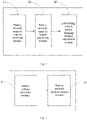
- FIG. 3 is a block diagram of a main structure of a background server according to Embodiment 1 of the invention.
- the background server in this embodiment of the invention mainly includes a battery anomaly analysis request receiving module 11 and a battery anomaly analysis request processing module 12.
- the battery anomaly analysis request receiving module 11 and the battery anomaly analysis request processing module 12 may be combined into one module.
- the battery anomaly analysis request receiving module 11 may be configured to obtain, in response to a received battery anomaly analysis request, an electric energy-related parameter of a low-voltage vehicle battery from the battery anomaly analysis request, where the battery anomaly analysis request is request information output by a vehicle device during a vehicle standstill and when it is detected that a battery voltage of the low-voltage vehicle battery is less than or equal to a preset voltage threshold.
- the battery anomaly analysis request processing module 12 may be configured to determine, based on a result of comparison between the electric energy-related parameter and a preset electric energy parameter threshold, whether a capacity of the low-voltage vehicle battery is anomalous.
- the battery anomaly analysis request processing module 12 is further configured to perform the following steps: obtaining a battery temperature of the low-voltage vehicle battery from the battery anomaly analysis request; and obtaining, through matching based on a preset correspondence between a battery temperature and an electric energy parameter threshold, an electric energy parameter threshold corresponding to the battery temperature.
- step S102 for the detailed description of function implementation, reference may be made to the description of step S102.
- the battery anomaly analysis request processing module 12 is further configured to perform the following step: the electric energy-related parameter includes a battery voltage and a state of charge of the low-voltage vehicle battery, and the electric energy parameter threshold includes a battery voltage threshold and a state of charge threshold; and if the battery voltage is less than or equal to the battery voltage threshold and the state of charge is greater than or equal to the state of charge threshold, determining that the capacity of the low-voltage vehicle battery is anomalous.
- the electric energy-related parameter includes a battery voltage and a state of charge of the low-voltage vehicle battery
- the electric energy parameter threshold includes a battery voltage threshold and a state of charge threshold
- the electric energy-related parameter in the battery anomaly analysis request is an electric energy-related parameter that is detected by the vehicle device at an instantaneous moment when charging of the low-voltage vehicle battery is started during the vehicle standstill and after it is detected that the battery voltage of the low-voltage vehicle battery is less than or equal to the preset voltage threshold.
- the description of step S102 for the detailed description of function implementation, reference may be made to the description of step S102.
- the battery anomaly analysis request processing module 12 is further configured to perform the following steps: obtaining vehicle identification information from the battery anomaly analysis request if it is determined that the capacity of the low-voltage vehicle battery is anomalous, and sending alarm information to a vehicle service terminal and/or a vehicle user terminal based on the vehicle identification information.
- step S102 for the detailed description of function implementation, reference may be made to the description of step S102.
- the foregoing background server further includes a low-voltage vehicle battery charging strategy adjustment module 13, and the low-voltage vehicle battery charging strategy adjustment module 13 is configured to perform the following steps: obtaining historical status data of a traction battery in a vehicle; and adjusting, based on the historical status data, a charging strategy for using the traction battery to charge the low-voltage vehicle battery, which specifically includes: adjusting a charging voltage, a state of charge at the start of the charging, and a state of charge at the end of the charging of the low-voltage vehicle battery based on the historical status data, where the historical status data includes a service life and a mileage of the traction battery as well as charging duration and a temperature of the low-voltage vehicle battery when the traction battery is used to charge the low-voltage vehicle battery.
- step S102 for the detailed description of function implementation, reference may be made to the description of step S102.
- the foregoing background server is used to implement the embodiment of the monitoring method for the low-voltage vehicle battery shown in FIG. 1 .
- the technical principles, technical problems solved, and technical effects produced by the background server and the monitoring method are similar, and those skilled in the art can clearly understand, for convenience and brevity of the description, for a specific working process and a related description of the background server, refer to the content described in the embodiment of the monitoring method for the low-voltage vehicle battery (Embodiment 1), and details are not described herein again.
- the invention further provides a monitoring device for a low-voltage vehicle battery.
- FIG. 4 is a block diagram of a main structure of a monitoring device for a low-voltage vehicle battery according to Embodiment 2 of the invention.
- the monitoring device in this embodiment of the invention mainly includes a battery voltage detection module 21 and a battery anomaly analysis request module 22.
- the battery voltage detection module 21 may be configured to detect, during a vehicle standstill, whether a battery voltage of the low-voltage vehicle battery is less than or equal to a preset voltage threshold.
- the battery anomaly analysis request module 22 may be configured to: when the battery voltage detection module detects that the battery voltage of the low-voltage vehicle battery is less than or equal to the preset voltage threshold, generate a battery anomaly analysis request based on an electric energy-related parameter of the low-voltage vehicle battery, and send the battery anomaly analysis request to a background server, so that the background server can determine, based on a result of comparison between the electric energy-related parameter and a preset electric energy parameter threshold, whether a capacity of the low-voltage vehicle battery is anomalous.
- the battery anomaly analysis request module 22 is further configured to perform the following steps: obtaining a battery temperature and the electric energy-related parameter of the low-voltage vehicle battery, and vehicle identification information of a current vehicle; and generating the battery anomaly analysis request based on the battery temperature, the electric energy-related parameter, and the vehicle identification information, so that the background server can obtain, through matching based on a preset correspondence between a battery temperature and an electric energy parameter threshold, an electric energy parameter threshold corresponding to the battery temperature, and determine, based on a result of comparison between the electric energy-related parameter and the electric energy parameter threshold, whether the capacity of the low-voltage vehicle battery is anomalous.
- step S202 for the detailed description of function implementation, reference may be made to the description of step S202.
- the battery anomaly analysis request module 22 is further configured to perform the following step: receiving alarm information sent by the background server, where the alarm information is information sent by the background server after the background server determines that the capacity of the low-voltage vehicle battery is anomalous.
- the alarm information is information sent by the background server after the background server determines that the capacity of the low-voltage vehicle battery is anomalous.
- the electric energy-related parameter includes the battery voltage and a state of charge of the low-voltage vehicle battery, where the electric energy-related parameter is an electric energy-related parameter that is detected at an instantaneous moment when charging of the low-voltage vehicle battery is started during the vehicle standstill and after it is detected that the battery voltage of the low-voltage vehicle battery is less than or equal to the preset voltage threshold.
- the electric energy-related parameter is an electric energy-related parameter that is detected at an instantaneous moment when charging of the low-voltage vehicle battery is started during the vehicle standstill and after it is detected that the battery voltage of the low-voltage vehicle battery is less than or equal to the preset voltage threshold.
- the battery voltage detection module 21 includes a body control module (BCM), and the battery anomaly analysis request module 22 includes a vehicle control unit (VCU).
- BCM body control module
- VCU vehicle control unit
- the foregoing monitoring device for the low-voltage vehicle battery is used to implement the embodiment of the monitoring method for the low-voltage vehicle battery shown in FIG. 3 .
- the technical principles, technical problems solved, and technical effects produced by the monitoring device and the monitoring method are similar, and those skilled in the art can clearly understand, for convenience and brevity of the description, for a specific working process and a related description of the monitoring device for the low-voltage vehicle battery, refer to the content described in the embodiment of the monitoring method for the low-voltage vehicle battery (Embodiment 2), and details are not described herein again.
- the invention further provides a monitoring system for a low-voltage vehicle battery.
- the monitoring system for the low-voltage vehicle battery may include the background server in the foregoing embodiments and the monitoring device for the low-voltage vehicle battery in the foregoing embodiments.
- the monitoring device may be configured to: detect, during a vehicle standstill, whether a battery voltage of the low-voltage vehicle battery is less than or equal to a preset voltage threshold; and if the battery voltage of the low-voltage vehicle battery is less than or equal to the preset voltage threshold, generate a battery anomaly analysis request based on an electric energy-related parameter of the low-voltage vehicle battery, and send the battery anomaly analysis request to the background server.
- the background server may be configured to: obtain the electric energy-related parameter of the low-voltage vehicle battery from the battery anomaly analysis request, and determine, based on a result of comparison between the electric energy-related parameter and a preset electric energy parameter threshold, whether a capacity of the low-voltage vehicle battery is anomalous. It should be noted that, for a specific working process and a related description of the monitoring system for the low-voltage vehicle battery, refer to the content described in the embodiment of the background server and the embodiment of the monitoring device for the low-voltage vehicle battery, and details are not described herein again.
- the computer program may be stored in a computer-readable storage medium.
- the computer program when executed by a processor, may implement the steps of the foregoing method embodiments.
- the computer program includes computer program code, and the computer program code may be in the form of source code, object code, executable file, or some intermediate forms.
- the computer-readable medium may include: any entity or device, medium, USB flash disk, removable hard disk, magnetic disk, optical disc, computer memory, read-only memory, random access memory, electrical carrier signal, telecommunications signal, software distribution medium, etc. that can carry the computer program code.
- the content included in the computer-readable medium can be appropriately added or deleted depending on requirements of the legislation and patent practice in a jurisdiction.
- the computer-readable medium does not include an electrical carrier signal and a telecommunications signal.
- the invention further provides a control device.
- the control device includes a processor and a storage device.
- the storage device may be configured to store a program that executes the monitoring method for the low-voltage vehicle battery in the foregoing method Embodiment 1, and the processor may be configured to execute the program in the storage device.
- the program includes, but is not limited to, the program that executes the monitoring method for the low-voltage vehicle battery in the foregoing method embodiment.
- the control device may be a control device formed by various electronic devices.
- the control device includes a processor and a storage device.
- the storage device may be configured to store a program that executes the monitoring method for the low-voltage vehicle battery in the foregoing method Embodiment 2, and the processor may be configured to execute the program in the storage device.
- the program includes, but is not limited to, the program that executes the monitoring method for the low-voltage vehicle battery in the foregoing method embodiment.
- the control device may be a control device formed by various electronic devices.
- the invention further provides a computer-readable storage medium.
- the computer-readable storage medium may be configured to store a program that executes the monitoring method for the low-voltage vehicle battery in the foregoing method Embodiment 1, and the program may be loaded and run by a processor to implement the foregoing monitoring method for the low-voltage vehicle battery.
- the computer-readable storage medium may be a storage device formed by various electronic devices.
- the storage in this embodiment of the invention is a non-transitory computer-readable storage medium.
- the computer-readable storage medium may be configured to store a program that executes the monitoring method for the low-voltage vehicle battery in the foregoing method Embodiment 2, and the program may be loaded and run by a processor to implement the foregoing monitoring method for the low-voltage vehicle battery.
- the computer-readable storage medium may be a storage device formed by various electronic devices.
- the storage in this embodiment of the invention is a non-transitory computer-readable storage medium.
- modules since the configuration of the modules is merely intended to illustrate functional units of a system of the invention, a physical device corresponding to these modules may be a processor itself, or part of software, part of hardware, or part of a combination of software and hardware in the processor. Therefore, the number of modules in the figure is merely illustrative.
- modules in the system may be adaptively split or combined. Such a split or combination of specific modules does not cause the technical solutions to depart from the principle of the invention. Therefore, the technical solutions after the split or combination will all fall within the scope of protection of the invention.
Landscapes
- Engineering & Computer Science (AREA)
- Physics & Mathematics (AREA)
- General Physics & Mathematics (AREA)
- Power Engineering (AREA)
- Chemical & Material Sciences (AREA)
- General Chemical & Material Sciences (AREA)
- Chemical Kinetics & Catalysis (AREA)
- Electrochemistry (AREA)
- Manufacturing & Machinery (AREA)
- Transportation (AREA)
- Sustainable Development (AREA)
- Sustainable Energy (AREA)
- Life Sciences & Earth Sciences (AREA)
- Mechanical Engineering (AREA)
- Computer Hardware Design (AREA)
- Microelectronics & Electronic Packaging (AREA)
- Combustion & Propulsion (AREA)
- Electric Propulsion And Braking For Vehicles (AREA)
- Secondary Cells (AREA)
Abstract
Description
- The invention relates to the field of vehicle battery monitoring technologies, and in particular to a monitoring method, device, and system for a low-voltage vehicle battery, a server, and a medium.
- With the economic development and social progress, people's living standards are increasingly improved, and vehicles have gradually become an indispensable tool for people to travel. Compared with conventional fuel vehicles, new energy vehicles are becoming more and more popular among people for their advantages in saving energy sources such as petroleum and reducing pollution.
- An electrical system of a new energy vehicle mainly includes a high-voltage electrical system and a low-voltage electrical system. The high-voltage electrical system mainly includes a traction battery for providing a power source for the new energy vehicle. The low-voltage electrical system mainly includes a low-voltage vehicle battery (for example, a 12 V lead-acid battery) for providing electric energy for related vehicle devices when the new energy vehicle is started. When the new energy vehicle is started, the low-voltage vehicle battery usually needs to supply power to different devices that implement functions such as vehicle control, traction battery monitoring, and head unit software upgrade. Therefore, the low-voltage vehicle battery consumes more electric energy. However, in comparison with a conventional fuel vehicle, the low-voltage vehicle battery in the new energy vehicle has a large quiescent sleep current. When the vehicle is at a standstill (devices in the vehicle are in a sleep state) for a long time, a capacity of the low-voltage vehicle battery is prone to drop so much that the vehicle cannot be provided with necessary electric energy when the vehicle is started, which causes the vehicle to fail to be started.
- To overcome the foregoing defects, the invention is proposed to provide a monitoring method, device, and system for a low-voltage vehicle battery, a server, and a medium, to solve or at least partially solve a technical problem as follows: A capacity of an existing low-voltage vehicle battery is prone to drop so much that a vehicle cannot be provided with necessary electric energy when the vehicle is started, which causes the vehicle to fail to be started.
- According to a first aspect, a monitoring method for a low-voltage vehicle battery is provided, where the monitoring method includes:
- obtaining, in response to a received battery anomaly analysis request, an electric energy-related parameter of the low-voltage vehicle battery from the battery anomaly analysis request; and
- determining, based on a result of comparison between the electric energy-related parameter and a preset electric energy parameter threshold, whether a capacity of the low-voltage vehicle battery is anomalous,
- where the battery anomaly analysis request is request information output by a vehicle device during a vehicle standstill and when it is detected that a battery voltage of the low-voltage vehicle battery is less than or equal to a preset voltage threshold.
- In a technical solution of the foregoing monitoring method, before the step of determining, based on a result of comparison between the electric energy-related parameter and a preset electric energy parameter threshold, whether a capacity of the low-voltage vehicle battery is anomalous, the monitoring method further includes:
- obtaining a battery temperature of the low-voltage vehicle battery from the battery anomaly analysis request; and
- obtaining, through matching based on a preset correspondence between a battery temperature and an electric energy parameter threshold, an electric energy parameter threshold corresponding to the battery temperature.
- In a technical solution of the foregoing monitoring method, the step of determining, based on a result of comparison between the electric energy-related parameter and a preset electric energy parameter threshold, whether a capacity of the low-voltage vehicle battery is anomalous specifically includes:
- the electric energy-related parameter includes a battery voltage and a state of charge of the low-voltage vehicle battery, and the electric energy parameter threshold includes a battery voltage threshold and a state of charge threshold; and
- if the battery voltage is less than or equal to the battery voltage threshold and the state of charge is greater than or equal to the state of charge threshold, determining that the capacity of the low-voltage vehicle battery is anomalous.
- In a technical solution of the foregoing monitoring method, the electric energy-related parameter in the battery anomaly analysis request is an electric energy-related parameter that is detected by the vehicle device at an instantaneous moment when charging of the low-voltage vehicle battery is started during the vehicle standstill and after it is detected that the battery voltage of the low-voltage vehicle battery is less than or equal to the preset voltage threshold.
- In a technical solution of the foregoing monitoring method, after the step of determining, based on a result of comparison between the electric energy-related parameter and a preset electric energy parameter threshold, whether a capacity of the low-voltage vehicle battery is anomalous, the monitoring method further includes:
obtaining vehicle identification information from the battery anomaly analysis request if it is determined that the capacity of the low-voltage vehicle battery is anomalous, and sending alarm information to a vehicle service terminal and/or a vehicle user terminal based on the vehicle identification information. - In a technical solution of the foregoing monitoring method, the monitoring method further includes:
- obtaining historical status data of a traction battery in a vehicle; and
- adjusting, based on the historical status data, a charging strategy for using the traction battery to charge the low-voltage vehicle battery, which specifically includes:
- adjusting a charging voltage, a state of charge at the start of the charging, and a state of charge at the end of the charging of the low-voltage vehicle battery based on the historical status data,
- where the historical status data includes a service life and a mileage of the traction battery as well as charging duration and a temperature of the low-voltage vehicle battery when the traction battery is used to charge the low-voltage vehicle battery.
- According to a second aspect, another monitoring method for a low-voltage vehicle battery is provided, where the monitoring method includes:
- detecting, during a vehicle standstill, whether a battery voltage of the low-voltage vehicle battery is less than or equal to a preset voltage threshold; and
- if the battery voltage of the low-voltage vehicle battery is less than or equal to the preset voltage threshold, generating a battery anomaly analysis request based on an electric energy-related parameter of the low-voltage vehicle battery, and sending the battery anomaly analysis request to a background server, so that the background server can determine, based on a result of comparison between the electric energy-related parameter and a preset electric energy parameter threshold, whether a capacity of the low-voltage vehicle battery is anomalous.
- In a technical solution of the foregoing monitoring method, the step of generating a battery anomaly analysis request based on an electric energy-related parameter of the low-voltage vehicle battery specifically includes:
- obtaining a battery temperature and the electric energy-related parameter of the low-voltage vehicle battery, and vehicle identification information of a current vehicle; and
- generating the battery anomaly analysis request based on the battery temperature, the electric energy-related parameter, and the vehicle identification information, so that the background server can obtain, through matching based on a preset correspondence between a battery temperature and an electric energy parameter threshold, an electric energy parameter threshold corresponding to the battery temperature, and determine, based on a result of comparison between the electric energy-related parameter and the electric energy parameter threshold, whether the capacity of the low-voltage vehicle battery is anomalous.
- In a technical solution of the foregoing monitoring method, after the step of sending the battery anomaly analysis request to a background server, the monitoring method further includes:
- receiving alarm information sent by the background server,
- where the alarm information is information sent by the background server after the background server determines that the capacity of the low-voltage vehicle battery is anomalous.
- In a technical solution of the foregoing monitoring method, the electric energy-related parameter includes the battery voltage and a state of charge of the low-voltage vehicle battery, where the electric energy-related parameter is an electric energy-related parameter that is detected at an instantaneous moment when charging of the low-voltage vehicle battery is started during the vehicle standstill and after it is detected that the battery voltage of the low-voltage vehicle battery is less than or equal to the preset voltage threshold.
- According to a third aspect, a background server is provided, where the background server includes:
- a battery anomaly analysis request receiving module configured to obtain, in response to a received battery anomaly analysis request, an electric energy-related parameter of a low-voltage vehicle battery from the battery anomaly analysis request; and
- a battery anomaly analysis request processing module configured to determine, based on a result of comparison between the electric energy-related parameter and a preset electric energy parameter threshold, whether a capacity of the low-voltage vehicle battery is anomalous,
- where the battery anomaly analysis request is request information output by a vehicle device during a vehicle standstill and when it is detected that a battery voltage of the low-voltage vehicle battery is less than or equal to a preset voltage threshold.
- In a technical solution of the foregoing background server, before the step of determining, based on a result of comparison between the electric energy-related parameter and a preset electric energy parameter threshold, whether a capacity of the low-voltage vehicle battery is anomalous, the battery anomaly analysis request processing module is further configured to perform the following steps:
- obtaining a battery temperature of the low-voltage vehicle battery from the battery anomaly analysis request; and
- obtaining, through matching based on a preset correspondence between a battery temperature and an electric energy parameter threshold, an electric energy parameter threshold corresponding to the battery temperature.
- In a technical solution of the foregoing background server, the battery anomaly analysis request processing module is further configured to perform the following step:
- the electric energy-related parameter includes a battery voltage and a state of charge of the low-voltage vehicle battery, and the electric energy parameter threshold includes a battery voltage threshold and a state of charge threshold; and
- if the battery voltage is less than or equal to the battery voltage threshold and the state of charge is greater than or equal to the state of charge threshold, determining that the capacity of the low-voltage vehicle battery is anomalous.
- In a technical solution of the foregoing background server, the electric energy-related parameter in the battery anomaly analysis request is an electric energy-related parameter that is detected by the vehicle device at an instantaneous moment when charging of the low-voltage vehicle battery is started during the vehicle standstill and after it is detected that the battery voltage of the low-voltage vehicle battery is less than or equal to the preset voltage threshold.
- In a technical solution of the foregoing background server, after the step of determining, based on a result of comparison between the electric energy-related parameter and a preset electric energy parameter threshold, whether a capacity of the low-voltage vehicle battery is anomalous, the battery anomaly analysis request processing module is further configured to perform the following steps:
obtaining vehicle identification information from the battery anomaly analysis request if it is determined that the capacity of the low-voltage vehicle battery is anomalous, and sending alarm information to a vehicle service terminal and/or a vehicle user terminal based on the vehicle identification information. - In a technical solution of the foregoing background server, the background server further includes a low-voltage vehicle battery charging strategy adjustment module, and the low-voltage vehicle battery charging strategy adjustment module is configured to perform the following steps:
- obtaining historical status data of a traction battery in a vehicle; and
- adjusting, based on the historical status data, a charging strategy for using the traction battery to charge the low-voltage vehicle battery, which specifically includes:
- adjusting a charging voltage, a state of charge at the start of the charging, and a state of charge at the end of the charging of the low-voltage vehicle battery based on the historical status data,
- where the historical status data includes a service life and a mileage of the traction battery as well as charging duration and a temperature of the low-voltage vehicle battery when the traction battery is used to charge the low-voltage vehicle battery.
- According to a fourth aspect, a monitoring device for a low-voltage vehicle battery is provided, where the monitoring device includes:
- a battery voltage detection module configured to detect, during a vehicle standstill, whether a battery voltage of the low-voltage vehicle battery is less than or equal to a preset voltage threshold; and
- a battery anomaly analysis request module configured to: when the battery voltage detection module detects that the battery voltage of the low-voltage vehicle battery is less than or equal to the preset voltage threshold, generate a battery anomaly analysis request based on an electric energy-related parameter of the low-voltage vehicle battery, and send the battery anomaly analysis request to a background server, so that the background server can determine, based on a result of comparison between the electric energy-related parameter and a preset electric energy parameter threshold, whether a capacity of the low-voltage vehicle battery is anomalous.
- In a technical solution of the foregoing monitoring device, the battery anomaly analysis request module is further configured to perform the following steps:
- obtaining a battery temperature and the electric energy-related parameter of the low-voltage vehicle battery, and vehicle identification information of a current vehicle; and
- generating the battery anomaly analysis request based on the battery temperature, the electric energy-related parameter, and the vehicle identification information, so that the background server can obtain, through matching based on a preset correspondence between a battery temperature and an electric energy parameter threshold, an electric energy parameter threshold corresponding to the battery temperature, and determine, based on a result of comparison between the electric energy-related parameter and the electric energy parameter threshold, whether the capacity of the low-voltage vehicle battery is anomalous.
- In a technical solution of the foregoing monitoring device, after the step of sending the battery anomaly analysis request to a background server, the battery anomaly analysis request module is further configured to perform the following step:
- receiving alarm information sent by the background server,
- where the alarm information is information sent by the background server after the background server determines that the capacity of the low-voltage vehicle battery is anomalous.
- In a technical solution of the foregoing monitoring device, the electric energy-related parameter includes the battery voltage and a state of charge of the low-voltage vehicle battery, where the electric energy-related parameter is an electric energy-related parameter that is detected at an instantaneous moment when charging of the low-voltage vehicle battery is started during the vehicle standstill and after it is detected that the battery voltage of the low-voltage vehicle battery is less than or equal to the preset voltage threshold.
- In a technical solution of the foregoing monitoring device, the battery voltage detection module includes a body control module, and the battery anomaly analysis request module includes a vehicle control unit.
- According to a fifth aspect, a monitoring system for a low-voltage vehicle battery is provided, where the monitoring system includes the background server according to any one of the foregoing technical solutions and the monitoring device for the low-voltage vehicle battery according to any one of the foregoing technical solutions;
- the monitoring device is configured to: detect, during a vehicle standstill, whether a battery voltage of the low-voltage vehicle battery is less than or equal to a preset voltage threshold; and if the battery voltage of the low-voltage vehicle battery is less than or equal to the preset voltage threshold, generate a battery anomaly analysis request based on an electric energy-related parameter of the low-voltage vehicle battery, and send the battery anomaly analysis request to the background server; and
- the background server is configured to: obtain the electric energy-related parameter of the low-voltage vehicle battery from the battery anomaly analysis request, and determine, based on a result of comparison between the electric energy-related parameter and a preset electric energy parameter threshold, whether a capacity of the low-voltage vehicle battery is anomalous.
- According to a sixth aspect, a control device is provided, where the control device includes a processor and a storage device, the storage device is adapted to store a plurality of program codes, and the program codes are adapted to be loaded and run by the processor to perform the monitoring method for the low-voltage vehicle battery according to any one of the technical solutions of the foregoing first aspect.
- According to a seventh aspect, a control device is provided, where the control device includes a processor and a storage device, the storage device is adapted to store a plurality of program codes, and the program codes are adapted to be loaded and run by the processor to perform the monitoring method for the low-voltage vehicle battery according to any one of the technical solutions of the foregoing second aspect.
- According to an eighth aspect, a computer-readable storage medium is provided, where the computer-readable storage medium stores a plurality of program codes, and the program codes are adapted to be loaded and run by a processor to perform the monitoring method for the low-voltage vehicle battery according to any one of the technical solutions of the foregoing first aspect.
- According to a ninth aspect, a computer-readable storage medium is provided, where the computer-readable storage medium stores a plurality of program codes, and the program codes are adapted to be loaded and run by a processor to perform the monitoring method for the low-voltage vehicle battery according to any one of the technical solutions of the foregoing second aspect.
- Solution 1. A monitoring method for a low-voltage vehicle battery, wherein the monitoring method includes:
- obtaining, in response to a received battery anomaly analysis request, an electric energy-related parameter of the low-voltage vehicle battery from the battery anomaly analysis request; and
- determining, based on a result of comparison between the electric energy-related parameter and a preset electric energy parameter threshold, whether a capacity of the low-voltage vehicle battery is anomalous,
- where the battery anomaly analysis request is request information output by a vehicle device during a vehicle standstill and when it is detected that a battery voltage of the low-voltage vehicle battery is less than or equal to a preset voltage threshold.
- Solution 2. The monitoring method for the low-voltage vehicle battery according to solution 1, wherein before the step of determining, based on a result of comparison between the electric energy-related parameter and a preset electric energy parameter threshold, whether a capacity of the low-voltage vehicle battery is anomalous, the monitoring method further includes:
- obtaining a battery temperature of the low-voltage vehicle battery from the battery anomaly analysis request; and
- obtaining, through matching based on a preset correspondence between a battery temperature and an electric energy parameter threshold, an electric energy parameter threshold corresponding to the battery temperature.
- Solution 3. The monitoring method for the low-voltage vehicle battery according to solution 1, wherein the step of determining, based on a result of comparison between the electric energy-related parameter and a preset electric energy parameter threshold, whether a capacity of the low-voltage vehicle battery is anomalous specifically includes:
- the electric energy-related parameter includes a battery voltage and a state of charge of the low-voltage vehicle battery, and the electric energy parameter threshold includes a battery voltage threshold and a state of charge threshold; and
- if the battery voltage is less than or equal to the battery voltage threshold and the state of charge is greater than or equal to the state of charge threshold, determining that the capacity of the low-voltage vehicle battery is anomalous.
- Solution 4. The monitoring method for the low-voltage vehicle battery according to solution 3, wherein the electric energy-related parameter in the battery anomaly analysis request is an electric energy-related parameter that is detected by the vehicle device at an instantaneous moment when charging of the low-voltage vehicle battery is started during the vehicle standstill and after it is detected that the battery voltage of the low-voltage vehicle battery is less than or equal to the preset voltage threshold.
- Solution 5. The monitoring method for the low-voltage vehicle battery according to any one of solutions 1 to 4, wherein after the step of determining, based on a result of comparison between the electric energy-related parameter and a preset electric energy parameter threshold, whether a capacity of the low-voltage vehicle battery is anomalous, the monitoring method further includes:
obtaining vehicle identification information from the battery anomaly analysis request if it is determined that the capacity of the low-voltage vehicle battery is anomalous, and sending alarm information to a vehicle service terminal and/or a vehicle user terminal based on the vehicle identification information. - Solution 6. The monitoring method for the low-voltage vehicle battery according to any one of solutions 1 to 4, wherein the monitoring method further includes:
- obtaining historical status data of a traction battery in a vehicle; and
- adjusting, based on the historical status data, a charging strategy for using the traction battery to charge the low-voltage vehicle battery, which specifically includes:
- adjusting a charging voltage, a state of charge at the start of the charging, and a state of charge at the end of the charging of the low-voltage vehicle battery based on the historical status data,
- where the historical status data includes a service life and a mileage of the traction battery as well as charging duration and a temperature of the low-voltage vehicle battery when the traction battery is used to charge the low-voltage vehicle battery.
- Solution 7. A monitoring method for a low-voltage vehicle battery, wherein the monitoring method includes:
- detecting, during a vehicle standstill, whether a battery voltage of the low-voltage vehicle battery is less than or equal to a preset voltage threshold; and
- if the battery voltage of the low-voltage vehicle battery is less than or equal to the preset voltage threshold, generating a battery anomaly analysis request based on an electric energy-related parameter of the low-voltage vehicle battery, and sending the battery anomaly analysis request to a background server, so that the background server can determine, based on a result of comparison between the electric energy-related parameter and a preset electric energy parameter threshold, whether a capacity of the low-voltage vehicle battery is anomalous.
- Solution 8. The monitoring method for the low-voltage vehicle battery according to solution 7, wherein the step of generating a battery anomaly analysis request based on an electric energy-related parameter of the low-voltage vehicle battery specifically includes:
- obtaining a battery temperature and the electric energy-related parameter of the low-voltage vehicle battery, and vehicle identification information of a current vehicle; and
- generating the battery anomaly analysis request based on the battery temperature, the electric energy-related parameter, and the vehicle identification information, so that the background server can obtain, through matching based on a preset correspondence between a battery temperature and an electric energy parameter threshold, an electric energy parameter threshold corresponding to the battery temperature, and determine, based on a result of comparison between the electric energy-related parameter and the electric energy parameter threshold, whether the capacity of the low-voltage vehicle battery is anomalous.
- Solution 9. The monitoring method for the low-voltage vehicle battery according to solution 7, wherein after the step of sending the battery anomaly analysis request to a background server, the monitoring method further includes:
- receiving alarm information sent by the background server,
- where the alarm information is information sent by the background server after the background server determines that the capacity of the low-voltage vehicle battery is anomalous.
- Solution 10. The monitoring method for the low-voltage vehicle battery according to any one of solutions 7 to 9, wherein the electric energy-related parameter includes the battery voltage and a state of charge of the low-voltage vehicle battery, where the electric energy-related parameter is an electric energy-related parameter that is detected at an instantaneous moment when charging of the low-voltage vehicle battery is started during the vehicle standstill and after it is detected that the battery voltage of the low-voltage vehicle battery is less than or equal to the preset voltage threshold.
-
Solution 11. A background server, wherein the background server includes:- a battery anomaly analysis request receiving module configured to obtain, in response to a received battery anomaly analysis request, an electric energy-related parameter of a low-voltage vehicle battery from the battery anomaly analysis request; and
- a battery anomaly analysis request processing module configured to determine, based on a result of comparison between the electric energy-related parameter and a preset electric energy parameter threshold, whether a capacity of the low-voltage vehicle battery is anomalous,
- where the battery anomaly analysis request is request information output by a vehicle device during a vehicle standstill and when it is detected that a battery voltage of the low-voltage vehicle battery is less than or equal to a preset voltage threshold.
-
Solution 12. The background server according tosolution 11, wherein the battery anomaly analysis request processing module is further configured to perform the following steps:- obtaining a battery temperature of the low-voltage vehicle battery from the battery anomaly analysis request; and
- obtaining, through matching based on a preset correspondence between a battery temperature and an electric energy parameter threshold, an electric energy parameter threshold corresponding to the battery temperature.
-
Solution 13. The background server according tosolution 11, wherein the battery anomaly analysis request processing module is further configured to perform the following step:- the electric energy-related parameter includes a battery voltage and a state of charge of the low-voltage vehicle battery, and the electric energy parameter threshold includes a battery voltage threshold and a state of charge threshold; and
- if the battery voltage is less than or equal to the battery voltage threshold and the state of charge is greater than or equal to the state of charge threshold, determining that the capacity of the low-voltage vehicle battery is anomalous.
- Solution 14. The background server according to
solution 13, wherein the electric energy-related parameter in the battery anomaly analysis request is an electric energy-related parameter that is detected by the vehicle device at an instantaneous moment when charging of the low-voltage vehicle battery is started during the vehicle standstill and after it is detected that the battery voltage of the low-voltage vehicle battery is less than or equal to the preset voltage threshold. - Solution 15. The background server according to any one of
solutions 11 to 14, wherein the battery anomaly analysis request processing module is further configured to perform the following steps:
obtaining vehicle identification information from the battery anomaly analysis request if it is determined that the capacity of the low-voltage vehicle battery is anomalous, and sending alarm information to a vehicle service terminal and/or a vehicle user terminal based on the vehicle identification information. - Solution 16. The background server according to any one of
solutions 11 to 14, wherein the background server further includes a low-voltage vehicle battery charging strategy adjustment module, and the low-voltage vehicle battery charging strategy adjustment module is configured to perform the following steps:- obtaining historical status data of a traction battery in a vehicle; and
- adjusting, based on the historical status data, a charging strategy for using the traction battery to charge the low-voltage vehicle battery, which specifically includes:
- adjusting a charging voltage, a state of charge at the start of the charging, and a state of charge at the end of the charging of the low-voltage vehicle battery based on the historical status data,
- where the historical status data includes a service life and a mileage of the traction battery as well as charging duration and a temperature of the low-voltage vehicle battery when the traction battery is used to charge the low-voltage vehicle battery.
- Solution 17. A monitoring device for a low-voltage vehicle battery, wherein the monitoring device includes:
- a battery voltage detection module configured to detect, during a vehicle standstill, whether a battery voltage of the low-voltage vehicle battery is less than or equal to a preset voltage threshold; and
- a battery anomaly analysis request module configured to: when the battery voltage detection module detects that the battery voltage of the low-voltage vehicle battery is less than or equal to the preset voltage threshold, generate a battery anomaly analysis request based on an electric energy-related parameter of the low-voltage vehicle battery, and send the battery anomaly analysis request to a background server, so that the background server can determine, based on a result of comparison between the electric energy-related parameter and a preset electric energy parameter threshold, whether a capacity of the low-voltage vehicle battery is anomalous.
- Solution 18. The monitoring device according to solution 17, wherein the battery anomaly analysis request module is further configured to perform the following steps:
- obtaining a battery temperature and the electric energy-related parameter of the low-voltage vehicle battery, and vehicle identification information of a current vehicle; and
- generating the battery anomaly analysis request based on the battery temperature, the electric energy-related parameter, and the vehicle identification information, so that the background server can obtain, through matching based on a preset correspondence between a battery temperature and an electric energy parameter threshold, an electric energy parameter threshold corresponding to the battery temperature, and determine, based on a result of comparison between the electric energy-related parameter and the electric energy parameter threshold, whether the capacity of the low-voltage vehicle battery is anomalous.
- Solution 19. The monitoring device according to solution 17, wherein after the step of sending the battery anomaly analysis request to a background server, the battery anomaly analysis request module is further configured to perform the following step:
- receiving alarm information sent by the background server,
- where the alarm information is information sent by the background server after the background server determines that the capacity of the low-voltage vehicle battery is anomalous.
- Solution 20. The monitoring device according to any one of solutions 17 to 19, wherein the electric energy-related parameter includes the battery voltage and a state of charge of the low-voltage vehicle battery, where the electric energy-related parameter is an electric energy-related parameter that is detected at an instantaneous moment when charging of the low-voltage vehicle battery is started during the vehicle standstill and after it is detected that the battery voltage of the low-voltage vehicle battery is less than or equal to the preset voltage threshold.
-
Solution 21. The monitoring device according to solution 20, wherein the battery voltage detection module includes a body control module, and the battery anomaly analysis request module includes a vehicle control unit. -
Solution 22. A monitoring system for a low-voltage vehicle battery, wherein the monitoring system includes the background server according to any one ofsolutions 11 to 16 and the monitoring device for the low-voltage vehicle battery according to any one of solutions 17 to 21;- the monitoring device is configured to: detect, during a vehicle standstill, whether a battery voltage of the low-voltage vehicle battery is less than or equal to a preset voltage threshold; and if the battery voltage of the low-voltage vehicle battery is less than or equal to the preset voltage threshold, generate a battery anomaly analysis request based on an electric energy-related parameter of the low-voltage vehicle battery, and send the battery anomaly analysis request to the background server; and
- the background server is configured to: obtain the electric energy-related parameter of the low-voltage vehicle battery from the battery anomaly analysis request, and determine, based on a result of comparison between the electric energy-related parameter and a preset electric energy parameter threshold, whether a capacity of the low-voltage vehicle battery is anomalous.
- Solution 23. A control device, including a processor and a storage device, the storage device being adapted to store a plurality of program codes, wherein the program codes are adapted to be loaded and run by the processor to perform the monitoring method for the low-voltage vehicle battery according to any one of solutions 1 to 6.
- Solution 24. A control device, including a processor and a storage device, the storage device being adapted to store a plurality of program codes, wherein the program codes are adapted to be loaded and run by the processor to perform the monitoring method for the low-voltage vehicle battery according to any one of solutions 7 to 10.
- Solution 25. A computer-readable storage medium, storing a plurality of program codes, wherein the program codes are adapted to be loaded and run by a processor to perform the monitoring method for the low-voltage vehicle battery according to any one of solutions 1 to 6.
- Solution 26. A computer-readable storage medium, storing a plurality of program codes, wherein the program codes are adapted to be loaded and run by a processor to perform the monitoring method for the low-voltage vehicle battery according to any one of solutions 7 to 10.
- The foregoing one or more technical solutions of the invention have at least one or more of the following beneficial effects:
During implementation of the technical solutions of the invention, the battery anomaly analysis request can be output by the vehicle device during the vehicle standstill and when it is detected that the battery voltage of the low-voltage vehicle battery is less than or equal to the preset voltage threshold, and the electric energy-related parameter (including but not limited to the battery voltage and the state of charge) of the low-voltage vehicle battery is obtained from the battery anomaly analysis request, so that whether the capacity of the low-voltage vehicle battery is anomalous can be determined based on the result of comparison between the electric energy-related parameter and the preset electric energy parameter threshold. Specifically, if the battery voltage is less than or equal to the battery voltage threshold and the state of charge is greater than or equal to the state of charge threshold, it is determined that the capacity of the low-voltage vehicle battery is anomalous. In this way, the low-voltage vehicle battery whose capacity is anomalous can be identified in advance, so that a user can take measures in time, thereby avoiding the following case: The vehicle cannot be normally started due to the anomalous capacity of the low-voltage vehicle battery. - Specific implementations of the invention are described below with reference to the accompanying drawings, in which:
-
FIG. 1 is a schematic flowchart of main steps of a monitoring method for a low-voltage vehicle battery according to Embodiment 1 of the invention; -
FIG. 2 is a schematic flowchart of main steps of a monitoring method for a low-voltage vehicle battery according to Embodiment 2 of the invention; -
FIG. 3 is a block diagram of a main structure of a background server according to Embodiment 1 of the invention; and -
FIG. 4 is a block diagram of a main structure of a monitoring device for a low-voltage vehicle battery according to Embodiment 2 of the invention. - 11: battery anomaly analysis request receiving module; 12: battery anomaly analysis request processing module; 13: low-voltage vehicle battery charging strategy adjustment module; 21: battery voltage detection module; and 22: battery anomaly analysis request module.
- Some implementations of the invention are described below with reference to the accompanying drawings. It should be understood by those skilled in the art that these embodiments are only for explaining the technical principles of the invention and are not intended to limit the scope of protection of the invention.
- In the description of the invention, a "module" and a "processor" may include hardware, software, or a combination thereof. A module may include a hardware circuit, various suitable sensors, a communication port, and a memory, or may include a software part, such as program code, or may be a combination of software and hardware. The processor may be a central processing unit, a microprocessor, a graphics processing unit, a digital signal processor, or any other suitable processor. The processor has a data and/or signal processing function. The processor may be implemented in software, hardware, or a combination thereof. A non-transitory computer-readable storage medium includes any suitable medium that can store program code, such as a magnetic disk, a hard disk, an optical disc, a flash memory, a read-only memory, or a random access memory. The term "A and/or B" indicates all possible combinations of A and B, for example, only A, only B, or A and B. The term "at least one of A or B" or "at least one of A and B" has a meaning similar to "A and/or B" and may include only A, only B, or A and B. The terms "a/an" and "this" in the singular form may also include the plural form.
- Some terms involved in the invention are explained herein first.
- Vehicle standstill means that a vehicle remains still at a fixed position within a certain period of time. In this case, devices of the vehicle are in a sleep state, which includes but is not limited to: a state in which the vehicle is parked with an engine shut down and a state in which the vehicle enters a sleep state or a deep sleep state.
- Currently, an electrical system of a conventional new energy vehicle mainly includes a high-voltage electrical system and a low-voltage electrical system. The high-voltage electrical system mainly includes a traction battery for providing a power source for the new energy vehicle. The low-voltage electrical system mainly includes a low-voltage vehicle battery (for example, a 12 V lead-acid battery) for providing electric energy for related vehicle devices when the new energy vehicle is started. When the new energy vehicle is started, the low-voltage vehicle battery usually needs to supply power to different devices that implement functions such as vehicle control, traction battery monitoring, and head unit software upgrade. Therefore, the low-voltage vehicle battery consumes more electric energy. However, in comparison with a conventional fuel vehicle, the low-voltage vehicle battery in the new energy vehicle has a large quiescent sleep current. When the vehicle is at a standstill (devices in the vehicle are in a sleep state) for a long time, a capacity of the low-voltage vehicle battery is prone to drop so much that the vehicle cannot be provided with necessary electric energy when the vehicle is started, which causes the vehicle to fail to be started.
- In the embodiments of the invention, a battery anomaly analysis request output by a vehicle device can be obtained in advance, where the request is output by the vehicle device during a vehicle standstill and when it is detected that a battery voltage of a low-voltage vehicle battery is less than or equal to a preset voltage threshold; then, an electric energy-related parameter of the low-voltage vehicle battery is obtained from the battery anomaly analysis request; and finally, whether a capacity of the low-voltage vehicle battery is anomalous can be determined based on a result of comparison between the electric energy-related parameter and a preset electric energy parameter threshold. Through the foregoing steps, the low-voltage vehicle battery whose capacity is anomalous can be identified in advance, so that a user can take measures in time, thereby overcoming a defect that a vehicle cannot be normally started due to the anomalous capacity of the low-voltage vehicle battery.
- In an application scenario of the invention, when a vehicle is parked in a parking garage in a shut-down state, a body control module (BCM) detects a battery voltage of a low-voltage vehicle battery in real time. When detecting that the battery voltage of the low-voltage vehicle battery is less than or equal to a preset voltage threshold, the body control module immediately wakes up a vehicle control unit (VCU). After being waken up, the vehicle control unit communicates with an intelligent battery sensor (IBS) of the low-voltage vehicle battery, to obtain electric energy-related parameters such as a battery voltage and a state of charge of the low-voltage vehicle battery that are collected by the battery management system. Then the vehicle control unit generates a battery anomaly analysis request based on the electric energy-related parameters of the low-voltage vehicle battery, and transmits the battery anomaly analysis request to a background server. After receiving the battery anomaly analysis request, the background server obtains a battery temperature, the battery voltage, and the state of charge of the low-voltage vehicle battery from the battery anomaly analysis request; then obtains, through matching based on a preset correspondence between a battery temperature and an electric energy parameter threshold (including a battery voltage threshold and a state of charge threshold), a battery voltage threshold and a state of charge threshold that correspond to the detected battery temperature; and finally determines, based on a result of comparison between the electric energy-related parameters in the battery anomaly analysis request and the obtained electric energy parameter thresholds, whether the low-voltage vehicle battery is anomalous. If the battery voltage is less than or equal to the battery voltage threshold and the state of charge is greater than or equal to the state of charge threshold, the background server determines that the capacity of the low-voltage vehicle battery is anomalous, and sends alarm information to a display of the vehicle and a mobile phone of a user based on vehicle identification information in the battery anomaly analysis request, so that the user can replace the low-voltage vehicle battery in time, and a manufacturer can adjust, based on historical status data of a traction battery in the vehicle, a charging strategy for using the traction battery to charge the low-voltage vehicle battery, thereby prolonging a service life of the low-voltage vehicle battery.
- The technical solutions of the invention are further described below with reference to different embodiments.
- Referring to
FIG. 1, FIG. 1 is a schematic flowchart of main steps of a monitoring method for a low-voltage vehicle battery according to an embodiment of the invention. As shown inFIG. 1 , the monitoring method in this embodiment of the invention mainly includes the following steps. - In step S 101, in response to a received battery anomaly analysis request, an electric energy-related parameter of the low-voltage vehicle battery is obtained from the battery anomaly analysis request, where the battery anomaly analysis request is request information output by a vehicle device during a vehicle standstill and when it is detected that a battery voltage of the low-voltage vehicle battery is less than or equal to a preset voltage threshold.
- In this embodiment, "vehicle standstill" has a same meaning as that in the foregoing term explanation. For brevity, details are not described herein again. The preset voltage threshold may be flexibly set by those skilled in the art according to actual requirements.
- In step S102, whether a capacity of the low-voltage vehicle battery is anomalous is determined based on a result of comparison between the electric energy-related parameter and a preset electric energy parameter threshold.
- In this embodiment, the electric energy-related parameter includes but is not limited to: a battery voltage and a state of charge (SOC) of the low-voltage vehicle battery. The preset electric energy parameter threshold may be flexibly set by those skilled in the art according to actual requirements.
- Through the foregoing steps S101 and
S 102, in this embodiment of the invention, during the vehicle standstill and when it is detected that the battery voltage of the low-voltage vehicle battery is less than or equal to the preset voltage threshold, it is determined that the capacity of the low-voltage vehicle battery may be anomalous. Therefore, the electric energy-related parameters such as the battery voltage and the state of charge of the low-voltage vehicle battery are immediately obtained, and the battery anomaly analysis request is output based on the electric energy-related parameters. After receiving the battery anomaly analysis request, a device, for example, a background server, determines, based on a result of comparison between the electric energy-related parameter of the low-voltage vehicle battery in the battery anomaly analysis request and the preset electric energy parameter threshold, whether the capacity of the low-voltage vehicle battery is anomalous, and selectively outputs alarm information based on a determination result. Therefore, the low-voltage vehicle battery whose capacity is anomalous can be identified in advance, so that a user can take measures in time, thereby overcoming a defect that a vehicle cannot be normally started due to the anomalous capacity of the low-voltage vehicle battery. - The foregoing
step S 102 is further described below. - In an optional implementation of step S 102 in this embodiment of the invention, before the step (step S 102) of determining, based on a result of comparison between the electric energy-related parameter and a preset electric energy parameter threshold, whether a capacity of the low-voltage vehicle battery is anomalous, the foregoing monitoring method further includes: obtaining a battery temperature of the low-voltage vehicle battery from the battery anomaly analysis request; and obtaining, through matching based on a preset correspondence between a battery temperature and an electric energy parameter threshold, an electric energy parameter threshold corresponding to the battery temperature. In this implementation, different battery temperatures of the low-voltage vehicle battery respectively correspond to different electric energy parameter thresholds, and therefore, an electric energy parameter threshold, used in the case of a normal battery capacity, corresponding to the battery temperature of the low-voltage vehicle battery in the battery anomaly analysis request can be obtained based on the preset correspondence between a battery temperature and an electric energy parameter threshold. The preset correspondence between a battery temperature and an electric energy parameter threshold may be flexibly set by those skilled in the art according to actual requirements. For example, when a battery temperature of the low-voltage vehicle battery is 25°C, a corresponding battery voltage is 12.5 V, and a corresponding state of charge (SOC) is 0.9.
- In an implementation, the step (step S 102) of determining, based on a result of comparison between the electric energy-related parameter and a preset electric energy parameter threshold, whether a capacity of the low-voltage vehicle battery is anomalous specifically includes: the electric energy-related parameter includes a battery voltage and a state of charge of the low-voltage vehicle battery, and the electric energy parameter threshold includes a battery voltage threshold and a state of charge threshold; and if the battery voltage is less than or equal to the battery voltage threshold and the state of charge is greater than or equal to the state of charge threshold, determining that the capacity of the low-voltage vehicle battery is anomalous. In this implementation, the low-voltage vehicle battery whose capacity is anomalous is identified based on the battery voltage threshold and the state of charge threshold, so that a user can replace the low-voltage vehicle battery in time, thereby avoiding the following case: The vehicle cannot be normally started due to the anomalous capacity of the low-voltage vehicle battery. The battery voltage threshold and the state of charge threshold may be flexibly set by those skilled in the art according to actual requirements.
- Further, the electric energy-related parameter in the battery anomaly analysis request is an electric energy-related parameter that is detected by the vehicle device, for example, a body control module, at an instantaneous moment when charging of the low-voltage vehicle battery is started during the vehicle standstill and after it is detected that the battery voltage of the low-voltage vehicle battery is less than or equal to the preset voltage threshold. In this implementation, during the vehicle standstill and if it is detected that the battery voltage of the low-voltage vehicle battery is less than or equal to the preset voltage threshold, it indicates that the battery voltage of the low-voltage vehicle battery is insufficient to start a vehicle, and the low-voltage vehicle battery needs to be charged. The battery voltage of the low-voltage vehicle battery drops within a short time due to an excessive battery load at a moment when the low-voltage vehicle battery is charged, and values of the electric energy-related parameters (namely, the battery voltage and the state of charge) of the low-voltage vehicle battery are the lowest at this moment. In this case, if the battery voltage is less than or equal to the battery voltage threshold and the state of charge is greater than or equal to the state of charge threshold, the low-voltage vehicle battery may be unable to start the vehicle. Therefore, the low-voltage vehicle battery whose capacity is anomalous is identified in advance, so that the user can replace the low-voltage vehicle battery in time, thereby avoiding the following case: The vehicle cannot be normally started due to the anomalous capacity of the low-voltage vehicle battery.
- In an implementation, after the step (step S 102) of determining, based on a result of comparison between the electric energy-related parameter and a preset electric energy parameter threshold, whether a capacity of the low-voltage vehicle battery is anomalous, the foregoing monitoring method further includes: obtaining vehicle identification information from the battery anomaly analysis request if it is determined that the capacity of the low-voltage vehicle battery is anomalous, and sending alarm information to a vehicle service terminal and/or a vehicle user terminal based on the vehicle identification information. In this implementation, if the vehicle has been started, the alarm information may be sent to a display of the vehicle and/or a mobile phone of the user. If the vehicle has not been started, the alarm information may be sent to the mobile phone of the user and/or the alarm information may be sent to the display of the vehicle after a next start of the vehicle, so that the user can replace the low-voltage vehicle battery in time, thereby avoiding the following case: The vehicle cannot be normally started due to the anomalous capacity of the low-voltage vehicle battery. The vehicle identification information may be information that can be used for distinguishing between vehicles, for example, a license plate number.
- In an implementation, the foregoing monitoring method further includes: obtaining historical status data of a traction battery in a vehicle; and adjusting, based on the historical status data, a charging strategy for using the traction battery to charge the low-voltage vehicle battery, which specifically includes: adjusting a charging voltage, a state of charge at the start of the charging, and a state of charge at the end of the charging of the low-voltage vehicle battery based on the historical status data, where the historical status data includes a service life and a mileage of the traction battery as well as charging duration and a temperature of the low-voltage vehicle battery when the traction battery is used to charge the low-voltage vehicle battery. In this implementation, if the capacity of the low-voltage vehicle battery is anomalous, the charging strategy for using the traction battery to charge the low-voltage vehicle battery may be wrong, which causes the service life of the low-voltage vehicle battery to be shortened. In this case, the charging voltage, the state of charge at the start of the charging, and the state of charge at the end of the charging of the low-voltage vehicle battery may be adjusted based on the historical status data of the traction battery charging the low-voltage vehicle battery, thereby prolonging the service life of the low-voltage vehicle battery. In a possible implementation, if it is found that a battery capacity of a low-voltage vehicle battery is anomalous, a service life and a mileage of a traction battery for charging the low-voltage vehicle battery as well as charging duration and a temperature of the low-voltage vehicle battery are obtained. If the service life of the traction battery is shorter than those of other traction batteries, a mileage loss is greater, and the charging duration of the low-voltage vehicle battery is longer, it indicates that a charging voltage used by the traction battery to charge the low-voltage vehicle battery is lower, and passivation may occur in the low-voltage vehicle battery, resulting in the anomalous capacity. In this case, the charging voltage needs to be appropriately increased, and the charging strategy for using the traction battery to charge the low-voltage vehicle battery needs to be adjusted.
- In this embodiment of the invention, the battery anomaly analysis request can be output by the vehicle device during the vehicle standstill and when it is detected that the battery voltage of the low-voltage vehicle battery is less than or equal to the preset voltage threshold, and the electric energy-related parameter (including but not limited to the battery voltage and the state of charge) of the low-voltage vehicle battery is obtained from the battery anomaly analysis request, so that whether the capacity of the low-voltage vehicle battery is anomalous can be determined based on the result of comparison between the electric energy-related parameter and the preset electric energy parameter threshold. Specifically, if the battery voltage is less than or equal to the battery voltage threshold and the state of charge is greater than or equal to the state of charge threshold, it is determined that the capacity of the low-voltage vehicle battery is anomalous. In this way, the low-voltage vehicle battery whose capacity is anomalous can be identified in advance, so that a user can take measures in time, thereby avoiding the following case: The vehicle cannot be normally started due to the anomalous capacity of the low-voltage vehicle battery.
- It should be noted that although the steps are described in a specific order in the foregoing embodiment, those skilled in the art can understand that in order to achieve the effects of the invention, different steps are not necessarily performed in this order, but may be performed simultaneously (in parallel) or in another order, and these variations all fall within the scope of protection of the invention.
- Referring to
FIG. 2, FIG. 2 is a schematic flowchart of main steps of a monitoring method for a low-voltage vehicle battery according to another embodiment of the invention. As shown inFIG. 2 , the monitoring method in this embodiment of the invention mainly includes the following steps. - In step S201, during a vehicle standstill, whether a battery voltage of the low-voltage vehicle battery is less than or equal to a preset voltage threshold is detected; and if the battery voltage of the low-voltage vehicle battery is less than or equal to the preset voltage threshold, the method proceeds to step S202.
- In this embodiment, "vehicle standstill" has a same meaning as that in the foregoing term explanation. For brevity, details are not described herein again. The preset voltage threshold may be flexibly set by those skilled in the art according to actual requirements.
- In step S202, a battery anomaly analysis request is generated based on an electric energy-related parameter of the low-voltage vehicle battery, and the battery anomaly analysis request is sent to a background server, so that the background server can determine, based on a result of comparison between the electric energy-related parameter and a preset electric energy parameter threshold, whether a capacity of the low-voltage vehicle battery is anomalous.
- In this embodiment, the electric energy-related parameter includes but is not limited to: the battery voltage and a state of charge that are related to electric energy of the low-voltage vehicle battery. The preset electric energy parameter threshold may be flexibly set by those skilled in the art according to actual requirements.
- Through the foregoing steps S201 and S202, in this embodiment of the invention, during the vehicle standstill and when it is detected that the battery voltage of the low-voltage vehicle battery is less than or equal to the preset voltage threshold, it is determined that the capacity of the low-voltage vehicle battery may be anomalous. Therefore, the electric energy-related parameters such as the battery voltage and the state of charge of the low-voltage vehicle battery are immediately obtained, and the battery anomaly analysis request is output based on the electric energy-related parameters. After receiving the battery anomaly analysis request, a device, for example, a background server, determines, based on a result of comparison between the electric energy-related parameter of the low-voltage vehicle battery in the battery anomaly analysis request and the preset electric energy parameter threshold, whether the capacity of the low-voltage vehicle battery is anomalous, and selectively outputs alarm information based on a determination result. Therefore, the low-voltage vehicle battery whose capacity is anomalous can be identified in advance, so that a user can take measures in time, thereby overcoming a defect that a vehicle cannot be normally started due to the anomalous capacity of the low-voltage vehicle battery.
- The foregoing step S202 is further described below.
- In an implementation, the step of generating a battery anomaly analysis request based on an electric energy-related parameter of the low-voltage vehicle battery specifically includes: obtaining a battery temperature and the electric energy-related parameter of the low-voltage vehicle battery, and vehicle identification information of a current vehicle; and generating the battery anomaly analysis request based on the battery temperature, the electric energy-related parameter, and the vehicle identification information, so that the background server can obtain, through matching based on a preset correspondence between a battery temperature and an electric energy parameter threshold, an electric energy parameter threshold corresponding to the battery temperature, and determine, based on a result of comparison between the electric energy-related parameter and the electric energy parameter threshold, whether the capacity of the low-voltage vehicle battery is anomalous. In this implementation, different battery temperatures of the low-voltage vehicle battery respectively correspond to different electric energy parameter thresholds, and therefore, an electric energy parameter threshold, used in the case of a normal battery capacity, corresponding to the battery temperature of the low-voltage vehicle battery in the battery anomaly analysis request can be obtained based on the preset correspondence between a battery temperature and an electric energy parameter threshold. The low-voltage vehicle battery whose capacity is anomalous can be identified based on the battery voltage threshold and the state of charge threshold, so that a user can replace the low-voltage vehicle battery in time, thereby avoiding the following case: The vehicle cannot be normally started due to the anomalous capacity of the low-voltage vehicle battery.
- In this implementation, the preset correspondence between a battery temperature and an electric energy parameter threshold may be flexibly set by those skilled in the art according to actual requirements. For example, when a battery temperature of the low-voltage vehicle battery is 25°C, a corresponding battery voltage is 12.5 V, and a corresponding state of charge (SOC) is 0.9. Similarly, the battery voltage threshold and the state of charge threshold may be flexibly set by those skilled in the art according to actual requirements.
- In an implementation, after the step of sending the battery anomaly analysis request to a background server, the foregoing monitoring method further includes: receiving alarm information sent by the background server, where the alarm information is information sent by the background server after the background server determines that the capacity of the low-voltage vehicle battery is anomalous. In this implementation, if the vehicle has been started, the alarm information may be displayed on a display of the vehicle. If the vehicle has not been started, the alarm information may be displayed on the display of the vehicle after a next start of the vehicle, so that the user can replace the low-voltage vehicle battery in time, thereby avoiding the following case: The vehicle cannot be normally started due to the anomalous capacity of the low-voltage vehicle battery. The vehicle identification information may be information that can be used for distinguishing between vehicles, for example, a license plate number.
- In an implementation, the electric energy-related parameter includes the battery voltage and a state of charge of the low-voltage vehicle battery, where the electric energy-related parameter is an electric energy-related parameter that is detected at an instantaneous moment when charging of the low-voltage vehicle battery is started during the vehicle standstill and after it is detected that the battery voltage of the low-voltage vehicle battery is less than or equal to the preset voltage threshold. In this implementation, during the vehicle standstill and if it is detected that the battery voltage of the low-voltage vehicle battery is less than or equal to the preset voltage threshold, it indicates that the battery voltage of the low-voltage vehicle battery is insufficient to start a vehicle, and the low-voltage vehicle battery needs to be charged. The battery voltage of the low-voltage vehicle battery drops within a short time due to an excessive battery load at a moment when the low-voltage vehicle battery is charged, and values of the electric energy-related parameters (namely, the battery voltage and the state of charge) of the low-voltage vehicle battery are the lowest at this moment. In this case, if the battery voltage is less than or equal to the battery voltage threshold and the state of charge is greater than or equal to the state of charge threshold, the low-voltage vehicle battery may be unable to start the vehicle. Therefore, the low-voltage vehicle battery whose capacity is anomalous is identified in advance, so that the user can replace the low-voltage vehicle battery in time, thereby avoiding the following case: The vehicle cannot be normally started due to the anomalous capacity of the low-voltage vehicle battery.
- In this embodiment of the invention, the battery anomaly analysis request can be output by the vehicle device during the vehicle standstill and when it is detected that the battery voltage of the low-voltage vehicle battery is less than or equal to the preset voltage threshold, and the electric energy-related parameter (including but not limited to the battery voltage and the state of charge) of the low-voltage vehicle battery is obtained from the battery anomaly analysis request, so that whether the capacity of the low-voltage vehicle battery is anomalous can be determined based on the result of comparison between the electric energy-related parameter and the preset electric energy parameter threshold. Specifically, if the battery voltage is less than or equal to the battery voltage threshold and the state of charge is greater than or equal to the state of charge threshold, it is determined that the capacity of the low-voltage vehicle battery is anomalous. In this way, the low-voltage vehicle battery whose capacity is anomalous can be identified in advance, so that a user can take measures in time, thereby avoiding the following case: The vehicle cannot be normally started due to the anomalous capacity of the low-voltage vehicle battery.
- It should be noted that although the steps are described in a specific order in the foregoing embodiment, those skilled in the art can understand that in order to achieve the effects of the invention, different steps are not necessarily performed in this order, but may be performed simultaneously (in parallel) or in another order, and these variations all fall within the scope of protection of the invention.
- Further, the invention further provides a background server.
- Referring to
FIG. 3, FIG. 3 is a block diagram of a main structure of a background server according to Embodiment 1 of the invention. As shown inFIG. 3 , the background server in this embodiment of the invention mainly includes a battery anomaly analysisrequest receiving module 11 and a battery anomaly analysisrequest processing module 12. In some embodiments, one or more of the battery anomaly analysisrequest receiving module 11 and the battery anomaly analysisrequest processing module 12 may be combined into one module. In some embodiments, the battery anomaly analysisrequest receiving module 11 may be configured to obtain, in response to a received battery anomaly analysis request, an electric energy-related parameter of a low-voltage vehicle battery from the battery anomaly analysis request, where the battery anomaly analysis request is request information output by a vehicle device during a vehicle standstill and when it is detected that a battery voltage of the low-voltage vehicle battery is less than or equal to a preset voltage threshold. The battery anomaly analysisrequest processing module 12 may be configured to determine, based on a result of comparison between the electric energy-related parameter and a preset electric energy parameter threshold, whether a capacity of the low-voltage vehicle battery is anomalous. In an implementation, for the detailed description of function implementation, reference may be made to the description of steps S101 and S102. - In an implementation, the battery anomaly analysis
request processing module 12 is further configured to perform the following steps: obtaining a battery temperature of the low-voltage vehicle battery from the battery anomaly analysis request; and obtaining, through matching based on a preset correspondence between a battery temperature and an electric energy parameter threshold, an electric energy parameter threshold corresponding to the battery temperature. In an implementation, for the detailed description of function implementation, reference may be made to the description of step S102. - In an implementation, the battery anomaly analysis
request processing module 12 is further configured to perform the following step: the electric energy-related parameter includes a battery voltage and a state of charge of the low-voltage vehicle battery, and the electric energy parameter threshold includes a battery voltage threshold and a state of charge threshold; and if the battery voltage is less than or equal to the battery voltage threshold and the state of charge is greater than or equal to the state of charge threshold, determining that the capacity of the low-voltage vehicle battery is anomalous. In an implementation, for the detailed description of function implementation, reference may be made to the description of step S102. - In an implementation, the electric energy-related parameter in the battery anomaly analysis request is an electric energy-related parameter that is detected by the vehicle device at an instantaneous moment when charging of the low-voltage vehicle battery is started during the vehicle standstill and after it is detected that the battery voltage of the low-voltage vehicle battery is less than or equal to the preset voltage threshold. In an implementation, for the detailed description of function implementation, reference may be made to the description of step S102.
- In an implementation, the battery anomaly analysis
request processing module 12 is further configured to perform the following steps: obtaining vehicle identification information from the battery anomaly analysis request if it is determined that the capacity of the low-voltage vehicle battery is anomalous, and sending alarm information to a vehicle service terminal and/or a vehicle user terminal based on the vehicle identification information. In an implementation, for the detailed description of function implementation, reference may be made to the description of step S102. - In an implementation, the foregoing background server further includes a low-voltage vehicle battery charging
strategy adjustment module 13, and the low-voltage vehicle battery chargingstrategy adjustment module 13 is configured to perform the following steps: obtaining historical status data of a traction battery in a vehicle; and adjusting, based on the historical status data, a charging strategy for using the traction battery to charge the low-voltage vehicle battery, which specifically includes: adjusting a charging voltage, a state of charge at the start of the charging, and a state of charge at the end of the charging of the low-voltage vehicle battery based on the historical status data, where the historical status data includes a service life and a mileage of the traction battery as well as charging duration and a temperature of the low-voltage vehicle battery when the traction battery is used to charge the low-voltage vehicle battery. In an implementation, for the detailed description of function implementation, reference may be made to the description of step S102. - The foregoing background server is used to implement the embodiment of the monitoring method for the low-voltage vehicle battery shown in
FIG. 1 . The technical principles, technical problems solved, and technical effects produced by the background server and the monitoring method are similar, and those skilled in the art can clearly understand, for convenience and brevity of the description, for a specific working process and a related description of the background server, refer to the content described in the embodiment of the monitoring method for the low-voltage vehicle battery (Embodiment 1), and details are not described herein again. - Further, the invention further provides a monitoring device for a low-voltage vehicle battery.
- Referring to
FIG. 4, FIG. 4 is a block diagram of a main structure of a monitoring device for a low-voltage vehicle battery according to Embodiment 2 of the invention. As shown inFIG. 4 , the monitoring device in this embodiment of the invention mainly includes a batteryvoltage detection module 21 and a battery anomalyanalysis request module 22. In some embodiments, one or more of the batteryvoltage detection module 21 and the battery anomalyanalysis request module 22 may be combined into one module. In some embodiments, the batteryvoltage detection module 21 may be configured to detect, during a vehicle standstill, whether a battery voltage of the low-voltage vehicle battery is less than or equal to a preset voltage threshold. The battery anomalyanalysis request module 22 may be configured to: when the battery voltage detection module detects that the battery voltage of the low-voltage vehicle battery is less than or equal to the preset voltage threshold, generate a battery anomaly analysis request based on an electric energy-related parameter of the low-voltage vehicle battery, and send the battery anomaly analysis request to a background server, so that the background server can determine, based on a result of comparison between the electric energy-related parameter and a preset electric energy parameter threshold, whether a capacity of the low-voltage vehicle battery is anomalous. In an implementation, for the detailed description of function implementation, reference may be made to the description of steps S201 and S202. - In an implementation, the battery anomaly
analysis request module 22 is further configured to perform the following steps: obtaining a battery temperature and the electric energy-related parameter of the low-voltage vehicle battery, and vehicle identification information of a current vehicle; and generating the battery anomaly analysis request based on the battery temperature, the electric energy-related parameter, and the vehicle identification information, so that the background server can obtain, through matching based on a preset correspondence between a battery temperature and an electric energy parameter threshold, an electric energy parameter threshold corresponding to the battery temperature, and determine, based on a result of comparison between the electric energy-related parameter and the electric energy parameter threshold, whether the capacity of the low-voltage vehicle battery is anomalous. In an implementation, for the detailed description of function implementation, reference may be made to the description of step S202. - In an implementation, the battery anomaly
analysis request module 22 is further configured to perform the following step: receiving alarm information sent by the background server, where the alarm information is information sent by the background server after the background server determines that the capacity of the low-voltage vehicle battery is anomalous. In an implementation, for the detailed description of function implementation, reference may be made to the description of step S202. - In an implementation, the electric energy-related parameter includes the battery voltage and a state of charge of the low-voltage vehicle battery, where the electric energy-related parameter is an electric energy-related parameter that is detected at an instantaneous moment when charging of the low-voltage vehicle battery is started during the vehicle standstill and after it is detected that the battery voltage of the low-voltage vehicle battery is less than or equal to the preset voltage threshold. In an implementation, for the detailed description of function implementation, reference may be made to the description of step S202.
- In an implementation, the battery
voltage detection module 21 includes a body control module (BCM), and the battery anomalyanalysis request module 22 includes a vehicle control unit (VCU). In an implementation, for the detailed description of function implementation, reference may be made to the description of step S202. - The foregoing monitoring device for the low-voltage vehicle battery is used to implement the embodiment of the monitoring method for the low-voltage vehicle battery shown in
FIG. 3 . The technical principles, technical problems solved, and technical effects produced by the monitoring device and the monitoring method are similar, and those skilled in the art can clearly understand, for convenience and brevity of the description, for a specific working process and a related description of the monitoring device for the low-voltage vehicle battery, refer to the content described in the embodiment of the monitoring method for the low-voltage vehicle battery (Embodiment 2), and details are not described herein again. - Further, the invention further provides a monitoring system for a low-voltage vehicle battery.
- In an embodiment of the monitoring system for the low-voltage vehicle battery according to the invention, the monitoring system for the low-voltage vehicle battery may include the background server in the foregoing embodiments and the monitoring device for the low-voltage vehicle battery in the foregoing embodiments. The monitoring device may be configured to: detect, during a vehicle standstill, whether a battery voltage of the low-voltage vehicle battery is less than or equal to a preset voltage threshold; and if the battery voltage of the low-voltage vehicle battery is less than or equal to the preset voltage threshold, generate a battery anomaly analysis request based on an electric energy-related parameter of the low-voltage vehicle battery, and send the battery anomaly analysis request to the background server. The background server may be configured to: obtain the electric energy-related parameter of the low-voltage vehicle battery from the battery anomaly analysis request, and determine, based on a result of comparison between the electric energy-related parameter and a preset electric energy parameter threshold, whether a capacity of the low-voltage vehicle battery is anomalous. It should be noted that, for a specific working process and a related description of the monitoring system for the low-voltage vehicle battery, refer to the content described in the embodiment of the background server and the embodiment of the monitoring device for the low-voltage vehicle battery, and details are not described herein again.
- Those skilled in the art can understand that some or all of the procedures of the invention in the methods of the foregoing embodiments may also be implemented by a computer program instructing relevant hardware. The computer program may be stored in a computer-readable storage medium. The computer program, when executed by a processor, may implement the steps of the foregoing method embodiments. The computer program includes computer program code, and the computer program code may be in the form of source code, object code, executable file, or some intermediate forms. The computer-readable medium may include: any entity or device, medium, USB flash disk, removable hard disk, magnetic disk, optical disc, computer memory, read-only memory, random access memory, electrical carrier signal, telecommunications signal, software distribution medium, etc. that can carry the computer program code. It should be noted that the content included in the computer-readable medium can be appropriately added or deleted depending on requirements of the legislation and patent practice in a jurisdiction. For example, in some jurisdictions, according to the legislation and patent practice, the computer-readable medium does not include an electrical carrier signal and a telecommunications signal.
- Further, the invention further provides a control device.
- In an embodiment of the control device according to the invention, the control device includes a processor and a storage device. The storage device may be configured to store a program that executes the monitoring method for the low-voltage vehicle battery in the foregoing method Embodiment 1, and the processor may be configured to execute the program in the storage device. The program includes, but is not limited to, the program that executes the monitoring method for the low-voltage vehicle battery in the foregoing method embodiment. For ease of description, only parts related to the embodiment of the invention are shown. For specific technical details that are not disclosed, refer to the method part of the embodiments of the invention. The control device may be a control device formed by various electronic devices.
- In another embodiment of the control device according to the invention, the control device includes a processor and a storage device. The storage device may be configured to store a program that executes the monitoring method for the low-voltage vehicle battery in the foregoing method Embodiment 2, and the processor may be configured to execute the program in the storage device. The program includes, but is not limited to, the program that executes the monitoring method for the low-voltage vehicle battery in the foregoing method embodiment. For ease of description, only parts related to the embodiment of the invention are shown. For specific technical details that are not disclosed, refer to the method part of the embodiments of the invention. The control device may be a control device formed by various electronic devices.
- Further, the invention further provides a computer-readable storage medium.
- In an embodiment of the computer-readable storage medium according to the invention, the computer-readable storage medium may be configured to store a program that executes the monitoring method for the low-voltage vehicle battery in the foregoing method Embodiment 1, and the program may be loaded and run by a processor to implement the foregoing monitoring method for the low-voltage vehicle battery. For ease of description, only parts related to the embodiment of the invention are shown. For specific technical details that are not disclosed, refer to the method part of the embodiments of the invention. The computer-readable storage medium may be a storage device formed by various electronic devices. Optionally, the storage in this embodiment of the invention is a non-transitory computer-readable storage medium.
- In another embodiment of the computer-readable storage medium according to the invention, the computer-readable storage medium may be configured to store a program that executes the monitoring method for the low-voltage vehicle battery in the foregoing method Embodiment 2, and the program may be loaded and run by a processor to implement the foregoing monitoring method for the low-voltage vehicle battery. For ease of description, only parts related to the embodiment of the invention are shown. For specific technical details that are not disclosed, refer to the method part of the embodiments of the invention. The computer-readable storage medium may be a storage device formed by various electronic devices. Optionally, the storage in this embodiment of the invention is a non-transitory computer-readable storage medium.
- Further, it should be understood that, since the configuration of the modules is merely intended to illustrate functional units of a system of the invention, a physical device corresponding to these modules may be a processor itself, or part of software, part of hardware, or part of a combination of software and hardware in the processor. Therefore, the number of modules in the figure is merely illustrative.
- Those skilled in the art can understand that the modules in the system may be adaptively split or combined. Such a split or combination of specific modules does not cause the technical solutions to depart from the principle of the invention. Therefore, the technical solutions after the split or combination will all fall within the scope of protection of the invention.
- Heretofore, the technical solutions of the invention have been described with reference to an embodiment as shown in the accompanying drawings. However, it would have been readily understood by those skilled in the art that the scope of protection of the invention is obviously not limited to these specific embodiments. Those skilled in the art could make equivalent changes or substitutions to the related technical features without departing from the principles of the invention, and all the technical solutions after the changes or the substitutions fall within the scope of protection of the invention.
Claims (15)
- A monitoring method for a low-voltage vehicle battery, wherein the monitoring method comprises:obtaining, in response to a received battery anomaly analysis request, an electric energy-related parameter of the low-voltage vehicle battery from the battery anomaly analysis request; anddetermining, based on a result of comparison between the electric energy-related parameter and a preset electric energy parameter threshold, whether a capacity of the low-voltage vehicle battery is anomalous,wherein the battery anomaly analysis request is request information output by a vehicle device during a vehicle standstill and when it is detected that a battery voltage of the low-voltage vehicle battery is less than or equal to a preset voltage threshold.
- The monitoring method for the low-voltage vehicle battery according to claim 1, wherein before the step of determining, based on a result of comparison between the electric energy-related parameter and a preset electric energy parameter threshold, whether a capacity of the low-voltage vehicle battery is anomalous, the monitoring method further comprises:obtaining a battery temperature of the low-voltage vehicle battery from the battery anomaly analysis request; andobtaining, through matching based on a preset correspondence between a battery temperature and an electric energy parameter threshold, an electric energy parameter threshold corresponding to the battery temperature.
- The monitoring method for the low-voltage vehicle battery according to claim 1 or 2, wherein the step of determining, based on a result of comparison between the electric energy-related parameter and a preset electric energy parameter threshold, whether a capacity of the low-voltage vehicle battery is anomalous specifically comprises:the electric energy-related parameter comprises a battery voltage and a state of charge of the low-voltage vehicle battery, and the electric energy parameter threshold comprises a battery voltage threshold and a state of charge threshold; andif the battery voltage is less than or equal to the battery voltage threshold and the state of charge is greater than or equal to the state of charge threshold, determining that the capacity of the low-voltage vehicle battery is anomalous.
- The monitoring method for the low-voltage vehicle battery according to any one of claims 1 to 3, wherein the electric energy-related parameter in the battery anomaly analysis request is an electric energy-related parameter that is detected by the vehicle device at an instantaneous moment when charging of the low-voltage vehicle battery is started during the vehicle standstill and after it is detected that the battery voltage of the low-voltage vehicle battery is less than or equal to the preset voltage threshold.
- The monitoring method for the low-voltage vehicle battery according to any one of claims 1 to 4, wherein after the step of determining, based on a result of comparison between the electric energy-related parameter and a preset electric energy parameter threshold, whether a capacity of the low-voltage vehicle battery is anomalous, the monitoring method further comprises:
obtaining vehicle identification information from the battery anomaly analysis request if it is determined that the capacity of the low-voltage vehicle battery is anomalous, and sending alarm information to a vehicle service terminal and/or a vehicle user terminal based on the vehicle identification information. - The monitoring method for the low-voltage vehicle battery according to any one of claims 1 to 5, wherein the monitoring method further comprises:obtaining historical status data of a traction battery in a vehicle; andadjusting, based on the historical status data, a charging strategy for using the traction battery to charge the low-voltage vehicle battery, which specifically comprises:adjusting a charging voltage, a state of charge at the start of the charging, and a state of charge at the end of the charging of the low-voltage vehicle battery based on the historical status data,wherein the historical status data comprises a service life and a mileage of the traction battery as well as charging duration and a temperature of the low-voltage vehicle battery when the traction battery is used to charge the low-voltage vehicle battery.
- The monitoring method for the low-voltage vehicle battery according to any one of claims 1 to 6, wherein the monitoring method comprises:detecting, during a vehicle standstill, whether a battery voltage of the low-voltage vehicle battery is less than or equal to a preset voltage threshold; andif the battery voltage of the low-voltage vehicle battery is less than or equal to the preset voltage threshold, generating a battery anomaly analysis request based on an electric energy-related parameter of the low-voltage vehicle battery, and sending the battery anomaly analysis request to a background server, so that the background server is able to determine, based on a result of comparison between the electric energy-related parameter and a preset electric energy parameter threshold, whether a capacity of the low-voltage vehicle battery is anomalous.
- The monitoring method for the low-voltage vehicle battery according to claim 7, wherein the step of generating a battery anomaly analysis request based on an electric energy-related parameter of the low-voltage vehicle battery specifically comprises:obtaining a battery temperature and the electric energy-related parameter of the low-voltage vehicle battery, and vehicle identification information of a current vehicle; andgenerating the battery anomaly analysis request based on the battery temperature, the electric energy-related parameter, and the vehicle identification information, so that the background server is able to obtain, through matching based on a preset correspondence between a battery temperature and an electric energy parameter threshold, an electric energy parameter threshold corresponding to the battery temperature, and determine, based on a result of comparison between the electric energy-related parameter and the electric energy parameter threshold, whether the capacity of the low-voltage vehicle battery is anomalous.
- The monitoring method for the low-voltage vehicle battery according to claim 7 or 8, wherein after the step of sending the battery anomaly analysis request to a background server, the monitoring method further comprises:receiving alarm information sent by the background server,wherein the alarm information is information sent by the background server after the background server determines that the capacity of the low-voltage vehicle battery is anomalous.
- The monitoring method for the low-voltage vehicle battery according to any one of claims 1 to 7, wherein the electric energy-related parameter comprises the battery voltage and a state of charge of the low-voltage vehicle battery, wherein the electric energy-related parameter is an electric energy-related parameter that is detected at an instantaneous moment when charging of the low-voltage vehicle battery is started during the vehicle standstill and after it is detected that the battery voltage of the low-voltage vehicle battery is less than or equal to the preset voltage threshold.
- A background server, wherein the background server comprises:a battery anomaly analysis request receiving module configured to obtain, in response to a received battery anomaly analysis request, an electric energy-related parameter of a low-voltage vehicle battery from the battery anomaly analysis request; anda battery anomaly analysis request processing module configured to determine, based on a result of comparison between the electric energy-related parameter and a preset electric energy parameter threshold, whether a capacity of the low-voltage vehicle battery is anomalous,wherein the battery anomaly analysis request is request information output by a vehicle device during a vehicle standstill and when it is detected that a battery voltage of the low-voltage vehicle battery is less than or equal to a preset voltage threshold.
- The background server according to claim 11, wherein the battery anomaly analysis request processing module is further configured to perform the following steps:obtaining a battery temperature of the low-voltage vehicle battery from the battery anomaly analysis request; andobtaining, through matching based on a preset correspondence between a battery temperature and an electric energy parameter threshold, an electric energy parameter threshold corresponding to the battery temperature.
- A monitoring device for a low-voltage vehicle battery, wherein the monitoring device comprises:a battery voltage detection module configured to detect, during a vehicle standstill, whether a battery voltage of the low-voltage vehicle battery is less than or equal to a preset voltage threshold; anda battery anomaly analysis request module configured to: when the battery voltage detection module detects that the battery voltage of the low-voltage vehicle battery is less than or equal to the preset voltage threshold, generate a battery anomaly analysis request based on an electric energy-related parameter of the low-voltage vehicle battery, and send the battery anomaly analysis request to a background server, so that the background server is able to determine, based on a result of comparison between the electric energy-related parameter and a preset electric energy parameter threshold, whether a capacity of the low-voltage vehicle battery is anomalous.
- The monitoring device according to claim 13, wherein the battery anomaly analysis request module is further configured to perform the following steps:obtaining a battery temperature and the electric energy-related parameter of the low-voltage vehicle battery, and vehicle identification information of a current vehicle; andgenerating the battery anomaly analysis request based on the battery temperature, the electric energy-related parameter, and the vehicle identification information, so that the background server is able to obtain, through matching based on a preset correspondence between a battery temperature and an electric energy parameter threshold, an electric energy parameter threshold corresponding to the battery temperature, and determine, based on a result of comparison between the electric energy-related parameter and the electric energy parameter threshold, whether the capacity of the low-voltage vehicle battery is anomalous.
- The monitoring device according to claim 13 or 14, wherein the battery voltage detection module comprises a body control module, and the battery anomaly analysis request module comprises a vehicle control unit.
Applications Claiming Priority (1)
| Application Number | Priority Date | Filing Date | Title |
|---|---|---|---|
| CN202011348696.9A CN112379281B (en) | 2020-11-26 | 2020-11-26 | Vehicle low-voltage battery monitoring method, device, system, server and medium |
Publications (1)
| Publication Number | Publication Date |
|---|---|
| EP4005850A1 true EP4005850A1 (en) | 2022-06-01 |
Family
ID=74588425
Family Applications (1)
| Application Number | Title | Priority Date | Filing Date |
|---|---|---|---|
| EP21210848.4A Pending EP4005850A1 (en) | 2020-11-26 | 2021-11-26 | Monitoring method, device, and system for low-voltage vehicle battery, server, and medium |
Country Status (3)
| Country | Link |
|---|---|
| US (1) | US12176746B2 (en) |
| EP (1) | EP4005850A1 (en) |
| CN (1) | CN112379281B (en) |
Families Citing this family (15)
| Publication number | Priority date | Publication date | Assignee | Title |
|---|---|---|---|---|
| CN121114775A (en) * | 2020-11-27 | 2025-12-12 | 株式会社Lg新能源 | Battery diagnostic devices, battery diagnostic methods, battery packs and vehicles |
| KR20220101308A (en) * | 2021-01-11 | 2022-07-19 | 주식회사 엘지에너지솔루션 | Battery module and battery pack including the same and manufacturing method of the same |
| CN113479064A (en) * | 2021-07-22 | 2021-10-08 | 氢通(上海)新能源科技有限公司 | Storage battery protection method and device during remote starting of engine |
| CN113787914B (en) * | 2021-10-18 | 2023-06-30 | 广州小鹏汽车科技有限公司 | Monitoring method and device of power battery, server and storage medium |
| US20240005333A1 (en) * | 2022-06-29 | 2024-01-04 | Toyota Motor Engineering & Manufacturing North America, Inc. | Warranty considerations and replaced transport components |
| CN115297532B (en) * | 2022-07-01 | 2024-07-05 | 智己汽车科技有限公司 | Ultra-long standby control method and device based on central computing platform |
| CN116691544A (en) * | 2023-04-07 | 2023-09-05 | 上海理想汽车科技有限公司 | Fastener loosening identification method and device, electronic equipment, medium and vehicle |
| CN116540111A (en) * | 2023-04-21 | 2023-08-04 | 量道(深圳)储能科技有限公司 | A cloud platform-based battery monitoring method and system for an energy storage system |
| CN116572742B (en) * | 2023-05-09 | 2025-11-07 | 上汽通用五菱汽车股份有限公司 | Risk management and control method and system for low-voltage system of vehicle |
| CN117124927B (en) * | 2023-08-21 | 2026-04-24 | 一汽解放青岛汽车有限公司 | Battery charging control methods, devices, computer equipment, and storage media |
| CN118082592B (en) * | 2024-03-08 | 2024-07-26 | 江苏智融能源科技有限公司 | Intelligent charging data management system and method based on big data analysis |
| CN117970127B (en) * | 2024-03-29 | 2024-07-30 | 深圳联友科技有限公司 | Method and device for identifying abnormal self-discharge of power battery |
| CN118438886B (en) * | 2024-04-29 | 2025-03-25 | 岚图汽车科技有限公司 | Vehicle warning method, device, equipment and storage medium |
| CN118249478B (en) * | 2024-05-28 | 2024-09-24 | 南京简充电气科技有限公司 | Charging port protection system and method for realizing intelligent analysis |
| CN119159995B (en) * | 2024-08-27 | 2025-11-25 | 东风汽车集团股份有限公司 | Vehicle SOC calibration methods, devices, equipment and storage media |
Citations (4)
| Publication number | Priority date | Publication date | Assignee | Title |
|---|---|---|---|---|
| US20110298417A1 (en) * | 2010-06-08 | 2011-12-08 | Tesla Motors, Inc. | Methodology for charging batteries safely |
| US20140229129A1 (en) * | 2013-02-12 | 2014-08-14 | Johnson Controls Technology Company | Battery monitoring network |
| EP3364203A1 (en) * | 2017-02-20 | 2018-08-22 | GS Yuasa International Ltd. | Battery state estimation based on a shift in the soc-ocv-curve |
| CN111731149A (en) * | 2020-06-30 | 2020-10-02 | 广州小鹏汽车科技有限公司 | Battery control method, device and battery management system |
Family Cites Families (33)
| Publication number | Priority date | Publication date | Assignee | Title |
|---|---|---|---|---|
| US7639019B2 (en) * | 2007-04-06 | 2009-12-29 | Volkswagen Of America, Inc. | Method and configuration for monitoring a vehicle battery |
| US8212527B2 (en) * | 2008-07-29 | 2012-07-03 | GM Global Technology Operations LLC | Method and apparatus for telematics-based vehicle no-start prognosis |
| US20110234167A1 (en) * | 2010-03-24 | 2011-09-29 | Chin-Hsing Kao | Method of Predicting Remaining Capacity and Run-time of a Battery Device |
| US9285432B2 (en) * | 2011-07-26 | 2016-03-15 | GM Global Technology Operations LLC | Method and system for controlling a vehicle battery |
| US20150115969A1 (en) * | 2012-03-02 | 2015-04-30 | Hitachi Solutions, Ltd. | Storage battery analysis system, storage battery analysis method and storage battery analysis program |
| US9581654B2 (en) * | 2013-02-12 | 2017-02-28 | Johnson Controls Technology Company | Vehicle battery monitoring system |
| KR101509001B1 (en) * | 2013-10-31 | 2015-04-07 | 현대모비스 주식회사 | Apparatus and Method Deciding Degradation of High Voltage Battery for Vehicle |
| FR3028109B1 (en) * | 2014-11-03 | 2020-01-24 | Renault S.A.S | METHOD FOR MANAGING THE CHARGING STATE OF A DRIVE BATTERY OF A HYBRID VEHICLE. |
| KR102356475B1 (en) * | 2015-02-06 | 2022-01-27 | 삼성전자주식회사 | Method and apparatus for estimating state of battery based on battery charging voltage data |
| JP6703248B2 (en) * | 2015-05-20 | 2020-06-03 | 富士通クライアントコンピューティング株式会社 | Secondary battery and control circuit |
| US10114079B2 (en) * | 2016-02-24 | 2018-10-30 | Ford Global Technologies, Llc | System and method for identifying vehicle battery decay |
| DE102017206071A1 (en) * | 2017-04-10 | 2018-10-11 | Robert Bosch Gmbh | SYSTEM AND METHOD FOR DETERMINING A CONDITION OF A VEHICLE BATTERY |
| CN107134821B (en) * | 2017-04-18 | 2020-03-31 | 上海蔚来汽车有限公司 | Electric automobile and low-voltage storage battery electric quantity management system thereof |
| KR102419042B1 (en) * | 2017-05-12 | 2022-07-11 | 현대자동차주식회사 | Learning algorithm for controlling the voltage of battery |
| CN108944486A (en) * | 2017-05-25 | 2018-12-07 | 宁德时代新能源科技股份有限公司 | Power feeding processing method and power feeding processing device |
| KR102439932B1 (en) * | 2017-07-26 | 2022-09-05 | 삼성전자주식회사 | Method and apparatus for detecting battery fault |
| CN107458332B (en) * | 2017-07-27 | 2019-10-18 | 北京新能源汽车股份有限公司 | Low-voltage battery power supplementing method and system, controller and automobile |
| CN107528095B (en) * | 2017-07-31 | 2019-09-27 | 清华大学 | Low-voltage battery failure prediction method based on new energy vehicle memory card data |
| KR102392017B1 (en) * | 2017-11-06 | 2022-05-02 | 현대자동차주식회사 | Server, Vehicle communicating with the server and method for controlling the server |
| CN209148854U (en) * | 2017-12-15 | 2019-07-23 | 蔚来汽车有限公司 | Devices, electrical systems and control modules for determining faults in a vehicle's low-voltage electrical system |
| KR102515395B1 (en) * | 2017-12-15 | 2023-03-30 | 현대자동차주식회사 | Vehicle and controlling method thereof |
| CN110324394A (en) * | 2018-03-30 | 2019-10-11 | 比亚迪股份有限公司 | Cloud Server, electric car and its prompt system, method |
| CN110962677A (en) * | 2018-09-29 | 2020-04-07 | 大陆汽车电子(连云港)有限公司 | Monitoring method and system when vehicle is stationary |
| US11186198B2 (en) * | 2019-05-31 | 2021-11-30 | Ford Global Technologies, Llc | Methods and systems for vehicle battery cell failure detection and overcharge protection |
| CN110967636B (en) * | 2019-06-24 | 2020-12-11 | 宁德时代新能源科技股份有限公司 | Battery state of charge correction method, device, system and storage medium |
| KR102802112B1 (en) * | 2019-08-05 | 2025-05-02 | 주식회사 엘지에너지솔루션 | Apparatus and application for predicting discharge of battery |
| CN110907844B (en) * | 2019-11-19 | 2022-08-16 | 北京汽车股份有限公司 | Vehicle-mounted storage battery state detection method and device, readable storage medium and vehicle |
| CN111257775A (en) * | 2020-02-24 | 2020-06-09 | 上海蔚来汽车有限公司 | Method, system and device for monitoring abnormal battery impedance based on charging process |
| US11653127B2 (en) * | 2020-06-10 | 2023-05-16 | Bridgestone Mobility Solutions B.V. | Monitoring voltage measurements for a vehicle battery |
| CN111722113A (en) * | 2020-06-24 | 2020-09-29 | 深圳市道通科技股份有限公司 | Battery detection method and equipment |
| JP7829240B2 (en) * | 2020-09-14 | 2026-03-13 | ベクター プロダクツ, インコーポレイテッド | Vehicle diagnostic port synchronized battery charging system |
| KR20220062224A (en) * | 2020-11-06 | 2022-05-16 | 현대자동차주식회사 | System and method for managing battery of vehicle |
| CN121114775A (en) * | 2020-11-27 | 2025-12-12 | 株式会社Lg新能源 | Battery diagnostic devices, battery diagnostic methods, battery packs and vehicles |
-
2020
- 2020-11-26 CN CN202011348696.9A patent/CN112379281B/en active Active
-
2021
- 2021-11-24 US US17/534,606 patent/US12176746B2/en active Active
- 2021-11-26 EP EP21210848.4A patent/EP4005850A1/en active Pending
Patent Citations (4)
| Publication number | Priority date | Publication date | Assignee | Title |
|---|---|---|---|---|
| US20110298417A1 (en) * | 2010-06-08 | 2011-12-08 | Tesla Motors, Inc. | Methodology for charging batteries safely |
| US20140229129A1 (en) * | 2013-02-12 | 2014-08-14 | Johnson Controls Technology Company | Battery monitoring network |
| EP3364203A1 (en) * | 2017-02-20 | 2018-08-22 | GS Yuasa International Ltd. | Battery state estimation based on a shift in the soc-ocv-curve |
| CN111731149A (en) * | 2020-06-30 | 2020-10-02 | 广州小鹏汽车科技有限公司 | Battery control method, device and battery management system |
Also Published As
| Publication number | Publication date |
|---|---|
| US20220166238A1 (en) | 2022-05-26 |
| CN112379281B (en) | 2025-05-02 |
| US12176746B2 (en) | 2024-12-24 |
| CN112379281A (en) | 2021-02-19 |
Similar Documents
| Publication | Publication Date | Title |
|---|---|---|
| US12176746B2 (en) | Monitoring method, device, and system for low-voltage vehicle battery, server, and medium | |
| CN111645567B (en) | Charging awakening method and device of vehicle BMS and vehicle charging system | |
| US20220111732A1 (en) | Safety monitoring method and system for vehicle, and device | |
| CN113479111A (en) | V2G control method and device for electric vehicle | |
| CN110682825A (en) | Safe charging method, storage medium, electronic device and system | |
| CN111873841A (en) | Intelligent charging station management system | |
| KR20130087779A (en) | System for managing battery of electric vehicle, device and method for confirmation battery state | |
| CN114217229A (en) | Battery SOC correction system, control method thereof, storage medium and electric vehicle | |
| CN112816227A (en) | Vehicle fault detection method, device, system, server and medium | |
| CN209148854U (en) | Devices, electrical systems and control modules for determining faults in a vehicle's low-voltage electrical system | |
| CN119348448B (en) | Vehicle charging control methods, devices, equipment and media | |
| CN110962677A (en) | Monitoring method and system when vehicle is stationary | |
| JP2025504310A (en) | Method and system for managing an electric battery system in an electric or hybrid motor vehicle - Patents.com | |
| CN113580981B (en) | Charging detection method, terminal and system | |
| CN114312474A (en) | Battery management system and electric bicycle control method | |
| CN108899965B (en) | Charging pile power supply control method, storage medium, control device and charging pile | |
| CN115489391B (en) | A control method and system for an electric vehicle battery pack with a wireless antenna | |
| CN113910910A (en) | Low-voltage power supply power supplementing method, device, equipment and storage medium for electric automobile | |
| CN115333201B (en) | TBOX chip backup battery power management method, control system and storage medium | |
| CN113561815A (en) | Method and device for limiting charging of power battery and electric automobile | |
| CN114940095A (en) | Charging control method and system for charging pile | |
| CN117117345A (en) | Status management methods, devices, equipment and storage media for low-voltage lead-acid batteries | |
| CN110901466B (en) | Charging control method and system of electric automobile and automobile | |
| CN113660326A (en) | Electric energy storage battery management system | |
| CN120090328B (en) | Battery charging method, system, device, vehicle, electronic device and storage medium |
Legal Events
| Date | Code | Title | Description |
|---|---|---|---|
| PUAI | Public reference made under article 153(3) epc to a published international application that has entered the european phase |
Free format text: ORIGINAL CODE: 0009012 |
|
| STAA | Information on the status of an ep patent application or granted ep patent |
Free format text: STATUS: THE APPLICATION HAS BEEN PUBLISHED |
|
| AK | Designated contracting states |
Kind code of ref document: A1 Designated state(s): AL AT BE BG CH CY CZ DE DK EE ES FI FR GB GR HR HU IE IS IT LI LT LU LV MC MK MT NL NO PL PT RO RS SE SI SK SM TR |
|
| STAA | Information on the status of an ep patent application or granted ep patent |
Free format text: STATUS: REQUEST FOR EXAMINATION WAS MADE |
|
| 17P | Request for examination filed |
Effective date: 20221201 |
|
| RBV | Designated contracting states (corrected) |
Designated state(s): AL AT BE BG CH CY CZ DE DK EE ES FI FR GB GR HR HU IE IS IT LI LT LU LV MC MK MT NL NO PL PT RO RS SE SI SK SM TR |