EP4005294B1 - Systems and methods for smart broadcast for multicast communication over an ip-based tdma network - Google Patents
Systems and methods for smart broadcast for multicast communication over an ip-based tdma network Download PDFInfo
- Publication number
- EP4005294B1 EP4005294B1 EP20757453.4A EP20757453A EP4005294B1 EP 4005294 B1 EP4005294 B1 EP 4005294B1 EP 20757453 A EP20757453 A EP 20757453A EP 4005294 B1 EP4005294 B1 EP 4005294B1
- Authority
- EP
- European Patent Office
- Prior art keywords
- packet
- mote
- router
- multicast group
- link layer
- Prior art date
- Legal status (The legal status is an assumption and is not a legal conclusion. Google has not performed a legal analysis and makes no representation as to the accuracy of the status listed.)
- Active
Links
Images


Classifications
-
- H—ELECTRICITY
- H04—ELECTRIC COMMUNICATION TECHNIQUE
- H04W—WIRELESS COMMUNICATION NETWORKS
- H04W72/00—Local resource management
- H04W72/30—Resource management for broadcast services
-
- H—ELECTRICITY
- H04—ELECTRIC COMMUNICATION TECHNIQUE
- H04W—WIRELESS COMMUNICATION NETWORKS
- H04W52/00—Power management, e.g. Transmission Power Control [TPC] or power classes
- H04W52/02—Power saving arrangements
- H04W52/0209—Power saving arrangements in terminal devices
- H04W52/0212—Power saving arrangements in terminal devices managed by the network, e.g. network or access point is leader and terminal is follower
- H04W52/0216—Power saving arrangements in terminal devices managed by the network, e.g. network or access point is leader and terminal is follower using a pre-established activity schedule, e.g. traffic indication frame
-
- H—ELECTRICITY
- H04—ELECTRIC COMMUNICATION TECHNIQUE
- H04W—WIRELESS COMMUNICATION NETWORKS
- H04W52/00—Power management, e.g. Transmission Power Control [TPC] or power classes
- H04W52/02—Power saving arrangements
- H04W52/0209—Power saving arrangements in terminal devices
- H04W52/0212—Power saving arrangements in terminal devices managed by the network, e.g. network or access point is leader and terminal is follower
- H04W52/0219—Power saving arrangements in terminal devices managed by the network, e.g. network or access point is leader and terminal is follower where the power saving management affects multiple terminals
-
- H—ELECTRICITY
- H04—ELECTRIC COMMUNICATION TECHNIQUE
- H04W—WIRELESS COMMUNICATION NETWORKS
- H04W52/00—Power management, e.g. Transmission Power Control [TPC] or power classes
- H04W52/02—Power saving arrangements
- H04W52/0209—Power saving arrangements in terminal devices
- H04W52/0225—Power saving arrangements in terminal devices using monitoring of external events, e.g. the presence of a signal
- H04W52/0229—Power saving arrangements in terminal devices using monitoring of external events, e.g. the presence of a signal where the received signal is a wanted signal
-
- H—ELECTRICITY
- H04—ELECTRIC COMMUNICATION TECHNIQUE
- H04W—WIRELESS COMMUNICATION NETWORKS
- H04W52/00—Power management, e.g. Transmission Power Control [TPC] or power classes
- H04W52/02—Power saving arrangements
- H04W52/0209—Power saving arrangements in terminal devices
- H04W52/0225—Power saving arrangements in terminal devices using monitoring of external events, e.g. the presence of a signal
- H04W52/0229—Power saving arrangements in terminal devices using monitoring of external events, e.g. the presence of a signal where the received signal is a wanted signal
- H04W52/0235—Power saving arrangements in terminal devices using monitoring of external events, e.g. the presence of a signal where the received signal is a wanted signal where the received signal is a power saving command
-
- H—ELECTRICITY
- H04—ELECTRIC COMMUNICATION TECHNIQUE
- H04W—WIRELESS COMMUNICATION NETWORKS
- H04W52/00—Power management, e.g. Transmission Power Control [TPC] or power classes
- H04W52/02—Power saving arrangements
- H04W52/0209—Power saving arrangements in terminal devices
- H04W52/0261—Power saving arrangements in terminal devices managing power supply demand, e.g. depending on battery level
- H04W52/0274—Power saving arrangements in terminal devices managing power supply demand, e.g. depending on battery level by switching on or off the equipment or parts thereof
- H04W52/028—Power saving arrangements in terminal devices managing power supply demand, e.g. depending on battery level by switching on or off the equipment or parts thereof switching on or off only a part of the equipment circuit blocks
-
- H—ELECTRICITY
- H04—ELECTRIC COMMUNICATION TECHNIQUE
- H04W—WIRELESS COMMUNICATION NETWORKS
- H04W72/00—Local resource management
- H04W72/04—Wireless resource allocation
- H04W72/044—Wireless resource allocation based on the type of the allocated resource
- H04W72/0446—Resources in time domain, e.g. slots or frames
-
- H—ELECTRICITY
- H04—ELECTRIC COMMUNICATION TECHNIQUE
- H04W—WIRELESS COMMUNICATION NETWORKS
- H04W72/00—Local resource management
- H04W72/20—Control channels or signalling for resource management
- H04W72/21—Control channels or signalling for resource management in the uplink direction of a wireless link, i.e. towards the network
-
- Y—GENERAL TAGGING OF NEW TECHNOLOGICAL DEVELOPMENTS; GENERAL TAGGING OF CROSS-SECTIONAL TECHNOLOGIES SPANNING OVER SEVERAL SECTIONS OF THE IPC; TECHNICAL SUBJECTS COVERED BY FORMER USPC CROSS-REFERENCE ART COLLECTIONS [XRACs] AND DIGESTS
- Y02—TECHNOLOGIES OR APPLICATIONS FOR MITIGATION OR ADAPTATION AGAINST CLIMATE CHANGE
- Y02D—CLIMATE CHANGE MITIGATION TECHNOLOGIES IN INFORMATION AND COMMUNICATION TECHNOLOGIES [ICT], I.E. INFORMATION AND COMMUNICATION TECHNOLOGIES AIMING AT THE REDUCTION OF THEIR OWN ENERGY USE
- Y02D30/00—Reducing energy consumption in communication networks
- Y02D30/70—Reducing energy consumption in communication networks in wireless communication networks
Definitions
- the field of the invention is multicast communication, such as for use in intra-vehicular wireless sensor networks, Internet of Things, home automation, and low-power devices, for example.
- WSNs wireless sensor networks
- IP Internet Protocol
- IPv6 Internet Protocol version 6
- a link layer unicast transmission In a link layer unicast transmission, a duplicate is created for each subscriber and needs to be delivered individually to all the subscribers. This is both time and energy consuming. On the other hand, in a link layer broadcast transmission, a packet is sent out to all the subscribers once with no duplicates created. Hence, a link layer broadcast transmission saves energy and end-to-end latency compared to link layer unicast transmission especially in case of multiple subscribers. However, broadcast communication suffers from reliability issues.
- BMRF bidirectional multicast RPL forwarding
- BMRF BMRF has shown improvement in energy consumption, number of radio transmissions and end-to-end delay compared to the previous algorithms. The main idea is to choose between unicast and broadcast at the link layer based on the number of interested children and the duty cycle rate.
- BMRF is disadvantageous as it uses the ContikiMAC algorithm for its radio duty cycling (RDC) and has IEEE 802.15.4 with Carrier Sense Multiple Access (CSMA) as its physical and Medium Access Control (MAC) layer.
- CSMA Carrier Sense Multiple Access
- MAC Medium Access Control
- CSMA in general is non-deterministic.
- BMRF can also result in additional delay necessary to avoid collisions such as when waiting for a clear channel if link layer broadcast is used. In addition, if there is less interested children, bandwidth and energy are wasted.
- BMRF is also prone to cross-technology interference with various other technologies such as cordless phones, Wi-Fi TM , Zigbee TM , Bluetooth TM , and microwave ovens using the 2.4 GHz Industrial Scientific Medical (ISM) band.
- ISM Industrial Scientific Medical
- MPL Multicast Protocol for Low-Power and Lossy Networks
- MPL involves controlled network-wide flooding which is governed by Trickle timers.
- Trickle is a mechanism that propagates state information efficiently in a periodic manner. See Levis et al., “Trickle: A Self regulating Algorithm For Code Propagation And Maintenance In Wireless Sensor Networks", In Proc. of the 1st USENIX/ACM Symp. on Networked Systems Design and Implementation, 2004 ; and Levis et al., “The Trickle Algorithm”, IETF, Fremont, CA, Technical report, USA: RFC 6206, 2011 .
- MPL all the motes (sensors) in the network receive the multicast packet irrespective of an interest for the packet. Then each mote (sensor) disseminates the multicast packet to its neighbors. These multicast packets need to be buffered to keep a track of whether a specific multicast packet was previously received. To help ensure that packets are received by all motes, the Trickle timer is used to schedule periodic re-transmission of these buffered packets.
- MPL is disadvantageous for both energy and bandwidth efficiency. Because of the controlled network-wide flooding of a packet, all the motes (sensors) in the network receives the multicast packet which increases the communication overhead. Control packets also need to be disseminated regularly throughout the network to keep track of the buffer state, which adds further to the communication overhead. The motes (sensors) also must maintain two trickle timers to handle the buffered packets and control messages, which increases the overall complexity, code-size, and memory requirements.
- SMRF Stateless Multicast RPL Forwarding
- SMRF Stateless Multicast RPL Forwarding
- the receiving mote (sensor) must wait for an additional period before the mote can forward the message. This results in high end-to-end latency. Furthermore, if the number of interested children is small, link layer broadcast transmission may not be the most efficient way in terms of energy. Many uninterested children would end up receiving the multicast messages.
- ESMRF Enhanced Stateless Multicast RPL Forwarding For IPV6-Based Low-Power And Lossy Networks
- FIG. 3 ESMRF is disadvantageous because the multicast packet needs to traverse all the way to the root even if the DODAG tree is large and if the multicast sources and their associated group members are in each other's vicinity. This decreases the communication efficiency.
- the structure also creates a bottleneck at the DODAG root, especially if the DODAG tree consists of several hundred nodes. This can also create a single point of failure at the DODAG root.
- a system configured for multicast communication over an IP network between motes according to claim 6.
- the inventive subject matter provides apparatus, systems and methods in which low-power wireless personal area networks (6LoWPAN) can be implemented that utilize IPv6 address space to overcome the problems identified above that occur when scaling in device addressing.
- 6LoWPAN low-power wireless personal area networks
- the system and methods described herein utilize multicast forwarding techniques, which reduce communication overhead.
- multicast communication utilizes unicast transmissions on layer 3 (L3) or broadcast transmissions on the link layer (L2).
- L3 layer 3
- L2 broadcast transmissions on the link layer
- L3 the protocol in the link layer (L2) is IEEE 802.15.4
- IPv6 the protocol in the network layer
- a main difference between unicast and broadcast transmissions is reliability.
- the sender receives an acknowledgement from the destination upon successful delivery of the packet.
- broadcast communication does not provide this feature.
- a duplicate is created for each of the subscribers and needs to be delivered individually to all the subscribers. This is both time and energy consuming.
- a link layer broadcast transmission a packet is sent out to all the subscribers once. No duplicates are created, and it is a one-time transmission.
- a link layer broadcast transmission saves a lot of energy and has a far lesser end-to-end latency compared to link layer unicast transmission especially in case of multiple subscribers.
- broadcast communication suffers from reliability issues.
- TSCH Time Slotted Channel hopping
- MAC Medium Access Control
- Time Division Multiple Access can be used to provide broadcast re-transmissions.
- TDMA Time Division Multiple Access
- a packet instead of transmitting once, a packet would be retransmitted multiple times as is the case with link layer unicast transmission. Because there are no acknowledgements in broadcast transmissions, the packet will always be retransmitted multiple times.
- the remaining slots where the broadcast re-transmissions can be received are set to sleep mode. Thus, on the receiver's side, the mote would enter sleep mode right after receiving the very first packet and the subsequent retransmissions would be ignored.
- in-vehicle sensors could be divided into separate multicast groups.
- galleys could form a first multicast group
- each seat class could form separate multicast groups
- on-board trolleys could be formed as separate multicast groups.
- Multicast groups could also be formed based on applications. For example, oxygen mask release at the passenger service unit could form a separate group.
- access points may be made regarding access points, routers, servers, services, interfaces, portals, platforms, or other systems formed from computing devices. It should be appreciated that the use of such terms is deemed to represent one or more computing devices having at least one processor configured to execute software instructions stored on a computer readable tangible, non-transitory medium.
- an access point or router can have a processor including one or more cores, and a non-transitory computer-readable storage medium, where a program is stored in the medium to execute operations or otherwise fulfill preprogrammed roles, responsibilities, or functions.
- inventive subject matter is considered to include all possible combinations of the disclosed elements.
- inventive subject matter is also considered to include other remaining combinations of A, B, C, or D, even if not explicitly disclosed.
- the inventive broadcast transmission algorithm overcomes the challenges faced the traditional broadcast mode and addresses the requirements of wireless sensors for low power and lossy networks. It substantially reduces end-to-end latency while reducing energy requirements as compared to unicast mode and to the previous research efforts described above.
- Figure 4 illustrates an exemplary process for forwarding packets.
- a node node and mote are used interchangeably herein to represent devices in the wireless sensor network
- the packet is checked whether the multicast group is listed in the routing table. If so, the packet is forwarded downward using a link layer unicast or broadcast transmission based on the number of children and then it is checked whether the mote is a member of the multicast group. If the multicast group is not listed in the routing table, the packet is not forwarded and it is checked whether the mote is a member of the multicast group.
- the packet is delivered up the network stack and the packet is accepted. If not, the packet is dropped.
- the packet is checked whether the packet arrived from below in the RPL tree (i.e. received from a link layer unicast transmission). If yes, it is checked whether the multicast group is listed in the routing table. If not, the packet is dropped.
- the packet is forwarded downward using link layer unicast, except to the child from which the packet was received. It is then checked whether the mote is the RPL root. If so, it is checked if the mote is a member of the multicast group. If not, the packet is forwarded upward to the preferred parent.
- the packet is delivered up the network stack and the packet is accepted. If not, the packet is dropped.
- a smart broadcast transmission method or process which preferably occurs over a low power wireless personal area network using time division multiple access (TDMA).
- TDMA time division multiple access
- one device periodically transmits a beacon frame, which could be the access point or other device, for example.
- the beacon frame provides a timing structure through the division of time into super frames, which allows motes to synchronize with the beacon and know when transmit and retransmit slots occur.
- Each super frame preferably includes a transmit (broadcast) slot and a preset number of retransmit slots, such as shown in Figure 8 .
- the timeslots in TDMA can be classified according to functionality. There are timeslots that are new timeslots specifically for transmitting and receiving broadcast retransmissions. In case of a sender these timeslots would always be used to retransmit. However, to save energy, in case of a receiver, if a packet is received successfully via broadcast transmission, the remaining timeslots where the broadcast retransmissions can be received are set to sleep mode. Thus, on the receiver's side, the mote would enter sleep mode right after receiving the very first packet and the subsequent retransmissions would be ignored. Adding multiple re-transmissions for the broadcast mode increases the probability of a packet being successfully received at the destination. This coupled with the reduced end-to-end latency of a broadcast transmission makes it superior to the prior concepts described above.
- a received packet is forwarded (transmitted) to one or more recipients, and preferably a plurality of motes, using a link layer broadcast transmission.
- the same packet is then forwarded over a retransmit timeslot to the one or more recipients using the link layer broadcast transmission until the total number of transmissions of the packet to the one or more recipients equals a preset integer. It is contemplated that the number of retransmit slots could be between one and then, and more preferably between four and six, for example. Although the specific number will likely vary depending on one or more of the number of recipients, the importance of the packet, the network topology and so forth. Once the last retransmit slot is used, the process completes.
- each recipient of the packet is configured to listen for the broadcast packet from the sender according to known timeslots for transmission and retransmission. If the packet is not received, the recipient checks whether the packet is received over a retransmit slot. This process continues until either (i) the last retransmit slot for the packet or (ii) the packet is received, whichever comes first.
- the recipient uses the feature of time being divided into timeslots by TDMA, such as shown in Figure 8 , if the packet is received prior to the last retransmit slot, the recipient sets subsequent retransmit slots meant for the reception of broadcast retransmissions for that packet to sleep mode. Thus, on the receiver's side, the mote would enter sleep mode right after receiving the very first packet and the subsequent retransmissions would be ignored. This advantageously decreases energy consumption.
- a packet is transmitted to a plurality of motes in a single timeslot.
- the broadcast transmission typically significantly reduces end-to-end latency and energy consumption.
- broadcast transmission generally has a lower reliability because, unlike in unicast transmission, the recipients do not provide an acknowledgment when they receive the packet.
- the inventors found a perfect Packet Delivery Ratio (PDR) of 100% in unicast transmission compared with a PDR of 78% reliability in broadcast transmission.
- PDR Packet Delivery Ratio
- the end-to-end latency in case of the broadcast transmission was almost 30% less than that of unicast transmission.
- the number of radio transmissions were double in the unicast transmission example, which indicates increased energy consumption.
- the systems, methods and processes allows retransmissions of the packet in link layer broadcast transmission. Since, broadcast transmission does not have an acknowledgment feature, the sender always retransmits a packet multiple times to increase reliability. By retransmitting packets, the reliability of the broadcast transmission is greatly improved and was shown to be comparable to that of the unicast mode. Specifically, the inventors found a PDR of 99% in broadcast transmission compared with a PDR of 100% for unicast transmission.
- the number of radio transmissions can still be less than that of unicast transmission in case of multiple multicast subscribers.
- the number of transmissions in the broadcast transmission is limited to a fixed value compared to the traditional broadcast transmissions and this number remains the same irrespective of the number of subscribers.
- Coupled to is intended to include both direct coupling (in which two elements that are coupled to each other contact each other) and indirect coupling (in which at least one additional element is located between the two elements). Therefore, the terms “coupled to” and “coupled with” are used synonymously.
- the numbers expressing quantities of ingredients, properties such as concentration, reaction conditions, and so forth, used to describe and claim certain embodiments of the invention are to be understood as being modified in some instances by the term "about.” Accordingly, in some embodiments, the numerical parameters set forth in the written description and attached claims are approximations that can vary depending upon the desired properties sought to be obtained by a particular embodiment. In some embodiments, the numerical parameters should be construed in light of the number of reported significant digits and by applying ordinary rounding techniques. Notwithstanding that the numerical ranges and parameters setting forth the broad scope of some embodiments of the invention are approximations, the numerical values set forth in the specific examples are reported as precisely as practicable. The numerical values presented in some embodiments of the invention may contain certain errors necessarily resulting from the standard deviation found in their respective testing measurements.
Landscapes
- Engineering & Computer Science (AREA)
- Computer Networks & Wireless Communication (AREA)
- Signal Processing (AREA)
- Mobile Radio Communication Systems (AREA)
- Data Exchanges In Wide-Area Networks (AREA)
Description
- The field of the invention is multicast communication, such as for use in intra-vehicular wireless sensor networks, Internet of Things, home automation, and low-power devices, for example.
- The following description includes information that may be useful in understanding the present invention. It is not an admission that any of the information provided herein is prior art or relevant to the presently claimed invention, or that any publication specifically or implicitly referenced is prior art.
- Currently, there is an increasing demand for new applications of wireless sensor networks (WSNs). One exemplary area of application concerns in-vehicle communications, especially for aircrafts. As aircraft systems are becoming more and more connected, additional sensors are being employed in the aircraft to determine a status and health of seats, electronic equipment, and other components. With these increasing demands for new applications, it is useful to connect WSNs to the Internet via an Internet Protocol (IP) addressing, and specifically via Internet Protocol version 6 (IPv6) and future protocols, to achieve all-IP communication and thus, achieve interoperability.
- However, current standards including IEEE 802.15.4 do not natively support multicast. Instead, algorithms have been developed that utilize link layer unicast transmission or link layer broadcast transmission to achieve IP multicast. One of the main differences between unicast and broadcast mode of communication is the reliability. In case of unicast transmission, the sender receives an acknowledgement from the destination upon the successful delivery of the packet. However, broadcast communication does not provide this feature.
- In a link layer unicast transmission, a duplicate is created for each subscriber and needs to be delivered individually to all the subscribers. This is both time and energy consuming. On the other hand, in a link layer broadcast transmission, a packet is sent out to all the subscribers once with no duplicates created. Hence, a link layer broadcast transmission saves energy and end-to-end latency compared to link layer unicast transmission especially in case of multiple subscribers. However, broadcast communication suffers from reliability issues.
- For example, bidirectional multicast RPL forwarding (BMRF) has been implemented, which uses both link layer unicast and broadcast transmissions based on the number of interested subscribers. A more detailed description of BMRF can be found in the article entitled "BMRF: Bidirectional Multicast RPL Forwarding" by Lorente et al., published in Ad Hoc Networks in 2017.
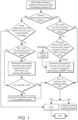
- In BMRF, the multicast packets can traverse both up and down the RPL tree. An example of BMRF is shown in
Figure 1 . Unlike Enhanced Stateless Multicast RPL Forwarding (ESMRF) described below, the multicast packet does not have to traverse all the way to the root. All the motes (sensors) in the network are aware of the topology. Thus, a multicast source can be anywhere within the network. BMRF has shown improvement in energy consumption, number of radio transmissions and end-to-end delay compared to the previous algorithms. The main idea is to choose between unicast and broadcast at the link layer based on the number of interested children and the duty cycle rate. - BMRF is disadvantageous as it uses the ContikiMAC algorithm for its radio duty cycling (RDC) and has IEEE 802.15.4 with Carrier Sense Multiple Access (CSMA) as its physical and Medium Access Control (MAC) layer. CSMA in general is non-deterministic. BMRF can also result in additional delay necessary to avoid collisions such as when waiting for a clear channel if link layer broadcast is used. In addition, if there is less interested children, bandwidth and energy are wasted. BMRF is also prone to cross-technology interference with various other technologies such as cordless phones, Wi-Fi™, Zigbee™, Bluetooth™, and microwave ovens using the 2.4 GHz Industrial Scientific Medical (ISM) band.
- Others have utilized Multicast Protocol for Low-Power and Lossy Networks (MPL), which is described in the article "Multicast Protocol For Low-Power And Lossy Networks (MPL)" by Kelsey et al., published in IETF in 2016. MPL involves controlled network-wide flooding which is governed by Trickle timers. Trickle is a mechanism that propagates state information efficiently in a periodic manner. See Levis et al., "Trickle: A Self regulating Algorithm For Code Propagation And Maintenance In Wireless Sensor Networks", In Proc. of the 1st USENIX/ACM Symp. on Networked Systems Design and Implementation, 2004; and Levis et al., "The Trickle Algorithm", IETF, Fremont, CA, Technical report, USA: RFC 6206, 2011.
- In MPL, all the motes (sensors) in the network receive the multicast packet irrespective of an interest for the packet. Then each mote (sensor) disseminates the multicast packet to its neighbors. These multicast packets need to be buffered to keep a track of whether a specific multicast packet was previously received. To help ensure that packets are received by all motes, the Trickle timer is used to schedule periodic re-transmission of these buffered packets.
- MPL is disadvantageous for both energy and bandwidth efficiency. Because of the controlled network-wide flooding of a packet, all the motes (sensors) in the network receives the multicast packet which increases the communication overhead. Control packets also need to be disseminated regularly throughout the network to keep track of the buffer state, which adds further to the communication overhead. The motes (sensors) also must maintain two trickle timers to handle the buffered packets and control messages, which increases the overall complexity, code-size, and memory requirements.
- Because all of the packets are buffered, the transmissions occupy a lot of memory. This can be problematics as the motes (sensors) generally have a limited memory, which restricts the number of packets that can be buffered and directly effects the efficiency of MPL.
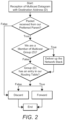
- Another example is Stateless Multicast RPL Forwarding (SMRF), which is described in "Stateless Multicast Forwarding With RPL In 6LoWPAN Sensor Networks" by Oikonomou et al., published at In Pervasive Computing and Communications Workshops (PERCOM Workshops), 2012 IEEE International Conference in 2012, as well as "IPV6 Multicast Forwarding In RPL-Based Wireless Sensor Networks" by Oikonomou et al., published in Wireless personal communications in 2013. As shown in
Figure 2 , SMRF only supports downward traffic because it enforces a preferred parent check before accepting a message. Hence, the source of a multicast communication is restricted to the root of the RPL tree. In other words, no other mote (sensor) in the low power and lossy network (LLN) can be a source. - To avoid collisions, the receiving mote (sensor) must wait for an additional period before the mote can forward the message. This results in high end-to-end latency. Furthermore, if the number of interested children is small, link layer broadcast transmission may not be the most efficient way in terms of energy. Many uninterested children would end up receiving the multicast messages.
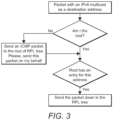
- A further example is ESMRF, which is described in "ESMRF: Enhanced Stateless Multicast RPL Forwarding For IPV6-Based Low-Power And Lossy Networks" by Fadeel et al., published in In Proceedings of the 2015 Workshop on IoT challenges in Mobile and Industrial Systems in 2015. As shown in
Figure 3 , ESMRF is disadvantageous because the multicast packet needs to traverse all the way to the root even if the DODAG tree is large and if the multicast sources and their associated group members are in each other's vicinity. This decreases the communication efficiency. The structure also creates a bottleneck at the DODAG root, especially if the DODAG tree consists of several hundred nodes. This can also create a single point of failure at the DODAG root. - In a paper titled "Standardized Protocol Stack for the Internet of (Important) Things", IEEE Communications Surveys and Tutorials, Institute of Electrical and Electronics Engineers, vol. 15, no. 3, 1 July 2013, pages 1389-1406, Palattella et al disclose a wireless communications stack for the Internet of Things (IoT).
- Thus, there is still a need for systems and methods for multicast communication using an low-power wireless network that limit the potential for duplicate packets while saving bandwidth and energy.
- According to a first aspect of the present invention, there is provided a program stored in non-transitory computer-readable storage medium according to
claim 1. According to a second aspect of the present invention, there is provided a system configured for multicast communication over an IP network between motes according to claim 6. According to a third aspect of the present invention, there is provided a method for multicast communication over an IP network using a router according to claim 10. - The inventive subject matter provides apparatus, systems and methods in which low-power wireless personal area networks (6LoWPAN) can be implemented that utilize IPv6 address space to overcome the problems identified above that occur when scaling in device addressing. To improve communication efficiency and bandwidth and energy usage, the system and methods described herein utilize multicast forwarding techniques, which reduce communication overhead.
- In general, multicast communication utilizes unicast transmissions on layer 3 (L3) or broadcast transmissions on the link layer (L2). In low-power wireless personal area networks, the protocol in the link layer (L2) is IEEE 802.15.4, and the protocol in the network layer (L3) adopts IPv6.
- It should to be understood that, while the systems and methods disclosed herein are described in connection with the IEEE 802.15.4 protocol, it is contemplated that the systems and methods disclosed herein could be used with later-developed protocols where reallocation of transmissions to subscribers of a multicast group can reduce end-to-end latency.
- A main difference between unicast and broadcast transmissions is reliability. In a unicast transmission, the sender receives an acknowledgement from the destination upon successful delivery of the packet. However, broadcast communication does not provide this feature. In terms of multicast communication, in case of a link layer unicast transmission, a duplicate is created for each of the subscribers and needs to be delivered individually to all the subscribers. This is both time and energy consuming. On the other hand, in a link layer broadcast transmission, a packet is sent out to all the subscribers once. No duplicates are created, and it is a one-time transmission. Hence, a link layer broadcast transmission saves a lot of energy and has a far lesser end-to-end latency compared to link layer unicast transmission especially in case of multiple subscribers. However, as mentioned earlier, broadcast communication suffers from reliability issues.
- Preferred embodiments utilize a modified BMRF algorithm that provides an ability to choose between link layer unicast or broadcast communication. Time Slotted Channel hopping (TSCH) is utilized at the Medium Access Control (MAC) layer instead of CSMA/CA used by BMRF to provide a deterministic solution, decrease end-to-end latency, and reduce or eliminate cross-technology interference.
- To improve the reliability of link layer broadcast transmissions, Time Division Multiple Access (TDMA) can be used to provide broadcast re-transmissions. In this manner, instead of transmitting once, a packet would be retransmitted multiple times as is the case with link layer unicast transmission. Because there are no acknowledgements in broadcast transmissions, the packet will always be retransmitted multiple times. However, to save energy, in case of a receiver, if a packet is received successfully via the broadcast mode, the remaining slots where the broadcast re-transmissions can be received are set to sleep mode. Thus, on the receiver's side, the mote would enter sleep mode right after receiving the very first packet and the subsequent retransmissions would be ignored.
- The inventive subject matter described herein has various applications. In an aircraft setting, for example, in-vehicle sensors could be divided into separate multicast groups. In such an environment, galleys could form a first multicast group, each seat class could form separate multicast groups, and on-board trolleys could be formed as separate multicast groups.
- Multicast groups could also be formed based on applications. For example, oxygen mask release at the passenger service unit could form a separate group.
- Various objects, features, aspects and advantages of the inventive subject matter will become more apparent from the following detailed description of preferred embodiments, along with the accompanying drawing figures in which like numerals represent like components.
-
-
Fig. 1 illustrates a flowchart for packet forwarding using Bidirectional Multicast RPL Forwarding. -
Fig. 2 illustrates a flowchart for packet forwarding using Stateless Multicast RPL Forwarding. -
Fig. 3 illustrates a flowchart for packet forwarding using Enhanced Stateless Multicast RPL Forwarding. -
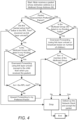
Fig. 4 illustrates a flowchart for one embodiment of a method for forwarding packets using broadcast transmission. -
Fig. 5 illustrates a flowchart for one embodiment of a method for transmission of a packet from a sender. -
Fig. 6 illustrates a flowchart for one embodiment of a method for receiving a packet. -
Fig. 7 illustrates an example of a traditional broadcast transmission method. -
Fig. 8 illustrates an example of an embodiment of a smart broadcast transmission method. - Throughout the following discussion, references may be made regarding access points, routers, servers, services, interfaces, portals, platforms, or other systems formed from computing devices. It should be appreciated that the use of such terms is deemed to represent one or more computing devices having at least one processor configured to execute software instructions stored on a computer readable tangible, non-transitory medium. For example, an access point or router can have a processor including one or more cores, and a non-transitory computer-readable storage medium, where a program is stored in the medium to execute operations or otherwise fulfill preprogrammed roles, responsibilities, or functions.
- The following discussion provides many example embodiments of the inventive subject matter. Although each embodiment represents a single combination of inventive elements, the inventive subject matter is considered to include all possible combinations of the disclosed elements. Thus if one embodiment comprises elements A, B, and C, and a second embodiment comprises elements B and D, then the inventive subject matter is also considered to include other remaining combinations of A, B, C, or D, even if not explicitly disclosed.
- Systems, processes and methods are described below are provided for power saving in a wireless communication network, where packet recipients can enter a sleep mode in which they do not receive the retransmitted packet to reduce power consumption. The inventive broadcast transmission algorithm overcomes the challenges faced the traditional broadcast mode and addresses the requirements of wireless sensors for low power and lossy networks. It substantially reduces end-to-end latency while reducing energy requirements as compared to unicast mode and to the previous research efforts described above.
-
Figure 4 illustrates an exemplary process for forwarding packets. As shown, a node (node and mote are used interchangeably herein to represent devices in the wireless sensor network) receives a packet whose destination is a multicast group address, and it is determined whether the packet was received from a preferred parent. - If the packet was received from a preferred parent, it is checked whether the multicast group is listed in the routing table. If so, the packet is forwarded downward using a link layer unicast or broadcast transmission based on the number of children and then it is checked whether the mote is a member of the multicast group. If the multicast group is not listed in the routing table, the packet is not forwarded and it is checked whether the mote is a member of the multicast group.
- If the mote is a member of the multicast group, the packet is delivered up the network stack and the packet is accepted. If not, the packet is dropped.
- If the packet was not received from a preferred parent, it is checked whether the packet arrived from below in the RPL tree (i.e. received from a link layer unicast transmission). If yes, it is checked whether the multicast group is listed in the routing table. If not, the packet is dropped.
- If the multicast group is listed in the routing table, the packet is forwarded downward using link layer unicast, except to the child from which the packet was received. It is then checked whether the mote is the RPL root. If so, it is checked if the mote is a member of the multicast group. If not, the packet is forwarded upward to the preferred parent.
- If the mote is a member of the multicast group, the packet is delivered up the network stack and the packet is accepted. If not, the packet is dropped.
- In
Figure 5 , one embodiment of a smart broadcast transmission method or process is shown, which preferably occurs over a low power wireless personal area network using time division multiple access (TDMA). In such embodiments, it is contemplated that one device periodically transmits a beacon frame, which could be the access point or other device, for example. The beacon frame provides a timing structure through the division of time into super frames, which allows motes to synchronize with the beacon and know when transmit and retransmit slots occur. Each super frame preferably includes a transmit (broadcast) slot and a preset number of retransmit slots, such as shown inFigure 8 . - The timeslots in TDMA can be classified according to functionality. There are timeslots that are new timeslots specifically for transmitting and receiving broadcast retransmissions. In case of a sender these timeslots would always be used to retransmit. However, to save energy, in case of a receiver, if a packet is received successfully via broadcast transmission, the remaining timeslots where the broadcast retransmissions can be received are set to sleep mode. Thus, on the receiver's side, the mote would enter sleep mode right after receiving the very first packet and the subsequent retransmissions would be ignored. Adding multiple re-transmissions for the broadcast mode increases the probability of a packet being successfully received at the destination. This coupled with the reduced end-to-end latency of a broadcast transmission makes it superior to the prior concepts described above.
- In the contemplated systems, processes and methods, a received packet is forwarded (transmitted) to one or more recipients, and preferably a plurality of motes, using a link layer broadcast transmission.
- The same packet is then forwarded over a retransmit timeslot to the one or more recipients using the link layer broadcast transmission until the total number of transmissions of the packet to the one or more recipients equals a preset integer. It is contemplated that the number of retransmit slots could be between one and then, and more preferably between four and six, for example. Although the specific number will likely vary depending on one or more of the number of recipients, the importance of the packet, the network topology and so forth. Once the last retransmit slot is used, the process completes.
- As shown in
Figure 6 , each recipient of the packet is configured to listen for the broadcast packet from the sender according to known timeslots for transmission and retransmission. If the packet is not received, the recipient checks whether the packet is received over a retransmit slot. This process continues until either (i) the last retransmit slot for the packet or (ii) the packet is received, whichever comes first. - Using the feature of time being divided into timeslots by TDMA, such as shown in
Figure 8 , if the packet is received prior to the last retransmit slot, the recipient sets subsequent retransmit slots meant for the reception of broadcast retransmissions for that packet to sleep mode. Thus, on the receiver's side, the mote would enter sleep mode right after receiving the very first packet and the subsequent retransmissions would be ignored. This advantageously decreases energy consumption. - The inventive concepts are further shown by comparing
Figure 7 withFigure 8 . - In traditional broadcast methods shown in
Figure 7 , a packet is transmitted to a plurality of motes in a single timeslot. Especially where there are larger numbers of recipients, the broadcast transmission typically significantly reduces end-to-end latency and energy consumption. However, as compared with unicast transmission, broadcast transmission generally has a lower reliability because, unlike in unicast transmission, the recipients do not provide an acknowledgment when they receive the packet. - In one test, the inventors found a perfect Packet Delivery Ratio (PDR) of 100% in unicast transmission compared with a PDR of 78% reliability in broadcast transmission. However, the end-to-end latency in case of the broadcast transmission was almost 30% less than that of unicast transmission. In addition, the number of radio transmissions were double in the unicast transmission example, which indicates increased energy consumption.
- To improve the reliability of broadcast transmissions, the systems, methods and processes allows retransmissions of the packet in link layer broadcast transmission. Since, broadcast transmission does not have an acknowledgment feature, the sender always retransmits a packet multiple times to increase reliability. By retransmitting packets, the reliability of the broadcast transmission is greatly improved and was shown to be comparable to that of the unicast mode. Specifically, the inventors found a PDR of 99% in broadcast transmission compared with a PDR of 100% for unicast transmission.
- Even though a sender always retransmits a packet multiple times irrespective of whether the packet was successfully delivered, the number of radio transmissions can still be less than that of unicast transmission in case of multiple multicast subscribers. Preferably, the number of transmissions in the broadcast transmission is limited to a fixed value compared to the traditional broadcast transmissions and this number remains the same irrespective of the number of subscribers.
- As used herein, and unless the context dictates otherwise, the term "coupled to" is intended to include both direct coupling (in which two elements that are coupled to each other contact each other) and indirect coupling (in which at least one additional element is located between the two elements). Therefore, the terms "coupled to" and "coupled with" are used synonymously.
- In some embodiments, the numbers expressing quantities of ingredients, properties such as concentration, reaction conditions, and so forth, used to describe and claim certain embodiments of the invention are to be understood as being modified in some instances by the term "about." Accordingly, in some embodiments, the numerical parameters set forth in the written description and attached claims are approximations that can vary depending upon the desired properties sought to be obtained by a particular embodiment. In some embodiments, the numerical parameters should be construed in light of the number of reported significant digits and by applying ordinary rounding techniques. Notwithstanding that the numerical ranges and parameters setting forth the broad scope of some embodiments of the invention are approximations, the numerical values set forth in the specific examples are reported as precisely as practicable. The numerical values presented in some embodiments of the invention may contain certain errors necessarily resulting from the standard deviation found in their respective testing measurements.
- Unless the context dictates the contrary, all ranges set forth herein should be interpreted as being inclusive of their endpoints and open-ended ranges should be interpreted to include only commercially practical values. Similarly, all lists of values should be considered as inclusive of intermediate values unless the context indicates the contrary.
- As used in the description herein and throughout the claims that follow, the meaning of "a," "an," and "the" includes plural reference unless the context clearly dictates otherwise. Also, as used in the description herein, the meaning of "in" includes "in" and "on" unless the context clearly dictates otherwise.
- The recitation of ranges of values herein is merely intended to serve as a shorthand method of referring individually to each separate value falling within the range. Unless otherwise indicated herein, each individual value with a range is incorporated into the specification as if it were individually recited herein. All methods described herein can be performed in any suitable order unless otherwise indicated herein or otherwise clearly contradicted by context. The use of any and all examples, or exemplary language (e.g. "such as") provided with respect to certain embodiments herein is intended merely to better illuminate the invention and does not pose a limitation on the scope of the invention otherwise claimed. No language in the specification should be construed as indicating any non-claimed element essential to the practice of the invention.
Claims (13)
- A program stored in non-transitory computer-readable storage medium, wherein the program executes the following operations for multicast communication over an IP network when the program is executed by one or more processors of a router, wherein the role of the router can be taken up by any mote that is part of the network topology, the operations comprising:receiving a packet at a mote;transmitting the packet to one or more recipients using a link layer broadcast transmission;re-transmitting the packet to the one or more recipients using the link layer broadcast transmission until the total number of transmissions of the packet to the one or more recipients equals a preset integer, wherein each of the one or more recipients has a set of timeslots where the packet can be received; andupon receipt of the packet by a recipient, being one of the one or more recipients, which received the transmitted packet using the link layer broadcast transmission, scheduling, for that recipient, each of the remaining timeslots for receiving retransmission of the packet to a sleep mode.
- The program of claim 1, the operations further comprising:determining whether an origin of the received packet having a multicast group address is a preferred parent of the mote;if the origin is the preferred parent, the router checking whether the multicast group address is listed in a routing table of the router;if the origin is not the preferred parent, dropping the packet;only if the multicast group address is listed in the routing table, the router forwarding the packet downward using a link layer unicast transmission or the link layer broadcast transmission as a function of the number of children;after determining whether the multicast group address is listed in the routing table, the router checking whether the mote is a member of the multicast group; andif the router determines that the mote is the member of the multicast group, delivering the packet upward.
- The program of claim 2, the operations further comprising:if the origin is not the preferred parent, the router checking whether the packet was received from below;if the router determines the packet was received from below, the router determining whether the multicast group address is listed in the routing table;if the router determines the packet was not received from below, dropping the packet;if the multicast group address is listed in the routing table, the router forwarding the packet downward using a link layer unicast transmission, but not forwarding the packet to the child from which the packet was received;determining using the router whether the mote is a root of the network topology;if the mote is the root of the RPL network, determining whether the mote is a member of a multicast group of the packet; andif the mote is not the root of the RPL network, forwarding the packet upward to the preferred parent.
- The program of claim 3, the operations further comprising:
if the mote is the member of the multicast group, forwarding the packet upward, and if not, dropping the packet. - The program of claim 1, wherein a greater value of the preset integer equals a greater reliability of each of the one or more recipients receiving the packet.
- A system configured for multicast communication over an IP network between motes, comprising:a router having a processor including one or more cores, and a memory;wherein a first mote is configured to receive a packet, and transmit the packet to one or more recipients using a link layer broadcast transmission;wherein the first mote is further configured to retransmit the packet to the one or more recipients using the link layer broadcast transmission until the total number of retransmissions of the packet to the one or more recipients equals a preset integer;a second mote, being one of the one or more recipients, which received the transmitted packet using the link layer broadcast transmission, configured to receive the packet from the first mote, and upon receipt, scheduling any remaining timeslots for receiving retransmission of the packet to a sleep mode.
- The system of claim 6, wherein the router is further configured todetermine whether an origin of the received packet having a multicast group address is a preferred parent of the first mote;if the origin is the preferred parent, the router checking whether the multicast group address is listed in a routing table of the router;if the origin is not the preferred parent, dropping the packet;only if the multicast group address is listed in the routing table, the router forwarding the packet downward using a link layer unicast transmission or the link layer broadcast transmission as a function of the number of children;after determining whether the multicast group address is listed in the routing table, the router checking whether the first mote is a member of the multicast group; andif the router determines that the first mote is the member of the multicast group, delivering the packet upward.
- The system of claim 7, wherein the router is further configured to:check whether the packet was received from below if the origin is not the preferred parent;determine whether the multicast group address is listed in the routing table if the packet was received from below;drop the packet if the packet was not received from below;transmit the packet downward using the link layer unicast transmission, but not forwarding the packet to the child from which the packet was received, if the multicast group address is listed in the routing table;determine whether the mote is a root of the RPL network;if the mote is the root of the RPL network, determine whether the mote is a member of a multicast group of the packet; andif the mote is not the root of the RPL network, transmit the packet upward to the preferred parent.
- The system of claim 8, the router is further configured to:
if the mote is the member of the multicast group, transmit the packet upward, and if not, drop the packet. - A method for multicast communication over an IP network using a router, comprising:receiving a packet at a mote;transmitting the packet to one or more recipients using a link layer broadcast transmission;re-transmitting the packet to the one or more recipients using the link layer broadcast transmission until the total number of transmissions of the packet to the one or more recipients equals a preset integer, wherein each of the one or more recipients has a set of timeslots where the packet can be received; andupon receipt of the packet by a recipient, being one of the one or more recipients, which received the transmitted packet using the link layer broadcast transmission, scheduling, for that recipient, each of the remaining timeslots for receiving retransmission of the packet to a sleep mode.
- The method of any of claims 1, 6, and 10, wherein the preset integer is between four and six, inclusive.
- The method of any of claims 1, 8, and 10, wherein the transmission occurs over a low-power wireless personal area network.
- The method of any of claims 1, 8, and 10, wherein the transmission and receipt of the packet utilizes time division multiple access.
Applications Claiming Priority (2)
| Application Number | Priority Date | Filing Date | Title |
|---|---|---|---|
| US201962880355P | 2019-07-30 | 2019-07-30 | |
| PCT/US2020/044318 WO2021022077A1 (en) | 2019-07-30 | 2020-07-30 | Systems and methods for smart broadcast for multicast communication over an ip-based tdma network |
Publications (2)
| Publication Number | Publication Date |
|---|---|
| EP4005294A1 EP4005294A1 (en) | 2022-06-01 |
| EP4005294B1 true EP4005294B1 (en) | 2025-06-04 |
Family
ID=72087291
Family Applications (2)
| Application Number | Title | Priority Date | Filing Date |
|---|---|---|---|
| EP20757161.3A Pending EP4005293A1 (en) | 2019-07-30 | 2020-07-30 | Systems and methods for allocating timeslots for unicast transmissions |
| EP20757453.4A Active EP4005294B1 (en) | 2019-07-30 | 2020-07-30 | Systems and methods for smart broadcast for multicast communication over an ip-based tdma network |
Family Applications Before (1)
| Application Number | Title | Priority Date | Filing Date |
|---|---|---|---|
| EP20757161.3A Pending EP4005293A1 (en) | 2019-07-30 | 2020-07-30 | Systems and methods for allocating timeslots for unicast transmissions |
Country Status (5)
| Country | Link |
|---|---|
| US (2) | US20220256503A1 (en) |
| EP (2) | EP4005293A1 (en) |
| JP (2) | JP7604451B2 (en) |
| CN (2) | CN114128319B (en) |
| WO (2) | WO2021022077A1 (en) |
Families Citing this family (1)
| Publication number | Priority date | Publication date | Assignee | Title |
|---|---|---|---|---|
| EP4005293A1 (en) * | 2019-07-30 | 2022-06-01 | Safran Passenger Innovations, LLC | Systems and methods for allocating timeslots for unicast transmissions |
Family Cites Families (46)
| Publication number | Priority date | Publication date | Assignee | Title |
|---|---|---|---|---|
| CA2286489C (en) * | 1993-11-01 | 2002-02-26 | Telefonaktiebolaget Lm Ericsson | Digital control channels having logical channels for multiple access radiocommunication |
| US5608726A (en) * | 1995-04-25 | 1997-03-04 | Cabletron Systems, Inc. | Network bridge with multicast forwarding table |
| CN1271485A (en) * | 1997-09-18 | 2000-10-25 | 诺基亚流动电话有限公司 | Time diversity in A TDMA system |
| US6791952B2 (en) * | 1997-10-31 | 2004-09-14 | Nortel Networks Limited | Asymmetric data access scheme |
| US6112323A (en) * | 1998-06-29 | 2000-08-29 | Microsoft Corporation | Method and computer program product for efficiently and reliably sending small data messages from a sending system to a large number of receiving systems |
| US6788702B1 (en) * | 1999-10-15 | 2004-09-07 | Nokia Wireless Routers, Inc. | Protocol for neighborhood-established transmission scheduling |
| FI110894B (en) * | 2001-07-12 | 2003-04-15 | Nowire Oy | Procedure and apparatus for utilizing position and status data |
| KR100735277B1 (en) * | 2003-07-30 | 2007-07-03 | 삼성전자주식회사 | Ranging method in broadband wireless access communication system |
| RU2333602C2 (en) * | 2004-03-18 | 2008-09-10 | Самсунг Электроникс Ко., Лтд. | Device and method of transmitting and receiving broadcast data using external coding in mobile communication system |
| CN101902695A (en) * | 2005-04-25 | 2010-12-01 | 汤姆森特许公司 | Multicast Routing Protocols in Mesh Networks |
| US8018964B2 (en) * | 2005-12-16 | 2011-09-13 | Cisco Technology, Inc. | Multicast operations using prioritized state information |
| US8077652B2 (en) * | 2006-10-03 | 2011-12-13 | Viasat, Inc. | MF-TDMA frequency hopping |
| WO2008095363A1 (en) * | 2007-02-07 | 2008-08-14 | Hangzhou H3C Technologies Co., Ltd. | A method for transmitting data in coax network and the transmission device thereof |
| US8289883B2 (en) * | 2007-12-21 | 2012-10-16 | Samsung Electronics Co., Ltd. | Hybrid multicast routing protocol for wireless mesh networks |
| CN101521625B (en) * | 2008-02-26 | 2011-04-06 | 鼎桥通信技术有限公司 | Method and equipment for distributing network transmission resource |
| US8102787B2 (en) * | 2008-06-17 | 2012-01-24 | Samsung Electronics Co., Ltd. | MAC layer timestamping approach for emerging wireless sensor platform and communication architecture |
| US8194573B1 (en) * | 2008-07-14 | 2012-06-05 | L-3 Communications, Corp. | Directional access network control system and method |
| US8363552B2 (en) * | 2008-12-12 | 2013-01-29 | Verizon Patent And Licensing Inc. | Traffic allocation |
| US8625484B2 (en) * | 2009-02-05 | 2014-01-07 | Qualcomm Incorporated | Methods and apparatus for providing fast and power efficient multicast scheme |
| CN101662798B (en) * | 2009-09-22 | 2012-06-06 | 北京科技大学 | Method for wireless sensor network to invite retransmission with low power consumption and device thereof |
| CN101707801A (en) * | 2009-11-04 | 2010-05-12 | 中国科学院上海微系统与信息技术研究所 | TDMA-based star-shaped clustering method used for wireless sensing network |
| US8559464B2 (en) * | 2010-04-30 | 2013-10-15 | International Business Machines Corporation | Synchronizing nodes of a multi-hop network |
| US8638787B2 (en) * | 2010-05-20 | 2014-01-28 | Cisco Technology, Inc. | Multicast hello on demand |
| CN102457900B (en) * | 2010-11-03 | 2016-03-23 | 上海贝尔股份有限公司 | Transmit the method and apparatus based on an IPv6 low-consumption wireless area network data bag |
| CN104378184B (en) * | 2011-06-21 | 2018-06-26 | 华为技术有限公司 | Error recovery method, access point apparatus, site apparatus and its system |
| US9288066B2 (en) * | 2011-11-10 | 2016-03-15 | Cisco Technology, Inc. | Dynamic multicast mode selection in a communication network |
| CN102612152B (en) * | 2012-02-27 | 2014-06-11 | 西北工业大学 | Ad Hoc network MAC (Media Access Control) protocol realizing method based on STDMA (Self Organizing Time Division Multiple Access) |
| WO2014021636A1 (en) * | 2012-07-31 | 2014-02-06 | 인텔렉추얼디스커버리 주식회사 | Wireless power transmission network and wireless power transmission method |
| CN102946298B (en) * | 2012-11-23 | 2015-08-19 | 电子科技大学 | Based on the data repeating method of opportunistic network coding in wireless sensor network |
| KR101412942B1 (en) * | 2012-12-21 | 2014-07-02 | 삼성전기주식회사 | Electronics shelf label system and method for operating electronics shelf label system |
| CN103369620A (en) * | 2013-06-24 | 2013-10-23 | 天津理工大学 | WSN (wireless sensor network)-oriented minimum transmission multicast routing method |
| US9226332B2 (en) * | 2013-07-10 | 2015-12-29 | Cisco Technology, Inc. | Hybrid contention mechanism for WLANs |
| WO2015080287A1 (en) * | 2013-11-29 | 2015-06-04 | 株式会社 東芝 | Communications processing device, integrated circuit, wireless communications terminal, memory card, wireless communications device, wireless communications method, and wireless communications system |
| JP6375682B2 (en) * | 2014-04-30 | 2018-08-22 | 株式会社リコー | Communication management system, communication management method, and program |
| US10136429B2 (en) | 2014-07-03 | 2018-11-20 | Lg Electronics Inc. | Method for transmitting and receiving audio data in wireless communication system supporting bluetooth communication and device therefor |
| US9854516B2 (en) * | 2014-07-31 | 2017-12-26 | Texas Instruments Incorporated | Slot skipping techniques for reduced power consumption in time slotted channel hopping MAC protocol |
| US9491196B2 (en) * | 2014-09-16 | 2016-11-08 | Gainspan Corporation | Security for group addressed data packets in wireless networks |
| CN106717031B (en) * | 2014-09-25 | 2020-06-30 | 株式会社Kt | Method and device for transmitting/receiving signal of MTC UE |
| US10172127B2 (en) * | 2014-11-06 | 2019-01-01 | Intel IP Corporation | Early termination of repeated transmissions for MTC |
| KR101802608B1 (en) * | 2015-11-18 | 2017-11-28 | 울산대학교 산학협력단 | A slot scheduling and broadcasting method for a reliable command transmission in wireless sensor networks |
| KR20180076770A (en) * | 2016-12-28 | 2018-07-06 | 부산대학교 산학협력단 | Apparatus and Method for distributed scheduling based on retransmission reservation slot in industrial wireless sensor network |
| US10771192B2 (en) * | 2017-07-31 | 2020-09-08 | Qualcomm Incorporated | Power saving in narrowband devices by early termination of decoding of communication channels |
| CN107360611A (en) * | 2017-08-18 | 2017-11-17 | 重庆金美通信有限责任公司 | Routing method for avoiding time slot conflict of TDMA (time division multiple Access) wireless network in wide area network range |
| US10916106B2 (en) * | 2017-12-26 | 2021-02-09 | Ademco Inc. | Systems and methods for efficient utilization of wireless bandwidth |
| US10812946B2 (en) * | 2018-02-22 | 2020-10-20 | Cisco Technology, Inc. | Reliable link layer multicast in a low power wide area network |
| EP4005293A1 (en) * | 2019-07-30 | 2022-06-01 | Safran Passenger Innovations, LLC | Systems and methods for allocating timeslots for unicast transmissions |
-
2020
- 2020-07-30 EP EP20757161.3A patent/EP4005293A1/en active Pending
- 2020-07-30 WO PCT/US2020/044318 patent/WO2021022077A1/en not_active Ceased
- 2020-07-30 CN CN202080048085.4A patent/CN114128319B/en active Active
- 2020-07-30 WO PCT/US2020/044340 patent/WO2021022086A1/en not_active Ceased
- 2020-07-30 EP EP20757453.4A patent/EP4005294B1/en active Active
- 2020-07-30 CN CN202080054691.7A patent/CN114175753B/en active Active
- 2020-07-30 JP JP2022506021A patent/JP7604451B2/en active Active
- 2020-07-30 JP JP2022506281A patent/JP7607025B2/en active Active
- 2020-07-30 US US17/630,082 patent/US20220256503A1/en active Pending
- 2020-07-30 US US17/630,094 patent/US11895674B2/en active Active
Non-Patent Citations (2)
| Title |
|---|
| GASTÓN LORENTE GUILLERMO ET AL: "BMRF: Bidirectional Multicast RPL Forwarding", AD HOC NETWORKS, ELSEVIER, AMSTERDAM, NL, vol. 54, 6 October 2016 (2016-10-06), pages 69 - 84, XP029815727, ISSN: 1570-8705, DOI: 10.1016/J.ADHOC.2016.10.004 * |
| GEORGE OIKONOMOU ET AL: "Stateless multicast forwarding with RPL in 6LowPAN sensor networks", PERVASIVE COMPUTING AND COMMUNICATIONS WORKSHOPS (PERCOM WORKSHOPS), 2012 IEEE INTERNATIONAL CONFERENCE ON, IEEE, 19 March 2012 (2012-03-19), pages 272 - 277, XP032179968, ISBN: 978-1-4673-0905-9, DOI: 10.1109/PERCOMW.2012.6197494 * |
Also Published As
| Publication number | Publication date |
|---|---|
| CN114128319B (en) | 2024-03-29 |
| CN114175753B (en) | 2024-09-17 |
| US20220256503A1 (en) | 2022-08-11 |
| WO2021022086A1 (en) | 2021-02-04 |
| JP7604451B2 (en) | 2024-12-23 |
| US11895674B2 (en) | 2024-02-06 |
| EP4005294A1 (en) | 2022-06-01 |
| CN114128319A (en) | 2022-03-01 |
| JP2022542422A (en) | 2022-10-03 |
| EP4005293A1 (en) | 2022-06-01 |
| WO2021022077A1 (en) | 2021-02-04 |
| US20220279441A1 (en) | 2022-09-01 |
| CN114175753A (en) | 2022-03-11 |
| JP2022542299A (en) | 2022-09-30 |
| JP7607025B2 (en) | 2024-12-26 |
Similar Documents
| Publication | Publication Date | Title |
|---|---|---|
| US8526415B2 (en) | Method and system for providing acknowledged broadcast and multicast communication | |
| Katti et al. | XORs in the air: practical wireless network coding | |
| CN102210191B (en) | For the method that the data in LAN are launched | |
| US7948991B1 (en) | Broadcast and multicast transmissions with acknowledgement scheduling | |
| EP3231244B1 (en) | Traffic advertisement in neighbor aware network (nan) data path | |
| JP2018510522A (en) | Scheduling algorithm and method for time slot channel hopping (TSCH) MAC | |
| US8755403B2 (en) | Block acknowledgement for wireless communication methods, apparatuses and systems | |
| Park et al. | Frame-type-aware static time slotted channel hopping scheduling scheme for large-scale smart metering networks | |
| Jerbi et al. | An enhanced MSU‐TSCH scheduling algorithms for industrial wireless sensor networks | |
| Bhatia et al. | TRM-MAC: A TDMA-based reliable multicast MAC protocol for WSNs with flexibility to trade-off between latency and reliability | |
| US11895674B2 (en) | Systems and methods for smart broadcast for multicast communication over an IP-based TDMA network | |
| Biswas et al. | On-demand reliable medium access in sensor networks | |
| Benfattoum et al. | QoS for real-time reliable multicasting in wireless multi-hop networks using a generation-based network coding | |
| Valle et al. | Experimental evaluation of multiple retransmission schemes in IEEE 802.15. 4 wireless sensor networks | |
| Abd El-Gawad et al. | Reliable broadcast protocol based on scheduled acknowledgments for wireless sensor networks | |
| Valle et al. | A WSN data retransmission mechanism based on network coding and cooperative relayers | |
| Morita et al. | Efficient data transmission in a lossy and resource limited wireless sensor-actuator network | |
| Chung et al. | Time slot schedule based minimum delay graph in TDMA supported wireless industrial system | |
| Naik et al. | Harvest: a reliable and energy efficient bulk data collection service for large scale wireless sensor networks | |
| Kosek-Szott et al. | CLF-MAC: A coordinated MAC protocol supporting lossy forwarding in WLANs | |
| Palacios et al. | Reverse direction transmissions and network coding for energy-efficient Wi-Fi networks | |
| Liu et al. | Feedback aggregation based retransmission scheme for multi-hop wireless networks | |
| CN110139399A (en) | A kind of mobile multi-hop ad hoc network and its network-building method | |
| Tahir et al. | Improving throughput-delay performance by merged packet routing in wirelessly controlled interactive power networks | |
| Bhatia et al. | A TDMA-Based Energy Aware MAC (TEA-MAC) protocol for reliable multicast in WSNs |
Legal Events
| Date | Code | Title | Description |
|---|---|---|---|
| STAA | Information on the status of an ep patent application or granted ep patent |
Free format text: STATUS: UNKNOWN |
|
| STAA | Information on the status of an ep patent application or granted ep patent |
Free format text: STATUS: THE INTERNATIONAL PUBLICATION HAS BEEN MADE |
|
| PUAI | Public reference made under article 153(3) epc to a published international application that has entered the european phase |
Free format text: ORIGINAL CODE: 0009012 |
|
| STAA | Information on the status of an ep patent application or granted ep patent |
Free format text: STATUS: REQUEST FOR EXAMINATION WAS MADE |
|
| 17P | Request for examination filed |
Effective date: 20211222 |
|
| AK | Designated contracting states |
Kind code of ref document: A1 Designated state(s): AL AT BE BG CH CY CZ DE DK EE ES FI FR GB GR HR HU IE IS IT LI LT LU LV MC MK MT NL NO PL PT RO RS SE SI SK SM TR |
|
| DAV | Request for validation of the european patent (deleted) | ||
| DAX | Request for extension of the european patent (deleted) | ||
| GRAP | Despatch of communication of intention to grant a patent |
Free format text: ORIGINAL CODE: EPIDOSNIGR1 |
|
| STAA | Information on the status of an ep patent application or granted ep patent |
Free format text: STATUS: GRANT OF PATENT IS INTENDED |
|
| INTG | Intention to grant announced |
Effective date: 20250210 |
|
| GRAS | Grant fee paid |
Free format text: ORIGINAL CODE: EPIDOSNIGR3 |
|
| GRAA | (expected) grant |
Free format text: ORIGINAL CODE: 0009210 |
|
| STAA | Information on the status of an ep patent application or granted ep patent |
Free format text: STATUS: THE PATENT HAS BEEN GRANTED |
|
| AK | Designated contracting states |
Kind code of ref document: B1 Designated state(s): AL AT BE BG CH CY CZ DE DK EE ES FI FR GB GR HR HU IE IS IT LI LT LU LV MC MK MT NL NO PL PT RO RS SE SI SK SM TR |
|
| REG | Reference to a national code |
Ref country code: GB Ref legal event code: FG4D |
|
| REG | Reference to a national code |
Ref country code: CH Ref legal event code: EP |
|
| REG | Reference to a national code |
Ref country code: DE Ref legal event code: R096 Ref document number: 602020052307 Country of ref document: DE |
|
| REG | Reference to a national code |
Ref country code: IE Ref legal event code: FG4D |
|
| REG | Reference to a national code |
Ref country code: NL Ref legal event code: MP Effective date: 20250604 |
|
| PG25 | Lapsed in a contracting state [announced via postgrant information from national office to epo] |
Ref country code: FI Free format text: LAPSE BECAUSE OF FAILURE TO SUBMIT A TRANSLATION OF THE DESCRIPTION OR TO PAY THE FEE WITHIN THE PRESCRIBED TIME-LIMIT Effective date: 20250604 Ref country code: ES Free format text: LAPSE BECAUSE OF FAILURE TO SUBMIT A TRANSLATION OF THE DESCRIPTION OR TO PAY THE FEE WITHIN THE PRESCRIBED TIME-LIMIT Effective date: 20250604 |
|
| PGFP | Annual fee paid to national office [announced via postgrant information from national office to epo] |
Ref country code: DE Payment date: 20250730 Year of fee payment: 6 |
|
| REG | Reference to a national code |
Ref country code: LT Ref legal event code: MG9D |
|
| PG25 | Lapsed in a contracting state [announced via postgrant information from national office to epo] |
Ref country code: NO Free format text: LAPSE BECAUSE OF FAILURE TO SUBMIT A TRANSLATION OF THE DESCRIPTION OR TO PAY THE FEE WITHIN THE PRESCRIBED TIME-LIMIT Effective date: 20250904 Ref country code: GR Free format text: LAPSE BECAUSE OF FAILURE TO SUBMIT A TRANSLATION OF THE DESCRIPTION OR TO PAY THE FEE WITHIN THE PRESCRIBED TIME-LIMIT Effective date: 20250905 |
|
| PG25 | Lapsed in a contracting state [announced via postgrant information from national office to epo] |
Ref country code: PL Free format text: LAPSE BECAUSE OF FAILURE TO SUBMIT A TRANSLATION OF THE DESCRIPTION OR TO PAY THE FEE WITHIN THE PRESCRIBED TIME-LIMIT Effective date: 20250604 |
|
| PG25 | Lapsed in a contracting state [announced via postgrant information from national office to epo] |
Ref country code: BG Free format text: LAPSE BECAUSE OF FAILURE TO SUBMIT A TRANSLATION OF THE DESCRIPTION OR TO PAY THE FEE WITHIN THE PRESCRIBED TIME-LIMIT Effective date: 20250604 |
|
| PGFP | Annual fee paid to national office [announced via postgrant information from national office to epo] |
Ref country code: GB Payment date: 20250730 Year of fee payment: 6 |
|
| PG25 | Lapsed in a contracting state [announced via postgrant information from national office to epo] |
Ref country code: HR Free format text: LAPSE BECAUSE OF FAILURE TO SUBMIT A TRANSLATION OF THE DESCRIPTION OR TO PAY THE FEE WITHIN THE PRESCRIBED TIME-LIMIT Effective date: 20250604 |
|
| PGFP | Annual fee paid to national office [announced via postgrant information from national office to epo] |
Ref country code: FR Payment date: 20250730 Year of fee payment: 6 |
|
| PG25 | Lapsed in a contracting state [announced via postgrant information from national office to epo] |
Ref country code: RS Free format text: LAPSE BECAUSE OF FAILURE TO SUBMIT A TRANSLATION OF THE DESCRIPTION OR TO PAY THE FEE WITHIN THE PRESCRIBED TIME-LIMIT Effective date: 20250904 |
|
| PG25 | Lapsed in a contracting state [announced via postgrant information from national office to epo] |
Ref country code: LV Free format text: LAPSE BECAUSE OF FAILURE TO SUBMIT A TRANSLATION OF THE DESCRIPTION OR TO PAY THE FEE WITHIN THE PRESCRIBED TIME-LIMIT Effective date: 20250604 |
|
| PG25 | Lapsed in a contracting state [announced via postgrant information from national office to epo] |
Ref country code: NL Free format text: LAPSE BECAUSE OF FAILURE TO SUBMIT A TRANSLATION OF THE DESCRIPTION OR TO PAY THE FEE WITHIN THE PRESCRIBED TIME-LIMIT Effective date: 20250604 |
|
| PG25 | Lapsed in a contracting state [announced via postgrant information from national office to epo] |
Ref country code: PT Free format text: LAPSE BECAUSE OF FAILURE TO SUBMIT A TRANSLATION OF THE DESCRIPTION OR TO PAY THE FEE WITHIN THE PRESCRIBED TIME-LIMIT Effective date: 20251006 |
|
| REG | Reference to a national code |
Ref country code: AT Ref legal event code: MK05 Ref document number: 1801563 Country of ref document: AT Kind code of ref document: T Effective date: 20250604 |
|
| PG25 | Lapsed in a contracting state [announced via postgrant information from national office to epo] |
Ref country code: IS Free format text: LAPSE BECAUSE OF FAILURE TO SUBMIT A TRANSLATION OF THE DESCRIPTION OR TO PAY THE FEE WITHIN THE PRESCRIBED TIME-LIMIT Effective date: 20251004 |
|
| PG25 | Lapsed in a contracting state [announced via postgrant information from national office to epo] |
Ref country code: SM Free format text: LAPSE BECAUSE OF FAILURE TO SUBMIT A TRANSLATION OF THE DESCRIPTION OR TO PAY THE FEE WITHIN THE PRESCRIBED TIME-LIMIT Effective date: 20250604 Ref country code: AT Free format text: LAPSE BECAUSE OF FAILURE TO SUBMIT A TRANSLATION OF THE DESCRIPTION OR TO PAY THE FEE WITHIN THE PRESCRIBED TIME-LIMIT Effective date: 20250604 |
|
| PG25 | Lapsed in a contracting state [announced via postgrant information from national office to epo] |
Ref country code: CZ Free format text: LAPSE BECAUSE OF FAILURE TO SUBMIT A TRANSLATION OF THE DESCRIPTION OR TO PAY THE FEE WITHIN THE PRESCRIBED TIME-LIMIT Effective date: 20250604 |
|
| PG25 | Lapsed in a contracting state [announced via postgrant information from national office to epo] |
Ref country code: EE Free format text: LAPSE BECAUSE OF FAILURE TO SUBMIT A TRANSLATION OF THE DESCRIPTION OR TO PAY THE FEE WITHIN THE PRESCRIBED TIME-LIMIT Effective date: 20250604 |
|
| PG25 | Lapsed in a contracting state [announced via postgrant information from national office to epo] |
Ref country code: SK Free format text: LAPSE BECAUSE OF FAILURE TO SUBMIT A TRANSLATION OF THE DESCRIPTION OR TO PAY THE FEE WITHIN THE PRESCRIBED TIME-LIMIT Effective date: 20250604 Ref country code: RO Free format text: LAPSE BECAUSE OF FAILURE TO SUBMIT A TRANSLATION OF THE DESCRIPTION OR TO PAY THE FEE WITHIN THE PRESCRIBED TIME-LIMIT Effective date: 20250604 |
|
| PG25 | Lapsed in a contracting state [announced via postgrant information from national office to epo] |
Ref country code: IT Free format text: LAPSE BECAUSE OF FAILURE TO SUBMIT A TRANSLATION OF THE DESCRIPTION OR TO PAY THE FEE WITHIN THE PRESCRIBED TIME-LIMIT Effective date: 20250604 |
|
| REG | Reference to a national code |
Ref country code: CH Ref legal event code: H13 Free format text: ST27 STATUS EVENT CODE: U-0-0-H10-H13 (AS PROVIDED BY THE NATIONAL OFFICE) Effective date: 20260224 |
|
| REG | Reference to a national code |
Ref country code: DE Ref legal event code: R097 Ref document number: 602020052307 Country of ref document: DE |
|
| PG25 | Lapsed in a contracting state [announced via postgrant information from national office to epo] |
Ref country code: LU Free format text: LAPSE BECAUSE OF NON-PAYMENT OF DUE FEES Effective date: 20250730 |
|
| REG | Reference to a national code |
Ref country code: BE Ref legal event code: MM Effective date: 20250731 |
|
| PG25 | Lapsed in a contracting state [announced via postgrant information from national office to epo] |
Ref country code: MC Free format text: LAPSE BECAUSE OF FAILURE TO SUBMIT A TRANSLATION OF THE DESCRIPTION OR TO PAY THE FEE WITHIN THE PRESCRIBED TIME-LIMIT Effective date: 20250604 |
|
| PLBE | No opposition filed within time limit |
Free format text: ORIGINAL CODE: 0009261 |
|
| STAA | Information on the status of an ep patent application or granted ep patent |
Free format text: STATUS: NO OPPOSITION FILED WITHIN TIME LIMIT |
|
| PG25 | Lapsed in a contracting state [announced via postgrant information from national office to epo] |
Ref country code: DK Free format text: LAPSE BECAUSE OF FAILURE TO SUBMIT A TRANSLATION OF THE DESCRIPTION OR TO PAY THE FEE WITHIN THE PRESCRIBED TIME-LIMIT Effective date: 20250604 |
|
| PG25 | Lapsed in a contracting state [announced via postgrant information from national office to epo] |
Ref country code: BE Free format text: LAPSE BECAUSE OF NON-PAYMENT OF DUE FEES Effective date: 20250731 |
|
| REG | Reference to a national code |
Ref country code: CH Ref legal event code: L10 Free format text: ST27 STATUS EVENT CODE: U-0-0-L10-L00 (AS PROVIDED BY THE NATIONAL OFFICE) Effective date: 20260416 |
|
| PG25 | Lapsed in a contracting state [announced via postgrant information from national office to epo] |
Ref country code: CH Free format text: LAPSE BECAUSE OF NON-PAYMENT OF DUE FEES Effective date: 20250731 |
|
| 26N | No opposition filed |
Effective date: 20260305 |