EP4001461A2 - Method of producing hydrogen from alcoholic beverage factory wastewater using microbial electrolysis cell - Google Patents
Method of producing hydrogen from alcoholic beverage factory wastewater using microbial electrolysis cell Download PDFInfo
- Publication number
- EP4001461A2 EP4001461A2 EP21205632.9A EP21205632A EP4001461A2 EP 4001461 A2 EP4001461 A2 EP 4001461A2 EP 21205632 A EP21205632 A EP 21205632A EP 4001461 A2 EP4001461 A2 EP 4001461A2
- Authority
- EP
- European Patent Office
- Prior art keywords
- hydrogen
- alcoholic beverage
- electrolysis cell
- factory wastewater
- microbial
- Prior art date
- Legal status (The legal status is an assumption and is not a legal conclusion. Google has not performed a legal analysis and makes no representation as to the accuracy of the status listed.)
- Withdrawn
Links
Images

Classifications
-
- C—CHEMISTRY; METALLURGY
- C25—ELECTROLYTIC OR ELECTROPHORETIC PROCESSES; APPARATUS THEREFOR
- C25B—ELECTROLYTIC OR ELECTROPHORETIC PROCESSES FOR THE PRODUCTION OF COMPOUNDS OR NON-METALS; APPARATUS THEREFOR
- C25B11/00—Electrodes; Manufacture thereof not otherwise provided for
- C25B11/04—Electrodes; Manufacture thereof not otherwise provided for characterised by the material
- C25B11/051—Electrodes formed of electrocatalysts on a substrate or carrier
- C25B11/052—Electrodes comprising one or more electrocatalytic coatings on a substrate
-
- C—CHEMISTRY; METALLURGY
- C02—TREATMENT OF WATER, WASTE WATER, SEWAGE, OR SLUDGE
- C02F—TREATMENT OF WATER, WASTE WATER, SEWAGE, OR SLUDGE
- C02F3/00—Biological treatment of water, waste water, or sewage
- C02F3/005—Combined electrochemical biological processes
-
- C—CHEMISTRY; METALLURGY
- C12—BIOCHEMISTRY; BEER; SPIRITS; WINE; VINEGAR; MICROBIOLOGY; ENZYMOLOGY; MUTATION OR GENETIC ENGINEERING
- C12N—MICROORGANISMS OR ENZYMES; COMPOSITIONS THEREOF; PROPAGATING, PRESERVING, OR MAINTAINING MICROORGANISMS; MUTATION OR GENETIC ENGINEERING; CULTURE MEDIA
- C12N13/00—Treatment of microorganisms or enzymes with electrical or wave energy, e.g. magnetism, sonic waves
-
- C—CHEMISTRY; METALLURGY
- C12—BIOCHEMISTRY; BEER; SPIRITS; WINE; VINEGAR; MICROBIOLOGY; ENZYMOLOGY; MUTATION OR GENETIC ENGINEERING
- C12P—FERMENTATION OR ENZYME-USING PROCESSES TO SYNTHESISE A DESIRED CHEMICAL COMPOUND OR COMPOSITION OR TO SEPARATE OPTICAL ISOMERS FROM A RACEMIC MIXTURE
- C12P3/00—Preparation of elements or inorganic compounds except carbon dioxide
-
- C—CHEMISTRY; METALLURGY
- C25—ELECTROLYTIC OR ELECTROPHORETIC PROCESSES; APPARATUS THEREFOR
- C25B—ELECTROLYTIC OR ELECTROPHORETIC PROCESSES FOR THE PRODUCTION OF COMPOUNDS OR NON-METALS; APPARATUS THEREFOR
- C25B1/00—Electrolytic production of inorganic compounds or non-metals
- C25B1/01—Products
- C25B1/02—Hydrogen or oxygen
-
- C—CHEMISTRY; METALLURGY
- C25—ELECTROLYTIC OR ELECTROPHORETIC PROCESSES; APPARATUS THEREFOR
- C25B—ELECTROLYTIC OR ELECTROPHORETIC PROCESSES FOR THE PRODUCTION OF COMPOUNDS OR NON-METALS; APPARATUS THEREFOR
- C25B1/00—Electrolytic production of inorganic compounds or non-metals
- C25B1/50—Processes
-
- C—CHEMISTRY; METALLURGY
- C25—ELECTROLYTIC OR ELECTROPHORETIC PROCESSES; APPARATUS THEREFOR
- C25B—ELECTROLYTIC OR ELECTROPHORETIC PROCESSES FOR THE PRODUCTION OF COMPOUNDS OR NON-METALS; APPARATUS THEREFOR
- C25B11/00—Electrodes; Manufacture thereof not otherwise provided for
- C25B11/02—Electrodes; Manufacture thereof not otherwise provided for characterised by shape or form
-
- C—CHEMISTRY; METALLURGY
- C25—ELECTROLYTIC OR ELECTROPHORETIC PROCESSES; APPARATUS THEREFOR
- C25B—ELECTROLYTIC OR ELECTROPHORETIC PROCESSES FOR THE PRODUCTION OF COMPOUNDS OR NON-METALS; APPARATUS THEREFOR
- C25B11/00—Electrodes; Manufacture thereof not otherwise provided for
- C25B11/04—Electrodes; Manufacture thereof not otherwise provided for characterised by the material
-
- C—CHEMISTRY; METALLURGY
- C25—ELECTROLYTIC OR ELECTROPHORETIC PROCESSES; APPARATUS THEREFOR
- C25B—ELECTROLYTIC OR ELECTROPHORETIC PROCESSES FOR THE PRODUCTION OF COMPOUNDS OR NON-METALS; APPARATUS THEREFOR
- C25B11/00—Electrodes; Manufacture thereof not otherwise provided for
- C25B11/04—Electrodes; Manufacture thereof not otherwise provided for characterised by the material
- C25B11/051—Electrodes formed of electrocatalysts on a substrate or carrier
- C25B11/055—Electrodes formed of electrocatalysts on a substrate or carrier characterised by the substrate or carrier material
- C25B11/057—Electrodes formed of electrocatalysts on a substrate or carrier characterised by the substrate or carrier material consisting of a single element or compound
- C25B11/065—Carbon
-
- C—CHEMISTRY; METALLURGY
- C25—ELECTROLYTIC OR ELECTROPHORETIC PROCESSES; APPARATUS THEREFOR
- C25B—ELECTROLYTIC OR ELECTROPHORETIC PROCESSES FOR THE PRODUCTION OF COMPOUNDS OR NON-METALS; APPARATUS THEREFOR
- C25B11/00—Electrodes; Manufacture thereof not otherwise provided for
- C25B11/04—Electrodes; Manufacture thereof not otherwise provided for characterised by the material
- C25B11/051—Electrodes formed of electrocatalysts on a substrate or carrier
- C25B11/073—Electrodes formed of electrocatalysts on a substrate or carrier characterised by the electrocatalyst material
- C25B11/075—Electrodes formed of electrocatalysts on a substrate or carrier characterised by the electrocatalyst material consisting of a single catalytic element or catalytic compound
- C25B11/085—Organic compound
-
- H—ELECTRICITY
- H01—ELECTRIC ELEMENTS
- H01M—PROCESSES OR MEANS, e.g. BATTERIES, FOR THE DIRECT CONVERSION OF CHEMICAL ENERGY INTO ELECTRICAL ENERGY
- H01M10/00—Secondary cells; Manufacture thereof
- H01M10/42—Methods or arrangements for servicing or maintenance of secondary cells or secondary half-cells
- H01M10/48—Accumulators combined with arrangements for measuring, testing or indicating the condition of cells, e.g. the level or density of the electrolyte
-
- H—ELECTRICITY
- H01—ELECTRIC ELEMENTS
- H01M—PROCESSES OR MEANS, e.g. BATTERIES, FOR THE DIRECT CONVERSION OF CHEMICAL ENERGY INTO ELECTRICAL ENERGY
- H01M8/00—Fuel cells; Manufacture thereof
- H01M8/16—Biochemical fuel cells, i.e. cells in which microorganisms function as catalysts
-
- C—CHEMISTRY; METALLURGY
- C02—TREATMENT OF WATER, WASTE WATER, SEWAGE, OR SLUDGE
- C02F—TREATMENT OF WATER, WASTE WATER, SEWAGE, OR SLUDGE
- C02F1/00—Treatment of water, waste water, or sewage
- C02F1/66—Treatment of water, waste water, or sewage by neutralisation; pH adjustment
-
- C—CHEMISTRY; METALLURGY
- C02—TREATMENT OF WATER, WASTE WATER, SEWAGE, OR SLUDGE
- C02F—TREATMENT OF WATER, WASTE WATER, SEWAGE, OR SLUDGE
- C02F2103/00—Nature of the water, waste water, sewage or sludge to be treated
- C02F2103/32—Nature of the water, waste water, sewage or sludge to be treated from the food or foodstuff industry, e.g. brewery waste waters
-
- C—CHEMISTRY; METALLURGY
- C02—TREATMENT OF WATER, WASTE WATER, SEWAGE, OR SLUDGE
- C02F—TREATMENT OF WATER, WASTE WATER, SEWAGE, OR SLUDGE
- C02F2201/00—Apparatus for treatment of water, waste water or sewage
- C02F2201/46—Apparatus for electrochemical processes
- C02F2201/461—Electrolysis apparatus
- C02F2201/46105—Details relating to the electrolytic devices
- C02F2201/4612—Controlling or monitoring
- C02F2201/46125—Electrical variables
- C02F2201/46135—Voltage
-
- C—CHEMISTRY; METALLURGY
- C02—TREATMENT OF WATER, WASTE WATER, SEWAGE, OR SLUDGE
- C02F—TREATMENT OF WATER, WASTE WATER, SEWAGE, OR SLUDGE
- C02F2209/00—Controlling or monitoring parameters in water treatment
- C02F2209/06—Controlling or monitoring parameters in water treatment pH
-
- Y—GENERAL TAGGING OF NEW TECHNOLOGICAL DEVELOPMENTS; GENERAL TAGGING OF CROSS-SECTIONAL TECHNOLOGIES SPANNING OVER SEVERAL SECTIONS OF THE IPC; TECHNICAL SUBJECTS COVERED BY FORMER USPC CROSS-REFERENCE ART COLLECTIONS [XRACs] AND DIGESTS
- Y02—TECHNOLOGIES OR APPLICATIONS FOR MITIGATION OR ADAPTATION AGAINST CLIMATE CHANGE
- Y02E—REDUCTION OF GREENHOUSE GAS [GHG] EMISSIONS, RELATED TO ENERGY GENERATION, TRANSMISSION OR DISTRIBUTION
- Y02E60/00—Enabling technologies; Technologies with a potential or indirect contribution to GHG emissions mitigation
- Y02E60/10—Energy storage using batteries
-
- Y—GENERAL TAGGING OF NEW TECHNOLOGICAL DEVELOPMENTS; GENERAL TAGGING OF CROSS-SECTIONAL TECHNOLOGIES SPANNING OVER SEVERAL SECTIONS OF THE IPC; TECHNICAL SUBJECTS COVERED BY FORMER USPC CROSS-REFERENCE ART COLLECTIONS [XRACs] AND DIGESTS
- Y02—TECHNOLOGIES OR APPLICATIONS FOR MITIGATION OR ADAPTATION AGAINST CLIMATE CHANGE
- Y02E—REDUCTION OF GREENHOUSE GAS [GHG] EMISSIONS, RELATED TO ENERGY GENERATION, TRANSMISSION OR DISTRIBUTION
- Y02E60/00—Enabling technologies; Technologies with a potential or indirect contribution to GHG emissions mitigation
- Y02E60/30—Hydrogen technology
- Y02E60/50—Fuel cells
Definitions
- the present invention relates to a method of producing hydrogen from alcoholic beverage factory wastewater using a microbial electrolysis cell, and more particularly to a technique capable of increasing hydrogen production yield and production purity using a microbial electrolysis cell, in which hydrogen is produced by forming a biofilm on an anode and applying an appropriate external voltage to the pretreated alcoholic beverage factory wastewater.
- a microbial electrolysis cell (MEC) is attracting attention. Briefly explaining the principle of operation of the microbial electrolysis cell, organic material is oxidized in the microbial electrolysis cell, electrons are transferred to an anode, the electrons at the anode are transferred to a cathode when an external voltage is applied to a circuit, and then the electrons at the cathode reduce protons, thereby generating hydrogen gas.
- a microbial electrolysis cell requires the supply of a small amount of electrical energy in order for the hydrogen production reaction to occur at the cathode, like a water electrolysis cell.
- the microbial electrolysis cell uses electrical energy in a very small amount compared to the water electrolysis cell because wastewater may be used as an additional energy source due to the presence of electroactive microorganisms at the anode.
- wastewater may be used as an additional energy source due to the presence of electroactive microorganisms at the anode.
- the substrate for microorganisms is acetate, if an external voltage of only about 0.11 V is applied, it is theoretically possible to produce hydrogen at the same time as wastewater treatment.
- Patent Document 1 Korean Patent Application Publication No. 10-2019-0071222 (published on June 24, 2019 )
- the present invention has been made keeping in mind the problems encountered in the related art, and an object of the present invention is to provide a microbial electrolysis technique in which impurities such as methane or carbon dioxide are not generated even after use for a long time.
- Another object of the present invention is to provide a method of producing hydrogen from alcoholic beverage factory wastewater at the same time as purifying the alcoholic beverage factory wastewater.
- the present invention provides a method of producing hydrogen using a microbial electrolysis cell including forming a biofilm on the anode of a microbial fuel cell, pretreating alcoholic beverage factory wastewater, converting the microbial fuel cell on which the biofilm is formed into a microbial electrolysis cell, and generating hydrogen by supplying the pretreated alcoholic beverage factory wastewater to the microbial electrolysis cell and applying an external voltage thereto.
- the forming the biofilm may include filling the microbial fuel cell with an inoculation solution containing microorganisms, connecting respective ends of a resistor to the anode and the cathode of the microbial fuel cell and measuring a voltage, and replacing the inoculation solution with a new inoculation solution at least once until a constant voltage is established.
- the inoculation solution may be prepared by mixing a phosphate buffer saline solution in which sodium acetate is dissolved with activated sludge containing microorganisms at a ratio of 8:2.
- the pretreating the alcoholic beverage factory wastewater may include neutralizing the alcoholic beverage factory wastewater to a pH close to 7, subjecting the alcoholic beverage factory wastewater to aeration with nitrogen gas to remove dissolved oxygen, and subjecting the alcoholic beverage factory wastewater to aeration with a sterilizing gas to suppress methanogenesis by methanogens.
- the generating the hydrogen may include supplying, as a substrate, a 50 mM PBS solution containing 1 g/L sodium acetate until current and hydrogen gas are stably generated at preset levels and supplying the pretreated alcoholic beverage factory wastewater as a substrate when the generation of current and hydrogen gas is stabilized.
- Hydrogen may be produced by applying an external voltage of 0.8 V to 1.2 V to the microbial electrolysis cell.
- the present invention pertains to a method of producing hydrogen from alcoholic beverage factory wastewater using a single-chamber microbial electrolysis cell.
- alcoholic beverage factory wastewater refers to wastewater remaining after production of alcoholic beverage in a factory producing any one liquor of wine, champagne, liqueur, whiskey, cognac, vodka, tequila, and soju.
- Hydrogen production through anaerobic fermentation of microorganisms is a spontaneous reaction, but due to the nature of fermentation, it is difficult to completely oxidize the substrate, so it is common for hydrogen to be produced in an amount smaller than the amount of hydrogen capable of being produced in theory.
- a maximum of 4 moles of hydrogen gas may be produced from 1 mole of glucose through a fermentation process, but in reality, not only hydrogen but also various byproducts such as organic acids and the like due to microorganisms are produced based on 1 mole of glucose, so a smaller amount of hydrogen is generated compared to the theoretical amount.
- microorganisms including methanogens exist at the anode.
- Methanogenesis by microorganisms is caused by hydrolysis of acetate used as a substrate, or by coupling hydrogen produced at the cathode with carbon dioxide generated by decomposition of the substrate.
- microorganisms responsible for decomposing the substrate and sending electrons to the anode form a colony on the surface of the anode.
- the composition of the colony may be changed by the microorganisms contained in the wastewater.
- the electrical activity of the microbial colony is inhibited at the anode, so the hydrogen production yield and production rate of the microbial electrolysis cell decrease, and the substrate decomposition rate is also slow.
- methanogens that may be present in wastewater may proliferate in large amounts and generate methane gas using the substrate or using the produced hydrogen.
- the methane gas thus generated further inhibits the production of hydrogen in the microbial electrolysis cell.
- FIG. 1 is a flowchart showing the process of producing hydrogen using a microbial electrolysis cell according to an embodiment.
- the method of producing hydrogen according to an embodiment includes forming a biofilm (100), pretreating alcoholic beverage factory wastewater (200), and producing hydrogen (300).
- an electroactive microbial colony biofilm is first formed on the anode.
- the microbial electrolysis cell of the present invention operates as a microbial fuel cell using an air cathode in order to form a biofilm.
- a mixture of a 50 mM PBS solution containing 1 g/L sodium acetate with activated sludge previously collected from a sewage treatment plant is supplied until a constant reference voltage is established across an external resistance of 1 kQ.
- Wastewater collected from alcoholic beverage factories is typically strongly basic and thus has to be neutralized to a pH of about 7.
- alcoholic beverage factory wastewater has to be aerated with nitrogen gas for a predetermined period of time in order to remove dissolved oxygen therefrom, and also with a sterilizing gas such as acetylene gas for a predetermined period of time in order to suppress methanogenesis by methanogens.
- the air cathode of the microbial fuel cell is converted into a cathode having a proton reduction catalyst, and an external voltage is applied thereto, so the microbial fuel cell operates as a microbial electrolysis cell. Then, a 50 mM PBS solution containing 1 g/L sodium acetate is supplied as a substrate until electricity and hydrogen gas are stably generated in the state in which the external voltage is applied.
- the alcoholic beverage factory wastewater prepared above is supplied thereto.
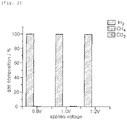
- FIG. 2 is a graph showing the proportions of gases that are produced at different applied voltages in the microbial electrolysis cell of the present embodiment
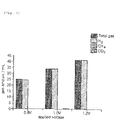
- FIG. 3 is a graph showing the amounts of gases that are produced at different applied voltages in the microbial electrolysis cell according to the embodiment of FIG. 2 .
- the microbial electrolysis cell has a shape of a horizontal cylinder having a length of 5 cm and a diameter of 3 cm with a capacity of 24 mL.
- the anode is a carbon fiber brush having a length of 2.5 cm and a diameter of 2.5 cm, particularly a cylindrical brush in which carbon fiber is fixed by twisting stainless steel wire, and is located at one end of the cylinder.
- the carbon fiber brush electrode exhibits an increased specific surface area so as to enable adhesion and growth of a large number of electroactive microorganisms.
- a hole was made in an acrylic plate and the stainless-steel wire having carbon fiber fixed thereto was inserted into the hole and fixed with an epoxy resin.
- an air cathode in which a Pt/C catalyst was fixed on one surface of carbon cloth using a Nafion binder and 4 layers of air diffusion were formed with a Teflon solution on the remaining surface thereof, was used.
- the apparent surface area of the cathode was 7.07 cm 2 .
- the cathode was fixed at a position opposite the anode of the cylinder with a plate having a hole having a diameter of 2.5 cm in the center thereof and an O-ring so as to prevent leakage of the electrolyte and enable the inflow of outdoor air through the electrode during the initial period of forming a constant voltage.
- the plate having a hole was replaced with an acrylic plate having no hole in order to block the inflow of outdoor air.
- a small cylinder which was sealed with a rubber stopper to collect the generated gas, was fixed in the manner of a screw cap so that gas collection and substrate exchange were possible.
- Activated sludge was collected from a sewage treatment plant configured to treat domestic sewage, as a microbial inoculum for the microbial electrolysis cell, and was then stored in a refrigerator at 4°C. Thereafter, an inoculation solution was prepared by mixing the collected activated sludge with a 50 mM phosphate buffer saline solution in which sodium acetate was dissolved at a concentration of 1 g/L at a ratio of 2:8.
- the inoculation solution prepared as described above was placed in the microbial electrolysis cell, and a 1 k ⁇ resistor was connected at respective ends to the anode and to the cathode using an external conductor.
- the inoculation solution was exchanged periodically until a predetermined level of reference voltage was established.
- soju wastewater collected from the water treatment plant of the soju factory had a basic pH of 11 to 12.51, the pH thereof was changed to a neutral pH of 7 by gradually adding 50 mM of sodium phosphate monobasic and sodium phosphate dibasic to the soju wastewater.
- a 1 k ⁇ resistor was connected at respective ends to the two electrodes of the microbial electrolysis cell, and the inoculation solution was supplied batchwise until a constant voltage was established in the cell. After a predetermined reference voltage was established, the acrylic plate having a hole, which fixes the cathode, was replaced with an acrylic plate having no hole in order to block the inflow of outdoor air.
- the microbial fuel cell When a biofilm was formed on the anode, the microbial fuel cell was converted into a microbial electrolysis cell, and a constant voltage was applied to the cell by connecting the microbial electrolysis cell to a power supply. Then, a 50 mM PBS solution containing 1 g/L sodium acetate was supplied as a substrate until electricity and hydrogen gas were stably generated.
- the pretreated soju wastewater was introduced, and then the output current was measured.
- hydrogen produced using the microbial electrolysis cell was captured through a silicone tube by performing water displacement by inserting a measuring cylinder filled with water upside down into a water tank filled with water.
- the amount of gas that was produced and captured was determined using the volume captured in the measuring cylinder, and the volume of each gas was calculated by multiplying the total gas volume by the proportion of each component using gas chromatography.
- the performance of the microbial electrolysis cell was determined by calculating the coulombic efficiency (CE), cathodic hydrogen recovery (CHR), overall hydrogen recovery (OHR), hydrogen production rate (HPR), and hydrogen yield (Y H2 ), and the calculated results were compared at different applied voltages.
- the coulombic efficiency is the ratio of the theoretical electric charge from the added substrate to the actual electric charge flowing through the external conductor, showing how much of the substrate was converted into the current.
- the coulombic efficiency was calculated using [Equation 1] below.
- I is the magnitude of the electric charge flowing over time when integrated with the amount of time for which current flows.
- v cell and COD are the volume of the substrate placed in the cell and chemical oxygen demand, respectively.
- 12.06 is the magnitude of the electric charge required to reduce 1 mg of oxygen into water.
- the cathodic hydrogen recovery is the ratio of the calculated number of moles of hydrogen to the number of moles of hydrogen captured at the measured current, showing how much hydrogen was generated at the measured current.
- the cathodic hydrogen recovery was calculated using [Equation 2] below.
- ⁇ H2 is the volume of captured hydrogen
- P is the pressure of captured gas
- F is the Faraday constant
- R is the gas constant
- T is the gas temperature relative to absolute temperature.
- the overall hydrogen recovery is the ratio of the number of moles of theoretically produced hydrogen to the number of moles of hydrogen actually recovered from the added substrate, and was calculated as the product of the coulombic efficiency and the cathodic hydrogen recovery.
- the hydrogen production rate is a value showing how much hydrogen (m 3 ) is produced per unit time (days) in a microbial electrolysis cell per unit volume (m 3 ), and was calculated using [Equation 3] below.
- HPR 43.2 I / ⁇ cell CHR Fc g T
- c g (T) is the gas concentration at temperature T.
- the method of producing hydrogen according to an embodiment of the present invention enables hydrogen to be produced for a long time with high purity and high yield by minimizing the generation of methane gas and carbon dioxide gas.
Landscapes
- Chemical & Material Sciences (AREA)
- Engineering & Computer Science (AREA)
- Organic Chemistry (AREA)
- Chemical Kinetics & Catalysis (AREA)
- Electrochemistry (AREA)
- Life Sciences & Earth Sciences (AREA)
- Materials Engineering (AREA)
- Metallurgy (AREA)
- Health & Medical Sciences (AREA)
- General Chemical & Material Sciences (AREA)
- Microbiology (AREA)
- Zoology (AREA)
- Wood Science & Technology (AREA)
- Bioinformatics & Cheminformatics (AREA)
- Inorganic Chemistry (AREA)
- Genetics & Genomics (AREA)
- Biochemistry (AREA)
- Manufacturing & Machinery (AREA)
- Biodiversity & Conservation Biology (AREA)
- General Engineering & Computer Science (AREA)
- Biotechnology (AREA)
- Environmental & Geological Engineering (AREA)
- Hydrology & Water Resources (AREA)
- Water Supply & Treatment (AREA)
- Molecular Biology (AREA)
- General Health & Medical Sciences (AREA)
- Biomedical Technology (AREA)
- Sustainable Development (AREA)
- Sustainable Energy (AREA)
- Electrolytic Production Of Non-Metals, Compounds, Apparatuses Therefor (AREA)
- Preparation Of Compounds By Using Micro-Organisms (AREA)
- Hydrogen, Water And Hydrids (AREA)
Abstract
Description
- The present invention relates to a method of producing hydrogen from alcoholic beverage factory wastewater using a microbial electrolysis cell, and more particularly to a technique capable of increasing hydrogen production yield and production purity using a microbial electrolysis cell, in which hydrogen is produced by forming a biofilm on an anode and applying an appropriate external voltage to the pretreated alcoholic beverage factory wastewater.
- Recently, the regeneration and recycling of resources has received great attention due to the depletion of fossil fuel reserves. In particular, clean and high-efficiency energy sources are being developed around the world in order to solve environmental pollution problems. Among these energy sources, hydrogen is evaluated as an eco-friendly energy source but most hydrogen is ultimately produced by electrolysis using fossil combustion, so efforts to reduce the generation of greenhouse gases that trigger climate change are continuously required.
- As part of efforts to minimize the amount of energy input for hydrogen production, a microbial electrolysis cell (MEC) is attracting attention. Briefly explaining the principle of operation of the microbial electrolysis cell, organic material is oxidized in the microbial electrolysis cell, electrons are transferred to an anode, the electrons at the anode are transferred to a cathode when an external voltage is applied to a circuit, and then the electrons at the cathode reduce protons, thereby generating hydrogen gas.
- For thermodynamic reasons, a microbial electrolysis cell requires the supply of a small amount of electrical energy in order for the hydrogen production reaction to occur at the cathode, like a water electrolysis cell. Specifically, the microbial electrolysis cell uses electrical energy in a very small amount compared to the water electrolysis cell because wastewater may be used as an additional energy source due to the presence of electroactive microorganisms at the anode. When the substrate for microorganisms is acetate, if an external voltage of only about 0.11 V is applied, it is theoretically possible to produce hydrogen at the same time as wastewater treatment.
- However, microbial electrolysis cells developed to date generate methane (CH4) and carbon dioxide (CO2) gases when used for a long time, so performance thereof is remarkably deteriorated, which is undesirable.
- (Patent Document 1)
Korean Patent Application Publication No. 10-2019-0071222 (published on June 24, 2019 - The present invention has been made keeping in mind the problems encountered in the related art, and an object of the present invention is to provide a microbial electrolysis technique in which impurities such as methane or carbon dioxide are not generated even after use for a long time.
- Another object of the present invention is to provide a method of producing hydrogen from alcoholic beverage factory wastewater at the same time as purifying the alcoholic beverage factory wastewater.
- In order to accomplish the above objects, the present invention provides a method of producing hydrogen using a microbial electrolysis cell including forming a biofilm on the anode of a microbial fuel cell, pretreating alcoholic beverage factory wastewater, converting the microbial fuel cell on which the biofilm is formed into a microbial electrolysis cell, and generating hydrogen by supplying the pretreated alcoholic beverage factory wastewater to the microbial electrolysis cell and applying an external voltage thereto.
- The forming the biofilm may include filling the microbial fuel cell with an inoculation solution containing microorganisms, connecting respective ends of a resistor to the anode and the cathode of the microbial fuel cell and measuring a voltage, and replacing the inoculation solution with a new inoculation solution at least once until a constant voltage is established.
- The inoculation solution may be prepared by mixing a phosphate buffer saline solution in which sodium acetate is dissolved with activated sludge containing microorganisms at a ratio of 8:2.
- The pretreating the alcoholic beverage factory wastewater may include neutralizing the alcoholic beverage factory wastewater to a pH close to 7, subjecting the alcoholic beverage factory wastewater to aeration with nitrogen gas to remove dissolved oxygen, and subjecting the alcoholic beverage factory wastewater to aeration with a sterilizing gas to suppress methanogenesis by methanogens.
- The generating the hydrogen may include supplying, as a substrate, a 50 mM PBS solution containing 1 g/L sodium acetate until current and hydrogen gas are stably generated at preset levels and supplying the pretreated alcoholic beverage factory wastewater as a substrate when the generation of current and hydrogen gas is stabilized.
- Hydrogen may be produced by applying an external voltage of 0.8 V to 1.2 V to the microbial electrolysis cell.
- The above and other objects, features and other advantages of the present invention will be more clearly understood from the following detailed description taken in conjunction with the accompanying drawings, in which:
-
FIG. 1 is a flowchart showing a process of producing hydrogen using a microbial electrolysis cell according to an embodiment of the present invention; -
FIG. 2 is a graph showing the proportions of gases that are produced at different applied voltages in the microbial electrolysis cell according to an embodiment; and -
FIG. 3 is a graph showing the amounts of gases that are produced at different applied voltages in the microbial electrolysis cell according to the embodiment ofFIG. 2 . - Since the present invention may be variously modified and embodied, specific embodiments will be described in detail with reference to the accompanying drawings. However, these embodiments are not to be construed as limiting the present invention, and should be understood to include all modifications, equivalents, and substitutions that fall within the spirit and scope of the present invention.
- The present invention pertains to a method of producing hydrogen from alcoholic beverage factory wastewater using a single-chamber microbial electrolysis cell.
- As used herein, the term "alcoholic beverage factory wastewater" refers to wastewater remaining after production of alcoholic beverage in a factory producing any one liquor of wine, champagne, liqueur, whiskey, cognac, vodka, tequila, and soju.
- Hydrogen production through anaerobic fermentation of microorganisms is a spontaneous reaction, but due to the nature of fermentation, it is difficult to completely oxidize the substrate, so it is common for hydrogen to be produced in an amount smaller than the amount of hydrogen capable of being produced in theory. For example, in theory, a maximum of 4 moles of hydrogen gas may be produced from 1 mole of glucose through a fermentation process, but in reality, not only hydrogen but also various byproducts such as organic acids and the like due to microorganisms are produced based on 1 mole of glucose, so a smaller amount of hydrogen is generated compared to the theoretical amount. In contrast, in the microbial electrolysis cell of the present invention, since electrons are sent to the electrode and then processed similarly to the processing of electrons through oxygen in aerobic decomposition of microorganisms, glucose is completely oxidized into carbon dioxide, and as a result, 12 moles of hydrogen may be produced.
- Since the microbial electrolysis cell uses wastewater as both an inoculum and a substrate, various microorganisms including methanogens exist at the anode. Methanogenesis by microorganisms is caused by hydrolysis of acetate used as a substrate, or by coupling hydrogen produced at the cathode with carbon dioxide generated by decomposition of the substrate.
- Therefore, in the case in which the reaction of the microbial electrolysis cell is slow and thus the substrate cannot be efficiently decomposed or in which the generated hydrogen is collected slowly, the generation of methane gas increases. Since methanogenesis by microorganisms is not an electrochemical reaction, it may occur throughout the reactor.
- Particularly, in the microbial electrolysis cell using wastewater as a substrate, microorganisms responsible for decomposing the substrate and sending electrons to the anode form a colony on the surface of the anode. Here, the composition of the colony may be changed by the microorganisms contained in the wastewater. As a result of the change in composition, the electrical activity of the microbial colony is inhibited at the anode, so the hydrogen production yield and production rate of the microbial electrolysis cell decrease, and the substrate decomposition rate is also slow.
- In addition, methanogens that may be present in wastewater may proliferate in large amounts and generate methane gas using the substrate or using the produced hydrogen. The methane gas thus generated further inhibits the production of hydrogen in the microbial electrolysis cell.
-
FIG. 1 is a flowchart showing the process of producing hydrogen using a microbial electrolysis cell according to an embodiment. - The method of producing hydrogen according to an embodiment includes forming a biofilm (100), pretreating alcoholic beverage factory wastewater (200), and producing hydrogen (300).
- Before supplying alcoholic beverage factory wastewater as a substrate to the microbial electrolysis cell, an electroactive microbial colony biofilm is first formed on the anode. The microbial electrolysis cell of the present invention operates as a microbial fuel cell using an air cathode in order to form a biofilm. For operation of the fuel cell, a mixture of a 50 mM PBS solution containing 1 g/L sodium acetate with activated sludge previously collected from a sewage treatment plant is supplied until a constant reference voltage is established across an external resistance of 1 kQ.
- Wastewater collected from alcoholic beverage factories is typically strongly basic and thus has to be neutralized to a pH of about 7. Moreover, alcoholic beverage factory wastewater has to be aerated with nitrogen gas for a predetermined period of time in order to remove dissolved oxygen therefrom, and also with a sterilizing gas such as acetylene gas for a predetermined period of time in order to suppress methanogenesis by methanogens.
- When the reference voltage is established, the air cathode of the microbial fuel cell is converted into a cathode having a proton reduction catalyst, and an external voltage is applied thereto, so the microbial fuel cell operates as a microbial electrolysis cell. Then, a 50 mM PBS solution containing 1 g/L sodium acetate is supplied as a substrate until electricity and hydrogen gas are stably generated in the state in which the external voltage is applied.
- When the generation of electricity and hydrogen gas is stabilized at a preset level, the alcoholic beverage factory wastewater prepared above is supplied thereto.
- Below is a detailed description of the production of hydrogen from soju factory wastewater according to an exemplary embodiment.
- For reference,
FIG. 2 is a graph showing the proportions of gases that are produced at different applied voltages in the microbial electrolysis cell of the present embodiment, andFIG. 3 is a graph showing the amounts of gases that are produced at different applied voltages in the microbial electrolysis cell according to the embodiment ofFIG. 2 . - The microbial electrolysis cell has a shape of a horizontal cylinder having a length of 5 cm and a diameter of 3 cm with a capacity of 24 mL. The anode is a carbon fiber brush having a length of 2.5 cm and a diameter of 2.5 cm, particularly a cylindrical brush in which carbon fiber is fixed by twisting stainless steel wire, and is located at one end of the cylinder. The carbon fiber brush electrode exhibits an increased specific surface area so as to enable adhesion and growth of a large number of electroactive microorganisms. For the anode, a hole was made in an acrylic plate and the stainless-steel wire having carbon fiber fixed thereto was inserted into the hole and fixed with an epoxy resin.
- For the cathode located at the end of the cylinder opposite the anode, an air cathode, in which a Pt/C catalyst was fixed on one surface of carbon cloth using a Nafion binder and 4 layers of air diffusion were formed with a Teflon solution on the remaining surface thereof, was used. The apparent surface area of the cathode was 7.07 cm2. The cathode was fixed at a position opposite the anode of the cylinder with a plate having a hole having a diameter of 2.5 cm in the center thereof and an O-ring so as to prevent leakage of the electrolyte and enable the inflow of outdoor air through the electrode during the initial period of forming a constant voltage.
- During operation of the microbial electrolysis cell, the plate having a hole was replaced with an acrylic plate having no hole in order to block the inflow of outdoor air. At the top of the cell, a small cylinder, which was sealed with a rubber stopper to collect the generated gas, was fixed in the manner of a screw cap so that gas collection and substrate exchange were possible.
- Activated sludge was collected from a sewage treatment plant configured to treat domestic sewage, as a microbial inoculum for the microbial electrolysis cell, and was then stored in a refrigerator at 4°C. Thereafter, an inoculation solution was prepared by mixing the collected activated sludge with a 50 mM phosphate buffer saline solution in which sodium acetate was dissolved at a concentration of 1 g/L at a ratio of 2:8.
- In order to form a biofilm on the anode, the inoculation solution prepared as described above was placed in the microbial electrolysis cell, and a 1 kΩ resistor was connected at respective ends to the anode and to the cathode using an external conductor. The inoculation solution was exchanged periodically until a predetermined level of reference voltage was established.
- Since the soju wastewater collected from the water treatment plant of the soju factory had a basic pH of 11 to 12.51, the pH thereof was changed to a neutral pH of 7 by gradually adding 50 mM of sodium phosphate monobasic and sodium phosphate dibasic to the soju wastewater.
- All solutions placed in the microbial electrolysis cell were aerated with nitrogen gas for 10 minutes in order to remove dissolved oxygen therefrom and with 10% acetylene gas for 10 minutes in order to suppress methanogenesis by methanogens.
- As described above, a 1 kΩ resistor was connected at respective ends to the two electrodes of the microbial electrolysis cell, and the inoculation solution was supplied batchwise until a constant voltage was established in the cell. After a predetermined reference voltage was established, the acrylic plate having a hole, which fixes the cathode, was replaced with an acrylic plate having no hole in order to block the inflow of outdoor air.
- When a biofilm was formed on the anode, the microbial fuel cell was converted into a microbial electrolysis cell, and a constant voltage was applied to the cell by connecting the microbial electrolysis cell to a power supply. Then, a 50 mM PBS solution containing 1 g/L sodium acetate was supplied as a substrate until electricity and hydrogen gas were stably generated.
- When electricity and hydrogen gas were stably generated, the pretreated soju wastewater was introduced, and then the output current was measured. Moreover, hydrogen produced using the microbial electrolysis cell was captured through a silicone tube by performing water displacement by inserting a measuring cylinder filled with water upside down into a water tank filled with water.
- The amount of gas that was produced and captured was determined using the volume captured in the measuring cylinder, and the volume of each gas was calculated by multiplying the total gas volume by the proportion of each component using gas chromatography.
- The performance of the microbial electrolysis cell was determined by calculating the coulombic efficiency (CE), cathodic hydrogen recovery (CHR), overall hydrogen recovery (OHR), hydrogen production rate (HPR), and hydrogen yield (YH2), and the calculated results were compared at different applied voltages.
- The coulombic efficiency is the ratio of the theoretical electric charge from the added substrate to the actual electric charge flowing through the external conductor, showing how much of the substrate was converted into the current. The coulombic efficiency was calculated using [Equation 1] below.

- Here, I is the magnitude of the electric charge flowing over time when integrated with the amount of time for which current flows. vcell and COD are the volume of the substrate placed in the cell and chemical oxygen demand, respectively. 12.06 is the magnitude of the electric charge required to reduce 1 mg of oxygen into water.
- The cathodic hydrogen recovery is the ratio of the calculated number of moles of hydrogen to the number of moles of hydrogen captured at the measured current, showing how much hydrogen was generated at the measured current. The cathodic hydrogen recovery was calculated using [Equation 2] below.

- Here, νH2 is the volume of captured hydrogen, P is the pressure of captured gas, F is the Faraday constant, R is the gas constant, and T is the gas temperature relative to absolute temperature.
- The overall hydrogen recovery is the ratio of the number of moles of theoretically produced hydrogen to the number of moles of hydrogen actually recovered from the added substrate, and was calculated as the product of the coulombic efficiency and the cathodic hydrogen recovery.
- The hydrogen production rate is a value showing how much hydrogen (m3) is produced per unit time (days) in a microbial electrolysis cell per unit volume (m3), and was calculated using [Equation 3] below.

- Here, 43.2 is the unit conversion factor, and cg(T) is the gas concentration at temperature T.
- When soju factory wastewater was used as a substrate for the microbial electrolysis cell, there was a difference in the amounts of gases that were produced depending on the applied voltage, but almost no methane gas or carbon dioxide gas was contained in the gas produced and captured using the microbial electrolysis cell, and the total produced gas was confirmed to be composed of at least 99% hydrogen gas at all applied voltages. In particular, only hydrogen was detected at the applied voltage of 1.2 V (
FIG. 2 and Table 1).[Table 1] Applied voltage Hydrogen (%) Methane (%) Carbon dioxide (%) 0.8 V 99.6 0.4 0 1.0 V 99.2 0 0.83 1.2 V 100 0 0 - At the applied voltages of 0.8 V, 1.0 V, and 1.2 V, the total gas amounts produced by the microbial electrolysis cell were 23.8 mL, 34.3 mL, and 41.5 mL, respectively (
FIG. 3 and Table 2).[Table 2] Applied voltage Total amount of gas produced (mL) Hydrogen (mL) Methane (mL) Carbon dioxide (mL) 0.8 V 23.8 23.6 0.112 0 1.0 V 34.3 34.0 0 0.278 1.2 V 41.5 41.5 0 0 - Meanwhile, when hydrogen was no longer generated at the applied voltage, a 50 mM phosphate buffer saline solution in which sodium acetate was dissolved at a concentration of 1 g/L was supplied again to restore a constant current, after which the alcoholic beverage factory wastewater was supplied again, showing that hydrogen can be produced continuously.
- As the supply of alcoholic beverage factory wastewater is repeated, the microbial colony is affected and the shape of the current curve obtained for the corresponding batch changes, and when hydrogen is not generated, a 50 mM PBS solution containing 1 g/L sodium acetate is supplied to the cell to restore the shape of the current curve, followed by supply of the alcoholic beverage factory wastewater again, whereby hydrogen gas can be continuously generated. In contrast, in the case in which the performance of the microbial electrolysis cell deteriorates and thus the generation of hydrogen decreases, the production of impurities such as methane increases, and the purity decreases.
- As is apparent from the above description, the method of producing hydrogen according to an embodiment of the present invention enables hydrogen to be produced for a long time with high purity and high yield by minimizing the generation of methane gas and carbon dioxide gas.
- Although the preferred embodiments of the present invention have been disclosed for illustrative purposes, those skilled in the art will appreciate that various modifications, additions and substitutions are possible, without departing from the scope and spirit of the invention as disclosed in the accompanying claims.
Claims (6)
- A method of producing hydrogen from alcoholic beverage factory wastewater using a microbial electrolysis cell, comprising:forming a biofilm on an anode of a microbial fuel cell;pretreating alcoholic beverage factory wastewater;converting the microbial fuel cell on which the biofilm is formed into a microbial electrolysis cell; andgenerating hydrogen by supplying the pretreated alcoholic beverage factory wastewater to the microbial electrolysis cell and applying an external voltage thereto.
- The method of claim 1, wherein the forming the biofilm comprises:filling the microbial fuel cell with an inoculation solution containing microorganisms,connecting ends of a resistor to an anode and a cathode of the microbial fuel cell and measuring a voltage, andreplacing the inoculation solution with a new inoculation solution at least once until a constant voltage is established.
- The method of claim 2, wherein the inoculation solution is prepared by mixing a phosphate buffer saline solution in which sodium acetate is dissolved with activated sludge containing microorganisms at a ratio of 8:2.
- The method of any of the preceding claims, wherein the pretreating the alcoholic beverage factory wastewater comprises:neutralizing the alcoholic beverage factory wastewater to a pH close to 7,subjecting the alcoholic beverage factory wastewater to aeration with nitrogen gas to remove dissolved oxygen, andsubjecting the alcoholic beverage factory wastewater to aeration with a sterilizing gas to suppress methanogenesis by a methanogen.
- The method of any of the preceding claims, wherein the generating the hydrogen comprises:supplying as a substrate a 50 mM PBS solution containing 1 g/L sodium acetate until current and hydrogen gas are stably generated at preset levels, andsupplying the pretreated alcoholic beverage factory wastewater as a substrate when generation of current and hydrogen gas is stabilized.
- The method of any of the preceding claims, wherein hydrogen is produced by applying an external voltage of 0.8 V to 1.2 V to the microbial electrolysis cell.
Applications Claiming Priority (1)
| Application Number | Priority Date | Filing Date | Title |
|---|---|---|---|
| KR1020200159026A KR102442651B1 (en) | 2020-11-24 | 2020-11-24 | Hydrogen production method from soju wastewater using microbial electrolysis cell |
Publications (2)
| Publication Number | Publication Date |
|---|---|
| EP4001461A2 true EP4001461A2 (en) | 2022-05-25 |
| EP4001461A3 EP4001461A3 (en) | 2022-06-01 |
Family
ID=78414548
Family Applications (1)
| Application Number | Title | Priority Date | Filing Date |
|---|---|---|---|
| EP21205632.9A Withdrawn EP4001461A3 (en) | 2020-11-24 | 2021-10-29 | Method of producing hydrogen from alcoholic beverage factory wastewater using microbial electrolysis cell |
Country Status (2)
| Country | Link |
|---|---|
| EP (1) | EP4001461A3 (en) |
| KR (1) | KR102442651B1 (en) |
Cited By (1)
| Publication number | Priority date | Publication date | Assignee | Title |
|---|---|---|---|---|
| EP4512930A1 (en) * | 2023-08-25 | 2025-02-26 | EN Corporation | Microbial electrolysis cell suppressing methane generation and method of producing hydrogen using same |
Families Citing this family (2)
| Publication number | Priority date | Publication date | Assignee | Title |
|---|---|---|---|---|
| KR102666401B1 (en) | 2023-02-16 | 2024-05-17 | 한국에너지공과대학교 | Biohydrogen production device and biohydrogen production method using the same |
| KR102704680B1 (en) * | 2023-05-15 | 2024-09-11 | (주)바이오엑스 | Hydrogen Generator Capable of Fine Purification |
Citations (1)
| Publication number | Priority date | Publication date | Assignee | Title |
|---|---|---|---|---|
| KR20190071222A (en) | 2017-12-14 | 2019-06-24 | 건국대학교 산학협력단 | Cathode containing copper oxide and transition metal sulfide, Preparation Method thereof, Microbial electrolysis cell containing the same, Wasted water treatment using the same |
Family Cites Families (4)
| Publication number | Priority date | Publication date | Assignee | Title |
|---|---|---|---|---|
| CN102400169B (en) * | 2011-11-01 | 2014-01-22 | 浙江大学 | Method for producing hydrogen by alkalescent microbe electrolysis |
| CN103865957B (en) | 2012-12-13 | 2016-12-21 | 中国科学院城市环境研究所 | A kind of method combining hydrogen-producing acetogens and product electricity bacterium enhanced biological hydrogen manufacturing usefulness |
| KR101714431B1 (en) * | 2016-02-01 | 2017-03-09 | 명지대학교 산학협력단 | Microbial electrolysis cell and method for producing hydrogen using the same |
| CN107761125A (en) * | 2016-08-17 | 2018-03-06 | 黄增才 | A kind of microorganism electrolysis cell hydrogen manufacturing liquid |
-
2020
- 2020-11-24 KR KR1020200159026A patent/KR102442651B1/en active Active
-
2021
- 2021-10-29 EP EP21205632.9A patent/EP4001461A3/en not_active Withdrawn
Patent Citations (1)
| Publication number | Priority date | Publication date | Assignee | Title |
|---|---|---|---|---|
| KR20190071222A (en) | 2017-12-14 | 2019-06-24 | 건국대학교 산학협력단 | Cathode containing copper oxide and transition metal sulfide, Preparation Method thereof, Microbial electrolysis cell containing the same, Wasted water treatment using the same |
Cited By (1)
| Publication number | Priority date | Publication date | Assignee | Title |
|---|---|---|---|---|
| EP4512930A1 (en) * | 2023-08-25 | 2025-02-26 | EN Corporation | Microbial electrolysis cell suppressing methane generation and method of producing hydrogen using same |
Also Published As
| Publication number | Publication date |
|---|---|
| KR102442651B1 (en) | 2022-09-08 |
| EP4001461A3 (en) | 2022-06-01 |
| KR20220071652A (en) | 2022-05-31 |
Similar Documents
| Publication | Publication Date | Title |
|---|---|---|
| Wang et al. | Integrated hydrogen production process from cellulose by combining dark fermentation, microbial fuel cells, and a microbial electrolysis cell | |
| Lu et al. | Enhanced hydrogen production from waste activated sludge by cascade utilization of organic matter in microbial electrolysis cells | |
| Logan | Simultaneous wastewater treatment and biological electricity generation | |
| Bajracharya et al. | Bioelectrochemical conversion of CO 2 to chemicals: CO 2 as a next generation feedstock for electricity-driven bioproduction in batch and continuous modes | |
| Xia et al. | Power generation and microbial community analysis in microbial fuel cells: a promising system to treat organic acid fermentation wastewater | |
| Rojas et al. | Effect of the electric supply interruption on a microbial electrosynthesis system converting inorganic carbon into acetate | |
| Oh et al. | Hydrogen and electricity production from a food processing wastewater using fermentation and microbial fuel cell technologies | |
| Wang et al. | Hydrogen production using biocathode single-chamber microbial electrolysis cells fed by molasses wastewater at low temperature | |
| EP4001461A2 (en) | Method of producing hydrogen from alcoholic beverage factory wastewater using microbial electrolysis cell | |
| Cheng et al. | Pre-acclimation of a wastewater inoculum to cellulose in an aqueous–cathode MEC improves power generation in air–cathode MFCs | |
| CN104743663B (en) | High Organic substance high ammonia-nitrogen wastewater is utilized to strengthen methanogenic bio electrochemistry reaction unit and method | |
| CN102925492A (en) | Method for restoring carbon dioxide to produce methane and acetic acid by utilizing biological electrochemical system | |
| Parkash | Design and fabrication of a double chamber microbial fuel cell for voltage generation from biowaste | |
| Jia et al. | Hydrogen production from wastewater using a microbial electrolysis cell | |
| Kadier et al. | The significance of key operational variables to the enhancement of hydrogen production in a single-chamber microbial electrolysis cell (MEC) | |
| Vasiliadou et al. | Effect of applied potential on the performance of an electroactive methanogenic biocathode used for bioelectrochemical CO2 reduction to CH4 | |
| Aryal et al. | Bioelectrochemical systems for biogas upgrading and biomethane production | |
| KR102447577B1 (en) | Simultaneous production of hydrogen and electricity from biodiesel process wastewater | |
| Ye et al. | High yield hydrogen production in a single-chamber membrane-less microbial electrolysis cell | |
| KR102651911B1 (en) | Carbon dioxide to methane conversion system using bioelectrochemical technology | |
| CN118929895A (en) | A method for improving methane production efficiency by solar intermittent electric drive | |
| NL2029927B1 (en) | A process to treat a carbon dioxide comprising gas | |
| Amrutha et al. | Bioelectricity production from seafood processing wastewater using microbial fuel cell | |
| EP4512930A1 (en) | Microbial electrolysis cell suppressing methane generation and method of producing hydrogen using same | |
| KR102790177B1 (en) | Aparatus for producing bio-hydrogen from rice wine |
Legal Events
| Date | Code | Title | Description |
|---|---|---|---|
| PUAI | Public reference made under article 153(3) epc to a published international application that has entered the european phase |
Free format text: ORIGINAL CODE: 0009012 |
|
| STAA | Information on the status of an ep patent application or granted ep patent |
Free format text: STATUS: THE APPLICATION HAS BEEN PUBLISHED |
|
| PUAL | Search report despatched |
Free format text: ORIGINAL CODE: 0009013 |
|
| AK | Designated contracting states |
Kind code of ref document: A2 Designated state(s): AL AT BE BG CH CY CZ DE DK EE ES FI FR GB GR HR HU IE IS IT LI LT LU LV MC MK MT NL NO PL PT RO RS SE SI SK SM TR |
|
| AK | Designated contracting states |
Kind code of ref document: A3 Designated state(s): AL AT BE BG CH CY CZ DE DK EE ES FI FR GB GR HR HU IE IS IT LI LT LU LV MC MK MT NL NO PL PT RO RS SE SI SK SM TR |
|
| RIC1 | Information provided on ipc code assigned before grant |
Ipc: C12P 3/00 20060101ALI20220427BHEP Ipc: H01M 8/16 20060101ALI20220427BHEP Ipc: C02F 1/461 20060101ALI20220427BHEP Ipc: C25B 11/085 20210101ALI20220427BHEP Ipc: C25B 11/065 20210101ALI20220427BHEP Ipc: C25B 11/052 20210101ALI20220427BHEP Ipc: C25B 1/02 20060101AFI20220427BHEP |
|
| STAA | Information on the status of an ep patent application or granted ep patent |
Free format text: STATUS: REQUEST FOR EXAMINATION WAS MADE |
|
| 17P | Request for examination filed |
Effective date: 20221129 |
|
| RBV | Designated contracting states (corrected) |
Designated state(s): AL AT BE BG CH CY CZ DE DK EE ES FI FR GB GR HR HU IE IS IT LI LT LU LV MC MK MT NL NO PL PT RO RS SE SI SK SM TR |
|
| STAA | Information on the status of an ep patent application or granted ep patent |
Free format text: STATUS: EXAMINATION IS IN PROGRESS |
|
| 17Q | First examination report despatched |
Effective date: 20250127 |
|
| STAA | Information on the status of an ep patent application or granted ep patent |
Free format text: STATUS: THE APPLICATION HAS BEEN WITHDRAWN |
|
| 18W | Application withdrawn |
Effective date: 20250613 |