EP3998798A1 - Multicast feedback resource determination method and apparatus, storage medium and user equipment - Google Patents
Multicast feedback resource determination method and apparatus, storage medium and user equipment Download PDFInfo
- Publication number
- EP3998798A1 EP3998798A1 EP20836234.3A EP20836234A EP3998798A1 EP 3998798 A1 EP3998798 A1 EP 3998798A1 EP 20836234 A EP20836234 A EP 20836234A EP 3998798 A1 EP3998798 A1 EP 3998798A1
- Authority
- EP
- European Patent Office
- Prior art keywords
- resource
- available feedback
- determining
- control information
- ues
- Prior art date
- Legal status (The legal status is an assumption and is not a legal conclusion. Google has not performed a legal analysis and makes no representation as to the accuracy of the status listed.)
- Pending
Links
Images


Classifications
-
- H—ELECTRICITY
- H04—ELECTRIC COMMUNICATION TECHNIQUE
- H04W—WIRELESS COMMUNICATION NETWORKS
- H04W72/00—Local resource management
- H04W72/12—Wireless traffic scheduling
- H04W72/121—Wireless traffic scheduling for groups of terminals or users
-
- H—ELECTRICITY
- H04—ELECTRIC COMMUNICATION TECHNIQUE
- H04W—WIRELESS COMMUNICATION NETWORKS
- H04W28/00—Network traffic management; Network resource management
- H04W28/02—Traffic management, e.g. flow control or congestion control
- H04W28/0226—Traffic management, e.g. flow control or congestion control based on location or mobility
-
- H—ELECTRICITY
- H04—ELECTRIC COMMUNICATION TECHNIQUE
- H04W—WIRELESS COMMUNICATION NETWORKS
- H04W72/00—Local resource management
- H04W72/20—Control channels or signalling for resource management
- H04W72/25—Control channels or signalling for resource management between terminals via a wireless link, e.g. sidelink
-
- H—ELECTRICITY
- H04—ELECTRIC COMMUNICATION TECHNIQUE
- H04L—TRANSMISSION OF DIGITAL INFORMATION, e.g. TELEGRAPHIC COMMUNICATION
- H04L1/00—Arrangements for detecting or preventing errors in the information received
- H04L1/0001—Systems modifying transmission characteristics according to link quality, e.g. power backoff
- H04L1/0023—Systems modifying transmission characteristics according to link quality, e.g. power backoff characterised by the signalling
-
- H—ELECTRICITY
- H04—ELECTRIC COMMUNICATION TECHNIQUE
- H04L—TRANSMISSION OF DIGITAL INFORMATION, e.g. TELEGRAPHIC COMMUNICATION
- H04L1/00—Arrangements for detecting or preventing errors in the information received
- H04L1/12—Arrangements for detecting or preventing errors in the information received by using return channel
- H04L1/16—Arrangements for detecting or preventing errors in the information received by using return channel in which the return channel carries supervisory signals, e.g. repetition request signals
- H04L1/18—Automatic repetition systems, e.g. Van Duuren systems
- H04L1/1812—Hybrid protocols; Hybrid automatic repeat request [HARQ]
-
- H—ELECTRICITY
- H04—ELECTRIC COMMUNICATION TECHNIQUE
- H04L—TRANSMISSION OF DIGITAL INFORMATION, e.g. TELEGRAPHIC COMMUNICATION
- H04L5/00—Arrangements affording multiple use of the transmission path
- H04L5/003—Arrangements for allocating sub-channels of the transmission path
- H04L5/0053—Allocation of signalling, i.e. of overhead other than pilot signals
-
- H—ELECTRICITY
- H04—ELECTRIC COMMUNICATION TECHNIQUE
- H04L—TRANSMISSION OF DIGITAL INFORMATION, e.g. TELEGRAPHIC COMMUNICATION
- H04L5/00—Arrangements affording multiple use of the transmission path
- H04L5/0091—Signalling for the administration of the divided path, e.g. signalling of configuration information
- H04L5/0094—Indication of how sub-channels of the path are allocated
-
- H—ELECTRICITY
- H04—ELECTRIC COMMUNICATION TECHNIQUE
- H04W—WIRELESS COMMUNICATION NETWORKS
- H04W28/00—Network traffic management; Network resource management
- H04W28/02—Traffic management, e.g. flow control or congestion control
- H04W28/08—Load balancing or load distribution
-
- H—ELECTRICITY
- H04—ELECTRIC COMMUNICATION TECHNIQUE
- H04W—WIRELESS COMMUNICATION NETWORKS
- H04W4/00—Services specially adapted for wireless communication networks; Facilities therefor
- H04W4/06—Selective distribution of broadcast services, e.g. multimedia broadcast multicast service [MBMS]; Services to user groups; One-way selective calling services
- H04W4/08—User group management
-
- H—ELECTRICITY
- H04—ELECTRIC COMMUNICATION TECHNIQUE
- H04W—WIRELESS COMMUNICATION NETWORKS
- H04W72/00—Local resource management
- H04W72/02—Selection of wireless resources by user or terminal
-
- H—ELECTRICITY
- H04—ELECTRIC COMMUNICATION TECHNIQUE
- H04W—WIRELESS COMMUNICATION NETWORKS
- H04W72/00—Local resource management
- H04W72/04—Wireless resource allocation
- H04W72/044—Wireless resource allocation based on the type of the allocated resource
- H04W72/0446—Resources in time domain, e.g. slots or frames
-
- H—ELECTRICITY
- H04—ELECTRIC COMMUNICATION TECHNIQUE
- H04W—WIRELESS COMMUNICATION NETWORKS
- H04W72/00—Local resource management
- H04W72/12—Wireless traffic scheduling
- H04W72/1263—Mapping of traffic onto schedule, e.g. scheduled allocation or multiplexing of flows
-
- H—ELECTRICITY
- H04—ELECTRIC COMMUNICATION TECHNIQUE
- H04W—WIRELESS COMMUNICATION NETWORKS
- H04W72/00—Local resource management
- H04W72/20—Control channels or signalling for resource management
-
- H—ELECTRICITY
- H04—ELECTRIC COMMUNICATION TECHNIQUE
- H04W—WIRELESS COMMUNICATION NETWORKS
- H04W72/00—Local resource management
- H04W72/20—Control channels or signalling for resource management
- H04W72/23—Control channels or signalling for resource management in the downlink direction of a wireless link, i.e. towards a terminal
- H04W72/231—Control channels or signalling for resource management in the downlink direction of a wireless link, i.e. towards a terminal the control data signalling from the layers above the physical layer, e.g. RRC or MAC-CE signalling
-
- H—ELECTRICITY
- H04—ELECTRIC COMMUNICATION TECHNIQUE
- H04W—WIRELESS COMMUNICATION NETWORKS
- H04W4/00—Services specially adapted for wireless communication networks; Facilities therefor
- H04W4/30—Services specially adapted for particular environments, situations or purposes
- H04W4/40—Services specially adapted for particular environments, situations or purposes for vehicles, e.g. vehicle-to-pedestrians [V2P]
Definitions
- the present disclosure generally relates to communication technology field, and more particularly, to a method and apparatus for determining a groupcast feedback resource, a storage medium and a User Equipment (UE).
- UE User Equipment
- LTE Long Term Evolution
- LTE Long Term Evolution
- Tx UE Transmitter UE
- Tx UE the UE adopts the automatic resource selection method to select resources for direct communication from a pre-configured resource pool.
- V2X Vehicle-to-Everything
- a UE may transmit V2X messages to multiple UEs.
- Rx UEs Receiver UEs
- Tx UE Transmission UE
- 3GPP is studying the introduction of V2X into New Radio (NR) systems. As 5G systems can provide larger bandwidth and lower latency, it can better meet service requirements of V2X. Besides, 3GPP has agreed that NR V2X can use unicast, groupcast or broadcast to transmit V2X services. Feedback may be introduced based on unicast or groupcast being used by a Tx UE. There is no exact solution for how the Rx UE feedback, that is, which feedback resource is used to transmit feedback information to the Tx UE. Especially for groupcast, 3GPP agrees that Hybrid Automatic Repeat reQuest (HARQ) feedback can be used or HARQ feedback is not used. When HARQ feedback is applied, group members are allowed to use independent feedback resources, i.e., independent Physical Sidelink Feedback Channel (PSFCH) resources.
- PSFCH Physical Sidelink Feedback Channel
- the Tx UE may determine whether to perform Groupcast with feedback based on service quality parameters of groupcast services and parameters of network configuration. For example, the base station may associate feedback resources when configuring a transmission resource pool.
- An Rx UE has a processing delay. For example, when receiving V2X data sent by Tx UE in a time slot n, an Rx UE needs a certain time to decode the received signal to determine whether the data is received accurately. For accurate reception, the Rx UE feedbacks an Acknowledgement (ACK) using PSFCH at a certain time after the time slot n, such as a time slot (n+k).
- ACK Acknowledgement
- the Rx UE feedbacks a Negative-Acknowledgment (NACK) using PSFCH at the time slot (n+k).
- NACK Negative-Acknowledgment
- a value of K has not yet been determined in the standard, and depends on a minimum processing delay of all UEs supporting V2X services.
- Embodiments of the present disclosure may determine a feedback resource for an Rx UE feeding back a groupcast data reception status.
- a method for determining a groupcast feedback resource including: a first Rx UE receiving sidelink control information and transmission data from a Tx UE, wherein the Tx UE transmits the sidelink control information and the transmission data to Rx UEs using a groupcast mode, wherein the Rx UEs and the Tx UE constitute a group; determining positions of available feedback resources allocated for the Rx UEs at least based on the sidelink control information, wherein the sidelink control information directly or indirectly indicates the positions of the available feedback resources; and determining the available feedback resource for the first Rx UE based on an intra-group identifier of the first Rx UE and a first preset mapping relationship between intra-group identifiers and the available feedback resources allocated for the Rx UEs.
- the sidelink control information indicates a position of a first available feedback resource and a resource interval
- said determining positions of available feedback resources allocated for the Rx UEs at least based on the sidelink control information includes: determining the positions of the available feedback resources based on the position of the first available feedback resource and the resource interval.
- the sidelink control information indicates a resource interval
- said determining positions of available feedback resources allocated for the Rx UEs at least based on the sidelink control information includes: determining a position of a first physical resource block of a transmission resource carrying the transmission data; determining a position of a first available feedback resource based on the position of the first physical resource block and a second preset mapping relationship, wherein the second preset mapping relationship represents a mapping relationship between the position of the first physical resource block and the position of the first available feedback resource; and determining the positions of the available feedback resources based on the position of the first available feedback resource and the resource interval.
- the sidelink control information indicates a resource interval
- said determining positions of available feedback resources allocated for the Rx UEs at least based on the sidelink control information includes: determining a position of a physical resource block carrying the sidelink control information; determining a position of a first available feedback resource based on the position of the physical resource block and a third preset mapping relationship, wherein the third preset mapping relationship represents a mapping relationship between the position of the physical resource block carrying the sidelink control information and the position of the first available feedback resource; and determining the positions of the available feedback resources based on the position of the first available feedback resource and the resource interval.
- the sidelink control information indicates a position of a first available feedback resource and a resource interval
- said determining positions of available feedback resources allocated for the Rx UEs at least based on the sidelink control information includes: determining a number of the available feedback resources based on cell system information; determining a resource interval based on a number of the Rx UEs in the group and the number of the available feedback resources; and determining the positions of the available feedback resources based on the position of the first available feedback resource and the resource interval.
- said determining a number of the available feedback resources based on cell system information includes: determining a number of the available feedback resources in a neighboring cell based on V2X resource configuration information of the neighboring cell in the cell system information, in view of the Rx UEs and the Tx UE belonging to different cells.
- the sidelink control information indicates a position of a first available feedback resource and a number of the available feedback resources
- said determining positions of available feedback resources allocated for the Rx UEs at least based on the sidelink control information includes: determining a resource interval based on a number of the Rx UEs in the group and the number of the available feedback resources; and determining the positions of the available feedback resources based on the position of the first available feedback resource and the resource interval.
- a number of the available feedback resources is equal to a number of the Rx UEs
- the first preset mapping relationship indicates that an intra-group identifier having a sequence number among the intra-group identifiers corresponds to an available feedback resource having the same sequence number among the available feedback resources
- said determining the available feedback resource for the first Rx UE based on the intra-group identifier of the first Rx UE and the first preset mapping relationship between intra-group identifiers and the available feedback resources allocated for the Rx UEs includes: sorting the intra-group identifiers in the group, and determining a sequence number of the intra-group identifier of the first Rx UE among the intra-group identifiers in the group; sorting the available feedback resources based on the positions of the available feedback resources, and determining an available feedback resource with the sequence number among the available feedback resources; and determining the available feedback resource with the sequence number as the available feedback resource for the first Rx UE.
- the sidelink control information indicates whether the available feedback resources are consecutive
- the method further includes: determining whether the available feedback resources are consecutive based on the sidelink control information, wherein the first preset mapping relationship includes consecutive mapping and interleaving mapping.
- the Tx UE determines whether the available feedback resources are consecutive based on system information or RRC signaling of a serving base station.
- the available feedback resources are PSFCH resources.
- an apparatus for determining a groupcast feedback resource being applied in a first Rx UE and including: a receiving circuitry configured to receive sidelink control information and transmission data from a Tx UE, wherein the Tx UE transmits the sidelink control information and the transmission data to Rx UEs using a groupcast mode, wherein the Rx UEs and the Tx UE constitute a group; a feedback resource position determining circuitry configured to determine positions of available feedback resources allocated for the Rx UEs at least based on the sidelink control information, wherein the sidelink control information directly or indirectly indicates the positions of the available feedback resources; and a feedback resource determining circuitry configured to determine the available feedback resource for the first Rx UE based on an intra-group identifier of the first Rx UE and a first preset mapping relationship between intra-group identifiers and the available feedback resources allocated for the Rx UEs.
- a storage medium having computer instructions stored therein is provided, wherein when the computer instructions are executed, the above method is performed.
- a UE including a memory and a processor
- the memory has computer instructions stored therein, and when the processor executes the computer instructions, the above method is performed.
- Embodiments of the present disclosure may provide following advantages.
- the Tx UE can directly or indirectly indicate the positions of the available feedback resources via the sidelink control information, and accordingly the Rx UE can determine the positions of the available feedback resources at least based on the sidelink control information. Further, there is a first preset mapping relationship between the intra-group identifiers of the Rx UEs within the same group and the available feedback resources allocated for the Rx UEs. Each Rx UE can determine its current available feedback resource based on its own intra-group identifier and the first mapping relationship.
- a network no longer allocates an independent feedback resource for each data transmission resource (such as a PSSCH resource), which may avoid a waste or insufficiency of feedback resources.
- the embodiments of the present disclosure may enable the feedback resources used by different Rx UEs to occupy an entire feedback resource pool in a dispersed manner, thereby achieving a load balance.
- the sidelink control information indicates the position of the first available feedback resource and the resource interval
- the Rx UE determines the positions of the available feedback resources based on the position of the first available feedback resource and the resource interval.
- the position of the first available feedback resource and the resource interval are indicated, which not only enables each Rx UE to determine its available feedback resource, but also avoids a conflict among the available feedback resources for Rx UEs in different groups.
- the Tx UE can directly or indirectly indicate the positions of the available feedback resources via the sidelink control information, and accordingly the Rx UE can determine the positions of the available feedback resources at least based on the sidelink control information. Further, there is a first preset mapping relationship between the intra-group identifiers of the Rx UEs within the same group and the available feedback resources allocated for the Rx UEs. Each Rx UE can determine its current available feedback resource based on its own intra-group identifier and the first mapping relationship.
- a network no longer allocates an independent feedback resource for each data transmission resource (such as a PSSCH resource), which may avoid a waste or insufficiency of feedback resources.
- the embodiments of the present disclosure may enable the feedback resources used by different Rx UEs to occupy an entire feedback resource pool in a dispersed manner, thereby achieving a load balance.
- the UEs support V2X, such as 5G V2X.
- the transmission data may be V2X data.
- the available feedback resources may be PSFCH resources.
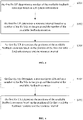
- FIG. 1 is a flow chart of a method for determining a groupcast feedback resource according to an embodiment.
- the method may include S101 to S103.
- a first Rx UE receives sidelink control information and transmission data from a Tx UE, wherein the Tx UE transmits the sidelink control information and the transmission data to Rx UEs using a groupcast mode, wherein the Rx UEs and the Tx UE constitute a group.
- the first Rx UE determines positions of available feedback resources allocated for the Rx UEs at least based on the sidelink control information, wherein the sidelink control information directly or indirectly indicates the positions of the available feedback resources.
- the first Rx UE determines the available feedback resource for the first Rx UE based on an intra-group identifier of the first Rx UE and a first preset mapping relationship between intra-group identifiers and the available feedback resources allocated for the Rx UEs.
- sequence number of each step in the embodiments does not limit an execution order of the step.
- members of a group are pre-configured.
- an operator may manage constitution of the group, including a number of members and intra-group identifiers of the members.
- the group may be configured temporarily and include the number of members and intra-group identifiers of the members.
- the detailed way for configuring the group is not limited in embodiments of the present disclosure.
- the method for determining the groupcast feedback resource in the embodiments may be applied in the Rx UE side, where the Tx UE transmits V2X data, the Rx UE receives the V2X data, and the Rx UE and the Tx UE are in the same group. UEs in the same group may transmit V2X data to each other in a groupcast manner.
- each UE in the same group knows the number of members in the group. For example, there are 6 UEs in Group 1, UE1 is a Tx UE, and UE2 to UE6 are Rx UEs. UE1 to UE6 know that there are 6 UEs in Group 1 including one Tx UE and five Rx UEs.
- the Tx UE transmits Sidelink Control Information (SCI) through a Physical Sidelink Control Channel (PSCCH).
- SCI indicates a position of a Physical Sidelink Shared Channel (PSSCH) and parameters such as a modulation and coding format.
- PSSCH Physical Sidelink Shared Channel
- the Rx UE receives the SCI, determines the position of the PSSCH based on the SCI, and receives V2X data from the PSSCH.
- each Rx UE may at least determine the positions of the available feedback resources allocated for the Rx UEs based on the SCI.
- the Rx UE can directly determine the positions of the available feedback resources based on the SCI. If the SCI indirectly indicates the positions of the available feedback resources, the Rx UE may determine the positions of the available feedback resources by calculation based on other known parameters.
- the UEs in each group have intra-group identifiers. For example, for 6 UEs in Group 1, their intra-group identifiers (or numbers) are 1, 2, 3, 4, 5 and 6. When the Tx UE has the identifier 1, the UEs with identifiers 2, 3, 4, 5 and 6 are Rx UEs. When the Tx UE has the identifier 2, the UEs with identifiers 1, 3, 4, 5 and 6 are Rx UEs. Other scenarios can be deduced by analogy.
- a UE that receives V2X data can identify the Tx UE from the received SCI and the received V2X data.
- the Rx UE may determine the available feedback resource based on its intra-group identifier and a first preset mapping relationship between intra-group identifiers and the available feedback resources.
- the available feedback resources are the third, sixth, ninth, twelfth and fifth PSFCH resources in a PSFCH resource pool.
- the identifier of the Tx UE is 1, and the identifiers of the Rx UEs are 2, 3, 4, 5 and 6, the identifiers 2, 3, 4, 5 and 6 correspond to the third, sixth, ninth, twelfth and fifth PSFCH resources in the PSFCH resource pool, respectively.
- the feedback resource allocated for UE2 is the third PSFCH resource
- the feedback resource allocated for UE3 is the sixth PSFCH resource
- the feedback resource allocated for UE4 is the ninth PSFCH resource
- the feedback resource allocated for UE5 is the twelfth PSFCH resource
- the feedback resource used by UE6 is the fifth PSFCH resource.
- the available feedback resource determined in S103 may be used for the first Rx UE to feed back the reception status of the transmission data. For example, an ACK fed back using the available feedback resource indicates that the transmission data is successfully received, while a NACK fed back using the available feedback resource indicates that the transmission data has not been successfully received.
- a network when the number of group members is unknown, a network no longer allocates an independent feedback resource for each data transmission resource (such as a PSSCH resource), which may avoid a waste or insufficiency of feedback resources. Further, the embodiments of the present disclosure may enable the feedback resources used by different Rx UEs to occupy an entire feedback resource pool in a dispersed manner, thereby achieving a load balance.
- an independent feedback resource such as a PSSCH resource
- the sidelink control information indicates a position of a first available feedback resource and a resource interval
- S102 as shown in FIG. 1 includes: determining the positions of the available feedback resources based on the position of the first available feedback resource and the resource interval.
- the Tx UE may indicate the position of the first available feedback resource and the resource interval in SCI.
- the position of the first available feedback resource points to a third PSFCH resource in a PSFCH resource pool, and the resource interval is 2.
- the first Rx UE can determine the total number of available feedback resources and determine the positions of the available feedback resources based on indication of the SCI. For example, the total number of the Rx UEs in the group is 5.
- the first Rx UE may determine that the available feedback resources are the third, sixth, ninth, twelfth and fifth PSFCH resources in the PSFCH resource pool, and determine the PSFCH resources used by the Rx UEs in the group based on the intra-group identifiers, for example, based on a sequence of the intra-group identifiers of the Rx UEs.
- the position of the first available feedback resource and the resource interval are indicated, so that each Rx UE can determine its available feedback resource, and a conflict among the available feedback resources for Rx UEs in different groups may be avoided.
- the resource interval is 1, that is, when the feedback resources corresponding to the Rx UEs in the group are consecutive, the resource interval may not be indicated. That is, a default value of the resource interval is 1, and when the default value is adopted, the resource interval may not be indicated in the SCI.
- the sidelink control information indicates a resource interval.
- S102 as shown in FIG. 1 includes S201, S202 and S203.
- the first Rx UE determines a position of a first physical resource block of a transmission resource carrying the transmission data.
- the first Rx UE determines a position of a first available feedback resource based on the position of the first physical resource block and a second preset mapping relationship, wherein the second preset mapping relationship represents a mapping relationship between the position of the first physical resource block and the position of the first available feedback resource.
- the first Rx UE determines the positions of the available feedback resources based on the position of the first available feedback resource and the resource interval.
- the Tx UE may merely indicate the resource interval in the SCI.
- the first Rx UE also needs to know the position of the first available feedback resource.
- a mapping relationship between the position of the first available feedback resource and a known parameter, such as a position of a first physical resource block of a transmission resource carrying the transmission data, may be configured in advance.
- the transmission resource may be a PSSCH, and usually are consecutive physical resource blocks, and the second preset mapping relationship may indicate the mapping relationship between the position of the first physical resource block of the PSSCH and the position of the first available PSFCH feedback resource. More specifically, the position of the first physical resource block may be represented by an index of the first physical resource block.
- a third preset mapping relationship may indicate a mapping relationship between a position of a physical resource block carrying the SCI and a position of the first available PSFCH feedback resource.
- the first Rx UE may determine the position of the first available PSFCH feedback resource based on the position of the physical resource block carrying the SCI and the third preset mapping relationship.
- both PSSCH and SCI refer to the PSSCH and SCI when the first Rx UE receives the V2X data from the Tx UE.
- the first Rx UE may detect the SCI and PSSCH sent by multiple Tx UEs, but merely receives the PSSCH and SCI sent by the Tx UE the first Rx UE is interested in, such as receiving V2X data sent by a UE in the same group.
- the first Rx UE may calculate and determine the position of the first available feedback resource, and further determine the positions of the available feedback resources based on the resource interval in the SCI.
- the sidelink control information indicates a position of a first available feedback resource.
- S102 as shown in FIG. 1 includes S301, S302 and S303.
- the first Rx UE determines a number of the available feedback resources based on cell system information.
- the first Rx UE determines a resource interval based on a number of the Rx UEs in the group and the number of the available feedback resources.
- the first Rx UE determines the positions of the available feedback resources based on the position of the first available feedback resource and the resource interval.
- the Tx UE may merely indicate the position of the first available feedback resource in the SCI.
- the first Rx UE also needs to know the resource interval. In this case, the number of the available feedback resources may be notified to the first Rx UE in advance, so that the Rx UE can calculate the resource interval.
- the resource interval calculated is a positive integer.
- a base station may notify the first Rx UE of the total number of feedback resources in the feedback resource pool via system information.
- the first Rx UE can calculate the resource interval.
- the resource interval may be calculated based on a formula of INT(N/M), where N represents the total number of the feedback resources in the feedback resource pool, M represents the number of the Rx UEs in the group, and INT() represents a rounding function including rounding up or rounding down.
- the Tx UE and the Rx UEs may be located within a same cell or in different cells.
- S301 as shown in FIG. 3 may further include a following step. If the first Rx UE and the Tx UE belong to different cells, the first Rx UE acquires the number of the available feedback resources in a neighboring cell via V2X resource configuration information of the neighboring cell in the cell system information.
- the cell system information includes the V2X resource configuration information of the neighboring cell, and the V2X resource configuration information of the neighboring cell includes the number of available feedback resources in the neighboring cell.
- the Tx UE and a portion of the Rx UEs are located in Cell1, and the portion of the Rx UEs can learn the number of PSFCH resources via system information of the current cell.
- the remaining portion of the Rx UEs in the group are within an adjacent Cell2, and can receive system information from Cell2 which indicates V2X resource configuration of the neighboring cell Cell1 which includes the number of PSFCH resources configured by the Cell1.
- the Rx UE in Cell2 can learn that the Tx UE is located within Cell1 by receiving the SCI and PSSCH sent by the Tx UE.
- the Rx UE learns the number of PSFCH resources corresponding to Groupcast transmitted by the Tx UE based on configuration parameters of the system information, and further determines a PSFCH resource interval based on the number of members in the group.
- the group has 6 members including 5 Rx UEs. If the total number of PSFCH resources (that is, the number of PSFCH resources corresponding to the Groupcast transmission resource pool configured by Cell1) is N, the resource interval is determined as INT (N/5), and the value is an integer. In this way, the first Rx UE can determine all available PSFCH resources in turn, and then, based on the identifiers in the group, acquire the PSFCH resource used by itself.
- the Tx UE indicates whether to use consecutive PSFCH mapping or interleaved PSFCH mapping in the SCI carrying V2X data sent to UEs in the same group.
- the SCI indicates the position of the first available feedback resource, or the position of the first available feedback resource is determined based on the position of PSSCH scheduled by the SCI and the second preset mapping relationship.
- the Rx UE receives the SCI, it can know whether the PSFCH resources are consecutive. If they are consecutive, the UEs in the group may acquire corresponding PSFCH resources in sequence based on an order of the intra-group identifiers, after determining the position of the first available feedback resource.
- the UEs may determine the corresponding PSFCH resources by combining the position of the first available feedback resource and the intra-group identifiers.
- a mapping relationship of the PSFCH resources may be acquired from system information or RRC signaling, that is, a serving base station of the Tx UE can indicate to the Tx UE whether the mapping of the PSFCH resources is consecutive via the system information or RRC signaling, where the serving base station can configure whether the PSFCH resources are consecutive based on the transmission resource pool, that is, when the Tx UE uses the transmission resources in the transmission resource pool, whether the PSFCH resources are consecutive is determined by the mapping relationship of the PSFCH resources associated with the resource pool.
- the serving base station may indicate whether the PSFCH resources corresponding to the allocated transmission resources for Groupcast transmission are consecutive via RRC signaling.
- the sidelink control information indicates a position of a first available feedback resource and a number of the available feedback resources.
- S102 as shown in FIG. 1 includes S401 and S402.
- the first Rx UE determines a resource interval based on a number of the Rx UEs in the group and the number of the available feedback resources.
- the first Rx UE determines the positions of the available feedback resources based on the position of the first available feedback resource and the resource interval.
- the first Rx UE can calculate the resource interval, and further determine the positions of the available feedback resources based on the resource interval and the position of the first available feedback resource.
- the system information of the cell where the first Rx UE is located does not need to indicate information of the PSFCH resource of the neighboring cell.
- a number of the available feedback resources is equal to a number of the Rx UEs
- the first preset mapping relationship indicates that an intra-group identifier having a sequence number among the intra-group identifiers corresponds to an available feedback resource having the same sequence number among the available feedback resources.
- the first Rx UE sorts the intra-group identifiers in the group, and determines a sequence number of the intra-group identifier of the first Rx UE among the intra-group identifiers in the group.
- the first Rx UE sorts the available feedback resources based on the positions of the available feedback resources, and determines an available feedback resource with the sequence number among the available feedback resources.
- the first Rx UE determines the available feedback resource with the sequence number as the available feedback resource for the first Rx UE.
- the available feedback resources and the Rx UEs are sorted separately in a certain order to obtain a corresponding relationship, and the available feedback resource for each Rx UE is determined based on the corresponding relationship.
- the members in the group determine the PSFCH resources to be used based on their intra-group sequence numbers.
- Their intra-group sequence numbers are 1, 2, 3, 4, 5 and 6. If the intra-group sequence number of the Tx UE is 4, the intra-group sequence numbers of the Rx UEs are 1, 2, 3, 5 and 6, respectively.
- the intra-group sequence numbers of the Rx UEs are sorted from small to large to obtain 1, 2, 3, 5 and 6.
- the available feedback resources are sorted in order to obtain the third, the sixth, the ninth, the twelfth and the fifteenth PSFCH resources. Therefore, numbers 1, 2, 3, 5 and 6 correspond to the third, the sixth, the ninth, the twelfth and the fifteenth PSFCH resources" respectively.
- the Rx UEs with intra-group sequence numbers 1, 2 and 3 use the third, the sixth and the ninth PSFCH resources, respectively.
- the UEs with intra-group sequence numbers 5 and 6 use the twelfth and the fifteenth PSFCH resources, respectively.
- the PSFCH resources may be determined directly based on the intra-group sequence numbers. If the intra-group sequence number of the Tx UE is smaller than that of the Rx UE, the intra-group sequence number of the Rx UE is subtracted by 1, and the PSFCH resource corresponding to the intra-group sequence number subjected to the subtraction is adopted.
- the intra-group sequence numbers are 1, 2, 3, 4, 5 and 6.
- the Rx UEs with the intra-group sequence numbers 1, 2 and 3 use the third, the sixth and the ninth PSFCH resources, respectively.
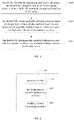
- FIG. 6 is a structural diagram of an apparatus 60 for determining a groupcast feedback resource according to an embodiment.
- the apparatus 60 includes a receiving circuitry 601, a feedback resource position determining circuitry 602 and a feedback resource determining circuitry 603.
- the receiving circuitry 601 is configured to receive sidelink control information and transmission data from a Tx UE, wherein the Tx UE transmits the sidelink control information and the transmission data to Rx UEs using a groupcast mode, wherein the Rx UEs and the Tx UE constitute a group.
- the feedback resource position determining circuitry 602 is configured to determine positions of available feedback resources allocated for the Rx UEs at least based on the sidelink control information, wherein the sidelink control information directly or indirectly indicates the positions of the available feedback resources.
- the feedback resource determining circuitry 603 is configured to determine the available feedback resource for the first Rx UE based on an intra-group identifier of the first Rx UE and a first preset mapping relationship between intra-group identifiers and the available feedback resources allocated for the Rx UEs.
- a network when the number of group members is unknown, a network no longer allocates an independent feedback resource for each data transmission resource (such as a PSSCH resource), which may avoid a waste or insufficiency of feedback resources. Further, the embodiments of the present disclosure may enable the feedback resources used by different Rx UEs to occupy an entire feedback resource pool in a dispersed manner, thereby achieving a load balance.
- an independent feedback resource such as a PSSCH resource
- FIGS. 1 to 5 More details of working principles and working modes of the apparatus 60 can be found in the above descriptions of FIGS. 1 to 5 , and are not described here.
- a storage medium having computer instructions stored therein is provided, wherein when the computer instructions are executed, any one of the above methods as shown in FIGS. 1 to 5 is performed.
- the storage medium may include a Read Only Memory (ROM), a Random Access Memory (RAM), a magnetic disk or an optical disk.
- the storage medium may be a computer readable storage medium, such as a non-volatile memory or a non-transitory memory.
- a UE including a memory and a processor
- the memory has computer instructions stored therein, and when the processor executes the computer instructions, the method as shown in FIGS. 1 to 5 is performed.
- the UE includes but is not limited to a mobile phone, a computer, a tablet or other terminal devices.
Landscapes
- Engineering & Computer Science (AREA)
- Signal Processing (AREA)
- Computer Networks & Wireless Communication (AREA)
- Multimedia (AREA)
- Quality & Reliability (AREA)
- Mobile Radio Communication Systems (AREA)
- Detection And Prevention Of Errors In Transmission (AREA)
Abstract
Description
- This application claims the priority to
Chinese Application No. 201910609888.1, filed on July 8, 2019 - The present disclosure generally relates to communication technology field, and more particularly, to a method and apparatus for determining a groupcast feedback resource, a storage medium and a User Equipment (UE).
- In Release 12, Long Term Evolution (LTE) systems introduced ProSe Direct Communication where at least two UEs can communicate directly through a PC5 interface. In direct communication, there are two modes of resource allocation, one being scheduled resource allocation which is configured by a base station via dedicated signaling, and the other being automatic resource selection, where a base station provides a UE with a resource pool for direct communication via system information or Radio Resource Control (RRC) signaling, and the UE selects resources for direct communication from the resource pool. If a Transmitter UE (Tx UE) is not within a network coverage, the UE adopts the automatic resource selection method to select resources for direct communication from a pre-configured resource pool. Based on direct communication, the 3rd Generation Partnership Project (3GPP) also supports Vehicle-to-Everything (V2X). Within a network coverage, a UE may transmit V2X messages to multiple UEs. It should be noted that both Receiver UEs (Rx UEs) and the Tx UE may not be within the network coverage, or some UEs may be within the network coverage.
- Presently, 3GPP is studying the introduction of V2X into New Radio (NR) systems. As 5G systems can provide larger bandwidth and lower latency, it can better meet service requirements of V2X. Besides, 3GPP has agreed that NR V2X can use unicast, groupcast or broadcast to transmit V2X services. Feedback may be introduced based on unicast or groupcast being used by a Tx UE. There is no exact solution for how the Rx UE feedback, that is, which feedback resource is used to transmit feedback information to the Tx UE. Especially for groupcast, 3GPP agrees that Hybrid Automatic Repeat reQuest (HARQ) feedback can be used or HARQ feedback is not used. When HARQ feedback is applied, group members are allowed to use independent feedback resources, i.e., independent Physical Sidelink Feedback Channel (PSFCH) resources.
- The Tx UE may determine whether to perform Groupcast with feedback based on service quality parameters of groupcast services and parameters of network configuration. For example, the base station may associate feedback resources when configuring a transmission resource pool. An Rx UE has a processing delay. For example, when receiving V2X data sent by Tx UE in a time slot n, an Rx UE needs a certain time to decode the received signal to determine whether the data is received accurately. For accurate reception, the Rx UE feedbacks an Acknowledgement (ACK) using PSFCH at a certain time after the time slot n, such as a time slot (n+k). For inaccurate reception, the Rx UE feedbacks a Negative-Acknowledgment (NACK) using PSFCH at the time slot (n+k). A value of K has not yet been determined in the standard, and depends on a minimum processing delay of all UEs supporting V2X services.
- However, for groupcast, when the Tx UE determines that all members in the group use independent feedback resources for feedback, how to determine the feedback resource of each Rx UE is a technical problem to be solved urgently.
- Embodiments of the present disclosure may determine a feedback resource for an Rx UE feeding back a groupcast data reception status.
- In an embodiment of the present disclosure, a method for determining a groupcast feedback resource is provided, including: a first Rx UE receiving sidelink control information and transmission data from a Tx UE, wherein the Tx UE transmits the sidelink control information and the transmission data to Rx UEs using a groupcast mode, wherein the Rx UEs and the Tx UE constitute a group; determining positions of available feedback resources allocated for the Rx UEs at least based on the sidelink control information, wherein the sidelink control information directly or indirectly indicates the positions of the available feedback resources; and determining the available feedback resource for the first Rx UE based on an intra-group identifier of the first Rx UE and a first preset mapping relationship between intra-group identifiers and the available feedback resources allocated for the Rx UEs.
- Optionally, the sidelink control information indicates a position of a first available feedback resource and a resource interval, and said determining positions of available feedback resources allocated for the Rx UEs at least based on the sidelink control information includes: determining the positions of the available feedback resources based on the position of the first available feedback resource and the resource interval.
- Optionally, the sidelink control information indicates a resource interval, and said determining positions of available feedback resources allocated for the Rx UEs at least based on the sidelink control information includes: determining a position of a first physical resource block of a transmission resource carrying the transmission data; determining a position of a first available feedback resource based on the position of the first physical resource block and a second preset mapping relationship, wherein the second preset mapping relationship represents a mapping relationship between the position of the first physical resource block and the position of the first available feedback resource; and determining the positions of the available feedback resources based on the position of the first available feedback resource and the resource interval.
- Optionally, the sidelink control information indicates a resource interval, and said determining positions of available feedback resources allocated for the Rx UEs at least based on the sidelink control information includes: determining a position of a physical resource block carrying the sidelink control information; determining a position of a first available feedback resource based on the position of the physical resource block and a third preset mapping relationship, wherein the third preset mapping relationship represents a mapping relationship between the position of the physical resource block carrying the sidelink control information and the position of the first available feedback resource; and determining the positions of the available feedback resources based on the position of the first available feedback resource and the resource interval.
- Optionally, the sidelink control information indicates a position of a first available feedback resource and a resource interval, and said determining positions of available feedback resources allocated for the Rx UEs at least based on the sidelink control information includes: determining a number of the available feedback resources based on cell system information; determining a resource interval based on a number of the Rx UEs in the group and the number of the available feedback resources; and determining the positions of the available feedback resources based on the position of the first available feedback resource and the resource interval.
- Optionally, said determining a number of the available feedback resources based on cell system information includes: determining a number of the available feedback resources in a neighboring cell based on V2X resource configuration information of the neighboring cell in the cell system information, in view of the Rx UEs and the Tx UE belonging to different cells.
- Optionally, the sidelink control information indicates a position of a first available feedback resource and a number of the available feedback resources, and said determining positions of available feedback resources allocated for the Rx UEs at least based on the sidelink control information includes: determining a resource interval based on a number of the Rx UEs in the group and the number of the available feedback resources; and determining the positions of the available feedback resources based on the position of the first available feedback resource and the resource interval.
- Optionally, a number of the available feedback resources is equal to a number of the Rx UEs, the first preset mapping relationship indicates that an intra-group identifier having a sequence number among the intra-group identifiers corresponds to an available feedback resource having the same sequence number among the available feedback resources, and said determining the available feedback resource for the first Rx UE based on the intra-group identifier of the first Rx UE and the first preset mapping relationship between intra-group identifiers and the available feedback resources allocated for the Rx UEs includes: sorting the intra-group identifiers in the group, and determining a sequence number of the intra-group identifier of the first Rx UE among the intra-group identifiers in the group; sorting the available feedback resources based on the positions of the available feedback resources, and determining an available feedback resource with the sequence number among the available feedback resources; and determining the available feedback resource with the sequence number as the available feedback resource for the first Rx UE.
- Optionally, the sidelink control information indicates whether the available feedback resources are consecutive, and following receiving the sidelink control information and the transmission data, the method further includes: determining whether the available feedback resources are consecutive based on the sidelink control information, wherein the first preset mapping relationship includes consecutive mapping and interleaving mapping.
- Optionally, the Tx UE determines whether the available feedback resources are consecutive based on system information or RRC signaling of a serving base station.
- Optionally, the available feedback resources are PSFCH resources.
- In an embodiment of the present disclosure, an apparatus for determining a groupcast feedback resource is provided, being applied in a first Rx UE and including: a receiving circuitry configured to receive sidelink control information and transmission data from a Tx UE, wherein the Tx UE transmits the sidelink control information and the transmission data to Rx UEs using a groupcast mode, wherein the Rx UEs and the Tx UE constitute a group; a feedback resource position determining circuitry configured to determine positions of available feedback resources allocated for the Rx UEs at least based on the sidelink control information, wherein the sidelink control information directly or indirectly indicates the positions of the available feedback resources; and a feedback resource determining circuitry configured to determine the available feedback resource for the first Rx UE based on an intra-group identifier of the first Rx UE and a first preset mapping relationship between intra-group identifiers and the available feedback resources allocated for the Rx UEs.
- In an embodiment of the present disclosure, a storage medium having computer instructions stored therein is provided, wherein when the computer instructions are executed, the above method is performed.
- In an embodiment of the present disclosure, a UE including a memory and a processor is provided, wherein the memory has computer instructions stored therein, and when the processor executes the computer instructions, the above method is performed.
- Embodiments of the present disclosure may provide following advantages.
- In embodiments of the present disclosure, the Tx UE can directly or indirectly indicate the positions of the available feedback resources via the sidelink control information, and accordingly the Rx UE can determine the positions of the available feedback resources at least based on the sidelink control information. Further, there is a first preset mapping relationship between the intra-group identifiers of the Rx UEs within the same group and the available feedback resources allocated for the Rx UEs. Each Rx UE can determine its current available feedback resource based on its own intra-group identifier and the first mapping relationship. By embodiments of the present disclosure, when the number of group members is unknown, a network no longer allocates an independent feedback resource for each data transmission resource (such as a PSSCH resource), which may avoid a waste or insufficiency of feedback resources. Further, the embodiments of the present disclosure may enable the feedback resources used by different Rx UEs to occupy an entire feedback resource pool in a dispersed manner, thereby achieving a load balance.
- Further, the sidelink control information indicates the position of the first available feedback resource and the resource interval, and the Rx UE determines the positions of the available feedback resources based on the position of the first available feedback resource and the resource interval. By the embodiments of the present disclosure, the position of the first available feedback resource and the resource interval are indicated, which not only enables each Rx UE to determine its available feedback resource, but also avoids a conflict among the available feedback resources for Rx UEs in different groups.
-
-
FIG. 1 is a flow chart of a method for determining a groupcast feedback resource according to an embodiment; -
FIG. 2 is a flow chart of S102 as shown inFIG. 1 according to an embodiment; -
FIG. 3 is a flow chart of S102 as shown inFIG. 1 according to an embodiment; -
FIG. 4 is a flow chart of S102 as shown inFIG. 1 according to an embodiment; -
FIG. 5 is a flow chart of S103 as shown inFIG. 1 according to an embodiment; and -
FIG. 6 is a structural diagram of an apparatus for determining a groupcast feedback resource according to an embodiment. - As described in the background, for groupcast, when the Tx UE determines that all members in the group use independent feedback resources for feedback, how to determine the feedback resource of each Rx UE is a technical problem to be solved urgently.
- In embodiments of the present disclosure, the Tx UE can directly or indirectly indicate the positions of the available feedback resources via the sidelink control information, and accordingly the Rx UE can determine the positions of the available feedback resources at least based on the sidelink control information. Further, there is a first preset mapping relationship between the intra-group identifiers of the Rx UEs within the same group and the available feedback resources allocated for the Rx UEs. Each Rx UE can determine its current available feedback resource based on its own intra-group identifier and the first mapping relationship. By embodiments of the present disclosure, when the number of group members is unknown, a network no longer allocates an independent feedback resource for each data transmission resource (such as a PSSCH resource), which may avoid a waste or insufficiency of feedback resources. Further, the embodiments of the present disclosure may enable the feedback resources used by different Rx UEs to occupy an entire feedback resource pool in a dispersed manner, thereby achieving a load balance.
- In embodiments of the present disclosure, the UEs support V2X, such as 5G V2X.
- In some embodiments, the transmission data may be V2X data.
- In some embodiments, the available feedback resources may be PSFCH resources.
- In order to clarify the objects, characteristics and advantages of the disclosure, embodiments of present disclosure will be described in detail in conjunction with accompanying drawings.
-
FIG. 1 is a flow chart of a method for determining a groupcast feedback resource according to an embodiment. - The method may include S101 to S103.
- In S101, a first Rx UE receives sidelink control information and transmission data from a Tx UE, wherein the Tx UE transmits the sidelink control information and the transmission data to Rx UEs using a groupcast mode, wherein the Rx UEs and the Tx UE constitute a group.
- In S102, the first Rx UE determines positions of available feedback resources allocated for the Rx UEs at least based on the sidelink control information, wherein the sidelink control information directly or indirectly indicates the positions of the available feedback resources.
- In S103, the first Rx UE determines the available feedback resource for the first Rx UE based on an intra-group identifier of the first Rx UE and a first preset mapping relationship between intra-group identifiers and the available feedback resources allocated for the Rx UEs.
- It should be noted that the sequence number of each step in the embodiments does not limit an execution order of the step.
- Those skilled in the art could understand that members of a group are pre-configured. For example, an operator may manage constitution of the group, including a number of members and intra-group identifiers of the members. For another example, the group may be configured temporarily and include the number of members and intra-group identifiers of the members. The detailed way for configuring the group is not limited in embodiments of the present disclosure.
- The method for determining the groupcast feedback resource in the embodiments may be applied in the Rx UE side, where the Tx UE transmits V2X data, the Rx UE receives the V2X data, and the Rx UE and the Tx UE are in the same group. UEs in the same group may transmit V2X data to each other in a groupcast manner.
- In some embodiments, each UE in the same group knows the number of members in the group. For example, there are 6 UEs in Group 1, UE1 is a Tx UE, and UE2 to UE6 are Rx UEs. UE1 to UE6 know that there are 6 UEs in Group 1 including one Tx UE and five Rx UEs.
- In some embodiments, the Tx UE transmits Sidelink Control Information (SCI) through a Physical Sidelink Control Channel (PSCCH). The SCI indicates a position of a Physical Sidelink Shared Channel (PSSCH) and parameters such as a modulation and coding format. Further, in some embodiments of S101, the Rx UE receives the SCI, determines the position of the PSSCH based on the SCI, and receives V2X data from the PSSCH.
- As the SCI can directly or indirectly indicate the positions of the available feedback resources, and the Rx UEs and the Tx UE are in the same group, in some embodiments of S102, each Rx UE may at least determine the positions of the available feedback resources allocated for the Rx UEs based on the SCI.
- Specifically, if the SCI directly indicates the positions of the available feedback resources, the Rx UE can directly determine the positions of the available feedback resources based on the SCI. If the SCI indirectly indicates the positions of the available feedback resources, the Rx UE may determine the positions of the available feedback resources by calculation based on other known parameters.
- In some embodiments, the UEs in each group have intra-group identifiers. For example, for 6 UEs in Group 1, their intra-group identifiers (or numbers) are 1, 2, 3, 4, 5 and 6. When the Tx UE has the identifier 1, the UEs with identifiers 2, 3, 4, 5 and 6 are Rx UEs. When the Tx UE has the identifier 2, the UEs with identifiers 1, 3, 4, 5 and 6 are Rx UEs. Other scenarios can be deduced by analogy. A UE that receives V2X data can identify the Tx UE from the received SCI and the received V2X data.
- Different Rx UEs need to use different feedback resources to feed back a reception status of transmission data. To ensure that the available feedback resources are allocated to the Rx UEs orderly, in some embodiments of S103, the Rx UE may determine the available feedback resource based on its intra-group identifier and a first preset mapping relationship between intra-group identifiers and the available feedback resources.
- For example, the available feedback resources are the third, sixth, ninth, twelfth and fifth PSFCH resources in a PSFCH resource pool. When the identifier of the Tx UE is 1, and the identifiers of the Rx UEs are 2, 3, 4, 5 and 6, the identifiers 2, 3, 4, 5 and 6 correspond to the third, sixth, ninth, twelfth and fifth PSFCH resources in the PSFCH resource pool, respectively. Accordingly, the feedback resource allocated for UE2 is the third PSFCH resource, the feedback resource allocated for UE3 is the sixth PSFCH resource, the feedback resource allocated for UE4 is the ninth PSFCH resource, the feedback resource allocated for UE5 is the twelfth PSFCH resource, the feedback resource used by UE6 is the fifth PSFCH resource.
- The available feedback resource determined in S103 may be used for the first Rx UE to feed back the reception status of the transmission data. For example, an ACK fed back using the available feedback resource indicates that the transmission data is successfully received, while a NACK fed back using the available feedback resource indicates that the transmission data has not been successfully received.
- By embodiments of the present disclosure, when the number of group members is unknown, a network no longer allocates an independent feedback resource for each data transmission resource (such as a PSSCH resource), which may avoid a waste or insufficiency of feedback resources. Further, the embodiments of the present disclosure may enable the feedback resources used by different Rx UEs to occupy an entire feedback resource pool in a dispersed manner, thereby achieving a load balance.
- In some embodiments, the sidelink control information indicates a position of a first available feedback resource and a resource interval, and S102 as shown in
FIG. 1 includes: determining the positions of the available feedback resources based on the position of the first available feedback resource and the resource interval. - In some embodiments, the Tx UE may indicate the position of the first available feedback resource and the resource interval in SCI. For example, the position of the first available feedback resource points to a third PSFCH resource in a PSFCH resource pool, and the resource interval is 2.
- As the first Rx UE knows the total number of the Rx UEs in the group in advance, the first Rx UE can determine the total number of available feedback resources and determine the positions of the available feedback resources based on indication of the SCI. For example, the total number of the Rx UEs in the group is 5. The first Rx UE may determine that the available feedback resources are the third, sixth, ninth, twelfth and fifth PSFCH resources in the PSFCH resource pool, and determine the PSFCH resources used by the Rx UEs in the group based on the intra-group identifiers, for example, based on a sequence of the intra-group identifiers of the Rx UEs.
- In the embodiments of the present disclosure, the position of the first available feedback resource and the resource interval are indicated, so that each Rx UE can determine its available feedback resource, and a conflict among the available feedback resources for Rx UEs in different groups may be avoided. When the resource interval is 1, that is, when the feedback resources corresponding to the Rx UEs in the group are consecutive, the resource interval may not be indicated. That is, a default value of the resource interval is 1, and when the default value is adopted, the resource interval may not be indicated in the SCI.
- In some embodiments, the sidelink control information indicates a resource interval. Referring to
FIG. 2 , S102 as shown inFIG. 1 includes S201, S202 and S203. - In S201, the first Rx UE determines a position of a first physical resource block of a transmission resource carrying the transmission data.
- In S202, the first Rx UE determines a position of a first available feedback resource based on the position of the first physical resource block and a second preset mapping relationship, wherein the second preset mapping relationship represents a mapping relationship between the position of the first physical resource block and the position of the first available feedback resource.
- In S203, the first Rx UE determines the positions of the available feedback resources based on the position of the first available feedback resource and the resource interval.
- In some embodiments, the Tx UE may merely indicate the resource interval in the SCI. To determine the available feedback resources, the first Rx UE also needs to know the position of the first available feedback resource. In this case, a mapping relationship between the position of the first available feedback resource and a known parameter, such as a position of a first physical resource block of a transmission resource carrying the transmission data, may be configured in advance.
- Specifically, the transmission resource may be a PSSCH, and usually are consecutive physical resource blocks, and the second preset mapping relationship may indicate the mapping relationship between the position of the first physical resource block of the PSSCH and the position of the first available PSFCH feedback resource. More specifically, the position of the first physical resource block may be represented by an index of the first physical resource block.
- In some embodiments, a third preset mapping relationship may indicate a mapping relationship between a position of a physical resource block carrying the SCI and a position of the first available PSFCH feedback resource. The first Rx UE may determine the position of the first available PSFCH feedback resource based on the position of the physical resource block carrying the SCI and the third preset mapping relationship.
- It can be understood that both PSSCH and SCI refer to the PSSCH and SCI when the first Rx UE receives the V2X data from the Tx UE. The first Rx UE may detect the SCI and PSSCH sent by multiple Tx UEs, but merely receives the PSSCH and SCI sent by the Tx UE the first Rx UE is interested in, such as receiving V2X data sent by a UE in the same group.
- Further, in S201 and S202, the first Rx UE may calculate and determine the position of the first available feedback resource, and further determine the positions of the available feedback resources based on the resource interval in the SCI.
- In some embodiments, the sidelink control information indicates a position of a first available feedback resource. Referring to
FIG. 3 , S102 as shown inFIG. 1 includes S301, S302 and S303. - In S301, the first Rx UE determines a number of the available feedback resources based on cell system information.
- In S302, the first Rx UE determines a resource interval based on a number of the Rx UEs in the group and the number of the available feedback resources.
- In S303, the first Rx UE determines the positions of the available feedback resources based on the position of the first available feedback resource and the resource interval.
- In some embodiments, the Tx UE may merely indicate the position of the first available feedback resource in the SCI. To determine the available feedback resources, the first Rx UE also needs to know the resource interval. In this case, the number of the available feedback resources may be notified to the first Rx UE in advance, so that the Rx UE can calculate the resource interval.
- In some embodiments, the resource interval calculated is a positive integer.
- In some embodiments, a base station may notify the first Rx UE of the total number of feedback resources in the feedback resource pool via system information. As the number of the Rx UEs in the group is known, the first Rx UE can calculate the resource interval. Specifically, the resource interval may be calculated based on a formula of INT(N/M), where N represents the total number of the feedback resources in the feedback resource pool, M represents the number of the Rx UEs in the group, and INT() represents a rounding function including rounding up or rounding down.
- In some embodiments, the Tx UE and the Rx UEs may be located within a same cell or in different cells.
- In some embodiments, S301 as shown in
FIG. 3 may further include a following step. If the first Rx UE and the Tx UE belong to different cells, the first Rx UE acquires the number of the available feedback resources in a neighboring cell via V2X resource configuration information of the neighboring cell in the cell system information. - In some embodiments, the cell system information includes the V2X resource configuration information of the neighboring cell, and the V2X resource configuration information of the neighboring cell includes the number of available feedback resources in the neighboring cell.
- In an application scenario, the Tx UE and a portion of the Rx UEs are located in Cell1, and the portion of the Rx UEs can learn the number of PSFCH resources via system information of the current cell. The remaining portion of the Rx UEs in the group are within an adjacent Cell2, and can receive system information from Cell2 which indicates V2X resource configuration of the neighboring cell Cell1 which includes the number of PSFCH resources configured by the Cell1. The Rx UE in Cell2 can learn that the Tx UE is located within Cell1 by receiving the SCI and PSSCH sent by the Tx UE. Therefore, the Rx UE learns the number of PSFCH resources corresponding to Groupcast transmitted by the Tx UE based on configuration parameters of the system information, and further determines a PSFCH resource interval based on the number of members in the group. As mentioned above, the group has 6 members including 5 Rx UEs. If the total number of PSFCH resources (that is, the number of PSFCH resources corresponding to the Groupcast transmission resource pool configured by Cell1) is N, the resource interval is determined as INT (N/5), and the value is an integer. In this way, the first Rx UE can determine all available PSFCH resources in turn, and then, based on the identifiers in the group, acquire the PSFCH resource used by itself.
- In some embodiments, the Tx UE indicates whether to use consecutive PSFCH mapping or interleaved PSFCH mapping in the SCI carrying V2X data sent to UEs in the same group. In this case, the SCI indicates the position of the first available feedback resource, or the position of the first available feedback resource is determined based on the position of PSSCH scheduled by the SCI and the second preset mapping relationship. When the Rx UE receives the SCI, it can know whether the PSFCH resources are consecutive. If they are consecutive, the UEs in the group may acquire corresponding PSFCH resources in sequence based on an order of the intra-group identifiers, after determining the position of the first available feedback resource. If the PSFCH resources are inconsecutive (that is, interleaved PSFCH mapping), in response to acquiring the resource interval, the UEs may determine the corresponding PSFCH resources by combining the position of the first available feedback resource and the intra-group identifiers. When the Tx UE is in the serving cell, a mapping relationship of the PSFCH resources may be acquired from system information or RRC signaling, that is, a serving base station of the Tx UE can indicate to the Tx UE whether the mapping of the PSFCH resources is consecutive via the system information or RRC signaling, where the serving base station can configure whether the PSFCH resources are consecutive based on the transmission resource pool, that is, when the Tx UE uses the transmission resources in the transmission resource pool, whether the PSFCH resources are consecutive is determined by the mapping relationship of the PSFCH resources associated with the resource pool. When the Tx UE adopts a base station scheduling resource mode, the serving base station may indicate whether the PSFCH resources corresponding to the allocated transmission resources for Groupcast transmission are consecutive via RRC signaling.
- In some embodiments, the sidelink control information indicates a position of a first available feedback resource and a number of the available feedback resources. Referring to
FIG. 4 , S102 as shown inFIG. 1 includes S401 and S402. - In S401, the first Rx UE determines a resource interval based on a number of the Rx UEs in the group and the number of the available feedback resources.
- In S402, the first Rx UE determines the positions of the available feedback resources based on the position of the first available feedback resource and the resource interval.
- In some embodiments, as the position of the first available feedback resource and the number of the available feedback resources are indicated in the SCI, the first Rx UE can calculate the resource interval, and further determine the positions of the available feedback resources based on the resource interval and the position of the first available feedback resource. In this case, the system information of the cell where the first Rx UE is located does not need to indicate information of the PSFCH resource of the neighboring cell.
- In some embodiments, a number of the available feedback resources is equal to a number of the Rx UEs, and the first preset mapping relationship indicates that an intra-group identifier having a sequence number among the intra-group identifiers corresponds to an available feedback resource having the same sequence number among the available feedback resources. Referring to
FIG. 5 , S103 as shown inFIG. 1 includes S501, S502 and S503. - In S501, the first Rx UE sorts the intra-group identifiers in the group, and determines a sequence number of the intra-group identifier of the first Rx UE among the intra-group identifiers in the group.
- In S502, the first Rx UE sorts the available feedback resources based on the positions of the available feedback resources, and determines an available feedback resource with the sequence number among the available feedback resources.
- In S503, the first Rx UE determines the available feedback resource with the sequence number as the available feedback resource for the first Rx UE.
- In some embodiments, as the number of the available feedback resources is equal to the number of the Rx UEs, the available feedback resources and the Rx UEs are sorted separately in a certain order to obtain a corresponding relationship, and the available feedback resource for each Rx UE is determined based on the corresponding relationship.
- In an application scenario, the members in the group determine the PSFCH resources to be used based on their intra-group sequence numbers. Their intra-group sequence numbers are 1, 2, 3, 4, 5 and 6. If the intra-group sequence number of the Tx UE is 4, the intra-group sequence numbers of the Rx UEs are 1, 2, 3, 5 and 6, respectively. The intra-group sequence numbers of the Rx UEs are sorted from small to large to obtain 1, 2, 3, 5 and 6. As mentioned above, the available feedback resources are sorted in order to obtain the third, the sixth, the ninth, the twelfth and the fifteenth PSFCH resources. Therefore, numbers 1, 2, 3, 5 and 6 correspond to the third, the sixth, the ninth, the twelfth and the fifteenth PSFCH resources" respectively. Based on this corresponding relationship, it is determined that the Rx UEs with intra-group sequence numbers 1, 2 and 3 use the third, the sixth and the ninth PSFCH resources, respectively. The UEs with intra-group sequence numbers 5 and 6 use the twelfth and the fifteenth PSFCH resources, respectively.
- In another application scenario, if the Rx UEs and the available feedback resources are not sorted, the PSFCH resources may be determined directly based on the intra-group sequence numbers. If the intra-group sequence number of the Tx UE is smaller than that of the Rx UE, the intra-group sequence number of the Rx UE is subtracted by 1, and the PSFCH resource corresponding to the intra-group sequence number subjected to the subtraction is adopted. For example, the intra-group sequence numbers are 1, 2, 3, 4, 5 and 6. When the intra-group sequence number of the Tx UE is 4, the Rx UEs with the intra-group sequence numbers 1, 2 and 3 use the third, the sixth and the ninth PSFCH resources, respectively. As the intra-group sequence number of the Tx UE is 4, the Rx UE with the intra-group sequence number 5 uses the PSFCH resource corresponding to (5-1=4), i.e., the twelfth PSFCH resource, and the Rx UE with the intra-group sequence number 6 uses the fifteenth PSFCH resource.
- Referring to
FIG. 6, FIG. 6 is a structural diagram of anapparatus 60 for determining a groupcast feedback resource according to an embodiment. Theapparatus 60 includes a receivingcircuitry 601, a feedback resourceposition determining circuitry 602 and a feedbackresource determining circuitry 603. - The receiving
circuitry 601 is configured to receive sidelink control information and transmission data from a Tx UE, wherein the Tx UE transmits the sidelink control information and the transmission data to Rx UEs using a groupcast mode, wherein the Rx UEs and the Tx UE constitute a group. The feedback resourceposition determining circuitry 602 is configured to determine positions of available feedback resources allocated for the Rx UEs at least based on the sidelink control information, wherein the sidelink control information directly or indirectly indicates the positions of the available feedback resources. The feedbackresource determining circuitry 603 is configured to determine the available feedback resource for the first Rx UE based on an intra-group identifier of the first Rx UE and a first preset mapping relationship between intra-group identifiers and the available feedback resources allocated for the Rx UEs. - By embodiments of the present disclosure, when the number of group members is unknown, a network no longer allocates an independent feedback resource for each data transmission resource (such as a PSSCH resource), which may avoid a waste or insufficiency of feedback resources. Further, the embodiments of the present disclosure may enable the feedback resources used by different Rx UEs to occupy an entire feedback resource pool in a dispersed manner, thereby achieving a load balance.
- More details of working principles and working modes of the
apparatus 60 can be found in the above descriptions ofFIGS. 1 to 5 , and are not described here. - In an embodiment of the present disclosure, a storage medium having computer instructions stored therein is provided, wherein when the computer instructions are executed, any one of the above methods as shown in
FIGS. 1 to 5 is performed. The storage medium may include a Read Only Memory (ROM), a Random Access Memory (RAM), a magnetic disk or an optical disk. In some embodiments, the storage medium may be a computer readable storage medium, such as a non-volatile memory or a non-transitory memory. - In an embodiment of the present disclosure, a UE including a memory and a processor is provided, wherein the memory has computer instructions stored therein, and when the processor executes the computer instructions, the method as shown in
FIGS. 1 to 5 is performed. The UE includes but is not limited to a mobile phone, a computer, a tablet or other terminal devices. - Although the present disclosure has been disclosed above with reference to preferred embodiments thereof, it should be understood that the disclosure is presented by way of example only, and not limitation. Those skilled in the art can modify and vary the embodiments without departing from the spirit and scope of the present disclosure.
Claims (14)
- A method for determining a groupcast feedback resource, characterized by comprising:a first Receiver (Rx) User Equipment (UE) receiving sidelink control information and transmission data from a Transmitter (Tx) UE, wherein the Tx UE transmits the sidelink control information and the transmission data to Rx UEs using a groupcast mode, wherein the Rx UEs and the Tx UE constitute a group;determining positions of available feedback resources allocated for the Rx UEs at least based on the sidelink control information, wherein the sidelink control information directly or indirectly indicates the positions of the available feedback resources; anddetermining the available feedback resource for the first Rx UE based on an intra-group identifier of the first Rx UE and a first preset mapping relationship between intra-group identifiers and the available feedback resources allocated for the Rx UEs.
- The method according to claim 1, characterized in that the sidelink control information indicates a position of a first available feedback resource and a resource interval, and said determining positions of available feedback resources allocated for the Rx UEs at least based on the sidelink control information comprises:
determining the positions of the available feedback resources based on the position of the first available feedback resource and the resource interval. - The method according to claim 1, characterized in that the sidelink control information indicates a resource interval, and said determining positions of available feedback resources allocated for the Rx UEs at least based on the sidelink control information comprises:determining a position of a first physical resource block of a transmission resource carrying the transmission data;determining a position of a first available feedback resource based on the position of the first physical resource block and a second preset mapping relationship, wherein the second preset mapping relationship represents a mapping relationship between the position of the first physical resource block and the position of the first available feedback resource; anddetermining the positions of the available feedback resources based on the position of the first available feedback resource and the resource interval.
- The method according to claim 1, characterized in that the sidelink control information indicates a resource interval, and said determining positions of available feedback resources allocated for the Rx UEs at least based on the sidelink control information comprises:determining a position of a physical resource block carrying the sidelink control information;determining a position of a first available feedback resource based on the position of the physical resource block and a third preset mapping relationship, wherein the third preset mapping relationship represents a mapping relationship between the position of the physical resource block carrying the sidelink control information and the position of the first available feedback resource; anddetermining the positions of the available feedback resources based on the position of the first available feedback resource and the resource interval.
- The method according to claim 1, characterized in that the sidelink control information indicates a position of a first available feedback resource and a resource interval, and said determining positions of available feedback resources allocated for the Rx UEs at least based on the sidelink control information comprises:determining a number of the available feedback resources based on cell system information;determining a resource interval based on a number of the Rx UEs in the group and the number of the available feedback resources; anddetermining the positions of the available feedback resources based on the position of the first available feedback resource and the resource interval.
- The method according to claim 5, characterized in that said determining a number of the available feedback resources based on cell system information comprises:
determining a number of the available feedback resources in a neighboring cell based on V2X resource configuration information of the neighboring cell in the cell system information, in view of the Rx UEs and the Tx UE belonging to different cells. - The method according to claim 1, characterized in that the sidelink control information indicates a position of a first available feedback resource and a number of the available feedback resources, and said determining positions of available feedback resources allocated for the Rx UEs at least based on the sidelink control information comprises:determining a resource interval based on a number of the Rx UEs in the group and the number of the available feedback resources; anddetermining the positions of the available feedback resources based on the position of the first available feedback resource and the resource interval.
- The method according to claim 1, characterized in that a number of the available feedback resources is equal to a number of the Rx UEs, the first preset mapping relationship indicates that an intra-group identifier having a sequence number among the intra-group identifiers corresponds to an available feedback resource having the same sequence number among the available feedback resources, and said determining the available feedback resource for the first Rx UE based on the intra-group identifier of the first Rx UE and the first preset mapping relationship between intra-group identifiers and the available feedback resources allocated for the Rx UEs comprises:sorting the intra-group identifiers in the group, and determining a sequence number of the intra-group identifier of the first Rx UE among the intra-group identifiers in the group;sorting the available feedback resources based on the positions of the available feedback resources, and determining an available feedback resource with the sequence number among the available feedback resources; anddetermining the available feedback resource with the sequence number as the available feedback resource for the first Rx UE.
- The method according to claim 1, characterized in that the sidelink control information indicates whether the available feedback resources are consecutive, and following receiving the sidelink control information and the transmission data, the method further comprises:
determining whether the available feedback resources are consecutive based on the sidelink control information, wherein the first preset mapping relationship comprises consecutive mapping and interleaving mapping. - The method according to claim 9, characterized in that the Tx UE determines whether the available feedback resources are consecutive based on system information or Radio Resource Control (RRC) signaling of a serving base station.
- The method according to any one of claims 1 to 10, characterized in that the available feedback resources are Physical Sidelink Feedback Channel (PSFCH) resources.
- An apparatus for determining a groupcast feedback resource, characterized by being applied in a first Receiver (Rx) User Equipment (UE) and comprising:a receiving circuitry configured to receive sidelink control information and transmission data from a Transmitter (Tx) UE, wherein the Tx UE transmits the sidelink control information and the transmission data to Rx UEs using a groupcast mode, wherein the Rx UEs and the Tx UE constitute a group;a feedback resource position determining circuitry configured to determine positions of available feedback resources allocated for the Rx UEs at least based on the sidelink control information, wherein the sidelink control information directly or indirectly indicates the positions of the available feedback resources; anda feedback resource determining circuitry configured to determine the available feedback resource for the first Rx UE based on an intra-group identifier of the first Rx UE and a first preset mapping relationship between intra-group identifiers and the available feedback resources allocated for the Rx UEs.
- A storage medium having computer instructions stored therein, characterized in that when the computer instructions are executed, the method of any one of claims 1 to 11 is performed.
- A User Equipment (UE) comprising a memory and a processor, characterized in that the memory has computer instructions stored therein, and when the processor executes the computer instructions, the method of any one of claims 1 to 11 is performed.
Applications Claiming Priority (2)
| Application Number | Priority Date | Filing Date | Title |
|---|---|---|---|
| CN201910609888.1A CN111294861B (en) | 2019-07-08 | 2019-07-08 | Multicast feedback resource determination method and device, storage medium and user equipment |
| PCT/CN2020/087111 WO2021004136A1 (en) | 2019-07-08 | 2020-04-27 | Multicast feedback resource determination method and apparatus, storage medium and user equipment |
Publications (2)
| Publication Number | Publication Date |
|---|---|
| EP3998798A1 true EP3998798A1 (en) | 2022-05-18 |
| EP3998798A4 EP3998798A4 (en) | 2022-08-31 |
Family
ID=71021722
Family Applications (1)
| Application Number | Title | Priority Date | Filing Date |
|---|---|---|---|
| EP20836234.3A Pending EP3998798A4 (en) | 2019-07-08 | 2020-04-27 | METHOD AND APPARATUS FOR DETERMINING MULTICAST REFERRAL RESOURCE, STORAGE MEDIA AND USER EQUIPMENT |
Country Status (6)
| Country | Link |
|---|---|
| US (1) | US12302307B2 (en) |
| EP (1) | EP3998798A4 (en) |
| JP (1) | JP7524297B2 (en) |
| KR (1) | KR102621426B1 (en) |
| CN (2) | CN111294861B (en) |
| WO (1) | WO2021004136A1 (en) |
Families Citing this family (7)
| Publication number | Priority date | Publication date | Assignee | Title |
|---|---|---|---|---|
| CN112804038B (en) * | 2019-11-14 | 2022-12-27 | 上海朗帛通信技术有限公司 | Method and apparatus in a node used for wireless communication |
| US20230199681A1 (en) * | 2020-05-08 | 2023-06-22 | Lg Electronics Inc. | Method and apparatus for initial beam alignment in wireless communication system |
| CN115462149A (en) * | 2020-07-17 | 2022-12-09 | 华为技术有限公司 | Wireless communication method and wireless communication device |
| CN114286292B (en) * | 2020-09-28 | 2023-06-20 | 北京紫光展锐通信技术有限公司 | Feedback method of multicast service and related products |
| CN114286288B (en) | 2020-09-28 | 2023-12-05 | 维沃移动通信有限公司 | Information transmission method, resource selection method, device and electronic equipment |
| CN115225217B (en) * | 2021-04-15 | 2024-08-27 | 维沃移动通信有限公司 | Method, device, terminal and storage medium for determining side link feedback resources |
| WO2025030561A1 (en) * | 2023-08-10 | 2025-02-13 | Nokia Shanghai Bell Co., Ltd. | Sidelink feedback information |
Family Cites Families (22)
| Publication number | Priority date | Publication date | Assignee | Title |
|---|---|---|---|---|
| CN103621168B (en) * | 2012-06-28 | 2017-05-10 | 华为技术有限公司 | Downlink-data feedback information transmission method, terminal, and base station |
| CN104125045B (en) * | 2013-04-25 | 2017-12-15 | 上海贝尔股份有限公司 | A kind of method for transmitting ACK/NACK message |
| CN105991247A (en) * | 2015-02-16 | 2016-10-05 | 中兴通讯股份有限公司 | Device-to-device sending method, receiving method, scheduling method and corresponding devices |
| CN106793092B (en) * | 2015-11-19 | 2022-07-26 | 中兴通讯股份有限公司 | Method and device for acquiring control channel resources |
| US10334586B2 (en) * | 2016-01-22 | 2019-06-25 | Qualcomm Incorporated | Hybrid automatic repeat request feedback for unicast sidelink communications |
| CN105764144B (en) * | 2016-02-01 | 2020-01-10 | 北京邮电大学 | Signaling processing method and system |
| CN108347313B (en) * | 2017-01-24 | 2021-08-13 | 华为技术有限公司 | Feedback method and user equipment |
| WO2018165926A1 (en) | 2017-03-15 | 2018-09-20 | 广东欧珀移动通信有限公司 | Method and device for transmitting synchronization signal |
| JP2020508597A (en) * | 2017-04-26 | 2020-03-19 | ホアウェイ・テクノロジーズ・カンパニー・リミテッド | Information feedback method and apparatus |
| CN110945936B (en) * | 2017-05-04 | 2023-08-25 | 皇家飞利浦有限公司 | UE group, UE group manager UE and UE group member UE |
| US10931426B2 (en) * | 2017-08-10 | 2021-02-23 | Futurewei Technologies, Inc. | System and method for sidelink feedback |
| CN111418175B (en) | 2017-10-02 | 2023-04-28 | 瑞典爱立信有限公司 | PUCCH resource indication for CSI and HARQ feedback |
| CN108039939B (en) * | 2018-01-19 | 2019-12-27 | 北京邮电大学 | HARQ feedback method and device for multicast service of Internet of things |
| US10966252B2 (en) * | 2018-04-13 | 2021-03-30 | Qualcomm Incorporated | Fast-loop resource reservation procedure |
| US10880895B2 (en) * | 2018-05-27 | 2020-12-29 | Brian Gordaychik | Variable length downlink control information formats for next generation radio technologies |
| US11258524B2 (en) * | 2018-06-28 | 2022-02-22 | Qualcomm Incorporated | Predictive link adaptation for V2X communications |
| CN110944394B (en) * | 2018-09-25 | 2023-04-21 | 华硕电脑股份有限公司 | Method and apparatus for deriving feedback resources for side link transmission in wireless communication |
| US11902026B2 (en) * | 2018-12-28 | 2024-02-13 | Panasonic Intellectual Property Corporation Of America | Sidelink transmitting apparatus, receiving apparatus and communication methods |
| WO2020133503A1 (en) * | 2018-12-29 | 2020-07-02 | 北京小米移动软件有限公司 | Communication feedback method and apparatus, device and storage medium |
| US20220078757A1 (en) * | 2019-01-02 | 2022-03-10 | Nec Corporation | Methods, devices and computer readable medium for resource allocation in sidelink transmission |
| US11963208B2 (en) * | 2019-01-09 | 2024-04-16 | Beijing Xiaomi Mobile Software Co., Ltd. | Resource allocation method and apparatus |
| EP3909166B1 (en) * | 2019-01-11 | 2026-03-04 | Telefonaktiebolaget Lm Ericsson (Publ) | Acknowledgement signaling for radio access networks |
-
2019
- 2019-07-08 CN CN201910609888.1A patent/CN111294861B/en active Active
- 2019-07-08 CN CN202110821333.0A patent/CN113364561B/en active Active
-
2020
- 2020-04-27 KR KR1020227003672A patent/KR102621426B1/en active Active
- 2020-04-27 WO PCT/CN2020/087111 patent/WO2021004136A1/en not_active Ceased
- 2020-04-27 US US17/624,711 patent/US12302307B2/en active Active
- 2020-04-27 EP EP20836234.3A patent/EP3998798A4/en active Pending
- 2020-04-27 JP JP2022500692A patent/JP7524297B2/en active Active
Also Published As
| Publication number | Publication date |
|---|---|
| KR20220097378A (en) | 2022-07-07 |
| CN113364561A (en) | 2021-09-07 |
| JP2022540113A (en) | 2022-09-14 |
| WO2021004136A1 (en) | 2021-01-14 |
| US20220248414A1 (en) | 2022-08-04 |
| CN111294861B (en) | 2021-08-27 |
| JP7524297B2 (en) | 2024-07-29 |
| EP3998798A4 (en) | 2022-08-31 |
| US12302307B2 (en) | 2025-05-13 |
| CN113364561B (en) | 2024-05-14 |
| CN111294861A (en) | 2020-06-16 |
| KR102621426B1 (en) | 2024-01-05 |
Similar Documents
| Publication | Publication Date | Title |
|---|---|---|
| US12302307B2 (en) | Method and apparatus for determining groupcast feedback resource, storage medium and user equipment | |
| US12127208B2 (en) | Method and apparatus for scheduling a sidelink resource | |
| CN111918349B (en) | WTRU and method for implementing same | |
| CN111884770B (en) | HARQ-ACK codebook generation method | |
| US20150201401A1 (en) | Radio resource reservation in framed communication system | |
| CN110944390A (en) | Resource conflict processing method and device, storage medium and user equipment | |
| CN103716143B (en) | A kind of time division duplex time division duplex dynamic frame structure configuration method, determine method and related device | |
| US9929846B2 (en) | Allocation of communication resources for control signals in the uplink | |
| KR20210110702A (en) | Method and apparatus for transmitting feedback information | |
| JP6050386B2 (en) | Communication resource allocation | |
| WO2019197025A1 (en) | Technique for sidelink feedback transmissions | |
| US12395285B2 (en) | Channel or signal sending method and apparatus, and storage medium | |
| EP4068889B1 (en) | Efficient signaling of non-preferred transmission resources | |
| EP3780840B1 (en) | Wireless resource scheduling | |
| EP3364581A1 (en) | Method and apparatus for transmitting uplink control information (uci) | |
| EP2883320B1 (en) | Methods and systems for determining uplink resources | |
| US20210058960A1 (en) | Information transmission method, communications device, and network device | |
| CN111294753B (en) | Resource allocation method, resource use method and device, storage medium, terminal, and base station for V2X services | |
| CN114271006A (en) | Multi-TTI scheduling DCI design | |
| WO2019028800A1 (en) | Terminal mode acquisition method, apparatus and device | |
| CN111130724B (en) | Feedback method, device and user equipment for V2X transmission | |
| EP3952557A1 (en) | Channel quality reporting method and apparatus of direct link, storage medium, and user equipment | |
| EP2635081B1 (en) | Allocation of communication resources | |
| CN110876130B (en) | V2X transmission indication method, device, storage medium, base station and equipment | |
| EP4576898A1 (en) | Resource allocation method and apparatus, and storage medium |
Legal Events
| Date | Code | Title | Description |
|---|---|---|---|
| STAA | Information on the status of an ep patent application or granted ep patent |
Free format text: STATUS: THE INTERNATIONAL PUBLICATION HAS BEEN MADE |
|
| PUAI | Public reference made under article 153(3) epc to a published international application that has entered the european phase |
Free format text: ORIGINAL CODE: 0009012 |
|
| STAA | Information on the status of an ep patent application or granted ep patent |
Free format text: STATUS: REQUEST FOR EXAMINATION WAS MADE |
|
| 17P | Request for examination filed |
Effective date: 20220111 |
|
| AK | Designated contracting states |
Kind code of ref document: A1 Designated state(s): AL AT BE BG CH CY CZ DE DK EE ES FI FR GB GR HR HU IE IS IT LI LT LU LV MC MK MT NL NO PL PT RO RS SE SI SK SM TR |
|
| REG | Reference to a national code |
Ref country code: DE Ref legal event code: R079 Free format text: PREVIOUS MAIN CLASS: H04W0028020000 Ipc: H04L0005000000 |
|
| A4 | Supplementary search report drawn up and despatched |
Effective date: 20220802 |
|
| RIC1 | Information provided on ipc code assigned before grant |
Ipc: H04W 28/02 20090101ALI20220727BHEP Ipc: H04L 5/00 20060101AFI20220727BHEP |
|
| DAV | Request for validation of the european patent (deleted) | ||
| DAX | Request for extension of the european patent (deleted) | ||
| STAA | Information on the status of an ep patent application or granted ep patent |
Free format text: STATUS: EXAMINATION IS IN PROGRESS |
|
| 17Q | First examination report despatched |
Effective date: 20240808 |