EP3998748B1 - Vehicle onboard network system - Google Patents
Vehicle onboard network system Download PDFInfo
- Publication number
- EP3998748B1 EP3998748B1 EP20840525.8A EP20840525A EP3998748B1 EP 3998748 B1 EP3998748 B1 EP 3998748B1 EP 20840525 A EP20840525 A EP 20840525A EP 3998748 B1 EP3998748 B1 EP 3998748B1
- Authority
- EP
- European Patent Office
- Prior art keywords
- signal
- vehicle
- hub device
- signals
- network
- Prior art date
- Legal status (The legal status is an assumption and is not a legal conclusion. Google has not performed a legal analysis and makes no representation as to the accuracy of the status listed.)
- Active
Links
Images




Classifications
-
- H—ELECTRICITY
- H04—ELECTRIC COMMUNICATION TECHNIQUE
- H04L—TRANSMISSION OF DIGITAL INFORMATION, e.g. TELEGRAPHIC COMMUNICATION
- H04L12/00—Data switching networks
- H04L12/28—Data switching networks characterised by path configuration, e.g. LAN [Local Area Networks] or WAN [Wide Area Networks]
- H04L12/46—Interconnection of networks
-
- B—PERFORMING OPERATIONS; TRANSPORTING
- B62—LAND VEHICLES FOR TRAVELLING OTHERWISE THAN ON RAILS
- B62D—MOTOR VEHICLES; TRAILERS
- B62D15/00—Steering not otherwise provided for
- B62D15/02—Steering position indicators ; Steering position determination; Steering aids
-
- B—PERFORMING OPERATIONS; TRANSPORTING
- B60—VEHICLES IN GENERAL
- B60W—CONJOINT CONTROL OF VEHICLE SUB-UNITS OF DIFFERENT TYPE OR DIFFERENT FUNCTION; CONTROL SYSTEMS SPECIALLY ADAPTED FOR HYBRID VEHICLES; ROAD VEHICLE DRIVE CONTROL SYSTEMS FOR PURPOSES NOT RELATED TO THE CONTROL OF A PARTICULAR SUB-UNIT
- B60W50/00—Details of control systems for road vehicle drive control not related to the control of a particular sub-unit, e.g. process diagnostic or vehicle driver interfaces
- B60W50/08—Interaction between the driver and the control system
- B60W50/10—Interpretation of driver requests or demands
-
- H—ELECTRICITY
- H04—ELECTRIC COMMUNICATION TECHNIQUE
- H04L—TRANSMISSION OF DIGITAL INFORMATION, e.g. TELEGRAPHIC COMMUNICATION
- H04L12/00—Data switching networks
- H04L12/02—Details
-
- H—ELECTRICITY
- H04—ELECTRIC COMMUNICATION TECHNIQUE
- H04L—TRANSMISSION OF DIGITAL INFORMATION, e.g. TELEGRAPHIC COMMUNICATION
- H04L12/00—Data switching networks
- H04L12/28—Data switching networks characterised by path configuration, e.g. LAN [Local Area Networks] or WAN [Wide Area Networks]
- H04L12/40—Bus networks
-
- H—ELECTRICITY
- H04—ELECTRIC COMMUNICATION TECHNIQUE
- H04L—TRANSMISSION OF DIGITAL INFORMATION, e.g. TELEGRAPHIC COMMUNICATION
- H04L12/00—Data switching networks
- H04L12/28—Data switching networks characterised by path configuration, e.g. LAN [Local Area Networks] or WAN [Wide Area Networks]
- H04L12/40—Bus networks
- H04L12/407—Bus networks with decentralised control
- H04L12/417—Bus networks with decentralised control with deterministic access, e.g. token passing
-
- B—PERFORMING OPERATIONS; TRANSPORTING
- B60—VEHICLES IN GENERAL
- B60R—VEHICLES, VEHICLE FITTINGS, OR VEHICLE PARTS, NOT OTHERWISE PROVIDED FOR
- B60R16/00—Electric or fluid circuits specially adapted for vehicles and not otherwise provided for; Arrangement of elements of electric or fluid circuits specially adapted for vehicles and not otherwise provided for
- B60R16/02—Electric or fluid circuits specially adapted for vehicles and not otherwise provided for; Arrangement of elements of electric or fluid circuits specially adapted for vehicles and not otherwise provided for electric constitutive elements
- B60R16/023—Electric or fluid circuits specially adapted for vehicles and not otherwise provided for; Arrangement of elements of electric or fluid circuits specially adapted for vehicles and not otherwise provided for electric constitutive elements for transmission of signals between vehicle parts or subsystems
-
- B—PERFORMING OPERATIONS; TRANSPORTING
- B60—VEHICLES IN GENERAL
- B60W—CONJOINT CONTROL OF VEHICLE SUB-UNITS OF DIFFERENT TYPE OR DIFFERENT FUNCTION; CONTROL SYSTEMS SPECIALLY ADAPTED FOR HYBRID VEHICLES; ROAD VEHICLE DRIVE CONTROL SYSTEMS FOR PURPOSES NOT RELATED TO THE CONTROL OF A PARTICULAR SUB-UNIT
- B60W2510/00—Input parameters relating to a particular sub-units
- B60W2510/20—Steering systems
-
- H—ELECTRICITY
- H04—ELECTRIC COMMUNICATION TECHNIQUE
- H04L—TRANSMISSION OF DIGITAL INFORMATION, e.g. TELEGRAPHIC COMMUNICATION
- H04L12/00—Data switching networks
- H04L12/28—Data switching networks characterised by path configuration, e.g. LAN [Local Area Networks] or WAN [Wide Area Networks]
- H04L12/40—Bus networks
- H04L2012/40208—Bus networks characterized by the use of a particular bus standard
- H04L2012/40215—Controller Area Network CAN
-
- H—ELECTRICITY
- H04—ELECTRIC COMMUNICATION TECHNIQUE
- H04L—TRANSMISSION OF DIGITAL INFORMATION, e.g. TELEGRAPHIC COMMUNICATION
- H04L12/00—Data switching networks
- H04L12/28—Data switching networks characterised by path configuration, e.g. LAN [Local Area Networks] or WAN [Wide Area Networks]
- H04L12/40—Bus networks
- H04L2012/40267—Bus for use in transportation systems
- H04L2012/40273—Bus for use in transportation systems the transportation system being a vehicle
-
- H—ELECTRICITY
- H04—ELECTRIC COMMUNICATION TECHNIQUE
- H04L—TRANSMISSION OF DIGITAL INFORMATION, e.g. TELEGRAPHIC COMMUNICATION
- H04L67/00—Network arrangements or protocols for supporting network services or applications
- H04L67/01—Protocols
- H04L67/12—Protocols specially adapted for proprietary or special-purpose networking environments, e.g. medical networks, sensor networks, networks in vehicles or remote metering networks
Definitions
- a control function of each actuator is incorporated in a vehicle travel control device including an arithmetic device in the future.
- a simple network configuration that does not require many interconnects.
- Types and the number of in-vehicle devices, such as an actuator, a sensor, or the like, installed in the vehicle vary depending on differences in vehicle model and grade.
- a device capable of absorbing differences in types and the number of the in-vehicle devices is required. Such devices are useful not only in automatic driving systems but also in current drive assist systems or the like.
- a technology disclosed herein has been devised and it is therefore an object of the present disclosure to provide a configuration including a network hub device used for building a simple network configuration in an in-vehicle network system.
- an in-vehicle network according to claim 1 is defined.
- the partial body may be a steering wheel
- the movable body may be a clock spring
- the sub hub device may be a steering wheel electronic control unit (ECU), and the steering wheel ECU may be configured to receive an output of at least one in-vehicle device provided in the steering wheel, convert the output to a digital control signal, and transmit the digital control signal to the network hub device, and extract control data from the digital control signal transmitted from the network hub device, convert the control data to an analog control signal, and execute control of the at least one in-vehicle device provided in the steering wheel.
- ECU steering wheel electronic control unit
- the sub hub device may be a tilt telescopic electronic control unit (ECU), and the tilt telescopic ECU may be configured to receive an output of at least one in-vehicle device provided in the steering wheel, convert the output to a digital control signal, and transmit the digital control signal to the network hub device, and extract control data from the digital control signal transmitted from the network hub device, convert the control data to an analog control signal, and execute control of the at least one in-vehicle device provided in the steering wheel.
- ECU tilt telescopic electronic control unit
- devices such as a sensor, an actuator, or the like that are mounted on a vehicle and perform travel control will be referred to as in-vehicle devices or merely as devices.
- FIG. 1 is a diagram illustrating an example of a configuration of an in-vehicle network system.
- the in-vehicle network system of FIG. 1 is mounted on a vehicle 1 and includes a central processing unit 10, Ethernet hub devices 21 and 22 (denoted by the reference sign E-H in FIG. 1 ) configured to transmit/receive Ethernet signals, and CAN hub devices 31, 32, 33, 34, 35, 36, and 37 (denoted by the reference sign C-H in FIG. 1 ) configured to transmit/receive controller area network (CAN) signals or CAN with flexible data rate (CAN-FD) signals.
- CAN controller area network
- CAN-FD flexible data rate
- signal transmission paths between the central processing unit 10 and each of the Ethernet hub devices 21 and 22 and between the central processing unit 10 and each of the CAN hub devices 31, 32, 33, 34, 35, 36, and 37 will be referred to as "trunk networks.”
- Signal transmission path from each of the Ethernet hub devices 21 and 22 to a corresponding in-vehicle device and each of the CAN hub devices 31, 32, 33, 34, 35, 36, and 37 to a corresponding in-vehicle device will be referred to as "device side networks.”
- a transmission path of an Ethernet signal is indicated by a thick solid line
- a transmission path of a CAN signal or a CAN-FD signal is indicated by a medium-thick solid line
- a signal path to an in-vehicle device is indicated by a thin solid line. Note that, in FIG. 1 , details of the device side network are not illustrated.
- Ethernet hub device 21 and 22 are examples of the network hub device according to this embodiment.
- the network hub device will be also occasionally referred to as an "information outlet device.”
- the central processing unit 10 calculates a route in which the vehicle 1 should travel and determines a motion of the vehicle 1 to follow the route in response to outputs of sensors or the like mounted on the vehicle 1 or the like.
- the central processing unit 10 is, for example, a processor formed of one or more chips and, in some cases, has an artificial intelligence (AI) function.
- AI artificial intelligence
- the Ethernet hub devices 21 and 22 are provided in a position (referred to as a dash zone) in front of front seats so as to be located in a passenger seat side and a driver's seat side, respectively.
- the Ethernet hub device 21 transmits/receives Ethernet signals to/from the central processing unit 10 via a trunk network.
- the Ethernet signals transmitted from the central processing unit 10 to the Ethernet hub device 21 include an image signal that causes each of an electronic mirror device 211, a head up display (HUD) device 212, and a meter display device 213 to display an image.
- HUD head up display
- the Ethernet hub device 21 transmits the image signal included in the Ethernet signals transmitted from the central processing unit 10 to each of the electronic mirror device 211, the HUD device 212, and the meter display device 213 to cause each of the devices to display the image.
- the Ethernet hub device 21 protocol-converts some of control signals included in the Ethernet signals transmitted from the central processing unit 10 to CAN-FD signals and transmits the CAN-FD signals to the CAN hub devices 33 and 35.
- the Ethernet hub device 22 transmits/receives Ethernet signals to/from the central processing unit 10 via a trunk network.
- the Ethernet signals transmitted from the central processing unit 10 to the Ethernet hub device 22 include an image signal that causes each of electronic mirror devices 221 and 222 and a display device 223 to display an image.
- the Ethernet hub device 22 transmits the image signal included in the Ethernet signals transmitted from the central processing unit 10 to each of the electronic mirror devices 221 and 222 and the display device 223 to cause each of the devices to display the image.
- the Ethernet hub device 22 protocol-converts some of the control signals included in the Ethernet signals transmitted from the central processing unit 10 to CAN-FD signals and transmits the CAN-FD signals to the CAN hub devices 34 and 36.
- the CAN hub devices 31 and 32 are provided in an engine room (referred to as an engine zone) in a front portion of the vehicle so as to be located in a right side and a left side, respectively.
- the CAN hub devices 31 and 32 transmit/receive CAN-FD signals to/from the central processing unit 10 via trunk networks.
- the CAN-FD signals transmitted from the central processing unit 10 to the CAN hub devices 31 and 32 include a control signal for an engine or the like.
- the CAN hub devices 31 and 32 output control signals included in the CAN-FD signals transmitted from the central processing unit 10 as they are, perform data length conversion on the control signals to output CAN signals, perform protocol conversion on the control signals to output local interconnect network (LIN) signals, or perform signal conversion on the control signals to output analog control signals.
- the CAN hub devices 31 and 32 receive CAN signals, CAN-FD signals, LIN signals, and analog control signals from the corresponding in-vehicle devices, convert these signals to CAN-FD signals, and transmit the CAN-FD signals to
- the CAN hub device 33 and 34 are provided in a rear portion (referred to as a "rear zone") of the vehicle so as to be located in a right side and a left side, respectively.
- the CAN hub device 33 transmits/receives CAN-FD signals to/from the Ethernet hub device 21 via a trunk network.
- the CAN hub device 34 transmits/receives CAN-FD signals to/from the Ethernet hub device 22 via a trunk network.
- the CAN hub devices 33 and 34 output control signals included in the CAN-FD signals transmitted from the Ethernet hub devices 21 and 22 as they are, perform data length conversion on the control signals to output CAN signals, perform protocol conversion on the control signals to output LIN signals, or perform signal conversion on the control signals to output analog control signals.
- the CAN hub devices 35 and 36 output control signals included in the CAN-FD signals transmitted from the Ethernet hub devices 21 and 22 as they are, perform protocol conversion on the control signals to output LIN signals, or perform signal conversion on the control signals to output analog control signals.
- the CAN hub devices 35 and 36 receive CAN signals, LIN signals, and analog control signals from the in-vehicle device, convert these signals to CAN signals, and transmit the CAN signals to the Ethernet hub devices 21 and 22.
- the CAN hub device 37 is provided in periphery of a center console (referred to as a "console zone") of the vehicle 1.
- the CAN hub device 37 transmits/receives CAN-FD signals to/from the Ethernet hub device 22 via a trunk network.
- the CAN hub device 37 outputs control signals included in the CAN-FD signals transmitted from the Ethernet hub device 22 as they are, performs data length conversion on the control signals to output CAN signals, performs protocol conversion on the control signals to output LIN signals, or performs signal conversion on the control signals to output analog control signals.
- the CAN hub device 37 receives CAN signals, CAN-FD signals, LIN signals, and analog control signals from the corresponding in-vehicle devices, converts them to CAN-FD signals, and transmits the CAN-FD signals to the Ethernet hub device 22.
- the seatbelt ECU 342 includes a LIN controller and an analog input/output circuit built therein, extracts control data from the transmitted LIN signal, converts the control data to an analog control signal, and executes control of a seatbelt.
- the seatbelt ECU 342 receives an output of a switch or a sensor provided to the seatbelt, converts the output to a LIN signal, and transmits the LIN signal to the CAN hub device 34.
- the CAN hub device 34 protocol-converts the LIN signal received from the seatbelt ECU 342 to a CAN-FD signal and transmits the CAN-FD signal to the trunk network.
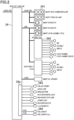
- FIG. 3 is a diagram illustrating an example of a function configuration of a network hub device.
- a network hub device 30 of FIG. 3 corresponds to, for example, the CAN hub device 34 illustrated in FIG. 2 , and in FIG. 3 , a major function is illustrated.
- a CAN-FD signal is an example of a digital control signal of a predetermined first protocol
- a LIN signal is an example of a digital control signal of a second protocol that is different from the first protocol.
- the network hub device 30 incudes a trunk side communication port 41 as a communication port coupled to a trunk network and communication ports 42 to 48 as communication ports coupled to device side networks.
- the trunk side communication port 41 performs input/output of the CAN-FD signal.
- the communication port 42 performs input/output of the CAN-FD signal.
- the communication port 43 performs input/output of the LIN signal.
- the communication port 44 performs input/output of the CAN signal.
- Each of the communication ports 45 and 46 performs input of an analog control signal and each of the communication ports 47 and 48 performs output of an analog control signal.
- the communication port 42 corresponds to a first digital port
- the communication port 43 corresponds to a second digital port
- each of the communication ports 45 to 48 corresponds to a first analog port.
- the protocol conversion section 52 performs protocol conversion on a CAN-FD signal sent from the distributing/aggregating section 51 to generate a LIN signal and sends the LIN signal to the communication port 43.
- the protocol conversion section 52 also performs protocol conversion on a LIN signal received from the device side network via the communication port 43 to generate a CAN-FD signal and sends the CAN-FD signal to the distributing/aggregating section 51.
- the data length conversion section 53 performs data length conversion on the CAN-FD signal sent from the distributing/aggregating section 51 to generate a CAN signal and sends the CAN signal to the communication port 44.
- the CAN signal is 8 bytes and the CAN-FD signal is 64 bytes at most, and therefore, in this data length conversion, processing in which 64-byte data is divided into eight 8-byte data is performed.
- the data length conversion section 53 performs data length conversion on the CAN signal received from the device side network via the communication port 44 to generate a CAN-FD signal and sends the CAN-FD signal to the distributing/aggregating section 51. In this data length conversion, processing in which eight 8-byte data are put back together into 64 byte-data is performed.
- the signal conversion section 60 includes a CPU 61, a digital input circuit 62, an analog input circuit 63, and control output circuits 64 and 65.
- the CPU 61 performs processing of extracting control values related to in-vehicle devices corresponding to the communication ports 47 and 48 from the CAN-FD signals sent from the distributing/aggregating section 51. The extracted control values are sent to the control output circuits 64 and 65.
- the control output circuit 64 generates an analog control signal, for example, for an LED in accordance with the control value received from the CPU 61 and sends the analog control signal to the communication port 47.
- the control output circuit 65 generates an analog control signal, for example, for a motor in accordance with the control value received from the CPU 61 and sends the analog control signal to the communication port 48.
- the network hub device 30 has a function of transmitting, to the device side network, a CAN-FD signal received from the trunk network as a CAN-FD signal of the same protocol, a LIN signal of a different protocol converted from the received CAN-FD signal, a CAN signal converted from the received CAN-FD signal, or an analog control signal converted from the received CAN-FD signal.
- the network hub device 30 has a function of aggregating a CAN-FD signal, a LIN signal, a CAN signal, an analog control signal, or the like received from the device side network into a CAN-FD signal to transmit the CAN-FD signal to the trunk network.
- the network hub device 30 does not have a function of controlling each in-vehicle device.
- the central processing unit 10 includes a control function of controlling each in-vehicle device, and therefore, the network hub device 30 does not need to include an advanced arithmetic function.
- the network hub devices corresponding to the Ethernet hub devices 21 and 22 have a similar function configuration to the above-described one, and detailed description thereof will be omitted.
- At least one of the communication ports 45 to 48 that perform input or output of analog control signals is preferably a universal communication port capable of inputting or outputting an analog control signal to or from a plurality of types of in-vehicle devices.
- the analog input circuit 63 in the signal conversion section 60 may employ a circuit configuration that can process outputs of a plurality of types of sensors, and thus, the communication port 46 can function as a universal communication port.
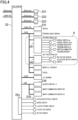
- FIG. 4 illustrates, as another example of an input/output configuration of the network hub device, an input/output configuration of the Ethernet hub device 22 arranged in the dash zone.
- a steering wheel ECU 241 and a tilt telescopic (steering device) ECU 242 that will be described later are examples of a sub hub device.
- a “sub hub device” is a device that transmits/receives digital control signals to/from a network hub device and controls an in-vehicle device.
- the Ethernet hub device 22 transmits an image signal included in transmitted Ethernet signals to each of electronic mirror devices 221 and 222 and a display device 223 to cause each of the devices to display an image.
- the Ethernet hub device 22 protocol-converts some of control signals included in the transmitted Ethernet signals to CAN-FD signals and transmits the CAN-FD signals to the CAN hub devices 34 and 36.
- the Ethernet hub device 22 protocol-converts a control signal included in the transmitted Ethernet signals to a CAN-FD signal and outputs the CAN-FD signal to an electric power assist steering (EPAS) 231 or the like.
- EPAS 231 includes a CAN controller built therein, extracts control data from the transmitted CAN-FD signal, and executes control of EPAS.
- the Ethernet hub device 22 protocol-converts a LIN signal transmitted from a cluster switch 234 or the like to an Ethernet signal and transmits the Ethernet signal to the trunk network.
- the Ethernet hub device 22 includes a signal conversion section 22a.
- the signal conversion section 22a protocol-converts an analog output signal output from an accelerator pedal sensor 235 or the like to an Ethernet signal.
- the protocol-converted Ethernet signal is transmitted to the trunk network.
- a signal line needs to be provided via a clock spring 73. Therefore, a harness diameter of a wire harness 74 is physically limited, and therefore, if too many signal lines are provided, it is difficult to couple the in-vehicle device to the trunk network, and workability in assembling the steering wheel 71 to a vehicle body is reduced.
- each of components surrounded by the broken line A in FIG. 4 performs communication with the Ethernet hub device 22 using a CAN signal. That is, the steering wheel ECU 241 and the tilt telescopic ECU 242 that control in-vehicle devices provided onto the steering wheel 71 are provided in a steering wheel 71 side.
- the steering wheel ECU 241 and the tilt telescopic ECU 242 transmit/receive digital control signals to/from the Ethernet hub device 22 via the wire harness 74 passing through the clock spring 73.
- the signal line provided via the clock spring 73 is only a cable for the CAN signal, and therefore, a configuration of the in-vehicle network is simplified and workability in assembling the steering wheel is increased.
- the steering wheel is an example of a partial body assembled to the vehicle body and the clock spring is an example of a movable portion between the vehicle body and the partial body.
- the sub hub device illustrated as an example may be provided in another partial body, such as, for example, a seat, a mirror, a door, or the like, assembled to the vehicle body via the movable portion.
- FIG. 5 illustrates, as another example of the input/output configuration of the network hub device, an input/output configuration of the CAN hub device 35 provided in a door zone.
- the CAN hub device 35 is provided in a side door. As illustrated in FIG. 5 , specifically, for example, the CAN hub device 35 outputs a control signal included in CAN signals transmitted from the trunk network as it is to a smart mirror ECU 351 or the like.
- the smart mirror ECU 351 includes a CAN controller built therein, extracts control data from the transmitted CAN signal, and executes control of a mirror.
- the CAN hub device 35 includes signal conversion sections 35a and 35b. The signal conversion sections 35a and 35b convert the control signals included in the CAN signals transmitted to the CAN hub device 35 from the trunk network to analog control signals and output the analog control signals to a door lock/unlock motor 352 or the like.
- a corresponding portion is indicated by the broken line B) can be arranged close to one another.
- a hard wire between the signal conversion section 70 and the door switch section 353 can be reduced in length or omitted.
- the switches provided in the door switch section 353 are examples of the in-vehicle devices.
Landscapes
- Engineering & Computer Science (AREA)
- Computer Networks & Wireless Communication (AREA)
- Signal Processing (AREA)
- Transportation (AREA)
- Mechanical Engineering (AREA)
- Automation & Control Theory (AREA)
- Human Computer Interaction (AREA)
- Chemical & Material Sciences (AREA)
- Combustion & Propulsion (AREA)
- Health & Medical Sciences (AREA)
- Computing Systems (AREA)
- General Health & Medical Sciences (AREA)
- Medical Informatics (AREA)
- Small-Scale Networks (AREA)
Description
- A technology disclosed herein relates to a network hub device used for transmitting information in an in-vehicle network system.
- Japanese Unexamined Patent Publication No.
JP 2017-212725 JP 2016-168967 - Further, document
US 2009/0138136 A1 shows an in-vehicle network system as defined in the preamble ofclaim 1. - Recently, the development of automatic driving systems has been promoted nationally. In an automatic driving system, in general, environment information outside a vehicle is acquired by a camera or the like and an arithmetic device calculates a route in which the vehicle should travel, based on the acquired environment information outside the vehicle. Based on a result of this calculation, various types of actuators mounted on the vehicle are controlled. Sensor signals are input to the arithmetic device from various types of sensors mounted on the vehicle.
- It is expected that a control function of each actuator is incorporated in a vehicle travel control device including an arithmetic device in the future. In such a configuration, in order to transmit information between the vehicle travel control device and each actuator, it is required to build a simple network configuration that does not require many interconnects. Types and the number of in-vehicle devices, such as an actuator, a sensor, or the like, installed in the vehicle vary depending on differences in vehicle model and grade. In an in-vehicle network system, a device capable of absorbing differences in types and the number of the in-vehicle devices is required. Such devices are useful not only in automatic driving systems but also in current drive assist systems or the like.
- In view of the foregoing, a technology disclosed herein has been devised and it is therefore an object of the present disclosure to provide a configuration including a network hub device used for building a simple network configuration in an in-vehicle network system.
- In order to solve the above-described problem, according to the technology disclosed herein, an in-vehicle network according to
claim 1 is defined. - According to this configuration, the network hub device is provided in the vehicle body and is coupled to the trunk network through which the digital control signal is transmitted. The sub hub device performs input/output of a signal to/from the in-vehicle device provided in the partial body assembled to the vehicle body via the movable portion. The sub hub device is provided in the partial body and the digital control signal is transmitted/received between the sub hub device and the network hub deice via the wire harness passing through the movable portion. That is, a signal line provided via the movable portion for control of the in-vehicle device provided in the partial body is only a cable that transmits the digital control signal. Therefore, a configuration of the in-vehicle network system is simplified and workability in assembling the partial body to the vehicle body is increased.
- In the in-vehicle network system, the partial body may be a steering wheel, and the movable body may be a clock spring.
- Furthermore, in the in-vehicle network system, the sub hub device may be a steering wheel electronic control unit (ECU), and the steering wheel ECU may be configured to receive an output of at least one in-vehicle device provided in the steering wheel, convert the output to a digital control signal, and transmit the digital control signal to the network hub device, and extract control data from the digital control signal transmitted from the network hub device, convert the control data to an analog control signal, and execute control of the at least one in-vehicle device provided in the steering wheel.
- Alternatively, in the in-vehicle network system, the sub hub device may be a tilt telescopic electronic control unit (ECU), and the tilt telescopic ECU may be configured to receive an output of at least one in-vehicle device provided in the steering wheel, convert the output to a digital control signal, and transmit the digital control signal to the network hub device, and extract control data from the digital control signal transmitted from the network hub device, convert the control data to an analog control signal, and execute control of the at least one in-vehicle device provided in the steering wheel.
- Thus, in coupling the in-vehicle device provided on the steering wheel to the trunk network, a signal line provided via the clock spring can only be a cable that transmits the digital control signal. Therefore, a configuration of the in-vehicle network system is simplified and workability in assembling the steering wheel is increased.
- According to the technology disclosed herein, an in-vehicle network system having a simple configuration can be built in a simple manner.
-
- [
FIG. 1] FIG. 1 is a diagram illustrating an example of a configuration of an in-vehicle network system. - [
FIG. 2] FIG. 2 is a diagram illustrating an example of an input/output configuration of a network hub device. - [
FIG. 3] FIG. 3 is a diagram illustrating an example of a function configuration of the network hub device. - [
FIG. 4] FIG. 4 is a diagram illustrating another example of the input/output configuration of the network hub device. - [
FIG. 5] FIG. 5 is a diagram illustrating still another example of the input/output configuration of the network hub device. - [
FIG. 6] FIG. 6 is a view illustrating examples of appearances of a steering wheel and a clock spring. - An exemplary embodiment will be described in detail below with reference to the accompanying drawings. Note that, herein, devices, such as a sensor, an actuator, or the like that are mounted on a vehicle and perform travel control will be referred to as in-vehicle devices or merely as devices.
-
FIG. 1 is a diagram illustrating an example of a configuration of an in-vehicle network system. The in-vehicle network system ofFIG. 1 is mounted on avehicle 1 and includes acentral processing unit 10, Ethernethub devices 21 and 22 (denoted by the reference sign E-H inFIG. 1 ) configured to transmit/receive Ethernet signals, andCAN hub devices FIG. 1 ) configured to transmit/receive controller area network (CAN) signals or CAN with flexible data rate (CAN-FD) signals. - In this embodiment, signal transmission paths between the
central processing unit 10 and each of the Ethernethub devices central processing unit 10 and each of theCAN hub devices hub devices CAN hub devices FIG. 1 , a transmission path of an Ethernet signal is indicated by a thick solid line, a transmission path of a CAN signal or a CAN-FD signal is indicated by a medium-thick solid line, and a signal path to an in-vehicle device is indicated by a thin solid line. Note that, inFIG. 1 , details of the device side network are not illustrated. - Herein, a device having a function to relay information transmitted via a network will be referred to as a "network hub device." The Ethernet
hub devices CAN hub devices - In order to enable automatic driving or assist driving of the
vehicle 1, thecentral processing unit 10 calculates a route in which thevehicle 1 should travel and determines a motion of thevehicle 1 to follow the route in response to outputs of sensors or the like mounted on thevehicle 1 or the like. Thecentral processing unit 10 is, for example, a processor formed of one or more chips and, in some cases, has an artificial intelligence (AI) function. The sensors or the like that output information to thecentral processing unit 10 include, for example, a camera used for shooting an external environment of the vehicle, a radar detecting an object or the like outside the vehicle, a global positioning system (GPS) sensor detecting a position of the vehicle, a vehicle state sensor detecting a behavior of the vehicle, such as vehicle speed, acceleration, a yaw rate, or the like, an occupant state sensor, such as an in-vehicle camera or the like, acquiring a state of an occupant of the vehicle, or the like. Communication information from another vehicle located around the vehicle and traffic information from a navigation system may be input to thecentral processing unit 10. - The Ethernet
hub devices hub device 21 transmits/receives Ethernet signals to/from thecentral processing unit 10 via a trunk network. The Ethernet signals transmitted from thecentral processing unit 10 to the Ethernethub device 21 include an image signal that causes each of anelectronic mirror device 211, a head up display (HUD)device 212, and ameter display device 213 to display an image. The Ethernethub device 21 transmits the image signal included in the Ethernet signals transmitted from thecentral processing unit 10 to each of theelectronic mirror device 211, theHUD device 212, and themeter display device 213 to cause each of the devices to display the image. The Ethernethub device 21 protocol-converts some of control signals included in the Ethernet signals transmitted from thecentral processing unit 10 to CAN-FD signals and transmits the CAN-FD signals to theCAN hub devices - The Ethernet
hub device 22 transmits/receives Ethernet signals to/from thecentral processing unit 10 via a trunk network. The Ethernet signals transmitted from thecentral processing unit 10 to the Ethernethub device 22 include an image signal that causes each ofelectronic mirror devices display device 223 to display an image. The Ethernethub device 22 transmits the image signal included in the Ethernet signals transmitted from thecentral processing unit 10 to each of theelectronic mirror devices display device 223 to cause each of the devices to display the image. The Ethernethub device 22 protocol-converts some of the control signals included in the Ethernet signals transmitted from thecentral processing unit 10 to CAN-FD signals and transmits the CAN-FD signals to theCAN hub devices - The
CAN hub devices CAN hub devices central processing unit 10 via trunk networks. The CAN-FD signals transmitted from thecentral processing unit 10 to theCAN hub devices CAN hub devices central processing unit 10 as they are, perform data length conversion on the control signals to output CAN signals, perform protocol conversion on the control signals to output local interconnect network (LIN) signals, or perform signal conversion on the control signals to output analog control signals. TheCAN hub devices central processing unit 10. - The
CAN hub device CAN hub device 33 transmits/receives CAN-FD signals to/from theEthernet hub device 21 via a trunk network. TheCAN hub device 34 transmits/receives CAN-FD signals to/from theEthernet hub device 22 via a trunk network. TheCAN hub devices Ethernet hub devices CAN hub devices Ethernet hub devices - The
CAN hub devices right side door 2R and aleft side door 2L (referred to as a "door zone") of thevehicle 1, respectively. Note that thereference signs CAN hub device 35 transmits/receives CAN signals to/from theEthernet hub device 21 via a trunk network. TheCAN hub device 36 transmits/receives CAN signals to/from theEthernet hub device 22 via a trunk network. TheCAN hub devices Ethernet hub devices CAN hub devices Ethernet hub devices - The
CAN hub device 37 is provided in periphery of a center console (referred to as a "console zone") of thevehicle 1. TheCAN hub device 37 transmits/receives CAN-FD signals to/from theEthernet hub device 22 via a trunk network. TheCAN hub device 37 outputs control signals included in the CAN-FD signals transmitted from theEthernet hub device 22 as they are, performs data length conversion on the control signals to output CAN signals, performs protocol conversion on the control signals to output LIN signals, or performs signal conversion on the control signals to output analog control signals. TheCAN hub device 37 receives CAN signals, CAN-FD signals, LIN signals, and analog control signals from the corresponding in-vehicle devices, converts them to CAN-FD signals, and transmits the CAN-FD signals to theEthernet hub device 22. -
FIG. 2 illustrates an input/output configuration of theCAN hub device 34 arranged in the left side in the rear zone as an example of an input/output configuration of the network hub device. As illustrated inFIG. 2 , specifically, for example, theCAN hub device 34 outputs a control signal included in transmitted CAN-FD signals as it is to a smartrear combination lamp 341 or the like. The smartrear combination lamp 341 includes a CAN controller built therein, extracts control data from the transmitted CAN-FD signal, and executes control of a lamp. TheCAN hub device 34 protocol-converts a control signal included in the transmitted CAN-FD signals to a LIN signal and outputs the LIN signal to a seatbelt electronic control unit (ECU) 342 or the like. Theseatbelt ECU 342 includes a LIN controller and an analog input/output circuit built therein, extracts control data from the transmitted LIN signal, converts the control data to an analog control signal, and executes control of a seatbelt. Theseatbelt ECU 342 receives an output of a switch or a sensor provided to the seatbelt, converts the output to a LIN signal, and transmits the LIN signal to theCAN hub device 34. TheCAN hub device 34 protocol-converts the LIN signal received from theseatbelt ECU 342 to a CAN-FD signal and transmits the CAN-FD signal to the trunk network. - The
CAN hub device 34 includes asignal conversion section 34a. Thesignal conversion section 34a convers the control signal included in the CAN-FD signals transmitted to theCAN hub device 34 to an analog control signal and outputs the analog control signal to afuel lid opener 343 or the like. Thesignal conversion section 34a receives an output of afuel sensor 344 or the like and converts the output to a CAN-FD signal. The converted CAN-FD signal is transmitted to the trunk network. -
FIG. 3 is a diagram illustrating an example of a function configuration of a network hub device. Anetwork hub device 30 ofFIG. 3 corresponds to, for example, theCAN hub device 34 illustrated inFIG. 2 , and inFIG. 3 , a major function is illustrated. In this case, a CAN-FD signal is an example of a digital control signal of a predetermined first protocol and a LIN signal is an example of a digital control signal of a second protocol that is different from the first protocol. - The
network hub device 30 incudes a trunkside communication port 41 as a communication port coupled to a trunk network andcommunication ports 42 to 48 as communication ports coupled to device side networks. The trunkside communication port 41 performs input/output of the CAN-FD signal. Thecommunication port 42 performs input/output of the CAN-FD signal. Thecommunication port 43 performs input/output of the LIN signal. Thecommunication port 44 performs input/output of the CAN signal. Each of thecommunication ports communication ports communication port 42 corresponds to a first digital port, thecommunication port 43 corresponds to a second digital port, and each of thecommunication ports 45 to 48 corresponds to a first analog port. - The
network hub device 30 includes a distributing/aggregatingsection 51, aprotocol conversion section 52, a datalength conversion section 53, and asignal conversion section 60. The distributing/aggregatingsection 51 distributes CAN-FD signals received from the trunk network via thecommunication port 41 as original signals of various types of output signals. One of the distributed CAN-FD signals is sent to thecommunication port 42 as it is. The other ones of the distributed CAN-FD signals are sent to theprotocol conversion section 52, the datalength conversion section 53, and thesignal conversion section 60. The distributing/aggregatingsection 51 aggregates CAN-FD signals received from the device side network via thecommunication port 42 and CAN-FD signals sent from theprotocol conversion section 52, the datalength conversion section 53, and thesignal conversion section 60 and sends aggregated signals to thecommunication port 41. - The
protocol conversion section 52 performs protocol conversion on a CAN-FD signal sent from the distributing/aggregatingsection 51 to generate a LIN signal and sends the LIN signal to thecommunication port 43. Theprotocol conversion section 52 also performs protocol conversion on a LIN signal received from the device side network via thecommunication port 43 to generate a CAN-FD signal and sends the CAN-FD signal to the distributing/aggregatingsection 51. - The data
length conversion section 53 performs data length conversion on the CAN-FD signal sent from the distributing/aggregatingsection 51 to generate a CAN signal and sends the CAN signal to thecommunication port 44. The CAN signal is 8 bytes and the CAN-FD signal is 64 bytes at most, and therefore, in this data length conversion, processing in which 64-byte data is divided into eight 8-byte data is performed. The datalength conversion section 53 performs data length conversion on the CAN signal received from the device side network via thecommunication port 44 to generate a CAN-FD signal and sends the CAN-FD signal to the distributing/aggregatingsection 51. In this data length conversion, processing in which eight 8-byte data are put back together into 64 byte-data is performed. - The
signal conversion section 60 generates analog control signals that control in-vehicle devices, based on the CAN-FD signal sent from the distributing/aggregatingsection 51, and sends the analog control signals to thecommunication ports signal conversion section 60 converts the analog control signals received by thecommunication ports section 51. Thesignal conversion section 60 corresponds to thesignal conversion section 34a ofFIG. 2 . - The
signal conversion section 60 includes aCPU 61, adigital input circuit 62, ananalog input circuit 63, andcontrol output circuits CPU 61 performs processing of extracting control values related to in-vehicle devices corresponding to thecommunication ports section 51. The extracted control values are sent to thecontrol output circuits control output circuit 64 generates an analog control signal, for example, for an LED in accordance with the control value received from theCPU 61 and sends the analog control signal to thecommunication port 47. Thecontrol output circuit 65 generates an analog control signal, for example, for a motor in accordance with the control value received from theCPU 61 and sends the analog control signal to thecommunication port 48. - The
digital input circuit 62 receives, for example, a digital output signal of a switch via thecommunication port 45, converts the digital output signal to a control value, and outputs the control value to theCPU 61. Theanalog input circuit 63 receives, for example, an analog output signal of a sensor via thecommunication port 46, converts the analog output signal to a control value, and outputs the control value to theCPU 61. TheCPU 61 incorporates the control values received from thedigital input circuit 62 and theanalog input circuit 63 in the CAN-FD signals and sends the CAN-FD signals with the control values incorporated therein to the distributing/aggregatingsection 51. - As illustrated in
FIG. 3 , thenetwork hub device 30 has a function of transmitting, to the device side network, a CAN-FD signal received from the trunk network as a CAN-FD signal of the same protocol, a LIN signal of a different protocol converted from the received CAN-FD signal, a CAN signal converted from the received CAN-FD signal, or an analog control signal converted from the received CAN-FD signal. Thenetwork hub device 30 has a function of aggregating a CAN-FD signal, a LIN signal, a CAN signal, an analog control signal, or the like received from the device side network into a CAN-FD signal to transmit the CAN-FD signal to the trunk network. However, thenetwork hub device 30 does not have a function of controlling each in-vehicle device. Thecentral processing unit 10 includes a control function of controlling each in-vehicle device, and therefore, thenetwork hub device 30 does not need to include an advanced arithmetic function. - The network hub devices corresponding to the
Ethernet hub devices - As described above, according to this embodiment, a network hub device realizes a function of absorbing a difference between control signals, that is, for example, a CAN-FD signal, a CAN signal, a LIN signal, and an analog signal, at an in-vehicle device side, for a trunk network through which a digital control signal, such as a CAN-FD signal or the like, is transmitted. Accordingly, by arranging this network hub device in each zone of a vehicle, an information transmission path from a central processing unit to each in-vehicle device can be formed into a simple network configuration.
- At least one of the
communication ports 45 to 48 that perform input or output of analog control signals is preferably a universal communication port capable of inputting or outputting an analog control signal to or from a plurality of types of in-vehicle devices. Thus, versatility of the network hub device can be enhanced. For example, theanalog input circuit 63 in thesignal conversion section 60 may employ a circuit configuration that can process outputs of a plurality of types of sensors, and thus, thecommunication port 46 can function as a universal communication port. -
FIG. 4 illustrates, as another example of an input/output configuration of the network hub device, an input/output configuration of theEthernet hub device 22 arranged in the dash zone. Note that asteering wheel ECU 241 and a tilt telescopic (steering device)ECU 242 that will be described later are examples of a sub hub device. Herein, a "sub hub device" is a device that transmits/receives digital control signals to/from a network hub device and controls an in-vehicle device. - As illustrated in
FIG. 4 , specifically, for example, theEthernet hub device 22 transmits an image signal included in transmitted Ethernet signals to each ofelectronic mirror devices display device 223 to cause each of the devices to display an image. TheEthernet hub device 22 protocol-converts some of control signals included in the transmitted Ethernet signals to CAN-FD signals and transmits the CAN-FD signals to theCAN hub devices - The
Ethernet hub device 22 protocol-converts a control signal included in the transmitted Ethernet signals to a CAN-FD signal and outputs the CAN-FD signal to an electric power assist steering (EPAS) 231 or the like.EPAS 231 includes a CAN controller built therein, extracts control data from the transmitted CAN-FD signal, and executes control of EPAS. - The
Ethernet hub device 22 protocol-converts a control signal included in the transmitted Ethernet signals to a CAN signal and outputs the CAN signal to thesteering wheel ECU 241 and the tilttelescopic ECU 242 or the like. TheEthernet hub device 22 protocol-converts the CAN signals transmitted from thesteering wheel ECU 241 and the tilttelescopic ECU 242 or the like to Ethernet signals and transmits the Ethernet signals to the trunk network. - The
steering wheel ECU 241 includes a CAN controller and an analog input/output circuit built therein, receives an output of a switch or a sensor provided on the steering wheel, converts the output to a CAN signal, and transmits the CAN signal to theEthernet hub device 22. Thesteering wheel ECU 241 extracts control data from the CAN signal transmitted from theEthernet hub device 22, converts the control data to an analog control signal, and executes control of an illumination, a warmer, or the like provided on the steering wheel. The tilttelescopic ECU 242 includes a CAN controller and an analog input/output circuit built therein, receives an output of the switch or the sensor provided on the steering wheel, converts the output to a CAN signal, and transmits the CAN signal to theEthernet hub device 22. The tilttelescopic ECU 242 extracts control data from the CAN signal transmitted from theEthernet hub device 22, converts the control data to an analog control signal, and executes control of a tilt motor, a telescope motor, or the like. - The
Ethernet hub device 22 protocol-converts a LIN signal transmitted from acluster switch 234 or the like to an Ethernet signal and transmits the Ethernet signal to the trunk network. TheEthernet hub device 22 includes asignal conversion section 22a. Thesignal conversion section 22a protocol-converts an analog output signal output from anaccelerator pedal sensor 235 or the like to an Ethernet signal. The protocol-converted Ethernet signal is transmitted to the trunk network. - In this case, as illustrated in
FIG. 6 , in order to couple an in-vehicle device provided on thesteering wheel 71, such as the sensor, theswitch 72, the illumination, or the like, to the trunk network, a signal line needs to be provided via aclock spring 73. Therefore, a harness diameter of awire harness 74 is physically limited, and therefore, if too many signal lines are provided, it is difficult to couple the in-vehicle device to the trunk network, and workability in assembling thesteering wheel 71 to a vehicle body is reduced. - Therefore, in this example, each of components surrounded by the broken line A in
FIG. 4 (inFIG. 1 , a corresponding portion is surrounded by the broken line A) performs communication with theEthernet hub device 22 using a CAN signal. That is, thesteering wheel ECU 241 and the tilttelescopic ECU 242 that control in-vehicle devices provided onto thesteering wheel 71 are provided in asteering wheel 71 side. Thesteering wheel ECU 241 and the tilttelescopic ECU 242 transmit/receive digital control signals to/from theEthernet hub device 22 via thewire harness 74 passing through theclock spring 73. Thus, the signal line provided via theclock spring 73 is only a cable for the CAN signal, and therefore, a configuration of the in-vehicle network is simplified and workability in assembling the steering wheel is increased. - Note that the steering wheel is an example of a partial body assembled to the vehicle body and the clock spring is an example of a movable portion between the vehicle body and the partial body. The sub hub device illustrated as an example may be provided in another partial body, such as, for example, a seat, a mirror, a door, or the like, assembled to the vehicle body via the movable portion.
-
FIG. 5 illustrates, as another example of the input/output configuration of the network hub device, an input/output configuration of theCAN hub device 35 provided in a door zone. TheCAN hub device 35 is provided in a side door. As illustrated inFIG. 5 , specifically, for example, theCAN hub device 35 outputs a control signal included in CAN signals transmitted from the trunk network as it is to asmart mirror ECU 351 or the like. Thesmart mirror ECU 351 includes a CAN controller built therein, extracts control data from the transmitted CAN signal, and executes control of a mirror. TheCAN hub device 35 includessignal conversion sections signal conversion sections CAN hub device 35 from the trunk network to analog control signals and output the analog control signals to a door lock/unlock motor 352 or the like. - The
CAN hub device 35 includes acommunication port 49 that inputs/outputs a CAN signal as a device side communication port. Thecommunication port 49 corresponds to the first digital port. Asignal conversion section 70 configured to perform signal conversion between a CAN signal and an analog control signal is provided between thecommunication port 49 and in-vehicle devices. In this case, thesignal conversion section 70 is coupled to adoor switch section 353 with switches related to a door arranged therein. As described above, by providing thesignal conversion section 70 coupled to thecommunication port 49 that inputs/outputs a CAN signal separately from thesignal conversion sections FIG. 5 (inFIG. 1 , a corresponding portion is indicated by the broken line B) can be arranged close to one another. Thus, a hard wire between thesignal conversion section 70 and thedoor switch section 353 can be reduced in length or omitted. Note that the switches provided in thedoor switch section 353 are examples of the in-vehicle devices. - The
signal conversion section 70 may be configured with a circuit substrate of thedoor switch section 353 as one unit. Thus, the hard wire between thesignal conversion section 70 and thedoor switch section 353 can be omitted. - The above-described embodiment is a mere example, and the scope of the present disclosure should not be restrictively interpreted. The scope of the present disclosure is defined by the appended claims, and all modifications and changes within an equivalent scope of the claims fall within the scope of the present disclosure.
- The technology disclosed herein is useful for building an in-vehicle network system having a simple configuration.
-
- 1 Vehicle
- 21, 22 Ethernet hub device (network hub device)
- 22a Signal conversion section
- 30 Network hub device
- 31 to 37 CAN hub device (network hub device)
- 34a, 35a, 35b Signal conversion section
- 41 Trunk side communication port
- 42 to 49 Device side communication port
- 52 Protocol conversion section
- 60 Signal conversion section
- 71 Steering wheel (partial body)
- 73 Clock spring (movable body)
- 74 Wire harness
- 241 Steering wheel ECU (sub hub device)
- 242 Tilt telescopic ECU (sub hub device)
Claims (4)
- An in-vehicle network system comprising:a network hub device (21, 22) provided in a vehicle body and coupled to a trunk network through which digital control signals are transmitted; anda sub hub device (241, 242) configured to perform input/output of a signal to/from an in-vehicle device (72) provided in a partial body assembled to the vehicle body via a movable portion,characterized in thatthe sub hub device (241, 242) is provided in the partial body and is configured to transmit/receive digital control signals to/from the network hub device (21, 22) via a wire harness (74) passing through the movable portion.
- The in-vehicle network system of claim 1, whereinthe partial body is a steering wheel (71), andthe movable portion is a clock spring (73).
- The in-vehicle network system of claim 2, whereinthe sub hub device is a steering wheel ECU (241), andthe steering wheel ECU (241)receives an output of at least one in-vehicle device (72) provided in the steering wheel (71), converts the output to a digital control signal, and transmits the digital control signal to the network hub device (21, 22), andextracts control data from the digital control signal transmitted from the network hub device (21, 22), converts the control data to an analog control signal, and executes control of the at least one in-vehicle device (72) provided in the steering wheel (71).
- The in-vehicle network system of claim 2, whereinthe sub hub device is a tilt telescopic ECU (242),the tilt telescopic ECU (242)receives an output of at least one in-vehicle device (72) provided in the steering wheel (71), converts the output to a digital control signal, and transmits the digital control signal to the network hub device (21, 22), andextracts control data from the digital control signal transmitted from the network hub device (21, 22), converts the control data to an analog control signal, and executes control of the at least one in-vehicle device (72) provided in the steering wheel (71).
Applications Claiming Priority (2)
| Application Number | Priority Date | Filing Date | Title |
|---|---|---|---|
| JP2019132545A JP7342476B2 (en) | 2019-07-18 | 2019-07-18 | In-vehicle network system |
| PCT/JP2020/027039 WO2021010323A1 (en) | 2019-07-18 | 2020-07-10 | Vehicle onboard network system |
Publications (3)
| Publication Number | Publication Date |
|---|---|
| EP3998748A1 EP3998748A1 (en) | 2022-05-18 |
| EP3998748A4 EP3998748A4 (en) | 2022-09-07 |
| EP3998748B1 true EP3998748B1 (en) | 2024-07-03 |
Family
ID=74209817
Family Applications (1)
| Application Number | Title | Priority Date | Filing Date |
|---|---|---|---|
| EP20840525.8A Active EP3998748B1 (en) | 2019-07-18 | 2020-07-10 | Vehicle onboard network system |
Country Status (5)
| Country | Link |
|---|---|
| US (1) | US11873022B2 (en) |
| EP (1) | EP3998748B1 (en) |
| JP (1) | JP7342476B2 (en) |
| CN (1) | CN114080794A (en) |
| WO (1) | WO2021010323A1 (en) |
Families Citing this family (5)
| Publication number | Priority date | Publication date | Assignee | Title |
|---|---|---|---|---|
| JP7408940B2 (en) * | 2019-07-18 | 2024-01-09 | マツダ株式会社 | network hub device |
| EP4164199A1 (en) * | 2021-10-06 | 2023-04-12 | Cetitec GmbH | Vehicle communication system |
| US12250274B2 (en) * | 2023-03-29 | 2025-03-11 | Amazon Technologies, Inc. | Vehicle signal relay service |
| CN120111118A (en) * | 2023-11-30 | 2025-06-06 | 富泰京精密电子(烟台)有限公司 | Data transmission method and related equipment based on vehicle Ethernet |
| CN119459546A (en) * | 2024-12-04 | 2025-02-18 | 安徽江淮汽车集团股份有限公司 | Integrated combination switch in steering wheel area |
Family Cites Families (24)
| Publication number | Priority date | Publication date | Assignee | Title |
|---|---|---|---|---|
| JPH0376874U (en) * | 1989-11-30 | 1991-08-01 | ||
| NO20005119L (en) * | 2000-02-18 | 2001-08-20 | Ziad Badarneh | Interactive system |
| US6548772B2 (en) | 2000-05-04 | 2003-04-15 | Lear Corporation | Multifunction switch pod |
| US8757309B2 (en) * | 2004-06-15 | 2014-06-24 | Massachusetts Institute Of Technology | Autonomous modular vehicle wheel assembly |
| JP2006238413A (en) * | 2005-01-27 | 2006-09-07 | Nec Electronics Corp | Usb hub, usb-compliant apparatus, and communication system |
| DE112006002638B4 (en) * | 2005-10-12 | 2015-10-15 | Autonetworks Technologies, Ltd. | In-vehicle database distribution node and in-vehicle database system |
| CN101821149A (en) * | 2007-09-06 | 2010-09-01 | 高田-彼得里公开股份有限公司 | Steering wheel assembly for motor vehicle |
| US20120283914A1 (en) * | 2011-05-05 | 2012-11-08 | Karwaczynski Krzysztof W | Vehicle steering wheel control system having integrated electronic control unit |
| CN202169907U (en) | 2011-07-29 | 2012-03-21 | 富士重工业株式会社 | Device used for identifying environment outside vehicle |
| JP2013129352A (en) | 2011-12-22 | 2013-07-04 | Panasonic Corp | In-vehicle display system |
| US8993929B2 (en) * | 2012-01-12 | 2015-03-31 | Ford Global Technologies, Llc | Heated/cooled thermoelectric steering wheel |
| JP6492812B2 (en) | 2015-03-13 | 2019-04-03 | 株式会社デンソー | Actuator control system |
| JP6962697B2 (en) | 2016-05-27 | 2021-11-05 | パナソニック インテレクチュアル プロパティ コーポレーション オブ アメリカPanasonic Intellectual Property Corporation of America | Network hub, transfer method and in-vehicle network system |
| WO2017203905A1 (en) | 2016-05-27 | 2017-11-30 | パナソニック インテレクチュアル プロパティ コーポレーション オブ アメリカ | Network hub, transfer method, and on-vehicle network system |
| JP6889716B2 (en) * | 2016-06-24 | 2021-06-18 | 矢崎総業株式会社 | Vehicle circuit |
| US10705536B2 (en) * | 2016-11-22 | 2020-07-07 | Baidu Usa Llc | Method and system to manage vehicle groups for autonomous vehicles |
| US10399395B2 (en) * | 2016-11-24 | 2019-09-03 | Hyundai Motor Company | Vehicle and method for controlling the same |
| CN206542444U (en) * | 2017-03-30 | 2017-10-03 | 成都大学 | Radar data access device |
| US11208060B2 (en) * | 2017-07-20 | 2021-12-28 | Les Systèmes Cyberkar | Configurable management system for a vehicle and method of use |
| WO2019021403A1 (en) * | 2017-07-26 | 2019-01-31 | パナソニック インテレクチュアル プロパティ コーポレーション オブ アメリカ | Control network system, vehicle remote control system, and vehicle-mounted relay device |
| CN109246126B (en) * | 2018-10-11 | 2022-01-11 | 北京海纳川汽车部件股份有限公司 | Data communication method and device of vehicle-mounted automatic driving system |
| US10647344B1 (en) * | 2019-01-31 | 2020-05-12 | Toyota Motor Engineering & Manufacturing North America, Inc. | Multi-function vehicle input devices with convex dials for vehicle systems control and methods incorporating the same |
| CN109995631B (en) * | 2019-03-21 | 2020-10-09 | 东风汽车集团有限公司 | Vehicle control system and method with domain control function |
| CN109917765B (en) * | 2019-03-28 | 2020-09-11 | 东软睿驰汽车技术(沈阳)有限公司 | Distributed domain controller system based on network architecture of automatic driving system |
-
2019
- 2019-07-18 JP JP2019132545A patent/JP7342476B2/en active Active
-
2020
- 2020-07-10 US US17/621,244 patent/US11873022B2/en active Active
- 2020-07-10 WO PCT/JP2020/027039 patent/WO2021010323A1/en not_active Ceased
- 2020-07-10 EP EP20840525.8A patent/EP3998748B1/en active Active
- 2020-07-10 CN CN202080043145.3A patent/CN114080794A/en active Pending
Also Published As
| Publication number | Publication date |
|---|---|
| EP3998748A1 (en) | 2022-05-18 |
| US11873022B2 (en) | 2024-01-16 |
| EP3998748A4 (en) | 2022-09-07 |
| JP2021019234A (en) | 2021-02-15 |
| JP7342476B2 (en) | 2023-09-12 |
| WO2021010323A1 (en) | 2021-01-21 |
| CN114080794A (en) | 2022-02-22 |
| US20220355861A1 (en) | 2022-11-10 |
Similar Documents
| Publication | Publication Date | Title |
|---|---|---|
| EP3998748B1 (en) | Vehicle onboard network system | |
| EP3993324A1 (en) | Network hub device | |
| CN110562171B (en) | Automobile electric control system and automobile | |
| EP4007216B1 (en) | Vehicle control system and vehicle control system design method | |
| EP4007217B1 (en) | VEHICLE CONTROL SYSTEM AND DESIGN METHOD FOR A VEHICLE CONTROL SYSTEM | |
| EP3998745B1 (en) | Network hub device | |
| EP4005871B1 (en) | Vehicle control system | |
| CN210652984U (en) | Automobile electric control system and automobile | |
| US12263783B2 (en) | Vehicle control system | |
| CN114521179B (en) | Central processing unit |
Legal Events
| Date | Code | Title | Description |
|---|---|---|---|
| STAA | Information on the status of an ep patent application or granted ep patent |
Free format text: STATUS: THE INTERNATIONAL PUBLICATION HAS BEEN MADE |
|
| PUAI | Public reference made under article 153(3) epc to a published international application that has entered the european phase |
Free format text: ORIGINAL CODE: 0009012 |
|
| STAA | Information on the status of an ep patent application or granted ep patent |
Free format text: STATUS: REQUEST FOR EXAMINATION WAS MADE |
|
| 17P | Request for examination filed |
Effective date: 20220211 |
|
| AK | Designated contracting states |
Kind code of ref document: A1 Designated state(s): AL AT BE BG CH CY CZ DE DK EE ES FI FR GB GR HR HU IE IS IT LI LT LU LV MC MK MT NL NO PL PT RO RS SE SI SK SM TR |
|
| REG | Reference to a national code |
Ref country code: DE Ref legal event code: R079 Free format text: PREVIOUS MAIN CLASS: H04L0012460000 Ipc: H04L0012417000 Ref country code: DE Ref legal event code: R079 Ref document number: 602020033505 Country of ref document: DE Free format text: PREVIOUS MAIN CLASS: H04L0012460000 Ipc: H04L0012417000 |
|
| A4 | Supplementary search report drawn up and despatched |
Effective date: 20220808 |
|
| RIC1 | Information provided on ipc code assigned before grant |
Ipc: H04L 12/417 20060101AFI20220803BHEP |
|
| DAV | Request for validation of the european patent (deleted) | ||
| DAX | Request for extension of the european patent (deleted) | ||
| STAA | Information on the status of an ep patent application or granted ep patent |
Free format text: STATUS: EXAMINATION IS IN PROGRESS |
|
| 17Q | First examination report despatched |
Effective date: 20230321 |
|
| REG | Reference to a national code |
Ref country code: DE Ref legal event code: R079 Free format text: PREVIOUS MAIN CLASS: H04L0012417000 Ipc: H04L0012403000 Ref document number: 602020033505 Country of ref document: DE |
|
| GRAP | Despatch of communication of intention to grant a patent |
Free format text: ORIGINAL CODE: EPIDOSNIGR1 |
|
| STAA | Information on the status of an ep patent application or granted ep patent |
Free format text: STATUS: GRANT OF PATENT IS INTENDED |
|
| RIC1 | Information provided on ipc code assigned before grant |
Ipc: H04L 12/403 20060101AFI20240402BHEP |
|
| INTG | Intention to grant announced |
Effective date: 20240416 |
|
| GRAS | Grant fee paid |
Free format text: ORIGINAL CODE: EPIDOSNIGR3 |
|
| GRAA | (expected) grant |
Free format text: ORIGINAL CODE: 0009210 |
|
| STAA | Information on the status of an ep patent application or granted ep patent |
Free format text: STATUS: THE PATENT HAS BEEN GRANTED |
|
| AK | Designated contracting states |
Kind code of ref document: B1 Designated state(s): AL AT BE BG CH CY CZ DE DK EE ES FI FR GB GR HR HU IE IS IT LI LT LU LV MC MK MT NL NO PL PT RO RS SE SI SK SM TR |
|
| REG | Reference to a national code |
Ref country code: CH Ref legal event code: EP |
|
| REG | Reference to a national code |
Ref country code: DE Ref legal event code: R096 Ref document number: 602020033505 Country of ref document: DE |
|
| REG | Reference to a national code |
Ref country code: LT Ref legal event code: MG9D |
|
| REG | Reference to a national code |
Ref country code: NL Ref legal event code: MP Effective date: 20240703 |
|
| PG25 | Lapsed in a contracting state [announced via postgrant information from national office to epo] |
Ref country code: PT Free format text: LAPSE BECAUSE OF FAILURE TO SUBMIT A TRANSLATION OF THE DESCRIPTION OR TO PAY THE FEE WITHIN THE PRESCRIBED TIME-LIMIT Effective date: 20241104 |
|
| REG | Reference to a national code |
Ref country code: AT Ref legal event code: MK05 Ref document number: 1700938 Country of ref document: AT Kind code of ref document: T Effective date: 20240703 |
|
| PG25 | Lapsed in a contracting state [announced via postgrant information from national office to epo] |
Ref country code: NL Free format text: LAPSE BECAUSE OF FAILURE TO SUBMIT A TRANSLATION OF THE DESCRIPTION OR TO PAY THE FEE WITHIN THE PRESCRIBED TIME-LIMIT Effective date: 20240703 |
|
| PG25 | Lapsed in a contracting state [announced via postgrant information from national office to epo] |
Ref country code: PT Free format text: LAPSE BECAUSE OF FAILURE TO SUBMIT A TRANSLATION OF THE DESCRIPTION OR TO PAY THE FEE WITHIN THE PRESCRIBED TIME-LIMIT Effective date: 20241104 Ref country code: NL Free format text: LAPSE BECAUSE OF FAILURE TO SUBMIT A TRANSLATION OF THE DESCRIPTION OR TO PAY THE FEE WITHIN THE PRESCRIBED TIME-LIMIT Effective date: 20240703 |
|
| PG25 | Lapsed in a contracting state [announced via postgrant information from national office to epo] |
Ref country code: NO Free format text: LAPSE BECAUSE OF FAILURE TO SUBMIT A TRANSLATION OF THE DESCRIPTION OR TO PAY THE FEE WITHIN THE PRESCRIBED TIME-LIMIT Effective date: 20241003 |
|
| PG25 | Lapsed in a contracting state [announced via postgrant information from national office to epo] |
Ref country code: GR Free format text: LAPSE BECAUSE OF FAILURE TO SUBMIT A TRANSLATION OF THE DESCRIPTION OR TO PAY THE FEE WITHIN THE PRESCRIBED TIME-LIMIT Effective date: 20241004 Ref country code: FI Free format text: LAPSE BECAUSE OF FAILURE TO SUBMIT A TRANSLATION OF THE DESCRIPTION OR TO PAY THE FEE WITHIN THE PRESCRIBED TIME-LIMIT Effective date: 20240703 Ref country code: PL Free format text: LAPSE BECAUSE OF FAILURE TO SUBMIT A TRANSLATION OF THE DESCRIPTION OR TO PAY THE FEE WITHIN THE PRESCRIBED TIME-LIMIT Effective date: 20240703 |
|
| PG25 | Lapsed in a contracting state [announced via postgrant information from national office to epo] |
Ref country code: BG Free format text: LAPSE BECAUSE OF FAILURE TO SUBMIT A TRANSLATION OF THE DESCRIPTION OR TO PAY THE FEE WITHIN THE PRESCRIBED TIME-LIMIT Effective date: 20240703 |
|
| PG25 | Lapsed in a contracting state [announced via postgrant information from national office to epo] |
Ref country code: LV Free format text: LAPSE BECAUSE OF FAILURE TO SUBMIT A TRANSLATION OF THE DESCRIPTION OR TO PAY THE FEE WITHIN THE PRESCRIBED TIME-LIMIT Effective date: 20240703 |
|
| PG25 | Lapsed in a contracting state [announced via postgrant information from national office to epo] |
Ref country code: IS Free format text: LAPSE BECAUSE OF FAILURE TO SUBMIT A TRANSLATION OF THE DESCRIPTION OR TO PAY THE FEE WITHIN THE PRESCRIBED TIME-LIMIT Effective date: 20241103 Ref country code: AT Free format text: LAPSE BECAUSE OF FAILURE TO SUBMIT A TRANSLATION OF THE DESCRIPTION OR TO PAY THE FEE WITHIN THE PRESCRIBED TIME-LIMIT Effective date: 20240703 |
|
| PG25 | Lapsed in a contracting state [announced via postgrant information from national office to epo] |
Ref country code: HR Free format text: LAPSE BECAUSE OF FAILURE TO SUBMIT A TRANSLATION OF THE DESCRIPTION OR TO PAY THE FEE WITHIN THE PRESCRIBED TIME-LIMIT Effective date: 20240703 Ref country code: CZ Free format text: LAPSE BECAUSE OF FAILURE TO SUBMIT A TRANSLATION OF THE DESCRIPTION OR TO PAY THE FEE WITHIN THE PRESCRIBED TIME-LIMIT Effective date: 20240703 |
|
| PG25 | Lapsed in a contracting state [announced via postgrant information from national office to epo] |
Ref country code: ES Free format text: LAPSE BECAUSE OF FAILURE TO SUBMIT A TRANSLATION OF THE DESCRIPTION OR TO PAY THE FEE WITHIN THE PRESCRIBED TIME-LIMIT Effective date: 20240703 Ref country code: RS Free format text: LAPSE BECAUSE OF FAILURE TO SUBMIT A TRANSLATION OF THE DESCRIPTION OR TO PAY THE FEE WITHIN THE PRESCRIBED TIME-LIMIT Effective date: 20241003 |
|
| PG25 | Lapsed in a contracting state [announced via postgrant information from national office to epo] |
Ref country code: RS Free format text: LAPSE BECAUSE OF FAILURE TO SUBMIT A TRANSLATION OF THE DESCRIPTION OR TO PAY THE FEE WITHIN THE PRESCRIBED TIME-LIMIT Effective date: 20241003 Ref country code: PL Free format text: LAPSE BECAUSE OF FAILURE TO SUBMIT A TRANSLATION OF THE DESCRIPTION OR TO PAY THE FEE WITHIN THE PRESCRIBED TIME-LIMIT Effective date: 20240703 Ref country code: NO Free format text: LAPSE BECAUSE OF FAILURE TO SUBMIT A TRANSLATION OF THE DESCRIPTION OR TO PAY THE FEE WITHIN THE PRESCRIBED TIME-LIMIT Effective date: 20241003 Ref country code: LV Free format text: LAPSE BECAUSE OF FAILURE TO SUBMIT A TRANSLATION OF THE DESCRIPTION OR TO PAY THE FEE WITHIN THE PRESCRIBED TIME-LIMIT Effective date: 20240703 Ref country code: IS Free format text: LAPSE BECAUSE OF FAILURE TO SUBMIT A TRANSLATION OF THE DESCRIPTION OR TO PAY THE FEE WITHIN THE PRESCRIBED TIME-LIMIT Effective date: 20241103 Ref country code: HR Free format text: LAPSE BECAUSE OF FAILURE TO SUBMIT A TRANSLATION OF THE DESCRIPTION OR TO PAY THE FEE WITHIN THE PRESCRIBED TIME-LIMIT Effective date: 20240703 Ref country code: GR Free format text: LAPSE BECAUSE OF FAILURE TO SUBMIT A TRANSLATION OF THE DESCRIPTION OR TO PAY THE FEE WITHIN THE PRESCRIBED TIME-LIMIT Effective date: 20241004 Ref country code: FI Free format text: LAPSE BECAUSE OF FAILURE TO SUBMIT A TRANSLATION OF THE DESCRIPTION OR TO PAY THE FEE WITHIN THE PRESCRIBED TIME-LIMIT Effective date: 20240703 Ref country code: ES Free format text: LAPSE BECAUSE OF FAILURE TO SUBMIT A TRANSLATION OF THE DESCRIPTION OR TO PAY THE FEE WITHIN THE PRESCRIBED TIME-LIMIT Effective date: 20240703 Ref country code: CZ Free format text: LAPSE BECAUSE OF FAILURE TO SUBMIT A TRANSLATION OF THE DESCRIPTION OR TO PAY THE FEE WITHIN THE PRESCRIBED TIME-LIMIT Effective date: 20240703 Ref country code: BG Free format text: LAPSE BECAUSE OF FAILURE TO SUBMIT A TRANSLATION OF THE DESCRIPTION OR TO PAY THE FEE WITHIN THE PRESCRIBED TIME-LIMIT Effective date: 20240703 Ref country code: AT Free format text: LAPSE BECAUSE OF FAILURE TO SUBMIT A TRANSLATION OF THE DESCRIPTION OR TO PAY THE FEE WITHIN THE PRESCRIBED TIME-LIMIT Effective date: 20240703 |
|
| REG | Reference to a national code |
Ref country code: CH Ref legal event code: PL |
|
| PG25 | Lapsed in a contracting state [announced via postgrant information from national office to epo] |
Ref country code: LU Free format text: LAPSE BECAUSE OF NON-PAYMENT OF DUE FEES Effective date: 20240710 |
|
| PG25 | Lapsed in a contracting state [announced via postgrant information from national office to epo] |
Ref country code: LU Free format text: LAPSE BECAUSE OF NON-PAYMENT OF DUE FEES Effective date: 20240710 |
|
| REG | Reference to a national code |
Ref country code: DE Ref legal event code: R097 Ref document number: 602020033505 Country of ref document: DE |
|
| PG25 | Lapsed in a contracting state [announced via postgrant information from national office to epo] |
Ref country code: SM Free format text: LAPSE BECAUSE OF FAILURE TO SUBMIT A TRANSLATION OF THE DESCRIPTION OR TO PAY THE FEE WITHIN THE PRESCRIBED TIME-LIMIT Effective date: 20240703 Ref country code: RO Free format text: LAPSE BECAUSE OF FAILURE TO SUBMIT A TRANSLATION OF THE DESCRIPTION OR TO PAY THE FEE WITHIN THE PRESCRIBED TIME-LIMIT Effective date: 20240703 Ref country code: DK Free format text: LAPSE BECAUSE OF FAILURE TO SUBMIT A TRANSLATION OF THE DESCRIPTION OR TO PAY THE FEE WITHIN THE PRESCRIBED TIME-LIMIT Effective date: 20240703 |
|
| PG25 | Lapsed in a contracting state [announced via postgrant information from national office to epo] |
Ref country code: MC Free format text: LAPSE BECAUSE OF FAILURE TO SUBMIT A TRANSLATION OF THE DESCRIPTION OR TO PAY THE FEE WITHIN THE PRESCRIBED TIME-LIMIT Effective date: 20240703 Ref country code: CH Free format text: LAPSE BECAUSE OF NON-PAYMENT OF DUE FEES Effective date: 20240731 Ref country code: BE Free format text: LAPSE BECAUSE OF NON-PAYMENT OF DUE FEES Effective date: 20240731 Ref country code: EE Free format text: LAPSE BECAUSE OF FAILURE TO SUBMIT A TRANSLATION OF THE DESCRIPTION OR TO PAY THE FEE WITHIN THE PRESCRIBED TIME-LIMIT Effective date: 20240703 |
|
| PG25 | Lapsed in a contracting state [announced via postgrant information from national office to epo] |
Ref country code: IT Free format text: LAPSE BECAUSE OF FAILURE TO SUBMIT A TRANSLATION OF THE DESCRIPTION OR TO PAY THE FEE WITHIN THE PRESCRIBED TIME-LIMIT Effective date: 20240703 Ref country code: SK Free format text: LAPSE BECAUSE OF FAILURE TO SUBMIT A TRANSLATION OF THE DESCRIPTION OR TO PAY THE FEE WITHIN THE PRESCRIBED TIME-LIMIT Effective date: 20240703 |
|
| PLBE | No opposition filed within time limit |
Free format text: ORIGINAL CODE: 0009261 |
|
| STAA | Information on the status of an ep patent application or granted ep patent |
Free format text: STATUS: NO OPPOSITION FILED WITHIN TIME LIMIT |
|
| REG | Reference to a national code |
Ref country code: BE Ref legal event code: MM Effective date: 20240731 |
|
| 26N | No opposition filed |
Effective date: 20250404 |
|
| GBPC | Gb: european patent ceased through non-payment of renewal fee |
Effective date: 20241003 |
|
| PG25 | Lapsed in a contracting state [announced via postgrant information from national office to epo] |
Ref country code: GB Free format text: LAPSE BECAUSE OF NON-PAYMENT OF DUE FEES Effective date: 20241003 |
|
| PG25 | Lapsed in a contracting state [announced via postgrant information from national office to epo] |
Ref country code: FR Free format text: LAPSE BECAUSE OF NON-PAYMENT OF DUE FEES Effective date: 20240903 |
|
| PG25 | Lapsed in a contracting state [announced via postgrant information from national office to epo] |
Ref country code: IE Free format text: LAPSE BECAUSE OF NON-PAYMENT OF DUE FEES Effective date: 20240710 |
|
| PG25 | Lapsed in a contracting state [announced via postgrant information from national office to epo] |
Ref country code: SE Free format text: LAPSE BECAUSE OF FAILURE TO SUBMIT A TRANSLATION OF THE DESCRIPTION OR TO PAY THE FEE WITHIN THE PRESCRIBED TIME-LIMIT Effective date: 20240703 |
|
| PGFP | Annual fee paid to national office [announced via postgrant information from national office to epo] |
Ref country code: DE Payment date: 20250528 Year of fee payment: 6 |
|
| PG25 | Lapsed in a contracting state [announced via postgrant information from national office to epo] |
Ref country code: CY Free format text: LAPSE BECAUSE OF FAILURE TO SUBMIT A TRANSLATION OF THE DESCRIPTION OR TO PAY THE FEE WITHIN THE PRESCRIBED TIME-LIMIT; INVALID AB INITIO Effective date: 20200710 |
|
| PG25 | Lapsed in a contracting state [announced via postgrant information from national office to epo] |
Ref country code: HU Free format text: LAPSE BECAUSE OF FAILURE TO SUBMIT A TRANSLATION OF THE DESCRIPTION OR TO PAY THE FEE WITHIN THE PRESCRIBED TIME-LIMIT; INVALID AB INITIO Effective date: 20200710 |