EP3996406A1 - Method, device, storage medium, and system for determining time-domain resource - Google Patents
Method, device, storage medium, and system for determining time-domain resource Download PDFInfo
- Publication number
- EP3996406A1 EP3996406A1 EP21210500.1A EP21210500A EP3996406A1 EP 3996406 A1 EP3996406 A1 EP 3996406A1 EP 21210500 A EP21210500 A EP 21210500A EP 3996406 A1 EP3996406 A1 EP 3996406A1
- Authority
- EP
- European Patent Office
- Prior art keywords
- time
- domain resource
- scheduled
- information
- domain
- Prior art date
- Legal status (The legal status is an assumption and is not a legal conclusion. Google has not performed a legal analysis and makes no representation as to the accuracy of the status listed.)
- Granted
Links
Images




Classifications
-
- H—ELECTRICITY
- H04—ELECTRIC COMMUNICATION TECHNIQUE
- H04L—TRANSMISSION OF DIGITAL INFORMATION, e.g. TELEGRAPHIC COMMUNICATION
- H04L5/00—Arrangements affording multiple use of the transmission path
- H04L5/003—Arrangements for allocating sub-channels of the transmission path
- H04L5/0044—Allocation of payload; Allocation of data channels, e.g. PDSCH or PUSCH
-
- H—ELECTRICITY
- H04—ELECTRIC COMMUNICATION TECHNIQUE
- H04W—WIRELESS COMMUNICATION NETWORKS
- H04W16/00—Network planning, e.g. coverage or traffic planning tools; Network deployment, e.g. resource partitioning or cells structures
- H04W16/02—Resource partitioning among network components, e.g. reuse partitioning
- H04W16/10—Dynamic resource partitioning
-
- H—ELECTRICITY
- H04—ELECTRIC COMMUNICATION TECHNIQUE
- H04W—WIRELESS COMMUNICATION NETWORKS
- H04W72/00—Local resource management
- H04W72/04—Wireless resource allocation
- H04W72/044—Wireless resource allocation based on the type of the allocated resource
- H04W72/0446—Resources in time domain, e.g. slots or frames
-
- H—ELECTRICITY
- H04—ELECTRIC COMMUNICATION TECHNIQUE
- H04L—TRANSMISSION OF DIGITAL INFORMATION, e.g. TELEGRAPHIC COMMUNICATION
- H04L5/00—Arrangements affording multiple use of the transmission path
- H04L5/003—Arrangements for allocating sub-channels of the transmission path
- H04L5/0053—Allocation of signalling, i.e. of overhead other than pilot signals
-
- H—ELECTRICITY
- H04—ELECTRIC COMMUNICATION TECHNIQUE
- H04L—TRANSMISSION OF DIGITAL INFORMATION, e.g. TELEGRAPHIC COMMUNICATION
- H04L5/00—Arrangements affording multiple use of the transmission path
- H04L5/14—Two-way operation using the same type of signal, i.e. duplex
- H04L5/1469—Two-way operation using the same type of signal, i.e. duplex using time-sharing
-
- H—ELECTRICITY
- H04—ELECTRIC COMMUNICATION TECHNIQUE
- H04W—WIRELESS COMMUNICATION NETWORKS
- H04W72/00—Local resource management
- H04W72/12—Wireless traffic scheduling
-
- H—ELECTRICITY
- H04—ELECTRIC COMMUNICATION TECHNIQUE
- H04W—WIRELESS COMMUNICATION NETWORKS
- H04W72/00—Local resource management
- H04W72/12—Wireless traffic scheduling
- H04W72/1263—Mapping of traffic onto schedule, e.g. scheduled allocation or multiplexing of flows
-
- H—ELECTRICITY
- H04—ELECTRIC COMMUNICATION TECHNIQUE
- H04W—WIRELESS COMMUNICATION NETWORKS
- H04W72/00—Local resource management
- H04W72/20—Control channels or signalling for resource management
- H04W72/23—Control channels or signalling for resource management in the downlink direction of a wireless link, i.e. towards a terminal
-
- H—ELECTRICITY
- H04—ELECTRIC COMMUNICATION TECHNIQUE
- H04W—WIRELESS COMMUNICATION NETWORKS
- H04W72/00—Local resource management
- H04W72/50—Allocation or scheduling criteria for wireless resources
- H04W72/53—Allocation or scheduling criteria for wireless resources based on regulatory allocation policies
-
- H—ELECTRICITY
- H04—ELECTRIC COMMUNICATION TECHNIQUE
- H04W—WIRELESS COMMUNICATION NETWORKS
- H04W72/00—Local resource management
- H04W72/50—Allocation or scheduling criteria for wireless resources
- H04W72/535—Allocation or scheduling criteria for wireless resources based on resource usage policies
-
- H—ELECTRICITY
- H04—ELECTRIC COMMUNICATION TECHNIQUE
- H04W—WIRELESS COMMUNICATION NETWORKS
- H04W76/00—Connection management
- H04W76/20—Manipulation of established connections
- H04W76/27—Transitions between radio resource control [RRC] states
-
- H—ELECTRICITY
- H04—ELECTRIC COMMUNICATION TECHNIQUE
- H04W—WIRELESS COMMUNICATION NETWORKS
- H04W72/00—Local resource management
- H04W72/04—Wireless resource allocation
- H04W72/044—Wireless resource allocation based on the type of the allocated resource
- H04W72/0453—Resources in frequency domain, e.g. a carrier in FDMA
Definitions
- the disclosure relates to the technical field of wireless communications, and more particularly to a method, device, storage medium and system for determining a time-domain resource.
- 5G 5th Generation
- NR New Radio
- 5G is required to support a ultrahigh data transmission rate, massive data connections and a relatively low data transmission delay, therefore, a 5G NR system, compared with a present Long Term Evolution (LTE) system, may not only implement resource allocation taking a slot as a unit, but also implement resource allocation by taking a symbol in a slot as a unit, which may be called symbol-level resource allocation, to improve flexibility of resource allocation and reduce delay in data transmission.
- LTE Long Term Evolution
- a 5G base station i.e., a gNB
- embodiments of the disclosure are intended to provide a method, device, storage medium and system for determining a time-domain resource, which may avoid the condition that a terminal may not transmit a channel in a short time period due to a conflict between scheduling information and configuration information.
- an embodiment of the disclosure provides a method for determining a time-domain resource, which may be applied to a terminal and include the following operations.
- Allocation information for scheduling a time-domain resource is received from a network device.
- the time-domain resource to be scheduled may include a time-domain resource for transmission of a channel.
- a time-domain position is determined for the time-domain resource to be scheduled based on a preset rule according to Uplink (UL)/Downlink (DL) time-domain resource configuration information and the allocation information.
- Channel transmission is performed with the network device through the time-domain resource to be scheduled according to the time-domain position corresponding to the time-domain resource to be scheduled.
- an embodiment of the disclosure provides a method for determining a time-domain resource, which may be applied to a network device and include the following operations.
- Allocation information for scheduling a time-domain resource is transmitted to a terminal, the time-domain resource to be scheduled including a time-domain resource for transmission of a channel and the allocation information being used for the terminal to determine a time-domain position corresponding to the time-domain resource to be scheduled.
- Channel transmission is performed with the network device through the time-domain resource to be scheduled according to the time-domain position corresponding to the time-domain resource to be scheduled.
- an embodiment of the disclosure provides a terminal, which may include a receiving part, a determination part and a first transmission part.
- the receiving part may be configured to receive allocation information for scheduling a time-domain resource from a network device, the time-domain resource to be scheduled including a time-domain resource for transmission of a channel.
- the determination part may be configured to determine a time-domain position corresponding to the time-domain resource to be scheduled based on a preset rule according to UL/DL time-domain resource configuration information and the allocation information.
- the first transmission part may be configured to perform channel transmission with the network device through the time-domain resource to be scheduled according to the time-domain position corresponding to the time-domain resource to be scheduled.
- an embodiment of the disclosure provides a network device, which may include a sending part and a second transmission part.
- the sending part may be configured to transmit allocation information for scheduling a time-domain resource to a terminal, the time-domain resource to be scheduled including a time-domain resource for transmission of a channel and the allocation information being used for the terminal to determine a time-domain position corresponding to the time-domain resource to be scheduled.
- the second transmission part may be configured to perform channel transmission with the network device through the time-domain resource to be scheduled according to the time-domain position corresponding to the time-domain resource to be scheduled.
- an embodiment of the disclosure provides a computer-readable medium, which may store a program of determining a time-domain resource, the program being executable by at least one processor to implement the operations in the first aspect.
- an embodiment of the disclosure provides a computer-readable medium, which may store a program of determining a time-domain resource, the program being executable by at least one processor to implement the operations in the second aspect.
- an embodiment of the disclosure provides a terminal, which may include a first network interface, a first memory and a first processor.
- the first network interface may be configured to receive and transmit a signal in a process of receiving and transmitting information from and to another external network element.
- the first memory may be configured to store a computer program capable of running in the first processor.
- the first processor may be configured to run the computer program to execute the operations of the method in the first aspect.
- an embodiment of the disclosure provides a network device, which may include a second network interface, a second memory and a second processor.
- the second network interface may be configured to receive and transmit a signal in a process of receiving and transmitting information from and to another external network element.
- the second memory may be configured to store a computer program capable of running in the second processor.
- the second processor may be configured to run the computer program to execute the operations of the method in the second aspect.
- the embodiments of the disclosure provide a system for transmitting a time-domain resource, which may include a terminal and a network device.
- the network device may be configured to:
- the terminal may be configured to:
- the embodiments of the disclosure provide the method, the device, the storage medium and the system for determining a time-domain resource.
- a terminal determines a time-domain position corresponding to a time-domain resource to be scheduled according to a determination rule predetermined with a base station to make the determined time-domain position matched with scheduling information regulated by the base station for the time-domain resource to be scheduled, so that the condition that the terminal may not transmit a channel within a short time period due to a conflict with time-domain configuration information during channel transmission of the terminal is avoided, a signaling overhead during channel transmission of the terminal and the base station is also reduced, and increased probability of false detection caused by repeated transmission of control signaling is further avoided.
- the scenario may include a network device and a terminal device.
- the network device may be an Evolved Node B (eNB) in an LTE system, or may also be a gNB in a 5G NR system or, may also be other network devices capable of providing the terminal device with a function of accessing a mobile communication network.
- eNB Evolved Node B
- gNB gNode B
- 5G NR 5G NR
- the terminal device may be a cell phone, a smart phone, a Session Initiation Protocol (SIP) phone, a laptop computer, a Personal Digital Assistant (PDA), satellite ratio, a global positioning system, a multimedia device, a video device, a digital audio player (for example, a Moving Picture Experts Group Audio Layer-3 (MP3) player), a camera, a game console, a tablet computer or any other device with a similar function.
- SIP Session Initiation Protocol
- PDA Personal Digital Assistant
- the terminal device may also be called, by those skilled in the art, user equipment, a terminal, a mobile station, a subscriber station, a mobile unit, a subscriber unit, a wireless unit, a remote unit, a mobile device, a wireless device, a wireless communication device, a remote device, a mobile subscriber station, an access terminal, a mobile terminal, a wireless terminal, a remote terminal, a handheld device, a user agent, a mobile client, a client or some other proper terms.
- a base station may configure a starting symbol and a terminating symbol for channel transmission in each of multiple slots, thereby implementing symbol-level configuration.
- the base station may also perform symbol-level scheduling for slots used for channel transmission.
- a channel to be transmitted may include a data channel such as a Physical Downlink Shared Channel (PDSCH) and a Physical Uplink Shared Channel (PUSCH), and may also include a control channel such as a Physical Downlink Control Channel (PDCCH) and a Physical Uplink Control Channel (PUCCH).
- PDSCH Physical Downlink Shared Channel
- PUSCH Physical Uplink Shared Channel
- a DL data channel such as a PDSCH as an example in the embodiments of the disclosure. It can be understood that those skilled in the art may apply the technical solutions of the embodiments of the disclosure to channels of other types under the guidance of the DL data channel.
- a conflict between symbol-level scheduling and symbol-level configuration of a time-domain resource such as a slot may make a terminal impossible to transmit a channel within a short time period.
- Specific conflict conditions may at least include the following two examples.
- a channel to be transmitted is a DL data channel such as a PDSCH, for example.
- a gNB may schedule part of symbol resources in each of four slots, i.e., slot 0, slot 1, slot 2 and slot 3 respectively, to transmit the DL data channel.
- Each slot has a length of 14 symbols, but not all symbols in the slots are needed to be occupied when the four slots are scheduled to transmit the PDSCH.
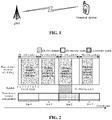
- the gNB when making symbol-level configuration of a time-domain resource for a terminal, may configure all the symbols in the slot 2 for transmission of a UL channel, as shown in dotted blocks in FIG. 2 . In such case, scheduled resources in the slot 2 may wholly conflict with resources configured for the slot 2, like a conflict region filled with cross lines in FIG. 2 .
- a channel to be transmitted is a DL data channel such as a PDSCH, for example.
- a gNB may schedule part of symbol resources in each slot in four slots for transmission, i.e., slot 0, slot 1, slot 2 and slot 3 respectively.
- Each slot has a length of 14 symbols, but not all symbols in the slots are required to be occupied when the four slots are scheduled to transmit the PDSCH.
- the gNB when making symbol configuration of a time-domain resource for a terminal, may configure part of symbols in the slot 2 for transmission of a UL channel, as shown in dotted blocks in FIG. 3 . In such case, part of symbols of scheduled resources in the slot 2 may wholly conflict with resources configured for the slot 2, like a conflict region filled with cross lines in FIG. 3 .
- a base station confronted with the above-described conflicts, for solving the conflicts may regulate a time-domain resource to be scheduled during time-domain resource scheduling to avoid the conflicts.
- the base station after regulating the time-domain resource to be scheduled, is required to notify a terminal of a scheduling state of the regulated time-domain resource, which may bring a high signaling overhead.
- the base station is required to notify, through control signaling, the terminal of regulation of time-domain resource scheduling for many times, a probability of false detection of the terminal over control signaling may also be increased.
- the signaling overhead in notifying the terminal may be reduced, and detection reliability of control signaling may be improved.
- the method may be applied to a terminal.
- the method may include the following operations.
- allocation information for scheduling a time-domain resource is received from a network device.
- the time-domain resource to be scheduled may include a time-domain resource required by channel transmission.
- a time-domain position is determined for the time-domain resource to be scheduled based on a preset rule according to UL/DL time-domain resource configuration information and the allocation information.
- channel transmission is performed with the network device through the time-domain resource to be scheduled according to the time-domain position corresponding to the time-domain resource to be scheduled.
- a channel may include a data channel such as a PDSCH and a PUSCH, and may also include a control channel such as a PDCCH and a PUCCH.
- the preset rule may be a determination rule predetermined by negotiation between the terminal and the network device such as a gNB.
- the gNB in case of a conflict between scheduling of a time-domain resource and configuration of the time-domain resource, may regulate the time-domain resource to avoid the conflict, and a specific regulation manner or means for the gNB may be described in the determination rule. Therefore, the terminal, after learning the preset rule, may make the same regulation, like the gNB.
- the gNB after regulating scheduling of the time-domain resource, is not required to notify the terminal, and a signaling overhead between the terminal and the gNB is reduced.
- the allocation information for scheduling a time-domain resource may be carried in Downlink Control Information (DCI).
- DCI Downlink Control Information
- the DCI may be dynamically configured such that the gNB may timely transmit the allocation information to the terminal and the terminal may timely determine the position of the time-domain resource to be scheduled to avoid a conflict.
- the method may further include that: the UL/DL time-domain resource configuration information transmitted by the network device is received, the UL/DL time-domain resource configuration information including slot-level position information and/or symbol-level position information of an available time-domain resource. It is to be explained that information representing a slot-based position of the time-domain resource is called slot-level position information of the time-domain resource; and information representing a symbol-based position of the time-domain resource is called symbol-level position information of the time-domain resource.
- the UL/DL time-domain resource configuration information may be predefined information, or may also be carried in Radio Resource Control (RRC) signaling and/or DCI, and, in specific implementation, may be frame structure information and/or a Slot Format Indicator (SFI).
- RRC Radio Resource Control
- SFI Slot Format Indicator
- the gNB is not needed to notify the terminal of the scheduling information obtained after the time-domain resource to be scheduled is regulated in a channel transmission process, the signaling overhead between the gNB and the terminal in the channel transmission process is reduced, and the increased probability of false detection caused by repeated transmission of control signaling is also avoided.
- the allocation information for scheduling a time-domain resource includes information about the amount of the time-domain resource to be scheduled.
- the information about the amount of the time-domain resource to be scheduled includes slot-level information about the amount of the time-domain resource to be scheduled and/or symbol-level information about the amount of the time-domain resource to be scheduled. It is to be explained that information configured to represent the slot-based amount of the time-domain resource is called the slot-level information about the amount of the time-domain resource and information configured to represent the symbol-based amount of the time-domain resource is called the symbol-level information about the amount of the time-domain resource.
- the allocation information for scheduling a time-domain resource includes the information about the amount of the time-domain resource to be scheduled
- the operation in the operation S402 that the time-domain position is determined for the time-domain resource to be scheduled based on the preset rule according to the UL/DL time-domain resource configuration information and the allocation information may include the following operations.
- the time-domain position corresponding to the time-domain resource to be scheduled is determined by sequentially filling the time-domain resource to be scheduled into the candidate time-domain resource.
- the terminal after learning the information about the amount of the time-domain resource to be scheduled, may determine the candidate time-domain resource not conflicting with the UL/DL time-domain resource configuration information and then sequentially fill the time-domain resource to be scheduled into the candidate time-domain resource. It can be understood that, since the information about the amount of the time-domain resource to be scheduled may be slot-level number information and/or symbol-level number information, the terminal, when determining the candidate time-domain resource, may also determine the candidate time-domain resource in a slot-level and/or symbol-level manner.
- the terminal After the terminal determines the time-domain position corresponding to the time-domain resource to be scheduled according to the abovementioned process, consistency with the scheduling information obtained after the gNB regulates the time-domain resource to be scheduled is ensured, so that no signaling interaction is required to notify the terminal of the regulated scheduling information during channel transmission, the signaling overhead between the gNB and the terminal is reduced, and increased probability of false detection caused by repeated transmission of the control signaling is also avoided.
- the allocation information for scheduling a time-domain resource includes information about the amount of the time-domain resource to be scheduled and preselected position information of each time-domain resource to be scheduled. It can be understood that both the number information and the position information may be slot-level and/or symbol-level number information and position information and elaborations are omitted herein.
- the allocation information for scheduling a time-domain resource includes the information about the amount of the time-domain resource to be scheduled and the preselected position information of the time-domain resource to be scheduled
- the operation in S402 that the time-domain position is determined for the time-domain resource to be scheduled based on the preset rule according to the UL/DL time-domain resource configuration information and the allocation information may include the following operations.
- a conflicting time-domain resource position in the preselected position information of each time-domain resource to be scheduled is determined according to the UL/DL time-domain resource configuration information, the conflicting time-domain resource position in the UL/DL time-domain resource configuration information being a time-domain resource position with channel transmission direction opposite to that of the time-domain resource to be scheduled.
- the conflicting time-domain resource position in preselected positions is moved back to a non-conflicting time-domain resource position closest to the conflicting time-domain resource position.
- the non-conflicting time-domain resource position is a time-domain resource position in the same direction as the channel transmission direction of the time-domain resource to be scheduled in the UL/DL time-domain resource configuration information.
- a preselected position, after the conflicting time-domain resource position, in the preselected positions is delayed according to a delay offset of the conflicting time-domain resource position.
- the operation S4024B whether a conflicting time-domain resource position exists in the preselected positions that are moved back or not is determined according to the UL/DL time-domain resource configuration information, if the conflicting time-domain resource position exists, the operation S4022B is executed until no conflicting time-domain resource position exists in the preselected positions that are moved back and the operation S4025B is executed, otherwise the operation S4025B is executed.
- the time-domain resource to be scheduled is sequentially filled into the preselected position that is moved back to determine the time-domain position corresponding to the time-domain resource to be scheduled.
- the conflicting preset position may be moved back to the closest non-conflicting slot position and a preset position after the conflicting preset position is delayed according to a delay offset of the conflicting preset position, thereby avoiding occurrence of a conflict.
- the position information may be the symbol-level position information, therefore, when the preset position of the time-domain resource to be scheduled in the slot conflicts with part of the slot positions in the time-domain configuration information, a symbol at a conflicting preset position may be moved back according to the abovementioned process, a preset position after the conflicting preset position is delayed according to a delay offset of the conflicting preset position, and other non-conflicting preset positions are not changed.
- FIG. 7 a flow of a method for determining a time-domain resource provided in the embodiment of the disclosure is shown.
- the method may be applied to a network device, for example, a gNB.
- the method may include the following operations.
- the time-domain resource to be scheduled may include a time-domain resource required by channel transmission, and the allocation information is configured for the terminal to determine a time-domain position corresponding to the time-domain resource to be scheduled.
- channel transmission is performed with the terminal through the time-domain resource to be scheduled according to the time-domain position corresponding to the time-domain resource to be scheduled.
- a channel may include a data channel such as a PDSCH and a PUSCH, and may also include a control channel such as a PDCCH and a PUCCH.
- the gNB after finding a conflict shown in FIG. 2 or FIG. 3 between scheduling information and configuration information of the time-domain resource, may regulate the scheduling information of the time-domain resource to avoid the conflict, and the terminal may determine position information of the time-domain resource to be scheduled according to a determination rule predetermined by negotiation with the gNB and make the same regulation like the gNB does, that is, the time-domain position, determined by the terminal, corresponding to the time-domain resource to be scheduled is matched with the scheduling information obtained after the gNB regulates the time-domain resource to be scheduled.
- the gNB may perform channel transmission with the terminal through the time-domain resource to be scheduled according to the time-domain position corresponding to the time-domain resource to be scheduled to avoid the condition that the terminal may not transmit the channel within a short time period due to the conflict between the scheduling information and the configuration information, and is not required to notify the terminal to reduce a signaling overhead between the terminal and the gNB and also avoid increased probability of false detection caused by repeated transmission of control signaling.
- the allocation information for scheduling a time-domain resource may be carried in DCI. It can be understood that the DCI may be dynamically configured such that the gNB may timely transmit the allocation information to the terminal and the terminal may timely determine the position of the time-domain resource to be scheduled to avoid a conflict.
- the method may further include that: UL/DL time-domain resource configuration information is transmitted to the terminal, the UL/DL time-domain resource configuration information including slot-level position information and/or symbol-level position information of an available time-domain resource. It is to be explained that information configured to represent a slot-based position of the time-domain resource is called slot-level position information of the time-domain resource and information configured to represent a symbol-based position of the time-domain resource is called symbol-level position information of the time-domain resource.
- the UL/DL time-domain resource configuration information may be predefined information, or may also be carried in RRC signaling and/or DCI and, in specific implementation, may be frame structure information and/or an SFI.
- the allocation information for scheduling a time-domain resource is not scheduling information obtained after the gNB regulates the time-domain resource to be scheduled but description information of the time-domain resource to be scheduled, and the terminal, after learning the description information of the time-domain resource to be scheduled, determines the time-domain position corresponding to the time-domain resource to be scheduled according to the determination rule obtained by negotiation with the gNB, so that the time-domain position, finally determined by the terminal, corresponding to the time-domain resource to be scheduled is matched with the scheduling information obtained after the gNB regulates the time-domain resource to be scheduled.
- the gNB is not required to notify the terminal of the scheduling information obtained after the time-domain resource to be scheduled is regulated in a channel transmission process, and the signaling overhead between the gNB and the terminal in the channel transmission process is reduced. Therefore, as an atypical example, the allocation information for scheduling a time-domain resource may include information about the amount of the time-domain resource to be scheduled; or, the allocation information for scheduling a time-domain resource may include the information about the amount of the time-domain resource to be scheduled and preselected position information of each time-domain resource to be scheduled.
- a network device transmits allocation information for scheduling a time-domain resource to a terminal to enable the terminal to determine a time-domain position corresponding to the time-domain resource to be scheduled. Therefore, the gNB may perform channel transmission with the terminal through the time-domain resource to be scheduled according to the time-domain position corresponding to the time-domain resource to be scheduled to avoid the condition that the terminal may not transmit the channel within a short time period due to a conflict between the scheduling information and the configuration information, and may be not required to notify the terminal, thereby reducing a signaling overhead between the terminal and the gNB and also avoiding increased probability of false detection caused by repeated transmission of control signaling.
- the technical solutions of the abovementioned embodiments are described in the embodiment with the following specific examples. It is to be noted that, in all the following specific examples, descriptions are made with adoption of a time-domain resource to be scheduled for transmission of a DL data channel such as a PDSCH as an example and a network device is, for example, a gNB. It can be understood that, in a practical application, the time-domain resource to be scheduled may also be configured to transmit a UL data channel such as a PUSCH, and a UL or DL control channel such as a PDCCH or a PUCCH. There are no elaborations made thereto in the specific examples of the embodiment.
- the first line in FIG. 8 is graphical information of FIG. 8 .
- the gNB transmits allocation information for scheduling a time-domain resource to a terminal.
- the allocation information may be a DL grant, and the allocation information may include information about the amount of the time-domain resource to be scheduled, as shown in the gray block in the second line in FIG. 8 .
- the number information may be slot-level or may also be symbol-level, so that the total amount of the time-domain resource to be scheduled is two slots and a plurality of additional symbols. In the embodiment, the plurality of symbols are, for example, 10 symbols. Therefore, the terminal, after learning the number information of the resource to be scheduled, may determine a candidate time-domain resource according to known UL/DL time-domain resource configuration information, as shown in the distribution of the gray blocks in the third line in FIG. 8 .
- the configuration information of the UL/DL time-domain resource may specifically be DL/UL assignment. It can be seen from the configuration information of the UL/DL time-domain resource shown in the fourth line in FIG. 8 that a plurality of last symbols of a slot 1 and the whole slot 2 are all time-domain resource regions configured to transmit a UL channel or others and may conflict with transmission of the PDSCH. Therefore, the terminal, when determining the candidate time-domain resource, may avoid the conflicting regions. Then, the terminal may sequentially distribute the time-domain resource to be scheduled in the candidate time-domain resource, thereby determining a time-domain position of the time-domain resource configured to transmit the PDSCH.
- the first line in FIG. 9 is graphical information of FIG. 9 .
- the gNB transmits allocation information for scheduling a time-domain resource to a terminal.
- the allocation information may be a DL grant, and the allocation information may not only include information about the amount of the time-domain resource to be scheduled, but also include preselected position information of each time-domain resource to be scheduled, as shown in the second line in FIG. 9 .
- the terminal after receiving the allocation information, may compare the preselected position information and known UL/DL time-domain resource configuration information in the fourth line in FIG. 9 to find that slot 2 is a time-domain resource region configured to transmit the UL channel or others and may conflict with transmission of the PDSCH.
- the terminal may move a conflicting preset position corresponding to the slot 2 back to a non-conflicting position, i.e., slot 3, closest to the slot 2 and move a preset position after the conflicting position back according to the conflicting preset position to avoid a conflict, as shown in the third line in FIG. 9 .
- the terminal sequentially fills the time-domain resource to be scheduled into the preselected position that is moved back, thereby determining the time-domain position corresponding to the resource to be scheduled.
- the first line in FIG. 10 is graphical information of FIG. 10 .
- the gNB transmits allocation information for scheduling a time-domain resource to a terminal.
- the allocation information may be a DL grant, and the allocation information may not only include information about the amount of the time-domain resource to be scheduled, but also include preselected position information of each time-domain resource to be scheduled, as shown in the second line in FIG. 10 .
- the terminal after receiving the allocation information, may compare the preselected position information and known UL/DL time-domain resource configuration information shown in the fourth line in FIG. 10 .
- a last part of a slot may conflict with part of preset positions of the time-domain resource to be scheduled, so that the terminal may move a symbol at a conflicting preset position back to a closest non-conflicting slot position, delay a preset position after the conflicting preset position according to a delay offset of the conflicting preset position and keep other non-conflicting preset positions unchanged to avoid a conflict, as shown in the third line in FIG. 10 .
- the terminal may still sequentially fill the time-domain resource to be scheduled into the preselected position that is moved back according to the process in specific example 2, thereby determining the time-domain position corresponding to the resource to be scheduled.
- a terminal may determine a time-domain position of a time-domain resource to be scheduled through allocation information transmitted by a gNB, thereby avoiding occurrence of a conflict. Moreover, since a determination result of the terminal is matched with a result obtained by scheduling regulation of the gNB, the terminal, during channel transmission with the gNB, is not required to learn a regulation result of time-domain resource scheduling of the gNB by signaling interaction, which reduces the signaling overhead and also avoids increased probability of false detection caused by repeated transmission of control signaling.
- a structure of a terminal 110 provided in the embodiment of the disclosure is shown, and may include a receiving part 1101, a determination part 1102 and a first transmission part 1103.
- the receiving part 1101 is configured to receive allocation information for scheduling a time-domain resource from a network device, the time-domain resource to be scheduled including a time-domain resource required by channel transmission.
- the determination part 1102 is configured to determine a time-domain position corresponding to the time-domain resource to be scheduled based on a preset rule according to UL/DL time-domain resource configuration information and the allocation information.
- the first transmission part 1103 is configured to perform channel transmission with the network device through the time-domain resource to be scheduled according to the time-domain position corresponding to the time-domain resource to be scheduled.
- the allocation information for scheduling a time-domain resource may include information about the amount of the time-domain resource to be scheduled.
- the determination part 1102 is configured to:
- the allocation information for scheduling a time-domain resource may include information about the amount of the time-domain resource to be scheduled and preselected position information of each time-domain resource to be scheduled.
- the determination part 1102 is configured to:
- the receiving part 1101 is further configured to receive the UL/DL time-domain resource configuration information transmitted by the network device, the UL/DL time-domain resource configuration information including slot-level position information and/or symbol-level position information of an available time-domain resource.
- a channel may include a data channel or a control channel.
- the allocation information for scheduling a time-domain resource may be carried in DCI.
- the UL/DL time-domain resource configuration information may be predefined information, or, the UL/DL time-domain resource configuration information may be carried in RRC signaling and/or DCI.
- the UL/DL time-domain resource configuration information may be frame structure information and/or an SFI.
- part may be part of a circuit, part of a processor, part of a program or software and the like, of course, may also be a unit, and may also be modular or non-modular.
- each component in the embodiment may be integrated into a processing unit, each unit may also exist independently, and two or more than two units may also be integrated into a unit.
- the integrated unit may be implemented in a hardware form or may also be implemented in form of software function module.
- the integrated unit When implemented in form of software function module and sold or used not as an independent product, the integrated unit may be stored in a computer-readable storage medium.
- the technical solution of the embodiment substantially or parts making contributions to the conventional art or all or part of the technical solution may be embodied in form of software product, and the computer software product is stored in a storage medium, including a plurality of instructions configured to enable a computer device (which may be a personal computer, a server, a network device or the like) or a processor to execute all or part of the operations of the method in the embodiment.
- the storage medium includes: various media capable of storing program codes such as a U disk, a mobile hard disk, a Read Only Memory (ROM), a Random Access Memory (RAM), a magnetic disk or an optical disk.
- the embodiment provides a computer-readable medium, which stores a program for determining a time-domain resource, the program for determining a time-domain resource being executable by at least one processor to implement the operations of the method of embodiment 1.
- a specific hardware structure of the terminal 110 provided in the embodiment of the disclosure is shown, and may include a first network interface 1201, a first memory 1202 and a first processor 1203. Each component is coupled together through a bus system 1204. It can be understood that the bus system 1204 is configured to implement connection and communication between these components.
- the bus system 1204 may include a data bus and further include a power bus, a control bus and a state signal bus. However, for clear description, various buses in FIG. 12 are marked as the bus system 1204.
- the first network interface 1201 is configured to receive and transmit a signal in a process of receiving and transmitting information with another external network element.
- the first memory 1202 is configured to store a computer program capable of running in the first processor 1203.
- the first processor 1203 is configured to run the computer program to:
- the first memory 1202 in the embodiment of the disclosure may be a volatile memory or a nonvolatile memory, or may include both the volatile and nonvolatile memories.
- the nonvolatile memory may be a ROM, a Programmable ROM (PROM), an Erasable PROM (EPROM), an Electrically EPROM (EEPROM) or a flash memory.
- the volatile memory may be a RAM, and is used as an external high-speed cache.
- the first processor 1203 may be an integrated circuit chip with a signal processing capability. In an implementation process, each operation of the method may be completed by an integrated logic circuit of hardware in the first processor 1203 or an instruction in a software form.
- the first processor 1203 may be a universal processor, a Digital Signal Processor (DSP), an Application Specific Integrated Circuit (ASIC), a Field Programmable Gate Array (FPGA) or another Programmable Logic Device (PLD), discrete gate or transistor logical device and discrete hardware component.
- DSP Digital Signal Processor
- ASIC Application Specific Integrated Circuit
- FPGA Field Programmable Gate Array
- PLD Programmable Logic Device
- Each method, operation and logical block diagram disclosed in the embodiments of the disclosure may be implemented or executed.
- the universal processor may be a microprocessor or the processor may also be any conventional processor and the like.
- the operations of the methods disclosed in combination with the embodiments of the disclosure may be directly embodied to be executed and completed by a hardware decoding processor or executed and completed by a combination of hardware and software modules in the decoding processor.
- the software module may be located in a mature storage medium in this field such as a RAM, a flash memory, a ROM, a PROM or EEPROM and a register.
- the storage medium is located in the first memory 1202.
- the first processor 1203 reads information in the first memory 1202 and completes the operations of the method in combination with hardware.
- the processing unit may be implemented in one or more ASICs, DSPs, DSPDs, PLDs, FPGAs, universal processors, controllers, microcontrollers, microprocessors, other electronic units configured to execute the functions in the application or combinations thereof.
- the technology of the disclosure may be implemented through the modules (for example, processes and functions) executing the functions in the disclosure.
- a software code may be stored in the memory and executed by the processor.
- the memory may be implemented in the processor or outside the processor.
- the allocation information for scheduling a time-domain resource may include information about the amount of the time-domain resource to be scheduled.
- the first processor 1203 is further configured to run the computer program to execute the following operations:
- the allocation information for scheduling a time-domain resource may include information about the amount of the time-domain resource to be scheduled and preselected position information of each time-domain resource to be scheduled.
- the first processor 1203 is further configured to run the computer program to execute the following operations:
- a channel may include a data channel or a control channel.
- the allocation information for scheduling a time-domain resource may be carried in DCI.
- the first processor 1203 is further configured to run the computer program to execute the following operations: receive the UL/DL time-domain resource configuration information transmitted by the network device, the UL/DL time-domain resource configuration information including slot-level position information and/or symbol-level position information of an available time-domain resource.
- the UL/DL time-domain resource configuration information may be predefined information, or, the UL/DL time-domain resource configuration information is carried in RRC signaling and/or DCI.
- the UL/DL time-domain resource configuration information is frame structure information and/or an SFI.
- a structure of a network device 130 provided in the embodiment of the disclosure is shown, and may include a sending part 1301 and a second transmission part 1302.
- the sending part 1301 is configured to transmit allocation information for scheduling a time-domain resource to a terminal, the time-domain resource to be scheduled including a time-domain resource required by channel transmission and the allocation information being configured for the terminal to determine a time-domain position corresponding to the time-domain resource to be scheduled.
- the second transmission part 1302 is configured to perform channel transmission with the terminal through the time-domain resource to be scheduled according to the time-domain position corresponding to the time-domain resource to be scheduled.
- the sending part 1301 is further configured to transmit UL/DL time-domain resource configuration information to the terminal, the UL/DL time-domain resource configuration information including slot-level position information and/or symbol-level position information of an available time-domain resource.
- a channel may include a data channel or a control channel.
- the allocation information for scheduling a time-domain resource may be carried in DCI.
- the UL/DL time-domain resource configuration information may be predefined information, or, the UL/DL time-domain resource configuration information may be carried in RRC signaling and/or DCI.
- the UL/DL time-domain resource configuration information may be frame structure information and/or an SFI.
- the allocation information for scheduling a time-domain resource may include information about the amount of the time-domain resource to be scheduled; or, the allocation information for scheduling a time-domain resource may include information about the amount of the time-domain resource to be scheduled and preselected position information of each time-domain resource to be scheduled.
- part may be part of a circuit, part of a processor, part of a program or software and the like, of course, may also be a unit, and may also be modular and non-modular.
- each component in the embodiment may be integrated into a processing unit, each unit may also exist independently, and two or more than two units may also be integrated into a unit.
- the integrated unit may be implemented in a hardware form or may also be implemented in form of software function module.
- the integrated unit When implemented in form of software function module and sold or used not as an independent product, the integrated unit may be stored in a computer-readable storage medium.
- the technical solution of the embodiment substantially or parts making contributions to the conventional art or all or part of the technical solution may be embodied in form of software product, and the computer software product may be stored in a storage medium, including a plurality of instructions configured to enable a computer device (which may be a personal computer, a server, a network device or the like) or a processor to execute all or part of the operations of the method in the embodiment.
- the storage medium may include: various media capable of storing program codes such as a U disk, a mobile hard disk, a Read Only Memory (ROM), a Random Access Memory (RAM), a magnetic disk or an optical disk.
- the embodiment provides a computer-readable medium, which stores a time-domain resource determination program, the time-domain resource determination program being executable by at least one processor to implement the operations of the method of embodiment 2.
- FIG. 14 a specific hardware structure of the network device 130 provided in the embodiment of the disclosure is illustrated, which may include:
- the second memory 1402 is configured to store a computer program capable of running in the second processor 1403.
- the channel may include a data channel or a control channel.
- the allocation information for scheduling a time-domain resource may be carried in DCI.
- the second processor 1403 is further configured to run the computer program to execute the following operations: send the UL/DL time-domain resource configuration information to the terminal, the UL/DL time-domain resource configuration information including slot-level position information and/or symbol-level position information of an available time-domain resource.
- the UL/DL time-domain resource configuration information may be predefined information, or, the UL/DL time-domain resource configuration information may be carried in RRC signaling and/or DCI.
- the UL/DL time-domain resource configuration information may be frame structure information and/or an SFI.
- the allocation information for scheduling a time-domain resource may include information about the amount of the time-domain resource to be scheduled; or, the allocation information for scheduling a time-domain resource may include information about the amount of the time-domain resource to be scheduled and preselected position information of each time-domain resource to be scheduled.
- a system for determining a time-domain resource 150 provided in the embodiment of the disclosure is shown, and may include a terminal 110 and a network device 130.
- the network device 130 is configured to:
- the terminal 110 is configured to:
- the network device 130 in the embodiment may preferably be the network device 130 in any abovementioned embodiment, and the terminal 110 may preferably be the terminal 110 in any abovementioned embodiment.
- the embodiments of the disclosure can provide a method, a system or a computer program product.
- forms of hardware embodiments, software embodiments or embodiments integrating software and hardware can be adopted in the disclosure.
- a form of the computer program product implemented on one or more computer available storage media including, but not limited to, a disk memory, an optical memory and the like
- computer available program codes can be adopted in the disclosure.
- each flow and/or block in the flowcharts and/or the block diagrams and a combination of the flows and/or the blocks in the flowcharts and/or the block diagrams can be realized by computer program instructions.
- These computer program instructions can be provided for a general computer, a dedicated computer, an embedded processor or processors of other programmable data processing devices to generate a machine, so that an apparatus for realizing functions assigned in one or more flows of the flowcharts and/or one or more blocks of the block diagrams is generated via instructions executed by the computers or the processors of the other programmable data processing devices.
- These computer program instructions can also be stored in a computer readable memory capable of guiding the computers or other programmable data processing devices to work in a specific mode, so that a manufactured product including an instruction apparatus is generated via the instructions stored in the computer readable memory, and the instruction apparatus realizes the functions assigned in one or more flows of the flowcharts and/or one or more blocks of the block diagrams.
- These computer program instructions can also be loaded to the computers or the other programmable data processing devices, so that processing realized by the computers is generated by executing a series of operation operations on the computers or the other programmable devices, and therefore the instructions executed on the computers or the other programmable devices provide a operation of realizing the functions assigned in one or more flows of the flowcharts and/or one or more blocks of the block diagrams.
- the terminal determines a time-domain position corresponding to a time-domain resource to be scheduled according to a determination rule predetermined with a base station to make the determined time-domain position matched with scheduling information regulated by the base station for the time-domain resource to be scheduled, so that the condition that the terminal may not transmit a channel within a short time period due to a conflict with time-domain configuration information during channel transmission of the terminal is avoided, a signaling overhead during channel transmission of the terminal and the base station is also reduced, and the increased probability of false detection caused by repeated transmission of control signaling is further avoided.
Landscapes
- Engineering & Computer Science (AREA)
- Signal Processing (AREA)
- Computer Networks & Wireless Communication (AREA)
- Mobile Radio Communication Systems (AREA)
- Measurement Of Unknown Time Intervals (AREA)
Abstract
Description
- This is a divisional application of
European Patent Application No. 17925003.0 PCT/CN2017/101786 filed on September 14, 2017 - The disclosure relates to the technical field of wireless communications, and more particularly to a method, device, storage medium and system for determining a time-domain resource.
- Along with development of communication technologies, researches on 5th Generation (5G) have been made. Radio access of 5G is called New Radio (NR). 5G is required to support a ultrahigh data transmission rate, massive data connections and a relatively low data transmission delay, therefore, a 5G NR system, compared with a present Long Term Evolution (LTE) system, may not only implement resource allocation taking a slot as a unit, but also implement resource allocation by taking a symbol in a slot as a unit, which may be called symbol-level resource allocation, to improve flexibility of resource allocation and reduce delay in data transmission.
- In a 5G NR system, a 5G base station, i.e., a gNB, may perform symbol-level scheduling on a time-domain resource for transmitting a channel, and may also dynamically or semi-persistently perform symbol-level configuration on the time-domain resource. Therefore, a conflict between time-domain resource scheduling information and time-domain resource configuration information of the gNB may cause a condition that a terminal cannot transmit a channel within a short time period.
- For solving the technical problem, embodiments of the disclosure are intended to provide a method, device, storage medium and system for determining a time-domain resource, which may avoid the condition that a terminal may not transmit a channel in a short time period due to a conflict between scheduling information and configuration information.
- The technical solutions of the embodiments of the disclosure are implemented as follows.
- According to a first aspect, an embodiment of the disclosure provides a method for determining a time-domain resource, which may be applied to a terminal and include the following operations.
- Allocation information for scheduling a time-domain resource is received from a network device.
- The time-domain resource to be scheduled may include a time-domain resource for transmission of a channel.
- A time-domain position is determined for the time-domain resource to be scheduled based on a preset rule according to Uplink (UL)/Downlink (DL) time-domain resource configuration information and the allocation information.
- Channel transmission is performed with the network device through the time-domain resource to be scheduled according to the time-domain position corresponding to the time-domain resource to be scheduled.
- According to a second aspect, an embodiment of the disclosure provides a method for determining a time-domain resource, which may be applied to a network device and include the following operations.
- Allocation information for scheduling a time-domain resource is transmitted to a terminal, the time-domain resource to be scheduled including a time-domain resource for transmission of a channel and the allocation information being used for the terminal to determine a time-domain position corresponding to the time-domain resource to be scheduled.
- Channel transmission is performed with the network device through the time-domain resource to be scheduled according to the time-domain position corresponding to the time-domain resource to be scheduled.
- According to a third aspect, an embodiment of the disclosure provides a terminal, which may include a receiving part, a determination part and a first transmission part.
- The receiving part may be configured to receive allocation information for scheduling a time-domain resource from a network device, the time-domain resource to be scheduled including a time-domain resource for transmission of a channel.
- The determination part may be configured to determine a time-domain position corresponding to the time-domain resource to be scheduled based on a preset rule according to UL/DL time-domain resource configuration information and the allocation information.
- The first transmission part may be configured to perform channel transmission with the network device through the time-domain resource to be scheduled according to the time-domain position corresponding to the time-domain resource to be scheduled.
- According to a fourth aspect, an embodiment of the disclosure provides a network device, which may include a sending part and a second transmission part.
- The sending part may be configured to transmit allocation information for scheduling a time-domain resource to a terminal, the time-domain resource to be scheduled including a time-domain resource for transmission of a channel and the allocation information being used for the terminal to determine a time-domain position corresponding to the time-domain resource to be scheduled.
- The second transmission part may be configured to perform channel transmission with the network device through the time-domain resource to be scheduled according to the time-domain position corresponding to the time-domain resource to be scheduled.
- According to a fifth aspect, an embodiment of the disclosure provides a computer-readable medium, which may store a program of determining a time-domain resource, the program being executable by at least one processor to implement the operations in the first aspect.
- According to a sixth aspect, an embodiment of the disclosure provides a computer-readable medium, which may store a program of determining a time-domain resource, the program being executable by at least one processor to implement the operations in the second aspect.
- According to a seventh aspect, an embodiment of the disclosure provides a terminal, which may include a first network interface, a first memory and a first processor.
- The first network interface may be configured to receive and transmit a signal in a process of receiving and transmitting information from and to another external network element.
- The first memory may be configured to store a computer program capable of running in the first processor.
- The first processor may be configured to run the computer program to execute the operations of the method in the first aspect.
- According to an eighth aspect, an embodiment of the disclosure provides a network device, which may include a second network interface, a second memory and a second processor.
- The second network interface may be configured to receive and transmit a signal in a process of receiving and transmitting information from and to another external network element.
- The second memory may be configured to store a computer program capable of running in the second processor.
- The second processor may be configured to run the computer program to execute the operations of the method in the second aspect.
- According to a ninth aspect, the embodiments of the disclosure provide a system for transmitting a time-domain resource, which may include a terminal and a network device.
- The network device may be configured to:
- transmit allocation information for scheduling a time-domain resource to the terminal, the time-domain resource to be scheduled including a time-domain resource for transmission of a channel and the allocation information being used for the terminal to determine a time-domain position corresponding to the time-domain resource to be scheduled, and
- perform channel transmission with the network device through the time-domain resource to be scheduled according to the time-domain position corresponding to the time-domain resource to be scheduled.
- The terminal may be configured to:
- receive the allocation information for scheduling a time-domain resource from the network device, the time-domain resource to be scheduled including the time-domain resource for transmission of a channel,
- determine the time-domain position corresponding to the time-domain resource to be scheduled based on a preset rule according to UL/DL time-domain resource configuration information and the allocation information, and
- perform channel transmission with the network device through the time-domain resource to be scheduled according to the time-domain position corresponding to the time-domain resource to be scheduled.
- The embodiments of the disclosure provide the method, the device, the storage medium and the system for determining a time-domain resource. A terminal determines a time-domain position corresponding to a time-domain resource to be scheduled according to a determination rule predetermined with a base station to make the determined time-domain position matched with scheduling information regulated by the base station for the time-domain resource to be scheduled, so that the condition that the terminal may not transmit a channel within a short time period due to a conflict with time-domain configuration information during channel transmission of the terminal is avoided, a signaling overhead during channel transmission of the terminal and the base station is also reduced, and increased probability of false detection caused by repeated transmission of control signaling is further avoided.
-
-
FIG. 1 is a schematic diagram of an application scenario according to an embodiment of the disclosure. -
FIG. 2 is a schematic diagram of a conflict according to an embodiment of the disclosure. -
FIG. 3 is another schematic diagram of a conflict according to an embodiment of the disclosure. -
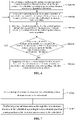
FIG. 4 is a flowchart of a method for determining a time-domain resource according to an embodiment of the disclosure. -
FIG. 5 is a flowchart of determining a time-domain position of a time-domain resource to be scheduled according to an embodiment of the disclosure. -
FIG. 6 is another flowchart of determining a time-domain position of a time-domain resource to be scheduled according to an embodiment of the disclosure. -
FIG. 7 is another flowchart of a method for determining a time-domain resource according to an embodiment of the disclosure. -
FIG. 8 is a schematic diagram of a specific process of determining a time-domain resource according to an embodiment of the disclosure. -
FIG. 9 is another schematic diagram of a specific process of determining a time-domain resource according to an embodiment of the disclosure. -
FIG. 10 is another schematic diagram of a specific process of determining a time-domain resource according to an embodiment of the disclosure. -
FIG. 11 is a schematic diagram of composition of a terminal according to an embodiment of the disclosure. -
FIG. 12 is a hardware structure diagram of a terminal according to an embodiment of the disclosure. -
FIG. 13 is a schematic diagram of composition of a network device according to an embodiment of the disclosure. -
FIG. 14 is a hardware structure diagram of a network device according to an embodiment of the disclosure. -
FIG. 15 is a schematic diagram of composition of a system for determining a time-domain resource according to an embodiment of the disclosure. - In order to make the characteristics and technical contents of the embodiments of the disclosure understood in more detail, implementation of the embodiments of the disclosure will be described below in combination with the drawings in detail. The drawings are only adopted for description as references and not intended to limit the embodiments of the disclosure.
- Referring to
FIG. 1 , an atypical application scenario according to an embodiment of the disclosure is shown. The scenario may include a network device and a terminal device. The network device may be an Evolved Node B (eNB) in an LTE system, or may also be a gNB in a 5G NR system or, may also be other network devices capable of providing the terminal device with a function of accessing a mobile communication network. The terminal device may be a cell phone, a smart phone, a Session Initiation Protocol (SIP) phone, a laptop computer, a Personal Digital Assistant (PDA), satellite ratio, a global positioning system, a multimedia device, a video device, a digital audio player (for example, a Moving Picture Experts Group Audio Layer-3 (MP3) player), a camera, a game console, a tablet computer or any other device with a similar function. In addition, the terminal device may also be called, by those skilled in the art, user equipment, a terminal, a mobile station, a subscriber station, a mobile unit, a subscriber unit, a wireless unit, a remote unit, a mobile device, a wireless device, a wireless communication device, a remote device, a mobile subscriber station, an access terminal, a mobile terminal, a wireless terminal, a remote terminal, a handheld device, a user agent, a mobile client, a client or some other proper terms. - In the application scenario shown in
FIG. 1 , during multi-slot or slot aggregation scheduling, a base station may configure a starting symbol and a terminating symbol for channel transmission in each of multiple slots, thereby implementing symbol-level configuration. In addition, the base station may also perform symbol-level scheduling for slots used for channel transmission. In the embodiment of the disclosure, a channel to be transmitted may include a data channel such as a Physical Downlink Shared Channel (PDSCH) and a Physical Uplink Shared Channel (PUSCH), and may also include a control channel such as a Physical Downlink Control Channel (PDCCH) and a Physical Uplink Control Channel (PUCCH). For describing the technical solutions of the embodiments of the disclosure clearly, descriptions are made preferably with a DL data channel such as a PDSCH as an example in the embodiments of the disclosure. It can be understood that those skilled in the art may apply the technical solutions of the embodiments of the disclosure to channels of other types under the guidance of the DL data channel. - A conflict between symbol-level scheduling and symbol-level configuration of a time-domain resource such as a slot may make a terminal impossible to transmit a channel within a short time period. Specific conflict conditions may at least include the following two examples.
- As shown in
FIG. 2 , a channel to be transmitted is a DL data channel such as a PDSCH, for example. A gNB may schedule part of symbol resources in each of four slots, i.e.,slot 0,slot 1,slot 2 andslot 3 respectively, to transmit the DL data channel. Each slot has a length of 14 symbols, but not all symbols in the slots are needed to be occupied when the four slots are scheduled to transmit the PDSCH. On the other hand, the gNB, when making symbol-level configuration of a time-domain resource for a terminal, may configure all the symbols in theslot 2 for transmission of a UL channel, as shown in dotted blocks inFIG. 2 . In such case, scheduled resources in theslot 2 may wholly conflict with resources configured for theslot 2, like a conflict region filled with cross lines inFIG. 2 . - As shown in
FIG. 3 , a channel to be transmitted is a DL data channel such as a PDSCH, for example. A gNB may schedule part of symbol resources in each slot in four slots for transmission, i.e.,slot 0,slot 1,slot 2 andslot 3 respectively. Each slot has a length of 14 symbols, but not all symbols in the slots are required to be occupied when the four slots are scheduled to transmit the PDSCH. On the other hand, the gNB, when making symbol configuration of a time-domain resource for a terminal, may configure part of symbols in theslot 2 for transmission of a UL channel, as shown in dotted blocks inFIG. 3 . In such case, part of symbols of scheduled resources in theslot 2 may wholly conflict with resources configured for theslot 2, like a conflict region filled with cross lines inFIG. 3 . - The specific conflict condition is not limited to the two examples. It is to be pointed out that a base station confronted with the above-described conflicts, for solving the conflicts, may regulate a time-domain resource to be scheduled during time-domain resource scheduling to avoid the conflicts. However, the base station, after regulating the time-domain resource to be scheduled, is required to notify a terminal of a scheduling state of the regulated time-domain resource, which may bring a high signaling overhead. Moreover, when the base station is required to notify, through control signaling, the terminal of regulation of time-domain resource scheduling for many times, a probability of false detection of the terminal over control signaling may also be increased. According to the technical solutions of the embodiments of the disclosure, after the base station regulates the time-domain resource to be scheduled, the signaling overhead in notifying the terminal may be reduced, and detection reliability of control signaling may be improved.
- Referring to
FIG. 4 , a method for determining a time-domain resource provided in the embodiment of the disclosure is shown. The method may be applied to a terminal. The method may include the following operations. - In the operation S401, allocation information for scheduling a time-domain resource is received from a network device.
- The time-domain resource to be scheduled may include a time-domain resource required by channel transmission.
- In the operation S402, a time-domain position is determined for the time-domain resource to be scheduled based on a preset rule according to UL/DL time-domain resource configuration information and the allocation information.
- In the operation S403, channel transmission is performed with the network device through the time-domain resource to be scheduled according to the time-domain position corresponding to the time-domain resource to be scheduled.
- It is to be explained that a channel may include a data channel such as a PDSCH and a PUSCH, and may also include a control channel such as a PDCCH and a PUCCH.
- It can be understood that the preset rule may be a determination rule predetermined by negotiation between the terminal and the network device such as a gNB. The gNB, in case of a conflict between scheduling of a time-domain resource and configuration of the time-domain resource, may regulate the time-domain resource to avoid the conflict, and a specific regulation manner or means for the gNB may be described in the determination rule. Therefore, the terminal, after learning the preset rule, may make the same regulation, like the gNB. The gNB, after regulating scheduling of the time-domain resource, is not required to notify the terminal, and a signaling overhead between the terminal and the gNB is reduced.
- For the technical solution shown in
FIG. 4 , in a possible implementation mode, the allocation information for scheduling a time-domain resource may be carried in Downlink Control Information (DCI). It can be understood that the DCI may be dynamically configured such that the gNB may timely transmit the allocation information to the terminal and the terminal may timely determine the position of the time-domain resource to be scheduled to avoid a conflict. - For the technical solution shown in
FIG. 4 , in a possible implementation mode, the method may further include that: the UL/DL time-domain resource configuration information transmitted by the network device is received, the UL/DL time-domain resource configuration information including slot-level position information and/or symbol-level position information of an available time-domain resource. It is to be explained that information representing a slot-based position of the time-domain resource is called slot-level position information of the time-domain resource; and information representing a symbol-based position of the time-domain resource is called symbol-level position information of the time-domain resource. - Specifically, the UL/DL time-domain resource configuration information may be predefined information, or may also be carried in Radio Resource Control (RRC) signaling and/or DCI, and, in specific implementation, may be frame structure information and/or a Slot Format Indicator (SFI).
- For the technical solution shown in
FIG. 4 , the allocation information for scheduling a time-domain resource is not scheduling information obtained after the gNB regulates the time-domain resource to be scheduled but description information of the time-domain resource to be scheduled, and the terminal, after learning the description information of the time-domain resource to be scheduled, may determine the time-domain position corresponding to the time-domain resource to be scheduled according to the determination rule obtained by negotiation with the gNB, so that the time-domain position, finally determined by the terminal and associated with the time-domain resource to be scheduled, is matched with the scheduling information obtained after the gNB regulates the time-domain resource to be scheduled. Therefore, the gNB is not needed to notify the terminal of the scheduling information obtained after the time-domain resource to be scheduled is regulated in a channel transmission process, the signaling overhead between the gNB and the terminal in the channel transmission process is reduced, and the increased probability of false detection caused by repeated transmission of control signaling is also avoided. - Therefore, in the embodiment, the allocation information for scheduling a time-domain resource may atypically include two conditions in terms of the description information of the time-domain resource to be scheduled.
- The allocation information for scheduling a time-domain resource includes information about the amount of the time-domain resource to be scheduled. Specifically, the information about the amount of the time-domain resource to be scheduled includes slot-level information about the amount of the time-domain resource to be scheduled and/or symbol-level information about the amount of the time-domain resource to be scheduled. It is to be explained that information configured to represent the slot-based amount of the time-domain resource is called the slot-level information about the amount of the time-domain resource and information configured to represent the symbol-based amount of the time-domain resource is called the symbol-level information about the amount of the time-domain resource.
- Correspondingly, when the allocation information for scheduling a time-domain resource includes the information about the amount of the time-domain resource to be scheduled, referring to
FIG. 5 , the operation in the operation S402 that the time-domain position is determined for the time-domain resource to be scheduled based on the preset rule according to the UL/DL time-domain resource configuration information and the allocation information may include the following operations. - In the operation S4021A, a candidate time-domain resource is determined for the time-domain resource to be scheduled according to the UL/DL time-domain resource configuration information. The amount of the candidate time-domain resource is matched with the amount of the time-domain resource to be scheduled, and the position of the candidate time-domain resource do not coincide with the position of the conflict time-domain resource of the UL/DL time-domain resource configuration information, the position of the conflict time-domain resource being a time-domain resource position with a channel transmission direction opposite to that of the time-domain resource to be scheduled in the UL/DL time-domain resource configuration information.
- In the operation S4022A, the time-domain position corresponding to the time-domain resource to be scheduled is determined by sequentially filling the time-domain resource to be scheduled into the candidate time-domain resource.
- It is to be noted that the terminal, after learning the information about the amount of the time-domain resource to be scheduled, may determine the candidate time-domain resource not conflicting with the UL/DL time-domain resource configuration information and then sequentially fill the time-domain resource to be scheduled into the candidate time-domain resource. It can be understood that, since the information about the amount of the time-domain resource to be scheduled may be slot-level number information and/or symbol-level number information, the terminal, when determining the candidate time-domain resource, may also determine the candidate time-domain resource in a slot-level and/or symbol-level manner. After the terminal determines the time-domain position corresponding to the time-domain resource to be scheduled according to the abovementioned process, consistency with the scheduling information obtained after the gNB regulates the time-domain resource to be scheduled is ensured, so that no signaling interaction is required to notify the terminal of the regulated scheduling information during channel transmission, the signaling overhead between the gNB and the terminal is reduced, and increased probability of false detection caused by repeated transmission of the control signaling is also avoided.
- The allocation information for scheduling a time-domain resource includes information about the amount of the time-domain resource to be scheduled and preselected position information of each time-domain resource to be scheduled. It can be understood that both the number information and the position information may be slot-level and/or symbol-level number information and position information and elaborations are omitted herein.
- Correspondingly, when the allocation information for scheduling a time-domain resource includes the information about the amount of the time-domain resource to be scheduled and the preselected position information of the time-domain resource to be scheduled, referring to
FIG. 6 , the operation in S402 that the time-domain position is determined for the time-domain resource to be scheduled based on the preset rule according to the UL/DL time-domain resource configuration information and the allocation information may include the following operations. - In the operation S4021B, a conflicting time-domain resource position in the preselected position information of each time-domain resource to be scheduled is determined according to the UL/DL time-domain resource configuration information, the conflicting time-domain resource position in the UL/DL time-domain resource configuration information being a time-domain resource position with channel transmission direction opposite to that of the time-domain resource to be scheduled.
- In the operation S4022B, the conflicting time-domain resource position in preselected positions is moved back to a non-conflicting time-domain resource position closest to the conflicting time-domain resource position. It can be understood that the non-conflicting time-domain resource position is a time-domain resource position in the same direction as the channel transmission direction of the time-domain resource to be scheduled in the UL/DL time-domain resource configuration information.
- In the operation S4023B, a preselected position, after the conflicting time-domain resource position, in the preselected positions is delayed according to a delay offset of the conflicting time-domain resource position.
- In the operation S4024B, whether a conflicting time-domain resource position exists in the preselected positions that are moved back or not is determined according to the UL/DL time-domain resource configuration information, if the conflicting time-domain resource position exists, the operation S4022B is executed until no conflicting time-domain resource position exists in the preselected positions that are moved back and the operation S4025B is executed, otherwise the operation S4025B is executed.
- In the operation S4025B, the time-domain resource to be scheduled is sequentially filled into the preselected position that is moved back to determine the time-domain position corresponding to the time-domain resource to be scheduled.
- It can be understood that, when a preset position of the time-domain resource to be scheduled in a slot conflicts with the whole slot position in time-domain configuration information, the conflicting preset position may be moved back to the closest non-conflicting slot position and a preset position after the conflicting preset position is delayed according to a delay offset of the conflicting preset position, thereby avoiding occurrence of a conflict.
- In addition, the position information may be the symbol-level position information, therefore, when the preset position of the time-domain resource to be scheduled in the slot conflicts with part of the slot positions in the time-domain configuration information, a symbol at a conflicting preset position may be moved back according to the abovementioned process, a preset position after the conflicting preset position is delayed according to a delay offset of the conflicting preset position, and other non-conflicting preset positions are not changed.
- According to the method for determining a time-domain resource provided in the embodiment, the terminal determines a time-domain position corresponding to the time-domain resource to be scheduled according to a determination rule predetermined with a base station to make the determined time-domain position matched with scheduling information regulated by the base station for the time-domain resource to be scheduled, so that the condition that the terminal may not transmit a channel within a short time period due to a conflict with time-domain configuration information during channel transmission of the terminal is avoided, a signaling overhead during channel transmission of the terminal and the base station is also reduced, and increased probability of false detection caused by repeated transmission of control signaling is further avoided.
- Based on the same inventive concept of the abovementioned embodiment, referring to
FIG. 7 , a flow of a method for determining a time-domain resource provided in the embodiment of the disclosure is shown. The method may be applied to a network device, for example, a gNB. The method may include the following operations. - In the operation S701, allocation information for scheduling a time-domain resource is transmitted to a terminal.
- The time-domain resource to be scheduled may include a time-domain resource required by channel transmission, and the allocation information is configured for the terminal to determine a time-domain position corresponding to the time-domain resource to be scheduled.
- In the operation S702, channel transmission is performed with the terminal through the time-domain resource to be scheduled according to the time-domain position corresponding to the time-domain resource to be scheduled.
- It is to be explained that a channel may include a data channel such as a PDSCH and a PUSCH, and may also include a control channel such as a PDCCH and a PUCCH.
- It can be understood that the gNB, after finding a conflict shown in
FIG. 2 orFIG. 3 between scheduling information and configuration information of the time-domain resource, may regulate the scheduling information of the time-domain resource to avoid the conflict, and the terminal may determine position information of the time-domain resource to be scheduled according to a determination rule predetermined by negotiation with the gNB and make the same regulation like the gNB does, that is, the time-domain position, determined by the terminal, corresponding to the time-domain resource to be scheduled is matched with the scheduling information obtained after the gNB regulates the time-domain resource to be scheduled. Therefore, the gNB may perform channel transmission with the terminal through the time-domain resource to be scheduled according to the time-domain position corresponding to the time-domain resource to be scheduled to avoid the condition that the terminal may not transmit the channel within a short time period due to the conflict between the scheduling information and the configuration information, and is not required to notify the terminal to reduce a signaling overhead between the terminal and the gNB and also avoid increased probability of false detection caused by repeated transmission of control signaling. - In a possible implementation mode, the allocation information for scheduling a time-domain resource may be carried in DCI. It can be understood that the DCI may be dynamically configured such that the gNB may timely transmit the allocation information to the terminal and the terminal may timely determine the position of the time-domain resource to be scheduled to avoid a conflict.
- In a possible implementation mode, the method may further include that: UL/DL time-domain resource configuration information is transmitted to the terminal, the UL/DL time-domain resource configuration information including slot-level position information and/or symbol-level position information of an available time-domain resource. It is to be explained that information configured to represent a slot-based position of the time-domain resource is called slot-level position information of the time-domain resource and information configured to represent a symbol-based position of the time-domain resource is called symbol-level position information of the time-domain resource.
- Specifically, the UL/DL time-domain resource configuration information may be predefined information, or may also be carried in RRC signaling and/or DCI and, in specific implementation, may be frame structure information and/or an SFI.
- For the technical solution shown in
FIG. 7 , it is to be noted that the allocation information for scheduling a time-domain resource is not scheduling information obtained after the gNB regulates the time-domain resource to be scheduled but description information of the time-domain resource to be scheduled, and the terminal, after learning the description information of the time-domain resource to be scheduled, determines the time-domain position corresponding to the time-domain resource to be scheduled according to the determination rule obtained by negotiation with the gNB, so that the time-domain position, finally determined by the terminal, corresponding to the time-domain resource to be scheduled is matched with the scheduling information obtained after the gNB regulates the time-domain resource to be scheduled. Therefore, the gNB is not required to notify the terminal of the scheduling information obtained after the time-domain resource to be scheduled is regulated in a channel transmission process, and the signaling overhead between the gNB and the terminal in the channel transmission process is reduced. Therefore, as an atypical example, the allocation information for scheduling a time-domain resource may include information about the amount of the time-domain resource to be scheduled; or, the allocation information for scheduling a time-domain resource may include the information about the amount of the time-domain resource to be scheduled and preselected position information of each time-domain resource to be scheduled. - According to the method for determining a time-domain resource provided in the embodiment, a network device transmits allocation information for scheduling a time-domain resource to a terminal to enable the terminal to determine a time-domain position corresponding to the time-domain resource to be scheduled. Therefore, the gNB may perform channel transmission with the terminal through the time-domain resource to be scheduled according to the time-domain position corresponding to the time-domain resource to be scheduled to avoid the condition that the terminal may not transmit the channel within a short time period due to a conflict between the scheduling information and the configuration information, and may be not required to notify the terminal, thereby reducing a signaling overhead between the terminal and the gNB and also avoiding increased probability of false detection caused by repeated transmission of control signaling.
- Based on the same inventive concept of the abovementioned embodiments, the technical solutions of the abovementioned embodiments are described in the embodiment with the following specific examples. It is to be noted that, in all the following specific examples, descriptions are made with adoption of a time-domain resource to be scheduled for transmission of a DL data channel such as a PDSCH as an example and a network device is, for example, a gNB. It can be understood that, in a practical application, the time-domain resource to be scheduled may also be configured to transmit a UL data channel such as a PUSCH, and a UL or DL control channel such as a PDCCH or a PUCCH. There are no elaborations made thereto in the specific examples of the embodiment.
- For example, as shown in
FIG. 8 , it is to be noted that the first line inFIG. 8 is graphical information ofFIG. 8 . - The gNB transmits allocation information for scheduling a time-domain resource to a terminal. The allocation information may be a DL grant, and the allocation information may include information about the amount of the time-domain resource to be scheduled, as shown in the gray block in the second line in
FIG. 8 . The number information may be slot-level or may also be symbol-level, so that the total amount of the time-domain resource to be scheduled is two slots and a plurality of additional symbols. In the embodiment, the plurality of symbols are, for example, 10 symbols. Therefore, the terminal, after learning the number information of the resource to be scheduled, may determine a candidate time-domain resource according to known UL/DL time-domain resource configuration information, as shown in the distribution of the gray blocks in the third line inFIG. 8 . It is to be noted that the configuration information of the UL/DL time-domain resource may specifically be DL/UL assignment. It can be seen from the configuration information of the UL/DL time-domain resource shown in the fourth line inFIG. 8 that a plurality of last symbols of aslot 1 and thewhole slot 2 are all time-domain resource regions configured to transmit a UL channel or others and may conflict with transmission of the PDSCH. Therefore, the terminal, when determining the candidate time-domain resource, may avoid the conflicting regions. Then, the terminal may sequentially distribute the time-domain resource to be scheduled in the candidate time-domain resource, thereby determining a time-domain position of the time-domain resource configured to transmit the PDSCH. - For example, as shown in
FIG. 9 , it is to be noted that the first line inFIG. 9 is graphical information ofFIG. 9 . - The gNB transmits allocation information for scheduling a time-domain resource to a terminal. The allocation information may be a DL grant, and the allocation information may not only include information about the amount of the time-domain resource to be scheduled, but also include preselected position information of each time-domain resource to be scheduled, as shown in the second line in
FIG. 9 . The terminal, after receiving the allocation information, may compare the preselected position information and known UL/DL time-domain resource configuration information in the fourth line inFIG. 9 to find thatslot 2 is a time-domain resource region configured to transmit the UL channel or others and may conflict with transmission of the PDSCH. Therefore, the terminal may move a conflicting preset position corresponding to theslot 2 back to a non-conflicting position, i.e.,slot 3, closest to theslot 2 and move a preset position after the conflicting position back according to the conflicting preset position to avoid a conflict, as shown in the third line inFIG. 9 . After the preselected positions are moved back, the terminal sequentially fills the time-domain resource to be scheduled into the preselected position that is moved back, thereby determining the time-domain position corresponding to the resource to be scheduled. - For example, as shown in
FIG. 10 , it is to be noted that the first line inFIG. 10 is graphical information ofFIG. 10 . - Like specific example 2, the gNB transmits allocation information for scheduling a time-domain resource to a terminal. The allocation information may be a DL grant, and the allocation information may not only include information about the amount of the time-domain resource to be scheduled, but also include preselected position information of each time-domain resource to be scheduled, as shown in the second line in
FIG. 10 . The terminal, after receiving the allocation information, may compare the preselected position information and known UL/DL time-domain resource configuration information shown in the fourth line inFIG. 10 . However, in the specific example, a last part of a slot may conflict with part of preset positions of the time-domain resource to be scheduled, so that the terminal may move a symbol at a conflicting preset position back to a closest non-conflicting slot position, delay a preset position after the conflicting preset position according to a delay offset of the conflicting preset position and keep other non-conflicting preset positions unchanged to avoid a conflict, as shown in the third line inFIG. 10 . After the preselected positions are moved back, the terminal may still sequentially fill the time-domain resource to be scheduled into the preselected position that is moved back according to the process in specific example 2, thereby determining the time-domain position corresponding to the resource to be scheduled. - Specific implementation of the technical solutions of the abovementioned embodiments are described above with the three specific examples in detail. It can be seen that a terminal may determine a time-domain position of a time-domain resource to be scheduled through allocation information transmitted by a gNB, thereby avoiding occurrence of a conflict. Moreover, since a determination result of the terminal is matched with a result obtained by scheduling regulation of the gNB, the terminal, during channel transmission with the gNB, is not required to learn a regulation result of time-domain resource scheduling of the gNB by signaling interaction, which reduces the signaling overhead and also avoids increased probability of false detection caused by repeated transmission of control signaling.
- Based on the same inventive concept of the abovementioned embodiments, referring to
FIG. 11 , a structure of a terminal 110 provided in the embodiment of the disclosure is shown, and may include a receivingpart 1101, adetermination part 1102 and afirst transmission part 1103. - The receiving
part 1101 is configured to receive allocation information for scheduling a time-domain resource from a network device, the time-domain resource to be scheduled including a time-domain resource required by channel transmission. - The
determination part 1102 is configured to determine a time-domain position corresponding to the time-domain resource to be scheduled based on a preset rule according to UL/DL time-domain resource configuration information and the allocation information. - The
first transmission part 1103 is configured to perform channel transmission with the network device through the time-domain resource to be scheduled according to the time-domain position corresponding to the time-domain resource to be scheduled. - In a possible implementation mode, the allocation information for scheduling a time-domain resource may include information about the amount of the time-domain resource to be scheduled.
- In the implementation mode, the
determination part 1102 is configured to: - determine a candidate time-domain resource for the time-domain resource to be scheduled according to the UL/DL time-domain resource configuration information; the number of the candidate time-domain resource is matched with the quantity of the time-domain resource to be scheduled, and the position of the candidate time-domain resource and the position of the conflict time-domain resource of the UL/DL time-domain resource configuration information do not coincide, the position of the conflict time-domain resource in the UL/DL time-domain resource configuration information being a time-domain resource position with a channel transmission direction opposite to that of the time-domain resource to be scheduled; and
- determine the time-domain position corresponding to the time-domain resource to be scheduled by sequentially filling the time-domain resource to be scheduled into the candidate time-domain resource.
- In a possible implementation mode, the allocation information for scheduling a time-domain resource may include information about the amount of the time-domain resource to be scheduled and preselected position information of each time-domain resource to be scheduled.
- In the implementation mode, the
determination part 1102 is configured to: - operation 1: determine a conflicting time-domain resource position from the preselected position information of each time-domain resource to be scheduled according to the UL/DL time-domain resource configuration information, the conflicting time-domain resource position in the UL/DL time-domain resource configuration information being a time-domain resource position with a channel transmission direction opposite to that of the time-domain resource to be scheduled;
- operation 2: move the conflicting time-domain resource position in preselected positions back to a non-conflicting time-domain resource position closest to the conflicting time-domain resource position;
- operation 3: delay a preselected position, after the conflicting time-domain resource position, in the preselected positions according to a delay offset of the conflicting time-domain resource position;
- operation 4: determine whether a conflicting time-domain resource position exists in the preselected positions that are moved back or not according to the UL/DL time-domain resource configuration information, if the conflicting time-domain resource position exists, turn to the
operation 2 until no conflicting time-domain resource position exists in the preselected positions that are moved back and execute theoperation 5, otherwise execute theoperation 5; and - operation 5: sequentially fill the time-domain resource to be scheduled into the preselected position that is moved back to determine the time-domain position corresponding to the time-domain resource to be scheduled.
- In a possible implementation mode, the receiving
part 1101 is further configured to receive the UL/DL time-domain resource configuration information transmitted by the network device, the UL/DL time-domain resource configuration information including slot-level position information and/or symbol-level position information of an available time-domain resource. - In a possible implementation mode, a channel may include a data channel or a control channel.
- In a possible implementation mode, the allocation information for scheduling a time-domain resource may be carried in DCI.
- In a possible implementation mode, the UL/DL time-domain resource configuration information may be predefined information, or, the UL/DL time-domain resource configuration information may be carried in RRC signaling and/or DCI.
- In the implementation mode, the UL/DL time-domain resource configuration information may be frame structure information and/or an SFI.
- It can be understood that, in the embodiment, "part" may be part of a circuit, part of a processor, part of a program or software and the like, of course, may also be a unit, and may also be modular or non-modular.
- In addition, each component in the embodiment may be integrated into a processing unit, each unit may also exist independently, and two or more than two units may also be integrated into a unit. The integrated unit may be implemented in a hardware form or may also be implemented in form of software function module.
- When implemented in form of software function module and sold or used not as an independent product, the integrated unit may be stored in a computer-readable storage medium. Based on such an understanding, the technical solution of the embodiment substantially or parts making contributions to the conventional art or all or part of the technical solution may be embodied in form of software product, and the computer software product is stored in a storage medium, including a plurality of instructions configured to enable a computer device (which may be a personal computer, a server, a network device or the like) or a processor to execute all or part of the operations of the method in the embodiment. The storage medium includes: various media capable of storing program codes such as a U disk, a mobile hard disk, a Read Only Memory (ROM), a Random Access Memory (RAM), a magnetic disk or an optical disk.
- Therefore, the embodiment provides a computer-readable medium, which stores a program for determining a time-domain resource, the program for determining a time-domain resource being executable by at least one processor to implement the operations of the method of
embodiment 1. - Based on the terminal 110 and the computer-readable medium, referring to
FIG. 12 , a specific hardware structure of the terminal 110 provided in the embodiment of the disclosure is shown, and may include afirst network interface 1201, afirst memory 1202 and afirst processor 1203. Each component is coupled together through abus system 1204. It can be understood that thebus system 1204 is configured to implement connection and communication between these components. Thebus system 1204 may include a data bus and further include a power bus, a control bus and a state signal bus. However, for clear description, various buses inFIG. 12 are marked as thebus system 1204. Thefirst network interface 1201 is configured to receive and transmit a signal in a process of receiving and transmitting information with another external network element. - The
first memory 1202 is configured to store a computer program capable of running in thefirst processor 1203. - The
first processor 1203 is configured to run the computer program to: - receive allocation information for scheduling a time-domain resource from a network device, the time-domain resource to be scheduled including a time-domain resource required by channel transmission;
- determine a time-domain position corresponding to the time-domain resource to be scheduled based on a preset rule according to UL/DL time-domain resource configuration information and the allocation information; and
- perform channel transmission with the network device through the time-domain resource to be scheduled according to the time-domain position corresponding to the time-domain resource to be scheduled.
- It can be understood that the
first memory 1202 in the embodiment of the disclosure may be a volatile memory or a nonvolatile memory, or may include both the volatile and nonvolatile memories. The nonvolatile memory may be a ROM, a Programmable ROM (PROM), an Erasable PROM (EPROM), an Electrically EPROM (EEPROM) or a flash memory. The volatile memory may be a RAM, and is used as an external high-speed cache. It is exemplarily but unlimitedly described that RAMs in various forms may be adopted, such as a Static RAM (SRAM), a Dynamic RAM (DRAM), a Synchronous DRAM (SDRAM), a Double Data Rate SDRAM (DDRSDRAM), an Enhanced SDRAM (ESDRAM), a Synchlink DRAM (SLDRAM)and a Direct Rambus RAM (DRRAM). It is to be noted that thefirst memory 1202 of a system and the method described in the disclosure is intended to include, but not limited to, memories of these and any other proper types. - The
first processor 1203 may be an integrated circuit chip with a signal processing capability. In an implementation process, each operation of the method may be completed by an integrated logic circuit of hardware in thefirst processor 1203 or an instruction in a software form. Thefirst processor 1203 may be a universal processor, a Digital Signal Processor (DSP), an Application Specific Integrated Circuit (ASIC), a Field Programmable Gate Array (FPGA) or another Programmable Logic Device (PLD), discrete gate or transistor logical device and discrete hardware component. Each method, operation and logical block diagram disclosed in the embodiments of the disclosure may be implemented or executed. The universal processor may be a microprocessor or the processor may also be any conventional processor and the like. The operations of the methods disclosed in combination with the embodiments of the disclosure may be directly embodied to be executed and completed by a hardware decoding processor or executed and completed by a combination of hardware and software modules in the decoding processor. The software module may be located in a mature storage medium in this field such as a RAM, a flash memory, a ROM, a PROM or EEPROM and a register. The storage medium is located in thefirst memory 1202. Thefirst processor 1203 reads information in thefirst memory 1202 and completes the operations of the method in combination with hardware. - It can be understood that these embodiments described in the disclosure may be implemented by hardware, software, firmware, middleware, a microcode or a combination thereof. In case of implementation with the hardware, the processing unit may be implemented in one or more ASICs, DSPs, DSPDs, PLDs, FPGAs, universal processors, controllers, microcontrollers, microprocessors, other electronic units configured to execute the functions in the application or combinations thereof.
- In case of implementation with the software, the technology of the disclosure may be implemented through the modules (for example, processes and functions) executing the functions in the disclosure. A software code may be stored in the memory and executed by the processor. The memory may be implemented in the processor or outside the processor.
- Optionally, as another embodiment, the allocation information for scheduling a time-domain resource may include information about the amount of the time-domain resource to be scheduled.
- In the abovementioned optional embodiment, the
first processor 1203 is further configured to run the computer program to execute the following operations: - determine a candidate time-domain resource for the time-domain resource to be scheduled according to the UL/DL time-domain resource configuration information; the quantity of the candidate time-domain resource is matched with the quantity of the time-domain resource to be scheduled, and the position of the candidate time-domain resource and the position of the conflict time-domain resource of the UL/DL time-domain resource configuration information do not coincide, the position of the conflict time-domain resource in the UL/DL time-domain resource configuration information being a time-domain resource position opposite to the time-domain resource to be scheduled in the aspect of channel transmission direction; and
- sequentially fill the time-domain resource to be scheduled into the candidate time-domain resource to determine the time-domain position corresponding to the time-domain resource to be scheduled.
- Optionally, as another embodiment, the allocation information for scheduling a time-domain resource may include information about the amount of the time-domain resource to be scheduled and preselected position information of each time-domain resource to be scheduled.
- In the abovementioned optional embodiment, the
first processor 1203 is further configured to run the computer program to execute the following operations: - operation 1: determine a conflicting time-domain resource position from the preselected position information of each time-domain resource to be scheduled according to the UL/DL time-domain resource configuration information, the conflicting time-domain resource position in the UL/DL time-domain resource configuration information being a time-domain resource position with a channel transmission direction opposite to that of the time-domain resource to be scheduled;
- operation 2: move the conflicting time-domain resource position in preselected positions back to a non-conflicting time-domain resource position closest to the conflicting time-domain resource position;
- operation 3: delay a preselected position, after the conflicting time-domain resource position, in the preselected positions according to a delay offset of the conflicting time-domain resource position;
- operation 4: determine whether a conflicting time-domain resource position exists in the preselected positions that are moved back or not according to the UL/DL time-domain resource configuration information, if the conflicting time-domain resource position exists, turn to the
operation 2 until no conflicting time-domain resource position exists in the preselected positions that are moved back and execute theoperation 5, otherwise execute theoperation 5; and - operation 5: sequentially fill the time-domain resource to be scheduled into the preselected position that is moved back to determine the time-domain position corresponding to the time-domain resource to be scheduled.
- Optionally, as another embodiment, a channel may include a data channel or a control channel.
- Optionally, as another embodiment, the allocation information for scheduling a time-domain resource may be carried in DCI.
- Optionally, as another embodiment, the
first processor 1203 is further configured to run the computer program to execute the following operations:
receive the UL/DL time-domain resource configuration information transmitted by the network device, the UL/DL time-domain resource configuration information including slot-level position information and/or symbol-level position information of an available time-domain resource. - Optionally, as another embodiment, the UL/DL time-domain resource configuration information may be predefined information, or, the UL/DL time-domain resource configuration information is carried in RRC signaling and/or DCI.
- In the abovementioned optional embodiment, the UL/DL time-domain resource configuration information is frame structure information and/or an SFI.
- Based on the same inventive concept of the abovementioned embodiments, referring to
FIG. 13 , a structure of anetwork device 130 provided in the embodiment of the disclosure is shown, and may include a sendingpart 1301 and asecond transmission part 1302. - The sending
part 1301 is configured to transmit allocation information for scheduling a time-domain resource to a terminal, the time-domain resource to be scheduled including a time-domain resource required by channel transmission and the allocation information being configured for the terminal to determine a time-domain position corresponding to the time-domain resource to be scheduled. - The
second transmission part 1302 is configured to perform channel transmission with the terminal through the time-domain resource to be scheduled according to the time-domain position corresponding to the time-domain resource to be scheduled. - In a possible implementation mode, the sending
part 1301 is further configured to transmit UL/DL time-domain resource configuration information to the terminal, the UL/DL time-domain resource configuration information including slot-level position information and/or symbol-level position information of an available time-domain resource. - In a possible implementation mode, a channel may include a data channel or a control channel.
- In a possible implementation mode, the allocation information for scheduling a time-domain resource may be carried in DCI.
- In a possible implementation mode, the UL/DL time-domain resource configuration information may be predefined information, or, the UL/DL time-domain resource configuration information may be carried in RRC signaling and/or DCI.
- In the implementation mode, the UL/DL time-domain resource configuration information may be frame structure information and/or an SFI.
- In a possible implementation mode, the allocation information for scheduling a time-domain resource may include information about the amount of the time-domain resource to be scheduled; or, the allocation information for scheduling a time-domain resource may include information about the amount of the time-domain resource to be scheduled and preselected position information of each time-domain resource to be scheduled.
- It can be understood that, in the embodiment, "part" may be part of a circuit, part of a processor, part of a program or software and the like, of course, may also be a unit, and may also be modular and non-modular.
- In addition, each component in the embodiment may be integrated into a processing unit, each unit may also exist independently, and two or more than two units may also be integrated into a unit. The integrated unit may be implemented in a hardware form or may also be implemented in form of software function module.
- When implemented in form of software function module and sold or used not as an independent product, the integrated unit may be stored in a computer-readable storage medium. Based on such an understanding, the technical solution of the embodiment substantially or parts making contributions to the conventional art or all or part of the technical solution may be embodied in form of software product, and the computer software product may be stored in a storage medium, including a plurality of instructions configured to enable a computer device (which may be a personal computer, a server, a network device or the like) or a processor to execute all or part of the operations of the method in the embodiment. The storage medium may include: various media capable of storing program codes such as a U disk, a mobile hard disk, a Read Only Memory (ROM), a Random Access Memory (RAM), a magnetic disk or an optical disk.
- Therefore, the embodiment provides a computer-readable medium, which stores a time-domain resource determination program, the time-domain resource determination program being executable by at least one processor to implement the operations of the method of
embodiment 2. - Based on the
network device 130 and the computer-readable medium, referring toFIG. 14 , a specific hardware structure of thenetwork device 130 provided in the embodiment of the disclosure is illustrated, which may include: - a
second network interface 1401, asecond memory 1402 and asecond processor 1403; each component is coupled together through abus system 1404; it can be understood that thebus system 1404 is configured to implement connection and communication between these components; thebus system 1404 may include a data bus and further include a power bus, a control bus and a state signal bus; however, for clear description, various buses inFIG. 14 are marked as thebus system 1404; - the
second network interface 1401 is configured to receive and transmit a signal in a process of receiving and transmitting information with another external network element. - The
second memory 1402 is configured to store a computer program capable of running in thesecond processor 1403. - The
second processor 1403 is configured to run the computer program to: - send allocation information for scheduling a time-domain resource to a terminal, the time-domain resource to be scheduled including a time-domain resource required by channel transmission and the allocation information being configured for the terminal to determine a time-domain position corresponding to the time-domain resource to be scheduled; and
- perform channel transmission with the terminal through the time-domain resource to be scheduled according to the time-domain position corresponding to the time-domain resource to be scheduled.
- Optionally, as another embodiment, the channel may include a data channel or a control channel.
- Optionally, as another embodiment, the allocation information for scheduling a time-domain resource may be carried in DCI.
- Optionally, as another embodiment, the
second processor 1403 is further configured to run the computer program to execute the following operations:
send the UL/DL time-domain resource configuration information to the terminal, the UL/DL time-domain resource configuration information including slot-level position information and/or symbol-level position information of an available time-domain resource. - Optionally, as another embodiment, the UL/DL time-domain resource configuration information may be predefined information, or, the UL/DL time-domain resource configuration information may be carried in RRC signaling and/or DCI.
- In the embodiment, the UL/DL time-domain resource configuration information may be frame structure information and/or an SFI.
- Optionally, as another embodiment, the allocation information for scheduling a time-domain resource may include information about the amount of the time-domain resource to be scheduled; or, the allocation information for scheduling a time-domain resource may include information about the amount of the time-domain resource to be scheduled and preselected position information of each time-domain resource to be scheduled.
- Based on the same inventive concept of the abovementioned embodiments, referring to
FIG. 15 , a system for determining a time-domain resource 150 provided in the embodiment of the disclosure is shown, and may include a terminal 110 and anetwork device 130. - The
network device 130 is configured to: - transmit allocation information for scheduling a time-domain resource to the terminal 110, the time-domain resource to be scheduled including a time-domain resource required by channel transmission and the allocation information being configured for the terminal to determine a time-domain position corresponding to the time-domain resource to be scheduled, and
- perform channel transmission with the terminal 110 through the time-domain resource to be scheduled according to the time-domain position corresponding to the time-domain resource to be scheduled.
- The terminal 110 is configured to:
- receive the allocation information for scheduling a time-domain resource from the
network device 130, the time-domain resource to be scheduled including the time-domain resource required by channel transmission; - determine a time-domain position corresponding to the time-domain resource to be scheduled based on a preset rule according to UL/DL time-domain resource configuration information and the allocation information, and
- perform channel transmission with the
network device 130 through the time-domain resource to be scheduled according to the time-domain position corresponding to the time-domain resource to be scheduled. - In a specific implementation process, the
network device 130 in the embodiment may preferably be thenetwork device 130 in any abovementioned embodiment, and the terminal 110 may preferably be the terminal 110 in any abovementioned embodiment. - Those skilled in the art should understand that the embodiments of the disclosure can provide a method, a system or a computer program product. Thus, forms of hardware embodiments, software embodiments or embodiments integrating software and hardware can be adopted in the disclosure. Moreover, a form of the computer program product implemented on one or more computer available storage media (including, but not limited to, a disk memory, an optical memory and the like) containing computer available program codes can be adopted in the disclosure.
- The disclosure is described with reference to flowcharts and/or block diagrams of the method, the equipment (system) and the computer program product according to the embodiments of the disclosure. It should be understood that each flow and/or block in the flowcharts and/or the block diagrams and a combination of the flows and/or the blocks in the flowcharts and/or the block diagrams can be realized by computer program instructions. These computer program instructions can be provided for a general computer, a dedicated computer, an embedded processor or processors of other programmable data processing devices to generate a machine, so that an apparatus for realizing functions assigned in one or more flows of the flowcharts and/or one or more blocks of the block diagrams is generated via instructions executed by the computers or the processors of the other programmable data processing devices.
- These computer program instructions can also be stored in a computer readable memory capable of guiding the computers or other programmable data processing devices to work in a specific mode, so that a manufactured product including an instruction apparatus is generated via the instructions stored in the computer readable memory, and the instruction apparatus realizes the functions assigned in one or more flows of the flowcharts and/or one or more blocks of the block diagrams.
- These computer program instructions can also be loaded to the computers or the other programmable data processing devices, so that processing realized by the computers is generated by executing a series of operation operations on the computers or the other programmable devices, and therefore the instructions executed on the computers or the other programmable devices provide a operation of realizing the functions assigned in one or more flows of the flowcharts and/or one or more blocks of the block diagrams.
- The above is only the preferred embodiment of the disclosure and not intended to limit the scope of protection of the disclosure.
- In the embodiments, the terminal determines a time-domain position corresponding to a time-domain resource to be scheduled according to a determination rule predetermined with a base station to make the determined time-domain position matched with scheduling information regulated by the base station for the time-domain resource to be scheduled, so that the condition that the terminal may not transmit a channel within a short time period due to a conflict with time-domain configuration information during channel transmission of the terminal is avoided, a signaling overhead during channel transmission of the terminal and the base station is also reduced, and the increased probability of false detection caused by repeated transmission of control signaling is further avoided.
Claims (15)
- A method for determining a time-domain resource, implemented by a terminal and comprising:receiving (S401), from a network device, allocation information for scheduling a time-domain resource, the time-domain resource to be scheduled comprising a time-domain resource for transmission of a channel;determining (S402) a time-domain position corresponding to the time-domain resource to be scheduled based on a preset rule according to Uplink,UL,/Downlink,DL, time-domain resource configuration information and the allocation information, wherein the preset rule comprises a regulation manner for the network device to regulate the time-domain resource in a case that a scheduling of the time-domain resource conflicts with a configuration of the time-domain resource; andperforming (S403) channel transmission with the network device through the time-domain resource to be scheduled according to the time-domain position corresponding to the time-domain resource to be scheduled;wherein the allocation information for scheduling a time-domain resource comprises information about the amount of the time-domain resource to be scheduled, and the amount of the time-domain resource to be scheduled comprises the amount of a slot and/or the amount of a symbol.
- The method of claim 1, wherein determining (S402) the time-domain position corresponding to the time-domain resource to be scheduled based on the preset rule according to the UL/DL time-domain resource configuration information and the allocation information comprises:determining (S4021A) a candidate time-domain resource for the time-domain resource to be scheduled according to the UL/DL time-domain resource configuration information, wherein the candidate time-domain resource does not have a conflict with the UL/DL time-domain resource configuration information, and the conflict is that transmission direction indicated by the UL/DL time-domain resource configuration information is opposite to a channel transmission direction of the time-domain resource to be scheduled; anddetermining (S4022A) the time-domain position corresponding to the time-domain resource to be scheduled by filling the time-domain resource to be scheduled into the candidate time-domain resource.
- The method of claim 2, wherein the amount of the candidate time-domain resource is matched with the amount of the time-domain resource to be scheduled.
- The method of claim 1, wherein the channel comprises a data channel or a control channel.
- The method of claim 1, wherein the allocation information for scheduling a time-domain resource comprises preselected position information of each of the time-domain resource to be scheduled.
- The method of claim 1, further comprising:
receiving the UL/DL time-domain resource configuration information transmitted by the network device, the UL/DL time-domain resource configuration information comprising slot-level position information and/or symbol-level position information of an available time-domain resource. - The method of claim 1, wherein the UL/DL time-domain resource configuration information is predefined information, or, the UL/DL time-domain resource configuration information is carried in Radio Resource Control,RRC, signaling and/or downlink control information,DCI.
- A method for determining a time-domain resource, implemented by a network device and comprising:transmitting(S701), to a terminal, allocation information for scheduling a time-domain resource, the time-domain resource to be scheduled comprising a time-domain resource for transmission of a channel; andperforming (S702) channel transmission with the terminal through the time-domain resource to be scheduled according to the time-domain position corresponding to the time-domain resource to be scheduled;wherein a time-domain position corresponding to the time-domain resource to be scheduled is determined based on a preset rule according to Uplink,UL,/Downlink,DL, time-domain resource configuration information and the allocation information, wherein the preset rule comprises a regulation manner for the network device to regulate the time-domain resource in a case that a scheduling of the time-domain resource conflicts with a configuration of the time-domain resource;wherein the allocation information for scheduling a time-domain resource comprises information about the amount of the time-domain resource to be scheduled, and the amount of the time-domain resource to be scheduled comprises the amount of a slot and/or the amount of a symbol.
- The method of claim 8, wherein a candidate time-domain resource for the time-domain resource to be scheduled is determined according to the UL/DL time-domain resource configuration information, wherein the candidate time-domain resource does not have a conflict with the UL/DL time-domain resource configuration information, and the conflict is that transmission direction indicated by the UL/DL time-domain resource configuration information is opposite to a channel transmission direction of the time-domain resource to be scheduled; and
the time-domain position corresponding to the time-domain resource to be scheduled is determined by filling the time-domain resource to be scheduled into the candidate time-domain resource. - The method of claim 9, wherein the amount of the candidate time-domain resource is matched with the amount of the time-domain resource to be scheduled.
- The method of claim 8, wherein the channel comprises a data channel or a control channel.
- The method of claim 8, wherein the allocation information for scheduling a time-domain resource is carried in Downlink Control Information,DCI.
- The method of claim 11, wherein the UL/DL time-domain resource configuration information is frame structure information and/or a Slot Format Indicator,SFI.
- A terminal (110), comprising a first network interface(1201), a first memory(1202) and a first processor(1203), whereinthe first network interface(1201) is configured to receive and transmit a signal in a process of receiving and transmitting information from and to another external network element;the first memory(1202) is configured to store a computer program capable of running in the first processor(1203); andthe first processor(1203) is configured to run the computer program to execute the operations of the method of any one of claims 1-7.
- A network device(130), comprising a second network interface(1401), a second memory(1402) and a second processor(1403), whereinthe second network interface(1401) is configured to receive and transmit a signal in a process of receiving and transmitting information from and to another external network element;the second memory(1402) is configured to store a computer program capable of running in the second processor(1403); andthe second processor(1403) is configured to run the computer program to execute the operations of the method of any one of claims 8-13.
Priority Applications (2)
| Application Number | Priority Date | Filing Date | Title |
|---|---|---|---|
| ES21210500T ES2988099T3 (en) | 2017-09-14 | 2017-09-14 | Method, device, storage medium and system for determining time domain resources |
| EP21210500.1A EP3996406B1 (en) | 2017-09-14 | 2017-09-14 | Method, device, storage medium, and system for determining time-domain resource |
Applications Claiming Priority (3)
| Application Number | Priority Date | Filing Date | Title |
|---|---|---|---|
| EP21210500.1A EP3996406B1 (en) | 2017-09-14 | 2017-09-14 | Method, device, storage medium, and system for determining time-domain resource |
| PCT/CN2017/101786 WO2019051731A1 (en) | 2017-09-14 | 2017-09-14 | Method, device, storage medium, and system for determining time domain resource |
| EP17925003.0A EP3624478B1 (en) | 2017-09-14 | 2017-09-14 | Method, device, storage medium, and system for determining time domain resource |
Related Parent Applications (2)
| Application Number | Title | Priority Date | Filing Date |
|---|---|---|---|
| EP17925003.0A Division EP3624478B1 (en) | 2017-09-14 | 2017-09-14 | Method, device, storage medium, and system for determining time domain resource |
| EP17925003.0A Division-Into EP3624478B1 (en) | 2017-09-14 | 2017-09-14 | Method, device, storage medium, and system for determining time domain resource |
Publications (2)
| Publication Number | Publication Date |
|---|---|
| EP3996406A1 true EP3996406A1 (en) | 2022-05-11 |
| EP3996406B1 EP3996406B1 (en) | 2024-07-31 |
Family
ID=65722305
Family Applications (4)
| Application Number | Title | Priority Date | Filing Date |
|---|---|---|---|
| EP17925003.0A Active EP3624478B1 (en) | 2017-09-14 | 2017-09-14 | Method, device, storage medium, and system for determining time domain resource |
| EP21210500.1A Active EP3996406B1 (en) | 2017-09-14 | 2017-09-14 | Method, device, storage medium, and system for determining time-domain resource |
| EP18855275.6A Active EP3618541B1 (en) | 2017-09-14 | 2018-08-31 | Method and device for determining time-domain resources, storage medium, and system |
| EP22150522.5A Pending EP4002942A1 (en) | 2017-09-14 | 2018-08-31 | Method and device for determining time-domain resources, storage medium, and system |
Family Applications Before (1)
| Application Number | Title | Priority Date | Filing Date |
|---|---|---|---|
| EP17925003.0A Active EP3624478B1 (en) | 2017-09-14 | 2017-09-14 | Method, device, storage medium, and system for determining time domain resource |
Family Applications After (2)
| Application Number | Title | Priority Date | Filing Date |
|---|---|---|---|
| EP18855275.6A Active EP3618541B1 (en) | 2017-09-14 | 2018-08-31 | Method and device for determining time-domain resources, storage medium, and system |
| EP22150522.5A Pending EP4002942A1 (en) | 2017-09-14 | 2018-08-31 | Method and device for determining time-domain resources, storage medium, and system |
Country Status (16)
| Country | Link |
|---|---|
| US (4) | US11388738B2 (en) |
| EP (4) | EP3624478B1 (en) |
| JP (2) | JP7064566B2 (en) |
| KR (2) | KR102470254B1 (en) |
| CN (4) | CN111030799B (en) |
| AU (1) | AU2017431878A1 (en) |
| BR (1) | BR112019028002A2 (en) |
| CA (1) | CA3066927C (en) |
| ES (2) | ES2904635T3 (en) |
| IL (1) | IL271250A (en) |
| PH (1) | PH12019502765A1 (en) |
| RU (1) | RU2742604C1 (en) |
| SG (1) | SG11201911789XA (en) |
| TW (1) | TWI771494B (en) |
| WO (2) | WO2019051731A1 (en) |
| ZA (1) | ZA201908152B (en) |
Families Citing this family (14)
| Publication number | Priority date | Publication date | Assignee | Title |
|---|---|---|---|---|
| CN111030799B (en) * | 2017-09-14 | 2021-03-05 | Oppo广东移动通信有限公司 | A method, device, storage medium and system for determining time domain resources |
| CN109644461B (en) | 2018-01-12 | 2020-12-08 | Oppo广东移动通信有限公司 | A resource allocation method and device, and computer storage medium |
| US20220116977A1 (en) * | 2019-01-30 | 2022-04-14 | Ntt Docomo, Inc. | User equipment and base station apparatus |
| EP3949605B1 (en) * | 2019-03-28 | 2023-12-13 | Sharp Kabushiki Kaisha | User equipments, base stations and methods for a configurable downlink control information format |
| CN111800868B (en) * | 2019-04-02 | 2025-02-25 | 华为技术有限公司 | Communication method and device |
| BR112021019762A2 (en) * | 2019-04-02 | 2021-12-21 | Huawei Tech Co Ltd | Communications method and apparatus |
| CN111511029B (en) * | 2020-04-21 | 2022-10-11 | 展讯通信(上海)有限公司 | Time domain resource position determining method and device |
| WO2021237751A1 (en) | 2020-05-29 | 2021-12-02 | Oppo广东移动通信有限公司 | Data transmission method, terminal device and network device |
| CN112584521B (en) * | 2020-11-30 | 2024-12-27 | 北京鑫泽佳润科技集团有限公司 | A method and system for distributing e-commerce information |
| CN112690034B (en) * | 2020-12-16 | 2023-10-10 | 北京小米移动软件有限公司 | Determine the methods, devices, communication equipment and storage media for transmission resources |
| CN114765871A (en) * | 2021-01-15 | 2022-07-19 | 大唐移动通信设备有限公司 | Resource processing method and device and readable storage medium |
| CN117042175A (en) * | 2022-04-29 | 2023-11-10 | 大唐移动通信设备有限公司 | An information processing method, device and readable storage medium |
| EP4645980A4 (en) * | 2022-12-29 | 2026-02-25 | Beijing Xiaomi Mobile Software Co Ltd | RESOURCE DETERMINATION METHOD AND DEVICE AND STORAGE MEDIUM |
| WO2024145944A1 (en) * | 2023-01-06 | 2024-07-11 | 北京小米移动软件有限公司 | Resource processing method and apparatus, rate matching method and apparatus, communication apparatus and storage medium |
Citations (2)
| Publication number | Priority date | Publication date | Assignee | Title |
|---|---|---|---|---|
| US20080233966A1 (en) * | 2007-03-22 | 2008-09-25 | Comsys Communication & Signal Processing Ltd. | Resource allocation apparatus and method in an orthogonal frequency division multiple access communication system |
| US20110280226A1 (en) * | 2008-12-23 | 2011-11-17 | Tomas Lennvall | Multi-Network Manager, Method And System |
Family Cites Families (92)
| Publication number | Priority date | Publication date | Assignee | Title |
|---|---|---|---|---|
| US6954616B2 (en) * | 2001-03-22 | 2005-10-11 | Transdimension, Inc. | Top-level controller for wireless communication devices and protocols |
| US9628231B2 (en) | 2002-05-14 | 2017-04-18 | Genghiscomm Holdings, LLC | Spreading and precoding in OFDM |
| US8537760B2 (en) * | 2004-12-17 | 2013-09-17 | Samsung Electronics Co., Ltd | Method and system for dynamic hybrid multiple access in an OFDM-based wireless network |
| US8009622B2 (en) * | 2006-05-09 | 2011-08-30 | Telefonaktiebolaget Lm Ericsson (Publ) | Method and apparatus for improved single cell adaption due to change in environment |
| CN101513113A (en) * | 2006-07-06 | 2009-08-19 | 夏普株式会社 | Wireless communication system, mobile station device, and random access method |
| EP1909523A1 (en) * | 2006-10-02 | 2008-04-09 | Matsushita Electric Industrial Co., Ltd. | Improved acquisition of system information of another cell |
| GB0702325D0 (en) * | 2007-02-07 | 2007-03-21 | Siemens Ag | Uplink allocation strategies |
| KR101421773B1 (en) | 2007-06-19 | 2014-07-22 | 텔레폰악티에볼라겟엘엠에릭슨(펍) | Methods and systems for scheduling resources in a telecommunication system |
| US8004977B2 (en) | 2007-11-28 | 2011-08-23 | Alcatel Lucent | Method of implementing packet-based resource allocation and persistent resource allocation in a wireless communication system |
| CN101299634A (en) * | 2008-06-19 | 2008-11-05 | 中兴通讯股份有限公司 | Transmission method of dedicated pilot in LTE system |
| CN101610491B (en) * | 2008-06-20 | 2012-04-25 | 展讯通信(上海)有限公司 | Method and system for avoiding receiving and sending interference |
| US8483149B2 (en) * | 2008-12-05 | 2013-07-09 | Nokia Siemens Networks Oy | Resource allocation technique for physical uplink control channel blanking |
| CN101772170A (en) * | 2009-01-04 | 2010-07-07 | 中兴通讯股份有限公司 | Method for managing and transmitting system information in communication system |
| CN102415177A (en) * | 2009-04-22 | 2012-04-11 | Lg电子株式会社 | Resource allocation method for broadband wireless connection system, and apparatus for performing same |
| KR101692723B1 (en) * | 2009-06-17 | 2017-01-04 | 엘지전자 주식회사 | The method for performing communication using frame structure supporting H-FDD operation |
| BR112012016118B1 (en) * | 2009-12-29 | 2021-03-09 | Telecom Italia S.P.A. | method for scheduling data transmission from transport blocks, base station, and, computer-readable storage medium for scheduling data transmission from transport blocks |
| AU2011204012A1 (en) * | 2010-01-11 | 2012-08-16 | Electronics And Telecommunications Research Institute | Carrier aggregation in wireless communication system |
| CN102088786B (en) * | 2010-02-11 | 2013-09-25 | 电信科学技术研究院 | Method, device and system for transmitting uplink data |
| US9100980B2 (en) * | 2010-03-08 | 2015-08-04 | Nokia Solutions And Networks Oy | Method, network element and system for scheduling communication link |
| EP2908460B1 (en) * | 2010-04-30 | 2018-11-28 | Electronics and Telecommunications Research Institute | Method for transmitting and receiving control channel in wireless communication system |
| US8670343B2 (en) * | 2011-06-09 | 2014-03-11 | Telefonaktiebolaget L M Ericsson (Publ) | Method and apparatus for configuring variable CQI reporting period in a wireless communication system |
| WO2013009088A2 (en) * | 2011-07-12 | 2013-01-17 | Lg Electronics Inc. | Method of user equipment searching for control information in multi-node system and apparatus using the same |
| WO2013027963A2 (en) * | 2011-08-19 | 2013-02-28 | 엘지전자 주식회사 | Method for transmitting uplink control information, user equipment, method for receiving uplink control information, and base station |
| US8929319B2 (en) * | 2011-12-23 | 2015-01-06 | Blackberry Limited | Updating scheduling request resources |
| US9172626B2 (en) * | 2012-03-12 | 2015-10-27 | Ixia | Methods, systems, and computer readable media for preventing traffic congestion within a long term evolution (LTE) multi-user equipment (multi-UE) simulator device |
| CN109039565A (en) * | 2012-03-16 | 2018-12-18 | 北京新岸线移动多媒体技术有限公司 | A kind of resource regulating method and device |
| WO2013134952A1 (en) * | 2012-03-16 | 2013-09-19 | 华为技术有限公司 | Method, device, and system for scheduling-request resource allocation |
| US9526091B2 (en) * | 2012-03-16 | 2016-12-20 | Intel Corporation | Method and apparatus for coordination of self-optimization functions in a wireless network |
| US20130242881A1 (en) * | 2012-03-16 | 2013-09-19 | Yiping Wang | Explicit indication of uplink control channel resources in carrier aggregation systems |
| KR20140136923A (en) * | 2012-03-22 | 2014-12-01 | 텔레포나크티에볼라게트 엘엠 에릭슨(피유비엘) | Dynamic configuration of subframes in a radio communications system |
| CN104272830B (en) * | 2012-05-02 | 2018-10-02 | 马维尔国际贸易有限公司 | Method and communication device for allocating wireless medium resources or operating a client station sharing channel bandwidth with other client stations |
| CN103391583B (en) * | 2012-05-10 | 2016-08-10 | 中国移动通信集团公司 | A kind of transfer resource distribution method, Apparatus and system and base station equipment |
| JP5990793B2 (en) * | 2012-06-07 | 2016-09-14 | シャープ株式会社 | Terminal device, base station device, communication method, and integrated circuit |
| US9462602B2 (en) | 2012-06-14 | 2016-10-04 | Telefonaktiebolaget L M Ericsson | Systems and methods for prioritizing a UE in an uplink scheduler |
| CN102724749B (en) * | 2012-06-28 | 2014-03-12 | 华为技术有限公司 | Method, terminal and base station for uplink-downlink frame synchronization |
| US9696406B2 (en) * | 2012-08-01 | 2017-07-04 | Telefonaktiebolaget Lm Ericsson (Publ) | Apparatus and method for enhanced UL positioning support via wireless device |
| CN103684578B (en) * | 2012-09-21 | 2017-02-01 | 电信科学技术研究院 | Method, system and device for sending and receiving configuration information |
| CN103716841A (en) * | 2012-09-29 | 2014-04-09 | 中兴通讯股份有限公司 | Information transmission method and device |
| WO2014101072A1 (en) * | 2012-12-27 | 2014-07-03 | 华为技术有限公司 | Spectrum resource sharing method and base station |
| RU2612399C1 (en) | 2013-03-01 | 2017-03-09 | Хуавэй Текнолоджиз Ко., Лтд. | Method, plant, device and system for reducing effect of interference with control channel |
| WO2014137154A2 (en) * | 2013-03-06 | 2014-09-12 | 엘지전자 주식회사 | Method for applying physical resource block (prb) bundling in wireless communications system and apparatus therefor |
| US9473342B2 (en) * | 2013-03-14 | 2016-10-18 | Ixia | Methods, systems, and computer readable media for single and multi-carrier downlink and uplink control information resolution |
| WO2014157939A1 (en) * | 2013-03-26 | 2014-10-02 | 엘지전자 주식회사 | Method for transmitting and receiving signal in multiple cell-based wireless communication system, and apparatus for same |
| CN104105203B (en) * | 2013-04-03 | 2019-06-25 | 中兴通讯股份有限公司 | Method and device for processing uplink and downlink resource configuration information |
| US9661441B2 (en) * | 2013-04-17 | 2017-05-23 | Telefonaktiebolaget Lm Ericsson (Publ) | System and method to reduce radio resource management (RRM) related signaling in machine-to-machine (M2M) communications |
| US10136442B2 (en) * | 2013-04-19 | 2018-11-20 | Lg Electronics Inc. | Method and apparatus for allocating resources in wireless communication system |
| US9596166B2 (en) * | 2013-04-26 | 2017-03-14 | Ixia | Methods, systems, and computer readable media for testing inter-cell interference coordination capabilities of wireless access access nodes |
| US10021675B2 (en) * | 2013-06-26 | 2018-07-10 | Sharp Kabushiki Kaisha | Terminal device, base station device, and communication method |
| CN104349464B (en) * | 2013-07-29 | 2018-05-15 | 中国移动通信集团公司 | The method and apparatus for send synchronizing signal, determining carrier type |
| EP2836044A1 (en) * | 2013-08-08 | 2015-02-11 | Panasonic Intellectual Property Corporation of America | Dynamic scheduling for subframe bundling |
| EP3033916A4 (en) | 2013-08-14 | 2017-05-03 | Telefonaktiebolaget LM Ericsson (publ) | Method and apparatus for signaling of ul-dl configuration |
| KR101904572B1 (en) * | 2013-09-27 | 2018-10-08 | 주식회사 케이티 | Apparatus and methods of uplink control channel resource mapping for User Equipments |
| US10015754B2 (en) | 2013-11-27 | 2018-07-03 | Telefonaktiebolaget Lm Ericsson (Publ) | Method, base station and computer-readable storage media for downlink power allocation in a wireless communication system |
| US9750034B2 (en) | 2013-12-20 | 2017-08-29 | Cambium Networks Limited | Apparatus and method for reducing interference in a wireless communication system |
| US9526110B2 (en) * | 2014-02-20 | 2016-12-20 | Nokia Solutions And Networks Oy | Techniques for multi-RAT (radio access technology) coordinated resource sharing |
| JP6359757B2 (en) | 2014-08-07 | 2018-07-18 | エルジー エレクトロニクス インコーポレイティド | Method and apparatus for transmitting and receiving data in a wireless communication system |
| KR101969002B1 (en) * | 2014-09-30 | 2019-08-13 | 후아웨이 테크놀러지 컴퍼니 리미티드 | Data transmission method and terminal |
| CN107005299B (en) | 2014-10-10 | 2021-10-15 | 瑞典爱立信有限公司 | Methods for CSI Feedback |
| WO2016070415A1 (en) * | 2014-11-07 | 2016-05-12 | Mediatek Singapore Pte. Ltd. | Methods for resource allocation |
| US9999053B2 (en) | 2014-11-25 | 2018-06-12 | Electronics And Telecommunications Research Institute | Method and apparatus for configuring resources of random access channel in wireless communication system |
| US9686798B1 (en) * | 2015-01-14 | 2017-06-20 | Cisco Technology, Inc. | System and method for providing collision-avoided physical downlink control channel resource allocation in a network environment |
| CN106465411A (en) * | 2015-05-12 | 2017-02-22 | 韩国电子通信研究院 | Method and device for transmitting adaptive partial subframes in unlicensed frequency band, method and device for dividing frame structure, and method and device for transmitting signals |
| WO2016186077A1 (en) * | 2015-05-15 | 2016-11-24 | シャープ株式会社 | Terminal device |
| CN106304373A (en) | 2015-05-15 | 2017-01-04 | 电信科学技术研究院 | A kind of method and apparatus of resource coordination |
| CN106304350B (en) * | 2015-05-26 | 2019-07-23 | 普天信息技术有限公司 | The PUCCH channel dynamic allocation method and device of SPS business |
| JP6538207B2 (en) | 2015-06-09 | 2019-07-03 | テレフオンアクチーボラゲット エルエム エリクソン(パブル) | Outer loop link adaptation using prediction of interference generated by CSI-RS |
| US10205498B2 (en) * | 2015-06-25 | 2019-02-12 | Intel IP Corporation | User equipment and codebook search method for 4Tx dual codebook (ran1) |
| US9736860B2 (en) * | 2015-07-30 | 2017-08-15 | Raytheon Bbn Technologies Corp. | Systems and methods for scheduling of a shared resource |
| SG11201800899WA (en) * | 2015-08-05 | 2018-03-28 | Sharp Kk | Terminal device, base station device, and communication method |
| EP3989466B1 (en) * | 2015-09-17 | 2024-03-20 | Apple Inc. | Transmission of uplink control information in wireless systems |
| CN106550461B (en) * | 2015-09-21 | 2020-04-28 | 海能达通信股份有限公司 | Resource using method and terminal |
| CN106559841B (en) * | 2015-09-25 | 2020-03-06 | 北京大学 | Distribution method and device of LTE uplink physical control channel PUCCH resources |
| JP2019004194A (en) * | 2015-11-05 | 2019-01-10 | シャープ株式会社 | Terminal apparatus, base station apparatus, and method |
| US10798735B2 (en) * | 2015-11-06 | 2020-10-06 | Qualcomm Incorporated | Enhanced licensed assisted access uplink channel access |
| US10383147B2 (en) | 2015-12-28 | 2019-08-13 | Samsung Electronics Co., Ltd. | Methods and apparatus for resource collision avoidance in vehicle to vehicle communication |
| CN107040347B (en) * | 2016-02-03 | 2021-05-25 | 电信科学技术研究院 | Uplink transmission method and device |
| CN105722229B (en) * | 2016-02-05 | 2019-08-27 | 北京佰才邦技术有限公司 | Channel selection method and device |
| CN107046720B (en) | 2016-02-06 | 2021-05-18 | 华为技术有限公司 | A low-latency service transmission method, related equipment and system |
| CN107124767B (en) * | 2016-02-25 | 2021-11-23 | 中兴通讯股份有限公司 | Signal configuration method, information processing method and device |
| US10721762B2 (en) | 2016-03-31 | 2020-07-21 | Samsung Electronics Co., Ltd. | Methods for performing multi-subframe scheduling in enhanced LAA |
| US10779283B2 (en) * | 2016-05-31 | 2020-09-15 | Nokia Technologies Oy | Physical resource sharing on wireless interface |
| BR112018077424A2 (en) * | 2016-06-30 | 2019-04-02 | Huawei Technologies Co., Ltd. | uplink control channel send method, uplink control channel receive method and apparatus |
| CN113115463B (en) * | 2016-08-11 | 2024-09-27 | 三星电子株式会社 | Method and apparatus for data transmission in next generation cellular networks |
| KR102534044B1 (en) * | 2016-08-12 | 2023-05-19 | 삼성전자 주식회사 | Apparatus and method for decoding data in mobile communication system |
| CN108307503A (en) * | 2016-09-07 | 2018-07-20 | 华为技术有限公司 | A kind of method and terminal of data transmission |
| TWI691225B (en) * | 2017-08-04 | 2020-04-11 | 聯發科技股份有限公司 | Method of collision handling and user equipment and base station thereof |
| CN111030799B (en) * | 2017-09-14 | 2021-03-05 | Oppo广东移动通信有限公司 | A method, device, storage medium and system for determining time domain resources |
| US11025456B2 (en) * | 2018-01-12 | 2021-06-01 | Apple Inc. | Time domain resource allocation for mobile communication |
| CN110324117B (en) * | 2018-03-30 | 2021-10-26 | 大唐移动通信设备有限公司 | Data transmission method, terminal equipment and network equipment |
| US11457434B2 (en) * | 2018-06-22 | 2022-09-27 | Sharp Laboratories Of America, Inc. | User equipments, base stations and methods for time-domain resource allocation |
| CN110311762B (en) * | 2019-07-16 | 2021-04-16 | 北京紫光展锐通信技术有限公司 | Feedback information transmission method, device, terminal and storage medium |
| US11581922B2 (en) * | 2020-04-07 | 2023-02-14 | Qualcomm Incorporated | Type-1 codebook construction with multiple aggregation factors |
-
2017
- 2017-09-14 CN CN201911323531.3A patent/CN111030799B/en active Active
- 2017-09-14 AU AU2017431878A patent/AU2017431878A1/en not_active Abandoned
- 2017-09-14 ES ES17925003T patent/ES2904635T3/en active Active
- 2017-09-14 CA CA3066927A patent/CA3066927C/en active Active
- 2017-09-14 KR KR1020207000754A patent/KR102470254B1/en active Active
- 2017-09-14 ES ES21210500T patent/ES2988099T3/en active Active
- 2017-09-14 RU RU2020101949A patent/RU2742604C1/en active
- 2017-09-14 EP EP17925003.0A patent/EP3624478B1/en active Active
- 2017-09-14 EP EP21210500.1A patent/EP3996406B1/en active Active
- 2017-09-14 SG SG11201911789XA patent/SG11201911789XA/en unknown
- 2017-09-14 JP JP2020500602A patent/JP7064566B2/en active Active
- 2017-09-14 WO PCT/CN2017/101786 patent/WO2019051731A1/en not_active Ceased
- 2017-09-14 KR KR1020227040561A patent/KR20220162817A/en not_active Ceased
- 2017-09-14 BR BR112019028002-2A patent/BR112019028002A2/en not_active IP Right Cessation
- 2017-09-14 CN CN201780090738.3A patent/CN110637472B/en active Active
-
2018
- 2018-08-31 US US16/625,980 patent/US11388738B2/en active Active
- 2018-08-31 CN CN201880039108.8A patent/CN110771237B/en active Active
- 2018-08-31 WO PCT/CN2018/103458 patent/WO2019052348A1/en not_active Ceased
- 2018-08-31 EP EP18855275.6A patent/EP3618541B1/en active Active
- 2018-08-31 CN CN202010078391.4A patent/CN111246487B/en active Active
- 2018-08-31 EP EP22150522.5A patent/EP4002942A1/en active Pending
- 2018-09-14 TW TW107132553A patent/TWI771494B/en active
-
2019
- 2019-12-06 PH PH12019502765A patent/PH12019502765A1/en unknown
- 2019-12-08 IL IL271250A patent/IL271250A/en unknown
- 2019-12-09 ZA ZA2019/08152A patent/ZA201908152B/en unknown
- 2019-12-20 US US16/724,099 patent/US10986652B2/en active Active
-
2020
- 2020-12-29 US US17/136,827 patent/US11711836B2/en active Active
-
2022
- 2022-04-21 JP JP2022070100A patent/JP2022101640A/en not_active Withdrawn
-
2023
- 2023-06-15 US US18/336,007 patent/US12309816B2/en active Active
Patent Citations (2)
| Publication number | Priority date | Publication date | Assignee | Title |
|---|---|---|---|---|
| US20080233966A1 (en) * | 2007-03-22 | 2008-09-25 | Comsys Communication & Signal Processing Ltd. | Resource allocation apparatus and method in an orthogonal frequency division multiple access communication system |
| US20110280226A1 (en) * | 2008-12-23 | 2011-11-17 | Tomas Lennvall | Multi-Network Manager, Method And System |
Also Published As
Similar Documents
| Publication | Publication Date | Title |
|---|---|---|
| US12309816B2 (en) | Method, device, storage medium, and system for determining time-domain resource | |
| US11363581B2 (en) | Resource allocation determination method, resource allocation indication method, user equipment and network device | |
| US12507214B2 (en) | UCI combined transmission method, terminal, and network device | |
| US12081329B2 (en) | Information transmission method, device, and system | |
| US12225570B2 (en) | Uplink control information transmission method and apparatus, and communication device | |
| US10667266B2 (en) | Resource indication for bandwidth allocation in wireless communication | |
| EP3896890B1 (en) | Method, device, storage medium and system for resource indication |
Legal Events
| Date | Code | Title | Description |
|---|---|---|---|
| PUAI | Public reference made under article 153(3) epc to a published international application that has entered the european phase |
Free format text: ORIGINAL CODE: 0009012 |
|
| STAA | Information on the status of an ep patent application or granted ep patent |
Free format text: STATUS: THE APPLICATION HAS BEEN PUBLISHED |
|
| AC | Divisional application: reference to earlier application |
Ref document number: 3624478 Country of ref document: EP Kind code of ref document: P |
|
| AK | Designated contracting states |
Kind code of ref document: A1 Designated state(s): AL AT BE BG CH CY CZ DE DK EE ES FI FR GB GR HR HU IE IS IT LI LT LU LV MC MK MT NL NO PL PT RO RS SE SI SK SM TR |
|
| STAA | Information on the status of an ep patent application or granted ep patent |
Free format text: STATUS: REQUEST FOR EXAMINATION WAS MADE |
|
| 17P | Request for examination filed |
Effective date: 20221110 |
|
| RBV | Designated contracting states (corrected) |
Designated state(s): AL AT BE BG CH CY CZ DE DK EE ES FI FR GB GR HR HU IE IS IT LI LT LU LV MC MK MT NL NO PL PT RO RS SE SI SK SM TR |
|
| GRAP | Despatch of communication of intention to grant a patent |
Free format text: ORIGINAL CODE: EPIDOSNIGR1 |
|
| STAA | Information on the status of an ep patent application or granted ep patent |
Free format text: STATUS: GRANT OF PATENT IS INTENDED |
|
| RIC1 | Information provided on ipc code assigned before grant |
Ipc: H04W 72/23 20230101ALN20240226BHEP Ipc: H04W 72/0453 20230101ALN20240226BHEP Ipc: H04W 72/0446 20230101ALN20240226BHEP Ipc: H04L 5/14 20060101ALN20240226BHEP Ipc: H04W 72/12 20090101ALN20240226BHEP Ipc: H04W 72/04 20090101ALN20240226BHEP Ipc: H04L 5/00 20060101ALI20240226BHEP Ipc: H04W 16/10 20090101AFI20240226BHEP |
|
| INTG | Intention to grant announced |
Effective date: 20240313 |
|
| GRAS | Grant fee paid |
Free format text: ORIGINAL CODE: EPIDOSNIGR3 |
|
| GRAA | (expected) grant |
Free format text: ORIGINAL CODE: 0009210 |
|
| STAA | Information on the status of an ep patent application or granted ep patent |
Free format text: STATUS: THE PATENT HAS BEEN GRANTED |
|
| AC | Divisional application: reference to earlier application |
Ref document number: 3624478 Country of ref document: EP Kind code of ref document: P |
|
| AK | Designated contracting states |
Kind code of ref document: B1 Designated state(s): AL AT BE BG CH CY CZ DE DK EE ES FI FR GB GR HR HU IE IS IT LI LT LU LV MC MK MT NL NO PL PT RO RS SE SI SK SM TR |
|
| REG | Reference to a national code |
Ref country code: CH Ref legal event code: EP Ref country code: GB Ref legal event code: FG4D |
|
| REG | Reference to a national code |
Ref country code: DE Ref legal event code: R096 Ref document number: 602017083814 Country of ref document: DE |
|
| REG | Reference to a national code |
Ref country code: IE Ref legal event code: FG4D |
|
| REG | Reference to a national code |
Ref country code: NL Ref legal event code: FP |
|
| P01 | Opt-out of the competence of the unified patent court (upc) registered |
Free format text: CASE NUMBER: APP_49538/2024 Effective date: 20240902 |
|
| REG | Reference to a national code |
Ref country code: ES Ref legal event code: FG2A Ref document number: 2988099 Country of ref document: ES Kind code of ref document: T3 Effective date: 20241119 |
|
| REG | Reference to a national code |
Ref country code: LT Ref legal event code: MG9D |
|
| PG25 | Lapsed in a contracting state [announced via postgrant information from national office to epo] |
Ref country code: PT Free format text: LAPSE BECAUSE OF FAILURE TO SUBMIT A TRANSLATION OF THE DESCRIPTION OR TO PAY THE FEE WITHIN THE PRESCRIBED TIME-LIMIT Effective date: 20241202 |
|
| REG | Reference to a national code |
Ref country code: AT Ref legal event code: MK05 Ref document number: 1709705 Country of ref document: AT Kind code of ref document: T Effective date: 20240731 |
|
| PG25 | Lapsed in a contracting state [announced via postgrant information from national office to epo] |
Ref country code: PT Free format text: LAPSE BECAUSE OF FAILURE TO SUBMIT A TRANSLATION OF THE DESCRIPTION OR TO PAY THE FEE WITHIN THE PRESCRIBED TIME-LIMIT Effective date: 20241202 |
|
| PG25 | Lapsed in a contracting state [announced via postgrant information from national office to epo] |
Ref country code: NO Free format text: LAPSE BECAUSE OF FAILURE TO SUBMIT A TRANSLATION OF THE DESCRIPTION OR TO PAY THE FEE WITHIN THE PRESCRIBED TIME-LIMIT Effective date: 20241031 |
|
| PG25 | Lapsed in a contracting state [announced via postgrant information from national office to epo] |
Ref country code: PL Free format text: LAPSE BECAUSE OF FAILURE TO SUBMIT A TRANSLATION OF THE DESCRIPTION OR TO PAY THE FEE WITHIN THE PRESCRIBED TIME-LIMIT Effective date: 20240731 Ref country code: GR Free format text: LAPSE BECAUSE OF FAILURE TO SUBMIT A TRANSLATION OF THE DESCRIPTION OR TO PAY THE FEE WITHIN THE PRESCRIBED TIME-LIMIT Effective date: 20241101 Ref country code: FI Free format text: LAPSE BECAUSE OF FAILURE TO SUBMIT A TRANSLATION OF THE DESCRIPTION OR TO PAY THE FEE WITHIN THE PRESCRIBED TIME-LIMIT Effective date: 20240731 |
|
| PG25 | Lapsed in a contracting state [announced via postgrant information from national office to epo] |
Ref country code: BG Free format text: LAPSE BECAUSE OF FAILURE TO SUBMIT A TRANSLATION OF THE DESCRIPTION OR TO PAY THE FEE WITHIN THE PRESCRIBED TIME-LIMIT Effective date: 20240731 |
|
| PG25 | Lapsed in a contracting state [announced via postgrant information from national office to epo] |
Ref country code: LV Free format text: LAPSE BECAUSE OF FAILURE TO SUBMIT A TRANSLATION OF THE DESCRIPTION OR TO PAY THE FEE WITHIN THE PRESCRIBED TIME-LIMIT Effective date: 20240731 |
|
| PG25 | Lapsed in a contracting state [announced via postgrant information from national office to epo] |
Ref country code: IS Free format text: LAPSE BECAUSE OF FAILURE TO SUBMIT A TRANSLATION OF THE DESCRIPTION OR TO PAY THE FEE WITHIN THE PRESCRIBED TIME-LIMIT Effective date: 20241130 Ref country code: AT Free format text: LAPSE BECAUSE OF FAILURE TO SUBMIT A TRANSLATION OF THE DESCRIPTION OR TO PAY THE FEE WITHIN THE PRESCRIBED TIME-LIMIT Effective date: 20240731 |
|
| PG25 | Lapsed in a contracting state [announced via postgrant information from national office to epo] |
Ref country code: HR Free format text: LAPSE BECAUSE OF FAILURE TO SUBMIT A TRANSLATION OF THE DESCRIPTION OR TO PAY THE FEE WITHIN THE PRESCRIBED TIME-LIMIT Effective date: 20240731 |
|
| PG25 | Lapsed in a contracting state [announced via postgrant information from national office to epo] |
Ref country code: RS Free format text: LAPSE BECAUSE OF FAILURE TO SUBMIT A TRANSLATION OF THE DESCRIPTION OR TO PAY THE FEE WITHIN THE PRESCRIBED TIME-LIMIT Effective date: 20241031 |
|
| PG25 | Lapsed in a contracting state [announced via postgrant information from national office to epo] |
Ref country code: RS Free format text: LAPSE BECAUSE OF FAILURE TO SUBMIT A TRANSLATION OF THE DESCRIPTION OR TO PAY THE FEE WITHIN THE PRESCRIBED TIME-LIMIT Effective date: 20241031 Ref country code: PL Free format text: LAPSE BECAUSE OF FAILURE TO SUBMIT A TRANSLATION OF THE DESCRIPTION OR TO PAY THE FEE WITHIN THE PRESCRIBED TIME-LIMIT Effective date: 20240731 Ref country code: NO Free format text: LAPSE BECAUSE OF FAILURE TO SUBMIT A TRANSLATION OF THE DESCRIPTION OR TO PAY THE FEE WITHIN THE PRESCRIBED TIME-LIMIT Effective date: 20241031 Ref country code: LV Free format text: LAPSE BECAUSE OF FAILURE TO SUBMIT A TRANSLATION OF THE DESCRIPTION OR TO PAY THE FEE WITHIN THE PRESCRIBED TIME-LIMIT Effective date: 20240731 Ref country code: IS Free format text: LAPSE BECAUSE OF FAILURE TO SUBMIT A TRANSLATION OF THE DESCRIPTION OR TO PAY THE FEE WITHIN THE PRESCRIBED TIME-LIMIT Effective date: 20241130 Ref country code: HR Free format text: LAPSE BECAUSE OF FAILURE TO SUBMIT A TRANSLATION OF THE DESCRIPTION OR TO PAY THE FEE WITHIN THE PRESCRIBED TIME-LIMIT Effective date: 20240731 Ref country code: GR Free format text: LAPSE BECAUSE OF FAILURE TO SUBMIT A TRANSLATION OF THE DESCRIPTION OR TO PAY THE FEE WITHIN THE PRESCRIBED TIME-LIMIT Effective date: 20241101 Ref country code: FI Free format text: LAPSE BECAUSE OF FAILURE TO SUBMIT A TRANSLATION OF THE DESCRIPTION OR TO PAY THE FEE WITHIN THE PRESCRIBED TIME-LIMIT Effective date: 20240731 Ref country code: BG Free format text: LAPSE BECAUSE OF FAILURE TO SUBMIT A TRANSLATION OF THE DESCRIPTION OR TO PAY THE FEE WITHIN THE PRESCRIBED TIME-LIMIT Effective date: 20240731 Ref country code: AT Free format text: LAPSE BECAUSE OF FAILURE TO SUBMIT A TRANSLATION OF THE DESCRIPTION OR TO PAY THE FEE WITHIN THE PRESCRIBED TIME-LIMIT Effective date: 20240731 |
|
| PG25 | Lapsed in a contracting state [announced via postgrant information from national office to epo] |
Ref country code: SM Free format text: LAPSE BECAUSE OF FAILURE TO SUBMIT A TRANSLATION OF THE DESCRIPTION OR TO PAY THE FEE WITHIN THE PRESCRIBED TIME-LIMIT Effective date: 20240731 Ref country code: RO Free format text: LAPSE BECAUSE OF FAILURE TO SUBMIT A TRANSLATION OF THE DESCRIPTION OR TO PAY THE FEE WITHIN THE PRESCRIBED TIME-LIMIT Effective date: 20240731 Ref country code: DK Free format text: LAPSE BECAUSE OF FAILURE TO SUBMIT A TRANSLATION OF THE DESCRIPTION OR TO PAY THE FEE WITHIN THE PRESCRIBED TIME-LIMIT Effective date: 20240731 |
|
| PG25 | Lapsed in a contracting state [announced via postgrant information from national office to epo] |
Ref country code: MC Free format text: LAPSE BECAUSE OF FAILURE TO SUBMIT A TRANSLATION OF THE DESCRIPTION OR TO PAY THE FEE WITHIN THE PRESCRIBED TIME-LIMIT Effective date: 20240731 Ref country code: EE Free format text: LAPSE BECAUSE OF FAILURE TO SUBMIT A TRANSLATION OF THE DESCRIPTION OR TO PAY THE FEE WITHIN THE PRESCRIBED TIME-LIMIT Effective date: 20240731 |
|
| PG25 | Lapsed in a contracting state [announced via postgrant information from national office to epo] |
Ref country code: CZ Free format text: LAPSE BECAUSE OF FAILURE TO SUBMIT A TRANSLATION OF THE DESCRIPTION OR TO PAY THE FEE WITHIN THE PRESCRIBED TIME-LIMIT Effective date: 20240731 |
|
| PG25 | Lapsed in a contracting state [announced via postgrant information from national office to epo] |
Ref country code: SK Free format text: LAPSE BECAUSE OF FAILURE TO SUBMIT A TRANSLATION OF THE DESCRIPTION OR TO PAY THE FEE WITHIN THE PRESCRIBED TIME-LIMIT Effective date: 20240731 |
|
| REG | Reference to a national code |
Ref country code: CH Ref legal event code: PL |
|
| REG | Reference to a national code |
Ref country code: DE Ref legal event code: R097 Ref document number: 602017083814 Country of ref document: DE |
|
| PG25 | Lapsed in a contracting state [announced via postgrant information from national office to epo] |
Ref country code: LU Free format text: LAPSE BECAUSE OF NON-PAYMENT OF DUE FEES Effective date: 20240914 |
|
| PLBE | No opposition filed within time limit |
Free format text: ORIGINAL CODE: 0009261 |
|
| STAA | Information on the status of an ep patent application or granted ep patent |
Free format text: STATUS: NO OPPOSITION FILED WITHIN TIME LIMIT |
|
| 26N | No opposition filed |
Effective date: 20250501 |
|
| REG | Reference to a national code |
Ref country code: BE Ref legal event code: MM Effective date: 20240930 |
|
| PG25 | Lapsed in a contracting state [announced via postgrant information from national office to epo] |
Ref country code: IT Free format text: LAPSE BECAUSE OF NON-PAYMENT OF DUE FEES Effective date: 20240914 Ref country code: BE Free format text: LAPSE BECAUSE OF NON-PAYMENT OF DUE FEES Effective date: 20240930 |
|
| PG25 | Lapsed in a contracting state [announced via postgrant information from national office to epo] |
Ref country code: CH Free format text: LAPSE BECAUSE OF NON-PAYMENT OF DUE FEES Effective date: 20240930 |
|
| PG25 | Lapsed in a contracting state [announced via postgrant information from national office to epo] |
Ref country code: IE Free format text: LAPSE BECAUSE OF NON-PAYMENT OF DUE FEES Effective date: 20240914 |
|
| PG25 | Lapsed in a contracting state [announced via postgrant information from national office to epo] |
Ref country code: SE Free format text: LAPSE BECAUSE OF FAILURE TO SUBMIT A TRANSLATION OF THE DESCRIPTION OR TO PAY THE FEE WITHIN THE PRESCRIBED TIME-LIMIT Effective date: 20240731 |
|
| PGFP | Annual fee paid to national office [announced via postgrant information from national office to epo] |
Ref country code: DE Payment date: 20250923 Year of fee payment: 9 |
|
| PGFP | Annual fee paid to national office [announced via postgrant information from national office to epo] |
Ref country code: NL Payment date: 20250916 Year of fee payment: 9 |
|
| PGFP | Annual fee paid to national office [announced via postgrant information from national office to epo] |
Ref country code: GB Payment date: 20250915 Year of fee payment: 9 |
|
| PGFP | Annual fee paid to national office [announced via postgrant information from national office to epo] |
Ref country code: FR Payment date: 20250915 Year of fee payment: 9 |
|
| PG25 | Lapsed in a contracting state [announced via postgrant information from national office to epo] |
Ref country code: CY Free format text: LAPSE BECAUSE OF FAILURE TO SUBMIT A TRANSLATION OF THE DESCRIPTION OR TO PAY THE FEE WITHIN THE PRESCRIBED TIME-LIMIT; INVALID AB INITIO Effective date: 20170914 |
|
| PGFP | Annual fee paid to national office [announced via postgrant information from national office to epo] |
Ref country code: ES Payment date: 20251002 Year of fee payment: 9 |
|
| PG25 | Lapsed in a contracting state [announced via postgrant information from national office to epo] |
Ref country code: HU Free format text: LAPSE BECAUSE OF FAILURE TO SUBMIT A TRANSLATION OF THE DESCRIPTION OR TO PAY THE FEE WITHIN THE PRESCRIBED TIME-LIMIT; INVALID AB INITIO Effective date: 20170914 |