EP3995747A1 - Method for setting temperature of water heater, water heater and non-transitorycomputer readable storage medium - Google Patents
Method for setting temperature of water heater, water heater and non-transitorycomputer readable storage medium Download PDFInfo
- Publication number
- EP3995747A1 EP3995747A1 EP21179700.6A EP21179700A EP3995747A1 EP 3995747 A1 EP3995747 A1 EP 3995747A1 EP 21179700 A EP21179700 A EP 21179700A EP 3995747 A1 EP3995747 A1 EP 3995747A1
- Authority
- EP
- European Patent Office
- Prior art keywords
- water
- water heater
- power consumption
- temperature
- consumption
- Prior art date
- Legal status (The legal status is an assumption and is not a legal conclusion. Google has not performed a legal analysis and makes no representation as to the accuracy of the status listed.)
- Granted
Links
Images


Classifications
-
- F—MECHANICAL ENGINEERING; LIGHTING; HEATING; WEAPONS; BLASTING
- F24—HEATING; RANGES; VENTILATING
- F24H—FLUID HEATERS, e.g. WATER OR AIR HEATERS, HAVING HEAT-GENERATING MEANS, e.g. HEAT PUMPS, IN GENERAL
- F24H9/00—Details
- F24H9/20—Arrangement or mounting of control or safety devices
- F24H9/2007—Arrangement or mounting of control or safety devices for water heaters
-
- F—MECHANICAL ENGINEERING; LIGHTING; HEATING; WEAPONS; BLASTING
- F24—HEATING; RANGES; VENTILATING
- F24D—DOMESTIC- OR SPACE-HEATING SYSTEMS, e.g. CENTRAL HEATING SYSTEMS; DOMESTIC HOT-WATER SUPPLY SYSTEMS; ELEMENTS OR COMPONENTS THEREFOR
- F24D19/00—Details
- F24D19/10—Arrangement or mounting of control or safety devices
- F24D19/1006—Arrangement or mounting of control or safety devices for water heating systems
- F24D19/1051—Arrangement or mounting of control or safety devices for water heating systems for domestic hot water
- F24D19/1063—Arrangement or mounting of control or safety devices for water heating systems for domestic hot water counting of energy consumption
-
- G—PHYSICS
- G06—COMPUTING OR CALCULATING; COUNTING
- G06F—ELECTRIC DIGITAL DATA PROCESSING
- G06F30/00—Computer-aided design [CAD]
- G06F30/20—Design optimisation, verification or simulation
- G06F30/27—Design optimisation, verification or simulation using machine learning, e.g. artificial intelligence, neural networks, support vector machines [SVM] or training a model
-
- G—PHYSICS
- G06—COMPUTING OR CALCULATING; COUNTING
- G06N—COMPUTING ARRANGEMENTS BASED ON SPECIFIC COMPUTATIONAL MODELS
- G06N20/00—Machine learning
-
- G—PHYSICS
- G06—COMPUTING OR CALCULATING; COUNTING
- G06Q—INFORMATION AND COMMUNICATION TECHNOLOGY [ICT] SPECIALLY ADAPTED FOR ADMINISTRATIVE, COMMERCIAL, FINANCIAL, MANAGERIAL OR SUPERVISORY PURPOSES; SYSTEMS OR METHODS SPECIALLY ADAPTED FOR ADMINISTRATIVE, COMMERCIAL, FINANCIAL, MANAGERIAL OR SUPERVISORY PURPOSES, NOT OTHERWISE PROVIDED FOR
- G06Q10/00—Administration; Management
- G06Q10/04—Forecasting or optimisation specially adapted for administrative or management purposes, e.g. linear programming or "cutting stock problem"
-
- G—PHYSICS
- G06—COMPUTING OR CALCULATING; COUNTING
- G06Q—INFORMATION AND COMMUNICATION TECHNOLOGY [ICT] SPECIALLY ADAPTED FOR ADMINISTRATIVE, COMMERCIAL, FINANCIAL, MANAGERIAL OR SUPERVISORY PURPOSES; SYSTEMS OR METHODS SPECIALLY ADAPTED FOR ADMINISTRATIVE, COMMERCIAL, FINANCIAL, MANAGERIAL OR SUPERVISORY PURPOSES, NOT OTHERWISE PROVIDED FOR
- G06Q50/00—Information and communication technology [ICT] specially adapted for implementation of business processes of specific business sectors, e.g. utilities or tourism
- G06Q50/06—Energy or water supply
-
- F—MECHANICAL ENGINEERING; LIGHTING; HEATING; WEAPONS; BLASTING
- F24—HEATING; RANGES; VENTILATING
- F24H—FLUID HEATERS, e.g. WATER OR AIR HEATERS, HAVING HEAT-GENERATING MEANS, e.g. HEAT PUMPS, IN GENERAL
- F24H9/00—Details
- F24H9/20—Arrangement or mounting of control or safety devices
- F24H9/2007—Arrangement or mounting of control or safety devices for water heaters
- F24H9/2014—Arrangement or mounting of control or safety devices for water heaters using electrical energy supply
- F24H9/2021—Storage heaters
-
- G—PHYSICS
- G06—COMPUTING OR CALCULATING; COUNTING
- G06F—ELECTRIC DIGITAL DATA PROCESSING
- G06F2111/00—Details relating to CAD techniques
- G06F2111/10—Numerical modelling
-
- G—PHYSICS
- G06—COMPUTING OR CALCULATING; COUNTING
- G06F—ELECTRIC DIGITAL DATA PROCESSING
- G06F2119/00—Details relating to the type or aim of the analysis or the optimisation
- G06F2119/08—Thermal analysis or thermal optimisation
Definitions
- the present disclosure relates to the technical field of water heaters, and in particular to a method for setting temperature for a water heater, a water heater and a non-transitory computer readable storage medium.
- FIG. 2 is a schematic flowchart of the operation at block S10 shown in FIG. 1 according to an embodiment of the present disclosure.
- the operation at block S10 may include the following operations.
- the historical power consumption of water in the tank of the water heater corresponding to the rise of water temperature in the water heater may be determined based on initial intra-liner temperature and final intra-liner temperature of the water heater.
- both the initial and the final intra-liner temperature of the water heater refer to temperatures of water in the liner of the water heater, which may be acquired through a temperature sensor arranged in the liner of the water heater.
- the historical power consumption of water is calculated and obtained based on the historical power consumption of water in the tank of the water heater and historical total power consumption of the water heater.
- the historical total power consumption of the water heater is acquired by summing up the above-mentioned value 1, value 2, and value 3.
- the historical power consumption characteristics may be statistical characteristics of multiple historical power consumptions of water of the user, e.g., a maximum value, a minimum value, an average value, a standard deviation, etc. of the multiple historical power consumptions of water of the user.
- the historical power consumption characteristic corresponding to each training water event is configured as sample input data in advance, the predicted power consumption of water of the user corresponding to the each training water event is configured as sample output data, and training is performed based on machine learning algorithms. In this way, the power-consumption prediction model may be acquired.
- y i refers to actual power consumption of the water of the user corresponding to an i th training water event
- ⁇ i refers to an i th predicted power consumption of the water of the user output by the power-consumption prediction model
- ⁇ , ⁇ and ⁇ refer to hyper-parameters, where ⁇ , ⁇ , ⁇ > 0 and ⁇ ⁇ (0,1)
- n refers to a total number of training water events
- a j refers to a j th coefficient of the linear regression equation
- m refers to the fact that there are m coefficients in the linear regression
- the historical power consumption characteristics of the water heater are input to the power-consumption prediction model, and the predicted power consumption of the water of the user is acquired.
- the temperature data refer to that in an area where the water heater is situated.
- Multiple temperature data may be acquired. For example, highest and lowest temperatures of a day in the area where the water heater is situated, an average temperature of a day in the area where the water heater is situated, a difference of the highest temperature of a day in the area where the water heater is situated subtracting the lowest temperature of a day in the area where the water heater is situated, etc., may be acquired, which is not limited herein.
- multiple methods may be acquired by various methods, including: acquiring the temperature data through weather apps in mobile terminals or weather forecasts on TV.
- the acquired temperature data are shown in the following table.
- the holiday indicates whether the day corresponding to the actual power consumption of the water of the user belongs to a particular holiday
- the holiday data of the actual power consumption of the water of the user corresponding to the training water event may be assigned to a value of 1.
- the holiday data of the actual power consumption of the water of the user corresponding to the training water event may be assigned to a value of 0.
- the historical power consumption characteristics of the user, the temperature data and the holiday data are configured as the sample input data
- predicted power consumption of the water of the user corresponding to the training water evens are configured as the sample output data
- training is performed based on the machine learning algorithms.
- the difference between the actual water consumption of the user minus the predicted water consumption of the user is taken as an important parameter of the loss function of the power-consumption prediction model.
- y i refers to the actual power consumption of the water of the user corresponding to an i th training water event
- ⁇ i refers to an i th predicted power consumption of the water of the user output by the power-consumption prediction model
- ⁇ , ⁇ and ⁇ refer to hyper-parameters, where ⁇ , ⁇ , ⁇ > 0 and ⁇ ⁇ (0,1), n refers to a total number of training water events, a j refers to
- the historical power consumption characteristics of the water heater, the temperature data and the holiday data are input to the power-consumption prediction model, and the predicted power consumption of the water of the user output by the power-consumption prediction model is thus acquired.
- predicted total power consumption of the water heater is determined based on the predicted power consumption.
- the outlet water temperature may refer to the temperature associated with the user who feels comfortable in using water, e.g., 42 °C.
- the power consumption W 1 of water in the tank of the water heater corresponding to the rise of water temperature in the water heater refers to the power consumed to heat the water in the water heater to the temperature as high as the outlet water temperature.
- current water temperature of the water heater is acquired.
- the current water temperature in the water heater may be acquired from the temperature sensor arranged at a corresponding position inside the water heater, which will not be illustrated here.
Landscapes
- Engineering & Computer Science (AREA)
- Physics & Mathematics (AREA)
- Theoretical Computer Science (AREA)
- Business, Economics & Management (AREA)
- General Engineering & Computer Science (AREA)
- Economics (AREA)
- General Physics & Mathematics (AREA)
- Mechanical Engineering (AREA)
- Combustion & Propulsion (AREA)
- Chemical & Material Sciences (AREA)
- Strategic Management (AREA)
- Human Resources & Organizations (AREA)
- Evolutionary Computation (AREA)
- Software Systems (AREA)
- Thermal Sciences (AREA)
- Tourism & Hospitality (AREA)
- Marketing (AREA)
- General Business, Economics & Management (AREA)
- Health & Medical Sciences (AREA)
- Medical Informatics (AREA)
- Artificial Intelligence (AREA)
- Computer Vision & Pattern Recognition (AREA)
- Water Supply & Treatment (AREA)
- Development Economics (AREA)
- General Health & Medical Sciences (AREA)
- Primary Health Care (AREA)
- Mathematical Physics (AREA)
- Public Health (AREA)
- Computing Systems (AREA)
- Data Mining & Analysis (AREA)
- Game Theory and Decision Science (AREA)
- Entrepreneurship & Innovation (AREA)
- Operations Research (AREA)
- Quality & Reliability (AREA)
- Computer Hardware Design (AREA)
- Geometry (AREA)
- Heat-Pump Type And Storage Water Heaters (AREA)
Abstract
Description
- The present disclosure relates to the technical field of water heaters, and in particular to a method for setting temperature for a water heater, a water heater and a non-transitory computer readable storage medium.
- In the process of using water heaters, most users tend to set the temperature of water heaters at a fixed higher lever and run the water heaters for 24 hours per day. However, it usually takes a short period of time for them to use water heaters, and the water heaters are left unused in the majority of time per day, which results in a waste of energy.
- There are also some traditional ways of predicting recommended temperature of the water heaters based on historical water consumption of the users to predict future water consumption. However, since the water temperature when using fluctuates, there is inevitably a certain error in the prediction of the historical water consumption. Therefore, the predicting the future water consumption based on the historical water consumption may lead to an amplification of this error, which easily exerts negative influence on the effectiveness of the model. Furthermore, the above amplified error will give rise to a large error in the recommended temperature for the water heaters when users use the water heaters.
- The present disclosure provides a method for setting temperature for a water heater, a water heater and a non-transitory computer readable storage medium, which aim to solve the technical problems existing in the current technology, i.e., a large error for setting the temperature for the water heater and the low accuracy of setting the temperature for the water heater.
- To solve the aforementioned technical problems, a technical solution adopted by the present disclosure is to provide a method for setting temperature for a water heater. The method includes: acquiring historical power consumption characteristics of the water heater; inputting the historical power consumption characteristics of the water heater to a power-consumption prediction model being preset, and acquiring predicted power consumption of water of a user output by the power-consumption prediction model; determining predicted total power consumption of the water heater based on the predicted power consumption; determining setting temperature of the water heater based on the predicted total power consumption; and setting heating temperature of the water heater based on the setting temperature.
- To solve the aforementioned technical problems, another technical solution adopted by the present disclosure is to provide a water heater including a memory, a processor and one or more computer programs stored in the memory and configured to be executed by the processor, the one or more programs including instructions to be executed by the processor to perform operations of the method as described above.
- To solve the aforementioned technical problems, further another technical solution adopted by the present disclosure is to provide a non-transitory computer readable storage medium storing one or more computer programs including instructions configured to be executed by a processor to perform operations of the method as described above.
- The benefits of the present disclosure are that: compared with existing technologies, in the method for setting temperature for a water heater provided by embodiments of the present disclosure, the historical power consumption characteristics of the water heater are input to a preset power-consumption prediction model, and predicted power consumption of water of the user output by the power-consumption prediction model is acquired. After that, predicted total power consumption of the water heater is determined based on the predicted power consumption, and setting temperature of the water heater is determined based on the predicted total power consumption. That is, in the method for setting temperature of the water heater provided by embodiments of the present disclosure, the setting temperature of the water heater is determined based on the predicted total power consumption of the water heater in the future, so that errors associated with the traditional method of determining the set temperature based on water consumption may be reduced, energy may be saved, and the amount of water which is able to be provided by the water heater with the acquired setting temperature is closer to the actual amount of water consumed by the user.
- In order to make the technical solution described in the embodiments of the present disclosure clearer, the drawings used for the description of the embodiments will be briefly described. Apparently, the drawings described below are only for illustration but not for limitation. It should be understood that, those skilled in the art may acquire other drawings based on these drawings, without making any inventive work.
-
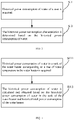
FIG. 1 is a schematic flowchart of a method for setting temperature for a water heater according to an embodiment of the present disclosure. -
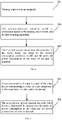
FIG. 2 is a schematic flowchart of the operation at block S10 shown inFIG. 1 according to an embodiment of the present disclosure. -
FIG. 3 is a schematic flowchart of the operation at block S11 shown inFIG. 2 according to an embodiment of the present disclosure. -
FIG. 4 is a schematic flowchart of the operation at block S20 shown inFIG. 1 according to an embodiment of the present disclosure. -
FIG. 5 is a schematic flowchart of the operation at block S30 shown inFIG. 1 according to an embodiment of the present disclosure. -
FIG. 6 is a schematic flowchart of the operation at block S40 shown inFIG. 1 according to an embodiment of the present disclosure. -
FIG. 7 is a schematic structural view of a water heater according to an embodiment of the present disclosure. -
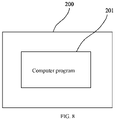
FIG. 8 is a schematic structural view of a computer readable storage according to an embodiment of the present disclosure. - The following is a clear and complete description of the technical solutions in the embodiments of the present disclosure with reference to the drawings and the embodiments. Based on the embodiments of the present disclosure, all other embodiments obtained without creative labor by those skilled in the art fall within the scope of the present disclosure.
- References herein to terms of "embodiment" mean that a particular feature, structure, or characteristic described in conjunction with an embodiment may be included in at least one embodiment of the present disclosure. The presence of the phrase at various points in the specification does not necessarily mean a same embodiment, nor is it a separate or alternative embodiment that is mutually exclusive with other embodiments. It is understood, both explicitly and implicitly, by those skilled in the art that the embodiments described herein may be combined with other embodiments.
- Referring to
FIG. 1, FIG. 1 is a schematic flowchart of a method for setting temperature for a water heater according to an embodiment of the present disclosure. The method may include actions or operations at blocks illustrated inFIG. 1 . - At block S10: historical power consumption characteristics of a water heater are acquired.
- Alternatively, referring to
FIG. 2, FIG. 2 is a schematic flowchart of the operation at block S10 shown inFIG. 1 according to an embodiment of the present disclosure. The operation at block S10 may include the following operations. - At block S11: historical power consumption of water of a user is acquired.
- In this operation, in which exact period the historical power consumption of water is acquired may be set flexibly on the basis of actual water consumption. Given that users tend to use the electric water heaters periodically and customarily to some extent, therefore in which exact period the historical power consumption of water is acquired may be determined based on usage cycle or usage habits of the user. For example, the historical power consumption of water which is near a scheduled day in one or more periods may be acquired. In addition, users tend to have different demands of water in different time of a day based on big data of individual users' water use. For example, the amount of water used by the majority of the users between 7pm and 9pm of a day is much higher than that of the other period of time of the same day. Therefore, the historical power consumption of water in different period of time of a day may be acquired based on the water usage habits of the user.
- In this embodiment, the power consumption of the actual water use of the user is closely related to the setting temperature of the water heater, so that the water consumption supplied at the setting temperature of the water heater is closer to the actual water consumption of the user, and the error is reduced. Thus, it can be understood that the historical power consumption of water of the user refers to the actual historical power consumption of water of the user, which is different from historical total power consumption of the water heater. In some embodiments, referring to
FIG. 3, FIG. 3 is a schematic flowchart of the operation at block S11 shown inFIG. 2 according to an embodiment of the present disclosure. The operation at block S11 may include the following operations at blocks S111-S112. - At block Sill: historical power consumption of water in a tank of the water heater corresponding to a rise of water temperature in the water heater is acquired.
- In a specific implementation, the historical power consumption of water in the tank of the water heater corresponding to the rise of water temperature in the water heater may be determined based on initial intra-liner temperature and final intra-liner temperature of the water heater. Specifically, the following equation may be applied to acquire the historical power consumption W1 of water in the tank of the water heater corresponding to the rise of water temperature in the water heater,

- Understandably, both the initial and the final intra-liner temperature of the water heater refer to temperatures of water in the liner of the water heater, which may be acquired through a temperature sensor arranged in the liner of the water heater.
- At block S112: the historical power consumption of water is calculated and obtained based on the historical power consumption of water in the tank of the water heater and historical total power consumption of the water heater.
- In some embodiments, the historical total power consumption may be determined based on power of at least one heat pipe of the water heater and heating duration.
- Specifically, as different water heaters may have different numbers of the heat pipes, and the number of heat pipes of the water heater may be 1, 2, or 3. Thus, in the embodiments, the historical total power consumption of the water heater shall be calculated and obtained in multiple cases based on the different numbers of heat pipes.
- In a case that the number of the at least one heat pipe of the water heater is 1, the historical total power consumption of the water heater may be configured as a value obtained by multiplying the power of the one heat pipe of the water heater and the heating duration.
- In a case that the number of the at least one heat pipe of the water heater is 2, a value 1 is first calculated and obtained by multiplying the power of a top heat pipe and the heating duration at the top.
- Then a value 2 is calculated and obtained by multiplying the power of a bottom heat pipe and the heating duration at the bottom.
- The historical total power consumption of the water heater is acquired by summing up the above-mentioned value 1 and value 2.
- In a case that the number of the at least one heat pipe of the water heater is 3, firstly, a value 1 is firstly calculated and obtained by multiplying the power of a top heat pipe and the heating duration at the top.
- Then a value 2 is calculated and obtained by multiplying the power of a bottom heat pipe and the heating duration at the bottom.
- Then a value 3 is calculated and obtained by multiplying the power of a bottom heat pipe and the heating duration at a middle part.
- The historical total power consumption of the water heater is acquired by summing up the above-mentioned value 1, value 2, and value 3.
- Understandably, a part of the historical total power consumption of the water heater is configured to heat the water in the liner of the water heater, that is, this part of the historical total power consumption corresponds to the historical power consumption of water in the tank of the water heater corresponding to the rise of water temperature in the water heater. While the other part is configured to heat the historical water use of the user, that is, this part of the historical total power consumption corresponds to the historical power consumption of water. Therefore, a following equation may be applied to calculate the historical power consumption of water, which is denoted by W 2,

- At block S 12: the historical power consumption characteristics is determined based on the historical power consumption of water.
- The historical power consumption characteristics may be statistical characteristics of multiple historical power consumptions of water of the user, e.g., a maximum value, a minimum value, an average value, a standard deviation, etc. of the multiple historical power consumptions of water of the user.
- In some embodiments, the obtained historical power consumption characteristics of the user is shown in the following table. In this table, supposing that the date for determining the setting temperature of the water heater is T, then the date X days before is denoted as T-X, and the power consumption on the date T-X is denoted as Wx.
Historical Power Consumption Characteristics Method for formulating characteristics Note Feature 1 (W2+W3+W4)/3 Average power consumption of the power consumptions from the 4th day before to the 2nd day before Feature 2 max (W2, W3, W4) A maximum power consumption of the power consumptions from the 4th day before to the 2nd day before Feature 3 min (W2, W3, W4) A minimum power consumption of the power consumptions from the 4th day before to the 2nd day before Feature 4 std (W2, W3, W4) A standard deviation of the power consumption from the 4th day before to the 2nd day before Feature 5 (W7+W14+W21)/3 An average power consumption of the power consumptions on the 7th day before, the 14th day before and the 21st day before Feature 6 max (W7, W14, W21) A maximum power consumption of the power consumptions on the 7th day before, the 14th day before and the 21st day before Feature 7 min (W7, W14, W21) A minimum power consumption of the power consumptions on the 7th day before, the 14th day before and the 21st day before Feature 8 std (W7, W14, W21) A standard deviation of the power consumption on the 7th day before, the 14th day before and the 21st day before - At block S20: the historical power consumption characteristics of the water heater are input to a preset power-consumption prediction model, and predicted power consumption of water of the user output by the power-consumption prediction model is acquired.
- Specifically, the power-consumption prediction model is acquired by training based on machine learning algorithms, wherein historical power consumption characteristics of the water heater corresponding to training water events are configured as input data, and predicted historical power consumption of water of the user corresponding to the training water events are configured as output data.
- Referring to
FIG. 4, FIG. 4 is a schematic flowchart of the operation at block S20 shown inFIG. 1 according to an embodiment of the present disclosure. The operation at block S20 may include the following operations at blocks S21-S23. - At block S21: training water events are acquired.
- A preset number of the training water events are required to be constructed before the power-consumption prediction model is established (For example, 1.5 million training water events are constructed in advance). Each of the training water events may include the historical power consumption characteristics corresponding to the training water event, which are acquired with the same method of acquiring the historical power consumption characteristics of the user at block S10 or with other methods without any limit. In addition, every training water event should correspond to a defined actual power consumption of the user.
- At block S22: the power-consumption prediction model is constructed based on the training water events and machine learning algorithms.
- The historical power consumption characteristic corresponding to each training water event is configured as sample input data in advance, the predicted power consumption of water of the user corresponding to the each training water event is configured as sample output data, and training is performed based on machine learning algorithms. In this way, the power-consumption prediction model may be acquired.
- In some embodiments, in a case that the power-consumption prediction model is established based on linear regression equation, the power-consumption prediction model may be represented as:

- Conventionally, forecast error of the user experience has not taken into account when the power consumption of the water of the user is predicted. In other words, the phenomenon has not been considered that the user experience is worse when the predicted power consumption of the water is less than the actual power consumption of the water of the user.
- Therefore, in the method for setting the temperature of the water heater provided by the embodiments, when the power-consumption prediction model is established, the forecast error, as an important reference on the discrepancies of user experience, has been taken into account.
- In other words, during the training process of the power-consumption prediction model, a difference between the actual water consumption of the user minus the predicted water consumption of the user is taken as an important parameter of the loss function of the power-consumption prediction model. In this way, on the basis of predicting the predicted power consumption of the water of the user as close as possible to the actual power consumption of the water of the user, the predicted power consumption of the water of the user may be greater than the actual power consumption of the water of the user as far as possible, which improves the user experience by limiting the occurrence of embarrassing scene that there is no hot water when the user needs..
- In some embodiments, during the training process of the power-consumption prediction model, the loss function of the power-consumption prediction model may include a first regularization term and a second regularization term. The first regularization term is a sum of absolute values of coefficients of the linear regression equation, i.e.


- Specifically, the loss function may be established as follows,

- In the above-mentioned loss function,

- During the processing of training, the closer the value of the loss function E is to 0, the more accurate the trained power-consumption prediction model is. The less the value of the loss function E is, the greater the power consumption of the water output by the power-consumption prediction model is than the actual power consumption of the water of the user. In this way, the occurrence of embarrassing scene that there is no hot water when the user needs is limited, thereby improving the user experience.
- At block S23: the historical power consumption characteristics of the water heater are input to the power-consumption prediction model, and the predicted power consumption of the water of the user is acquired.
- In another embodiment, considering that the behavior of consuming water by the user is not only strongly periodic, but is also affected by the weather and holidays, temperature and holiday data may be configured as one or more features for combining the historical power consumption characteristics of the user to train the power-consumption prediction model when it is established.
- Understandably, the temperature data refer to that in an area where the water heater is situated. Multiple temperature data may be acquired. For example, highest and lowest temperatures of a day in the area where the water heater is situated, an average temperature of a day in the area where the water heater is situated, a difference of the highest temperature of a day in the area where the water heater is situated subtracting the lowest temperature of a day in the area where the water heater is situated, etc., may be acquired, which is not limited herein. In some embodiments, multiple methods may be acquired by various methods, including: acquiring the temperature data through weather apps in mobile terminals or weather forecasts on TV.
- For example, the acquired temperature data are shown in the following table.
- Understandably, in the process of training the power-consumption prediction model, the holiday indicates whether the day corresponding to the actual power consumption of the water of the user belongs to a particular holiday For example, when the day corresponding to the actual power consumption of the water of the user is a holiday, the holiday data of the actual power consumption of the water of the user corresponding to the training water event may be assigned to a value of 1. Correspondingly, when the day corresponding to the actual power consumption of the water of the user is not a holiday, the holiday data of the actual power consumption of the water of the user corresponding to the training water event may be assigned to a value of 0.
- Specifically, in the process of training the power-consumption prediction model, the historical power consumption characteristics of the user, the temperature data and the holiday data are configured as the sample input data, predicted power consumption of the water of the user corresponding to the training water evens are configured as the sample output data, and training is performed based on the machine learning algorithms. In this process, the difference between the actual water consumption of the user minus the predicted water consumption of the user is taken as an important parameter of the loss function of the power-consumption prediction model.
- Specifically, in a case that the power-consumption prediction model is established based on the linear regression equation, the power-consumption prediction model may be represented as:

- By the same token, the loss function may be established as follows,

- Meanwhile, after the training of the power-consumption prediction model is finished, the historical power consumption characteristics of the water heater, the temperature data and the holiday data are input to the power-consumption prediction model, and the predicted power consumption of the water of the user output by the power-consumption prediction model is thus acquired.
- At block S30: predicted total power consumption of the water heater is determined based on the predicted power consumption.
- Understandably, after the predicted power consumption of the water of the user has been determined at block S20, the predicted total power consumption of the water heater is required to be determined based on the predicted power consumption, the setting temperature of the water heater may be then determined based on the predicted total power consumption. In some embodiments, referring to
FIG. 5, FIG. 5 is a schematic flowchart of the operation at block S30 shown inFIG. 1 according to an embodiment of the present disclosure. The operation at block - S30 may include the following operations at blocks S31-S32.
- At block S31: power consumption of water in a tank of the water heater corresponding to a rise of water temperature in the water heater is calculated and obtained.
- Specifically, the following equation may be applied to acquire the power consumption W1 of water in the tank of the water heater corresponding to the rise of water temperature in the water heater,

- The outlet water temperature may refer to the temperature associated with the user who feels comfortable in using water, e.g., 42 °C. The power consumption W1 of water in the tank of the water heater corresponding to the rise of water temperature in the water heater refers to the power consumed to heat the water in the water heater to the temperature as high as the outlet water temperature.
- The initial intra-liner temperature of the water heater is the actual temperature indicated by first uploading data of the water heater. As it usually takes a period of time from the model calculation to the pushing the setting temperature to the device side, therefore, in an actual application, the actual temperature of the water heater of the first uploading data may be approximated to the water temperature of the most recent uploading data when the prediction model is working.
- At block S32: the predicted total power consumption of the water heater is determined by summarizing the predicted power consumption of the water and the power consumption of water in the tank
- Considering that the value of the predicted total power consumption can only be equal to or greater than 0, therefore the minimum value of the predicted total power consumption may be limited as follows:
- Predicted total power consumption=max(predicted total power consumption, 0)
- At block S40: setting temperature of the water heater is determined based on the predicted total power consumption.
- In some embodiments, referring to
FIG. 6, FIG. 6 is a schematic flowchart of the operation at block S40 shown inFIG. 1 according to an embodiment of the present disclosure. The operation at block S40 may include the following operations at blocks S41-S42. - At block S41: current water temperature of the water heater is acquired. The current water temperature in the water heater may be acquired from the temperature sensor arranged at a corresponding position inside the water heater, which will not be illustrated here.
- At block S42: the setting temperature of the water heater is determined based on the current water temperature and the predicted total power consumption.
- Specifically, the setting temperature of the water heater may be determined with the following equation,

- At block S50: heating temperature of the water heater is set based on the setting temperature.
- In some embodiments, before the operation at block S50, in order to prevent the case that there are some abnormal and extreme values in the acquired setting temperature of the water heater, the acquired setting temperature of the water heater may be limited by an upper limit and a lower limit, so that the result derived from the prediction model is in accordance with the reality.
- Specifically, in general, maximum temperature that is permitted to set in the water heater is configured for the sake of the user's safety. Therefore, an extremum correction may be set based on the maximum temperature allowable to be set on the water heater. Specifically, the extremum correction may be performed on the setting temperature of the water heater with the following equation,

- The maximum temperatures that are permitted to set vary in different types and brands of water heaters. For example, the maximum temperature that is permitted to set for a storage-type electric water heater is about 75 °C, while the maximum temperature for an instant electric water heater is about 80 °C, and the maximum temperature for an air-powered water heater (without the auxiliary function of electric heating) is about 60 °C, each of which is lower than that for a gas water heater.
- In the method for setting temperature for a water heater provided by embodiments of the present disclosure, the historical power consumption characteristics of the water heater are input to a preset power-consumption prediction model, and predicted power consumption of water of the user output by the power-consumption prediction model is acquired. After that, predicted total power consumption of the water heater is determined based on the predicted power consumption, and setting temperature of the water heater is determined based on the predicted total power consumption. That is, in the method for setting temperature of the water heater provided by embodiments of the present disclosure, the setting temperature of the water heater is determined based on the predicted total power consumption of the water heater in the future, so that errors associated with the traditional method of determining the set temperature based on water consumption may be reduced, energy may be saved, and the amount of water which is able to be provided by the water heater with the acquired setting temperature is closer to the actual amount of water consumed by the user.
- Referring to
FIG. 7, FIG. 7 is a schematic structural view of a water heater according to an embodiment of the present disclosure. Thewater heater 100 may include amemory 110 and aprocessor 120. Thememory 110 is configured to store computer programs, and theprocessor 120 is configured to run the computer programs to realize the operations of the method for setting temperature of thewater heater 100. For example, thewater heater 100 is configured to: acquire historical power consumption characteristics of thewater heater 100; input the historical power consumption characteristics of thewater heater 100 to a preset power-consumption prediction model, and acquire predicted power consumption of water of the user output by the power-consumption prediction model; determine predicted total power consumption of thewater heater 100 based on the predicted power consumption; determine setting temperature of thewater heater 100 based on the predicted total power consumption; and set heating temperature of the water heater based on the setting temperature. Theprocessor 120 may be a central processing unit (CPU), or an application specific integrated circuit (ASIC), or one or more integrated circuits to realize the embodiments in the present disclosure. - The
memory 110 is configured to store executable instructions. Thememory 110 may include a highspeed random access memory (RAM) 110, and may also include anon-volatile memory 110, for example, at least a magnetic disk storage. In addition, thememory 110 may also be a series of memories. Thememory 110 may be chunked, and the chunks may be combined into virtual volumes according to certain rules. The instructions stored in thememory 110 can be executed by theprocessor 120, in order for theprocessor 120 to realize the method for setting temperature of thewater heater 100 in any of the aforementioned embodiments. - Referring to
FIG. 8, FIG. 8 is a schematic structural view of a computer readable storage according to an embodiment of the present disclosure. A computerreadable storage medium 200 stores one ormore computer program 201, which can be executed by theprocessor 100 to realize the operations of the method for setting temperature of thewater heater 100. For example, thecomputer program 201 can be executed by theprocessor 100 to realize the following operations: acquiring historical power consumption characteristics of thewater heater 100; inputting the historical power consumption characteristics of thewater heater 100 to a preset power-consumption prediction model, and acquiring predicted power consumption of water of the user output by the power-consumption prediction model; determining predicted total power consumption of thewater heater 100 based on the predicted power consumption; determining setting temperature of thewater heater 100 based on the predicted total power consumption; and setting heating temperature of the water heater based on the setting temperature. The computerreadable storage medium 200 may be any usable media or data storage devices which can be stored in the computer, including but not limited to a magnetic memory (e.g., floppy disks, hard disks, tapes, magnetic optical disks (MO), etc.), an optical memory (e.g., CD, DVD, BD, HVD, etc.), and a semiconductor memory (e.g., read-only memory (ROM), erasable programmable read-only memory (EPROM), electrically erasable programmable read-only memory (EEPROM), the non-volatile memory 110 (NANDFLASH), solid state disk (SSD)), etc. - In the method for setting temperature for a water heater provided by embodiments of the present disclosure, the historical power consumption characteristics of the water heater are input to a preset power-consumption prediction model, and predicted power consumption of water of the user output by the power-consumption prediction model is acquired. After that, predicted total power consumption of the water heater is determined based on the predicted power consumption, and setting temperature of the water heater is determined based on the predicted total power consumption. That is, in the method for setting temperature of the water heater provided by embodiments of the present disclosure, the setting temperature of the water heater is determined based on the predicted total power consumption of the water heater in the future, so that errors associated with the traditional method of determining the set temperature based on water consumption may be reduced, energy may be saved, and the amount of water which is able to be provided by the water heater with the acquired setting temperature is closer to the actual amount of water consumed by the user.
- In summary, in the method for setting temperature for a
water heater 100 provided by embodiments of the present disclosure, the historical power consumption characteristics of thewater heater 100 are input to a preset power-consumption prediction model, and predicted power consumption of water of the user output by the power-consumption prediction model is acquired. After that, predicted total power consumption of thewater heater 100 is determined based on the predicted power consumption, and setting temperature of thewater heater 100 is determined based on the predicted total power consumption. That is, in the method for setting temperature of thewater heater 100 provided by embodiments of the present disclosure, the setting temperature of thewater heater 100 is determined based on the predicted total power consumption of the water heater in the future, so that errors associated with the traditional method of determining the set temperature based on water consumption may be reduced, energy may be saved, and the amount of water which is able to be provided by thewater heater 100 with the acquired setting temperature is closer to the actual amount of water consumed by the user. Understandably, at any point, the embodiments should be regarded as exemplary and unrestricted. Also for ease of description, only part but not all of the structure related to the present disclosure is shown in the attached drawings. Based on the present disclosure, all other obtained by those skilled in the art without making creative labor, fall within the scope of the present disclosure. - The terms "first", "second" are applied to distinguish different objects, rather than to describe specific orders. In addition, apparently, the terms "include", "have" and the like are intended to cover non-exclusive inclusion. For example, a process, methods, system, product or device including a series of units or steps of processes is not limited to the listed steps or units, but optionally also includes steps or units not listed, or optionally also includes other steps or units inherent to the process, method, product, or device.
- Terms of "embodiment" and the like mean that a specific feature, structure, or characteristic described in combination may be included in at least one embodiment of the present disclosure. The appearance of the phrase at various locations in the specification does not necessarily refer to a same embodiment, nor is it independent or alternative to other embodiments that are mutually exclusive. It is understood, both explicitly and implicitly, by those skilled in the art that what is described herein may be combined with other embodiments.
- It should be noted that, the foregoing disclosed is merely exemplary implementations and it is not intended to limit the scope of the present disclosure. Any equivalent structure or equivalent process transformation made by using the contents of the specification and the accompanying drawings, or applied directly or indirectly in other related technical fields, is included in the scope of the present disclosure.
- The invention may also be defined by means of the following numbered clauses.
- 1. A method for setting temperature for a water heater, characterized in that the method comprises:
- acquiring historical power consumption characteristics of the water heater;
- inputting the historical power consumption characteristics of the water heater to a power-consumption prediction model being preset, and acquiring predicted power consumption of water of a user output by the power-consumption prediction model;
- determining predicted total power consumption of the water heater based on the predicted power consumption;
- determining setting temperature of the water heater based on the predicted total power consumption; and
- setting heating temperature of the water heater (100) based on the setting temperature.
- 2. The method of clause 1, wherein the determining the setting temperature of the water heater based on the predicted total power consumption comprises:
- acquiring current water temperature of the water heater; and
- determining the setting temperature of the water heater based on the current water temperature and the predicted total power consumption.
- 3. The method of clause 2, wherein the determining the setting temperature of the water heater based on the current water temperature and the predicted total power consumption comprises:
- determining the setting temperature of the water heater with a following equation,

- determining the setting temperature of the water heater with a following equation,
- 4. The method of clause 1, wherein the inputting the historical power consumption characteristics of the water heater to the power-consumption prediction model being preset, and the acquiring the predicted power consumption of the water of the user output by the power-consumption prediction model comprise:
- acquiring temperature data and holiday data; and
- inputting the historical power consumption characteristics of the water heater, the temperature data and the holiday data to the power-consumption prediction model, and acquiring the predicted value of power consumption of the water of the user output by the power-consumption prediction model.
- 5. The method of clause 1, wherein in the inputting the historical power consumption characteristics of the water heater to the power-consumption prediction model being preset, and the acquiring the predicted power consumption of the water of the user output by the power-consumption prediction model,
the historical power consumption characteristic corresponding to each training water event is configured as sample input data in advance, the predicted power consumption of water of the user corresponding to the each training water event is configured as sample output data, and training is performed based on machine learning algorithms to acquire the power-consumption prediction model. - 6. The method of clause 5, wherein the power-consumption prediction model is established based on a linear regression equation;
during a training process of the power-consumption prediction model, a loss function of the power-consumption prediction model comprises a first regularization term and a second regularization term, the first regularization term is a sum of absolute values of coefficients of the linear regression equation, and the second regularization term is a sum of squares of the coefficients of the linear regression equation. - 7. The method of clause 6, wherein the power-consumption prediction model is expressed as


- 8. The method of clause 1, wherein the determining the predicted total power consumption of the water heater based on the predicted power consumption comprises:
- calculating and obtaining power consumption of water in a tank of the water heater corresponding to a rise of water temperature in the water heater; and
- determining the predicted total power consumption of the water heater by summarizing the predicted power consumption of the water and the power consumption of water in the tank.
- 9. The method of clause 1, wherein the acquiring the historical power consumption characteristics of the water heater comprises:
- acquiring historical power consumption of water of the user; and
- determining the historical power consumption characteristics based on the historical power consumption of water.
- 10. The method of clause 9, wherein the acquiring the historical power consumption of water of the user comprises:
- acquiring historical power consumption of water in a tank of the water heater corresponding to a rise of water temperature in the water heater; and
- calculating and obtaining the historical power consumption of water based on the historical power consumption of water in the tank of the water heater and historical total power consumption of the water heater.
- 11. The method of
clause 10, wherein the acquiring historical power consumption of water in the tank of the water heater corresponding to the rise of water temperature in the water heater comprises:- determining the historical power consumption of water in the tank of the water heater corresponding to the rise of water temperature in the water heater based on initial intra-liner temperature and final intra-liner temperature of the water heater.
- 12. The method of clause 11, wherein the historical power consumption W1 of water in the tank of the water heater corresponding to the rise of water temperature in the water heater is acquired with a following equation,

- 13. The method of
clause 10, wherein the historical power consumption of the water, which is denoted by W 2, is calculated with a following equation,
- 14. The method of
clause 10, wherein the historical total power consumption is determined based on power of a heat pipe of the water heater and heating duration. - 15. The method of clause 1, wherein after the determining the setting temperature of the water heater based on the predicted total power consumption, the method further comprises:
- performing extremum correction on the setting temperature of the water heater.
- 16. The method of clause 15, wherein the extremum correction on the setting temperature of the water heater is performed based on a following equation,

- 17. A water heater, characterized by comprising a memory, a processor and one or more computer programs stored in the memory and configured to be executed by the processor, the one or more programs comprising instructions to be executed by the processor to perform operations of the method of any one of clauses 1-16.
- 18. A computer readable storage medium, characterized by storing one or more computer programs comprising instructions configured to be executed by a processor to perform operations of the method of any one of clauses 1-16.
Claims (15)
- A method for setting temperature for a water heater (100), characterized in that the method comprises:acquiring (S10) historical power consumption characteristics of the water heater (100);inputting (S20) the historical power consumption characteristics of the water heater (100) to a power-consumption prediction model being preset, and acquiring (S20) predicted power consumption of water of a user output by the power-consumption prediction model;determining (S30) predicted total power consumption of the water heater (100) based on the predicted power consumption;determining (S40) setting temperature of the water heater (100) based on the predicted total power consumption; andsetting (S50) heating temperature of the water heater (100) based on the setting temperature.
- The method of claim 1, wherein the determining (S40) the setting temperature of the water heater (100) based on the predicted total power consumption comprises:acquiring (S41) current water temperature of the water heater (100); anddetermining (S42) the setting temperature of the water heater (100) based on the current water temperature and the predicted total power consumption.
- The method of claim 2, wherein the determining (S42) the setting temperature of the water heater (100) based on the current water temperature and the predicted total power consumption comprises:determining the setting temperature of the water heater (100) with a following equation,

- The method of claim 1, wherein the inputting (S20) the historical power consumption characteristics of the water heater (100) to the power-consumption prediction model being preset, and the acquiring (S20) the predicted power consumption of the water of the user output by the power-consumption prediction model comprise:acquiring temperature data and holiday data; andinputting the historical power consumption characteristics of the water heater (100), the temperature data and the holiday data to the power-consumption prediction model, and acquiring the predicted value of power consumption of the water of the user output by the power-consumption prediction model.
- The method of claim 1, wherein the inputting (S20) the historical power consumption characteristics of the water heater (100) to the power-consumption prediction model being preset, and the acquiring (S20) the predicted power consumption of the water of the user output by the power-consumption prediction model comprise:acquiring (S21) training water events;constructing (S22) the power-consumption prediction model based on the training water events and machine learning algorithms; andinputting (S23) the historical power consumption characteristics of the water heater (100) to the power-consumption prediction model, and acquiring (S23) the predicted power consumption of the water of the user.
- The method of claim 5, wherein the power-consumption prediction model is established based on a linear regression equation;
during a training process of the power-consumption prediction model, a loss function of the power-consumption prediction model comprises a first regularization term and a second regularization term, the first regularization term is a sum of absolute values of coefficients of the linear regression equation, and the second regularization term is a sum of squares of the coefficients of the linear regression equation. - The method of claim 6, wherein the power-consumption prediction model is expressed as


- The method of claim 1, wherein the determining (S30) the predicted total power consumption of the water heater (100) based on the predicted power consumption comprises:calculating (S31) and obtaining (S31) power consumption of water in a tank of the water heater (100) corresponding to a rise of water temperature in the water heater (100); anddetermining (S32) the predicted total power consumption of the water heater (100) by summarizing the predicted power consumption of the water and the power consumption of water in the tank.
- The method of claim 1, wherein the acquiring (S10) the historical power consumption characteristics of the water heater (100) comprises:acquiring (S11) historical power consumption of water of the user; anddetermining (S12) the historical power consumption characteristics based on the historical power consumption of water.
- The method of claim 9, wherein the acquiring (S11) the historical power consumption of water of the user comprises:acquiring (S111) historical power consumption of water in a tank of the water heater (100) corresponding to a rise of water temperature in the water heater (100); andcalculating (S112) and obtaining (S112) the historical power consumption of water based on the historical power consumption of water in the tank of the water heater (100) and historical total power consumption of the water heater (100).
- The method of claim 10, wherein the acquiring (S111) historical power consumption of water in the tank of the water heater (100) corresponding to the rise of water temperature in the water heater (100) comprises:determining the historical power consumption of water in the tank of the water heater (100) corresponding to the rise of water temperature in the water heater (100) based on initial intra-liner temperature and final intra-liner temperature of the water heater (100);wherein the historical power consumption W1 of water in the tank of the water heater (100) corresponding to the rise of water temperature in the water heater (100) is acquired with a following equation,

- The method of claim 10, wherein the historical power consumption of the water, which is denoted by W 2, is calculated with a following equation,

- The method of claim 1, wherein after the determining (S40) the setting temperature of the water heater (100) based on the predicted total power consumption, the method further comprises:performing extremum correction on the setting temperature of the water heater (100);wherein the extremum correction on the setting temperature of the water heater (100) is performed based on a following equation,

- A water heater (100), characterized by comprising a memory (110), a processor (120) and one or more computer programs stored in the memory (110) and configured to be executed by the processor (120), the one or more programs comprising instructions to be executed by the processor (120) to perform operations of the method of any one of claims 1-13.
- A non-transitory computer readable storage medium (200), characterized by storing one or more computer programs (201) comprising instructions configured to be executed by a processor (120) to perform operations of the method of any one of claims 1-13.
Applications Claiming Priority (1)
| Application Number | Priority Date | Filing Date | Title |
|---|---|---|---|
| CN202011226102.7A CN114459160B (en) | 2020-11-05 | 2020-11-05 | Method for setting temperature of water heater, water heater and storage medium |
Publications (3)
| Publication Number | Publication Date |
|---|---|
| EP3995747A1 true EP3995747A1 (en) | 2022-05-11 |
| EP3995747C0 EP3995747C0 (en) | 2024-10-30 |
| EP3995747B1 EP3995747B1 (en) | 2024-10-30 |
Family
ID=76483194
Family Applications (1)
| Application Number | Title | Priority Date | Filing Date |
|---|---|---|---|
| EP21179700.6A Active EP3995747B1 (en) | 2020-11-05 | 2021-06-16 | Method for setting temperature of water heater, water heater and non-transitorycomputer readable storage medium |
Country Status (2)
| Country | Link |
|---|---|
| EP (1) | EP3995747B1 (en) |
| CN (1) | CN114459160B (en) |
Cited By (4)
| Publication number | Priority date | Publication date | Assignee | Title |
|---|---|---|---|---|
| CN115221791A (en) * | 2022-07-27 | 2022-10-21 | 浙江大学 | Supercritical boiler wall temperature online prediction method and system |
| CN115435498A (en) * | 2022-07-27 | 2022-12-06 | 江苏光芒新能源股份有限公司 | A control method for a return water circulation air energy water heater |
| CN115470732A (en) * | 2022-10-10 | 2022-12-13 | 珠海格力电器股份有限公司 | Temperature determination method of water heater and related equipment |
| CN115751725A (en) * | 2022-11-30 | 2023-03-07 | 珠海格力电器股份有限公司 | Method and device for setting running temperature of water heater, processor and electronic equipment |
Citations (4)
| Publication number | Priority date | Publication date | Assignee | Title |
|---|---|---|---|---|
| US20110270452A1 (en) * | 2010-05-03 | 2011-11-03 | Battelle Memorial Institute | Scheduling and modeling the operation of controllable and non-controllable electronic devices |
| WO2012105642A1 (en) * | 2011-02-03 | 2012-08-09 | シャープ株式会社 | Controller, control method therefor, and storage medium |
| EP3101366A2 (en) * | 2015-05-29 | 2016-12-07 | Electricité de France | Method for estimating a physical magnitude of a water heater water tank |
| CN112446169A (en) * | 2020-11-05 | 2021-03-05 | 美的集团股份有限公司 | Water heater water consumption prediction method, water heater and storage medium |
Family Cites Families (9)
| Publication number | Priority date | Publication date | Assignee | Title |
|---|---|---|---|---|
| JP2013181725A (en) * | 2012-03-05 | 2013-09-12 | Panasonic Corp | Water heater, cogeneration system, and method for operating water heater |
| CN105989221B (en) * | 2015-02-03 | 2019-01-08 | 青岛经济技术开发区海尔热水器有限公司 | Heat pump water heater power saving calculation method and heat pump water heater with function of displaying power saving amount |
| JP6735625B2 (en) * | 2016-08-02 | 2020-08-05 | 三菱電機株式会社 | Water heater control device, gateway device, water heater control system, water heater control method, and program |
| CN106125563A (en) * | 2016-08-03 | 2016-11-16 | 广东美的暖通设备有限公司 | The control method of home appliance, control device and home appliance |
| CN107239852A (en) * | 2017-05-05 | 2017-10-10 | 南京邮电大学 | A kind of electric quantity consumption Forecasting Methodology based on deep learning |
| CN110288111A (en) * | 2018-03-19 | 2019-09-27 | 浙江昱能科技有限公司 | Method and system for household electric energy management based on weather forecast |
| CN110567163B (en) * | 2019-08-23 | 2020-09-22 | 珠海格力电器股份有限公司 | Water heater control method and device and water heater |
| CN110530035B (en) * | 2019-09-17 | 2020-10-02 | 美的集团股份有限公司 | Automatic control method and device for water heater, water heater and electronic equipment |
| CN111598378B (en) * | 2020-03-30 | 2023-10-03 | 国网山东省电力公司济南供电公司 | A method for evaluating the controllable potential of load demand side response of residential electric water heaters |
-
2020
- 2020-11-05 CN CN202011226102.7A patent/CN114459160B/en active Active
-
2021
- 2021-06-16 EP EP21179700.6A patent/EP3995747B1/en active Active
Patent Citations (4)
| Publication number | Priority date | Publication date | Assignee | Title |
|---|---|---|---|---|
| US20110270452A1 (en) * | 2010-05-03 | 2011-11-03 | Battelle Memorial Institute | Scheduling and modeling the operation of controllable and non-controllable electronic devices |
| WO2012105642A1 (en) * | 2011-02-03 | 2012-08-09 | シャープ株式会社 | Controller, control method therefor, and storage medium |
| EP3101366A2 (en) * | 2015-05-29 | 2016-12-07 | Electricité de France | Method for estimating a physical magnitude of a water heater water tank |
| CN112446169A (en) * | 2020-11-05 | 2021-03-05 | 美的集团股份有限公司 | Water heater water consumption prediction method, water heater and storage medium |
Cited By (4)
| Publication number | Priority date | Publication date | Assignee | Title |
|---|---|---|---|---|
| CN115221791A (en) * | 2022-07-27 | 2022-10-21 | 浙江大学 | Supercritical boiler wall temperature online prediction method and system |
| CN115435498A (en) * | 2022-07-27 | 2022-12-06 | 江苏光芒新能源股份有限公司 | A control method for a return water circulation air energy water heater |
| CN115470732A (en) * | 2022-10-10 | 2022-12-13 | 珠海格力电器股份有限公司 | Temperature determination method of water heater and related equipment |
| CN115751725A (en) * | 2022-11-30 | 2023-03-07 | 珠海格力电器股份有限公司 | Method and device for setting running temperature of water heater, processor and electronic equipment |
Also Published As
| Publication number | Publication date |
|---|---|
| EP3995747C0 (en) | 2024-10-30 |
| CN114459160A (en) | 2022-05-10 |
| CN114459160B (en) | 2023-05-05 |
| EP3995747B1 (en) | 2024-10-30 |
Similar Documents
| Publication | Publication Date | Title |
|---|---|---|
| EP3995747A1 (en) | Method for setting temperature of water heater, water heater and non-transitorycomputer readable storage medium | |
| JP6598876B2 (en) | Power control device, operation planning method, and program | |
| Guo et al. | Hourly cooling load forecasting using time-indexed ARX models with two-stage weighted least squares regression | |
| US9740181B2 (en) | Identifying models of dynamic systems using regression model for parameters and error rates | |
| US11054163B2 (en) | System for forecasting fuel consumption for indoor thermal conditioning with the aid of a digital computer | |
| CN107248015B (en) | Real-time water storage scheduling method for reservoirs based on ensemble forecasting | |
| CN106022536B (en) | Seasonal power consumption prediction method and system | |
| CN112446169B (en) | Water heater water consumption prediction method, water heater and storage medium | |
| CN108717585A (en) | A kind of long term electric power demand forecasting method | |
| CN110529980B (en) | Method and system for determining actual demand cooling load of central air conditioner and electronic equipment | |
| CN105091076A (en) | Energy-saving effect calculation method and device | |
| CN104008433A (en) | Method for predicting medium-and-long-term power loads on basis of Bayes dynamic model | |
| EP2312506A1 (en) | Computer-based method and device for automatically providing a prediction on a future energy demand to an energy source | |
| CN106327028A (en) | Terminal energy consumption prediction method and device | |
| JP6453744B2 (en) | Power demand management apparatus and power demand management method | |
| JP2016067125A (en) | Energy equipment operation controller and energy equipment operation control method | |
| JP2019097327A (en) | Power demand forecasting device, power demand forecasting method, and program | |
| CN103413048A (en) | A method to determine the optimal decommissioning time of power grid equipment based on three-parameter Weibull distribution | |
| JPWO2019008698A1 (en) | Operation control device, air conditioning system, operation control method, and operation control program | |
| CN114037383A (en) | Determination method and device for purchasing data, and computer-readable storage medium | |
| CN119602395A (en) | Method and system for evaluating real-time regulation capability of virtual power plant | |
| JP6641849B2 (en) | Power prediction method | |
| CN118521338A (en) | Natural gas sales forecasting method and system based on temperature change | |
| CN114459150A (en) | Water heater temperature setting method, water heater and storage medium | |
| CN114528747B (en) | Water heater water consumption prediction method, water heater and storage medium |
Legal Events
| Date | Code | Title | Description |
|---|---|---|---|
| PUAI | Public reference made under article 153(3) epc to a published international application that has entered the european phase |
Free format text: ORIGINAL CODE: 0009012 |
|
| STAA | Information on the status of an ep patent application or granted ep patent |
Free format text: STATUS: THE APPLICATION HAS BEEN PUBLISHED |
|
| AK | Designated contracting states |
Kind code of ref document: A1 Designated state(s): AL AT BE BG CH CY CZ DE DK EE ES FI FR GB GR HR HU IE IS IT LI LT LU LV MC MK MT NL NO PL PT RO RS SE SI SK SM TR |
|
| STAA | Information on the status of an ep patent application or granted ep patent |
Free format text: STATUS: REQUEST FOR EXAMINATION WAS MADE |
|
| 17P | Request for examination filed |
Effective date: 20220621 |
|
| RBV | Designated contracting states (corrected) |
Designated state(s): AL AT BE BG CH CY CZ DE DK EE ES FI FR GB GR HR HU IE IS IT LI LT LU LV MC MK MT NL NO PL PT RO RS SE SI SK SM TR |
|
| GRAP | Despatch of communication of intention to grant a patent |
Free format text: ORIGINAL CODE: EPIDOSNIGR1 |
|
| STAA | Information on the status of an ep patent application or granted ep patent |
Free format text: STATUS: GRANT OF PATENT IS INTENDED |
|
| RIC1 | Information provided on ipc code assigned before grant |
Ipc: F24H 9/20 20220101ALN20240704BHEP Ipc: F24D 19/10 20060101AFI20240704BHEP |
|
| RIC1 | Information provided on ipc code assigned before grant |
Ipc: F24H 9/20 20220101ALN20240729BHEP Ipc: F24D 19/10 20060101AFI20240729BHEP |
|
| INTG | Intention to grant announced |
Effective date: 20240807 |
|
| GRAS | Grant fee paid |
Free format text: ORIGINAL CODE: EPIDOSNIGR3 |
|
| GRAA | (expected) grant |
Free format text: ORIGINAL CODE: 0009210 |
|
| STAA | Information on the status of an ep patent application or granted ep patent |
Free format text: STATUS: THE PATENT HAS BEEN GRANTED |
|
| AK | Designated contracting states |
Kind code of ref document: B1 Designated state(s): AL AT BE BG CH CY CZ DE DK EE ES FI FR GB GR HR HU IE IS IT LI LT LU LV MC MK MT NL NO PL PT RO RS SE SI SK SM TR |
|
| REG | Reference to a national code |
Ref country code: GB Ref legal event code: FG4D |
|
| REG | Reference to a national code |
Ref country code: CH Ref legal event code: EP |
|
| REG | Reference to a national code |
Ref country code: IE Ref legal event code: FG4D |
|
| REG | Reference to a national code |
Ref country code: DE Ref legal event code: R096 Ref document number: 602021020880 Country of ref document: DE |
|
| U01 | Request for unitary effect filed |
Effective date: 20241107 |
|
| U07 | Unitary effect registered |
Designated state(s): AT BE BG DE DK EE FI FR IT LT LU LV MT NL PT RO SE SI Effective date: 20241115 |
|
| PG25 | Lapsed in a contracting state [announced via postgrant information from national office to epo] |
Ref country code: IS Free format text: LAPSE BECAUSE OF FAILURE TO SUBMIT A TRANSLATION OF THE DESCRIPTION OR TO PAY THE FEE WITHIN THE PRESCRIBED TIME-LIMIT Effective date: 20250228 Ref country code: HR Free format text: LAPSE BECAUSE OF FAILURE TO SUBMIT A TRANSLATION OF THE DESCRIPTION OR TO PAY THE FEE WITHIN THE PRESCRIBED TIME-LIMIT Effective date: 20241030 |
|
| PG25 | Lapsed in a contracting state [announced via postgrant information from national office to epo] |
Ref country code: ES Free format text: LAPSE BECAUSE OF FAILURE TO SUBMIT A TRANSLATION OF THE DESCRIPTION OR TO PAY THE FEE WITHIN THE PRESCRIBED TIME-LIMIT Effective date: 20241030 |
|
| PG25 | Lapsed in a contracting state [announced via postgrant information from national office to epo] |
Ref country code: NO Free format text: LAPSE BECAUSE OF FAILURE TO SUBMIT A TRANSLATION OF THE DESCRIPTION OR TO PAY THE FEE WITHIN THE PRESCRIBED TIME-LIMIT Effective date: 20250130 |
|
| PG25 | Lapsed in a contracting state [announced via postgrant information from national office to epo] |
Ref country code: GR Free format text: LAPSE BECAUSE OF FAILURE TO SUBMIT A TRANSLATION OF THE DESCRIPTION OR TO PAY THE FEE WITHIN THE PRESCRIBED TIME-LIMIT Effective date: 20250131 |
|
| PG25 | Lapsed in a contracting state [announced via postgrant information from national office to epo] |
Ref country code: PL Free format text: LAPSE BECAUSE OF FAILURE TO SUBMIT A TRANSLATION OF THE DESCRIPTION OR TO PAY THE FEE WITHIN THE PRESCRIBED TIME-LIMIT Effective date: 20241030 |
|
| PG25 | Lapsed in a contracting state [announced via postgrant information from national office to epo] |
Ref country code: RS Free format text: LAPSE BECAUSE OF FAILURE TO SUBMIT A TRANSLATION OF THE DESCRIPTION OR TO PAY THE FEE WITHIN THE PRESCRIBED TIME-LIMIT Effective date: 20250130 |
|
| U1N | Appointed representative for the unitary patent procedure changed after the registration of the unitary effect |
Representative=s name: RAN, HANDONG; GB |
|
| PG25 | Lapsed in a contracting state [announced via postgrant information from national office to epo] |
Ref country code: SM Free format text: LAPSE BECAUSE OF FAILURE TO SUBMIT A TRANSLATION OF THE DESCRIPTION OR TO PAY THE FEE WITHIN THE PRESCRIBED TIME-LIMIT Effective date: 20241030 |
|
| PGFP | Annual fee paid to national office [announced via postgrant information from national office to epo] |
Ref country code: GB Payment date: 20250620 Year of fee payment: 5 |
|
| PG25 | Lapsed in a contracting state [announced via postgrant information from national office to epo] |
Ref country code: SK Free format text: LAPSE BECAUSE OF FAILURE TO SUBMIT A TRANSLATION OF THE DESCRIPTION OR TO PAY THE FEE WITHIN THE PRESCRIBED TIME-LIMIT Effective date: 20241030 |
|
| PG25 | Lapsed in a contracting state [announced via postgrant information from national office to epo] |
Ref country code: CZ Free format text: LAPSE BECAUSE OF FAILURE TO SUBMIT A TRANSLATION OF THE DESCRIPTION OR TO PAY THE FEE WITHIN THE PRESCRIBED TIME-LIMIT Effective date: 20241030 |
|
| U20 | Renewal fee for the european patent with unitary effect paid |
Year of fee payment: 5 Effective date: 20250624 |
|
| PLBE | No opposition filed within time limit |
Free format text: ORIGINAL CODE: 0009261 |
|
| STAA | Information on the status of an ep patent application or granted ep patent |
Free format text: STATUS: NO OPPOSITION FILED WITHIN TIME LIMIT |
|
| 26N | No opposition filed |
Effective date: 20250731 |
|
| REG | Reference to a national code |
Ref country code: CH Ref legal event code: H13 Free format text: ST27 STATUS EVENT CODE: U-0-0-H10-H13 (AS PROVIDED BY THE NATIONAL OFFICE) Effective date: 20260127 |
|
| PG25 | Lapsed in a contracting state [announced via postgrant information from national office to epo] |
Ref country code: MC Free format text: LAPSE BECAUSE OF FAILURE TO SUBMIT A TRANSLATION OF THE DESCRIPTION OR TO PAY THE FEE WITHIN THE PRESCRIBED TIME-LIMIT Effective date: 20241030 |
|
| PG25 | Lapsed in a contracting state [announced via postgrant information from national office to epo] |
Ref country code: IE Free format text: LAPSE BECAUSE OF NON-PAYMENT OF DUE FEES Effective date: 20250616 |
|
| PG25 | Lapsed in a contracting state [announced via postgrant information from national office to epo] |
Ref country code: CH Free format text: LAPSE BECAUSE OF NON-PAYMENT OF DUE FEES Effective date: 20250630 |