EP3995557A1 - Carbon-dioxide-responsive self-thickening intelligent fluid based on supramolecular self-assembly - Google Patents
Carbon-dioxide-responsive self-thickening intelligent fluid based on supramolecular self-assembly Download PDFInfo
- Publication number
- EP3995557A1 EP3995557A1 EP21800686.4A EP21800686A EP3995557A1 EP 3995557 A1 EP3995557 A1 EP 3995557A1 EP 21800686 A EP21800686 A EP 21800686A EP 3995557 A1 EP3995557 A1 EP 3995557A1
- Authority
- EP
- European Patent Office
- Prior art keywords
- head group
- thickening
- carbon dioxide
- tertiary amine
- chain amide
- Prior art date
- Legal status (The legal status is an assumption and is not a legal conclusion. Google has not performed a legal analysis and makes no representation as to the accuracy of the status listed.)
- Granted
Links
Images


Classifications
-
- C—CHEMISTRY; METALLURGY
- C09—DYES; PAINTS; POLISHES; NATURAL RESINS; ADHESIVES; COMPOSITIONS NOT OTHERWISE PROVIDED FOR; APPLICATIONS OF MATERIALS NOT OTHERWISE PROVIDED FOR
- C09K—MATERIALS FOR MISCELLANEOUS APPLICATIONS, NOT PROVIDED FOR ELSEWHERE
- C09K8/00—Compositions for drilling of boreholes or wells; Compositions for treating boreholes or wells, e.g. for completion or for remedial operations
- C09K8/58—Compositions for enhanced recovery methods for obtaining hydrocarbons, i.e. for improving the mobility of the oil, e.g. displacing fluids
- C09K8/584—Compositions for enhanced recovery methods for obtaining hydrocarbons, i.e. for improving the mobility of the oil, e.g. displacing fluids characterised by the use of specific surfactants
-
- C—CHEMISTRY; METALLURGY
- C09—DYES; PAINTS; POLISHES; NATURAL RESINS; ADHESIVES; COMPOSITIONS NOT OTHERWISE PROVIDED FOR; APPLICATIONS OF MATERIALS NOT OTHERWISE PROVIDED FOR
- C09K—MATERIALS FOR MISCELLANEOUS APPLICATIONS, NOT PROVIDED FOR ELSEWHERE
- C09K8/00—Compositions for drilling of boreholes or wells; Compositions for treating boreholes or wells, e.g. for completion or for remedial operations
- C09K8/58—Compositions for enhanced recovery methods for obtaining hydrocarbons, i.e. for improving the mobility of the oil, e.g. displacing fluids
- C09K8/594—Compositions used in combination with injected gas, e.g. CO2 orcarbonated gas
-
- E—FIXED CONSTRUCTIONS
- E21—EARTH OR ROCK DRILLING; MINING
- E21B—EARTH OR ROCK DRILLING; OBTAINING OIL, GAS, WATER, SOLUBLE OR MELTABLE MATERIALS OR A SLURRY OF MINERALS FROM WELLS
- E21B43/00—Methods or apparatus for obtaining oil, gas, water, soluble or meltable materials or a slurry of minerals from wells
- E21B43/16—Enhanced recovery methods for obtaining hydrocarbons
- E21B43/164—Injecting CO2 or carbonated water
Definitions
- the present invention relates to the technical field of oil and gas field development, and specifically to a carbon dioxide responsive self-thickening smart fluid based on supramolecular self-assembly, and preparation and use thereof.
- the WAG injection is a process including a combination of two traditional processes, water-flooding and gas-flooding, to improve recovery, which has high completion costs, a complex process, and inability to adapt to strongly non-homogeneous conditions.
- the gel sealing is a process in which a polymer is cross-linked into a gel to plug the localized high permeable zone, which involves polymers having large molecular weight (10-15 million), poor injection ability under low permeability reservoir conditions, and permanent damage to the reservoir by the resulting cross-linked gel.
- the chemical precipitation is a process in which chemical reagents are used to react with carbonates to generate precipitate to plug carbon dioxide gas escaping channels, but the chemical precipitation reaction is weakly controllable.
- the carbon dioxide foam sealing faces challenges of low strength of the generated foam and difficulties for controlling foaming under reservoir conditions.
- the carbon dioxide thickening is a process to directly thicken the carbon dioxide gas, which has not been studied thoroughly enough, and has problems such as high configuration cost and difficult configuration process.
- Smart responsive materials are a new class of materials that are changed in some physical structures or chemical properties in response to external environmental stimuli.
- These external stimuli include physical stimuli such as heat, light, electric and magnetic fields, as well as chemical stimuli such as glucose, pH and ionic strength.
- a carbon dioxide responsive system means that the system will show some special physical and chemical properties when an external CO 2 gas stimulus is applied to the system, and return to its initial state when this stimulus is removed. Jessop et al. first reported a new solvent with switchable polarity based on amidinium groups, which undergoes significant changes in polarity and viscosity upon the introduction of carbon dioxide gas. Feng et al.
- the present invention provides a carbon dioxide responsive self-thickening smart fluid based on supramolecular self-assembly and preparation and use thereof.
- the carbon dioxide responsive self-thickening smart fluid is simple to prepare, has low injection viscosity, transforms into a gel with significantly increased viscosity upon exposure to CO 2 , and thus effectively solves the problems of gas channeling along localized high permeability channels and the resulting significant reduction in swept volume during the carbon dioxide gas flooding for improving recovery in low permeability reservoirs.
- a first aspect of the present invention provides a carbon dioxide responsive self-thickening smart fluid based on supramolecular self-assembly, comprising a Gemini surfactant, a single-chain amide molecule with a tertiary amine head group, and water.
- the Gemini surfactant has a structure as follows:
- the single-chain amide molecule with a tertiary amine head group has a structure as follows: wherein R is an alkyl chain of C11-21, preferably C12-17; n is 1 to 3; p is 1 to 6; and Y is Cl or Br.
- the Gemini surfactant and the single-chain amide molecule with a tertiary amine head group may self-assemble to form a vesicle structure dispersed in water, wherein the hydrophilic head group is exposed outside and the hydrophobic tail is hided inside; the hydrophilic head group is the tertiary amine head group in the single-chain amide molecule and the quaternary ammonium head group in the Gemini surfactant, while the hydrophobic tail is the alkyl chain R.
- the system has an initial viscosity as low as only a few mPa-s, which makes it easy to inject.
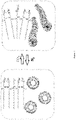
- the single-chain amide molecule with a tertiary amine head group is protonated to become a surfactant, at which time the aggregation morphology of two surfactant molecules changes (as shown in Figure 7 ), from vesicles to worm-like micelles, causing the viscosity of the system increased by an order of magnitude, which could achieve effective blockage of CO 2 .
- p is 3.
- Y is Br.
- the Gemini surfactant is included in an amount of 1% to 4%, and the single-chain amide molecule with a tertiary amine head group is included in an amount of 0.5% to 1.2%, and the balance is water, based on the total mass of the carbon dioxide responsive self-thickening smart fluid being 100%.
- a second aspect of the present invention provides a method for preparing the above-mentioned carbon dioxide responsive self-thickening smart fluid, produced by a process I or II as follows.
- Process I dissolving the Gemini surfactant and the single-chain amide molecule with a tertiary amine head group in a ratio in water, to obtain the carbon dioxide responsive self-thickening smart fluid.
- Process II reacting the single-chain amide molecule with a tertiary amine head group with a linking molecule of Y-(CH 2 ) p -Y to give a mixture of the Gemini surfactant and the unreacted single-chain amide molecule with a tertiary amine head group; controlling the molar ratio of the single-chain amide molecule with a tertiary amine head group to the linking molecule of Y-(CH 2 ) p -Y during the reaction, so that the ratio of the Gemini surfactant as produced by the reaction to the unreacted single-chain amide molecule with a tertiary amine head group satisfies the requirement for the ratio of them in the carbon dioxide responsive self-thickening smart fluid; and dissolving the mixture produced by the reaction in water to obtain the carbon dioxide responsive self-thickening smart fluid.
- the molar ratio of the single-chain amide molecule with a tertiary amine head group to the linking molecule of Y-(CH 2 ) p -Y is 2.0: (0.1 to 1.0).
- the Gemini surfactant is prepared by the following step: reacting the single-chain amide molecule with a tertiary amine head group with the linking molecule of Y-(CH 2 ) p -Y to obtain the Gemini surfactant.
- the single-chain surfactant is prepared by the following step: subjecting a carboxylic acid of R-COOH, where R is defined above, and a diamine of NH 2 CH 2 (CH 2 ) n N(CH 3 ) 2 to an amidation reaction to obtain the single-chain amide molecule with a tertiary amine head group.
- the amidation reaction comprises the following step: dissolving the carboxylic acid of R-COOH in organic solvent, then heating it to a temperature of 160 to 180°C; adding a diamine of NH 2 CH 2 (CH 2 ) n N(CH 3 ) 2 dropwise, and holding and reacting it for 6 hours to 8 hours upon the completion of addition; and cooling and removing the solvent by rotary vacuum evaporation to obtain the single-chain amide molecule with a tertiary amine head group.
- the molar ratio of the carboxylic acid of R-COOH to the diamine of NH 2 CH 2 (CH 2 ) n N(CH 3 ) 2 is 1: (1.2 to 1.8).
- the process of reacting the single-chain amide molecule with a tertiary amine head group with the linking molecule of Y-(CH 2 ) p -Y comprises: dissolving the single-chain amide molecule with a tertiary amine head group in an organic solvent, adding the linking molecule of Y-(CH 2 ) p -Y dropwise, and heating the resultant upon the completion of addition to carry out the reaction, to obtain the Gemini surfactant.
- the organic solvent is ethanol
- the resultant is heated to a reflux temperature of ethanol, and the reaction is carried out for 6 to 16 hours.
- a third aspect of the present invention provides use of the carbon dioxide responsive self-thickening smart fluid described above in a carbon dioxide gas flooding.
- the single-chain amide molecules with tertiary amine head groups and Gemini surfactants with quaternary ammonium head groups form a vesicle structure through self-assembly.
- the single-chain amide molecules with tertiary amine head groups are protonated to transform the surfactant structure from a vesicle to a worm-like micelle, thereby realizing a significant increase in system viscosity.
- the increased system viscosity increases the resistance for gas channeling along the local high permeability channel, and directs the gas to the low-permeability area, which can significantly expand the swept volume of carbon dioxide gas flooding, and thus effectively solve the gas channeling problem in carbon dioxide gas flooding and replacement for low permeability reservoirs.
- the raw materials as used such as oleic acid, N,N-dimethylpropanediamine, 1,3-dibromopropane, ethanol and potassium carbonate, were provided by Sinopharm Chemical Reagent Co., Ltd.
- the synthetic route in the example is shown below: 1 mol of oleic acid was added to a four-necked flask and heated to 170°C; 1.5 mol of N,N-dimethylmalondiamine was added dropwise to the oleic acid through a dropping funnel, over an addition time controlled to be about 4 hours. After addition, the system was kept warm under stirring for 6 hours, and the water generated by the reaction was distilled and discharged during the reaction. The acid value of the system was measured by titration with a formulated standard potassium carbonate solution. The reaction was stopped when the acid value of the system was lower than 5 mg/g KOH.
- the ratio of the single-chain amide molecule with a tertiary amine head group to Gemini surfactant with a quaternary ammonium head group in the final product can be controlled.
- 1,3-dibromopropane was added in equal equivalents, which theoretically gives 0.5 mol Gemini surfactant.
- the system was spin-evaporated directly and placed in a vacuum oven at a room temperature for 24 hours to obtain a waxy product, which was the Gemini surfactant.
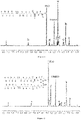
- the NMR spectrum of the Gemini surfactant is shown in Figure 2 .
- the single-chain amide molecule with a tertiary amine head group as produced in Example 1 and the Gemini surfactant with a quaternary ammonium head group obtained therefrom were dissolved directly in water at a certain concentration and ratio to produce the corresponding carbon dioxide responsive self-thickening smart fluid.
- the total mass concentration in this example was controlled at 2%.
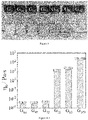
- the influences of the ratio of Gemini surfactant to single-chain amide molecule in the final product on the appearance, zero shear viscosity and structure of the resulting carbon dioxide responsive self-thickening smart fluid are shown in Figures 3, 4-1 and 4-2 .
- the X in G x in the Figures indicates the mass percentage of Gemini surfactant based on the sum of Gemini surfactant and single-chain amide molecules in the system. Seven samples labeled as G 0 , G 60 , G 65 , G 70 , G 75 , Gso and G 100 were prepared in this example.
- the zero shear viscosity of the system was very low when X was less than or equal to 70%, and the SEM image showed that the self-assembled structure of G 70 sample was vesicle structure.
- X was greater than 70%, the zero shear viscosity of the system increased rapidly, and the system formed a worm-like micelles from vesicles at this time.
- G 70 was selected to further investigate its response to CO 2 .
- Carbon dioxide was introduced into the G 70 sample in Example 2 and the changes in the properties of the system before and after the introduction was observed.
- Figure 5 is a graph showing the morphological changes of the sample before and after the introduction of carbon dioxide. Seen from Figure 5 , before the introduction of carbon dioxide, the system was a bluish, low-viscosity liquid. Then the system became transparent and could entrap the carbon dioxide bubbles inside it after the introduction of carbon dioxide, indicating a significant increase in viscosity.
- Figure 6-1 is a graph showing the changes of shear viscosity v.s. shear rate of the system before and after the introduction of carbon dioxide.
- the viscosity of the system was close to that of pure water before the introduction of carbon dioxide and is independent from the shear rate.
- the zero shear viscosity of the system was increased by 4 orders of magnitude, and in a low shear rate range of 10 -4 to 10 -1 s -1 , a plateau appeared in the viscosity curve, thereafter shear thinning was exhibited.
- Figure 6-2 is a graph showing the changes of storage modulus G' and loss modulus G" v.s. shear rate of the system before and after the introduction of carbon dioxide. From the figure, it can be seen that the storage modulus and loss modulus of the system was increased by more than two orders of magnitude before and after the introduction of carbon dioxide. In addition, the loss modulus of the system was larger than the storage modulus before the introduction of carbon dioxide, and the system behaved as a viscous fluid, while the system showed characteristics of a viscoelastic gel after the introduction of carbon dioxide.
- the G 70 sample in Example 2 was diluted with water to different mass concentrations, and then CO 2 was introduced.
- the viscosity of the system before and after exposure to CO 2 was tested with a Broofield viscometer model DV-III, at a room temperature in a shear rate of 7.34 s -1 .
- Figure 6-3 is a graph showing the change of viscosity before and after the introduction of carbon dioxide for G 70 samples having different mass concentrations.
- the viscosity of the system was increased significantly from 1.1 mPa ⁇ s to 16.9 mPa ⁇ s (15.4 times for the thickening) before and after the introduction of carbon dioxide even at a low mass concentration of 0.1%.
- the viscosity of the thickened system also increased significantly.
- the viscosity of the system increased from 2.3 mPa ⁇ s to 521.4 mPa ⁇ s (226.7 times for the thickening) before and after the introduction of carbon dioxide.
- the viscosity may reach 10 1 to 10 2 mPa ⁇ s after exposure to CO 2 (i.e. the viscosity increased by 1-2 orders of magnitude as compared to the base fluid).
- the self-thickening fluid of the present invention has a very wide concentration response range.
- the wide concentration response range of the self-thickening fluid of the present invention makes it possible to be diluted with water and injected into subsurface reservoirs, which can significantly reduce costs and enable large-scale applications.
- the dilution of groundwater will inevitably lead to a reduced concentration, and thus the wide response range can fully ensure its thickening effect.
Landscapes
- Chemical & Material Sciences (AREA)
- Engineering & Computer Science (AREA)
- Life Sciences & Earth Sciences (AREA)
- General Life Sciences & Earth Sciences (AREA)
- Organic Chemistry (AREA)
- Materials Engineering (AREA)
- Oil, Petroleum & Natural Gas (AREA)
- Geology (AREA)
- Mining & Mineral Resources (AREA)
- Chemical Kinetics & Catalysis (AREA)
- Physics & Mathematics (AREA)
- Environmental & Geological Engineering (AREA)
- Fluid Mechanics (AREA)
- Geochemistry & Mineralogy (AREA)
- Organic Low-Molecular-Weight Compounds And Preparation Thereof (AREA)
Abstract
Description
- The present invention relates to the technical field of oil and gas field development, and specifically to a carbon dioxide responsive self-thickening smart fluid based on supramolecular self-assembly, and preparation and use thereof.
- As a worldwide second-place technology for improving recovery and one of the main methods to improve the recovery in low-permeability reservoirs, carbon dioxide flooding technology for improving recovery is widely valued by countries around the world for its large applicable range, high flooding efficiency and low cost.
- However, in field applications, gas channeling caused by various factors such as reservoir non-homogeneity severely restricts the gas swept volume, making it difficult for carbon dioxide flooding to achieve the test results of indoor oil flooding test.
- Currently, there are a series of solutions such as water-alternating-gas (WAG) injection, gel sealing, chemical precipitation, carbon dioxide foam and carbon dioxide thickening for the problem of gas channeling.
- However, there are following problems in the current technologies. The WAG injection is a process including a combination of two traditional processes, water-flooding and gas-flooding, to improve recovery, which has high completion costs, a complex process, and inability to adapt to strongly non-homogeneous conditions. The gel sealing is a process in which a polymer is cross-linked into a gel to plug the localized high permeable zone, which involves polymers having large molecular weight (10-15 million), poor injection ability under low permeability reservoir conditions, and permanent damage to the reservoir by the resulting cross-linked gel. The chemical precipitation is a process in which chemical reagents are used to react with carbonates to generate precipitate to plug carbon dioxide gas escaping channels, but the chemical precipitation reaction is weakly controllable. The carbon dioxide foam sealing faces challenges of low strength of the generated foam and difficulties for controlling foaming under reservoir conditions. The carbon dioxide thickening is a process to directly thicken the carbon dioxide gas, which has not been studied thoroughly enough, and has problems such as high configuration cost and difficult configuration process.
- Smart responsive materials are a new class of materials that are changed in some physical structures or chemical properties in response to external environmental stimuli. These external stimuli include physical stimuli such as heat, light, electric and magnetic fields, as well as chemical stimuli such as glucose, pH and ionic strength. A carbon dioxide responsive system means that the system will show some special physical and chemical properties when an external CO2 gas stimulus is applied to the system, and return to its initial state when this stimulus is removed. Jessop et al. first reported a new solvent with switchable polarity based on amidinium groups, which undergoes significant changes in polarity and viscosity upon the introduction of carbon dioxide gas. Feng et al. first reported a carbon dioxide responsive worm-like smart microgel, in which alkyl tertiary amine based materials are synthesized by aliphatic alcohol method, Leuckart method, chlorinated alkyl amination method, sodium lauryl sulfate method, α-olefin bromination method and the like. The material is hydrophobic in its initial state and behaves as a low-viscosity, white, milky solution in an aqueous solution. When a carbon dioxide gas is introduced into the system, the system gradually changes from a solution to an elastic and transparent gel. However, the synthesis process of the two responsive materials mentioned by Jessop, Feng etc. is complicated and costly, making it difficult to be scaled to industrial-scale applications.
- Therefore, it is of great importance to develop a carbon dioxide responsive self-thickening system for gas channeling, which is simple in the synthesis process and low in cost, to efficiently expand the application of technologies involving carbon dioxide flooding swept volume.
- In view of above, the present invention provides a carbon dioxide responsive self-thickening smart fluid based on supramolecular self-assembly and preparation and use thereof. The carbon dioxide responsive self-thickening smart fluid is simple to prepare, has low injection viscosity, transforms into a gel with significantly increased viscosity upon exposure to CO2, and thus effectively solves the problems of gas channeling along localized high permeability channels and the resulting significant reduction in swept volume during the carbon dioxide gas flooding for improving recovery in low permeability reservoirs.
- In order to achieve the above objects, the following technical solutions are proposed in the present invention.
- A first aspect of the present invention provides a carbon dioxide responsive self-thickening smart fluid based on supramolecular self-assembly, comprising a Gemini surfactant, a single-chain amide molecule with a tertiary amine head group, and water.
- The Gemini surfactant has a structure as follows:

- The single-chain amide molecule with a tertiary amine head group has a structure as follows:

- The Gemini surfactant and the single-chain amide molecule with a tertiary amine head group may self-assemble to form a vesicle structure dispersed in water, wherein the hydrophilic head group is exposed outside and the hydrophobic tail is hided inside; the hydrophilic head group is the tertiary amine head group in the single-chain amide molecule and the quaternary ammonium head group in the Gemini surfactant, while the hydrophobic tail is the alkyl chain R.
- The system has an initial viscosity as low as only a few mPa-s, which makes it easy to inject. Upon exposure to CO2, the single-chain amide molecule with a tertiary amine head group is protonated to become a surfactant, at which time the aggregation morphology of two surfactant molecules changes (as shown in
Figure 7 ), from vesicles to worm-like micelles, causing the viscosity of the system increased by an order of magnitude, which could achieve effective blockage of CO2. - Preferably, p is 3.
- Preferably, Y is Br.
- Preferably, R is CH3(CH2)7CH=CH(CH2)7-.
- Preferably, R is CH3(CH2)7CH=CH(CH2)7-, n is 2, p is 3, and Y is Br.
- Preferably, the Gemini surfactant is included in an amount of 1% to 4%, and the single-chain amide molecule with a tertiary amine head group is included in an amount of 0.5% to 1.2%, and the balance is water, based on the total mass of the carbon dioxide responsive self-thickening smart fluid being 100%.
- A second aspect of the present invention provides a method for preparing the above-mentioned carbon dioxide responsive self-thickening smart fluid, produced by a process I or II as follows.
- Process I: dissolving the Gemini surfactant and the single-chain amide molecule with a tertiary amine head group in a ratio in water, to obtain the carbon dioxide responsive self-thickening smart fluid.
- Process II: reacting the single-chain amide molecule with a tertiary amine head group with a linking molecule of Y-(CH2)p-Y to give a mixture of the Gemini surfactant and the unreacted single-chain amide molecule with a tertiary amine head group; controlling the molar ratio of the single-chain amide molecule with a tertiary amine head group to the linking molecule of Y-(CH2)p-Y during the reaction, so that the ratio of the Gemini surfactant as produced by the reaction to the unreacted single-chain amide molecule with a tertiary amine head group satisfies the requirement for the ratio of them in the carbon dioxide responsive self-thickening smart fluid; and
dissolving the mixture produced by the reaction in water to obtain the carbon dioxide responsive self-thickening smart fluid. - Preferably, in method II, the molar ratio of the single-chain amide molecule with a tertiary amine head group to the linking molecule of Y-(CH2)p-Y is 2.0: (0.1 to 1.0).
- Preferably, the Gemini surfactant is prepared by the following step:
reacting the single-chain amide molecule with a tertiary amine head group with the linking molecule of Y-(CH2)p-Y to obtain the Gemini surfactant. - Preferably, the single-chain surfactant is prepared by the following step:
subjecting a carboxylic acid of R-COOH, where R is defined above, and a diamine of NH2CH2(CH2)nN(CH3)2 to an amidation reaction to obtain the single-chain amide molecule with a tertiary amine head group. - The whole reaction process for Gemini surfactant is shown in the following equation.

- Preferably, the amidation reaction comprises the following step: dissolving the carboxylic acid of R-COOH in organic solvent, then heating it to a temperature of 160 to 180°C; adding a diamine of NH2CH2(CH2)nN(CH3)2 dropwise, and holding and reacting it for 6 hours to 8 hours upon the completion of addition; and cooling and removing the solvent by rotary vacuum evaporation to obtain the single-chain amide molecule with a tertiary amine head group.
- Preferably, the molar ratio of the carboxylic acid of R-COOH to the diamine of NH2CH2(CH2)nN(CH3)2 is 1: (1.2 to 1.8).
- Preferably, the process of reacting the single-chain amide molecule with a tertiary amine head group with the linking molecule of Y-(CH2)p-Y comprises:
dissolving the single-chain amide molecule with a tertiary amine head group in an organic solvent, adding the linking molecule of Y-(CH2)p-Y dropwise, and heating the resultant upon the completion of addition to carry out the reaction, to obtain the Gemini surfactant. - Preferably, the organic solvent is ethanol, the resultant is heated to a reflux temperature of ethanol, and the reaction is carried out for 6 to 16 hours.
- A third aspect of the present invention provides use of the carbon dioxide responsive self-thickening smart fluid described above in a carbon dioxide gas flooding.
- In the carbon dioxide responsive self-thickening smart fluid of the present invention, the single-chain amide molecules with tertiary amine head groups and Gemini surfactants with quaternary ammonium head groups form a vesicle structure through self-assembly. When injected into the formation and exposed to CO2 gas, the single-chain amide molecules with tertiary amine head groups are protonated to transform the surfactant structure from a vesicle to a worm-like micelle, thereby realizing a significant increase in system viscosity. The increased system viscosity increases the resistance for gas channeling along the local high permeability channel, and directs the gas to the low-permeability area, which can significantly expand the swept volume of carbon dioxide gas flooding, and thus effectively solve the gas channeling problem in carbon dioxide gas flooding and replacement for low permeability reservoirs.
-
-
Figure 1 is the NMR spectrum of the single-chain amide molecule with a tertiary amine head group as prepared in Example 1. -
Figure 2 is the NMR spectrum of the Gemini surfactant as prepared in Example 1. -
Figure 3 is a picture of the appearance of the carbon dioxide responsive self-thickening smart fluids as obtained in Example 2. -
Figure 4-1 is a graph showing the zero shear viscosities as a function of quaternization reaction conversions (different Gemini surfactant contents) for the carbon dioxide responsive self-thickening smart fluid as prepared in Example 2. -
Figure 4-2 is a cryo-SEM graph of the G70 sample (containing 70% of Gemini surfactant). -
Figure 5 is a graph showing the morphological changes of the system as obtained in Example 3 before and after the introduction of carbon dioxide. -
Figure 6-1 is a graph showing the changes of shear viscosity v.s. shear rate of the system as obtained in Example 3 before and after the introduction of carbon dioxide. -
Figure 6-2 is a graph showing the changes of the moduli v.s. angular frequency of the system as obtained in Example 3 before and after the introduction of carbon dioxide. -
Figure 6-3 is a graph showing the thickening of the system as obtained in Example 3 after the introduction of carbon dioxide when the system is diluted to different mass concentrations. -
Figure 7 is a schematic diagram showing the mechanism of the carbon dioxide responsive self-thickening smart fluid of the present invention in response to CO2. - For a more clear interpretation, the present invention is further described below in conjunction with preferred examples. It should be understood by those skilled in the art that the detailed description below is illustrative rather than limiting, and should not be used to limit the protection scope of the present invention.
- In the Examples of the present invention, the raw materials as used, such as oleic acid, N,N-dimethylpropanediamine, 1,3-dibromopropane, ethanol and potassium carbonate, were provided by Sinopharm Chemical Reagent Co., Ltd.
- The following devices/equipments were used:
- the four-necked flask, single-necked flask and constant-pressure dropping funnel, as produced by Beijing Xinweier Glass Instrument Co., Ltd., used for performing reaction and reagent addition;
- the magnetic heating stirrer model EUROSTAR, as produced by IKA, Germany, used for heating and stirring; and
- the multifunctional rheometer model TAAR-G2, as made in the United States, and the Broofield viscometer model DV-III, as made in the United States, used for the analysis of the viscosity of the carbon dioxide self-thickening smart fluid.
- The synthetic route in the example is shown below:


- The NMR spectrum of the single-chain amide molecule with a tertiary amine head group is shown in
Figure 1 . - 1 mol of the intermediate comprising tertiary amine was dissolved in ethanol, and transferred to a single-neck flask; 0.5 mol of 1,3-dibromopropane was added dropwise and then stirred well. Next, the system was heated to the reflux temperature of ethanol for reaction over 12 hours. Then the reaction was stopped to obtain the Gemini surfactant with a quaternary ammonium head group.
- By controlling the amount of 1,3-dibromopropane used, the ratio of the single-chain amide molecule with a tertiary amine head group to Gemini surfactant with a quaternary ammonium head group in the final product can be controlled. In this example, 1,3-dibromopropane was added in equal equivalents, which theoretically gives 0.5 mol Gemini surfactant.
- After the reaction is over, the system was spin-evaporated directly and placed in a vacuum oven at a room temperature for 24 hours to obtain a waxy product, which was the Gemini surfactant.
- The NMR spectrum of the Gemini surfactant is shown in
Figure 2 . - The single-chain amide molecule with a tertiary amine head group as produced in Example 1 and the Gemini surfactant with a quaternary ammonium head group obtained therefrom were dissolved directly in water at a certain concentration and ratio to produce the corresponding carbon dioxide responsive self-thickening smart fluid.
- The total mass concentration in this example was controlled at 2%. The influences of the ratio of Gemini surfactant to single-chain amide molecule in the final product on the appearance, zero shear viscosity and structure of the resulting carbon dioxide responsive self-thickening smart fluid are shown in
Figures 3, 4-1 and4-2 . The X in Gx in the Figures indicates the mass percentage of Gemini surfactant based on the sum of Gemini surfactant and single-chain amide molecules in the system. Seven samples labeled as G0, G60, G65, G70, G75, Gso and G100 were prepared in this example. - As shown in
Figures 4-1 and4-2 , the zero shear viscosity of the system was very low when X was less than or equal to 70%, and the SEM image showed that the self-assembled structure of G70 sample was vesicle structure. When X was greater than 70%, the zero shear viscosity of the system increased rapidly, and the system formed a worm-like micelles from vesicles at this time. By considering the requirements for good injectivity in low permeability reservoirs and for plugging CO2 gas channeling, G70 was selected to further investigate its response to CO2. - Carbon dioxide was introduced into the G70 sample in Example 2 and the changes in the properties of the system before and after the introduction was observed.
-
Figure 5 is a graph showing the morphological changes of the sample before and after the introduction of carbon dioxide. Seen fromFigure 5 , before the introduction of carbon dioxide, the system was a bluish, low-viscosity liquid. Then the system became transparent and could entrap the carbon dioxide bubbles inside it after the introduction of carbon dioxide, indicating a significant increase in viscosity. -
Figure 6-1 is a graph showing the changes of shear viscosity v.s. shear rate of the system before and after the introduction of carbon dioxide. The viscosity of the system was close to that of pure water before the introduction of carbon dioxide and is independent from the shear rate. However, after the introduction of carbon dioxide, the zero shear viscosity of the system was increased by 4 orders of magnitude, and in a low shear rate range of 10-4 to 10-1 s-1, a plateau appeared in the viscosity curve, thereafter shear thinning was exhibited. -
Figure 6-2 is a graph showing the changes of storage modulus G' and loss modulus G" v.s. shear rate of the system before and after the introduction of carbon dioxide. From the figure, it can be seen that the storage modulus and loss modulus of the system was increased by more than two orders of magnitude before and after the introduction of carbon dioxide. In addition, the loss modulus of the system was larger than the storage modulus before the introduction of carbon dioxide, and the system behaved as a viscous fluid, while the system showed characteristics of a viscoelastic gel after the introduction of carbon dioxide. - The G70 sample in Example 2 was diluted with water to different mass concentrations, and then CO2 was introduced. The viscosity of the system before and after exposure to CO2 was tested with a Broofield viscometer model DV-III, at a room temperature in a shear rate of 7.34 s-1.
-
Figure 6-3 is a graph showing the change of viscosity before and after the introduction of carbon dioxide for G70 samples having different mass concentrations. As can be seen from the graph, the viscosity of the system was increased significantly from 1.1 mPa·s to 16.9 mPa·s (15.4 times for the thickening) before and after the introduction of carbon dioxide even at a low mass concentration of 0.1%. When the system has increased mass concentration, the viscosity of the thickened system also increased significantly. For a system having a mass concentration of 1.5%, the viscosity of the system increased from 2.3 mPa·s to 521.4 mPa·s (226.7 times for the thickening) before and after the introduction of carbon dioxide. In field applications, it is generally required that the viscosity may reach 101 to 102 mPa·s after exposure to CO2 (i.e. the viscosity increased by 1-2 orders of magnitude as compared to the base fluid). As such, the self-thickening fluid of the present invention has a very wide concentration response range. - The wide concentration response range of the self-thickening fluid of the present invention makes it possible to be diluted with water and injected into subsurface reservoirs, which can significantly reduce costs and enable large-scale applications. In addition, after injecting into the underground reservoir, the dilution of groundwater will inevitably lead to a reduced concentration, and thus the wide response range can fully ensure its thickening effect.
- Obviously, the above examples of the present invention are only illustrative for a clear interpretation of the present invention, and not to limit the implementation of the present invention. Other variations or changes can be made on the basis of the above description for those of ordinary skill in the field. It is not possible to exhaust all the embodiments here, but all the obvious variations or changes derived from the technical solution of the present invention are still within the protection scope of the present invention.
Claims (15)
- A carbon dioxide responsive self-thickening smart fluid based on supramolecular self-assembly, comprising a Gemini surfactant, a single-chain amide molecule with a tertiary amine head group, and water, wherein
the Gemini surfactant has a structure as follows:
 wherein R is selected from an alkyl chain of C11-21; n is an integer selected from 1 to 3; p is an integer selected from 1 to 6; and Y is Cl or Br, andthe Gemini surfactant and single-chain amide molecule with a tertiary amine head group self-assemble to form a vesicle structure dispersed in water, wherein the hydrophilic head group is exposed outside and the hydrophobic tail is hided inside.
 - The carbon dioxide responsive self-thickening smart fluid according to claim 1,
wherein p is 3. - The carbon dioxide responsive self-thickening smart fluid according to claim 1,
wherein Y is Br. - The carbon dioxide responsive self-thickening smart fluid according to claim 1,
wherein R is CH3(CH2)7CH=CH(CH2)7-. - The carbon dioxide responsive self-thickening smart fluid according to claim 1,
wherein R is CH3(CH2)7CH=CH(CH2)7-, n is 2, p is 3, and Y is Br. - The carbon dioxide responsive self-thickening smart fluid according to any one of claims 1 to 5, wherein the Gemini surfactant is included in an amount of 1% to 4%, the single-chain amide molecule with a tertiary amine head group is included in an amount of 0.5% to 1.2%, and the balance is water; based on the total mass of the carbon dioxide responsive self-thickening smart fluid being 100%.
- A method for preparing a carbon dioxide responsive self-thickening smart fluid according to any one of claims 1 to 6, which is produced by a process I or II:process I: dissolving the Gemini surfactant and single-chain amide molecule with a tertiary amine head group in a ratio in water, to obtain the carbon dioxide responsive self-thickening smart fluid; orprocess II: reacting the single-chain amide molecule with a tertiary amine head group with a linking molecule of Y-(CH2)p-Y to give a mixture of the Gemini surfactant and the unreacted single-chain amide molecule with a tertiary amine head group; controlling the molar ratio of the single-chain amide molecule with a tertiary amine head group to the linking molecule of Y-(CH2)p-Y during the reaction, so that the ratio of the Gemini surfactant as produced by the reaction to the unreacted single-chain amide molecule with a tertiary amine head group satisfies the requirement for the ratio of them in the carbon dioxide responsive self-thickening smart fluid; anddissolving the mixture produced by the reaction in water to obtain the carbon dioxide responsive self-thickening smart fluid.
- The method according to claim 7, wherein in the process II, the molar ratio of the single-chain amide molecule with a tertiary amine head group to the linking molecule of Y-(CH2)p-Y is 2.0: (0.1 to 1.0).
- The method according to claim 7, wherein the Gemini surfactant is prepared by the following steps:
reacting the single-chain amide molecule with a tertiary amine head group with the linking molecule of Y-(CH2)p-Y to obtain the Gemini surfactant. - The method according to claim 9, wherein the single-chain amide molecule with a tertiary amine head group is prepared by the following steps:
subjecting a carboxylic acid of R-COOH, where R is defined in claim 1, and a diamine of NH2CH2(CH2)nN(CH3)2 to an amidation reaction to obtain the single-chain amide molecule with a tertiary amine head group. - The method according to claim 10, wherein the amidation reaction comprises the following steps:
dissolving the carboxylic acid of R-COOH in organic solvent, then heating it to a temperature of 160 to 180°C; adding a diamine of NH2CH2(CH2)nN(CH3)2 dropwise, and holding and reacting it for 6 hours to 8 hours upon the completion of addition; and cooling and removing the solvent by rotary vacuum evaporation to obtain the single-chain amide molecule with a tertiary amine head group. - The method according to claim 10 or 11, wherein the molar ratio of the carboxylic acid of R-COOH to the diamine of NH2CH2(CH2)nN(CH3)2 is 1: (1.2 to 1.8).
- The method according to claim 9, wherein the process of reacting the single-chain amide molecule with a tertiary amine head group with the linking molecule of Y-(CH2)p-Y comprises:
dissolving the single-chain amide molecule with a tertiary amine head group in an organic solvent, adding the linking molecule of Y-(CH2)p-Y dropwise, and heating the resultant upon the completion of addition to carry out the reaction, to obtain the Gemini surfactant. - The method according to claim 13, wherein the organic solvent is ethanol, the resultant is heated to a reflux temperature of ethanol, and the reaction is carried out for 6 to 16 hours.
- Use of a carbon dioxide responsive self-thickening smart fluid according to any one of claims 1 to 6 in a carbon dioxide gas flooding.
Applications Claiming Priority (2)
| Application Number | Priority Date | Filing Date | Title |
|---|---|---|---|
| CN202010381489.7A CN113621357B (en) | 2020-05-08 | 2020-05-08 | Carbon dioxide response self-thickening intelligent fluid based on supermolecule self-assembly |
| PCT/CN2021/089563 WO2021223609A1 (en) | 2020-05-08 | 2021-04-25 | Carbon-dioxide-responsive self-thickening intelligent fluid based on supramolecular self-assembly |
Publications (3)
| Publication Number | Publication Date |
|---|---|
| EP3995557A1 true EP3995557A1 (en) | 2022-05-11 |
| EP3995557A4 EP3995557A4 (en) | 2022-11-30 |
| EP3995557B1 EP3995557B1 (en) | 2023-12-20 |
Family
ID=78377385
Family Applications (1)
| Application Number | Title | Priority Date | Filing Date |
|---|---|---|---|
| EP21800686.4A Active EP3995557B1 (en) | 2020-05-08 | 2021-04-25 | Carbon-dioxide-responsive self-thickening intelligent fluid based on supramolecular self-assembly |
Country Status (4)
| Country | Link |
|---|---|
| US (1) | US11952536B2 (en) |
| EP (1) | EP3995557B1 (en) |
| CN (1) | CN113621357B (en) |
| WO (1) | WO2021223609A1 (en) |
Families Citing this family (5)
| Publication number | Priority date | Publication date | Assignee | Title |
|---|---|---|---|---|
| CN113621357B (en) | 2020-05-08 | 2022-07-05 | 中国石油天然气股份有限公司 | Carbon dioxide response self-thickening intelligent fluid based on supermolecule self-assembly |
| CN115029143B (en) * | 2022-03-24 | 2023-05-26 | 西南石油大学 | A Carbon Dioxide Responsive Viscosification Surfactant and Its Application in Fracturing Fluids |
| CN115232611B (en) * | 2022-08-19 | 2023-12-15 | 广汉市华星新技术开发研究所(普通合伙) | Vesicle type acidic fracturing fluid and preparation method and application thereof |
| CN115404062B (en) * | 2022-08-30 | 2023-10-27 | 长江大学 | A pH and temperature dual-responsive supramolecular gel temporary plugging agent and its preparation method and application, and a method for temporary plugging and turning to fracturing |
| CN120365901A (en) * | 2024-01-25 | 2025-07-25 | 中国石油天然气股份有限公司 | CO (carbon monoxide)2Driving response type channeling blocking agent and preparation method and application thereof |
Family Cites Families (16)
| Publication number | Priority date | Publication date | Assignee | Title |
|---|---|---|---|---|
| CA2628498C (en) * | 2005-11-07 | 2015-03-31 | Paul W. Knox | Viscoelastic compositions comprising polycationic quaternary ammonium compounds |
| US20110071056A1 (en) * | 2009-09-24 | 2011-03-24 | Rajesh K Saini | Degradable Surfactants, Including Degradable Gemini Surfactants, and Associated Methods |
| US10259987B2 (en) | 2011-12-21 | 2019-04-16 | Rhodia Operations | Amine adducts, derivatives thereof, methods for making such adducts and derivatives, and methods for using such adducts and derivatives |
| US9464223B2 (en) * | 2013-03-14 | 2016-10-11 | Flotek Chemistry, Llc | Methods and compositions for use in oil and/or gas wells |
| WO2015126418A1 (en) * | 2014-02-21 | 2015-08-27 | Halliburton Energy Services Inc. | Amido- functionalized gemini surfactant for fluid control in subterranean formations |
| US20180119003A1 (en) * | 2015-05-08 | 2018-05-03 | Halliburton Energy Services, Inc. | Carbon Dioxide-Viscosifiable Compositions for Subterranean Treatment |
| CN105536638B (en) * | 2015-12-17 | 2018-02-23 | 江南大学 | A kind of CO2/N2With the preparation method of light double stimuli responsive worm micelle volume |
| CN107435532A (en) * | 2016-05-27 | 2017-12-05 | 中国石油化工股份有限公司 | One kind utilizes CO2Response surface activating agent controls CO2The method that purging is altered |
| CN107011884B (en) * | 2017-04-06 | 2019-08-30 | 四川大学 | A Self-stabilizing Carbon Dioxide/Ammonia Switching Foam System |
| CN106986775B (en) * | 2017-04-28 | 2019-03-12 | 西南石油大学 | Tertiary amines CO2/N2Switching mode Gemini surface active and its synthetic method |
| CN107445857A (en) * | 2017-05-19 | 2017-12-08 | 中国石油大学(华东) | A kind of preparation method of the chain alkyl acid amido propyl dimethylamine with CO2 response performances |
| CN107142099B (en) * | 2017-05-19 | 2020-09-15 | 中国石油大学(华东) | Recyclable CO2Responsive clean fracturing fluid |
| US11512045B2 (en) * | 2018-02-21 | 2022-11-29 | King Fahd University Of Petroleum And Minerals | Synthesis and evaluation of novel amido-amine cationic gemini surfactants containing flexible and rigid spacers |
| US11525081B2 (en) * | 2019-04-29 | 2022-12-13 | King Fahd University Of Petroleum And Minerals | Methods of inhibiting corrosion in acid stimulation operations |
| EP4004143A1 (en) * | 2019-07-29 | 2022-06-01 | Stepan Company | Corrosion-inhibiting surfactants |
| CN113621357B (en) | 2020-05-08 | 2022-07-05 | 中国石油天然气股份有限公司 | Carbon dioxide response self-thickening intelligent fluid based on supermolecule self-assembly |
-
2020
- 2020-05-08 CN CN202010381489.7A patent/CN113621357B/en active Active
-
2021
- 2021-04-25 EP EP21800686.4A patent/EP3995557B1/en active Active
- 2021-04-25 WO PCT/CN2021/089563 patent/WO2021223609A1/en not_active Ceased
-
2022
- 2022-05-09 US US17/739,378 patent/US11952536B2/en active Active
Also Published As
| Publication number | Publication date |
|---|---|
| EP3995557A4 (en) | 2022-11-30 |
| CN113621357A (en) | 2021-11-09 |
| WO2021223609A1 (en) | 2021-11-11 |
| US20220259485A1 (en) | 2022-08-18 |
| US11952536B2 (en) | 2024-04-09 |
| EP3995557B1 (en) | 2023-12-20 |
| CN113621357B (en) | 2022-07-05 |
Similar Documents
| Publication | Publication Date | Title |
|---|---|---|
| EP3995557B1 (en) | Carbon-dioxide-responsive self-thickening intelligent fluid based on supramolecular self-assembly | |
| CN103865511B (en) | Viscoelastic surfactant fracturing fluid and its preparation method and application | |
| CN106362641B (en) | A kind of dendritic interphase demulsifier and preparation method thereof | |
| CN107365576A (en) | For hypotonic or Oil in Super-low Permeability oil reservoir CO2The fluidity control system of the displacement of reservoir oil and application | |
| CN108456169A (en) | A kind of gelator and preparation method thereof, hydrogel, lanthanum hydrogel and its application | |
| CN110669492A (en) | A kind of shear-resistant hyperbranched polymer oil-displacing agent and its preparation method and application | |
| CN103272522B (en) | Amine oxide amphoteric surfactant containing aromatic groups and its preparation method and application | |
| CN113731297B (en) | A kind of amidosulfonate gemini surfactant and preparation method and application thereof | |
| CA2842705A1 (en) | Amphiphilic macromolecule and use | |
| CN110229656A (en) | Yin-non-double-hydrophilic surfactant and its preparation method and application | |
| CN108456513A (en) | A kind of fracturing fluid organic aluminum crosslinker, preparation method and application | |
| Xu et al. | Effect of the number of hydroxyl groups of CO2-triggered surfactants on capability and performance in CO2-stimulated response | |
| CN108675934A (en) | A kind of worm micella formed by abietyl Gemini surface active agent | |
| CN114890909B (en) | Surfactant for oil displacement, synthesis method and application thereof in oil displacement system | |
| CN108546315B (en) | Amphiphilic polymer oil displacement agent and preparation method and application thereof | |
| RU2791544C1 (en) | Self-thickening carbon dioxide-responsive smart fluid based on supramolecular self-assembly | |
| CN101081976A (en) | Fire-resistant non-injury fracturing fluid thickening agent and preparation method and usage thereof | |
| CN120923762A (en) | Fatty amine polyester ether surfactant and preparation method of composite ionic oil displacement agent thereof | |
| CN118894960B (en) | Acidizing steering agent, preparation method thereof and self-assembled steering acid | |
| CN110698677B (en) | Giant surfactant high-temperature foam stabilizer, foaming liquid, and preparation method and application thereof | |
| CN107011885A (en) | Based on fatty alcohol and the synthesis of polyethers " twin " type both sexes oil displacement agent and application study | |
| EP4545619A1 (en) | Viscoelastic foam system of acid gas switch, and method and use for improving recovery ratio by using viscoelastic foam system | |
| CN106317399A (en) | Hydrophobically associating polymer and preparation method thereof | |
| CN117467423B (en) | High-temperature-resistant foam oil displacement agent | |
| CN119409984B (en) | A betaine-type zwitterionic polymer oil displacement agent and its synthesis method |
Legal Events
| Date | Code | Title | Description |
|---|---|---|---|
| STAA | Information on the status of an ep patent application or granted ep patent |
Free format text: STATUS: THE INTERNATIONAL PUBLICATION HAS BEEN MADE |
|
| PUAI | Public reference made under article 153(3) epc to a published international application that has entered the european phase |
Free format text: ORIGINAL CODE: 0009012 |
|
| STAA | Information on the status of an ep patent application or granted ep patent |
Free format text: STATUS: REQUEST FOR EXAMINATION WAS MADE |
|
| 17P | Request for examination filed |
Effective date: 20220204 |
|
| AK | Designated contracting states |
Kind code of ref document: A1 Designated state(s): AL AT BE BG CH CY CZ DE DK EE ES FI FR GB GR HR HU IE IS IT LI LT LU LV MC MK MT NL NO PL PT RO RS SE SI SK SM TR |
|
| A4 | Supplementary search report drawn up and despatched |
Effective date: 20221027 |
|
| RIC1 | Information provided on ipc code assigned before grant |
Ipc: C09K 8/594 20060101ALI20221021BHEP Ipc: C09K 8/584 20060101AFI20221021BHEP |
|
| GRAP | Despatch of communication of intention to grant a patent |
Free format text: ORIGINAL CODE: EPIDOSNIGR1 |
|
| STAA | Information on the status of an ep patent application or granted ep patent |
Free format text: STATUS: GRANT OF PATENT IS INTENDED |
|
| DAV | Request for validation of the european patent (deleted) | ||
| DAX | Request for extension of the european patent (deleted) | ||
| INTG | Intention to grant announced |
Effective date: 20230719 |
|
| GRAS | Grant fee paid |
Free format text: ORIGINAL CODE: EPIDOSNIGR3 |
|
| GRAA | (expected) grant |
Free format text: ORIGINAL CODE: 0009210 |
|
| STAA | Information on the status of an ep patent application or granted ep patent |
Free format text: STATUS: THE PATENT HAS BEEN GRANTED |
|
| AK | Designated contracting states |
Kind code of ref document: B1 Designated state(s): AL AT BE BG CH CY CZ DE DK EE ES FI FR GB GR HR HU IE IS IT LI LT LU LV MC MK MT NL NO PL PT RO RS SE SI SK SM TR |
|
| REG | Reference to a national code |
Ref country code: GB Ref legal event code: FG4D |
|
| REG | Reference to a national code |
Ref country code: CH Ref legal event code: EP |
|
| REG | Reference to a national code |
Ref country code: DE Ref legal event code: R096 Ref document number: 602021007939 Country of ref document: DE |
|
| REG | Reference to a national code |
Ref country code: IE Ref legal event code: FG4D |
|
| PG25 | Lapsed in a contracting state [announced via postgrant information from national office to epo] |
Ref country code: GR Free format text: LAPSE BECAUSE OF FAILURE TO SUBMIT A TRANSLATION OF THE DESCRIPTION OR TO PAY THE FEE WITHIN THE PRESCRIBED TIME-LIMIT Effective date: 20240321 |
|
| REG | Reference to a national code |
Ref country code: LT Ref legal event code: MG9D |
|
| PG25 | Lapsed in a contracting state [announced via postgrant information from national office to epo] |
Ref country code: LT Free format text: LAPSE BECAUSE OF FAILURE TO SUBMIT A TRANSLATION OF THE DESCRIPTION OR TO PAY THE FEE WITHIN THE PRESCRIBED TIME-LIMIT Effective date: 20231220 |
|
| REG | Reference to a national code |
Ref country code: NL Ref legal event code: MP Effective date: 20231220 |
|
| PG25 | Lapsed in a contracting state [announced via postgrant information from national office to epo] |
Ref country code: ES Free format text: LAPSE BECAUSE OF FAILURE TO SUBMIT A TRANSLATION OF THE DESCRIPTION OR TO PAY THE FEE WITHIN THE PRESCRIBED TIME-LIMIT Effective date: 20231220 |
|
| PG25 | Lapsed in a contracting state [announced via postgrant information from national office to epo] |
Ref country code: LT Free format text: LAPSE BECAUSE OF FAILURE TO SUBMIT A TRANSLATION OF THE DESCRIPTION OR TO PAY THE FEE WITHIN THE PRESCRIBED TIME-LIMIT Effective date: 20231220 Ref country code: GR Free format text: LAPSE BECAUSE OF FAILURE TO SUBMIT A TRANSLATION OF THE DESCRIPTION OR TO PAY THE FEE WITHIN THE PRESCRIBED TIME-LIMIT Effective date: 20240321 Ref country code: FI Free format text: LAPSE BECAUSE OF FAILURE TO SUBMIT A TRANSLATION OF THE DESCRIPTION OR TO PAY THE FEE WITHIN THE PRESCRIBED TIME-LIMIT Effective date: 20231220 Ref country code: ES Free format text: LAPSE BECAUSE OF FAILURE TO SUBMIT A TRANSLATION OF THE DESCRIPTION OR TO PAY THE FEE WITHIN THE PRESCRIBED TIME-LIMIT Effective date: 20231220 Ref country code: BG Free format text: LAPSE BECAUSE OF FAILURE TO SUBMIT A TRANSLATION OF THE DESCRIPTION OR TO PAY THE FEE WITHIN THE PRESCRIBED TIME-LIMIT Effective date: 20240320 |
|
| REG | Reference to a national code |
Ref country code: AT Ref legal event code: MK05 Ref document number: 1642449 Country of ref document: AT Kind code of ref document: T Effective date: 20231220 |
|
| PG25 | Lapsed in a contracting state [announced via postgrant information from national office to epo] |
Ref country code: NL Free format text: LAPSE BECAUSE OF FAILURE TO SUBMIT A TRANSLATION OF THE DESCRIPTION OR TO PAY THE FEE WITHIN THE PRESCRIBED TIME-LIMIT Effective date: 20231220 |
|
| PG25 | Lapsed in a contracting state [announced via postgrant information from national office to epo] |
Ref country code: SE Free format text: LAPSE BECAUSE OF FAILURE TO SUBMIT A TRANSLATION OF THE DESCRIPTION OR TO PAY THE FEE WITHIN THE PRESCRIBED TIME-LIMIT Effective date: 20231220 Ref country code: RS Free format text: LAPSE BECAUSE OF FAILURE TO SUBMIT A TRANSLATION OF THE DESCRIPTION OR TO PAY THE FEE WITHIN THE PRESCRIBED TIME-LIMIT Effective date: 20231220 Ref country code: NO Free format text: LAPSE BECAUSE OF FAILURE TO SUBMIT A TRANSLATION OF THE DESCRIPTION OR TO PAY THE FEE WITHIN THE PRESCRIBED TIME-LIMIT Effective date: 20240320 Ref country code: NL Free format text: LAPSE BECAUSE OF FAILURE TO SUBMIT A TRANSLATION OF THE DESCRIPTION OR TO PAY THE FEE WITHIN THE PRESCRIBED TIME-LIMIT Effective date: 20231220 Ref country code: LV Free format text: LAPSE BECAUSE OF FAILURE TO SUBMIT A TRANSLATION OF THE DESCRIPTION OR TO PAY THE FEE WITHIN THE PRESCRIBED TIME-LIMIT Effective date: 20231220 Ref country code: HR Free format text: LAPSE BECAUSE OF FAILURE TO SUBMIT A TRANSLATION OF THE DESCRIPTION OR TO PAY THE FEE WITHIN THE PRESCRIBED TIME-LIMIT Effective date: 20231220 |
|
| PG25 | Lapsed in a contracting state [announced via postgrant information from national office to epo] |
Ref country code: IS Free format text: LAPSE BECAUSE OF FAILURE TO SUBMIT A TRANSLATION OF THE DESCRIPTION OR TO PAY THE FEE WITHIN THE PRESCRIBED TIME-LIMIT Effective date: 20240420 |
|
| PG25 | Lapsed in a contracting state [announced via postgrant information from national office to epo] |
Ref country code: AT Free format text: LAPSE BECAUSE OF FAILURE TO SUBMIT A TRANSLATION OF THE DESCRIPTION OR TO PAY THE FEE WITHIN THE PRESCRIBED TIME-LIMIT Effective date: 20231220 Ref country code: CZ Free format text: LAPSE BECAUSE OF FAILURE TO SUBMIT A TRANSLATION OF THE DESCRIPTION OR TO PAY THE FEE WITHIN THE PRESCRIBED TIME-LIMIT Effective date: 20231220 |
|
| PG25 | Lapsed in a contracting state [announced via postgrant information from national office to epo] |
Ref country code: SK Free format text: LAPSE BECAUSE OF FAILURE TO SUBMIT A TRANSLATION OF THE DESCRIPTION OR TO PAY THE FEE WITHIN THE PRESCRIBED TIME-LIMIT Effective date: 20231220 |
|
| PG25 | Lapsed in a contracting state [announced via postgrant information from national office to epo] |
Ref country code: SM Free format text: LAPSE BECAUSE OF FAILURE TO SUBMIT A TRANSLATION OF THE DESCRIPTION OR TO PAY THE FEE WITHIN THE PRESCRIBED TIME-LIMIT Effective date: 20231220 Ref country code: SK Free format text: LAPSE BECAUSE OF FAILURE TO SUBMIT A TRANSLATION OF THE DESCRIPTION OR TO PAY THE FEE WITHIN THE PRESCRIBED TIME-LIMIT Effective date: 20231220 Ref country code: RO Free format text: LAPSE BECAUSE OF FAILURE TO SUBMIT A TRANSLATION OF THE DESCRIPTION OR TO PAY THE FEE WITHIN THE PRESCRIBED TIME-LIMIT Effective date: 20231220 Ref country code: IT Free format text: LAPSE BECAUSE OF FAILURE TO SUBMIT A TRANSLATION OF THE DESCRIPTION OR TO PAY THE FEE WITHIN THE PRESCRIBED TIME-LIMIT Effective date: 20231220 Ref country code: IS Free format text: LAPSE BECAUSE OF FAILURE TO SUBMIT A TRANSLATION OF THE DESCRIPTION OR TO PAY THE FEE WITHIN THE PRESCRIBED TIME-LIMIT Effective date: 20240420 Ref country code: EE Free format text: LAPSE BECAUSE OF FAILURE TO SUBMIT A TRANSLATION OF THE DESCRIPTION OR TO PAY THE FEE WITHIN THE PRESCRIBED TIME-LIMIT Effective date: 20231220 Ref country code: CZ Free format text: LAPSE BECAUSE OF FAILURE TO SUBMIT A TRANSLATION OF THE DESCRIPTION OR TO PAY THE FEE WITHIN THE PRESCRIBED TIME-LIMIT Effective date: 20231220 Ref country code: AT Free format text: LAPSE BECAUSE OF FAILURE TO SUBMIT A TRANSLATION OF THE DESCRIPTION OR TO PAY THE FEE WITHIN THE PRESCRIBED TIME-LIMIT Effective date: 20231220 |
|
| PG25 | Lapsed in a contracting state [announced via postgrant information from national office to epo] |
Ref country code: PT Free format text: LAPSE BECAUSE OF FAILURE TO SUBMIT A TRANSLATION OF THE DESCRIPTION OR TO PAY THE FEE WITHIN THE PRESCRIBED TIME-LIMIT Effective date: 20240422 Ref country code: PL Free format text: LAPSE BECAUSE OF FAILURE TO SUBMIT A TRANSLATION OF THE DESCRIPTION OR TO PAY THE FEE WITHIN THE PRESCRIBED TIME-LIMIT Effective date: 20231220 |
|
| PG25 | Lapsed in a contracting state [announced via postgrant information from national office to epo] |
Ref country code: PT Free format text: LAPSE BECAUSE OF FAILURE TO SUBMIT A TRANSLATION OF THE DESCRIPTION OR TO PAY THE FEE WITHIN THE PRESCRIBED TIME-LIMIT Effective date: 20240422 Ref country code: PL Free format text: LAPSE BECAUSE OF FAILURE TO SUBMIT A TRANSLATION OF THE DESCRIPTION OR TO PAY THE FEE WITHIN THE PRESCRIBED TIME-LIMIT Effective date: 20231220 |
|
| REG | Reference to a national code |
Ref country code: DE Ref legal event code: R097 Ref document number: 602021007939 Country of ref document: DE |
|
| PG25 | Lapsed in a contracting state [announced via postgrant information from national office to epo] |
Ref country code: DK Free format text: LAPSE BECAUSE OF FAILURE TO SUBMIT A TRANSLATION OF THE DESCRIPTION OR TO PAY THE FEE WITHIN THE PRESCRIBED TIME-LIMIT Effective date: 20231220 |
|
| PLBE | No opposition filed within time limit |
Free format text: ORIGINAL CODE: 0009261 |
|
| STAA | Information on the status of an ep patent application or granted ep patent |
Free format text: STATUS: NO OPPOSITION FILED WITHIN TIME LIMIT |
|
| PG25 | Lapsed in a contracting state [announced via postgrant information from national office to epo] |
Ref country code: SI Free format text: LAPSE BECAUSE OF FAILURE TO SUBMIT A TRANSLATION OF THE DESCRIPTION OR TO PAY THE FEE WITHIN THE PRESCRIBED TIME-LIMIT Effective date: 20231220 |
|
| PG25 | Lapsed in a contracting state [announced via postgrant information from national office to epo] |
Ref country code: SI Free format text: LAPSE BECAUSE OF FAILURE TO SUBMIT A TRANSLATION OF THE DESCRIPTION OR TO PAY THE FEE WITHIN THE PRESCRIBED TIME-LIMIT Effective date: 20231220 Ref country code: DK Free format text: LAPSE BECAUSE OF FAILURE TO SUBMIT A TRANSLATION OF THE DESCRIPTION OR TO PAY THE FEE WITHIN THE PRESCRIBED TIME-LIMIT Effective date: 20231220 |
|
| REG | Reference to a national code |
Ref country code: DE Ref legal event code: R119 Ref document number: 602021007939 Country of ref document: DE |
|
| PG25 | Lapsed in a contracting state [announced via postgrant information from national office to epo] |
Ref country code: MC Free format text: LAPSE BECAUSE OF FAILURE TO SUBMIT A TRANSLATION OF THE DESCRIPTION OR TO PAY THE FEE WITHIN THE PRESCRIBED TIME-LIMIT Effective date: 20231220 |
|
| 26N | No opposition filed |
Effective date: 20240923 |
|
| PG25 | Lapsed in a contracting state [announced via postgrant information from national office to epo] |
Ref country code: MC Free format text: LAPSE BECAUSE OF FAILURE TO SUBMIT A TRANSLATION OF THE DESCRIPTION OR TO PAY THE FEE WITHIN THE PRESCRIBED TIME-LIMIT Effective date: 20231220 |
|
| REG | Reference to a national code |
Ref country code: CH Ref legal event code: PL |
|
| PG25 | Lapsed in a contracting state [announced via postgrant information from national office to epo] |
Ref country code: LU Free format text: LAPSE BECAUSE OF NON-PAYMENT OF DUE FEES Effective date: 20240425 |
|
| REG | Reference to a national code |
Ref country code: BE Ref legal event code: MM Effective date: 20240430 |
|
| PG25 | Lapsed in a contracting state [announced via postgrant information from national office to epo] |
Ref country code: LU Free format text: LAPSE BECAUSE OF NON-PAYMENT OF DUE FEES Effective date: 20240425 |
|
| PG25 | Lapsed in a contracting state [announced via postgrant information from national office to epo] |
Ref country code: DE Free format text: LAPSE BECAUSE OF NON-PAYMENT OF DUE FEES Effective date: 20241105 |
|
| PG25 | Lapsed in a contracting state [announced via postgrant information from national office to epo] |
Ref country code: BE Free format text: LAPSE BECAUSE OF NON-PAYMENT OF DUE FEES Effective date: 20240430 |
|
| PG25 | Lapsed in a contracting state [announced via postgrant information from national office to epo] |
Ref country code: DE Free format text: LAPSE BECAUSE OF NON-PAYMENT OF DUE FEES Effective date: 20241105 Ref country code: BE Free format text: LAPSE BECAUSE OF NON-PAYMENT OF DUE FEES Effective date: 20240430 Ref country code: CH Free format text: LAPSE BECAUSE OF NON-PAYMENT OF DUE FEES Effective date: 20240430 |
|
| PG25 | Lapsed in a contracting state [announced via postgrant information from national office to epo] |
Ref country code: IE Free format text: LAPSE BECAUSE OF NON-PAYMENT OF DUE FEES Effective date: 20240425 |
|
| PG25 | Lapsed in a contracting state [announced via postgrant information from national office to epo] |
Ref country code: CY Free format text: LAPSE BECAUSE OF FAILURE TO SUBMIT A TRANSLATION OF THE DESCRIPTION OR TO PAY THE FEE WITHIN THE PRESCRIBED TIME-LIMIT; INVALID AB INITIO Effective date: 20210425 |
|
| PG25 | Lapsed in a contracting state [announced via postgrant information from national office to epo] |
Ref country code: HU Free format text: LAPSE BECAUSE OF FAILURE TO SUBMIT A TRANSLATION OF THE DESCRIPTION OR TO PAY THE FEE WITHIN THE PRESCRIBED TIME-LIMIT; INVALID AB INITIO Effective date: 20210425 |
|
| GBPC | Gb: european patent ceased through non-payment of renewal fee |
Effective date: 20250425 |
|
| PG25 | Lapsed in a contracting state [announced via postgrant information from national office to epo] |
Ref country code: GB Free format text: LAPSE BECAUSE OF NON-PAYMENT OF DUE FEES Effective date: 20250425 |
|
| PGFP | Annual fee paid to national office [announced via postgrant information from national office to epo] |
Ref country code: FR Payment date: 20260309 Year of fee payment: 6 |