EP3993431A1 - Streaming media - Google Patents
Streaming media Download PDFInfo
- Publication number
- EP3993431A1 EP3993431A1 EP21216556.7A EP21216556A EP3993431A1 EP 3993431 A1 EP3993431 A1 EP 3993431A1 EP 21216556 A EP21216556 A EP 21216556A EP 3993431 A1 EP3993431 A1 EP 3993431A1
- Authority
- EP
- European Patent Office
- Prior art keywords
- section
- sections
- quality
- media
- send
- Prior art date
- Legal status (The legal status is an assumption and is not a legal conclusion. Google has not performed a legal analysis and makes no representation as to the accuracy of the status listed.)
- Pending
Links
Images
Classifications
-
- H—ELECTRICITY
- H04—ELECTRIC COMMUNICATION TECHNIQUE
- H04N—PICTORIAL COMMUNICATION, e.g. TELEVISION
- H04N21/00—Selective content distribution, e.g. interactive television or video on demand [VOD]
- H04N21/20—Servers specifically adapted for the distribution of content, e.g. VOD servers; Operations thereof
- H04N21/23—Processing of content or additional data; Elementary server operations; Server middleware
- H04N21/238—Interfacing the downstream path of the transmission network, e.g. adapting the transmission rate of a video stream to network bandwidth; Processing of multiplex streams
-
- H—ELECTRICITY
- H04—ELECTRIC COMMUNICATION TECHNIQUE
- H04L—TRANSMISSION OF DIGITAL INFORMATION, e.g. TELEGRAPHIC COMMUNICATION
- H04L65/00—Network arrangements, protocols or services for supporting real-time applications in data packet communication
- H04L65/60—Network streaming of media packets
- H04L65/75—Media network packet handling
- H04L65/752—Media network packet handling adapting media to network capabilities
-
- G—PHYSICS
- G06—COMPUTING OR CALCULATING; COUNTING
- G06F—ELECTRIC DIGITAL DATA PROCESSING
- G06F16/00—Information retrieval; Database structures therefor; File system structures therefor
- G06F16/40—Information retrieval; Database structures therefor; File system structures therefor of multimedia data, e.g. slideshows comprising image and additional audio data
-
- H—ELECTRICITY
- H04—ELECTRIC COMMUNICATION TECHNIQUE
- H04L—TRANSMISSION OF DIGITAL INFORMATION, e.g. TELEGRAPHIC COMMUNICATION
- H04L65/00—Network arrangements, protocols or services for supporting real-time applications in data packet communication
- H04L65/60—Network streaming of media packets
- H04L65/75—Media network packet handling
- H04L65/762—Media network packet handling at the source
-
- H—ELECTRICITY
- H04—ELECTRIC COMMUNICATION TECHNIQUE
- H04L—TRANSMISSION OF DIGITAL INFORMATION, e.g. TELEGRAPHIC COMMUNICATION
- H04L65/00—Network arrangements, protocols or services for supporting real-time applications in data packet communication
- H04L65/80—Responding to QoS
-
- H—ELECTRICITY
- H04—ELECTRIC COMMUNICATION TECHNIQUE
- H04N—PICTORIAL COMMUNICATION, e.g. TELEVISION
- H04N21/00—Selective content distribution, e.g. interactive television or video on demand [VOD]
- H04N21/20—Servers specifically adapted for the distribution of content, e.g. VOD servers; Operations thereof
- H04N21/23—Processing of content or additional data; Elementary server operations; Server middleware
- H04N21/24—Monitoring of processes or resources, e.g. monitoring of server load, available bandwidth, upstream requests
- H04N21/2402—Monitoring of the downstream path of the transmission network, e.g. bandwidth available
-
- H—ELECTRICITY
- H04—ELECTRIC COMMUNICATION TECHNIQUE
- H04N—PICTORIAL COMMUNICATION, e.g. TELEVISION
- H04N21/00—Selective content distribution, e.g. interactive television or video on demand [VOD]
- H04N21/20—Servers specifically adapted for the distribution of content, e.g. VOD servers; Operations thereof
- H04N21/25—Management operations performed by the server for facilitating the content distribution or administrating data related to end-users or client devices, e.g. end-user or client device authentication, learning user preferences for recommending movies
- H04N21/251—Learning process for intelligent management, e.g. learning user preferences for recommending movies
- H04N21/252—Processing of multiple end-users' preferences to derive collaborative data
-
- H—ELECTRICITY
- H04—ELECTRIC COMMUNICATION TECHNIQUE
- H04N—PICTORIAL COMMUNICATION, e.g. TELEVISION
- H04N21/00—Selective content distribution, e.g. interactive television or video on demand [VOD]
- H04N21/20—Servers specifically adapted for the distribution of content, e.g. VOD servers; Operations thereof
- H04N21/25—Management operations performed by the server for facilitating the content distribution or administrating data related to end-users or client devices, e.g. end-user or client device authentication, learning user preferences for recommending movies
- H04N21/262—Content or additional data distribution scheduling, e.g. sending additional data at off-peak times, updating software modules, calculating the carousel transmission frequency, delaying a video stream transmission, generating play-lists
- H04N21/26208—Content or additional data distribution scheduling, e.g. sending additional data at off-peak times, updating software modules, calculating the carousel transmission frequency, delaying a video stream transmission, generating play-lists the scheduling operation being performed under constraints
- H04N21/26216—Content or additional data distribution scheduling, e.g. sending additional data at off-peak times, updating software modules, calculating the carousel transmission frequency, delaying a video stream transmission, generating play-lists the scheduling operation being performed under constraints involving the channel capacity, e.g. network bandwidth
-
- H—ELECTRICITY
- H04—ELECTRIC COMMUNICATION TECHNIQUE
- H04N—PICTORIAL COMMUNICATION, e.g. TELEVISION
- H04N21/00—Selective content distribution, e.g. interactive television or video on demand [VOD]
- H04N21/20—Servers specifically adapted for the distribution of content, e.g. VOD servers; Operations thereof
- H04N21/25—Management operations performed by the server for facilitating the content distribution or administrating data related to end-users or client devices, e.g. end-user or client device authentication, learning user preferences for recommending movies
- H04N21/262—Content or additional data distribution scheduling, e.g. sending additional data at off-peak times, updating software modules, calculating the carousel transmission frequency, delaying a video stream transmission, generating play-lists
- H04N21/26208—Content or additional data distribution scheduling, e.g. sending additional data at off-peak times, updating software modules, calculating the carousel transmission frequency, delaying a video stream transmission, generating play-lists the scheduling operation being performed under constraints
- H04N21/26233—Content or additional data distribution scheduling, e.g. sending additional data at off-peak times, updating software modules, calculating the carousel transmission frequency, delaying a video stream transmission, generating play-lists the scheduling operation being performed under constraints involving content or additional data duration or size, e.g. length of a movie, size of an executable file
-
- H—ELECTRICITY
- H04—ELECTRIC COMMUNICATION TECHNIQUE
- H04N—PICTORIAL COMMUNICATION, e.g. TELEVISION
- H04N21/00—Selective content distribution, e.g. interactive television or video on demand [VOD]
- H04N21/80—Generation or processing of content or additional data by content creator independently of the distribution process; Content per se
- H04N21/83—Generation or processing of protective or descriptive data associated with content; Content structuring
- H04N21/845—Structuring of content, e.g. decomposing content into time segments
- H04N21/8456—Structuring of content, e.g. decomposing content into time segments by decomposing the content in the time domain, e.g. in time segments
-
- H—ELECTRICITY
- H04—ELECTRIC COMMUNICATION TECHNIQUE
- H04N—PICTORIAL COMMUNICATION, e.g. TELEVISION
- H04N21/00—Selective content distribution, e.g. interactive television or video on demand [VOD]
- H04N21/80—Generation or processing of content or additional data by content creator independently of the distribution process; Content per se
- H04N21/85—Assembly of content; Generation of multimedia applications
- H04N21/854—Content authoring
- H04N21/85406—Content authoring involving a specific file format, e.g. MP4 format
-
- H—ELECTRICITY
- H04—ELECTRIC COMMUNICATION TECHNIQUE
- H04L—TRANSMISSION OF DIGITAL INFORMATION, e.g. TELEGRAPHIC COMMUNICATION
- H04L65/00—Network arrangements, protocols or services for supporting real-time applications in data packet communication
- H04L65/60—Network streaming of media packets
- H04L65/61—Network streaming of media packets for supporting one-way streaming services, e.g. Internet radio
Definitions
- a streaming connection may not have sufficient bandwidth to reliably stream a media (a video, movie, song, etc.) at a high quality.
- the same connection may have more than sufficient bandwidth to stream the media at a lower quality.
- the difference between the actual bandwidth capacity and the lower amount of bandwidth needed to stream at the lower quality can go unused, thereby underutilizing the connection.
- a capacity bandwidth and a streaming bandwidth of a streaming connection may be determined.
- the streaming bandwidth can be less than the capacity bandwidth.
- the streaming bandwidth can be used to provide a media at a first quality over the streaming connection.
- a capacity bandwidth and a streaming bandwidth of a streaming connection may be determined.
- the streaming bandwidth can be less than the capacity bandwidth.
- the streaming bandwidth can be used to provide a media at a first quality over the streaming connection.
- the media can include several segments. At least some of the segments can have at least one segment property.
- An available bandwidth of the streaming connection can be determined. The available bandwidth can be based upon the difference between the capacity bandwidth and the streaming bandwidth.
- a segment can be identified from the several segments.
- the identified segment can have a second quality that is greater than the first quality.
- the implementation can determine that the identified segment can be sent in time to be rendered at least at a third quality.
- the implementation can send the identified segment over the streaming connection based on the determination that the identified segment can be sent in time to be rendered at least at the third quality.
- An implementation of the disclosed subject matter can selectively stream one or more sections of content at a higher quality when the bandwidth of the connection to the recipient is too limited to stream the entire content at such a higher quality.
- a part of the content can be streamed at a lower quality that leaves a portion of the bandwidth available to "pre-stream" (buffer) higher quality content that can be cached at the recipient.
- pre-stream buffer
- some or all of that content can be pulled from the cache for rendering. If only part of the content is pulled, then the rest can be streamed in real time over the connection to the recipient.
- the bandwidth of the channel to the user is 3 Mb/s.
- Content can be streamed in 360p quality, which only requires 1.5 Mb/s.
- Streaming at 720p quality requires 4 Mb/s.
- the implementation can assign score to sections of the content based on various criteria. For example, the score can indicate a priority order in which the sections should be sent to the recipient at a given higher quality, such as 720p.
- the implementation can stream some of the content to the recipient at 320p using 1.5 Mb/s of the bandwidth. It can use a priority score to select a section and send data from that section to buffer at least some of it at the recipient before that section is to start being rendered, using the unused 1.5 Mb/s portion of the bandwidth.
- the section is to be rendered, some or all of the section data can be pulled from the buffer at the recipient and played to the user at 720p.
- the implementation can automatically stream higher quality content for which it is important to do so.
- the rest of the content can be viewed at the lower quality, e.g., 360p.
- Section can be scored in accordance with various criteria. For example, the score can be higher based on piece of media that a user shares. Such data about shared sections of media can be derived from server logs. The score for a given section can be higher for sections that are shared the most by a single user or among a group of users. Sections that are shared less can have a lower score. A set of scored sections can thus be generated for an individual user based on the individual user's viewing history, for example. Likewise, a more generic set of scored sections can be generated based on the behavior of many users.
- a scored section can include a section start and section end designation and at least one score.
- a section of media containing faster music or more motion can be assigned a higher score than media with slower music or less motion. This can demote the score for section that contain content such as title screens and credits, which the user can tolerate seeing at a lower quality. Action sequences, however, can be rendered at a higher quality.
- a video can be analyzed video for a number of different colors contained in various sections. Sections with more colors can receive a higher score than sections with a lower number of colors. Thus, credits and will be demoted and sections with rich color palettes will be promoted. For audio, sections with a higher volume, diversity of notes or speed at which notes change can be promoted over sections without these properties.
- An implementation can determine the available qualities and the bandwidth required to stream them. For example, Quality Required Bitrate 240p 1Mb/s 360p 1.5Mb/s 720p 3Mb/s.
- the implementation can determine a recipient's (a user's) current bandwidth and the acceptable minimum quality. If the minimum streaming rate is not the highest quality available for the media to be streamed, records of the scored sections can be retrieved from a server.
- a scored section record can include, for example, a section start timestamp, section end timestamp and score of the section.
- the implementation can determine how much time it would take to buffer the section before the section is to be rendered to the user. The time can be based on the difference between the user's current bandwidth and the bandwidth required to stream the media an acceptable minimum quality. If there is enough time to stream enough of the section to the buffer, the implementation will select the section and send section data to the user to be buffered. If there is not sufficient time, then the implementation will make the same determination for the next highest scored section. This can be repeated for more sections.
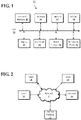
- FIG. 1 is an example computer 20 suitable for implementing implementations of the presently disclosed subject matter.
- the computer 20 includes a bus 21 which interconnects major components of the computer 20, such as a central processor 24, a memory 27 (typically RAM, but which may also include ROM, flash RAM, or the Like), an input/output controller 28, a user display 22, such as a display or touch screen via a display adapter, a user input interface 26, which may include one or more controllers and associated user input or devices such as a keyboard, mouse, WiFi/cellular radios, touchscreen, microphone/speakers and the like, and may be closely coupled to the I/O controller 28, fixed storage 23, such as a hard drive, flash storage, Fibre Channel network, SAN device, SCSI device, and the like, and a removable media component 25 operative to control and receive an optical disk, flash drive, and the like.
- a bus 21 which interconnects major components of the computer 20, such as a central processor 24, a memory 27 (typically RAM, but which may also include ROM, flash RAM,
- the bus 21 allows data communication between the central processor 24 and the memory 27, which may include read-only memory (ROM) or flash memory (neither shown), and random access memory (RAM) (not shown), as previously noted.
- the RAM can include the main memory into which the operating system and application programs are loaded.
- the ROM or flash memory can contain, among other code, the Basic Input-Output system (BIOS) which controls basic hardware operation such as the interaction with peripheral components.
- BIOS Basic Input-Output system
- Applications resident with the computer 20 can be stored on and accessed via a computer readable medium, such as a hard disk drive (e.g., fixed storage 23), an optical drive, floppy disk, or other storage medium 25.
- a network interface 29 may provide a direct connection to a remote server via a telephone link, to the Internet via an Internet service provider (ISP), or a direct connection to a remote server via a direct network link to the Internet via a POP (point of presence) or other technique.
- the network interface 29 may provide such connection using wireless techniques, including digital cellular telephone connection, Cellular Digital Packet Data (CDPD) connection, digital satellite data connection or the like.
- CDPD Cellular Digital Packet Data
- the network interface 29 may allow the computer to communicate with other computers via one or more local, wide-area, or other networks, as shown in FIG. 2 .
- FIG. 1 Many other devices or components (not shown) may be connected in a similar manner (e.g., document scanners, digital cameras and so on). Conversely, all of the components shown in FIG. 1 need not be present to practice the present disclosure. The components can be interconnected in different ways from that shown. The operation of a computer such as that shown in FIG. 1 is readily known in the art and is not discussed in detail in this application. Code to implement the present disclosure can be stored in computer-readable storage media such as one or more of the memory 27, fixed storage 23, removable media 25, or on a remote storage location.
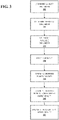
- FIG. 2 shows an example network arrangement according to an implementation of the disclosed subject matter.
- One or more clients 10, 11, such as local computers, smart phones, tablet computing devices, and the like may connect to other devices via one or more networks 7.
- the network may be a local network, wide-area network, the Internet, or any other suitable communication network or networks, and may be implemented on any suitable platform including wired and/or wireless networks.
- the clients may communicate with one or more servers 13 and/or databases 15.
- the devices may be directly accessible by the clients 10, 11, or one or more other devices may provide intermediary access such as where a server 13 provides access to resources stored in a database 15.
- the clients 10, 11 also may access remote platforms 17 or services provided by remote platforms 17 such as cloud computing arrangements and services.
- the remote platform 17 may include one or more servers 13 and/or databases 15.
- implementations of the presently disclosed subject matter may include or be implemented in the form of computer-implemented processes and apparatuses for practicing those processes. Implementations also may be implemented in the form of a computer program product having computer program code containing instructions implemented in non-transitory and/or tangible media, such as floppy diskettes, CD-ROMs, hard drives, USB (universal serial bus) drives, or any other machine readable storage medium, wherein, when the computer program code is loaded into and executed by a computer, the computer becomes an apparatus for practicing implementations of the disclosed subject matter.
- Implementations also may be implemented in the form of computer program code, for example, whether stored in a storage medium, loaded into and/or executed by a computer, or transmitted over some transmission medium, such as over electrical wiring or cabling, through fiber optics, or via electromagnetic radiation, wherein when the computer program code is loaded into and executed by a computer, the computer becomes an apparatus for practicing implementations of the disclosed subject matter.
- the computer program code segments configure the microprocessor to create specific logic circuits.
- a set of computer-readable instructions stored on a computer-readable storage medium may be implemented by a general-purpose processor, which may transform the general-purpose processor or a device containing the general-purpose processor into a special-purpose device configured to implement or carry out the instructions.
- Implementations may be implemented using hardware that may include a processor, such as a general purpose microprocessor and/or an Application Specific Integrated Circuit (ASIC) that implements all or part of the techniques according to implementations of the disclosed subject matter in hardware and/or firmware.
- the processor may be coupled to memory, such as RAM, ROM, flash memory, a hard disk or any other device capable of storing electronic information.
- the memory may store instructions adapted to be executed by the processor to perform the techniques according to implementations of the disclosed subject matter.
- an implementation may determine a capacity bandwidth of a streaming connection, step 301.
- the capacity can be fixed or variable over time.
- An implementation can determine an actual or estimated minimum capacity bandwidth of the connection.
- a streaming bandwidth can also be determined, step 302.
- the streaming bandwidth can represent that portion of the capacity bandwidth that can be used to stream media having a minimum quality over the streaming connection.
- the capacity bandwidth can be 3 Mb/s while the streaming bandwidth may be 1.5 Mb/s to stream the media at a minimum quality of 360p.
- the media can include several segments that are available to be streamed at different quality levels. For example, the default streaming quality for all segments may be 360p. Some segments may have a preferred streaming quality of 720p, while others may have a preferred streaming quality of 1080p.
- Each segment can have one or more segment properties, such as a quality attribute, a segment priority, a segment size, a segment start time, segment position data (where, when or how the segment occurs in the media), etc.
- Segment position can include a segment start time, a segment end time, a segment duration, a segment start frame, a segment end frame, a segment start frame number, and a segment end frame number, etc.
- a quality attribute can include a picture frame dimension, a pixel count, a pixel rate, a bit count, a bit rate, a video mode, etc.
- An implementation can determine an available bandwidth of the streaming connection, step 303, based on the difference between the capacity bandwidth and the streaming bandwidth.
- the available bandwidth can be used to pre-stream higher quality segments to the recipient for caching.
- An implementation can identify a segment among the several segments present in a media and determine, step 304, that the identified segment has a quality that is greater than a minimum or default quality for the media, step 305.
- a segment may be identified that specifies a 1080p quality that is higher than a default 360p quality for the media.
- the implementation can determine that the identified segment can be sent in time to be rendered at the specified higher quality, or else at another quality that is different than the default quality, step 306.
- the implementation may determine that the identified segment can be sent in time to be rendered not at the most preferred quality for the segment (e.g., 1080p), but at an intermediate quality (e.g., 720p). Based on this determination, the implementation can send the identified segment over the streaming connection at the appropriate quality, e.g., the quality at which it has time to send the segment to the user in time to render it where it occurs in the media as it is played, step 307.
- pre-streaming and caching some (but not necessarily all) of the segment before the start time can be accommodated, provided there is sufficient bandwidth available during the rendering time to stream the rest of the segment data.
- An implementation can determine the size of the identified segment at a higher quality, as well as the identified segment start time.
- the implementation can determine a lead time based on a time that is at or after the current time, but before the segment start time.
- the lead time can be the duration of the period during which the data of the identified segment can be pre-streamed and cached at the recipient.
- the implementation can calculate how much of the segment can be pre-streamed and cached at the recipient during the lead time based on the available bandwidth and the duration of the lead time.
- the implementation can also calculate how much of the segment can be streamed during rendering time based, for example, on the capacity bandwidth. For example, if the capacity bandwidth is 3.2 MB/s and the duration of the segment is nine seconds, then the amount of the segment that can be streamed is 28.8 Mb. If the total size of the segment at the higher quality is less than the sum of the pre-stream amount and the amount that can be streamed during the rendering time (e.g., the segment in this example is 120 Mb), then the implementation can proceed to pre-stream and stream the segment at the higher quality.
- the implementation may stream it at a lower quality. In that case, the implementation may identify the next highest priority segment and repeat this analysis on that segment to determine if it can be pre-streamed and streamed at the higher quality.
Landscapes
- Engineering & Computer Science (AREA)
- Multimedia (AREA)
- Signal Processing (AREA)
- Databases & Information Systems (AREA)
- Computer Networks & Wireless Communication (AREA)
- Theoretical Computer Science (AREA)
- Computer Security & Cryptography (AREA)
- Computing Systems (AREA)
- Physics & Mathematics (AREA)
- General Engineering & Computer Science (AREA)
- General Physics & Mathematics (AREA)
- Data Mining & Analysis (AREA)
- Information Transfer Between Computers (AREA)
- Two-Way Televisions, Distribution Of Moving Picture Or The Like (AREA)
Abstract
Description
- A streaming connection may not have sufficient bandwidth to reliably stream a media (a video, movie, song, etc.) at a high quality. The same connection may have more than sufficient bandwidth to stream the media at a lower quality. The difference between the actual bandwidth capacity and the lower amount of bandwidth needed to stream at the lower quality can go unused, thereby underutilizing the connection.
- According to an implementation of the disclosed subject matter, a capacity bandwidth and a streaming bandwidth of a streaming connection may be determined. The streaming bandwidth can be less than the capacity bandwidth. The streaming bandwidth can be used to provide a media at a first quality over the streaming connection.
- According to an implementation of the disclosed subject matter, a capacity bandwidth and a streaming bandwidth of a streaming connection may be determined. The streaming bandwidth can be less than the capacity bandwidth. The streaming bandwidth can be used to provide a media at a first quality over the streaming connection.
- The media can include several segments. At least some of the segments can have at least one segment property. An available bandwidth of the streaming connection can be determined. The available bandwidth can be based upon the difference between the capacity bandwidth and the streaming bandwidth.
- A segment can be identified from the several segments. The identified segment can have a second quality that is greater than the first quality. The implementation can determine that the identified segment can be sent in time to be rendered at least at a third quality. The implementation can send the identified segment over the streaming connection based on the determination that the identified segment can be sent in time to be rendered at least at the third quality.
- Systems and techniques according to the present disclosure allow for intelligently streaming portions of media at higher quality over a limited bandwidth connection. Additional features, advantages, and implementations of the disclosed subject matter may be set forth or apparent from consideration of the following detailed description, drawings, and claims. Moreover, it is to be understood that both the foregoing summary and the following detailed description include examples and are intended to provide further explanation without limiting the scope of the claims.
- The accompanying drawings, which are included to provide a further understanding of the disclosed subject matter, are incorporated in and constitute a part of this specification. The drawings also illustrate implementations of the disclosed subject matter and together with the detailed description serve to explain the principles of implementations of the disclosed subject matter. No attempt is made to show structural details in more detail than may be necessary for a fundamental understanding of the disclosed subject matter and various ways in which it may be practiced.
-
FIG. 1 shows a computer according to an implementation of the disclosed subject matter. -
FIG. 2 shows a network configuration according to an implementation of the disclosed subject matter. -
FIG. 3 shows a method according to an implementation of the disclosed subject matter. - An implementation of the disclosed subject matter can selectively stream one or more sections of content at a higher quality when the bandwidth of the connection to the recipient is too limited to stream the entire content at such a higher quality. A part of the content can be streamed at a lower quality that leaves a portion of the bandwidth available to "pre-stream" (buffer) higher quality content that can be cached at the recipient. When the higher quality content is to be rendered, some or all of that content can be pulled from the cache for rendering. If only part of the content is pulled, then the rest can be streamed in real time over the connection to the recipient.
- For example, in an implementation, the bandwidth of the channel to the user is 3 Mb/s. Content can be streamed in 360p quality, which only requires 1.5 Mb/s. Streaming at 720p quality requires 4 Mb/s. The implementation can assign score to sections of the content based on various criteria. For example, the score can indicate a priority order in which the sections should be sent to the recipient at a given higher quality, such as 720p. The score can also indicate a quality level at which the section should be sent, such as a score of 1, 2 or 3 where 1 = 320p, 2 = 720p and 3 = 1080p.
- The implementation can stream some of the content to the recipient at 320p using 1.5 Mb/s of the bandwidth. It can use a priority score to select a section and send data from that section to buffer at least some of it at the recipient before that section is to start being rendered, using the unused 1.5 Mb/s portion of the bandwidth. When the section is to be rendered, some or all of the section data can be pulled from the buffer at the recipient and played to the user at 720p. Thus, the implementation can automatically stream higher quality content for which it is important to do so. The rest of the content can be viewed at the lower quality, e.g., 360p.
- Section can be scored in accordance with various criteria. For example, the score can be higher based on piece of media that a user shares. Such data about shared sections of media can be derived from server logs. The score for a given section can be higher for sections that are shared the most by a single user or among a group of users. Sections that are shared less can have a lower score. A set of scored sections can thus be generated for an individual user based on the individual user's viewing history, for example. Likewise, a more generic set of scored sections can be generated based on the behavior of many users. A scored section can include a section start and section end designation and at least one score.
- In an implementation, a section of media containing faster music or more motion (in a video) can be assigned a higher score than media with slower music or less motion. This can demote the score for section that contain content such as title screens and credits, which the user can tolerate seeing at a lower quality. Action sequences, however, can be rendered at a higher quality.
- A video can be analyzed video for a number of different colors contained in various sections. Sections with more colors can receive a higher score than sections with a lower number of colors. Thus, credits and will be demoted and sections with rich color palettes will be promoted. For audio, sections with a higher volume, diversity of notes or speed at which notes change can be promoted over sections without these properties.
- An implementation can determine the available qualities and the bandwidth required to stream them. For example,
Quality Required Bitrate 240p 1Mb/s 360p 1.5Mb/s 720p 3Mb/s. - The implementation can determine a recipient's (a user's) current bandwidth and the acceptable minimum quality. If the minimum streaming rate is not the highest quality available for the media to be streamed, records of the scored sections can be retrieved from a server. A scored section record can include, for example, a section start timestamp, section end timestamp and score of the section.
- Beginning with the highest scoring section, the implementation can determine how much time it would take to buffer the section before the section is to be rendered to the user. The time can be based on the difference between the user's current bandwidth and the bandwidth required to stream the media an acceptable minimum quality. If there is enough time to stream enough of the section to the buffer, the implementation will select the section and send section data to the user to be buffered. If there is not sufficient time, then the implementation will make the same determination for the next highest scored section. This can be repeated for more sections.
- Implementations of the presently disclosed subject matter may be implemented in and used with a variety of component and network architectures.
FIG. 1 is anexample computer 20 suitable for implementing implementations of the presently disclosed subject matter. Thecomputer 20 includes abus 21 which interconnects major components of thecomputer 20, such as acentral processor 24, a memory 27 (typically RAM, but which may also include ROM, flash RAM, or the Like), an input/output controller 28, auser display 22, such as a display or touch screen via a display adapter, a user input interface 26, which may include one or more controllers and associated user input or devices such as a keyboard, mouse, WiFi/cellular radios, touchscreen, microphone/speakers and the like, and may be closely coupled to the I/O controller 28, fixedstorage 23, such as a hard drive, flash storage, Fibre Channel network, SAN device, SCSI device, and the like, and aremovable media component 25 operative to control and receive an optical disk, flash drive, and the like. - The
bus 21 allows data communication between thecentral processor 24 and thememory 27, which may include read-only memory (ROM) or flash memory (neither shown), and random access memory (RAM) (not shown), as previously noted. The RAM can include the main memory into which the operating system and application programs are loaded. The ROM or flash memory can contain, among other code, the Basic Input-Output system (BIOS) which controls basic hardware operation such as the interaction with peripheral components. Applications resident with thecomputer 20 can be stored on and accessed via a computer readable medium, such as a hard disk drive (e.g., fixed storage 23), an optical drive, floppy disk, orother storage medium 25. - The fixed
storage 23 may be integral with thecomputer 20 or may be separate and accessed through other interfaces. Anetwork interface 29 may provide a direct connection to a remote server via a telephone link, to the Internet via an Internet service provider (ISP), or a direct connection to a remote server via a direct network link to the Internet via a POP (point of presence) or other technique. Thenetwork interface 29 may provide such connection using wireless techniques, including digital cellular telephone connection, Cellular Digital Packet Data (CDPD) connection, digital satellite data connection or the like. For example, thenetwork interface 29 may allow the computer to communicate with other computers via one or more local, wide-area, or other networks, as shown inFIG. 2 . - Many other devices or components (not shown) may be connected in a similar manner (e.g., document scanners, digital cameras and so on). Conversely, all of the components shown in
FIG. 1 need not be present to practice the present disclosure. The components can be interconnected in different ways from that shown. The operation of a computer such as that shown inFIG. 1 is readily known in the art and is not discussed in detail in this application. Code to implement the present disclosure can be stored in computer-readable storage media such as one or more of thememory 27, fixedstorage 23,removable media 25, or on a remote storage location. -
FIG. 2 shows an example network arrangement according to an implementation of the disclosed subject matter. One ormore clients more networks 7. The network may be a local network, wide-area network, the Internet, or any other suitable communication network or networks, and may be implemented on any suitable platform including wired and/or wireless networks. The clients may communicate with one ormore servers 13 and/ordatabases 15. The devices may be directly accessible by theclients server 13 provides access to resources stored in adatabase 15. Theclients remote platforms 17 or services provided byremote platforms 17 such as cloud computing arrangements and services. Theremote platform 17 may include one ormore servers 13 and/ordatabases 15. - More generally, various implementations of the presently disclosed subject matter may include or be implemented in the form of computer-implemented processes and apparatuses for practicing those processes. Implementations also may be implemented in the form of a computer program product having computer program code containing instructions implemented in non-transitory and/or tangible media, such as floppy diskettes, CD-ROMs, hard drives, USB (universal serial bus) drives, or any other machine readable storage medium, wherein, when the computer program code is loaded into and executed by a computer, the computer becomes an apparatus for practicing implementations of the disclosed subject matter. Implementations also may be implemented in the form of computer program code, for example, whether stored in a storage medium, loaded into and/or executed by a computer, or transmitted over some transmission medium, such as over electrical wiring or cabling, through fiber optics, or via electromagnetic radiation, wherein when the computer program code is loaded into and executed by a computer, the computer becomes an apparatus for practicing implementations of the disclosed subject matter. When implemented on a general-purpose microprocessor, the computer program code segments configure the microprocessor to create specific logic circuits. In some configurations, a set of computer-readable instructions stored on a computer-readable storage medium may be implemented by a general-purpose processor, which may transform the general-purpose processor or a device containing the general-purpose processor into a special-purpose device configured to implement or carry out the instructions. Implementations may be implemented using hardware that may include a processor, such as a general purpose microprocessor and/or an Application Specific Integrated Circuit (ASIC) that implements all or part of the techniques according to implementations of the disclosed subject matter in hardware and/or firmware. The processor may be coupled to memory, such as RAM, ROM, flash memory, a hard disk or any other device capable of storing electronic information. The memory may store instructions adapted to be executed by the processor to perform the techniques according to implementations of the disclosed subject matter.
- As shown in
FIG. 3 , an implementation may determine a capacity bandwidth of a streaming connection, step 301. The capacity can be fixed or variable over time. An implementation can determine an actual or estimated minimum capacity bandwidth of the connection. A streaming bandwidth can also be determined, step 302. The streaming bandwidth can represent that portion of the capacity bandwidth that can be used to stream media having a minimum quality over the streaming connection. For example, the capacity bandwidth can be 3 Mb/s while the streaming bandwidth may be 1.5 Mb/s to stream the media at a minimum quality of 360p. The media can include several segments that are available to be streamed at different quality levels. For example, the default streaming quality for all segments may be 360p. Some segments may have a preferred streaming quality of 720p, while others may have a preferred streaming quality of 1080p. Each segment can have one or more segment properties, such as a quality attribute, a segment priority, a segment size, a segment start time, segment position data (where, when or how the segment occurs in the media), etc. Segment position can include a segment start time, a segment end time, a segment duration, a segment start frame, a segment end frame, a segment start frame number, and a segment end frame number, etc. An implementation can also include a streaming quality priority, e.g., highest priority = 720p, second priority = 1080p, third priority = 360p. A quality attribute can include a picture frame dimension, a pixel count, a pixel rate, a bit count, a bit rate, a video mode, etc. - An implementation can determine an available bandwidth of the streaming connection,
step 303, based on the difference between the capacity bandwidth and the streaming bandwidth. The available bandwidth can be used to pre-stream higher quality segments to the recipient for caching. - An implementation can identify a segment among the several segments present in a media and determine, step 304, that the identified segment has a quality that is greater than a minimum or default quality for the media,
step 305. For example, a segment may be identified that specifies a 1080p quality that is higher than a default 360p quality for the media. The implementation can determine that the identified segment can be sent in time to be rendered at the specified higher quality, or else at another quality that is different than the default quality,step 306. For example, the implementation may determine that the identified segment can be sent in time to be rendered not at the most preferred quality for the segment (e.g., 1080p), but at an intermediate quality (e.g., 720p). Based on this determination, the implementation can send the identified segment over the streaming connection at the appropriate quality, e.g., the quality at which it has time to send the segment to the user in time to render it where it occurs in the media as it is played,step 307. - In an implementation, pre-streaming and caching some (but not necessarily all) of the segment before the start time can be accommodated, provided there is sufficient bandwidth available during the rendering time to stream the rest of the segment data. An implementation can determine the size of the identified segment at a higher quality, as well as the identified segment start time. The implementation can determine a lead time based on a time that is at or after the current time, but before the segment start time. The lead time can be the duration of the period during which the data of the identified segment can be pre-streamed and cached at the recipient. The implementation can calculate how much of the segment can be pre-streamed and cached at the recipient during the lead time based on the available bandwidth and the duration of the lead time. For example, if the available bandwidth is 1.3 Mb/s and the lead time is 120 seconds, 156Mb of the segment can be pre-streamed and cached during the lead time. The implementation can also calculate how much of the segment can be streamed during rendering time based, for example, on the capacity bandwidth. For example, if the capacity bandwidth is 3.2 MB/s and the duration of the segment is nine seconds, then the amount of the segment that can be streamed is 28.8 Mb. If the total size of the segment at the higher quality is less than the sum of the pre-stream amount and the amount that can be streamed during the rendering time (e.g., the segment in this example is 120 Mb), then the implementation can proceed to pre-stream and stream the segment at the higher quality. If the total size of the segment at the higher quality is greater than this sum (e.g., 180 Mb), there may not be sufficient bandwidth and time to pre-stream and stream the segment at the higher quality, and the implementation may stream it at a lower quality. In that case, the implementation may identify the next highest priority segment and repeat this analysis on that segment to determine if it can be pre-streamed and streamed at the higher quality.
- The foregoing description, for purpose of explanation, has been described with reference to specific implementations. However, the illustrative discussions above are not intended to be exhaustive or to limit implementations of the disclosed subject matter to the precise forms disclosed. Many modifications and variations are possible in view of the above teachings. The implementations were chosen and described in order to explain the principles of implementations of the disclosed subject matter and their practical applications, to thereby enable others skilled in the art to utilize those implementations as well as various implementations with various modifications as may be suited to the particular use contemplated.
- The following are additional clauses of the description, provided as an addendum to the Brief Summary section of the description.
- 1. A method comprising:
- determining a capacity bandwidth of a streaming connection;
- determining a streaming bandwidth of the streaming connection, the streaming bandwidth being used to provide a media having a first quality over the streaming connection, the streaming bandwidth being less than the capacity bandwidth, the media having a plurality of segments, each segment having at least one segment property;
- determining an available bandwidth of the streaming connection, the available bandwidth based upon the difference between the capacity bandwidth and the streaming bandwidth;
- identifying a segment from the plurality of segments;
- determining that the identified segment has a second quality, the second quality being greater than the first quality;
- determining that the identified segment can be sent in time to be rendered at least at a third quality; and
- sending the identified segment over the streaming connection based on the determining that the identified segment can be sent in time to be rendered at least at the third quality.
- 2. The method of clause 1, wherein the at least one segment property includes at least one from the group consisting of: an identified segment position, a segment size, and a quality attribute that corresponds to a quality.
- 3. The method of clause 2, wherein the segment position includes at least one from the group consisting of: a start time, an end time, a duration, a start frame, an end frame, a segment start frame number, and a segment end frame number.
- 4. The method of clause 2, wherein the quality attribute includes at least one from the group consisting of: a picture frame dimension, a pixel count, a pixel rate, a bit count, and a bit rate.
- 5. The method of clause 1, wherein the third quality is greater than the first quality.
- 6. The method of clause 1, wherein the third quality is greater than the first quality and less than the second quality.
- 7. The method of clause 1, wherein the third quality is at least equal to the second quality.
- 8. The method of clause 1, wherein the media comprises at least one from the group consisting of: a video, a song, and a document.
- 9. The method of clause. 1, wherein the determining that the identified segment can
be sent in time to be rendered at least at a third quality comprises:- determining a first data size of the identified segment at the third quality;
- determining a segment stream. time based on the available bandwidth and the first data size;
- determining a lead time, the lead time being the difference between a first time and the segment start time, the first time being a time at or after the current time and before the segment start time and the segment start time being about the time at which the identified segment is to start to be rendered; and
- determining that the segment stream time is at most equal to the lead time.
- 10. The method of clause 1, wherein the determining that the identified segment can be
sent in time to be rendered at least at a third quality comprises:- determining an identified segment size;
- determining a first data size of the identified segment at the third quality;
- determining a segment identified segment start time;
- determining a first time, the first time being a time at or after the current time and before the segment start time;
- determining a first amount based on the available bandwidth and the difference between the segment start time and the first time;
- determining an identified segment duration;
- determining a second amount based on the capacity bandwidth and the identified segment duration; and
- determining that the sum of the first amount and the second amount is at least equal to the identified segment size.
- 11. The method of
clause 10, wherein the third quality is greater than the first quality. - 12. The method of
clause 10, wherein the third quality is greater than the first quality and less than the second quality. - 13. The method of
clause 10, wherein the third quality is at least equal to the second quality. - 14. A system comprising:
- a memory;
- a processor in communication with the memory, the processor configured to:
- determine a capacity bandwidth of a streaming connection;
- determine a streaming bandwidth of the streaming connection, the streaming bandwidth being used to provide a media having a first quality over the streaming connection, the streaming bandwidth being less than the capacity bandwidth, the media having a plurality of segments, each segment having at least one segment property;
- determine an available bandwidth of the streaming connection, the available bandwidth based upon the difference between the capacity bandwidth and the streaming bandwidth;
- identify an identified segment from the plurality of segments;
- determine that the identified segment has a second quality, the second quality being greater than the first quality;
- determine that the identified segment can be sent in time to be rendered at least at a third quality; and
- send the identified segment over the streaming connection based on the determining that the identified segment can be sent in time to be rendered at least at the third quality.
- 15. The system of clause 14, wherein the at least one segment property includes at least one from the group consisting of: an identified segment position, a segment size, and a quality attribute that corresponds to a quality.
- 16. The system of
clause 15, wherein the segment position includes at least one from the group consisting of: a start time, an end time, a duration, a start frame, an end frame, a segment start frame number, and a segment end frame number. - 17. The system of
clause 15, wherein the quality attribute includes at least one from the group consisting of: a picture frame dimension, a pixel count, a pixel rate, a bit count, and a bit rate. - 18. The system of clause 14, wherein the third quality is greater than the first quality.
- 19. The system of clause 14, wherein the third quality is greater than the first quality and less than the second quality.
- 20. The system of clause 14, wherein the third quality is at least equal to the second quality.
- 21. The system of clause 14, wherein the processor is further configured to:
- determine a first data size of the identified segment at the third quality;
- determine a segment stream time based on the available bandwidth and the first data size;
- determine a lead time, the lead time being the difference between a first time and the segment start time, the first time being a time at or after the current time and before the segment start time and the segment start time being about the time at which the identified segment is to start to be rendered; and
- determine that the segment stream time is at most equal to the lead time.
- 22. The system of clause 14, wherein the processor is further configured to:
- determine an identified segment size;
- determine a first data size of the identified segment at the third quality;
- determine a segment identified segment start time;
- determine a first time, the first time being a time at or after the current time and before the segment start time;
- determine a first amount based on the available bandwidth and the difference between the segment start time and the first time;
- determine an identified segment duration;
- determine a second amount based on the capacity bandwidth and the identified segment duration; and
- determine that the sum of the first amount and the second amount is at least equal to the identified segment size.
- 23. The system of
clause 22, wherein the third quality is greater than the first quality. - 24. The system of
clause 22, wherein the third quality is greater than the first quality and less than the second quality. - 25. The system of
clause 22, wherein the third quality is at least equal to the second quality.
Claims (15)
- A computer-implemented method performed by a data processing apparatus, the method comprising:receiving a media, wherein the media is one of a video and an audio track;dividing the media into a plurality of sections, each with a section start and a section end;scoring each of the plurality of sections of the media based on at least one attribute of each of the plurality of sections to obtain a priority score for each of the plurality of sections;sending a first section of the media from the plurality of sections to be rendered on a remote device at a first quality, wherein the first section comprises a third quality and is rendered on the remote device at the first quality which is lower than the third quality; andsending a second section of the media from the plurality of sections to be rendered on the remote device at a second quality, wherein at least a portion of the second section is sent concurrently with the first section, the second section has a higher priority score than the first section, and the second quality is higher than the first quality,wherein a portion of streaming bandwidth used to send the first section at the first quality is less than a portion of streaming bandwidth used to send the first section at the third quality, and wherein a portion of streaming bandwidth that is the difference between the portion of streaming bandwidth used to send the first section at the first quality and the portion of streaming bandwidth used to send the first section at the third quality is used to send the second section at the second quality.
- The computer-implemented method of claim 1, wherein the plurality of sections are continuous and non-overlapping.
- The computer-implemented method of claim 1, wherein the attribute of each of the plurality of sections is a number of times each of the plurality of sections has been shared.
- The computer-implemented method of claim 3, wherein the number of times each of plurality of sections has been shared is determined based on user logs.
- The computer-implemented method of claim 3, wherein a first section of the plurality of sections is assigned a priority score indicating a higher priority than a second section of the plurality of sections when the first section of the plurality of sections has a higher number of shares than the second section of the plurality of sections.
- The computer-implemented method of claim 3, wherein the number times each of the plurality of sections has been shared is based on one of sharing by an individual user and sharing by a group of users.
- The computer-implemented method of claim 1, wherein the media is a video, and wherein a first section of the plurality of sections is assigned a priority score indicating a higher priority than a second section of the plurality of sections when the first section of the plurality of sections comprises video with a greater amount of motion than the second section of the plurality of sections.
- The computer-implemented method of claim 1, where the media is an audio track, and wherein a first section of the plurality of sections is assigned a priority score indicating a higher priority than a second section of the plurality of sections when the first section of the plurality of sections comprises audio with a faster tempo than the second section of the plurality of sections.
- The computer-implemented method of claim 1, wherein the media is a video, and wherein a first section of the plurality of sections is assigned a priority score indicating a higher priority than a second section of the plurality of sections when the first section of the plurality of sections comprises video with a greater amount of colors than the second section of the plurality of sections.
- The computer-implemented method of claim 1, where the media is an audio track, and wherein a first section of the plurality of sections is assigned a priority score indicating a higher priority than a second section of the plurality of sections when the first section of the plurality of sections comprises audio with one or more of a higher volume, a greater diversity of notes, and a greater speed at which notes change than the second section of the plurality of sections.
- A system comprising:one or more computers and one or more storage devices storing instructions which are operable, when executed by the one or more computers, to cause the one or more computers to perform operations comprising:receiving a media, wherein the media is one of a video and an audio track;dividing the media into a plurality of sections, each with a section start and a section end;scoring each of the plurality of sections of the media based on at least one attribute of each of the plurality of sections to obtain a priority score for each of the plurality of sections;sending a first section of the media from the plurality of sections to be rendered on a remote device at a first quality, wherein the first section comprises a third quality and is rendered on the remote device at the first quality which is lower than the third quality; andsending a second section of the media from the plurality of sections to be rendered on the remote device at a second quality, wherein at least a portion of the second section is sent concurrently with the first section, the second section has a higher priority score than the first section, and the second quality is higher than the first quality,wherein a portion of streaming bandwidth used to send the first section at the first quality is less than a portion of streaming bandwidth used to send the first section at the third quality, and wherein a portion of streaming bandwidth that is the difference between the portion of streaming bandwidth used to send the first section at the first quality and the portion of streaming bandwidth used to send the first section at the third quality is used to send the second section at the second quality.
- The system of claim 11, wherein the media is a video, and wherein a first section of the plurality of sections is assigned a priority score indicating a higher priority than a second section of the plurality of sections when the first section of the plurality of sections comprises:video with a greater amount of motion than the second section of the plurality of sections; orvideo with a greater amount of colors than the second section of the plurality of sections.
- The system of claim 11, wherein the media is an audio track, and wherein a first section of the plurality of sections is assigned a priority score indicating a higher priority than a second section of the plurality of sections when the first section of the plurality of sections comprises audio with a faster tempo than the second section of the plurality of sections.
- The system of claim 11, wherein the media is an audio track, and wherein a first section of the plurality of sections is assigned a priority score indicating a higher priority than a second section of the plurality of sections when the first section of the plurality of sections comprises audio with one or more of a higher volume, a greater diversity of notes, and a greater speed at which notes change than the second section of the plurality of sections.
- A system comprising:a memory;a processor in communication with the memory, wherein the processor:receives a media, wherein the media is one of a video and an audio track;divides the media into a plurality of sections, each with a section start and a section end;scores each of the plurality of sections of the media based on at least one attribute of each of the plurality of sections to obtain a priority score for each of the plurality of sections;sends a first section of the media from the plurality of sections to be rendered on a remote device at a first quality, wherein the first section comprises a third quality and is rendered on the remote device at the first quality which is lower than the third quality; andsends a second section of the media from the plurality of sections to be rendered on the remote device at a second quality, wherein at least a portion of the second section is sent concurrently with the first section, the second section has a higher priority score than the first section, and the second quality is higher than the first quality,wherein a portion of streaming bandwidth used to send the first section at the first quality is less than a portion of streaming bandwidth used to send the first section at the third quality, and wherein a portion of streaming bandwidth that is the difference between the portion of streaming bandwidth used to send the first section at the first quality and the portion of streaming bandwidth used to send the first section at the third quality is used to send the second section at the second quality.
Applications Claiming Priority (3)
| Application Number | Priority Date | Filing Date | Title |
|---|---|---|---|
| US14/028,831 US8850055B1 (en) | 2013-09-17 | 2013-09-17 | Intelligently streaming portions of media at higher quality over a limited bandwidth connection |
| PCT/US2014/056055 WO2015042127A2 (en) | 2013-09-17 | 2014-09-17 | Streaming media |
| EP14783935.1A EP3047650B1 (en) | 2013-09-17 | 2014-09-17 | Streaming media |
Related Parent Applications (1)
| Application Number | Title | Priority Date | Filing Date |
|---|---|---|---|
| EP14783935.1A Division EP3047650B1 (en) | 2013-09-17 | 2014-09-17 | Streaming media |
Publications (1)
| Publication Number | Publication Date |
|---|---|
| EP3993431A1 true EP3993431A1 (en) | 2022-05-04 |
Family
ID=51588305
Family Applications (2)
| Application Number | Title | Priority Date | Filing Date |
|---|---|---|---|
| EP14783935.1A Active EP3047650B1 (en) | 2013-09-17 | 2014-09-17 | Streaming media |
| EP21216556.7A Pending EP3993431A1 (en) | 2013-09-17 | 2014-09-17 | Streaming media |
Family Applications Before (1)
| Application Number | Title | Priority Date | Filing Date |
|---|---|---|---|
| EP14783935.1A Active EP3047650B1 (en) | 2013-09-17 | 2014-09-17 | Streaming media |
Country Status (4)
| Country | Link |
|---|---|
| US (2) | US8850055B1 (en) |
| EP (2) | EP3047650B1 (en) |
| CN (1) | CN105556979B (en) |
| WO (1) | WO2015042127A2 (en) |
Families Citing this family (12)
| Publication number | Priority date | Publication date | Assignee | Title |
|---|---|---|---|---|
| US9363162B1 (en) * | 2013-10-21 | 2016-06-07 | Google Inc. | Determining WCMP link capacities in multi-stage networks |
| US10779035B2 (en) * | 2014-01-09 | 2020-09-15 | Samsung Electronics Co., Ltd. | Method and apparatus of transmitting media data related information in multimedia transmission system |
| US9930084B2 (en) * | 2014-06-30 | 2018-03-27 | Echostar Technologies Llc | Adaptive data segment delivery arbitration for bandwidth optimization |
| EP3016394A1 (en) * | 2014-10-30 | 2016-05-04 | Alcatel Lucent | Apparatus, user equipment, adaptation server, method and computer program for determining information related to a presentation time of buffered media data |
| TWI598743B (en) * | 2015-10-20 | 2017-09-11 | 宏碁股份有限公司 | Multimedia file downloading method and electronic device |
| CN106815074B (en) * | 2015-11-30 | 2021-04-06 | 宏碁股份有限公司 | Multimedia file downloading method and electronic device |
| CN105516733B (en) * | 2015-12-04 | 2018-11-06 | 珠海多玩信息技术有限公司 | Interactive system and its exchange method |
| US10291680B2 (en) * | 2015-12-23 | 2019-05-14 | Board Of Trustees Of Michigan State University | Streaming media using erasable packets within internet queues |
| WO2018060488A1 (en) * | 2016-09-30 | 2018-04-05 | British Telecommunications Public Limited Company | Viewer importance adaptive bit rate delivery |
| EP3520420B1 (en) | 2016-09-30 | 2022-11-02 | British Telecommunications public limited company | Viewer importance adaptive bit rate delivery |
| CN109529329B (en) * | 2018-11-21 | 2022-04-12 | 北京像素软件科技股份有限公司 | Game special effect processing method and device |
| US11356725B2 (en) * | 2020-10-16 | 2022-06-07 | Rovi Guides, Inc. | Systems and methods for dynamically adjusting quality levels for transmitting content based on context |
Citations (2)
| Publication number | Priority date | Publication date | Assignee | Title |
|---|---|---|---|---|
| US20120254455A1 (en) * | 2011-03-30 | 2012-10-04 | Verizon Patent And Licensing Inc. | Downloading video using excess bandwidth |
| US20130013803A1 (en) * | 2010-04-01 | 2013-01-10 | Guillaume Bichot | Method for recovering content streamed into chunk |
Family Cites Families (17)
| Publication number | Priority date | Publication date | Assignee | Title |
|---|---|---|---|---|
| US6622171B2 (en) * | 1998-09-15 | 2003-09-16 | Microsoft Corporation | Multimedia timeline modification in networked client/server systems |
| US7522724B2 (en) * | 2005-01-07 | 2009-04-21 | Hewlett-Packard Development Company, L.P. | System and method of transmission of generalized scalable bit-streams |
| US7974193B2 (en) | 2005-04-08 | 2011-07-05 | Qualcomm Incorporated | Methods and systems for resizing multimedia content based on quality and rate information |
| US8135061B1 (en) * | 2006-10-19 | 2012-03-13 | Vudu, Inc. | Variable bit rate encoding |
| US20080247382A1 (en) * | 2007-01-24 | 2008-10-09 | Rajneesh Verma | System and method for providing improved VoIP services |
| US7656318B2 (en) * | 2007-01-29 | 2010-02-02 | Ntt Docomo, Inc. | Optimized content-based and royalty-based encoding and distribution of media data |
| GB0706424D0 (en) | 2007-04-02 | 2007-05-09 | British Telecomm | Video streaming |
| CN101697554B (en) * | 2009-09-27 | 2012-05-09 | 华中科技大学 | A scheduling method for P2P streaming video data transmission |
| CN101860538B (en) * | 2010-05-28 | 2013-02-06 | 中国科学技术大学 | Network coded data segmenting method and video transmission method and device |
| US8819269B2 (en) * | 2010-06-30 | 2014-08-26 | Cable Television Laboratories, Inc. | Adaptive bit rate method and system using retransmission and replacement |
| US9479739B2 (en) * | 2010-10-04 | 2016-10-25 | Telefonaktiebolaget Lm Ericsson (Publ) | Methods and apparatuses for adaptive control of streaming |
| CN102131106A (en) * | 2010-12-22 | 2011-07-20 | 华为技术有限公司 | Method, device and system for playing streaming media contents |
| EP2472866A1 (en) | 2011-01-04 | 2012-07-04 | Alcatel Lucent | Method for providing an HTTP adaptive streaming service |
| CN102710586B (en) * | 2011-03-28 | 2014-10-08 | 华为技术有限公司 | Streaming media transmission control method, media transmission control method and associated equipment |
| US9445136B2 (en) * | 2011-09-21 | 2016-09-13 | Qualcomm Incorporated | Signaling characteristics of segments for network streaming of media data |
| US8806529B2 (en) * | 2012-04-06 | 2014-08-12 | Time Warner Cable Enterprises Llc | Variability in available levels of quality of encoded content |
| CN102946570B (en) * | 2012-09-21 | 2015-03-04 | 上海交通大学 | Transmission system and method for multi-stream streaming media of self-adaption network bandwidth |
-
2013
- 2013-09-17 US US14/028,831 patent/US8850055B1/en active Active
-
2014
- 2014-08-26 US US14/468,357 patent/US9626364B2/en active Active
- 2014-09-17 EP EP14783935.1A patent/EP3047650B1/en active Active
- 2014-09-17 WO PCT/US2014/056055 patent/WO2015042127A2/en not_active Ceased
- 2014-09-17 CN CN201480051246.XA patent/CN105556979B/en active Active
- 2014-09-17 EP EP21216556.7A patent/EP3993431A1/en active Pending
Patent Citations (2)
| Publication number | Priority date | Publication date | Assignee | Title |
|---|---|---|---|---|
| US20130013803A1 (en) * | 2010-04-01 | 2013-01-10 | Guillaume Bichot | Method for recovering content streamed into chunk |
| US20120254455A1 (en) * | 2011-03-30 | 2012-10-04 | Verizon Patent And Licensing Inc. | Downloading video using excess bandwidth |
Non-Patent Citations (3)
| Title |
|---|
| CHANG I C ET AL: "ATF: an Adaptive Three-layer Framework for inter-stream synchronization of SMIL multimedia presentations", JOURNAL OF SYSTEMS & SOFTWARE, ELSEVIER NORTH HOLLAND, NEW YORK, NY, US, vol. 75, no. 3, 1 March 2005 (2005-03-01), pages 283 - 303, XP027636392, ISSN: 0164-1212, [retrieved on 20050301] * |
| RICCARDO PETROCCO ET AL: "Deftpack: A Robust Piece-Picking Algorithm for Scalable Video Coding in P2P Systems", MULTIMEDIA (ISM), 2011 IEEE INTERNATIONAL SYMPOSIUM ON, IEEE, 5 December 2011 (2011-12-05), pages 285 - 292, XP032090740, ISBN: 978-1-4577-2015-4, DOI: 10.1109/ISM.2011.52 * |
| TURNER D A ET AL: "ADAPTIVE STREAMING OF LAYER-ENCODED MULTIMEDIA PRESENTATIONS", JOURNAL OF VLSI SIGNAL PROCESSING SYSTEMS FOR SIGNAL, IMAGE, AND VIDEO TECHNOLOGY, SPRINGER, NEW YORK, NY, US, vol. 34, no. 1/02, 1 May 2003 (2003-05-01), pages 83 - 99, XP001159491, ISSN: 0922-5773, DOI: 10.1023/A:1022817821444 * |
Also Published As
| Publication number | Publication date |
|---|---|
| CN105556979A (en) | 2016-05-04 |
| WO2015042127A3 (en) | 2015-07-02 |
| CN105556979B (en) | 2019-02-22 |
| EP3047650A2 (en) | 2016-07-27 |
| EP3047650B1 (en) | 2021-12-22 |
| US20150081924A1 (en) | 2015-03-19 |
| US8850055B1 (en) | 2014-09-30 |
| US9626364B2 (en) | 2017-04-18 |
| WO2015042127A2 (en) | 2015-03-26 |
Similar Documents
| Publication | Publication Date | Title |
|---|---|---|
| US9626364B2 (en) | Streaming media | |
| US20230188790A1 (en) | Systems and methods for real-time adaptive bitrate transcoding and transmission of transcoded media | |
| US9473548B1 (en) | Latency reduction in streamed content consumption | |
| US9510043B2 (en) | Pre-buffering audio streams | |
| CN105100961B (en) | Video thumbnail generation method and generating means | |
| US8745262B2 (en) | Adaptive network content delivery system | |
| US9755847B2 (en) | Method and system for sharing and discovery | |
| US8737820B2 (en) | Systems and methods for recording content within digital video | |
| US11451603B2 (en) | Selective pre-caching of media streams | |
| MXPA04006412A (en) | Sparse caching for streaming media. | |
| EP2833280A2 (en) | Method for automatically storing new media | |
| US10951729B2 (en) | Adapting playback settings based on change history | |
| WO2021159770A1 (en) | Video playback method, device, apparatus, and storage medium | |
| CN105100830A (en) | Device and method for quickly switching video sources based on video aggregation service | |
| US10178143B2 (en) | Selecting bitrate to stream encoded media based on tagging of important media segments | |
| CN107690093B (en) | A video playback method and device | |
| CN112752117A (en) | Video caching method, device, equipment and storage medium | |
| CN103813181A (en) | System and method for optimizing video | |
| EP3785425B1 (en) | Crowdsourced prediction of cdn performance for zero buffer delivery of content | |
| CN105824820A (en) | Media file buffer memory method and device | |
| CN107105317B (en) | Video playing method and device | |
| US20200195996A1 (en) | Methods and Apparatus for Streaming Data | |
| CN109948082B (en) | Live broadcast information processing method and device, electronic equipment and storage medium | |
| CN106210781A (en) | A kind of multichannel control method for playing back and system | |
| WO2015094536A1 (en) | Presentation of content based on playlists |
Legal Events
| Date | Code | Title | Description |
|---|---|---|---|
| PUAI | Public reference made under article 153(3) epc to a published international application that has entered the european phase |
Free format text: ORIGINAL CODE: 0009012 |
|
| STAA | Information on the status of an ep patent application or granted ep patent |
Free format text: STATUS: REQUEST FOR EXAMINATION WAS MADE |
|
| 17P | Request for examination filed |
Effective date: 20211221 |
|
| AC | Divisional application: reference to earlier application |
Ref document number: 3047650 Country of ref document: EP Kind code of ref document: P |
|
| AK | Designated contracting states |
Kind code of ref document: A1 Designated state(s): AL AT BE BG CH CY CZ DE DK EE ES FI FR GB GR HR HU IE IS IT LI LT LU LV MC MK MT NL NO PL PT RO RS SE SI SK SM TR |
|
| STAA | Information on the status of an ep patent application or granted ep patent |
Free format text: STATUS: EXAMINATION IS IN PROGRESS |
|
| 17Q | First examination report despatched |
Effective date: 20230206 |