EP3993122A1 - Solid electrolyte and a lithium-ion conductive glass-ceramics - Google Patents
Solid electrolyte and a lithium-ion conductive glass-ceramics Download PDFInfo
- Publication number
- EP3993122A1 EP3993122A1 EP20204965.6A EP20204965A EP3993122A1 EP 3993122 A1 EP3993122 A1 EP 3993122A1 EP 20204965 A EP20204965 A EP 20204965A EP 3993122 A1 EP3993122 A1 EP 3993122A1
- Authority
- EP
- European Patent Office
- Prior art keywords
- lithium
- powder
- ion
- lithium ion
- conductive glass
- Prior art date
- Legal status (The legal status is an assumption and is not a legal conclusion. Google has not performed a legal analysis and makes no representation as to the accuracy of the status listed.)
- Pending
Links
- 229910001416 lithium ion Inorganic materials 0.000 title claims abstract description 81
- HBBGRARXTFLTSG-UHFFFAOYSA-N Lithium ion Chemical compound [Li+] HBBGRARXTFLTSG-UHFFFAOYSA-N 0.000 title claims abstract description 79
- 239000002241 glass-ceramic Substances 0.000 title claims abstract description 52
- 239000007784 solid electrolyte Substances 0.000 title claims abstract description 21
- 239000000843 powder Substances 0.000 claims abstract description 69
- 239000010416 ion conductor Substances 0.000 claims abstract description 52
- 238000000034 method Methods 0.000 claims abstract description 44
- 239000000919 ceramic Substances 0.000 claims abstract description 21
- 238000004519 manufacturing process Methods 0.000 claims abstract description 9
- 229920000867 polyelectrolyte Polymers 0.000 claims abstract description 6
- 239000005518 polymer electrolyte Substances 0.000 claims abstract description 6
- 239000002245 particle Substances 0.000 claims description 38
- 150000001768 cations Chemical class 0.000 claims description 19
- 239000002223 garnet Substances 0.000 claims description 12
- 239000007787 solid Substances 0.000 claims description 8
- 150000002500 ions Chemical class 0.000 claims description 6
- 239000000203 mixture Substances 0.000 claims description 6
- 229910052744 lithium Inorganic materials 0.000 claims description 4
- 239000008188 pellet Substances 0.000 claims description 4
- 239000002243 precursor Substances 0.000 claims description 4
- 229910009511 Li1.5Al0.5Ge1.5(PO4)3 Inorganic materials 0.000 claims description 3
- 229910011244 Li3xLa2/3-xTiO3 Inorganic materials 0.000 claims description 3
- 229910011245 Li3xLa2/3−xTiO3 Inorganic materials 0.000 claims description 3
- WHXSMMKQMYFTQS-UHFFFAOYSA-N Lithium Chemical compound [Li] WHXSMMKQMYFTQS-UHFFFAOYSA-N 0.000 claims description 3
- 239000002228 NASICON Substances 0.000 claims description 3
- IBXOPEGTOZQGQO-UHFFFAOYSA-N [Li].[Nb] Chemical compound [Li].[Nb] IBXOPEGTOZQGQO-UHFFFAOYSA-N 0.000 claims description 3
- AWJDQCINSGRBDJ-UHFFFAOYSA-N [Li].[Ta] Chemical compound [Li].[Ta] AWJDQCINSGRBDJ-UHFFFAOYSA-N 0.000 claims description 3
- 239000004020 conductor Substances 0.000 claims description 3
- KUJOABUXCGVGIY-UHFFFAOYSA-N lithium zinc Chemical compound [Li].[Zn] KUJOABUXCGVGIY-UHFFFAOYSA-N 0.000 claims description 3
- 238000003825 pressing Methods 0.000 claims description 3
- 229910052596 spinel Inorganic materials 0.000 claims description 3
- 239000011029 spinel Substances 0.000 claims description 3
- JFBZPFYRPYOZCQ-UHFFFAOYSA-N [Li].[Al] Chemical compound [Li].[Al] JFBZPFYRPYOZCQ-UHFFFAOYSA-N 0.000 claims description 2
- 239000011230 binding agent Substances 0.000 claims description 2
- 239000012700 ceramic precursor Substances 0.000 claims description 2
- 239000012528 membrane Substances 0.000 claims description 2
- 229910000664 lithium aluminum titanium phosphates (LATP) Inorganic materials 0.000 claims 2
- 229910002984 Li7La3Zr2O12 Inorganic materials 0.000 description 26
- 238000005259 measurement Methods 0.000 description 19
- 238000000157 electrochemical-induced impedance spectroscopy Methods 0.000 description 18
- 230000008569 process Effects 0.000 description 15
- 239000000523 sample Substances 0.000 description 12
- 230000008901 benefit Effects 0.000 description 8
- 238000009826 distribution Methods 0.000 description 8
- 238000005245 sintering Methods 0.000 description 7
- 239000013078 crystal Substances 0.000 description 6
- 238000005481 NMR spectroscopy Methods 0.000 description 5
- 239000002131 composite material Substances 0.000 description 5
- 230000001186 cumulative effect Effects 0.000 description 4
- 239000012535 impurity Substances 0.000 description 4
- 229910019142 PO4 Inorganic materials 0.000 description 3
- 238000005266 casting Methods 0.000 description 3
- 230000000694 effects Effects 0.000 description 3
- 239000011521 glass Substances 0.000 description 3
- 239000010931 gold Substances 0.000 description 3
- 238000002844 melting Methods 0.000 description 3
- 230000008018 melting Effects 0.000 description 3
- 230000004048 modification Effects 0.000 description 3
- 238000012986 modification Methods 0.000 description 3
- 239000006064 precursor glass Substances 0.000 description 3
- 238000001370 static light scattering Methods 0.000 description 3
- XLYOFNOQVPJJNP-UHFFFAOYSA-N water Substances O XLYOFNOQVPJJNP-UHFFFAOYSA-N 0.000 description 3
- XKRFYHLGVUSROY-UHFFFAOYSA-N Argon Chemical compound [Ar] XKRFYHLGVUSROY-UHFFFAOYSA-N 0.000 description 2
- GWEVSGVZZGPLCZ-UHFFFAOYSA-N Titan oxide Chemical compound O=[Ti]=O GWEVSGVZZGPLCZ-UHFFFAOYSA-N 0.000 description 2
- 229910000147 aluminium phosphate Inorganic materials 0.000 description 2
- 229910052796 boron Inorganic materials 0.000 description 2
- 238000010586 diagram Methods 0.000 description 2
- 238000005315 distribution function Methods 0.000 description 2
- 239000003792 electrolyte Substances 0.000 description 2
- 230000007246 mechanism Effects 0.000 description 2
- NBIIXXVUZAFLBC-UHFFFAOYSA-K phosphate Chemical compound [O-]P([O-])([O-])=O NBIIXXVUZAFLBC-UHFFFAOYSA-K 0.000 description 2
- 239000010452 phosphate Substances 0.000 description 2
- 239000011148 porous material Substances 0.000 description 2
- 238000002360 preparation method Methods 0.000 description 2
- 239000002002 slurry Substances 0.000 description 2
- 239000000126 substance Substances 0.000 description 2
- MYLBTCQBKAKUTJ-UHFFFAOYSA-N 7-methyl-6,8-bis(methylsulfanyl)pyrrolo[1,2-a]pyrazine Chemical compound C1=CN=CC2=C(SC)C(C)=C(SC)N21 MYLBTCQBKAKUTJ-UHFFFAOYSA-N 0.000 description 1
- ZOXJGFHDIHLPTG-UHFFFAOYSA-N Boron Chemical compound [B] ZOXJGFHDIHLPTG-UHFFFAOYSA-N 0.000 description 1
- 238000002441 X-ray diffraction Methods 0.000 description 1
- 230000004913 activation Effects 0.000 description 1
- 229910052782 aluminium Inorganic materials 0.000 description 1
- 238000004458 analytical method Methods 0.000 description 1
- 229910052786 argon Inorganic materials 0.000 description 1
- 230000000903 blocking effect Effects 0.000 description 1
- 239000002800 charge carrier Substances 0.000 description 1
- 238000006243 chemical reaction Methods 0.000 description 1
- 239000007795 chemical reaction product Substances 0.000 description 1
- 239000003795 chemical substances by application Substances 0.000 description 1
- 238000002485 combustion reaction Methods 0.000 description 1
- RKTYLMNFRDHKIL-UHFFFAOYSA-N copper;5,10,15,20-tetraphenylporphyrin-22,24-diide Chemical compound [Cu+2].C1=CC(C(=C2C=CC([N-]2)=C(C=2C=CC=CC=2)C=2C=CC(N=2)=C(C=2C=CC=CC=2)C2=CC=C3[N-]2)C=2C=CC=CC=2)=NC1=C3C1=CC=CC=C1 RKTYLMNFRDHKIL-UHFFFAOYSA-N 0.000 description 1
- 230000003247 decreasing effect Effects 0.000 description 1
- 230000001419 dependent effect Effects 0.000 description 1
- 230000000994 depressogenic effect Effects 0.000 description 1
- 238000013461 design Methods 0.000 description 1
- 238000011161 development Methods 0.000 description 1
- 230000018109 developmental process Effects 0.000 description 1
- 238000009792 diffusion process Methods 0.000 description 1
- 239000007772 electrode material Substances 0.000 description 1
- 238000005516 engineering process Methods 0.000 description 1
- 230000002708 enhancing effect Effects 0.000 description 1
- 238000011156 evaluation Methods 0.000 description 1
- PCHJSUWPFVWCPO-UHFFFAOYSA-N gold Chemical compound [Au] PCHJSUWPFVWCPO-UHFFFAOYSA-N 0.000 description 1
- 229910052737 gold Inorganic materials 0.000 description 1
- 229910052746 lanthanum Inorganic materials 0.000 description 1
- 239000011244 liquid electrolyte Substances 0.000 description 1
- 239000006193 liquid solution Substances 0.000 description 1
- XGZVUEUWXADBQD-UHFFFAOYSA-L lithium carbonate Chemical compound [Li+].[Li+].[O-]C([O-])=O XGZVUEUWXADBQD-UHFFFAOYSA-L 0.000 description 1
- 229910052808 lithium carbonate Inorganic materials 0.000 description 1
- 238000000691 measurement method Methods 0.000 description 1
- 238000003264 microelectrode measurement Methods 0.000 description 1
- 230000000877 morphologic effect Effects 0.000 description 1
- 229910052758 niobium Inorganic materials 0.000 description 1
- 239000010955 niobium Substances 0.000 description 1
- 230000037361 pathway Effects 0.000 description 1
- 229920000642 polymer Polymers 0.000 description 1
- 229910052706 scandium Inorganic materials 0.000 description 1
- 210000003625 skull Anatomy 0.000 description 1
- 238000012916 structural analysis Methods 0.000 description 1
- 229910052715 tantalum Inorganic materials 0.000 description 1
- 229910052727 yttrium Inorganic materials 0.000 description 1
- 229910052726 zirconium Inorganic materials 0.000 description 1
Images


Classifications
-
- C—CHEMISTRY; METALLURGY
- C03—GLASS; MINERAL OR SLAG WOOL
- C03C—CHEMICAL COMPOSITION OF GLASSES, GLAZES OR VITREOUS ENAMELS; SURFACE TREATMENT OF GLASS; SURFACE TREATMENT OF FIBRES OR FILAMENTS MADE FROM GLASS, MINERALS OR SLAGS; JOINING GLASS TO GLASS OR OTHER MATERIALS
- C03C10/00—Devitrified glass ceramics, i.e. glass ceramics having a crystalline phase dispersed in a glassy phase and constituting at least 50% by weight of the total composition
-
- H—ELECTRICITY
- H01—ELECTRIC ELEMENTS
- H01M—PROCESSES OR MEANS, e.g. BATTERIES, FOR THE DIRECT CONVERSION OF CHEMICAL ENERGY INTO ELECTRICAL ENERGY
- H01M10/00—Secondary cells; Manufacture thereof
- H01M10/05—Accumulators with non-aqueous electrolyte
- H01M10/052—Li-accumulators
- H01M10/0525—Rocking-chair batteries, i.e. batteries with lithium insertion or intercalation in both electrodes; Lithium-ion batteries
-
- C—CHEMISTRY; METALLURGY
- C03—GLASS; MINERAL OR SLAG WOOL
- C03B—MANUFACTURE, SHAPING, OR SUPPLEMENTARY PROCESSES
- C03B19/00—Other methods of shaping glass
- C03B19/06—Other methods of shaping glass by sintering, e.g. by cold isostatic pressing of powders and subsequent sintering, by hot pressing of powders, by sintering slurries or dispersions not undergoing a liquid phase reaction
-
- C—CHEMISTRY; METALLURGY
- C03—GLASS; MINERAL OR SLAG WOOL
- C03C—CHEMICAL COMPOSITION OF GLASSES, GLAZES OR VITREOUS ENAMELS; SURFACE TREATMENT OF GLASS; SURFACE TREATMENT OF FIBRES OR FILAMENTS MADE FROM GLASS, MINERALS OR SLAGS; JOINING GLASS TO GLASS OR OTHER MATERIALS
- C03C3/00—Glass compositions
- C03C3/12—Silica-free oxide glass compositions
- C03C3/125—Silica-free oxide glass compositions containing aluminium as glass former
-
- C—CHEMISTRY; METALLURGY
- C03—GLASS; MINERAL OR SLAG WOOL
- C03C—CHEMICAL COMPOSITION OF GLASSES, GLAZES OR VITREOUS ENAMELS; SURFACE TREATMENT OF GLASS; SURFACE TREATMENT OF FIBRES OR FILAMENTS MADE FROM GLASS, MINERALS OR SLAGS; JOINING GLASS TO GLASS OR OTHER MATERIALS
- C03C3/00—Glass compositions
- C03C3/12—Silica-free oxide glass compositions
- C03C3/127—Silica-free oxide glass compositions containing TiO2 as glass former
-
- C—CHEMISTRY; METALLURGY
- C03—GLASS; MINERAL OR SLAG WOOL
- C03C—CHEMICAL COMPOSITION OF GLASSES, GLAZES OR VITREOUS ENAMELS; SURFACE TREATMENT OF GLASS; SURFACE TREATMENT OF FIBRES OR FILAMENTS MADE FROM GLASS, MINERALS OR SLAGS; JOINING GLASS TO GLASS OR OTHER MATERIALS
- C03C3/00—Glass compositions
- C03C3/12—Silica-free oxide glass compositions
- C03C3/14—Silica-free oxide glass compositions containing boron
- C03C3/15—Silica-free oxide glass compositions containing boron containing rare earths
- C03C3/155—Silica-free oxide glass compositions containing boron containing rare earths containing zirconium, titanium, tantalum or niobium
-
- C—CHEMISTRY; METALLURGY
- C03—GLASS; MINERAL OR SLAG WOOL
- C03C—CHEMICAL COMPOSITION OF GLASSES, GLAZES OR VITREOUS ENAMELS; SURFACE TREATMENT OF GLASS; SURFACE TREATMENT OF FIBRES OR FILAMENTS MADE FROM GLASS, MINERALS OR SLAGS; JOINING GLASS TO GLASS OR OTHER MATERIALS
- C03C3/00—Glass compositions
- C03C3/12—Silica-free oxide glass compositions
- C03C3/16—Silica-free oxide glass compositions containing phosphorus
- C03C3/17—Silica-free oxide glass compositions containing phosphorus containing aluminium or beryllium
-
- C—CHEMISTRY; METALLURGY
- C03—GLASS; MINERAL OR SLAG WOOL
- C03C—CHEMICAL COMPOSITION OF GLASSES, GLAZES OR VITREOUS ENAMELS; SURFACE TREATMENT OF GLASS; SURFACE TREATMENT OF FIBRES OR FILAMENTS MADE FROM GLASS, MINERALS OR SLAGS; JOINING GLASS TO GLASS OR OTHER MATERIALS
- C03C4/00—Compositions for glass with special properties
- C03C4/14—Compositions for glass with special properties for electro-conductive glass
-
- H—ELECTRICITY
- H01—ELECTRIC ELEMENTS
- H01M—PROCESSES OR MEANS, e.g. BATTERIES, FOR THE DIRECT CONVERSION OF CHEMICAL ENERGY INTO ELECTRICAL ENERGY
- H01M10/00—Secondary cells; Manufacture thereof
- H01M10/05—Accumulators with non-aqueous electrolyte
- H01M10/056—Accumulators with non-aqueous electrolyte characterised by the materials used as electrolytes, e.g. mixed inorganic/organic electrolytes
-
- H—ELECTRICITY
- H01—ELECTRIC ELEMENTS
- H01M—PROCESSES OR MEANS, e.g. BATTERIES, FOR THE DIRECT CONVERSION OF CHEMICAL ENERGY INTO ELECTRICAL ENERGY
- H01M10/00—Secondary cells; Manufacture thereof
- H01M10/05—Accumulators with non-aqueous electrolyte
- H01M10/056—Accumulators with non-aqueous electrolyte characterised by the materials used as electrolytes, e.g. mixed inorganic/organic electrolytes
- H01M10/0561—Accumulators with non-aqueous electrolyte characterised by the materials used as electrolytes, e.g. mixed inorganic/organic electrolytes the electrolyte being constituted of inorganic materials only
- H01M10/0562—Solid materials
-
- C—CHEMISTRY; METALLURGY
- C03—GLASS; MINERAL OR SLAG WOOL
- C03C—CHEMICAL COMPOSITION OF GLASSES, GLAZES OR VITREOUS ENAMELS; SURFACE TREATMENT OF GLASS; SURFACE TREATMENT OF FIBRES OR FILAMENTS MADE FROM GLASS, MINERALS OR SLAGS; JOINING GLASS TO GLASS OR OTHER MATERIALS
- C03C2204/00—Glasses, glazes or enamels with special properties
-
- H—ELECTRICITY
- H01—ELECTRIC ELEMENTS
- H01M—PROCESSES OR MEANS, e.g. BATTERIES, FOR THE DIRECT CONVERSION OF CHEMICAL ENERGY INTO ELECTRICAL ENERGY
- H01M2300/00—Electrolytes
- H01M2300/0017—Non-aqueous electrolytes
- H01M2300/0065—Solid electrolytes
- H01M2300/0068—Solid electrolytes inorganic
-
- H—ELECTRICITY
- H01—ELECTRIC ELEMENTS
- H01M—PROCESSES OR MEANS, e.g. BATTERIES, FOR THE DIRECT CONVERSION OF CHEMICAL ENERGY INTO ELECTRICAL ENERGY
- H01M2300/00—Electrolytes
- H01M2300/0017—Non-aqueous electrolytes
- H01M2300/0065—Solid electrolytes
- H01M2300/0068—Solid electrolytes inorganic
- H01M2300/0071—Oxides
-
- H—ELECTRICITY
- H01—ELECTRIC ELEMENTS
- H01M—PROCESSES OR MEANS, e.g. BATTERIES, FOR THE DIRECT CONVERSION OF CHEMICAL ENERGY INTO ELECTRICAL ENERGY
- H01M2300/00—Electrolytes
- H01M2300/0017—Non-aqueous electrolytes
- H01M2300/0065—Solid electrolytes
- H01M2300/0068—Solid electrolytes inorganic
- H01M2300/0071—Oxides
- H01M2300/0074—Ion conductive at high temperature
- H01M2300/0077—Ion conductive at high temperature based on zirconium oxide
-
- H—ELECTRICITY
- H01—ELECTRIC ELEMENTS
- H01M—PROCESSES OR MEANS, e.g. BATTERIES, FOR THE DIRECT CONVERSION OF CHEMICAL ENERGY INTO ELECTRICAL ENERGY
- H01M2300/00—Electrolytes
- H01M2300/0085—Immobilising or gelification of electrolyte
-
- H—ELECTRICITY
- H01—ELECTRIC ELEMENTS
- H01M—PROCESSES OR MEANS, e.g. BATTERIES, FOR THE DIRECT CONVERSION OF CHEMICAL ENERGY INTO ELECTRICAL ENERGY
- H01M2300/00—Electrolytes
- H01M2300/0088—Composites
- H01M2300/0091—Composites in the form of mixtures
-
- Y—GENERAL TAGGING OF NEW TECHNOLOGICAL DEVELOPMENTS; GENERAL TAGGING OF CROSS-SECTIONAL TECHNOLOGIES SPANNING OVER SEVERAL SECTIONS OF THE IPC; TECHNICAL SUBJECTS COVERED BY FORMER USPC CROSS-REFERENCE ART COLLECTIONS [XRACs] AND DIGESTS
- Y02—TECHNOLOGIES OR APPLICATIONS FOR MITIGATION OR ADAPTATION AGAINST CLIMATE CHANGE
- Y02E—REDUCTION OF GREENHOUSE GAS [GHG] EMISSIONS, RELATED TO ENERGY GENERATION, TRANSMISSION OR DISTRIBUTION
- Y02E60/00—Enabling technologies; Technologies with a potential or indirect contribution to GHG emissions mitigation
- Y02E60/10—Energy storage using batteries
Definitions
- the present invention relates to a method for producing a solid electrolyte comprising lithium-ion conductive glass-ceramics.
- the present invention further relates to a lithium-ion conductive glass-ceramics powder comprising at least one lithium ion conductor.
- the present invention further relates to a solid electrolyte.
- the present invention even further relates to a battery, preferably an all solid state battery or a lithium-air battery, comprising at least one battery component.
- the present invention even further relates to a system for producing a solid electrolyte comprising lithium-ion conductive glass-ceramics.
- Batteries for instance lithium ion batteries are used in many different devices, in particular in portable devices like laptops, smartphones or the like, for providing electrical energy for those devices. Meanwhile, lithium ion batteries are also used in electric vehicles for providing electrical energy to the engine, i.e. one or more electric motors. Although classical lithium ion batteries have already a high energy density, the provided energy density is too low to allow a large driving range, which is comparable to the driving range of a combustion engine. Known lithium ion batteries have already an energy density, which is near the theoretical maximum. Solid state batteries may have the potential to overcome the limits of today's Lithium ion batteries.
- Replacing a liquid electrolyte by a solid electrolyte may enable new high energy density electrode materials like Lithium metal anodes.
- a high ion conductivity of the solid electrolyte is important. Therefore, another focus is the conductivity of a lithium ion based battery, which is still rather low.
- the composite material includes at least one polymer and lithium-ion-conducting particles.
- the particles have a sphericity of at least 0.7.
- the composite material includes at least 20 vol % of the particles for a polydispersity index PI of the particle size distribution of ⁇ 0.7 or are present in at least 30 vol % of the composite material for the polydispersity index in a range from 0.7 to ⁇ 1.2, or are present in at least 40 vol % of the composite material for the polydispersity index of >1.2.
- a lithium ion-conducting glass ceramic comprising a residual glass phase that is also ion-conducting, a process for the production thereof as well as its use in a battery.
- the glass ceramic comprises a main crystal phase which is isostructural to the NaSICon crystal phase, wherein the composition can be described with the following formula: Li 1+x-y M y 5+ M x 3+ M 2-x-y 4+ (PO 4 ) 3 , wherein x is greater than 0 and at most 1, as well as greater than y. y may take values of between 0 and 1.
- the following boundary condition has to be fulfilled: 1+x-y>1.
- M represents a cation with the valence of +3, +4 or +5.
- M 3+ is selected from Al, Y, Sc or B, wherein at least Al as trivalent cation is present.
- M 4+ is selected from Ti, Si or Zr, wherein at least Ti as tetravalent cation is present.
- M 5+ is selected from Nb, Ta or La.
- German patent application DE 10 2014 100 684 A1 a glass ceramic containing lithium-ions and having a garnet-like main crystal phase having an amorphous proportion of at least 5% is disclosed.
- the garnet-like main crystal phase preferably has the chemical formula Li 7+x-y M II xM III 3-x M IV 2-y M V y O 12 , wherein M II is a bivalent cation, M III is a trivalent cation, M IV is a tetravalent cation, M V is a pentavalent cation.
- the glass ceramic is prepared by a melting technology preferably within a Skull crucible and has an ion conductivity of at least 5.10 -5 S/cm, preferably of at least 1.10 -4 S/cm.
- Embodiments of the invention therefore address the problem of providing a higher conductivity of lithium-ion conductive glass-ceramics, a solid electrolyte and a battery.
- Embodiments of the invention address the further problem of providing a cost effective method for manufacturing and a corresponding system.
- Embodiments of the invention address the further problem of providing an alternative lithium-ion conductive glass-ceramics, an alternative solid electrolyte and an alternative battery and an alternative method for manufacturing as well as an alternative system.
- the present invention provides a method for producing a solid electrolyte comprising lithium-ion conductive glass-ceramics, said method comprising the steps of
- the present invention provides a lithium-ion conductive glass-ceramics powder comprising at least one lithium ion conductor, said at least one ion conductor comprising a ceramic phase content and amorphous phase content, wherein said at least one ion conductor has said powder having a polydispersity index between 0.5 and 1.5, preferably between 0.8 and 1.3, preferably between 0.85 and 1.15.
- the present invention provides a solid electrolyte, manufactured with a method according to one of the claims 1-7.
- the present invention provides a battery, preferably an all solid state battery or a lithium-air battery, comprising at least one battery component, said at least one battery component comprising a solid electrolyte according to claim 15.
- the present invention provides a system for producing a solid electrolyte comprising lithium-ion conductive glass-ceramics, preferably for performing with a method according to one of the claims 1-7, said system comprising a first provision entity adapted to provide at least one lithium ion conductor having a ceramic phase content and amorphous phase content, a second provision entity adapted to provide a powder of said at least one lithium ion conductor, said powder having a polydispersity index between 0.5 and 1.5, preferably between 0.8 and 1.3, preferably between 0.85 and 1.15, and
- One of the advantages is that a higher conductivity of the lithium-ion conductor glass ceramics can be obtained compared to conventional lithium ion conductor glass-ceramics, in particular for the grain-core conductivity.
- d-value as basis for the d 90 -value and d 10 -value is determined as follows: Independently of their real sphericity, the particles of a powder are generally distinguished with the aid of a volume-equivalent sphere diameter, which has to be measured, and are ordered into selected classes according to their size. To represent a particle size distribution, a determination is made of the quantity fractions with which the respective classes of particle are present in the powder.
- the quantity type is the number. In the case of weightings, conversely, it is the mass or, in the case of homogeneous density Qr, the volume. Other types are derived from lengths, projection surfaces and surface areas.
- Quantity type Index r: Number 0 Length 1 Area 2 Volume (mass) 3
- the index r identifies the quantity type according to the table above.
- the cumulative distribution function Qr (d) indicates the standardized quantity of all particles having an equivalent diameter less than or equal to d. Explicitly defined below are cumulative distributions of the two most commonplace quantity types:
- N i N i N
- d i values are understood to be equivalent diameter values for which the Q 3 (d i ) cumulative distribution function adopts the following values:
- polydispersity index may be understood synonymously with the term “polydispersion index”.
- a step c) of pressing said powder to obtain a pellet as precursor for said element is performed. This may enhance forming an element using said powder.
- a step d) of incorporating said powder into a ceramic precursor composition is performed.
- This may enable to perform a casting forming process, for instance a film casting process, to prepare an element for sintering afterwards.
- step d) at least one binding agent is added. This may enable a fine and enhanced control of the casting forming process.
- said element is sintered. Sintering enables providing a solid element although the precursors of the element do not chemically bind to one another.
- said at least one lithium ion conductor is provided comprising at least one of
- An advantage may be that a simple ion conductor is provided having a high conductivity at room temperature and being electrochemically stable.
- said ceramic phase content is the main content of said lithium ion conductor. This may provide an even higher conductivity of the solid electrolyte.
- said ceramic phase content is the main content of said lithium ion conductor. This may provide an even higher conductivity of the solid electrolyte.
- the volume based median particle size of said powder is below 2 micrometers, preferably below 1.5 micrometers, preferably below 1.0 micrometers. This may enable to provide particles with a low diameter enabling an easier sintering process.
- said lithium-ion conductive glass-ceramics powder having a grain-core conductivity of more than 0,75 mS/cm, preferably more than 1,5 mS/cm, preferably more than 2,3 mS/cm, preferably more than 5 mS/cm, preferably more than 6 mS/cm, and/or a grain-boundary conductivity of more than 0,5 mS/cm, preferably more than 0,75 mS/cm, preferably more than 0,9 mS/cm.
- said at least one lithium ion conductor has an overall density lower than the density of said lithium ion conductor having only a ceramic phase, preferably wherein said overall density is at least 2.5% lower, preferably at least 3.0% lower, preferably at least 3.5% lower, preferably by at least 5% lower. This may allow to even further enhance the gravimetric energy density.
- the purity of said ceramic phase content of said at least one lithium ion conductor is at least 95%, preferably more than 97%, preferably more than 99%. This may allow to even further enhance the conductivity since forming of unwanted substances like AlPO 4 enriched phases at the grain-boundaries for LATP-based lithium ion conductive glass ceramic powder can reduced.
- said battery comprising at least two electrodes, wherein said at least one battery component is a separator separating said at least two electrodes.
- said separator is arranged on a surface of at least one of said at least two electrodes and/or said separator is provided in form of a free-standing membrane. This may have the advantage of providing a separator in a flexible way.
- the coaxial reflection technique - CRT in the following - is used.
- CRT enables to obtain knowledge about the underlying conductivity mechanisms considering also the local microstructure e.g. pores, grain-boundaries and the preparation conditions in particular for fast ionic conductors, i.e. ⁇ >10 -4 S/cm compared with Electrochemical Impedance Spectroscopy - EIS - and Nuclear Magnetic Resonance - NMR.
- Especially CRT enables to determine the relative permittivity more accurately at room temperature.
- LATP is known to have high grain-core conductivity, but high resistance pathways along grain-boundaries.
- Electrochemical impedance spectroscopy - EIS - measurement setups are capable to measure up to several MHz. At room temperature, the grain-core conductivity of LATP is too high to be well resolved. Therefore, measurements have to be performed below room temperature to detect both the grain-core and grain-boundary process and extrapolate via the Arrhenius law leading to uncertainties.
- sample geometry has to be changed, e.g. by increasing the thickness and decreasing the electrode area. Via NMR different processes can be detected on several timescales, however, conversion from NMR diffusion coefficients to the more relevant conductivity is cumbersome.
- two glass-ceramic LATP powders and one glass-ceramic LLZO powder were sintered and measured via classical EIS and a coaxial reflection technique CRT.
- amorphous phase assisted sintering is a successful strategy to obtain dense samples with very high conductivity.
- the glass-ceramic lithium ion conductors Li 1.3 Al 0.3 Ti 1.7 P 3 O 12 (LATP) and Li 7 La 3 Zr 2 O 12 (LLZO) were produced via melting routes at the SCHOTT AG.
- these ion conductors comprise both a ceramic and a unique amorphous phase.
- Two different LATP powders with the same crystalline stoichiometry, but different content of amorphous phase are produced.
- LATP-1 and LATP-2 are described in detail:
- a precursor glass composition for a lithium ion conductive phosphate based glass ceramics LATP-1 was melted as described for the highly conductive boron-free reference samples in DE 10 2018 102 387 B3 , which is herein incorporated by reference.
- the glass was ceramized and the as-obtained glass-ceramic was crushed and grinded in different comminution steps.
- the particles in the resulting powder had a diameter of 0.30 ⁇ m, 50% by weight a diameter of approximately 1.09 ⁇ m, 90% by weight a diameter of approximately 2.83 ⁇ m and 99% by weight a diameter of approximately 4.56 ⁇ m.
- the polydispersity index accordingly has a value of 0.97.
- the particle sizes were measured using the method of static light scattering according to ISO 13320 (2009) with a particle size measuring instrument of the company CILAS of type 1064. The measurement was carried out in water as medium and evaluated according to the Fraunhofer method.
- the slurry was dried on a rotary evaporator. From the obtained powder, compacts were produced and sintered at 1000 °C for 12 hours. The conductivity of the sintered compacts was then determined.
- a precursor glass composition for a lithium ion conductive phosphate-based glass ceramic LATP-2 was melted as described for the highly conductive boron-containing reference samples in DE 10 2018 102 387 B3 , , which is herein incorporated by reference.
- the glass was ceramized and the as-obtained glass-ceramic was crushed and grinded in different comminution steps.
- the particles in the resulting powder had a diameter of 0.28 ⁇ m, 50% by weight a diameter of approximately 1.01 ⁇ m, 90% by weight a diameter of approximately 2.84 ⁇ m and 99% by weight a diameter of approximately 4.68 ⁇ m.
- the polydispersity index accordingly has a value of 1.00.
- the particle sizes were measured using the method of static light scattering according to ISO 13320 (2009) on a particle size measuring device of the company CILAS of type 1064. The measurement was carried out in water as medium and evaluated according to the Fraunhofer method.
- the slurry was dried on a rotary evaporator. From the obtained powder compacts were produced and sintered at 800 °C for 12 hours. The conductivity of the sintered compacts was then determined.
- a precursor glass composition for a lithium ion conductive garnet based glass ceramic LLZO was melted as described in DE 10 2014 100 684 A1 , , which is herein incorporated by reference.
- the cooled melt was crushed and grinded in different comminution steps.
- the particles in the resulting powder had a diameter of about 0.36 ⁇ m (10 weight.-%), a diameter of about 1.14 ⁇ m (50 weight.-%), a diameter of about 2.52 ⁇ m (90 weight.-%) and a diameter of about 3.80 ⁇ m (99 weight.-%).
- the polydispersity index accordingly has a value of 0.85.
- the particle sizes were measured using the method of static light scattering according to ISO 13320 (2009) on a particle size measuring instrument of the company CILAS of type 1064. The measurement was carried out in water as medium and evaluated according to the Fraunhofer method.
- the conduction mechanism is in the following compared to a LLZO sample.
- LLZO has the disadvantage that the high conductive cubic modification was stabilized at room temperature.
- the LATP with low amorphous phase content will be denoted as LATP-1 in the following. It has a skeleton density of 2.86 g/cm 3 , which is close to the pure ceramic density of 2.90 g/cm 3 .
- the LATP with high amorphous phase content has a skeleton density of 2.80 g/cm 3 denoted as LATP-2 in the following.
- the difference in density is more significant for glass-ceramic LLZO with 4.84 g/cm 3 compared to the ideal density of 5.10 g/cm 3 .
- the volume based median particle size is 1 ⁇ m or below.
- the particle size distributions are rather narrow.
- the powders were pressed to discs with a diameter of 10 mm and a thickness of 1 to 2 mm. Afterwards the discs were sintered. Finally, the sintered discs were transferred into an argon-filled glove box and polished with sandpaper.
- LATP forms AlPO 4 (JCPDS: 00-011-0500) enriched phases at grain-boundaries or unwanted TiO 2 (JCPDS: 00-088-1175, 00-084-1286) impurity phases.
- LLZO samples are even more sensitive.
- La 2 Zr 3 O 7 JCPDS: 01-075-03446
- Li 2 CO 3 JCPDS: 01- 083-1454
- the open porosity of pressed pellets was detected to be about 34 %.
- LATP-1 samples still have a low geometrical density (solids concentration) of about 66 to 70 %.
- the LATP-2 samples expose a shrinkage leading to high densities of up to nearly 100%, i.e. nearly no pores.
- the amorphous phase leads to high densities of 95 to 97%.
- the combined normalized impedance data obtained from the conventional EIS measurement with the Novo-control Alpha-A analyzer and the high-frequency CRT measurement with the Keysight E4991B is shown in Figure 2 .
- the impedance has been normalized with respect to the area and thickness of the samples for comparison, due to the different shrinkage.
- Capacitances in the nF-regime can be interpreted as a grain-boundary process. At high frequencies, the resistance from origin indicates another process. It is rather difficult to fit this process with another semi-circle accurately.
- CRT is capable to resolve this semi-circle at room temperature.
- LATP-1 reference signs 102, 104
- EIS-data reference signs 101, 103
- the thickness and diameter of this sample are at the upper limit that is acceptable for the metallic fixture of the sample holder.
- the grain-core also called “bulk” semi-circle is well resolved and the capacitance is in the order of 10 -11 F.
- R is the fitted resistance
- t is the thickness of the sample
- A is the electrode area.
- LATP-1 101, 102 the grain-boundary conductivity from EIS is 5.04x10 -4 S/cm with a grain-core conductivity of 2.37x10 -3 S/cm.
- the grain-core conductivity obtained from the CRT is 2.15x10 -3 S/cm.
- LATP-2 103, 104 has a grain-boundary conductivity of 9.49x10 -4 S/cm and a high grain-core conductivity of 6.00x10 -3 S/cm, which matches well with the one obtained from the CRT setup of 5.91x10 -3 S/cm. Therefore, both grain-core and grain-boundary conductivity increase with density.
- LATP-2 103, 104 can be compared to the glass-ceramic LLZO 201, 202. Alike the amorphous phase leads to a high relative density.
- LLZO in Figure 2 on the right side only one semi-circle is visible even with the extension to the GHz regime.
- the capacitance is in the order of 10 -11 F and can be identified with the bulk process.
- the conductivity of LLZO obtained from EIS is 8.29x10 -4 S/cm (reference sign 201) and the one from the CRT is 8.23x10 -4 S/cm (reference sign 202). These values are within a similar order of magnitude compared to other LLZO with high relative density.
- ⁇ R 1 i ⁇ 0 ⁇ 1 Z
- ⁇ 0 8.85419x10 -12 F/m
- the imaginary unit i ⁇ 1 .
- measurements using the coaxial reflection technique enable accurate measurements expanding the measurement range of conventional electrochemical impedance spectrometers.
- the ultra-fast conductivity processes at high frequencies could be resolved and interpreted, complementing first estimations from NMR or microelectrode measurements.
- reliable high-frequency relative permittivities can be calculated accurately at room temperature.
- Amorphous-phase assisted sintering allows obtaining electrolytes with enhanced microstructure and a relative density of up to 100%.
- glass-ceramic LATP has a high grain-boundary conductivity close to 10 -3 S/cm.
- the resolved grain-core conductivity of 6x10 -3 S/cm matches well with the data known from single-crystals, demonstrating the feasibility of the coaxial reflection technique.
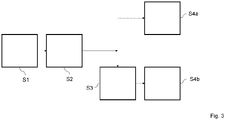
- Fig. 3 shows steps of a method according to an embodiment of the present invention.
- steps of a method for producing a solid electrolyte comprising lithium-ion conductive glass-ceramics are shown.
- the method comprises the following steps
- At least one of the embodiments of the present invention may enable the following advantages or provides or enables the following features
Landscapes
- Chemical & Material Sciences (AREA)
- Engineering & Computer Science (AREA)
- General Chemical & Material Sciences (AREA)
- Chemical Kinetics & Catalysis (AREA)
- Materials Engineering (AREA)
- Organic Chemistry (AREA)
- Life Sciences & Earth Sciences (AREA)
- Geochemistry & Mineralogy (AREA)
- Manufacturing & Machinery (AREA)
- Electrochemistry (AREA)
- Inorganic Chemistry (AREA)
- Dispersion Chemistry (AREA)
- Physics & Mathematics (AREA)
- Condensed Matter Physics & Semiconductors (AREA)
- General Physics & Mathematics (AREA)
- Ceramic Engineering (AREA)
- Crystallography & Structural Chemistry (AREA)
- Secondary Cells (AREA)
- Conductive Materials (AREA)
- Battery Electrode And Active Subsutance (AREA)
Abstract
The present invention relates to a method for producing a solid electrolyte comprising lithium-ion conductive glass-ceramics, said method comprising the steps of- Providing at least one lithium ion conductor having a ceramic phase content and amorphous phase content,- Providing a powder of said at least one lithium ion conductor, said powder having a polydispersity index between 0.5 and 1.5, preferably between 0.8 and 1.3, preferably between 0.85 and 1.15,anda) Incorporating said powder into a polymer electrolyte or a polyelectrolyte and/orb) Forming an element using said powder.
Description
- The present invention relates to a method for producing a solid electrolyte comprising lithium-ion conductive glass-ceramics.
- The present invention further relates to a lithium-ion conductive glass-ceramics powder comprising at least one lithium ion conductor.
- The present invention further relates to a solid electrolyte.
- The present invention even further relates to a battery, preferably an all solid state battery or a lithium-air battery, comprising at least one battery component.
- The present invention even further relates to a system for producing a solid electrolyte comprising lithium-ion conductive glass-ceramics.
- Batteries, for instance lithium ion batteries are used in many different devices, in particular in portable devices like laptops, smartphones or the like, for providing electrical energy for those devices. Meanwhile, lithium ion batteries are also used in electric vehicles for providing electrical energy to the engine, i.e. one or more electric motors. Although classical lithium ion batteries have already a high energy density, the provided energy density is too low to allow a large driving range, which is comparable to the driving range of a combustion engine. Known lithium ion batteries have already an energy density, which is near the theoretical maximum. Solid state batteries may have the potential to overcome the limits of today's Lithium ion batteries. Replacing a liquid electrolyte by a solid electrolyte may enable new high energy density electrode materials like Lithium metal anodes. To achieve good cell performance a high ion conductivity of the solid electrolyte is important. Therefore, another focus is the conductivity of a lithium ion based battery, which is still rather low.
- In German patent application
DE 10 2017 128 719 A1 a lithium-ion-conducting composite material and process of producing are provided. The composite material includes at least one polymer and lithium-ion-conducting particles. The particles have a sphericity of at least 0.7. The composite material includes at least 20 vol % of the particles for a polydispersity index PI of the particle size distribution of <0.7 or are present in at least 30 vol % of the composite material for the polydispersity index in a range from 0.7 to <1.2, or are present in at least 40 vol % of the composite material for the polydispersity index of >1.2. - In German patent application
DE 10 2018 102 387 B3 a lithium ion-conducting glass ceramic is shown comprising a residual glass phase that is also ion-conducting, a process for the production thereof as well as its use in a battery. The glass ceramic comprises a main crystal phase which is isostructural to the NaSICon crystal phase, wherein the composition can be described with the following formula: Li1+x-yMy 5+Mx 3+M2-x-y 4+(PO4)3, wherein x is greater than 0 and at most 1, as well as greater than y. y may take values of between 0 and 1. Here, the following boundary condition has to be fulfilled: 1+x-y>1. Here, M represents a cation with the valence of +3, +4 or +5. M3+ is selected from Al, Y, Sc or B, wherein at least Al as trivalent cation is present. Independently thereof, M4+ is selected from Ti, Si or Zr, wherein at least Ti as tetravalent cation is present. Independently thereof, M5+ is selected from Nb, Ta or La. - In German patent application
DE 10 2014 100 684 A1 a glass ceramic containing lithium-ions and having a garnet-like main crystal phase having an amorphous proportion of at least 5% is disclosed. The garnet-like main crystal phase preferably has the chemical formula Li7+x-yMIIxMIII 3-xMIV 2-yMV yO12, wherein MII is a bivalent cation, MIII is a trivalent cation, MIV is a tetravalent cation, MV is a pentavalent cation. The glass ceramic is prepared by a melting technology preferably within a Skull crucible and has an ion conductivity of at least 5.10-5 S/cm, preferably of at least 1.10-4 S/cm. - Embodiments of the invention therefore address the problem of providing a higher conductivity of lithium-ion conductive glass-ceramics, a solid electrolyte and a battery. Embodiments of the invention address the further problem of providing a cost effective method for manufacturing and a corresponding system. Embodiments of the invention address the further problem of providing an alternative lithium-ion conductive glass-ceramics, an alternative solid electrolyte and an alternative battery and an alternative method for manufacturing as well as an alternative system.
- In an embodiment, the present invention provides a method for producing a solid electrolyte comprising lithium-ion conductive glass-ceramics, said method comprising the steps of
- Providing at least one lithium ion conductor having a ceramic phase content and amorphous phase content,
- Providing a powder of said at least one lithium ion conductor, said powder having a polydispersity index between 0.5 and 1.5, preferably between 0.8 and 1.3, preferably between 0.85 and 1.15,
and- a) Incorporating said powder into a polymer electrolyte or a polyelectrolyte and/or
- b) Forming an element using said powder.
- In a further embodiment, the present invention provides a lithium-ion conductive glass-ceramics powder comprising at least one lithium ion conductor, said at least one ion conductor comprising a ceramic phase content and amorphous phase content, wherein said at least one ion conductor has said powder having a polydispersity index between 0.5 and 1.5, preferably between 0.8 and 1.3, preferably between 0.85 and 1.15.
- In a further embodiment, the present invention provides a solid electrolyte, manufactured with a method according to one of the claims 1-7.
- In a further embodiment the present invention provides a battery, preferably an all solid state battery or a lithium-air battery, comprising at least one battery component, said at least one battery component comprising a solid electrolyte according to claim 15.
- In a further embodiment the present invention provides a system for producing a solid electrolyte comprising lithium-ion conductive glass-ceramics, preferably for performing with a method according to one of the claims 1-7, said system comprising a first provision entity adapted to provide at least one lithium ion conductor having a ceramic phase content and amorphous phase content,
a second provision entity adapted to provide a powder of said at least one lithium ion conductor, said powder having a polydispersity index between 0.5 and 1.5, preferably between 0.8 and 1.3, preferably between 0.85 and 1.15,
and - a) an incorporating entity adapted to incorporate said powder into a polymer electrolyte or a polyelectrolyte and/or
- b) a forming entity adapted to form an element using said powder.
- One of the advantages is that a higher conductivity of the lithium-ion conductor glass ceramics can be obtained compared to conventional lithium ion conductor glass-ceramics, in particular for the grain-core conductivity.
- The term "polydispersity index" relating to the particle size distribution is to be understood as common logarithm (logarithm with base 10) of the quotient of the d90- and d10-value of the diameter distribution : PI=log(d90/d10).
- The term "d-value" as basis for the d90-value and d10-value is determined as follows:
Independently of their real sphericity, the particles of a powder are generally distinguished with the aid of a volume-equivalent sphere diameter, which has to be measured, and are ordered into selected classes according to their size. To represent a particle size distribution, a determination is made of the quantity fractions with which the respective classes of particle are present in the powder. - This is done using different quantity types. If the particles are counted, the quantity type is the number. In the case of weightings, conversely, it is the mass or, in the case of homogeneous density Qr, the volume. Other types are derived from lengths, projection surfaces and surface areas.
- The following are distinguished:
Quantity type: Index r: Number 0 Length 1 Area 2 Volume (mass) 3 - One common quantity measure for describing the particle size distribution in powders is formed by the cumulative distribution Qr. The index r identifies the quantity type according to the table above.
- The cumulative distribution function Qr (d) indicates the standardized quantity of all particles having an equivalent diameter less than or equal to d. Explicitly defined below are cumulative distributions of the two most commonplace quantity types:
- Let Ni be the number of all particles investigated with a diameter d less than or equal to the diameter di under consideration and let N be the total number of all particles investigated. In that case

- Let mi be the mass of all particles investigated with a diameter d less than or equal to the diameter di under consideration, and let m be the total mass of all particles investigated. In that case
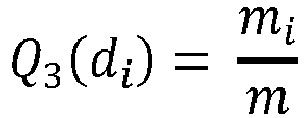
- In the sense of the invention, di values are understood to be equivalent diameter values for which the Q3 (di) cumulative distribution function adopts the following values:
- d10: Q3 (d10) = 10%, i.e. 10 weight.-% of the particles have a diameter less than or equal to d10.
- d50: Q3 (d50) = 50%, i.e. 50 weight.-% of the particles have a diameter less than or equal to d50.
- d90: Q3 (d90) = 90%, i.e. 90 weight.-% of the particles have a diameter less than or equal to d90.
- d99: Q3 (d99) = 99%, i.e. 99 weight.-% of the particles have a diameter less than or equal to d99.
- d100: Q3 (d100) = 100%, i.e. 100 weight.-% of the particles have a diameter less than or equal to d100.
- In the sense of the present specification, the term "polydispersity index" may be understood synonymously with the term "polydispersion index".
- Further features, advantages and preferred embodiments are disclosed or may become apparent in the following.
- According to an embodiment prior to step b), a step c) of pressing said powder to obtain a pellet as precursor for said element is performed. This may enhance forming an element using said powder.
- According to a further embodiment prior to step b), a step d) of incorporating said powder into a ceramic precursor composition, preferably a slip, is performed. This may enable to perform a casting forming process, for instance a film casting process, to prepare an element for sintering afterwards.
- According to a further embodiment in step d) at least one binding agent is added. This may enable a fine and enhanced control of the casting forming process.
- According to a further embodiment, said element is sintered. Sintering enables providing a solid element although the precursors of the element do not chemically bind to one another.
- According to a further embodiment, said at least one lithium ion conductor is provided comprising at least one of
- One or more ion lithium conductors having a garnet type structure, preferably LLZO, lithium niobium garnet, lithium tantalum garnet and/or lithium aluminium garnet, preferably according to general formula
Li7-3x+y'+2y"-z'-2z"Alx 3+La3-y-y'-y"My 3+My' 2+My" 1+Zr2-z-z'-z"Mz 4+Mz' 5+Mz" 6+O12+/-δ,
wherein M3+ represents one or more trivalent cations having an ion radius smaller than La3+, without Al3+, M2+ represents one or more bivalent cations, M1+represents one or more monovalent cations except Li+, M4+ represents one or more tetravalent cations except Zr4+, M5+ represents one or more pentavalent cations, and wherein M6+ represents one or more hexavalent cations, and wherein 0,1 ≤ x < 1, 0 < y < 2, 0 ≤ y' < 0,2, 0 ≤ y" < 0,2, 0 ≤ y'+y" < 0,2, 0 ≤ z < 0,5, 0 ≤ z' < 0,8, 0 ≤ z" < 0,5, 0 ≤ δ < 2, - One or more lithium ion conductors having a NASICON type structure, preferably LATP - Li1.3Al0.3Ti1.7P3O12, LAGP - Li1.5Al0.5Ge1.5(PO4)3 or any combination thereof,
- One or more lithium ion conductors having a perovskite type structure, preferably LLT - Li3xLa2/3-xTiO3,
- One or more lithium ion conductors having a spinel structure,
- One or more lithium ion conductors having a LISICON-type structure, preferably lithium zinc germanate.
- An advantage may be that a simple ion conductor is provided having a high conductivity at room temperature and being electrochemically stable.
- According to a further embodiment, said ceramic phase content is the main content of said lithium ion conductor. This may provide an even higher conductivity of the solid electrolyte.
- According to a further embodiment of the lithium-ion conductive glass-ceramics powder, said ceramic phase content is the main content of said lithium ion conductor. This may provide an even higher conductivity of the solid electrolyte.
- According to a further embodiment of the lithium-ion conductive glass-ceramics powder, the volume based median particle size of said powder is below 2 micrometers, preferably below 1.5 micrometers, preferably below 1.0 micrometers. This may enable to provide particles with a low diameter enabling an easier sintering process.
- According to a further embodiment of the lithium-ion conductive glass-ceramics powder, said lithium-ion conductive glass-ceramics powder having a grain-core conductivity of more than 0,75 mS/cm, preferably more than 1,5 mS/cm, preferably more than 2,3 mS/cm, preferably more than 5 mS/cm, preferably more than 6 mS/cm, and/or a grain-boundary conductivity of more than 0,5 mS/cm, preferably more than 0,75 mS/cm, preferably more than 0,9 mS/cm. This may allow a high conductivity of the lithium-ion conductive glass-ceramics powder enhancing the fields of application of end products based on said powder as well as their properties. The conductivity as described here was measured using a CRT-method as described in detail below in connection with
Figures 1 and2 . - According to a further embodiment of the lithium-ion conductive glass-ceramics powder, said at least one lithium ion conductor has an overall density lower than the density of said lithium ion conductor having only a ceramic phase, preferably wherein said overall density is at least 2.5% lower, preferably at least 3.0% lower, preferably at least 3.5% lower, preferably by at least 5% lower. This may allow to even further enhance the gravimetric energy density.
- According to a further embodiment of the lithium-ion conductive glass-ceramics powder, the purity of said ceramic phase content of said at least one lithium ion conductor is at least 95%, preferably more than 97%, preferably more than 99%. This may allow to even further enhance the conductivity since forming of unwanted substances like AlPO4 enriched phases at the grain-boundaries for LATP-based lithium ion conductive glass ceramic powder can reduced.
- According to a further embodiment of the battery, said battery comprising at least two electrodes, wherein said at least one battery component is a separator separating said at least two electrodes. This may have the advantage of providing a separator element for a battery based on the solid electrolyte avoiding short circuits within the battery.
- According to a further embodiment of the battery, said separator is arranged on a surface of at least one of said at least two electrodes and/or said separator is provided in form of a free-standing membrane. This may have the advantage of providing a separator in a flexible way.
- There are several ways how to design and further develop the teaching of the present invention in an advantageous way. To this end, it is to be referred to the patent claims subordinate to the independent claims on the one hand and to the following explanation of further examples of embodiments of the invention, illustrated by the drawing on the other hand. In connection with the explanation of the further embodiments of the invention by the aid of the drawing, generally further embodiments and developments of the teaching will be explained.
- In the drawings
- Fig. 1
- shows an X-ray diffraction diagram of glass ceramic LATP particles (left) and glass ceramic LLZO particles (right);
- Fig. 2
- shows Nyquist diagrams of Au-LATP-Au (left) and Au-LLZO-Au (right); and
- Fig. 3
- shows steps of a method according to an embodiment of the present invention.
- To determine the conductivity of elements comprising or being manufactured of a lithium-ion conductive glass-ceramics powder, the coaxial reflection technique - CRT in the following - is used. Using CRT enables to obtain knowledge about the underlying conductivity mechanisms considering also the local microstructure e.g. pores, grain-boundaries and the preparation conditions in particular for fast ionic conductors, i.e. σ>10-4 S/cm compared with Electrochemical Impedance Spectroscopy - EIS - and Nuclear Magnetic Resonance - NMR. Especially CRT enables to determine the relative permittivity more accurately at room temperature. Furthermore, the advantage of amorphous phase assisted sintering is shown in the following for two glass-ceramic LATP and one LLZO sample. For a 100% dense LATP sample CRT reveals a high grain-core conductivity of 6x10⁻³ S/cm similar to the conductivity of ideal single crystals.
- For example, LATP is known to have high grain-core conductivity, but high resistance pathways along grain-boundaries. Electrochemical impedance spectroscopy - EIS - measurement setups are capable to measure up to several MHz. At room temperature, the grain-core conductivity of LATP is too high to be well resolved. Therefore, measurements have to be performed below room temperature to detect both the grain-core and grain-boundary process and extrapolate via the Arrhenius law leading to uncertainties. Alternatively, sample geometry has to be changed, e.g. by increasing the thickness and decreasing the electrode area. Via NMR different processes can be detected on several timescales, however, conversion from NMR diffusion coefficients to the more relevant conductivity is cumbersome. This is regularly done via the Nernst-Einstein equation, which strictly only applies for conductors with non-interacting charge carriers. Although this is the case for dilute liquid solutions, deviations will occur for solid ion conductors. Additionally, the average jump distance is a crucial parameter. Yet, experimental estimation is a significant error source. A further disadvantage is that calculated activation energies typically differ from the ones obtained from EIS measurements.
- To prove the feasibility of the CRT-method, two glass-ceramic LATP powders and one glass-ceramic LLZO powder were sintered and measured via classical EIS and a coaxial reflection technique CRT.
- Furthermore, in the following it is shown that amorphous phase assisted sintering is a successful strategy to obtain dense samples with very high conductivity.
- These powders were obtained from a unique melting route at semi-industrial scale. Thus, inhomogeneity effects of different batches are less pronounced.
- The glass-ceramic lithium ion conductors Li1.3Al0.3Ti1.7P3O12 (LATP) and Li7La3Zr2O12 (LLZO) were produced via melting routes at the SCHOTT AG. As glass-ceramics, these ion conductors comprise both a ceramic and a unique amorphous phase. Two different LATP powders with the same crystalline stoichiometry, but different content of amorphous phase are produced.
- In the following production of the two LATP powders, named LATP-1 and LATP-2 is described in detail:
- A precursor glass composition for a lithium ion conductive phosphate based glass ceramics LATP-1 was melted as described for the highly conductive boron-free reference samples in
DE 10 2018 102 387 B3 , which is herein incorporated by reference. - Subsequently, the glass was ceramized and the as-obtained glass-ceramic was crushed and grinded in different comminution steps. The particles in the resulting powder had a diameter of 0.30 µm, 50% by weight a diameter of approximately 1.09 µm, 90% by weight a diameter of approximately 2.83 µm and 99% by weight a diameter of approximately 4.56 µm. In this case, the polydispersity index accordingly has a value of 0.97. The particle sizes were measured using the method of static light scattering according to ISO 13320 (2009) with a particle size measuring instrument of the company CILAS of type 1064. The measurement was carried out in water as medium and evaluated according to the Fraunhofer method.
- The slurry was dried on a rotary evaporator. From the obtained powder, compacts were produced and sintered at 1000 °C for 12 hours. The conductivity of the sintered compacts was then determined.
- A precursor glass composition for a lithium ion conductive phosphate-based glass ceramic LATP-2 was melted as described for the highly conductive boron-containing reference samples in
DE 10 2018 102 387 B3 , , which is herein incorporated by reference. - Subsequently, the glass was ceramized and the as-obtained glass-ceramic was crushed and grinded in different comminution steps. The particles in the resulting powder had a diameter of 0.28 µm, 50% by weight a diameter of approximately 1.01 µm, 90% by weight a diameter of approximately 2.84 µm and 99% by weight a diameter of approximately 4.68 µm. In this case, the polydispersity index accordingly has a value of 1.00. The particle sizes were measured using the method of static light scattering according to ISO 13320 (2009) on a particle size measuring device of the company CILAS of type 1064. The measurement was carried out in water as medium and evaluated according to the Fraunhofer method.
- The slurry was dried on a rotary evaporator. From the obtained powder compacts were produced and sintered at 800 °C for 12 hours. The conductivity of the sintered compacts was then determined.
- A precursor glass composition for a lithium ion conductive garnet based glass ceramic LLZO was melted as described in
DE 10 2014 100 684 A1 , , which is herein incorporated by reference. - Subsequently, the cooled melt was crushed and grinded in different comminution steps. The particles in the resulting powder had a diameter of about 0.36 µm (10 weight.-%), a diameter of about 1.14 µm (50 weight.-%), a diameter of about 2.52 µm (90 weight.-%) and a diameter of about 3.80 µm (99 weight.-%). In this case, the polydispersity index accordingly has a value of 0.85. The particle sizes were measured using the method of static light scattering according to ISO 13320 (2009) on a particle size measuring instrument of the company CILAS of type 1064. The measurement was carried out in water as medium and evaluated according to the Fraunhofer method.
- From the powder obtained in this way, compacts were produced and sintered at 1130 °C for 30 min. The conductivity of the sintered compacts was then determined.
- In addition, the conduction mechanism is in the following compared to a LLZO sample. LLZO has the disadvantage that the high conductive cubic modification was stabilized at room temperature.
- Compared to pure ceramic LATP and LLZO, the skeleton density of glass-ceramic LATP and LLZO is reduced, due to the lower density of the amorphous phase. The LATP with low amorphous phase content will be denoted as LATP-1 in the following. It has a skeleton density of 2.86 g/cm3, which is close to the pure ceramic density of 2.90 g/cm3. The LATP with high amorphous phase content has a skeleton density of 2.80 g/cm3 denoted as LATP-2 in the following. The difference in density is more significant for glass-ceramic LLZO with 4.84 g/cm3 compared to the ideal density of 5.10 g/cm3. Amongst all powders, the volume based median particle size is 1 µm or below. The particle size distributions are rather narrow. The powders were pressed to discs with a diameter of 10 mm and a thickness of 1 to 2 mm. Afterwards the discs were sintered. Finally, the sintered discs were transferred into an argon-filled glove box and polished with sandpaper.
- Prior to the measurements, the samples have been sputtered with gold to ensure sufficient electric contact. Conventional EIS has been performed with a Novocontrol Alpha-A Analyzer with a voltage amplitude of 20 mV in the frequency range of 0.1 Hz until 20 MHz. A sealed measurement cell was used to avoid contact of the LLZO with air. ZView2 of Scribner Associates Inc. was used for fitting. Then a Keysight E4991B Impedance Analyzer in the frequency range of 1 MHz to 3 GHz was used for the reflection measurement of the dielectric halfspace with an open-ended probe, i.e. skin depth >> thickness of the probe. As ion-conductors, in contrast to low-loss dielectric ceramics, have a higher dielectric-loss, i.e. due to the desired ionic motion, the additional dielectric-loss in the gold-layers does not deteriorate the results.
- Since at frequencies between 1 GHz and 3 GHz, a series inductance dominates the measurement due to the metallic connections and at room temperature the frequency range above 1 GHz is yet of no interest for evaluation, the highest frequencies containing no sample information, were neglected. All measurements were performed in air.
- For a high conductivity, the purity of the ceramic phase content of LATP and LLZO should be high. For example, LATP forms AlPO4 (JCPDS: 00-011-0500) enriched phases at grain-boundaries or unwanted TiO2 (JCPDS: 00-088-1175, 00-084-1286) impurity phases. LLZO samples are even more sensitive. Besides the tetragonal LLZO phase, La2Zr3O7 (JCPDS: 01-075-03446) and Li2CO3 (JCPDS: 01- 083-1454) are known insulating impurity phases. The XRD of glass-ceramic LATP-1, LATP-2 (left), and LLZO (right) is shown in
Figure 1 . - Only the LTP phase and the cubic LLZO phase can be detected without any additional impurities. Consequently, a high conductivity is to be expected. Furthermore, for the LATP-1 and LATP-2 the effect of the different amorphous phase content can be investigated without perturbations from any impurities.
- The open porosity of pressed pellets was detected to be about 34 %. However, after sintering LATP-1 samples still have a low geometrical density (solids concentration) of about 66 to 70 %. In contrast, the LATP-2 samples expose a shrinkage leading to high densities of up to nearly 100%, i.e. nearly no pores. Also for the LLZO samples, the amorphous phase leads to high densities of 95 to 97%.
- The combined normalized impedance data obtained from the conventional EIS measurement with the Novo-control Alpha-A analyzer and the high-frequency CRT measurement with the Keysight E4991B is shown in
Figure 2 . The impedance has been normalized with respect to the area and thickness of the samples for comparison, due to the different shrinkage. - At low frequencies, the blocking of lithium ions is visible. This leads to a straight line of constant slope. A deviation from 90° versus the abscissa Z' can be interpreted as an effect from a rough electrode surface with microscopic inhomogeneities.
- For the LATP-1 (
reference signs 101, 102) and LATP-2 (reference signs 103, 104) samples, conventional EIS resolves a depressed semicircle, i.e. a resistor in parallel with a constant-phase-element (CPE), at intermediate frequencies (reference signs 101, 103). - The obtained capacities at intermediate frequencies are in the order of 10-9 F. Capacitances in the nF-regime can be interpreted as a grain-boundary process. At high frequencies, the resistance from origin indicates another process. It is rather difficult to fit this process with another semi-circle accurately.
- In contrast, CRT is capable to resolve this semi-circle at room temperature. For LATP-1 (
reference signs 102, 104) there is a very small deviation of the impedance compared to the EIS-data (reference signs 101, 103). Due to experimental limitations, the thickness and diameter of this sample are at the upper limit that is acceptable for the metallic fixture of the sample holder. Nevertheless, the grain-core, also called "bulk" semi-circle is well resolved and the capacitance is in the order of 10-11 F. - The conductivity of the sintered discs can be calculated according to the following equation:

- In the equation R is the fitted resistance, t is the thickness of the sample, and A is the electrode area. For LATP-1 101, 102 the grain-boundary conductivity from EIS is 5.04x10⁻⁴ S/cm with a grain-core conductivity of 2.37x10⁻³ S/cm. The grain-core conductivity obtained from the CRT is 2.15x10⁻³ S/cm. LATP-2 103, 104 has a grain-boundary conductivity of 9.49x10⁻⁴ S/cm and a high grain-core conductivity of 6.00x10⁻³ S/cm, which matches well with the one obtained from the CRT setup of 5.91x10⁻³ S/cm. Therefore, both grain-core and grain-boundary conductivity increase with density.
- Additionally, the results of LATP-2 103, 104 can be compared to the glass-
ceramic LLZO Figure 2 on the right side only one semi-circle is visible even with the extension to the GHz regime. The capacitance is in the order of 10-11 F and can be identified with the bulk process. The conductivity of LLZO obtained from EIS is 8.29x10⁻⁴ S/cm (reference sign 201) and the one from the CRT is 8.23x10⁻⁴ S/cm (reference sign 202). These values are within a similar order of magnitude compared to other LLZO with high relative density. - Regarding both measurement methods, either EIS or CRT, the resulting conductivity values are similar. However, for the EIS measurement one has to assume, that no other processes in the unresolved high-frequency regime are present.
- The high-frequency relative permittivity (dielectric constant) εr can be derived via the following equation:


- In contrast, via CRT the fast ionic transport processes are well resolved at room temperature. Hence, both conductivity and high-frequency relative permittivity can be determined precisely.
In the following tableEstimation of the relative permittivity according to equation 2Relative permittivity from EIS Relative permittivity from CRT LATP-1 73.78 32.20 LATP-2 106.17 76.83 LLZO 72.87 93.31 - Nevertheless, significant differences arise from the limited resolution of EIS. Furthermore, the values were highly temperature-dependent due to the limited frequency range of the EIS.
- To conclude, measurements using the coaxial reflection technique enable accurate measurements expanding the measurement range of conventional electrochemical impedance spectrometers. As a result, the ultra-fast conductivity processes at high frequencies could be resolved and interpreted, complementing first estimations from NMR or microelectrode measurements. Furthermore, reliable high-frequency relative permittivities can be calculated accurately at room temperature.
- Amorphous-phase assisted sintering allows obtaining electrolytes with enhanced microstructure and a relative density of up to 100%. By optimizing the amorphous phase, glass-ceramic LATP has a high grain-boundary conductivity close to 10-3 S/cm. Moreover, the resolved grain-core conductivity of 6x10⁻³ S/cm matches well with the data known from single-crystals, demonstrating the feasibility of the coaxial reflection technique.
-
Fig. 3 shows steps of a method according to an embodiment of the present invention. - In detail, steps of a method for producing a solid electrolyte comprising lithium-ion conductive glass-ceramics are shown.
- The method comprises the following steps
- Providing S1 at least one lithium ion conductor having a ceramic phase content and amorphous phase content,
- Providing S2 a powder of said at least one lithium ion conductor, said powder having a polydispersity index between 0.5 and 1.5, preferably between 0.8 and 1.3, preferably between 0.85 and 1.15,
and- a) Incorporating S4a said powder into a polymer electrolyte or a polyelectrolyte and/or
- b) pressing S3 said powder to obtain a pellet as precursor for said element is performed and
- c) Forming S4b an element using said powder.
- To summarize, at least one of the embodiments of the present invention may enable the following advantages or provides or enables the following features
- high overall conductivity
- measurement of ultra-fast conductivity processes at high frequencies
- simple and cost-effective implementation
- solid state electrolyte having a high conductivity, in particular very high grain-core conductivity above 5 mS/cm
- Many modifications and other embodiments of the invention set forth herein will come to mind to the one skilled in the art to which the invention pertains having the benefit of the teachings presented in the foregoing description and the associated drawings. Therefore, it is to be understood that the invention is not to be limited to the specific embodiments disclosed and that modifications and other embodiments are intended to be included within the scope of the appended claims. Although specific terms are employed herein, they are used in a generic and descriptive sense only and not for purposes of limitation.
-
- 101, 102
- Complex impedance of LATP-1
- 103, 104
- Complex impedance of LATP-2
- 201,202
- Complex impedance of LLZO
Claims (15)
- Method for producing a solid electrolyte comprising lithium-ion conductive glass-ceramics, said method comprising the steps of- Providing at least one lithium ion conductor having a ceramic phase content and amorphous phase content,- Providing a powder of said at least one lithium ion conductor, said powder having a polydispersity index between 0.5 and 1.5, preferably between 0.8 and 1.3, preferably between 0.85 and 1.15,
anda) Incorporating said powder into a polymer electrolyte or a polyelectrolyte and/orb) Forming an element using said powder. - Method according to claim 1, wherein prior to step b), a step c) pressing said powder to obtain a pellet as precursor for said element is performed.
- Method according to one of the claims 1-2, wherein prior to step b), a step d) incorporating said powder into a ceramic precursor composition, preferably a slip, is performed, preferably wherein in step d) at least one binding agent is added.
- Method according to one of the claims 1-3, wherein said element is sintered.
- Method according to one of the claims 1-4, wherein said at least one lithium ion conductor is provided comprising at least one of- One or more ion lithium conductors having a garnet type structure, preferably LLZO, lithium niobium garnet, lithium tantalum garnet and/or lithium aluminium garnet, preferably according to general formula
Li7-3x+y'+2y"-z'-2z"Alx 3+La3-y-y'-y'My 3+My'2+My" 1+Zr2-z-z'-z"MZ 4+Mz' 5+Mz" 6+O12+/-δ,
wherein M3+ represents one or more trivalent cations having an ion radius smaller than La3+, without Al3+, M2+ represents one or more bivalent cations, M1+represents one or more monovalent cations except Li+, M4+ represents one or more tetravalent cations except Zr4+, M5+ represents one or more pentavalent cations, and wherein M6+ represents one or more hexavalent cations, and wherein 0,1 ≤ x < 1, 0 < y < 2, 0 ≤ y' < 0,2, 0 ≤ y" < 0,2, 0 ≤ y'+y" < 0,2, 0 ≤ z < 0,5, 0 ≤ z' < 0,8, 0 ≤ z" < 0,5, 0 ≤ δ < 2,- One or more lithium ion conductors having a NASICON type structure, preferably LATP - Li1.3Al0.3T1.7P3O12, LAGP - Li1.5Al0.5Ge1.5(PO4)3 or any combination thereof,- One or more lithium ion conductors having a perovskite type structure, preferably LLT - Li3xLa2/3-xTiO3,- One or more lithium ion conductors having a spinel structure,- One or more lithium ion conductors having a LISICON-type structure, preferably lithium zinc germanate. - Method according to one of the claims 1-5, wherein said ceramic phase content is the main content of said lithium ion conductor.
- Lithium-ion conductive glass-ceramics powder comprising at least one lithium ion conductor, said at least one lithium ion conductor comprising a ceramic phase content and amorphous phase content, and wherein said powder having a polydispersity index between 0.5 and 1.5, preferably between 0.8 and 1.3, preferably between 0.85 and 1.15, preferably wherein said ceramic phase content is the main content of said lithium ion conductor.
- Lithium-ion conductive glass-ceramics powder according to claim 7, wherein the volume based median particle size of said powder is below 2 micrometers, preferably below 1.5 micrometers, preferably below 1.0 micrometers.
- Lithium-ion conductive glass-ceramics powder according to one of the claims 7-8, said lithium-ion conductive glass-ceramics powder having a grain-core conductivity of more than 0,75 mS/cm, preferably more than 1,5 mS/cm, preferably more than 2,3 mS/cm, preferably more than 5 mS/cm, preferably more than 6 mS/cm, and/or a grain-boundary conductivity of more than 0,5 mS/cm, preferably more than 0,75 mS/cm, preferably more than 0,9 mS/cm.
- Lithium-ion conductive glass-ceramics powder according to one of the claims 7-9, wherein said at least one lithium ion conductor has an overall density lower than the density of said lithium ion conductor having only a ceramic phase, preferably wherein said overall density is at least 2.5% lower, preferably at least 3.0% lower, preferably at least 3.5% lower, preferably by at least 5% lower.
- Lithium-ion conductive glass-ceramics powder according to one of the claims 7-10, wherein the purity of said ceramic phase content of said at least one lithium ion conductor is at least 95%, preferably more than 97%, preferably more than 99%.
- Lithium-ion conductive glass-ceramics powder according to one of the claims 7-11, wherein said at least one ion conductor comprising at least one of- One or more ion conductors having a garnet type structure, preferably LLZO - Li6.4La3Zr1.4Ta0.6O12, lithium niobium garnet and/or lithium tantalum garnet,- One or more ion conductors having a NASICON type structure, preferably LATP - Li1.3Al0.3Ti1.7P3O12, LAGP - Li1.5Al0.5Ge1.5(PO4)3 or any combination thereof,- One or more ion conductors having a perovskite type structure, preferably LLT - Li3xLa2/3-xTiO3,- One or more ion conductors having a spinel structure,- One or more ion conductors having a LISICON-type structure, preferably lithium zinc germanate.
- Solid electrolyte manufactured with a method according to one of the claims 1-6.
- Battery, preferably an all solid state battery or a lithium-air battery, comprising at least one battery component, said at least one battery component comprising a solid electrolyte according to claim 13, preferably said battery comprising at least two electrodes and wherein said at least one battery component is a separator separating said at least two electrodes, preferably wherein said separator is arranged on a surface of at least one of said at least two electrodes and/or said separator is provided in form of a free-standing membrane.
- System for producing a solid electrolyte comprising lithium-ion conductive glass-ceramics, preferably for performing with a method according to one of the claims 1-6, said system comprising
a first provision entity adapted to provide at least one lithium ion conductor having a ceramic phase content and amorphous phase content,
a second provision entity adapted to provide a powder of said at least one lithium ion conductor, said powder having a polydispersity index between 0.5 and 1.5, preferably between 0.8 and 1.3, preferably between 0.85 and 1.15,
anda) an incorporating entity adapted to incorporate said powder into a polymer electrolyte or a polyelectrolyte and/orb) a forming entity adapted to form an element using said powder.
Priority Applications (5)
| Application Number | Priority Date | Filing Date | Title |
|---|---|---|---|
| EP20204965.6A EP3993122A1 (en) | 2020-10-30 | 2020-10-30 | Solid electrolyte and a lithium-ion conductive glass-ceramics |
| CN202111261273.8A CN114447419A (en) | 2020-10-30 | 2021-10-28 | Solid electrolyte and lithium ion conductive glass ceramic |
| KR1020210145710A KR20220058453A (en) | 2020-10-30 | 2021-10-28 | Solid electrolyte and a lithium-ion conductive glass-ceramics |
| JP2021177614A JP2022074121A (en) | 2020-10-30 | 2021-10-29 | Solid electrolyte and lithium ion conductive glass ceramic |
| US17/516,187 US20220140387A1 (en) | 2020-10-30 | 2021-11-01 | Solid electrolyte and a lithium-ion conductive glass-ceramics |
Applications Claiming Priority (1)
| Application Number | Priority Date | Filing Date | Title |
|---|---|---|---|
| EP20204965.6A EP3993122A1 (en) | 2020-10-30 | 2020-10-30 | Solid electrolyte and a lithium-ion conductive glass-ceramics |
Publications (1)
| Publication Number | Publication Date |
|---|---|
| EP3993122A1 true EP3993122A1 (en) | 2022-05-04 |
Family
ID=73043080
Family Applications (1)
| Application Number | Title | Priority Date | Filing Date |
|---|---|---|---|
| EP20204965.6A Pending EP3993122A1 (en) | 2020-10-30 | 2020-10-30 | Solid electrolyte and a lithium-ion conductive glass-ceramics |
Country Status (5)
| Country | Link |
|---|---|
| US (1) | US20220140387A1 (en) |
| EP (1) | EP3993122A1 (en) |
| JP (1) | JP2022074121A (en) |
| KR (1) | KR20220058453A (en) |
| CN (1) | CN114447419A (en) |
Cited By (1)
| Publication number | Priority date | Publication date | Assignee | Title |
|---|---|---|---|---|
| CN119812451A (en) * | 2025-02-17 | 2025-04-11 | 广东鲲镕纳米材料有限公司 | A solid electrolyte and its preparation method and application |
Families Citing this family (3)
| Publication number | Priority date | Publication date | Assignee | Title |
|---|---|---|---|---|
| US20230163351A1 (en) * | 2021-11-25 | 2023-05-25 | eJoule, Inc. | Large-scale synthesis of powders of solid-state electrolyte material particles for solid-state batteries, systems and methods thereof |
| WO2024228594A1 (en) * | 2023-05-03 | 2024-11-07 | 에스케이온 주식회사 | Ceramic sheet, method for preparing same, and all-solid secondary battery comprising same |
| CN117039114B (en) * | 2023-08-29 | 2024-04-12 | 深圳市贝特瑞新能源技术研究院有限公司 | A rechargeable high-safety lithium battery |
Citations (4)
| Publication number | Priority date | Publication date | Assignee | Title |
|---|---|---|---|---|
| DE102014100684A1 (en) | 2014-01-22 | 2015-07-23 | Schott Ag | Ion-conducting glass-ceramic with garnet-like crystal structure |
| US20190173130A1 (en) * | 2017-12-04 | 2019-06-06 | Schott Ag | Lithium-ion-conducting composite material and process for producing |
| DE102018102387B3 (en) | 2018-02-02 | 2019-06-27 | Schott Ag | Glass-ceramic with ion-conducting residual glass phase and process for its preparation |
| JP2020126760A (en) * | 2019-02-04 | 2020-08-20 | 三井金属鉱業株式会社 | Solid electrolyte |
Family Cites Families (6)
| Publication number | Priority date | Publication date | Assignee | Title |
|---|---|---|---|---|
| DE102011121236A1 (en) * | 2011-12-12 | 2013-06-13 | Fraunhofer-Gesellschaft zur Förderung der angewandten Forschung e.V. | Solid electrolyte for use in lithium-air or lithium-water storage batteries |
| US12125967B2 (en) * | 2017-06-06 | 2024-10-22 | The Regents Of The University Of Michigan | Method for suppressing metal propagation in solid electrolytes |
| ES2973278T3 (en) * | 2017-06-23 | 2024-06-19 | Quantumscape Battery Inc | Lithium-Filled Garnet Electrolytes with Secondary Phase Inclusions |
| JP2019200851A (en) * | 2018-05-14 | 2019-11-21 | トヨタ自動車株式会社 | Solid electrolyte, all-solid-state battery and method for producing solid electrolyte |
| CA3134579A1 (en) * | 2019-04-30 | 2020-11-05 | Gregory Wrobel | Lithium lanthanum zirconium oxide (llzo) powder |
| TWI755056B (en) * | 2019-09-13 | 2022-02-11 | 德商贏創運營有限公司 | Preparation of nanostructured mixed lithium zirconium oxides by means of spray pyrolysis |
-
2020
- 2020-10-30 EP EP20204965.6A patent/EP3993122A1/en active Pending
-
2021
- 2021-10-28 KR KR1020210145710A patent/KR20220058453A/en active Pending
- 2021-10-28 CN CN202111261273.8A patent/CN114447419A/en active Pending
- 2021-10-29 JP JP2021177614A patent/JP2022074121A/en active Pending
- 2021-11-01 US US17/516,187 patent/US20220140387A1/en active Pending
Patent Citations (5)
| Publication number | Priority date | Publication date | Assignee | Title |
|---|---|---|---|---|
| DE102014100684A1 (en) | 2014-01-22 | 2015-07-23 | Schott Ag | Ion-conducting glass-ceramic with garnet-like crystal structure |
| US20190173130A1 (en) * | 2017-12-04 | 2019-06-06 | Schott Ag | Lithium-ion-conducting composite material and process for producing |
| DE102017128719A1 (en) | 2017-12-04 | 2019-06-06 | Schott Ag | A lithium ion conductive composite material comprising at least a polymer and lithium ion conductive particles, and methods of producing a lithium ion conductor from the composite material |
| DE102018102387B3 (en) | 2018-02-02 | 2019-06-27 | Schott Ag | Glass-ceramic with ion-conducting residual glass phase and process for its preparation |
| JP2020126760A (en) * | 2019-02-04 | 2020-08-20 | 三井金属鉱業株式会社 | Solid electrolyte |
Cited By (1)
| Publication number | Priority date | Publication date | Assignee | Title |
|---|---|---|---|---|
| CN119812451A (en) * | 2025-02-17 | 2025-04-11 | 广东鲲镕纳米材料有限公司 | A solid electrolyte and its preparation method and application |
Also Published As
| Publication number | Publication date |
|---|---|
| US20220140387A1 (en) | 2022-05-05 |
| JP2022074121A (en) | 2022-05-17 |
| KR20220058453A (en) | 2022-05-09 |
| CN114447419A (en) | 2022-05-06 |
Similar Documents
| Publication | Publication Date | Title |
|---|---|---|
| Pesci et al. | Establishing ultralow activation energies for lithium transport in garnet electrolytes | |
| EP3993122A1 (en) | Solid electrolyte and a lithium-ion conductive glass-ceramics | |
| Waetzig et al. | Synthesis and sintering of Li1. 3Al0. 3Ti1. 7 (PO4) 3 (LATP) electrolyte for ceramics with improved Li+ conductivity | |
| Kwatek et al. | Structural and electrical properties of ceramic Li-ion conductors based on Li1. 3Al0. 3Ti1. 7 (PO4) 3-LiF | |
| Amores et al. | Fast microwave-assisted synthesis of Li-stuffed garnets and insights into Li diffusion from muon spin spectroscopy | |
| Reimers et al. | Electrochemical and in situ X‐ray diffraction studies of lithium intercalation in Li x CoO2 | |
| Naqash et al. | Microstructure–conductivity relationship of Na3Zr2 (SiO4) 2 (PO4) ceramics | |
| Amores et al. | Li1. 5La1. 5 M O6 (M= W6+, Te6+) as a new series of lithium-rich double perovskites for all-solid-state lithium-ion batteries | |
| Mertens et al. | Superionic bulk conductivity in Li1. 3Al0. 3Ti1. 7 (PO4) 3 solid electrolyte | |
| Tan et al. | Magnetron sputtering preparation of nitrogen-incorporated lithium–aluminum–titanium phosphate based thin film electrolytes for all-solid-state lithium ion batteries | |
| Kwatek et al. | Impact of Li2. 9B0. 9S0. 1O3. 1 glass additive on the structure and electrical properties of the LATP-based ceramics | |
| Rai et al. | Fabrication and performances of high lithium-ion conducting solid electrolytes based on NASICON Li1. 3Al0. 3Ti1. 7-xZrx (PO4) 3 (0≤ x≤ 0.2) | |
| Spannenberger et al. | Annealing-induced vacancy formation enables extraordinarily high Li+ ion conductivity in the amorphous electrolyte 0.33 LiI+ 0.67 Li3PS4 | |
| Polczyk et al. | Mitigation of grain boundary resistance in La2/3-xLi3xTiO3 perovskite as an electrolyte for solid-state Li-ion batteries | |
| McClelland et al. | In situ diffusion measurements of a NASICON-structured all-solid-state battery using muon spin relaxation | |
| Hood et al. | Mechanistic understanding and strategies to design interfaces of solid electrolytes: insights gained from transmission electron microscopy | |
| Yamada et al. | Concerted influence of microstructure and adsorbed water on lithium-ion conduction of Li1. 3Al0. 3Ti1. 7 (PO4) 3 | |
| Eckhardt et al. | Influence of microstructure on the material properties of LLZO ceramics derived by impedance spectroscopy and brick layer model analysis | |
| Cretu et al. | The impact of intergrain phases on the ionic conductivity of the LAGP solid electrolyte material prepared by spark plasma sintering | |
| Wätzig et al. | Li+ conductivity in the system Li2O-Nb2O5-P2O5-LiCl as solid electrolyte based on synthesized glasses and sintered glass ceramics | |
| Pershina et al. | Synthesis, structural investigations and properties of Si-modified Li1. 5Al0. 5Ge1. 5 (PO4) 3 glass-ceramics | |
| Samsinger et al. | Fast ion conduction of sintered glass-ceramic lithium ion conductors investigated by impedance spectroscopy and coaxial reflection technique | |
| Kremer et al. | A simple method for the study of heteroionic interface impedances in solid electrolyte multilayer cells containing LLZO | |
| Kunshina et al. | Conductivity and mechanical properties of lithium-conducting ceramic solid electrolytes with the NASICON structure | |
| Ladenstein et al. | Anomalies in bulk ion transport in the solid solutions of Li7La3M2O12 (M= Hf, Sn) and Li5La3Ta2O12 |
Legal Events
| Date | Code | Title | Description |
|---|---|---|---|
| STAA | Information on the status of an ep patent application or granted ep patent |
Free format text: STATUS: EXAMINATION IS IN PROGRESS |
|
| PUAI | Public reference made under article 153(3) epc to a published international application that has entered the european phase |
Free format text: ORIGINAL CODE: 0009012 |
|
| 17P | Request for examination filed |
Effective date: 20201030 |
|
| AK | Designated contracting states |
Kind code of ref document: A1 Designated state(s): AL AT BE BG CH CY CZ DE DK EE ES FI FR GB GR HR HU IE IS IT LI LT LU LV MC MK MT NL NO PL PT RO RS SE SI SK SM TR |
|
| P01 | Opt-out of the competence of the unified patent court (upc) registered |
Effective date: 20230516 |