EP3993114B1 - Fuel cell humidifier and manufacturing method therefor - Google Patents
Fuel cell humidifier and manufacturing method therefor Download PDFInfo
- Publication number
- EP3993114B1 EP3993114B1 EP20832808.8A EP20832808A EP3993114B1 EP 3993114 B1 EP3993114 B1 EP 3993114B1 EP 20832808 A EP20832808 A EP 20832808A EP 3993114 B1 EP3993114 B1 EP 3993114B1
- Authority
- EP
- European Patent Office
- Prior art keywords
- hollow fiber
- fixing layer
- case
- mid
- fiber membranes
- Prior art date
- Legal status (The legal status is an assumption and is not a legal conclusion. Google has not performed a legal analysis and makes no representation as to the accuracy of the status listed.)
- Active
Links
Images




Classifications
-
- H—ELECTRICITY
- H01—ELECTRIC ELEMENTS
- H01M—PROCESSES OR MEANS, e.g. BATTERIES, FOR THE DIRECT CONVERSION OF CHEMICAL ENERGY INTO ELECTRICAL ENERGY
- H01M8/00—Fuel cells; Manufacture thereof
- H01M8/04—Auxiliary arrangements, e.g. for control of pressure or for circulation of fluids
- H01M8/04298—Processes for controlling fuel cells or fuel cell systems
- H01M8/04694—Processes for controlling fuel cells or fuel cell systems characterised by variables to be controlled
- H01M8/04828—Humidity; Water content
-
- H—ELECTRICITY
- H01—ELECTRIC ELEMENTS
- H01M—PROCESSES OR MEANS, e.g. BATTERIES, FOR THE DIRECT CONVERSION OF CHEMICAL ENERGY INTO ELECTRICAL ENERGY
- H01M8/00—Fuel cells; Manufacture thereof
- H01M8/04—Auxiliary arrangements, e.g. for control of pressure or for circulation of fluids
- H01M8/04082—Arrangements for control of reactant parameters, e.g. pressure or concentration
- H01M8/04089—Arrangements for control of reactant parameters, e.g. pressure or concentration of gaseous reactants
- H01M8/04119—Arrangements for control of reactant parameters, e.g. pressure or concentration of gaseous reactants with simultaneous supply or evacuation of electrolyte; Humidifying or dehumidifying
- H01M8/04126—Humidifying
- H01M8/04141—Humidifying by water containing exhaust gases
-
- B—PERFORMING OPERATIONS; TRANSPORTING
- B01—PHYSICAL OR CHEMICAL PROCESSES OR APPARATUS IN GENERAL
- B01D—SEPARATION
- B01D63/00—Apparatus in general for separation processes using semi-permeable membranes
- B01D63/02—Hollow fibre modules
-
- H—ELECTRICITY
- H01—ELECTRIC ELEMENTS
- H01M—PROCESSES OR MEANS, e.g. BATTERIES, FOR THE DIRECT CONVERSION OF CHEMICAL ENERGY INTO ELECTRICAL ENERGY
- H01M8/00—Fuel cells; Manufacture thereof
- H01M8/04—Auxiliary arrangements, e.g. for control of pressure or for circulation of fluids
- H01M8/04082—Arrangements for control of reactant parameters, e.g. pressure or concentration
- H01M8/04089—Arrangements for control of reactant parameters, e.g. pressure or concentration of gaseous reactants
- H01M8/04119—Arrangements for control of reactant parameters, e.g. pressure or concentration of gaseous reactants with simultaneous supply or evacuation of electrolyte; Humidifying or dehumidifying
- H01M8/04126—Humidifying
- H01M8/04149—Humidifying by diffusion, e.g. making use of membranes
-
- H—ELECTRICITY
- H01—ELECTRIC ELEMENTS
- H01M—PROCESSES OR MEANS, e.g. BATTERIES, FOR THE DIRECT CONVERSION OF CHEMICAL ENERGY INTO ELECTRICAL ENERGY
- H01M8/00—Fuel cells; Manufacture thereof
- H01M8/04—Auxiliary arrangements, e.g. for control of pressure or for circulation of fluids
- H01M8/04298—Processes for controlling fuel cells or fuel cell systems
- H01M8/04313—Processes for controlling fuel cells or fuel cell systems characterised by the detection or assessment of variables; characterised by the detection or assessment of failure or abnormal function
- H01M8/04664—Failure or abnormal function
-
- B—PERFORMING OPERATIONS; TRANSPORTING
- B01—PHYSICAL OR CHEMICAL PROCESSES OR APPARATUS IN GENERAL
- B01D—SEPARATION
- B01D2313/00—Details relating to membrane modules or apparatus
- B01D2313/02—Specific tightening or locking mechanisms
- B01D2313/025—Specific membrane holders
-
- B—PERFORMING OPERATIONS; TRANSPORTING
- B01—PHYSICAL OR CHEMICAL PROCESSES OR APPARATUS IN GENERAL
- B01D—SEPARATION
- B01D2313/00—Details relating to membrane modules or apparatus
- B01D2313/04—Specific sealing means
-
- Y—GENERAL TAGGING OF NEW TECHNOLOGICAL DEVELOPMENTS; GENERAL TAGGING OF CROSS-SECTIONAL TECHNOLOGIES SPANNING OVER SEVERAL SECTIONS OF THE IPC; TECHNICAL SUBJECTS COVERED BY FORMER USPC CROSS-REFERENCE ART COLLECTIONS [XRACs] AND DIGESTS
- Y02—TECHNOLOGIES OR APPLICATIONS FOR MITIGATION OR ADAPTATION AGAINST CLIMATE CHANGE
- Y02E—REDUCTION OF GREENHOUSE GAS [GHG] EMISSIONS, RELATED TO ENERGY GENERATION, TRANSMISSION OR DISTRIBUTION
- Y02E60/00—Enabling technologies; Technologies with a potential or indirect contribution to GHG emissions mitigation
- Y02E60/30—Hydrogen technology
- Y02E60/50—Fuel cells
-
- Y—GENERAL TAGGING OF NEW TECHNOLOGICAL DEVELOPMENTS; GENERAL TAGGING OF CROSS-SECTIONAL TECHNOLOGIES SPANNING OVER SEVERAL SECTIONS OF THE IPC; TECHNICAL SUBJECTS COVERED BY FORMER USPC CROSS-REFERENCE ART COLLECTIONS [XRACs] AND DIGESTS
- Y02—TECHNOLOGIES OR APPLICATIONS FOR MITIGATION OR ADAPTATION AGAINST CLIMATE CHANGE
- Y02P—CLIMATE CHANGE MITIGATION TECHNOLOGIES IN THE PRODUCTION OR PROCESSING OF GOODS
- Y02P70/00—Climate change mitigation technologies in the production process for final industrial or consumer products
- Y02P70/50—Manufacturing or production processes characterised by the final manufactured product
Definitions
- the present disclosure relates to a humidifier for a fuel cell and a method of manufacturing the same, and more particularly to a humidifier for a fuel cell capable of certainly preventing gas leakage due to repeated operation and stop of a fuel cell and being manufactured with relatively low manufacturing cost and high productivity and a method of manufacturing the same.
- a fuel cell is a power generation cell that combines hydrogen and oxygen to generate electricity.
- the fuel cell has advantages in that it is possible to continuously generate electricity as long as hydrogen and oxygen are supplied, unlike a general chemical cell, such as a dry cell or a storage cell, and in that there is no heat loss, whereby efficiency of the fuel cell is about twice as high as efficiency of an internal combustion engine.
- PEMFC polymer electrolyte membrane fuel cell
- MEA membrane electrode assembly
- a bubbler humidification method of filling a pressure-resistant container with water and allowing a target gas to pass through a diffuser in order to supply moisture 2) a direct injection method of calculating the amount of moisture to be supplied that is necessary for fuel cell reaction and directly supplying moisture to a gas stream pipe through a solenoid valve, and 3) a membrane humidification method of supplying moisture to a gas fluid bed using a polymer separation membrane are used as methods of humidifying the polymer electrolyte membrane or the proton exchange membrane.
- a conventional membrane humidification type humidifier 1000 includes a humidifying module 1100 in which moisture exchange is performed between gas supplied from the outside and off-gas discharged from a fuel cell stack (not shown), and caps 1200 coupled respectively to opposite ends of the humidifying module 1100.
- moisture contained in the off-gas is transmitted through the hollow fiber membranes 1120 to humidify gas flowing along the hollow parts of the hollow fiber membranes 1120.
- each of the resin layers 1140 is generally formed by hardening a liquid polymer, such as liquid polyurethane resin, using a casting method (dip casting or centrifugal casting).
- the above method has problems of low productivity and high manufacturing cost in that (i) the sealant must be applied so as to accurately match with the groove, whereby workability is low, (ii) a considerably long time of 24 hours or more is required to harden the sealant, and (iii) a separate space for storing the humidifying module 1100 is required until the sealant is hardened.
- the present disclosure relates to a humidifier for a fuel cell capable of preventing problems caused by limitations and shortcomings of the related art described above and a method of manufacturing the same.
- a humidifier for a fuel cell including a humidifying module configured to humidify gas supplied from outside using moisture in off-gas discharged from a fuel cell stack and caps coupled respectively to opposite ends of the humidifying module, wherein the humidifying module includes a mid-case open at opposite ends thereof, a plurality of hollow fiber membranes disposed in the mid-case, a fixing layer in which ends of the hollow fiber membranes are potted, and a composite gasket having a groove into which the end of the mid-case is inserted, the composite gasket includes an inner body based on the groove, the inner body being located inside the mid-case, an outer body based on the groove, the outer body being located outside the mid-case, and a connecting body located between the inner body and the outer body, the connecting body being formed of a first material, and at least a portion of the inner body is adhered to the fixing layer and is formed of a second material different from the first material.
- the first material may be soft rubber
- the second material may be metal, rigid plastic, hard rubber, or a different kind of soft rubber from the first material.
- the second material may include soft urethane rubber.
- the inner body may include a first part directly connected to the connecting body, the first part being formed of the first material, and a second part adhered to the first part and to the fixing layer, the second part being formed of the second material.
- the interface between the first and second parts may have a step.
- the first part of the inner body may constitute a packing part formed of the first material together with the outer body and the connecting body, and the second part of the inner body may constitute a bracket part formed of the second material.
- the packing part and the bracket part may be integrally formed through injection molding.
- the composite gasket may further include a primer layer formed on at least a portion of the surface of the inner body, the primer layer including a rubber adhesive component, an acrylic adhesive component, a polyurethane adhesive component, an epoxy adhesive component, a silicone adhesive component, a polyamide-based adhesive component, a polyimide-based adhesive component, or a mixture of two or more thereof.
- the fixing layer may include a first fixing layer in which the ends of the hollow fiber membranes are potted, and a second fixing layer adhered to the inner body of the composite gasket while surrounding the first fixing layer.
- Both the first fixing layer and the second fixing layer may include polyurethane (PU) resin.
- PU polyurethane
- a method of manufacturing a humidifier for a fuel cell including preparing a hollow fiber membrane cartridge having a first fixing layer in which ends of a plurality of hollow fiber membranes are potted, inserting the hollow fiber membrane cartridge into a mid-case open at opposite ends thereof, preparing a composite gasket having a groove corresponding to the end of the mid-case, mounting the composite gasket on the end of the mid-case such that the end of the mid-case is inserted into the groove, forming a second fixing layer configured to fill a gap between the mid-case and an end of the hollow fiber membrane cartridge and a gap between the composite gasket and the end of the hollow fiber membrane cartridge, simultaneously cutting the first fixing layer, the second fixing layer, and the hollow fiber membranes to open the ends of the hollow fiber membranes, and fastening a cap to the mid-case such that the composite gasket is compressed by the cap, wherein the composite gasket includes an inner body based on the groove, the inner body being located inside the
- the inner body may include a first part directly connected to the connecting body, the first part being formed of the first material, and a second part adhered to the first part and to the fixing layer, the second part being formed of the second material.
- the preparing the composite gasket may include performing a co-injection molding to simultaneously form the bracket part and the packing part.
- FIGS. 2 , 5 , 6 , and 7A to 7F are sectional views showing an end of a humidifier or a half-finished product, and the other end thereof has a substantially identical (or symmetrical) section.
- a humidifier 2000 for a fuel cell includes a humidifying module 2100 configured to humidify gas supplied from the outside using moisture in off-gas discharged from a fuel cell stack. Opposite ends of the humidifying module 2100 are coupled to caps 2200, respectively.
- the humidifying module 2100 in which moisture exchange is performed between gas supplied from the outside and off-gas supplied from the fuel cell stack, includes a mid-case 2110 open at opposite ends thereof, a plurality of hollow fiber membranes 2121 disposed in the mid-case 2110, a fixing layer 2122 in which ends of the hollow fiber membranes 2121 are potted, and a composite gasket 2130 having a groove into which the end of the mid-case 2110 is inserted.
- the mid-case 2110 has ports 2111 for off-gas introduction/discharge (only one is shown in FIG. 2 ).
- the mid-case 2110 may be formed of rigid plastic (e.g. polycarbonate, polyamide (PA), or polyphthalamide (PPA)) or metal, and may have a simple closed curve-shaped (e.g. circular or polygonal) traverse section. According to the embodiment of the present disclosure, the mid-case 2110 may have the same traverse section as the cap 2200.
- Each of the hollow fiber membranes 2121 may include a polymer membrane formed of polysulfone resin, polyethersulfone resin, sulfonated polysulfone resin, polyvinylidene fluoride (PVDF) resin, polyacrylonitrile (PAN) resin, polyimide resin, polyamide imide resin, polyester imide resin, or a mixture of two or more thereof.
- PVDF polyvinylidene fluoride
- PAN polyacrylonitrile
- Gas supplied from the outside through one cap 2200 is humidified while flowing along hollow parts of the hollow fiber membranes 2121, and is transmitted to the fuel cell stack through the other cap 2200.
- Off-gas introduced into the mid-case 2110 comes into contact with the outer surfaces of the hollow fiber membranes 2121, and is discharged from the mid-case 211.
- moisture contained in the off-gas is transmitted through the hollow fiber membranes 2121 to humidify gas flowing along the hollow parts of the hollow fiber membranes 2121.
- the fixing layer 2122 which may be formed of hard or soft polyurethane resin, must isolate an inner space of the cap 2200 from an inner space of the mid-case 2110 such that the cap 2200 fluidly communicates with only the hollow fiber membranes 2121.
- the fixing layer 2122 is alternately expanded and contracted as a result of repeated operation and stop of a fuel cell, whereby the fixing layer 2122 is separated from the mid-case 2110 due to a difference in coefficient of thermal expansion between the mid-case 2110 and the fixing layer 2122, and therefore a gap is generated therebetween, or (ii) there is a high probability of a gap being generated between the fixing layer 2122 and the mid-case 2110 due to vibration and/or impact.
- the gap between the fixing layer 2122 and the mid-case 2110 causes gas leakage, thereby reducing power generation efficiency of the fuel cell.
- Gas leakage that may be caused by generation of the gap between the fixing layer 2122 and the mid-case 2110 includes (i) external leakage by which off-gas in the inner space of the mid-case 2110 sequentially passes through the gap between the fixing layer 2122 and the mid-case 2110 and a gap between the cap 2200 and the mid-case 2110 and is then discharged out of the humidifier 2000 and (ii) internal leakage by which off-gas in the inner space of the mid-case 2110 sequentially passes through the gap between the fixing layer 2122 and the mid-case 2110 and a gap between the fixing layer 2122 and the cap 2200 and is then introduced into the inner space of the cap 2200.
- the humidifier 2000 for a fuel cell according to the present disclosure further includes the composite gasket 2130.
- the composite gasket 2130 may have a simple closed curve shape corresponding to the traverse section of the mid-case 2110.
- the composite gasket 2130 may have a groove G into which the end of the mid-case 2110 is inserted, and may include a packing part 2131 and a bracket part 2132, the packing part 2131 and the bracket part 2132 being formed of different materials.
- FIGS. 4(a) to 4(f) are sectional views of composite gaskets 2130 according to various embodiments of the present disclosure.
- the composite gasket 2130 includes an inner body 2130a based on a groove G into which the end of the mid-case 2110 is inserted, the inner body 2130a being located inside the mid-case 2110, an outer body 2130b based on the groove G, the outer body 2130b being located outside the mid-case 2110, and a connecting body 2130c located between the inner body 2130a and the outer body 2130b, the connecting body being formed of a first material.
- At least a portion of the inner body 2130a is formed of a second material, which is different from the first material.
- the second material may be a material that exhibits higher adhesive force with respect to the fixing layer 2122 than the first material, and the portion of the inner body 2130a that is formed of the second material may be strongly adhered to the fixing layer 2122.
- the connecting body 2130c of the composite gasket 2130 is formed of a first material (e.g. soft rubber) that has a relatively low hardness of 30 to 60 Shore A, it may be more preferably of 40 to 50 Shore A, so as to be compressed by pressure applied when the cap 2200 is fastened to the mid-case 2110 through a bolt 2310 and a nut 2320, and the portion of the inner body 2130a that comes into direct contact with the fixing layer 2122 may be formed of a material (e.g. metal, rigid plastic, hard rubber, or soft rubber) that exhibits higher adhesive force with respect to the fixing layer 2122 than the first material.
- a first material e.g. soft rubber
- the first material of the connecting body 2130c may include soft silicone rubber or soft urethane rubber
- the second material of the inner body 2130a may include polypropylene (PP), polyethylene terephthalate (PET), polystyrene (PS), polycarbonate (PC), acrylic resin, hard silicone, or hard urethane.
- the second material of the inner body 2130a may include soft urethane rubber.
- the inner body 2130a may include (i) a first part directly connected to the connecting body 2130c, the first part being formed of the first material, and (ii) a second part adhered to the first part and to the fixing layer 2122, the second part being formed of the second material.
- the interface between the first and second parts may have a step, as illustrated in FIGS. 4(a) and 4(b) .
- the first part of the inner body 2130a may constitute a packing part 2131 formed of the first material.
- the second part of the inner body 2130a may constitute a bracket part 2132 formed of the second material.
- the packing part 2131 and the bracket part 2132 may be integrally formed through injection molding, a detailed description of which will follow.
- the connecting body 2130c of the composite gasket 2130 is pressurized and compressed by the end of the mid-case 2110 and the cap 2200, whereby movement of gas through the interface between the composite gasket 2130 and the mid-case 2110 (i.e. external leakage) can be prevented, and therefore tight external sealing may be guaranteed.
- the packing part 2131 and the bracket part 2132 are integrally formed through injection molding, strong adhesive force therebetween may be obtained. Consequently, movement of gas through the interface between the packing part 2131 and the bracket part 2132 (i.e. through the interface between the first and second parts of the inner body 2130a) (i.e. internal leakage) can be prevented, and therefore excellent internal sealing may be guaranteed.
- bracket part 2132 i.e. the second part of the inner body 2130a
- the bracket part 2132 has excellent adhesive force with respect to the fixing layer 2122
- movement of gas through the interface between the bracket part 2132 and the fixing layer 2122 i.e. internal leakage
- internal sealing may be provided.
- the surface of the bracket part 2132 or the surface of the inner body 2130a may be treated with a primer, whereby the adhesive strength between the bracket part 2132 or the inner body 2130a and the fixing layer 2122 can be further increased, and therefore an internal sealing effect may be maximized.
- the composite gasket 2130 according to the present disclosure further includes a primer layer 2133 formed on at least a portion of the surface of the inner body 2130a, whereby the composite gasket may have stronger adhesive force with respect to the fixing layer 2122.
Landscapes
- Chemical & Material Sciences (AREA)
- Chemical Kinetics & Catalysis (AREA)
- Life Sciences & Earth Sciences (AREA)
- Engineering & Computer Science (AREA)
- Manufacturing & Machinery (AREA)
- Sustainable Development (AREA)
- Sustainable Energy (AREA)
- Electrochemistry (AREA)
- General Chemical & Material Sciences (AREA)
- Fuel Cell (AREA)
Description
- The present disclosure relates to a humidifier for a fuel cell and a method of manufacturing the same, and more particularly to a humidifier for a fuel cell capable of certainly preventing gas leakage due to repeated operation and stop of a fuel cell and being manufactured with relatively low manufacturing cost and high productivity and a method of manufacturing the same.
- A fuel cell is a power generation cell that combines hydrogen and oxygen to generate electricity. The fuel cell has advantages in that it is possible to continuously generate electricity as long as hydrogen and oxygen are supplied, unlike a general chemical cell, such as a dry cell or a storage cell, and in that there is no heat loss, whereby efficiency of the fuel cell is about twice as high as efficiency of an internal combustion engine.
- In addition, the fuel cell directly converts chemical energy generated by combination of hydrogen and oxygen into electrical energy, whereby the amount of contaminants that are discharged is small. Consequently, the fuel cell has advantages in that the fuel cell is environmentally friendly and in that a concern about depletion of resources due to an increase in energy consumption can be reduced.
- Based on the kind of an electrolyte that is used, such a fuel cell may generally be classified into a polymer electrolyte membrane fuel cell (PEMFC), a phosphoric acid fuel cell (PAFC), a molten carbonate fuel cell (MCFC), a solid oxide fuel cell (SOFC), and an alkaline fuel cell (AFC), and so on.
- These fuel cells are operated fundamentally by the same principle, but are different from each other in terms of the kind of fuel that is used, operating temperature, catalyst, and electrolyte. Among these fuel cells, the polymer electrolyte membrane fuel cell (PEMFC) is known as being the most favorable to a transportation system as well as small-scale stationary power generation equipment, since the polymer electrolyte membrane fuel cell is operated at a lower temperature than the other fuel cells and the output density of the polymer electrolyte membrane fuel cell is high, whereby it is possible to miniaturize the polymer electrolyte membrane fuel cell.
- One of the most important factors in improving the performance of the polymer electrolyte membrane fuel cell (PEMFC) is to supply a predetermined amount or more of moisture to a polymer electrolyte membrane or a proton exchange membrane (PEM) of a membrane electrode assembly (MEA) in order to retain moisture content. The reason for this is that, if the polymer electrolyte membrane or the proton exchange membrane is dried, power generation efficiency is abruptly reduced.
- 1) A bubbler humidification method of filling a pressure-resistant container with water and allowing a target gas to pass through a diffuser in order to supply moisture, 2) a direct injection method of calculating the amount of moisture to be supplied that is necessary for fuel cell reaction and directly supplying moisture to a gas stream pipe through a solenoid valve, and 3) a membrane humidification method of supplying moisture to a gas fluid bed using a polymer separation membrane are used as methods of humidifying the polymer electrolyte membrane or the proton exchange membrane.
- Among these methods, the membrane humidification method, which provides water vapor to gas (i.e. air or fuel gas) that is supplied to the polymer electrolyte membrane or the proton exchange membrane using a membrane configured to selectively transmit only water vapor included in off-gas in order to humidify the polymer electrolyte membrane or the proton exchange membrane, is advantageous in that it is possible to reduce the weight and size of a humidifier.
- When a module is formed, a hollow fiber membrane having large transmission area per unit volume is suitable for a permselective membrane used in the membrane humidification method. That is, when a humidifier is manufactured using a hollow fiber membrane, high integration of the hollow fiber membrane having large contact surface area is possible, whereby it is possible to sufficiently humidify the polymer electrolyte membrane or the proton exchange membrane even at a small capacity, it is possible to use a low-priced material, and it is possible to collect moisture and heat included in off-gas discharged from the fuel cell at a high temperature and to reuse the collected moisture and heat through the humidifier. Document
WO2013/100677 discloses a membrane humidifier, comprising: a housing in which a hollow fiber membrane bundle is mounted, the hollow fiber membrane bundle being formed by integrating a plurality of hollow fiber membranes; a potting portion fixing an end portion of the hollow fiber membrane bundle to the housing and coupled to an end portion of the housing so as to hermetically seal the housing; and a sealing member disposed between the housing and the potting portion and hermetically sealing the housing. - As illustrated in
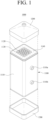
FIG. 1 , a conventional membranehumidification type humidifier 1000 includes ahumidifying module 1100 in which moisture exchange is performed between gas supplied from the outside and off-gas discharged from a fuel cell stack (not shown), andcaps 1200 coupled respectively to opposite ends of thehumidifying module 1100. - One of the
caps 1200 transmits gas supplied from the outside to thehumidifying module 1100, and the other cap transmits gas humidified by the humidifyingmodule 1100 to the fuel cell stack. - The
humidifying module 1100 includes amid-case 1110 having an off-gas inlet 1110a and an off-gas outlet 1110b and a plurality ofhollow fiber membranes 1120 disposed in themid-case 1110. Opposite ends of a bundle ofhollow fiber membranes 1120 are potted infixing layers 1130. In general, each of thefixing layers 1130 is formed by hardening a liquid polymer, such as liquid polyurethane resin, using a casting method (e.g. dip casting, which is also called dip potting, or centrifugal casting, which is also called centrifugal potting). - Gas supplied from the outside flows along hollow parts of the
hollow fiber membranes 1120. Off-gas introduced into the mid-case 111 through the off-gas inlet 1110a comes into contact with the outer surfaces of thehollow fiber membranes 1120, and is discharged from the mid-case 111 through the off-gas outlet 1110b. When the off-gas comes into contact with the outer surfaces of thehollow fiber membranes 1120, moisture contained in the off-gas is transmitted through thehollow fiber membranes 1120 to humidify gas flowing along the hollow parts of thehollow fiber membranes 1120. - Inner spaces of the
caps 1200 must fluidly communicate with only the hollow parts of thehollow fiber membranes 1120 in a state of being completely isolated from an inner space of themid-case 1110. If not, gas leakage due to pressure difference occurs, whereby power generation efficiency of a fuel cell is reduced. - In general, as illustrated in
FIG. 1 , thefixing layers 1130 andresin layers 1140 provided between thefixing layers 1130 and themid-case 1110 isolate the inner spaces of thecaps 1200 from the inner space of themid-case 1110. Similarly to thefixing layers 1130, each of theresin layers 1140 is generally formed by hardening a liquid polymer, such as liquid polyurethane resin, using a casting method (dip casting or centrifugal casting). - However, (i) the
resin layer 1140 is alternately expanded and contracted as a result of repeated operation and stop of the fuel cell, whereby theresin layer 1140 is separated from themid-case 1110 due to a difference in coefficient of thermal expansion between themid-case 1110 and theresin layer 1140, and therefore a gap is generated therebetween, or (ii) there is a high probability of a gap being generated between theresin layer 1140 and themid-case 1110 due to vibration and/or impact. The gap between theresin layer 1140 and themid-case 1110 causes gas leakage, thereby reducing power generation efficiency of the fuel cell. - In order to prevent gas leakage due to generation of the gap between the
resin layer 1140 and the mid-case 1110,Korean Registered Patent No. 1697998 resin layer 1140 and a groove formed in the inner surface of themid-case 1110, inserting a packing member (solid sealing member) into the groove, and hardening the sealant. - However, the above method has problems of low productivity and high manufacturing cost in that (i) the sealant must be applied so as to accurately match with the groove, whereby workability is low, (ii) a considerably long time of 24 hours or more is required to harden the sealant, and (iii) a separate space for storing the humidifying
module 1100 is required until the sealant is hardened. - Therefore, the present disclosure relates to a humidifier for a fuel cell capable of preventing problems caused by limitations and shortcomings of the related art described above and a method of manufacturing the same.
- It is an object of the present disclosure to provide a humidifier for a fuel cell capable of certainly preventing gas leakage due to repeated operation and stop of a fuel cell and being manufactured with relatively low manufacturing cost and high productivity.
- It is another object of the present disclosure to provide a method of manufacturing a humidifier for a fuel cell capable of certainly preventing gas leakage due to repeated operation and stop of a fuel cell with relatively low manufacturing cost and high productivity.
- In addition to the above objects, other features and advantages of the present disclosure will be described hereinafter, or will be clearly understood by those skilled in the art to which the present disclosure pertains from the following description thereof.
- In accordance with an aspect of the present disclosure, there is provided a humidifier for a fuel cell, the humidifier including a humidifying module configured to humidify gas supplied from outside using moisture in off-gas discharged from a fuel cell stack and caps coupled respectively to opposite ends of the humidifying module, wherein the humidifying module includes a mid-case open at opposite ends thereof, a plurality of hollow fiber membranes disposed in the mid-case, a fixing layer in which ends of the hollow fiber membranes are potted, and a composite gasket having a groove into which the end of the mid-case is inserted, the composite gasket includes an inner body based on the groove, the inner body being located inside the mid-case, an outer body based on the groove, the outer body being located outside the mid-case, and a connecting body located between the inner body and the outer body, the connecting body being formed of a first material, and at least a portion of the inner body is adhered to the fixing layer and is formed of a second material different from the first material.
- The first material may be soft rubber, and the second material may be metal, rigid plastic, hard rubber, or a different kind of soft rubber from the first material.
- The first material may include soft silicone rubber or soft urethane rubber, and the second material may include polypropylene (PP), polyethylene terephthalate (PET), polystyrene (PS), polycarbonate (PC), acrylic resin, hard silicone, or hard urethane.
- When the first material includes soft silicone rubber, the second material may include soft urethane rubber.
- The inner body may include a first part directly connected to the connecting body, the first part being formed of the first material, and a second part adhered to the first part and to the fixing layer, the second part being formed of the second material.
- The interface between the first and second parts may have a step.
- The first part of the inner body may constitute a packing part formed of the first material together with the outer body and the connecting body, and the second part of the inner body may constitute a bracket part formed of the second material.
- The packing part and the bracket part may be integrally formed through injection molding.
- The composite gasket may further include a primer layer formed on at least a portion of the surface of the inner body, the primer layer including a rubber adhesive component, an acrylic adhesive component, a polyurethane adhesive component, an epoxy adhesive component, a silicone adhesive component, a polyamide-based adhesive component, a polyimide-based adhesive component, or a mixture of two or more thereof.
- The fixing layer may include a first fixing layer in which the ends of the hollow fiber membranes are potted, and a second fixing layer adhered to the inner body of the composite gasket while surrounding the first fixing layer.
- The first fixing layer and the second fixing layer may be formed of the same material.
- Both the first fixing layer and the second fixing layer may include polyurethane (PU) resin.
- The humidifying module may further include an inner case disposed in the mid-case, the inner case being open at opposite ends thereof, the hollow fiber membranes may be disposed in the inner case, and the end of the inner case may be potted in the first fixing layer.
- The hollow fiber membranes may include a first group of hollow fiber membranes and a second group of hollow fiber membranes, the humidifying module may further include a first inner case in which the first group of hollow fiber membranes is disposed, and a second inner case in which the second group of hollow fiber membranes is disposed, the fixing layer may include a first fixing layer in which ends of the first group of hollow fiber membranes are potted, a second fixing layer in which ends of the second group of hollow fiber membranes are potted, and a third fixing layer adhered to the inner body of the composite gasket while surrounding the first and second fixing layers, an end of the first inner case may be potted in the first fixing layer, and an end of the second inner case may be potted in the second fixing layer.
- In accordance with another aspect of the present disclosure, there is provided a method of manufacturing a humidifier for a fuel cell, the method including preparing a hollow fiber membrane cartridge having a first fixing layer in which ends of a plurality of hollow fiber membranes are potted, inserting the hollow fiber membrane cartridge into a mid-case open at opposite ends thereof, preparing a composite gasket having a groove corresponding to the end of the mid-case, mounting the composite gasket on the end of the mid-case such that the end of the mid-case is inserted into the groove, forming a second fixing layer configured to fill a gap between the mid-case and an end of the hollow fiber membrane cartridge and a gap between the composite gasket and the end of the hollow fiber membrane cartridge, simultaneously cutting the first fixing layer, the second fixing layer, and the hollow fiber membranes to open the ends of the hollow fiber membranes, and fastening a cap to the mid-case such that the composite gasket is compressed by the cap, wherein the composite gasket includes an inner body based on the groove, the inner body being located inside the mid-case based on the groove, an outer body based on the groove, the outer body being located outside the mid-case, and a connecting body located between the inner body and the outer body, the connecting body being formed of a first material, and at least a portion of the inner body is formed of a second material different from the first material.
- The inner body may include a first part directly connected to the connecting body, the first part being formed of the first material, and a second part adhered to the first part and to the fixing layer, the second part being formed of the second material.
- The first part of the inner body may constitute a packing part formed of the first material together with the outer body and the connecting body, and the second part of the inner body may constitute a bracket part formed of the second material.
- The preparing the composite gasket may include preparing the bracket part, inserting the bracket part into a mold, injecting a melt of the first material into the mold in which the bracket part is located, and cooling the melt of the first material to obtain the packing part adhered to the bracket part.
- Alternatively, the preparing the composite gasket may include performing a co-injection molding to simultaneously form the bracket part and the packing part.
- The preparing the hollow fiber membrane cartridge may include inserting at least a portion of each of the hollow fiber membranes into an inner case and performing a dip casting process or a centrifugal casting process to form the first fixing layer.
- An end of the inner case may also be potted in the first fixing layer together with the ends of the hollow fiber membranes when the dip casting process or the centrifugal casting process is performed.
- The general description of the present disclosure given above is provided merely to illustrate or describe the present disclosure, and does not limit the scope of rights of the present disclosure.
- According to the present disclosure, it is possible to effectively prevent both external leakage and internal leakage only through mechanical assembly of a composite gasket without conventional sealant application and hardening processes. According to the present disclosure, therefore, workability is improved and manufacturing time is reduced, whereby it is possible to remarkably improve productivity thereof, since the sealant application process and the sealant hardening process, which are required in the conventional art, are omitted.
- In addition, a separate space for storing a half-finished product for the sealant hardening process is not required, whereby it is possible to reduce production cost of a humidifier.
- The accompanying drawings, which are included to assist in understanding of the present disclosure and are incorporated in and constitute a part of the present specification, illustrate embodiments of the present disclosure and serve to explain the principle of the present disclosure together with the detailed description of the present disclosure.
-
FIG. 1 is an exploded perspective view of a conventional humidifier for a fuel cell; -
FIG. 2 is a sectional view of a humidifier according to a first embodiment of the present disclosure; -
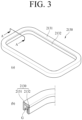
FIG. 3(a) is a perspective view of a composite gasket according to an embodiment of the present disclosure; -
FIG. 3(b) is a sectional view taken along line A-A ofFIG. 3(a) ; -
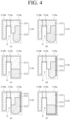
FIGS. 4(a) to 4(f) are sectional views of composite gaskets according to various embodiments of the present disclosure; -
FIG. 5 is a sectional view of a humidifier according to a second embodiment of the present disclosure; -
FIG. 6 is a sectional view of a humidifier according to a third embodiment of the present disclosure; and -
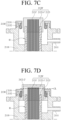
FIGS. 7A to 7F are sectional views explaining a humidifier manufacturing method according to an embodiment of the present disclosure. - Hereinafter, embodiments of the present disclosure will be described in detail with reference to the accompanying drawings. However, the following embodiments are illustratively provided merely for clear understanding of the present disclosure and do not limit the scope of the present disclosure.
-
FIGS. 2 ,5 ,6 , and7A to 7F are sectional views showing an end of a humidifier or a half-finished product, and the other end thereof has a substantially identical (or symmetrical) section. - As illustrated in
FIG. 2 , ahumidifier 2000 for a fuel cell according to the present disclosure includes ahumidifying module 2100 configured to humidify gas supplied from the outside using moisture in off-gas discharged from a fuel cell stack. Opposite ends of thehumidifying module 2100 are coupled tocaps 2200, respectively. - One of the
caps 2200 receives gas from the outside through aport 2210 and transmits the gas to thehumidifying module 2100, and the other cap transmits gas humidified by thehumidifying module 2100 to the fuel cell stack through aport 2210. Each of thecaps 2200 may be formed of rigid plastic (e.g. polycarbonate, polyamide (PA), or polyphthalamide (PPA)) or metal, and may have a simple closed curve-shaped (e.g. circular or polygonal) traverse section. - The
humidifying module 2100 according to the embodiment of the present disclosure, in which moisture exchange is performed between gas supplied from the outside and off-gas supplied from the fuel cell stack, includes a mid-case 2110 open at opposite ends thereof, a plurality ofhollow fiber membranes 2121 disposed in the mid-case 2110, afixing layer 2122 in which ends of thehollow fiber membranes 2121 are potted, and acomposite gasket 2130 having a groove into which the end of the mid-case 2110 is inserted. - The mid-case 2110 has
ports 2111 for off-gas introduction/discharge (only one is shown inFIG. 2 ). The mid-case 2110 may be formed of rigid plastic (e.g. polycarbonate, polyamide (PA), or polyphthalamide (PPA)) or metal, and may have a simple closed curve-shaped (e.g. circular or polygonal) traverse section. According to the embodiment of the present disclosure, the mid-case 2110 may have the same traverse section as thecap 2200. - Each of the
hollow fiber membranes 2121 may include a polymer membrane formed of polysulfone resin, polyethersulfone resin, sulfonated polysulfone resin, polyvinylidene fluoride (PVDF) resin, polyacrylonitrile (PAN) resin, polyimide resin, polyamide imide resin, polyester imide resin, or a mixture of two or more thereof. - Gas supplied from the outside through one
cap 2200 is humidified while flowing along hollow parts of thehollow fiber membranes 2121, and is transmitted to the fuel cell stack through theother cap 2200. - Off-gas introduced into the mid-case 2110 comes into contact with the outer surfaces of the
hollow fiber membranes 2121, and is discharged from the mid-case 211. When the off-gas comes into contact with the outer surfaces of thehollow fiber membranes 2121, moisture contained in the off-gas is transmitted through thehollow fiber membranes 2121 to humidify gas flowing along the hollow parts of thehollow fiber membranes 2121. - The
fixing layer 2122, which may be formed of hard or soft polyurethane resin, must isolate an inner space of thecap 2200 from an inner space of the mid-case 2110 such that thecap 2200 fluidly communicates with only thehollow fiber membranes 2121. - As previously described, however, (i) the
fixing layer 2122 is alternately expanded and contracted as a result of repeated operation and stop of a fuel cell, whereby thefixing layer 2122 is separated from the mid-case 2110 due to a difference in coefficient of thermal expansion between the mid-case 2110 and thefixing layer 2122, and therefore a gap is generated therebetween, or (ii) there is a high probability of a gap being generated between thefixing layer 2122 and the mid-case 2110 due to vibration and/or impact. The gap between thefixing layer 2122 and the mid-case 2110 causes gas leakage, thereby reducing power generation efficiency of the fuel cell. - Gas leakage that may be caused by generation of the gap between the
fixing layer 2122 and the mid-case 2110 includes (i) external leakage by which off-gas in the inner space of the mid-case 2110 sequentially passes through the gap between thefixing layer 2122 and the mid-case 2110 and a gap between thecap 2200 and the mid-case 2110 and is then discharged out of thehumidifier 2000 and (ii) internal leakage by which off-gas in the inner space of the mid-case 2110 sequentially passes through the gap between thefixing layer 2122 and the mid-case 2110 and a gap between thefixing layer 2122 and thecap 2200 and is then introduced into the inner space of thecap 2200. - In order to prevent gas leakage due to generation of the gap between the
fixing layer 2122 and the mid-case 2110, thehumidifier 2000 for a fuel cell according to the present disclosure further includes thecomposite gasket 2130. - As illustrated in
FIG. 3(a) , thecomposite gasket 2130 may have a simple closed curve shape corresponding to the traverse section of the mid-case 2110. - As illustrated in
FIG. 3(b) , which is a sectional view taken along line A-A ofFIG. 3(a) , thecomposite gasket 2130 may have a groove G into which the end of the mid-case 2110 is inserted, and may include apacking part 2131 and abracket part 2132, thepacking part 2131 and thebracket part 2132 being formed of different materials. -
FIGS. 4(a) to 4(f) are sectional views ofcomposite gaskets 2130 according to various embodiments of the present disclosure. - Referring to
FIGS. 4(a) to 4(c) , thecomposite gasket 2130 according to the present disclosure includes aninner body 2130a based on a groove G into which the end of the mid-case 2110 is inserted, theinner body 2130a being located inside the mid-case 2110, an outer body 2130b based on the groove G, the outer body 2130b being located outside the mid-case 2110, and a connecting body 2130c located between theinner body 2130a and the outer body 2130b, the connecting body being formed of a first material. - According to the present disclosure, at least a portion of the
inner body 2130a is formed of a second material, which is different from the first material. - According to the embodiment of the present disclosure, the second material may be a material that exhibits higher adhesive force with respect to the
fixing layer 2122 than the first material, and the portion of theinner body 2130a that is formed of the second material may be strongly adhered to thefixing layer 2122. - For example, the connecting body 2130c of the
composite gasket 2130 is formed of a first material (e.g. soft rubber) that has a relatively low hardness of 30 to 60 Shore A, it may be more preferably of 40 to 50 Shore A, so as to be compressed by pressure applied when thecap 2200 is fastened to the mid-case 2110 through abolt 2310 and anut 2320, and the portion of theinner body 2130a that comes into direct contact with thefixing layer 2122 may be formed of a material (e.g. metal, rigid plastic, hard rubber, or soft rubber) that exhibits higher adhesive force with respect to thefixing layer 2122 than the first material. - The first material of the connecting body 2130c may include soft silicone rubber or soft urethane rubber, and the second material of the
inner body 2130a may include polypropylene (PP), polyethylene terephthalate (PET), polystyrene (PS), polycarbonate (PC), acrylic resin, hard silicone, or hard urethane. - In addition, when the first material of the connecting body 2130c includes soft silicone rubber, the second material of the
inner body 2130a may include soft urethane rubber. - As shown respectively in
FIGS. 4(a) to 4(c) , theinner body 2130a may include (i) a first part directly connected to the connecting body 2130c, the first part being formed of the first material, and (ii) a second part adhered to the first part and to thefixing layer 2122, the second part being formed of the second material. - In order to increase contact area between the first and second parts, which are formed of different materials, thereby maximizing the adhesive force therebetween, the interface between the first and second parts may have a step, as illustrated in
FIGS. 4(a) and 4(b) . - Together with the outer body 2130b and the connecting body 2130c, the first part of the
inner body 2130a may constitute apacking part 2131 formed of the first material. The second part of theinner body 2130a may constitute abracket part 2132 formed of the second material. Thepacking part 2131 and thebracket part 2132 may be integrally formed through injection molding, a detailed description of which will follow. - When the
cap 2200 is fastened to the mid-case 2110 through thebolt 2310 and thenut 2320, the connecting body 2130c of thecomposite gasket 2130 is pressurized and compressed by the end of the mid-case 2110 and thecap 2200, whereby movement of gas through the interface between thecomposite gasket 2130 and the mid-case 2110 (i.e. external leakage) can be prevented, and therefore tight external sealing may be guaranteed. - In addition, since the
packing part 2131 and thebracket part 2132 are integrally formed through injection molding, strong adhesive force therebetween may be obtained. Consequently, movement of gas through the interface between the packingpart 2131 and the bracket part 2132 (i.e. through the interface between the first and second parts of theinner body 2130a) (i.e. internal leakage) can be prevented, and therefore excellent internal sealing may be guaranteed. - In addition, since the bracket part 2132 (i.e. the second part of the
inner body 2130a) according to the embodiment of the present disclosure has excellent adhesive force with respect to thefixing layer 2122, movement of gas through the interface between thebracket part 2132 and the fixing layer 2122 (i.e. internal leakage) can be prevented, and therefore stronger internal sealing may be provided. - Optionally, the surface of the
bracket part 2132 or the surface of theinner body 2130a may be treated with a primer, whereby the adhesive strength between thebracket part 2132 or theinner body 2130a and thefixing layer 2122 can be further increased, and therefore an internal sealing effect may be maximized. That is, as illustrated inFIGS. 4(d) to 4(f) , thecomposite gasket 2130 according to the present disclosure further includes aprimer layer 2133 formed on at least a portion of the surface of theinner body 2130a, whereby the composite gasket may have stronger adhesive force with respect to thefixing layer 2122. The primer used to increase the adhesive strength between thecomposite gasket 2130 and thefixing layer 2122 may include a rubber adhesive component, an acrylic adhesive component, a polyurethane adhesive component, an epoxy adhesive component, a silicone adhesive component, a polyamide-based adhesive component, a polyimide-based adhesive component, or a mixture of two or more thereof. - For the rubber adhesive component, natural rubber (NR) and/or synthetic rubber may be used. The synthetic rubber may be SBR, NBR, CR, BR, IIR, and/or EPDM.
- For the acrylic adhesive component, acrylic emulsion, anaerobic acrylic resin, and/or acrylic resin-based adhesive tape may be used.
- For the polyurethane adhesive component, solvent-type polyurethane, polyurethane hot melt, or urethane emulsion may be used.
- For the polyamide-based adhesive component, polyamide hot melt may be used.
- As illustrated in
FIG. 2 , thecap 2200 according to the embodiment of the present disclosure may have aprotrusion 2220 formed at a position corresponding to the end of the mid-case 2110 inserted into the groove G of thecomposite gasket 2130. Theprotrusion 2220 more effectively compresses the connecting body 2130c of thecomposite gasket 2130 together with the end of the mid-case 2110, whereby tighter external sealing is achieved. - As illustrated in
FIG. 2 , the first part of theinner body 2130a of thecomposite gasket 2130 may also be adhered to thefixing layer 2122, in addition to the second part thereof. Liquid resin (e.g. liquid polyurethane resin) used to form thefixing layer 2122 is hardened in a state of being in contact with both the first and second parts of theinner body 2130a of thecomposite gasket 2130, whereby the adhesive strength between thegasket 2130 and thefixing layer 2122 can be increased and thus internal sealing may be improved. - According to the embodiment of the present disclosure, as illustrated in
FIG. 2 , thefixing layer 2122 may include a first fixing layer 2122-1 in which the ends of thehollow fiber membranes 2121 are potted, and a second fixing layer 2122-2 adhered to theinner body 2130a of thecomposite gasket 2130 while surrounding the first fixing layer 2122-1. - Each of the first fixing layer 2122-1 and the second fixing layer 2122-2 may be formed by hardening liquid resin, such as liquid polyurethane resin, using a dip casting method or a centrifugal casting method. Although the first fixing layer 2122-1 and the second fixing layer 2122-2 may be formed of different materials, it may be preferable for the first fixing layer and the second fixing layer to be formed of the same material (e.g. polyurethane resin) in terms of adhesive strength therebetween.
- As illustrated in
FIG. 2 , thehumidifying module 2100 may further include aninner case 2123 disposed in the mid-case 2110, the inner case being open at opposite ends thereof. In this case, thehollow fiber membranes 2121 are disposed in theinner case 2123. The first fixing layer 2122-1 in which ends of thehollow fiber membranes 2121 are potted closes a corresponding one of the open ends of theinner case 2123. - According to the embodiment of the present disclosure, the
inner case 2123 has a plurality of holes H provided at positions corresponding to theports 2111 for off-gas introduction/discharge (only one is shown inFIG. 2 ). Off-gas introduced into the mid-case 2110 through thefirst port 2111 passes through the first holes H and then absorbs moisture while flowing along the outer surfaces of thehollow fiber membranes 2121. Subsequently, the off-gas exits theinner case 2123 through the second holes H on the opposite side and is then discharged from the mid-case 2110 through thesecond port 2111. - The
hollow fiber membranes 2121, the first fixing layer 2122-1, and theinner case 2123 constitute a hollowfiber membrane cartridge 2120. - As illustrated in
FIG. 2 , an end of theinner case 2123 is potted in the first fixing layer 2122-1, whereby relative positions of thehollow fiber membranes 2121 and theinner case 2123 may be uniformly maintained. - Hereinafter, a
humidifier 2000 for a fuel cell according to a second embodiment of the present disclosure will be described with reference toFIG. 5 . - The
humidifier 2000 for a fuel cell according to the second embodiment of the present disclosure is identical to thehumidifier 2000 for a fuel cell ofFIG. 2 except that the mid-case 2110 has astep 2112 formed on the inner circumferential surface thereof and the composite gasket 2130 (more specifically, the bracket part 2132) is supported by thestep 2112. - Since the
bracket part 2132 is supported by thestep 2112 of the mid-case 2110 and has higher hardness than thepacking part 2131, thebracket part 2132 may effectively apply pressure to thepacking part 2131 together with thecap 2200 when thecap 2200 is fastened to the mid-case 2110 through thebolt 2310 and thenut 2320. Consequently, movement of gas through the interface between the packingpart 2131 and the bracket part 2132 (i.e. through the interface between the first and second parts of theinner body 2130a) (i.e. internal leakage) can be prevented, and therefore excellent internal sealing may be guaranteed. - In addition, as illustrated in
FIG. 4(f) , when at least a portion of the surface of theinner body 2130a of thecomposite gasket 2130 is treated with a primer, not only the surface of the inner body to come into contact with thefixing layer 2122 but also the surface of the inner body to be supported by thestep 2112 are treated with the primer, whereby the adhesive strength between theinner body 2130a and thefixing layer 2122 can be further increased, and therefore an internal sealing effect may be maximized. Furthermore, the adhesive strength between theinner body 2130a and thestep 2112 can be further increased, and therefore an external sealing effect may be maximized. - Hereinafter, a
humidifier 2000 for a fuel cell according to a third embodiment of the present disclosure will be described with reference toFIG. 6 . - As illustrated in
FIG. 6 , thehumidifier 2000 for a fuel cell according to the third embodiment of the present disclosure is substantially identical to the first embodiment described above except that the humidifier includes two hollowfiber membrane cartridges - That is, according to the third embodiment of the present disclosure, the hollow fiber membranes include a first group of
hollow fiber membranes 2121a and a second group ofhollow fiber membranes 2121b, thehumidifying module 2100 includes a firstinner case 2123a in which the first group ofhollow fiber membranes 2121a is disposed and a secondinner case 2123b in which the second group ofhollow fiber membranes 2121b is disposed, and thefixing layer 2122 includes a first fixing layer 2122-1a in which ends of the first group ofhollow fiber membranes 2121a are potted, a second fixing layer 2122-1b in which ends of the second group ofhollow fiber membranes 2121b are potted, and a third fixing layer 2122-2 adhered to theinner body 2130a of thecomposite gasket 2130 while surrounding the first and second fixing layers 2122-1a and 2122-1b. - The first group of
hollow fiber membranes 2121a, the first fixing layer 2122-1a, and the firstinner case 2123a constitute a first hollowfiber membrane cartridge 2120a, and the second group ofhollow fiber membranes 2121b, the second fixing layer 2122-1b, and the secondinner case 2123b constitute a second hollowfiber membrane cartridge 2120b. - As illustrated in
FIG. 6 , ends of the first and secondinner cases hollow fiber membranes 2121a and the firstinner case 2123a and relative positions of the second group ofhollow fiber membranes 2121b and the secondinner case 2123b may be uniformly maintained. - In order to increase humidification capacity, the number of
hollow fiber membranes 2121 must be increased. However, in the first and second embodiments, each of which includes only a single hollowfiber membrane cartridge 2120, there is a problem in that, if the number ofhollow fiber membranes 2121 is increased, it is difficult for off-gas to be transmitted tohollow fiber membranes 2121 located at the center. - In the third embodiment of the present disclosure, by contrast, two hollow
fiber membrane cartridges hollow fiber membranes hollow fiber membranes fiber membrane cartridges fiber membrane cartridge 2120. - The number of hollow fiber membrane cartridge(s) mounted in the mid-case 2110 may be determined in overall consideration of the capacity of the fuel cell (or required humidification capacity), the size of the humidifier, and the weight of the humidifier.
- Hereinafter, a method of manufacturing a
humidifier 2000 for a fuel cell according to an embodiment of the present disclosure will be described in more detail with reference toFIGS. 7A to 7F . - First, as illustrated in
FIG. 7A , a hollow fiber membrane cartridge 2120' having a first fixing layer 2122-1' in which ends of a plurality of hollow fiber membranes 2121' are potted is prepared. - The hollow fiber membrane cartridge 2120' may be manufactured by inserting at least a portion of each of the hollow fiber membranes 2121' into an
inner case 2123 and performing a dip casting process or a centrifugal casting process using liquid resin, such as liquid polyurethane resin. The first fixing layer 2122-1' in which the ends of the hollow fiber membranes 2121' are potted is formed as a result of hardening of the liquid resin. - When the dip casting process or the centrifugal casting process is performed, an end of the
inner case 2123 may be potted in the first fixing layer 2122-1' together with the ends of the hollow fiber membranes 2121'. - The
inner case 2123 may have first and second groups of holes H formed in a longitudinal direction thereof so as to be located on opposite sides. - Subsequently, as illustrated in
FIG. 7B , the hollow fiber membrane cartridge 2120' is inserted into a mid-case 2110 open at opposite ends thereof. - According to the embodiment of the present disclosure, the mid-case 2110 has a simple closed curve-shaped traverse section. The mid-case 2110 may have a partition wall configured to divide an inner space thereof into an off-gas introduction space and an off-gas discharge space located on opposite sides in a longitudinal direction, and the hollow fiber membrane cartridge 2120' may be inserted through a hole formed in the partition wall so as to be supported by the partition wall. At this time, the first group of holes H of the
inner case 2123 is located in the off-gas introduction space, and the second group of holes H of theinner case 2123 is located in the off-gas discharge space. - In this case, off-gas that has entered the off-gas introduction space is introduced into the
inner case 2123 through the first group of holes H, flows toward the second group of holes H in theinner case 2123, moves to the off-gas discharge space through the second group of holes H, and is discharged from the mid-case 2110. - Subsequently, as shown in
FIG. 7C , acomposite gasket 2130 having a groove G corresponding to the end of the mid-case 2110 is prepared, and thecomposite gasket 2130 is mounted on the end of the mid-case 2110 such that the end of the mid-case 2110 is inserted into the groove G. - The
composite gasket 2130 may be obtained by (i) preparing abracket part 2132 formed of the second material, (ii) inserting thebracket part 2132 into a mold, (iii) injecting a melt of the first material into the mold in which thebracket part 2132 is located, and (iv) cooling the melt of the first material to obtain apacking part 2131 adhered to thebracket part 2132. Optionally, the surface of thebracket part 2132 may be treated with a primer and may then be inserted into the mold in order to increase the adhesive strength between thebracket part 2132 and thepacking part 2131. - Alternatively, a co-injection molding may be performed in order to simultaneously form the
bracket part 2132 and thepacking part 2131. - As previously described, at least a portion of the surface of an
inner body 2130a of thecomposite gasket 2130 obtained through the above processes may be treated with the primer. - According to the embodiment of the present disclosure, the
packing part 2131 and thebracket part 2132 are integrally formed through injection molding, whereby it is possible to obtain strong adhesive force therebetween even though the packing part and the bracket part are formed of different materials. Consequently, movement of gas through the interface between the packingpart 2131 and the bracket part 2132 (i.e. internal leakage) can be prevented, and therefore excellent internal sealing may be guaranteed. - Subsequently, as shown in
FIG. 7D , a second fixing layer 2122-2' configured to fill the gap between the mid-case 2110 and the end of the hollow fiber membrane cartridge 2120' and the gap between thecomposite gasket 2130 and the end of the hollow fiber membrane cartridge 2120' is formed. - The second fixing layer 2122-2' may be manufactured by fastening a potting cap (not shown) to the mid-case 2110, performing a dip casting process of injecting liquid resin, such as liquid polyurethane resin, into the potting cap and hardening the liquid resin in the state in which the potting cap is located under the mid-case 2110, and removing the potting cap. Alternatively, the second fixing layer 2122-2' may be formed through a centrifugal casting process.
- Although the first and second fixing layers 2122-1' and 2122-2' may be formed of different liquid resins, it may be preferable for the first and second fixing layers to be formed of the same material (e.g. liquid polyurethane resin) in terms of adhesive strength therebetween.
- According to the embodiment of the present disclosure, liquid resin (e.g. liquid polyurethane resin) used to form the second fixing layer 2122-2' may be hardened in while being in contact with the composite gasket 2130 (particularly, the bracket part 2132), whereby the adhesive strength of the second fixing layer 2122-2' with respect to it can be increased and thus internal sealing may be improved.
- According to the embodiment of the present disclosure, since the
bracket part 2132 is formed of a material that has excellent adhesive force with respect to the second fixing layer 2122-2', movement of gas through the interface therebetween (i.e. internal leakage) can be prevented, and therefore stronger internal sealing may be provided. In addition, when the surface of thebracket part 2132 is treated with a primer, as previously described, the adhesive strength between thebracket part 2132 and the second fixing layer 2122-2' can be maximized, and therefore better internal sealing may be provided. - Subsequently, the first fixing layer 2122-1', the second fixing layer 2122-2', and the hollow fiber membranes 2121' are simultaneously cut along a cutting line CL of
FIG. 7D , wherebyhollow fiber membranes 2121 configured such that ends thereof potted in a first fixing layer 2122-1 surrounded by a second fixing layer 2122-2 are open are obtained, as illustrated inFIG. 7E . - Subsequently, as illustrated in
FIG. 7F , acap 2200 is fastened to the mid-case 2110. Specifically, thecap 2200 is fastened to the mid-case such that a connecting body 2130c of thecomposite gasket 2130 is compressed by thecap 2200. - As illustrated in
FIG. 7F , thecap 2200 according to the embodiment of the present disclosure may have aprotrusion 2220 formed at a position corresponding to the end of the mid-case 2110. Since the end of the mid-case 2110 is inserted into the groove G of thecomposite gasket 2130, theprotrusion 2220 more effectively compresses the connecting body 2130c of thecomposite gasket 2130 together with the end of the mid-case 2110, whereby tighter external sealing is achieved. - According to the present disclosure described above, it is possible to effectively prevent both the external leakage and the internal leakage only through mechanical assembly of the
composite gasket 2130 without conventional sealant application and hardening processes. According to the present disclosure, therefore, workability is improved and manufacturing time is reduced, whereby it is possible to remarkably improve productivity thereof, since the sealant application process and the sealant hardening process, which are required in the conventional art, are omitted. In addition, a separate space for storing a half-finished product during the sealant hardening process is not required, whereby it is possible to reduce production cost of the humidifier.
Claims (14)
- A humidifier (2000) for a fuel cell, the humidifier comprising:a humidifying module (2100) configured to humidify gas supplied from outside using moisture in off-gas discharged from a fuel cell stack; andcaps (2200) coupled respectively to opposite ends of the humidifying module (2100), whereinthe humidifying module (2100) comprises:a mid-case (2110) open at opposite ends thereof;a plurality of hollow fiber membranes (2121) disposed in the mid-case (2110);a fixing layer (2122) in which ends of the hollow fiber membranes (2121) are potted; anda composite gasket (2130) having a groove (G) into which the end of the mid-case (2110) is inserted,the composite gasket (2130) comprises:an inner body (2130a) based on the groove (G), the inner body (2130a) being located inside the mid-case (2110);an outer body (2130b) based on the groove (G), the outer body (2130b) being located outside the mid-case (2110); anda connecting body (2130c) located between the inner body (2130a) and the outer body (2130b),the humidifier (2000) characterized in that:the connecting body (2130c) is formed of a first material having hardness of 30 to 60 Shore A, andat least a portion of the inner body (2130a) is adhered to the fixing layer (2122) and is formed of a second material different from the first material, the second material having higher adhesive force with respect to the fixing layer (2122) than the first material.
- The humidifier (2000) according to claim 1, wherein the inner body (2130a) comprises:a first part directly connected to the connecting body (2130c); anda second part adhered to the first part and to the fixing layer (2122),the outer body (2130b), the connecting body (2130c), and the first part constitute a packing part (2131) formed of the first material, andthe second part constitutes a bracket part (2132) formed of the second material.
- The humidifier (2000) according to claim 2, wherein an interface between the first and second parts has a step.
- The humidifier (2000) according to claim 2, wherein the composite gasket (2130) further comprises a primer layer (2133) formed on at least a portion of a surface of the inner body (2130a), the primer layer (2133) comprising a rubber adhesive component, an acrylic adhesive component, a polyurethane adhesive component, an epoxy adhesive component, a silicone adhesive component, a polyamide-based adhesive component, a polyimide-based adhesive component, or a mixture of two or more thereof.
- The humidifier (2000) according to claim 1, wherein the fixing layer (2122) comprises:a first fixing layer (2122-1) in which the ends of the hollow fiber membranes (2121) are potted; anda second fixing layer (2121-2) adhered to the inner body (2130a) of the composite gasket (2130) while surrounding the first fixing layer (2122-1).
- The humidifier (2000) according to claim 5, wherein both the first fixing layer (2122-1) and the second fixing layer (2122-2) comprise polyurethane (PU) resin.
- The humidifier (2000) according to claim 5, whereinthe humidifying module (2100) further comprises an inner case (2123) disposed in the mid-case (2100), the inner case (2123) being open at opposite ends thereof,the hollow fiber membranes (2121) are disposed in the inner case (2123), andthe end of the inner case (2123) is potted in the first fixing layer (2122-1).
- The humidifier (2000) according to claim 1, whereinthe hollow fiber membranes (2121) comprise a first group of hollow fiber membranes (2121a) and a second group of hollow fiber membranes (2121b),the humidifying module (2100) further comprises:a first inner case (2123a) in which the first group of hollow fiber membranes (2121a) is disposed; anda second inner case (2123b) in which the second group of hollow fiber membranes (2121b) is disposed,the fixing layer (2122) comprises:a first fixing layer (2122-1a) in which ends of the first group of hollow fiber membranes (2121a) are potted;a second fixing layer (2122-1b) in which ends of the second group of hollow fiber membranes (2121b) are potted; anda third fixing layer (2122-2) adhered to the inner body (2130a) of the composite gasket (2130) while surrounding the first and second fixing layers (2122-1a, 2122-1b),an end of the first inner case (2123a) is potted in the first fixing layer (2122-1a), andan end of the second inner case (2123b) is potted in the second fixing layer (2122-1b).
- A method of manufacturing a humidifier (2000) for a fuel cell, the method comprising:preparing a hollow fiber membrane cartridge (2120') having a first fixing layer (2122-1') in which ends of a plurality of hollow fiber membranes (2121') are potted;inserting the hollow fiber membrane cartridge (2120') into a mid-case (2110) open at opposite ends thereof;preparing a composite gasket (2130) having a groove (G) corresponding to the end of the mid-case (2110);mounting the composite gasket (2130) on the end of the mid-case (2110) such that the end of the mid-case (2110) is inserted into the groove (G);forming a second fixing layer (2122-2') configured to fill a gap between the mid-case (2110) and an end of the hollow fiber membrane cartridge (2120') and a gap between the composite gasket (2130) and the end of the hollow fiber membrane cartridge (2120');simultaneously cutting the first fixing layer (2122-1'), the second fixing layer (2122-2'), and the hollow fiber membranes (2121') to open the ends of the hollow fiber membranes (2121'); andfastening a cap (2200) to the mid-case (2110) such that the composite gasket (2130) is compressed by the cap (2200), whereinthe composite gasket (2130) comprises:an inner body (2130a) based on the groove (G), the inner body (2130a) being located inside the mid-case (2110);an outer body (2130b) based on the groove (G), the outer body (2130b) being located outside the mid-case (2110); anda connecting body (2130c) located between the inner body (2130a) and the outer body (2130b), the connecting body (2130c) being formed of a first material having hardness of 30 to 60 Shore A, andat least a portion of the inner body (2130a) is formed of a second material different from the first material, the second material having higher adhesive force with respect to the second fixing layer (2122-2') than the first material.
- The method according to claim 9, wherein the inner body (2130a) comprises:a first part directly connected to the connecting body (2130c), anda second part adhered to the first part and to the second fixing layer (2122-2'),the outer body (2130b), the connecting body (2130c), and the first part constitute a packing part (2131) formed of the first material, andthe second part constitutes a bracket part (2132) formed of the second material.
- The method according to claim 10, wherein the preparing the composite gasket (2130) comprises:preparing the bracket part (2132);inserting the bracket part (2132) into a mold;injecting a melt of the first material into the mold in which the bracket part (2132) is located; andcooling the melt of the first material to obtain the packing part (2131) adhered to the bracket part (2132).
- The method according to claim 10, wherein the preparing the composite gasket (2130) comprises performing a co-injection molding to simultaneously form the bracket part (2132) and the packing part (2131).
- The method according to claim 9, wherein the preparing the hollow fiber membrane cartridge (2120') comprises:inserting at least a portion of each of the hollow fiber membranes (2121') into an inner case (2123); andperforming a dip casting process or a centrifugal casting process to form the first fixing layer (2122-1').
- The method according to claim 13, wherein an end of the inner case (2123) is also potted in the first fixing layer (2122-1') together with the ends of the hollow fiber membranes (2121') when the dip casting process or the centrifugal casting process is performed.
Applications Claiming Priority (2)
| Application Number | Priority Date | Filing Date | Title |
|---|---|---|---|
| KR20190075646 | 2019-06-25 | ||
| PCT/KR2020/008129 WO2020262911A1 (en) | 2019-06-25 | 2020-06-24 | Fuel cell humidifier and manufacturing method therefor |
Publications (3)
| Publication Number | Publication Date |
|---|---|
| EP3993114A1 EP3993114A1 (en) | 2022-05-04 |
| EP3993114A4 EP3993114A4 (en) | 2023-06-28 |
| EP3993114B1 true EP3993114B1 (en) | 2025-03-05 |
Family
ID=74061902
Family Applications (1)
| Application Number | Title | Priority Date | Filing Date |
|---|---|---|---|
| EP20832808.8A Active EP3993114B1 (en) | 2019-06-25 | 2020-06-24 | Fuel cell humidifier and manufacturing method therefor |
Country Status (6)
| Country | Link |
|---|---|
| US (1) | US12334605B2 (en) |
| EP (1) | EP3993114B1 (en) |
| JP (1) | JP7297093B2 (en) |
| KR (1) | KR102423872B1 (en) |
| CN (2) | CN119170835A (en) |
| WO (1) | WO2020262911A1 (en) |
Families Citing this family (17)
| Publication number | Priority date | Publication date | Assignee | Title |
|---|---|---|---|---|
| KR102577689B1 (en) | 2020-05-22 | 2023-09-12 | 코오롱인더스트리 주식회사 | Gasket assembly and fuel cell humidifier comprising it |
| KR102546259B1 (en) | 2020-05-22 | 2023-06-21 | 코오롱인더스트리 주식회사 | Gasket assembly and fuel cell humidifier comprising it |
| WO2022145947A1 (en) * | 2020-12-31 | 2022-07-07 | 코오롱인더스트리 주식회사 | Humidifier for fuel cell |
| EP4258394B1 (en) * | 2020-12-31 | 2026-04-29 | Kolon Industries, Inc. | Humidifier for fuel cell |
| KR102780597B1 (en) * | 2021-01-08 | 2025-03-12 | 코오롱인더스트리 주식회사 | Humidifier for Fuel Cell |
| KR102857457B1 (en) * | 2021-01-28 | 2025-09-08 | 코오롱인더스트리 주식회사 | Humidifier for Fuel |
| CN116830325A (en) * | 2021-01-29 | 2023-09-29 | 可隆工业株式会社 | Fuel cell membrane humidifier to prevent humidification membrane damage |
| KR102755443B1 (en) * | 2021-02-04 | 2025-01-21 | 코오롱인더스트리 주식회사 | Gasket assembly and fuel cell membrane humidifier comprising it |
| KR20220112451A (en) * | 2021-02-04 | 2022-08-11 | 코오롱인더스트리 주식회사 | Gasket assembly and fuel cell membrane humidifier comprising it |
| KR102769069B1 (en) * | 2021-02-04 | 2025-02-18 | 코오롱인더스트리 주식회사 | Gasket assembly and fuel cell membrane humidifier comprising it |
| KR102809754B1 (en) * | 2021-03-12 | 2025-05-20 | 코오롱인더스트리 주식회사 | Humidifier for Fuel |
| KR102824556B1 (en) * | 2021-03-12 | 2025-06-25 | 코오롱인더스트리 주식회사 | Humidifier for Fuel |
| KR102820536B1 (en) * | 2021-06-17 | 2025-06-13 | 코오롱인더스트리 주식회사 | Humidifier for Fuel |
| DE102021207424A1 (en) * | 2021-07-13 | 2023-01-19 | Mahle International Gmbh | humidifier |
| KR102926188B1 (en) * | 2021-09-06 | 2026-02-10 | 코오롱인더스트리 주식회사 | Cartridge for membrane humidifier and fuel cell humidifier comprising it |
| EP4183475A3 (en) * | 2021-11-19 | 2023-08-02 | K-fuelcell, Inc. | Membrane humidifier for fuel cells |
| KR102768256B1 (en) * | 2021-11-19 | 2025-02-18 | 주식회사 케이퓨얼셀 | Membrane humidifier having multipl hollow fiber cartridges |
Family Cites Families (17)
| Publication number | Priority date | Publication date | Assignee | Title |
|---|---|---|---|---|
| JPS6157207A (en) * | 1984-08-29 | 1986-03-24 | Ube Ind Ltd | Fluid separation apparatus |
| SE9100167L (en) * | 1991-01-21 | 1992-07-22 | Gambro Dialysatoren | FILTERING AND / OR DIFFUSION DEVICE |
| JPH11219714A (en) * | 1998-02-03 | 1999-08-10 | Matsushita Electric Ind Co Ltd | Fuel cell |
| AU3215901A (en) * | 2000-02-17 | 2001-08-27 | Gambro Dialysatoren Gmbh & Co. Kg | Filter comprising membranes made of hollow fibers |
| JP2003065566A (en) * | 2001-08-24 | 2003-03-05 | Honda Motor Co Ltd | Gas humidifier and gas humidification system |
| JP2003112016A (en) | 2001-10-04 | 2003-04-15 | Nok Corp | Hollow fiber membrane module and its manufacturing method |
| JP4027732B2 (en) | 2002-06-27 | 2007-12-26 | Agcエンジニアリング株式会社 | Gas humidifier |
| JP5725277B2 (en) | 2010-06-14 | 2015-05-27 | Nok株式会社 | gasket |
| US20120015283A1 (en) * | 2010-07-14 | 2012-01-19 | Oorja Protonics Inc. | Composite gasket for fuel cell stack |
| JP5690975B2 (en) * | 2011-12-29 | 2015-03-25 | コーロン インダストリーズ インク | Membrane humidifier |
| CN103346338B (en) * | 2013-06-20 | 2015-11-18 | 南京工业大学 | Novel gas humidifier and method thereof |
| CA2922083A1 (en) | 2013-09-30 | 2015-04-02 | Toray Industries, Inc. | Cartridge-type hollow fiber membrane module and method for manufacturing cartridge-type hollow fiber membrane module |
| KR101673667B1 (en) * | 2014-07-31 | 2016-11-07 | 현대자동차주식회사 | Device for adjusting hollow fiber density for humidification device of fuel cell |
| CN208955115U (en) * | 2018-07-26 | 2019-06-07 | 深圳伊腾迪新能源有限公司 | Fuel cell membrane tube humidifier |
| CN114026720A (en) * | 2019-06-25 | 2022-02-08 | 可隆工业株式会社 | Humidifier for fuel cell and method of manufacturing the same |
| KR102857457B1 (en) * | 2021-01-28 | 2025-09-08 | 코오롱인더스트리 주식회사 | Humidifier for Fuel |
| KR102820536B1 (en) * | 2021-06-17 | 2025-06-13 | 코오롱인더스트리 주식회사 | Humidifier for Fuel |
-
2020
- 2020-06-24 JP JP2021562164A patent/JP7297093B2/en active Active
- 2020-06-24 KR KR1020200076958A patent/KR102423872B1/en active Active
- 2020-06-24 EP EP20832808.8A patent/EP3993114B1/en active Active
- 2020-06-24 WO PCT/KR2020/008129 patent/WO2020262911A1/en not_active Ceased
- 2020-06-24 CN CN202411240436.8A patent/CN119170835A/en active Pending
- 2020-06-24 CN CN202080047053.2A patent/CN114072942B/en active Active
- 2020-06-24 US US17/605,556 patent/US12334605B2/en active Active
Also Published As
| Publication number | Publication date |
|---|---|
| CN114072942B (en) | 2024-09-24 |
| CN114072942A (en) | 2022-02-18 |
| JP2022529365A (en) | 2022-06-21 |
| WO2020262911A1 (en) | 2020-12-30 |
| JP7297093B2 (en) | 2023-06-23 |
| US12334605B2 (en) | 2025-06-17 |
| US20220123334A1 (en) | 2022-04-21 |
| KR102423872B1 (en) | 2022-07-21 |
| EP3993114A4 (en) | 2023-06-28 |
| CN119170835A (en) | 2024-12-20 |
| EP3993114A1 (en) | 2022-05-04 |
| KR20210000679A (en) | 2021-01-05 |
Similar Documents
| Publication | Publication Date | Title |
|---|---|---|
| EP3993114B1 (en) | Fuel cell humidifier and manufacturing method therefor | |
| EP3993113B1 (en) | Humidifier for fuel cell and method for manufacturing same | |
| EP3958361B1 (en) | Fuel cell humidifier and packing member for same | |
| KR20200122211A (en) | Humidifier for Fuel Cell and Packing Member Therefor | |
| EP4266434A1 (en) | Fuel cell membrane humidifier | |
| US20240243310A1 (en) | Fuel cell membrane humidifier | |
| EP4270561A1 (en) | Fuel cell membrane humidifier | |
| EP4258394B1 (en) | Humidifier for fuel cell | |
| EP4270555B1 (en) | Fuel cell membrane humidifier comprising gasket assembly | |
| JP7550217B2 (en) | Gasket assembly and fuel cell humidifier including same | |
| KR20210067464A (en) | Humidifier for Fuel Cell |
Legal Events
| Date | Code | Title | Description |
|---|---|---|---|
| STAA | Information on the status of an ep patent application or granted ep patent |
Free format text: STATUS: THE INTERNATIONAL PUBLICATION HAS BEEN MADE |
|
| PUAI | Public reference made under article 153(3) epc to a published international application that has entered the european phase |
Free format text: ORIGINAL CODE: 0009012 |
|
| STAA | Information on the status of an ep patent application or granted ep patent |
Free format text: STATUS: REQUEST FOR EXAMINATION WAS MADE |
|
| 17P | Request for examination filed |
Effective date: 20220120 |
|
| AK | Designated contracting states |
Kind code of ref document: A1 Designated state(s): AL AT BE BG CH CY CZ DE DK EE ES FI FR GB GR HR HU IE IS IT LI LT LU LV MC MK MT NL NO PL PT RO RS SE SI SK SM TR |
|
| DAV | Request for validation of the european patent (deleted) | ||
| DAX | Request for extension of the european patent (deleted) | ||
| A4 | Supplementary search report drawn up and despatched |
Effective date: 20230530 |
|
| RIC1 | Information provided on ipc code assigned before grant |
Ipc: B01D 63/02 20060101ALI20230523BHEP Ipc: H01M 8/04119 20160101AFI20230523BHEP |
|
| STAA | Information on the status of an ep patent application or granted ep patent |
Free format text: STATUS: EXAMINATION IS IN PROGRESS |
|
| 17Q | First examination report despatched |
Effective date: 20240209 |
|
| GRAP | Despatch of communication of intention to grant a patent |
Free format text: ORIGINAL CODE: EPIDOSNIGR1 |
|
| STAA | Information on the status of an ep patent application or granted ep patent |
Free format text: STATUS: GRANT OF PATENT IS INTENDED |
|
| INTG | Intention to grant announced |
Effective date: 20240725 |
|
| GRAJ | Information related to disapproval of communication of intention to grant by the applicant or resumption of examination proceedings by the epo deleted |
Free format text: ORIGINAL CODE: EPIDOSDIGR1 |
|
| STAA | Information on the status of an ep patent application or granted ep patent |
Free format text: STATUS: EXAMINATION IS IN PROGRESS |
|
| GRAP | Despatch of communication of intention to grant a patent |
Free format text: ORIGINAL CODE: EPIDOSNIGR1 |
|
| STAA | Information on the status of an ep patent application or granted ep patent |
Free format text: STATUS: GRANT OF PATENT IS INTENDED |
|
| INTC | Intention to grant announced (deleted) | ||
| INTG | Intention to grant announced |
Effective date: 20241112 |
|
| GRAS | Grant fee paid |
Free format text: ORIGINAL CODE: EPIDOSNIGR3 |
|
| GRAA | (expected) grant |
Free format text: ORIGINAL CODE: 0009210 |
|
| STAA | Information on the status of an ep patent application or granted ep patent |
Free format text: STATUS: THE PATENT HAS BEEN GRANTED |
|
| AK | Designated contracting states |
Kind code of ref document: B1 Designated state(s): AL AT BE BG CH CY CZ DE DK EE ES FI FR GB GR HR HU IE IS IT LI LT LU LV MC MK MT NL NO PL PT RO RS SE SI SK SM TR |
|
| REG | Reference to a national code |
Ref country code: GB Ref legal event code: FG4D |
|
| REG | Reference to a national code |
Ref country code: CH Ref legal event code: EP |
|
| REG | Reference to a national code |
Ref country code: DE Ref legal event code: R096 Ref document number: 602020047342 Country of ref document: DE |
|
| REG | Reference to a national code |
Ref country code: IE Ref legal event code: FG4D |
|
| PG25 | Lapsed in a contracting state [announced via postgrant information from national office to epo] |
Ref country code: RS Free format text: LAPSE BECAUSE OF FAILURE TO SUBMIT A TRANSLATION OF THE DESCRIPTION OR TO PAY THE FEE WITHIN THE PRESCRIBED TIME-LIMIT Effective date: 20250605 |
|
| PG25 | Lapsed in a contracting state [announced via postgrant information from national office to epo] |
Ref country code: FI Free format text: LAPSE BECAUSE OF FAILURE TO SUBMIT A TRANSLATION OF THE DESCRIPTION OR TO PAY THE FEE WITHIN THE PRESCRIBED TIME-LIMIT Effective date: 20250305 |
|
| PGFP | Annual fee paid to national office [announced via postgrant information from national office to epo] |
Ref country code: DE Payment date: 20250626 Year of fee payment: 6 |
|
| REG | Reference to a national code |
Ref country code: NL Ref legal event code: MP Effective date: 20250305 |
|
| PG25 | Lapsed in a contracting state [announced via postgrant information from national office to epo] |
Ref country code: ES Free format text: LAPSE BECAUSE OF FAILURE TO SUBMIT A TRANSLATION OF THE DESCRIPTION OR TO PAY THE FEE WITHIN THE PRESCRIBED TIME-LIMIT Effective date: 20250305 |
|
| PGFP | Annual fee paid to national office [announced via postgrant information from national office to epo] |
Ref country code: GB Payment date: 20250620 Year of fee payment: 6 |
|
| REG | Reference to a national code |
Ref country code: LT Ref legal event code: MG9D |
|
| PG25 | Lapsed in a contracting state [announced via postgrant information from national office to epo] |
Ref country code: NO Free format text: LAPSE BECAUSE OF FAILURE TO SUBMIT A TRANSLATION OF THE DESCRIPTION OR TO PAY THE FEE WITHIN THE PRESCRIBED TIME-LIMIT Effective date: 20250605 |
|
| PG25 | Lapsed in a contracting state [announced via postgrant information from national office to epo] |
Ref country code: HR Free format text: LAPSE BECAUSE OF FAILURE TO SUBMIT A TRANSLATION OF THE DESCRIPTION OR TO PAY THE FEE WITHIN THE PRESCRIBED TIME-LIMIT Effective date: 20250305 |
|
| PG25 | Lapsed in a contracting state [announced via postgrant information from national office to epo] |
Ref country code: LV Free format text: LAPSE BECAUSE OF FAILURE TO SUBMIT A TRANSLATION OF THE DESCRIPTION OR TO PAY THE FEE WITHIN THE PRESCRIBED TIME-LIMIT Effective date: 20250305 |
|
| PGFP | Annual fee paid to national office [announced via postgrant information from national office to epo] |
Ref country code: FR Payment date: 20250627 Year of fee payment: 6 |
|
| PG25 | Lapsed in a contracting state [announced via postgrant information from national office to epo] |
Ref country code: GR Free format text: LAPSE BECAUSE OF FAILURE TO SUBMIT A TRANSLATION OF THE DESCRIPTION OR TO PAY THE FEE WITHIN THE PRESCRIBED TIME-LIMIT Effective date: 20250606 Ref country code: BG Free format text: LAPSE BECAUSE OF FAILURE TO SUBMIT A TRANSLATION OF THE DESCRIPTION OR TO PAY THE FEE WITHIN THE PRESCRIBED TIME-LIMIT Effective date: 20250305 |
|
| REG | Reference to a national code |
Ref country code: AT Ref legal event code: MK05 Ref document number: 1773794 Country of ref document: AT Kind code of ref document: T Effective date: 20250305 |
|
| PG25 | Lapsed in a contracting state [announced via postgrant information from national office to epo] |
Ref country code: NL Free format text: LAPSE BECAUSE OF FAILURE TO SUBMIT A TRANSLATION OF THE DESCRIPTION OR TO PAY THE FEE WITHIN THE PRESCRIBED TIME-LIMIT Effective date: 20250305 |
|
| PG25 | Lapsed in a contracting state [announced via postgrant information from national office to epo] |
Ref country code: SE Free format text: LAPSE BECAUSE OF FAILURE TO SUBMIT A TRANSLATION OF THE DESCRIPTION OR TO PAY THE FEE WITHIN THE PRESCRIBED TIME-LIMIT Effective date: 20250305 |
|
| PG25 | Lapsed in a contracting state [announced via postgrant information from national office to epo] |
Ref country code: SM Free format text: LAPSE BECAUSE OF FAILURE TO SUBMIT A TRANSLATION OF THE DESCRIPTION OR TO PAY THE FEE WITHIN THE PRESCRIBED TIME-LIMIT Effective date: 20250305 |
|
| PG25 | Lapsed in a contracting state [announced via postgrant information from national office to epo] |
Ref country code: PT Free format text: LAPSE BECAUSE OF FAILURE TO SUBMIT A TRANSLATION OF THE DESCRIPTION OR TO PAY THE FEE WITHIN THE PRESCRIBED TIME-LIMIT Effective date: 20250707 |
|
| PG25 | Lapsed in a contracting state [announced via postgrant information from national office to epo] |
Ref country code: IT Free format text: LAPSE BECAUSE OF FAILURE TO SUBMIT A TRANSLATION OF THE DESCRIPTION OR TO PAY THE FEE WITHIN THE PRESCRIBED TIME-LIMIT Effective date: 20250305 Ref country code: PL Free format text: LAPSE BECAUSE OF FAILURE TO SUBMIT A TRANSLATION OF THE DESCRIPTION OR TO PAY THE FEE WITHIN THE PRESCRIBED TIME-LIMIT Effective date: 20250305 |
|
| PG25 | Lapsed in a contracting state [announced via postgrant information from national office to epo] |
Ref country code: AT Free format text: LAPSE BECAUSE OF FAILURE TO SUBMIT A TRANSLATION OF THE DESCRIPTION OR TO PAY THE FEE WITHIN THE PRESCRIBED TIME-LIMIT Effective date: 20250305 |
|
| PG25 | Lapsed in a contracting state [announced via postgrant information from national office to epo] |
Ref country code: CZ Free format text: LAPSE BECAUSE OF FAILURE TO SUBMIT A TRANSLATION OF THE DESCRIPTION OR TO PAY THE FEE WITHIN THE PRESCRIBED TIME-LIMIT Effective date: 20250305 Ref country code: EE Free format text: LAPSE BECAUSE OF FAILURE TO SUBMIT A TRANSLATION OF THE DESCRIPTION OR TO PAY THE FEE WITHIN THE PRESCRIBED TIME-LIMIT Effective date: 20250305 |
|
| PG25 | Lapsed in a contracting state [announced via postgrant information from national office to epo] |
Ref country code: RO Free format text: LAPSE BECAUSE OF FAILURE TO SUBMIT A TRANSLATION OF THE DESCRIPTION OR TO PAY THE FEE WITHIN THE PRESCRIBED TIME-LIMIT Effective date: 20250305 |
|
| PG25 | Lapsed in a contracting state [announced via postgrant information from national office to epo] |
Ref country code: SK Free format text: LAPSE BECAUSE OF FAILURE TO SUBMIT A TRANSLATION OF THE DESCRIPTION OR TO PAY THE FEE WITHIN THE PRESCRIBED TIME-LIMIT Effective date: 20250305 |
|
| PG25 | Lapsed in a contracting state [announced via postgrant information from national office to epo] |
Ref country code: IS Free format text: LAPSE BECAUSE OF FAILURE TO SUBMIT A TRANSLATION OF THE DESCRIPTION OR TO PAY THE FEE WITHIN THE PRESCRIBED TIME-LIMIT Effective date: 20250705 |
|
| REG | Reference to a national code |
Ref country code: DE Ref legal event code: R097 Ref document number: 602020047342 Country of ref document: DE |
|
| PLBE | No opposition filed within time limit |
Free format text: ORIGINAL CODE: 0009261 |
|
| STAA | Information on the status of an ep patent application or granted ep patent |
Free format text: STATUS: NO OPPOSITION FILED WITHIN TIME LIMIT |
|
| PG25 | Lapsed in a contracting state [announced via postgrant information from national office to epo] |
Ref country code: DK Free format text: LAPSE BECAUSE OF FAILURE TO SUBMIT A TRANSLATION OF THE DESCRIPTION OR TO PAY THE FEE WITHIN THE PRESCRIBED TIME-LIMIT Effective date: 20250305 |
|
| REG | Reference to a national code |
Ref country code: CH Ref legal event code: L10 Free format text: ST27 STATUS EVENT CODE: U-0-0-L10-L00 (AS PROVIDED BY THE NATIONAL OFFICE) Effective date: 20260114 |
|
| REG | Reference to a national code |
Ref country code: CH Ref legal event code: H13 Free format text: ST27 STATUS EVENT CODE: U-0-0-H10-H13 (AS PROVIDED BY THE NATIONAL OFFICE) Effective date: 20260127 |
|
| PG25 | Lapsed in a contracting state [announced via postgrant information from national office to epo] |
Ref country code: MC Free format text: LAPSE BECAUSE OF FAILURE TO SUBMIT A TRANSLATION OF THE DESCRIPTION OR TO PAY THE FEE WITHIN THE PRESCRIBED TIME-LIMIT Effective date: 20250305 |
|
| 26N | No opposition filed |
Effective date: 20251208 |
|
| PG25 | Lapsed in a contracting state [announced via postgrant information from national office to epo] |
Ref country code: LU Free format text: LAPSE BECAUSE OF NON-PAYMENT OF DUE FEES Effective date: 20250624 |
|
| REG | Reference to a national code |
Ref country code: BE Ref legal event code: MM Effective date: 20250630 |
|
| PG25 | Lapsed in a contracting state [announced via postgrant information from national office to epo] |
Ref country code: IE Free format text: LAPSE BECAUSE OF NON-PAYMENT OF DUE FEES Effective date: 20250624 |
|
| PG25 | Lapsed in a contracting state [announced via postgrant information from national office to epo] |
Ref country code: BE Free format text: LAPSE BECAUSE OF NON-PAYMENT OF DUE FEES Effective date: 20250630 |
|
| PG25 | Lapsed in a contracting state [announced via postgrant information from national office to epo] |
Ref country code: CH Free format text: LAPSE BECAUSE OF NON-PAYMENT OF DUE FEES Effective date: 20250630 |