EP3992965A1 - Voice signal processing method and speech separation method - Google Patents
Voice signal processing method and speech separation method Download PDFInfo
- Publication number
- EP3992965A1 EP3992965A1 EP20908929.1A EP20908929A EP3992965A1 EP 3992965 A1 EP3992965 A1 EP 3992965A1 EP 20908929 A EP20908929 A EP 20908929A EP 3992965 A1 EP3992965 A1 EP 3992965A1
- Authority
- EP
- European Patent Office
- Prior art keywords
- model
- speech signal
- student
- teacher
- student model
- Prior art date
- Legal status (The legal status is an assumption and is not a legal conclusion. Google has not performed a legal analysis and makes no representation as to the accuracy of the status listed.)
- Granted
Links
Images




Classifications
-
- G—PHYSICS
- G10—MUSICAL INSTRUMENTS; ACOUSTICS
- G10L—SPEECH ANALYSIS TECHNIQUES OR SPEECH SYNTHESIS; SPEECH RECOGNITION; SPEECH OR VOICE PROCESSING TECHNIQUES; SPEECH OR AUDIO CODING OR DECODING
- G10L21/00—Speech or voice signal processing techniques to produce another audible or non-audible signal, e.g. visual or tactile, in order to modify its quality or its intelligibility
- G10L21/02—Speech enhancement, e.g. noise reduction or echo cancellation
- G10L21/0272—Voice signal separating
- G10L21/0308—Voice signal separating characterised by the type of parameter measurement, e.g. correlation techniques, zero crossing techniques or predictive techniques
-
- G—PHYSICS
- G10—MUSICAL INSTRUMENTS; ACOUSTICS
- G10L—SPEECH ANALYSIS TECHNIQUES OR SPEECH SYNTHESIS; SPEECH RECOGNITION; SPEECH OR VOICE PROCESSING TECHNIQUES; SPEECH OR AUDIO CODING OR DECODING
- G10L21/00—Speech or voice signal processing techniques to produce another audible or non-audible signal, e.g. visual or tactile, in order to modify its quality or its intelligibility
- G10L21/02—Speech enhancement, e.g. noise reduction or echo cancellation
- G10L21/0272—Voice signal separating
- G10L21/028—Voice signal separating using properties of sound source
-
- G—PHYSICS
- G10—MUSICAL INSTRUMENTS; ACOUSTICS
- G10L—SPEECH ANALYSIS TECHNIQUES OR SPEECH SYNTHESIS; SPEECH RECOGNITION; SPEECH OR VOICE PROCESSING TECHNIQUES; SPEECH OR AUDIO CODING OR DECODING
- G10L25/00—Speech or voice analysis techniques not restricted to a single one of groups G10L15/00 - G10L21/00
- G10L25/48—Speech or voice analysis techniques not restricted to a single one of groups G10L15/00 - G10L21/00 specially adapted for particular use
- G10L25/51—Speech or voice analysis techniques not restricted to a single one of groups G10L15/00 - G10L21/00 specially adapted for particular use for comparison or discrimination
-
- G—PHYSICS
- G06—COMPUTING OR CALCULATING; COUNTING
- G06N—COMPUTING ARRANGEMENTS BASED ON SPECIFIC COMPUTATIONAL MODELS
- G06N3/00—Computing arrangements based on biological models
- G06N3/02—Neural networks
- G06N3/04—Architecture, e.g. interconnection topology
- G06N3/044—Recurrent networks, e.g. Hopfield networks
- G06N3/0442—Recurrent networks, e.g. Hopfield networks characterised by memory or gating, e.g. long short-term memory [LSTM] or gated recurrent units [GRU]
-
- G—PHYSICS
- G06—COMPUTING OR CALCULATING; COUNTING
- G06N—COMPUTING ARRANGEMENTS BASED ON SPECIFIC COMPUTATIONAL MODELS
- G06N3/00—Computing arrangements based on biological models
- G06N3/02—Neural networks
- G06N3/04—Architecture, e.g. interconnection topology
- G06N3/045—Combinations of networks
- G06N3/0455—Auto-encoder networks; Encoder-decoder networks
-
- G—PHYSICS
- G06—COMPUTING OR CALCULATING; COUNTING
- G06N—COMPUTING ARRANGEMENTS BASED ON SPECIFIC COMPUTATIONAL MODELS
- G06N3/00—Computing arrangements based on biological models
- G06N3/02—Neural networks
- G06N3/04—Architecture, e.g. interconnection topology
- G06N3/0464—Convolutional networks [CNN, ConvNet]
-
- G—PHYSICS
- G06—COMPUTING OR CALCULATING; COUNTING
- G06N—COMPUTING ARRANGEMENTS BASED ON SPECIFIC COMPUTATIONAL MODELS
- G06N3/00—Computing arrangements based on biological models
- G06N3/02—Neural networks
- G06N3/08—Learning methods
- G06N3/084—Backpropagation, e.g. using gradient descent
-
- G—PHYSICS
- G06—COMPUTING OR CALCULATING; COUNTING
- G06N—COMPUTING ARRANGEMENTS BASED ON SPECIFIC COMPUTATIONAL MODELS
- G06N3/00—Computing arrangements based on biological models
- G06N3/02—Neural networks
- G06N3/08—Learning methods
- G06N3/0895—Weakly supervised learning, e.g. semi-supervised or self-supervised learning
-
- G—PHYSICS
- G06—COMPUTING OR CALCULATING; COUNTING
- G06N—COMPUTING ARRANGEMENTS BASED ON SPECIFIC COMPUTATIONAL MODELS
- G06N3/00—Computing arrangements based on biological models
- G06N3/02—Neural networks
- G06N3/08—Learning methods
- G06N3/09—Supervised learning
-
- G—PHYSICS
- G10—MUSICAL INSTRUMENTS; ACOUSTICS
- G10L—SPEECH ANALYSIS TECHNIQUES OR SPEECH SYNTHESIS; SPEECH RECOGNITION; SPEECH OR VOICE PROCESSING TECHNIQUES; SPEECH OR AUDIO CODING OR DECODING
- G10L15/00—Speech recognition
- G10L15/06—Creation of reference templates; Training of speech recognition systems, e.g. adaptation to the characteristics of the speaker's voice
- G10L15/063—Training
-
- G—PHYSICS
- G10—MUSICAL INSTRUMENTS; ACOUSTICS
- G10L—SPEECH ANALYSIS TECHNIQUES OR SPEECH SYNTHESIS; SPEECH RECOGNITION; SPEECH OR VOICE PROCESSING TECHNIQUES; SPEECH OR AUDIO CODING OR DECODING
- G10L25/00—Speech or voice analysis techniques not restricted to a single one of groups G10L15/00 - G10L21/00
- G10L25/03—Speech or voice analysis techniques not restricted to a single one of groups G10L15/00 - G10L21/00 characterised by the type of extracted parameters
- G10L25/12—Speech or voice analysis techniques not restricted to a single one of groups G10L15/00 - G10L21/00 characterised by the type of extracted parameters the extracted parameters being prediction coefficients
-
- G—PHYSICS
- G10—MUSICAL INSTRUMENTS; ACOUSTICS
- G10L—SPEECH ANALYSIS TECHNIQUES OR SPEECH SYNTHESIS; SPEECH RECOGNITION; SPEECH OR VOICE PROCESSING TECHNIQUES; SPEECH OR AUDIO CODING OR DECODING
- G10L25/00—Speech or voice analysis techniques not restricted to a single one of groups G10L15/00 - G10L21/00
- G10L25/27—Speech or voice analysis techniques not restricted to a single one of groups G10L15/00 - G10L21/00 characterised by the analysis technique
- G10L25/30—Speech or voice analysis techniques not restricted to a single one of groups G10L15/00 - G10L21/00 characterised by the analysis technique using neural networks
-
- G—PHYSICS
- G06—COMPUTING OR CALCULATING; COUNTING
- G06N—COMPUTING ARRANGEMENTS BASED ON SPECIFIC COMPUTATIONAL MODELS
- G06N3/00—Computing arrangements based on biological models
- G06N3/02—Neural networks
- G06N3/04—Architecture, e.g. interconnection topology
- G06N3/044—Recurrent networks, e.g. Hopfield networks
Definitions
- the present disclosure relates to the field of speech technologies, and in particular to a method and an apparatus for processing speech signal, and a method and an apparatus for speech separation, a computer device, and a storage medium.
- a method and an apparatus for processing a speech signal, a method and an apparatus for speech separation, a computer device, and a storage medium are provided according to embodiments of the present disclosure.
- Technical solutions are as follows.
- a method for processing a speech signal is provided.
- the method is executable by a computer device, and includes:
- determining the correctness information based on the signal outputted by the student model and the clean speech signal, which serves as the label and is included in the mixed speech signal includes one of:
- determining the consistency information based on the signal outputted by the student model and the signal outputted by the teacher model includes one of:
- determining the consistency information based on the first clean speech signal outputted by the student model and the second clean speech signal outputted by the teacher model includes: determining the consistency information based on a short-term time-varying abstract feature of the first clean speech signal and a short-term time-varying abstract feature of the second clean speech signal.
- determining the consistency information based on the first clean speech signal outputted by the student model and the second clean speech signal outputted by the teacher model includes:
- adjusting the model parameter of the student model and the model parameter of the teacher model includes: determining the model parameter of the teacher model based on the model parameter of the student model through an exponential-moving-average (EMA) method, and configuring the teacher model by using the determined model parameter of the teacher model.
- EMA exponential-moving-average
- the method further includes: iterating the step of processing the mixed speech signal through the student model and the teacher model separately, to obtain the multiple pieces of the correctness information and the multiple pieces of the consistency information, where each iteration corresponds to one piece of the correctness information and one piece of the consistency information.
- Obtaining the speech separation model includes: outputting, in response to that an iteration satisfies a training-terminating condition, the student model determined in the iteration as the speech separation model.
- the student model and the teacher model perform signal separation through permutation-invariant training (PIT), or the student model and the teacher model perform signal separation through salience-based selection.
- PIT permutation-invariant training
- a method for speech separation is provided.
- the method is executable by a computer device, and includes:
- a loss function of the cooperative iterative training is constructed based on correctness information between an output of the student model and an input of the student model in the training, and based on consistency information between the output of the student model and an output of the teacher model.
- the loss function of the cooperative iterative training is constructed based on:
- the loss function of the cooperative iterative training is constructed based on:
- an apparatus for processing a speech signal including:
- the correctness determining module is configured to perform one of:
- the consistency determining module is configured to perform one of:
- the consistency determining module is configured to determine the consistency information based on a short-term time-varying abstract feature of the first clean speech signal and a short-term time-varying abstract feature of the second clean speech signal.
- the consistency determining module is configured to:
- the adjusting module is configured to determine the model parameter of the teacher model based on the model parameter of the student model through an exponential-moving-average (EMA) method, and configure the teacher model by using the determined model parameter of the teacher model.
- EMA exponential-moving-average
- the apparatus further includes an iteration-obtaining module, configured to: iterate the step of processing the mixed speech signal through the student model and the teacher model separately, to obtain the multiple pieces of the correctness information and the multiple pieces of the consistency information, where each iteration corresponds to one piece of the correctness information and one piece of the consistency information.
- an iteration-obtaining module configured to: iterate the step of processing the mixed speech signal through the student model and the teacher model separately, to obtain the multiple pieces of the correctness information and the multiple pieces of the consistency information, where each iteration corresponds to one piece of the correctness information and one piece of the consistency information.
- the iteration-obtaining module is further configured to output, in response to that an iteration satisfies a training-terminating condition, the student model determined in the iteration as the speech separation model.
- the student model and the teacher model perform signal separation through permutation-invariant training (PIT), or the student model and the teacher model perform signal separation through salience-based selection.
- PIT permutation-invariant training
- an apparatus for speech separation including:
- a loss function of the cooperative iterative training is constructed based on correctness information between an output of the student model and an input of the student model in the training, and based on consistency information between the output of the student model and an output of the teacher model.
- the loss function of the cooperative iterative training is constructed based on:
- the loss function of the cooperative iterative training is constructed based on:
- a computer device including one or more processors and one or more memories storing at least one computer program, where the at least one computer program is configured to be loaded and executed by the one or more processors to implement the method for processing the speech signal or the method for speech separation according to any foregoing embodiment.
- a computer-readable storage medium stores at least one computer program, the at least one computer program is configured to be loaded and executed by a processor to implement the method for processing the speech signal or the method for speech separation according to any foregoing embodiment.
- a computer program product or a computer program including one or more program codes, where the one or more program codes are stored in a computer-readable storage medium.
- One or more processors of a computer device is capable to read the one or more program codes from the computer-readable storage medium, and execute the one or more program codes to configure the computer device to perform the method for processing the speech signal or the method for speech separation according to any foregoing embodiment.
- AI Artificial Intelligence
- the AI aims at studying design principles and implementation methods of various intelligent machines, so as to render machines capable of perceiving, reasoning, and making decisions
- AI technology is a comprehensive discipline related to a wide range of fields, and includes techniques at levels of both hardware and software level.
- Basic AI technology generally includes techniques such as sensors, dedicated AI chips, cloud computing, distributed storage, big data processing, operation/interaction systems, and mechatronics.
- AI software technology mainly includes several major directions such as computer vision, speech processing, natural language processing, and machine learning (ML) or deep learning.
- ASR automatic speech recognition
- TTS text-to-speech
- voiceprint recognition technology Key technology of the speech technology includes automatic speech recognition (ASR) technology, text-to-speech (TTS) technology, and voiceprint recognition technology.
- ASR automatic speech recognition
- TTS text-to-speech
- voiceprint recognition technology An aim of further development of human-computer interaction is making a computer capable of listening, seeing, speaking, and feeling, and speech is one of the most promising means of future human-computer interaction.
- NLP Nature language processing
- the NLP studies various theories and methods for implementing effective communication between human and computers through natural languages, and is a science that integrates linguistics, computer science, and mathematics. Therefore, research in the NLP concerns natural languages, that is, languages used by people in daily life, and the NLP is closely related to linguistic studies.
- NLP technology includes text processing, semantic understanding, machine translation, robot question and answering, knowledge atlas, and other techniques.
- the ML is multi-field interdiscipline, and relates to multiple disciplines such as the probability theory, statistics, the approximation theory, convex analysis, and the theory of algorithm complexity.
- the ML specializes in studying how a computer simulates or implements human learning behaviors to obtain new knowledge or new skills, and how a computer reorganizes a structure of existing knowledge to keep improving its performances.
- the ML is a core of AI, is a fundamental way to make a computer intelligent, and is applied to various fields of AI.
- the ML and deep learning include techniques such as artificial neural networks, belief networks, reinforcement learning, transfer learning, inductive learning, and learning from instructions
- Figure 1 is a schematic diagram of an implementation environment according to an embodiment of the present disclosure. Reference is made to Figure 1 , in which the implementation environment includes a server 110 and a terminal 140.
- the terminal 110 is connected to the server 140 via a wireless network or a wired network.
- a type of the terminal 110 includes at least one of: a smartphone, a tablet computer, a smart speaker, an e-book, an MP3 (Moving Picture Experts Group Audio Layer III) player, an MP4 (Moving Picture Experts Group Audio Layer III) player, a laptop portable computer, a desktop computer, or an in-vehicle computer.
- An application supporting speech separation technology is installed and executable on the terminal 110.
- the application may be a speech assistant application, and the speech assistant application may further have functions such as data recording, audio/video playback, translation, and data query.
- the terminal 110 is used by a user, who logs in a user account in the application executed on the terminal 110.
- the server 140 includes at least one of: a single server, multiple servers, a cloud computing platform, or a virtualized center.
- the server 140 is configured to provide a back-end service for an application supporting speech separation.
- the server 140 is responsible for primary speech separation operation, and the terminal 110 is responsible for auxiliary speech separation operation.
- the server 140 is responsible for auxiliary speech separation operation, and the terminal 110 is responsible for primary speech separation operation.
- the server 140 and the terminal 110 each may be independently responsible for speech separation work.
- the server 140 includes an access server, a speech server, and a database.
- the access server is configured to provide an access service for the terminal 110.
- the speech server is configured to provide a back-end service related to speech separation processing.
- the database may include a speech information database, a user information database, or the like. Different services provided based on the server may correspond to different databases.
- a quantity of speech servers may be one or more. In case of multiple speech servers, at least two speech servers are configured to provide different services, and/or at least two speech servers are configured to provide the same service, for example, in a load-balancing manner. Embodiments of the present disclosure are not limited thereto.
- the terminal 110 may refer to one of multiple terminals. In this embodiment, only the terminal 110 is taken as an example for description.
- terminals there may be more or fewer terminals. For example, there may be only one terminal, or there may be dozens or hundreds (or even more) terminals. In the latter case, the environment further includes another terminal. A quantity and a type of the terminals are not limited herein.
- the foregoing speech separation method may be applied to a product such as an in-vehicle terminal, a TV box, a speech recognition product, a voiceprint recognition product, a smart speech assistant, or a smart speaker, or may be applied to the front end of the foregoing product, or may be implemented through the interaction between the terminal and the server.
- a product such as an in-vehicle terminal, a TV box, a speech recognition product, a voiceprint recognition product, a smart speech assistant, or a smart speaker, or may be applied to the front end of the foregoing product, or may be implemented through the interaction between the terminal and the server.
- the in-vehicle terminal may acquire a speech signal, perform speech separation on the speech signal, perform speech recognition based on a separated clean speech signal, and perform a corresponding driving control or processing process based on recognized speech content information.
- the terminal may acquire a speech signal and send the speech signal to the server. The server performs speech separation on the speech signal, then performs speech recognition on a separated clean speech signal, and performs recording or other subsequent corresponding processing based on recognized speech content information.
- the method for speech separation may be applied to a product such as an in-vehicle terminal, a TV box, a speech recognition product, a voiceprint recognition product, a smart speech assistant, or a smart speaker.
- the method may be applied to a front end of the foregoing product(s), or may be implemented through interaction between the front end and the server.
- An in-vehicle terminal is taken as an example.
- the in-vehicle terminal may acquire a speech signal, perform speech separation on the speech signal, perform speech recognition on a clean speech signal obtained from the speech separation, and perform corresponding driving control or processing based on speech content information obtained from the speech recognition.
- the in-vehicle terminal may send the speech signal to a backend server connected to the in-vehicle terminal.
- the backend server performs speech separation and speech recognition on the received speech signal to obtain speech content corresponding to the speech signal.
- the backend server may send the speech content or corresponding feedback information to the in-vehicle terminal.
- the in-vehicle terminal performs corresponding driving control or processing, such as open or shut a sunroof, enable or disable a navigation system, or turn on or off a light, based on the speech content or the feedback information that is received.
- the method for speech separation in the embodiments of the present disclosure may be applied to various products which are based on speech functions.
- the foregoing description is only for help understand embodiments and does not constitute any undue limitation on the embodiments.
- Training samples may be generated before model training begins.
- a clean speech signals and an interfering signal are mixed to generate a mixed speech signal.
- Such mixed speech signal serves as a training sample, and the clean speech signal included in the mixed speech signal serves as a label.
- subsequent model training may be implemented through calculating based on a loss function.
- a process of generating the mixed speech signal may be expressed by a following equation (1).
- X x + e
- x represents a time-frequency point of the clean speech signal
- e represents a time-frequency point of the interfering signal
- X represents a time-frequency point of the mixed speech signal
- the clean speech signals in the mixed speech signals may serves as labels to obtain a group of labeled training samples, ⁇ X (1) ,..., X ( L ) ⁇ .
- the clean speech signals in the mixed speech signals may not serve as labels to obtain a group of unlabeled training samples, ⁇ X ( L +1) ,..., X ( L + U ) ⁇
- the time-frequency points of the mixed speech signal may be represented by using a short-time Fourier transform (STFT) spectrum.
- STFT short-time Fourier transform
- T represents a quantity of frames that are inputted
- F represents a quantity of frequency bands used in the STFT.
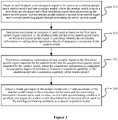
- FIG 2 is a schematic diagram of a principle of a method for training a speech separation model according to an embodiment of the present disclosure.
- network architecture for the training includes a student model and a teacher model.
- a model parameter of the teacher model is configured based on a parameter of the student model.
- the model parameter of the teacher model is correspondingly adjusted based on the adjusted student model.
- the training of the models is iteratively implemented in batches.
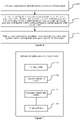
- a training process of a speech separation model is briefly illustrated based on the schematic diagram as shown in Figure 2 and a flowchart as shown in Figure 3 . Reference is made to flows of training as shown in Figure 2 and Figure 3 , in which a training process may include following steps 301 to 304.
- a computer device inputs, in each iteration, a mixed speech signal which serves as a training sample into a student model and into a teacher model.
- the student model outputs a first clean speech signal and a first interfering signal through processing the mixed speech signal
- the teacher model outputs a second clean speech signal and a second interfering signal through processing the mixed speech signal.
- a single iteration is taken as an example in the step 301 to show an embodiment, in which the mixed speech signal is inputted into the student model and the teacher model by the computer device.
- the mixed speech signal is labeled with a clean speech signal, based on which the mixed speech signal is generated.
- the mixed speech signal includes an interfering signal besides the clean speech signal.
- the student model processes the mixed speech signal to output the first clean speech signal and the first interfering signal
- the teacher model processes the mixed speech signal to output the second clean speech signal and the second interfering signal.
- step 302 the computer device determines correctness information of said iteration based on the first clean speech signal outputted by the student model and the clean speech signal based on which the mixed speech signal is generated.
- the correctness information is configured to represent a degree of separation correctness of the student model.
- the step 302 shows an embodiment in which the correctness information by the computer device based on the signal outputted by the student model and the clean speech signal labeled in the mixed speech signal.
- Signals outputted by the student model include the first clean speech signal and the first interfering signal.
- the computer device may determine the correctness information based on the first interfering signal outputted by the student model and the interfering signal included in the mixed speech signal.
- the computer device may combine the above two manners, that is, weight the correctness information determined in the two manners to obtain the final correctness information.
- a specific manner of obtaining the correctness information is not limited herein.
- step 303 the computer device determines consistency information of said iteration based on the first clean speech signal outputted by the student model and the second clean speech signal outputted by the teacher model.
- the consistency information is configured to represent a degree of consistency between a separation capability of the student model and a separation capability of the teacher model.
- the step 303 shows an embodiment of determining the consistency information by the computer device based on the signal outputted by the student model and the signal outputted by the teacher model.
- Signals outputted by the student model include the first clean speech signal and the first interfering signal
- signals outputted by the teacher model include the second clean speech signal and the second interfering signal.
- the computer device may determine the consistency information based on the first interfering signal outputted by the student model and the second interfering signal outputted by the teacher model.
- the computer device may combine the above two manners, that is, weight the consistency information determined in the two manners to obtain the final consistency information.
- a specific manner of obtaining the consistency information is not limited herein.
- step 304 the computer device adjusts a model parameter of the student model and a model parameter of the teacher model based on the correctness information and the consistency information determined in each iteration until a training-terminating condition is satisfied, and outputs the student model determined in an iteration which satisfies the training-terminating condition, as a speech separation model.
- the step 304 shows an embodiment of adjusting the model parameter of the student model and the model parameter of the teacher model based on multiple pieces of correctness information and multiple of pieces of consistency information by the computer device to obtain the speech separation model. Each iteration corresponds to one piece of correctness information and one piece of consistency information.
- the foregoing steps 301 to 303 are iterated, that is, the mixed speech signal is repeatedly inputted into the student model and into the teacher model, and thereby the multiple pieces of correctness information and the multiple pieces of consistency information can be obtained.
- the computer device when adjusting the model parameter of the teacher model and the model parameter of the student model iteratively, the computer device outputs the student model determined in an iteration that satisfies the training-terminating condition as the speech separation model, in response to the training-terminating condition is satisfied.
- the computer device may output the teacher model determined in the iteration that satisfies the training-terminating condition as the speech separation model.
- a value of a loss function is determined based on the correctness information and the consistency information which are determined in such iteration.
- the model parameter of the student model is adjusted based on the value of the loss function, and the model parameter of the teacher model is adjusted based on the model parameter of the student model.
- the iterative training proceeds based on the adjusted models until the training-terminating condition is satisfied, and the trained student model serves as the speech separation model.
- the above training on the student model may be regarded as a supervised learning process, and the above training of the teacher model may be regarded as a semi-supervised learning process.
- the teacher model is configured to ensure good convergence of the student model in the training, and therefore the trained speech separation model has a strong separation capability, high correctness, and high consistency.
- the training process is performed based on correctness of a separation result obtained by the student model and consistency between a separation result obtained by the teacher model and the separation result obtained by the student model.
- the separation correctness of the trained speech separation model can be improved, and meanwhile the separation stability of the trained speech separation model can be maintained. Hence, the separation capability of the trained speech separation model is greatly improved.
- the model parameter of the teacher model changes with the model parameter of the student model, and the consistency between outputs of the teacher model and the student model is considered when constructing the loss function.
- the training on the student model is smoothed by the teacher model.
- the model parameter of the teacher model may be configured in each iteration in a following manner.
- the model parameter of the teacher model is determined based on the model parameter of the student model through an exponential-moving-average (EMA) method, and the teacher model is configured by using the determined model parameter of the teacher model.
- EMA exponential-moving-average
- an encoder parameter in the teacher model is taken as an example.
- ⁇ is a smoothing coefficient for the encoder parameter.
- l is a sequential number of such iteration, and is a positive integer greater than 1.
- ⁇ and ⁇ ' represents encoder parameters of the student model and the teacher model, respectively.
- a parameter of an abstract-feature extractor in the teacher model is taken as an example.
- the parameter of the abstract-feature extractor in the teacher model is calculated based on a following equation (3).
- ⁇ l ′ ⁇ l ⁇ 1 ′ + 1 ⁇ ⁇ ⁇ l
- ⁇ is a smoothing coefficient for the parameter.
- l is a sequential number of such iteration, and is a positive integer greater than 1.
- ⁇ and ⁇ ' represent parameters of abstract-feature extractors of the student model and the teacher model, respectively.
- the foregoing parameter calculation merely shows a few examples of determining the model parameter of the teacher model based on the model parameter of the student model.
- the model parameter may alternatively be calculated in other manners, or the model parameter may alternatively include another type of parameter. Embodiments of the present disclosure are not limited thereto.
- a mixed speech signal that serves as a training sample is inputted into the student model and into the teacher model.
- the student model outputs a first clean speech signal and a first interfering signal through processing the mixed speech signal
- the teacher model outputs a second clean speech signal and a second interfering signal through processing the mixed speech signal.
- FIG. 4 is a schematic flowchart of processing a mixed speech signal through a student model according to an embodiment of the present disclosure
- Figure 5 is a schematic diagram of an internal structure for implementing such model. Reference is made to Figure 4 , in which the process includes following steps 401 to 403.
- a computer device maps a mixed speech signal into a high-dimensional vector space to obtain an embedded matrix corresponding to the mixed speech signal.
- the step 401 is a process of feature conversion on the mixed speech signal, in which the mixed speech signal may be converted into a form of an input of a model.
- the computer device windows the mixed speech signal to acquire frames, and performs fast Fourier transform (FFT) on the frames to convert signals from a time domain into a frequency domain.
- FFT fast Fourier transform
- the obtained frequency-domain signals when arranged according to the temporal sequence, can form a feature matrix that represents the mixed speech signal.
- the computer device maps the feature matrix into the high-dimensional vector space, such that the embedded matrix corresponding to the mixed speech signal is obtained.
- a feature of the mixed speech signal may be a feature from a short-time Fourier transform (STFT) sound spectrum, a feature from a log-Mel spectrum, a feature from a Mel-frequency cepstral coefficient (MFCC), or a score predicted by a previous convolutional neural network (CNN).
- STFT short-time Fourier transform
- MFCC Mel-frequency cepstral coefficient
- CNN convolutional neural network
- the feature of the mixed speech signal may be a feature from another factor, or may be a combination of various features. Embodiments of the present disclosure are not limited thereto.
- the step 401 may be implemented by an encoder 501 as shown in Figure 5 .
- an example in which the feature after conversion is a short-time Fourier transform sound spectrum is taken to illustrate processing of the encoder.
- the mixed speech signal is inputted into the encoder.
- the encoder obtains a feature matrix based on the STFT sound spectrum of the mixed speech signal, then maps the feature matrix into a high-dimensional vector space, and outputs the embedded matrix corresponding to the mixed speech signal.
- X ⁇ R TF may represent the feature matrix (where T and F respectively represent a quantity of frames and a quantity of frequency bands, in the mixed speech signal inputted into the encoder) obtained after the encoder processes the mixed speech signal.
- a process of the encoder mapping the feature matrix to a vector in the high-dimensional space and outputting the embedded matrix ⁇ of the mixed speech signal may be expressed as E ⁇ : X ⁇ ⁇ ⁇ R TF ⁇ D , where ⁇ represents a model parameter of the encoder.
- step 402 the computer device extracts an abstract feature from the embedded matrix corresponding to the mixed speech signal.
- the step 402 is a process of feature extraction.
- the extracted feature may be configured to represent the mixed speech signal and provide a basis for subsequent speech signal reconstruction.
- the abstract feature extractor may be an autoregressive model.
- a long short term memory network (LSTM) model is adopted in case of a causal system
- a bi-directional long short-term memory (Bi-LSTM) model is adopted in case of a non-causal system.
- short-term abstract features or long-term abstract features are extracted according to the temporal sequence from the embedded matrix corresponding to the mixed speech signal.
- a recurrent model or a summary function may be alternatively adopted to extract global abstract features from the embedded matrix.
- Specific model architecture of the abstract-feature extractor and a specific type of the extracted abstract features are not limited herein.
- An autoregressive model is taken as an example for illustrating processing in the abstract-feature extractor.
- a weight matrix P is provided to calculate the extracted feature based on a following equation.
- c t ⁇ f ⁇ t , f e p t , f ⁇ f p t , f
- c t ⁇ c represents a short-term time-varying abstract feature
- ⁇ ⁇ ⁇ represents an element in the embedded matrix
- P ⁇ P represents a weight
- e represents calculating a dot product
- t and f represent a frame index and a frequency band index, respectively, for the STFT sound spectrum
- a feature obtained through the feature extraction may be reshaped to cancel an influence of a matrix element whose value is less than a threshold.
- the feature matrix may be normalized.
- An element corresponds to a coefficient equal to 0 in case of having a value less than a threshold, and otherwise corresponds to a coefficient equal to 1.
- the computer device may incorporate a binary threshold matrix into the equation (4), which helps reduce the impact of low-energy noise on a process of extracting the abstract feature.
- an equation (5) is obtained as follows.
- the foregoing process of the abstract feature extractor extracting the abstract feature c from the embedded matrix ⁇ may be expressed as A ⁇ : ⁇ ⁇ P ⁇ R TF , ⁇ ⁇ P ⁇ c ⁇ R D .
- ⁇ represents a model parameter of the abstract feature extractor.
- step 403 the computer device performs signal reconstruction based on the extracted abstract feature, the inputted mixed speech signal, and an output of the encoder to obtain a first clean speech signal.
- Signal reconstruction is performed based on the above inputs to obtain a new set of speech signals, which provide a basis for subsequent speech signal comparison and training-loss calculation.
- a speech signal outputted by the student model is called the first clean speech signal to facilitated understanding.
- This step may be implemented by a signal reconstruction module 503 as shown in Figure 5 .
- the signal reconstruction module 503 may reconstruct a speech signal, by using a signal reconstruction algorithm, according to the extracted abstract feature, the mixed speech signal, and a feature of the embedded matrix, so as to output the first clean speech signal and a first interfering signal.
- the first clean speech signal and the first interfering signal that are outputted may be configured to calculate a value of the loss function for the current iteration, and thereby train the model through back propagation.
- the encoder may adopt a four-layer Bi-LSTM structure.
- Each hidden layer has 600 nodes, and a hidden vector having a dimension of 600 can be mapped to a high-dimensional vector space having a dimension of 257 ⁇ 40.
- An output layer has 40 nodes.
- the encoder processes the mixed speech signal under a configuration of: a 16 KHz sampling rate, a 25 ms window length, a 10 ms window shift, and 257 frequency bands. Each training sample in the corpus is randomly down-sampled to 32 frames.
- An abstract-feature extractor connected to the encoder may include a fully connected layer that can map a hidden vector having a dimension of 257 ⁇ 40 to a vector having a dimension of 600.
- the signal reconstruction module may have a two-layer Bi-LSTM structure, of which each hidden layer has 600 nodes.
- At least one of the encoder, the abstract feature extractor, or the signal reconstruction module may be configured to have more layers, or may be of another model type, according to complexity in practice and a requirement on performances.
- a specific model type and a specific topological structure of the foregoing models are not limited herein. Any foregoing model may be modified to have another effective architecture, such as an LSTM network, a convolutional neural network, a time delay network, a gated convolutional neural network, or a combination of various network structures.
- a model structure and a processing flow of the teacher model may be similar to those of the student model.
- the teacher model may adopt more complex architecture to extract features having different time-domain characteristics. Thereby, signal reconstruction may be performed based on the features having different time-domain characteristics. The value of the loss function may be calculated and the back-propagation in the model training may be performed based on a result of the signal reconstruction.
- the student model may extract an abstract feature having a high temporal resolution, that is, a short-term time-varying abstract feature, based on the process as described in the equation (5).
- the teacher model may also extract a short-term time-varying abstract feature through a similar process.
- the teacher model may, alternatively or additionally, extract an abstract feature having a lower temporal resolution during the feature extraction.
- Such abstract feature having the lower temporal resolution is called a long-term stable abstract feature to facilitate understanding.
- Such abstract feature may be calculated based on a following equation (7).
- ⁇ ' ⁇ ⁇ ' represents an element in a high-dimensional embedded matrix.
- p' ⁇ P' represents a weight.
- e represents calculating a dot product.
- t and f represent a frame index and a frequency band index, respectively, for the STFT sound spectrum.
- W represents an element in the binary threshold matrix described in the equation (6). It is appreciated that the binary threshold matrix may be omitted in this embodiment, which is not limited herein.
- the abstract feature having the lower temporal resolution i.e. the long-term stable abstract feature
- the abstract feature having the high temporal resolution i.e. the short-term time-varying abstract feature
- a first type concerns supervised training, of which an objective is improving correctness.
- a second type concerns consistency learning between the teacher model and the student model.
- the correctness information of the iteration(s) needs to be determined based on the signal outputted by the student model and the clean speech signal that serves as a label and included in the mixed speech signal.
- a process of determining the correctness information may be implemented in any of the following manners.
- the correctness information of an iteration is determined based on the first clean speech signal outputted by the student model and the clean speech signal that serves as the label and included in the mixed speech signal.
- the correctness information of an iteration is determined based on the first interfering signal outputted by the student model and an interfering signal that is included in the mixed speech signal and other than the clean speech signal.
- first correctness information of an iteration is determined based on the first clean speech signal outputted by the student model and the clean speech signal that serves as the label and included in the mixed speech signal.
- Second correctness information of the iteration is determined based on the first interfering signal outputted by the student model and an interfering signal that is included in the mixed speech signal and other than the clean speech signal.
- the correctness information of the iteration is determined according to the first correctness information and the second correctness information.
- the first clean speech signal may be, for example, a speech signal having the highest energy, as shown in a following equation (8).
- the first clean speech signal may be determined based on a permutation-invariant training (PIT) algorithm, as shown in a following equation (9). It is appreciated that the first clean speech signal may be determined in another manner, which is not limited herein.
- the correctness information is configured to determine a difference between a signal obtained through separation and another signal serving as a reference.
- the correctness information may be a mean-square error (MSE) between frequency spectra of the two signals, or may be calculated based on a scale invariant signal-to-noise ratio (SI-SNR) objective function.
- MSE mean-square error
- SI-SNR scale invariant signal-to-noise ratio
- the MSE between the first clean speech signal having the highest energy and the clean speech signal serving as the label may be calculated based on the following equation (8).
- L ⁇ , ⁇ MSE ⁇ t , ⁇ ⁇ x ⁇ X g Sigmoid c t T ⁇ t , ⁇ ⁇ 2 2
- x represents the clean speech signal
- X represents the mixed speech signal
- c represents the abstract feature
- ⁇ represents the embedded matrix
- t and f represent the frame index and the frequency band index, respectively, for the STFT sound spectrum
- the correctness information is calculated through the PIT.
- the MSEs between all candidate first clean speech signals and the clean speech signal serving as the label, and between all candidate first interfering signals and the interfering signal serving as another label, may be calculated based on the following equation (9).
- L ⁇ , ⁇ MSE min c t ⁇ c t 1 c t 2 ⁇ t , ⁇ ⁇ x ⁇ X g Sigmoid c t T ⁇ t , ⁇ ⁇ 2 2 + min c t ⁇ c t 1 c t 2 ⁇ t , ⁇ ⁇ e ⁇ X g Sigmoid c t T ⁇ t , ⁇ ⁇ 2 2
- x represents the clean speech signal
- X represents the mixed speech signal
- e represents the interfering signal
- c represents the abstract feature
- ⁇ represents the embedded matrix
- t and f represent the frame index and the frequency band index, respectively, for the STFT sound spectrum.
- the foregoing three manners may be regarded as methods for constructing a loss function, that is, methods for selecting which input/output to construct the loss function, such that the model can be trained through back-propagation based on the loss function.
- Such loss function is an objective function for reconstruction.
- Supervised model learning that uses such objective function can ensure that the learned representation includes encoded speech information of a target speaker.
- the supervised discriminative learning when combined with a speech separation task, can enable the student model to estimate a short-term time-varying abstract feature effectively.
- the consistency information of the iteration(s) needs to be determined based on the signal outputted by the student model and the signal outputted by the teacher model.
- a process of determining the consistency information may implemented in any of following manners.
- the consistency information of an iteration is determined based on the first clean speech signal outputted by the student model and the second clean speech signal outputted by the teacher model.
- the consistency information of an iteration is determined based on the first interfering signal outputted by the student model and the second interfering signal outputted by the teacher model.
- first consistency information of an iteration is determined based on the first clean speech signal outputted by the student model and the second clean speech signal outputted by the teacher model.
- Second consistency information of the iteration is determined based on the first interfering signal outputted by the student model and the second interfering signal outputted by the teacher model. The consistency information of the iteration is determined according to the first consistency information and the second consistency information.
- the first clean speech signal may be, for example, a speech signal having the highest energy as shown in the equation (8), or a speech signal determined based on the PIT algorithm as described in the equation (9). It is appreciated that the first clean speech signal may be determined based on another method, which is not limited herein.
- the consistency information is configured to indicate a difference between a spectrum of a target speaker, which is estimated by the teacher model, and a spectrum of the target speaker, which is estimated by the student model.
- the consistency information may be an MSE between spectra of signals, or may be a SI-SNR. Embodiments of the present disclosure are not limited thereto.
- the foregoing three manners may be understood as a method for constructing a loss function, that is, for selecting which input/output to construct he loss function, such that the model can be trained through back-propagation based on the loss function.
- the loss function constructed herein is configured to calculate the difference between the spectrum of the target speaker, which is estimated by the teacher model, and the spectrum of the target speaker, which is estimated by the student model.
- the teacher model may extract two types of features, that is, the short-term time-varying abstract feature and the long-term stable abstract feature.
- the consistency information may be determined based on the two types of features.
- Third consistency information of an iteration is determined based on a short-term time-varying abstract feature of the first clean speech signal and the short-term time-varying abstract feature of the second clean speech signal outputted by the teacher model.
- Fourth consistency information of the iteration is determined based on the short-term time-varying abstract feature of the first clean speech signal and the long-term stable abstract feature of the second clean speech signal outputted by the teacher model.
- a sum of the third consistency information that is weighted and the fourth consistency information that is weighted are calculated to construct the final consistency information of the iteration.
- the loss function may be constructed based on only the short-term time-varying abstract features of the student model and the teacher model.
- the loss function may be constructed based on the short-term time-varying abstract features of the student model and the teacher model, as well as the long-term stable abstract feature of the teacher model.
- X represents the mixed speech signal.
- c t and c t ' represent short-term time-varying abstract features predicted by the student model and the teacher model, respectively.
- ⁇ and ⁇ ' represent embedded matrices of the student model and the teacher model, respectively.
- t and f represent the frame index and the frequency band index, respectively, for the STFT sound spectrum.
- X represents the mixed speech signal
- c L ' represents a long-term stable abstract feature predicted by the teacher model
- c represents a short-term time-varying abstract feature predicted by the student model
- ⁇ and ⁇ ' represent the embedded matrices of the student model and the teacher model, respectively
- t and f represent the frame index and the frequency band index, respectively, for the STFT sound spectrum.
- the whole model training needs to be performed by considering both correctness and consistency.
- the model parameter of the student model and the model parameter of the teacher model are adjusted in each iteration based on the correctness information and the consistency information determined in such iteration, until a training-terminating condition is satisfied.
- the student model determined in an iteration that satisfies the training-terminating condition is outputted as the speech separation model.
- the construction of the loss functions of which the training objectives are the correctness and the consistency between the models, respectively, has been described in the foregoing embodiments. In order to implement training that combines the correctness information and the consistency information, it is necessary to establish a joint loss function that can reflect both the correctness information and the consistency information.
- the model parameter of the student model and the model parameter of the teacher model may be adjusted based on the third consistency information and the correctness information determined in each iteration. That is, the joint loss function may be expressed by a following equation (12).
- L L ⁇ , ⁇ MSE ⁇ correctness + ⁇ L ⁇ , ⁇ MSE . short ⁇ consistency
- L ⁇ , ⁇ MSE ⁇ correctness represents the loss function of which the training objective is correctness.
- L ⁇ , ⁇ MSE . short ⁇ consistency represents the loss function of which the training objective is consistency, and may be a loss function constructed based on the short-term time-varying abstract features.
- ⁇ is a weighting factor, and may be continuously optimized in neural network iterations until an optimal value is reached.
- the model parameter of the student model and the model parameter of the teacher model may be adjusted based on the weighted third consistency information, the weighted fourth consistency information, and the correctness information determined in each iteration. That is, the joint loss function may be expressed by a following equation (13).
- L L ⁇ , ⁇ MSE ⁇ correctness + ⁇ 1 L ⁇ , ⁇ MSE . short + ⁇ 2 L ⁇ , ⁇ MSE . long ⁇ consistency
- L ⁇ , ⁇ MSE ⁇ correctness correctness represents the loss function of which the training objective is correctness.
- ⁇ 1 L ⁇ , ⁇ MSE + ⁇ 2 L ⁇ , ⁇ MSE . long ⁇ consistency represents a loss function constructed based on the short-term time-varying abstract features and the long-term stable abstract feature.
- ⁇ 1 and ⁇ 2 are weight factors, and may be continuously optimized in neural network iterations until optimal values are reached.
- the training-terminating condition may be that a quantity of iterations reaches a target quantity, or the loss function becomes relatively stable.
- a batch data size is set to be 32
- an initial learning rate is 0.0001
- a weight reduction coefficient of a learning rate is 0.8 in the model training. In such case, when the value of the loss function of the model does not improve in three consecutive iterations, the training is considered to reach convergence and therefore terminates.
- the training method in embodiments of the present disclosure can learn a stable hidden feature of a target speaker automatically, without additional PIT processing, speaker tracking mechanism, or processing or adjustment defined by an expert. Moreover, the training based on consistency in embodiments of the present disclosure does not require label information, so that unsupervised information can be mined from massive unlabeled data, which helps improve robustness and versatility of the system. In addition, experiments corresponding to embodiments of the present disclosure have been performed, and a result of the experiments verify the effectiveness of the speech separation model trained based on the consistency between the student model and the teacher model. Under various interference environments and various signal-to-noise ratios (e.g.
- the separation performance of the speech separation model obtained in embodiments of the present disclosure has excellent performances in speech quality perceptual evaluation, short-term objective intelligibility, signal-to-distortion ratios, stability, and other factors.
- a method for speech separation is further provided according to embodiments of the present disclosure.
- Reference is made to Figure 6 which shows a flowchart of a method for speech separation. The method may include following steps 601 to 603.
- step 601 a computer device obtains a sound signal on which the speech separation is to be performed.
- step 602 the computer device inputs the sound signal into a speech separation model.
- the speech separation model is obtained based on a mixed speech signal and cooperative iterative training between a student model and a teacher model, and a model parameter of the teacher model is configured based on a model parameter of the student model.
- step 603 the computer device predicts a clean speech signal included in the sound signal through the speech separation model, and outputs the clean speech signal in the sound signal.
- a loss function of the cooperative iterative training is constructed based on correctness information between an output of the student model and an input of the student model in the training, and based on consistency information between the output of the student model and an output of the teacher model.
- the loss function of the iteration process is constructed based on any of following combinations of information.
- a first combination is correctness information between a first clean speech signal outputted by the student model and a clean speech signal included in the mixed speech signal, and consistency information between the first clean speech signal outputted by the student model and a second clean speech signal outputted by the teacher model.
- a second combination is correctness information between a first interfering signal outputted by the student model and an interfering signal included in the mixed speech signal, and consistency information between a first clean speech signal outputted by the student model and a second clean speech signal outputted by the teacher model.
- a third combination is first correctness information between a first clean speech signal outputted by the student model and a clean speech signal included in the mixed speech signal, second correctness information between a first interfering signal outputted by the student model and an interfering signal included in the mixed speech signal, first consistency information between the first clean speech signal outputted by the student model and a second clean speech signal outputted by the teacher model, and second consistency information between the first interfering signal outputted by the student model and a second interfering signal outputted by the teacher model.
- the loss function of the iteration process is constructed based on any of following basis.
- a first basis includes a short-term time-varying abstract feature outputted by the student model and a short-term time-varying abstract feature outputted by the teacher model.
- a second basis includes a short-term time-varying abstract feature outputted by the student model and a short-term time-varying abstract feature outputted by the teacher model, and the short-term time-varying abstract feature outputted by the student model and a long-term stable abstract feature outputted by the teacher model.
- the foregoing process of model training process and the forgoing process of speech separation may be performed by different computer devices, respectively.
- the model After being trained, the model may be provided to a computer device at a front end or at an application side to execute a speech separation task.
- the speech separation task may be a subtask for performing speech separation in a task such as speech recognition.
- the obtained signal After the speech separation is completed, the obtained signal may be further applied to specific processing, such as speech recognition.
- Embodiments of the present disclosure are not limited thereto.
- Figure 7 is a schematic structural diagram of an apparatus for training a speech separation model according to an embodiment of the present disclosure. Reference is made to Figure 7 , in which the apparatus includes a training module 701, a correctness determining module 702, a consistency determining module 703, and an adjusting module 704.
- the apparatus includes a training module 701, a correctness determining module 702, a consistency determining module 703, and an adjusting module 704.
- the training module 701 is configured to input, in each iteration, a mixed speech signal serving as a training sample into a student model and into a teacher model, where the mixed speech signal is generated based on a clean speech signal and labelled with the clean speech signal, and a model parameter of the teacher model is configured based on a model parameter of the student model.
- the training module 701 is configured to process a mixed speech signal through a student model and a teacher model separately, where the mixed speech signal is generated based on a clean speech signal and labelled with the clean speech signal, and a model parameter of the teacher model is configured based on a model parameter of the student model.
- the correctness determining module 702 is configured to determine correctness information of such iteration based on a signal outputted by the student model and the clean speech signal, which serves as a label and is included in the mixed speech signal inputted in to the student model, where the correctness information is configured to represent a degree of separation correctness of the student model.
- the correctness determining module 702 is configured to determine correctness information based on a signal outputted by the student model and the clean speech signal, which serves as a label and is included in the mixed speech signal, where the correctness information is configured to represent a degree of separation correctness of the student model.
- the consistency determining module 703 is configured to determine consistency information in such iteration based on the signal outputted by the student model and a signal outputted by the teacher model, where the consistency information is configured to represent a degree of consistency between a separation capability of the student model and a separation capability of the teacher model.
- the consistency determining module 703 is configured to determine consistency information based on the signal outputted by the student model and a signal outputted by the teacher model, where the consistency information is configured to represent a degree of consistency between a separation capability of the student model and a separation capability of the teacher model.
- the adjusting module 704 is configured to adjust the model parameter of the student model and the model parameter of the teacher model based on the correctness information and the consistency information determined in each iteration process, until a training-terminating condition is satisfied, and output the student model determined in an iteration process that satisfies the training-terminating condition as the speech separation model.
- the adjusting module 704 is configured to adjust the model parameter of the student model and the model parameter of the teacher model based on multiple pieces of the correctness information and multiple pieces of the consistency information to obtain a speech separation model.
- the correctness determining module 702 is configured to perform any of following steps.
- the correctness information of such iteration is determined based on a first clean speech signal outputted by the student model and the clean speech signal, which serves as the label and is included in the mixed speech signal.
- the correctness information of such iteration is determined based on a first interfering signal outputted by the student model and an interfering signal, which is included in the mixed speech signal and other than the clean speech signal.
- First correctness information of such iteration is determined based on a first clean speech signal outputted by the student model and the clean speech signal, which serves as the label and is included in the mixed speech signal.
- Second correctness information of such iteration is determined based on a first interfering signal outputted by the student model and an interfering signal, which is included in the mixed speech signal and other than the clean speech signal.
- the correctness information of such iteration is determined according to the first correctness information and the second correctness information.
- the consistency determining module 703 is configured to perform any of following steps.
- the consistency information in such iteration is determined based on a first clean speech signal outputted by the student model and a second clean speech signal outputted by the teacher model.
- the consistency information in such iteration is determined based on a first interfering signal outputted by the student model and a second interfering signal outputted by the teacher model.
- First consistency information in such iteration is determined based on a first clean speech signal outputted by the student model and a second clean speech signal outputted by the teacher model.
- Second consistency information in such iteration is determined based on a first interfering signal outputted by the student model and a second interfering signal outputted by the teacher model.
- the consistency information is such iteration is determined according to the first consistency information and the second consistency information.
- the adjusting module 704 is configured to determine the model parameter of the teacher model based on the model parameter of the student model through an exponential-moving-average (EMA) method, and configure the teacher model by using the determined model parameter of the teacher model.
- EMA exponential-moving-average
- the consistency determining module 703 is configured to determine third consistency information (i.e. the consistency information) in such iteration based on a short-term time-varying abstract feature of the first clean speech signal and a short-term time-varying abstract feature of the second clean speech signal outputted by the teacher model.
- the consistency determining module 703 is configured to perform following steps.
- Third consistency information in such iteration is determined based on a short-term time-varying abstract feature of the first clean speech signal and a short-term time-varying abstract feature of the second clean speech signal.
- Fourth consistency information in such iteration is determined based on the short-term time-varying abstract feature of the first clean speech signal and a long-term stable abstract feature of the second clean speech signal.
- the consistency information in such iteration is determined based on a sum of the third consistency information that is weighted and the fourth consistency information that is weighted.
- the apparatus further includes an iteration-obtaining module.
- the iteration-obtaining module is configured to: iterate the step of processing the mixed speech signal through the student model and the teacher model separately, to obtain the multiple pieces of the correctness information and the multiple pieces of the consistency information, where each iteration corresponds to one piece of the correctness information and one piece of the consistency information.
- the iteration-obtaining module is further configured to output, in response to that an iteration satisfies a training-terminating condition, the student model determined in the iteration as the speech separation model.
- the student model and the teacher model perform signal separation through permutation-invariant training (PIT), or the student model and the teacher model perform signal separation through salience-based selection.
- PIT permutation-invariant training
- division of the above functional modules is merely an example for illustrating a process in which the apparatus trains the speech separation model.
- the foregoing functions may be allocated to and implemented by different functional modules on requirement. That is, an internal structure of the apparatus is divided into different functional modules to complete all or some of the aforementioned functions.
- the apparatus and the method for training the speech separation model in the foregoing embodiments concerns to a same conception. Details of the apparatus embodiments may refer to those of the method embodiments, and are not described herein again.
- Figure 8 is a schematic structural diagram of an apparatus for speech separation according to an embodiment of the present disclosure. Reference is made to Figure 8 , in which the apparatus includes a signal obtaining module 801, an input module 802, and a prediction module 803.
- the signal obtaining module 801 is configured to obtain a sound signal on which the speech separation is to be performed.
- the input module 802 is configured to input the sound signal into a speech separation model, where the speech separation model is obtained based on a mixed speech signal and cooperative iterative training between a student model and a teacher model, and a model parameter of the teacher model is configured based on a model parameter of the student model.
- the prediction module 803 is configured to predict a clean speech signal included in the sound signal through the speech separation model, and output the clean speech signal in the sound signal.
- a loss function of the cooperative iterative training is constructed based on correctness information between an output of the student model and an input of the student model in the training, and based on consistency information between the output of the student model and an output of the teacher model.
- the loss function of the cooperative iterative training is constructed based on any of following combinations of information.
- a first combination is correctness information between a first clean speech signal outputted by the student model and a clean speech signal included in the mixed speech signal, and consistency information between the first clean speech signal outputted by the student model and a second clean speech signal outputted by the teacher model.
- a second combination is correctness information between a first interfering signal outputted by the student model and an interfering signal included in the mixed speech signal, and consistency information between a first clean speech signal outputted by the student model and a second clean speech signal outputted by the teacher model.
- a third combination is first correctness information between a first clean speech signal outputted by the student model and a clean speech signal included in the mixed speech signal, second correctness information between a first interfering signal outputted by the student model and an interfering signal included in the mixed speech signal, first consistency information between the first clean speech signal outputted by the student model and a second clean speech signal outputted by the teacher model, and second consistency information between the first interfering signal outputted by the student model and a second interfering signal outputted by the teacher model.
- the loss function of the cooperative iterative training is constructed based on any of following bases.
- a first basis is a short-term time-varying abstract feature outputted by the student model and a short-term time-varying abstract feature outputted by the teacher model.
- a second basis is a short-term time-varying abstract feature outputted by the student model and a short-term time-varying abstract feature outputted by the teacher model, and the short-term time-varying abstract feature outputted by the student model and a long-term stable abstract feature outputted by the teacher model.
- division of the above functional modules is merely an example for illustrating a process in which the apparatus performs speech separation.
- the foregoing functions may be allocated to and implemented by different functional modules on requirement. That is, an internal structure of the apparatus is divided into different functional modules to complete all or some of the aforementioned functions.
- the apparatus and the method for speech separation in the foregoing embodiments concerns to a same conception. Details of the apparatus embodiments may refer to those of the method embodiments, and are not described herein again.
- the computer device concerned in the foregoing embodiments includes one or more processors and one or more memories.
- the one or more memories store at least one computer program, and the at least one computer program is configured to be loaded and executed by the one or more processors to implement following operations.
- a mixed speech signal are processed through a student model and a teacher model separately, where the mixed speech signal is generated based on a clean speech signal and labelled with the clean speech signal, and a model parameter of the teacher model is configured based on a model parameter of the student model.
- Correctness information is determined based on a signal outputted by the student model and the clean speech signal, which serves as a label and is included in the mixed speech signal, where the correctness information is configured to represent a degree of separation correctness of the student model.
- Consistency information is determined based on the signal outputted by the student model and a signal outputted by the teacher model, where the consistency information is configured to represent a degree of consistency between a separation capability of the student model and a separation capability of the teacher model.
- the model parameter of the student model and the model parameter of the teacher model are adjusted based on multiple pieces of the correctness information and multiple pieces of the consistency information to obtain a speech separation model.
- the at least one computer program when loaded by the one or more processors is configured to perform any of following operations.
- the correctness information is determined based on a first clean speech signal outputted by the student model and the clean speech signal, which serves as the label and is included in the mixed speech signal.
- the correctness information is determined based on a first interfering signal outputted by the student model and an interfering signal, which is included in the mixed speech signal and other than the clean speech signal.
- First correctness information is determined based on a first clean speech signal outputted by the student model and the clean speech signal, which serves as the label and is included in the mixed speech signal.
- Second correctness information is determined based on a first interfering signal outputted by the student model and an interfering signal, which is included in the mixed speech signal and other than the clean speech signal. The correctness information is determined according to the first correctness information and the second correctness information.
- the at least one computer program when loaded by the one or more processors is configured to perform any of following operations.
- the consistency information is determined based on a first clean speech signal outputted by the student model and a second clean speech signal outputted by the teacher model.
- the consistency information is determined based on a first interfering signal outputted by the student model and a second interfering signal outputted by the teacher model.
- First consistency information is determined based on a first clean speech signal outputted by the student model and a second clean speech signal outputted by the teacher model.
- Second consistency information is determined based on a first interfering signal outputted by the student model and a second interfering signal outputted by the teacher model. The consistency information is determined according to the first consistency information and the second consistency information.
- the at least one computer program when loaded by the one or more processors is configured to perform following operations.
- the consistency information is determined based on a short-term time-varying abstract feature of the first clean speech signal and a short-term time-varying abstract feature of the second clean speech signal.
- the at least one computer program when loaded by the one or more processors is configured to perform following operations.
- Third consistency information is determined based on a short-term time-varying abstract feature of the first clean speech signal and a short-term time-varying abstract feature of the second clean speech signal.
- Fourth consistency information is determined based on the short-term time-varying abstract feature of the first clean speech signal and a long-term stable abstract feature of the second clean speech signal.
- the consistency information is determined based on a sum of the third consistency information that is weighted and the fourth consistency information that is weighted.
- the at least one computer program when loaded by the one or more processors is configured to perform following operations.
- the model parameter of the teacher model is determined based on the model parameter of the student model through an exponential-moving-average (EMA) method, and the teacher model is configured by using the determined model parameter of the teacher model.
- EMA exponential-moving-average
- the at least one computer program when loaded by the one or more processors is configured to perform following operations.
- the step of processing the mixed speech signal through the student model and the teacher model separately is iterated to obtain the multiple pieces of the correctness information and the multiple pieces of the consistency information, where each iteration corresponds to one piece of the correctness information and one piece of the consistency information.
- the at least one computer program is configured to be loaded and executed by the one or more processors to further perform following operations.
- the student model determined in the iteration is outputted as the speech separation model.
- the student model and the teacher model perform signal separation through permutation-invariant training (PIT), or the student model and the teacher model perform signal separation through salience-based selection.
- PIT permutation-invariant training
- the computer device concerned in the forgoing embodiments of the present disclosure includes one or more processors and one or more memories.
- the one or more memories stores at least one computer program, and the at least one computer program when loaded by the one or more processors is configured to perform following operations.
- a sound signal, on which the speech separation is to be performed, is obtained.
- the sound signal is inputted into a speech separation model, where the speech separation model is obtained based on a mixed speech signal and cooperative iterative training between a student model and a teacher model, and a model parameter of the teacher model is configured based on a model parameter of the student model.
- a clean speech signal included in the sound signal is predicted through the speech separation model, and the clean speech signal in the sound signal is outputted.
- a loss function of the cooperative iterative training is constructed based on correctness information between an output of the student model and an input of the student model in the training, and based on consistency information between the output of the student model and an output of the teacher model.
- the loss function of the cooperative iterative training is constructed based on any of following combinations of information.
- a first combination is correctness information between a first clean speech signal outputted by the student model and a clean speech signal included in the mixed speech signal, and consistency information between the first clean speech signal outputted by the student model and a second clean speech signal outputted by the teacher model.
- a second combination is correctness information between a first interfering signal outputted by the student model and an interfering signal included in the mixed speech signal, and consistency information between a first clean speech signal outputted by the student model and a second clean speech signal outputted by the teacher model.
- a third combination is first correctness information between a first clean speech signal outputted by the student model and a clean speech signal included in the mixed speech signal, second correctness information between a first interfering signal outputted by the student model and an interfering signal included in the mixed speech signal, first consistency information between the first clean speech signal outputted by the student model and a second clean speech signal outputted by the teacher model, and second consistency information between the first interfering signal outputted by the student model and a second interfering signal outputted by the teacher model.
- the loss function of the cooperative iterative training is constructed based on any of following bases.
- a first basis is a short-term time-varying abstract feature outputted by the student model and a short-term time-varying abstract feature outputted by the teacher model.
- a second basis is a short-term time-varying abstract feature outputted by the student model and a short-term time-varying abstract feature outputted by the teacher model, and the short-term time-varying abstract feature outputted by the student model and a long-term stable abstract feature outputted by the teacher model.
- FIG. 9 is a schematic structural diagram of a server according to an embodiment of the present disclosure.
- the server 900 may be subject to various changes in correspondence to a different configuration or a different performance, and may include one or more central processing units (CPU) 901 and one or more memories 902.
- the one or more memories 902 store at least one computer program, and the at least one computer program is configured to be loaded and executed by the one or more processors 901 to implement the method for processing the speech signal (that is, the method for training the speech separation model) or the method for speech separation in the foregoing various embodiments.
- the server 900 may be further provided with a wired or wireless network interface, a keyboard, an input/output interface, and other components to facilitate input/output.
- the server 900 may further include other components for implementing a function of the computer device, where details are not described herein.
- the computer device provided in embodiments of the present disclosure may be implemented as a terminal.
- Figure 10 is a schematic structural diagram of a terminal according to an embodiment of the present disclosure.
- the terminal may be configured to perform, on a terminal side, the method in the foregoing embodiments.
- the terminal 1000 may be a smartphone, a tablet computer, a MP3 (Moving Picture Experts Group Audio Layer III) player, a MP4 (Moving Picture Experts Group Audio Layer IV) player, a notebook computer, or a desktop computer.
- the terminal 1000 may also be called another name, such as user equipment, a portable terminal, a laptop terminal, or a desktop terminal.
- the terminal 1000 includes one or more processors 1001 and one or more memories 1002.
- the processor 1001 may include one or more processing cores, and may be, for example, a 4-core processor or an 8-core processor.
- the processor 1001 may be implemented in hardware, embodied in at least one of: a digital signal processor (DSP), a field-programmable gate array (FPGA), and a programmable logic array (PLA).
- the processor 1001 may alternatively include a main processor and a co-processor.
- the main processor is a processor that is configured to process data in an awaking state, and is also referred to as a central processing unit (CPU).
- the co-processor is a low-power processor configured to process data in an idle state.
- the processor 1001 may be integrated with a graphics processing unit (GPU).
- the GPU is responsible for rendering and drawing content to be displayed on a display screen.
- the processor 1001 may further include an artificial intelligence (AI) processor.
- the AI processor is configured to process a calculating operation related to machine learning.
- the memory 1002 may include one or more computer-readable storage media.
- the computer-readable storage medium may be non-transient.
- the memory 1002 may further include a highspeed random access memory, and a non-volatile memory, such as one or more magnetic disk storage devices and a flash storage device.
- the non-transitory computer-readable storage medium in the memory 1002 is configured to store at least one instruction.
- the at least one instruction is configured to be executed by the processor 1001 to implement the method for speech separation or the method for training the speech separation model according to the method embodiments of the present disclosure.
- the terminal 1000 may include: a peripheral device interface 1003 and at least one peripheral device.
- the processor 1001, the memory 1002, and the peripheral device interface 1003 may be connected via a bus or a signal cable.
- Each peripheral device may be connected to the peripheral device interface 1003 via a bus, a signal cable, or a circuit board.
- the peripheral device includes at least one of: a radio frequency circuit 1004, a touch screen 1005, a camera component 1006, an audio circuit 1007, a positioning component 1008, and a power supply 1009.
- the peripheral device interface 1003 may be configured to connect the at least one peripheral device related to input/output (I/O) to the processor 1001 and the memory 1002.
- the processor 1001, the memory 1002, and the peripheral device interface 1003 are integrated on a same chip or a same circuit board.
- any one or two of the processor 1001, the memory 1002, and the peripheral device interface 1003 may be implemented on a separate chip or a separate circuit board. This embodiment is not limited thereto.
- the radio frequency circuit 1004 is configured to receive and transmit a radio frequency (RF) signal, also called an electromagnetic signal.
- the RF circuit 1004 communicates with a communication network and another communication device through the electromagnetic signal.
- the RF circuit 1004 converts an electric signal into an electromagnetic signal for transmission, or converts a received electromagnetic signal into an electric signal.
- the RF circuit 1004 includes: an antenna system, an RF transceiver, one or more amplifiers, a tuner, an oscillator, a digital signal processor, a codec chip set, a subscriber identity module card, and the like.
- the RF circuit 1004 may communicate with another terminal through at least one wireless communication protocol.
- the wireless communication protocol includes, but is not limited to, a metropolitan area network, a generation of a mobile communication network (2G, 3G, 4G, or 5G), a wireless local area network, and/or a wireless fidelity (WiFi) network.
- the RF circuit 1004 may include a circuit related to near field communication (NFC). The present disclosure is not limited thereto.
- the display screen 1005 is configured to display a user interface (UI).
- the UI may include a graphic, a text, an icon, a video, and any combination of the above.
- the display screen 1005 is a touch screen, the display screen 1005 is further capable collect a touch signal on or above a surface of the display screen 1005.
- the touch signal may be inputted into the processor 1001 as a control signal for processing.
- the display screen 1005 may be further configured to provide a virtual button and/or a virtual keyboard, also called a soft button and/or a soft keyboard.
- a quantity of the display screen 1005 may be one, and the display screen 1005 is disposed on a front panel of the terminal 1000.
- the display screen 1005 may be a flexible display screen, disposed on a curved surface or a folded surface of the terminal 1000.
- the display screen 1005 may even be configured to have a non-rectangular irregular shape, that is, a specially shaped screen.
- the display screen 1005 may be manufactured as, for example, a liquid crystal display (LCD), or an organic light-emitting diode (OLED).
- the camera component 1006 is configured to collect an image or a video.
- the camera component 1006 includes a front-facing camera and a rear-facing camera.
- the front-facing camera is disposed on a front panel of the terminal
- the rear-facing camera is disposed on a back surface of the terminal.
- there are at least two rear-facing cameras each of which is any of a main camera, a depth-of-field camera, a wide-angle camera, and a telephoto camera, so as to implement a background-blurring function through fusion between the main camera and the depth-of-field camera, panoramic shooting and virtual-reality (VR) shooting functions through fusion between the main camera and wide-angle camera, or another fusion-shooting function.
- VR virtual-reality
- the camera component 1006 may further include a flash light.
- the flash light may be a mono-color-temperature flash light or a dual-color-temperature flash light.
- the dual-color-temperature flash light refers to a combination of a warm-color flash light and a cold-color flash light, and may be configured to perform light compensation under different color temperatures.
- the audio circuit 1007 may include a microphone and a loudspeaker.
- the microphone is configured to collect sound waves of a user and an environment, convert the sound waves into electrical signals, and input the electrical signals into the processor 1001 for processing or into the RF circuit 1004 for speech communication. Multiple microphones may be disposed at different portions of the terminal 1000 for stereo collection or noise reduction.
- the microphone may alternatively be a microphone array or an omnidirectional collection microphone.
- the loudspeaker is configured to convert electrical signals from the processor 1001 or the RF circuit 1004 into sound waves.
- the loudspeaker may be a conventional thin-film loudspeaker or a piezoelectric ceramic loudspeaker.
- the loudspeaker is the piezoelectric ceramic loudspeaker
- electrical signals can be converted into not only sound waves audible to human, but also inaudible sound waves for ranging or the like.
- the audio circuit 1007 may further include an earphone jack.
- the positioning component 1008 is configured to determine a current geographic location of the terminal 1000 for navigation or a location-based service (LBS).
- the positioning component 1008 may be a positioning component based on the global positioning system (GPS) of the United States, the COMPASS System of China, the GLONASS System of Russia, or the GALILEO System of the European Union.
- GPS global positioning system
- the power supply 1009 is configured to supply power to a component in the terminal 1000.
- the power supply 1009 may be an alternating current, a direct current, a primary battery, or a rechargeable battery.
- the rechargeable battery may be a wired rechargeable battery or a wireless rechargeable battery.
- the rechargeable battery may be further configured to support fast-charge technology.
- the terminal 1000 may also include one or more sensors 1010.
- the one or more sensors 1010 include, but are not limited to, an acceleration sensor 1011, a gyroscope sensor 1010, a pressure sensor 1013, a fingerprint sensor 1014, an optical sensor 1015, and a proximity sensor 1016.
- the acceleration sensor 1011 may detect magnitude of acceleration on three coordinate axes of a coordinate system established with the terminal 1000.
- the acceleration sensor 1011 may be configured to detect components of gravity acceleration along the three coordinate axes.
- the processor 1001 may control the touch screen 1005 to display the user interface in a landscape view or a portrait view, according to a gravity acceleration signal collected by the acceleration sensor 1011.
- the acceleration sensor 1011 may be further configured to collect motion data of a game or a user.
- the gyroscope sensor 1010 may detect a body direction and a rotation angle of the terminal 1000.
- the gyroscope sensor 1010 may cooperate with the acceleration sensor 1011 to collect a 3D action performed by the user on the terminal 1000.
- the processor 1001 may implement following functions according to data collected by the gyroscope sensor 1010: motion sensing (for example, the UI is changed according to a tilt operation of the user), image stabilization during shooting, game control, and inertial navigation.
- the pressure sensor 1013 may be disposed on a side frame of the terminal 1000 and/or a lower layer of the touch screen 1005.
- a gripping signal of the user on the terminal 1000 may be detected.
- the processor 1001 performs left-or-right hand recognition or a quick operation according to the gripping signal collected by the pressure sensor 1013.
- the processor 1001 controls an operable widget on the UI, according to a pressure operation performed by the user on the touch screen 1005.
- the operable widget includes at least one of: a button widget, a scroll bar widget, an icon widget, and a menu widget.
- the fingerprint sensor 1014 is configured to collect a fingerprint of the user.
- the processor 1001 identifies an identity of the user according to the fingerprint collected by the fingerprint sensor 1014, or the fingerprint sensor 1014 identifies an identity of the user according to the collected fingerprint.
- the processor 1001 authorizes the user to perform a related sensitive operation.
- the sensitive operation includes unlocking a screen, viewing encrypted information, downloading software, payment, changing settings, or the like.
- the fingerprint sensor 1014 may be disposed on a front side, a back side, or a lateral side of the terminal 1000. In a case that a physical button or a vendor logo is disposed on the terminal 1000, the fingerprint 1014 may be integrated with the physical button or the vendor logo.
- the optical sensor 1015 is configured to collect an intensity of ambient light.
- the processor 1001 may control luminance of the touch screen 1005 according to the intensity of ambient light collected by the optical sensor 1015.
- the luminance of the touch screen 1005 is increased in case of high intensity of the ambient light, and the luminance of the touch screen 1005 is reduced in case of low intensity of the ambient light.
- the processor 1001 may further adjust a camera parameter of the camera component 1006 dynamically according to the intensity of ambient light collected by the optical sensor 1015.
- the proximity sensor 1016 also called a distance sensor, is generally disposed on the front panel of the terminal 1000.
- the proximity sensor 1016 is configured to collect a distance between the user and a front surface of the terminal 1000.
- the processor 1001 controls the touch screen 1005 to switch from a screen-on state to a screen-off state.
- the processor 1001 controls the touch screen 1005 to switch from the screen-off state to the screen-on state.
- Figure 10 constitutes no limitation on the terminal 1000, and the terminal may include more or fewer components than those shown in the figure, or some components may be combined, or a different component deployment may be used.
- a computer-readable storage medium such as a memory
- the computer-readable storage includes a computer program, and the computer program may be executed by a processor to implement the method for speech separation or the method for training the speech separation model in the foregoing embodiments.
- the computer-readable storage medium may be a read-only memory (ROM), a RAM, a compact disc ROM (CD-ROM), a magnetic tape, a floppy disk, an optical data storage device, or the like.
- the at least one computer program stored in the computer-readable storage medium when loaded by the processor is configured to perform following operations.
- a mixed speech signal are processed through a student model and a teacher model separately, where the mixed speech signal is generated based on a clean speech signal and labelled with the clean speech signal, and a model parameter of the teacher model is configured based on a model parameter of the student model.
- Correctness information is determined based on a signal outputted by the student model and the clean speech signal, which serves as a label and is included in the mixed speech signal, where the correctness information is configured to represent a degree of separation correctness of the student model.
- Consistency information is determined based on the signal outputted by the student model and a signal outputted by the teacher model, where the consistency information is configured to represent a degree of consistency between a separation capability of the student model and a separation capability of the teacher model.
- the model parameter of the student model and the model parameter of the teacher model are adjusted based on multiple pieces of the correctness information and multiple pieces of the consistency information to obtain a speech separation model.
- the at least one computer program when loaded by the processor is configured to perform any of following operations.
- the correctness information is determined based on a first clean speech signal outputted by the student model and the clean speech signal, which serves as the label and is included in the mixed speech signal.
- the correctness information is determined based on a first interfering signal outputted by the student model and an interfering signal, which is included in the mixed speech signal and other than the clean speech signal.
- First correctness information is determined based on a first clean speech signal outputted by the student model and the clean speech signal, which serves as the label and is included in the mixed speech signal.
- Second correctness information is determined based on a first interfering signal outputted by the student model and an interfering signal, which is included in the mixed speech signal and other than the clean speech signal. The correctness information is determined according to the first correctness information and the second correctness information.
- the at least one computer program when loaded by the processor is configured to perform any of following operations.
- the consistency information is determined based on a first clean speech signal outputted by the student model and a second clean speech signal outputted by the teacher model.
- the consistency information is determined based on a first interfering signal outputted by the student model and a second interfering signal outputted by the teacher model.
- First consistency information is determined based on a first clean speech signal outputted by the student model and a second clean speech signal outputted by the teacher model.
- Second consistency information is determined based on a first interfering signal outputted by the student model and a second interfering signal outputted by the teacher model. The consistency information is determined according to the first consistency information and the second consistency information.
- the at least one computer program when loaded by the processor is configured to perform following operations.
- the consistency information is determined based on a short-term time-varying abstract feature of the first clean speech signal and a short-term time-varying abstract feature of the second clean speech signal.
- the at least one computer program when loaded by the processor is configured to perform following operations.
- Third consistency information is determined based on a short-term time-varying abstract feature of the first clean speech signal and a short-term time-varying abstract feature of the second clean speech signal.
- Fourth consistency information is determined based on the short-term time-varying abstract feature of the first clean speech signal and a long-term stable abstract feature of the second clean speech signal.
- the consistency information is determined based on a sum of the third consistency information that is weighted and the fourth consistency information that is weighted.
- the at least one computer program when loaded by the processor is configured to perform following operations.
- the model parameter of the teacher model is determined based on the model parameter of the student model through an exponential-moving-average method, and the teacher model is configured by using the determined model parameter of the teacher model.
- the at least one computer program when loaded by the processor is configured to perform following operations.
- the step of processing the mixed speech signal through the student model and the teacher model separately is iterated to obtain the multiple pieces of the correctness information and the multiple pieces of the consistency information, where each iteration corresponds to one piece of the correctness information and one piece of the consistency information.
- the at least one computer program when loaded by the processor is further configured to perform following operations.
- the student model determined in the iteration is outputted as the speech separation model.
- the student model and the teacher model perform signal separation through permutation-invariant training (PIT), or the student model and the teacher model perform signal separation through salience-based selection.
- PIT permutation-invariant training
- the at least one computer program stored in the computer-readable storage medium when loaded by the processor is configured to perform following operations.
- a sound signal, on which the speech separation is to be performed, is obtained.
- the sound signal is inputted into a speech separation model, where the speech separation model is obtained based on a mixed speech signal and cooperative iterative training between a student model and a teacher model, and a model parameter of the teacher model is configured based on a model parameter of the student model.
- a clean speech signal included in the sound signal is predicted through the speech separation model, and the clean speech signal in the sound signal is outputted.
- a loss function of the cooperative iterative training is constructed based on correctness information between an output of the student model and an input of the student model in the training, and based on consistency information between the output of the student model and an output of the teacher model.
- the loss function of the cooperative iterative training is constructed based on any of following combinations of information.
- a first combination is correctness information between a first clean speech signal outputted by the student model and a clean speech signal included in the mixed speech signal, and consistency information between the first clean speech signal outputted by the student model and a second clean speech signal outputted by the teacher model.
- a second combination is correctness information between a first interfering signal outputted by the student model and an interfering signal included in the mixed speech signal, and consistency information between a first clean speech signal outputted by the student model and a second clean speech signal outputted by the teacher model.
- a third combination is first correctness information between a first clean speech signal outputted by the student model and a clean speech signal included in the mixed speech signal, second correctness information between a first interfering signal outputted by the student model and an interfering signal included in the mixed speech signal, first consistency information between the first clean speech signal outputted by the student model and a second clean speech signal outputted by the teacher model, and second consistency information between the first interfering signal outputted by the student model and a second interfering signal outputted by the teacher model.
- the loss function of the cooperative iterative training is constructed based on any of following bases.
- a first basis is a short-term time-varying abstract feature outputted by the student model and a short-term time-varying abstract feature outputted by the teacher model.
- a second basis is a short-term time-varying abstract feature outputted by the student model and a short-term time-varying abstract feature outputted by the teacher model, and the short-term time-varying abstract feature outputted by the student model and a long-term stable abstract feature outputted by the teacher model.
- a computer program product or a computer program is further provided according to embodiments of the present disclosure.
- the computer program product or the computer program including one or more program codes, and the one or more program codes are stored in a computer-readable storage medium.
- One or more processors of a computer device is capable to read the one or more program codes from the computer-readable storage medium, and the one or more processors when executing the one or more program codes enables the computer device to perform the method for processing the speech signal or the method for speech separation described in the foregoing embodiments.
- the program may be stored in a computer-readable storage medium.
- the storage medium may be a ROM, a magnetic disk, or an optical disc.
Landscapes
- Engineering & Computer Science (AREA)
- Physics & Mathematics (AREA)
- Health & Medical Sciences (AREA)
- Computational Linguistics (AREA)
- Theoretical Computer Science (AREA)
- Artificial Intelligence (AREA)
- Evolutionary Computation (AREA)
- Multimedia (AREA)
- Acoustics & Sound (AREA)
- Human Computer Interaction (AREA)
- Audiology, Speech & Language Pathology (AREA)
- Computing Systems (AREA)
- Biomedical Technology (AREA)
- General Engineering & Computer Science (AREA)
- General Physics & Mathematics (AREA)
- Mathematical Physics (AREA)
- Software Systems (AREA)
- General Health & Medical Sciences (AREA)
- Life Sciences & Earth Sciences (AREA)
- Data Mining & Analysis (AREA)
- Biophysics (AREA)
- Molecular Biology (AREA)
- Signal Processing (AREA)
- Quality & Reliability (AREA)
- Electrically Operated Instructional Devices (AREA)
Abstract
Description
- The present disclosure claims priority to
Chinese Patent Application No. 202010003201.2, entitled "METHOD FOR TRAINING SPEECH SEPARATION MODEL, AND METHOD AND APPARATUS FOR SPEECH SEPARATION" and filed on January 02, 2020 - The present disclosure relates to the field of speech technologies, and in particular to a method and an apparatus for processing speech signal, and a method and an apparatus for speech separation, a computer device, and a storage medium.
- With development of artificial intelligence technologies and electronic devices, speech has become one of important means for human-machine interaction. Interfering sound sources renders correctness of speech recognition far from satisfactory when electronic devices are in a complex and open environment, because it is difficult to separate target speech from the interfering sound sources accurately. At present, it is a challenging task to develop a method for speech separation, which has excellent generalization performances and robustness in a complex and variable input environment.
- A method and an apparatus for processing a speech signal, a method and an apparatus for speech separation, a computer device, and a storage medium are provided according to embodiments of the present disclosure. Technical solutions are as follows.
- In one aspect, a method for processing a speech signal is provided. The method is executable by a computer device, and includes:
- processing a mixed speech signal through a student model and a teacher model separately, where the mixed speech signal is generated based on a clean speech signal and labelled with the clean speech signal, and a model parameter of the teacher model is configured based on a model parameter of the student model;
- determining correctness information based on a signal outputted by the student model and the clean speech signal, which serves as a label and is included in the mixed speech signal, where the correctness information is configured to represent a degree of separation correctness of the student model;
- determining consistency information based on the signal outputted by the student model and a signal outputted by the teacher model, where the consistency information is configured to represent a degree of consistency between a separation capability of the student model and a separation capability of the teacher model; and
- adjusting the model parameter of the student model and the model parameter of the teacher model based on multiple pieces of the correctness information and multiple pieces of the consistency information to obtain a speech separation model.
- In an embodiment, determining the correctness information based on the signal outputted by the student model and the clean speech signal, which serves as the label and is included in the mixed speech signal, includes one of:
- determining the correctness information based on a first clean speech signal outputted by the student model and the clean speech signal, which serves as the label and is included in the mixed speech signal;
- determining the correctness information based on a first interfering signal outputted by the student model and an interfering signal, which is included in the mixed speech signal and other than the clean speech signal; or
- determining first correctness information based on a first clean speech signal outputted by the student model and the clean speech signal, which serves as the label and is included in the mixed speech signal; determining second correctness information based on a first interfering signal outputted by the student model and an interfering signal, which is included in the mixed speech signal and other than the clean speech signal; and determining the correctness information according to the first correctness information and the second correctness information.
- In an embodiment, determining the consistency information based on the signal outputted by the student model and the signal outputted by the teacher model includes one of:
- determining the consistency information based on a first clean speech signal outputted by the student model and a second clean speech signal outputted by the teacher model;
- determining the consistency information based on a first interfering signal outputted by the student model and a second interfering signal outputted by the teacher model; or
- determining first consistency information based on a first clean speech signal outputted by the student model and a second clean speech signal outputted by the teacher model; determining second consistency information based on a first interfering signal outputted by the student model and a second interfering signal outputted by the teacher model; and determining the consistency information according to the first consistency information and the second consistency information.
- In an embodiment, determining the consistency information based on the first clean speech signal outputted by the student model and the second clean speech signal outputted by the teacher model includes:
determining the consistency information based on a short-term time-varying abstract feature of the first clean speech signal and a short-term time-varying abstract feature of the second clean speech signal. - In an embodiment, determining the consistency information based on the first clean speech signal outputted by the student model and the second clean speech signal outputted by the teacher model includes:
- determining third consistency information based on a short-term time-varying abstract feature of the first clean speech signal and a short-term time-varying abstract feature of the second clean speech signal;
- determining fourth consistency information based on the short-term time-varying abstract feature of the first clean speech signal and a long-term stable abstract feature of the second clean speech signal; and
- determining the consistency information based on a sum of the third consistency information that is weighted and the fourth consistency information that is weighted.
- In an embodiment, adjusting the model parameter of the student model and the model parameter of the teacher model includes: determining the model parameter of the teacher model based on the model parameter of the student model through an exponential-moving-average (EMA) method, and configuring the teacher model by using the determined model parameter of the teacher model.
- In an embodiment, the method further includes:
iterating the step of processing the mixed speech signal through the student model and the teacher model separately, to obtain the multiple pieces of the correctness information and the multiple pieces of the consistency information, where each iteration corresponds to one piece of the correctness information and one piece of the consistency information. - Obtaining the speech separation model includes:
outputting, in response to that an iteration satisfies a training-terminating condition, the student model determined in the iteration as the speech separation model. - In an embodiment, the student model and the teacher model perform signal separation through permutation-invariant training (PIT), or the student model and the teacher model perform signal separation through salience-based selection.
- In another aspect, a method for speech separation is provided. The method is executable by a computer device, and includes:
- obtaining a sound signal on which the speech separation is to be performed;
- inputting the sound signal into a speech separation model, where the speech separation model is obtained based on a mixed speech signal and cooperative iterative training between a student model and a teacher model, and a model parameter of the teacher model is configured based on a model parameter of the student model; and
- predicting a clean speech signal included in the sound signal through the speech separation model, and outputting the clean speech signal in the sound signal.
- In an embodiment, a loss function of the cooperative iterative training is constructed based on correctness information between an output of the student model and an input of the student model in the training, and based on consistency information between the output of the student model and an output of the teacher model.
- In an embodiment, the loss function of the cooperative iterative training is constructed based on:
- correctness information between a first clean speech signal outputted by the student model and a clean speech signal included in the mixed speech signal, and consistency information between the first clean speech signal outputted by the student model and a second clean speech signal outputted by the teacher model;
- correctness information between a first interfering signal outputted by the student model and an interfering signal included in the mixed speech signal, and consistency information between a first clean speech signal outputted by the student model and a second clean speech signal outputted by the teacher model; or
- first correctness information between a first clean speech signal outputted by the student model and a clean speech signal included in the mixed speech signal, second correctness information between a first interfering signal outputted by the student model and an interfering signal included in the mixed speech signal, first consistency information between the first clean speech signal outputted by the student model and a second clean speech signal outputted by the teacher model, and second consistency information between the first interfering signal outputted by the student model and a second interfering signal outputted by the teacher model.
- In an embodiment, the loss function of the cooperative iterative training is constructed based on:
- a short-term time-varying abstract feature outputted by the student model and a short-term time-varying abstract feature outputted by the teacher model; or
- a short-term time-varying abstract feature outputted by the student model and a short-term time-varying abstract feature outputted by the teacher model, and the short-term time-varying abstract feature outputted by the student model and a long-term stable abstract feature outputted by the teacher model.
- In another aspect, an apparatus for processing a speech signal is provided, including:
- a training module, configured to process a mixed speech signal through a student model and a teacher model separately, where the mixed speech signal is generated based on a clean speech signal and labelled with the clean speech signal, and a model parameter of the teacher model is configured based on a model parameter of the student model;
- a correctness determining module, configured to determine correctness information based on a signal outputted by the student model and the clean speech signal, which serves as a label and is included in the mixed speech signal, where the correctness information is configured to represent a degree of separation correctness of the student model;
- a consistency determining module, configured to determine consistency information based on the signal outputted by the student model and a signal outputted by the teacher model, where the consistency information is configured to represent a degree of consistency between a separation capability of the student model and a separation capability of the teacher model; and
- an adjusting module, configured to adjust the model parameter of the student model and the model parameter of the teacher model based on multiple pieces of the correctness information and multiple pieces of the consistency information to obtain a speech separation model.
- In an embodiment, the correctness determining module is configured to perform one of:
- determining the correctness information based on a first clean speech signal outputted by the student model and the clean speech signal, which serves as the label and is included in the mixed speech signal;
- determining the correctness information based on a first interfering signal outputted by the student model and an interfering signal, which is included in the mixed speech signal and other than the clean speech signal; or
- determining first correctness information based on a first clean speech signal outputted by the student model and the clean speech signal, which serves as the label and is included in the mixed speech signal; determining second correctness information based on a first interfering signal outputted by the student model and an interfering signal, which is included in the mixed speech signal and other than the clean speech signal; and determining the correctness information according to the first correctness information and the second correctness information.
- In an embodiment, the consistency determining module is configured to perform one of:
- determining the consistency information based on a first clean speech signal outputted by the student model and a second clean speech signal outputted by the teacher model;
- determining the consistency information based on a first interfering signal outputted by the student model and a second interfering signal outputted by the teacher model; or
- determining first consistency information based on a first clean speech signal outputted by the student model and a second clean speech signal outputted by the teacher model; determining second consistency information based on a first interfering signal outputted by the student model and a second interfering signal outputted by the teacher model; and determining the consistency information according to the first consistency information and the second consistency information.
- In an embodiment, the consistency determining module is configured to determine the consistency information based on a short-term time-varying abstract feature of the first clean speech signal and a short-term time-varying abstract feature of the second clean speech signal.
- In an embodiment, the consistency determining module is configured to:
- determine third consistency information based on a short-term time-varying abstract feature of the first clean speech signal and a short-term time-varying abstract feature of the second clean speech signal;
- determine fourth consistency information based on the short-term time-varying abstract feature of the first clean speech signal and a long-term stable abstract feature of the second clean speech signal; and
- determine the consistency information based on a sum of the third consistency information that is weighted and the fourth consistency information that is weighted.
- In an embodiment, the adjusting module is configured to determine the model parameter of the teacher model based on the model parameter of the student model through an exponential-moving-average (EMA) method, and configure the teacher model by using the determined model parameter of the teacher model.
- In an embodiment, the apparatus further includes an iteration-obtaining module, configured to: iterate the step of processing the mixed speech signal through the student model and the teacher model separately, to obtain the multiple pieces of the correctness information and the multiple pieces of the consistency information, where each iteration corresponds to one piece of the correctness information and one piece of the consistency information.
- The iteration-obtaining module is further configured to output, in response to that an iteration satisfies a training-terminating condition, the student model determined in the iteration as the speech separation model.
- In an embodiment, the student model and the teacher model perform signal separation through permutation-invariant training (PIT), or the student model and the teacher model perform signal separation through salience-based selection.
- In another aspect, an apparatus for speech separation is provided, including:
- a signal obtaining module, configured to obtain a sound signal on which the speech separation is to be performed;
- an input module, configured to input the sound signal into a speech separation model, where the speech separation model is obtained based on a mixed speech signal and cooperative iterative training between a student model and a teacher model, and a model parameter of the teacher model is configured based on a model parameter of the student model; and
- a prediction module, configured to predict a clean speech signal included in the sound signal through the speech separation model, and output the clean speech signal in the sound signal.
- In an embodiment, a loss function of the cooperative iterative training is constructed based on correctness information between an output of the student model and an input of the student model in the training, and based on consistency information between the output of the student model and an output of the teacher model.
- In an embodiment, the loss function of the cooperative iterative training is constructed based on:
- correctness information between a first clean speech signal outputted by the student model and a clean speech signal included in the mixed speech signal, and consistency information between the first clean speech signal outputted by the student model and a second clean speech signal outputted by the teacher model;
- correctness information between a first interfering signal outputted by the student model and an interfering signal included in the mixed speech signal, and consistency information between a first clean speech signal outputted by the student model and a second clean speech signal outputted by the teacher model; or
- first correctness information between a first clean speech signal outputted by the student model and a clean speech signal included in the mixed speech signal, second correctness information between a first interfering signal outputted by the student model and an interfering signal included in the mixed speech signal, first consistency information between the first clean speech signal outputted by the student model and a second clean speech signal outputted by the teacher model, and second consistency information between the first interfering signal outputted by the student model and a second interfering signal outputted by the teacher model.
- In an embodiment, the loss function of the cooperative iterative training is constructed based on:
- a short-term time-varying abstract feature outputted by the student model and a short-term time-varying abstract feature outputted by the teacher model; or
- a short-term time-varying abstract feature outputted by the student model and a short-term time-varying abstract feature outputted by the teacher model, and the short-term time-varying abstract feature outputted by the student model and a long-term stable abstract feature outputted by the teacher model.
- In another aspect, a computer device is provided, including one or more processors and one or more memories storing at least one computer program, where the at least one computer program is configured to be loaded and executed by the one or more processors to implement the method for processing the speech signal or the method for speech separation according to any foregoing embodiment.
- In another aspect, a computer-readable storage medium is provided, where the computer-readable storage medium stores at least one computer program, the at least one computer program is configured to be loaded and executed by a processor to implement the method for processing the speech signal or the method for speech separation according to any foregoing embodiment.
- In another aspect, a computer program product or a computer program is provided, including one or more program codes, where the one or more program codes are stored in a computer-readable storage medium. One or more processors of a computer device is capable to read the one or more program codes from the computer-readable storage medium, and execute the one or more program codes to configure the computer device to perform the method for processing the speech signal or the method for speech separation according to any foregoing embodiment.
- For clearer illustration of the technical solutions according to embodiments of the present disclosure, hereinafter briefly described are the drawings to be applied in embodiments of the present disclosure. Apparently, the drawings in the following descriptions are only some embodiments of the present disclosure, and other drawings may be obtained by those skilled in the art based on the provided drawings without creative efforts.
-
Figure 1 is a schematic diagram of an environment for implementing a method for training a speech separation model according to an embodiment of the present disclosure. -
Figure 2 is a schematic diagram of a principle of a method for training a speech separation model according to an embodiment of the present disclosure. -
Figure 3 is a schematic flowchart of a method for training a speech separation model according to an embodiment of the present disclosure. -
Figure 4 is a schematic flowchart of processing a mixed speech signal through a student model according to an embodiment of the present disclosure. -
Figure 5 is a schematic diagram of internal architecture of a student model according to an embodiment of the present disclosure. -
Figure 6 is a flowchart of a method for speech separation according to an embodiment of the present disclosure. -
Figure 7 is a schematic structural diagram of an apparatus for training a speech separation model according to an embodiment of the present disclosure. -
Figure 8 is a schematic structural diagram of an apparatus for speech separation according to an embodiment of the present disclosure. -
Figure 9 is a schematic structural diagram of a server according to an embodiment of the present disclosure. -
Figure 10 is a schematic structural diagram of a terminal according to an embodiment of the present disclosure. - In order to clarity objectives, technical solutions, and advantages of the present disclosure, hereinafter embodiments of the present disclosure are further described in details in conjunction with the drawings.
- In order to facilitate understanding the technical solutions in the embodiments of the present disclosure, some terms involved in the embodiments of the present disclosure are explained below.
- Artificial Intelligence (AI) refers to a theory, a method, technology, or an application system, which simulates, extends, and expands human intelligence, perceives an environment, acquires knowledge, and utilizes knowledge, to obtain an optimal result via a digital computer or a machine controlled by a digital computer. In other words, the AI is a comprehensive technology of computer science, which attempts to understand essence of intelligence and produce a novel intelligent machine that can react in a manner similar to human intelligence. The AI aims at studying design principles and implementation methods of various intelligent machines, so as to render machines capable of perceiving, reasoning, and making decisions
- AI technology is a comprehensive discipline related to a wide range of fields, and includes techniques at levels of both hardware and software level. Basic AI technology generally includes techniques such as sensors, dedicated AI chips, cloud computing, distributed storage, big data processing, operation/interaction systems, and mechatronics. AI software technology mainly includes several major directions such as computer vision, speech processing, natural language processing, and machine learning (ML) or deep learning.
- Key technology of the speech technology includes automatic speech recognition (ASR) technology, text-to-speech (TTS) technology, and voiceprint recognition technology. An aim of further development of human-computer interaction is making a computer capable of listening, seeing, speaking, and feeling, and speech is one of the most promising means of future human-computer interaction.
- Nature language processing (NLP) is an important direction in the fields of computer science and AI. The NLP studies various theories and methods for implementing effective communication between human and computers through natural languages, and is a science that integrates linguistics, computer science, and mathematics. Therefore, research in the NLP concerns natural languages, that is, languages used by people in daily life, and the NLP is closely related to linguistic studies. Generally, NLP technology includes text processing, semantic understanding, machine translation, robot question and answering, knowledge atlas, and other techniques.
- The ML is multi-field interdiscipline, and relates to multiple disciplines such as the probability theory, statistics, the approximation theory, convex analysis, and the theory of algorithm complexity. The ML specializes in studying how a computer simulates or implements human learning behaviors to obtain new knowledge or new skills, and how a computer reorganizes a structure of existing knowledge to keep improving its performances. The ML is a core of AI, is a fundamental way to make a computer intelligent, and is applied to various fields of AI. Generally, the ML and deep learning include techniques such as artificial neural networks, belief networks, reinforcement learning, transfer learning, inductive learning, and learning from instructions
- In recent years, supervised learning has been introduced in speech separation and made some progresses. The supervised learning requires manual collection of labeled training samples which are of high quality, and such process is time-consuming, labor-intensive, and inefficient. In addition, it is impractical to acquire labeled training samples that cover all types of practical application scenarios.
-
Figure 1 is a schematic diagram of an implementation environment according to an embodiment of the present disclosure. Reference is made toFigure 1 , in which the implementation environment includes aserver 110 and a terminal 140. The terminal 110 is connected to theserver 140 via a wireless network or a wired network. - In an optional embodiment, a type of the terminal 110 includes at least one of: a smartphone, a tablet computer, a smart speaker, an e-book, an MP3 (Moving Picture Experts Group Audio Layer III) player, an MP4 (Moving Picture Experts Group Audio Layer III) player, a laptop portable computer, a desktop computer, or an in-vehicle computer. An application supporting speech separation technology is installed and executable on the
terminal 110. The application may be a speech assistant application, and the speech assistant application may further have functions such as data recording, audio/video playback, translation, and data query. For example, the terminal 110 is used by a user, who logs in a user account in the application executed on theterminal 110. - In an optional embodiment, the
server 140 includes at least one of: a single server, multiple servers, a cloud computing platform, or a virtualized center. Theserver 140 is configured to provide a back-end service for an application supporting speech separation. In an optional embodiment, theserver 140 is responsible for primary speech separation operation, and the terminal 110 is responsible for auxiliary speech separation operation. Alternatively, theserver 140 is responsible for auxiliary speech separation operation, and the terminal 110 is responsible for primary speech separation operation. Alternatively, theserver 140 and the terminal 110 each may be independently responsible for speech separation work. - In an optional embodiment, the
server 140 includes an access server, a speech server, and a database. The access server is configured to provide an access service for the terminal 110. The speech server is configured to provide a back-end service related to speech separation processing. The database may include a speech information database, a user information database, or the like. Different services provided based on the server may correspond to different databases. A quantity of speech servers may be one or more. In case of multiple speech servers, at least two speech servers are configured to provide different services, and/or at least two speech servers are configured to provide the same service, for example, in a load-balancing manner. Embodiments of the present disclosure are not limited thereto. - Generally, the terminal 110 may refer to one of multiple terminals. In this embodiment, only the terminal 110 is taken as an example for description.
- Those skilled in the art may appreciate that there may be more or fewer terminals. For example, there may be only one terminal, or there may be dozens or hundreds (or even more) terminals. In the latter case, the environment further includes another terminal. A quantity and a type of the terminals are not limited herein.
- The foregoing speech separation method may be applied to a product such as an in-vehicle terminal, a TV box, a speech recognition product, a voiceprint recognition product, a smart speech assistant, or a smart speaker, or may be applied to the front end of the foregoing product, or may be implemented through the interaction between the terminal and the server.
- Using an in-vehicle terminal as an example, the in-vehicle terminal may acquire a speech signal, perform speech separation on the speech signal, perform speech recognition based on a separated clean speech signal, and perform a corresponding driving control or processing process based on recognized speech content information. Using an automatic speech recognition product as an example, the terminal may acquire a speech signal and send the speech signal to the server. The server performs speech separation on the speech signal, then performs speech recognition on a separated clean speech signal, and performs recording or other subsequent corresponding processing based on recognized speech content information.
- The method for speech separation may be applied to a product such as an in-vehicle terminal, a TV box, a speech recognition product, a voiceprint recognition product, a smart speech assistant, or a smart speaker. The method may be applied to a front end of the foregoing product(s), or may be implemented through interaction between the front end and the server.
- An in-vehicle terminal is taken as an example. The in-vehicle terminal may acquire a speech signal, perform speech separation on the speech signal, perform speech recognition on a clean speech signal obtained from the speech separation, and perform corresponding driving control or processing based on speech content information obtained from the speech recognition. Alternatively, the in-vehicle terminal may send the speech signal to a backend server connected to the in-vehicle terminal. The backend server performs speech separation and speech recognition on the received speech signal to obtain speech content corresponding to the speech signal. In response to the speech content, the backend server may send the speech content or corresponding feedback information to the in-vehicle terminal. The in-vehicle terminal performs corresponding driving control or processing, such as open or shut a sunroof, enable or disable a navigation system, or turn on or off a light, based on the speech content or the feedback information that is received.
- The method for speech separation in the embodiments of the present disclosure may be applied to various products which are based on speech functions. The foregoing description is only for help understand embodiments and does not constitute any undue limitation on the embodiments.
- Training samples may be generated before model training begins. A clean speech signals and an interfering signal are mixed to generate a mixed speech signal. Such mixed speech signal serves as a training sample, and the clean speech signal included in the mixed speech signal serves as a label. Thereby, subsequent model training may be implemented through calculating based on a loss function.
- A process of generating the mixed speech signal may be expressed by a following equation (1).

- x represents a time-frequency point of the clean speech signal, e represents a time-frequency point of the interfering signal, and X represents a time-frequency point of the mixed speech signal.
- The clean speech signals in the mixed speech signals may serves as labels to obtain a group of labeled training samples, {X (1),...,X (L)}. The clean speech signals in the mixed speech signals may not serve as labels to obtain a group of unlabeled training samples, {X (L+1),...,X (L+U)}
- Each training sample is formed by a group of time-frequency points in an input space, that is, {x = Xt,f }t = 1...,T;f = 1...,F. In some embodiments, the time-frequency points of the mixed speech signal may be represented by using a short-time Fourier transform (STFT) spectrum. In such case, T represents a quantity of frames that are inputted, and F represents a quantity of frequency bands used in the STFT.
-
Figure 2 is a schematic diagram of a principle of a method for training a speech separation model according to an embodiment of the present disclosure. Reference is made toFigure 2 , in which network architecture for the training includes a student model and a teacher model. At an initial state, a model parameter of the teacher model is configured based on a parameter of the student model. In each iteration, when the model parameter of the student model is adjusted based on a loss function, the model parameter of the teacher model is correspondingly adjusted based on the adjusted student model. Thereby, the training of the models is iteratively implemented in batches. Hereinafter a training process of a speech separation model is briefly illustrated based on the schematic diagram as shown inFigure 2 and a flowchart as shown inFigure 3 . Reference is made to flows of training as shown inFigure 2 andFigure 3 , in which a training process may include followingsteps 301 to 304. - In
step 301, a computer device inputs, in each iteration, a mixed speech signal which serves as a training sample into a student model and into a teacher model. The student model outputs a first clean speech signal and a first interfering signal through processing the mixed speech signal, and the teacher model outputs a second clean speech signal and a second interfering signal through processing the mixed speech signal. - A single iteration is taken as an example in the
step 301 to show an embodiment, in which the mixed speech signal is inputted into the student model and the teacher model by the computer device. The mixed speech signal is labeled with a clean speech signal, based on which the mixed speech signal is generated. The mixed speech signal includes an interfering signal besides the clean speech signal. In an optional embodiment, the student model processes the mixed speech signal to output the first clean speech signal and the first interfering signal, and the teacher model processes the mixed speech signal to output the second clean speech signal and the second interfering signal. - In
step 302, the computer device determines correctness information of said iteration based on the first clean speech signal outputted by the student model and the clean speech signal based on which the mixed speech signal is generated. The correctness information is configured to represent a degree of separation correctness of the student model. - The
step 302 shows an embodiment in which the correctness information by the computer device based on the signal outputted by the student model and the clean speech signal labeled in the mixed speech signal. Signals outputted by the student model include the first clean speech signal and the first interfering signal. Hence, besides determining the correctness information as described in thestep 302, the computer device may determine the correctness information based on the first interfering signal outputted by the student model and the interfering signal included in the mixed speech signal. Alternatively, the computer device may combine the above two manners, that is, weight the correctness information determined in the two manners to obtain the final correctness information. A specific manner of obtaining the correctness information is not limited herein. - In step 303, the computer device determines consistency information of said iteration based on the first clean speech signal outputted by the student model and the second clean speech signal outputted by the teacher model. The consistency information is configured to represent a degree of consistency between a separation capability of the student model and a separation capability of the teacher model.
- The step 303 shows an embodiment of determining the consistency information by the computer device based on the signal outputted by the student model and the signal outputted by the teacher model. Signals outputted by the student model include the first clean speech signal and the first interfering signal, and signals outputted by the teacher model include the second clean speech signal and the second interfering signal. Hence, besides determining the consistency information as described in the step 303, the computer device may determine the consistency information based on the first interfering signal outputted by the student model and the second interfering signal outputted by the teacher model. Alternatively, the computer device may combine the above two manners, that is, weight the consistency information determined in the two manners to obtain the final consistency information. A specific manner of obtaining the consistency information is not limited herein.
- In
step 304, the computer device adjusts a model parameter of the student model and a model parameter of the teacher model based on the correctness information and the consistency information determined in each iteration until a training-terminating condition is satisfied, and outputs the student model determined in an iteration which satisfies the training-terminating condition, as a speech separation model. - The
step 304 shows an embodiment of adjusting the model parameter of the student model and the model parameter of the teacher model based on multiple pieces of correctness information and multiple of pieces of consistency information by the computer device to obtain the speech separation model. Each iteration corresponds to one piece of correctness information and one piece of consistency information. The foregoing steps 301 to 303 are iterated, that is, the mixed speech signal is repeatedly inputted into the student model and into the teacher model, and thereby the multiple pieces of correctness information and the multiple pieces of consistency information can be obtained. In an embodiment, when adjusting the model parameter of the teacher model and the model parameter of the student model iteratively, the computer device outputs the student model determined in an iteration that satisfies the training-terminating condition as the speech separation model, in response to the training-terminating condition is satisfied. Alternatively, the computer device may output the teacher model determined in the iteration that satisfies the training-terminating condition as the speech separation model. - In one iteration, a value of a loss function is determined based on the correctness information and the consistency information which are determined in such iteration. The model parameter of the student model is adjusted based on the value of the loss function, and the model parameter of the teacher model is adjusted based on the model parameter of the student model. The iterative training proceeds based on the adjusted models until the training-terminating condition is satisfied, and the trained student model serves as the speech separation model.
- The above training on the student model may be regarded as a supervised learning process, and the above training of the teacher model may be regarded as a semi-supervised learning process. The teacher model is configured to ensure good convergence of the student model in the training, and therefore the trained speech separation model has a strong separation capability, high correctness, and high consistency.
- In embodiments of the present disclosure, the training process is performed based on correctness of a separation result obtained by the student model and consistency between a separation result obtained by the teacher model and the separation result obtained by the student model. The separation correctness of the trained speech separation model can be improved, and meanwhile the separation stability of the trained speech separation model can be maintained. Hence, the separation capability of the trained speech separation model is greatly improved.
- In each iteration, the model parameter of the teacher model changes with the model parameter of the student model, and the consistency between outputs of the teacher model and the student model is considered when constructing the loss function. Thereby, the training on the student model is smoothed by the teacher model. In an optional embodiment, the model parameter of the teacher model may be configured in each iteration in a following manner. The model parameter of the teacher model is determined based on the model parameter of the student model through an exponential-moving-average (EMA) method, and the teacher model is configured by using the determined model parameter of the teacher model. Such configuration may be regarded as a process of smoothing the model parameter.
- An encoder parameter in the teacher model is taken as an example. In one iteration, the encoder parameter of the teacher model is calculated based on a following equation (2).

- α is a smoothing coefficient for the encoder parameter. l is a sequential number of such iteration, and is a positive integer greater than 1. θ and θ' represents encoder parameters of the student model and the teacher model, respectively.
- A parameter of an abstract-feature extractor in the teacher model is taken as an example. In one iteration, the parameter of the abstract-feature extractor in the teacher model is calculated based on a following equation (3).

- α is a smoothing coefficient for the parameter. l is a sequential number of such iteration, and is a positive integer greater than 1. ψ and ψ' represent parameters of abstract-feature extractors of the student model and the teacher model, respectively.
- The foregoing parameter calculation merely shows a few examples of determining the model parameter of the teacher model based on the model parameter of the student model. The model parameter may alternatively be calculated in other manners, or the model parameter may alternatively include another type of parameter. Embodiments of the present disclosure are not limited thereto.
- Hereinafter a flow of processing in the models during the model training is illustrated based on examples.
- In one iteration, a mixed speech signal that serves as a training sample is inputted into the student model and into the teacher model. The student model outputs a first clean speech signal and a first interfering signal through processing the mixed speech signal, and the teacher model outputs a second clean speech signal and a second interfering signal through processing the mixed speech signal.
- The student model and the teacher model may have similar architecture, that is, processing in the two models may follow similar processing. Hereinafter illustration is based on a processing flow and model architecture of the student model.
Figure 4 is a schematic flowchart of processing a mixed speech signal through a student model according to an embodiment of the present disclosure, andFigure 5 is a schematic diagram of an internal structure for implementing such model. Reference is made toFigure 4 , in which the process includes followingsteps 401 to 403. - In
step 401, a computer device maps a mixed speech signal into a high-dimensional vector space to obtain an embedded matrix corresponding to the mixed speech signal. - The
step 401 is a process of feature conversion on the mixed speech signal, in which the mixed speech signal may be converted into a form of an input of a model. In an embodiment, the computer device windows the mixed speech signal to acquire frames, and performs fast Fourier transform (FFT) on the frames to convert signals from a time domain into a frequency domain. The obtained frequency-domain signals, when arranged according to the temporal sequence, can form a feature matrix that represents the mixed speech signal. The computer device maps the feature matrix into the high-dimensional vector space, such that the embedded matrix corresponding to the mixed speech signal is obtained. - A feature of the mixed speech signal may be a feature from a short-time Fourier transform (STFT) sound spectrum, a feature from a log-Mel spectrum, a feature from a Mel-frequency cepstral coefficient (MFCC), or a score predicted by a previous convolutional neural network (CNN). The feature of the mixed speech signal may be a feature from another factor, or may be a combination of various features. Embodiments of the present disclosure are not limited thereto.
- The step 401may be implemented by an
encoder 501 as shown inFigure 5 . Hereinafter an example in which the feature after conversion is a short-time Fourier transform sound spectrum is taken to illustrate processing of the encoder. - The mixed speech signal is inputted into the encoder. The encoder obtains a feature matrix based on the STFT sound spectrum of the mixed speech signal, then maps the feature matrix into a high-dimensional vector space, and outputs the embedded matrix corresponding to the mixed speech signal. For example, X ⊆ RTF may represent the feature matrix (where T and F respectively represent a quantity of frames and a quantity of frequency bands, in the mixed speech signal inputted into the encoder) obtained after the encoder processes the mixed speech signal. A process of the encoder mapping the feature matrix to a vector in the high-dimensional space and outputting the embedded matrix ν of the mixed speech signal may be expressed as E θ : X → ν ⊆ RTF ×D, where θ represents a model parameter of the encoder.
- In
step 402, the computer device extracts an abstract feature from the embedded matrix corresponding to the mixed speech signal. - The
step 402 is a process of feature extraction. The extracted feature may be configured to represent the mixed speech signal and provide a basis for subsequent speech signal reconstruction. - This step may be implemented by an abstract-
feature extractor 502 as shown inFigure 5 . The abstract feature extractor may be an autoregressive model. For example, a long short term memory network (LSTM) model is adopted in case of a causal system, or a bi-directional long short-term memory (Bi-LSTM) model is adopted in case of a non-causal system. Thereby, short-term abstract features or long-term abstract features are extracted according to the temporal sequence from the embedded matrix corresponding to the mixed speech signal. A recurrent model or a summary function may be alternatively adopted to extract global abstract features from the embedded matrix. Specific model architecture of the abstract-feature extractor and a specific type of the extracted abstract features are not limited herein. - An autoregressive model is taken as an example for illustrating processing in the abstract-feature extractor.
- In an embodiment, a weight matrix P is provided to calculate the extracted feature based on a following equation.

- ct ∈ c represents a short-term time-varying abstract feature, υ ∈ ν represents an element in the embedded matrix, P ∈ P represents a weight, e represents calculating a dot product, and t and f represent a frame index and a frequency band index, respectively, for the STFT sound spectrum
- In an embodiment, a feature obtained through the feature extraction may be reshaped to cancel an influence of a matrix element whose value is less than a threshold. Thereby, an impact of low-energy noise on the feature extraction is reduced. In this embodiment, for example, the feature matrix may be normalized. An element corresponds to a coefficient equal to 0 in case of having a value less than a threshold, and otherwise corresponds to a coefficient equal to 1. For example, the computer device may incorporate a binary threshold matrix into the equation (4), which helps reduce the impact of low-energy noise on a process of extracting the abstract feature. In such case, an equation (5) is obtained as follows.

- w ∈ RTF represents the binary threshold matrix, in which elements are configured as follows.

- The foregoing process of the abstract feature extractor extracting the abstract feature c from the embedded matrix ν may be expressed as Aψ: ν→P⊆RTF, ν×P→c⊆RD. ψ represents a model parameter of the abstract feature extractor.
- In
step 403, the computer device performs signal reconstruction based on the extracted abstract feature, the inputted mixed speech signal, and an output of the encoder to obtain a first clean speech signal. - Signal reconstruction is performed based on the above inputs to obtain a new set of speech signals, which provide a basis for subsequent speech signal comparison and training-loss calculation. A speech signal outputted by the student model is called the first clean speech signal to facilitated understanding.
- This step may be implemented by a
signal reconstruction module 503 as shown inFigure 5 . Thesignal reconstruction module 503 may reconstruct a speech signal, by using a signal reconstruction algorithm, according to the extracted abstract feature, the mixed speech signal, and a feature of the embedded matrix, so as to output the first clean speech signal and a first interfering signal. The first clean speech signal and the first interfering signal that are outputted may be configured to calculate a value of the loss function for the current iteration, and thereby train the model through back propagation. - In an exemplary structure, the encoder may adopt a four-layer Bi-LSTM structure. Each hidden layer has 600 nodes, and a hidden vector having a dimension of 600 can be mapped to a high-dimensional vector space having a dimension of 257∗40. An output layer has 40 nodes. The encoder processes the mixed speech signal under a configuration of: a 16 KHz sampling rate, a 25 ms window length, a 10 ms window shift, and 257 frequency bands. Each training sample in the corpus is randomly down-sampled to 32 frames. An abstract-feature extractor connected to the encoder may include a fully connected layer that can map a hidden vector having a dimension of 257∗40 to a vector having a dimension of 600. The signal reconstruction module may have a two-layer Bi-LSTM structure, of which each hidden layer has 600 nodes.
- At least one of the encoder, the abstract feature extractor, or the signal reconstruction module may be configured to have more layers, or may be of another model type, according to complexity in practice and a requirement on performances. A specific model type and a specific topological structure of the foregoing models are not limited herein. Any foregoing model may be modified to have another effective architecture, such as an LSTM network, a convolutional neural network, a time delay network, a gated convolutional neural network, or a combination of various network structures.
- The foregoing description merely illustrates the model structure and the processing flow of the student model. In embodiments of the present disclosure, a model structure and a processing flow of the teacher model may be similar to those of the student model. It is appreciated the teacher model may adopt more complex architecture to extract features having different time-domain characteristics. Thereby, signal reconstruction may be performed based on the features having different time-domain characteristics. The value of the loss function may be calculated and the back-propagation in the model training may be performed based on a result of the signal reconstruction.
- For example, the student model may extract an abstract feature having a high temporal resolution, that is, a short-term time-varying abstract feature, based on the process as described in the equation (5). The teacher model may also extract a short-term time-varying abstract feature through a similar process. In an embodiment, the teacher model may, alternatively or additionally, extract an abstract feature having a lower temporal resolution during the feature extraction. Such abstract feature having the lower temporal resolution is called a long-term stable abstract feature to facilitate understanding. Such abstract feature may be calculated based on a following equation (7).


- The abstract feature having the lower temporal resolution, i.e. the long-term stable abstract feature, is more suitable for a generalization process that obtains a hidden speaker feature. The abstract feature having the high temporal resolution, i.e. the short-term time-varying abstract feature, is more suitable for a task that requires a high temporal resolution, such as reconstructing a frequency spectrum of a speaker.
- Two types of training objectives are comprehensively adopted when training the student model to obtain a corresponding model parameter. A first type concerns supervised training, of which an objective is improving correctness. A second type concerns consistency learning between the teacher model and the student model.
- In order to improve the correctness, the correctness information of the iteration(s) needs to be determined based on the signal outputted by the student model and the clean speech signal that serves as a label and included in the mixed speech signal. A process of determining the correctness information may be implemented in any of the following manners.
- In a first manner, the correctness information of an iteration is determined based on the first clean speech signal outputted by the student model and the clean speech signal that serves as the label and included in the mixed speech signal.
- In a second manner, the correctness information of an iteration is determined based on the first interfering signal outputted by the student model and an interfering signal that is included in the mixed speech signal and other than the clean speech signal.
- In a third manner, first correctness information of an iteration is determined based on the first clean speech signal outputted by the student model and the clean speech signal that serves as the label and included in the mixed speech signal. Second correctness information of the iteration is determined based on the first interfering signal outputted by the student model and an interfering signal that is included in the mixed speech signal and other than the clean speech signal. The correctness information of the iteration is determined according to the first correctness information and the second correctness information.
- The first clean speech signal may be, for example, a speech signal having the highest energy, as shown in a following equation (8). Alternatively, the first clean speech signal may be determined based on a permutation-invariant training (PIT) algorithm, as shown in a following equation (9). It is appreciated that the first clean speech signal may be determined in another manner, which is not limited herein.
- The correctness information is configured to determine a difference between a signal obtained through separation and another signal serving as a reference. For example, the correctness information may be a mean-square error (MSE) between frequency spectra of the two signals, or may be calculated based on a scale invariant signal-to-noise ratio (SI-SNR) objective function. Embodiments of the present disclosure are not limited thereto.
- It is taken as an example that the correctness information is calculated based on salience-based selection, which is a quite intuitive mechanism. The MSE between the first clean speech signal having the highest energy and the clean speech signal serving as the label may be calculated based on the following equation (8).

- x represents the clean speech signal, X represents the mixed speech signal, c represents the abstract feature, ν represents the embedded matrix, and t and f represent the frame index and the frequency band index, respectively, for the STFT sound spectrum
- As another example, the correctness information is calculated through the PIT. The MSEs between all candidate first clean speech signals and the clean speech signal serving as the label, and between all candidate first interfering signals and the interfering signal serving as another label, may be calculated based on the following equation (9).

- x represents the clean speech signal, X represents the mixed speech signal, e represents the interfering signal, c represents the abstract feature, ν represents the embedded matrix, and t and f represent the frame index and the frequency band index, respectively, for the STFT sound spectrum.
- The foregoing three manners may be regarded as methods for constructing a loss function, that is, methods for selecting which input/output to construct the loss function, such that the model can be trained through back-propagation based on the loss function. Such loss function is an objective function for reconstruction. Supervised model learning that uses such objective function can ensure that the learned representation includes encoded speech information of a target speaker. Thereby, the supervised discriminative learning, when combined with a speech separation task, can enable the student model to estimate a short-term time-varying abstract feature effectively.
- In order to learn consistency between the teacher model and the student model, the consistency information of the iteration(s) needs to be determined based on the signal outputted by the student model and the signal outputted by the teacher model. A process of determining the consistency information may implemented in any of following manners.
- In a first manner, the consistency information of an iteration is determined based on the first clean speech signal outputted by the student model and the second clean speech signal outputted by the teacher model.
- In a second manner, the consistency information of an iteration is determined based on the first interfering signal outputted by the student model and the second interfering signal outputted by the teacher model.
- In the third manner, first consistency information of an iteration is determined based on the first clean speech signal outputted by the student model and the second clean speech signal outputted by the teacher model. Second consistency information of the iteration is determined based on the first interfering signal outputted by the student model and the second interfering signal outputted by the teacher model. The consistency information of the iteration is determined according to the first consistency information and the second consistency information.
- The first clean speech signal may be, for example, a speech signal having the highest energy as shown in the equation (8), or a speech signal determined based on the PIT algorithm as described in the equation (9). It is appreciated that the first clean speech signal may be determined based on another method, which is not limited herein.
- The consistency information is configured to indicate a difference between a spectrum of a target speaker, which is estimated by the teacher model, and a spectrum of the target speaker, which is estimated by the student model. For example, the consistency information may be an MSE between spectra of signals, or may be a SI-SNR. Embodiments of the present disclosure are not limited thereto.
- The foregoing three manners may be understood as a method for constructing a loss function, that is, for selecting which input/output to construct he loss function, such that the model can be trained through back-propagation based on the loss function. The loss function constructed herein is configured to calculate the difference between the spectrum of the target speaker, which is estimated by the teacher model, and the spectrum of the target speaker, which is estimated by the student model.
- As mentioned in the foregoing embodiments, the teacher model may extract two types of features, that is, the short-term time-varying abstract feature and the long-term stable abstract feature. The consistency information may be determined based on the two types of features. Third consistency information of an iteration is determined based on a short-term time-varying abstract feature of the first clean speech signal and the short-term time-varying abstract feature of the second clean speech signal outputted by the teacher model. Fourth consistency information of the iteration is determined based on the short-term time-varying abstract feature of the first clean speech signal and the long-term stable abstract feature of the second clean speech signal outputted by the teacher model. In an optional embodiment, a sum of the third consistency information that is weighted and the fourth consistency information that is weighted are calculated to construct the final consistency information of the iteration.
- Correspondingly, the loss function may be constructed based on only the short-term time-varying abstract features of the student model and the teacher model. Alternatively, the loss function may be constructed based on the short-term time-varying abstract features of the student model and the teacher model, as well as the long-term stable abstract feature of the teacher model.
- For example, when the loss function is constructed based on the short-term time-varying abstract features of the student model and the teacher model, a following equation (10) may be used.

- X represents the mixed speech signal. c t and ct' represent short-term time-varying abstract features predicted by the student model and the teacher model, respectively. ν and ν' represent embedded matrices of the student model and the teacher model, respectively. t and f represent the frame index and the frequency band index, respectively, for the STFT sound spectrum.
- For example, when the loss function is constructed based on the short-term time-varying abstract features of the student model and the teacher model as well as the long-term stable abstract feature of the teacher model, a following equation (11) may be used.

- X represents the mixed speech signal, cL' represents a long-term stable abstract feature predicted by the teacher model, c represents a short-term time-varying abstract feature predicted by the student model, ν and ν' represent the embedded matrices of the student model and the teacher model, respectively, and t and f represent the frame index and the frequency band index, respectively, for the STFT sound spectrum.
- The whole model training needs to be performed by considering both correctness and consistency. The model parameter of the student model and the model parameter of the teacher model are adjusted in each iteration based on the correctness information and the consistency information determined in such iteration, until a training-terminating condition is satisfied. The student model determined in an iteration that satisfies the training-terminating condition is outputted as the speech separation model. The construction of the loss functions of which the training objectives are the correctness and the consistency between the models, respectively, has been described in the foregoing embodiments. In order to implement training that combines the correctness information and the consistency information, it is necessary to establish a joint loss function that can reflect both the correctness information and the consistency information.
- In an embodiment, when adjusting the model parameters, the model parameter of the student model and the model parameter of the teacher model may be adjusted based on the third consistency information and the correctness information determined in each iteration. That is, the joint loss function may be expressed by a following equation (12).


- In an embodiment, when adjusting the model parameters, the model parameter of the student model and the model parameter of the teacher model may be adjusted based on the weighted third consistency information, the weighted fourth consistency information, and the correctness information determined in each iteration. That is, the joint loss function may be expressed by a following equation (13).


- The training-terminating condition may be that a quantity of iterations reaches a target quantity, or the loss function becomes relatively stable. Embodiments of the present disclosure is not limited thereto. For example, a batch data size is set to be 32, an initial learning rate is 0.0001, and a weight reduction coefficient of a learning rate is 0.8 in the model training. In such case, when the value of the loss function of the model does not improve in three consecutive iterations, the training is considered to reach convergence and therefore terminates.
- The training method in embodiments of the present disclosure can learn a stable hidden feature of a target speaker automatically, without additional PIT processing, speaker tracking mechanism, or processing or adjustment defined by an expert. Moreover, the training based on consistency in embodiments of the present disclosure does not require label information, so that unsupervised information can be mined from massive unlabeled data, which helps improve robustness and versatility of the system. In addition, experiments corresponding to embodiments of the present disclosure have been performed, and a result of the experiments verify the effectiveness of the speech separation model trained based on the consistency between the student model and the teacher model. Under various interference environments and various signal-to-noise ratios (e.g. interference from background music of 0 dB to 20 dB, interference from other speakers, and interference from background noise), the separation performance of the speech separation model obtained in embodiments of the present disclosure has excellent performances in speech quality perceptual evaluation, short-term objective intelligibility, signal-to-distortion ratios, stability, and other factors.
- On a basis of the speech separation model obtained through the foregoing training, a method for speech separation is further provided according to embodiments of the present disclosure. Reference is made to
Figure 6 , which shows a flowchart of a method for speech separation. The method may include followingsteps 601 to 603. - In
step 601, a computer device obtains a sound signal on which the speech separation is to be performed. - In
step 602, the computer device inputs the sound signal into a speech separation model. The speech separation model is obtained based on a mixed speech signal and cooperative iterative training between a student model and a teacher model, and a model parameter of the teacher model is configured based on a model parameter of the student model. - In
step 603, the computer device predicts a clean speech signal included in the sound signal through the speech separation model, and outputs the clean speech signal in the sound signal. - In an embodiment, a loss function of the cooperative iterative training is constructed based on correctness information between an output of the student model and an input of the student model in the training, and based on consistency information between the output of the student model and an output of the teacher model.
- In an embodiment, the loss function of the iteration process is constructed based on any of following combinations of information.
- A first combination is correctness information between a first clean speech signal outputted by the student model and a clean speech signal included in the mixed speech signal, and consistency information between the first clean speech signal outputted by the student model and a second clean speech signal outputted by the teacher model.
- A second combination is correctness information between a first interfering signal outputted by the student model and an interfering signal included in the mixed speech signal, and consistency information between a first clean speech signal outputted by the student model and a second clean speech signal outputted by the teacher model.
- A third combination is first correctness information between a first clean speech signal outputted by the student model and a clean speech signal included in the mixed speech signal, second correctness information between a first interfering signal outputted by the student model and an interfering signal included in the mixed speech signal, first consistency information between the first clean speech signal outputted by the student model and a second clean speech signal outputted by the teacher model, and second consistency information between the first interfering signal outputted by the student model and a second interfering signal outputted by the teacher model.
- In an embodiment, the loss function of the iteration process is constructed based on any of following basis.
- A first basis includes a short-term time-varying abstract feature outputted by the student model and a short-term time-varying abstract feature outputted by the teacher model.
- A second basis includes a short-term time-varying abstract feature outputted by the student model and a short-term time-varying abstract feature outputted by the teacher model, and the short-term time-varying abstract feature outputted by the student model and a long-term stable abstract feature outputted by the teacher model.
- The foregoing process of model training process and the forgoing process of speech separation may be performed by different computer devices, respectively. After being trained, the model may be provided to a computer device at a front end or at an application side to execute a speech separation task. The speech separation task may be a subtask for performing speech separation in a task such as speech recognition. After the speech separation is completed, the obtained signal may be further applied to specific processing, such as speech recognition. Embodiments of the present disclosure are not limited thereto.
-
Figure 7 is a schematic structural diagram of an apparatus for training a speech separation model according to an embodiment of the present disclosure. Reference is made toFigure 7 , in which the apparatus includes atraining module 701, acorrectness determining module 702, aconsistency determining module 703, and anadjusting module 704. - The
training module 701 is configured to input, in each iteration, a mixed speech signal serving as a training sample into a student model and into a teacher model, where the mixed speech signal is generated based on a clean speech signal and labelled with the clean speech signal, and a model parameter of the teacher model is configured based on a model parameter of the student model. - That is, the
training module 701 is configured to process a mixed speech signal through a student model and a teacher model separately, where the mixed speech signal is generated based on a clean speech signal and labelled with the clean speech signal, and a model parameter of the teacher model is configured based on a model parameter of the student model. - The
correctness determining module 702 is configured to determine correctness information of such iteration based on a signal outputted by the student model and the clean speech signal, which serves as a label and is included in the mixed speech signal inputted in to the student model, where the correctness information is configured to represent a degree of separation correctness of the student model. - That is, the
correctness determining module 702 is configured to determine correctness information based on a signal outputted by the student model and the clean speech signal, which serves as a label and is included in the mixed speech signal, where the correctness information is configured to represent a degree of separation correctness of the student model. - The
consistency determining module 703 is configured to determine consistency information in such iteration based on the signal outputted by the student model and a signal outputted by the teacher model, where the consistency information is configured to represent a degree of consistency between a separation capability of the student model and a separation capability of the teacher model. - That is, the
consistency determining module 703 is configured to determine consistency information based on the signal outputted by the student model and a signal outputted by the teacher model, where the consistency information is configured to represent a degree of consistency between a separation capability of the student model and a separation capability of the teacher model. - The adjusting
module 704 is configured to adjust the model parameter of the student model and the model parameter of the teacher model based on the correctness information and the consistency information determined in each iteration process, until a training-terminating condition is satisfied, and output the student model determined in an iteration process that satisfies the training-terminating condition as the speech separation model. - That is, the adjusting
module 704 is configured to adjust the model parameter of the student model and the model parameter of the teacher model based on multiple pieces of the correctness information and multiple pieces of the consistency information to obtain a speech separation model. - In an embodiment, the
correctness determining module 702 is configured to perform any of following steps. - The correctness information of such iteration is determined based on a first clean speech signal outputted by the student model and the clean speech signal, which serves as the label and is included in the mixed speech signal.
- The correctness information of such iteration is determined based on a first interfering signal outputted by the student model and an interfering signal, which is included in the mixed speech signal and other than the clean speech signal.
- First correctness information of such iteration is determined based on a first clean speech signal outputted by the student model and the clean speech signal, which serves as the label and is included in the mixed speech signal. Second correctness information of such iteration is determined based on a first interfering signal outputted by the student model and an interfering signal, which is included in the mixed speech signal and other than the clean speech signal. The correctness information of such iteration is determined according to the first correctness information and the second correctness information.
- In an embodiment, the
consistency determining module 703 is configured to perform any of following steps. - The consistency information in such iteration is determined based on a first clean speech signal outputted by the student model and a second clean speech signal outputted by the teacher model.
- The consistency information in such iteration is determined based on a first interfering signal outputted by the student model and a second interfering signal outputted by the teacher model.
- First consistency information in such iteration is determined based on a first clean speech signal outputted by the student model and a second clean speech signal outputted by the teacher model. Second consistency information in such iteration is determined based on a first interfering signal outputted by the student model and a second interfering signal outputted by the teacher model. The consistency information is such iteration is determined according to the first consistency information and the second consistency information.
- In an embodiment, the adjusting
module 704 is configured to determine the model parameter of the teacher model based on the model parameter of the student model through an exponential-moving-average (EMA) method, and configure the teacher model by using the determined model parameter of the teacher model. - In an embodiment, the
consistency determining module 703 is configured to determine third consistency information (i.e. the consistency information) in such iteration based on a short-term time-varying abstract feature of the first clean speech signal and a short-term time-varying abstract feature of the second clean speech signal outputted by the teacher model. - In an embodiment, the
consistency determining module 703 is configured to perform following steps. - Third consistency information in such iteration is determined based on a short-term time-varying abstract feature of the first clean speech signal and a short-term time-varying abstract feature of the second clean speech signal.
- Fourth consistency information in such iteration is determined based on the short-term time-varying abstract feature of the first clean speech signal and a long-term stable abstract feature of the second clean speech signal.
- The consistency information in such iteration is determined based on a sum of the third consistency information that is weighted and the fourth consistency information that is weighted.
- In an embodiment, on a basis of the structure as shown in
Figure 7 , the apparatus further includes an iteration-obtaining module. The iteration-obtaining module is configured to: iterate the step of processing the mixed speech signal through the student model and the teacher model separately, to obtain the multiple pieces of the correctness information and the multiple pieces of the consistency information, where each iteration corresponds to one piece of the correctness information and one piece of the consistency information. - The iteration-obtaining module is further configured to output, in response to that an iteration satisfies a training-terminating condition, the student model determined in the iteration as the speech separation model.
- In an embodiment, the student model and the teacher model perform signal separation through permutation-invariant training (PIT), or the student model and the teacher model perform signal separation through salience-based selection.
- In the foregoing embodiments, division of the above functional modules is merely an example for illustrating a process in which the apparatus trains the speech separation model. In actual application, the foregoing functions may be allocated to and implemented by different functional modules on requirement. That is, an internal structure of the apparatus is divided into different functional modules to complete all or some of the aforementioned functions. In addition, the apparatus and the method for training the speech separation model in the foregoing embodiments concerns to a same conception. Details of the apparatus embodiments may refer to those of the method embodiments, and are not described herein again.
-
Figure 8 is a schematic structural diagram of an apparatus for speech separation according to an embodiment of the present disclosure. Reference is made toFigure 8 , in which the apparatus includes asignal obtaining module 801, aninput module 802, and aprediction module 803. - The
signal obtaining module 801 is configured to obtain a sound signal on which the speech separation is to be performed. - The
input module 802 is configured to input the sound signal into a speech separation model, where the speech separation model is obtained based on a mixed speech signal and cooperative iterative training between a student model and a teacher model, and a model parameter of the teacher model is configured based on a model parameter of the student model. - The
prediction module 803 is configured to predict a clean speech signal included in the sound signal through the speech separation model, and output the clean speech signal in the sound signal. - In an embodiment, a loss function of the cooperative iterative training is constructed based on correctness information between an output of the student model and an input of the student model in the training, and based on consistency information between the output of the student model and an output of the teacher model.
- In an embodiment, the loss function of the cooperative iterative training is constructed based on any of following combinations of information.
- A first combination is correctness information between a first clean speech signal outputted by the student model and a clean speech signal included in the mixed speech signal, and consistency information between the first clean speech signal outputted by the student model and a second clean speech signal outputted by the teacher model.
- A second combination is correctness information between a first interfering signal outputted by the student model and an interfering signal included in the mixed speech signal, and consistency information between a first clean speech signal outputted by the student model and a second clean speech signal outputted by the teacher model.
- A third combination is first correctness information between a first clean speech signal outputted by the student model and a clean speech signal included in the mixed speech signal, second correctness information between a first interfering signal outputted by the student model and an interfering signal included in the mixed speech signal, first consistency information between the first clean speech signal outputted by the student model and a second clean speech signal outputted by the teacher model, and second consistency information between the first interfering signal outputted by the student model and a second interfering signal outputted by the teacher model.
- In an embodiment, the loss function of the cooperative iterative training is constructed based on any of following bases.
- A first basis is a short-term time-varying abstract feature outputted by the student model and a short-term time-varying abstract feature outputted by the teacher model.
- A second basis is a short-term time-varying abstract feature outputted by the student model and a short-term time-varying abstract feature outputted by the teacher model, and the short-term time-varying abstract feature outputted by the student model and a long-term stable abstract feature outputted by the teacher model.
- In the foregoing embodiments, division of the above functional modules is merely an example for illustrating a process in which the apparatus performs speech separation. In actual application, the foregoing functions may be allocated to and implemented by different functional modules on requirement. That is, an internal structure of the apparatus is divided into different functional modules to complete all or some of the aforementioned functions. In addition, the apparatus and the method for speech separation in the foregoing embodiments concerns to a same conception. Details of the apparatus embodiments may refer to those of the method embodiments, and are not described herein again.
- In an embodiment, the computer device concerned in the foregoing embodiments includes one or more processors and one or more memories. The one or more memories store at least one computer program, and the at least one computer program is configured to be loaded and executed by the one or more processors to implement following operations.
- A mixed speech signal are processed through a student model and a teacher model separately, where the mixed speech signal is generated based on a clean speech signal and labelled with the clean speech signal, and a model parameter of the teacher model is configured based on a model parameter of the student model.
- Correctness information is determined based on a signal outputted by the student model and the clean speech signal, which serves as a label and is included in the mixed speech signal, where the correctness information is configured to represent a degree of separation correctness of the student model.
- Consistency information is determined based on the signal outputted by the student model and a signal outputted by the teacher model, where the consistency information is configured to represent a degree of consistency between a separation capability of the student model and a separation capability of the teacher model.
- The model parameter of the student model and the model parameter of the teacher model are adjusted based on multiple pieces of the correctness information and multiple pieces of the consistency information to obtain a speech separation model.
- In an embodiment, the at least one computer program when loaded by the one or more processors is configured to perform any of following operations.
- The correctness information is determined based on a first clean speech signal outputted by the student model and the clean speech signal, which serves as the label and is included in the mixed speech signal.
- The correctness information is determined based on a first interfering signal outputted by the student model and an interfering signal, which is included in the mixed speech signal and other than the clean speech signal.
- First correctness information is determined based on a first clean speech signal outputted by the student model and the clean speech signal, which serves as the label and is included in the mixed speech signal. Second correctness information is determined based on a first interfering signal outputted by the student model and an interfering signal, which is included in the mixed speech signal and other than the clean speech signal. The correctness information is determined according to the first correctness information and the second correctness information.
- In an embodiment, the at least one computer program when loaded by the one or more processors is configured to perform any of following operations.
- The consistency information is determined based on a first clean speech signal outputted by the student model and a second clean speech signal outputted by the teacher model.
- The consistency information is determined based on a first interfering signal outputted by the student model and a second interfering signal outputted by the teacher model.
- First consistency information is determined based on a first clean speech signal outputted by the student model and a second clean speech signal outputted by the teacher model. Second consistency information is determined based on a first interfering signal outputted by the student model and a second interfering signal outputted by the teacher model. The consistency information is determined according to the first consistency information and the second consistency information.
- In an embodiment, the at least one computer program when loaded by the one or more processors is configured to perform following operations.
- The consistency information is determined based on a short-term time-varying abstract feature of the first clean speech signal and a short-term time-varying abstract feature of the second clean speech signal.
- In an embodiment, the at least one computer program when loaded by the one or more processors is configured to perform following operations.
- Third consistency information is determined based on a short-term time-varying abstract feature of the first clean speech signal and a short-term time-varying abstract feature of the second clean speech signal.
- Fourth consistency information is determined based on the short-term time-varying abstract feature of the first clean speech signal and a long-term stable abstract feature of the second clean speech signal.
- The consistency information is determined based on a sum of the third consistency information that is weighted and the fourth consistency information that is weighted.
- In an embodiment, the at least one computer program when loaded by the one or more processors is configured to perform following operations.
- The model parameter of the teacher model is determined based on the model parameter of the student model through an exponential-moving-average (EMA) method, and the teacher model is configured by using the determined model parameter of the teacher model.
- In an embodiment, the at least one computer program when loaded by the one or more processors is configured to perform following operations.
- The step of processing the mixed speech signal through the student model and the teacher model separately is iterated to obtain the multiple pieces of the correctness information and the multiple pieces of the consistency information, where each iteration corresponds to one piece of the correctness information and one piece of the consistency information.
- The at least one computer program is configured to be loaded and executed by the one or more processors to further perform following operations.
- In response to that an iteration satisfies a training-terminating condition, the student model determined in the iteration is outputted as the speech separation model.
- In an embodiment, the student model and the teacher model perform signal separation through permutation-invariant training (PIT), or the student model and the teacher model perform signal separation through salience-based selection.
- In another exemplary embodiment, the computer device concerned in the forgoing embodiments of the present disclosure includes one or more processors and one or more memories. The one or more memories stores at least one computer program, and the at least one computer program when loaded by the one or more processors is configured to perform following operations.
- A sound signal, on which the speech separation is to be performed, is obtained.
- The sound signal is inputted into a speech separation model, where the speech separation model is obtained based on a mixed speech signal and cooperative iterative training between a student model and a teacher model, and a model parameter of the teacher model is configured based on a model parameter of the student model.
- A clean speech signal included in the sound signal is predicted through the speech separation model, and the clean speech signal in the sound signal is outputted.
- In an embodiment, a loss function of the cooperative iterative training is constructed based on correctness information between an output of the student model and an input of the student model in the training, and based on consistency information between the output of the student model and an output of the teacher model.
- In an embodiment, the loss function of the cooperative iterative training is constructed based on any of following combinations of information.
- A first combination is correctness information between a first clean speech signal outputted by the student model and a clean speech signal included in the mixed speech signal, and consistency information between the first clean speech signal outputted by the student model and a second clean speech signal outputted by the teacher model.
- A second combination is correctness information between a first interfering signal outputted by the student model and an interfering signal included in the mixed speech signal, and consistency information between a first clean speech signal outputted by the student model and a second clean speech signal outputted by the teacher model.
- A third combination is first correctness information between a first clean speech signal outputted by the student model and a clean speech signal included in the mixed speech signal, second correctness information between a first interfering signal outputted by the student model and an interfering signal included in the mixed speech signal, first consistency information between the first clean speech signal outputted by the student model and a second clean speech signal outputted by the teacher model, and second consistency information between the first interfering signal outputted by the student model and a second interfering signal outputted by the teacher model.
- In an embodiment, the loss function of the cooperative iterative training is constructed based on any of following bases.
- A first basis is a short-term time-varying abstract feature outputted by the student model and a short-term time-varying abstract feature outputted by the teacher model.
- A second basis is a short-term time-varying abstract feature outputted by the student model and a short-term time-varying abstract feature outputted by the teacher model, and the short-term time-varying abstract feature outputted by the student model and a long-term stable abstract feature outputted by the teacher model.
- The computer device provided in embodiments of the present disclosure may be implemented as a server.
Figure 9 is a schematic structural diagram of a server according to an embodiment of the present disclosure. Theserver 900 may be subject to various changes in correspondence to a different configuration or a different performance, and may include one or more central processing units (CPU) 901 and one ormore memories 902. The one ormore memories 902 store at least one computer program, and the at least one computer program is configured to be loaded and executed by the one ormore processors 901 to implement the method for processing the speech signal (that is, the method for training the speech separation model) or the method for speech separation in the foregoing various embodiments. Theserver 900 may be further provided with a wired or wireless network interface, a keyboard, an input/output interface, and other components to facilitate input/output. Theserver 900 may further include other components for implementing a function of the computer device, where details are not described herein. - The computer device provided in embodiments of the present disclosure may be implemented as a terminal.
Figure 10 is a schematic structural diagram of a terminal according to an embodiment of the present disclosure. The terminal may be configured to perform, on a terminal side, the method in the foregoing embodiments. The terminal 1000 may be a smartphone, a tablet computer, a MP3 (Moving Picture Experts Group Audio Layer III) player, a MP4 (Moving Picture Experts Group Audio Layer IV) player, a notebook computer, or a desktop computer. The terminal 1000 may also be called another name, such as user equipment, a portable terminal, a laptop terminal, or a desktop terminal. - Generally, the terminal 1000 includes one or
more processors 1001 and one ormore memories 1002. - The
processor 1001 may include one or more processing cores, and may be, for example, a 4-core processor or an 8-core processor. Theprocessor 1001 may be implemented in hardware, embodied in at least one of: a digital signal processor (DSP), a field-programmable gate array (FPGA), and a programmable logic array (PLA). Theprocessor 1001 may alternatively include a main processor and a co-processor. The main processor is a processor that is configured to process data in an awaking state, and is also referred to as a central processing unit (CPU). The co-processor is a low-power processor configured to process data in an idle state. In some embodiments, theprocessor 1001 may be integrated with a graphics processing unit (GPU). The GPU is responsible for rendering and drawing content to be displayed on a display screen. In some embodiments, theprocessor 1001 may further include an artificial intelligence (AI) processor. The AI processor is configured to process a calculating operation related to machine learning. - The
memory 1002 may include one or more computer-readable storage media. The computer-readable storage medium may be non-transient. Thememory 1002 may further include a highspeed random access memory, and a non-volatile memory, such as one or more magnetic disk storage devices and a flash storage device. In some embodiments, the non-transitory computer-readable storage medium in thememory 1002 is configured to store at least one instruction. The at least one instruction is configured to be executed by theprocessor 1001 to implement the method for speech separation or the method for training the speech separation model according to the method embodiments of the present disclosure. - In some optional embodiments, the terminal 1000 may include: a
peripheral device interface 1003 and at least one peripheral device. Theprocessor 1001, thememory 1002, and theperipheral device interface 1003 may be connected via a bus or a signal cable. Each peripheral device may be connected to theperipheral device interface 1003 via a bus, a signal cable, or a circuit board. In a specific embodiment, the peripheral device includes at least one of: aradio frequency circuit 1004, atouch screen 1005, acamera component 1006, anaudio circuit 1007, apositioning component 1008, and apower supply 1009. - The
peripheral device interface 1003 may be configured to connect the at least one peripheral device related to input/output (I/O) to theprocessor 1001 and thememory 1002. In some embodiments, theprocessor 1001, thememory 1002, and theperipheral device interface 1003 are integrated on a same chip or a same circuit board. In other embodiments, any one or two of theprocessor 1001, thememory 1002, and theperipheral device interface 1003 may be implemented on a separate chip or a separate circuit board. This embodiment is not limited thereto. - The
radio frequency circuit 1004 is configured to receive and transmit a radio frequency (RF) signal, also called an electromagnetic signal. TheRF circuit 1004 communicates with a communication network and another communication device through the electromagnetic signal. TheRF circuit 1004 converts an electric signal into an electromagnetic signal for transmission, or converts a received electromagnetic signal into an electric signal. In some embodiments, theRF circuit 1004 includes: an antenna system, an RF transceiver, one or more amplifiers, a tuner, an oscillator, a digital signal processor, a codec chip set, a subscriber identity module card, and the like. TheRF circuit 1004 may communicate with another terminal through at least one wireless communication protocol. The wireless communication protocol includes, but is not limited to, a metropolitan area network, a generation of a mobile communication network (2G, 3G, 4G, or 5G), a wireless local area network, and/or a wireless fidelity (WiFi) network. In some embodiments, theRF circuit 1004 may include a circuit related to near field communication (NFC). The present disclosure is not limited thereto. - The
display screen 1005 is configured to display a user interface (UI). The UI may include a graphic, a text, an icon, a video, and any combination of the above. When thedisplay screen 1005 is a touch screen, thedisplay screen 1005 is further capable collect a touch signal on or above a surface of thedisplay screen 1005. The touch signal may be inputted into theprocessor 1001 as a control signal for processing. In such case, thedisplay screen 1005 may be further configured to provide a virtual button and/or a virtual keyboard, also called a soft button and/or a soft keyboard. In some embodiments, a quantity of thedisplay screen 1005 may be one, and thedisplay screen 1005 is disposed on a front panel of theterminal 1000. In other embodiments, there may be twodisplay screens 1005, which are disposed on different surfaces, respectively, of the terminal 1000, or are designed in a foldable form. In other embodiments, thedisplay screen 1005 may be a flexible display screen, disposed on a curved surface or a folded surface of theterminal 1000. Thedisplay screen 1005 may even be configured to have a non-rectangular irregular shape, that is, a specially shaped screen. Thedisplay screen 1005 may be manufactured as, for example, a liquid crystal display (LCD), or an organic light-emitting diode (OLED). - The
camera component 1006 is configured to collect an image or a video. In some embodiments, thecamera component 1006 includes a front-facing camera and a rear-facing camera. Generally, the front-facing camera is disposed on a front panel of the terminal, and the rear-facing camera is disposed on a back surface of the terminal. In some embodiments, there are at least two rear-facing cameras, each of which is any of a main camera, a depth-of-field camera, a wide-angle camera, and a telephoto camera, so as to implement a background-blurring function through fusion between the main camera and the depth-of-field camera, panoramic shooting and virtual-reality (VR) shooting functions through fusion between the main camera and wide-angle camera, or another fusion-shooting function. In some embodiments, thecamera component 1006 may further include a flash light. The flash light may be a mono-color-temperature flash light or a dual-color-temperature flash light. The dual-color-temperature flash light refers to a combination of a warm-color flash light and a cold-color flash light, and may be configured to perform light compensation under different color temperatures. - The
audio circuit 1007 may include a microphone and a loudspeaker. The microphone is configured to collect sound waves of a user and an environment, convert the sound waves into electrical signals, and input the electrical signals into theprocessor 1001 for processing or into theRF circuit 1004 for speech communication. Multiple microphones may be disposed at different portions of the terminal 1000 for stereo collection or noise reduction. The microphone may alternatively be a microphone array or an omnidirectional collection microphone. The loudspeaker is configured to convert electrical signals from theprocessor 1001 or theRF circuit 1004 into sound waves. The loudspeaker may be a conventional thin-film loudspeaker or a piezoelectric ceramic loudspeaker. When the loudspeaker is the piezoelectric ceramic loudspeaker, electrical signals can be converted into not only sound waves audible to human, but also inaudible sound waves for ranging or the like. In some embodiments, theaudio circuit 1007 may further include an earphone jack. - The
positioning component 1008 is configured to determine a current geographic location of the terminal 1000 for navigation or a location-based service (LBS). Thepositioning component 1008 may be a positioning component based on the global positioning system (GPS) of the United States, the COMPASS System of China, the GLONASS System of Russia, or the GALILEO System of the European Union. - The
power supply 1009 is configured to supply power to a component in theterminal 1000. Thepower supply 1009 may be an alternating current, a direct current, a primary battery, or a rechargeable battery. When thepower supply 1009 includes the rechargeable battery, the rechargeable battery may be a wired rechargeable battery or a wireless rechargeable battery. The rechargeable battery may be further configured to support fast-charge technology. - In some embodiments, the terminal 1000 may also include one or
more sensors 1010. The one ormore sensors 1010 include, but are not limited to, anacceleration sensor 1011, agyroscope sensor 1010, apressure sensor 1013, afingerprint sensor 1014, anoptical sensor 1015, and aproximity sensor 1016. - The
acceleration sensor 1011 may detect magnitude of acceleration on three coordinate axes of a coordinate system established with theterminal 1000. For example, theacceleration sensor 1011 may be configured to detect components of gravity acceleration along the three coordinate axes. Theprocessor 1001 may control thetouch screen 1005 to display the user interface in a landscape view or a portrait view, according to a gravity acceleration signal collected by theacceleration sensor 1011. Theacceleration sensor 1011 may be further configured to collect motion data of a game or a user. - The
gyroscope sensor 1010 may detect a body direction and a rotation angle of theterminal 1000. Thegyroscope sensor 1010 may cooperate with theacceleration sensor 1011 to collect a 3D action performed by the user on theterminal 1000. Theprocessor 1001 may implement following functions according to data collected by the gyroscope sensor 1010: motion sensing (for example, the UI is changed according to a tilt operation of the user), image stabilization during shooting, game control, and inertial navigation. - The
pressure sensor 1013 may be disposed on a side frame of the terminal 1000 and/or a lower layer of thetouch screen 1005. When thepressure sensor 1013 is disposed on the side frame of the terminal 1000, a gripping signal of the user on the terminal 1000 may be detected. Theprocessor 1001 performs left-or-right hand recognition or a quick operation according to the gripping signal collected by thepressure sensor 1013. When thepressure sensor 1013 is disposed on a bottom layer of thetouch screen 1005, theprocessor 1001 controls an operable widget on the UI, according to a pressure operation performed by the user on thetouch screen 1005. The operable widget includes at least one of: a button widget, a scroll bar widget, an icon widget, and a menu widget. - The
fingerprint sensor 1014 is configured to collect a fingerprint of the user. Theprocessor 1001 identifies an identity of the user according to the fingerprint collected by thefingerprint sensor 1014, or thefingerprint sensor 1014 identifies an identity of the user according to the collected fingerprint. When the identity of the user is identified as a trusted identity, theprocessor 1001 authorizes the user to perform a related sensitive operation. The sensitive operation includes unlocking a screen, viewing encrypted information, downloading software, payment, changing settings, or the like. Thefingerprint sensor 1014 may be disposed on a front side, a back side, or a lateral side of theterminal 1000. In a case that a physical button or a vendor logo is disposed on the terminal 1000, thefingerprint 1014 may be integrated with the physical button or the vendor logo. - The
optical sensor 1015 is configured to collect an intensity of ambient light. In an embodiment, theprocessor 1001 may control luminance of thetouch screen 1005 according to the intensity of ambient light collected by theoptical sensor 1015. In a specific embodiment, the luminance of thetouch screen 1005 is increased in case of high intensity of the ambient light, and the luminance of thetouch screen 1005 is reduced in case of low intensity of the ambient light. In another embodiment, theprocessor 1001 may further adjust a camera parameter of thecamera component 1006 dynamically according to the intensity of ambient light collected by theoptical sensor 1015. - The
proximity sensor 1016, also called a distance sensor, is generally disposed on the front panel of theterminal 1000. Theproximity sensor 1016 is configured to collect a distance between the user and a front surface of theterminal 1000. In an embodiment, when theproximity sensor 1016 detects that the distance between the user and the front surface of the terminal 1000 is decreasing, theprocessor 1001 controls thetouch screen 1005 to switch from a screen-on state to a screen-off state. When theproximity sensor 1016 detects that the distance between the user and the front surface of the terminal 1000 is increasing, theprocessor 1001 controls thetouch screen 1005 to switch from the screen-off state to the screen-on state. - A person skilled in the art may understand that the structure shown in
Figure 10 constitutes no limitation on the terminal 1000, and the terminal may include more or fewer components than those shown in the figure, or some components may be combined, or a different component deployment may be used. - In an embodiment, a computer-readable storage medium such as a memory is further provided. The computer-readable storage includes a computer program, and the computer program may be executed by a processor to implement the method for speech separation or the method for training the speech separation model in the foregoing embodiments. For example, the computer-readable storage medium may be a read-only memory (ROM), a RAM, a compact disc ROM (CD-ROM), a magnetic tape, a floppy disk, an optical data storage device, or the like.
- In an exemplary embodiment, the at least one computer program stored in the computer-readable storage medium when loaded by the processor is configured to perform following operations.
- A mixed speech signal are processed through a student model and a teacher model separately, where the mixed speech signal is generated based on a clean speech signal and labelled with the clean speech signal, and a model parameter of the teacher model is configured based on a model parameter of the student model.
- Correctness information is determined based on a signal outputted by the student model and the clean speech signal, which serves as a label and is included in the mixed speech signal, where the correctness information is configured to represent a degree of separation correctness of the student model.
- Consistency information is determined based on the signal outputted by the student model and a signal outputted by the teacher model, where the consistency information is configured to represent a degree of consistency between a separation capability of the student model and a separation capability of the teacher model.
- The model parameter of the student model and the model parameter of the teacher model are adjusted based on multiple pieces of the correctness information and multiple pieces of the consistency information to obtain a speech separation model.
- In an embodiment, the at least one computer program when loaded by the processor is configured to perform any of following operations.
- The correctness information is determined based on a first clean speech signal outputted by the student model and the clean speech signal, which serves as the label and is included in the mixed speech signal.
- The correctness information is determined based on a first interfering signal outputted by the student model and an interfering signal, which is included in the mixed speech signal and other than the clean speech signal.
- First correctness information is determined based on a first clean speech signal outputted by the student model and the clean speech signal, which serves as the label and is included in the mixed speech signal. Second correctness information is determined based on a first interfering signal outputted by the student model and an interfering signal, which is included in the mixed speech signal and other than the clean speech signal. The correctness information is determined according to the first correctness information and the second correctness information.
- In an embodiment, the at least one computer program when loaded by the processor is configured to perform any of following operations.
- The consistency information is determined based on a first clean speech signal outputted by the student model and a second clean speech signal outputted by the teacher model.
- The consistency information is determined based on a first interfering signal outputted by the student model and a second interfering signal outputted by the teacher model.
- First consistency information is determined based on a first clean speech signal outputted by the student model and a second clean speech signal outputted by the teacher model. Second consistency information is determined based on a first interfering signal outputted by the student model and a second interfering signal outputted by the teacher model. The consistency information is determined according to the first consistency information and the second consistency information.
- In an embodiment, the at least one computer program when loaded by the processor is configured to perform following operations.
- The consistency information is determined based on a short-term time-varying abstract feature of the first clean speech signal and a short-term time-varying abstract feature of the second clean speech signal.
- In an embodiment, the at least one computer program when loaded by the processor is configured to perform following operations.
- Third consistency information is determined based on a short-term time-varying abstract feature of the first clean speech signal and a short-term time-varying abstract feature of the second clean speech signal.
- Fourth consistency information is determined based on the short-term time-varying abstract feature of the first clean speech signal and a long-term stable abstract feature of the second clean speech signal.
- The consistency information is determined based on a sum of the third consistency information that is weighted and the fourth consistency information that is weighted.
- In an embodiment, the at least one computer program when loaded by the processor is configured to perform following operations. The model parameter of the teacher model is determined based on the model parameter of the student model through an exponential-moving-average method, and the teacher model is configured by using the determined model parameter of the teacher model.
- In an embodiment, the at least one computer program when loaded by the processor is configured to perform following operations.
- The step of processing the mixed speech signal through the student model and the teacher model separately is iterated to obtain the multiple pieces of the correctness information and the multiple pieces of the consistency information, where each iteration corresponds to one piece of the correctness information and one piece of the consistency information.
- In an embodiment, the at least one computer program when loaded by the processor is further configured to perform following operations.
- In response to that an iteration satisfies a training-terminating condition, the student model determined in the iteration is outputted as the speech separation model.
- In an embodiment, the student model and the teacher model perform signal separation through permutation-invariant training (PIT), or the student model and the teacher model perform signal separation through salience-based selection.
- In another embodiment, the at least one computer program stored in the computer-readable storage medium when loaded by the processor is configured to perform following operations.
- A sound signal, on which the speech separation is to be performed, is obtained.
- The sound signal is inputted into a speech separation model, where the speech separation model is obtained based on a mixed speech signal and cooperative iterative training between a student model and a teacher model, and a model parameter of the teacher model is configured based on a model parameter of the student model.
- A clean speech signal included in the sound signal is predicted through the speech separation model, and the clean speech signal in the sound signal is outputted.
- In an embodiment, a loss function of the cooperative iterative training is constructed based on correctness information between an output of the student model and an input of the student model in the training, and based on consistency information between the output of the student model and an output of the teacher model.
- In an embodiment, the loss function of the cooperative iterative training is constructed based on any of following combinations of information.
- A first combination is correctness information between a first clean speech signal outputted by the student model and a clean speech signal included in the mixed speech signal, and consistency information between the first clean speech signal outputted by the student model and a second clean speech signal outputted by the teacher model.
- A second combination is correctness information between a first interfering signal outputted by the student model and an interfering signal included in the mixed speech signal, and consistency information between a first clean speech signal outputted by the student model and a second clean speech signal outputted by the teacher model.
- A third combination is first correctness information between a first clean speech signal outputted by the student model and a clean speech signal included in the mixed speech signal, second correctness information between a first interfering signal outputted by the student model and an interfering signal included in the mixed speech signal, first consistency information between the first clean speech signal outputted by the student model and a second clean speech signal outputted by the teacher model, and second consistency information between the first interfering signal outputted by the student model and a second interfering signal outputted by the teacher model.
- In an embodiment, the loss function of the cooperative iterative training is constructed based on any of following bases.
- A first basis is a short-term time-varying abstract feature outputted by the student model and a short-term time-varying abstract feature outputted by the teacher model.
- A second basis is a short-term time-varying abstract feature outputted by the student model and a short-term time-varying abstract feature outputted by the teacher model, and the short-term time-varying abstract feature outputted by the student model and a long-term stable abstract feature outputted by the teacher model.
- A computer program product or a computer program is further provided according to embodiments of the present disclosure. The computer program product or the computer program including one or more program codes, and the one or more program codes are stored in a computer-readable storage medium. One or more processors of a computer device is capable to read the one or more program codes from the computer-readable storage medium, and the one or more processors when executing the one or more program codes enables the computer device to perform the method for processing the speech signal or the method for speech separation described in the foregoing embodiments.
- Those skilled in the art may understand that all or some of the steps of the foregoing embodiments may be implemented in hardware, or may be implemented as a program instructing related hardware. The program may be stored in a computer-readable storage medium. The storage medium may be a ROM, a magnetic disk, or an optical disc.
- The foregoing descriptions are merely optional embodiments of the present disclosure, and are not intended for limiting the present disclosure. Any modification, equivalent replacement, or improvement made within the spirit and principle of the present disclosure shall fall within the protection scope of the present disclosure.
Claims (18)
- A method for processing a speech signal, executable by a computer device, comprising:processing a mixed speech signal through a student model and a teacher model separately, wherein the mixed speech signal is generated based on a clean speech signal and labelled with the clean speech signal, and a model parameter of the teacher model is configured based on a model parameter of the student model;determining correctness information based on a signal outputted by the student model and the clean speech signal, which serves as a label and is comprised in the mixed speech signal, wherein the correctness information is configured to represent a degree of separation correctness of the student model;determining consistency information based on the signal outputted by the student model and a signal outputted by the teacher model, wherein the consistency information is configured to represent a degree of consistency between a separation capability of the teacher model and a separation capability of the student model; andadjusting the model parameter of the student model and the model parameter of the teacher model based on a plurality of pieces of the correctness information and a plurality of pieces of the consistency information to obtain a speech separation model.
- The method according to claim 1, wherein determining the correctness information based on the signal outputted by the student model and the clean speech signal, which serves as the label and is comprised in the mixed speech signal, comprises:determining the correctness information based on a first clean speech signal outputted by the student model and the clean speech signal, which serves as the label and is comprised in the mixed speech signal;determining the correctness information based on a first interfering signal outputted by the student model and an interfering signal, which is comprised in the mixed speech signal and other than the clean speech signal; ordetermining first correctness information based on a first clean speech signal outputted by the student model and the clean speech signal, which serves as the label and is comprised in the mixed speech signal; determining second correctness information based on a first interfering signal outputted by the student model and an interfering signal, which is comprised in the mixed speech signal and other than the clean speech signal; and determining the correctness information according to the first correctness information and the second correctness information.
- The method according to claim 1, wherein determining the consistency information based on the signal outputted by the student model and the signal outputted by the teacher model comprises:determining the consistency information based on a first clean speech signal outputted by the student model and a second clean speech signal outputted by the teacher model;determining the consistency information based on a first interfering signal outputted by the student model and a second interfering signal outputted by the teacher model; ordetermining first consistency information based on a first clean speech signal outputted by the student model and a second clean speech signal outputted by the teacher model; determining second consistency information based on a first interfering signal outputted by the student model and a second interfering signal outputted by the teacher model; and determining the consistency information according to the first consistency information and the second consistency information.
- The method according to claim 3, wherein determining the consistency information based on the first clean speech signal outputted by the student model and the second clean speech signal outputted by the teacher model comprises:
determining the consistency information based on a short-term time-varying abstract feature of the first clean speech signal and a short-term time-varying abstract feature of the second clean speech signal. - The method according to claim 3, wherein determining the consistency information based on the first clean speech signal outputted by the student model and the second clean speech signal outputted by the teacher model comprises:determining third consistency information based on a short-term time-varying abstract feature of the first clean speech signal and a short-term time-varying abstract feature of the second clean speech signal;determining fourth consistency information based on the short-term time-varying abstract feature of the first clean speech signal and a long-term stable abstract feature of the second clean speech signal; anddetermining the consistency information based on a sum of the third consistency information that is weighted and the fourth consistency information that is weighted.
- The method according to claim 1, wherein adjusting the model parameter of the student model and the model parameter of the teacher model comprises:determining the model parameter of the teacher model based on the model parameter of the student model through an exponential-moving-average method, andconfiguring the teacher model by using the determined model parameter of the teacher model.
- The method according to any one of claims 1 to 6, further comprising:iterating the step of processing the mixed speech signal through the student model and the teacher model separately, to obtain the plurality of pieces of the correctness information and the plurality of pieces of the consistency information, wherein each iteration corresponds to one of the plurality of pieces of the correctness information and one of the plurality of pieces of the consistency information;wherein obtaining the speech separation model comprises:
outputting, in response to that an iteration satisfies a training-terminating condition, the student model determined in the iteration as the speech separation model. - The method according to claim 1, wherein:the student model and the teacher model perform signal separation through permutation-invariant training, orthe student model and the teacher model perform signal separation through salience-based selection.
- A method for speech separation, executable by a computer device, comprising:obtaining a sound signal on which the speech separation is to be performed;inputting the sound signal into a speech separation model, wherein the speech separation model is obtained based on a mixed speech signal and cooperative iterative training between a student model and a teacher model, and a model parameter of the teacher model is configured based on a model parameter of the student model; andpredicting a clean speech signal comprised in the sound signal through the speech separation model, and outputting the clean speech signal in the sound signal.
- The method according to claim 9, wherein a loss function of the cooperative iterative training is constructed based on correctness information between an output of the student model and an input of the student model in the training, and based on consistency information between the output of the student model and an output of the teacher model.
- The method according to claim 10, wherein the loss function of the cooperative iterative training is constructed based on:correctness information between a first clean speech signal outputted by the student model and a clean speech signal included in the mixed speech signal, and consistency information between the first clean speech signal outputted by the student model and a second clean speech signal outputted by the teacher model;correctness information between a first interfering signal outputted by the student model and an interfering signal included in the mixed speech signal, and consistency information between a first clean speech signal outputted by the student model and a second clean speech signal outputted by the teacher model; orfirst correctness information between a first clean speech signal outputted by the student model and a clean speech signal included in the mixed speech signal, second correctness information between a first interfering signal outputted by the student model and an interfering signal included in the mixed speech signal, first consistency information between the first clean speech signal outputted by the student model and a second clean speech signal outputted by the teacher model, and second consistency information between the first interfering signal outputted by the student model and a second interfering signal outputted by the teacher model.
- The method according to claim 10, wherein the loss function of the cooperative iterative training is constructed based on:a short-term time-varying abstract feature outputted by the student model and a short-term time-varying abstract feature outputted by the teacher model; ora short-term time-varying abstract feature outputted by the student model and a short-term time-varying abstract feature outputted by the teacher model, and the short-term time-varying abstract feature outputted by the student model and a long-term stable abstract feature outputted by the teacher model.
- An apparatus for processing a speech signal, comprising:a training module, configured to process a mixed speech signal through a student model and a teacher model separately, wherein the mixed speech signal is generated based on a clean speech signal and labelled with the clean speech signal, and a model parameter of the teacher model is configured based on a model parameter of the student model;a correctness determining module, configured to determine correctness information based on a signal outputted by the student model and the clean speech signal, which serves as a label and is comprised in the mixed speech signal, wherein the correctness information is configured to represent a degree of separation correctness of the student model;a consistency determining module, configured to determine consistency information based on the signal outputted by the student model and a signal outputted by the teacher model, wherein the consistency information is configured to represent a degree of consistency between a separation capability of the student model and a separation capability of the teacher model; andan adjusting module, configured to adjust the model parameter of the student model and the model parameter of the teacher model based on multiple pieces of the correctness information and multiple pieces of the consistency information to obtain a speech separation model.
- An apparatus for speech separation, comprising:a signal obtaining module, configured to obtain a sound signal on which the speech separation is to be performed;an input module, configured to input the sound signal into a speech separation model, where the speech separation model is obtained based on a mixed speech signal and cooperative iterative training between a student model and a teacher model, and a model parameter of the teacher model is configured based on a model parameter of the student model; anda prediction module, configured to predict a clean speech signal included in the sound signal through the speech separation model, and output the clean speech signal in the sound signal.
- A computer device, comprising:one or more processors; andone or more memories storing at least one computer program;wherein the at least one computer program when loaded by the one or more processors is configured to perform the method according to any one of claims 1 to 8.
- A computer device, comprising:one or more processors; andone or more memories storing at least one computer program;wherein the at least one computer program when loaded by the one or more processors is configured to perform the method according to any one of claims 9 to 12.
- A computer-readable storage medium, storing at least one computer program, wherein
the at least one computer program when loaded by one or more processors is configured to perform the method according to any one of claims 1 to 8. - A computer-readable storage medium, storing at least one computer program, wherein
the at least one computer program when loaded by one or more processors is configured to perform the method according to any one of claims 9 to 12.
Applications Claiming Priority (2)
| Application Number | Priority Date | Filing Date | Title |
|---|---|---|---|
| CN202010003201.2A CN111179962B (en) | 2020-01-02 | 2020-01-02 | Training method of speech separation model, speech separation method and device |
| PCT/CN2020/126475 WO2021135628A1 (en) | 2020-01-02 | 2020-11-04 | Voice signal processing method and speech separation method |
Publications (4)
| Publication Number | Publication Date |
|---|---|
| EP3992965A1 true EP3992965A1 (en) | 2022-05-04 |
| EP3992965A4 EP3992965A4 (en) | 2022-09-07 |
| EP3992965C0 EP3992965C0 (en) | 2024-09-11 |
| EP3992965B1 EP3992965B1 (en) | 2024-09-11 |
Family
ID=70652590
Family Applications (1)
| Application Number | Title | Priority Date | Filing Date |
|---|---|---|---|
| EP20908929.1A Active EP3992965B1 (en) | 2020-01-02 | 2020-11-04 | Voice signal processing method and speech separation method |
Country Status (4)
| Country | Link |
|---|---|
| US (1) | US12106768B2 (en) |
| EP (1) | EP3992965B1 (en) |
| CN (1) | CN111179962B (en) |
| WO (1) | WO2021135628A1 (en) |
Families Citing this family (19)
| Publication number | Priority date | Publication date | Assignee | Title |
|---|---|---|---|---|
| KR102896235B1 (en) | 2019-05-07 | 2025-12-08 | 삼성전자주식회사 | Model training method and apparatus, and data recognizing method |
| CN111179962B (en) | 2020-01-02 | 2022-09-27 | 腾讯科技(深圳)有限公司 | Training method of speech separation model, speech separation method and device |
| CN111611808B (en) * | 2020-05-22 | 2023-08-01 | 北京百度网讯科技有限公司 | Method and apparatus for generating natural language model |
| CN112562726B (en) * | 2020-10-27 | 2022-05-27 | 昆明理工大学 | Voice and music separation method based on MFCC similarity matrix |
| CN112309375B (en) * | 2020-10-28 | 2024-02-23 | 平安科技(深圳)有限公司 | Training and testing methods, devices, equipment and storage media for speech recognition models |
| CN113380268A (en) * | 2021-08-12 | 2021-09-10 | 北京世纪好未来教育科技有限公司 | Model training method and device and speech signal processing method and device |
| CN113707123B (en) * | 2021-08-17 | 2023-10-20 | 慧言科技(天津)有限公司 | Speech synthesis method and device |
| CN113724740B (en) * | 2021-08-30 | 2024-03-08 | 中国科学院声学研究所 | Audio event detection model training method and device |
| CN115731920B (en) * | 2021-09-02 | 2025-08-26 | 中国移动通信有限公司研究院 | Speech recognition processing method, device and equipment |
| CN114299380B (en) * | 2021-11-16 | 2025-09-12 | 中国华能集团清洁能源技术研究院有限公司 | Remote sensing image semantic segmentation model training method and device based on contrastive consistency learning |
| WO2023105778A1 (en) * | 2021-12-10 | 2023-06-15 | 日本電信電話株式会社 | Speech signal processing method, speech signal processing device, and program |
| CN114613387B (en) * | 2022-03-24 | 2025-05-23 | 科大讯飞股份有限公司 | Voice separation method, device, electronic device and storage medium |
| CN115132183B (en) * | 2022-05-25 | 2024-04-12 | 腾讯科技(深圳)有限公司 | Training method, device, equipment, medium and program product of audio recognition model |
| CN116259329B (en) * | 2023-02-02 | 2026-03-31 | 北京达佳互联信息技术有限公司 | Training methods, devices, and electronic equipment for vocal accompaniment separation models |
| CN116301123B (en) * | 2023-03-13 | 2025-05-02 | 阿维塔科技(重庆)有限公司 | SOA architecture-based backdrop control method, system, equipment and readable storage medium |
| CN116403599B (en) * | 2023-06-07 | 2023-08-15 | 中国海洋大学 | An Efficient Speech Separation Method and Its Model Building Method |
| CN117577124B (en) * | 2024-01-12 | 2024-04-16 | 京东城市(北京)数字科技有限公司 | Training method, device and equipment of audio noise reduction model based on knowledge distillation |
| CN118230752B (en) * | 2024-01-31 | 2024-10-25 | 安徽大学 | Speech separation model training method and device, speech separation method |
| CN119693392B (en) * | 2024-12-05 | 2026-01-23 | 天津大学 | Semi-supervised medical image segmentation method and device |
Family Cites Families (13)
| Publication number | Priority date | Publication date | Assignee | Title |
|---|---|---|---|---|
| US6832194B1 (en) * | 2000-10-26 | 2004-12-14 | Sensory, Incorporated | Audio recognition peripheral system |
| TWI223792B (en) * | 2003-04-04 | 2004-11-11 | Penpower Technology Ltd | Speech model training method applied in speech recognition |
| US9020871B2 (en) * | 2010-06-18 | 2015-04-28 | Microsoft Technology Licensing, Llc | Automated classification pipeline tuning under mobile device resource constraints |
| US10147442B1 (en) * | 2015-09-29 | 2018-12-04 | Amazon Technologies, Inc. | Robust neural network acoustic model with side task prediction of reference signals |
| US11410029B2 (en) * | 2018-01-02 | 2022-08-09 | International Business Machines Corporation | Soft label generation for knowledge distillation |
| CN108615533B (en) * | 2018-03-28 | 2021-08-03 | 天津大学 | A high-performance speech enhancement method based on deep learning |
| CN108962229B (en) * | 2018-07-26 | 2020-11-13 | 汕头大学 | A single-channel, unsupervised method for target speaker speech extraction |
| KR102896236B1 (en) * | 2019-05-09 | 2025-12-08 | 삼성전자주식회사 | Model training method and apparatus, and data recognizing method |
| CN110459240B (en) * | 2019-08-12 | 2021-01-12 | 新疆大学 | Multi-speaker voice separation method based on convolutional neural network and deep clustering |
| CN110390950B (en) * | 2019-08-17 | 2021-04-09 | 浙江树人学院(浙江树人大学) | An End-to-End Speech Enhancement Method Based on Generative Adversarial Networks |
| CN110600017B (en) * | 2019-09-12 | 2022-03-04 | 腾讯科技(深圳)有限公司 | Training method of voice processing model, voice recognition method, system and device |
| CN111179962B (en) * | 2020-01-02 | 2022-09-27 | 腾讯科技(深圳)有限公司 | Training method of speech separation model, speech separation method and device |
| CN111341341B (en) * | 2020-02-11 | 2021-08-17 | 腾讯科技(深圳)有限公司 | Training method of audio separation network, audio separation method, device and medium |
-
2020
- 2020-01-02 CN CN202010003201.2A patent/CN111179962B/en active Active
- 2020-11-04 WO PCT/CN2020/126475 patent/WO2021135628A1/en not_active Ceased
- 2020-11-04 EP EP20908929.1A patent/EP3992965B1/en active Active
-
2022
- 2022-02-17 US US17/674,677 patent/US12106768B2/en active Active
Also Published As
| Publication number | Publication date |
|---|---|
| EP3992965C0 (en) | 2024-09-11 |
| US20220172737A1 (en) | 2022-06-02 |
| EP3992965A4 (en) | 2022-09-07 |
| CN111179962A (en) | 2020-05-19 |
| US12106768B2 (en) | 2024-10-01 |
| EP3992965B1 (en) | 2024-09-11 |
| WO2021135628A1 (en) | 2021-07-08 |
| CN111179962B (en) | 2022-09-27 |
Similar Documents
| Publication | Publication Date | Title |
|---|---|---|
| EP3992965B1 (en) | Voice signal processing method and speech separation method | |
| EP4006901B1 (en) | Audio signal processing method and apparatus, electronic device, and storage medium | |
| CN113393828B (en) | A speech synthesis model training method, speech synthesis method and device | |
| EP4336490B1 (en) | Voice processing method and related device | |
| EP3792911B1 (en) | Method for detecting key term in speech signal, device, terminal, and storage medium | |
| CN114882862B (en) | Voice processing method and related equipment | |
| US20200294488A1 (en) | Method, device and storage medium for speech recognition | |
| CN111063342B (en) | Speech recognition method, speech recognition device, computer equipment and storage medium | |
| CN110853618A (en) | Language identification method, model training method, device and equipment | |
| CN113822076B (en) | Text generation method, device, computer equipment and storage medium | |
| CN113948060B (en) | A network training method, a data processing method, and related equipment | |
| CN113763933B (en) | Speech recognition method, speech recognition model training method, device and equipment | |
| CN110992927B (en) | Audio generation method, device, computer readable storage medium and computing equipment | |
| CN111581958A (en) | Dialogue state determination method, device, computer equipment and storage medium | |
| US20230335112A1 (en) | Electronic device and method of generating text-to-speech model for prosody control of the electronic device | |
| CN117633198A (en) | Training method, dialogue generation method, device and equipment for role dialogue model | |
| WO2021147417A1 (en) | Voice recognition method and apparatus, computer device, and computer-readable storage medium | |
| CN116978359A (en) | Phoneme recognition method, device, electronic equipment and storage medium | |
| CN113409770B (en) | Pronunciation feature processing method, device, server and medium | |
| CN116956814A (en) | Punctuation prediction method, punctuation prediction device, punctuation prediction equipment and storage medium | |
| US20240071363A1 (en) | Electronic device and method of controlling text-to-speech (tts) rate | |
| HK40051741B (en) | Pronunciation feature processing method, device, server and medium | |
| CN117219043A (en) | Model training method, model application method and related devices | |
| HK40022322A (en) | Method, apparatus for recognizing voice, computer device and storage medium | |
| HK40022322B (en) | Method, apparatus for recognizing voice, computer device and storage medium |
Legal Events
| Date | Code | Title | Description |
|---|---|---|---|
| STAA | Information on the status of an ep patent application or granted ep patent |
Free format text: STATUS: THE INTERNATIONAL PUBLICATION HAS BEEN MADE |
|
| PUAI | Public reference made under article 153(3) epc to a published international application that has entered the european phase |
Free format text: ORIGINAL CODE: 0009012 |
|
| STAA | Information on the status of an ep patent application or granted ep patent |
Free format text: STATUS: REQUEST FOR EXAMINATION WAS MADE |
|
| 17P | Request for examination filed |
Effective date: 20220131 |
|
| AK | Designated contracting states |
Kind code of ref document: A1 Designated state(s): AL AT BE BG CH CY CZ DE DK EE ES FI FR GB GR HR HU IE IS IT LI LT LU LV MC MK MT NL NO PL PT RO RS SE SI SK SM TR |
|
| RAP3 | Party data changed (applicant data changed or rights of an application transferred) |
Owner name: TENCENT TECHNOLOGY (SHENZHEN) COMPANY LIMITED |
|
| REG | Reference to a national code |
Ref country code: DE Ref legal event code: R079 Free format text: PREVIOUS MAIN CLASS: G10L0021027200 Ipc: G10L0021030800 Ref document number: 602020037738 Country of ref document: DE |
|
| A4 | Supplementary search report drawn up and despatched |
Effective date: 20220805 |
|
| RIC1 | Information provided on ipc code assigned before grant |
Ipc: G10L 25/12 20130101ALI20220801BHEP Ipc: G10L 21/028 20130101ALI20220801BHEP Ipc: G10L 21/0272 20130101ALI20220801BHEP Ipc: G10L 21/0308 20130101AFI20220801BHEP |
|
| DAV | Request for validation of the european patent (deleted) | ||
| DAX | Request for extension of the european patent (deleted) | ||
| GRAP | Despatch of communication of intention to grant a patent |
Free format text: ORIGINAL CODE: EPIDOSNIGR1 |
|
| STAA | Information on the status of an ep patent application or granted ep patent |
Free format text: STATUS: GRANT OF PATENT IS INTENDED |
|
| RIC1 | Information provided on ipc code assigned before grant |
Ipc: G06N 3/044 20230101ALN20240402BHEP Ipc: G06N 3/084 20230101ALI20240402BHEP Ipc: G10L 25/12 20130101ALI20240402BHEP Ipc: G10L 21/028 20130101ALI20240402BHEP Ipc: G10L 21/0272 20130101ALI20240402BHEP Ipc: G10L 21/0308 20130101AFI20240402BHEP |
|
| INTG | Intention to grant announced |
Effective date: 20240418 |
|
| GRAS | Grant fee paid |
Free format text: ORIGINAL CODE: EPIDOSNIGR3 |
|
| GRAA | (expected) grant |
Free format text: ORIGINAL CODE: 0009210 |
|
| STAA | Information on the status of an ep patent application or granted ep patent |
Free format text: STATUS: THE PATENT HAS BEEN GRANTED |
|
| AK | Designated contracting states |
Kind code of ref document: B1 Designated state(s): AL AT BE BG CH CY CZ DE DK EE ES FI FR GB GR HR HU IE IS IT LI LT LU LV MC MK MT NL NO PL PT RO RS SE SI SK SM TR |
|
| REG | Reference to a national code |
Ref country code: GB Ref legal event code: FG4D |
|
| REG | Reference to a national code |
Ref country code: CH Ref legal event code: EP |
|
| REG | Reference to a national code |
Ref country code: DE Ref legal event code: R096 Ref document number: 602020037738 Country of ref document: DE |
|
| REG | Reference to a national code |
Ref country code: IE Ref legal event code: FG4D |
|
| U01 | Request for unitary effect filed |
Effective date: 20241004 |
|
| U07 | Unitary effect registered |
Designated state(s): AT BE BG DE DK EE FI FR IT LT LU LV MT NL PT RO SE SI Effective date: 20241028 |
|
| PG25 | Lapsed in a contracting state [announced via postgrant information from national office to epo] |
Ref country code: NO Free format text: LAPSE BECAUSE OF FAILURE TO SUBMIT A TRANSLATION OF THE DESCRIPTION OR TO PAY THE FEE WITHIN THE PRESCRIBED TIME-LIMIT Effective date: 20241211 |
|
| PG25 | Lapsed in a contracting state [announced via postgrant information from national office to epo] |
Ref country code: GR Free format text: LAPSE BECAUSE OF FAILURE TO SUBMIT A TRANSLATION OF THE DESCRIPTION OR TO PAY THE FEE WITHIN THE PRESCRIBED TIME-LIMIT Effective date: 20241212 |
|
| U20 | Renewal fee for the european patent with unitary effect paid |
Year of fee payment: 5 Effective date: 20241218 |
|
| PG25 | Lapsed in a contracting state [announced via postgrant information from national office to epo] |
Ref country code: HR Free format text: LAPSE BECAUSE OF FAILURE TO SUBMIT A TRANSLATION OF THE DESCRIPTION OR TO PAY THE FEE WITHIN THE PRESCRIBED TIME-LIMIT Effective date: 20240911 |
|
| PG25 | Lapsed in a contracting state [announced via postgrant information from national office to epo] |
Ref country code: RS Free format text: LAPSE BECAUSE OF FAILURE TO SUBMIT A TRANSLATION OF THE DESCRIPTION OR TO PAY THE FEE WITHIN THE PRESCRIBED TIME-LIMIT Effective date: 20241211 Ref country code: ES Free format text: LAPSE BECAUSE OF FAILURE TO SUBMIT A TRANSLATION OF THE DESCRIPTION OR TO PAY THE FEE WITHIN THE PRESCRIBED TIME-LIMIT Effective date: 20240911 |
|
| PG25 | Lapsed in a contracting state [announced via postgrant information from national office to epo] |
Ref country code: RS Free format text: LAPSE BECAUSE OF FAILURE TO SUBMIT A TRANSLATION OF THE DESCRIPTION OR TO PAY THE FEE WITHIN THE PRESCRIBED TIME-LIMIT Effective date: 20241211 Ref country code: NO Free format text: LAPSE BECAUSE OF FAILURE TO SUBMIT A TRANSLATION OF THE DESCRIPTION OR TO PAY THE FEE WITHIN THE PRESCRIBED TIME-LIMIT Effective date: 20241211 Ref country code: HR Free format text: LAPSE BECAUSE OF FAILURE TO SUBMIT A TRANSLATION OF THE DESCRIPTION OR TO PAY THE FEE WITHIN THE PRESCRIBED TIME-LIMIT Effective date: 20240911 Ref country code: GR Free format text: LAPSE BECAUSE OF FAILURE TO SUBMIT A TRANSLATION OF THE DESCRIPTION OR TO PAY THE FEE WITHIN THE PRESCRIBED TIME-LIMIT Effective date: 20241212 Ref country code: ES Free format text: LAPSE BECAUSE OF FAILURE TO SUBMIT A TRANSLATION OF THE DESCRIPTION OR TO PAY THE FEE WITHIN THE PRESCRIBED TIME-LIMIT Effective date: 20240911 |
|
| PG25 | Lapsed in a contracting state [announced via postgrant information from national office to epo] |
Ref country code: IS Free format text: LAPSE BECAUSE OF FAILURE TO SUBMIT A TRANSLATION OF THE DESCRIPTION OR TO PAY THE FEE WITHIN THE PRESCRIBED TIME-LIMIT Effective date: 20250111 |
|
| PG25 | Lapsed in a contracting state [announced via postgrant information from national office to epo] |
Ref country code: SM Free format text: LAPSE BECAUSE OF FAILURE TO SUBMIT A TRANSLATION OF THE DESCRIPTION OR TO PAY THE FEE WITHIN THE PRESCRIBED TIME-LIMIT Effective date: 20240911 |
|
| PG25 | Lapsed in a contracting state [announced via postgrant information from national office to epo] |
Ref country code: PL Free format text: LAPSE BECAUSE OF FAILURE TO SUBMIT A TRANSLATION OF THE DESCRIPTION OR TO PAY THE FEE WITHIN THE PRESCRIBED TIME-LIMIT Effective date: 20240911 Ref country code: CZ Free format text: LAPSE BECAUSE OF FAILURE TO SUBMIT A TRANSLATION OF THE DESCRIPTION OR TO PAY THE FEE WITHIN THE PRESCRIBED TIME-LIMIT Effective date: 20240911 |
|
| PG25 | Lapsed in a contracting state [announced via postgrant information from national office to epo] |
Ref country code: SK Free format text: LAPSE BECAUSE OF FAILURE TO SUBMIT A TRANSLATION OF THE DESCRIPTION OR TO PAY THE FEE WITHIN THE PRESCRIBED TIME-LIMIT Effective date: 20240911 |
|
| REG | Reference to a national code |
Ref country code: CH Ref legal event code: PL |
|
| PG25 | Lapsed in a contracting state [announced via postgrant information from national office to epo] |
Ref country code: MC Free format text: LAPSE BECAUSE OF FAILURE TO SUBMIT A TRANSLATION OF THE DESCRIPTION OR TO PAY THE FEE WITHIN THE PRESCRIBED TIME-LIMIT Effective date: 20240911 |
|
| REG | Reference to a national code |
Ref country code: CH Ref legal event code: PL |
|
| PLBE | No opposition filed within time limit |
Free format text: ORIGINAL CODE: 0009261 |
|
| STAA | Information on the status of an ep patent application or granted ep patent |
Free format text: STATUS: NO OPPOSITION FILED WITHIN TIME LIMIT |
|
| PG25 | Lapsed in a contracting state [announced via postgrant information from national office to epo] |
Ref country code: CH Free format text: LAPSE BECAUSE OF NON-PAYMENT OF DUE FEES Effective date: 20241130 |
|
| 26N | No opposition filed |
Effective date: 20250612 |
|
| PG25 | Lapsed in a contracting state [announced via postgrant information from national office to epo] |
Ref country code: IE Free format text: LAPSE BECAUSE OF NON-PAYMENT OF DUE FEES Effective date: 20241104 |
|
| U20 | Renewal fee for the european patent with unitary effect paid |
Year of fee payment: 6 Effective date: 20251117 |
|
| PGFP | Annual fee paid to national office [announced via postgrant information from national office to epo] |
Ref country code: GB Payment date: 20251120 Year of fee payment: 6 |
|
| PG25 | Lapsed in a contracting state [announced via postgrant information from national office to epo] |
Ref country code: HU Free format text: LAPSE BECAUSE OF FAILURE TO SUBMIT A TRANSLATION OF THE DESCRIPTION OR TO PAY THE FEE WITHIN THE PRESCRIBED TIME-LIMIT; INVALID AB INITIO Effective date: 20201104 |
|
| PG25 | Lapsed in a contracting state [announced via postgrant information from national office to epo] |
Ref country code: CY Free format text: LAPSE BECAUSE OF FAILURE TO SUBMIT A TRANSLATION OF THE DESCRIPTION OR TO PAY THE FEE WITHIN THE PRESCRIBED TIME-LIMIT; INVALID AB INITIO Effective date: 20201104 |