EP3992780A1 - Admittance mechanism - Google Patents
Admittance mechanism Download PDFInfo
- Publication number
- EP3992780A1 EP3992780A1 EP21205397.9A EP21205397A EP3992780A1 EP 3992780 A1 EP3992780 A1 EP 3992780A1 EP 21205397 A EP21205397 A EP 21205397A EP 3992780 A1 EP3992780 A1 EP 3992780A1
- Authority
- EP
- European Patent Office
- Prior art keywords
- item
- rules
- computing system
- computing
- computing device
- Prior art date
- Legal status (The legal status is an assumption and is not a legal conclusion. Google has not performed a legal analysis and makes no representation as to the accuracy of the status listed.)
- Pending
Links
Images



Classifications
-
- G—PHYSICS
- G06—COMPUTING OR CALCULATING; COUNTING
- G06F—ELECTRIC DIGITAL DATA PROCESSING
- G06F8/00—Arrangements for software engineering
- G06F8/60—Software deployment
-
- G—PHYSICS
- G06—COMPUTING OR CALCULATING; COUNTING
- G06F—ELECTRIC DIGITAL DATA PROCESSING
- G06F21/00—Security arrangements for protecting computers, components thereof, programs or data against unauthorised activity
- G06F21/60—Protecting data
- G06F21/62—Protecting access to data via a platform, e.g. using keys or access control rules
- G06F21/6218—Protecting access to data via a platform, e.g. using keys or access control rules to a system of files or objects, e.g. local or distributed file system or database
-
- G—PHYSICS
- G06—COMPUTING OR CALCULATING; COUNTING
- G06F—ELECTRIC DIGITAL DATA PROCESSING
- G06F21/00—Security arrangements for protecting computers, components thereof, programs or data against unauthorised activity
- G06F21/50—Monitoring users, programs or devices to maintain the integrity of platforms, e.g. of processors, firmware or operating systems
- G06F21/51—Monitoring users, programs or devices to maintain the integrity of platforms, e.g. of processors, firmware or operating systems at application loading time, e.g. accepting, rejecting, starting or inhibiting executable software based on integrity or source reliability
-
- G—PHYSICS
- G06—COMPUTING OR CALCULATING; COUNTING
- G06F—ELECTRIC DIGITAL DATA PROCESSING
- G06F8/00—Arrangements for software engineering
- G06F8/70—Software maintenance or management
- G06F8/71—Version control; Configuration management
-
- G—PHYSICS
- G06—COMPUTING OR CALCULATING; COUNTING
- G06F—ELECTRIC DIGITAL DATA PROCESSING
- G06F9/00—Arrangements for program control, e.g. control units
- G06F9/06—Arrangements for program control, e.g. control units using stored programs, i.e. using an internal store of processing equipment to receive or retain programs
- G06F9/44—Arrangements for executing specific programs
- G06F9/4401—Bootstrapping
- G06F9/4403—Processor initialisation
-
- G—PHYSICS
- G06—COMPUTING OR CALCULATING; COUNTING
- G06F—ELECTRIC DIGITAL DATA PROCESSING
- G06F9/00—Arrangements for program control, e.g. control units
- G06F9/06—Arrangements for program control, e.g. control units using stored programs, i.e. using an internal store of processing equipment to receive or retain programs
- G06F9/44—Arrangements for executing specific programs
- G06F9/445—Program loading or initiating
- G06F9/44521—Dynamic linking or loading; Link editing at or after load time, e.g. Java class loading
Definitions
- An admittance mechanism uses a series of rules to govern the admittance of "items" into “item-holders". Items may be anything. One example of an item is a computer program which can be put into a computer. Rules enable the proper placement of items into item-holders such that a series of placement criteria are not violated.
- items of software are used to perform control functions on computing devices (item-holders). This could occur in a refinery, a paper mill, or a power plant, for example. Moreover, some of the industrial installations are difficult or costly to access and may also be dangerous and/or their operation is critical.
- a computer that controls a gas distribution facility or an electric power plant are two examples. In systems like these, faults are expected over time and computers can either malfunction, break, and/or need maintenance periodically. In these scenarios, an admittance mechanism would be useful, for example, to restore normal operation to the computer, without human intervention.
- One embodiment is a first computing system configured to control a second computing system, a software module configured to attempt to interact with the second computing system once the second computing system is brought to a first state by the first computing system, and an admittance mechanism configured to determine if the interaction is allowed to occur.
- Another embodiment includes one or more hardware-based non-transitory memory devices storing computer-readable instructions which, when executed by the one or more processors disposed in a computing device, cause the computing device to cause an item-holding module to be brought to a first state by a controller, receive a request for access by an item module for an item-holding module, determine with an admittance mechanism whether the item module can access the item-holding module by applying a plurality of rules in a dynamic rule-based system, wherein if the item module violates one of the plurality of rules, the access is not allowed to occur.
- Another embodiment includes a device, which comprises a controller configured to control a computing device and to bring the computing device to an initial state in a computing system, an application configured to interact with the controller in order to attempt to access the computing device, and an admittance device configured to use a plurality of rules associated with the computing system, to determine whether the access between the application and the computing device can occur, wherein if the application violates one of the plurality of rules, the interaction is not allowed to occur.
- FIG 1 is a diagram of a system that can employ an admittance mechanism.
- the system includes an item module 120, an item-holding module 100, and a controller 110, which operate in a dynamic rule-based system 150.
- a dynamic rule-based system 150 is described in more detail with respect to the HIVE Patent.
- rules can be added and removed as needed, for example by using tags associated with the rules.
- a HIVE Orchestrator or other controller, such as controller 110 can be used.
- the controller 110 can apply the rules to determine at the current time, whether interactions between devices, systems, software and the like can occur.
- the controller 110 has an admittance mechanism 130 and a plurality of rules 140.
- the controller 110 is coupled to the dynamic rule-based system 150, and each has access to the rules 140.
- the item-holding module 100 includes a state machine 170 which represents the state of the item holding-module 100. This could include a state that indicates the item-holding module 100 was rebooted or brought to an initial state, for instance.
- the controller 110 is connected to the item-holding module 100 and can perform actions to change the state of the item-holding module 100, which in turn is reflected by state machine 170.
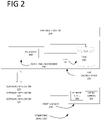
- FIG 2 is a diagram of a system that can employ an admittance mechanism.
- the system includes software applications 220, 221, and 222, a computing device 200, and a HIVE Orchestrator 210, which operate in a HIVE based system 250. See, for example, the HIVE patent for more details.
- the HIVE Orchestrator 210 can apply a plurality of rules 240 to determine at the current time, whether interactions between devices, systems, software and the like can occur.
- the HIVE Orchestrator 210 has an admittance mechanism 230 coupled to the plurality of rules 240.
- the HIVE Orchestrator 210 is coupled to the dynamic rule-based system 250, and each has access to the rules 240.
- the computing device 200 includes a state machine 270 which represents the state of the computing device 200.
- the state machine 270 has a reboot state 290 and an initial configuration state 295, although a plurality of other states are possible as well.
- the HIVE Orchestrator 210 is connected to the state machine 270 and can perform actions to change the state of the computing device 200 including bringing the computing device to its initial configuration or re-booting the computing device 200.
- the HIVE Orchestrator 210 is further capable of determining where items are placed, such as those provided by applications 220-222.
- the rules 240 include a plurality of tags 280.
- the HIVE Orchestrator 210 is capable of adding or removing tags 280 associated with each of the rules 240. In this manner, a rule can be activated, de-activated, or modified in a dynamic manner as the system's needs change, and the HIVE Orchestrator 210 can determine at any given moment whether an item can be placed in an item-holder, such as computing device 200.
- the admittance mechanism 230 receives in sequence, items that are proposed for insertion.
- this includes receiving the requests from software applications 220, 221, and 222 in order, to place items in computing device 200. It should be understood that other embodiments include a single application making multiple requests to the computing device 200 and applications requesting to place items on other computing devices (not shown).
- the admittance mechanism 230 has a rule sieve 260.
- the rule sieve 260 receives in sequence, items that are proposed for insertion, it will determine whether or not the item can be put into the item-holder.
- One example of how to make this determination includes: 1) each proposed item (e.g., from software applications 220, 221, and 222) and each item-holder (computing device 200) is scrutinized by each rule 240; 2) if the proposed item and item-holder combination violates even one of the rules, then the admittance is denied; and 3) If the proposed admittance does not violate any of the rules, then the admittance is permitted.
- the rules 240 can include any types of rules that can be used in a computing environment. Some examples of the rules 240 that can be used by the HIVE Orchestrator 210 are shown with respect to Table 1: Table 1 Name Syntax Description ASSIGN ASSIGN ⁇ specific-item> to ⁇ specific- item-holder> This means that the specific item ⁇ specific-item> can only be placed in one item-holder, namely ⁇ specific-item-holder>, if anywhere. No other placement is valid. TOGETHER TOGETHER ⁇ specific-item-1> ⁇ specific-item-2> ⁇ specific-item-3> ... ⁇ specific-item-N> This means that all named specific items must be placed in the same specific- item-holder.
- APART APART ⁇ specific-item-1> ⁇ specific-item-2> ⁇ specific-item-3> ... ⁇ specific-item-N> This means that all named specific items must be placed in the different specific-item-holders. No two specific-items may be placed in the same specific-item-holder MAX_1 MAX_1 ⁇ specific-item-1> ⁇ specific-item-2> ⁇ specific-item-3> ... ⁇ specific-item-N> This means that no more than 1 of the listed specific-items may be put into any single specific item holder.
- MAX_2 MAX 2 ⁇ specific-item-1> ⁇ specific-item-2> ⁇ specific-item-3> ...
- ⁇ specific-item-N> This means that no more than 2 of the listed specific-items may be put into any single specific item holder.
- MAX_3 MAX 3 ⁇ specific-item-1> ⁇ specific-item-2> ⁇ specific-item-3> ... ⁇ specific-item-N> This means that no more than 3 of the listed specific-items may be put into any single specific item holder.
- Table 1 is a partial list of possible rules according to one embodiment. Additional rules can be added to the rules 240 as needed by the system.
- FIG 3 is a flowchart that illustrates the application of rules by the admittance mechanism.
- each rule is scrutinized until there are no more rules left at which time the process ends at block 320.
- the system determines at step 310 is the rule applies to the current item and item-holder. If not, the process repeats at step 300 and the next rule is scrutinized (if any). If the rule applies to the current item and item-holder at step 310, then at step 330, the system determines if the criteria for the rule is met. For example, the rule could be APART and it could require that the current item not be included in the item-holder if a specific other item is in that item-holder already. (See, Table 1 for more examples). If the rule criteria is not met at step 330 the access to the item-holder is prevented and the process repeats at step 300 where the next rule is analyzed. If the rule criteria is met, then access to the item-holder is granted to the item at step 340.
- FIG 4 is a flowchart that illustrates the application of rules by the admittance mechanism.
- a controller brings an item-holder to a first state.
- the first state could be, for example, a result of the controller re-booting the item-holder.
- the first state could be a result of the controller bringing the item-holder to an initial configuration.
- the controller waits for an access request from an item-holding module.
- any plurality of item-holding modules may be communicating with the controller to place items therein, however, the current example traces a single request for the sake of clarity.
- an admittance mechanism receives the request at step 430.
- the admittance mechanism determines if there are rules to apply to the current access request. If so, the rule is applied to a rule sieve at step 450. Thereafter, the process repeats at step 440.
- the system determines at step 460 if any of the rules have been violated. If any rule was violated at step 460, the request is denied at step 480. Alternatively, is none of the rules were violated at step 460, then the request can be granted at step 470.
- FIG 5 is a flowchart that illustrates the application of rules by the admittance mechanism.
- a HIVE Orchestrator brings a computing device to a first state.
- the first state could be for example, a re-boot state or an initial configuration.
- a controller such as a HIVE Orchestrator to bring a computing device to such a state as a part of the devices life cycle, either to be repaired, maintained, or otherwise brought to the first state.
- the system determines whether an application is requesting access to the computing device at step 510. If not, the system waits until such a request is made., if any. Once an application is requesting access to the computing device (e.g., to place an item there), a rule sieve is applied to the request at step 520. Thereafter, at step 530, the system determines whether any of the rules were violated. If any rule was violated at step 530, the request is denied at step 550. Alternatively, if none of the rules were violated at step 530, then the request can be granted at step 570.
Landscapes
- Engineering & Computer Science (AREA)
- Software Systems (AREA)
- Theoretical Computer Science (AREA)
- General Engineering & Computer Science (AREA)
- Computer Security & Cryptography (AREA)
- Physics & Mathematics (AREA)
- General Physics & Mathematics (AREA)
- Computer Hardware Design (AREA)
- General Health & Medical Sciences (AREA)
- Bioethics (AREA)
- Health & Medical Sciences (AREA)
- Databases & Information Systems (AREA)
- Stored Programmes (AREA)
Abstract
Description
- This application incorporates by reference in its entirety, Application Serial No.
16/377,237 entitled "CONTROL HIVE ARCHITECTURE ENGINEERING EFFICIENCY FOR AN INDUSTRIAL AUTOMATION SYSTEM", filed 04/07/2019 - An admittance mechanism uses a series of rules to govern the admittance of "items" into "item-holders". Items may be anything. One example of an item is a computer program which can be put into a computer. Rules enable the proper placement of items into item-holders such that a series of placement criteria are not violated.
- In industrial applications items of software are used to perform control functions on computing devices (item-holders). This could occur in a refinery, a paper mill, or a power plant, for example. Moreover, some of the industrial installations are difficult or costly to access and may also be dangerous and/or their operation is critical. A computer that controls a gas distribution facility or an electric power plant are two examples. In systems like these, faults are expected over time and computers can either malfunction, break, and/or need maintenance periodically. In these scenarios, an admittance mechanism would be useful, for example, to restore normal operation to the computer, without human intervention.
-
-
FIG 1 is a diagram of a system that can employ an admittance mechanism. -
FIG 2 is a diagram of another system that can employ the admittance mechanism. -
FIG 3 is a flowchart that illustrates the application of rules by the admittance mechanism. -
FIG 4 is a flowchart that illustrates another application of rules by the admittance mechanism. -
FIG 5 is a flowchart that illustrates another application of rules by the admittance mechanism. Shouldfigures 3 ,4 , and5 have the same caption? - One embodiment is a first computing system configured to control a second computing system, a software module configured to attempt to interact with the second computing system once the second computing system is brought to a first state by the first computing system, and an admittance mechanism configured to determine if the interaction is allowed to occur.
- Another embodiment includes one or more hardware-based non-transitory memory devices storing computer-readable instructions which, when executed by the one or more processors disposed in a computing device, cause the computing device to cause an item-holding module to be brought to a first state by a controller, receive a request for access by an item module for an item-holding module, determine with an admittance mechanism whether the item module can access the item-holding module by applying a plurality of rules in a dynamic rule-based system, wherein if the item module violates one of the plurality of rules, the access is not allowed to occur.
- Another embodiment includes a device, which comprises a controller configured to control a computing device and to bring the computing device to an initial state in a computing system, an application configured to interact with the controller in order to attempt to access the computing device, and an admittance device configured to use a plurality of rules associated with the computing system, to determine whether the access between the application and the computing device can occur, wherein if the application violates one of the plurality of rules, the interaction is not allowed to occur.
-
FIG 1 is a diagram of a system that can employ an admittance mechanism. The system includes anitem module 120, an item-holding module 100, and acontroller 110, which operate in a dynamic rule-basedsystem 150. One example of such asystem 150 is described in more detail with respect to the HIVE Patent. In such a system, rules can be added and removed as needed, for example by using tags associated with the rules. A HIVE Orchestrator or other controller, such ascontroller 110, can be used. Thecontroller 110 can apply the rules to determine at the current time, whether interactions between devices, systems, software and the like can occur. - The
controller 110 has anadmittance mechanism 130 and a plurality ofrules 140. Thecontroller 110 is coupled to the dynamic rule-basedsystem 150, and each has access to therules 140. The item-holding module 100 includes astate machine 170 which represents the state of the item holding-module 100. This could include a state that indicates the item-holding module 100 was rebooted or brought to an initial state, for instance. Thecontroller 110 is connected to the item-holding module 100 and can perform actions to change the state of the item-holding module 100, which in turn is reflected bystate machine 170. -
FIG 2 is a diagram of a system that can employ an admittance mechanism. The system includessoftware applications computing device 200, and a HIVE Orchestrator 210, which operate in a HIVE basedsystem 250. See, for example, the HIVE patent for more details. The HIVE Orchestrator 210 can apply a plurality ofrules 240 to determine at the current time, whether interactions between devices, systems, software and the like can occur. - The HIVE Orchestrator 210 has an
admittance mechanism 230 coupled to the plurality ofrules 240. The HIVE Orchestrator 210 is coupled to the dynamic rule-basedsystem 250, and each has access to therules 240. Thecomputing device 200 includes astate machine 270 which represents the state of thecomputing device 200. In this example, thestate machine 270 has areboot state 290 and aninitial configuration state 295, although a plurality of other states are possible as well. The HIVE Orchestrator 210 is connected to thestate machine 270 and can perform actions to change the state of thecomputing device 200 including bringing the computing device to its initial configuration or re-booting thecomputing device 200. - The HIVE Orchestrator 210 is further capable of determining where items are placed, such as those provided by applications 220-222. The
rules 240 include a plurality oftags 280. The HIVE Orchestrator 210 is capable of adding or removingtags 280 associated with each of therules 240. In this manner, a rule can be activated, de-activated, or modified in a dynamic manner as the system's needs change, and the HIVE Orchestrator 210 can determine at any given moment whether an item can be placed in an item-holder, such ascomputing device 200. In one embodiment, theadmittance mechanism 230 receives in sequence, items that are proposed for insertion. With respect toFIG 2 , this includes receiving the requests fromsoftware applications computing device 200. It should be understood that other embodiments include a single application making multiple requests to thecomputing device 200 and applications requesting to place items on other computing devices (not shown). - In operation, as the
admittance mechanism 230 has arule sieve 260. Therule sieve 260 receives in sequence, items that are proposed for insertion, it will determine whether or not the item can be put into the item-holder. One example of how to make this determination includes: 1) each proposed item (e.g., fromsoftware applications rule 240; 2) if the proposed item and item-holder combination violates even one of the rules, then the admittance is denied; and 3) If the proposed admittance does not violate any of the rules, then the admittance is permitted. - The
rules 240 can include any types of rules that can be used in a computing environment. Some examples of therules 240 that can be used by the HIVEOrchestrator 210 are shown with respect to Table 1:Table 1 Name Syntax Description ASSIGN ASSIGN <specific-item> to <specific- item-holder> This means that the specific item <specific-item> can only be placed in one item-holder, namely <specific-item-holder>, if anywhere. No other placement is valid. TOGETHER TOGETHER <specific-item-1> <specific-item-2> <specific-item-3> ... <specific-item-N> This means that all named specific items must be placed in the same specific- item-holder. APART APART <specific-item-1> <specific-item-2> <specific-item-3> ... <specific-item-N> This means that all named specific items must be placed in the different specific-item-holders. No two specific-items may be placed in the same specific-item-holder MAX_1 MAX_1 <specific-item-1> <specific-item-2> <specific-item-3> ... <specific-item-N> This means that no more than 1 of the listed specific-items may be put into any single specific item holder. MAX_2 MAX 2 <specific-item-1> <specific-item-2> <specific-item-3> ... <specific-item-N> This means that no more than 2 of the listed specific-items may be put into any single specific item holder. MAX_3 MAX 3 <specific-item-1> <specific-item-2> <specific-item-3> ... <specific-item-N> This means that no more than 3 of the listed specific-items may be put into any single specific item holder. rules 240 as needed by the system. -
FIG 3 is a flowchart that illustrates the application of rules by the admittance mechanism. Atstep 300 each rule is scrutinized until there are no more rules left at which time the process ends atblock 320. When there is a rule to process, the system determines atstep 310 is the rule applies to the current item and item-holder. If not, the process repeats atstep 300 and the next rule is scrutinized (if any). If the rule applies to the current item and item-holder atstep 310, then atstep 330, the system determines if the criteria for the rule is met. For example, the rule could be APART and it could require that the current item not be included in the item-holder if a specific other item is in that item-holder already. (See, Table 1 for more examples). If the rule criteria is not met atstep 330 the access to the item-holder is prevented and the process repeats atstep 300 where the next rule is analyzed. If the rule criteria is met, then access to the item-holder is granted to the item atstep 340. -
FIG 4 is a flowchart that illustrates the application of rules by the admittance mechanism. Atstep 400, a controller brings an item-holder to a first state. The first state could be, for example, a result of the controller re-booting the item-holder. Alternatively, the first state could be a result of the controller bringing the item-holder to an initial configuration. Thereafter, atstep 410 the controller waits for an access request from an item-holding module. In practice, any plurality of item-holding modules may be communicating with the controller to place items therein, however, the current example traces a single request for the sake of clarity. - If there are no requests at
step 410, the process ends atstep 420. When a request occurs, an admittance mechanism receives the request atstep 430. Atstep 440, the admittance mechanism determines if there are rules to apply to the current access request. If so, the rule is applied to a rule sieve atstep 450. Thereafter, the process repeats atstep 440. When there are no more rules, the system determines atstep 460 if any of the rules have been violated. If any rule was violated atstep 460, the request is denied atstep 480. Alternatively, is none of the rules were violated atstep 460, then the request can be granted atstep 470. -
FIG 5 is a flowchart that illustrates the application of rules by the admittance mechanism. Atstep 500, a HIVE Orchestrator brings a computing device to a first state. The first state could be for example, a re-boot state or an initial configuration. In many applications, including industrial applications, and others, it is routine for a controller such as a HIVE Orchestrator to bring a computing device to such a state as a part of the devices life cycle, either to be repaired, maintained, or otherwise brought to the first state. - Once the device is brought to the first state, the system determines whether an application is requesting access to the computing device at
step 510. If not, the system waits until such a request is made., if any. Once an application is requesting access to the computing device (e.g., to place an item there), a rule sieve is applied to the request atstep 520. Thereafter, atstep 530, the system determines whether any of the rules were violated. If any rule was violated atstep 530, the request is denied atstep 550. Alternatively, if none of the rules were violated atstep 530, then the request can be granted at step 570. - Although the subject matter has been described in language specific to structural features and/or methodological acts, it is to be understood that the subject matter defined in the appended claims is not necessarily limited to the specific features or acts described above. Rather, the specific features and acts described above are disclosed as example forms of implementing the claims.
Claims (10)
- A system comprising:a first computing system configured to control a second computing system;a software module configured to attempt to interact with the second computing system once the second computing system is brought to a first state by the first computing system; andan admittance mechanism (130) configured to use a plurality of rules (140) in a dynamic rule-based system (150), to determine whether the interaction between the software module and the second computing system can occur, wherein if the software module violates at least one of the plurality of rules (140), the interaction is not allowed to occur.
- The system of claim 1, wherein the first state is an initial configuration or a configuration after a re-boot.
- The system of claim 1, wherein the dynamic rule-based system includes a plurality of tags (280) wherein a tag can be used to activate or inactivate any of the plurality of rules (140).
- The system of claim 1, wherein the first computing system includes a HIVE Orchestrator (210).
- One or more hardware-based non-transitory memory devices storing computer-readable instructions which, when executed by the one or more processors disposed in a computing device, cause the computing device to:cause an item-holding module to be brought to a first state by a controller;receive a request for access by an item module for an item-holding module;determine with an admittance mechanism (130) whether the item module can access the item-holding module by applying a plurality of rules (140) in a dynamic rule-based system (150), wherein if the item module violates one of the plurality of rules (140), the access is not allowed to occur.
- The one or more hardware-based non-transitory memory devices of claim 5,
wherein the controller includes a HIVE Orchestrator (210). - A device comprising:a controller configured to control a computing device and to bring the computing device to an initial state in a computing system;an application configured to interact with the controller in order to attempt to access the computing device; andan admittance (130) device configured to use a plurality of rules (140) associated with the computing system, to determine whether the access between the application and the computing device can occur, wherein if the application violates one of the plurality of rules (140), the interaction is not allowed to occur.
- The device of claim 7, wherein the initial state is an initial configuration or a configuration after a re-boot.
- The device of claim 7, wherein the rules includes a plurality of tags (280).
- The device of claim 7, wherein the controller includes a HIVE Orchestrator (210).
Applications Claiming Priority (1)
| Application Number | Priority Date | Filing Date | Title |
|---|---|---|---|
| US16/949,549 US11874938B2 (en) | 2020-11-03 | 2020-11-03 | Admittance mechanism |
Publications (1)
| Publication Number | Publication Date |
|---|---|
| EP3992780A1 true EP3992780A1 (en) | 2022-05-04 |
Family
ID=78649137
Family Applications (1)
| Application Number | Title | Priority Date | Filing Date |
|---|---|---|---|
| EP21205397.9A Pending EP3992780A1 (en) | 2020-11-03 | 2021-10-28 | Admittance mechanism |
Country Status (3)
| Country | Link |
|---|---|
| US (1) | US11874938B2 (en) |
| EP (1) | EP3992780A1 (en) |
| CN (2) | CN121435211A (en) |
Families Citing this family (4)
| Publication number | Priority date | Publication date | Assignee | Title |
|---|---|---|---|---|
| US11762742B2 (en) | 2020-03-31 | 2023-09-19 | Honeywell International Inc. | Process control system with different hardware architecture controller backup |
| US11989084B2 (en) | 2020-09-23 | 2024-05-21 | Honeywell International Inc. | Self-healing process control system |
| US11874938B2 (en) | 2020-11-03 | 2024-01-16 | Honeywell International Inc. | Admittance mechanism |
| US11977652B2 (en) * | 2021-12-07 | 2024-05-07 | Evernorth Strategic Development, Inc. | Secure compartmented access infrastructure for sensitive databases |
Citations (3)
| Publication number | Priority date | Publication date | Assignee | Title |
|---|---|---|---|---|
| US20090031403A1 (en) * | 2006-03-31 | 2009-01-29 | Huang Evan S | Methods and Apparatuses for Securely Operating Shared Host Computers With Portable Apparatuses |
| EP2184903A1 (en) * | 2008-11-06 | 2010-05-12 | Alcatel, Lucent | Method and device for automatically installing an applciation |
| US20200319623A1 (en) * | 2019-04-07 | 2020-10-08 | Honeywell International | Control hive architecture engineering efficiency for an industrial automation system |
Family Cites Families (141)
| Publication number | Priority date | Publication date | Assignee | Title |
|---|---|---|---|---|
| US4133027A (en) | 1977-09-13 | 1979-01-02 | Honeywell Inc. | Process control system with backup process controller |
| US4888726A (en) | 1987-04-22 | 1989-12-19 | Allen-Bradley Company. Inc. | Distributed processing in a cluster of industrial controls linked by a communications network |
| US4958270A (en) | 1989-01-23 | 1990-09-18 | Honeywell Inc. | Method for control data base updating of a redundant processor in a process control system |
| AU638476B2 (en) | 1989-09-05 | 1993-07-01 | Honeywell Inc. | Apparatus for providing a universal interface to a process control system |
| US5088021A (en) | 1989-09-07 | 1992-02-11 | Honeywell, Inc. | Apparatus and method for guaranteed data store in redundant controllers of a process control system |
| US5361198A (en) | 1992-04-03 | 1994-11-01 | Combustion Engineering, Inc. | Compact work station control room |
| US5432927A (en) | 1992-06-17 | 1995-07-11 | Eaton Corporation | Fail-safe EEPROM based rewritable boot system |
| US5426774A (en) | 1993-04-06 | 1995-06-20 | Honeywell Inc. | Method for maintaining a sequence of events function during failover in a redundant multiple layer system |
| US5546301A (en) | 1994-07-19 | 1996-08-13 | Honeywell Inc. | Advanced equipment control system |
| US6008985A (en) | 1995-11-20 | 1999-12-28 | The Foxboro Company | Industrial field controlling device with controller and expansion modules |
| US5933347A (en) | 1997-06-13 | 1999-08-03 | Allen-Bradley Company Llc | Industrial controller with program synchronized updating of back-up controller |
| US5963448A (en) | 1997-06-18 | 1999-10-05 | Allen-Bradley Company, Llc | Industrial controller having redundancy and using connected messaging and connection identifiers to enable rapid switchover without requiring new connections to be opened or closed at switchover |
| US6138049A (en) | 1997-08-22 | 2000-10-24 | Honeywell International Inc. | System and methods for generating and distributing alarm and event notifications |
| US6088679A (en) | 1997-12-01 | 2000-07-11 | The United States Of America As Represented By The Secretary Of Commerce | Workflow management employing role-based access control |
| US6170044B1 (en) | 1997-12-19 | 2001-01-02 | Honeywell Inc. | Systems and methods for synchronizing redundant controllers with minimal control disruption |
| US6272386B1 (en) | 1998-03-27 | 2001-08-07 | Honeywell International Inc | Systems and methods for minimizing peer-to-peer control disruption during fail-over in a system of redundant controllers |
| US6442663B1 (en) | 1998-06-19 | 2002-08-27 | Board Of Supervisors Of Louisiana University And Agricultural And Mechanical College | Data collection and restoration for homogeneous or heterogeneous process migration |
| US6434230B1 (en) | 1999-02-02 | 2002-08-13 | Avaya Technology Corp. | Rules-based queuing of calls to call-handling resources |
| US7031945B1 (en) | 2000-07-24 | 2006-04-18 | Donner Irah H | System and method for reallocating and/or upgrading and/or rewarding tickets, other event admittance means, goods and/or services |
| US7016901B2 (en) | 2001-07-31 | 2006-03-21 | Ideal Scanners & Systems, Inc. | System and method for distributed database management of graphic information in electronic form |
| US7289861B2 (en) | 2003-01-28 | 2007-10-30 | Fisher-Rosemount Systems, Inc. | Process control system with an embedded safety system |
| US7237148B2 (en) | 2002-09-05 | 2007-06-26 | David Czajkowski | Functional interrupt mitigation for fault tolerant computer |
| US7362697B2 (en) | 2003-01-09 | 2008-04-22 | International Business Machines Corporation | Self-healing chip-to-chip interface |
| US20040233237A1 (en) | 2003-01-24 | 2004-11-25 | Andreas Randow | Development environment for DSP |
| US7320100B2 (en) | 2003-05-20 | 2008-01-15 | Cray Inc. | Apparatus and method for memory with bit swapping on the fly and testing |
| US7436797B2 (en) | 2003-06-18 | 2008-10-14 | Fisher-Rosemount Systems, Inc. | Wireless architecture and support for process control systems |
| US7139942B2 (en) | 2003-07-21 | 2006-11-21 | Sun Microsystems, Inc. | Method and apparatus for memory redundancy and recovery from uncorrectable errors |
| US7810080B2 (en) | 2003-09-15 | 2010-10-05 | Thomas Plum | Automated safe secure techniques for eliminating undefined behavior in computer software |
| US7555752B2 (en) | 2003-12-08 | 2009-06-30 | Honeywell International Inc. | Configurable levels of source control for the configuration of a process automation system |
| US7434047B2 (en) | 2004-12-30 | 2008-10-07 | Nokia, Inc. | System, method and computer program product for detecting a rogue member in a multicast group |
| US7711989B2 (en) | 2005-04-01 | 2010-05-04 | Dot Hill Systems Corporation | Storage system with automatic redundant code component failure detection, notification, and repair |
| US8160574B1 (en) | 2005-06-17 | 2012-04-17 | Fisher-Rosemount Systems, Inc. | Wireless architecture utilizing geo-referencing |
| US7313448B2 (en) | 2005-08-15 | 2007-12-25 | Honeywell International Inc. | Method and apparatus for providing a standard control system with custom application capability |
| US7515972B2 (en) | 2005-10-28 | 2009-04-07 | Honeywell International Inc. | System and method for dynamically creating and editing function block types in a process control environment |
| US20070100472A1 (en) | 2005-10-31 | 2007-05-03 | Honeywell International Inc. | System and method for creating serial interface protocols in a process control environment |
| JP4743508B2 (en) | 2005-11-29 | 2011-08-10 | 横河電機株式会社 | Plant control system |
| US7630777B2 (en) | 2006-07-06 | 2009-12-08 | Honeywell International Inc. | Apparatus and method for configurable process automation in a process control system |
| US20080120164A1 (en) | 2006-11-17 | 2008-05-22 | Avaya Technology Llc | Contact center agent work awareness algorithm |
| US8570922B2 (en) | 2007-04-13 | 2013-10-29 | Hart Communication Foundation | Efficient addressing in wireless hart protocol |
| US8451809B2 (en) | 2007-04-13 | 2013-05-28 | Hart Communication Foundation | Wireless gateway in a process control environment supporting a wireless communication protocol |
| US8615647B2 (en) | 2008-02-29 | 2013-12-24 | Intel Corporation | Migrating execution of thread between cores of different instruction set architecture in multi-core processor and transitioning each core to respective on / off power state |
| US8347073B2 (en) | 2008-09-05 | 2013-01-01 | Cisco Technology, Inc. | Inspection and rewriting of cryptographically protected data from group VPNs |
| WO2010039804A1 (en) | 2008-09-30 | 2010-04-08 | Saudi Arabian Oil Company | System and method for improved coordination between control and safety systems |
| US8948067B2 (en) | 2009-04-23 | 2015-02-03 | Honeywell International Inc. | Wireless controller grids for process control and other systems and related apparatus and method |
| US8451176B2 (en) | 2009-06-11 | 2013-05-28 | Honeywell International Inc. | Method for achieving intrinsic safety compliance in wireless devices using isolated overlapping grounds and related apparatus |
| GB2474545B (en) * | 2009-09-24 | 2015-06-24 | Fisher Rosemount Systems Inc | Integrated unified threat management for a process control system |
| US8727797B2 (en) | 2009-09-29 | 2014-05-20 | Panduit Corp. | Rail adapter with grounding means |
| US8756412B2 (en) | 2010-04-16 | 2014-06-17 | Honeywell International Inc. | Gateway supporting transparent redundancy in process control systems and other systems and related method |
| US11320797B2 (en) | 2010-09-27 | 2022-05-03 | Fisher-Rosemount Systems, Inc | Methods and apparatus to virtualize a process control system |
| US8606378B2 (en) | 2010-09-27 | 2013-12-10 | Fisher-Rosemount Systems, Inc. | Methods, apparatus, and articles of manufacture to identify hazardous process conditions associated with devices in a process control system |
| US8924498B2 (en) | 2010-11-09 | 2014-12-30 | Honeywell International Inc. | Method and system for process control network migration |
| US10037443B2 (en) | 2011-03-07 | 2018-07-31 | Rockwell Automation Technologies, Inc. | Industrial simulation using redirected I/O module configurations |
| US8873241B2 (en) | 2011-05-23 | 2014-10-28 | Honeywell International Inc. | Intrinsically safe serviceable transmitter apparatus and method |
| US8745626B1 (en) | 2012-12-17 | 2014-06-03 | Throughputer, Inc. | Scheduling application instances to configurable processing cores based on application requirements and resource specification |
| US9128479B2 (en) | 2011-11-11 | 2015-09-08 | Rockwell Automation Technologies, Inc. | Automation control and monitoring system and method |
| US9727511B2 (en) | 2011-12-30 | 2017-08-08 | Bedrock Automation Platforms Inc. | Input/output module with multi-channel switching capability |
| CN104205061A (en) * | 2012-03-30 | 2014-12-10 | 惠普发展公司,有限责任合伙企业 | Software development activity |
| US8856339B2 (en) | 2012-04-04 | 2014-10-07 | Cisco Technology, Inc. | Automatically scaled network overlay with heuristic monitoring in a hybrid cloud environment |
| FR2990094A1 (en) | 2012-04-26 | 2013-11-01 | Commissariat Energie Atomique | METHOD AND SYSTEM FOR AUTHENTICATING NODES IN A NETWORK |
| US9607330B2 (en) | 2012-06-21 | 2017-03-28 | Cinsay, Inc. | Peer-assisted shopping |
| US20140068572A1 (en) | 2012-08-28 | 2014-03-06 | International Business Machines Corporation | Java native interface array handling in a distributed java virtual machine |
| JP6146690B2 (en) | 2012-10-03 | 2017-06-14 | 株式会社Ihi | Apparatus and method for adjusting relative position between coils |
| US20140109062A1 (en) * | 2012-10-11 | 2014-04-17 | Tata Constultancy Services Limited Mumbai | System and method to provide compliance scrutiny and in-depth analysis of a software application |
| US9122652B2 (en) | 2012-12-17 | 2015-09-01 | Lenovo Enterprise Solutions (Singapore) Pte. Ltd. | Cascading failover of blade servers in a data center |
| GB201302534D0 (en) | 2013-02-13 | 2013-03-27 | Qatar Foundation | Feedback control as a cloud service |
| US9292278B2 (en) | 2013-02-22 | 2016-03-22 | Telefonaktiebolaget Ericsson Lm (Publ) | Providing high availability for state-aware applications |
| US9495558B2 (en) * | 2013-03-26 | 2016-11-15 | Google Inc. | Systems, methods, and computer program products for managing access control |
| US9507579B2 (en) | 2013-04-01 | 2016-11-29 | Oc Acquisition Llc | Interface for translating software commands and hardware commands for a distributed computing system |
| US9843624B1 (en) * | 2013-06-13 | 2017-12-12 | Pouya Taaghol | Distributed software defined networking |
| JP5896959B2 (en) | 2013-06-14 | 2016-03-30 | ヒロセ電機株式会社 | Circuit board electrical connector and electrical connector assembly |
| CN103354190B (en) | 2013-06-26 | 2017-03-22 | 国家电网公司 | Isolation grounding switch device and solid insulating switch using same |
| US9086688B2 (en) | 2013-07-09 | 2015-07-21 | Fisher-Rosemount Systems, Inc. | State machine function block with user-definable actions on a transition between states |
| KR101701902B1 (en) * | 2013-10-31 | 2017-02-06 | 주식회사 에스크레인 | Method and system of verifying mobile accessibility |
| US9961054B2 (en) | 2014-01-29 | 2018-05-01 | Honeywell International Inc. | Apparatus and method for establishing secure communication with redundant device after switchover |
| US10248601B2 (en) | 2014-03-27 | 2019-04-02 | Honeywell International Inc. | Remote terminal unit (RTU) with universal input/output (UIO) and related method |
| US11222096B2 (en) * | 2014-03-28 | 2022-01-11 | Irdeto B.V. | Protecting an item of software |
| WO2015169352A1 (en) | 2014-05-07 | 2015-11-12 | Abb Technology Ltd | Flexible controller utilization in a process control system |
| US10042330B2 (en) | 2014-05-07 | 2018-08-07 | Honeywell International Inc. | Redundant process controllers for segregated supervisory and industrial control networks |
| US9485257B2 (en) * | 2014-05-22 | 2016-11-01 | International Business Machines Corporation | Atomically updating ternary content addressable memory-based access control lists |
| EP3161562B1 (en) | 2014-06-26 | 2020-05-20 | ABB Schweiz AG | A method for controlling a process plant using a redundant local supervisory controller |
| US9875207B2 (en) | 2014-08-14 | 2018-01-23 | Honeywell International Inc. | Remote terminal unit (RTU) hardware architecture |
| US10148485B2 (en) | 2014-09-03 | 2018-12-04 | Honeywell International Inc. | Apparatus and method for on-process migration of industrial control and automation system across disparate network types |
| US20160103431A1 (en) | 2014-10-14 | 2016-04-14 | Honeywell International, Inc. | System and method for point by point hot cutover of controllers and ios |
| US9582376B2 (en) | 2014-11-14 | 2017-02-28 | Invensys Systems, Inc. | Unified communications module (UCM) |
| US9665089B2 (en) | 2015-01-21 | 2017-05-30 | Honeywell International Inc. | Method and apparatus for advanced control using function blocks in industrial process control and automation systems |
| US10409270B2 (en) | 2015-04-09 | 2019-09-10 | Honeywell International Inc. | Methods for on-process migration from one type of process control device to different type of process control device |
| US10437212B2 (en) | 2015-04-28 | 2019-10-08 | Schneider Electric Systems Usa, Inc. | Distributed computing in a process control environment |
| US9897990B2 (en) | 2015-05-04 | 2018-02-20 | Rockwell Automation Germany Gmbh & Co. Kg | Safety controller with rapid backup and configuration |
| EP3297206B1 (en) | 2015-05-08 | 2020-04-22 | Panasonic Intellectual Property Management Co., Ltd. | Authentication method, authentication system, and controller |
| US10348704B2 (en) | 2015-07-30 | 2019-07-09 | Helder Silvestre Paiva Figueira | Method for a dynamic perpetual encryption cryptosystem |
| US10176606B2 (en) | 2015-08-28 | 2019-01-08 | Honeywell International Inc. | Method and apparatus for converting diagrams into application engineering elements |
| CN108513655B (en) | 2015-10-13 | 2022-06-03 | 施耐德电器工业公司 | Software defined automation system and architecture thereof |
| US10178177B2 (en) | 2015-12-08 | 2019-01-08 | Honeywell International Inc. | Apparatus and method for using an internet of things edge secure gateway |
| JP6284043B2 (en) | 2015-12-25 | 2018-02-28 | 横河電機株式会社 | Process control system |
| US20170228225A1 (en) | 2016-02-05 | 2017-08-10 | Honeywell International, Inc. | System and method for preserving value and extending life of legacy software in face of processor unavailability, rising processor costs, or other issues |
| US10175682B2 (en) | 2016-03-10 | 2019-01-08 | Honeywell International Inc. | Automation control system point configuration from controller program files |
| US9952948B2 (en) | 2016-03-23 | 2018-04-24 | GM Global Technology Operations LLC | Fault-tolerance pattern and switching protocol for multiple hot and cold standby redundancies |
| US20190174207A1 (en) | 2016-05-09 | 2019-06-06 | StrongForce IoT Portfolio 2016, LLC | Methods and systems for the industrial internet of things |
| US10225216B2 (en) | 2016-05-25 | 2019-03-05 | Rockwell Automation Technologies, Inc. | Conversation interface agent for manufacturing operation information |
| US10237712B2 (en) | 2016-06-08 | 2019-03-19 | Honeywell International Inc. | In-field wireless access to smart instruments using Bluetooth low energy |
| US10148519B2 (en) | 2016-06-09 | 2018-12-04 | Honeywell International Inc. | Automation network topology determination for C and I systems |
| US10296515B2 (en) | 2016-06-09 | 2019-05-21 | Honeywell International Inc. | Engineering data collection from control and instrumentation systems |
| US9935828B2 (en) | 2016-07-25 | 2018-04-03 | Sap Se | Application controller to support incremental deployment |
| US10379893B2 (en) | 2016-08-10 | 2019-08-13 | Rackware, Inc. | Container synchronization |
| US10565046B2 (en) | 2016-09-01 | 2020-02-18 | Intel Corporation | Fault detection using data distribution characteristics |
| US10553307B2 (en) * | 2016-10-27 | 2020-02-04 | Snaps Solutions, Llc | Systems and methods for tracking data across disparate computing systems via a distributed architecture |
| US10354343B2 (en) | 2016-11-14 | 2019-07-16 | Schneider Electric Systems Usa, Inc. | Automated process control hardware engineering using schema-represented requirements |
| US10416630B2 (en) | 2017-03-07 | 2019-09-17 | Uop Llc | System and method for industrial process automation controller farm with flexible redundancy schema and dynamic resource management through machine learning |
| GB2575758B (en) | 2017-05-01 | 2023-04-12 | Fisher Rosemount Systems Inc | Open architecture industrial control system |
| US10334458B2 (en) | 2017-05-03 | 2019-06-25 | Fisher-Rosemount Systems, Inc. | Intelligent sequencing of multiple wireless nodes for transfer between wireless mesh networks in a process control system |
| US9990286B1 (en) | 2017-05-05 | 2018-06-05 | Honeywell International, Inc. | Memory tracking using copy-back cache for 1:1 device redundancy |
| US20180364673A1 (en) | 2017-06-16 | 2018-12-20 | Honeywell International Inc. | Process data synchronization between redundant process controllers |
| US20190050342A1 (en) | 2017-08-08 | 2019-02-14 | Honeywell International Inc. | Selective page tracking for process controller redundancy |
| US10620613B2 (en) | 2017-08-21 | 2020-04-14 | Fisher-Rosemount Systems, Inc. | High performance control server system |
| US10306513B2 (en) | 2017-09-29 | 2019-05-28 | Intel Corporation | Connectivity service level orchestrator and arbitrator in internet of things (IoT) platforms |
| EP3688594B1 (en) | 2017-09-30 | 2023-10-25 | Oracle International Corporation | Api repository enabling microservices configuration and management |
| US10739761B2 (en) | 2017-11-16 | 2020-08-11 | Intel Corporation | Scalable edge compute in a distributed control environment |
| US11030016B2 (en) | 2017-12-07 | 2021-06-08 | International Business Machines Corporation | Computer server application execution scheduling latency reduction |
| US11038715B2 (en) | 2018-02-07 | 2021-06-15 | Gooee Limited | System and method for identifying specific/best path in a mesh network |
| US10834659B2 (en) | 2018-03-05 | 2020-11-10 | Phazr, Inc. | Link aggregation for mesh networks |
| US10963356B2 (en) | 2018-04-18 | 2021-03-30 | Nutanix, Inc. | Dynamic allocation of compute resources at a recovery site |
| US10747201B2 (en) | 2018-05-02 | 2020-08-18 | Rockwell Automation Technologies, Inc. | Subscription-based services using industrial blockchains |
| WO2019227401A1 (en) | 2018-05-31 | 2019-12-05 | 西门子股份公司 | Hot-standby redundancy control system, method, control apparatus, and computer readable storage medium |
| US11243846B2 (en) | 2018-05-31 | 2022-02-08 | International Business Machines Corporation | Replicating workload and state data for disaster recovery in disaggregated datacenters |
| US11263087B2 (en) | 2018-07-05 | 2022-03-01 | EMC IP Holding Company LLC | Methods and systems for serverless data deduplication |
| US10441832B1 (en) | 2018-08-17 | 2019-10-15 | Johnson Controls Technology Company | Systems and methods for building fire detection |
| JP6957431B2 (en) | 2018-09-27 | 2021-11-02 | 株式会社日立製作所 | VM / container and volume allocation determination method and storage system in HCI environment |
| US11022962B2 (en) | 2018-09-28 | 2021-06-01 | Rockwell Automation Technologies, Inc. | High availability industrial automation system having primary and secondary industrial automation controllers and method of communicating information over the same |
| US10790609B2 (en) | 2018-10-22 | 2020-09-29 | Honeywell International Inc. | Field termination assembly supporting use of mistake-proof keys |
| CN109522051B (en) | 2018-11-22 | 2023-07-18 | 中国电子科技集团公司第四十七研究所 | Self-repairable control register unit |
| FR3090944B1 (en) | 2018-12-20 | 2023-01-06 | Atos Worldgrid | Network of intelligent nodes for distributed network according to a mesh adaptable to industrial or SERVICE applications |
| US11445623B2 (en) | 2019-01-31 | 2022-09-13 | Honeywell International Inc. | Field termination assembly (FTA) with quick mount |
| US10924338B2 (en) | 2019-03-29 | 2021-02-16 | Honeywell International Inc. | Controller application module orchestrator |
| US11036656B2 (en) | 2019-04-07 | 2021-06-15 | Honeywell International Inc. | I/O mesh architecture for an industrial automation system |
| US11436051B2 (en) | 2019-04-30 | 2022-09-06 | Intel Corporation | Technologies for providing attestation of function as a service flavors |
| US20200029086A1 (en) | 2019-09-26 | 2020-01-23 | Intel Corporation | Distributed and parallel video stream encoding and transcoding |
| US11269536B2 (en) * | 2019-09-27 | 2022-03-08 | Open Text Holdings, Inc. | Method and system for efficient content transfer to distributed stores |
| US10997113B1 (en) | 2019-11-01 | 2021-05-04 | EMC IP Holding Company LLC | Method and system for a resource reallocation of computing resources in a resource pool using a ledger service |
| US11343206B2 (en) | 2019-11-15 | 2022-05-24 | Rockwell Automation Technologies, Inc. | Redundant infrastructure for industrial automation distributed control systems |
| US20200136943A1 (en) | 2019-12-27 | 2020-04-30 | Intel Corporation | Storage management in a data management platform for cloud-native workloads |
| US11874938B2 (en) | 2020-11-03 | 2024-01-16 | Honeywell International Inc. | Admittance mechanism |
-
2020
- 2020-11-03 US US16/949,549 patent/US11874938B2/en active Active
-
2021
- 2021-10-28 EP EP21205397.9A patent/EP3992780A1/en active Pending
- 2021-10-29 CN CN202511476267.2A patent/CN121435211A/en active Pending
- 2021-10-29 CN CN202111273205.3A patent/CN114444066B/en active Active
Patent Citations (3)
| Publication number | Priority date | Publication date | Assignee | Title |
|---|---|---|---|---|
| US20090031403A1 (en) * | 2006-03-31 | 2009-01-29 | Huang Evan S | Methods and Apparatuses for Securely Operating Shared Host Computers With Portable Apparatuses |
| EP2184903A1 (en) * | 2008-11-06 | 2010-05-12 | Alcatel, Lucent | Method and device for automatically installing an applciation |
| US20200319623A1 (en) * | 2019-04-07 | 2020-10-08 | Honeywell International | Control hive architecture engineering efficiency for an industrial automation system |
Also Published As
| Publication number | Publication date |
|---|---|
| CN114444066B (en) | 2025-10-28 |
| CN114444066A (en) | 2022-05-06 |
| CN121435211A (en) | 2026-01-30 |
| US20220138335A1 (en) | 2022-05-05 |
| US11874938B2 (en) | 2024-01-16 |
Similar Documents
| Publication | Publication Date | Title |
|---|---|---|
| US11874938B2 (en) | Admittance mechanism | |
| US10409242B2 (en) | Electronic operator interface based controller and device automatic downloads | |
| US8250577B2 (en) | Mechanism to enable and ensure failover integrity and high availability of batch processing | |
| US11022950B2 (en) | Resilient failover of industrial programmable logic controllers | |
| AU6126094A (en) | Method and apparatus for data transfer and storage in a highly parallel computer network environment | |
| US20180336042A1 (en) | System and method for loading and populating system inventory data in an event driven model | |
| CN110895490A (en) | A data batch processing system, method, device and storage medium | |
| US11662715B2 (en) | Multi-synch of a primary automation device with multiple secondaries | |
| US10572220B2 (en) | Method for controlling controller and host computer with voice | |
| US20170343977A1 (en) | Computing apparatus and operating method thereof | |
| CN109995597B (en) | Network equipment fault processing method and device | |
| Misra | Optimum reliability design of a system containing mixed redundancies | |
| KR20240163235A (en) | Data processing apparatus and method for constructing learning model | |
| US20220091922A1 (en) | Self-healing process control system | |
| Wu et al. | Computation and transient analysis of ak-out-of-n: G repairable system with general repair times | |
| JP2009087136A (en) | Fault repair system and fault repair method | |
| JPH03244054A (en) | Storage protection system | |
| US20070067488A1 (en) | System and method for transferring data | |
| WO2018071235A1 (en) | Enhanced governance for asynchronous compute jobs | |
| US20200241627A1 (en) | Dynamic Power Management | |
| US12547141B2 (en) | Information processing apparatus, storage medium, and restoration support method | |
| JP2734510B2 (en) | Online terminal device program failure repair method | |
| US7461289B2 (en) | System and method for computer service security | |
| JP2024150906A (en) | Plant monitoring system and plant monitoring method | |
| CN117829483A (en) | Work order state updating method and electronic equipment |
Legal Events
| Date | Code | Title | Description |
|---|---|---|---|
| PUAI | Public reference made under article 153(3) epc to a published international application that has entered the european phase |
Free format text: ORIGINAL CODE: 0009012 |
|
| STAA | Information on the status of an ep patent application or granted ep patent |
Free format text: STATUS: REQUEST FOR EXAMINATION WAS MADE |
|
| 17P | Request for examination filed |
Effective date: 20211028 |
|
| AK | Designated contracting states |
Kind code of ref document: A1 Designated state(s): AL AT BE BG CH CY CZ DE DK EE ES FI FR GB GR HR HU IE IS IT LI LT LU LV MC MK MT NL NO PL PT RO RS SE SI SK SM TR |
|
| P01 | Opt-out of the competence of the unified patent court (upc) registered |
Effective date: 20230414 |
|
| STAA | Information on the status of an ep patent application or granted ep patent |
Free format text: STATUS: EXAMINATION IS IN PROGRESS |
|
| 17Q | First examination report despatched |
Effective date: 20240617 |
|
| 17Q | First examination report despatched |
Effective date: 20240625 |