EP3989622A1 - Using signed tokens to verify short message service (sms) message bodies - Google Patents
Using signed tokens to verify short message service (sms) message bodies Download PDFInfo
- Publication number
- EP3989622A1 EP3989622A1 EP21203819.4A EP21203819A EP3989622A1 EP 3989622 A1 EP3989622 A1 EP 3989622A1 EP 21203819 A EP21203819 A EP 21203819A EP 3989622 A1 EP3989622 A1 EP 3989622A1
- Authority
- EP
- European Patent Office
- Prior art keywords
- message
- sms message
- platform
- sms
- computing
- Prior art date
- Legal status (The legal status is an assumption and is not a legal conclusion. Google has not performed a legal analysis and makes no representation as to the accuracy of the status listed.)
- Granted
Links
Images




Classifications
-
- H—ELECTRICITY
- H04—ELECTRIC COMMUNICATION TECHNIQUE
- H04L—TRANSMISSION OF DIGITAL INFORMATION, e.g. TELEGRAPHIC COMMUNICATION
- H04L9/00—Cryptographic mechanisms or cryptographic arrangements for secret or secure communications; Network security protocols
- H04L9/06—Cryptographic mechanisms or cryptographic arrangements for secret or secure communications; Network security protocols the encryption apparatus using shift registers or memories for block-wise or stream coding, e.g. DES systems or RC4; Hash functions; Pseudorandom sequence generators
- H04L9/0643—Hash functions, e.g. MD5, SHA, HMAC or f9 MAC
-
- H—ELECTRICITY
- H04—ELECTRIC COMMUNICATION TECHNIQUE
- H04L—TRANSMISSION OF DIGITAL INFORMATION, e.g. TELEGRAPHIC COMMUNICATION
- H04L9/00—Cryptographic mechanisms or cryptographic arrangements for secret or secure communications; Network security protocols
- H04L9/32—Cryptographic mechanisms or cryptographic arrangements for secret or secure communications; Network security protocols including means for verifying the identity or authority of a user of the system or for message authentication, e.g. authorization, entity authentication, data integrity or data verification, non-repudiation, key authentication or verification of credentials
- H04L9/321—Cryptographic mechanisms or cryptographic arrangements for secret or secure communications; Network security protocols including means for verifying the identity or authority of a user of the system or for message authentication, e.g. authorization, entity authentication, data integrity or data verification, non-repudiation, key authentication or verification of credentials involving a third party or a trusted authority
- H04L9/3213—Cryptographic mechanisms or cryptographic arrangements for secret or secure communications; Network security protocols including means for verifying the identity or authority of a user of the system or for message authentication, e.g. authorization, entity authentication, data integrity or data verification, non-repudiation, key authentication or verification of credentials involving a third party or a trusted authority using tickets or tokens, e.g. Kerberos
-
- H—ELECTRICITY
- H04—ELECTRIC COMMUNICATION TECHNIQUE
- H04L—TRANSMISSION OF DIGITAL INFORMATION, e.g. TELEGRAPHIC COMMUNICATION
- H04L51/00—User-to-user messaging in packet-switching networks, transmitted according to store-and-forward or real-time protocols, e.g. e-mail
- H04L51/42—Mailbox-related aspects, e.g. synchronisation of mailboxes
-
- H—ELECTRICITY
- H04—ELECTRIC COMMUNICATION TECHNIQUE
- H04L—TRANSMISSION OF DIGITAL INFORMATION, e.g. TELEGRAPHIC COMMUNICATION
- H04L63/00—Network architectures or network communication protocols for network security
- H04L63/04—Network architectures or network communication protocols for network security for providing a confidential data exchange among entities communicating through data packet networks
- H04L63/0428—Network architectures or network communication protocols for network security for providing a confidential data exchange among entities communicating through data packet networks wherein the data content is protected, e.g. by encrypting or encapsulating the payload
-
- H—ELECTRICITY
- H04—ELECTRIC COMMUNICATION TECHNIQUE
- H04L—TRANSMISSION OF DIGITAL INFORMATION, e.g. TELEGRAPHIC COMMUNICATION
- H04L9/00—Cryptographic mechanisms or cryptographic arrangements for secret or secure communications; Network security protocols
- H04L9/30—Public key, i.e. encryption algorithm being computationally infeasible to invert or user's encryption keys not requiring secrecy
- H04L9/3066—Public key, i.e. encryption algorithm being computationally infeasible to invert or user's encryption keys not requiring secrecy involving algebraic varieties, e.g. elliptic or hyper-elliptic curves
- H04L9/3073—Public key, i.e. encryption algorithm being computationally infeasible to invert or user's encryption keys not requiring secrecy involving algebraic varieties, e.g. elliptic or hyper-elliptic curves involving pairings, e.g. identity based encryption [IBE], bilinear mappings or bilinear pairings, e.g. Weil or Tate pairing
-
- H—ELECTRICITY
- H04—ELECTRIC COMMUNICATION TECHNIQUE
- H04L—TRANSMISSION OF DIGITAL INFORMATION, e.g. TELEGRAPHIC COMMUNICATION
- H04L9/00—Cryptographic mechanisms or cryptographic arrangements for secret or secure communications; Network security protocols
- H04L9/32—Cryptographic mechanisms or cryptographic arrangements for secret or secure communications; Network security protocols including means for verifying the identity or authority of a user of the system or for message authentication, e.g. authorization, entity authentication, data integrity or data verification, non-repudiation, key authentication or verification of credentials
- H04L9/3236—Cryptographic mechanisms or cryptographic arrangements for secret or secure communications; Network security protocols including means for verifying the identity or authority of a user of the system or for message authentication, e.g. authorization, entity authentication, data integrity or data verification, non-repudiation, key authentication or verification of credentials using cryptographic hash functions
- H04L9/3242—Cryptographic mechanisms or cryptographic arrangements for secret or secure communications; Network security protocols including means for verifying the identity or authority of a user of the system or for message authentication, e.g. authorization, entity authentication, data integrity or data verification, non-repudiation, key authentication or verification of credentials using cryptographic hash functions involving keyed hash functions, e.g. message authentication codes [MACs], CBC-MAC or HMAC
-
- H—ELECTRICITY
- H04—ELECTRIC COMMUNICATION TECHNIQUE
- H04L—TRANSMISSION OF DIGITAL INFORMATION, e.g. TELEGRAPHIC COMMUNICATION
- H04L9/00—Cryptographic mechanisms or cryptographic arrangements for secret or secure communications; Network security protocols
- H04L9/32—Cryptographic mechanisms or cryptographic arrangements for secret or secure communications; Network security protocols including means for verifying the identity or authority of a user of the system or for message authentication, e.g. authorization, entity authentication, data integrity or data verification, non-repudiation, key authentication or verification of credentials
- H04L9/3247—Cryptographic mechanisms or cryptographic arrangements for secret or secure communications; Network security protocols including means for verifying the identity or authority of a user of the system or for message authentication, e.g. authorization, entity authentication, data integrity or data verification, non-repudiation, key authentication or verification of credentials involving digital signatures
-
- H—ELECTRICITY
- H04—ELECTRIC COMMUNICATION TECHNIQUE
- H04W—WIRELESS COMMUNICATION NETWORKS
- H04W12/00—Security arrangements; Authentication; Protecting privacy or anonymity
- H04W12/10—Integrity
- H04W12/106—Packet or message integrity
-
- H—ELECTRICITY
- H04—ELECTRIC COMMUNICATION TECHNIQUE
- H04W—WIRELESS COMMUNICATION NETWORKS
- H04W12/00—Security arrangements; Authentication; Protecting privacy or anonymity
- H04W12/10—Integrity
- H04W12/108—Source integrity
-
- H—ELECTRICITY
- H04—ELECTRIC COMMUNICATION TECHNIQUE
- H04W—WIRELESS COMMUNICATION NETWORKS
- H04W12/00—Security arrangements; Authentication; Protecting privacy or anonymity
- H04W12/12—Detection or prevention of fraud
- H04W12/128—Anti-malware arrangements, e.g. protection against SMS fraud or mobile malware
-
- H—ELECTRICITY
- H04—ELECTRIC COMMUNICATION TECHNIQUE
- H04W—WIRELESS COMMUNICATION NETWORKS
- H04W4/00—Services specially adapted for wireless communication networks; Facilities therefor
- H04W4/12—Messaging; Mailboxes; Announcements
- H04W4/14—Short messaging services, e.g. short message services [SMS] or unstructured supplementary service data [USSD]
Definitions
- aspects of the disclosure relate to electronic messaging, and communication systems and networks.
- one or more aspects of the disclosure relate to using signed tokens to verify short message service (SMS) message bodies.
- SMS short message service
- text messages may be modified and/or otherwise corrupted in transmission by malicious actors and errors introduced by processing systems. This may create undetected security or data integrity threats that leave individuals and/or organizations vulnerable to cyberattacks, attempts at unauthorized access to secured systems and information, and/or manipulation of proprietary or confidential information.
- aspects of the disclosure provide technical solutions that overcome one or more of the technical problems described above and/or other technical challenges.
- one or more aspects of the disclosure relate to using signed tokens to verify short message service (SMS) message bodies.
- SMS short message service
- a computing platform having at least one processor, a communication interface, and memory may generate a cryptographic key pair comprising a public key and a private key.
- the computing platform may publish, to a server, the public key.
- the computing platform may generate a short message service (SMS) message.
- SMS short message service
- the computing platform may sign, using the private key, the SMS message, which may include computing a cryptographic hash of the SMS message using the private key and embedding the cryptographic hash in an SMPP field of the SMS message.
- the computing platform may send, to a downstream computing system, the signed SMS message, where the downstream computing system is configured to validate the signed SMS message using the cryptographic hash embedded in the SMPP field of the SMS message and by accessing the public key from an internet Domain Name Service (DNS) server of a domain indicated by the computing platform.
- DNS internet Domain Name Service
- signing the SMS message may cause message metadata to indicate retrieval information for the public key.
- the server may be a DNS server.
- the computing platform may locally store the private key and/or upload, to a Communications Platform as a Service (CPaaS) platform, the private key, and the private key may be stored at the CPaaS platform.
- signing the SMS message may include signing the SMS message at one of: the computing platform or the CPaaS platform.
- the computing platform may compute the cryptographic hash of the SMS message by hashing one or more of: contents of the SMS message or sender information.
- the SMPP field may be a custom SMPP tagged link value (TLV).
- the SMS message may be additionally signed by an upstream intercarrier computing system using another public-private key combination, and the downstream computing system may further verify the SMS message based on the upstream intercarrier computing system's signature.
- the downstream computing system may, for instance, verify all SMS message parts needed for a given message, post-concatenation, if applicable.
- the computing platform may receive, from the downstream computing system, a message indicating that a problem occurred with signature validation for the SMS message.
- the message indicating that a problem occurred with signature validation for the SMS message may indicate that the problem is one or more of: a message payload modification, a message payload corruption, or an issue with truncation of payload for the SMS message during transit.
- the computing platform may generate, based on receipt of the message indicating that the problem occurred with signature validation for the SMS message, an abuse reporting format (ARF) message, and the ARF message may include one or more policies indicating how downstream computing systems, including the downstream computing system, should handle messages that are unable to be validated.
- generating the ARF message causes the computing platform to instruct the downstream computing systems to: deliver the invalid messages with a warning, quarantine the invalid messages, send the invalid message in a digest, and/or drop the invalid message.
- one or more aspects of the disclosure relate to systems and methods for signing and verifying SMS messages and/or other text messages.
- a signing approach similar to DomainKeys Identified Mail (DKIM) for email an SMS message may be signed using a private key and a cryptographic hash may be embedded into an SMPP field of the message.
- a recipient can later validate the hash using a public key (which may, e.g., be stored on a DNS server).
- an abuse reporting format ARF may be provided to handle feedback for signed messages that cannot be validated downstream. For example, one or more policies may be published indicating how such messages should be handled downstream.
- FIG. 1 depicts an illustrative operating environment for using signed tokens to verify SMS message bodies in accordance with one or more example embodiments.
- computing environment 100 may include various computer systems, computing devices, networks, and/or other operating infrastructure.
- computing environment 100 may include a signature generation and injection platform 110, a communication platform as a service (CPaaS) system 120, an intercarrier provider system 130, a mobile network operator (MNO) system 140, a second user device 150, a first user device 160, a domain name system (DNS) server 170, and a network 190.
- the second user device 150 and the first user device 160 may be connected to the MNO system 140 via the network 190.
- the second user device 150 and the first user device 160 may be connected to the network 190 via the MNO system 140 (e.g., connected to the MNO system 140, which may be connected to the network 190).
- Network 190 may include one or more wired networks and/or one or more wireless networks that interconnect signature generation and injection platform 110, CPaaS system 120, intercarrier provider system 130, MNO system 140, second user device 150, first user device 160, DNS server 170 and/or other computer systems and/or devices.
- each of signature generation and injection platform 110, CPaaS system 120, intercarrier provider system 130, MNO system 140, second user device 150, first user device 160, DNS server 170 may be special purpose computing devices configured to perform specific functions, as illustrated in greater detail below, and may include specific computing components such as processors, memories, communication interfaces, and/or the like.
- Signature generation and injection platform 110 may include one or more processor(s) 111, one or more memory(s) 112, and one or more communication interface(s) 113.
- signature generation and injection platform 110 may be made up of a plurality of different computing devices, which may be distributed within a single data center or a plurality of different data centers.
- the one or more processor(s) 111, one or more memory(s) 112, and one or more communication interface(s) 113 included in signature generation and injection platform 110 may be part of and/or otherwise associated with the different computing devices that form signature generation and injection platform 110.
- processor(s) 111 may control operations of signature generation and injection platform 110.
- Memory(s) 112 may store instructions that, when executed by processor(s) 111, cause signature generation and injection platform 110 to perform one or more functions, as discussed below.
- Communication interface(s) 113 may include one or more wired and/or wireless network interfaces, and communication interface(s) 113 may connect signature generation and injection platform 110 to one or more networks (e.g., network 190) and/or enable signature generation and injection platform 110 to exchange information and/or otherwise communicate with one or more devices connected to such networks.
- memory(s) 112 may store and/or otherwise provide a plurality of modules (which may, e.g., include instructions that may be executed by processor(s) 111 to cause signature generation and injection platform 110 to perform various functions) and/or databases (which may, e.g., store data used by signature generation and injection platform 110 in performing various functions).
- memory(s) 112 may store and/or otherwise provide signature generation and injection module 112a and signature generation and injection database 112b.
- signature generation and injection module 112a may store instructions that cause signature generation and injection platform 110 to inject message signatures, generate Abuse Reporting Format (ARF) messages, and/or execute one or more other functions described herein.
- signature generation and injection database 112b may store data that is used by signature generation and injection platform 110 for injection of message signatures, generation of ARF messages, and/or in executing one or more other functions described herein.
- CPaaS system 120 may be and/or include one or more computing devices that may be configured to sign messages from the signature generation and injection platform 110.
- the CPaaS system 120 may sign messages on behalf of an organization at which the messages originated.
- Intercarrier provider system 130 may be and/or include one or more computing devices that may be configured for message routing (e.g., to a MNO such as MNO system 140).
- the intercarrier provider system 130 may be configured to sign text messages for validation purposes.
- the intercarrier provider system 130 may be configured to sign text messages using a public-private key pair, prior to routing the text messages.
- MNO system 140 may be and/or include one or more computing devices that may be configured to verify signed messages.
- the MNO system 140 may be configured to access a decryption key (e.g., a public or private key) that may be used to verify signed messages.
- the MNO system 140 may further be configured to route messages to user devices (e.g., first user device 160, second user device 150, and/or other user devices) upon verifying the messages. Additionally, the MNO system 140 may be configured to notify signature generation and injection platform 110 if a message is not verified. In some instances, the MNO system 140 may be configured to route messages to various user devices (e.g., first user device 160, second user device 150, and/or other user devices).
- Second user device 150 may be configured to be used by a second user.
- second user device 150 may be one of a mobile device, smartphone, tablet, laptop computer, desktop computer, and/or other device configured for electronic messaging.
- second user device 150 may be configured to present one or more user interfaces (e.g., message interfaces, ARF feedback interfaces, and/or other interfaces).
- First user device 160 may be configured to be used by a first user.
- first user device 160 may be one of a mobile device, smartphone, tablet, laptop computer, desktop computer, and/or other device configured for electronic messaging.
- first user device 160 may be configured to present one or more user interfaces (e.g., message interfaces, ARF feedback interfaces, and/or other interfaces).
- DNS server 170 may be and/or include one or more computing devices (e.g., servers, server blades, or other devices) that may be configured for key storage.
- the DNS server 170 may be configured to receive a public key that may be used to sign and/or validate messages.
- FIGS. 2A-2E depict an illustrative event sequence for using signed tokens to verify SMS message bodies in accordance with one or more example embodiments.
- the first user device 160 may send a message send request to the signature generation and injection platform 110.
- the first user device 160 may send a request to send an SMS or other text message to another device (e.g., second user device 150).
- the message may include information such as a header, message body, sender information, recipient information, and/or other information.
- the signature generation and injection platform 110 may receive the message send request sent at step 201.
- the signature generation and injection platform 110 may receive an SMS or other text message directed to another user device.
- the signature generation and injection platform 110 may generate a cryptographic key pair that may be used to verify the message.
- the signature generation and injection platform 110 may generate a private signature key that may be used to sign the message, and a public key that may be used to verify the message.
- FIG. 2A illustrates generation of the cryptographic key pair after receipt of the message request at step 202
- the signature generation and injection platform 110 may generate the cryptographic key pair at any point prior to receipt of the message request (and/or sending of the message request or the depicted event sequence) without departing from the scope of the disclosure.
- the signature generation and injection platform 110 may generate keys that are valid for a period of time. In these instances, the signature generation and injection platform 110 may periodically rotate the cryptographic key pair (e.g., to a new cryptographic key pair) upon expiration of the period of time.
- the signature generation and injection platform 110 may publish the public key.
- the signature generation and injection platform 110 may publish the public key to DNS server 170 (which may be publicly accessible) and/or another computing system that may be accessible for message verification by sending and/or otherwise transmitting the public key to DNS server 170.
- DNS server 170 which may be publicly accessible
- DNS server 170 may be publicly accessible
- another computing system that may be accessible for message verification by sending and/or otherwise transmitting the public key to DNS server 170.
- DNS server 170 which may be publicly accessible
- DNS server 170 which may be publicly accessible
- DNS server 170 which may be publicly accessible
- DNS server 170 which may be publicly accessible
- DNS server 170 which may be publicly accessible
- DNS server 170 which may be publicly accessible
- another computing system that may be accessible for message verification by sending and/or otherwise transmitting the public key to DNS server 170.
- PKI public key infrastructure
- a location corresponding to the DNS server 170 may be included in signed messages (as described further below), which may enable access of the public
- the signature generation and injection platform 110 may identify whether or not a direct connection is established with MNO system 140. If a direct connection is established with MNO system 140, the signature generation and injection platform 110 may proceed to step 206. Otherwise, if a direct connection is not established with MNO system 140, the signature generation and injection platform 110 may proceed to step 209.
- the signature generation and injection platform 110 may sign the message using the private key (e.g., the private/signing key generated at step 203).
- the signature generation and injection platform 110 may hash message contents, sender information, recipient information, and/or other message information.
- the signature generation and injection platform 110 may embed metadata indicating ownership of the message, where to look up the public key for verifying the message, policy information indicating how the message should be handled if not validated, and/or other information.
- the signature generation and injection platform 110 may embed the signature (and/or the private key itself) and/or a location of the public key in the metadata.
- the signature generation and injection platform 110 may generate a cryptographic hash and stamp (or otherwise write) the hash into the message, prior to routing the message.
- the signature generation and injection platform 110 may append this signature information to the message in one or more custom short message peer-to-peer (SMPP) fields (e.g., custom SMPP tagged link values (TLVs), or other fields).
- SMPP short message peer-to-peer
- TLVs custom SMPP tagged link values
- the signature generation and injection platform 110 may sign the message on behalf of the message originating organization or individual (e.g., an individual or organization associated with the first user device 160).
- the signature generation and injection platform 110 may sign the text message using a signed token.
- the signature generation and injection platform 110 may enable the identification of message policies for various senders (e.g., positive or negative trust may be established for various senders based on results of signature validation).
- the signature generation and injection platform 110 may embed information such as an ARF feedback code (which may, e.g., indicate what feedback is requested), a reporting rate (which may, e.g., indicate a percentage of messages to sample), a reporting address (which may, e.g., indicate a destination to send reporting feedback), an indication of the signing entity, a message hash, and/or other information.
- the signature generation and injection platform 110 may send the signed text message to the MNO system.
- the MNO system 140 may receive the signed text message from the signature generation and injection platform 110. The MNO system 140 may then proceed to step 217.
- the signature generation and injection platform 110 may proceed to step 209 (e.g., as an alternative to performing steps 206 and 207.
- the signature generation and injection platform 110 may send the text message to the CPaaS system 120.
- the signature generation and injection platform 110 may send the text message to the CPaaS system 120 for signature (e.g., as an alternative to signing the text message at the signature generation and injection platform 110 itself).
- the signature generation and injection platform 110 may share the private/signing key with the CPaaS system 120. In doing so, the signature generation and injection platform 110 may enable the CPaaS system 120 to sign the text message on behalf of the message originating organization or individual.
- the CPaaS system 120 may sign the text message using the received private key.
- the CPaaS system 120 may sign the text message on behalf of the message originating organization or individual.
- the CPaaS system 120 may sign the text message using a signed token.
- the CPaaS system 120 may embed or otherwise inject information similar to the information described above at step 206.
- the CPaaS system 120 may send the signed text message to the intercarrier provider system 130, which may, for example, be a hub configured to route messages between senders and recipients.
- the intercarrier provider system 130 may receive the signed text.
- the intercarrier provider system 130 may retrieve the public key. For example, the intercarrier provider system 130 may retrieve the public key from the DNS server 170 to which the public key was published. In some instances, the intercarrier provider system 130 may identify a location of the public key (e.g., intercarrier provider system 130) using information embedded in the text message. In doing so, the intercarrier provider system 130 may, in some instances, perform an intermediate validation of the message (e.g., prior to validation of the message by the MNO system 140).
- an intermediate validation of the message e.g., prior to validation of the message by the MNO system 140.
- the intercarrier provider system 130 may also sign the message using a private/public key pair (which may be a different private/public key pair than was used by the signature generation and injection platform 110 to sign the text message at step 206). In these instances, the intercarrier provider system 130 may send, embed, and/or otherwise publish the public/private keys in a similar manner to that performed by the signature generation and injection platform 110. For example, the intercarrier provider system 130 may further hash the message contents, sender information, and/or other information. In some instances, the intercarrier provider system 130 may embed the private key/signature in the same or a different (e.g., subsequent) field as the private key/signature of the signature generation and injection platform 110 (e.g., a custom SMPP field). As a result, the text message may be a multisigned message (e.g., signed by both the intercarrier provider system 130 and the signature generation and injection platform 110). In some instances, the intercarrier provider system 130 may sign the text message using a signed token.
- the intercarrier provider system 130 may send the signed text message (which may be a multisigned message) to the MNO system 140.
- the MNO system 140 may receive the signed text message.
- the MNO system 140 may retrieve the public key.
- the intercarrier provider system 130 may retrieve the public key from the DNS server 170 to which the public key was published.
- the MNO system 140 may identify a location of the public key (e.g., DNS server 170) using information embedded in the text message.
- the MNO system 140 may validate the text message using the public key(s). For example, the MNO system 140 may access the public key based on a location identified in the message metadata. The MNO system 140 may then perform a cryptographic validation using the message contents, embedded hash, and/or other information to verify integrity of the text message. In some instances, the MNO system 140 may also validate a number of hops that the text message passed through since leaving the sender device, a chain of custody, routing information, sender information, and/or other information, which may, e.g., be embedded in the metadata or otherwise included in the text message. If the MNO system 140 successfully validates the text message, it may proceed to step 219. Otherwise, if the MNO system 140 is unable to validate the text message, it may proceed to step 222.
- the MNO system 140 may route the text message to the second user device 150. For example, after identify that the text message is valid, the MNO system 140 may route the text message to the second user device 150 for display.
- the second user device 150 may receive the validated text message from the MNO system 140.
- the second user device 150 may display the validated text message, and the event sequence may end.
- the MNO system 140 may generate ARF feedback. For example, after identifying that the text message was not validated, the MNO system 140 may generate information indicating that the text message was not validated. In some instances, in generating the ARF feedback, the MNO system 140 may generate information indicating that a problem occurred with signature validation and information indicating what the problem was (e.g., because message payload was modified or corrupted in transit, there was an issue with truncation of the message payload during transit, and/or other problems).
- the MNO system 140 may send the ARF feedback to the signature generation and injection platform 110.
- the signature generation and injection platform 110 may receive the ARF feedback.
- the signature generation and injection platform 110 may generate an ARF feedback message.
- the signature generation and injection platform 110 may generate a message configured for display at a user device (e.g., first user device 160) indicating that the text message was not validated.
- the signature generation and injection platform 110 may include the identified problem in message validation.
- the signature generation and injection platform 110 may publish a policy of how downstream devices (such as MNO system 140) should handle message that cannot be validated.
- the signature generation and injection platform 110 may publish a policy indicating that such messages should be delivered with a warning, quarantined, sent in a digest, dropped, and/or otherwise subjected to a different policy action.
- policies may cause the MNO system 140 to act accordingly.
- this policy may be selected or otherwise specified by the message sender. Accordingly, the policy may be accessed for subsequent invalid messages from the sender, and action may be taken accordingly.
- the signature generation and injection platform 110 may establish trust policies (e.g., positive or negative trust, or various numeric trust scores) for various senders based on results of signature validation. For example, the signature generation and injection platform 110 may identify a number of validated messages for a particular sender and divide that number by a total number of sent messages from the particular sender to compute a likelihood of validation score. The signature generation and injection platform 110 may then compare that score to various trust thresholds, and set policies accordingly.
- trust policies e.g., positive or negative trust, or various numeric trust scores
- multiple thresholds may be implemented, each with their own corresponding policies (e.g., no feedback requested, feedback requested for broken signatures only, feedback requested for broken signatures and content blocks, and/or other policies). Additionally or alternatively, reporting rates may be set based on these thresholds (e.g., a more trustworthy sender may be associated with a lower reporting rate, and vice versa).
- an efficient screening process may be implemented for messages.
- the likelihood of validation scores may be periodically updated for senders so as to account for changes in message trustworthiness for various senders.
- the signatures may include information such as an ARF feedback code (which may, e.g., indicate what feedback is requested), a reporting rate (which may, e.g., indicate a percentage of messages to sample), a reporting address (which may, e.g., indicate a destination to send reporting feedback), an indication of the signing entity, a message hash, and/or other information.
- This information may accessed by the MNO system 140 for subsequent messages, and may be used to perform future validation/reporting of messages.
- the signature generation and injection platform 110 may send the ARF feedback message to the first user device 160.
- the first user device 160 may receive and display the ARF feedback message. For example, in displaying the ARF feedback message, the first user device 160 may display a graphical user interface similar to graphical user interface 400, which is shown in FIG. 4 .
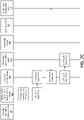
- FIG. 3 depicts an illustrative method for using signed tokens to verify SMS message bodies in accordance with one or more example embodiments.
- a computing platform having at least one processor, a communication interface, and memory may receive a message sent request.
- the computing platform may generate a cryptographic pair, including a private/signing key and a public key.
- the computing platform may publish the public key.
- the computing platform may identify whether a direct connection is established with the MNO system. If there is not a direct connection with the MNO system, the computing platform may proceed to step 335. If there is a direct connection with the MNO system, the computing platform may proceed to step 325.
- the computing platform may sign the text message.
- the computing platform may send the signed text message to the MNO system, and proceed to step 345.
- the computing platform may proceed to step 335 to send the text message to the CPaaS system.
- the computing platform may share the private key with the CPaaS system.
- the computing platform may receive ARF feedback information.
- the computing platform may generate and send an ARF feedback message to a user device for display.
- analysis processes, method steps, and/or methods described herein may be performed in different orders and/or in alternative arrangements from those illustrated herein, without departing from the scope of this disclosure. Additionally or alternatively, one or more of the analysis processes, method steps, and/or methods described herein may be optional and/or omitted in some arrangements, without departing from the scope of this disclosure.
- One or more aspects of the disclosure may be embodied in computer-usable data or computer-executable instructions, such as in one or more program modules, executed by one or more computers or other devices to perform the operations described herein.
- Program modules may include routines, programs, objects, components, data structures, and the like that perform particular tasks or implement particular abstract data types when executed by one or more processors in a computer or other data processing device.
- the computer-executable instructions may be stored as computer-readable instructions on a computer-readable medium such as a hard disk, optical disk, removable storage media, solid-state memory, RAM, and the like.
- the functionality of the program modules may be combined or distributed as desired in various embodiments.
- the functionality may be embodied in whole or in part in firmware or hardware equivalents, such as integrated circuits, application-specific integrated circuits (ASICs), field programmable gate arrays (FPGA), and the like.
- ASICs application-specific integrated circuits
- FPGA field programmable gate arrays
- Particular data structures may be used to more effectively implement one or more aspects of the disclosure, and such data structures are contemplated to be within the scope of computer executable instructions and computer-usable data described herein.
- One or more aspects described herein may be embodied as a method, an apparatus, or as one or more computer-readable media storing computer-executable instructions. Accordingly, those aspects may take the form of an entirely hardware embodiment, an entirely software embodiment, an entirely firmware embodiment, or an embodiment combining software, hardware, and firmware aspects in any combination.
- various signals representing data or events as described herein may be transferred between a source and a destination in the form of light or electromagnetic waves traveling through signal-conducting media such as metal wires, optical fibers, or wireless transmission media (e.g., air or space).
- the one or more computer-readable media may be and/or include one or more non-transitory computer-readable media.
- the various methods and acts may be operative across one or more computing servers and one or more networks.
- the functionality may be distributed in any manner, or may be located in a single computing device (e.g., a server, a client computer, and the like).
- a single computing device e.g., a server, a client computer, and the like.
- one or more of the computing platforms discussed above may be combined into a single computing platform, and the various functions of each computing platform may be performed by the single computing platform.
- any and/or all of the above-discussed communications between computing platforms may correspond to data being accessed, moved, modified, updated, and/or otherwise used by the single computing platform.
- one or more of the computing platforms discussed above may be implemented in one or more virtual machines that are provided by one or more physical computing devices.
- each computing platform may be performed by the one or more virtual machines, and any and/or all of the above-discussed communications between computing platforms may correspond to data being accessed, moved, modified, updated, and/or otherwise used by the one or more virtual machines.
Landscapes
- Engineering & Computer Science (AREA)
- Computer Security & Cryptography (AREA)
- Computer Networks & Wireless Communication (AREA)
- Signal Processing (AREA)
- Theoretical Computer Science (AREA)
- Computing Systems (AREA)
- Power Engineering (AREA)
- Physics & Mathematics (AREA)
- General Engineering & Computer Science (AREA)
- Algebra (AREA)
- General Physics & Mathematics (AREA)
- Mathematical Analysis (AREA)
- Mathematical Optimization (AREA)
- Mathematical Physics (AREA)
- Pure & Applied Mathematics (AREA)
- Computer Hardware Design (AREA)
- Information Transfer Between Computers (AREA)
- Data Exchanges In Wide-Area Networks (AREA)
- Computer And Data Communications (AREA)
Abstract
Description
- Aspects of the disclosure relate to electronic messaging, and communication systems and networks. In particular, one or more aspects of the disclosure relate to using signed tokens to verify short message service (SMS) message bodies.
- Individuals and organizations face increasing and evolving security and/or data integrity risks in the transmission and/or receipt of text messages. For example, text messages may be modified and/or otherwise corrupted in transmission by malicious actors and errors introduced by processing systems. This may create undetected security or data integrity threats that leave individuals and/or organizations vulnerable to cyberattacks, attempts at unauthorized access to secured systems and information, and/or manipulation of proprietary or confidential information.
- The invention is defined in the appended independent claims. Particular embodiments are set out in the dependent claims.
- Aspects of the disclosure provide technical solutions that overcome one or more of the technical problems described above and/or other technical challenges. For instance, one or more aspects of the disclosure relate to using signed tokens to verify short message service (SMS) message bodies.
- In accordance with one or more embodiments, a computing platform having at least one processor, a communication interface, and memory may generate a cryptographic key pair comprising a public key and a private key. The computing platform may publish, to a server, the public key. The computing platform may generate a short message service (SMS) message. The computing platform may sign, using the private key, the SMS message, which may include computing a cryptographic hash of the SMS message using the private key and embedding the cryptographic hash in an SMPP field of the SMS message. The computing platform may send, to a downstream computing system, the signed SMS message, where the downstream computing system is configured to validate the signed SMS message using the cryptographic hash embedded in the SMPP field of the SMS message and by accessing the public key from an internet Domain Name Service (DNS) server of a domain indicated by the computing platform.
- In one or more instances, signing the SMS message may cause message metadata to indicate retrieval information for the public key. In one or more instances, the server may be a DNS server.
- In one or more instances, the computing platform may locally store the private key and/or upload, to a Communications Platform as a Service (CPaaS) platform, the private key, and the private key may be stored at the CPaaS platform. In one or more instances, signing the SMS message may include signing the SMS message at one of: the computing platform or the CPaaS platform.
- In one or more instances, the computing platform may compute the cryptographic hash of the SMS message by hashing one or more of: contents of the SMS message or sender information. In one or more instances, the SMPP field may be a custom SMPP tagged link value (TLV).
- In one or more instances, the SMS message may be additionally signed by an upstream intercarrier computing system using another public-private key combination, and the downstream computing system may further verify the SMS message based on the upstream intercarrier computing system's signature. In verifying the complete SMS message, the downstream computing system may, for instance, verify all SMS message parts needed for a given message, post-concatenation, if applicable. In one or more instances, the computing platform may receive, from the downstream computing system, a message indicating that a problem occurred with signature validation for the SMS message.
- In one or more instances, the message indicating that a problem occurred with signature validation for the SMS message may indicate that the problem is one or more of: a message payload modification, a message payload corruption, or an issue with truncation of payload for the SMS message during transit. In one or more instances, the computing platform may generate, based on receipt of the message indicating that the problem occurred with signature validation for the SMS message, an abuse reporting format (ARF) message, and the ARF message may include one or more policies indicating how downstream computing systems, including the downstream computing system, should handle messages that are unable to be validated. In one or more instances, generating the ARF message causes the computing platform to instruct the downstream computing systems to: deliver the invalid messages with a warning, quarantine the invalid messages, send the invalid message in a digest, and/or drop the invalid message.
- The present disclosure is illustrated by way of example and not limited in the accompanying figures in which like reference numerals indicate similar elements and in which:
-
FIG. 1 depicts an illustrative operating environment for using signed tokens to verify SMS message bodies in accordance with one or more example embodiments; -
FIGS. 2A-2E depict an illustrative event sequence for using signed tokens to verify SMS message bodies in accordance with one or more example embodiments; -
FIG. 3 depicts an illustrative method for using signed tokens to verify SMS message bodies in accordance with one or more example embodiments; and -
FIG. 4 depicts an illustrative user interface for using signed tokens to verify SMS message bodies in accordance with one or more example embodiments. - In the following description of various illustrative embodiments, reference is made to the accompanying drawings, which form a part hereof, and in which is shown, by way of illustration, various embodiments in which aspects of the disclosure may be practiced. It is to be understood that other embodiments may be utilized, and structural and functional modifications may be made, without departing from the scope of the present disclosure. Various connections between elements are discussed in the following description. It is noted that these connections are general and, unless specified otherwise, may be direct or indirect, wired or wireless, and that the specification is not intended to be limiting in this respect.
- As a brief introduction to the concepts described further below, one or more aspects of the disclosure relate to systems and methods for signing and verifying SMS messages and/or other text messages. Using a signing approach similar to DomainKeys Identified Mail (DKIM) for email, an SMS message may be signed using a private key and a cryptographic hash may be embedded into an SMPP field of the message. A recipient can later validate the hash using a public key (which may, e.g., be stored on a DNS server). Furthermore, an abuse reporting format (ARF) may be provided to handle feedback for signed messages that cannot be validated downstream. For example, one or more policies may be published indicating how such messages should be handled downstream.
-
FIG. 1 depicts an illustrative operating environment for using signed tokens to verify SMS message bodies in accordance with one or more example embodiments. Referring toFIG. 1 ,computing environment 100 may include various computer systems, computing devices, networks, and/or other operating infrastructure. For example,computing environment 100 may include a signature generation andinjection platform 110, a communication platform as a service (CPaaS)system 120, anintercarrier provider system 130, a mobile network operator (MNO)system 140, asecond user device 150, afirst user device 160, a domain name system (DNS)server 170, and anetwork 190. In some instances, thesecond user device 150 and thefirst user device 160 may be connected to theMNO system 140 via thenetwork 190. In other instances, thesecond user device 150 and thefirst user device 160 may be connected to thenetwork 190 via the MNO system 140 (e.g., connected to theMNO system 140, which may be connected to the network 190). -
Network 190 may include one or more wired networks and/or one or more wireless networks that interconnect signature generation andinjection platform 110,CPaaS system 120,intercarrier provider system 130,MNO system 140,second user device 150,first user device 160,DNS server 170 and/or other computer systems and/or devices. In addition, each of signature generation andinjection platform 110,CPaaS system 120,intercarrier provider system 130, MNOsystem 140,second user device 150,first user device 160,DNS server 170, may be special purpose computing devices configured to perform specific functions, as illustrated in greater detail below, and may include specific computing components such as processors, memories, communication interfaces, and/or the like. - Signature generation and
injection platform 110 may include one or more processor(s) 111, one or more memory(s) 112, and one or more communication interface(s) 113. In some instances, signature generation andinjection platform 110 may be made up of a plurality of different computing devices, which may be distributed within a single data center or a plurality of different data centers. In these instances, the one or more processor(s) 111, one or more memory(s) 112, and one or more communication interface(s) 113 included in signature generation andinjection platform 110 may be part of and/or otherwise associated with the different computing devices that form signature generation andinjection platform 110. - In one or more arrangements, processor(s) 111 may control operations of signature generation and
injection platform 110. Memory(s) 112 may store instructions that, when executed by processor(s) 111, cause signature generation andinjection platform 110 to perform one or more functions, as discussed below. Communication interface(s) 113 may include one or more wired and/or wireless network interfaces, and communication interface(s) 113 may connect signature generation andinjection platform 110 to one or more networks (e.g., network 190) and/or enable signature generation andinjection platform 110 to exchange information and/or otherwise communicate with one or more devices connected to such networks. - In one or more arrangements, memory(s) 112 may store and/or otherwise provide a plurality of modules (which may, e.g., include instructions that may be executed by processor(s) 111 to cause signature generation and
injection platform 110 to perform various functions) and/or databases (which may, e.g., store data used by signature generation andinjection platform 110 in performing various functions). For example, memory(s) 112 may store and/or otherwise provide signature generation andinjection module 112a and signature generation andinjection database 112b. In some instances, signature generation andinjection module 112a may store instructions that cause signature generation andinjection platform 110 to inject message signatures, generate Abuse Reporting Format (ARF) messages, and/or execute one or more other functions described herein. Additionally, signature generation andinjection database 112b may store data that is used by signature generation andinjection platform 110 for injection of message signatures, generation of ARF messages, and/or in executing one or more other functions described herein. -
CPaaS system 120 may be and/or include one or more computing devices that may be configured to sign messages from the signature generation andinjection platform 110. For example, in some instances, theCPaaS system 120 may sign messages on behalf of an organization at which the messages originated. -
Intercarrier provider system 130 may be and/or include one or more computing devices that may be configured for message routing (e.g., to a MNO such as MNO system 140). In some instances, theintercarrier provider system 130 may be configured to sign text messages for validation purposes. For example, theintercarrier provider system 130 may be configured to sign text messages using a public-private key pair, prior to routing the text messages. -
MNO system 140 may be and/or include one or more computing devices that may be configured to verify signed messages. For example, in some instances, theMNO system 140 may be configured to access a decryption key (e.g., a public or private key) that may be used to verify signed messages. TheMNO system 140 may further be configured to route messages to user devices (e.g.,first user device 160,second user device 150, and/or other user devices) upon verifying the messages. Additionally, theMNO system 140 may be configured to notify signature generation andinjection platform 110 if a message is not verified. In some instances, theMNO system 140 may be configured to route messages to various user devices (e.g.,first user device 160,second user device 150, and/or other user devices). -
Second user device 150 may be configured to be used by a second user. For example,second user device 150 may be one of a mobile device, smartphone, tablet, laptop computer, desktop computer, and/or other device configured for electronic messaging. In some instances,second user device 150 may be configured to present one or more user interfaces (e.g., message interfaces, ARF feedback interfaces, and/or other interfaces). -
First user device 160 may be configured to be used by a first user. For example,first user device 160 may be one of a mobile device, smartphone, tablet, laptop computer, desktop computer, and/or other device configured for electronic messaging. In some instances,first user device 160 may be configured to present one or more user interfaces (e.g., message interfaces, ARF feedback interfaces, and/or other interfaces). -
DNS server 170 may be and/or include one or more computing devices (e.g., servers, server blades, or other devices) that may be configured for key storage. For example, in some instances, theDNS server 170 may be configured to receive a public key that may be used to sign and/or validate messages. -
FIGS. 2A-2E depict an illustrative event sequence for using signed tokens to verify SMS message bodies in accordance with one or more example embodiments. Referring toFIG. 2A , atstep 201, thefirst user device 160 may send a message send request to the signature generation andinjection platform 110. For example, thefirst user device 160 may send a request to send an SMS or other text message to another device (e.g., second user device 150). In some instances, the message may include information such as a header, message body, sender information, recipient information, and/or other information. - At
step 202, the signature generation andinjection platform 110 may receive the message send request sent atstep 201. For example, the signature generation andinjection platform 110 may receive an SMS or other text message directed to another user device. - At
step 203, the signature generation andinjection platform 110 may generate a cryptographic key pair that may be used to verify the message. For example, the signature generation andinjection platform 110 may generate a private signature key that may be used to sign the message, and a public key that may be used to verify the message. AlthoughFIG. 2A illustrates generation of the cryptographic key pair after receipt of the message request atstep 202, in some instances, the signature generation andinjection platform 110 may generate the cryptographic key pair at any point prior to receipt of the message request (and/or sending of the message request or the depicted event sequence) without departing from the scope of the disclosure. In some instances, in generating the cryptographic key pair, the signature generation andinjection platform 110 may generate keys that are valid for a period of time. In these instances, the signature generation andinjection platform 110 may periodically rotate the cryptographic key pair (e.g., to a new cryptographic key pair) upon expiration of the period of time. - At
step 204, the signature generation andinjection platform 110 may publish the public key. For example, the signature generation andinjection platform 110 may publish the public key to DNS server 170 (which may be publicly accessible) and/or another computing system that may be accessible for message verification by sending and/or otherwise transmitting the public key toDNS server 170. By publishing the public key in the above described ways, a low-cost, non-centralized public key infrastructure (PKI) may be implemented that leverages DNS for public key storage. In some instances, a location corresponding to theDNS server 170 may be included in signed messages (as described further below), which may enable access of the public key by downstream computing systems, and thus enabling validation of the signed messages using the public key. - At
step 205, the signature generation andinjection platform 110 may identify whether or not a direct connection is established withMNO system 140. If a direct connection is established withMNO system 140, the signature generation andinjection platform 110 may proceed to step 206. Otherwise, if a direct connection is not established withMNO system 140, the signature generation andinjection platform 110 may proceed to step 209. - Referring to
FIG. 2B , atstep 206, the signature generation andinjection platform 110 may sign the message using the private key (e.g., the private/signing key generated at step 203). For example, the signature generation andinjection platform 110 may hash message contents, sender information, recipient information, and/or other message information. In some instances, in signing the message, the signature generation andinjection platform 110 may embed metadata indicating ownership of the message, where to look up the public key for verifying the message, policy information indicating how the message should be handled if not validated, and/or other information. In some instances, in signing the message, the signature generation andinjection platform 110 may embed the signature (and/or the private key itself) and/or a location of the public key in the metadata. For example, the signature generation andinjection platform 110 may generate a cryptographic hash and stamp (or otherwise write) the hash into the message, prior to routing the message. In some instances, the signature generation andinjection platform 110 may append this signature information to the message in one or more custom short message peer-to-peer (SMPP) fields (e.g., custom SMPP tagged link values (TLVs), or other fields). In some instances, in signing the message, the signature generation andinjection platform 110 may sign the message on behalf of the message originating organization or individual (e.g., an individual or organization associated with the first user device 160). In some instances, the signature generation andinjection platform 110 may sign the text message using a signed token. In doing so, the signature generation andinjection platform 110 may enable the identification of message policies for various senders (e.g., positive or negative trust may be established for various senders based on results of signature validation). In some instances, in signing the text message, the signature generation andinjection platform 110 may embed information such as an ARF feedback code (which may, e.g., indicate what feedback is requested), a reporting rate (which may, e.g., indicate a percentage of messages to sample), a reporting address (which may, e.g., indicate a destination to send reporting feedback), an indication of the signing entity, a message hash, and/or other information. - At
step 207, the signature generation andinjection platform 110 may send the signed text message to the MNO system. Atstep 208, theMNO system 140 may receive the signed text message from the signature generation andinjection platform 110. TheMNO system 140 may then proceed to step 217. - Returning to step 205, if a direct connection is not established with the
MNO system 140, the signature generation andinjection platform 110 may proceed to step 209 (e.g., as an alternative to performingsteps step 209, the signature generation andinjection platform 110 may send the text message to theCPaaS system 120. For example, the signature generation andinjection platform 110 may send the text message to theCPaaS system 120 for signature (e.g., as an alternative to signing the text message at the signature generation andinjection platform 110 itself). - At
step 210, the signature generation andinjection platform 110 may share the private/signing key with theCPaaS system 120. In doing so, the signature generation andinjection platform 110 may enable theCPaaS system 120 to sign the text message on behalf of the message originating organization or individual. - Referring to
FIG. 2C , atstep 211, theCPaaS system 120 may sign the text message using the received private key. For example, theCPaaS system 120 may sign the text message on behalf of the message originating organization or individual. In some instances, theCPaaS system 120 may sign the text message using a signed token. In some instances, in signing the text message, theCPaaS system 120 may embed or otherwise inject information similar to the information described above atstep 206. - At
step 212, theCPaaS system 120 may send the signed text message to theintercarrier provider system 130, which may, for example, be a hub configured to route messages between senders and recipients. Atstep 213, theintercarrier provider system 130 may receive the signed text. - At
step 214, theintercarrier provider system 130 may retrieve the public key. For example, theintercarrier provider system 130 may retrieve the public key from theDNS server 170 to which the public key was published. In some instances, theintercarrier provider system 130 may identify a location of the public key (e.g., intercarrier provider system 130) using information embedded in the text message. In doing so, theintercarrier provider system 130 may, in some instances, perform an intermediate validation of the message (e.g., prior to validation of the message by the MNO system 140). - In some instances, the
intercarrier provider system 130 may also sign the message using a private/public key pair (which may be a different private/public key pair than was used by the signature generation andinjection platform 110 to sign the text message at step 206). In these instances, theintercarrier provider system 130 may send, embed, and/or otherwise publish the public/private keys in a similar manner to that performed by the signature generation andinjection platform 110. For example, theintercarrier provider system 130 may further hash the message contents, sender information, and/or other information. In some instances, theintercarrier provider system 130 may embed the private key/signature in the same or a different (e.g., subsequent) field as the private key/signature of the signature generation and injection platform 110 (e.g., a custom SMPP field). As a result, the text message may be a multisigned message (e.g., signed by both theintercarrier provider system 130 and the signature generation and injection platform 110). In some instances, theintercarrier provider system 130 may sign the text message using a signed token. - At
step 215, theintercarrier provider system 130 may send the signed text message (which may be a multisigned message) to theMNO system 140. Atstep 216, theMNO system 140 may receive the signed text message. - Referring to
FIG. 2D , atstep 217, theMNO system 140 may retrieve the public key. For example, theintercarrier provider system 130 may retrieve the public key from theDNS server 170 to which the public key was published. In some instances, theMNO system 140 may identify a location of the public key (e.g., DNS server 170) using information embedded in the text message. - At
step 218, theMNO system 140 may validate the text message using the public key(s). For example, theMNO system 140 may access the public key based on a location identified in the message metadata. TheMNO system 140 may then perform a cryptographic validation using the message contents, embedded hash, and/or other information to verify integrity of the text message. In some instances, theMNO system 140 may also validate a number of hops that the text message passed through since leaving the sender device, a chain of custody, routing information, sender information, and/or other information, which may, e.g., be embedded in the metadata or otherwise included in the text message. If theMNO system 140 successfully validates the text message, it may proceed to step 219. Otherwise, if theMNO system 140 is unable to validate the text message, it may proceed to step 222. - At
step 219, theMNO system 140 may route the text message to thesecond user device 150. For example, after identify that the text message is valid, theMNO system 140 may route the text message to thesecond user device 150 for display. - At
step 220, thesecond user device 150 may receive the validated text message from theMNO system 140. Atstep 221, thesecond user device 150 may display the validated text message, and the event sequence may end. - At
step 222, theMNO system 140 may generate ARF feedback. For example, after identifying that the text message was not validated, theMNO system 140 may generate information indicating that the text message was not validated. In some instances, in generating the ARF feedback, theMNO system 140 may generate information indicating that a problem occurred with signature validation and information indicating what the problem was (e.g., because message payload was modified or corrupted in transit, there was an issue with truncation of the message payload during transit, and/or other problems). - At
step 223, theMNO system 140 may send the ARF feedback to the signature generation andinjection platform 110. Atstep 224, the signature generation andinjection platform 110 may receive the ARF feedback. - At
step 225, the signature generation andinjection platform 110 may generate an ARF feedback message. For example, the signature generation andinjection platform 110 may generate a message configured for display at a user device (e.g., first user device 160) indicating that the text message was not validated. In some instances, in generating the ARF feedback message, the signature generation andinjection platform 110 may include the identified problem in message validation. - Additionally or alternatively, the signature generation and
injection platform 110 may publish a policy of how downstream devices (such as MNO system 140) should handle message that cannot be validated. For example, the signature generation andinjection platform 110 may publish a policy indicating that such messages should be delivered with a warning, quarantined, sent in a digest, dropped, and/or otherwise subjected to a different policy action. In these instances, such policies may cause theMNO system 140 to act accordingly. In some instances, this policy may be selected or otherwise specified by the message sender. Accordingly, the policy may be accessed for subsequent invalid messages from the sender, and action may be taken accordingly. - In some instances, the signature generation and
injection platform 110 may establish trust policies (e.g., positive or negative trust, or various numeric trust scores) for various senders based on results of signature validation. For example, the signature generation andinjection platform 110 may identify a number of validated messages for a particular sender and divide that number by a total number of sent messages from the particular sender to compute a likelihood of validation score. The signature generation andinjection platform 110 may then compare that score to various trust thresholds, and set policies accordingly. For example, if the likelihood of validation score exceeds a first threshold, future messages from the particular sender may be trusted (without necessarily going through the signature validation process described above), whereas if the likelihood of validation score does not exceed the first threshold, future messages from the particular sender might not be trusted (again, without necessarily going through the signature validation process described above). - In some instances, multiple thresholds may be implemented, each with their own corresponding policies (e.g., no feedback requested, feedback requested for broken signatures only, feedback requested for broken signatures and content blocks, and/or other policies). Additionally or alternatively, reporting rates may be set based on these thresholds (e.g., a more trustworthy sender may be associated with a lower reporting rate, and vice versa).
- In doing so, an efficient screening process may be implemented for messages. In these instances, the likelihood of validation scores may be periodically updated for senders so as to account for changes in message trustworthiness for various senders.
- Once such policies are identified, the signatures (as described above) may include information such as an ARF feedback code (which may, e.g., indicate what feedback is requested), a reporting rate (which may, e.g., indicate a percentage of messages to sample), a reporting address (which may, e.g., indicate a destination to send reporting feedback), an indication of the signing entity, a message hash, and/or other information. This information may accessed by the
MNO system 140 for subsequent messages, and may be used to perform future validation/reporting of messages. - At
step 226, the signature generation andinjection platform 110 may send the ARF feedback message to thefirst user device 160. At step 227, thefirst user device 160 may receive and display the ARF feedback message. For example, in displaying the ARF feedback message, thefirst user device 160 may display a graphical user interface similar tographical user interface 400, which is shown inFIG. 4 . - The steps described in the illustrative event sequence herein may be performed in any alternative sequence or order without departing from the scope of the disclosure. Furthermore, although the above described systems, event sequence, and methods are described primarily in the context of text messages, this is solely for illustrative purposes, and the systems, event sequence, and methods described herein may be applied in other contexts without departing from the scope of the disclosure.
-
FIG. 3 depicts an illustrative method for using signed tokens to verify SMS message bodies in accordance with one or more example embodiments. Referring toFIG. 3 , atstep 305, a computing platform having at least one processor, a communication interface, and memory may receive a message sent request. Atstep 310, the computing platform may generate a cryptographic pair, including a private/signing key and a public key. Atstep 315, the computing platform may publish the public key. Atstep 320, the computing platform may identify whether a direct connection is established with the MNO system. If there is not a direct connection with the MNO system, the computing platform may proceed to step 335. If there is a direct connection with the MNO system, the computing platform may proceed to step 325. - At
step 325, the computing platform may sign the text message. Atstep 330, the computing platform may send the signed text message to the MNO system, and proceed to step 345. - Returning to step 320, if there is not a direct connection with the MNO system, the computing platform may proceed to step 335 to send the text message to the CPaaS system. At
step 340, the computing platform may share the private key with the CPaaS system. Atstep 345, the computing platform may receive ARF feedback information. Atstep 350, the computing platform may generate and send an ARF feedback message to a user device for display. - It should be understood that the analysis processes, method steps, and/or methods described herein may be performed in different orders and/or in alternative arrangements from those illustrated herein, without departing from the scope of this disclosure. Additionally or alternatively, one or more of the analysis processes, method steps, and/or methods described herein may be optional and/or omitted in some arrangements, without departing from the scope of this disclosure.
- One or more aspects of the disclosure may be embodied in computer-usable data or computer-executable instructions, such as in one or more program modules, executed by one or more computers or other devices to perform the operations described herein. Program modules may include routines, programs, objects, components, data structures, and the like that perform particular tasks or implement particular abstract data types when executed by one or more processors in a computer or other data processing device. The computer-executable instructions may be stored as computer-readable instructions on a computer-readable medium such as a hard disk, optical disk, removable storage media, solid-state memory, RAM, and the like. The functionality of the program modules may be combined or distributed as desired in various embodiments. In addition, the functionality may be embodied in whole or in part in firmware or hardware equivalents, such as integrated circuits, application-specific integrated circuits (ASICs), field programmable gate arrays (FPGA), and the like. Particular data structures may be used to more effectively implement one or more aspects of the disclosure, and such data structures are contemplated to be within the scope of computer executable instructions and computer-usable data described herein.
- One or more aspects described herein may be embodied as a method, an apparatus, or as one or more computer-readable media storing computer-executable instructions. Accordingly, those aspects may take the form of an entirely hardware embodiment, an entirely software embodiment, an entirely firmware embodiment, or an embodiment combining software, hardware, and firmware aspects in any combination. In addition, various signals representing data or events as described herein may be transferred between a source and a destination in the form of light or electromagnetic waves traveling through signal-conducting media such as metal wires, optical fibers, or wireless transmission media (e.g., air or space). The one or more computer-readable media may be and/or include one or more non-transitory computer-readable media.
- As described herein, the various methods and acts may be operative across one or more computing servers and one or more networks. The functionality may be distributed in any manner, or may be located in a single computing device (e.g., a server, a client computer, and the like). For example, in alternative embodiments, one or more of the computing platforms discussed above may be combined into a single computing platform, and the various functions of each computing platform may be performed by the single computing platform. In such arrangements, any and/or all of the above-discussed communications between computing platforms may correspond to data being accessed, moved, modified, updated, and/or otherwise used by the single computing platform. Additionally or alternatively, one or more of the computing platforms discussed above may be implemented in one or more virtual machines that are provided by one or more physical computing devices. In such arrangements, the various functions of each computing platform may be performed by the one or more virtual machines, and any and/or all of the above-discussed communications between computing platforms may correspond to data being accessed, moved, modified, updated, and/or otherwise used by the one or more virtual machines.
- Particular aspects of the subject matter disclosed herein are now set out in the following numbered clauses:
- 1. A computing platform, comprising: at least one processor; a communication interface communicatively coupled to the at least one processor; and memory storing computer-readable instructions that, when executed by the at least one processor, cause the computing platform to: generate a cryptographic key pair comprising a public key and a private key; publish, to a server, the public key; generate a short message service (SMS) message; sign, using the private key, the SMS message, wherein signing the SMS message comprises computing a cryptographic hash of the SMS message using the private key and embedding the cryptographic hash in an SMPP field of the SMS message; and send, to a downstream computing system, the signed SMS message, wherein the downstream computing system is configured to validate the signed SMS message using the cryptographic hash embedded in the SMPP field of the SMS message and by accessing the public key from an internet Domain Name Service (DNS) server of a domain indicated by the computing platform.
- 2. The computing platform of clause 1, wherein signing the SMS message causes message metadata to indicate retrieval information for the public key.
- 3. The computing platform of clause 1 or 2, wherein the server comprises a DNS server.
- 4. The computing platform of clause 1, 2 or 3, wherein the memory stores additional computer-readable instructions that, when executed by the at least one processor, cause the computing platform to perform one or more of: store, at the computing platform, the private key, or upload, to a Communications Platform as a Service (CPaaS) platform, the private key, wherein the private key is stored at the CPaaS platform.
- 5. The computing platform of clause 4, wherein signing the SMS message comprises signing the SMS message at one of: the computing platform or the CPaaS platform.
- 6. The computing platform of any of the preceding clauses, wherein computing the cryptographic hash of the SMS message comprises hashing one or more of: contents of the SMS message and sender information.
- 7. The computing platform of any of the preceding clauses, wherein the SMPP field comprises a custom SMPP tagged link value (TLV).
- 8. The computing platform of any of the preceding clauses, where the SMS message is additionally signed by an upstream intercarrier computing system using another public-private key combination, and wherein the downstream computing system further verifies the complete SMS message based on the upstream intercarrier computing system's signature.
- 9. The computing platform of any of the preceding clauses, wherein the memory stores additional computer-readable instructions that, when executed by the at least one processor, cause the computing platform to: receive, from the downstream computing system, a message indicating that a problem occurred with signature validation for the SMS message.
- 10. The computing platform of clause 9, wherein the message indicating that a problem occurred with signature validation for the SMS message may indicate that the problem comprises one or more of: a message payload modification, a message payload corruption, or an issue with truncation of payload for the SMS message during transit.
- 11. The computing platform of clause 9 or 10, wherein the memory stores additional computer-readable instructions that, when executed by the at least one processor, cause the computing platform to: generate, based on receipt of the message indicating that the problem occurred with signature validation for the SMS message, an abuse reporting format (ARF) message, wherein the ARF message includes one or more policies indicating how downstream computing systems, including the downstream computing system, should handle messages that are unable to be validated.
- 12. The computing platform of clause 11, wherein generating the ARF message causes the computing platform to instruct the downstream computing systems to:
deliver the invalid messages with a warning, quarantine the invalid messages, send the invalid message in a digest, or drop the invalid message. - 13. A method comprising: at a computing platform comprising at least one processor, a communication interface, and memory: generating a cryptographic key pair comprising a public key and a private key; publishing, to a server, the public key; generating a short message service (SMS) message; signing, using the private key, the SMS message, wherein signing the SMS message comprises computing a cryptographic hash of the SMS message using the private key and embedding the cryptographic hash in an SMPP field of the SMS message; and sending, to a downstream computing system, the signed SMS message, wherein the downstream computing system is configured to validate the signed SMS message using the cryptographic hash embedded in the SMPP field of the SMS message and by accessing the public key from an internet Domain Name Service (DNS) server of a domain indicated by the computing platform.
- 14. The method of clause 13, wherein signing the SMS message causes message metadata to indicate retrieval information for the public key.
- 15. The method of clause 13 or 14, wherein the server comprises a DNS server.
- 16. The method of clause 13, 14 or 15, further comprising performing one or more of: storing, at the computing platform, the private key, or uploading, to a Communications Platform as a Service (CPaaS) platform, the private key, wherein the private key is stored at the CPaaS platform.
- 17. The method of clause 16, wherein signing the SMS message comprises signing the SMS message at one of: the computing platform or the CPaaS platform.
- 18. The method of any of clauses 13-17, wherein computing the cryptographic hash of the SMS message comprises hashing one or more of: contents of the SMS message and sender information.
- 19. The method of any of clauses 13-18, wherein the SMPP field comprises a custom SMPP tagged link value (TLV).
- 20. One or more non-transitory computer-readable media storing instructions that, when executed by a computing platform comprising at least one processor, a communication interface, and memory, cause the computing platform to: generate a cryptographic key pair comprising a public key and a private key; publish, to a server, the public key; generate a short message service (SMS) message; sign, using the private key, the SMS message, wherein signing the SMS message comprises computing a cryptographic hash of the SMS message using the private key and embedding the cryptographic hash in an SMPP field of the SMS message; and send, to a downstream computing system, the signed SMS message, wherein the downstream computing system is configured to validate the signed SMS message using the cryptographic hash embedded in the SMPP field of the SMS message and by accessing the public key from an internet Domain Name Service (DNS) server of a domain indicated by the computing platform.
- Aspects of the disclosure have been described in terms of illustrative embodiments thereof. Numerous other embodiments, modifications, and variations within the scope of the appended claims will occur to persons of ordinary skill in the art from a review of this disclosure. For example, one or more of the steps depicted in the illustrative figures may be performed in other than the recited order, and one or more depicted steps may be optional in accordance with aspects of the disclosure.
Claims (15)
- A computer-implemented method comprising:generating (203, 310) a cryptographic key pair comprising a public key and a private key;publishing (204, 315), to a server (170), the public key;generating a short message service, SMS, message;signing (206, 211, 325), using the private key, the SMS message, wherein signing (206, 211, 325) the SMS message comprises computing a cryptographic hash of the SMS message using the private key and embedding the cryptographic hash in a short message peer-to-peer, SMPP, field of the SMS message; andsending (207, 330), to a downstream computing system (140), the signed SMS message, wherein the downstream computing system (140) is configured to validate (218) the signed SMS message using the cryptographic hash embedded in the SMPP field of the SMS message and by accessing (217) the public key from the server (170).
- The method of claim 2, wherein signing (206, 211, 325) the SMS message causes message metadata to indicate retrieval information for the public key.
- The method of claim 1 or 2, wherein the server (170) comprises a Domain Name Service, DNS, server; and/or wherein the public key is accessed from an internet DNS server of an indicated domain.
- The method of claim 1, 2 or 3, further comprising performing one or more of:storing, at a computing platform (110), the private key, oruploading (210, 340), to a Communications Platform as a Service, CPaaS, platform (120), the private key, wherein the private key is stored at the CPaaS platform (120).
- The method of claim 4, wherein signing (206, 211, 325) the SMS message comprises signing (206, 211, 325) the SMS message at one of: the computing platform (110) or the CPaaS platform (120).
- The method of any of the preceding claims, wherein computing the cryptographic hash of the SMS message comprises hashing one or more of: contents of the SMS message and sender information.
- The method of any of the preceding claims, wherein the SMPP field comprises a custom SMPP tagged link value, TLV.
- The method of any of the preceding claims, wherein the SMS message is additionally signed by an upstream intercarrier computing system (130) using another public-private key combination, and wherein the downstream computing system (140) further verifies (218) the complete SMS message based on the upstream intercarrier computing system's signature.
- The method of any of the preceding claims, further comprising:
receiving (224, 345), from the downstream computing system (140), a message indicating that a problem occurred with signature validation for the SMS message. - The method of claim 9, wherein the message indicating that a problem occurred with signature validation for the SMS message indicates that the problem comprises one or more of: a message payload modification, a message payload corruption, or an issue with truncation of payload for the SMS message during transit.
- The method of claim 9 or 10, further comprising:
generating (225, 350), based on receipt of the message indicating that the problem occurred with signature validation for the SMS message, an abuse reporting format, ARF, message, wherein the ARF message includes one or more policies indicating how downstream computing systems, including the downstream computing system (140), should handle messages that are unable to be validated. - The method of claim 11, wherein generating (225, 350) the ARF message includes instructing the downstream computing systems to: deliver the invalid messages with a warning, quarantine the invalid messages, send the invalid message in a digest, or drop the invalid message.
- A data processing apparatus comprising at least one processor (111) configured to perform the method of any of claims 1-12.
- A computer-readable storage medium comprising instructions which, when executed by a computer (110), cause the computer (110) to carry out the method of any of claims 1-12.
- A computer program product comprising instructions which, when the program is executed by a computer (110), cause the computer (110) to carry out the method of any of claims 1-12.
Applications Claiming Priority (2)
| Application Number | Priority Date | Filing Date | Title |
|---|---|---|---|
| US202063105608P | 2020-10-26 | 2020-10-26 | |
| US17/491,771 US11811932B2 (en) | 2020-10-26 | 2021-10-01 | Using signed tokens to verify short message service (SMS) message bodies |
Publications (2)
| Publication Number | Publication Date |
|---|---|
| EP3989622A1 true EP3989622A1 (en) | 2022-04-27 |
| EP3989622B1 EP3989622B1 (en) | 2025-06-18 |
Family
ID=78332698
Family Applications (1)
| Application Number | Title | Priority Date | Filing Date |
|---|---|---|---|
| EP21203819.4A Active EP3989622B1 (en) | 2020-10-26 | 2021-10-20 | Using signed tokens to verify short message service (sms) message bodies |
Country Status (2)
| Country | Link |
|---|---|
| US (3) | US11811932B2 (en) |
| EP (1) | EP3989622B1 (en) |
Cited By (1)
| Publication number | Priority date | Publication date | Assignee | Title |
|---|---|---|---|---|
| EP4319047A1 (en) * | 2022-08-01 | 2024-02-07 | Syniverse Technologies, LLC | Trusted sender signature messaging system |
Families Citing this family (2)
| Publication number | Priority date | Publication date | Assignee | Title |
|---|---|---|---|---|
| EP4478766A1 (en) * | 2023-06-12 | 2024-12-18 | Lleidanetworks Serveis Telematics SL | Short message service validation |
| CN120186613A (en) * | 2025-02-20 | 2025-06-20 | 联通在线信息科技有限公司 | SMS gateway authentication method and device based on digital certificate |
Citations (4)
| Publication number | Priority date | Publication date | Assignee | Title |
|---|---|---|---|---|
| CN101247605A (en) * | 2008-03-25 | 2008-08-20 | 中兴通讯股份有限公司 | Short message encryption, signature method, mobile terminal and short message encryption system |
| WO2010057405A1 (en) * | 2008-11-24 | 2010-05-27 | 国民技术股份有限公司 | Identity authentication method using short messages |
| CN101895847A (en) * | 2010-08-02 | 2010-11-24 | 刘明晶 | Short message service authenticated encryption system and method based on digital certificate |
| US10630665B2 (en) * | 2016-04-18 | 2020-04-21 | Blackberry Limited | Authenticating messages |
Family Cites Families (17)
| Publication number | Priority date | Publication date | Assignee | Title |
|---|---|---|---|---|
| US20070136592A1 (en) * | 2000-04-12 | 2007-06-14 | Smith Richard A | Wireless internet gateway |
| US9338597B2 (en) * | 2007-12-06 | 2016-05-10 | Suhayya Abu-Hakima | Alert broadcasting to unconfigured communications devices |
| US8868661B2 (en) * | 2008-10-08 | 2014-10-21 | Verizon Patent And Licensing Inc. | Message management based on metadata |
| US8380989B2 (en) * | 2009-03-05 | 2013-02-19 | Sybase, Inc. | System and method for second factor authentication |
| US8150430B2 (en) * | 2009-10-02 | 2012-04-03 | At&T Mobility Ii Llc | Communications device media delivery |
| US8489075B2 (en) * | 2011-11-16 | 2013-07-16 | At&T Intellectual Property I, L.P. | System and method for augmenting features of visual voice mail |
| US9515976B2 (en) * | 2011-12-19 | 2016-12-06 | Facebook, Inc. | Proxied outgoing message transmission |
| GB2586549B (en) * | 2013-09-13 | 2021-05-26 | Vodafone Ip Licensing Ltd | Communicating with a machine to machine device |
| US9240989B2 (en) * | 2013-11-01 | 2016-01-19 | At&T Intellectual Property I, Lp | Apparatus and method for secure over the air programming of a communication device |
| WO2017110709A1 (en) * | 2015-12-24 | 2017-06-29 | 日本電気株式会社 | Email control device, email control method, and program storage medium |
| US20180097756A1 (en) * | 2016-10-04 | 2018-04-05 | Salesforce.Com, Inc. | Ott messaging service and sms/mms aggregation engine |
| US10069845B2 (en) * | 2016-11-29 | 2018-09-04 | Verizon Patent And Licensing Inc. | System and methods for secure short message service encryption and provisioning |
| US11202180B2 (en) * | 2017-03-17 | 2021-12-14 | Icrypto, Inc. | System and method for dual notifications and responses |
| US11283781B2 (en) * | 2019-04-09 | 2022-03-22 | Visa International Service Association | Proximity interaction system including secure encryption scheme |
| US11792009B2 (en) * | 2021-06-14 | 2023-10-17 | Bank Of America Corporation | Electronic system for generation of authentication tokens using biometric data |
| US20230318831A1 (en) * | 2022-03-30 | 2023-10-05 | Yahoo Assets Llc | System and method of authentication of users of common reusable components |
| US12542668B2 (en) * | 2022-03-31 | 2026-02-03 | Justice Technology, Ltd. | Secure authentication of electronic documents via a distributed system |
-
2021
- 2021-10-01 US US17/491,771 patent/US11811932B2/en active Active
- 2021-10-20 EP EP21203819.4A patent/EP3989622B1/en active Active
-
2023
- 2023-09-29 US US18/374,866 patent/US12192363B2/en active Active
-
2024
- 2024-11-20 US US18/953,263 patent/US20250080354A1/en active Pending
Patent Citations (4)
| Publication number | Priority date | Publication date | Assignee | Title |
|---|---|---|---|---|
| CN101247605A (en) * | 2008-03-25 | 2008-08-20 | 中兴通讯股份有限公司 | Short message encryption, signature method, mobile terminal and short message encryption system |
| WO2010057405A1 (en) * | 2008-11-24 | 2010-05-27 | 国民技术股份有限公司 | Identity authentication method using short messages |
| CN101895847A (en) * | 2010-08-02 | 2010-11-24 | 刘明晶 | Short message service authenticated encryption system and method based on digital certificate |
| US10630665B2 (en) * | 2016-04-18 | 2020-04-21 | Blackberry Limited | Authenticating messages |
Cited By (2)
| Publication number | Priority date | Publication date | Assignee | Title |
|---|---|---|---|---|
| EP4319047A1 (en) * | 2022-08-01 | 2024-02-07 | Syniverse Technologies, LLC | Trusted sender signature messaging system |
| US12532167B2 (en) | 2022-08-01 | 2026-01-20 | Syniverse Technologies, Llc | Validated sender mobile messaging |
Also Published As
| Publication number | Publication date |
|---|---|
| US20220131697A1 (en) | 2022-04-28 |
| US20250080354A1 (en) | 2025-03-06 |
| EP3989622B1 (en) | 2025-06-18 |
| US12192363B2 (en) | 2025-01-07 |
| US20240031156A1 (en) | 2024-01-25 |
| US11811932B2 (en) | 2023-11-07 |
Similar Documents
| Publication | Publication Date | Title |
|---|---|---|
| US12160523B2 (en) | Email authentication and data integrity validation | |
| US12192363B2 (en) | Using signed tokens to verify short message service (sms) message bodies | |
| US8984286B2 (en) | Message originator token verification | |
| US8379857B1 (en) | Secure key distribution for private communication in an unsecured communication channel | |
| US20080019530A1 (en) | Message archival assurance for encrypted communications | |
| US12124614B2 (en) | Apparatus and methods for verifying a file origin | |
| US10333908B2 (en) | Transaction-based secure information delivery and assessment | |
| US20170244753A1 (en) | Establishing a secure data exchange channel | |
| US20250080512A1 (en) | Dynamic steganographic embeddings for message threat detection | |
| CN118433171A (en) | File transmission method, system, storage medium and electronic device | |
| CN113765968A (en) | A file transfer method, device and system | |
| CN113612616A (en) | Vehicle communication method and device based on block chain | |
| CN117172311B (en) | Federal learning method, system, equipment and storage medium | |
| CN114884714A (en) | Task processing method, device, equipment and storage medium | |
| CN113343155A (en) | Request processing method and device | |
| US11082232B2 (en) | Auditably proving a usage history of an asset | |
| CN114239072B (en) | Block chain node management method and block chain network | |
| US20130311385A1 (en) | Third Party Security Monitoring & Audit | |
| KR20210061462A (en) | Systems and methods for message transmission and retrieval using blockchain | |
| US11329964B2 (en) | Policy based message cryptographic expiry | |
| US12634145B2 (en) | Cryptographic trust system for electronic communications integrity using tuple spaces and messaging user agents | |
| CN114428967A (en) | Data transmission method, device, equipment and storage medium | |
| US20240394669A1 (en) | Systems and methods for securely sharing public blockchain addresses | |
| TWI569166B (en) | Data verification method | |
| CN121217686A (en) | Chat message transmission method and apparatus based on communication architecture |
Legal Events
| Date | Code | Title | Description |
|---|---|---|---|
| PUAI | Public reference made under article 153(3) epc to a published international application that has entered the european phase |
Free format text: ORIGINAL CODE: 0009012 |
|
| STAA | Information on the status of an ep patent application or granted ep patent |
Free format text: STATUS: THE APPLICATION HAS BEEN PUBLISHED |
|
| AK | Designated contracting states |
Kind code of ref document: A1 Designated state(s): AL AT BE BG CH CY CZ DE DK EE ES FI FR GB GR HR HU IE IS IT LI LT LU LV MC MK MT NL NO PL PT RO RS SE SI SK SM TR |
|
| STAA | Information on the status of an ep patent application or granted ep patent |
Free format text: STATUS: REQUEST FOR EXAMINATION WAS MADE |
|
| 17P | Request for examination filed |
Effective date: 20220930 |
|
| RBV | Designated contracting states (corrected) |
Designated state(s): AL AT BE BG CH CY CZ DE DK EE ES FI FR GB GR HR HU IE IS IT LI LT LU LV MC MK MT NL NO PL PT RO RS SE SI SK SM TR |
|
| RIC1 | Information provided on ipc code assigned before grant |
Ipc: H04W 12/108 20210101ALI20241204BHEP Ipc: H04W 12/106 20210101ALI20241204BHEP Ipc: H04L 9/06 20060101ALI20241204BHEP Ipc: H04L 9/32 20060101ALI20241204BHEP Ipc: H04W 4/14 20090101ALI20241204BHEP Ipc: H04W 12/10 20210101ALI20241204BHEP Ipc: H04W 12/128 20210101AFI20241204BHEP |
|
| GRAP | Despatch of communication of intention to grant a patent |
Free format text: ORIGINAL CODE: EPIDOSNIGR1 |
|
| STAA | Information on the status of an ep patent application or granted ep patent |
Free format text: STATUS: GRANT OF PATENT IS INTENDED |
|
| INTG | Intention to grant announced |
Effective date: 20250113 |
|
| RIN1 | Information on inventor provided before grant (corrected) |
Inventor name: SAN DIEGO, KEVIN Inventor name: LEE, THOMAS |
|
| GRAS | Grant fee paid |
Free format text: ORIGINAL CODE: EPIDOSNIGR3 |
|
| GRAA | (expected) grant |
Free format text: ORIGINAL CODE: 0009210 |
|
| STAA | Information on the status of an ep patent application or granted ep patent |
Free format text: STATUS: THE PATENT HAS BEEN GRANTED |
|
| AK | Designated contracting states |
Kind code of ref document: B1 Designated state(s): AL AT BE BG CH CY CZ DE DK EE ES FI FR GB GR HR HU IE IS IT LI LT LU LV MC MK MT NL NO PL PT RO RS SE SI SK SM TR |
|
| REG | Reference to a national code |
Ref country code: GB Ref legal event code: FG4D |
|
| REG | Reference to a national code |
Ref country code: CH Ref legal event code: EP |
|
| REG | Reference to a national code |
Ref country code: DE Ref legal event code: R096 Ref document number: 602021032382 Country of ref document: DE |
|
| REG | Reference to a national code |
Ref country code: CH Ref legal event code: EP |
|
| REG | Reference to a national code |
Ref country code: IE Ref legal event code: FG4D |
|
| PG25 | Lapsed in a contracting state [announced via postgrant information from national office to epo] |
Ref country code: FI Free format text: LAPSE BECAUSE OF FAILURE TO SUBMIT A TRANSLATION OF THE DESCRIPTION OR TO PAY THE FEE WITHIN THE PRESCRIBED TIME-LIMIT Effective date: 20250618 |
|
| REG | Reference to a national code |
Ref country code: LT Ref legal event code: MG9D |
|
| PG25 | Lapsed in a contracting state [announced via postgrant information from national office to epo] |
Ref country code: GR Free format text: LAPSE BECAUSE OF FAILURE TO SUBMIT A TRANSLATION OF THE DESCRIPTION OR TO PAY THE FEE WITHIN THE PRESCRIBED TIME-LIMIT Effective date: 20250919 Ref country code: NO Free format text: LAPSE BECAUSE OF FAILURE TO SUBMIT A TRANSLATION OF THE DESCRIPTION OR TO PAY THE FEE WITHIN THE PRESCRIBED TIME-LIMIT Effective date: 20250918 |
|
| PG25 | Lapsed in a contracting state [announced via postgrant information from national office to epo] |
Ref country code: BG Free format text: LAPSE BECAUSE OF FAILURE TO SUBMIT A TRANSLATION OF THE DESCRIPTION OR TO PAY THE FEE WITHIN THE PRESCRIBED TIME-LIMIT Effective date: 20250618 |
|
| PG25 | Lapsed in a contracting state [announced via postgrant information from national office to epo] |
Ref country code: HR Free format text: LAPSE BECAUSE OF FAILURE TO SUBMIT A TRANSLATION OF THE DESCRIPTION OR TO PAY THE FEE WITHIN THE PRESCRIBED TIME-LIMIT Effective date: 20250618 |
|
| PG25 | Lapsed in a contracting state [announced via postgrant information from national office to epo] |
Ref country code: RS Free format text: LAPSE BECAUSE OF FAILURE TO SUBMIT A TRANSLATION OF THE DESCRIPTION OR TO PAY THE FEE WITHIN THE PRESCRIBED TIME-LIMIT Effective date: 20250918 |
|
| REG | Reference to a national code |
Ref country code: NL Ref legal event code: MP Effective date: 20250618 |
|
| PG25 | Lapsed in a contracting state [announced via postgrant information from national office to epo] |
Ref country code: LV Free format text: LAPSE BECAUSE OF FAILURE TO SUBMIT A TRANSLATION OF THE DESCRIPTION OR TO PAY THE FEE WITHIN THE PRESCRIBED TIME-LIMIT Effective date: 20250618 |
|
| PG25 | Lapsed in a contracting state [announced via postgrant information from national office to epo] |
Ref country code: NL Free format text: LAPSE BECAUSE OF FAILURE TO SUBMIT A TRANSLATION OF THE DESCRIPTION OR TO PAY THE FEE WITHIN THE PRESCRIBED TIME-LIMIT Effective date: 20250618 |
|
| PG25 | Lapsed in a contracting state [announced via postgrant information from national office to epo] |
Ref country code: PT Free format text: LAPSE BECAUSE OF FAILURE TO SUBMIT A TRANSLATION OF THE DESCRIPTION OR TO PAY THE FEE WITHIN THE PRESCRIBED TIME-LIMIT Effective date: 20251020 |
|
| REG | Reference to a national code |
Ref country code: AT Ref legal event code: MK05 Ref document number: 1805329 Country of ref document: AT Kind code of ref document: T Effective date: 20250618 |
|
| PG25 | Lapsed in a contracting state [announced via postgrant information from national office to epo] |
Ref country code: IS Free format text: LAPSE BECAUSE OF FAILURE TO SUBMIT A TRANSLATION OF THE DESCRIPTION OR TO PAY THE FEE WITHIN THE PRESCRIBED TIME-LIMIT Effective date: 20251018 |
|
| PGFP | Annual fee paid to national office [announced via postgrant information from national office to epo] |
Ref country code: DE Payment date: 20251029 Year of fee payment: 5 |
|
| PGFP | Annual fee paid to national office [announced via postgrant information from national office to epo] |
Ref country code: GB Payment date: 20251024 Year of fee payment: 5 |
|
| PG25 | Lapsed in a contracting state [announced via postgrant information from national office to epo] |
Ref country code: AT Free format text: LAPSE BECAUSE OF FAILURE TO SUBMIT A TRANSLATION OF THE DESCRIPTION OR TO PAY THE FEE WITHIN THE PRESCRIBED TIME-LIMIT Effective date: 20250618 Ref country code: SM Free format text: LAPSE BECAUSE OF FAILURE TO SUBMIT A TRANSLATION OF THE DESCRIPTION OR TO PAY THE FEE WITHIN THE PRESCRIBED TIME-LIMIT Effective date: 20250618 |
|
| PGFP | Annual fee paid to national office [announced via postgrant information from national office to epo] |
Ref country code: FR Payment date: 20251023 Year of fee payment: 5 |
|
| PG25 | Lapsed in a contracting state [announced via postgrant information from national office to epo] |
Ref country code: CZ Free format text: LAPSE BECAUSE OF FAILURE TO SUBMIT A TRANSLATION OF THE DESCRIPTION OR TO PAY THE FEE WITHIN THE PRESCRIBED TIME-LIMIT Effective date: 20250618 |
|
| PG25 | Lapsed in a contracting state [announced via postgrant information from national office to epo] |
Ref country code: PL Free format text: LAPSE BECAUSE OF FAILURE TO SUBMIT A TRANSLATION OF THE DESCRIPTION OR TO PAY THE FEE WITHIN THE PRESCRIBED TIME-LIMIT Effective date: 20250618 |
|
| PG25 | Lapsed in a contracting state [announced via postgrant information from national office to epo] |
Ref country code: EE Free format text: LAPSE BECAUSE OF FAILURE TO SUBMIT A TRANSLATION OF THE DESCRIPTION OR TO PAY THE FEE WITHIN THE PRESCRIBED TIME-LIMIT Effective date: 20250618 |
|
| PG25 | Lapsed in a contracting state [announced via postgrant information from national office to epo] |
Ref country code: SK Free format text: LAPSE BECAUSE OF FAILURE TO SUBMIT A TRANSLATION OF THE DESCRIPTION OR TO PAY THE FEE WITHIN THE PRESCRIBED TIME-LIMIT Effective date: 20250618 Ref country code: RO Free format text: LAPSE BECAUSE OF FAILURE TO SUBMIT A TRANSLATION OF THE DESCRIPTION OR TO PAY THE FEE WITHIN THE PRESCRIBED TIME-LIMIT Effective date: 20250618 |
|
| PG25 | Lapsed in a contracting state [announced via postgrant information from national office to epo] |
Ref country code: ES Free format text: LAPSE BECAUSE OF FAILURE TO SUBMIT A TRANSLATION OF THE DESCRIPTION OR TO PAY THE FEE WITHIN THE PRESCRIBED TIME-LIMIT Effective date: 20250618 |
|
| REG | Reference to a national code |
Ref country code: DE Ref legal event code: R097 Ref document number: 602021032382 Country of ref document: DE |
|
| PG25 | Lapsed in a contracting state [announced via postgrant information from national office to epo] |
Ref country code: DK Free format text: LAPSE BECAUSE OF FAILURE TO SUBMIT A TRANSLATION OF THE DESCRIPTION OR TO PAY THE FEE WITHIN THE PRESCRIBED TIME-LIMIT Effective date: 20250618 |
|
| PG25 | Lapsed in a contracting state [announced via postgrant information from national office to epo] |
Ref country code: IT Free format text: LAPSE BECAUSE OF FAILURE TO SUBMIT A TRANSLATION OF THE DESCRIPTION OR TO PAY THE FEE WITHIN THE PRESCRIBED TIME-LIMIT Effective date: 20250618 |
|
| PLBE | No opposition filed within time limit |
Free format text: ORIGINAL CODE: 0009261 |
|
| STAA | Information on the status of an ep patent application or granted ep patent |
Free format text: STATUS: NO OPPOSITION FILED WITHIN TIME LIMIT |
|
| REG | Reference to a national code |
Ref country code: CH Ref legal event code: L10 Free format text: ST27 STATUS EVENT CODE: U-0-0-L10-L00 (AS PROVIDED BY THE NATIONAL OFFICE) Effective date: 20260430 |
|
| 26N | No opposition filed |
Effective date: 20260319 |
|
| REG | Reference to a national code |
Ref country code: CH Ref legal event code: H13 Free format text: ST27 STATUS EVENT CODE: U-0-0-H10-H13 (AS PROVIDED BY THE NATIONAL OFFICE) Effective date: 20260527 |
|
| PG25 | Lapsed in a contracting state [announced via postgrant information from national office to epo] |
Ref country code: LU Free format text: LAPSE BECAUSE OF NON-PAYMENT OF DUE FEES Effective date: 20251020 |
|
| REG | Reference to a national code |
Ref country code: BE Ref legal event code: MM Effective date: 20251031 |
|
| PG25 | Lapsed in a contracting state [announced via postgrant information from national office to epo] |
Ref country code: LT Free format text: LAPSE BECAUSE OF FAILURE TO SUBMIT A TRANSLATION OF THE DESCRIPTION OR TO PAY THE FEE WITHIN THE PRESCRIBED TIME-LIMIT Effective date: 20250618 |
|
| PG25 | Lapsed in a contracting state [announced via postgrant information from national office to epo] |
Ref country code: MC Free format text: LAPSE BECAUSE OF FAILURE TO SUBMIT A TRANSLATION OF THE DESCRIPTION OR TO PAY THE FEE WITHIN THE PRESCRIBED TIME-LIMIT Effective date: 20250618 |
|
| PG25 | Lapsed in a contracting state [announced via postgrant information from national office to epo] |
Ref country code: BE Free format text: LAPSE BECAUSE OF NON-PAYMENT OF DUE FEES Effective date: 20251031 Ref country code: CH Free format text: LAPSE BECAUSE OF NON-PAYMENT OF DUE FEES Effective date: 20251031 |
|
| PG25 | Lapsed in a contracting state [announced via postgrant information from national office to epo] |
Ref country code: SE Free format text: LAPSE BECAUSE OF FAILURE TO SUBMIT A TRANSLATION OF THE DESCRIPTION OR TO PAY THE FEE WITHIN THE PRESCRIBED TIME-LIMIT Effective date: 20250618 |