EP3989564A1 - Image encoding and decoding method and apparatus based on wavelet transform - Google Patents
Image encoding and decoding method and apparatus based on wavelet transform Download PDFInfo
- Publication number
- EP3989564A1 EP3989564A1 EP20839701.8A EP20839701A EP3989564A1 EP 3989564 A1 EP3989564 A1 EP 3989564A1 EP 20839701 A EP20839701 A EP 20839701A EP 3989564 A1 EP3989564 A1 EP 3989564A1
- Authority
- EP
- European Patent Office
- Prior art keywords
- subband
- convolution
- convolution layer
- coefficient
- model
- Prior art date
- Legal status (The legal status is an assumption and is not a legal conclusion. Google has not performed a legal analysis and makes no representation as to the accuracy of the status listed.)
- Pending
Links
Images


Classifications
-
- H—ELECTRICITY
- H04—ELECTRIC COMMUNICATION TECHNIQUE
- H04N—PICTORIAL COMMUNICATION, e.g. TELEVISION
- H04N19/00—Methods or arrangements for coding, decoding, compressing or decompressing digital video signals
- H04N19/60—Methods or arrangements for coding, decoding, compressing or decompressing digital video signals using transform coding
- H04N19/63—Methods or arrangements for coding, decoding, compressing or decompressing digital video signals using transform coding using sub-band based transform, e.g. wavelets
- H04N19/64—Methods or arrangements for coding, decoding, compressing or decompressing digital video signals using transform coding using sub-band based transform, e.g. wavelets characterised by ordering of coefficients or of bits for transmission
-
- H—ELECTRICITY
- H04—ELECTRIC COMMUNICATION TECHNIQUE
- H04N—PICTORIAL COMMUNICATION, e.g. TELEVISION
- H04N19/00—Methods or arrangements for coding, decoding, compressing or decompressing digital video signals
- H04N19/90—Methods or arrangements for coding, decoding, compressing or decompressing digital video signals using coding techniques not provided for in groups H04N19/10-H04N19/85, e.g. fractals
- H04N19/91—Entropy coding, e.g. variable length coding [VLC] or arithmetic coding
-
- G—PHYSICS
- G06—COMPUTING OR CALCULATING; COUNTING
- G06T—IMAGE DATA PROCESSING OR GENERATION, IN GENERAL
- G06T9/00—Image coding
- G06T9/002—Image coding using neural networks
-
- G—PHYSICS
- G06—COMPUTING OR CALCULATING; COUNTING
- G06N—COMPUTING ARRANGEMENTS BASED ON SPECIFIC COMPUTATIONAL MODELS
- G06N3/00—Computing arrangements based on biological models
- G06N3/02—Neural networks
- G06N3/04—Architecture, e.g. interconnection topology
- G06N3/044—Recurrent networks, e.g. Hopfield networks
- G06N3/0442—Recurrent networks, e.g. Hopfield networks characterised by memory or gating, e.g. long short-term memory [LSTM] or gated recurrent units [GRU]
-
- G—PHYSICS
- G06—COMPUTING OR CALCULATING; COUNTING
- G06N—COMPUTING ARRANGEMENTS BASED ON SPECIFIC COMPUTATIONAL MODELS
- G06N3/00—Computing arrangements based on biological models
- G06N3/02—Neural networks
- G06N3/04—Architecture, e.g. interconnection topology
- G06N3/045—Combinations of networks
-
- G—PHYSICS
- G06—COMPUTING OR CALCULATING; COUNTING
- G06N—COMPUTING ARRANGEMENTS BASED ON SPECIFIC COMPUTATIONAL MODELS
- G06N3/00—Computing arrangements based on biological models
- G06N3/02—Neural networks
- G06N3/04—Architecture, e.g. interconnection topology
- G06N3/0464—Convolutional networks [CNN, ConvNet]
-
- G—PHYSICS
- G06—COMPUTING OR CALCULATING; COUNTING
- G06N—COMPUTING ARRANGEMENTS BASED ON SPECIFIC COMPUTATIONAL MODELS
- G06N3/00—Computing arrangements based on biological models
- G06N3/02—Neural networks
- G06N3/04—Architecture, e.g. interconnection topology
- G06N3/047—Probabilistic or stochastic networks
-
- G—PHYSICS
- G06—COMPUTING OR CALCULATING; COUNTING
- G06N—COMPUTING ARRANGEMENTS BASED ON SPECIFIC COMPUTATIONAL MODELS
- G06N3/00—Computing arrangements based on biological models
- G06N3/02—Neural networks
- G06N3/04—Architecture, e.g. interconnection topology
- G06N3/048—Activation functions
-
- G—PHYSICS
- G06—COMPUTING OR CALCULATING; COUNTING
- G06N—COMPUTING ARRANGEMENTS BASED ON SPECIFIC COMPUTATIONAL MODELS
- G06N3/00—Computing arrangements based on biological models
- G06N3/02—Neural networks
- G06N3/06—Physical realisation, i.e. hardware implementation of neural networks, neurons or parts of neurons
- G06N3/063—Physical realisation, i.e. hardware implementation of neural networks, neurons or parts of neurons using electronic means
-
- G—PHYSICS
- G06—COMPUTING OR CALCULATING; COUNTING
- G06N—COMPUTING ARRANGEMENTS BASED ON SPECIFIC COMPUTATIONAL MODELS
- G06N3/00—Computing arrangements based on biological models
- G06N3/02—Neural networks
- G06N3/08—Learning methods
- G06N3/088—Non-supervised learning, e.g. competitive learning
-
- G—PHYSICS
- G06—COMPUTING OR CALCULATING; COUNTING
- G06N—COMPUTING ARRANGEMENTS BASED ON SPECIFIC COMPUTATIONAL MODELS
- G06N3/00—Computing arrangements based on biological models
- G06N3/02—Neural networks
- G06N3/08—Learning methods
- G06N3/09—Supervised learning
-
- G—PHYSICS
- G06—COMPUTING OR CALCULATING; COUNTING
- G06T—IMAGE DATA PROCESSING OR GENERATION, IN GENERAL
- G06T3/00—Geometric image transformations in the plane of the image
- G06T3/40—Scaling of whole images or parts thereof, e.g. expanding or contracting
-
- H—ELECTRICITY
- H04—ELECTRIC COMMUNICATION TECHNIQUE
- H04N—PICTORIAL COMMUNICATION, e.g. TELEVISION
- H04N19/00—Methods or arrangements for coding, decoding, compressing or decompressing digital video signals
- H04N19/10—Methods or arrangements for coding, decoding, compressing or decompressing digital video signals using adaptive coding
- H04N19/102—Methods or arrangements for coding, decoding, compressing or decompressing digital video signals using adaptive coding characterised by the element, parameter or selection affected or controlled by the adaptive coding
- H04N19/124—Quantisation
-
- H—ELECTRICITY
- H04—ELECTRIC COMMUNICATION TECHNIQUE
- H04N—PICTORIAL COMMUNICATION, e.g. TELEVISION
- H04N19/00—Methods or arrangements for coding, decoding, compressing or decompressing digital video signals
- H04N19/10—Methods or arrangements for coding, decoding, compressing or decompressing digital video signals using adaptive coding
- H04N19/102—Methods or arrangements for coding, decoding, compressing or decompressing digital video signals using adaptive coding characterised by the element, parameter or selection affected or controlled by the adaptive coding
- H04N19/13—Adaptive entropy coding, e.g. adaptive variable length coding [AVLC] or context adaptive binary arithmetic coding [CABAC]
-
- H—ELECTRICITY
- H04—ELECTRIC COMMUNICATION TECHNIQUE
- H04N—PICTORIAL COMMUNICATION, e.g. TELEVISION
- H04N19/00—Methods or arrangements for coding, decoding, compressing or decompressing digital video signals
- H04N19/10—Methods or arrangements for coding, decoding, compressing or decompressing digital video signals using adaptive coding
- H04N19/102—Methods or arrangements for coding, decoding, compressing or decompressing digital video signals using adaptive coding characterised by the element, parameter or selection affected or controlled by the adaptive coding
- H04N19/132—Sampling, masking or truncation of coding units, e.g. adaptive resampling, frame skipping, frame interpolation or high-frequency transform coefficient masking
-
- H—ELECTRICITY
- H04—ELECTRIC COMMUNICATION TECHNIQUE
- H04N—PICTORIAL COMMUNICATION, e.g. TELEVISION
- H04N19/00—Methods or arrangements for coding, decoding, compressing or decompressing digital video signals
- H04N19/60—Methods or arrangements for coding, decoding, compressing or decompressing digital video signals using transform coding
- H04N19/63—Methods or arrangements for coding, decoding, compressing or decompressing digital video signals using transform coding using sub-band based transform, e.g. wavelets
-
- G—PHYSICS
- G06—COMPUTING OR CALCULATING; COUNTING
- G06N—COMPUTING ARRANGEMENTS BASED ON SPECIFIC COMPUTATIONAL MODELS
- G06N3/00—Computing arrangements based on biological models
- G06N3/02—Neural networks
- G06N3/04—Architecture, e.g. interconnection topology
- G06N3/044—Recurrent networks, e.g. Hopfield networks
Definitions
- the present invention relates to the image encoding/decoding field, and in particular, to an image encoding/decoding method and apparatus based on a wavelet transform.
- a digital image is image information recorded in a form of a digital signal.
- the digital image (hereinafter referred to as the image) may be considered as a two-dimensional array of M rows and N columns, including M ⁇ N samples, where a position of each sample is referred to as a sample position, and a value of each sample is referred to as a sample value.
- Atypical image encoding process generally includes three steps: transform, quantization, and entropy encoding.
- the first step is to decorrelate the to-be-encoded image by performing a transform, to obtain a transform coefficient with a more concentrated energy distribution.
- the second step is to quantize the transform coefficient to obtain a quantized coefficient.
- the third step is to perform entropy encoding on the quantized coefficient to obtain a compressed bitstream.
- transform modes used in image encoding are: discrete cosine transform, wavelet transform, and the like.
- the wavelet transform is a local transform method that is capable of performing localization and multi-scale analysis on an image and focusing on details of signal changes, and is very suitable for an image encoding task.
- a filter coefficient for a conventional wavelet transform is generally designed from a perspective of signal processing under an ideal assumption.
- the wavelet transform obtained in this way cannot adapt to complexity and diversity of natural images.
- a two-dimensional wavelet transform includes a combination of one-dimensional wavelet transforms in row and column directions, and is suitable for processing features of row and column directions, but is less capable of processing features of other directions and non-directional features.
- a plurality of directional wavelets such as Curvelet, Ridgelet, Contourlet, Bandelet, and Shearlet are proposed and designed.
- a wavelet transform is first performed on an image by using a directional wavelet, to obtain a wavelet coefficient; and then quantization and entropy encoding are performed on the wavelet coefficient to obtain a compressed bitstream.
- entropy decoding and dequantization are first performed on the compressed bitstream to obtain a reconstructed wavelet coefficient; and then an inverse directional wavelet transform is performed to obtain a reconstructed image.
- a basic idea of the directional wavelet is to design a group of finite directional basis functions.
- spatial correlation in arbitrary directions cannot be compactly expressed in essence.
- the directional wavelet generally generates a quantity of redundant coefficients, and applying the directional wavelet to image encoding is not conducive to improving a compression ratio.
- the directional wavelet only processes different directional features in the image, and does not resolve a contradiction between diversity and complexity of natural image features and ideality and simplicity of artificially designed wavelet basis functions. Therefore, when the directional wavelet is applied to image encoding, image encoding efficiency is not high.
- Another example is an image encoding method based on an adaptive directional wavelet.
- the method uses an idea of block partitioning in image encoding, and when encoding an image block, selects a direction parameter most suitable for the image block by trying wavelet transforms in a plurality of directions. Then a wavelet basis function is rotated to a corresponding direction to process a feature of the specific direction in the image block, a transform step is implemented to obtain a wavelet coefficient, and a compressed bitstream is obtained by encoding the wavelet coefficient by using a subband encoding method. In addition, the direction parameter is written into the compressed bitstream to support a normal decoding process.
- entropy decoding and dequantization are first performed on the compressed bitstream to obtain a reconstructed wavelet coefficient, and the direction parameter is extracted from the compressed bitstream.
- An adaptive inverse directional wavelet transform is performed by using the reconstructed wavelet coefficient and the direction parameter, to obtain a reconstructed image.
- the adaptive directional wavelet can adaptively select a wavelet basis function in a corresponding direction based on a directional feature of the image itself, a disadvantage that the directional wavelet can use only finite basis functions is overcome.
- the direction parameter selection based on block partitioning depends on a plurality of encoding decision processes. Therefore, encoding complexity is greatly increased.
- the adaptive directional wavelet still does not resolve the contradiction between the diversity and complexity of natural image features and the ideality and simplicity of artificially designed wavelet basis functions.
- Embodiments of the present invention provide an image encoding/decoding method and apparatus based on a wavelet transform.
- the embodiments of the present invention are used to improve efficiency of image encoding/decoding, and resolve a contradiction between diversity and complexity of natural image features and ideality and simplicity of artificially designed wavelet basis functions.
- an embodiment of the present invention provides an image encoding/decoding method based on a wavelet transform, where the method includes: performing N wavelet transforms on a to-be-encoded image based on a wavelet transform model to obtain a wavelet coefficient, where the wavelet transform model is implemented based on a convolutional neural network (CNN), and N is an integer greater than 0; quantizing the wavelet coefficient to obtain a quantized wavelet coefficient; and performing entropy encoding on the quantized wavelet coefficient to obtain a compressed bitstream.
- CNN convolutional neural network
- the wavelet transform model implemented based on the CNN is used to perform the wavelet transform on the to-be-encoded image. Because a wavelet transform model based on a deep neural network is obtained through optimization by using a large quantity of natural images by using a training method, the wavelet transform model based on the deep neural network can provide a more compact transform domain expression than a conventional wavelet transform, thereby significantly improving encoding/decoding performance.
- the wavelet coefficient includes 3N+1 subbands
- the performing N wavelet transforms on a to-be-encoded image based on a wavelet transform model to obtain a wavelet coefficient includes:
- the wavelet transform model implemented based on the CNN is used to perform the wavelet transform on the to-be-encoded image.
- the wavelet transform model has a speed equivalent to that of the conventional wavelet transform.
- the wavelet transform model Compared with an adaptive directional wavelet that selects an optimal direction parameter through a plurality of encoding attempts, the wavelet transform model has an advantage of low time complexity and resolves a contradiction between diversity and complexity of natural image features and ideality and simplicity of artificially designed wavelet basis functions.
- the prediction operation is implemented based on the CNN; the update operation is implemented based on the CNN; or both the prediction operation and the update operation are implemented based on the CNN.
- the performing entropy encoding on the quantized wavelet coefficient to obtain a compressed bitstream includes: encoding the quantized wavelet coefficient based on an entropy encoding model to obtain the compressed bitstream, where the entropy encoding model is implemented based on a deep neural network.
- the wavelet coefficient includes 3N+1 subbands
- the encoding the quantized wavelet coefficient based on an entropy encoding model to obtain the compressed bitstream includes: inputting an s th subband into the entropy encoding model to obtain a parameter of a cumulative probability distribution function of a to-be-encoded coefficient through calculation, where the to-be-encoded coefficient is any coefficient in the s th subband, and the s th subband is any one of the 3N+1 subbands; obtaining the cumulative probability distribution function based on the parameter of the cumulative probability distribution function of the to-be-encoded coefficient; obtaining a probability distribution of the to-be-encoded coefficient based on the to-be-encoded coefficient and the cumulative probability distribution function of the to-be-encoded coefficient; and performing entropy encoding on the to-be-encoded coefficient based on the probability distribution of the to-be-encoded coefficient by using an arithmetic encoder
- an entropy encoding model based on the deep neural network is used for encoding.
- compression ratio performance of the image can be improved.
- the entropy encoding model is implemented based on a pixel convolutional neural network (pixelCNN), the entropy encoding model includes M convolution layers, M is an integer greater than 0, and the inputting an s th subband into the entropy encoding model to obtain a parameter of a cumulative probability distribution function of a to-be-encoded coefficient through calculation includes:
- the entropy encoding model when the s th subband is not a first subband of the 3N+1 subbands, the entropy encoding model includes a first entropy encoding model, a second entropy encoding model, and a third entropy encoding model, both the first entropy encoding model and the second entropy encoding model are implemented based on a pixel convolutional neural network, the third entropy encoding model is implemented based on a recurrent neural network (RNN), the first entropy encoding model includes T1 convolution layers, the second entropy encoding model includes T2 convolution layers, both T1 and T2 are integers greater than 0, and the inputting an s th subband into the entropy encoding model to obtain a parameter of a cumulative probability distribution function of a to-be-encoded coefficient through calculation includes:
- the inputting an (s-1) th subband into the third entropy encoding model for calculation, to obtain a first output result includes:
- the performing a combination operation on the first output result and the s th subband based on a convolution layer C1 and a convolution layer C2 includes: performing a windowing operation on a first convolution kernel based on a first window function to obtain a windowed first convolution kernel, where the first convolution kernel is a convolution kernel corresponding to the convolution layer C1; performing a convolution operation on first input data based on the windowed first convolution kernel to obtain a first convolution result, where when the convolution layer C1 is a first convolution layer in the first entropy encoding model, the first input data is the s th subband, or when the convolution layer C1 is a non-first convolution layer in the first entropy encoding model, the first input data is obtained by performing a convolution operation on the s th subband; inputting second input data into a second sub convolution layer and performing a convolution operation to obtain a second convolution result, where when the convolution
- the performing a combination operation on the first output result and the s th subband based on a convolution layer C1 and a convolution layer C2 to obtain a second output result includes:
- an embodiment of the present invention provides an image decoding method based on a wavelet transform, where the method includes:
- the performing entropy decoding on a compressed bitstream to obtain a reconstructed wavelet coefficient includes: performing entropy decoding on the compressed bitstream based on an entropy decoding model to obtain the reconstructed wavelet coefficient, where the entropy decoding model is implemented based on a deep neural network.
- the compressed bitstream includes bitstreams of 3N+1 subbands
- the reconstructed wavelet coefficient includes 3N+1 reconstructed subbands
- the performing entropy decoding on the compressed bitstream based on an entropy decoding model to obtain the reconstructed wavelet coefficient includes: inputting a reconstructed subband corresponding to an s th subband into the entropy decoding model to obtain a parameter of a cumulative probability distribution function of a to-be-decoded coefficient through calculation, where a bitstream of the to-be-decoded coefficient is a part of a bitstream of the s th subband, and the reconstructed subband corresponding to the s th subband is any one of the 3N+1 reconstructed subbands; obtaining the cumulative probability distribution function of the to -be-decoded coefficient based on the parameter of the cumulative probability distribution function of the to-be-decoded coefficient; obtaining a probability distribution of the to-be-decoded coefficient based on the
- the entropy decoding model when the s th subband is a first subband of the 3N+1 subbands, the entropy decoding model is implemented based on a pixel convolutional neural network (pixelCNN), the entropy decoding model includes M convolution layers, M is an integer greater than 0, and the inputting a reconstructed subband corresponding to an s th subband into the entropy decoding model to obtain a parameter of a cumulative probability distribution function of a to-be-decoded coefficient through calculation includes:
- the entropy decoding model when the s th subband is not a first subband of the 3N+1 subbands, the entropy decoding model includes a first entropy decoding model, a second entropy decoding model, and a third entropy decoding model, both the first entropy decoding model and the third entropy decoding model are implemented based on a pixel convolutional neural network, the third entropy decoding model is implemented based on a recurrent neural network (RNN), the first entropy decoding model includes T1 convolution layers, the second entropy decoding model includes T2 convolution layers, both T1 and T2 are integers greater than 0, and the inputting a reconstructed subband corresponding to an s th subband into the entropy decoding model to obtain a parameter of a cumulative probability distribution function of a to-be-decoded coefficient through calculation includes:
- the inputting a reconstructed subband corresponding to an (s-1) th subband into the third entropy decoding model for calculation, to obtain a first output result includes:
- the performing, based on a convolution layer C1 and a convolution layer C2, a combination operation on the first output result and the reconstructed subband corresponding to the s th subband, to obtain a second output result includes:
- the performing, based on a convolution layer C1 and a convolution layer C2, a combination operation on the first output result and the reconstructed subband corresponding to the s th subband, to obtain a second output result includes:
- the performing N inverse wavelet transforms on the dequantized wavelet coefficient based on a wavelet transform model to obtain a reconstructed image includes:
- the prediction operation is implemented based on the CNN
- the method further includes: performing post-processing on the reconstructed image based on a post-processing model to obtain a processed reconstructed image, where the post-processing model is implemented based on a deep neural network.
- an embodiment of the present invention further provides a training method, including:
- an embodiment of the present invention provides an image encoding apparatus based on a wavelet transform, where the apparatus includes:
- the transform module is specifically configured to:
- the prediction operation is implemented based on the CNN; the update operation is implemented based on the CNN; or both the prediction operation and the update operation are implemented based on the CNN.
- the entropy encoding module is specifically configured to: encode the quantized wavelet coefficient based on an entropy encoding model to obtain the compressed bitstream, where the entropy encoding model is implemented based on a deep neural network.
- the wavelet coefficient includes 3N+1 subbands
- the entropy encoding module is specifically configured to: input an s th subband into the entropy encoding model to obtain a parameter of a cumulative probability distribution function of a to-be-encoded coefficient through calculation, where the to-be-encoded coefficient is any coefficient in the s th subband, and the s th subband is any one of the 3N+1 subbands; obtain the cumulative probability distribution function based on the parameter of the cumulative probability distribution function of the to -be-encoded coefficient; obtain a probability distribution of the to-be-encoded coefficient based on the to-be-encoded coefficient and the cumulative probability distribution function of the to-be-encoded coefficient; and perform entropy encoding on the to-be-encoded coefficient based on the probability distribution of the to-be-encoded coefficient by using an arithmetic encoder, to obtain a bitstream corresponding to the to-be-encoded
- the entropy encoding model is implemented based on a pixel convolutional neural network (pixelCNN), the entropy encoding model includes M convolution layers, M is an integer greater than 0, and when inputting the s th subband into the entropy encoding model to obtain the parameter of the cumulative probability distribution function of the to-be-encoded coefficient through calculation, the entropy encoding module is specifically configured to:
- the entropy encoding model when the s th subband is not a first subband of the 3N+1 subbands, the entropy encoding model includes a first entropy encoding model, a second entropy encoding model, and a third entropy encoding model, both the first entropy encoding model and the second entropy encoding model are implemented based on a pixel convolutional neural network, the third entropy encoding model is implemented based on an RNN, the first entropy encoding model includes T1 convolution layers, the second entropy encoding model includes T2 convolution layers, both T1 and T2 are integers greater than 0, and when inputting the s th subband into the entropy encoding model to obtain the parameter of the cumulative probability distribution function of the to-be-encoded coefficient through calculation, the entropy encoding module is specifically configured to:
- the entropy encoding module when a resolution of the (s-1) th subband is different from a resolution of the s th subband, when inputting the (s-1) th subband into the third entropy encoding model for calculation, to obtain the first output result, the entropy encoding module is specifically configured to:
- the entropy encoding module when performing the combination operation on the first output result and the s th subband based on the convolution layer C1 and the convolution layer C2, is specifically configured to:
- the entropy encoding module when performing the combination operation on the first output result and the s th subband based on the convolution layer C1 and the convolution layer C2 to obtain the second output result, is specifically configured to:
- an embodiment of the present invention provides an image decoding apparatus based on a wavelet transform, where the apparatus includes:
- the entropy decoding module is specifically configured to:
- the compressed bitstream includes bitstreams of 3N+1 subbands
- the reconstructed wavelet coefficient includes 3N+1 reconstructed subbands
- the entropy decoding module is specifically configured to: input a reconstructed subband corresponding to an s th subband into the entropy decoding model to obtain a parameter of a cumulative probability distribution function of a to-be-decoded coefficient through calculation, where a bitstream of the to-be-decoded coefficient is a part of a bitstream of the s th subband, and the reconstructed subband corresponding to the s th subband is any one of the 3N+1 reconstructed subbands; obtain the cumulative probability distribution function of the to-be-decoded coefficient based on the parameter of the cumulative probability distribution function of the to-be-decoded coefficient; obtain a probability distribution of the to-be-decoded coefficient based on the to-be-decoded coefficient and the cumulative probability distribution function of the to-be-decoded coefficient; and
- the entropy decoding model when the s th subband is a first subband of the 3N+1 subbands, the entropy decoding model is implemented based on a pixel convolutional neural network (pixelCNN), the entropy decoding model includes M convolution layers, M is an integer greater than 0, and when inputting the reconstructed subband corresponding to the s th subband into the entropy decoding model to obtain the parameter of the cumulative probability distribution function of the to-be-decoded coefficient through calculation, the entropy decoding module is specifically configured to:
- pixelCNN pixel convolutional neural network
- the entropy decoding model when the s th subband is not a first subband of the 3N+1 subbands, the entropy decoding model includes a first entropy decoding model, a second entropy decoding model, and a third entropy decoding model, both the first entropy decoding model and the third entropy decoding model are implemented based on a pixel convolutional neural network, the third entropy decoding model is implemented based on a recurrent neural network (RNN), the first entropy decoding model includes T1 convolution layers, the second entropy decoding model includes T2 convolution layers, both T1 and T2 are integers greater than 0, and when inputting the reconstructed subband corresponding to the s th subband into the entropy decoding model to obtain the parameter of the cumulative probability distribution function of the to-be-decoded coefficient through calculation, the entropy decoding module is specifically configured to:
- the entropy decoding module when a resolution of the reconstructed subband corresponding to the (s-1) th subband is different from a resolution of the reconstructed subband corresponding to the s th subband, when inputting the reconstructed subband corresponding to the (s-1) th subband into the third entropy decoding model for calculation, to obtain the first output result, the entropy decoding module is specifically configured to:
- the entropy decoding module when performing, based on the convolution layer C1 and the convolution layer C2, the combination operation on the first output result and the reconstructed subband corresponding to the s th subband, to obtain the second output result, the entropy decoding module is specifically configured to:
- the entropy decoding module when performing, based on the convolution layer C1 and the convolution layer C2, the combination operation on the first output result and the reconstructed subband corresponding to the s th subband, to obtain the second output result, the entropy decoding module is specifically configured to:
- the inverse transform module is specifically configured to:
- the prediction operation is implemented based on the CNN; the update operation is implemented based on the CNN; or both the update operation and the prediction operation are implemented based on the CNN.
- the image encoding apparatus further includes: a post-processing module, configured to perform post-processing on the reconstructed image based on a post-processing model to obtain a processed reconstructed image after the inverse transform module performs the N inverse wavelet transforms on the dequantized wavelet coefficient based on the wavelet transform model to obtain the reconstructed image, where the post-processing model is implemented based on a deep neural network.
- a post-processing module configured to perform post-processing on the reconstructed image based on a post-processing model to obtain a processed reconstructed image after the inverse transform module performs the N inverse wavelet transforms on the dequantized wavelet coefficient based on the wavelet transform model to obtain the reconstructed image
- the post-processing model is implemented based on a deep neural network.
- an embodiment of the present invention provides a training apparatus, including:
- an embodiment of the present invention provides a road travelable area inferring apparatus, including:
- an embodiment of the present invention further provides a computer storage medium, where the computer storage medium may store a program, and when the program is executed by a computing platform or processor with a processing capability, some or all steps of the method according to the first aspect, the second aspect, or the third aspect are implemented.
- FIG. 1 is a schematic flowchart of an image encoding method based on a wavelet transform according to an embodiment of this application. As shown in FIG. 2 , the method includes the following steps.
- the wavelet transform model is implemented based on a convolutional neural network (convolutional neural networks, CNN).
- the wavelet coefficient includes 3N+1 subbands.
- performing an i th wavelet transform on the to-be-encoded image based on the wavelet transform model specifically includes:
- the intermediate detail component is processed according to the method for processing the intermediate approximation component, so that a detail subband I i2 and a detail subband I i3 are obtained. Resolutions of the detail subband I i2 and the detail subband I i3 are consistent with the resolution of the detail subband I i1 .
- the subband X When i is equal to 1, the subband X is the to-be-encoded image. When i is greater than 1, the subband X is an approximation subband P i-1 , and the approximation subband P i-1 is an approximation subband obtained by performing an (i-1) th wavelet transform on the to-be-encoded image.
- i may start from 0.
- a maximum value is N-1.
- the subband X is the to-be-encoded image.
- the wavelet transform is a wavelet transform that is based on a deep neural network and that needs to be performed in a row direction and a column direction separately. Therefore, it can be learned from the foregoing process that, when a complete wavelet transform based on the deep neural network is performed on the to - be-encoded image, the CNN-based wavelet transform model is used for three times in total.
- performing a second wavelet transform on the to-be-encoded image is specifically performing a wavelet transform on an approximation subband P 1 to obtain an approximation subband P 2 , a detail subband I 21 , a detail subband I 22 , and a detail subband I 23 , and up to now, a total of one approximation subband and six detail images are obtained; and performing a third wavelet transform on the to-be-encoded image is specifically performing a wavelet transform on the approximation subband P 2 obtained by performing the second wavelet transform, to obtain an approximation subband P 3 , a detail subband I 31 , a detail subband I 32 , and a detail subband I 33 , and up to now, a total of one approximation subband and nine detail images are obtained.
- FIG. 4 is a diagram of a structure of a prediction module based on a deep neural network in a wavelet transform model.
- “ 3 ⁇ 3 ⁇ 24/ tanh” indicates that a current convolution layer uses a convolution kernel of a size 3 ⁇ 3 to generate 24 feature maps, and then uses a tanh activation function
- “3 ⁇ 3 ⁇ 12/ tanh” indicates that a current convolution layer uses a convolution kernel of a size 3 ⁇ 3 to generate 12 feature maps, and then uses a tanh activation function
- “1 ⁇ 1 ⁇ 48 / tanh” indicates that a current convolution layer uses a convolution kernel of a size 1 ⁇ 1 to generate 48 feature maps, and then uses a tanh activation function
- "1 ⁇ 1 ⁇ 1/ linear indicates that a current convolution layer uses a convolution kernel of a size 1 ⁇ 1 to generate one feature map, and then performs a linear operation on the feature map
- parameters of the wavelet transform model are embedded in an encoder and a decoder, and do not need to be transmitted.
- a subband encoding method for wavelet coefficients includes two steps: quantization and entropy encoding.
- Common subband encoding methods include embedded zerotree wavelet transform (embedded zerotrees of wavelet transforms, EZW) encoding, a set partitioning in hierarchical trees (set partitioning in hierarchical trees, SPIHT) algorithm, embedded block coding with optimized truncation (embedded block coding with optimized truncation, EBCOT), and the like.
- a selection may be made with reference to a specific requirement.
- a specific quantization and entropy encoding process is not described herein again.
- FIG. 6 is a schematic flowchart of an image decoding method based on a wavelet transform according to an embodiment of this application. As shown in FIG. 6 , the method includes the following steps.
- a subband decoding method for the compressed bitstream includes two steps: entropy decoding and dequantization.
- the subband decoding method corresponds to the subband encoding method on the encoder side, and is not described in detail herein.
- the reconstructed wavelet coefficient includes 3N+1 subbands, and the 3N+1 subbands include one approximation subband and 3N detail subbands.
- performing a t th inverse wavelet transform on the reconstructed wavelet coefficient based on the wavelet transform model specifically includes:
- an approximation subband in the 3N+1 subbands is obtained by performing an N th wavelet transform on a to-be-encoded image, where the approximation subband may be denoted as P N , and three detail subbands that are obtained simultaneously may be denoted as a detail subband I N1 , a detail subband I N2 , and a detail subband I N3 respectively.
- the detail subband I N1 and an approximation subband P N are obtained simultaneously.
- Objects of a first inverse wavelet transform are the approximation subband P N , the detail subband I N1 , the detail subband I N2 , and the detail subband I N3 .
- Objects of a second inverse wavelet transform are an approximation subband P N-1 , a detail subband I (N-1)1 , a detail subband I( N-1)2 , and a detail subband I (N-1)3 .
- Objects of a third inverse wavelet transform are an approximation subband P N-2 , a detail subband I (N-2)1 , a detail subband I (N-2)2 , and a detail subband I (N-2)3 This method is applied by analogy.
- Objects of the t th inverse wavelet transform are the approximation subband P N+1-t , the detail subband I (N+1-t)1 , the detail subband I (N+i-t)2 , and the detail subband I (N+1-t)3 .
- the N inverse wavelet transforms are performed to obtain the reconstructed image.
- the approximation subband P t-1 is the reconstructed image.
- t may start from 0, and that a maximum value is N-1.
- N-1 a maximum value is the approximation subband P t-1.
- the wavelet transform model is trained before the wavelet transform is performed on the to-be-encoded image and the inverse wavelet transform is performed on the reconstructed wavelet coefficients based on the wavelet transform model.
- FIG. 8 is a schematic diagram of an end-to-end training framework of a wavelet transform based on a neural network according to an embodiment of the present invention. Specifically, a specific process of training a wavelet transform model includes the following steps.
- the wavelet transform model is initialized; and N wavelet transforms are performed on a training image based on the initialized wavelet transform model to obtain 3N+1 subbands.
- N wavelet transforms are performed on a training image based on the initialized wavelet transform model to obtain 3N+1 subbands.
- Inverse wavelet transforms are performed on a first subband, a second subband, a third subband, ..., and a 3N th subband sequentially based on the initialized wavelet transform model to obtain 3N reconstructed images.
- FIG. 9 For a sequence of selecting subbands during the inverse wavelet transforms, refer to FIG. 9.
- a parameter in the wavelet transform model is updated based on the loss value, so that a new wavelet transform model is obtained.
- the foregoing method is performed by using the new wavelet transform model, to obtain 3N new reconstructed images; then a loss value is calculated again based on the training image and the new 3N reconstructed images; and if a fluctuation interval of the loss value is sufficiently small, or the loss value approaches a value, it is determined that training of the wavelet transform model is completed; otherwise, the parameter in the wavelet transform model continues to be trained according to the foregoing method, then a loss value is obtained again according to the foregoing method, and the training continues to be performed.
- the wavelet transform model obtained through such training is resolution-independent, and can provide decomposition for any quantity of times.
- each subband is considered to have the same importance.
- the wavelet coefficient obtained through the wavelet transform is multiplied by a corresponding gain coefficient to obtain a final wavelet coefficient; and in a decoding process, the decoded or reconstructed wavelet coefficient is divided by a corresponding gain coefficient, and then the inverse wavelet transform is performed to obtain the reconstructed image.
- the following describes in detail the preset algorithm for obtaining the gain coefficients of the 3N+1 subbands.
- Input x indicates a training image set; and L e indicates an expected error.
- Output gain coefficients ⁇ g 1 , g 2 , g 3 , ..., g 3N+1 ⁇ of the 3 N + 1 subbands.
- a main body of the preset algorithm is as follows:
- a gain coefficient can be obtained through calculation based on each available value N according to the foregoing method, and is embedded in the encoder and decoder.
- the wavelet transform model obtained based on the deep neural network is used to perform the wavelet transform and the inverse wavelet transform. Because the wavelet transform model based on the deep neural network is obtained through optimization by using a large quantity of natural images by using a training method, the wavelet transform model can provide a more compact transform domain expression than the conventional wavelet transform, thereby significantly improving encoding/decoding performance.
- the wavelet transform model has a same speed as the conventional wavelet transform.
- the wavelet transform model Compared with an adaptive directional wavelet that selects an optimal direction parameter through a plurality of encoding attempts, the wavelet transform model has an advantage of low time complexity and resolves a contradiction between diversity and complexity of natural image features and ideality and simplicity of artificially designed wavelet basis functions.
- FIG. 11 is a schematic flowchart of another image encoding method based on a wavelet transform according to an embodiment of this application. As shown in FIG. 11 , the method includes the following steps.
- the wavelet transform model is implemented based on a CNN, the wavelet transform model includes an update model and a prediction model, and parameters in the update model and the prediction model are different.
- the wavelet transform model includes the prediction model and the update model
- the performing N wavelet transforms on a to-be-encoded image based on a wavelet transform model to obtain a wavelet coefficient includes: when performing an i th wavelet transform, decomposing a subband X to obtain an odd sample component and an even sample component, where the odd sample component includes an odd row coefficient or an odd column coefficient in the subband X, and the even sample component includes an even row coefficient or an even column coefficient in the subband X; performing a prediction based on the prediction model by using the odd sample component, to obtain a predicted component, where a resolution of the predicted component is consistent with a resolution of the odd sample component; obtaining an intermediate detail component based on the predicted component and the even sample component, where each coefficient in the intermediate detail component is b times of a difference between coefficients at corresponding positions in the even sample component and the predicted component; performing an update operation based on the update model by using the intermediate detail component, to obtain an
- the intermediate approximation component is processed to obtain an approximation subband and a detail subband I i1
- the intermediate detail image is processed to obtain a detail subband I i2 and a detail subband I i3 .
- the subband X is the to-be-encoded image.
- the subband X is an approximation subband P i-1 , where the approximation subband P i-1 is an approximation subband obtained by performing an (i-1) th wavelet transform, the wavelet coefficient includes detail subbands and approximation subbands obtained by performing the N wavelet transforms, and there are 3N+1 subbands in total.
- the wavelet transform model includes the prediction model and the update model, and performing an i th wavelet transform on the to-be-encoded image based on the wavelet transform model specifically includes: decomposing a subband X to obtain an odd sample component and an even sample component, where the odd sample component includes an odd row coefficient or an odd column coefficient in the subband X, and the even sample component includes an even row coefficient or an even column coefficient in the subband X; performing a prediction based on the prediction model by using the odd sample component, to obtain a first predicted component; obtaining a first auxiliary updated component based on the even sample component and the first predicted component, where each coefficient in the first auxiliary updated component is a difference between coefficients at corresponding positions in the even sample component and the first predicted component; performing an update based on the update model by using the first auxiliary updated component, to obtain a first updated component; obtaining a first auxiliary predicted component based on the first updated component and the odd sample component, where each coefficient in the first
- the intermediate approximation component is also processed to obtain an approximation subband Pi and a detail subband I i1
- the intermediate detail component is processed to obtain a detail subband I i2 and a detail subband I i3 .
- the subband X is the to-be-encoded image.
- the subband X is an approximation subband P i-1 , where the approximation subband P i-1 is an approximation subband obtained by performing an (i-1) th wavelet transform, the wavelet coefficient includes detail subbands and approximation subbands obtained by performing the N wavelet transforms, and there are 3N+1 subbands in total.
- i may start from 0.
- a maximum value of i is N-1.
- the subband X is the to-be-encoded image.
- the wavelet transform process shown in FIG. 13 includes one more prediction and update process than that shown in FIG. 12 . It can be considered that FIG. 12 includes one prediction and update process, and FIG. 13 includes two prediction and update processes. Certainly, a quantity of updates and predictions may alternatively be another value. The quantity of updates and predictions is not limited in this application.
- FIG. 14 is a diagram of a structure of a typical prediction model.
- the diagram of the structure may also be considered as a diagram of a structure of the update model.
- “ 3 ⁇ 3 ⁇ 1” indicates that a current convolution layer uses a convolution kernel of a size 3 ⁇ 3 to generate one feature map after passing through the current convolution layer, and does not use an activation function
- " tanh /3 ⁇ 3 ⁇ 16" indicates that a current convolution layer uses a convolution kernel of a size 3 ⁇ 3 to generate 16 feature maps after passing through the current convolution layer, and uses tanh as an activation function.
- parameters of the prediction model used for each wavelet transform may be different, and parameters of the prediction model used may also be different.
- parameters of the wavelet transform model are embedded in an encoder and a decoder and do not need to be transmitted.
- the quantization step QP can be obtained in a joint training process of the wavelet transform model and an entropy encoding model.
- the quantized wavelet coefficient includes 3N+1 subbands, and the 3N+1 subbands include one approximation subband and 3N detail subbands.
- the performing entropy encoding on the quantized wavelet coefficient based on the entropy encoding model to obtain a compressed bitstream includes: encoding the quantized wavelet coefficient based on the entropy encoding model to obtain the compressed bitstream, where the entropy encoding model is implemented based on a deep neural network.
- the performing entropy encoding on the quantized wavelet coefficient based on the entropy encoding model to obtain a compressed bitstream includes: inputting an s th subband into the entropy encoding model to obtain a parameter of a cumulative probability distribution function of a to-be-encoded coefficient through calculation, where the to-be-encoded coefficient is any coefficient in the s th subband, and the s th subband is any one of the 3N+1 subbands; obtaining the cumulative probability distribution function of the to -be-encoded coefficient based on the parameter of the cumulative probability distribution function of the to-be-encoded coefficient; obtaining a probability distribution of the to-be-encoded coefficient based on the to-be-encoded coefficient and the cumulative probability distribution function of the to-be-encoded coefficient; and performing entropy encoding on the to-be-encoded coefficient based on the probability distribution of the to-be-encoded coefficient by using an arithmetic encode
- the 3N+1 subbands are encoded based on a subband sequence shown in FIG. 9 , where a first subband is an approximation subband, the other subbands are detail subbands, and there is a difference between the approximation subband and the detail subband. Therefore, different encoding modes are used for the approximation subband and the detail subbands. In other words, parameters of cumulative probability distribution functions of coefficients in the first subband and non-first subbands are obtained in different manners.
- the entropy encoding model when the s th subband is the first subband of the 3N+1 subbands, the entropy encoding model is implemented based on a pixel convolutional neural network (pixelCNN), the entropy encoding model includes M convolution layers, M is an integer greater than 0, and the inputting an s th subband into the entropy encoding model to obtain a parameter of a cumulative probability distribution function of a to-be-encoded coefficient through calculation includes:
- a windowing operation is performed not only on the convolution kernel corresponding to the first convolution layer, but also on a convolution kernel corresponding to any one or more convolution layers in the entropy encoding model.
- a windowing operation may be performed on a convolution kernel corresponding to any one or more convolution layers in the entropy encoding model.
- a window function shown in FIG. 16a is used to perform a windowing operation on the convolution kernel (that is, 5x5) of the first convolution layer, to obtain a windowed convolution kernel, and then a convolution operation is performed on the first subband based on the windowed convolution kernel, to obtain 128 feature maps.
- a window function shown in FIG. 16b is used to perform a windowing operation on the convolution kernel (that is, 3x3) of the second convolution layer, to obtain a windowed convolution kernel, and then a convolution operation is performed on the 128 feature maps output by the first convolution layer, to obtain 128 feature maps.
- the window function shown in FIG. 16b is used to perform a windowing operation on the convolution kernel (that is, 3x3) of the third convolution layer, to obtain a windowed convolution kernel, and then a convolution operation is performed on the 128 feature maps output by the second convolution layer, to obtain 128 feature maps.
- the window function shown in FIG. 16b is used to perform a windowing operation on the convolution kernel (that is, 3x3) of the fourth convolution layer, to obtain a windowed convolution kernel, and then a convolution operation is performed on the 128 feature maps output by the third convolution layer, to obtain 58 feature maps.
- the 58 feature maps constitute the parameter of the cumulative probability distribution function of the to-be-encoded function.
- a large block is a subband currently being encoded
- an encoding sequence of coefficients in the subband is from left to right and from top to bottom
- the convolution kernel of the current convolution layer is 5x5
- the current to-be-encoded coefficient is "X" at a central position of the 5x5 grid in FIG. 17 .
- coefficients before "X" are encoded coefficients
- coefficients after "X" are coefficients that are not encoded.
- the parameter of the cumulative probability distribution function of the current to-be-encoded coefficient can be obtained only by inference from the encoded coefficients.
- a window function is used to perform a windowing operation on the convolution kernel.
- a size of the window function is the same as that of the convolution kernel.
- FIG. 18 is a schematic diagram of a principle of convolution kernel windowing. As shown in FIG. 18 , point multiplication is performed on the convolution kernel and the window function to obtain a windowed convolution kernel. In the windowed convolution kernel, in the sequence from left to right and from top to bottom, values before the central position remain unchanged, and values after the central position are all set to 0. This means when the convolution operation is performed by using the windowed convolution kernel, allowing only the coefficients before "X" that are encoded coefficients to participate in the operation, and not allowing the coefficients after "X" that are not encoded coefficients to participate in the operation, thereby ensuring correctness of decoding logic.
- the entropy encoding model when the s th subband is not the first subband of the 3N+1 subbands, the entropy encoding model includes a first entropy encoding model, a second entropy encoding model, and a third entropy encoding model, both the first entropy encoding model and the second entropy encoding model are implemented based on a pixelCNN, the third entropy encoding model is implemented based on a recurrent neural network (recurrent neural network, RNN), the first entropy encoding model includes T1 convolution layers, the second entropy encoding model includes T2 convolution layers, both T1 and T2 are integers greater than 0, and the inputting an s th subband into the entropy encoding model to obtain a parameter of a cumulative probability distribution function of a to-be-encoded coefficient through calculation includes:
- both T1 and T2 are equal to 1, that is, when both the first entropy encoding model and the second entropy encoding model include one convolution layer, as shown in FIG. 19(a) , input data of the first entropy encoding model is the s th subband, and input data of the second entropy encoding model is output data (that is, a first output result) of the third entropy encoding model (that is, the RNN).
- a combination operation is performed on the s th subband and the first output data based on the convolution layer (that is, the convolution layer C1) in the first entropy encoding model and the convolution layer (that is, the convolution layer C2) in the second entropy encoding model, to obtain a second output result.
- a convolution layer in the first entropy encoding model is "5 ⁇ 5 ⁇ 128/mask "
- a convolution layer in the second entropy encoding model is " 5 ⁇ 5 ⁇ 128".
- the first entropy encoding model includes a plurality of convolution layers
- the second entropy encoding model includes one convolution layer.
- a combination operation may be performed based on any convolution layer in the first entropy encoding model and the convolution layer in the second entropy encoding model, that is, the convolution layer C1 is any convolution layer in the first entropy encoding model.
- a combination operation is performed based on the q th convolution layer in the first entropy encoding model and the convolution layer in the second entropy encoding model.
- input data of the q th convolution layer is output data of a (q-1) th convolution layer, and the second output result is the parameter of the cumulative probability distribution function of the to -be-encoded coefficient.
- input data of the q th convolution layer is output data of the (q-1) th convolution layer
- output data of the q th convolution layer is input data of the (q+1) th convolution layer.
- input data of the q th convolution layer is the s th subband
- output data of the q th convolution layer is input data of the (q+1) th convolution layer.
- the first entropy encoding model includes four convolution layers
- the second entropy encoding model includes one convolution layer
- a combination operation is performed based on the first convolution layer in the first entropy encoding model and the convolution layer in the second entropy encoding model.
- both T1 and T2 are greater than 1, that is, when both the first entropy encoding model and the second entropy encoding model include a plurality of convolution layers, a combination operation is performed based on a plurality of convolution layers in the first entropy encoding model and the second entropy encoding model. As shown in FIG.
- both the first entropy encoding model and the second entropy encoding model include four convolution layers, a combination operation is performed based on the second convolution layer in the first entropy encoding model and the third convolution layer in the second entropy encoding model, and a combination operation is performed based on the fourth convolution layer in the first entropy encoding model and the fourth convolution layer in the second entropy encoding model.
- Input data of the second convolution layer in the first entropy encoding model is data obtained by performing convolution processing on the s th subband at the first convolution layer;
- input data of the third convolution layer in the second entropy encoding model is data obtained by performing convolution processing on the first output result at the first convolution layer and the second convolution layer;
- input data of the fourth convolution layer in the first entropy encoding model is output data of the third convolution layer;
- input data of the fourth convolution layer in the second entropy encoding model is output data of the third convolution layer;
- the second output result is data obtained by performing a combination operation based on the fourth convolution layer in the first entropy encoding model and the fourth convolution layer in the second entropy encoding model.
- the combination operation is implemented by the first entropy encoding model.
- the RNN used in this application includes three long short term memory (long short term memory, LSTM) layers. Parameters of the three LSTM layers are shown in Table 1, and are not described in detail herein. Certainly, the RNN used in this application may alternatively be an RNN in another form. This is not specifically limited in this application.
- the inputting an (s-1) th subband into the third entropy encoding model for calculation, to obtain a first output result includes: performing a convolution operation on the (s-1) th subband based on the third entropy encoding model and a state variable of the third entropy encoding model to obtain a convolution result; performing upsampling on the convolution result to obtain the first output result, where a resolution of the first output result is the same as the resolution of the s th subband; and performing upsampling on a convolved state variable to obtain a sampled state variable, where a resolution of the sampled state variable is the same as the resolution of the s th subband.
- upsampling is performed on the convolution result, to obtain a sampled convolution result, where the sampled convolution result is the first output result, and the resolution of the first output result is the same as the resolution of the s th subband; and upsampling is performed on a convolved state variable to obtain a sampled state variable, where a resolution of the sampled state variable is the same as the resolution of the s th subband.
- the performing a combination operation on the first output result and the s th subband based on a convolution layer C1 and a convolution layer C2 includes: performing a windowing operation on a first convolution kernel based on a first window function to obtain a windowed first convolution kernel, where the first convolution kernel is a convolution kernel corresponding to the convolution layer C1; performing a convolution operation on first input data based on the windowed first convolution kernel to obtain a first convolution result, where when the convolution layer C1 is a first convolution layer in the first entropy encoding model, the first input data is the s th subband, or when the convolution layer C1 is a non-first convolution layer in the first entropy encoding model, the first input data is obtained by performing a convolution operation on the s th subband; inputting second input data into a second sub convolution layer and performing a convolution operation to obtain a second convolution result, where when the convolution
- the performing a combination operation on the first output result and the s th subband based on a convolution layer C1 and a convolution layer C2 includes: performing a windowing operation on a first convolution kernel based on a first window function to obtain a windowed first convolution kernel, where the first convolution kernel is a convolution kernel corresponding to the convolution layer C1; performing a windowing operation on a second convolution kernel based on a second window function to obtain a windowed second convolution kernel, where the second convolution kernel is a convolution kernel corresponding to the convolution layer C2, and the first window function and the second window function are complementary to each other; performing a convolution operation on the s th subband based on the windowed first convolution kernel to obtain a first convolution result, where when the convolution layer C1 is a first convolution layer in the first entropy encoding model, the first input data is the s th subband, or when the convolution layer C1 is a
- the first window function and the second window function are complementary to each other.
- the parameter of the cumulative probability distribution function of the to-be-encoded coefficient is obtained according to the foregoing method, and the parameter is denoted as x.
- the parameter of the cumulative probability distribution function of the to-be-encoded coefficient is 58 dimensions
- cdf ( y ) the cumulative probability distribution function of the to-be-encoded coefficient is cdf ( y ) .
- Probabilities of other values may be calculated according to the same method, so that the probability distribution of the to-be-encoded coefficient can be obtained. Then based on the probability distribution of the to-be-encoded coefficient y, entropy encoding is performed on the to-be-encoded coefficient y by using an arithmetic encoder, to obtain the bitstream of the to-be-encoded coefficient.
- a parameter of a cumulative probability distribution function of each coefficient in each subband may be obtained, then a probability distribution function of each coefficient is obtained, then a probability distribution of each coefficient is obtained, and then entropy encoding is performed on each coefficient based on the probability distribution of each coefficient by using the arithmetic encoder, to obtain a compressed bitstream.
- the entropy encoding model is not limited to being implemented by using the deep neural network described in the foregoing embodiment, but may be implemented by using another deep neural network.
- FIG. 23 is a schematic flowchart of another image decoding method based on a wavelet transform according to an embodiment of this application. As shown in FIG. 23 , the method includes the following steps.
- the compressed bitstream includes bitstreams of 3N+1 subbands
- the reconstructed wavelet coefficient includes 3N+1 reconstructed subbands
- the performing entropy decoding on a compressed bitstream based on an entropy decoding model to obtain a reconstructed wavelet coefficient includes: inputting a reconstructed subband corresponding to an s th subband into the entropy decoding model to obtain a parameter of a cumulative probability distribution function of a to-be-decoded coefficient through calculation, where a bitstream of the to-be-decoded coefficient is a part of a bitstream of the s th subband, and the s th subband is any one of the 3N+1 subbands; obtaining the cumulative probability distribution function of the to-be-decoded coefficient based on the parameter of the cumulative probability distribution function of the to-be-decoded coefficient; obtaining a probability distribution of the to-be-decoded coefficient based on the to-be-decoded coefficient and the cumulative
- the 3N+1 subbands are decoded based on a subband sequence shown in FIG. 9 , where a first subband is an approximation subband, the other subbands are detail subbands, and there is a difference between the approximation subband and the detail subband. Therefore, different decoding modes are used for the approximation subband and the detail subbands. In other words, parameters of cumulative probability distribution functions of coefficients in the first subband and non-first subbands are obtained in different manners.
- a reconstructed subband whose resolution is the same as a resolution of the subband is first created, and coefficients in the reconstructed subband are all set to 0. Every time a coefficient in the subband is decoded, a coefficient at a corresponding position in the reconstructed subband is updated to the decoded coefficient; and to decode a next coefficient, the updated reconstructed subband needs to be input into the entropy decoding model to decode the next coefficient after the coefficient.
- a decoding sequence of the coefficients in the subband is from left to right and from top to bottom.
- the entropy decoding model when the s th subband is a first subband of the 3N+1 subbands, the entropy decoding model is implemented based on a pixelCNN, the entropy decoding model includes M convolution layers, M is an integer greater than 0, and the inputting a reconstructed subband corresponding to an s th subband into the entropy decoding model to obtain a parameter of a cumulative probability distribution function of a to-be-decoded coefficient through calculation includes: when M is equal to 1, performing, based on a window function corresponding to a first convolution layer, a windowing operation on a convolution kernel corresponding to the first convolution layer, to obtain a first windowed convolution kernel; and performing, based on the first windowed convolution kernel, a convolution operation on the reconstructed subband corresponding to the s th subband, to obtain the parameter of the cumulative probability distribution function of the to-be-decoded coefficient; or when M is greater than 1, during an
- the entropy decoding model when the s th subband is not a first subband of the 3N+1 subbands, the entropy decoding model includes a first entropy decoding model, a second entropy decoding model, and a third entropy decoding model, both the first entropy decoding model and the third entropy decoding model are implemented based on a pixel convolutional neural network, the third entropy decoding model is implemented based on a recurrent neural network (RNN), the first entropy decoding model includes T1 convolution layers, the second entropy decoding model includes T2 convolution layers, both T1 and T2 are integers greater than 0, and the inputting a reconstructed subband corresponding to an s th subband into the entropy decoding model to obtain a parameter of a cumulative probability distribution function of a to-be-decoded coefficient through calculation includes:
- the inputting a reconstructed subband corresponding to an (s-1) th subband into the third entropy decoding model for calculation, to obtain a first output result and the method further includes: performing, based on the third entropy decoding model and a state variable of the third entropy decoding model, a convolution operation on the reconstructed subband corresponding to the (s-1) th subband, to obtain a convolution result; performing upsampling on the convolution result to obtain the first output result, where a resolution of the first output result is the same as the resolution of the reconstructed subband corresponding to the s th subband; and performing upsampling on a convolved state variable based on the third entropy decoding model to obtain a sampled state variable, where a resolution
- the performing, based on a convolution layer C1 and a convolution layer C2, a combination operation on the first output result and the reconstructed subband corresponding to the s th subband, to obtain a second output result includes: performing a windowing operation on a first convolution kernel based on a first window function to obtain a windowed first convolution kernel, where the first convolution kernel is a convolution kernel corresponding to the convolution layer C1; performing a convolution operation on first input data based on the windowed first convolution kernel to obtain a first convolution result, where when the convolution layer C1 is a first convolution layer in the first entropy decoding model, the first input data is the reconstructed subband corresponding to the s th subband, or when the convolution layer C1 is a non-first convolution layer in the first entropy decoding model, the first input data is obtained by performing a convolution operation on the reconstructed subband corresponding to the s th subband;
- the performing, based on a convolution layer C1 and a convolution layer C2, a combination operation on the first output result and the reconstructed subband corresponding to the s th subband, to obtain a second output result includes:
- step S1103 for a specific process of performing, based on the convolution layer C1 and the convolution layer C2, the combination operation on the first output result and the reconstructed subband corresponding to the s th subband, refer to related descriptions in step S1103. Details are not described herein again.
- the wavelet coefficient obtained through entropy decoding (that is, the reconstructed wavelet coefficient) may be denoted as ⁇ , and the dequantized wavelet coefficient is denoted as c ⁇ .
- the wavelet transform model is implemented based on a CNN.
- the dequantized wavelet coefficient includes 3N+1 subbands, and the 3N+1 subbands include one approximation subband and 3N detail subbands; and the performing N inverse wavelet transforms on the dequantized wavelet coefficient based on a wavelet transform model to obtain a reconstructed image includes:
- the wavelet transform model includes an update model and a prediction model.
- a first scaled component is obtained based on the approximation subband P N+1-t , where each coefficient in the first scaled component is 1/a of a coefficient at a corresponding position in the approximation subband P N+1-t .
- a second scaled component is obtained based on the detail subband I (N+1-t)1 , where each coefficient in the second scaled component is 1/b of a coefficient at a corresponding position in the detail subband, and an update is performed based on the update model by using the second scaled component, to obtain an updated component.
- a first processed component (that is, an odd sample component) is obtained based on the updated component and the first scaled component, where each coefficient in the first processed component is a difference between coefficients at corresponding positions in the first scaled component and the updated component.
- a prediction is performed based on the prediction model by using the first processed component, to obtain a predicted component.
- a second processed component (that is, an even sample component) is obtained based on the second scaled component and the predicted component, where each coefficient in the second processed component is a sum of coefficients at corresponding positions in the second scaled component and the predicted component.
- An intermediate approximation component is obtained based on the first processed component and the second processed component, where an odd row coefficient or an odd column coefficient of the intermediate approximation component comes from the first processed component, and an even row coefficient or an even column coefficient of the intermediate approximation component comes from the second processed component.
- the odd row coefficient or the odd column coefficient in the intermediate approximation component comes from a part or an entirety of the first processed component
- the even row coefficient or the even column coefficient in the intermediate approximation component comes from a part or an entirety of the second processed component.
- the detail subband I (N+1-t)2 and the detail subband I (N+1-t)3 are updated and predicted to obtain a third processed component and a fourth processed component, and an intermediate detail component is obtained based on the third processed component and the fourth processed component, where an odd row coefficient or an odd column coefficient of the intermediate detail component comes from the third processed component, and an even row coefficient or an even column coefficient of the intermediate detail component comes from the fourth processed component.
- the odd row coefficient or the odd column coefficient in the intermediate detail component is a part or an entirety of the third processed component
- the even row coefficient or the even column coefficient in the intermediate detail component is a part or an entirety of the fourth processed component.
- the intermediate approximation component and the intermediate detail component are updated and predicted to obtain a fifth processed component and a sixth processed component, and an approximation subband P N-t is obtained based on the fifth processed component and the sixth processed component, where an odd column coefficient or an odd row coefficient of the approximation subband P N-t comes from the fifth processed component, and an even column coefficient or an even row coefficient of the approximation subband P N-t comes from the sixth processed component.
- the odd column coefficient or the odd row coefficient in the approximation subband P N-t is a part or an entirety of the fifth processed component
- the even column coefficient or the even row coefficient in the approximation subband P N-t is a part or an entirety of the sixth processed component.
- the wavelet transform model includes an update model and a prediction model.
- a first scaled component is obtained based on the approximation subband P N+1-t
- a second scaled component is obtained based on the detail subband I (N+1-t)1
- each coefficient in the first scaled component is 1/a of a coefficient at a corresponding position in the approximation subband P N+1-t
- each coefficient in the second scaled component is 1/b of a coefficient at a corresponding position in the detail subband I (N+1-t)1 .
- An update is performed based on the update model by using the second scaled component, to obtain a first updated component.
- An auxiliary predicted component is obtained based on the first updated component and the first scaled component, where each coefficient in the auxiliary predicted component is a difference between coefficients at corresponding positions in the first scaled component and the first updated component.
- a prediction is performed based on the prediction model by using the auxiliary predicted component, to obtain a first predicted component.
- An auxiliary updated component is obtained based on the second scaled component and the first predicted component, where each coefficient in the auxiliary updated component is a sum of coefficients at corresponding positions in the second scaled component and the first predicted component.
- An update is performed based on the update model by using the auxiliary updated component, to obtain a second updated component, and a first processed component (that is, an odd sample component) is obtained based on the auxiliary predicted component and the second updated component, where each coefficient in the first processed component is a difference between coefficients at corresponding positions in the first predicted component and the second updated component.
- a prediction is performed based on the prediction model by using the first processed component, to obtain a second predicted component.
- a second processed component (that is, an even sample component) is obtained based on the second predicted component and the auxiliary updated component, where each coefficient in the second processed component is a sum of coefficients at corresponding positions in the second predicted component and the auxiliary updated component.
- An intermediate approximation component is obtained based on the first processed component and the second processed component, where an odd row coefficient or an odd column coefficient of the intermediate approximation component comes from the first processed component, and an even row coefficient or an even column coefficient of the intermediate approximation component comes from the second processed component.
- the odd row coefficient or the odd column coefficient in the intermediate approximation component comes from a part or an entirety of the first processed component
- the even row coefficient or the even column coefficient in the intermediate approximation component comes from a part or an entirety of the second processed component.
- the detail subband I (N+1-t)2 and the detail subband I (N+1-t)3 are updated and predicted to obtain a third processed component and a fourth processed component, and an intermediate detail component is obtained based on the third processed component and the fourth processed component, where an odd row coefficient or an odd column coefficient of the intermediate detail component comes from the third processed component, and an even row coefficient or an even column coefficient of the intermediate detail component comes from the fourth processed component.
- the odd row coefficient or the odd column coefficient in the intermediate detail component is a part or an entirety of the third processed component
- the even row coefficient or the even column coefficient in the intermediate detail component is a part or an entirety of the fourth processed component.
- the intermediate approximation component and the intermediate detail component are updated and predicted to obtain a fifth processed component and a sixth processed component, and an approximation subband P N-t is obtained based on the fifth processed component and the sixth processed component, where an odd column coefficient or an odd row coefficient of the approximation subband P N-t comes from the fifth processed component, and an even column coefficient or an even row coefficient of the approximation subband P N-t comes from the sixth processed component.
- the odd column coefficient or the odd row coefficient in the approximation subband P N-t is a part or an entirety of the fifth processed component
- the even column coefficient or the even row coefficient in the approximation subband P N-t is a part or an entirety of the sixth processed component.
- t may further start from 0.
- a maximum value of t is N-1.
- the approximation subband P N-t is the reconstructed image.
- the inverse wavelet transform process shown in FIG. 25 includes one more prediction and update process than that shown in FIG. 24 . It can be considered that FIG. 24 includes one prediction and update process, and FIG. 25 includes two prediction and update processes. Certainly, a quantity of updates and predictions may alternatively be another value. The quantity of updates and predictions is not limited in this application.
- parameters of the prediction model used for each inverse wavelet transform may be different, and parameters of the prediction model used may also be different.
- the post-processing model is implemented based on the deep neural network.
- a purpose of the post-processing based on the deep neural network is to improve quality of the reconstructed image.
- the reconstructed image is input into the post-processing model implemented based on the deep neural network, and an output of the post-processing model is the processed reconstructed image, that is, an image whose quality is improved.
- FIG. 26 is a schematic diagram of a structure of a typical post-processing model. In FIG.
- post-processing model shown in FIG. 26 is merely an example.
- the post-processing model may alternatively be implemented based on a deep neural network in another form.
- the entropy encoding model and the entropy decoding model are also a same model.
- the wavelet transform model obtained based on the deep neural network is used to perform the wavelet transform and the inverse wavelet transform. Because the wavelet transform model based on the deep neural network is obtained through optimization by using a large quantity of natural images by using a training method, the wavelet transform model can provide a more compact transform domain expression than the conventional wavelet transform, thereby significantly improving encoding/decoding performance.
- the wavelet transform model has a same speed as the conventional wavelet transform.
- the wavelet transform model Compared with an adaptive directional wavelet that selects an optimal direction parameter through a plurality of encoding attempts, the wavelet transform model has an advantage of low time complexity and resolves a contradiction between diversity and complexity of natural image features and ideality and simplicity of artificially designed wavelet basis functions.
- the entropy encoding/decoding model and the post-processing model based on the deep neural network are used, encoding/decoding performance is further improved.
- FIG. 27 is a schematic diagram of a structure of an image encoding apparatus based on a wavelet transform according to an embodiment of the present invention.
- the image encoding apparatus 2700 includes:
- the transform module 2701 is specifically configured to:
- the prediction operation is implemented based on the CNN; the update operation is implemented based on the CNN; or both the prediction operation and the update operation are implemented based on the CNN.
- the entropy encoding module 2703 is specifically configured to: encode the quantized wavelet coefficient based on an entropy encoding model to obtain the compressed bitstream, where the entropy encoding model is implemented based on a deep neural network.
- the wavelet coefficient includes 3N+1 subbands
- the entropy encoding module 2703 is specifically configured to: input an s th subband into the entropy encoding model to obtain a parameter of a cumulative probability distribution function of a to-be-encoded coefficient through calculation, where the to-be-encoded coefficient is any coefficient in the s th subband, and the s th subband is any one of the 3N+1 subbands; obtain the cumulative probability distribution function based on the parameter of the cumulative probability distribution function of the to -be-encoded coefficient; obtain a probability distribution of the to-be-encoded coefficient based on the to-be-encoded coefficient and the cumulative probability distribution function of the to-be-encoded coefficient; and perform entropy encoding on the to-be-encoded coefficient based on the probability distribution of the to-be-encoded coefficient by using an arithmetic encoder, to obtain a bitstream corresponding to the to-be-en
- the entropy encoding model is implemented based on a pixel convolutional neural network (pixelCNN), the entropy encoding model includes M convolution layers, M is an integer greater than 0, and when inputting the s th subband into the entropy encoding model to obtain the parameter of the cumulative probability distribution function of the to-be-encoded coefficient through calculation, the entropy encoding module 2703 is specifically configured to:
- the entropy encoding model when the s th subband is not a first subband of the 3N+1 subbands, the entropy encoding model includes a first entropy encoding model, a second entropy encoding model, and a third entropy encoding model, both the first entropy encoding model and the second entropy encoding model are implemented based on a pixel convolutional neural network, the third entropy encoding model is implemented based on an RNN, the first entropy encoding model includes T1 convolution layers, the second entropy encoding model includes T2 convolution layers, both T1 and T2 are integers greater than 0, and when inputting the s th subband into the entropy encoding model to obtain the parameter of the cumulative probability distribution function of the to-be-encoded coefficient through calculation, the entropy encoding module 2703 is specifically configured to:
- the entropy encoding module 2703 when a resolution of the (s-1) th subband is different from a resolution of the s th subband, when inputting the (s-1) th subband into the third entropy encoding model for calculation, to obtain the first output result, the entropy encoding module 2703 is specifically configured to:
- the entropy encoding module 2703 when performing the combination operation on the first output result and the s th subband based on the convolution layer C1 and the convolution layer C2, the entropy encoding module 2703 is specifically configured to:
- the entropy encoding module 2703 when performing the combination operation on the first output result and the s th subband based on the convolution layer C1 and the convolution layer C2 to obtain the second output result, the entropy encoding module 2703 is specifically configured to:
- the foregoing units are configured to perform related steps in the foregoing method.
- the transform module 2701 is configured to perform related content in steps S201 and S1101
- the quantization module 2702 is configured to perform related content in step S1102
- the entropy encoding module 2703 is configured to perform related content in step S1103.
- the image encoding apparatus 2700 is presented in a form of a module.
- the "module” herein may be an application-specific integrated circuit (application-specific integrated circuit, ASIC), a processor and a memory for executing one or more software or firmware programs, an integrated logic circuit, and/or another component that may provide the foregoing functions.
- the transform module 2701, the quantization module 2702, and the entropy encoding module 2703 may be implemented by an image encoding processor 3001 shown in FIG. 30 .
- FIG. 28 is a schematic diagram of a structure of an image decoding apparatus based on a wavelet transform according to an embodiment of the present invention. As shown in FIG. 28 , the image decoding apparatus 2800 includes:
- the entropy decoding module 2801 is specifically configured to: perform entropy decoding on the compressed bitstream based on an entropy decoding model to obtain the reconstructed wavelet coefficient, where the entropy decoding model is implemented based on a deep neural network.
- the entropy decoding module 2801 is specifically configured to: input a reconstructed subband corresponding to an s th subband into the entropy decoding model to obtain a parameter of a cumulative probability distribution function of a to-be-decoded coefficient through calculation, where a bitstream of the to-be-decoded coefficient is a part of a bitstream of the s th subband, and the reconstructed subband corresponding to the s th subband is any one of the 3N+1 reconstructed subbands; obtain the cumulative probability distribution function of the to-be-decoded coefficient based on the parameter of the cumulative probability distribution function of the to-be-decoded coefficient; obtain a probability distribution of the to-be-decoded coefficient based on the to-be-decoded coefficient and the cumulative probability distribution function of the to-be-decoded coefficient; and perform, based on the probability distribution of the to-be-decoded coefficient, entropy decoding on the bitstream of the to-
- the entropy decoding model when the s th subband is a first subband of the 3N+1 subbands, the entropy decoding model is implemented based on a pixel convolutional neural network (pixelCNN), the entropy decoding model includes M convolution layers, M is an integer greater than 0, and when inputting the reconstructed subband corresponding to the s th subband into the entropy decoding model to obtain the parameter of the cumulative probability distribution function of the to-be-decoded coefficient through calculation, the entropy decoding module 2801 is specifically configured to:
- pixelCNN pixel convolutional neural network
- the entropy decoding model when the s th subband is not a first subband of the 3N+1 subbands, the entropy decoding model includes a first entropy decoding model, a second entropy decoding model, and a third entropy decoding model, both the first entropy decoding model and the third entropy decoding model are implemented based on a pixel convolutional neural network, the third entropy decoding model is implemented based on a recurrent neural network (RNN), the first entropy decoding model includes T1 convolution layers, the second entropy decoding model includes T2 convolution layers, both T1 and T2 are integers greater than 0, and when inputting the reconstructed subband corresponding to the s th subband into the entropy decoding model to obtain the parameter of the cumulative probability distribution function of the to-be-decoded coefficient through calculation, the entropy decoding module 2801 is specifically configured to:
- the entropy decoding module 2801 when a resolution of the reconstructed subband corresponding to the (s-1) th subband is different from a resolution of the reconstructed subband corresponding to the s th subband, when inputting the reconstructed subband corresponding to the (s-1) th subband into the third entropy decoding model for calculation, to obtain the first output result, the entropy decoding module 2801 is specifically configured to:
- the entropy decoding module 2801 when performing, based on the convolution layer C1 and the convolution layer C2, the combination operation on the first output result and the reconstructed subband corresponding to the s th subband, to obtain the second output result, the entropy decoding module 2801 is specifically configured to:
- the entropy decoding module 2801 when performing, based on the convolution layer C1 and the convolution layer C2, the combination operation on the first output result and the reconstructed subband corresponding to the s th subband, to obtain the second output result, the entropy decoding module 2801 is specifically configured to:
- the inverse transform module 2803 is specifically configured to:
- the prediction operation is implemented based on the CNN; the update operation is implemented based on the CNN; or both the update operation and the prediction operation are implemented based on the CNN.
- the image encoding apparatus 2800 further includes: a post-processing module 2804, configured to perform post-processing on the reconstructed image based on a post-processing model to obtain a processed reconstructed image after the inverse transform module 2803 performs the N inverse wavelet transforms on the dequantized wavelet coefficient based on the wavelet transform model to obtain the reconstructed image, where the post-processing model is implemented based on a deep neural network.
- a post-processing module 2804 configured to perform post-processing on the reconstructed image based on a post-processing model to obtain a processed reconstructed image
- the inverse transform module 2803 performs the N inverse wavelet transforms on the dequantized wavelet coefficient based on the wavelet transform model to obtain the reconstructed image
- the post-processing model is implemented based on a deep neural network.
- the foregoing units are configured to perform related steps in the foregoing method.
- the entropy decoding module 2801 is configured to perform related content in steps S601 and S2301
- the dequantization module 2802 is configured to perform related content in step S2302
- the inverse transform module 2703 is configured to perform related content in step S2303
- the post-processing module 2804 is configured to perform related content in step S2304.
- the image encoding apparatus 2800 is presented in a form of a module.
- the "module” herein may be an application-specific integrated circuit (application-specific integrated circuit, ASIC), a processor and a memory for executing one or more software or firmware programs, an integrated logic circuit, and/or another component that may provide the foregoing functions.
- the entropy decoding module 2801, the dequantization module 2802, the inverse transform module 2803, and the post-processing module 2804 may be implemented by a processor 3101 of an image decoding apparatus shown in FIG. 31 .
- FIG. 29 is a schematic diagram of a structure of a training apparatus according to an embodiment of the present invention. As shown in FIG. 29 , the training apparatus 2900 includes:
- the foregoing units are configured to perform related steps in the foregoing method.
- the training apparatus 2900 is presented in a form of a module.
- the "module” herein may be an application-specific integrated circuit (application-specific integrated circuit, ASIC), a processor and a memory for executing one or more software or firmware programs, an integrated logic circuit, and/or another component that may provide the foregoing functions.
- the initialization module 2901 and the training module 2902 may be implemented by a processor 3201 of a training apparatus shown in FIG. 32 .
- the image encoding apparatus 3000 shown in FIG. 30 may be implemented by using a structure in FIG. 30 .
- the image encoding apparatus 3000 includes at least one processor 3001, at least one memory 3002, and at least one communication interface 3003.
- the processor 3001, the memory 3002, and the communication interface 3003 are connected and communicate with each other through the communication bus.
- the processor 3001 may be a general-purpose central processing unit (CPU), a microprocessor, an application-specific integrated circuit (application-specific integrated circuit, ASIC), or one or more integrated circuits for controlling program execution of the foregoing solutions.
- CPU central processing unit
- ASIC application-specific integrated circuit
- the communication interface 3003 is configured to communicate with another device or a communication network, such as the Ethernet, a radio access network (RAN), or a wireless local area network (Wireless Local Area Network, WLAN).
- a communication network such as the Ethernet, a radio access network (RAN), or a wireless local area network (Wireless Local Area Network, WLAN).
- RAN radio access network
- WLAN Wireless Local Area Network
- the memory 3002 may be a read-only memory (read-only memory, ROM) or another type of static storage device that can store static information and instructions, a random access memory (random access memory, RAM) or another type of dynamic storage device that can store information and instructions, or may be an electrically erasable programmable read-only memory (Electrically Erasable Programmable Read-Only Memory, EEPROM), a compact disc read-only memory (Compact Disc Read-Only Memory, CD-ROM) or another optical disk storage, an optical disc storage (including a compressed optical disc, a laser disc, an optical disc, a digital versatile optical disc, a Blu-ray disc, or the like), a magnetic disk storage medium or another magnetic storage device, or any other medium that can be used to carry or store expected program code in a form of an instruction or a data structure and that can be accessed by a computer.
- the memory 3002 is not limited thereto.
- the memory may exist independently, and is connected to the processor through the bus. Alternatively, the memory
- the memory 3002 is configured to store application program code for executing the foregoing solutions, and the processor 3001 controls execution.
- the processor 3001 is configured to execute the application program code stored in the memory 3002.
- the code stored in the memory 3002 may perform the foregoing image encoding method based on a wavelet transform, for example, performing N wavelet transforms on a to-be-encoded image based on a wavelet transform model to obtain a wavelet coefficient, where the wavelet transform model is implemented based on a convolutional neural network (CNN); quantizing the wavelet coefficient to obtain a quantized wavelet coefficient; and performing entropy encoding on the quantized wavelet coefficient to obtain a compressed bitstream.
- a wavelet transform for example, performing N wavelet transforms on a to-be-encoded image based on a wavelet transform model to obtain a wavelet coefficient, where the wavelet transform model is implemented based on a convolutional neural network (CNN); quantizing the wavelet coefficient to obtain a quantized wavelet coefficient; and performing entropy encoding on the quantized wavelet coefficient to obtain a compressed bitstream.
- CNN convolutional neural network
- the image decoding apparatus 3100 shown in FIG. 31 may be implemented by using a structure in FIG. 31 .
- the image decoding apparatus 3100 includes at least one processor 3101, at least one memory 3102, and at least one communication interface 3103.
- the processor 3101, the memory 3102, and the communication interface 3103 are connected and communicate with each other through the communication bus.
- the processor 3101 may be a general-purpose central processing unit (CPU), a microprocessor, an application-specific integrated circuit (application-specific integrated circuit, ASIC), or one or more integrated circuits for controlling program execution of the foregoing solutions.
- CPU central processing unit
- ASIC application-specific integrated circuit
- the communication interface 3103 is configured to communicate with another device or a communication network, such as the Ethernet, a radio access network (RAN), or a wireless local area network (Wireless Local Area Network, WLAN).
- a communication network such as the Ethernet, a radio access network (RAN), or a wireless local area network (Wireless Local Area Network, WLAN).
- RAN radio access network
- WLAN Wireless Local Area Network
- the memory 3102 may be a read-only memory (read-only memory, ROM) or another type of static storage device that can store static information and instructions, a random access memory (random access memory, RAM) or another type of dynamic storage device that can store information and instructions, or may be an electrically erasable programmable read-only memory (Electrically Erasable Programmable Read-Only Memory, EEPROM), a compact disc read-only memory (Compact Disc Read-Only Memory, CD-ROM) or another optical disk storage, an optical disc storage (including a compressed optical disc, a laser disc, an optical disc, a digital versatile optical disc, a Blu-ray disc, or the like), a magnetic disk storage medium or another magnetic storage device, or any other medium that can be used to carry or store expected program code in a form of an instruction or a data structure and that can be accessed by a computer.
- the memory 3102 is not limited thereto.
- the memory may exist independently, and is connected to the processor through the bus. Alternatively, the memory
- the memory 3102 is configured to store application program code for executing the foregoing solutions, and the processor 3101 controls execution.
- the processor 3101 is configured to execute the application program code stored in the memory 3102.
- the code stored in the memory 3102 may perform the foregoing image decoding method based on a wavelet transform, for example, performing entropy decoding on a compressed bitstream to obtain a reconstructed wavelet coefficient; dequantizing the reconstructed wavelet coefficient to obtain a dequantized wavelet coefficient; and performing N inverse wavelet transforms on the dequantized wavelet coefficient based on a wavelet transform model to obtain a reconstructed image, where the wavelet transform model is implemented based on a convolutional neural network (CNN).
- CNN convolutional neural network
- the training apparatus 3200 shown in FIG. 32 may be implemented by using a structure in FIG. 32 .
- the training apparatus 3200 includes at least one processor 3201, at least one memory 3202, and at least one communication interface 3203.
- the processor 3201, the memory 3202, and the communication interface 3203 are connected and communicate with each other through the communication bus.
- the processor 3201 may be a general-purpose CPU, a microprocessor, an ASIC, or one or more integrated circuits configured to control program execution of the foregoing solutions.
- the communication interface 3203 is configured to communicate with another device or a communication network, such as the Ethernet, a RAN, or a WLAN.
- the memory 3202 may be a ROM or another type of static storage device that can store static information and instructions, or a RAM or another type of dynamic storage device that can store information and instructions; or may be an EEPROM, a CD-ROM or another compact disc storage, an optical disc storage (including a compact disc, a laser disc, an optical disc, a digital versatile disc, a Blu-ray disc, or the like), a disk storage medium or another magnetic storage device, or any other medium that can be used to carry or store expected program code in a form of an instruction or a data structure and that can be accessed by a computer.
- the memory 3202 is not limited thereto.
- the memory may exist independently, and is connected to the processor through the bus. Alternatively, the memory may be integrated with the processor.
- the memory 3202 is configured to store application program code for executing the foregoing solutions, and the processor 3201 controls execution.
- the processor 3201 is configured to execute the application program code stored in the memory 3202.
- the disclosed apparatus may be implemented in other manners.
- the described apparatus embodiment is merely an example.
- division into the units is merely logical function division and may be other division in actual implementation.
- a plurality of units or components may be combined or integrated into another system, or some features may be ignored or not performed.
- the displayed or discussed mutual couplings or direct couplings or communication connections may be implemented through some interfaces.
- the indirect couplings or communication connections between the apparatuses or units may be implemented in electrical or other forms.
- the units described as separate parts may or may not be physically separate, and parts displayed as units may or may not be physical units, may be located in one position, or may be distributed on a plurality of network units. Some or all of the units may be selected depending on actual requirements to achieve the objectives of the solutions in the embodiments.
- functional units in the embodiments of the present invention may be integrated into one processing unit, or each of the units may exist alone physically, or two or more units are integrated into one unit.
- the integrated unit may be implemented in a form of hardware, or may be implemented in a form of a software functional unit.
- the integrated unit When the integrated unit is implemented in the form of a software functional unit and sold or used as an independent product, the integrated unit may be stored in a computer-readable memory. Based on such an understanding, the technical solutions of the present invention essentially, or the part contributing to the prior art, or all or some of the technical solutions may be implemented in the form of a software product.
- the computer software product is stored in a storage medium and includes several instructions for instructing a computer device (which may be a personal computer, a server, or a network device) to perform all or some of the steps of the methods described in the embodiments of the present invention.
- the foregoing storage medium includes: any medium that can store program code, such as a USB flash drive, a read-only memory (ROM, Read-Only Memory), a random access memory (RAM, Random Access Memory), a removable hard disk, a magnetic disk, or an optical disc.
- program code such as a USB flash drive, a read-only memory (ROM, Read-Only Memory), a random access memory (RAM, Random Access Memory), a removable hard disk, a magnetic disk, or an optical disc.
- the program may be stored in a computer-readable memory.
- the memory may include a flash memory, a read-only memory (Read-Only Memory, ROM for short), a random access memory (Random Access Memory, RAM for short), a magnetic disk, an optical disc, and the like.
Landscapes
- Engineering & Computer Science (AREA)
- Physics & Mathematics (AREA)
- Theoretical Computer Science (AREA)
- Multimedia (AREA)
- Signal Processing (AREA)
- General Physics & Mathematics (AREA)
- Biophysics (AREA)
- Biomedical Technology (AREA)
- Health & Medical Sciences (AREA)
- Evolutionary Computation (AREA)
- Life Sciences & Earth Sciences (AREA)
- Artificial Intelligence (AREA)
- Molecular Biology (AREA)
- General Engineering & Computer Science (AREA)
- Computing Systems (AREA)
- Mathematical Physics (AREA)
- Software Systems (AREA)
- Computational Linguistics (AREA)
- General Health & Medical Sciences (AREA)
- Data Mining & Analysis (AREA)
- Neurology (AREA)
- Probability & Statistics with Applications (AREA)
- Compression Or Coding Systems Of Tv Signals (AREA)
- Compression Of Band Width Or Redundancy In Fax (AREA)
- Compression, Expansion, Code Conversion, And Decoders (AREA)
Abstract
Description
- This application claims priority to
Chinese Patent Application No. 201910639304.5, filed with China National Intellectual Property Administration on July 15, 2019 - The present invention relates to the image encoding/decoding field, and in particular, to an image encoding/decoding method and apparatus based on a wavelet transform.
- A digital image is image information recorded in a form of a digital signal. The digital image (hereinafter referred to as the image) may be considered as a two-dimensional array of M rows and N columns, including M × N samples, where a position of each sample is referred to as a sample position, and a value of each sample is referred to as a sample value.
- In applications such as image storage and transmission, an image encoding operation usually needs to be performed to reduce a storage capacity and a transmission bandwidth. Atypical image encoding process generally includes three steps: transform, quantization, and entropy encoding. For a to-be-encoded image, the first step is to decorrelate the to-be-encoded image by performing a transform, to obtain a transform coefficient with a more concentrated energy distribution. The second step is to quantize the transform coefficient to obtain a quantized coefficient. The third step is to perform entropy encoding on the quantized coefficient to obtain a compressed bitstream.
- Common transform modes used in image encoding are: discrete cosine transform, wavelet transform, and the like. The wavelet transform is a local transform method that is capable of performing localization and multi-scale analysis on an image and focusing on details of signal changes, and is very suitable for an image encoding task.
- Different wavelet transforms refer to different filter coefficients. A filter coefficient for a conventional wavelet transform is generally designed from a perspective of signal processing under an ideal assumption. The wavelet transform obtained in this way cannot adapt to complexity and diversity of natural images. In addition, a two-dimensional wavelet transform includes a combination of one-dimensional wavelet transforms in row and column directions, and is suitable for processing features of row and column directions, but is less capable of processing features of other directions and non-directional features.
- In view of the foregoing disadvantages, some solutions are proposed in the prior art. For example, in the signal processing field, a plurality of directional wavelets such as Curvelet, Ridgelet, Contourlet, Bandelet, and Shearlet are proposed and designed. During encoding, a wavelet transform is first performed on an image by using a directional wavelet, to obtain a wavelet coefficient; and then quantization and entropy encoding are performed on the wavelet coefficient to obtain a compressed bitstream. During image decoding, entropy decoding and dequantization are first performed on the compressed bitstream to obtain a reconstructed wavelet coefficient; and then an inverse directional wavelet transform is performed to obtain a reconstructed image. A basic idea of the directional wavelet is to design a group of finite directional basis functions. However, spatial correlation in arbitrary directions cannot be compactly expressed in essence. Moreover, the directional wavelet generally generates a quantity of redundant coefficients, and applying the directional wavelet to image encoding is not conducive to improving a compression ratio. Finally, the directional wavelet only processes different directional features in the image, and does not resolve a contradiction between diversity and complexity of natural image features and ideality and simplicity of artificially designed wavelet basis functions. Therefore, when the directional wavelet is applied to image encoding, image encoding efficiency is not high.
- Another example is an image encoding method based on an adaptive directional wavelet. The method uses an idea of block partitioning in image encoding, and when encoding an image block, selects a direction parameter most suitable for the image block by trying wavelet transforms in a plurality of directions. Then a wavelet basis function is rotated to a corresponding direction to process a feature of the specific direction in the image block, a transform step is implemented to obtain a wavelet coefficient, and a compressed bitstream is obtained by encoding the wavelet coefficient by using a subband encoding method. In addition, the direction parameter is written into the compressed bitstream to support a normal decoding process. During decoding, entropy decoding and dequantization are first performed on the compressed bitstream to obtain a reconstructed wavelet coefficient, and the direction parameter is extracted from the compressed bitstream. An adaptive inverse directional wavelet transform is performed by using the reconstructed wavelet coefficient and the direction parameter, to obtain a reconstructed image. Although the adaptive directional wavelet can adaptively select a wavelet basis function in a corresponding direction based on a directional feature of the image itself, a disadvantage that the directional wavelet can use only finite basis functions is overcome. However, the direction parameter selection based on block partitioning depends on a plurality of encoding decision processes. Therefore, encoding complexity is greatly increased. In addition, the adaptive directional wavelet still does not resolve the contradiction between the diversity and complexity of natural image features and the ideality and simplicity of artificially designed wavelet basis functions.
- In summary, efficiency of image encoding/decoding in the prior art is low, and the contradiction between the diversity and complexity of natural image features and the ideality and simplicity of artificially designed wavelet basis functions cannot be resolved.
- Embodiments of the present invention provide an image encoding/decoding method and apparatus based on a wavelet transform. The embodiments of the present invention are used to improve efficiency of image encoding/decoding, and resolve a contradiction between diversity and complexity of natural image features and ideality and simplicity of artificially designed wavelet basis functions.
- According to a first aspect, an embodiment of the present invention provides an image encoding/decoding method based on a wavelet transform, where the method includes:
performing N wavelet transforms on a to-be-encoded image based on a wavelet transform model to obtain a wavelet coefficient, where the wavelet transform model is implemented based on a convolutional neural network (CNN), and N is an integer greater than 0; quantizing the wavelet coefficient to obtain a quantized wavelet coefficient; and performing entropy encoding on the quantized wavelet coefficient to obtain a compressed bitstream. - The wavelet transform model implemented based on the CNN is used to perform the wavelet transform on the to-be-encoded image. Because a wavelet transform model based on a deep neural network is obtained through optimization by using a large quantity of natural images by using a training method, the wavelet transform model based on the deep neural network can provide a more compact transform domain expression than a conventional wavelet transform, thereby significantly improving encoding/decoding performance.
- In a feasible embodiment, the wavelet coefficient includes 3N+1 subbands, and the performing N wavelet transforms on a to-be-encoded image based on a wavelet transform model to obtain a wavelet coefficient includes:
- when performing an ith wavelet transform, decomposing a subband X to obtain an odd sample component and an even sample component, where the odd sample component includes an odd row coefficient or an odd column coefficient in the subband X, and the even sample component includes an even row coefficient or an even column coefficient in the subband X;
- performing an update operation and a prediction operation on the even sample component and the odd sample component to obtain an intermediate approximation component and an intermediate detail component;
- decomposing the intermediate approximation component to obtain a first sample component and a second sample component, where the first sample component includes an odd column coefficient or an odd row coefficient of the intermediate approximation component, and the second sample component includes an even column coefficient or an even row coefficient of the intermediate approximation component;
- decomposing the intermediate detail component to obtain a third sample component and a fourth sample component, where the third sample component includes an odd row coefficient or an odd row coefficient of the intermediate detail component, and the fourth sample component includes an even column coefficient or an even row coefficient of the intermediate detail component;
- performing the update operation and the prediction operation on the first sample component and the second sample component to obtain an approximation subband Pi and a detail subband Ii1; and performing the update operation and the prediction operation on the third sample component and the fourth sample component to obtain a detail subband Ii2 and a detail subband Ii3, where
- the wavelet coefficient includes the approximation subband Pi, the detail subband Ii1, the detail subband Ii2, and the detail subband Ii3; and when the ith wavelet transform is a first wavelet transform, the subband X is the to-be-encoded image; or when the ith wavelet transform is not a first wavelet transform, the subband X is an approximation subband Pi-1, and the approximation subband Pi-1 is an approximation subband obtained by performing an (i-1)th wavelet transform.
- The wavelet transform model implemented based on the CNN is used to perform the wavelet transform on the to-be-encoded image. When a function of the wavelet transform model is implemented by using a GPU, the wavelet transform model has a speed equivalent to that of the conventional wavelet transform. Compared with an adaptive directional wavelet that selects an optimal direction parameter through a plurality of encoding attempts, the wavelet transform model has an advantage of low time complexity and resolves a contradiction between diversity and complexity of natural image features and ideality and simplicity of artificially designed wavelet basis functions.
- In a feasible embodiment, the prediction operation is implemented based on the CNN; the update operation is implemented based on the CNN; or both the prediction operation and the update operation are implemented based on the CNN.
- In a feasible embodiment, the performing entropy encoding on the quantized wavelet coefficient to obtain a compressed bitstream includes:
encoding the quantized wavelet coefficient based on an entropy encoding model to obtain the compressed bitstream, where the entropy encoding model is implemented based on a deep neural network. - In a feasible embodiment, the wavelet coefficient includes 3N+1 subbands, and the encoding the quantized wavelet coefficient based on an entropy encoding model to obtain the compressed bitstream includes:
inputting an sth subband into the entropy encoding model to obtain a parameter of a cumulative probability distribution function of a to-be-encoded coefficient through calculation, where the to-be-encoded coefficient is any coefficient in the sth subband, and the sth subband is any one of the 3N+1 subbands; obtaining the cumulative probability distribution function based on the parameter of the cumulative probability distribution function of the to-be-encoded coefficient; obtaining a probability distribution of the to-be-encoded coefficient based on the to-be-encoded coefficient and the cumulative probability distribution function of the to-be-encoded coefficient; and performing entropy encoding on the to-be-encoded coefficient based on the probability distribution of the to-be-encoded coefficient by using an arithmetic encoder, to obtain a bitstream corresponding to the to-be-encoded coefficient, where the compressed bitstream includes the bitstream corresponding to the to-be-encoded coefficient. - When the quantized wavelet coefficient is encoded, an entropy encoding model based on the deep neural network is used for encoding. In comparison with the prior art, compression ratio performance of the image can be improved.
- In a feasible embodiment, when the sth subband is a first subband of the 3N+1 subbands, the entropy encoding model is implemented based on a pixel convolutional neural network (pixelCNN), the entropy encoding model includes M convolution layers, M is an integer greater than 0, and the inputting an sth subband into the entropy encoding model to obtain a parameter of a cumulative probability distribution function of a to-be-encoded coefficient through calculation includes:
- when M is equal to 1, performing, based on a window function corresponding to a first convolution layer, a windowing operation on a convolution kernel corresponding to the first convolution layer, to obtain a first windowed convolution kernel; and performing a convolution operation on the sth subband based on the first windowed convolution kernel to obtain the parameter of the cumulative probability distribution function of the to-be-encoded coefficient; or when M is greater than 1, during an operation of a jth convolution layer, performing, based on a window function corresponding to the jth convolution layer, a windowing operation on a convolution kernel corresponding to the jth convolution layer, to obtain a second windowed convolution kernel; and performing a convolution operation on input data of the jth convolution layer based on the second windowed convolution kernel to obtain jth output data, where
- when j is equal to 1, the input data of the jth convolution layer is the first subband; when j is greater than 1 and not greater than M, the input data of the jth convolution layer is output data of a (j-1)th convolution layer; or when j is equal to M, the jth output data includes the parameter of the cumulative probability distribution function of the to-be-encoded coefficient.
- In a feasible embodiment, when the sth subband is not a first subband of the 3N+1 subbands, the entropy encoding model includes a first entropy encoding model, a second entropy encoding model, and a third entropy encoding model, both the first entropy encoding model and the second entropy encoding model are implemented based on a pixel convolutional neural network, the third entropy encoding model is implemented based on a recurrent neural network (RNN), the first entropy encoding model includes T1 convolution layers, the second entropy encoding model includes T2 convolution layers, both T1 and T2 are integers greater than 0, and the inputting an sth subband into the entropy encoding model to obtain a parameter of a cumulative probability distribution function of a to-be-encoded coefficient through calculation includes:
- inputting an (s-1)th subband into the third entropy encoding model for calculation, to obtain a first output result, where the first output result is input data of the second entropy encoding model, and the sth subband is input data of the first entropy encoding model; and
- when both T1 and T2 are equal to 1, performing a combination operation on the first output result and the sth subband based on a convolution layer C1 and a convolution layer C2 to obtain a second output result, where the second output result is the parameter of the cumulative probability distribution function of the to-be-encoded coefficient, and the convolution layer C1 and the convolution layer C2 are convolution layers in the first entropy encoding model and the second entropy encoding model respectively; or
- when T1 is greater than 1 and T2 is equal to 1, performing a combination operation on the first output result and the sth subband based on a convolution layer C1 and a convolution layer C2 to obtain a second output result, where the convolution layer C1 is a qth convolution layer in the first entropy encoding model, the convolution layer C2 is a convolution layer in the second entropy encoding model, and if q is equal to T1, the second output result is the parameter of the cumulative probability distribution function of the to-be-encoded coefficient, or if q is greater than 0 and less than T1, the second output result is input data of a (q+1)th convolution layer in the first entropy encoding model; or
- when both T1 and T2 are greater than 1, performing a combination operation on the first output result and the sth subband based on a convolution layer C1 and a convolution layer C2 to obtain a second output result, where the convolution layer C1 is a q1th convolution layer in the first entropy encoding model, the convolution layer C2 is a q2th convolution layer in the second entropy encoding model, and if q1 is equal to T1 and q2 is equal to T2, the second output result is the parameter of the cumulative probability distribution function of the to-be-encoded coefficient, or if q1 is greater than 0 and less than T1 and q2 is greater than 0 and less than T2, the second output result is input data of a (q1+1)th convolution layer in the first entropy encoding model, and an output result of the convolution layer C2 is input data of a (q2+1)th convolution layer in the second entropy encoding model.
- In a feasible embodiment, when a resolution of the (s-1)th subband is different from a resolution of the sth subband, the inputting an (s-1)th subband into the third entropy encoding model for calculation, to obtain a first output result includes:
- performing a convolution operation on the (s-1)th subband based on the third entropy encoding model and a state variable of the third entropy encoding model to obtain a convolution result; and
- performing upsampling on the convolution result to obtain the first output result, where a resolution of the first output result is the same as the resolution of the sth subband; and
- after the performing upsampling on the convolution result to obtain the first output result, the method further includes:
performing upsampling on a convolved state variable to obtain a sampled state variable, where a resolution of the sampled state variable is the same as the resolution of the sth subband. - In a feasible embodiment, the performing a combination operation on the first output result and the sth subband based on a convolution layer C1 and a convolution layer C2 includes:
performing a windowing operation on a first convolution kernel based on a first window function to obtain a windowed first convolution kernel, where the first convolution kernel is a convolution kernel corresponding to the convolution layer C1; performing a convolution operation on first input data based on the windowed first convolution kernel to obtain a first convolution result, where when the convolution layer C1 is a first convolution layer in the first entropy encoding model, the first input data is the sth subband, or when the convolution layer C1 is a non-first convolution layer in the first entropy encoding model, the first input data is obtained by performing a convolution operation on the sth subband; inputting second input data into a second sub convolution layer and performing a convolution operation to obtain a second convolution result, where when the convolution layer C2 is a first convolution layer in the second entropy encoding model, the second input data is the first output result, or when the convolution layer C2 is a non-first convolution layer in the second entropy encoding model, the second input data is obtained by performing a convolution operation on the first output result; and performing an addition or concatenation operation on the first convolution result and the second convolution result to obtain the second output result. - In a feasible embodiment, the performing a combination operation on the first output result and the sth subband based on a convolution layer C1 and a convolution layer C2 to obtain a second output result includes:
- performing a windowing operation on a first convolution kernel based on a first window function to obtain a windowed first convolution kernel, where the first convolution kernel is a convolution kernel corresponding to the convolution layer C1;
- performing a windowing operation on a second convolution kernel based on a second window function to obtain a windowed second convolution kernel, where the second convolution kernel is a convolution kernel corresponding to the convolution layer C2, and the first window function and the second window function are complementary to each other;
- performing a convolution operation on the sth subband based on the windowed first convolution kernel to obtain a first convolution result, where when the convolution layer C1 is a first convolution layer in the first entropy encoding model, the first input data is the sth subband, or when the convolution layer C1 is a non-first convolution layer in the first entropy encoding model, the first input data is obtained by performing a convolution operation on the sth subband; performing a convolution operation on the first output result based on the windowed second convolution kernel to obtain a second convolution result, where when the convolution layer C2 is a first convolution layer in the second entropy encoding model, the second input data is the first output result, or when the convolution layer C2 is a non-first convolution layer in the second entropy encoding model, the second input data is obtained by performing a convolution operation on the first output result; and performing an addition or concatenation operation on the first convolution result and the second convolution result to obtain the second output result.
- According to a second aspect, an embodiment of the present invention provides an image decoding method based on a wavelet transform, where the method includes:
- performing entropy decoding on a compressed bitstream to obtain a reconstructed wavelet coefficient; dequantizing the reconstructed wavelet coefficient to obtain a dequantized wavelet coefficient; and performing N inverse wavelet transforms on the dequantized wavelet coefficient based on a wavelet transform model to obtain a reconstructed image, where the wavelet transform model is implemented based on a convolutional neural network (CNN), and N is an integer greater than 0.
- In a feasible embodiment, the performing entropy decoding on a compressed bitstream to obtain a reconstructed wavelet coefficient includes:
performing entropy decoding on the compressed bitstream based on an entropy decoding model to obtain the reconstructed wavelet coefficient, where the entropy decoding model is implemented based on a deep neural network. - In a feasible embodiment, the compressed bitstream includes bitstreams of 3N+1 subbands, the reconstructed wavelet coefficient includes 3N+1 reconstructed subbands, and the performing entropy decoding on the compressed bitstream based on an entropy decoding model to obtain the reconstructed wavelet coefficient includes:
inputting a reconstructed subband corresponding to an sth subband into the entropy decoding model to obtain a parameter of a cumulative probability distribution function of a to-be-decoded coefficient through calculation, where a bitstream of the to-be-decoded coefficient is a part of a bitstream of the sth subband, and the reconstructed subband corresponding to the sth subband is any one of the 3N+1 reconstructed subbands; obtaining the cumulative probability distribution function of the to -be-decoded coefficient based on the parameter of the cumulative probability distribution function of the to-be-decoded coefficient; obtaining a probability distribution of the to-be-decoded coefficient based on the to-be-decoded coefficient and the cumulative probability distribution function of the to-be-decoded coefficient; and performing, based on the probability distribution of the to-be-decoded coefficient, entropy decoding on the bitstream of the to-be-decoded coefficient by using an arithmetic decoder, to obtain the to-be-decoded coefficient, where the 3N+1 reconstructed subbands include the to-be-decoded coefficient. - In a feasible embodiment, when the sth subband is a first subband of the 3N+1 subbands, the entropy decoding model is implemented based on a pixel convolutional neural network (pixelCNN), the entropy decoding model includes M convolution layers, M is an integer greater than 0, and the inputting a reconstructed subband corresponding to an sth subband into the entropy decoding model to obtain a parameter of a cumulative probability distribution function of a to-be-decoded coefficient through calculation includes:
- when M is equal to 1, performing, based on a window function corresponding to a first convolution layer, a windowing operation on a convolution kernel corresponding to the first convolution layer, to obtain a first windowed convolution kernel; and performing, based on the first windowed convolution kernel, a convolution operation on the reconstructed subband corresponding to the sth subband, to obtain the parameter of the cumulative probability distribution function of the to-be-decoded coefficient; or
- when M is greater than 1, during an operation of a jth convolution layer, performing, based on a window function corresponding to the jth convolution layer, a windowing operation on a convolution kernel corresponding to the jth convolution layer, to obtain a second windowed convolution kernel; and performing a convolution operation on input data of the jth convolution layer based on the second windowed convolution kernel to obtain jth output data, where
- when j is equal to 1, the input data of the jth convolution layer is a reconstructed subband corresponding to the first subband; when j is greater than 1 and not greater than M, the input data of the jth convolution layer is output data of a (j-1)th convolution layer; or when j is equal to M, the jth output data includes the parameter of the cumulative probability distribution function of the to-be-decoded coefficient.
- In a feasible embodiment, when the sth subband is not a first subband of the 3N+1 subbands, the entropy decoding model includes a first entropy decoding model, a second entropy decoding model, and a third entropy decoding model, both the first entropy decoding model and the third entropy decoding model are implemented based on a pixel convolutional neural network, the third entropy decoding model is implemented based on a recurrent neural network (RNN), the first entropy decoding model includes T1 convolution layers, the second entropy decoding model includes T2 convolution layers, both T1 and T2 are integers greater than 0, and the inputting a reconstructed subband corresponding to an sth subband into the entropy decoding model to obtain a parameter of a cumulative probability distribution function of a to-be-decoded coefficient through calculation includes:
- inputting a reconstructed subband corresponding to an (s-1)th subband into the third entropy decoding model for calculation, to obtain a first output result, where the reconstructed subband corresponding to the (s-1)th subband is obtained by performing entropy decoding on a bitstream of the (s-1)th subband, the first output result is input data of the second entropy decoding model, and the reconstructed subband corresponding to the sth subband is input data of the first entropy decoding model; and
- when both T1 and T2 are equal to 1, performing, based on a convolution layer C1 and a convolution layer C2, a combination operation on the first output result and the reconstructed subband corresponding to the sth subband, to obtain a second output result, where the second output result is the parameter of the cumulative probability distribution function of the to-be-decoded coefficient, and the convolution layer C1 and the convolution layer C2 are convolution layers in the first entropy decoding model and the second entropy decoding model respectively; or
- when T1 is greater than 1 and T2 is equal to 1, performing, based on a convolution layer C1 and a convolution layer C2, a combination operation on the first output result and the reconstructed subband corresponding to the sth subband, to obtain a second output result, where the convolution layer C1 is a qth convolution layer in the first entropy decoding model, the convolution layer C2 is a convolution layer in the second entropy decoding model, and if q is equal to T1, the second output result is the parameter of the cumulative probability distribution function of the to-be-decoded coefficient, or if q is greater than 0 and less than T1, the second output result is input data of a (q+1)th convolution layer in the first entropy decoding model; or
- when both T1 and T2 are greater than 1, performing, based on a convolution layer C1 and a convolution layer C2, a combination operation on the first output result and the reconstructed subband corresponding to the sth subband, to obtain a second output result, where the convolution layer C1 is a q1th convolution layer in the first entropy decoding model, the convolution layer C2 is a q2th convolution layer in the second entropy decoding model, and if q1 is equal to T1 and q2 is equal to T2, the second output result is the parameter of the cumulative probability distribution function of the to-be-decoded coefficient, or if q1 is greater than 0 and less than T1 and q2 is greater than 0 and less than T2, the second output result is input data of a (q1+1)th convolution layer in the first entropy decoding model, and an output result of the convolution layer C2 is input data of a (q2+1)th convolution layer in the second entropy decoding model.
- In a feasible embodiment, when a resolution of the reconstructed subband corresponding to the (s-1)th subband is different from a resolution of the reconstructed subband corresponding to the sth subband, the inputting a reconstructed subband corresponding to an (s-1)th subband into the third entropy decoding model for calculation, to obtain a first output result includes:
- performing, based on the third entropy decoding model and a state variable of the third entropy decoding model, a convolution operation on the reconstructed subband corresponding to the (s-1)th subband, to obtain a convolution result; and performing upsampling on the convolution result to obtain the first output result, where a resolution of the first output result is the same as the resolution of the reconstructed subband corresponding to the sth subband; and
- after the performing upsampling on the convolution result to obtain the first output result, the method further includes:
performing upsampling on a convolved state variable to obtain a sampled state variable, where a resolution of the sampled state variable is the same as the resolution of the sth subband. - In a feasible embodiment, the performing, based on a convolution layer C1 and a convolution layer C2, a combination operation on the first output result and the reconstructed subband corresponding to the sth subband, to obtain a second output result includes:
- performing a windowing operation on a first convolution kernel based on a first window function to obtain a windowed first convolution kernel, where the first convolution kernel is a convolution kernel corresponding to the convolution layer C1;
- performing a convolution operation on first input data based on the windowed first convolution kernel to obtain a first convolution result, where when the convolution layer C1 is a first convolution layer in the first entropy decoding model, the first input data is the reconstructed subband corresponding to the sth subband, or when the convolution layer C1 is a non-first convolution layer in the first entropy decoding model, the first input data is obtained by performing a convolution operation on the reconstructed subband corresponding to the sth subband;
- inputting second input data into a second sub convolution layer and performing a convolution operation to obtain a second convolution result, where when the convolution layer C2 is a first convolution layer in the second decoding/encoding model, the second input data is the first output result, or when the convolution layer C2 is a non-first convolution layer in the second entropy decoding model, the second input data is obtained by performing a convolution operation on the first output result; and performing an addition or concatenation operation on the first convolution result and the second convolution result to obtain the second output result.
- In a feasible embodiment, the performing, based on a convolution layer C1 and a convolution layer C2, a combination operation on the first output result and the reconstructed subband corresponding to the sth subband, to obtain a second output result includes:
- performing a windowing operation on a first convolution kernel based on a first window function to obtain a windowed first convolution kernel, where the first convolution kernel is a convolution kernel corresponding to the convolution layer C1; performing a windowing operation on a second convolution kernel based on a second window function to obtain a windowed second convolution kernel, where the second convolution kernel is a convolution kernel corresponding to the convolution layer C2, and the first window function and the second window function are complementary to each other;
- performing a convolution operation on first input data based on the windowed first convolution kernel to obtain a first convolution result, where when the convolution layer C1 is a first convolution layer in the first entropy decoding model, the first input data is the reconstructed subband corresponding to the sth subband, or when the convolution layer C1 is a non-first convolution layer in the first entropy decoding model, the first input data is obtained by performing a convolution operation on the reconstructed subband corresponding to the sth subband;
- performing a convolution operation on second input data based on the windowed second convolution kernel to obtain a second convolution result, where when the convolution layer C2 is a first convolution layer in the second decoding/encoding model, the second input data is the first output result, or when the convolution layer C2 is a non-first convolution layer in the second entropy decoding model, the second input data is obtained by performing a convolution operation on the first output result; and performing an addition or concatenation operation on the first convolution result and the second convolution result to obtain the second output result.
- In a feasible embodiment, the performing N inverse wavelet transforms on the dequantized wavelet coefficient based on a wavelet transform model to obtain a reconstructed image includes:
- when performing a tth inverse wavelet transform, performing an update operation and a prediction operation on an approximation subband PN+1-t and a detail subband I(N+1-t)1 to obtain a first processed subband and a second processed subband, and obtaining an intermediate approximation component based on the first processed subband and the second processed subband, where an odd column coefficient or an odd row coefficient of the intermediate approximation component comes from the first processed subband, and an even column coefficient or an even row coefficient of the intermediate approximation component comes from the second processed subband;
- performing the update operation and the prediction operation on a detail subband I(N+1-t)2 and a detail subband I(N+1-t)3 to obtain a third processed subband and a fourth processed subband, and obtaining an intermediate detail component based on the third processed subband and the fourth processed subband, where an odd column coefficient or an even row coefficient of the intermediate detail component comes from the third processed subband, and an even column coefficient or an even row coefficient of the intermediate detail component comes from the fourth processed subband; and
- performing the update operation and the prediction operation on the intermediate detail component and the intermediate approximation component to obtain a fifth processed subband and a sixth processed subband, and obtaining an approximation subband Pt-1 based on the fifth processed subband and the sixth processed subband, where an odd row coefficient or an odd column coefficient of the approximation subband Pt-1 comes from the fifth processed subband, and an even row coefficient or an even column coefficient of the approximation subband Pt-1 comes from the sixth processed subband, where
- resolutions of the detail subband I(N+1-t)1, the detail subband I(N+i-t)2, and the detail subband I(N+i-t)3 are the same as a resolution of the approximation subband PN+1-t, and when the tth inverse wavelet transform is a last wavelet transform, the approximation subband Pt-1 is the reconstructed image.
- In a feasible embodiment, the prediction operation is implemented based on the CNN;
- the update operation is implemented based on the CNN; or
- both the update operation and the prediction operation are implemented based on the CNN.
- In a feasible embodiment, after the performing N inverse wavelet transforms on the dequantized wavelet coefficient based on a wavelet transform model to obtain a reconstructed image, the method further includes:
performing post-processing on the reconstructed image based on a post-processing model to obtain a processed reconstructed image, where the post-processing model is implemented based on a deep neural network. - Because post-processing is performed on the reconstructed image based on the deep neural network, quality of the reconstructed image can be further improved, and decoding performance can be improved.
- According to a third aspect, an embodiment of the present invention further provides a training method, including:
- training a wavelet transform model, where the training a wavelet transform model includes:
- initializing the wavelet transform model;
- performing N wavelet transforms on a training image based on the initialized wavelet transform model to obtain 3N+1 subbands;
- performing inverse wavelet transforms on a first subband, a second subband, a third subband, ..., and a 3Nth subband sequentially based on the initialized wavelet transform model to obtain 3N reconstructed images;
- calculating a loss value based on the training image and the 3N reconstructed images, where the loss value

- repeating the foregoing method for several times, and if a fluctuation range of the loss value L is very small, determining that training of the wavelet transform model is completed; otherwise, continuing to train the wavelet transform model according to the foregoing method.
- calculating a loss value based on the training image and the 3N reconstructed images, where the loss value
- According to a fourth aspect, an embodiment of the present invention provides an image encoding apparatus based on a wavelet transform, where the apparatus includes:
- a transform module, configured to perform N wavelet transforms on a to-be-encoded image based on a wavelet transform model to obtain a wavelet coefficient, where the wavelet transform model is implemented based on a convolutional neural network (CNN), and N is an integer greater than 0;
- a quantization module, configured to quantize the wavelet coefficient to obtain a quantized wavelet coefficient; and
- an entropy encoding module, configured to perform entropy encoding on the quantized wavelet coefficient to obtain a compressed bitstream.
- In a feasible embodiment, the transform module is specifically configured to:
- when performing an ith wavelet transform, decompose a subband X to obtain an odd sample component and an even sample component, where the odd sample component includes an odd row coefficient or an odd column coefficient in the subband X, and the even sample component includes an even row coefficient or an even column coefficient in the subband X;
- perform an update operation and a prediction operation on the even sample component and the odd sample component to obtain an intermediate approximation component and an intermediate detail component;
- decompose the intermediate approximation component to obtain a first sample component and a second sample component, where the first sample component includes an odd column coefficient or an odd row coefficient of the intermediate approximation component, and the second sample component includes an even column coefficient or an even row coefficient of the intermediate approximation component;
- decompose the intermediate detail component to obtain a third sample component and a fourth sample component, where the third sample component includes an odd row coefficient or an odd row coefficient of the intermediate detail component, and the fourth sample component includes an even column coefficient or an even row coefficient of the intermediate detail component;
- perform the update operation and the prediction operation on the first sample component and the second sample component to obtain an approximation subband Pi and a detail subband Ii1; and perform the update operation and the prediction operation on the third sample component and the fourth sample component to obtain a detail subband Ii2 and a detail subband Ii3, where
- the wavelet coefficient includes the approximation subband Pi, the detail subband Ii1, the detail subband Ii2, and the detail subband Ii3; and when the ith wavelet transform is a first wavelet transform, the subband X is the to-be-encoded image; or when the ith wavelet transform is not a first wavelet transform, the subband X is an approximation subband Pi-1, and the approximation subband Pi-1 is an approximation subband obtained by performing an (i-1)th wavelet transform.
- In a feasible embodiment, the prediction operation is implemented based on the CNN; the update operation is implemented based on the CNN; or both the prediction operation and the update operation are implemented based on the CNN.
- In a feasible embodiment, the entropy encoding module is specifically configured to:
encode the quantized wavelet coefficient based on an entropy encoding model to obtain the compressed bitstream, where the entropy encoding model is implemented based on a deep neural network. - In a feasible embodiment, the wavelet coefficient includes 3N+1 subbands, and the entropy encoding module is specifically configured to:
input an sth subband into the entropy encoding model to obtain a parameter of a cumulative probability distribution function of a to-be-encoded coefficient through calculation, where the to-be-encoded coefficient is any coefficient in the sth subband, and the sth subband is any one of the 3N+1 subbands; obtain the cumulative probability distribution function based on the parameter of the cumulative probability distribution function of the to -be-encoded coefficient; obtain a probability distribution of the to-be-encoded coefficient based on the to-be-encoded coefficient and the cumulative probability distribution function of the to-be-encoded coefficient; and perform entropy encoding on the to-be-encoded coefficient based on the probability distribution of the to-be-encoded coefficient by using an arithmetic encoder, to obtain a bitstream corresponding to the to-be-encoded coefficient, where the compressed bitstream includes the bitstream corresponding to the to-be-encoded coefficient. - In a feasible embodiment, when the sth subband is a first subband of the 3N+1 subbands, the entropy encoding model is implemented based on a pixel convolutional neural network (pixelCNN), the entropy encoding model includes M convolution layers, M is an integer greater than 0, and when inputting the sth subband into the entropy encoding model to obtain the parameter of the cumulative probability distribution function of the to-be-encoded coefficient through calculation, the entropy encoding module is specifically configured to:
- when M is equal to 1, perform, based on a window function corresponding to a first convolution layer, a windowing operation on a convolution kernel corresponding to the first convolution layer, to obtain a first windowed convolution kernel; and perform a convolution operation on the sth subband based on the first windowed convolution kernel to obtain the parameter of the cumulative probability distribution function of the to-be-encoded coefficient; or
- when M is greater than 1, during an operation of a jth convolution layer, perform, based on a window function corresponding to the jth convolution layer, a windowing operation on a convolution kernel corresponding to the jth convolution layer, to obtain a second windowed convolution kernel; and perform a convolution operation on input data of the jth convolution layer based on the second windowed convolution kernel to obtain jth output data, where
- when j is equal to 1, the input data of the jth convolution layer is the first subband; when j is greater than 1 and not greater than M, the input data of the jth convolution layer is output data of a (j-1)th convolution layer; or when j is equal to M, the jth output data includes the parameter of the cumulative probability distribution function of the to-be-encoded coefficient.
- In a feasible embodiment, when the sth subband is not a first subband of the 3N+1 subbands, the entropy encoding model includes a first entropy encoding model, a second entropy encoding model, and a third entropy encoding model, both the first entropy encoding model and the second entropy encoding model are implemented based on a pixel convolutional neural network, the third entropy encoding model is implemented based on an RNN, the first entropy encoding model includes T1 convolution layers, the second entropy encoding model includes T2 convolution layers, both T1 and T2 are integers greater than 0, and when inputting the sth subband into the entropy encoding model to obtain the parameter of the cumulative probability distribution function of the to-be-encoded coefficient through calculation, the entropy encoding module is specifically configured to:
- input an (s-1)th subband into the third entropy encoding model for calculation, to obtain a first output result, where the first output result is input data of the second entropy encoding model, and the sth subband is input data of the first entropy encoding model; and
- when both T1 and T2 are equal to 1, perform a combination operation on the first output result and the sth subband based on a convolution layer C1 and a convolution layer C2 to obtain a second output result, where the second output result is the parameter of the cumulative probability distribution function of the to-be-encoded coefficient, and the convolution layer C1 and the convolution layer C2 are convolution layers in the first entropy encoding model and the second entropy encoding model respectively; or
- when T1 is greater than 1 and T2 is equal to 1, perform a combination operation on the first output result and the sth subband based on a convolution layer C1 and a convolution layer C2 to obtain a second output result, where the convolution layer C1 is a qth convolution layer in the first entropy encoding model, the convolution layer C2 is a convolution layer in the second entropy encoding model, and if q is equal to T1, the second output result is the parameter of the cumulative probability distribution function of the to-be-encoded coefficient, or if q is greater than 0 and less than T1, the second output result is input data of a (q+1)th convolution layer in the first entropy encoding model; or
- when both T1 and T2 are greater than 1, perform a combination operation on the first output result and the sth subband based on a convolution layer C1 and a convolution layer C2 to obtain a second output result, where the convolution layer C1 is a q1th convolution layer in the first entropy encoding model, the convolution layer C2 is a q2th convolution layer in the second entropy encoding model, and if q1 is equal to T1 and q2 is equal to T2, the second output result is the parameter of the cumulative probability distribution function of the to-be-encoded coefficient, or if q1 is greater than 0 and less than T1 and q2 is greater than 0 and less than T2, the second output result is input data of a (q1+1)th convolution layer in the first entropy encoding model, and an output result of the convolution layer C2 is input data of a (q2+1)th convolution layer in the second entropy encoding model.
- In a feasible embodiment, when a resolution of the (s-1)th subband is different from a resolution of the sth subband, when inputting the (s-1)th subband into the third entropy encoding model for calculation, to obtain the first output result, the entropy encoding module is specifically configured to:
- perform a convolution operation on the (s-1)th subband based on the third entropy encoding model and a state variable of the third entropy encoding model to obtain a convolution result; and
- perform upsampling on the convolution result to obtain the first output result, where a resolution of the first output result is the same as the resolution of the sth subband; and
- after performing upsampling on the convolution result to obtain the first output result, the entropy encoding module is further configured to:
perform upsampling on a convolved state variable to obtain a sampled state variable, where a resolution of the sampled state variable is the same as the resolution of the sth subband. - In a feasible embodiment, when performing the combination operation on the first output result and the sth subband based on the convolution layer C1 and the convolution layer C2, the entropy encoding module is specifically configured to:
- perform a windowing operation on a first convolution kernel based on a first window function to obtain a windowed first convolution kernel, where the first convolution kernel is a convolution kernel corresponding to the convolution layer C1;
- perform a convolution operation on first input data based on the windowed first convolution kernel to obtain a first convolution result, where when the convolution layer C1 is a first convolution layer in the first entropy encoding model, the first input data is the sth subband, or when the convolution layer C1 is a non-first convolution layer in the first entropy encoding model, the first input data is obtained by performing a convolution operation on the sth subband;
- input second input data into a second sub convolution layer and perform a convolution operation to obtain a second convolution result, where when the convolution layer C2 is a first convolution layer in the second entropy encoding model, the second input data is the first output result, or when the convolution layer C2 is a non-first convolution layer in the second entropy encoding model, the second input data is obtained by performing a convolution operation on the first output result; and perform an addition or concatenation operation on the first convolution result and the second convolution result to obtain the second output result.
- In a feasible embodiment, when performing the combination operation on the first output result and the sth subband based on the convolution layer C1 and the convolution layer C2 to obtain the second output result, the entropy encoding module is specifically configured to:
- perform a windowing operation on a first convolution kernel based on a first window function to obtain a windowed first convolution kernel, where the first convolution kernel is a convolution kernel corresponding to the convolution layer C1;
- perform a windowing operation on a second convolution kernel based on a second window function to obtain a windowed second convolution kernel, where the second convolution kernel is a convolution kernel corresponding to the convolution layer C2, and the first window function and the second window function are complementary to each other;
- perform a convolution operation on the sth subband based on the windowed first convolution kernel to obtain a first convolution result, where when the convolution layer C1 is a first convolution layer in the first entropy encoding model, the first input data is the sth subband, or when the convolution layer C1 is a non-first convolution layer in the first entropy encoding model, the first input data is obtained by performing a convolution operation on the sth subband;
- perform a convolution operation on the first output result based on the windowed second convolution kernel to obtain a second convolution result, where when the convolution layer C2 is a first convolution layer in the second entropy encoding model, the second input data is the first output result, or when the convolution layer C2 is a non-first convolution layer in the second entropy encoding model, the second input data is obtained by performing a convolution operation on the first output result; and perform an addition or concatenation operation on the first convolution result and the second convolution result to obtain the second output result.
- According to a fifth aspect, an embodiment of the present invention provides an image decoding apparatus based on a wavelet transform, where the apparatus includes:
- an entropy decoding module, configured to perform entropy decoding on a compressed bitstream to obtain a reconstructed wavelet coefficient;
- a dequantization module, configured to dequantize the reconstructed wavelet coefficient to obtain a dequantized wavelet coefficient; and
- an inverse transform module, configured to perform N inverse wavelet transforms on the dequantized wavelet coefficient based on a wavelet transform model to obtain a reconstructed image, where the wavelet transform model is implemented based on a convolutional neural network (CNN), and N is an integer greater than 0.
- In a feasible embodiment, the entropy decoding module is specifically configured to:
- perform entropy decoding on the compressed bitstream based on an entropy decoding model to obtain the reconstructed wavelet coefficient, where the entropy decoding model is implemented based on a deep neural network.
- In a feasible embodiment, the compressed bitstream includes bitstreams of 3N+1 subbands, the reconstructed wavelet coefficient includes 3N+1 reconstructed subbands, and the entropy decoding module is specifically configured to:
input a reconstructed subband corresponding to an sth subband into the entropy decoding model to obtain a parameter of a cumulative probability distribution function of a to-be-decoded coefficient through calculation, where a bitstream of the to-be-decoded coefficient is a part of a bitstream of the sth subband, and the reconstructed subband corresponding to the sth subband is any one of the 3N+1 reconstructed subbands; obtain the cumulative probability distribution function of the to-be-decoded coefficient based on the parameter of the cumulative probability distribution function of the to-be-decoded coefficient; obtain a probability distribution of the to-be-decoded coefficient based on the to-be-decoded coefficient and the cumulative probability distribution function of the to-be-decoded coefficient; and perform, based on the probability distribution of the to-be-decoded coefficient, entropy decoding on the bitstream of the to-be-decoded coefficient by using an arithmetic decoder, to obtain the to-be-decoded coefficient, where the 3N+1 reconstructed subbands include the to-be-decoded coefficient. - In a feasible embodiment, when the sth subband is a first subband of the 3N+1 subbands, the entropy decoding model is implemented based on a pixel convolutional neural network (pixelCNN), the entropy decoding model includes M convolution layers, M is an integer greater than 0, and when inputting the reconstructed subband corresponding to the sth subband into the entropy decoding model to obtain the parameter of the cumulative probability distribution function of the to-be-decoded coefficient through calculation, the entropy decoding module is specifically configured to:
- when M is equal to 1, perform, based on a window function corresponding to a first convolution layer, a windowing operation on a convolution kernel corresponding to the first convolution layer, to obtain a first windowed convolution kernel; and
- perform, based on the first windowed convolution kernel, a convolution operation on the reconstructed subband corresponding to the sth subband, to obtain the parameter of the cumulative probability distribution function of the to-be-decoded coefficient; or
- when M is greater than 1, during an operation of a jth convolution layer, perform, based on a window function corresponding to the jth convolution layer, a windowing operation on a convolution kernel corresponding to the jth convolution layer, to obtain a second windowed convolution kernel; and
- perform a convolution operation on input data of the jth convolution layer based on the second windowed convolution kernel to obtain jth output data, where
- when j is equal to 1, the input data of the jth convolution layer is a reconstructed subband corresponding to the first subband; when j is greater than 1 and not greater than M, the input data of the jth convolution layer is output data of a (j-1)th convolution layer; or when j is equal to M, the jth output data includes the parameter of the cumulative probability distribution function of the to-be-decoded coefficient.
- In a feasible embodiment, when the sth subband is not a first subband of the 3N+1 subbands, the entropy decoding model includes a first entropy decoding model, a second entropy decoding model, and a third entropy decoding model, both the first entropy decoding model and the third entropy decoding model are implemented based on a pixel convolutional neural network, the third entropy decoding model is implemented based on a recurrent neural network (RNN), the first entropy decoding model includes T1 convolution layers, the second entropy decoding model includes T2 convolution layers, both T1 and T2 are integers greater than 0, and when inputting the reconstructed subband corresponding to the sth subband into the entropy decoding model to obtain the parameter of the cumulative probability distribution function of the to-be-decoded coefficient through calculation, the entropy decoding module is specifically configured to:
- input a reconstructed subband corresponding to an (s-1)th subband into the third entropy decoding model for calculation, to obtain a first output result, where the reconstructed subband corresponding to the (s-1)th subband is obtained by performing entropy decoding on a bitstream of the (s-1)th subband, the first output result is input data of the second entropy decoding model, and the reconstructed subband corresponding to the sth subband is input data of the first entropy decoding model; and
- when both T1 and T2 are equal to 1, perform, based on a convolution layer C1 and a convolution layer C2, a combination operation on the first output result and the reconstructed subband corresponding to the sth subband, to obtain a second output result, where the second output result is the parameter of the cumulative probability distribution function of the to-be-decoded coefficient, and the convolution layer C1 and the convolution layer C2 are convolution layers in the first entropy decoding model and the second entropy decoding model respectively; or
- when T1 is greater than 1 and T2 is equal to 1, perform, based on a convolution layer C1 and a convolution layer C2, a combination operation on the first output result and the reconstructed subband corresponding to the sth subband, to obtain a second output result, where the convolution layer C1 is a qth convolution layer in the first entropy decoding model, the convolution layer C2 is a convolution layer in the second entropy decoding model, and if q is equal to T1, the second output result is the parameter of the cumulative probability distribution function of the to-be-decoded coefficient, or if q is greater than 0 and less than T1, the second output result is input data of a (q+1)th convolution layer in the first entropy decoding model; or
- when both T1 and T2 are greater than 1, perform, based on a convolution layer C1 and a convolution layer C2, a combination operation on the first output result and the reconstructed subband corresponding to the sth subband, to obtain a second output result, where the convolution layer C1 is a q1th convolution layer in the first entropy decoding model, the convolution layer C2 is a q2th convolution layer in the second entropy decoding model, and if q1 is equal to T1 and q2 is equal to T2, the second output result is the parameter of the cumulative probability distribution function of the to-be-decoded coefficient, or if q1 is greater than 0 and less than T1 and q2 is greater than 0 and less than T2, the second output result is input data of a (q1+1)th convolution layer in the first entropy decoding model, and an output result of the convolution layer C2 is input data of a (q2+1)th convolution layer in the second entropy decoding model.
- In a feasible embodiment, when a resolution of the reconstructed subband corresponding to the (s-1)th subband is different from a resolution of the reconstructed subband corresponding to the sth subband, when inputting the reconstructed subband corresponding to the (s-1)th subband into the third entropy decoding model for calculation, to obtain the first output result, the entropy decoding module is specifically configured to:
- perform, based on the third entropy decoding model and a state variable of the third entropy decoding model, a convolution operation on the reconstructed subband corresponding to the (s-1)th subband, to obtain a convolution result; and
- perform upsampling on the convolution result to obtain the first output result, where a resolution of the first output result is the same as the resolution of the reconstructed subband corresponding to the sth subband; and
- after performing upsampling on the convolution result to obtain the first output result, the entropy decoding module is specifically further configured to:
- perform upsampling on a convolved state variable to obtain a sampled state variable, where a resolution of the sampled state variable is the same as the resolution of the sth subband.
- In a feasible embodiment, when performing, based on the convolution layer C1 and the convolution layer C2, the combination operation on the first output result and the reconstructed subband corresponding to the sth subband, to obtain the second output result, the entropy decoding module is specifically configured to:
- perform a windowing operation on a first convolution kernel based on a first window function to obtain a windowed first convolution kernel, where the first convolution kernel is a convolution kernel corresponding to the convolution layer C1;
- perform a convolution operation on first input data based on the windowed first convolution kernel to obtain a first convolution result, where when the convolution layer C1 is a first convolution layer in the first entropy decoding model, the first input data is the reconstructed subband corresponding to the sth subband, or when the convolution layer C1 is a non-first convolution layer in the first entropy decoding model, the first input data is obtained by performing a convolution operation on the reconstructed subband corresponding to the sth subband;
- input second input data into a second sub convolution layer and perform a convolution operation to obtain a second convolution result, where when the convolution layer C2 is a first convolution layer in the second decoding/encoding model, the second input data is the first output result, or when the convolution layer C2 is a non-first convolution layer in the second entropy decoding model, the second input data is obtained by performing a convolution operation on the first output result; and
- perform an addition or concatenation operation on the first convolution result and the second convolution result to obtain the second output result.
- In a feasible embodiment, when performing, based on the convolution layer C1 and the convolution layer C2, the combination operation on the first output result and the reconstructed subband corresponding to the sth subband, to obtain the second output result, the entropy decoding module is specifically configured to:
- perform a windowing operation on a first convolution kernel based on a first window function to obtain a windowed first convolution kernel, where the first convolution kernel is a convolution kernel corresponding to the convolution layer C1;
- perform a windowing operation on a second convolution kernel based on a second window function to obtain a windowed second convolution kernel, where the second convolution kernel is a convolution kernel corresponding to the convolution layer C2, and the first window function and the second window function are complementary to each other;
- perform a convolution operation on first input data based on the windowed first convolution kernel to obtain a first convolution result, where when the convolution layer C1 is a first convolution layer in the first entropy decoding model, the first input data is the reconstructed subband corresponding to the sth subband, or when the convolution layer C1 is a non-first convolution layer in the first entropy decoding model, the first input data is obtained by performing a convolution operation on the reconstructed subband corresponding to the sth subband;
- perform a convolution operation on second input data based on the windowed second convolution kernel to obtain a second convolution result, where when the convolution layer C2 is a first convolution layer in the second decoding/encoding model, the second input data is the first output result, or when the convolution layer C2 is a non-first convolution layer in the second entropy decoding model, the second input data is obtained by performing a convolution operation on the first output result; and perform an addition or concatenation operation on the first convolution result and the second convolution result to obtain the second output result.
- In a feasible embodiment, the inverse transform module is specifically configured to:
- when performing a tth inverse wavelet transform, perform an update operation and a prediction operation on an approximation subband PN+1-t and a detail subband I(N+1-t)1 to obtain a first processed subband and a second processed subband, and obtain an intermediate approximation component based on the first processed subband and the second processed subband, where an odd column coefficient or an odd row coefficient of the intermediate approximation component comes from the first processed subband, and an even column coefficient or an even row coefficient of the intermediate approximation component comes from the second processed subband;
- perform the update operation and the prediction operation on a detail subband I(N+1-t)2 and a detail subband I(N+1-t)3 to obtain a third processed subband and a fourth processed subband, and obtain an intermediate detail component based on the third processed subband and the fourth processed subband, where an odd column coefficient or an even row coefficient of the intermediate detail component comes from the third processed subband, and an even column coefficient or an even row coefficient of the intermediate detail component comes from the fourth processed subband; and
- perform the update operation and the prediction operation on the intermediate detail component and the intermediate approximation component to obtain a fifth processed subband and a sixth processed subband, and obtain an approximation subband Pt-1 based on the fifth processed subband and the sixth processed subband, where an odd row coefficient or an odd column coefficient of the approximation subband Pt-1 comes from the fifth processed subband, and an even row coefficient or an even column coefficient of the approximation subband Pt-1 comes from the sixth processed subband, where
- resolutions of the detail subband I(N+1-t)1, the detail subband I(N+i-t)2, and the detail subband I(N+1-t)3 are the same as a resolution of the approximation subband PN+1-t, and when the tth inverse wavelet transform is a last wavelet transform, the approximation subband Pt-1 is the reconstructed image.
- In a feasible embodiment, the prediction operation is implemented based on the CNN; the update operation is implemented based on the CNN; or both the update operation and the prediction operation are implemented based on the CNN.
- In a feasible embodiment, the image encoding apparatus further includes:
a post-processing module, configured to perform post-processing on the reconstructed image based on a post-processing model to obtain a processed reconstructed image after the inverse transform module performs the N inverse wavelet transforms on the dequantized wavelet coefficient based on the wavelet transform model to obtain the reconstructed image, where the post-processing model is implemented based on a deep neural network. - According to a sixth aspect, an embodiment of the present invention provides a training apparatus, including:
- an initialization module, configured to initialize a wavelet transform model; and
- a training module, configured to: perform N wavelet transforms on a training image based on the initialized wavelet transform model to obtain 3N+1 subbands; perform inverse wavelet transforms on a first subband, a second subband, a third subband, ..., and a 3Nth subband sequentially based on the initialized wavelet transform model to obtain 3N reconstructed images; calculate a loss value based on the training image and the 3N reconstructed images, where the loss value

- According to a seventh aspect, an embodiment of the present invention provides a road travelable area inferring apparatus, including:
- a memory that stores executable program code; and
- a processor coupled to the memory, where when invoking the executable program code stored in the memory, the processor performs some or all steps of the method according to the first aspect, the second aspect, or the third aspect.
- According to an eighth aspect, an embodiment of the present invention further provides a computer storage medium, where the computer storage medium may store a program, and when the program is executed by a computing platform or processor with a processing capability, some or all steps of the method according to the first aspect, the second aspect, or the third aspect are implemented.
- These aspects or other aspects of the present invention are clearer and more comprehensible in description of the following embodiments.
- To describe technical solutions in the embodiments of the present invention or in the prior art more clearly, the following briefly describes the accompanying drawings that need to be used in the description of the embodiments or the prior art. It is clear that the accompanying drawings in the following description show merely some embodiments of the present invention, and a person of ordinary skill in the art may derive other drawings from these accompanying drawings without creative efforts.
-
FIG. 1 is a schematic flowchart of image encoding according to an embodiment of the present invention; -
FIG. 2 is another schematic flowchart of image encoding according to an embodiment of the present invention; -
FIG. 3 is a schematic diagram of an image encoding architecture according to an embodiment of the present invention; -
FIG. 4 is a diagram of a structure of a prediction module based on a deep neural network in a wavelet transform model according to an embodiment of the present invention; -
FIG. 5 is a schematic flowchart of image decoding according to an embodiment of the present invention; -
FIG. 6 is another schematic flowchart of image decoding according to an embodiment of the present invention; -
FIG. 7 is a schematic diagram of an image decoding architecture according to an embodiment of the present invention; -
FIG. 8 is a schematic diagram of an end-to-end training framework of a wavelet transform based on a neural network according to an embodiment of the present invention; -
FIG. 9 is a schematic diagram of a subband encoding/decoding sequence according to an embodiment of the present invention; -
FIG. 10 is another schematic flowchart of image encoding according to an embodiment of the present invention; -
FIG. 11 is another schematic flowchart of image encoding according to an embodiment of the present invention; -
FIG. 12 is a schematic diagram of an image encoding architecture according to an embodiment of the present invention; -
FIG. 13 is a schematic diagram of another image encoding architecture according to an embodiment of the present invention; -
FIG. 14 is a diagram of a structure of a prediction model and an update model according to an embodiment of the present invention; -
FIG. 15 is a schematic diagram of a structure of an entropy decoding according to an embodiment of the present invention; -
FIG. 16a and FIG. 16b are schematic diagrams of window functions according to an embodiment of the present invention; -
FIG. 17 is a schematic diagram of a subband encoding process according to an embodiment of the present invention; -
FIG. 18 is a schematic diagram of a convolution kernel windowing process according to an embodiment of the present invention; -
FIG. 19(a) is a schematic diagram of a combination structure according to an embodiment of the present invention; -
FIG. 19(b) is a schematic diagram of another combination structure according to an embodiment of the present invention; -
FIG. 19(c) is a schematic diagram of another combination structure according to an embodiment of the present invention; -
FIG. 20 is a schematic diagram of an upsampling process according to an embodiment of the present invention; -
FIG. 21 is a schematic diagram of another window function according to an embodiment of the present invention; -
FIG. 22 is a schematic flowchart of image decoding according to an embodiment of the present invention; -
FIG. 23 is another schematic flowchart of image decoding according to an embodiment of the present invention; -
FIG. 24 is a schematic diagram of an image decoding architecture according to an embodiment of the present invention; -
FIG. 25 is a schematic diagram of another image decoding architecture according to an embodiment of the present invention; -
FIG. 26 is a schematic framework diagram of a post-processing model based on a deep neural network according to an embodiment of the present invention; -
FIG. 27 is a schematic diagram of a structure of an image encoding apparatus according to an embodiment of the present invention; -
FIG. 28 is a schematic diagram of a structure of an image decoding apparatus according to an embodiment of the present invention; -
FIG. 29 is a schematic diagram of a structure of a training apparatus according to an embodiment of the present invention; -
FIG. 30 is another schematic diagram of a structure of an image encoding apparatus according to an embodiment of the present invention; -
FIG. 31 is another schematic diagram of a structure of an image decoding apparatus according to an embodiment of the present invention; and -
FIG. 32 is another schematic diagram of a structure of a training apparatus according to an embodiment of the present invention. - The following describes in detail a specific process of image encoding/decoding based on a wavelet transform in this application with reference to the accompanying drawings.
- It should be noted herein that numbers used in this application may start from 1, or may start from 0, and a maximum value changes accordingly. Numbers starting from 1 are used for description hereinafter.
- First, a process of image encoding based on a wavelet transform is described. As shown in
FIG. 1 , a wavelet transform based on a deep neural network is performed on a to-be-encoded image to obtain a wavelet coefficient; and quantization and entropy encoding are performed on the wavelet coefficient to obtain a compressed bitstream. For details, refer toFIG. 2. FIG. 2 is a schematic flowchart of an image encoding method based on a wavelet transform according to an embodiment of this application. As shown inFIG. 2 , the method includes the following steps. - S201. Perform N wavelet transforms on a to-be-encoded image based on a wavelet transform model to obtain a wavelet coefficient.
- The wavelet transform model is implemented based on a convolutional neural network (convolutional neural networks, CNN). The wavelet coefficient includes 3N+1 subbands.
- Specifically, as shown in
FIG. 3 , performing an ith wavelet transform on the to-be-encoded image based on the wavelet transform model specifically includes: - decomposing a subband X to obtain an odd sample component and an even sample component, where the odd sample component includes an odd row (or column) pixel in the subband X, and the even sample component includes an even row (or column) pixel in the subband X; obtaining an intermediate approximation component based on the odd sample component and the even sample component, where a resolution of the intermediate approximation component is consistent with resolutions of the odd sample component and the even sample component, and each coefficient in the intermediate approximation component is 1/2 of a sum of coefficients at corresponding positions in the odd sample component and the even sample component; predicting the even sample component by using the intermediate approximation component based on the wavelet transform model, to obtain a first predicted component, where a resolution of the first predicted component is consistent with the resolution of the intermediate approximation component; and obtaining an intermediate detail component based on the even sample component and the first predicted component, where each coefficient in the intermediate detail component is a difference between coefficients at corresponding positions in the even sample component and the first predicted component;
- decomposing the intermediate approximation component to obtain a first approximation sample component and a second approximation sample component, where the first approximation sample component includes an odd column coefficient or an odd row coefficient of the intermediate approximation component, and the second approximation sample component includes an even column coefficient or an even row coefficient of the intermediate approximation component; obtaining an approximation subband Pi based on the first approximation sample component and the second approximation sample component, where a resolution of the approximation subband Pi is the same as resolutions of the first approximation sample component and the second approximation sample component, and each coefficient in the approximation subband Pi is 1/2 of a sum of coefficients at corresponding positions in the first approximation sample component and the second approximation sample component; predicting the second approximation sample component by using the approximation subband Pi based on the wavelet transform model, to obtain a second predicted component, where a resolution of the second predicted component is consistent with the resolution of the approximation subband Pi; and obtaining a detail subband Ii1 based on the second approximation sample component and the second predicted component, where a resolution of the detail subband Ii1 is the same as resolutions of the second approximation sample component and the second predicted component, and each coefficient in the detail subband Ii1 is a difference between coefficients at corresponding positions in the second approximation sample component and the second predicted component.
- Similarly, the intermediate detail component is processed according to the method for processing the intermediate approximation component, so that a detail subband Ii2 and a detail subband Ii3 are obtained. Resolutions of the detail subband Ii2 and the detail subband Ii3 are consistent with the resolution of the detail subband Ii1.
- When i is equal to 1, the subband X is the to-be-encoded image. When i is greater than 1, the subband X is an approximation subband Pi-1, and the approximation subband Pi-1 is an approximation subband obtained by performing an (i-1)th wavelet transform on the to-be-encoded image.
- It should be noted herein that i may start from 0. In this case, a maximum value is N-1. For example, when i is equal to 0, the subband X is the to-be-encoded image.
- It should be noted herein that, because the to-be-encoded image and the approximation subband are both two-dimensional data, the wavelet transform is a wavelet transform that is based on a deep neural network and that needs to be performed in a row direction and a column direction separately. Therefore, it can be learned from the foregoing process that, when a complete wavelet transform based on the deep neural network is performed on the to - be-encoded image, the CNN-based wavelet transform model is used for three times in total.
- It should be noted herein that after a first wavelet transform is performed on the to-be-encoded image, one approximation subband and three detail subbands are obtained; performing a second wavelet transform on the to-be-encoded image is specifically performing a wavelet transform on an approximation subband P1 to obtain an approximation subband P2, a detail subband I21, a detail subband I22, and a detail subband I23, and up to now, a total of one approximation subband and six detail images are obtained; and performing a third wavelet transform on the to-be-encoded image is specifically performing a wavelet transform on the approximation subband P2 obtained by performing the second wavelet transform, to obtain an approximation subband P3, a detail subband I31, a detail subband I32, and a detail subband I33, and up to now, a total of one approximation subband and nine detail images are obtained. By analogy, after the N wavelet transforms are performed on the to-be-encoded image, a total of one approximation image and 3∗N detail subbands are obtained. Therefore, after the N wavelet transforms are performed on the to-be-encoded image, a total of 3∗N+1 subbands are obtained.
-
FIG. 4 is a diagram of a structure of a prediction module based on a deep neural network in a wavelet transform model. InFIG. 4 , "3 × 3 × 24/tanh" indicates that a current convolution layer uses a convolution kernel of asize 3 × 3 to generate 24 feature maps, and then uses a tanh activation function; "3 × 3 × 12/tanh" indicates that a current convolution layer uses a convolution kernel of asize 3 × 3 to generate 12 feature maps, and then uses a tanh activation function; "1 × 1 × 48/tanh" indicates that a current convolution layer uses a convolution kernel of asize 1 × 1 to generate 48 feature maps, and then uses a tanh activation function; "1 × 1 × 1/linear" indicates that a current convolution layer uses a convolution kernel of asize 1 × 1 to generate one feature map, and then performs a linear operation on the feature map; and "concat" indicates a concatenation operation performed on the feature maps. - In an embodiment, parameters of the wavelet transform model are embedded in an encoder and a decoder, and do not need to be transmitted.
- S202. Perform quantization and entropy encoding on the wavelet coefficient to obtain a compressed bitstream of the to-be-encoded image.
- It should be noted herein that a subband encoding method for wavelet coefficients includes two steps: quantization and entropy encoding. Common subband encoding methods include embedded zerotree wavelet transform (embedded zerotrees of wavelet transforms, EZW) encoding, a set partitioning in hierarchical trees (set partitioning in hierarchical trees, SPIHT) algorithm, embedded block coding with optimized truncation (embedded block coding with optimized truncation, EBCOT), and the like. A selection may be made with reference to a specific requirement. A specific quantization and entropy encoding process is not described herein again.
- The following describes a process of image decoding based on a wavelet transform. As shown in
FIG. 5 , entropy decoding and dequantization are performed on a compressed bitstream to obtain a reconstructed wavelet coefficient; and an inverse wavelet transform based on a deep neural network is performed on the reconstructed wavelet coefficient to obtain a reconstructed image. For details, refer toFIG. 6. FIG. 6 is a schematic flowchart of an image decoding method based on a wavelet transform according to an embodiment of this application. As shown inFIG. 6 , the method includes the following steps. - S601. Perform entropy decoding and dequantization on a compressed bitstream to obtain a reconstructed wavelet coefficient.
- It should be noted herein that a subband decoding method for the compressed bitstream includes two steps: entropy decoding and dequantization. The subband decoding method corresponds to the subband encoding method on the encoder side, and is not described in detail herein.
- S602. Perform N inverse wavelet transforms on the reconstructed wavelet coefficient based on a wavelet transform model to obtain a reconstructed image. The reconstructed wavelet coefficient includes 3N+1 subbands, and the 3N+1 subbands include one approximation subband and 3N detail subbands.
- Specifically, as shown in
FIG. 7 , performing a tth inverse wavelet transform on the reconstructed wavelet coefficient based on the wavelet transform model specifically includes: - obtaining an approximation subband PN+1-t and three detail subbands whose resolutions are the same as that of the approximation subband PN+1-t, where the three detail subbands are respectively a detail subband I(N+1-t)1, a detail subband I(N+1-t)2, and a detail subband I(N+1-t)3, and the detail subband I(N+1-t)1 and the approximation subband PN+1-t are generated simultaneously at an encoding stage; obtaining a first amplified component based on the approximation subband PN+1-t, where each coefficient in the first amplified component is twice a coefficient at a corresponding position in the approximation subband PN+1-t; performing a prediction by using the approximation subband PN+1-t based on the wavelet transform model, to obtain a first predicted approximation component; obtaining a first even sample component based on the first predicted approximation component and the detail subband I(N+1-t)1, where each coefficient in the first even sample component is a sum of coefficients at corresponding positions in the first predicted approximation component and the detail subband I(N+1-t)1; obtaining a first odd sample component based on the first amplification component and the first even sample component, where each coefficient in the first odd sample component is a difference between coefficients at corresponding positions in the first amplified component and the first even sample component; combining the first even sample component and the first odd sample component to obtain an intermediate approximation component whose row (or column) resolution is twice the resolution of the approximation subband PN+1-t, where an odd row coefficient or an odd column coefficient in the intermediate approximation component comes from the first odd sample component, and an even row coefficient or an even column coefficient in the intermediate approximation component comes from the first even sample component, or in other words, the odd row coefficient or the odd column coefficient in the intermediate approximation component is a part or an entirety of the first odd sample component, and the even row coefficient or the even column coefficient in the intermediate approximation component is a part or an entirety of the first even sample component;
- obtaining a second amplified component based on the detail subband I(N+1-t)2, where each coefficient in the second amplified component is twice a coefficient at a corresponding position in the detail subband I(N+1-t)2; performing a prediction by using the detail subband I(N+1-t)2 based on the wavelet transform model, to obtain a first predicted detail component; obtaining a second even sample component based on the first predicted detail component and the detail subband I(N+1-t)t3; obtaining a second odd sample component based on the second amplified component and the second even sample component, where each coefficient in the second odd sample image is a difference between coefficients at corresponding positions in the second amplified component and the second even sample component; and combining the second even sample component and the second odd sample component to obtain an intermediate detail component, where a column or row resolution of the intermediate detail component is twice a column or row resolution of the detail subband I(N+1-t)2 or the detail subband I(N+1-t)3, and an odd column coefficient or an odd row coefficient in the intermediate detail component comes from the second odd sample component, and an even column coefficient or an even row coefficient in the intermediate detail component comes from the second even sample component, or in other words, the odd column coefficient or the odd row coefficient in the intermediate detail component is a part or an entirety of the second odd sample component, and the even column coefficient or the even row coefficient in the intermediate detail component is a part or an entirety of the second even sample component;
- obtaining a third amplified image based on the intermediate approximation component, where each coefficient in the third amplified component is twice a pixel value at a corresponding position in the intermediate approximation component; performing a prediction by using the intermediate approximation component based on the wavelet transform model, to obtain a first predicted component; obtaining a third even sample component based on the first predicted component and the intermediate detail component; obtaining a third odd sample component based on the third amplified component and the third even sample component, where each coefficient in the third odd sample component is a difference between coefficients at corresponding positions in the third amplified component and the third even sample component; and combining the third even sample component and the third odd sample component to obtain an approximation subband PN-t, where a resolution of the approximation subband PN-t is twice the resolution of the approximation subband PN+1-t, and an odd row coefficient or an odd column coefficient in the approximation subband PN-t comes from the third odd sample component, and an even row coefficient or an even column coefficient in the approximation subband PN-t comes from the third even sample component, or in other words, the odd row coefficient or the odd column coefficient in the approximation subband PN-t is a part or an entirety of the third odd sample component, and the even row coefficient or the even column coefficient in the approximation subband PN-t is a part or an entirety of the third even sample component.
- It should be noted herein that an approximation subband in the 3N+1 subbands is obtained by performing an Nth wavelet transform on a to-be-encoded image, where the approximation subband may be denoted as PN, and three detail subbands that are obtained simultaneously may be denoted as a detail subband IN1, a detail subband IN2, and a detail subband IN3 respectively. The detail subband IN1 and an approximation subband PN are obtained simultaneously. Objects of a first inverse wavelet transform are the approximation subband PN, the detail subband IN1, the detail subband IN2, and the detail subband IN3. Objects of a second inverse wavelet transform are an approximation subband PN-1, a detail subband I(N-1)1, a detail subband I(N-1)2, and a detail subband I(N-1)3. Objects of a third inverse wavelet transform are an approximation subband PN-2, a detail subband I(N-2)1, a detail subband I(N-2)2, and a detail subband I(N-2)3 This method is applied by analogy. Objects of the tth inverse wavelet transform are the approximation subband PN+1-t, the detail subband I(N+1-t)1, the detail subband I(N+i-t)2, and the detail subband I(N+1-t)3.
- According to the foregoing method, the N inverse wavelet transforms are performed to obtain the reconstructed image. When t is equal to N, the approximation subband Pt-1 is the reconstructed image.
- It should be noted herein that t may start from 0, and that a maximum value is N-1. When t is equal to N-1, the approximation subband Pt-1 is the reconstructed image.
- In a possible embodiment, the wavelet transform model is trained before the wavelet transform is performed on the to-be-encoded image and the inverse wavelet transform is performed on the reconstructed wavelet coefficients based on the wavelet transform model.
-
FIG. 8 is a schematic diagram of an end-to-end training framework of a wavelet transform based on a neural network according to an embodiment of the present invention. Specifically, a specific process of training a wavelet transform model includes the following steps. - The wavelet transform model is initialized; and N wavelet transforms are performed on a training image based on the initialized wavelet transform model to obtain 3N+1 subbands. For a specific process, refer to related descriptions in the embodiment shown in
FIG. 2 . Details are not described herein again. Inverse wavelet transforms are performed on a first subband, a second subband, a third subband, ..., and a 3Nth subband sequentially based on the initialized wavelet transform model to obtain 3N reconstructed images. For a specific process, refer to related descriptions in the embodiment shown inFIG. 6 . Details are not described herein again. For a sequence of selecting subbands during the inverse wavelet transforms, refer toFIG. 9. FIG. 9 is presented based on N=2. A loss value is calculated based on the training image and the 3N reconstructed images, where the loss value
- Then the foregoing method is performed by using the new wavelet transform model, to obtain 3N new reconstructed images; then a loss value is calculated again based on the training image and the new 3N reconstructed images; and if a fluctuation interval of the loss value is sufficiently small, or the loss value approaches a value, it is determined that training of the wavelet transform model is completed; otherwise, the parameter in the wavelet transform model continues to be trained according to the foregoing method, then a loss value is obtained again according to the foregoing method, and the training continues to be performed.
- Because parameters of the wavelet transform models in the N wavelet transforms are consistent, the wavelet transform model obtained through such training is resolution-independent, and can provide decomposition for any quantity of times.
- In an embodiment, N is a prior value, for example, N=3.
- It should be noted herein that in a subband encoding process (that is, subsequent quantization and entropy encoding), importance of each subband is evaluated based on a conventional wavelet transform, and each subband is considered to have the same importance. To balance energy of each subband obtained by performing the wavelet transform based on the deep neural network and obtain gain coefficients of the 3N+1 subbands based on a preset algorithm, in the subband encoding process, the wavelet coefficient obtained through the wavelet transform is multiplied by a corresponding gain coefficient to obtain a final wavelet coefficient; and in a decoding process, the decoded or reconstructed wavelet coefficient is divided by a corresponding gain coefficient, and then the inverse wavelet transform is performed to obtain the reconstructed image.
- The following describes in detail the preset algorithm for obtaining the gain coefficients of the 3N+1 subbands.
- The 3N+1 subbands can be expressed by using c = {c1,c2,c3, ..., c3N+1}, where ε indicates a constant.
- Input: x indicates a training image set; and Le indicates an expected error.
- Output: gain coefficients {g 1, g 2, g 3, ...,g 3N+1} of the 3N + 1 subbands.
- A main body of the preset algorithm is as follows:
- When t = 1, 2, 3, ..., 3N+1,
- initialize gb = 0, g = 1, and L = ∞;
- when


- generate Gaussian noise n with a
mean value 0 and a variance δ 2;



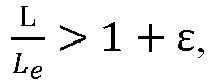


- iWaveFWd indicates a wavelet transform based on the deep neural network, and iWaveinv indicates an inverse wavelet transform based on the deep neural network.
- Optionally, for an 8-bit image, Le = 1, ε = 0.2, and δ 2 = 1.
- When the foregoing method is applied to image encoding, a gain coefficient can be obtained through calculation based on each available value N according to the foregoing method, and is embedded in the encoder and decoder.
- It can be learned that, in the solution of this embodiment of this application, in the image encoding/decoding method based on the conventional wavelet transform, the wavelet transform model obtained based on the deep neural network is used to perform the wavelet transform and the inverse wavelet transform. Because the wavelet transform model based on the deep neural network is obtained through optimization by using a large quantity of natural images by using a training method, the wavelet transform model can provide a more compact transform domain expression than the conventional wavelet transform, thereby significantly improving encoding/decoding performance. When a function of the wavelet transform model is implemented by using a GPU, the wavelet transform model has a same speed as the conventional wavelet transform. Compared with an adaptive directional wavelet that selects an optimal direction parameter through a plurality of encoding attempts, the wavelet transform model has an advantage of low time complexity and resolves a contradiction between diversity and complexity of natural image features and ideality and simplicity of artificially designed wavelet basis functions.
- Another process of image encoding based on a wavelet transform is described herein. As shown in
FIG. 10 , a wavelet transform based on a deep neural network is performed on a to-be-encoded image to obtain a wavelet coefficient; quantization processing is performed on the wavelet coefficient to obtain a quantized wavelet coefficient; and entropy encoding based on the deep neural network is performed on the quantized wavelet coefficient to obtain a compressed bitstream. For a specific process, refer toFIG. 11. FIG. 11 is a schematic flowchart of another image encoding method based on a wavelet transform according to an embodiment of this application. As shown inFIG. 11 , the method includes the following steps. - S1101. Perform N wavelet transforms on a to-be-encoded image based on a wavelet transform model to obtain a wavelet coefficient.
- The wavelet transform model is implemented based on a CNN, the wavelet transform model includes an update model and a prediction model, and parameters in the update model and the prediction model are different.
- In a feasible embodiment, as shown in
FIG. 12 , the wavelet transform model includes the prediction model and the update model, and the performing N wavelet transforms on a to-be-encoded image based on a wavelet transform model to obtain a wavelet coefficient includes:
when performing an ith wavelet transform, decomposing a subband X to obtain an odd sample component and an even sample component, where the odd sample component includes an odd row coefficient or an odd column coefficient in the subband X, and the even sample component includes an even row coefficient or an even column coefficient in the subband X; performing a prediction based on the prediction model by using the odd sample component, to obtain a predicted component, where a resolution of the predicted component is consistent with a resolution of the odd sample component; obtaining an intermediate detail component based on the predicted component and the even sample component, where each coefficient in the intermediate detail component is b times of a difference between coefficients at corresponding positions in the even sample component and the predicted component; performing an update operation based on the update model by using the intermediate detail component, to obtain an updated component, where a resolution of the updated component is consistent with a resolution of the intermediate detail component; and obtaining an intermediate approximation component based on the odd sample component and the updated component, where each coefficient in the intermediate approximation component is a times a sum of coefficients at corresponding positions in the odd sample component and the updated component. - Similarly, according to the processing method for the subband X, the intermediate approximation component is processed to obtain an approximation subband and a detail subband Ii1, and the intermediate detail image is processed to obtain a detail subband Ii2 and a detail subband Ii3.
- When i is equal to 1, the subband X is the to-be-encoded image. When i is greater than 1, the subband X is an approximation subband Pi-1, where the approximation subband Pi-1 is an approximation subband obtained by performing an (i-1)th wavelet transform, the wavelet coefficient includes detail subbands and approximation subbands obtained by performing the N wavelet transforms, and there are 3N+1 subbands in total.
- In another possible embodiment, as shown in
FIG. 13 , the wavelet transform model includes the prediction model and the update model, and performing an ith wavelet transform on the to-be-encoded image based on the wavelet transform model specifically includes:
decomposing a subband X to obtain an odd sample component and an even sample component, where the odd sample component includes an odd row coefficient or an odd column coefficient in the subband X, and the even sample component includes an even row coefficient or an even column coefficient in the subband X; performing a prediction based on the prediction model by using the odd sample component, to obtain a first predicted component; obtaining a first auxiliary updated component based on the even sample component and the first predicted component, where each coefficient in the first auxiliary updated component is a difference between coefficients at corresponding positions in the even sample component and the first predicted component; performing an update based on the update model by using the first auxiliary updated component, to obtain a first updated component; obtaining a first auxiliary predicted component based on the first updated component and the odd sample component, where each coefficient in the first auxiliary predicted component is a sum of coefficients at corresponding positions in the first updated component and the odd sample component; performing a prediction operation based on the prediction model by using the first auxiliary predicted component, to obtain a second predicted component; obtaining a second auxiliary updated component based on the first auxiliary updated component and the second predicted component, where each coefficient in the second auxiliary updated component is a difference between coefficients at corresponding positions in the first auxiliary updated component and the second predicted component; obtaining an intermediate detail component based on the second auxiliary updated component, where each coefficient in the intermediate detail component is b times a coefficient at a corresponding position in the second auxiliary updated component; obtaining a second updated component based on the update model by using the second auxiliary updated component; and obtaining an intermediate approximation component based on the first updated component and the second updated component, where each coefficient in the intermediate approximation component is a times a sum of coefficients at corresponding positions in the first updated component and the second updated component, and a and b are scaling parameters and are a part of parameters of the wavelet transform model. - According to the foregoing process of processing the subband X, the intermediate approximation component is also processed to obtain an approximation subband Pi and a detail subband Ii1, and the intermediate detail component is processed to obtain a detail subband Ii2 and a detail subband Ii3.
- When i is equal to 1, the subband X is the to-be-encoded image. When i is greater than 1, the subband X is an approximation subband Pi-1, where the approximation subband Pi-1 is an approximation subband obtained by performing an (i-1)th wavelet transform, the wavelet coefficient includes detail subbands and approximation subbands obtained by performing the N wavelet transforms, and there are 3N+1 subbands in total.
- It should be noted herein that i may start from 0. In this case, a maximum value of i is N-1. For example, when i is equal to 0, the subband X is the to-be-encoded image.
- It should be noted herein that, as can be learned from
FIG. 13 andFIG. 12 , the wavelet transform process shown inFIG. 13 includes one more prediction and update process than that shown inFIG. 12 . It can be considered thatFIG. 12 includes one prediction and update process, andFIG. 13 includes two prediction and update processes. Certainly, a quantity of updates and predictions may alternatively be another value. The quantity of updates and predictions is not limited in this application. -
FIG. 14 is a diagram of a structure of a typical prediction model. The diagram of the structure may also be considered as a diagram of a structure of the update model. InFIG. 14 , "3 × 3 × 1" indicates that a current convolution layer uses a convolution kernel of asize 3 × 3 to generate one feature map after passing through the current convolution layer, and does not use an activation function; and " tanh/3 × 3 × 16" indicates that a current convolution layer uses a convolution kernel of asize 3 × 3 to generate 16 feature maps after passing through the current convolution layer, and uses tanh as an activation function. - It should be noted herein that, in the process of performing the N wavelet transforms, parameters of the prediction model used for each wavelet transform may be different, and parameters of the prediction model used may also be different.
- In an example, parameters of the wavelet transform model (including parameters of the prediction model and parameters and scaling coefficients of the update model) are embedded in an encoder and a decoder and do not need to be transmitted.
- S1102. Quantize the wavelet coefficient to obtain a quantized wavelet coefficient.
- The quantized wavelet coefficient may be expressed as ĉ = [c/QP] · QP, where c is a wavelet coefficient before quantization, QP is a quantization step, and [·] means rounding to an integer.
- It should be noted that the quantization step QP can be obtained in a joint training process of the wavelet transform model and an entropy encoding model.
- S1103. Perform entropy encoding on the quantized wavelet coefficient based on the entropy encoding model to obtain a compressed bitstream.
- The quantized wavelet coefficient includes 3N+1 subbands, and the 3N+1 subbands include one approximation subband and 3N detail subbands.
- In a feasible embodiment, the performing entropy encoding on the quantized wavelet coefficient based on the entropy encoding model to obtain a compressed bitstream includes:
encoding the quantized wavelet coefficient based on the entropy encoding model to obtain the compressed bitstream, where the entropy encoding model is implemented based on a deep neural network. - Further, the performing entropy encoding on the quantized wavelet coefficient based on the entropy encoding model to obtain a compressed bitstream includes:
inputting an sth subband into the entropy encoding model to obtain a parameter of a cumulative probability distribution function of a to-be-encoded coefficient through calculation, where the to-be-encoded coefficient is any coefficient in the sth subband, and the sth subband is any one of the 3N+1 subbands; obtaining the cumulative probability distribution function of the to -be-encoded coefficient based on the parameter of the cumulative probability distribution function of the to-be-encoded coefficient; obtaining a probability distribution of the to-be-encoded coefficient based on the to-be-encoded coefficient and the cumulative probability distribution function of the to-be-encoded coefficient; and performing entropy encoding on the to-be-encoded coefficient based on the probability distribution of the to-be-encoded coefficient by using an arithmetic encoder, to obtain a bitstream corresponding to the to-be-encoded coefficient, where the compressed bitstream includes the bitstream corresponding to the to-be-encoded coefficient. - It should be noted herein that the 3N+1 subbands are encoded based on a subband sequence shown in
FIG. 9 , where a first subband is an approximation subband, the other subbands are detail subbands, and there is a difference between the approximation subband and the detail subband. Therefore, different encoding modes are used for the approximation subband and the detail subbands. In other words, parameters of cumulative probability distribution functions of coefficients in the first subband and non-first subbands are obtained in different manners. - In a possible embodiment, when the sth subband is the first subband of the 3N+1 subbands, the entropy encoding model is implemented based on a pixel convolutional neural network (pixelCNN), the entropy encoding model includes M convolution layers, M is an integer greater than 0, and the inputting an sth subband into the entropy encoding model to obtain a parameter of a cumulative probability distribution function of a to-be-encoded coefficient through calculation includes:
- when M is equal to 1, performing, based on a window function corresponding to a first convolution layer, a windowing operation on a convolution kernel corresponding to the first convolution layer, to obtain a first windowed convolution kernel; and performing a convolution operation on the sth subband based on the first windowed convolution kernel to obtain the parameter of the cumulative probability distribution function of the to-be-encoded coefficient; or when M is greater than 1, during an operation of a jth convolution layer, performing, based on a window function corresponding to the jth convolution layer, a windowing operation on a convolution kernel corresponding to the jth convolution layer, to obtain a second windowed convolution kernel; and performing a convolution operation on input data of the jth convolution layer based on the second windowed convolution kernel to obtain jth output data, where
- when j is equal to 1, the input data of the jth convolution layer is the first subband; when j is greater than 1 and not greater than M, the input data of the jth convolution layer is output data of a (j-1)th convolution layer; or when j is equal to M, the jth output data includes the parameter of the cumulative probability distribution function of the to-be-encoded coefficient.
- For example, assuming that an entropy encoding model is shown in
FIG. 15 , the entropy encoding model includes four convolution layers, where the first convolution layer "5 × 5 × 128/mask " indicates that the current convolution layer uses a convolution kernel of asize 5 × 5 to generate 128 feature maps after passing through the current convolution layer, and mask indicates that a windowing operation is for the convolution operation at this layer; the second convolution layer "3 × 3 × 128/relu " indicates that the current convolution layer uses a convolution kernel of asize 3 × 3 to generate 128 feature maps after passing through the current convolution layer, and uses relu as an activation function; the third convolution layer is the same as the second convolution layer, and "3 × 3 × 128/relu " indicates that the current convolution layer uses a convolution kernel of asize 3 × 3 to generate 128 feature maps after passing through the current convolution layer, and uses relu as an activation function; and thefourth convolution layer 3 × 3 × 58 indicates that the current convolution layer uses a convolution kernel of asize 3 × 3 to generate 58 feature maps after passing through the current convolution layer, and does not use an activation function. - It should be noted herein that for the entropy encoding model including a plurality of convolution layers, in the process of calculating the parameter of the cumulative probability distribution function of the to-be-encoded coefficient, a windowing operation is performed not only on the convolution kernel corresponding to the first convolution layer, but also on a convolution kernel corresponding to any one or more convolution layers in the entropy encoding model. In other words, in the process of calculating the parameter of the cumulative probability distribution function of the to-be-encoded coefficient, a windowing operation may be performed on a convolution kernel corresponding to any one or more convolution layers in the entropy encoding model.
- When the first subband is input into the entropy encoding model shown in
FIG. 15 , first, a window function shown inFIG. 16a is used to perform a windowing operation on the convolution kernel (that is, 5x5) of the first convolution layer, to obtain a windowed convolution kernel, and then a convolution operation is performed on the first subband based on the windowed convolution kernel, to obtain 128 feature maps. Then a window function shown inFIG. 16b is used to perform a windowing operation on the convolution kernel (that is, 3x3) of the second convolution layer, to obtain a windowed convolution kernel, and then a convolution operation is performed on the 128 feature maps output by the first convolution layer, to obtain 128 feature maps. It can be learned fromFIG. 16a and FIG. 16b that central values of the two window functions are different. The window function shown inFIG. 16b is used to perform a windowing operation on the convolution kernel (that is, 3x3) of the third convolution layer, to obtain a windowed convolution kernel, and then a convolution operation is performed on the 128 feature maps output by the second convolution layer, to obtain 128 feature maps. The window function shown inFIG. 16b is used to perform a windowing operation on the convolution kernel (that is, 3x3) of the fourth convolution layer, to obtain a windowed convolution kernel, and then a convolution operation is performed on the 128 feature maps output by the third convolution layer, to obtain 58 feature maps. The 58 feature maps constitute the parameter of the cumulative probability distribution function of the to-be-encoded function. - The following uses an example to describe an objective of performing a windowing operation on the convolution kernel of the convolution layer. As shown in
FIG. 16 , a large block is a subband currently being encoded, an encoding sequence of coefficients in the subband is from left to right and from top to bottom, the convolution kernel of the current convolution layer is 5x5, and the current to-be-encoded coefficient is "X" at a central position of the 5x5 grid inFIG. 17 . Based on the encoding sequence of coefficients, coefficients before "X" are encoded coefficients, and coefficients after "X" are coefficients that are not encoded. The parameter of the cumulative probability distribution function of the current to-be-encoded coefficient can be obtained only by inference from the encoded coefficients. Therefore, to perform a convolution operation only on the encoded coefficients during convolution, before the convolution operation is performed, a window function is used to perform a windowing operation on the convolution kernel. A size of the window function is the same as that of the convolution kernel. -
FIG. 18 is a schematic diagram of a principle of convolution kernel windowing. As shown inFIG. 18 , point multiplication is performed on the convolution kernel and the window function to obtain a windowed convolution kernel. In the windowed convolution kernel, in the sequence from left to right and from top to bottom, values before the central position remain unchanged, and values after the central position are all set to 0. This means when the convolution operation is performed by using the windowed convolution kernel, allowing only the coefficients before "X" that are encoded coefficients to participate in the operation, and not allowing the coefficients after "X" that are not encoded coefficients to participate in the operation, thereby ensuring correctness of decoding logic. - It should be noted herein that, when the coefficients in the first subband are encoded, because some coefficients are used as the center, there is a blank part in a region whose size is the same as that of the convolution kernel, and the blank part needs to be filled and is generally filled with "0". Then the parameter of the cumulative probability distribution function of the coefficient is obtained according to the foregoing method.
- In another possible embodiment, when the sth subband is not the first subband of the 3N+1 subbands, the entropy encoding model includes a first entropy encoding model, a second entropy encoding model, and a third entropy encoding model, both the first entropy encoding model and the second entropy encoding model are implemented based on a pixelCNN, the third entropy encoding model is implemented based on a recurrent neural network (recurrent neural network, RNN), the first entropy encoding model includes T1 convolution layers, the second entropy encoding model includes T2 convolution layers, both T1 and T2 are integers greater than 0, and the inputting an sth subband into the entropy encoding model to obtain a parameter of a cumulative probability distribution function of a to-be-encoded coefficient through calculation includes:
- inputting an (s-1)th subband into the third entropy encoding model for calculation, to obtain a first output result, where the first output result is input data of the second entropy encoding model, and the sth subband is input data of the first entropy encoding model; and
- when both T1 and T2 are equal to 1, performing a combination operation on the first output result and the sth subband based on a convolution layer C1 and a convolution layer C2 to obtain a second output result, where the second output result is the parameter of the cumulative probability distribution function of the to-be-encoded coefficient, and the convolution layer C1 and the convolution layer C2 are convolution layers in the first entropy encoding model and the second entropy encoding model respectively; or
- when T1 is greater than 1 and T2 is equal to 1, performing a combination operation on the first output result and the sth subband based on a convolution layer C1 and a convolution layer C2 to obtain a second output result, where the convolution layer C1 is a qth convolution layer in the first entropy encoding model, the convolution layer C2 is a convolution layer in the second entropy encoding model, and if q is equal to T1, the second output result is the parameter of the cumulative probability distribution function of the to-be-encoded coefficient, or if q is greater than 0 and less than T1, the second output result is input data of a (q+1)th convolution layer in the first entropy encoding model; or
- when both T1 and T2 are greater than 1, performing a combination operation on the first output result and the sth subband based on a convolution layer C1 and a convolution layer C2 to obtain a second output result, where the convolution layer C1 is a q1th convolution layer in the first entropy encoding model, the convolution layer C2 is a q2th convolution layer in the second entropy encoding model, and if q1 is equal to T1 and q2 is equal to T2, the second output result is the parameter of the cumulative probability distribution function of the to-be-encoded coefficient, or if q1 is greater than 0 and less than T1 and q2 is greater than 0 and less than T2, the second output result is input data of a (q1+1)th convolution layer in the first entropy encoding model, and an output result of the convolution layer C2 is input data of a (q2+1)th convolution layer in the second entropy encoding model.
- Specifically, when both T1 and T2 are equal to 1, that is, when both the first entropy encoding model and the second entropy encoding model include one convolution layer, as shown in
FIG. 19(a) , input data of the first entropy encoding model is the sth subband, and input data of the second entropy encoding model is output data (that is, a first output result) of the third entropy encoding model (that is, the RNN). A combination operation is performed on the sth subband and the first output data based on the convolution layer (that is, the convolution layer C1) in the first entropy encoding model and the convolution layer (that is, the convolution layer C2) in the second entropy encoding model, to obtain a second output result. In an example, a convolution layer in the first entropy encoding model is "5 × 5 × 128/mask ", and a convolution layer in the second entropy encoding model is " 5 × 5 × 128". - When T1 is greater than 1 and T2 is equal to 1, the first entropy encoding model includes a plurality of convolution layers, and the second entropy encoding model includes one convolution layer. In a possible embodiment, a combination operation may be performed based on any convolution layer in the first entropy encoding model and the convolution layer in the second entropy encoding model, that is, the convolution layer C1 is any convolution layer in the first entropy encoding model. For example, a combination operation is performed based on the qth convolution layer in the first entropy encoding model and the convolution layer in the second entropy encoding model. When q is equal to T1, input data of the qth convolution layer is output data of a (q-1)th convolution layer, and the second output result is the parameter of the cumulative probability distribution function of the to -be-encoded coefficient. When q is less than T1 and greater than 1, input data of the qth convolution layer is output data of the (q-1)th convolution layer, and output data of the qth convolution layer is input data of the (q+1)th convolution layer. When q is equal to 1, input data of the qth convolution layer is the sth subband, and output data of the qth convolution layer is input data of the (q+1)th convolution layer. As shown in
FIG. 19(b) , the first entropy encoding model includes four convolution layers, the second entropy encoding model includes one convolution layer, and a combination operation is performed based on the first convolution layer in the first entropy encoding model and the convolution layer in the second entropy encoding model. - When both T1 and T2 are greater than 1, that is, when both the first entropy encoding model and the second entropy encoding model include a plurality of convolution layers, a combination operation is performed based on a plurality of convolution layers in the first entropy encoding model and the second entropy encoding model. As shown in
FIG. 19(c) , both the first entropy encoding model and the second entropy encoding model include four convolution layers, a combination operation is performed based on the second convolution layer in the first entropy encoding model and the third convolution layer in the second entropy encoding model, and a combination operation is performed based on the fourth convolution layer in the first entropy encoding model and the fourth convolution layer in the second entropy encoding model. Input data of the second convolution layer in the first entropy encoding model is data obtained by performing convolution processing on the sth subband at the first convolution layer; input data of the third convolution layer in the second entropy encoding model is data obtained by performing convolution processing on the first output result at the first convolution layer and the second convolution layer; input data of the fourth convolution layer in the first entropy encoding model is output data of the third convolution layer; input data of the fourth convolution layer in the second entropy encoding model is output data of the third convolution layer; and the second output result is data obtained by performing a combination operation based on the fourth convolution layer in the first entropy encoding model and the fourth convolution layer in the second entropy encoding model. - It should be noted herein that, in the encoding process, the combination operation is implemented by the first entropy encoding model.
- It should be noted herein that the RNN used in this application includes three long short term memory (long short term memory, LSTM) layers. Parameters of the three LSTM layers are shown in Table 1, and are not described in detail herein. Certainly, the RNN used in this application may alternatively be an RNN in another form. This is not specifically limited in this application.
Table 1 LSTM layer Input convolution parameter State convolution parameter 1 3 × 3 × 1 × 32 3 × 3 × 32 × 32 2 3 × 3 × 32 × 32 3 × 3 × 32 × 32 3 3 × 3 × 32 × 1 3 × 3 × 1 × 1 - In a feasible embodiment, when a resolution of the (s-1)th subband is different from a resolution of the sth subband, the inputting an (s-1)th subband into the third entropy encoding model for calculation, to obtain a first output result includes:
performing a convolution operation on the (s-1)th subband based on the third entropy encoding model and a state variable of the third entropy encoding model to obtain a convolution result; performing upsampling on the convolution result to obtain the first output result, where a resolution of the first output result is the same as the resolution of the sth subband; and performing upsampling on a convolved state variable to obtain a sampled state variable, where a resolution of the sampled state variable is the same as the resolution of the sth subband. - For example, as shown in
FIG. 9 , when a fifth subband is encoded based on a fourth subband, because resolutions of the fourth subband and the fifth subband are different, when the first output result is obtained, upsampling needs to be performed on an output of the third entropy encoding model, so that the resolution of the first output result is consistent with a resolution of the fifth subband; in addition, upsampling is performed on a state variable of the third entropy encoding model after the convolution operation, to obtain a sampled state variable, where a resolution of the sampled state variable is the same as the resolution of the fifth subband. As shown inFIG. 20 , after a convolution operation is performed on the (s-1)th subband based on the third entropy encoding model, upsampling is performed on the convolution result, to obtain a sampled convolution result, where the sampled convolution result is the first output result, and the resolution of the first output result is the same as the resolution of the sth subband; and upsampling is performed on a convolved state variable to obtain a sampled state variable, where a resolution of the sampled state variable is the same as the resolution of the sth subband. - In a feasible embodiment, the performing a combination operation on the first output result and the sth subband based on a convolution layer C1 and a convolution layer C2 includes:
performing a windowing operation on a first convolution kernel based on a first window function to obtain a windowed first convolution kernel, where the first convolution kernel is a convolution kernel corresponding to the convolution layer C1; performing a convolution operation on first input data based on the windowed first convolution kernel to obtain a first convolution result, where when the convolution layer C1 is a first convolution layer in the first entropy encoding model, the first input data is the sth subband, or when the convolution layer C1 is a non-first convolution layer in the first entropy encoding model, the first input data is obtained by performing a convolution operation on the sth subband; inputting second input data into a second sub convolution layer and performing a convolution operation to obtain a second convolution result, where when the convolution layer C2 is a first convolution layer in the second entropy encoding model, the second input data is the first output result, or when the convolution layer C2 is a non-first convolution layer in the second entropy encoding model, the second input data is obtained by performing a convolution operation on the first output result; and performing an addition or concatenation operation on the first convolution result and the second convolution result to obtain the second output result. - In a feasible embodiment, the performing a combination operation on the first output result and the sth subband based on a convolution layer C1 and a convolution layer C2 includes:
performing a windowing operation on a first convolution kernel based on a first window function to obtain a windowed first convolution kernel, where the first convolution kernel is a convolution kernel corresponding to the convolution layer C1; performing a windowing operation on a second convolution kernel based on a second window function to obtain a windowed second convolution kernel, where the second convolution kernel is a convolution kernel corresponding to the convolution layer C2, and the first window function and the second window function are complementary to each other; performing a convolution operation on the sth subband based on the windowed first convolution kernel to obtain a first convolution result, where when the convolution layer C1 is a first convolution layer in the first entropy encoding model, the first input data is the sth subband, or when the convolution layer C1 is a non-first convolution layer in the first entropy encoding model, the first input data is obtained by performing a convolution operation on the sth subband; performing a convolution operation on the first output result based on the windowed second convolution kernel to obtain a second convolution result, where when the convolution layer C2 is a first convolution layer in the second entropy encoding model, the second input data is the first output result, or when the convolution layer C2 is a non-first convolution layer in the second entropy encoding model, the second input data is obtained by performing a convolution operation on the first output result; and performing an addition or concatenation operation on the first convolution result and the second convolution result to obtain the second output result. - As shown in
FIG. 21 , the first window function and the second window function are complementary to each other. - The parameter of the cumulative probability distribution function of the to-be-encoded coefficient is obtained according to the foregoing method, and the parameter is denoted as x. When the parameter of the cumulative probability distribution function of the to-be-encoded coefficient is 58 dimensions, the parameter of the cumulative probability distribution function that is denoted by x may be expressed as:


- The to-be-encoded coefficient is denoted as y, and a specific process of calculating the cumulative probability distribution function of the to-be-encoded coefficient y based on the parameter of the cumulative probability distribution function is as follows:


- The foregoing calculation process is denoted as cdf(y), that is, the cumulative probability distribution function of the to-be-encoded coefficient is cdf(y).
- The following describes how to calculate the probability distribution of y by using cdf(y).
- A value range of y is known, and the value range of y may be expressed as [ymin ,ymax ,QP], where ymin represents a minimum value of y, ymax represents a maximum value of y, QP represents a quantization step and represents that values of y are assigned at intervals of QP between ymin and ymax, and ymin and ymax are limited in advance in a training process. If y = y 0, a corresponding probability value is given as follows:

- Probabilities of other values may be calculated according to the same method, so that the probability distribution of the to-be-encoded coefficient can be obtained. Then based on the probability distribution of the to-be-encoded coefficient y, entropy encoding is performed on the to-be-encoded coefficient y by using an arithmetic encoder, to obtain the bitstream of the to-be-encoded coefficient.
- According to the foregoing method, a parameter of a cumulative probability distribution function of each coefficient in each subband may be obtained, then a probability distribution function of each coefficient is obtained, then a probability distribution of each coefficient is obtained, and then entropy encoding is performed on each coefficient based on the probability distribution of each coefficient by using the arithmetic encoder, to obtain a compressed bitstream.
- It should be noted herein that the entropy encoding model is not limited to being implemented by using the deep neural network described in the foregoing embodiment, but may be implemented by using another deep neural network.
- The following describes another process of image decoding based on a wavelet transform. As shown in
FIG. 22 , entropy decoding based on a deep neural network is performed on a compressed bitstream to obtain a reconstructed wavelet coefficient, then dequantization is performed on the reconstructed wavelet coefficient to obtain a dequantized wavelet coefficient, and an inverse wavelet transform based on the deep neural network is performed on the dequantized wavelet coefficient to obtain a reconstructed image. For details, refer toFIG. 23. FIG. 23 is a schematic flowchart of another image decoding method based on a wavelet transform according to an embodiment of this application. As shown inFIG. 23 , the method includes the following steps. - S2301. Perform entropy decoding on a compressed bitstream based on an entropy decoding model to obtain a reconstructed wavelet coefficient, where the entropy decoding model is implemented based on a deep neural network.
- In a feasible embodiment, the compressed bitstream includes bitstreams of 3N+1 subbands, the reconstructed wavelet coefficient includes 3N+1 reconstructed subbands, and the performing entropy decoding on a compressed bitstream based on an entropy decoding model to obtain a reconstructed wavelet coefficient includes:
inputting a reconstructed subband corresponding to an sth subband into the entropy decoding model to obtain a parameter of a cumulative probability distribution function of a to-be-decoded coefficient through calculation, where a bitstream of the to-be-decoded coefficient is a part of a bitstream of the sth subband, and the sth subband is any one of the 3N+1 subbands; obtaining the cumulative probability distribution function of the to-be-decoded coefficient based on the parameter of the cumulative probability distribution function of the to-be-decoded coefficient; obtaining a probability distribution of the to-be-decoded coefficient based on the to-be-decoded coefficient and the cumulative probability distribution function of the to-be-decoded coefficient; and performing, based on the probability distribution of the to-be-decoded coefficient, entropy decoding on the bitstream of the to-be-decoded coefficient by using an arithmetic decoder, to obtain the to-be-decoded coefficient, where the 3N+1 reconstructed subbands include the to-be-decoded coefficient. - It should be noted herein that the 3N+1 subbands are decoded based on a subband sequence shown in
FIG. 9 , where a first subband is an approximation subband, the other subbands are detail subbands, and there is a difference between the approximation subband and the detail subband. Therefore, different decoding modes are used for the approximation subband and the detail subbands. In other words, parameters of cumulative probability distribution functions of coefficients in the first subband and non-first subbands are obtained in different manners. - It should be noted herein that, when entropy decoding is performed on a bitstream of a subband, a reconstructed subband whose resolution is the same as a resolution of the subband is first created, and coefficients in the reconstructed subband are all set to 0. Every time a coefficient in the subband is decoded, a coefficient at a corresponding position in the reconstructed subband is updated to the decoded coefficient; and to decode a next coefficient, the updated reconstructed subband needs to be input into the entropy decoding model to decode the next coefficient after the coefficient. A decoding sequence of the coefficients in the subband is from left to right and from top to bottom.
- In a feasible embodiment, when the sth subband is a first subband of the 3N+1 subbands, the entropy decoding model is implemented based on a pixelCNN, the entropy decoding model includes M convolution layers, M is an integer greater than 0, and the inputting a reconstructed subband corresponding to an sth subband into the entropy decoding model to obtain a parameter of a cumulative probability distribution function of a to-be-decoded coefficient through calculation includes:
when M is equal to 1, performing, based on a window function corresponding to a first convolution layer, a windowing operation on a convolution kernel corresponding to the first convolution layer, to obtain a first windowed convolution kernel; and performing, based on the first windowed convolution kernel, a convolution operation on the reconstructed subband corresponding to the sth subband, to obtain the parameter of the cumulative probability distribution function of the to-be-decoded coefficient; or when M is greater than 1, during an operation of a jth convolution layer, performing, based on a window function corresponding to the jth convolution layer, a windowing operation on a convolution kernel corresponding to the jth convolution layer, to obtain a second windowed convolution kernel; and performing a convolution operation on input data of the jth convolution layer based on the second windowed convolution kernel to obtain jth output data, where when j is equal to 1, the input data of the jth convolution layer is a reconstructed subband corresponding to the first subband; when j is greater than 1 and not greater than M, the input data of the jth convolution layer is output data of a (j-1)th convolution layer; or when j is equal to M, the jth output data includes the parameter of the cumulative probability distribution function of the to-be-decoded coefficient. - In a feasible embodiment, when the sth subband is not a first subband of the 3N+1 subbands, the entropy decoding model includes a first entropy decoding model, a second entropy decoding model, and a third entropy decoding model, both the first entropy decoding model and the third entropy decoding model are implemented based on a pixel convolutional neural network, the third entropy decoding model is implemented based on a recurrent neural network (RNN), the first entropy decoding model includes T1 convolution layers, the second entropy decoding model includes T2 convolution layers, both T1 and T2 are integers greater than 0, and the inputting a reconstructed subband corresponding to an sth subband into the entropy decoding model to obtain a parameter of a cumulative probability distribution function of a to-be-decoded coefficient through calculation includes:
- inputting a reconstructed subband corresponding to an (s-1)th subband into the third entropy decoding model for calculation, to obtain a first output result, where the reconstructed subband corresponding to the (s-1)th subband is obtained by performing entropy decoding on a bitstream of the (s-1)th subband, the first output result is input data of the second entropy decoding model, and the reconstructed subband corresponding to the sth subband is input data of the first entropy decoding model; and
- when both T1 and T2 are equal to 1, performing, based on a convolution layer C1 and a convolution layer C2, a combination operation on the first output result and the reconstructed subband corresponding to the sth subband, to obtain a second output result, where the second output result is the parameter of the cumulative probability distribution function of the to-be-decoded coefficient, and the convolution layer C1 and the convolution layer C2 are convolution layers in the first entropy decoding model and the second entropy decoding model respectively; or
- when T1 is greater than 1 and T2 is equal to 1, performing, based on a convolution layer C1 and a convolution layer C2, a combination operation on the first output result and the reconstructed subband corresponding to the sth subband, to obtain a second output result, where the convolution layer C1 is a qth convolution layer in the first entropy decoding model, the convolution layer C2 is a convolution layer in the second entropy decoding model, and if q is equal to T1, the second output result is the parameter of the cumulative probability distribution function of the to-be-decoded coefficient, or if q is greater than 0 and less than T1, the second output result is input data of a (q+1)th convolution layer in the first entropy decoding model; or
- when both T1 and T2 are greater than 1, performing, based on a convolution layer C1 and a convolution layer C2, a combination operation on the first output result and the reconstructed subband corresponding to the sth subband, to obtain a second output result, where the convolution layer C1 is a q1th convolution layer in the first entropy decoding model, the convolution layer C2 is a q2th convolution layer in the second entropy decoding model, and if q1 is equal to T1 and q2 is equal to T2, the second output result is the parameter of the cumulative probability distribution function of the to-be-decoded coefficient, or if q1 is greater than 0 and less than T1 and q2 is greater than 0 and less than T2, the second output result is input data of a (q1+1)th convolution layer in the first entropy decoding model, and an output result of the convolution layer C2 is input data of a (q2+1)th convolution layer in the second entropy decoding model.
- It should be noted herein that, for a specific process of inputting the reconstructed subband corresponding to the sth subband into the entropy decoding model to obtain the parameter of the cumulative probability distribution function of the to-be-decoded coefficient through calculation, refer to related description of inputting the sth subband into the entropy decoding model to obtain the parameter of the cumulative probability distribution function of the to-be-decoded coefficient through calculation in step S1103. Details are not described herein again.
- In a feasible embodiment, when a resolution of the reconstructed subband corresponding to the (s-1)th subband is different from a resolution of the reconstructed subband corresponding to the sth subband, the inputting a reconstructed subband corresponding to an (s-1)th subband into the third entropy decoding model for calculation, to obtain a first output result, and the method further includes:
performing, based on the third entropy decoding model and a state variable of the third entropy decoding model, a convolution operation on the reconstructed subband corresponding to the (s-1)th subband, to obtain a convolution result; performing upsampling on the convolution result to obtain the first output result, where a resolution of the first output result is the same as the resolution of the reconstructed subband corresponding to the sth subband; and performing upsampling on a convolved state variable based on the third entropy decoding model to obtain a sampled state variable, where a resolution of the sampled state variable is the same as the resolution of the sth subband. - It should be noted herein that, for a specific process of inputting the reconstructed subband corresponding to the (s-1)th subband into the third entropy decoding model for calculation, to obtain the first output result, refer to related descriptions in step S1103. Details are not described herein again.
- In a feasible embodiment, the performing, based on a convolution layer C1 and a convolution layer C2, a combination operation on the first output result and the reconstructed subband corresponding to the sth subband, to obtain a second output result includes:
performing a windowing operation on a first convolution kernel based on a first window function to obtain a windowed first convolution kernel, where the first convolution kernel is a convolution kernel corresponding to the convolution layer C1; performing a convolution operation on first input data based on the windowed first convolution kernel to obtain a first convolution result, where when the convolution layer C1 is a first convolution layer in the first entropy decoding model, the first input data is the reconstructed subband corresponding to the sth subband, or when the convolution layer C1 is a non-first convolution layer in the first entropy decoding model, the first input data is obtained by performing a convolution operation on the reconstructed subband corresponding to the sth subband; inputting second input data into a second sub convolution layer and performing a convolution operation to obtain a second convolution result, where when the convolution layer C2 is a first convolution layer in the second decoding/encoding model, the second input data is the first output result, or when the convolution layer C2 is a non-first convolution layer in the second entropy decoding model, the second input data is obtained by performing a convolution operation on the first output result; and performing an addition or concatenation operation on the first convolution result and the second convolution result to obtain the second output result. - In a feasible embodiment, the performing, based on a convolution layer C1 and a convolution layer C2, a combination operation on the first output result and the reconstructed subband corresponding to the sth subband, to obtain a second output result includes:
- performing a windowing operation on a first convolution kernel based on a first window function to obtain a windowed first convolution kernel, where the first convolution kernel is a convolution kernel corresponding to the convolution layer C1; performing a windowing operation on a second convolution kernel based on a second window function to obtain a windowed second convolution kernel, where the second convolution kernel is a convolution kernel corresponding to the convolution layer C2, and the first window function and the second window function are complementary to each other;
- performing a convolution operation on first input data based on the windowed first convolution kernel to obtain a first convolution result, where when the convolution layer C1 is a first convolution layer in the first entropy decoding model, the first input data is the reconstructed subband corresponding to the sth subband, or when the convolution layer C1 is a non-first convolution layer in the first entropy decoding model, the first input data is obtained by performing a convolution operation on the reconstructed subband corresponding to the sth subband; performing a convolution operation on second input data based on the windowed second convolution kernel to obtain a second convolution result, where when the convolution layer C2 is a first convolution layer in the second decoding/encoding model, the second input data is the first output result, or when the convolution layer C2 is a non-first convolution layer in the second entropy decoding model, the second input data is obtained by performing a convolution operation on the first output result; and performing an addition or concatenation operation on the first convolution result and the second convolution result to obtain the second output result.
- It should be noted herein that, for a specific process of performing, based on the convolution layer C1 and the convolution layer C2, the combination operation on the first output result and the reconstructed subband corresponding to the sth subband, refer to related descriptions in step S1103. Details are not described herein again.
- S2302. Dequantize the reconstructed wavelet coefficient to obtain a dequantized wavelet coefficient.
- The wavelet coefficient obtained through entropy decoding (that is, the reconstructed wavelet coefficient) may be denoted as ĉ, and the dequantized wavelet coefficient is denoted as c̃. A dequantization process may be expressed as follows:

- S2303. Perform N inverse wavelet transforms on the dequantized wavelet coefficient based on a wavelet transform model to obtain a reconstructed image, where N is an integer greater than 0.
- The wavelet transform model is implemented based on a CNN.
- Specifically, the dequantized wavelet coefficient includes 3N+1 subbands, and the 3N+1 subbands include one approximation subband and 3N detail subbands; and the performing N inverse wavelet transforms on the dequantized wavelet coefficient based on a wavelet transform model to obtain a reconstructed image includes:
- when performing a tth inverse wavelet transform, updating and predicting an approximation subband PN+1-t and a detail subband 1(N+1-t)1, to obtain a first processed subband and a second processed subband, and obtaining an intermediate approximation component based on the first processed subband and the second processed subband, where an odd column coefficient or an odd row coefficient of the intermediate approximation component comes from the first processed subband, and an even column coefficient or an even row coefficient of the intermediate approximation component comes from the second processed subband; updating and predicting a detail subband I(N+1-t)2 and a detail subband I(N+1-t)3 to obtain a third processed subband and a fourth processed subband, and obtaining an intermediate detail component based on the third processed subband and the fourth processed subband, where an odd column coefficient or an even row coefficient of the intermediate detail component comes from the third processed subband, and an even column coefficient or an even row coefficient of the intermediate detail component comes from the fourth processed subband; and updating and predicting the intermediate detail component and the intermediate approximation component to obtain a fifth processed subband and a sixth processed subband, and obtaining an approximation subband Pt-1 based on the fifth processed subband and the sixth processed subband, where an odd row coefficient or an odd column coefficient of the approximation subband Pt-1 comes from the fifth processed subband, and an even row coefficient or an even column coefficient of the approximation subband Pt-1 comes from the sixth processed subband, where
- resolutions of the detail subband I(N+1-t)1, the detail subband I(N+1-t)2, and the detail subband I(N+1-t)3 are the same as a resolution of the approximation subband PN+1-t, and when the tth inverse wavelet transform is a last wavelet transform, the approximation subband Pt-1 is the reconstructed image.
- Specifically, the wavelet transform model includes an update model and a prediction model. As shown in
FIG. 24 , when the tth inverse wavelet transform is performed, a first scaled component is obtained based on the approximation subband PN+1-t, where each coefficient in the first scaled component is 1/a of a coefficient at a corresponding position in the approximation subband PN+1-t. A second scaled component is obtained based on the detail subband I(N+1-t)1, where each coefficient in the second scaled component is 1/b of a coefficient at a corresponding position in the detail subband, and an update is performed based on the update model by using the second scaled component, to obtain an updated component. A first processed component (that is, an odd sample component) is obtained based on the updated component and the first scaled component, where each coefficient in the first processed component is a difference between coefficients at corresponding positions in the first scaled component and the updated component. A prediction is performed based on the prediction model by using the first processed component, to obtain a predicted component. A second processed component (that is, an even sample component) is obtained based on the second scaled component and the predicted component, where each coefficient in the second processed component is a sum of coefficients at corresponding positions in the second scaled component and the predicted component. An intermediate approximation component is obtained based on the first processed component and the second processed component, where an odd row coefficient or an odd column coefficient of the intermediate approximation component comes from the first processed component, and an even row coefficient or an even column coefficient of the intermediate approximation component comes from the second processed component. In other words, the odd row coefficient or the odd column coefficient in the intermediate approximation component comes from a part or an entirety of the first processed component, and the even row coefficient or the even column coefficient in the intermediate approximation component comes from a part or an entirety of the second processed component. - According to the foregoing method, the detail subband I(N+1-t)2 and the detail subband I(N+1-t)3 are updated and predicted to obtain a third processed component and a fourth processed component, and an intermediate detail component is obtained based on the third processed component and the fourth processed component, where an odd row coefficient or an odd column coefficient of the intermediate detail component comes from the third processed component, and an even row coefficient or an even column coefficient of the intermediate detail component comes from the fourth processed component. In other words, the odd row coefficient or the odd column coefficient in the intermediate detail component is a part or an entirety of the third processed component, and the even row coefficient or the even column coefficient in the intermediate detail component is a part or an entirety of the fourth processed component.
- According to the foregoing method, the intermediate approximation component and the intermediate detail component are updated and predicted to obtain a fifth processed component and a sixth processed component, and an approximation subband PN-t is obtained based on the fifth processed component and the sixth processed component, where an odd column coefficient or an odd row coefficient of the approximation subband PN-t comes from the fifth processed component, and an even column coefficient or an even row coefficient of the approximation subband PN-t comes from the sixth processed component. In other words, the odd column coefficient or the odd row coefficient in the approximation subband PN-t is a part or an entirety of the fifth processed component, and the even column coefficient or the even row coefficient in the approximation subband PN-t is a part or an entirety of the sixth processed component.
- In another specific embodiment, the wavelet transform model includes an update model and a prediction model. As shown in
FIG. 25 , when the tth inverse wavelet transform is performed, a first scaled component is obtained based on the approximation subband PN+1-t, and a second scaled component is obtained based on the detail subband I(N+1-t)1, where each coefficient in the first scaled component is 1/a of a coefficient at a corresponding position in the approximation subband PN+1-t, and each coefficient in the second scaled component is 1/b of a coefficient at a corresponding position in the detail subband I(N+1-t)1. An update is performed based on the update model by using the second scaled component, to obtain a first updated component. An auxiliary predicted component is obtained based on the first updated component and the first scaled component, where each coefficient in the auxiliary predicted component is a difference between coefficients at corresponding positions in the first scaled component and the first updated component. A prediction is performed based on the prediction model by using the auxiliary predicted component, to obtain a first predicted component. An auxiliary updated component is obtained based on the second scaled component and the first predicted component, where each coefficient in the auxiliary updated component is a sum of coefficients at corresponding positions in the second scaled component and the first predicted component. An update is performed based on the update model by using the auxiliary updated component, to obtain a second updated component, and a first processed component (that is, an odd sample component) is obtained based on the auxiliary predicted component and the second updated component, where each coefficient in the first processed component is a difference between coefficients at corresponding positions in the first predicted component and the second updated component. A prediction is performed based on the prediction model by using the first processed component, to obtain a second predicted component. A second processed component (that is, an even sample component) is obtained based on the second predicted component and the auxiliary updated component, where each coefficient in the second processed component is a sum of coefficients at corresponding positions in the second predicted component and the auxiliary updated component. - An intermediate approximation component is obtained based on the first processed component and the second processed component, where an odd row coefficient or an odd column coefficient of the intermediate approximation component comes from the first processed component, and an even row coefficient or an even column coefficient of the intermediate approximation component comes from the second processed component. In other words, the odd row coefficient or the odd column coefficient in the intermediate approximation component comes from a part or an entirety of the first processed component, and the even row coefficient or the even column coefficient in the intermediate approximation component comes from a part or an entirety of the second processed component.
- According to the foregoing method, the detail subband I(N+1-t)2 and the detail subband I(N+1-t)3 are updated and predicted to obtain a third processed component and a fourth processed component, and an intermediate detail component is obtained based on the third processed component and the fourth processed component, where an odd row coefficient or an odd column coefficient of the intermediate detail component comes from the third processed component, and an even row coefficient or an even column coefficient of the intermediate detail component comes from the fourth processed component. In other words, the odd row coefficient or the odd column coefficient in the intermediate detail component is a part or an entirety of the third processed component, and the even row coefficient or the even column coefficient in the intermediate detail component is a part or an entirety of the fourth processed component.
- According to the foregoing method, the intermediate approximation component and the intermediate detail component are updated and predicted to obtain a fifth processed component and a sixth processed component, and an approximation subband PN-t is obtained based on the fifth processed component and the sixth processed component, where an odd column coefficient or an odd row coefficient of the approximation subband PN-t comes from the fifth processed component, and an even column coefficient or an even row coefficient of the approximation subband PN-t comes from the sixth processed component. In other words, the odd column coefficient or the odd row coefficient in the approximation subband PN-t is a part or an entirety of the fifth processed component, and the even column coefficient or the even row coefficient in the approximation subband PN-t is a part or an entirety of the sixth processed component.
- When t is equal to N, the approximation subband PN-t is the reconstructed image.
- It should be noted herein that t may further start from 0. In this case, a maximum value of t is N-1. For example, when t is equal to N-1, the approximation subband PN-t is the reconstructed image.
- It should be noted herein that, as can be learned from
FIG. 24 andFIG. 25 , the inverse wavelet transform process shown inFIG. 25 includes one more prediction and update process than that shown inFIG. 24 . It can be considered thatFIG. 24 includes one prediction and update process, andFIG. 25 includes two prediction and update processes. Certainly, a quantity of updates and predictions may alternatively be another value. The quantity of updates and predictions is not limited in this application. - It should be noted herein that, in the process of performing the N inverse wavelet transforms, parameters of the prediction model used for each inverse wavelet transform may be different, and parameters of the prediction model used may also be different.
- S2304. Perform post-processing on the reconstructed image based on a post-processing model to obtain a processed reconstructed image.
- The post-processing model is implemented based on the deep neural network.
- A purpose of the post-processing based on the deep neural network is to improve quality of the reconstructed image. Specifically, the reconstructed image is input into the post-processing model implemented based on the deep neural network, and an output of the post-processing model is the processed reconstructed image, that is, an image whose quality is improved.
FIG. 26 is a schematic diagram of a structure of a typical post-processing model. InFIG. 26 , "3 × 3 × 16" indicates that a current convolution layer uses a 3 × 3 convolution kernel to generate 16 feature maps, and does not use an activation function; and "3 × 3 × 16/relu " indicates that a current convolution layer uses a 3 × 3 convolution kernel to generate 16 feature maps, and uses an activation function relu. - It should be noted herein that the post-processing model shown in
FIG. 26 is merely an example. The post-processing model may alternatively be implemented based on a deep neural network in another form. - It should be noted herein that, in the encoding and decoding processes, the entropy encoding model and the entropy decoding model are also a same model.
- It can be learned that, in the solution of this application, in the image encoding/decoding method based on the conventional wavelet transform, the wavelet transform model obtained based on the deep neural network is used to perform the wavelet transform and the inverse wavelet transform. Because the wavelet transform model based on the deep neural network is obtained through optimization by using a large quantity of natural images by using a training method, the wavelet transform model can provide a more compact transform domain expression than the conventional wavelet transform, thereby significantly improving encoding/decoding performance. When a function of the wavelet transform model is implemented by using a GPU, the wavelet transform model has a same speed as the conventional wavelet transform. Compared with an adaptive directional wavelet that selects an optimal direction parameter through a plurality of encoding attempts, the wavelet transform model has an advantage of low time complexity and resolves a contradiction between diversity and complexity of natural image features and ideality and simplicity of artificially designed wavelet basis functions. In addition, because the entropy encoding/decoding model and the post-processing model based on the deep neural network are used, encoding/decoding performance is further improved.
-
FIG. 27 is a schematic diagram of a structure of an image encoding apparatus based on a wavelet transform according to an embodiment of the present invention. As shown inFIG. 27 , theimage encoding apparatus 2700 includes: - a
transform module 2701, configured to perform N wavelet transforms on a to-be-encoded image based on a wavelet transform model to obtain a wavelet coefficient, where the wavelet transform model is implemented based on a convolutional neural network (CNN), and N is an integer greater than 0; - a
quantization module 2702, configured to quantize the wavelet coefficient to obtain a quantized wavelet coefficient; and - an
entropy encoding module 2703, configured to perform entropy encoding on the quantized wavelet coefficient to obtain a compressed bitstream. - In a feasible embodiment, the
transform module 2701 is specifically configured to: - when performing an ith wavelet transform, decompose a subband X to obtain an odd sample component and an even sample component, where the odd sample component includes an odd row coefficient or an odd column coefficient in the subband X, and the even sample component includes an even row coefficient or an even column coefficient in the subband X;
- perform an update operation and a prediction operation on the even sample component and the odd sample component to obtain an intermediate approximation component and an intermediate detail component;
- decompose the intermediate approximation component to obtain a first sample component and a second sample component, where the first sample component includes an odd column coefficient or an odd row coefficient of the intermediate approximation component, and the second sample component includes an even column coefficient or an even row coefficient of the intermediate approximation component;
- decompose the intermediate detail component to obtain a third sample component and a fourth sample component, where the third sample component includes an odd row coefficient or an odd row coefficient of the intermediate detail component, and the fourth sample component includes an even column coefficient or an even row coefficient of the intermediate detail component;
- perform the update operation and the prediction operation on the first sample component and the second sample component to obtain an approximation subband Pi and a detail subband Ii1; and perform the update operation and the prediction operation on the third sample component and the fourth sample component to obtain a detail subband Ii2 and a detail subband Ii3, where
- the wavelet coefficient includes the approximation subband Pi, the detail subband Ii1, the detail subband Ii2, and the detail subband Ii3; and when the ith wavelet transform is a first wavelet transform, the subband X is the to-be-encoded image; or when the ith wavelet transform is not a first wavelet transform, the subband X is an approximation subband Pi-1, and the approximation subband Pi-1 is an approximation subband obtained by performing an (i-1)th wavelet transform.
- In a feasible embodiment, the prediction operation is implemented based on the CNN; the update operation is implemented based on the CNN; or both the prediction operation and the update operation are implemented based on the CNN.
- In a feasible embodiment, the
entropy encoding module 2703 is specifically configured to:
encode the quantized wavelet coefficient based on an entropy encoding model to obtain the compressed bitstream, where the entropy encoding model is implemented based on a deep neural network. - In a feasible embodiment, the wavelet coefficient includes 3N+1 subbands, and the
entropy encoding module 2703 is specifically configured to:
input an sth subband into the entropy encoding model to obtain a parameter of a cumulative probability distribution function of a to-be-encoded coefficient through calculation, where the to-be-encoded coefficient is any coefficient in the sth subband, and the sth subband is any one of the 3N+1 subbands; obtain the cumulative probability distribution function based on the parameter of the cumulative probability distribution function of the to -be-encoded coefficient; obtain a probability distribution of the to-be-encoded coefficient based on the to-be-encoded coefficient and the cumulative probability distribution function of the to-be-encoded coefficient; and perform entropy encoding on the to-be-encoded coefficient based on the probability distribution of the to-be-encoded coefficient by using an arithmetic encoder, to obtain a bitstream corresponding to the to-be-encoded coefficient, where the compressed bitstream includes the bitstream corresponding to the to-be-encoded coefficient. - In a feasible embodiment, when the sth subband is a first subband of the 3N+1 subbands, the entropy encoding model is implemented based on a pixel convolutional neural network (pixelCNN), the entropy encoding model includes M convolution layers, M is an integer greater than 0, and when inputting the sth subband into the entropy encoding model to obtain the parameter of the cumulative probability distribution function of the to-be-encoded coefficient through calculation, the
entropy encoding module 2703 is specifically configured to: - when M is equal to 1, perform, based on a window function corresponding to a first convolution layer, a windowing operation on a convolution kernel corresponding to the first convolution layer, to obtain a first windowed convolution kernel; and perform a convolution operation on the sth subband based on the first windowed convolution kernel to obtain the parameter of the cumulative probability distribution function of the to-be-encoded coefficient; or
- when M is greater than 1, during an operation of a jth convolution layer, perform, based on a window function corresponding to the jth convolution layer, a windowing operation on a convolution kernel corresponding to the jth convolution layer, to obtain a second windowed convolution kernel; and perform a convolution operation on input data of the jth convolution layer based on the second windowed convolution kernel to obtain jth output data, where
- when j is equal to 1, the input data of the jth convolution layer is the first subband; when j is greater than 1 and not greater than M, the input data of the jth convolution layer is output data of a (j-1)th convolution layer; or when j is equal to M, the jth output data includes the parameter of the cumulative probability distribution function of the to-be-encoded coefficient.
- In a feasible embodiment, when the sth subband is not a first subband of the 3N+1 subbands, the entropy encoding model includes a first entropy encoding model, a second entropy encoding model, and a third entropy encoding model, both the first entropy encoding model and the second entropy encoding model are implemented based on a pixel convolutional neural network, the third entropy encoding model is implemented based on an RNN, the first entropy encoding model includes T1 convolution layers, the second entropy encoding model includes T2 convolution layers, both T1 and T2 are integers greater than 0, and when inputting the sth subband into the entropy encoding model to obtain the parameter of the cumulative probability distribution function of the to-be-encoded coefficient through calculation, the
entropy encoding module 2703 is specifically configured to: - input an (s-1)th subband into the third entropy encoding model for calculation, to obtain a first output result, where the first output result is input data of the second entropy encoding model, and the sth subband is input data of the first entropy encoding model; and
- when both T1 and T2 are equal to 1, perform a combination operation on the first output result and the sth subband based on a convolution layer C1 and a convolution layer C2 to obtain a second output result, where the second output result is the parameter of the cumulative probability distribution function of the to-be-encoded coefficient, and the convolution layer C1 and the convolution layer C2 are convolution layers in the first entropy encoding model and the second entropy encoding model respectively; or
- when T1 is greater than 1 and T2 is equal to 1, perform a combination operation on the first output result and the sth subband based on a convolution layer C1 and a convolution layer C2 to obtain a second output result, where the convolution layer C1 is a qth convolution layer in the first entropy encoding model, the convolution layer C2 is a convolution layer in the second entropy encoding model, and if q is equal to T1, the second output result is the parameter of the cumulative probability distribution function of the to-be-encoded coefficient, or if q is greater than 0 and less than T1, the second output result is input data of a (q+1)th convolution layer in the first entropy encoding model; or
- when both T1 and T2 are greater than 1, perform a combination operation on the first output result and the sth subband based on a convolution layer C1 and a convolution layer C2 to obtain a second output result, where the convolution layer C1 is a q1th convolution layer in the first entropy encoding model, the convolution layer C2 is a q2th convolution layer in the second entropy encoding model, and if q1 is equal to T1 and q2 is equal to T2, the second output result is the parameter of the cumulative probability distribution function of the to-be-encoded coefficient, or if q1 is greater than 0 and less than T1 and q2 is greater than 0 and less than T2, the second output result is input data of a (q1+1)th convolution layer in the first entropy encoding model, and an output result of the convolution layer C2 is input data of a (q2+1)th convolution layer in the second entropy encoding model.
- In a feasible embodiment, when a resolution of the (s-1)th subband is different from a resolution of the sth subband, when inputting the (s-1)th subband into the third entropy encoding model for calculation, to obtain the first output result, the
entropy encoding module 2703 is specifically configured to: - perform a convolution operation on the (s-1)th subband based on the third entropy encoding model and a state variable of the third entropy encoding model to obtain a convolution result; and
- perform upsampling on the convolution result to obtain the first output result, where a resolution of the first output result is the same as the resolution of the sth subband; and
- after performing upsampling on the convolution result to obtain the first output result, the
entropy encoding module 2703 is further configured to: perform upsampling on a convolved state variable to obtain a sampled state variable, where a resolution of the sampled state variable is the same as the resolution of the sth subband. - In a feasible embodiment, when performing the combination operation on the first output result and the sth subband based on the convolution layer C1 and the convolution layer C2, the
entropy encoding module 2703 is specifically configured to: - perform a windowing operation on a first convolution kernel based on a first window function to obtain a windowed first convolution kernel, where the first convolution kernel is a convolution kernel corresponding to the convolution layer C1;
- perform a convolution operation on first input data based on the windowed first convolution kernel to obtain a first convolution result, where when the convolution layer C1 is a first convolution layer in the first entropy encoding model, the first input data is the sth subband, or when the convolution layer C1 is a non-first convolution layer in the first entropy encoding model, the first input data is obtained by performing a convolution operation on the sth subband;
- input second input data into a second sub convolution layer and perform a convolution operation to obtain a second convolution result, where when the convolution layer C2 is a first convolution layer in the second entropy encoding model, the second input data is the first output result, or when the convolution layer C2 is a non-first convolution layer in the second entropy encoding model, the second input data is obtained by performing a convolution operation on the first output result; and perform an addition or concatenation operation on the first convolution result and the second convolution result to obtain the second output result.
- In a feasible embodiment, when performing the combination operation on the first output result and the sth subband based on the convolution layer C1 and the convolution layer C2 to obtain the second output result, the
entropy encoding module 2703 is specifically configured to: - perform a windowing operation on a first convolution kernel based on a first window function to obtain a windowed first convolution kernel, where the first convolution kernel is a convolution kernel corresponding to the convolution layer C1;
- perform a windowing operation on a second convolution kernel based on a second window function to obtain a windowed second convolution kernel, where the second convolution kernel is a convolution kernel corresponding to the convolution layer C2, and the first window function and the second window function are complementary to each other;
- perform a convolution operation on the sth subband based on the windowed first convolution kernel to obtain a first convolution result, where when the convolution layer C1 is a first convolution layer in the first entropy encoding model, the first input data is the sth subband, or when the convolution layer C1 is a non-first convolution layer in the first entropy encoding model, the first input data is obtained by performing a convolution operation on the sth subband;
- perform a convolution operation on the first output result based on the windowed second convolution kernel to obtain a second convolution result, where when the convolution layer C2 is a first convolution layer in the second entropy encoding model, the second input data is the first output result, or when the convolution layer C2 is a non-first convolution layer in the second entropy encoding model, the second input data is obtained by performing a convolution operation on the first output result; and perform an addition or concatenation operation on the first convolution result and the second convolution result to obtain the second output result.
- It should be noted that the foregoing units (the
transform module 2701, thequantization module 2702, and the entropy encoding module 2703) are configured to perform related steps in the foregoing method. For example, thetransform module 2701 is configured to perform related content in steps S201 and S1101, thequantization module 2702 is configured to perform related content in step S1102, and theentropy encoding module 2703 is configured to perform related content in step S1103. - In this embodiment, the
image encoding apparatus 2700 is presented in a form of a module. The "module" herein may be an application-specific integrated circuit (application-specific integrated circuit, ASIC), a processor and a memory for executing one or more software or firmware programs, an integrated logic circuit, and/or another component that may provide the foregoing functions. In addition, thetransform module 2701, thequantization module 2702, and theentropy encoding module 2703 may be implemented by animage encoding processor 3001 shown inFIG. 30 . -
FIG. 28 is a schematic diagram of a structure of an image decoding apparatus based on a wavelet transform according to an embodiment of the present invention. As shown inFIG. 28 , theimage decoding apparatus 2800 includes: - an
entropy decoding module 2801, configured to perform entropy decoding on a compressed bitstream to obtain a reconstructed wavelet coefficient; - a
dequantization module 2802, configured to dequantize the reconstructed wavelet coefficient to obtain a dequantized wavelet coefficient; and - an
inverse transform module 2803, configured to perform N inverse wavelet transforms on the dequantized wavelet coefficient based on a wavelet transform model to obtain a reconstructed image, where the wavelet transform model is implemented based on a convolutional neural network (CNN), and N is an integer greater than 0. - In a feasible embodiment, the
entropy decoding module 2801 is specifically configured to:
perform entropy decoding on the compressed bitstream based on an entropy decoding model to obtain the reconstructed wavelet coefficient, where the entropy decoding model is implemented based on a deep neural network. - In a feasible embodiment, the
entropy decoding module 2801 is specifically configured to:
input a reconstructed subband corresponding to an sth subband into the entropy decoding model to obtain a parameter of a cumulative probability distribution function of a to-be-decoded coefficient through calculation, where a bitstream of the to-be-decoded coefficient is a part of a bitstream of the sth subband, and the reconstructed subband corresponding to the sth subband is any one of the 3N+1 reconstructed subbands; obtain the cumulative probability distribution function of the to-be-decoded coefficient based on the parameter of the cumulative probability distribution function of the to-be-decoded coefficient; obtain a probability distribution of the to-be-decoded coefficient based on the to-be-decoded coefficient and the cumulative probability distribution function of the to-be-decoded coefficient; and perform, based on the probability distribution of the to-be-decoded coefficient, entropy decoding on the bitstream of the to-be-decoded coefficient by using an arithmetic decoder, to obtain the to-be-decoded coefficient, where the 3N+1 reconstructed subbands include the to-be-decoded coefficient. - In a feasible embodiment, when the sth subband is a first subband of the 3N+1 subbands, the entropy decoding model is implemented based on a pixel convolutional neural network (pixelCNN), the entropy decoding model includes M convolution layers, M is an integer greater than 0, and when inputting the reconstructed subband corresponding to the sth subband into the entropy decoding model to obtain the parameter of the cumulative probability distribution function of the to-be-decoded coefficient through calculation, the
entropy decoding module 2801 is specifically configured to: - when M is equal to 1, perform, based on a window function corresponding to a first convolution layer, a windowing operation on a convolution kernel corresponding to the first convolution layer, to obtain a first windowed convolution kernel; and
- perform, based on the first windowed convolution kernel, a convolution operation on the reconstructed subband corresponding to the sth subband, to obtain the parameter of the cumulative probability distribution function of the to-be-decoded coefficient; or
- when M is greater than 1, during an operation of a jth convolution layer, perform, based on a window function corresponding to the jth convolution layer, a windowing operation on a convolution kernel corresponding to the jth convolution layer, to obtain a second windowed convolution kernel; and
- perform a convolution operation on input data of the jth convolution layer based on the second windowed convolution kernel to obtain jth output data, where
- when j is equal to 1, the input data of the jth convolution layer is a reconstructed subband corresponding to the first subband; when j is greater than 1 and not greater than M, the input data of the jth convolution layer is output data of a (j-1)th convolution layer; or whenj is equal to M, the jth output data includes the parameter of the cumulative probability distribution function of the to-be-decoded coefficient.
- In a feasible embodiment, when the sth subband is not a first subband of the 3N+1 subbands, the entropy decoding model includes a first entropy decoding model, a second entropy decoding model, and a third entropy decoding model, both the first entropy decoding model and the third entropy decoding model are implemented based on a pixel convolutional neural network, the third entropy decoding model is implemented based on a recurrent neural network (RNN), the first entropy decoding model includes T1 convolution layers, the second entropy decoding model includes T2 convolution layers, both T1 and T2 are integers greater than 0, and when inputting the reconstructed subband corresponding to the sth subband into the entropy decoding model to obtain the parameter of the cumulative probability distribution function of the to-be-decoded coefficient through calculation, the
entropy decoding module 2801 is specifically configured to: - input a reconstructed subband corresponding to an (s-1)th subband into the third entropy decoding model for calculation, to obtain a first output result, where the reconstructed subband corresponding to the (s-1)th subband is obtained by performing entropy decoding on a bitstream of the (s-1)th subband, the first output result is input data of the second entropy decoding model, and the reconstructed subband corresponding to the sth subband is input data of the first entropy decoding model; and
- when both T1 and T2 are equal to 1, perform, based on a convolution layer C1 and a convolution layer C2, a combination operation on the first output result and the reconstructed subband corresponding to the sth subband, to obtain a second output result, where the second output result is the parameter of the cumulative probability distribution function of the to-be-decoded coefficient, and the convolution layer C1 and the convolution layer C2 are convolution layers in the first entropy decoding model and the second entropy decoding model respectively; or
- when T1 is greater than 1 and T2 is equal to 1, perform, based on a convolution layer C1 and a convolution layer C2, a combination operation on the first output result and the reconstructed subband corresponding to the sth subband, to obtain a second output result, where the convolution layer C1 is a qth convolution layer in the first entropy decoding model, the convolution layer C2 is a convolution layer in the second entropy decoding model, and if q is equal to T1, the second output result is the parameter of the cumulative probability distribution function of the to-be-decoded coefficient, or if q is greater than 0 and less than T1, the second output result is input data of a (q+1)th convolution layer in the first entropy decoding model; or
- when both T1 and T2 are greater than 1, perform, based on a convolution layer C1 and a convolution layer C2, a combination operation on the first output result and the reconstructed subband corresponding to the sth subband, to obtain a second output result, where the convolution layer C1 is a q1th convolution layer in the first entropy decoding model, the convolution layer C2 is a q2th convolution layer in the second entropy decoding model, and if q1 is equal to T1 and q2 is equal to T2, the second output result is the parameter of the cumulative probability distribution function of the to-be-decoded coefficient, or if q1 is greater than 0 and less than T1 and q2 is greater than 0 and less than T2, the second output result is input data of a (q1+1)th convolution layer in the first entropy decoding model, and an output result of the convolution layer C2 is input data of a (q2+1)th convolution layer in the second entropy decoding model.
- In a feasible embodiment, when a resolution of the reconstructed subband corresponding to the (s-1)th subband is different from a resolution of the reconstructed subband corresponding to the sth subband, when inputting the reconstructed subband corresponding to the (s-1)th subband into the third entropy decoding model for calculation, to obtain the first output result, the
entropy decoding module 2801 is specifically configured to: - perform, based on the third entropy decoding model and a state variable of the third entropy decoding model, a convolution operation on the reconstructed subband corresponding to the (s-1)th subband, to obtain a convolution result; and
- perform upsampling on the convolution result to obtain the first output result, where a resolution of the first output result is the same as the resolution of the reconstructed subband corresponding to the sth subband; and
- after performing upsampling on the convolution result to obtain the first output result, the
entropy decoding module 2801 is specifically further configured to: - perform upsampling on a convolved state variable to obtain a sampled state variable, where a resolution of the sampled state variable is the same as the resolution of the sth subband.
- In a feasible embodiment, when performing, based on the convolution layer C1 and the convolution layer C2, the combination operation on the first output result and the reconstructed subband corresponding to the sth subband, to obtain the second output result, the
entropy decoding module 2801 is specifically configured to: - perform a windowing operation on a first convolution kernel based on a first window function to obtain a windowed first convolution kernel, where the first convolution kernel is a convolution kernel corresponding to the convolution layer C1;
- perform a convolution operation on first input data based on the windowed first convolution kernel to obtain a first convolution result, where when the convolution layer C1 is a first convolution layer in the first entropy decoding model, the first input data is the reconstructed subband corresponding to the sth subband, or when the convolution layer C1 is a non-first convolution layer in the first entropy decoding model, the first input data is obtained by performing a convolution operation on the reconstructed subband corresponding to the sth subband;
- input second input data into a second sub convolution layer and perform a convolution operation to obtain a second convolution result, where when the convolution layer C2 is a first convolution layer in the second decoding/encoding model, the second input data is the first output result, or when the convolution layer C2 is a non-first convolution layer in the second entropy decoding model, the second input data is obtained by performing a convolution operation on the first output result; and
- perform an addition or concatenation operation on the first convolution result and the second convolution result to obtain the second output result.
- In a feasible embodiment, when performing, based on the convolution layer C1 and the convolution layer C2, the combination operation on the first output result and the reconstructed subband corresponding to the sth subband, to obtain the second output result, the
entropy decoding module 2801 is specifically configured to: - perform a windowing operation on a first convolution kernel based on a first window function to obtain a windowed first convolution kernel, where the first convolution kernel is a convolution kernel corresponding to the convolution layer C1;
- perform a windowing operation on a second convolution kernel based on a second window function to obtain a windowed second convolution kernel, where the second convolution kernel is a convolution kernel corresponding to the convolution layer C2, and the first window function and the second window function are complementary to each other;
- perform a convolution operation on first input data based on the windowed first convolution kernel to obtain a first convolution result, where when the convolution layer C1 is a first convolution layer in the first entropy decoding model, the first input data is the reconstructed subband corresponding to the sth subband, or when the convolution layer C1 is a non-first convolution layer in the first entropy decoding model, the first input data is obtained by performing a convolution operation on the reconstructed subband corresponding to the sth subband;
- perform a convolution operation on second input data based on the windowed second convolution kernel to obtain a second convolution result, where when the convolution layer C2 is a first convolution layer in the second decoding/encoding model, the second input data is the first output result, or when the convolution layer C2 is a non-first convolution layer in the second entropy decoding model, the second input data is obtained by performing a convolution operation on the first output result; and perform an addition or concatenation operation on the first convolution result and the second convolution result to obtain the second output result.
- In a feasible embodiment, the
inverse transform module 2803 is specifically configured to: - when performing a tth inverse wavelet transform, perform an update operation and a prediction operation on an approximation subband PN+1-t and a detail subband I(N+1-t)1 to obtain a first processed subband and a second processed subband, and obtain an intermediate approximation component based on the first processed subband and the second processed subband, where an odd column coefficient or an odd row coefficient of the intermediate approximation component comes from the first processed subband, and an even column coefficient or an even row coefficient of the intermediate approximation component comes from the second processed subband;
- perform the update operation and the prediction operation on a detail subband I(N+1--t)2 and a detail subband I(N+1-t)3 to obtain a third processed subband and a fourth processed subband, and obtain an intermediate detail component based on the third processed subband and the fourth processed subband, where an odd column coefficient or an even row coefficient of the intermediate detail component comes from the third processed subband, and an even column coefficient or an even row coefficient of the intermediate detail component comes from the fourth processed subband; and
- perform the update operation and the prediction operation on the intermediate detail component and the intermediate approximation component to obtain a fifth processed subband and a sixth processed subband, and obtain an approximation subband Pt-1 based on the fifth processed subband and the sixth processed subband, where an odd row coefficient or an odd column coefficient of the approximation subband Pt-1 comes from the fifth processed subband, and an even row coefficient or an even column coefficient of the approximation subband Pt-1 comes from the sixth processed subband, where
- resolutions of the detail subband I(N+1-t)1, the detail subband I(N+1-t)2, and the detail subband I(N+1-t)3 are the same as a resolution of the approximation subband PN+1-t, and when the tth inverse wavelet transform is a last wavelet transform, the approximation subband Pt-1 is the reconstructed image.
- In a feasible embodiment, the prediction operation is implemented based on the CNN; the update operation is implemented based on the CNN; or both the update operation and the prediction operation are implemented based on the CNN.
- In a feasible embodiment, the
image encoding apparatus 2800 further includes:
apost-processing module 2804, configured to perform post-processing on the reconstructed image based on a post-processing model to obtain a processed reconstructed image after theinverse transform module 2803 performs the N inverse wavelet transforms on the dequantized wavelet coefficient based on the wavelet transform model to obtain the reconstructed image, where the post-processing model is implemented based on a deep neural network. - It should be noted that the foregoing units (the
entropy decoding module 2801, thedequantization module 2802, theinverse transform module 2803, and the post-processing module 2804) are configured to perform related steps in the foregoing method. For example, theentropy decoding module 2801 is configured to perform related content in steps S601 and S2301, thedequantization module 2802 is configured to perform related content in step S2302, theinverse transform module 2703 is configured to perform related content in step S2303, and thepost-processing module 2804 is configured to perform related content in step S2304. - In this embodiment, the
image encoding apparatus 2800 is presented in a form of a module. The "module" herein may be an application-specific integrated circuit (application-specific integrated circuit, ASIC), a processor and a memory for executing one or more software or firmware programs, an integrated logic circuit, and/or another component that may provide the foregoing functions. In addition, theentropy decoding module 2801, thedequantization module 2802, theinverse transform module 2803, and thepost-processing module 2804 may be implemented by aprocessor 3101 of an image decoding apparatus shown inFIG. 31 . -
FIG. 29 is a schematic diagram of a structure of a training apparatus according to an embodiment of the present invention. As shown inFIG. 29 , thetraining apparatus 2900 includes: - an
initialization module 2901, configured to initialize a wavelet transform model; and - a
training module 2902, configured to: perform N wavelet transforms on a training image based on the initialized wavelet transform model to obtain 3N+1 subbands; perform inverse wavelet transforms on a first subband, a second subband, a third subband, ..., and a 3Nth subband sequentially based on the initialized wavelet transform model to obtain 3N reconstructed images; calculate a loss value based on the training image and the 3N reconstructed images, where the loss value
- It should be noted that the foregoing units (the
initialization module 2901 and the training module 2902) are configured to perform related steps in the foregoing method. - In this embodiment, the
training apparatus 2900 is presented in a form of a module. The "module" herein may be an application-specific integrated circuit (application-specific integrated circuit, ASIC), a processor and a memory for executing one or more software or firmware programs, an integrated logic circuit, and/or another component that may provide the foregoing functions. In addition, theinitialization module 2901 and thetraining module 2902 may be implemented by aprocessor 3201 of a training apparatus shown inFIG. 32 . - The
image encoding apparatus 3000 shown inFIG. 30 may be implemented by using a structure inFIG. 30 . Theimage encoding apparatus 3000 includes at least oneprocessor 3001, at least onememory 3002, and at least onecommunication interface 3003. Theprocessor 3001, thememory 3002, and thecommunication interface 3003 are connected and communicate with each other through the communication bus. - The
processor 3001 may be a general-purpose central processing unit (CPU), a microprocessor, an application-specific integrated circuit (application-specific integrated circuit, ASIC), or one or more integrated circuits for controlling program execution of the foregoing solutions. - The
communication interface 3003 is configured to communicate with another device or a communication network, such as the Ethernet, a radio access network (RAN), or a wireless local area network (Wireless Local Area Network, WLAN). - The
memory 3002 may be a read-only memory (read-only memory, ROM) or another type of static storage device that can store static information and instructions, a random access memory (random access memory, RAM) or another type of dynamic storage device that can store information and instructions, or may be an electrically erasable programmable read-only memory (Electrically Erasable Programmable Read-Only Memory, EEPROM), a compact disc read-only memory (Compact Disc Read-Only Memory, CD-ROM) or another optical disk storage, an optical disc storage (including a compressed optical disc, a laser disc, an optical disc, a digital versatile optical disc, a Blu-ray disc, or the like), a magnetic disk storage medium or another magnetic storage device, or any other medium that can be used to carry or store expected program code in a form of an instruction or a data structure and that can be accessed by a computer. Thememory 3002 is not limited thereto. The memory may exist independently, and is connected to the processor through the bus. Alternatively, the memory may be integrated with the processor. - The
memory 3002 is configured to store application program code for executing the foregoing solutions, and theprocessor 3001 controls execution. Theprocessor 3001 is configured to execute the application program code stored in thememory 3002. - The code stored in the
memory 3002 may perform the foregoing image encoding method based on a wavelet transform, for example,
performing N wavelet transforms on a to-be-encoded image based on a wavelet transform model to obtain a wavelet coefficient, where the wavelet transform model is implemented based on a convolutional neural network (CNN); quantizing the wavelet coefficient to obtain a quantized wavelet coefficient; and performing entropy encoding on the quantized wavelet coefficient to obtain a compressed bitstream. - The
image decoding apparatus 3100 shown inFIG. 31 may be implemented by using a structure inFIG. 31 . Theimage decoding apparatus 3100 includes at least oneprocessor 3101, at least onememory 3102, and at least onecommunication interface 3103. Theprocessor 3101, thememory 3102, and thecommunication interface 3103 are connected and communicate with each other through the communication bus. - The
processor 3101 may be a general-purpose central processing unit (CPU), a microprocessor, an application-specific integrated circuit (application-specific integrated circuit, ASIC), or one or more integrated circuits for controlling program execution of the foregoing solutions. - The
communication interface 3103 is configured to communicate with another device or a communication network, such as the Ethernet, a radio access network (RAN), or a wireless local area network (Wireless Local Area Network, WLAN). - The
memory 3102 may be a read-only memory (read-only memory, ROM) or another type of static storage device that can store static information and instructions, a random access memory (random access memory, RAM) or another type of dynamic storage device that can store information and instructions, or may be an electrically erasable programmable read-only memory (Electrically Erasable Programmable Read-Only Memory, EEPROM), a compact disc read-only memory (Compact Disc Read-Only Memory, CD-ROM) or another optical disk storage, an optical disc storage (including a compressed optical disc, a laser disc, an optical disc, a digital versatile optical disc, a Blu-ray disc, or the like), a magnetic disk storage medium or another magnetic storage device, or any other medium that can be used to carry or store expected program code in a form of an instruction or a data structure and that can be accessed by a computer. Thememory 3102 is not limited thereto. The memory may exist independently, and is connected to the processor through the bus. Alternatively, the memory may be integrated with the processor. - The
memory 3102 is configured to store application program code for executing the foregoing solutions, and theprocessor 3101 controls execution. Theprocessor 3101 is configured to execute the application program code stored in thememory 3102. - The code stored in the
memory 3102 may perform the foregoing image decoding method based on a wavelet transform, for example,
performing entropy decoding on a compressed bitstream to obtain a reconstructed wavelet coefficient; dequantizing the reconstructed wavelet coefficient to obtain a dequantized wavelet coefficient; and performing N inverse wavelet transforms on the dequantized wavelet coefficient based on a wavelet transform model to obtain a reconstructed image, where the wavelet transform model is implemented based on a convolutional neural network (CNN). - The
training apparatus 3200 shown inFIG. 32 may be implemented by using a structure inFIG. 32 . Thetraining apparatus 3200 includes at least oneprocessor 3201, at least onememory 3202, and at least onecommunication interface 3203. Theprocessor 3201, thememory 3202, and thecommunication interface 3203 are connected and communicate with each other through the communication bus. - The
processor 3201 may be a general-purpose CPU, a microprocessor, an ASIC, or one or more integrated circuits configured to control program execution of the foregoing solutions. - The
communication interface 3203 is configured to communicate with another device or a communication network, such as the Ethernet, a RAN, or a WLAN. - The
memory 3202 may be a ROM or another type of static storage device that can store static information and instructions, or a RAM or another type of dynamic storage device that can store information and instructions; or may be an EEPROM, a CD-ROM or another compact disc storage, an optical disc storage (including a compact disc, a laser disc, an optical disc, a digital versatile disc, a Blu-ray disc, or the like), a disk storage medium or another magnetic storage device, or any other medium that can be used to carry or store expected program code in a form of an instruction or a data structure and that can be accessed by a computer. However, thememory 3202 is not limited thereto. The memory may exist independently, and is connected to the processor through the bus. Alternatively, the memory may be integrated with the processor. - The
memory 3202 is configured to store application program code for executing the foregoing solutions, and theprocessor 3201 controls execution. Theprocessor 3201 is configured to execute the application program code stored in thememory 3202. - The code stored in the
memory 3202 may perform the foregoing method for training a wavelet transform model, for example,
initializing the wavelet transform model; performing N wavelet transforms on a training image based on the initialized wavelet transform model to obtain 3N+1 subbands; performing inverse wavelet transforms on a first subband, a second subband, a third subband, ..., and a 3Nth subband sequentially based on the initialized wavelet transform model to obtain 3N reconstructed images; calculating a loss value based on the training image and the 3N reconstructed images, where the loss value
- It should be noted that, to make the description brief, the foregoing method embodiments are expressed as a series of actions. However, a person skilled in the art should appreciate that the present invention is not limited to the described action sequence, because according to the present invention, some steps may be performed in other sequences or performed simultaneously. In addition, a person skilled in the art should also appreciate that all the embodiments described in the specification are preferred embodiments, and the related actions and modules are not necessarily mandatory to the present invention.
- In the foregoing embodiments, the description of each embodiment has respective focuses. For a part that is not described in detail in an embodiment, refer to related descriptions in other embodiments.
- In the several embodiments provided in this application, it should be understood that the disclosed apparatus may be implemented in other manners. For example, the described apparatus embodiment is merely an example. For example, division into the units is merely logical function division and may be other division in actual implementation. For example, a plurality of units or components may be combined or integrated into another system, or some features may be ignored or not performed. In addition, the displayed or discussed mutual couplings or direct couplings or communication connections may be implemented through some interfaces. In addition, the indirect couplings or communication connections between the apparatuses or units may be implemented in electrical or other forms.
- The units described as separate parts may or may not be physically separate, and parts displayed as units may or may not be physical units, may be located in one position, or may be distributed on a plurality of network units. Some or all of the units may be selected depending on actual requirements to achieve the objectives of the solutions in the embodiments.
- In addition, functional units in the embodiments of the present invention may be integrated into one processing unit, or each of the units may exist alone physically, or two or more units are integrated into one unit. The integrated unit may be implemented in a form of hardware, or may be implemented in a form of a software functional unit.
- When the integrated unit is implemented in the form of a software functional unit and sold or used as an independent product, the integrated unit may be stored in a computer-readable memory. Based on such an understanding, the technical solutions of the present invention essentially, or the part contributing to the prior art, or all or some of the technical solutions may be implemented in the form of a software product. The computer software product is stored in a storage medium and includes several instructions for instructing a computer device (which may be a personal computer, a server, or a network device) to perform all or some of the steps of the methods described in the embodiments of the present invention. The foregoing storage medium includes: any medium that can store program code, such as a USB flash drive, a read-only memory (ROM, Read-Only Memory), a random access memory (RAM, Random Access Memory), a removable hard disk, a magnetic disk, or an optical disc.
- A person of ordinary skill in the art may understand that all or some of the steps of the methods in the embodiments may be implemented by a program instructing relevant hardware. The program may be stored in a computer-readable memory. The memory may include a flash memory, a read-only memory (Read-Only Memory, ROM for short), a random access memory (Random Access Memory, RAM for short), a magnetic disk, an optical disc, and the like.
- The embodiments of the present invention are described in detail above. The principle and implementation of the present invention are described herein through specific examples. The description about the embodiments of the present invention is merely provided to help understand the method and core ideas of the present invention. In addition, a person of ordinary skill in the art can make variations and modifications to the present invention in terms of the specific implementations and application scopes according to the ideas of the present invention. Therefore, the content of this specification shall not be construed as a limit to the present invention.
Claims (42)
- An image encoding method based on a wavelet transform, comprising:performing N wavelet transforms on a to-be-encoded image based on a wavelet transform model to obtain a wavelet coefficient, wherein the wavelet transform model is implemented based on a convolutional neural network (CNN), and N is an integer greater than 0;quantizing the wavelet coefficient to obtain a quantized wavelet coefficient; andperforming entropy encoding on the quantized wavelet coefficient to obtain a compressed bitstream.
- The method according to claim 1, wherein the performing N wavelet transforms on a to-be-encoded image based on a wavelet transform model to obtain a wavelet coefficient comprises:when performing an ith wavelet transform, decomposing a subband X to obtain an odd sample component and an even sample component, wherein the odd sample component comprises an odd row coefficient or an odd column coefficient in the subband X, and the even sample component comprises an even row coefficient or an even column coefficient in the subband X;performing an update operation and a prediction operation on the even sample component and the odd sample component to obtain an intermediate approximation component and an intermediate detail component;decomposing the intermediate approximation component to obtain a first sample component and a second sample component, wherein the first sample component comprises an odd column coefficient or an odd row coefficient of the intermediate approximation component, and the second sample component comprises an even column coefficient or an even row coefficient of the intermediate approximation component;decomposing the intermediate detail component to obtain a third sample component and a fourth sample component, wherein the third sample component comprises an odd row coefficient or an odd row coefficient of the intermediate detail component, and the fourth sample component comprises an even column coefficient or an even row coefficient of the intermediate detail component;performing the update operation and the prediction operation on the first sample component and the second sample component to obtain an approximation subband Pi and a detail subband Ii1; andperforming the update operation and the prediction operation on the third sample component and the fourth sample component to obtain a detail subband Ii2 and a detail subband Ii3, whereinthe wavelet coefficient comprises the approximation subband Pi, the detail subband Ii1, the detail subband Ii2, and the detail subband Ii3; and when the ith wavelet transform is a first wavelet transform, the subband X is the to-be-encoded image; or when the ith wavelet transform is not a first wavelet transform, the subband X is an approximation subband Pi-1, and the approximation subband Pi-1 is an approximation subband obtained by performing an (i-1)th wavelet transform.
- The method according to claim 2, wherein the prediction operation is implemented based on the CNN;the update operation is implemented based on the CNN; orboth the prediction operation and the update operation are implemented based on the CNN.
- The method according to any one of claims 1 to 3, wherein the performing entropy encoding on the quantized wavelet coefficient to obtain a compressed bitstream comprises:
encoding the quantized wavelet coefficient based on an entropy encoding model to obtain the compressed bitstream, wherein the entropy encoding model is implemented based on a deep neural network. - The method according to claim 4, wherein the wavelet coefficient comprises 3N+1 subbands, and the encoding the quantized wavelet coefficient based on an entropy encoding model to obtain the compressed bitstream comprises:inputting an sth subband into the entropy encoding model to obtain a parameter of a cumulative probability distribution function of a to-be-encoded coefficient through calculation, wherein the to-be-encoded coefficient is any coefficient in the sth subband, and the sth subband is any one of the 3N+1 subbands;obtaining the cumulative probability distribution function based on the parameter of the cumulative probability distribution function of the to-be-encoded coefficient;obtaining a probability distribution of the to-be-encoded coefficient based on the to-be-encoded coefficient and the cumulative probability distribution function of the to-be-encoded coefficient; andperforming entropy encoding on the to-be-encoded coefficient based on the probability distribution of the to-be-encoded coefficient by using an arithmetic encoder, to obtain a bitstream corresponding to the to-be-encoded coefficient, wherein the compressed bitstream comprises the bitstream corresponding to the to-be-encoded coefficient.
- The method according to claim 5, wherein when the sth subband is a first subband of the 3N+1 subbands, the entropy encoding model is implemented based on a pixel convolutional neural network (pixelCNN), the entropy encoding model comprises M convolution layers, M is an integer greater than 0, and the inputting an s,h subband into the entropy encoding model to obtain a parameter of a cumulative probability distribution function of a to-be-encoded coefficient through calculation comprises:when M is equal to 1, performing, based on a window function corresponding to a first convolution layer, a windowing operation on a convolution kernel corresponding to the first convolution layer, to obtain a first windowed convolution kernel; andperforming a convolution operation on the sth subband based on the first windowed convolution kernel to obtain the parameter of the cumulative probability distribution function of the to-be-encoded coefficient; orwhen M is greater than 1, during an operation of a jth convolution layer, performing, based on a window function corresponding to the jth convolution layer, a windowing operation on a convolution kernel corresponding to the jth convolution layer, to obtain a second windowed convolution kernel; andperforming a convolution operation on input data of the jth convolution layer based on the second windowed convolution kernel to obtain jth output data, whereinwhen j is equal to 1, the input data of the jth convolution layer is the first subband; when j is greater than 1 and not greater than M, the input data of the jth convolution layer is output data of a (j-1)th convolution layer; or when j is equal to M, the jth output data comprises the parameter of the cumulative probability distribution function of the to-be-encoded coefficient.
- The method according to claim 5, wherein when the sth subband is not a first subband of the 3N+1 subbands, the entropy encoding model comprises a first entropy encoding model, a second entropy encoding model, and a third entropy encoding model, both the first entropy encoding model and the second entropy encoding model are implemented based on a pixel convolutional neural network, the third entropy encoding model is implemented based on a recurrent neural network (RNN), the first entropy encoding model comprises T1 convolution layers, the second entropy encoding model comprises T2 convolution layers, both T1 and T2 are integers greater than 0, and the inputting an sth subband into the entropy encoding model to obtain a parameter of a cumulative probability distribution function of a to-be-encoded coefficient through calculation comprises:inputting an (s-1)th subband into the third entropy encoding model for calculation, to obtain a first output result, wherein the first output result is input data of the second entropy encoding model, and the sth subband is input data of the first entropy encoding model; andwhen both T1 and T2 are equal to 1, performing a combination operation on the first output result and the sth subband based on a convolution layer C1 and a convolution layer C2 to obtain a second output result, wherein the second output result is the parameter of the cumulative probability distribution function of the to-be-encoded coefficient, and the convolution layer C1 and the convolution layer C2 are convolution layers in the first entropy encoding model and the second entropy encoding model respectively; orwhen T1 is greater than 1 and T2 is equal to 1, performing a combination operation on the first output result and the sth subband based on a convolution layer C1 and a convolution layer C2 to obtain a second output result, wherein the convolution layer C1 is a qth convolution layer in the first entropy encoding model, the convolution layer C2 is a convolution layer in the second entropy encoding model, and if q is equal to T1, the second output result is the parameter of the cumulative probability distribution function of the to-be-encoded coefficient, or if q is greater than 0 and less than T1, the second output result is input data of a (q+1)th convolution layer in the first entropy encoding model; orwhen both T1 and T2 are greater than 1, performing a combination operation on the first output result and the sth subband based on a convolution layer C1 and a convolution layer C2 to obtain a second output result, wherein the convolution layer C1 is a q1th convolution layer in the first entropy encoding model, the convolution layer C2 is a q2th convolution layer in the second entropy encoding model, and if q1 is equal to T1 and q2 is equal to T2, the second output result is the parameter of the cumulative probability distribution function of the to-be-encoded coefficient, or if q1 is greater than 0 and less than T1 and q2 is greater than 0 and less than T2, the second output result is input data of a (q1+1)th convolution layer in the first entropy encoding model, and an output result of the convolution layer C2 is input data of a (q2+1)th convolution layer in the second entropy encoding model.
- The method according to claim 7, wherein when a resolution of the (s-1)th subband is different from a resolution of the sth subband, the inputting an (s-1)th subband into the third entropy encoding model for calculation, to obtain a first output result comprises:performing a convolution operation on the (s-1)th subband based on the third entropy encoding model and a state variable of the third entropy encoding model to obtain a convolution result; andperforming upsampling on the convolution result to obtain the first output result, wherein a resolution of the first output result is the same as the resolution of the sth subband; andafter the performing upsampling on the convolution result to obtain the first output result, the method further comprises:
performing upsampling on a convolved state variable to obtain a sampled state variable, wherein a resolution of the sampled state variable is the same as the resolution of the sth subband. - The method according to claim 7 or 8, wherein the performing a combination operation on the first output result and the sth subband based on a convolution layer C1 and a convolution layer C2 comprises:performing a windowing operation on a first convolution kernel based on a first window function to obtain a windowed first convolution kernel, wherein the first convolution kernel is a convolution kernel corresponding to the convolution layer C1;performing a convolution operation on first input data based on the windowed first convolution kernel to obtain a first convolution result, wherein when the convolution layer C1 is a first convolution layer in the first entropy encoding model, the first input data is the sth subband, or when the convolution layer C1 is a non-first convolution layer in the first entropy encoding model, the first input data is obtained by performing a convolution operation on the sth subband;inputting second input data into a second sub convolution layer and performing a convolution operation to obtain a second convolution result, wherein when the convolution layer C2 is a first convolution layer in the second entropy encoding model, the second input data is the first output result, or when the convolution layer C2 is a non-first convolution layer in the second entropy encoding model, the second input data is obtained by performing a convolution operation on the first output result; andperforming an addition or concatenation operation on the first convolution result and the second convolution result to obtain the second output result.
- The method according to claim 7 or 8, wherein the performing a combination operation on the first output result and the sth subband based on a convolution layer C1 and a convolution layer C2 to obtain a second output result comprises:performing a windowing operation on a first convolution kernel based on a first window function to obtain a windowed first convolution kernel, wherein the first convolution kernel is a convolution kernel corresponding to the convolution layer C1;performing a windowing operation on a second convolution kernel based on a second window function to obtain a windowed second convolution kernel, wherein the second convolution kernel is a convolution kernel corresponding to the convolution layer C2, and the first window function and the second window function are complementary to each other;performing a convolution operation on the sth subband based on the windowed first convolution kernel to obtain a first convolution result, wherein when the convolution layer C1 is a first convolution layer in the first entropy encoding model, the first input data is the sth subband, or when the convolution layer C1 is a non-first convolution layer in the first entropy encoding model, the first input data is obtained by performing a convolution operation on the sth subband;performing a convolution operation on the first output result based on the windowed second convolution kernel to obtain a second convolution result, wherein when the convolution layer C2 is a first convolution layer in the second entropy encoding model, the second input data is the first output result, or when the convolution layer C2 is a non-first convolution layer in the second entropy encoding model, the second input data is obtained by performing a convolution operation on the first output result; andperforming an addition or concatenation operation on the first convolution result and the second convolution result to obtain the second output result.
- An image decoding method based on a wavelet transform, comprising:performing entropy decoding on a compressed bitstream to obtain a reconstructed wavelet coefficient;dequantizing the reconstructed wavelet coefficient to obtain a dequantized wavelet coefficient; andperforming N inverse wavelet transforms on the dequantized wavelet coefficient based on a wavelet transform model to obtain a reconstructed image, wherein the wavelet transform model is implemented based on a convolutional neural network (CNN), and N is an integer greater than 0.
- The method according to claim 11, wherein the performing entropy decoding on a compressed bitstream to obtain a reconstructed wavelet coefficient comprises:
performing entropy decoding on the compressed bitstream based on an entropy decoding model to obtain the reconstructed wavelet coefficient, wherein the entropy decoding model is implemented based on a deep neural network. - The method according to claim 12, wherein the compressed bitstream comprises bitstreams of 3N+1 subbands, the reconstructed wavelet coefficient comprises 3N+1 reconstructed subbands, and the performing entropy decoding on the compressed bitstream based on an entropy decoding model to obtain the reconstructed wavelet coefficient comprises:inputting a reconstructed subband corresponding to an sth subband into the entropy decoding model to obtain a parameter of a cumulative probability distribution function of a to-be-decoded coefficient through calculation, wherein a bitstream of the to-be-decoded coefficient is a part of a bitstream of the sth subband, and the reconstructed subband corresponding to the sth subband is any one of the 3N+1 reconstructed subbands;obtaining the cumulative probability distribution function of the to-be-decoded coefficient based on the parameter of the cumulative probability distribution function of the to-be-decoded coefficient;obtaining a probability distribution of the to-be-decoded coefficient based on the to-be-decoded coefficient and the cumulative probability distribution function of the to-be-decoded coefficient; andperforming, based on the probability distribution of the to-be-decoded coefficient, entropy decoding on the bitstream of the to-be-decoded coefficient by using an arithmetic decoder, to obtain the to-be-decoded coefficient, wherein the 3N+1 reconstructed subbands comprise the to-be-decoded coefficient.
- The method according to claim 13, wherein when the sth subband is a first subband of the 3N+1 subbands, the entropy decoding model is implemented based on a pixel convolutional neural network (pixelCNN), the entropy decoding model comprises M convolution layers, M is an integer greater than 0, and the inputting a reconstructed subband corresponding to an sth subband into the entropy decoding model to obtain a parameter of a cumulative probability distribution function of a to-be-decoded coefficient through calculation comprises:when M is equal to 1, performing, based on a window function corresponding to a first convolution layer, a windowing operation on a convolution kernel corresponding to the first convolution layer, to obtain a first windowed convolution kernel; andperforming, based on the first windowed convolution kernel, a convolution operation on the reconstructed subband corresponding to the sth subband, to obtain the parameter of the cumulative probability distribution function of the to-be-decoded coefficient; orwhen M is greater than 1, during an operation of a jth convolution layer, performing, based on a window function corresponding to the jth convolution layer, a windowing operation on a convolution kernel corresponding to the jth convolution layer, to obtain a second windowed convolution kernel; andperforming a convolution operation on input data of the jth convolution layer based on the second windowed convolution kernel to obtain jth output data, whereinwhen j is equal to 1, the input data of the jth convolution layer is a reconstructed subband corresponding to the first subband; when j is greater than 1 and not greater than M, the input data of the jth convolution layer is output data of a (j-1)th convolution layer; or when j is equal to M, the jth output data comprises the parameter of the cumulative probability distribution function of the to-be-decoded coefficient.
- The method according to claim 13, wherein when the sth subband is not a first subband of the 3N+1 subbands, the entropy decoding model comprises a first entropy decoding model, a second entropy decoding model, and a third entropy decoding model, both the first entropy decoding model and the third entropy decoding model are implemented based on a pixel convolutional neural network, the third entropy decoding model is implemented based on a recurrent neural network (RNN), the first entropy decoding model comprises T1 convolution layers, the second entropy decoding model comprises T2 convolution layers, both T1 and T2 are integers greater than 0, and the inputting a reconstructed subband corresponding to an sth subband into the entropy decoding model to obtain a parameter of a cumulative probability distribution function of a to-be-decoded coefficient through calculation comprises:inputting a reconstructed subband corresponding to an (s-1)th subband into the third entropy decoding model for calculation, to obtain a first output result, wherein the reconstructed subband corresponding to the (s-1)th subband is obtained by performing entropy decoding on a bitstream of the (s-1)th subband, the first output result is input data of the second entropy decoding model, and the reconstructed subband corresponding to the sth subband is input data of the first entropy decoding model; andwhen both T1 and T2 are equal to 1, performing, based on a convolution layer C1 and a convolution layer C2, a combination operation on the first output result and the reconstructed subband corresponding to the sth subband, to obtain a second output result, wherein the second output result is the parameter of the cumulative probability distribution function of the to-be-decoded coefficient, and the convolution layer C1 and the convolution layer C2 are convolution layers in the first entropy decoding model and the second entropy decoding model respectively; orwhen T1 is greater than 1 and T2 is equal to 1, performing, based on a convolution layer C1 and a convolution layer C2, a combination operation on the first output result and the reconstructed subband corresponding to the sth subband, to obtain a second output result, wherein the convolution layer C1 is a qth convolution layer in the first entropy decoding model, the convolution layer C2 is a convolution layer in the second entropy decoding model, and if q is equal to T1, the second output result is the parameter of the cumulative probability distribution function of the to-be-decoded coefficient, or if q is greater than 0 and less than T1, the second output result is input data of a (q+1)th convolution layer in the first entropy decoding model; orwhen both T1 and T2 are greater than 1, performing, based on a convolution layer C1 and a convolution layer C2, a combination operation on the first output result and the reconstructed subband corresponding to the sth subband, to obtain a second output result, wherein the convolution layer C1 is a q1th convolution layer in the first entropy decoding model, the convolution layer C2 is a q2th convolution layer in the second entropy decoding model, and if q1 is equal to T1 and q2 is equal to T2, the second output result is the parameter of the cumulative probability distribution function of the to-be-decoded coefficient, or if q1 is greater than 0 and less than T1 and q2 is greater than 0 and less than T2, the second output result is input data of a (q1+1)th convolution layer in the first entropy decoding model, and an output result of the convolution layer C2 is input data of a (q2+1)th convolution layer in the second entropy decoding model.
- The method according to claim 15, wherein when a resolution of the reconstructed subband corresponding to the (s-1)th subband is different from a resolution of the reconstructed subband corresponding to the sth subband, the inputting a reconstructed subband corresponding to an (s-1)th subband into the third entropy decoding model for calculation, to obtain a first output result comprises:performing, based on the third entropy decoding model and a state variable of the third entropy decoding model, a convolution operation on the reconstructed subband corresponding to the (s-1)th subband, to obtain a convolution result; andperforming upsampling on the convolution result to obtain the first output result, wherein a resolution of the first output result is the same as the resolution of the reconstructed subband corresponding to the sth subband; andafter the performing upsampling on the convolution result to obtain the first output result, the method further comprises:performing upsampling on a convolved state variable to obtain a sampled state variable, wherein a resolution of the sampled state variable is the same as the resolution of the sth subband.
- The method according to claim 15 or 16, wherein the performing, based on a convolution layer C1 and a convolution layer C2, a combination operation on the first output result and the reconstructed subband corresponding to the sth subband, to obtain a second output result comprises:performing a windowing operation on a first convolution kernel based on a first window function to obtain a windowed first convolution kernel, wherein the first convolution kernel is a convolution kernel corresponding to the convolution layer C1;performing a convolution operation on first input data based on the windowed first convolution kernel to obtain a first convolution result, wherein when the convolution layer C1 is a first convolution layer in the first entropy decoding model, the first input data is the reconstructed subband corresponding to the sth subband, or when the convolution layer C1 is a non-first convolution layer in the first entropy decoding model, the first input data is obtained by performing a convolution operation on the reconstructed subband corresponding to the sth subband;inputting second input data into a second sub convolution layer and performing a convolution operation to obtain a second convolution result, wherein when the convolution layer C2 is a first convolution layer in the second decoding/encoding model, the second input data is the first output result, or when the convolution layer C2 is a non-first convolution layer in the second entropy decoding model, the second input data is obtained by performing a convolution operation on the first output result; andperforming an addition or concatenation operation on the first convolution result and the second convolution result to obtain the second output result.
- The method according to claim 15 or 16, wherein the performing, based on a convolution layer C1 and a convolution layer C2, a combination operation on the first output result and the reconstructed subband corresponding to the sth subband, to obtain a second output result comprises:performing a windowing operation on a first convolution kernel based on a first window function to obtain a windowed first convolution kernel, wherein the first convolution kernel is a convolution kernel corresponding to the convolution layer C1;performing a windowing operation on a second convolution kernel based on a second window function to obtain a windowed second convolution kernel, wherein the second convolution kernel is a convolution kernel corresponding to the convolution layer C2, and the first window function and the second window function are complementary to each other;performing a convolution operation on first input data based on the windowed first convolution kernel to obtain a first convolution result, wherein when the convolution layer C1 is a first convolution layer in the first entropy decoding model, the first input data is the reconstructed subband corresponding to the sth subband, or when the convolution layer C1 is a non-first convolution layer in the first entropy decoding model, the first input data is obtained by performing a convolution operation on the reconstructed subband corresponding to the sth subband;performing a convolution operation on second input data based on the windowed second convolution kernel to obtain a second convolution result, wherein when the convolution layer C2 is a first convolution layer in the second decoding/encoding model, the second input data is the first output result, or when the convolution layer C2 is a non-first convolution layer in the second entropy decoding model, the second input data is obtained by performing a convolution operation on the first output result; andperforming an addition or concatenation operation on the first convolution result and the second convolution result to obtain the second output result.
- The method according to any one of claims 11 to 18, wherein the performing N inverse wavelet transforms on the dequantized wavelet coefficient based on a wavelet transform model to obtain a reconstructed image comprises:when performing a tth inverse wavelet transform, performing an update operation and a prediction operation on an approximation subband PN+1-t and a detail subband I(N+1-t)1 to obtain a first processed subband and a second processed subband, and obtaining an intermediate approximation component based on the first processed subband and the second processed subband, wherein an odd column coefficient or an odd row coefficient of the intermediate approximation component comes from the first processed subband, and an even column coefficient or an even row coefficient of the intermediate approximation component comes from the second processed subband;performing the update operation and the prediction operation on a detail subband I(N+1-t)2 and a detail subband I(N+1-t)3 to obtain a third processed subband and a fourth processed subband, and obtaining an intermediate detail component based on the third processed subband and the fourth processed subband, wherein an odd column coefficient or an even row coefficient of the intermediate detail component comes from the third processed subband, and an even column coefficient or an even row coefficient of the intermediate detail component comes from the fourth processed subband; andperforming the update operation and the prediction operation on the intermediate detail component and the intermediate approximation component to obtain a fifth processed subband and a sixth processed subband, and obtaining an approximation subband Pt-1 based on the fifth processed subband and the sixth processed subband, wherein an odd row coefficient or an odd column coefficient of the approximation subband Pt-1 comes from the fifth processed subband, and an even row coefficient or an even column coefficient of the approximation subband Pt-1 comes from the sixth processed subband, whereinresolutions of the detail subband I(N+1-t)1, the detail subband I(N+1-t)2, and the detail subband I(N+1-t)3 are the same as a resolution of the approximation subband PN+1-t, and when the tth inverse wavelet transform is a last wavelet transform, the approximation subband Pt-1 is the reconstructed image.
- The method according to claim 19, wherein the prediction operation is implemented based on the CNN;the update operation is implemented based on the CNN; orboth the update operation and the prediction operation are implemented based on the CNN.
- The method according to claim 11, 19, or 20, wherein after the performing N inverse wavelet transforms on the dequantized wavelet coefficient based on a wavelet transform model to obtain a reconstructed image, the method further comprises:
performing post-processing on the reconstructed image based on a post-processing model to obtain a processed reconstructed image, wherein the post-processing model is implemented based on a deep neural network. - An image encoding apparatus, comprising:a transform module, configured to perform N wavelet transforms on a to-be-encoded image based on a wavelet transform model to obtain a wavelet coefficient, wherein the wavelet transform model is implemented based on a convolutional neural network (CNN), and N is an integer greater than 0;a quantization module, configured to quantize the wavelet coefficient to obtain a quantized wavelet coefficient; andan entropy encoding module, configured to perform entropy encoding on the quantized wavelet coefficient to obtain a compressed bitstream.
- The apparatus according to claim 22, wherein the transform module is specifically configured to:when performing an ith wavelet transform, decompose a subband X to obtain an odd sample component and an even sample component, wherein the odd sample component comprises an odd row coefficient or an odd column coefficient in the subband X, and the even sample component comprises an even row coefficient or an even column coefficient in the subband X;perform an update operation and a prediction operation on the even sample component and the odd sample component to obtain an intermediate approximation component and an intermediate detail component;decompose the intermediate approximation component to obtain a first sample component and a second sample component, wherein the first sample component comprises an odd column coefficient or an odd row coefficient of the intermediate approximation component, and the second sample component comprises an even column coefficient or an even row coefficient of the intermediate approximation component;decompose the intermediate detail component to obtain a third sample component and a fourth sample component, wherein the third sample component comprises an odd row coefficient or an odd row coefficient of the intermediate detail component, and the fourth sample component comprises an even column coefficient or an even row coefficient of the intermediate detail component;perform the update operation and the prediction operation on the first sample component and the second sample component to obtain an approximation subband Pi and a detail subband Iil; andperform the update operation and the prediction operation on the third sample component and the fourth sample component to obtain a detail subband Ii2 and a detail subband Ii3, whereinthe wavelet coefficient comprises the approximation subband Pi, the detail subband Ii1, the detail subband Ii2, and the detail subband Ii3; and when the ith wavelet transform is a first wavelet transform, the subband X is the to-be-encoded image; or when the ith wavelet transform is not a first wavelet transform, the subband X is an approximation subband Pi-1, and the approximation subband Pi-1 is an approximation subband obtained by performing an (i-1)th wavelet transform.
- The apparatus according to claim 23, wherein the prediction operation is implemented based on the CNN; the update operation is implemented based on the CNN; or
both the prediction operation and the update operation are implemented based on the CNN. - The apparatus according to any one of claims 22 to 24, wherein the entropy encoding module is specifically configured to:
encode the quantized wavelet coefficient based on an entropy encoding model to obtain the compressed bitstream, wherein the entropy encoding model is implemented based on a deep neural network. - The apparatus according to claim 25, wherein the wavelet coefficient comprises 3N+1 subbands, and the entropy encoding module is specifically configured to:input an sth subband into the entropy encoding model to obtain a parameter of a cumulative probability distribution function of a to-be-encoded coefficient through calculation, wherein the to-be-encoded coefficient is any coefficient in the sth subband, and the sth subband is any one of the 3N+1 subbands;obtain the cumulative probability distribution function based on the parameter of the cumulative probability distribution function of the to-be-encoded coefficient;obtain a probability distribution of the to-be-encoded coefficient based on the to-be-encoded coefficient and the cumulative probability distribution function of the to-be-encoded coefficient; andperform entropy encoding on the to-be-encoded coefficient based on the probability distribution of the to-be-encoded coefficient by using an arithmetic encoder, to obtain a bitstream corresponding to the to-be-encoded coefficient, wherein the compressed bitstream comprises the bitstream corresponding to the to-be-encoded coefficient.
- The apparatus according to claim 26, wherein when the sth subband is a first subband of the 3N+1 subbands, the entropy encoding model is implemented based on a pixel convolutional neural network (pixelCNN), the entropy encoding model comprises M convolution layers, M is an integer greater than 0, and when inputting the sth subband into the entropy encoding model to obtain the parameter of the cumulative probability distribution function of the to-be-encoded coefficient through calculation, the entropy encoding module is specifically configured to:when M is equal to 1, perform, based on a window function corresponding to a first convolution layer, a windowing operation on a convolution kernel corresponding to the first convolution layer, to obtain a first windowed convolution kernel; andperform a convolution operation on the sth subband based on the first windowed convolution kernel to obtain the parameter of the cumulative probability distribution function of the to-be-encoded coefficient; orwhen M is greater than 1, during an operation of a jth convolution layer, perform, based on a window function corresponding to the jth convolution layer, a windowing operation on a convolution kernel corresponding to the jth convolution layer, to obtain a second windowed convolution kernel; andperform a convolution operation on input data of the jth convolution layer based on the second windowed convolution kernel to obtain jth output data, whereinwhen j is equal to 1, the input data of the jth convolution layer is the first subband; when j is greater than 1 and not greater than M, the input data of the jth convolution layer is output data of a (j-1)th convolution layer; or when j is equal to M, the jth output data comprises the parameter of the cumulative probability distribution function of the to-be-encoded coefficient.
- The entropy encoding module according to claim 27 is specifically configured to: wherein when the sth subband is not a first subband of the 3N+1 subbands, the entropy encoding model comprises a first entropy encoding model, a second entropy encoding model, and a third entropy encoding model, both the first entropy encoding model and the second entropy encoding model are implemented based on a pixel convolutional neural network, the third entropy encoding model is implemented based on a recurrent neural network (RNN), the first entropy encoding model comprises T1 convolution layers, the second entropy encoding model comprises T2 convolution layers, both T1 and T2 are integers greater than 0, and when inputting the sth subband into the entropy encoding model to obtain the parameter of the cumulative probability distribution function of the to-be-encoded coefficient through calculation, the entropy encoding module is specifically configured to:input an (s-1)th subband into the third entropy encoding model for calculation, to obtain a first output result, wherein the first output result is input data of the second entropy encoding model, and the sth subband is input data of the first entropy encoding model; andwhen both T1 and T2 are equal to 1, perform a combination operation on the first output result and the sth subband based on a convolution layer C1 and a convolution layer C2 to obtain a second output result, wherein the second output result is the parameter of the cumulative probability distribution function of the to-be-encoded coefficient, and the convolution layer C1 and the convolution layer C2 are convolution layers in the first entropy encoding model and the second entropy encoding model respectively; orwhen T1 is greater than 1 and T2 is equal to 1, perform a combination operation on the first output result and the sth subband based on a convolution layer C1 and a convolution layer C2 to obtain a second output result, wherein the convolution layer C1 is a qth convolution layer in the first entropy encoding model, the convolution layer C2 is a convolution layer in the second entropy encoding model, and if q is equal to T1, the second output result is the parameter of the cumulative probability distribution function of the to-be-encoded coefficient, or if q is greater than 0 and less than T1, the second output result is input data of a (q+1)th convolution layer in the first entropy encoding model; orwhen both T1 and T2 are greater than 1, perform a combination operation on the first output result and the sth subband based on a convolution layer C1 and a convolution layer C2 to obtain a second output result, wherein the convolution layer C1 is a q1th convolution layer in the first entropy encoding model, the convolution layer C2 is a q2th convolution layer in the second entropy encoding model, and if q1 is equal to T1 and q2 is equal to T2, the second output result is the parameter of the cumulative probability distribution function of the to-be-encoded coefficient, or if q1 is greater than 0 and less than T1 and q2 is greater than 0 and less than T2, the second output result is input data of a (q1+1)th convolution layer in the first entropy encoding model, and an output result of the convolution layer C2 is input data of a (q2+1)th convolution layer in the second entropy encoding model.
- The method according to claim 28, wherein when a resolution of the (s-1)th subband is different from a resolution of the sth subband, when inputting the (s-1)th subband into the third entropy encoding model for calculation, to obtain the first output result, the entropy encoding module is specifically configured to:perform a convolution operation on the (s-1)th subband based on the third entropy encoding model and a state variable of the third entropy encoding model to obtain a convolution result; andperform upsampling on the convolution result to obtain the first output result, wherein a resolution of the first output result is the same as the resolution of the sth subband; andafter performing upsampling on the convolution result to obtain the first output result, the entropy encoding module is further configured to:
perform upsampling on a convolved state variable to obtain a sampled state variable, wherein a resolution of the sampled state variable is the same as the resolution of the sth subband. - The method according to claim 28 or 29, wherein when performing the combination operation on the first output result and the sth subband based on the convolution layer C1 and the convolution layer C2, the entropy encoding module is specifically configured to:perform a windowing operation on a first convolution kernel based on a first window function to obtain a windowed first convolution kernel, wherein the first convolution kernel is a convolution kernel corresponding to the convolution layer C1;perform a convolution operation on first input data based on the windowed first convolution kernel to obtain a first convolution result, wherein when the convolution layer C1 is a first convolution layer in the first entropy encoding model, the first input data is the sth subband, or when the convolution layer C1 is a non-first convolution layer in the first entropy encoding model, the first input data is obtained by performing a convolution operation on the sth subband;input second input data into a second sub convolution layer and perform a convolution operation to obtain a second convolution result, wherein when the convolution layer C2 is a first convolution layer in the second entropy encoding model, the second input data is the first output result, or when the convolution layer C2 is a non-first convolution layer in the second entropy encoding model, the second input data is obtained by performing a convolution operation on the first output result; andperform an addition or concatenation operation on the first convolution result and the second convolution result to obtain the second output result.
- The apparatus according to claim 28 or 29, wherein when performing the combination operation on the first output result and the sth subband based on the convolution layer C1 and the convolution layer C2 to obtain the second output result, the entropy encoding module is specifically configured to:perform a windowing operation on a first convolution kernel based on a first window function to obtain a windowed first convolution kernel, wherein the first convolution kernel is a convolution kernel corresponding to the convolution layer C1;perform a windowing operation on a second convolution kernel based on a second window function to obtain a windowed second convolution kernel, wherein the second convolution kernel is a convolution kernel corresponding to the convolution layer C2, and the first window function and the second window function are complementary to each other;perform a convolution operation on the sth subband based on the windowed first convolution kernel to obtain a first convolution result, wherein when the convolution layer C1 is a first convolution layer in the first entropy encoding model, the first input data is the sth subband, or when the convolution layer C1 is a non-first convolution layer in the first entropy encoding model, the first input data is obtained by performing a convolution operation on the sth subband;perform a convolution operation on the first output result based on the windowed second convolution kernel to obtain a second convolution result, wherein when the convolution layer C2 is a first convolution layer in the second entropy encoding model, the second input data is the first output result, or when the convolution layer C2 is a non-first convolution layer in the second entropy encoding model, the second input data is obtained by performing a convolution operation on the first output result; andperform an addition or concatenation operation on the first convolution result and the second convolution result to obtain the second output result.
- An image decoding apparatus, comprising:an entropy decoding module, configured to perform entropy decoding on a compressed bitstream to obtain a reconstructed wavelet coefficient;a dequantization module, configured to dequantize the reconstructed wavelet coefficient to obtain a dequantized wavelet coefficient; andan inverse transform module, configured to perform N inverse wavelet transforms on the dequantized wavelet coefficient based on a wavelet transform model to obtain a reconstructed image, wherein the wavelet transform model is implemented based on a convolutional neural network (CNN), and N is an integer greater than 0.
- The apparatus according to claim 32, wherein the entropy decoding module is specifically configured to:
perform entropy decoding on the compressed bitstream based on an entropy decoding model to obtain the reconstructed wavelet coefficient, wherein the entropy decoding model is implemented based on a deep neural network. - The apparatus according to claim 33, wherein the compressed bitstream comprises bitstreams of 3N+1 subbands, the reconstructed wavelet coefficient comprises 3N+1 reconstructed subbands, and the entropy decoding module is specifically configured to:input a reconstructed subband corresponding to an sth subband into the entropy decoding model to obtain a parameter of a cumulative probability distribution function of a to-be-decoded coefficient through calculation, wherein a bitstream of the to-be-decoded coefficient is a part of a bitstream of the sth subband, and the reconstructed subband corresponding to the sth subband is any one of the 3N+1 reconstructed subbands;obtain the cumulative probability distribution function of the to-be-decoded coefficient based on the parameter of the cumulative probability distribution function of the to-be-decoded coefficient;obtain a probability distribution of the to-be-decoded coefficient based on the to-be-decoded coefficient and the cumulative probability distribution function of the to-be-decoded coefficient; andperform, based on the probability distribution of the to-be-decoded coefficient, entropy decoding on the bitstream of the to-be-decoded coefficient by using an arithmetic decoder, to obtain the to-be-decoded coefficient, wherein the 3N+1 reconstructed subbands comprise the to-be-decoded coefficient.
- The apparatus according to claim 34, wherein when the sth subband is a first subband of the 3N+1 subbands, the entropy decoding model is implemented based on a pixel convolutional neural network (pixelCNN), the entropy decoding model comprises M convolution layers, M is an integer greater than 0, and when inputting the reconstructed subband corresponding to the sth subband into the entropy decoding model to obtain the parameter of the cumulative probability distribution function of the to-be-decoded coefficient through calculation, the entropy decoding module is specifically configured to:when M is equal to 1, perform, based on a window function corresponding to a first convolution layer, a windowing operation on a convolution kernel corresponding to the first convolution layer, to obtain a first windowed convolution kernel; andperform, based on the first windowed convolution kernel, a convolution operation on the reconstructed subband corresponding to the sth subband, to obtain the parameter of the cumulative probability distribution function of the to-be-decoded coefficient; orwhen M is greater than 1, during an operation of a jth convolution layer, perform, based on a window function corresponding to the jth convolution layer, a windowing operation on a convolution kernel corresponding to the jth convolution layer, to obtain a second windowed convolution kernel; andperform a convolution operation on input data of the jth convolution layer based on the second windowed convolution kernel to obtain jth output data, whereinwhen j is equal to 1, the input data of the jth convolution layer is a reconstructed subband corresponding to the first subband; when j is greater than 1 and not greater than M, the input data of the jth convolution layer is output data of a (j-1)th convolution layer; or when j is equal to M, the jth output data comprises the parameter of the cumulative probability distribution function of the to-be-decoded coefficient.
- The apparatus according to claim 34, wherein when the sth subband is not a first subband of the 3N+1 subbands, the entropy decoding model comprises a first entropy decoding model, a second entropy decoding model, and a third entropy decoding model, both the first entropy decoding model and the third entropy decoding model are implemented based on a pixel convolutional neural network, the third entropy decoding model is implemented based on a recurrent neural network (RNN), the first entropy decoding model comprises T1 convolution layers, the second entropy decoding model comprises T2 convolution layers, both T1 and T2 are integers greater than 0, and when inputting the reconstructed subband corresponding to the sth subband into the entropy decoding model to obtain the parameter of the cumulative probability distribution function of the to-be-decoded coefficient through calculation, the entropy decoding module is specifically configured to:input a reconstructed subband corresponding to an (s-1)th subband into the third entropy decoding model for calculation, to obtain a first output result, wherein the reconstructed subband corresponding to the (s-1)th subband is obtained by performing entropy decoding on a bitstream of the (s-1)th subband, the first output result is input data of the second entropy decoding model, and the reconstructed subband corresponding to the sth subband is input data of the first entropy decoding model; andwhen both T1 and T2 are equal to 1, perform, based on a convolution layer C1 and a convolution layer C2, a combination operation on the first output result and the reconstructed subband corresponding to the sth subband, to obtain a second output result, wherein the second output result is the parameter of the cumulative probability distribution function of the to-be-decoded coefficient, and the convolution layer C1 and the convolution layer C2 are convolution layers in the first entropy decoding model and the second entropy decoding model respectively; orwhen T1 is greater than 1 and T2 is equal to 1, perform, based on a convolution layer C1 and a convolution layer C2, a combination operation on the first output result and the reconstructed subband corresponding to the sth subband, to obtain a second output result, wherein the convolution layer C1 is a qth convolution layer in the first entropy decoding model, the convolution layer C2 is a convolution layer in the second entropy decoding model, and if q is equal to T1, the second output result is the parameter of the cumulative probability distribution function of the to-be-decoded coefficient, or if q is greater than 0 and less than T1, the second output result is input data of a (q+1)th convolution layer in the first entropy decoding model; orwhen both T1 and T2 are greater than 1, perform, based on a convolution layer C1 and a convolution layer C2, a combination operation on the first output result and the reconstructed subband corresponding to the sth subband, to obtain a second output result, wherein the convolution layer C1 is a q1th convolution layer in the first entropy decoding model, the convolution layer C2 is a q2th convolution layer in the second entropy decoding model, and if q1 is equal to T1 and q2 is equal to T2, the second output result is the parameter of the cumulative probability distribution function of the to-be-decoded coefficient, or if q1 is greater than 0 and less than T1 and q2 is greater than 0 and less than T2, the second output result is input data of a (q1+1)th convolution layer in the first entropy decoding model, and an output result of the convolution layer C2 is input data of a (q2+1)th convolution layer in the second entropy decoding model.
- The apparatus according to claim 36, wherein when a resolution of the reconstructed subband corresponding to the (s-1)th subband is different from a resolution of the reconstructed subband corresponding to the sth subband, when inputting the reconstructed subband corresponding to the (s-1)th subband into the third entropy decoding model for calculation, to obtain the first output result, the entropy decoding module is specifically configured to:perform, based on the third entropy decoding model and a state variable of the third entropy decoding model, a convolution operation on the reconstructed subband corresponding to the (s-1)th subband, to obtain a convolution result; andperform upsampling on the convolution result to obtain the first output result, wherein a resolution of the first output result is the same as the resolution of the reconstructed subband corresponding to the sth subband; andafter performing upsampling on the convolution result to obtain the first output result, the entropy decoding module is specifically further configured to:
perform upsampling on a convolved state variable to obtain a sampled state variable, wherein a resolution of the sampled state variable is the same as the resolution of the sth subband. - The apparatus according to claim 36 or 37, wherein when performing, based on the convolution layer C1 and the convolution layer C2, the combination operation on the first output result and the reconstructed subband corresponding to the sth subband, to obtain the second output result, the entropy decoding module is specifically configured to:perform a windowing operation on a first convolution kernel based on a first window function to obtain a windowed first convolution kernel, wherein the first convolution kernel is a convolution kernel corresponding to the convolution layer C1;perform a convolution operation on first input data based on the windowed first convolution kernel to obtain a first convolution result, wherein when the convolution layer C1 is a first convolution layer in the first entropy decoding model, the first input data is the reconstructed subband corresponding to the sth subband, or when the convolution layer C1 is a non-first convolution layer in the first entropy decoding model, the first input data is obtained by performing a convolution operation on the reconstructed subband corresponding to the sth subband;input second input data into a second sub convolution layer and perform a convolution operation to obtain a second convolution result, wherein when the convolution layer C2 is a first convolution layer in the second decoding/encoding model, the second input data is the first output result, or when the convolution layer C2 is a non-first convolution layer in the second entropy decoding model, the second input data is obtained by performing a convolution operation on the first output result; andperform an addition or concatenation operation on the first convolution result and the second convolution result to obtain the second output result.
- The apparatus according to claim 36 or 37, wherein when performing, based on the convolution layer C1 and the convolution layer C2, the combination operation on the first output result and the reconstructed subband corresponding to the s,h subband, to obtain the second output result, the entropy decoding module is specifically configured to:perform a windowing operation on a first convolution kernel based on a first window function to obtain a windowed first convolution kernel, wherein the first convolution kernel is a convolution kernel corresponding to the convolution layer C1;perform a windowing operation on a second convolution kernel based on a second window function to obtain a windowed second convolution kernel, wherein the second convolution kernel is a convolution kernel corresponding to the convolution layer C2, and the first window function and the second window function are complementary to each other;perform a convolution operation on first input data based on the windowed first convolution kernel to obtain a first convolution result, wherein when the convolution layer C1 is a first convolution layer in the first entropy decoding model, the first input data is the reconstructed subband corresponding to the sth subband, or when the convolution layer C1 is a non-first convolution layer in the first entropy decoding model, the first input data is obtained by performing a convolution operation on the reconstructed subband corresponding to the s,h subband;perform a convolution operation on second input data based on the windowed second convolution kernel to obtain a second convolution result, wherein when the convolution layer C2 is a first convolution layer in the second decoding/encoding model, the second input data is the first output result, or when the convolution layer C2 is a non-first convolution layer in the second entropy decoding model, the second input data is obtained by performing a convolution operation on the first output result; andperform an addition or concatenation operation on the first convolution result and the second convolution result to obtain the second output result.
- The apparatus according to any one of claims 32 to 39, wherein the inverse transform module is specifically configured to:when performing a tth inverse wavelet transform, perform an update operation and a prediction operation on an approximation subband PN+1-t and a detail subband I(N+1-t)1 to obtain a first processed subband and a second processed subband, and obtain an intermediate approximation component based on the first processed subband and the second processed subband, wherein an odd column coefficient or an odd row coefficient of the intermediate approximation component comes from the first processed subband, and an even column coefficient or an even row coefficient of the intermediate approximation component comes from the second processed subband;perform the update operation and the prediction operation on a detail subband I(N+1-t)2 and a detail subband I(N+1-t)3 to obtain a third processed subband and a fourth processed subband, and obtain an intermediate detail component based on the third processed subband and the fourth processed subband, wherein an odd column coefficient or an even row coefficient of the intermediate detail component comes from the third processed subband, and an even column coefficient or an even row coefficient of the intermediate detail component comes from the fourth processed subband; andperform the update operation and the prediction operation on the intermediate detail component and the intermediate approximation component to obtain a fifth processed subband and a sixth processed subband, and obtain an approximation subband Pt-1 based on the fifth processed subband and the sixth processed subband, wherein an odd row coefficient or an odd column coefficient of the approximation subband Pt-1 comes from the fifth processed subband, and an even row coefficient or an even column coefficient of the approximation subband Pt-1 comes from the sixth processed subband, whereinresolutions of the detail subband I(N+1-t)1, the detail subband I(N+1-t)2, and the detail subband I(N+1-t)3 are the same as a resolution of the approximation subband PN+1-t, and when the tth inverse wavelet transform is a last wavelet transform, the approximation subband Pt-1 is the reconstructed image.
- The apparatus according to claim 40, wherein the prediction operation is implemented based on the CNN; the update operation is implemented based on the CNN; or
both the update operation and the prediction operation are implemented based on the CNN. - The apparatus according to claim 23, 40, or 41, wherein the apparatus further comprises:
a post-processing module, configured to perform post-processing on the reconstructed image based on a post-processing model to obtain a processed reconstructed image after the inverse transform module performs the N inverse wavelet transforms on the dequantized wavelet coefficient based on the wavelet transform model to obtain the reconstructed image, wherein the post-processing model is implemented based on a deep neural network.
Applications Claiming Priority (2)
| Application Number | Priority Date | Filing Date | Title |
|---|---|---|---|
| CN201910639304.5A CN112235583B (en) | 2019-07-15 | 2019-07-15 | Image coding and decoding method and device based on wavelet transformation |
| PCT/CN2020/095228 WO2021008275A1 (en) | 2019-07-15 | 2020-06-09 | Image encoding and decoding method and apparatus based on wavelet transform |
Publications (2)
| Publication Number | Publication Date |
|---|---|
| EP3989564A1 true EP3989564A1 (en) | 2022-04-27 |
| EP3989564A4 EP3989564A4 (en) | 2022-08-24 |
Family
ID=74111220
Family Applications (1)
| Application Number | Title | Priority Date | Filing Date |
|---|---|---|---|
| EP20839701.8A Pending EP3989564A4 (en) | 2019-07-15 | 2020-06-09 | METHOD AND DEVICE FOR IMAGE CODING AND DECODING BASED ON WAVELET TRANSFORMATION |
Country Status (7)
| Country | Link |
|---|---|
| US (1) | US12175713B2 (en) |
| EP (1) | EP3989564A4 (en) |
| JP (1) | JP7355916B2 (en) |
| KR (1) | KR102822770B1 (en) |
| CN (2) | CN112235583B (en) |
| BR (1) | BR112022000730A2 (en) |
| WO (1) | WO2021008275A1 (en) |
Families Citing this family (25)
| Publication number | Priority date | Publication date | Assignee | Title |
|---|---|---|---|---|
| US11562115B2 (en) | 2017-01-04 | 2023-01-24 | Stmicroelectronics S.R.L. | Configurable accelerator framework including a stream switch having a plurality of unidirectional stream links |
| US11037330B2 (en) * | 2017-04-08 | 2021-06-15 | Intel Corporation | Low rank matrix compression |
| US11593609B2 (en) * | 2020-02-18 | 2023-02-28 | Stmicroelectronics S.R.L. | Vector quantization decoding hardware unit for real-time dynamic decompression for parameters of neural networks |
| US11531873B2 (en) | 2020-06-23 | 2022-12-20 | Stmicroelectronics S.R.L. | Convolution acceleration with embedded vector decompression |
| US12518771B2 (en) * | 2020-07-06 | 2026-01-06 | Electronics And Telecommunications Research Institute | Methods of encoding and decoding audio signal using neural network model, and devices for performing the methods |
| KR102944779B1 (en) | 2021-08-25 | 2026-03-27 | 주식회사 엘지에너지솔루션 | Fault detection device of wire bonding process and method thereof |
| CN115908594A (en) * | 2021-09-29 | 2023-04-04 | 中国电信股份有限公司 | Image feature compression and decompression method, device, storage medium and electronic equipment |
| CN116170596A (en) * | 2021-11-24 | 2023-05-26 | 华为技术有限公司 | Codec method and electronic device |
| CN118435524A (en) * | 2021-12-23 | 2024-08-02 | 华为技术有限公司 | Method and apparatus for obtaining a cumulative distribution function for entropy encoding or decoding data |
| CN116366070B (en) * | 2021-12-28 | 2025-06-10 | 中国电信股份有限公司 | Wavelet coefficient coding method, device, system, equipment and medium |
| CN114710677B (en) * | 2022-01-12 | 2023-07-18 | 华芯算科学技术(苏州)有限公司 | Image compression method, device, storage medium and terminal |
| CN116563396B (en) * | 2022-01-27 | 2025-05-09 | 中国科学技术大学 | Three-dimensional biomedical image compression method, system, device and storage medium |
| EP4512083A1 (en) * | 2022-05-19 | 2025-02-26 | Huawei Technologies Co., Ltd. | Method for transforming data and related device |
| US20250355968A1 (en) * | 2022-06-10 | 2025-11-20 | Sony Semiconductor Solutions Corporation | Information processing device and method |
| KR102621827B1 (en) | 2022-06-22 | 2024-01-08 | 성균관대학교산학협력단 | Neural network-based image compression method |
| CN115082575B (en) * | 2022-07-19 | 2024-12-13 | 七腾机器人有限公司 | Image compression sensing method and system based on wavelet transform and convolution filter flow |
| CN116091758B (en) * | 2022-09-09 | 2023-08-25 | 锋睿领创(珠海)科技有限公司 | Image processing method, device, equipment and storage medium based on detail extraction |
| CN116152362A (en) * | 2022-09-28 | 2023-05-23 | 深圳市联影高端医疗装备创新研究院 | Data compression method, system and electronic device |
| CN119545001B (en) * | 2023-01-10 | 2025-11-07 | 杭州海康威视数字技术股份有限公司 | Decoding and encoding method, device and equipment |
| WO2024248647A1 (en) * | 2023-05-26 | 2024-12-05 | Huawei Technologies Co., Ltd | Image encoding based on inter channel prediction of entropy parameters |
| US12175638B1 (en) * | 2024-04-01 | 2024-12-24 | Atombeam Technologies Inc | System and methods for low-light image enhancement utilizing denoising preprocessing with wavelet decomposition |
| WO2025258909A1 (en) * | 2024-06-12 | 2025-12-18 | Samsung Electronics Co., Ltd. | Method and system for performing content adaptive based in loop filtering in video codec |
| CN119011837B (en) * | 2024-10-24 | 2024-12-27 | 中国医科大学附属第四医院 | Method and system for compressing organ-like culture image |
| CN119172538B (en) * | 2024-11-19 | 2026-01-06 | 南京智能信通科技发展有限公司 | An end-to-end lossless image compression method based on two-dimensional inseparable wavelet transform |
| CN119854524B (en) * | 2024-12-25 | 2025-10-31 | 同济大学 | Image compression performance optimization methods, apparatus, equipment, storage media, and computer program products based on EZW. |
Family Cites Families (29)
| Publication number | Priority date | Publication date | Assignee | Title |
|---|---|---|---|---|
| US5825936A (en) * | 1994-09-22 | 1998-10-20 | University Of South Florida | Image analyzing device using adaptive criteria |
| JP2000184204A (en) * | 1998-12-11 | 2000-06-30 | Canon Inc | Image processing apparatus and method, and storage medium |
| GB9919805D0 (en) * | 1999-08-21 | 1999-10-27 | Univ Manchester | Video cording |
| JP3313101B2 (en) * | 2000-04-28 | 2002-08-12 | 琢己 生田 | Wavelet / neuro waveform diagnosis method and apparatus |
| US6704718B2 (en) * | 2001-06-05 | 2004-03-09 | Microsoft Corporation | System and method for trainable nonlinear prediction of transform coefficients in data compression |
| HUP0301368A3 (en) * | 2003-05-20 | 2005-09-28 | Amt Advanced Multimedia Techno | Method and equipment for compressing motion picture data |
| US7565020B2 (en) * | 2004-07-03 | 2009-07-21 | Microsoft Corp. | System and method for image coding employing a hybrid directional prediction and wavelet lifting |
| US9743078B2 (en) * | 2004-07-30 | 2017-08-22 | Euclid Discoveries, Llc | Standards-compliant model-based video encoding and decoding |
| US7590298B2 (en) * | 2006-04-12 | 2009-09-15 | Xerox Corporation | Decompression with reduced ringing artifacts |
| KR101246115B1 (en) | 2006-09-02 | 2013-03-20 | 세종대학교산학협력단 | Method and apparatus of image encoding/decoding based on 3D wavelet transform |
| US8023747B2 (en) * | 2007-02-09 | 2011-09-20 | New Jersey Institute Of Technology | Method and apparatus for a natural image model based approach to image/splicing/tampering detection |
| US20090024547A1 (en) * | 2007-07-17 | 2009-01-22 | Ut-Battelle, Llc | Multi-intelligent system for toxicogenomic applications (mista) |
| CN101754021B (en) * | 2009-12-18 | 2011-09-28 | 江苏省烟草公司常州市公司 | Method for realizing mobile phone mobile portal technology based on improved wavelet-transform image compression method |
| CN105611303B (en) * | 2016-03-07 | 2019-04-09 | 京东方科技集团股份有限公司 | Image compression system, decompression system, training method and device, display device |
| CN107920248B (en) * | 2016-10-11 | 2020-10-30 | 京东方科技集团股份有限公司 | Image coding and decoding device, image processing system, training method and display device |
| US20180242017A1 (en) * | 2017-02-22 | 2018-08-23 | Twitter, Inc. | Transcoding video |
| US10587880B2 (en) * | 2017-03-30 | 2020-03-10 | Qualcomm Incorporated | Zero block detection using adaptive rate model |
| CN106991648B (en) * | 2017-04-10 | 2024-01-02 | 中国石油大学(华东) | Image super-resolution reconstruction method based on wavelet transformation and convolutional neural network |
| CN107123114A (en) * | 2017-04-21 | 2017-09-01 | 佛山市南海区广工大数控装备协同创新研究院 | A kind of cloth defect inspection method and device based on machine learning |
| US11962671B2 (en) * | 2017-05-03 | 2024-04-16 | University Of Washington | Biomimetic codecs and biomimetic coding techniques |
| US10853977B2 (en) * | 2017-08-30 | 2020-12-01 | Korea Advanced Institute Of Science And Technology | Apparatus and method for reconstructing image using extended neural network |
| CN107801026B (en) * | 2017-11-09 | 2019-12-03 | 京东方科技集团股份有限公司 | Image compression method and device, and image compression and decompression system |
| US12148073B2 (en) * | 2018-03-23 | 2024-11-19 | Memorial Sloan Kettering Cancer Center | Deep encoder-decoder models for reconstructing biomedical images |
| EP3562162A1 (en) * | 2018-04-27 | 2019-10-30 | InterDigital VC Holdings, Inc. | Method and apparatus for video encoding and decoding based on neural network implementation of cabac |
| CN108765320B (en) * | 2018-05-16 | 2021-06-22 | 哈尔滨工业大学 | Image Restoration System Based on Multilevel Wavelet Convolutional Neural Network |
| US11240492B2 (en) * | 2019-01-22 | 2022-02-01 | Apple Inc. | Neural network based residual coding and prediction for predictive coding |
| CN109996071B (en) * | 2019-03-27 | 2020-03-27 | 上海交通大学 | Variable bit rate image encoding and decoding system and method based on deep learning |
| US11989637B2 (en) * | 2019-04-30 | 2024-05-21 | Samsung Electronics Co., Ltd. | System and method for invertible wavelet layer for neural networks |
| US11166022B2 (en) * | 2019-06-04 | 2021-11-02 | Google Llc | Quantization constrained neural image coding |
-
2019
- 2019-07-15 CN CN201910639304.5A patent/CN112235583B/en active Active
- 2019-07-15 CN CN202111554245.5A patent/CN114390296A/en active Pending
-
2020
- 2020-06-09 KR KR1020227003260A patent/KR102822770B1/en active Active
- 2020-06-09 BR BR112022000730A patent/BR112022000730A2/en unknown
- 2020-06-09 WO PCT/CN2020/095228 patent/WO2021008275A1/en not_active Ceased
- 2020-06-09 EP EP20839701.8A patent/EP3989564A4/en active Pending
- 2020-06-09 JP JP2022502532A patent/JP7355916B2/en active Active
-
2022
- 2022-01-14 US US17/576,575 patent/US12175713B2/en active Active
Also Published As
| Publication number | Publication date |
|---|---|
| CN112235583B (en) | 2021-12-24 |
| CN114390296A (en) | 2022-04-22 |
| BR112022000730A2 (en) | 2022-03-08 |
| CN112235583A (en) | 2021-01-15 |
| US12175713B2 (en) | 2024-12-24 |
| EP3989564A4 (en) | 2022-08-24 |
| WO2021008275A1 (en) | 2021-01-21 |
| US20220138992A1 (en) | 2022-05-05 |
| JP2022541215A (en) | 2022-09-22 |
| KR20220027208A (en) | 2022-03-07 |
| KR102822770B1 (en) | 2025-06-18 |
| JP7355916B2 (en) | 2023-10-03 |
Similar Documents
| Publication | Publication Date | Title |
|---|---|---|
| US12175713B2 (en) | Image encoding/decoding method and apparatus based on wavelet transform | |
| KR102332476B1 (en) | Tile image compression using neural networks | |
| US12250379B2 (en) | Region-based image decompression | |
| KR100366638B1 (en) | Apparatus and method for image coding using tree-structured vector quantization based on wavelet transform | |
| US12244792B2 (en) | Processing image data | |
| Ororbia et al. | Learned neural iterative decoding for lossy image compression systems | |
| US20220383554A1 (en) | Substitutional quality factor learning for quality-adaptive neural network-based loop filter | |
| CN109891894A (en) | Video Code Recovery Using Domain Transform Recursive Filters | |
| KR102944600B1 (en) | Method and apparatus for image processing using context-adaptive entropy model | |
| Jeong et al. | An overhead-free region-based JPEG framework for task-driven image compression | |
| EP3449631B1 (en) | Method of decoding a digital image, method of coding, devices, and computer programs associated therewith | |
| WO2025104310A1 (en) | High-performance and low-complexity neural compression from a single image, video or audio data | |
| CN118264818A (en) | Image compression method, device, equipment and storage medium | |
| EP4387233A1 (en) | Video encoding and decoding method, encoder, decoder and storage medium | |
| Ahanonu et al. | Lossless Multi-component Image Compression Based on Integer Wavelet Coefficient Prediction using Convolutional Neural Networks | |
| US11546588B2 (en) | Image processing apparatus, image processing method and image processing program | |
| CN119094779A (en) | Prediction value determination method, encoding device, decoding device and storage medium | |
| US20260082088A1 (en) | Image encoding based on inter channel prediction of entropy parameters | |
| US11683515B2 (en) | Video compression with adaptive iterative intra-prediction | |
| Ramirez-Agundis et al. | A wavelet-VQ system for real-time video compression | |
| Benedetto et al. | Sampling in image representation and compression | |
| CN122069351A (en) | Light field image compression method and device based on implicit expression network | |
| Dalal et al. | Memory efficient WDR (wavelet difference reduction) using inverse of echelon form by equation solving | |
| CN122049078A (en) | Compression reconstruction network training method, device and system for wide-area high-resolution image | |
| EP2767085A1 (en) | Region-based image compression |
Legal Events
| Date | Code | Title | Description |
|---|---|---|---|
| STAA | Information on the status of an ep patent application or granted ep patent |
Free format text: STATUS: THE INTERNATIONAL PUBLICATION HAS BEEN MADE |
|
| PUAI | Public reference made under article 153(3) epc to a published international application that has entered the european phase |
Free format text: ORIGINAL CODE: 0009012 |
|
| STAA | Information on the status of an ep patent application or granted ep patent |
Free format text: STATUS: REQUEST FOR EXAMINATION WAS MADE |
|
| 17P | Request for examination filed |
Effective date: 20220118 |
|
| AK | Designated contracting states |
Kind code of ref document: A1 Designated state(s): AL AT BE BG CH CY CZ DE DK EE ES FI FR GB GR HR HU IE IS IT LI LT LU LV MC MK MT NL NO PL PT RO RS SE SI SK SM TR |
|
| A4 | Supplementary search report drawn up and despatched |
Effective date: 20220722 |
|
| RIC1 | Information provided on ipc code assigned before grant |
Ipc: G06N 3/06 20060101ALI20220718BHEP Ipc: H04N 19/13 20140101AFI20220718BHEP |
|
| DAV | Request for validation of the european patent (deleted) | ||
| DAX | Request for extension of the european patent (deleted) | ||
| STAA | Information on the status of an ep patent application or granted ep patent |
Free format text: STATUS: EXAMINATION IS IN PROGRESS |
|
| 17Q | First examination report despatched |
Effective date: 20250508 |