EP3989505A1 - Dynamically injecting security awareness training prompts into enterprise user flows - Google Patents
Dynamically injecting security awareness training prompts into enterprise user flows Download PDFInfo
- Publication number
- EP3989505A1 EP3989505A1 EP21174207.7A EP21174207A EP3989505A1 EP 3989505 A1 EP3989505 A1 EP 3989505A1 EP 21174207 A EP21174207 A EP 21174207A EP 3989505 A1 EP3989505 A1 EP 3989505A1
- Authority
- EP
- European Patent Office
- Prior art keywords
- user
- cybersecurity
- cybersecurity training
- training session
- score
- Prior art date
- Legal status (The legal status is an assumption and is not a legal conclusion. Google has not performed a legal analysis and makes no representation as to the accuracy of the status listed.)
- Granted
Links
Images






Classifications
-
- H—ELECTRICITY
- H04—ELECTRIC COMMUNICATION TECHNIQUE
- H04L—TRANSMISSION OF DIGITAL INFORMATION, e.g. TELEGRAPHIC COMMUNICATION
- H04L63/00—Network architectures or network communication protocols for network security
- H04L63/14—Network architectures or network communication protocols for network security for detecting or protecting against malicious traffic
- H04L63/1433—Vulnerability analysis
-
- G—PHYSICS
- G09—EDUCATION; CRYPTOGRAPHY; DISPLAY; ADVERTISING; SEALS
- G09B—EDUCATIONAL OR DEMONSTRATION APPLIANCES; APPLIANCES FOR TEACHING, OR COMMUNICATING WITH, THE BLIND, DEAF OR MUTE; MODELS; PLANETARIA; GLOBES; MAPS; DIAGRAMS
- G09B19/00—Teaching not covered by other main groups of this subclass
- G09B19/0053—Computers, e.g. programming
-
- G—PHYSICS
- G06—COMPUTING OR CALCULATING; COUNTING
- G06Q—INFORMATION AND COMMUNICATION TECHNOLOGY [ICT] SPECIALLY ADAPTED FOR ADMINISTRATIVE, COMMERCIAL, FINANCIAL, MANAGERIAL OR SUPERVISORY PURPOSES; SYSTEMS OR METHODS SPECIALLY ADAPTED FOR ADMINISTRATIVE, COMMERCIAL, FINANCIAL, MANAGERIAL OR SUPERVISORY PURPOSES, NOT OTHERWISE PROVIDED FOR
- G06Q10/00—Administration; Management
- G06Q10/06—Resources, workflows, human or project management; Enterprise or organisation planning; Enterprise or organisation modelling
- G06Q10/063—Operations research, analysis or management
- G06Q10/0635—Risk analysis of enterprise or organisation activities
-
- G—PHYSICS
- G06—COMPUTING OR CALCULATING; COUNTING
- G06Q—INFORMATION AND COMMUNICATION TECHNOLOGY [ICT] SPECIALLY ADAPTED FOR ADMINISTRATIVE, COMMERCIAL, FINANCIAL, MANAGERIAL OR SUPERVISORY PURPOSES; SYSTEMS OR METHODS SPECIALLY ADAPTED FOR ADMINISTRATIVE, COMMERCIAL, FINANCIAL, MANAGERIAL OR SUPERVISORY PURPOSES, NOT OTHERWISE PROVIDED FOR
- G06Q50/00—Information and communication technology [ICT] specially adapted for implementation of business processes of specific business sectors, e.g. utilities or tourism
- G06Q50/10—Services
- G06Q50/20—Education
- G06Q50/205—Education administration or guidance
- G06Q50/2057—Career enhancement or continuing education service
-
- G—PHYSICS
- G09—EDUCATION; CRYPTOGRAPHY; DISPLAY; ADVERTISING; SEALS
- G09B—EDUCATIONAL OR DEMONSTRATION APPLIANCES; APPLIANCES FOR TEACHING, OR COMMUNICATING WITH, THE BLIND, DEAF OR MUTE; MODELS; PLANETARIA; GLOBES; MAPS; DIAGRAMS
- G09B7/00—Electrically-operated teaching apparatus or devices working with questions and answers
- G09B7/02—Electrically-operated teaching apparatus or devices working with questions and answers of the type wherein the student is expected to construct an answer to the question which is presented or wherein the machine gives an answer to the question presented by a student
-
- H—ELECTRICITY
- H04—ELECTRIC COMMUNICATION TECHNIQUE
- H04L—TRANSMISSION OF DIGITAL INFORMATION, e.g. TELEGRAPHIC COMMUNICATION
- H04L63/00—Network architectures or network communication protocols for network security
- H04L63/14—Network architectures or network communication protocols for network security for detecting or protecting against malicious traffic
- H04L63/1408—Network architectures or network communication protocols for network security for detecting or protecting against malicious traffic by monitoring network traffic
- H04L63/1416—Event detection, e.g. attack signature detection
Definitions
- aspects of the disclosure relate to user device monitoring, event detection, data processing methods, and communication systems and networks.
- one or more aspects of the disclosure relate to detecting cybersecurity training triggering events and generating and causing execution of one or more cybersecurity training session prompts.
- one or more aspects of the disclosure relate to detecting cybersecurity training triggering events performed by a user device and, in response, generating and transmitting targeted cybersecurity training session prompts to the user device.
- a computing platform having at least one processor, a communication interface, and memory may monitor a plurality of user devices associated with an enterprise organization. Based on the monitoring of the plurality of user devices, the computing platform may detect a cybersecurity training triggering event at a user device of the plurality of user devices of the enterprise organization. In some examples, the cybersecurity training triggering event may include a plurality of event details that may be received by the computing platform. After detecting the cybersecurity training triggering event, the computing platform may retrieve user profile data for a user. In some arrangements, the user profile data may include an overall cybersecurity score of the user and one or more user characteristics.
- the computing platform may then analyze the cybersecurity training triggering event and event details to identify a type of cybersecurity training triggering event. After identifying a type of cybersecurity triggering event, the computing platform may generate, based on the identified type of cybersecurity training triggering event and the user profile, a cybersecurity training session prompt and expected response data. The computing platform may then transmit, via the communication interface, the generated cybersecurity training session prompt to the user device. In some examples, transmitting the generated cybersecurity training session prompt to the user device may cause the user device to execute the generated cybersecurity training session prompt.
- the computing platform may receive, from the user device and in response to execution of the cybersecurity training session prompt, user response data received via the generated cybersecurity training session prompt. The computing platform may then compare the received user response data to the expected response data to determine whether the received user response data matches the expected response data. Based on the comparison of the user response data to the expected response data, the computing platform may compute a cybersecurity training session score associated with an outcome of the comparison. The computing platform may then update, based on the cybersecurity training session score of the outcome of the comparison, the overall cybersecurity score of the user associated with the user device.
- the cybersecurity training triggering event may include at least one of: launch of an application, password reset request, request to access a website, or login to a virtual private network.
- the cybersecurity training session prompt may include at least one targeted question generated based on the type of cybersecurity training triggering event.
- the computing platform may also compare the cybersecurity training session score associated to one or more scoring thresholds. Based on the comparison of the cybersecurity training session score to the one or more scoring thresholds, the computing platform may identify additional cybersecurity training session prompts.
- executing the cybersecurity training session prompt may cause display of one or more user interfaces associated with the cybersecurity training session prompt. Further, in some arrangements, the one or more user interfaces may include at least one field to receive user input in response to the cybersecurity training session prompt.
- the computing platform may identify, based on the cybersecurity training session score, one or more modifications to at least one of: an application or a system. The computing platform may then cause execution of the one or more modifications.
- the one or more user characteristics may include a job function of the user, and the one or more modifications may be further based on the job function.
- the computing platform may identify, based on the updated overall cybersecurity score, one or more modifications to at least one of: an application and a system. The computing platform may then cause execution of the one or more modifications.
- the one or more user characteristics may include a job function of the user, and the one or more modifications are further based on the job function.
- a method, performable or performed by a computing platform having at least one processor, a memory and a communication interface may include one or more of the steps and processes described here. Aspects may also include one or more non-transitory computer-readable media storing computer-executable instructions for performing one or more of the processes described herein,
- Some aspects of the disclosure relate to improving cybersecurity training systems by providing more agile, targeted training.
- conventional cybersecurity training arrangements often rely on generic, computer-based training that is deployed to all employees or a subset of employees in an enterprise.
- these training arrangements can be overwhelming and inefficient because they are not directed to particular issues identified for particular users.
- a computing platform may monitor a plurality of user devices within an enterprise. For instance, the system may, in some examples, monitor all user devices associated with employees of the enterprise, others who work within the enterprise or access enterprise systems, or the like. The devices may be monitored to detect one or more triggering events. For instance, actions requested by a user and executed by the computing device may be detected and identified as a cybersecurity training triggering event. The detection of the event may occur in real-time or near real-time (e.g., as the user is requesting the action) in order to quickly deploy one or more targeted training sessions.
- the computing platform may generate one or more cybersecurity training session prompts.
- the cybersecurity training session prompts may include one or more user interfaces including one or more questions or requests for data directed at the user associated with the device at which the triggering event was detected.
- the cybersecurity training session prompt may include questions unique or specifically crafted for the user (e.g., based on user characteristics, job functions, and the like).
- the generated cybersecurity training session prompt may be transmitted to the user device and executed. Execution of the cybersecurity training session prompt may cause one or more user interfaces to be displayed by the user device. The user may then provide user input in response to the question or request for data and user response data may be generated. The user response data may be compared to expected response data to determine whether the user correctly answered the question or request for data.
- a cybersecurity training session score may be generated. This score may then be used to update an overall cybersecurity score for the user. Additionally or alternatively, the cybersecurity training session score and/or overall cybersecurity score may be used to determine whether additional cybersecurity training session prompts and/or additional modifications should be executed.
- cybersecurity training can be provided to users throughout their work day and during the course of ordinary operation of their computing devices.
- the arrangements described herein enable customized instruction in the area of cybersecurity by detecting events as they occur and quickly and effectively providing focused training on a particular topic.
- FIG. 1 depicts an illustrative operating environment for performing dynamic cybersecurity training triggering event detection and training session generation actions in accordance with one or more example embodiments.
- computing environment 100 may include various computer systems, computing devices, networks, and/or other operating infrastructure.
- computing environment 100 may include a cybersecurity training platform 110, a first internal enterprise user device 120, a second internal enterprise user device 130, an enterprise operations system 140, and a network 190.
- Network 190 may include one or more wired networks and/or one or more wireless networks that interconnect cybersecurity training platform 110, internal enterprise user device 120, internal enterprise user device 130, enterprise operations system 140, and/or other computer systems and/or devices.
- cybersecurity training platform 110, internal enterprise user device 120, internal enterprise user device 130, and/or enterprise operations system 140 may be special purpose computing devices configured to perform specific functions, as illustrated in greater detail below, and may include specific computing components such as processors, memories, communication interfaces, and/or the like.
- Cybersecurity training platform 110 may include one or more processor(s) 111, one or more memory(s) 112, and one or more communication interface(s) 113.
- cybersecurity training platform 110 may be made up of a plurality of different computing devices, which may be distributed within a single data center or a plurality of different data centers.
- the one or more processor(s) 111, one or more memory(s) 112, and one or more communication interface(s) 113 included in cybersecurity training platform 110 may be part of and/or otherwise associated with the different computing devices that form cybersecurity training platform 110.
- processor(s) 111 may control operations of cybersecurity training platform 110.
- Memory(s) 112 may store instructions that, when executed by processor(s) 111, cause cybersecurity training platform 110 to perform one or more functions, as discussed below.
- Communication interface(s) 113 may include one or more wired and/or wireless network interfaces, and communication interface(s) 113 may connect cybersecurity training platform 110 to one or more networks (e.g., network 190) and/or enable cybersecurity training platform 110 to exchange information and/or otherwise communicate with one or more devices connected to such networks.
- memory(s) 112 may store and/or otherwise provide a plurality of modules (which may, e.g., include instructions that may be executed by processor(s) 111 to cause cybersecurity training platform 110 to perform various functions) and/or databases (which may, e.g., store data used by cybersecurity training platform 110 in performing various functions).
- memory(s) 112 may store and/or otherwise provide cybersecurity training event detection module 112a, training session module 112b, security scoring module 112c, and modification module 112d.
- cybersecurity training event detection module 112a may store instructions that cause cybersecurity training platform 110 to monitor (e.g., on a continuous or periodic basis) one or more internal enterprise user devices, such as internal enterprise user device 120, internal enterprise user device 130, or the like, for detection of one or more cybersecurity training triggering events or opportunities.
- some example cybersecurity training triggering events or opportunities may include a request to change or reset a password, switching between applications executing on the device, opening an application, opening an email inbox, an attempt to access one or more uniform resource locators (URLs) that have been identified as potentially malicious, an attempt to login to a virtual private network (VPN), a first login to a particular computing device or an application (e.g., as a new user), a login attempt at a computing device or application after an extended time period (e.g., predetermined period of time) in which no logins were attempted, a request to access a link from an unsecure browser session, and the like.
- URLs uniform resource locators
- training session module 112b may store data and/or instructions that may be used by cybersecurity training platform 110 to generate, based on event details associated with a detected cybersecurity training triggering event or opportunity, one or more cybersecurity training sessions and associated expected responses data.
- the generated cybersecurity training sessions may include one or more user interfaces or prompts that may be transmitted to a user device, such as internal enterprise user device 120 and/or internal enterprise user device 130 for display.
- security scoring module 112c may store instructions and/or data that may be used by cybersecurity training platform 110 to apply a cybersecurity scoring process to data received in response to the cybersecurity training session.
- Modification module 112d may store instructions and/or data that may be used by cybersecurity training platform 110 to identify additional modifications to applications, devices, accessibility permissions, and the like, based on the cybersecurity scoring process.
- Internal enterprise user device 120 and/or internal enterprise user device 130 may be configured to be used by a user (who may, e.g., be an employee of an enterprise organization). In some instances, internal enterprise user device 120 and/or internal enterprise user device 130 may be configured to perform various functions based on user data requests, user input, or the like, that may be detected as a cybersecurity training triggering event. Internal enterprise user device 120 and/or internal enterprise user device 130 may also present one or more cybersecurity training session user interfaces or prompts, receive user input in response to the cybersecurity training session user interfaces or prompts, and the like.
- Enterprise operations system 140 may be and/or include one or more computing devices (e.g., servers, server blades, enterprise devices, or the like) that may be configured to host one or more enterprise systems, applications, or the like.
- the enterprise applications, systems, and the like may be accessed by various internal enterprise user devices, such as internal enterprise user device 120, internal enterprise user device 130, or the like.
- Enterprise operations system 140 may, in some instances, store user profile data including cybersecurity score data associated with a plurality of users (e.g., employees of the enterprise organization).
- enterprise operations system 140 may be configured to receive commands from cybersecurity training platform 110 and to modify and/or update accessibility preferences, user permissions, and the like.
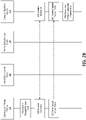
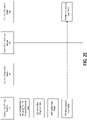
- FIGS. 2A-2H depict an illustrative event sequence for performing dynamic cybersecurity training event detection and training session generation actions in accordance with one or more example embodiments.
- the sequence illustrated in FIGS. 2A-2H is merely one example sequence and various other events may be included, or events shown may be omitted, without departing from the invention.
- cybersecurity training platform 110 may monitor processes and/or functions executed by or requested at one or more internal enterprise user devices, such as internal enterprise user device 120, internal enterprise user device 130, or the like.
- cybersecurity training platform 110 may monitor a plurality of internal enterprise user devices (e.g., continuously) to identify applications being launched, systems being accessed, data or connections being requested, and the like, in order to detect a cybersecurity training triggering event or opportunity.
- a cybersecurity training triggering event or opportunity may occur at one or more internal enterprise user device(s).
- cybersecurity training platform 110 may monitor a plurality of internal enterprise user devices simultaneously or near-simultaneously, and may detect more than one triggering event occurring at different internal enterprise user devices. Accordingly, cybersecurity training platform 110 may process, in parallel, one or more triggering events to generate appropriate training sessions, evaluate response data, and the like.
- a cybersecurity training triggering event or opportunity may include a first login attempt by a user to a device, application, system, or the like. For instance, a new employee or new user of a device, system, application, or the like, may attempt a first login and, upon attempting the login, a triggering event may be detected.
- the cybersecurity training platform 110 may identify a triggering event based on an employee having a new role within the enterprise organization (e.g., a change of jobs), based on an attempt to access a system, application, and/or device after an extended period without any login attempts (e.g., after a predetermined time period since the last login attempt has elapsed), or the like.
- a cybersecurity training triggering event or opportunity may include a request to access a URL, email or the like that is suspicious (e.g., as determined from previous access, from third party reports of suspicious URLs, or the like).
- a cybersecurity training triggering event or opportunity may include an attempt to access or login to a virtual private network (VPN), an attempt to reset or change a password, an attempt to open an application, an attempt to access an inbox, or the like.
- VPN virtual private network
- the occurrence of the cybersecurity training triggering event or opportunity at step 202 may be detected by the cybersecurity training platform 110 at step 203 (e.g., via the continuous monitoring). Detecting the cybersecurity training triggering event or opportunity may include receiving event details associated with the triggering event. In some examples, event details may include a user or user identifier associated with the triggering event, a device identifier associated with the triggering event, a system, application or device to which a login is being attempted, a function requested or attempted, and the like.
- the detected cybersecurity training triggering event and associated details may be analyzed to determine a type of triggering event. For instance, one or more types of events may be extracted from event details captured when the triggering event was detected. In some examples, if a new user is detected, the triggering event type may include "new user.” In another example, if the triggering event included an attempt to access potentially malicious content via a URL or email, the triggering event type may include "suspicious content.” Various other types or categories of events may be used without departing from the invention.
- a request for a user profile may be generated by the cybersecurity training platform 110. For instance, based on the event details received by the cybersecurity training platform 110, a request for a user profile associated with a user causing the triggering event (e.g., attempting a login, requesting access to a website, or the like) may be generated.
- a request for a user profile associated with a user causing the triggering event e.g., attempting a login, requesting access to a website, or the like
- a connection may be established between the cybersecurity training platform 110 and enterprise operations system 140.
- a first wireless connection may be established between cybersecurity training platform 110 and enterprise operations system 140.
- a communication session may be initiated between enterprise operations system 140 and cybersecurity training platform 110.
- the generated request for the user profile may be transmitted from cybersecurity training platform 110 to enterprise operations system 140.
- the request for the user profile may be transmitted during the communication session initiated upon establishing the first wireless connection.
- the request for user profile may be received by enterprise operations system 140 and, at step 209, the requested user profile, including one or more user characteristics, may be extracted or retrieved.
- the user profile data may be transmitted from enterprise operations system 140 to cybersecurity training platform 110.
- the user profile data may be transmitted during the communication session initiated upon establishing the first wireless connection.
- the user profile data may be received by cybersecurity training platform 110.
- the user profile data may include user characteristics including data associated with the user (e.g., name or unique identifier, role within the enterprise or key job functions (e.g., is the user a very attacked person, a high level executive, a person with access to multiple systems or types of data), and the like), device(s) associated with the user, previous cybersecurity training results or records for the user, identified strengths or weaknesses of the user, and the like.
- the user profile data may also include an overall cybersecurity score for the user.
- the overall cybersecurity score may be based on a plurality of cybersecurity scores (e.g., cybersecurity training session scores) generated in response to cybersecurity training sessions completed by the user (e.g., the overall score may be a sum or average of the scores of each individual cybersecurity training session).
- a cybersecurity training session prompt may be generated. For instance, based on the identified type of cybersecurity training triggering event, and/or any additional event details, user details, and the like, a cybersecurity training session prompt may be generated.
- the cybersecurity training session prompt may include one or more questions to be presented to the user (e.g., the user associated with the device at which the triggering event was detected).
- the one or more questions may be general cybersecurity training questions, may be specific to the triggering event detected, and/or may be specific to the user or device.
- the one or more questions may be identified or selected from a list of pre-generated questions for a particular type of event.
- the one or more questions may be identified or selected based, at least in part, on user characteristics found in the user profile.
- the cybersecurity training session prompt may include a series of questions that, in some instance, may be answered sequentially.
- Some example cybersecurity training session prompts may include a simulated threat (e.g., simulated malicious URL, simulated malicious email, or the like).
- Generating the cybersecurity training session prompt may include generating one or more user interfaces that may be displayed by a user device, such as internal enterprise user device 120.
- FIG. 3 illustrates one example user interface that may be generated with the cybersecurity training session prompt.
- the interface 300 includes identification of the triggering event (e.g., request for password reset), as well as cybersecurity training question displayed to the user.
- the user interface 300 may further include a field to receive user input in response to the cybersecurity training question.
- the user may select "OK” option to process the response.
- the user may select "CANCEL” option.
- selecting the "CANCEL” option may cause this or another cybersecurity training session prompt to be generated and/or displayed at a later time.
- expected response data may also be generated. For instance, if the cybersecurity training session prompt includes one or more questions to be displayed to the user, an expected (e.g., correct or acceptable) response to each question may also be generated by the cybersecurity training platform 110. This expected response data may then be compared to user response data to generate a cybersecurity score for the user.
- a connection may be established between the cybersecurity training platform 110 and internal enterprise user device 120 (e.g., the device at which the triggering event was detected). For instance, a second wireless connection may be established between cybersecurity training platform 110 and internal enterprise user device 120. Upon establishing the second wireless connection, a communication session may be initiated between internal enterprise user device 120 and cybersecurity training platform 110.
- the generated cybersecurity training session prompt may be transmitted from cybersecurity training platform 110 to internal enterprise user device 120.
- the generated cybersecurity training session prompt may be generated during the communication session initiated upon establishing the second wireless connection.
- the generated cybersecurity training session prompt may be received by internal enterprise user device 120.
- the cybersecurity training session prompt may be displayed and/or executed by internal enterprise user device 120.
- the cybersecurity training prompt may include an instruction or command causing execution of the cybersecurity training session prompt and display of one or more user interfaces associated with the cybersecurity training session prompt.
- user input may be received by internal enterprise user device 120 in response to the cybersecurity training session prompt.
- user input may be received (e.g., via the user interface displaying the cybersecurity training session prompt) providing a user response to the cybersecurity training session prompt (e.g., an answer to one or more questions, or the like).
- user response data may be generated by internal enterprise user device 120.
- the generated user response data may be transmitted from internal enterprise user device 120 to cybersecurity training platform 110.
- the user response data may be transmitted during the communication session initiated upon establishing the second wireless connection.
- the user response data may be received by cybersecurity training platform 110.
- the received user response data may be compared to the generated expected response data by cybersecurity training platform 110. For instance, the received user response data may be compared to the generated expected response data to determine whether there is a match (e.g., whether the question was answered correctly). In some examples, a match may include an exact match between the user response data and the expected data. Additionally or alternatively, a match may include at least a threshold similarity between the user response data and the expected response data (e.g., at least a threshold number of characters match).
- cybersecurity training platform 110 may apply a cybersecurity scoring process to a result of the comparison between the user response data and the expected response data. For instance, a cybersecurity scoring process may evaluate results of the comparison to determine an accuracy of the user response data (e.g., based on how well the user response data matches the expected response data) to determine a cybersecurity training session score.
- a binary output of "matching" or “not matching,” may be generated based on the comparison and a score may be generated based on the binary output.
- a confidence value or percentage of a likely match may be determined based on the comparison and a score may be generated based on the confidence value or percentage of a likely match.
- the cybersecurity training session score may be value between 0 and 10, 0 and 100, or the like.
- a weighting value may be applied to the cybersecurity training session score (e.g., based on a risk level associated with a triggering event, based on accessibility permissions associated with the user or user role within the enterprise organization, or the like).
- the user profile received may be updated based on the generated cybersecurity training session score.
- cybersecurity training platform 110 may update the user profile to reflect the cybersecurity training session provided to the user, as well as the corresponding cybersecurity training session score.
- an overall cybersecurity score of the user stored in the user profile may be updated based on the generated cybersecurity training session score.
- an overall cybersecurity score for the user may be computed or calculated based on a previous overall cybersecurity score and the current cybersecurity training session score.
- computing the overall cybersecurity training session score may include determining an average of all scores associated with cybersecurity training sessions, determining a sum of all scores associated with cybersecurity training sessions, and the like.
- FIG. 4 illustrates one example user interface 400 that may be generated and transmitted to internal enterprise user device 120 in response to determining that the user response data matches the expected response data.
- the user interface 400 may provide an indication of successful completion of the cybersecurity training session, as well as an indication that an overall cybersecurity score has been updated.
- the updated user profile may be transmitted from the cybersecurity training platform 110 to the enterprise organization system.
- the updated user profile may be transmitting during a communication session previously initiated upon establishing a wireless connection. In other examples, if a wireless connection is no longer established, another wireless connection may be established and communication session initiated.
- the updated user profile may be received by the enterprise operations system 140.
- the updated user profile may be stored by the enterprise operations system 140.
- cybersecurity training platform 110 may compare the cybersecurity training session score and/or overall cybersecurity score for the user to one or more training thresholds. For instance, one or more training thresholds may be identified that indicate a level of risk associated with users. For instance, if a cybersecurity training session score and/or overall cybersecurity score is above a first threshold, the user may be performing as expected and risk may be low. If a cybersecurity training session score and/or overall cybersecurity score is above a second threshold but below the first threshold, the user may have a moderate risk level and one or more additional training sessions may be identified for the user. If a cybersecurity training session score and/or overall cybersecurity score is below the second threshold, the user may present a high risk and remedial cybersecurity training may be identified for the user.
- one or more training thresholds may be identified that indicate a level of risk associated with users. For instance, if a cybersecurity training session score and/or overall cybersecurity score is above a first threshold, the user may be performing as expected and risk may be low. If a cybersecurity training session score and/or overall cybersecurity score is above a second threshold but
- threshold values may vary based on different factors. For instance, threshold values for a user having far-reaching access to data within the enterprise may be different from threshold values for a user having limited data access.
- additional cybersecurity training sessions may be identified by cybersecurity training platform 110 for the user. For instance, in continuing the example above, if the cybersecurity training session score is between the second threshold and the first threshold, one or more additional training sessions (e.g., directed to a same type of triggering event, directed to related triggering events, or the like) may be identified. If the overall cybersecurity score is between the second threshold and the first threshold, in some examples, additional overall cybersecurity training sessions may be identified for the user (e.g., covering a broader range of cybersecurity topics or areas).
- a more robust cybersecurity training program (e.g., multi-session, or the like) may be identified for the user.
- one or more additional cybersecurity training session prompts may be generated, as well as expected response data associated with the additional cybersecurity training session prompt.
- the additional cybersecurity training session prompt(s) and associated expected response data may be generated similarly to those generated at step 212.
- FIG. 5 illustrates one example user interface 500 that may be generated with an additional cybersecurity training session prompt.
- the user interface 500 includes an indication that the user was not successful in the previous session and includes another question for the user to answer.
- the interface 500 includes a field to receive user input in response to the questions, as well as selectable options to process the user input (e.g., "OK") or cancel (e.g., "CANCEL").
- the generated additional cybersecurity training session prompt may be transmitted from the cybersecurity training platform 110 to the internal enterprise user device 120.
- the additional cybersecurity training session prompt may be transmitted during a communication session initiated with a previously established wireless connection.
- a wireless connection may be established, a communication session initiated and the generated additional cybersecurity training session prompt may be transmitted.
- the additional cybersecurity training session prompt may be received by the internal enterprise user device 120.
- the additional cybersecurity training session prompt may be displayed and/or executed by the internal enterprise user device 120.
- the additional cybersecurity training session prompt may include instructions or commands causing the internal enterprise user device 120 to display and/or execute the additional cybersecurity training session prompt.
- user input may be received and user response data may be generated based on the user input.
- the user response data may be transmitted from the internal enterprise user device 120 to the cybersecurity training platform 110 for comparison with the expected response data, further scoring, and the like.
- cybersecurity training platform 110 may identify one or more additional application and/or access modifications. For instance, based on one or more of the cybersecurity training session score and/or the updated overall score, one or more modifications to an application, access permission, or the like, associated with the user, may be identified.
- the application, access permission, or the like may be related to the detected triggering event. Additionally or alternatively, the modifications may be made to applications, permissions, and the like, that are unrelated to the triggering event detected.
- a request to change a password for a first system is a detected triggering event, and the user selects a password that is considered "weak" (e.g., the minimum number of characters, few non-alphanumeric characters, or the like)
- the user may be prompted with a cybersecurity training session prompt in response to the password change for the first system.
- a cybersecurity training session score may be generated and the overall cybersecurity score of the user may be modified. If the overall score is modified by a threshold amount, to be lower than a previous value, or the like, additional cybersecurity training session prompts or modifications to a user's access to data, systems, or the like, associated with other systems (e.g., systems other than the first system) may be identified.
- Modifications may include more frequent password change requirements, reduced accessibility to data, and the like.
- tighter controls for user devices associated with the user may be identified. For instance, if a browser issue is a triggering event, the additional controls may be identified causing links selected by the user to be opened in isolation.
- Various other example modifications may be identified without departing from the invention.
- the identified modification may be transmitted from the cybersecurity training platform 110 to the internal enterprise user device 120.
- the modification may be transmitted via a previously initiated communication session.
- a wireless connection may be established and communication session initiated in order to transmit the identified modifications.
- the modifications may be received by the internal enterprise user device 120 and executed by the device.
- the identified modifications may be transmitted from the cybersecurity training platform 110 to the enterprise operations system 140.
- the modifications may be transmitted during a previously established communication session.
- a connection and communication session may be established and the identified modifications transmitted.
- the one or more modifications may be received by the enterprise operations system 140.
- the one or more modifications may be executed by the enterprise operations system 140.
- the one or more modifications may include an instruction or command causing execution of the identified modification (e.g., changes in accessibility or permissions, changes in controls executed, and the like).
- FIG. 6 depicts an illustrative method for performing dynamic cybersecurity training event detection and training session actions in accordance with one or more example embodiments.
- a computing platform having at least one processor, a communication interface, and memory may monitor a plurality of computing devices, such as internal enterprise user devices, to detect potential cybersecurity training triggering events.
- a cybersecurity triggering event may be detected at a user device.
- event details associated with the cybersecurity training triggering event may be received.
- user profile data including an overall cybersecurity score for a user, as well as user characteristics may be retrieved by the computing platform.
- the computing platform may identify a type of triggering event based on the event details.
- the computing platform may generate a cybersecurity training session prompt, as well as expected response data.
- the generated cybersecurity training session prompt may be transmitted from the computing platform to the internal enterprise user device at which the triggering event was detected.
- user response data including user input provided via the cybersecurity training session prompt may be received.
- the user response data may be compared to the expected response data to determine whether there is a match.
- the computing platform may compute a cybersecurity training session score based on the comparison.
- the overall cybersecurity score for the user may be updated based on the computing cybersecurity training session score.
- aspects described provide dynamic, targeted cybersecurity training for a plurality of users.
- cybersecurity training triggering events in real-time or near real-time (e.g., as a user is interacting with his or her computing device during the course of the day), appropriate training may be provided in a timely manner.
- the device may be monitored to detect any cybersecurity training triggering events and generate one or more cybersecurity training session prompts in response to the detected triggering event.
- the cybersecurity training session prompt may be generated based on details associated with the triggering event.
- the questions associated with the cybersecurity training session prompt may be newly generated, selected from a list of pre-generated questions, may be extracted from larger training programs, and the like.
- the cybersecurity training session prompt may be generated based on previously identified cybersecurity threats. For instance, a request to open an email message or access a URL that was previously identified as potentially malicious may cause generation of a cybersecurity training session prompt having content targeted to an event of this type (e.g., malicious emails, best practices for using email, avoiding phishing scams, caution when accessing websites, or the like).
- the data identifying the email may be received from another application, system, tool, or the like.
- content of a cybersecurity training session prompt may be related to a type of data being accessed. For instance, a user may attempt to login to a customer database having personally identifying information for a plurality of users. This may be detected as a cybersecurity training triggering event and may provide cybersecurity training for login security (e.g., password best practices) and/or customer data security. Accordingly, the generated cybersecurity training session may be related to the action being requested by the user and/or content of a system or application being accessed. Additionally or alternatively, content of one or more cybersecurity training session prompts may be based on threats to various customers of the enterprise (e.g., to provide customer-specific training or training raising awareness of customer concerns), threats to the enterprise organization, and/or best practices for operating in a connected environment.
- threats to various customers of the enterprise e.g., to provide customer-specific training or training raising awareness of customer concerns
- threats to the enterprise organization e.g., to provide customer-specific training or training raising awareness of customer concerns
- cybersecurity training session prompts may be generated at predetermined intervals (e.g., once per day, once per week), or upon every (or a predetermined number of) events (e.g., at every login to a user device, at every third opening of a particular application, or the like).
- one or more cybersecurity training session prompts may be generated in response to detection of a new user (e.g., new employee, existing employee who has moved into a new job or role, or the like).
- a user may be presented with cybersecurity training session prompts for a predetermined time period (e.g., first two weeks, first three months, or the like) and/or for a predetermined number of events (e.g., first five login attempts to a VPN, first 25 requests to open an email application, or the like).
- a predetermined time period e.g., first two weeks, first three months, or the like
- a predetermined number of events e.g., first five login attempts to a VPN, first 25 requests to open an email application, or the like.
- the content of cybersecurity training session prompts and/or frequency of generation of the cybersecurity training session prompts may be modified based on current or recently observed cybersecurity risks. For instance, if a certain cybersecurity attack or type of cybersecurity attack as recently occurred or is occurring, the computing platform may generate one or more cybersecurity training session prompts related to the cybersecurity attack or type of attack. In some examples, the generated cybersecurity training session prompt may be proactively transmitted to one or more user devices (e.g., without detecting a triggering event at a particular user device).
- cybersecurity training session prompts may be generated and transmitted to users within a group (e.g., business unit, department, or the like). Accordingly, if a cybersecurity training triggering event is detected at a first user device, in some arrangements, a cybersecurity training session prompt may be generated and transmitted to all users within the group. This may enable consistent training for all users within a designated group. Further, particular cybersecurity training session prompts may be transmitted to other users performing similar roles, having similar levels of access, or the like, even if not in a predetermined group or unit within the enterprise.
- a group e.g., business unit, department, or the like.
- aspects discussed herein are related to cybersecurity training, aspects described may be used to provide training in other areas of interest.
- dynamic, interactive targeted training for areas such as privacy, human resources, new job functions, harassment prevention, and the like may be provided according to one or more arrangements described herein.
- analysis processes, method steps, and/or methods described herein may be performed in different orders and/or in alternative arrangements from those illustrated herein, without departing from the scope of this disclosure. Additionally or alternatively, one or more of the analysis processes, method steps, and/or methods described herein may be optional and/or omitted in some arrangements, without departing from the scope of this disclosure.
- One or more aspects of the disclosure may be embodied in computer-usable data or computer-executable instructions, such as in one or more program modules, executed by one or more computers or other devices to perform the operations described herein.
- Program modules may include routines, programs, objects, components, data structures, and the like that perform particular tasks or implement particular abstract data types when executed by one or more processors in a computer or other data processing device.
- the computer-executable instructions may be stored as computer-readable instructions on a computer-readable medium such as a hard disk, optical disk, removable storage media, solid-state memory, RAM, and the like.
- the functionality of the program modules may be combined or distributed as desired in various embodiments.
- the functionality may be embodied in whole or in part in firmware or hardware equivalents, such as integrated circuits, application-specific integrated circuits (ASICs), field programmable gate arrays (FPGA), and the like.
- ASICs application-specific integrated circuits
- FPGA field programmable gate arrays
- Particular data structures may be used to more effectively implement one or more aspects of the disclosure, and such data structures are contemplated to be within the scope of computer executable instructions and computer-usable data described herein.
- One or more aspects described herein may be embodied as a method, an apparatus, or as one or more computer-readable media storing computer-executable instructions. Accordingly, those aspects may take the form of an entirely hardware embodiment, an entirely software embodiment, an entirely firmware embodiment, or an embodiment combining software, hardware, and firmware aspects in any combination.
- various signals representing data or events as described herein may be transferred between a source and a destination in the form of light or electromagnetic waves traveling through signal-conducting media such as metal wires, optical fibers, or wireless transmission media (e.g., air or space).
- the one or more computer-readable media may be and/or include one or more non-transitory computer-readable media.
- the various methods and acts may be operative across one or more computing servers and one or more networks.
- the functionality may be distributed in any manner, or may be located in a single computing device (e.g., a server, a client computer, and the like).
- a single computing device e.g., a server, a client computer, and the like.
- one or more of the computing platforms discussed above may be combined into a single computing platform, and the various functions of each computing platform may be performed by the single computing platform.
- any and/or all of the above-discussed communications between computing platforms may correspond to data being accessed, moved, modified, updated, and/or otherwise used by the single computing platform.
- one or more of the computing platforms discussed above may be implemented in one or more virtual machines that are provided by one or more physical computing devices.
- each computing platform may be performed by the one or more virtual machines, and any and/or all of the above-discussed communications between computing platforms may correspond to data being accessed, moved, modified, updated, and/or otherwise used by the one or more virtual machines.
Landscapes
- Engineering & Computer Science (AREA)
- Business, Economics & Management (AREA)
- Educational Administration (AREA)
- Theoretical Computer Science (AREA)
- Educational Technology (AREA)
- Human Resources & Organizations (AREA)
- General Physics & Mathematics (AREA)
- Computer Security & Cryptography (AREA)
- Physics & Mathematics (AREA)
- Computer Hardware Design (AREA)
- Strategic Management (AREA)
- Entrepreneurship & Innovation (AREA)
- Tourism & Hospitality (AREA)
- Economics (AREA)
- Computer Networks & Wireless Communication (AREA)
- Computing Systems (AREA)
- Signal Processing (AREA)
- General Engineering & Computer Science (AREA)
- General Business, Economics & Management (AREA)
- Marketing (AREA)
- Quality & Reliability (AREA)
- Development Economics (AREA)
- Operations Research (AREA)
- Game Theory and Decision Science (AREA)
- Health & Medical Sciences (AREA)
- General Health & Medical Sciences (AREA)
- Primary Health Care (AREA)
- Computer And Data Communications (AREA)
Abstract
Description
- Aspects of the disclosure relate to user device monitoring, event detection, data processing methods, and communication systems and networks. In particular, one or more aspects of the disclosure relate to detecting cybersecurity training triggering events and generating and causing execution of one or more cybersecurity training session prompts.
- Increasingly, organizations face various cybersecurity threats. Accordingly, cybersecurity training has become a priority for organizations. However, conventional, lengthy training sessions can be overwhelming for users and may be ineffective. For instance, the content of standalone training modules, when deployed to users within an organization, might be cumbersome and inefficient because they might not focus on particular training issues unique to the user. Accordingly, detecting particular functions performed by a user device and deploying shorter, more interactive and targeted training sessions may improve security awareness, messaging, and retention.
- The invention is defined in the independent claims. Particular embodiments are set out in the dependent claims.
- Aspects of the disclosure provide technical solutions that overcome one or more of the technical problems described above and/or other technical challenges. For instance, one or more aspects of the disclosure relate to detecting cybersecurity training triggering events performed by a user device and, in response, generating and transmitting targeted cybersecurity training session prompts to the user device.
- In accordance with one or more embodiments, a computing platform having at least one processor, a communication interface, and memory may monitor a plurality of user devices associated with an enterprise organization. Based on the monitoring of the plurality of user devices, the computing platform may detect a cybersecurity training triggering event at a user device of the plurality of user devices of the enterprise organization. In some examples, the cybersecurity training triggering event may include a plurality of event details that may be received by the computing platform. After detecting the cybersecurity training triggering event, the computing platform may retrieve user profile data for a user. In some arrangements, the user profile data may include an overall cybersecurity score of the user and one or more user characteristics.
- In some arrangements, the computing platform may then analyze the cybersecurity training triggering event and event details to identify a type of cybersecurity training triggering event. After identifying a type of cybersecurity triggering event, the computing platform may generate, based on the identified type of cybersecurity training triggering event and the user profile, a cybersecurity training session prompt and expected response data. The computing platform may then transmit, via the communication interface, the generated cybersecurity training session prompt to the user device. In some examples, transmitting the generated cybersecurity training session prompt to the user device may cause the user device to execute the generated cybersecurity training session prompt.
- In some examples, the computing platform may receive, from the user device and in response to execution of the cybersecurity training session prompt, user response data received via the generated cybersecurity training session prompt. The computing platform may then compare the received user response data to the expected response data to determine whether the received user response data matches the expected response data. Based on the comparison of the user response data to the expected response data, the computing platform may compute a cybersecurity training session score associated with an outcome of the comparison. The computing platform may then update, based on the cybersecurity training session score of the outcome of the comparison, the overall cybersecurity score of the user associated with the user device.
- In one or more examples, the cybersecurity training triggering event may include at least one of: launch of an application, password reset request, request to access a website, or login to a virtual private network.
- In some arrangements, the cybersecurity training session prompt may include at least one targeted question generated based on the type of cybersecurity training triggering event.
- In one or more embodiments, the computing platform may also compare the cybersecurity training session score associated to one or more scoring thresholds. Based on the comparison of the cybersecurity training session score to the one or more scoring thresholds, the computing platform may identify additional cybersecurity training session prompts.
- In some examples, executing the cybersecurity training session prompt may cause display of one or more user interfaces associated with the cybersecurity training session prompt. Further, in some arrangements, the one or more user interfaces may include at least one field to receive user input in response to the cybersecurity training session prompt.
- In one or more embodiments, the computing platform may identify, based on the cybersecurity training session score, one or more modifications to at least one of: an application or a system. The computing platform may then cause execution of the one or more modifications. In some examples, the one or more user characteristics may include a job function of the user, and the one or more modifications may be further based on the job function.
- In some arrangements, the computing platform may identify, based on the updated overall cybersecurity score, one or more modifications to at least one of: an application and a system. The computing platform may then cause execution of the one or more modifications. In some examples, the one or more user characteristics may include a job function of the user, and the one or more modifications are further based on the job function.
- In some embodiments, a method, performable or performed by a computing platform having at least one processor, a memory and a communication interface, may include one or more of the steps and processes described here. Aspects may also include one or more non-transitory computer-readable media storing computer-executable instructions for performing one or more of the processes described herein,
- These and other aspects will be described more fully herein.
- The present disclosure is illustrated by way of example and not limited in the accompanying figures in which like reference numerals indicate similar elements and in which:
-
FIG. 1 depicts an illustrative operating environment for performing dynamic cybersecurity training event detection and cybersecurity training session prompt generation actions in accordance with one or more example embodiments; -
FIGS. 2A-2H depict an illustrative event sequence for performing dynamic cybersecurity training event detection and cybersecurity training session prompt generation actions in accordance with one or more example embodiments; -
FIGS. 3-5 depict illustrative user interfaces for performing dynamic cybersecurity training event detection and cybersecurity training session prompt generation actions in accordance with one or more example embodiments; and -
FIG. 6 depicts an illustrative method for performing dynamic cybersecurity training event detection and cybersecurity training session prompt generation actions in accordance with one or more example embodiments. - In the following description of various illustrative embodiments, reference is made to the accompanying drawings, which form a part hereof, and in which is shown, by way of illustration, various embodiments in which aspects of the disclosure may be practiced. It is to be understood that other embodiments may be utilized, and structural and functional modifications may be made, without departing from the scope of the present disclosure. Various connections between elements are discussed in the following description. It is noted that these connections are general and, unless specified otherwise, may be direct or indirect, wired or wireless, and that the specification is not intended to be limiting in this respect.
- Some aspects of the disclosure relate to improving cybersecurity training systems by providing more agile, targeted training. For instance, conventional cybersecurity training arrangements often rely on generic, computer-based training that is deployed to all employees or a subset of employees in an enterprise. However, given the range of topics encompassed by cybersecurity training, these training arrangements can be overwhelming and inefficient because they are not directed to particular issues identified for particular users.
- Accordingly, rather than or in addition to providing these broad training programs, targeted, dynamic, interactive training sessions may be generated as described herein. As discussed more fully below, a computing platform may monitor a plurality of user devices within an enterprise. For instance, the system may, in some examples, monitor all user devices associated with employees of the enterprise, others who work within the enterprise or access enterprise systems, or the like. The devices may be monitored to detect one or more triggering events. For instance, actions requested by a user and executed by the computing device may be detected and identified as a cybersecurity training triggering event. The detection of the event may occur in real-time or near real-time (e.g., as the user is requesting the action) in order to quickly deploy one or more targeted training sessions.
- Accordingly, upon detection of a triggering event, the computing platform may generate one or more cybersecurity training session prompts. The cybersecurity training session prompts may include one or more user interfaces including one or more questions or requests for data directed at the user associated with the device at which the triggering event was detected. In some examples, the cybersecurity training session prompt may include questions unique or specifically crafted for the user (e.g., based on user characteristics, job functions, and the like).
- The generated cybersecurity training session prompt may be transmitted to the user device and executed. Execution of the cybersecurity training session prompt may cause one or more user interfaces to be displayed by the user device. The user may then provide user input in response to the question or request for data and user response data may be generated. The user response data may be compared to expected response data to determine whether the user correctly answered the question or request for data.
- Based on determining whether the user answered the question correctly, a cybersecurity training session score may be generated. This score may then be used to update an overall cybersecurity score for the user. Additionally or alternatively, the cybersecurity training session score and/or overall cybersecurity score may be used to determine whether additional cybersecurity training session prompts and/or additional modifications should be executed.
- Accordingly, cybersecurity training can be provided to users throughout their work day and during the course of ordinary operation of their computing devices. In providing this dynamic, targeted training system, the arrangements described herein enable customized instruction in the area of cybersecurity by detecting events as they occur and quickly and effectively providing focused training on a particular topic.
- These and various other aspects will be described more fully herein.
-
FIG. 1 depicts an illustrative operating environment for performing dynamic cybersecurity training triggering event detection and training session generation actions in accordance with one or more example embodiments. Referring toFIG. 1 ,computing environment 100 may include various computer systems, computing devices, networks, and/or other operating infrastructure. For example,computing environment 100 may include acybersecurity training platform 110, a first internalenterprise user device 120, a second internalenterprise user device 130, anenterprise operations system 140, and anetwork 190. -
Network 190 may include one or more wired networks and/or one or more wireless networks that interconnectcybersecurity training platform 110, internalenterprise user device 120, internalenterprise user device 130,enterprise operations system 140, and/or other computer systems and/or devices. In addition, each ofcybersecurity training platform 110, internalenterprise user device 120, internalenterprise user device 130, and/orenterprise operations system 140, may be special purpose computing devices configured to perform specific functions, as illustrated in greater detail below, and may include specific computing components such as processors, memories, communication interfaces, and/or the like. -
Cybersecurity training platform 110 may include one or more processor(s) 111, one or more memory(s) 112, and one or more communication interface(s) 113. In some instances,cybersecurity training platform 110 may be made up of a plurality of different computing devices, which may be distributed within a single data center or a plurality of different data centers. In these instances, the one or more processor(s) 111, one or more memory(s) 112, and one or more communication interface(s) 113 included incybersecurity training platform 110 may be part of and/or otherwise associated with the different computing devices that formcybersecurity training platform 110. - In one or more arrangements, processor(s) 111 may control operations of
cybersecurity training platform 110. Memory(s) 112 may store instructions that, when executed by processor(s) 111, causecybersecurity training platform 110 to perform one or more functions, as discussed below. Communication interface(s) 113 may include one or more wired and/or wireless network interfaces, and communication interface(s) 113 may connectcybersecurity training platform 110 to one or more networks (e.g., network 190) and/or enablecybersecurity training platform 110 to exchange information and/or otherwise communicate with one or more devices connected to such networks. - In one or more arrangements, memory(s) 112 may store and/or otherwise provide a plurality of modules (which may, e.g., include instructions that may be executed by processor(s) 111 to cause
cybersecurity training platform 110 to perform various functions) and/or databases (which may, e.g., store data used bycybersecurity training platform 110 in performing various functions). For example, memory(s) 112 may store and/or otherwise provide cybersecurity trainingevent detection module 112a,training session module 112b,security scoring module 112c, andmodification module 112d. In some instances, cybersecurity trainingevent detection module 112a may store instructions that causecybersecurity training platform 110 to monitor (e.g., on a continuous or periodic basis) one or more internal enterprise user devices, such as internalenterprise user device 120, internalenterprise user device 130, or the like, for detection of one or more cybersecurity training triggering events or opportunities. For instance, some example cybersecurity training triggering events or opportunities may include a request to change or reset a password, switching between applications executing on the device, opening an application, opening an email inbox, an attempt to access one or more uniform resource locators (URLs) that have been identified as potentially malicious, an attempt to login to a virtual private network (VPN), a first login to a particular computing device or an application (e.g., as a new user), a login attempt at a computing device or application after an extended time period (e.g., predetermined period of time) in which no logins were attempted, a request to access a link from an unsecure browser session, and the like. Further,training session module 112b may store data and/or instructions that may be used bycybersecurity training platform 110 to generate, based on event details associated with a detected cybersecurity training triggering event or opportunity, one or more cybersecurity training sessions and associated expected responses data. The generated cybersecurity training sessions may include one or more user interfaces or prompts that may be transmitted to a user device, such as internalenterprise user device 120 and/or internalenterprise user device 130 for display. In addition,security scoring module 112c may store instructions and/or data that may be used bycybersecurity training platform 110 to apply a cybersecurity scoring process to data received in response to the cybersecurity training session.Modification module 112d may store instructions and/or data that may be used bycybersecurity training platform 110 to identify additional modifications to applications, devices, accessibility permissions, and the like, based on the cybersecurity scoring process. - Internal
enterprise user device 120 and/or internalenterprise user device 130 may be configured to be used by a user (who may, e.g., be an employee of an enterprise organization). In some instances, internalenterprise user device 120 and/or internalenterprise user device 130 may be configured to perform various functions based on user data requests, user input, or the like, that may be detected as a cybersecurity training triggering event. Internalenterprise user device 120 and/or internalenterprise user device 130 may also present one or more cybersecurity training session user interfaces or prompts, receive user input in response to the cybersecurity training session user interfaces or prompts, and the like. -
Enterprise operations system 140 may be and/or include one or more computing devices (e.g., servers, server blades, enterprise devices, or the like) that may be configured to host one or more enterprise systems, applications, or the like. The enterprise applications, systems, and the like may be accessed by various internal enterprise user devices, such as internalenterprise user device 120, internalenterprise user device 130, or the like.Enterprise operations system 140 may, in some instances, store user profile data including cybersecurity score data associated with a plurality of users (e.g., employees of the enterprise organization). In some examples,enterprise operations system 140 may be configured to receive commands fromcybersecurity training platform 110 and to modify and/or update accessibility preferences, user permissions, and the like. -
FIGS. 2A-2H depict an illustrative event sequence for performing dynamic cybersecurity training event detection and training session generation actions in accordance with one or more example embodiments. The sequence illustrated inFIGS. 2A-2H is merely one example sequence and various other events may be included, or events shown may be omitted, without departing from the invention. - Referring to
FIG. 2A , atstep 201,cybersecurity training platform 110 may monitor processes and/or functions executed by or requested at one or more internal enterprise user devices, such as internalenterprise user device 120, internalenterprise user device 130, or the like. For example,cybersecurity training platform 110 may monitor a plurality of internal enterprise user devices (e.g., continuously) to identify applications being launched, systems being accessed, data or connections being requested, and the like, in order to detect a cybersecurity training triggering event or opportunity. - At
step 202, a cybersecurity training triggering event or opportunity may occur at one or more internal enterprise user device(s). In some arrangements,cybersecurity training platform 110 may monitor a plurality of internal enterprise user devices simultaneously or near-simultaneously, and may detect more than one triggering event occurring at different internal enterprise user devices. Accordingly,cybersecurity training platform 110 may process, in parallel, one or more triggering events to generate appropriate training sessions, evaluate response data, and the like. - In some arrangements, a cybersecurity training triggering event or opportunity may include a first login attempt by a user to a device, application, system, or the like. For instance, a new employee or new user of a device, system, application, or the like, may attempt a first login and, upon attempting the login, a triggering event may be detected. In some examples, the
cybersecurity training platform 110 may identify a triggering event based on an employee having a new role within the enterprise organization (e.g., a change of jobs), based on an attempt to access a system, application, and/or device after an extended period without any login attempts (e.g., after a predetermined time period since the last login attempt has elapsed), or the like. - Additionally or alternatively, a cybersecurity training triggering event or opportunity may include a request to access a URL, email or the like that is suspicious (e.g., as determined from previous access, from third party reports of suspicious URLs, or the like). In some examples, a cybersecurity training triggering event or opportunity may include an attempt to access or login to a virtual private network (VPN), an attempt to reset or change a password, an attempt to open an application, an attempt to access an inbox, or the like.
- The occurrence of the cybersecurity training triggering event or opportunity at
step 202 may be detected by thecybersecurity training platform 110 at step 203 (e.g., via the continuous monitoring). Detecting the cybersecurity training triggering event or opportunity may include receiving event details associated with the triggering event. In some examples, event details may include a user or user identifier associated with the triggering event, a device identifier associated with the triggering event, a system, application or device to which a login is being attempted, a function requested or attempted, and the like. - At
step 204, the detected cybersecurity training triggering event and associated details may be analyzed to determine a type of triggering event. For instance, one or more types of events may be extracted from event details captured when the triggering event was detected. In some examples, if a new user is detected, the triggering event type may include "new user." In another example, if the triggering event included an attempt to access potentially malicious content via a URL or email, the triggering event type may include "suspicious content." Various other types or categories of events may be used without departing from the invention. - With reference to
FIG. 2B , at step 205, a request for a user profile may be generated by thecybersecurity training platform 110. For instance, based on the event details received by thecybersecurity training platform 110, a request for a user profile associated with a user causing the triggering event (e.g., attempting a login, requesting access to a website, or the like) may be generated. - At
step 206, a connection may be established between thecybersecurity training platform 110 andenterprise operations system 140. For instance, a first wireless connection may be established betweencybersecurity training platform 110 andenterprise operations system 140. Upon establishing the first wireless connection, a communication session may be initiated betweenenterprise operations system 140 andcybersecurity training platform 110. - At step 207, the generated request for the user profile may be transmitted from
cybersecurity training platform 110 toenterprise operations system 140. For instance, the request for the user profile may be transmitted during the communication session initiated upon establishing the first wireless connection. - At step 208, the request for user profile may be received by
enterprise operations system 140 and, at step 209, the requested user profile, including one or more user characteristics, may be extracted or retrieved. - With reference to
FIG. 2C , at step 210, the user profile data may be transmitted fromenterprise operations system 140 tocybersecurity training platform 110. In some examples, the user profile data may be transmitted during the communication session initiated upon establishing the first wireless connection. At step 211, the user profile data may be received bycybersecurity training platform 110. In some arrangements, the user profile data may include user characteristics including data associated with the user (e.g., name or unique identifier, role within the enterprise or key job functions (e.g., is the user a very attacked person, a high level executive, a person with access to multiple systems or types of data), and the like), device(s) associated with the user, previous cybersecurity training results or records for the user, identified strengths or weaknesses of the user, and the like. The user profile data may also include an overall cybersecurity score for the user. The overall cybersecurity score may be based on a plurality of cybersecurity scores (e.g., cybersecurity training session scores) generated in response to cybersecurity training sessions completed by the user (e.g., the overall score may be a sum or average of the scores of each individual cybersecurity training session). - At
step 212, a cybersecurity training session prompt, and expected response data, may be generated. For instance, based on the identified type of cybersecurity training triggering event, and/or any additional event details, user details, and the like, a cybersecurity training session prompt may be generated. In some examples, the cybersecurity training session prompt may include one or more questions to be presented to the user (e.g., the user associated with the device at which the triggering event was detected). The one or more questions may be general cybersecurity training questions, may be specific to the triggering event detected, and/or may be specific to the user or device. In some examples, the one or more questions may be identified or selected from a list of pre-generated questions for a particular type of event. Additionally or alternatively, the one or more questions may be identified or selected based, at least in part, on user characteristics found in the user profile. In some examples, the cybersecurity training session prompt may include a series of questions that, in some instance, may be answered sequentially. Some example cybersecurity training session prompts may include a simulated threat (e.g., simulated malicious URL, simulated malicious email, or the like). Generating the cybersecurity training session prompt may include generating one or more user interfaces that may be displayed by a user device, such as internalenterprise user device 120. - For instance,
FIG. 3 illustrates one example user interface that may be generated with the cybersecurity training session prompt. Theinterface 300 includes identification of the triggering event (e.g., request for password reset), as well as cybersecurity training question displayed to the user. Theuser interface 300 may further include a field to receive user input in response to the cybersecurity training question. Once the user has provided a response, the user may select "OK" option to process the response. Alternatively, the user may select "CANCEL" option. However, selecting the "CANCEL" option may cause this or another cybersecurity training session prompt to be generated and/or displayed at a later time. - In addition to generating the cybersecurity training session prompt, expected response data may also be generated. For instance, if the cybersecurity training session prompt includes one or more questions to be displayed to the user, an expected (e.g., correct or acceptable) response to each question may also be generated by the
cybersecurity training platform 110. This expected response data may then be compared to user response data to generate a cybersecurity score for the user. - At
step 213, a connection may be established between thecybersecurity training platform 110 and internal enterprise user device 120 (e.g., the device at which the triggering event was detected). For instance, a second wireless connection may be established betweencybersecurity training platform 110 and internalenterprise user device 120. Upon establishing the second wireless connection, a communication session may be initiated between internalenterprise user device 120 andcybersecurity training platform 110. - At
step 214, the generated cybersecurity training session prompt may be transmitted fromcybersecurity training platform 110 to internalenterprise user device 120. For instance, the generated cybersecurity training session prompt may be generated during the communication session initiated upon establishing the second wireless connection. - At
step 215, the generated cybersecurity training session prompt may be received by internalenterprise user device 120. - With reference to
FIG. 2D , atstep 216, the cybersecurity training session prompt may be displayed and/or executed by internalenterprise user device 120. For instance, the cybersecurity training prompt may include an instruction or command causing execution of the cybersecurity training session prompt and display of one or more user interfaces associated with the cybersecurity training session prompt. - At step 217, user input may be received by internal
enterprise user device 120 in response to the cybersecurity training session prompt. For instance, in response to execution of the cybersecurity training session prompt and/or display of associated user interfaces, user input may be received (e.g., via the user interface displaying the cybersecurity training session prompt) providing a user response to the cybersecurity training session prompt (e.g., an answer to one or more questions, or the like). - Based on the received user input, at step 218, user response data may be generated by internal
enterprise user device 120. At step 219, the generated user response data may be transmitted from internalenterprise user device 120 tocybersecurity training platform 110. In some examples, the user response data may be transmitted during the communication session initiated upon establishing the second wireless connection. At step 220, the user response data may be received bycybersecurity training platform 110. - With reference to
FIG. 2E , at step 221, the received user response data may be compared to the generated expected response data bycybersecurity training platform 110. For instance, the received user response data may be compared to the generated expected response data to determine whether there is a match (e.g., whether the question was answered correctly). In some examples, a match may include an exact match between the user response data and the expected data. Additionally or alternatively, a match may include at least a threshold similarity between the user response data and the expected response data (e.g., at least a threshold number of characters match). - At step 222,
cybersecurity training platform 110 may apply a cybersecurity scoring process to a result of the comparison between the user response data and the expected response data. For instance, a cybersecurity scoring process may evaluate results of the comparison to determine an accuracy of the user response data (e.g., based on how well the user response data matches the expected response data) to determine a cybersecurity training session score. In some examples, a binary output of "matching" or "not matching," may be generated based on the comparison and a score may be generated based on the binary output. In other examples, a confidence value or percentage of a likely match may be determined based on the comparison and a score may be generated based on the confidence value or percentage of a likely match. In some examples, the cybersecurity training session score may be value between 0 and 10, 0 and 100, or the like. In some arrangements, a weighting value may be applied to the cybersecurity training session score (e.g., based on a risk level associated with a triggering event, based on accessibility permissions associated with the user or user role within the enterprise organization, or the like). - At step 223, the user profile received may be updated based on the generated cybersecurity training session score. For instance,
cybersecurity training platform 110 may update the user profile to reflect the cybersecurity training session provided to the user, as well as the corresponding cybersecurity training session score. Further, an overall cybersecurity score of the user stored in the user profile may be updated based on the generated cybersecurity training session score. For instance, an overall cybersecurity score for the user may be computed or calculated based on a previous overall cybersecurity score and the current cybersecurity training session score. In some examples, computing the overall cybersecurity training session score may include determining an average of all scores associated with cybersecurity training sessions, determining a sum of all scores associated with cybersecurity training sessions, and the like. -
FIG. 4 illustrates oneexample user interface 400 that may be generated and transmitted to internalenterprise user device 120 in response to determining that the user response data matches the expected response data. Theuser interface 400 may provide an indication of successful completion of the cybersecurity training session, as well as an indication that an overall cybersecurity score has been updated. - At
step 224, the updated user profile may be transmitted from thecybersecurity training platform 110 to the enterprise organization system. In some examples, the updated user profile may be transmitting during a communication session previously initiated upon establishing a wireless connection. In other examples, if a wireless connection is no longer established, another wireless connection may be established and communication session initiated. - At
step 225, the updated user profile may be received by theenterprise operations system 140. - With reference to
FIG. 2F , at step 226, the updated user profile may be stored by theenterprise operations system 140. - At
step 227,cybersecurity training platform 110 may compare the cybersecurity training session score and/or overall cybersecurity score for the user to one or more training thresholds. For instance, one or more training thresholds may be identified that indicate a level of risk associated with users. For instance, if a cybersecurity training session score and/or overall cybersecurity score is above a first threshold, the user may be performing as expected and risk may be low. If a cybersecurity training session score and/or overall cybersecurity score is above a second threshold but below the first threshold, the user may have a moderate risk level and one or more additional training sessions may be identified for the user. If a cybersecurity training session score and/or overall cybersecurity score is below the second threshold, the user may present a high risk and remedial cybersecurity training may be identified for the user. Although three groupings and two thresholds are provided in this example, various other threshold arrangements may be used without departing from the invention. In some examples, the threshold values may vary based on different factors. For instance, threshold values for a user having far-reaching access to data within the enterprise may be different from threshold values for a user having limited data access. - At
step 228, based on comparing one or more of the cybersecurity training session score and/or overall cybersecurity score to one or more thresholds, additional cybersecurity training sessions may be identified bycybersecurity training platform 110 for the user. For instance, in continuing the example above, if the cybersecurity training session score is between the second threshold and the first threshold, one or more additional training sessions (e.g., directed to a same type of triggering event, directed to related triggering events, or the like) may be identified. If the overall cybersecurity score is between the second threshold and the first threshold, in some examples, additional overall cybersecurity training sessions may be identified for the user (e.g., covering a broader range of cybersecurity topics or areas). - In some arrangements, a more robust cybersecurity training program (e.g., multi-session, or the like) may be identified for the user.
- At
step 229, based on the identified additional cybersecurity training sessions, one or more additional cybersecurity training session prompts may be generated, as well as expected response data associated with the additional cybersecurity training session prompt. The additional cybersecurity training session prompt(s) and associated expected response data may be generated similarly to those generated atstep 212. - For instance,
FIG. 5 illustrates oneexample user interface 500 that may be generated with an additional cybersecurity training session prompt. Theuser interface 500 includes an indication that the user was not successful in the previous session and includes another question for the user to answer. In addition, theinterface 500 includes a field to receive user input in response to the questions, as well as selectable options to process the user input (e.g., "OK") or cancel (e.g., "CANCEL"). - With reference to
FIG. 2G , atstep 230, the generated additional cybersecurity training session prompt may be transmitted from thecybersecurity training platform 110 to the internalenterprise user device 120. In some examples, the additional cybersecurity training session prompt may be transmitted during a communication session initiated with a previously established wireless connection. Alternatively, if a wireless connection is not established, a wireless connection may be established, a communication session initiated and the generated additional cybersecurity training session prompt may be transmitted. - At
step 231, the additional cybersecurity training session prompt may be received by the internalenterprise user device 120. - At
step 232, the additional cybersecurity training session prompt may be displayed and/or executed by the internalenterprise user device 120. For instance, the additional cybersecurity training session prompt may include instructions or commands causing the internalenterprise user device 120 to display and/or execute the additional cybersecurity training session prompt. Similar to other arrangements described herein, user input may be received and user response data may be generated based on the user input. The user response data may be transmitted from the internalenterprise user device 120 to thecybersecurity training platform 110 for comparison with the expected response data, further scoring, and the like. - At
step 233, based on the cybersecurity training session score and/or the overall cybersecurity score,cybersecurity training platform 110 may identify one or more additional application and/or access modifications. For instance, based on one or more of the cybersecurity training session score and/or the updated overall score, one or more modifications to an application, access permission, or the like, associated with the user, may be identified. In some examples, the application, access permission, or the like, may be related to the detected triggering event. Additionally or alternatively, the modifications may be made to applications, permissions, and the like, that are unrelated to the triggering event detected. Accordingly, in one example, if a request to change a password for a first system is a detected triggering event, and the user selects a password that is considered "weak" (e.g., the minimum number of characters, few non-alphanumeric characters, or the like), the user may be prompted with a cybersecurity training session prompt in response to the password change for the first system. A cybersecurity training session score may be generated and the overall cybersecurity score of the user may be modified. If the overall score is modified by a threshold amount, to be lower than a previous value, or the like, additional cybersecurity training session prompts or modifications to a user's access to data, systems, or the like, associated with other systems (e.g., systems other than the first system) may be identified. Modifications may include more frequent password change requirements, reduced accessibility to data, and the like. In some arrangements, tighter controls for user devices associated with the user may be identified. For instance, if a browser issue is a triggering event, the additional controls may be identified causing links selected by the user to be opened in isolation. Various other example modifications may be identified without departing from the invention. - At
step 234, if the identified modification to an application or access will be executed by a user device, such as internalenterprise user device 120, the identified modification may be transmitted from thecybersecurity training platform 110 to the internalenterprise user device 120. In some examples, the modification may be transmitted via a previously initiated communication session. Alternatively, if a communication session is not established, a wireless connection may be established and communication session initiated in order to transmit the identified modifications. - At
step 235, the modifications may be received by the internalenterprise user device 120 and executed by the device. - With reference to
FIG. 2H , atstep 236, if the identified modifications to an application or access will be executed by one or more enterprise systems (e.g., enterprise operations system 140) the identified modifications may be transmitted from thecybersecurity training platform 110 to theenterprise operations system 140. In some examples, the modifications may be transmitted during a previously established communication session. Alternatively, if a wireless connection or communication session is not established, a connection and communication session may be established and the identified modifications transmitted. - At
step 237, the one or more modifications may be received by theenterprise operations system 140. - At
step 238, the one or more modifications may be executed by theenterprise operations system 140. For instance, the one or more modifications may include an instruction or command causing execution of the identified modification (e.g., changes in accessibility or permissions, changes in controls executed, and the like). -
FIG. 6 depicts an illustrative method for performing dynamic cybersecurity training event detection and training session actions in accordance with one or more example embodiments. Referring toFIG. 6 , atstep 602, a computing platform having at least one processor, a communication interface, and memory may monitor a plurality of computing devices, such as internal enterprise user devices, to detect potential cybersecurity training triggering events. Atstep 604, a cybersecurity triggering event may be detected at a user device. Atstep 606, event details associated with the cybersecurity training triggering event may be received. Atstep 608, user profile data including an overall cybersecurity score for a user, as well as user characteristics, may be retrieved by the computing platform. Atstep 610, the computing platform may identify a type of triggering event based on the event details. Atstep 612, based on the type of triggering event and/or the user profile data, the computing platform may generate a cybersecurity training session prompt, as well as expected response data. Atstep 614, the generated cybersecurity training session prompt may be transmitted from the computing platform to the internal enterprise user device at which the triggering event was detected. Atstep 616, user response data including user input provided via the cybersecurity training session prompt may be received. Atstep 618, the user response data may be compared to the expected response data to determine whether there is a match. Atstep 620, the computing platform may compute a cybersecurity training session score based on the comparison. Atstep 622, the overall cybersecurity score for the user may be updated based on the computing cybersecurity training session score. - Accordingly, as discussed herein, aspects described provide dynamic, targeted cybersecurity training for a plurality of users. By detecting cybersecurity training triggering events in real-time or near real-time (e.g., as a user is interacting with his or her computing device during the course of the day), appropriate training may be provided in a timely manner.
- For instance, as discussed herein, as a user performs various functions via a user computing device throughout a day (e.g., in the course of his or her job) the device may be monitored to detect any cybersecurity training triggering events and generate one or more cybersecurity training session prompts in response to the detected triggering event. In some examples, the cybersecurity training session prompt may be generated based on details associated with the triggering event. The questions associated with the cybersecurity training session prompt may be newly generated, selected from a list of pre-generated questions, may be extracted from larger training programs, and the like.
- In some examples, the cybersecurity training session prompt may be generated based on previously identified cybersecurity threats. For instance, a request to open an email message or access a URL that was previously identified as potentially malicious may cause generation of a cybersecurity training session prompt having content targeted to an event of this type (e.g., malicious emails, best practices for using email, avoiding phishing scams, caution when accessing websites, or the like). In some examples, the data identifying the email may be received from another application, system, tool, or the like.
- In some instances, content of a cybersecurity training session prompt may be related to a type of data being accessed. For instance, a user may attempt to login to a customer database having personally identifying information for a plurality of users. This may be detected as a cybersecurity training triggering event and may provide cybersecurity training for login security (e.g., password best practices) and/or customer data security. Accordingly, the generated cybersecurity training session may be related to the action being requested by the user and/or content of a system or application being accessed. Additionally or alternatively, content of one or more cybersecurity training session prompts may be based on threats to various customers of the enterprise (e.g., to provide customer-specific training or training raising awareness of customer concerns), threats to the enterprise organization, and/or best practices for operating in a connected environment.
- Additionally or alternatively, cybersecurity training session prompts may be generated at predetermined intervals (e.g., once per day, once per week), or upon every (or a predetermined number of) events (e.g., at every login to a user device, at every third opening of a particular application, or the like). Along with the cybersecurity training triggering events discussed above, one or more cybersecurity training session prompts may be generated in response to detection of a new user (e.g., new employee, existing employee who has moved into a new job or role, or the like). In some arrangements, a user may be presented with cybersecurity training session prompts for a predetermined time period (e.g., first two weeks, first three months, or the like) and/or for a predetermined number of events (e.g., first five login attempts to a VPN, first 25 requests to open an email application, or the like).
- In some arrangements, the content of cybersecurity training session prompts and/or frequency of generation of the cybersecurity training session prompts may be modified based on current or recently observed cybersecurity risks. For instance, if a certain cybersecurity attack or type of cybersecurity attack as recently occurred or is occurring, the computing platform may generate one or more cybersecurity training session prompts related to the cybersecurity attack or type of attack. In some examples, the generated cybersecurity training session prompt may be proactively transmitted to one or more user devices (e.g., without detecting a triggering event at a particular user device).
- In some examples, cybersecurity training session prompts may be generated and transmitted to users within a group (e.g., business unit, department, or the like). Accordingly, if a cybersecurity training triggering event is detected at a first user device, in some arrangements, a cybersecurity training session prompt may be generated and transmitted to all users within the group. This may enable consistent training for all users within a designated group. Further, particular cybersecurity training session prompts may be transmitted to other users performing similar roles, having similar levels of access, or the like, even if not in a predetermined group or unit within the enterprise.
- Although various aspects discussed herein are related to cybersecurity training, aspects described may be used to provide training in other areas of interest. For instance, dynamic, interactive targeted training for areas such as privacy, human resources, new job functions, harassment prevention, and the like may be provided according to one or more arrangements described herein.
- The analysis processes, method steps, and/or methods described herein may be performed in different orders and/or in alternative arrangements from those illustrated herein, without departing from the scope of this disclosure. Additionally or alternatively, one or more of the analysis processes, method steps, and/or methods described herein may be optional and/or omitted in some arrangements, without departing from the scope of this disclosure.
- One or more aspects of the disclosure may be embodied in computer-usable data or computer-executable instructions, such as in one or more program modules, executed by one or more computers or other devices to perform the operations described herein. Program modules may include routines, programs, objects, components, data structures, and the like that perform particular tasks or implement particular abstract data types when executed by one or more processors in a computer or other data processing device. The computer-executable instructions may be stored as computer-readable instructions on a computer-readable medium such as a hard disk, optical disk, removable storage media, solid-state memory, RAM, and the like. The functionality of the program modules may be combined or distributed as desired in various embodiments. In addition, the functionality may be embodied in whole or in part in firmware or hardware equivalents, such as integrated circuits, application-specific integrated circuits (ASICs), field programmable gate arrays (FPGA), and the like. Particular data structures may be used to more effectively implement one or more aspects of the disclosure, and such data structures are contemplated to be within the scope of computer executable instructions and computer-usable data described herein.
- One or more aspects described herein may be embodied as a method, an apparatus, or as one or more computer-readable media storing computer-executable instructions. Accordingly, those aspects may take the form of an entirely hardware embodiment, an entirely software embodiment, an entirely firmware embodiment, or an embodiment combining software, hardware, and firmware aspects in any combination. In addition, various signals representing data or events as described herein may be transferred between a source and a destination in the form of light or electromagnetic waves traveling through signal-conducting media such as metal wires, optical fibers, or wireless transmission media (e.g., air or space). The one or more computer-readable media may be and/or include one or more non-transitory computer-readable media.
- As described herein, the various methods and acts may be operative across one or more computing servers and one or more networks. The functionality may be distributed in any manner, or may be located in a single computing device (e.g., a server, a client computer, and the like). For example, in alternative embodiments, one or more of the computing platforms discussed above may be combined into a single computing platform, and the various functions of each computing platform may be performed by the single computing platform. In such arrangements, any and/or all of the above-discussed communications between computing platforms may correspond to data being accessed, moved, modified, updated, and/or otherwise used by the single computing platform. Additionally or alternatively, one or more of the computing platforms discussed above may be implemented in one or more virtual machines that are provided by one or more physical computing devices. In such arrangements, the various functions of each computing platform may be performed by the one or more virtual machines, and any and/or all of the above-discussed communications between computing platforms may correspond to data being accessed, moved, modified, updated, and/or otherwise used by the one or more virtual machines.
- Particular aspects of the subject matter disclosed herein are now set out in the following numbered clauses:
- 1. A computing platform, comprising: at least one processor; a communication interface communicatively coupled to the at least one processor; and memory storing computer-readable instructions that, when executed by the at least one processor, cause the computing platform to: monitor a plurality of user devices associated with an enterprise organization; detect a cybersecurity training triggering event at a user device of the plurality of user devices of the enterprise organization, the cybersecurity training triggering event including a plurality of event details; receive the event details; retrieve user profile data, the user profile data for a user including an overall cybersecurity score of the user and one or more user characteristics; analyze the cybersecurity training triggering event and event details to identify a type of cybersecurity training triggering event; generate, based on the identified type of cybersecurity training triggering event and the user profile, a cybersecurity training session prompt and expected response data; transmit, via the communication interface, the generated cybersecurity training session prompt to the user device, wherein transmitting the generated cybersecurity training session prompt to the user device causes the user device to execute the generated cybersecurity training session prompt; receive, from the user device and in response to execution of the cybersecurity training session prompt, user response data received via the generated cybersecurity training session prompt; compare the received user response data to the expected response data to determine whether the received user response data matches the expected response data; compute, based on the comparing, a cybersecurity training session score associated with an outcome of the comparison; and update, based on the cybersecurity training session score of the outcome of the comparison, the overall cybersecurity score of the user associated with the user device.
- 2. The computing platform of clause 1, wherein the cybersecurity training triggering event includes at least one of: launch of an application, password reset request, request to access a website, or login to a virtual private network.
- 3. The computing platform of clause 1 or 2, wherein the cybersecurity training session prompt includes at least one targeted question generated based on the type of cybersecurity training triggering event.
- 4. The computing platform of clause 1, 2 or 3, further including instructions that, when executed by the at least one processor, cause the computing platform to: compare the cybersecurity training session score associated to one or more scoring thresholds; and identify, based on the comparing, additional cybersecurity training session prompts.
- 5. The computing platform of any of the preceding clauses, wherein executing the cybersecurity training session prompt causes display of one or more user interfaces associated with the cybersecurity training session prompt.
- 6. The computing platform of clause 5, wherein the one or more user interfaces include at least one field to receive user input in response to the cybersecurity training session prompt.
- 7. The computing platform of any of the preceding clauses, further including instructions that, when executed, cause the computing platform to: identify, based on the cybersecurity training session score, one or more modifications to at least one of: an application or a system; and cause execution of the one or more modifications.
- 8. The computing platform of clause 7, wherein the one or more user characteristics include a job function of the user, and wherein the one or more modifications are further based on the job function.
- 9. The computing platform of any of the preceding clauses, further including instructions that, when executed, cause the computing platform to: identify, based on the updated overall cybersecurity score, one or more modifications to at least one of: an application and a system; and cause execution of the one or more modifications.
- 10. The computing platform of clause 9, wherein the one or more user characteristics include a job function of the user, and wherein the one or more modifications are further based on the job function.
- 11. A method, comprising: at a computing platform comprising at least one processor, a communication interface, and memory: monitoring a plurality of user devices associated with an enterprise organization; detecting a cybersecurity training triggering event at a user device of the plurality of user devices of the enterprise organization, the cybersecurity training triggering event including a plurality of event details; receiving the event details; retrieving user profile data, the user profile data for a user including an overall cybersecurity score of the user and one or more user characteristics; analyzing the cybersecurity training triggering event and event details to identify a type of cybersecurity training triggering event; generating, based on the identified type of cybersecurity training triggering event and the user profile, a cybersecurity training session prompt and expected response data; transmitting, via the communication interface, the generated cybersecurity training session prompt to the user device, wherein transmitting the generated cybersecurity training session prompt to the user device causes the user device to execute the generated cybersecurity training session prompt; receiving, from the user device and in response to execution of the cybersecurity training session prompt, user response data received via the generated cybersecurity training session prompt; comparing the received user response data to the expected response data to determine whether the received user response data matches the expected response data; computing, based on the comparing, a cybersecurity training session score associated with an outcome of the comparison; and updating, based on the cybersecurity training session score of the outcome of the comparison, the overall cybersecurity score of the user associated with the user device.
- 12. The method of clause 11, wherein the cybersecurity training triggering event includes at least one of: launch of an application, password reset request, request to access a website, or login to a virtual private network.
- 13. The method of clause 11 or 12, wherein the cybersecurity training session prompt includes at least one targeted question generated based on the type of cybersecurity training triggering event.
- 14. The method of clause 11, 12 or 13, further including: comparing the cybersecurity training session score associated to one or more scoring thresholds; and identifying, based on the comparing, additional cybersecurity training session prompts.
- 15. The method of any of clauses 11-14, wherein executing the cybersecurity training session prompt causes display of one or more user interfaces associated with the cybersecurity training session prompt.
- 16. The method of clause 15, wherein the one or more user interfaces include at least one field to receive user input in response to the cybersecurity training session prompt.
- 17. The method of any of clauses 11-16, further including instructions that, when executed, cause the computing platform to: identify, based on one of: the cybersecurity training session score or the updated overall cybersecurity score, one or more modifications to at least one of: an application or a system; and cause execution of the one or more modifications.
- 18. The method of clause 17, wherein the one or more user characteristics include a job function of the user, and wherein the one or more modifications are further based on the job function.
- 19. One or more non-transitory computer-readable media storing instructions that, when executed by a computing platform comprising at least one processor, a communication interface, and memory, cause the computing platform to: monitor a plurality of user devices associated with an enterprise organization; detect a cybersecurity training triggering event at a user device of the plurality of user devices of the enterprise organization, the cybersecurity training triggering event including a plurality of event details; receive the event details; retrieve user profile data, the user profile data for a user including an overall cybersecurity score of the user and one or more user characteristics; analyze the cybersecurity training triggering event and event details to identify a type of cybersecurity training triggering event; generate, based on the identified type of cybersecurity training triggering event and the user profile, a cybersecurity training session prompt and expected response data; transmit, via the communication interface, the generated cybersecurity training session prompt to the user device, wherein transmitting the generated cybersecurity training session prompt to the user device causes the user device to execute the generated cybersecurity training session prompt; receive, from the user device and in response to execution of the cybersecurity training session prompt, user response data received via the generated cybersecurity training session prompt; compare the received user response data to the expected response data to determine whether the received user response data matches the expected response data; compute, based on the comparing, a cybersecurity training session score associated with an outcome of the comparison; and update, based on the cybersecurity training session score of the outcome of the comparison, the overall cybersecurity score of the user associated with the user device.
- 20. The one or more non-transitory computer-readable media of clause 19, wherein the cybersecurity training triggering event includes at least one of: launch of an application, password reset request, request to access a website, or login to a virtual private network.
- Aspects of the disclosure have been described in terms of illustrative embodiments thereof. Numerous other embodiments, modifications, and variations within the scope and spirit of the appended claims will occur to persons of ordinary skill in the art from a review of this disclosure. For example, one or more of the steps depicted in the illustrative figures may be performed in other than the recited order, and one or more depicted steps may be optional in accordance with aspects of the disclosure.
Claims (12)
- A computer-implemented method, comprising:monitoring (201, 602) a plurality of user devices (120, 130) associated with an enterprise organization;detecting (203, 604) a cybersecurity training triggering event at a user device (120) of the plurality of user devices (120, 130) of the enterprise organization, the cybersecurity training triggering event including a plurality of event details;receiving (606) the event details;retrieving (211, 608) user profile data, the user profile data for a user including an overall cybersecurity score of the user and one or more user characteristics;analyzing (610) the cybersecurity training triggering event and event details to identify a type of cybersecurity training triggering event;generating (212, 612), based on the identified type of cybersecurity training triggering event and the user profile, a cybersecurity training session prompt and expected response data;transmitting (214, 614) the generated cybersecurity training session prompt to the user device (120), wherein transmitting (214, 614) the generated cybersecurity training session prompt to the user device (120) causes the user device (120) to execute the generated cybersecurity training session prompt;receiving (220, 616), from the user device (120) and in response to execution of the cybersecurity training session prompt, user response data received via the generated cybersecurity training session prompt;comparing (221, 618) the received user response data to the expected response data to determine whether the received user response data matches the expected response data;computing (222, 620), based on the comparing (221, 618), a cybersecurity training session score associated with an outcome of the comparison; andupdating (223, 622), based on the cybersecurity training session score of the outcome of the comparison, the overall cybersecurity score of the user associated with the user device.
- The method of claim 1, wherein the cybersecurity training triggering event includes at least one of: launch of an application, password reset request, request to access a website, or login to a virtual private network.
- The method of claim 1 or 2, wherein the cybersecurity training session prompt includes at least one targeted question generated based on the type of cybersecurity training triggering event.
- The method of claim 1, 2 or 3, further including:comparing (227) the cybersecurity training session score associated to one or more scoring thresholds; andidentifying (228), based on the comparing (227), additional cybersecurity training session prompts.
- The method of any of the preceding claims, wherein executing the cybersecurity training session prompt causes display of one or more user interfaces (300) associated with the cybersecurity training session prompt.
- The method of claim 5, wherein the one or more user interfaces (300) include at least one field to receive user input in response to the cybersecurity training session prompt.
- The method of any of the preceding claims, further including:identifying (233), based on one of: the cybersecurity training session score or the updated overall cybersecurity score, one or more modifications to at least one of: an application or a system; andcausing (234) execution of the one or more modifications.
- The method of claim 7, wherein the one or more user characteristics include a job function of the user, and wherein the one or more modifications are further based on the job function.
- A data processing apparatus comprising at least one processor (111) configured to perform the method of any of claims 1-8.
- The data processing apparatus of claim 9, further comprising:a communication interface (113) communicatively coupled to the at least one processor (111); andmemory (112) storing computer-readable instructions.
- One or more non-transitory computer-readable media storing instructions that, when executed by a computing platform (110) cause the computing platform (110) to carry out the method of any of claims 1-8.
- A computer program product comprising instructions which, when the program is executed by a computer, cause the computer to carry out the method of any of claims 1-8.
Applications Claiming Priority (2)
| Application Number | Priority Date | Filing Date | Title |
|---|---|---|---|
| US202063105618P | 2020-10-26 | 2020-10-26 | |
| US17/200,066 US12609045B2 (en) | 2020-10-26 | 2021-03-12 | Dynamically injecting security awareness training prompts into enterprise user flows |
Publications (2)
| Publication Number | Publication Date |
|---|---|
| EP3989505A1 true EP3989505A1 (en) | 2022-04-27 |
| EP3989505B1 EP3989505B1 (en) | 2025-12-17 |
Family
ID=75936925
Family Applications (1)
| Application Number | Title | Priority Date | Filing Date |
|---|---|---|---|
| EP21174207.7A Active EP3989505B1 (en) | 2020-10-26 | 2021-05-17 | Dynamically injecting security awareness training prompts into enterprise user flows |
Country Status (2)
| Country | Link |
|---|---|
| US (2) | US12609045B2 (en) |
| EP (1) | EP3989505B1 (en) |
Families Citing this family (56)
| Publication number | Priority date | Publication date | Assignee | Title |
|---|---|---|---|---|
| US10021126B2 (en) | 2016-02-26 | 2018-07-10 | KnowBe4, Inc. | Systems and methods for creating and running heterogeneous phishing attack campaigns |
| US9800613B1 (en) | 2016-06-28 | 2017-10-24 | KnowBe4, Inc. | Systems and methods for performing a simulated phishing attack |
| US10855714B2 (en) | 2016-10-31 | 2020-12-01 | KnowBe4, Inc. | Systems and methods for an artificial intelligence driven agent |
| US9749360B1 (en) | 2017-01-05 | 2017-08-29 | KnowBe4, Inc. | Systems and methods for performing simulated phishing attacks using social engineering indicators |
| US9742803B1 (en) | 2017-04-06 | 2017-08-22 | Knowb4, Inc. | Systems and methods for subscription management of specific classification groups based on user's actions |
| WO2018194906A1 (en) | 2017-04-21 | 2018-10-25 | KnowBe4, Inc. | Using smart groups for simulated phishing training and phishing campaigns |
| US10362047B2 (en) | 2017-05-08 | 2019-07-23 | KnowBe4, Inc. | Systems and methods for providing user interfaces based on actions associated with untrusted emails |
| US11599838B2 (en) | 2017-06-20 | 2023-03-07 | KnowBe4, Inc. | Systems and methods for creating and commissioning a security awareness program |
| WO2019027837A1 (en) | 2017-07-31 | 2019-02-07 | KnowBe4, Inc. | Systems and methods for using attribute data for system protection and security awareness training |
| US10673895B2 (en) | 2017-12-01 | 2020-06-02 | KnowBe4, Inc. | Systems and methods for AIDA based grouping |
| US10715549B2 (en) | 2017-12-01 | 2020-07-14 | KnowBe4, Inc. | Systems and methods for AIDA based role models |
| US10581910B2 (en) | 2017-12-01 | 2020-03-03 | KnowBe4, Inc. | Systems and methods for AIDA based A/B testing |
| US10257225B1 (en) | 2017-12-01 | 2019-04-09 | KnowBe4, Inc. | Systems and methods for artificial intelligence driven agent campaign controller |
| US10313387B1 (en) | 2017-12-01 | 2019-06-04 | KnowBe4, Inc. | Time based triggering of dynamic templates |
| US10009375B1 (en) | 2017-12-01 | 2018-06-26 | KnowBe4, Inc. | Systems and methods for artificial model building techniques |
| US10812527B2 (en) | 2017-12-01 | 2020-10-20 | KnowBe4, Inc. | Systems and methods for aida based second chance |
| US10679164B2 (en) | 2017-12-01 | 2020-06-09 | KnowBe4, Inc. | Systems and methods for using artificial intelligence driven agent to automate assessment of organizational vulnerabilities |
| US11777986B2 (en) | 2017-12-01 | 2023-10-03 | KnowBe4, Inc. | Systems and methods for AIDA based exploit selection |
| US10839083B2 (en) | 2017-12-01 | 2020-11-17 | KnowBe4, Inc. | Systems and methods for AIDA campaign controller intelligent records |
| US10348761B2 (en) | 2017-12-01 | 2019-07-09 | KnowBe4, Inc. | Systems and methods for situational localization of AIDA |
| US10673876B2 (en) | 2018-05-16 | 2020-06-02 | KnowBe4, Inc. | Systems and methods for determining individual and group risk scores |
| US10917439B2 (en) | 2018-07-16 | 2021-02-09 | Securityadvisor Technologies, Inc. | Contextual security behavior management and change execution |
| US10540493B1 (en) | 2018-09-19 | 2020-01-21 | KnowBe4, Inc. | System and methods for minimizing organization risk from users associated with a password breach |
| US10673894B2 (en) | 2018-09-26 | 2020-06-02 | KnowBe4, Inc. | System and methods for spoofed domain identification and user training |
| US10979448B2 (en) | 2018-11-02 | 2021-04-13 | KnowBe4, Inc. | Systems and methods of cybersecurity attack simulation for incident response training and awareness |
| US10812507B2 (en) | 2018-12-15 | 2020-10-20 | KnowBe4, Inc. | System and methods for efficient combining of malware detection rules |
| US11108821B2 (en) | 2019-05-01 | 2021-08-31 | KnowBe4, Inc. | Systems and methods for use of address fields in a simulated phishing attack |
| US11108822B2 (en) | 2019-09-10 | 2021-08-31 | KnowBe4, Inc. | Systems and methods for simulated phishing attacks involving message threads |
| US11381541B2 (en) | 2020-02-07 | 2022-07-05 | KnowBe4, Inc. | Systems and methods for communication with a third-party email client plug-in |
| US11269994B2 (en) | 2020-02-07 | 2022-03-08 | KnowBe4, Inc. | Systems and methods for providing configurable responses to threat identification |
| US11625689B2 (en) | 2020-04-02 | 2023-04-11 | KnowBe4, Inc. | Systems and methods for human resources applications of security awareness testing |
| EP4144063B1 (en) | 2020-04-29 | 2024-08-14 | Knowbe4, Inc. | Systems and methods for reporting based simulated phishing campaign |
| WO2021236772A1 (en) | 2020-05-22 | 2021-11-25 | KnowBe4, Inc. | Systems and methods for end-user security awareness training for calendar-based threats |
| US10992699B1 (en) | 2020-06-19 | 2021-04-27 | KnowBe4, Inc. | Systems and methods for determining a job score from a job title |
| US11496514B2 (en) | 2020-07-31 | 2022-11-08 | KnowBe4, Inc. | Systems and methods for security awareness using ad-based simulated phishing attacks |
| US11552982B2 (en) | 2020-08-24 | 2023-01-10 | KnowBe4, Inc. | Systems and methods for effective delivery of simulated phishing campaigns |
| US11356480B2 (en) | 2020-08-26 | 2022-06-07 | KnowBe4, Inc. | Systems and methods of simulated phishing campaign contextualization |
| US10949760B1 (en) | 2020-08-28 | 2021-03-16 | KnowBe4, Inc. | Systems and methods for adaptation of SCORM packages at runtime with an extended LMS |
| EP4128002B1 (en) | 2020-10-30 | 2023-07-12 | Knowbe4, Inc. | Systems and methods for determination of level of security to apply to a group before display of user data |
| US12212584B2 (en) | 2020-11-24 | 2025-01-28 | KnowBe4, Inc. | Systems and methods identifying malicious communications in multiple message stores |
| US12174966B2 (en) | 2020-12-02 | 2024-12-24 | KnowBe4, Inc. | Systems and methods for mitigating false positives in a simulated phishing campaign |
| US11552984B2 (en) | 2020-12-10 | 2023-01-10 | KnowBe4, Inc. | Systems and methods for improving assessment of security risk based on personal internet account data |
| WO2022212212A1 (en) | 2021-03-31 | 2022-10-06 | KnowBe4, Inc. | Systems and methods to identify a simulated phishing message |
| US12381904B2 (en) | 2021-04-19 | 2025-08-05 | KnowBe4, Inc. | Prioritization of reported messages |
| US12519806B2 (en) | 2021-04-29 | 2026-01-06 | KnowBe4, Inc. | Systems and methods for determination of indicators of malicious elements within messages |
| US20220377101A1 (en) * | 2021-05-21 | 2022-11-24 | KnowBe4, Inc. | System and methods to incentivize engagement in security awareness training |
| WO2023023171A1 (en) | 2021-08-18 | 2023-02-23 | KnowBe4, Inc. | Auto smart groups trend analytics |
| US11563767B1 (en) | 2021-09-02 | 2023-01-24 | KnowBe4, Inc. | Automated effective template generation |
| US12363163B2 (en) * | 2022-01-13 | 2025-07-15 | Microsoft Technology Licensing, Llc | NLP based identification of cyberattack classifications |
| US12519815B2 (en) * | 2022-02-28 | 2026-01-06 | KnowBe4, Inc. | Determining template difficulty based on security maturity |
| US12443748B2 (en) | 2022-11-15 | 2025-10-14 | KnowBe4, Inc. | Systems and methods for efficient reporting of historical security awareness data |
| US12339832B2 (en) | 2023-02-06 | 2025-06-24 | KnowBe4, Inc. | Systems and methods for user alias correction |
| US12609966B2 (en) | 2023-03-30 | 2026-04-21 | KnowBe4, Inc. | Crowdsourced security awareness workflow recommendation model for improved cybersecurity of an organization |
| US12413665B2 (en) * | 2023-08-10 | 2025-09-09 | Bank Of America Corporation | Automated vishing detection to prevent deepfake and chatbot attacks |
| US12095786B1 (en) * | 2023-12-18 | 2024-09-17 | Wiz, Inc. | System and method for generating cybersecurity remediation in computing environments |
| US20260025399A1 (en) * | 2024-07-18 | 2026-01-22 | Truist Bank | Cybersecurity risk calculation and reporting model |
Citations (2)
| Publication number | Priority date | Publication date | Assignee | Title |
|---|---|---|---|---|
| EP3156930A1 (en) * | 2015-10-12 | 2017-04-19 | Verint Systems Ltd | System and method for assessing cybersecurity awareness |
| US20170244746A1 (en) * | 2011-04-08 | 2017-08-24 | Wombat Security Technologies, Inc. | Assessing Security Risks of Users in a Computing Network |
Family Cites Families (29)
| Publication number | Priority date | Publication date | Assignee | Title |
|---|---|---|---|---|
| US6301573B1 (en) * | 1997-03-21 | 2001-10-09 | Knowlagent, Inc. | Recurrent training system |
| US7415675B2 (en) * | 2004-09-01 | 2008-08-19 | Sap Ag | Software training method and apparatus |
| WO2006091649A2 (en) * | 2005-02-22 | 2006-08-31 | Educational Testing Service | Method and system for designing adaptive, diagnostic assessments |
| US7841008B1 (en) * | 2006-03-31 | 2010-11-23 | Symantec Corporation | Threat personalization |
| US9015789B2 (en) * | 2009-03-17 | 2015-04-21 | Sophos Limited | Computer security lock down methods |
| US9742778B2 (en) * | 2009-09-09 | 2017-08-22 | International Business Machines Corporation | Differential security policies in email systems |
| US8955109B1 (en) * | 2010-04-30 | 2015-02-10 | Symantec Corporation | Educating computer users concerning social engineering security threats |
| US8793799B2 (en) * | 2010-11-16 | 2014-07-29 | Booz, Allen & Hamilton | Systems and methods for identifying and mitigating information security risks |
| US9373267B2 (en) * | 2011-04-08 | 2016-06-21 | Wombat Security Technologies, Inc. | Method and system for controlling context-aware cybersecurity training |
| US20120284276A1 (en) * | 2011-05-02 | 2012-11-08 | Barry Fernando | Access to Annotated Digital File Via a Network |
| WO2014181190A2 (en) * | 2013-03-13 | 2014-11-13 | Mindmarker BV | Method and system for creating interactive training and reinforcement programs |
| US10423929B2 (en) * | 2013-05-03 | 2019-09-24 | Transform Sr Brands Llc | Learning management system |
| US9582496B2 (en) * | 2014-11-03 | 2017-02-28 | International Business Machines Corporation | Facilitating a meeting using graphical text analysis |
| US10672289B2 (en) * | 2015-09-24 | 2020-06-02 | Circadence Corporation | System for dynamically provisioning cyber training environments |
| US10238948B2 (en) * | 2015-09-24 | 2019-03-26 | Circadence Corporation | Mission-based, game-implemented cyber training system and method |
| US20180075767A1 (en) * | 2016-02-22 | 2018-03-15 | Kea Skills, LLC | Skills assessment systems and methods |
| AU2017268570A1 (en) * | 2016-06-07 | 2017-12-21 | Jophiel Pty Ltd | Cyber security system and method |
| US20210240836A1 (en) * | 2018-04-27 | 2021-08-05 | Dcoya Ltd. | System and method for securing electronic correspondence |
| US11438367B2 (en) * | 2019-05-29 | 2022-09-06 | SightGain Inc. | Systems and methods for evaluating and training cybersecurity teams |
| US11240272B2 (en) * | 2019-07-24 | 2022-02-01 | Bank Of America Corporation | User responses to cyber security threats |
| US11488493B2 (en) * | 2019-09-12 | 2022-11-01 | EC-Council International Limited | Multi-dimensional cybersecurity skills assessment method and system |
| US10970188B1 (en) * | 2020-02-11 | 2021-04-06 | HoxHunt Oy | System for improving cybersecurity and a method therefor |
| US11508253B1 (en) * | 2020-02-12 | 2022-11-22 | Architecture Technology Corporation | Systems and methods for networked virtual reality training |
| US11928212B2 (en) * | 2020-06-15 | 2024-03-12 | Proofpoint, Inc. | Generating simulated spear phishing messages and customized cybersecurity training modules using machine learning |
| US20220005373A1 (en) * | 2020-07-02 | 2022-01-06 | Proofpoint, Inc. | Dynamically Adapting Cybersecurity Training Templates Based on Measuring User-Specific Phishing/Fraud Susceptibility |
| US12413593B2 (en) * | 2020-08-11 | 2025-09-09 | Mark Sirkin | Multi-level cybersecurity risk assessment and mitigation system |
| US11356480B2 (en) * | 2020-08-26 | 2022-06-07 | KnowBe4, Inc. | Systems and methods of simulated phishing campaign contextualization |
| US10949760B1 (en) * | 2020-08-28 | 2021-03-16 | KnowBe4, Inc. | Systems and methods for adaptation of SCORM packages at runtime with an extended LMS |
| WO2022087733A1 (en) * | 2020-10-27 | 2022-05-05 | 1230604 BC Ltd. | Just-in-time training system and method |
-
2021
- 2021-03-12 US US17/200,066 patent/US12609045B2/en active Active
- 2021-05-17 EP EP21174207.7A patent/EP3989505B1/en active Active
-
2026
- 2026-03-09 US US19/560,680 patent/US20260204179A1/en active Pending
Patent Citations (2)
| Publication number | Priority date | Publication date | Assignee | Title |
|---|---|---|---|---|
| US20170244746A1 (en) * | 2011-04-08 | 2017-08-24 | Wombat Security Technologies, Inc. | Assessing Security Risks of Users in a Computing Network |
| EP3156930A1 (en) * | 2015-10-12 | 2017-04-19 | Verint Systems Ltd | System and method for assessing cybersecurity awareness |
Non-Patent Citations (1)
| Title |
|---|
| TAM N NGUYEN ET AL: "Intelligence-based Cybersecurity Awareness Training- an Exploratory Project", ARXIV.ORG, CORNELL UNIVERSITY LIBRARY, 201 OLIN LIBRARY CORNELL UNIVERSITY ITHACA, NY 14853, 11 December 2018 (2018-12-11), XP080991512 * |
Also Published As
| Publication number | Publication date |
|---|---|
| US20220130274A1 (en) | 2022-04-28 |
| EP3989505B1 (en) | 2025-12-17 |
| US12609045B2 (en) | 2026-04-21 |
| US20260204179A1 (en) | 2026-07-16 |
Similar Documents
| Publication | Publication Date | Title |
|---|---|---|
| US12609045B2 (en) | Dynamically injecting security awareness training prompts into enterprise user flows | |
| US12120143B2 (en) | Monitoring and preventing remote user automated cyber attacks | |
| US20250047705A1 (en) | Modeling Simulated Cybersecurity Attack Difficulty | |
| US12198575B2 (en) | Prompting users to annotate simulated phishing emails in cybersecurity training | |
| US12111941B2 (en) | Dynamically controlling access to linked content in electronic communications | |
| US11790062B2 (en) | Processing authentication requests to secured information systems based on machine-learned user behavior profiles | |
| US20260106892A1 (en) | Distributed Endpoint Security Architecture Enabled by Artificial Intelligence | |
| JP7083559B2 (en) | Cognitive virtual detector | |
| EP3933811A1 (en) | Dynamically adapting cybersecurity training templates based on measuring user-specific phishing/fraud susceptibility | |
| US20210390181A1 (en) | Generating Simulated Spear Phishing Messages and Customized Cybersecurity Training Modules Using Machine Learning | |
| US11108792B2 (en) | Systems and methods for determining individual and group risk scores | |
| US12495013B2 (en) | Interactive email warning tags | |
| US20120047581A1 (en) | Event-driven auto-restoration of websites | |
| EP3789896A1 (en) | Method and system for managing security vulnerability in host system using artificial neural network | |
| US8590058B2 (en) | Advanced audio CAPTCHA | |
| US9292675B2 (en) | System and method for creating a core cognitive fingerprint | |
| US12536235B2 (en) | Using a machine learning system to process a corpus of documents associated with a user to determine a user-specific and/or process-specific consequence index | |
| US20250080580A1 (en) | Machine learning uniform resource locator (url) classifier | |
| US20230328084A1 (en) | Systems and methods for near real-time risk score generation | |
| WO2025124232A1 (en) | Scenario-based self-learning method and system for detecting malicious requests | |
| US20250165899A1 (en) | Decision making skill development systems, methods, and computer readable medium | |
| WO2024145026A1 (en) | Automated incident response tracking and enhanced framework for cyber threat analysis | |
| CN115001771A (en) | Verification code defense method, system, equipment and storage medium based on automatic updating | |
| US12615282B2 (en) | Security incident ranking and ranking explanation | |
| US20250106229A1 (en) | Automated incident response tracking and enhanced framework for cyber threat analysis |
Legal Events
| Date | Code | Title | Description |
|---|---|---|---|
| PUAI | Public reference made under article 153(3) epc to a published international application that has entered the european phase |
Free format text: ORIGINAL CODE: 0009012 |
|
| STAA | Information on the status of an ep patent application or granted ep patent |
Free format text: STATUS: THE APPLICATION HAS BEEN PUBLISHED |
|
| AK | Designated contracting states |
Kind code of ref document: A1 Designated state(s): AL AT BE BG CH CY CZ DE DK EE ES FI FR GB GR HR HU IE IS IT LI LT LU LV MC MK MT NL NO PL PT RO RS SE SI SK SM TR |
|
| STAA | Information on the status of an ep patent application or granted ep patent |
Free format text: STATUS: REQUEST FOR EXAMINATION WAS MADE |
|
| 17P | Request for examination filed |
Effective date: 20221026 |
|
| RBV | Designated contracting states (corrected) |
Designated state(s): AL AT BE BG CH CY CZ DE DK EE ES FI FR GB GR HR HU IE IS IT LI LT LU LV MC MK MT NL NO PL PT RO RS SE SI SK SM TR |
|
| REG | Reference to a national code |
Ref country code: DE Ref legal event code: R079 Free format text: PREVIOUS MAIN CLASS: H04L0029060000 Ipc: H04L0009000000 Ref country code: DE Ref legal event code: R079 Ref document number: 602021044441 Country of ref document: DE Free format text: PREVIOUS MAIN CLASS: H04L0029060000 Ipc: H04L0009000000 |
|
| GRAP | Despatch of communication of intention to grant a patent |
Free format text: ORIGINAL CODE: EPIDOSNIGR1 |
|
| STAA | Information on the status of an ep patent application or granted ep patent |
Free format text: STATUS: GRANT OF PATENT IS INTENDED |
|
| RIC1 | Information provided on ipc code assigned before grant |
Ipc: H04L 9/00 20220101AFI20250613BHEP Ipc: G06Q 10/06 20120101ALI20250613BHEP Ipc: G06Q 50/20 20120101ALI20250613BHEP |
|
| INTG | Intention to grant announced |
Effective date: 20250709 |
|
| GRAS | Grant fee paid |
Free format text: ORIGINAL CODE: EPIDOSNIGR3 |
|
| GRAA | (expected) grant |
Free format text: ORIGINAL CODE: 0009210 |
|
| STAA | Information on the status of an ep patent application or granted ep patent |
Free format text: STATUS: THE PATENT HAS BEEN GRANTED |
|
| AK | Designated contracting states |
Kind code of ref document: B1 Designated state(s): AL AT BE BG CH CY CZ DE DK EE ES FI FR GB GR HR HU IE IS IT LI LT LU LV MC MK MT NL NO PL PT RO RS SE SI SK SM TR |
|
| REG | Reference to a national code |
Ref country code: CH Ref legal event code: F10 Free format text: ST27 STATUS EVENT CODE: U-0-0-F10-F00 (AS PROVIDED BY THE NATIONAL OFFICE) Effective date: 20251217 Ref country code: GB Ref legal event code: FG4D |
|
| REG | Reference to a national code |
Ref country code: DE Ref legal event code: R096 Ref document number: 602021044441 Country of ref document: DE |
|
| PGFP | Annual fee paid to national office [announced via postgrant information from national office to epo] |
Ref country code: GB Payment date: 20260323 Year of fee payment: 6 |
|
| REG | Reference to a national code |
Ref country code: LT Ref legal event code: MG9D |
|
| PG25 | Lapsed in a contracting state [announced via postgrant information from national office to epo] |
Ref country code: NO Free format text: LAPSE BECAUSE OF FAILURE TO SUBMIT A TRANSLATION OF THE DESCRIPTION OR TO PAY THE FEE WITHIN THE PRESCRIBED TIME-LIMIT Effective date: 20260317 |
|
| PG25 | Lapsed in a contracting state [announced via postgrant information from national office to epo] |
Ref country code: HR Free format text: LAPSE BECAUSE OF FAILURE TO SUBMIT A TRANSLATION OF THE DESCRIPTION OR TO PAY THE FEE WITHIN THE PRESCRIBED TIME-LIMIT Effective date: 20251217 Ref country code: FI Free format text: LAPSE BECAUSE OF FAILURE TO SUBMIT A TRANSLATION OF THE DESCRIPTION OR TO PAY THE FEE WITHIN THE PRESCRIBED TIME-LIMIT Effective date: 20251217 |
|
| PG25 | Lapsed in a contracting state [announced via postgrant information from national office to epo] |
Ref country code: RS Free format text: LAPSE BECAUSE OF FAILURE TO SUBMIT A TRANSLATION OF THE DESCRIPTION OR TO PAY THE FEE WITHIN THE PRESCRIBED TIME-LIMIT Effective date: 20260317 |
|
| REG | Reference to a national code |
Ref country code: NL Ref legal event code: MP Effective date: 20251217 |
|
| PG25 | Lapsed in a contracting state [announced via postgrant information from national office to epo] |
Ref country code: LV Free format text: LAPSE BECAUSE OF FAILURE TO SUBMIT A TRANSLATION OF THE DESCRIPTION OR TO PAY THE FEE WITHIN THE PRESCRIBED TIME-LIMIT Effective date: 20251217 |
|
| PG25 | Lapsed in a contracting state [announced via postgrant information from national office to epo] |
Ref country code: BG Free format text: LAPSE BECAUSE OF FAILURE TO SUBMIT A TRANSLATION OF THE DESCRIPTION OR TO PAY THE FEE WITHIN THE PRESCRIBED TIME-LIMIT Effective date: 20251217 |
|
| REG | Reference to a national code |
Ref country code: AT Ref legal event code: MK05 Ref document number: 1869576 Country of ref document: AT Kind code of ref document: T Effective date: 20251217 |
|
| PG25 | Lapsed in a contracting state [announced via postgrant information from national office to epo] |
Ref country code: NL Free format text: LAPSE BECAUSE OF FAILURE TO SUBMIT A TRANSLATION OF THE DESCRIPTION OR TO PAY THE FEE WITHIN THE PRESCRIBED TIME-LIMIT Effective date: 20251217 |
|
| PG25 | Lapsed in a contracting state [announced via postgrant information from national office to epo] |
Ref country code: LT Free format text: LAPSE BECAUSE OF FAILURE TO SUBMIT A TRANSLATION OF THE DESCRIPTION OR TO PAY THE FEE WITHIN THE PRESCRIBED TIME-LIMIT Effective date: 20251217 |
|
| PG25 | Lapsed in a contracting state [announced via postgrant information from national office to epo] |
Ref country code: SM Free format text: LAPSE BECAUSE OF FAILURE TO SUBMIT A TRANSLATION OF THE DESCRIPTION OR TO PAY THE FEE WITHIN THE PRESCRIBED TIME-LIMIT Effective date: 20251217 |
|
| PG25 | Lapsed in a contracting state [announced via postgrant information from national office to epo] |
Ref country code: ES Free format text: LAPSE BECAUSE OF FAILURE TO SUBMIT A TRANSLATION OF THE DESCRIPTION OR TO PAY THE FEE WITHIN THE PRESCRIBED TIME-LIMIT Effective date: 20251217 |
|
| PG25 | Lapsed in a contracting state [announced via postgrant information from national office to epo] |
Ref country code: PL Free format text: LAPSE BECAUSE OF FAILURE TO SUBMIT A TRANSLATION OF THE DESCRIPTION OR TO PAY THE FEE WITHIN THE PRESCRIBED TIME-LIMIT Effective date: 20251217 |
|
| PG25 | Lapsed in a contracting state [announced via postgrant information from national office to epo] |
Ref country code: IT Free format text: LAPSE BECAUSE OF FAILURE TO SUBMIT A TRANSLATION OF THE DESCRIPTION OR TO PAY THE FEE WITHIN THE PRESCRIBED TIME-LIMIT Effective date: 20251217 |
|
| PGFP | Annual fee paid to national office [announced via postgrant information from national office to epo] |
Ref country code: DE Payment date: 20260416 Year of fee payment: 6 |
|
| PG25 | Lapsed in a contracting state [announced via postgrant information from national office to epo] |
Ref country code: AT Free format text: LAPSE BECAUSE OF FAILURE TO SUBMIT A TRANSLATION OF THE DESCRIPTION OR TO PAY THE FEE WITHIN THE PRESCRIBED TIME-LIMIT Effective date: 20251217 |
|
| PG25 | Lapsed in a contracting state [announced via postgrant information from national office to epo] |
Ref country code: EE Free format text: LAPSE BECAUSE OF FAILURE TO SUBMIT A TRANSLATION OF THE DESCRIPTION OR TO PAY THE FEE WITHIN THE PRESCRIBED TIME-LIMIT Effective date: 20251217 |
|
| PG25 | Lapsed in a contracting state [announced via postgrant information from national office to epo] |
Ref country code: IS Free format text: LAPSE BECAUSE OF FAILURE TO SUBMIT A TRANSLATION OF THE DESCRIPTION OR TO PAY THE FEE WITHIN THE PRESCRIBED TIME-LIMIT Effective date: 20260417 Ref country code: PT Free format text: LAPSE BECAUSE OF FAILURE TO SUBMIT A TRANSLATION OF THE DESCRIPTION OR TO PAY THE FEE WITHIN THE PRESCRIBED TIME-LIMIT Effective date: 20260417 |
|
| PG25 | Lapsed in a contracting state [announced via postgrant information from national office to epo] |
Ref country code: CZ Free format text: LAPSE BECAUSE OF FAILURE TO SUBMIT A TRANSLATION OF THE DESCRIPTION OR TO PAY THE FEE WITHIN THE PRESCRIBED TIME-LIMIT Effective date: 20251217 |
|
| PGFP | Annual fee paid to national office [announced via postgrant information from national office to epo] |
Ref country code: FR Payment date: 20260518 Year of fee payment: 6 |
|
| PG25 | Lapsed in a contracting state [announced via postgrant information from national office to epo] |
Ref country code: SK Free format text: LAPSE BECAUSE OF FAILURE TO SUBMIT A TRANSLATION OF THE DESCRIPTION OR TO PAY THE FEE WITHIN THE PRESCRIBED TIME-LIMIT Effective date: 20251217 |
|
| PG25 | Lapsed in a contracting state [announced via postgrant information from national office to epo] |
Ref country code: SE Free format text: LAPSE BECAUSE OF FAILURE TO SUBMIT A TRANSLATION OF THE DESCRIPTION OR TO PAY THE FEE WITHIN THE PRESCRIBED TIME-LIMIT Effective date: 20251217 |