EP3989225A1 - Sampling rate processing method, apparatus and system, and storage medium and computer device - Google Patents
Sampling rate processing method, apparatus and system, and storage medium and computer device Download PDFInfo
- Publication number
- EP3989225A1 EP3989225A1 EP20902980.0A EP20902980A EP3989225A1 EP 3989225 A1 EP3989225 A1 EP 3989225A1 EP 20902980 A EP20902980 A EP 20902980A EP 3989225 A1 EP3989225 A1 EP 3989225A1
- Authority
- EP
- European Patent Office
- Prior art keywords
- audio signal
- sampling rate
- power spectrum
- receiving device
- value
- Prior art date
- Legal status (The legal status is an assumption and is not a legal conclusion. Google has not performed a legal analysis and makes no representation as to the accuracy of the status listed.)
- Granted
Links
Images


Classifications
-
- G—PHYSICS
- G11—INFORMATION STORAGE
- G11B—INFORMATION STORAGE BASED ON RELATIVE MOVEMENT BETWEEN RECORD CARRIER AND TRANSDUCER
- G11B20/00—Signal processing not specific to the method of recording or reproducing; Circuits therefor
- G11B20/10—Digital recording or reproducing
- G11B20/10009—Improvement or modification of read or write signals
- G11B20/10037—A/D conversion, D/A conversion, sampling, slicing and digital quantisation or adjusting parameters thereof
-
- H—ELECTRICITY
- H04—ELECTRIC COMMUNICATION TECHNIQUE
- H04L—TRANSMISSION OF DIGITAL INFORMATION, e.g. TELEGRAPHIC COMMUNICATION
- H04L65/00—Network arrangements, protocols or services for supporting real-time applications in data packet communication
- H04L65/60—Network streaming of media packets
- H04L65/61—Network streaming of media packets for supporting one-way streaming services, e.g. Internet radio
-
- G—PHYSICS
- G10—MUSICAL INSTRUMENTS; ACOUSTICS
- G10L—SPEECH ANALYSIS TECHNIQUES OR SPEECH SYNTHESIS; SPEECH RECOGNITION; SPEECH OR VOICE PROCESSING TECHNIQUES; SPEECH OR AUDIO CODING OR DECODING
- G10L19/00—Speech or audio signals analysis-synthesis techniques for redundancy reduction, e.g. in vocoders; Coding or decoding of speech or audio signals, using source filter models or psychoacoustic analysis
- G10L19/02—Speech or audio signals analysis-synthesis techniques for redundancy reduction, e.g. in vocoders; Coding or decoding of speech or audio signals, using source filter models or psychoacoustic analysis using spectral analysis, e.g. transform vocoders or subband vocoders
-
- G—PHYSICS
- G10—MUSICAL INSTRUMENTS; ACOUSTICS
- G10L—SPEECH ANALYSIS TECHNIQUES OR SPEECH SYNTHESIS; SPEECH RECOGNITION; SPEECH OR VOICE PROCESSING TECHNIQUES; SPEECH OR AUDIO CODING OR DECODING
- G10L19/00—Speech or audio signals analysis-synthesis techniques for redundancy reduction, e.g. in vocoders; Coding or decoding of speech or audio signals, using source filter models or psychoacoustic analysis
- G10L19/02—Speech or audio signals analysis-synthesis techniques for redundancy reduction, e.g. in vocoders; Coding or decoding of speech or audio signals, using source filter models or psychoacoustic analysis using spectral analysis, e.g. transform vocoders or subband vocoders
- G10L19/0212—Speech or audio signals analysis-synthesis techniques for redundancy reduction, e.g. in vocoders; Coding or decoding of speech or audio signals, using source filter models or psychoacoustic analysis using spectral analysis, e.g. transform vocoders or subband vocoders using orthogonal transformation
-
- G—PHYSICS
- G10—MUSICAL INSTRUMENTS; ACOUSTICS
- G10L—SPEECH ANALYSIS TECHNIQUES OR SPEECH SYNTHESIS; SPEECH RECOGNITION; SPEECH OR VOICE PROCESSING TECHNIQUES; SPEECH OR AUDIO CODING OR DECODING
- G10L21/00—Speech or voice signal processing techniques to produce another audible or non-audible signal, e.g. visual or tactile, in order to modify its quality or its intelligibility
- G10L21/02—Speech enhancement, e.g. noise reduction or echo cancellation
- G10L21/0208—Noise filtering
-
- G—PHYSICS
- G10—MUSICAL INSTRUMENTS; ACOUSTICS
- G10L—SPEECH ANALYSIS TECHNIQUES OR SPEECH SYNTHESIS; SPEECH RECOGNITION; SPEECH OR VOICE PROCESSING TECHNIQUES; SPEECH OR AUDIO CODING OR DECODING
- G10L21/00—Speech or voice signal processing techniques to produce another audible or non-audible signal, e.g. visual or tactile, in order to modify its quality or its intelligibility
- G10L21/02—Speech enhancement, e.g. noise reduction or echo cancellation
- G10L21/0208—Noise filtering
- G10L21/0216—Noise filtering characterised by the method used for estimating noise
-
- G—PHYSICS
- G10—MUSICAL INSTRUMENTS; ACOUSTICS
- G10L—SPEECH ANALYSIS TECHNIQUES OR SPEECH SYNTHESIS; SPEECH RECOGNITION; SPEECH OR VOICE PROCESSING TECHNIQUES; SPEECH OR AUDIO CODING OR DECODING
- G10L21/00—Speech or voice signal processing techniques to produce another audible or non-audible signal, e.g. visual or tactile, in order to modify its quality or its intelligibility
- G10L21/02—Speech enhancement, e.g. noise reduction or echo cancellation
- G10L21/0208—Noise filtering
- G10L21/0216—Noise filtering characterised by the method used for estimating noise
- G10L21/0232—Processing in the frequency domain
-
- G—PHYSICS
- G10—MUSICAL INSTRUMENTS; ACOUSTICS
- G10L—SPEECH ANALYSIS TECHNIQUES OR SPEECH SYNTHESIS; SPEECH RECOGNITION; SPEECH OR VOICE PROCESSING TECHNIQUES; SPEECH OR AUDIO CODING OR DECODING
- G10L21/00—Speech or voice signal processing techniques to produce another audible or non-audible signal, e.g. visual or tactile, in order to modify its quality or its intelligibility
- G10L21/04—Time compression or expansion
- G10L21/055—Time compression or expansion for synchronising with other signals, e.g. video signals
-
- G—PHYSICS
- G10—MUSICAL INSTRUMENTS; ACOUSTICS
- G10L—SPEECH ANALYSIS TECHNIQUES OR SPEECH SYNTHESIS; SPEECH RECOGNITION; SPEECH OR VOICE PROCESSING TECHNIQUES; SPEECH OR AUDIO CODING OR DECODING
- G10L25/00—Speech or voice analysis techniques not restricted to a single one of groups G10L15/00 - G10L21/00
- G10L25/03—Speech or voice analysis techniques not restricted to a single one of groups G10L15/00 - G10L21/00 characterised by the type of extracted parameters
- G10L25/21—Speech or voice analysis techniques not restricted to a single one of groups G10L15/00 - G10L21/00 characterised by the type of extracted parameters the extracted parameters being power information
-
- G—PHYSICS
- G11—INFORMATION STORAGE
- G11B—INFORMATION STORAGE BASED ON RELATIVE MOVEMENT BETWEEN RECORD CARRIER AND TRANSDUCER
- G11B20/00—Signal processing not specific to the method of recording or reproducing; Circuits therefor
- G11B20/10—Digital recording or reproducing
- G11B20/10527—Audio or video recording; Data buffering arrangements
-
- H—ELECTRICITY
- H04—ELECTRIC COMMUNICATION TECHNIQUE
- H04L—TRANSMISSION OF DIGITAL INFORMATION, e.g. TELEGRAPHIC COMMUNICATION
- H04L65/00—Network arrangements, protocols or services for supporting real-time applications in data packet communication
- H04L65/60—Network streaming of media packets
- H04L65/70—Media network packetisation
-
- H—ELECTRICITY
- H04—ELECTRIC COMMUNICATION TECHNIQUE
- H04L—TRANSMISSION OF DIGITAL INFORMATION, e.g. TELEGRAPHIC COMMUNICATION
- H04L65/00—Network arrangements, protocols or services for supporting real-time applications in data packet communication
- H04L65/60—Network streaming of media packets
- H04L65/75—Media network packet handling
- H04L65/762—Media network packet handling at the source
-
- H—ELECTRICITY
- H04—ELECTRIC COMMUNICATION TECHNIQUE
- H04L—TRANSMISSION OF DIGITAL INFORMATION, e.g. TELEGRAPHIC COMMUNICATION
- H04L65/00—Network arrangements, protocols or services for supporting real-time applications in data packet communication
- H04L65/80—Responding to QoS
-
- G—PHYSICS
- G10—MUSICAL INSTRUMENTS; ACOUSTICS
- G10L—SPEECH ANALYSIS TECHNIQUES OR SPEECH SYNTHESIS; SPEECH RECOGNITION; SPEECH OR VOICE PROCESSING TECHNIQUES; SPEECH OR AUDIO CODING OR DECODING
- G10L19/00—Speech or audio signals analysis-synthesis techniques for redundancy reduction, e.g. in vocoders; Coding or decoding of speech or audio signals, using source filter models or psychoacoustic analysis
- G10L19/04—Speech or audio signals analysis-synthesis techniques for redundancy reduction, e.g. in vocoders; Coding or decoding of speech or audio signals, using source filter models or psychoacoustic analysis using predictive techniques
- G10L19/16—Vocoder architecture
- G10L19/18—Vocoders using multiple modes
- G10L19/22—Mode decision, i.e. based on audio signal content versus external parameters
-
- G—PHYSICS
- G10—MUSICAL INSTRUMENTS; ACOUSTICS
- G10L—SPEECH ANALYSIS TECHNIQUES OR SPEECH SYNTHESIS; SPEECH RECOGNITION; SPEECH OR VOICE PROCESSING TECHNIQUES; SPEECH OR AUDIO CODING OR DECODING
- G10L19/00—Speech or audio signals analysis-synthesis techniques for redundancy reduction, e.g. in vocoders; Coding or decoding of speech or audio signals, using source filter models or psychoacoustic analysis
- G10L19/04—Speech or audio signals analysis-synthesis techniques for redundancy reduction, e.g. in vocoders; Coding or decoding of speech or audio signals, using source filter models or psychoacoustic analysis using predictive techniques
- G10L19/16—Vocoder architecture
- G10L19/18—Vocoders using multiple modes
- G10L19/24—Variable rate codecs, e.g. for generating different qualities using a scalable representation such as hierarchical encoding or layered encoding
-
- G—PHYSICS
- G11—INFORMATION STORAGE
- G11B—INFORMATION STORAGE BASED ON RELATIVE MOVEMENT BETWEEN RECORD CARRIER AND TRANSDUCER
- G11B20/00—Signal processing not specific to the method of recording or reproducing; Circuits therefor
- G11B20/10—Digital recording or reproducing
- G11B20/10527—Audio or video recording; Data buffering arrangements
- G11B2020/10537—Audio or video recording
- G11B2020/10546—Audio or video recording specifically adapted for audio data
- G11B2020/10555—Audio or video recording specifically adapted for audio data wherein the frequency, the amplitude, or other characteristics of the audio signal is taken into account
- G11B2020/10564—Audio or video recording specifically adapted for audio data wherein the frequency, the amplitude, or other characteristics of the audio signal is taken into account frequency
Definitions
- This application relates to the field of computer technologies, and in particular, to a sampling rate processing method, apparatus, and system, a storage medium, and a computer device.
- voice signals are transmitted in live streaming or broadcast.
- a transmitter sets a high sampling rate in a case of a high sound quality service requirement, which makes better voice quality of an information source.
- the transmitter makes better voice quality of the information source by using the relatively high sampling rate, it is possible for a receiver to encounter sound distortion during playing of voice, causing a poor voice communication effect.
- a sampling rate processing method, apparatus, and system a storage medium, and a computer device are provided.
- a sampling rate processing method is executable by a computer device, the method including:
- a sampling rate processing apparatus includes:
- a sampling rate processing system includes a transmitting device and a receiving device,
- a non-transitory storage medium storing computer-readable instructions is provided, the computer-readable instructions, when executed by one or more processors, causing the one or more processors to perform the operations of the sampling rate processing method.
- a computer device including a memory and a processor, the memory storing computer-readable instructions, the computer-readable instructions, when executed by the processor, causing the processor to perform the operations of the sampling rate processing method.
- FIG. 1 is a diagram of an application environment of a sampling rate processing method according to an embodiment.
- the application environment of the sampling rate processing method includes a terminal 110 and a server 120.
- the terminal 110 and the server 120 are connected through a network.
- the terminal 110 includes at least a transmitting device 111 and a receiving device 112.
- the transmitting device 111 and the receiving device 112 may directly communicate, or communicate through the server 120.
- the terminal 110 may be specifically a mobile terminal.
- the mobile terminal may be specifically at least one of a mobile phone, a tablet computer, a notebook computer, and the like.
- the server 120 may be implemented by using an independent server or a server cluster including a plurality of servers.
- both the terminal 110 and the server 120 may be configured to separately perform the foregoing sampling rate processing method.
- the terminal When the sampling rate processing method provided in the embodiments of this application is performed by a terminal, the terminal may be a transmitting device of an audio signal, or a receiving device of an audio signal. If the terminal is the transmitting device of the audio signal, the terminal needs to obtain, from a corresponding receiving device, a second audio signal recorded by the receiving device, to perform the sampling rate processing method provided in the embodiments of this application. If the terminal is the receiving device of the audio signal, the terminal needs to obtain, from a corresponding transmitting device, a first audio signal recorded by the transmitting device, to perform the sampling rate processing method provided in the embodiments of this application.
- the server needs to obtain, from a transmitting device of an audio signal, a first audio signal recorded by the transmitting device, and obtain, from a receiving device of the audio signal, a second audio signal recorded by the receiving device, to perform the sampling rate processing method provided in the embodiments of this application.
- the sampling rate processing method provided in the embodiments of this application may be alternatively applied to an application scenario of a call among more than two persons, or even other application scenarios in which an audio signal needs to be transmitted.
- the application scenario of a call among more than two persons there may be more than one transmitting device and more than one receiving device. No limitation is imposed herein on application scenarios to which the sampling rate processing method provided in the embodiments of this application is applicable.
- the transmitting device may be alternatively a receiving device, and the receiving device may be alternatively a transmitting device.
- a terminal A makes a voice call with a terminal B
- the terminal A transmits an audio signal to the terminal B
- the terminal A is the transmitting device
- the terminal B is the receiving device
- the terminal B transmits an audio signal to the terminal A
- the terminal B is the transmitting device
- the terminal A is the receiving device
- the terminal 110 may alternatively perform the foregoing sampling rate processing method through an application loaded and running on the terminal 110.
- the application may be specifically a voice call application, a live streaming application, a broadcast application, or the like.
- an audio signal may be alternatively recorded by the application invoking a microphone of the terminal, and the audio signal may be alternatively played by the application invoking a loudspeaker of the terminal.
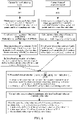
- a sampling rate processing method is provided.
- the sampling rate processing method specifically includes the following steps:
- S202 Obtain a first audio signal recorded by a transmitting device, the first audio signal being recorded according to an initial sampling rate of the transmitting device.
- the initial sampling rate is a sampling rate that is initially set.
- the initial sampling rate is set by the transmitting device according to a voice quality requirement of a target service.
- the target service refers to a service of voice data interaction between the transmitting device and a receiving device. Different services have different voice quality requirements.
- the target service includes a call service, a live streaming service, or a broadcast service.
- the transmitting device may set a specific value of the initial sampling rate, such as 11 kHz, 22 kHz, or 48 kHz, according to voice quality requirements of different services.
- the first audio signal may be an audio signal that is acquired by the transmitting device in real time and transmitted to the receiving device in real time during a real-time voice interaction between the transmitting device and the receiving device, for example, a voice call signal transmitted by the transmitting device to the receiving device in real time during a real-time voice call between the transmitting device and the receiving device.
- the first audio signal may be alternatively a test signal recorded by the transmitting device in advance or in real time, for example, an audio signal used for testing that is recorded in advance or currently before the transmitting device interacts with the receiving device based on the target service.
- the obtaining a first audio signal recorded by a transmitting device includes: obtaining the first audio signal recorded and encoded by the transmitting device.
- the transmitting device may set an initial sampling rate according to a service requirement, and obtain a first audio signal through recording according to the initial sampling rate; and after voice pre-processing, voice encoding and channel encoding are performed on the first audio signal, transmit the first audio signal to the receiving device, or transmit the first audio signal to a server, and the server forwards the first audio signal to the receiving device.
- the audio signal between the devices is transmitted based on the Internet.
- a real-time voice call connection is established between the transmitting device and the receiving device, and the transmitting device sets an initial sampling rate according to a requirement of the current voice call connection, to make a call, that is, records a real-time voice signal (that is, a first audio signal) by using the initial sampling rate.
- the transmitting device acquires voice of a user of the transmitting device according to the initial sampling rate by using a microphone, to obtain the real-time voice signal.
- S204 Obtain a second audio signal recorded by a receiving device during playing of the first audio signal, the second audio signal being recorded according to the initial sampling rate.
- the receiving device plays the first audio signal through a loudspeaker, and obtains the second audio signal through recording during playing of the first audio signal.
- the second audio signal is an audio signal obtained by recording the first audio signal
- a recorded sampling rate is the initial sampling rate. In other words, sampling rates used during recording of the first audio signal and the second audio signal are the same.
- the receiving device may start recording when starting playing the first audio signal. In this way, if noise signals exist in the recorded second audio signal, the noise signals may be removed in a subsequent processing step.
- the noise signals are other signals than the first audio signal, such as ambient sound signals or call response signals.
- the receiving device may alternatively detect noise signals during playing of the first audio signal, and then start recording when the detected noise signals meet a recording condition. In this way, noise signals in the second audio signal can be minimized, thereby avoiding increasing processing operations in a subsequent process.
- the obtaining a second audio signal recorded by a receiving device during playing of the first audio signal includes: obtaining the second audio signal recorded by the receiving device during decoding and playing of the first audio signal.
- the receiving device may perform channel decoding, voice decoding, and voice post-processing on the first audio signal and then play the first audio signal. Further, during playing of the first audio signal, a computer device records the first audio signal to obtain the second audio signal.
- S206 Determine a frequency response gain value of the receiving device according to a power spectrum of the first audio signal and a power spectrum of the second audio signal.
- the power spectrum is short for a power spectrum density function, and is defined as signal power in unit frequency band.
- the power spectrum represents changes of the signal power with a frequency, that is, distribution of the signal power in a frequency domain.
- the power spectrum represents a change relationship between the signal power and the frequency.
- a frequency response is a relationship between, when an audio output component of a terminal device outputs an audio signal, a sound pressure and a phase of the audio output device and a frequency of the audio signal.
- the frequency response reflects a response capability of the audio output component to audio signals of different frequencies.
- the frequency response gain value is a gain factor of signal power of a playback signal and a recording signal of the audio output component of the terminal device at the same frequency point.
- the receiving device may perform Fourier transform on the first audio signal and the second audio signal respectively, to obtain respective corresponding power spectra, and perform frequency response analysis according to the power spectra of the two signals, to obtain the frequency response gain value of the receiving device. It may be understood that the frequency response analysis is performed frame by frame by the receiving device according to the power spectra. Therefore, the receiving device may start performing frequency response analysis during recording of the second audio signal, or perform frequency response analysis after recording of the second audio signal ends.
- the determining a frequency response gain value of the receiving device according to a power spectrum of the first audio signal and a power spectrum of the second audio signal includes: determining the frequency response gain value of the receiving device according to the power spectrum of the decoded first audio signal and the power spectrum of the second audio signal.
- the receiving device may specifically perform frequency response analysis between an audio signal on which voice decoding has been performed and a signal obtained by recording and playing the audio signal, to obtain the frequency response gain value of the receiving device.
- signal synchronization may be performed before the frequency response analysis.
- S208 Determine a target sampling rate of the transmitting device according to the initial sampling rate and the frequency response gain value.
- the target sampling rate is a sampling rate that is used for acquiring an audio signal when a voice interaction of acoustic capability matching is performed between the transmitting device and the receiving device and that is intended to be obtained in the embodiments of this application.
- the transmitting device acquires the audio signal according to the target sampling rate and transmits the audio signal to the receiving device for playback.
- calculation processing resources and storage resources of the transmitting device can be effectively used; on the other hand, a better playback effect can be obtained when the audio signal is played at the receiving device.
- network transmission resources can be effectively used.
- S208 may include: determining a playback frequency band upper limit value of the receiving device according to the initial sampling rate and the frequency response gain value; and generating the target sampling rate of the transmitting device according to the playback frequency band upper limit value.
- the playback frequency band upper limit value of the receiving device represents an upper limit value of a frequency band that the receiving device can play effectively and actually, such as 12 kHz or 24 kHz.
- the target sampling rate may be twice the playback frequency band upper limit value, or slightly greater than twice the playback frequency band upper limit value. For example, if the playback frequency band upper limit value is 12 kHz, the target sampling rate may be 2 ⁇ 12 kHz, or slightly greater than 2 ⁇ 12 kHz.
- the process of determining the playback frequency band upper limit value of the receiving device and the process of generating the target sampling rate of the transmitting device may be both performed on the transmitting device or the receiving device.
- the receiving device may alternatively determine a playback frequency band upper limit value of the receiving device, and then transmit the playback frequency band upper limit value to the transmitting device, and the transmitting device generates the target sampling rate of the transmitting device.
- the receiving device may feedback the obtained frequency response gain value to the transmitting device, and the transmitting device adjusts the sampling rate according to the frequency response gain value.
- the determining a target sampling rate of the transmitting device according to the initial sampling rate and the frequency response gain value includes: determining an upper boundary value and a lower boundary value of a test frequency range based on the initial sampling rate; determining, in the test frequency range, a target frequency used as the playback frequency band upper limit value of the receiving device, an average power spectrum in a range from the lower boundary value to the target frequency being less than an average power spectrum in a range from the target frequency to the upper boundary value, and the frequency response gain value being used for calculating the average power spectrum; and generating the target sampling rate of the transmitting device according to the playback frequency band upper limit value.
- the test frequency range refers to a frequency range in which the playback frequency band upper limit value of the receiving device is found. In other words, the playback frequency band upper limit value of the receiving device is determined in the frequency range.
- the test frequency range is calculated based on the initial sampling rate. For example, 1/20 of the initial sampling rate is used as the lower boundary value of the test frequency range, and 1/2 of the initial sampling rate is used as the upper boundary value of the test frequency range.
- the target frequency divides the test frequency range into two intervals, where an interval having a lower frequency value may be referred to as a low-frequency interval, and an interval having a higher frequency value may be referred to as a high-frequency interval.
- the receiving device may respectively calculate a power spectrum average value of the low-frequency interval and a power spectrum average value of the high-frequency interval based on the frequency response gain value obtained through calculation in the foregoing steps, to find a target frequency to make the power spectrum average value of the high-frequency interval far greater than the power spectrum average value of the low-frequency interval.
- the target frequency may represent an upper limit value of a frequency band that a playback device can play effectively and actually.
- the receiving device may determine the local playback frequency band upper limit value by using the following codes:
- m3 is a frequency point number of the lower boundary value of the test frequency range
- m4 is a frequency point number of the upper boundary value of the test frequency range.
- T is a calculation cycle of calculating the playback frequency band upper limit value, that is, the receiving device performs the foregoing code after the first audio signal is played T frames.
- the receiving device may perform the code only once, or perform the code once every T frames.
- C is constant, and may generally be set to a smaller constant.
- an average frequency response gain avgl of the low-frequency interval may be far greater than an average frequency response gain avgh of the high-frequency interval.
- Truepos is a final frequency point number of the playback frequency band upper limit value of the receiving device.
- the upper limit value of the frequency band that the receiving device can play effectively and actually may be determined based on the initial sampling rate of the transmitting device and a result of the frequency response analysis, so that the target sampling rate of the transmitting device may be generated based on the frequency band upper limit value.
- the target sampling rate is used for language sampling of a voice call between the transmitting device and the receiving device, not only calculation processing resources, storage resources, and network transmission resources of the transmitting device can be effectively used, but also the playback effect of the receiving device can be improved, thereby avoiding distortion.
- communication may be two-way communication between two parties (A and B), and one of the two communication parties (A or B) may be used as a transmitter or a receiver. Therefore, when the communication party A transmits an audio signal to the communication party B for communication, the communication party B may be used as the receiver to perform the sampling rate processing method provided in the embodiments of this application, and feedback an obtained playback frequency band upper limit value of the communication party B to the communication party A. The communication party A may subsequently generate a target sampling rate according to the playback frequency band upper limit value of the communication party B, and sample, according to the target sampling rate, a voice communication signal to be transmitted to the communication party B.
- the communication party A When the communication party B transmits a response audio signal to the communication party A for communication, the communication party A may be used as the receiver to perform the sampling rate processing method provided in the embodiments of this application, and feedback an obtained playback frequency band upper limit value of the communication party A to the communication party B.
- the communication party B may subsequently generate a target sampling rate according to the playback frequency band upper limit value of the communication party A, and sample, according to the target sampling rate, a voice communication signal to be transmitted to the communication party A.
- the transmitting device may adjust a sampling rate of audio recording based on an actual playback capability of the only one receiving device. That is, the transmitting device obtains a playback frequency band upper limit value transmitted by the receiving device, generates a target sampling rate matching the actual playback capability of the receiving device according to the playback frequency band upper limit value, and then acquires an audio signal according to the target sampling rate and transmits the audio signal to the receiving device for playback.
- the transmitting device may adjust a sampling rate of audio recording based on an average actual playback capability (an average playback frequency band upper limit value) of the more than one receiving device; or adjust a sampling rate of audio recording based on an actual playback capability of a receiving device that has a strongest actual playback capability (a maximum playback frequency band upper limit value) in the more than one receiving device; or adjust a sampling rate of audio recording based on an actual playback capability of the largest quantity of receiving devices that have the same actual playback capability in the more than one receiving device, or the like.
- an average actual playback capability an average playback frequency band upper limit value
- the sampling rate processing method from the perspective of acoustic capability matching from the transmitting device to the receiving device, frequency spectrum analysis is performed based on the first audio signal recorded by the transmitting device and the second audio signal obtained by the receiving device recording the first audio signal, and the target sampling rate matching with the playback capability of the receiving device is determined.
- the first audio signal and the second audio signal are recorded according to the initial sampling rate, and the target sampling rate matching the actual playback capability of the receiving device is determined based on the initial sampling rate and the frequency response gain value of the receiving device.
- the target sampling rate is used for language sampling of a voice call between the transmitting device and the receiving device, not only calculation processing resources, storage resources, and network transmission resources of the transmitting device can be effectively used, but also the playback effect of the receiving device can be improved, thereby avoiding distortion.
- the obtaining a first audio signal recorded by a transmitting device includes: obtaining the first audio signal transmitted through a communication connection.
- the determining a target sampling rate of the transmitting device according to the initial sampling rate and the frequency response gain value includes: determining a playback frequency band upper limit value of the receiving device according to the initial sampling rate and the frequency response gain value; and generating the target sampling rate of the transmitting device according to the playback frequency band upper limit value.
- the sampling rate processing method further includes: continuing recording a third audio signal and continuing transmitting the third audio signal through the communication connection after a sampling rate of recording an audio signal is adjusted from the initial sampling rate to the target sampling rate.
- the communication connection is a connection for audio signal communication between the transmitting device and the receiving device.
- the communication connection may be a voice call connection, a live streaming data communication connection, a broadcast data communication connection, or the like.
- Live streaming data includes live streaming voice data.
- the communication connection may be a one-way communication connection such as the live streaming data communication connection, or a two-way communication connection such as the voice call connection.
- the transmitting device may record the first audio signal in real time by using the initial sampling rate, and transmit the first audio signal to the receiving device in real time based on the communication connection, for example, a real-time voice data transmission process of a voice call between two parties. In this way, the receiving device receives the first audio signal through the communication connection.
- the receiving device may obtain the playback frequency band upper limit value of the receiving device according to the initial sampling rate and the frequency response gain value. After obtaining the playback frequency band upper limit value, the receiving device may feedback the playback frequency band upper limit value to the transmitting device, and the transmitting device generates the target sampling rate according to the playback frequency band upper limit value, and continues recording the third audio signal and continues transmitting the third audio signal through the communication connection after the sampling rate of recording the audio signal is adjusted from the initial sampling rate to the target sampling rate.
- the receiving device may generate the target sampling rate based on the playback frequency band upper limit value, and feedback the target sampling rate to the transmitting device. Then, after generating the target sampling rate based on the playback frequency band upper limit value, the transmitting device continues recording the third audio signal and continues transmitting the third audio signal through the communication connection after the sampling rate of recording the audio signal is adjusted from the initial sampling rate to the target sampling rate.
- the first (third) audio signal may include a voice communication signal to be transmitted by the transmitting device to the receiving device.
- the first (third) audio signal may be a digital signal or an analog signal.
- the first (third) audio signal may be specifically a voice signal obtained by the transmitting device acquiring voice of a speaker through a microphone.
- the transmitting device establishes a real-time voice call connection to the receiving device, and the transmitting device may obtain a first audio signal by recording voice of a speaker in real time through a microphone, and transmit the first audio signal to the receiving device in real time based on the real-time voice call connection.
- the receiving device obtains a local playback frequency band upper limit value based on the sampling rate processing method provided in the foregoing embodiments, and feeds back the playback frequency band upper limit value to the transmitting device.
- the transmitting device generates a target sampling rate according to the playback frequency band upper limit value, and continues recording the voice of the speaker based on the target sampling rate, to continue the voice call.
- an actual sampling rate of a transmitter is adjusted in real time in a real-time communication process, so that acoustic capability matching between two communication parties can be effectively implemented, communication quality can be improved, and no other time resources are occupied.
- the transmitting device may establish a communication test connection to the receiving device, and the transmitting device may record a first audio signal in real time or obtain a first audio signal recorded in advance, and transmit the first audio signal to the receiving device based on the communication test connection.
- the receiving device obtains a local playback frequency band upper limit value based on the sampling rate processing method provided in the foregoing embodiments, and feeds back the playback frequency band upper limit value to the transmitting device.
- the transmitting device generates a target sampling rate according to the playback frequency band upper limit value. In this way, when the transmitting device formally communicates with the receiving device subsequently, the transmitting device may record a communication signal by using the target sampling rate, and communicate with the receiving device.
- the target sampling rate is obtained in advance by matching an acoustic capability between two communication parties, and therefore can be directly used in actual communication, thereby improving call efficiency and call quality.
- the sampling rate processing method further includes: determining a delay value between the first audio signal and the second audio signal; and performing, after the first audio signal and the second audio signal are synchronized according to the delay value, the step of determining a frequency response gain value of the receiving device according to a power spectrum of the first audio signal and a power spectrum of the second audio signal.
- performing frequency response analysis on a playback device is to perform comparison analysis on a playback signal of the playback device and a recording signal of the playback device in a frequency domain, and divide a power spectrum of the playback signal and a power spectrum of the recording signal at the same frequency point to obtain gain factors of frequency points. These gain factors are a frequency response value (that is, the frequency response gain value) of the playback device.
- the frequency response analysis is to obtain acoustic output capabilities of the playback device at different frequency points by analyzing frequency response gains of the playback device.
- a recording signal (that is, the second audio signal) of the receiving device is acquired by a microphone of the receiving device after a voice decoding signal (that is, the first audio signal) is internally processed by the receiving device and then sound thereof is transmitted in the air through a loudspeaker.
- a specific time difference that is, a delay
- the two signals are not synchronous, and spectrum comparison cannot be directly performed. Therefore, signal synchronization needs to be first performed, and then frequency response analysis is performed on the synchronized signals. The synchronization needs to obtain a delay value between the voice decoding signal and the recording signal, and the delay value is actually an echo delay value of the receiving device.
- the determining a delay value between the first audio signal and the second audio signal includes: obtaining a first power spectrum and a second power spectrum, the first power spectrum including a power spectrum of a current frame of first audio signal and a power spectrum of more than one frame of first audio signal before the current frame of first audio signal, and the second power spectrum including a power spectrum of a current frame of second audio signal; performing an XOR accumulation operation according to the first power spectrum and the second power spectrum, to obtain candidate delay values; and selecting an echo delay value between the first audio signal and the second audio signal from the candidate delay values.
- the receiving device may perform Fourier transform (such as fast Fourier transform (FFT)) on frames of first audio signal and frames of second audio signal, and then obtain power spectra of the frames of audio signal based on Fourier transform results. Then, an XOR accumulation operation is performed on the power spectrum of the current frame of first audio signal, the power spectrum of more than one frame of first audio signal before the current frame of first audio signal, and the power spectrum of the current frame of second audio signal.
- Fourier transform such as fast Fourier transform (FFT)
- FFT fast Fourier transform
- the performing an XOR accumulation operation according to the first power spectrum and the second power spectrum, to obtain candidate delay values includes: obtaining a first binarization array corresponding to the first audio signal according to the first power spectrum and smoothing values of frequency points in the first power spectrum; obtaining a second binarization array corresponding to the second audio signal according to the second power spectrum and smoothing values of frequency points in the second power spectrum; and performing the XOR accumulation operation according to the first binarization array and the second binarization array, to obtain the candidate delay values.
- the first audio signal is a reference signal
- the second audio signal is an acquisition signal.
- m1 and m2 respectively correspond to an effective frequency range of echo delay analysis, and frequency point number values corresponding to 500 Hz and 1.2 kHz are generally selected.
- Capsm(j) 0.98 ⁇ Capsm(j) + 0.02 ⁇ Cap ( j )
- the receiving device may perform binarization processing based on Ref(j) and Refsm(j), and perform binarization processing based on Cap(j) and Capsm(j). For the current frame of first audio signal, the receiving device may compare Ref(j) with Refsm(j). If Ref(j) is greater than Refsm(j) , the frequency point j is set to a first value (such as 1); otherwise, the frequency point j is set to a second value (such as 0), so that binarization values corresponding to frequency points of the current frame of first audio signal are obtained, and constitute an binarization array Refb(j) corresponding to the current frame of first audio signal. The receiving device may perform the same processing on the current frame of second audio signal, to obtain a binarization array Capb(j) corresponding to the current frame of second audio signal.
- the receiving device may obtain a binarization array of n frames of first audio signal before the current frame of first audio signal, to obtain an array from Refb(j) to Refbbuf(i)(j) , where i ⁇ [0, n - 1], and a size of the array is n ⁇ m.
- Refbbuf(i)(j) represents a binarization value of a j th frequency point of an i th frame of first audio signal.
- CxorR(i) represents an XOR accumulation operation result corresponding to the i th frame
- Xor represents the XOR accumulation operation
- the receiving device may select the candidate delay values in the smoothing XOR accumulation operation result. Specifically, the receiving device may select a minimum smoothing XOR accumulation operation result from smoothing XOR accumulation operation results corresponding to the n frames, determine delay values corresponding to frame numbers corresponding to the minimum smoothing XOR accumulation operation result as the candidate delay values, and select a final echo delay value in the candidate delay values. For example, an i value corresponding to a minimum value in n CxorRsm ( i ) values is used as a candidate delay value.
- the candidate delay value may be selected as the final echo delay value.
- smoothing processing is performed on the power spectrum to obtain binarization data for subsequent calculation, which can reduce the interference, and improve calculation accuracy.
- the receiving device may offset the first audio signal by D frames in a time domain, so that the first audio signal is basically synchronized with the second audio signal.
- the frequency response analysis is performed after the first audio signal and the second audio signal are synchronized, which improves accuracy of the frequency response analysis, thereby helping improve validity of subsequent data processing.
- the determining a frequency response gain value of the receiving device according to a power spectrum of the first audio signal and a power spectrum of the second audio signal includes: determining a frequency response gain value of the receiving device on each synchronized audio frame sequentially from the first synchronized audio frame of the first audio signal and the second audio signal according to the power spectrum of the first audio signal and the power spectrum of the second audio signal; and when a quantity of synchronized audio frames reaches a preset quantity of frames, the determining a playback frequency band upper limit value of the receiving device according to the initial sampling rate and the frequency response gain value includes: determining the playback frequency band upper limit value of the receiving device according to the initial sampling rate and a frequency response gain value of the receiving device on a current synchronized audio frame.
- the receiving device may perform Fourier transform on the synchronized first audio signal and second audio signal, to obtain power spectra of frames of audio signal in the first audio signal and power spectra of frames of audio signal in the second audio signal; and then the power spectra are calculated, to obtain power spectrum values S ref ( j , k ) of frequency points of the frames of audio signal in the first audio signal and power spectrum values S cap ( j , k ) of frequency points of the frames of audio signal in the second audio signal, where j is a frame number, and k is a frequency point number.
- the determining a frequency response gain value of the receiving device on each synchronized audio frame sequentially from the first synchronized audio frame of the first audio signal and the second audio signal according to the power spectrum of the first audio signal and the power spectrum of the second audio signal includes: using each synchronized audio frame sequentially from the first synchronized audio frame of the first audio signal and the second audio signal as the current synchronized audio frame; using a frequency response gain value of a previous synchronized audio frame of the current synchronized audio frame as the frequency response gain value of the current synchronized audio frame when a power spectrum value of the current synchronized audio frame of the first audio signal does not exceed a preset power spectrum value; and calculating the frequency response gain value of the current synchronized audio frame according to a frequency response gain value of a previous synchronized audio frame of the current synchronized audio frame and a ratio of the power spectrum value of the first audio signal to a power spectrum value of the second audio signal on the current synchronized audio frame when the power spectrum value of the current synchronized audio
- the receiving device may obtain each frame of first audio signal and a frequency response gain value of a frame of second audio signal that is synchronized with the frame of first audio signal.
- the receiving device may use each synchronized audio frame sequentially from the first synchronized audio frame of the first audio signal and the second audio signal as the current synchronized audio frame, and compare the power spectrum value S cap ( j, k ) of the current synchronized audio frame of the first audio signal with a preset power spectrum value S 0 .
- the power spectrum value of the current synchronized audio frame of the first audio signal does not exceed the preset power spectrum value ( S cap ( j , k) ⁇ S 0 )
- the frequency response gain value of the previous synchronized audio frame of the current synchronized audio frame is used as the frequency response gain value of the current synchronized audio frame.
- the frequency response gain value of the previous synchronized audio frame of the current synchronized audio frame is compared with the ratio of the power spectrum value of the first audio signal to the power spectrum value of the second audio signal on the current synchronized audio frame.
- the preset power spectrum value S 0 is a constant used for avoiding an inaccurate calculation value due to an excessively small power spectrum value S ref of the first audio signal.
- j is a frame number of an audio frame
- k is a frequency point number
- S cap ( j , k ) is a power spectrum value of a k th frequency point of a j th frame in the first audio signal
- S ref ( j , k ) is a power spectrum value of a k th frequency point of a j th frame in the second audio signal
- S 0 is a constant.
- the receiving device may determine the playback frequency band upper limit value of the receiving device according to the initial sampling rate and the frequency response gain value of the receiving device on the current synchronized audio frame. For example, if the preset quantity of frames is T frames, when a quantity of frames of synchronized audio signals of the first audio signal and the second audio signal reaches the T frames, the receiving device may determine the playback frequency band upper limit value of the receiving device according to the initial sampling rate and the frequency response gain value of the receiving device on the current synchronized audio frame.
- the receiving device may alternatively use the preset quantity of frames as a calculation cycle, and each time the preset quantity of frames are played, the receiving device determines the playback frequency band upper limit value of the receiving device according to the initial sampling rate and the frequency response gain value of the receiving device on the current synchronized audio frame. For example, if the preset quantity of frames is T frames, when the quantity of frames of synchronized audio signals of the first audio signal and the second audio signal reaches the T frames, 2T frames, 3T frames, ..., and nT frames, the receiving device determines the playback frequency band upper limit value of the receiving device according to the initial sampling rate and the frequency response gain value of the receiving device on the current synchronized audio frame.
- the receiving device when playing of the first audio signal reaches the preset quantity of frames, may further determine the playback frequency band upper limit value of the receiving device according to the initial sampling rate and the frequency response gain value of the receiving device on the current synchronized audio frame.
- the receiving device may alternatively use the preset quantity of frames as a calculation cycle, and each time the preset quantity of frames of the first audio signal are played, the receiving device determines the playback frequency band upper limit value of the receiving device according to the initial sampling rate and the frequency response gain value of the receiving device on the current synchronized audio frame.
- the playback capability of the receiving device is estimated after a specific quantity of frames, which can effectively avoid noise interference and improve estimation accuracy.
- a sampling rate processing system including a transmitting device and a receiving device.
- the transmitting device is configured to transmit a recorded first audio signal to the receiving device, the first audio signal being recorded according to an initial sampling rate of the transmitting device;
- the receiving device is configured to play the first audio signal and record a second audio signal during playing of the first audio signal, the second audio signal being recorded according to the initial sampling rate;
- the receiving device is further configured to determine a frequency response gain value of the receiving device according to a power spectrum of the first audio signal and a power spectrum of the second audio signal; and the receiving device is further configured to determine a target sampling rate of the transmitting device according to the initial sampling rate and the frequency response gain value.
- the transmitting device is further configured to establish a communication connection to the receiving device, record the first audio signal according to the initial sampling rate after the communication connection is established, and transmit the first audio signal through the communication connection;
- the receiving device is further configured to receive the first audio signal through the communication connection;
- the receiving device is further configured to determine a playback frequency band upper limit value of the receiving device according to the initial sampling rate and the frequency response gain value, and transmit the playback frequency band upper limit value to the transmitting device;
- the transmitting device is further configured to generate the target sampling rate based on the playback frequency band upper limit value, and continue recording a third audio signal and continue transmitting the third audio signal through the communication connection after a sampling rate of recording an audio signal is adjusted from the initial sampling rate to the target sampling rate.
- the receiving device is further configured to determine a delay value between the first audio signal and the second audio signal; and perform, after the first audio signal and the second audio signal are synchronized according to the delay value, the step of determining a frequency response gain value of the receiving device according to a power spectrum of the first audio signal and a power spectrum of the second audio signal.
- the receiving device is further configured to obtain a first power spectrum and a second power spectrum, the first power spectrum including a power spectrum of a current frame of first audio signal and a power spectrum of more than one frame of first audio signal before the current frame of first audio signal, and the second power spectrum including a power spectrum of a current frame of second audio signal; perform an XOR accumulation operation according to the first power spectrum and the second power spectrum, to obtain candidate delay values; and select an echo delay value between the first audio signal and the second audio signal from the candidate delay values.
- the receiving device is further configured to obtain a first binarization array corresponding to the first audio signal according to the first power spectrum and smoothing values of frequency points in the first power spectrum; obtain a second binarization array corresponding to the second audio signal according to the second power spectrum and smoothing values of frequency points in the second power spectrum; and perform the XOR accumulation operation according to the first binarization array and the second binarization array, to obtain the candidate delay values.
- the receiving device is further configured to determine a frequency response gain value of the receiving device on each synchronized audio frame sequentially from the first synchronized audio frame of the first audio signal and the second audio signal according to the power spectrum of the first audio signal and the power spectrum of the second audio signal; and determine the playback frequency band upper limit value of the receiving device according to the initial sampling rate and a frequency response gain value of the receiving device on a current synchronized audio frame when a quantity of synchronized audio frames reaches a preset quantity of frames.
- the receiving device is further configured to use each synchronized audio frame sequentially from the first synchronized audio frame of the first audio signal and the second audio signal as the current synchronized audio frame; use a frequency response gain value of a previous synchronized audio frame of the current synchronized audio frame as the frequency response gain value of the current synchronized audio frame when a power spectrum value of the current synchronized audio frame of the first audio signal does not exceed a preset power spectrum value; and calculate the frequency response gain value of the current synchronized audio frame according to a frequency response gain value of a previous synchronized audio frame of the current synchronized audio frame and a ratio of the power spectrum value of the first audio signal to a power spectrum value of the second audio signal on the current synchronized audio frame when the power spectrum value of the current synchronized audio frame of the first audio signal exceeds the preset power spectrum value.
- the receiving device is further configured to determine an upper boundary value and a lower boundary value of a test frequency range based on the initial sampling rate; determine, in the test frequency range, a target frequency used as the playback frequency band upper limit value of the receiving device, an average power spectrum in a range from the lower boundary value to the target frequency being less than an average power spectrum in a range from the target frequency to the upper boundary value, and the frequency response gain value being used for calculating the average power spectrum; and generate the target sampling rate of the transmitting device according to the playback frequency band upper limit value.
- the receiving device is further configured to obtain the first audio signal recorded and encoded by the transmitting device; obtain the second audio signal recorded by the receiving device during decoding and playing of the first audio signal; and determine the frequency response gain value of the receiving device according to the power spectrum of the decoded first audio signal and the power spectrum of the second audio signal.
- sampling rate processing system from the perspective of acoustic capability matching from the transmitting device to the receiving device, frequency spectrum analysis is performed based on the first audio signal recorded by the transmitting device and the second audio signal obtained by the receiving device recording the first audio signal, and the target sampling rate matching with the playback capability of the receiving device is determined.
- the first audio signal and the second audio signal are recorded according to the initial sampling rate, and the target sampling rate matching the actual playback capability of the receiving device is determined based on the initial sampling rate and the frequency response gain value of the receiving device.
- the target sampling rate is used for language sampling of a voice call between the transmitting device and the receiving device, not only calculation processing resources, storage resources, and network transmission resources of the transmitting device can be effectively used, but also the playback effect of the receiving device can be improved, thereby avoiding distortion.
- the sampling rate processing system further includes a server, and data transmission between the transmitting device and the receiving device may be transferred through the server.
- the transmitting device transmits the first audio signal to the server, and then the server forwards the first audio signal to the receiving device.
- the receiving device transmits the playback frequency band upper limit value to the server, and then the server forwards the playback frequency band upper limit value to the transmitting device.
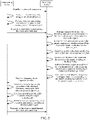
- a sequence diagram of a processing method applied to the sampling rate processing system is as follows:
- the transmitting device may obtain the first (third) audio signal by a microphone recording call voice of a speaker.
- the first (third) audio signal transmitted by the transmitting device is an audio signal on which voice pre-processing, voice encoding, and channel encoding have been performed.
- the first (third) audio signal played by the receiving device is an audio signal on which channel decoding, voice decoding, and voice post-processing have been performed.
- the first (third) audio signal of which the receiving device calculates a delay value, performs synchronization, and performs frequency response analysis is the first (third) audio signal on which channel decoding and voice decoding have been performed.
- Audio signal transmission between the transmitting device and the receiving device may be transferred through the server.
- the transmitting device when an acoustic playback capability of the receiving device is unknown, the transmitting device usually sets an initial audio sampling rate according to a playback capability of the transmitting device, such as a sampling rate of 48 kHz. However, actually, the receiving device may only support a playback capability with a lower sampling rate such as 16 kHz.
- a playback device uses the sampling rate of 48 kHz for processing, but signal energy of a frequency response of a final voice actually played in a frequency range of 8 kHz-24 kHz (a signal frequency bandwidth is half of a sampling frequency rate according to Shannon's sampling theorem) is almost zero, that is, a high frequency of this part has no actual output; 2)
- the playback device sets a voice processing sampling rate value of the playback device, for example, to 16 kHz. Therefore, the playback device performs signal processing after the sampling rate of 48 kHz of the signal on which voice decoding has been performed is forcibly reduced to 16 kHz, and the final audio signal reaching the playback device has only the sampling rate of 16 kHz. Consequently, calculation processing resources and storage resources are wasted.
- a high sampling rate causes an increase of a transmission bandwidth, transmission quality in high bandwidth occupancy may be affected by bandwidth competition of an actual network, resulting in a decrease in voice quality of a call.
- frequency response analysis is performed based on the first audio signal recorded by the transmitting device and the second audio signal obtained by the receiving device recording the first audio signal, and the playback frequency band upper limit value of the receiving device is determined.
- the first audio signal and the second audio signal are recorded according to the initial sampling rate, and an upper limit value of a frequency band that the receiving device can effectively and actually play is determined based on the initial sampling rate. In this way, the target sampling rate of the transmitting device generated based on the playback frequency band upper limit value matches the actual playback capability of the receiving device.
- the target sampling rate is used for language sampling of a voice call between the transmitting device and the receiving device, not only calculation processing resources, storage resources, and network transmission resources of the transmitting device can be effectively used, but also the playback effect of the receiving device can be improved, thereby avoiding distortion
- steps are displayed sequentially according to the instructions of the arrows in the flowcharts of the embodiments, these steps are not necessarily performed sequentially according to the sequence instructed by the arrows. Unless otherwise explicitly specified in this application, execution of the steps is not strictly limited, and the steps may be performed in other sequences. Moreover, at least some of the steps in each embodiment may include a plurality of sub-steps or a plurality of stages. The sub-steps or stages are not necessarily performed at the same moment but may be performed at different moments. Execution of the sub-steps or stages is not necessarily sequentially performed, but may be performed alternately with other steps or at least some of sub-steps or stages of other steps.
- a sampling rate processing apparatus 600 is provided.
- the sampling rate processing apparatus 600 includes: an obtaining module 601 and an analysis module 602. All or some of the modules included in the sampling rate processing apparatus may be implemented by software, hardware, or a combination thereof.
- the obtaining module 601 is configured to obtain a first audio signal recorded by a transmitting device, the first audio signal being recorded according to an initial sampling rate of the transmitting device; and obtain a second audio signal recorded by a receiving device during playing of the first audio signal, the second audio signal being recorded according to the initial sampling rate.
- the analysis module 602 is configured to determine a frequency response gain value of the receiving device according to a power spectrum of the first audio signal and a power spectrum of the second audio signal; and determine a target sampling rate of the transmitting device according to the initial sampling rate and the frequency response gain value.
- the obtaining module 601 is further configured to obtain the first audio signal transmitted through a communication connection.
- the analysis module 02 is further configured to determine a playback frequency band upper limit value of the receiving device according to the initial sampling rate and the frequency response gain value; and generate the target sampling rate of the transmitting device according to the playback frequency band upper limit value.
- the sampling rate processing apparatus 600 further includes: a feedback module 603, configured to continue recording a third audio signal and continue transmitting the third audio signal through the communication connection after a sampling rate of recording an audio signal is adjusted from the initial sampling rate to the target sampling rate.
- the analysis module 602 is further configured to determine a delay value between the first audio signal and the second audio signal; and determine the frequency response gain value of the receiving device according to the power spectrum of the first audio signal and the power spectrum of the second audio signal after the first audio signal and the second audio signal are synchronized according to the delay value.
- the analysis module 602 is further configured to obtain a first power spectrum and a second power spectrum, the first power spectrum including a power spectrum of a current frame of first audio signal and a power spectrum of more than one frame of first audio signal before the current frame of first audio signal, and the second power spectrum including a power spectrum of a current frame of second audio signal; perform an XOR accumulation operation according to the first power spectrum and the second power spectrum, to obtain candidate delay values; and select an echo delay value between the first audio signal and the second audio signal from the candidate delay values.
- the analysis module 602 is further configured to obtain a first binarization array corresponding to the first audio signal according to the first power spectrum and smoothing values of frequency points in the first power spectrum; obtain a second binarization array corresponding to the second audio signal according to the second power spectrum and smoothing values of frequency points in the second power spectrum; and perform the XOR accumulation operation according to the first binarization array and the second binarization array, to obtain the candidate delay values.
- the analysis module 602 is further configured to determine a frequency response gain value of the receiving device on each synchronized audio frame sequentially from the first synchronized audio frame of the first audio signal and the second audio signal according to the power spectrum of the first audio signal and the power spectrum of the second audio signal; and determine the playback frequency band upper limit value of the receiving device according to the initial sampling rate and a frequency response gain value of the receiving device on a current synchronized audio frame.
- the analysis module 602 is further configured to use each synchronized audio frame as the current synchronized audio frame from the first synchronized audio frame of the first audio signal and the second audio signal sequentially; use a frequency response gain value of a previous synchronized audio frame of the current synchronized audio frame as the frequency response gain value of the current synchronized audio frame when a power spectrum value of the current synchronized audio frame of the first audio signal does not exceed a preset power spectrum value; and calculate the frequency response gain value of the current synchronized audio frame according to a frequency response gain value of a previous synchronized audio frame of the current synchronized audio frame and a ratio of the power spectrum value of the first audio signal to a power spectrum value of the second audio signal on the current synchronized audio frame when the power spectrum value of the current synchronized audio frame of the first audio signal exceeds the preset power spectrum value.
- the analysis module 602 is further configured to determine an upper boundary value and a lower boundary value of a test frequency range based on the initial sampling rate; determine, in the test frequency range, a target frequency used as the playback frequency band upper limit value of the receiving device, an average power spectrum in a range from the lower boundary value to the target frequency being less than an average power spectrum in a range from the target frequency to the upper boundary value, and the frequency response gain value being used for calculating the average power spectrum; and generate the target sampling rate of the transmitting device according to the playback frequency band upper limit value.
- the obtaining module 601 is further configured to obtain the first audio signal recorded and encoded by the transmitting device; and obtain the second audio signal recorded by the receiving device during decoding and playing of the first audio signal.
- the analysis module 602 is further configured to determine the frequency response gain value of the receiving device according to the power spectrum of the decoded first audio signal and the power spectrum of the second audio signal.
- the sampling rate processing apparatus performs, from the perspective of acoustic capability matching from the transmitting device to the receiving device, frequency spectrum analysis based on the first audio signal recorded by the transmitting device and the second audio signal obtained by the receiving device recording the first audio signal, and determines the playback frequency band upper limit value of the receiving device.
- the first audio signal and the second audio signal are recorded according to the initial sampling rate, and an upper limit value of a frequency band that the receiving device can effectively and actually play is determined based on the initial sampling rate.
- the target sampling rate of the transmitting device generated based on the playback frequency band upper limit value is used for language sampling of a voice call between the transmitting device and the receiving device, not only calculation processing resources, storage resources, and network transmission resources of the transmitting device can be effectively used, but also the playback effect of the receiving device can be improved, thereby avoiding distortion.
- FIG. 8 is a diagram of an internal structure of a computer device according to an embodiment.
- the computer device may be specifically the terminal 110 (or the server 120) in FIG. 1 .
- the computer device includes a processor, a memory, a network interface, an input apparatus, and a display screen that are connected through a system bus.
- the memory includes a non-transitory storage medium and an internal memory.
- the non-transitory storage medium of the computer device stores an operating system and may further store a computer program.
- the computer program when executed by the processor, may cause the processor to perform the sampling rate processing method.
- the internal memory may also store a computer program.
- the computer program when executed by the processor, may cause the processor to perform the sampling rate processing method.
- FIG. 8 is only a block diagram of a partial structure related to the solution of this application, and does not constitute a limitation to the computer device to which the solution of this application is applied.
- the computer device may include more or fewer components than those shown in the figure, or some components may be combined, or a different component deployment is used.
- the computer device when the computer device is the terminal 110 in FIG. 1 , the computer device may further include a sound acquisition apparatus, such as a microphone; and a sound playback apparatus, such as a loudspeaker.
- a sound acquisition apparatus such as a microphone
- a sound playback apparatus such as a loudspeaker
- the sampling rate processing apparatus provided in this application may be implemented in a form of a computer program, and the computer program may be run on the computer device shown in FIG. 8 .
- the memory of the computer device may store program modules forming the sampling rate processing apparatus, for example, the obtaining module 601 and the analysis module 602 shown in FIG. 6 .
- a computer program formed by the program modules causes the processor to perform the steps in the sampling rate processing method in the embodiments of this application described in this specification.
- the computer device shown in FIG. 8 may perform, by using the obtaining module 601 in the sampling rate processing apparatus shown in FIG. 6 , the step of obtaining a first audio signal recorded by a transmitting device, the first audio signal being recorded according to an initial sampling rate of the transmitting device, and the step of obtaining a second audio signal recorded by a receiving device during playing of the first audio signal, the second audio signal being recorded according to the initial sampling rate.
- the computer device may perform, by using the analysis module 602, the step of determining a frequency response gain value of the receiving device according to a power spectrum of the first audio signal and a power spectrum of the second audio signal, and the step of determining a playback frequency band upper limit value of the receiving device according to the initial sampling rate and the frequency response gain value, the playback frequency band upper limit value being used for generating the target sampling rate of the transmitting device.
- a computer device including a memory and a processor, the memory storing a computer program, the computer program, when executed by the processor, causing the processor to perform the steps in the foregoing sampling rate processing method.
- the steps in the sampling rate processing method herein may be the steps in the sampling rate processing method in the foregoing embodiments.
- a computer-readable storage medium storing a computer program, the computer program, when executed by a processor, causing the processor to perform the steps in the foregoing sampling rate processing method.
- the steps in the sampling rate processing method herein may be the steps in the sampling rate processing method in the foregoing embodiments.
- a computer program product or a computer program includes computer instructions, the computer instructions being stored in a computer-readable storage medium.
- the processor of the computer device reads the computer instructions from the computer-readable storage medium, and the processor executes the computer instructions, to cause the computer device to perform the steps in the foregoing method embodiments.
- the program may be stored in a non-transitory computer-readable storage medium.
- the procedures of the foregoing method embodiments may be implemented.
- References to the memory, the storage, the database, or other medium used in the embodiments provided in this application may all include a non-transitory or a transitory memory.
- the non-transitory memory may include a read-only memory (ROM), a programmable ROM (PROM), an electrically programmable ROM (EPROM), an electrically erasable programmable ROM (EEPROM), or a flash memory.
- the transitory memory may include a RAM or an external cache.
- the RAM may be obtained in a plurality of forms, such as a static RAM (SRAM), a dynamic RAM (DRAM), a synchronous DRAM (SDRAM), a double data rate SDRAM (DDRSDRAM), an enhanced SDRAM (ESDRAM), a synchlink (Synchlink) DRAM (SLDRAM), a Rambus (Rambus) direct RAM (RDRAM), a direct Rambus dynamic RAM (DRDRAM), and a Rambus dynamic RAM (RDRAM).
- SRAM static RAM
- DRAM dynamic RAM
- SDRAM synchronous DRAM
- DDRSDRAM double data rate SDRAM
- ESDRAM enhanced SDRAM
- SLDRAM synchlink (Synchlink) DRAM
- RDRAM Rambus direct RAM
- DRAM direct Rambus dynamic RAM
- RDRAM Rambus dynamic RAM
Landscapes
- Engineering & Computer Science (AREA)
- Multimedia (AREA)
- Signal Processing (AREA)
- Physics & Mathematics (AREA)
- Computational Linguistics (AREA)
- Health & Medical Sciences (AREA)
- Audiology, Speech & Language Pathology (AREA)
- Human Computer Interaction (AREA)
- Acoustics & Sound (AREA)
- Computer Networks & Wireless Communication (AREA)
- Quality & Reliability (AREA)
- Spectroscopy & Molecular Physics (AREA)
- Telephone Function (AREA)
- Telephonic Communication Services (AREA)
Abstract
Description
- This application claims priority to
Chinese Patent Application No. 201911317463X, filed on December 19, 2019 - This application relates to the field of computer technologies, and in particular, to a sampling rate processing method, apparatus, and system, a storage medium, and a computer device.
- With the development of computer technologies and network technologies, it is increasingly common for users to transmit voice signals over the Internet. For example, voice signals are transmitted in live streaming or broadcast. Generally, a transmitter sets a high sampling rate in a case of a high sound quality service requirement, which makes better voice quality of an information source.
- However, although the transmitter makes better voice quality of the information source by using the relatively high sampling rate, it is possible for a receiver to encounter sound distortion during playing of voice, causing a poor voice communication effect.
- According to embodiments provided in this application, a sampling rate processing method, apparatus, and system, a storage medium, and a computer device are provided.
- A sampling rate processing method is executable by a computer device, the method including:
- obtaining a first audio signal recorded by a transmitting device, the first audio signal being recorded according to an initial sampling rate of the transmitting device;
- obtaining a second audio signal recorded by a receiving device during playing of the first audio signal, the second audio signal being recorded according to the initial sampling rate;
- determining a frequency response gain value of the receiving device according to a power spectrum of the first audio signal and a power spectrum of the second audio signal; and
- determining a target sampling rate of the transmitting device according to the initial sampling rate and the frequency response gain value.
- A sampling rate processing apparatus includes:
- an obtaining module, configured to obtain a first audio signal recorded by a transmitting device, the first audio signal being recorded according to an initial sampling rate of the transmitting device; and obtain a second audio signal recorded by a receiving device during playing of the first audio signal, the second audio signal being recorded according to the initial sampling rate; and
- an analysis module, configured to determine a frequency response gain value of the receiving device according to a power spectrum of the first audio signal and a power spectrum of the second audio signal; and determine a target sampling rate of the transmitting device according to the initial sampling rate and the frequency response gain value.
- A sampling rate processing system includes a transmitting device and a receiving device,
- the transmitting device being configured to transmit a recorded first audio signal to the receiving device, the first audio signal being recorded according to an initial sampling rate of the transmitting device;
- the receiving device being configured to play the first audio signal and record a second audio signal during playing of the first audio signal, the second audio signal being recorded according to the initial sampling rate;
- the receiving device being further configured to determine a frequency response gain value of the receiving device according to a power spectrum of the first audio signal and a power spectrum of the second audio signal; and
- the receiving device being further configured to determine a target sampling rate of the transmitting device according to the initial sampling rate and the frequency response gain value.
- A non-transitory storage medium storing computer-readable instructions is provided, the computer-readable instructions, when executed by one or more processors, causing the one or more processors to perform the operations of the sampling rate processing method.
- A computer device is provided, including a memory and a processor, the memory storing computer-readable instructions, the computer-readable instructions, when executed by the processor, causing the processor to perform the operations of the sampling rate processing method.
- Details of one or more embodiments of this application are provided in the accompany drawings and descriptions below. Other features, objectives, and advantages of this application are illustrated in the specification, the accompanying drawings, and the claims.
- To describe the technical solutions in embodiments of this application more clearly, the following briefly describes the accompanying drawings required for describing the embodiments. Apparently, the accompanying drawings in the following description show merely some embodiments of this application, and a person of ordinary skill in the art may still derive other accompanying drawings from these accompanying drawings without creative efforts.
-
FIG. 1 is a diagram of an application environment of a sampling rate processing method according to an embodiment. -
FIG. 2 is a schematic flowchart of a sampling rate processing method according to an embodiment. -
FIG. 3 is a schematic flowchart of a sampling rate processing principle according to an embodiment. -
FIG. 4 is a schematic flowchart of estimating a delay value between a first audio signal and a second audio signal according to an embodiment. -
FIG. 5 is a sequence diagram of a sampling rate processing method according to an embodiment. -
FIG. 6 is a structural block diagram of a sampling rate processing apparatus according to an embodiment. -
FIG. 7 is a structural block diagram of a sampling rate processing apparatus according to another embodiment. -
FIG. 8 is a structural block diagram of a computer device according to an embodiment. - To make the objectives, technical solutions, and advantages of this application clearer and more understandable, this application is further described in detail below with reference to the accompanying drawings and the embodiments. It is to be understood that the specific embodiments described herein are merely used to explain this application but are not intended to limit this application.
-
FIG. 1 is a diagram of an application environment of a sampling rate processing method according to an embodiment. Referring toFIG. 1 , the application environment of the sampling rate processing method includes aterminal 110 and aserver 120. Theterminal 110 and theserver 120 are connected through a network. Theterminal 110 includes at least a transmittingdevice 111 and areceiving device 112. The transmittingdevice 111 and thereceiving device 112 may directly communicate, or communicate through theserver 120. Theterminal 110 may be specifically a mobile terminal. The mobile terminal may be specifically at least one of a mobile phone, a tablet computer, a notebook computer, and the like. Theserver 120 may be implemented by using an independent server or a server cluster including a plurality of servers. - It may be understood that both the
terminal 110 and theserver 120 may be configured to separately perform the foregoing sampling rate processing method. When the sampling rate processing method provided in the embodiments of this application is performed by a terminal, the terminal may be a transmitting device of an audio signal, or a receiving device of an audio signal. If the terminal is the transmitting device of the audio signal, the terminal needs to obtain, from a corresponding receiving device, a second audio signal recorded by the receiving device, to perform the sampling rate processing method provided in the embodiments of this application. If the terminal is the receiving device of the audio signal, the terminal needs to obtain, from a corresponding transmitting device, a first audio signal recorded by the transmitting device, to perform the sampling rate processing method provided in the embodiments of this application. When the sampling rate processing method provided in the embodiments of this application is performed by a server, the server needs to obtain, from a transmitting device of an audio signal, a first audio signal recorded by the transmitting device, and obtain, from a receiving device of the audio signal, a second audio signal recorded by the receiving device, to perform the sampling rate processing method provided in the embodiments of this application. - The foregoing application environment shown in
FIG. 1 is merely an example. In actual application, in addition to an application scenario of a two-person call, the sampling rate processing method provided in the embodiments of this application may be alternatively applied to an application scenario of a call among more than two persons, or even other application scenarios in which an audio signal needs to be transmitted. In the application scenario of a call among more than two persons, there may be more than one transmitting device and more than one receiving device. No limitation is imposed herein on application scenarios to which the sampling rate processing method provided in the embodiments of this application is applicable. In addition, in some embodiments, the transmitting device may be alternatively a receiving device, and the receiving device may be alternatively a transmitting device. For example, when a terminal A makes a voice call with a terminal B, when the terminal A transmits an audio signal to the terminal B, the terminal A is the transmitting device, and the terminal B is the receiving device; and when the terminal B transmits an audio signal to the terminal A, the terminal B is the transmitting device, and the terminal A is the receiving device. - In some embodiments, the
terminal 110 may alternatively perform the foregoing sampling rate processing method through an application loaded and running on theterminal 110. The application may be specifically a voice call application, a live streaming application, a broadcast application, or the like. In this case, it may be understood that, when theterminal 110 performs the foregoing sampling rate processing method through the application loaded and running on theterminal 110, an audio signal may be alternatively recorded by the application invoking a microphone of the terminal, and the audio signal may be alternatively played by the application invoking a loudspeaker of the terminal. - As shown in
FIG. 2 , in an embodiment, a sampling rate processing method is provided. In this embodiment, an example in which the method is applied to the receivingdevice 112 inFIG. 1 is mainly used for description. Referring toFIG. 2 , the sampling rate processing method specifically includes the following steps: - S202: Obtain a first audio signal recorded by a transmitting device, the first audio signal being recorded according to an initial sampling rate of the transmitting device.
- The initial sampling rate is a sampling rate that is initially set. The initial sampling rate is set by the transmitting device according to a voice quality requirement of a target service. The target service refers to a service of voice data interaction between the transmitting device and a receiving device. Different services have different voice quality requirements. For example, the target service includes a call service, a live streaming service, or a broadcast service.
- When the transmitting device records an audio signal, a higher sampling rate used indicates better quality of the recorded audio signal. Therefore, the transmitting device may set a specific value of the initial sampling rate, such as 11 kHz, 22 kHz, or 48 kHz, according to voice quality requirements of different services.
- The first audio signal may be an audio signal that is acquired by the transmitting device in real time and transmitted to the receiving device in real time during a real-time voice interaction between the transmitting device and the receiving device, for example, a voice call signal transmitted by the transmitting device to the receiving device in real time during a real-time voice call between the transmitting device and the receiving device. The first audio signal may be alternatively a test signal recorded by the transmitting device in advance or in real time, for example, an audio signal used for testing that is recorded in advance or currently before the transmitting device interacts with the receiving device based on the target service.
- In an embodiment, the obtaining a first audio signal recorded by a transmitting device includes: obtaining the first audio signal recorded and encoded by the transmitting device.
- Specifically, as shown in
FIG. 3 , the transmitting device may set an initial sampling rate according to a service requirement, and obtain a first audio signal through recording according to the initial sampling rate; and after voice pre-processing, voice encoding and channel encoding are performed on the first audio signal, transmit the first audio signal to the receiving device, or transmit the first audio signal to a server, and the server forwards the first audio signal to the receiving device. The audio signal between the devices is transmitted based on the Internet. - In a specific embodiment, a real-time voice call connection is established between the transmitting device and the receiving device, and the transmitting device sets an initial sampling rate according to a requirement of the current voice call connection, to make a call, that is, records a real-time voice signal (that is, a first audio signal) by using the initial sampling rate. For example, the transmitting device acquires voice of a user of the transmitting device according to the initial sampling rate by using a microphone, to obtain the real-time voice signal.
- S204: Obtain a second audio signal recorded by a receiving device during playing of the first audio signal, the second audio signal being recorded according to the initial sampling rate.
- Specifically, after receiving the first audio signal, the receiving device plays the first audio signal through a loudspeaker, and obtains the second audio signal through recording during playing of the first audio signal. The second audio signal is an audio signal obtained by recording the first audio signal, and a recorded sampling rate is the initial sampling rate. In other words, sampling rates used during recording of the first audio signal and the second audio signal are the same.
- The receiving device may start recording when starting playing the first audio signal. In this way, if noise signals exist in the recorded second audio signal, the noise signals may be removed in a subsequent processing step. The noise signals are other signals than the first audio signal, such as ambient sound signals or call response signals. The receiving device may alternatively detect noise signals during playing of the first audio signal, and then start recording when the detected noise signals meet a recording condition. In this way, noise signals in the second audio signal can be minimized, thereby avoiding increasing processing operations in a subsequent process.
- In an embodiment, the obtaining a second audio signal recorded by a receiving device during playing of the first audio signal includes: obtaining the second audio signal recorded by the receiving device during decoding and playing of the first audio signal.
- Specifically, as shown in
FIG. 3 , after receiving the first audio signal, the receiving device may perform channel decoding, voice decoding, and voice post-processing on the first audio signal and then play the first audio signal. Further, during playing of the first audio signal, a computer device records the first audio signal to obtain the second audio signal. - S206: Determine a frequency response gain value of the receiving device according to a power spectrum of the first audio signal and a power spectrum of the second audio signal.
- The power spectrum is short for a power spectrum density function, and is defined as signal power in unit frequency band. The power spectrum represents changes of the signal power with a frequency, that is, distribution of the signal power in a frequency domain. The power spectrum represents a change relationship between the signal power and the frequency.
- A frequency response (FR for short) is a relationship between, when an audio output component of a terminal device outputs an audio signal, a sound pressure and a phase of the audio output device and a frequency of the audio signal. The frequency response reflects a response capability of the audio output component to audio signals of different frequencies. The frequency response gain value is a gain factor of signal power of a playback signal and a recording signal of the audio output component of the terminal device at the same frequency point.
- Specifically, the receiving device may perform Fourier transform on the first audio signal and the second audio signal respectively, to obtain respective corresponding power spectra, and perform frequency response analysis according to the power spectra of the two signals, to obtain the frequency response gain value of the receiving device. It may be understood that the frequency response analysis is performed frame by frame by the receiving device according to the power spectra. Therefore, the receiving device may start performing frequency response analysis during recording of the second audio signal, or perform frequency response analysis after recording of the second audio signal ends.
- In an embodiment, the determining a frequency response gain value of the receiving device according to a power spectrum of the first audio signal and a power spectrum of the second audio signal includes: determining the frequency response gain value of the receiving device according to the power spectrum of the decoded first audio signal and the power spectrum of the second audio signal.
- Specifically, referring to
FIG. 3 , the receiving device may specifically perform frequency response analysis between an audio signal on which voice decoding has been performed and a signal obtained by recording and playing the audio signal, to obtain the frequency response gain value of the receiving device. In other embodiments, signal synchronization may be performed before the frequency response analysis. - S208: Determine a target sampling rate of the transmitting device according to the initial sampling rate and the frequency response gain value.
- The target sampling rate is a sampling rate that is used for acquiring an audio signal when a voice interaction of acoustic capability matching is performed between the transmitting device and the receiving device and that is intended to be obtained in the embodiments of this application. The transmitting device acquires the audio signal according to the target sampling rate and transmits the audio signal to the receiving device for playback. On one hand, calculation processing resources and storage resources of the transmitting device can be effectively used; on the other hand, a better playback effect can be obtained when the audio signal is played at the receiving device. In addition, network transmission resources can be effectively used.
- In an embodiment, S208 may include: determining a playback frequency band upper limit value of the receiving device according to the initial sampling rate and the frequency response gain value; and generating the target sampling rate of the transmitting device according to the playback frequency band upper limit value.
- The playback frequency band upper limit value of the receiving device represents an upper limit value of a frequency band that the receiving device can play effectively and actually, such as 12 kHz or 24 kHz.
- Generally, the target sampling rate may be twice the playback frequency band upper limit value, or slightly greater than twice the playback frequency band upper limit value. For example, if the playback frequency band upper limit value is 12 kHz, the target sampling rate may be 2∗12 kHz, or slightly greater than 2∗12 kHz.
- It may be understood that the process of determining the playback frequency band upper limit value of the receiving device and the process of generating the target sampling rate of the transmitting device may be both performed on the transmitting device or the receiving device. Certainly, the receiving device may alternatively determine a playback frequency band upper limit value of the receiving device, and then transmit the playback frequency band upper limit value to the transmitting device, and the transmitting device generates the target sampling rate of the transmitting device.
- Still referring to
FIG. 3 , the receiving device may feedback the obtained frequency response gain value to the transmitting device, and the transmitting device adjusts the sampling rate according to the frequency response gain value. - In an embodiment, the determining a target sampling rate of the transmitting device according to the initial sampling rate and the frequency response gain value includes: determining an upper boundary value and a lower boundary value of a test frequency range based on the initial sampling rate; determining, in the test frequency range, a target frequency used as the playback frequency band upper limit value of the receiving device, an average power spectrum in a range from the lower boundary value to the target frequency being less than an average power spectrum in a range from the target frequency to the upper boundary value, and the frequency response gain value being used for calculating the average power spectrum; and generating the target sampling rate of the transmitting device according to the playback frequency band upper limit value.
- The test frequency range refers to a frequency range in which the playback frequency band upper limit value of the receiving device is found. In other words, the playback frequency band upper limit value of the receiving device is determined in the frequency range. Generally, the test frequency range is calculated based on the initial sampling rate. For example, 1/20 of the initial sampling rate is used as the lower boundary value of the test frequency range, and 1/2 of the initial sampling rate is used as the upper boundary value of the test frequency range.
- It may be understood that the target frequency divides the test frequency range into two intervals, where an interval having a lower frequency value may be referred to as a low-frequency interval, and an interval having a higher frequency value may be referred to as a high-frequency interval. In this way, the receiving device may respectively calculate a power spectrum average value of the low-frequency interval and a power spectrum average value of the high-frequency interval based on the frequency response gain value obtained through calculation in the foregoing steps, to find a target frequency to make the power spectrum average value of the high-frequency interval far greater than the power spectrum average value of the low-frequency interval. In this case, the target frequency may represent an upper limit value of a frequency band that a playback device can play effectively and actually.
- In a specific embodiment, the receiving device may determine the local playback frequency band upper limit value by using the following codes:
             {Pos=m4-1
             avgh=avgl=0;
             for k=m4: m3
                for i=m4: pos
                     avgh=avgh+Fr(T, i)
                end
                avgh=avgh/(m4-pos+1); % calculate a power spectrum average value of a high-
 frequency part pos-m4
                for i= pos: m3
                     avgl=avgl+Fr(T, i)
                end
                avgl=avgl/(pos-m3+1); % calculate a power spectrum average value of a low-
 frequency part m3-pos
                if avgh>C∗avgl
                   Truepos=pos;
                  break; % determine whether the high-frequency power spectrum average value
                  is large enough (relative to the low-frequency power
 spectrum average value); if yes, record pos as
 a high-frequency separation point and the playback frequency band upper limit value of the
 receiving device
             end
             pos=pos-1;
             end}

- (1) A difference between a maximum value and the minimum value of the smoothing XOR accumulation processing results corresponding to the n frames is greater than a first preset value, and the first preset value is, such as, 5.5. For example, a peak-valley difference of the n CxorRsm(i) values is greater than 5.5.
- (2) The minimum value of the smoothing XOR accumulation processing results corresponding to the n frames is less than a second preset value, and the second preset value is, such as, 17.5. For example, a minimum value of CxorRsm(i) is less than 17.5.
- (3) The candidate delay value keeps unchanged in K frames, the K frames include more than one consecutive n frames, and one candidate delay value is calculated correspondingly for one n frames.

- 501: A transmitting device establishes a voice call connection to a receiving device.
- 502: The transmitting device records a first audio signal by using an initial sampling rate, and transmits, after performing voice pre-processing, voice encoding, and channel encoding on the first audio signal, the first audio signal to the receiving device through the voice call connection.
- 503: After receiving the first audio signal, the receiving device performs channel decoding, voice decoding, and voice post-processing on the first audio signal and then plays the first audio signal.
- 504: The receiving device records the first audio signal by using the initial sampling rate during playing of the first audio signal, to obtain a second audio signal.
- 505: The receiving device determines a delay value between the first audio signal and the second audio signal.
- 506: The receiving device synchronizes the first audio signal and the second audio signal according to the delay value.
- 507: The receiving device performs frequency response analysis on the synchronized first audio signal and second audio signal, to obtain a local frequency response gain value.
- 508: The receiving device determines a local playback frequency band upper limit value according to the initial sampling rate and the local frequency response gain value.
- 509: The receiving device feeds back the local playback frequency band upper limit value to the transmitting device.
- 510: The transmitting device generates a target sampling rate according to the playback frequency band upper limit value of the receiving device.
- 511: The transmitting device continues recording a third audio signal by using the target sampling rate, and transmits, after performing voice pre-processing, voice encoding, and channel encoding on the first audio signal, the third audio signal to the receiving device through the voice call connection.
- 512: The receiving device performs channel decoding, voice decoding, and voice post-processing on the received third audio signal and then plays the third audio signal.

where j is a frame number of an audio frame, k is a frequency point number, Scap (j, k) is a power spectrum value of a kth frequency point of a jth frame in the first audio signal, Sref (j, k) is a power spectrum value of a kth frequency point of a jth frame in the second audio signal, and S 0 is a constant.
Claims (15)
- A sampling rate processing method, executable by a computer device, the method comprising:obtaining a first audio signal recorded by a transmitting device, the first audio signal being recorded according to an initial sampling rate of the transmitting device;obtaining a second audio signal recorded by a receiving device during playing of the first audio signal, the second audio signal being recorded according to the initial sampling rate;determining a frequency response gain value of the receiving device according to a power spectrum of the first audio signal and a power spectrum of the second audio signal; anddetermining a target sampling rate of the transmitting device according to the initial sampling rate and the frequency response gain value.
- The method according to claim 1, wherein the obtaining the first audio signal recorded by the transmitting device comprises:obtaining the first audio signal transmitted through a communication connection;the determining the target sampling rate of the transmitting device according to the initial sampling rate and the frequency response gain value comprises:determining a playback frequency band upper limit value of the receiving device according to the initial sampling rate and the frequency response gain value; andgenerating the target sampling rate of the transmitting device according to the playback frequency band upper limit value; andthe method further comprises:
continuing recording a third audio signal and continuing transmitting the third audio signal through the communication connection after adjusting the initial sampling rate to the target sampling rate. - The method according to claim 1, further comprising:determining a delay value between the first audio signal and the second audio signal; andperforming, after the first audio signal and the second audio signal are synchronized according to the delay value, the operation of determining the frequency response gain value of the receiving device according to the power spectrum of the first audio signal and the power spectrum of the second audio signal.
- The method according to claim 3, wherein the determining the delay value between the first audio signal and the second audio signal comprises:obtaining a first power spectrum and a second power spectrum, the first power spectrum comprising a power spectrum of a current frame of the first audio signal and a power spectrum of more than one frame of the first audio signal before the current frame of the first audio signal, and the second power spectrum comprising a power spectrum of a current frame of the second audio signal;performing an XOR accumulation operation according to the first power spectrum and the second power spectrum, to obtain candidate delay values; andselecting an echo delay value between the first audio signal and the second audio signal from the candidate delay values.
- The method according to claim 4, wherein the performing the XOR accumulation operation according to the first power spectrum and the second power spectrum, to obtain candidate delay values comprises:obtaining a first binarization array corresponding to the first audio signal according to the first power spectrum and smoothing values of frequency points in the first power spectrum;obtaining a second binarization array corresponding to the second audio signal according to the second power spectrum and smoothing values of frequency points in the second power spectrum; andperforming the XOR accumulation operation according to the first binarization array and the second binarization array, to obtain the candidate delay values.
- The method according to claim 3, wherein the determining the frequency response gain value of the receiving device according to the power spectrum of the first audio signal and the power spectrum of the second audio signal comprises:determining the frequency response gain value of the receiving device on each synchronized audio frame sequentially from the first synchronized audio frame of the first audio signal and the second audio signal according to the power spectrum of the first audio signal and the power spectrum of the second audio signal; andwhen a quantity of synchronized audio frames reaches a preset quantity of frames, the determining the playback frequency band upper limit value of the receiving device according to the initial sampling rate and the frequency response gain value comprises:
determining the playback frequency band upper limit value of the receiving device according to the initial sampling rate and a frequency response gain value of the receiving device on a current synchronized audio frame. - The method according to claim 6, wherein the determining the frequency response gain value of the receiving device on each synchronized audio frame sequentially from the first synchronized audio frame of the first audio signal and the second audio signal according to the power spectrum of the first audio signal and the power spectrum of the second audio signal comprises:using each synchronized audio frame as the current synchronized audio frame from the first synchronized audio frame of the first audio signal and the second audio signal sequentially;using a frequency response gain value of a previous synchronized audio frame of the current synchronized audio frame as the frequency response gain value of the current synchronized audio frame when a power spectrum value of the current synchronized audio frame of the first audio signal does not exceed a preset power spectrum value; andcalculating the frequency response gain value of the current synchronized audio frame according to a frequency response gain value of a previous synchronized audio frame of the current synchronized audio frame and a ratio of the power spectrum value of the first audio signal to a power spectrum value of the second audio signal on the current synchronized audio frame when the power spectrum value of the current synchronized audio frame of the first audio signal exceeds the preset power spectrum value.
- The method according to claim 6, wherein a frequency response gain value of the receiving device on a jth synchronized audio frame is obtained through calculation according to the following formula:
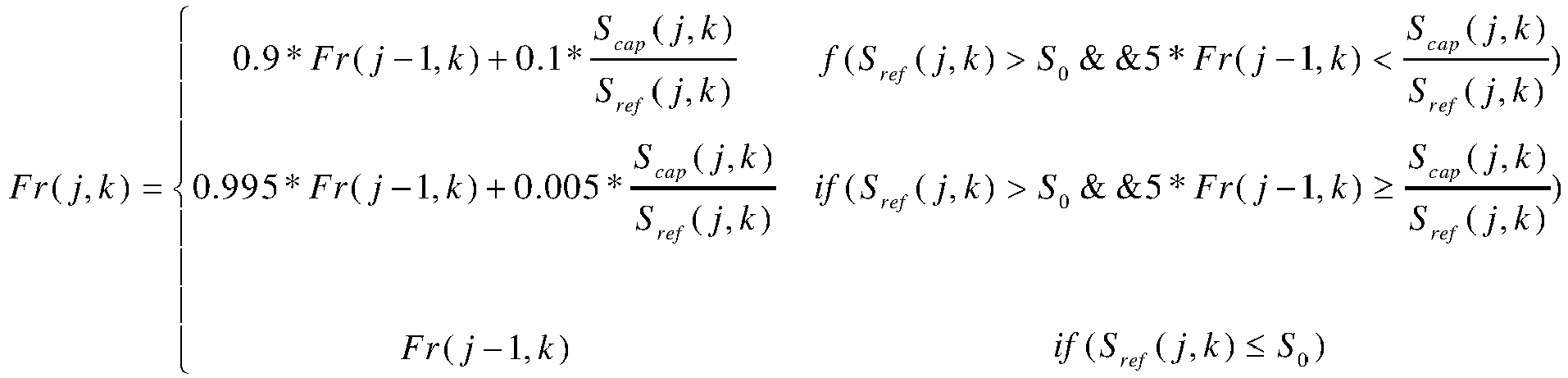
- The method according to claim 1, wherein the determining the target sampling rate of the transmitting device according to the initial sampling rate and the frequency response gain value comprises:determining an upper boundary value and a lower boundary value of a test frequency range based on the initial sampling rate;determining, in the test frequency range, a target frequency used as a playback frequency band upper limit value of the receiving device, an average power spectrum in a range from the lower boundary value to the target frequency being less than an average power spectrum in a range from the target frequency to the upper boundary value, and the frequency response gain value being used for calculating the average power spectrum; andgenerating the target sampling rate of the transmitting device according to the playback frequency band upper limit value.
- The method according to claim 1, wherein the obtaining the first audio signal recorded by the transmitting device comprises:obtaining the first audio signal recorded and encoded by the transmitting device;the obtaining the second audio signal recorded by a receiving device during playing of the first audio signal comprises:obtaining the second audio signal recorded by the receiving device during decoding and playing of the first audio signal; andthe determining the frequency response gain value of the receiving device according to the power spectrum of the first audio signal and the power spectrum of the second audio signal comprises:
determining the frequency response gain value of the receiving device according to the power spectrum of the decoded first audio signal and the power spectrum of the second audio signal. - A sampling rate processing apparatus, comprising:an obtaining module, configured to obtain a first audio signal recorded by a transmitting device, the first audio signal being recorded according to an initial sampling rate of the transmitting device; and obtain a second audio signal recorded by a receiving device during playing of the first audio signal, the second audio signal being recorded according to the initial sampling rate; andan analysis module, configured to determine a frequency response gain value of the receiving device according to a power spectrum of the first audio signal and a power spectrum of the second audio signal; and determine a target sampling rate of the transmitting device according to the initial sampling rate and the frequency response gain value.
- A sampling rate processing system, comprising a transmitting device and a receiving device,the transmitting device being configured to transmit a recorded first audio signal to the receiving device, the first audio signal being recorded according to an initial sampling rate of the transmitting device;the receiving device being configured to play the first audio signal and record a second audio signal during playing of the first audio signal, the second audio signal being recorded according to the initial sampling rate;the receiving device being further configured to determine a frequency response gain value of the receiving device according to a power spectrum of the first audio signal and a power spectrum of the second audio signal; andthe receiving device being further configured to determine a target sampling rate of the transmitting device according to the initial sampling rate and the frequency response gain value.
- The system according to claim 12, wherein the transmitting device is further configured to establish a communication connection to the receiving device, record the first audio signal according to the initial sampling rate after the communication connection is established, and transmit the first audio signal through the communication connection;the receiving device is further configured to receive the first audio signal through the communication connection;the receiving device is further configured to determine a playback frequency band upper limit value of the receiving device according to the initial sampling rate and the frequency response gain value, and transmit the playback frequency band upper limit value to the transmitting device; andthe transmitting device is further configured to generate the target sampling rate based on the playback frequency band upper limit value, and continue recording a third audio signal and continue transmitting the third audio signal through the communication connection after a sampling rate of recording an audio signal is adjusted from the initial sampling rate to the target sampling rate.
- A computer device, comprising a memory and a processor, the memory storing computer-readable instructions, the computer-readable instructions, when executed by the processor, causing the processor to perform the operations of the method according to any one of claims 1 to 10.
- Anon-transitory storage medium storing computer-readable instructions, the computer-readable instructions, when executed by one or more processors, causing the one or more processors to perform the operations of the method according to any of claims 1 to 10.
Applications Claiming Priority (2)
| Application Number | Priority Date | Filing Date | Title |
|---|---|---|---|
| CN201911317463.XA CN113012722B (en) | 2019-12-19 | 2019-12-19 | Sampling rate processing method, device, system, storage medium and computer equipment |
| PCT/CN2020/120387 WO2021120795A1 (en) | 2019-12-19 | 2020-10-12 | Sampling rate processing method, apparatus and system, and storage medium and computer device |
Publications (4)
| Publication Number | Publication Date |
|---|---|
| EP3989225A1 true EP3989225A1 (en) | 2022-04-27 |
| EP3989225A4 EP3989225A4 (en) | 2022-08-31 |
| EP3989225C0 EP3989225C0 (en) | 2023-08-30 |
| EP3989225B1 EP3989225B1 (en) | 2023-08-30 |
Family
ID=76381234
Family Applications (1)
| Application Number | Title | Priority Date | Filing Date |
|---|---|---|---|
| EP20902980.0A Active EP3989225B1 (en) | 2019-12-19 | 2020-10-12 | Sampling rate determining method, computer device and non-transitory storage medium |
Country Status (4)
| Country | Link |
|---|---|
| US (1) | US11729236B2 (en) |
| EP (1) | EP3989225B1 (en) |
| CN (1) | CN113012722B (en) |
| WO (1) | WO2021120795A1 (en) |
Families Citing this family (4)
| Publication number | Priority date | Publication date | Assignee | Title |
|---|---|---|---|---|
| CN114283837B (en) * | 2021-09-09 | 2025-07-04 | 腾讯科技(深圳)有限公司 | Audio processing method, device, equipment and storage medium |
| CN115802330B (en) * | 2022-11-03 | 2025-01-24 | 深圳创维-Rgb电子有限公司 | Device adaptation method, apparatus, device and storage medium |
| US20250280239A1 (en) * | 2024-03-01 | 2025-09-04 | Disney Enterprises, Inc. | Automatic detection of alignment between two audio signals |
| CN118016111B (en) * | 2024-04-08 | 2024-07-23 | 腾讯科技(深圳)有限公司 | Audio processing method, device, medium and equipment |
Family Cites Families (22)
| Publication number | Priority date | Publication date | Assignee | Title |
|---|---|---|---|---|
| EP0706299B1 (en) * | 1994-10-06 | 2004-12-01 | Fidelix Y.K. | A method for reproducing audio signals and an apparatus therefor |
| JP3415398B2 (en) * | 1997-08-07 | 2003-06-09 | パイオニア株式会社 | Audio signal processing device |
| JP2001005499A (en) * | 1999-04-23 | 2001-01-12 | Matsushita Electric Ind Co Ltd | Music data information transmission method and apparatus |
| CA2445955C (en) * | 2001-04-30 | 2010-06-29 | Stephen R. Schwartz | Microphone-tailored equalizing system |
| US20060034481A1 (en) * | 2003-11-03 | 2006-02-16 | Farhad Barzegar | Systems, methods, and devices for processing audio signals |
| CN101719966A (en) * | 2009-12-18 | 2010-06-02 | 中兴通讯股份有限公司 | Monitoring method of call tone quality, monitoring terminal and system therefor |
| CN103812754B (en) * | 2012-11-12 | 2015-07-01 | 腾讯科技(深圳)有限公司 | Contact matching method, instant messaging client, server and system |
| US9319790B2 (en) * | 2012-12-26 | 2016-04-19 | Dts Llc | Systems and methods of frequency response correction for consumer electronic devices |
| CN103354588A (en) * | 2013-06-28 | 2013-10-16 | 贵阳朗玛信息技术股份有限公司 | Determination method, apparatus and system for recording and playing sampling rate |
| CN103686311B (en) * | 2013-11-22 | 2017-02-15 | 乐视致新电子科技(天津)有限公司 | Audio-video playing method and audio-video playing device |
| CN103747407B (en) * | 2013-12-27 | 2017-04-12 | 深圳英飞拓科技股份有限公司 | Audio module automatic test method based on FFT frequency sweep |
| CN104254007B (en) * | 2014-09-03 | 2017-11-03 | 海信集团有限公司 | A kind of audio-frequency processing method and device |
| CN104244161A (en) * | 2014-09-17 | 2014-12-24 | 苏州酷果信息技术有限公司 | Method and device for testing equipment with voice playing function and voice recording function |
| CN104464764B (en) * | 2014-11-12 | 2017-08-15 | 小米科技有限责任公司 | Audio data play method and device |
| CN106205651A (en) * | 2016-06-30 | 2016-12-07 | 乐视控股(北京)有限公司 | Sample rate method for transformation, device and terminal |
| CN107689228B (en) * | 2016-08-04 | 2020-05-12 | 腾讯科技(深圳)有限公司 | Information processing method and terminal |
| US10459684B2 (en) * | 2016-08-05 | 2019-10-29 | Sonos, Inc. | Calibration of a playback device based on an estimated frequency response |
| CN108260065B (en) * | 2016-12-29 | 2020-04-28 | 研祥智能科技股份有限公司 | Television loudspeaker playing function online detection method and device |
| CN109525873B (en) * | 2017-09-18 | 2022-03-15 | 炬芯科技股份有限公司 | Audio playing synchronization method and device |
| CN107886975B (en) * | 2017-11-07 | 2020-03-10 | Oppo广东移动通信有限公司 | Audio processing method and device, storage medium and electronic equipment |
| CN109510636A (en) * | 2018-10-31 | 2019-03-22 | 华勤通讯技术有限公司 | Receive test method, device, medium and the equipment of FM signal function |
| CN109448676B (en) * | 2018-11-09 | 2024-01-19 | 广州酷狗计算机科技有限公司 | Audio processing method, device and storage medium |
-
2019
- 2019-12-19 CN CN201911317463.XA patent/CN113012722B/en active Active
-
2020
- 2020-10-12 WO PCT/CN2020/120387 patent/WO2021120795A1/en not_active Ceased
- 2020-10-12 EP EP20902980.0A patent/EP3989225B1/en active Active
-
2021
- 2021-11-03 US US17/518,454 patent/US11729236B2/en active Active
Also Published As
| Publication number | Publication date |
|---|---|
| WO2021120795A1 (en) | 2021-06-24 |
| US20220060531A1 (en) | 2022-02-24 |
| CN113012722B (en) | 2022-06-10 |
| EP3989225C0 (en) | 2023-08-30 |
| EP3989225B1 (en) | 2023-08-30 |
| EP3989225A4 (en) | 2022-08-31 |
| US11729236B2 (en) | 2023-08-15 |
| CN113012722A (en) | 2021-06-22 |
Similar Documents
| Publication | Publication Date | Title |
|---|---|---|
| US11729236B2 (en) | Sampling rate processing method, apparatus, and system, storage medium, and computer device | |
| US10542136B2 (en) | Transcribing audio communication sessions | |
| KR102502521B1 (en) | Audio signal processing method and apparatus for controlling loudness level | |
| US8751221B2 (en) | Communication apparatus for adjusting a voice signal | |
| US11683103B2 (en) | Method and system for acoustic communication of data | |
| EP3504861B1 (en) | Audio transmission with compensation for speech detection period duration | |
| WO2021179651A1 (en) | Call audio mixing processing method and apparatus, storage medium, and computer device | |
| US10455335B1 (en) | Systems and methods for modifying an audio signal using custom psychoacoustic models | |
| EP3598441A1 (en) | Systems and methods for modifying an audio signal using custom psychoacoustic models | |
| US9219456B1 (en) | Correcting clock drift via embedded sin waves | |
| JP6073456B2 (en) | Speech enhancement device | |
| US10366703B2 (en) | Method and apparatus for processing audio signal including shock noise | |
| US9251803B2 (en) | Voice filtering method, apparatus and electronic equipment | |
| CN110289013B (en) | Multi-audio collection source detection method, device, storage medium and computer equipment | |
| US8340656B2 (en) | Systems and methods for synchronizing data transmission over a voice channel of a telephone network | |
| CN113891152A (en) | Audio playing control method and device, equipment, medium and product thereof | |
| JP2011227256A (en) | Signal correction apparatus | |
| HK40046491B (en) | Method, device and system for processing sampling rate, storage medium and computer apparatus | |
| HK40046491A (en) | Method, device and system for processing sampling rate, storage medium and computer apparatus | |
| US12341931B2 (en) | Method and system for acoustic communication of data | |
| US11689874B2 (en) | Calibration of a distributed sound reproduction system | |
| CN118645110A (en) | Audio processing method and medium | |
| EP2849181A1 (en) | Voice filtering method, apparatus and electronic equipment | |
| CN117041812A (en) | An audio synchronization method and related devices | |
| JP2016029428A (en) | Voice pickup system, host device, and program |
Legal Events
| Date | Code | Title | Description |
|---|---|---|---|
| STAA | Information on the status of an ep patent application or granted ep patent |
Free format text: STATUS: THE INTERNATIONAL PUBLICATION HAS BEEN MADE |
|
| PUAI | Public reference made under article 153(3) epc to a published international application that has entered the european phase |
Free format text: ORIGINAL CODE: 0009012 |
|
| STAA | Information on the status of an ep patent application or granted ep patent |
Free format text: STATUS: REQUEST FOR EXAMINATION WAS MADE |
|
| 17P | Request for examination filed |
Effective date: 20220124 |
|
| AK | Designated contracting states |
Kind code of ref document: A1 Designated state(s): AL AT BE BG CH CY CZ DE DK EE ES FI FR GB GR HR HU IE IS IT LI LT LU LV MC MK MT NL NO PL PT RO RS SE SI SK SM TR |
|
| RAP3 | Party data changed (applicant data changed or rights of an application transferred) |
Owner name: TENCENT TECHNOLOGY (SHENZHEN) COMPANY LIMITED |
|
| REG | Reference to a national code |
Ref country code: DE Ref legal event code: R079 Free format text: PREVIOUS MAIN CLASS: G11B0020100000 Ref country code: DE Ref legal event code: R079 Ref document number: 602020016972 Country of ref document: DE Free format text: PREVIOUS MAIN CLASS: G11B0020100000 Ipc: H04L0065610000 |
|
| A4 | Supplementary search report drawn up and despatched |
Effective date: 20220729 |
|
| RIC1 | Information provided on ipc code assigned before grant |
Ipc: H04R 29/00 20060101ALN20220725BHEP Ipc: G10L 19/22 20130101ALN20220725BHEP Ipc: G10L 19/24 20130101ALN20220725BHEP Ipc: H04L 1/00 20060101ALI20220725BHEP Ipc: G11B 20/10 20060101ALI20220725BHEP Ipc: H04L 65/80 20220101ALI20220725BHEP Ipc: H04L 65/75 20220101ALI20220725BHEP Ipc: H04L 65/70 20220101ALI20220725BHEP Ipc: H04L 65/61 20220101AFI20220725BHEP |
|
| DAV | Request for validation of the european patent (deleted) | ||
| DAX | Request for extension of the european patent (deleted) | ||
| GRAP | Despatch of communication of intention to grant a patent |
Free format text: ORIGINAL CODE: EPIDOSNIGR1 |
|
| STAA | Information on the status of an ep patent application or granted ep patent |
Free format text: STATUS: GRANT OF PATENT IS INTENDED |
|
| RIC1 | Information provided on ipc code assigned before grant |
Ipc: H04R 29/00 20060101ALN20230504BHEP Ipc: G10L 19/22 20130101ALN20230504BHEP Ipc: G10L 19/24 20130101ALN20230504BHEP Ipc: H04L 1/00 20060101ALI20230504BHEP Ipc: G11B 20/10 20060101ALI20230504BHEP Ipc: H04L 65/80 20220101ALI20230504BHEP Ipc: H04L 65/75 20220101ALI20230504BHEP Ipc: H04L 65/70 20220101ALI20230504BHEP Ipc: H04L 65/61 20220101AFI20230504BHEP |
|
| INTG | Intention to grant announced |
Effective date: 20230607 |
|
| GRAS | Grant fee paid |
Free format text: ORIGINAL CODE: EPIDOSNIGR3 |
|
| GRAA | (expected) grant |
Free format text: ORIGINAL CODE: 0009210 |
|
| STAA | Information on the status of an ep patent application or granted ep patent |
Free format text: STATUS: THE PATENT HAS BEEN GRANTED |
|
| AK | Designated contracting states |
Kind code of ref document: B1 Designated state(s): AL AT BE BG CH CY CZ DE DK EE ES FI FR GB GR HR HU IE IS IT LI LT LU LV MC MK MT NL NO PL PT RO RS SE SI SK SM TR |
|
| REG | Reference to a national code |
Ref country code: GB Ref legal event code: FG4D |
|
| REG | Reference to a national code |
Ref country code: CH Ref legal event code: EP |
|
| REG | Reference to a national code |
Ref country code: DE Ref legal event code: R096 Ref document number: 602020016972 Country of ref document: DE |
|
| REG | Reference to a national code |
Ref country code: IE Ref legal event code: FG4D |
|
| U01 | Request for unitary effect filed |
Effective date: 20230901 |
|
| U07 | Unitary effect registered |
Designated state(s): AT BE BG DE DK EE FI FR IT LT LU LV MT NL PT SE SI Effective date: 20230908 |
|
| U20 | Renewal fee for the european patent with unitary effect paid |
Year of fee payment: 4 Effective date: 20231030 |
|
| PG25 | Lapsed in a contracting state [announced via postgrant information from national office to epo] |
Ref country code: GR Free format text: LAPSE BECAUSE OF FAILURE TO SUBMIT A TRANSLATION OF THE DESCRIPTION OR TO PAY THE FEE WITHIN THE PRESCRIBED TIME-LIMIT Effective date: 20231201 |
|
| PG25 | Lapsed in a contracting state [announced via postgrant information from national office to epo] |
Ref country code: IS Free format text: LAPSE BECAUSE OF FAILURE TO SUBMIT A TRANSLATION OF THE DESCRIPTION OR TO PAY THE FEE WITHIN THE PRESCRIBED TIME-LIMIT Effective date: 20231230 |
|
| PG25 | Lapsed in a contracting state [announced via postgrant information from national office to epo] |
Ref country code: RS Free format text: LAPSE BECAUSE OF FAILURE TO SUBMIT A TRANSLATION OF THE DESCRIPTION OR TO PAY THE FEE WITHIN THE PRESCRIBED TIME-LIMIT Effective date: 20230830 Ref country code: NO Free format text: LAPSE BECAUSE OF FAILURE TO SUBMIT A TRANSLATION OF THE DESCRIPTION OR TO PAY THE FEE WITHIN THE PRESCRIBED TIME-LIMIT Effective date: 20231130 Ref country code: IS Free format text: LAPSE BECAUSE OF FAILURE TO SUBMIT A TRANSLATION OF THE DESCRIPTION OR TO PAY THE FEE WITHIN THE PRESCRIBED TIME-LIMIT Effective date: 20231230 Ref country code: HR Free format text: LAPSE BECAUSE OF FAILURE TO SUBMIT A TRANSLATION OF THE DESCRIPTION OR TO PAY THE FEE WITHIN THE PRESCRIBED TIME-LIMIT Effective date: 20230830 Ref country code: GR Free format text: LAPSE BECAUSE OF FAILURE TO SUBMIT A TRANSLATION OF THE DESCRIPTION OR TO PAY THE FEE WITHIN THE PRESCRIBED TIME-LIMIT Effective date: 20231201 |
|
| PG25 | Lapsed in a contracting state [announced via postgrant information from national office to epo] |
Ref country code: PL Free format text: LAPSE BECAUSE OF FAILURE TO SUBMIT A TRANSLATION OF THE DESCRIPTION OR TO PAY THE FEE WITHIN THE PRESCRIBED TIME-LIMIT Effective date: 20230830 |
|
| PG25 | Lapsed in a contracting state [announced via postgrant information from national office to epo] |
Ref country code: ES Free format text: LAPSE BECAUSE OF FAILURE TO SUBMIT A TRANSLATION OF THE DESCRIPTION OR TO PAY THE FEE WITHIN THE PRESCRIBED TIME-LIMIT Effective date: 20230830 |
|
| PG25 | Lapsed in a contracting state [announced via postgrant information from national office to epo] |
Ref country code: SM Free format text: LAPSE BECAUSE OF FAILURE TO SUBMIT A TRANSLATION OF THE DESCRIPTION OR TO PAY THE FEE WITHIN THE PRESCRIBED TIME-LIMIT Effective date: 20230830 Ref country code: RO Free format text: LAPSE BECAUSE OF FAILURE TO SUBMIT A TRANSLATION OF THE DESCRIPTION OR TO PAY THE FEE WITHIN THE PRESCRIBED TIME-LIMIT Effective date: 20230830 Ref country code: ES Free format text: LAPSE BECAUSE OF FAILURE TO SUBMIT A TRANSLATION OF THE DESCRIPTION OR TO PAY THE FEE WITHIN THE PRESCRIBED TIME-LIMIT Effective date: 20230830 Ref country code: CZ Free format text: LAPSE BECAUSE OF FAILURE TO SUBMIT A TRANSLATION OF THE DESCRIPTION OR TO PAY THE FEE WITHIN THE PRESCRIBED TIME-LIMIT Effective date: 20230830 Ref country code: SK Free format text: LAPSE BECAUSE OF FAILURE TO SUBMIT A TRANSLATION OF THE DESCRIPTION OR TO PAY THE FEE WITHIN THE PRESCRIBED TIME-LIMIT Effective date: 20230830 |
|
| PG25 | Lapsed in a contracting state [announced via postgrant information from national office to epo] |
Ref country code: MC Free format text: LAPSE BECAUSE OF FAILURE TO SUBMIT A TRANSLATION OF THE DESCRIPTION OR TO PAY THE FEE WITHIN THE PRESCRIBED TIME-LIMIT Effective date: 20230830 |
|
| REG | Reference to a national code |
Ref country code: CH Ref legal event code: PL |
|
| REG | Reference to a national code |
Ref country code: DE Ref legal event code: R097 Ref document number: 602020016972 Country of ref document: DE |
|
| PLBE | No opposition filed within time limit |
Free format text: ORIGINAL CODE: 0009261 |
|
| STAA | Information on the status of an ep patent application or granted ep patent |
Free format text: STATUS: NO OPPOSITION FILED WITHIN TIME LIMIT |
|
| PG25 | Lapsed in a contracting state [announced via postgrant information from national office to epo] |
Ref country code: CH Free format text: LAPSE BECAUSE OF NON-PAYMENT OF DUE FEES Effective date: 20231031 |
|
| PG25 | Lapsed in a contracting state [announced via postgrant information from national office to epo] |
Ref country code: CH Free format text: LAPSE BECAUSE OF NON-PAYMENT OF DUE FEES Effective date: 20231031 |
|
| 26N | No opposition filed |
Effective date: 20240603 |
|
| PG25 | Lapsed in a contracting state [announced via postgrant information from national office to epo] |
Ref country code: IE Free format text: LAPSE BECAUSE OF NON-PAYMENT OF DUE FEES Effective date: 20231012 |
|
| PG25 | Lapsed in a contracting state [announced via postgrant information from national office to epo] |
Ref country code: IE Free format text: LAPSE BECAUSE OF NON-PAYMENT OF DUE FEES Effective date: 20231012 |
|
| U20 | Renewal fee for the european patent with unitary effect paid |
Year of fee payment: 5 Effective date: 20241028 |
|
| PG25 | Lapsed in a contracting state [announced via postgrant information from national office to epo] |
Ref country code: CY Free format text: LAPSE BECAUSE OF FAILURE TO SUBMIT A TRANSLATION OF THE DESCRIPTION OR TO PAY THE FEE WITHIN THE PRESCRIBED TIME-LIMIT; INVALID AB INITIO Effective date: 20201012 |
|
| PG25 | Lapsed in a contracting state [announced via postgrant information from national office to epo] |
Ref country code: HU Free format text: LAPSE BECAUSE OF FAILURE TO SUBMIT A TRANSLATION OF THE DESCRIPTION OR TO PAY THE FEE WITHIN THE PRESCRIBED TIME-LIMIT; INVALID AB INITIO Effective date: 20201012 |
|
| U20 | Renewal fee for the european patent with unitary effect paid |
Year of fee payment: 6 Effective date: 20251027 |
|
| PG25 | Lapsed in a contracting state [announced via postgrant information from national office to epo] |
Ref country code: TR Free format text: LAPSE BECAUSE OF FAILURE TO SUBMIT A TRANSLATION OF THE DESCRIPTION OR TO PAY THE FEE WITHIN THE PRESCRIBED TIME-LIMIT Effective date: 20230830 |
|
| PGFP | Annual fee paid to national office [announced via postgrant information from national office to epo] |
Ref country code: GB Payment date: 20251024 Year of fee payment: 6 |