EP3989175A1 - Illumination probe generation method, apparatus, storage medium, and computer device - Google Patents
Illumination probe generation method, apparatus, storage medium, and computer device Download PDFInfo
- Publication number
- EP3989175A1 EP3989175A1 EP20895977.5A EP20895977A EP3989175A1 EP 3989175 A1 EP3989175 A1 EP 3989175A1 EP 20895977 A EP20895977 A EP 20895977A EP 3989175 A1 EP3989175 A1 EP 3989175A1
- Authority
- EP
- European Patent Office
- Prior art keywords
- shadow
- points
- voxel
- light
- voxel object
- Prior art date
- Legal status (The legal status is an assumption and is not a legal conclusion. Google has not performed a legal analysis and makes no representation as to the accuracy of the status listed.)
- Granted
Links
Images





Classifications
-
- G—PHYSICS
- G06—COMPUTING OR CALCULATING; COUNTING
- G06T—IMAGE DATA PROCESSING OR GENERATION, IN GENERAL
- G06T15/00—Three-dimensional [3D] image rendering
- G06T15/50—Lighting effects
- G06T15/506—Illumination models
-
- G—PHYSICS
- G06—COMPUTING OR CALCULATING; COUNTING
- G06T—IMAGE DATA PROCESSING OR GENERATION, IN GENERAL
- G06T15/00—Three-dimensional [3D] image rendering
- G06T15/50—Lighting effects
- G06T15/60—Shadow generation
-
- G—PHYSICS
- G06—COMPUTING OR CALCULATING; COUNTING
- G06T—IMAGE DATA PROCESSING OR GENERATION, IN GENERAL
- G06T2210/00—Indexing scheme for image generation or computer graphics
- G06T2210/12—Bounding box
-
- G—PHYSICS
- G06—COMPUTING OR CALCULATING; COUNTING
- G06T—IMAGE DATA PROCESSING OR GENERATION, IN GENERAL
- G06T2210/00—Indexing scheme for image generation or computer graphics
- G06T2210/21—Collision detection, intersection
Definitions
- the disclosure relates to the field of image rendering technologies, and in particular, to a light probe generation method and apparatus, a storage medium, and a computer device.
- Light probe is a light rendering technology that may be used to collect light information received from all directions around, and then apply the light information to a rendered object, to affect a final light effect of the rendered object.
- a plurality of light probes are generally evenly distributed according to a lattice corresponding to a virtual scene, and this distribution manner consumes a large amount of memory and distribution time.
- Embodiments of the disclosure provide a light probe generation method and apparatus, a storage medium, and a computer device.
- a light probe generation method is provided, performed by a computer device, the method including:
- a light probe generation apparatus including:
- a computer-readable storage medium stores a computer program, the computer program, when executed by a processor, causing the processor to perform the following operations:
- a computer device including a memory and a processor, the memory storing a computer program, and the computer program, when executed by the processor, causing the processor to perform the following operations:
- FIG. 1 is a diagram of an application environment of a light probe generation method according to an embodiment.
- the light probe generation method is applied to a light probe generation system.
- the light probe generation system includes a terminal 110 and a server 120.
- the terminal 110 and the server 120 are connected by using a network.
- the terminal 110 selects shadow points of a target object in a virtual scene; converts the selected shadow points into a voxelized shadow voxel object; reduces a quantity of vertexes in the shadow voxel object to obtain a shadow voxel object after the reduction; and generates a light probe at a vertex position of the shadow voxel object after the vertex reduction.
- the terminal 110 may be specifically a desktop terminal or a mobile terminal.
- the mobile terminal may be specifically at least one of a mobile phone, a tablet computer, a notebook computer, and the like.
- the server 120 may be implemented by using an independent server or a server cluster that includes a plurality of servers.
- a light probe generation method is provided.
- the method may be performed by the terminal or the server shown in FIG. 1 , or may be performed by the terminal and the server collaboratively.
- the method being applied to the terminal 110 in FIG. 1 is mainly used as an example for description.
- the light probe generation method specifically includes the following operations S202-S208: S202: Select shadow points of a target object in a virtual scene.
- a virtual scene refers to a virtual scene environment generated by using a computer, which can provide a multimedia virtual world, and a user may control an operable virtual object in the virtual scene through an operating device or an operation interface, to observe objects, animals, characters, sceneries, and other virtual things in the virtual scene from a viewing angle of the virtual object, or interact with the objects, animals, characters, sceneries, and other virtual things or other virtual objects in the virtual scene through the virtual object.
- the virtual scene is generally generated by an application in a computer device such as a terminal and displayed based on hardware (for example, a screen) in the terminal.
- a target object may be a virtual thing such as an object, an animal, a character, or a scenery with ground features in a virtual scene.
- the object may be a building, a tree, or the like in a virtual scene.
- the character may be a character role in a virtual scene.
- the animal may be a pet or a monster in a virtual scene.
- the scenery may be a mountain in a virtual scene with certain landforms and objects.
- the shadow points when a light source projects a light ray into the target object, a shadow region is formed at a side of the target object opposite to the light source, and points in the entire shadow region are the shadow points.
- the terminal starts a first development engine, and calculates a bounding box of the virtual scene in the first development engine.
- S202 may specifically include: generating, by the terminal, a lattice in the bounding box of the virtual scene; and determining, when a light source projects a light ray from the bounding box to the virtual scene, that the light ray is intersected with points in the lattice and the light ray is intersected with the target object, and using the intersected points as the shadow points of the target object for extraction.
- the light ray may be an illumination ray emitted by the light source, used for representing a path and a direction of the illumination.
- the terminal creates a virtual light source by using the first development engine, and simulates the illumination by using the light source, that is, projects a corresponding light ray into the virtual scene.
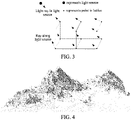
- the terminal starts a Unity engine, calculates a bounding box of the virtual scene in the Unity engine, and generates evenly distributed lattice in the bounding box. Small black points shown in FIG. 3 are the lattice evenly distributed in the bounding box.
- the terminal creates a light source (for example, a big black point shown in FIG. 3 ) by using the Unity engine, and projects a light ray into the virtual scene through the light source.
- a light ray is intersected with both points in the lattice and the target object, that is, there are intersection points between the light ray and the points in the lattice and between the light ray and the target object. In this case, the foregoing intersection points are used as the shadow points of the target object.
- the operation of selecting shadow points of a target object may further include: emitting, by the terminal and when the light source projects the light ray from the bounding box to the virtual scene, a ray in a direction of the light source by using the points in the lattice as reference points; and using, when the ray is intersected with all the target points in the target object, the target points and the corresponding reference points as the shadow points of the target object for extraction.
- a ray is emitted in a direction of a light source, that is, as shown in FIG. 3 , small black points in FIG. 3 are used as starting points, and a ray is emitted in a direction of a big black point.
- the intersection point and a corresponding black point that is, a point in the lattice
- the intersection point and a corresponding black point are remarked as shadow points, and similarly, all shadow points are found, and then all the shadow points are selected from the lattice.
- a lattice evenly distributed in the bounding box of the virtual scene are generated, and points in a shadow of a mountain are calculated by using ray projection.
- the terminal after extracting all the shadow points of the target object, stores the shadow points to a lattice information file, and then exports the lattice information file from the first development engine.
- the shadow points are saved in a file with the suffix of ".ply", and ".ply” is a file format that only saves position information.
- the voxel is short for a volume pixel, which is similar to a pixel in two dimensions, and is a space with a unit length in three dimensions.
- the voxel may be represented by 3D rendering or extracting a polygon isosurface with a given threshold contour.
- the voxelization may refer to a process of simplifying reducing irregular 3D objects to unit mesh voxels.
- a shadow voxel object of the voxelization is a voxel object of converting the selected shadow points into unit mesh voxels.
- the voxel object not only may include surface information of the shadow points, but also may describe an internal attribute of the shadow points.
- the terminal determines a shadow region formed by a virtual object in the light ray; and generates a polyhedron enclosing the shadow region.
- S204 may specifically include: converting, by the terminal, the polyhedron enclosing the shadow region into a voxelized shadow voxel object.
- the terminal determines a first intersection point of the light ray and the edge of the target object, and a second intersection point between the light ray and another obstacle that blocks the light ray, and connects the first intersection point to the second intersection point to obtain an intersection line.
- a region between a backlighting region of the target object and the intersection line corresponds to the shadow region.
- a shadow voxel object enclosing the selected shadow points is obtained by using a shadow volume manner, that is, a shadow region of the target object is generated under the projection of the light source, and a corresponding polyhedron is directly generated according to the shadow region, the polyhedron enclosing the entire shadow region of the target objects; and then the polyhedron is voxelized to obtain the shadow voxel object.
- a shadow volume manner that is, a shadow region of the target object is generated under the projection of the light source, and a corresponding polyhedron is directly generated according to the shadow region, the polyhedron enclosing the entire shadow region of the target objects; and then the polyhedron is voxelized to obtain the shadow voxel object.
- the terminal imports a lattice information file saving the shadow points into a second development engine, and converts the shadow points into a voxelized shadow voxel object by using the second development engine.
- S204 may specifically include: obtaining, by the terminal, a first polyhedron; copying the first polyhedron to the shadow points by using the second development engine, to obtain a corresponding shadow volume; and then voxelizing the shadow volume to obtain a shadow voxel object.
- the first polyhedron may be a tetrahedron or a cube, or some other polyhedrons. Volume of each first polyhedron is relatively small.
- the terminal copies tetrahedrons to the shadow points by using CopyTo nodes in a Houdini engine, and in this case, a shadow volume is obtained. Faces of the tetrahedrons that make up the shadow volume are interspersed with each other and with a large quantity. In this case, the terminal needs to voxelize the entire shadow volume. As shown in FIG. 6 , a shadow voxel object obtained after the voxelization is a hollow bag-like model.
- S204 may specifically include: generating, by the terminal, a second polyhedron configured to enclose the selected shadow points; and performing voxelization on the second polyhedron to obtain the shadow voxel object.
- the second polyhedron may be a polyhedron fitting closely to a contour of the shadow points, and the contour of the shadow points fits to an inner surface of the second polyhedron.
- the terminal determines drawn paths at an inner surface and an outer surface of the shadow points, and draws polygons at the inner surface and the outer surface according to the paths.
- the polygons are connected to each other to form a thin film of polygonal mesh enclosing the selected shadow points at the inner surface or the outer surface respectively, and the two thin films of polygonal mesh are the second polyhedron.
- the shadow voxel object is obtained after the shadow volume is voxelized, and the shadow volume is formed by polyhedrons. Therefore, a quantity of vertexes and planes of the shadow voxel object is relatively large, and the quantity of vertexes and planes needs to be reduced. Then, light probes are generated at a vertex position of the shadow voxel object to reduce a quantity of the light probes.
- S206 Combine, by the terminal, at least two adjacent vertexes in the shadow voxel object; or smooth at least two adjacent planes in the shadow voxel object to reduce the quantity of the vertexes in the shadow voxel object.
- the terminal combines at least two adjacent vertexes of adjacent polyhedrons in the shadow voxel object, to reduce both a quantity of vertexes of the shadow voxel object and a quantity of planes of the shadow voxel object. Additionally or alternatively, as shown in FIG. 7 , the terminal smooths at least two adjacent planes of adjacent polyhedrons in the shadow voxel object to make the at least two planes become a hook surface, to reduce the quantity of the vertexes in the shadow voxel object.
- S208 Generate a light probe at a vertex position of the shadow voxel object after the vertex reduction.
- S208 may specifically include: internally shrinking, by the terminal, the shadow voxel object after the vertex reduction to obtain an internally-shrunk shadow voxel object; and generating a light probe in the shadow at a vertex position of the internally-shrunk shadow voxel object.
- the terminal determines a shrinking proportion of the shadow voxel object, and reduces the shadow voxel object according to the shrinking proportion to obtain an internally-shrunk shadow voxel object.
- the internally-shrunk shadow voxel object fits to an inner surface of the shadow points of the target object.
- S208 may specifically include: externally expanding, the shadow voxel object after the vertex reduction to obtain an externally-expanded shadow voxel object; and generating a light probe outside the shadow at a vertex position of the externally-expanded shadow voxel object.
- the terminal determines an externally-expansion proportion of the shadow voxel object, and expands the shadow voxel object according to the externally-expansion proportion to obtain an externally-expanded shadow voxel object.
- the externally-expanded shadow voxel object fits to an outer surface of the shadow points of the target object.
- the internally-shrunk shadow voxel object and the externally-expanded shadow voxel object are used as two films, and the shadow points of the target object are enclosed. vertex positions of the two films are positions of light probes inside and outside the shadow. Light probes are generated at the positions, such as connection lines of shadow voxel object surfaces shown in FIG. 7 .
- the target object includes a dynamic object.
- the method further includes: determining, by the terminal, a position of the dynamic object in a movement process; obtaining light information corresponding to the light probe according to the position; and rendering the dynamic object according to the light information to obtain an animation effect of global light.
- the dynamic object may be a character or an animal in a virtual scene.
- the character may be a character role in a virtual scene.
- the animal may be a pet or a monster in a virtual scene.
- the terminal renders the illumination on the dynamic object by using spherical harmonics according to the light information to obtain an animation effect of global light of the dynamic object.
- the target object includes a static object.
- the method further includes: determining, by the terminal, a position of the static object; obtaining light information corresponding to the light probe according to a position of the static object; and rendering the static object according to the light information to obtain an animation effect of global light.
- shadow points of a target object in a virtual scene are selected, the selected shadow points are converted into a voxelized shadow voxel object; a quantity of vertexes in the shadow voxel object are reduced; and light probes are generated at vertex positions of the shadow voxel object after the vertex reduction. Therefore, the need to evenly distribute light probes in all regions in the virtual scene may be avoided, and it is only required to distribute light probes for the target object, which reduces a quantity of distributed light probes. In addition, distribution positions of the light probes are determined by using vertexes of the shadow voxel object.
- the shadow voxel object may be formed by reducing vertexes of a plurality of regular polyhedrons
- the light probes when the light probes are distributed at vertex positions of the shadow voxel object after the vertex reduction, the light probes may be distributed relatively evenly, avoiding a problem of inconsistent density.
- a quantity of light probes are further reduced by reducing a quantity of vertexes in the shadow voxel object.
- operations for generating a light probe in this embodiment may be divided into the following three stages: Unity engine ⁇ Houdini ⁇ Unity engine. As shown in FIG. 8 , specific content is shown in the following:
- the shadow volume may alternatively be obtained in a shadow volume manner, that is, a polyhedron is directly generated according to a shadow projected by the target object, and a volume block enclosing the polyhedron is used as a volume of the shadow.
- two layers of light probes are provided for virtual things (such as mountains, trees, buildings, and the like) in the virtual scene, and two layers of light probes are also provided for virtual characters in the virtual scene.
- two types of light probes are integrated, and information file storing the light probes are modified and stored through code to obtain final position information of the light probes that may be used by the engine. Therefore, light rendering may be performed on the virtual things and the virtual characters in the virtual scene in a game process, to obtain an animation effect of global light.
- a Unity platform and a Houdini platform are used.
- the disclosure is not limited to the Unity platform and the Houdini platform, and any platform having light ray projection and voxelization functions may implement the solutions of this embodiment.
- distribution of the light probes is very organic, and the light probes are automatically placed according to local conditions.
- the overall distribution is on-demand, and the density shown in FIG. 9 is such that regions with more diversified scenes and more diversified light shadows may be distributed with more light probes, and empty regions may be distributed with few light probes.
- a layer of lattice with a relatively large span may be superimposed finally. Spaces in the matrix may be artificially specified, and since color light information in an environment is generally extremely low frequency, the span may be large. In this case, based on the solutions of the embodiments of the disclosure, a sufficiently high global illumination effect may be achieved with the highest cost performance.
- FIG. 2 is a schematic flowchart of a light probe generation method according to an embodiment.
- the operations in the flowchart of FIG. 2 are sequentially displayed in accordance with instructions of arrows, these operations are not necessarily performed sequentially in the order indicated by the arrows. Unless otherwise explicitly specified in this specification, execution of the operations is not limited, and the operations may be performed in other sequences.
- at least some operations in FIG. 2 may include a plurality of suboperations or a plurality of stages.
- the suboperations or the stages are not necessarily performed at the same moment, but may be performed at different moments.
- the suboperations or the stages are not necessarily performed in sequence, but may be performed in turn or alternately with another operation or at least some of suboperations or stages of the another operation.
- a light probe generation apparatus specifically includes: a selection module 1002, a conversion module 1004, a reduction module 1006, and a generation module 1008.
- the selection module 1002 is configured to select shadow points of a target object in a virtual scene.
- the conversion module 1004 is configured to convert the selected shadow points into a voxelized shadow voxel object.
- the reduction module 1006 is configured to reduce a quantity of vertexes in the shadow voxel object to obtain a shadow voxel object after the reduction.
- the generation module 1008 is configured to generate a light probe at a vertex position of the shadow voxel object after the vertex reduction.
- the selection module 1002 is further configured to: generate a lattice in a bounding box of the virtual scene; and determine, when a light source projects a light ray from the bounding box to the virtual scene, that the light ray is intersected with points in the lattice and the light ray is intersected with the target object, and use the intersected points as the shadow points of the target object for extraction.
- the selection module 1002 is further configured to: control to emit, when the light source projects the light ray from the bounding box to the virtual scene, a ray in a direction of the light source by using the points in the lattice as reference points; and use, when the ray is intersected with all the target points in the target object, the target points and the corresponding reference points as the shadow points of the target object for extraction.
- the conversion module 1004 is further configured to: determine, when the light source projects the light ray from the bounding box to the virtual scene, a shadow region formed by a virtual object in the light ray; generate a polyhedron enclosing the shadow region; and convert the polyhedron enclosing the shadow region into a voxelized shadow voxel object.
- the conversion module 1004 is further configured to: obtain a first polyhedron; copy the first polyhedron to the shadow points to obtain corresponding shadow volumes; and perform voxelization on the shadow volumes to obtain the shadow voxel object.
- the conversion module 1004 is further configured to: generate a second polyhedron configured to enclose the selected shadow points; and perform voxelization on the second polyhedron to obtain the shadow voxel object.
- the reduction module 1006 is further configured to: combine at least two adjacent vertexes in the shadow voxel object; or smooth at least two adjacent planes in the shadow voxel object to reduce the quantity of the vertexes in the shadow voxel object.
- the generation module 1008 is further configured to: internally shrink the shadow voxel object after the vertex reduction to obtain an internally-shrunk shadow voxel object; and generate a light probe in the shadow at a vertex position of the internally-shrunk shadow voxel object.
- the generation module 1008 is further configured to: externally expand the shadow voxel object after the vertex reduction to obtain an externally-expanded shadow voxel object; and generate a light probe outside the shadow at a vertex position of the externally-expanded shadow voxel object.
- the apparatus further includes: a determining module 1010, an obtaining module 1012, and a rendering module 1014.
- the determining module 1010 is configured to determine a position of a dynamic object in a movement process.
- the obtaining module 1012 is configured to obtain light information corresponding to the light probe according to the position.
- the rendering module 1014 is configured to render the dynamic object according to the light information to obtain an animation effect of global light.
- shadow points of a target object in a virtual scene are selected, the selected shadow points are converted into a voxelized shadow voxel object; a quantity of vertexes in the shadow voxel object are reduced; and light probes are generated at vertex positions of the shadow voxel object after the vertex reduction. Therefore, the need to evenly distribute light probes in all regions in the virtual scene is avoided, and it is only required to distribute light probes for the target object, which reduces a quantity of distributed light probes. In addition, distribution positions of the light probes are determined by using vertexes of the shadow voxel object.
- the shadow voxel object may be formed by reducing vertexes of a plurality of regular polyhedrons
- the light probes when the light probes are distributed at vertex positions of the shadow voxel object after the vertex reduction, the light probes may be distributed relatively evenly, avoiding a problem of inconsistent density.
- a quantity of light probes are further reduced by reducing a quantity of vertexes in the shadow voxel object.
- FIG. 12 is a diagram of an internal structure of a computer device according to an embodiment.
- the computer device may be the terminal 110 or the server 120 in FIG. 1 .
- An example in which the computer device is the terminal 110 is used for description.
- the computer device includes a processor, a memory, a network interface, an input apparatus, and a display screen that are connected by a system bus.
- the memory includes a non-volatile storage medium and an internal memory.
- the non-volatile storage medium of the computer device stores an operating system and may further store a computer program, the computer program, when executed by the processor, causing the processor to implement the light probe generation method.
- the internal memory may also store a computer program, the computer program, when executed by the processor, causing the processor to perform the light probe generation method.
- the display screen of the computer device may be a liquid crystal display screen or an e-ink display screen.
- the input apparatus of the computer device may be a touch layer covering the display screen, or a button, a trackball, or a touchpad disposed on a housing of the computer device, or an external keyboard, touchpad, mouse, or the like.
- FIG. 12 is only a block diagram of a part of a structure related to a solution of the disclosure and does not limit the computer device to which the solution of the disclosure is applied.
- the computer device may include more or fewer components than those in the drawings, or some components are combined, or a different component deployment is used.
- the light probe generation apparatus provided in the disclosure may be implemented in the form of a computer program.
- the computer program may be run on the computer device shown in FIG. 12 .
- the memory of the computer device may store program modules forming the light probe generation apparatus, for example, the selection module 1002, the conversion module 1004, the reduction module 1006, and the generation module 1008 shown in FIG. 10 .
- a computer program formed by the program modules causes the processor to perform the operations in the light probe generation method in the embodiments of the disclosure described in this specification.
- the computer device shown in FIG. 12 may perform operation S202 by using the selection module 1002 in the light probe generation apparatus shown in FIG. 10 .
- the computer device may perform operation S204 by using the conversion module 1004.
- the computer device may perform operation S206 by using the reduction module 1006.
- the computer device may perform operation S208 by using the generation module 1008.
- a computer device including a memory and a processor, the memory storing a computer program, the computer program, when executed by the processor, causing the processor to perform the following operations: selecting shadow points of a target object in a virtual scene; converting the selected shadow points into a voxelized shadow voxel object; reducing a quantity of vertexes in the shadow voxel object to obtain a shadow voxel object after the reduction; and generating a light probe at a vertex position of the shadow voxel object after the vertex reduction.
- the computer program when executed by the processor to perform the operation of selecting shadow points of a target object in a virtual scene, causes the processor to specifically perform the following operations: generating a lattice in a bounding box of the virtual scene; and determining, when a light source projects a light ray from the bounding box to the virtual scene, that the light ray is intersected with points in the lattice and the light ray is intersected with the target object, and using the intersected points as the shadow points of the target object for extraction.
- the computer program when executed by the processor to perform the operation of selecting shadow points of a target object according to intersection points between the light ray and target points in the lattice and between the light ray and the target object, causes the processor to specifically perform the following operations: controlling to emit, when the light source projects the light ray from the bounding box to the virtual scene, a ray in a direction of the light source by using the points in the lattice as reference points; and using, when the ray is intersected with all the target points in the target object, the target points and the corresponding reference points as the shadow points of the target object for extraction.
- the computer program when executed by the processor, causes the processor to perform the following operations: determining, when the light source projects the light ray from the bounding box to the virtual scene, a shadow region formed by a virtual object in the light ray; generating a polyhedron enclosing the shadow region; and converting the polyhedron enclosing the shadow region into a voxelized shadow voxel object.
- the computer program when executed by the processor to perform the operation of converting the selected shadow points into a voxelized shadow voxel object, causes the processor to specifically perform the following operations: obtaining a first polyhedron; copying the first polyhedron to the shadow points to obtain corresponding shadow volumes; and performing voxelization on the shadow volumes to obtain the shadow voxel object.
- the computer program when executed by the processor to perform the operation of converting the selected shadow points into a voxelized shadow voxel object, causes the processor to specifically perform the following operations: generating a second polyhedron configured to enclose the selected shadow points; and performing voxelization on the second polyhedron to obtain the shadow voxel object.
- the computer program when executed by the processor to perform the operation of reducing a quantity of vertexes in the shadow voxel object, causes the processor to specifically perform the following operations: combining at least two adjacent vertexes in the shadow voxel object; or smoothing at least two adjacent planes in the shadow voxel object to reduce the quantity of the vertexes in the shadow voxel object.
- the computer program when executed by the processor to perform the operation of generating a light probe at a vertex position of the shadow voxel object after the vertex reduction, causes the processor to specifically perform the following operations: internally shrinking the shadow voxel object after the vertex reduction to obtain an internally-shrunk shadow voxel object; and generating a light probe in the shadow at a vertex position of the internally-shrunk shadow voxel object.
- the computer program when executed by the processor to perform the operation of generating a light probe at a vertex position of the shadow voxel object after the vertex reduction, causes the processor to specifically perform the following operations: externally expanding the shadow voxel object after the vertex reduction to obtain an externally-expanded shadow voxel object; and generating a light probe outside the shadow at a vertex position of the externally-expanded shadow voxel object.
- the target object includes a dynamic object.
- the computer program when executed by the processor, causes the processor to further perform the following operations: determining a position of the dynamic object in a movement process; obtaining light information corresponding to the light probe according to the position; and rendering the dynamic object according to the light information to obtain an animation effect of global light.
- a computer-readable storage medium storing a computer program, the computer program, when executed by a processor, causing the processor to perform the following operations: selecting shadow points of a target object in a virtual scene; converting the selected shadow points into a voxelized shadow voxel object; reducing a quantity of vertexes in the shadow voxel object to obtain a shadow voxel object after the reduction; and generating a light probe at a vertex position of the shadow voxel object after the vertex reduction.
- the computer program when executed by the processor to perform the operation of selecting shadow points of a target object in a virtual scene, causes the processor to specifically perform the following operations: generating a lattice in a bounding box of the virtual scene; and determining, when a light source projects a light ray from the bounding box to the virtual scene, that the light ray is intersected with points in the lattice and the light ray is intersected with the target object, and using the intersected points as the shadow points of the target object for extraction.
- the computer program when executed by the processor to perform the operation of selecting shadow points of a target object according to intersection points between the light ray and target points in the lattice and between the light ray and the target object, causes the processor to specifically perform the following operations: controlling to emit, when the light source projects the light ray from the bounding box to the virtual scene, a ray in a direction of the light source by using the points in the lattice as reference points; and using, when the ray is intersected with all the target points in the target object, the target points and the corresponding reference points as the shadow points of the target object for extraction.
- the computer program when executed by the processor, causes the processor to perform the following operations: determining, when the light source projects the light ray from the bounding box to the virtual scene, a shadow region formed by a virtual object in the light ray; generating a polyhedron enclosing the shadow region; and converting the polyhedron enclosing the shadow region into a voxelized shadow voxel object.
- the computer program when executed by the processor to perform the operation of converting the selected shadow points into a voxelized shadow voxel object, causes the processor to specifically perform the following operations: obtaining a first polyhedron; copying the first polyhedron to the shadow points to obtain corresponding shadow volumes; and performing voxelization on the shadow volumes to obtain the shadow voxel object.
- the computer program when executed by the processor to perform the operation of converting the selected shadow points into a voxelized shadow voxel object, causes the processor to specifically perform the following operations: generating a second polyhedron configured to enclose the selected shadow points; and performing voxelization on the second polyhedron to obtain the shadow voxel object.
- the computer program when executed by the processor to perform the operation of reducing a quantity of vertexes in the shadow voxel object, causes the processor to specifically perform the following operations: combining at least two adjacent vertexes in the shadow voxel object; or smoothing at least two adjacent planes in the shadow voxel object to reduce the quantity of the vertexes in the shadow voxel object.
- the computer program when executed by the processor to perform the operation of generating a light probe at a vertex position of the shadow voxel object after the vertex reduction, causes the processor to specifically perform the following operations: internally shrinking the shadow voxel object after the vertex reduction to obtain an internally-shrunk shadow voxel object; and generating a light probe in the shadow at a vertex position of the internally-shrunk shadow voxel object.
- the computer program when executed by the processor to perform the operation of generating a light probe at a vertex position of the shadow voxel object after the vertex reduction, causes the processor to specifically perform the following operations: externally expanding the shadow voxel object after the vertex reduction to obtain an externally-expanded shadow voxel object; and generating a light probe outside the shadow at a vertex position of the externally-expanded shadow voxel object.
- the target object includes a dynamic object.
- the computer program when executed by the processor, causes the processor to further perform the following operations: determining a position of the dynamic object in a movement process; obtaining light information corresponding to the light probe according to the position; and rendering the dynamic object according to the light information to obtain an animation effect of global light.
- the non-volatile memory may include a read-only memory (ROM), a programmable ROM (PROM), an electrically programmable ROM (EPROM), an electrically erasable programmable ROM (EEPROM) or a flash memory.
- ROM read-only memory
- PROM programmable ROM
- EPROM electrically programmable ROM
- EEPROM electrically erasable programmable ROM
- the volatile memory may include a random access memory (RAM) or an external cache.
- the RAM may be obtained in a plurality of forms, such as a static RAM (SRAM), a dynamic RAM (DRAM), a synchronous DRAM (SDRAM), a double data rate SDRAM (DDRSDRAM), an enhanced SDRAM (ESDRAM), a synchlink DRAM (SLDRAM), a rambus direct RAM (RDRAM), a direct rambus dynamic RAM (DRDRAM), and a rambus dynamic RAM (RDRAM).
- SRAM static RAM
- DRAM dynamic RAM
- SDRAM synchronous DRAM
- DDRSDRAM double data rate SDRAM
- ESDRAM enhanced SDRAM
- SLDRAM synchlink DRAM
- RDRAM rambus direct RAM
- DRAM direct rambus dynamic RAM
- RDRAM rambus dynamic RAM
Landscapes
- Engineering & Computer Science (AREA)
- Computer Graphics (AREA)
- Physics & Mathematics (AREA)
- General Physics & Mathematics (AREA)
- Theoretical Computer Science (AREA)
- Image Generation (AREA)
- Processing Or Creating Images (AREA)
Abstract
Description
- This application claims priority to
Chinese Patent Application No. 2019112360049, filed with the National Intellectual Property Administration, PRC on December 5, 2019 - The disclosure relates to the field of image rendering technologies, and in particular, to a light probe generation method and apparatus, a storage medium, and a computer device.
- Light probe is a light rendering technology that may be used to collect light information received from all directions around, and then apply the light information to a rendered object, to affect a final light effect of the rendered object.
- For a quantity and distribution of light probes, a plurality of light probes are generally evenly distributed according to a lattice corresponding to a virtual scene, and this distribution manner consumes a large amount of memory and distribution time.
- Embodiments of the disclosure provide a light probe generation method and apparatus, a storage medium, and a computer device.
- A light probe generation method is provided, performed by a computer device, the method including:
- selecting shadow points of a target object in a virtual scene;
- converting the selected shadow points into a voxelized shadow voxel object;
- reducing a quantity of vertexes in the shadow voxel object to obtain a shadow voxel object after the reduction; and
- generating a light probe at a vertex position of the shadow voxel object after the vertex reduction.
- A light probe generation apparatus is provided, including:
- a selection module, configured to select shadow points of a target object in a virtual scene;
- a conversion module, configured to convert the selected shadow points into a voxelized shadow voxel object;
- a reduction module, configured to reduce a quantity of vertexes in the shadow voxel object to obtain a shadow voxel object after the reduction; and
- a generation module, configured to generate a light probe at a vertex position of the shadow voxel object after the vertex reduction.
- A computer-readable storage medium stores a computer program, the computer program, when executed by a processor, causing the processor to perform the following operations:
- selecting shadow points of a target object in a virtual scene;
- converting the selected shadow points into a voxelized shadow voxel object;
- reducing a quantity of vertexes in the shadow voxel object to obtain a shadow voxel object after the reduction; and
- generating a light probe at a vertex position of the shadow voxel object after the vertex reduction.
- A computer device is provided, including a memory and a processor, the memory storing a computer program, and the computer program, when executed by the processor, causing the processor to perform the following operations:
- selecting shadow points of a target object in a virtual scene;
- converting the selected shadow points into a voxelized shadow voxel object;
- reducing a quantity of vertexes in the shadow voxel object to obtain a shadow voxel object after the reduction; and
- generating a light probe at a vertex position of the shadow voxel object after the vertex reduction.
- Details of one or more embodiments of the disclosure are provided in the drawings and descriptions below. Other features and advantages of the disclosure become apparent with reference to the specification, the accompanying drawings, and the claims.
-
-
FIG. 1 is a diagram of an application environment of a light probe generation method according to an embodiment. -
FIG. 2 is a schematic flowchart of a light probe generation method according to an embodiment. -
FIG. 3 is a schematic diagram of emitting a ray in an opposite direction of a light source by using points in a lattice as reference points according to an embodiment. -
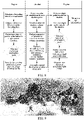
FIG. 4 is a schematic diagram of determining a shadow point in a virtual scene according to an embodiment. -
FIG. 5 is a schematic diagram of a shadow generated when a light source illuminates a target object according to an embodiment. -
FIG. 6 is a schematic diagram of a shadow voxel object according to an embodiment. -
FIG. 7 is a schematic diagram obtained after performing reduction and smoothing on a quantity of vertexes of a shadow voxel object according to an embodiment. -
FIG. 8 is a schematic flowchart of a light probe generation method according to another embodiment. -
FIG. 9 is a schematic diagram of distributing a light probe in a virtual scene according to an embodiment. -
FIG. 10 is a structural block diagram of a light probe generation apparatus according to an embodiment. -
FIG. 11 is a structural block diagram of a light probe generation apparatus according to another embodiment. -
FIG. 12 is a structural block diagram of a computer device according to an embodiment. - To make objectives, technical solutions, and advantages of the disclosure clearer and more comprehensible, the disclosure is further elaborated in detail with reference to the accompanying drawings and embodiments. It is to be understood that the specific embodiments described herein are merely used for explaining the disclosure but are not intended to limit the disclosure.
-
FIG. 1 is a diagram of an application environment of a light probe generation method according to an embodiment. Referring toFIG. 1 , the light probe generation method is applied to a light probe generation system. The light probe generation system includes aterminal 110 and aserver 120. Theterminal 110 and theserver 120 are connected by using a network. Theterminal 110 selects shadow points of a target object in a virtual scene; converts the selected shadow points into a voxelized shadow voxel object; reduces a quantity of vertexes in the shadow voxel object to obtain a shadow voxel object after the reduction; and generates a light probe at a vertex position of the shadow voxel object after the vertex reduction. - The
terminal 110 may be specifically a desktop terminal or a mobile terminal. The mobile terminal may be specifically at least one of a mobile phone, a tablet computer, a notebook computer, and the like. Theserver 120 may be implemented by using an independent server or a server cluster that includes a plurality of servers. - As shown in
FIG. 2 , in an embodiment, a light probe generation method is provided. The method may be performed by the terminal or the server shown inFIG. 1 , or may be performed by the terminal and the server collaboratively. In this embodiment, the method being applied to theterminal 110 inFIG. 1 is mainly used as an example for description. Referring toFIG. 2 , the light probe generation method specifically includes the following operations S202-S208:
S202: Select shadow points of a target object in a virtual scene. - A virtual scene refers to a virtual scene environment generated by using a computer, which can provide a multimedia virtual world, and a user may control an operable virtual object in the virtual scene through an operating device or an operation interface, to observe objects, animals, characters, sceneries, and other virtual things in the virtual scene from a viewing angle of the virtual object, or interact with the objects, animals, characters, sceneries, and other virtual things or other virtual objects in the virtual scene through the virtual object. The virtual scene is generally generated by an application in a computer device such as a terminal and displayed based on hardware (for example, a screen) in the terminal.
- A target object may be a virtual thing such as an object, an animal, a character, or a scenery with ground features in a virtual scene. The object may be a building, a tree, or the like in a virtual scene. The character may be a character role in a virtual scene. The animal may be a pet or a monster in a virtual scene. The scenery may be a mountain in a virtual scene with certain landforms and objects.
- The shadow points: when a light source projects a light ray into the target object, a shadow region is formed at a side of the target object opposite to the light source, and points in the entire shadow region are the shadow points.
- In an embodiment, the terminal starts a first development engine, and calculates a bounding box of the virtual scene in the first development engine. S202 may specifically include: generating, by the terminal, a lattice in the bounding box of the virtual scene; and determining, when a light source projects a light ray from the bounding box to the virtual scene, that the light ray is intersected with points in the lattice and the light ray is intersected with the target object, and using the intersected points as the shadow points of the target object for extraction. The light ray may be an illumination ray emitted by the light source, used for representing a path and a direction of the illumination.
- In an embodiment, the terminal creates a virtual light source by using the first development engine, and simulates the illumination by using the light source, that is, projects a corresponding light ray into the virtual scene.
- For example, the terminal starts a Unity engine, calculates a bounding box of the virtual scene in the Unity engine, and generates evenly distributed lattice in the bounding box. Small black points shown in
FIG. 3 are the lattice evenly distributed in the bounding box. In the bounding box, the terminal creates a light source (for example, a big black point shown inFIG. 3 ) by using the Unity engine, and projects a light ray into the virtual scene through the light source. When a light ray is intersected with both points in the lattice and the target object, that is, there are intersection points between the light ray and the points in the lattice and between the light ray and the target object. In this case, the foregoing intersection points are used as the shadow points of the target object. - In an embodiment, the operation of selecting shadow points of a target object may further include: emitting, by the terminal and when the light source projects the light ray from the bounding box to the virtual scene, a ray in a direction of the light source by using the points in the lattice as reference points; and using, when the ray is intersected with all the target points in the target object, the target points and the corresponding reference points as the shadow points of the target object for extraction.
- Using points in the lattice as reference points, a ray is emitted in a direction of a light source, that is, as shown in
FIG. 3 , small black points inFIG. 3 are used as starting points, and a ray is emitted in a direction of a big black point. When the ray is intersected with a target object (the target object is not shown inFIG. 3 ), the intersection point and a corresponding black point (that is, a point in the lattice) are remarked as shadow points, and similarly, all shadow points are found, and then all the shadow points are selected from the lattice. - In another example, as shown in
FIG. 4 , a lattice evenly distributed in the bounding box of the virtual scene are generated, and points in a shadow of a mountain are calculated by using ray projection. - In an embodiment, after extracting all the shadow points of the target object, the terminal stores the shadow points to a lattice information file, and then exports the lattice information file from the first development engine. For example, the shadow points are saved in a file with the suffix of ".ply", and ".ply" is a file format that only saves position information.
- S204: Convert the selected shadow points into a voxelized shadow voxel obj ect.
- The voxel is short for a volume pixel, which is similar to a pixel in two dimensions, and is a space with a unit length in three dimensions. The voxel may be represented by 3D rendering or extracting a polygon isosurface with a given threshold contour. The voxelization may refer to a process of simplifying reducing irregular 3D objects to unit mesh voxels. A shadow voxel object of the voxelization is a voxel object of converting the selected shadow points into unit mesh voxels. The voxel object not only may include surface information of the shadow points, but also may describe an internal attribute of the shadow points.
- In an embodiment, when the light source projects the light ray from the bounding box to the virtual scene, the terminal determines a shadow region formed by a virtual object in the light ray; and generates a polyhedron enclosing the shadow region. S204 may specifically include: converting, by the terminal, the polyhedron enclosing the shadow region into a voxelized shadow voxel object.
- In an embodiment, when a light ray is projected from the bounding box to the virtual scene, the light ray is projected from an edge of the target object. In this case, the terminal determines a first intersection point of the light ray and the edge of the target object, and a second intersection point between the light ray and another obstacle that blocks the light ray, and connects the first intersection point to the second intersection point to obtain an intersection line. In this case, a region between a backlighting region of the target object and the intersection line corresponds to the shadow region.
- For example, a shadow voxel object enclosing the selected shadow points is obtained by using a shadow volume manner, that is, a shadow region of the target object is generated under the projection of the light source, and a corresponding polyhedron is directly generated according to the shadow region, the polyhedron enclosing the entire shadow region of the target objects; and then the polyhedron is voxelized to obtain the shadow voxel object. As shown in
FIG. 5 , it is assumed that the cube is a target object, and when the light source is illuminated on the target object, a 3D shadow region ABCDEF is formed. A corresponding polyhedron is generated according to the 3D shadow region ABCDEF, and then the polyhedron is voxelized to obtain the shadow voxel object. - In an embodiment, the terminal imports a lattice information file saving the shadow points into a second development engine, and converts the shadow points into a voxelized shadow voxel object by using the second development engine.
- In an embodiment, S204 may specifically include: obtaining, by the terminal, a first polyhedron; copying the first polyhedron to the shadow points by using the second development engine, to obtain a corresponding shadow volume; and then voxelizing the shadow volume to obtain a shadow voxel object. The first polyhedron may be a tetrahedron or a cube, or some other polyhedrons. Volume of each first polyhedron is relatively small.
- For example, the terminal copies tetrahedrons to the shadow points by using CopyTo nodes in a Houdini engine, and in this case, a shadow volume is obtained. Faces of the tetrahedrons that make up the shadow volume are interspersed with each other and with a large quantity. In this case, the terminal needs to voxelize the entire shadow volume. As shown in
FIG. 6 , a shadow voxel object obtained after the voxelization is a hollow bag-like model. - In another embodiment, S204 may specifically include: generating, by the terminal, a second polyhedron configured to enclose the selected shadow points; and performing voxelization on the second polyhedron to obtain the shadow voxel object.
- The second polyhedron may be a polyhedron fitting closely to a contour of the shadow points, and the contour of the shadow points fits to an inner surface of the second polyhedron.
- In an embodiment, the terminal determines drawn paths at an inner surface and an outer surface of the shadow points, and draws polygons at the inner surface and the outer surface according to the paths. The polygons are connected to each other to form a thin film of polygonal mesh enclosing the selected shadow points at the inner surface or the outer surface respectively, and the two thin films of polygonal mesh are the second polyhedron.
- S206: Reduce a quantity of vertexes in the shadow voxel object to obtain a shadow voxel object after the reduction.
- The shadow voxel object is obtained after the shadow volume is voxelized, and the shadow volume is formed by polyhedrons. Therefore, a quantity of vertexes and planes of the shadow voxel object is relatively large, and the quantity of vertexes and planes needs to be reduced. Then, light probes are generated at a vertex position of the shadow voxel object to reduce a quantity of the light probes.
- In an embodiment, S206: Combine, by the terminal, at least two adjacent vertexes in the shadow voxel object; or smooth at least two adjacent planes in the shadow voxel object to reduce the quantity of the vertexes in the shadow voxel object.
- Specifically, the terminal combines at least two adjacent vertexes of adjacent polyhedrons in the shadow voxel object, to reduce both a quantity of vertexes of the shadow voxel object and a quantity of planes of the shadow voxel object. Additionally or alternatively, as shown in
FIG. 7 , the terminal smooths at least two adjacent planes of adjacent polyhedrons in the shadow voxel object to make the at least two planes become a hook surface, to reduce the quantity of the vertexes in the shadow voxel object. - S208: Generate a light probe at a vertex position of the shadow voxel object after the vertex reduction.
- In an embodiment, S208 may specifically include: internally shrinking, by the terminal, the shadow voxel object after the vertex reduction to obtain an internally-shrunk shadow voxel object; and generating a light probe in the shadow at a vertex position of the internally-shrunk shadow voxel object.
- In an embodiment, the terminal determines a shrinking proportion of the shadow voxel object, and reduces the shadow voxel object according to the shrinking proportion to obtain an internally-shrunk shadow voxel object. The internally-shrunk shadow voxel object fits to an inner surface of the shadow points of the target object.
- In another embodiment, S208 may specifically include: externally expanding, the shadow voxel object after the vertex reduction to obtain an externally-expanded shadow voxel object; and generating a light probe outside the shadow at a vertex position of the externally-expanded shadow voxel object.
- In an embodiment, the terminal determines an externally-expansion proportion of the shadow voxel object, and expands the shadow voxel object according to the externally-expansion proportion to obtain an externally-expanded shadow voxel object. The externally-expanded shadow voxel object fits to an outer surface of the shadow points of the target object. The internally-shrunk shadow voxel object and the externally-expanded shadow voxel object are used as two films, and the shadow points of the target object are enclosed. vertex positions of the two films are positions of light probes inside and outside the shadow. Light probes are generated at the positions, such as connection lines of shadow voxel object surfaces shown in
FIG. 7 . - In an embodiment, the target object includes a dynamic object. After S208, the method further includes: determining, by the terminal, a position of the dynamic object in a movement process; obtaining light information corresponding to the light probe according to the position; and rendering the dynamic object according to the light information to obtain an animation effect of global light.
- The dynamic object may be a character or an animal in a virtual scene. The character may be a character role in a virtual scene. The animal may be a pet or a monster in a virtual scene.
- In an embodiment, the terminal renders the illumination on the dynamic object by using spherical harmonics according to the light information to obtain an animation effect of global light of the dynamic object.
- In an embodiment, the target object includes a static object. After S208, the method further includes: determining, by the terminal, a position of the static object; obtaining light information corresponding to the light probe according to a position of the static object; and rendering the static object according to the light information to obtain an animation effect of global light.
- In the foregoing embodiment, shadow points of a target object in a virtual scene are selected, the selected shadow points are converted into a voxelized shadow voxel object; a quantity of vertexes in the shadow voxel object are reduced; and light probes are generated at vertex positions of the shadow voxel object after the vertex reduction. Therefore, the need to evenly distribute light probes in all regions in the virtual scene may be avoided, and it is only required to distribute light probes for the target object, which reduces a quantity of distributed light probes. In addition, distribution positions of the light probes are determined by using vertexes of the shadow voxel object. Because the shadow voxel object may be formed by reducing vertexes of a plurality of regular polyhedrons, when the light probes are distributed at vertex positions of the shadow voxel object after the vertex reduction, the light probes may be distributed relatively evenly, avoiding a problem of inconsistent density. Moreover, before the light probes are generated, a quantity of light probes are further reduced by reducing a quantity of vertexes in the shadow voxel object.
- In an example, operations for generating a light probe in this embodiment may be divided into the following three stages: Unity engine→Houdini→Unity engine. As shown in
FIG. 8 , specific content is shown in the following: - 1. First stage: in a Unity engine, a bounding box of a virtual scene is calculated, and an evenly distributed lattice (as shown in
FIG. 3 ) is generated in the bounding box. When a light source projects a light ray in the bounding box, for each point in the lattice, a ray is emitted in an opposite direction of the light source by using the point in the lattice as a reference point. Then whether the ray is intersected with a target object in the virtual scene is determined. If there is an intersection point, a corresponding point in the lattice is marked as a shadow point, and the above process is repeated until all shadow points of all the target objects are found. Then, all these shadow points are saved in a file with the suffix of ".ply" (".ply" is a file format that may only save position information). - 2. Second stage: the .ply file is imported into Houdini, and then tetrahedrons are copied to each shadow point by using CopyTo nodes, to form a "mountain of shadow volume", that is, a shadow volume. Because faces of these tetrahedrons that forms the shadow volume are interspersed with each other and with a large quantity, it needs to be simplified. The simplification may be done by voxelizing the entire shadow volume, and the shadow volume (that is, an obtained shadow voxel object) after voxelization becomes a hollow bag-like model. Then, the faces of the hollow bag-like model are reduced automatically, to obtain a shadow voxel object after the face reduction. Then the shadow voxel object is internally shrunk to obtain a film closely attached to a shadow inside of the target object. Therefore, a shadow inside of the target object is outlined by using a shadow voxel object. Then, the shadow voxel object is externally expanded to obtain a film closely attached to a shadow inside of the target object. Therefore, a shadow outside of the target object is outlined by using a shadow voxel object. Vertex positions of the two films of the shadow inside and outside are positions of the light probes.
- The shadow volume may alternatively be obtained in a shadow volume manner, that is, a polyhedron is directly generated according to a shadow projected by the target object, and a volume block enclosing the polyhedron is used as a volume of the shadow.
- 3. Third stage: in a Unity engine, a position of the light probe is imported into the Unity engine and is written into a corresponding engine format (referred to as LightmapDataAsset in the Unity engine) by using script.
- In this embodiment, two layers of light probes are provided for virtual things (such as mountains, trees, buildings, and the like) in the virtual scene, and two layers of light probes are also provided for virtual characters in the virtual scene. Finally, two types of light probes are integrated, and information file storing the light probes are modified and stored through code to obtain final position information of the light probes that may be used by the engine. Therefore, light rendering may be performed on the virtual things and the virtual characters in the virtual scene in a game process, to obtain an animation effect of global light.
- In this embodiment, a Unity platform and a Houdini platform are used. However, the disclosure is not limited to the Unity platform and the Houdini platform, and any platform having light ray projection and voxelization functions may implement the solutions of this embodiment.
- As shown in
FIG. 9 , distribution of the light probes is very organic, and the light probes are automatically placed according to local conditions. The overall distribution is on-demand, and the density shown inFIG. 9 is such that regions with more diversified scenes and more diversified light shadows may be distributed with more light probes, and empty regions may be distributed with few light probes. - When some pieces of color light information are required, a layer of lattice with a relatively large span may be superimposed finally. Spaces in the matrix may be artificially specified, and since color light information in an environment is generally extremely low frequency, the span may be large. In this case, based on the solutions of the embodiments of the disclosure, a sufficiently high global illumination effect may be achieved with the highest cost performance.
- Based on the solutions provided in the example embodiments, the following beneficial effects may be obtained:
- Time: it is time-saving, and it only takes 5 minutes to 10 minutes to generate all of light probes, and manual display requires constant input, which generally may be one person/day per iteration of a scene.
- Effect consistency: manual local operations are reduced, which may avoid inconsistent density and accuracy.
- Memory saving: under the condition of the same precision, the memory occupied by the light probes in this solution is reduced by 9 times, which greatly saves the memory occupied by virtual scene images.
- Through-wall optimization: the solutions may make the distribution of light probes closer to the shadow boundary of the polygon than the conventional methods, and reduce the through-wall problem by 33% or more than the related art methods under the same accuracy condition, and reduce the through-wall effect by 80% on average than the related art methods under the same memory condition.
-
FIG. 2 is a schematic flowchart of a light probe generation method according to an embodiment. Although the operations in the flowchart ofFIG. 2 are sequentially displayed in accordance with instructions of arrows, these operations are not necessarily performed sequentially in the order indicated by the arrows. Unless otherwise explicitly specified in this specification, execution of the operations is not limited, and the operations may be performed in other sequences. In addition, at least some operations inFIG. 2 may include a plurality of suboperations or a plurality of stages. The suboperations or the stages are not necessarily performed at the same moment, but may be performed at different moments. The suboperations or the stages are not necessarily performed in sequence, but may be performed in turn or alternately with another operation or at least some of suboperations or stages of the another operation. - As shown in
FIG. 10 , in an embodiment, a light probe generation apparatus is provided. The light probe generation apparatus specifically includes: aselection module 1002, aconversion module 1004, areduction module 1006, and ageneration module 1008. - The
selection module 1002 is configured to select shadow points of a target object in a virtual scene. - The
conversion module 1004 is configured to convert the selected shadow points into a voxelized shadow voxel object. - The
reduction module 1006 is configured to reduce a quantity of vertexes in the shadow voxel object to obtain a shadow voxel object after the reduction. - The
generation module 1008 is configured to generate a light probe at a vertex position of the shadow voxel object after the vertex reduction. - In an embodiment, the
selection module 1002 is further configured to: generate a lattice in a bounding box of the virtual scene; and determine, when a light source projects a light ray from the bounding box to the virtual scene, that the light ray is intersected with points in the lattice and the light ray is intersected with the target object, and use the intersected points as the shadow points of the target object for extraction. - In an embodiment, the
selection module 1002 is further configured to: control to emit, when the light source projects the light ray from the bounding box to the virtual scene, a ray in a direction of the light source by using the points in the lattice as reference points; and use, when the ray is intersected with all the target points in the target object, the target points and the corresponding reference points as the shadow points of the target object for extraction. - In an embodiment, the
conversion module 1004 is further configured to: determine, when the light source projects the light ray from the bounding box to the virtual scene, a shadow region formed by a virtual object in the light ray; generate a polyhedron enclosing the shadow region; and convert the polyhedron enclosing the shadow region into a voxelized shadow voxel object. - In an embodiment, the
conversion module 1004 is further configured to: obtain a first polyhedron; copy the first polyhedron to the shadow points to obtain corresponding shadow volumes; and perform voxelization on the shadow volumes to obtain the shadow voxel object. - In an embodiment, the
conversion module 1004 is further configured to: generate a second polyhedron configured to enclose the selected shadow points; and perform voxelization on the second polyhedron to obtain the shadow voxel object. - In an embodiment, the
reduction module 1006 is further configured to: combine at least two adjacent vertexes in the shadow voxel object; or smooth at least two adjacent planes in the shadow voxel object to reduce the quantity of the vertexes in the shadow voxel object. - In an embodiment, the
generation module 1008 is further configured to: internally shrink the shadow voxel object after the vertex reduction to obtain an internally-shrunk shadow voxel object; and generate a light probe in the shadow at a vertex position of the internally-shrunk shadow voxel object. - In an embodiment, the
generation module 1008 is further configured to: externally expand the shadow voxel object after the vertex reduction to obtain an externally-expanded shadow voxel object; and generate a light probe outside the shadow at a vertex position of the externally-expanded shadow voxel object. - In an embodiment, as shown in
FIG. 11 , the apparatus further includes: a determiningmodule 1010, an obtainingmodule 1012, and arendering module 1014. - The determining
module 1010 is configured to determine a position of a dynamic object in a movement process. - The obtaining
module 1012 is configured to obtain light information corresponding to the light probe according to the position. - The
rendering module 1014 is configured to render the dynamic object according to the light information to obtain an animation effect of global light. - In the foregoing embodiment, shadow points of a target object in a virtual scene are selected, the selected shadow points are converted into a voxelized shadow voxel object; a quantity of vertexes in the shadow voxel object are reduced; and light probes are generated at vertex positions of the shadow voxel object after the vertex reduction. Therefore, the need to evenly distribute light probes in all regions in the virtual scene is avoided, and it is only required to distribute light probes for the target object, which reduces a quantity of distributed light probes. In addition, distribution positions of the light probes are determined by using vertexes of the shadow voxel object. Because the shadow voxel object may be formed by reducing vertexes of a plurality of regular polyhedrons, when the light probes are distributed at vertex positions of the shadow voxel object after the vertex reduction, the light probes may be distributed relatively evenly, avoiding a problem of inconsistent density. Moreover, before the light probes are generated, a quantity of light probes are further reduced by reducing a quantity of vertexes in the shadow voxel object.
-
FIG. 12 is a diagram of an internal structure of a computer device according to an embodiment. The computer device may be the terminal 110 or theserver 120 inFIG. 1 . An example in which the computer device is the terminal 110 is used for description. As shown inFIG. 12 , the computer device includes a processor, a memory, a network interface, an input apparatus, and a display screen that are connected by a system bus. The memory includes a non-volatile storage medium and an internal memory. The non-volatile storage medium of the computer device stores an operating system and may further store a computer program, the computer program, when executed by the processor, causing the processor to implement the light probe generation method. The internal memory may also store a computer program, the computer program, when executed by the processor, causing the processor to perform the light probe generation method. The display screen of the computer device may be a liquid crystal display screen or an e-ink display screen. The input apparatus of the computer device may be a touch layer covering the display screen, or a button, a trackball, or a touchpad disposed on a housing of the computer device, or an external keyboard, touchpad, mouse, or the like. - A person skilled in the art would understand that, the structure shown in
FIG. 12 is only a block diagram of a part of a structure related to a solution of the disclosure and does not limit the computer device to which the solution of the disclosure is applied. Specifically, the computer device may include more or fewer components than those in the drawings, or some components are combined, or a different component deployment is used. - In an embodiment, the light probe generation apparatus provided in the disclosure may be implemented in the form of a computer program. The computer program may be run on the computer device shown in
FIG. 12 . The memory of the computer device may store program modules forming the light probe generation apparatus, for example, theselection module 1002, theconversion module 1004, thereduction module 1006, and thegeneration module 1008 shown inFIG. 10 . A computer program formed by the program modules causes the processor to perform the operations in the light probe generation method in the embodiments of the disclosure described in this specification. - For example, the computer device shown in
FIG. 12 may perform operation S202 by using theselection module 1002 in the light probe generation apparatus shown inFIG. 10 . The computer device may perform operation S204 by using theconversion module 1004. The computer device may perform operation S206 by using thereduction module 1006. The computer device may perform operation S208 by using thegeneration module 1008. - In an embodiment, a computer device is provided, including a memory and a processor, the memory storing a computer program, the computer program, when executed by the processor, causing the processor to perform the following operations: selecting shadow points of a target object in a virtual scene; converting the selected shadow points into a voxelized shadow voxel object; reducing a quantity of vertexes in the shadow voxel object to obtain a shadow voxel object after the reduction; and generating a light probe at a vertex position of the shadow voxel object after the vertex reduction.
- In an embodiment, the computer program, when executed by the processor to perform the operation of selecting shadow points of a target object in a virtual scene, causes the processor to specifically perform the following operations: generating a lattice in a bounding box of the virtual scene; and determining, when a light source projects a light ray from the bounding box to the virtual scene, that the light ray is intersected with points in the lattice and the light ray is intersected with the target object, and using the intersected points as the shadow points of the target object for extraction.
- In an embodiment, the computer program, when executed by the processor to perform the operation of selecting shadow points of a target object according to intersection points between the light ray and target points in the lattice and between the light ray and the target object, causes the processor to specifically perform the following operations: controlling to emit, when the light source projects the light ray from the bounding box to the virtual scene, a ray in a direction of the light source by using the points in the lattice as reference points; and using, when the ray is intersected with all the target points in the target object, the target points and the corresponding reference points as the shadow points of the target object for extraction.
- In an embodiment, the computer program, when executed by the processor, causes the processor to perform the following operations: determining, when the light source projects the light ray from the bounding box to the virtual scene, a shadow region formed by a virtual object in the light ray; generating a polyhedron enclosing the shadow region; and converting the polyhedron enclosing the shadow region into a voxelized shadow voxel object.
- In an embodiment, the computer program, when executed by the processor to perform the operation of converting the selected shadow points into a voxelized shadow voxel object, causes the processor to specifically perform the following operations: obtaining a first polyhedron; copying the first polyhedron to the shadow points to obtain corresponding shadow volumes; and performing voxelization on the shadow volumes to obtain the shadow voxel object.
- In an embodiment, the computer program, when executed by the processor to perform the operation of converting the selected shadow points into a voxelized shadow voxel object, causes the processor to specifically perform the following operations: generating a second polyhedron configured to enclose the selected shadow points; and performing voxelization on the second polyhedron to obtain the shadow voxel object.
- In an embodiment, the computer program, when executed by the processor to perform the operation of reducing a quantity of vertexes in the shadow voxel object, causes the processor to specifically perform the following operations: combining at least two adjacent vertexes in the shadow voxel object; or smoothing at least two adjacent planes in the shadow voxel object to reduce the quantity of the vertexes in the shadow voxel object.
- In an embodiment, the computer program, when executed by the processor to perform the operation of generating a light probe at a vertex position of the shadow voxel object after the vertex reduction, causes the processor to specifically perform the following operations: internally shrinking the shadow voxel object after the vertex reduction to obtain an internally-shrunk shadow voxel object; and generating a light probe in the shadow at a vertex position of the internally-shrunk shadow voxel object.
- In an embodiment, the computer program, when executed by the processor to perform the operation of generating a light probe at a vertex position of the shadow voxel object after the vertex reduction, causes the processor to specifically perform the following operations: externally expanding the shadow voxel object after the vertex reduction to obtain an externally-expanded shadow voxel object; and generating a light probe outside the shadow at a vertex position of the externally-expanded shadow voxel object.
- In an embodiment, the target object includes a dynamic object. The computer program, when executed by the processor, causes the processor to further perform the following operations: determining a position of the dynamic object in a movement process; obtaining light information corresponding to the light probe according to the position; and rendering the dynamic object according to the light information to obtain an animation effect of global light.
- In an embodiment, a computer-readable storage medium is provided, storing a computer program, the computer program, when executed by a processor, causing the processor to perform the following operations: selecting shadow points of a target object in a virtual scene; converting the selected shadow points into a voxelized shadow voxel object; reducing a quantity of vertexes in the shadow voxel object to obtain a shadow voxel object after the reduction; and generating a light probe at a vertex position of the shadow voxel object after the vertex reduction.
- In an embodiment, the computer program, when executed by the processor to perform the operation of selecting shadow points of a target object in a virtual scene, causes the processor to specifically perform the following operations: generating a lattice in a bounding box of the virtual scene; and determining, when a light source projects a light ray from the bounding box to the virtual scene, that the light ray is intersected with points in the lattice and the light ray is intersected with the target object, and using the intersected points as the shadow points of the target object for extraction.
- In an embodiment, the computer program, when executed by the processor to perform the operation of selecting shadow points of a target object according to intersection points between the light ray and target points in the lattice and between the light ray and the target object, causes the processor to specifically perform the following operations: controlling to emit, when the light source projects the light ray from the bounding box to the virtual scene, a ray in a direction of the light source by using the points in the lattice as reference points; and using, when the ray is intersected with all the target points in the target object, the target points and the corresponding reference points as the shadow points of the target object for extraction.
- In an embodiment, the computer program, when executed by the processor, causes the processor to perform the following operations: determining, when the light source projects the light ray from the bounding box to the virtual scene, a shadow region formed by a virtual object in the light ray; generating a polyhedron enclosing the shadow region; and converting the polyhedron enclosing the shadow region into a voxelized shadow voxel object.
- In an embodiment, the computer program, when executed by the processor to perform the operation of converting the selected shadow points into a voxelized shadow voxel object, causes the processor to specifically perform the following operations: obtaining a first polyhedron; copying the first polyhedron to the shadow points to obtain corresponding shadow volumes; and performing voxelization on the shadow volumes to obtain the shadow voxel object.
- In an embodiment, the computer program, when executed by the processor to perform the operation of converting the selected shadow points into a voxelized shadow voxel object, causes the processor to specifically perform the following operations: generating a second polyhedron configured to enclose the selected shadow points; and performing voxelization on the second polyhedron to obtain the shadow voxel object.
- In an embodiment, the computer program, when executed by the processor to perform the operation of reducing a quantity of vertexes in the shadow voxel object, causes the processor to specifically perform the following operations: combining at least two adjacent vertexes in the shadow voxel object; or smoothing at least two adjacent planes in the shadow voxel object to reduce the quantity of the vertexes in the shadow voxel object.
- In an embodiment, the computer program, when executed by the processor to perform the operation of generating a light probe at a vertex position of the shadow voxel object after the vertex reduction, causes the processor to specifically perform the following operations: internally shrinking the shadow voxel object after the vertex reduction to obtain an internally-shrunk shadow voxel object; and generating a light probe in the shadow at a vertex position of the internally-shrunk shadow voxel object.
- In an embodiment, the computer program, when executed by the processor to perform the operation of generating a light probe at a vertex position of the shadow voxel object after the vertex reduction, causes the processor to specifically perform the following operations: externally expanding the shadow voxel object after the vertex reduction to obtain an externally-expanded shadow voxel object; and generating a light probe outside the shadow at a vertex position of the externally-expanded shadow voxel object.
- In an embodiment, the target object includes a dynamic object. The computer program, when executed by the processor, causes the processor to further perform the following operations: determining a position of the dynamic object in a movement process; obtaining light information corresponding to the light probe according to the position; and rendering the dynamic object according to the light information to obtain an animation effect of global light.
- A person of ordinary skill in the art would understand that all or some of the processes of the methods in the foregoing embodiments may be implemented by a computer program instructing relevant hardware. The program may be stored in a non-volatile computer-readable storage medium. When the program is executed, the processes of the foregoing method embodiments are performed. References to the memory, the storage, the database, or other medium used in the embodiments provided in the disclosure may all include a non-volatile or a volatile memory. The non-volatile memory may include a read-only memory (ROM), a programmable ROM (PROM), an electrically programmable ROM (EPROM), an electrically erasable programmable ROM (EEPROM) or a flash memory. The volatile memory may include a random access memory (RAM) or an external cache. By way of description rather than limitation, the RAM may be obtained in a plurality of forms, such as a static RAM (SRAM), a dynamic RAM (DRAM), a synchronous DRAM (SDRAM), a double data rate SDRAM (DDRSDRAM), an enhanced SDRAM (ESDRAM), a synchlink DRAM (SLDRAM), a rambus direct RAM (RDRAM), a direct rambus dynamic RAM (DRDRAM), and a rambus dynamic RAM (RDRAM).
- The technical features in the foregoing embodiments may be variously combined. For concise description, not all possible combinations of the technical features in the embodiments are described. However, provided that combinations of the technical features do not conflict with each other, the combinations of the technical features are considered as falling within the scope described in this specification.
- The foregoing embodiments only show several implementations of the disclosure, and descriptions thereof are in detail, but are not to be understood as a limitation to the patent scope of the disclosure. A person of ordinary skill in the art may further make variations and improvements without departing from the ideas of the disclosure, which all fall within the protection scope of the disclosure. Therefore, the protection scope of the disclosure is subject to the protection scope of the appended claims.
Claims (20)
- A light probe generation method, executable by a computer device, the method comprising:selecting shadow points of a target object in a virtual scene;converting the selected shadow points into a voxelized shadow voxel object;reducing a quantity of vertexes in the shadow voxel object to obtain a shadow voxel object after vertex reduction; andgenerating a light probe at a vertex position of a shadow voxel object obtained after the vertex reduction.
- The method according to claim 1, wherein selecting the shadow points of the target object in the virtual scene comprises:generating a lattice in a bounding box of the virtual scene; anddetermining, when a light source projects a light ray from the bounding box to the virtual scene, that the light ray is intersected with points in the lattice and the light ray is intersected with the target object, and selecting the intersected points as the shadow points of the target object for extraction.
- The method according to claim 2, further comprising:emitting, when the light source projects the light ray from the bounding box to the virtual scene, a ray in a direction of the light source by using the points in the lattice as reference points; andwhen the ray is intersected with all target points in the target object, selecting the target points and corresponding reference points as the shadow points of the target object for extraction.
- The method according to claim 2, further comprising:determining, when the light source projects the light ray from the bounding box to the virtual scene, a shadow region formed by a virtual object in the light ray;generating a polyhedron enclosing the shadow region; andconverting the selected shadow points into the voxelized shadow voxel object comprises:
converting the polyhedron enclosing the shadow region into the voxelized shadow voxel obj ect. - The method according to claim 1, wherein converting the selected shadow points into the voxelized shadow voxel object comprises:obtaining a first polyhedron;copying the first polyhedron to the shadow points to obtain corresponding shadow volumes; andperforming voxelization on the shadow volumes to obtain the shadow voxel object.
- The method according to claim 1, wherein converting the selected shadow points into the voxelized shadow voxel object comprises:generating a second polyhedron configured to enclose the selected shadow points; andperforming voxelization on the second polyhedron to obtain the shadow voxel object.
- The method according to claim 1, wherein reducing the quantity of vertexes in the shadow voxel object comprises:combining at least two adjacent vertexes in the shadow voxel object; orsmoothing at least two adjacent planes in the shadow voxel object to reduce the quantity of vertexes in the shadow voxel object.
- The method according to claim 1, wherein generating the light probe at the vertex position of the shadow voxel object obtained after the vertex reduction comprises:internally shrinking the shadow voxel object obtained after the vertex reduction to obtain an internally-shrunk shadow voxel object; andgenerating the light probe in a shadow at a vertex position of the internally-shrunk shadow voxel object.
- The method according to claim 1, wherein generating the light probe at the vertex position of the shadow voxel object obtained after the vertex reduction comprises:externally expanding the shadow voxel object obtained after the vertex reduction to obtain an externally-expanded shadow voxel object; andgenerating the light probe outside a shadow at a vertex position of the externally-expanded shadow voxel object.
- The method according to claim 1, wherein generating the light probe at the vertex position of the shadow voxel object obtained after the vertex reduction comprises:internally shrinking the shadow voxel object obtained after the vertex reduction to obtain an internally-shrunk shadow voxel object;externally expanding the shadow voxel object obtained after the vertex reduction to obtain an externally-expanded shadow voxel object; andgenerating light probes at a vertex position of the internally-shrunk shadow voxel object and a vertex position corresponding to the externally-expanded shadow voxel object.
- The method according to any one of claims 1 to 9, wherein the target object includes a dynamic object; and the method further comprises:determining a position of the dynamic object in a movement process;obtaining light information corresponding to the light probe according to the position; andrendering the dynamic object according to the light information to obtain an animation effect of global light.
- A light probe generation apparatus, comprising:a selection module, configured to select shadow points of a target object in a virtual scene;a conversion module, configured to convert the selected shadow points into a voxelized shadow voxel object;a reduction module, configured to reduce a quantity of vertexes in the shadow voxel object to obtain a shadow voxel object after vertex reduction; anda generation module, configured to generate a light probe at a vertex position of a shadow voxel object obtained after the vertex reduction.
- The apparatus according to claim 12, wherein the selection module is further configured to:generate a lattice in a bounding box of the virtual scene; anddetermine, when a light source projects a light ray from the bounding box to the virtual scene, that the light ray is intersected with points in the lattice and the light ray is intersected with the target object, and select the intersected points as the shadow points of the target object for extraction.
- The apparatus according to claim 13, wherein the selection module is further configured to:emit, when the light source projects the light ray from the bounding box to the virtual scene, a ray in a direction of the light source by using the points in the lattice as reference points; anduse, when the ray is intersected with all the target points in the target object, the target points and corresponding reference points as the shadow points of the target object for extraction.
- The apparatus according to claim 13, wherein the conversion module is configured to:determine, when the light source projects the light ray from the bounding box to the virtual scene, a shadow region formed by a virtual object in the light ray;generate a polyhedron enclosing the shadow region; andconvert the polyhedron enclosing the shadow region into the voxelized shadow voxel obj ect.
- The apparatus according to claim 12, wherein the conversion module is configured to:obtain a first polyhedron;copy the first polyhedron to the shadow points to obtain corresponding shadow volumes; andperform voxelization on the shadow volumes to obtain the shadow voxel object.
- The apparatus according to claim 12, wherein the conversion module is configured to:generate a second polyhedron configured to enclose the selected shadow points; andperform voxelization on the second polyhedron to obtain the shadow voxel object.
- The apparatus according to claim 12, wherein the reduction module is further configured to:combine at least two adjacent vertexes in the shadow voxel object; orsmooth at least two adjacent planes in the shadow voxel object to reduce the quantity of vertexes in the shadow voxel object.
- A computer-readable storage medium, storing a computer program, the computer program, when executed by a processor, causing the processor to perform operations of the method according to any one of claims 1 to 11.
- A computer device, comprising a memory and a processor, the memory storing a computer program, the computer program, when executed by the processor, causing the processor to perform operations of the method according to any one of claims 1 to 11.
Applications Claiming Priority (2)
| Application Number | Priority Date | Filing Date | Title |
|---|---|---|---|
| CN201911236004.9A CN110992466B (en) | 2019-12-05 | 2019-12-05 | Light probe generation method, device, storage medium and computer equipment |
| PCT/CN2020/117565 WO2021109688A1 (en) | 2019-12-05 | 2020-09-25 | Illumination probe generation method, apparatus, storage medium, and computer device |
Publications (3)
| Publication Number | Publication Date |
|---|---|
| EP3989175A1 true EP3989175A1 (en) | 2022-04-27 |
| EP3989175A4 EP3989175A4 (en) | 2023-01-04 |
| EP3989175B1 EP3989175B1 (en) | 2026-04-15 |
Family
ID=70090362
Family Applications (1)
| Application Number | Title | Priority Date | Filing Date |
|---|---|---|---|
| EP20895977.5A Active EP3989175B1 (en) | 2019-12-05 | 2020-09-25 | Illumination probe generation method, apparatus, storage medium, and computer device |
Country Status (6)
| Country | Link |
|---|---|
| US (1) | US11854143B2 (en) |
| EP (1) | EP3989175B1 (en) |
| JP (1) | JP7355926B2 (en) |
| KR (1) | KR102573787B1 (en) |
| CN (1) | CN110992466B (en) |
| WO (1) | WO2021109688A1 (en) |
Families Citing this family (8)
| Publication number | Priority date | Publication date | Assignee | Title |
|---|---|---|---|---|
| CN110992466B (en) | 2019-12-05 | 2021-05-18 | 腾讯科技(深圳)有限公司 | Light probe generation method, device, storage medium and computer equipment |
| CN118096992A (en) * | 2020-06-30 | 2024-05-28 | 完美世界(北京)软件科技发展有限公司 | Shadow display method and device, storage medium and electronic device |
| CN111744183B (en) * | 2020-07-02 | 2024-02-09 | 网易(杭州)网络有限公司 | Illumination sampling method and device in game and computer equipment |
| CN112587915B (en) * | 2021-01-05 | 2024-07-09 | 网易(杭州)网络有限公司 | Lighting effect presentation method and device, storage medium and computer equipment |
| CN114549723B (en) * | 2021-03-30 | 2025-02-18 | 完美世界(北京)软件科技发展有限公司 | Method, device and equipment for rendering lighting information in game scenes |
| CN114299220B (en) * | 2021-11-19 | 2024-11-15 | 腾讯科技(成都)有限公司 | Lightmap data generation method, device, equipment, medium and program product |
| CN115294262B (en) * | 2022-08-08 | 2026-03-10 | 珠海金山数字网络科技有限公司 | Information processing method and device |
| CN118691730A (en) * | 2023-03-21 | 2024-09-24 | 腾讯科技(深圳)有限公司 | Virtual scene lighting update method, device, equipment, medium and program product |
Family Cites Families (13)
| Publication number | Priority date | Publication date | Assignee | Title |
|---|---|---|---|---|
| GB9929957D0 (en) | 1999-12-17 | 2000-02-09 | Canon Kk | Image processing apparatus |
| CN1278282C (en) * | 2003-12-04 | 2006-10-04 | 北京金山数字娱乐科技有限公司 | Scene dynamic shade and shadow realizing method |
| JP2008262493A (en) | 2007-04-13 | 2008-10-30 | Sony Corp | Information processing apparatus, information processing method, program, and recording medium |
| JP2010536412A (en) * | 2007-08-16 | 2010-12-02 | コーニンクレッカ フィリップス エレクトロニクス エヌ ヴィ | Image forming method for sampling a cross section in a three-dimensional (3D) image data volume |
| US10008034B2 (en) * | 2013-05-03 | 2018-06-26 | Nvidia Corporation | System, method, and computer program product for computing indirect lighting in a cloud network |
| US10258884B2 (en) * | 2014-04-09 | 2019-04-16 | Zynga Inc. | Approximated diffuse lighting for a moving object |
| DE102016103854A1 (en) * | 2015-03-03 | 2016-09-08 | Imagination Technologies Limited | Graphics processing with directional representations of illumination at probe positions within a scene |
| CN106204701B (en) * | 2016-06-22 | 2019-04-30 | 浙江大学 | A Rendering Method for Dynamically Calculating Indirect Specular Highlights Based on Light Probe Interpolation |
| CN106215419B (en) * | 2016-07-28 | 2019-08-16 | 腾讯科技(深圳)有限公司 | Collision control method and device |
| CN109364481B (en) * | 2018-10-30 | 2022-09-13 | 网易(杭州)网络有限公司 | Method, device, medium and electronic equipment for real-time global illumination in game |
| CN110335354B (en) * | 2019-07-12 | 2023-05-05 | 网易(杭州)网络有限公司 | Modularized 3D modeling method and device |
| CN110522501B (en) * | 2019-08-09 | 2021-04-09 | 常州市第二人民医院 | 3D printing personalized orthopedic implant construction and biomechanical optimization processing method |
| CN110992466B (en) * | 2019-12-05 | 2021-05-18 | 腾讯科技(深圳)有限公司 | Light probe generation method, device, storage medium and computer equipment |
-
2019
- 2019-12-05 CN CN201911236004.9A patent/CN110992466B/en active Active
-
2020
- 2020-09-25 WO PCT/CN2020/117565 patent/WO2021109688A1/en not_active Ceased
- 2020-09-25 KR KR1020227001755A patent/KR102573787B1/en active Active
- 2020-09-25 EP EP20895977.5A patent/EP3989175B1/en active Active
- 2020-09-25 JP JP2022517244A patent/JP7355926B2/en active Active
-
2021
- 2021-10-13 US US17/500,437 patent/US11854143B2/en active Active
Also Published As
| Publication number | Publication date |
|---|---|
| WO2021109688A1 (en) | 2021-06-10 |
| EP3989175A4 (en) | 2023-01-04 |
| KR102573787B1 (en) | 2023-08-31 |
| US11854143B2 (en) | 2023-12-26 |
| KR20220024681A (en) | 2022-03-03 |
| CN110992466B (en) | 2021-05-18 |
| EP3989175B1 (en) | 2026-04-15 |
| JP7355926B2 (en) | 2023-10-03 |
| JP2022548170A (en) | 2022-11-16 |
| CN110992466A (en) | 2020-04-10 |
| US20220036643A1 (en) | 2022-02-03 |
Similar Documents
| Publication | Publication Date | Title |
|---|---|---|
| US11854143B2 (en) | Light probe generation method and apparatus, storage medium, and computer device | |
| US12347016B2 (en) | Image rendering method and apparatus, device, medium, and computer program product | |
| US11344806B2 (en) | Method for rendering game, and method, apparatus and device for generating game resource file | |
| EP3753614B1 (en) | Map rendering method and apparatus, computer device and storage medium | |
| US11217035B2 (en) | Generating height maps from normal maps based on boundary conditions of virtual boundaries | |
| US9275493B2 (en) | Rendering vector maps in a geographic information system | |
| US8988446B2 (en) | 2D animation from a 3D mesh | |
| US8134556B2 (en) | Method and apparatus for real-time 3D viewer with ray trace on demand | |
| CN113112579A (en) | Rendering method, rendering device, electronic equipment and computer-readable storage medium | |
| CN111133472B (en) | Method and apparatus for infrastructure design using 3D reality data | |
| CN112991508A (en) | WebGL-based 3D rendering system and method | |
| CN110428504B (en) | Text image synthesis method, apparatus, computer device and storage medium | |
| CN114020390A (en) | BIM model display method, device, computer equipment and storage medium | |
| CN112001018A (en) | Efficient virtual simulation experiment platform testing method based on cloud rendering | |
| CN114494024B (en) | Image rendering method, device and equipment and storage medium | |
| CN114307158A (en) | Three-dimensional virtual scene data generation method and device, storage medium and terminal | |
| KR20080018404A (en) | Computer-readable recording medium that stores background creation programs for game production | |
| AU2022215321B2 (en) | Generating shadows for digital objects within digital images utilizing a height map | |
| CN114241101B (en) | Three-dimensional scene rendering method, system, device and storage medium | |
| WO2025055518A1 (en) | Virtual screen generation method and apparatus, electronic device, computer readable storage medium, and computer program product | |
| HK40022542A (en) | Method and apparatus for generating lighting probe, storage medium and computer device | |
| HK40022542B (en) | Method and apparatus for generating lighting probe, storage medium and computer device | |
| CN116824104B (en) | Plotting graph drawing method, terminal equipment and storage medium | |
| CN119202109B (en) | A method and device for processing game map data | |
| Su et al. | 3D Visualization Process and Efficiency Analysis of Geographic Information Based on WebGL |
Legal Events
| Date | Code | Title | Description |
|---|---|---|---|
| STAA | Information on the status of an ep patent application or granted ep patent |
Free format text: STATUS: THE INTERNATIONAL PUBLICATION HAS BEEN MADE |
|
| PUAI | Public reference made under article 153(3) epc to a published international application that has entered the european phase |
Free format text: ORIGINAL CODE: 0009012 |
|
| STAA | Information on the status of an ep patent application or granted ep patent |
Free format text: STATUS: REQUEST FOR EXAMINATION WAS MADE |
|
| 17P | Request for examination filed |
Effective date: 20220120 |
|
| AK | Designated contracting states |
Kind code of ref document: A1 Designated state(s): AL AT BE BG CH CY CZ DE DK EE ES FI FR GB GR HR HU IE IS IT LI LT LU LV MC MK MT NL NO PL PT RO RS SE SI SK SM TR |
|
| RAP3 | Party data changed (applicant data changed or rights of an application transferred) |
Owner name: TENCENT TECHNOLOGY (SHENZHEN) COMPANY LIMITED |
|
| A4 | Supplementary search report drawn up and despatched |
Effective date: 20221206 |
|
| RIC1 | Information provided on ipc code assigned before grant |
Ipc: G06T 15/50 20110101AFI20221130BHEP |
|
| DAV | Request for validation of the european patent (deleted) | ||
| DAX | Request for extension of the european patent (deleted) | ||
| STAA | Information on the status of an ep patent application or granted ep patent |
Free format text: STATUS: EXAMINATION IS IN PROGRESS |
|
| 17Q | First examination report despatched |
Effective date: 20250627 |
|
| GRAP | Despatch of communication of intention to grant a patent |
Free format text: ORIGINAL CODE: EPIDOSNIGR1 |
|
| STAA | Information on the status of an ep patent application or granted ep patent |
Free format text: STATUS: GRANT OF PATENT IS INTENDED |
|
| INTG | Intention to grant announced |
Effective date: 20251110 |
|
| GRAS | Grant fee paid |
Free format text: ORIGINAL CODE: EPIDOSNIGR3 |
|
| GRAA | (expected) grant |
Free format text: ORIGINAL CODE: 0009210 |
|
| STAA | Information on the status of an ep patent application or granted ep patent |
Free format text: STATUS: THE PATENT HAS BEEN GRANTED |
|
| AK | Designated contracting states |
Kind code of ref document: B1 Designated state(s): AL AT BE BG CH CY CZ DE DK EE ES FI FR GB GR HR HU IE IS IT LI LT LU LV MC MK MT NL NO PL PT RO RS SE SI SK SM TR |
|
| REG | Reference to a national code |
Ref country code: CH Ref legal event code: F10 Free format text: ST27 STATUS EVENT CODE: U-0-0-F10-F00 (AS PROVIDED BY THE NATIONAL OFFICE) Effective date: 20260415 |