EP3988756A1 - Powered tailgate opening system - Google Patents
Powered tailgate opening system Download PDFInfo
- Publication number
- EP3988756A1 EP3988756A1 EP20203721.4A EP20203721A EP3988756A1 EP 3988756 A1 EP3988756 A1 EP 3988756A1 EP 20203721 A EP20203721 A EP 20203721A EP 3988756 A1 EP3988756 A1 EP 3988756A1
- Authority
- EP
- European Patent Office
- Prior art keywords
- tailgate
- opening
- distance
- angle
- powered
- Prior art date
- Legal status (The legal status is an assumption and is not a legal conclusion. Google has not performed a legal analysis and makes no representation as to the accuracy of the status listed.)
- Pending
Links
Images

Classifications
-
- E—FIXED CONSTRUCTIONS
- E05—LOCKS; KEYS; WINDOW OR DOOR FITTINGS; SAFES
- E05F—DEVICES FOR MOVING WINGS INTO OPEN OR CLOSED POSITION; CHECKS FOR WINGS; WING FITTINGS NOT OTHERWISE PROVIDED FOR, CONCERNED WITH THE FUNCTIONING OF THE WING
- E05F15/00—Power-operated mechanisms for wings
- E05F15/70—Power-operated mechanisms for wings with automatic actuation
- E05F15/73—Power-operated mechanisms for wings with automatic actuation responsive to movement or presence of persons or objects
-
- E—FIXED CONSTRUCTIONS
- E05—LOCKS; KEYS; WINDOW OR DOOR FITTINGS; SAFES
- E05F—DEVICES FOR MOVING WINGS INTO OPEN OR CLOSED POSITION; CHECKS FOR WINGS; WING FITTINGS NOT OTHERWISE PROVIDED FOR, CONCERNED WITH THE FUNCTIONING OF THE WING
- E05F15/00—Power-operated mechanisms for wings
- E05F15/40—Safety devices, e.g. detection of obstructions or end positions
- E05F15/42—Detection using safety edges
- E05F15/43—Detection using safety edges responsive to disruption of energy beams, e.g. light or sound
-
- E—FIXED CONSTRUCTIONS
- E05—LOCKS; KEYS; WINDOW OR DOOR FITTINGS; SAFES
- E05F—DEVICES FOR MOVING WINGS INTO OPEN OR CLOSED POSITION; CHECKS FOR WINGS; WING FITTINGS NOT OTHERWISE PROVIDED FOR, CONCERNED WITH THE FUNCTIONING OF THE WING
- E05F15/00—Power-operated mechanisms for wings
- E05F15/40—Safety devices, e.g. detection of obstructions or end positions
-
- E—FIXED CONSTRUCTIONS
- E05—LOCKS; KEYS; WINDOW OR DOOR FITTINGS; SAFES
- E05F—DEVICES FOR MOVING WINGS INTO OPEN OR CLOSED POSITION; CHECKS FOR WINGS; WING FITTINGS NOT OTHERWISE PROVIDED FOR, CONCERNED WITH THE FUNCTIONING OF THE WING
- E05F15/00—Power-operated mechanisms for wings
- E05F15/40—Safety devices, e.g. detection of obstructions or end positions
- E05F15/42—Detection using safety edges
- E05F15/43—Detection using safety edges responsive to disruption of energy beams, e.g. light or sound
- E05F2015/432—Detection using safety edges responsive to disruption of energy beams, e.g. light or sound with acoustical sensors
-
- E—FIXED CONSTRUCTIONS
- E05—LOCKS; KEYS; WINDOW OR DOOR FITTINGS; SAFES
- E05F—DEVICES FOR MOVING WINGS INTO OPEN OR CLOSED POSITION; CHECKS FOR WINGS; WING FITTINGS NOT OTHERWISE PROVIDED FOR, CONCERNED WITH THE FUNCTIONING OF THE WING
- E05F15/00—Power-operated mechanisms for wings
- E05F15/40—Safety devices, e.g. detection of obstructions or end positions
- E05F15/42—Detection using safety edges
- E05F2015/483—Detection using safety edges for detection during opening
-
- E—FIXED CONSTRUCTIONS
- E05—LOCKS; KEYS; WINDOW OR DOOR FITTINGS; SAFES
- E05Y—INDEXING SCHEME ASSOCIATED WITH SUBCLASSES E05D AND E05F, RELATING TO CONSTRUCTION ELEMENTS, ELECTRIC CONTROL, POWER SUPPLY, POWER SIGNAL OR TRANSMISSION, USER INTERFACES, MOUNTING OR COUPLING, DETAILS, ACCESSORIES, AUXILIARY OPERATIONS NOT OTHERWISE PROVIDED FOR, APPLICATION THEREOF
- E05Y2400/00—Electronic control; Electrical power; Power supply; Power or signal transmission; User interfaces
- E05Y2400/10—Electronic control
- E05Y2400/32—Position control, detection or monitoring
-
- E—FIXED CONSTRUCTIONS
- E05—LOCKS; KEYS; WINDOW OR DOOR FITTINGS; SAFES
- E05Y—INDEXING SCHEME ASSOCIATED WITH SUBCLASSES E05D AND E05F, RELATING TO CONSTRUCTION ELEMENTS, ELECTRIC CONTROL, POWER SUPPLY, POWER SIGNAL OR TRANSMISSION, USER INTERFACES, MOUNTING OR COUPLING, DETAILS, ACCESSORIES, AUXILIARY OPERATIONS NOT OTHERWISE PROVIDED FOR, APPLICATION THEREOF
- E05Y2400/00—Electronic control; Electrical power; Power supply; Power or signal transmission; User interfaces
- E05Y2400/10—Electronic control
- E05Y2400/32—Position control, detection or monitoring
- E05Y2400/334—Position control, detection or monitoring by using pulse generators
- E05Y2400/336—Position control, detection or monitoring by using pulse generators of the angular type
-
- E—FIXED CONSTRUCTIONS
- E05—LOCKS; KEYS; WINDOW OR DOOR FITTINGS; SAFES
- E05Y—INDEXING SCHEME ASSOCIATED WITH SUBCLASSES E05D AND E05F, RELATING TO CONSTRUCTION ELEMENTS, ELECTRIC CONTROL, POWER SUPPLY, POWER SIGNAL OR TRANSMISSION, USER INTERFACES, MOUNTING OR COUPLING, DETAILS, ACCESSORIES, AUXILIARY OPERATIONS NOT OTHERWISE PROVIDED FOR, APPLICATION THEREOF
- E05Y2400/00—Electronic control; Electrical power; Power supply; Power or signal transmission; User interfaces
- E05Y2400/10—Electronic control
- E05Y2400/40—Control units therefor
-
- E—FIXED CONSTRUCTIONS
- E05—LOCKS; KEYS; WINDOW OR DOOR FITTINGS; SAFES
- E05Y—INDEXING SCHEME ASSOCIATED WITH SUBCLASSES E05D AND E05F, RELATING TO CONSTRUCTION ELEMENTS, ELECTRIC CONTROL, POWER SUPPLY, POWER SIGNAL OR TRANSMISSION, USER INTERFACES, MOUNTING OR COUPLING, DETAILS, ACCESSORIES, AUXILIARY OPERATIONS NOT OTHERWISE PROVIDED FOR, APPLICATION THEREOF
- E05Y2400/00—Electronic control; Electrical power; Power supply; Power or signal transmission; User interfaces
- E05Y2400/10—Electronic control
- E05Y2400/44—Sensors not directly associated with the wing movement
-
- E—FIXED CONSTRUCTIONS
- E05—LOCKS; KEYS; WINDOW OR DOOR FITTINGS; SAFES
- E05Y—INDEXING SCHEME ASSOCIATED WITH SUBCLASSES E05D AND E05F, RELATING TO CONSTRUCTION ELEMENTS, ELECTRIC CONTROL, POWER SUPPLY, POWER SIGNAL OR TRANSMISSION, USER INTERFACES, MOUNTING OR COUPLING, DETAILS, ACCESSORIES, AUXILIARY OPERATIONS NOT OTHERWISE PROVIDED FOR, APPLICATION THEREOF
- E05Y2400/00—Electronic control; Electrical power; Power supply; Power or signal transmission; User interfaces
- E05Y2400/10—Electronic control
- E05Y2400/45—Control modes
- E05Y2400/456—Control modes for programming, e.g. learning or AI [artificial intelligence]
-
- E—FIXED CONSTRUCTIONS
- E05—LOCKS; KEYS; WINDOW OR DOOR FITTINGS; SAFES
- E05Y—INDEXING SCHEME ASSOCIATED WITH SUBCLASSES E05D AND E05F, RELATING TO CONSTRUCTION ELEMENTS, ELECTRIC CONTROL, POWER SUPPLY, POWER SIGNAL OR TRANSMISSION, USER INTERFACES, MOUNTING OR COUPLING, DETAILS, ACCESSORIES, AUXILIARY OPERATIONS NOT OTHERWISE PROVIDED FOR, APPLICATION THEREOF
- E05Y2400/00—Electronic control; Electrical power; Power supply; Power or signal transmission; User interfaces
- E05Y2400/10—Electronic control
- E05Y2400/50—Fault detection
- E05Y2400/51—Fault detection of position, of back drive
-
- E—FIXED CONSTRUCTIONS
- E05—LOCKS; KEYS; WINDOW OR DOOR FITTINGS; SAFES
- E05Y—INDEXING SCHEME ASSOCIATED WITH SUBCLASSES E05D AND E05F, RELATING TO CONSTRUCTION ELEMENTS, ELECTRIC CONTROL, POWER SUPPLY, POWER SIGNAL OR TRANSMISSION, USER INTERFACES, MOUNTING OR COUPLING, DETAILS, ACCESSORIES, AUXILIARY OPERATIONS NOT OTHERWISE PROVIDED FOR, APPLICATION THEREOF
- E05Y2400/00—Electronic control; Electrical power; Power supply; Power or signal transmission; User interfaces
- E05Y2400/10—Electronic control
- E05Y2400/52—Safety arrangements associated with the wing motor
- E05Y2400/53—Wing impact prevention or reduction
-
- E—FIXED CONSTRUCTIONS
- E05—LOCKS; KEYS; WINDOW OR DOOR FITTINGS; SAFES
- E05Y—INDEXING SCHEME ASSOCIATED WITH SUBCLASSES E05D AND E05F, RELATING TO CONSTRUCTION ELEMENTS, ELECTRIC CONTROL, POWER SUPPLY, POWER SIGNAL OR TRANSMISSION, USER INTERFACES, MOUNTING OR COUPLING, DETAILS, ACCESSORIES, AUXILIARY OPERATIONS NOT OTHERWISE PROVIDED FOR, APPLICATION THEREOF
- E05Y2400/00—Electronic control; Electrical power; Power supply; Power or signal transmission; User interfaces
- E05Y2400/10—Electronic control
- E05Y2400/52—Safety arrangements associated with the wing motor
- E05Y2400/53—Wing impact prevention or reduction
- E05Y2400/54—Obstruction or resistance detection
-
- E—FIXED CONSTRUCTIONS
- E05—LOCKS; KEYS; WINDOW OR DOOR FITTINGS; SAFES
- E05Y—INDEXING SCHEME ASSOCIATED WITH SUBCLASSES E05D AND E05F, RELATING TO CONSTRUCTION ELEMENTS, ELECTRIC CONTROL, POWER SUPPLY, POWER SIGNAL OR TRANSMISSION, USER INTERFACES, MOUNTING OR COUPLING, DETAILS, ACCESSORIES, AUXILIARY OPERATIONS NOT OTHERWISE PROVIDED FOR, APPLICATION THEREOF
- E05Y2900/00—Application of doors, windows, wings or fittings thereof
- E05Y2900/50—Application of doors, windows, wings or fittings thereof for vehicles
- E05Y2900/53—Type of wing
- E05Y2900/531—Doors
- E05Y2900/532—Back doors or end doors
-
- E—FIXED CONSTRUCTIONS
- E05—LOCKS; KEYS; WINDOW OR DOOR FITTINGS; SAFES
- E05Y—INDEXING SCHEME ASSOCIATED WITH SUBCLASSES E05D AND E05F, RELATING TO CONSTRUCTION ELEMENTS, ELECTRIC CONTROL, POWER SUPPLY, POWER SIGNAL OR TRANSMISSION, USER INTERFACES, MOUNTING OR COUPLING, DETAILS, ACCESSORIES, AUXILIARY OPERATIONS NOT OTHERWISE PROVIDED FOR, APPLICATION THEREOF
- E05Y2900/00—Application of doors, windows, wings or fittings thereof
- E05Y2900/50—Application of doors, windows, wings or fittings thereof for vehicles
- E05Y2900/53—Type of wing
- E05Y2900/546—Tailboards, tailgates or sideboards opening upwards
Definitions
- the present disclosure relates to a powered tailgate opening system and in particular to a system having object collision protection for reducing the risk of a powered collision of the tailgate with an object during opening of the tailgate.
- tailgate When the tailgate of a motor vehicle is opened by a powered system, damage can occur if the tailgate is being driven and collides with objects such as walls, ceilings or humans which are located within the volume of movement swept by the tailgate (the sweep range) as it moves from a fully closed position towards a fully open position. It will be appreciated that the term tailgate includes the boot and other motor vehicle panels that close an opening of the vehicle.
- a known powered tailgate opening system includes a distance sensor system oriented towards the rear of the vehicle. Such a distance sensor system normally provides distance warnings when parking or for determining the distance to following vehicles while driving. However, the powered tailgate opening system can also use data from the distance sensor system to determine if an object is located within the sweep range of the tailgate and controls the drive power for the drive of the tailgate accordingly.
- a sensor of the distance sensor system of the powered tailgate opening system is located on the tailgate and the distance to an object is detected.
- a predetermined maximum distance extent of the tailgate during the sweep range is determined at an zero angle of opening. The opening system will then continue driving the tailgate to open if there is at least a minimum distance between the detected object distance and the maximum distance extent.
- the present disclosure concerns a powered tailgate opening system having object collision protection which reduces the risk of collision with an object for tailgates which have an unusual profile.
- a powered tailgate opening system comprising:-
- the limit distance values for a given opening angle are calculated by:-
- the rotation matrix R( ⁇ ) can be based on four coordinates of the tailgate.
- powered tailgate opening system further comprises the tailgate movement drive mechanism.
- Figure 1 illustrates a tailgate or liftgate of a car having a regular profile.
- a coordinate system based on the tailgate can be defined based on a frame of reference.
- the origin of the x axis (horizontal to the ground) is at the hinge point at the top of the tailgate and the origin of the y axis (vertical, perpendicular to the ground) is also at the hinge point at the top of the tailgate.
- the opening angle of the tailgate can be defined based on a frame of reference. In the present case, an opening angle of zero is defined for when the tailgate is in a fully closed position.
- a tailgate opening angle sensor 3 (not shown in figure 1 ) is provided and located to sense the opening angle of the tailgate taking an opening angle of zero as just defined.
- the opening angle sensor can take many different forms, the details of which will be readily apparent to those skilled in the art.
- a single object distance sensor 2 is provided and located on the tailgate, close to the most remote edge thereof, to move with the tailgate during its range of movement.
- the distance sensor has coordinates (x s1 ,y s1 ).
- the distance sensor has a sensing field of view, preferably a relatively higher field of view FOV high and a relatively lower field of view FOV low .
- the object distance sensor 2 can sense any object within its sensing field of view and can establish the distance to the sensed object in known manner. It will be appreciated that the present disclosure is not limited to a single distance sensor and further sensors can be provided. Furthermore, the sensors can take many forms known to those skilled in the art, for example, radar, ultrasonic, LIDAR, optical, camera recognition.
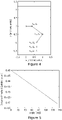
- Figure 4 shows the case of a tailgate having a profile which is not uniform. As can be seen, in this case there are four sets of coordinate (x 1 ,y 1 ), (x 2 ,y 2 ), (x 3 ,y 3 ) and (x 4 ,y 4 ) along with the distance sensor coordinates (x s1 ,y s1 ).
- the prior art uses a predetermined maximum distance extent of the tailgate at a zero opening angle ⁇ and sets a minimum distance beyond this for an object so as to avoid a collision. However, this will not prevent the coordinate (x 2 ,y 2 ) encountering an object such as a ceiling.
- FIG 3 which illustrates an embodiment of a powered tailgate opening system 1 having an improved object collision protection.
- a controller 4 is provided which controls the drive of a tailgate drive mechanism 5 (not shown in figure 1 ) which is able to move the tailgate between a fully closed position and a fully open position.
- tailgate drive mechanisms can take many forms known to those skilled in the art.
- a memory 6 is also provided.
- the memory of the present embodiment stores limit distance values or threshold values as a function of opening angle of the tailgate, with the size of the distance limit values reducing as the opening angle of the tailgate increases. The determination of the size of the distance limit values will be discussed hereinafter.
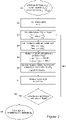
- Figure 2 illustrates steps in a procedure to establish the distance limit values to be stored in memory 6.
- step S1 the coordinates of the tailgate are defined, that is (x 1 ,y 1 ), (x 2 ,y 2 ), (x 3 ,y 3 ) and (x 4 ,y 4 ) together with the sensor coordinate (x s1 ,y s1 ) and the sensor field of view FOV (FOV high , FOV low ).
- step S6 at an initial angle of ⁇ 1 (initially set to zero), a calculation is made of the distance value that would be detected by the or each sensor to the wall or ceiling to give a value of d th(1) for that angle ⁇ 1 .
- This value d th(1) is stored in the memory 6 as a distance limit value for that angle ⁇ 1 .
- the angle of ⁇ is incremented in step S7 to ⁇ 2 and in step S8 an assessment is made as to whether that incremented angle ⁇ 2 is possible according to the tailgate drive mechanism 5.
- step S3 the algorithm branches back to step S3 to repeat steps S3 to S6 and evaluates the new values of the maximal horizontal x max and vertical coordinates y max , and evaluates another value of d th(2) for that angle ⁇ 2 .
- This value of d th(2) is stored in the memory 6 as a distance limit value for angle ⁇ 2 .
- step S3 to S7 are repeated until the value of ⁇ is not possible according to the tailgate drive mechanism 5 and the procedure branches to step S8 and ends. Consequently, a look up table of values of distance limit value d th against angle ⁇ can be obtained. It will be appreciated that as the angle ⁇ increases the value of the distance limit value decreases.
- Figure 5 illustrates a graph of angle versus distance threshold (distance limit values) provided by the procedure of figure 2 for the tailgate of figure 4 .
- distance limit values distance threshold
- the powered tailgate opening system of figure 3 is able to prevent the coordinate (x 2 ,y 2 ) encountering an object such as a ceiling. It also enables a greater accuracy of detection of objects that might be encountered during opening of the tailgate.
- the controller 4 In operation to open the tailgate, the controller 4 receives an open instruction. At this point, the controller 4 starts an opening process in which it checks that the distance value being sensed by the distance sensor 2 is greater than the distance limit value in the memory 6 for the angle corresponding to that currently sensed by the angle sensor 3. Assuming this to be the case, the controller 4 will activate the tailgate drive mechanism 5 to open the tailgate.
- the opening process continues with the controller4 continuing to check that the distance value being sensed by the distance sensor 2 is greater than the particular distance limit value in the memory 6 for the particular angle corresponding to that currently sensed by the angle sensor 3. Provided the distance value being sensed by the distance sensor remains greater, the controller 4 continues to open the tailgate. However, if the distance value become less, the controller 4 deactivates the tailgate drive mechanism to stop opening of the tailgate.
- the controller of the present embodiment dynamically monitors the distance value to any object during opening of the tailgate and uses a particular distance limit value which is set in the memory for the particular angle of opening of the tailgate rather than a single minimum threshold value throughout the sweep range of the tailgate which was established just at zero angle of opening of the tailgate.
Landscapes
- Power-Operated Mechanisms For Wings (AREA)
- Engineering & Computer Science (AREA)
- Mechanical Engineering (AREA)
Abstract
Description
- The present disclosure relates to a powered tailgate opening system and in particular to a system having object collision protection for reducing the risk of a powered collision of the tailgate with an object during opening of the tailgate.
- When the tailgate of a motor vehicle is opened by a powered system, damage can occur if the tailgate is being driven and collides with objects such as walls, ceilings or humans which are located within the volume of movement swept by the tailgate (the sweep range) as it moves from a fully closed position towards a fully open position. It will be appreciated that the term tailgate includes the boot and other motor vehicle panels that close an opening of the vehicle.
- A known powered tailgate opening system includes a distance sensor system oriented towards the rear of the vehicle. Such a distance sensor system normally provides distance warnings when parking or for determining the distance to following vehicles while driving. However, the powered tailgate opening system can also use data from the distance sensor system to determine if an object is located within the sweep range of the tailgate and controls the drive power for the drive of the tailgate accordingly.
- Typically, a sensor of the distance sensor system of the powered tailgate opening system is located on the tailgate and the distance to an object is detected. A predetermined maximum distance extent of the tailgate during the sweep range is determined at an zero angle of opening. The opening system will then continue driving the tailgate to open if there is at least a minimum distance between the detected object distance and the maximum distance extent.
- However, there is a problem with the known powered tailgate opening system in the case that the tailgate does not have a uniform profile. In such a case, setting such a minimum distance does not always prevent collision with an object.
- The present disclosure concerns a powered tailgate opening system having object collision protection which reduces the risk of collision with an object for tailgates which have an unusual profile.
- According to a first aspect, there is provided a powered tailgate opening system comprising:-
- one or more object distance sensors to sense a distance to an object during movement of the tailgate;
- an opening angle sensor for sensing an angle of opening of the tailgate;
- means for storing limit distance values which vary according to different angles of opening of the tailgate;
- a controller for controlling a tailgate movement drive mechanism according to a determination of whether a sensed distance at a sensed angle of opening is less than the stored limit distance value for that sensed angle of opening.
- In one embodiment, the limit distance values for a given opening angle are calculated by:-
- using the rotation matrix R(α) of
equation 1 to establish the rotated shape of the tailgate
- calculating the maximal horizontal xmax and vertical coordinates ymax;
- positioning a virtual wall and/or ceiling spaced from the tailgate by an error factor labelled margin:


- calculating a limit distance value according to the distance value to the virtual wall and/or ceiling that would be detected by the one or more object distance sensors.
- In particular, the rotation matrix R(α) can be based on four coordinates of the tailgate.
- In another embodiment, powered tailgate opening system further comprises the tailgate movement drive mechanism.
- Illustrative embodiments will now be described with reference to the accompanying drawings in which:-
-
Figure 1 illustrates a tailgate of a car having a uniform profile; -
Figure 2 illustrates steps in a procedure to establish distance limit values; -
Figure 3 illustrates a powered tailgate collision prevention system. -
Figure 4 illustrates a tailgate not having a uniform profile; and -
Figure 5 illustrates a graph of angle versus distance threshold (distance limit value) provided by the procedure offigure 2 . -
Figure 1 illustrates a tailgate or liftgate of a car having a regular profile. A coordinate system based on the tailgate can be defined based on a frame of reference. In the present case, the origin of the x axis (horizontal to the ground) is at the hinge point at the top of the tailgate and the origin of the y axis (vertical, perpendicular to the ground) is also at the hinge point at the top of the tailgate. - Three coordinates in space (x1,y1), (x2,y2), and (x3,y3) for the tailgate are defined, with (x3,y3) being at the most remote edge of the tailgate. It will be apparent that more coordinates can be defined.
- In addition, the opening angle of the tailgate can be defined based on a frame of reference. In the present case, an opening angle of zero is defined for when the tailgate is in a fully closed position. A tailgate opening angle sensor 3 (not shown in
figure 1 ) is provided and located to sense the opening angle of the tailgate taking an opening angle of zero as just defined. The opening angle sensor can take many different forms, the details of which will be readily apparent to those skilled in the art. - A single
object distance sensor 2 is provided and located on the tailgate, close to the most remote edge thereof, to move with the tailgate during its range of movement. The distance sensor has coordinates (xs1,ys1). The distance sensor has a sensing field of view, preferably a relatively higher field of view FOVhigh and a relatively lower field of view FOVlow. - The
object distance sensor 2 can sense any object within its sensing field of view and can establish the distance to the sensed object in known manner. It will be appreciated that the present disclosure is not limited to a single distance sensor and further sensors can be provided. Furthermore, the sensors can take many forms known to those skilled in the art, for example, radar, ultrasonic, LIDAR, optical, camera recognition. -
Figure 4 shows the case of a tailgate having a profile which is not uniform. As can be seen, in this case there are four sets of coordinate (x1,y1), (x2,y2), (x3,y3) and (x4,y4) along with the distance sensor coordinates (xs1,ys1). - As noted, the prior art uses a predetermined maximum distance extent of the tailgate at a zero opening angle α and sets a minimum distance beyond this for an object so as to avoid a collision. However, this will not prevent the coordinate (x2,y2) encountering an object such as a ceiling.
- Referring to
figure 3 , which illustrates an embodiment of a poweredtailgate opening system 1 having an improved object collision protection. Acontroller 4 is provided which controls the drive of a tailgate drive mechanism 5 (not shown infigure 1 ) which is able to move the tailgate between a fully closed position and a fully open position. Such tailgate drive mechanisms can take many forms known to those skilled in the art. - A
memory 6 is also provided. The memory of the present embodiment stores limit distance values or threshold values as a function of opening angle of the tailgate, with the size of the distance limit values reducing as the opening angle of the tailgate increases. The determination of the size of the distance limit values will be discussed hereinafter. -
Figure 2 illustrates steps in a procedure to establish the distance limit values to be stored inmemory 6. - Initially, in step S1, the coordinates of the tailgate are defined, that is (x1,y1), (x2,y2), (x3,y3) and (x4,y4) together with the sensor coordinate (xs1,ys1) and the sensor field of view FOV (FOVhigh, FOVlow).
- Then, in step S2, the tailgate opening angle α is set to zero. Thereafter, in step S3, the rotated tailgate shape is established using a rotation matrix R(α)

- From this, the maximal horizontal xmax and vertical coordinates ymax are found in step S4 for the current tailgate opening angle α. Then, in step S5 a virtual wall and ceiling are positioned which are spaced therefrom by an error factor labelled margin:


- In step S6, at an initial angle of α1 (initially set to zero), a calculation is made of the distance value that would be detected by the or each sensor to the wall or ceiling to give a value of dth(1) for that angle α1. This value dth(1) is stored in the
memory 6 as a distance limit value for that angle α1. The angle of α is incremented in step S7 to α2 and in step S8 an assessment is made as to whether that incremented angle α2 is possible according to thetailgate drive mechanism 5. - If it is possible, the algorithm branches back to step S3 to repeat steps S3 to S6 and evaluates the new values of the maximal horizontal xmax and vertical coordinates ymax, and evaluates another value of dth(2) for that angle α2. This value of dth(2) is stored in the
memory 6 as a distance limit value for angle α2. - The steps S3 to S7 are repeated until the value of α is not possible according to the
tailgate drive mechanism 5 and the procedure branches to step S8 and ends. Consequently, a look up table of values of distance limit value dth against angle α can be obtained. It will be appreciated that as the angle α increases the value of the distance limit value decreases. -
Figure 5 illustrates a graph of angle versus distance threshold (distance limit values) provided by the procedure offigure 2 for the tailgate offigure 4 . As these values are evaluated for each opening angle α, the powered tailgate opening system offigure 3 is able to prevent the coordinate (x2,y2) encountering an object such as a ceiling. It also enables a greater accuracy of detection of objects that might be encountered during opening of the tailgate. - In operation to open the tailgate, the
controller 4 receives an open instruction. At this point, thecontroller 4 starts an opening process in which it checks that the distance value being sensed by thedistance sensor 2 is greater than the distance limit value in thememory 6 for the angle corresponding to that currently sensed by theangle sensor 3. Assuming this to be the case, thecontroller 4 will activate thetailgate drive mechanism 5 to open the tailgate. - The opening process continues with the controller4 continuing to check that the distance value being sensed by the
distance sensor 2 is greater than the particular distance limit value in thememory 6 for the particular angle corresponding to that currently sensed by theangle sensor 3. Provided the distance value being sensed by the distance sensor remains greater, thecontroller 4 continues to open the tailgate. However, if the distance value become less, thecontroller 4 deactivates the tailgate drive mechanism to stop opening of the tailgate. - In this way, the controller of the present embodiment dynamically monitors the distance value to any object during opening of the tailgate and uses a particular distance limit value which is set in the memory for the particular angle of opening of the tailgate rather than a single minimum threshold value throughout the sweep range of the tailgate which was established just at zero angle of opening of the tailgate.
- Consequently, increased accuracy of opening of the tailgate is provided and reduces the likelihood that the tailgate could physically contact an object. This is particularly helpful in the case when the tailgate has an unusual shape.
- It will be understood that the embodiments illustrated above show applications only for the purposes of illustration. In practice, embodiments may be applied to many different configurations, the detailed embodiments being straightforward for those skilled in the art to implement.
Claims (5)
- A powered tailgate opening system comprising:-
one or more object distance sensors (2) to sense a distance to an object during movement of the tailgate;
an opening angle sensor (3) for sensing an angle of opening (α) of the tailgate;
means for storing (6) limit distance values (dth) which vary according to different angles of opening (α) of the tailgate;
a controller (4) for controlling a tailgate movement drive mechanism (5) according to a determination of whether a sensed distance at a sensed angle of opening (α) is less than the stored limit distance value (dth) for that sensed angle of opening (α). - A powered tailgate opening system wherein the limit distance values (dth) for a given opening angle (α) are calculated by:-using the rotation matrix R(α) of equation 1 to establish the rotated shape of the tailgate
 calculating the maximal horizontal xmax and vertical coordinates ymax;positioning a virtual wall and/or ceiling spaced from the tailgate by an error factor labelled margin:
 calculating a limit distance value (dth) according to the distance value to the virtual wall and/or ceiling that would be detected by the one or more object distance sensors (2).
 - A powered tailgate opening system according to claim 2 wherein the rotation matrix R(α) is based on more than three coordinates of the tailgate.
- A powered tailgate opening system according to claim 3 wherein the rotation matrix R(α) is based on five or six coordinates of the tailgate.
- A powered tailgate opening system according to any preceding claim further comprising the tailgate movement drive mechanism (5).
Priority Applications (3)
| Application Number | Priority Date | Filing Date | Title |
|---|---|---|---|
| EP20203721.4A EP3988756A1 (en) | 2020-10-23 | 2020-10-23 | Powered tailgate opening system |
| US17/494,389 US20220127895A1 (en) | 2020-10-23 | 2021-10-05 | Powered Tailgate Opening System |
| CN202111224996.0A CN114482771B (en) | 2020-10-23 | 2021-10-21 | Power tail gate opening system |
Applications Claiming Priority (1)
| Application Number | Priority Date | Filing Date | Title |
|---|---|---|---|
| EP20203721.4A EP3988756A1 (en) | 2020-10-23 | 2020-10-23 | Powered tailgate opening system |
Publications (1)
| Publication Number | Publication Date |
|---|---|
| EP3988756A1 true EP3988756A1 (en) | 2022-04-27 |
Family
ID=73131633
Family Applications (1)
| Application Number | Title | Priority Date | Filing Date |
|---|---|---|---|
| EP20203721.4A Pending EP3988756A1 (en) | 2020-10-23 | 2020-10-23 | Powered tailgate opening system |
Country Status (3)
| Country | Link |
|---|---|
| US (1) | US20220127895A1 (en) |
| EP (1) | EP3988756A1 (en) |
| CN (1) | CN114482771B (en) |
Families Citing this family (2)
| Publication number | Priority date | Publication date | Assignee | Title |
|---|---|---|---|---|
| CN116220501B (en) * | 2023-03-10 | 2025-07-25 | 广汽本田汽车有限公司 | Automobile auxiliary control method, system, equipment and storage medium |
| GB2636203A (en) * | 2023-12-06 | 2025-06-11 | Mercedes Benz Group Ag | Vehicle comprising a door opening angle measurement device and method to operate a vehicle |
Citations (4)
| Publication number | Priority date | Publication date | Assignee | Title |
|---|---|---|---|---|
| EP1564358A1 (en) * | 2004-02-11 | 2005-08-17 | Delphi Technologies, Inc. | Powered door object detection system and method |
| US9007196B2 (en) * | 2011-12-14 | 2015-04-14 | Ford Global Technologies, Llc | Cost effective auto-actuation door check |
| DE102018124930A1 (en) * | 2018-10-09 | 2020-04-09 | Bayerische Motoren Werke Aktiengesellschaft | Control device and method for controlling an automatic, adaptive opening of a tailgate of a vehicle, and vehicle |
| US20200300008A1 (en) * | 2019-03-19 | 2020-09-24 | Ford Global Technologies, Llc | Enhanced object detection |
Family Cites Families (11)
| Publication number | Priority date | Publication date | Assignee | Title |
|---|---|---|---|---|
| US6411054B1 (en) * | 2000-12-15 | 2002-06-25 | Ford Global Technologies, Inc. | Obstruction detection system for power liftgate |
| KR102182900B1 (en) * | 2014-07-15 | 2020-11-25 | 현대모비스 주식회사 | System and method for controlling tail gate of vehicles |
| KR101601524B1 (en) * | 2014-11-04 | 2016-03-08 | 현대자동차주식회사 | Control system and method for opening tail gate |
| CN105041104A (en) * | 2015-08-07 | 2015-11-11 | 观致汽车有限公司 | Automatic tail gate device of vehicle |
| US10443292B2 (en) * | 2016-04-25 | 2019-10-15 | Magna Closures, Inc. | Non-contact obstacle detection system for motor vehicles |
| DE102016113084A1 (en) * | 2016-07-15 | 2018-01-18 | Rehau Ag + Co | motor vehicle |
| DE102017218102A1 (en) * | 2017-10-11 | 2019-04-11 | Pepperl + Fuchs Gmbh | Door sensor device and method for operating a door sensor device |
| US11060339B2 (en) * | 2018-04-19 | 2021-07-13 | Ford Global Technologies, Llc | Systems and methods for mitigating liftgate from contacting objects while closing |
| CN108868425A (en) * | 2018-06-04 | 2018-11-23 | 江苏吉厚智能制造有限公司 | Automobile tail gate collision prevention device and automobile |
| US20200254928A1 (en) * | 2019-02-08 | 2020-08-13 | GM Global Technology Operations LLC | System and method to indicate the space available to open a car door |
| US11091949B2 (en) * | 2019-02-13 | 2021-08-17 | Ford Global Technologies, Llc | Liftgate opening height control |
-
2020
- 2020-10-23 EP EP20203721.4A patent/EP3988756A1/en active Pending
-
2021
- 2021-10-05 US US17/494,389 patent/US20220127895A1/en not_active Abandoned
- 2021-10-21 CN CN202111224996.0A patent/CN114482771B/en active Active
Patent Citations (4)
| Publication number | Priority date | Publication date | Assignee | Title |
|---|---|---|---|---|
| EP1564358A1 (en) * | 2004-02-11 | 2005-08-17 | Delphi Technologies, Inc. | Powered door object detection system and method |
| US9007196B2 (en) * | 2011-12-14 | 2015-04-14 | Ford Global Technologies, Llc | Cost effective auto-actuation door check |
| DE102018124930A1 (en) * | 2018-10-09 | 2020-04-09 | Bayerische Motoren Werke Aktiengesellschaft | Control device and method for controlling an automatic, adaptive opening of a tailgate of a vehicle, and vehicle |
| US20200300008A1 (en) * | 2019-03-19 | 2020-09-24 | Ford Global Technologies, Llc | Enhanced object detection |
Also Published As
| Publication number | Publication date |
|---|---|
| CN114482771B (en) | 2024-06-07 |
| CN114482771A (en) | 2022-05-13 |
| US20220127895A1 (en) | 2022-04-28 |
Similar Documents
| Publication | Publication Date | Title |
|---|---|---|
| US20220127895A1 (en) | Powered Tailgate Opening System | |
| US8130120B2 (en) | Parking assistance device | |
| US11897454B2 (en) | Method and apparatus for determining automatic parking strategy | |
| US20170314318A1 (en) | Door Assistance System for a Vehicle | |
| EP4133153A1 (en) | Control system for a vehicle | |
| KR20250121235A (en) | Vehicle Control and Obstacle Avoidance Methods | |
| CN105041104A (en) | Automatic tail gate device of vehicle | |
| US20170185763A1 (en) | Camera-based detection of objects proximate to a vehicle | |
| CN113377100A (en) | Robot small space escaping method and device, computer equipment and storage medium | |
| CN110588637B (en) | Automatic parking control method, electronic equipment and automobile | |
| WO2018177702A9 (en) | Parking assist system and method and a vehicle equipped with the system | |
| CN106515589B (en) | Method and device for controlling auxiliary stairs rotating relative to opening angle of vehicle door | |
| CN119795864A (en) | Vehicle control device and vehicle control method | |
| US12479420B2 (en) | Method and system for optimizing a detected parking space | |
| CN115396663A (en) | Vehicle camera calibration prompt method and device, electronic equipment, medium | |
| US20210362650A1 (en) | Warning condition adjusting apparatus and method | |
| US20170120911A1 (en) | Vehicle and method of controlling the same | |
| US7477977B2 (en) | Power window device | |
| US12039629B2 (en) | Method for adapting an overlaid image of an area located rearwards and along a vehicle side | |
| CN115195702A (en) | Automatic parking control method, electronic device and storage medium | |
| CN115961857B (en) | Control method and device for vehicle cargo box door, terminal equipment and computer medium | |
| US20250050917A1 (en) | Apparatus and method for controlling autonomous driving | |
| CN115195703A (en) | Automatic parking control method for electric vehicle, electronic device and storage medium | |
| Fujimori et al. | Formation control of multiple mobile robots with large obstacle avoidance | |
| KR100585681B1 (en) | Obstacle Detection Method of Mobile Robot |
Legal Events
| Date | Code | Title | Description |
|---|---|---|---|
| PUAI | Public reference made under article 153(3) epc to a published international application that has entered the european phase |
Free format text: ORIGINAL CODE: 0009012 |
|
| STAA | Information on the status of an ep patent application or granted ep patent |
Free format text: STATUS: THE APPLICATION HAS BEEN PUBLISHED |
|
| AK | Designated contracting states |
Kind code of ref document: A1 Designated state(s): AL AT BE BG CH CY CZ DE DK EE ES FI FR GB GR HR HU IE IS IT LI LT LU LV MC MK MT NL NO PL PT RO RS SE SI SK SM TR |
|
| STAA | Information on the status of an ep patent application or granted ep patent |
Free format text: STATUS: REQUEST FOR EXAMINATION WAS MADE |
|
| 17P | Request for examination filed |
Effective date: 20221025 |
|
| RBV | Designated contracting states (corrected) |
Designated state(s): AL AT BE BG CH CY CZ DE DK EE ES FI FR GB GR HR HU IE IS IT LI LT LU LV MC MK MT NL NO PL PT RO RS SE SI SK SM TR |
|
| RAP3 | Party data changed (applicant data changed or rights of an application transferred) |
Owner name: APTIV TECHNOLOGIES LIMITED |
|
| RAP1 | Party data changed (applicant data changed or rights of an application transferred) |
Owner name: APTIV TECHNOLOGIES AG |
|
| RAP3 | Party data changed (applicant data changed or rights of an application transferred) |
Owner name: APTIV TECHNOLOGIES AG |
|
| STAA | Information on the status of an ep patent application or granted ep patent |
Free format text: STATUS: EXAMINATION IS IN PROGRESS |
|
| 17Q | First examination report despatched |
Effective date: 20250804 |
|
| STAA | Information on the status of an ep patent application or granted ep patent |
Free format text: STATUS: THE APPLICATION IS DEEMED TO BE WITHDRAWN |