EP3988237B1 - System for forming an inner barrel of an engine inlet with laser-machined acoustic perforations - Google Patents
System for forming an inner barrel of an engine inlet with laser-machined acoustic perforations Download PDFInfo
- Publication number
- EP3988237B1 EP3988237B1 EP21211386.4A EP21211386A EP3988237B1 EP 3988237 B1 EP3988237 B1 EP 3988237B1 EP 21211386 A EP21211386 A EP 21211386A EP 3988237 B1 EP3988237 B1 EP 3988237B1
- Authority
- EP
- European Patent Office
- Prior art keywords
- acoustic
- perforations
- inner barrel
- laser
- forming system
- Prior art date
- Legal status (The legal status is an assumption and is not a legal conclusion. Google has not performed a legal analysis and makes no representation as to the accuracy of the status listed.)
- Active
Links
Images


Classifications
-
- B—PERFORMING OPERATIONS; TRANSPORTING
- B23—MACHINE TOOLS; METAL-WORKING NOT OTHERWISE PROVIDED FOR
- B23K—SOLDERING OR UNSOLDERING; WELDING; CLADDING OR PLATING BY SOLDERING OR WELDING; CUTTING BY APPLYING HEAT LOCALLY, e.g. FLAME CUTTING; WORKING BY LASER BEAM
- B23K26/00—Working by laser beam, e.g. welding, cutting or boring
- B23K26/36—Removing material
- B23K26/38—Removing material by boring or cutting
- B23K26/382—Removing material by boring or cutting by boring
- B23K26/389—Removing material by boring or cutting by boring of fluid openings, e.g. nozzles, jets
-
- B—PERFORMING OPERATIONS; TRANSPORTING
- B23—MACHINE TOOLS; METAL-WORKING NOT OTHERWISE PROVIDED FOR
- B23K—SOLDERING OR UNSOLDERING; WELDING; CLADDING OR PLATING BY SOLDERING OR WELDING; CUTTING BY APPLYING HEAT LOCALLY, e.g. FLAME CUTTING; WORKING BY LASER BEAM
- B23K26/00—Working by laser beam, e.g. welding, cutting or boring
- B23K26/36—Removing material
- B23K26/38—Removing material by boring or cutting
- B23K26/382—Removing material by boring or cutting by boring
- B23K26/384—Removing material by boring or cutting by boring of specially shaped holes
-
- B—PERFORMING OPERATIONS; TRANSPORTING
- B23—MACHINE TOOLS; METAL-WORKING NOT OTHERWISE PROVIDED FOR
- B23K—SOLDERING OR UNSOLDERING; WELDING; CLADDING OR PLATING BY SOLDERING OR WELDING; CUTTING BY APPLYING HEAT LOCALLY, e.g. FLAME CUTTING; WORKING BY LASER BEAM
- B23K26/00—Working by laser beam, e.g. welding, cutting or boring
- B23K26/36—Removing material
- B23K26/38—Removing material by boring or cutting
- B23K26/382—Removing material by boring or cutting by boring
-
- B—PERFORMING OPERATIONS; TRANSPORTING
- B23—MACHINE TOOLS; METAL-WORKING NOT OTHERWISE PROVIDED FOR
- B23K—SOLDERING OR UNSOLDERING; WELDING; CLADDING OR PLATING BY SOLDERING OR WELDING; CUTTING BY APPLYING HEAT LOCALLY, e.g. FLAME CUTTING; WORKING BY LASER BEAM
- B23K26/00—Working by laser beam, e.g. welding, cutting or boring
- B23K26/02—Positioning or observing the workpiece, e.g. with respect to the point of impact; Aligning, aiming or focusing the laser beam
- B23K26/06—Shaping the laser beam, e.g. by masks or multi-focusing
- B23K26/062—Shaping the laser beam, e.g. by masks or multi-focusing by direct control of the laser beam
- B23K26/0622—Shaping the laser beam, e.g. by masks or multi-focusing by direct control of the laser beam by shaping pulses
- B23K26/0624—Shaping the laser beam, e.g. by masks or multi-focusing by direct control of the laser beam by shaping pulses using ultrashort pulses, i.e. pulses of 1 ns or less
-
- B—PERFORMING OPERATIONS; TRANSPORTING
- B23—MACHINE TOOLS; METAL-WORKING NOT OTHERWISE PROVIDED FOR
- B23K—SOLDERING OR UNSOLDERING; WELDING; CLADDING OR PLATING BY SOLDERING OR WELDING; CUTTING BY APPLYING HEAT LOCALLY, e.g. FLAME CUTTING; WORKING BY LASER BEAM
- B23K26/00—Working by laser beam, e.g. welding, cutting or boring
- B23K26/08—Devices involving relative movement between laser beam and workpiece
- B23K26/082—Scanning systems, i.e. devices involving movement of the laser beam relative to the laser head
-
- B—PERFORMING OPERATIONS; TRANSPORTING
- B23—MACHINE TOOLS; METAL-WORKING NOT OTHERWISE PROVIDED FOR
- B23K—SOLDERING OR UNSOLDERING; WELDING; CLADDING OR PLATING BY SOLDERING OR WELDING; CUTTING BY APPLYING HEAT LOCALLY, e.g. FLAME CUTTING; WORKING BY LASER BEAM
- B23K26/00—Working by laser beam, e.g. welding, cutting or boring
- B23K26/36—Removing material
- B23K26/38—Removing material by boring or cutting
- B23K26/382—Removing material by boring or cutting by boring
- B23K26/386—Removing material by boring or cutting by boring of blind holes
-
- B—PERFORMING OPERATIONS; TRANSPORTING
- B23—MACHINE TOOLS; METAL-WORKING NOT OTHERWISE PROVIDED FOR
- B23K—SOLDERING OR UNSOLDERING; WELDING; CLADDING OR PLATING BY SOLDERING OR WELDING; CUTTING BY APPLYING HEAT LOCALLY, e.g. FLAME CUTTING; WORKING BY LASER BEAM
- B23K26/00—Working by laser beam, e.g. welding, cutting or boring
- B23K26/70—Auxiliary operations or equipment
- B23K26/702—Auxiliary equipment
-
- B—PERFORMING OPERATIONS; TRANSPORTING
- B23—MACHINE TOOLS; METAL-WORKING NOT OTHERWISE PROVIDED FOR
- B23K—SOLDERING OR UNSOLDERING; WELDING; CLADDING OR PLATING BY SOLDERING OR WELDING; CUTTING BY APPLYING HEAT LOCALLY, e.g. FLAME CUTTING; WORKING BY LASER BEAM
- B23K37/00—Auxiliary devices or processes, not specially adapted for a procedure covered by only one of the other main groups of this subclass
- B23K37/04—Auxiliary devices or processes, not specially adapted for a procedure covered by only one of the other main groups of this subclass for holding or positioning work
- B23K37/0426—Fixtures for other work
-
- F—MECHANICAL ENGINEERING; LIGHTING; HEATING; WEAPONS; BLASTING
- F02—COMBUSTION ENGINES; HOT-GAS OR COMBUSTION-PRODUCT ENGINE PLANTS
- F02C—GAS-TURBINE PLANTS; AIR INTAKES FOR JET-PROPULSION PLANTS; CONTROLLING FUEL SUPPLY IN AIR-BREATHING JET-PROPULSION PLANTS
- F02C7/00—Features, components parts, details or accessories, not provided for in, or of interest apart form groups F02C1/00 - F02C6/00; Air intakes for jet-propulsion plants
- F02C7/04—Air intakes for gas-turbine plants or jet-propulsion plants
- F02C7/045—Air intakes for gas-turbine plants or jet-propulsion plants having provisions for noise suppression
-
- B—PERFORMING OPERATIONS; TRANSPORTING
- B23—MACHINE TOOLS; METAL-WORKING NOT OTHERWISE PROVIDED FOR
- B23K—SOLDERING OR UNSOLDERING; WELDING; CLADDING OR PLATING BY SOLDERING OR WELDING; CUTTING BY APPLYING HEAT LOCALLY, e.g. FLAME CUTTING; WORKING BY LASER BEAM
- B23K2101/00—Articles made by soldering, welding or cutting
- B23K2101/001—Turbines
-
- B—PERFORMING OPERATIONS; TRANSPORTING
- B23—MACHINE TOOLS; METAL-WORKING NOT OTHERWISE PROVIDED FOR
- B23K—SOLDERING OR UNSOLDERING; WELDING; CLADDING OR PLATING BY SOLDERING OR WELDING; CUTTING BY APPLYING HEAT LOCALLY, e.g. FLAME CUTTING; WORKING BY LASER BEAM
- B23K2103/00—Materials to be soldered, welded or cut
- B23K2103/16—Composite materials
- B23K2103/166—Multilayered materials
- B23K2103/172—Multilayered materials wherein at least one of the layers is non-metallic
-
- F—MECHANICAL ENGINEERING; LIGHTING; HEATING; WEAPONS; BLASTING
- F05—INDEXING SCHEMES RELATING TO ENGINES OR PUMPS IN VARIOUS SUBCLASSES OF CLASSES F01-F04
- F05D—INDEXING SCHEME FOR ASPECTS RELATING TO NON-POSITIVE-DISPLACEMENT MACHINES OR ENGINES, GAS-TURBINES OR JET-PROPULSION PLANTS
- F05D2220/00—Application
- F05D2220/30—Application in turbines
- F05D2220/32—Application in turbines in gas turbines
- F05D2220/323—Application in turbines in gas turbines for aircraft propulsion, e.g. jet engines
-
- F—MECHANICAL ENGINEERING; LIGHTING; HEATING; WEAPONS; BLASTING
- F05—INDEXING SCHEMES RELATING TO ENGINES OR PUMPS IN VARIOUS SUBCLASSES OF CLASSES F01-F04
- F05D—INDEXING SCHEME FOR ASPECTS RELATING TO NON-POSITIVE-DISPLACEMENT MACHINES OR ENGINES, GAS-TURBINES OR JET-PROPULSION PLANTS
- F05D2230/00—Manufacture
- F05D2230/10—Manufacture by removing material
- F05D2230/13—Manufacture by removing material using lasers
-
- F—MECHANICAL ENGINEERING; LIGHTING; HEATING; WEAPONS; BLASTING
- F05—INDEXING SCHEMES RELATING TO ENGINES OR PUMPS IN VARIOUS SUBCLASSES OF CLASSES F01-F04
- F05D—INDEXING SCHEME FOR ASPECTS RELATING TO NON-POSITIVE-DISPLACEMENT MACHINES OR ENGINES, GAS-TURBINES OR JET-PROPULSION PLANTS
- F05D2250/00—Geometry
- F05D2250/10—Two-dimensional
- F05D2250/18—Two-dimensional patterned
-
- F—MECHANICAL ENGINEERING; LIGHTING; HEATING; WEAPONS; BLASTING
- F05—INDEXING SCHEMES RELATING TO ENGINES OR PUMPS IN VARIOUS SUBCLASSES OF CLASSES F01-F04
- F05D—INDEXING SCHEME FOR ASPECTS RELATING TO NON-POSITIVE-DISPLACEMENT MACHINES OR ENGINES, GAS-TURBINES OR JET-PROPULSION PLANTS
- F05D2260/00—Function
- F05D2260/96—Preventing, counteracting or reducing vibration or noise
Definitions
- the present invention relates to the production of a variety of different structures that require acoustic treatment, in particular to a forming system, see claim 1.
- an inner barrel of a gas turbine engine inlet section may be provided with a plurality of relatively small perforations formed in the walls of the inner barrel. The perforations absorb some of the noise that is generated by fan blades rotating at high speed at the engine inlet section, and thereby reduce the overall noise output of the gas turbine engine.
- a forming system is defined in claim 1.
- a face sheet may include a single ply of material, or multiple plies of material.
- the face sheet may include multiple sheets, layers, or plies of material that are laminated together.
- Certain examples of the present disclosure provide systems and methods for forming a plurality of perforations in composite material, such as on an acoustic inner barrel of an engine inlet assembly.
- the perforations are formed by laser drilling using an ultrafast femtosecond laser that emits laser pulses at very short pulse durations and high frequencies (e.g., relative to conventional lasers).
- the short pulse durations provide sufficient delay between pulses for heat to dissipate without being thermally conducted into the surrounding material of the acoustic inner barrel.
- the lack of thermal conduction prevents melting or burning of the material surrounding the perforations, enabling uniform, precise perforations without residual remnants.
- FIG. 1 is a perspective illustration of an aircraft 100.
- the aircraft 100 may include a fuselage 102 extending from a nose to an empennage 104.
- the empennage 104 may include one or more tail surfaces for directional control of the aircraft 100.
- the aircraft 100 may include a pair of wings 106 extending outwardly from the fuselage 102.
- the aircraft 100 may include one or more propulsion systems which are optionally supported by the wings 106.
- Each one of the propulsion systems may include or represent a gas turbine engine 108 having a core engine (not shown) surrounded by a nacelle 110.
- the nacelle 110 may include an inlet cowl 114 and a fan cowl 118 surrounding one or more fans 119 mounted on a forward end 121 of the core engine.
- the nacelle 110 may have an exhaust nozzle 112 (e.g., a primary exhaust nozzle and a fan nozzle) at an aft end (not shown) of the gas turbine engine 108.
- the cavity 140 is open at first and second ends of the engine inlet assembly 122 to channel air flow through the engine inlet assembly 122 into the gas turbine engine 108 (shown in Figures 1 and 2 ).
- the acoustic inner barrel 120 is mounted to the inlet cowl 114 along an inner side 142 that faces and partially defines the cavity 140.
- the acoustic inner barrel 120 defines an interior surface 144 of the engine inlet assembly 122 along a perimeter of the cavity 140.
- Outer portions of the inlet cowl 114 surround the acoustic inner barrel 120.
- the acoustic inner barrel 120 may be exposed only to the air flowing through the cavity 140, while the inlet cowl 114 is exposed to air flowing into the cavity 140 and around the outside of the engine inlet assembly 122.
- the cavity 140 may have a diameter of up to 5-8 feet (1.5 meters (m) to 2.5 m), although the engine inlet assembly 122 may be provided in other sizes, shapes, and/or configurations in other embodiments.
- the acoustic inner barrel 120 includes a plurality of perforations 150 that are exposed to the air within the cavity 140.
- the acoustic inner barrel 120 is a composite structure that includes a face sheet 134.
- the perforations 150 are formed in the face sheet 134.
- the perforations 150 are small holes that extend at least partially through a thickness of the face sheet 134.
- the perforations 150 may have various sizes, shapes, orientations, and/or arrangements in different embodiments.
- the perforations 150 in one or more embodiments may be micro-perforations having small diameters between about 50 micrometers ( ⁇ m) and about 500 ⁇ m.
- the total area of the perforations 150 in the face sheet 134 may be expressed as a percent-open-area, which represents the combined area of the perforations 150 as a percentage of the area of the face sheet 134.
- the percent-open-area may be a characteristic for measuring the overall effectiveness or acoustic-attenuating capability of the acoustic inner barrel 120.
- a predetermined percent-open-area may be selected for the acoustic inner barrel 120 to meet acoustic performance requirements of the engine inlet assembly 122.
- FIG. 4 is a cross-sectional illustration of the engine inlet assembly 122.
- the acoustic inner barrel 120 may be a composite structure that includes the face sheet 134 and an acoustic core 128.
- the acoustic inner barrel 120 optionally also includes a back sheet 132 along an opposite side of the acoustic core 128 from the face sheet 134 such that the acoustic core 128 is stacked between the face sheet 134 and the back sheet 132.
- the face sheet 134 is disposed along an interior side 136 of the acoustic core 128, and the back sheet 132 is disposed along an exterior side 138 of the acoustic core 128 that is opposite the interior side 136.
- the acoustic inner barrel 120 lacks a septum layer, such as a fabric liner, embedded within the acoustic core 128.
- the acoustic core 128 is formed via additive manufacturing, and the face sheet 134 is attached to the acoustic core 128 by forming the face sheet 134 in-situ on the acoustic core 128.
- the face sheet 134 may be formed via an automated fiber placement (AFP) process in which multiple layers of fiber-reinforced material are applied on the acoustic core 128.
- the layers may be tows or bundles of carbon fibers impregnated with an epoxy resin.
- the tows may be applied automatically via a robot. The robot may apply the tows of different layers in different orientations.
- the combination face sheet 134 and acoustic core 128 may be cured.
- the face sheet 134 may be formed on the acoustic core 128 while the acoustic core 128 is in an annular barrel shape, as shown in Figure 5 .
- the acoustic core 128 may be in a flat or planar orientation during the AFP process to form the face sheet 134, and after the AFP process the combined structure is shaped by a mandrel or the like into the annular barrel shape.
- the back sheet 132 optionally may also be formed in-situ on the opposite side of the acoustic core 128 as the face sheet 134, such as by the AFP process or the like.
- the femtosecond laser 202 extends into the cavity 140 defined by the acoustic inner barrel 120.
- the femtosecond laser 202 is positioned in-line with the centerline axis 209 of the acoustic inner barrel 120.
- the femtosecond laser 202 is held by an effector arm 216.
- the femtosecond laser 202 emits a beam of laser pulses 214 onto an inner surface 218 of the face sheet 134, which defines a perimeter of the cavity 140.
- the femtosecond laser 202 is held stationary by the effector arm 216, and the positioning platform 206 gradually rotates the acoustic inner barrel 120 relative to the femtosecond laser 202.
- the positioning platform 206 may also hold the control unit 204.
- the control unit 204 is embedded or mounted within the positioning platform 206.
- the control unit 204 may be operatively connected to the femtosecond laser 202 through a wired connection or a wireless connection.
- electrical wires may extend through the positioning platform 206 from the control unit 204 to the femtosecond laser 202.
- the control unit 204 includes one or more processors that are configured to operate the femtosecond laser 202 based on programmed instructions.
- the control unit 204 optionally includes additional features or components, such as a storage device (e.g., memory), an input/output (I/O) device 208, and/or a wireless communication device.
- the user I/O device 208 is illustrated in Figure 6 , and includes a user interface with a display 210 and multiple buttons or knobs 212. It is recognized that the forming system 200 shown in Figure 6 is a non-limiting example embodiment.
- the forming system 200 in an alternative embodiment may lack the positioning platform 206 and/or lack the I/O device 208 of the control unit 204.
- the control unit 204 may be mounted within a structure of the femtosecond laser 202 instead of separated from the femtosecond laser 202 via the positioning platform 206.
- the speed of the femtosecond laser 202 may be characterized by laser pulse frequencies of at least 10,000 hertz (Hz).
- the frequency of the femtosecond laser 202 is over 100,000 Hz, such as between about 100,000 Hz and about 500,000 Hz.
- the pulse frequency is relatively high, the very short pulse durations allow enough time lapse between successive pulses for heat dissipation.
- the laser pulses 214 may avoid burning the epoxy of the face sheet 134 in the area immediately surrounding the perforation 150 being formed.
- the femtosecond laser 202 is configured to form perforations 150 of various sizes, shapes, and orientations.
- the femtosecond laser 202 may percussive drill (via the laser pulses) perforation diameters that are between about 50 ⁇ m and about 500 ⁇ m.
- the perforations 150 produced by the femtosecond laser 202 may be smaller than the diameters of perforations in known acoustic inner barrels that are formed via mechanical drilling and/or conventional lasers.
- the femtosecond laser 202 may also be configured to trepan drill larger diameter perforations by emitting the laser pulses 214 in a ring around the perimeter of the perforations 150.
- the femtosecond laser 202 is able to aim the laser pulses 214 at different perforation locations along the face sheet 134 due to the rotation of the acoustic inner barrel 120.
- the femtosecond laser 202 has a scanning head 320 that is configured to aim the laser beam 302 at multiple locations in quick succession.
- the scanning head 320 may be a galvo scan head.
- the scanning head 320 is controlled by the control unit (204) to direct the laser pulses 214 along at least one axis. In the illustrated embodiment, the scanning head 320 is positioned vertically downwards and directs the laser pulses 214 onto the face sheet 134 below the femtosecond laser 202.
Landscapes
- Engineering & Computer Science (AREA)
- Physics & Mathematics (AREA)
- Optics & Photonics (AREA)
- Mechanical Engineering (AREA)
- Chemical & Material Sciences (AREA)
- Combustion & Propulsion (AREA)
- Plasma & Fusion (AREA)
- General Engineering & Computer Science (AREA)
- Laser Beam Processing (AREA)
- Soundproofing, Sound Blocking, And Sound Damping (AREA)
Description
- The present invention relates to the production of a variety of different structures that require acoustic treatment, in particular to a forming system, see claim 1.
- Commercial airliners are required to meet certain noise standards during takeoff and landing. A large portion of the noise produced by a commercial airliner during takeoff and landing is generated by gas turbine engines commonly used on airliners. Known methods for reducing the noise level of a gas turbine engine include acoustically treating the inlet section of the engine nacelle. In this regard, an inner barrel of a gas turbine engine inlet section may be provided with a plurality of relatively small perforations formed in the walls of the inner barrel. The perforations absorb some of the noise that is generated by fan blades rotating at high speed at the engine inlet section, and thereby reduce the overall noise output of the gas turbine engine.
- Conventional methods for forming perforations in acoustic structures, such as the inner barrel, are complex and/or inefficient. For example, some known methods utilize routers and/or drills to mechanically drill the perforations, which can be time consuming, unreliable, and imprecise.
- Another method for forming perforations in acoustic structures includes noncontact drilling using lasers. The conventional laser drilling methods may be relatively energy intensive and melt and/or burn the material of the inner barrel surrounding the perforations due to high thermal conduction from the laser beams.
-
US2013224433A1 describes, in accordance with its abstract, methods and apparatus for machining substrates and formed from the separated substrates. A method of machining a substrate having a first surface and a second surface opposite the first surface can include forming a first recess in the substrate extending from the first surface toward the second surface, forming a second recess in the substrate extending from the second surface toward the first surface, and removing a portion of the substrate extending from the first recess to the second recess to form an opening in the substrate. - According to the present invention, a forming system is defined in claim 1.
- Further preferred embodiments of the present invention are defined in the dependent claims.
- A need exists for a system for forming perforations in an acoustic structure that accurately produces uniform perforations having a designated size and shape and pattern in a timely, energy efficient, and cost-effective manner. The above-noted needs associated with forming perforations in an acoustic structure such as an inner barrel of an engine inlet assembly are specifically addressed and alleviated by the present invention, which provides a forming system.
- These and other features, aspects, and advantages of the present invention will become better understood when the following detailed description is read with reference to the accompanying drawings in which like numerals represent like parts throughout the drawings, wherein:
-
Figure 1 is a perspective illustration of an aircraft that includes a gas turbine engine. -
Figure 2 illustrates an embodiment of a nacelle of the gas turbine engine shown inFigure 1 . -
Figure 3 is a perspective illustration of an engine inlet assembly of the gas turbine engine ofFigure 2 . -
Figure 4 is a cross-sectional illustration of the engine inlet assembly shown inFigure 3 . -
Figure 5 is a perspective illustration of an embodiment of an acoustic inner barrel of the engine inlet assembly. -
Figure 6 illustrates a forming system for forming perforations in the acoustic inner barrel of the gas turbine engine. -
Figure 7 is a schematic cross-sectional view of a portion of the acoustic inner barrel showing a laser beam impinging upon the acoustic inner barrel to form a perforation. -
Figure 8 is another schematic cross-sectional view of a portion of the acoustic inner barrel showing a laser beam impinging upon the acoustic inner barrel according to an embodiment. -
Figure 9 is a flow chart of a method for forming an engine inlet assembly, not covered by the present invention. - The foregoing summary, as well as the following detailed description of certain embodiments will be better understood when read in conjunction with the appended drawings. As used herein, an element or step recited in the singular and preceded by the word "a" or "an" should be understood as not necessarily excluding the plural of the elements or steps. Further, references to "one embodiment" are not intended to be interpreted as excluding the existence of additional embodiments that also incorporate the recited features. Moreover, unless explicitly stated to the contrary, embodiments "comprising" or "having" an element or a plurality of elements having a particular property may include additional elements not having that property.
- Certain examples of the present disclosure provide systems and methods for forming noise abatement structures having perforations formed into an inner face sheet of an acoustically treated structure, such as an acoustic inlet barrel of an aircraft engine. Certain examples of the present disclosure provide systems and methods for creating a plurality of perforations on a structure having a complex curvature, such as an acoustically-treated inner barrel of an inlet of an aircraft engine.
- A face sheet may include a single ply of material, or multiple plies of material. For example, the face sheet may include multiple sheets, layers, or plies of material that are laminated together.
- Certain examples of the present disclosure provide systems and methods for forming a plurality of perforations in composite material, such as on an acoustic inner barrel of an engine inlet assembly. The perforations are formed by laser drilling using an ultrafast femtosecond laser that emits laser pulses at very short pulse durations and high frequencies (e.g., relative to conventional lasers). The short pulse durations provide sufficient delay between pulses for heat to dissipate without being thermally conducted into the surrounding material of the acoustic inner barrel. The lack of thermal conduction prevents melting or burning of the material surrounding the perforations, enabling uniform, precise perforations without residual remnants. As a result, the acoustic inner barrel according to the systems and methods described herein may have an increased overall effectiveness in absorbing and/or attenuating noise (relative to conventional methods of forming perforations). The femtosecond laser may also provide a more timely and cost-effective process over mechanical drilling due to the avoidance of mechanical contact and the avoidance of replacing broken drill bits. The femtosecond laser may also be more timely and energy efficient than known laser drilling methods for forming perforations due to increased speed and a reduced amount of wasted laser energy. The formation systems and methods disclosed herein may also be more time, energy, and cost efficient than some known methods by providing a more streamlined formation process that eliminates some conventional steps.
- Referring now to the drawings,
Figure 1 is a perspective illustration of anaircraft 100. Theaircraft 100 may include afuselage 102 extending from a nose to anempennage 104. Theempennage 104 may include one or more tail surfaces for directional control of theaircraft 100. Theaircraft 100 may include a pair ofwings 106 extending outwardly from thefuselage 102. - The
aircraft 100 may include one or more propulsion systems which are optionally supported by thewings 106. Each one of the propulsion systems may include or represent agas turbine engine 108 having a core engine (not shown) surrounded by anacelle 110. Thenacelle 110 may include aninlet cowl 114 and afan cowl 118 surrounding one ormore fans 119 mounted on aforward end 121 of the core engine. Thenacelle 110 may have an exhaust nozzle 112 (e.g., a primary exhaust nozzle and a fan nozzle) at an aft end (not shown) of thegas turbine engine 108. -
Figure 2 illustrates an example of thenacelle 110 of thegas turbine engine 108 shown inFigure 1 . Theinlet cowl 114 includes a leadingedge 116. An acousticinner barrel 120 is mounted to theinlet cowl 114 and located aft of the leadingedge 116. The acousticinner barrel 120 is located forward of thefan cowl 118. The acousticinner barrel 120 may provide a boundary surface or wall for directing airflow (not shown) entering theinlet cowl 114 and passing through thegas turbine engine 108. The acousticinner barrel 120 may be located in relatively close proximity to one or more fans (e.g., thefan 119 shown inFigure 1 ) of theengine 108. The acousticinner barrel 120 serves as an acoustic structure having a plurality of perforations in an inner face sheet of theinner barrel 120 for absorbing noise generated by the rotating fans and/or noise generated by the airflow entering theinlet cowl 114 and passing through thegas turbine engine 108. As used herein, the acousticinner barrel 120 mounted to theinlet cowl 114 defines or represents anengine inlet assembly 122. -
Figure 3 is a perspective illustration of an example of theengine inlet assembly 122. Theengine inlet assembly 122 has an annular barrel shape that defines acavity 140. The term "annular barrel shape" means that theengine inlet assembly 122 defines a closed, ring-like shape oriented radially about a central point, and theengine inlet assembly 122 is elongated along a centerline axis 209 (shown inFigure 6 ) that extends through the central point. For example, theengine inlet assembly 122 may have a generally cylindrical shape with a diameter that is uniform or varying along the length thereof. Thecavity 140 is open at first and second ends of theengine inlet assembly 122 to channel air flow through theengine inlet assembly 122 into the gas turbine engine 108 (shown inFigures 1 and 2 ). The acousticinner barrel 120 is mounted to theinlet cowl 114 along aninner side 142 that faces and partially defines thecavity 140. The acousticinner barrel 120 defines aninterior surface 144 of theengine inlet assembly 122 along a perimeter of thecavity 140. Outer portions of theinlet cowl 114 surround the acousticinner barrel 120. The acousticinner barrel 120 may be exposed only to the air flowing through thecavity 140, while theinlet cowl 114 is exposed to air flowing into thecavity 140 and around the outside of theengine inlet assembly 122. Thecavity 140 may have a diameter of up to 5-8 feet (1.5 meters (m) to 2.5 m), although theengine inlet assembly 122 may be provided in other sizes, shapes, and/or configurations in other embodiments. - The acoustic
inner barrel 120 includes a plurality ofperforations 150 that are exposed to the air within thecavity 140. The acousticinner barrel 120 is a composite structure that includes aface sheet 134. Theperforations 150 are formed in theface sheet 134. Theperforations 150 are small holes that extend at least partially through a thickness of theface sheet 134. Theperforations 150 may have various sizes, shapes, orientations, and/or arrangements in different embodiments. For example, theperforations 150 in one or more embodiments may be micro-perforations having small diameters between about 50 micrometers (µm) and about 500 µm. As used herein, a given numerical value preceded by the term "about" is inclusive of numerical values within a designated range of the given numerical value, such as 1%, 5%, or 10% of the given numerical value. Theperforations 150 inFigure 3 are enlarged in order to illustrate theperforations 150, because theperforations 150 in at least one embodiment may be too small for viewing with the naked eye. - The total area of the
perforations 150 in theface sheet 134 may be expressed as a percent-open-area, which represents the combined area of theperforations 150 as a percentage of the area of theface sheet 134. The percent-open-area may be a characteristic for measuring the overall effectiveness or acoustic-attenuating capability of the acousticinner barrel 120. During the design and/or development of theaircraft 100, a predetermined percent-open-area may be selected for the acousticinner barrel 120 to meet acoustic performance requirements of theengine inlet assembly 122. -
Figure 4 is a cross-sectional illustration of theengine inlet assembly 122. The acousticinner barrel 120 may be a composite structure that includes theface sheet 134 and anacoustic core 128. The acousticinner barrel 120 optionally also includes aback sheet 132 along an opposite side of theacoustic core 128 from theface sheet 134 such that theacoustic core 128 is stacked between theface sheet 134 and theback sheet 132. For example, theface sheet 134 is disposed along aninterior side 136 of theacoustic core 128, and theback sheet 132 is disposed along anexterior side 138 of theacoustic core 128 that is opposite theinterior side 136. In at least one embodiment, the acousticinner barrel 120 lacks a septum layer, such as a fabric liner, embedded within theacoustic core 128. - The acoustic
inner barrel 120 is mounted along theinner side 142 of theinlet cowl 114. Optionally, aforward edge 124 of the acousticinner barrel 120 may be coupled to and/or may interface with theinlet cowl 114 at or proximate to theleading edge 116 of theinlet cowl 114. Anaft edge 126 of the acousticinner barrel 120 may be coupled to and/or may interface with theinlet cowl 114 and/or the fan cowl 118 (Figure 2 ). Theface sheet 134, theacoustic core 128, and theback sheet 132 may have complexly-curved cross sectional shapes to promote efficient airflow through thenacelle 110. -
Figure 5 is a perspective illustration of the acousticinner barrel 120. For example,Figure 5 shows the acousticinner barrel 120 without theinlet cowl 114. The acousticinner barrel 120 has an annular barrel shape that extends axially from theforward edge 124 to theaft edge 126. Theface sheet 134 faces radially inward to define thecavity 140, and theback sheet 132 faces radially outward. The perforations 150 (shown inFigure 3 ) of theface sheet 134 are not shown inFigure 5 . Theface sheet 134 may be formed of a composite material including a fiber-reinforced polymeric matrix material such as graphite-epoxy (e.g., carbon fiber-epoxy), fiberglass-epoxy, or another composite material. Theback sheet 132 may also be formed of a composite material, or alternatively may be formed of a metallic material, such as titanium, steel, aluminum, or the like. Theacoustic core 128 may include or represent a honeycomb structure having a plurality ofcells 130 oriented generally transverse to theface sheet 134 andback sheet 132. Thecells 130 may have hexagonal shapes. Theacoustic core 128 may be formed of metallic material (e.g., aluminum, titanium, etc.) and/or non-metallic material (e.g., aramid, fiberglass, etc.). As mentioned above, theacoustic core 128 may lack a septum layer, such as a fabric liner, embedded within thehoneycomb cells 130. - The acoustic
inner barrel 120 may have a unitary structure in a closed, generally cylindrical shape, accomplished via assembling and curing in one or more stages. For example, theface sheet 134 and theback sheet 132 may be separately formed by laying up dry fiber fabric (not shown) or resin-impregnated ply material (for example, pre-preg) on separate layup mandrels (not shown) and separately cured. Theacoustic core 128 may be separately formed via additive manufacturing or the like. After curing theface sheet 134 and theback sheet 132, thesheets acoustic core 128. Alternatively, the acousticinner barrel 120 may be fabricated in a single-stage cure process in which theface sheet 134 may be laid up on a layup mandrel (not shown), after which theacoustic core 128 may be laid up over theface sheet 134, followed by laying up theback sheet 132 over theacoustic core 128. The layup assembly may be cured in a single stage, after which a forming system 200 (shown inFigure 6 ) may be implemented for forming perforations in theinner face sheet 134. - In one or more embodiments, the
acoustic core 128 is formed via additive manufacturing, and theface sheet 134 is attached to theacoustic core 128 by forming theface sheet 134 in-situ on theacoustic core 128. For example, theface sheet 134 may be formed via an automated fiber placement (AFP) process in which multiple layers of fiber-reinforced material are applied on theacoustic core 128. The layers may be tows or bundles of carbon fibers impregnated with an epoxy resin. The tows may be applied automatically via a robot. The robot may apply the tows of different layers in different orientations. After applying the layers of fiber-reinforced material to define theface sheet 134, thecombination face sheet 134 andacoustic core 128 may be cured. Theface sheet 134 may be formed on theacoustic core 128 while theacoustic core 128 is in an annular barrel shape, as shown inFigure 5 . In an alternative embodiment, theacoustic core 128 may be in a flat or planar orientation during the AFP process to form theface sheet 134, and after the AFP process the combined structure is shaped by a mandrel or the like into the annular barrel shape. Theback sheet 132 optionally may also be formed in-situ on the opposite side of theacoustic core 128 as theface sheet 134, such as by the AFP process or the like. -
Figure 6 illustrates a formingsystem 200 for forming perforations in the acousticinner barrel 120 of the engine 108 (shown inFigure 2 ) or another acoustic panel. The formingsystem 200 includes anultrafast femtosecond laser 202 and acontrol unit 204 that is operatively connected to thefemtosecond laser 202 for controlling thelaser 202. The formingsystem 200 is operated to form a plurality ofperforations 150 in theinner face sheet 134 of the acousticinner barrel 120. Theperforations 150 may be formed in a designated size, shape, quantity, density, and/or pattern by the formingsystem 200. The designated size, shape, quantity, density, and/or pattern may be based on a predetermined percent-open-area for the acousticinner barrel 120 to meet acoustic performance requirements of the inlet cowl 114 (shown inFigures 2 and3 ). - The forming
system 200 includes apositioning platform 206 on which the acousticinner barrel 120 is mounted. Thepositioning platform 206 hasmultiple actuators 207 that engage and move the acousticinner barrel 120. Theactuators 207 are rollers. The acousticinner barrel 120 is removably loaded onto thepositioning platform 206 in a vertical orientation such that acenterline axis 209 of the acousticinner barrel 120 is parallel to a horizontal plane of thepositioning platform 206. Theactuators 207 engage theback sheet 132 of the acousticinner barrel 120. Controlled rotation of theactuators 207 rotates the acousticinner barrel 120 in arotational direction 211 about thecenterline axis 209. One stabilizingroller 213 engages the acousticinner barrel 120 above thecenterline axis 209 to secure the acousticinner barrel 120 on thepositioning platform 206, preventing the acousticinner barrel 120 from tipping over. - The
femtosecond laser 202 extends into thecavity 140 defined by the acousticinner barrel 120. Optionally, thefemtosecond laser 202 is positioned in-line with thecenterline axis 209 of the acousticinner barrel 120. Thefemtosecond laser 202 is held by aneffector arm 216. Thefemtosecond laser 202 emits a beam oflaser pulses 214 onto aninner surface 218 of theface sheet 134, which defines a perimeter of thecavity 140. In the illustrated embodiment, thefemtosecond laser 202 is held stationary by theeffector arm 216, and thepositioning platform 206 gradually rotates the acousticinner barrel 120 relative to thefemtosecond laser 202. - The
positioning platform 206 may also hold thecontrol unit 204. In the illustrated embodiment, thecontrol unit 204 is embedded or mounted within thepositioning platform 206. Thecontrol unit 204 may be operatively connected to thefemtosecond laser 202 through a wired connection or a wireless connection. For example, electrical wires (not shown) may extend through thepositioning platform 206 from thecontrol unit 204 to thefemtosecond laser 202. Thecontrol unit 204 includes one or more processors that are configured to operate thefemtosecond laser 202 based on programmed instructions. Thecontrol unit 204 optionally includes additional features or components, such as a storage device (e.g., memory), an input/output (I/O)device 208, and/or a wireless communication device. The user I/O device 208 is illustrated inFigure 6 , and includes a user interface with adisplay 210 and multiple buttons or knobs 212. It is recognized that the formingsystem 200 shown inFigure 6 is a non-limiting example embodiment. The formingsystem 200 in an alternative embodiment may lack thepositioning platform 206 and/or lack the I/O device 208 of thecontrol unit 204. In an alternative embodiment, thecontrol unit 204 may be mounted within a structure of thefemtosecond laser 202 instead of separated from thefemtosecond laser 202 via thepositioning platform 206. - The
femtosecond laser 202 is configured to generate and emit laser pulses at very high speeds and very short pulse durations relative to conventional lasers. For example, thefemtosecond laser 202 is called a "femtosecond" laser because the pulse durations (e.g., pulse widths) are on the order of femtoseconds (fs), which is 10-15 seconds. Thefemtosecond laser 202 according to at least one embodiment may emit laser pulses at pulse durations between about 100 fs and about 10,000 fs (or 10 picoseconds), although the pulse durations may be even shorter than 100 fs. The very short pulse durations allow thefemtosecond laser 202 to have a relatively high peak power (e.g., peak power is pulse energy divided by pulse duration) without necessarily increasing the pulse energy. The very short pulse durations allow time between successive pulses for heat to dissipate from the working surface, which is theface sheet 134 in the illustrated embodiment. The heat dissipation prevents thermal conduction that could damage theface sheet 134 and/or disrupt the air flow along theface sheet 134, reducing the effectiveness of the acousticinner barrel 120 at noise attenuation. As a result, theperforations 150 in theface sheet 134 can be formed accurately and precisely, increasing the noise attenuation effectiveness of the acousticinner barrel 120. Conventional lasers are not able to produce laser pulses with such short pulse durations, and, because there is less time between pulses, heat accumulates along the working surfaces which may damage the surfaces. - The speed of the
femtosecond laser 202 may be characterized by laser pulse frequencies of at least 10,000 hertz (Hz). The frequency of thefemtosecond laser 202 is over 100,000 Hz, such as between about 100,000 Hz and about 500,000 Hz. Although the pulse frequency is relatively high, the very short pulse durations allow enough time lapse between successive pulses for heat dissipation. For example, thelaser pulses 214 may avoid burning the epoxy of theface sheet 134 in the area immediately surrounding theperforation 150 being formed. - The
femtosecond laser 202 is configured to formperforations 150 of various sizes, shapes, and orientations. For example, thefemtosecond laser 202 may percussive drill (via the laser pulses) perforation diameters that are between about 50 µm and about 500 µm. Theperforations 150 produced by thefemtosecond laser 202 may be smaller than the diameters of perforations in known acoustic inner barrels that are formed via mechanical drilling and/or conventional lasers. Thefemtosecond laser 202 may also be configured to trepan drill larger diameter perforations by emitting thelaser pulses 214 in a ring around the perimeter of theperforations 150. - The
femtosecond laser 202 is able to aim thelaser pulses 214 at different perforation locations along theface sheet 134 due to the rotation of the acousticinner barrel 120. Thefemtosecond laser 202 has ascanning head 320 that is configured to aim thelaser beam 302 at multiple locations in quick succession. Thescanning head 320 may be a galvo scan head. Thescanning head 320 is controlled by the control unit (204) to direct thelaser pulses 214 along at least one axis. In the illustrated embodiment, thescanning head 320 is positioned vertically downwards and directs thelaser pulses 214 onto theface sheet 134 below thefemtosecond laser 202. - The
control unit 204 controls the operation of thefemtosecond laser 202. For example, thecontrol unit 204 may control the positioning and orientation of thefemtosecond laser 202, as well as the generation and emission of laser pulses. Thecontrol unit 204 may transmit electrical control signals to thefemtosecond laser 202 to control the operation thereof. Thecontrol unit 204 may control thefemtosecond laser 202 to laser drill theperforations 150 in theface sheet 134 in a designated pattern with a predetermined percent-open-area. In addition to guiding the location of thelaser pulses 214 on theface sheet 134, thecontrol unit 204 may control the characteristics of the laser pulses. The characteristics of the pulses may include the timing at which pulses are emitted, the pulse frequency, the pulse durations (e.g., widths), the pulse intensity, pulse thickness (e.g., diameter), pulse energy, and/or the like. As described above, thefemtosecond laser 202 is configured to emit pulses with ultrashort pulse durations on the order of femtoseconds, which provides large time intervals between successive pulses for heat dissipation. Theperforations 150 are formed without burning portions of the face sheet 134 (or the acoustic core 128) surrounding theperforations 150. - As shown in
Figure 6 , the acousticinner barrel 120 may be assembled with theface sheet 134 attached to thecells 130 of theacoustic core 128 prior to thefemtosecond laser 202 laser drilling theperforations 150. Furthermore, the acousticinner barrel 120 may already be formed to have the annular barrel shape when thefemtosecond laser 202 performs the laser drilling. For example, the acousticinner barrel 120 may not undergo additional bending or forming after theperforations 150 are created, which prevents stretching theperforations 150 from the designated size and shape. - Although the forming
system 200 inFigure 6 is applied to formperforations 150 in the acousticinner barrel 120 of the engine inlet assembly 122 (shown inFigures 2 and3 ) of the gas turbine engine 108 (Figure 2 ), the formingsystem 200 may be implemented for forming perforations in any type of barrel structure for any application, without limitation. For example, the formingsystem 200 may be implemented for forming perforations in a barrel section of any one of a variety of different types of commercial, civilian, and military aircraft. Furthermore, the formingsystem 200 may be implemented for forming perforations in the barrel section of a gas turbine engine of rotorcraft, hovercraft, or in any other vehicular or non-vehicular application in which a predetermined quantity of acoustic perforations are desired for acoustic attenuating purposes. -
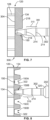
Figure 7 is a schematic cross-sectional view of a portion of the acousticinner barrel 120 showing alaser beam 302 ofmultiple laser pulses 214 impinging upon the acousticinner barrel 120 to form one of theperforations 150 according to an embodiment. Theface sheet 134 has a thickness from theinner surface 218 to an opposite,outer surface 304. Theouter surface 304 abut theacoustic core 128 and defines aninterface 306 between theacoustic core 128 and theface sheet 134. - As shown in
Figure 7 , the femtosecond laser 202 (Figure 6 ) emits thelaser beam 302 withmultiple laser pulses 214 that have short (e.g., ultrashort)pulse durations 308 on the order of femtoseconds. Thelaser pulses 214 are separated bytime intervals 310. In an embodiment, thepulse durations 308 are significantly shorter than thetime intervals 310 because the frequency ofpulses 214 is orders of magnitude greater than thepulse durations 308. For example, the frequency ofpulses 214 may be between about 100,000 Hz and about 500,000 Hz, and thepulse durations 308 may be between about 100 fs and about 10,000 fs. It is recognized that the schematic illustration inFigure 7 is not drawn to scale. - The
laser pulses 214 impinge upon theinner surface 218 of theface sheet 134 and gradually ablate material from theface sheet 134 to define theperforation 150. The relativelylong time intervals 310, relative to thepulse durations 308, allow for heat dissipation betweensuccessive laser pulses 214. As a result, thermal conduction may into the surrounding areas of theface sheet 134 andacoustic core 128 may not occur or may be negligible such that thelaser pulses 214 do not damage theface sheet 134 or theacoustic core 128 around theperforation 150. The femtosecond laser 202 (Figure 6 ) may be sufficiently precise and accurate to enable laser drilling through the thickness of theface sheet 134 to theinterface 306 without penetrating or damaging theacoustic core 128. -
Figure 8 is another schematic cross-sectional view of a portion of the acousticinner barrel 120 showing alaser beam 302 ofmultiple laser pulses 214 impinging upon theface sheet 134 of the acousticinner barrel 120 to form one of theperforations 150 according to an embodiment. In at least one embodiment, thescanning head 320 of thefemtosecond laser 202 is configured to aim thelaser beam 302 at multipledifferent perforation locations 322 in quick succession. Although not shown, thescanning head 320 may include one or more lenses, beam splitters, reflectors, or the like, for distributing thelaser pulses 214 among thedifferent perforations locations 322 in a repeating sequence. For example,Figure 8 shows fourperforations 150 that are incomplete.First perforations 150A andsecond perforations 150B of the fourperforations 150 have greater depths than third andfourth perforations scanning head 320 emits one ormore laser pulses 214 at thesecond perforation 150B in the illustrated embodiment. - The
scanning head 320 of thefemtosecond laser 202 is controlled (e.g., by thecontrol unit 204 shown inFigure 6 ) to emit one or more of thelaser pulses 214 at each ofmultiple perforation locations 322 one at a time in a sequence, and then repeat the sequence multiple times to define an array of theperforations 150. For example, the fourperforations 150A-D may represent an array, and the sequence may be to emit one ormore pulses 214 at theperforation locations 322 associated with thefirst perforation 150A, then thesecond perforation 150B, then thethird perforation 150C, and finally thefourth perforation 150D in the array. During each pass, thelaser pulses 214 ablate or otherwise remove more material from each of theperforations 150. After completing a pass by emitting one ormore pulses 214 at theperforation location 322 of thefourth perforation 150D, thescanning head 320 is controlled to repeat the sequence by directing one ormore pulses 214 towards thefirst perforation 150A. As shown inFigure 8 , thefirst perforations 150A and thesecond perforations 150B have greater depths than the third andfourth perforations scanning head 320 has not yet laser drilled into the third andfourth perforations femtosecond laser 202 may be controlled to repeat the sequence multiple times (e.g., tens or hundreds or thousands of cycles) until theperforations 150 in the array have a designated size and shape. AlthoughFigure 8 shows an array of fourperforations 150A-D, it is recognized that thescanning head 320 may be configured to laser drill arrays of thousands or even millions of perforations within a single sequence. - By gradually laser drilling all of the
perforations 150 in an array utilizing multiple cycles or sweeps of thescanning head 320, there is a time interval defined between each cycle in which heat from each of theperforations 150 can dissipate. For example, after thelaser beam 302 is removed from thesecond perforation 150B, heat can dissipate from thesecond perforation 150B during the time in which thefemtosecond laser 202 emits thelaser beam 302 at thethird perforation 150C, then thefourth perforation 150D, and then thefirst perforation 150A again. In at least one embodiment, the combination of thelarge time interval 310 betweensuccessive pulses 214 and the time interval or lapse between successive cycles of thefemtosecond laser 202 provides adequate time for heat dissipation to prevent damage due to thermal conduction. -
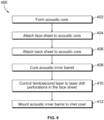
Figure 9 is a flow chart of amethod 400 for forming an engine inlet assembly, not covered by the present invention. Referring toFigures 1-8 , themethod 400 begins at 402, at which anacoustic core 128 is formed. Theacoustic core 128 is formed to include a honeycomb array of attachedhexagonal cells 130. Theacoustic core 128 may be formed via additive manufacturing, but in an alternative example may be formed via another process, such as molding. Theacoustic core 128 optionally may be formed in an annular barrel shape during the formation process, or alternatively may be formed in a planar or flat shape and subsequently bend or molded into a barrel shape. The formedacoustic core 128 includes an annularinterior side 136 that defines acavity 140. - At 404, a
face sheet 134 is attached to the annularinterior side 136 of theacoustic core 128 such that theface sheet 134 is exposed within thecavity 140 and defines a perimeter of thecavity 140. Theface sheet 134 may be attached to theacoustic core 128 by bonding theface sheet 134 to theinterior side 136 of theacoustic core 128. Theface sheet 134 is a composite material that includes multiple layers or plies of fiber-reinforced polymer matrix material, such as carbon fibers (e.g., graphite) in epoxy. In at least one embodiment, theface sheet 134 is formed in-situ on theacoustic core 128. For example, multiple layers of the fiber-reinforced material may be deposited, one at a time, on theinterior side 136 of theacoustic core 128 via an automated fiber placement (AFP) process. In at least one example, the layers of the fiber-reinforced material may be deposited on theacoustic core 128 while theacoustic core 128 is in the barrel-shaped configuration. In an alternative example, the layers are deposited while theacoustic core 128 is in a flat configuration, and the combination structure is bent or molded into the barrel shape after attaching theface sheet 134 to theacoustic core 128. - At 406, a
back sheet 132 is attached to theacoustic core 128 along an exterior side of theacoustic core 128 that is opposite theface sheet 134 such that theacoustic core 128 is sandwiched between theface sheet 134 and theback sheet 132. Theback sheet 132 may be attached to theacoustic core 128 in a similar process or a different process than how theface sheet 134 is attached to theacoustic core 128. For example, theback sheet 132 optionally may be formed in-situ on theacoustic core 128 via an AFP process or by laying up theback sheet 132 along the exterior side of theacoustic core 128 and then bonding and/or curing. - At 408, the combined structure including the
acoustic core 128 between theface sheet 134 and theback sheet 132 is cured to form a unitary composite structure. The combined structure defines or represents an acousticinner barrel 120. The acousticinner barrel 120 may have the barrel shape prior to curing, such that the acousticinner barrel 120 is cured in the barrel shape. - At 410, a
femtosecond laser 202 is controlled to laser drill a plurality ofperforations 150 in theface sheet 134 without burning portions of theface sheet 134 of theacoustic core 128 surrounding theperforations 150. Thefemtosecond laser 202 may be controlled automatically by acontrol unit 204 that includes one or more processors operating according to programmed instructions. Thefemtosecond laser 202 may be controlled to emitlaser pulses 214 at a frequency of over 100,000 Hz. Thefemtosecond laser 202 may be controlled to emitlaser pulses 214 atultrashort pulse durations 308 between about 100 fs and about 10,000 fs. The diameters of theperforations 150 may be controlled to be between about 50 µm and about 500 µm. - In at least one example, the
femtosecond laser 202 is controlled to emit one ormore laser pulses 214 at each ofmultiple perforation locations 322 along theface sheet 134 one at a time in a sequence. Thefemtosecond laser 202 is then controlled to repeat the sequence multiple times (e.g., for multiple cycles) in order to gradually form an array of theperforations 150 at theperforation locations 322. - In at least one example, the laser drilling at
step 410 occurs subsequent to thesteps inner barrel 120 is assembled and formed into the closed barrel shape prior to thefemtosecond laser 202 laser drilling the perforations along theinner surface 218 of theface sheet 134. Thefemtosecond laser 202 may be controlled to extend at least partially into thecavity 140 of the acousticinner barrel 120 to achieve a desired position and orientation for aiming thelaser pulses 214 at the designatedperforation locations 322. - At 412, the acoustic
inner barrel 120 is mounted to aninner side 142 of aninlet cowl 114 of agas turbine engine 108 to define anengine inlet assembly 122. Theengine inlet assembly 122 is configured to guide air flow into thegas turbine engine 108. The acousticinner barrel 120 is exposed to the air flow, and theperforations 150 absorb some of the noise that is generated by fan blades rotating at high speed, and thereby reduce the overall noise output of thegas turbine engine 108. - As described above, embodiments of the present invention provide a forming system described alongside example systems and example methods for forming perforations in an acoustic structure which may be performed in a timely, efficient, and cost-effective manner. Further, embodiments of the present invention provide a forming system described alongside example systems and example methods for accurately and precisely laser-forming perforations within an acoustic structure that does not burn or otherwise damage surrounding areas of the acoustic structure around the perforations due to little to no thermal conduction from the laser to the acoustic structure. Moreover, embodiments of the present invention provide a forming system described alongside example systems and example methods of efficiently manufacturing acoustic structures by forming several components via additive manufacturing and/or in-situ methods to reduce the overall number of steps in the manufacturing process.
- As described above, embodiments of the present invention provide a forming system described alongside example systems and example methods of forming an acoustic inner barrel of an engine of an aircraft.
- While various spatial and directional terms, such as top, bottom, lower, mid, lateral, horizontal, vertical, front and the like may be used to describe embodiments of the present disclosure, it is understood that such terms are merely used with respect to the orientations shown in the drawings. The orientations may be inverted, rotated, or otherwise changed, such that an upper portion is a lower portion, and vice versa, horizontal becomes vertical, and the like.
- The diagrams of embodiments herein may illustrate one or more control or processing units, such as the
control unit 204 shown inFigure 6 . It is to be understood that the processing or control units may represent circuits, circuitry, or portions thereof that may be implemented as hardware with associated instructions (e.g., software stored on a tangible and non-transitory computer readable storage medium, such as a computer hard drive, ROM, RAM, or the like) that perform the operations described herein. The hardware may include state machine circuitry hardwired to perform the functions described herein. Optionally, the hardware may include electronic circuits that include and/or are connected to one or more logic-based devices, such as microprocessors, processors, controllers, or the like. Optionally, thecontrol unit 204 may represent processing circuitry such as one or more of a field programmable gate array (FPGA), application specific integrated circuit (ASIC), microprocessor(s), a quantum computing device, and/or the like. The circuits in various embodiments may be configured to execute one or more algorithms to perform functions described herein. The one or more algorithms may include aspects of embodiments disclosed herein, whether or not expressly identified in a flowchart or a method. - As used herein, the term "control unit," "unit," "central processing unit," "CPU," "computer," or the like may include any processor-based or microprocessor-based system including systems using microcontrollers, reduced instruction set computers (RISC) application specific integrated circuits (ASICs), logic circuits, and any other circuit or processor including hardware, software, or a combination thereof capable of executing the functions described herein. Such are exemplary only, and are thus not intended to limit in any way the definition and/or meaning of such terms. The
control unit 204 shown inFigure 6 is configured to execute a set of instructions that are stored in one or more storage elements (such as one or more memories), in order to process data. For example, thecontrol unit 204 may include or be coupled to one or more memories. The storage elements may also store data or other information as desired or needed. The storage elements may be in the form of an information source or a physical memory element within a processing machine. - The set of instructions may include various commands that instruct the control unit 204 (
Figure 6 ) as a processing machine to perform specific operations such as the methods and processes of the various embodiments of the subject matter described herein. The set of instructions may be in the form of a software program. The software may be in various forms such as system software or application software. Further, the software may be in the form of a collection of separate programs, a program subset within a larger program or a portion of a program. The software may also include modular programming in the form of object-oriented programming. The processing of input data by the processing machine may be in response to user commands, or in response to results of previous processing, or in response to a request made by another processing machine. - As used herein, the terms "software" and "firmware" are interchangeable, and include any computer program stored in memory for execution by a computer, including RAM memory, ROM memory, EPROM memory, EEPROM memory, and non-volatile RAM (NVRAM) memory. The above memory types are exemplary only, and are thus not limiting as to the types of memory usable for storage of a computer program.
- As used herein, a structure, limitation, or element that is "configured to" perform a task or operation is particularly structurally formed, constructed, or adapted in a manner corresponding to the task or operation. For purposes of clarity and the avoidance of doubt, an object that is merely capable of being modified to perform the task or operation is not "configured to" perform the task or operation as used herein.
- It is to be understood that the above description is intended to be illustrative, and not restrictive. In addition, many modifications may be made to adapt a particular situation or material to the teachings of the various embodiments of the disclosure without departing from the scope of the appended claims. The scope of the various embodiments of the disclosure should, therefore, be determined with reference to the appended claims. In the appended claims, the terms "including" and "in which" are used as the plain-English equivalents of the respective terms "comprising" and "wherein." Moreover, the terms "first," "second," and "third," etc. are used merely as labels, and are not intended to impose numerical requirements on their objects.
Claims (15)
- A forming system (200) comprising:a femtosecond laser (202) configured to emit laser pulses (214) onto an inner surface (218) of a face sheet (134) of an acoustic inner barrel (120), the acoustic inner barrel (120) including an acoustic core (128) comprising an array of hexagonal cells (130) attached to an outer surface (304) of the face sheet that is opposite the inner surface; anda control unit (204) comprising one or more processors operatively connected to the femtosecond laser (202), the control unit configured to control the femtosecond laser (202) to laser drill a plurality of perforations (150) in the face sheet via emitting laser pulses at pulse durations of less than about 10,000 femtoseconds and at frequencies over 100,000 Hz such that the perforations are formed without burning portions of the face sheet or the acoustic core surrounding the perforations,wherein the femtosecond laser (202) includes a scanning head (320), and the control unit (204) is configured to control the scanning head to emit one or more laser pulses (214) at each of multiple perforation locations (322) along the face sheet (134) one at a time in a sequence, and to repeat the sequence multiple times to gradually form the perforations (150) at the perforation locations,wherein the forming system further comprises a positioning platform (206) on which the acoustic inner barrel (120) is to be mounted,wherein the positioning platform (206) has multiple actuators (207) that are configured to engage and move the acoustic inner barrel (120),wherein the actuators (207) are rollers,wherein the rollers (207) are configured to rotate the acoustic inner barrel (120) in a rotational direction about a centreline axis of the acoustic inner barrel (120),wherein at least one stabilizing roller (213) is configured to engage the acoustic inner barrel (120) above the centerline axis (209).
- The forming system (200) of claim 1, wherein the control unit (204) is configured to control the femtosecond laser (202) to laser drill the perforations through a thickness of the face sheet (134) to an interface (306) between the face sheet and the acoustic core (128) without penetrating the acoustic core.
- The forming system (200) of any preceding claim, wherein the femtosecond laser (202) is configured to extend at least partially into a cavity (140) defined by the acoustic inner barrel (120) to laser drill the perforations in the face sheet.
- The forming system (200) of any preceding claim, wherein the control unit (204) is configured to control the femtosecond laser (202) to laser drill the perforations (150) in the face sheet (134) in a designated pattern with a predetermined percent-open-area.
- The forming system (200) of any preceding claim, wherein the control unit (204) is configured to control the femtosecond laser (202) to laser drill the perforations (150) in the face sheet (134) to have diameters between about 50 micrometers and about 500 micrometers.
- The forming system (200) of any preceding claim, wherein the multiple perforations (150) include at least a first perforation and a second perforation, and wherein the sequence is to emit one or more pulses at the first perforation and then the second perforation.
- The forming system (200) of any preceding claim, wherein the control unit (204) comprises a storage device.
- The forming system (200) of any preceding claim, wherein the control unit (204) comprises an input/output device (208).
- The forming system (200) of claim 8, wherein the input/output device (208) comprises a user interface with a display (210) and multiple buttons or knobs (212) .
- The forming system (200) of any preceding claim, wherein the control unit (204) comprises a wireless communication device.
- The forming system (200) of any preceding claim, wherein the positioning platform (206) is configured for removable loading of the acoustic inner barrel (120) in a vertical orientation such that the centreline axis of the acoustic inner barrel (120) is parallel to a horizontal plane of the positioning platform.
- The forming system (200) of any preceding claim, wherein the control unit (204) is mounted within a structure of the femtosecond laser (202).
- The forming system (200) of any preceding claim, wherein the positioning platform (206) is configured to receive an annular shaped barrel that extends axially from a forward edge to an aft edge.
- The forming system (200) of any preceding claim, wherein the femtosecond laser (202) is configured to be held by an effector arm (216).
- The forming system of claim 14, wherein the femtosecond laser (202) is configured to be held stationary by the effector arm (216), and wherein the positioning platform (206) is configured to rotate the acoustic inner barrel (120) relative to the femtosecond laser (202).
Applications Claiming Priority (2)
| Application Number | Priority Date | Filing Date | Title |
|---|---|---|---|
| US15/964,331 US11052490B2 (en) | 2018-04-27 | 2018-04-27 | Inner barrel of an engine inlet with laser-machined acoustic perforations |
| EP19171457.5A EP3578288B1 (en) | 2018-04-27 | 2019-04-26 | Method of forming an inner barrel of an engine inlet with laser-machined acoustic perforations |
Related Parent Applications (2)
| Application Number | Title | Priority Date | Filing Date |
|---|---|---|---|
| EP19171457.5A Division-Into EP3578288B1 (en) | 2018-04-27 | 2019-04-26 | Method of forming an inner barrel of an engine inlet with laser-machined acoustic perforations |
| EP19171457.5A Division EP3578288B1 (en) | 2018-04-27 | 2019-04-26 | Method of forming an inner barrel of an engine inlet with laser-machined acoustic perforations |
Publications (2)
| Publication Number | Publication Date |
|---|---|
| EP3988237A1 EP3988237A1 (en) | 2022-04-27 |
| EP3988237B1 true EP3988237B1 (en) | 2024-07-03 |
Family
ID=66290355
Family Applications (2)
| Application Number | Title | Priority Date | Filing Date |
|---|---|---|---|
| EP21211386.4A Active EP3988237B1 (en) | 2018-04-27 | 2019-04-26 | System for forming an inner barrel of an engine inlet with laser-machined acoustic perforations |
| EP19171457.5A Active EP3578288B1 (en) | 2018-04-27 | 2019-04-26 | Method of forming an inner barrel of an engine inlet with laser-machined acoustic perforations |
Family Applications After (1)
| Application Number | Title | Priority Date | Filing Date |
|---|---|---|---|
| EP19171457.5A Active EP3578288B1 (en) | 2018-04-27 | 2019-04-26 | Method of forming an inner barrel of an engine inlet with laser-machined acoustic perforations |
Country Status (5)
| Country | Link |
|---|---|
| US (2) | US11052490B2 (en) |
| EP (2) | EP3988237B1 (en) |
| JP (1) | JP7403233B2 (en) |
| CN (1) | CN110405365B (en) |
| CA (1) | CA3030913A1 (en) |
Families Citing this family (6)
| Publication number | Priority date | Publication date | Assignee | Title |
|---|---|---|---|---|
| FR3069210B1 (en) * | 2017-07-24 | 2020-12-11 | Faurecia Automotive Ind | AUTOMOTIVE VEHICLE SOUNDPROOFING PART AND ASSOCIATED MANUFACTURING PROCESS |
| US11719160B2 (en) * | 2020-02-03 | 2023-08-08 | Rohr, Inc. | Acoustic liner and method of forming same |
| US11506083B2 (en) * | 2020-06-03 | 2022-11-22 | Rolls-Royce Corporalion | Composite liners for turbofan engines |
| US12077320B2 (en) * | 2022-07-15 | 2024-09-03 | The Boeing Company | Method for producing a perforated nacelle inlet assembly |
| CN115673458A (en) * | 2022-12-29 | 2023-02-03 | 成都和鸿科技股份有限公司 | Method for brazing honeycomb plate |
| CN121670149B (en) * | 2026-02-09 | 2026-04-24 | 常州市蓝托金属制品有限公司 | An automated welding system for the internal support frame of an engine nacelle. |
Family Cites Families (17)
| Publication number | Priority date | Publication date | Assignee | Title |
|---|---|---|---|---|
| JP3691221B2 (en) * | 1997-09-24 | 2005-09-07 | 三菱電機株式会社 | Laser processing method |
| GB0016149D0 (en) | 2000-06-30 | 2000-08-23 | Short Brothers Plc | A noise attenuation panel |
| JP2004216430A (en) | 2003-01-16 | 2004-08-05 | Ricoh Microelectronics Co Ltd | Laser drilling method and its equipment |
| US7384220B2 (en) | 2004-01-06 | 2008-06-10 | The Boeing Company | Laser-guided coordination hole drilling |
| US7536242B2 (en) | 2004-11-12 | 2009-05-19 | The Boeing Company | Optical laser guidance system apparatus and method |
| US7528342B2 (en) * | 2005-02-03 | 2009-05-05 | Laserfacturing, Inc. | Method and apparatus for via drilling and selective material removal using an ultrafast pulse laser |
| JP2008212999A (en) | 2007-03-06 | 2008-09-18 | Disco Abrasive Syst Ltd | Laser processing equipment |
| JP5223218B2 (en) * | 2007-03-29 | 2013-06-26 | 凸版印刷株式会社 | Method of manufacturing needle array by femtosecond laser processing |
| WO2010148193A1 (en) * | 2009-06-17 | 2010-12-23 | Union Tank Car Company | Hybrid laser arc welding system and method for railcar tank car fabrication |
| US8899886B1 (en) | 2009-11-25 | 2014-12-02 | The Boeing Company | Laser signature vision system |
| GB2478312B (en) * | 2010-03-02 | 2012-08-22 | Gkn Aerospace Services Ltd | Seamless acoustic liner |
| US8220588B2 (en) * | 2010-03-31 | 2012-07-17 | The Boeing Company | Unitized engine nacelle structure |
| WO2013130608A1 (en) | 2012-02-29 | 2013-09-06 | Electro Scientific Industries, Inc. | Methods and apparatus for machining strengthened glass and articles produced thereby |
| US9370827B2 (en) * | 2013-08-28 | 2016-06-21 | The Boeing Company | System and method for forming perforations in a barrel section |
| US9463596B2 (en) | 2014-04-24 | 2016-10-11 | Rohr, Inc. | Systems and methods for perforating materials |
| CN104607808B (en) * | 2014-12-11 | 2016-05-18 | 西北工业大学 | Utilize femtosecond laser to carry out the method for ceramic matric composite capillary processing |
| CN105312782A (en) * | 2015-04-29 | 2016-02-10 | 北京中科思远光电科技有限公司 | Ultrafast laser machining device for blade punching based on cold machining mode |
-
2018
- 2018-04-27 US US15/964,331 patent/US11052490B2/en active Active
-
2019
- 2019-01-18 CA CA3030913A patent/CA3030913A1/en active Pending
- 2019-03-18 CN CN201910201568.2A patent/CN110405365B/en active Active
- 2019-04-18 JP JP2019079089A patent/JP7403233B2/en active Active
- 2019-04-26 EP EP21211386.4A patent/EP3988237B1/en active Active
- 2019-04-26 EP EP19171457.5A patent/EP3578288B1/en active Active
-
2021
- 2021-06-09 US US17/343,383 patent/US11980972B2/en active Active
Also Published As
| Publication number | Publication date |
|---|---|
| US11980972B2 (en) | 2024-05-14 |
| EP3578288B1 (en) | 2022-06-08 |
| JP7403233B2 (en) | 2023-12-22 |
| CN110405365A (en) | 2019-11-05 |
| CN110405365B (en) | 2022-10-28 |
| JP2020011295A (en) | 2020-01-23 |
| US11052490B2 (en) | 2021-07-06 |
| CA3030913A1 (en) | 2019-10-27 |
| EP3578288A1 (en) | 2019-12-11 |
| BR102019003036A2 (en) | 2019-11-12 |
| US20190329360A1 (en) | 2019-10-31 |
| EP3988237A1 (en) | 2022-04-27 |
| US20210291302A1 (en) | 2021-09-23 |
Similar Documents
| Publication | Publication Date | Title |
|---|---|---|
| EP3988237B1 (en) | System for forming an inner barrel of an engine inlet with laser-machined acoustic perforations | |
| CN104417761B (en) | System and method for forming perforation in cylinder section | |
| JP5822851B2 (en) | Seamless acoustic liner | |
| JP6495275B2 (en) | Composite laminates with hole patterns created by controlled fiber placement | |
| EP3839939B1 (en) | Structural single degree of freedom face sheet acoustic liner | |
| US20160136760A1 (en) | Forming one or more apertures in a fiber-reinforced composite object with a laser | |
| GB2486120A (en) | Manufacturing composite acoustic panels | |
| US20240367819A1 (en) | Method for producing a perforated nacelle inlet assembly | |
| BR102019003036B1 (en) | TRAINING SYSTEM AND METHOD | |
| EP4474095B1 (en) | Laser perforating system and method for laser perforating an acoustic panel skin | |
| GB2540014A (en) | System and method for forming elongated perforations in an inner barrel section of an engine |
Legal Events
| Date | Code | Title | Description |
|---|---|---|---|
| PUAI | Public reference made under article 153(3) epc to a published international application that has entered the european phase |
Free format text: ORIGINAL CODE: 0009012 |
|
| STAA | Information on the status of an ep patent application or granted ep patent |
Free format text: STATUS: THE APPLICATION HAS BEEN PUBLISHED |
|
| AC | Divisional application: reference to earlier application |
Ref document number: 3578288 Country of ref document: EP Kind code of ref document: P |
|
| AK | Designated contracting states |
Kind code of ref document: A1 Designated state(s): AL AT BE BG CH CY CZ DE DK EE ES FI FR GB GR HR HU IE IS IT LI LT LU LV MC MK MT NL NO PL PT RO RS SE SI SK SM TR |
|
| STAA | Information on the status of an ep patent application or granted ep patent |
Free format text: STATUS: REQUEST FOR EXAMINATION WAS MADE |
|
| 17P | Request for examination filed |
Effective date: 20221006 |
|
| RBV | Designated contracting states (corrected) |
Designated state(s): AL AT BE BG CH CY CZ DE DK EE ES FI FR GB GR HR HU IE IS IT LI LT LU LV MC MK MT NL NO PL PT RO RS SE SI SK SM TR |
|
| RAP3 | Party data changed (applicant data changed or rights of an application transferred) |
Owner name: THE BOEING COMPANY |
|
| STAA | Information on the status of an ep patent application or granted ep patent |
Free format text: STATUS: EXAMINATION IS IN PROGRESS |
|
| 17Q | First examination report despatched |
Effective date: 20230404 |
|
| GRAP | Despatch of communication of intention to grant a patent |
Free format text: ORIGINAL CODE: EPIDOSNIGR1 |
|
| STAA | Information on the status of an ep patent application or granted ep patent |
Free format text: STATUS: GRANT OF PATENT IS INTENDED |
|
| RIC1 | Information provided on ipc code assigned before grant |
Ipc: B23K 103/16 20060101ALN20231012BHEP Ipc: B23K 101/00 20060101ALN20231012BHEP Ipc: F02C 7/045 20060101ALI20231012BHEP Ipc: B23K 26/386 20140101ALI20231012BHEP Ipc: B23K 26/384 20140101ALI20231012BHEP Ipc: B23K 26/082 20140101ALI20231012BHEP Ipc: B23K 26/0622 20140101AFI20231012BHEP |
|
| INTG | Intention to grant announced |
Effective date: 20231109 |
|
| GRAJ | Information related to disapproval of communication of intention to grant by the applicant or resumption of examination proceedings by the epo deleted |
Free format text: ORIGINAL CODE: EPIDOSDIGR1 |
|
| STAA | Information on the status of an ep patent application or granted ep patent |
Free format text: STATUS: EXAMINATION IS IN PROGRESS |
|
| GRAP | Despatch of communication of intention to grant a patent |
Free format text: ORIGINAL CODE: EPIDOSNIGR1 |
|
| STAA | Information on the status of an ep patent application or granted ep patent |
Free format text: STATUS: GRANT OF PATENT IS INTENDED |
|
| INTC | Intention to grant announced (deleted) | ||
| P01 | Opt-out of the competence of the unified patent court (upc) registered |
Effective date: 20240229 |
|
| RIC1 | Information provided on ipc code assigned before grant |
Ipc: B23K 103/16 20060101ALN20240304BHEP Ipc: B23K 101/00 20060101ALN20240304BHEP Ipc: F02C 7/045 20060101ALI20240304BHEP Ipc: B23K 26/386 20140101ALI20240304BHEP Ipc: B23K 26/384 20140101ALI20240304BHEP Ipc: B23K 26/082 20140101ALI20240304BHEP Ipc: B23K 26/0622 20140101AFI20240304BHEP |
|
| INTG | Intention to grant announced |
Effective date: 20240319 |
|
| GRAS | Grant fee paid |
Free format text: ORIGINAL CODE: EPIDOSNIGR3 |
|
| GRAA | (expected) grant |
Free format text: ORIGINAL CODE: 0009210 |
|
| STAA | Information on the status of an ep patent application or granted ep patent |
Free format text: STATUS: THE PATENT HAS BEEN GRANTED |
|
| AC | Divisional application: reference to earlier application |
Ref document number: 3578288 Country of ref document: EP Kind code of ref document: P |
|
| AK | Designated contracting states |
Kind code of ref document: B1 Designated state(s): AL AT BE BG CH CY CZ DE DK EE ES FI FR GB GR HR HU IE IS IT LI LT LU LV MC MK MT NL NO PL PT RO RS SE SI SK SM TR |
|
| REG | Reference to a national code |
Ref country code: CH Ref legal event code: EP |
|
| REG | Reference to a national code |
Ref country code: DE Ref legal event code: R096 Ref document number: 602019054851 Country of ref document: DE |
|
| REG | Reference to a national code |
Ref country code: LT Ref legal event code: MG9D |
|
| REG | Reference to a national code |
Ref country code: NL Ref legal event code: MP Effective date: 20240703 |
|
| PG25 | Lapsed in a contracting state [announced via postgrant information from national office to epo] |
Ref country code: PT Free format text: LAPSE BECAUSE OF FAILURE TO SUBMIT A TRANSLATION OF THE DESCRIPTION OR TO PAY THE FEE WITHIN THE PRESCRIBED TIME-LIMIT Effective date: 20241104 |
|
| REG | Reference to a national code |
Ref country code: AT Ref legal event code: MK05 Ref document number: 1699338 Country of ref document: AT Kind code of ref document: T Effective date: 20240703 |
|
| PG25 | Lapsed in a contracting state [announced via postgrant information from national office to epo] |
Ref country code: NL Free format text: LAPSE BECAUSE OF FAILURE TO SUBMIT A TRANSLATION OF THE DESCRIPTION OR TO PAY THE FEE WITHIN THE PRESCRIBED TIME-LIMIT Effective date: 20240703 |
|
| PG25 | Lapsed in a contracting state [announced via postgrant information from national office to epo] |
Ref country code: PT Free format text: LAPSE BECAUSE OF FAILURE TO SUBMIT A TRANSLATION OF THE DESCRIPTION OR TO PAY THE FEE WITHIN THE PRESCRIBED TIME-LIMIT Effective date: 20241104 Ref country code: NL Free format text: LAPSE BECAUSE OF FAILURE TO SUBMIT A TRANSLATION OF THE DESCRIPTION OR TO PAY THE FEE WITHIN THE PRESCRIBED TIME-LIMIT Effective date: 20240703 |
|
| PG25 | Lapsed in a contracting state [announced via postgrant information from national office to epo] |
Ref country code: NO Free format text: LAPSE BECAUSE OF FAILURE TO SUBMIT A TRANSLATION OF THE DESCRIPTION OR TO PAY THE FEE WITHIN THE PRESCRIBED TIME-LIMIT Effective date: 20241003 |
|
| PG25 | Lapsed in a contracting state [announced via postgrant information from national office to epo] |
Ref country code: FI Free format text: LAPSE BECAUSE OF FAILURE TO SUBMIT A TRANSLATION OF THE DESCRIPTION OR TO PAY THE FEE WITHIN THE PRESCRIBED TIME-LIMIT Effective date: 20240703 Ref country code: GR Free format text: LAPSE BECAUSE OF FAILURE TO SUBMIT A TRANSLATION OF THE DESCRIPTION OR TO PAY THE FEE WITHIN THE PRESCRIBED TIME-LIMIT Effective date: 20241004 Ref country code: PL Free format text: LAPSE BECAUSE OF FAILURE TO SUBMIT A TRANSLATION OF THE DESCRIPTION OR TO PAY THE FEE WITHIN THE PRESCRIBED TIME-LIMIT Effective date: 20240703 |
|
| PG25 | Lapsed in a contracting state [announced via postgrant information from national office to epo] |
Ref country code: BG Free format text: LAPSE BECAUSE OF FAILURE TO SUBMIT A TRANSLATION OF THE DESCRIPTION OR TO PAY THE FEE WITHIN THE PRESCRIBED TIME-LIMIT Effective date: 20240703 |
|
| PG25 | Lapsed in a contracting state [announced via postgrant information from national office to epo] |
Ref country code: LV Free format text: LAPSE BECAUSE OF FAILURE TO SUBMIT A TRANSLATION OF THE DESCRIPTION OR TO PAY THE FEE WITHIN THE PRESCRIBED TIME-LIMIT Effective date: 20240703 |
|
| PG25 | Lapsed in a contracting state [announced via postgrant information from national office to epo] |
Ref country code: IS Free format text: LAPSE BECAUSE OF FAILURE TO SUBMIT A TRANSLATION OF THE DESCRIPTION OR TO PAY THE FEE WITHIN THE PRESCRIBED TIME-LIMIT Effective date: 20241103 Ref country code: AT Free format text: LAPSE BECAUSE OF FAILURE TO SUBMIT A TRANSLATION OF THE DESCRIPTION OR TO PAY THE FEE WITHIN THE PRESCRIBED TIME-LIMIT Effective date: 20240703 |
|
| PG25 | Lapsed in a contracting state [announced via postgrant information from national office to epo] |
Ref country code: HR Free format text: LAPSE BECAUSE OF FAILURE TO SUBMIT A TRANSLATION OF THE DESCRIPTION OR TO PAY THE FEE WITHIN THE PRESCRIBED TIME-LIMIT Effective date: 20240703 Ref country code: CZ Free format text: LAPSE BECAUSE OF FAILURE TO SUBMIT A TRANSLATION OF THE DESCRIPTION OR TO PAY THE FEE WITHIN THE PRESCRIBED TIME-LIMIT Effective date: 20240703 |
|
| PG25 | Lapsed in a contracting state [announced via postgrant information from national office to epo] |
Ref country code: ES Free format text: LAPSE BECAUSE OF FAILURE TO SUBMIT A TRANSLATION OF THE DESCRIPTION OR TO PAY THE FEE WITHIN THE PRESCRIBED TIME-LIMIT Effective date: 20240703 Ref country code: RS Free format text: LAPSE BECAUSE OF FAILURE TO SUBMIT A TRANSLATION OF THE DESCRIPTION OR TO PAY THE FEE WITHIN THE PRESCRIBED TIME-LIMIT Effective date: 20241003 |
|
| PG25 | Lapsed in a contracting state [announced via postgrant information from national office to epo] |
Ref country code: RS Free format text: LAPSE BECAUSE OF FAILURE TO SUBMIT A TRANSLATION OF THE DESCRIPTION OR TO PAY THE FEE WITHIN THE PRESCRIBED TIME-LIMIT Effective date: 20241003 Ref country code: PL Free format text: LAPSE BECAUSE OF FAILURE TO SUBMIT A TRANSLATION OF THE DESCRIPTION OR TO PAY THE FEE WITHIN THE PRESCRIBED TIME-LIMIT Effective date: 20240703 Ref country code: NO Free format text: LAPSE BECAUSE OF FAILURE TO SUBMIT A TRANSLATION OF THE DESCRIPTION OR TO PAY THE FEE WITHIN THE PRESCRIBED TIME-LIMIT Effective date: 20241003 Ref country code: LV Free format text: LAPSE BECAUSE OF FAILURE TO SUBMIT A TRANSLATION OF THE DESCRIPTION OR TO PAY THE FEE WITHIN THE PRESCRIBED TIME-LIMIT Effective date: 20240703 Ref country code: IS Free format text: LAPSE BECAUSE OF FAILURE TO SUBMIT A TRANSLATION OF THE DESCRIPTION OR TO PAY THE FEE WITHIN THE PRESCRIBED TIME-LIMIT Effective date: 20241103 Ref country code: HR Free format text: LAPSE BECAUSE OF FAILURE TO SUBMIT A TRANSLATION OF THE DESCRIPTION OR TO PAY THE FEE WITHIN THE PRESCRIBED TIME-LIMIT Effective date: 20240703 Ref country code: GR Free format text: LAPSE BECAUSE OF FAILURE TO SUBMIT A TRANSLATION OF THE DESCRIPTION OR TO PAY THE FEE WITHIN THE PRESCRIBED TIME-LIMIT Effective date: 20241004 Ref country code: FI Free format text: LAPSE BECAUSE OF FAILURE TO SUBMIT A TRANSLATION OF THE DESCRIPTION OR TO PAY THE FEE WITHIN THE PRESCRIBED TIME-LIMIT Effective date: 20240703 Ref country code: ES Free format text: LAPSE BECAUSE OF FAILURE TO SUBMIT A TRANSLATION OF THE DESCRIPTION OR TO PAY THE FEE WITHIN THE PRESCRIBED TIME-LIMIT Effective date: 20240703 Ref country code: CZ Free format text: LAPSE BECAUSE OF FAILURE TO SUBMIT A TRANSLATION OF THE DESCRIPTION OR TO PAY THE FEE WITHIN THE PRESCRIBED TIME-LIMIT Effective date: 20240703 Ref country code: BG Free format text: LAPSE BECAUSE OF FAILURE TO SUBMIT A TRANSLATION OF THE DESCRIPTION OR TO PAY THE FEE WITHIN THE PRESCRIBED TIME-LIMIT Effective date: 20240703 Ref country code: AT Free format text: LAPSE BECAUSE OF FAILURE TO SUBMIT A TRANSLATION OF THE DESCRIPTION OR TO PAY THE FEE WITHIN THE PRESCRIBED TIME-LIMIT Effective date: 20240703 |
|
| REG | Reference to a national code |
Ref country code: DE Ref legal event code: R097 Ref document number: 602019054851 Country of ref document: DE |
|
| PG25 | Lapsed in a contracting state [announced via postgrant information from national office to epo] |
Ref country code: RO Free format text: LAPSE BECAUSE OF FAILURE TO SUBMIT A TRANSLATION OF THE DESCRIPTION OR TO PAY THE FEE WITHIN THE PRESCRIBED TIME-LIMIT Effective date: 20240703 Ref country code: SM Free format text: LAPSE BECAUSE OF FAILURE TO SUBMIT A TRANSLATION OF THE DESCRIPTION OR TO PAY THE FEE WITHIN THE PRESCRIBED TIME-LIMIT Effective date: 20240703 Ref country code: DK Free format text: LAPSE BECAUSE OF FAILURE TO SUBMIT A TRANSLATION OF THE DESCRIPTION OR TO PAY THE FEE WITHIN THE PRESCRIBED TIME-LIMIT Effective date: 20240703 |
|
| PG25 | Lapsed in a contracting state [announced via postgrant information from national office to epo] |
Ref country code: EE Free format text: LAPSE BECAUSE OF FAILURE TO SUBMIT A TRANSLATION OF THE DESCRIPTION OR TO PAY THE FEE WITHIN THE PRESCRIBED TIME-LIMIT Effective date: 20240703 |
|
| PG25 | Lapsed in a contracting state [announced via postgrant information from national office to epo] |
Ref country code: IT Free format text: LAPSE BECAUSE OF FAILURE TO SUBMIT A TRANSLATION OF THE DESCRIPTION OR TO PAY THE FEE WITHIN THE PRESCRIBED TIME-LIMIT Effective date: 20240703 Ref country code: SK Free format text: LAPSE BECAUSE OF FAILURE TO SUBMIT A TRANSLATION OF THE DESCRIPTION OR TO PAY THE FEE WITHIN THE PRESCRIBED TIME-LIMIT Effective date: 20240703 |
|
| PLBE | No opposition filed within time limit |
Free format text: ORIGINAL CODE: 0009261 |
|
| STAA | Information on the status of an ep patent application or granted ep patent |
Free format text: STATUS: NO OPPOSITION FILED WITHIN TIME LIMIT |
|
| 26N | No opposition filed |
Effective date: 20250404 |
|
| PGFP | Annual fee paid to national office [announced via postgrant information from national office to epo] |
Ref country code: DE Payment date: 20250429 Year of fee payment: 7 |
|
| PGFP | Annual fee paid to national office [announced via postgrant information from national office to epo] |
Ref country code: GB Payment date: 20250428 Year of fee payment: 7 |
|
| PGFP | Annual fee paid to national office [announced via postgrant information from national office to epo] |
Ref country code: FR Payment date: 20250425 Year of fee payment: 7 |
|
| PG25 | Lapsed in a contracting state [announced via postgrant information from national office to epo] |
Ref country code: SE Free format text: LAPSE BECAUSE OF FAILURE TO SUBMIT A TRANSLATION OF THE DESCRIPTION OR TO PAY THE FEE WITHIN THE PRESCRIBED TIME-LIMIT Effective date: 20240703 |
|
| REG | Reference to a national code |
Ref country code: CH Ref legal event code: H13 Free format text: ST27 STATUS EVENT CODE: U-0-0-H10-H13 (AS PROVIDED BY THE NATIONAL OFFICE) Effective date: 20251125 |
|
| PG25 | Lapsed in a contracting state [announced via postgrant information from national office to epo] |
Ref country code: LU Free format text: LAPSE BECAUSE OF NON-PAYMENT OF DUE FEES Effective date: 20250426 |
|
| PG25 | Lapsed in a contracting state [announced via postgrant information from national office to epo] |
Ref country code: MC Free format text: LAPSE BECAUSE OF FAILURE TO SUBMIT A TRANSLATION OF THE DESCRIPTION OR TO PAY THE FEE WITHIN THE PRESCRIBED TIME-LIMIT Effective date: 20240703 |
|
| REG | Reference to a national code |
Ref country code: BE Ref legal event code: MM Effective date: 20250430 |
|
| PG25 | Lapsed in a contracting state [announced via postgrant information from national office to epo] |
Ref country code: BE Free format text: LAPSE BECAUSE OF NON-PAYMENT OF DUE FEES Effective date: 20250430 |
|
| PG25 | Lapsed in a contracting state [announced via postgrant information from national office to epo] |
Ref country code: CH Free format text: LAPSE BECAUSE OF NON-PAYMENT OF DUE FEES Effective date: 20250430 |
|
| PG25 | Lapsed in a contracting state [announced via postgrant information from national office to epo] |
Ref country code: IE Free format text: LAPSE BECAUSE OF NON-PAYMENT OF DUE FEES Effective date: 20250426 |