EP3987892B1 - A power converter assembly and a power system - Google Patents
A power converter assembly and a power system Download PDFInfo
- Publication number
- EP3987892B1 EP3987892B1 EP19733467.5A EP19733467A EP3987892B1 EP 3987892 B1 EP3987892 B1 EP 3987892B1 EP 19733467 A EP19733467 A EP 19733467A EP 3987892 B1 EP3987892 B1 EP 3987892B1
- Authority
- EP
- European Patent Office
- Prior art keywords
- power converter
- power
- housing
- busbar
- converter assembly
- Prior art date
- Legal status (The legal status is an assumption and is not a legal conclusion. Google has not performed a legal analysis and makes no representation as to the accuracy of the status listed.)
- Active
Links
Images


Classifications
-
- H—ELECTRICITY
- H05—ELECTRIC TECHNIQUES NOT OTHERWISE PROVIDED FOR
- H05K—PRINTED CIRCUITS; CASINGS OR CONSTRUCTIONAL DETAILS OF ELECTRIC APPARATUS; MANUFACTURE OF ASSEMBLAGES OF ELECTRICAL COMPONENTS
- H05K7/00—Constructional details common to different types of electric apparatus
- H05K7/14—Mounting supporting structure in casing or on frame or rack
- H05K7/1422—Printed circuit boards receptacles, e.g. stacked structures, electronic circuit modules or box like frames
- H05K7/1427—Housings
- H05K7/1432—Housings specially adapted for power drive units or power converters
- H05K7/14324—Housings specially adapted for power drive units or power converters comprising modular units, e.g. DIN rail mounted units
-
- B—PERFORMING OPERATIONS; TRANSPORTING
- B60—VEHICLES IN GENERAL
- B60R—VEHICLES, VEHICLE FITTINGS, OR VEHICLE PARTS, NOT OTHERWISE PROVIDED FOR
- B60R16/00—Electric or fluid circuits specially adapted for vehicles and not otherwise provided for; Arrangement of elements of electric or fluid circuits specially adapted for vehicles and not otherwise provided for
- B60R16/02—Electric or fluid circuits specially adapted for vehicles and not otherwise provided for; Arrangement of elements of electric or fluid circuits specially adapted for vehicles and not otherwise provided for electric constitutive elements
-
- H—ELECTRICITY
- H02—GENERATION; CONVERSION OR DISTRIBUTION OF ELECTRIC POWER
- H02G—INSTALLATION OF ELECTRIC CABLES OR LINES, OR OF COMBINED OPTICAL AND ELECTRIC CABLES OR LINES
- H02G5/00—Installations of bus-bars
- H02G5/04—Partially-enclosed installations, e.g. in ducts and adapted for sliding or rolling current collection
-
- H—ELECTRICITY
- H02—GENERATION; CONVERSION OR DISTRIBUTION OF ELECTRIC POWER
- H02M—APPARATUS FOR CONVERSION BETWEEN AC AND AC, BETWEEN AC AND DC, OR BETWEEN DC AND DC, AND FOR USE WITH MAINS OR SIMILAR POWER SUPPLY SYSTEMS; CONVERSION OF DC OR AC INPUT POWER INTO SURGE OUTPUT POWER; CONTROL OR REGULATION THEREOF
- H02M7/00—Conversion of AC power input into DC power output; Conversion of DC power input into AC power output
- H02M7/003—Constructional details, e.g. physical layout, assembly, wiring or busbar connections
-
- H—ELECTRICITY
- H05—ELECTRIC TECHNIQUES NOT OTHERWISE PROVIDED FOR
- H05K—PRINTED CIRCUITS; CASINGS OR CONSTRUCTIONAL DETAILS OF ELECTRIC APPARATUS; MANUFACTURE OF ASSEMBLAGES OF ELECTRICAL COMPONENTS
- H05K7/00—Constructional details common to different types of electric apparatus
- H05K7/14—Mounting supporting structure in casing or on frame or rack
- H05K7/1422—Printed circuit boards receptacles, e.g. stacked structures, electronic circuit modules or box like frames
- H05K7/1427—Housings
- H05K7/1432—Housings specially adapted for power drive units or power converters
- H05K7/14329—Housings specially adapted for power drive units or power converters specially adapted for the configuration of power bus bars
-
- H—ELECTRICITY
- H05—ELECTRIC TECHNIQUES NOT OTHERWISE PROVIDED FOR
- H05K—PRINTED CIRCUITS; CASINGS OR CONSTRUCTIONAL DETAILS OF ELECTRIC APPARATUS; MANUFACTURE OF ASSEMBLAGES OF ELECTRICAL COMPONENTS
- H05K2201/00—Indexing scheme relating to printed circuits covered by H05K1/00
- H05K2201/10—Details of components or other objects attached to or integrated in a printed circuit board
- H05K2201/10227—Other objects, e.g. metallic pieces
- H05K2201/10272—Busbars, i.e. thick metal bars mounted on the printed circuit board [PCB] as high-current conductors
-
- H—ELECTRICITY
- H05—ELECTRIC TECHNIQUES NOT OTHERWISE PROVIDED FOR
- H05K—PRINTED CIRCUITS; CASINGS OR CONSTRUCTIONAL DETAILS OF ELECTRIC APPARATUS; MANUFACTURE OF ASSEMBLAGES OF ELECTRICAL COMPONENTS
- H05K7/00—Constructional details common to different types of electric apparatus
- H05K7/20—Modifications to facilitate cooling, ventilating, or heating
- H05K7/2089—Modifications to facilitate cooling, ventilating, or heating for power electronics, e.g. for inverters for controlling motor
Definitions
- the invention relates to a power converter assembly and a power system comprising a power converter assembly.
- the invention also relates to a working machine and to a vehicle.
- the power converter assembly and power system according to the invention are particularly applicable on working machines within the fields of industrial construction machines or construction equipment.
- the invention will be described with respect to a wheel loader, the invention is not restricted to this particular working machine, but may also be used in other working machines such as articulated haulers, excavators and backhoe loaders, but also in vehicles such as buses and trucks.
- Electric power systems are extensively used in working machines and vehicles, providing power for driving traction motors for propulsion or for carrying out various operations.
- Such electric power systems may be pure electric drive system, including power sources in the form of e.g. batteries or fuel cells, or form part of a hybrid drive system, including a generator coupled to a combustion engine.
- the electric power system needs to include a plurality of power converter units for converting power, e.g. for converting alternating current (AC) power input from a generator into direct current (DC) power, which is stored in a capacitor bank and filtered, and thereafter converted back into AC power output of desired frequency and voltage for driving a traction motor.
- AC alternating current
- DC direct current
- EMI electromagnetic interference
- US 2018/0166995 discloses an inverter assembly for an electric power system.
- the inverter assembly comprises a plurality of stackable housings in which inverter units are received to achieve a compact inverter assembly.
- the inverter units are interconnected by means of a busbar, providing low impedance and reducing power losses in the inverter assembly.
- Power converter units are herein understood to include devices for converting direct current (DC) to alternating current (AC), such as inverters, devices for converting AC to DC, such as rectifiers, devices for DC to DC conversion, and devices for AC to AC conversion, such as transformers.
- DC direct current
- AC alternating current
- inverters devices for converting AC to DC, such as rectifiers, devices for DC to DC conversion, and devices for AC to AC conversion, such as transformers.
- DC to DC such as rectifiers
- devices for DC to DC conversion such as transformers
- Examples of such devices used in working machines and vehicles are e.g. traction inverters, static converters, auxiliary converters, energy storage converters, generator converters, and static inverters.
- electromagnetic interference is herein understood to refer to electromagnetic emission and radiation including both electromagnetic interference (EMI) and radio-frequency interference (RFI). Both of these types of interference generate electromagnetic fields that can interfere with the operation of adjacent electrical equipment.
- galvanically connecting two or more parts is herein intended connecting said parts such that an electric current may flow between the connected parts, i.e. by means of a physical contact such as a metal to metal contact.
- galvanically connected is intended connected such that an electric current may flow between the connected parts.
- a busbar is herein understood to be a rigid conductor, such as a metallic strip, plate or bar.
- a primary object of the invention is to provide a power converter assembly and a power system which are in at least some aspects improved with respect to previous solutions.
- it is an object to achieve a relatively compact power converter assembly for integration into an electric power system of a working machine or a vehicle, for which power converter assembly electromagnetic compatibility (EMC) is assured and by means of which problems arising as a result of e.g. electromagnetic interference (EMI) can consequently be minimized.
- EMC electromagnetic compatibility
- EMI electromagnetic interference
- Another object is to achieve a power converter assembly in which included components are efficiently protected from mechanical damage as well as from moisture, chemicals and dirt, and which is thereby well-suited for use in e.g. a working machine or a vehicle.
- the power converter assembly comprises:
- the power converter assembly is characterized in that it further comprises a busbar housing in which the busbar is contained and electromagnetically shielded, wherein the at least two connecting elements are galvanically isolated from the busbar housing and from the at least one converter housing.
- a compact power converter assembly which complies with EMC requirements and which efficiently protects the power converter units and the busbar from EMI as well as from dirt, moisture and other pollutants may be achieved.
- the use of a busbar instead of e.g. cables or wires provides low impedance and also reduces DC link inductance in the power converter assembly.
- the power converter unit and the busbar are shielded, i.e. electromagnetically shielded to avoid electromagnetic interference (EMI), by means of the respective housings, i.e. the at least one converter housing electromagnetically shields the power converter units and the busbar housing electromagnetically shields the busbar.
- the respective housings should be configured such as to provide an efficient barrier to EMI at relevant frequencies.
- the housings may e.g. be made of aluminium, steel or other metal material, or may be of plastic material coated with a conducting material or of a conducting plastic material.
- the converter housings may be stackable to facilitate the building of a compact power converter assembly.
- the connecting elements reaches through the busbar housing and the converter housings such as to connect the power converter units to the busbar, but are galvanically isolated from the housings.
- a current may thereby flow between the power converter units via the busbar, but a current may never flow between the power converter units or the busbar on one hand and the busbar housing or the converter housings on the other hand.
- two connecting elements are provided for connecting each of a DC+ and a DC- connection of the power converter unit to a positive and a negative power rail of the busbar, respectively.
- Apertures in the respective housings, through which the connecting elements extend, are dimensioned such that escape or entrance of undesirable frequencies of electromagnetic radiation is prevented, thereby avoiding interference with the operation of electronic equipment adjacent to the power converter assembly.
- relatively small aperture sizes are needed. The escape of such high frequency components may interfere with the operation of electronic equipment adjacent to the power converter assembly. It is well-known in the field how to appropriately size and shape apertures so as to prevent escape or entrance of undesirable EMI components.
- the busbar is configured to be connected to the power converter units via the connecting elements to establish a low inductive electrical connection between the plurality of power converter units.
- the busbar may comprise a positive power rail and a negative power rail between which a capacitive layer may be provided.
- the busbar may e.g. be a copper busbar, but may also be made of e.g. aluminium or other conducting material.
- the power converter units may for example be stand-alone off the shelf power converter units which may function as inverters, rectifiers or transformers. The same power converter unit may be used for different purposes depending on the circumstances.
- the power converter units may be identical units, but they may also have different configurations.
- the at least two power converter units may comprise at least two power converter units configured to function as inverters, and/or at least two power converter units configured to function as rectifiers.
- the power converter assembly may comprise more than two converter units, such as three, four, five or more power converter units.
- the busbar housing is galvanically connected to said at least one converter housing.
- the busbar housing By galvanically connecting the busbar housing to the converter housing(s), it is possible to achieve improved EMC since the housings may thereby together function as a Faraday's cage shielding the power converter units and the busbar from the surroundings.
- the busbar housing is galvanically connected to said at least one converter housing by means of at least one metal-to-metal contact.
- a galvanic connection and an efficient shielding may thereby be ensured.
- the metal-to-metal contact is preferably provided between mutually facing surfaces of the converter housing(s) and the busbar housing, respectively.
- an upper surface of the converter housing(s) may be in contact with a lower surface of the busbar housing.
- metallic connection members may be provided, which are in contact with both of the busbar housing and the converter housings.
- Such metallic connection members should preferably be configured to shield the connecting elements (connecting the busbar and the power converter units) by extending around the connecting elements.
- each of the at least two connecting elements is galvanically isolated from the busbar housing and the at least one converter housing by means of an air gap provided between each of the connecting elements and the respective housing.
- the air gap may be of a size order of several millimetres depending on voltage level, wherein a higher voltage level requires a larger air gap. It provides an efficient galvanic isolation between the connecting elements on one hand and the housings on the other hand.
- the air gap should be sufficiently small so that the electromagnetic shielding properties of the housings are not compromised.
- the connecting elements are in this case preferably in the form of solid connection rods, such that the air gap is ensured also when the power converter assembly is subjected to vibrations.
- electrically insulating material may be provided between the connecting elements and the housings.
- the busbar housing comprises impermeable outer walls, i.e. walls that are impermeable to liquid, gas, dust, etc.
- the at least one converter housing may comprise impermeable outer walls.
- the impermeable outer walls form an efficient shield protecting the busbar and/or the converter units from e.g. dust, dirt, moisture, and chemicals. This is particularly beneficial in e.g. vehicles or working machines, in which the power converter assembly is more exposed to various pollutions than in a more protected environment, such as in a server hall.
- the housings may of course be provided in e.g. two or more parts, which are mounted together to form impermeable outer walls.
- the power converter assembly comprises at least one electrical input and/or output terminal located outside of the busbar housing.
- the at least one electrical input and/or output terminal may comprise at least one connection for transmitting and/or receiving control signals. This enables power input/output directly to/from the individual power converter units.
- At least one of the at least one electrical input and/or output terminal is configured to be connected to a power source, and/or at least one of the at least one electrical input and/or output terminal is configured to be connected to an electric machine.
- each power converter unit may be provided with electrical input and output terminals for external connection to electric motors.
- the connecting elements are solid connection rods, such as copper rods or other metallic rods.
- solid connection rods it is possible to achieve a more well-defined inductance than using e.g. cables or wires.
- the connecting elements may also be in the form of busbars comprising a positive and a negative power rail separated by an insulating layer, similarly to the above described busbar. In this case, it is sufficient to provide one connecting element per power converter unit, while as if solid connection rods are used, two connecting elements per power converter unit are needed (positive and negative, respectively).
- the power converter assembly comprises at least two of said converter housings, wherein each one of said power converter units is enclosed and shielded in a respective one of said converter housings. Efficient shielding is thereby provided so that problems with electromagnetic interference between the power converter units may be minimized. Furthermore, by providing separate converter housings, one per power converter unit, a modular system may be provided, facilitating scaling of the power converter assembly.
- said at least one converter housing comprises at least two compartments, each compartment enclosing and shielding one of said power converter units.
- the converter housing may comprise five compartments, wherein one of said power converter units is provided in each compartment.
- a compact power converter assembly may thereby be provided.
- the compartments may be designed such that efficient electromagnetic shielding is achieved between the power converter units.
- the power converter assembly further comprises a casing in which the at least one converter housing is contained.
- the power converter assembly is thereby easy to handle, and the casing also provides mechanical protection as well as further protection against various pollutions.
- the casing may be configured as a rack in which the converter housing(s) may be easily inserted and stacked.
- a power system comprising at least one power source and the above described proposed power converter assembly connected to the at least one power source.
- the power source may be an AC power source, such as a generator connected to e.g. an internal combustion engine or similar, or a DC power source, including e.g. batteries, supercapacitors, and/or fuel cells.
- the power system may preferably comprise more than one power source connected to the power converter assembly, e.g. a generator and a battery pack.
- Various different electric systems and devices such as an electric traction motor, a lighting system, an audio system, a hydraulic pump, or other auxiliary systems, may be connected to the power system and receive AC or DC power output therefrom.
- the proposed power system may e.g. be an electric drive system for driving an electric motor, such as for driving a hydraulic pump, for propelling a machine, for driving a fan, or similar.
- the proposed power system may be a pure electric drive system, comprising only one or more electric power sources, or a hybrid drive system, comprising apart from at least one electric power source also an internal combustion engine and a generator.
- the invention also relates to a working machine comprising the proposed power converter assembly and to a vehicle comprising the proposed power converter assembly.
- the working machine or vehicle may e.g. comprise a pure electric drive system or a hybrid drive system including the proposed power converter assembly.
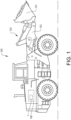
- Fig. 1 is an illustration of a working machine 100 in the form of a wheel loader.
- the wheel loader is an example of a working machine in which a power system including a power converter assembly according to the invention can be applied.
- the wheel loader has a bucket 101 which is arranged on a load arm 102 for lifting and lowering the bucket 101.
- the wheel loader comprises a hydraulic system 103 for lifting, lowering and tilting the bucket 101, which hydraulic system 103 includes a hydraulic pump 104 driven by an electric machine 105 (not shown in fig. 1 ), i.e. an electric motor.
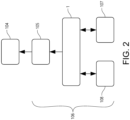
- the electric motor 105 is powered by a power system 106, illustrated schematically in fig. 2 .
- the power system 106 has an AC power source 107 in the form of a generator connected to an engine (not shown), a DC power source 108 in the form of a battery pack, and a power converter assembly 1 connected to the generator and the battery pack.
- the power converter assembly 1 is further connected to the electric motor 105, driving the hydraulic pump 104.
- either the generator 107 or the battery pack 108, or both provide(s) input power to the power converter assembly 1, which converts the input power into output power of a required voltage level and/or frequency needed to drive the electric motor 105.
- the shown power system 106 is greatly simplified to illustrate the working principle, and may in reality include many more components and more complex connections between the various components.
- other types of AC and DC power sources may be used, such as a supercapacitor, and the electric motor 105 may be configured to drive other devices than a hydraulic pump, or it may be configured to propel, or assist in propelling of, the working machine.
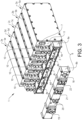
- a power converter assembly 1 according to an embodiment of the invention is shown in greater detail in fig. 3 .
- the power converter assembly 1 includes five power converter units 2a-2e, a busbar 3 and connecting elements 4a-4e connecting the power converter units 2a-2e to the busbar 3 for conducting electric current between the power converter units 2a-2e and the busbar 3.
- the power converter assembly 1 further includes five converter housings 5a-5e, each converter housing enclosing a respective one of the power converter units 2a-2e, and a busbar housing 6 enclosing the busbar 3.
- the busbar housing 6 is herein formed from two parts 6a, 6b, which are joined together by fasteners such as screws.
- the two parts 6a, 6b are made of metal material, such that EMI shielding as well as protection against e.g. liquids and other pollutants is provided.
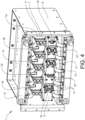
- the converter housings 5a-5e and the busbar housing 6 may be received in a casing 8, comprising racks 9 for holding the converter housings 5a-5e.
- the power converter assembly 1 is further connected to a cooling system 15 for circulation of coolant through the power converter units 2a-2e via cooling connections 10.
- the converter housings 5a-5e and the connecting elements 4a-4e are identical, and only one of the converter housings 5a and a set of connecting elements 4a will therefore be described in detail.
- the converter housing 5a has a basic shape of a rectangular cuboid having an upper side 11 via which the power converter unit 2a may be connected to the busbar 3.
- the converter housing 5a is formed from solid metal wall elements which have been joined together using fasteners, such as screws.
- the solid metal wall elements provide EMI shielding as well as protection against e.g. liquids and pollutants.
- a galvanic connection between the converter housing 5a and the busbar housing 6 is provided by means of a metallic connection member 16 provided between the upper side 11 of the converter housing 5a and a lower side 12 of the busbar housing 6, the connection member 16 being in metal-to-metal contact with surfaces of the respective housings 5a, 6. Screws 17 are provided for joining the housings 5a, 6 and the connection member 16.
- the busbar 3 has a negative power rail 3' and a positive power rail 3" which are together enclosed in the busbar housing 6.
- the power converter unit 2a has a negative DC- connection 13 and a positive DC+ connection 14, wherein a first connecting element 4a' is used to connect the DC- connection 13 to the negative power rail 3' and wherein a second connecting element 4a" is used to connect the DC+ connection to the positive power rail 3".
- the connecting elements 4a', 4a" are in the form of metal rods.
- a small air gap is provided between on one hand each of the connecting elements 4a', 4a" and on the other hand the housings 5a, 6 and the connection member 16, providing galvanic isolation.
- the connection member 16, apart from providing a galvanic connection between the housings 5a, 6, serves to shield the connecting elements 4a', 4a” and thereby improve the electromagnetic compatibility (EMC) of the power converter assembly 1.
- EMC electromagnetic compatibility
- the power converter unit 2a further comprises an electrical input and output terminal 7 for connecting the power converter unit to e.g. a power source or an electric machine, such as a three-phase electric motor.
- a power source or an electric machine such as a three-phase electric motor.
- five three-phase electric motors may be connected to a respective one of the power converter units 2a-2e.
- a connection may further be provided for transmitting and/or receiving control signals.
- a filtered signal connection 18 for providing an interlock loop may be provided inside the busbar housing 6. Furthermore, in the shown embodiment, a shielded connection 19 is provided for connecting the busbar 3 to a DC power source such as a battery. Shielded connections 20, 21, 22, such as 600 V connections, are also provided for connection of e.g. auxiliary loads to the busbar 3.
- the power converter unis 2a-2e are only schematically shown in the drawings, but it is to be understood that these may or may not be identical, and that they include various electronic components such as one or more transistors, e.g. insulated-gate bipolar transistors (IGBTs), thyristors, power diodes, and/or metal oxide semiconductor field effect transistors (MOSFETs), and one or more capacitors.
- IGBTs insulated-gate bipolar transistors
- MOSFETs metal oxide semiconductor field effect transistors
Landscapes
- Engineering & Computer Science (AREA)
- Microelectronics & Electronic Packaging (AREA)
- Mechanical Engineering (AREA)
- Power Engineering (AREA)
- Electric Propulsion And Braking For Vehicles (AREA)
- Inverter Devices (AREA)
Description
- The invention relates to a power converter assembly and a power system comprising a power converter assembly. The invention also relates to a working machine and to a vehicle.
- The power converter assembly and power system according to the invention are particularly applicable on working machines within the fields of industrial construction machines or construction equipment. Although the invention will be described with respect to a wheel loader, the invention is not restricted to this particular working machine, but may also be used in other working machines such as articulated haulers, excavators and backhoe loaders, but also in vehicles such as buses and trucks.
- Electric power systems are extensively used in working machines and vehicles, providing power for driving traction motors for propulsion or for carrying out various operations. Such electric power systems may be pure electric drive system, including power sources in the form of e.g. batteries or fuel cells, or form part of a hybrid drive system, including a generator coupled to a combustion engine. In both cases, the electric power system needs to include a plurality of power converter units for converting power, e.g. for converting alternating current (AC) power input from a generator into direct current (DC) power, which is stored in a capacitor bank and filtered, and thereafter converted back into AC power output of desired frequency and voltage for driving a traction motor.
- When integrating power converter units in electric power systems of working machines or vehicles, several aspects must be taken into account. For example, the available space is usually limited, and the environmental conditions may be challenging, with the components of the power system being subjected to e.g. moisture, dirt and chemicals. Furthermore, in particular in compact systems, problems originating from electromagnetic interference (EMI) may arise and degrade the performance of the electric power system itself or of nearby electronic systems.
-
US 2018/0166995 discloses an inverter assembly for an electric power system. The inverter assembly comprises a plurality of stackable housings in which inverter units are received to achieve a compact inverter assembly. The inverter units are interconnected by means of a busbar, providing low impedance and reducing power losses in the inverter assembly. - Power converter units are herein understood to include devices for converting direct current (DC) to alternating current (AC), such as inverters, devices for converting AC to DC, such as rectifiers, devices for DC to DC conversion, and devices for AC to AC conversion, such as transformers. Examples of such devices used in working machines and vehicles are e.g. traction inverters, static converters, auxiliary converters, energy storage converters, generator converters, and static inverters.
- The term electromagnetic interference (EMI) is herein understood to refer to electromagnetic emission and radiation including both electromagnetic interference (EMI) and radio-frequency interference (RFI). Both of these types of interference generate electromagnetic fields that can interfere with the operation of adjacent electrical equipment.
- By galvanically connecting two or more parts is herein intended connecting said parts such that an electric current may flow between the connected parts, i.e. by means of a physical contact such as a metal to metal contact. Likewise, by galvanically connected is intended connected such that an electric current may flow between the connected parts.
- A busbar is herein understood to be a rigid conductor, such as a metallic strip, plate or bar.
- A primary object of the invention is to provide a power converter assembly and a power system which are in at least some aspects improved with respect to previous solutions. In particular, it is an object to achieve a relatively compact power converter assembly for integration into an electric power system of a working machine or a vehicle, for which power converter assembly electromagnetic compatibility (EMC) is assured and by means of which problems arising as a result of e.g. electromagnetic interference (EMI) can consequently be minimized. It is also an object to achieve a power converter assembly having a low DC link inductance. Another object is to achieve a power converter assembly in which included components are efficiently protected from mechanical damage as well as from moisture, chemicals and dirt, and which is thereby well-suited for use in e.g. a working machine or a vehicle.
- According to a first aspect of the invention, at least the primary object is achieved by a power converter assembly according to
claim 1. The power converter assembly comprises: - at least two power converter units;
- a busbar;
- at least two connecting elements, each connecting element galvanically connecting one of said power converter units to the busbar, thereby interconnecting the at least two power converter units; and
- at least one converter housing, wherein the at least one converter housing encloses and electromagnetically shields at least one of said power converter units.
- The power converter assembly is characterized in that it further comprises a busbar housing in which the busbar is contained and electromagnetically shielded, wherein the at least two connecting elements are galvanically isolated from the busbar housing and from the at least one converter housing.
- By providing separate housings for the busbar and the power converter units, a compact power converter assembly which complies with EMC requirements and which efficiently protects the power converter units and the busbar from EMI as well as from dirt, moisture and other pollutants may be achieved. The use of a busbar instead of e.g. cables or wires provides low impedance and also reduces DC link inductance in the power converter assembly.
- In the proposed power converter assembly, the power converter unit and the busbar are shielded, i.e. electromagnetically shielded to avoid electromagnetic interference (EMI), by means of the respective housings, i.e. the at least one converter housing electromagnetically shields the power converter units and the busbar housing electromagnetically shields the busbar. Thus, the respective housings should be configured such as to provide an efficient barrier to EMI at relevant frequencies. The housings may e.g. be made of aluminium, steel or other metal material, or may be of plastic material coated with a conducting material or of a conducting plastic material. The converter housings may be stackable to facilitate the building of a compact power converter assembly.
- The connecting elements reaches through the busbar housing and the converter housings such as to connect the power converter units to the busbar, but are galvanically isolated from the housings. A current may thereby flow between the power converter units via the busbar, but a current may never flow between the power converter units or the busbar on one hand and the busbar housing or the converter housings on the other hand. Preferably, for each power converter unit, two connecting elements are provided for connecting each of a DC+ and a DC- connection of the power converter unit to a positive and a negative power rail of the busbar, respectively.
- Apertures in the respective housings, through which the connecting elements extend, are dimensioned such that escape or entrance of undesirable frequencies of electromagnetic radiation is prevented, thereby avoiding interference with the operation of electronic equipment adjacent to the power converter assembly. Generally, to prevent higher frequency components of electromagnetic waves emanating from electromagnetic fields generated by the power converter units from escaping on entering, relatively small aperture sizes are needed. The escape of such high frequency components may interfere with the operation of electronic equipment adjacent to the power converter assembly. It is well-known in the field how to appropriately size and shape apertures so as to prevent escape or entrance of undesirable EMI components.
- The busbar is configured to be connected to the power converter units via the connecting elements to establish a low inductive electrical connection between the plurality of power converter units. The busbar may comprise a positive power rail and a negative power rail between which a capacitive layer may be provided. The busbar may e.g. be a copper busbar, but may also be made of e.g. aluminium or other conducting material.
- The power converter units may for example be stand-alone off the shelf power converter units which may function as inverters, rectifiers or transformers. The same power converter unit may be used for different purposes depending on the circumstances. The power converter units may be identical units, but they may also have different configurations. The at least two power converter units may comprise at least two power converter units configured to function as inverters, and/or at least two power converter units configured to function as rectifiers. The power converter assembly may comprise more than two converter units, such as three, four, five or more power converter units.
- According to one embodiment, the busbar housing is galvanically connected to said at least one converter housing. By galvanically connecting the busbar housing to the converter housing(s), it is possible to achieve improved EMC since the housings may thereby together function as a Faraday's cage shielding the power converter units and the busbar from the surroundings. The busbar housing and the converter housings, being galvanically connected, together forms a shield preventing electromagnetic interference.
- According to one embodiment, the busbar housing is galvanically connected to said at least one converter housing by means of at least one metal-to-metal contact. A galvanic connection and an efficient shielding may thereby be ensured. The metal-to-metal contact is preferably provided between mutually facing surfaces of the converter housing(s) and the busbar housing, respectively. For example, an upper surface of the converter housing(s) may be in contact with a lower surface of the busbar housing. Alternatively, metallic connection members may be provided, which are in contact with both of the busbar housing and the converter housings. Such metallic connection members should preferably be configured to shield the connecting elements (connecting the busbar and the power converter units) by extending around the connecting elements.
- According to one embodiment, each of the at least two connecting elements is galvanically isolated from the busbar housing and the at least one converter housing by means of an air gap provided between each of the connecting elements and the respective housing. The air gap may be of a size order of several millimetres depending on voltage level, wherein a higher voltage level requires a larger air gap. It provides an efficient galvanic isolation between the connecting elements on one hand and the housings on the other hand. The air gap should be sufficiently small so that the electromagnetic shielding properties of the housings are not compromised. The connecting elements are in this case preferably in the form of solid connection rods, such that the air gap is ensured also when the power converter assembly is subjected to vibrations. Instead of an air gap, electrically insulating material may be provided between the connecting elements and the housings.
- According to one embodiment, the busbar housing comprises impermeable outer walls, i.e. walls that are impermeable to liquid, gas, dust, etc. Also the at least one converter housing may comprise impermeable outer walls. The impermeable outer walls form an efficient shield protecting the busbar and/or the converter units from e.g. dust, dirt, moisture, and chemicals. This is particularly beneficial in e.g. vehicles or working machines, in which the power converter assembly is more exposed to various pollutions than in a more protected environment, such as in a server hall. The housings may of course be provided in e.g. two or more parts, which are mounted together to form impermeable outer walls.
- According to one embodiment, the power converter assembly comprises at least one electrical input and/or output terminal located outside of the busbar housing. The at least one electrical input and/or output terminal may comprise at least one connection for transmitting and/or receiving control signals. This enables power input/output directly to/from the individual power converter units.
- According to one embodiment, at least one of the at least one electrical input and/or output terminal is configured to be connected to a power source, and/or at least one of the at least one electrical input and/or output terminal is configured to be connected to an electric machine. For example, each power converter unit may be provided with electrical input and output terminals for external connection to electric motors.
- According to one embodiment, the connecting elements are solid connection rods, such as copper rods or other metallic rods. Using solid connection rods, it is possible to achieve a more well-defined inductance than using e.g. cables or wires.
- The connecting elements may also be in the form of busbars comprising a positive and a negative power rail separated by an insulating layer, similarly to the above described busbar. In this case, it is sufficient to provide one connecting element per power converter unit, while as if solid connection rods are used, two connecting elements per power converter unit are needed (positive and negative, respectively).
- According to one embodiment, the power converter assembly comprises at least two of said converter housings, wherein each one of said power converter units is enclosed and shielded in a respective one of said converter housings. Efficient shielding is thereby provided so that problems with electromagnetic interference between the power converter units may be minimized. Furthermore, by providing separate converter housings, one per power converter unit, a modular system may be provided, facilitating scaling of the power converter assembly.
- According to one embodiment, said at least one converter housing comprises at least two compartments, each compartment enclosing and shielding one of said power converter units. For example, the converter housing may comprise five compartments, wherein one of said power converter units is provided in each compartment. A compact power converter assembly may thereby be provided. The compartments may be designed such that efficient electromagnetic shielding is achieved between the power converter units.
- According to one embodiment, the power converter assembly further comprises a casing in which the at least one converter housing is contained. The power converter assembly is thereby easy to handle, and the casing also provides mechanical protection as well as further protection against various pollutions. The casing may be configured as a rack in which the converter housing(s) may be easily inserted and stacked.
- According to a second aspect of the invention, at least the primary object is also achieved by a power system comprising at least one power source and the above described proposed power converter assembly connected to the at least one power source. The power source may be an AC power source, such as a generator connected to e.g. an internal combustion engine or similar, or a DC power source, including e.g. batteries, supercapacitors, and/or fuel cells. The power system may preferably comprise more than one power source connected to the power converter assembly, e.g. a generator and a battery pack. Various different electric systems and devices, such as an electric traction motor, a lighting system, an audio system, a hydraulic pump, or other auxiliary systems, may be connected to the power system and receive AC or DC power output therefrom.
- The proposed power system may e.g. be an electric drive system for driving an electric motor, such as for driving a hydraulic pump, for propelling a machine, for driving a fan, or similar. The proposed power system may be a pure electric drive system, comprising only one or more electric power sources, or a hybrid drive system, comprising apart from at least one electric power source also an internal combustion engine and a generator.
- The invention also relates to a working machine comprising the proposed power converter assembly and to a vehicle comprising the proposed power converter assembly. The working machine or vehicle may e.g. comprise a pure electric drive system or a hybrid drive system including the proposed power converter assembly.
- Advantages and advantageous embodiments of such a working machine and vehicle appear from the above description of the power converter assembly.
- Further advantages and advantageous features of the invention are disclosed in the following description and in the dependent claims.
- With reference to the appended drawings, below follows a more detailed description of embodiments of the invention cited as examples.
- In the drawings:
- Fig. 1
- schematically shows a working machine according to an embodiment of the invention,
- Fig. 2
- schematically shows a power system according to an embodiment of the invention,
- Fig. 3
- is a perspective view of a power converter assembly according to an embodiment of the invention,
- Fig. 4
- is a perspective view of a power converter assembly according to an embodiment,
- Fig. 5
- is a sectional view of the power converter assembly in
fig. 3 , and - Fig. 6
- is another sectional view of the power converter in
fig. 3 . - The drawings are schematic and are not necessarily drawn to scale.
-
Fig. 1 . is an illustration of a workingmachine 100 in the form of a wheel loader. The wheel loader is an example of a working machine in which a power system including a power converter assembly according to the invention can be applied. The wheel loader has abucket 101 which is arranged on aload arm 102 for lifting and lowering thebucket 101. The wheel loader comprises ahydraulic system 103 for lifting, lowering and tilting thebucket 101, whichhydraulic system 103 includes ahydraulic pump 104 driven by an electric machine 105 (not shown infig. 1 ), i.e. an electric motor. Theelectric motor 105 is powered by apower system 106, illustrated schematically infig. 2 . - The
power system 106 has anAC power source 107 in the form of a generator connected to an engine (not shown), aDC power source 108 in the form of a battery pack, and apower converter assembly 1 connected to the generator and the battery pack. Thepower converter assembly 1 is further connected to theelectric motor 105, driving thehydraulic pump 104. During operation of the workingmachine 100, either thegenerator 107 or thebattery pack 108, or both, provide(s) input power to thepower converter assembly 1, which converts the input power into output power of a required voltage level and/or frequency needed to drive theelectric motor 105. Of course, the shownpower system 106 is greatly simplified to illustrate the working principle, and may in reality include many more components and more complex connections between the various components. Moreover, other types of AC and DC power sources may be used, such as a supercapacitor, and theelectric motor 105 may be configured to drive other devices than a hydraulic pump, or it may be configured to propel, or assist in propelling of, the working machine. - A
power converter assembly 1 according to an embodiment of the invention is shown in greater detail infig. 3 . Thepower converter assembly 1 includes fivepower converter units 2a-2e, abusbar 3 and connectingelements 4a-4e connecting thepower converter units 2a-2e to thebusbar 3 for conducting electric current between thepower converter units 2a-2e and thebusbar 3. Thepower converter assembly 1 further includes fiveconverter housings 5a-5e, each converter housing enclosing a respective one of thepower converter units 2a-2e, and abusbar housing 6 enclosing thebusbar 3. Thebusbar housing 6 is herein formed from twoparts parts - As shown in
fig. 4 , theconverter housings 5a-5e and thebusbar housing 6 may be received in acasing 8, comprisingracks 9 for holding theconverter housings 5a-5e. Thepower converter assembly 1 is further connected to acooling system 15 for circulation of coolant through thepower converter units 2a-2e via coolingconnections 10. - In the shown embodiments, the
converter housings 5a-5e and the connectingelements 4a-4e are identical, and only one of theconverter housings 5a and a set of connectingelements 4a will therefore be described in detail. Reference is also made tofigs. 5 and6 , in which thepower converter assembly 1 is shown in schematic sectional views. - The
converter housing 5a has a basic shape of a rectangular cuboid having anupper side 11 via which thepower converter unit 2a may be connected to thebusbar 3. In the shown embodiments, theconverter housing 5a is formed from solid metal wall elements which have been joined together using fasteners, such as screws. The solid metal wall elements provide EMI shielding as well as protection against e.g. liquids and pollutants. - A galvanic connection between the
converter housing 5a and thebusbar housing 6 is provided by means of ametallic connection member 16 provided between theupper side 11 of theconverter housing 5a and alower side 12 of thebusbar housing 6, theconnection member 16 being in metal-to-metal contact with surfaces of therespective housings Screws 17 are provided for joining thehousings connection member 16. - The
busbar 3 has anegative power rail 3' and apositive power rail 3" which are together enclosed in thebusbar housing 6. As can be seen infig 6 , thepower converter unit 2a has a negative DC-connection 13 and apositive DC+ connection 14, wherein a first connectingelement 4a' is used to connect the DC-connection 13 to thenegative power rail 3' and wherein a second connectingelement 4a" is used to connect the DC+ connection to thepositive power rail 3". The connectingelements 4a', 4a" are in the form of metal rods. A small air gap is provided between on one hand each of the connectingelements 4a', 4a" and on the other hand thehousings connection member 16, providing galvanic isolation. Theconnection member 16, apart from providing a galvanic connection between thehousings elements 4a', 4a" and thereby improve the electromagnetic compatibility (EMC) of thepower converter assembly 1. - The
power converter unit 2a further comprises an electrical input andoutput terminal 7 for connecting the power converter unit to e.g. a power source or an electric machine, such as a three-phase electric motor. Thus, in the shown embodiment, five three-phase electric motors may be connected to a respective one of thepower converter units 2a-2e. A connection may further be provided for transmitting and/or receiving control signals. - A filtered
signal connection 18 for providing an interlock loop may be provided inside thebusbar housing 6. Furthermore, in the shown embodiment, a shieldedconnection 19 is provided for connecting thebusbar 3 to a DC power source such as a battery. Shieldedconnections busbar 3. - The
power converter unis 2a-2e are only schematically shown in the drawings, but it is to be understood that these may or may not be identical, and that they include various electronic components such as one or more transistors, e.g. insulated-gate bipolar transistors (IGBTs), thyristors, power diodes, and/or metal oxide semiconductor field effect transistors (MOSFETs), and one or more capacitors. - It is to be understood that the present invention is not limited to the embodiments described above and illustrated in the drawings; rather, the skilled person will recognize that many changes and modifications may be made within the scope of the appended claims.
Claims (15)
- A power converter assembly (1) comprising:- at least two power converter units (2a-e);- a busbar (3);- at least two connecting elements (4a-e), each connecting element (4a-e) galvanically connecting one of said power converter units (2a-e) to the busbar (3), thereby interconnecting the at least two power converter units (2a-e); and- at least one converter housing (5a-e), wherein the at least one converter housing (5a-e) encloses and electromagnetically shields at least one of said power converter units (2a-e);characterized in that
the power converter assembly (1) further comprises a busbar housing (6) in which the busbar (3) is contained and electromagnetically shielded, wherein the at least two connecting elements (4a-e) are galvanically isolated from the busbar housing (6) and from the at least one converter housing (5a-e). - The power converter assembly according to claim 1, wherein the busbar housing (6) is galvanically connected to said at least one converter housing (5a-e).
- The power converter assembly according to claim 2, wherein the busbar housing (6) is galvanically connected to said at least one converter housing (5a-e) by means of at least one metal-to-metal contact.
- The power converter assembly according to any one of the preceding claims, wherein each of the at least two connecting elements (4a-e) is galvanically isolated from the busbar housing (6) and the at least one converter housing (5a-e) by means of an air gap provided between each of the connecting elements (4a-e) and the respective housing (5a-e, 6).
- The power converter assembly according to any one of the preceding claims, wherein the busbar housing (6) and/or the at least one converter housing (5a-e) comprises impermeable outer walls.
- The power converter assembly according to any one of the preceding claims, wherein the power converter assembly (1) comprises at least one electrical input and/or output terminal (7) located outside of the busbar housing (6).
- The power converter assembly according to claim 6, wherein at least one of the at least one electrical input and/or output terminal (7) is configured to be connected to a power source (107, 108), and/or wherein at least one of the at least one electrical input and/or output terminal (7) is configured to be connected to an electric machine (105).
- The power converter assembly according to any one of the preceding claims, wherein the connecting elements (4a-e) are solid connection rods.
- The power converter assembly according to any one of the preceding claims, comprising at least two of said converter housings (5a-e), wherein each one of said power converter units (2a-e) is enclosed and electromagnetically shielded in a respective one of said converter housings (5a-e).
- The power converter assembly according to any one of claims 1-8, wherein said at least one converter housing comprises at least two compartments, each compartment enclosing and electromagnetically shielding one of said power converter units.
- The power converter assembly according to any one of the preceding claims, further comprising a casing (8) in which the at least one converter housing (5a-e) is contained.
- A power system (106) comprising at least one power source (107, 108) and a power converter assembly (1) according to any one of the preceding claims connected to the at least one power source (107, 108).
- The power system according to claim 12, wherein the power system (106) is an electric drive system for driving an electric motor (105).
- A working machine (100) comprising a power converter assembly (1) according to any one of claims 1-11.
- A vehicle comprising a power converter assembly according to any one of claims 1-11.
Applications Claiming Priority (1)
| Application Number | Priority Date | Filing Date | Title |
|---|---|---|---|
| PCT/EP2019/066626 WO2020259792A1 (en) | 2019-06-24 | 2019-06-24 | A power converter assembly and a power system |
Publications (2)
| Publication Number | Publication Date |
|---|---|
| EP3987892A1 EP3987892A1 (en) | 2022-04-27 |
| EP3987892B1 true EP3987892B1 (en) | 2025-04-02 |
Family
ID=67060407
Family Applications (1)
| Application Number | Title | Priority Date | Filing Date |
|---|---|---|---|
| EP19733467.5A Active EP3987892B1 (en) | 2019-06-24 | 2019-06-24 | A power converter assembly and a power system |
Country Status (4)
| Country | Link |
|---|---|
| US (1) | US12003184B2 (en) |
| EP (1) | EP3987892B1 (en) |
| CN (1) | CN114073173B (en) |
| WO (1) | WO2020259792A1 (en) |
Families Citing this family (2)
| Publication number | Priority date | Publication date | Assignee | Title |
|---|---|---|---|---|
| US12455605B2 (en) * | 2023-04-25 | 2025-10-28 | Dell Products L.P. | Server information handling system with power interface component |
| LU504170B1 (en) * | 2023-05-09 | 2024-11-11 | Phoenix Contact Gmbh & Co | One-sided accessible electrical module and cabinet |
Family Cites Families (28)
| Publication number | Priority date | Publication date | Assignee | Title |
|---|---|---|---|---|
| US6404297B2 (en) | 1999-07-15 | 2002-06-11 | Hewlett-Packard Company | Electromagnetic interference blocking power bus bar |
| US6627812B2 (en) * | 2001-08-24 | 2003-09-30 | Sun Microsystems, Inc. | Apparatus for containing electro-magnetic interference |
| US7061775B2 (en) * | 2002-01-16 | 2006-06-13 | Rockwell Automation Technologies, Inc. | Power converter having improved EMI shielding |
| US7057311B1 (en) * | 2003-03-21 | 2006-06-06 | Eaton Corporation | Isolation contactor assembly having independently controllable contactors |
| EP1973222A1 (en) | 2007-03-20 | 2008-09-24 | ALSTOM Technology Ltd | Electrical machine with a matrix converter |
| CN201821282U (en) | 2010-09-08 | 2011-05-04 | 常州佳讯光电产业发展有限公司 | Photovoltaic inverter installation structure |
| US8528675B2 (en) * | 2011-03-02 | 2013-09-10 | Deere & Company | Electrical cabinet |
| JP5651552B2 (en) * | 2011-07-22 | 2015-01-14 | 日立オートモティブシステムズ株式会社 | Power converter |
| JP5344012B2 (en) * | 2011-09-02 | 2013-11-20 | 株式会社デンソー | Power converter |
| JP5851372B2 (en) * | 2012-09-28 | 2016-02-03 | 日立オートモティブシステムズ株式会社 | Power converter |
| US9666968B2 (en) * | 2013-01-17 | 2017-05-30 | Lear Corporation | Electrical busbar, electrical connector assembly and power converter |
| KR101337542B1 (en) * | 2013-09-13 | 2013-12-06 | 국방과학연구소 | Electric propulsion system of electric vehicle |
| JP6129326B2 (en) | 2013-09-18 | 2017-05-17 | 日立オートモティブシステムズ株式会社 | Power converter |
| CN103872972A (en) | 2013-11-29 | 2014-06-18 | 东风汽车电子有限公司 | Motor controller |
| US20150173238A1 (en) * | 2013-12-18 | 2015-06-18 | Caterpillar Inc. | Configurable power converter package |
| JP6208326B2 (en) * | 2014-03-10 | 2017-10-04 | 株式会社日立製作所 | Power conversion unit, power conversion device, and power conversion method |
| WO2015145679A1 (en) * | 2014-03-27 | 2015-10-01 | 株式会社日立製作所 | Power conversion unit, power conversion apparatus, and power conversion apparatus manufacturing method |
| JP6198941B2 (en) * | 2014-05-07 | 2017-09-20 | 株式会社日立製作所 | Power converter |
| DE102014214021B4 (en) | 2014-07-18 | 2017-01-05 | Conti Temic Microelectronic Gmbh | Filter arrangement for filtering parasitic induction currents, voltage transformers with a filter arrangement |
| JP6646739B2 (en) * | 2016-04-27 | 2020-02-14 | マレリ株式会社 | Power converter |
| DE102016214878A1 (en) | 2016-08-10 | 2018-02-15 | Siemens Aktiengesellschaft | power converters |
| US10349549B2 (en) | 2016-10-25 | 2019-07-09 | General Electric Company | Electrically shielded direct current link busbar |
| US10291145B2 (en) | 2016-12-14 | 2019-05-14 | Caterpillar Inc. | Inverter assembly for electric power system |
| CN106601361A (en) | 2017-01-24 | 2017-04-26 | 苏州科伦特电源科技有限公司 | Laminated bus bar with electromagnetic shielding function and manufacturing process thereof |
| JP6719021B2 (en) * | 2017-03-30 | 2020-07-08 | 日立オートモティブシステムズ株式会社 | Power converter |
| CN207321126U (en) | 2017-11-03 | 2018-05-04 | 苏州共元自控技术有限公司 | A kind of high-power low-voltage, high-current output DC power supply based on carborundum |
| DE102018104914A1 (en) * | 2018-03-05 | 2019-09-05 | Dr. Ing. H.C. F. Porsche Aktiengesellschaft | Integrated power box |
| JP6977743B2 (en) * | 2019-04-26 | 2021-12-08 | 株式会社デンソー | Power converter |
-
2019
- 2019-06-24 US US17/621,637 patent/US12003184B2/en active Active
- 2019-06-24 EP EP19733467.5A patent/EP3987892B1/en active Active
- 2019-06-24 WO PCT/EP2019/066626 patent/WO2020259792A1/en not_active Ceased
- 2019-06-24 CN CN201980097760.XA patent/CN114073173B/en active Active
Also Published As
| Publication number | Publication date |
|---|---|
| US12003184B2 (en) | 2024-06-04 |
| EP3987892A1 (en) | 2022-04-27 |
| CN114073173B (en) | 2024-05-03 |
| WO2020259792A1 (en) | 2020-12-30 |
| CN114073173A (en) | 2022-02-18 |
| US20220360188A1 (en) | 2022-11-10 |
Similar Documents
| Publication | Publication Date | Title |
|---|---|---|
| CN103299532B (en) | Power inverter | |
| US9425707B2 (en) | Inverter device capable of appropriately fixing a power module having a switching element and a smoothing capacitor in a limited region | |
| US9859810B2 (en) | Power converter | |
| EP2787800B1 (en) | Power conversion device | |
| EP2624432A1 (en) | Electric power conversion device | |
| US8040088B2 (en) | Power inverter | |
| JP5851372B2 (en) | Power converter | |
| CN102332831B (en) | Power semiconductor device and power conversion device | |
| US9948210B2 (en) | Electric power conversion device | |
| EP2660966A1 (en) | Power conversion apparatus for vehicle | |
| JP6646739B2 (en) | Power converter | |
| US20180166995A1 (en) | Inverter assembly for electric power system | |
| EP3987892B1 (en) | A power converter assembly and a power system | |
| JP2011234488A (en) | Power conversion device | |
| JP5964715B2 (en) | Electrical equipment case and power control unit | |
| WO2013141577A1 (en) | Propulsion control apparatus for electric vehicle | |
| US12614989B2 (en) | Power converter | |
| US20240421507A1 (en) | Terminal structure of electric apparatus | |
| JP7484601B2 (en) | Power Conversion Equipment | |
| JP7746910B2 (en) | Electrical Equipment | |
| EP4665103A1 (en) | Systems for housing pockets for inverter for electric vehicle | |
| JP2025152452A (en) | Vehicle powertrain structure | |
| CN121713367A (en) | Power conversion device | |
| JP2024152456A (en) | Electrical Equipment |
Legal Events
| Date | Code | Title | Description |
|---|---|---|---|
| STAA | Information on the status of an ep patent application or granted ep patent |
Free format text: STATUS: UNKNOWN |
|
| STAA | Information on the status of an ep patent application or granted ep patent |
Free format text: STATUS: THE INTERNATIONAL PUBLICATION HAS BEEN MADE |
|
| PUAI | Public reference made under article 153(3) epc to a published international application that has entered the european phase |
Free format text: ORIGINAL CODE: 0009012 |
|
| STAA | Information on the status of an ep patent application or granted ep patent |
Free format text: STATUS: REQUEST FOR EXAMINATION WAS MADE |
|
| 17P | Request for examination filed |
Effective date: 20220120 |
|
| AK | Designated contracting states |
Kind code of ref document: A1 Designated state(s): AL AT BE BG CH CY CZ DE DK EE ES FI FR GB GR HR HU IE IS IT LI LT LU LV MC MK MT NL NO PL PT RO RS SE SI SK SM TR |
|
| DAV | Request for validation of the european patent (deleted) | ||
| DAX | Request for extension of the european patent (deleted) | ||
| GRAP | Despatch of communication of intention to grant a patent |
Free format text: ORIGINAL CODE: EPIDOSNIGR1 |
|
| STAA | Information on the status of an ep patent application or granted ep patent |
Free format text: STATUS: GRANT OF PATENT IS INTENDED |
|
| INTG | Intention to grant announced |
Effective date: 20241025 |
|
| GRAS | Grant fee paid |
Free format text: ORIGINAL CODE: EPIDOSNIGR3 |
|
| GRAA | (expected) grant |
Free format text: ORIGINAL CODE: 0009210 |
|
| STAA | Information on the status of an ep patent application or granted ep patent |
Free format text: STATUS: THE PATENT HAS BEEN GRANTED |
|
| AK | Designated contracting states |
Kind code of ref document: B1 Designated state(s): AL AT BE BG CH CY CZ DE DK EE ES FI FR GB GR HR HU IE IS IT LI LT LU LV MC MK MT NL NO PL PT RO RS SE SI SK SM TR |
|
| REG | Reference to a national code |
Ref country code: GB Ref legal event code: FG4D |
|
| REG | Reference to a national code |
Ref country code: CH Ref legal event code: EP |
|
| REG | Reference to a national code |
Ref country code: DE Ref legal event code: R096 Ref document number: 602019068073 Country of ref document: DE |
|
| REG | Reference to a national code |
Ref country code: IE Ref legal event code: FG4D |
|
| PGFP | Annual fee paid to national office [announced via postgrant information from national office to epo] |
Ref country code: DE Payment date: 20250618 Year of fee payment: 7 |
|
| REG | Reference to a national code |
Ref country code: NL Ref legal event code: MP Effective date: 20250402 |
|
| PG25 | Lapsed in a contracting state [announced via postgrant information from national office to epo] |
Ref country code: NL Free format text: LAPSE BECAUSE OF FAILURE TO SUBMIT A TRANSLATION OF THE DESCRIPTION OR TO PAY THE FEE WITHIN THE PRESCRIBED TIME-LIMIT Effective date: 20250402 |
|
| REG | Reference to a national code |
Ref country code: AT Ref legal event code: MK05 Ref document number: 1782591 Country of ref document: AT Kind code of ref document: T Effective date: 20250402 |
|
| PG25 | Lapsed in a contracting state [announced via postgrant information from national office to epo] |
Ref country code: PT Free format text: LAPSE BECAUSE OF FAILURE TO SUBMIT A TRANSLATION OF THE DESCRIPTION OR TO PAY THE FEE WITHIN THE PRESCRIBED TIME-LIMIT Effective date: 20250804 Ref country code: ES Free format text: LAPSE BECAUSE OF FAILURE TO SUBMIT A TRANSLATION OF THE DESCRIPTION OR TO PAY THE FEE WITHIN THE PRESCRIBED TIME-LIMIT Effective date: 20250402 Ref country code: FI Free format text: LAPSE BECAUSE OF FAILURE TO SUBMIT A TRANSLATION OF THE DESCRIPTION OR TO PAY THE FEE WITHIN THE PRESCRIBED TIME-LIMIT Effective date: 20250402 |
|
| REG | Reference to a national code |
Ref country code: LT Ref legal event code: MG9D |
|
| PG25 | Lapsed in a contracting state [announced via postgrant information from national office to epo] |
Ref country code: GR Free format text: LAPSE BECAUSE OF FAILURE TO SUBMIT A TRANSLATION OF THE DESCRIPTION OR TO PAY THE FEE WITHIN THE PRESCRIBED TIME-LIMIT Effective date: 20250703 Ref country code: NO Free format text: LAPSE BECAUSE OF FAILURE TO SUBMIT A TRANSLATION OF THE DESCRIPTION OR TO PAY THE FEE WITHIN THE PRESCRIBED TIME-LIMIT Effective date: 20250702 |
|
| PG25 | Lapsed in a contracting state [announced via postgrant information from national office to epo] |
Ref country code: PL Free format text: LAPSE BECAUSE OF FAILURE TO SUBMIT A TRANSLATION OF THE DESCRIPTION OR TO PAY THE FEE WITHIN THE PRESCRIBED TIME-LIMIT Effective date: 20250402 |
|
| PG25 | Lapsed in a contracting state [announced via postgrant information from national office to epo] |
Ref country code: BG Free format text: LAPSE BECAUSE OF FAILURE TO SUBMIT A TRANSLATION OF THE DESCRIPTION OR TO PAY THE FEE WITHIN THE PRESCRIBED TIME-LIMIT Effective date: 20250402 |
|
| PG25 | Lapsed in a contracting state [announced via postgrant information from national office to epo] |
Ref country code: HR Free format text: LAPSE BECAUSE OF FAILURE TO SUBMIT A TRANSLATION OF THE DESCRIPTION OR TO PAY THE FEE WITHIN THE PRESCRIBED TIME-LIMIT Effective date: 20250402 |
|
| PG25 | Lapsed in a contracting state [announced via postgrant information from national office to epo] |
Ref country code: AT Free format text: LAPSE BECAUSE OF FAILURE TO SUBMIT A TRANSLATION OF THE DESCRIPTION OR TO PAY THE FEE WITHIN THE PRESCRIBED TIME-LIMIT Effective date: 20250402 |
|
| PG25 | Lapsed in a contracting state [announced via postgrant information from national office to epo] |
Ref country code: RS Free format text: LAPSE BECAUSE OF FAILURE TO SUBMIT A TRANSLATION OF THE DESCRIPTION OR TO PAY THE FEE WITHIN THE PRESCRIBED TIME-LIMIT Effective date: 20250702 |
|
| PG25 | Lapsed in a contracting state [announced via postgrant information from national office to epo] |
Ref country code: IS Free format text: LAPSE BECAUSE OF FAILURE TO SUBMIT A TRANSLATION OF THE DESCRIPTION OR TO PAY THE FEE WITHIN THE PRESCRIBED TIME-LIMIT Effective date: 20250802 |
|
| PG25 | Lapsed in a contracting state [announced via postgrant information from national office to epo] |
Ref country code: LV Free format text: LAPSE BECAUSE OF FAILURE TO SUBMIT A TRANSLATION OF THE DESCRIPTION OR TO PAY THE FEE WITHIN THE PRESCRIBED TIME-LIMIT Effective date: 20250402 |
|
| REG | Reference to a national code |
Ref country code: DE Ref legal event code: R097 Ref document number: 602019068073 Country of ref document: DE |
|
| PG25 | Lapsed in a contracting state [announced via postgrant information from national office to epo] |
Ref country code: DK Free format text: LAPSE BECAUSE OF FAILURE TO SUBMIT A TRANSLATION OF THE DESCRIPTION OR TO PAY THE FEE WITHIN THE PRESCRIBED TIME-LIMIT Effective date: 20250402 Ref country code: SM Free format text: LAPSE BECAUSE OF FAILURE TO SUBMIT A TRANSLATION OF THE DESCRIPTION OR TO PAY THE FEE WITHIN THE PRESCRIBED TIME-LIMIT Effective date: 20250402 |
|
| PG25 | Lapsed in a contracting state [announced via postgrant information from national office to epo] |
Ref country code: CZ Free format text: LAPSE BECAUSE OF FAILURE TO SUBMIT A TRANSLATION OF THE DESCRIPTION OR TO PAY THE FEE WITHIN THE PRESCRIBED TIME-LIMIT Effective date: 20250402 |
|
| PG25 | Lapsed in a contracting state [announced via postgrant information from national office to epo] |
Ref country code: EE Free format text: LAPSE BECAUSE OF FAILURE TO SUBMIT A TRANSLATION OF THE DESCRIPTION OR TO PAY THE FEE WITHIN THE PRESCRIBED TIME-LIMIT Effective date: 20250402 |
|
| PG25 | Lapsed in a contracting state [announced via postgrant information from national office to epo] |
Ref country code: SK Free format text: LAPSE BECAUSE OF FAILURE TO SUBMIT A TRANSLATION OF THE DESCRIPTION OR TO PAY THE FEE WITHIN THE PRESCRIBED TIME-LIMIT Effective date: 20250402 Ref country code: RO Free format text: LAPSE BECAUSE OF FAILURE TO SUBMIT A TRANSLATION OF THE DESCRIPTION OR TO PAY THE FEE WITHIN THE PRESCRIBED TIME-LIMIT Effective date: 20250402 |
|
| REG | Reference to a national code |
Ref country code: CH Ref legal event code: H13 Free format text: ST27 STATUS EVENT CODE: U-0-0-H10-H13 (AS PROVIDED BY THE NATIONAL OFFICE) Effective date: 20260127 |
|
| PG25 | Lapsed in a contracting state [announced via postgrant information from national office to epo] |
Ref country code: IT Free format text: LAPSE BECAUSE OF FAILURE TO SUBMIT A TRANSLATION OF THE DESCRIPTION OR TO PAY THE FEE WITHIN THE PRESCRIBED TIME-LIMIT Effective date: 20250402 |
|
| PG25 | Lapsed in a contracting state [announced via postgrant information from national office to epo] |
Ref country code: MC Free format text: LAPSE BECAUSE OF FAILURE TO SUBMIT A TRANSLATION OF THE DESCRIPTION OR TO PAY THE FEE WITHIN THE PRESCRIBED TIME-LIMIT Effective date: 20250402 |
|
| PLBE | No opposition filed within time limit |
Free format text: ORIGINAL CODE: 0009261 |
|
| STAA | Information on the status of an ep patent application or granted ep patent |
Free format text: STATUS: NO OPPOSITION FILED WITHIN TIME LIMIT |
|
| REG | Reference to a national code |
Ref country code: CH Ref legal event code: L10 Free format text: ST27 STATUS EVENT CODE: U-0-0-L10-L00 (AS PROVIDED BY THE NATIONAL OFFICE) Effective date: 20260211 |
|
| PG25 | Lapsed in a contracting state [announced via postgrant information from national office to epo] |
Ref country code: LU Free format text: LAPSE BECAUSE OF NON-PAYMENT OF DUE FEES Effective date: 20250624 |
|
| REG | Reference to a national code |
Ref country code: BE Ref legal event code: MM Effective date: 20250630 |
|
| 26N | No opposition filed |
Effective date: 20260105 |
|
| GBPC | Gb: european patent ceased through non-payment of renewal fee |
Effective date: 20250702 |
|
| PG25 | Lapsed in a contracting state [announced via postgrant information from national office to epo] |
Ref country code: GB Free format text: LAPSE BECAUSE OF NON-PAYMENT OF DUE FEES Effective date: 20250702 |
|
| PG25 | Lapsed in a contracting state [announced via postgrant information from national office to epo] |
Ref country code: IE Free format text: LAPSE BECAUSE OF NON-PAYMENT OF DUE FEES Effective date: 20250624 |
|
| PG25 | Lapsed in a contracting state [announced via postgrant information from national office to epo] |
Ref country code: BE Free format text: LAPSE BECAUSE OF NON-PAYMENT OF DUE FEES Effective date: 20250630 |
|
| PG25 | Lapsed in a contracting state [announced via postgrant information from national office to epo] |
Ref country code: FR Free format text: LAPSE BECAUSE OF NON-PAYMENT OF DUE FEES Effective date: 20250630 |
|
| PG25 | Lapsed in a contracting state [announced via postgrant information from national office to epo] |
Ref country code: CH Free format text: LAPSE BECAUSE OF NON-PAYMENT OF DUE FEES Effective date: 20250630 |