EP3987825B1 - Rendering of an m-channel input on s speakers (s<m) - Google Patents
Rendering of an m-channel input on s speakers (s<m) Download PDFInfo
- Publication number
- EP3987825B1 EP3987825B1 EP20736863.0A EP20736863A EP3987825B1 EP 3987825 B1 EP3987825 B1 EP 3987825B1 EP 20736863 A EP20736863 A EP 20736863A EP 3987825 B1 EP3987825 B1 EP 3987825B1
- Authority
- EP
- European Patent Office
- Prior art keywords
- channels
- audio signal
- rendering matrix
- input
- signal
- Prior art date
- Legal status (The legal status is an assumption and is not a legal conclusion. Google has not performed a legal analysis and makes no representation as to the accuracy of the status listed.)
- Active
Links
Images

Classifications
-
- H—ELECTRICITY
- H04—ELECTRIC COMMUNICATION TECHNIQUE
- H04R—LOUDSPEAKERS, MICROPHONES, GRAMOPHONE PICK-UPS OR LIKE ACOUSTIC ELECTROMECHANICAL TRANSDUCERS; ELECTRIC HEARING AIDS; PUBLIC ADDRESS SYSTEMS
- H04R5/00—Stereophonic arrangements
- H04R5/02—Spatial or constructional arrangements of loudspeakers
-
- H—ELECTRICITY
- H04—ELECTRIC COMMUNICATION TECHNIQUE
- H04S—STEREOPHONIC SYSTEMS
- H04S3/00—Systems employing more than two channels, e.g. quadraphonic
- H04S3/008—Systems employing more than two channels, e.g. quadraphonic in which the audio signals are in digital form, i.e. employing more than two discrete digital channels
-
- H—ELECTRICITY
- H04—ELECTRIC COMMUNICATION TECHNIQUE
- H04R—LOUDSPEAKERS, MICROPHONES, GRAMOPHONE PICK-UPS OR LIKE ACOUSTIC ELECTROMECHANICAL TRANSDUCERS; ELECTRIC HEARING AIDS; PUBLIC ADDRESS SYSTEMS
- H04R5/00—Stereophonic arrangements
- H04R5/04—Circuit arrangements, e.g. for selective connection of amplifier inputs/outputs to loudspeakers, for loudspeaker detection, or for adaptation of settings to personal preferences or hearing impairments
-
- H—ELECTRICITY
- H04—ELECTRIC COMMUNICATION TECHNIQUE
- H04S—STEREOPHONIC SYSTEMS
- H04S7/00—Indicating arrangements; Control arrangements, e.g. balance control
- H04S7/30—Control circuits for electronic adaptation of the sound field
-
- H—ELECTRICITY
- H04—ELECTRIC COMMUNICATION TECHNIQUE
- H04R—LOUDSPEAKERS, MICROPHONES, GRAMOPHONE PICK-UPS OR LIKE ACOUSTIC ELECTROMECHANICAL TRANSDUCERS; ELECTRIC HEARING AIDS; PUBLIC ADDRESS SYSTEMS
- H04R2205/00—Details of stereophonic arrangements covered by H04R5/00 but not provided for in any of its subgroups
- H04R2205/024—Positioning of loudspeaker enclosures for spatial sound reproduction
-
- H—ELECTRICITY
- H04—ELECTRIC COMMUNICATION TECHNIQUE
- H04R—LOUDSPEAKERS, MICROPHONES, GRAMOPHONE PICK-UPS OR LIKE ACOUSTIC ELECTROMECHANICAL TRANSDUCERS; ELECTRIC HEARING AIDS; PUBLIC ADDRESS SYSTEMS
- H04R2499/00—Aspects covered by H04R or H04S not otherwise provided for in their subgroups
- H04R2499/10—General applications
- H04R2499/11—Transducers incorporated or for use in hand-held devices, e.g. mobile phones, PDA's, camera's
-
- H—ELECTRICITY
- H04—ELECTRIC COMMUNICATION TECHNIQUE
- H04S—STEREOPHONIC SYSTEMS
- H04S2400/00—Details of stereophonic systems covered by H04S but not provided for in its groups
- H04S2400/03—Aspects of down-mixing multi-channel audio to configurations with lower numbers of playback channels, e.g. 7.1 -> 5.1
Definitions
- the present invention relates to rendering of an M-channel input on S speakers, when S is less than M.
- Portable devices such as cell-phones and tablets have become increasingly popular and are now very common. They are frequently used for media playback including movies and music, e.g. from YouTube or similar sources.
- portable devices are often equipped with multiple independent speakers.
- a tablet may be equipped with two top-layer speakers and two bottom-layer speakers.
- the devices are usually equipped with multiple independent power amplifiers (PAs) for the speakers, to make the device flexible for playback control.
- PAs power amplifiers
- multichannel audio content i.e. content with more than two channels, e.g., 5.1, 5.1.2
- the multichannel audio can be either originally produced or converted from other formats, e.g., object-based audio or by various up-mixing methods.
- One approach to rendering a 5.1.2 audio signal (eight channels) to a four-speaker tablet is to render the height channels of input signal to the two top-layer speakers.
- the direct channels i.e., the non-height channels
- WO2017/165837 One example of such a rendering approach is provided by WO2017/165837 .
- An object manipulator individually manipulates objects using audio object based metadata referring to the individual audio objects to obtain manipulated audio objects.
- the manipulated audio objects are mixed using an object mixer for finally obtaining an audio output signal having one or several channel signals depending on a specific rendering setup.
- US 2016/142843 A1 describes an audio processor having an input interface, a detector interface, a mixer and an output interface.
- the input interface receiving at least two input audio channels, each input audio channel being associated with a predetermined reproduction position of at least two loudspeakers on at least one loudspeaker axis.
- the detector interface receiving a position signal indicating an information on a position of the at least two loudspeakers with respect to an ear axis of a listener, wherein the ear axis and the at least one loudspeaker axis have an angle to each other, being greater than 0° and lower than 180°.
- the mixer mixing the at least two input audio channels to obtain the at least two output channels depending on the position signal.
- US 2017/034639 A1 describes a method of reproducing a multi-channel audio signal including an elevation sound signal in a horizontal layout environment is provided, thereby obtaining a rendering parameter according to a rendering type and configuring a down-mix matrix, and thus effective rendering performance may be obtained with respect to an audio signal that is not suitable for applying virtual rendering.
- a method of rendering an audio signal includes receiving a multi-channel signal includes a plurality of input channels to be converted into a plurality of output channels; determining a rendering type for elevation rendering based on a parameter determined from a characteristic of the multi-channel signal; and rendering at least one height input channel according to the determined rendering type, wherein the parameter is included in a bitstream of the multi-channel signal.
- an audio renderer for rendering a multi-channel audio signal having a number M of channels to a portable device having a number S of independent speakers, wherein S ⁇ M, comprising a first matrix application module for applying a primary rendering matrix to the input audio signal to provide a first pre-rendered signal suitable for playback on the multiple independent speakers, a second matrix application module for applying a secondary rendering matrix to the input audio signal to provide a second pre-rendered signal suitable for playback on the multiple independent speakers, a channel analysis module configured to calculate mixing gain according to a time-varying channel distribution, and a mixing module configured to produce a rendered output signal by mixing the first and second pre-rendered signals based on the mixing gain, wherein the channel analysis module determines the mixing gain based on an energy distribution among the input channels and/or a diffuseness distribution among the input channels.
- this and other objects are achieved by a method for rendering a multi-channel audio signal having a number M of channels to a portable device having a number S of independent speakers, wherein S ⁇ M, comprising applying a primary rendering matrix to the input audio signal to provide a first pre-rendered signal suitable for playback on the multiple independent speakers, applying a secondary rendering matrix to the input audio signal to provide a second pre-rendered signal suitable for playback on the multiple independent speakers, calculating mixing gain according to a time-varying channel distribution, and mixing the first and second pre-rendered signals based on the mixing gain to produce a rendered output signal, wherein the mixing gain is calculated based on an energy distribution among the input channels and/or a diffuseness distribution among the input channels.
- the invention is based on the realization that a multichannel audio input may have a varying number of active channels. By providing several (at least two) different rendering matrices, and selecting an appropriate mix of rendering matrices based on an analysis of the input signal, a more efficient rendering on the available speakers can be achieved.
- the rendered output will correspond to one of the pre-rendered signals, in other cases it will be a mix of both.
- the secondary rendering matrix can be configured to ignore at least one of the channels in the input audio format. This may be appropriate when one or several channels of the input signal are relatively weak, and thus no longer significantly contribute to the rendered output.
- channels that may be weak during periods of time are height channels, i.e. channels intended for playback on (height) speakers located above the listener, or at least higher than the other (direct) speakers.
- a specific example relates to 5.1.2 audio, i.e. audio having left, right, center, left rear, right rear, LFE, and left/right height channels.
- the height channels may be relatively weak, in which case the 5.1.2 signal degenerates to a 5.1 signal, i.e. six channels instead of eight.
- the original rendering matrix (adapted for 5.1.2) may lead to the unbalanced loudness between top-level and bottom-level speakers.
- the rendering may be dynamically adjusted to focus on the currently active channels. So, in the given example, the input audio can be rendered using a rendering matrix adapted for 5.1 instead of a rendering matrix adapted for 5.1.2.
- the following detailed description will provide more detailed examples of rendering matrices.
- Systems and methods disclosed in the following may be implemented as software, firmware, hardware or a combination thereof.
- the division of tasks does not necessarily correspond to the division into physical units; to the contrary, one physical component may have multiple functionalities, and one task may be carried out by several physical components in cooperation.
- Certain components or all components may be implemented as software executed by a digital signal processor or microprocessor, or be implemented as hardware or as an application-specific integrated circuit.
- Such software may be distributed on computer readable media, which may comprise computer storage media (or non-transitory media) and communication media (or transitory media).
- computer storage media includes both volatile and non-volatile, removable and non-removable media implemented in any method or technology for storage of information such as computer readable instructions, data structures, program modules or other data.
- Computer storage media includes, but is not limited to, RAM, ROM, EEPROM, flash memory or other memory technology, CD-ROM, digital versatile disks (DVD) or other optical disk storage, magnetic cassettes, magnetic tape, magnetic disk storage or other magnetic storage devices, or any other medium which can be used to store the desired information and which can be accessed by a computer.
- communication media typically embodies computer readable instructions, data structures, program modules or other data in a modulated data signal such as a carrier wave or other transport mechanism and includes any information delivery media.
- a multi-channel input audio is received (e.g. decoded) in step S1, and a set of rendering matrices are generated in step S2 based on the number M of received channels and number S of available speakers.
- Each rendering matrix is configured to render M received signals into S speaker feeds, where S ⁇ M.
- the set includes an primary (default) matrix and a secondary (alternative) matrix, but one or several additional alternative matrices are possible.
- each matrix is applied to the input signal by matrix application modules 11, 12 to generate pre-rendered signals for further mixing.
- the input audio is analyzed by a channel analysis module 13.
- step S5 a gain is calculated by the analysis module 13, e.g. based on the energy distribution among channels. This gain is further smoothed by a smoothing module 14 in step S6, and then input to a mixing module 15, which also receives the output from the matrix application modules 11, 12.
- step S7 the mixing module 15 mixes (weighs) the pre-rendered signals based on the smoothed gain, and outputs a rendered audio signal. Details of the rendering process will be discussed in the following.
- R is a S ⁇ M rendering matrix.
- the rows correspond to the speakers, while columns correspond to the channels of input signal.
- the entries of the rendering matrix indicate the mapping from channels to speakers.
- R prim and R sec Given a portable device with S independent speakers (S > 2), and primary rendering matrix R prim and the secondary rendering matrix R sec will be determined according to the number of input channels M. Both the R prim and R sec have the same size S ⁇ M. Specifically, the matrixes R prim and R sec can be written as R prim ⁇ a 1,1 ⁇ a 1 , M ⁇ ⁇ ⁇ a S , 1 ⁇ a S , M R sec ⁇ b 1,1 ⁇ b 1 , M ⁇ ⁇ ⁇ b S , 1 ⁇ b S , M where, the R prim is the optimal matrix for rendering the input M-channel audio, while the R sec is the optimal matrix for a degenerated signal, i.e.
- the rendering matrix R sec is thus also an SxM matrix, but has one or several zero columns (a zero column will result in zero contribution from one of the M channels).
- a multichannel audio usually comprise four categories of channels:
- F, R, and H are the number of front, surround and height channels respectively, and l i correspond to the coefficients of LFE.
- the secondary matrixes R sec can be derived from R prim with one or more zero columns.
- Figure 3a and 3b illustrate two examples of a portable device, here a tablet in landscape orientation, which device is equipped with a plurality of independently controlled loudspeakers.
- the speakers are arranged on the upper and lower sides of the device, and thus include two speakers a, b emitting sound upwards, and two speakers c, d emitting sound downwards.
- the speakers are arranged on the left and right sides of the device, and thus include two upper speakers a, b emitting sound sideways, and two lower speakers c, d also emitting sound sideways.
- R secX there can be multiple secondary rendering matrices R secX for a given device and an input signal.
- the signal degenerates to a 3.1 signal only containing the C, L, R and LFE channels, and a set of channels that may be ignored.
- the proper secondary matrix will be chosen dynamically based on the channel analysis described below.
- the columns correspond to the channels L, R, C, LFE, Ls, Rs, Lt and Rt, respectively.
- the columns correspond to the channels L, R, C, LFE, Ls, Rs, Lrs, Rrs, Lt and Rt, respectively.
- the entries of rendering matrices R prim and R secX can be real constants or frequency dependent complex vectors.
- the entries of R prim in equation (2) can be extended to a B-dimensional complex vector, where B is the number of frequency bands.
- specific frequency bands can be modified for entries of the last two columns of R prim in equation (2).
- An example of the specific frequency bands can be 7 kHz to 9 kHz.
- the channel analysis module 23 aims to determine whether the input signal is degenerated or not, so that the proper pre-rendered signal or an appropriate mixed of them can be used.
- the module 23 performs on a frame-by-frame basis.
- One approach is based on the energy distribution among input channels.
- r height is the ratio between the energy of height channels and total energy
- m is the power parameter
- T u and T l are the upper bound and lower bound respectively.
- the diffuseness could be an alternative or additional criterion for analyzing the input channels. Large diffuseness tends to assign unbalanced coefficients for L/R channel between top and bottom speakers.
- the gain g raw can be further smoothed by the smoothing module 14 according to the history of the input signal.
- the rendered output will include a mix of three or more pre-rendered signals, depending on the channel analysis.
- any one of the terms comprising, comprised of or which comprises is an open term that means including at least the elements/features that follow, but not excluding others.
- the term comprising, when used in the claims should not be interpreted as being limitative to the means or elements or steps listed thereafter.
- the scope of the expression a device comprising A and B should not be limited to devices consisting only of elements A and B.
- Any one of the terms including or which includes or that includes as used herein is also an open term that also means including at least the elements/features that follow the term, but not excluding others. Thus, including is synonymous with and means comprising.
- exemplary is used in the sense of providing examples, as opposed to indicating quality. That is, an "exemplary embodiment” is an embodiment provided as an example, as opposed to necessarily being an embodiment of exemplary quality.
- an element described herein of an apparatus embodiment is an example of a means for carrying out the function performed by the element for the purpose of carrying out the invention.
- Coupled when used in the claims, should not be interpreted as being limited to direct connections only.
- the terms “coupled” and “connected,” along with their derivatives, may be used. It should be understood that these terms are not intended as synonyms for each other.
- the scope of the expression a device A coupled to a device B should not be limited to devices or systems wherein an output of device A is directly connected to an input of device B. It means that there exists a path between an output of A and an input of B which may be a path including other devices or means.
- Coupled may mean that two or more elements are either in direct physical or electrical contact, or that two or more elements are not in direct contact with each other but yet still co-operate or interact with each other.
Landscapes
- Engineering & Computer Science (AREA)
- Physics & Mathematics (AREA)
- Acoustics & Sound (AREA)
- Signal Processing (AREA)
- Multimedia (AREA)
- Stereophonic System (AREA)
Description
- The present invention relates to rendering of an M-channel input on S speakers, when S is less than M.
- Portable devices such as cell-phones and tablets have become increasingly popular and are now very common. They are frequently used for media playback including movies and music, e.g. from YouTube or similar sources. In order to achieve an immersive listening experience, portable devices are often equipped with multiple independent speakers. For example, a tablet may be equipped with two top-layer speakers and two bottom-layer speakers. Further, the devices are usually equipped with multiple independent power amplifiers (PAs) for the speakers, to make the device flexible for playback control.
- At the same time, multichannel audio content, i.e. content with more than two channels, e.g., 5.1, 5.1.2, is becoming more common. The multichannel audio can be either originally produced or converted from other formats, e.g., object-based audio or by various up-mixing methods.
- There are different approaches to rendering multichannel audio to portable devices having fewer speakers than the number of channels. One approach to rendering a 5.1.2 audio signal (eight channels) to a four-speaker tablet is to render the height channels of input signal to the two top-layer speakers. To keep the playback sound balanced in terms of top-layer speakers and bottom-layer speakers, the direct channels (i.e., the non-height channels) are rendered to the two bottom-layer speakers. One example of such a rendering approach is provided by
WO2017/165837 . - However, prior art rendering approaches have not taken the time-varying behavior of the input audio channels into account.
-
US 2012/308049 A1 describes an apparatus for generating at least one audio output signal representing a superposition of at least two different audio objects comprises a processor for processing an audio input signal to provide an object representation of the audio input signal, where this object representation can be generated by a parametrically guided approximation of original objects using an object downmix signal. An object manipulator individually manipulates objects using audio object based metadata referring to the individual audio objects to obtain manipulated audio objects. The manipulated audio objects are mixed using an object mixer for finally obtaining an audio output signal having one or several channel signals depending on a specific rendering setup. -
US 2016/142843 A1 describes an audio processor having an input interface, a detector interface, a mixer and an output interface. The input interface receiving at least two input audio channels, each input audio channel being associated with a predetermined reproduction position of at least two loudspeakers on at least one loudspeaker axis. The detector interface receiving a position signal indicating an information on a position of the at least two loudspeakers with respect to an ear axis of a listener, wherein the ear axis and the at least one loudspeaker axis have an angle to each other, being greater than 0° and lower than 180°. The mixer mixing the at least two input audio channels to obtain the at least two output channels depending on the position signal. -
US 2017/034639 A1 describes a method of reproducing a multi-channel audio signal including an elevation sound signal in a horizontal layout environment is provided, thereby obtaining a rendering parameter according to a rendering type and configuring a down-mix matrix, and thus effective rendering performance may be obtained with respect to an audio signal that is not suitable for applying virtual rendering. A method of rendering an audio signal includes receiving a multi-channel signal includes a plurality of input channels to be converted into a plurality of output channels; determining a rendering type for elevation rendering based on a parameter determined from a characteristic of the multi-channel signal; and rendering at least one height input channel according to the determined rendering type, wherein the parameter is included in a bitstream of the multi-channel signal. - It is an object of the present invention to provide a more dynamic rendering approach based on the input audio.
- According to a first aspect of the present invention, this and other objects are achieved by an audio renderer for rendering a multi-channel audio signal having a number M of channels to a portable device having a number S of independent speakers, wherein S<M, comprising a first matrix application module for applying a primary rendering matrix to the input audio signal to provide a first pre-rendered signal suitable for playback on the multiple independent speakers, a second matrix application module for applying a secondary rendering matrix to the input audio signal to provide a second pre-rendered signal suitable for playback on the multiple independent speakers, a channel analysis module configured to calculate mixing gain according to a time-varying channel distribution, and a mixing module configured to produce a rendered output signal by mixing the first and second pre-rendered signals based on the mixing gain, wherein the channel analysis module determines the mixing gain based on an energy distribution among the input channels and/or a diffuseness distribution among the input channels.
- According to a second aspect of the present invention, this and other objects are achieved by a method for rendering a multi-channel audio signal having a number M of channels to a portable device having a number S of independent speakers, wherein S<M, comprising applying a primary rendering matrix to the input audio signal to provide a first pre-rendered signal suitable for playback on the multiple independent speakers, applying a secondary rendering matrix to the input audio signal to provide a second pre-rendered signal suitable for playback on the multiple independent speakers, calculating mixing gain according to a time-varying channel distribution, and mixing the first and second pre-rendered signals based on the mixing gain to produce a rendered output signal, wherein the the mixing gain is calculated based on an energy distribution among the input channels and/or a diffuseness distribution among the input channels.
- The invention is based on the realization that a multichannel audio input may have a varying number of active channels. By providing several (at least two) different rendering matrices, and selecting an appropriate mix of rendering matrices based on an analysis of the input signal, a more efficient rendering on the available speakers can be achieved.
- In extreme cases, the rendered output will correspond to one of the pre-rendered signals, in other cases it will be a mix of both.
- The secondary rendering matrix can be configured to ignore at least one of the channels in the input audio format. This may be appropriate when one or several channels of the input signal are relatively weak, and thus no longer significantly contribute to the rendered output. One example of channels that may be weak during periods of time, are height channels, i.e. channels intended for playback on (height) speakers located above the listener, or at least higher than the other (direct) speakers.
- A specific example relates to 5.1.2 audio, i.e. audio having left, right, center, left rear, right rear, LFE, and left/right height channels. During some periods, for example the height channels may be relatively weak, in which case the 5.1.2 signal degenerates to a 5.1 signal, i.e. six channels instead of eight. In that situation, the original rendering matrix (adapted for 5.1.2) may lead to the unbalanced loudness between top-level and bottom-level speakers. According to the present invention, the rendering may be dynamically adjusted to focus on the currently active channels. So, in the given example, the input audio can be rendered using a rendering matrix adapted for 5.1 instead of a rendering matrix adapted for 5.1.2. The following detailed description will provide more detailed examples of rendering matrices.
- The present invention will be described in more detail with reference to the appended drawings, showing currently preferred embodiments of the invention.
-
Figure 1 is a block diagram of an audio renderer according to an embodiment of the present invention. -
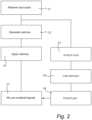
Figure 2 is a flow chart of an embodiment of the present invention. -
Figure 3a-b show two examples of four-speaker layouts of a portable device landscape orientation, corresponding to up/down firing (figure 3a ) and left/right firing (figure 3b ). - Systems and methods disclosed in the following may be implemented as software, firmware, hardware or a combination thereof. In a hardware implementation, the division of tasks does not necessarily correspond to the division into physical units; to the contrary, one physical component may have multiple functionalities, and one task may be carried out by several physical components in cooperation. Certain components or all components may be implemented as software executed by a digital signal processor or microprocessor, or be implemented as hardware or as an application-specific integrated circuit. Such software may be distributed on computer readable media, which may comprise computer storage media (or non-transitory media) and communication media (or transitory media). As is well known to a person skilled in the art, the term computer storage media includes both volatile and non-volatile, removable and non-removable media implemented in any method or technology for storage of information such as computer readable instructions, data structures, program modules or other data. Computer storage media includes, but is not limited to, RAM, ROM, EEPROM, flash memory or other memory technology, CD-ROM, digital versatile disks (DVD) or other optical disk storage, magnetic cassettes, magnetic tape, magnetic disk storage or other magnetic storage devices, or any other medium which can be used to store the desired information and which can be accessed by a computer. Further, it is well known to the skilled person that communication media typically embodies computer readable instructions, data structures, program modules or other data in a modulated data signal such as a carrier wave or other transport mechanism and includes any information delivery media.
- An embodiment of the present invention will now be discussed with reference to the block diagram in
figure 1 , and the flow chart infigure 2 . - The method is executed in a real-time manner. Initially, a multi-channel input audio is received (e.g. decoded) in step S1, and a set of rendering matrices are generated in step S2 based on the number M of received channels and number S of available speakers. Each rendering matrix is configured to render M received signals into S speaker feeds, where S<M. In the illustrated example, the set includes an primary (default) matrix and a secondary (alternative) matrix, but one or several additional alternative matrices are possible. In step S3, each matrix is applied to the input signal by
matrix application modules channel analysis module 13. In step S5, a gain is calculated by theanalysis module 13, e.g. based on the energy distribution among channels. This gain is further smoothed by asmoothing module 14 in step S6, and then input to amixing module 15, which also receives the output from thematrix application modules mixing module 15 mixes (weighs) the pre-rendered signals based on the smoothed gain, and outputs a rendered audio signal. Details of the rendering process will be discussed in the following. - Given an M-channel input signal and a S-speaker device, the general rendering process can be represented as the equation below:

- Given a portable device with S independent speakers (S > 2), and primary rendering matrix Rprim and the secondary rendering matrix Rsec will be determined according to the number of input channels M. Both the Rprim and Rsec have the same size S×M. Specifically, the matrixes Rprim and Rsec can be written as


- In general, a multichannel audio usually comprise four categories of channels:
- 1) Front channels, i.e., Left, Right, and Center channel (L, R, C)
- 2) Listener-plane surround channels, e.g., Left/Right Surround (Ls/Rs) of 5.1 / 5.1.2 / 5.1.4 etc., or Left/Right Rear Surround (Lrs/Rrs) of 7.1/7.1.2/7.1.4 etc.
- 3) Height channels, e.g., Left/Right Top (Lt/Rt) of 5.1.2/7.1.2/9.1.2 etc.,
Left/Right Top Front/Rear (Ltf/Rtf, Ltr/Rtr) of 5.1.4/7.1.4/9.1.4, etc. - 4) LFE channel.
- Given the target speaker layout, the primary matrix defined in equation (2) can be re-written as a blocking matrix:

- The secondary matrixes Rsec can be derived from Rprim with one or more zero columns.
- Some more specific examples of rendering matrices according to embodiments of the present invention will be discussed in the following.
-
Figure 3a and 3b illustrate two examples of a portable device, here a tablet in landscape orientation, which device is equipped with a plurality of independently controlled loudspeakers. In both examples the device has four speakers a-d (S=4). In figure 1a, the speakers are arranged on the upper and lower sides of the device, and thus include two speakers a, b emitting sound upwards, and two speakers c, d emitting sound downwards. In figure 1b, the speakers are arranged on the left and right sides of the device, and thus include two upper speakers a, b emitting sound sideways, and two lower speakers c, d also emitting sound sideways. - In the present example, a 5.1 .2-channel audio signal (M=8) is played back on the portable device in
figure 3a or 3b . - In this case, the primary matrix Rprim can be defined by

row index 1 to 4 corresponds to speaker a to d respectively, andcolumn index 1 to 8 corresponds to L, R, C, Ls, Rs, LFE, Lt, Rt channel of 5.1.2 format. - During a period when the height channels of the original 5.1.2 signal are approximately silent, the audio signal degenerates to a 5.1 signal plus two channels which may be ignored. Therefore, the secondary rendering matrix Rsec1 can be defined by

- It should be noted that there can be multiple secondary rendering matrices RsecX for a given device and an input signal. In the above example of rendering 5.1.2 audio to four speakers, if the surround channels Ls, Rs also are approximately silent, in addition to the height channels, the signal degenerates to a 3.1 signal only containing the C, L, R and LFE channels, and a set of channels that may be ignored. In that case, a corresponding secondary matrix Rsec2 becomes

- In practice, if there are multiple secondary matrixes, the proper secondary matrix will be chosen dynamically based on the channel analysis described below.
- In addition to ensuring efficient rendering of the input signal, there is also a challenge to ensure that all input channels (e.g. height channels) are clearly distinguishable after rendering. This is due to the small distances between speaker locations in a portable device. Taking the example of height channels, they are likely to be rendered to speakers that are relatively close to the speakers for non-height channels. This will lead to spatial collapse in terms of height sound image.
- In order to alleviate the spatial collapse and to make height channels distinguishable after rendering, it is critical to generate the proper entries of rendering matrix Rprim. Specifically, it is desirable to render the majority of height channels to top speakers while rendering front channels to the bottom speakers. This will alleviate the height channels "sinking into" the front channels.
- For the example mentioned above, the entries of Rprim can be set to

- Alternatively, the entries of Rprim can be set to

- In both examples above, the columns (from left to right) correspond to the channels L, R, C, LFE, Ls, Rs, Lt and Rt, respectively.
- The entries of a first secondary matrices Rsec1, configured to ignore the two height channels Lt and Rt (
columns 7 and 8), can be set to
- The entries of a second secondary matrix Rsec2, configured to ignore the two height channels Lt and Rt (
columns 7 and 8) and the two surround channels Ls and Rs (columns 5 and 6), can be set to
- In another example, a 7.1.2-channel (M=10) input signal is played back by the device in
figure 3a or 3b (S=4). In this case, the entries of Rprim can be set to
- In this case, the columns (from left to right) correspond to the channels L, R, C, LFE, Ls, Rs, Lrs, Rrs, Lt and Rt, respectively.
- The entries of the secondary matrices Rsec1 and Rsec2 can be set to


- It is noted that the entries of rendering matrices Rprim and RsecX can be real constants or frequency dependent complex vectors. For example, the entries of Rprim in equation (2) can be extended to a B-dimensional complex vector, where B is the number of frequency bands. In the aforementioned use case, to enhance the height channels, specific frequency bands can be modified for entries of the last two columns of Rprim in equation (2). An example of the specific frequency bands can be 7 kHz to 9 kHz.
- It is also noted, and illustrated by the above examples, that at least some of the entries of the Rprim and RsecX matrices may be set to the same.
- The channel analysis module 23 aims to determine whether the input signal is degenerated or not, so that the proper pre-rendered signal or an appropriate mixed of them can be used. The module 23 performs on a frame-by-frame basis.
- One approach is based on the energy distribution among input channels.
- The aforementioned use case, with only two different rendering matrices, can be taken as an example. For the 4-speaker portable device and the 5.1.2 input signal, the gain graw is calculated by

- In addition to energy, the diffuseness could be an alternative or additional criterion for analyzing the input channels. Large diffuseness tends to assign unbalanced coefficients for L/R channel between top and bottom speakers.
- The gain g raw can be further smoothed by the smoothing
module 14 according to the history of the input signal. In the current frame n (n > 1), the smoothed gain g raw can be calculated as below
- The final rendering signal y can be obtained by the mixing process as below

- If there are more than two different rendering matrixes, the rendered output will include a mix of three or more pre-rendered signals, depending on the channel analysis.
- As used herein, unless otherwise specified the use of the ordinal adjectives "first", "second", "third", etc., to describe a common object, merely indicate that different instances of like objects are being referred to, and are not intended to imply that the objects so described must be in a given sequence, either temporally, spatially, in ranking, or in any other manner.
- In the claims below and the description herein, any one of the terms comprising, comprised of or which comprises is an open term that means including at least the elements/features that follow, but not excluding others. Thus, the term comprising, when used in the claims, should not be interpreted as being limitative to the means or elements or steps listed thereafter. For example, the scope of the expression a device comprising A and B should not be limited to devices consisting only of elements A and B. Any one of the terms including or which includes or that includes as used herein is also an open term that also means including at least the elements/features that follow the term, but not excluding others. Thus, including is synonymous with and means comprising.
- As used herein, the term "exemplary" is used in the sense of providing examples, as opposed to indicating quality. That is, an "exemplary embodiment" is an embodiment provided as an example, as opposed to necessarily being an embodiment of exemplary quality.
- It should be appreciated that in the above description of exemplary embodiments of the invention, various features of the invention are sometimes grouped together in a single embodiment, figure, or description thereof for the purpose of streamlining the disclosure and aiding in the understanding of one or more of the various inventive aspects. This method of disclosure, however, is not to be interpreted as reflecting an intention that the claimed invention requires more features than are expressly recited in each claim. Rather, as the following claims reflect, inventive aspects lie in less than all features of a single foregoing disclosed embodiment. Thus, the claims following the Detailed Description are hereby expressly incorporated into this Detailed Description, with each claim standing on its own as a separate embodiment of this invention.
- Furthermore, some of the embodiments are described herein as a method or combination of elements of a method that can be implemented by a processor of a computer system or by other means of carrying out the function. Thus, a processor with the necessary instructions for carrying out such a method or element of a method forms a means for carrying out the method or element of a method. Furthermore, an element described herein of an apparatus embodiment is an example of a means for carrying out the function performed by the element for the purpose of carrying out the invention.
- In the description provided herein, numerous specific details are set forth. However, it is understood that embodiments of the invention may be practiced without these specific details. In other instances, well-known methods, structures and techniques have not been shown in detail in order not to obscure an understanding of this description.
- Similarly, it is to be noticed that the term coupled, when used in the claims, should not be interpreted as being limited to direct connections only. The terms "coupled" and "connected," along with their derivatives, may be used. It should be understood that these terms are not intended as synonyms for each other. Thus, the scope of the expression a device A coupled to a device B should not be limited to devices or systems wherein an output of device A is directly connected to an input of device B. It means that there exists a path between an output of A and an input of B which may be a path including other devices or means. "Coupled" may mean that two or more elements are either in direct physical or electrical contact, or that two or more elements are not in direct contact with each other but yet still co-operate or interact with each other.
- Thus, while there has been described specific embodiments of the invention, those skilled in the art will recognize that other and further modifications may be made thereto without departing from the scope of the claims. For example, any formulas given above are merely representative of procedures that may be used. Functionality may be added from the block diagrams and operations may be interchanged among functional blocks. Steps may be added to methods described within the scope of the claims. For example, in the illustrated embodiments, the portable device has four speakers (S=4). It is of course possible to have more (or less) than four speakers, which results in different matrix sizes.
Claims (15)
- An audio renderer for rendering a multi-channel audio signal having M channels to a portable device having S independent speakers, wherein S < M, comprising:a first matrix application module (11) for applying a primary rendering matrix to the input audio signal to provide a first pre-rendered signal suitable for playback on the multiple independent speakers,a second matrix application module (12) for applying a secondary rendering matrix to the input audio signal to provide a second pre-rendered signal suitable for playback on the multiple independent speakers,characterised by:a channel analysis module (13) configured to calculate mixing gain according to a time-varying channel distribution, anda mixing module (15) configured to produce a rendered output signal by mixing the first and second pre-rendered signals based on the mixing gain,wherein the channel analysis module determines the mixing gain based on an energy distribution among the input channels and/ora diffuseness distribution among the input channels.
- The audio renderer according to claim 1, wherein the secondary rendering matrix is configured to ignore at least one of the channels in the input audio signal.
- The audio renderer according to claim 2, wherein the input audio signal includes two height channels, and the secondary rendering matrix is configured to ignore said height channels.
- The audio renderer according to one of the preceding claims, wherein the input audio signal is a 5.1.2 audio signal with eight channels (M=8), the number of independent speakers is four (S=4), and wherein the primary rendering matrix is set to:

- The audio renderer according to one of claims 1-3, wherein the input audio signal is a 5.1.2 audio signal with eight channels (M=8), the number of independent speakers is four (S=4), and wherein the primary rendering matrix is set to:

- The audio renderer according to one of the preceding claims, wherein the input audio signal is a 5.1.2 audio signal with eight channels (M=8), the number of independent speakers is four (S=4), and wherein the secondary rendering matrix is set to:

- The audio renderer according to any one of the preceding claims, further comprising a smoothing module (14) to smooth a mixing gain for a current frame based on mixing gains for a set of previous frames.
- The audio renderer according to any one of the preceding claims, wherein the entries of the primary rendering matrix and the secondary rendering matrix are real constants or frequency dependent complex vectors.
- The audio renderer according to any one of the preceding claims, wherein at least some entries of the primary rendering matrix are subdivided in specific frequency bands, e.g. 7 kHz to 9 kHz.
- The audio renderer according to any one of the preceding claims, wherein at least some entries of the primary rendering matrix and the secondary rendering matrix are equal.
- A method for rendering a multi-channel audio signal having M channels for a portable device having S independent speakers, wherein S < M, comprising:applying (S3) a primary rendering matrix to the input audio signal to provide a first pre-rendered signal suitable for playback on the multiple independent speakers,applying (S3) a secondary rendering matrix to the input audio signal to provide a second pre-rendered signal suitable for playback on the multiple independent speakers,characterised by:calculating (S5) mixing gain according to a time-varying channel distribution, andmixing (S7) the first and second pre-rendered signals based on the mixing gain to produce a rendered output signal,wherein the mixing gain is calculated based on an energy distribution among the input channels and/or a diffuseness distribution among the input channels
- The method according to -claim 11, wherein the input audio signal is a 5.1.2 audio signal with eight channels (M=8), the number of independent speakers is four (S=4), and wherein the primary rendering matrix is set to:

- The method according to -claim 11, wherein the input audio signal is a 5.1.2 audio signal with eight channels (M=8), the number of independent speakers is four (S=4), and wherein the primary rendering matrix is set to:

- The method according to one of claims -11-13, wherein the input audio signal is a 5.1.2 audio signal with eight channels (M=8), the number of independent speakers is four (S=4), and wherein the primary rendering matrix is set to:

- A computer program product including computer program code portions configured to perform the steps of one of claims 11-14 when executed on a processor.
Applications Claiming Priority (3)
| Application Number | Priority Date | Filing Date | Title |
|---|---|---|---|
| CN2019092021 | 2019-06-20 | ||
| US201962875160P | 2019-07-17 | 2019-07-17 | |
| PCT/US2020/038209 WO2020257331A1 (en) | 2019-06-20 | 2020-06-17 | Rendering of an m-channel input on s speakers (s<m) |
Publications (2)
| Publication Number | Publication Date |
|---|---|
| EP3987825A1 EP3987825A1 (en) | 2022-04-27 |
| EP3987825B1 true EP3987825B1 (en) | 2024-07-24 |
Family
ID=71465459
Family Applications (1)
| Application Number | Title | Priority Date | Filing Date |
|---|---|---|---|
| EP20736863.0A Active EP3987825B1 (en) | 2019-06-20 | 2020-06-17 | Rendering of an m-channel input on s speakers (s<m) |
Country Status (5)
| Country | Link |
|---|---|
| US (1) | US20250227424A1 (en) |
| EP (1) | EP3987825B1 (en) |
| JP (2) | JP7571061B2 (en) |
| CN (1) | CN114080822B (en) |
| WO (1) | WO2020257331A1 (en) |
Families Citing this family (1)
| Publication number | Priority date | Publication date | Assignee | Title |
|---|---|---|---|---|
| CN115150718A (en) * | 2022-06-30 | 2022-10-04 | 雷欧尼斯(北京)信息技术有限公司 | A playback method and production method of vehicle-mounted immersive audio |
Family Cites Families (13)
| Publication number | Priority date | Publication date | Assignee | Title |
|---|---|---|---|---|
| US7991176B2 (en) * | 2004-11-29 | 2011-08-02 | Nokia Corporation | Stereo widening network for two loudspeakers |
| US8315396B2 (en) * | 2008-07-17 | 2012-11-20 | Fraunhofer-Gesellschaft Zur Foerderung Der Angewandten Forschung E.V. | Apparatus and method for generating audio output signals using object based metadata |
| CA3157717A1 (en) * | 2011-07-01 | 2013-01-10 | Dolby Laboratories Licensing Corporation | System and method for adaptive audio signal generation, coding and rendering |
| US10178489B2 (en) * | 2013-02-08 | 2019-01-08 | Qualcomm Incorporated | Signaling audio rendering information in a bitstream |
| WO2015011015A1 (en) * | 2013-07-22 | 2015-01-29 | Fraunhofer-Gesellschaft zur Förderung der angewandten Forschung e.V. | Multi-channel audio decoder, multi-channel audio encoder, methods, computer program and encoded audio representation using a decorrelation of rendered audio signals |
| EP2830335A3 (en) * | 2013-07-22 | 2015-02-25 | Fraunhofer-Gesellschaft zur Förderung der angewandten Forschung e.V. | Apparatus, method, and computer program for mapping first and second input channels to at least one output channel |
| EP2830327A1 (en) * | 2013-07-22 | 2015-01-28 | Fraunhofer-Gesellschaft zur Förderung der angewandten Forschung e.V. | Audio processor for orientation-dependent processing |
| TWI557724B (en) * | 2013-09-27 | 2016-11-11 | 杜比實驗室特許公司 | A method for encoding an n-channel audio program, a method for recovery of m channels of an n-channel audio program, an audio encoder configured to encode an n-channel audio program and a decoder configured to implement recovery of an n-channel audio pro |
| KR102231755B1 (en) * | 2013-10-25 | 2021-03-24 | 삼성전자주식회사 | Method and apparatus for 3D sound reproducing |
| RU2676415C1 (en) * | 2014-04-11 | 2018-12-28 | Самсунг Электроникс Ко., Лтд. | Method and device for rendering of sound signal and computer readable information media |
| JP6463955B2 (en) * | 2014-11-26 | 2019-02-06 | 日本放送協会 | Three-dimensional sound reproduction apparatus and program |
| WO2016126907A1 (en) * | 2015-02-06 | 2016-08-11 | Dolby Laboratories Licensing Corporation | Hybrid, priority-based rendering system and method for adaptive audio |
| US11528554B2 (en) | 2016-03-24 | 2022-12-13 | Dolby Laboratories Licensing Corporation | Near-field rendering of immersive audio content in portable computers and devices |
-
2020
- 2020-06-17 WO PCT/US2020/038209 patent/WO2020257331A1/en not_active Ceased
- 2020-06-17 EP EP20736863.0A patent/EP3987825B1/en active Active
- 2020-06-17 US US17/621,193 patent/US20250227424A1/en active Pending
- 2020-06-17 JP JP2021574291A patent/JP7571061B2/en active Active
- 2020-06-17 CN CN202080044706.1A patent/CN114080822B/en active Active
-
2024
- 2024-05-15 JP JP2024079078A patent/JP7800998B2/en active Active
Also Published As
| Publication number | Publication date |
|---|---|
| JP7800998B2 (en) | 2026-01-16 |
| CN114080822A (en) | 2022-02-22 |
| WO2020257331A1 (en) | 2020-12-24 |
| JP7571061B2 (en) | 2024-10-22 |
| US20250227424A1 (en) | 2025-07-10 |
| JP2024105545A (en) | 2024-08-06 |
| CN114080822B (en) | 2023-11-03 |
| EP3987825A1 (en) | 2022-04-27 |
| JP2022536530A (en) | 2022-08-17 |
Similar Documents
| Publication | Publication Date | Title |
|---|---|---|
| EP1825713B1 (en) | A method and apparatus for multichannel upmixing and downmixing | |
| US12470888B2 (en) | Spatial audio signal manipulation | |
| EP2329660B1 (en) | Enhancing the reproduction of multiple audio channels | |
| BR112016001738B1 (en) | METHOD, APPARATUS INCLUDING AN AUDIO RENDERING SYSTEM AND NON-TRANSITORY MEANS OF PROCESSING SPATIALLY DIFFUSE OR LARGE AUDIO OBJECTS | |
| CN105376691A (en) | Direction-aware surround sound playback | |
| CN111295896A (en) | Virtual rendering of object-based audio on arbitrary sets of speakers | |
| US11081119B2 (en) | Enhancement of spatial audio signals by modulated decorrelation | |
| US8971542B2 (en) | Systems and methods for speaker bar sound enhancement | |
| US20120308015A1 (en) | Method and apparatus for stereo to five channel upmix | |
| US9462405B2 (en) | Apparatus and method for generating panoramic sound | |
| EP3488623B1 (en) | Audio object clustering based on renderer-aware perceptual difference | |
| JP7800998B2 (en) | Rendering M channel inputs to S speakers (S<M) | |
| US20210051434A1 (en) | Immersive audio rendering | |
| KR20180093667A (en) | Audio processing method for rendering audio adaptively according to listener's position and apparatus for performing the method | |
| EP4295587B1 (en) | Clustering audio objects | |
| US20260095714A1 (en) | Surround sound | |
| WO2022047078A1 (en) | Matrix coded stereo signal with periphonic elements | |
| HK40016792A (en) | Enhancement of spatial audio signals by modulated decorrelation | |
| CN106576211A (en) | Audio processing device |
Legal Events
| Date | Code | Title | Description |
|---|---|---|---|
| STAA | Information on the status of an ep patent application or granted ep patent |
Free format text: STATUS: UNKNOWN |
|
| STAA | Information on the status of an ep patent application or granted ep patent |
Free format text: STATUS: THE INTERNATIONAL PUBLICATION HAS BEEN MADE |
|
| PUAI | Public reference made under article 153(3) epc to a published international application that has entered the european phase |
Free format text: ORIGINAL CODE: 0009012 |
|
| STAA | Information on the status of an ep patent application or granted ep patent |
Free format text: STATUS: REQUEST FOR EXAMINATION WAS MADE |
|
| 17P | Request for examination filed |
Effective date: 20220120 |
|
| AK | Designated contracting states |
Kind code of ref document: A1 Designated state(s): AL AT BE BG CH CY CZ DE DK EE ES FI FR GB GR HR HU IE IS IT LI LT LU LV MC MK MT NL NO PL PT RO RS SE SI SK SM TR |
|
| DAV | Request for validation of the european patent (deleted) | ||
| DAX | Request for extension of the european patent (deleted) | ||
| P01 | Opt-out of the competence of the unified patent court (upc) registered |
Effective date: 20230417 |
|
| GRAP | Despatch of communication of intention to grant a patent |
Free format text: ORIGINAL CODE: EPIDOSNIGR1 |
|
| STAA | Information on the status of an ep patent application or granted ep patent |
Free format text: STATUS: GRANT OF PATENT IS INTENDED |
|
| INTG | Intention to grant announced |
Effective date: 20240214 |
|
| GRAS | Grant fee paid |
Free format text: ORIGINAL CODE: EPIDOSNIGR3 |
|
| GRAA | (expected) grant |
Free format text: ORIGINAL CODE: 0009210 |
|
| STAA | Information on the status of an ep patent application or granted ep patent |
Free format text: STATUS: THE PATENT HAS BEEN GRANTED |
|
| AK | Designated contracting states |
Kind code of ref document: B1 Designated state(s): AL AT BE BG CH CY CZ DE DK EE ES FI FR GB GR HR HU IE IS IT LI LT LU LV MC MK MT NL NO PL PT RO RS SE SI SK SM TR |
|
| REG | Reference to a national code |
Ref country code: GB Ref legal event code: FG4D |
|
| REG | Reference to a national code |
Ref country code: CH Ref legal event code: EP |
|
| REG | Reference to a national code |
Ref country code: IE Ref legal event code: FG4D Ref country code: DE Ref legal event code: R096 Ref document number: 602020034476 Country of ref document: DE |
|
| REG | Reference to a national code |
Ref country code: LT Ref legal event code: MG9D |
|
| REG | Reference to a national code |
Ref country code: NL Ref legal event code: MP Effective date: 20240724 |
|
| PG25 | Lapsed in a contracting state [announced via postgrant information from national office to epo] |
Ref country code: PT Free format text: LAPSE BECAUSE OF FAILURE TO SUBMIT A TRANSLATION OF THE DESCRIPTION OR TO PAY THE FEE WITHIN THE PRESCRIBED TIME-LIMIT Effective date: 20241125 |
|
| REG | Reference to a national code |
Ref country code: AT Ref legal event code: MK05 Ref document number: 1707408 Country of ref document: AT Kind code of ref document: T Effective date: 20240724 |
|
| PG25 | Lapsed in a contracting state [announced via postgrant information from national office to epo] |
Ref country code: NL Free format text: LAPSE BECAUSE OF FAILURE TO SUBMIT A TRANSLATION OF THE DESCRIPTION OR TO PAY THE FEE WITHIN THE PRESCRIBED TIME-LIMIT Effective date: 20240724 |
|
| PG25 | Lapsed in a contracting state [announced via postgrant information from national office to epo] |
Ref country code: PT Free format text: LAPSE BECAUSE OF FAILURE TO SUBMIT A TRANSLATION OF THE DESCRIPTION OR TO PAY THE FEE WITHIN THE PRESCRIBED TIME-LIMIT Effective date: 20241125 Ref country code: NL Free format text: LAPSE BECAUSE OF FAILURE TO SUBMIT A TRANSLATION OF THE DESCRIPTION OR TO PAY THE FEE WITHIN THE PRESCRIBED TIME-LIMIT Effective date: 20240724 |
|
| PG25 | Lapsed in a contracting state [announced via postgrant information from national office to epo] |
Ref country code: NO Free format text: LAPSE BECAUSE OF FAILURE TO SUBMIT A TRANSLATION OF THE DESCRIPTION OR TO PAY THE FEE WITHIN THE PRESCRIBED TIME-LIMIT Effective date: 20241024 |
|
| PG25 | Lapsed in a contracting state [announced via postgrant information from national office to epo] |
Ref country code: FI Free format text: LAPSE BECAUSE OF FAILURE TO SUBMIT A TRANSLATION OF THE DESCRIPTION OR TO PAY THE FEE WITHIN THE PRESCRIBED TIME-LIMIT Effective date: 20240724 Ref country code: PL Free format text: LAPSE BECAUSE OF FAILURE TO SUBMIT A TRANSLATION OF THE DESCRIPTION OR TO PAY THE FEE WITHIN THE PRESCRIBED TIME-LIMIT Effective date: 20240724 Ref country code: GR Free format text: LAPSE BECAUSE OF FAILURE TO SUBMIT A TRANSLATION OF THE DESCRIPTION OR TO PAY THE FEE WITHIN THE PRESCRIBED TIME-LIMIT Effective date: 20241025 |
|
| PG25 | Lapsed in a contracting state [announced via postgrant information from national office to epo] |
Ref country code: BG Free format text: LAPSE BECAUSE OF FAILURE TO SUBMIT A TRANSLATION OF THE DESCRIPTION OR TO PAY THE FEE WITHIN THE PRESCRIBED TIME-LIMIT Effective date: 20240724 |
|
| PG25 | Lapsed in a contracting state [announced via postgrant information from national office to epo] |
Ref country code: LV Free format text: LAPSE BECAUSE OF FAILURE TO SUBMIT A TRANSLATION OF THE DESCRIPTION OR TO PAY THE FEE WITHIN THE PRESCRIBED TIME-LIMIT Effective date: 20240724 |
|
| PG25 | Lapsed in a contracting state [announced via postgrant information from national office to epo] |
Ref country code: AT Free format text: LAPSE BECAUSE OF FAILURE TO SUBMIT A TRANSLATION OF THE DESCRIPTION OR TO PAY THE FEE WITHIN THE PRESCRIBED TIME-LIMIT Effective date: 20240724 Ref country code: IS Free format text: LAPSE BECAUSE OF FAILURE TO SUBMIT A TRANSLATION OF THE DESCRIPTION OR TO PAY THE FEE WITHIN THE PRESCRIBED TIME-LIMIT Effective date: 20241124 |
|
| PG25 | Lapsed in a contracting state [announced via postgrant information from national office to epo] |
Ref country code: HR Free format text: LAPSE BECAUSE OF FAILURE TO SUBMIT A TRANSLATION OF THE DESCRIPTION OR TO PAY THE FEE WITHIN THE PRESCRIBED TIME-LIMIT Effective date: 20240724 |
|
| PG25 | Lapsed in a contracting state [announced via postgrant information from national office to epo] |
Ref country code: ES Free format text: LAPSE BECAUSE OF FAILURE TO SUBMIT A TRANSLATION OF THE DESCRIPTION OR TO PAY THE FEE WITHIN THE PRESCRIBED TIME-LIMIT Effective date: 20240724 Ref country code: RS Free format text: LAPSE BECAUSE OF FAILURE TO SUBMIT A TRANSLATION OF THE DESCRIPTION OR TO PAY THE FEE WITHIN THE PRESCRIBED TIME-LIMIT Effective date: 20241024 |
|
| PG25 | Lapsed in a contracting state [announced via postgrant information from national office to epo] |
Ref country code: RS Free format text: LAPSE BECAUSE OF FAILURE TO SUBMIT A TRANSLATION OF THE DESCRIPTION OR TO PAY THE FEE WITHIN THE PRESCRIBED TIME-LIMIT Effective date: 20241024 Ref country code: PL Free format text: LAPSE BECAUSE OF FAILURE TO SUBMIT A TRANSLATION OF THE DESCRIPTION OR TO PAY THE FEE WITHIN THE PRESCRIBED TIME-LIMIT Effective date: 20240724 Ref country code: NO Free format text: LAPSE BECAUSE OF FAILURE TO SUBMIT A TRANSLATION OF THE DESCRIPTION OR TO PAY THE FEE WITHIN THE PRESCRIBED TIME-LIMIT Effective date: 20241024 Ref country code: LV Free format text: LAPSE BECAUSE OF FAILURE TO SUBMIT A TRANSLATION OF THE DESCRIPTION OR TO PAY THE FEE WITHIN THE PRESCRIBED TIME-LIMIT Effective date: 20240724 Ref country code: IS Free format text: LAPSE BECAUSE OF FAILURE TO SUBMIT A TRANSLATION OF THE DESCRIPTION OR TO PAY THE FEE WITHIN THE PRESCRIBED TIME-LIMIT Effective date: 20241124 Ref country code: HR Free format text: LAPSE BECAUSE OF FAILURE TO SUBMIT A TRANSLATION OF THE DESCRIPTION OR TO PAY THE FEE WITHIN THE PRESCRIBED TIME-LIMIT Effective date: 20240724 Ref country code: GR Free format text: LAPSE BECAUSE OF FAILURE TO SUBMIT A TRANSLATION OF THE DESCRIPTION OR TO PAY THE FEE WITHIN THE PRESCRIBED TIME-LIMIT Effective date: 20241025 Ref country code: FI Free format text: LAPSE BECAUSE OF FAILURE TO SUBMIT A TRANSLATION OF THE DESCRIPTION OR TO PAY THE FEE WITHIN THE PRESCRIBED TIME-LIMIT Effective date: 20240724 Ref country code: ES Free format text: LAPSE BECAUSE OF FAILURE TO SUBMIT A TRANSLATION OF THE DESCRIPTION OR TO PAY THE FEE WITHIN THE PRESCRIBED TIME-LIMIT Effective date: 20240724 Ref country code: BG Free format text: LAPSE BECAUSE OF FAILURE TO SUBMIT A TRANSLATION OF THE DESCRIPTION OR TO PAY THE FEE WITHIN THE PRESCRIBED TIME-LIMIT Effective date: 20240724 Ref country code: AT Free format text: LAPSE BECAUSE OF FAILURE TO SUBMIT A TRANSLATION OF THE DESCRIPTION OR TO PAY THE FEE WITHIN THE PRESCRIBED TIME-LIMIT Effective date: 20240724 |
|
| PG25 | Lapsed in a contracting state [announced via postgrant information from national office to epo] |
Ref country code: DK Free format text: LAPSE BECAUSE OF FAILURE TO SUBMIT A TRANSLATION OF THE DESCRIPTION OR TO PAY THE FEE WITHIN THE PRESCRIBED TIME-LIMIT Effective date: 20240724 Ref country code: RO Free format text: LAPSE BECAUSE OF FAILURE TO SUBMIT A TRANSLATION OF THE DESCRIPTION OR TO PAY THE FEE WITHIN THE PRESCRIBED TIME-LIMIT Effective date: 20240724 Ref country code: SM Free format text: LAPSE BECAUSE OF FAILURE TO SUBMIT A TRANSLATION OF THE DESCRIPTION OR TO PAY THE FEE WITHIN THE PRESCRIBED TIME-LIMIT Effective date: 20240724 |
|
| PG25 | Lapsed in a contracting state [announced via postgrant information from national office to epo] |
Ref country code: EE Free format text: LAPSE BECAUSE OF FAILURE TO SUBMIT A TRANSLATION OF THE DESCRIPTION OR TO PAY THE FEE WITHIN THE PRESCRIBED TIME-LIMIT Effective date: 20240724 |
|
| PG25 | Lapsed in a contracting state [announced via postgrant information from national office to epo] |
Ref country code: CZ Free format text: LAPSE BECAUSE OF FAILURE TO SUBMIT A TRANSLATION OF THE DESCRIPTION OR TO PAY THE FEE WITHIN THE PRESCRIBED TIME-LIMIT Effective date: 20240724 |
|
| REG | Reference to a national code |
Ref country code: DE Ref legal event code: R097 Ref document number: 602020034476 Country of ref document: DE |
|
| PG25 | Lapsed in a contracting state [announced via postgrant information from national office to epo] |
Ref country code: IT Free format text: LAPSE BECAUSE OF FAILURE TO SUBMIT A TRANSLATION OF THE DESCRIPTION OR TO PAY THE FEE WITHIN THE PRESCRIBED TIME-LIMIT Effective date: 20240724 Ref country code: SK Free format text: LAPSE BECAUSE OF FAILURE TO SUBMIT A TRANSLATION OF THE DESCRIPTION OR TO PAY THE FEE WITHIN THE PRESCRIBED TIME-LIMIT Effective date: 20240724 |
|
| PLBE | No opposition filed within time limit |
Free format text: ORIGINAL CODE: 0009261 |
|
| STAA | Information on the status of an ep patent application or granted ep patent |
Free format text: STATUS: NO OPPOSITION FILED WITHIN TIME LIMIT |
|
| 26N | No opposition filed |
Effective date: 20250425 |
|
| PGFP | Annual fee paid to national office [announced via postgrant information from national office to epo] |
Ref country code: DE Payment date: 20250520 Year of fee payment: 6 |
|
| PGFP | Annual fee paid to national office [announced via postgrant information from national office to epo] |
Ref country code: GB Payment date: 20250520 Year of fee payment: 6 |
|
| PGFP | Annual fee paid to national office [announced via postgrant information from national office to epo] |
Ref country code: FR Payment date: 20250520 Year of fee payment: 6 |
|
| PG25 | Lapsed in a contracting state [announced via postgrant information from national office to epo] |
Ref country code: SE Free format text: LAPSE BECAUSE OF FAILURE TO SUBMIT A TRANSLATION OF THE DESCRIPTION OR TO PAY THE FEE WITHIN THE PRESCRIBED TIME-LIMIT Effective date: 20240724 |
|
| REG | Reference to a national code |
Ref country code: CH Ref legal event code: H13 Free format text: ST27 STATUS EVENT CODE: U-0-0-H10-H13 (AS PROVIDED BY THE NATIONAL OFFICE) Effective date: 20260127 |
|
| PG25 | Lapsed in a contracting state [announced via postgrant information from national office to epo] |
Ref country code: MC Free format text: LAPSE BECAUSE OF FAILURE TO SUBMIT A TRANSLATION OF THE DESCRIPTION OR TO PAY THE FEE WITHIN THE PRESCRIBED TIME-LIMIT Effective date: 20240724 |
|
| PG25 | Lapsed in a contracting state [announced via postgrant information from national office to epo] |
Ref country code: LU Free format text: LAPSE BECAUSE OF NON-PAYMENT OF DUE FEES Effective date: 20250617 |
|
| REG | Reference to a national code |
Ref country code: BE Ref legal event code: MM Effective date: 20250630 |
|
| PG25 | Lapsed in a contracting state [announced via postgrant information from national office to epo] |
Ref country code: IE Free format text: LAPSE BECAUSE OF NON-PAYMENT OF DUE FEES Effective date: 20250617 |
|
| PG25 | Lapsed in a contracting state [announced via postgrant information from national office to epo] |
Ref country code: BE Free format text: LAPSE BECAUSE OF NON-PAYMENT OF DUE FEES Effective date: 20250630 |
|
| PG25 | Lapsed in a contracting state [announced via postgrant information from national office to epo] |
Ref country code: CH Free format text: LAPSE BECAUSE OF NON-PAYMENT OF DUE FEES Effective date: 20250630 |