EP3987740B1 - Systems and methods for authenticating an electronic transaction - Google Patents
Systems and methods for authenticating an electronic transaction Download PDFInfo
- Publication number
- EP3987740B1 EP3987740B1 EP20729351.5A EP20729351A EP3987740B1 EP 3987740 B1 EP3987740 B1 EP 3987740B1 EP 20729351 A EP20729351 A EP 20729351A EP 3987740 B1 EP3987740 B1 EP 3987740B1
- Authority
- EP
- European Patent Office
- Prior art keywords
- assessment
- transaction
- authentication
- indicator
- condensed
- Prior art date
- Legal status (The legal status is an assumption and is not a legal conclusion. Google has not performed a legal analysis and makes no representation as to the accuracy of the status listed.)
- Active
Links
Images



Classifications
-
- H—ELECTRICITY
- H04—ELECTRIC COMMUNICATION TECHNIQUE
- H04L—TRANSMISSION OF DIGITAL INFORMATION, e.g. TELEGRAPHIC COMMUNICATION
- H04L63/00—Network architectures or network communication protocols for network security
- H04L63/08—Network architectures or network communication protocols for network security for authentication of entities
-
- G—PHYSICS
- G06—COMPUTING OR CALCULATING; COUNTING
- G06Q—INFORMATION AND COMMUNICATION TECHNOLOGY [ICT] SPECIALLY ADAPTED FOR ADMINISTRATIVE, COMMERCIAL, FINANCIAL, MANAGERIAL OR SUPERVISORY PURPOSES; SYSTEMS OR METHODS SPECIALLY ADAPTED FOR ADMINISTRATIVE, COMMERCIAL, FINANCIAL, MANAGERIAL OR SUPERVISORY PURPOSES, NOT OTHERWISE PROVIDED FOR
- G06Q20/00—Payment architectures, schemes or protocols
- G06Q20/38—Payment protocols; Details thereof
- G06Q20/40—Authorisation, e.g. identification of payer or payee, verification of customer or shop credentials; Review and approval of payers, e.g. check credit lines or negative lists
- G06Q20/401—Transaction verification
- G06Q20/4014—Identity check for transactions
-
- G—PHYSICS
- G06—COMPUTING OR CALCULATING; COUNTING
- G06F—ELECTRIC DIGITAL DATA PROCESSING
- G06F21/00—Security arrangements for protecting computers, components thereof, programs or data against unauthorised activity
- G06F21/50—Monitoring users, programs or devices to maintain the integrity of platforms, e.g. of processors, firmware or operating systems
- G06F21/55—Detecting local intrusion or implementing counter-measures
- G06F21/552—Detecting local intrusion or implementing counter-measures involving long-term monitoring or reporting
-
- G—PHYSICS
- G06—COMPUTING OR CALCULATING; COUNTING
- G06F—ELECTRIC DIGITAL DATA PROCESSING
- G06F21/00—Security arrangements for protecting computers, components thereof, programs or data against unauthorised activity
- G06F21/50—Monitoring users, programs or devices to maintain the integrity of platforms, e.g. of processors, firmware or operating systems
- G06F21/55—Detecting local intrusion or implementing counter-measures
- G06F21/554—Detecting local intrusion or implementing counter-measures involving event detection and direct action
-
- G—PHYSICS
- G06—COMPUTING OR CALCULATING; COUNTING
- G06Q—INFORMATION AND COMMUNICATION TECHNOLOGY [ICT] SPECIALLY ADAPTED FOR ADMINISTRATIVE, COMMERCIAL, FINANCIAL, MANAGERIAL OR SUPERVISORY PURPOSES; SYSTEMS OR METHODS SPECIALLY ADAPTED FOR ADMINISTRATIVE, COMMERCIAL, FINANCIAL, MANAGERIAL OR SUPERVISORY PURPOSES, NOT OTHERWISE PROVIDED FOR
- G06Q20/00—Payment architectures, schemes or protocols
- G06Q20/30—Payment architectures, schemes or protocols characterised by the use of specific devices or networks
- G06Q20/36—Payment architectures, schemes or protocols characterised by the use of specific devices or networks using electronic wallets or electronic money safes
- G06Q20/367—Payment architectures, schemes or protocols characterised by the use of specific devices or networks using electronic wallets or electronic money safes involving electronic purses or money safes
- G06Q20/3674—Payment architectures, schemes or protocols characterised by the use of specific devices or networks using electronic wallets or electronic money safes involving electronic purses or money safes involving authentication
-
- G—PHYSICS
- G06—COMPUTING OR CALCULATING; COUNTING
- G06Q—INFORMATION AND COMMUNICATION TECHNOLOGY [ICT] SPECIALLY ADAPTED FOR ADMINISTRATIVE, COMMERCIAL, FINANCIAL, MANAGERIAL OR SUPERVISORY PURPOSES; SYSTEMS OR METHODS SPECIALLY ADAPTED FOR ADMINISTRATIVE, COMMERCIAL, FINANCIAL, MANAGERIAL OR SUPERVISORY PURPOSES, NOT OTHERWISE PROVIDED FOR
- G06Q20/00—Payment architectures, schemes or protocols
- G06Q20/38—Payment protocols; Details thereof
- G06Q20/40—Authorisation, e.g. identification of payer or payee, verification of customer or shop credentials; Review and approval of payers, e.g. check credit lines or negative lists
- G06Q20/401—Transaction verification
- G06Q20/4016—Transaction verification involving fraud or risk level assessment in transaction processing
-
- G—PHYSICS
- G06—COMPUTING OR CALCULATING; COUNTING
- G06Q—INFORMATION AND COMMUNICATION TECHNOLOGY [ICT] SPECIALLY ADAPTED FOR ADMINISTRATIVE, COMMERCIAL, FINANCIAL, MANAGERIAL OR SUPERVISORY PURPOSES; SYSTEMS OR METHODS SPECIALLY ADAPTED FOR ADMINISTRATIVE, COMMERCIAL, FINANCIAL, MANAGERIAL OR SUPERVISORY PURPOSES, NOT OTHERWISE PROVIDED FOR
- G06Q20/00—Payment architectures, schemes or protocols
- G06Q20/38—Payment protocols; Details thereof
- G06Q20/40—Authorisation, e.g. identification of payer or payee, verification of customer or shop credentials; Review and approval of payers, e.g. check credit lines or negative lists
- G06Q20/405—Establishing or using transaction specific rules
-
- G—PHYSICS
- G06—COMPUTING OR CALCULATING; COUNTING
- G06Q—INFORMATION AND COMMUNICATION TECHNOLOGY [ICT] SPECIALLY ADAPTED FOR ADMINISTRATIVE, COMMERCIAL, FINANCIAL, MANAGERIAL OR SUPERVISORY PURPOSES; SYSTEMS OR METHODS SPECIALLY ADAPTED FOR ADMINISTRATIVE, COMMERCIAL, FINANCIAL, MANAGERIAL OR SUPERVISORY PURPOSES, NOT OTHERWISE PROVIDED FOR
- G06Q20/00—Payment architectures, schemes or protocols
- G06Q20/38—Payment protocols; Details thereof
- G06Q20/40—Authorisation, e.g. identification of payer or payee, verification of customer or shop credentials; Review and approval of payers, e.g. check credit lines or negative lists
- G06Q20/409—Device specific authentication in transaction processing
Definitions
- the present disclosure relates to providing security in a digital network, and more particularly, to authenticating an electronic transaction.
- Non-authentic transactions or transactions having non-authentic or invalid data are known to occur within an electronic network.
- each entity involved in the electronic transaction may attempt to evaluate transaction authenticity based on the information the entity has available.
- Some parties may outsource authenticity detection to third party providers.
- the ability of any entity to determine whether a transaction is authentic may be limited.
- the computer device may include a memory to store data and instructions; at least one processor configured to communicate with the memory; an operating system in communication with the memory and the at least one processor, wherein the operating system is operable to: receive a transaction; access transaction contextual data for the transaction; apply one or more authentication decision rules to the transaction contextual data to determine initial authentication assessment information for the transaction; convert the initial authentication assessment information into a condensed authentication assessment indicator having an assessment value selected from a plurality of assessment values based on an assessment value definition; transmit the condensed authentication assessment indicator for the transaction; receive a transaction authentication decision based in part on the condensed authentication assessment indicator; and process or deny processing the transaction based on the transaction authentication decision.
- Another example implementation relates to a method of securing electronic transactions in a computing network, comprising: receiving a transaction; accessing transaction contextual data for the transaction; applying one or more authentication decision rules to the transaction contextual data to determine initial authentication assessment information for the transaction; converting the initial authentication assessment information into a condensed authentication assessment indicator having an assessment value selected from a plurality of assessment values based on an assessment value definition; transmitting the condensed authentication assessment indicator for the transaction; receiving a transaction authentication decision based in part on the condensed authentication assessment indicator; and processing or denying the processing of the transaction based on the transaction authentication decision.
- Another example implementation relates to a computer-readable medium comprising stored instructions executable by a processor to secure electronic transactions in a computing network, comprising instructions executable to: receive a transaction; access transaction contextual data for the transaction; apply one or more authentication decision rules to the transaction contextual data to determine initial authentication assessment information for the transaction; convert the initial authentication assessment information into a condensed authentication assessment indicator having an assessment value selected from a plurality of assessment values based on an assessment value definition; transmit the condensed authentication assessment indicator for the transaction; receive a transaction authentication decision based in part on the condensed authentication assessment indicator; and process or deny processing the transaction based on the transaction authentication decision.
- the devices and methods may provide improved real-time authentication of the electronic transaction.
- the devices and methods may share the transaction contextual data acquired by a first evaluating entity, which receives the electronic transaction, with a second evaluating entity, which ultimately approves the transaction, so that the second evaluating entity may increase efficiency in an ability to detect an invalid or non-authentic transaction and/or invalid or non-authentic transaction data.
- the transaction may include transaction data, while the transaction contextual data may be additional associated information available to the first evaluating entity, and not typically available to the second evaluating entity.
- the sharing of the transaction contextual data acquired by a first evaluating entity allows the second evaluating entity to make a better evaluation of the transaction based on the additional information represented by the transaction contextual information from the first evaluating entity.
- the devices and methods of the present disclosure provide an increase in efficiency and/or accuracy in validating electronic transactions that are authentic while, at the same time, increasing an efficiency and/or accuracy in identifying invalid or non-authentic electronic transactions. For example, in an electronic transaction processing network that processes millions of electronic transactions per day, removing non-authentic transactions from the network, as described by the present disclosure, may provide dramatic gains in computer processing efficiency, in computer memory resource utilization, and in network communication resource utilization, among other technical gains, by eliminating the unnecessary processing of invalid or non-authentic transactions.
- the transaction contextual data acquired by the first evaluating entity may be analyzed and used to generate initial authentication assessment information, which may be converted into a condensed authentication assessment indicator that is shared with the second evaluating entity.
- the initial authentication assessment information may be inferred data attributes in response to applying one or more authenticity decision rules to the transaction contextual information.
- the initial authentication assessment information may include or may then be converted, according to one or more specific assessment value definitions, into the condensed authentication assessment indicator having an assessment variable value selected from a plurality of assessment variable values based on the corresponding assessment value definition.
- the condensed authentication assessment indicator may incorporate a standard format, e.g., normalized variables and normalized variable values, in order for the initial authentication assessment information to be quantitative and have quantitative and consistent information and/or definitions that may be interpreted in the same way by all parties, namely the first evaluating entity that will share the initial authentication assessment information and the second evaluating entity that will accept and use the initial authentication assessment information that is shared.
- a standard format e.g., normalized variables and normalized variable values
- the initial authentication assessment information may be used by the second evaluating entity to make a transaction decision by using the additional information (e.g., relative to the transaction data of the transaction, or other information about the transaction typically available to the second evaluating entity) represented by the initial authentication assessment information.
- additional information e.g., relative to the transaction data of the transaction, or other information about the transaction typically available to the second evaluating entity
- the present disclosure may improve accuracy and efficiency in evaluating and approving transactions in an electronic network.
- a transaction-initiating entity 102 such as a user computer device, may generate an electronic transaction 103 with the first evaluating entity 104, such as an entity computer device.
- the electronic transaction 103 may include, but is not limited to, one or more sets of transaction data related to an exchange between the transaction-initiating entity 102 and the first evaluating entity 104.
- the first evaluating entity 104 may collect transaction contextual data 12 such as, but not limited to, data or attributes different from the data of the of the payment instrument, product, device, Internet Protocol (IP) location, and/or device.
- the first evaluating entity 104 may use the transaction contextual data 12 to evaluate the likelihood of a transaction being non-authentic or including invalid data.
- the first evaluating entity 104 submits the transaction 103 to the second evaluating entity for authorization
- he first evaluating entity 104 may submit the transaction 103 through the system 100 via a transaction network processing entity 106 and a transaction network 108.
- the transaction network processing entity 106 may manage or control the routing of the transaction 103 through the system 100 by choosing the transaction network 108, in some cases from a plurality of different potential transaction networks, and/or based on the destination, e.g., the second evaluating entity 110. An additional authentication evaluation is done by the second evaluating entity 110, resulting in an authentication decision 111 by the second evaluating entity 110 to either authorize or decline the transaction 103 submitted by the first evaluating entity 104.
- the authentication decision 111 of the second evaluating entity 110 is passed back through the transaction network 108 and the transaction network processing entity transaction network processing entity 106, and ultimately is received by the first evaluating entity 104.
- Authenticity evaluations done post-first evaluating entity, at the second evaluating entity level are based on a different data set than the evaluation done at the first evaluating entity level.
- the different information may include information that only the second evaluating entity has access to, such as but not limited to a transaction history associated with the transaction-initiating entity 102 or a customer/user thereof, and/or an authentication history associated with the transaction-initiating entity 102 or a customer/user thereof.
- the devices and methods may share the transaction contextual data 12 acquired by the first evaluating entity 104 and/or the initial authentication assessment information 14 and/or the condensed authentication assessment indicator 15 for the transaction 103 with the second evaluating entity 110 so that the second evaluating entity 110 may increase efficiency in an ability to detect and block non-authentic or invalid transactions resulting in an increase in the approval of good (e.g., valid, authenticated) transactions.
- the transaction contextual data 12, initial authentication assessment information 14, and/or the condensed authentication assessment indicator 15 may allow the second evaluating entity 110 to make a better evaluation of the transaction 103 based on this additional information.
- Sharing this additional transaction contextual data 12 and/or initial authentication assessment information 14 and/or the condensed authentication assessment indicator 15 may be achieved by establishing a secondary data channel 112 from the first evaluating entity 104 or first evaluating entity's authenticity solution provider to the second evaluating entity 110; or establishing a data channel 112 from the first evaluating entity 104 or first evaluating entity's authenticity solution provider to a conduit or a trust knowledge broker which may be the same as or integrated with the transaction network processing entity 106 or transaction network 108, which will then be delivered to the second evaluating entity 110 either in a secondary data channel 112 or the primary authorization data channel used by the transaction 103 and authentication decision 111.
- the electronic transaction may be a purchase transaction by a customer with a merchant.
- the transaction may be a card-not-present transaction with a merchant conducted via a website of the merchant.
- the transaction may be forwarded from the website to the merchant.
- the merchant may collect transaction contextual data such as, but not limited to, attributes of the payment instrument (e.g., account number, expiration date, security code, address information), customer information (e.g., customer name associated with the payment instrument), product identification information, transaction-initiating device information (e.g., device identification information, device Internet Protocol (IP) address, device geographic location), customer/cardholder location information (e.g., home address), customer details (e.g., login identity, e-mail address, and/or telephone number), product details (e.g., product type, profit margin, and/or revocability), location (e.g., IP geolocation, device geolocation, and/or shipping address), device fingerprinting (e.g., operating system (OS) configuration, hardware configuration, browser or device configuration), and/or any other information related to or identifying the customer, the payment instrument, the goods/services involved in the transaction, and/or the computer devices involved in the transaction.
- attributes of the payment instrument e.g., account number, expiration date, security
- the merchant may use the transaction contextual data to evaluate the likelihood of a transaction being authentic.
- the merchant evaluation returns likelihood of authenticity above an authenticity threshold
- the merchant submits the transaction to an issuing bank for authorization via, for example, a payment processor, such as an acquiring processor, and via a transaction network.
- the issuing bank is a bank associated with the payment instrument identified in the transaction contextual data.
- An additional authentication evaluation is done by the issuing bank, which may be combined with a determination of available credit and/or credit rating associated with the customer, etc., resulting in a decision by the issuing bank to either authorize or decline the transaction submission by the merchant.
- Authenticity evaluations done post-merchant, at the issuing bank level are based on a different data set than the evaluation done at merchant level
- the issuing bank has access to the cardholder's purchase history and credit history but is not able to utilize the transaction contextual data a first evaluating entity collects.
- the issuing bank may have access to the complete cardholder purchase and/or credit history, debt status, address of the card holder used for billing, and purchase pattern data, among others.
- the decision of the issuing bank is passed back through transaction network and/or acquiring processor to the merchant, who may then deny or accept the electronic transaction 103.
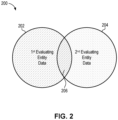
- First evaluating entity data 202 may include the transaction contextual data 12 and/or initial authentication assessment information 14 and/or the condensed authentication assessment indicator 15 ( Fig. 1 ) acquired by the first evaluating entity 104 ( Fig. 1 ).
- Further examples of transaction contextual data 12 may include, but is not limited to, customer details (e.g., login identity, e-mail address, and/or telephone number), product details (e.g., product type, profit margin, and/or revocability), location (e.g., IP geolocation, device geolocation, and/or shipping address), and/or device fingerprinting (e.g., operating system (OS) configuration, hardware configuration, browser or device configuration).
- OS operating system
- Second evaluating entity data 204 may include data the second evaluating entity 110 ( Fig. 1 ) may use when evaluating a transaction.
- second evaluating entity data 204 may include, but is not limited to, initiating entity or user transaction and/or authentication history, transaction pattern, data relating to capability of validly completing the transaction, etc.
- the intersection data 206 of the first evaluating entity data 202 and the second evaluating entity data 204 may include, for example, the certain transaction detail data, and/or initiating entity or user transaction and/or authentication data.
- Computer device 302 may access the transaction contextual data 12 and/or initial authentication assessment information 14 and/or the condensed authentication assessment indicator 15 and may generate initial authentication assessment information 14 for the transaction 103 using the transaction contextual data 12.
- Computer device 302 may transmit the transaction contextual data 12 and/or initial authentication assessment information 14 and/or the condensed authentication assessment indicator 15 to one or more third parties, such as, but not limited to, transaction network processing entity 106 ( Fig. 1 ), transaction network 108 ( Fig. 1 ), and/or second evaluating entity 110 ( Fig. 1 ).
- the transaction contextual data 12 and/or initial authentication assessment information 14 and/or the condensed authentication assessment indicator 15 may aid the second evaluating entity 110 in detecting and blocking non-authentic or invalid transactions 103, resulting in an increase in the approval of good transactions 103.
- Computer device 302 may include any mobile or fixed computer device, which may be connectable to a network.
- Computer device 302 may be, for example, a computer device such as a desktop or laptop or tablet computer, an internet of things (IOT) device, a cellular telephone, a gaming device, a mixed reality or virtual reality device, a music device, a television, a navigation system, a camera, a personal digital assistant (PDA), or a handheld device, or any other computer device having wired and/or wireless connection capability with one or more other devices.
- IOT internet of things
- PDA personal digital assistant
- Computer device 302 may include an operating system 310 executed by processor 30 and/or memory 32.
- Memory 32 of computer device 302 may be configured for storing data and/or computer-executable instructions defining and/or associated with operating system 310, and processor 30 may execute such data and/or instructions to instantiate operating system 310.
- An example of memory 32 can include, but is not limited to, a type of memory usable by a computer, such as random access memory (RAM), read only memory (ROM), tapes, magnetic discs, optical discs, volatile memory, non-volatile memory, and any combination thereof.
- processor 30 can include, but is not limited to, any processor specially programmed as described herein, including a controller, microcontroller, application specific integrated circuit (ASIC), field programmable gate array (FPGA), system on chip (SoC), or other programmable logic or state machine.
- ASIC application specific integrated circuit
- FPGA field programmable gate array
- SoC system on chip
- Operating system 310 may include an authenticity evaluator component 16 that receives one or more transactions 103.
- the transactions 103 may be, for example, but are not limited to, a credit card transaction.
- the transactions 103 may be a card-not-present transaction with a merchant conducted via a website of the merchant.
- Authenticity evaluator component 16 may access transaction contextual data 12 associated with the transactions 103.
- Transaction contextual data 12 may include, but is not limited to, customer details (e.g., login identity, e-mail address, and/or telephone number), product details (e.g., product type, profit margin, and/or revocability), location (e.g., IP geolocation, device geolocation, and/or shipping address), and/or device fingerprinting (e.g., operating system (OS) configuration, hardware configuration, browser or device configuration).
- Authenticity evaluator component 16 may generate initial authentication assessment information 14 and/or the condensed authentication assessment indicator 15 from the transaction contextual data 12 associated with the transactions 103.
- OS operating system
- Authenticity evaluator component 16 may transmit the transaction contextual data 12 and/or initial authentication assessment information 14 and/or the condensed authentication assessment indicator 15 to one or more of an transaction network processing entity 106, a transaction network 108, and/or an second evaluating entity 110, so that the transaction contextual data 12 and/or initial authentication assessment information 14 and/or the condensed authentication assessment indicator 15 may be used by the second evaluating entity 110 to make a better evaluation of the transaction 103 based on the additional information.
- Sharing this additional transaction contextual data 12 may be achieved by establishing a secondary data channel 112 from the first evaluating entity 104 or first evaluating entity's authenticity solution provider to the second evaluating entity 110; or establishing a data channel from the 104 first evaluating entity or first evaluating entity's authenticity solution provider to a conduit or a trust knowledge broker which may be the same as or integrated with the transaction network processing entity 106 or transaction network 108, which will then be deliver to the second evaluating entity 110 either in a secondary data channel or the primary authorization data channel.
- Each of these methods may provide varied level of flexibility for the amount and format of data that may be transmitted.
- the transaction contextual data 12 may be transmitted in the original and/or raw form, such as, IP address and/or e-mail ID may be shared. Second evaluating entity 110 will then have to use this raw data as inputs into their assessment methodologies.
- Second evaluating entity 110 will then have to use this raw data as inputs into their assessment methodologies.
- authenticity evaluator component 16 may generate initial authentication assessment information 14 and/or condensed authentication assessment indicator 15 to share from the first evaluating entity 104 to one or more of an transaction network processing entity 106, a transaction network 108, and/or an second evaluating entity 110.
- the initial authentication assessment information 14 and/or the condensed authentication assessment indicator 15 may be inferred data attributes in response to applying one or more authenticity decision rules 24 to the transaction contextual data 12.
- Authenticity evaluator component 16 may apply one or more authenticity decision rules 24 to the transaction contextual data 12 to determine a level of authenticity for the transaction 103 relative to an authenticity threshold level 22.
- the one or more authenticity decision rules 24 may include, for example, a trained machine learning model and/or a set of rules to determine a level of authenticity for the transaction 103 and/or to classify the transaction 103.
- the level of authenticity may be one of a low authenticity, a medium authenticity, or a high authenticity relative to the authenticity threshold level 22.
- the level of authenticity may be defined based on one or more condensed authentication assessment indicators 15 of the initial authentication assessment information 14.
- the level of authenticity may be used to determine a transaction classification 26 to approve, challenge, or reject the transaction 103.
- the initial authentication assessment information 14 may include or be converted into the form of the condensed authentication assessment indicator 15 computed by the authenticity evaluator component 16 using the transaction contextual data 12.
- the condensed authentication assessment indicator 15 may serve as a single condensed indicator of inferred inferences, such as country/location of the device of the transaction-initiating entity 102 in reference to the country/location of the transaction-initiating entity 102 as known to the second evaluating entity 110, or both of the above, based on the transaction 103.
- Sharing the initial authentication assessment information 14 may pose a risk of causing inefficiency due to inconsistency. For example, if only a probability score (e.g., assessing a level of authenticity) from first evaluating entity's predictive model is shared, then the initial authentication assessment information 14 may not be insightful, as second evaluating entities 110 may need to have visibility on the calibration of the probability score to understand an accuracy of the score. Moreover, information provided may be less insightful to second evaluating entities 110 if various first evaluating entities 104 share a probability score, derived by various types of different models with varying levels of accuracy. Another risk may include a first evaluating entity sharing an additional confidence in any attribute of the initial authorization assessment information 14, such as, low, medium or high assessed level of authenticity. Questions may be raised regarding 'how low is low' or vice versa and may relate to varying interpretations level by the second evaluating entities 110.
- a probability score e.g., assessing a level of authenticity
- authenticity evaluator component 16 of a first evaluating entity 104 may perform a calibration process 20 on the initial authentication assessment information 14 for consistency.
- the authenticity level may be visible for all parties based on accumulated data.
- the calibration process 20 may make adjustments to minimize and/or remove errors in the authenticity level and/or any errors in the initial authentication assessment information 14.
- authenticity evaluator component 16 may incorporate a standard format, e.g., normalized variables and normalized variable values, for the initial authentication assessment information 14 and/or the condensed authentication assessment indicator 15 in order for this data to be quantitative and have consistent definitions that may be interpreted in the same way by all parties, namely the first evaluating entity 104 who will share this information and the second evaluating entity 110 who will accept and use this information that is shared.
- a standard format e.g., normalized variables and normalized variable values
- the standard format of the data for the first evaluating entity assessment information 14 and/or the condensed authentication assessment indicator 15 may depend on the channel being used to transmit the first evaluating entity assessment information 14 and/or an amount of data that may be supported for transmission in that channel.
- the standard format of the data for the first evaluating entity assessment information 14 and/or the condensed authentication assessment indicator 15 may depend on a time limit for authorizing the transaction.
- an overall trust indicator may be shared as the initial authentication assessment information 14 and/or the condensed authentication assessment indicator 15.
- an ordinal value representing the initial authentication assessment information 14 and/or the condensed authentication assessment indicator 15 of an authenticity level of the transaction 103 or a quantitative indicator of any other implicit variables or a combination of these can be shared.
- additional descriptions can be used to share reasons for the authenticity assessment for the transaction 103 or additional contextual indicators may be included in the initial authentication assessment information 14.
- the details in the description may be made free form to help with investigation and understanding or be made ordinal to use as additional data elements for evaluation by the second evaluating entity 110.
- an ordinal value representing the overall assessment of authenticity for the transaction 103 may be used as one indicator and quantitative or ordinal variables of implicit attributes driving the overall assessment can be shared as the initial authentication assessment information 14 and/or the condensed authentication assessment indicator 15.
- a standardization can be achieved to not transmit private or competitive data but still transmit actionable insight as the initial authentication assessment information 14 and/or the condensed authentication assessment indicator 15.
- the standardization of the raw data may be achieved by aggregation and categorization of data elements.
- Authenticity evaluator component 16 may transmit the initial authentication assessment information 14 and/or the condensed authentication assessment indicator 15 to one or more of an transaction network processing entity 106, a transaction network 108, and/or an issuing 110, so that the first evaluating entity assessment information 14 may be used by the second evaluating entity 110 to make a better evaluation of the transaction 103 based on the additional information represented by the first evaluating entity assessment information 14 and/or the condensed authentication assessment indicator 15.
- the second evaluating entity 110 may utilize processor 30 and/or memory 32 and execute authenticity determiner 27 to make the authentication decision 111 to approve the transaction 103, challenge the transaction 103, or reject the transaction 103.
- Authenticity evaluator component 16 may receive the authentication decision 111 from the second evaluating entity 110.
- a single binary value (e.g., an authenticity assessment value or trust indicator or authenticity assessment value 404) will be shared as the initial authentication assessment information 14 and/or the condensed authentication assessment indicator 15.
- the insight shared in initial authentication assessment information 14 and/or the condensed authentication assessment indicator 15 may be at the granularity of overall trust indicator of the transaction 103 or an implicit corresponding authentication data category, also referred to as an authentication category variable 402, which may be agreed upon as appropriate by all parties involved.
- Such parties include the first evaluating entity 104 who will share the initial authentication assessment information 14 and the second evaluating entity 110 who will accept and use the initial authentication assessment information 14 and/or the condensed authentication assessment indicator 15.
- Each authorization data category or authentication category variable 402 may correspond to a different authorization factor that may be taken into account to predict an authenticity of the transaction 103.
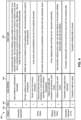
- Chart 400 represents some representative examples of formats for each of these authentication category variables 402 to convey consistent and quantitative definitions in a binary format.
- trust indicators or authenticity assessment values 404 may be associated with a specific authentication assessment category 402, which may define an authentication factor (e.g., transaction assessment, device history, shipping location history, and/or transaction instrument on file) that may be taken into account to predict an authenticity of the transaction 103.
- the trust indicators or authenticity assessment values 404 may define the initial authentication assessment information 14 and/or the condensed authentication assessment indicator 15 in a binary format (e.g., a "0" or a "1") for each authentication assessment category 402.
- each trust indicator or authenticity assessment value 404 associated with each authentication assessment category 402 there may be a corresponding standard value definition 406 and/or additional insight 408 that may be inferred from the trust indicator or authenticity assessment value 404 by the second evaluating entity 110.
- the standard value definition 406 and/or additional insight 408 for may be referred to herein individually or jointly as the assessment category value definition.
- the value definition 406 may be known as “device known from previous transaction,” and the value insight 408 may be known as "known device with predicted/likely low risk of non-authentic transaction.”
- the initial authentication assessment information 14 and/or the condensed authentication assessment indicator 15 may be quantitative and have consistent meaning that may be interpreted in a same way by all parties.
- the parties herein include the first evaluating entity 104 which will share the initial authentication assessment information 14 and/or the condensed authentication assessment indicator 15, and the second evaluating entity 110, which will receive and use the initial authentication assessment information 14 and/or the condensed authentication assessment indicator 15.
- an example chart 500 includes a selectable single authorization assessment indicator value 504 that may be used as or with the first evaluating entity assessment information 14 and/or the condensed authentication assessment indicator 15 ( Fig. 3 ).
- a selectable single authorization assessment indicator value 504 that may be used as or with the first evaluating entity assessment information 14 and/or the condensed authentication assessment indicator 15 ( Fig. 3 ).
- an ordinal value representing the initial authentication assessment information 14 and/or the condensed authentication assessment indicator 15 of authenticity of the transaction 103 ( Fig. 3 ) and/or a quantitative indicator of any other implicit variables or a combination of these can be shared.
- Chart 500 includes some representative examples of formats for two or more different, selectable single authentication assessment indicator values 504 for a number of different authentication categories 502 associated with the transaction 103.
- chart 500 includes examples of different authentication assessment value definitions 506 and/or insights 508 (referred to herein individually or jointly as authentication assessment value definitions) associated with each selectable single authentication assessment indicator value 504.
- a selected single authentication assessment value 504 provided to the second evaluating entity 110 may convey consistent and quantitative definitions.
- each selected single authentication assessment indicator value 504 may be interpreted similarly by the first evaluating entity 104 and the second evaluating entity 110.
- the insights 508 may be used by the second evaluating entity 110 in determining the authentication decision 111 for the transaction 103.
- a value 504 of "1” may have a standard value definition 506 of "location/city where transaction originates is same as known city associated with the user," and the value insight 508 may convey information such as "local transaction, low risk.”
- the value definition 506 and/or value insights 508 provided to the second evaluating entity 110 when receiving a value 504 of "1" for a location assessment category 502 may be known and easily understood based on consistent and quantitative definitions.
- all parties namely the first evaluating entity 104 who will share the initial authentication assessment information 14 and/or the condensed authentication assessment indicator 15, and the second evaluating entity 110 who will receive and use the initial authentication assessment information 14 and/or the condensed authentication assessment indicator 15 that is shared, may interpret the information in the same manner.
- an example method 600 may be used by a computer device 302 ( Fig. 3 ) of a first evaluating entity 104 ( Fig. 3 ) for in-line transaction assessments and/or sharing transaction contextual data.
- the actions of method 300 may be discussed below with reference to the architecture of Fig. 3 .
- method 600 may include receiving at least one transaction.
- Computer device 302 may include an authenticity evaluator component 16 that receives one or more transactions 103, as described above.
- method 600 may include accessing transaction contextual data for the at least one transaction.
- Authenticity evaluator component 16 may access transaction contextual data 12 associated with the transactions 103, as described above.
- method 600 may include applying one or more authenticity decision rules to the transaction contextual data to generate initial authentication assessment information.
- Authenticity evaluator component 16 may apply one or more authenticity decision rules 24 to the transaction contextual data 12 to determine the initial authentication assessment information 14, which may indicate a level of authenticity for the transaction 103 relative to an authenticity threshold level 22.
- the one or more authenticity decision rules 24 may include, for example, a trained machine learning model and/or a set of rules to determine a level of authenticity for the transaction 103 and/or classify the transaction 103.
- the level of authenticity may be used to determine a transaction classification 26 to approve, challenge, or reject the transaction 103.
- the level of authenticity may be one of a low authenticity, a medium authenticity, or a high authenticity relative to the authenticity threshold level 22.
- the level of authenticity may be defined based on the scores 18.
- first evaluating entity can classify transactions 103 into multiple levels of authenticity segments based on predetermined authenticity decision rules 24 and the corresponding initial authentication assessment information 14. For example, transactions 103 from some geolocations, using certain devices may have an assessed high authenticity level; from other geolocations, and with other certain devices may have a medium or a low assessed authenticity level.
- the initial authentication assessment information 14 may include the level of authenticity for the transaction 103.
- the initial authentication assessment information 14 may also include the transaction classification 26.
- the initial authentication assessment information 14 may be inferred data attributes in response to applying one or more authenticity decision rules 24.
- method 600 may include converting the initial authentication assessment information into a condensed authentication assessment indicator having an assessment value selected from a plurality of assessment values based on an assessment value definition.
- authenticity evaluator component 16 is configured to converting the initial authentication assessment information into a condensed authentication assessment indicator having an assessment value selected from a plurality of assessment values based on an assessment value definition, as described above.
- the initial authentication assessment information 14 may include or may be converted into the form of the condensed authentication indicator 15 computed by the authenticity evaluator component 16 using the transaction contextual data 12.
- the condensed authentication indicator 15 may serve as a single condensed indicator.
- Example condensed authentication indicators 15 may include, but are not limited to, indicators 404 ( Fig. 4 ) and/or indicators 504.
- Authenticity evaluator component 16 may incorporate a standard format e.g., normalized variables and normalized variable values, associated with the condensed authentication indicator 15 in order for the condensed authentication indicator 15 to be quantitative and have consistent definitions that may be interpreted in the same way by all parties involved in evaluating the transaction 103.
- a standard format e.g., normalized variables and normalized variable values
- the standard format of the data for the condensed authentication indicator 15 may depend on the channel being used to transmit the condensed authentication indicator 15 and/or an amount of data that may be supported for transmission in that channel.
- one second evaluating entity 110 or transaction network 108 may support a binary signal, while another second evaluating entity 110 or transaction network 108 may support five words.
- Another example may include a second evaluating entity 110 that supports one word and a transaction network processing entity 106 supports a binary signal.
- different channels may support different formats for the condensed authentication indicator 15.
- the standard format of the data for the condensed authentication indicator 15 may depend on a time limit for authorizing the transaction.
- an overall authentication trust indicator may be shared as the condensed authentication indicator 15.
- the condensed authentication indicator 15 may be an ordinal value representing an authenticity level of the transaction 103 or a quantitative indicator of any other implicit variables or a combination of these can be shared.
- the assessment value corresponds to an authentication category variable of a plurality of authentication category variables associated with the transaction, wherein the authentication category variable and the assessment value identify an initial assessed level of authenticity of the transaction.
- the condensed authentication assessment indicator comprises a plurality of different assessment category values associated with a plurality of different authentication category variables, wherein each of the plurality of different authentication category variables correspond to a different one of a plurality of authenticity assessment factors, and wherein each of the plurality of different assessment category values is based on a different one of a plurality of different assessment category value definitions
- the plurality of authenticity assessment factors are selected from a group consisting of a transaction assessment factor, a device history assessment factor, a location assessment factor, a transaction data assessment factor, and a combined factor assessment factor.
- method 600 may include transmitting the condensed authentication assessment information.
- Authenticity evaluator component 16 may transmit the condensed authentication indicator 15 to one or more of an transaction network processing entity 106, a transaction network 108, and/or an second evaluating entity 110, so that the condensed authentication indicator 15 may be used by the second evaluating entity 110 to make a better evaluation of the transaction 103 based on the additional information represented by the condensed authentication indicator 15.
- authenticity evaluator component 16 may establish a secondary data channel 112 from the first evaluating entity 104 or first evaluating entity's authenticity solution provider to the second evaluating entity 110; or establish a data channel from the first evaluating entity or first evaluating entity's authenticity solution provider to a conduit or a trust knowledge broker which may be the same as or integrated with the transaction network processing entity 106 or transaction network 108, which will then be delivered to the second evaluating entity 110 either in a secondary data channel or the primary authorization data channel.
- method 600 may include receiving a transaction authentication decision based in part on the condensed authentication assessment information.
- the second evaluating entity 110 may make a transaction authorization decision 111 to approve the transaction 103, challenge the transaction 103, or reject the transaction 103.
- Authenticity evaluator component 16 may receive the transaction authorization decision 111 from the second evaluating entity 110.
- method 600 may include processing or denying processing the transaction based on the transaction authentication decision.
- authenticity evaluator component 16 may be configured to process or deny processing the transaction 103 based on the transaction authentication decision 111, as described above.
- method 600 may include storing the transaction contextual data, the initial authorization assessment information, the condensed authentication assessment indicator, and/or the transaction authorization decision.
- Authenticity evaluator component 16 may store the received transaction authorization decision 111, the initial authentication assessment information 14, the condensed authentication assessment indicator 15, and/or the transaction contextual data 12 for the transaction 103. The stored information may be used for future modeling and/or training the machine learning model for improving the accuracy of the condensed authentication assessment indicator.
- method 600 may be used by the second evaluating entity 110 to make a better evaluation of the transaction 103 based on the additional information represented by the transaction contextual data, the initial authorization assessment information, and/or the condensed authentication assessment indicator.
- an example process 700 of building machine learning models and/or setting decision rules may be used for determining different levels of risk or authenticity 704, 706, 708 in graph 702.
- the process of building machine learning models and/or setting decision rules 700 may occur offline by, for example, computer device 302 ( Fig. 3 ) or any other computer device.
- First evaluating entities may use stored transaction data (authenticity label, and other features associated with historical transactions and/or historical transaction data) or forecasting data to train machine learning models and/or to set risk or authenticity decision rules 700.
- the machine learning model training and/or setting risk or authenticity decision rules 700 may use part of the historical transactions data stored in a database of first evaluating entities database to forecast eventual authenticity rates to periodically train machine learning models and/or to set decision rules for assessing authenticity of new coming transactions. For example, transactions originating from some certain geolocation with certain devices may be considered to have a low authenticity level based on historical observation. There may be latency in receiving completed and/or true authenticity labels from second evaluating entity 110 for some historical transactions. As such, the machine learning model training and/or setting the authenticity decision rules 700 may use partially obtained authenticity labels to forecast complete authenticity volume for each score bin.
- the historical transactions data used by the machine learning model training and/or setting the authenticity decision rules 700 may include historical transactions with associated original (raw) features, such as, product type, purchase amount, geolocation, etc., and aggregated features, such as, account, device, location, distance, etc.
- the historical transactions data may also include forecasting data (using historical data), associated authenticity decisions, machine learning generated scores, and/or a true authenticity label (e.g., authentic or not-authentic).
- first evaluating entities can have three or more levels of authenticity 704, 706, 708, or rates of non-authenticity, defined (i.e., high authenticity or low risk/low non-authenticity rate, medium authenticity or medium risk/medium non-authenticity rate, low authenticity or high risk/high non-authenticity rate) for all the incoming transactions.
- the level of authenticity may be defined based on the scores 18 ( Fig. 3 ) of the initial authentication assessment information 14 ( Fig. 3 ).
- first evaluating entity can classify transactions 10 into three or more levels of authenticity 704, 706, 708 based on predetermined authenticity decision rules 24 ( Fig. 3 ).
- system may be adjust the non-authenticity rates to define different segments or zones each having a target level of risk and/or rate of non-authenticity.
- a first segment may be defined to have the total non-authentic rate of ⁇ 0.1%.
- a second segment/zone may be set to have the total non-authentic rate being > 0.1% and ⁇ 5 %, while a third zone/segment may be set of have a non-authenticity rate of > 5%, resulting in the three levels of authenticity 704, 706, 708 being determined.
- transactions 103 originating from some geolocations, using certain devices may be associated with high authenticity (or low non-authenticity rates) and hence low risk, e.g., the first segment/zone 704; while transactions 103 originating from other geolocations, and with other certain devices are associated with medium authenticity (or medium non-authenticity rates) and hence medium risk, e.g., second segment/zone 706, or low authenticity (or high non-authenticity rates) and hence high risk, e.g., third segment/zone 708.
- the boundaries of each segment/zone may be adjustable and may be set based on the predicted non-authenticity rates determined using the machine learning generated score or rules.
- FIG. 8 an example computer 800 that may be configured as computer device 302 in accordance with an implementation includes additional component details as compared to Fig. 3 .
- computer 800 may include processor 30 for carrying out processing functions associated with one or more of components and functions described herein.
- processor 30 can include a single or multiple set of processors or multicore processors.
- processor 30 can be implemented as an integrated processing system and/or a distributed processing system.
- Computer 800 may further include memory 32, such as for storing local versions of applications being executed by processor 30.
- Memory 32 can include a type of memory usable by a computer, such as random access memory (RAM), read only memory (ROM), tapes, magnetic discs, optical discs, volatile memory, non-volatile memory, and any combination thereof.
- processor 30 may include and execute operating system 310 ( Fig. 3 ).
- computer 800 may include a communications component 34 that provides for establishing and maintaining communications with one or more parties utilizing hardware, software, and services as described herein.
- Communications component 34 may carry communications between components on computer device 302, as well as between computer device 302 and external devices, such as devices located across a communications network and/or devices serially or locally connected to computer device 302.
- communications component 34 may include one or more buses, and may further include transmit chain components and receive chain components associated with a transmitter and receiver, respectively, operable for interfacing with external devices.
- computer 800 may include a data store 36, which can be any suitable combination of hardware and/or software, that provides for mass storage of information, databases, and programs employed in connection with implementations described herein.
- data store 36 may be a data repository for authenticity evaluator component 16.
- Computer 800 may also include a user interface component 38 operable to receive inputs from a user of computer device 302 and further operable to generate outputs for presentation to the user.
- User interface component 38 may include one or more input devices, including but not limited to a keyboard, a number pad, a mouse, display (e.g., which may be a touch-sensitive display), a navigation key, a function key, a microphone, a voice recognition component, any other mechanism capable of receiving an input from a user, or any combination thereof.
- user interface component 38 may include one or more output devices, including but not limited to a display, a speaker, a haptic feedback mechanism, a printer, any other mechanism capable of presenting an output to a user, or any combination thereof.
- user interface component 38 may transmit and/or receive messages corresponding to the operation of authenticity evaluator component 16.
- processor 30 executes authenticity evaluator component 16, and memory 32 or data store 36 may store it.
- a component may be, but is not limited to being, a process running on a processor, a processor, an object, an executable, a thread of execution, a program, and/or a computer.
- an application running on a computer device and the computer device can be a component.
- One or more components can reside within a process and/or thread of execution and a component may be localized on one computer and/or distributed between two or more computers.
- these components can execute from various computer readable media having various data structures stored thereon.
- the components may communicate by way of local and/or remote processes such as in accordance with a signal having one or more data packets, such as data from one component interacting with another component in a local system, distributed system, and/or across a network such as the Internet with other systems by way of the signal.
- a signal having one or more data packets, such as data from one component interacting with another component in a local system, distributed system, and/or across a network such as the Internet with other systems by way of the signal.
- the term "or” is intended to mean an inclusive “or” rather than an exclusive “or.” That is, unless specified otherwise, or clear from the context, the phrase “X employs A or B” is intended to mean any of the natural inclusive permutations. That is, the phrase “X employs A or B” is satisfied by any of the following instances: X employs A; X employs B; or X employs both A and B.
- the articles “a” and “an” as used in this application and the appended claims should generally be construed to mean “one or more” unless specified otherwise or clear from the context to be directed to a singular form.
- DSP digital signal processor
- ASIC application specific integrated circuit
- FPGA field programmable gate array
- a general-purpose processor may be a microprocessor, but, in the alternative, the processor may be any conventional processor, controller, microcontroller, or state machine.
- a processor may also be implemented as a combination of computer devices, e.g., a combination of a DSP and a microprocessor, a plurality of microprocessors, one or more microprocessors in conjunction with a DSP core, or any other such configuration. Additionally, at least one processor may comprise one or more components operable to perform one or more of the steps and/or actions described above.
- a software module may reside in RAM memory, flash memory, ROM memory, EPROM memory, EEPROM memory, registers, a hard disk, a removable disk, a CD-ROM, or any other form of storage medium known in the art.
- An exemplary storage medium may be coupled to the processor, such that the processor can read information from, and write information to, the storage medium.
- the storage medium may be integral to the processor.
- the processor and the storage medium may reside in an ASIC. Additionally, the ASIC may reside in a user terminal.
- processor and the storage medium may reside as discrete components in a user terminal. Additionally, in some implementations, the steps and/or actions of a method or algorithm may reside as one or any combination or set of codes and/or instructions on a machine readable medium and/or computer readable medium, which may be incorporated into a computer program product.
- the functions described may be implemented in hardware, software, firmware, or any combination thereof. If implemented in software, the functions may be stored or transmitted as one or more instructions or code on a computer-readable medium.
- Computer-readable media includes both computer storage media and communication media including any medium that facilitates transfer of a computer program from one place to another.
- a storage medium may be any available media that can be accessed by a computer.
- such computer-readable media can comprise RAM, ROM, EEPROM, CD-ROM or other optical disk storage, magnetic disk storage or other magnetic storage devices, or any other medium that can be used to store desired program code in the form of instructions or data structures and that can be accessed by a computer.
- Disk and disc includes compact disc (CD), laser disc, optical disc, digital versatile disc (DVD), floppy disk and Blu-ray disc where disks usually reproduce data magnetically, while discs usually reproduce data optically with lasers. Combinations of the above should also be included within the scope of computer-readable media.
Landscapes
- Business, Economics & Management (AREA)
- Engineering & Computer Science (AREA)
- Accounting & Taxation (AREA)
- Computer Security & Cryptography (AREA)
- Theoretical Computer Science (AREA)
- General Physics & Mathematics (AREA)
- Physics & Mathematics (AREA)
- Finance (AREA)
- General Business, Economics & Management (AREA)
- Strategic Management (AREA)
- Software Systems (AREA)
- Computer Hardware Design (AREA)
- General Engineering & Computer Science (AREA)
- Development Economics (AREA)
- Economics (AREA)
- Computer Networks & Wireless Communication (AREA)
- Computing Systems (AREA)
- Signal Processing (AREA)
- Financial Or Insurance-Related Operations Such As Payment And Settlement (AREA)
Description
- The present disclosure relates to providing security in a digital network, and more particularly, to authenticating an electronic transaction.
- Non-authentic transactions or transactions having non-authentic or invalid data are known to occur within an electronic network. Conventionally, each entity involved in the electronic transaction may attempt to evaluate transaction authenticity based on the information the entity has available. Some parties may outsource authenticity detection to third party providers. However, the ability of any entity to determine whether a transaction is authentic may be limited.
- US patent application
US2016/26010 is further prior art. - Thus, there is a need in the art for improvements in authenticating an electronic transaction in a transaction network.
- The following presents a simplified summary of one or more implementations of the present disclosure in order to provide a basic understanding of such implementations. This summary is not an extensive overview of all contemplated implementations, and is intended to neither identify key or critical elements of all implementations nor delineate the scope of any or all implementations. Its sole purpose is to present some concepts of one or more implementations of the present disclosure in a simplified form as a prelude to the more detailed description that is presented later.
- The invention is defined by the appended claims.
- One example implementation relates to a computer device. The computer device may include a memory to store data and instructions; at least one processor configured to communicate with the memory; an operating system in communication with the memory and the at least one processor, wherein the operating system is operable to: receive a transaction; access transaction contextual data for the transaction; apply one or more authentication decision rules to the transaction contextual data to determine initial authentication assessment information for the transaction; convert the initial authentication assessment information into a condensed authentication assessment indicator having an assessment value selected from a plurality of assessment values based on an assessment value definition; transmit the condensed authentication assessment indicator for the transaction; receive a transaction authentication decision based in part on the condensed authentication assessment indicator; and process or deny processing the transaction based on the transaction authentication decision.
- Another example implementation relates to a method of securing electronic transactions in a computing network, comprising: receiving a transaction; accessing transaction contextual data for the transaction; applying one or more authentication decision rules to the transaction contextual data to determine initial authentication assessment information for the transaction; converting the initial authentication assessment information into a condensed authentication assessment indicator having an assessment value selected from a plurality of assessment values based on an assessment value definition; transmitting the condensed authentication assessment indicator for the transaction; receiving a transaction authentication decision based in part on the condensed authentication assessment indicator; and processing or denying the processing of the transaction based on the transaction authentication decision.
- Another example implementation relates to a computer-readable medium comprising stored instructions executable by a processor to secure electronic transactions in a computing network, comprising instructions executable to: receive a transaction; access transaction contextual data for the transaction; apply one or more authentication decision rules to the transaction contextual data to determine initial authentication assessment information for the transaction; convert the initial authentication assessment information into a condensed authentication assessment indicator having an assessment value selected from a plurality of assessment values based on an assessment value definition; transmit the condensed authentication assessment indicator for the transaction; receive a transaction authentication decision based in part on the condensed authentication assessment indicator; and process or deny processing the transaction based on the transaction authentication decision.
- Additional advantages and novel features relating to implementations of the present disclosure will be set forth in part in the description that follows, and in part will become more apparent to those skilled in the art upon examination of the following or upon learning by practice thereof.
- In the drawings, where dashed lines may indicate optional components or actions:
-
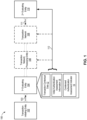
Fig. 1 is a schematic block diagram of an example system for evaluating a transaction in accordance with an implementation of the present disclosure; -
Fig. 2 is an example of graph illustrating different data from a transaction in accordance with an implementation of the present disclosure; -
Fig. 3 is a schematic block diagram of an example computer device for use for evaluating a transaction in accordance with an implementation of the present disclosure; -
Fig. 4 is an example chart illustrating a standard format for a binary signal for the first evaluating entity assessment information in accordance with an implementation of the present disclosure; -
Fig. 5 is an example chart illustrating a standard format for a single indicator value for the first evaluating entity assessment information in accordance with an implementation of the present disclosure; -
Fig. 6 is an example method flow for making transaction assessments in accordance with an implementation of the present disclosure; -
Fig. 7 is an example block diagram illustrating a process of building machine learning models and/or setting decision rules and a graph illustrating different levels of authenticity in accordance with an implementation of the present disclosure; and -
Fig. 8 is a schematic block diagram of an example computer device in accordance with an implementation of the present disclosure. - This disclosure relates to devices and methods for authenticating and/or securing an electronic transaction in an electronic transaction network. The devices and methods may provide improved real-time authentication of the electronic transaction. The devices and methods may share the transaction contextual data acquired by a first evaluating entity, which receives the electronic transaction, with a second evaluating entity, which ultimately approves the transaction, so that the second evaluating entity may increase efficiency in an ability to detect an invalid or non-authentic transaction and/or invalid or non-authentic transaction data. In an implementation, the transaction may include transaction data, while the transaction contextual data may be additional associated information available to the first evaluating entity, and not typically available to the second evaluating entity. As such, the sharing of the transaction contextual data acquired by a first evaluating entity allows the second evaluating entity to make a better evaluation of the transaction based on the additional information represented by the transaction contextual information from the first evaluating entity. As a result, the devices and methods of the present disclosure provide an increase in efficiency and/or accuracy in validating electronic transactions that are authentic while, at the same time, increasing an efficiency and/or accuracy in identifying invalid or non-authentic electronic transactions. For example, in an electronic transaction processing network that processes millions of electronic transactions per day, removing non-authentic transactions from the network, as described by the present disclosure, may provide dramatic gains in computer processing efficiency, in computer memory resource utilization, and in network communication resource utilization, among other technical gains, by eliminating the unnecessary processing of invalid or non-authentic transactions.
- In an implementation, the transaction contextual data acquired by the first evaluating entity may be analyzed and used to generate initial authentication assessment information, which may be converted into a condensed authentication assessment indicator that is shared with the second evaluating entity. For example, the initial authentication assessment information may be inferred data attributes in response to applying one or more authenticity decision rules to the transaction contextual information. The initial authentication assessment information may include or may then be converted, according to one or more specific assessment value definitions, into the condensed authentication assessment indicator having an assessment variable value selected from a plurality of assessment variable values based on the corresponding assessment value definition. Moreover, the condensed authentication assessment indicator may incorporate a standard format, e.g., normalized variables and normalized variable values, in order for the initial authentication assessment information to be quantitative and have quantitative and consistent information and/or definitions that may be interpreted in the same way by all parties, namely the first evaluating entity that will share the initial authentication assessment information and the second evaluating entity that will accept and use the initial authentication assessment information that is shared.
- In the implementation, the initial authentication assessment information may be used by the second evaluating entity to make a transaction decision by using the additional information (e.g., relative to the transaction data of the transaction, or other information about the transaction typically available to the second evaluating entity) represented by the initial authentication assessment information. Thus, the present disclosure may improve accuracy and efficiency in evaluating and approving transactions in an electronic network.
- Referring now to
Fig. 1 , illustrated is a schematic block diagram of anexample system 100 for evaluating an electronic transaction for authenticity, e.g., in order to detect an invalid or non-authentic electronic transaction. For example, a transaction-initiatingentity 102, such as a user computer device, may generate anelectronic transaction 103 with the first evaluatingentity 104, such as an entity computer device. For example, theelectronic transaction 103 may include, but is not limited to, one or more sets of transaction data related to an exchange between the transaction-initiatingentity 102 and the first evaluatingentity 104. - In processing the
transaction 103, the first evaluatingentity 104 may collect transactioncontextual data 12 such as, but not limited to, data or attributes different from the data of the of the payment instrument, product, device, Internet Protocol (IP) location, and/or device. The first evaluatingentity 104 may use the transactioncontextual data 12 to evaluate the likelihood of a transaction being non-authentic or including invalid data. When the evaluation returns a high likelihood of authenticity or validity, the first evaluatingentity 104 submits thetransaction 103 to the second evaluating entity for authorization For example, he first evaluatingentity 104 may submit thetransaction 103 through thesystem 100 via a transactionnetwork processing entity 106 and atransaction network 108. The transactionnetwork processing entity 106 may manage or control the routing of thetransaction 103 through thesystem 100 by choosing thetransaction network 108, in some cases from a plurality of different potential transaction networks, and/or based on the destination, e.g., the second evaluatingentity 110. An additional authentication evaluation is done by the second evaluatingentity 110, resulting in anauthentication decision 111 by the second evaluatingentity 110 to either authorize or decline thetransaction 103 submitted by the first evaluatingentity 104. Theauthentication decision 111 of the second evaluatingentity 110 is passed back through thetransaction network 108 and the transaction network processing entity transactionnetwork processing entity 106, and ultimately is received by the first evaluatingentity 104. - Authenticity evaluations done post-first evaluating entity, at the second evaluating entity level, are based on a different data set than the evaluation done at the first evaluating entity level. For example, the different information may include information that only the second evaluating entity has access to, such as but not limited to a transaction history associated with the transaction-initiating
entity 102 or a customer/user thereof, and/or an authentication history associated with the transaction-initiatingentity 102 or a customer/user thereof. - To supplement this information at the second evaluating
entity 110, the devices and methods may share the transactioncontextual data 12 acquired by the first evaluatingentity 104 and/or the initialauthentication assessment information 14 and/or the condensedauthentication assessment indicator 15 for thetransaction 103 with the second evaluatingentity 110 so that the second evaluatingentity 110 may increase efficiency in an ability to detect and block non-authentic or invalid transactions resulting in an increase in the approval of good (e.g., valid, authenticated) transactions. The transactioncontextual data 12, initialauthentication assessment information 14, and/or the condensedauthentication assessment indicator 15 may allow the second evaluatingentity 110 to make a better evaluation of thetransaction 103 based on this additional information. - Sharing this additional transaction
contextual data 12 and/or initialauthentication assessment information 14 and/or the condensedauthentication assessment indicator 15 may be achieved by establishing asecondary data channel 112 from the first evaluatingentity 104 or first evaluating entity's authenticity solution provider to the second evaluatingentity 110; or establishing adata channel 112 from the first evaluatingentity 104 or first evaluating entity's authenticity solution provider to a conduit or a trust knowledge broker which may be the same as or integrated with the transactionnetwork processing entity 106 ortransaction network 108, which will then be delivered to the second evaluatingentity 110 either in asecondary data channel 112 or the primary authorization data channel used by thetransaction 103 andauthentication decision 111. - In one example implementation, the electronic transaction may be a purchase transaction by a customer with a merchant. For instance, in a non-limiting implementation, the transaction may be a card-not-present transaction with a merchant conducted via a website of the merchant. In this case, the transaction may be forwarded from the website to the merchant. In a purchase transaction, particularly a card-not-present online transaction, the merchant may collect transaction contextual data such as, but not limited to, attributes of the payment instrument (e.g., account number, expiration date, security code, address information), customer information (e.g., customer name associated with the payment instrument), product identification information, transaction-initiating device information (e.g., device identification information, device Internet Protocol (IP) address, device geographic location), customer/cardholder location information (e.g., home address), customer details (e.g., login identity, e-mail address, and/or telephone number), product details (e.g., product type, profit margin, and/or revocability), location (e.g., IP geolocation, device geolocation, and/or shipping address), device fingerprinting (e.g., operating system (OS) configuration, hardware configuration, browser or device configuration), and/or any other information related to or identifying the customer, the payment instrument, the goods/services involved in the transaction, and/or the computer devices involved in the transaction. The merchant may use the transaction contextual data to evaluate the likelihood of a transaction being authentic. When the merchant evaluation returns likelihood of authenticity above an authenticity threshold, the merchant submits the transaction to an issuing bank for authorization via, for example, a payment processor, such as an acquiring processor, and via a transaction network. The issuing bank is a bank associated with the payment instrument identified in the transaction contextual data. An additional authentication evaluation is done by the issuing bank, which may be combined with a determination of available credit and/or credit rating associated with the customer, etc., resulting in a decision by the issuing bank to either authorize or decline the transaction submission by the merchant. Authenticity evaluations done post-merchant, at the issuing bank level, are based on a different data set than the evaluation done at merchant level For example the issuing bank has access to the cardholder's purchase history and credit history but is not able to utilize the transaction contextual data a first evaluating entity collects. Further, the issuing bank may have access to the complete cardholder purchase and/or credit history, debt status, address of the card holder used for billing, and purchase pattern data, among others. The decision of the issuing bank is passed back through transaction network and/or acquiring processor to the merchant, who may then deny or accept the
electronic transaction 103. - Referring now to
Fig. 2 , illustrated therein is anexample graph 200 illustrating different data from a transaction. First evaluatingentity data 202 may include the transactioncontextual data 12 and/or initialauthentication assessment information 14 and/or the condensed authentication assessment indicator 15 (Fig. 1 ) acquired by the first evaluating entity 104 (Fig. 1 ). Further examples of transactioncontextual data 12 may include, but is not limited to, customer details (e.g., login identity, e-mail address, and/or telephone number), product details (e.g., product type, profit margin, and/or revocability), location (e.g., IP geolocation, device geolocation, and/or shipping address), and/or device fingerprinting (e.g., operating system (OS) configuration, hardware configuration, browser or device configuration). Second evaluatingentity data 204 may include data the second evaluating entity 110 (Fig. 1 ) may use when evaluating a transaction. For example, second evaluatingentity data 204 may include, but is not limited to, initiating entity or user transaction and/or authentication history, transaction pattern, data relating to capability of validly completing the transaction, etc. Theintersection data 206 of the first evaluatingentity data 202 and the second evaluatingentity data 204 may include, for example, the certain transaction detail data, and/or initiating entity or user transaction and/or authentication data. - Referring now to
Fig. 3 , illustrated therein is anexample computer device 302 for use by the first evaluatingentity 104 to evaluate one ormore transactions 103 received from customer purchasers 102 (Fig. 1 ).Computer device 302 may access the transactioncontextual data 12 and/or initialauthentication assessment information 14 and/or the condensedauthentication assessment indicator 15 and may generate initialauthentication assessment information 14 for thetransaction 103 using the transactioncontextual data 12.Computer device 302 may transmit the transactioncontextual data 12 and/or initialauthentication assessment information 14 and/or the condensedauthentication assessment indicator 15 to one or more third parties, such as, but not limited to, transaction network processing entity 106 (Fig. 1 ), transaction network 108 (Fig. 1 ), and/or second evaluating entity 110 (Fig. 1 ). As such, the transactioncontextual data 12 and/or initialauthentication assessment information 14 and/or the condensedauthentication assessment indicator 15 may aid the second evaluatingentity 110 in detecting and blocking non-authentic orinvalid transactions 103, resulting in an increase in the approval ofgood transactions 103. -
Computer device 302 may include any mobile or fixed computer device, which may be connectable to a network.Computer device 302 may be, for example, a computer device such as a desktop or laptop or tablet computer, an internet of things (IOT) device, a cellular telephone, a gaming device, a mixed reality or virtual reality device, a music device, a television, a navigation system, a camera, a personal digital assistant (PDA), or a handheld device, or any other computer device having wired and/or wireless connection capability with one or more other devices. -
Computer device 302 may include anoperating system 310 executed byprocessor 30 and/ormemory 32.Memory 32 ofcomputer device 302 may be configured for storing data and/or computer-executable instructions defining and/or associated withoperating system 310, andprocessor 30 may execute such data and/or instructions to instantiateoperating system 310. An example ofmemory 32 can include, but is not limited to, a type of memory usable by a computer, such as random access memory (RAM), read only memory (ROM), tapes, magnetic discs, optical discs, volatile memory, non-volatile memory, and any combination thereof. An example ofprocessor 30 can include, but is not limited to, any processor specially programmed as described herein, including a controller, microcontroller, application specific integrated circuit (ASIC), field programmable gate array (FPGA), system on chip (SoC), or other programmable logic or state machine. -
Operating system 310 may include anauthenticity evaluator component 16 that receives one ormore transactions 103. Thetransactions 103 may be, for example, but are not limited to, a credit card transaction. In a non-limiting implementation, thetransactions 103 may be a card-not-present transaction with a merchant conducted via a website of the merchant. -
Authenticity evaluator component 16 may access transactioncontextual data 12 associated with thetransactions 103. Transactioncontextual data 12 may include, but is not limited to, customer details (e.g., login identity, e-mail address, and/or telephone number), product details (e.g., product type, profit margin, and/or revocability), location (e.g., IP geolocation, device geolocation, and/or shipping address), and/or device fingerprinting (e.g., operating system (OS) configuration, hardware configuration, browser or device configuration).Authenticity evaluator component 16 may generate initialauthentication assessment information 14 and/or the condensedauthentication assessment indicator 15 from the transactioncontextual data 12 associated with thetransactions 103. -
Authenticity evaluator component 16 may transmit the transactioncontextual data 12 and/or initialauthentication assessment information 14 and/or the condensedauthentication assessment indicator 15 to one or more of an transactionnetwork processing entity 106, atransaction network 108, and/or an second evaluatingentity 110, so that the transactioncontextual data 12 and/or initialauthentication assessment information 14 and/or the condensedauthentication assessment indicator 15 may be used by the second evaluatingentity 110 to make a better evaluation of thetransaction 103 based on the additional information. - Sharing this additional transaction
contextual data 12 may be achieved by establishing asecondary data channel 112 from the first evaluatingentity 104 or first evaluating entity's authenticity solution provider to the second evaluatingentity 110; or establishing a data channel from the 104 first evaluating entity or first evaluating entity's authenticity solution provider to a conduit or a trust knowledge broker which may be the same as or integrated with the transactionnetwork processing entity 106 ortransaction network 108, which will then be deliver to the second evaluatingentity 110 either in a secondary data channel or the primary authorization data channel. - Each of these methods may provide varied level of flexibility for the amount and format of data that may be transmitted. Where available, the transaction
contextual data 12 may be transmitted in the original and/or raw form, such as, IP address and/or e-mail ID may be shared. Second evaluatingentity 110 will then have to use this raw data as inputs into their assessment methodologies. However, there may be difficulties in sharing raw data attributes since raw data attributes poses risk on privacy and/or competitive data between first evaluatingentities 104; technical ability of the system may not support accepting and processing the additional raw attributes; and/or the channel used for transmitting may be constrained on amount and format of data. - To solve for such constrained environments,
authenticity evaluator component 16 may generate initialauthentication assessment information 14 and/or condensedauthentication assessment indicator 15 to share from the first evaluatingentity 104 to one or more of an transactionnetwork processing entity 106, atransaction network 108, and/or an second evaluatingentity 110. The initialauthentication assessment information 14 and/or the condensedauthentication assessment indicator 15 may be inferred data attributes in response to applying one or more authenticity decision rules 24 to the transactioncontextual data 12. -
Authenticity evaluator component 16 may apply one or more authenticity decision rules 24 to the transactioncontextual data 12 to determine a level of authenticity for thetransaction 103 relative to anauthenticity threshold level 22. The one or more authenticity decision rules 24 may include, for example, a trained machine learning model and/or a set of rules to determine a level of authenticity for thetransaction 103 and/or to classify thetransaction 103. For example, the level of authenticity may be one of a low authenticity, a medium authenticity, or a high authenticity relative to theauthenticity threshold level 22. With machine learning models, the level of authenticity may be defined based on one or more condensedauthentication assessment indicators 15 of the initialauthentication assessment information 14. The level of authenticity may be used to determine atransaction classification 26 to approve, challenge, or reject thetransaction 103. - The initial
authentication assessment information 14 may include or be converted into the form of the condensedauthentication assessment indicator 15 computed by theauthenticity evaluator component 16 using the transactioncontextual data 12. The condensedauthentication assessment indicator 15 may serve as a single condensed indicator of inferred inferences, such as country/location of the device of the transaction-initiatingentity 102 in reference to the country/location of the transaction-initiatingentity 102 as known to the second evaluatingentity 110, or both of the above, based on thetransaction 103. - Sharing the initial
authentication assessment information 14 may pose a risk of causing inefficiency due to inconsistency. For example, if only a probability score (e.g., assessing a level of authenticity) from first evaluating entity's predictive model is shared, then the initialauthentication assessment information 14 may not be insightful, as second evaluatingentities 110 may need to have visibility on the calibration of the probability score to understand an accuracy of the score. Moreover, information provided may be less insightful to second evaluatingentities 110 if various first evaluatingentities 104 share a probability score, derived by various types of different models with varying levels of accuracy. Another risk may include a first evaluating entity sharing an additional confidence in any attribute of the initialauthorization assessment information 14, such as, low, medium or high assessed level of authenticity. Questions may be raised regarding 'how low is low' or vice versa and may relate to varying interpretations level by the second evaluatingentities 110. - As such,
authenticity evaluator component 16 of a first evaluatingentity 104 may perform acalibration process 20 on the initialauthentication assessment information 14 for consistency. The authenticity level may be visible for all parties based on accumulated data. Thecalibration process 20 may make adjustments to minimize and/or remove errors in the authenticity level and/or any errors in the initialauthentication assessment information 14. During thecalibration process 20,authenticity evaluator component 16 may incorporate a standard format, e.g., normalized variables and normalized variable values, for the initialauthentication assessment information 14 and/or the condensedauthentication assessment indicator 15 in order for this data to be quantitative and have consistent definitions that may be interpreted in the same way by all parties, namely the first evaluatingentity 104 who will share this information and the second evaluatingentity 110 who will accept and use this information that is shared. - The standard format of the data for the first evaluating
entity assessment information 14 and/or the condensedauthentication assessment indicator 15 may depend on the channel being used to transmit the first evaluatingentity assessment information 14 and/or an amount of data that may be supported for transmission in that channel. In addition, the standard format of the data for the first evaluatingentity assessment information 14 and/or the condensedauthentication assessment indicator 15 may depend on a time limit for authorizing the transaction. Where the scope allows for a binary signal to be transmitted, an overall trust indicator may be shared as the initialauthentication assessment information 14 and/or the condensedauthentication assessment indicator 15. Where the scope allows to share a single indicator variable, an ordinal value representing the initialauthentication assessment information 14 and/or the condensedauthentication assessment indicator 15 of an authenticity level of thetransaction 103 or a quantitative indicator of any other implicit variables or a combination of these can be shared. - Where the scope allows to share a single indicator variable and a description, in addition to the above stated idea for the indicator variable, additional descriptions can be used to share reasons for the authenticity assessment for the
transaction 103 or additional contextual indicators may be included in the initialauthentication assessment information 14. The details in the description may be made free form to help with investigation and understanding or be made ordinal to use as additional data elements for evaluation by the second evaluatingentity 110. - Where the scope allows to share two indicator variables an ordinal value representing the overall assessment of authenticity for the
transaction 103 may be used as one indicator and quantitative or ordinal variables of implicit attributes driving the overall assessment can be shared as the initialauthentication assessment information 14 and/or the condensedauthentication assessment indicator 15. - Where the scope allows to share set of raw data variables not limiting to indicators or flags a standardization can be achieved to not transmit private or competitive data but still transmit actionable insight as the initial
authentication assessment information 14 and/or the condensedauthentication assessment indicator 15. The standardization of the raw data may be achieved by aggregation and categorization of data elements. -
Authenticity evaluator component 16 may transmit the initialauthentication assessment information 14 and/or the condensedauthentication assessment indicator 15 to one or more of an transactionnetwork processing entity 106, atransaction network 108, and/or an issuing 110, so that the first evaluatingentity assessment information 14 may be used by the second evaluatingentity 110 to make a better evaluation of thetransaction 103 based on the additional information represented by the first evaluatingentity assessment information 14 and/or the condensedauthentication assessment indicator 15. - The second evaluating
entity 110 may utilizeprocessor 30 and/ormemory 32 and executeauthenticity determiner 27 to make theauthentication decision 111 to approve thetransaction 103, challenge thetransaction 103, or reject thetransaction 103.Authenticity evaluator component 16 may receive theauthentication decision 111 from the second evaluatingentity 110. - Referring now to
Fig. 4 , illustrated is anexample chart 400 with a binary signal for the initialauthentication assessment information 14 and/or the condensedauthentication assessment indicator 15. Where the scope allows for a binary signal to be transmitted, a single binary value (e.g., an authenticity assessment value or trust indicator or authenticity assessment value 404) will be shared as the initialauthentication assessment information 14 and/or the condensedauthentication assessment indicator 15. The insight shared in initialauthentication assessment information 14 and/or the condensedauthentication assessment indicator 15 may be at the granularity of overall trust indicator of thetransaction 103 or an implicit corresponding authentication data category, also referred to as anauthentication category variable 402, which may be agreed upon as appropriate by all parties involved. Such parties include the first evaluatingentity 104 who will share the initialauthentication assessment information 14 and the second evaluatingentity 110 who will accept and use the initialauthentication assessment information 14 and/or the condensedauthentication assessment indicator 15. Each authorization data category orauthentication category variable 402 may correspond to a different authorization factor that may be taken into account to predict an authenticity of thetransaction 103. -
Chart 400 represents some representative examples of formats for each of theseauthentication category variables 402 to convey consistent and quantitative definitions in a binary format. For example, trust indicators or authenticity assessment values 404 may be associated with a specificauthentication assessment category 402, which may define an authentication factor (e.g., transaction assessment, device history, shipping location history, and/or transaction instrument on file) that may be taken into account to predict an authenticity of thetransaction 103. The trust indicators or authenticity assessment values 404 may define the initialauthentication assessment information 14 and/or the condensedauthentication assessment indicator 15 in a binary format (e.g., a "0" or a "1") for eachauthentication assessment category 402. - For each trust indicator or
authenticity assessment value 404 associated with eachauthentication assessment category 402, there may be a correspondingstandard value definition 406 and/oradditional insight 408 that may be inferred from the trust indicator orauthenticity assessment value 404 by the second evaluatingentity 110. Thestandard value definition 406 and/oradditional insight 408 for may be referred to herein individually or jointly as the assessment category value definition. For example, forauthentication assessment category 402 of "device history," andauthenticity assessment value 404 of "1," thevalue definition 406 may be known as "device known from previous transaction," and thevalue insight 408 may be known as "known device with predicted/likely low risk of non-authentic transaction." By having astandard value definition 406 and/or standardadditional insight 408, the initialauthentication assessment information 14 and/or the condensedauthentication assessment indicator 15 may be quantitative and have consistent meaning that may be interpreted in a same way by all parties. The parties herein include the first evaluatingentity 104 which will share the initialauthentication assessment information 14 and/or the condensedauthentication assessment indicator 15, and the second evaluatingentity 110, which will receive and use the initialauthentication assessment information 14 and/or the condensedauthentication assessment indicator 15. - Referring now to
Fig. 5 , anexample chart 500 includes a selectable single authorizationassessment indicator value 504 that may be used as or with the first evaluatingentity assessment information 14 and/or the condensed authentication assessment indicator 15 (Fig. 3 ). Where the scope allows to share asingle indicator value 504, an ordinal value representing the initialauthentication assessment information 14 and/or the condensedauthentication assessment indicator 15 of authenticity of the transaction 103 (Fig. 3 ) and/or a quantitative indicator of any other implicit variables or a combination of these can be shared. -
Chart 500 includes some representative examples of formats for two or more different, selectable single authentication assessment indicator values 504 for a number ofdifferent authentication categories 502 associated with thetransaction 103. In addition, chart 500 includes examples of different authenticationassessment value definitions 506 and/or insights 508 (referred to herein individually or jointly as authentication assessment value definitions) associated with each selectable single authenticationassessment indicator value 504. As such, a selected singleauthentication assessment value 504 provided to the second evaluatingentity 110 may convey consistent and quantitative definitions. As such, each selected single authenticationassessment indicator value 504 may be interpreted similarly by the first evaluatingentity 104 and the second evaluatingentity 110. Theinsights 508 may be used by the second evaluatingentity 110 in determining theauthentication decision 111 for thetransaction 103. For example, for aauthentication category 502 of "location assessment," avalue 504 of "1" may have astandard value definition 506 of "location/city where transaction originates is same as known city associated with the user," and thevalue insight 508 may convey information such as "local transaction, low risk." As such, thevalue definition 506 and/orvalue insights 508 provided to the second evaluatingentity 110 when receiving avalue 504 of "1" for alocation assessment category 502 may be known and easily understood based on consistent and quantitative definitions. - By having consistent and/or quantitative definitions, all parties, namely the first evaluating
entity 104 who will share the initialauthentication assessment information 14 and/or the condensedauthentication assessment indicator 15, and the second evaluatingentity 110 who will receive and use the initialauthentication assessment information 14 and/or the condensedauthentication assessment indicator 15 that is shared, may interpret the information in the same manner. - Referring now to
Fig. 6 , anexample method 600 may be used by a computer device 302 (Fig. 3 ) of a first evaluating entity 104 (Fig. 3 ) for in-line transaction assessments and/or sharing transaction contextual data. The actions of method 300 may be discussed below with reference to the architecture ofFig. 3 . - At 602,
method 600 may include receiving at least one transaction.Computer device 302 may include anauthenticity evaluator component 16 that receives one ormore transactions 103, as described above. - At 604,
method 600 may include accessing transaction contextual data for the at least one transaction.Authenticity evaluator component 16 may access transactioncontextual data 12 associated with thetransactions 103, as described above. - At 606,
method 600 may include applying one or more authenticity decision rules to the transaction contextual data to generate initial authentication assessment information.Authenticity evaluator component 16 may apply one or more authenticity decision rules 24 to the transactioncontextual data 12 to determine the initialauthentication assessment information 14, which may indicate a level of authenticity for thetransaction 103 relative to anauthenticity threshold level 22. The one or more authenticity decision rules 24 may include, for example, a trained machine learning model and/or a set of rules to determine a level of authenticity for thetransaction 103 and/or classify thetransaction 103. The level of authenticity may be used to determine atransaction classification 26 to approve, challenge, or reject thetransaction 103. - For example, the level of authenticity may be one of a low authenticity, a medium authenticity, or a high authenticity relative to the
authenticity threshold level 22. With machine learning models, the level of authenticity may be defined based on the scores 18. With rules, first evaluating entity can classifytransactions 103 into multiple levels of authenticity segments based on predetermined authenticity decision rules 24 and the corresponding initialauthentication assessment information 14. For example,transactions 103 from some geolocations, using certain devices may have an assessed high authenticity level; from other geolocations, and with other certain devices may have a medium or a low assessed authenticity level. - The initial
authentication assessment information 14 may include the level of authenticity for thetransaction 103. The initialauthentication assessment information 14 may also include thetransaction classification 26. As such, the initialauthentication assessment information 14 may be inferred data attributes in response to applying one or more authenticity decision rules 24. - At 608,
method 600 may include converting the initial authentication assessment information into a condensed authentication assessment indicator having an assessment value selected from a plurality of assessment values based on an assessment value definition. For example, in an aspect,authenticity evaluator component 16 is configured to converting the initial authentication assessment information into a condensed authentication assessment indicator having an assessment value selected from a plurality of assessment values based on an assessment value definition, as described above. - For example, the initial
authentication assessment information 14 may include or may be converted into the form of thecondensed authentication indicator 15 computed by theauthenticity evaluator component 16 using the transactioncontextual data 12. Thecondensed authentication indicator 15 may serve as a single condensed indicator. Example condensedauthentication indicators 15 may include, but are not limited to, indicators 404 (Fig. 4 ) and/orindicators 504. -
Authenticity evaluator component 16 may incorporate a standard format e.g., normalized variables and normalized variable values, associated with thecondensed authentication indicator 15 in order for thecondensed authentication indicator 15 to be quantitative and have consistent definitions that may be interpreted in the same way by all parties involved in evaluating thetransaction 103. - The standard format of the data for the
condensed authentication indicator 15 may depend on the channel being used to transmit thecondensed authentication indicator 15 and/or an amount of data that may be supported for transmission in that channel. For example, one second evaluatingentity 110 ortransaction network 108 may support a binary signal, while another second evaluatingentity 110 ortransaction network 108 may support five words. Another example may include a second evaluatingentity 110 that supports one word and a transactionnetwork processing entity 106 supports a binary signal. As such, different channels may support different formats for thecondensed authentication indicator 15. In addition, the standard format of the data for thecondensed authentication indicator 15 may depend on a time limit for authorizing the transaction. - Where the scope allows for a binary signal to be transmitted, an overall authentication trust indicator may be shared as the
condensed authentication indicator 15. Where the scope allows to share a single indicator variable, thecondensed authentication indicator 15 may be an ordinal value representing an authenticity level of thetransaction 103 or a quantitative indicator of any other implicit variables or a combination of these can be shared. - In some implementations, the assessment value corresponds to an authentication category variable of a plurality of authentication category variables associated with the transaction, wherein the authentication category variable and the assessment value identify an initial assessed level of authenticity of the transaction.
- In some implementations, the condensed authentication assessment indicator comprises a plurality of different assessment category values associated with a plurality of different authentication category variables, wherein each of the plurality of different authentication category variables correspond to a different one of a plurality of authenticity assessment factors, and wherein each of the plurality of different assessment category values is based on a different one of a plurality of different assessment category value definitions
- In some implementations, the plurality of authenticity assessment factors are selected from a group consisting of a transaction assessment factor, a device history assessment factor, a location assessment factor, a transaction data assessment factor, and a combined factor assessment factor.
- At 610,
method 600 may include transmitting the condensed authentication assessment information.Authenticity evaluator component 16 may transmit thecondensed authentication indicator 15 to one or more of an transactionnetwork processing entity 106, atransaction network 108, and/or an second evaluatingentity 110, so that thecondensed authentication indicator 15 may be used by the second evaluatingentity 110 to make a better evaluation of thetransaction 103 based on the additional information represented by thecondensed authentication indicator 15. - For example,
authenticity evaluator component 16 may establish asecondary data channel 112 from the first evaluatingentity 104 or first evaluating entity's authenticity solution provider to the second evaluatingentity 110; or establish a data channel from the first evaluating entity or first evaluating entity's authenticity solution provider to a conduit or a trust knowledge broker which may be the same as or integrated with the transactionnetwork processing entity 106 ortransaction network 108, which will then be delivered to the second evaluatingentity 110 either in a secondary data channel or the primary authorization data channel. - At 612,
method 600 may include receiving a transaction authentication decision based in part on the condensed authentication assessment information. The second evaluatingentity 110 may make atransaction authorization decision 111 to approve thetransaction 103, challenge thetransaction 103, or reject thetransaction 103.Authenticity evaluator component 16 may receive thetransaction authorization decision 111 from the second evaluatingentity 110. - At 614,
method 600 may include processing or denying processing the transaction based on the transaction authentication decision. For example, in an aspect,authenticity evaluator component 16 may be configured to process or deny processing thetransaction 103 based on thetransaction authentication decision 111, as described above. - Optionally, at 616,
method 600 may include storing the transaction contextual data, the initial authorization assessment information, the condensed authentication assessment indicator, and/or the transaction authorization decision.Authenticity evaluator component 16 may store the receivedtransaction authorization decision 111, the initialauthentication assessment information 14, the condensedauthentication assessment indicator 15, and/or the transactioncontextual data 12 for thetransaction 103. The stored information may be used for future modeling and/or training the machine learning model for improving the accuracy of the condensed authentication assessment indicator. - As such,
method 600 may be used by the second evaluatingentity 110 to make a better evaluation of thetransaction 103 based on the additional information represented by the transaction contextual data, the initial authorization assessment information, and/or the condensed authentication assessment indicator. - Referring now to
Fig. 7 , anexample process 700 of building machine learning models and/or setting decision rules may be used for determining different levels of risk orauthenticity graph 702. The process of building machine learning models and/or settingdecision rules 700 may occur offline by, for example, computer device 302 (Fig. 3 ) or any other computer device. - First evaluating entities may use stored transaction data (authenticity label, and other features associated with historical transactions and/or historical transaction data) or forecasting data to train machine learning models and/or to set risk or authenticity decision rules 700. The machine learning model training and/or setting risk or authenticity decision rules 700 may use part of the historical transactions data stored in a database of first evaluating entities database to forecast eventual authenticity rates to periodically train machine learning models and/or to set decision rules for assessing authenticity of new coming transactions. For example, transactions originating from some certain geolocation with certain devices may be considered to have a low authenticity level based on historical observation. There may be latency in receiving completed and/or true authenticity labels from second evaluating
entity 110 for some historical transactions. As such, the machine learning model training and/or setting the authenticity decision rules 700 may use partially obtained authenticity labels to forecast complete authenticity volume for each score bin. - The historical transactions data used by the machine learning model training and/or setting the authenticity decision rules 700 may include historical transactions with associated original (raw) features, such as, product type, purchase amount, geolocation, etc., and aggregated features, such as, account, device, location, distance, etc. The historical transactions data may also include forecasting data (using historical data), associated authenticity decisions, machine learning generated scores, and/or a true authenticity label (e.g., authentic or not-authentic).
- Based on either machine leaning model and/or setting the authenticity decision rules 700, first evaluating entities can have three or more levels of
authenticity Fig. 3 ) of the initial authentication assessment information 14 (Fig. 3 ). - With rules, first evaluating entity can classify transactions 10 into three or more levels of
authenticity Fig. 3 ). For example, system may be adjust the non-authenticity rates to define different segments or zones each having a target level of risk and/or rate of non-authenticity. For example, a first segment may be defined to have the total non-authentic rate of < 0.1%. A second segment/zone may be set to have the total non-authentic rate being > 0.1% and < 5 %, while a third zone/segment may be set of have a non-authenticity rate of > 5%, resulting in the three levels ofauthenticity - For example,
transactions 103 originating from some geolocations, using certain devices may be associated with high authenticity (or low non-authenticity rates) and hence low risk, e.g., the first segment/zone 704; whiletransactions 103 originating from other geolocations, and with other certain devices are associated with medium authenticity (or medium non-authenticity rates) and hence medium risk, e.g., second segment/zone 706, or low authenticity (or high non-authenticity rates) and hence high risk, e.g., third segment/zone 708. The boundaries of each segment/zone may be adjustable and may be set based on the predicted non-authenticity rates determined using the machine learning generated score or rules. - Referring now to
Fig. 8 anexample computer 800 that may be configured ascomputer device 302 in accordance with an implementation includes additional component details as compared toFig. 3 . In one example,computer 800 may includeprocessor 30 for carrying out processing functions associated with one or more of components and functions described herein.Processor 30 can include a single or multiple set of processors or multicore processors. Moreover,processor 30 can be implemented as an integrated processing system and/or a distributed processing system. -
Computer 800 may further includememory 32, such as for storing local versions of applications being executed byprocessor 30.Memory 32 can include a type of memory usable by a computer, such as random access memory (RAM), read only memory (ROM), tapes, magnetic discs, optical discs, volatile memory, non-volatile memory, and any combination thereof. Additionally,processor 30 may include and execute operating system 310 (Fig. 3 ). - Further,
computer 800 may include acommunications component 34 that provides for establishing and maintaining communications with one or more parties utilizing hardware, software, and services as described herein.Communications component 34 may carry communications between components oncomputer device 302, as well as betweencomputer device 302 and external devices, such as devices located across a communications network and/or devices serially or locally connected tocomputer device 302. For example,communications component 34 may include one or more buses, and may further include transmit chain components and receive chain components associated with a transmitter and receiver, respectively, operable for interfacing with external devices. - Additionally,
computer 800 may include adata store 36, which can be any suitable combination of hardware and/or software, that provides for mass storage of information, databases, and programs employed in connection with implementations described herein. For example,data store 36 may be a data repository forauthenticity evaluator component 16. -
Computer 800 may also include a user interface component 38 operable to receive inputs from a user ofcomputer device 302 and further operable to generate outputs for presentation to the user. User interface component 38 may include one or more input devices, including but not limited to a keyboard, a number pad, a mouse, display (e.g., which may be a touch-sensitive display), a navigation key, a function key, a microphone, a voice recognition component, any other mechanism capable of receiving an input from a user, or any combination thereof. Further, user interface component 38 may include one or more output devices, including but not limited to a display, a speaker, a haptic feedback mechanism, a printer, any other mechanism capable of presenting an output to a user, or any combination thereof. - In an implementation, user interface component 38 may transmit and/or receive messages corresponding to the operation of
authenticity evaluator component 16. In addition,processor 30 executesauthenticity evaluator component 16, andmemory 32 ordata store 36 may store it. - As used in this application, the terms "component," "system" and the like are intended to include a computer-related entity, such as but not limited to hardware, firmware, a combination of hardware and software, software, or software in execution. For example, a component may be, but is not limited to being, a process running on a processor, a processor, an object, an executable, a thread of execution, a program, and/or a computer. By way of illustration, both an application running on a computer device and the computer device can be a component. One or more components can reside within a process and/or thread of execution and a component may be localized on one computer and/or distributed between two or more computers. In addition, these components can execute from various computer readable media having various data structures stored thereon. The components may communicate by way of local and/or remote processes such as in accordance with a signal having one or more data packets, such as data from one component interacting with another component in a local system, distributed system, and/or across a network such as the Internet with other systems by way of the signal.
- Moreover, the term "or" is intended to mean an inclusive "or" rather than an exclusive "or." That is, unless specified otherwise, or clear from the context, the phrase "X employs A or B" is intended to mean any of the natural inclusive permutations. That is, the phrase "X employs A or B" is satisfied by any of the following instances: X employs A; X employs B; or X employs both A and B. In addition, the articles "a" and "an" as used in this application and the appended claims should generally be construed to mean "one or more" unless specified otherwise or clear from the context to be directed to a singular form.
- Various implementations or features may have been presented in terms of systems that may include a number of devices, components, modules, and the like. It is to be understood and appreciated that the various systems may include additional devices, components, modules, etc. and/or may not include all of the devices, components, modules etc. discussed in connection with the figures. A combination of these approaches may also be used.
- The various illustrative logics, logical blocks, and actions of methods described in connection with the embodiments disclosed herein may be implemented or performed with a specially-programmed one of a general purpose processor, a digital signal processor (DSP), an application specific integrated circuit (ASIC), a field programmable gate array (FPGA) or other programmable logic device, discrete gate or transistor logic, discrete hardware components, or any combination thereof designed to perform the functions described herein. A general-purpose processor may be a microprocessor, but, in the alternative, the processor may be any conventional processor, controller, microcontroller, or state machine. A processor may also be implemented as a combination of computer devices, e.g., a combination of a DSP and a microprocessor, a plurality of microprocessors, one or more microprocessors in conjunction with a DSP core, or any other such configuration. Additionally, at least one processor may comprise one or more components operable to perform one or more of the steps and/or actions described above.
- Further, the steps and/or actions of a method or algorithm described in connection with the implementations disclosed herein may be embodied directly in hardware, in a software module executed by a processor, or in a combination of the two. A software module may reside in RAM memory, flash memory, ROM memory, EPROM memory, EEPROM memory, registers, a hard disk, a removable disk, a CD-ROM, or any other form of storage medium known in the art. An exemplary storage medium may be coupled to the processor, such that the processor can read information from, and write information to, the storage medium. In the alternative, the storage medium may be integral to the processor. Further, in some implementations, the processor and the storage medium may reside in an ASIC. Additionally, the ASIC may reside in a user terminal. In the alternative, the processor and the storage medium may reside as discrete components in a user terminal. Additionally, in some implementations, the steps and/or actions of a method or algorithm may reside as one or any combination or set of codes and/or instructions on a machine readable medium and/or computer readable medium, which may be incorporated into a computer program product.
- In one or more implementations, the functions described may be implemented in hardware, software, firmware, or any combination thereof. If implemented in software, the functions may be stored or transmitted as one or more instructions or code on a computer-readable medium. Computer-readable media includes both computer storage media and communication media including any medium that facilitates transfer of a computer program from one place to another. A storage medium may be any available media that can be accessed by a computer. By way of example, and not limitation, such computer-readable media can comprise RAM, ROM, EEPROM, CD-ROM or other optical disk storage, magnetic disk storage or other magnetic storage devices, or any other medium that can be used to store desired program code in the form of instructions or data structures and that can be accessed by a computer. Disk and disc, as used herein, includes compact disc (CD), laser disc, optical disc, digital versatile disc (DVD), floppy disk and Blu-ray disc where disks usually reproduce data magnetically, while discs usually reproduce data optically with lasers. Combinations of the above should also be included within the scope of computer-readable media.
- While implementations of the present disclosure have been described in connection with examples thereof, it will be understood by those skilled in the art that variations and modifications of the implementations described above may be made without departing from the scope hereof. Other implementations will be apparent to those skilled in the art from a consideration of the specification or from a practice in accordance with examples disclosed herein.
Claims (15)
- A computer device for securing electronic transactions in a computing network, comprising:a memory to store data and instructions;at least one processor configured to communicate with the memory;an operating system in communication with the memory and the at least one processor,wherein the operating system is operable to:receive a transaction;access transaction contextual data for the transaction;apply one or more authentication decision rules to the transaction contextual data to determine initial authentication assessment information for the transaction;convert the initial authentication assessment information into a condensed authentication assessment indicator having an assessment value selected from a plurality of assessment values based on an assessment value definition;transmit the condensed authentication assessment indicator for the transaction;receive a transaction authentication decision based in part on the condensed authentication assessment indicator; andprocess or deny processing the transaction based on the transaction authentication decision;wherein the condensed authentication assessment indicator incorporates a standard format, in order for the initial authentication assessment information to be quantitative and have quantitative and consistent information and/or definitions that can be interpreted in the same way by all parties.
- The computer device of claim 1, wherein the assessment value corresponds to an authentication category variable of a plurality of authentication category variables associated with the transaction, wherein the authentication category variable and the assessment value identify an initial assessed level of authenticity of the transaction.
- The computer device of claim 1, wherein the assessment value of the condensed authentication assessment indicator comprises a binary value or an ordinal value.
- The computer device of claim 1, wherein the condensed authentication assessment indicator comprises a plurality of different assessment category values associated with a plurality of different authentication category variables, wherein each of the plurality of different authentication category variables correspond to a different one of a plurality of authenticity assessment factors, and wherein each of the plurality of different assessment category values is based on a different one of a plurality of different assessment category value definitions.
- The computer device of claim 4, wherein the plurality of authenticity assessment factors are selected from a group consisting of a transaction assessment factor, a device history assessment factor, a location assessment factor, a transaction data assessment factor, and a combined factor assessment factor.
- The computer device of claim 1, wherein a format of the condensed authentication assessment indicator is determined in response to one or more of an amount of data supported by a channel being used to transmit the condensed authentication assessment indicator or a time limit for authorizing the transaction, and wherein the format of the condensed authentication assessment indicator includes one or more of a binary signal, a single indicator variable, a description, two or more indicator variables, or a raw data variable.
- The computer device of claim 1, wherein the operating system is further operable to:
perform a calibration process on the initial authentication assessment information to minimize errors in the initial authentication assessment information, wherein the calibration process converts the initial authentication assessment information into normalized variables and normalized variable values. - The computer device of claim 1, wherein the one or more authentication decision rules are trained via one or more of a machine learning model using historical transaction data.
- The computer device of claim 1, wherein the operating system is further operable to:
transmit the condensed authentication assessment indicator by using a secondary data channel. - A method of securing electronic transactions in a computing network, comprising receiving a transaction;accessing transaction contextual data for the transaction;applying one or more authentication decision rules to the transaction contextual data to determine initial authentication assessment information for the transaction;converting the initial authentication assessment information into a condensed authentication assessment indicator having an assessment value selected from a plurality of assessment values based on an assessment value definition;transmitting the condensed authentication assessment indicator for the transaction;receiving a transaction authentication decision based in part on the condensed authentication assessment indicator; andprocessing or denying the processing of the transaction based on the transaction authentication decision;wherein the condensed authentication assessment indicator incorporates a standard format, in order for the initial authentication assessment information to be quantitative and have quantitative and consistent information and/or definitions that can be interpreted in the same way by all parties.
- The method of claim 10, wherein the assessment value corresponds to an authentication category variable of a plurality of authentication category variables associated with the transaction, wherein the authentication category variable and the assessment value identify an initial assessed level of authenticity of the transaction.
- The method of claim 10, wherein the assessment value of the condensed authentication assessment indicator comprises a binary value or an ordinal value;
wherein the condensed authentication assessment indicator comprises a plurality of different assessment category values associated with a plurality of different authentication category variables, wherein each of the plurality of different authentication category variables correspond to a different one of a plurality of authenticity assessment factors, and wherein each of the plurality of different assessment category values is based on a different one of a plurality of different assessment category value definitions; and wherein the plurality of authenticity assessment factors are selected from a group consisting of a transaction assessment factor, a device history assessment factor, a location assessment factor, a transaction data assessment factor, and a combined factor assessment factor. - The method of claim 10, wherein a format of the condensed authentication assessment indicator is determined in response to one or more of an amount of data supported by a channel being used to transmit the condensed authentication assessment indicator or a time limit for authorizing the transaction, and wherein the format of the condensed authentication assessment indicator includes one or more of a binary signal, a single indicator variable, a description, two or more indicator variables, or a raw data variable.
- The method of claim 10, further comprising:performing a calibration process on the initial authentication assessment information to minimize errors in the initial authentication assessment information, wherein the calibration process converts the initial authentication assessment information into normalized variables and normalized variable values; andwherein the one or more authentication decision rules are trained via one or more of a machine learning model using historical transaction data.
- A computer-readable medium comprising stored instructions executable by a processor to secure electronic transactions in a computing network, comprising instructions executable to perform the method of any of claims 1 to 14.
Applications Claiming Priority (3)
| Application Number | Priority Date | Filing Date | Title |
|---|---|---|---|
| US201962864239P | 2019-06-20 | 2019-06-20 | |
| US16/601,091 US11397950B2 (en) | 2019-06-20 | 2019-10-14 | Systems and methods for authenticating an electronic transaction |
| PCT/US2020/031545 WO2020256847A1 (en) | 2019-06-20 | 2020-05-06 | Systems and methods for authenticating an electronic transaction |
Publications (2)
| Publication Number | Publication Date |
|---|---|
| EP3987740A1 EP3987740A1 (en) | 2022-04-27 |
| EP3987740B1 true EP3987740B1 (en) | 2025-02-19 |
Family
ID=70919043
Family Applications (1)
| Application Number | Title | Priority Date | Filing Date |
|---|---|---|---|
| EP20729351.5A Active EP3987740B1 (en) | 2019-06-20 | 2020-05-06 | Systems and methods for authenticating an electronic transaction |
Country Status (3)
| Country | Link |
|---|---|
| US (1) | US11397950B2 (en) |
| EP (1) | EP3987740B1 (en) |
| WO (1) | WO2020256847A1 (en) |
Families Citing this family (10)
| Publication number | Priority date | Publication date | Assignee | Title |
|---|---|---|---|---|
| US10891621B2 (en) | 2017-08-09 | 2021-01-12 | Microsoft Technology Licensing, Llc | Systems and methods of providing security in an electronic network |
| US11836727B1 (en) * | 2020-12-04 | 2023-12-05 | Wells Fargo Bank, N.A. | Location based transaction authentication |
| US20220276996A1 (en) * | 2021-02-27 | 2022-09-01 | International Business Machines Corporation | Assessment node and token assessment container |
| WO2022236230A1 (en) * | 2021-05-03 | 2022-11-10 | StockX LLC | Machine learning techniques for object authentication |
| US12346909B2 (en) * | 2021-07-27 | 2025-07-01 | Synchrony Bank | Unique device identification system |
| US12437304B2 (en) * | 2022-03-23 | 2025-10-07 | Bank Of America Corporation | Intelligent coordination of transaction processing in a multi-device network |
| US12425850B2 (en) * | 2022-09-23 | 2025-09-23 | At&T Intellectual Property I, L.P. | Telecommuncation network verification for two-factor authentication |
| US12363087B2 (en) * | 2022-11-17 | 2025-07-15 | At&T Intellectual Property I, L.P. | Machine learning model feature sharing for subscriber identity module hijack prevention |
| US20250112961A1 (en) * | 2023-10-02 | 2025-04-03 | Okta, Inc. | Techniques for generating policy recommendations and insights using generative ai |
| US20250371126A1 (en) * | 2024-05-29 | 2025-12-04 | Microsoft Technology Licensing, Llc | App profile verification setup |
Family Cites Families (24)
| Publication number | Priority date | Publication date | Assignee | Title |
|---|---|---|---|---|
| US6721721B1 (en) | 2000-06-15 | 2004-04-13 | International Business Machines Corporation | Virus checking and reporting for computer database search results |
| US7383580B1 (en) | 2002-01-23 | 2008-06-03 | Verizon Corporate Services Group Inc. | Computer virus detection and prevention |
| US7707120B2 (en) * | 2002-04-17 | 2010-04-27 | Visa International Service Association | Mobile account authentication service |
| US7346927B2 (en) | 2002-12-12 | 2008-03-18 | Access Business Group International Llc | System and method for storing and accessing secure data |
| US7765400B2 (en) | 2004-11-08 | 2010-07-27 | Microsoft Corporation | Aggregation of the knowledge base of antivirus software |
| US8139508B1 (en) | 2005-03-31 | 2012-03-20 | James Roskind | Self-forming network |
| US20080195829A1 (en) | 2007-02-13 | 2008-08-14 | Clifton Labs, Inc. | Self-protecting memory device |
| US8307443B2 (en) | 2007-09-28 | 2012-11-06 | Microsoft Corporation | Securing anti-virus software with virtualization |
| US20120130898A1 (en) * | 2009-07-07 | 2012-05-24 | Finsphere, Inc. | Mobile directory number and email verification of financial transactions |
| US8296232B2 (en) | 2010-04-30 | 2012-10-23 | Visa International Service Association | Systems and methods for screening payment transactions |
| US9185095B1 (en) | 2012-03-20 | 2015-11-10 | United Services Automobile Association (Usaa) | Behavioral profiling method and system to authenticate a user |
| US8875267B1 (en) | 2012-06-29 | 2014-10-28 | Emc Corporation | Active learning-based fraud detection in adaptive authentication systems |
| US9741032B2 (en) | 2012-12-18 | 2017-08-22 | Mcafee, Inc. | Security broker |
| US10475029B2 (en) | 2013-03-15 | 2019-11-12 | Allowify Llc | System and method for consumer fraud protection |
| WO2016129390A1 (en) | 2015-02-10 | 2016-08-18 | 株式会社RNAi | Terminal device, database server, and calculation system |
| US9600819B2 (en) | 2015-03-06 | 2017-03-21 | Mastercard International Incorporated | Systems and methods for risk based decisioning |
| US10943181B2 (en) * | 2015-06-26 | 2021-03-09 | Microsoft Technology Licensing, Llc | Just in time classifier training |
| CN108140187A (en) * | 2015-07-14 | 2018-06-08 | 万事达卡国际股份有限公司 | Analytical rules engine for payment processing systems |
| US9818116B2 (en) | 2015-11-11 | 2017-11-14 | Idm Global, Inc. | Systems and methods for detecting relations between unknown merchants and merchants with a known connection to fraud |
| CA2951140A1 (en) * | 2015-12-08 | 2017-06-08 | Lavasoft Software Canada Inc. | Systems and methods for processing electronic payment authorization of online credit card transactions involving virtual credit cards |
| US20180033006A1 (en) | 2016-07-27 | 2018-02-01 | Intuit Inc. | Method and system for identifying and addressing potential fictitious business entity-based fraud |
| US10891621B2 (en) | 2017-08-09 | 2021-01-12 | Microsoft Technology Licensing, Llc | Systems and methods of providing security in an electronic network |
| US10848321B2 (en) * | 2017-11-03 | 2020-11-24 | Mastercard International Incorporated | Systems and methods for authenticating a user based on biometric and device data |
| US11436603B2 (en) * | 2018-10-18 | 2022-09-06 | U.S. Bancorp, National Association | Decision making for on-line transactions |
-
2019
- 2019-10-14 US US16/601,091 patent/US11397950B2/en active Active
-
2020
- 2020-05-06 WO PCT/US2020/031545 patent/WO2020256847A1/en not_active Ceased
- 2020-05-06 EP EP20729351.5A patent/EP3987740B1/en active Active
Also Published As
| Publication number | Publication date |
|---|---|
| EP3987740A1 (en) | 2022-04-27 |
| WO2020256847A1 (en) | 2020-12-24 |
| US20200402054A1 (en) | 2020-12-24 |
| US11397950B2 (en) | 2022-07-26 |
Similar Documents
| Publication | Publication Date | Title |
|---|---|---|
| US11397950B2 (en) | Systems and methods for authenticating an electronic transaction | |
| US20220188918A1 (en) | System and method for network security based on a user's computer network activity data | |
| US20250225526A1 (en) | Systems and methods for authenticating online users | |
| US12206675B2 (en) | Pre-authorization access request screening | |
| US12548015B2 (en) | System and method for assessing a digital interaction with a digital third party account service | |
| US20250356362A1 (en) | Systems and methods of providing security in an electronic network | |
| US12118552B2 (en) | User profiling based on transaction data associated with a user | |
| US11093908B2 (en) | Routing transactions to a priority processing network based on routing rules | |
| US12423713B2 (en) | Method, system, and computer program product for fraud prevention using deep learning and survival models | |
| BR112021004234A2 (en) | aggregation and authenticated access database platform | |
| US12294606B2 (en) | Techniques for determining legitimacy of email addresses for online access control | |
| AU2025200473A1 (en) | Systems and methods for authenticating online users in regulated environments | |
| US20210192641A1 (en) | System, Method, and Computer Program Product for Determining Correspondence of Non-Indexed Records | |
| AU2025200492A1 (en) | Systems and methods for authenticating online users with an access control server | |
| WO2022113058A1 (en) | Method for generating transferable tranches | |
| AU2025200545A1 (en) | Systems and methods for authenticating online users | |
| AU2019204415A1 (en) | Systems and methods for authenticating online users | |
| US11836767B1 (en) | Community-based digital transaction authentication | |
| US11748807B1 (en) | Community-based digital transaction authentication | |
| US10984422B2 (en) | Track bank chargeback sensitivity using disproportional risk level sampling design | |
| CN121961782A (en) | Contract processing method, device, equipment, medium and program based on blockchain | |
| WO2026015149A1 (en) | Risk assessment techniques based on dynamic data selection |
Legal Events
| Date | Code | Title | Description |
|---|---|---|---|
| STAA | Information on the status of an ep patent application or granted ep patent |
Free format text: STATUS: UNKNOWN |
|
| STAA | Information on the status of an ep patent application or granted ep patent |
Free format text: STATUS: THE INTERNATIONAL PUBLICATION HAS BEEN MADE |
|
| PUAI | Public reference made under article 153(3) epc to a published international application that has entered the european phase |
Free format text: ORIGINAL CODE: 0009012 |
|
| STAA | Information on the status of an ep patent application or granted ep patent |
Free format text: STATUS: REQUEST FOR EXAMINATION WAS MADE |
|
| 17P | Request for examination filed |
Effective date: 20211118 |
|
| AK | Designated contracting states |
Kind code of ref document: A1 Designated state(s): AL AT BE BG CH CY CZ DE DK EE ES FI FR GB GR HR HU IE IS IT LI LT LU LV MC MK MT NL NO PL PT RO RS SE SI SK SM TR |
|
| DAV | Request for validation of the european patent (deleted) | ||
| DAX | Request for extension of the european patent (deleted) | ||
| REG | Reference to a national code |
Ref country code: DE Ref legal event code: R079 Free format text: PREVIOUS MAIN CLASS: H04L0029060000 Ipc: H04L0009400000 Ref country code: DE Ref legal event code: R079 Ref document number: 602020046298 Country of ref document: DE Free format text: PREVIOUS MAIN CLASS: H04L0029060000 Ipc: H04L0009400000 |
|
| GRAP | Despatch of communication of intention to grant a patent |
Free format text: ORIGINAL CODE: EPIDOSNIGR1 |
|
| STAA | Information on the status of an ep patent application or granted ep patent |
Free format text: STATUS: GRANT OF PATENT IS INTENDED |
|
| INTG | Intention to grant announced |
Effective date: 20240917 |
|
| RIC1 | Information provided on ipc code assigned before grant |
Ipc: G06Q 20/40 20120101ALI20240906BHEP Ipc: G06Q 20/36 20120101ALI20240906BHEP Ipc: G06F 21/55 20130101ALI20240906BHEP Ipc: G06F 21/50 20130101ALI20240906BHEP Ipc: H04L 9/40 20220101AFI20240906BHEP |
|
| P01 | Opt-out of the competence of the unified patent court (upc) registered |
Free format text: CASE NUMBER: APP_54324/2024 Effective date: 20241002 |
|
| GRAS | Grant fee paid |
Free format text: ORIGINAL CODE: EPIDOSNIGR3 |
|
| GRAA | (expected) grant |
Free format text: ORIGINAL CODE: 0009210 |
|
| STAA | Information on the status of an ep patent application or granted ep patent |
Free format text: STATUS: THE PATENT HAS BEEN GRANTED |
|
| AK | Designated contracting states |
Kind code of ref document: B1 Designated state(s): AL AT BE BG CH CY CZ DE DK EE ES FI FR GB GR HR HU IE IS IT LI LT LU LV MC MK MT NL NO PL PT RO RS SE SI SK SM TR |
|
| REG | Reference to a national code |
Ref country code: GB Ref legal event code: FG4D |
|
| REG | Reference to a national code |
Ref country code: CH Ref legal event code: EP |
|
| REG | Reference to a national code |
Ref country code: DE Ref legal event code: R096 Ref document number: 602020046298 Country of ref document: DE |
|
| REG | Reference to a national code |
Ref country code: IE Ref legal event code: FG4D |
|
| PGFP | Annual fee paid to national office [announced via postgrant information from national office to epo] |
Ref country code: NL Payment date: 20250423 Year of fee payment: 6 |
|
| REG | Reference to a national code |
Ref country code: NL Ref legal event code: FP |
|
| PG25 | Lapsed in a contracting state [announced via postgrant information from national office to epo] |
Ref country code: RS Free format text: LAPSE BECAUSE OF FAILURE TO SUBMIT A TRANSLATION OF THE DESCRIPTION OR TO PAY THE FEE WITHIN THE PRESCRIBED TIME-LIMIT Effective date: 20250519 |
|
| PG25 | Lapsed in a contracting state [announced via postgrant information from national office to epo] |
Ref country code: FI Free format text: LAPSE BECAUSE OF FAILURE TO SUBMIT A TRANSLATION OF THE DESCRIPTION OR TO PAY THE FEE WITHIN THE PRESCRIBED TIME-LIMIT Effective date: 20250219 |
|
| PG25 | Lapsed in a contracting state [announced via postgrant information from national office to epo] |
Ref country code: PL Free format text: LAPSE BECAUSE OF FAILURE TO SUBMIT A TRANSLATION OF THE DESCRIPTION OR TO PAY THE FEE WITHIN THE PRESCRIBED TIME-LIMIT Effective date: 20250219 |
|
| PGFP | Annual fee paid to national office [announced via postgrant information from national office to epo] |
Ref country code: DE Payment date: 20250423 Year of fee payment: 6 |
|
| PG25 | Lapsed in a contracting state [announced via postgrant information from national office to epo] |
Ref country code: ES Free format text: LAPSE BECAUSE OF FAILURE TO SUBMIT A TRANSLATION OF THE DESCRIPTION OR TO PAY THE FEE WITHIN THE PRESCRIBED TIME-LIMIT Effective date: 20250219 |
|
| PGFP | Annual fee paid to national office [announced via postgrant information from national office to epo] |
Ref country code: GB Payment date: 20250423 Year of fee payment: 6 |
|
| REG | Reference to a national code |
Ref country code: LT Ref legal event code: MG9D |
|
| PG25 | Lapsed in a contracting state [announced via postgrant information from national office to epo] |
Ref country code: IS Free format text: LAPSE BECAUSE OF FAILURE TO SUBMIT A TRANSLATION OF THE DESCRIPTION OR TO PAY THE FEE WITHIN THE PRESCRIBED TIME-LIMIT Effective date: 20250619 Ref country code: NO Free format text: LAPSE BECAUSE OF FAILURE TO SUBMIT A TRANSLATION OF THE DESCRIPTION OR TO PAY THE FEE WITHIN THE PRESCRIBED TIME-LIMIT Effective date: 20250519 |
|
| PG25 | Lapsed in a contracting state [announced via postgrant information from national office to epo] |
Ref country code: HR Free format text: LAPSE BECAUSE OF FAILURE TO SUBMIT A TRANSLATION OF THE DESCRIPTION OR TO PAY THE FEE WITHIN THE PRESCRIBED TIME-LIMIT Effective date: 20250219 |
|
| PG25 | Lapsed in a contracting state [announced via postgrant information from national office to epo] |
Ref country code: LV Free format text: LAPSE BECAUSE OF FAILURE TO SUBMIT A TRANSLATION OF THE DESCRIPTION OR TO PAY THE FEE WITHIN THE PRESCRIBED TIME-LIMIT Effective date: 20250219 Ref country code: PT Free format text: LAPSE BECAUSE OF FAILURE TO SUBMIT A TRANSLATION OF THE DESCRIPTION OR TO PAY THE FEE WITHIN THE PRESCRIBED TIME-LIMIT Effective date: 20250620 |
|
| PGFP | Annual fee paid to national office [announced via postgrant information from national office to epo] |
Ref country code: FR Payment date: 20250423 Year of fee payment: 6 |
|
| PG25 | Lapsed in a contracting state [announced via postgrant information from national office to epo] |
Ref country code: GR Free format text: LAPSE BECAUSE OF FAILURE TO SUBMIT A TRANSLATION OF THE DESCRIPTION OR TO PAY THE FEE WITHIN THE PRESCRIBED TIME-LIMIT Effective date: 20250520 Ref country code: BG Free format text: LAPSE BECAUSE OF FAILURE TO SUBMIT A TRANSLATION OF THE DESCRIPTION OR TO PAY THE FEE WITHIN THE PRESCRIBED TIME-LIMIT Effective date: 20250219 |
|
| REG | Reference to a national code |
Ref country code: AT Ref legal event code: MK05 Ref document number: 1769389 Country of ref document: AT Kind code of ref document: T Effective date: 20250219 |
|
| PG25 | Lapsed in a contracting state [announced via postgrant information from national office to epo] |
Ref country code: SE Free format text: LAPSE BECAUSE OF FAILURE TO SUBMIT A TRANSLATION OF THE DESCRIPTION OR TO PAY THE FEE WITHIN THE PRESCRIBED TIME-LIMIT Effective date: 20250219 |
|
| PG25 | Lapsed in a contracting state [announced via postgrant information from national office to epo] |
Ref country code: SM Free format text: LAPSE BECAUSE OF FAILURE TO SUBMIT A TRANSLATION OF THE DESCRIPTION OR TO PAY THE FEE WITHIN THE PRESCRIBED TIME-LIMIT Effective date: 20250219 |
|
| PG25 | Lapsed in a contracting state [announced via postgrant information from national office to epo] |
Ref country code: DK Free format text: LAPSE BECAUSE OF FAILURE TO SUBMIT A TRANSLATION OF THE DESCRIPTION OR TO PAY THE FEE WITHIN THE PRESCRIBED TIME-LIMIT Effective date: 20250219 |
|
| PG25 | Lapsed in a contracting state [announced via postgrant information from national office to epo] |
Ref country code: IT Free format text: LAPSE BECAUSE OF FAILURE TO SUBMIT A TRANSLATION OF THE DESCRIPTION OR TO PAY THE FEE WITHIN THE PRESCRIBED TIME-LIMIT Effective date: 20250219 |
|
| PG25 | Lapsed in a contracting state [announced via postgrant information from national office to epo] |
Ref country code: AT Free format text: LAPSE BECAUSE OF FAILURE TO SUBMIT A TRANSLATION OF THE DESCRIPTION OR TO PAY THE FEE WITHIN THE PRESCRIBED TIME-LIMIT Effective date: 20250219 |
|
| PG25 | Lapsed in a contracting state [announced via postgrant information from national office to epo] |
Ref country code: CZ Free format text: LAPSE BECAUSE OF FAILURE TO SUBMIT A TRANSLATION OF THE DESCRIPTION OR TO PAY THE FEE WITHIN THE PRESCRIBED TIME-LIMIT Effective date: 20250219 Ref country code: EE Free format text: LAPSE BECAUSE OF FAILURE TO SUBMIT A TRANSLATION OF THE DESCRIPTION OR TO PAY THE FEE WITHIN THE PRESCRIBED TIME-LIMIT Effective date: 20250219 |
|
| PG25 | Lapsed in a contracting state [announced via postgrant information from national office to epo] |
Ref country code: RO Free format text: LAPSE BECAUSE OF FAILURE TO SUBMIT A TRANSLATION OF THE DESCRIPTION OR TO PAY THE FEE WITHIN THE PRESCRIBED TIME-LIMIT Effective date: 20250219 |
|
| PG25 | Lapsed in a contracting state [announced via postgrant information from national office to epo] |
Ref country code: SK Free format text: LAPSE BECAUSE OF FAILURE TO SUBMIT A TRANSLATION OF THE DESCRIPTION OR TO PAY THE FEE WITHIN THE PRESCRIBED TIME-LIMIT Effective date: 20250219 |
|
| REG | Reference to a national code |
Ref country code: DE Ref legal event code: R097 Ref document number: 602020046298 Country of ref document: DE |
|
| REG | Reference to a national code |
Ref country code: CH Ref legal event code: H13 Free format text: ST27 STATUS EVENT CODE: U-0-0-H10-H13 (AS PROVIDED BY THE NATIONAL OFFICE) Effective date: 20251223 |
|
| PLBE | No opposition filed within time limit |
Free format text: ORIGINAL CODE: 0009261 |
|
| STAA | Information on the status of an ep patent application or granted ep patent |
Free format text: STATUS: NO OPPOSITION FILED WITHIN TIME LIMIT |
|
| PG25 | Lapsed in a contracting state [announced via postgrant information from national office to epo] |
Ref country code: LU Free format text: LAPSE BECAUSE OF NON-PAYMENT OF DUE FEES Effective date: 20250506 |
|
| PG25 | Lapsed in a contracting state [announced via postgrant information from national office to epo] |
Ref country code: CH Free format text: LAPSE BECAUSE OF NON-PAYMENT OF DUE FEES Effective date: 20250531 |
|
| 26N | No opposition filed |
Effective date: 20251120 |
|
| REG | Reference to a national code |
Ref country code: BE Ref legal event code: MM Effective date: 20250531 |
|
| PG25 | Lapsed in a contracting state [announced via postgrant information from national office to epo] |
Ref country code: MC Free format text: LAPSE BECAUSE OF FAILURE TO SUBMIT A TRANSLATION OF THE DESCRIPTION OR TO PAY THE FEE WITHIN THE PRESCRIBED TIME-LIMIT Effective date: 20250219 |
|
| PG25 | Lapsed in a contracting state [announced via postgrant information from national office to epo] |
Ref country code: IE Free format text: LAPSE BECAUSE OF NON-PAYMENT OF DUE FEES Effective date: 20250506 |
|
| PG25 | Lapsed in a contracting state [announced via postgrant information from national office to epo] |
Ref country code: BE Free format text: LAPSE BECAUSE OF NON-PAYMENT OF DUE FEES Effective date: 20250531 |