EP3985828B1 - Battery turn on circuit and lithium battery - Google Patents
Battery turn on circuit and lithium battery Download PDFInfo
- Publication number
- EP3985828B1 EP3985828B1 EP20904671.3A EP20904671A EP3985828B1 EP 3985828 B1 EP3985828 B1 EP 3985828B1 EP 20904671 A EP20904671 A EP 20904671A EP 3985828 B1 EP3985828 B1 EP 3985828B1
- Authority
- EP
- European Patent Office
- Prior art keywords
- terminal
- communication
- contact
- resistor
- input terminal
- Prior art date
- Legal status (The legal status is an assumption and is not a legal conclusion. Google has not performed a legal analysis and makes no representation as to the accuracy of the status listed.)
- Active
Links
Images
Classifications
-
- H—ELECTRICITY
- H02—GENERATION; CONVERSION OR DISTRIBUTION OF ELECTRIC POWER
- H02J—ELECTRIC POWER NETWORKS; CIRCUIT ARRANGEMENTS OR SYSTEMS FOR SUPPLYING OR DISTRIBUTING ELECTRIC POWER; SYSTEMS FOR STORING ELECTRIC ENERGY
- H02J7/00—Circuit arrangements for charging or discharging batteries or for supplying loads from batteries
- H02J7/855—Circuit arrangements for charging or discharging batteries or for supplying loads from batteries with circuits adapted for supplying loads from the battery
-
- G—PHYSICS
- G06—COMPUTING OR CALCULATING; COUNTING
- G06F—ELECTRIC DIGITAL DATA PROCESSING
- G06F1/00—Details not covered by groups G06F3/00 - G06F13/00 and G06F21/00
- G06F1/26—Power supply means, e.g. regulation thereof
-
- G—PHYSICS
- G06—COMPUTING OR CALCULATING; COUNTING
- G06F—ELECTRIC DIGITAL DATA PROCESSING
- G06F1/00—Details not covered by groups G06F3/00 - G06F13/00 and G06F21/00
- G06F1/26—Power supply means, e.g. regulation thereof
- G06F1/263—Arrangements for using multiple switchable power supplies, e.g. battery and AC
-
- G—PHYSICS
- G06—COMPUTING OR CALCULATING; COUNTING
- G06F—ELECTRIC DIGITAL DATA PROCESSING
- G06F1/00—Details not covered by groups G06F3/00 - G06F13/00 and G06F21/00
- G06F1/26—Power supply means, e.g. regulation thereof
- G06F1/32—Means for saving power
- G06F1/3203—Power management, i.e. event-based initiation of a power-saving mode
- G06F1/3234—Power saving characterised by the action undertaken
- G06F1/3287—Power saving characterised by the action undertaken by switching off individual functional units in the computer system
-
- H—ELECTRICITY
- H02—GENERATION; CONVERSION OR DISTRIBUTION OF ELECTRIC POWER
- H02J—ELECTRIC POWER NETWORKS; CIRCUIT ARRANGEMENTS OR SYSTEMS FOR SUPPLYING OR DISTRIBUTING ELECTRIC POWER; SYSTEMS FOR STORING ELECTRIC ENERGY
- H02J7/00—Circuit arrangements for charging or discharging batteries or for supplying loads from batteries
- H02J7/60—Circuit arrangements for charging or discharging batteries or for supplying loads from batteries including safety or protection arrangements
- H02J7/663—Circuit arrangements for charging or discharging batteries or for supplying loads from batteries including safety or protection arrangements using battery or load disconnect circuits
-
- H—ELECTRICITY
- H02—GENERATION; CONVERSION OR DISTRIBUTION OF ELECTRIC POWER
- H02J—ELECTRIC POWER NETWORKS; CIRCUIT ARRANGEMENTS OR SYSTEMS FOR SUPPLYING OR DISTRIBUTING ELECTRIC POWER; SYSTEMS FOR STORING ELECTRIC ENERGY
- H02J7/00—Circuit arrangements for charging or discharging batteries or for supplying loads from batteries
- H02J7/60—Circuit arrangements for charging or discharging batteries or for supplying loads from batteries including safety or protection arrangements
- H02J7/685—Circuit arrangements for charging or discharging batteries or for supplying loads from batteries including safety or protection arrangements using connection detecting circuits
-
- H—ELECTRICITY
- H03—ELECTRONIC CIRCUITRY
- H03K—PULSE TECHNIQUE
- H03K17/00—Electronic switching or gating, i.e. not by contact-making and –breaking
- H03K17/22—Modifications for ensuring a predetermined initial state when the supply voltage has been applied
- H03K17/223—Modifications for ensuring a predetermined initial state when the supply voltage has been applied in field-effect transistor switches
-
- H—ELECTRICITY
- H03—ELECTRONIC CIRCUITRY
- H03K—PULSE TECHNIQUE
- H03K17/00—Electronic switching or gating, i.e. not by contact-making and –breaking
- H03K17/51—Electronic switching or gating, i.e. not by contact-making and –breaking characterised by the components used
- H03K17/78—Electronic switching or gating, i.e. not by contact-making and –breaking characterised by the components used using opto-electronic devices, i.e. light-emitting and photoelectric devices electrically- or optically-coupled
- H03K17/795—Electronic switching or gating, i.e. not by contact-making and –breaking characterised by the components used using opto-electronic devices, i.e. light-emitting and photoelectric devices electrically- or optically-coupled controlling bipolar transistors
- H03K17/7955—Electronic switching or gating, i.e. not by contact-making and –breaking characterised by the components used using opto-electronic devices, i.e. light-emitting and photoelectric devices electrically- or optically-coupled controlling bipolar transistors using phototransistors
-
- H—ELECTRICITY
- H01—ELECTRIC ELEMENTS
- H01H—ELECTRIC SWITCHES; RELAYS; SELECTORS; EMERGENCY PROTECTIVE DEVICES
- H01H2300/00—Orthogonal indexing scheme relating to electric switches, relays, selectors or emergency protective devices covered by H01H
- H01H2300/022—Application wake up; switches or contacts specially provided for the wake up or standby shift of a circuit
Definitions
- Embodiments of the present invention relate to lithium battery management technologies, and in particular, to a battery switch on circuit and a lithium battery.
- a commonly used method is to power on the entire circuit through a battery charging circuit and a power-on switch circuit.
- this method usually involves a large number of hardware parts and a relatively complex hardware circuit, and the reliability of control signal transmission is relatively poor.
- CN 202133884 U discloses a a power-on circuit for a standby zero power consumption circuit comprising a power supply input module, a relay, a power supply unit, a single chip microcomputer, a triode and a button;
- the power supply input module comprises a live wire and a neutral wire input terminal, with the latter being connected to a common contact of the relay;
- a normally-closed contact of the relay is connected to a button signal terminal, when a relay coil is powered-on, the common contact is connected to the normally-open contact, and when powered-down, the common contact is connected to the normally-closed contact, and the button signal terminal is connected to the button;
- the triode comprises a first terminal, a second terminal and a control terminal, and signals from the triode control terminal can control the conduction or disconnection of the first terminal and second terminal; the first terminal of the triode is connected to a power supply, the second terminal of the triode is connected to a power supply input terminal, and after the power supply input terminal is
- the present invention provides a battery switch on circuit and a lithium battery to realize the normal power-on and communication after an entire circuit is powered off.
- an embodiment of the present invention provides a battery switch on circuit including a communication control module, a relay, a communication control circuit, a switch, and a communication connection terminal, the relay comprising a power input terminal, at least one common contact, at least one first contact, at least one second contact and a coil for controlling connection between the at least one common contact and the at least one first contact and a connection between the at least one common contact and the least one second contact based on the voltage at the power input terminal, wherein
- the communication control circuit includes an optocoupler, a first resistor, and a first metal-oxide-semiconductor (MOS) transistor, and the communication input terminal includes a first communication input terminal and a second communication input terminal; and a first input terminal of the optocoupler is electrically connected to the first communication input terminal, a second input terminal of the optocoupler is electrically connected to the second communication input terminal, a first output terminal of the optocoupler is connected to a power supply terminal, a second output terminal of the optocoupler is electrically connected to a gate of the first MOS transistor, a first electrode of the first MOS transistor is grounded, a second electrode of the first MOS transistor is connected to the control terminal of the switch, a first terminal of the first resistor is grounded, and a second terminal of the first resistor is connected to the second output terminal of the optocoupler.
- MOS metal-oxide-semiconductor
- the communication control circuit further includes a first diode, a positive electrode of the first diode is connected to the second output terminal of the optocoupler, and a negative electrode of the first diode is connected to the gate of the first MOS transistor.
- the communication control circuit further includes a second resistor, a third resistor, a fourth resistor, and a fifth resistor, a first terminal of the second resistor is electrically connected to the first communication input terminal, a second terminal of the second resistor is electrically connected to the first input terminal of the optocoupler, the third resistor is connected between the first input terminal and the second input terminal of the optocoupler, a first terminal of the fourth resistor is connected to the second electrode of the first MOS transistor, a second terminal of the fourth resistor is connected to the control terminal of the switch, a first terminal of the fifth resistor is connected to the second terminal of the fourth resistor, and a second terminal of the fifth resistor is connected to a power supply terminal.
- the switch is a second MOS transistor, a gate of the second MOS transistor is the control terminal of the switch, a first electrode of the second MOS transistor is the first terminal of the switch, and a second electrode of the second MOS transistor is the second terminal of the switch.
- the battery switch on circuit further includes a third MOS transistor, a sixth resistor, and a seventh resistor, where the sixth resistor and the seventh resistor are connected in series, a first terminal of the sixth resistor is connected to the power input terminal, a second terminal of the sixth resistor is connected to a first terminal of the seventh resistor, a second terminal of the seventh resistor is grounded, the second terminal of the sixth resistor is connected to a gate of the third MOS transistor, a first electrode of the third MOS transistor is grounded, a second electrode of the third MOS transistor is connected to a first terminal of the coil of the relay, and the power input terminal is connected to a second terminal of the coil of the relay.
- the battery switch on circuit further includes an eighth resistor and a second diode, where a first terminal of the eighth resistor is connected to the power input terminal, a second terminal of the eighth resistor is connected to the second terminal of the coil of the relay, a positive electrode of the second diode is connected to the second electrode of the third MOS transistor, and a negative electrode of the second diode is connected to the power input terminal.
- the communication connection terminal is a 485 communication connection terminal.
- the at least one common contact includes a first common contact and a second common contact
- the communication connection terminal includes a first communication connection terminal and a second communication connection terminal
- the first communication connection terminal is connected to the first common contact
- the second communication connection terminal is connected to the second common contact
- an embodiment of the present invention provides a lithium battery, including the battery switch on circuit according to the first aspect.
- the present invention provides a battery switch on circuit.
- the circuit includes a communication control module, a relay, a communication control circuit, a switch, and a communication connection terminal.
- the communication control module includes a communication signal terminal.
- the communication signal terminal of the communication control module is connected to a first contact of the relay.
- a common contact of the relay is connected to the communication connection terminal.
- a coil of the relay is powered on to control the connection between the common contact and the first contact and is powered down to control the connection between the common contact and a second contact of the relay.
- the communication connection terminal is configured to connect to an upper computer.
- the switch includes a first terminal, a second terminal, and a control terminal. A signal from the control terminal of the switch is capable of controlling conduction or disconnection between the first terminal and the second terminal.
- the first terminal of the switch is connected to the power supply
- the second terminal of the switch is connected to a power input terminal
- the coil of the relay is powered on.
- the communication control circuit includes a communication input terminal and a control output terminal.
- the signal input terminal is connected to the second contact of the relay, and the control output terminal is connected to the control terminal of the switch.
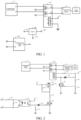
- FIG. 1 is a circuit diagram of a battery switch on circuit provided in Embodiment 1 of the present invention.
- the circuit includes a communication control module 1, a relay 110, a communication control circuit 120, a switch 130, and a communication connection terminal 2.
- the communication control module 1 includes a communication signal terminal.
- the communication signal terminal of the communication control module 1 is connected to a first contact of the relay 110.
- a common contact of the relay 110 is connected to the communication connection terminal 2.
- a coil 111 of the relay 110 is powered on to control the connection between the common contact and the first contact and is powered down to control the connection between the common contact and a second contact of the relay 110.
- the communication connection terminal 2 is configured to connect to an upper computer 3.
- the switch 130 includes a first terminal 131, a second terminal 132, and a control terminal 133.
- a signal from the control terminal 133 of the switch 130 is capable of controlling conduction or disconnection between the first terminal 131 and the second terminal 132.
- the first terminal 131 of the switch 130 is connected to the power supply, the second terminal 132 of the switch 130 is connected to a power input terminal 4, and after the power input terminal 4 is powered on, the coil 111 of the relay 110 is powered on.
- the communication control circuit 120 includes a communication input terminal and a control output terminal E0.
- the signal input terminal is connected to the second contact of the relay 110, and the control output terminal E0 is connected to the control terminal 133 of the switch 130.
- the communication control module 1 may be an RS485 chip.
- the common contact includes a first common contact D1 and a second common contact D2.
- the communication connection terminal 2 includes a first communication connection terminal F1 and a second communication connection terminal F2.
- the first communication connection terminal F1 is connected to the first common contact D1
- the second communication connection terminal F2 is connected to the second common contact D2.
- the communication signal terminal includes a first communication signal terminal A1 and a second communication signal terminal A2.
- the first contact includes a first A contact B1 and a first B contact B2. That the coil 111 of the relay 110 is powered on to control the connection between the common contact and the first contact includes: the first communication signal terminal A1 is connected to the first A contact B1, and the second communication signal terminal A2 is connected to the first B contact B2.
- the communication input terminal includes a first communication input terminal E1 and a second communication input terminal E2.
- the second contact includes a second A contact C1 and a second B contact C2. That the coil 111 of relay 110 is powered down to control the connection between the common contact and the second contact of the relay 110 includes: the first communication input terminal E1 is connected to the second A contact C1, and the second communication input terminal E2 is connected to the second B contact C2.
- the common contact and the second contact of the relay 110 are connected, that is, the first common contact D1 and the second common contact D2 are respectively connected to the second A contact C1 and the second B contact C2, so that the first common contact D1 is connected to the first communication input terminal E1, and the second common contact D2 is connected to the second communication input terminal E2.
- a signal from the upper computer 3 is transmitted to the first communication input terminal E1 and the second communication input terminal E2 of the communication control circuit through the second A contact C1 and the second B contact C2.
- the common contact of relay 110 is disconnected from the second contact, that is, the first common contact D1 and the second common contact D2 are respectively disconnected from the second A contact C1 and the second B contact C2, and the common contact and the first contact are connected, that is, the first common contact D1 and the second common contact D2 are respectively connected to the first A contact B1 and the first B contact B2, so that the first common contact D1 is connected to the first communication signal terminal A1, and the second common contact D2 is connected to the second communication signal terminal A2, to make the communication control module 1 work.
- a signal from the upper computer 3 is transmitted to the first communication signal terminal A1 and the second communication signal terminal A2 of the communication control module 1 through the first A contact B1 and the first B contact B2, to control the normal communication.
- an implementation process of the battery switch on circuit is as follows:
- the battery may supply power for the entire circuit.
- a power key is pressed, or a high-level signal is transmitted from the upper computer 3.
- the upper computer continuously transmits a sequence of 1111111111111, where 1 means a high level.
- the coil 111 of relay 110 is still in the power-down state, so the common contact is connected to the second contact and is disconnected from the first contact, that is, the second A contact C1 of the second contact is connected to the first communication input terminal E1, and the second B contact C2 is connected to the second communication input terminal E2, so that the high-level signal from the upper computer is inputted to the communication control circuit 120 to make the communication control circuit work and to control the communication control circuit 120 to output a first control signal.
- the signal of the control output terminal of the communication control circuit 120 causes the first terminal 131 and the second terminal 132 of the switch 130 to be in conduction with each other, so that a supply voltage is generated at the power input terminal 4, that is, the entire circuit is powered on successfully.
- the supply voltage generated by the power input terminal 4 causes the coil 111 of relay 110 to be powered on and pulled in.
- the power on and pull in of the coil 111 causes the common contact and the second contact of the relay 110 to be disconnected from each other so that the second A contact C1 of the second contact is disconnected from the first communication input terminal E1 and the second B contact C2 is disconnected from the second communication input terminal E2, and also causes the common contact and the first contact of the relay 110 to be connected to each other so that the first A contact B1 of the first contact is connected to the first communication signal terminal A1 and the first B contact B2 is connected to the second communication signal terminal A2.
- the upper computer can communicate with the communication control module normally.
- the technical solution of this embodiment provides a battery switch on circuit.
- the circuit includes a communication control module, a relay, a communication control circuit, a switch, and a communication connection terminal.
- the communication control module includes a communication signal terminal.
- the communication signal terminal of the communication control module is connected to a first contact of the relay.
- a common contact of the relay is connected to the communication connection terminal.
- a coil of the relay is powered on to control the connection between the common contact and the first contact and is powered down to control the connection between the common contact and a second contact of the relay .
- the communication connection terminal is configured to connect to an upper computer.
- the switch includes a first terminal, a second terminal, and a control terminal. A signal from the control terminal of the switch is capable of controlling conduction or disconnection between the first terminal and the second terminal.
- the first terminal of the switch is connected to the power supply
- the second terminal of the switch is connected to a power input terminal
- the coil of the relay is powered on.
- the communication control circuit includes a communication input terminal and a control output terminal.
- the signal input terminal is connected to the second contact of the relay, and the control output terminal is connected to the control terminal of the switch.
- FIG. 2 is a circuit diagram of a battery switch on circuit provided in Embodiment 2 of the present invention.
- the communication control circuit includes an optocoupler 121, a first resistor 122, and a first MOS transistor 123, and the communication input terminal includes a first communication input terminal E1 and a second communication input terminal E2.
- a first input terminal of the optocoupler 121 is electrically connected to the first communication input terminal E1, a second input terminal of the optocoupler 121 is electrically connected to the second communication input terminal E2, a first output terminal of the optocoupler 121 is connected to a power supply terminal 5, a second output terminal of the optocoupler 121 is electrically connected to a gate of the first MOS transistor 123, a first electrode of the first MOS transistor 123 is grounded, a second electrode of the first MOS transistor 123 is connected to the control terminal of the switch 130, a first terminal of the first resistor 122 is grounded, and a second terminal of the first resistor 122 is connected to the second output terminal of the optocoupler 121.
- the optocoupler 121 may be a PC817 optocoupler, and is configured to transmit an electrical signal received by the communication input terminal through electrical-optical-electrical conversion, to ensure the reliability of electrical signal transmission.
- the communication control circuit further includes a first diode 124.
- a positive electrode of the first diode 124 is connected to the second output terminal of the optocoupler 121, and a negative electrode of the first diode 124 is connected to the gate of the first MOS transistor 123.
- the first diode 124 is configured for isolation.
- the communication control circuit further includes a second resistor 125, a third resistor 126, a fourth resistor 127, and a fifth resistor 128.
- a first terminal of the second resistor 125 is electrically connected to the first communication input terminal E1.
- a second terminal of the second resistor 125 is electrically connected to the first input terminal of the optocoupler 121.
- the third resistor 126 is connected between the first input terminal and the second input terminal of the optocoupler 121.
- a first terminal of the fourth resistor 127 is connected to the second electrode of the first MOS transistor 123.
- a second terminal of the fourth resistor 127 is connected to the control terminal of the switch 130.
- a first terminal of the fifth resistor 128 is connected to the second terminal of the fourth resistor 127.
- a second terminal of the fifth resistor 128 is connected to the power supply terminal 4.
- the second resistor 125 and the third resistor 126 are configured for voltage division.
- the first MOS transistor may be an NPN-type MOS transistor, which conducts when a high level signal is inputted.
- the switch 130 is a second MOS transistor.
- a gate of the second MOS transistor is the control terminal of the switch, a first electrode of the second MOS transistor is the first terminal of the switch, and a second electrode of the second MOS transistor is the second terminal of the switch.
- the second MOS transistor may be a PNP-type MOS transistor, which conducts when a low level signal is inputted.
- the process of the communication input terminal causing the switch 130 to conduct after receiving a control signal from the upper computer 3 is as follows.
- the upper computer 3 when power on is required, the upper computer 3 generates a high-level signal.
- the common contact and the second contact of the relay 110 are connected to each other, the high-level signal is transmitted to the communication input terminal through the second contact, and after being subjected to voltage division by the second resistor 125 and the third resistor 126, is then transmitted to the optocoupler 121.
- the optocoupler 121 conducts, and outputs a high-level signal.
- the outputted high-level signal is transmitted to the gate of the first MOS transistor through the third resistor 122 and the first diode 124 to cause the first MOS transistor 123 to conduct, and the first MOS transistor 123 outputs a low-level signal, that is, pulls down the potential at the gate of the second MOS transistor to cause the second MOS transistor 130 to conduct.
- the first electrode of the second MOS transistor 130 is connected to the power supply terminal 5, the first electrode and the second electrode of the second MOS transistor 130 are in conduction with each other, and the second electrode of the second MOS transistor is supplied with power, that is, the power-on is successful.
- the battery switch on circuit further includes a third MOS transistor 140, a sixth resistor 150, and a seventh resistor 160.
- the sixth resistor 150 and the seventh resistor 160 are connected in series.
- a first terminal of the sixth resistor 150 is connected to the power input terminal 4.
- a second terminal of the sixth resistor 150 is connected to a first terminal of the seventh resistor 160.
- a second terminal of the seventh resistor 160 is grounded.
- the second terminal of the sixth resistor 150 is connected to a gate of the third MOS transistor 140.
- a first electrode of the third MOS transistor 140 is grounded.
- a second electrode of the third MOS transistor 140 is connected to the first terminal of the coil 111 of the relay.
- the power input terminal 4 is connected to the second terminal of the coil 111 of the relay.
- the process of pulling in the coil of the relay is as follows: For example, referring to FIG. 1 and FIG. 2 , when the first terminal 131 and the second terminal 132 of switch 130 are in conduction with each other, a supply voltage is generated at the power input terminal 4 which passes through the sixth resistor 150 and the seventh resistor 160 and causes the gate of the third MOS transistor 140 to conduct, so that the coil 111 of the relay is powered on and pulled in.
- the battery switch on circuit further includes an eighth resistor 170 and a second diode 180.
- a first terminal of the eighth resistor 170 is connected to the power input terminal 4.
- a second terminal of the eighth resistor 170 is connected to the second terminal of the coil 111 of the relay.
- a positive electrode of the second diode 180 is connected to the second electrode of the third MOS transistor 140.
- a negative electrode of the second diode 180 is connected to the power input terminal 4.
- the communication connection terminal is a 485 communication connection terminal.
- An implementation process of the battery switch on circuit is as follows: For example, referring to FIG. 1 and FIG. 2 , when the entire circuit needs to be powered on, the upper computer 3 generates a high-level signal. In this case, because the relay 110 is in the power-down state and the common contact and the second contact of the relay 110 are connected to each other, the high-level signal is transmitted to the communication input terminal through the second contact, and after being subjected to voltage division by the second resistor 125 and the third resistor 126, is transmitted to the optocoupler 121. The optocoupler 121 outputs a signal which is still at a high level.
- the signal is then transmitted to the first MOS transistor 123 through the first resistor 122 and the first diode 124, to cause the first MOS transistor 123 to conduct.
- the first MOS transistor 123 conducts, and outputs a low-level signal to causes the second MOS transistor 130 to conduct so as to power on the entire circuit.
- a supply voltage is outputted, that is, a supply voltage is generated at the power input terminal 4.
- the supply voltage passes through the sixth resistor 150 and the seventh resistor 160 and causes the third MOS transistor 140 to conduct.
- the conducting of the third MOS transistor 140 causes the coil 111 of the relay to be powered on and pulled in.
- the power on of the coil 111 causes the common contact to be disconnected from the second contact, and also causes the common contact to be connected to the first contact, so that the first contact is connected to the communication signal terminal of the communication control module 1.
- the communication control module 1 works and performs a normal communication function.
- the foregoing solution can first realize power on of the entire circuit and then realize normal communication by using the communication control module in the case that the entire circuit is powered off.
- An embodiment of the present invention further provides a lithium battery, including the battery switch on circuit according to any embodiment of the present invention.
- the lithium battery may be a rechargeable lithium battery.
- the lithium battery may be applicable to scenarios requiring use of a battery as a power supply, for example, in electric vehicles, aircrafts, or high-speed rails.
Landscapes
- Engineering & Computer Science (AREA)
- Theoretical Computer Science (AREA)
- General Engineering & Computer Science (AREA)
- Power Engineering (AREA)
- Physics & Mathematics (AREA)
- General Physics & Mathematics (AREA)
- Computer Hardware Design (AREA)
- Computing Systems (AREA)
- Charge And Discharge Circuits For Batteries Or The Like (AREA)
- Electronic Switches (AREA)
- Mobile Radio Communication Systems (AREA)
- Transceivers (AREA)
Description
- Embodiments of the present invention relate to lithium battery management technologies, and in particular, to a battery switch on circuit and a lithium battery.
- In battery-powered applications, it is usually necessary to achieve the purpose of low power consumption by power off. Therefore, it is very important to power on the entire circuit in the case of power off.
- A commonly used method is to power on the entire circuit through a battery charging circuit and a power-on switch circuit. However, this method usually involves a large number of hardware parts and a relatively complex hardware circuit, and the reliability of control signal transmission is relatively poor.
-
CN 202133884 U discloses a a power-on circuit for a standby zero power consumption circuit comprising a power supply input module, a relay, a power supply unit, a single chip microcomputer, a triode and a button; the power supply input module comprises a live wire and a neutral wire input terminal, with the latter being connected to a common contact of the relay; a normally-closed contact of the relay is connected to a button signal terminal, when a relay coil is powered-on, the common contact is connected to the normally-open contact, and when powered-down, the common contact is connected to the normally-closed contact, and the button signal terminal is connected to the button; the triode comprises a first terminal, a second terminal and a control terminal, and signals from the triode control terminal can control the conduction or disconnection of the first terminal and second terminal; the first terminal of the triode is connected to a power supply, the second terminal of the triode is connected to a power supply input terminal, and after the power supply input terminal is powered-on, the coil receives electricity; a power supply unit is connected to the normally closed contact of the relay, and when the button is pressed, the power supply unit operates to output voltage to the single chip microcomputer, and the single chip microcomputer uses an enable port to output a control signal to the control terminal of the triode, controlling it to conduct. - The present invention provides a battery switch on circuit and a lithium battery to realize the normal power-on and communication after an entire circuit is powered off.
- In a first aspect, an embodiment of the present invention provides a battery switch on circuit including a communication control module, a relay, a communication control circuit, a switch, and a communication connection terminal, the relay comprising a power input terminal, at least one common contact, at least one first contact, at least one second contact and a coil for controlling connection between the at least one common contact and the at least one first contact and a connection between the at least one common contact and the least one second contact based on the voltage at the power input terminal, wherein
- the communication control module includes at least one communication signal terminal connected to the at least one first contact of the relay, the at least one common contact of the relay is connected to the communication connection terminal, the coil of the relay is powered on by a battery power supply at the power input terminal to control a connection between the common contact and the first contact and is powered down by the power input terminal to control a connection between the common contact and the second contact of the relay, and the communication connection terminal is connected to an upper computer;
- the switch includes a first terminal, a second terminal and a control terminal for controlling conduction or disconnection between the first terminal and the second terminal, wherein the first terminal of the switch is connected to the battery power supply, wherein the second terminal of the switch is connected to the power input terminal, and wherein after the power input terminal is powered on, the coil of the relay is powered on by the battery power supply; and
- the communication control circuit includes at least one communication input terminal and a control output terminal, wherein the at least one communication input terminal is connected to the second contact of the relay, and the control output terminal is connected to the control terminal of the switch, wherein when power on is needed, the switch (130) is configured to receive a signal at the control terminal (133) to cause the first terminal (131) and the second terminal (132) to be in conduction each other.
- Optionally, the communication control circuit includes an optocoupler, a first resistor, and a first metal-oxide-semiconductor (MOS) transistor, and the communication input terminal includes a first communication input terminal and a second communication input terminal; and a first input terminal of the optocoupler is electrically connected to the first communication input terminal, a second input terminal of the optocoupler is electrically connected to the second communication input terminal, a first output terminal of the optocoupler is connected to a power supply terminal, a second output terminal of the optocoupler is electrically connected to a gate of the first MOS transistor, a first electrode of the first MOS transistor is grounded, a second electrode of the first MOS transistor is connected to the control terminal of the switch, a first terminal of the first resistor is grounded, and a second terminal of the first resistor is connected to the second output terminal of the optocoupler.
- Optionally, the communication control circuit further includes a first diode, a positive electrode of the first diode is connected to the second output terminal of the optocoupler, and a negative electrode of the first diode is connected to the gate of the first MOS transistor.
- Optionally, the communication control circuit further includes a second resistor, a third resistor, a fourth resistor, and a fifth resistor, a first terminal of the second resistor is electrically connected to the first communication input terminal, a second terminal of the second resistor is electrically connected to the first input terminal of the optocoupler, the third resistor is connected between the first input terminal and the second input terminal of the optocoupler, a first terminal of the fourth resistor is connected to the second electrode of the first MOS transistor, a second terminal of the fourth resistor is connected to the control terminal of the switch, a first terminal of the fifth resistor is connected to the second terminal of the fourth resistor, and a second terminal of the fifth resistor is connected to a power supply terminal.
- Optionally, the switch is a second MOS transistor, a gate of the second MOS transistor is the control terminal of the switch, a first electrode of the second MOS transistor is the first terminal of the switch, and a second electrode of the second MOS transistor is the second terminal of the switch.
- Optionally, the battery switch on circuit further includes a third MOS transistor, a sixth resistor, and a seventh resistor, where the sixth resistor and the seventh resistor are connected in series, a first terminal of the sixth resistor is connected to the power input terminal, a second terminal of the sixth resistor is connected to a first terminal of the seventh resistor, a second terminal of the seventh resistor is grounded, the second terminal of the sixth resistor is connected to a gate of the third MOS transistor, a first electrode of the third MOS transistor is grounded, a second electrode of the third MOS transistor is connected to a first terminal of the coil of the relay, and the power input terminal is connected to a second terminal of the coil of the relay.
- Optionally, the battery switch on circuit further includes an eighth resistor and a second diode, where a first terminal of the eighth resistor is connected to the power input terminal, a second terminal of the eighth resistor is connected to the second terminal of the coil of the relay, a positive electrode of the second diode is connected to the second electrode of the third MOS transistor, and a negative electrode of the second diode is connected to the power input terminal.
- Optionally, the communication connection terminal is a 485 communication connection terminal.
- Optionally, the at least one common contact includes a first common contact and a second common contact, the communication connection terminal includes a first communication connection terminal and a second communication connection terminal, the first communication connection terminal is connected to the first common contact, and the second communication connection terminal is connected to the second common contact;
- the at least one communication signal terminal includes a first communication signal terminal and a second communication signal terminal, the first contact includes a first A contact and a first B contact, and the coil of the relay being powered on to control the connection between the common contact and the first contact includes: the first communication signal terminal being connected to the first A contact, and the second communication signal terminal being connected to the first B contact; and
- the communication input terminal includes a first communication input terminal and a second communication input terminal, the second contact includes a second A contact and a second B contact, and that the coil of the relay is powered down to control the connection between the common contact and the second contact of the relay includes: the first communication input terminal is connected to the second A contact, and the second communication input terminal is connected to the second B contact.
- In a second aspect, an embodiment of the present invention provides a lithium battery, including the battery switch on circuit according to the first aspect.
- The present invention provides a battery switch on circuit. The circuit includes a communication control module, a relay, a communication control circuit, a switch, and a communication connection terminal. The communication control module includes a communication signal terminal. The communication signal terminal of the communication control module is connected to a first contact of the relay. A common contact of the relay is connected to the communication connection terminal. A coil of the relay is powered on to control the connection between the common contact and the first contact and is powered down to control the connection between the common contact and a second contact of the relay. The communication connection terminal is configured to connect to an upper computer. The switch includes a first terminal, a second terminal, and a control terminal. A signal from the control terminal of the switch is capable of controlling conduction or disconnection between the first terminal and the second terminal. The first terminal of the switch is connected to the power supply, the second terminal of the switch is connected to a power input terminal, and after the power input terminal is powered on, the coil of the relay is powered on. The communication control circuit includes a communication input terminal and a control output terminal. The signal input terminal is connected to the second contact of the relay, and the control output terminal is connected to the control terminal of the switch. It can be seen that the foregoing solution can first realize power on of the entire circuit and then realize normal communication by using the communication control module in the case that the entire circuit is powered off. This solves the problems in the prior art of a large number of hardware parts involved, a relatively complex hardware circuit, and relatively poor reliability of control signal transmission, and realizes an effect of normal power-on and communication after the entire circuit is powered off.
-
-
FIG. 1 is a circuit diagram of a battery switch on circuit inEmbodiment 1 of the present invention; and -
FIG. 2 is a circuit diagram of a battery switch on circuit in Embodiment 2 of the present invention. - The present invention is further described in detail with reference to the drawings and embodiments. It can be understood that the specific embodiments described herein are only used for explaining the present invention, and are not intended to limit the present invention. In addition, it should be noted that for the convenience of description, only some but not all structures related to the present invention are shown in the drawings.
-
FIG. 1 is a circuit diagram of a battery switch on circuit provided inEmbodiment 1 of the present invention. Referring toFIG. 1 , the circuit includes acommunication control module 1, arelay 110, a communication control circuit 120, aswitch 130, and a communication connection terminal 2. - The
communication control module 1 includes a communication signal terminal. The communication signal terminal of thecommunication control module 1 is connected to a first contact of therelay 110. A common contact of therelay 110 is connected to the communication connection terminal 2. Acoil 111 of therelay 110 is powered on to control the connection between the common contact and the first contact and is powered down to control the connection between the common contact and a second contact of therelay 110. The communication connection terminal 2 is configured to connect to an upper computer 3. - The
switch 130 includes afirst terminal 131, asecond terminal 132, and acontrol terminal 133. A signal from thecontrol terminal 133 of theswitch 130 is capable of controlling conduction or disconnection between thefirst terminal 131 and thesecond terminal 132. Thefirst terminal 131 of theswitch 130 is connected to the power supply, thesecond terminal 132 of theswitch 130 is connected to a power input terminal 4, and after the power input terminal 4 is powered on, thecoil 111 of therelay 110 is powered on. - The communication control circuit 120 includes a communication input terminal and a control output terminal E0. The signal input terminal is connected to the second contact of the
relay 110, and the control output terminal E0 is connected to thecontrol terminal 133 of theswitch 130. - The
communication control module 1 may be an RS485 chip. - Optionally, the common contact includes a first common contact D1 and a second common contact D2. The communication connection terminal 2 includes a first communication connection terminal F1 and a second communication connection terminal F2. The first communication connection terminal F1 is connected to the first common contact D1, and the second communication connection terminal F2 is connected to the second common contact D2.
- The communication signal terminal includes a first communication signal terminal A1 and a second communication signal terminal A2. The first contact includes a first A contact B1 and a first B contact B2. That the
coil 111 of therelay 110 is powered on to control the connection between the common contact and the first contact includes: the first communication signal terminal A1 is connected to the first A contact B1, and the second communication signal terminal A2 is connected to the first B contact B2. - The communication input terminal includes a first communication input terminal E1 and a second communication input terminal E2. The second contact includes a second A contact C1 and a second B contact C2. That the
coil 111 ofrelay 110 is powered down to control the connection between the common contact and the second contact of therelay 110 includes: the first communication input terminal E1 is connected to the second A contact C1, and the second communication input terminal E2 is connected to the second B contact C2. - When the
coil 111 of the relay is in a power-down state, the common contact and the second contact of therelay 110 are connected, that is, the first common contact D1 and the second common contact D2 are respectively connected to the second A contact C1 and the second B contact C2, so that the first common contact D1 is connected to the first communication input terminal E1, and the second common contact D2 is connected to the second communication input terminal E2. In this case, a signal from the upper computer 3 is transmitted to the first communication input terminal E1 and the second communication input terminal E2 of the communication control circuit through the second A contact C1 and the second B contact C2. When thecoil 111 of the relay is powered on and pulled in, the common contact ofrelay 110 is disconnected from the second contact, that is, the first common contact D1 and the second common contact D2 are respectively disconnected from the second A contact C1 and the second B contact C2, and the common contact and the first contact are connected, that is, the first common contact D1 and the second common contact D2 are respectively connected to the first A contact B1 and the first B contact B2, so that the first common contact D1 is connected to the first communication signal terminal A1, and the second common contact D2 is connected to the second communication signal terminal A2, to make thecommunication control module 1 work. In this case, a signal from the upper computer 3 is transmitted to the first communication signal terminal A1 and the second communication signal terminal A2 of thecommunication control module 1 through the first A contact B1 and the first B contact B2, to control the normal communication. - In the technical solution of this embodiment, referring to
FIG. 1 , an implementation process of the battery switch on circuit is as follows: For example, the battery may supply power for the entire circuit. When the entire circuit needs to be powered on, a power key is pressed, or a high-level signal is transmitted from the upper computer 3. For example, the upper computer continuously transmits a sequence of 1111111111111, where 1 means a high level. In this case, thecoil 111 ofrelay 110 is still in the power-down state, so the common contact is connected to the second contact and is disconnected from the first contact, that is, the second A contact C1 of the second contact is connected to the first communication input terminal E1, and the second B contact C2 is connected to the second communication input terminal E2, so that the high-level signal from the upper computer is inputted to the communication control circuit 120 to make the communication control circuit work and to control the communication control circuit 120 to output a first control signal. The signal of the control output terminal of the communication control circuit 120 causes thefirst terminal 131 and thesecond terminal 132 of theswitch 130 to be in conduction with each other, so that a supply voltage is generated at the power input terminal 4, that is, the entire circuit is powered on successfully. After the power-on, the supply voltage generated by the power input terminal 4 causes thecoil 111 ofrelay 110 to be powered on and pulled in. The power on and pull in of thecoil 111 causes the common contact and the second contact of therelay 110 to be disconnected from each other so that the second A contact C1 of the second contact is disconnected from the first communication input terminal E1 and the second B contact C2 is disconnected from the second communication input terminal E2, and also causes the common contact and the first contact of therelay 110 to be connected to each other so that the first A contact B1 of the first contact is connected to the first communication signal terminal A1 and the first B contact B2 is connected to the second communication signal terminal A2. In this way, the upper computer can communicate with the communication control module normally. - The technical solution of this embodiment provides a battery switch on circuit. The circuit includes a communication control module, a relay, a communication control circuit, a switch, and a communication connection terminal. The communication control module includes a communication signal terminal. The communication signal terminal of the communication control module is connected to a first contact of the relay. A common contact of the relay is connected to the communication connection terminal. A coil of the relay is powered on to control the connection between the common contact and the first contact and is powered down to control the connection between the common contact and a second contact of the relay . The communication connection terminal is configured to connect to an upper computer. The switch includes a first terminal, a second terminal, and a control terminal. A signal from the control terminal of the switch is capable of controlling conduction or disconnection between the first terminal and the second terminal. The first terminal of the switch is connected to the power supply, the second terminal of the switch is connected to a power input terminal, and after the power input terminal is powered on, the coil of the relay is powered on. The communication control circuit includes a communication input terminal and a control output terminal. The signal input terminal is connected to the second contact of the relay, and the control output terminal is connected to the control terminal of the switch. It can be seen that the foregoing solution can first realize power on of the entire circuit and then realize normal communication by using the communication control module in the case that the entire circuit is powered off. This solves the problems in the prior art of a large number of hardware parts involved, a relatively complex hardware circuit, and relatively poor reliability of control signal transmission, and realizes an effect of normal power-on and communication after the entire circuit is powered off.
-
FIG. 2 is a circuit diagram of a battery switch on circuit provided in Embodiment 2 of the present invention. Based on the foregoing technical solution, referring toFIG. 2 , the communication control circuit includes anoptocoupler 121, a first resistor 122, and a first MOS transistor 123, and the communication input terminal includes a first communication input terminal E1 and a second communication input terminal E2. A first input terminal of theoptocoupler 121 is electrically connected to the first communication input terminal E1, a second input terminal of theoptocoupler 121 is electrically connected to the second communication input terminal E2, a first output terminal of theoptocoupler 121 is connected to a power supply terminal 5, a second output terminal of theoptocoupler 121 is electrically connected to a gate of the first MOS transistor 123, a first electrode of the first MOS transistor 123 is grounded, a second electrode of the first MOS transistor 123 is connected to the control terminal of theswitch 130, a first terminal of the first resistor 122 is grounded, and a second terminal of the first resistor 122 is connected to the second output terminal of theoptocoupler 121. - The
optocoupler 121 may be a PC817 optocoupler, and is configured to transmit an electrical signal received by the communication input terminal through electrical-optical-electrical conversion, to ensure the reliability of electrical signal transmission. - Optionally, the communication control circuit further includes a first diode 124. A positive electrode of the first diode 124 is connected to the second output terminal of the
optocoupler 121, and a negative electrode of the first diode 124 is connected to the gate of the first MOS transistor 123. - The first diode 124 is configured for isolation.
- Optionally, the communication control circuit further includes a second resistor 125, a third resistor 126, a fourth resistor 127, and a
fifth resistor 128. A first terminal of the second resistor 125 is electrically connected to the first communication input terminal E1. A second terminal of the second resistor 125 is electrically connected to the first input terminal of theoptocoupler 121. The third resistor 126 is connected between the first input terminal and the second input terminal of theoptocoupler 121. A first terminal of the fourth resistor 127 is connected to the second electrode of the first MOS transistor 123. A second terminal of the fourth resistor 127 is connected to the control terminal of theswitch 130. A first terminal of thefifth resistor 128 is connected to the second terminal of the fourth resistor 127. A second terminal of thefifth resistor 128 is connected to the power supply terminal 4. - The second resistor 125 and the third resistor 126 are configured for voltage division. The first MOS transistor may be an NPN-type MOS transistor, which conducts when a high level signal is inputted.
- Optionally, the
switch 130 is a second MOS transistor. A gate of the second MOS transistor is the control terminal of the switch, a first electrode of the second MOS transistor is the first terminal of the switch, and a second electrode of the second MOS transistor is the second terminal of the switch. - The second MOS transistor may be a PNP-type MOS transistor, which conducts when a low level signal is inputted.
- For example, the process of the communication input terminal causing the
switch 130 to conduct after receiving a control signal from the upper computer 3 is as follows. Referring toFIG. 2 , when power on is required, the upper computer 3 generates a high-level signal. In this case, the common contact and the second contact of therelay 110 are connected to each other, the high-level signal is transmitted to the communication input terminal through the second contact, and after being subjected to voltage division by the second resistor 125 and the third resistor 126, is then transmitted to theoptocoupler 121. Theoptocoupler 121 conducts, and outputs a high-level signal. The outputted high-level signal is transmitted to the gate of the first MOS transistor through the third resistor 122 and the first diode 124 to cause the first MOS transistor 123 to conduct, and the first MOS transistor 123 outputs a low-level signal, that is, pulls down the potential at the gate of the second MOS transistor to cause thesecond MOS transistor 130 to conduct. The first electrode of thesecond MOS transistor 130 is connected to the power supply terminal 5, the first electrode and the second electrode of thesecond MOS transistor 130 are in conduction with each other, and the second electrode of the second MOS transistor is supplied with power, that is, the power-on is successful. - Optionally, the battery switch on circuit further includes a third MOS transistor 140, a
sixth resistor 150, and a seventh resistor 160. Thesixth resistor 150 and the seventh resistor 160 are connected in series. A first terminal of thesixth resistor 150 is connected to the power input terminal 4. A second terminal of thesixth resistor 150 is connected to a first terminal of the seventh resistor 160. A second terminal of the seventh resistor 160 is grounded. The second terminal of thesixth resistor 150 is connected to a gate of the third MOS transistor 140. A first electrode of the third MOS transistor 140 is grounded. A second electrode of the third MOS transistor 140 is connected to the first terminal of thecoil 111 of the relay. The power input terminal 4 is connected to the second terminal of thecoil 111 of the relay. - The process of pulling in the coil of the relay is as follows: For example, referring to
FIG. 1 and FIG. 2 , when thefirst terminal 131 and thesecond terminal 132 ofswitch 130 are in conduction with each other, a supply voltage is generated at the power input terminal 4 which passes through thesixth resistor 150 and the seventh resistor 160 and causes the gate of the third MOS transistor 140 to conduct, so that thecoil 111 of the relay is powered on and pulled in. - Optionally, the battery switch on circuit further includes an eighth resistor 170 and a second diode 180. A first terminal of the eighth resistor 170 is connected to the power input terminal 4. A second terminal of the eighth resistor 170 is connected to the second terminal of the
coil 111 of the relay. A positive electrode of the second diode 180 is connected to the second electrode of the third MOS transistor 140. A negative electrode of the second diode 180 is connected to the power input terminal 4. - Optionally, the communication connection terminal is a 485 communication connection terminal.
- An implementation process of the battery switch on circuit is as follows: For example, referring to
FIG. 1 and FIG. 2 , when the entire circuit needs to be powered on, the upper computer 3 generates a high-level signal. In this case, because therelay 110 is in the power-down state and the common contact and the second contact of therelay 110 are connected to each other, the high-level signal is transmitted to the communication input terminal through the second contact, and after being subjected to voltage division by the second resistor 125 and the third resistor 126, is transmitted to theoptocoupler 121. Theoptocoupler 121 outputs a signal which is still at a high level. The signal is then transmitted to the first MOS transistor 123 through the first resistor 122 and the first diode 124, to cause the first MOS transistor 123 to conduct. The first MOS transistor 123 conducts, and outputs a low-level signal to causes thesecond MOS transistor 130 to conduct so as to power on the entire circuit. After the entire circuit is powered on, a supply voltage is outputted, that is, a supply voltage is generated at the power input terminal 4. The supply voltage passes through thesixth resistor 150 and the seventh resistor 160 and causes the third MOS transistor 140 to conduct. The conducting of the third MOS transistor 140 causes thecoil 111 of the relay to be powered on and pulled in. The power on of thecoil 111 causes the common contact to be disconnected from the second contact, and also causes the common contact to be connected to the first contact, so that the first contact is connected to the communication signal terminal of thecommunication control module 1. In this way, thecommunication control module 1 works and performs a normal communication function. The foregoing solution can first realize power on of the entire circuit and then realize normal communication by using the communication control module in the case that the entire circuit is powered off. - An embodiment of the present invention further provides a lithium battery, including the battery switch on circuit according to any embodiment of the present invention.
- The lithium battery may be a rechargeable lithium battery. The lithium battery may be applicable to scenarios requiring use of a battery as a power supply, for example, in electric vehicles, aircrafts, or high-speed rails.
- It should be noted that the foregoing description is merely preferred embodiments of the present invention and the technical principles adopted. It will be understood by those skilled in the art that the present invention is not limited to the specific embodiments described herein. The scope of the present invention is subject to the scope of the appended claims.
Claims (11)
- A battery switch on circuit comprising a communication control module (1), a relay (110), a communication control circuit (120), a switch (130) and a communication connection terminal (2),
the relay (110) comprising a power input terminal (4), at least one common contact (D1, D2), at least one first contact (B1, B2), at least one second contact (C1, C2) and a coil (111) for controlling a connection between the at least one common contact and the at least one first contact and a connection between the at least one common contact and the least one second contact based on the voltage at the power input terminal (4), wherein:the communication control module (1) comprises at least one communication signal terminal (A1, A2) connected to the at least one first contact (B1, B2) of the relay (110), wherein the at least one common contact (D1, D2) of the relay is connected to at least one communication connection terminal (F1, F2) of the communication connection terminal (2), wherein the coil (111) of the relay is powered on by a battery power supply at the power input terminal (4) to control a connection between the least one common contact (D1, D2) and the least one first contact (B1, B2) and is powered down by the power input terminal (4) to control a connection between the least one common contact (D1, D2) and the least one second contact (C1, C2), and wherein the communication connection terminal (2) is connected to an upper computer (3);the switch (130) comprises a first terminal (131), a second terminal (132) and a control terminal (133) for controlling conduction or disconnection between the first terminal and the second terminal, wherein the first terminal of the switch is connected to the battery power supply, wherein the second terminal of the switch is connected to the power input terminal (4), and wherein after the power input terminal (4) is powered on, the coil of the relay is powered on by the battery power supply; andthe communication control circuit (120) comprises at least one communication input terminal (E1, E2) and a control output terminal (E0), wherein the least one communication input terminal (E1, E2) is connected to the least one second contact (C1, C2) of the relay, and the control output terminal (E0) is connected to the control terminal (133) of the switch (130), wherein when power on is needed, the switch (130) is configured to receive a signal at the control terminal (133) to cause the first terminal (131) and the second terminal (132) to be in conduction with each other. - The battery switch on circuit according to claim 1, wherein when power on is needed:- the at least one second contact (C1, C2) of the relay (110) is connected to the at least one common contact (D1, D2) of the relay, so that the at least one communication connection terminal (F1, F2) of the communication connection terminal (2) is connected to the at least one communication input terminal (E1, E2) of the communication control circuit (120);- the communication control circuit (120) is configured to receive, from the communication connection terminal (2), a signal at the at least one communication input terminal (E1, E2) and generate therefrom the signal at the control output terminal to cause the first terminal (131) and the second terminal (132) of the switch to be in conduction each other;- the switch (130) is configured to receive said signal at the control terminal (133) and to connect the first terminal (131) and the second terminal (132), so that the battery power supply is generated at the power input terminal (4) of the relay;- the coil (111) is configured to receive the battery power supply and it is powered-on, so that the at least one second contact (C1, C2) is disconnected from the at least one common contact (D1, D2) of the relay and the at least one common contact (D1, D2) is connected to the at least one first contact (B1, B2), so that the upper computer (3) is adapted to communicate with the communication control module (1).
- The battery switch on circuit according to claim 1 or 2, wherein the communication control circuit (120) comprises an optocoupler (121), a first resistor (122), and a first metal-oxide-semiconductor. MOS, transistor (123), and the at least one communication input terminal (E1, E2) comprises a first communication input terminal (E1) and a second communication input terminal (E2); wherein a first input terminal of the optocoupler is electrically connected to the first communication input terminal (E1), a second input terminal of the optocoupler is electrically connected to the second communication input terminal (E2), a first output terminal of the optocoupler is connected to a power supply terminal (5), a second output terminal of the optocoupler is electrically connected to a gate of the first MOS transistor, a first electrode of the first MOS transistor is grounded, a second electrode of the first MOS transistor is connected to the control terminal of the switch, a first terminal of the first resistor (122) is grounded and a second terminal of the first resistor (122) is connected to the second output terminal of the optocoupler.
- The battery switch on circuit according to claim 3, wherein the communication control circuit (120) further comprises a first diode (124), wherein a positive electrode of the first diode (124) is connected to the second output terminal of the optocoupler (121) and a negative electrode of the first diode (124) is connected to the gate of the first MOS transistor (123).
- The battery switch on circuit according to claims 3 or 4, wherein the communication control circuit (120) further comprises a second resistor (125), a third resistor (126), a fourth resistor (127) and a fifth resistor (128), wherein a first terminal of the second resistor (125) is electrically connected to the first communication input terminal (E1), a second terminal of the second resistor (125) is electrically connected to the first input terminal of the optocoupler (121), the third resistor (126) is connected between the first input terminal and the second input terminal of the optocoupler (121), a first terminal of the fourth resistor (127) is connected to the second electrode of the first MOS transistor (123), a second terminal of the fourth resistor (127) is connected to the control terminal of the switch (130), a first terminal of the fifth resistor (128) is connected to the second terminal of the fourth resistor (127) and a second terminal of the fifth resistor (128) is connected to a power supply terminal.
- The battery switch on circuit according to claim 1, wherein the switch (130) is a second MOS transistor, wherein a gate of the second MOS transistor is the control terminal of the switch, a first electrode of the second MOS transistor is the first terminal of the switch and a second electrode of the second MOS transistor is the second terminal of the switch.
- The battery switch on circuit according to claim 1, further comprising a third MOS transistor (140), a sixth resistor (150) and a seventh resistor (160), wherein the sixth resistor and the seventh resistor are connected in series, wherein a first terminal of the sixth resistor is connected to the power input terminal (4), wherein a second terminal of the sixth resistor is connected to a first terminal of the seventh resistor, wherein a second terminal of the seventh resistor is grounded, wherein the second terminal of the sixth resistor is connected to a gate of the third MOS transistor, wherein a first electrode of the third MOS transistor is grounded, wherein a second electrode of the third MOS transistor is connected to a first terminal of the coil of the relay, and wherein the power input terminal (4) is connected to a second terminal of the coil of the relay.
- The battery switch on circuit according to claim 7, further comprising an eighth resistor (170) and a second diode (180), wherein a first terminal of the eighth resistor is connected to the power input terminal, a second terminal of the eighth resistor is connected to the second terminal of the coil of the relay, a positive electrode of the second diode is connected to the second electrode of the third MOS transistor, and a negative electrode of the second diode is connected to the power input terminal.
- The battery switch on circuit according to claim 1, wherein the communication connection terminal (2) is a 485 communication connection terminal.
- The battery switch on circuit according to claim 1, wherein the at least one common contact (D1, D2) comprises a first common contact (D1) and a second common contact (D2), wherein the communication connection terminal comprises a first communication connection terminal (F1) and a second communication connection terminal (F2), wherein the first communication connection terminal is connected to the first common contact and the second communication connection terminal is connected to the second common contact;wherein the at least one communication signal terminal comprises a first communication signal terminal and a second communication signal terminal, wherein the first contact comprises a first A contact and a first B contact, and wherein the coil of the relay being powered on to control the connection between the common contact and the first contact comprises: the first communication signal terminal being connected to the first A contact, and the second communication signal terminal being connected to the first B contact; andwherein the at least one communication input terminal (E1, E2) comprises a first communication input terminal (E1) and a second communication input terminal (E2), wherein the second contact comprises a second A contact and a second B contact, and that the coil of the relay is powered down to control the connection between the common contact and the second contact of the relay comprises: the first communication input terminal (E1) is connected to the second A contact, and the second communication input terminal (E2) is connected to the second B contact.
- A lithium battery comprising the battery switch on circuit according to any one of claims 1 to 10.
Applications Claiming Priority (3)
| Application Number | Priority Date | Filing Date | Title |
|---|---|---|---|
| CN201922381615.4U CN211405528U (en) | 2019-12-26 | 2019-12-26 | Battery starting circuit and lithium battery |
| CN201911366543.4A CN110970978B (en) | 2019-12-26 | 2019-12-26 | A battery startup circuit and a lithium battery |
| PCT/CN2020/091100 WO2021128711A1 (en) | 2019-12-26 | 2020-05-19 | Battery turn on circuit and lithium battery |
Publications (4)
| Publication Number | Publication Date |
|---|---|
| EP3985828A1 EP3985828A1 (en) | 2022-04-20 |
| EP3985828A4 EP3985828A4 (en) | 2022-11-30 |
| EP3985828B1 true EP3985828B1 (en) | 2023-11-29 |
| EP3985828C0 EP3985828C0 (en) | 2023-11-29 |
Family
ID=76573602
Family Applications (1)
| Application Number | Title | Priority Date | Filing Date |
|---|---|---|---|
| EP20904671.3A Active EP3985828B1 (en) | 2019-12-26 | 2020-05-19 | Battery turn on circuit and lithium battery |
Country Status (8)
| Country | Link |
|---|---|
| US (1) | US12278511B2 (en) |
| EP (1) | EP3985828B1 (en) |
| JP (1) | JP7497439B2 (en) |
| AU (1) | AU2020413241B2 (en) |
| BR (1) | BR112022009860A2 (en) |
| MX (1) | MX2022008028A (en) |
| WO (1) | WO2021128711A1 (en) |
| ZA (1) | ZA202206129B (en) |
Family Cites Families (44)
| Publication number | Priority date | Publication date | Assignee | Title |
|---|---|---|---|---|
| JPH0639922B2 (en) * | 1985-03-26 | 1994-05-25 | 日産自動車株式会社 | Vehicle throttle control device |
| JP2710575B2 (en) * | 1995-01-13 | 1998-02-10 | 埼玉日本電気株式会社 | Charging device |
| JP3235965B2 (en) * | 1996-06-11 | 2001-12-04 | 株式会社ユーシン | Power supply |
| JP3508443B2 (en) * | 1997-01-21 | 2004-03-22 | スズキ株式会社 | Battery charge / discharge control device |
| US6040682A (en) * | 1999-02-02 | 2000-03-21 | The United States Of America As Represented By The Secretary Of The Navy | Circuit for preventing battery damage |
| US6388468B1 (en) * | 2000-08-30 | 2002-05-14 | Yazaki North America | Circuit and method for operating a MOSFET control circuit with a system operating voltage greater than a maximum supply voltage limit |
| US7567085B2 (en) * | 2003-04-23 | 2009-07-28 | Powertron Eng'g Co., Ltd. | Diagnosis for expected life of emergency power apparatus |
| CN100359418C (en) * | 2004-07-05 | 2008-01-02 | 周先谱 | Zero-power-consumption standby power supply control device |
| US7688562B2 (en) * | 2004-07-15 | 2010-03-30 | Veris Industries, Llc | Status relay including a current switch |
| US7592713B2 (en) * | 2005-02-25 | 2009-09-22 | Marathon Coach, Inc. | Electrical system for controlling coach resources |
| CN101841183A (en) * | 2009-03-16 | 2010-09-22 | 鸿富锦精密工业(深圳)有限公司 | power switching circuit |
| US8675328B2 (en) * | 2011-02-07 | 2014-03-18 | Aeroflex Plainview, Inc. | Battery charge protection system |
| BRPI1100270B1 (en) * | 2011-02-25 | 2019-03-19 | Embraco Indústria De Compressores E Soluções Em Refrigeração Ltda | ELECTRONIC CONTROL SYSTEM AND METHOD OF A VARIABLE CAPACITY COMPRESSOR |
| CN202133884U (en) * | 2011-06-15 | 2012-02-01 | 深圳龙多电子科技有限公司 | A standby zero power consumption circuit |
| CN202178590U (en) * | 2011-07-29 | 2012-03-28 | 惠州比亚迪电池有限公司 | Power system |
| JP5477401B2 (en) * | 2012-02-03 | 2014-04-23 | 株式会社デンソー | Electronic control unit |
| KR20140029800A (en) * | 2012-08-30 | 2014-03-11 | 삼성에스디아이 주식회사 | Battery management system |
| US9831482B2 (en) * | 2013-09-06 | 2017-11-28 | Johnson Controls Technology Company | Battery module lid system and method |
| KR102296438B1 (en) * | 2014-07-16 | 2021-09-01 | 삼성전자 주식회사 | Method And Apparatus For Charging Controlling Of Electronic Device, And The Electronic Device |
| KR102292613B1 (en) * | 2014-10-02 | 2021-08-23 | 에스케이이노베이션 주식회사 | Overcharge protection apparatus and method including diagnostic function |
| US20160134160A1 (en) * | 2014-11-07 | 2016-05-12 | Schneider Electric It Corporation | Systems and methods for battery management |
| WO2017154516A1 (en) * | 2016-03-10 | 2017-09-14 | パナソニックIpマネジメント株式会社 | Battery management system |
| US10326267B2 (en) * | 2016-03-15 | 2019-06-18 | Littelfuse, Inc. | Method and apparatus for protecting a polarity sensitive load |
| CN106383478B (en) * | 2016-11-15 | 2019-10-11 | 宁波奥克斯电气股份有限公司 | Low power consumption control method and circuit based on RS485 bus |
| CN106383479A (en) * | 2016-11-18 | 2017-02-08 | 广州极飞科技有限公司 | Smart cell communication interface compatible circuit, smart cell and unmanned aerial vehicle |
| KR102345506B1 (en) | 2017-01-24 | 2021-12-29 | 삼성에스디아이 주식회사 | Battery pack, control method of charging the same, and vehicle comprisin the same |
| CN207460126U (en) * | 2017-12-07 | 2018-06-05 | 广州鲁邦通物联网科技有限公司 | A kind of switching circuit carried out through same interface signal input and output |
| DE102017223229A1 (en) * | 2017-12-19 | 2019-06-19 | Volkswagen Aktiengesellschaft | Electrical system and method for diagnosing the functionality of power relays in an electrical system |
| WO2019165609A1 (en) * | 2018-02-28 | 2019-09-06 | 深圳市大疆创新科技有限公司 | Battery control circuit, power supply control system, and movable platform |
| WO2020018421A1 (en) * | 2018-07-15 | 2020-01-23 | Shyft Power Solutions, Inc. | Apparatuses, methods and systems for intelligent and flexible transfer switches |
| JP7227779B2 (en) * | 2019-02-05 | 2023-02-22 | 株式会社Subaru | vehicle |
| CN109995103A (en) * | 2019-03-11 | 2019-07-09 | 深圳市华思旭科技有限公司 | Emergency starting power supply and emergency starting method |
| JP2020150629A (en) * | 2019-03-12 | 2020-09-17 | 株式会社竹内製作所 | DC power supply circuit for work vehicles |
| CN110601141B (en) * | 2019-09-27 | 2024-12-03 | 深圳市施罗德工业集团有限公司 | Motor overcurrent detection device, motor system and platform |
| US11138857B2 (en) * | 2019-09-30 | 2021-10-05 | Siddharth Krishnakumar | Sensor systems and methods for preventing falls |
| US20210151270A1 (en) * | 2019-11-20 | 2021-05-20 | King Spellins Engineering, LLC | Remote shut down device |
| MX2022008029A (en) * | 2019-12-26 | 2022-07-27 | Pylon Tech Co Ltd | Power-on/off circuit for battery management system. |
| CN210924256U (en) | 2019-12-26 | 2020-07-03 | 上海派能能源科技股份有限公司 | Battery starting circuit |
| CN211405528U (en) | 2019-12-26 | 2020-09-01 | 上海派能能源科技股份有限公司 | Battery starting circuit and lithium battery |
| CN211377585U (en) | 2019-12-26 | 2020-08-28 | 上海派能能源科技股份有限公司 | Startup and shutdown circuit for battery management system |
| CN110970978B (en) * | 2019-12-26 | 2024-10-29 | 上海派能能源科技股份有限公司 | A battery startup circuit and a lithium battery |
| CN111525672A (en) * | 2020-05-26 | 2020-08-11 | 深圳市富兰瓦时技术有限公司 | Multiport energy storage battery |
| CN112356694B (en) * | 2020-10-26 | 2022-02-18 | 阳光电源股份有限公司 | A charging pile power-off unlocking circuit |
| AU2022229381B2 (en) * | 2021-03-03 | 2025-03-20 | The Noco Company | Jump starter with battery detection for providing safety |
-
2020
- 2020-05-19 WO PCT/CN2020/091100 patent/WO2021128711A1/en not_active Ceased
- 2020-05-19 EP EP20904671.3A patent/EP3985828B1/en active Active
- 2020-05-19 JP JP2022539105A patent/JP7497439B2/en active Active
- 2020-05-19 MX MX2022008028A patent/MX2022008028A/en unknown
- 2020-05-19 BR BR112022009860A patent/BR112022009860A2/en not_active Application Discontinuation
- 2020-05-19 AU AU2020413241A patent/AU2020413241B2/en active Active
- 2020-05-19 US US17/788,398 patent/US12278511B2/en active Active
-
2022
- 2022-06-01 ZA ZA2022/06129A patent/ZA202206129B/en unknown
Also Published As
| Publication number | Publication date |
|---|---|
| AU2020413241B2 (en) | 2024-01-11 |
| JP7497439B2 (en) | 2024-06-10 |
| US20230025702A1 (en) | 2023-01-26 |
| BR112022009860A2 (en) | 2022-10-11 |
| EP3985828A1 (en) | 2022-04-20 |
| US12278511B2 (en) | 2025-04-15 |
| WO2021128711A1 (en) | 2021-07-01 |
| ZA202206129B (en) | 2023-06-28 |
| EP3985828A4 (en) | 2022-11-30 |
| JP2023508420A (en) | 2023-03-02 |
| MX2022008028A (en) | 2022-07-27 |
| EP3985828C0 (en) | 2023-11-29 |
| AU2020413241A1 (en) | 2022-06-09 |
Similar Documents
| Publication | Publication Date | Title |
|---|---|---|
| EP2993421B1 (en) | Low-power consumption standby circuit device, air conditioner and control method for air conditioner | |
| US20230291200A1 (en) | Smart connection device, jump starter and battery clamp | |
| CN109828506B (en) | New energy automobile electronic whole car control module static power consumption control system | |
| US20230032852A1 (en) | Switch on/off circuit for battery management system | |
| US11372470B2 (en) | Control system for controlling intelligent system to reduce power consumption based on bluetooth device | |
| WO2021258367A1 (en) | Control circuit, battery management system, and electrochemical device | |
| CN106058285A (en) | Unmanned plane fuel battery activation control system and control method thereof | |
| CN108215915B (en) | Electric energy transmission circuit and device | |
| CN104345729A (en) | Current-loop communication loop-based power supply control circuit | |
| EP3985828B1 (en) | Battery turn on circuit and lithium battery | |
| CN211405528U (en) | Battery starting circuit and lithium battery | |
| CN207965806U (en) | System and electronic equipment are restarted in power supply | |
| EP2990893B1 (en) | Power supply returning apparatus | |
| CN107733413B (en) | A smart switch circuit and smart terminal with pre-installed battery system | |
| CN215299137U (en) | Control device of main power loop | |
| CN117639131A (en) | A battery management circuit, battery component and electric tool system | |
| CN210608666U (en) | Control device of redundant power supply and power supply system | |
| CN110970978B (en) | A battery startup circuit and a lithium battery | |
| CN119362672A (en) | Power supply controller and power supply device | |
| CN218332333U (en) | Intelligent vehicle-mounted machine system and vehicle | |
| CN217689996U (en) | Vehicle-mounted master control system and power management device thereof | |
| CN215496830U (en) | Communication circuit, electronic system, battery pack and electric device | |
| CN216672981U (en) | Key circuit, power control system and vehicle | |
| CN222735344U (en) | Antenna device, communication device, antenna control system, and vehicle | |
| CN222994926U (en) | Serial port communication circuit and serial port communication system |
Legal Events
| Date | Code | Title | Description |
|---|---|---|---|
| STAA | Information on the status of an ep patent application or granted ep patent |
Free format text: STATUS: THE INTERNATIONAL PUBLICATION HAS BEEN MADE |
|
| PUAI | Public reference made under article 153(3) epc to a published international application that has entered the european phase |
Free format text: ORIGINAL CODE: 0009012 |
|
| STAA | Information on the status of an ep patent application or granted ep patent |
Free format text: STATUS: REQUEST FOR EXAMINATION WAS MADE |
|
| 17P | Request for examination filed |
Effective date: 20220114 |
|
| AK | Designated contracting states |
Kind code of ref document: A1 Designated state(s): AL AT BE BG CH CY CZ DE DK EE ES FI FR GB GR HR HU IE IS IT LI LT LU LV MC MK MT NL NO PL PT RO RS SE SI SK SM TR |
|
| A4 | Supplementary search report drawn up and despatched |
Effective date: 20221028 |
|
| RIC1 | Information provided on ipc code assigned before grant |
Ipc: H03K 17/22 20060101ALI20221024BHEP Ipc: G06F 1/3203 20190101ALI20221024BHEP Ipc: H01H 36/00 20060101ALI20221024BHEP Ipc: H02J 7/00 20060101AFI20221024BHEP |
|
| DAV | Request for validation of the european patent (deleted) | ||
| DAX | Request for extension of the european patent (deleted) | ||
| RIC1 | Information provided on ipc code assigned before grant |
Ipc: G06F 1/3287 20190101ALI20230621BHEP Ipc: H03K 17/22 20060101ALI20230621BHEP Ipc: G06F 1/3203 20190101ALI20230621BHEP Ipc: H01H 36/00 20060101ALI20230621BHEP Ipc: H02J 7/00 20060101AFI20230621BHEP |
|
| GRAP | Despatch of communication of intention to grant a patent |
Free format text: ORIGINAL CODE: EPIDOSNIGR1 |
|
| STAA | Information on the status of an ep patent application or granted ep patent |
Free format text: STATUS: GRANT OF PATENT IS INTENDED |
|
| INTG | Intention to grant announced |
Effective date: 20230803 |
|
| RAP3 | Party data changed (applicant data changed or rights of an application transferred) |
Owner name: PYLON TECHNOLOGIES, CO., LTD |
|
| GRAS | Grant fee paid |
Free format text: ORIGINAL CODE: EPIDOSNIGR3 |
|
| GRAA | (expected) grant |
Free format text: ORIGINAL CODE: 0009210 |
|
| STAA | Information on the status of an ep patent application or granted ep patent |
Free format text: STATUS: THE PATENT HAS BEEN GRANTED |
|
| AK | Designated contracting states |
Kind code of ref document: B1 Designated state(s): AL AT BE BG CH CY CZ DE DK EE ES FI FR GB GR HR HU IE IS IT LI LT LU LV MC MK MT NL NO PL PT RO RS SE SI SK SM TR |
|
| REG | Reference to a national code |
Ref country code: GB Ref legal event code: FG4D |
|
| REG | Reference to a national code |
Ref country code: CH Ref legal event code: EP |
|
| REG | Reference to a national code |
Ref country code: DE Ref legal event code: R096 Ref document number: 602020022121 Country of ref document: DE |
|
| REG | Reference to a national code |
Ref country code: IE Ref legal event code: FG4D |
|
| U01 | Request for unitary effect filed |
Effective date: 20231229 |
|
| U07 | Unitary effect registered |
Designated state(s): AT BE BG DE DK EE FI FR IT LT LU LV MT NL PT SE SI Effective date: 20240126 |
|
| PG25 | Lapsed in a contracting state [announced via postgrant information from national office to epo] |
Ref country code: GR Free format text: LAPSE BECAUSE OF FAILURE TO SUBMIT A TRANSLATION OF THE DESCRIPTION OR TO PAY THE FEE WITHIN THE PRESCRIBED TIME-LIMIT Effective date: 20240301 |
|
| PG25 | Lapsed in a contracting state [announced via postgrant information from national office to epo] |
Ref country code: IS Free format text: LAPSE BECAUSE OF FAILURE TO SUBMIT A TRANSLATION OF THE DESCRIPTION OR TO PAY THE FEE WITHIN THE PRESCRIBED TIME-LIMIT Effective date: 20240329 |
|
| PG25 | Lapsed in a contracting state [announced via postgrant information from national office to epo] |
Ref country code: ES Free format text: LAPSE BECAUSE OF FAILURE TO SUBMIT A TRANSLATION OF THE DESCRIPTION OR TO PAY THE FEE WITHIN THE PRESCRIBED TIME-LIMIT Effective date: 20231129 |
|
| PG25 | Lapsed in a contracting state [announced via postgrant information from national office to epo] |
Ref country code: IS Free format text: LAPSE BECAUSE OF FAILURE TO SUBMIT A TRANSLATION OF THE DESCRIPTION OR TO PAY THE FEE WITHIN THE PRESCRIBED TIME-LIMIT Effective date: 20240329 Ref country code: GR Free format text: LAPSE BECAUSE OF FAILURE TO SUBMIT A TRANSLATION OF THE DESCRIPTION OR TO PAY THE FEE WITHIN THE PRESCRIBED TIME-LIMIT Effective date: 20240301 Ref country code: ES Free format text: LAPSE BECAUSE OF FAILURE TO SUBMIT A TRANSLATION OF THE DESCRIPTION OR TO PAY THE FEE WITHIN THE PRESCRIBED TIME-LIMIT Effective date: 20231129 |
|
| PG25 | Lapsed in a contracting state [announced via postgrant information from national office to epo] |
Ref country code: RS Free format text: LAPSE BECAUSE OF FAILURE TO SUBMIT A TRANSLATION OF THE DESCRIPTION OR TO PAY THE FEE WITHIN THE PRESCRIBED TIME-LIMIT Effective date: 20231129 Ref country code: PL Free format text: LAPSE BECAUSE OF FAILURE TO SUBMIT A TRANSLATION OF THE DESCRIPTION OR TO PAY THE FEE WITHIN THE PRESCRIBED TIME-LIMIT Effective date: 20231129 Ref country code: NO Free format text: LAPSE BECAUSE OF FAILURE TO SUBMIT A TRANSLATION OF THE DESCRIPTION OR TO PAY THE FEE WITHIN THE PRESCRIBED TIME-LIMIT Effective date: 20240229 Ref country code: HR Free format text: LAPSE BECAUSE OF FAILURE TO SUBMIT A TRANSLATION OF THE DESCRIPTION OR TO PAY THE FEE WITHIN THE PRESCRIBED TIME-LIMIT Effective date: 20231129 |
|
| U20 | Renewal fee for the european patent with unitary effect paid |
Year of fee payment: 5 Effective date: 20240529 |
|
| PG25 | Lapsed in a contracting state [announced via postgrant information from national office to epo] |
Ref country code: CZ Free format text: LAPSE BECAUSE OF FAILURE TO SUBMIT A TRANSLATION OF THE DESCRIPTION OR TO PAY THE FEE WITHIN THE PRESCRIBED TIME-LIMIT Effective date: 20231129 |
|
| PG25 | Lapsed in a contracting state [announced via postgrant information from national office to epo] |
Ref country code: SK Free format text: LAPSE BECAUSE OF FAILURE TO SUBMIT A TRANSLATION OF THE DESCRIPTION OR TO PAY THE FEE WITHIN THE PRESCRIBED TIME-LIMIT Effective date: 20231129 |
|
| PG25 | Lapsed in a contracting state [announced via postgrant information from national office to epo] |
Ref country code: SM Free format text: LAPSE BECAUSE OF FAILURE TO SUBMIT A TRANSLATION OF THE DESCRIPTION OR TO PAY THE FEE WITHIN THE PRESCRIBED TIME-LIMIT Effective date: 20231129 Ref country code: SK Free format text: LAPSE BECAUSE OF FAILURE TO SUBMIT A TRANSLATION OF THE DESCRIPTION OR TO PAY THE FEE WITHIN THE PRESCRIBED TIME-LIMIT Effective date: 20231129 Ref country code: RO Free format text: LAPSE BECAUSE OF FAILURE TO SUBMIT A TRANSLATION OF THE DESCRIPTION OR TO PAY THE FEE WITHIN THE PRESCRIBED TIME-LIMIT Effective date: 20231129 Ref country code: CZ Free format text: LAPSE BECAUSE OF FAILURE TO SUBMIT A TRANSLATION OF THE DESCRIPTION OR TO PAY THE FEE WITHIN THE PRESCRIBED TIME-LIMIT Effective date: 20231129 |
|
| REG | Reference to a national code |
Ref country code: DE Ref legal event code: R097 Ref document number: 602020022121 Country of ref document: DE |
|
| PLBE | No opposition filed within time limit |
Free format text: ORIGINAL CODE: 0009261 |
|
| STAA | Information on the status of an ep patent application or granted ep patent |
Free format text: STATUS: NO OPPOSITION FILED WITHIN TIME LIMIT |
|
| 26N | No opposition filed |
Effective date: 20240830 |
|
| REG | Reference to a national code |
Ref country code: CH Ref legal event code: PL |
|
| PG25 | Lapsed in a contracting state [announced via postgrant information from national office to epo] |
Ref country code: MC Free format text: LAPSE BECAUSE OF FAILURE TO SUBMIT A TRANSLATION OF THE DESCRIPTION OR TO PAY THE FEE WITHIN THE PRESCRIBED TIME-LIMIT Effective date: 20231129 |
|
| PG25 | Lapsed in a contracting state [announced via postgrant information from national office to epo] |
Ref country code: MC Free format text: LAPSE BECAUSE OF FAILURE TO SUBMIT A TRANSLATION OF THE DESCRIPTION OR TO PAY THE FEE WITHIN THE PRESCRIBED TIME-LIMIT Effective date: 20231129 Ref country code: CH Free format text: LAPSE BECAUSE OF NON-PAYMENT OF DUE FEES Effective date: 20240531 |
|
| PG25 | Lapsed in a contracting state [announced via postgrant information from national office to epo] |
Ref country code: IE Free format text: LAPSE BECAUSE OF NON-PAYMENT OF DUE FEES Effective date: 20240519 |
|
| U20 | Renewal fee for the european patent with unitary effect paid |
Year of fee payment: 6 Effective date: 20250528 |
|
| PGFP | Annual fee paid to national office [announced via postgrant information from national office to epo] |
Ref country code: GB Payment date: 20250520 Year of fee payment: 6 |
|
| PG25 | Lapsed in a contracting state [announced via postgrant information from national office to epo] |
Ref country code: CY Free format text: LAPSE BECAUSE OF FAILURE TO SUBMIT A TRANSLATION OF THE DESCRIPTION OR TO PAY THE FEE WITHIN THE PRESCRIBED TIME-LIMIT; INVALID AB INITIO Effective date: 20200519 |
|
| PG25 | Lapsed in a contracting state [announced via postgrant information from national office to epo] |
Ref country code: HU Free format text: LAPSE BECAUSE OF FAILURE TO SUBMIT A TRANSLATION OF THE DESCRIPTION OR TO PAY THE FEE WITHIN THE PRESCRIBED TIME-LIMIT; INVALID AB INITIO Effective date: 20200519 |