EP3985589A1 - Fraud detection device, fraud detection method, and fraud detection program - Google Patents
Fraud detection device, fraud detection method, and fraud detection program Download PDFInfo
- Publication number
- EP3985589A1 EP3985589A1 EP20822519.3A EP20822519A EP3985589A1 EP 3985589 A1 EP3985589 A1 EP 3985589A1 EP 20822519 A EP20822519 A EP 20822519A EP 3985589 A1 EP3985589 A1 EP 3985589A1
- Authority
- EP
- European Patent Office
- Prior art keywords
- data
- target data
- mixed model
- fraud detection
- learning
- Prior art date
- Legal status (The legal status is an assumption and is not a legal conclusion. Google has not performed a legal analysis and makes no representation as to the accuracy of the status listed.)
- Withdrawn
Links
Images



Classifications
-
- G—PHYSICS
- G06—COMPUTING OR CALCULATING; COUNTING
- G06Q—INFORMATION AND COMMUNICATION TECHNOLOGY [ICT] SPECIALLY ADAPTED FOR ADMINISTRATIVE, COMMERCIAL, FINANCIAL, MANAGERIAL OR SUPERVISORY PURPOSES; SYSTEMS OR METHODS SPECIALLY ADAPTED FOR ADMINISTRATIVE, COMMERCIAL, FINANCIAL, MANAGERIAL OR SUPERVISORY PURPOSES, NOT OTHERWISE PROVIDED FOR
- G06Q20/00—Payment architectures, schemes or protocols
- G06Q20/38—Payment protocols; Details thereof
- G06Q20/40—Authorisation, e.g. identification of payer or payee, verification of customer or shop credentials; Review and approval of payers, e.g. check credit lines or negative lists
- G06Q20/401—Transaction verification
- G06Q20/4016—Transaction verification involving fraud or risk level assessment in transaction processing
-
- G—PHYSICS
- G06—COMPUTING OR CALCULATING; COUNTING
- G06N—COMPUTING ARRANGEMENTS BASED ON SPECIFIC COMPUTATIONAL MODELS
- G06N20/00—Machine learning
-
- G—PHYSICS
- G06—COMPUTING OR CALCULATING; COUNTING
- G06N—COMPUTING ARRANGEMENTS BASED ON SPECIFIC COMPUTATIONAL MODELS
- G06N3/00—Computing arrangements based on biological models
- G06N3/02—Neural networks
- G06N3/08—Learning methods
- G06N3/088—Non-supervised learning, e.g. competitive learning
Definitions
- the present invention relates to a fraud detection device, a fraud detection method, and a fraud detection program for detecting a fraudulent transaction in the operations of a financial institution.
- a fraudulent transaction In the operations of a financial institution, various mechanisms have been proposed to detect a fraudulent transaction from transaction data so that a fraudulent transaction such as a fraudulent remittance and a fraudulent use of an account can be automatically detected.
- one of the methods for detecting such a fraudulent transaction is to learn a model for detecting a fraudulent transaction based on the transaction data generated in the operation of a financial institution.
- the non-patent literature 1 describes data clustering algorithm (DBSCAN: Density-based spatial clustering of applications with noise which is an example of unsupervised learning, as a method for learning such this model.
- DBSCAN Data clustering algorithm
- NPL 1 Martin Ester, Hans-peter Kriegel, Jorg Sander, Xiaowei Xu, A density-based algorithm for discovering clusters in large spatial databases with noise, AAAI Press, p226--231, 1996
- the number of fraudulent transactions that occur in the operations of a financial institution is much smaller than the number of normal transactions.
- the data of fraudulent transactions and the data of normal transactions are imbalanced. Therefore, even if an attempt is made to predict the fraudulent transactions by using the algorithm described in the non-patent literature 1, the prediction accuracy is very low or biased due to the problem of the imbalance data.
- the prediction accuracy of the model can be improved even when the model to detect the fraudulent transactions is learned using very few data (imbalance data) compared with normal transactions, such as fraudulent transactions occurring in the operations of a financial institution.
- the fraud detection method is a fraud detection method for detecting a fraudulent transaction in an operation of a financial institution includes extracting target data by excluding normal transaction data from the transaction data in the operation by unsupervised learning, learning a first hierarchical mixed model using training data, among the target data, which takes positive examples for the data indicating the fraudulent transaction and takes negative examples for the remaining data other than the positive examples, and excluding, from the target data, the target data which is set as negative example training data and is classified as a negative example by the first hierarchical mixed model.
- the fraud detection program is a fraud detection program applied to a computer which detects a fraudulent transaction in an operation of a financial institution, causes the computer to execute a target data extraction process of extracting target data by excluding normal transaction data from the transaction data in the operation by unsupervised learning, a first learning process of learning a first hierarchical mixed model using training data, among the target data, which takes positive examples for the data indicating the fraudulent transaction and takes negative examples for the remaining data other than the positive examples, and a data exclusion process of excluding, from the target data, the target data which is set as negative example training data and is classified as a negative example by the first hierarchical mixed model.
- FIG. 1 is a block diagram showing a configuration example of the first example embodiment of a fraud detection device according to the present invention.
- the fraud detection device 100 in this example embodiment comprises a storage unit 10, a target data extraction unit 20, a first learning unit 30, and a data exclusion unit 40.
- the fraud detection device 100 of this example embodiment is a device for detecting fraudulent transactions (for example, fraudulent remittance, fraudulent use of account, etc.) in the operations of a financial institution from obtained electronic data.
- the storage unit 10 stores transaction data used to determine whether it is a fraudulent transaction or not.
- the transaction data includes, for example, information on deposits and withdrawals, dates and times, amounts, and other information used in transactions conducted at each financial institution.
- the format of the transaction data is arbitrary and may be determined according to the financial institution, etc. to be targeted.
- the storage unit 10 may also store various parameters necessary for the first learning unit 30, which will be described below, to learn the model.
- the storage unit 10 is realized by a magnetic disk or the like, for example.
- the target data extraction unit 20 excludes transaction data that is determined to be normal by unsupervised learning (hereinafter, referred to as normal transaction data) from transaction data in the operations of a financial institution to extract data (hereinafter, referred to as target data) to be used for learning by the first learning unit 30.
- normal transaction data transaction data that is determined to be normal by unsupervised learning
- target data data that is used for learning by the first learning unit 30.
- the method by which the target data extraction unit 20 performs unsupervised learning is arbitrary.
- the target data extraction unit 20 may, for example, extract the target data using the algorithm described in the non-patent literature 1 described above.
- the number of cases in which the data of a positive example was determined d to be a positive example is written as TP (True Positive)
- the number of cases in which the data of a negative example was determined to be a negative example is written as TN (True Negative).
- the number of cases in which the data of a positive example was determined to be a negative example is written as FN (False Negative)
- the number of cases in which the data of a negative example was determined to be a positive example is written as FP (False Positive).
- the target data extraction unit 20 excludes data corresponding to TP classified as normal transaction data by unsupervised learning to extract data corresponding to the other including TN classified as fraudulent transaction data as the target data.
- the first learning unit 30 learns the hierarchical mixed model using the training data, among the target data extracted by the target data extraction unit 20, which takes positive examples for the data indicating fraudulent transactions and takes negative examples for the remaining data other than the positive examples.
- the hierarchical mixed model learned by the first learning unit 30 is referred to as the first hierarchical mixed model.
- the first learning unit 30 for example, generates the hierarchical mixed model by heterogeneous mixture machine learning using the generated training data.
- the method by which the first learning unit 30 learns the hierarchical mixed model is not limited to heterogeneous mixture machine learning, as long as the same technology is used.
- the hierarchical mixed model is represented by a tree structure in which components are placed to leaf nodes and gate functions (gate tree functions) that indicate branching conditions are placed to other upper nodes.
- gate functions gate tree functions
- the branching conditions of the gate functions are described using explanatory variables.
- FIG. 2 is an explanatory diagram showing an example of a discriminative model based on a hierarchical mixed model.
- the data exclusion unit 40 excludes, from the target data, the target data which is set as a negative example training data and is classified as a negative example by the first hierarchical mixed model. That is, the data exclusion unit 40 excludes, from the target data, the data corresponding to the negative example data (TNh) that is predicted to be a negative example.
- TNh negative example data
- the data exclusion unit 40 discriminates the data classified in a leaf node using a discriminant placed in that leaf node of the hierarchical mixed model.
- the data exclusion unit 40 similarly discriminates the data classified in the other leaf nodes, and aggregates the discrimination results of the data classified in each leaf node.
- the data exclusion unit 40 calculates, for each leaf node (i.e., a condition under which the data is classified), a ratio of the classified data that is predicted to be a negative example. When the calculated ratio is greater than or equal to a predetermined threshold, the data exclusion unit 40 determines that the data corresponding to the condition for classifying into that node is excluded from the target data.
- the above-described process by the data exclusion unit 40 corresponds to a process of excluding the normal transaction data from the data that is discriminated as the fraudulent transaction data by unsupervised learning.
- excluding the normal transaction data from the target data in this way, it becomes possible to increase the ratio of the fraudulent transaction data to the entire target data, which makes it easier to detect fraudulent transactions.
- the model can be learned to improve the accuracy of detecting fraudulent transactions, because a training data set, in which the degree of imbalance between the fraudulent transaction data and the normal transaction data is reduced, can be generated.
- the learning process by the first learning unit 30 and the exclusion process by the data exclusion unit 40 may be performed repeatedly. Specifically, each time the first hierarchical mixed model is generated by the first learning unit 30, the data exclusion unit 40 may identify conditions for excluding the target data and determine that data corresponding to the condition are to be excluded from the target data. That is, the data exclusion unit 40 may identify the conditions for excluding the target data each time the first hierarchical mixed model is learned, and exclude the data corresponding to any of the conditions from the target data. By repeating the process in this way, it is possible to increase the data to be excluded.
- the target data extraction unit 20, the first learning unit 30, and the data exclusion unit 40 are realized by a processor (for example, a CPU (Central Processing Unit), a GPU (Graphics Processing Unit), an FPGA (field-programmable gate array)) of a computer that operates according to a program (fraud detection program).
- a processor for example, a CPU (Central Processing Unit), a GPU (Graphics Processing Unit), an FPGA (field-programmable gate array) of a computer that operates according to a program (fraud detection program).
- a program may be stored in the storage unit 10, and the processor may read the program and operate as the target data extraction unit 20, the first learning unit 30, and the data exclusion unit 40 according to the program.
- the functions of the fraud detection device may be provided in a SaaS (Software as a Service) format.
- the target data extraction unit 20, the first learning unit 30, and the data exclusion unit 40 may each be implemented by dedicated hardware. Some or all of the components of each device may be realized by general-purpose or dedicated circuit (circuitry), processors, or combinations thereof. These may be configured by a single chip or multiple chips connected through a bus. Some or all of the components of each device may be realized by a combination of the above-mentioned circuits and the program.
- the plurality of information processing devices, circuits, or the like may be centrally located or distributed.
- the information processing devices, circuits, etc. may be realized as a client-server system, a cloud computing system, etc., each of which is connected through a communication network.
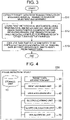
- FIG. 3 is a flowchart showing an operation example of a fraud detection device in this example embodiment.
- the target data extraction unit 20 excludes normal transaction data from transaction data in the operations of a financial institution by unsupervised learning to extract target data (step S11).
- the first learning unit 30 learns a first hierarchical mixed model using the training data, among the extracted target data, which takes positive examples for the data indicating fraudulent transactions and takes negative examples for the remaining data other than the positive examples (step S12).
- the data exclusion unit 40 excludes the data (TN) that is discriminated to be a completely negative example out of the training data by the first hierarchical mixed model from the target data (step S13).
- the target data extraction unit 20 extracts target data by excluding normal transaction data from transaction data in the operations of a financial institution by unsupervised learning, and the first learning unit 30 learns a first hierarchical mixed model using the training data, among the extracted target data, which takes positive examples for the data indicating fraudulent transactions and takes negative examples for the remaining data other than the positive examples. Then, the data exclusion unit 40 excludes the target data (TN) that is discriminated to be a completely negative example out of the training data by the first hierarchical mixed model, from the target data.
- TN target data
- FIG. 4 is a block diagram showing a configuration example of the second example embodiment of a fraud detection device according to the present invention.
- the fraud detection device 200 of this example embodiment comprises a storage unit 10, a target data extraction unit 20, a first learning unit 30, a data exclusion unit 40, a second learning unit 50, a score calculation unit 60, and a visualization unit 70.
- the fraud detection device 200 of the present example embodiment differs from the fraud detection device 100 of the first example embodiment in that the second learning unit 50, the score calculation unit 60, and the visualization unit 70 are further comprised. Other configurations are the same as those of the first example embodiment.
- the second learning unit 50 learns a hierarchical mixed model using training data which takes positive examples for the data indicating fraudulent transactions, among the remaining target data after excluding by the data exclusion unit 40, and takes negative examples for the remaining data other than the positive examples.
- the learning model generated by the second learning unit 50 is described as the second hierarchical mixed model.
- the score calculation unit 60 calculates a discrimination result of the data for each leaf node in the hierarchical mixed model. Specifically, the score calculation unit 60 calculates as a score a ratio of target data (i.e., ratio of TPs) for which the training data is discriminated as a positive example by the second hierarchical mixed model.
- a ratio of target data i.e., ratio of TPs
- the score calculation unit 60 discriminates the data classified in the leaf node using a discriminant placed to each leaf node in the same manner as the data exclusion unit 40 in the first example embodiment.
- the score calculation unit 60 calculates the ratio of TP as a score for each leaf node (i.e., a condition under which the data is classified).
- the score calculation unit 60 identifies the condition of the node for which the calculated score is equal to or greater than a predetermined threshold as a condition for which the accuracy of the fraudulent transaction is high.
- the learning process by the second learning unit 50 and the data identification process by the score calculation unit 60 may be performed repeatedly. Specifically, each time the second hierarchical mixed model is generated by the second learning unit 50, the score calculation unit 60 may identify the condition with high accuracy of the fraudulent transaction. By repeating processes in this manner, it is possible to increase the number of conditions with high accuracy of fraudulent transactions.
- the visualization unit 70 visualizes the ratio of the target data aggregated for each score to the overall target data. Specifically, the visualization unit 70 aggregates the number of cases of the data corresponding to the condition of the node for which the score corresponding to the predetermined value or range is aggregated. Then, the visualization unit 70 calculates a ratio of the sum of cases to the overall number of cases.
- the visualization unit 70 aggregates the number of data that match the condition of the node whose ratio of TP is calculated to be 100%. For example, suppose that the ratio of data is visualized for each score in 10% increments. In this case, the visualization unit 70 aggregates the number of cases of data that match the condition of the node whose ratio of TP is calculated to be 100% to 90%, 100% to 80%, and so on.
- FIG. 5 is an explanatory diagram showing an example of aggregated ratios for each score.
- results of a learning process by the second learning unit 50 and a data identification process by the score calculation unit 60 are shown, when the processed are repeated 300 times, 600 times, 900 times, 1200 times, and 6000 times, respectively.
- FIG. 5 also shows an example in which the number of data matching the condition in which the score is calculated to be 100% in the cases of 300 times, 600 times, 900 times, and 1200 times is aggregated for each normal transaction data and fraudulent transaction data. Further, in the case of 6,000 times, an example is shown in which each normal transaction data and fraudulent transaction data are aggregated in 10% increments of score.
- the number of extracted fraudulent transaction data increases as the number of repetitions increases. Furthermore, when the score is allowed to include not only 100% but also a certain ratio of normal transaction data, it becomes possible to extract more candidates of the fraudulent transaction data. In other words, it is possible to increase the fraud rate (ratio) by setting the threshold value high, and to extract many candidates of fraudulent transaction data by setting the threshold value low.
- the visualization unit 70 visualizes the calculated ratio on a display device (not shown).
- the visualization unit 70 may, for example, visualize the ratio of the number of data corresponding to an area.
- FIG. 6 is an explanatory diagram showing an example of visualized the ratio of target data.
- the target data D2 extracted by unsupervised learning out of the entire transaction data D1 is indicated by a circle corresponding to the area.
- data D3 is excluded by the data exclusion unit 40.
- the visualization unit 70 may, for example, visualize the ratio of the data with a large score in a manner that is more highlighted than the ratio of the data with a low score.
- FIG. 6 an example is shown in which the visualization unit 70 visualizes the ratio of the data with a high score as a black ellipse D13, and as the score becomes lower, as an ellipse D12 and an ellipse D11 with a thinner shading.
- the prediction accuracy can be classified together with interpretability. For example, a person in charge of a financial institution will be able to preferentially check the fraudulent transaction data included in the area with higher score.
- the target data extraction unit 20, the first learning unit 30, the data exclusion unit 40, the second learning unit 50, the score calculation unit 60, and the visualization unit 70 are realized by a processor of a computer operating according to a program (fraud detection program).
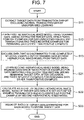
- FIG. 7 is a flowchart showing an operation example of a fraud detection device of this example embodiment.
- the processing from step S11 to step S13 until the target data is extracted from the transaction data and the normal transaction data is excluded is the same as the processing illustrated in FIG. 4 .
- the second learning unit 50 learns a second hierarchical mixed model using the training data which takes positive examples for the data indicating fraudulent transactions, among the remaining target data after excluding by the data exclusion unit 40, and takes negative examples for the remaining data other than the positive examples (step S21).
- the score calculation unit 60 calculates as a score, by the second hierarchical mixed model, a ratio of the target data which is set as a positive example training data and is classified as a positive example by the second hierarchical mixed model (step S22).
- the visualization unit 70 visualizes the ratio of the target data aggregated for each score to the entire target data (step S23).
- the second learning unit 50 learns a second hierarchical mixed model using training data which takes positive examples for the data indicating fraudulent transactions, among the remaining target data after excluding data, and takes negative examples for the remaining data other than the positive examples. Then, the score calculation unit 60 calculates as a score, by the second hierarchical mixed model, a ratio of the target data which is set as a positive example training data and is classified as a positive example by the second hierarchical mixed model, and the visualization unit 70 visualizes the ratio of the target data aggregated by the score to the entire target data.
- the score calculation unit 60 calculates as a score, by the second hierarchical mixed model, a ratio of the target data which is set as a positive example training data and is classified as a positive example by the second hierarchical mixed model
- the visualization unit 70 visualizes the ratio of the target data aggregated by the score to the entire target data.
- the target data extraction unit 20 identifies normal transaction data from the 82,663 transaction data by unsupervised learning, and extracts the target data by excluding the normal transaction data from the transaction data.
- FIG. 8 is an explanatory diagram showing an example of a result of identifying normal transaction data.
- the reproduction rate (Recall) is 85.67%.
- out of 480 cases of fraudulent transaction data 478 cases are predicted to be fraudulent transaction data, thus the reproduction rate (Recall) is 99.58%.
- the precision rate is 99.99%.
- 11,779 cases of normal transaction data are included in 12,259 cases predicted as fraudulent transaction data, thus the precision rate is 3.90%.
- the accuracy of the entire data is calculated to be 85.75%.
- the aim is to reduce the ratio of normal transaction data included in the 12,257 cases predicted to be fraudulent transaction data (the precision rate: 3.90%) and to improve the accuracy rate.
- the first learning unit 30 learns the first hierarchical mixed model with the 12,257 data predicted to be fraudulent transaction data, with TN as a positive example and the rest as a negative example.
- FIG. 9 is an explanatory diagram showing an example of the correspondence between the learning result by unsupervised learning and the learning result by unsupervised learning of the first hierarchical mixed model.
- TP, FN, FP and TN are calculated, respectively.
- the calculated TP, FN, FP, and TN are indicated by TPh, FNh, FPh, and TNh, respectively, to distinguish them from the results shown in FIG. 8 .
- the data exclusion unit 40 excludes the data corresponding to TNh from the target data as a result of learning.
- FIG. 10 is an explanatory diagram showing an example of the result of excluding the target data.
- FIG. 10 shows the entire accuracy in (A), and the prediction accuracy in (B).
- the number of data has been reduced by about 50% (to 6,528), the precision rate has been improved to 7.31%, and the prediction accuracy has been improved to 7.09%.
- the second learning unit 50 learns the second hierarchical mixed model, for the remaining data after the exclusion, using the training data which takes positive examples for the data indicating fraudulent transactions.
- FIG. 11 is an explanatory diagram an example of the correspondence between the target data after the data exclusion and the learning result of the second hierarchical mixed model.
- TP, FN, FP and TN are calculated, respectively.
- the calculated TP, FN, FP and TN are indicated by TPx, FNx, FPx and TNx, respectively, to distinguish them from the results shown in FIG. 8 and 9 .
- the score calculation unit 60 calculates a score for each node, and the visualization unit 70 identifies and visualizes a high ratio of TPx as a part with high accuracy.
- the visualization unit 70 for example, visualizes the contents illustrated in FIG. 6 from the results illustrated in FIG. 5 .
- a fraud detection device 80 is a fraud detection device (for example, fraud detection device 100) for detecting a fraudulent transaction in an operation of a financial institution (for example, bank) includes a target data extraction unit 81 (for example, target data extraction unit 20) which extracts target data by excluding normal transaction data from the transaction data in the operation by unsupervised learning (for example, DBSCAN), a first learning unit 82 (for example, first learning unit 30) which learns a first hierarchical mixed model using training data, among the target data, which takes positive examples for the data indicating the fraudulent transaction and takes negative examples for the remaining data other than the positive examples, and a data exclusion unit 83 (for example, data exclusion unit 40) which excludes, from the target data, the target data (TNh) which is set as negative example training data and is classified as a negative example by the first hierarchical mixed model.
- a target data extraction unit 81 for example, target data extraction unit 20
- DBSCAN unsupervised learning
- a first learning unit 82 for example, first learning unit 30
- the fraud detection device 80 may include a second learning unit (for example, second learning unit 50) which learns a second hierarchical mixed model using training data, among the remaining target data after exclusion, which takes positive examples for the data indicating the fraudulent transaction and takes negative examples for the remaining data other than the positive examples, a score calculation unit (for example, score calculation unit 60) which calculates as a score a ratio of target data (TP) for which the training data is discriminated as the positive example by the second hierarchical mixed model, and a visualization unit (for example, visualization unit 70) which visualizes the ratio of the target data aggregated for each score to the entire target data.
- a second learning unit for example, second learning unit 50
- TP target data
- visualization unit 70 for example, visualization unit 70
- the prediction accuracy can be classified together with interpretability. For example, a person in charge of a financial institution will be able to confirm preferentially from the fraudulent transaction data included in the area with a larger score.
- the score calculation unit may discriminate the training data classified in a leaf node using a discriminant placed to each leaf node, calculate, for each leaf node, as the score the ratio of the target data for which the training data is discriminated as the positive example, and identify a condition of the node for which the calculated score is equal to or greater than a predetermined threshold as the condition with high accuracy of fraudulent transaction.
- the data exclusion unit 83 may discriminate the training data classified in a leaf node using a discriminant placed in each leaf node of the first hierarchical mixed model, calculate, for each leaf node, a ratio of the classified training data that is predicted to be a negative example, and exclude, from the target data, data that satisfies a condition for classification into the leaf node for which the calculated ratio is equal to or greater than a predetermined threshold.
- the data exclusion unit 83 may identify conditions for exclusion of the target data each time the first hierarchical mixed model is learned, and exclude the data that satisfies the any of the conditions from the target data.
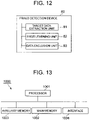
- FIG. 13 is a summarized block diagram showing a configuration of a computer for at least one example embodiment.
- the computer 1000 comprises a processor 1001, a main memory 1002, an auxiliary memory 1003, and an interface 1004.
- the fraud detection device is implemented in a computer 1000.
- the operation of each of the above-described processing parts is stored in the auxiliary storage 1003 in the form of a program (fraud detection program).
- the processor 1001 reads the program from the auxiliary storage 1003, develops it to the main memory 1002, and executes the above-described processing according to the program.
- the auxiliary memory 1003 is an example of a non-transitory tangible medium.
- a non-transitory tangible medium include a magnetic disk, an optical magnetic disk, a CD-ROM (Compact Disc Read-only memory), a DVD-ROM (Read only memory), semiconductor memory, and the like.
- the program may be a program for realizing a part of the above-described functions. Further, the program may be a so-called difference file (difference program) that realizes the aforementioned functions in combination with other programs already stored in the auxiliary memory 1003.
- difference file difference program
Landscapes
- Engineering & Computer Science (AREA)
- Business, Economics & Management (AREA)
- Theoretical Computer Science (AREA)
- Physics & Mathematics (AREA)
- General Physics & Mathematics (AREA)
- Accounting & Taxation (AREA)
- Software Systems (AREA)
- Artificial Intelligence (AREA)
- Data Mining & Analysis (AREA)
- Strategic Management (AREA)
- Computer Security & Cryptography (AREA)
- Mathematical Physics (AREA)
- Finance (AREA)
- General Engineering & Computer Science (AREA)
- Computing Systems (AREA)
- Evolutionary Computation (AREA)
- General Business, Economics & Management (AREA)
- Computational Linguistics (AREA)
- General Health & Medical Sciences (AREA)
- Molecular Biology (AREA)
- Biophysics (AREA)
- Biomedical Technology (AREA)
- Life Sciences & Earth Sciences (AREA)
- Health & Medical Sciences (AREA)
- Computer Vision & Pattern Recognition (AREA)
- Medical Informatics (AREA)
- Financial Or Insurance-Related Operations Such As Payment And Settlement (AREA)
Abstract
Description
- The present invention relates to a fraud detection device, a fraud detection method, and a fraud detection program for detecting a fraudulent transaction in the operations of a financial institution.
- In the operations of a financial institution, various mechanisms have been proposed to detect a fraudulent transaction from transaction data so that a fraudulent transaction such as a fraudulent remittance and a fraudulent use of an account can be automatically detected. For example, one of the methods for detecting such a fraudulent transaction is to learn a model for detecting a fraudulent transaction based on the transaction data generated in the operation of a financial institution.
- For example, the
non-patent literature 1 describes data clustering algorithm (DBSCAN: Density-based spatial clustering of applications with noise which is an example of unsupervised learning, as a method for learning such this model. - NPL 1: Martin Ester, Hans-peter Kriegel, Jorg Sander, Xiaowei Xu, A density-based algorithm for discovering clusters in large spatial databases with noise, AAAI Press, p226--231, 1996
- On the other hand, the number of fraudulent transactions that occur in the operations of a financial institution is much smaller than the number of normal transactions. In other words, it can be said that the data of fraudulent transactions and the data of normal transactions are imbalanced. Therefore, even if an attempt is made to predict the fraudulent transactions by using the algorithm described in the
non-patent literature 1, the prediction accuracy is very low or biased due to the problem of the imbalance data. - For that reason, it is desirable that the prediction accuracy of the model can be improved even when the model to detect the fraudulent transactions is learned using very few data (imbalance data) compared with normal transactions, such as fraudulent transactions occurring in the operations of a financial institution.
- Therefore, it is an object of the present invention to provide a fraud detection device, a fraud detection method, and a fraud detection program that can learn a model so as to improve the accuracy of detecting a fraudulent transaction even when imbalance data is used.
- A fraud detection device according to the present invention is a fraud detection device for detecting a fraudulent transaction in an operation of a financial institution includes a target data extraction unit which extracts target data by excluding normal transaction data from the transaction data in the operation by unsupervised learning, a first learning unit which learns a first hierarchical mixed model using training data, among the target data, which takes positive examples for the data indicating the fraudulent transaction and takes negative examples for the remaining data other than the positive examples, and a data exclusion unit which excludes, from the target data, the target data which is set as negative example training data and is classified as a negative example by the first hierarchical mixed model.
- The fraud detection method according to the present invention is a fraud detection method for detecting a fraudulent transaction in an operation of a financial institution includes extracting target data by excluding normal transaction data from the transaction data in the operation by unsupervised learning, learning a first hierarchical mixed model using training data, among the target data, which takes positive examples for the data indicating the fraudulent transaction and takes negative examples for the remaining data other than the positive examples, and excluding, from the target data, the target data which is set as negative example training data and is classified as a negative example by the first hierarchical mixed model.
- The fraud detection program according to the present invention is a fraud detection program applied to a computer which detects a fraudulent transaction in an operation of a financial institution, causes the computer to execute a target data extraction process of extracting target data by excluding normal transaction data from the transaction data in the operation by unsupervised learning, a first learning process of learning a first hierarchical mixed model using training data, among the target data, which takes positive examples for the data indicating the fraudulent transaction and takes negative examples for the remaining data other than the positive examples, and a data exclusion process of excluding, from the target data, the target data which is set as negative example training data and is classified as a negative example by the first hierarchical mixed model.
- According to the present invention, it is possible to learn a model so as to improve the accuracy of detecting a fraudulent transaction even when imbalance data is used.
-
- [
FIG. 1 ] It depicts a block diagram showing a configuration example of the first example embodiment of a fraud detection device according to the present invention. - [
FIG. 2 ] It depicts an explanatory diagram showing an example of a discriminative model based on a hierarchical mixed model. - [
FIG. 3 ] It depicts a flowchart showing an operation example of a fraud detection device of the first example embodiment. - [
FIG. 4 ] It depicts a block diagram showing a configuration example of the second example embodiment of a fraud detection device according to the present invention. - [
FIG. 5 ] It depicts an explanatory diagram showing an example of aggregated ratios for each score. - [
FIG. 6 ] It depicts an explanatory diagram showing an example of visualized the ratio of target data. - [
FIG. 7 ] It depicts a flowchart showing an operation example of a fraud detection device in the second example embodiment. - [
FIG. 8 ] It depicts an explanatory diagram showing an example of a result of identifying normal transaction data. - [
FIG. 9 ] It depicts an explanatory diagram showing an example of the correspondence between a learning result by unsupervised learning and a learning result. - [
FIG. 10 ] It depicts an explanatory diagram showing an example of a result of excluding target data. - [
FIG. 11 ] It depicts an explanatory diagram an example of the correspondence between target data after the data exclusion and the learning result. - [
FIG. 12 ] It depicts a block diagram showing an overview of a fraud detection device according to the present invention. - [
FIG. 13 ] It depicts a summarized block diagram showing a configuration of a computer for at least one example embodiment. - Hereinafter, example embodiment of the present invention is described with reference to the drawings.
-
FIG. 1 is a block diagram showing a configuration example of the first example embodiment of a fraud detection device according to the present invention. Thefraud detection device 100 in this example embodiment comprises astorage unit 10, a targetdata extraction unit 20, afirst learning unit 30, and adata exclusion unit 40. Thefraud detection device 100 of this example embodiment is a device for detecting fraudulent transactions (for example, fraudulent remittance, fraudulent use of account, etc.) in the operations of a financial institution from obtained electronic data. - The
storage unit 10 stores transaction data used to determine whether it is a fraudulent transaction or not. The transaction data includes, for example, information on deposits and withdrawals, dates and times, amounts, and other information used in transactions conducted at each financial institution. The format of the transaction data is arbitrary and may be determined according to the financial institution, etc. to be targeted. Thestorage unit 10 may also store various parameters necessary for thefirst learning unit 30, which will be described below, to learn the model. Thestorage unit 10 is realized by a magnetic disk or the like, for example. - The target
data extraction unit 20 excludes transaction data that is determined to be normal by unsupervised learning (hereinafter, referred to as normal transaction data) from transaction data in the operations of a financial institution to extract data (hereinafter, referred to as target data) to be used for learning by thefirst learning unit 30. The method by which the targetdata extraction unit 20 performs unsupervised learning is arbitrary. The targetdata extraction unit 20 may, for example, extract the target data using the algorithm described in the non-patentliterature 1 described above. - In the following explanation, the number of cases in which the data of a positive example was determined d to be a positive example is written as TP (True Positive), and the number of cases in which the data of a negative example was determined to be a negative example is written as TN (True Negative). The number of cases in which the data of a positive example was determined to be a negative example is written as FN (False Negative), and the number of cases in which the data of a negative example was determined to be a positive example is written as FP (False Positive).
- That is, the target
data extraction unit 20 excludes data corresponding to TP classified as normal transaction data by unsupervised learning to extract data corresponding to the other including TN classified as fraudulent transaction data as the target data. - The
first learning unit 30 learns the hierarchical mixed model using the training data, among the target data extracted by the targetdata extraction unit 20, which takes positive examples for the data indicating fraudulent transactions and takes negative examples for the remaining data other than the positive examples. In order to distinguish from the explanation described below, the hierarchical mixed model learned by thefirst learning unit 30 is referred to as the first hierarchical mixed model. - The
first learning unit 30, for example, generates the hierarchical mixed model by heterogeneous mixture machine learning using the generated training data. However, the method by which thefirst learning unit 30 learns the hierarchical mixed model is not limited to heterogeneous mixture machine learning, as long as the same technology is used. - The hierarchical mixed model is represented by a tree structure in which components are placed to leaf nodes and gate functions (gate tree functions) that indicate branching conditions are placed to other upper nodes. The branching conditions of the gate functions are described using explanatory variables. When data is input to the hierarchical mixed model, the input data is branched by the gate function and assigned to one of the multiple components after following the root node and each node.
-
FIG. 2 is an explanatory diagram showing an example of a discriminative model based on a hierarchical mixed model. The example shown inFIG. 2 indicates that, based onconditions 1 to 3, the input data is classified into one of four types of leaf nodes and is discriminated based on the discriminants Y1 to Y4 placed in each leaf node. For example, when data satisfying condition 1 (data satisfyingcondition 1=true) is input, the data is classified into a leaf node to which the discriminant Y1 is placed, and discrimination is performed, based on the discriminant Yi=Fi(X). - The
data exclusion unit 40 excludes, from the target data, the target data which is set as a negative example training data and is classified as a negative example by the first hierarchical mixed model. That is, thedata exclusion unit 40 excludes, from the target data, the data corresponding to the negative example data (TNh) that is predicted to be a negative example. - Specifically, the
data exclusion unit 40 discriminates the data classified in a leaf node using a discriminant placed in that leaf node of the hierarchical mixed model. Thedata exclusion unit 40 similarly discriminates the data classified in the other leaf nodes, and aggregates the discrimination results of the data classified in each leaf node. Thedata exclusion unit 40 calculates, for each leaf node (i.e., a condition under which the data is classified), a ratio of the classified data that is predicted to be a negative example. When the calculated ratio is greater than or equal to a predetermined threshold, thedata exclusion unit 40 determines that the data corresponding to the condition for classifying into that node is excluded from the target data. - The above-described process by the
data exclusion unit 40 corresponds to a process of excluding the normal transaction data from the data that is discriminated as the fraudulent transaction data by unsupervised learning. By excluding the normal transaction data from the target data in this way, it becomes possible to increase the ratio of the fraudulent transaction data to the entire target data, which makes it easier to detect fraudulent transactions. Furthermore, the model can be learned to improve the accuracy of detecting fraudulent transactions, because a training data set, in which the degree of imbalance between the fraudulent transaction data and the normal transaction data is reduced, can be generated. - The learning process by the
first learning unit 30 and the exclusion process by thedata exclusion unit 40 may be performed repeatedly. Specifically, each time the first hierarchical mixed model is generated by thefirst learning unit 30, thedata exclusion unit 40 may identify conditions for excluding the target data and determine that data corresponding to the condition are to be excluded from the target data. That is, thedata exclusion unit 40 may identify the conditions for excluding the target data each time the first hierarchical mixed model is learned, and exclude the data corresponding to any of the conditions from the target data. By repeating the process in this way, it is possible to increase the data to be excluded. - The target
data extraction unit 20, thefirst learning unit 30, and thedata exclusion unit 40 are realized by a processor (for example, a CPU (Central Processing Unit), a GPU (Graphics Processing Unit), an FPGA (field-programmable gate array)) of a computer that operates according to a program (fraud detection program). - For example, a program may be stored in the
storage unit 10, and the processor may read the program and operate as the targetdata extraction unit 20, thefirst learning unit 30, and thedata exclusion unit 40 according to the program. In addition, the functions of the fraud detection device may be provided in a SaaS (Software as a Service) format. - The target
data extraction unit 20, thefirst learning unit 30, and thedata exclusion unit 40 may each be implemented by dedicated hardware. Some or all of the components of each device may be realized by general-purpose or dedicated circuit (circuitry), processors, or combinations thereof. These may be configured by a single chip or multiple chips connected through a bus. Some or all of the components of each device may be realized by a combination of the above-mentioned circuits and the program. - In the case where some or all of the components of the fraud detection device are realized by a plurality of information processing devices, circuits, or the like, the plurality of information processing devices, circuits, or the like may be centrally located or distributed. For example, the information processing devices, circuits, etc. may be realized as a client-server system, a cloud computing system, etc., each of which is connected through a communication network.
- Next, the operation of the fraud detection device of this example embodiment will be described.
FIG. 3 is a flowchart showing an operation example of a fraud detection device in this example embodiment. The targetdata extraction unit 20 excludes normal transaction data from transaction data in the operations of a financial institution by unsupervised learning to extract target data (step S11). Thefirst learning unit 30 learns a first hierarchical mixed model using the training data, among the extracted target data, which takes positive examples for the data indicating fraudulent transactions and takes negative examples for the remaining data other than the positive examples (step S12). Thedata exclusion unit 40 excludes the data (TN) that is discriminated to be a completely negative example out of the training data by the first hierarchical mixed model from the target data (step S13). - As described above, in the present example embodiment, the target
data extraction unit 20 extracts target data by excluding normal transaction data from transaction data in the operations of a financial institution by unsupervised learning, and thefirst learning unit 30 learns a first hierarchical mixed model using the training data, among the extracted target data, which takes positive examples for the data indicating fraudulent transactions and takes negative examples for the remaining data other than the positive examples. Then, thedata exclusion unit 40 excludes the target data (TN) that is discriminated to be a completely negative example out of the training data by the first hierarchical mixed model, from the target data. Thus, it is possible to learn a model so as to improve the accuracy of detecting a fraudulent transaction even when imbalance data is used. - Next, a second example embodiment of the fraud detection device according to the present invention will be described. In the second example embodiment, a method of visualizing a prediction result according to accuracy of a fraudulent transaction is described.
FIG. 4 is a block diagram showing a configuration example of the second example embodiment of a fraud detection device according to the present invention. Thefraud detection device 200 of this example embodiment comprises astorage unit 10, a targetdata extraction unit 20, afirst learning unit 30, adata exclusion unit 40, asecond learning unit 50, ascore calculation unit 60, and avisualization unit 70. - That is, the
fraud detection device 200 of the present example embodiment differs from thefraud detection device 100 of the first example embodiment in that thesecond learning unit 50, thescore calculation unit 60, and thevisualization unit 70 are further comprised. Other configurations are the same as those of the first example embodiment. - The
second learning unit 50 learns a hierarchical mixed model using training data which takes positive examples for the data indicating fraudulent transactions, among the remaining target data after excluding by thedata exclusion unit 40, and takes negative examples for the remaining data other than the positive examples. In order to distinguish the hierarchical mixed model from the hierarchical mixed model learned by thefirst learning unit 30, the learning model generated by thesecond learning unit 50 is described as the second hierarchical mixed model. - The
score calculation unit 60 calculates a discrimination result of the data for each leaf node in the hierarchical mixed model. Specifically, thescore calculation unit 60 calculates as a score a ratio of target data (i.e., ratio of TPs) for which the training data is discriminated as a positive example by the second hierarchical mixed model. - Specifically, the
score calculation unit 60 discriminates the data classified in the leaf node using a discriminant placed to each leaf node in the same manner as thedata exclusion unit 40 in the first example embodiment. Thescore calculation unit 60 calculates the ratio of TP as a score for each leaf node (i.e., a condition under which the data is classified). Thescore calculation unit 60 identifies the condition of the node for which the calculated score is equal to or greater than a predetermined threshold as a condition for which the accuracy of the fraudulent transaction is high. - The learning process by the
second learning unit 50 and the data identification process by thescore calculation unit 60 may be performed repeatedly. Specifically, each time the second hierarchical mixed model is generated by thesecond learning unit 50, thescore calculation unit 60 may identify the condition with high accuracy of the fraudulent transaction. By repeating processes in this manner, it is possible to increase the number of conditions with high accuracy of fraudulent transactions. - The
visualization unit 70 visualizes the ratio of the target data aggregated for each score to the overall target data. Specifically, thevisualization unit 70 aggregates the number of cases of the data corresponding to the condition of the node for which the score corresponding to the predetermined value or range is aggregated. Then, thevisualization unit 70 calculates a ratio of the sum of cases to the overall number of cases. - For example, suppose that the ratio of data included in the node whose score is calculated to be 100% is to be visualized. In this case, the
visualization unit 70 aggregates the number of data that match the condition of the node whose ratio of TP is calculated to be 100%. For example, suppose that the ratio of data is visualized for each score in 10% increments. In this case, thevisualization unit 70 aggregates the number of cases of data that match the condition of the node whose ratio of TP is calculated to be 100% to 90%, 100% to 80%, and so on. -
FIG. 5 is an explanatory diagram showing an example of aggregated ratios for each score. In the example shown inFIG. 5 , results of a learning process by thesecond learning unit 50 and a data identification process by thescore calculation unit 60 are shown, when the processed are repeated 300 times, 600 times, 900 times, 1200 times, and 6000 times, respectively.FIG. 5 also shows an example in which the number of data matching the condition in which the score is calculated to be 100% in the cases of 300 times, 600 times, 900 times, and 1200 times is aggregated for each normal transaction data and fraudulent transaction data. Further, in the case of 6,000 times, an example is shown in which each normal transaction data and fraudulent transaction data are aggregated in 10% increments of score. - As illustrated in
FIG. 5 , the number of extracted fraudulent transaction data increases as the number of repetitions increases. Furthermore, when the score is allowed to include not only 100% but also a certain ratio of normal transaction data, it becomes possible to extract more candidates of the fraudulent transaction data. In other words, it is possible to increase the fraud rate (ratio) by setting the threshold value high, and to extract many candidates of fraudulent transaction data by setting the threshold value low. - The
visualization unit 70 visualizes the calculated ratio on a display device (not shown). Thevisualization unit 70 may, for example, visualize the ratio of the number of data corresponding to an area.FIG. 6 is an explanatory diagram showing an example of visualized the ratio of target data. In the example shown inFIG. 6 , the target data D2 extracted by unsupervised learning out of the entire transaction data D1 is indicated by a circle corresponding to the area. In addition, among the target data D2, data D3 is excluded by thedata exclusion unit 40. - Among the remaining data thus excluded, the fraudulent transaction data is included. The
visualization unit 70 may, for example, visualize the ratio of the data with a large score in a manner that is more highlighted than the ratio of the data with a low score. InFIG. 6 , an example is shown in which thevisualization unit 70 visualizes the ratio of the data with a high score as a black ellipse D13, and as the score becomes lower, as an ellipse D12 and an ellipse D11 with a thinner shading. - By visualizing in this way, the prediction accuracy can be classified together with interpretability. For example, a person in charge of a financial institution will be able to preferentially check the fraudulent transaction data included in the area with higher score.
- The target
data extraction unit 20, thefirst learning unit 30, thedata exclusion unit 40, thesecond learning unit 50, thescore calculation unit 60, and thevisualization unit 70 are realized by a processor of a computer operating according to a program (fraud detection program). - Next, the operation of the fraud detection device of this example embodiment will be described.
FIG. 7 is a flowchart showing an operation example of a fraud detection device of this example embodiment. The processing from step S11 to step S13 until the target data is extracted from the transaction data and the normal transaction data is excluded is the same as the processing illustrated inFIG. 4 . - The
second learning unit 50 learns a second hierarchical mixed model using the training data which takes positive examples for the data indicating fraudulent transactions, among the remaining target data after excluding by thedata exclusion unit 40, and takes negative examples for the remaining data other than the positive examples (step S21). Thescore calculation unit 60 calculates as a score, by the second hierarchical mixed model, a ratio of the target data which is set as a positive example training data and is classified as a positive example by the second hierarchical mixed model (step S22). Then, thevisualization unit 70 visualizes the ratio of the target data aggregated for each score to the entire target data (step S23). - As described above, in the present example embodiment, the
second learning unit 50 learns a second hierarchical mixed model using training data which takes positive examples for the data indicating fraudulent transactions, among the remaining target data after excluding data, and takes negative examples for the remaining data other than the positive examples. Then, thescore calculation unit 60 calculates as a score, by the second hierarchical mixed model, a ratio of the target data which is set as a positive example training data and is classified as a positive example by the second hierarchical mixed model, and thevisualization unit 70 visualizes the ratio of the target data aggregated by the score to the entire target data. Thus, in addition to the effect in the first example embodiment, it is possible to classify the prediction accuracy together with interpretability. Therefore, for example, it is possible for a person in charge of a financial institution to confirm the ratio of the fraudulent transaction data. - Next, a specific example of detecting fraudulent transaction data using the fraud detection device according to the present invention will be described. In this specific example, it is assumed that there are 82,663 transaction data of a certain financial institution, of which 480 are fraudulent transaction data (i.e., 82,183 are normal transaction data).
- First, the target
data extraction unit 20 identifies normal transaction data from the 82,663 transaction data by unsupervised learning, and extracts the target data by excluding the normal transaction data from the transaction data.FIG. 8 is an explanatory diagram showing an example of a result of identifying normal transaction data. In the example shown inFIG. 8 , since 70,404 out of 82,183 normal transaction data are predicted to be normal transaction data, the reproduction rate (Recall) is 85.67%. In addition, out of 480 cases of fraudulent transaction data, 478 cases are predicted to be fraudulent transaction data, thus the reproduction rate (Recall) is 99.58%. - Furthermore, in the example shown in
FIG. 8 , since 70,406 cases predicted to be normal transaction data include 2 cases of fraudulent transaction data, and the precision rate is 99.99%. In addition, 11,779 cases of normal transaction data are included in 12,259 cases predicted as fraudulent transaction data, thus the precision rate is 3.90%. As a result, the accuracy of the entire data (Accuracy) is calculated to be 85.75%. In this specific example, the aim is to reduce the ratio of normal transaction data included in the 12,257 cases predicted to be fraudulent transaction data (the precision rate: 3.90%) and to improve the accuracy rate. - The
first learning unit 30 learns the first hierarchical mixed model with the 12,257 data predicted to be fraudulent transaction data, with TN as a positive example and the rest as a negative example.FIG. 9 is an explanatory diagram showing an example of the correspondence between the learning result by unsupervised learning and the learning result by unsupervised learning of the first hierarchical mixed model. As a result of learning the first hierarchical mixed model, TP, FN, FP and TN are calculated, respectively. InFIG. 9 , the calculated TP, FN, FP, and TN are indicated by TPh, FNh, FPh, and TNh, respectively, to distinguish them from the results shown inFIG. 8 . Thedata exclusion unit 40 excludes the data corresponding to TNh from the target data as a result of learning. -
FIG. 10 is an explanatory diagram showing an example of the result of excluding the target data.FIG. 10 shows the entire accuracy in (A), and the prediction accuracy in (B). As illustrated inFIG. 10 , as a result of performing the learning and exclusion processes 3,600 times, the number of data has been reduced by about 50% (to 6,528), the precision rate has been improved to 7.31%, and the prediction accuracy has been improved to 7.09%. - The
second learning unit 50 learns the second hierarchical mixed model, for the remaining data after the exclusion, using the training data which takes positive examples for the data indicating fraudulent transactions.FIG. 11 is an explanatory diagram an example of the correspondence between the target data after the data exclusion and the learning result of the second hierarchical mixed model. As a result of learning the second hierarchical mixed model, TP, FN, FP and TN are calculated, respectively. InFIG. 11 , the calculated TP, FN, FP and TN are indicated by TPx, FNx, FPx and TNx, respectively, to distinguish them from the results shown inFIG. 8 and 9 . - The
score calculation unit 60 calculates a score for each node, and thevisualization unit 70 identifies and visualizes a high ratio of TPx as a part with high accuracy. Thevisualization unit 70, for example, visualizes the contents illustrated inFIG. 6 from the results illustrated inFIG. 5 . - Next, an overview of the present invention will be described.
FIG. 12 is a block diagram showing an overview of a fraud detection device according to the present invention. Afraud detection device 80 according to the present invention is a fraud detection device (for example, fraud detection device 100) for detecting a fraudulent transaction in an operation of a financial institution (for example, bank) includes a target data extraction unit 81 (for example, target data extraction unit 20) which extracts target data by excluding normal transaction data from the transaction data in the operation by unsupervised learning (for example, DBSCAN), a first learning unit 82 (for example, first learning unit 30) which learns a first hierarchical mixed model using training data, among the target data, which takes positive examples for the data indicating the fraudulent transaction and takes negative examples for the remaining data other than the positive examples, and a data exclusion unit 83 (for example, data exclusion unit 40) which excludes, from the target data, the target data (TNh) which is set as negative example training data and is classified as a negative example by the first hierarchical mixed model. - With such a configuration, it is possible to learn a model so as to improve the accuracy of detecting a fraudulent transaction even when imbalance data is used.
- In addition, the fraud detection device 80 (for example, fraud detection device 200) may include a second learning unit (for example, second learning unit 50) which learns a second hierarchical mixed model using training data, among the remaining target data after exclusion, which takes positive examples for the data indicating the fraudulent transaction and takes negative examples for the remaining data other than the positive examples, a score calculation unit (for example, score calculation unit 60) which calculates as a score a ratio of target data (TP) for which the training data is discriminated as the positive example by the second hierarchical mixed model, and a visualization unit (for example, visualization unit 70) which visualizes the ratio of the target data aggregated for each score to the entire target data.
- With such a configuration, the prediction accuracy can be classified together with interpretability. For example, a person in charge of a financial institution will be able to confirm preferentially from the fraudulent transaction data included in the area with a larger score.
- Specifically, the score calculation unit may discriminate the training data classified in a leaf node using a discriminant placed to each leaf node, calculate, for each leaf node, as the score the ratio of the target data for which the training data is discriminated as the positive example, and identify a condition of the node for which the calculated score is equal to or greater than a predetermined threshold as the condition with high accuracy of fraudulent transaction.
- In addition, the
data exclusion unit 83 may discriminate the training data classified in a leaf node using a discriminant placed in each leaf node of the first hierarchical mixed model, calculate, for each leaf node, a ratio of the classified training data that is predicted to be a negative example, and exclude, from the target data, data that satisfies a condition for classification into the leaf node for which the calculated ratio is equal to or greater than a predetermined threshold. - In more detail, the
data exclusion unit 83 may identify conditions for exclusion of the target data each time the first hierarchical mixed model is learned, and exclude the data that satisfies the any of the conditions from the target data. -
FIG. 13 is a summarized block diagram showing a configuration of a computer for at least one example embodiment. Thecomputer 1000 comprises aprocessor 1001, amain memory 1002, anauxiliary memory 1003, and aninterface 1004. - The fraud detection device is implemented in a
computer 1000. The operation of each of the above-described processing parts is stored in theauxiliary storage 1003 in the form of a program (fraud detection program). Theprocessor 1001 reads the program from theauxiliary storage 1003, develops it to themain memory 1002, and executes the above-described processing according to the program. - In at least one example embodiment, the
auxiliary memory 1003 is an example of a non-transitory tangible medium. Other examples of a non-transitory tangible medium include a magnetic disk, an optical magnetic disk, a CD-ROM (Compact Disc Read-only memory), a DVD-ROM (Read only memory), semiconductor memory, and the like. When the program is delivered to thecomputer 1000 through a communication line, thecomputer 1000 receiving the delivery may extract the program into themain memory 1002 and execute the above processing. - The program may be a program for realizing a part of the above-described functions. Further, the program may be a so-called difference file (difference program) that realizes the aforementioned functions in combination with other programs already stored in the
auxiliary memory 1003. - Although the present invention has been described with reference to the foregoing exemplary embodiments and examples, the present invention is not limited to the foregoing exemplary embodiments and examples. Various changes understandable by those skilled in the art can be made to the structures and details of the present invention within the scope of the present invention.
- This application claims priority based on
Japanese Patent Application No. 2019-108517 filed on June 11, 2019 -
- 10
- Storage unit
- 20
- Target data extraction unit
- 30
- First learning unit
- 40
- Data exclusion unit
- 50
- Second learning unit
- 60
- Score calculation unit
- 70
- Visualization unit
- 100, 200
- Fraud detection device
Claims (9)
- A fraud detection device for detecting a fraudulent transaction in an operation of a financial institution comprising:a target data extraction unit which extracts target data by excluding normal transaction data from the transaction data in the operation by unsupervised learning;a first learning unit which learns a first hierarchical mixed model using training data, among the target data, which takes positive examples for the data indicating the fraudulent transaction and takes negative examples for the remaining data other than the positive examples; anda data exclusion unit which excludes, from the target data, the target data which is set as negative example training data and is classified as a negative example by the first hierarchical mixed model.
- The fraud detection device according to claim 1, further comprisinga second learning unit which learns a second hierarchical mixed model using training data, among the remaining target data after exclusion, which takes positive examples for the data indicating the fraudulent transaction and takes negative examples for the remaining data other than the positive examples;a score calculation unit which calculates as a score a ratio of target data for which the training data is discriminated as the positive example by the second hierarchical mixed model; anda visualization unit which visualizes the ratio of the target data aggregated for each score to the entire target data.
- The fraud detection device according to claim 2, wherein
the score calculation unit discriminates the training data classified in a leaf node using a discriminant placed to each leaf node, calculates, for each leaf node, as the score the ratio of the target data for which the training data is discriminated as the positive example, and identifies a condition of the node for which the calculated score is equal to or greater than a predetermined threshold as the condition with high accuracy of fraudulent transaction. - The fraud detection device according to any one of claims 1 to 3, wherein
the data exclusion unit discriminates the training data classified in a leaf node using a discriminant placed in each leaf node of the first hierarchical mixed model, calculates, for each leaf node, a ratio of the classified training data that is predicted to be a negative example, and excludes, from the target data, data that satisfies a condition for classification into the leaf node for which the calculated ratio is equal to or greater than a predetermined threshold. - The fraud detection device according to claim 4, wherein
the data exclusion unit identifies conditions for exclusion of the target data each time the first hierarchical mixed model is learned, and excludes the data that satisfies the any of the conditions from the target data. - A fraud detection method for detecting a fraudulent transaction in an operation of a financial institution comprising:extracting target data by excluding normal transaction data from the transaction data in the operation by unsupervised learning;learning a first hierarchical mixed model using training data, among the target data, which takes positive examples for the data indicating the fraudulent transaction and takes negative examples for the remaining data other than the positive examples; andexcluding, from the target data, the target data which is set as negative example training data and is classified as a negative example by the first hierarchical mixed model.
- The fraud detection method according to claim 6, further comprising:learning a second hierarchical mixed model using training data, among the remaining target data after exclusion, which takes positive examples for the data indicating the fraudulent transaction and takes negative examples for the remaining data other than the positive examples;calculating as a score a ratio of target data for which the training data is discriminated as the positive example by the second hierarchical mixed model; andvisualizing the ratio of the target data aggregated for each score to the entire target data.
- A fraud detection program applied to a computer which detects a fraudulent transaction in an operation of a financial institution, causing the computer to execute:a target data extraction process of extracting target data by excluding normal transaction data from the transaction data in the operation by unsupervised learning;a first learning process of learning a first hierarchical mixed model using training data, among the target data, which takes positive examples for the data indicating the fraudulent transaction and takes negative examples for the remaining data other than the positive examples; anda data exclusion process of excluding, from the target data, the target data which is set as negative example training data and is classified as a negative example by the first hierarchical mixed model.
- The fraud detection program according to claim 8, further causing the computer to execute:a second learning process of learning a second hierarchical mixed model using training data, among the remaining target data after exclusion, which takes positive examples for the data indicating the fraudulent transaction and takes negative examples for the remaining data other than the positive examples;a score calculation process of calculating as a score a ratio of target data for which the training data is discriminated as the positive example by the second hierarchical mixed model; anda visualization process of visualizing the ratio of the target data aggregated for each score to the entire target data.
Applications Claiming Priority (2)
| Application Number | Priority Date | Filing Date | Title |
|---|---|---|---|
| JP2019108517 | 2019-06-11 | ||
| PCT/JP2020/021566 WO2020250730A1 (en) | 2019-06-11 | 2020-06-01 | Fraud detection device, fraud detection method, and fraud detection program |
Publications (2)
| Publication Number | Publication Date |
|---|---|
| EP3985589A1 true EP3985589A1 (en) | 2022-04-20 |
| EP3985589A4 EP3985589A4 (en) | 2022-07-20 |
Family
ID=73781987
Family Applications (1)
| Application Number | Title | Priority Date | Filing Date |
|---|---|---|---|
| EP20822519.3A Withdrawn EP3985589A4 (en) | 2019-06-11 | 2020-06-01 | Fraud detection device, fraud detection method, and fraud detection program |
Country Status (4)
| Country | Link |
|---|---|
| US (1) | US20220180369A1 (en) |
| EP (1) | EP3985589A4 (en) |
| JP (1) | JP7173332B2 (en) |
| WO (1) | WO2020250730A1 (en) |
Cited By (1)
| Publication number | Priority date | Publication date | Assignee | Title |
|---|---|---|---|---|
| CN115577287A (en) * | 2022-09-30 | 2023-01-06 | 湖南工程学院 | Data processing method, apparatus and computer-readable storage medium |
Families Citing this family (6)
| Publication number | Priority date | Publication date | Assignee | Title |
|---|---|---|---|---|
| JP6933780B1 (en) * | 2019-12-26 | 2021-09-08 | 楽天グループ株式会社 | Fraud detection systems, fraud detection methods, and programs |
| WO2022195630A1 (en) * | 2021-03-18 | 2022-09-22 | Abhishek Gupta | Fraud detection system and method thereof |
| CN112927061B (en) * | 2021-03-26 | 2024-03-12 | 深圳前海微众银行股份有限公司 | User operation detection methods and program products |
| JP7373001B2 (en) * | 2022-03-16 | 2023-11-01 | ヤフー株式会社 | Judgment system, judgment method, and program |
| JP7732577B2 (en) * | 2022-03-18 | 2025-09-02 | 日本電気株式会社 | Monitoring system, monitoring device, monitoring method and program |
| WO2025192637A1 (en) * | 2024-03-14 | 2025-09-18 | 日本電気株式会社 | Monitoring system |
Family Cites Families (12)
| Publication number | Priority date | Publication date | Assignee | Title |
|---|---|---|---|---|
| JP2005181928A (en) | 2003-12-24 | 2005-07-07 | Fuji Xerox Co Ltd | System and method for machine learning, and computer program |
| US20160086185A1 (en) * | 2014-10-15 | 2016-03-24 | Brighterion, Inc. | Method of alerting all financial channels about risk in real-time |
| US20170083920A1 (en) * | 2015-09-21 | 2017-03-23 | Fair Isaac Corporation | Hybrid method of decision tree and clustering technology |
| JP6606050B2 (en) * | 2016-11-02 | 2019-11-13 | 日本電信電話株式会社 | Detection device, detection method, and detection program |
| JP6545728B2 (en) * | 2017-01-11 | 2019-07-17 | 株式会社東芝 | ABNORMALITY DETECTING APPARATUS, ABNORMALITY DETECTING METHOD, AND ABNORMALITY DETECTING PROGRAM |
| US20180350006A1 (en) * | 2017-06-02 | 2018-12-06 | Visa International Service Association | System, Method, and Apparatus for Self-Adaptive Scoring to Detect Misuse or Abuse of Commercial Cards |
| JP7010641B2 (en) * | 2017-09-27 | 2022-01-26 | パナソニック インテレクチュアル プロパティ コーポレーション オブ アメリカ | Abnormality diagnosis method and abnormality diagnosis device |
| JP6881203B2 (en) * | 2017-10-03 | 2021-06-02 | 富士通株式会社 | Classification program, classification method, and classification device |
| US11250433B2 (en) * | 2017-11-02 | 2022-02-15 | Microsoft Technologly Licensing, LLC | Using semi-supervised label procreation to train a risk determination model |
| CN107798390B (en) * | 2017-11-22 | 2023-03-21 | 创新先进技术有限公司 | Training method and device of machine learning model and electronic equipment |
| JP2019108517A (en) | 2017-12-15 | 2019-07-04 | 住友ベークライト株式会社 | Thermosetting resin composition, and cured product thereof, laminate, metal base substrate and power module |
| US11423330B2 (en) * | 2018-07-16 | 2022-08-23 | Invoca, Inc. | Performance score determiner for binary signal classifiers |
-
2020
- 2020-06-01 JP JP2021526009A patent/JP7173332B2/en active Active
- 2020-06-01 WO PCT/JP2020/021566 patent/WO2020250730A1/en not_active Ceased
- 2020-06-01 US US17/617,393 patent/US20220180369A1/en active Pending
- 2020-06-01 EP EP20822519.3A patent/EP3985589A4/en not_active Withdrawn
Cited By (2)
| Publication number | Priority date | Publication date | Assignee | Title |
|---|---|---|---|---|
| CN115577287A (en) * | 2022-09-30 | 2023-01-06 | 湖南工程学院 | Data processing method, apparatus and computer-readable storage medium |
| CN115577287B (en) * | 2022-09-30 | 2023-05-30 | 湖南工程学院 | Data processing method, apparatus and computer readable storage medium |
Also Published As
| Publication number | Publication date |
|---|---|
| US20220180369A1 (en) | 2022-06-09 |
| JPWO2020250730A1 (en) | 2020-12-17 |
| EP3985589A4 (en) | 2022-07-20 |
| WO2020250730A1 (en) | 2020-12-17 |
| JP7173332B2 (en) | 2022-11-16 |
Similar Documents
| Publication | Publication Date | Title |
|---|---|---|
| EP3985589A1 (en) | Fraud detection device, fraud detection method, and fraud detection program | |
| US11100220B2 (en) | Data type recognition, model training and risk recognition methods, apparatuses and devices | |
| US20210350382A1 (en) | Machine learning system for transaction reconciliation | |
| KR101834260B1 (en) | Method and Apparatus for Detecting Fraudulent Transaction | |
| CN112348520A (en) | XGboost-based risk assessment method and device and electronic equipment | |
| WO2019218699A1 (en) | Fraud transaction determining method and apparatus, computer device, and storage medium | |
| CN111612037A (en) | Abnormal user detection method, device, medium and electronic equipment | |
| CN111612038A (en) | Abnormal user detection method and device, storage medium and electronic equipment | |
| CN112750038B (en) | Transaction risk determination method, device and server | |
| CN109446061A (en) | A kind of page detection method, computer readable storage medium and terminal device | |
| WO2021111540A1 (en) | Evaluation method, evaluation program, and information processing device | |
| WO2021161901A1 (en) | Feature value selection method, feature value selection program, multiclass classification method, multiclass classification program, feature value selection device, multiclass classification device, and feature value set | |
| CN115831219B (en) | A quality prediction method, device, equipment and storage medium | |
| CN117635312A (en) | Data processing method, apparatus, device, storage medium, and program product | |
| US20250315739A1 (en) | Systems and methods for reducing false positive error rates using imbalanced data models | |
| WO2020044814A1 (en) | Model updating device, model updating method, and model updating program | |
| WO2024013939A1 (en) | Machine learning program, machine learning method, and information processing device | |
| CN115081922A (en) | New risk active identification method and device based on map library | |
| CN116861226A (en) | Data processing method and related device | |
| CN120297977A (en) | An audit system integrating business and audit based on big data | |
| CN117372722B (en) | Target identification method and identification system | |
| CN109886151B (en) | A false identity attribute detection method | |
| CN114513341B (en) | Malicious traffic detection method, device, terminal and computer-readable storage medium | |
| US10467258B2 (en) | Data categorizing system, method, program software and recording medium therein | |
| Hassen et al. | Learning to Identify Known and Unknown Classes: A Case Study in Open World Malware Classification. |
Legal Events
| Date | Code | Title | Description |
|---|---|---|---|
| STAA | Information on the status of an ep patent application or granted ep patent |
Free format text: STATUS: THE INTERNATIONAL PUBLICATION HAS BEEN MADE |
|
| PUAI | Public reference made under article 153(3) epc to a published international application that has entered the european phase |
Free format text: ORIGINAL CODE: 0009012 |
|
| STAA | Information on the status of an ep patent application or granted ep patent |
Free format text: STATUS: REQUEST FOR EXAMINATION WAS MADE |
|
| 17P | Request for examination filed |
Effective date: 20220111 |
|
| AK | Designated contracting states |
Kind code of ref document: A1 Designated state(s): AL AT BE BG CH CY CZ DE DK EE ES FI FR GB GR HR HU IE IS IT LI LT LU LV MC MK MT NL NO PL PT RO RS SE SI SK SM TR |
|
| A4 | Supplementary search report drawn up and despatched |
Effective date: 20220621 |
|
| RIC1 | Information provided on ipc code assigned before grant |
Ipc: G06Q 40/00 20120101ALI20220614BHEP Ipc: G06Q 20/40 20120101AFI20220614BHEP |
|
| DAV | Request for validation of the european patent (deleted) | ||
| DAX | Request for extension of the european patent (deleted) | ||
| STAA | Information on the status of an ep patent application or granted ep patent |
Free format text: STATUS: THE APPLICATION HAS BEEN WITHDRAWN |
|
| 18W | Application withdrawn |
Effective date: 20221012 |